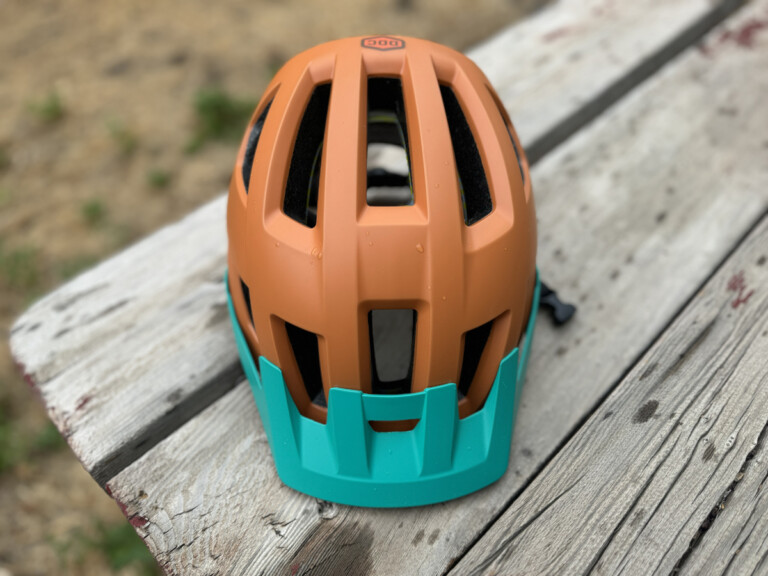
Marathon Mountain Bike Worlds will take place in U.S. for the first time on September 22, 2024.
SNOWSHOE, West Virginia (September 12, 2024) – The 2024 UCI Marathon Mountain Bike World Championships are coming to the Unites States this year where the best riders from around the world will race in Snowshoe, W.Va., on Sunday, September 22, 2024.
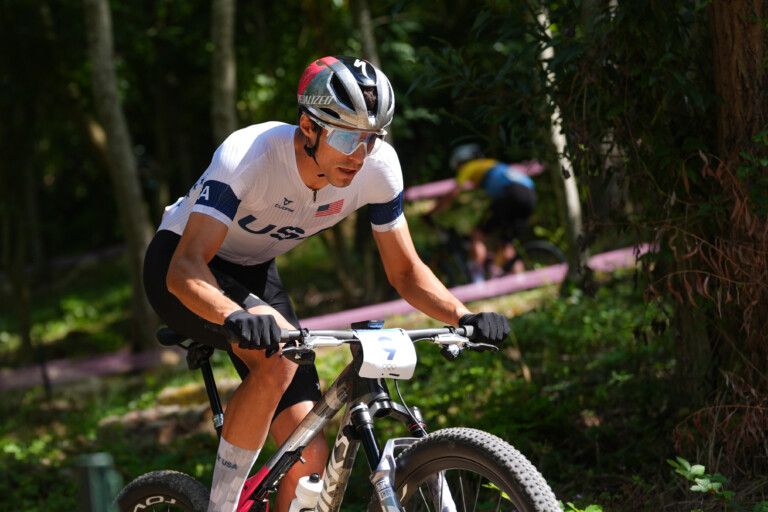
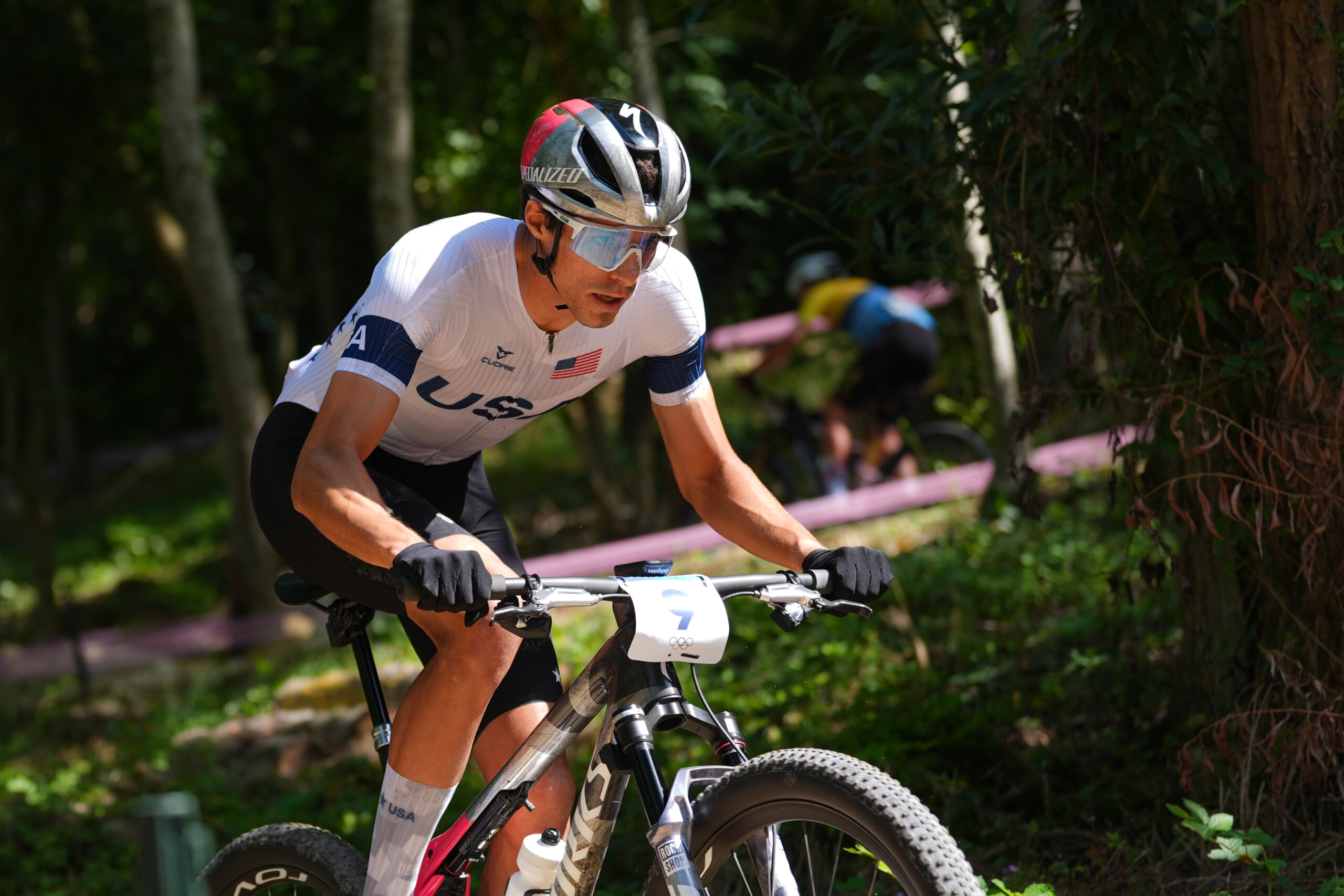
Picture by Zac Williams/SWpix.com – 29/07/2024 – Paris 2024 Olympic Games – Cycling Mountain Bike (MTB) – Men’s Cross-country – Elancourt Hill, Paris, France – Christopher Blevins (USA)
The Marathon Mountain Bike World Championships, held annually since 2003, will make history this year as it comes to the United States for the very first time—marking not only a debut in the U.S. but also across all of North America. The categories are open to men and women ages 19 and up. The course will cover almost 65 miles, with over 6,500 ft of climbing.
Endurance athlete Hannah Otto (Millcreek, Utah; Pivot Cycles/DT Swiss) is a standout contender, having achieved significant success on the Marathon Mountain Bike World Cup circuit. This year, she fought her way to an impressive second place at the Marathon World Cup in Megève, France. She’s also no stranger to Snowshoe, having claimed victory at the event last year.
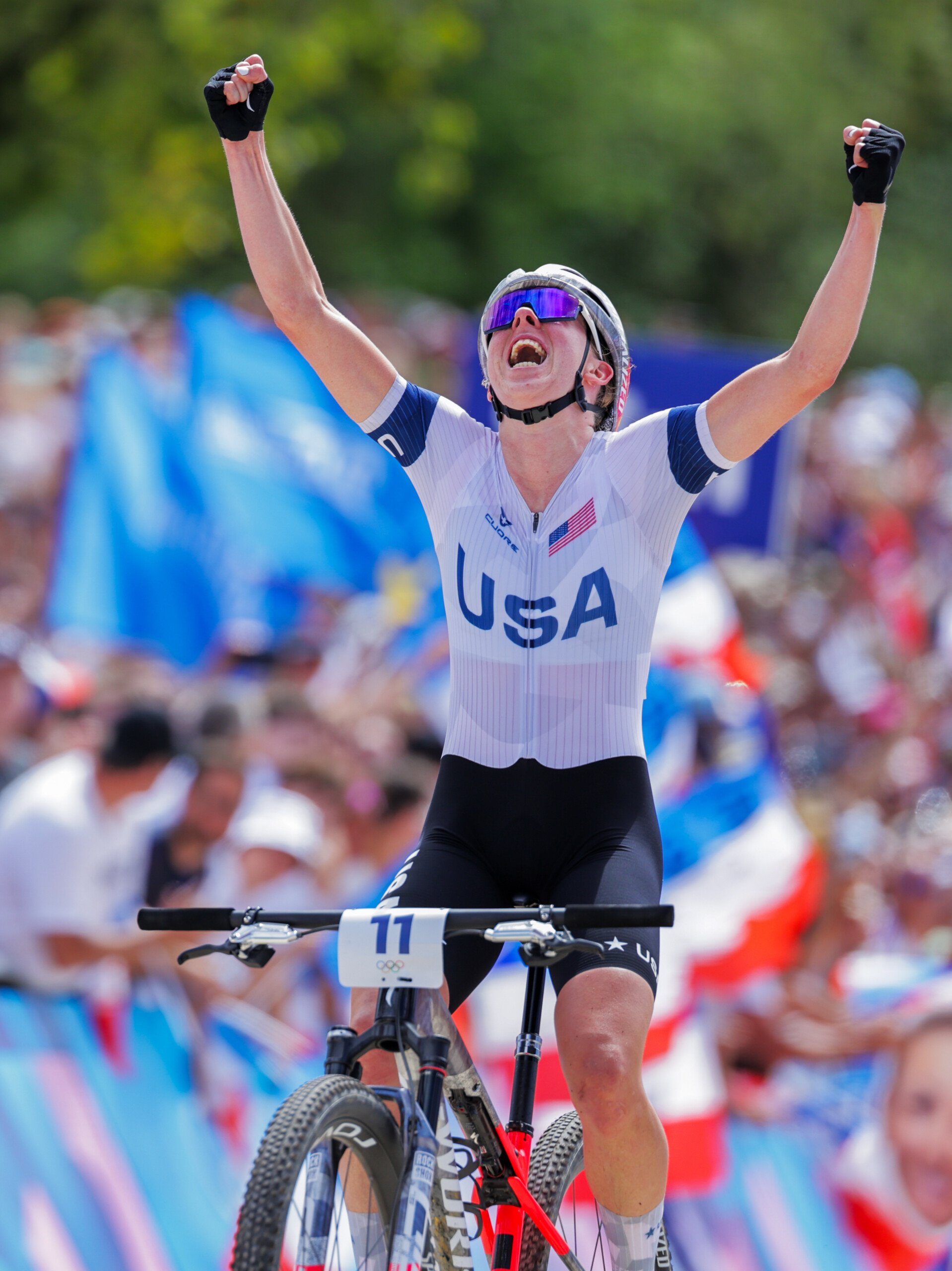
Picture by Alex Whitehead/SWpix.com – 28/07/2024 – Paris 2024 Olympic Games – Cycling Mountain Bike (MTB) – Women’s Cross-country – Elancourt Hill, Paris, France – Haley Batten (USA) after finishing second the receives the Olympic Silver Medal
However, when it comes time for the World Championships, many of the Cross-Country racers end their season putting their legs to the test. Two of the Paris 2024 Mountain Bike Olympians will be in attendance after a long season of cross-country racing: Haley Batten (Santa Cruz, Calif.; Specialized Factory Racing) and Christopher Blevins (Durango, Colo.; Specialized Factory Racing).
Marathon Mountain Bike National Champions Carson Beckett (Brevard, N.C.; Dirt Camp Racing) and Alexis Skarda (Grand Junction, Colo.; Santa Cruz Bicycles) will also be in attendance.
The Team USA roster is as follows:
Elite Men
Maxwell Abner (Greenville, S.C.)
Carson Beckett (Brevard, N.C.; Dirt Camp Racing)
Christopher Blevins (Durango, Colo.; Specialized Factory Racing)
Zachary Calton (Ogden, Utah; Yeti/ Shimano)
Levi Cole (Auburn, Ala.)
Jerry Dufour (Birmingham, Ala.; Dirt Camp Racing)
Griffin Hoppin (Mill Valley, Calif.; Flow Formulas)
Ryan Johnson (Brookville, Penn.; Dirt Camp Racing)
Eli Kranefuss (Mill Valley, Calif.; Dirt Camp Devo)
Mark Kransz (Cave Springs, Va.; Crit Fit Army)
Bradyn Lange (Fairfax, Calif.; Scott Bicycles)
Christopher Mehlman (Manchester, Mass.; Pivot Cycles)
Cayden Parker (Hot Springs, Ark.; Bear National Team)
Cole Paton (Durango, Colo.; Giant Bicycles)
Cory Peterson (Annapolis, Md.)
Danny Van Wagoner (Fruit Heights, Utah; DNA Cycling)
Gordon Wadsworth (Shawsville, Va.; Revel Bikes)
Noah Warren (Birmingham, Ala.)
Alex Wild (San Jose, Calif.; DNA Cycling)
Jonas Woodruff (Redlands, Calif.; Trek Race Shop)
Elite Women
Crystal Anthony (Bentonville, Ark.; Liv Racing Collective)
Haley Batten (Santa Cruz, Calif.; Specialized Factory Racing)
Simone Berger (Delray, Fla.)
Britt Mason (Ellicott City, Md.; Salsa Cycles)
Jackie Neilon (Gordansville, Va.; Brevard College)
Hannah Otto (Millcreek, Utah; Pivot Cycles/DT Swiss)
Hannah Shell (Longmont, Colo.; Pearl Izumi/ Cervélo)
Alexis Skarda (Grand Junction, Colo.; Santa Cruz Bicycles)
Abigail Snyder (Roanoke, Va.; Ride Fierce Racing)
Melissa Seek (Williamsburg, Va.; THR Cycling)
Starla Teddergreen (Longmont, Colo.; BMC / Distance to Empty)
Lauren Zimmer (Salt Lake City, Utah; CarboRocket Pro MTB Race Team)
Booklet to Highlight Gravel Bike Trails and Exclusive Travel Tips, Along with Culture, Scenery, and Outdoor Recreation Throughout the County
SANTA FE, New Mexico (September 6, 2024) – For outdoor adventurers heading to Santa Fe County, planning is now made even easier with the launch of the Santa Fe County Gravel Adventure Field Guide—a booklet highlighting gravel bike trails in the area, as well as a variety of attractions, history, and information about surrounding communities.
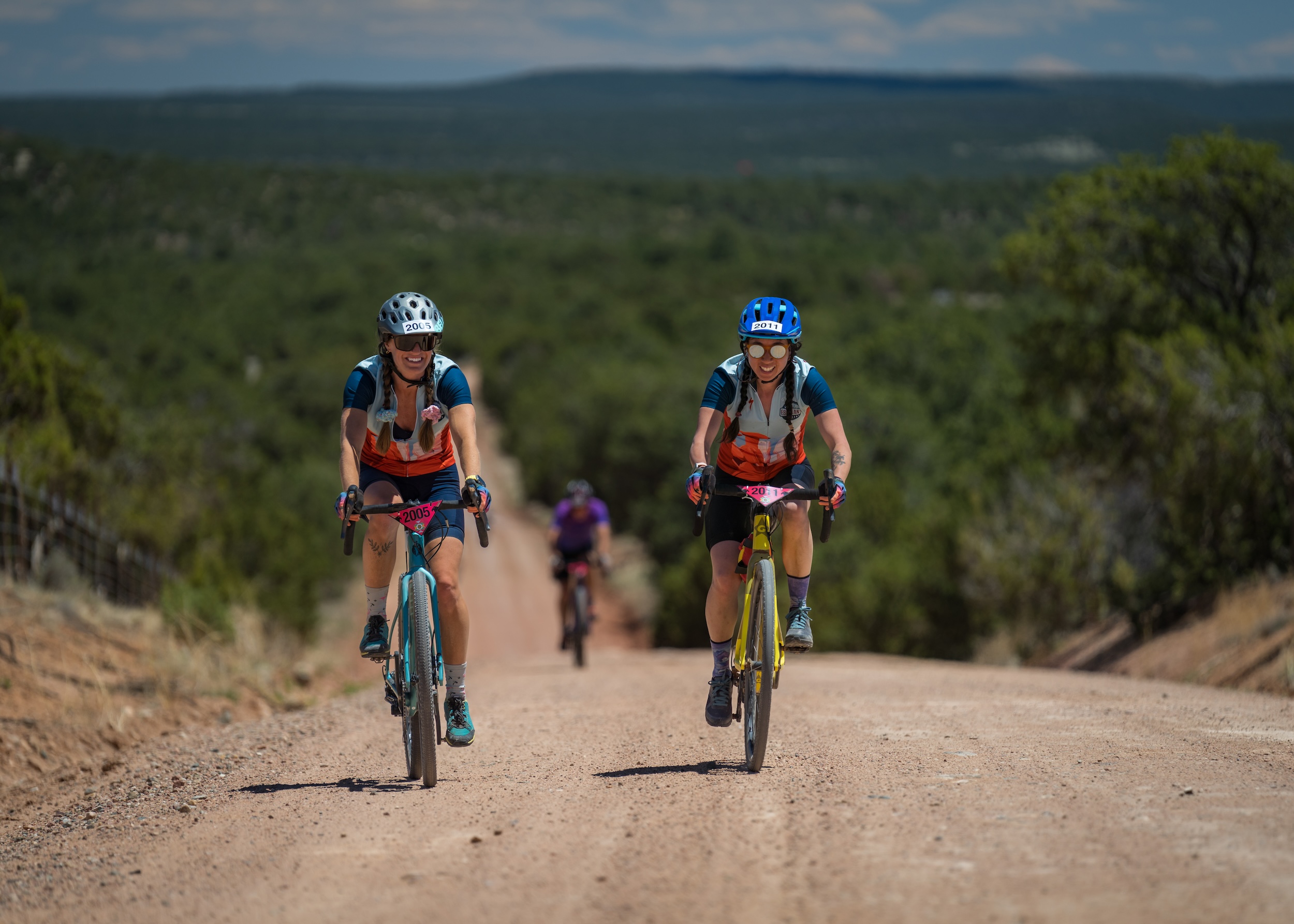
Photo courtesy Lobo Photo NM / Santa Fe Century
The pocket-sized booklet features a wealth of information about the land, culture, and traditions of Santa Fe County, along with in-depth information on trails. Cyclists can utilize an interactive GPS navigation function while on trails, as well as access route maps, distance, elevation and terrain of each trail. In addition to trail information, the booklet contains short stories, art, activities, insight from local businesses, and travel tips.
“We are thrilled to offer traveling cyclists such a unique and invaluable resource, while also enhancing the county’s quality of life and connection to the region’s natural beauty,” said Juan Torres, Economic Development Manager. “This guide is a testament to our commitment and support for making Santa Fe County a world-class bike destination, while furthering our goals of enhancing new and established work opportunities through sustainable economic development and tourism in the region.”
42 National Titles awarded at the second annual Gravel National Championships in Gering, Nebraska.
GERING, Nebraska (September 8, 2024) — The second annual 2024 USA Cycling Gravel National Championshipskicked off on Sunday morning in downtown Gering, Nebraska. In total, 42 separate categories competed for the opportunity to earn a gravel National Title across four different courses: 131.1 miles, 88.2 miles, 56.9 miles, and 24.8 miles. With a $40,000 prize purse on the line, the elite fields were loaded with top gravel talent.
ELITE MEN/OPEN 19+
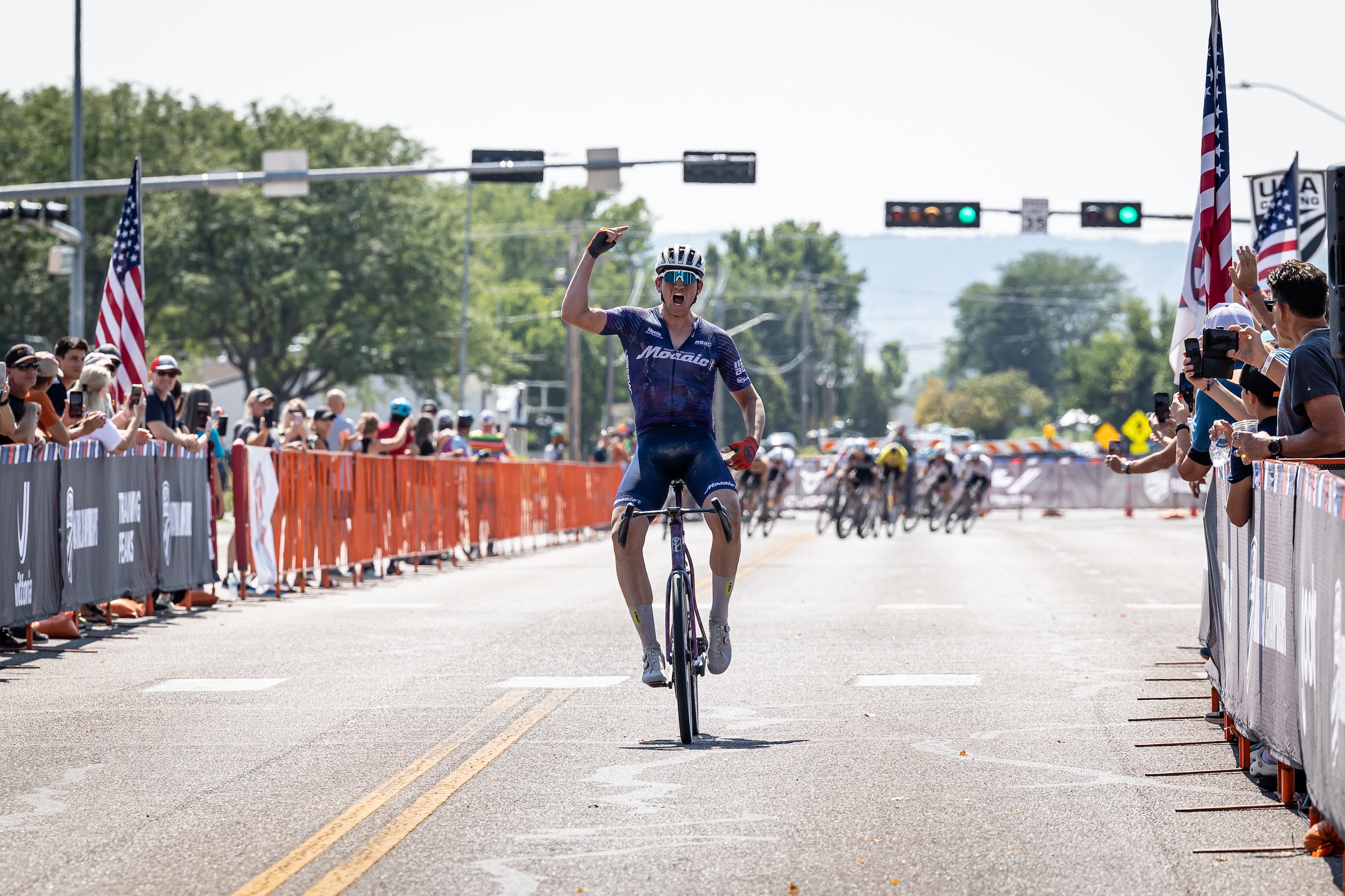
In an exciting race on Sunday, a breakout group of six riders took the lead through checkpoint one – Griffin Easter (Park City, Utah; OpiCure Foundation Gravel Team p/b Canyon Bicycles) Dylan Johnson (Brevard, N.C.; Felt UN1TD), Colby Simmons (Durango, Colo.; Team Visma | Lease a Bike), Michael Garrison (Decatur, Ga.; MGR p/b NICH SpeedClub), Tobin Ortenblad (Santa Cruz, Calif.; Santa Cruz SRAM htSQD), and Matthew Koenig (Santa Cruz, Calif.; Team Mike’s Bikes powered by Equator Coffees) – with two leaders initially gaining a 15-second advantage over the field of 49 riders. At the 100-mile mark, Innokenty Zavyalov (Minneapolis, Minn.; Mazda – Orange Seal) held a one-minute lead over the chase group of 12 riders. The solo rider was eventually caught, and the field consolidated to 13 riders. However, the pace broke the group apart, reducing it to just eight riders with 10 kilometers to go. Keegan Swenson (Midway, Utah; Santa Cruz Bicycles/SRAM) made a bold move at Cemetery Road, but the pack regrouped a few kilometers from the finish line. In the last two kilometers, Brennan Wertz (Mill Valley, Calif.; Mosaic Cycles) executed the plan he had going into the race. With a perfectly timed, all-out effort, Wertz sprinted across the line just seconds ahead of the chase group, securing his first-ever Gravel National Title. “I knew with my size and power I didn’t have the legs for a long-range attack… a 10 kilometer attack was out of the question today. I didn’t have any snap in my legs today after being sick. I was really hoping I could sneak away one to two kilometers from the finish, so I put all my chips on the table on that move at the end and it paid off.”
Brennan Wertz (Mosaic Cycles) wins the 2024 USA Cycling Gravel National Championship. Photo by Tory Hernandez, Evrgrn Photo, courtesy USA Cycling
“I went all in with my setup. I took a couple risks. I went with a superfast setup, super slick tires, big road gears and I knew that the finish this year really suited me well. For me the goal was to just make it to that last two kilometers and then see what I could do from there. It was a big gamble, I really put all my chips on the table and went all on in that strategy,” continued Wertz.
When asked about how it felt to race with the best athletes from around the nation in yesterday’s National Championship he said, “It’s so special to get to race with all the U.S. guys. A lot of us have been racing together for a handful of years now, so it feels a little bit like a family reunion… It’s cool to see that the scene is being recognized by USA Cycling and has its own National Championship.”
Results:
Brennan Wertz (Mill Valley, Calif.; Mosaic Cycles)
John Borstelmann (San Luis Obispo, Calif.; Slowtwitch Goodlife Racing/Ventum/Voler)
Colby Simmons (Durango, Colo.; Team Visma | Lease a Bike)
Russell Finsterwald (Colorado Springs, Colo.; Trek Driftless)
Griffin Easter (Park City, Utah; OpiCure Foundation Gravel Team p/b Canyon Bicycles)
ELITE WOMEN/OPEN 19+
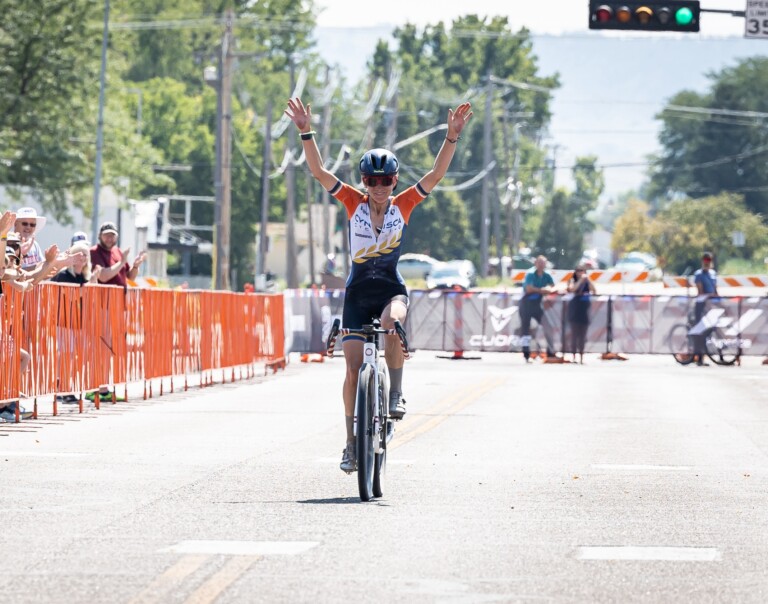
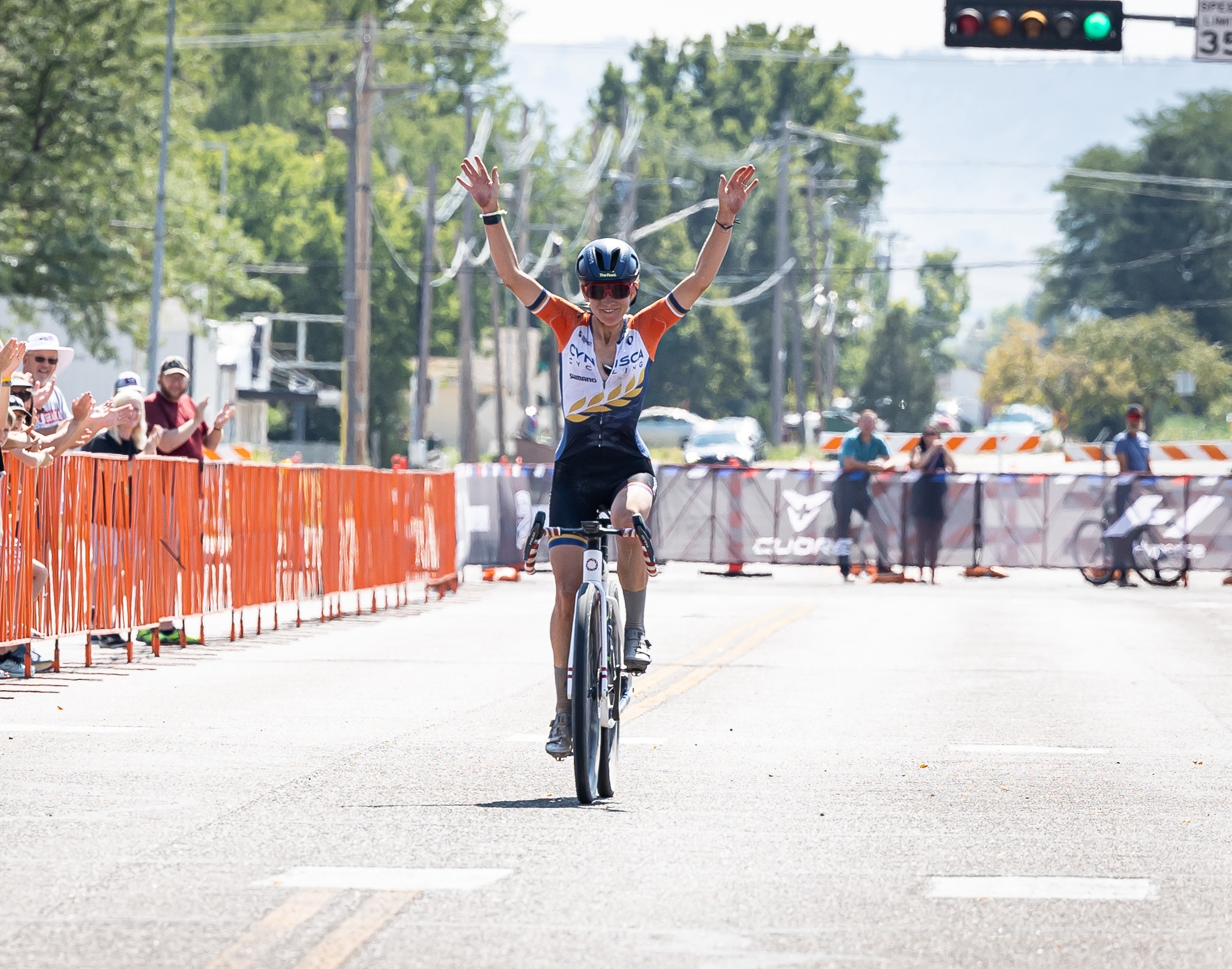
A lead group of 12 riders formed early in the women’s race as they passed through checkpoint two, but by the halfway point, the race saw a three-person breakaway, which expanded to four leaders at checkpoint three. This group was made up of Paige Onweller (Bella Vista, Ark.; Trek Driftless), Lauren De Crescenzo (Boulder Colo.; Factor / The Feed / Maxxis / Castelli / PERC), Lauren Stephens (Dallas, Texas; Cynisca Cycling), and Alexis Skarda (Grand Junction, Colo.; Santa Cruz Bicycles SRAM). At the 100-mile mark, Stephens had taken the lead with a 25-second advantage over Skarda and De Crescenzo. On the last climb of the race, Stephens put in a big attack and rode off the front, establishing a 45-second lead, a gap she grew until the finish where she crossed in first. This is Stephens’ second time winning the Elite Women’s race at Gravel Nationals.
Lauren Stephens (Cynisca Cycling) wins the 2024 USA Cycling Gravel National Championship. Photo by Tory Hernandez, Evrgrn Photo, courtesy USA Cycling
When asked about her winning strategy, Stephens shared, “I was just focusing on putting an attack in on the last climb. I made my attack on the steepest part and knew straight away that I got a decent gap.”
Now that the event is in its second year, riders arrived with a better idea of what to expect and could come into the event more prepared. Stephens felt more confident and ready, saying, “It was an awesome day… I was a lot less nervous this year than last year. I think there were a lot more unknowns…I was calmer coming into today having done it last year. At 500-meters I just started soaking it all in. It’s really exciting to get to wear the Stars and Stripes for another year.”
Results:
Lauren Stephens (Dallas, Texas; Cynisca Cycling)
Lauren De Crescenzo (Boulder Colo.; Factor / The Feed / Maxxis / Castelli / PERC)
Thank you for tuning in for our second year of Gravel Nationals! La Crecent, Minnesota will host the USA Cycling Gravel National Championships for the next two years, starting with the first event slated for the third weekend of September 2025.
Rider results for the 2024 USA Cycling Gravel National Championships can be found here.
“Something will have gone out of us as a people if we ever let the remaining wilderness be destroyed…” — Wallace Stegner
By Kevin Proescholdt — The goal of the Wilderness Act, now celebrating its 60th birthday, was to set aside a small proportion of public land in America from human intrusion. Some places, the founders said, deserved to be free from motorized, mechanized and other intrusions to protect wildlife and wild lands.
But now, a handful of mountain bikers have partnered with a senator from Utah to gut the Wilderness Act.
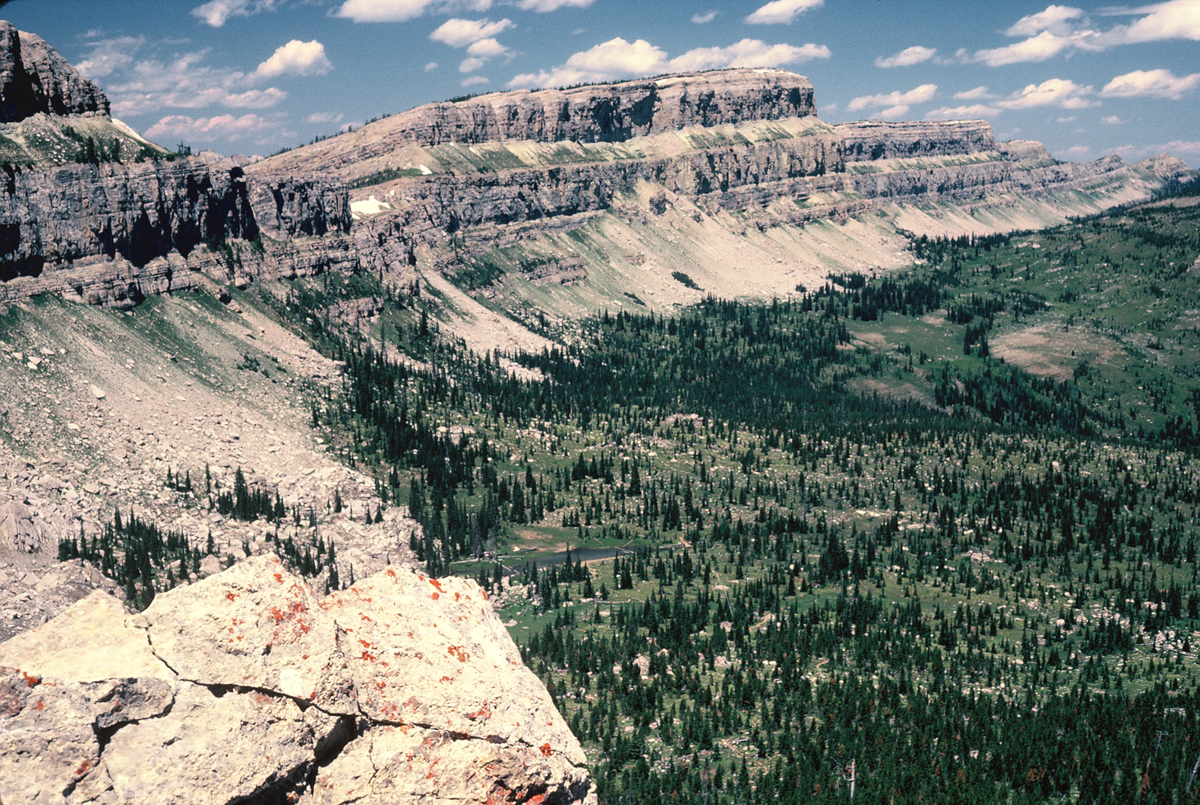
Bob Marshall Wilderness in Montana. Photo courtesy of Wilderness Watch
This June, the Sustainable Trails Coalition, a mountain biking organization, cheered as Utah Republican Senator Mike Lee introduced a bill (S. 4561) to amend the Wilderness Act and allow mountain bikes, strollers, and game carts on every piece of land protected by the National Wilderness Preservation System. Stopping these intrusions would take each local wilderness manager undertaking a cumbersome process to say “no.”
The U.S. Congress passed the Wilderness Act, and President Lyndon B. Johnson signed it into law on September 3, 1964, to “preserve the wilderness character” of 54 wilderness areas totaling 9.1 million acres. Today, this effort has become a true conservation success story.
The National Wilderness Preservation System now protects over 800 wilderness areas totaling over 111 million acres in 44 states and Puerto Rico, making it America’s most critical law for preserving wild places and the genetic diversity of thousands of plant and animal species. Yet designated wilderness is only 2.7% of the Lower 48, and still just about 5% if Alaska is included.
The protections of the Wilderness Act include a ban on logging, mining, roads, buildings, structures and installations, mechanized and motorized equipment and more. Its authors sought to secure for the American people “an enduring resource of wilderness” to protect places not manipulated by modern society, where the ecological and evolutionary forces of nature could continue to play out mostly unimpeded.
Grandfathered in, however, were some grazing allotments, while mining claims were also allowed to be patented until 1983. Many private mining claims still exist inside designated wildernesses.
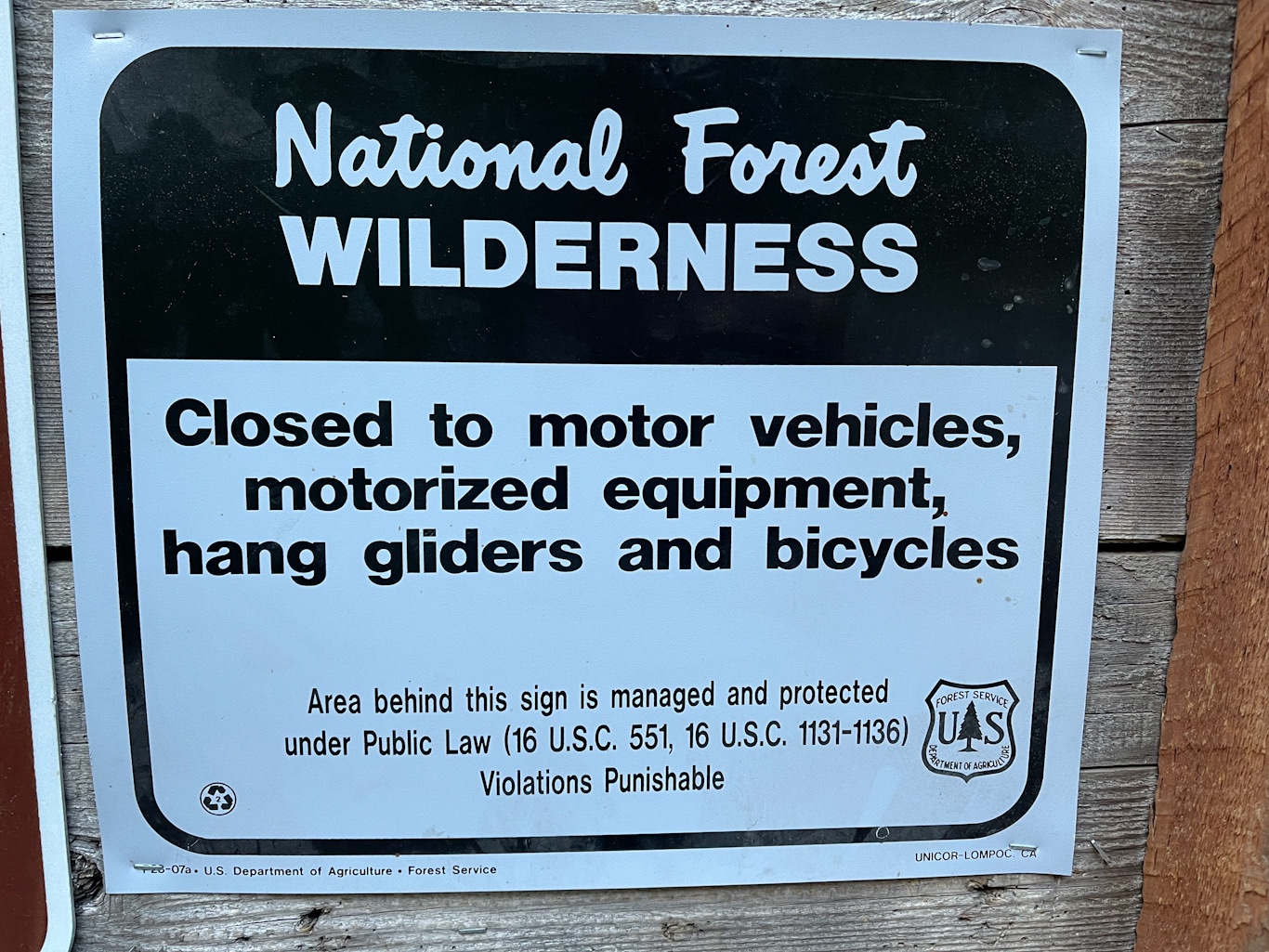
Senator Lee’s bill is premised on the false claim that the Wilderness Act never banned bikes, and that supposedly, the U.S. Forest Service changed its regulations in 1984 to ban bikes. But bicycles, an obvious kind of mechanized equipment, have always been prohibited in wilderness by the plain language of the law. (“There shall be…no other form of mechanical transport….”) The Forest Service merely clarified its regulations on this point in 1984 as mountain bikes gained popularity.
Unfortunately, bikers in the Sustainable Trails Coalition are not the only recreational interest group that wants to weaken the Wilderness Act to. Some rock climbers, for example, are pushing Congress to allow climbers to damage wilderness rock faces by pounding in permanent bolts and pitons rather than using only removable climbing aids. In addition, trail runners want exemptions from the ban in wilderness on commercial trail racing. Drone pilots and paragliders want their aircraft exempted from Wilderness Act protections, and recreational pilots want to “bag” challenging landing sites in wilderness.
The list of those seeking to water down the Wilderness Act is growing.
Most of these recreational groups say they support wilderness, understanding how important it is when most landscapes and wildlife habitats have been radically altered by people. At the same time, they want to slice out their own piece of the wilderness pie.
Must we get everything we want in the outdoors? Rather than weakening the protections that the Wilderness Act provides, we could try to reinvigorate a spirit of humility toward wilderness. We could practice restraint, understanding that designated wildernesses have deep values beyond our human uses of them.
Meanwhile, in response to growing demand for mountain biking trails, the Bureau of Land Management invites over a million mountain bikers each year to ride its thousands of miles of trails. And the U.S. Forest Service already has a staggering 130,000 miles of motorized and nonmotorized trails available to mountain bikers.
Do mountain bikers and others pushing for access really need to domesticate wilderness, too?
Let’s cherish our wilderness heritage, whole and intact. We owe it to the farseeing founders of the Wilderness Act, and we owe it to future generations.
Kevin Proescholdt is a contributor to Writers on the Range, writersontherange.org, an independent nonprofit dedicated to spurring lively conversation about the West. He is conservation director for Wilderness Watch, a national wilderness conservation organization headquartered in Missoula, Montana.
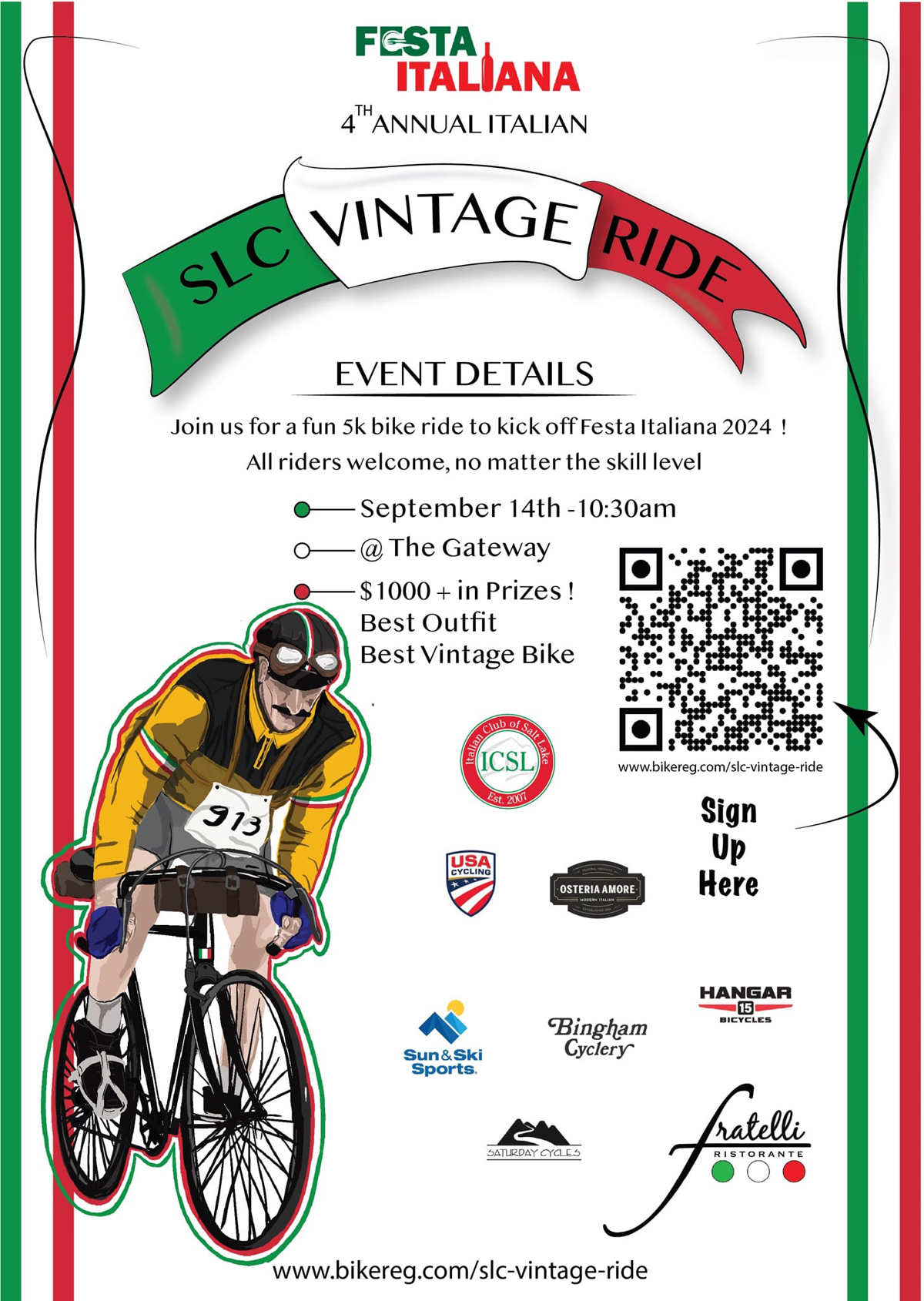
The 4th Annual Vintage Bicycle Ride is coming up, September 14, 2024 starting at the Gateway Mall in Salt Lake, Utah, which kicks off the Festa Italiana Salt Lake City. Festa Italiana is a two day huge free cultural event at the Gateway Mall that has great food tents, merchandise tents, music stage, cook classes, dancing, singing, and Italian cars and motorcycles displayed.
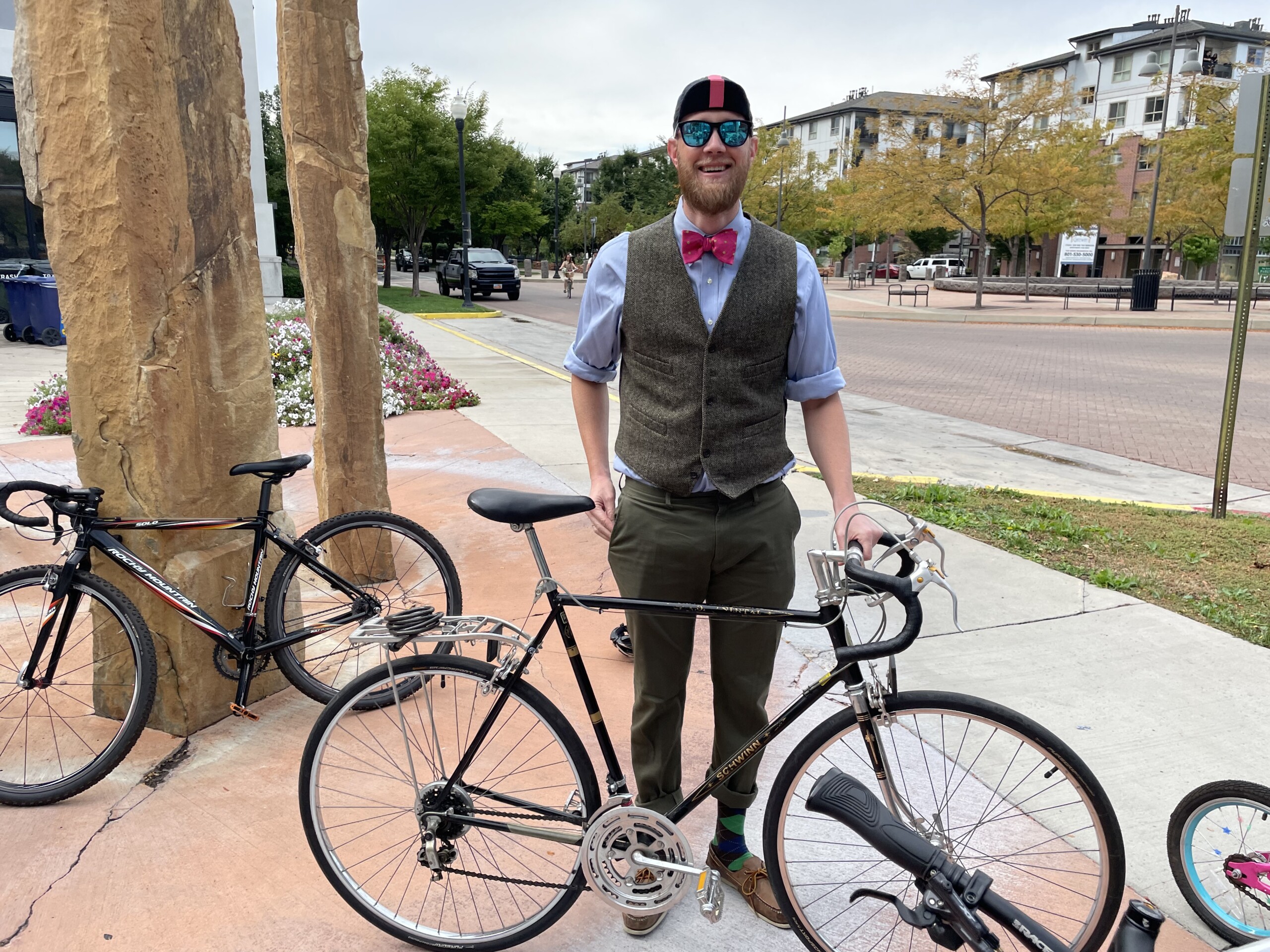
Salt Lake City Vintage Ride. Photo courtesy Giulana Marple
When many people think of Italy, they think pasta, pizza, bread, cars, art, opera, history, Catholicism, wine, baked goods, and of course bicycles. Some of the greatest cyclists in history are from Italy such as Fausto Coppi (1919 – 1960), Gino Bartali (1914 – 2000), Felice Gimondi (1942 – 2019), Marco Pantani (1970 – 2004), Alfredo Binda (1902 – 1986), Ottavio Bottecchia (1894 – 1927), and Carlo Galetti (1882 – 1949). These individuals have the honor to write some of the best bicycles in the world based in Italy such as, Bianchi, Basso, Colnago, Legnano, Bottecchia, Guerciotti, Do Rosa, Gios, Cinelli, Pinarello, Tommasini, and Maino. With this amazing cycling history L’Eroica, in Tuscony, Italy was born. L’Eroica is a bicycle ride with the rules being to ride a classic bicycle in vintage clothing. The ride influenced similar rides throughout the world – Germany, Japan, California, and South Africa. The Salt Lake Vintage Bicycle Ride holds to this history, beautiful, and joy. Every year the ride gets bigger and better with more sponsors, people, awards, and vintage bicycle to check out.
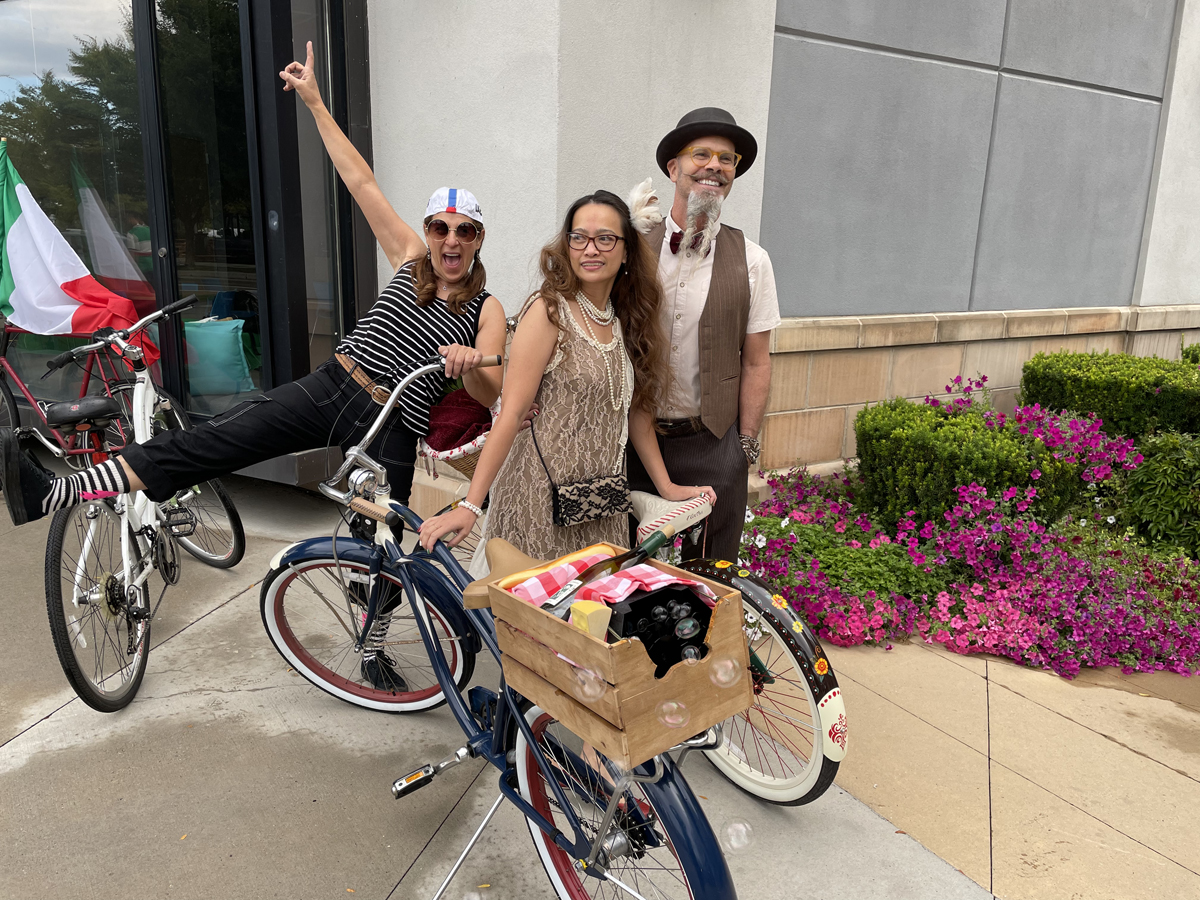
Salt Lake City Vintage Ride. Photo courtesy Giulana Marple
This year the ride is being sponsored by Hangar 15 Bicycles, Sun and Ski Sports, Saturday Cycles, Ostera Amore, Bingham Cyclery and the Italian Club of Salt Lake.
I asked Guiliana Marple the founder of the ride, What do you like most about this ride? She told me, “I like the variety of people who participate in the event. From the timid university student who borrows a bike to join the fun, to the die-hard bike collector who shows up with a vintage authentic sweet ride.”
I also asked Guilana, Why is it important for people to remember that cycling is important to Italy? She told me, “Cycling is a vital part of Italian culture and lifestyle. The entire country rallies around the Giro D’Italia. Cycling in Italy is truly remarkable. Italy is a beautiful destination for this sport and it welcomes cyclists of all levels. Besides being a pastime in Italy, cycling is for many the principle method fo transport, especially in small towns and villages.”
Event information:
September 14, 2024 — SLC Vintage Ride p/b Festa Italiana, Salt Lake City, UT, Approximately 3-mile flat fun ride starting and finishing at the Gateway in downtown Salt Lake City, marking the official open of the Annual Festa Italiana. Old bikes with single-speed drivetrains, flip-flop hubs, rod derailleurs, etc are encouraged. Wool jerseys and shorts as well as other vintage bike attire are also encouraged. Unlike cyclists from decades ago, we highly encourage helmets, Festa Italiana, [email protected], festaitalianaslc.com/4th-annual-vintage-bike-ride, bikereg.com/slc-vintage-ride
About: Tom Flood worked in advertising on the agency side for many years in Toronto on a wide range of clients including corporate branding for automotive manufacturers. Things changed direction for him after taking his kids to school on their bikes and seeing the imbalance on our streets.
He now develops strategy, creative & content for clients through Rovélo Creative and gives talks and comms workshops around framing and language as it applies to AT, Road Safety and Road Violence.
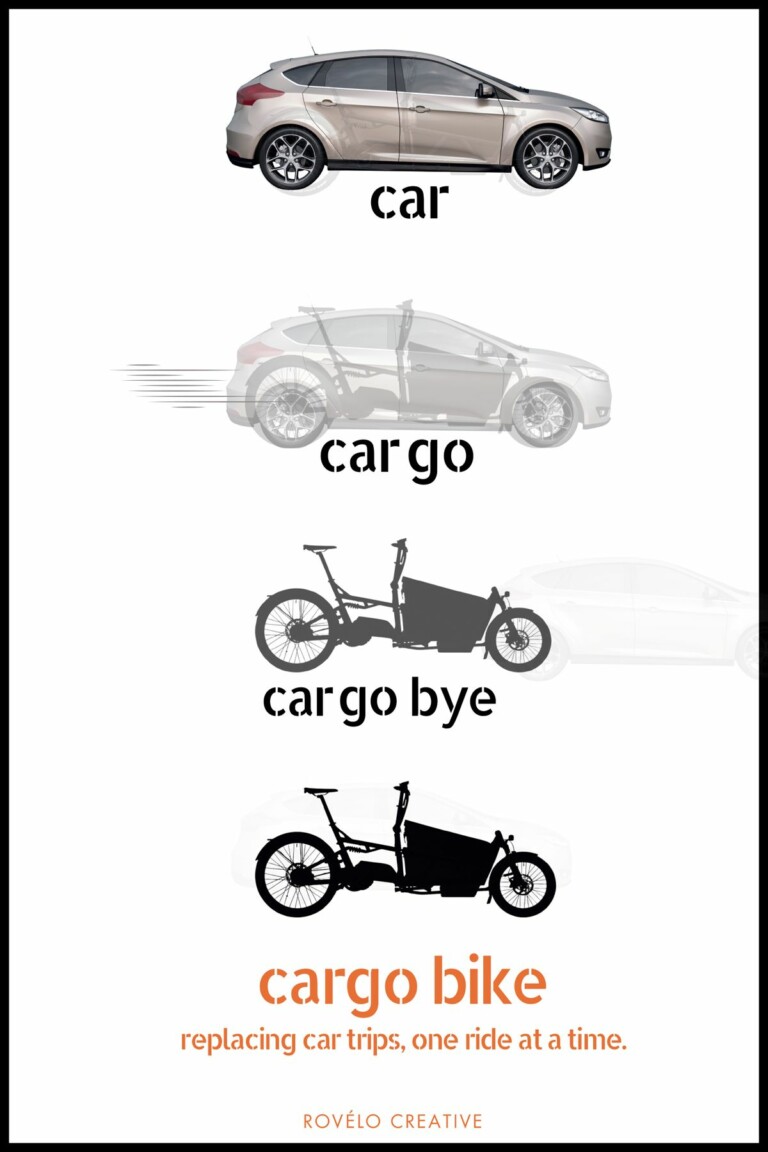
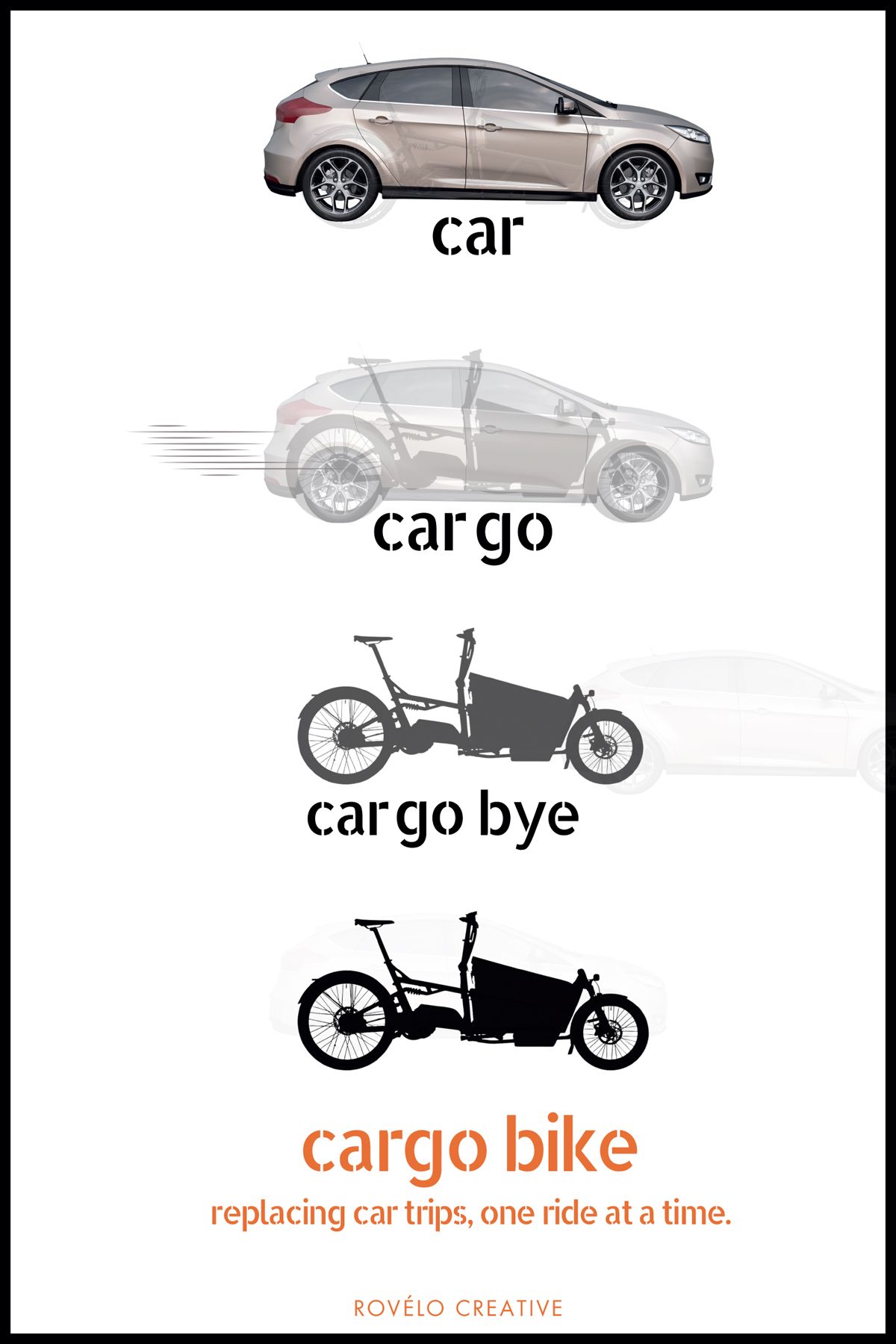
Title of piece: Evolution of a Revolution, by Tom Flood
About the piece: I’ve recently been using a cargo bike and really seeing just how much of an impact and game changer this bike is as a car trip replacer.
Medium and size: Original poster was 8.5×11
Where can people find or buy your art: some posters are available on creativebyrovelo.com/shop along with t shirts. More being uploaded over the next while.
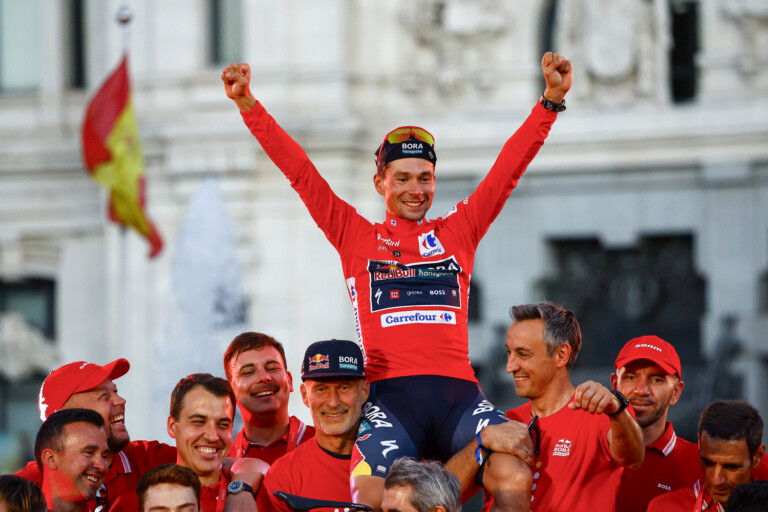
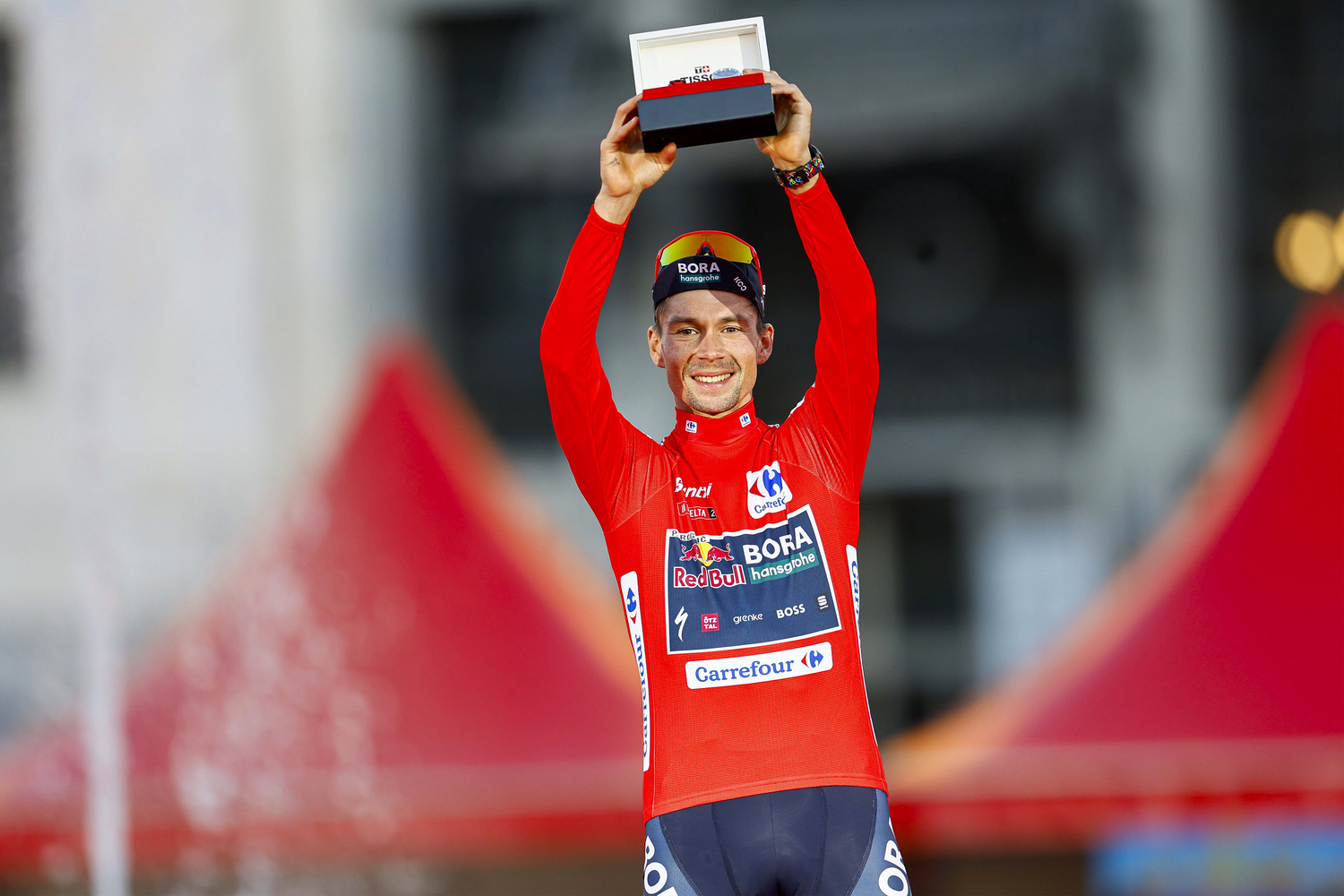
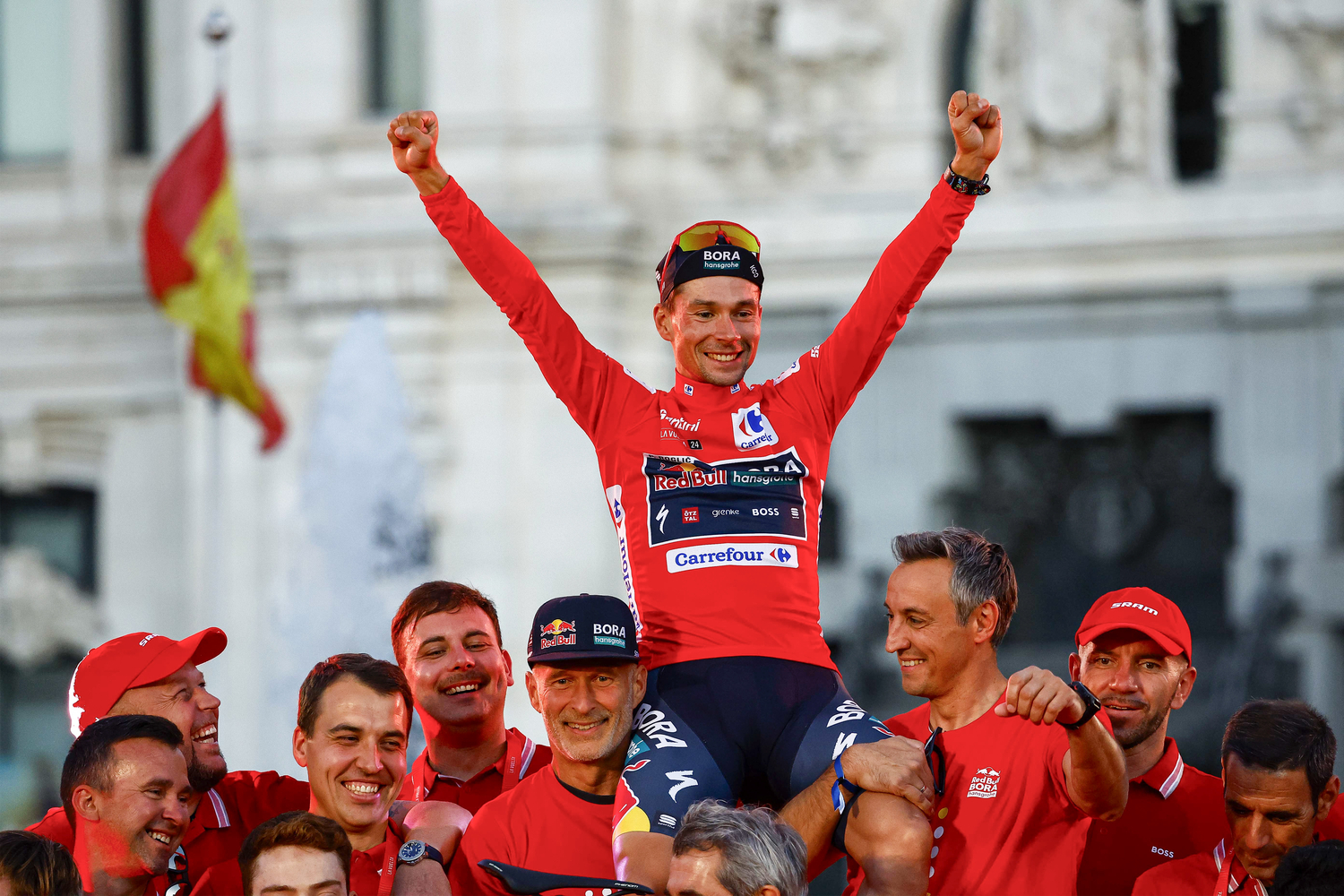
MADRID, Spain (September 8, 2024) — Slovenian cyclist Primož Roglič has etched his name in the history books by winning his fourth Vuelta a España title, equaling the all-time record held by Spanish rider Roberto Heras. Competing for Team RedBull-BORA-hansgrohe, Roglič demonstrated remarkable resilience and tactical prowess, particularly after his early exit from the Tour de France.
After a crash on Stage 12 of the Tour de France forced him to withdraw, Roglič shifted his focus to the Vuelta a España—a race he had previously won in 2019, 2020, and 2021. Determined to prove himself, the 34-year-old Slovenian spent the first two weeks of the race chasing Australian rider Ben O’Connor, who led for 13 stages in the coveted red jersey.
The turning point came on the crucial 19th stage. Roglič, starting the day just five seconds behind O’Connor, made his decisive move in the final six kilometers of the 173.3 km stage, with strong support from two of his Red Bull-BORA-hansgrohe teammates. His attack paid off, allowing him to claim the stage victory and build a commanding lead of 1:54 over O’Connor.
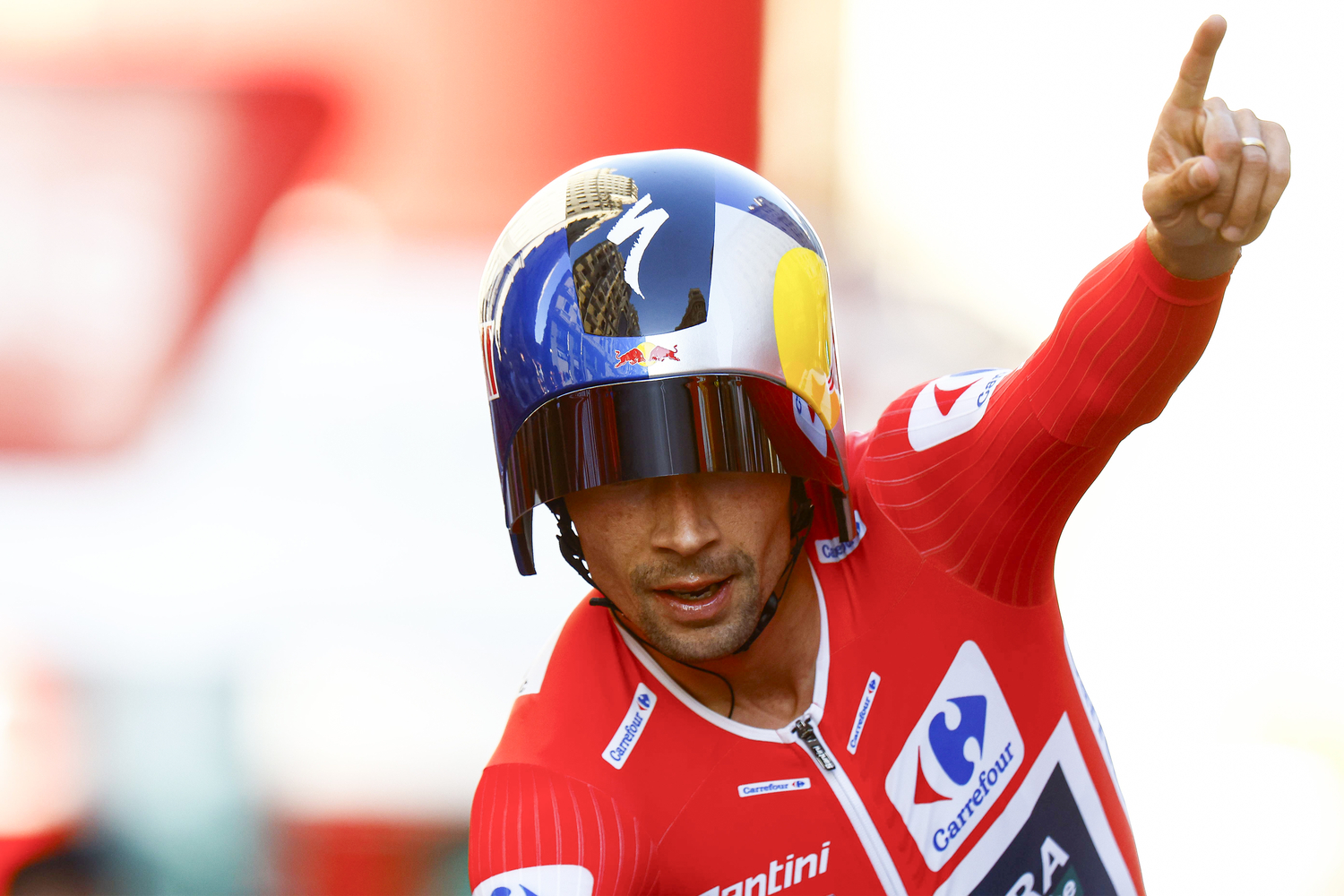
With an impressive summit finish on the penultimate stage, Roglič extended his overall advantage to 2:02, solidifying his position as the clear favorite heading into the final day. During the last stage, an individual time trial, Roglič secured a second-place finish, beaten only by Swiss time trial specialist Stefan Küng, who celebrated his first Grand Tour stage win.
Roglič’s strong performance in the time trial sealed his fourth Vuelta victory, finishing 2:36 ahead of O’Connor in the overall standings. This triumph marked his first Vuelta title as part of the RedBull-BORA-hansgrohe team, adding to his legacy as one of the greatest riders in the race’s history.
Reflecting on his historic victory, Roglič said, “It’s incredible. It’s been a lot of sacrifice for me and my family, so I feel happy that I could do it. It’s crazy that I have won four, so I want to enjoy it.”
This victory ties Roglič with the legendary Roberto Heras for the most wins in the Vuelta a España, further cementing his status as one of the sport’s elite competitors.
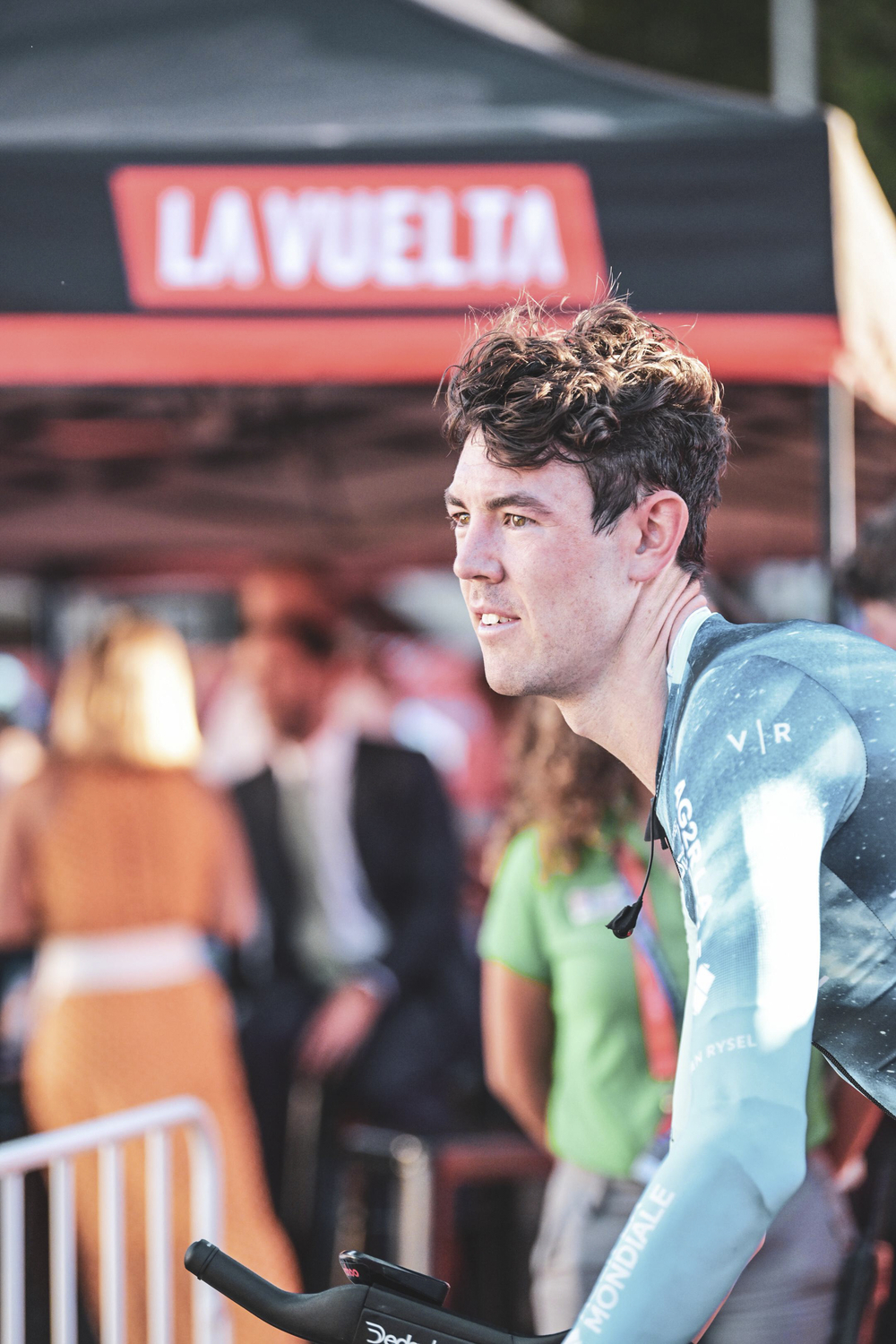
Ben O’Connor (Decathlon AG2R La Mondiale): “I’m just a proud man, you know. I think I’ve gone about my business well and I can’t believe to come out like this, in 2nd. There was a point in the race where I thought that if I did my absolute best every single day, then it would be difficult [but possible to win La Vuelta]. It’s been a crazy Grand Tour, it’s been really difficult to be at my best every single day. It’s probably one of the most physically taxing Grand Tours I’ve done so it’s hard to expect perfection every single day. No no, I definitely didn’t lose La Vuelta a España, I’ve achieved something unique. I had an amazing opportunity, to be in the red jersey from stage 6 to stage 19. But I was under no illusion. I’ve led a WorldTour race for one day in my past and now I’ve led La Vuelta a España for two weeks. I think these last three weeks are a defining moment in my career. I was always confident in my TT so I wasn’t worried about losing the podium today. I’ve just got the podium that I always dreamed I could achieved but I was never sure I could do it.”
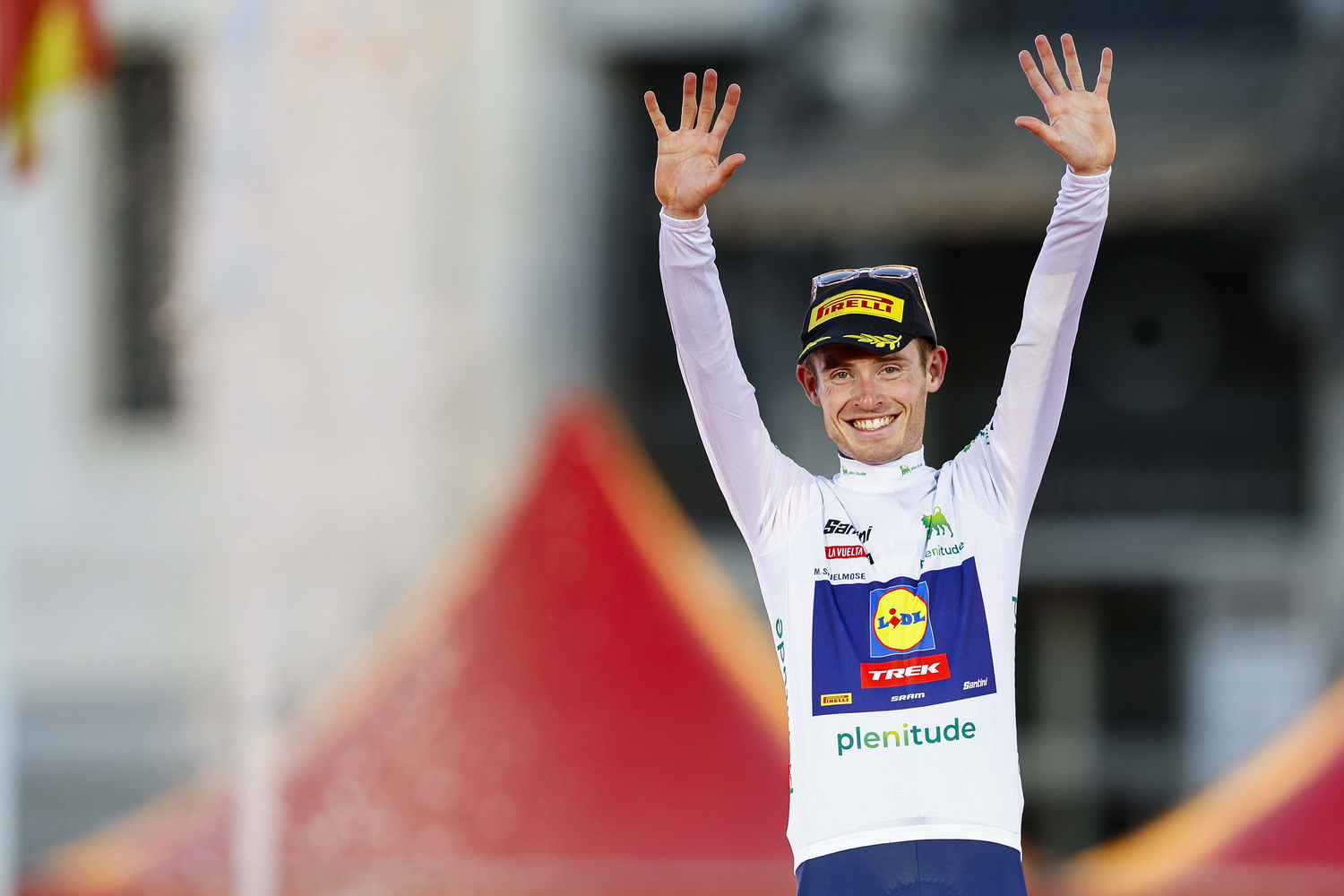
Skjelmose: “This Is More A Milestone Than A Breakthrough”
Mattias Skjelmose (Lidl-Trek): “Yes, job is done! I wasn’t feeling very good, to be honest, but I think none of the GC guys were feeling really good. It’s been a crazy hard Vuelta, emptying the tank almost every day, no easy riding almost from Portugal. I think everybody started to feel it. Confident is a big word, but I know we have good equipment, I know I can do good time trials, and I knew that, if everything was right, I could do it. And we did it today. This is more a milestone than a breakthrough. I think my breakthrough was more at the Tour de Suisse last year. It is my first Grand Tour GC, and to finish 5th in such a hard Vuelta, with the guys in front and the guys I have behind me is a really great result for me”.
La Vuelta 2024 – 79th Edition – 21th stage – Distrito Telefónica. Madrid > Madrid 24,6 km – 27/08/2024 – SKJELMOSE Mattias (LIDL-TREK)
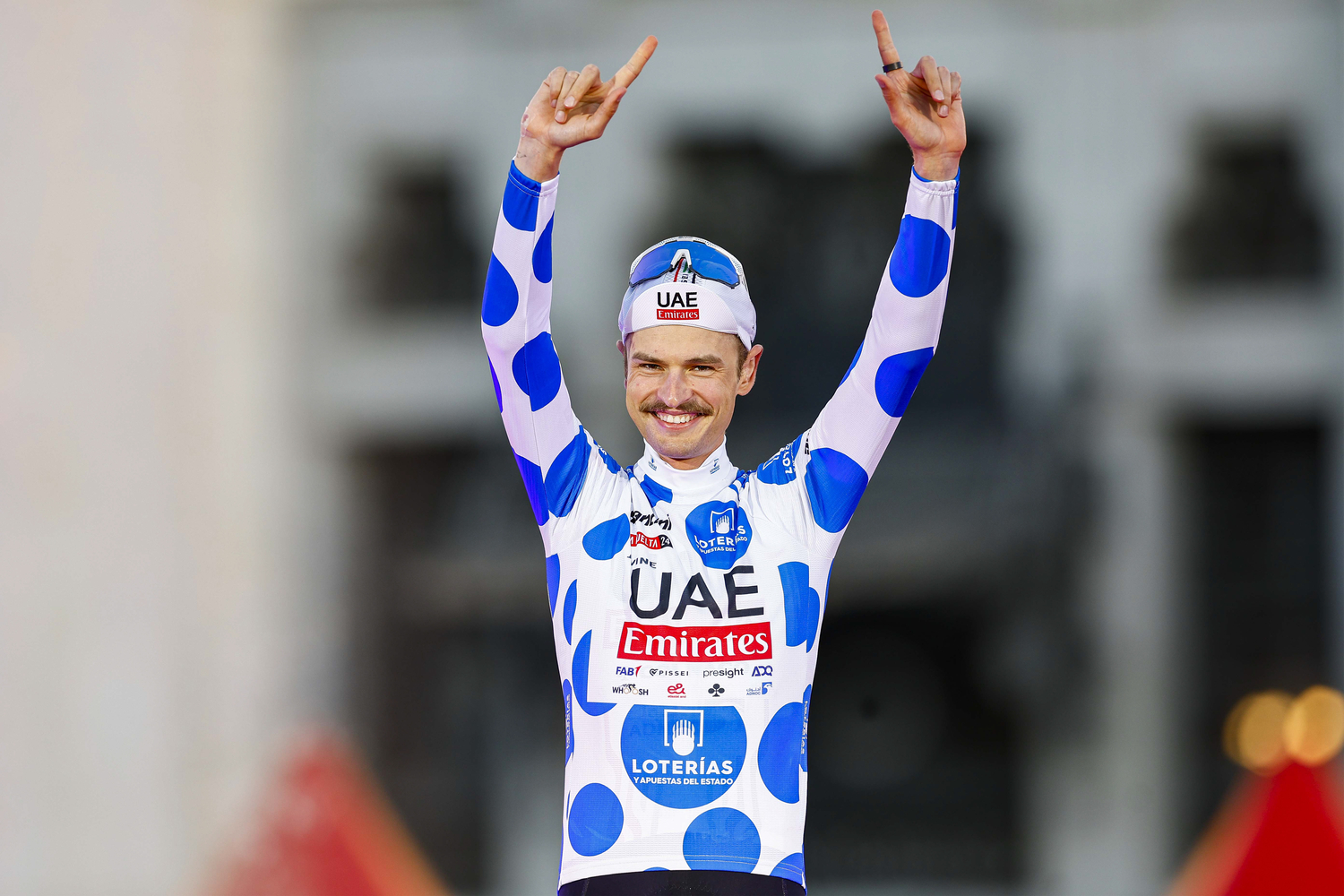
Vine: “It’s Fantastic After The Year That I Had”
Jay Vine (UAE Team Emirates): “Two years ago, I was on cloud nine, two stage wins and in the mountain jersey with a comfortable lead, ready to come to Madrid, and then disaster struck on stage 18. And now to finish that up is fantastic, especially after the year that I had. I feel like my season is just starting, so I’m looking forward to the rest of it. It’s pretty incredible [to be here after the crash I had in Itzulia]. The recovery that I’ve had is amazing. At the time, we didn’t really know if I would be able to ride again, let alone compete. So to be able to be here with the jersey, it was like a dream. To actually be able to pull it off is amazing.”
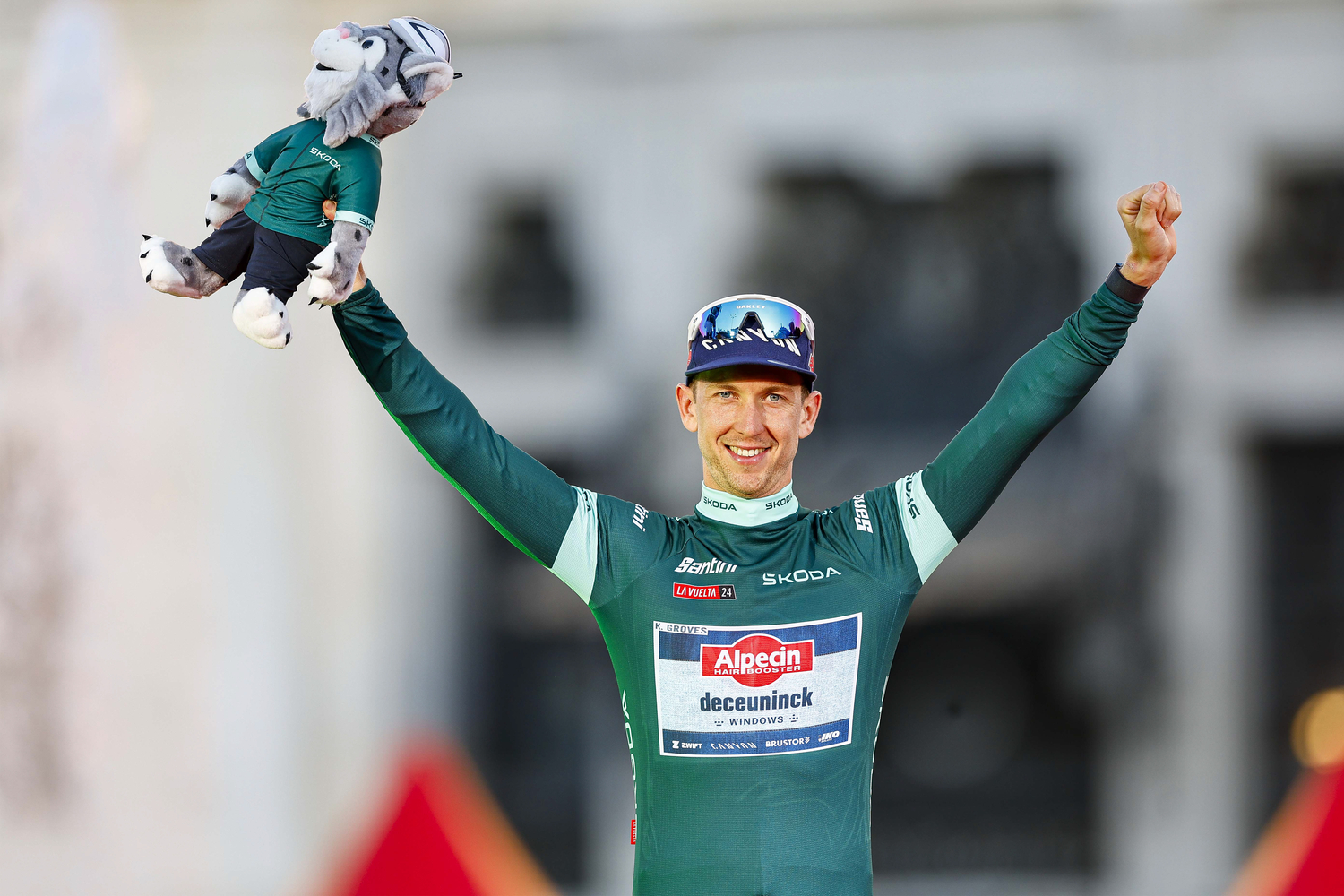
Kaden Groves (Alpecin-Deceuninck): “I think it’s quite a lot different, actually last year was a different experience collecting points. This year, obviously, Wout van Aert crashed out and left me with the jersey so it’s a bittersweet victory. But it’s really nice to be back here and it’s not for nothing. The team worked really hard and I know myself and the rest of the guys put in everything we could at each day for three weeks to arrive here with this jersey and also three victories. It’s a credit to the team. It’s not easy to get one win and to repeat that several times is always special. La Vuelta seems to treat me quite well and it’s a joy coming back each year. Thank you to my teammates, all the sponsors and everyone who makes it possible. We’ll talk about my calendar in November but I guess it’s quite likely [I’ll be back next year].”
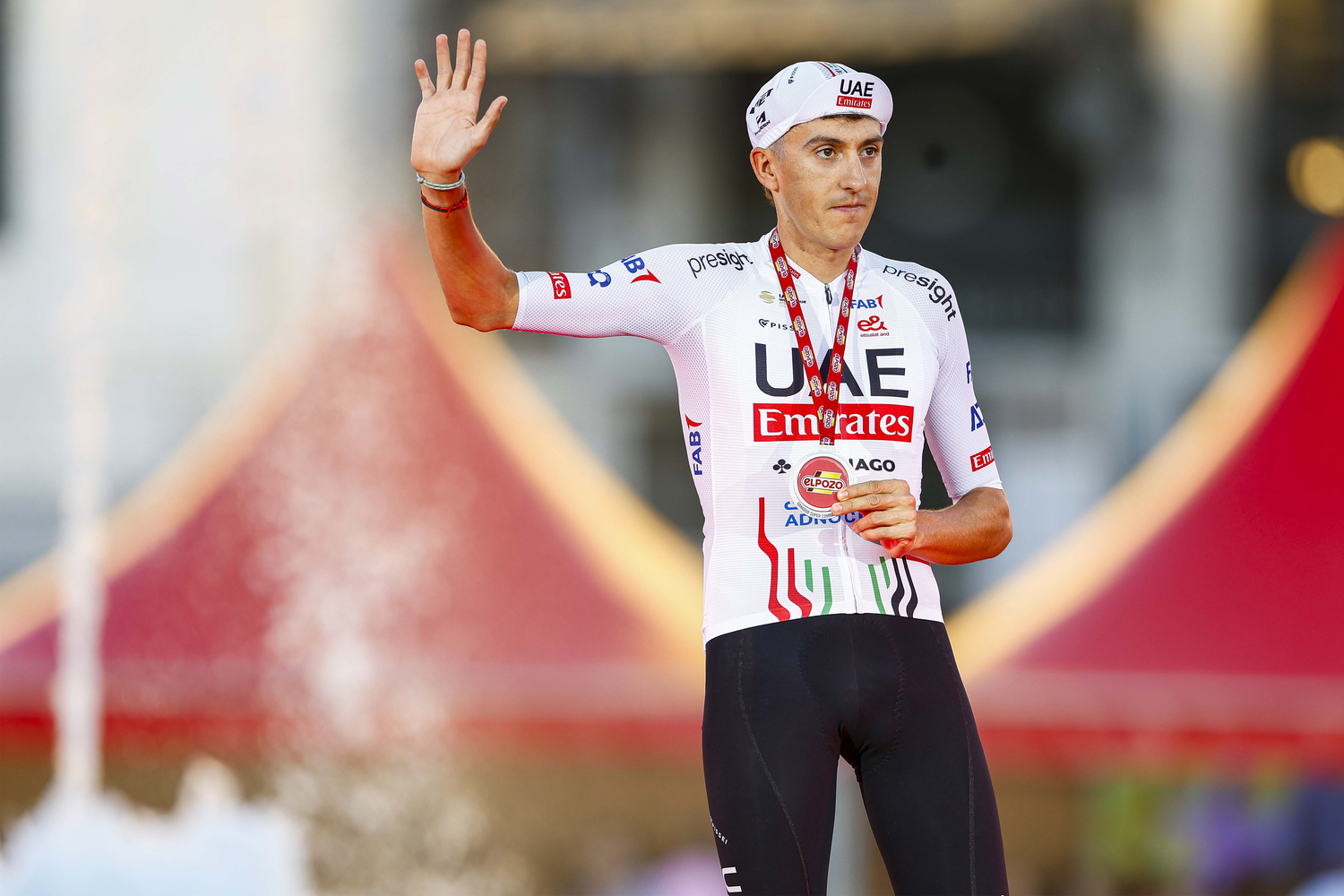
Marc Soler (UAE Team Emirates): “In the end, [the Super Combative award means] that I fought to get those stage wins and that I was in the breakaway a lot. It’s a reward for all that work. It has been a very hard Vuelta, but yes, in the end it was good for me that it was more demanding and with more gradient to be able to be in breakaways and fight for stages and get the stage victory in Lagos, which is very important. I’m very happy, and now I’m going to enjoy it. [Without Joao Almeida’s withdrawal] it would have changed a bit, but well, in the end we overcame it very well, we were able to win several stage victories, the team general classification, the mountains jersey… so we are very happy. Being the best team, just like in the UCI ranking where we are now also number 1, is very important. The truth is that we are very happy. Everything is important, in the end we work to get good results, and when at some point we can’t get that good result in the overall, we look for other things.”
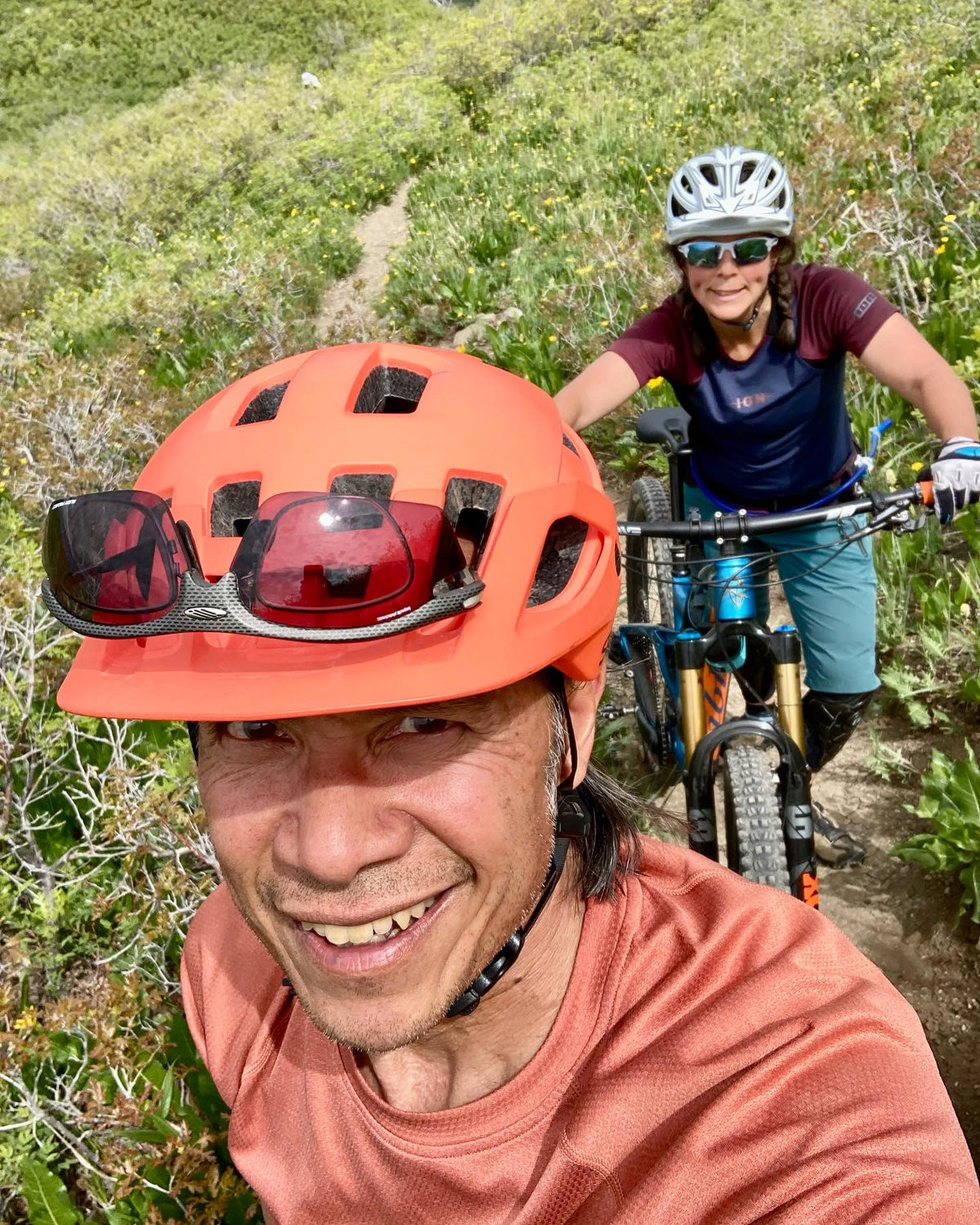
By Tom Jow — A couple of months ago I met some friends for a mountain bike ride. As we are about to set out from the car one of them says, “I forgot my helmet. I guess I will just ride slow on the downhill.” This was an up and back down trail we have ridden many, many times. As someone who has had close calls without a helmet, and crash impact while wearing one, I didn’t really like the idea. But he is free to make his own choices. A month later, riding with that same friend I went over the bars. My speed was not particularly high at the time. I landed on my side and felt my head hit the ground with a smack. Good thing I had that helmet on. After a few minutes to assess my condition, we finished the ride, and I went about the rest of the weekend with no sign of head injury.
Tom and Jane heading up for some fun. Photo by Tom Jow
It’s rare these days to see any serious or recreational rider without a helmet. Riding around town in Salt Lake City is a different story. I often see commuters, GreenBike riders, and scooter riders zipping around in traffic helmetless. In a story reported on KSL news in July 2024, Utah Department of Public Safety records show for the years 2019-2023 the number of bicycle crashes (reported) increased by 11.6 percent. During that same period, they recorded that helmet use (in reported crashes) decreased from 11.3 percent to 1.45 percent (1).
Why Wear a Helmet
The brain is an essential organ and must be protected from injury. It controls all functions of the body. Autonomous functions, such as breathing and heartbeat do not occur without it. Furthermore, all our senses, vision, hearing, smell, taste, and touch are processed by the brain. All movements from brushing our teeth to riding a bike are coordinated by the brain. Finally, our memory and personality, developed over years of experience, are retained in our brain cells. An injury damaging any portion of the brain can have a devastating effect on a person.
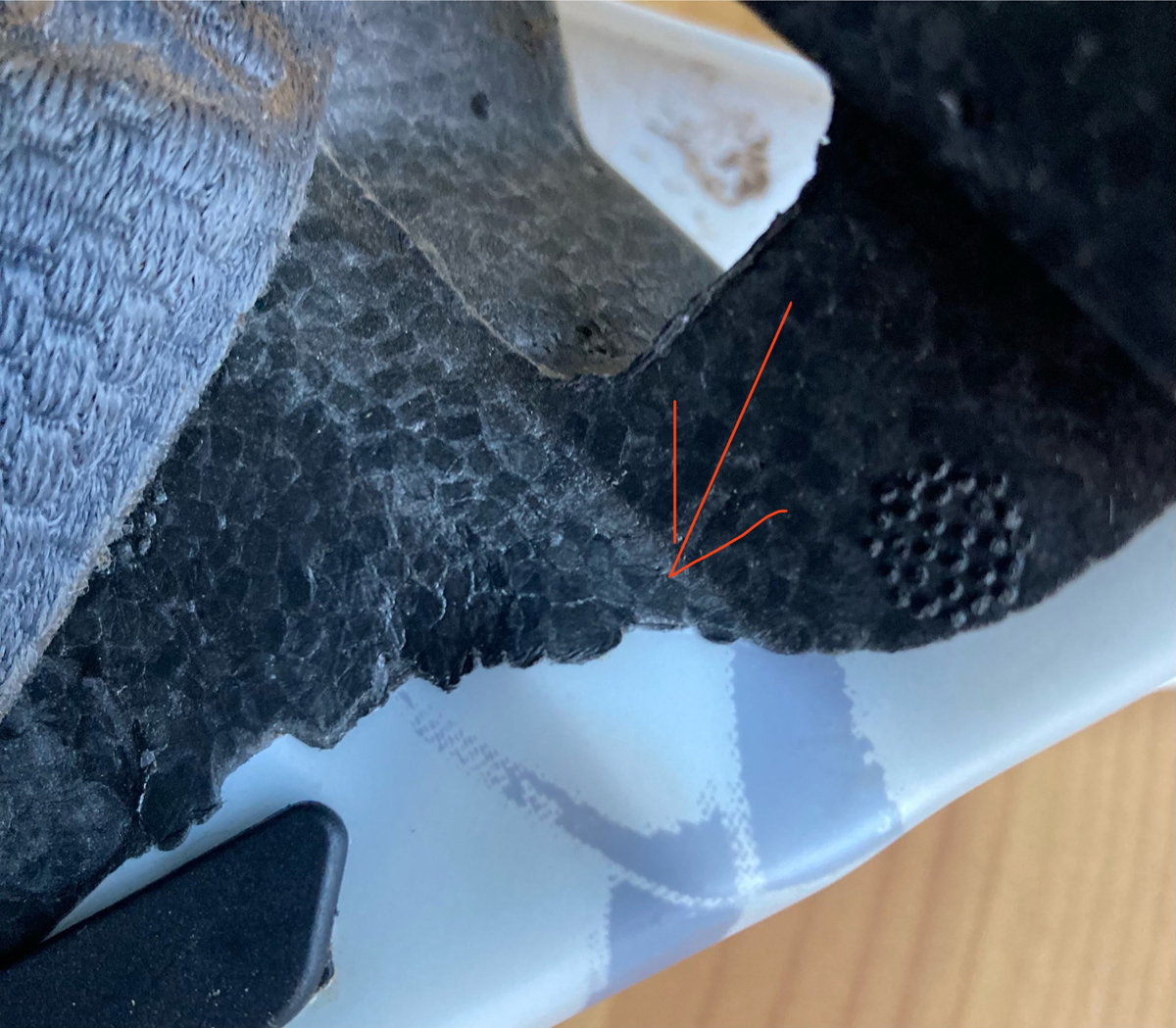
A small crack in Tom’s helmet from a crash, not visible from the outside. Photo by Tom Jow
According to the Center for Disease Control and Prevention (CDC), bicycling is the number one cause for sports and recreation-related emergency room visits concerning traumatic brain injuries (2). In addition, the paper Bicycle-Related Injuries states, “head injuries occur in 22 to 47 percent of injured cyclists and are responsible for over 60 percent of all bicycle-related deaths and the majority of long-term disabilities” (3).
This does not mean, however, that being in a bicycle accident is all doom and gloom. According to the journal review Bicycle Injuries and Helmet Use, wearing a bicycle helmet reduces head injuries by up to 85 percent. Categorically they report “odds reductions of up to 51 percent for head injury, 69 percent for serious head injury, 33 percent for face injury, and 65 percent for fatal head injury” (4).
What are Helmets Made Of
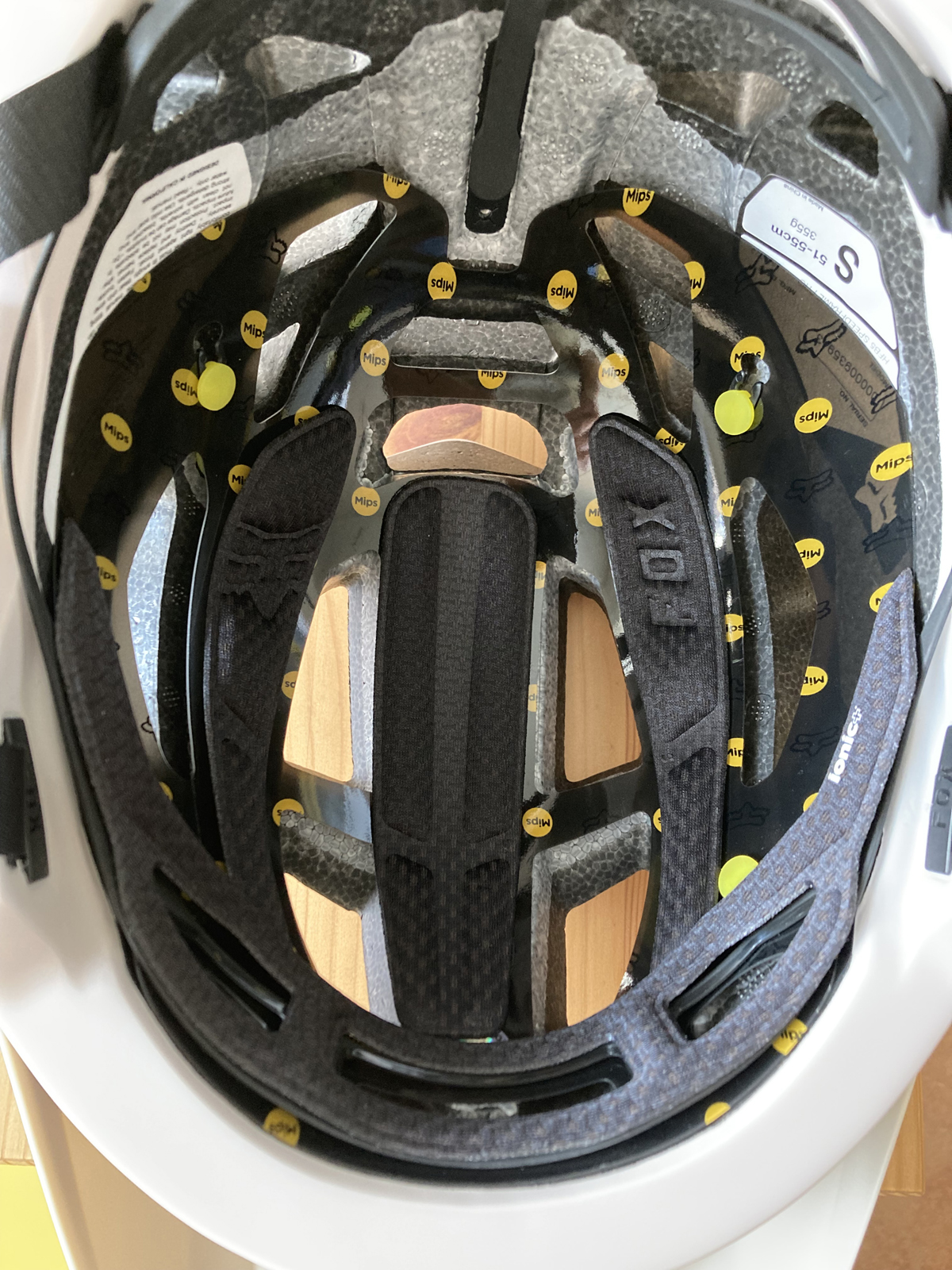
The basic modern bicycle helmet consists of an ABS (acrylonitrile butadiene styrene) outer shell with a thick liner of EPS (expanded polystyrene), soft foam pads (for fitting) and nylon straps for retention. Largely unchanged from its original design in the late 1980’s, the EPS liner is basically a mass of small Styrofoam balls (think cheap white drink cooler) engineered and molded into the shape of a head. As the main protective mechanism of the helmet, its function is to a) protect the skull from direct impact and b) slow the speed of impact, thereby slowing the impact of the brain inside the skull. However, the EPS liner cannot do the job alone. The ABS shell is designed to keep the EPS liner contained, preventing disintegration upon impact.
A close up of the EPS liner: Tiny styrofoam balls engineered and molded together to protect the human brain. Photo by Tom Jow
But that’s not all. As research has discovered more about the mechanisms of brain injury, new protective technologies have been engineered and incorporated into helmets. Since the early 2000’s there has been much development to protect helmet wearers from rotational (angular) impact forces. Helmet impacts are often indirect, glancing blows. These impacts incur rotational forces which may impart a shearing force between the brain and skull causing severe injury.
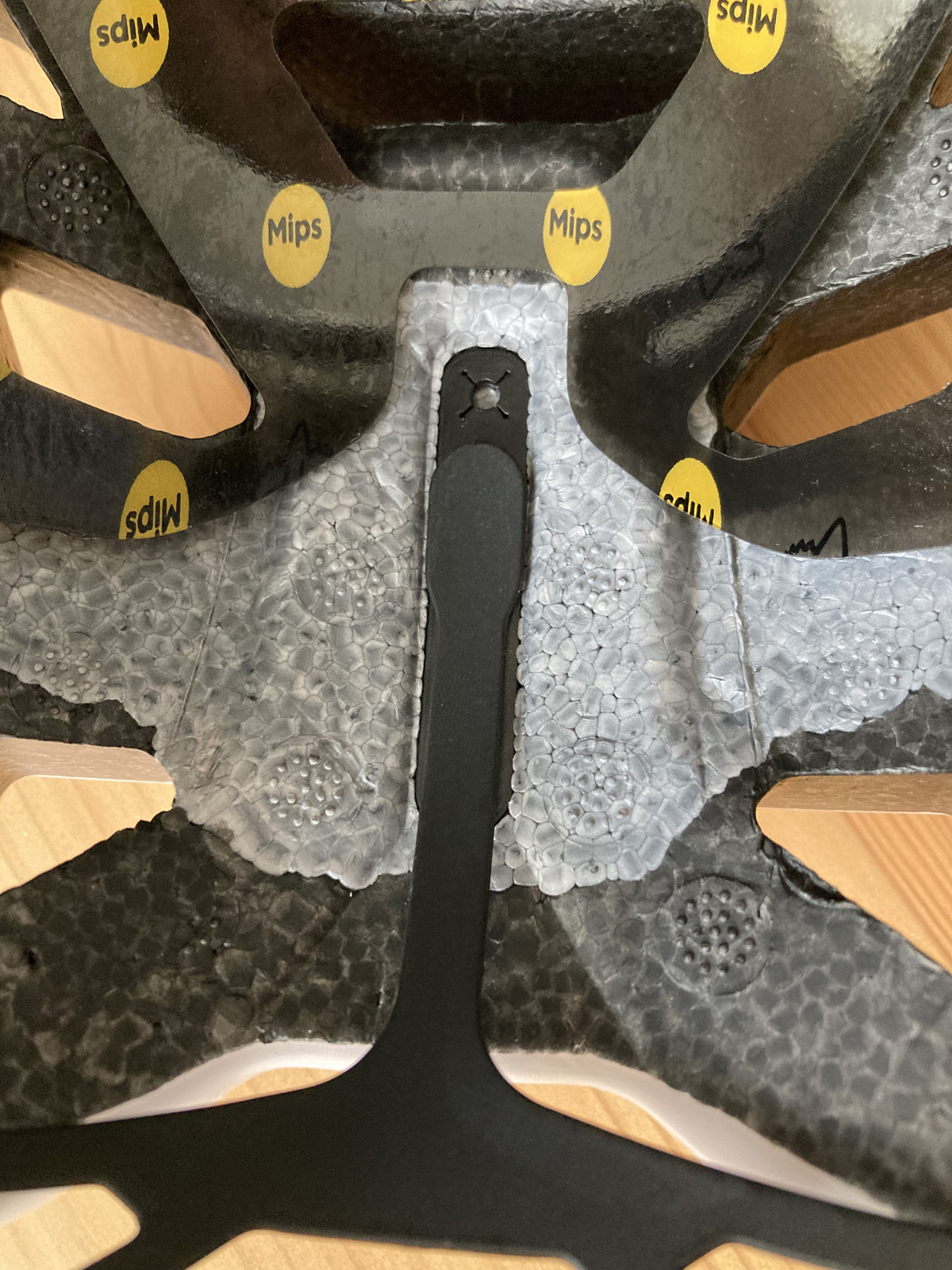
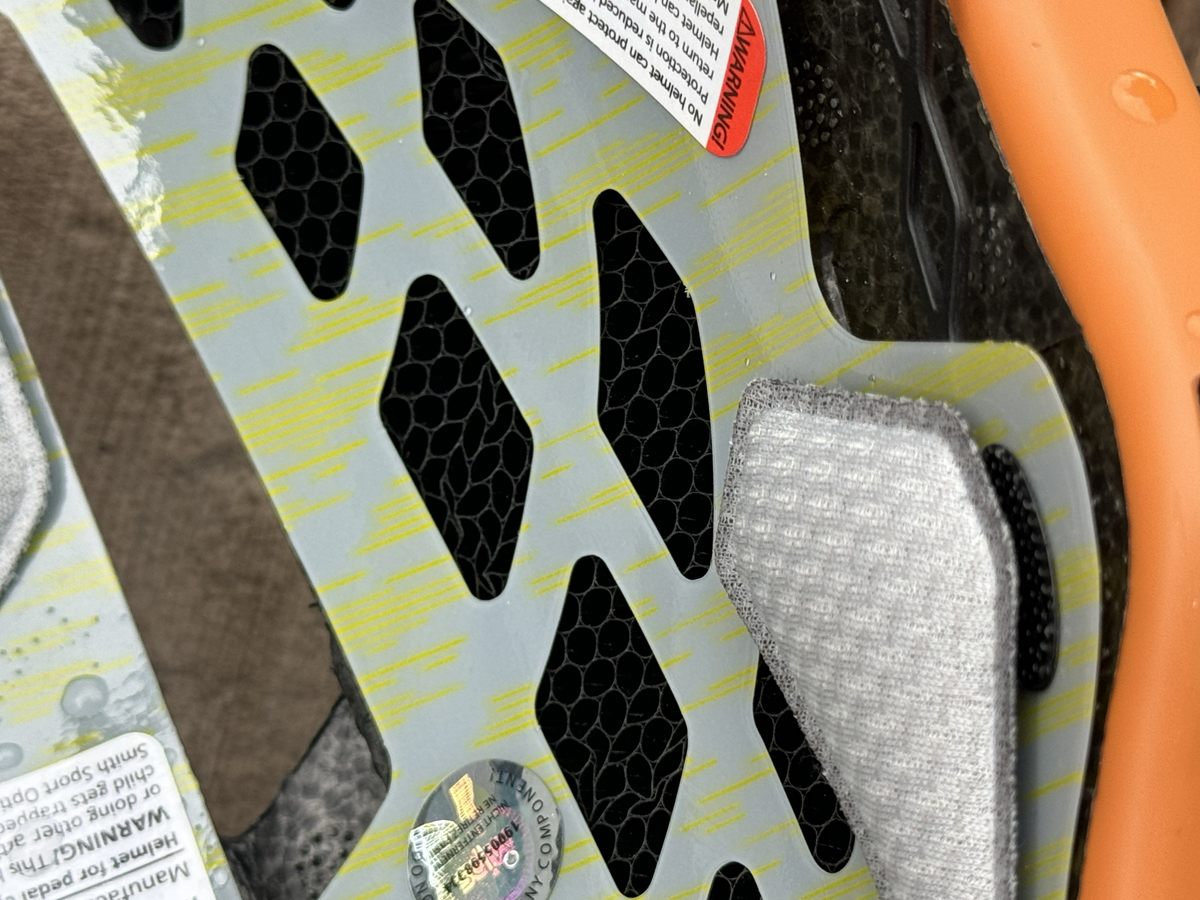
The low friction MIPS liner. Photo by Tom Jow
To combat this type of impact, helmet manufacturers have developed proprietary protective systems under many names; WaveCel, Spin, Turbine, ODS, AIM and more. However, MIPS (multi-directional impact protection system), an independently developed system, appears to have the most widespread use among the bicycle helmet industry. For over twenty years MIPS has been researching and developing helmet protection systems. A very simplified way the MIPS functions is like this: as a low friction liner attached to the head inside the helmet, it “slips” along the EPS liner during angled impact, reducing the rotational force imparted upon the skull and ultimately, between brain and skull (5).
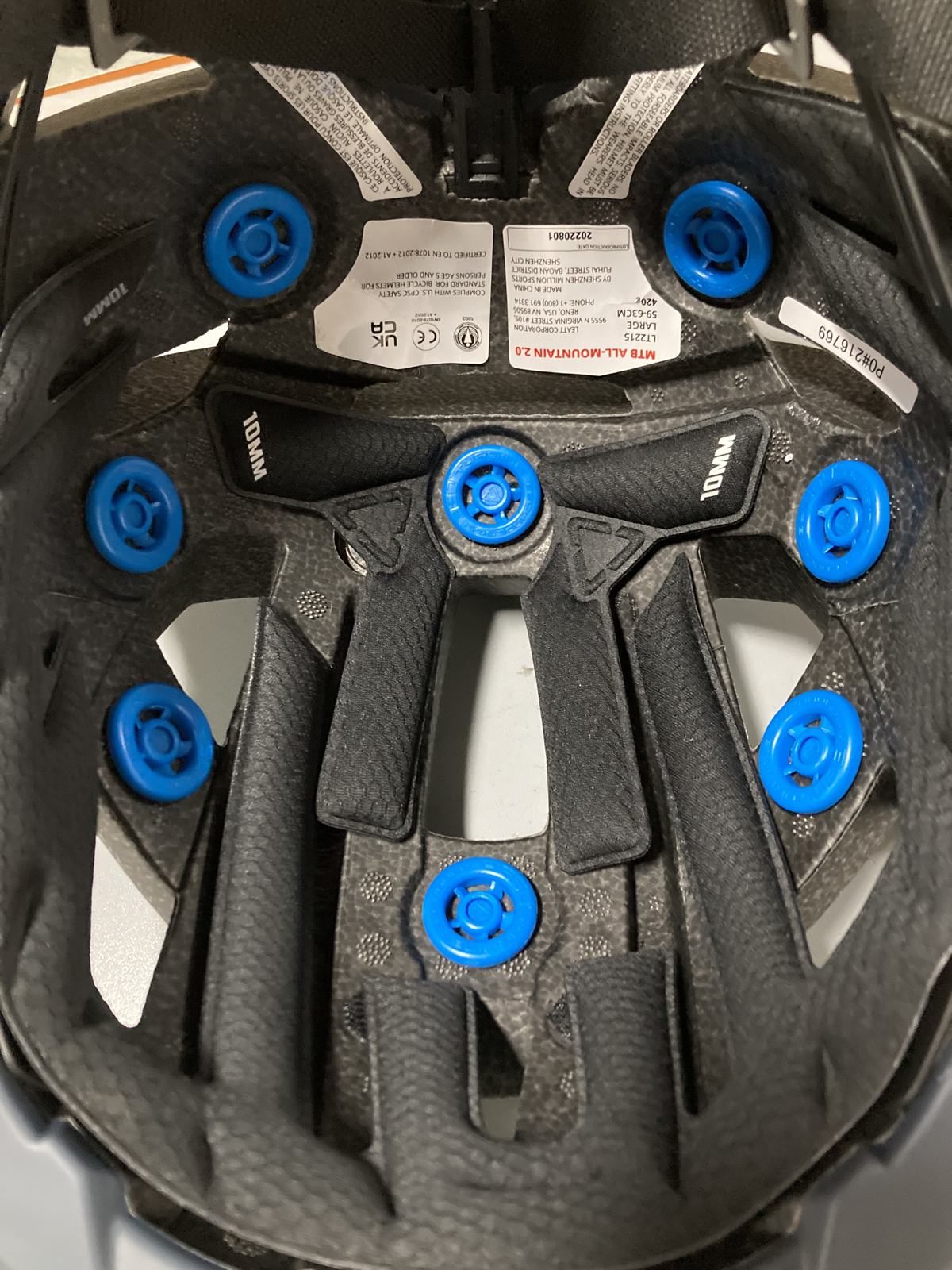
The soft discs of the Leatt Turbine system that reduce both linear and rotational impact forces. Photo by Tom Jow
How well do these systems protect the brain? In testing of their Turbine system, South African based helmet manufacturer Leatt found that at an impact speed of 4.3 m/s (9.6mph), reductions of linear impact force of 8 and 14 percent, as well as 12 and 28 percent reductions of rotational force (6). In addition, the review An Overview of the Effectiveness of Bicycle Helmet Designs in Impact Testing finds that at an impact speed of 4.2 m/s (9mph), compared to conventional helmets, helmets with MIPS reduce PRA (peak rotational acceleration) by up to 16 percent and GAMBIT (general acceleration model for brain injury threshold) forces by up to 49.3 percent (7).
SMITH Session helmet with MIPS and Koroyd, a vertically compressive, honeycomb-like material. Photo by Dave Iltis
While angular impact is getting much of the press, let us not forget about linear impact protection. Until now, the EPS liner has remained largely unchanged. Recently, two new materials are seeing greater application to bicycle helmets. Koroyd, used notably in Smith and Endura helmets, is integrated into the helmet in addition to the EPS liner. In development for more than ten years, Koroyd, a vertically compressive material, can compress 18 percent more than EPS (8). This allows Koroyd to absorb more impact energy than EPS. Another material, WaveCel, used exclusively in Bontrager and Trek helmets, is also a vertically compressive material. A study review of WaveCel helmet tests shows a 31 percent lower PLA (peak linear acceleration) when compared to conventional helmets (7).
SMITH Session helmet with MIPS and Koroyd, a vertically compressive, honeycomb-like material. Photo by Dave Iltis
As cyclists, every time we go for a ride there is a risk of falling. Whether we go across town to the grocery, out for a quick jaunt over the hill to the lake and back, or to that dirt trail we have ridden hundreds of times, there is the possibility of hitting our head. However, we can protect ourselves. Thanks to current research and technology, helmets are not only more protective, but lighter, more ventilated, and better looking than ever before. There is really little reason not to wear one. But you can’t make people wear them. Having put helmets to the test, I know better.
Sarmiento, et al, “Emergency Department Visits for Bicycle-Related Traumatic Brain Injuries Among Children and Adults — United States, 2009–2018.”, Centers for Disease Control and Prevention, Morbidity and Mortality Weekly Report / Vol. 70 / No. 19, 2021 pp. 693-697.
Thompson, M.B., CH.B., and Rivara, M.D., M.P.H., “Bicycle-Related Injuries.”, American Family Physician, May 15, 2001.
Jake Olivier, Prudence Creighton, “Bicycle injuries and helmet use: a systematic review and meta-analysis.”, International Journal of Epidemiology, Volume 46, Issue 1, February 2017, Pages 278–292.
Dr. Chris Leatt, Mr. Cornel de Jongh, Mr. Pieter André Keevy, “White Paper: Research and Development Efforts towards the Development of the Leatt Turbine System.”, Leatt Corporation, February 2018.
Abderezaei J, Rezayaraghi F, Kain B, Menichetti A, Kurt M. “An Overview of the Effectiveness of Bicycle Helmet Designs in Impact Testing.”, Front Bioeng Biotechnol. 2021 Sep 27;9:718407.
IRVINE, California (September 6, 2024) — The National Bicycle Dealers Association (NBDA) has offered a $129 annual discounted membership since 2022 to the 250+ US shops variously known as non-profits, community bicycle organizations (CBOs), co-ops and bike kitchens.
At their July meeting, the NBDA Board voted to move forward with a survey of America’s CBOs to determine what membership benefits would have the greatest appeal. Once a consensus is identified, NBDA will be able to better tailor existing programs or create new ones to the needs of the co-op shops.
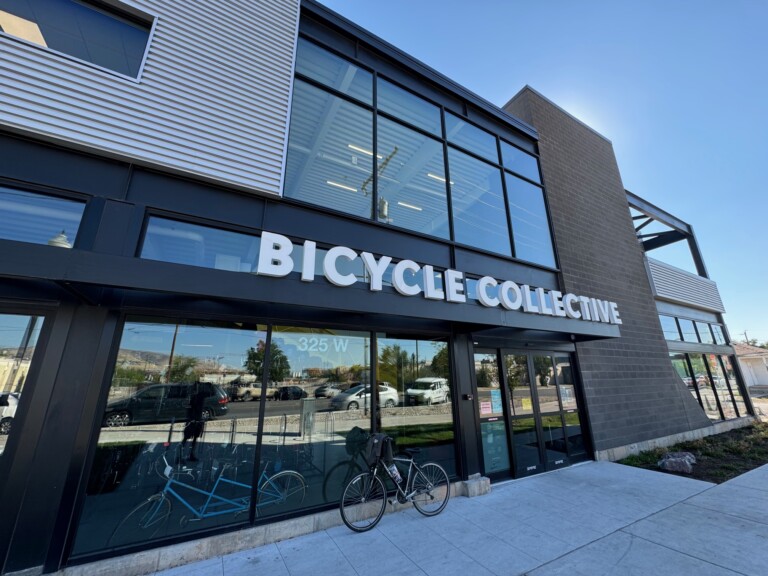
The Bicycle Collective is Utah’s non-profit community bike shop, with locations in Salt Lake City, Ogden, Provo, and Saint George. Non-profit bike shops like this are now able to join the NBDA for a reduced rate. Photo by Dave Iltis
“As the industry’s main source of support for North America’s bike retailers, we want to learn more about the overlap between for-profit and non-profit shops,” said Heather Mason, the NBDA’s President. “It’s an important part of our mission to assist all retailers and servicers of bicycles, regardless of their focus and client base.”
John Robinson, owner of Johnny Velo Bikes in Columbus, OH and Chair of the NBDA’s DEI Committee, has been engaged with his local non-profits for decades. “When you observe up-close the valuable products and services that CBOs provide to their communities, we feel it’s important to pursue ways to help them be more successful through the NBDA,” Robinson said.
Two industry volunteers are instrumental in moving forward with the process of identifying the needs of non-profit shops. Peter Woolery, founder of Bicycle Market Research LLC, has been researching the used bike marketplace, a key area of revenue generation for most co-op shops, on behalf of PeopleForBikes.
“I jumped at the chance to be involved with this area of progress for both the NBDA and the CBOs,” said Woolery. “My strengths in formulating surveys and analyzing the results will hopefully be helpful in bridging the gap between traditional NBDA members and the all-important base of non-profits.”
Also volunteering and joining the NBDA DEI Committee is Ray Keener, industry veteran and BRAIN’s Retail Editor. Keener has both directed Boulder CO’s Community Cycles as Board President for three years and researched non-profits for two BRAIN print articles.
“As far as a survey format, we’re turning to a process that worked really well when we started VeloBusiness back in 1998,” Keener said. “We faxed a survey to our database of US bike shops and asked them to rate their expertise in 40 different areas, everything from cash flow management to window displays.”
“Then we focused our stories for retailers where they rated themselves low like staff training, and ignored areas where they already had expertise, like bike fitting.” The CBO survey will follow a similar format, with the list of topics nearing 50. The survey will go out in late September to the 250 or so non-profits from a database that Woolery and Keener have created.
One more benefit that the NBDA will offer is to gather programs and services of interest to co–ops provided by other industry organizations all in one place on the NBDA website. Both the League of American Bicyclists and PeopleForBikes have agreed to coordinate their offerings this way.
“While the CBOs are distinctly different from our traditional shops in a number of ways, we want to both identify and celebrate those differences. The long-term goal is to bring everyone who’s offering the beauty and versatility of bicycle use to their community’s citizens under the industry tent,” concluded Mason.
For more information, or to make sure your CBO receives the survey, e-mail Keener at [email protected]. For more information about the National Bicycle Dealers Association and its initiatives, visit NBDA’s website.
Pro and Amateur course maps released and new open water swim in Lake Las Vegas goes on sale
LAS VEGAS, Nevada (September 5, 2024) — World #1 Taylor Knibb and World #3 Sam Long will spearhead the USA’s leading professional triathletes competing against the best in the world at the inaugural Lake Las Vegas T100 Triathlon on October 19-20.
Lake Las Vegas is the sixth stop on the Professional Triathletes Organisation’s (PTO) new 8-leg T100 Triathlon World Tour, which has already been to Miami, Singapore, San Francisco and London this year and will be touching down in Ibiza, Las Vegas and Dubai over coming months.
Lake Las Vegas. Image courtesy PTO
Knibb, who hails from Washington DC but lives and trains now in Boulder, Colorado, last month won her second Olympic silver medal in the mixed relay triathlon in Paris. She also won her first T100 race over the PTO’s made-for-TV 100km distance (2 km/1.2 mile swim; 80 km/49 mile bike; 18 km/11 mile run) in June. She’ll be joined on the Lake Las Vegas T100 Triathlon start line by mixed relay triathlon team-mate, Taylor Spivey, who picked up her first Olympic silver medal in Paris, and 2022 Ironman World Champion Chelsea Sodaro, who graduated from the University of California Berkeley.
Lake Las Vegas. Image courtesy PTO
Sam Long lives and trains in Tuscon, Arizona, and will lead the charge for the US in the men’s pro race. The popular American has already shared his plan to win the race before he tackles his bachelor party in Vegas as part of the same weekend. Joining him will be T100’s fastest runner, Jason West, who trains in Boulder, Colorado, and has averaged 3 minute 07 second kilometers for the 18km run already this year.
“I’ve already said that to have this kind of a race only a stone’s throw from where I’m based in Tucson will be awesome and I’m planning to win because that will make my post race bachelor party that much more epic,” said Long. Before adding his customary: “Yo Yo Yo!”
Course Maps Released


The pros start with a 2km 2-lap swim in Lake Las Vegas, before a first transition in the shadow of the stunning Westin Lake Las Vegas Resort and Spa. The 80km bike course breaks down into five 11 mile laps which each start with a steep 20% gradient climb onto a rolling course which goes through Wetlands Park and Calico Ridge towards Henderson and back. The total elevation over the five laps is more than 1,400 meters – the most on any bike course in the T100 series. The course finishes with an 18km run split into six 1.8 mile laps around Reflection Bay Golf Club.
Image courtesy PTO
“Racing at home in the US is always something I cherish and this will be the first time I’ve raced in Las Vegas,” explained Knibb. “So I’m really looking forward to it, and having now seen the details of the bike course, which includes some steep climbs and rolling sections, I’m even more excited, as that will hopefully play to my strengths.”
Image courtesy PTO
As well as the professional races, amateurs will also be able to take on a 100km triathlon over a very similar course. The swim in Lake Las Vegas will be just one 1.2 mile lap. The bike leg will follow the same climb out of the resort, but there will be four 12 mile laps, courtesy of an extended loop along Lake Las Vegas Parkway, before following the same rolling route out and back to Henderson. The 18km run takes place in a different section of the Reflection Bay Golf Club and will be made up of three 3.3 mile laps.
Image courtesy PTO
Open Water Swim Goes On Sale
And, in keeping with the T100 ambition to offer a variety of different distances and events, the PTO announced today 2km (1.2 mile) and 4km (2.4 mile) open water swims in Lake Las Vegas. These will take place on the Saturday afternoon between the women’s pro race, which starts at 0815, and the men’s pro race, which begins at 1415 local time. So there’s a great opportunity to watch the pros and also do one of the swims. The amateur 100km triathlon will start from 0700 on Sunday morning.
WASHINGTON, D.C. (September 5, 2024) – The U.S. Consumer Product Safety Commission urges consumers of micromobility products—including e-bikes, e-scooters, self-balancing scooters (hoverboards), and e-unicycles—not to use chargers that are marketed as “universal” or suitable with general categories of micromobility devices to avoid fires and injury or death, unless they have been tested and approved to work safely with your device.
Chargers marketed as “universal” or suitable for general categories of micromobility devices may fit into your device but still be incompatible with it. Each micromobility battery has specific charging needs that require the use of a compatible charger. Chargers with descriptions such as “suitable for use with e-bikes” or “suitable for use with X brand e-bikes” may be incompatible with your device. Using an incompatible charger can cause the battery to ignite and result in a serious fire.
Between January 1, 2023 and May 16, 2024, CPSC received 156 reports of fire and thermal incidents involving “universal” chargers for micromobility products, including reports of serious injuries and property damage. On September 5, 2024, CPSC issued a separate press release warning the public of the fire hazard posed by certain makes and models of these chargers.
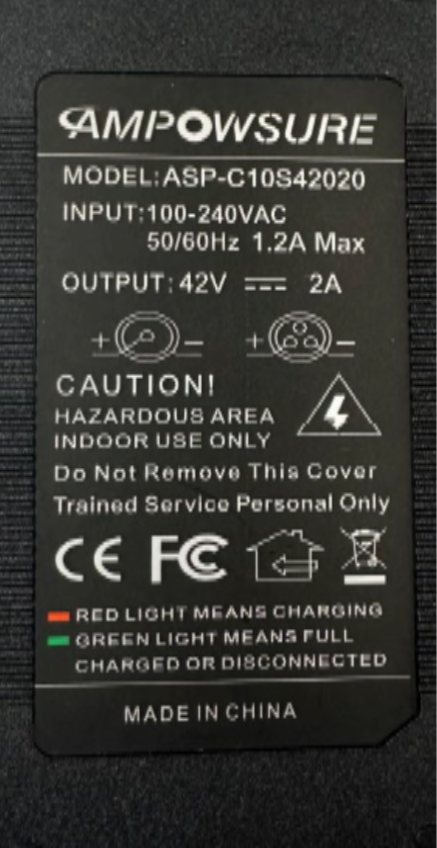
The AMPOWSURE ASP-C10S42020 and SafPow SPC-42020 battery chargers are prone to catching fire. The CPSC urges that use of these chargers should be discontinued immediately.
Use only the charger provided with your micromobility device. If you do not have the charger that was provided with your device, you can contact the manufacturer of your device for information about compatible replacement chargers. Before buying or using a replacement charger, make sure it has been tested and approved to work safely with your device. Do not use a charger that came with another micromobility device without confirming compatibility.
To further lower the risk of fire, take the following steps when charging your micromobility product with the correct charger:
Unplug the charger from the micromobility device when the charge cycle is complete. Do not leave the charger plugged into the device for long periods of time.
Always be present when charging micromobility products, and never charge them while you are sleeping.
Follow the manufacturer’s guidance on how often you should charge your battery if you are not regularly using your micromobility device.
Individual Commissioners may have statements related to this topic. Please visit www.cpsc.gov/commissioners to search for statements related to this or other topics.
East Rim Drive Open to Nonmotorized Recreation on September 7 and 14
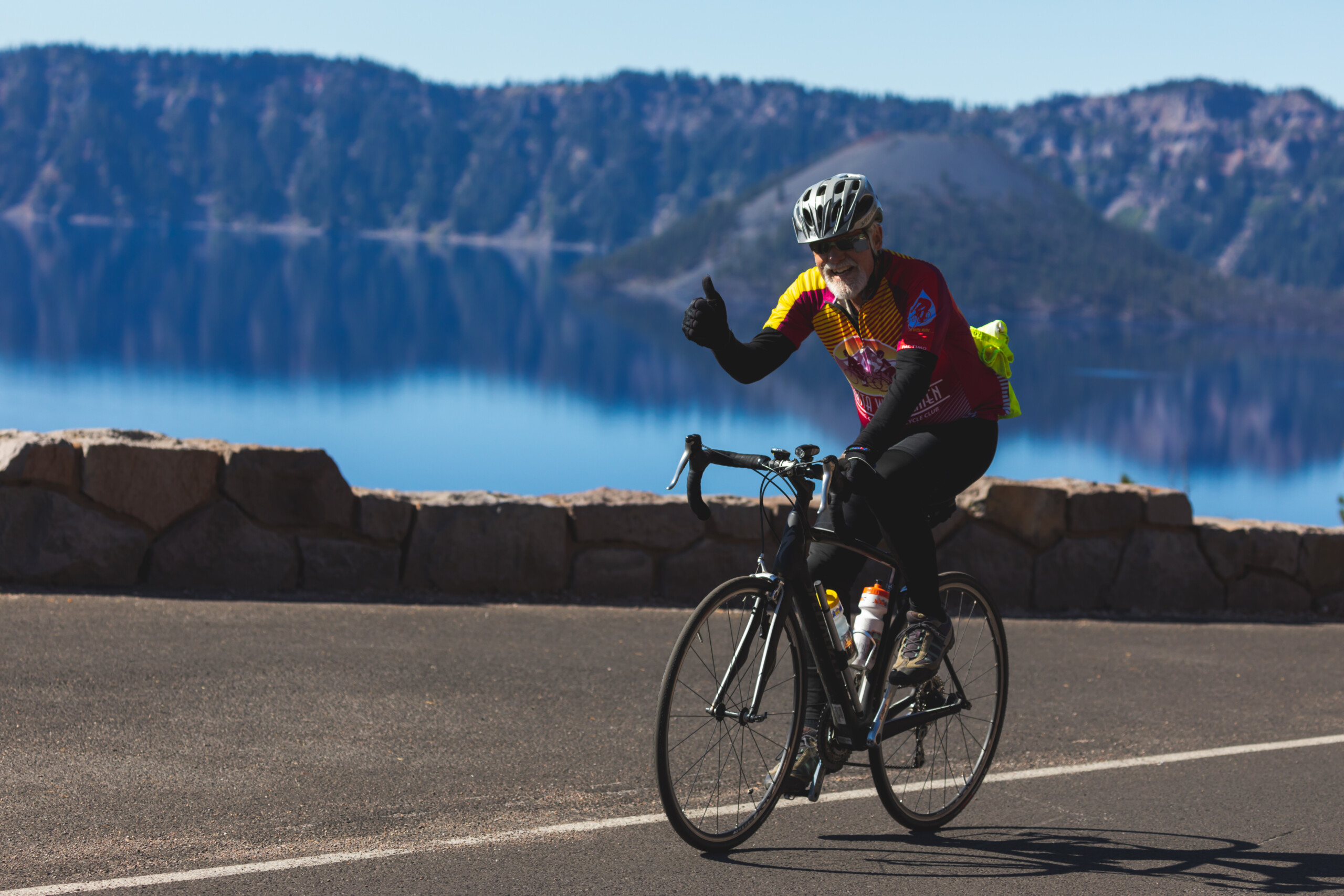
CRATER LAKE, Oregon – Crater Lake National Park, in partnership with the Friends of Crater Lake and Discover Klamath, will host the tenth annual Ride the Rim days on September 7 and 14, 2024. On these consecutive Saturdays, East Rim Drive from North Junction to Park Headquarters will be closed to motorized vehicles at 7:00 PM on the Friday before the event (September 6th and 13th) until 4:00 PM on Saturday to allow for nonmotorized recreation including biking, hiking, and running. The event is free, but normal park entrance fees apply.
Photo courtesy Ride The Rim
Superintendent Craig W. Ackerman said, “Ride the Rim has grown in popularity each year. It provides an opportunity to experience East Rim Drive in a unique way, under your own power, whether you’re on a bicycle or on your own two feet. It is a strenuous endeavor, but the rewards of a slower pace, opportunities for quiet reflection, and healthy, vigorous recreation make it a special experience for many people.”
In accordance with NPS policy, e-bikes (low-speed, electric bicycles with power assistance) are permitted as part of this event. The operator of an e-bike may only use the motor to assist pedal propulsion. The motor may not be used to propel an e-bike without the rider also pedaling, except in locations open to public motor vehicle traffic. The most typical route around the lake is approximately 25 miles with 3,500 feet of climbing at elevations over 7,000 feet. Make sure your battery power, or leg power, will last this long, or consider a shorter out-and-back route. There is no SAG wagon provided.
Visitors on these days should expect a large number of bicyclists on park roads. Please ride and drive with caution and patience. Cyclists should ride single file when sharing the road with motorists.
West Rim Drive will be open for all travel. North Entrance Road will also be open beginning at 7:00 PM Friday evening. Park staff recommend that cyclists avoid riding on West Rim Drive, if possible, because of increased traffic from Ride the Rim participants, shuttles, and other park visitors.
Ride the Rim parking is at North Junction, Park Headquarters, and the Picnic Hill area of Rim Village. Participants are encouraged to share rides to help ease parking congestion.
A free shuttle will transport participants to the start of their Ride the Rim experience or to their vehicles at the end. The shuttle will run between North Junction, Rim Village, and Park Headquarters. The shuttle does not carry bicycles in an effort to accommodate more people. A person or people from each party will need to remain with bicycles while members of their party park or retrieve vehicles. For single riders, there will be a limited bike valet at North Junction and Park Headquarters.
Smoke from wildland fires has been minimal over the past few weeks, but participants are encouraged to check weather and smoke forecasts and make decisions based on their personal needs. Smoke information is available at Current Smoke Outlook for Central Oregon.
By Dave Campbell — I discovered the sport of cycling in 1981 and had long enjoyed the Olympics. American cyclists at that point, however, had not won an Olympic medal since 1912! (1) George Mount finished an enormously promising sixth in road race at the 1976 Games in Montreal, which many saw as a sign that our long medal draught would soon be over. Our 1979 Junior World Champion Greg Lemond held great promise for a medal in 1980, but the American Government boycotted the Games to protest the Soviet invasion of Afghanistan. Lemond, like Mount before him, turned professional and headed off to Europe to contest the World’s oldest and most prestigious races. The Olympics at this time were strictly for amateurs so our 1984 medal hopes would have to come from elsewhere.
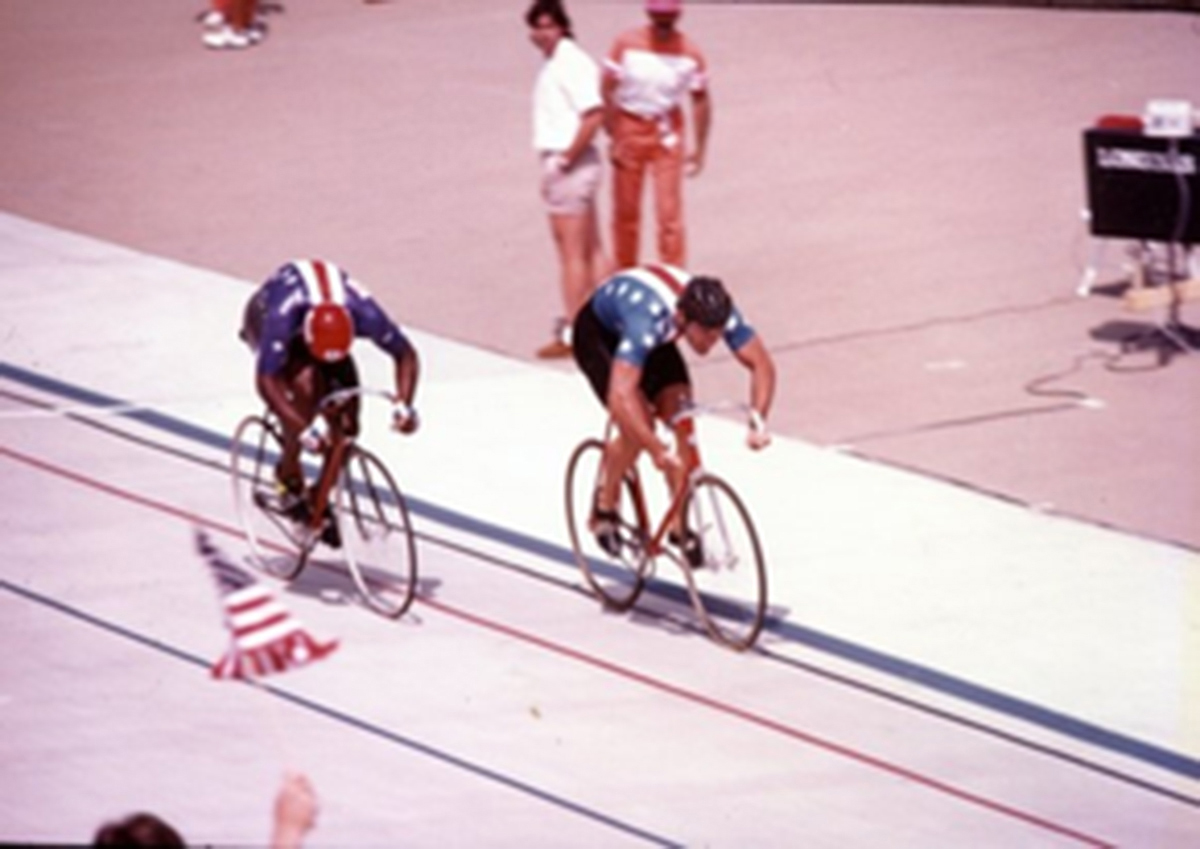
Mark Gorski (right) and Nelson Vails in the 1984 Olympic Sprint Finals. Photo courtesy Nelson Vails
Several factors converged in the following years that would change American prospects significantly moving forward. First was the arrival, via defection from Poland, of the first ever US National Coaching director, Edward Borysewicz. “Eddie B” as he was known to the riders, began training camps at the new Olympic Training Center in Colorado Springs and emphasized Junior development. The results were immediate and at the 1978 Junior World Championships in Washington, DC Lemond led the four-man team time trial to a bronze medal, the first ever medal for US men at the World level. All the riders had come through Eddie B’s camps! He also organized National team trips to the biggest amateur events in Europe following a series of early season training races in Texas. Second was improved corporate sponsorship, namely 7-Eleven, who not only built new velodromes, but allowed many of our best cyclists to become full-time athletes. The fact that the 1984 Olympics would be held on home soil (Los Angeles) was another big boost to our riders. And finally, the dominant Eastern European athletes would not take part due to a retaliatory boycott of their own. Fourteen Eastern Bloc nations led by the Soviet Union and East Germany pulled out of competition, which also allowed the participating nations an extra rider in the road race, match sprint, and pursuit.
The road races were held on the opening weekend. Aged only 15 at the time, I would watch both events while racing a local event in Wyoming. Internationally, American women had long been our best performers and a Women’s Olympic Road Race was being held for the first time in 1984. I favored the young and talented Rebecca Twigg, whom Eddie B. had christened “The Golden Girl”. A world pursuit champion in 1982, she was second at the previous year’s World Road Championship in Switzerland and a permanent resident at the Olympic Training Center. Most of my friends favored the older and more experienced Connie Carpenter-Phinney. (2)
Connie was the undisputed queen of Women’s cycling and an incredible athlete. She first competed in the Olympics in speed skating back in 1972 at the tender age of just fourteen. After an injury kept her out of the 1976 Winter Olympics, she started cycling, winning a silver medal in the 1977 Worlds Road Race and ultimately winning twelve National Championships. She later left cycling to attend college at the University of California-Berkeley where she won a National Rowing Championship in 1980. Upon learning of the inclusion of a Women’s race in 1984, she came out of retirement with the specific goal of winning Olympic gold and then retiring for good. She won the premier American race (and the biggest race in the world for women) the Coors Classic three times, took bronze in the 1981 Worlds Road race and won the 1983 World Pursuit Championship on the track. She had recently married Davis Phinney, who would compete later in the Men’s race, bringing significant media attention to the Olympic couple.
By the time we tuned in on the tiny black and white in my friends RV after our own race, a breakaway had formed with six riders. Both Carpenter and Twigg were there and riding strongly. The Americans main rivals were Maria Canins of Italy, a strong climber and all-rounder Jeannie Longo of France. At the finish, Twigg jumped first and Carpenter, normally an ace sprinter, appeared to be too far back. At the line Carpenter narrowly took the gold with a perfectly timed bike throw. The video of the two Americans in their Stars and Stripes jersey riding alongside each other hugging after the finish was an incredible image with which to begin the Games. With the men’s race immediately following, she took the medal over to their prep area, showing them what it looked like and telling them to get one for themselves! True to her word, she promptly retired and never raced again.
I left the race with local friends, and we watched the men’s race at a neighborhood barbeque on another small TV set. The scene was incredible and not like any we had ever seen at other events in American cycling. Thousands upon thousands of people, many of whom had camped out overnight, crowded every inch of the course! Some estimated that 200,000 spectators were on the roadside that day. American flags were waving everywhere under brilliant sunshine…and “our” riders were delivering!
My intensive “studying” of the US men had me favoring Thurlow “Turbo” Rogers, who had been US rider of the year in 1983 based on his impressive results (3) in major international races. When the break formed, Rogers was indeed there as was Phinney, a big favorite due to his sprint, and the enigmatic Alexi Grewal. Grewal was no favorite of the coaching staff and won the Olympic Trials to assure his spot because he was certain that otherwise he wouldn’t be selected. He had been our strongest rider at the previous year’s World Championship, ultimately finishing 14th but was notoriously difficult to integrate into a team. He had been dominating the Coors Classic a couple of weeks earlier before being kicked out for a positive doping test that presumably would keep him out of the Olympics. All of that was resolved at the last minute, however, and there he was! Perennial strongman Steve Bauer from Canada was there as well Nestor Mora, a Colombian we knew from the Coors, and two unknown Norwegians.
With Grewal there always seemed to be drama of some sort and this day was no exception. Perhaps the ultimate example in fact! He attacked on the big climb, going solo with two laps to go. He looked strong and smooth, and with a lap to go, he looked every inch an Olympic Gold medalist. Until he didn’t…on the final climb of Vista del Lago he seemed to fall apart…bobbing, weaving, and gasping. He was coming undone! Bauer, now a complete all-around road rider (he had been training with Lemond, who was the color commentator on American television) and not just the criterium specialist of years past, shot of the field and blew right past him! Grewal suddenly, as if hit by lightning, got himself together and rallied to just grab the Canadian’s wheel just over the top. Just. He looked like he could blow up at any minute. Bauer confidently did most of the work (and not for the first or last time) as they approached the finish, and we were all plagued with doubts. Bauer, we all knew, was a MUCH better sprinter than Grewal. Bauer thought so, too and he led it out only to have Alexi charge past, effectively beating him in the first ten explosive pedal strokes of the sprint. Mouth agape and arms flung high and wide, Alexi crossed the line in victorious glory…the most incredible and inspirational finish I had yet seen in cycling. Teammates Phinney, Rogers, and Ron Kiefel followed in 5th, 6th, and 9th respectively for an incredible overall team performance.
Similar success followed on the velodrome. Steve Hegg, a former downhill ski racer, and still a rising star in international cycling, surprised many by setting an enormous personal best time and qualified first in the Individual Pursuit. Many of the American riders, including Hegg, were using newly developed Raleigh aerodynamic bicycles with smaller front wheels, airfoil handlebars, solid chainrings, and rear disc wheels that were state of the art and in many ways ahead of their time. Hegg met race favorite Rolf Gölz of West Germany in the final, taking the lead at the 2500-meter mark and never looking back to take another Gold for the home team. Teammate Leonard Harvey Nitz just overcame Aussie phenom Dean Woods in an exciting final to earn Bronze.
Americans dominated the Match Sprint with Mark Gorski meeting his American teammate Nelson Vails in the final. The two had been strategically kept apart in the lead up to the Games, honing their speed in separate competitions with the long-established Gorski earning fifth at the 1983 Worlds behind Eastern European sprinters and the brash young Vails winning Gold at the Pan American Games. Vails was another media darling who was born in Harlem and honed his speed working as a bicycle messenger and raced with the New York City Skyline painted on his helmet. Gorski won the final 2-0 and America had another great image of the two home riders taking a victory lap arm in arm. Vails made history as the first African American and the first person of African descent to win a medal in cycling.
The Team Pursuit event was a rocky ride for the Americans with crashes, restarts, and all manner of misfortune plaguing them all the way to the final. After only qualifying fifth and then beating Denmark by just .01 of a second in the quarter finals, they finally made it into the final as the favorite against Australia. Their high-tech machines, however, were undone by of all things a toe strap, as Dave Grylls pulled his foot out on the start, forcing them to race the entire final with just three men and ultimately losing by nearly four seconds. Grylls graciously allowed Brent Emery, who had ridden earlier rounds to join Hegg, Nitz, and Patrick McDonough on the medal podium.
The final event was the 100-kilometer Team Trial featuring stalwarts Phinney and Kiefel, along with long time top American time trialist Andrew Weaver and a young rider many called “The Next Lemond” Roy Knickman. Kiefel, significantly had been part of that historic 1978 Junior squad. Team captain Phinney, who had taken a risk in the Road Race by wearing a skin suit in the heat was conservative this time and elected not to use rear disc wheels. The Italians used discs front and rear and roared to victory in well under two hours and over four minutes clear of second placed Switzerland. Riding otherwise very aero machines, the Americans were just 19 seconds back to earn bronze.
Some of our other riders, most notably the Points Racers, performed well below expectation and Rolling Stone magazine broke a story in January of the following year that at least partially explained it. Several riders including Hegg and Nitz had used the immoral but not illegal practice of blood boosting in a hotel room prior to the games. Team officials had long debated using this process of removing blood, separating out the red cells and freezing them and then later reinfusing them for improved oxygen transport to the muscles. However, the decision to finally do it was made at the last minute and many riders were forced to use relatives’ blood and some got ill. Despite the ensuing controversy, several of the 1984 US Olympians went on to promising professional careers and even raced in the Olympics again. US cycling sold more racing licenses than ever, but our teams have never achieved this level again. At the 1988 Olympics Americans won just one medal, a bronze. Five medals in 2016 including two golds, and six medals in 2024 including three golds have been our best performances since. Perhaps 2028’s Olympic return to Los Angeles will see another American Gold Rush!
Notes:
In 1912 at Stockholm, Carl Schutte took a bronze in the Individual Time Trial and led the team of Alvin Loftes, Albert Krushel, and Walter Martin to a bronze in the Team Time Trial.
Young readers will recognize her as the mother of Taylor Phinney, a three-time Olympic cyclist himself from 2008 through 2016.
Second in Italy’s Settimana Bergamasca, third in Italy’s Giro del Regioni, and perhaps most importantly fourth in Eastern Europe’s Peace Race, the biggest amateur stage race in the world against the best competition.
By Nancy Clark MSRD CSSD — Thankfully for millions of athletes around the globe, coffee can be enjoyed guilt-free as part of a healthy sports diet. Coffee contains nutrient-dense plant compounds called phytochemicals that promote health and offer strong anti-oxidant and anti-inflammatory properties. Studies suggest coffee can actually improve heart-health. That said, high coffee/caffeine intakes can trigger pre-existing cardiovascular conditions such as atrial fibrillation. And, needless to say, coffee brimming with sugar, flavorings, cream, and coffee whitener is not a part of this conversation!
Scientifically speaking, coffee and caffeine are two different substances. Caffeine is pure and comes in standardized doses (such as NoDoz, caffeinated chewing gum, caffeinated sports gels,). The average American consumes 165 to 230 mg. caffeine per day—that’s more-or-less the amount in two small (8-oz) cups coffee or a 16-oz Starbucks Grande. The caffeine content of coffee varies according to the type of bean, how it is roasted, ground, and brewed. Analysis of 20 commercial espressos reported the caffeine content was inconsistent and ranged between 50 to 320 mg per 8-ounce serving. FDA’s recommended daily limit is 400 mg caffeine per day.
Although coffee is the most popular form of caffeine, other sources include:
Tea: 30-50 mg caffeine/8 oz
Cola: 30-40 gm/12-oz can
Energy drinks: 100 mg/12-oz can Red Bull
Energy bars: 80 mg/Verb Energy Bar
Electrolyte tablets: 40 mg/tablet Nuun Sport + Caffeine
Caffeinated chewing gum: 100mg/piece Rev Energy Gem
Caffeine appears quickly in the blood (within 5 to 45 minutes after ingestion). Its impact generally peaks within 15 to 120 minutes and the boost can last for ~4 to 6 hours. By that time, half of the caffeine has been metabolized by the liver. By 10 hours, caffeine generally will have been completely cleared from the bloodstream. Caffeine’s impact varies widely person to person, depending on genes that influence the breakdown of caffeine. Athletes who are fast metabolizers of caffeine get an immediate boost. Others are slow metabolizers. Learn your body’s response!
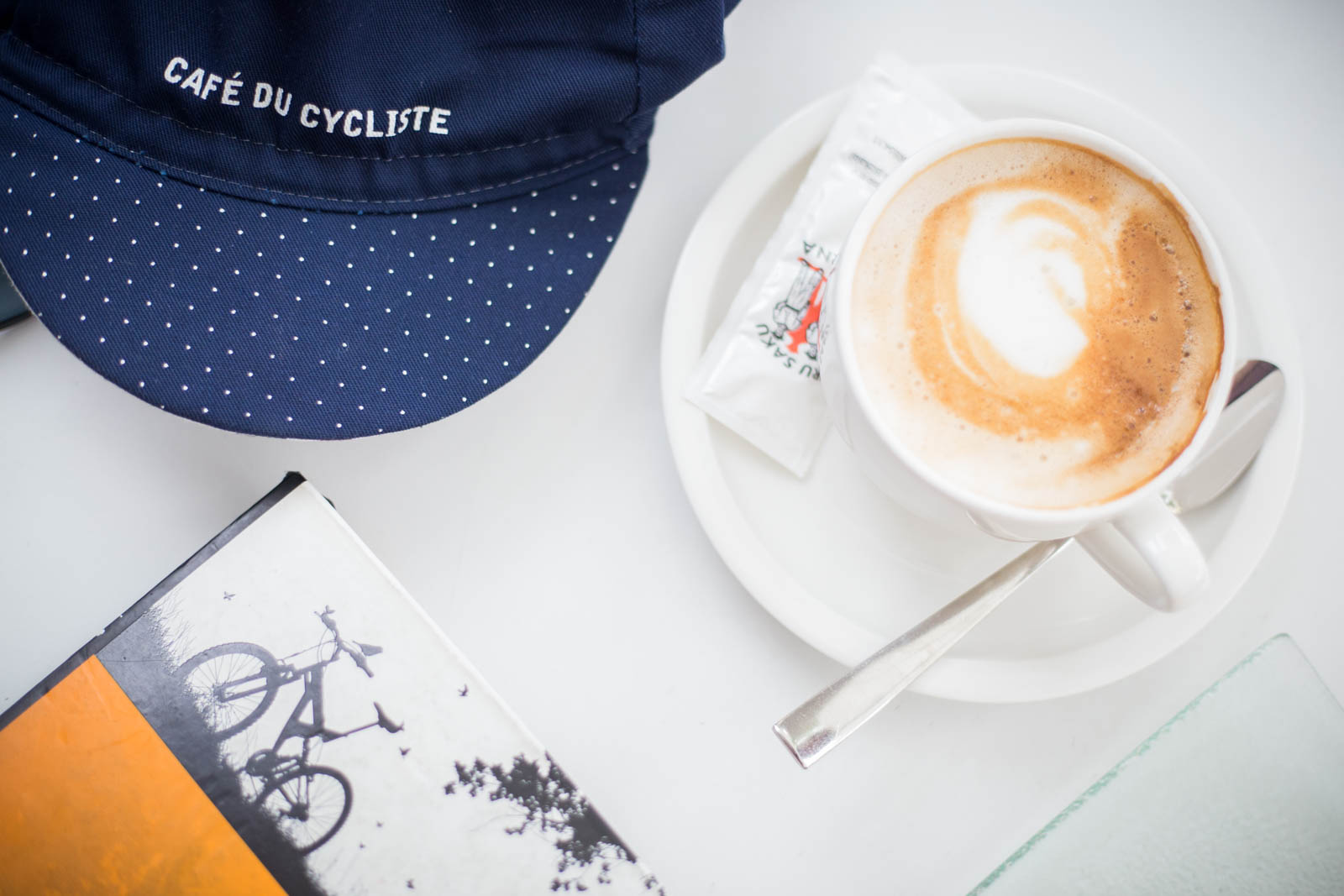
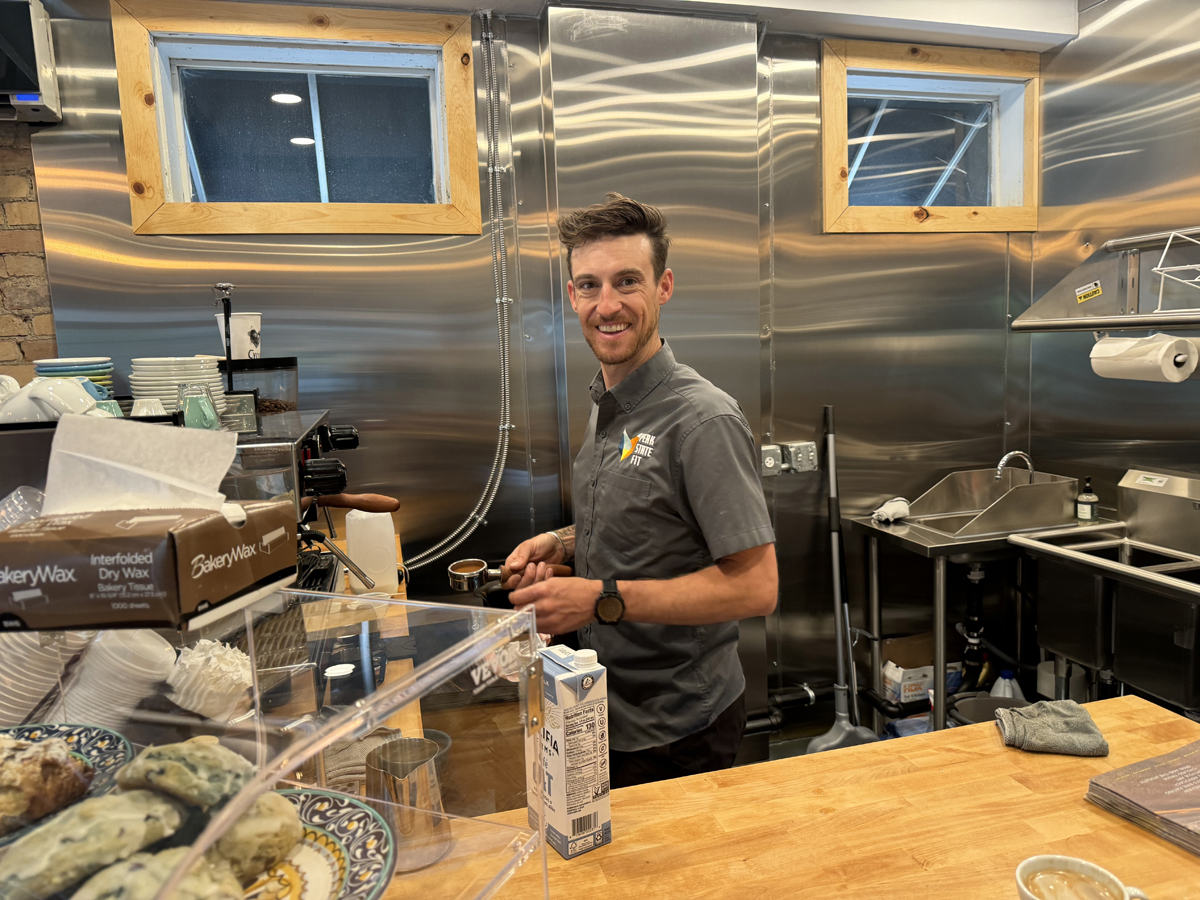
Peak State Fit’s Pat Casey prepares an espresso drink at their new bike and coffee shop in Salt Lake City, Utah. Photo by Dave Iltis
For athletes who already feel anxious before a competitive event, pre-exercise caffeine can put them over the edge by increasing jitters and anxiety levels. A better time to consume caffeine to enhance performance can be when the athlete starts to feel tired (as opposed to taking it an hour pre-exercise). Delaying caffeine use until the onset of fatigue gives a welcomed boost. Caffeinated gels, sports drinks or sports chewing gums are popular energizers during endurance exercise!
Given most athletes know that coffee/caffeine can make a workout seem easier, this article addresses other questions asked about this beloved morning wake-me-up-er and idolized afternoon energizer.
Do habitual coffee drinkers get the same performance benefits as non-users?
Yes. If you habitually drink coffee every day, you may need a higher dose of performance-enhancing caffeine than a coffee-abstainer. A proposed dose is about:
1-2 mg/lb (2-5/kg) for non-users
1.5-3 mg/lb (3-6 mg/kg) for average coffee drinkers
3-4.5 mg/lb (7-10 mg/kg). for heavy coffee drinkers.
For a 150-lb athlete, this ranges widely between 150-450 mg. per dose.
The days before your event, there’s no need to stop drinking coffee. You’ll simply suffer through withdrawal symptoms like headaches. You won’t get an added boost from abstinence followed by an event-day jolt of caffeine.
Coffee contains nutrient-dense plant compounds called phytochemicals that promote health and offer strong anti-oxidant and anti-inflammatory properties. Caffeine can boost physical and mental performance. Photo by Dave Iltis
How much is too much coffee/caffeine?
The FDA’s suggested 400-milligrams of caffeine per day is a safe dose for most adults. That’s the amount in about four 8-oz cups (32 oz.) of coffee, 10 cans of cola, or four 12-ounce cans of Red Bull. If you are pregnant, abstaining from coffee will minimize the risk of miscarriage or other negative outcomes. A toxic amount is 1,200 mg caffeine taken in one dose. Unlikely to happen, but not impossible…
Does coffee/caffeine “work” for every type of athlete?
Yes, caffeine can effectively—and equally—help males and females, sprinters and endurance athletes, power athletes and teams. Athletes have sought-out caffeine for more than 100 years. It improves both physical and mental performance. Caffeine increases arousal, alertness, vigilance, and mood. It reduces perception of pain and can make a tough workout seem a lot easier! That said, caffeine’s effectiveness is variable. The response is weaker for some athletes and stronger for others, depending on their genetic predisposition.
The suggested performance-enhancing dose is between 1.5-3 mg/lb (3 – 6 mg/ kg). That equates to roughly 200 to 400 mg for a 150-lb (68 kg) athlete. That said, each athlete needs to experiment during training to learn the right dose, timing, and source of caffeine for their body. Perhaps a sip of morning coffee does the job? Or maybe you benefit from an hourly caffeinated gel during the marathon? Whatever you do, don’t over-do it! More is not better, and you want to be able to sleep that night…
Is coffee dehydrating when taken during exercise? When consumed throughout the day?
No. Caffeine is not a diuretic. Drinking coffee does not lead to dehydration. A study with 50 habitual male coffee drinkers who consumed coffee with ~300 mg. caffeine four times a day indicated no difference in urine output compared to when they drank the same amount of plain water. That means you can count coffee as water, even when exercising in the heat. It replaces sweat losses and contributes to the daily recommended 8 glasses water a day.Many athletes believe coffee has a diuretic effect because, after having consumed a mugful of coffee, they need to visit the bathroom. While they might need to pee quicker than if they had consumed plain water, in 24-hours, they won’t pee more than they consumed. (That is, unless they consume very high doses of caffeine (>6 mg/kg or >500 mg/dose). By that point, they would likely feel yucky and jittery.
The bottom line
If you are a coffee drinker, please enjoy your morning brew guilt-free (as long as it is not loaded with cream, sugar, and excess calories). As an athlete, you may want to learn how to best use coffee/caffeine as a potential performance enhancer. That said, no amount of caffeine will compensate for inadequate sleep and an irresponsible sport diet. Fuel wisely, sleep well, train appropriately, and then add some caffeine, if desired.
For More Information
Antonio J. et al. (2023) Common questions and misconceptions about caffeine supplementation: what does the scientific evidence really show? J Int’l Soc Sports Nutr 21:1, 2323919
Lowery L et al. (2023) International society of sports nutrition position stand: coffee and sports performance. J Int’l Soc Sports Nutr 20:1,2237952
The UCI Road and Para-Cycling Road World Championships will take place in Zurich, Switzerland on September 21-29.
ZURICH, Switzerland (September 3, 2024) — The 2024 UCI Road and Para-Cycling Road World Championships are headed to Zurich, Switzerland for the first combined World Championships. Athletes will compete in the Individual Time Trial, Road Race, and Team Time Trial/Relay across the Junior, U23, Elite, and Para-Cycling categories.
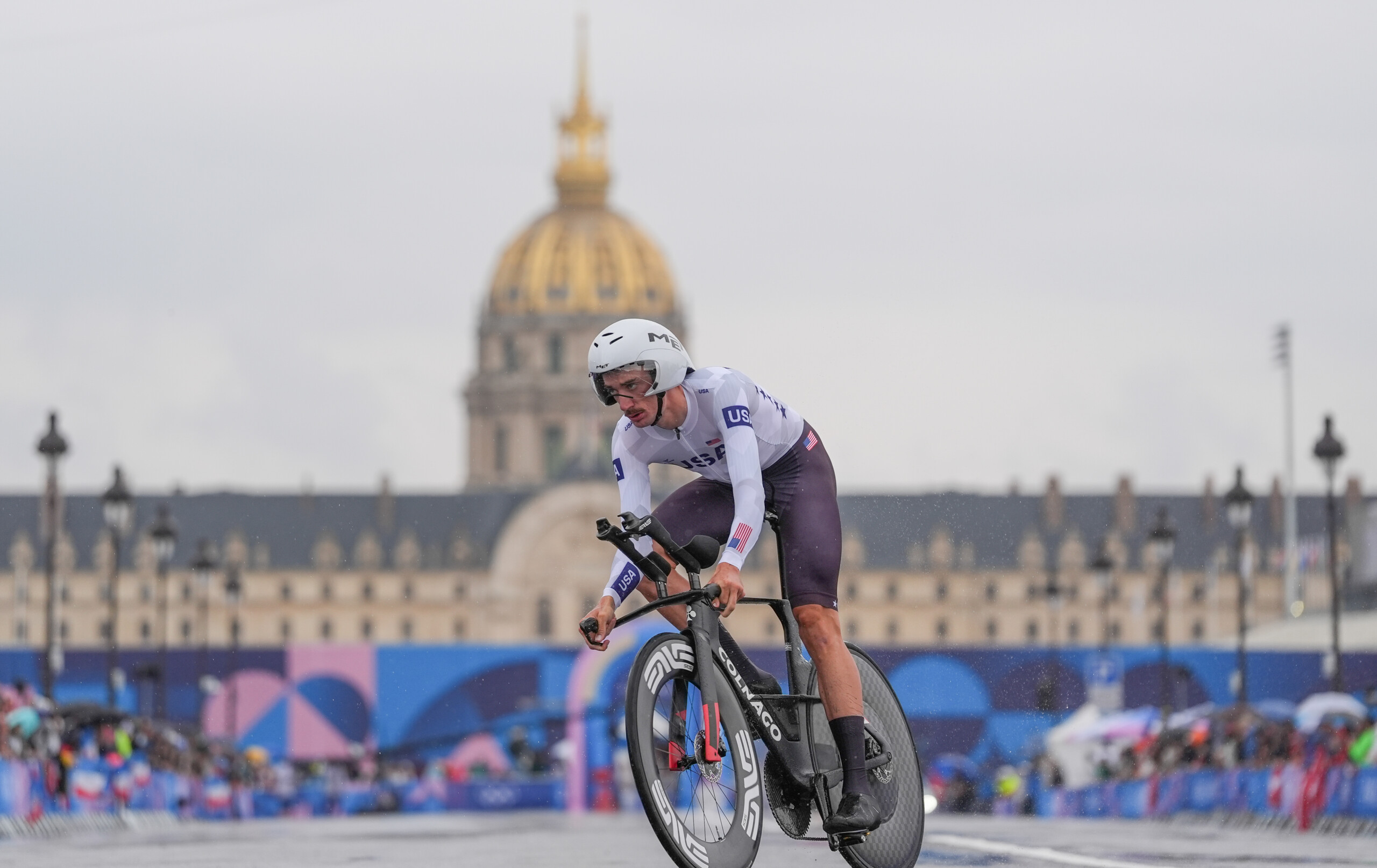
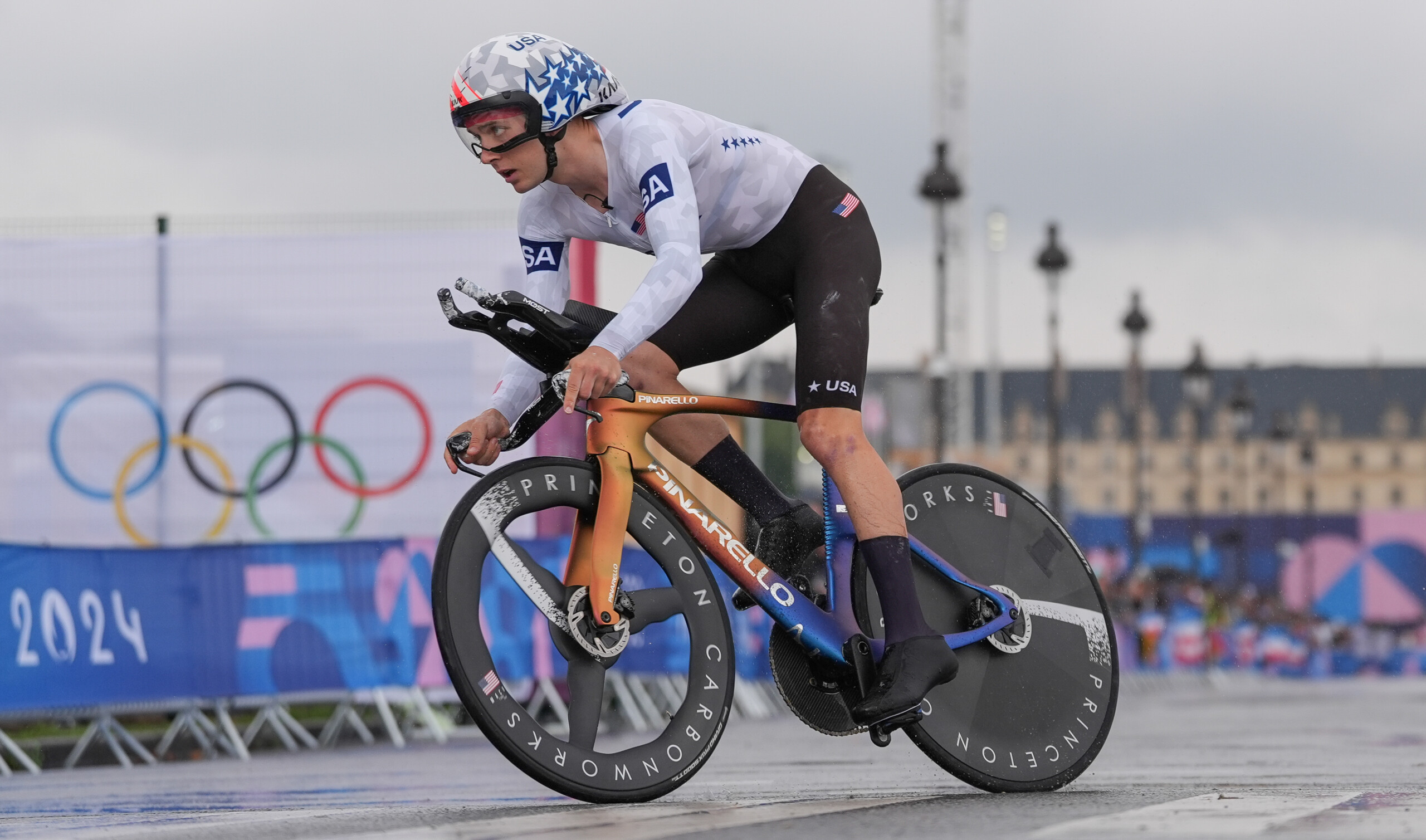
After a big World Tour season and the Olympics this year, the team is ready to close out the season with the World Championships. Paris 2024 Olympians Matteo Jorgenson (Boise, Idaho; Visma – Lease A Bike), Brandon McNulty(Phoenix, Ariz.; Team UAE), and Magnus Sheffield (Pittsford, N.Y.; Ineos Grenadiers) will compete in their respective events.
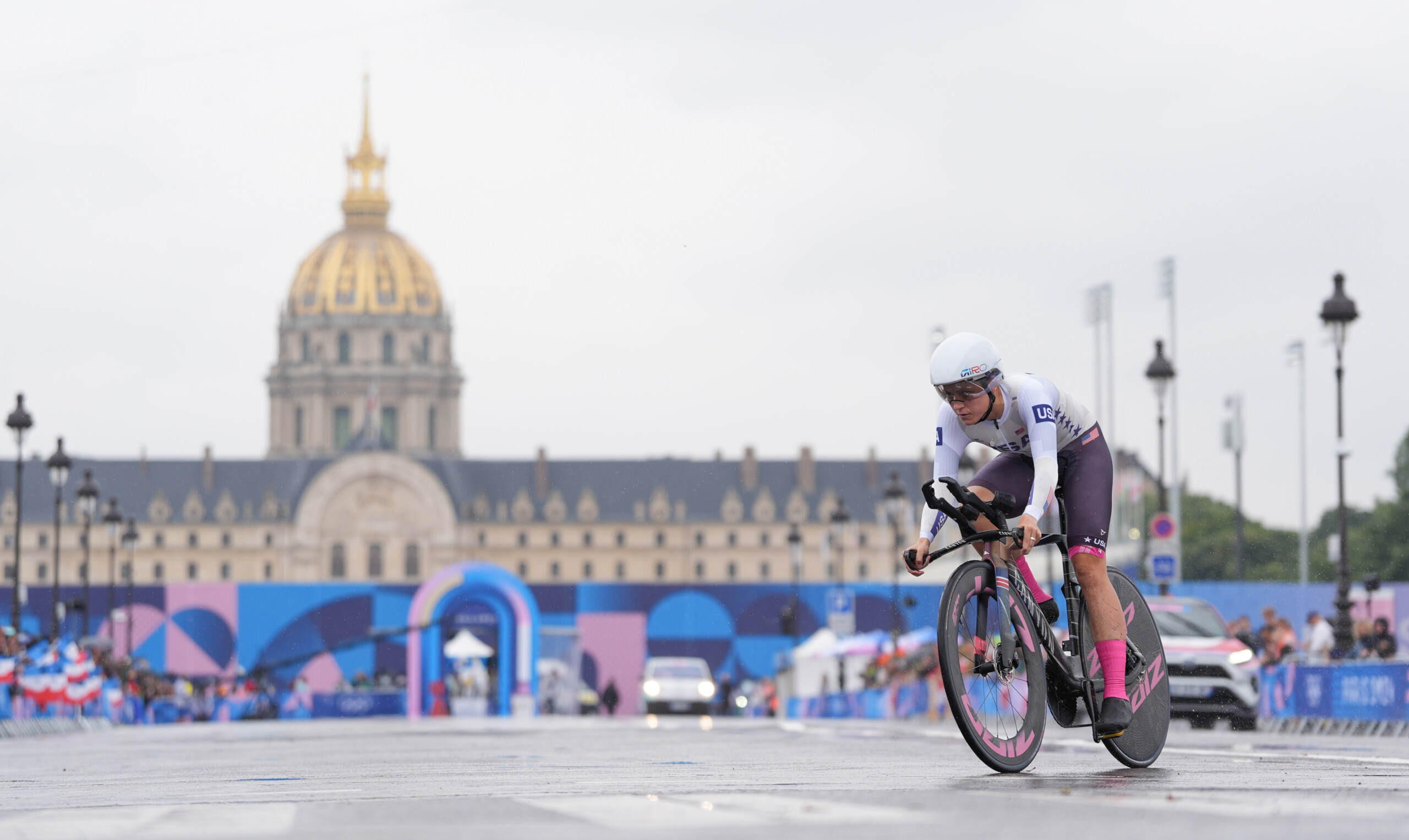
Picture by Zac Williams/SWpix.com – 27/07/2024 – Paris 2024 Olympic Games – Cycling Road – Men’s Individual Time Trial (ITT) (32.4km) – Invalides to Pont Alexandre III, Paris, France – Brandon McNulty (USA)Picture by Zac Williams/SWpix.com – 27/07/2024 – Paris 2024 Olympic Games – Cycling Road – Men’s Individual Time Trial (ITT) (32.4km) – Invalides to Pont Alexandre III, Paris, France – Magnus Sheffield (USA)
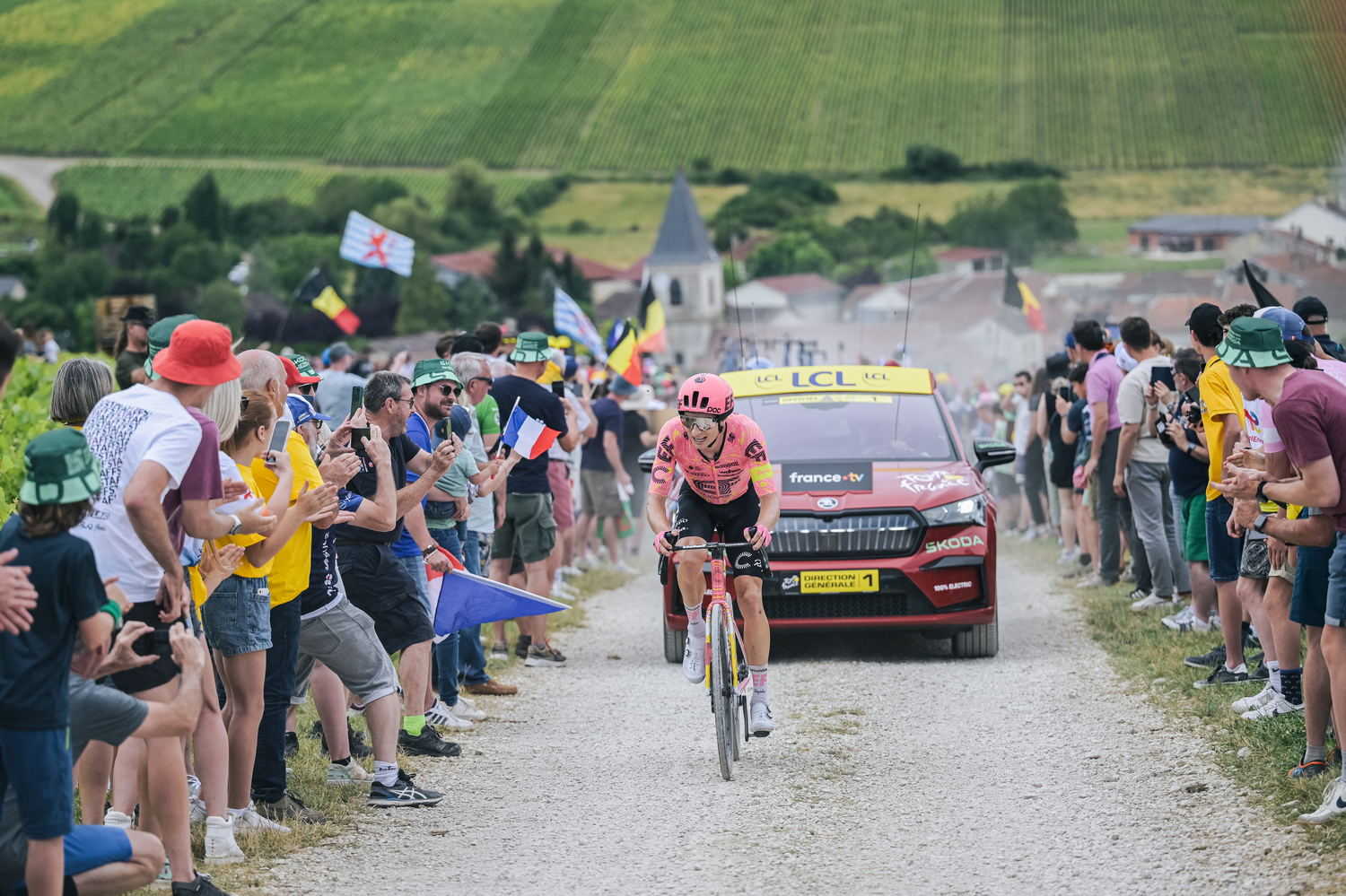
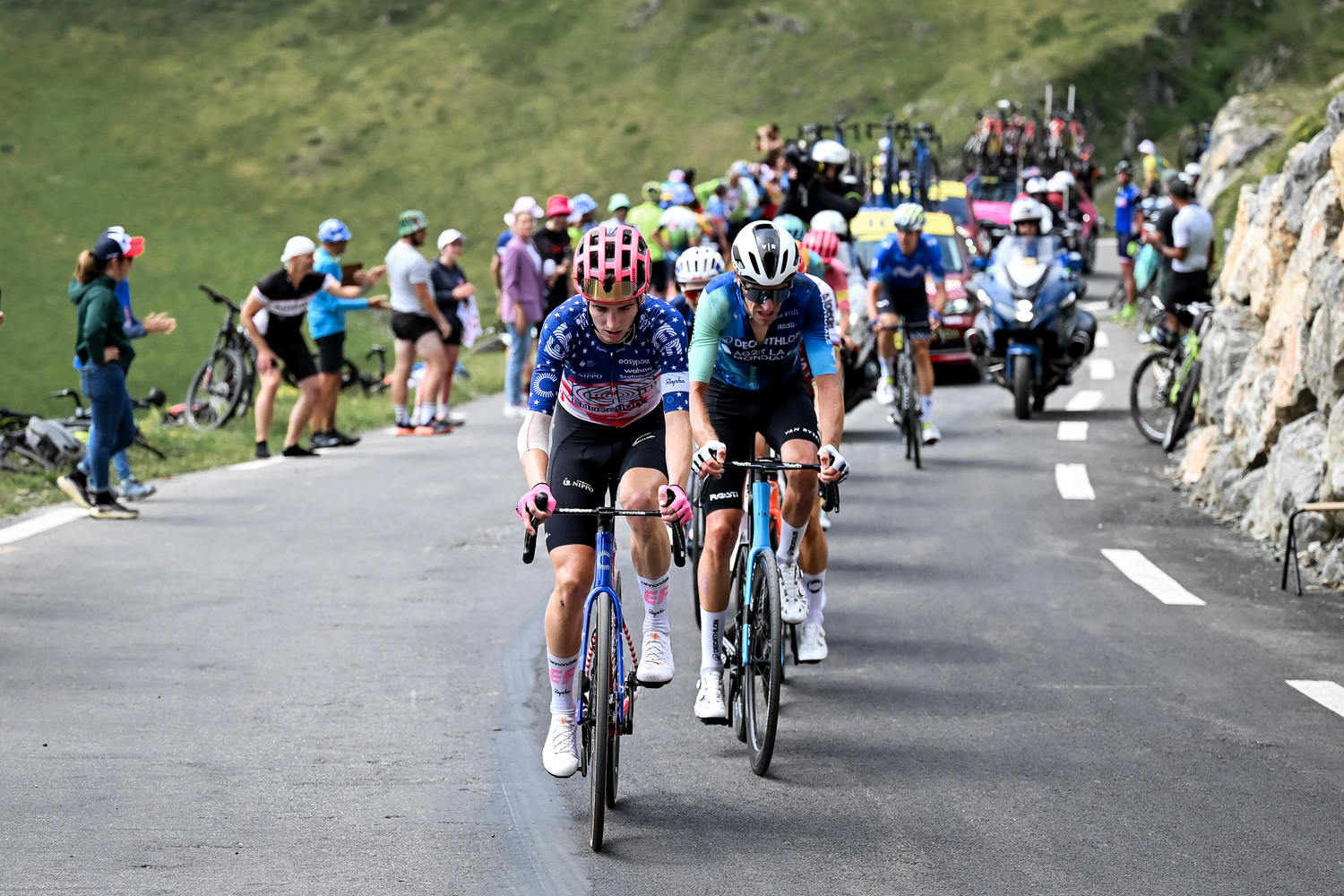
Road Race National Champion Sean Quinn (Sherman Oaks, Calif.; EF Education-EasyPost) will compete at the World Championships after completing his first Tour de France this year. He will be joining his teammate Neilson Powless (Roseville, Calif.; EF Education-EasyPost) on the World Championships roster.
Last year In Glasgow was Kevin Vermaerke’s (Rancho Santa Margarita, Calif.; Team dsm-firmenich PostNL) first Elite Road World Championships, where he proved he had the legs to compete at the front of the peloton. Riley Sheehan (Boulder, Colo.; Israel – Premier Tech) will compete in his first Elite Road World Championships after an impressive season. Quinn Simmons (Durango, Colo.; Lidl-Trek) has had a tough year and took a step back from racing but will make his return at the World Championships.
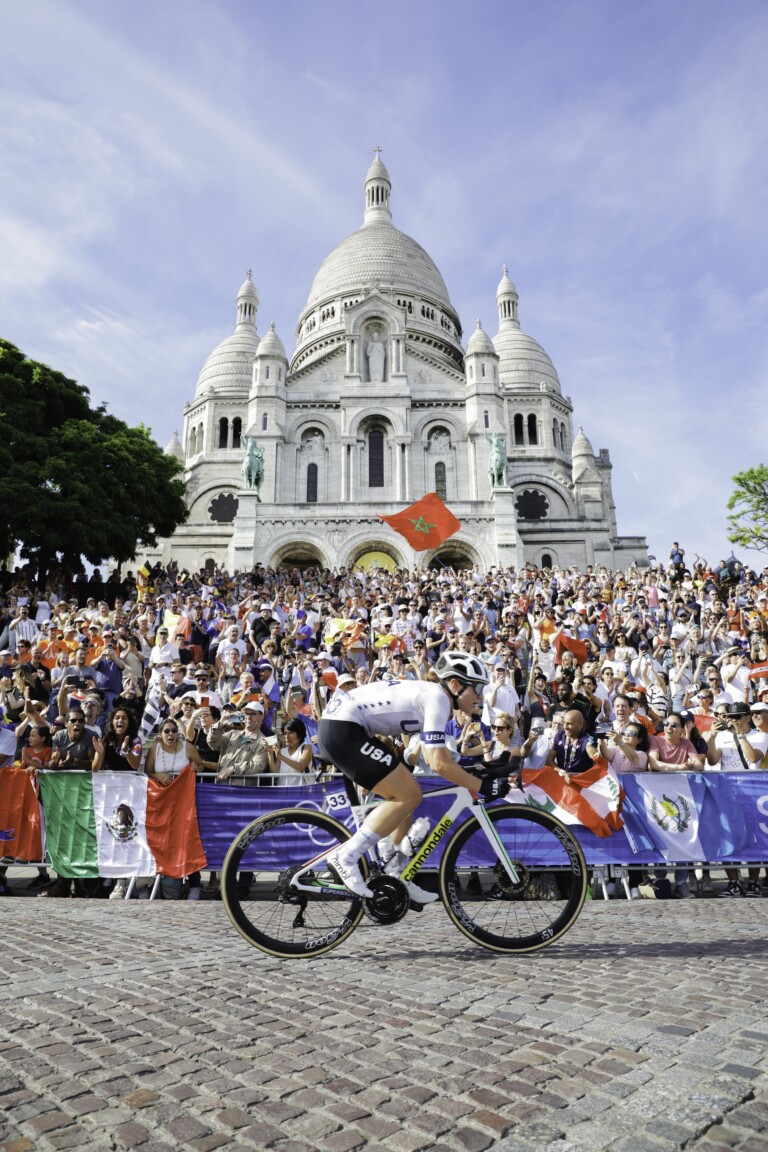
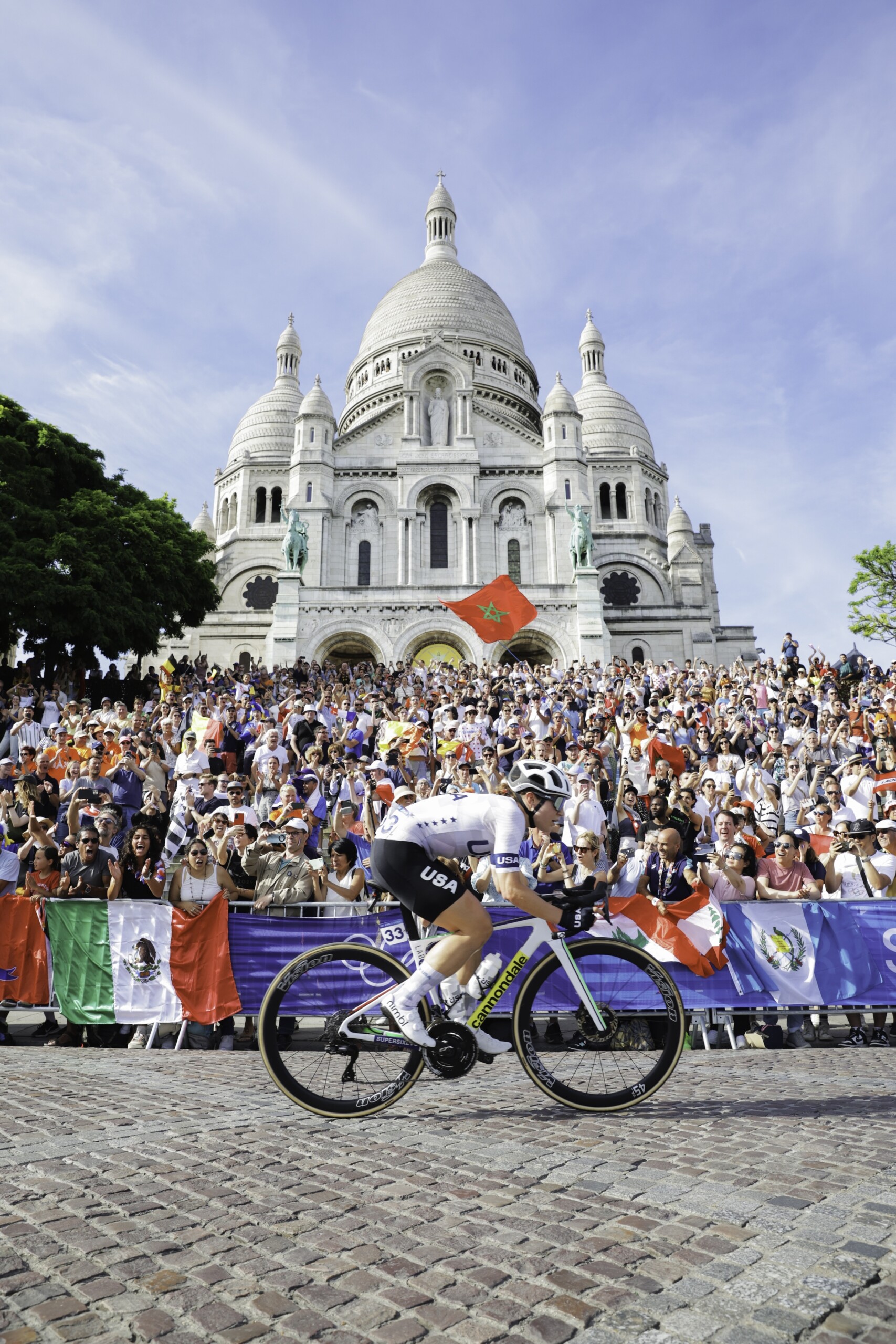
Picture by Ed Sykes/SWpix.com – 04/08/2024 – Paris 2024 Olympic Games – Cycling Road – Trocadero-Trocadero (158.0km) – Paris, France – Women’s Road Race – Kristen Faulkner (USA) climbs the Côte De La Butte Montmartre passing crowds outside Basilique du Sacré-Cœur de Montmartre.
Headlining the women’s team are none other than Olympic Road Race Champion Kristen Faulkner (Homer, Alaska; EF-Oatly-Cannondale) and Olympic Time Trial Bronze Medalist Chloe Dygert (Brownsburg, Ind.; CANYON//SRAM Racing).
Picture by Zac Williams/SWpix.com – 27/07/2024 – Paris 2024 Olympic Games – Cycling Road – Women’s Individual Time Trial (ITT) (32.4km) – Invalides to Pont Alexandre III, Paris, France – Chloe Dygert (USA)
Ruth Edwards (Nederland, Colo.; Human Powered Health Cycling) will return to the World Championships after briefly retiring in 2021. She proved she’s stronger than ever by pushing Faulkner to the limit at the 2024 USA Cycling Pro Road National Championships, ultimately claiming silver. She’ll be joined in the road race by her American teammates Emily Ehrlich (Greenville, S.C.; Team Twenty24), Heidi Franz (Seattle, Wash.; Lifeplus – Wahoo), and Lauren Stephens (Dallas; Cynisca Cycling). Dygert, Ehrlich, Edwards, and Amber Neben (Irvine, Calif.) will represent the U.S. in the Time Trial.
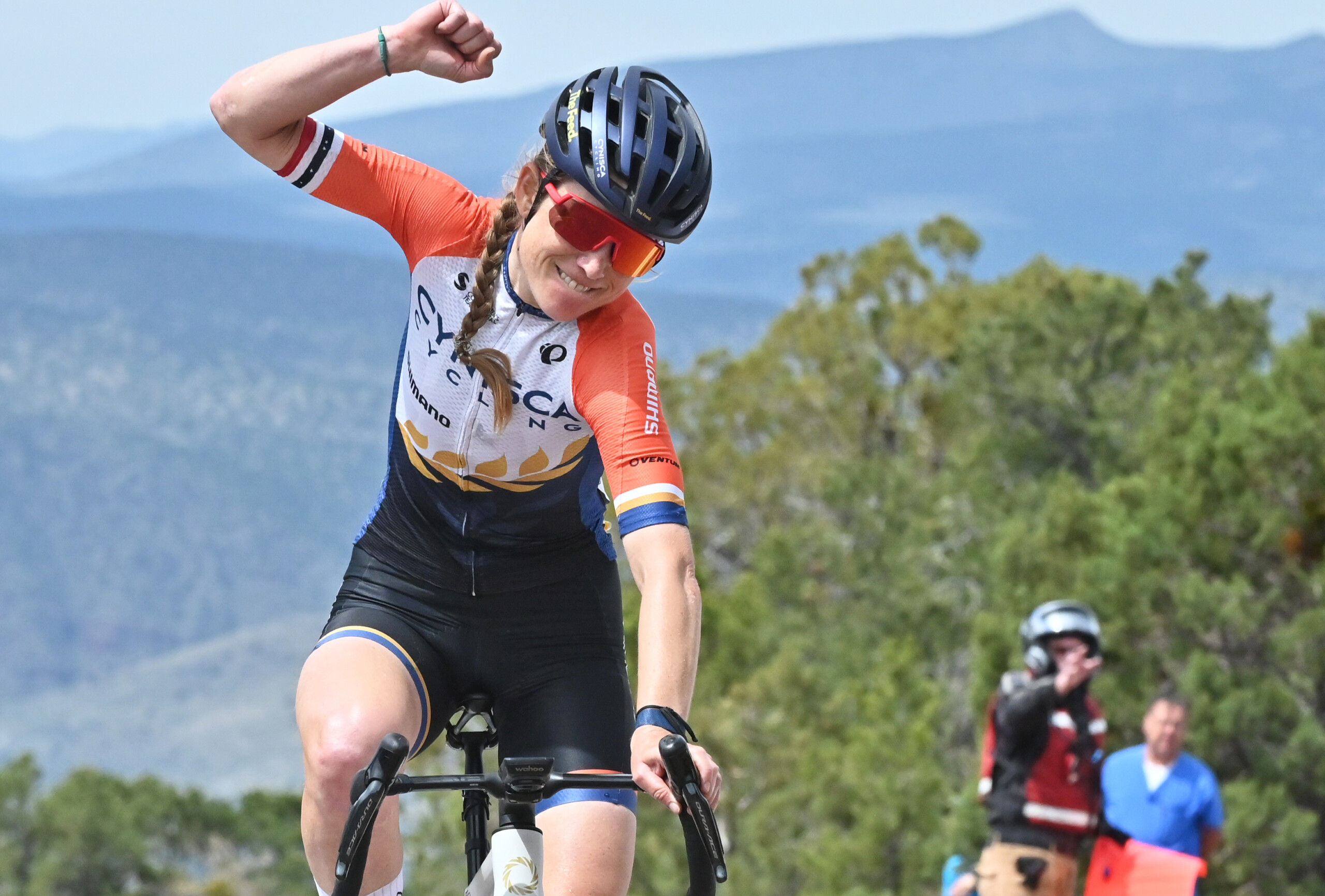
Lauren Stephens conquers the Mogollon. Photo by Veloimages/Brian Hodes, courtesy Tour of the Gila
The Under-23 and Junior categories are some of the strongest the U.S. has had in years and will be sure to put on a show in Zurich. Ashlin Barry (Toronto, Ont.; EF Education-ONTO) won both the Junior Road Race and Time Trial National Championships and will be one to watch. Road Race National Champions Gavin Hlady (Riverside, Calif.; Aevolo Cycling Team) and Alyssa Sarkisov (North Potomic, Md.; dcdevo Racing Academy) will lead the U23 Men’s and Junior Women’s teams. Time Trial National Champions Artem Shmidt (Cumming, Ga.; Hagens Berman Jayco), and Lidia Cusack (Chevy Chase, Md.; dcdevo Racing Academy) will also be key contenders.
The Team USA roster is as follows:
Elite Men
Matteo Jorgenson (Boise, Idaho; Visma – Lease A Bike) – Road Race
Riley Sheehan (Boulder, Colo.; Israel – Premier Tech) – Road Race
Brandon McNulty (Phoenix, Ariz.; Team UAE) – Road Race, Time Trial
Sean Quinn (Sherman Oaks, Calif.; EF Education-EasyPost) – Road Race
Neilson Powless (Roseville, Calif.; EF Education-EasyPost) – Road Race
Kevin Vermaerke (Rancho Santa Margarita, Calif.; Team dsm-firmenich PostNL) – Road Race
Magnus Sheffield (Pittsford, N.Y.; Ineos Grenadiers) – Road Race, Time Trial
Quinn Simmons (Durango, Colo.; Lidl-Trek) – Road Race
Elite Women
Chloe Dygert (Brownsburg, Ind.; CANYON//SRAM Racing) – Road Race, Time Trial
Ruth Edwards (Nederland, Colo.; Human Powered Health Cycling) – Road Race, Time Trial
Emily Ehrlich (Greenville, S.C.; Team Twenty24) – Road Race, Time Trial
Kristen Faulkner (Homer, Alaska; EF-Oatly-Cannondale) – Road Race
Heidi Franz (Seattle, Wash.; Lifeplus – Wahoo) – Road Race
Amber Neben (Irvine, Calif.) – Time Trial
Lauren Stephens (Dallas; Cynisca Cycling) – Road Race
U23 Men
AJ August (Pittsford, N.Y.; Ineos Grenadiers) – Road Race, Time Trial
Gavin Hlady (Riverside, Calif.; Aevolo Cycling Team) – Road Race
Cole Kessler (Newbury Park, Calif.; Lidl-Trek) – Road Race
Artem Shmidt (Cumming, Ga.; Hagens Berman Jayco) – Road Race, Time Trial
Colby Simmons (Durango, Colo.; Visma – Leas A Bike Developemnt) – Road Race
Junior Men
Gray Barnett (Greenville, S.C.; EF Education-ONTO) – Road Race
Ashlin Barry (Toronto, Ont.; EF Education-ONTO) – Road Race, Time Trial
Peyton Burckel (Lancombe, La.; EF Education-ONTO) – Road Race
Braden Reitz (Carmel, Ind.; DECATHLON AG2R LA MONDIALE NEWGEN) – Road Race
Noah Streif (Boise, Idaho; EF Education-ONTO) – Road Race
Junior Women
Lidia Cusack (Chevy Chase, Md.; dcdevo Racing Academy) – Road Race, Time Trial
Helena Jones (Boulder, Colo.; Team Twenty24) – Road Race, Time Trial
Vida Lopez de San Roman (Sebastopol, Calif.; Bear National Team) – Road Race
Alyssa Sarkisov (North Potomic, Md.; dcdevo Racing Academy) – Road Race
*Megan Jastrab declined her road race nomination, Kristen Faulkner and Taylor Knibb both declined their Time Trial nominations.