

No Exit Cartoons: Bicycle Helmet Evolution, by Andy Singer

ENVE Announces New M-Series MTB Wheel Line
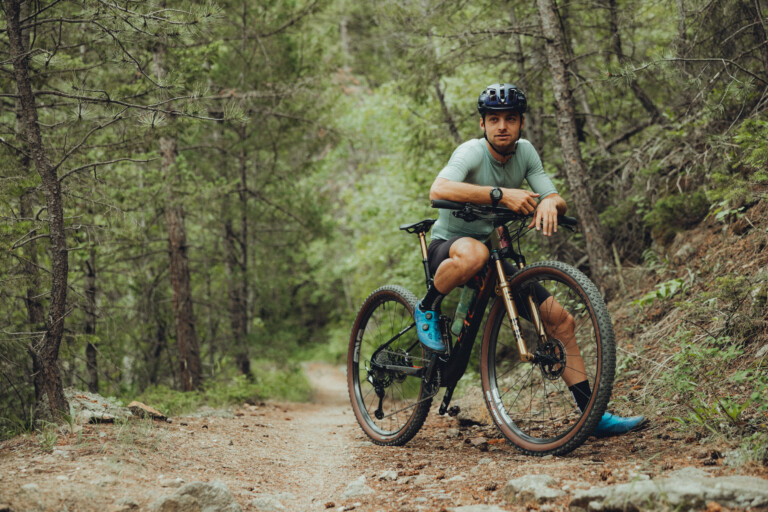
Fifth Generation M Series Mountain Bike Wheels Set the Standard for Ride Quality and Durability
OGDEN, Utah (October 10, 2024) – ENVE releases their fifth generation M Series wheel line following a four-year development project with the world’s top athletes. The result is a complete line from cross country to downhill models that feature unique front and rear rim shapes, new front and rear specific carbon layups, and ENVE’s own INNERDRIVE mountain hubs, raising the standard for ride quality, reliability, and toughness.
Four new wheels create the M Series line, spanning from XC to DH race:
- M5 Pro: XC Race
- M6: Trail/E-MTB Light
- M8: Enduro/Gravity Race/E-MTB
- M9 Pro: Enduro/Gravity Race/E-MTB
“With each new generation of M Series, we set objectives to improve upon the performance that the previous generation delivered. The theme and focus of this new M Series is ride quality without sacrificing the foundation of reliability and toughness that the M Series wheel products are known for,” stated Jake Pantone, VP of Product.
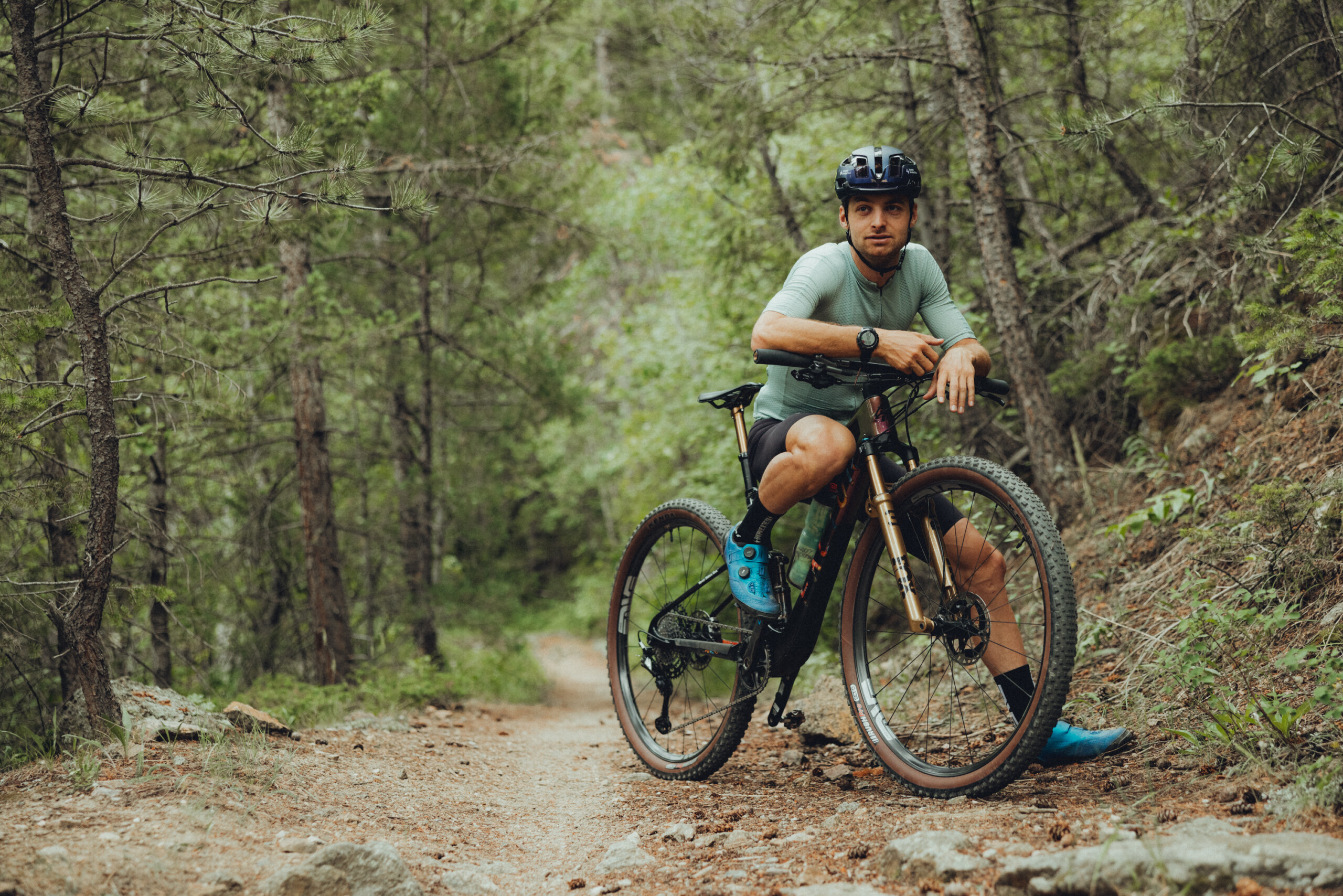
“Simply put, every detail and opportunity has been explored to ensure that this latest generation M Series, is the best riding wheel on the trail or between the tape.”
COMPLIANCE, DURABILITY, AND FLAT RESISTANCE
New rim shapes were developed with ENVE’s professional athletes, including downhill World Cup team Commencal/Muc-Off by Riding Addiction, with input from champions Amaury Pierron and Myriam Nicole.
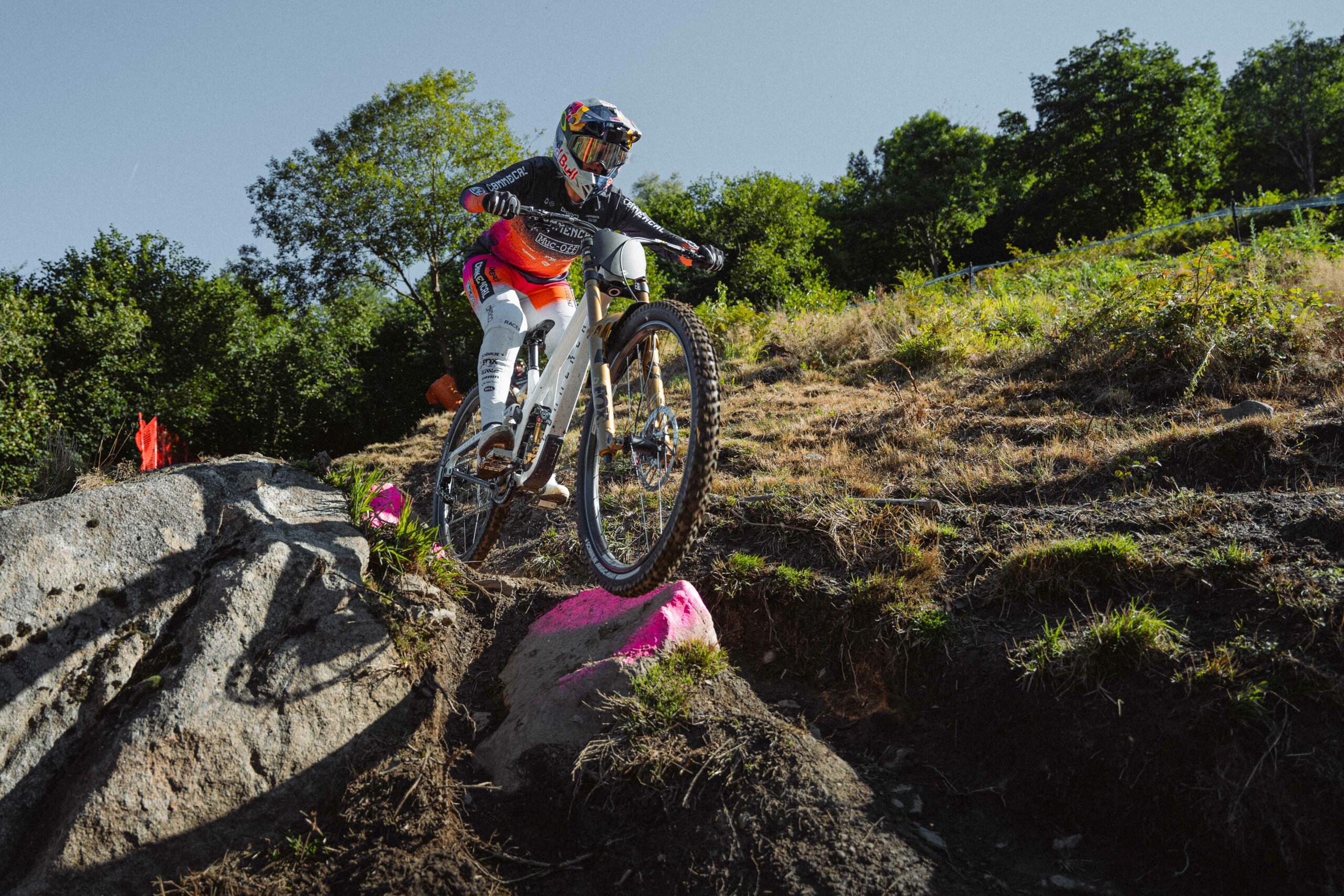
“They wanted the damped ride feel of alloy rims, but without sacrificing the durability of carbon. Specifically, they wanted assurance that they would never lose a practice or race run to a tire or rim failure,” stated Sports Marketing Director, Neil Shirley.
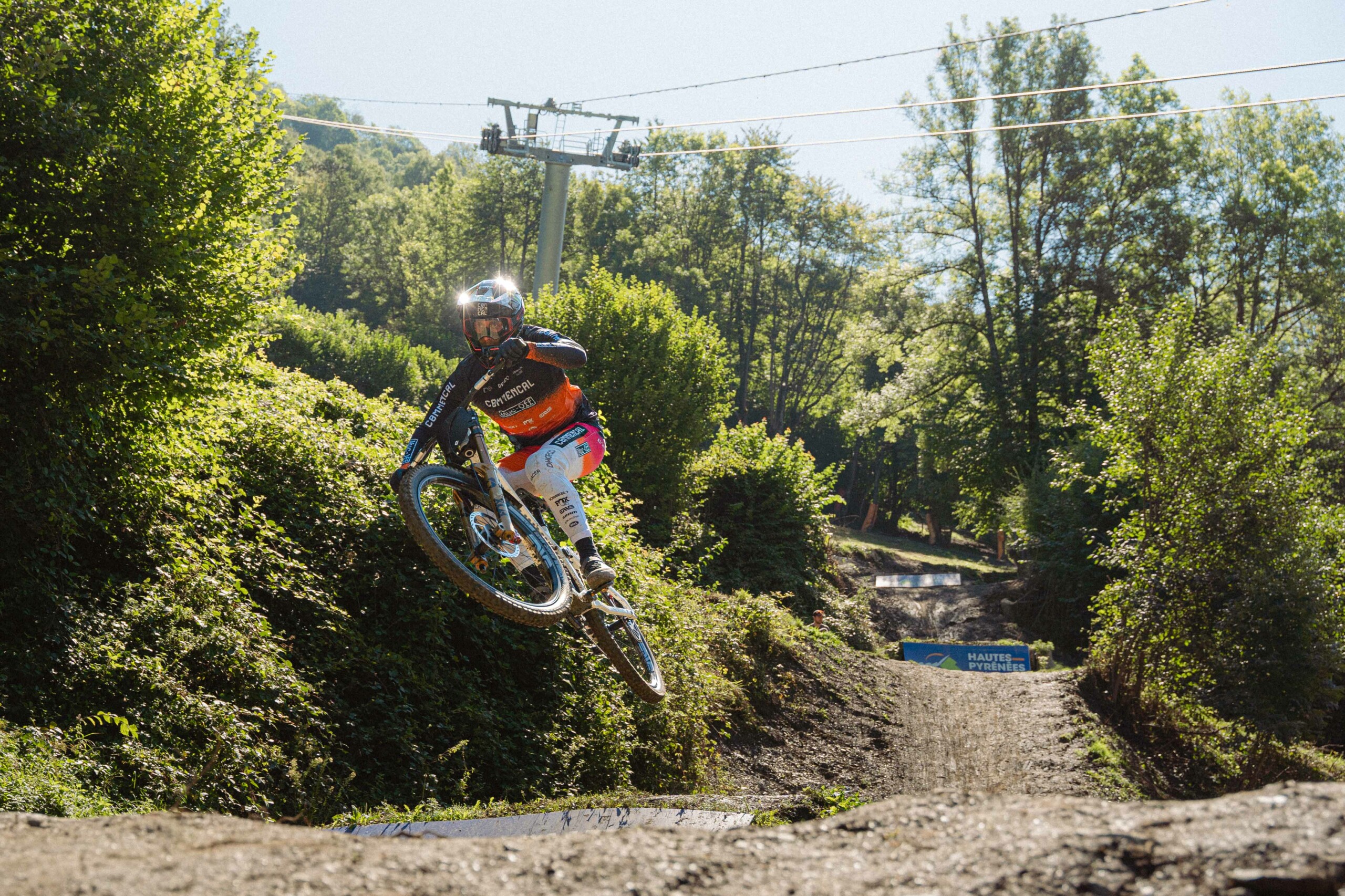
“This was accomplished thanks to the new shapes, carbon layups, and ENVE’s patented Protective Rim Strip. The results speak for themselves, as ENVE riders have accomplished over 19 World Cup downhill wins on the new M8 and M9 throughout the development project.”
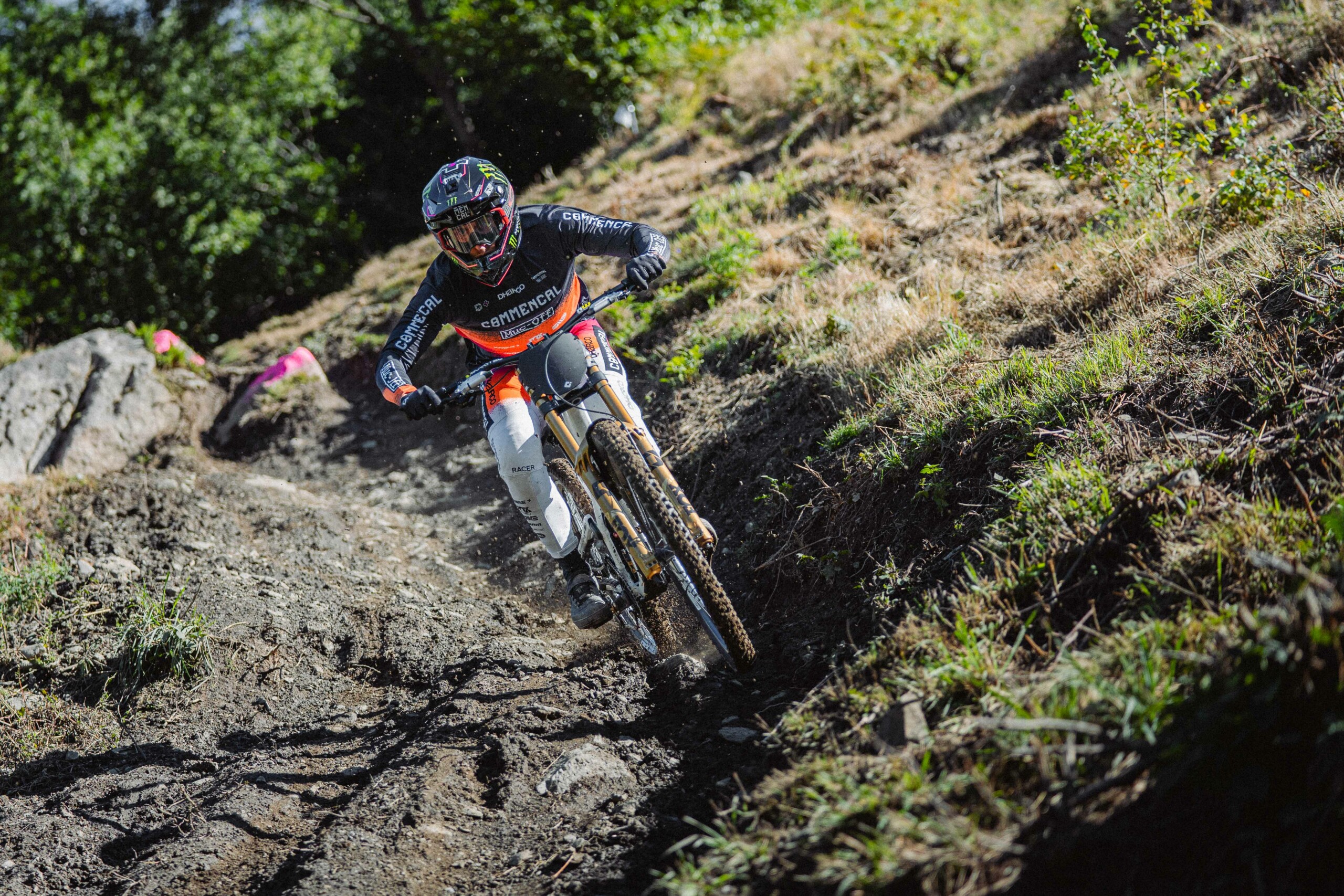
These learnings informed cross country development, where improved traction, durability, comfort, and power transfer were all targeted. ENVE engineers incorporated the shape and layup principles learned in downhill to create the best balance of these attributes for world-class XC racers. This led to wins in both World Cup and Lifetime Grand Prix events.
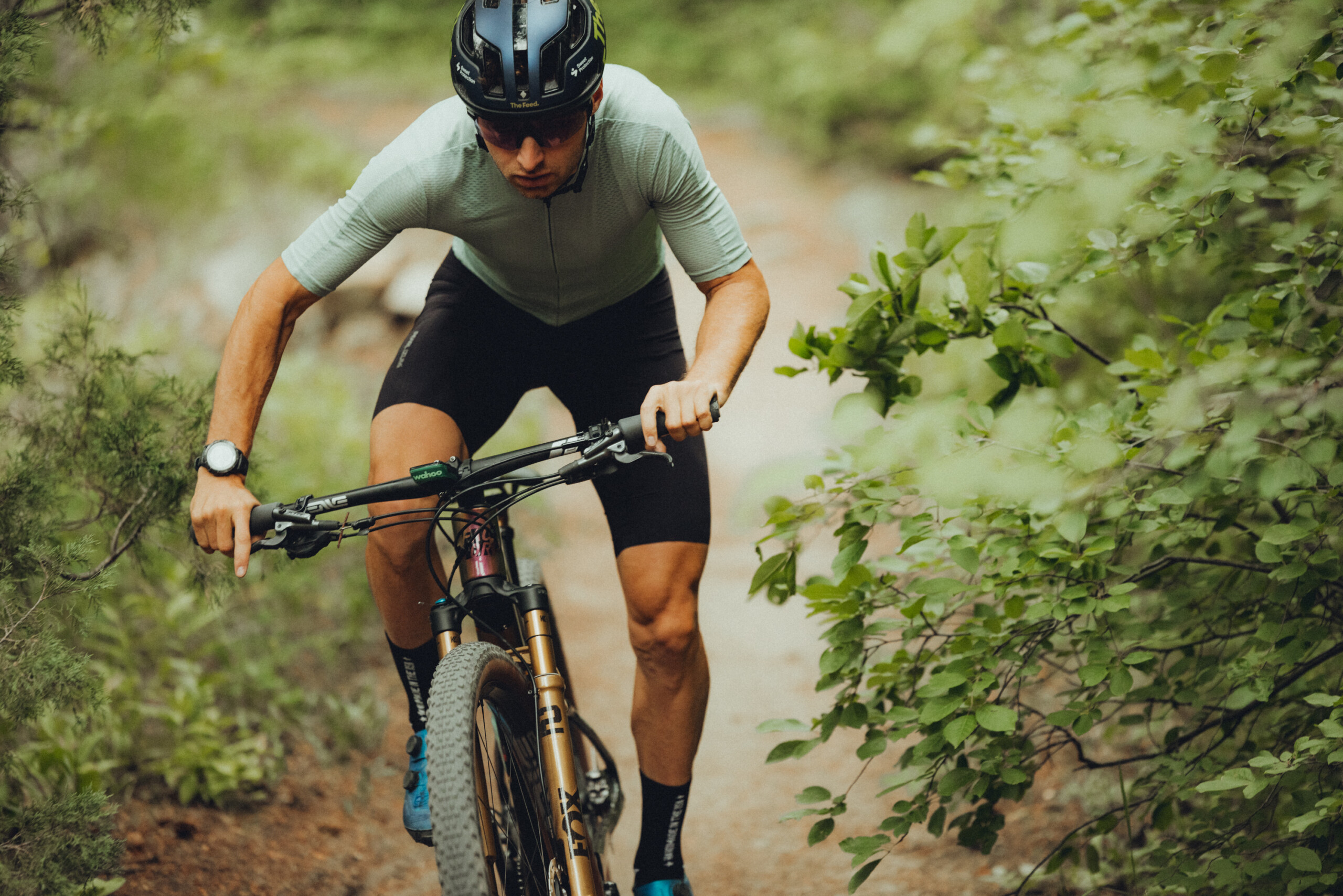
Each wheel model features unique front and rear rim shapes and carbon layups. The external widths are nearly identical front and rear, but internal widths trend wider in the front and narrower in the rear. This optimizes tire shape and volume for traction in the front with more forgiveness in the back. Additionally, the carbon layup of the rim itself is unique front to rear, with the front providing more vertical and lateral flex to contour to trail features and provide vibration damping for the rider. The rear rims trend slightly stiffer and stronger, delivering efficient power transfer and impact toughness. Going to shallower rim depths throughout the line was also critical in achieving the desired improvements in compliance. Because of the change in rim depth, moving to an external molded spoke hole and external nipples was necessary.
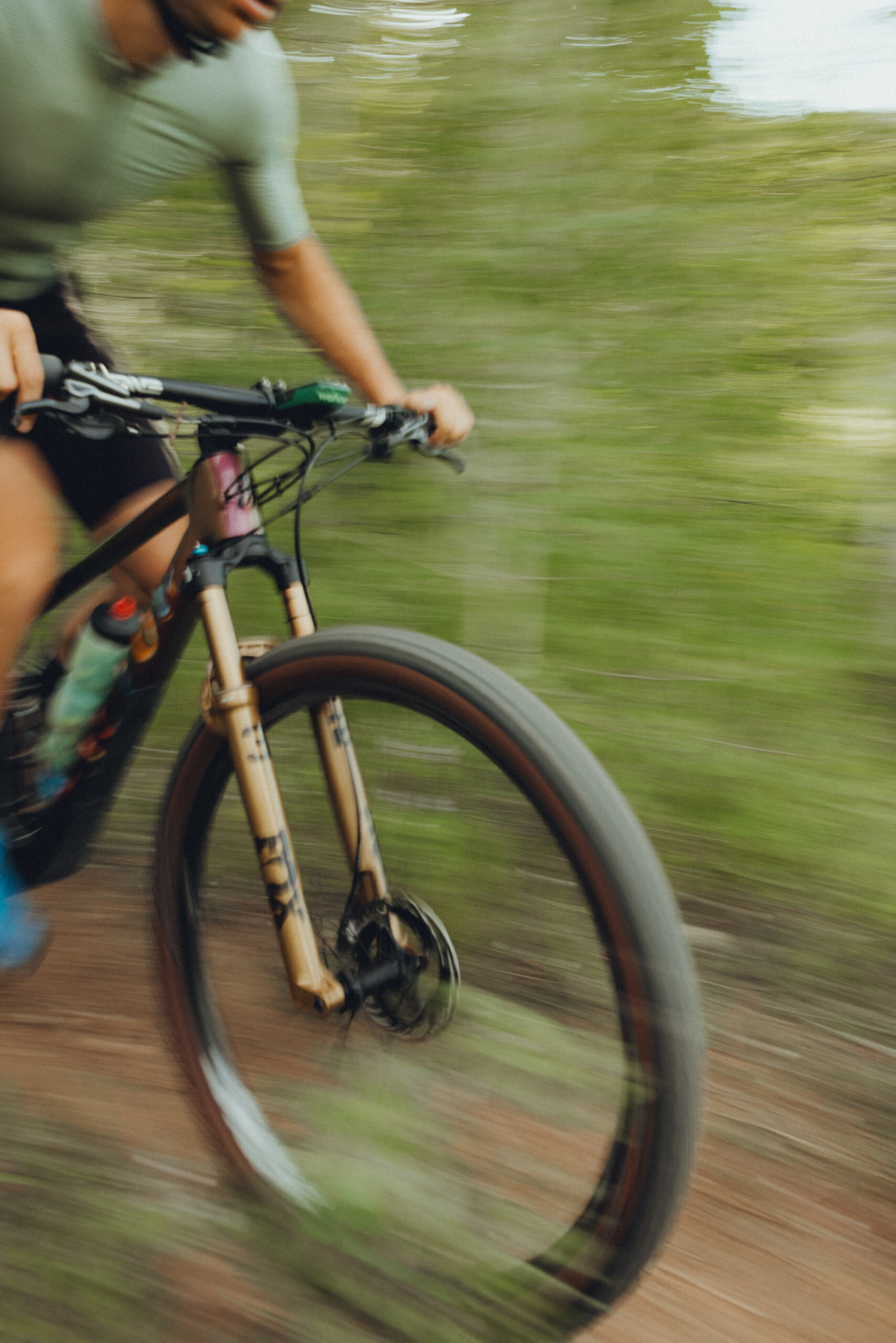
The M5 Pro, M6, and M8 all incorporate ENVE’s patent pending Wide Hookless Bead technology to prevent pinch flats and rim damage. Rear rims feature a wider hookless bead design due to the impact forces that are typically higher compared to the front wheel. The M9 Pro uses ENVE’s patented Protective Rim Strip, which replaces rim tape with a polyurethane strip that protects the rim and creates a tubeless seal independent of the rim structure.
M SERIES INNERDRIVE HUBS
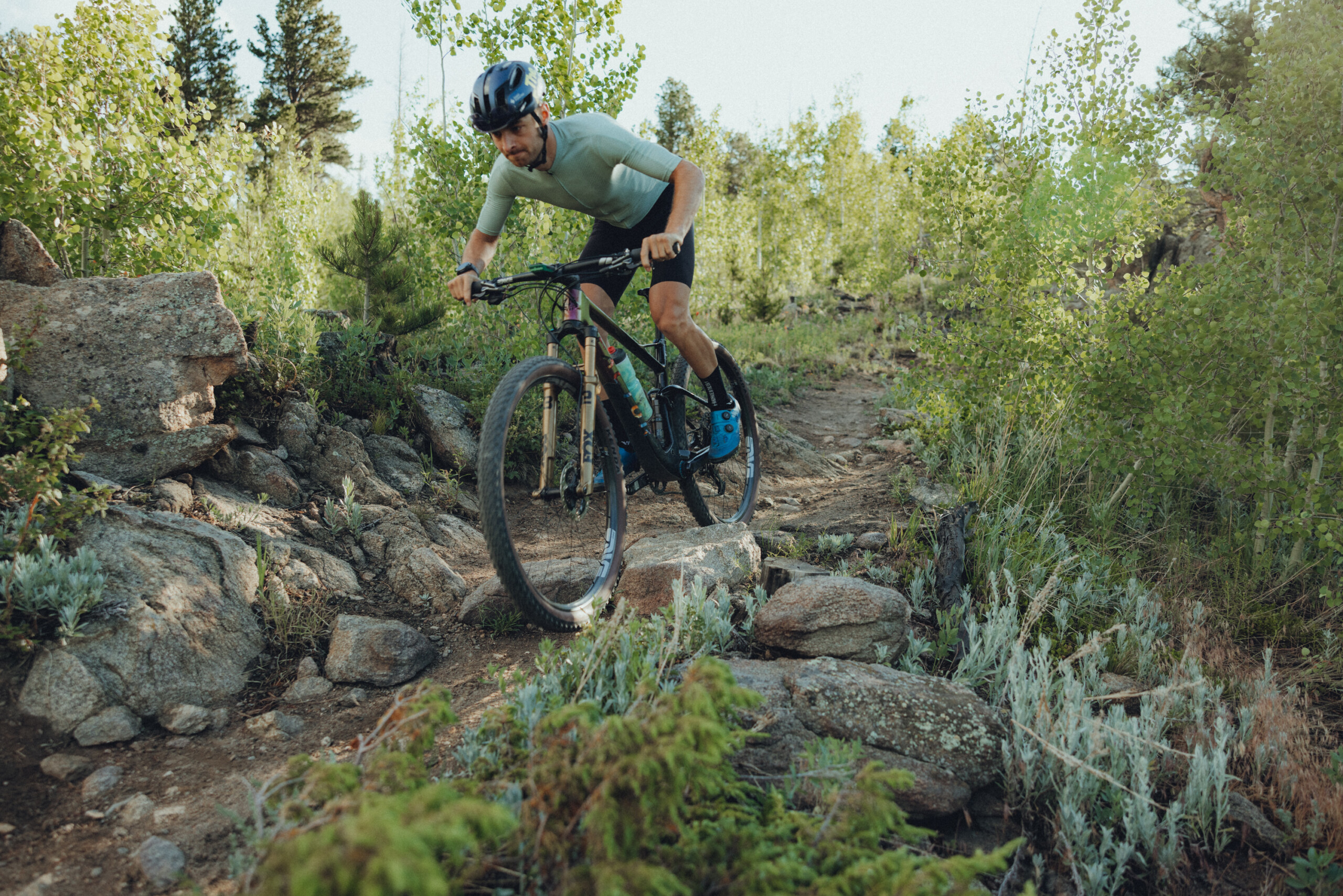
All wheels are built to ENVE’s new and proven INNERDRIVE mountain hubs, which feature an oversized ratchet mechanism that maximizes power transmission and system reliability. By designing around an oversized ratchet, ENVE delivers four ratchet options – 40t (9°), 60t (6°), 80t (4.5°),100t (3.6°), allowing riders to customize their hubs to their desired engagement. All M Series wheel models will ship with the 80t ratchet installed. INNERDRIVE mountain hubs feature premium grade full stainless-steel bearings for low maintenance and high performance regardless of riding conditions. M5 and M6 wheel models feature straight-pull center lock hub shells, while the M8 and M9 use a j-bend hub shell with both center lock and 6-bolt options (110×15 Center Lock only).
MANUFACTURING EFFICIENCIES
In addition to the INNERDRIVE Hubs that deliver increased performance, reliability, and value, ENVE continues to refine their manufacturing processes, resulting in cost savings that are passed on to the customer. A new bladder material is used that eliminates the need for bladder patches on the rim, which reduces material and labor costs. This allows ENVE to reduce the cost across the entire line compared to the previous generation. Like all ENVE rims,the new M Series line is handmade at their Ogden, Utah facility.
The new M Series is available now and shipping worldwide to ENVE retail and distribution partners as well as ENVE.com. All M Series models will be retailed in the U.S for USD $2300.
Ride the Hidden, Unridden, and Forbidden. Ride the Point to Support Pancreatic Cancer Research
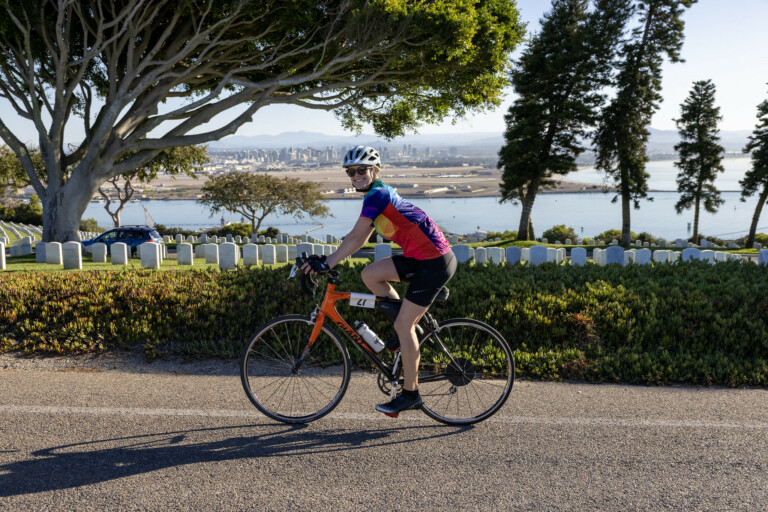
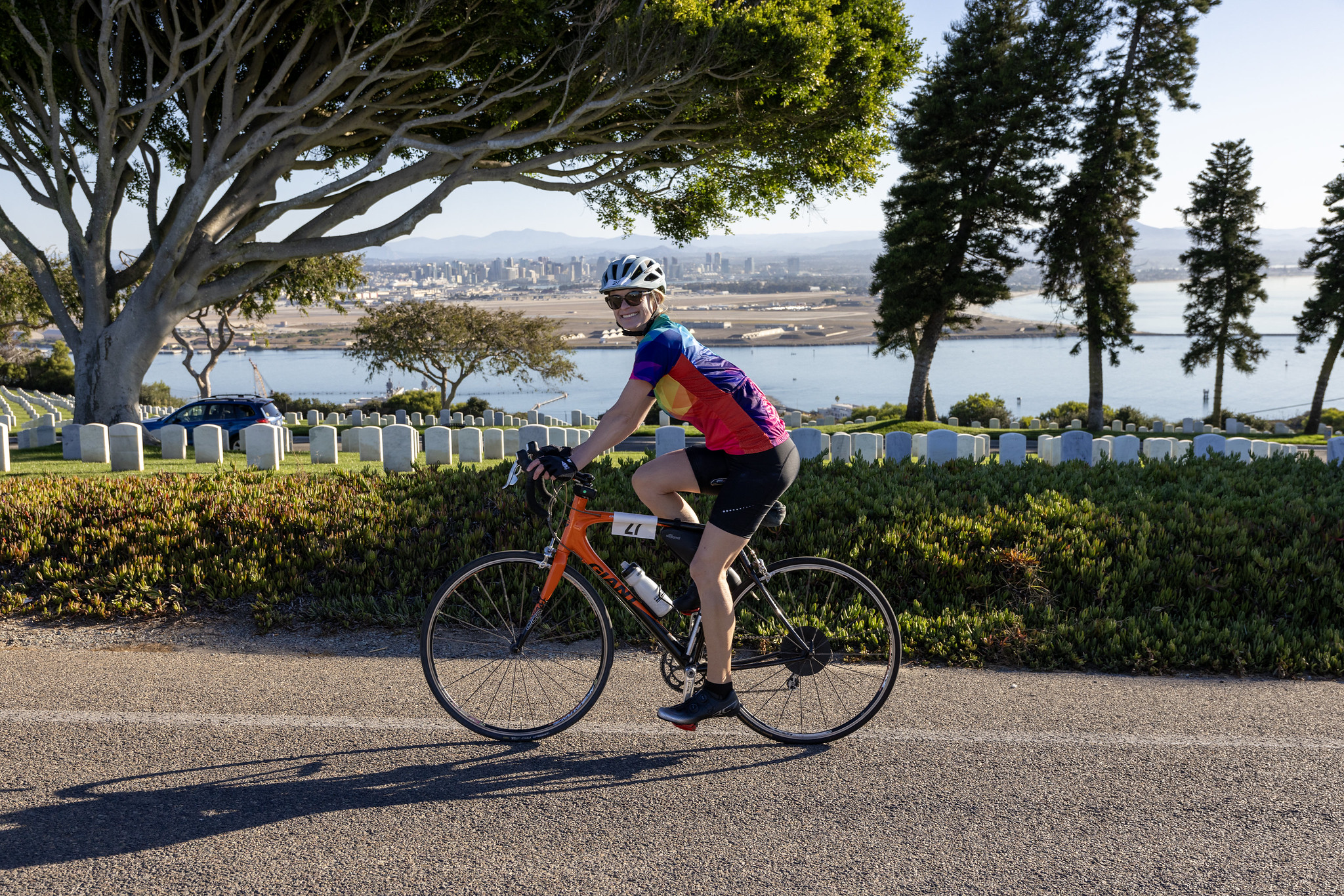
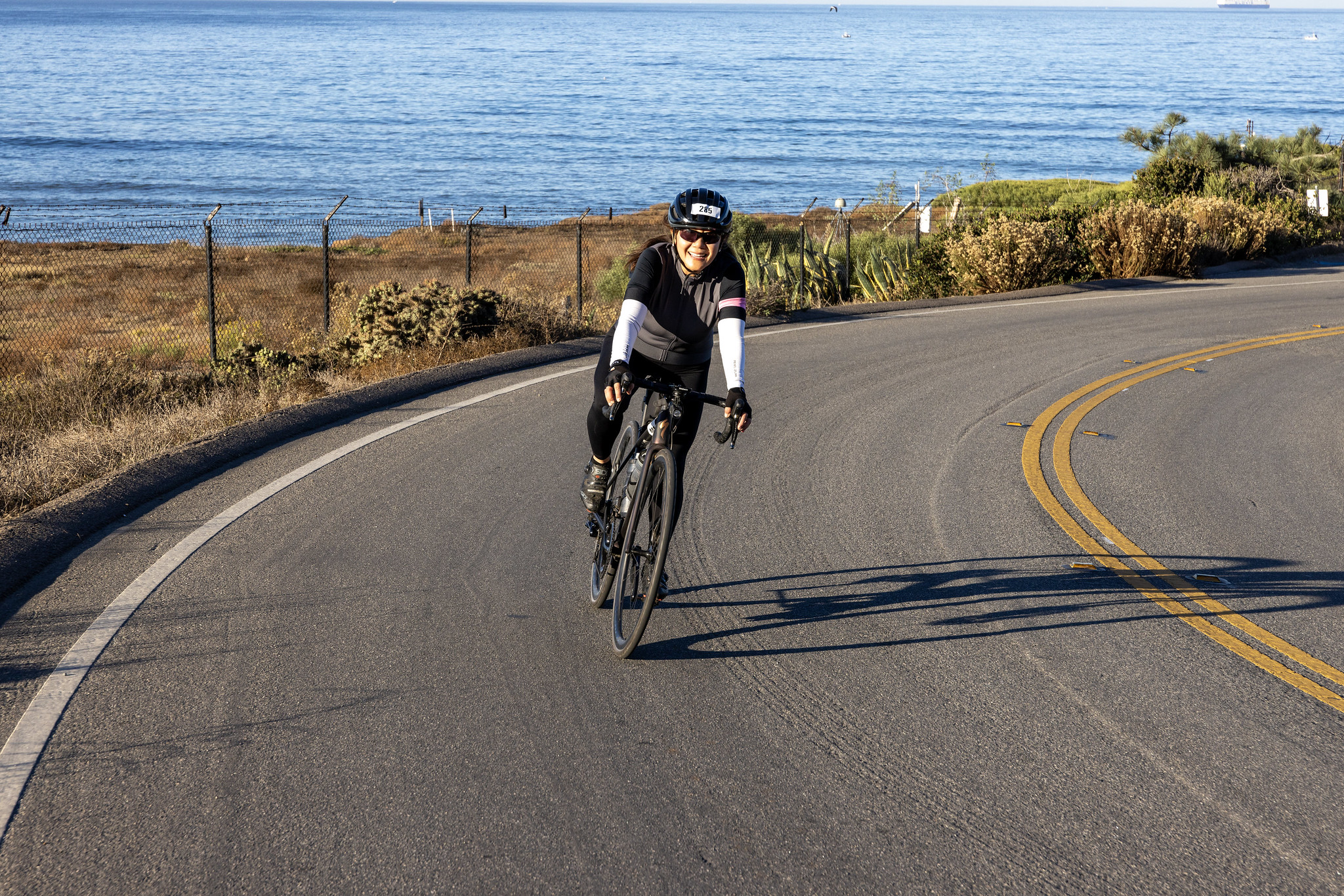
SAN DIEGO, California — Cyclists will be rolling through scenic areas of San Diego again on November 9th to support pancreatic cancer research in the 11th Annual Jim Krause Memorial Charity Cycling Ride the Point. The ride starts and ends at Liberty Station and includes exclusive routes through Point Loma, Ocean Beach, Mission Bay La Jolla, Torrey Pines, and Sorrento Valley. This ride takes participants through historic neighborhoods and past some of the most scenic areas of San Diego, some that are only open once a year for this event. The event has hundreds of volunteers along the route, SAG, and five fully stocked rest stops to support the riders.
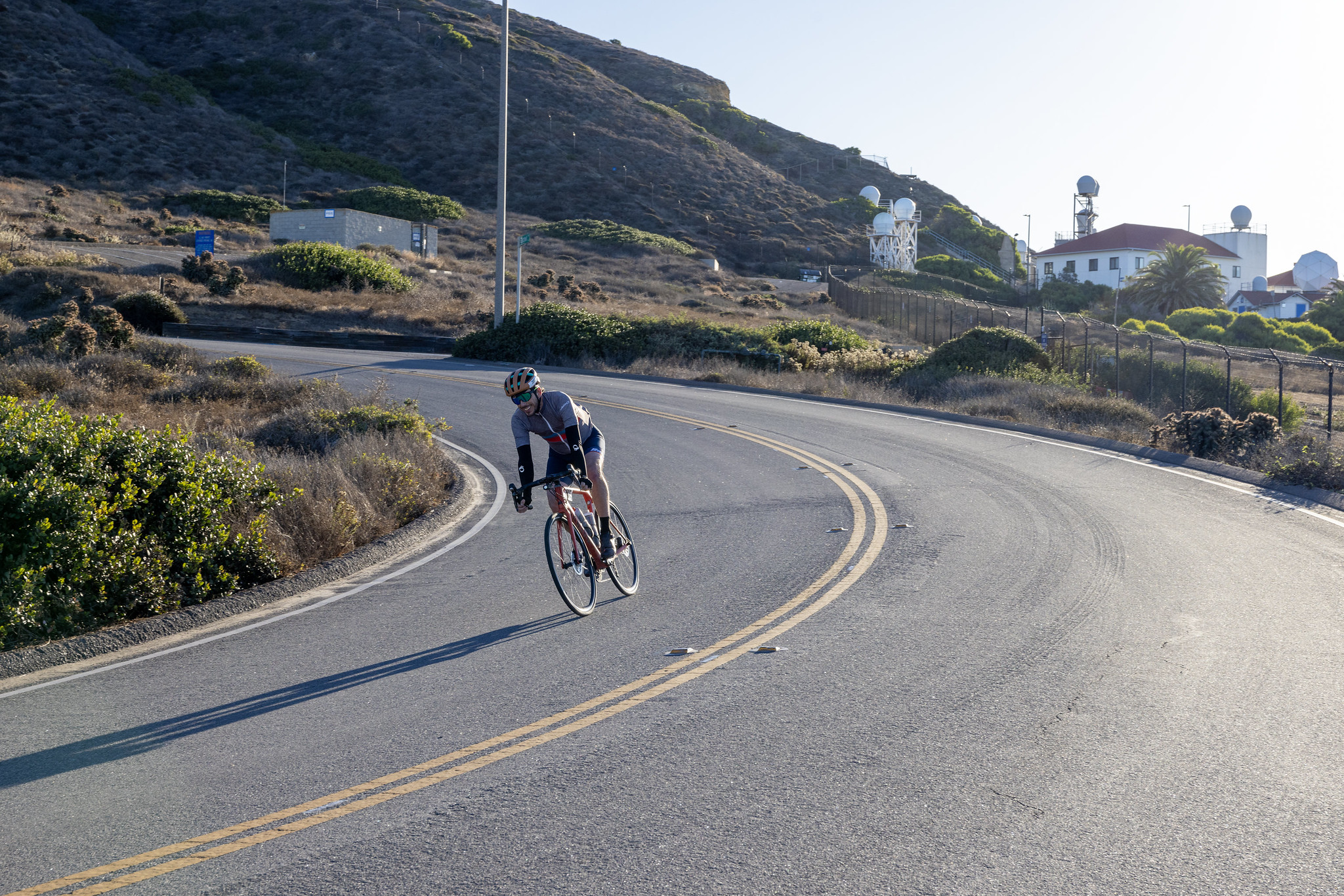
Jim Krause was a long-time resident of Point Loma, an avid cyclist, and a past-president of the Point Loma Rotary Club. He died in 2012 after a valiant battle with pancreatic cancer, leaving a legacy of service to the community. In his memory, the Point Loma Rotary Club hosts an annual Jim Krause Memorial Charity Bike Ride to support pancreatic cancer research. His many friends sponsor the ride to highlight the beautiful cycling areas around Point Loma and surrounding neighborhoods, promote a healthy lifestyle, and raise awareness of pancreatic cancer. Proceeds from the event will stay in the local community to fund pancreatic cancer research at UC San Diego Moores Cancer Center and other Point Loma Rotary civic projects. Learn more about Moores Cancer Center at http://cancer.ucsd.edu.
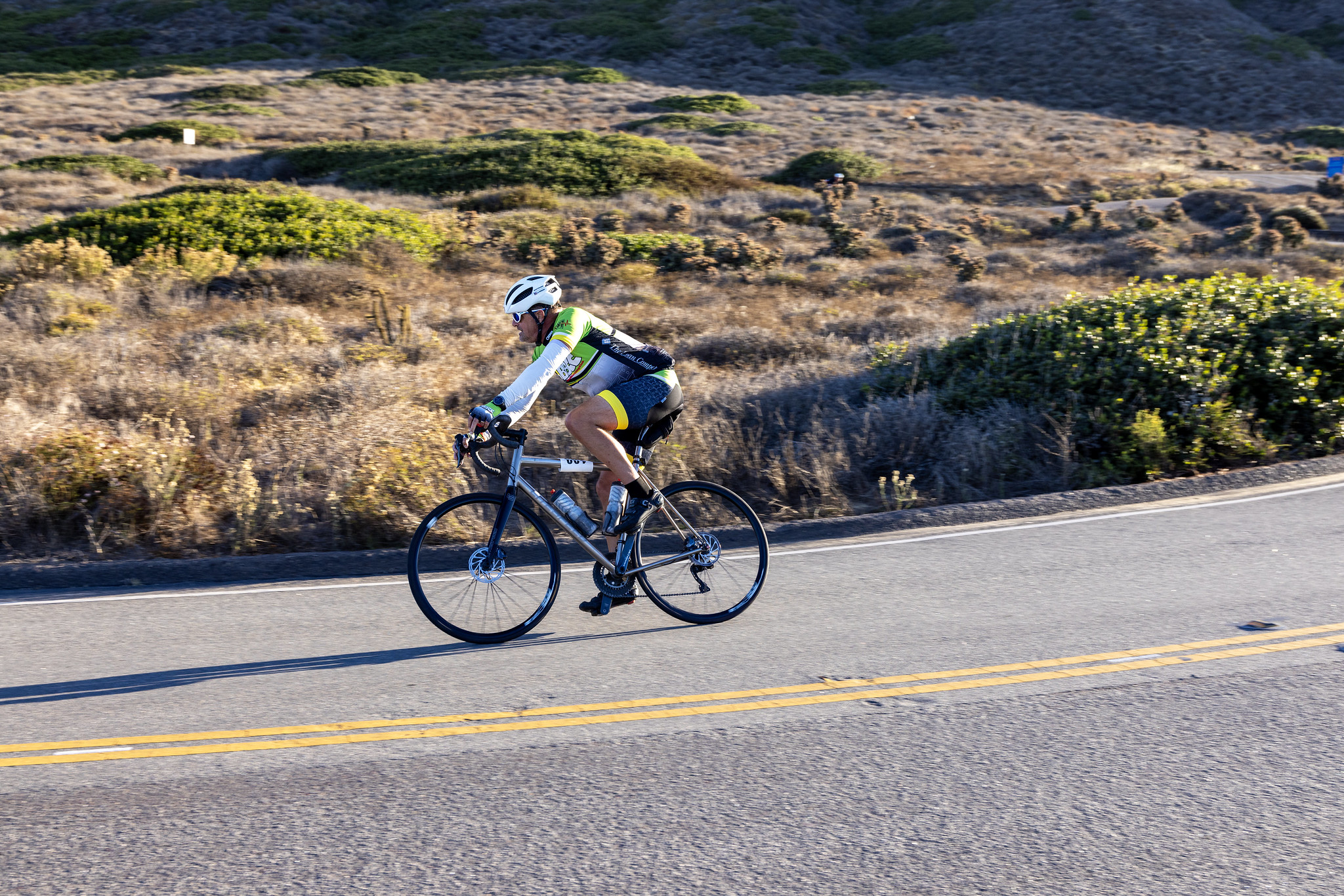
The Point Loma Rotary Club visits UC San Diego Moores Cancer Center annually to present the proceeds from the Jim Krause Memorial Charity Bicycle Ride the Point to the UC San Diego Moores Cancer Center pancreatic cancer research team who supported Jim Krause during his treatment for pancreatic cancer. The ride has raised over $300,000 for basic research into effective treatments.
Ride the Point has three distances to accommodate diverse levels of cycling experience. The 5-mile Family Fun Ride is a relatively flat course on bike paths along beautiful San Diego Bay and is perfect for cruisers, beginning riders, challenged athletes, and families. The 25 and Metric Century are street rides with exclusive routes and challenging climbs around scenic San Diego. The public is invited to the free healthy lifestyle expo at Oggi’s in Liberty Station from 9 am until 2 pm with local vendors, music, and refreshments.
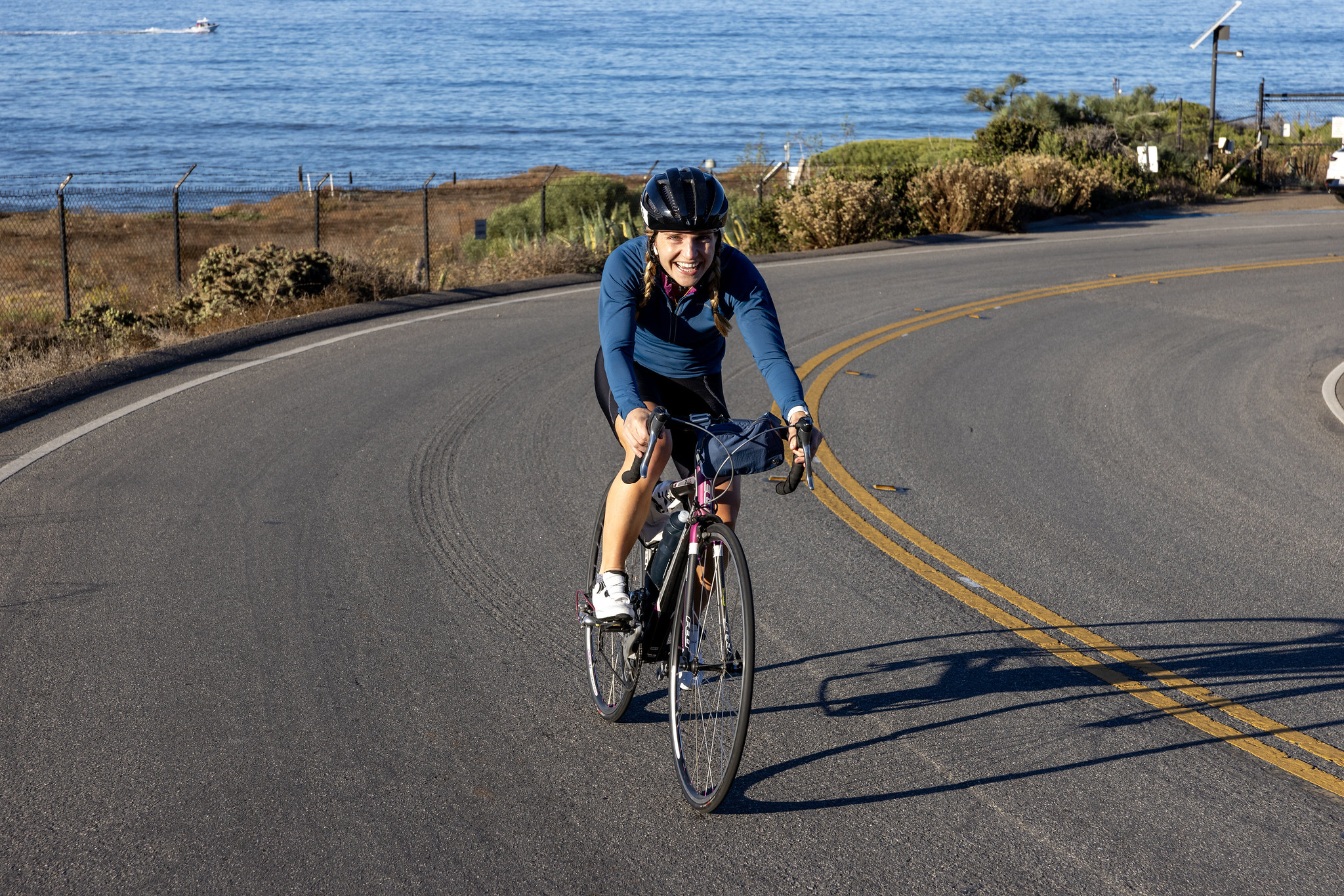
Register as a VIP to attend a pre-ride reception at beautiful San Diego Yacht Club the night before the event to meet the hosts, pancreatic cancer researchers, and fellow riders. The VIP SWAG includes an exclusive event bag, designer jersey, reserved parking, early start, and lunch after the ride.
For those traveling to the event, the location is conveniently located near to the airport and there are numerous hotels adjacent to the site. Bicycle shipping and rentals are available through several sponsors, contact us for details.
Pancreatic cancer is the 4th leading cause of cancer-related deaths in both men and women. The overall 5-year survival for patients diagnosed with this disease is only 5.6 percent, and research over the past few decades has done little to improve these statistics. To address this need, a team of investigators at UC San Diego Moores Cancer Center is dedicated to the development and translation of new discoveries that will improve the outcome for patients with pancreatic cancer.
Since 1950 the Point Loma Rotary Club has performed local, national, and international service projects. Local projects supported by the Point Loma Rotary Club include leadership programs at local schools, Scouting, YMCA sponsorship, Point Loma Library, Point Loma Summer Concerts, Children’s Hospital, Semper Fi Fund, Project Alpha, Rescue Task Force, Humane Society, Meals on Wheels, Holiday Helping Hands, Shelter Box, and Reality Changers. The Point Loma Rotary Club meets noon Fridays at the San Diego Yacht Club. For more information on the Point Loma Rotary Club, visit www.pointlomarotary.org
Participate as a cyclist, volunteer, or sponsor, or donate to the event in honor of or in memory of someone. This local all-volunteer ride has raised over $400,000 for pancreatic cancer research at UCSD Moores Cancer Center. For more information on Ride the Point, visit www.RideThePoint.org, watch our YouTube Video, or follow us on Facebook.
UNSUNG Follows 3 People Working Behind-the-Scenes Through Their UNBOUND Gravel Experience

It’s clear that the best athletes fully dedicate themselves to their sport. That dedication is on full display at events like Unbound Gravel, the world’s premier gravel cycling race. What may be less obvious is the army of people who dedicate their lives to supporting those athletes, the event itself and the community at large.

Unsung, a new video from Shimano, follows just a few of these remarkable people, including Linda Guerrette (Photographer), Wayne Smith(Mechanic) and Michelle Duffy (Event Organizer), in the lead up to the event and during race day. Discover how each person prepares for the event, the behind-the-scenes details and what goes down on race day.
Linda Guerrette didn’t exactly grow up in the social media age, but her childhood was filled with her mother’s home movies and family photographs, which eventually inspired a later career in photography. Paired with an insatiable passion for adventure, Linda brings a desire to connect into her photography, which inherently reflects into her images of athletes.
“Sorry Shimano, whenever I get a new piece of equipment, the first thing I do is take it apart.” Wayne Smith wants toknow how things work, so that when he needs to, he can fix them. With relentless attention to detail and a commitment to preparation, Wayne is a great partner for privateer gravel pro Peter Stetina.
Although Michelle Duffy is a seasoned marketer, her biggest passion is events and the communities that they build. Michelle’s role for Unbound’s event organizer, Life Time, is part marketing director, part general manager, and full-time biggest fan of the event. She is consummately positive and brings that energy to every person involved in theevent, from the staff to the volunteers, media, athletes and fans alike.
Just like the athletes who take part, these supporting characters dedicate themselves to the sport with passion andhard work. Without them and the host of volunteers, support staff, and creators who show up year in and year out, these transformative events wouldn’t exist in the first place, be nearly as fun, or be documented with such flair.
UNSUNG Credits:
Production/Cinematography/Editing // Robin Sansom Assistant Camera // Traece Craig
Illustration // Chris McNally
Music // Rex Shelverton & Andy Granelli Additional Race Footage // Life Time
Special Thanks // Nick Legan, David Dinsmore, Guffler Mansion, Dominic Gill, Laura Cook Directed by Robin Sansom
An Offsite Studio Production
Advocates, Western Governors Renew Push for Outdoor Recreation Act
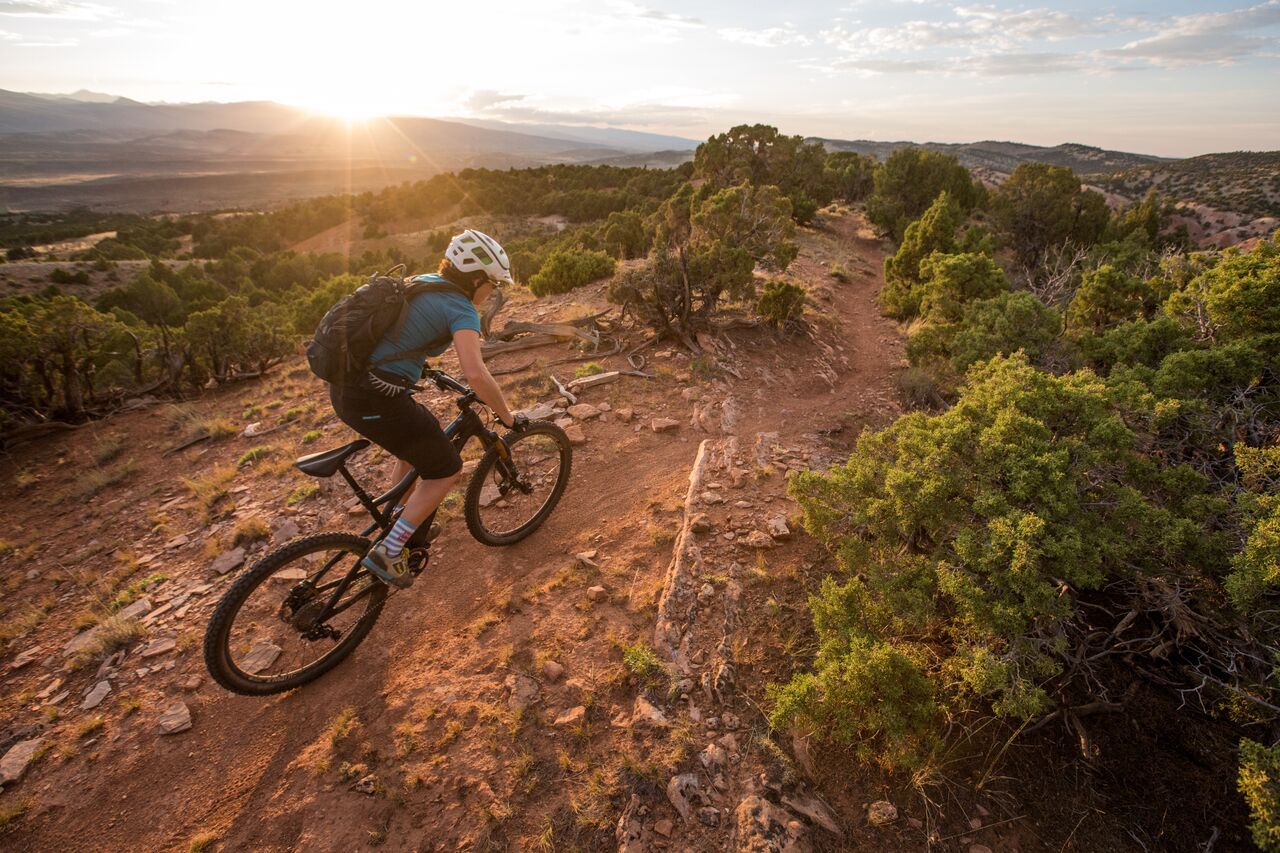
EXPLORE Act is a package of more than a dozen policy measures aimed at improving outdoor recreation on federal lands.
by Katie Klingsporn (Wyofile.com) — Advocates and western governors this month doubled down on a push to pass into law legislation aimed at improving outdoor recreation on federal lands.
The Expanding Public Lands Outdoor Recreation Experiences Act — a package of more than a dozen policy measures known as the EXPLORE Act — passed the House in April on a voice vote. Wyoming’s Rep. Harriet Hageman supported it, according to her staff.
Earlier in September, outdoor recreation advocates orchestrated a targeted offensive on Capitol Hill to push support in the Senate.
“It’s such a consequential, meaningful piece of legislation,” said Outdoor Alliance CEO Adam Cramer. “It passed the House earlier this year, which was fantastic, and now it’s got to get through the Senate.”
The Western Governors’ Association, which includes Wyoming’s chief executive Mark Gordon, also penned a letter to Senate leadership endorsing the act.
“The West’s world-class outdoor recreation destinations draw increasing numbers of visitors each year,” the letter states. “However, those areas need support, infrastructure, and tools to manage increasing levels of recreation while maintaining these resources for the enjoyment of all, and for future generations. We urge the Senate to pass comprehensive outdoor recreation legislation to address these challenges.”
The renewed pushes come amid a flurry of reports and studies showing the growth and economic benefits of outdoor recreation activities. Wyoming has embraced the industry with an outdoor recreation trust fund, and in August announced $1.7 million in grants to 14 infrastructure projects in the state.
‘Crystal-clear message’
The act bundles together provisions that would create more long-distance bike trails, streamline permitting for guides and outfitters, and fund parks and green spaces. It would preserve the practice of installing permanent climbing anchors in the wilderness — an activity that has long divided recreation advocates and conservationists. It would also support destination gateway communities, like Cody or Jackson, by addressing housing shortages, parking and other infrastructure challenges.
The EXPLORE policy bundle was first introduced in 2023. The same year, U.S. Sens. John Barrasso (R-Wyoming) and Joe Manchin (D-West Virginia) introduced America’s Outdoor Recreation Act, which aligns with many of the EXPLORE Act policies. Of the two, EXPLORE has progressed further by moving into the Senate.
Outdoor Alliance, a group dedicated to conserving public lands and protecting outdoor recreation activities, held nearly 80 meetings about the EXPLORE Act with lawmakers and staff on Capitol Hill earlier this month, said CEO Cramer.
The push was part of Outdoor Alliance’s 10-year celebration. The idea was to enhance the anniversary celebration by doing the type of advocacy and policy work that defines it, he said, and the EXPLORE Act was an obvious policy choice to pour energy into.
“If there’s an appetite, there’s a market for people to get outside and they want to come and spend money …. and if you invest in those [outdoor recreation] resources, make them more accessible, more alluring,” Cramer said, “then more people come and more benefit accrues to local economies, especially rural economies.”
The outdoor group’s advocates’ specific ask of lawmakers was to get the measure on the Senate’s docket for a vote, Cramer said.
“There’s a lot of interest and enthusiasm, but it’s like anything else, there is a limited amount of time for them to pass legislation,” he said. “The message was crystal clear that a lot of people, a lot of communities, a lot of constituencies want this. And I think that signal was received, and that gives me a lot of confidence that the Senate can figure it out.”
Managing growth
The Western Governors’ Association also expressed its support. Bills in the EXPLORE Act reflect many of the priorities within the group’s own recreation and tourism policy resolution, the governors noted in their letter.
That resolution underscores how spiking visitation and outdoor recreation since 2020 require maintenance to sustain. “Without the necessary visitor facility investment, infrastructure, staffing, and management planning, increased visitation can lead to overcrowding, damage to natural and cultural resources and tribal sacred places, and threaten tribal treaty rights,” it reads. “This diminishes visitor experience and jeopardizes the enjoyment for all, and for future generations, of these resources.”
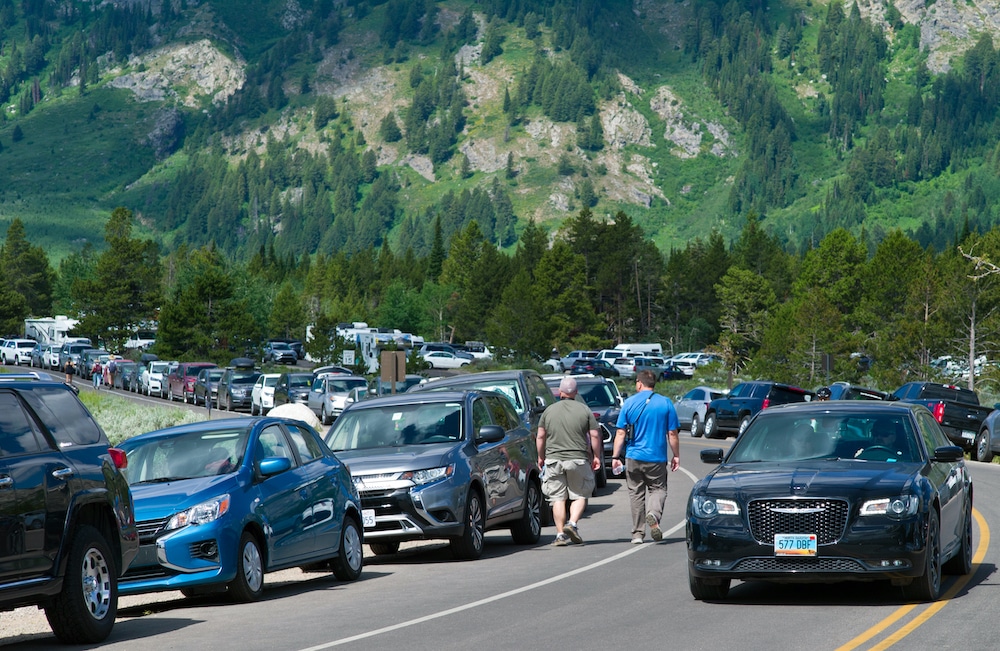
Though Wyoming land managers say the COVID pandemic prompted an anomalous acceleration, they still expect visitation growth to continue as participation in outdoor recreation activities mounts.
Yellowstone National Park hosted 3.5 million recreation visits through August, up 6% from 2023 and 3% behind the record year of 2021. Wyoming State Parks, meanwhile, tallied 5.3 million visitations in 2023, the second-highest annual visitation behind 2021.
Growth also comes with economic perks. In 2023, visitors to national parks in Wyoming spent $1.1 billion and supported 14,522 jobs in local communities, the National Park Service reported in early September. That spending had a cumulative benefit to the state economy of $1.4 billion.
Wyoming’s on board
Wyoming’s outdoor recreation economy increased to $2.02 billion, or 4.1% of the state’s GDP, in 2022, according to the U.S. Bureau of Economic Analysis. The state created a trust fund in 2023 to allocate grants to outdoor recreation projects, and enacted a law in March that authorizes a governing board to allocate those infrastructure and access grants.
Wyoming’s Outdoor Recreation Office announced a slate of Outdoor Recreation Collaborative Grants in August. The grants were designed to support ideas emerging from a network of small collaboratives representing different Wyoming regions.
Among the grant winners:
- $300,000 to the Park County Pedalers Inc. for the Outlaw Trails near Cody.
- $100,000 to Sweetwater County Travel and Tourism for the Henry’s Fork Rock Art Trail.
- $100,000 to Natrona County Travel and Tourism Council for the reopening of Hell’s Half Acre.
WyoFile is an independent nonprofit news organization focused on Wyoming people, places and policy.
Lael Wilcox Sets New Around the World by Bike Record
Wilcox completed 18,125-mile ride in 108 days
World-renowned endurance cyclist Lael Wilcox has set a new official Women’s World Record for the Fastest Circumnavigation of the World by Bicycle, completing 18,125 miles (29,169 km) and 630,000 feet (192,024 m) of climbing around the world in 108 days, 12 hours and 12 minutes. The previous women’s record was held by Jenny Graham at 124 days, 10 hours and 50 minutes.
-
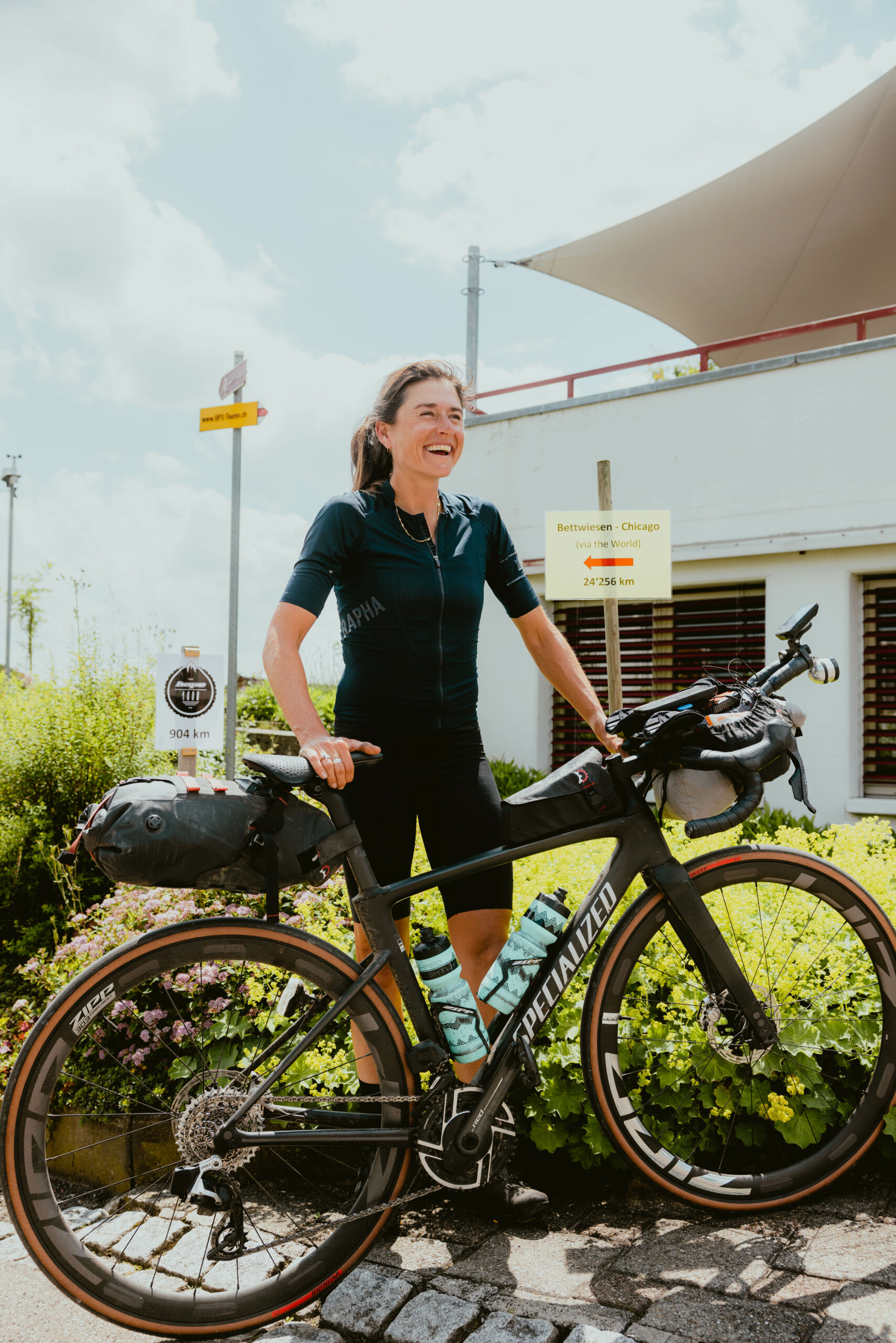
Lael Wilcox. Photo courtesy SRAM
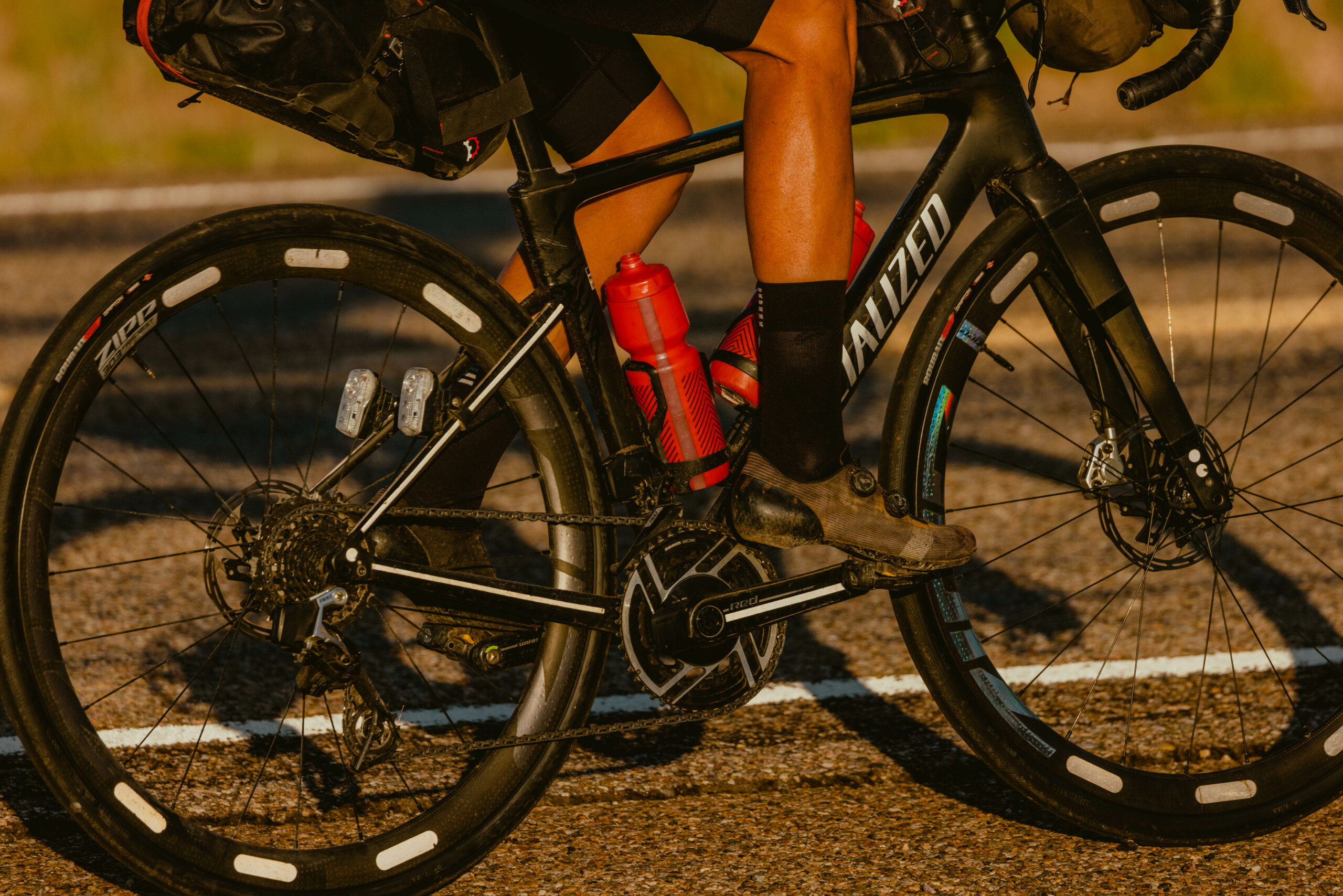
Lael started from Millennium Park in Chicago’s Grant Park on May 26 at 7:00 am, and finished at Chicago’s Buckingham Fountain on September 11 at 6:14 pm. She rode a Specialized Roubaix equipped with SRAM RED AXS and Zipp 303 Firecrest wheels.
Fun Facts From Lael:
- How many cups of coffee: 200, but I really drink a lot more Coca Cola than coffee! I bet I’m somewhere between 300-600 cokes.
- Favorite day of riding: my first day back in Alaska, where I grew up. It felt incredible to be on my home terrain with daylight until 11pm after a winter crossing of Australia and New Zealand.
- Most challenging day of riding: on day 4, I was throwing up all day, it never stopped raining and I was getting multiple punctures. I still rode 139 miles, but it was a tough one.
- Number of countries: 22.
- Total miles: on day 105, I’m at 17,284. The total should be 18,140 after 110 days.
- Average daily miles: 163 miles per day.
- Average speed: 14.5 mph.
- Average daily calories: I’m probably eating between 6,000 and 8,000. I’ve lost a little weight, but not too much.
- Estimated number of people that joined me on the ride: at least 3,000.
- Nights in hotels: most – I’ve stayed with a few friends along the way too.
- Nights camping: 3 weeks.
Follow Lael’s journey on social channels:
- Lael’s Instagram: @laelwilcox
- SRAM Road Instagram: @sramroad
- Lael’s podcast: Lael Rides Around The World
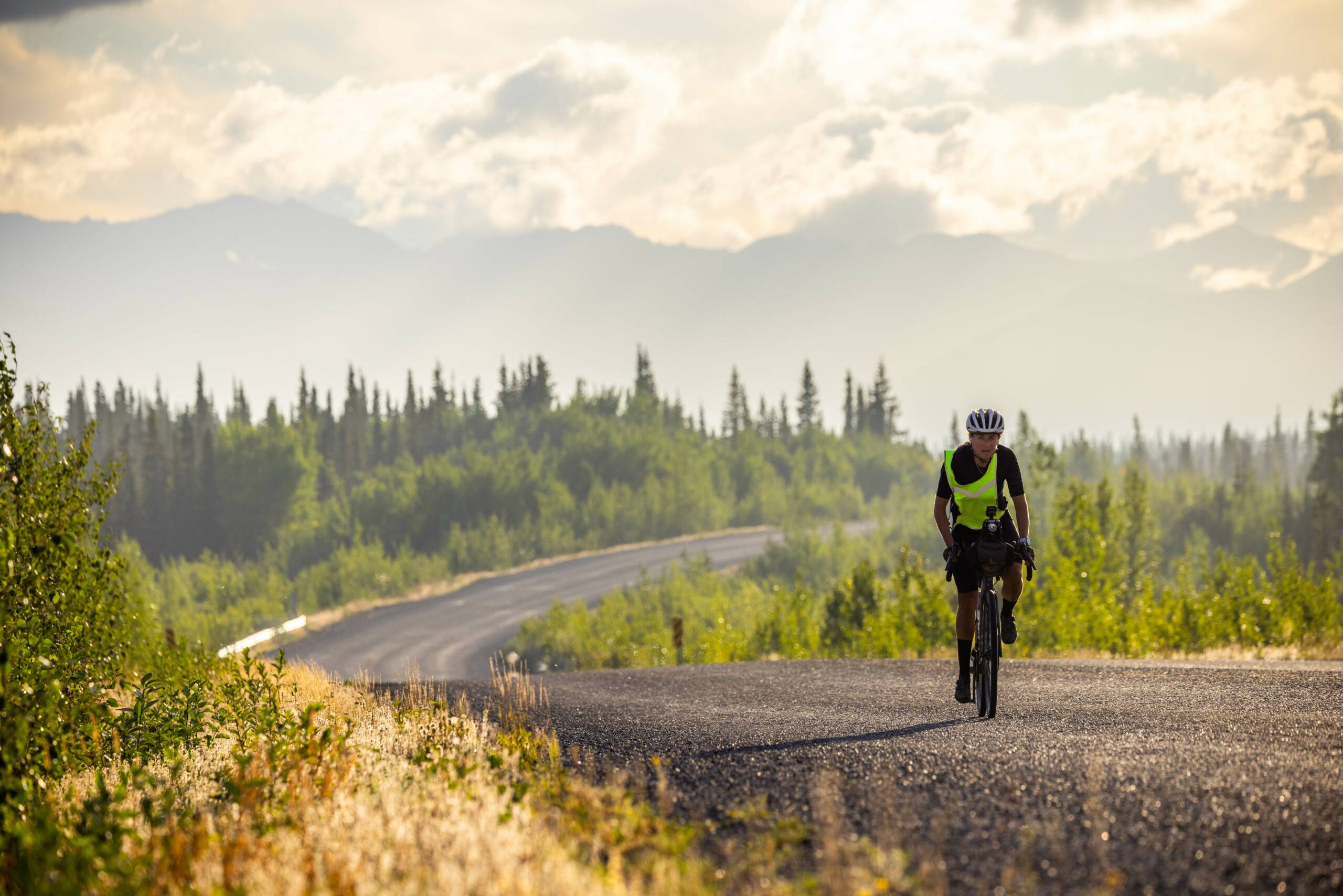
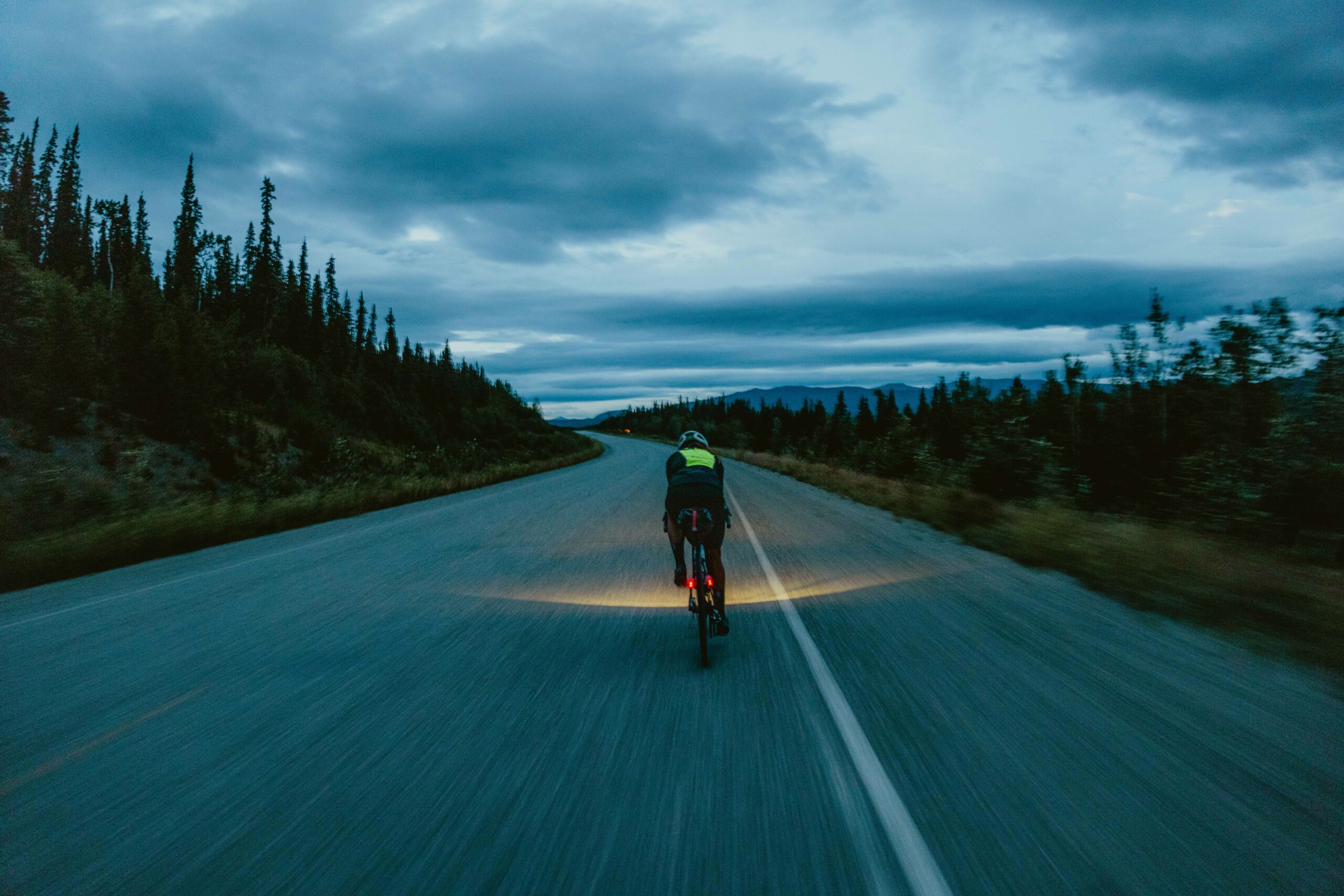
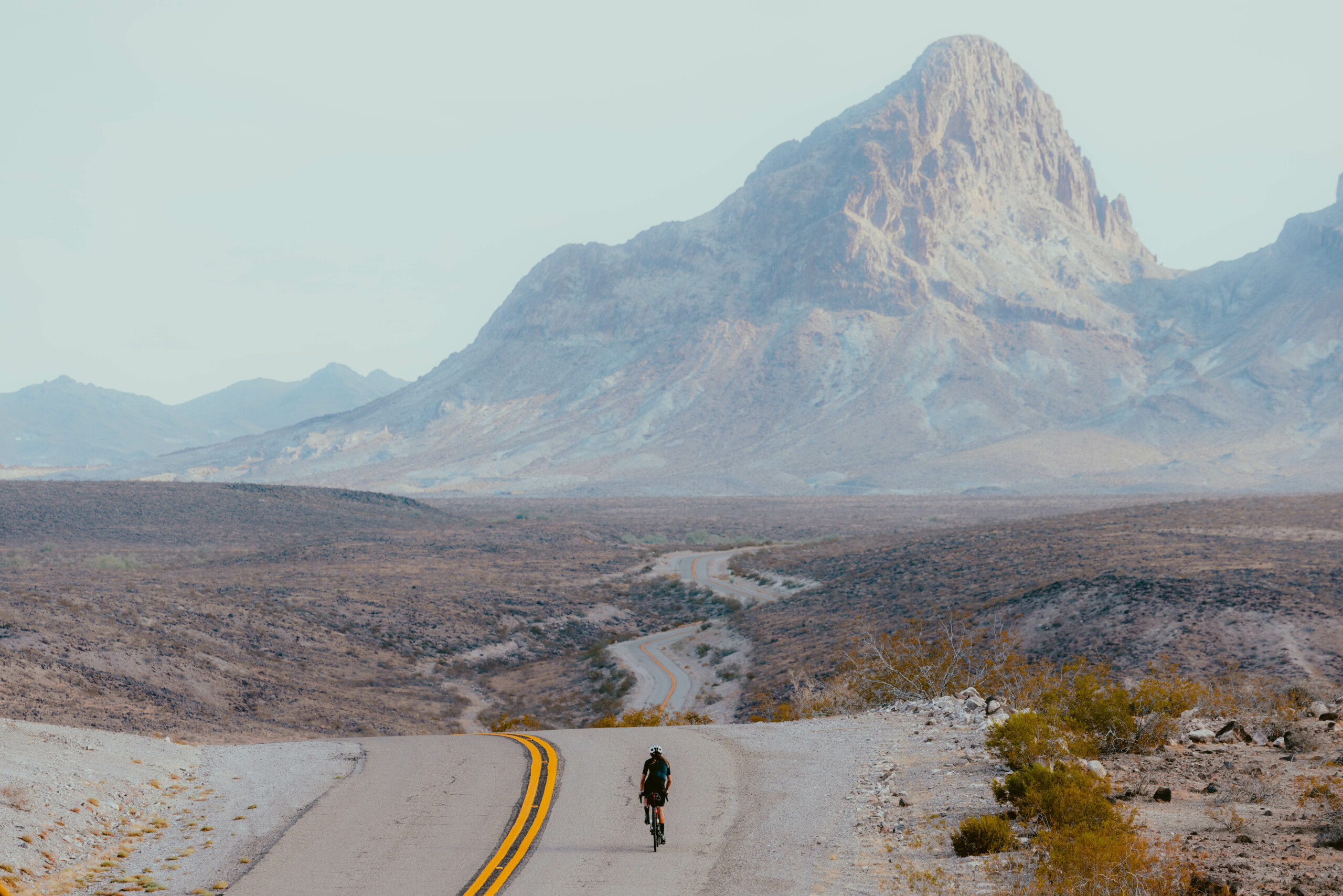
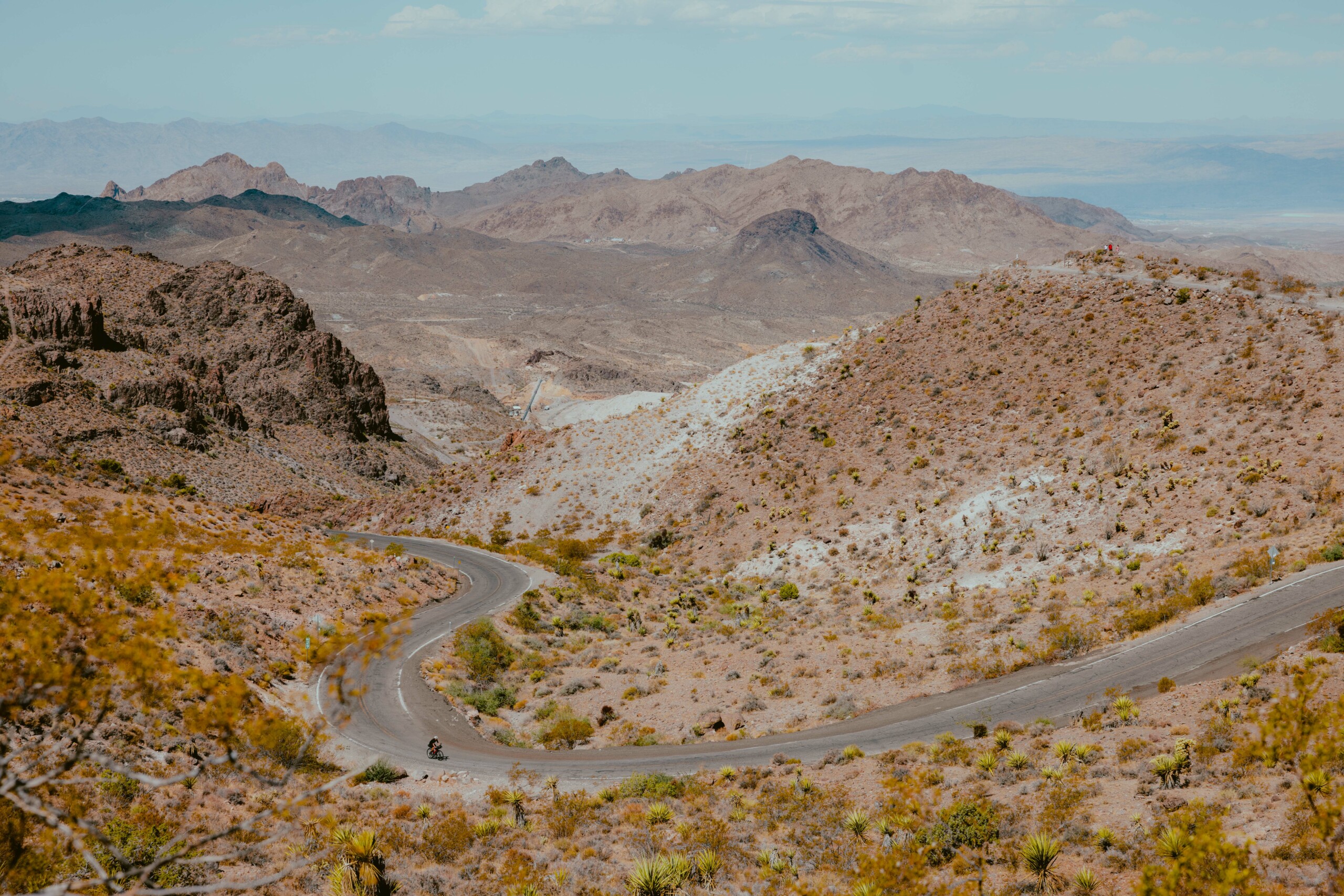
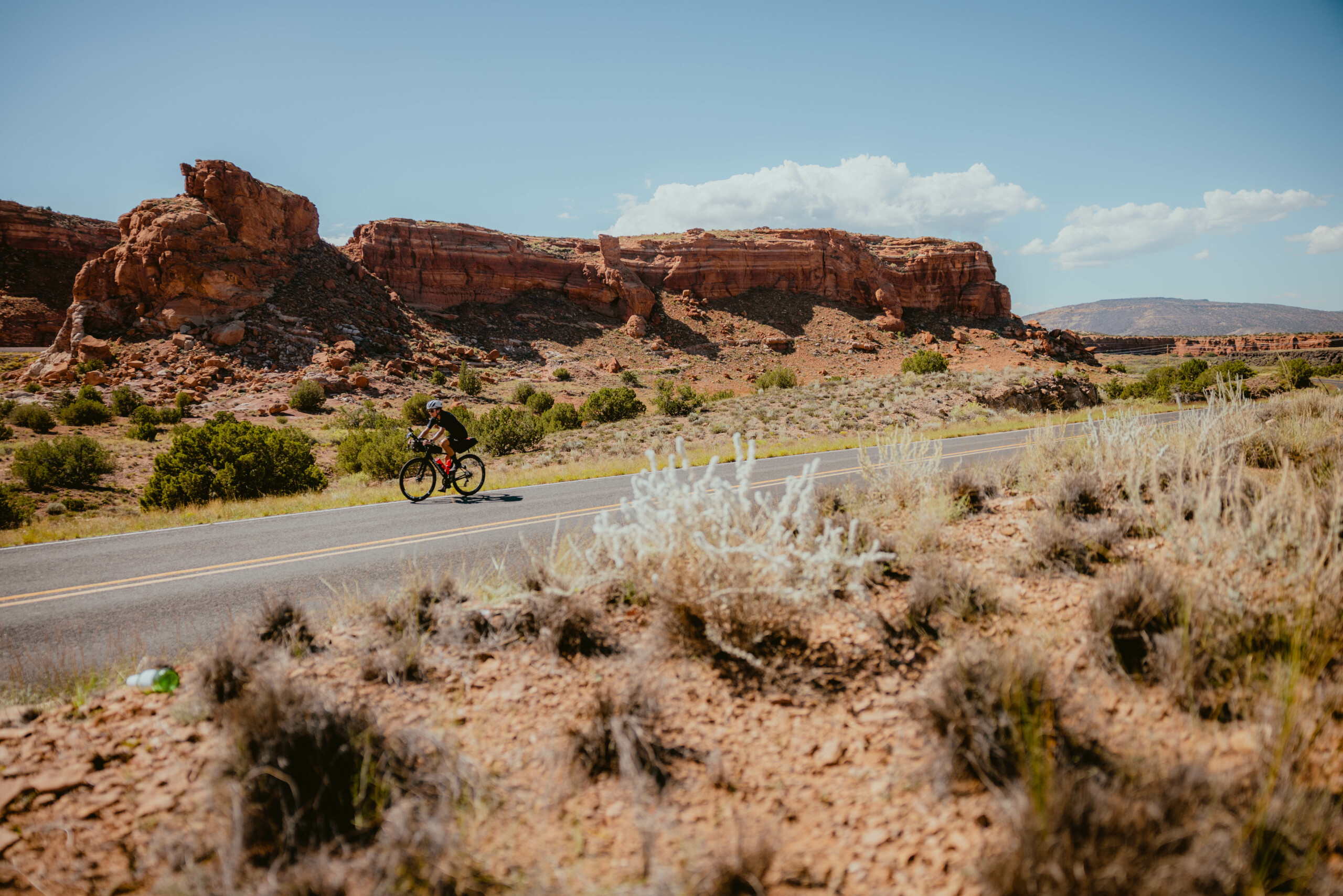
Ultra-cyclist Lael Wilcox to Tackle Gila Monster Gran Fondo on 10/12 in Silver City, NM
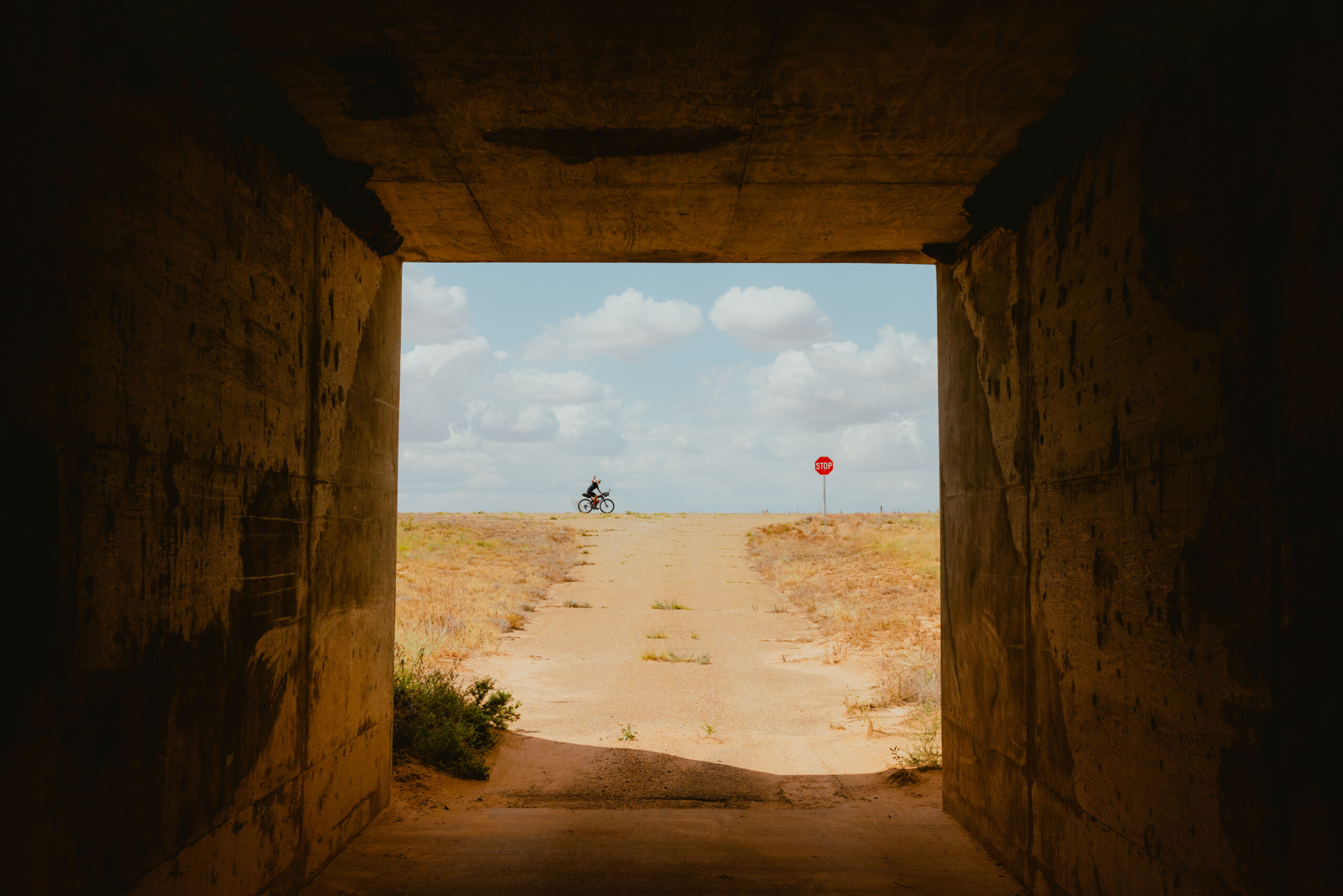
SILVER CITY, New Mexico – Ultra-endurance cyclist Lael Wilcox recently set a new world record by cycling around the globe in 108 days. Next, she will inspire participants at the Gila Monster Gran Fondo on Saturday, October 12, in Silver City, New Mexico.
Wilcox first became familiar with Silver City, the host of the Tour of the Gila stage race, during her record-setting rides along the Tour Divide, which spans from Canada to Mexico. Previously, she had limited time to explore Silver City, but participating in the Gila Monster Gran Fondo will allow her to better acquaint herself with the town and its renowned road cycling routes.
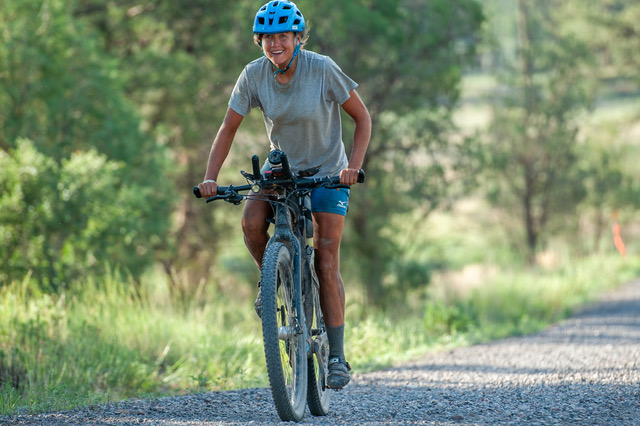
Photo courtesy of Tour of the Gila photographer Mitchell Clinton.
For recreational cyclists, the Gila Monster Gran Fondo offers a chance to ride alongside this adventurer, drawing inspiration from her determination and passion.
The event is designed to be enjoyable for all riders, from recreational cyclists to competitive racers. The 80-, 60-, and 30-mile rides each follow New Mexico Highway 15, part of the Trail of the Mountain Spirits Scenic Byway.
The 80-mile Gran Fondo features 10,696 feet of climbing from Silver City to the Gila Cliff Dwellings Visitor Center and back to Pinos Altos. The 60-mile Medio Fondo includes 6,966 feet of climbing. The 30-mile Nano Fondo challenges cyclists with 2,870 feet of climbing along a scenic route starting in Pinos Altos.
Wilcox will also participate in a Q&A session during the After-Ride Party at the Buckhorn Saloon & Opera House, which she fondly remembers as “such a cool spot.” Online registration at BikeReg costs $110 and is capped at 130 riders. Late registration will be available at Gila Hike & Bike at 8 a.m. on Saturday, October 12. For more information, visit tourofthegila.com.
Unplugged Wellness to Lead Bikepacking Adventure in Utah’s San Rafael Swell
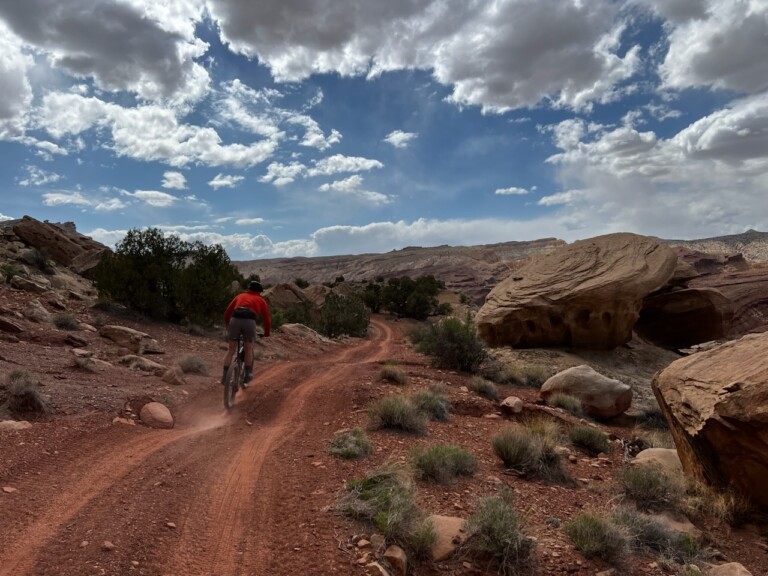
Experience the Ultimate Blend of Adventure and Wellness in Utah’s Backcountry
A unique four-day wellness-based bikepacking trip through the stunning San Rafael Swell in Utah is set to offer adventure enthusiasts a chance to unplug and reconnect with nature. This supported journey, limited to 15 participants, promises an unforgettable experience combining outdoor adventure, personal growth, and community building.
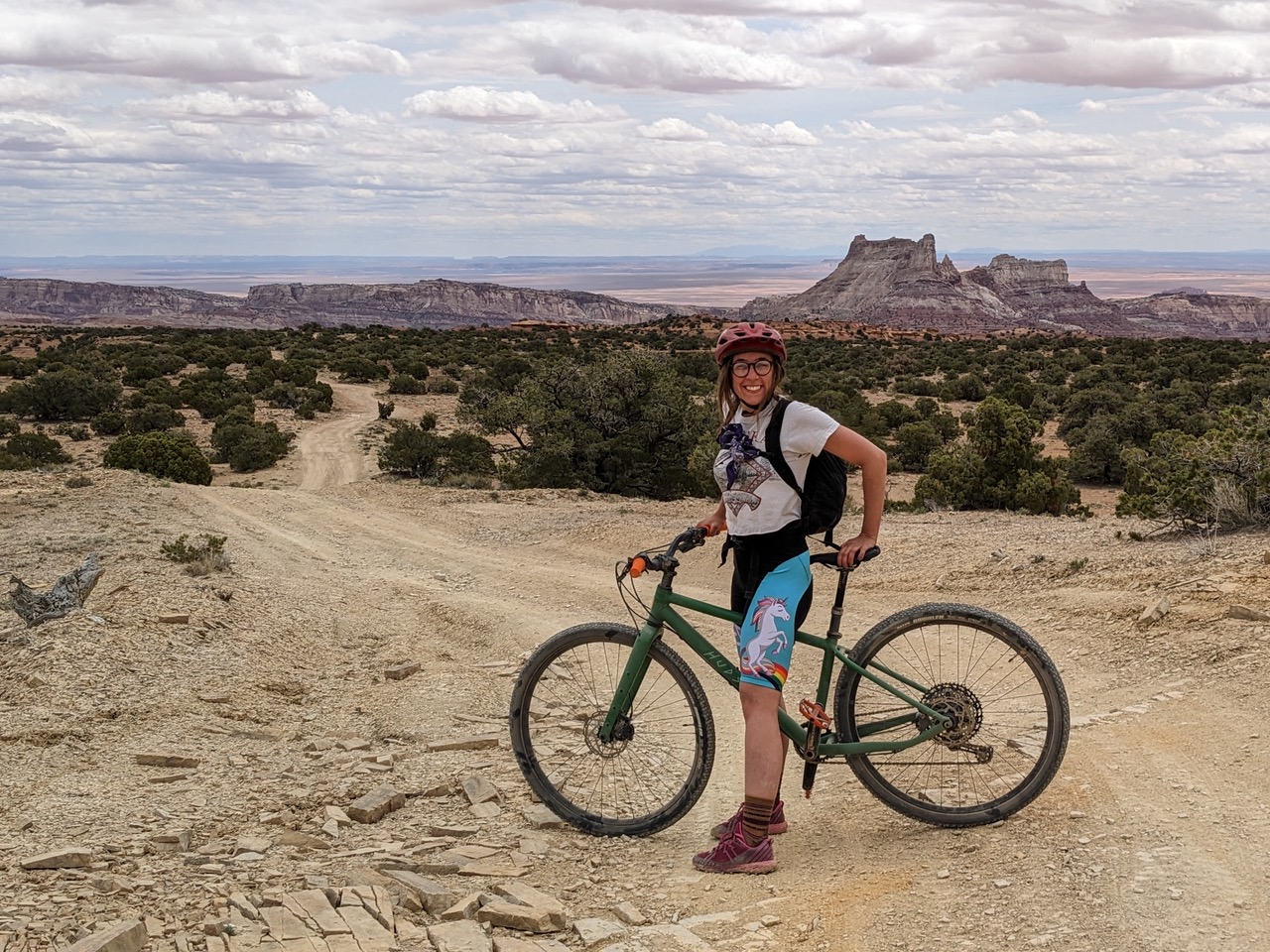
Event Details:
- Dates: October 16-20, 2024
- Location: San Rafael Swell, Utah
- Cost: $669 per person (2-for-1 pricing available for a limited time)
Trip Highlights:
- Scenic 74-mile route adapted from the “Swell Night Out” bikepacking trail
- Multiple route options catering to various skill levels
- Nutritious and delicious breakfast, dinner, and drinks included
- Camp gear transportation
- Daily wellness workshops and activities
- Experienced ride leaders and medical professionals on-site
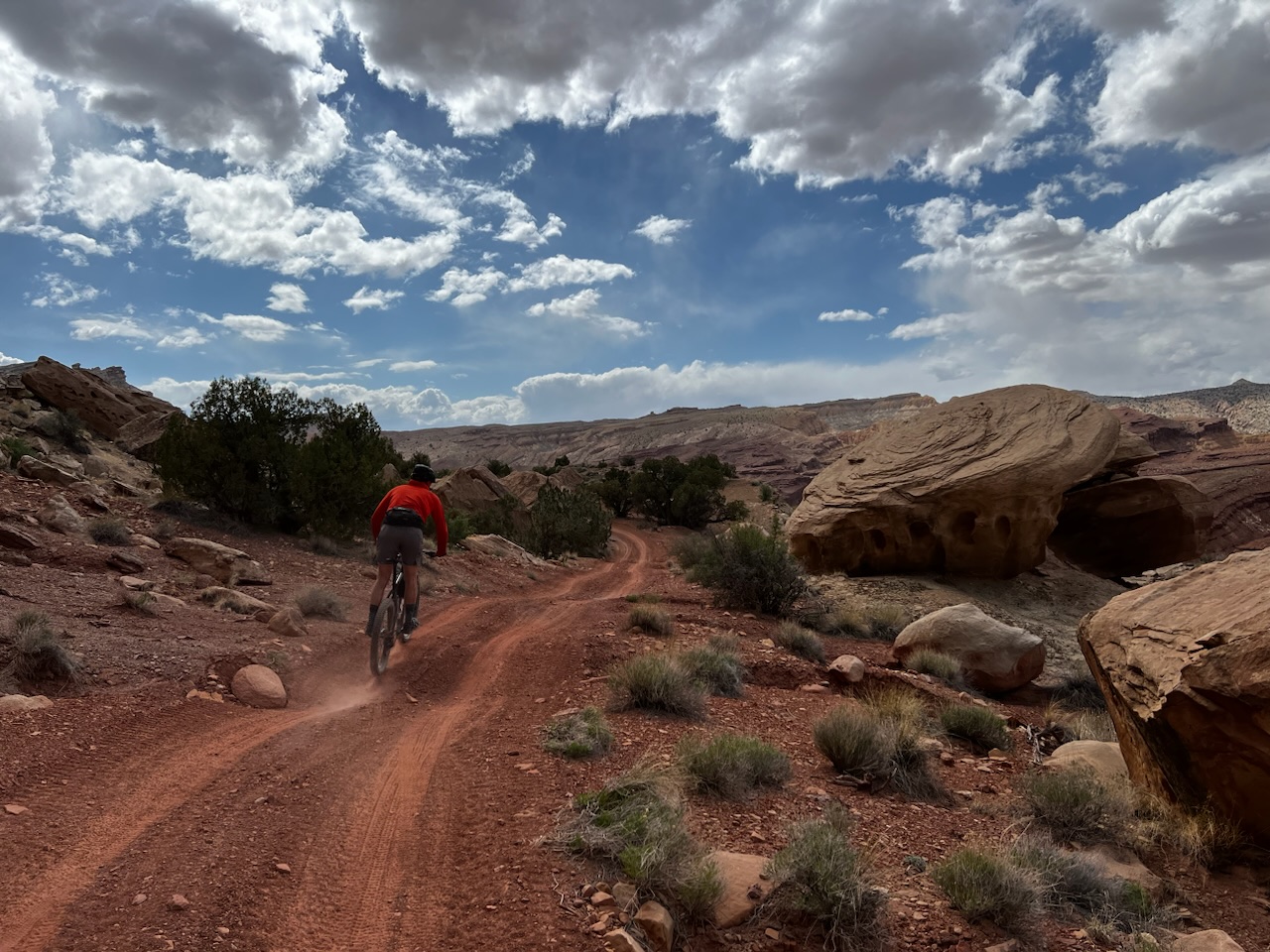
The trip begins with an opening ceremony on October 16th, setting intentions for the journey ahead. Participants will embark on daily rides ranging from 21 to 38 miles, depending on their chosen difficulty level. A layover day mid-trip allows for relaxation, exploration, and community bonding.
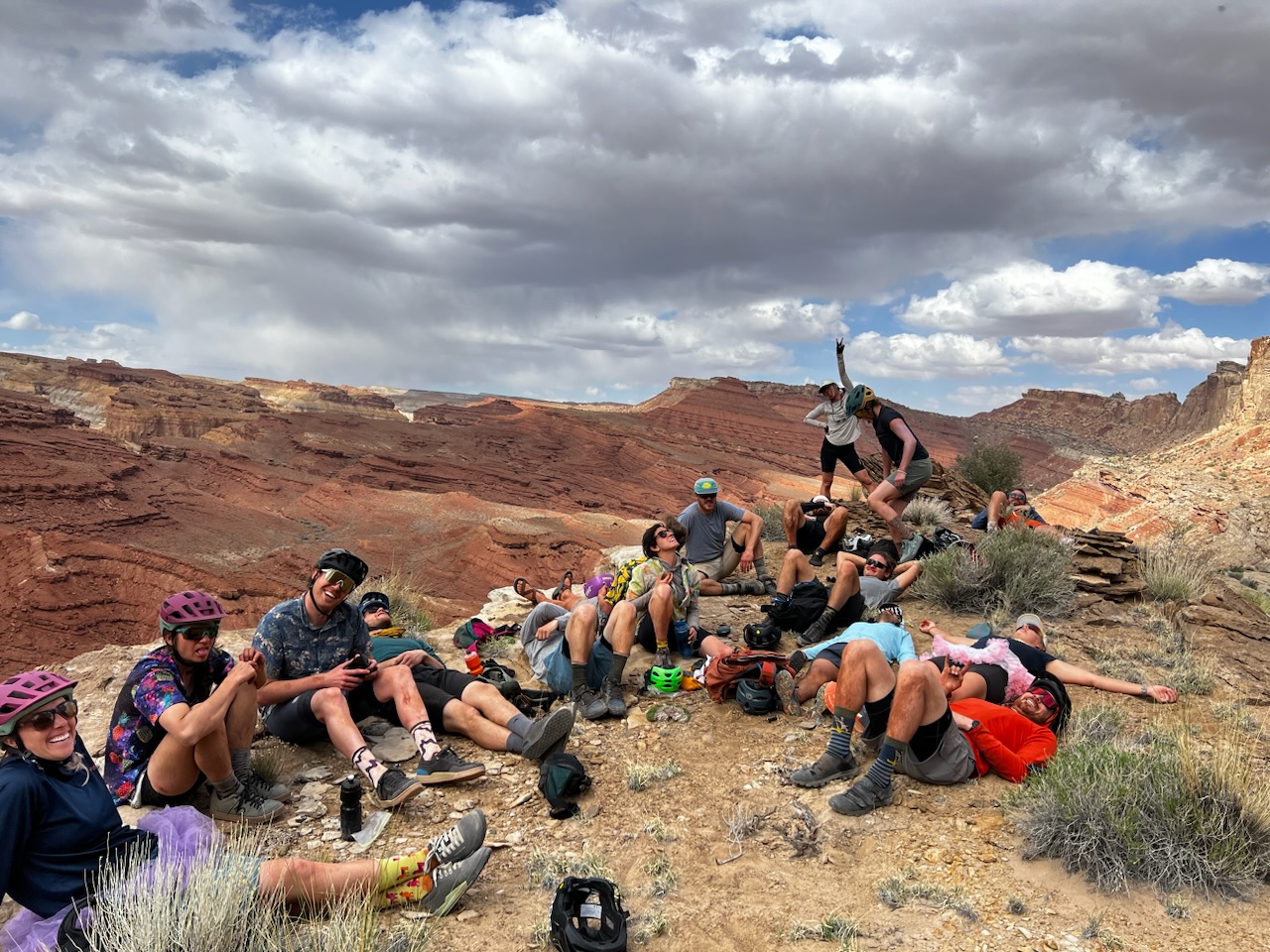
“This isn’t just a bike trip; it’s a transformative experience,” says the event organizer, Marshall Opel. “We’ve created an environment where people can challenge themselves physically while nurturing their mental and emotional well-being.”
Trip organizers, Lucas Matelich and Marshall Opel emphasize inclusivity, offering flexible payment options to make the trip accessible to all interested parties. Meals, water, and basic equipment are included, with participants only responsible for their personal camp gear and on-bike sustenance.
For more information or to reserve a spot, interested parties should email [email protected] or call Marshall at 406-207-0981
Dave Walker’s Cycling Cartoons: That Annoying Noise


USA Cycling Announces Postponement of Collegiate Mountain Bike Nationals
The 2024 USA Cycling Collegiate Mountain Bike National Championships will be postponed due to damage to the host city and surrounding areas caused by Hurricane Helene.
COLORADO SPRINGS, Colorado (October 1, 2024) — On Tuesday, USA Cycling announced that the 2024 USA Cycling Collegiate Mountain Bike National Championships, originally scheduled for October 24-27 at Ride Rock Creek in Zirconia, North Carolina, will be postponed indefinitely due to the damage caused by Hurricane Helene. The storm significantly impacted the host city and surrounding areas, making it impossible to safely host the event as planned.
 USA Cycling is actively working to reschedule the event and will provide updates as soon as they become available. The safety of participants, staff, volunteers, and the local community was the top priority driving this decision.
“We understand how disappointing this news is for the collegiate cycling community, and everyone involved,” said Kyle Knott, Director of National Events. “However, considering the destruction caused by Hurricane Helene, postponing is the right decision to ensure everyone’s safety and allow the local community time to recover. Our thoughts are with all those who have been personally affected by this storm.”
Athletes and teams that have already registered for the event will be refunded. Further updates will be shared on usacycling.org and USA Cycling’s social media channels as they become available.
For more information, contact the USA Cycling National Events team at [email protected]
Inaugural Apacheria Gravel to be Held in Douglas, AZ on November 16, 2024
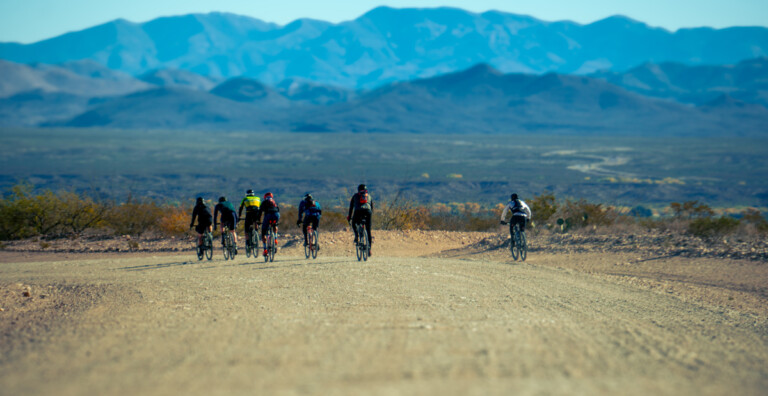
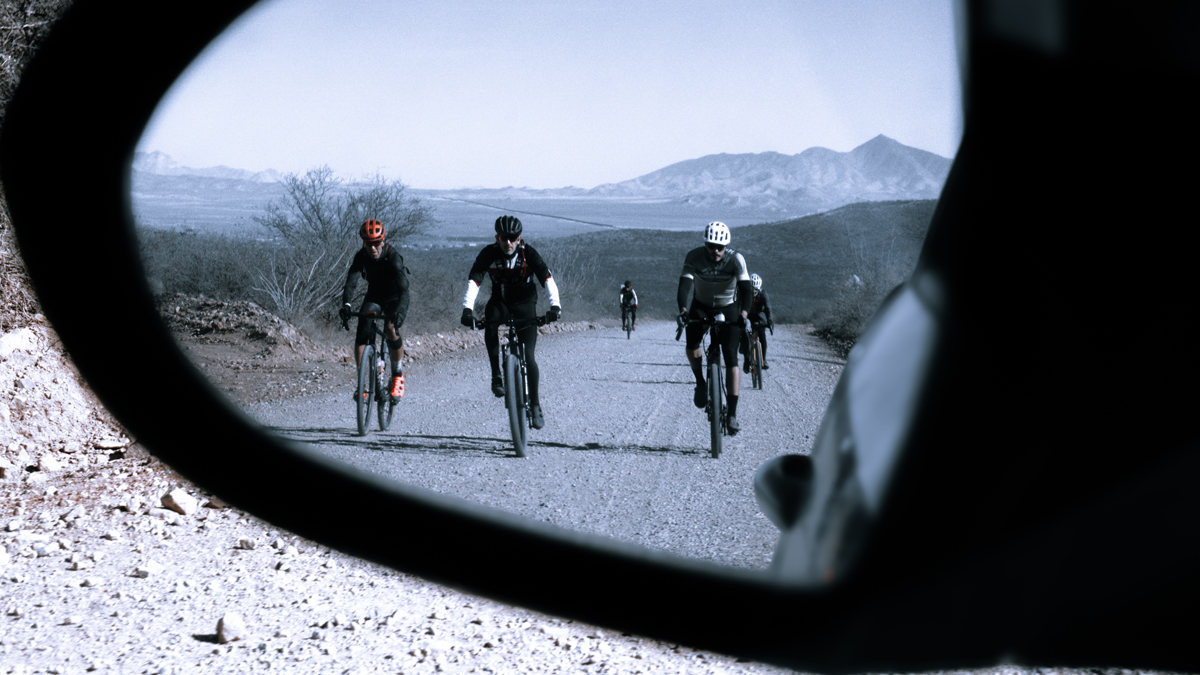
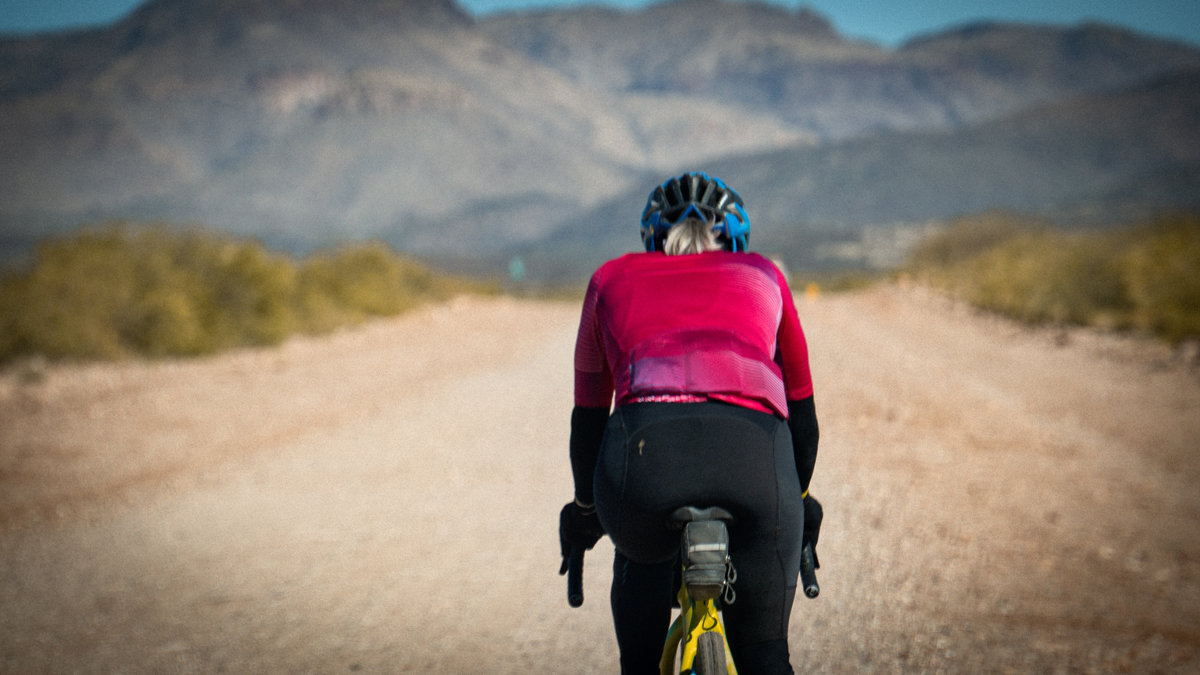
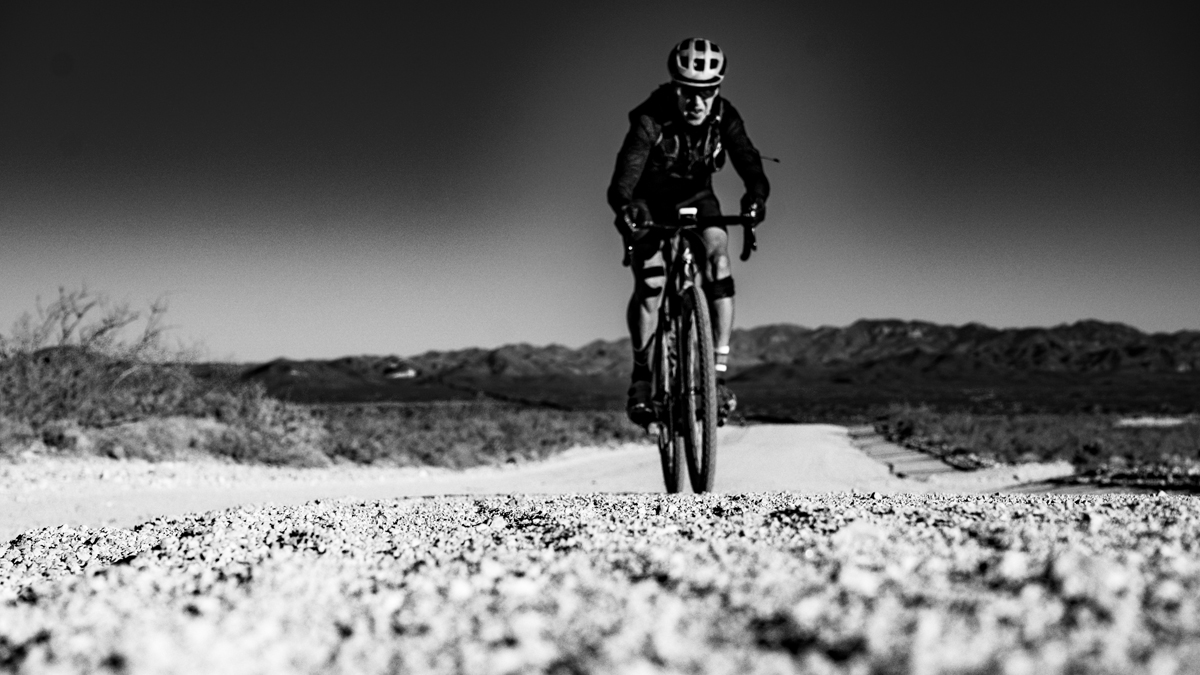
DOUGLAS, Arizona (October 2, 2024) – The Apacheria Gravel will held for the first time on Saturday, November 16, 2024. The inaugural Apacheria Gravel will start and finish in Douglas, AZ located in South East Arizona on the International Border, sharing a port of entry with Agua Prieta, Sonora, MX.
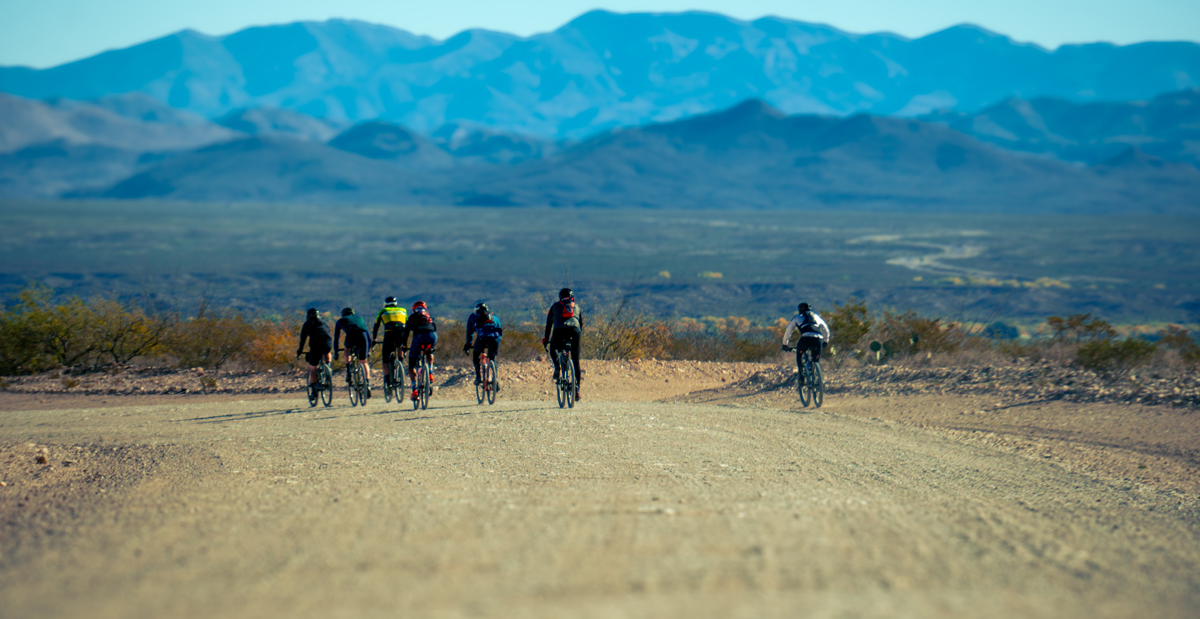
The official Start – Finish line will be in front of the Border Air Museum, which in fact, is the first international airport in the USA.
The Apacheria Gravel will consist of three course routes – respective distances of, 38, 69 and 89 miles. All three distances will be contested on the Geronimo Trail, located in Cochise County and the ‘Border-Lands’ area of SE Arizona The Geronimo Trail traverses the foothills of the Perilla Mountains, San Bernardino Valley and the western edge of the Peloncillo Mountins.
Douglas, AZ is a vibrant and proud community that was incorporated in 1905. Douglas was founded as an American Smelter town – to treat the copper ores of near by Bisbee, AZ. Douglas sits at an elevation of 4032 feet.
In 1916 the Mexcian Revolutionary Leader, Pancho Villa was active in the Douglas, AZ and Agua Prieta, Sonora, Mx area – stories are told that Pancho Villa rode his horse into the lobby of The Gadsden Hotel ( www.thegadesdenhotel.com) and chipped the marble grand staircase. The Gadsden Hotel will serve as the event’s host hotel along with the awards ceremony venue.
The genesis of the Apacheria Gravel is the robust growth of the gravel event platform nationally and internationally.
The date of the Apacheria Gravel was decided after a lengthy process in critical and strategic thought. The Apacheria Gravel is the final Gravel event, west of the Mississippi for the 2024 event calendar. The event’s date – November 16, 2024 – is two weeks after the Spirit World 100 (11/2/24 – www.thespiritworld100.com ) and one week in advance of the El Tour de Tucson (11/23/24 – www.eltourdetucson.org ) as well as the premier Gravel Cycling Event in Mexico – Belgian Waffle Ride ‘Mexico,’
Please visit the event’s official website for all of the details and answers to numerous FAQ’s: www.ApacheriaGravel.com.
Bicycle Touring Along the Historic C & O Canal Towpath
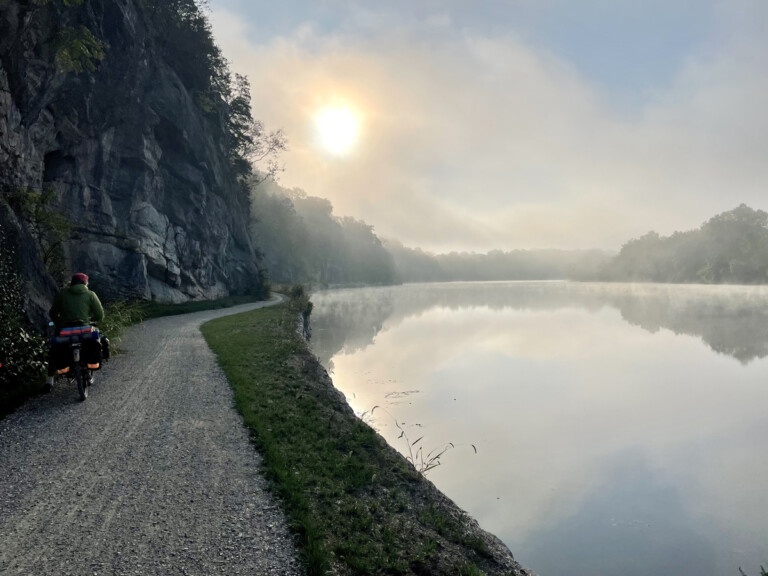
By John Roberson — In early October of 2023 my sweetheart and I left our Utah home to spend nine delightful days riding the C & O Canal Towpath, a 184-mile, National Park Service historical trail that follows the Potomac River between Washington, D.C. and Cumberland, Maryland. Along the way we experienced fine autumn weather, quiet paths and beautiful riverside scenery. We saw deer and turtles, herons and big black snakes, foggy mornings and lovely sunsets. We shared stories with other bicycle tourists and spent our nights camping in lovely hiker-biker sites along the river. And throughout the tour we were taken both by the ease of the route and by how “wild” the surrounding countryside seemed to us, despite the fact that the towpath passes through one of the more densely-populated parts of our nation.
For roughly 100 years the Chesapeake & Ohio Canal, originally the brainchild of George Washington, provided for the transport by canal boats of goods and commodities between the two cities. Beginning in the 1820s, and continuing for 20-plus years, more than 70 stone locks and aqueducts were constructed, along with lock-houses for the families that operated the locks. Although the canal builders fell short of their original goal to connect Chesapeake Bay to the Ohio River at Pittsburgh, the portions that remain clearly reflect what was an impressive feat of labor and engineering. Canal traffic on the C & O declined with the steady rise of more efficient railroads and stopped completely in 1924 after a series of disastrous floods on the Potomac irreparably damaged the system. The canal and its infrastructure were left to deteriorate until visionaries in the 1950s recognized the potential of the canal as a national pathway worthy of preservation. In 1971 it became a national historical park under the auspices of the National Park Service, and in the years since has served millions of hikers, bikers, runners and other outdoor enthusiasts.
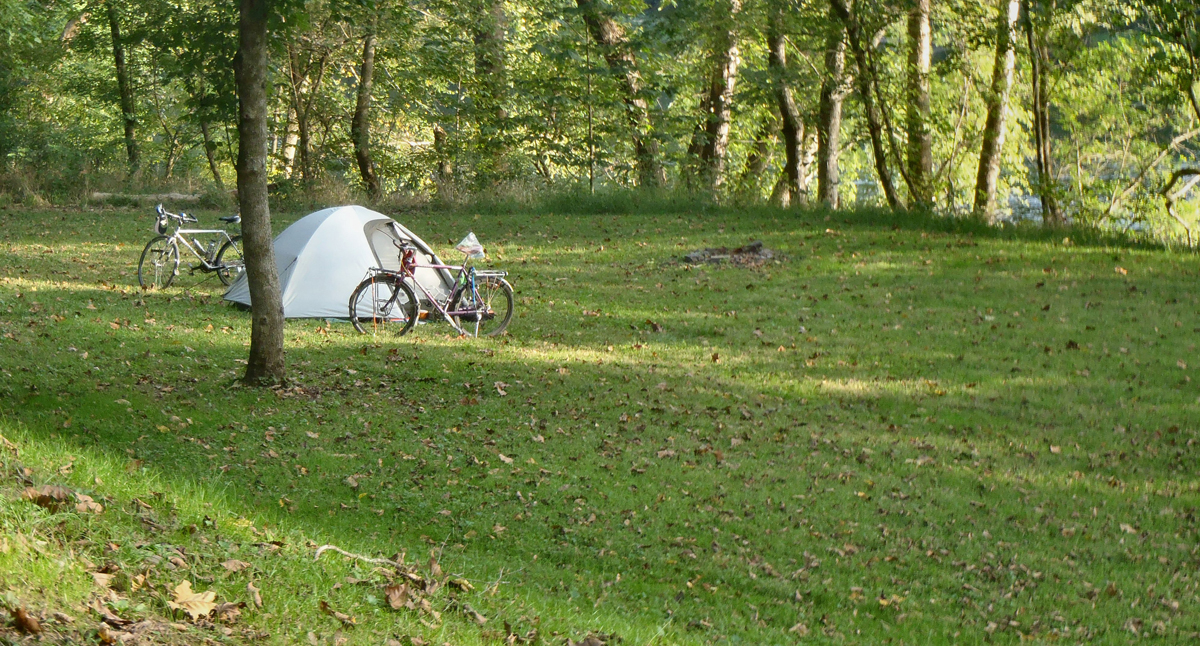
We began our ride in Cumberland and spent the next four days leisurely riding the towpath to Washington, D.C., camping each night along the trail. The weather was perfect and the famous fall foliage of the East had begun to color-up the countryside. We spent two relaxing nights in a Georgetown hotel near the end of the towpath and a day riding around D.C., seeing the sights, doing chores, and marveling at the city’s bicycle-friendly infrastructure. We then spent another four days retracing our route back to Cumberland. The weather was cooler on the ride back, and we had one rainy morning and a couple of misty nights to remind us of the unpredictability of the season. We easily managed about 50 miles each day, which allowed us to stop whenever we felt the urge to check out a nice view, have a snack, take a picture or two, investigate a nearby community, or chat with other towpath users.
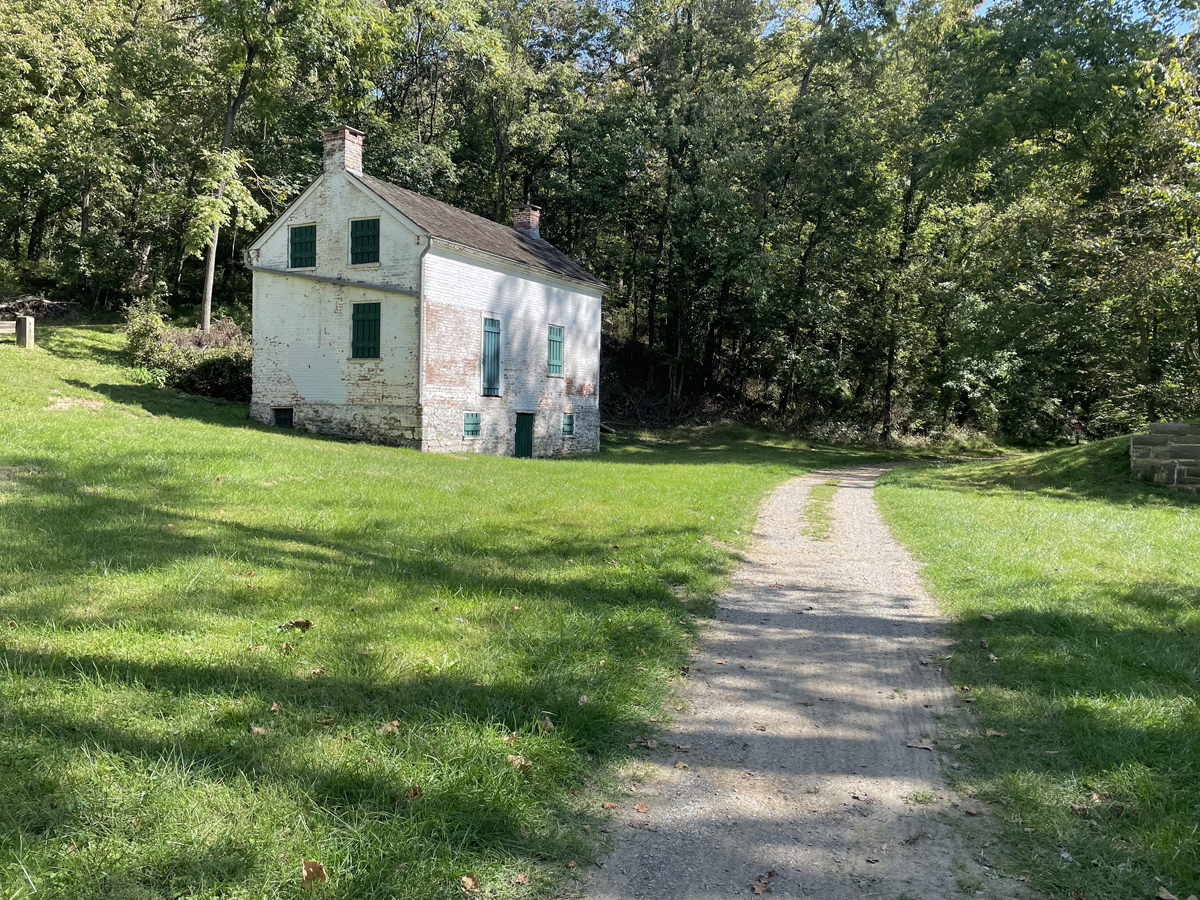
The towpath itself was a pleasure to ride. It is essentially level, as one would expect with a path that follows a canal and that was originally established by the horses and mules that pulled the canal boats from lock to lock. The overall elevation change between D.C. and Cumberland is about 700 feet, with all of that change occurring in a series of gentle, 10-foot “bumps” at each of the locks. The towpath varies in width from a few narrow, single-track sections near the Cumberland-end of the pathway to well-maintained, 6-to-8 foot wide, crushed stone surfaces for the bulk of the route. For what it’s worth, my old Rockhopper and Roz’s ancient Trek 520 easily handled all portions of the path.
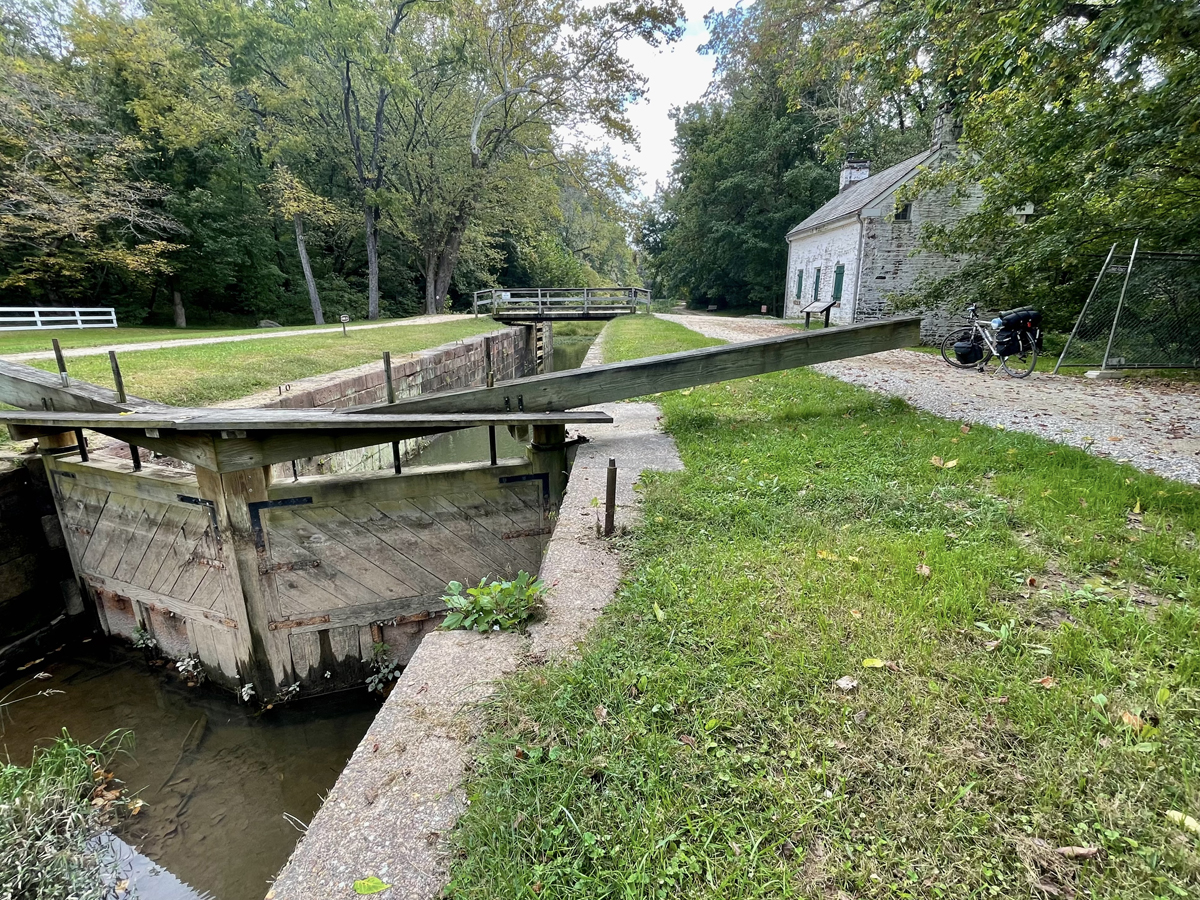
The structural remains of the original canal and its infrastructure are a constant presence as one rides along. In some places the canal is quite dry and in the process of being reclaimed by the surrounding forest. In many other places the canal has turned into a series of long ponds, filled with lily pads, turtles and water birds. In a few other stretches, where the Potomac had been dammed, the river itself was calm enough to be used as a portion of the canal route. There, the towpath literally hugs the edge of the river. Along the way we passed the remains of locks and aqueducts, and the simple stone houses that were built to house the lock-keepers who were on-call day and night to work the locks. Some of these features were no more than graceful stone ruins, and others looked as though they could be put back into service tomorrow. In fact, several of the lock houses have been refurbished and can be reserved for overnight stays. One highlight of the ride is the infamous Pawpaw Tunnel, a 3,000-foot-long hole that carries the canal through a stony ridge. It cost a great deal of time and money at the time, but it saved the canal-builders from having to build along several miles of especially twisty bends in the river.
We like to camp out when we tour, and there were plenty of options for us as we rode the towpath. We used six of the 30 or so official hiker-biker sites that are maintained by the National Park Service. The campsites were free to use, and to our western, desert-oriented eyes seemed especially lush and luxurious. In general, each site consisted of a large patch of grass carved out of the surrounding forests. Each one was located between the towpath and the river, and contained one or more picnic tables, fire rings, a porta-potty, a hand-powered water pump, and a convenient trash-bag dispenser. The campsites (and the towpath itself) were remarkably free of trash and thoughtfully sited to take advantage of views of the river. The porta-potties were clearly maintained, but the water pumps were all labeled with signs saying that the water should be filtered or boiled before drinking (and me without a water filter!). Fortunately, drinkable water was easily found in the towns we passed along the way. Because we were traveling during a sort of off-season, we had several campsites all to ourselves, but we spent several lively nights at sites we shared with two to five other groups of travelers. We imagined that most of the sites would have been filled to the brim each night during the busy summer season.
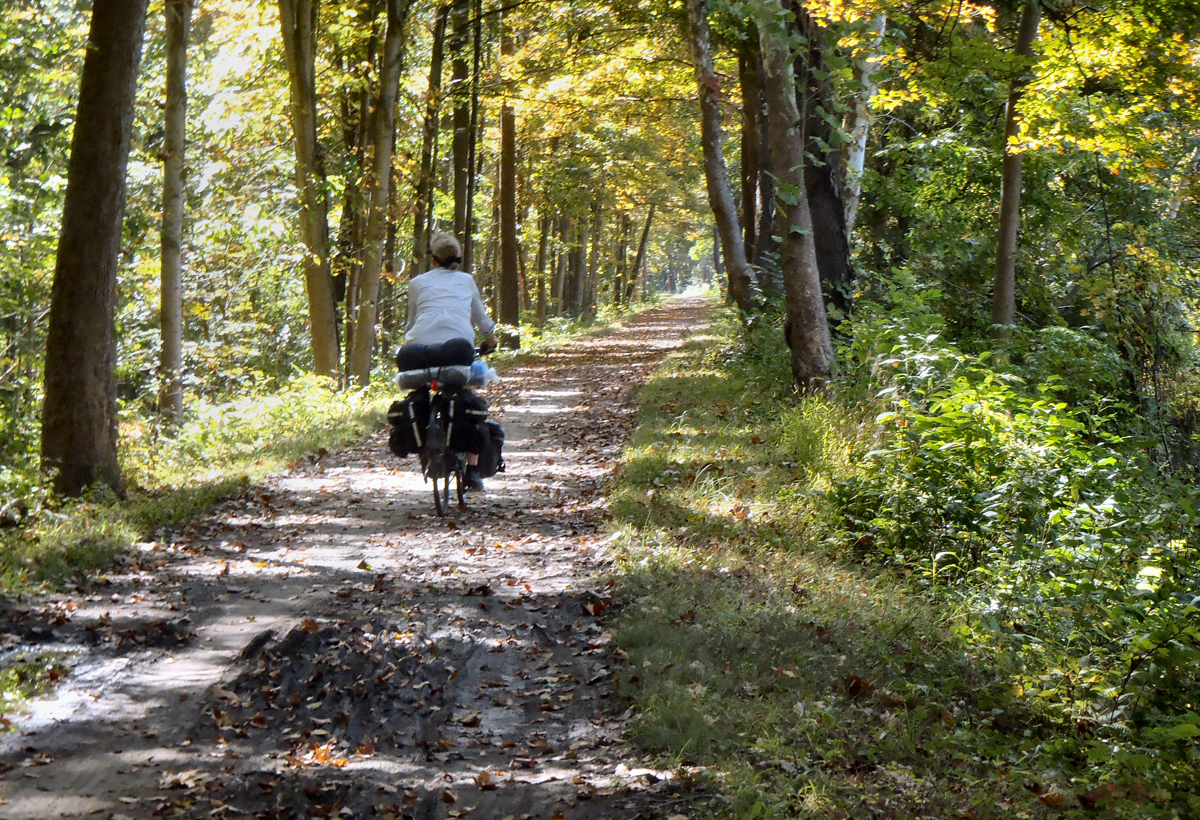
The C & O Towpath passes through a number of small communities as it winds its way along the edge of the river. Some were founded to serve the needs of the canal, but most were much older farming or trading towns, with long histories and buildings that predated the American Revolution. We visited Harper’s Ferry, which was the site of John Brown’s final stand against the evils of slavery, and Shepherdstown, a tiny college town that claimed to be the oldest in West Virginia. Whatever a community’s origins, most seem to have recognized the benefits of being close to a well-used recreational pathway and have developed services designed to meet the needs of folks traveling the towpath. Despite the lateness of the season, we were always able to find supplies when we needed them, and every merchant we met was helpful and eager to please.
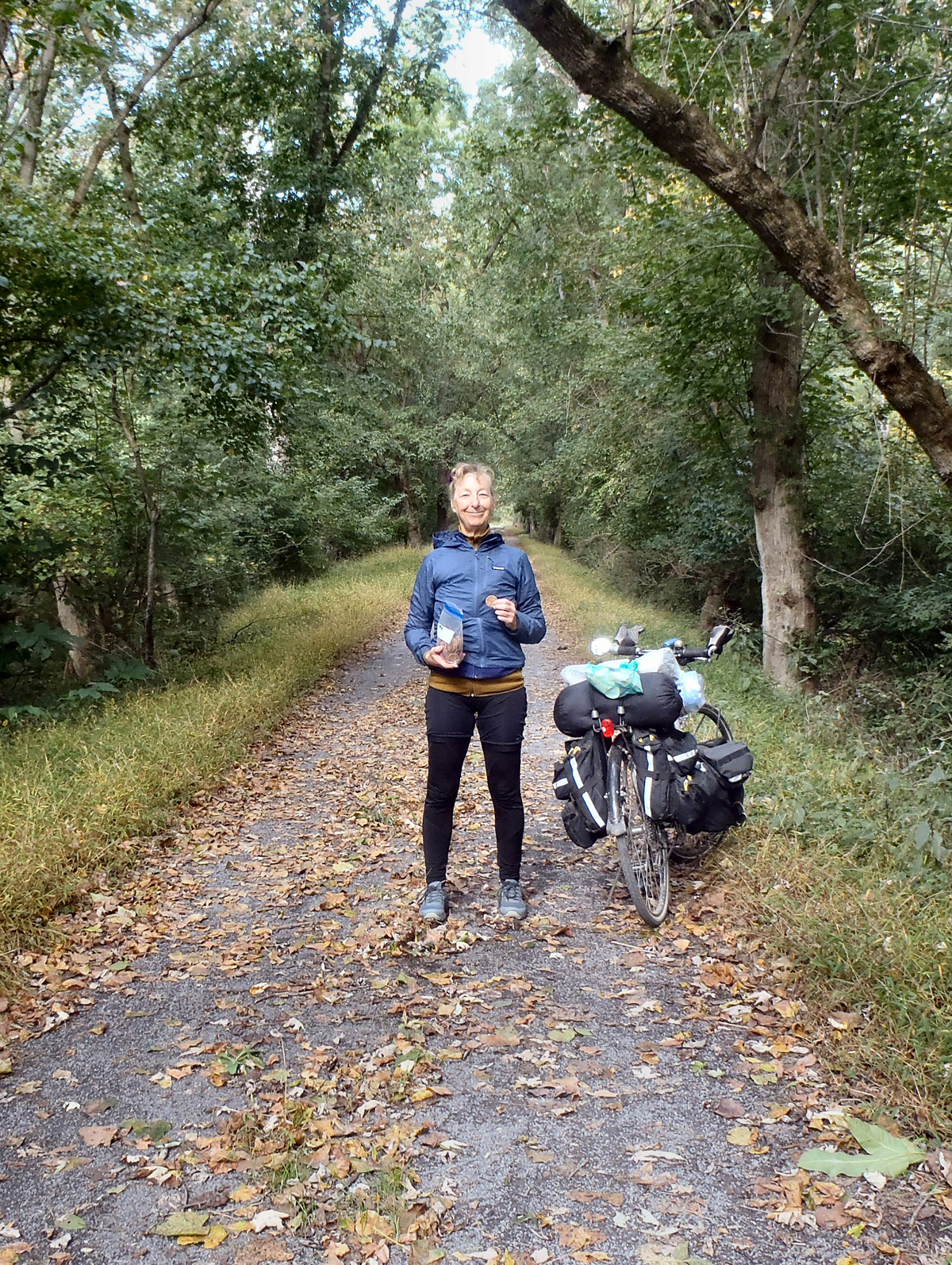
Like many of the trails that have been developed from disused railroad corridors, the C & O Towpath does suffer somewhat from the “tunnel effect” that results when the greenery alongside the trail is allowed to grow out and up over the pathway. The towpath was curvier than a typical rail bed might be, and it wasn’t a problem for us as there seemed to be so many interesting things to see. There are lots of breaks in the scenery where the towpath opens up onto the river or onto fields and pastures or rocky bluffs on the inland side of the canal, and when the pathway passes through towns. What was very appealing to us was the fact that there are only a handful of spots where the towpath interacts with motorized traffic. Though we passed under the occasional highway or railroad bridge, we found it easy to feel we were miles away from the hubbub of the modern world. We were especially impressed by how gently the towpath brought us into Washington. As we were pedaling the path in the late afternoon of the fourth day, we noticed that we were sharing it with an increasing number of pedestrians, runners and bike commuters. We were just a mile or so from the canal’s starting point when we suddenly found ourselves smack in the middle of Georgetown and a few short blocks from our hotel. The towpath allowed us to bypass altogether the suburban sprawl that surrounds the city.
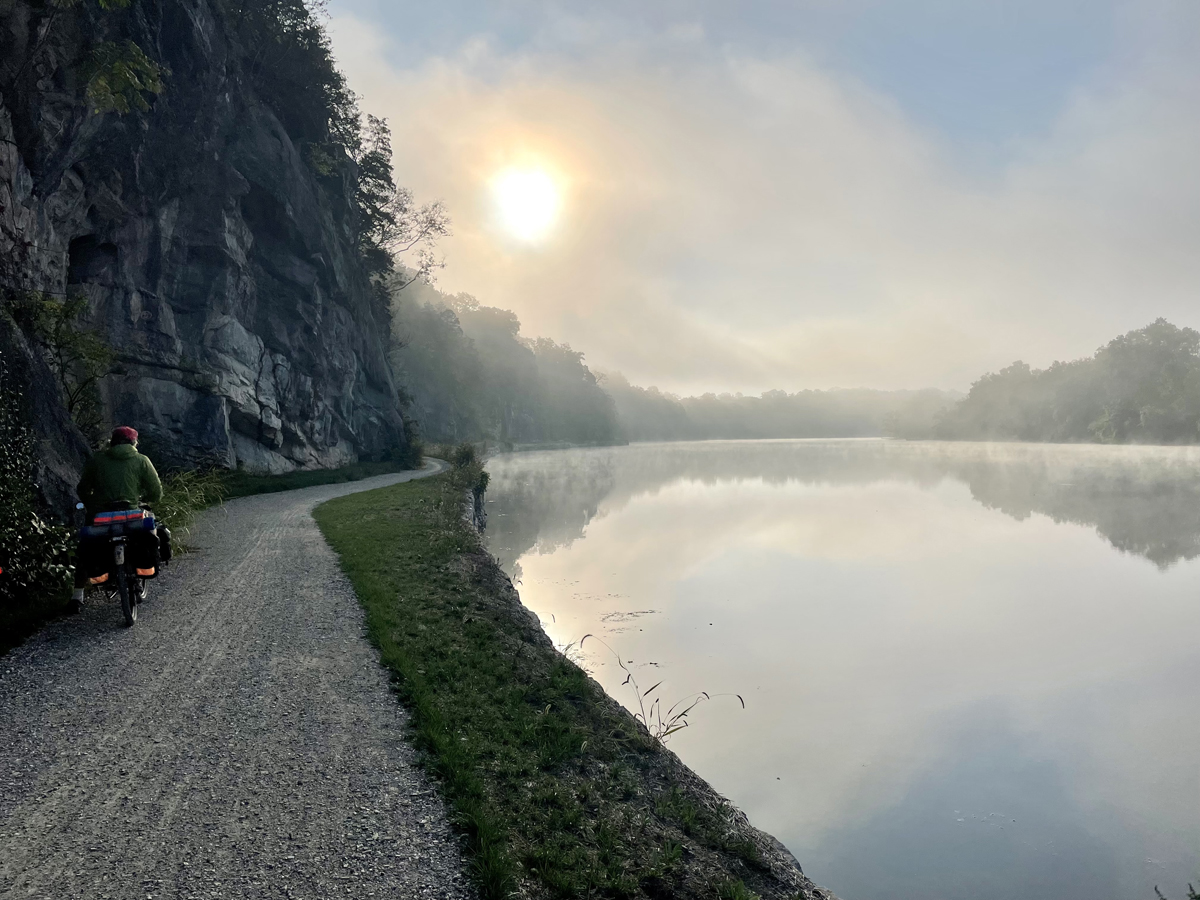
Many of the riders we met were riding the C & O Canal Towpath as one leg of a longer tour that included a trail called the Greater Allegheny Passage (GAP). The GAP is a well-established rail-trail that links Cumberland and Pittsburgh, Pennsylvania and adds another 150 miles to the tour. The GAP connects directly, and conveniently, to the C & O Towpath in downtown Cumberland. Bicyclists ride the combined routes in both directions. Many riders said they had initially arrived in either D.C. or Pittsburgh with their gear and plans to shuttle back to where they started via Amtrak, which provides regular, bike-friendly service between the three cities. Others said they had rented their bikes and bags from one of the many outfits that cater to riders (and that provide shuttle service between cities). The bike tourists we encountered ranged from fast-moving bike-packers, traveling light and determined to put on the miles, to easy-going novices who preferred to end their daily rides in the comfort of one of the many B & B’s located in the communities along the route. We saw lots of riders who were out for a day ride or a single overnight, and a few long-distance tourists for whom the C & O Towpath and GAP were merely sections of much longer trips. We met a well-organized family of six riding the towpath from Pittsburgh to D.C. as a fun-filled learning experience for their home-schooled kids, and an older couple working their way down from New England and aiming for South America. Regardless of the level of experience of each rider we met, and despite the occasional trials and tribulations that are part of any truly memorable bicycle tour, everyone seemed to be having a really good time!
Trip Notes:
- There’s a 26-mile rail-trail that parallels the canal path on either end of the town of Hancock. It’s called the Western Maryland Rail Trail (WMRT). It is paved and would be a less-messy alternative to the towpath on a rainy day, but a section of it puts the rider in close proximity to a noisy section of interstate.
- We use a traditional front-and-rear pannier set-up to carry all our gear. We each carried two frame-mounted water bottles, plus two additional liter bottles in our bags for evening and morning use. In addition to all our camping supplies we each had good rain gear with us, and fenders were very handy when the trail got sloppy coming out of D.C.
- To get to our starting point, Roz and I chose to drive across the country carrying all our gear. It added another ten days of travel to our adventure, but we had the time and were able to visit friends and see new sights along the way. We live in Salt Lake City and are dedicated, life-long bike commuters, and together we have over a hundred bike tours under our belts.
- C&O Canal Towpath information: https://www.canaltrust.org/plan/co-canal-towpath
Van Wagoner, Pannecoucke Win Big at 42nd annual LoToJa Classic
Three titles for Pannecoucke; Van Wagoner avenges 2023 loss
By David Bern — The top pro victors in the 42nd annual LoToJa Classic on Sept. 7 showed that being fit and fast aren’t always enough to triumph at one of America’s coveted cycling road titles.
Sometimes, you have to risk losing — or try to break the course record — to win.
Cat. 2 Danny Van Wagoner, 32, (Team CycleSport.com) of Fruit Heights, Utah, won the Men Pro 123’s after attacking from an eight-man breakaway with less than three miles to go.
His winning time in the 203-mile (327 km) race from Logan, Utah, to Wyoming’s Jackson Hole Mountain Resort, was 8:50:24.22. His average speed was nearly 23 mph.
“I played all of my chips on that move,” Van Wagoner said of his attack. “If it [the break] had come back, I wouldn’t have had the kick for the sprint.”
Cat. 1 Aileen Pannecoucke, 27, (Team LA Sweat) of Pocatello, Idaho, won her third LoToJa Women Pro 123 title after beating five breakaway companions to the line. Her finish time was 9:43:26.37 at an average speed of 20.8 mph.
“I was relieved and happy to win!” she said. “It was an exciting way to end the season, although I was a bit disappointed not to break the record.”
Van Wagoner knew at the start line that he’d gamble to win after losing the Men Pro 123’s last year in a close sprint against Cat. 1 Adrian Rips, 30, (Team Next Level Racing) of Kaltenkirchen, Germany.
“I lost by half a wheel last year,” Van Wagoner said, who also holds a UCI Elite license and races in Europe on USA Cycling’s marathon mountain bike team. “I’ve thought a lot about that and wanted to correct it this year.”
Last year’s race wasn’t the only time he’s come close to winning. He took fourth in 2022 and sixth in 2021.
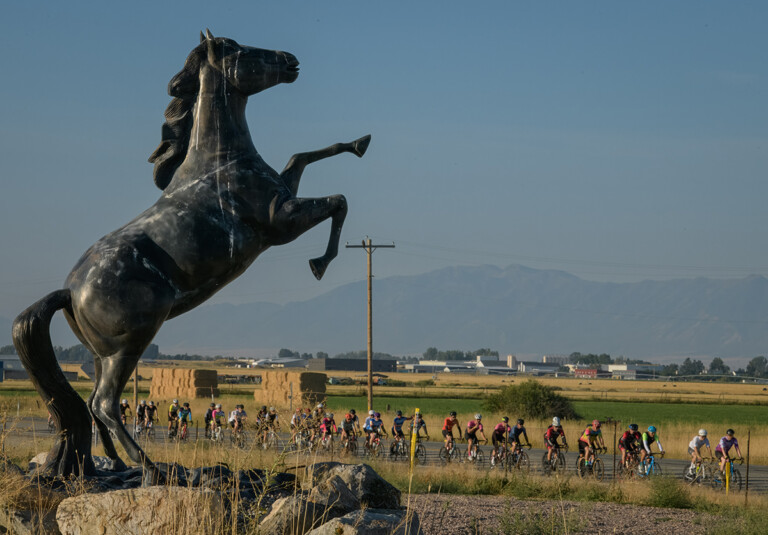
The day began for Van Wagoner and nearly 30 Men Pro 123’s and Men Master 35+ racers when their peloton left Sunrise Cyclery in the dark at 5:30 a.m. under clear skies and 52 degrees.
Due to lower field numbers and similar experience and ability, the two categories are allowed to start and race together. The same applies to Master Men 60+, 65+ and 70+ categories.
Van Wagoner said he was in a “good head space” at the start and confident in his form. He also suspected the day would be interesting without any teammates.
But with more road racing experience and a focus on patience, he would “preserve my matches for my kick when it mattered.”
He also had a game plan to make sure he’d have a chance to light those matches: He would create the break, or be in it, when the race likely erupted on LoToJa’s steep, four-mile-long 7,630-foot-high Salt River Pass (106 mi/171 km).
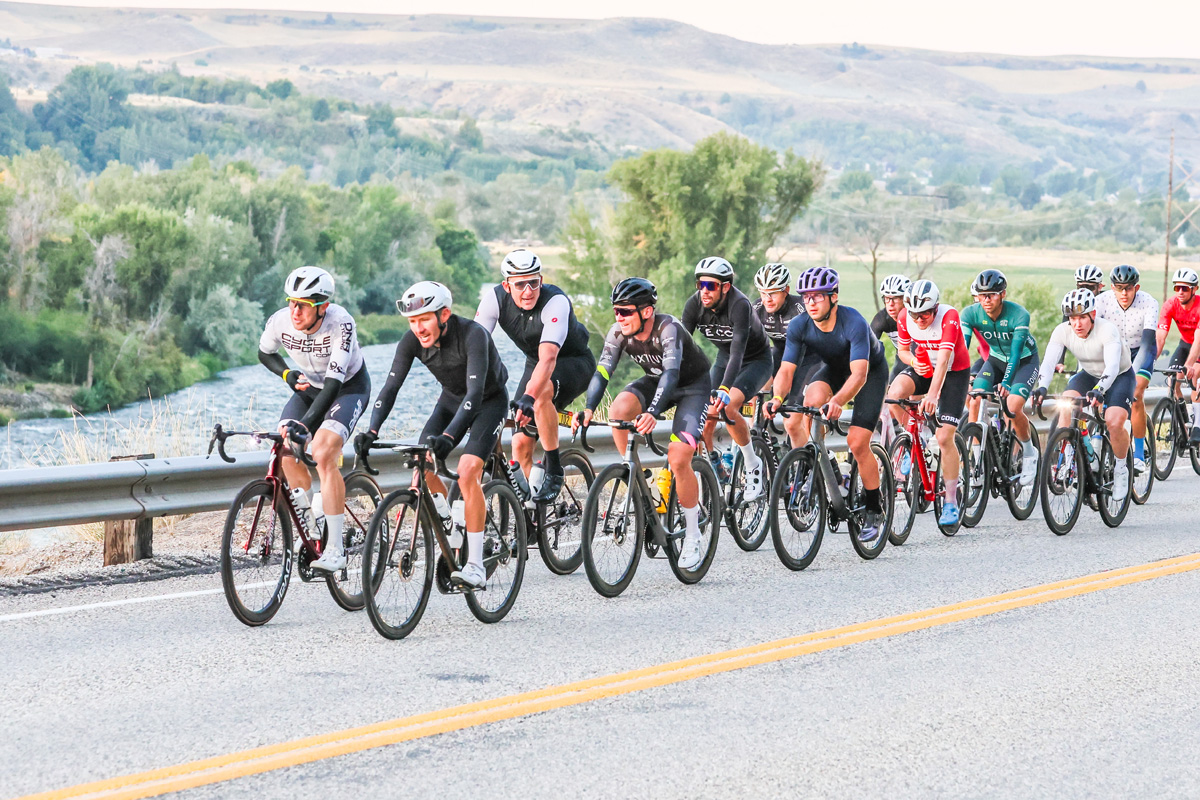
According to Van Wagoner, the peloton stayed together as it rode north to Preston, Idaho, (29 mi/47 km). But on the rollers a few miles after Preston, Cat. 2 Jesse Hogin, 35, (Unattached) of Henderson, Nevada, went off the front.
Hogin soon had a four-minute gap going up LoToJa’s first major climb, 22-mile-long Strawberry/Emigration Canyon and its 7,424-foot-high summit (57mi/92km). Van Wagoner said the peloton whittled down the gap to 90 seconds a few times, but then backed off. No one was fully committed to catch Hogin until later.
As the peloton climbed to the canyon’s summit, attrition began to mount. About 15 racers descended into Bear Lake Valley and to the first feed-zone at Montpelier (76 mi/122 km).
Even more got dropped over 6,923-foot-high Geneva Summit (84 mi/135 km). Twenty miles later on the ramps of Salt River Pass, the final break was established.
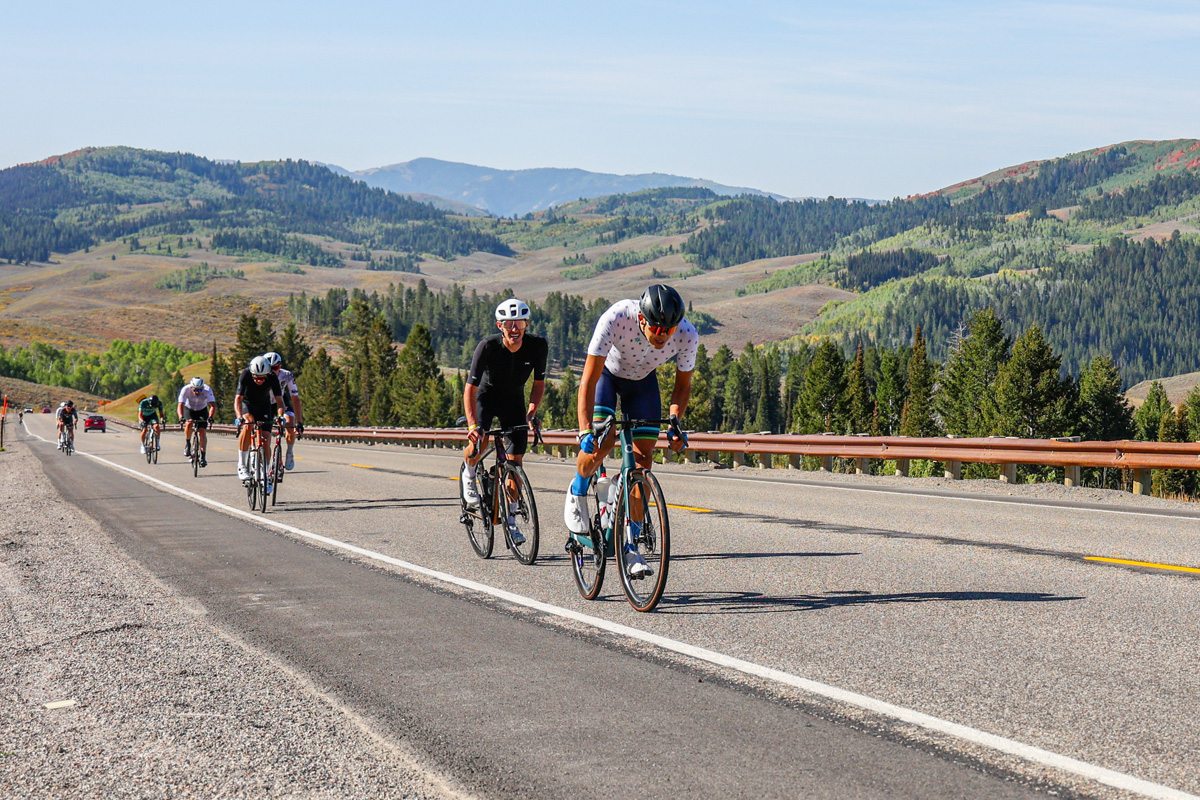
It consisted of Van Wagoner; last year’s Men Pro 123 winner Adrian Rips; Cat. 2 Eric Ellis, 41, (Team Formula 369.com) of Springville, Utah; Cat. 2 Gilberto Melendez, 36, (Team Fount Cycling) of Eloy, Arizona; Cat. 3 Jess Clapier, 31, (Team Mi Duole) of Salt Lake City, Utah; Cat. 2 Matthew Clark, 39, (Team Ascent Cycling) of North Salt Lake, Utah; and Cat. 3 Matthew Lefthand, 32, (Team Brainstoke) of Marriot-Slaterville, Utah.
Of those seven, it was Lefthand who reached the summit first with a time of 14:14 and average speed of 14.8 mph. But of the Men Pro 123’s, he wasn’t the fastest.
It was Hogin on his solo breakaway, who did the climb one second faster than Lefthand. And with Hogin still up the road and the break solidified, the seven men gave chase.
“We were flying through Star Valley, averaging 28 to 29 miles per hour,” Van Wagoner said. “It was a quick rotation. Everyone worked.”
Around 20 miles later, they finally caught Hogin after the Afton feed-zone (122mi/196km). Although he had been off the front for more than 90 miles, Hogin didn’t drift to the back and ride wheels. He worked the rotation like everyone else.
“I have massive respect for Jesse. Kudos to him,” Van Wagoner said. “He is a brave and strong rider.”
To stay clear of chasers, the now eight-man break sped through the rest of Star Valley to Alpine (156 mi/251 km). But once inside Snake River Canyon with 47 miles to go, some members of the break stopped pulling, Van Wagoner said.
At the same time, others took the opportunity to attack. Van Wagoner said Ellis and Hogin tried to get away but were reeled back. After Hoback Junction (178 mi/286 km), a strong headwind discouraged further attacks.
“At one point, Adrian [Rips] said aloud, ‘I guess everyone is just waiting for the sprint,’” Van Wagoner said.
Rips was right. The break stayed together on South Loop Road and over the Snake River Bike Path Bridge at Wilson. The stalemate continued on Moose-Wilson Road with the finish seven miles ahead.
It was wait and see. And for Van Wagoner, time to assess his options. He knew that he had to risk everything to beat Rips to the line.
“Adrian is a good sprinter,” Van Wagoner said. “My skills are 10-minute efforts. My coach told me to play to my strengths, that was in my mind.
“I had hoped there would have been an attack so I could have attacked after everyone regrouped, but that didn’t happen,” he added. “I told myself if no one attacks at 5K to go, I’ll attack at 4K.”
Which he did. For a full 30 seconds, Van Wagoner gambled on his strength and attacked with everything he had. He then looked back and saw that he had a gap. With each rider behind without teammates, for one of them to counterattack and chase Van Wagoner could mean losing second place.
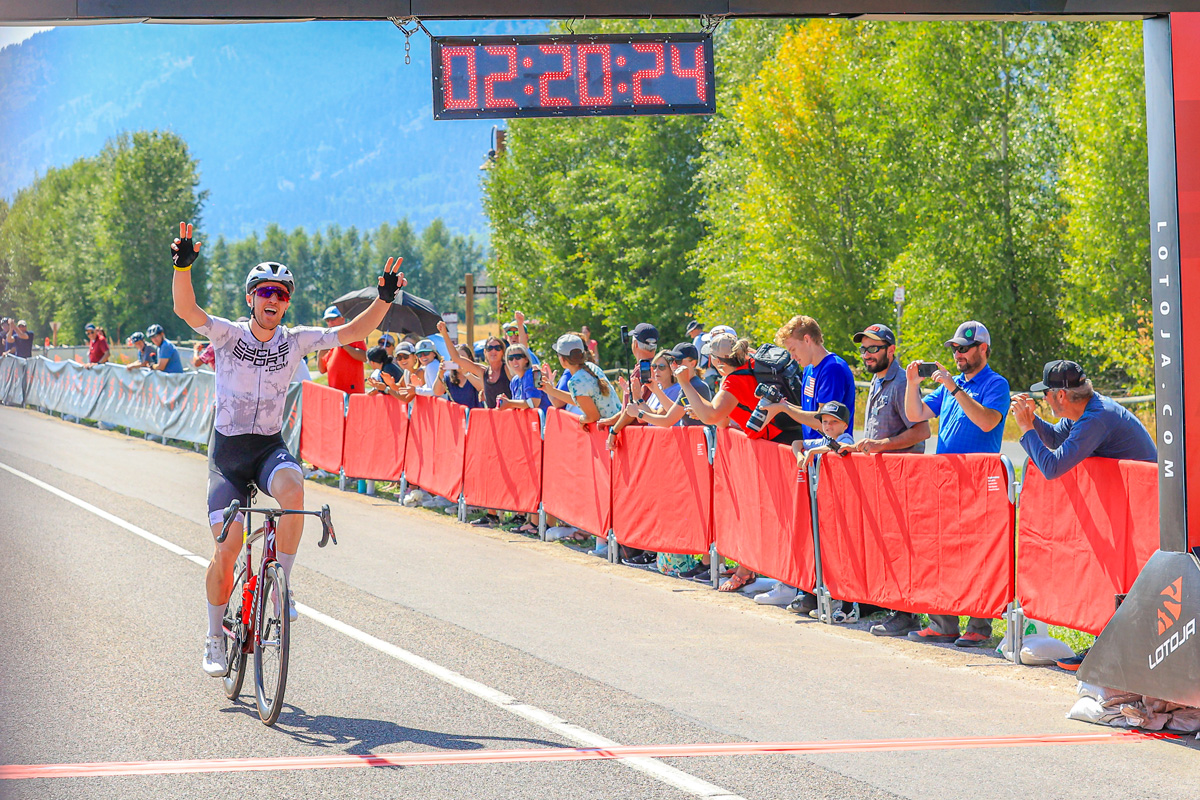
He flew across the finish line alone, followed six seconds later by Rips at 8:50:30.65; Ellis in third place at 8:50:31.09; Melendez in fourth at 8:50:31.41; Clapier in fifth at 8:50:31.58; Hogin in sixth at 8:50:31.76; Clark in seventh at 8:50:32.52; and Lefthand in eighth at 8:50:32.66.
Van Wagoner was thrilled about how his gamble had paid off, to cross the finish alone and avenge last year’s near-miss against Rips.
“It felt so damn sweet!” he said. “I was a little in disbelief. That finish from last year haunted me, so it was really gratifying to win.”
Van Wagoner said LoToJa is “the bicycle race to win in Utah.” The outreach he has experienced afterward has been “amazing.” He attributed that to LoToJa’s 43 years of existence and the general public’s — not just the cycling community’s — awareness of the race.
Van Wagoner, who comes from a cycling family and started mountain bike racing when he was 14 years old, is also a husband, father, and private banker. He said if all goes well and schedules align, he’ll be at LoToJa’s start line in 2025.
After taking 2023 off from LoToJa because of fatigue and starting a career, Aileen Pannecoucke returned this year with a single purpose: to break the women’s record of 9:35:00 that was set by Melinda Macfarlane 11 years ago.
“The goal I had made this year with my coach was to break the record,” Pannecoucke said. “That’s what I wanted to do at LoToJa — more than to win it. And if I was unable to break the record, I would figure out how to win.”
Which is why she immediately attacked the peloton of about 50 USA Cycling licensed women after it passed through the neutral rollout in Logan. The women’s peloton departed from Sunrise Cyclery at 6:42 am.
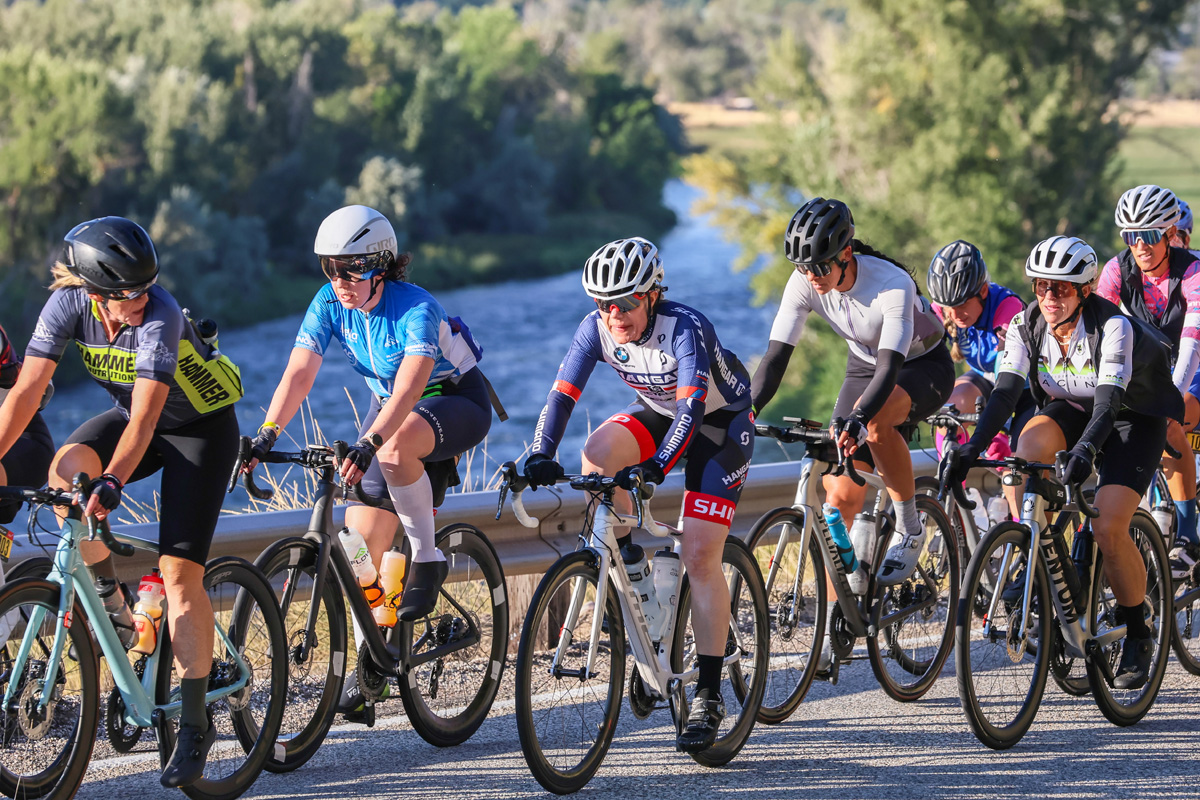
“To break the record, I knew we had to race immediately,” Pannecoucke said. “That’s why I attacked right after the neutral. I think I pissed them off.”
But that wasn’t her only attack. After the peloton bridged up to her, she jumped again. Pannecoucke did this up to four times before the Strawberry/Emigration Canyon climb.
“I wanted to make the race hard,” she said. “They probably thought I was crazy with all the attacking I did.”
Pannecoucke said she was in a break of about 10 riders at Strawberry/Emigration summit. She said the break didn’t work cooperatively on the descent to Bear Lake Valley and Montpelier, which ended her record attempt.
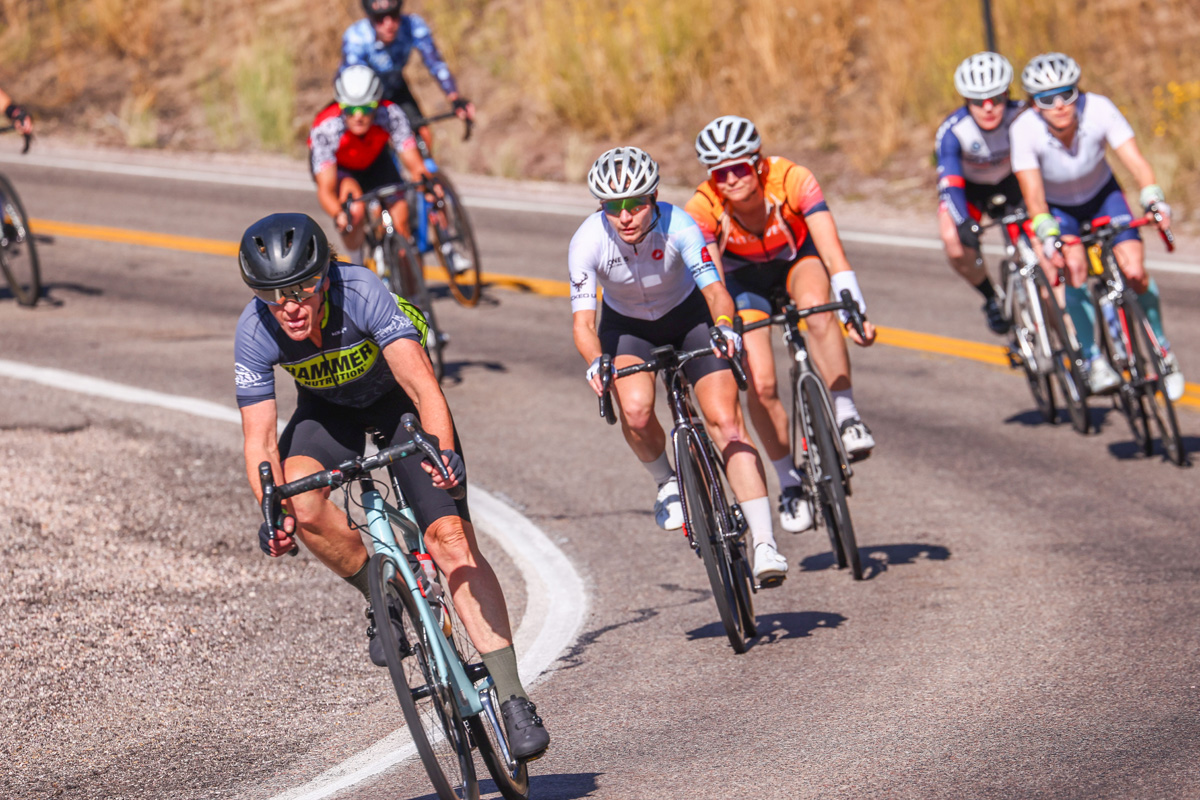
“Montpelier was only a 30-second stop for me. I went fast,” Pannecoucke said. The break resumed for the climb up Geneva, and by the summit, about eight riders remained.
On the descent from Geneva the break started to cooperate, with everyone taking solid, one-minute pulls, Pannecoucke said. This lasted for 14 miles to the base of Salt River Pass and on its initial ramps.
But the break started to lose cohesion about halfway up when Cat. 5 Hallie French, 39, (Team M&H) of Salt Lake City, Utah, went to the front and pushed the pace. Cat. 3 Katie Bonebrake, 33, (Team Zone 5) of Salt Lake City, Utah, followed.
Pannecoucke initially got dropped, but didn’t panic. She had worked hard on her climbing over the summer. Feeling confident, she bridged up to French and Bonebrake and was joined in the effort by Cat. 4/5 Sarah Esmeier, 27, (Team Pay N Take) of Flagstaff, Arizona.
Bonebrake won the Queen of the Mountain prize with a time of 17.42 and an average speed of 11.9 mph. She was followed by Pannecoucke; Esmeier; Cat. 1 Jennifer Halladay, 53, (Team Hammer) of Kuna, Idaho; French; Cat. 2 Marilyn Chychota, 47, (Team MCC) of Tucson, Arizona; and Cat. 5 Lori Castagnetto, 46, (Team Zone 5) of Provo, Utah.
The established break of seven women descended into Star Valley after a quick pee stop atop Salt River. Pannecoucke said everyone worked cooperatively to Alpine, up Snake River Canyon and past Hoback Junction. The break stayed intact with 2K to go on Moose-Wilson Road.
“I think Katie [Bonebrake] wanted to attack me,” Pannecoucke said. “I expected it to happen, but it didn’t.”
She said Castagnetto got stuck at the front and “I got second wheel with Jen [Halladay] next to me.” With 250 meters to go, Pannecoucke launched her sprint.
“It was a long way out, but sprinting is my strength, and I figured I was the only one who could do it for that far,” she said.
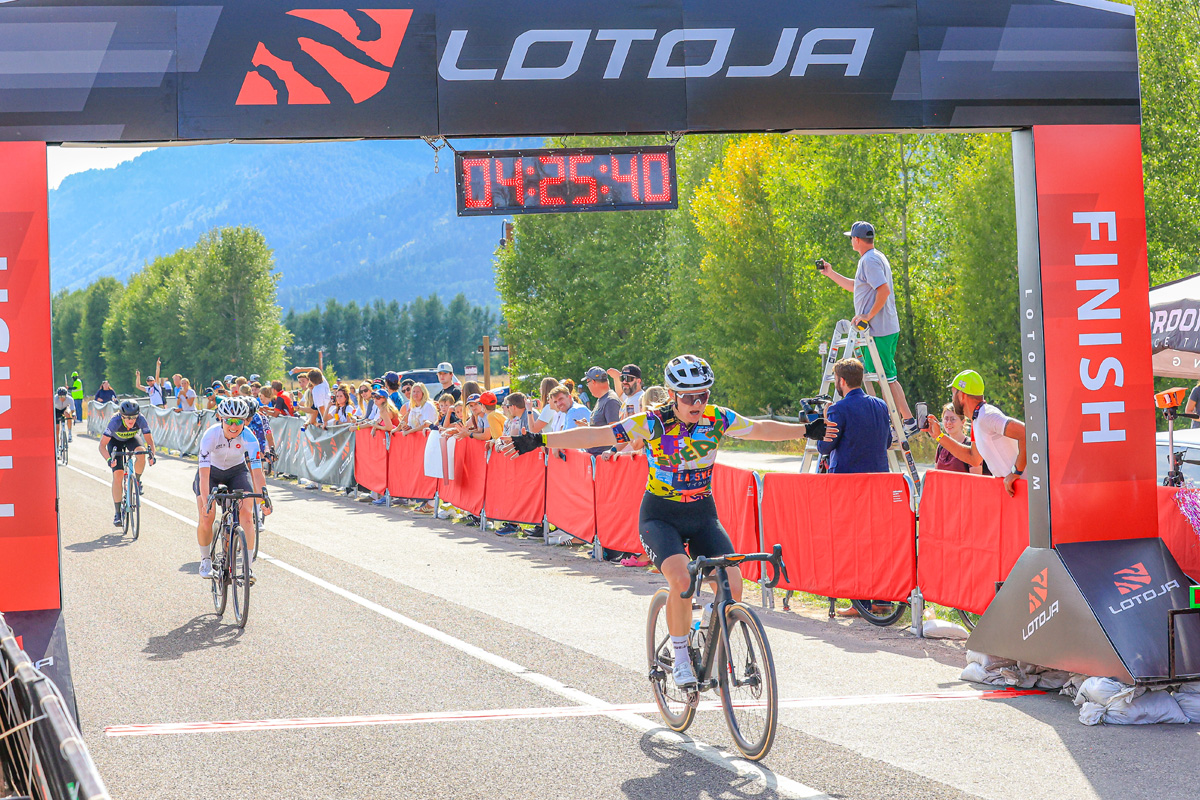
She sailed across the line with her arms outstretched, with Bonebrake second at 9:43:26.39, Esmeier third at 9:43:26.52, Halladay fourth at 9:43:26.55, Chychota fifth at 9:43:26.73 and Castagnetto sixth at 9:43:26.76. French came in just over three minutes later to take seventh at 9:47:09.
Although that’s how the break finished, it contained a mix of categories and ages, which affected final standings. Due to lower field numbers, all USA Cycling licensed women start and race together in LoToJa regardless of category and age. But respective category wins and placings are maintained despite mixed-category finishes.
Bonebrake is a Cat. 3, so her second-place finish behind Pannecoucke also gave her second place in the Women Pro 123’s. Esmeier finished third in the break but won the Women’s Cat. 4/5’s.
Fourth-place Halladay won the Women’s Master 45+ and her seventh LoToJa title, and fifth-place Chychota took third place in the Women Pro 123’s. Sixth-place Castagnetto took second place in the Women Master 45+, and seventh-place French won the Women Master 35+ and her fifth LoToJa title.
Pannecoucke, who comes from a cycling family and started racing at age 15 in her native Belgium, said that winning LoToJa is never easy and winning multiple times is even harder.
It’s an event that a lot of people follow. Expectations from family, friends — and oneself — to keep on winning, are high, she said.
“After all of the training and stress, it would have been hard to end the season with a second or third place,” Pannecoucke said. “… I was relieved to win and get it done.”
She said she’s not 100-percent certain that she’ll roll up to LoToJa’s start line next year. She plans to transition into triathlons in 2025. With that, and her career as a middle school science teacher and head coach for a high school co-ed swim team, may make it tough to be race-fit next year.
LoToJa features much more than pro categories for men and women. There were approximately 1,800 USAC licensed and non-licensed cyclists in the event. There were 28 separate start groups that included licensed race categories, plus non-licensed cyclosportive categories and relay teams.
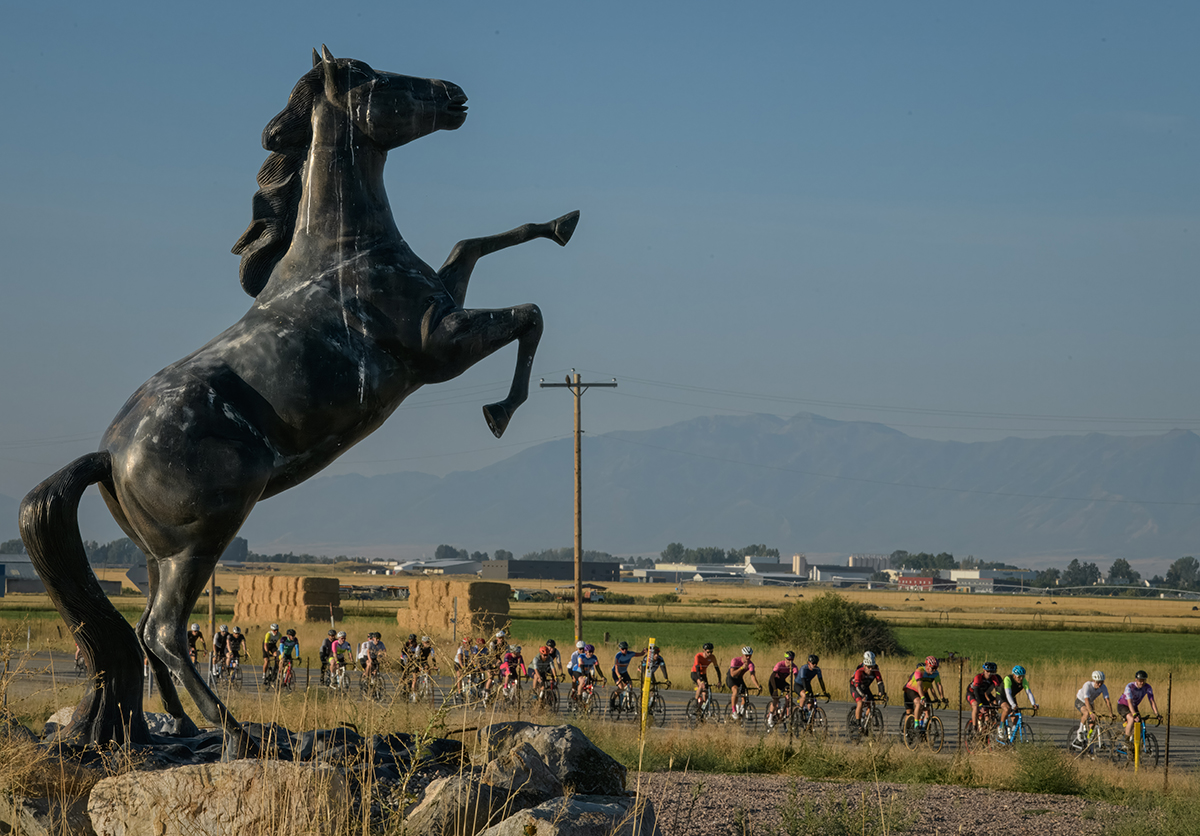
The groups left Sunrise Cyclery Logan in four-minute intervals to separate race and ride categories on the road. Each group contained an average of 40-50 cyclists.
Although Hogin was the first and fastest Men Pro 123 who assailed Salt River Pass, he did not win the KOM prize. That went to Cat. 3 Korby Van Valkenburg, 41, (Team Mi Duole) of Mapleton, Utah.
He climbed Salt River in 13:28 at an average speed of 15.6 mph. He also took second place in the Men Cat. 3/4 division.
The oldest female cyclist to start and finish was Barbara Sullivan, 68, (Unattached), of Carlsbad, California,whose finish time was 11:01:22.
The oldest male cyclist to start and finish was Richard Linton, 74, (Unattached), of Draper, Utah. He took seventh place in the Men Master 70+ with a time of 12:01:06.14.
The youngest female to start and finish was Natalie Rehklau, 17, (Team Frontiers Racing) of Billings, Montana, who finished with a time of 12:22:58. The youngest male was Andrew Holmes, 15, (Team Holmes on the Range) of Spanish Fork, Utah, who finished with a time of 12:47:22.
Complete finish line results are available at lotoja.com. Click on the “Results/Records” tab in the navigation bar.
“After 42 years, LoToJa continues to be a road race of endurance that appeals to cyclists of all ages and abilities,” said race director Brent Chambers. “It’s always an honor and privilege for me to be part of it and to witness the good, life-changing influence LoToJa has on all of its participants.”
He thanked cyclists, event staff and volunteers, sponsors, and vendors for making LoToJa possible and a success year after year. He also thanked the communities along LoToJa’s parcours for their continued support.
LoToJa is the longest one-day USA Cycling-sanctioned bicycle road race in the U.S. Its 203-mile parcours passes through northern Utah, southeastern Idaho, and western Wyoming. It crosses flat, hilly, and mountainous terrain, and features nearly 10,000 feet of climbing.
The first edition was held in 1983 with seven riders who started at Sunrise Cyclery and finished in downtown Jackson. Today, up to 2,000 cyclists participate, either riding the entire parcours or a portion in the relay.
The 43rd annual LoToJa will be held on Sept. 6. The race’s 2025 website will be launched next March with online registration beginning in mid-April.
Swenson & De Crescenzo Dominate the 2024 Rad Dirt Fest
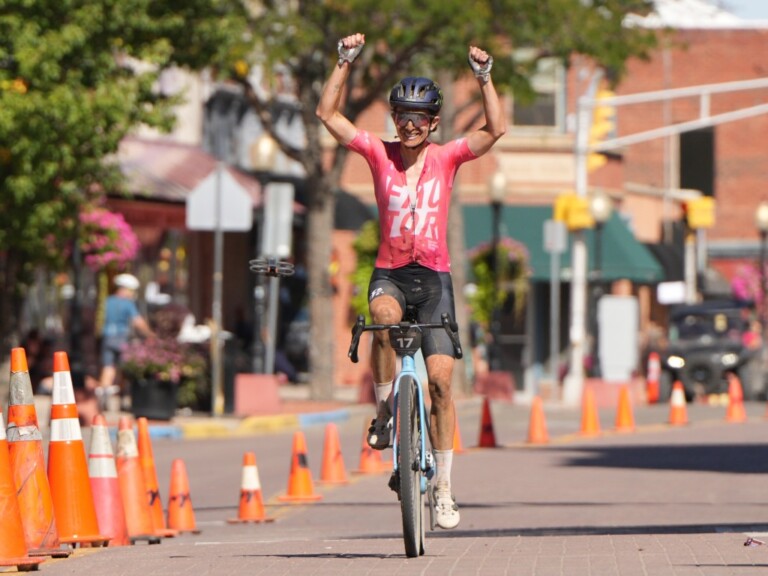
Swenson all-but wraps the men’s series with his fourth victory of the season while De Crescenzo defends her Trinidad title in style
TRINIDAD, Colorado (September 28, 2024) — Keegan Swenson all-but wrapped up the 2024 men’s Life Time Grand Prix presented by Mazda by soloing to his fourth victory of the season at the Life Time Rad Dirt Fest, while Lauren De Crescenzo defended her women’s title in Trinidad after an incredible long-range attack.
Swenson – making his first appearance in the race – was a constant presence in the lead group as it gradually whittled down on the tough 110-mile gravel test, and after breaking clear with Peter Stetina and Griffin Easter in the final hour of action, the 30 year old left his rivals in the dust on the rolling section coming out of Trinidad Lake State Park before pressing home his advantage in typically devastating style, crossing the line with a one-minute-and-23-second winning margin.
Stetina also dug deep to drop Easter in the closing stages, taking second place, three minutes and 23 seconds ahead of the Californian.
In the women’s race, De Crescenzo once again proved in a class of her own, breaking away near the Spanish Peaks Aid Station and then continuing to build her lead alone over the 80+ miles that followed.
For the second season in a row, the 34 year old didn’t put a foot wrong, wrapping up her victory with a mammoth eight minutes and 10 seconds to spare. The triumph is her third success at this race in total, having also won the 165-mile contest here back in 2021.
Sofia Gomez Villafañe attacked on the final climb of the day to earn herself a hard-fought second place, with Cecily Decker securing her best result of the series so far in third, rolling home just 14 seconds behind Villafañe.
Those results mean Swenson has a perfect score of 105 in the overall standings, which has been calculated by taking into account the best three scores from the five races to date, although he also has 35 more points in the bank which he can cash in after the Life Time Big Sugar Gravel presented by Mazda concludes the series on Saturday, October 19. He only needs to start that race to be guaranteed his third successive Life Time Grand Prix presented by Mazda victory.
Payson McElveen now sits in second place, 14 points behind Swenson, despite not finishing today, as his third-best result at Chequamegon has come into effect, with Matthew Beers moving up two places to third, on 89 points, after becoming the third highest-ranked Life Time Grand Prix male rider in Trinidad.
Villafañe’s second place ensures she has also cemented her place at the top of the women’s leaderboard with a phenomenal haul of 103 points, 13 ahead of Paige Onweller (who finished this race in seventh). She is now just one point ahead of Alexis Skarda, who crossed the line in fourth position today.
Reaction from the Life Time Rad Dirt Fest:
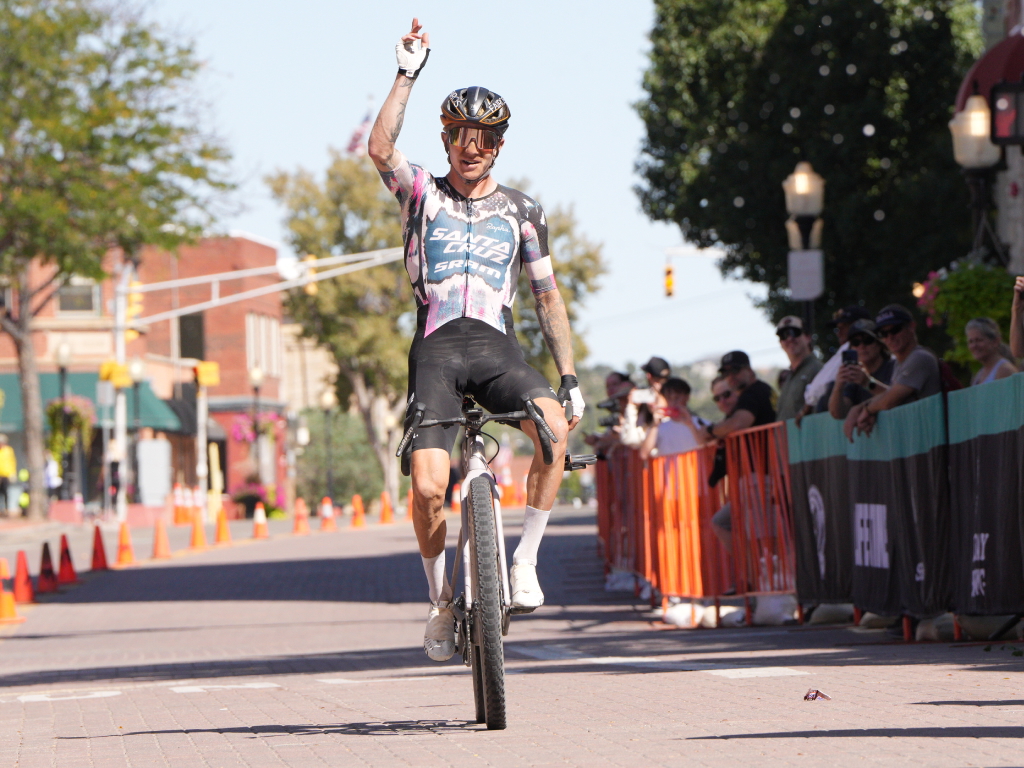
Men’s winner Keegan Swenson said: “Today was my first time competing here and the course was rad. My goal was to have a nice, solid ride. I wanted to put the pressure on and make it hard, but at the same time try and be smart because I knew if I had a podium here, and depending on where other guys finished, I could lock up the overall.
“On that last big push back into town, Pete [Stetina] and I worked really well together. He then made two late attacks but I was able to counter them and gain a few seconds on him, and that allowed me to roll in solo to the finish. I had a good day out and a good time racing the guys out there.”
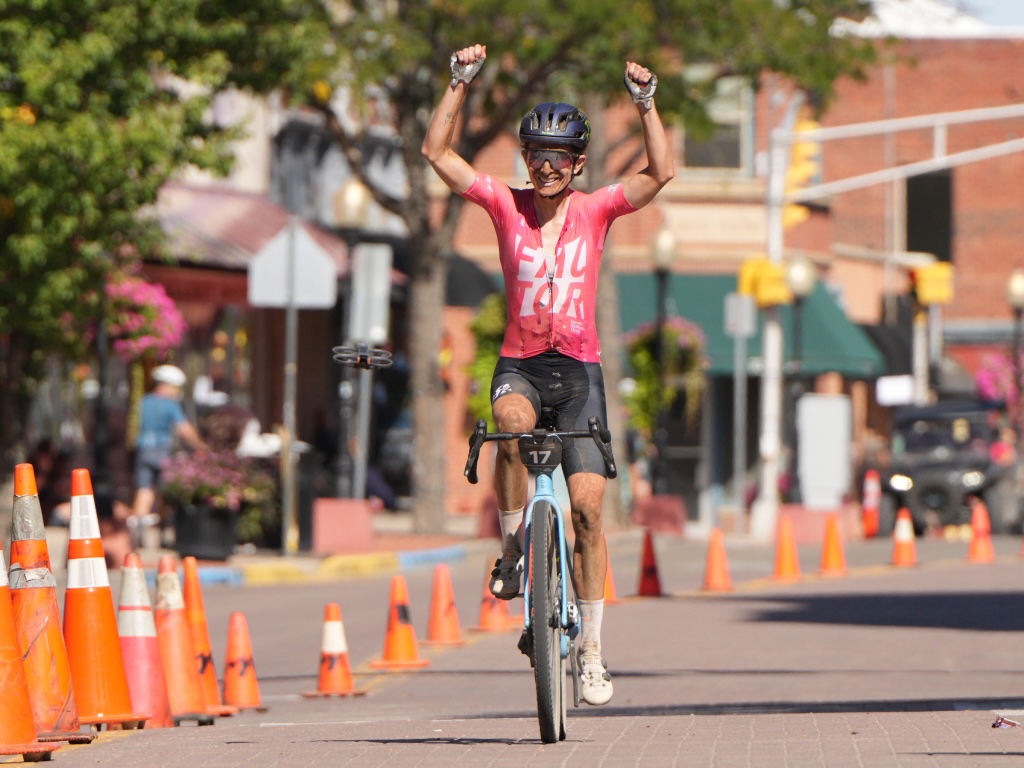
Women’s winner Lauren De Crescenzo said: “I always put pressure on myself to repeat any win I’ve had, but I didn’t plan to make that early attack today, and I don’t know what my coach is going to say about it. It came on a steep, sandy section at around the 30-mile mark and it just felt right. I said to myself ‘this is the time’, although I did quickly start to doubt myself, once I’d made it, as I had so far to go.
“Looking ahead to Big Sugar, I just want to score as many points as I can now. Last season I took the maximum amount by finishing second to Kasia Niewiadoma [who wasn’t in the 2023 Life Time Grand Prix], and I’d love to do the same again as I’m not where I want to be in the standings [which is 11th overall].”
Click HERE (men) and HERE (women) for the full race results, HERE for the overall standings.
Extended highlights will be available in the next 48 hours on the official Life Time Grand Prix YouTube channel.
Safe Routes Partnership Issues Advocacy Guide to Repealing Traffic Laws

By Charles Pekow — The Safe Routes Partnership has released a guide on repealing local “harmful traffic laws” that discriminate against cyclists and pedestrians at state and local levels. While not very detailed, it recommends opposing ordinances that disproportionately affect minorities and advocating for bills that fund cycling infrastructure.
The guide suggests shifting traffic responsibilities from police to transportation departments. It also emphasizes the importance of forming partnerships, as those affected by discriminatory traffic laws often face additional challenges such as inadequate housing, food, and healthcare. Collect data, and if you need assistance, contact a local institute of higher education, which may have the data or know how to obtain it.
Find the guide at Safe Routes Partnership Advocacy Guide: https://saferoutespartnership.org/sites/default/files/resource_files/An%20Advocacy%20Guide%20to%20Repealing%20Traffic%20Laws%20v4_0.pdf