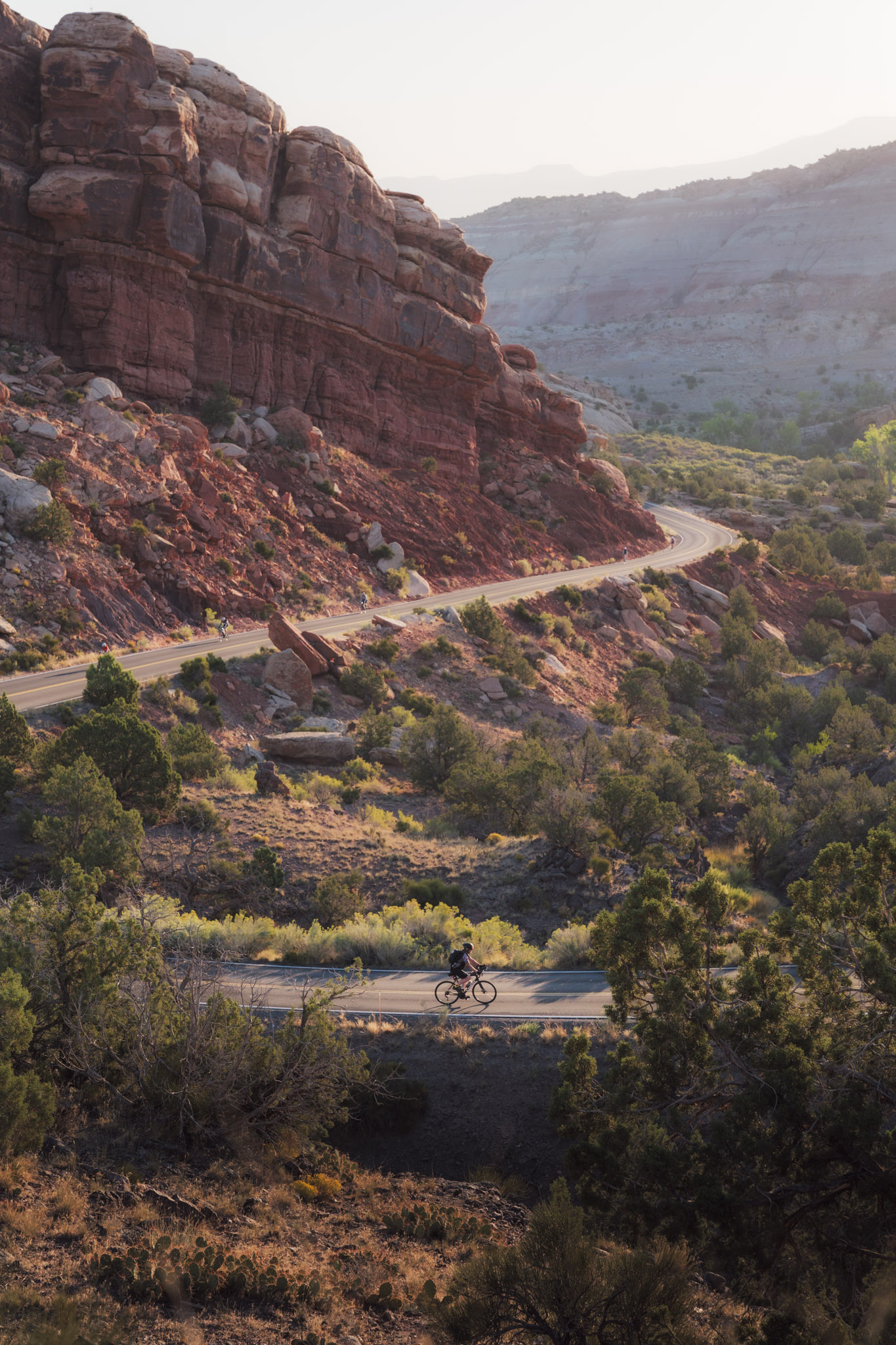
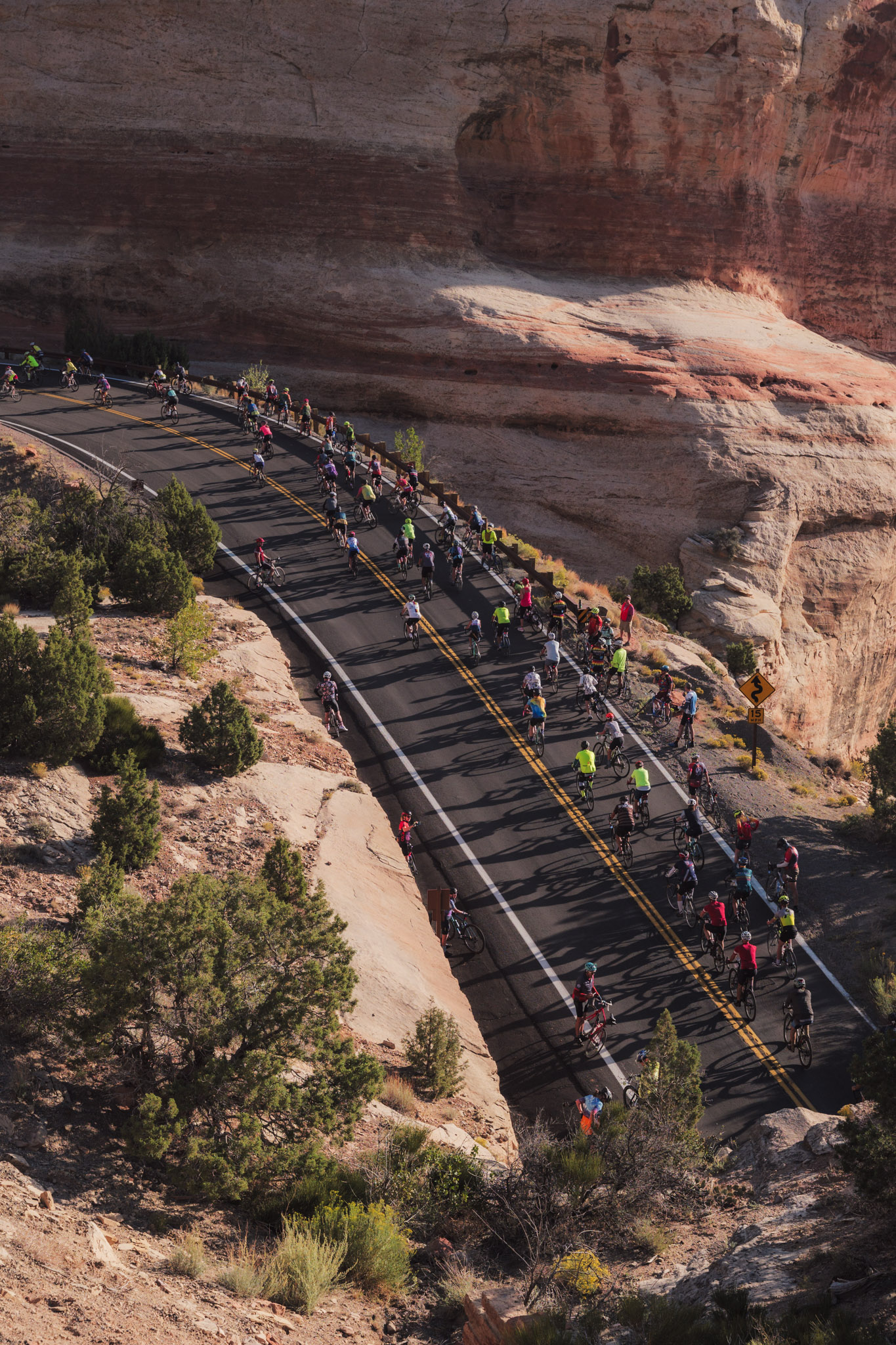
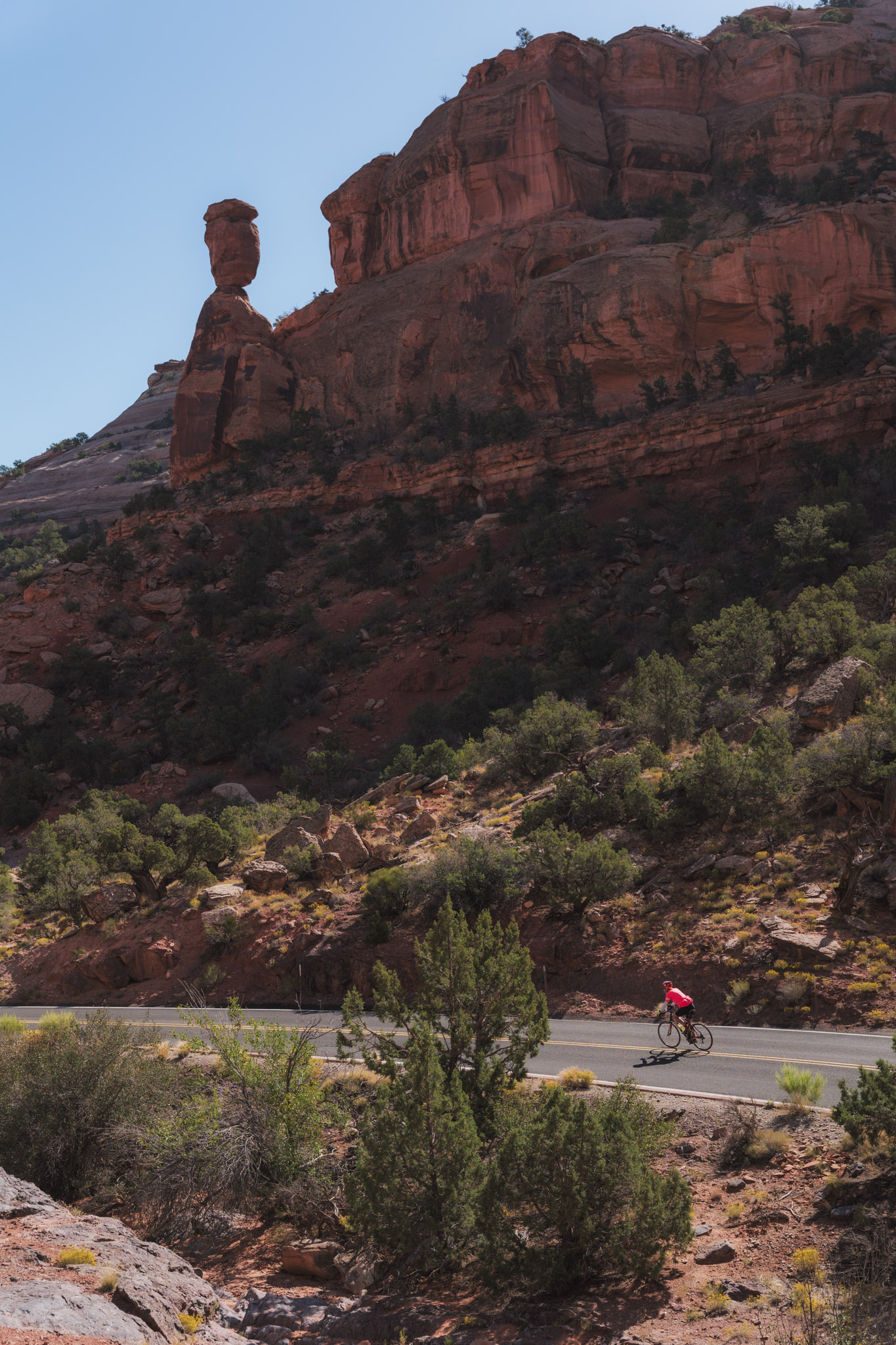
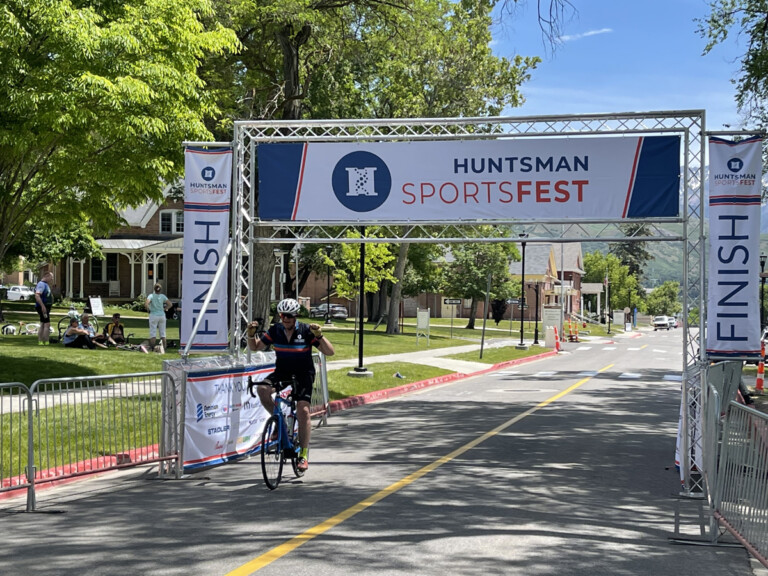
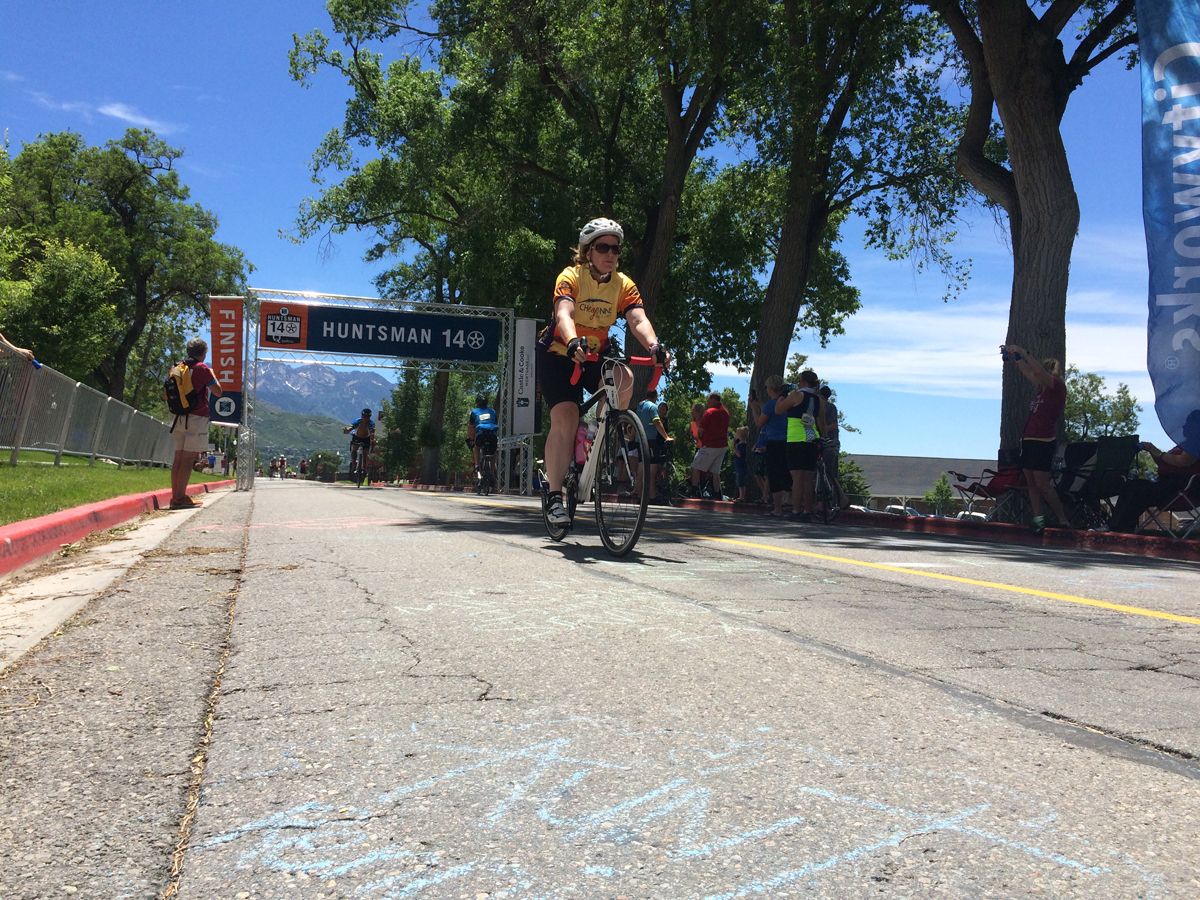
STEAMBOAT SPRINGS, Colorado — A new gravel event is set to debut in Colorado’s Yampa Valley this spring, as Outlaw Gravel rolls into Steamboat Springs on May 31 with a format designed to blend competition, strategy, and community.
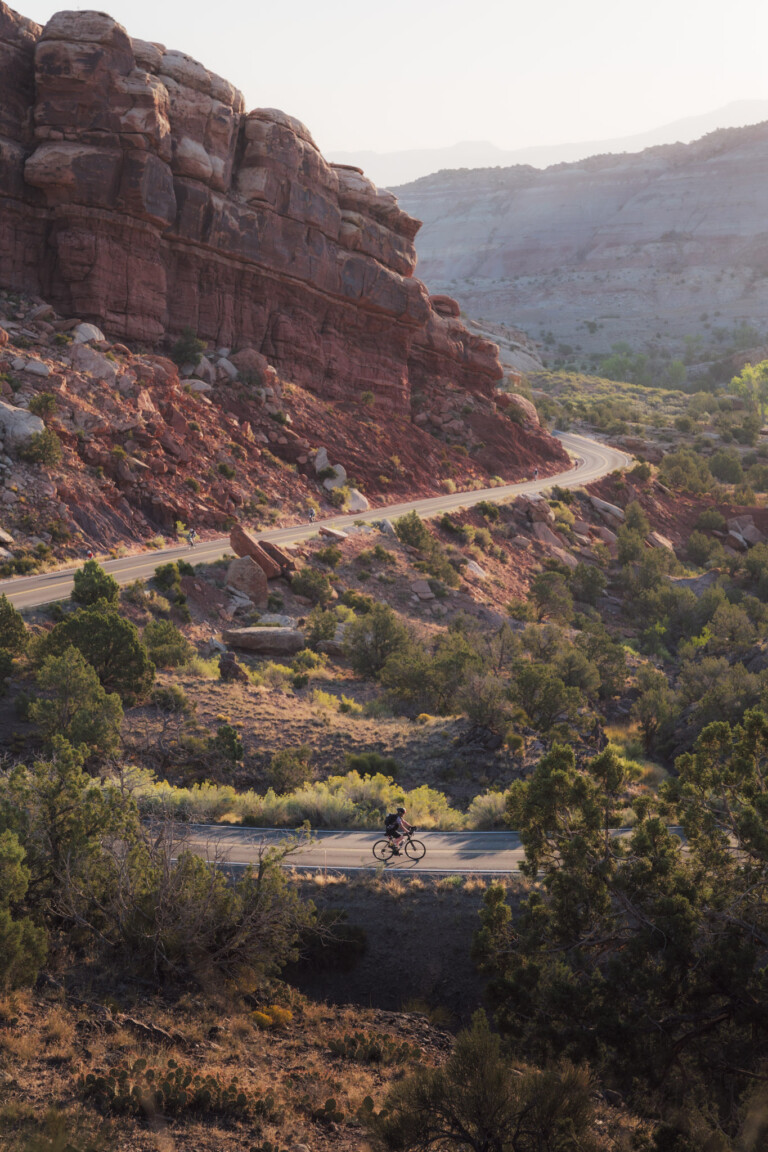
Photo courtesy of Outlaw Gravel
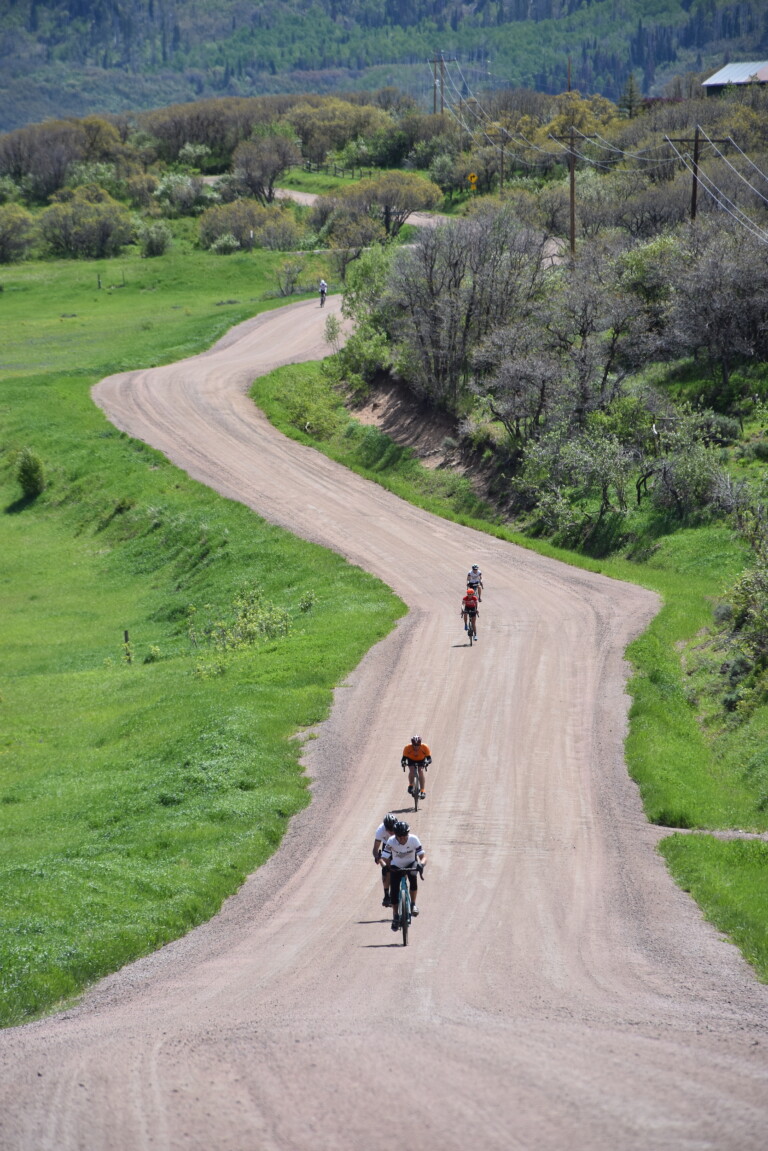
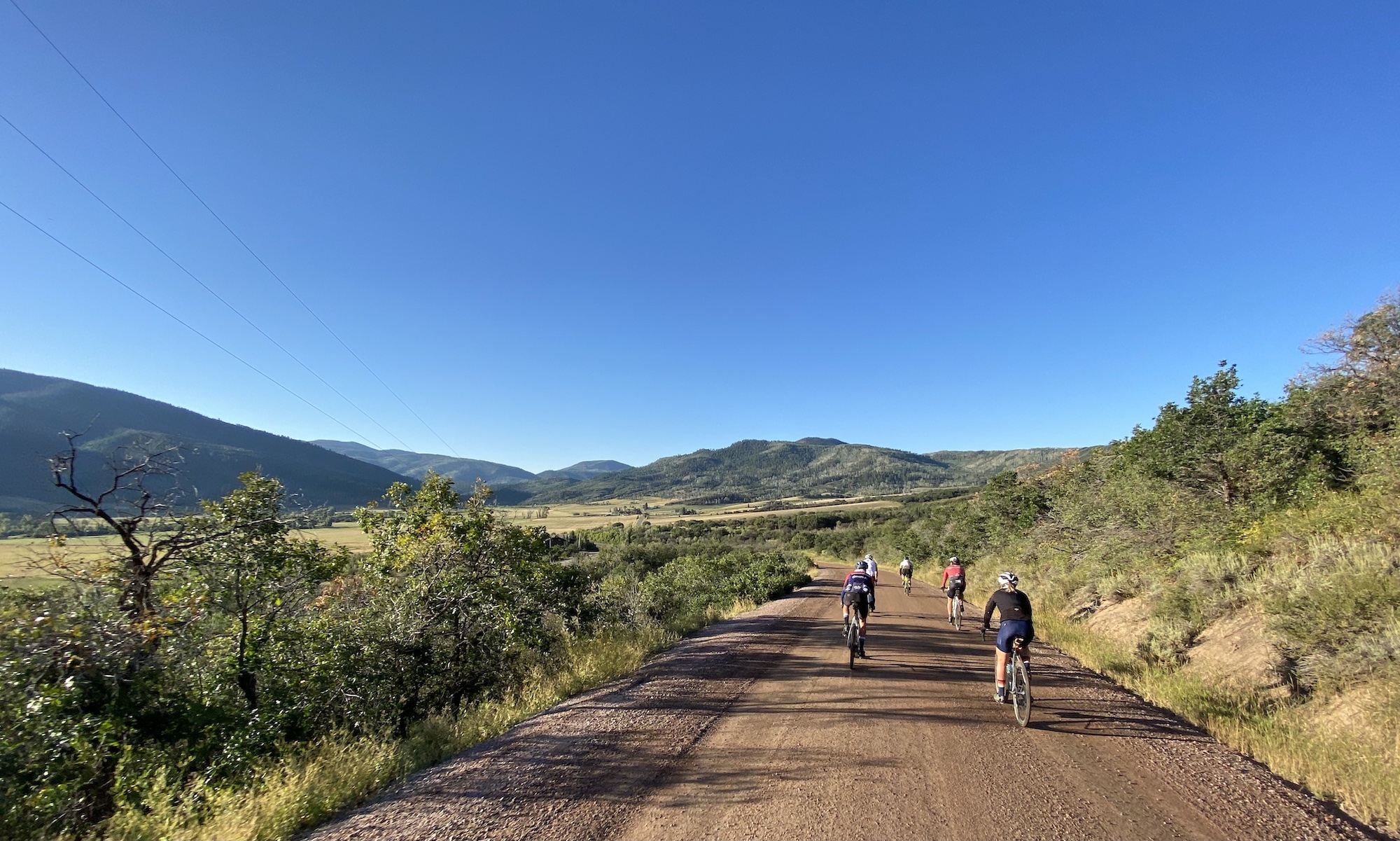
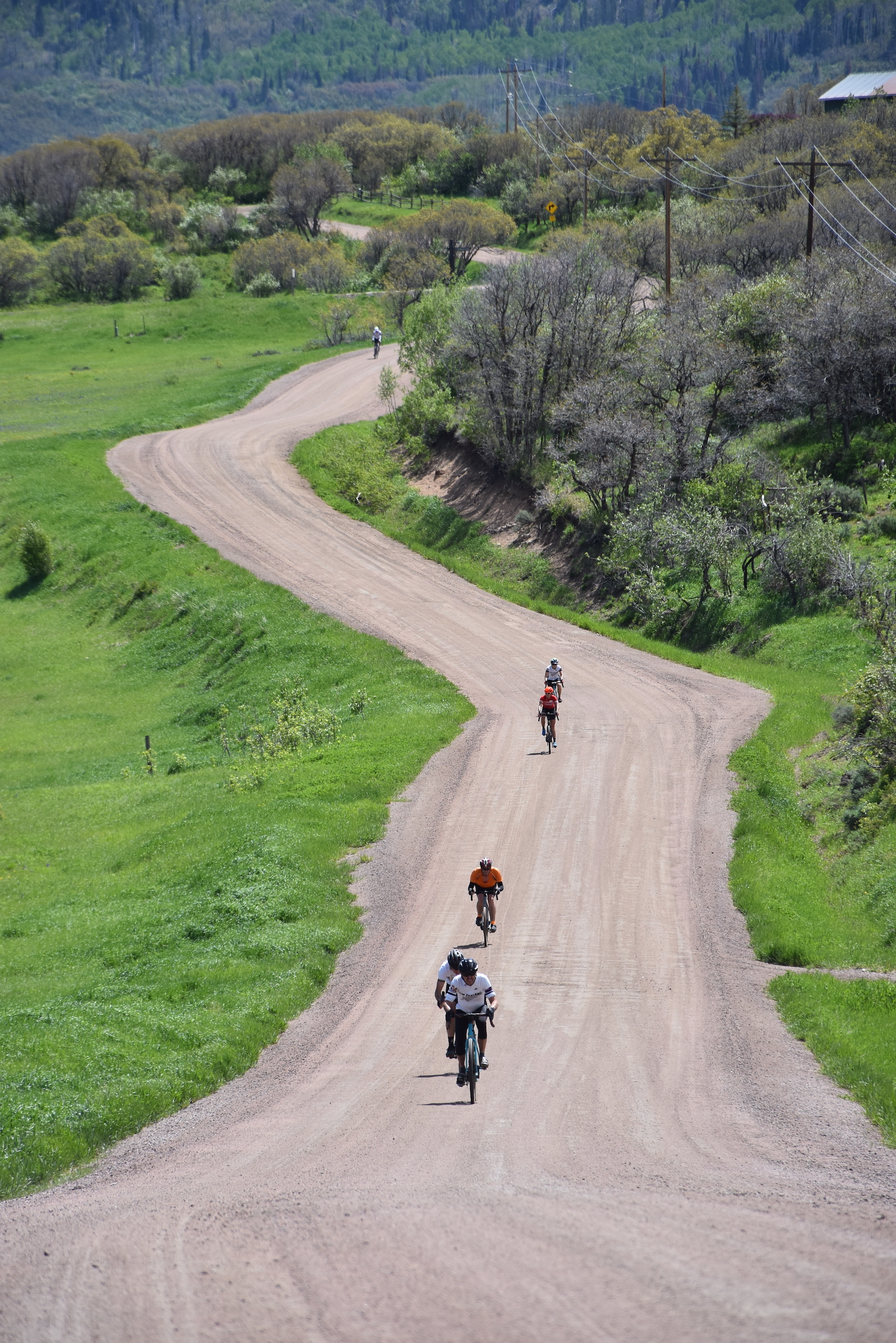
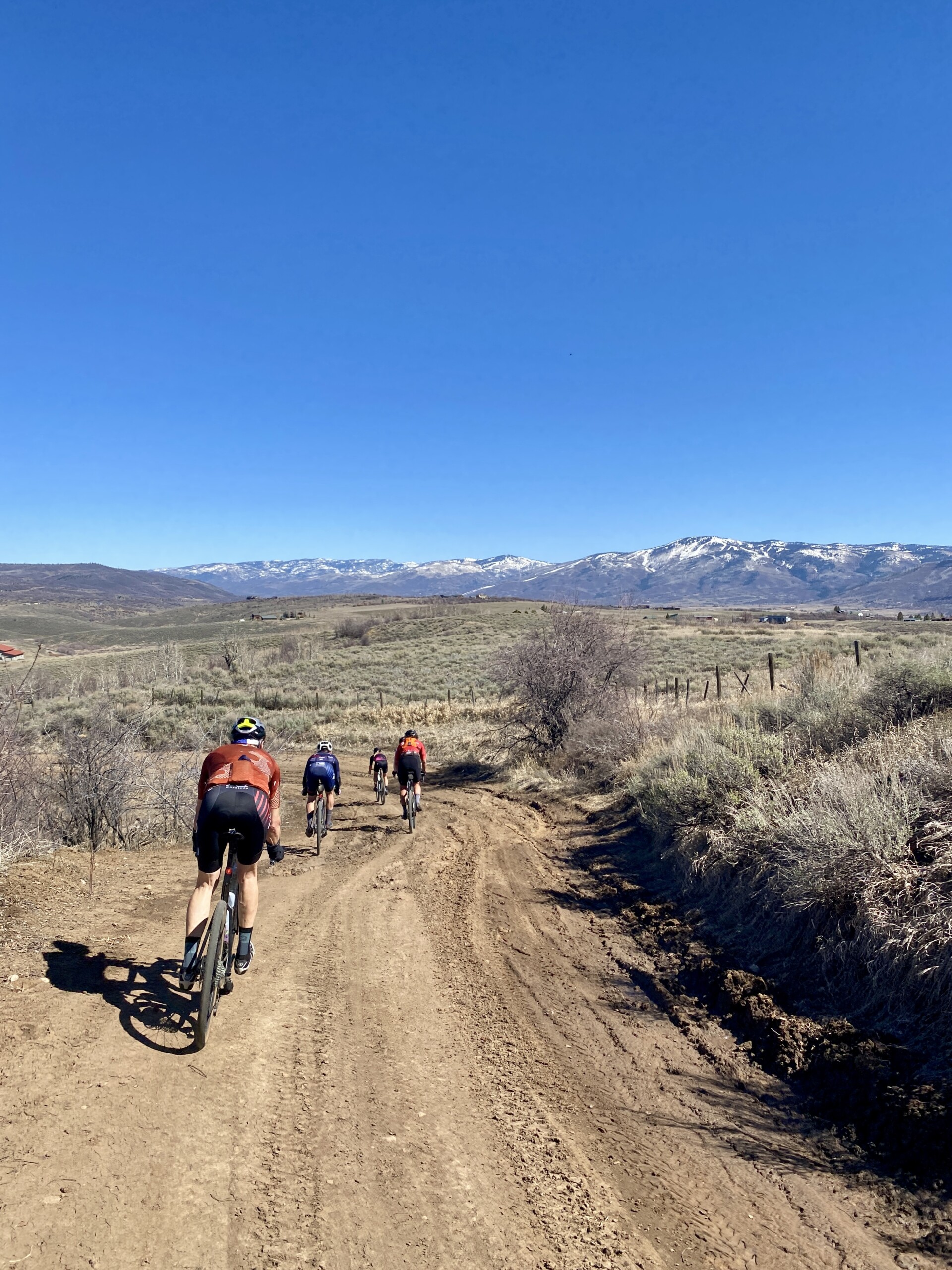
Unlike traditional mass-start gravel races, Outlaw Gravel introduces an enduro-style structure, where riders tackle four timed segments separated by untimed transition sections. The approach allows competitors to go full gas on key stretches while regrouping, recovering, and riding socially between efforts—something founder Garett Mariano says reflects how many cyclists already train.
“This is how we ride during the week—hard efforts on the right roads, then roll together and prepare for what’s next,” Mariano said. “It’s competitive but grounded, and a great early-season format.”
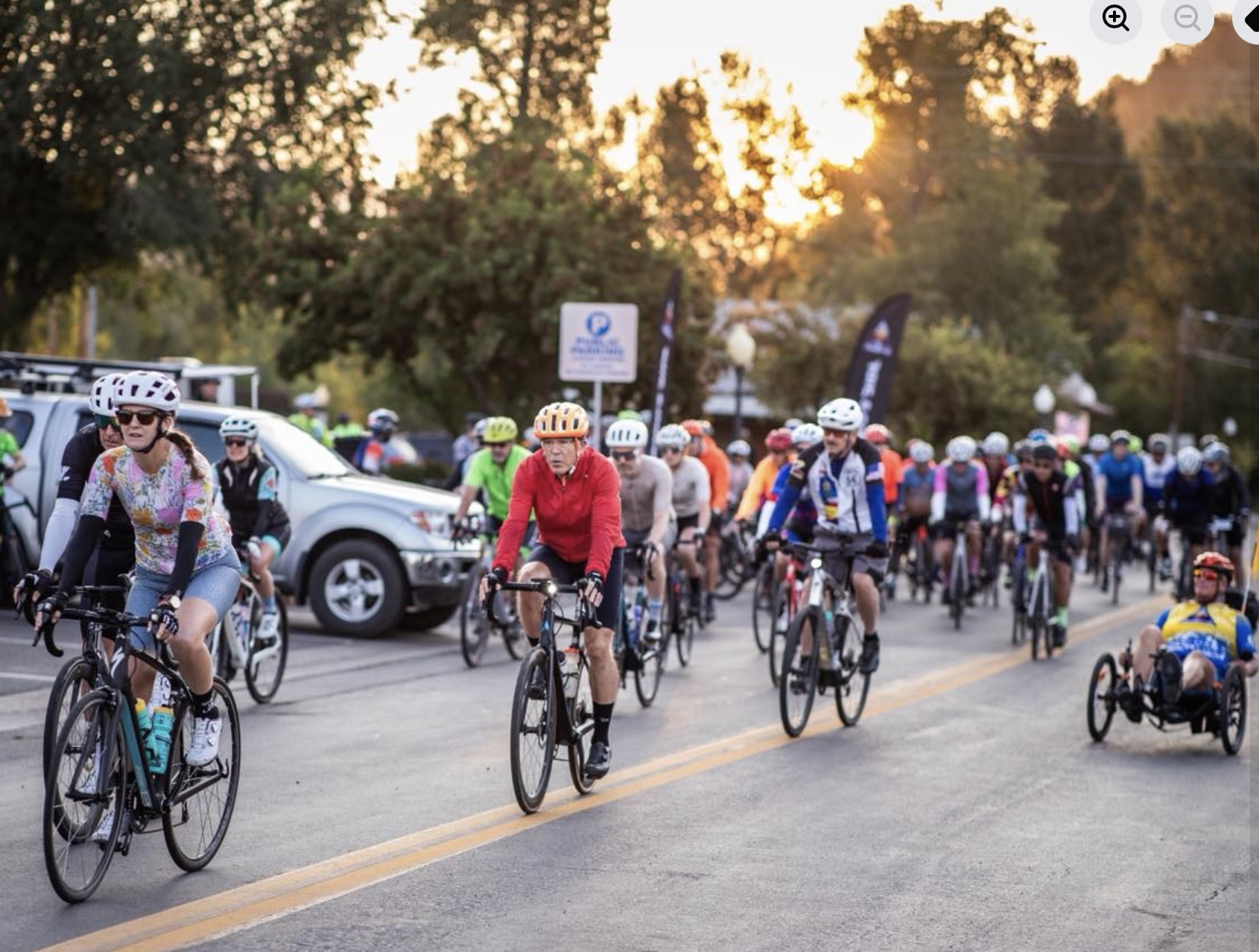
Photo courtesy of Outlaw Gravel
The event will start and finish at Olympian Hall, sending riders onto the rolling gravel roads that have helped make Routt County one of the country’s premier cycling destinations. Participants can choose between a 66-mile course featuring four timed segments or a shorter 40-mile option with three segments. Both distances are open to solo riders as well as two- and four-person teams, adding a tactical element that rewards pacing and teamwork as much as raw power.
In contrast to the increasingly large fields seen at many gravel events, organizers have capped the inaugural edition at just 300 riders. The smaller field is intended to create a more relaxed and rider-focused experience, with smoother logistics and a more personal atmosphere throughout the day.
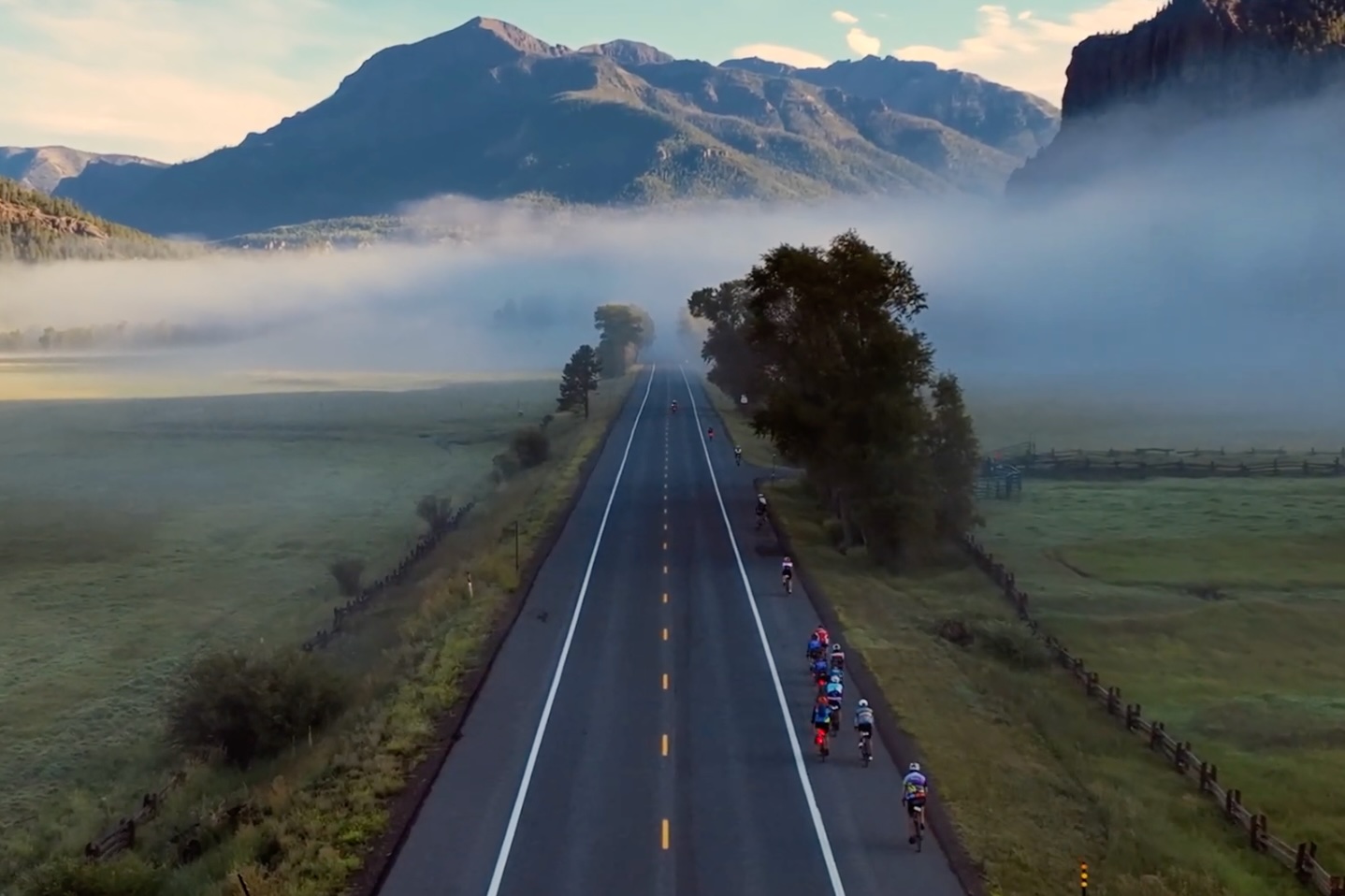
Photo courtesy of Outlaw Gravel
The final timed segment returns riders to Olympian Hall for a fast finish, setting up a spectator-friendly sprint before rolling directly into a post-race celebration featuring local food, drinks, and live music.
Outlaw Gravel also carries a deeper community connection. A portion of proceeds will benefit the Dirt to Snow – Mark Satkiewicz Legacy Fund. The contribution honors Mark Satkiewicz, the visionary behind SBT GRVL, whose work helped establish Steamboat Springs as a major hub in the national gravel scene. A passionate husband, father, mentor, and leader, he made Steamboat a more welcoming and inclusive place, championing equality and expanding opportunities for women in sport and professional spaces. The fund supports youth access to cycling and snow sports in Routt County.
With its mix of scenic riding, strategic racing, and grassroots feel, Outlaw Gravel aims to carve out a distinct niche on Colorado’s crowded gravel calendar—offering an alternative for riders looking to balance competition with camaraderie early in the season.
Event Details:
May 31 — Outlaw Gravel, Steamboat Springs, CO, Four timed segments with untimed roads between, Distances: 66 miles (four timed segments) and 40 miles (three timed segments), Garrett Mariano, 970-846-9206, [email protected], outlawgravel.com
REDLANDS, California — The Redlands Classic was held from April 8-12, 2026. We present a stage by stage recap of the pro men’s and women’s races by Rebecca Reza with photos from Brian Hodes, VeloImages.
Stage 1: Brunner, Ehrlich Take Opening Wins at Lake Perris Time Trial
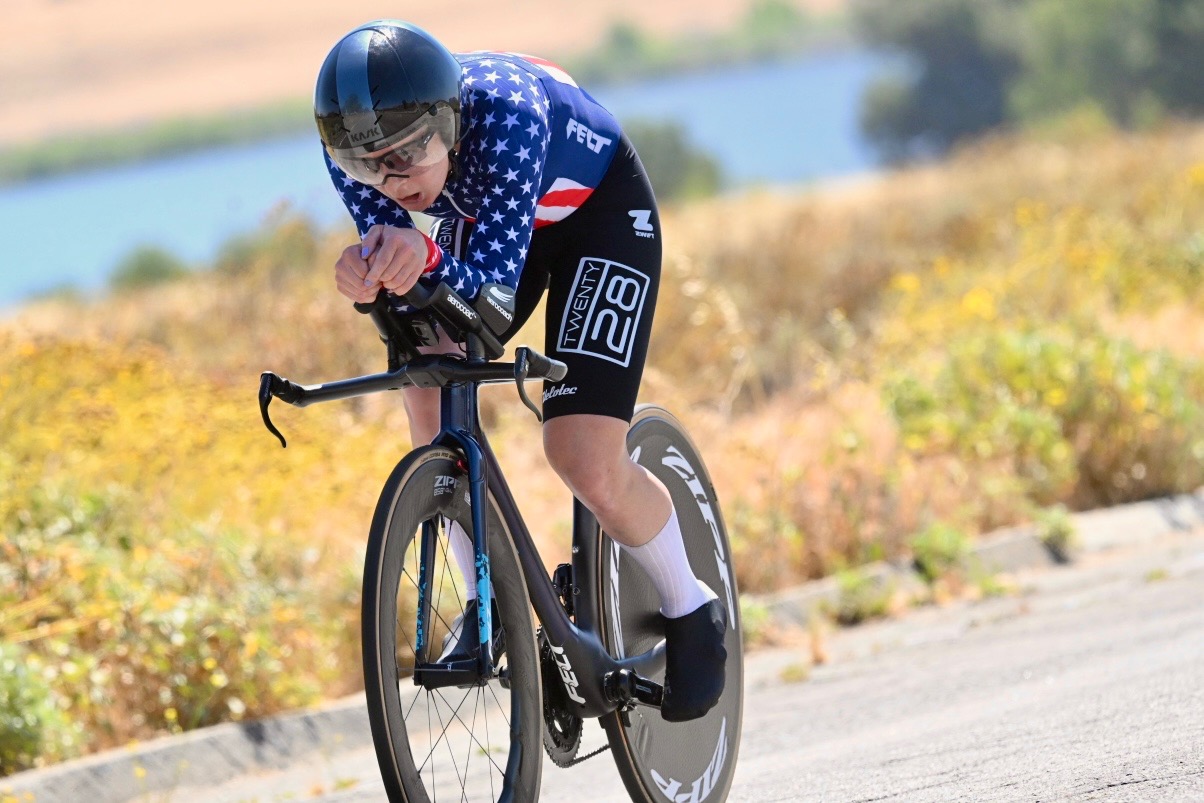
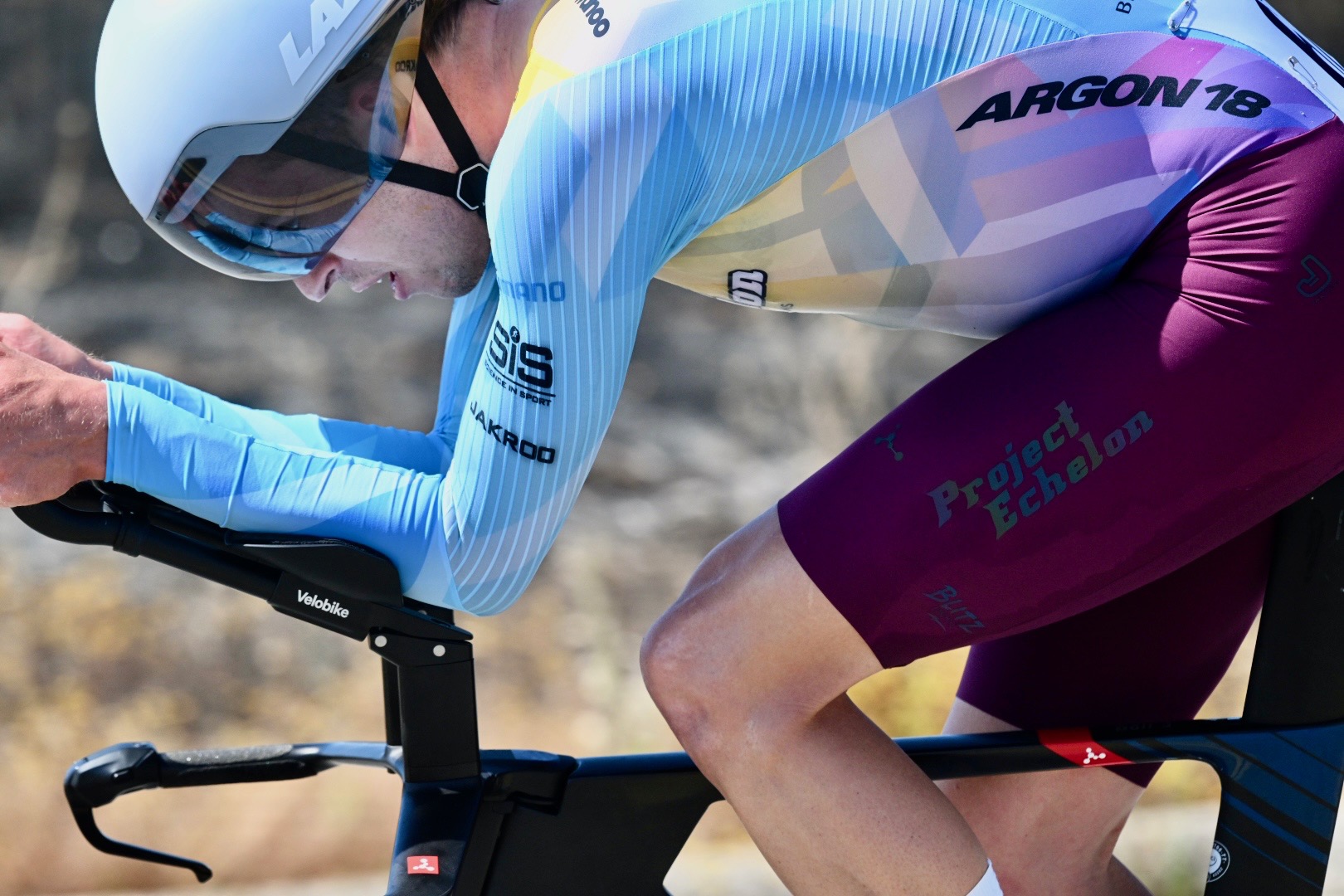
Eric Brunner (Project Echelon) and Emily Ehrlich (Virginia’s Blue Ridge TWENTY28) opened the 2026 Redlands Bicycle Classic with impressive wins Wednesday in the Toyota of Redlands individual time trial at Lake Perris State Park, pulling on the first pro leader’s jerseys of the week.
Pro Women
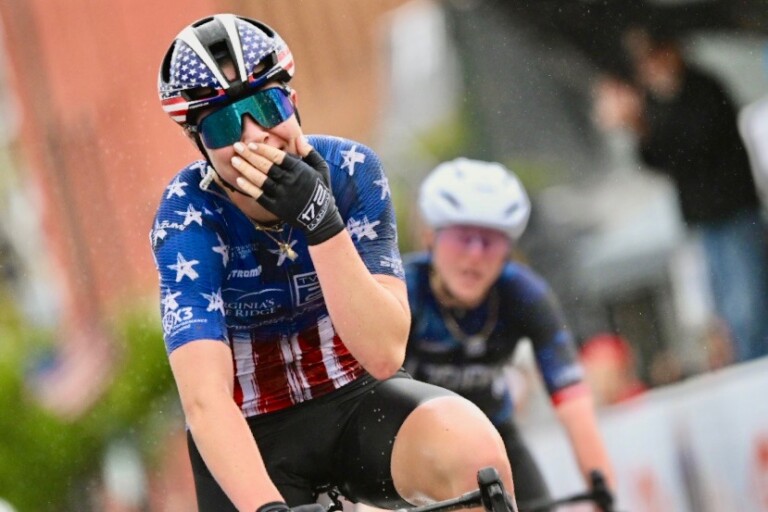
Ehrlich delivered a dominant performance to win the opening stage and seize the early overall lead, recording her third career victory on the Lake Perris course.
“I love this course,” Ehrlich said. “It’s always hard, it never really lets up, and it just keeps getting more difficult the whole way. That’s why I like it. It’s been a while since I’ve had a solid road block going into a stage race, so it feels really good to come back here and get the win.”
Emily Ehrlich wins Lake Perris TT racing for Virginia’s Blueridge Twenty28 Photo: VeloImages / Redlands Bicycle Classic
Ehrlich expressed excitement about the race’s new terrain in its 40th edition. “It’s exciting because a lot of the courses this week are new to me,” she said. “I feel like something always happens on Sunset, so I think it’s going to come down to that again.”
Jamie Chapman (Aegis x Leaders of Enchantment) finished second, with teammate Lauren Stephens third. Katherine Rusch (CCB Kenetik p/b Levine Law Group) and Ashley Frye (Competitive Edge Racing) completed the top five.
“I’m super psyched, especially that my teammate Lauren is also on the podium,” Chapman said. “It was a perfect day, with just a light wind — kind of a tailwind on the technical, flowy sections, then a headwind as we came around the lake into the more technical part. I really tried to hit that hill hard and then, after the U-turn, keep the power on and bring it home.”
Chapman arrived in Redlands brimming with confidence. “I’m feeling really good coming into this race. I feel strong physically, and my team is really awesome. We’ve got a great mix of more experienced riders and some young rider contenders, so we have a nice range of strengths. We’re a really cohesive group, and I’m excited to light it up with them over the next four stages.”
Pro Men
Brunner set the fastest time of the day in the men’s race, covering the 11.2-mile course in 21:41 to claim the stage victory. Nathaniel Martin (Speedblock-Terún) clocked 21:48 for second, and Owen Cole (Team Winston Salem) rounded out the podium in 21:49.
“It was hard, it was hot, and honestly, I wasn’t feeling great in the warm-up, but I just went out and did my thing,” Brunner said. “The start delay made it a little stressful, but it was the same for everyone, so I just had to see how it played out. With the heat, I shortened my warm-up a bit and just tried to keep it simple.”
He added: “It was a little breezy out there, but definitely easier conditions than last year, so I didn’t notice it too much. It’s a great start to the week. With no big climb this year, I kind of look at Redlands as a series of one-day races, especially with how important time bonuses are, so I think that’s going to matter even more this time around.”
Joseph Laverick (Team Unknown) and Jack Diemar (Kelly Benefits Cycling) rounded out the top five.
Martin reflected on a challenging ride. “I felt like the wind was coming from every direction. We thought it would be one way, but I was hitting headwinds in different sections. Whenever I felt myself slowing down, I just tried to push a little harder and save something for the hill at the end. I kind of died on that last stretch, but I got to the line in a good time. This is my second year racing Redlands, so I’m really happy to improve on last year’s TT result. We’ve got a really strong team for the circuit races and crits, and a good mix of riders who can perform across different stages, so hopefully we can get some solid results throughout the week.”
With time gaps established, the race shifts Thursday to Stage 2 and the debut of the Trek–Hangar 24 Circuit Race. The new course replaces the traditional Onyx Summit road stage due to ongoing road repairs. Multiple intermediate sprints and time bonuses will sharpen competition in both the sprint and GC battles.
Stage 2: TWENTY28 Goes 1-2, Tightens Grip on Women’s GC. Mata Claims the Stage, Brunner Holds Slim GC Lead
Pro Women
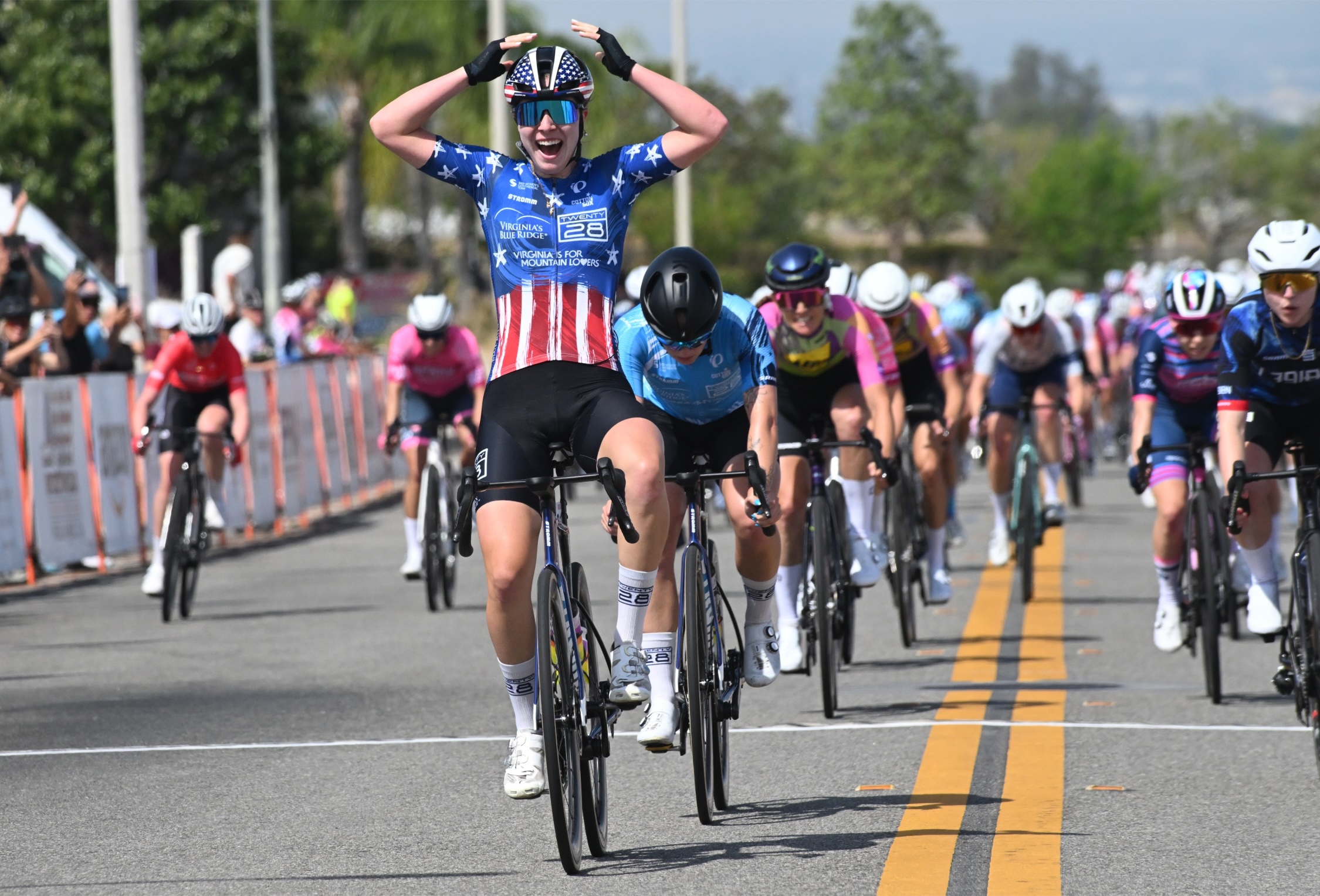
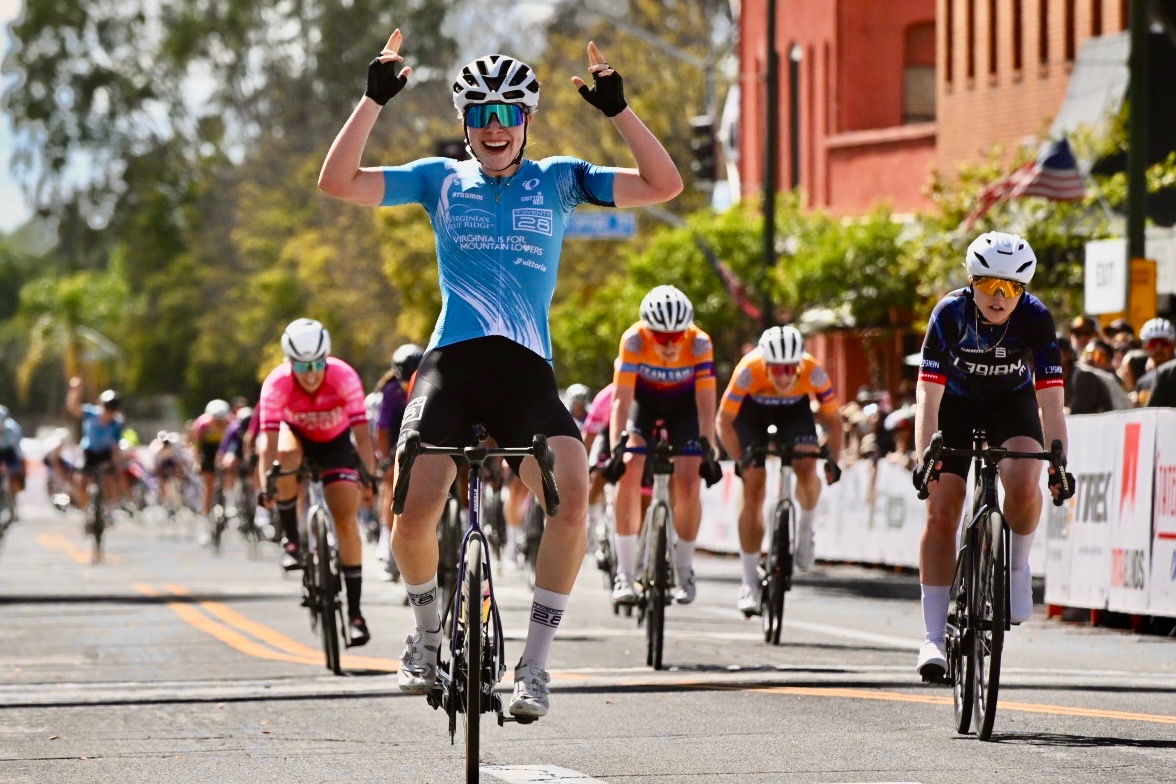
Redlands native Ella Sabo led Virginia’s Blue Ridge TWENTY28 to a one-two finish on Stage 2 of the women’s race, winning ahead of teammate Olivia Cummins, while Skylar Schneider (L39ION of Los Angeles) took third. Sabo crossed the line in 1:39:13 at the end of the 43.2-mile circuit stage, with Cummins second and Schneider third after a speedy race that culminated in a bunch gallop outside Hangar 24 Brewery.
While the stage ended in a sprint, it carried significant GC weight. Emily Ehrlich (Virginia’s Blue Ridge TWENTY28) retained the overall lead with a total time of 2:03:19. Aegis x Leaders of Enchantment teammates Jamie Chapman and Lauren Stephens sat second and third at 39 and 46 seconds, respectively.
The 43.2-mile stage, run over 16 laps of a 2.7-mile circuit, played out on wide, fast roads with four right-hand turns and a gradual uphill finish on Sessums Drive. With no significant climbs and multiple intermediate sprint opportunities, the peloton stayed largely intact, setting up the inevitable bunch sprint. Speedblock-Terún contested the sprint points, but in the final kilometers TWENTY28 executed a textbook lead-out to deliver Sabo to the front in the finishing straight.
U23 US National Road Champion Ella Sabo sprints to victory on Stage 2: Trek-Hangar 24 Circuit Photo: VeloImages / Redlands Bicycle Classic
“The last lap was quick… we talked about it before the race,” Sabo said. “My teammate Emily told me, ‘just follow me,’ and she kept me in position. Rylee took us down the last straight, Marjorie took us down the back straight. It was a whole team effort.”
Despite intermediate sprints at 12, 8, and 4 laps to go and a time-bonus sprint at 6 laps, no breakaway carved out a meaningful advantage on the flat, fast, and windy circuit. Cummins leads the sprint competition. No Queen of the Mountains points were awarded on Stage 2.
Pro Men
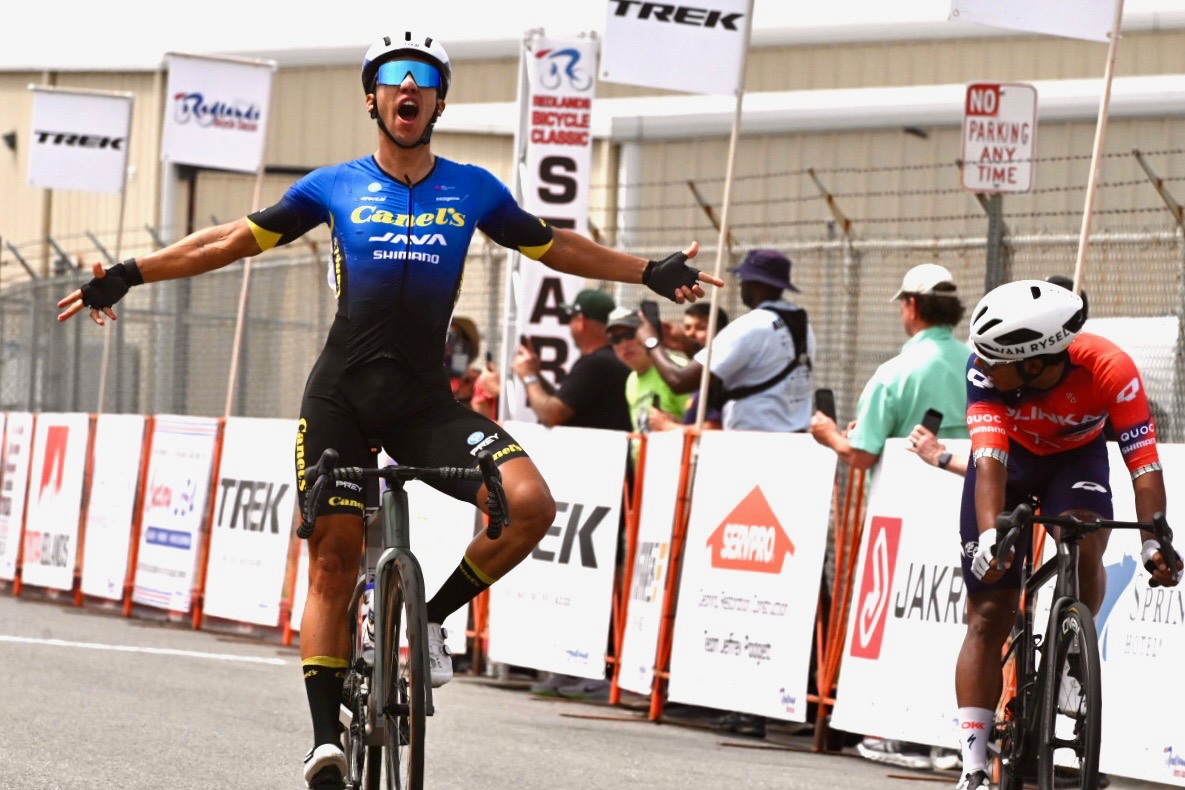
Sebastian Mata (Canel’s–Java) sprinted to victory on Stage 2 of the men’s race, edging Carlos Garcia (Olinka) and Luke Elphingstone (Project Echelon) in a fast, tightly contested bunch finish across 64.8 miles of racing.
“I tried to save the most energy for the end, but super happy to take the win,” Mata said. “This was a goal I had on my calendar for the year. It’s been a dream of mine to get a stage win here and this year I did that.”
The Costa Rican rider called the victory one of the most meaningful of his career. “I love Redlands, this is one of my favorite races of the season. I am proud to be part of Canel’s-Java. We always have fans along the road, so I’m really happy.”
The overall standings remained razor close. Eric Brunner (Project Echelon) held the GC lead in 2:30:19, with Nathaniel Martin (Speedblock–Terun Elite) just seven seconds back and Owen Cole (Team Winston Salem) eight seconds off the lead.
Garcia came close to delivering Olinka’s sprint plan. “It was our plan for me to go for the sprint and hopefully the win,” he said. “It was a close finish, but in the end, I was not able to pass him.” The team leaned on experienced domestique Ulises Castillo to navigate unfamiliar courses. “We have several riders that are new to these courses, but it helped us finish second place today.”
The stage unfolded as expected across 24 laps of a 2.7-mile course. San Bernardino Avenue offered a slight downhill, while the finish on Sessums Drive rose gradually through sweeping curves, setting up a high-speed run-in that favored a controlled sprint. No breakaway gained an advantage, and the peloton arrived intact.
Brunner navigated the sprint safely to retain the leader’s jersey, with teammate Elphingstone adding a podium. “It was a little harder than I expected. Quite hot, and we knew it was going to be a little bit of a sketchy stage, as any sprint stage is,” Brunner said. “But fortunately, stayed safe and still in yellow — everything went to plan.”
Looking ahead, Brunner flagged the next stage as decisive. “I think tomorrow is going to be the biggest GC day. It’s got quite a bit of climbing and that little gravel sector, so it’s going to pay to be aggressive and race from the front.”
Stage 3: Stephens and Frayre Claim Stage 3, Take GC Leads at Crafton Hills
Pro Women
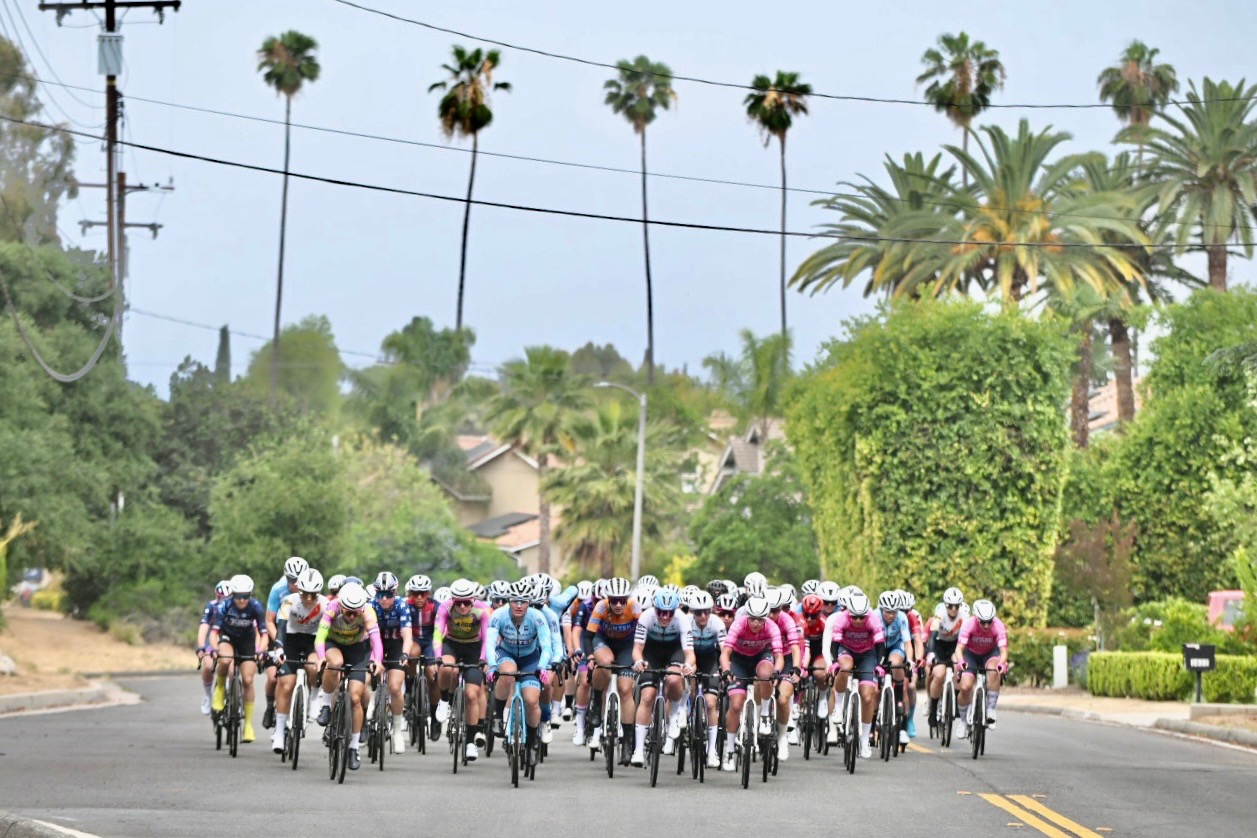
Lauren Stephens (Aegis x Leaders of Enchantment) and defending champion Eder Frayre (L39ION of Los Angeles) won Stage 3 of the Redlands Bicycle Classic Friday, each taking victory on the Crafton Hills circuit and reshaping the general classification battles heading into Saturday’s downtown criterium.
Stephens’ win moved her into the overall race lead, where she now sits in 3:52:28, holding an 11-second advantage over stage 1 winner Emily Ehrlich (Virginia’s Blue Ridge TWENTY28). Jamie Chapman (Aegis x Leaders of Enchantment) climbed to third at 54 seconds.
Stephens delivered a commanding ride over the 41.4-mile circuit, winning in 1:48:36 after a selective and attritional day that shattered the field in the first lap across rolling terrain. Katherine Sarkisov (CCB Kenetik p/b Levine Law Group) finished three seconds back in second, while Kira Payer (SpeedBlock-Terun Pro Cycling) rounded out the podium at 40 seconds.
“My team did a great job today,” Stephens said. “The plan was to make the race hard after the first QOM, and we executed exactly how we wanted. We ended up in a small break of four with my teammate Jamie and Kat, and then on the next time up the climb it was just Kat and me. It was nice to be up there with a former teammate.”
Stephens committed fully to the attack. “I went all in for the stage win and hoped we could move up in the general classification. The team was incredible, responding to attacks and setting the pace all day. We took it a bit easier yesterday with all the nerves, knowing today was the day to commit, and they delivered. Now we’ll see where that leaves us on GC.”
Grace Arlandson (Aegis x Leaders of Enchantment) and Cynthia Pham (Analog Racing Team) completed the top five, both conceding 41 seconds to the decisive move. The result further solidified Stephens’ control of the race, with Aegis placing two riders in the top four on the stage and two inside the top three overall. Stephens also leads the Queen of the Mountains classification. Olivia Cummins (Virginia’s Blue Ridge TWENTY28) tops the sprint standings, and Sarkisov holds the best amateur jersey.
Pro Men
In the men’s race, Frayre’s victory boosted him to the top of the GC in 4:35:36. Eric Brunner (Project Echelon) and Owen Cole (Team Winston Salem) sit tied in second at one second back.
The 55.2-mile Crafton Hills Circuit Race averaged 26.46 mph before culminating in a reduced sprint. Frayre timed his move to perfection, winning in 2:05:09 ahead of Kent Ross (Cascadia Elite Racing), two seconds back, with Marcis Shelton (Competitive Edge Racing) taking third in the same time as Ross.
“It was a very complicated day, specifically for the GC,” Frayre said. “There were a lot of dangerous riders in the group, so everyone was watching me because they knew this was a day I could make a difference. I tried a few times, but everything was covered, so I waited for the right moment. Lap after lap I looked for the ideal spot, then with about 100 meters to go I went full gas and took the win on my favorite day.”
Frayre had also probed for an earlier decisive move. “We tried to break the race with three or four laps to go, but no one followed — the rhythm in the group was good so I came back, but the right decision was made to stay patient. The GC is going to be very close, down to seconds, but we’re in a good position. There’s still a lot of work to do over the next two days, and we’ll try to defend the lead and keep enjoying it.”
Owen Cole and Julien Ruhe (Kelly Benefits Cycling) followed closely, finishing within five seconds of the winner after a tightly contested finale shaped by the fast descent of San Bernardino Avenue and the grinding rise of Sessums Drive.
Frayre leads overall, with Brunner and Cole just one second behind. Jack Diemar (Kelly Benefits Cycling) sits fourth at nine seconds, and Joseph Laverick (Team Unknown) fifth at 20 seconds off the lead.
Stage 4: Sabo and Brown Win Stage 4 Criterium; GC Battles Tighten
Pro Women
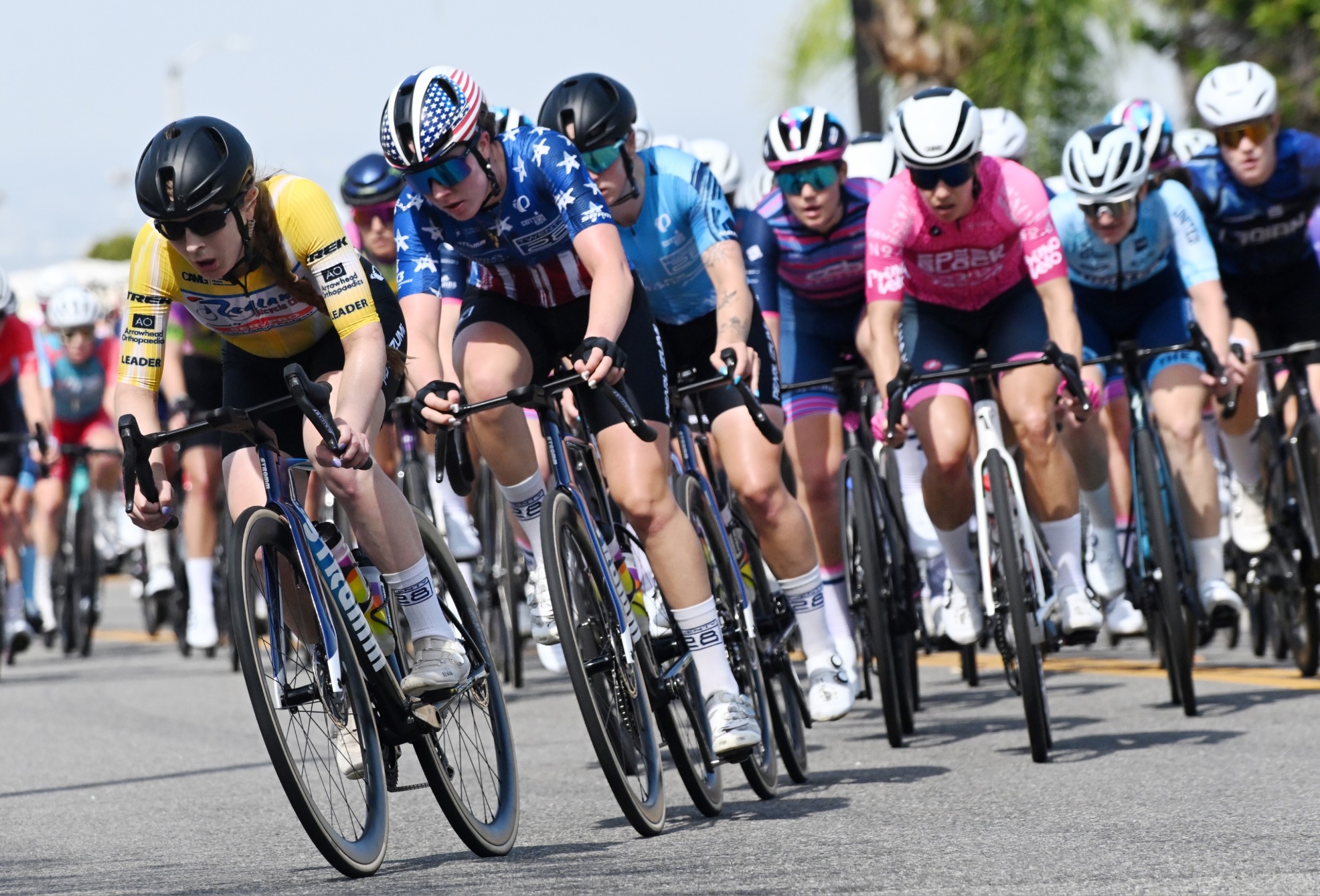
Ella Sabo (Virginia’s Blue Ridge TWENTY28) and Jim Brown (L39ION of Los Angeles) claimed victories in the Stage 4 downtown criterium, presented by Arrowhead Orthopaedics, with both races producing fast, tactical finishes that reshuffled the general classification ahead of the final stage.
Sabo delivered a hometown win in the women’s race, sprinting to victory in 1:14:30 — her second stage win of the week — ahead of Lauren Stephens (Aegis x Leaders of Enchantment) and Heather Fischer (Analog Racing Team), with the top five credited with the same time.
Redlands native Ella Sabo takes second stage win for Virginia’s Blue Ridge TWENTY28 Photo: VeloImages
“Oh my goodness, it was incredible. That was a hard race,” Sabo said. “People wanted things to get away, but they were always there. The girls just bossed up. I’m just so proud of everybody. They all believed in me again, so it feels so great to pull it off again — and to do it here in front of my family is so awesome.”
Raced over a 1-mile criterium course, the women’s event saw constant pressure from teams probing for a break, but the race held together for a high-speed sprint. TWENTY28 controlled much of the racing, repeatedly closing moves and positioning their leader for the finale.
“They were killers,” Sabo said of her teammates. “After a hard day yesterday, we were feeling it a bit, but we rallied and got it done.”
Following Stage 4, Stephens leads the GC in 5:06:51, holding a 15-second advantage over Emily Ehrlich (Virginia’s Blue Ridge TWENTY28), with Jamie Chapman third at 1:01 back. Katherine Rusch and Katherine Sarkisov round out the top five at 1:24 and 1:39, respectively. With time bonuses awarding 10, 6, and 4 seconds to the top three, the gaps remain tight heading into the final day.
“Tomorrow will be a battle for sure,” Sabo said. “But I’m glad to do it with this team.”
Pro Men
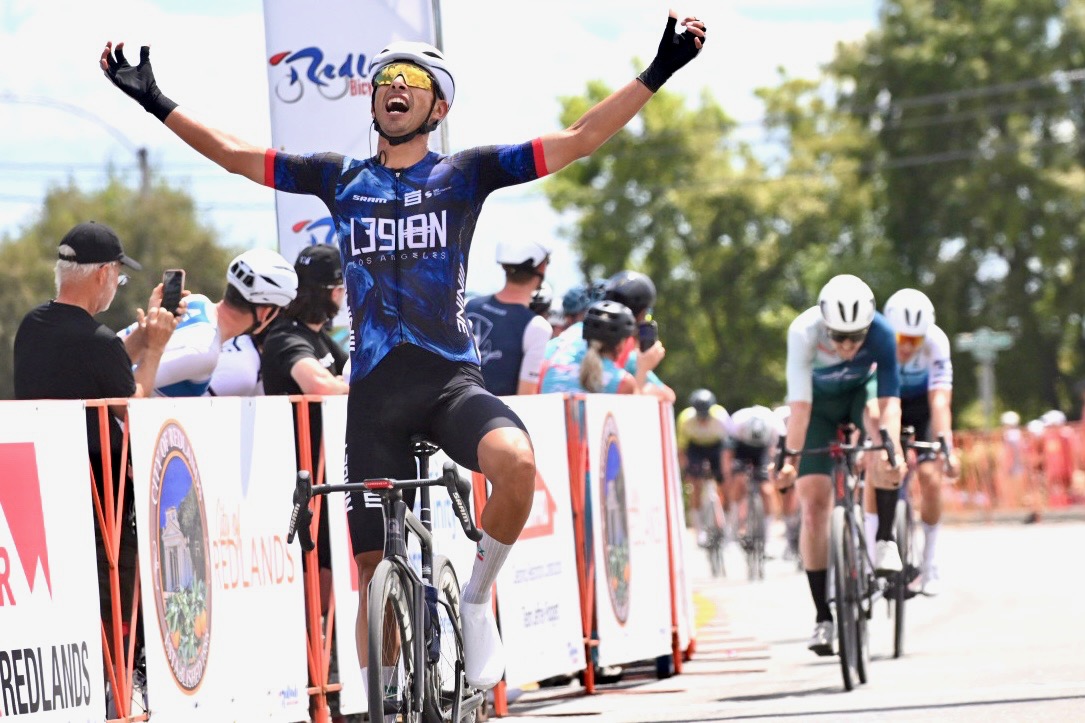
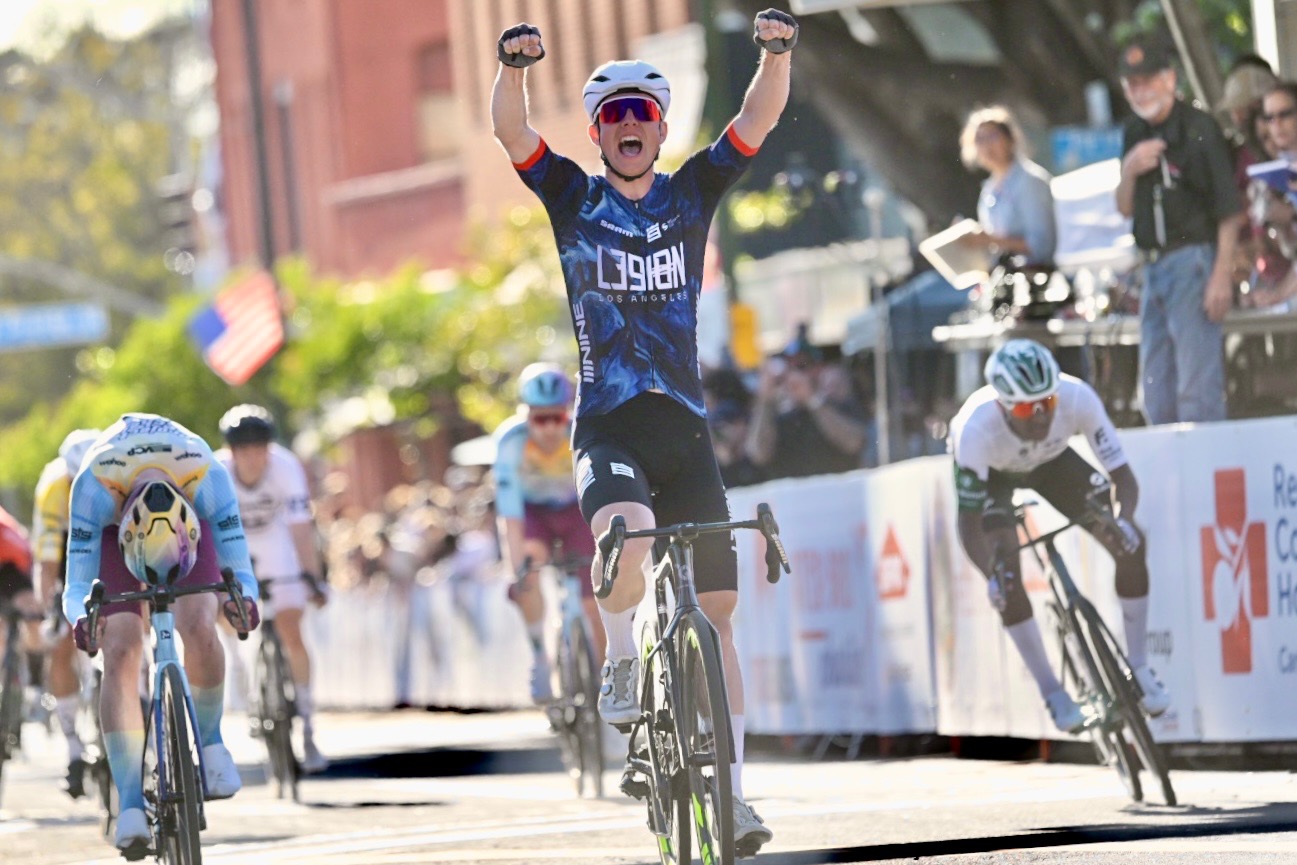
Brown timed his effort perfectly to win the men’s 1-mile criterium in 1:30:54, outkicking Luke Elphingstone (Project Echelon) and Alejandro Che (Kelly Benefits Cycling), all three credited with the same time.
“Last year, I was second here, and Danny Summerhill just got the jump on me coming into the last three corners,” Brown said. “So I made sure that it was me getting the jump this time. I was first into the last corner and still had enough left to finish it off.”
The men’s race, featuring 185 starters, saw aggressive racing throughout, with Ryan Drummond (Competitive Edge Racing), Michael Garrison (Team Unknown), and Andrew Carr (Voler Factory Racing) escaping in a three-man break. The trio held a gap of up to 25 seconds before the peloton reabsorbed them with fewer than 5 laps remaining, leaving the outcome to a bunch sprint. Carr now leads the points classification for his efforts in the move.
GC leader Eder Frayre (L39ION of Los Angeles) crossed the line in fifth, missing the crucial time bonuses awarded to the top three. Eric Brunner (Project Echelon) crossed just behind Frayre, slipping back into the GC lead after collecting 2 seconds in intermediate time-bonus sprints.
Following Stage 4, Brunner (Project Echelon) leads the general classification in 6:06:28, holding a two-second advantage over Frayre, with Owen Cole (Team Winston Salem) third in 6:06:31 — three seconds off the lead — further tightening an already razor-thin GC battle.
“The main job was to protect our leader,” Brown said. “If it got messy, I was going to start riding as well. The secondary aim was to go for the stage, and that worked out. He came through safe, but I think we may have lost the jersey on time bonuses. We’ll try to get it back tomorrow.”
Stage 5: Sabo and Ross Win Sunset Road Race; Stephens and Frayre Secure Overall Titles
Pro Women
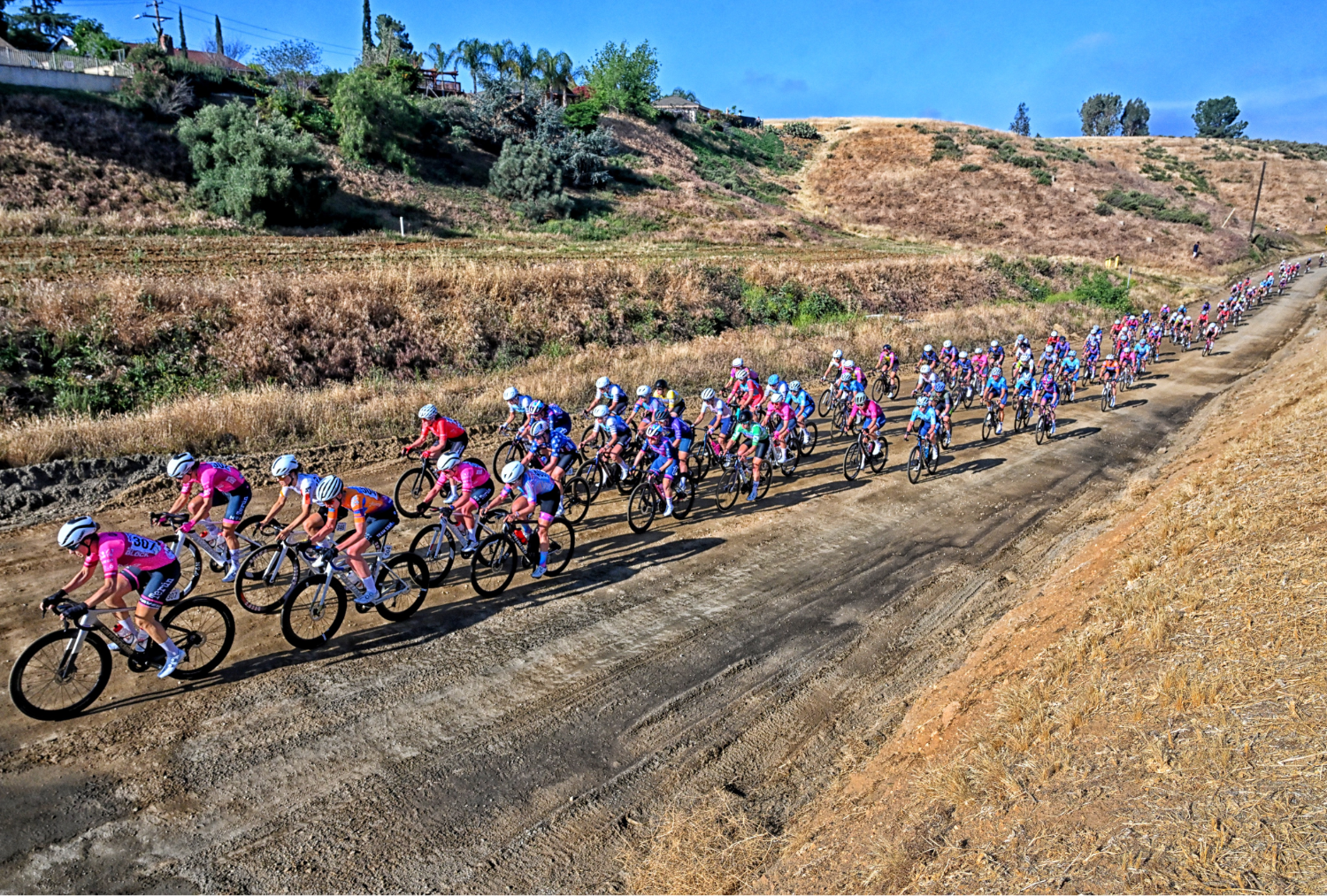
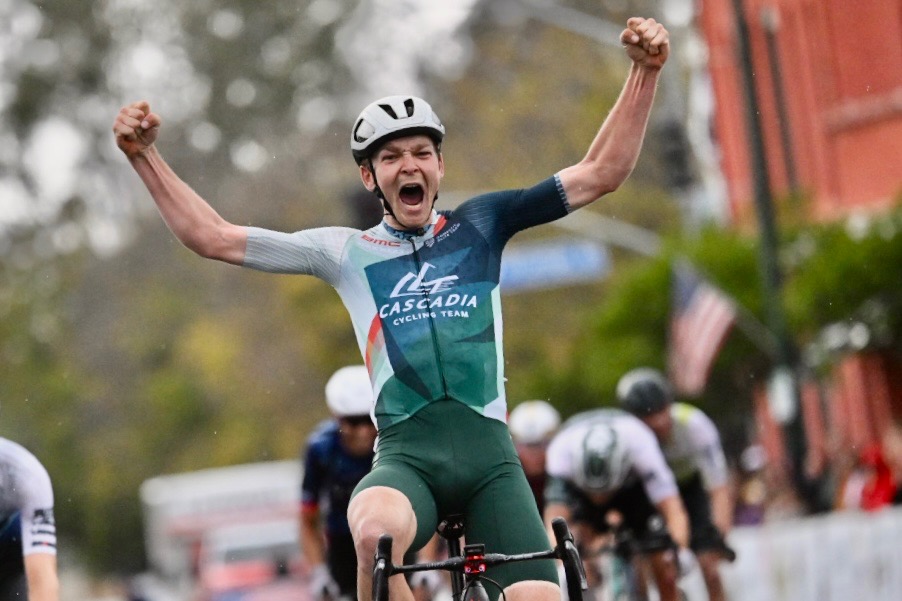
Ella Sabo (Virginia’s Blue Ridge TWENTY28) and Kent Ross (Cascadia Cycling Team) claimed stage victories on the Sunset Road Race as Lauren Stephens (Aegis x Leaders of Enchantment) and Eder Frayre (L39ION of Los Angeles) sealed their overall titles, bringing the curtain down on a week of tightly contested racing.
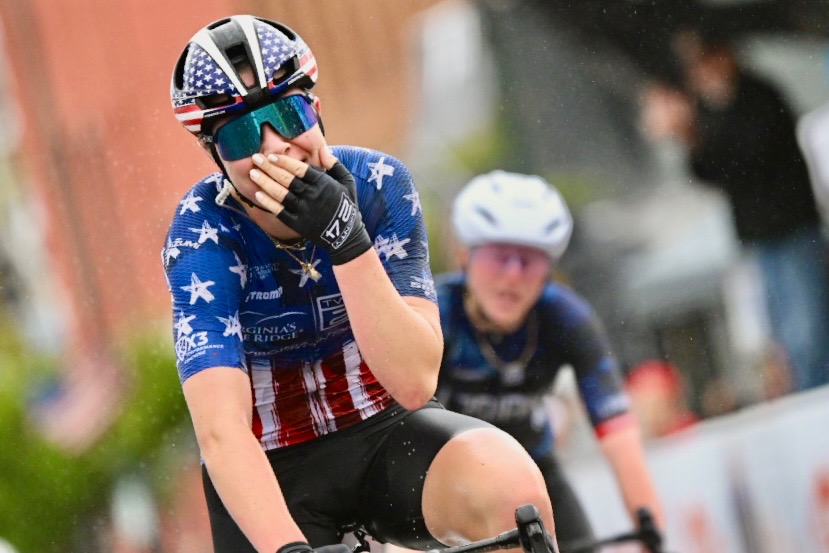
Rain poured relentlessly over the peloton in cool temperatures as the pro women rolled out for their 68.1-mile finale. Sabo out-sprinted her rivals to earn her third stage victory of the race in 3:03:31, finishing atop a reduced front group after a fast and selective day. Skylar Schneider (L39ION of Los Angeles) and Katherine Sarkisov (CCB Kenetik p/b Levine Law Group) rounded out the podium.
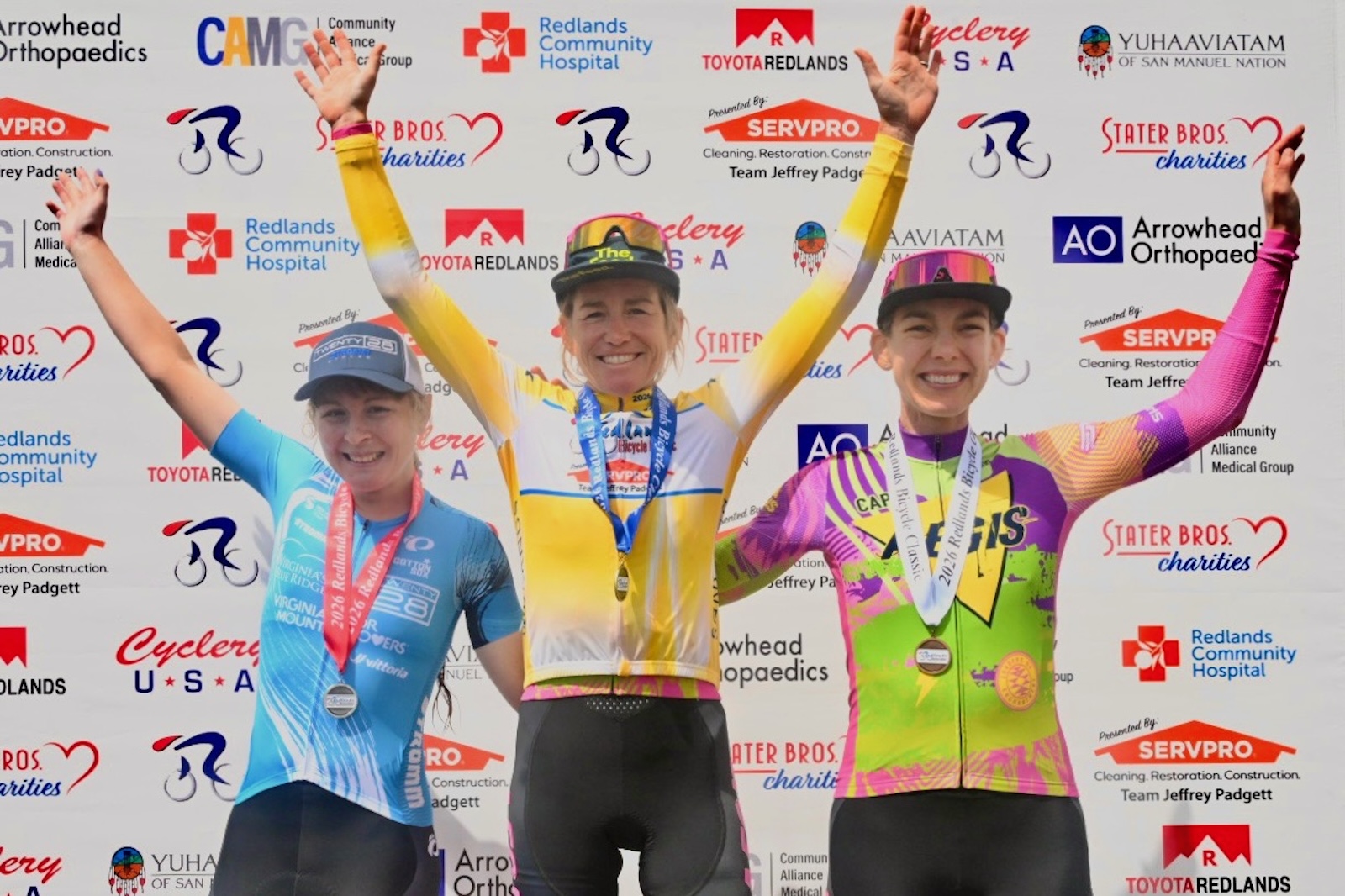
Stephens secured the general classification with a total time of 8:10:25, holding off Emily Ehrlich (Virginia’s Blue Ridge TWENTY28) by 15 seconds. Jamie Chapman (Aegis x Leaders of Enchantment) completed the overall podium at 1:08 back, with Katherine Rusch and Sarkisov rounding out the top five at 1:31 and 1:32, respectively.
“I can’t believe I won the Redlands Bicycle Classic,” Stephens said. “This race was so intimidating to me back in 2013, when I first started racing here. I had the chance to wear the yellow jersey but didn’t finish with it. To be here in 2026, wearing the yellow jersey with my team behind me, is just incredible. I’m so excited to be in this position.”
Stephens’ consistency across all five stages proved decisive. She also claimed the climber classification while leading Aegis x Leaders of Enchantment to the team classification title. Olivia Cummins (Virginia’s Blue Ridge TWENTY28) secured the sprint classification, and Sarkisov earned the best amateur jersey.
Pro Men
Ross took the men’s stage win in 3:25:42, emerging from a reduced group to edge Marcis Shelton (Competitive Edge Racing) and Frayre, all three credited with the same time.
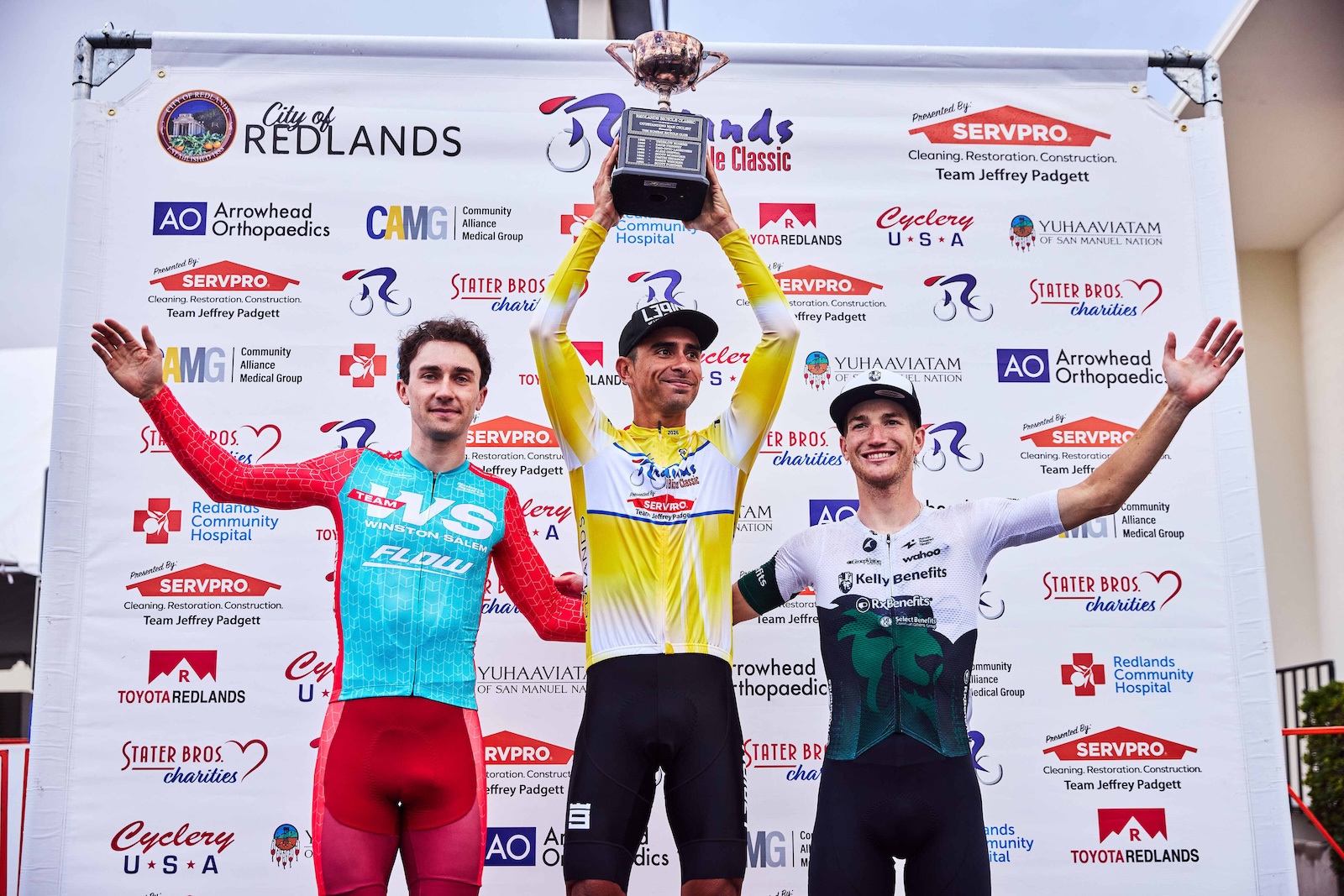
The top three in the overall general classification arrived at the Sunset Loop finale separated by just three seconds. Frayre leveraged his experience and climbing prowess to sweep both intermediate time bonuses, and his third-place finish at the line proved enough to defend his overall title for L39ION of Los Angeles.
Frayre became the first Mexican rider to win the overall title when he triumphed the previous season. He celebrated with family and friends who had made the journey from his hometown of Ensenada, Baja California.
“The rain made the race hard, but I know what I needed to do,” Frayre said. “I used my full team; I was confident that we got the job done and won again. Winning Redlands for the second time is special to me. When I was a junior this is where I saw professional cycling for the first time in my life, since I live close in Ensenada. Redlands made me love this sport and want to be a professional cyclist. I hope this race shows what I can do and opens the door for the next generation so they can come and race here before jumping to Europe.”
Ethan Dunham (APS Pro Cycling p/b Team Cadence Cyclery) claimed the climber classification, while Andrew Carr (Voler Factory Racing) secured the sprint classification. Owen Cole (Team Winston Salem–Flow) earned best amateur honors, and Modern Adventure Pro Cycling won the team classification.
Old Bikes, New Lives: Park City’s Annual Bicycle Drive Sends Gear Where It Matters Most
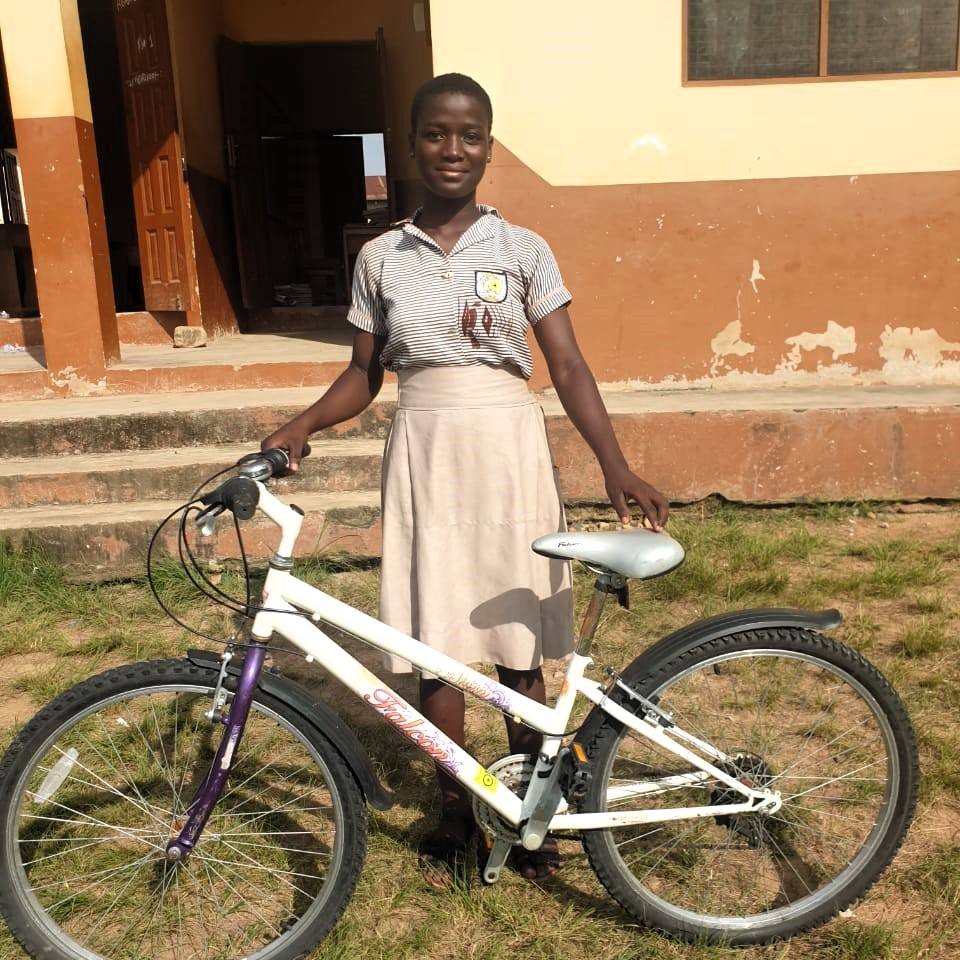
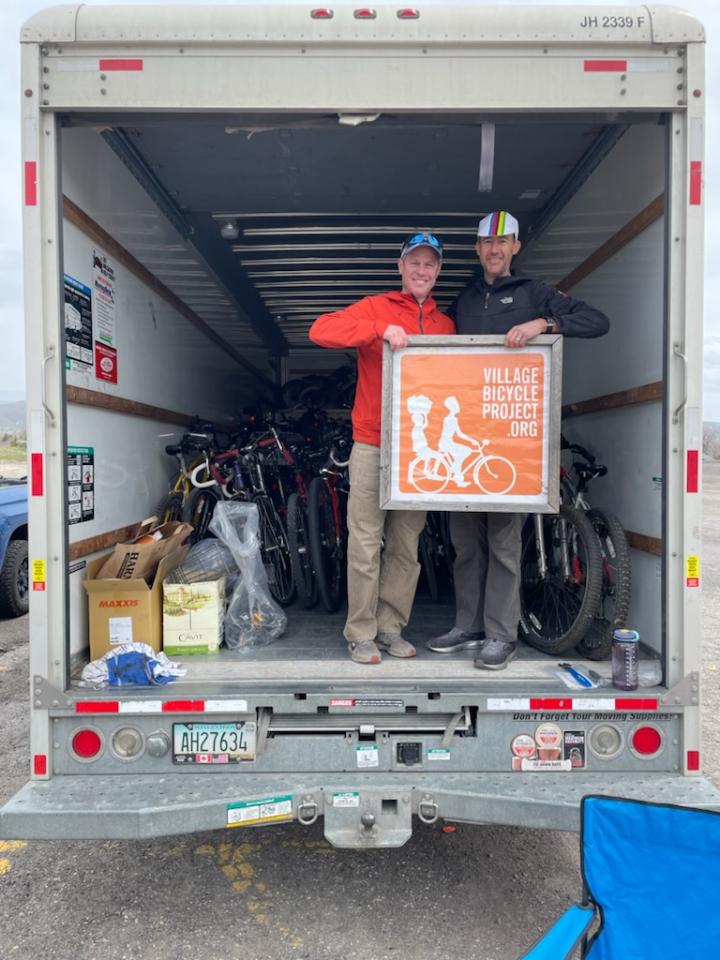
On May 2, 2026 the biking mecca of Park City will once again turn its passion for cycling into something far bigger than recreation. The nonprofit Village Bicycle Project (VBP) is hosting its 6th annual Spring Bike Drive—an event that transforms unused bicycles sitting in local garages into life-changing tools for communities across West Africa. The event will be held Saturday May 2 from 9am to 1pm in the Staples/Walmart parking lot in Kimball Junction. (6543-6545 N Landmark Dr, Park City, UT 84098).
Photo courtesy of Village Bicycle Project.
A Local Event with Global Reach
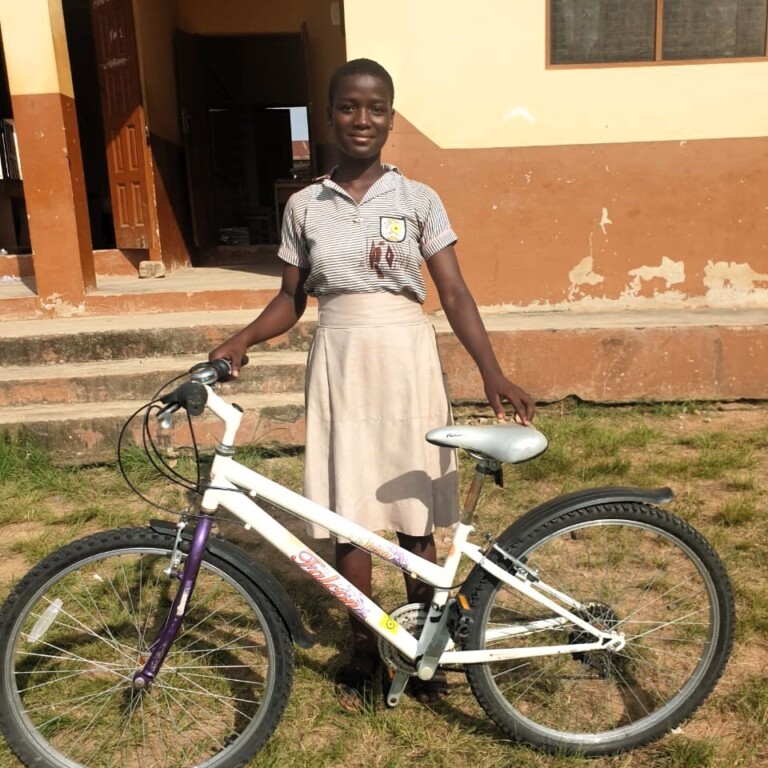
The Park City bike drive has become a staple community event, inviting residents to donate used bicycles, parts, and gear. Its mission is simple but powerful: collect as many usable bikes as possible and send them to communities in Ghana and Sierra Leone, where access to transportation can be life-changing. What may seem like an old or outdated bike in Utah can be transformative elsewhere. In rural West Africa, bicycles are not just recreational—they are essential transportation. For students, a bike can mean the difference between attending school or staying home. For adults, it can provide access to jobs, markets, and healthcare.
Photo courtesy of Village Bicycle Project.
How the Program Works
Unlike many donation-based organizations, Village Bicycle Project goes beyond simply shipping bikes overseas. The organization has built a strong, on-the-ground network that ensures long-term impact. Bikes are distributed through local partners, paired with hands-on maintenance training, and supported by a growing network of trained mechanics. This approach creates sustainable bicycle ecosystems—communities where people not only own bikes, but also know how to repair and maintain them. Programs specifically prioritize access for women and girls, helping address mobility gaps that often limit access to education and opportunity.
From Park City to Africa
Each year, bikes collected in Utah help fill shipping containers—often carrying 400–500 bicycles—that are sent overseas. These shipments are part of a much larger effort: over the past two decades, Village Bicycle Project has delivered over 150,000 bikes and trained tens of thousands of people in repair skills. The Park City drive itself typically gathers over a hundred bikes annually, reflecting the community’s strong culture of giving.
What to Donate—and Why It Matters
Donations of the following items are specifically requested:
Adult and children’s bikes (mountain bikes are especially needed)
Bike parts, tires, and tubes
Cycling clothing and gear
Even older bikes in usable condition are valuable. Many bicycles considered obsolete by U.S. standards are durable, high-quality machines well suited for rugged rural terrain abroad.
Financial contributions are also appreciated to help offset rising shipping costs, which can reach thousands of dollars per container.
A Simple Way to Make a Big Impact
The upcoming May 2 drive is more than a donation event—it’s a reminder of how small actions can create far-reaching change. A single unused bike can shorten a child’s daily commute from hours to minutes. It can help a farmer reach markets or give someone access to critical medical care.
In a town known for its trails and outdoor lifestyle, the Village Bicycle Project offers Park City residents a meaningful way to give their old gear a second life—one that could change someone else’s future entirely. These aren’t just bikes. They’re vehicles for education, opportunity, and independence.
Cycling West and Cycling Utah Magazine’s Spring 2026 Issue is now available as a free download (10 MB download). Pick up a copy at your favorite Utah, Idaho, Wyoming, Nevada, Montana, Colorado, Arizona, New Mexico, North Dakota, South Dakota, and Northern California bike shop or other location. Or join to get a copy of our next issue delivered to your actual mailbox!
Cycling West Spring 2026 Cover Photo: Action at the 2026 Santa Cruz Classic Criterium on March 22, 2026. Photo by Jason James Rimmer, seabrightphotography.com
Contents
The Athlete’s Kitchen: Sodium, How much does an athlete really need? — page 2
E-Mountain Biking is as Fun as it Looks — page 3
The Dysfunctional Cycling Club, and why you should quit… — page 5
Maynard Hershon Releases New Book: The Dysfunctional Cycling Club — page 5
How the Oregon Timber Trail Alliance Maintains One of America’s Longest Mountain Bike Routes — page 6
Key Takeaways from the Bicycle Leadership Conference and LA Bike Infrastructure — page 7
The Incredible Cycling Life of Paul Willerton — page 8
SCOTT Sports’ latest film, Infinite Pursuit, documents Otto’s 5:43:50 effort on one of cycling’s most demanding climbs.
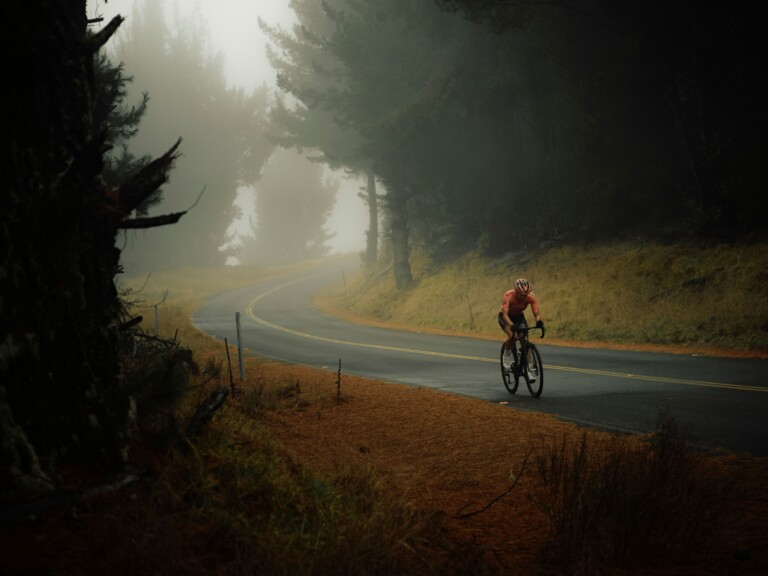
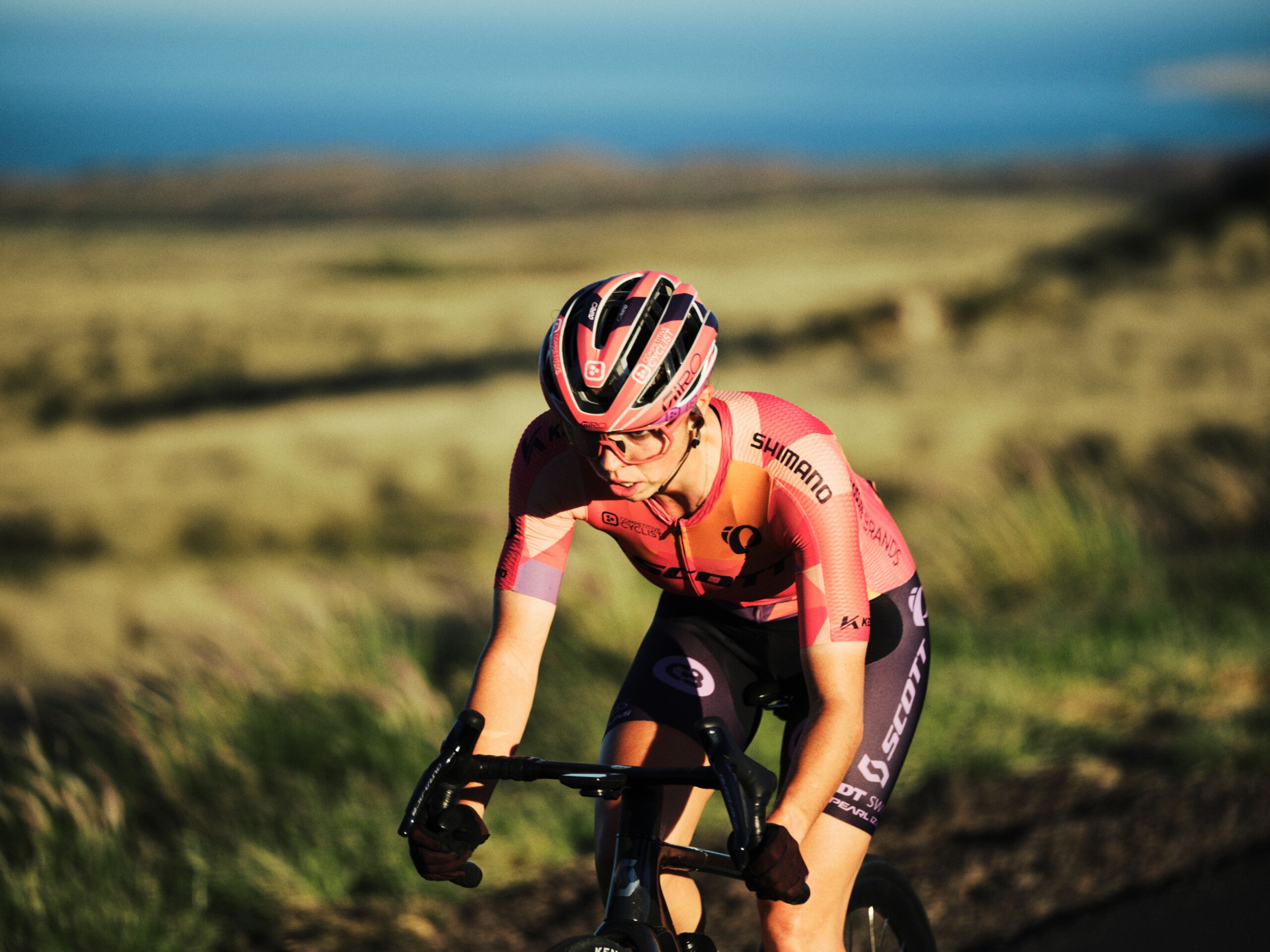
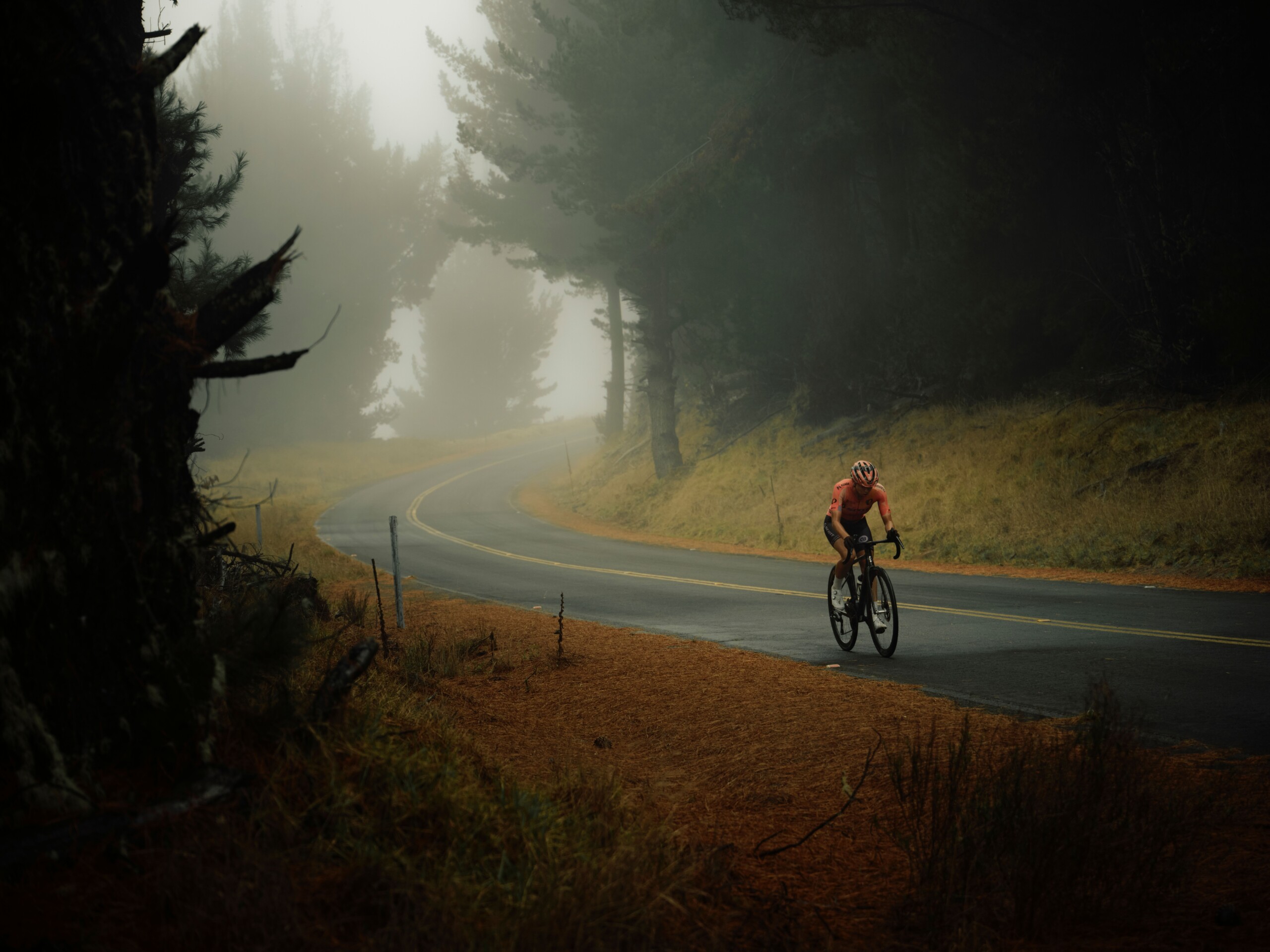
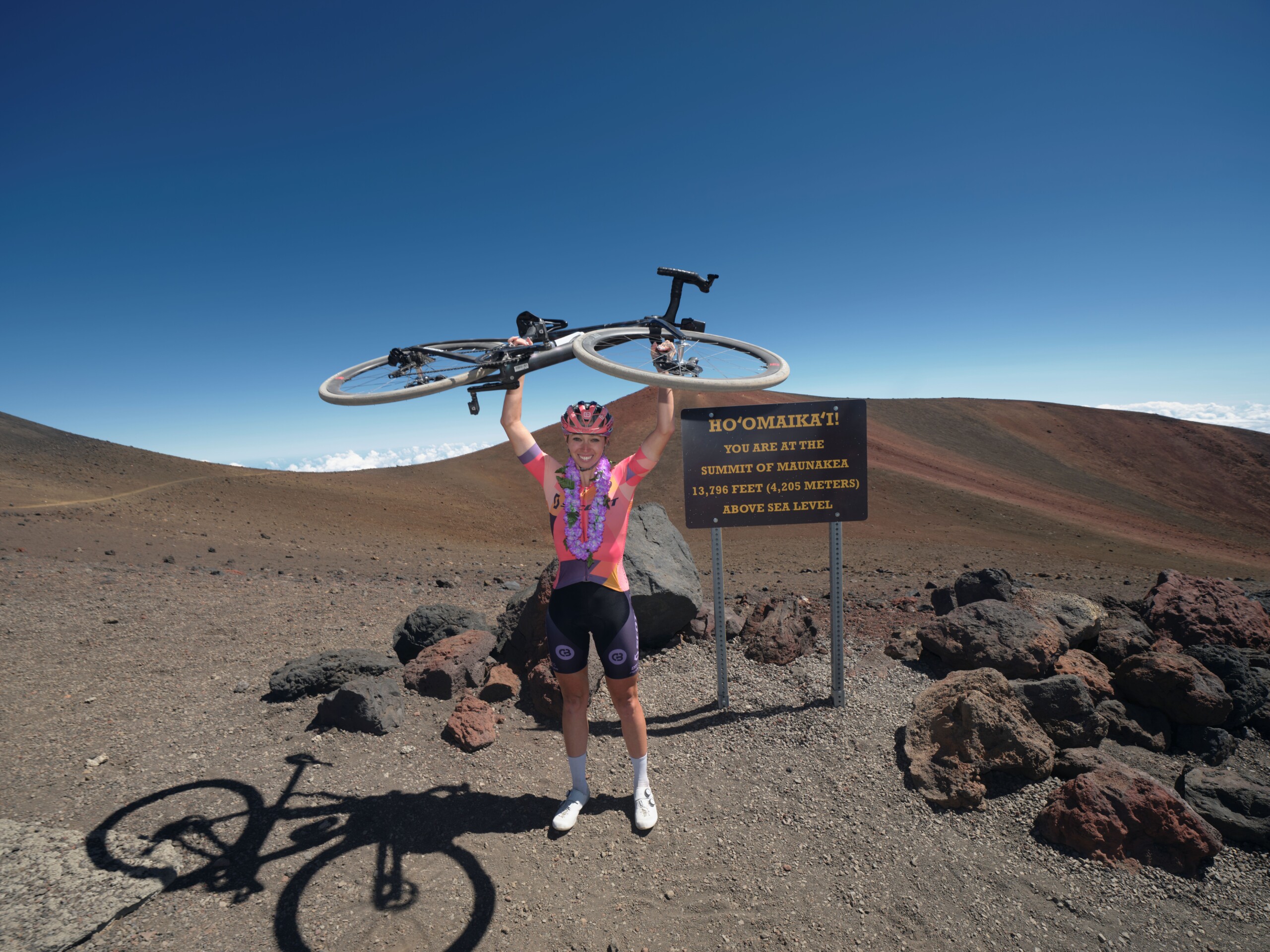
SCOTT Sports athlete Hannah Otto has set a new Mauna Kea Fastest Known Time, completing the iconic sea-to-summit route in 5:43:50. Her effort is documented in the new film, Infinite Pursuit: Hannah Otto vs. Mauna Kea, which captures the scale of the ride and the preparation required to take on one of cycling’s most formidable routes.
Hannah Otto on Mauna Kea. Photo by Erica Hinck, courtesy of SCOTT Sports USA
Rising from the Pacific Ocean to nearly 14,000 feet above sea level, the Mauna Kea climb covers 55 miles and 13,700 feet of elevation gain, combining steep gradients, changing conditions, and a high-altitude finish. The route becomes even more difficult as the climb goes on, with thinning air and a steep final 10-plus mile stretch before the summit.
“Mauna Kea is one of those efforts where you know pretty quickly it is going to ask everything from you,” said Otto. “It is long, exposed, and there is really nowhere to hide once you are in it. Setting the FKT was special, but more than anything, I am proud of how much went into the effort and how we were able to see it through.”
Hannah Otto on Mauna Kea. Photo by Erica Hinck, courtesy of SCOTT Sports USA
The new film follows Otto’s pursuit from preparation through execution, capturing the physical and mental demands of a ride where pacing, weather, altitude, and terrain all become part of the outcome. Rather than simply revisiting the result, Infinite Pursuit shows what it takes to deliver a performance at that level.
“Hannah’s Mauna Kea ride is exactly the kind of effort that deserves a larger spotlight,” said Garth Spencer of SCOTT Sports USA. “This is a real athletic achievement on a route that carries weight well beyond a single segment or social post for SCOTT. The film gives the industry and riders a chance to see the scale of the challenge and the caliber of the performance.”
Hannah Otto at the summit of Mauna Kea. Photo by Erica Hinck, courtesy of SCOTT Sports USA
SCOTT Sports will host a screening of Infinite Pursuit: Hannah Otto vs. Mauna Kea during Sea Otter Classic on Friday, April 17 at 6:00 p.m. at 456 Lighthouse Ave., Monterey, CA.
Event Details: Hannah Otto & SCOTT Sports | Infinite Pursuit Viewing Party Tickets, Friday, Apr 17 from 6 pm to 9 pm | Eventbrite
By Steven Sheffield — Professional cycling’s spring season builds toward a series of one-day races that define careers and separate the merely great from the genuinely immortal. Among these, four stand apart — two rooted in the cobblestones and punishing climbs of Flanders, one in the rolling hills of the Dutch province of Limburg, and one in the forested Ardennes of eastern Belgium — all four falling within the span of a few extraordinary weeks each April. They are the Tour of Flanders, Paris-Roubaix, the Amstel Gold Race, and Liège-Bastogne-Liège, and together they represent the most concentrated test of one-day racing ability in the sport. To win even one of them is the ambition of a career. To win multiple, across multiple races, is the mark of a rider who has transcended the ordinary boundaries of the sport.
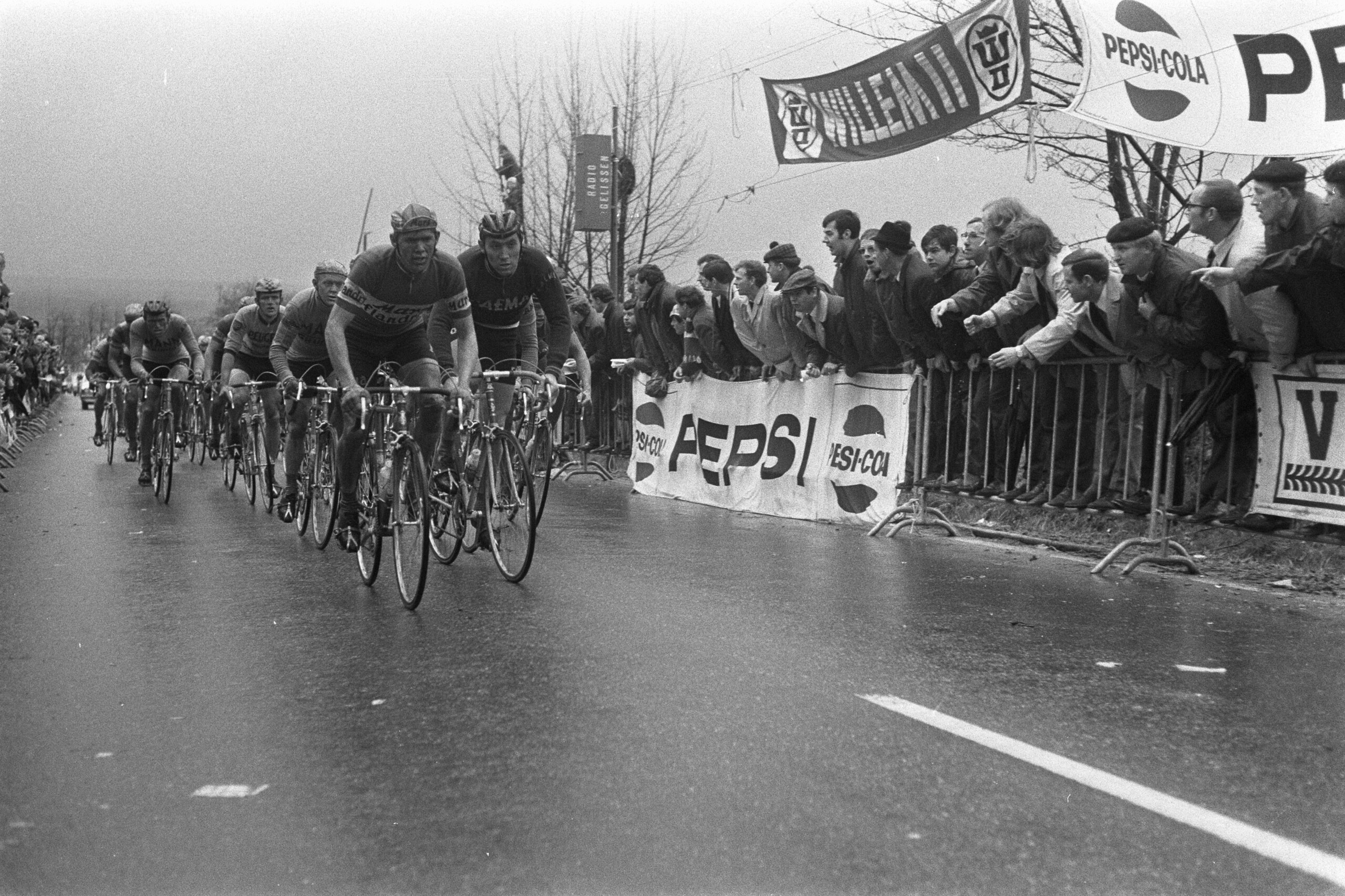
Eddy Merckx and Erik de Vlaeminck, Amstel Gold Race 1970. Image courtesy of the Nationaal Archief (Dutch National Archive), Creative Commons Attribution-Share Alike 3.0 Netherlands
Each of the four has its own personality, its own history, and its own particular way of breaking a rider’s spirit. The Tour of Flanders sends its competitors over short, savage cobbled climbs that have become as famous as the race itself, their names — the Koppenberg, the Paterberg, the Oude Kwaremont — spoken with a reverence usually reserved for Alpine passes ten times their length. Paris-Roubaix abandons the climbs entirely in favor of something arguably worse — hour after hour of brutal cobblestone roads that punish bike and body alike, finishing in a velodrome that has become one of cycling’s most storied and atmospheric venues. The Amstel Gold Race moves the action to the Dutch province of Limburg, where short, punchy climbs arrive in rapid succession across rolling countryside, rewarding riders who can accelerate repeatedly over the course of a long and tactically demanding afternoon. And Liège-Bastogne-Liège, the oldest of the four and perhaps the most demanding of all, sends riders deep into the Belgian Ardennes and back through a relentless succession of longer, harder climbs that have, over more than a century of racing, produced some of the sport’s most legendary performances. The trivia questions that follow draw on all four races and the remarkable history they share.
Q1. The Tour of Flanders was first run in 1913, the brainchild of journalist Karel Van Wijnendaele, who wanted to create a race that celebrated Flemish identity and toughness. Over the decades the race has produced a long line of repeat winners, but in the modern era two riders stand alone atop the all-time victory list, each having won the Ronde three times — a record no one has since broken. Who are the two riders tied for the most Tour of Flanders victories in the modern era?
Q2. Paris-Roubaix has been called “L’Enfer du Nord” — Hell of the North — since a journalist used the phrase after the 1919 edition crossed a landscape still scarred by the First World War. The race rewards a very particular kind of rider: powerful, fearless on cobblestones, and able to suffer for hours in conditions that destroy lesser cyclists. Two riders share the all-time record for Paris-Roubaix victories, each having won the race four times — a total no one has come close to surpassing. Who are the two riders who share the all-time record, and in which years did each of them win?
Q3. Liège-Bastogne-Liège, first run in 1892, is the oldest Monument and is known as “La Doyenne” — the Old Lady. Its Ardennes climbs — the Côte de la Redoute, the Côte de Saint-Nicolas, the Stockeu — reward pure climbers, and the race has a long tradition of producing dominant repeat winners. One rider won it five times in a span of seven years, a record that two others have since equaled, but no one has ever surpassed. Who was the first rider to win Liège-Bastogne-Liège five times, and which two others have since matched him?
Q4. The Trouée d’Arenberg — a 2,400-meter, five-star cobblestone sector running through a dark pine forest — was not part of Paris-Roubaix’s original route. It was added in 1968 at the suggestion of a former winner who knew those particular roads from his life before professional cycling. The sector transformed the race and is now its most iconic stretch. Who suggested the inclusion of the Arenberg Forest, and in what year did he win Paris-Roubaix?
Q5. The Amstel Gold Race, youngest of the four April Classics, was first run in 1966 and takes its name from the Dutch brewery that served as its original title sponsor. Set in the rolling Limburg hills of the southern Netherlands, it has attracted a wide range of winners over its history, but one rider made it more his own than any other, winning it more times than anyone else in the race’s history. Who holds the record for the most Amstel Gold Race victories, and how many times did he win?
Q6. The Koppenberg is one of the most feared climbs in Flemish cycling — a short, savage cobbled ramp so steep that riders have been forced to dismount and walk mid-climb in wet conditions. It was removed from the Tour of Flanders route for fifteen years following a notorious 1987 incident in which an official’s car became entangled with a fallen rider on the climb itself, bringing the entire peloton to a standstill. Which rider was blocked by the car on the Koppenberg that day, and who won that edition of the race (and what was notable about his victory)?
Q7. Liège-Bastogne-Liège in 1980 was run in conditions that belong in another category entirely — a full blizzard, with snow covering the Ardennes roads and temperatures well below freezing. Most of the peloton abandoned. The rider who won did so with a solo effort of extraordinary courage, attacking on the climbs and riding the final stretch entirely alone through the storm. Who won the 1980 Liège-Bastogne-Liège, and what nationality was he?
Q8. Paris-Roubaix’s winner receives a trophy unlike any other in professional cycling — not a cup, a jersey, or a piece of crystal, but an object taken directly from the race itself, making each year’s prize unique and unrepeatable. The presentation ceremony takes place inside the famous Roubaix velodrome, itself nicknamed “the cathedral” for the near-religious atmosphere that descends on it each April. What is the trophy, and approximately how much does it weigh?
Q9. The 2019 Amstel Gold Race produced one of the most celebrated finishes in the history of the spring classics, with the race decided by millimeters after a frantic sprint from a small group. The winner was a rider who had announced himself as a generational talent capable of winning on virtually any terrain, and the finish-line photograph became one of the iconic images of that season. Who won the 2019 Amstel Gold Race, and who finished second?
Q10. Completing the Tour of Flanders and Paris-Roubaix in the same spring is one of cycling’s rarest achievements, requiring mastery of both the shorter, punishing Flemish climbs and the most brutal cobbled roads in northern France — typically within the space of a single week. Many great riders have managed it once. Only two in history have managed it twice, in different years, making the Flanders-Roubaix double their own personal territory rather than a fortunate confluence of form and luck. Who are the two riders who have each won the Flanders-Roubaix double more than once, and in which years did each of them do it?
Q11. The three late-April classics — Amstel Gold Race, La Flèche Wallonne, and Liège-Bastogne-Liège — are collectively known as the Ardennes Triple, a label that has stuck despite the fact that Amstel Gold is actually raced in the Dutch province of Limburg rather than the Belgian Ardennes. Winning all three in the same spring is extraordinarily difficult, requiring a rider to maintain peak form and health across 8-days, racing on terrain that suits a very specific physical profile. Only a small number of riders have ever achieved it, across both the men’s and women’s races. Name at least one rider who has won all three Ardennes classics in the same calendar year.
2026 Paris–Roubaix Femmes Hauts-de-France • Denain to Roubaix • 143.1 km • 20 cobbled sectors
April 12, 2026 — There is a pattern to Paris–Roubaix Femmes that has refused to bend to any force applied to it since the race’s first edition in 2021. Six editions have been held. Six different riders have won them. Six different nationalities have stood on the top step of the podium at the Vélodrome André Pétrieux — British, Italian, Canadian, Belgian, French, and now, with Franziska Koch’s dramatic wheel-margin victory over Marianne Vos on Sunday evening, German. The race has never produced a repeat winner. Entering this edition, three riders had the opportunity to change that: Pauline Ferrand-Prévot, Lotte Kopecky, and Alison Jackson had each won it once. None of them would be the one to win it twice.
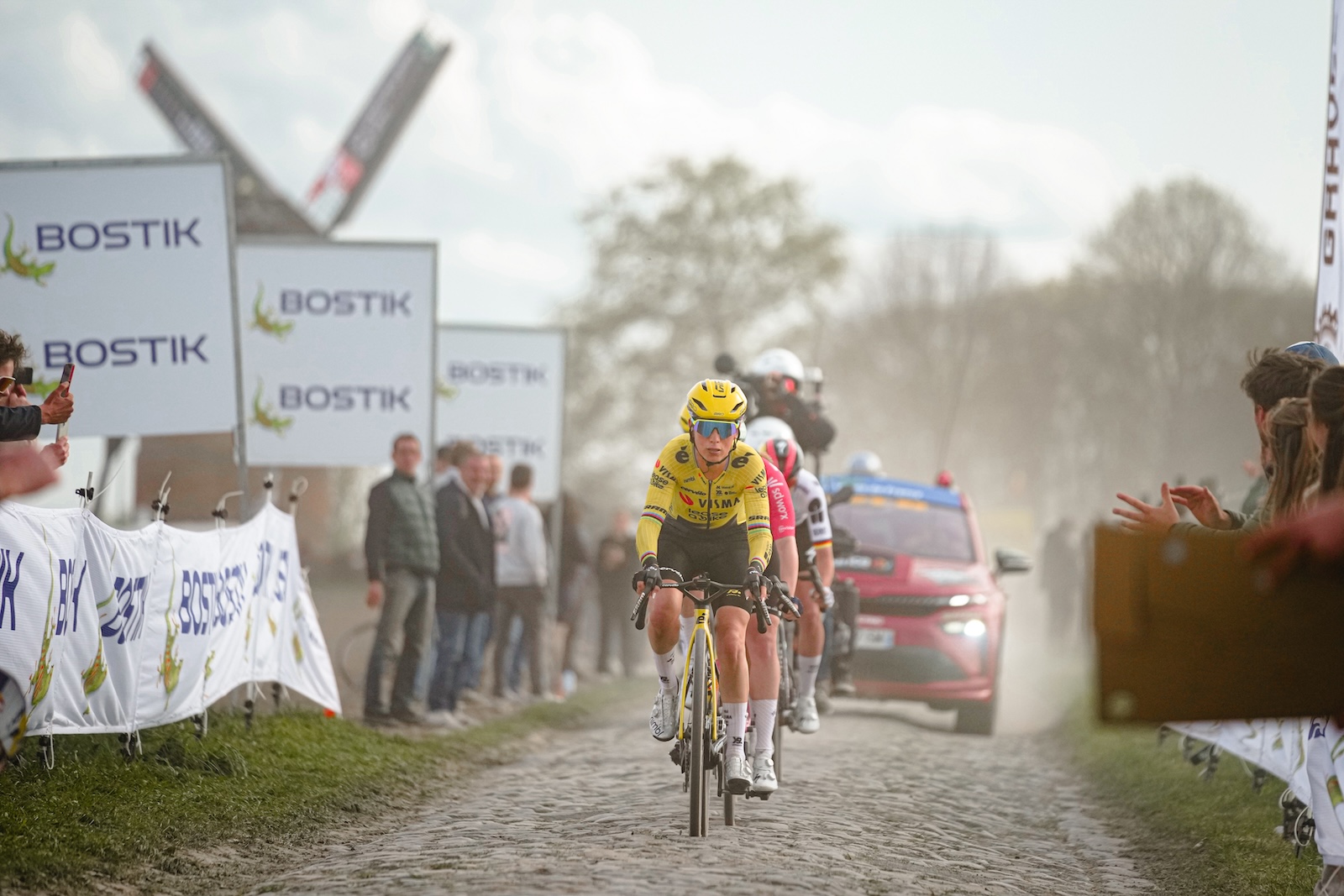
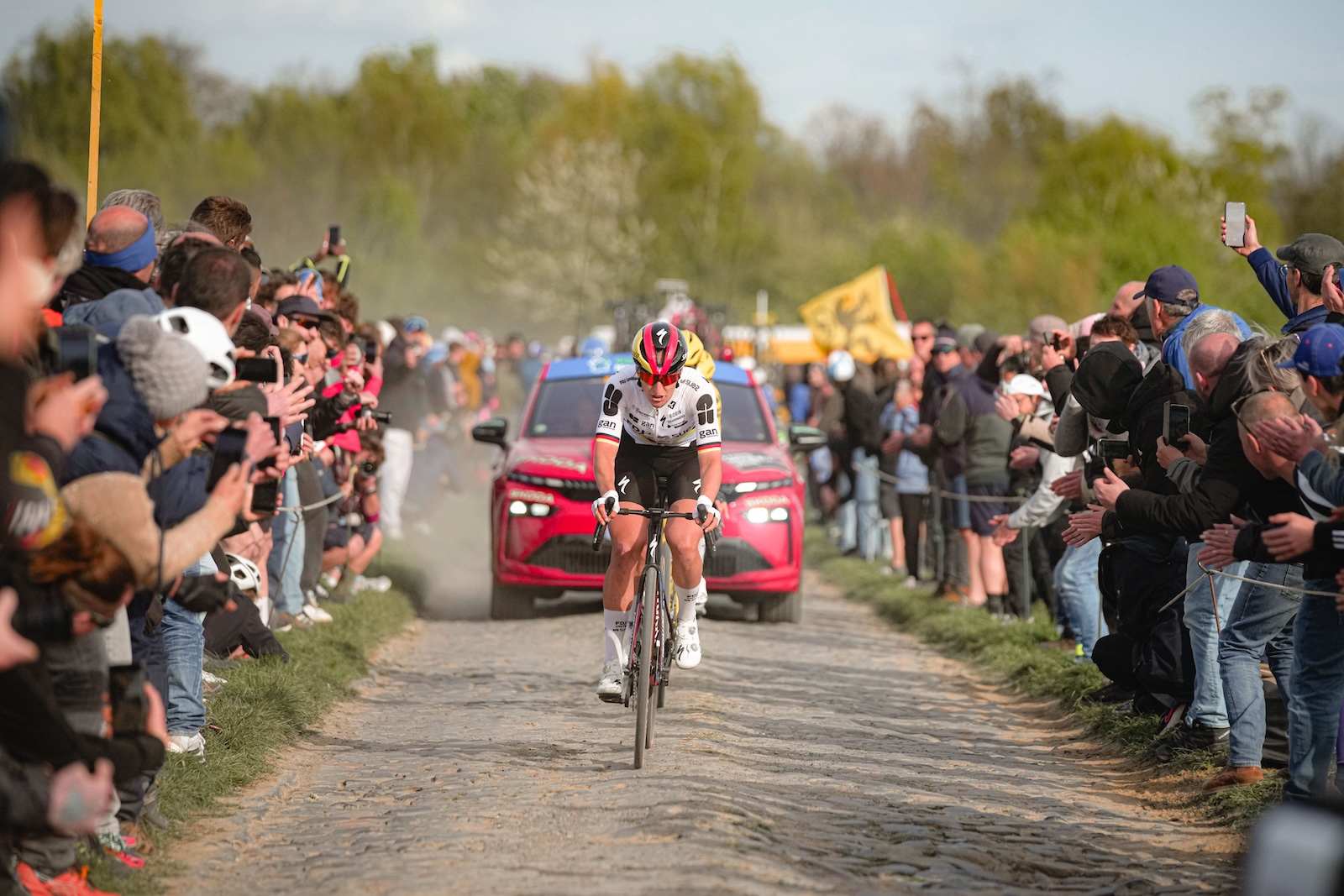
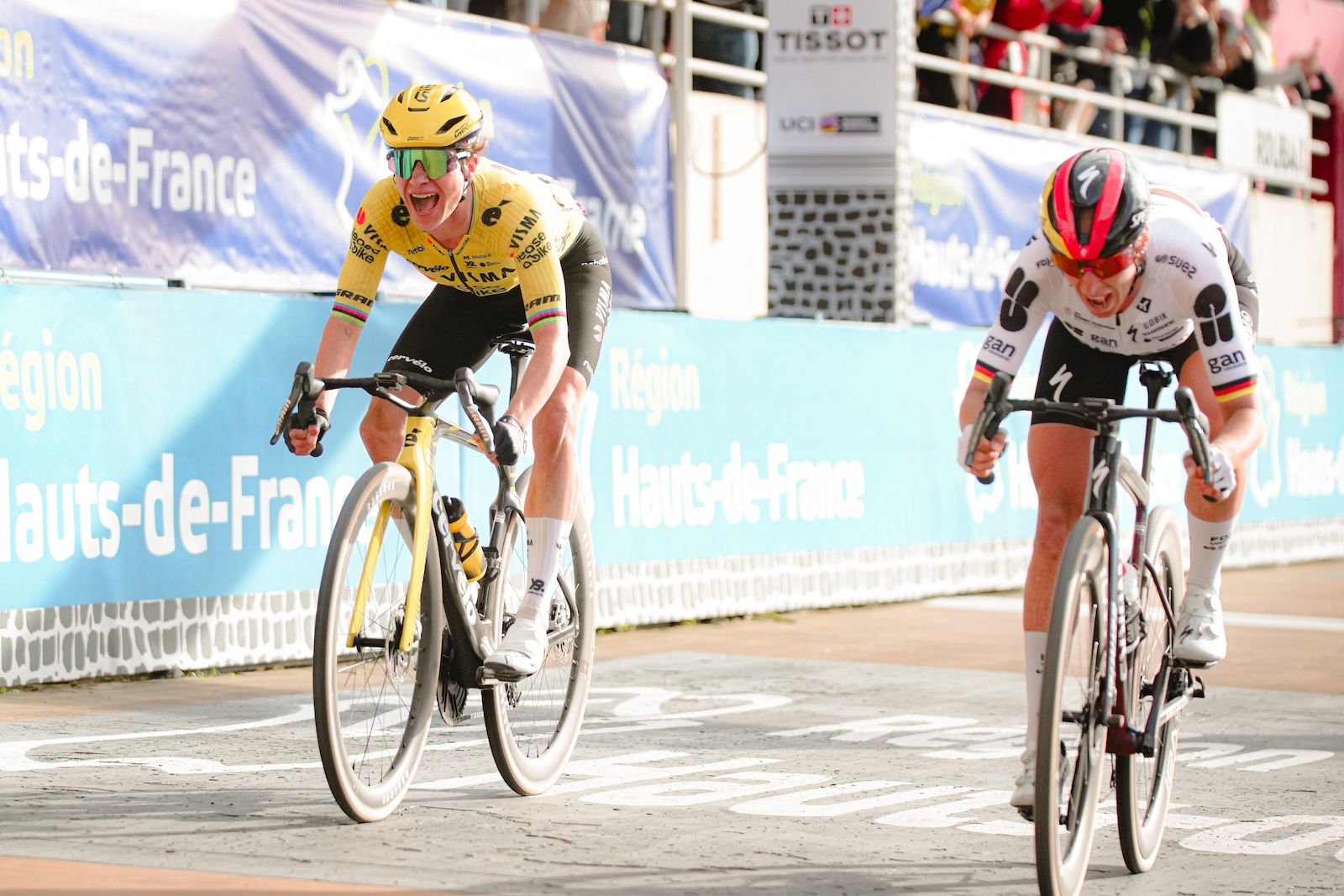
Koch, 25 years old, riding for FDJ United–SUEZ, got the inside line in the velodrome sprint and held it against Vos’s challenge, winning by a margin that required confirmation before anyone was certain. Vos, 38 years and 334 days old on the morning of the start and the oldest rider in the race, crossed the line second. Ferrand-Prévot, the defending champion who was not scheduled to ride this race at all and who entered it specifically to support her Visma–Lease a Bike teammate, finished third at six seconds, having left everything she had on the cobblestones in service of a result that went to someone else.
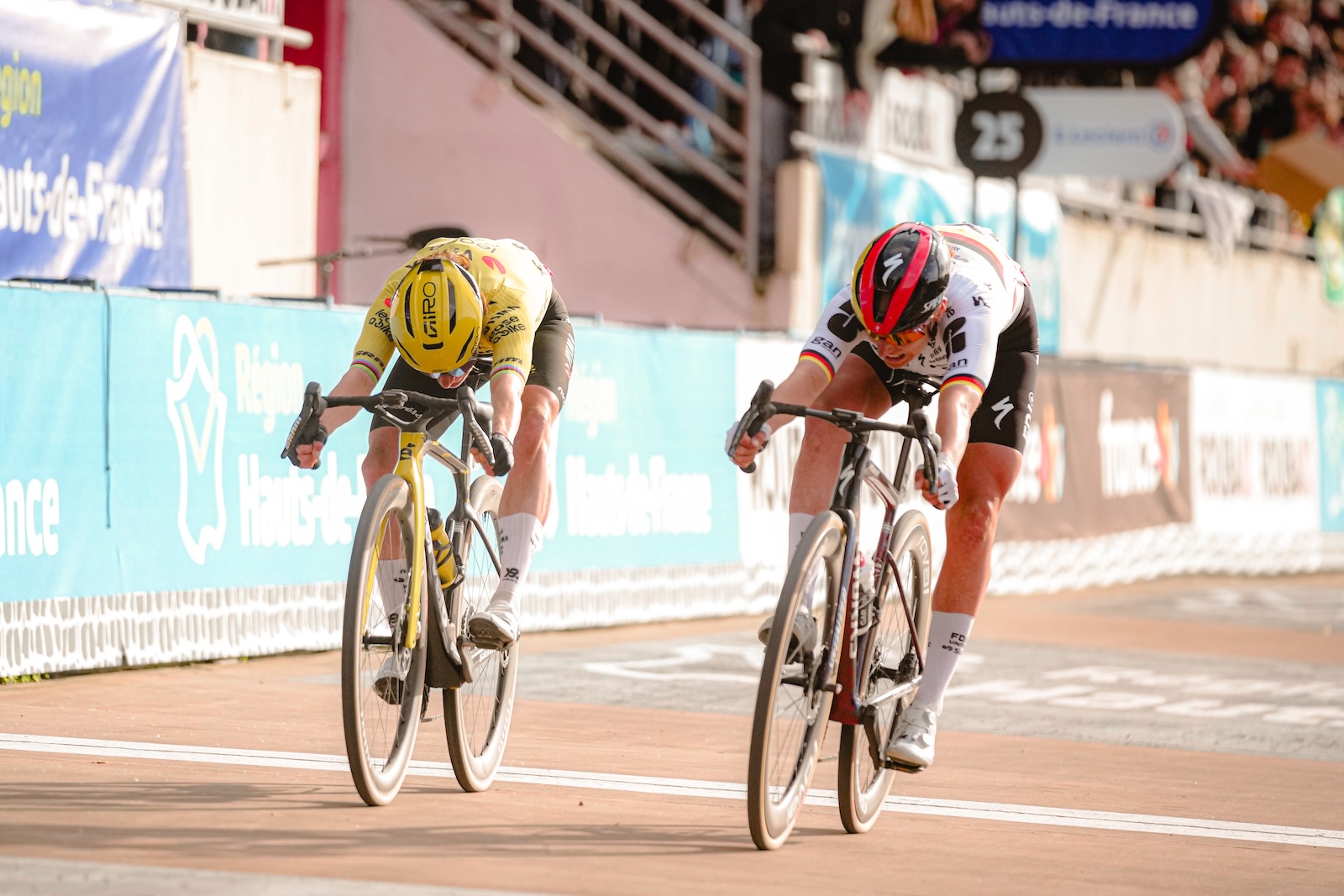
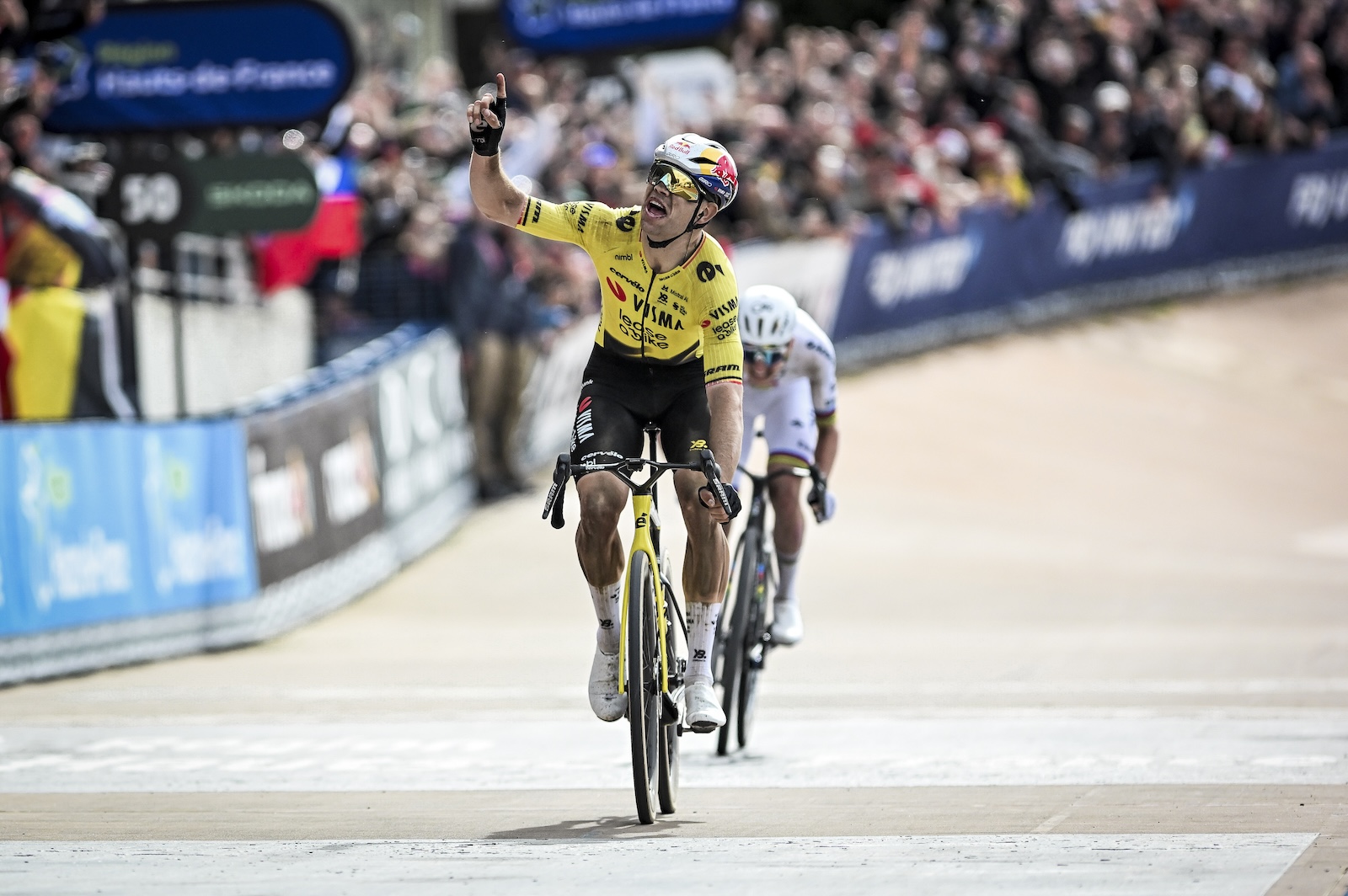
It was the first edition of Paris–Roubaix Femmes held on the same day as the men’s race. Earlier in the afternoon, Wout van Aert had won the men’s edition at the same velodrome, outsprinting Tadej Pogačar after eight years of trying. The evening belonged to Koch.
A Harder Hell
The 2026 edition arrived with a substantially revised and more demanding parcours. Race director Franck Perque had overhauled the course, extending the cobbled content to 20 sectors totalling 33.7 kilometres — up from the identical 2024 and 2025 routes, which featured 17 sectors over 29.2 kilometres. More significantly, the timing of the first cobbled encounter changed entirely. Where riders in previous editions had reached the first sector at kilometre 66, today’s field hit the pavé at kilometre 29.3, at Solesmes to Haussy. The cobbles arrived earlier, lasted longer, and the new four-star Haveluy to Wallers sector — 2.5 kilometres at kilometre 52.4 — added difficulty that the previous course had not required.
Perque explained the thinking: “We used to do circuit laps around Denain. This year, we head south to increase the distance on cobbles, which now appear earlier in the race. Among the new additions is the Haveluy sector, which will be a very important moment. Riders will need to be extremely alert, with perfect positioning, before continuing into Hornaing and Sars-et-Rosières. By the time they reach Beuvry-la-Forêt at kilometre 75, a lot will already have happened.” He was right on every count.
The field numbered 122 riders representing 21 teams, with three of the race’s five previous champions — Ferrand-Prévot, Kopecky and Jackson — all present. The 2021 winner, Elizabeth Deignan, had retired. The 2022 winner, Elisa Longo Borghini (UAE Team ADQ), was absent through illness, having already missed Milano-Sanremo Women and competed at Tour of Flanders in acknowledged less-than-full health. Marlen Reusser (Movistar) was also absent after a crash the previous weekend at Flanders.
Ferrand-Prévot’s presence required explanation. The defending champion had not originally planned to ride. She changed her mind when she learned that Vos’s father had died in the days before the race. “I wasn’t scheduled to ride this race,” she said afterwards. “But when I learned that her father had passed away, I asked the team to participate to help her. I spent quite a bit of time with the Vos family, so it was also a way of saying goodbye to her dad, and of helping Marianne try to win Paris–Roubaix.” Pre-race, she said simply: “I want her to win.”
Vos’s sports director Jan Boven described the context around her return. “It was a hard time, especially mentally. To say goodbye to your dad, who was supporting you for a long, long time, and I think at every race also there, he was a part of the cycling family. She’s also happy to race again and I saw a bit of happiness when we did the recon on Tuesday.” The tactics, Boven said, were “a bit the same plan as last year, but maybe swap the leader and the winner” — Ferrand-Prévot having won in 2025 while Vos had been active in setting it up. “That would be nice for Marianne, but it’s not in our hands only.”
Kloser Goes Early, Lasts Long
The racing started fast. Rosa Maria Kloser of Canyon//SRAM zondacrypto attacked at kilometre nine and built a lead of over a minute before the first cobbled sector. Her team had a strong support cast in the peloton — Chloé Dygert, Zoë Bäckstedt, and Chiara Consonni all present — but Kloser’s early solo effort was an individual rather than a tactical move: she simply went and built a lead and held it for over half an hour of racing. The peloton, led variously by EF Education-Oatly, Liv-AlUl-Jayco, Uno-X Mobility and Lidl-Trek, allowed her gap to fluctuate between one minute and 40 seconds through the early cobbled sectors but never made a serious collective effort to close it.
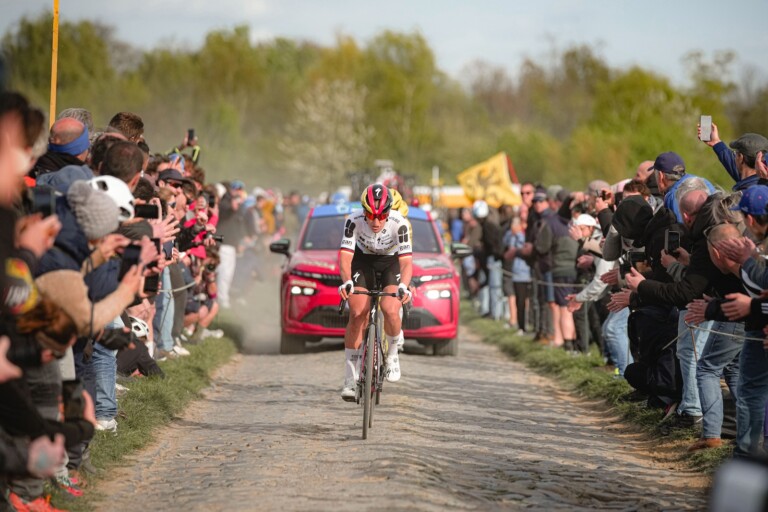
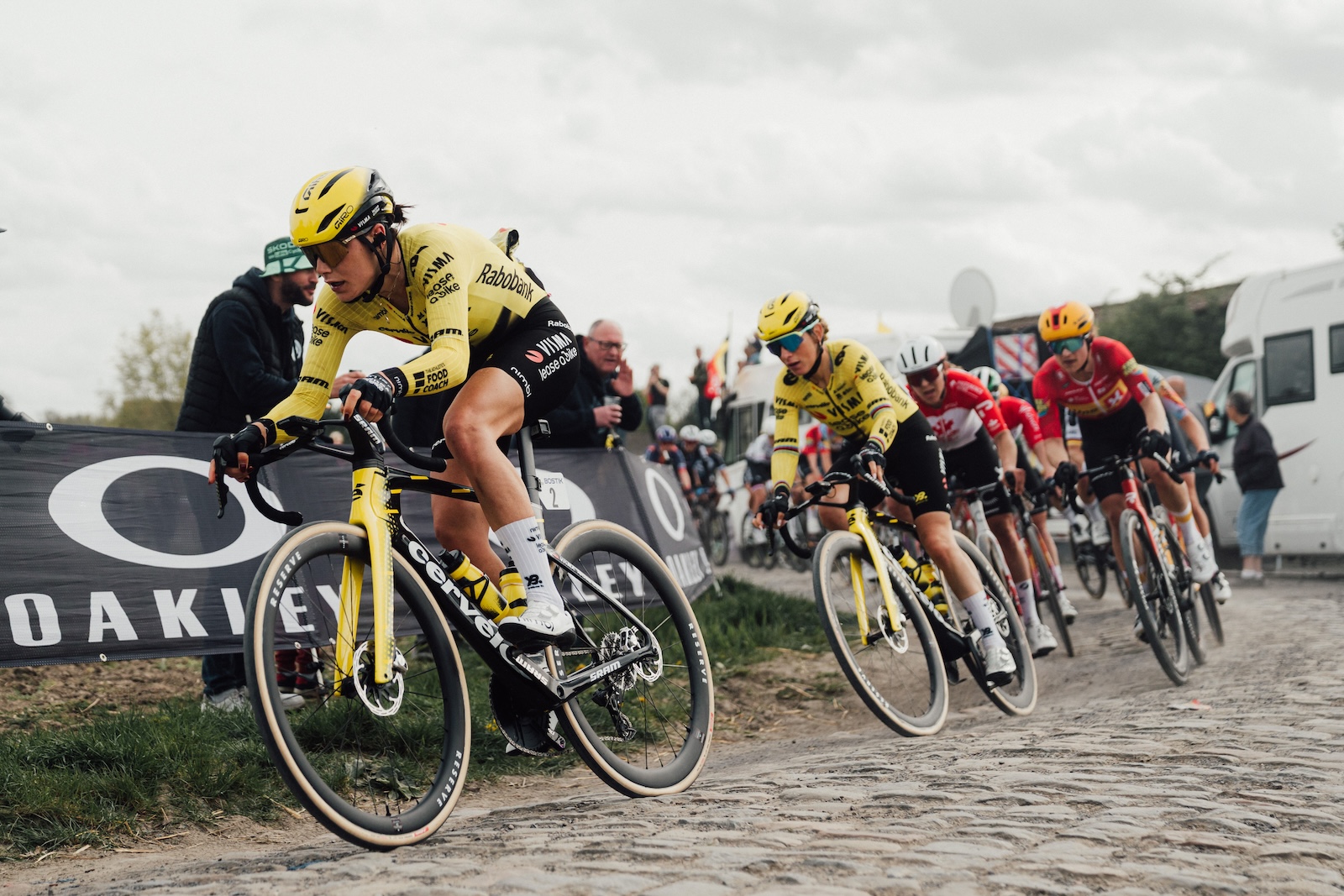
Jackson was at the front of the peloton as it entered the first cobbled sector at Solesmes to Haussy, 50 seconds behind Kloser. Jackson then suffered a puncture but rejoined the bunch quickly. The new Haveluy to Wallers sector at kilometre 52.4 tightened the vice on Kloser’s lead, and by the time the field approached sector 17, Hornaing to Wandignies, she led by only 15 seconds. The bunch, with Jackson among those at the front, reached her just before sector 16 at Warlaing to Brillon, kilometre 68.1. Kloser had spent 58 kilometres at the front on her own. She rejoined a peloton still numbering around 50 riders with 55 kilometres to go.
Mechanicals Take Their Toll
The cobbles extracted their customary mechanical toll across the early and middle parts of the race. Jackson suffered a puncture in the first sector and rejoined. Elisa Balsamo (Lidl-Trek) punctured and was brought back to the bunch by her teammate Hanson. Elise Chabbey (FDJ United-SUEZ) had a mechanical problem with around 55 kilometres to go and lost contact with the peloton, before her teammates Gery and Kraak dropped back and successfully paced her back to the bunch. Jackson and Balsamo both suffered further mechanical issues later. Wiktoria Pikulik (Human Powered Health) crashed and abandoned. Borghesi, who had finished second in the previous edition, had a mechanical problem and lost contact.
SD Worx-Protime set the pace at the front of the reduced peloton as it entered sector 11, Mons-en-Pévèle — three kilometres rated five stars, the hardest sector of the day alongside the Carrefour de l’Arbre — with Ferrand-Prévot positioned directly on the team’s wheel. Alison Jackson, reflecting before the start on what the race demands, had identified the essential quality required: “To perform here, you have to embrace the chaos. There is a lot that can break apart a race that is out of your control.” The chaos had done its work. The race that emerged from the chaos was about to be decided by something more deliberate.
The Race Ignites at Mons-en-Pévèle
Franziska Koch accelerated hard at the exit of Mons-en-Pévèle. Blanka Vas (SD Worx-Protime), Marianne Vos and Pauline Ferrand-Prévot all responded. Four riders went clear, and within a kilometre of the sector’s exit they had 20 seconds on the chasers. The quartet was immediately compelling: Koch, the strongest sprinter in the group; Vas, the SD Worx protected rider; Vos, the most experienced rider in the race by a considerable margin; and Ferrand-Prévot, the defending champion who had already stated publicly that her objective was second place, not first.
Ferrand-Prévot attacked again 43 kilometres from the finish and briefly gapped her three companions before Koch, Vas and Vos closed her down. From that point, Ferrand-Prévot began doing the majority of the work at the front — not racing for herself, but driving the pace to build the lead over the chasers and to create conditions that would favour Vos in the finish. It was an unusual role for a defending champion: riding hard, attacking when necessary, but always with her teammate’s victory as the measure of success. “She was always dedicated, she’s always ready,” Vos said of her afterwards. “Especially the way she raced today just shows how big of a champion she is.”
The lead over the chase group grew steadily. By the time the quartet had covered the Templeuve sectors at kilometre 109, the chasers were 45 seconds back. With seven cobbled sectors remaining and 32 kilometres to go, the gap exceeded a minute. Femke Markus (SD Worx-Protime) led the pursuit group of 19 riders, with Kopecky present, but the effort produced no meaningful reduction. The four leaders were going to contest the finish among themselves.
Koch Attacks, Ferrand-Prévot Fights Back
The decisive fracture in the quartet came between sectors seven and six, on the cobblestones from Cysoing to Bourghelles and Bourghelles to Wannehain, 24 kilometres from the finish. Koch accelerated, Vos went with her, and Ferrand-Prévot and Vas were dropped. Vas fell back to the chase group and was absorbed. Ferrand-Prévot was five seconds behind the leading duo, not finished yet.
Koch attacked again at the start of Camphin-en-Pévèle, the four-star sector at kilometre 123.2 with 20 kilometres remaining. Ferrand-Prévot lost a few bike lengths but refused to concede. She chased back, and with 22 kilometres to go the trio of Koch, Vos and Ferrand-Prévot was together again on the Camphin-en-Pévèle cobbles. The defending champion had answered every acceleration.
Into the Carrefour de l’Arbre, the final five-star sector at kilometre 126. Koch attacked again in the hardest stretch of cobbles. Vos followed. Ferrand-Prévot held on. Vas, caught now by the chase group led by Kopecky, was definitively out of contention. Vos made a brief acceleration of her own 16 kilometres from the finish and immediately eased when she saw Koch following. With ten kilometres to go the trio still led by more than a minute. The outcome would be settled among the three of them.
“I Had to Gamble on the Sprint”
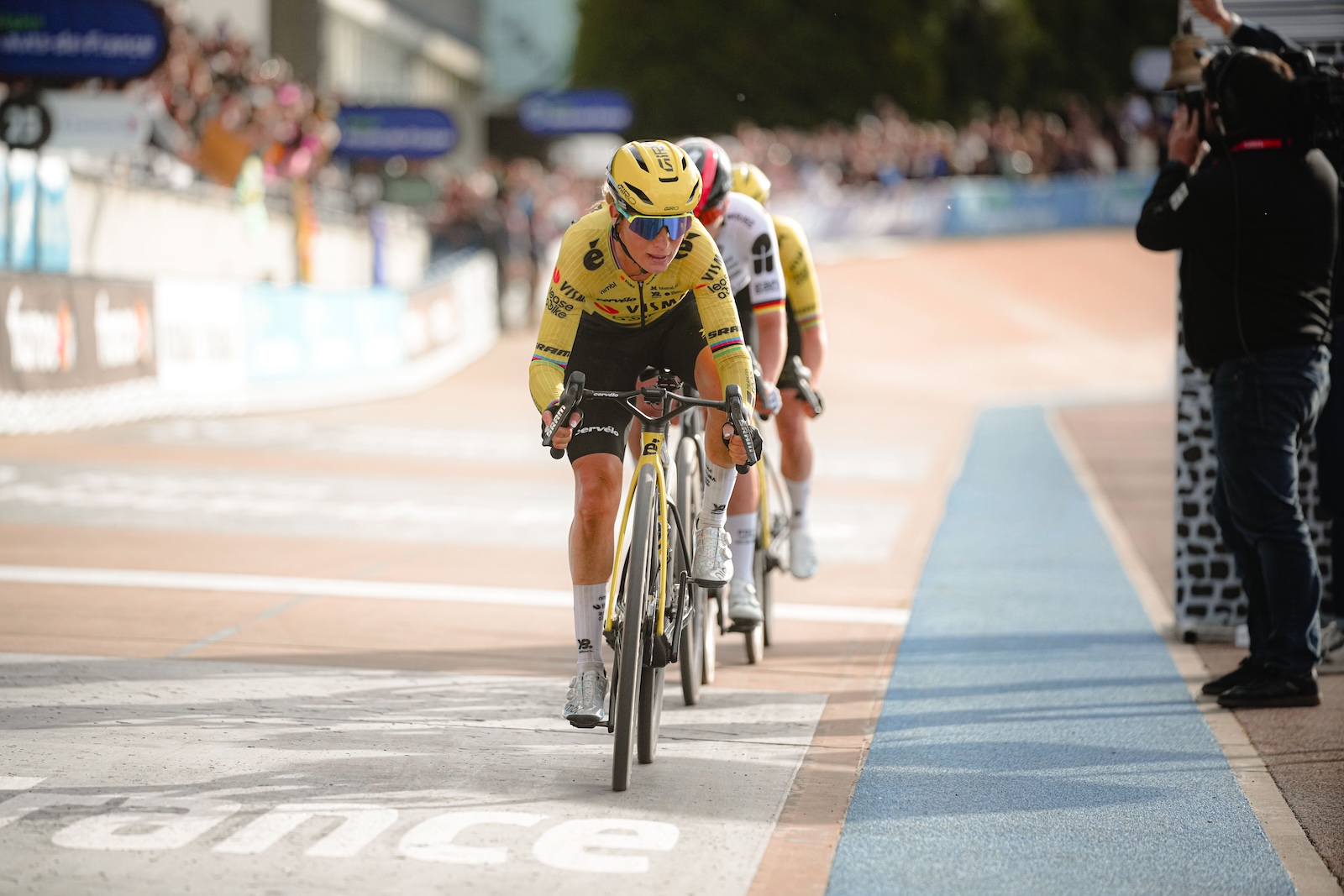
Ferrand-Prévot was dropped with 4.5 kilometres remaining. Koch and Vos went clear again, and this time the defending champion had nothing left to answer with — she had given it in earlier accelerations, in kilometres of work at the front, in the pursuit of an outcome for someone else. She rejoined the pair in the final approach to the velodrome, the trio entering the track together, and in the final sprint Koch and Vos pulled away once more.
Inside the velodrome, Koch took the inside line and held it. She could feel Vos coming on the corner — she said so afterwards — and she did not move. The margin at the line was less than a wheel. “I tried to get rid of them but I couldn’t,” Koch said of the final kilometres alongside two riders from the same team, “so I had to gamble on the sprint.” The gamble paid off. Six editions, six nations, six winners. Germany added to the list.
Franziska Koch’s best previous result at Paris–Roubaix Femmes was seventh, in the race’s inaugural edition in 2021. She had identified from that first experience that this was a race that suited her, a race she wanted one day to win. The day came five years later. “It’s kind of hard to believe,” she said at the finish. “I’ve been dreaming about it, I’ve been hoping that it would work out, but Roubaix is a race where everything can happen. In the end it worked out. It’s like a dream.”
She credited her team’s positioning through the chaotic early sectors as the foundation of the victory. “The positioning was really key in the beginning — it’s like a war going into the cobbled sectors. We were fully committed and I managed to stay out of trouble. We wanted to make the race hard after Mons-en-Pévèle and I ended up in the perfect move.” On the specific challenge of facing two riders from the same team: “Facing two riders of the same team is a challenge on one hand and a benefit on the other because it’s not on you to work. I tried to get rid of them but I couldn’t, so I had to gamble on the sprint.”
“I could feel her coming in the corner and I was wary she could benefit from the angle of the track, but I just thought: I have to win. The first edition, I got seventh, so I knew from then on this is a race I like, a race that one day I wanted to win. This day is today.”
“I Would Have Preferred to Win”
Marianne Vos had not prepared for this race in ideal circumstances. Her father’s death in the days before the start had defined the week preceding it. She raced anyway — cycling, she said, had always been a big part of her life, and this was one of the most beautiful races there is — and she finished second by a margin that measured in centimetres rather than seconds. “Of course it’s nice to be second and third,” she said, “but I’m also honest, I would have preferred to win.”
She described attempting to hold her focus on the race itself through everything surrounding it. “I tried to focus as much as possible on the race itself and of course with the team doing such an amazing job and then with Pauline doing such an amazing job, I tried to focus on the task I needed to do.” On Koch: “She did some good attacks, so I knew I had to follow and try to be in the best position as possible for the sprint finish. I wasn’t surprised by Franziska — she is just really, really strong. I think maybe she even surprised herself.”
In hindsight, she said, she might have done things differently, though she acknowledged that Koch had been the stronger rider on the day. “I’m very thankful for Pauline, all the efforts she did to create a gap, make it bigger and keep pushing. I would have wanted to finish it off, but it is what it is.” She spoke about the preparation in the context of family loss with the brevity of someone still processing it. “Together with my partner we still tried to manage and do what we could in preparation. Sometimes you don’t have everything in your hands and you have to deal with circumstances. The team has always been supportive. You just try to do what you can do and work as hard as you can and get ready for the races.”
“We Can’t Be Disappointed”
Pauline Ferrand-Prévot finished third in a race she chose to ride for someone else. She was the defending champion who sacrificed the possibility of a second consecutive title — and with it the chance to become the race’s first double-winner — in pursuit of a result for Vos that ultimately went to Koch. The sacrifice was real and visible: she drove the pace through the final kilometres when she might have conserved for her own sprint, and she was dropped because of it.
“We can’t be disappointed after the last few weeks Marianne has been through,” she said. “We fought to the very end, we gave it our all. She would have loved to win today, we would have loved to win with her, but it’s still a very good second place after what she’s been through these past few weeks. Hats off to her.” On why she entered a race she had not planned to ride: “When I learned that her father had passed away, I asked the team to participate to help her. I spent quite a bit of time with the Vos family, so it was also a way of saying goodbye to her dad, and of helping Marianne try to win Paris–Roubaix.”
Pre-race, Ferrand-Prévot had said of herself and Vos: “I want her to win.” She got the outcome she wanted by half a metre on the wrong side of Koch. Six editions still have six winners. The first double-winner remains to be found.
2026 Paris–Roubaix Hauts-de-France • Compiègne to Roubaix • 258.3 km • 30 cobbled sectors
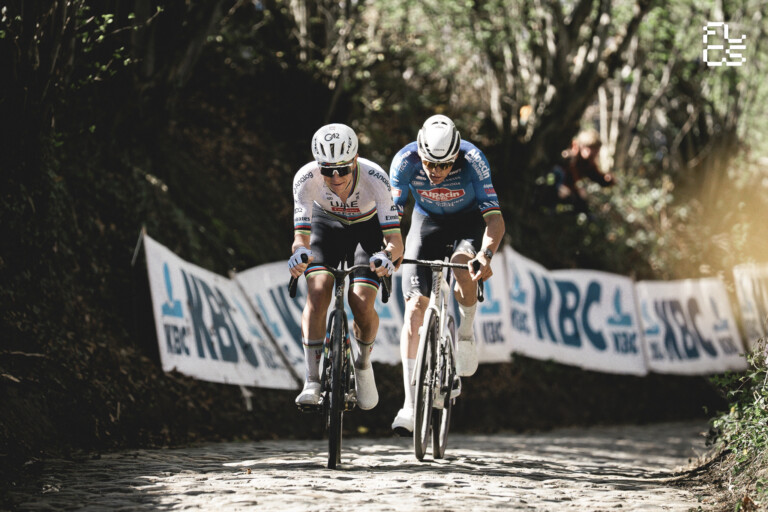
April 12, 2026 — The race was always going to make history. The only question, on the morning of April 12th in Compiègne, was whose history it would make. If Tadej Pogačar crossed the line first in the Vélodrome André Pétrieux, he completed the set of five Monuments in a single calendar year — a feat no rider has achieved in the long, rich history of professional cycling. He would also, in doing so, become the sole rider in history to hold the defending champion’s title in the Tour de France, the World Championship road race, and all three cobbled or spring Monument classics simultaneously. If Mathieu van der Poel prevailed, he became the first man to win Paris–Roubaix four consecutive times, a record without precedent in this race’s 123 editions. And if somebody else disrupted both of them, the sport would spend years telling the story of who and how.
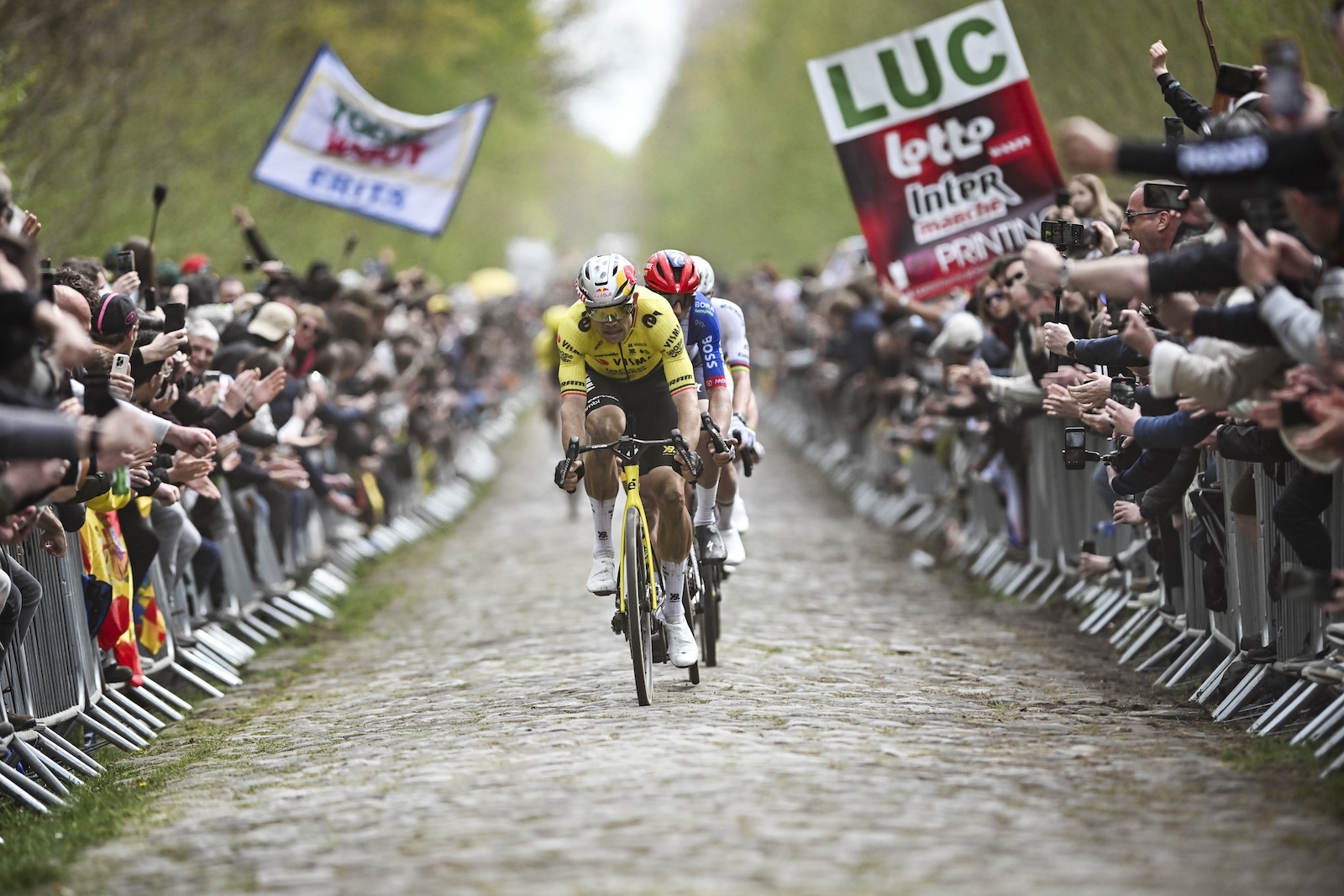
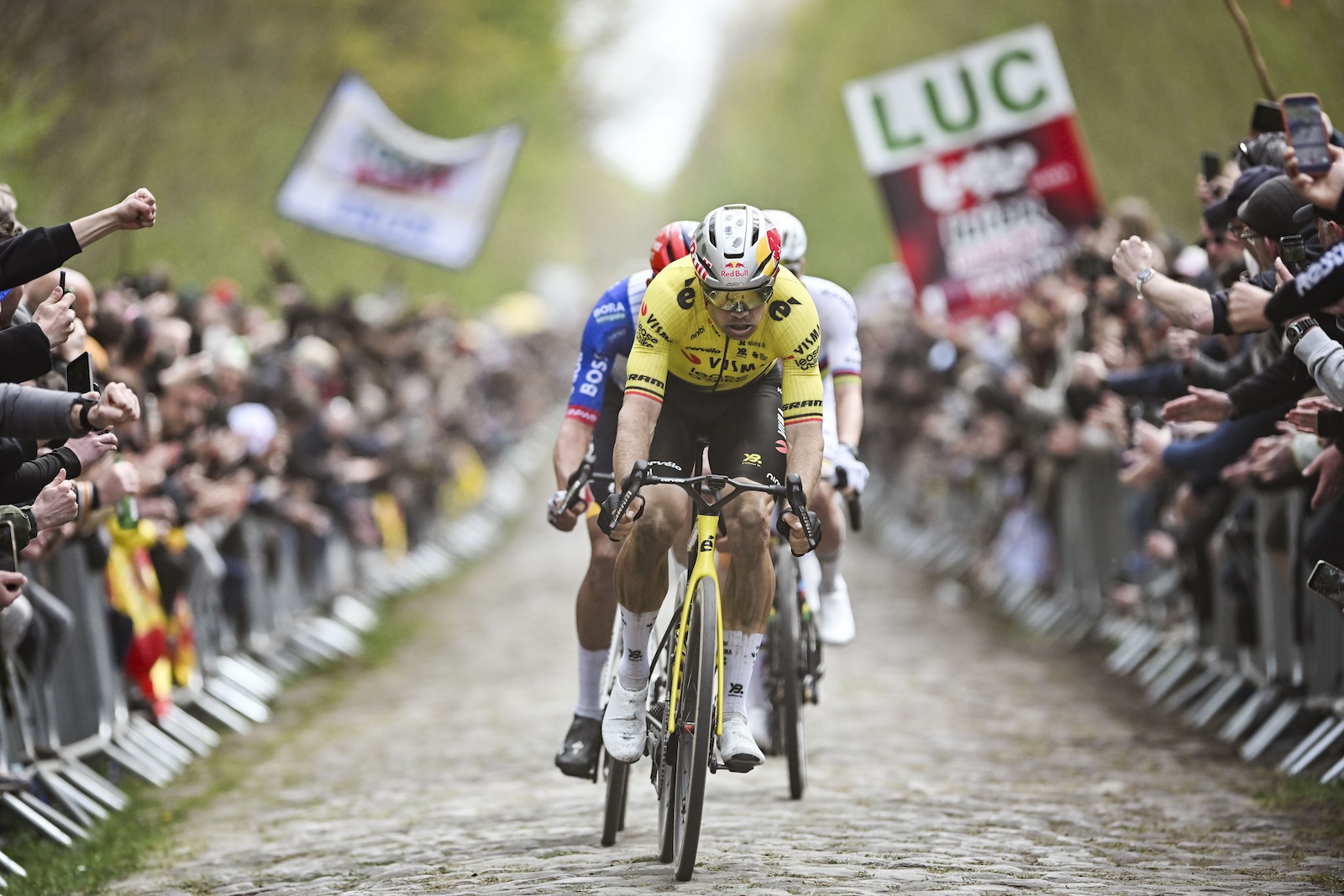
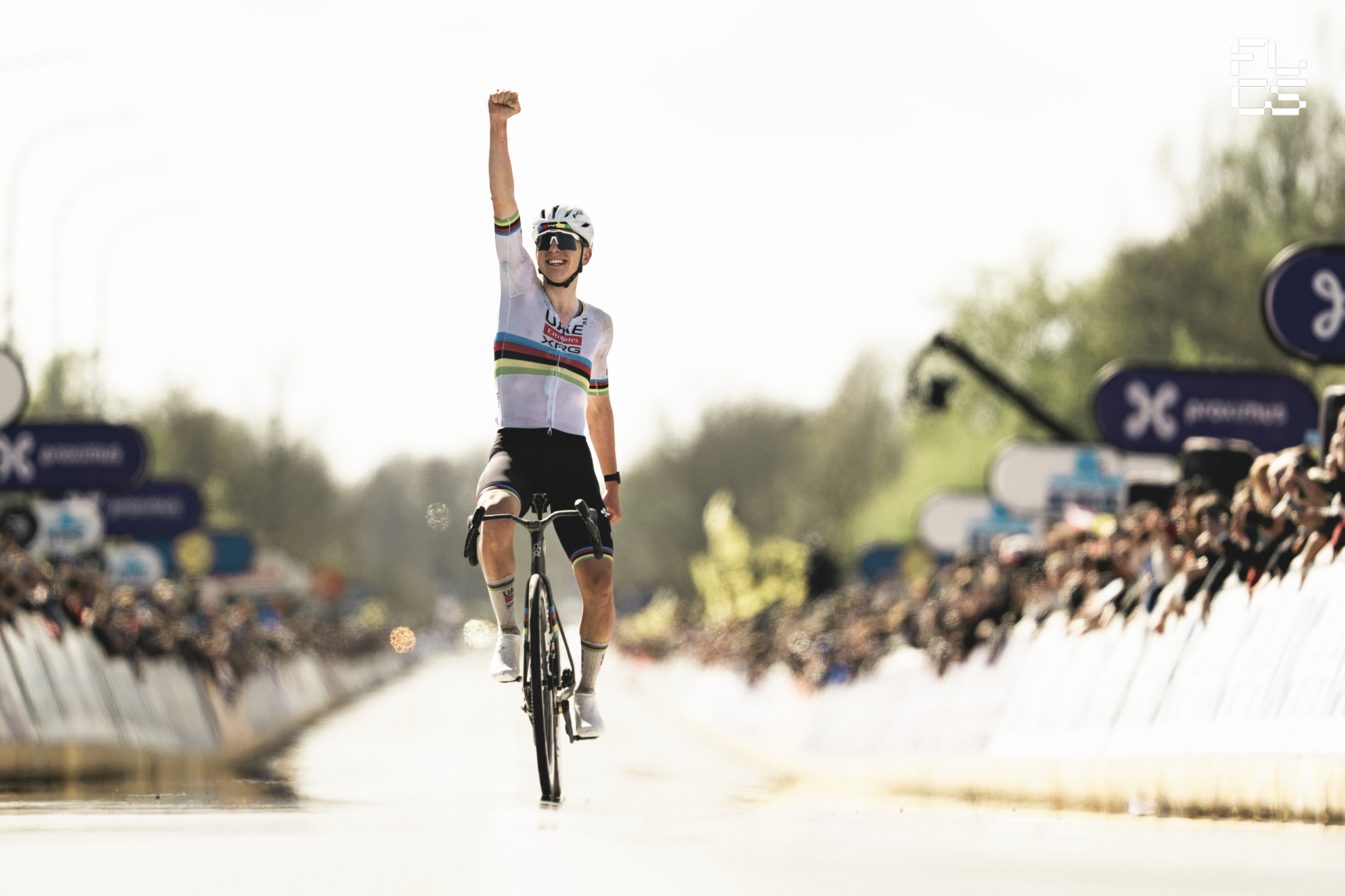
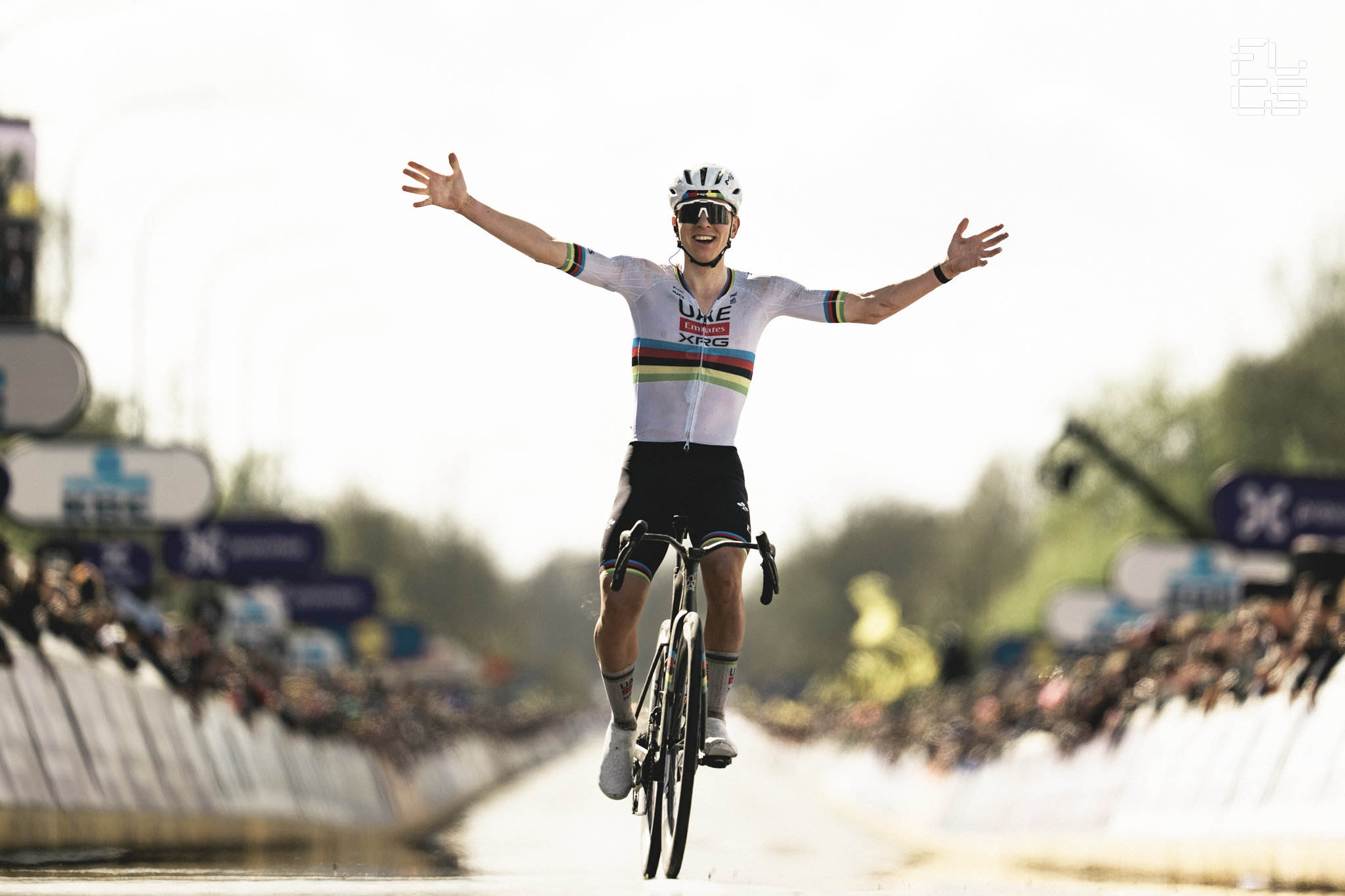
Wout van Aert (Visma–Lease a Bike) answered all three questions at once. He survived two punctures, two long chases through the cobbled carnage of a race that had spent eight years refusing to give itself to him, and an afternoon of relentless attacks from the world champion, before launching his sprint at 200 metres inside the velodrome and winning by a margin of clear daylight. It was his first cobblestone trophy, earned in the manner the Hell of the North seems to reserve for the riders it has made wait the longest. It was also Visma–Lease a Bike’s first Paris–Roubaix victory after 42 consecutive, winning-less participations since the team’s founding in 1984 as Kwantum-Decasol.
Behind Van Aert, Pogačar crossed the line with the same time and the quiet composure of a man storing the defeat for later use. Jasper Stuyven (Soudal–Quick-Step) came in third at 13 seconds, having attacked from the chasing group with three kilometres to go on pure instinct, at the precise spot where winners have launched from before. Mathieu van der Poel — who had stopped three times in the Trouée d’Arenberg with mechanical failures and left that forest over two minutes down before fighting his way back to within two seconds of the podium — finished fourth. This race, as Wout van Aert said afterwards, gives every finisher their own story. The race of the century did not disappoint.
A Race Written Before the Start
The 123rd edition of Paris–Roubaix Hauts-de-France offered three former winners at the start: Van der Poel, who had conquered the last three editions; Dylan van Baarle (Soudal–Quick-Step), winner in 2022; and John Degenkolb, victor in 2015. Among the podium finishers also present were Pogačar (2nd in 2025), Pedersen (3rd in 2024 and 2025), Van Aert (2nd in 2022, 3rd in 2023) and Yves Lampaert (3rd in 2019). Van der Poel arrived with Jasper Philipsen, himself a runner-up in 2023 and 2024, and Silvan Dillier, 2nd in 2018. Pogačar had Nils Politt, 2nd in 2019, and Florian Vermeersch, 2nd in 2021. The assembly of pedigree was extraordinary even by Roubaix’s own standards.
The historical weight on Pogačar’s shoulders was particular. The last Tour de France winner to triumph at Roubaix was Bernard Hinault in 1981 — 45 years ago. Since then, just four Tour champions have finished inside the top ten here: Greg LeMond, Bradley Wiggins, Geraint Thomas, and Pogačar himself, runner-up in 2025. To win today would also have made him the first man ever to win both cobbled Monuments in the same year while also holding the rainbow jersey — Rik Van Looy achieved the Flanders–Roubaix double in 1962 wearing the jersey, as did Van der Poel in 2024, but neither had also won the Tour de France. At 27 years and six months, Pogačar’s Monument count stood at twelve — one fewer than Eddy Merckx at the same age.
The weather offered a tailwind and a dry road. South-westerly winds averaged 20 kilometres per hour across a course headed broadly north, which race director Thierry Gouvenou noted would benefit riders of the calibre of Van der Poel and Pogačar. Mild overnight rain had left the cobbles firm rather than treacherous. The average speed through the opening hour would exceed 53 kilometres per hour. Conditions, in short, were fast — fast enough to strip away the margin for error that the slower, muddier editions sometimes provide.
Ninety Kilometres of Nothing, Then Everything at Once
The peloton rolled out of the Place du Général de Gaulle in Compiègne at 10:50 for the neutralised prologue, with the flag dropping at 11:07 for 175 starters on the 258.3-kilometre route to Roubaix. The opening 90 kilometres played out as a fierce, frustrated back-and-forth between riders trying to establish a breakaway and squads determined to deny them one. Modern Adventure’s Ezra Caudell — 19 years and 216 days old, the youngest rider in the race — was among the many who tried and failed. Riders from Cofidis, Picnic, EF Education, Bahrain, NSN, and Decathlon launched attacks in waves. None stuck for more than a few minutes.
Mathieu van der Poel had offered a pre-race assessment of why. “If there’s one race where it’s possible to at least get in the finale, Roubaix is the one,” he said. “But everybody knows this and that’s also why the fight is always so big to be in the breakaway. Right now, the race opens up quite soon, and then it’s very difficult for a breakaway to survive.” Jasper Philipsen agreed: “With the race dynamics now, there have been Classics like Dwars door Vlaanderen on which there was no breakaway at all — and it can be the same in Roubaix with the way we just keep on riding and fighting.” They were right. By kilometre 78, the favourites’ squads had moved to the front and the fight for the break was effectively over.
A full peloton entered the first cobbled sectors. Josh Tarling of Ineos Grenadiers led the bunch into sector 30 from Troisvilles to Inchy at kilometre 95.8. UAE Team Emirates-XRG kept the pace high, Antonio Morgado and Juan Sebastián Molano setting a tempo through the opening string of sectors — Troisvilles to Inchy, Viesly to Quiévy, Quiévy to Fontaine au Tertre, Viesly to Briastre, and the uphill Briastre sector at kilometre 114.9, 800 metres of cobbles at four to five percent that Gouvenou had singled out as likely to cause pain. He was correct. By the exit of Briastre, the peloton had shed riders to 60-odd at the front. The main favourites survived intact despite early punctures for Mads Pedersen and, in sector 28 from Quiévy to Fontaine au Tertre, Wout van Aert.
The Rainbow Jersey Borrows a Bike
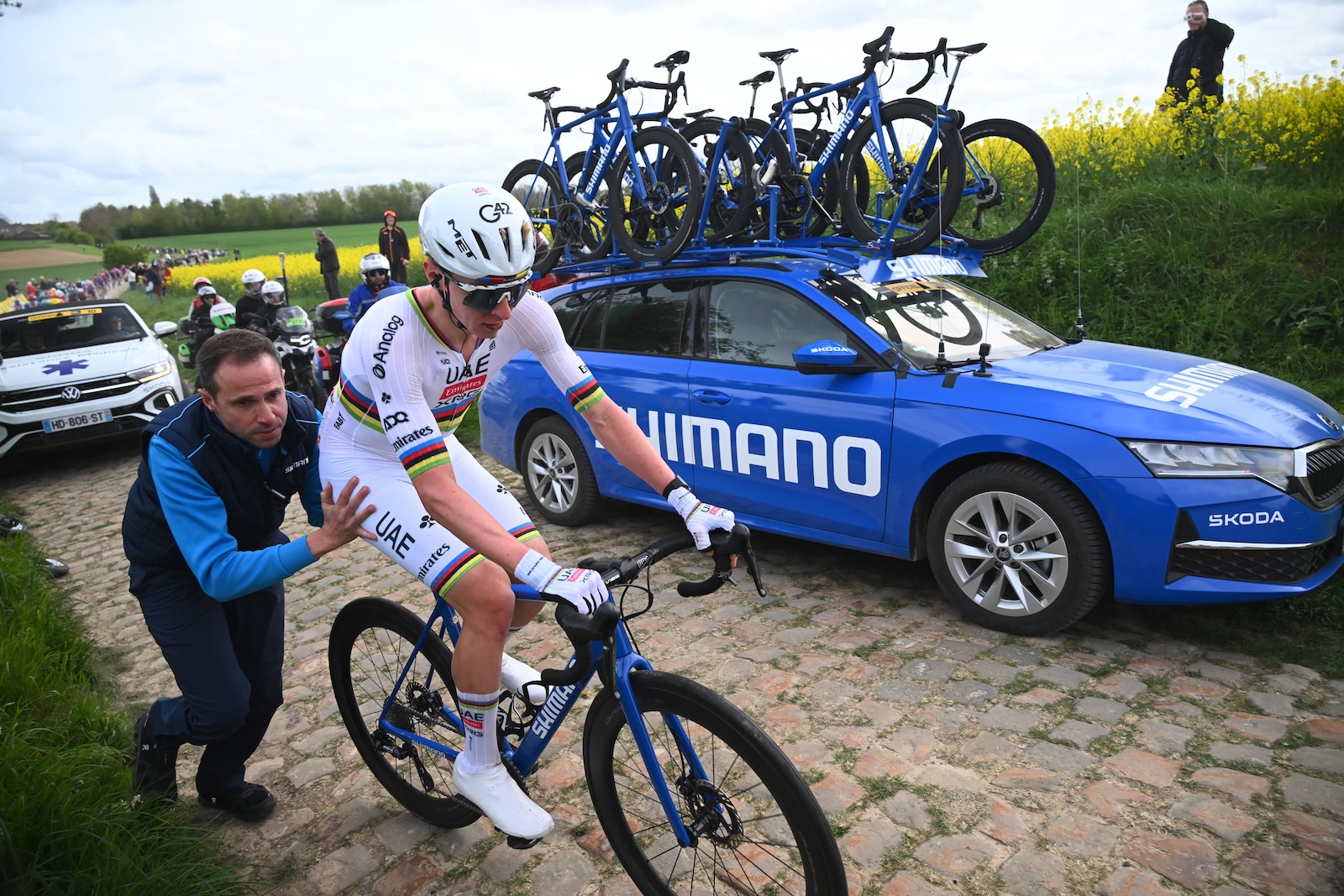
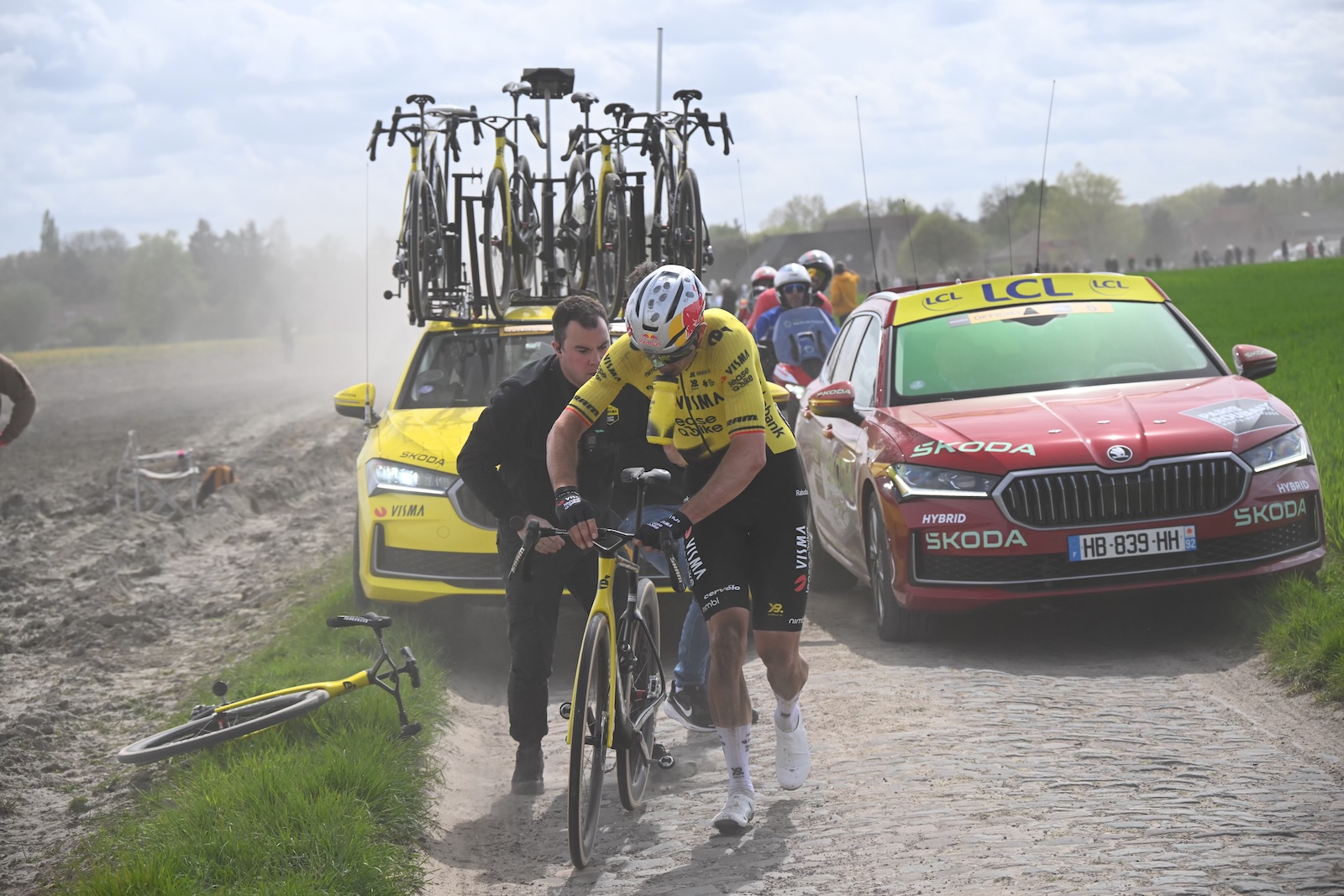
The mechanicals that define Paris–Roubaix arrived first for Tadej Pogačar. With 121 kilometres to go, midway through sector 22 from Quérénaing to Maing, the world champion suffered a mechanical so severe that he rode for some distance on a half-deflated tyre before his rear wheel failed completely. The Shimano neutral service provided a spare — not a UAE team machine, not a bike calibrated to his position or components. Pogačar mounted it and began to chase, already falling nearly a minute behind the head of the race.
Three UAE teammates — Nils Politt, Mikkel Bjerg and Antonio Morgado — waited and organised the chase. Alpecin–Premier Tech, meanwhile, controlled the front group’s tempo at a deliberately gentle pace, the peloton spread across the road in the manner of a team in no hurry. The favour would not last. By kilometre 149.1, entering Denain with 111 kilometres to go, Pogačar had closed to 25 seconds. Alpecin and Visma moved to the front and lifted the pace. The rainbow jersey was on his own now, Politt and Bjerg having spent themselves. With 103 kilometres remaining, Van der Poel made the first acceleration of his day through sector 20 from Haveluy to Wallers, a four-star sector that turned the screw. Ineos then eased the pressure and allowed Pogačar to close — and with 98 kilometres to go, after 22 kilometres of chasing, the best part of it riding alone, he was back at the front. Politt and Morgado had emptied themselves in his service.
“There were a lot of flat tires today,” Pogačar said. “When I first punctured, I rode for a while on a half-empty tire, and broke my rear wheel as a result so I had to take a Shimano bike. I had to spend a lot of energy because I wanted to reach the head of the race before Arenberg — otherwise, it would have been much more difficult to make it to the front. Some kilometres later I had one more puncture. Every problem means a waste of energy, but this is how this race goes. I don’t regret anything.”
Arenberg Destroys Van der Poel
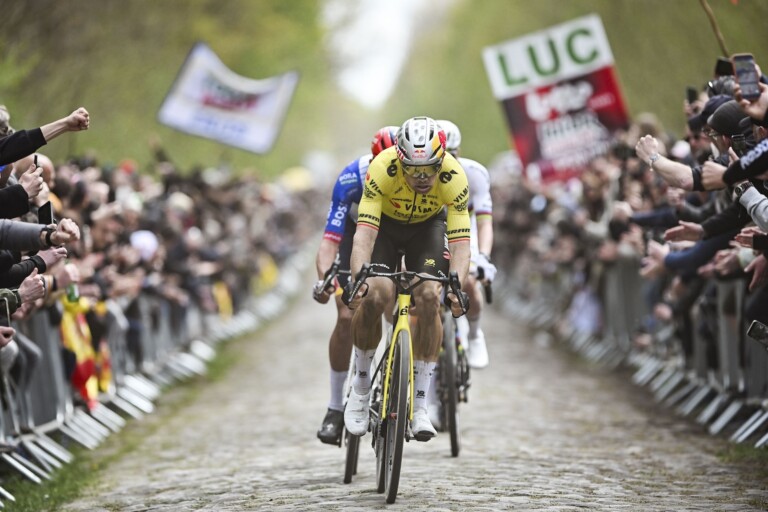
The new approach to the Trouée d’Arenberg — first introduced in 2025 at the riders association’s request, adding four corners before the sector entrance to slow the field from the 60–65 kilometres per hour it once reached on the straight descent into the three-metre-wide cobbled track — had its intended effect. The peloton entered the forest stretched and measured rather than in a terrified sprint. Wout van Aert led it in, Mathieu van der Poel directly on his wheel.
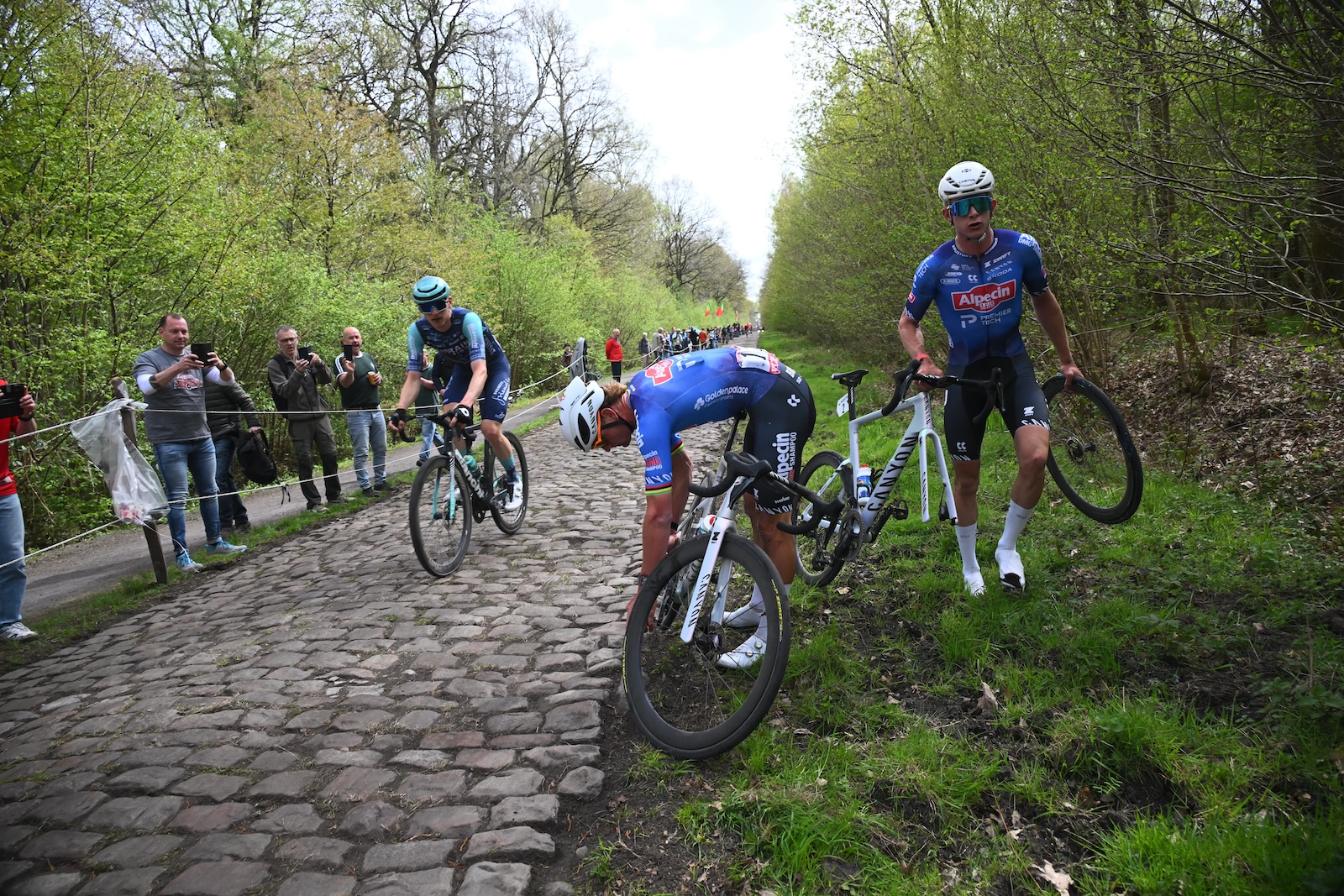
Seconds into the sector, Van der Poel stopped. He took Jasper Philipsen’s bike, his teammate dismounting in the middle of the Arenberg cobbles to hand it over. Van der Poel resumed, then stopped again. Tibor del Grosso dismounted to give the defending champion his own wheel. Van der Poel stopped a third time. The unreal scenes — three-time defending champion, favourite for a fourth consecutive victory, halted repeatedly in the most iconic sector in cycling — took some moments to absorb. He emerged from the forest over two minutes behind the lead group. Florian Vermeersch, UAE’s domestique brought to the race specifically to support Pogačar on the cobbles, crashed at the final stretch of Arenberg and was out of contention.
Seven riders came out of the Trouée d’Arenberg at the head of the race: Pogačar, Van Aert, Christophe Laporte (Visma–Lease a Bike), Mads Pedersen (Lidl–Trek), Stefan Bissegger (Decathlon CMA CGM), Jasper Stuyven (Soudal–Quick-Step) and Laurence Pithie (Red Bull–BORA–hansgrohe). Filippo Ganna (Ineos Grenadiers) and Jordi Meeus (Red Bull–BORA–hansgrohe) bridged back with 84 kilometres to go. Van der Poel, two minutes in arrears, began hauling himself back through the groups with Philipsen’s help. In almost any other edition of Paris–Roubaix, his race would have been over. This was not almost any other edition.
A Second Puncture Each, a Second Chase Each
The front group’s composition continued to shift. Ganna, having fought back to the lead, suffered a puncture in sector 17 from Hornaing to Wandignies and immediately lost contact. Laurence Pithie suffered a mechanical with 78 kilometres to go and fell out of the lead group, leaving six: Pogačar, Pedersen, Van Aert, Laporte, Bissegger and Stuyven. Then both Pogačar and Van Aert, the two men who had already navigated one mechanical apiece and were riding at the front, suffered second punctures in sector 16 from Warlaing to Brillon, with 71 and 72 kilometres to go respectively.
Pogačar changed bikes from the UAE team car and immediately set off chasing. Van Aert changed bikes as Pogačar swept past him on the road. The world champion regained the front group at the exit of sector 15, from Tilloy to Sars-et-Rosières. Van Aert, with Pithie and Meeus as company, rejoined the lead ahead of sector 13 in Orchies at kilometre 198.2 — a chase of roughly ten kilometres from his second puncture. Two mechanicals each, two chases each completed.
Behind them, Van der Poel’s chase had become something close to astonishing. Through sector 13 in Orchies, he and Ganna dragged a ten-strong group, closing to within 30 seconds of the lead with 67 kilometres to go. The race situation at the entrance of sector 12 from Auchy-lez-Orchies to Bersée: eight riders at the front, a gap of 25 seconds, and Mathieu van der Poel bearing down.
Sector 12: The Race Decides
The sector from Auchy-lez-Orchies to Bersée carries four stars across 2.7 kilometres. With 53 kilometres to go and Van der Poel just 25 seconds behind, the lead group of eight entered it and the race shattered into its definitive shape. Van Aert accelerated. Pogačar went with him immediately. Pedersen tried to hold their wheel and failed, the threshold between the two leaders and the rest measured in a few bike lengths that became a few hundred metres and then more than that. On a left-hand corner near the sector exit, Van Aert and Pogačar nearly collided — Van Aert’s line carrying him into the world champion’s space for an instant before both riders straightened and kept riding. The moment passed without incident. The gap did not.
Van der Poel had closed to within 20 seconds of the lead group before the sector began. He bridged to the Stuyven group containing Pedersen, Laporte, Bissegger and Tim Van Dijke (Red Bull–BORA–hansgrohe) as they emerged from the sector. The chasing six were now behind a leading duo who had already begun building their lead in earnest. “Since we first went on the attack, I knew I had a small chance to win, even if we were a long way off the finish,” Van Aert said. “Until the Carrefour de l’Arbre, I thought we had a chance of staying at the front but I was also aware that anything could happen. After that sector, I really believed we would play for the win.”
Mons-en-Pévèle: Where Champions Make Their Move
The five-star Mons-en-Pévèle sector at kilometre 209.7 — three kilometres of cobbles with sidewinds making the already demanding sector harder still on this particular afternoon — has a particular place in this race’s recent mythology. Fabian Cancellara used the tarmac approach to Mons-en-Pévèle to launch the move that won him the race in 2010; Johan Vansummeren did the same in 2011. Pogačar entered it with the same intent.
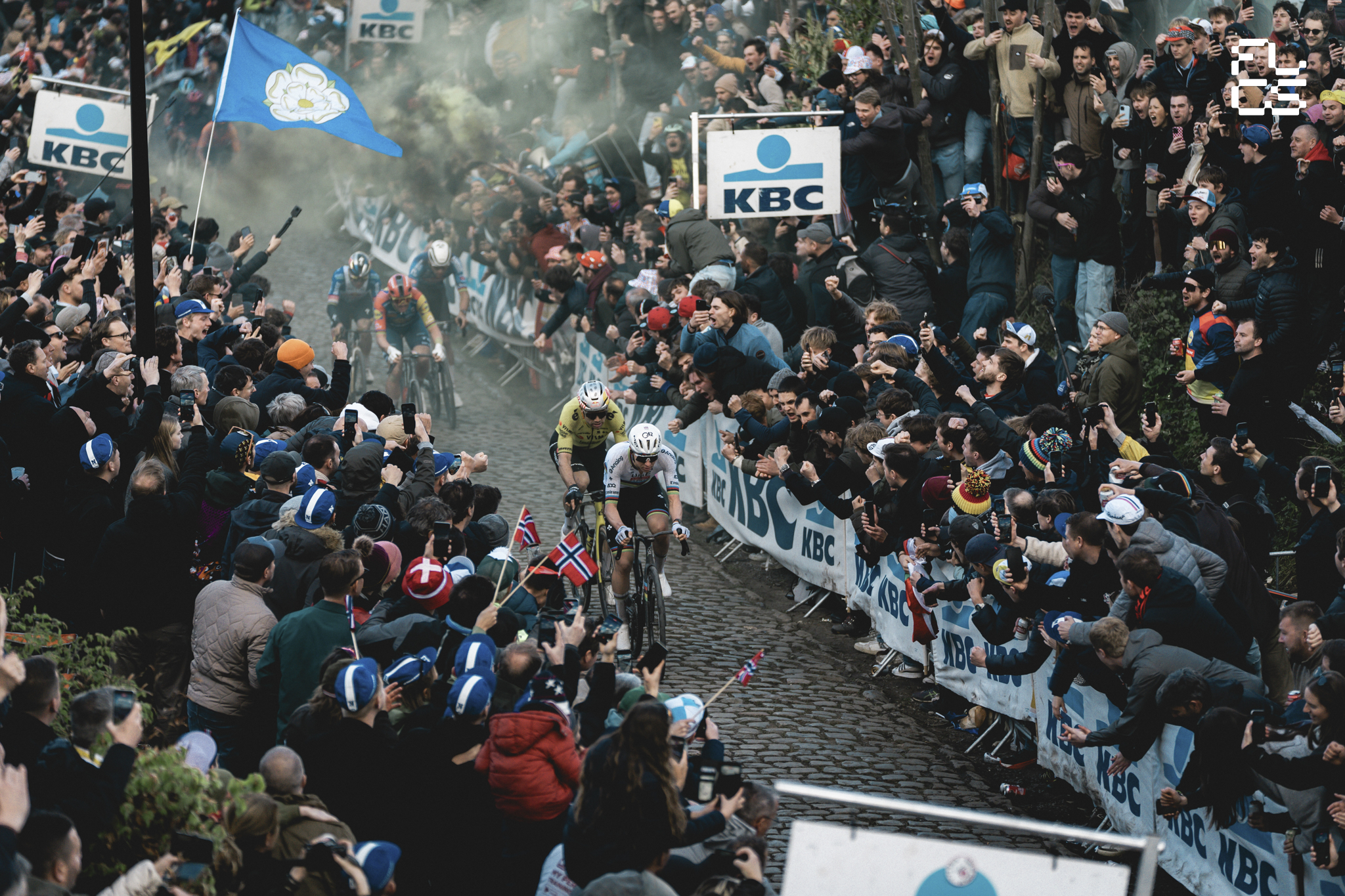
The world champion accelerated sharply out of a corner, putting a small gap into Van Aert. Van Aert closed it. Pogačar attacked again. Van Aert closed again. Pithie crashed out of contention on a left-hand corner midway through the sector — her day over. Pogačar kept trying. Van Aert kept closing. The Belgian made a tactical decision that he would later describe with unusual precision: rather than riding alongside Pogačar or attempting his own accelerations, he would sit directly on the world champion’s wheel, denying him the option of attacking from behind and forcing him to keep the pace honest from the front.
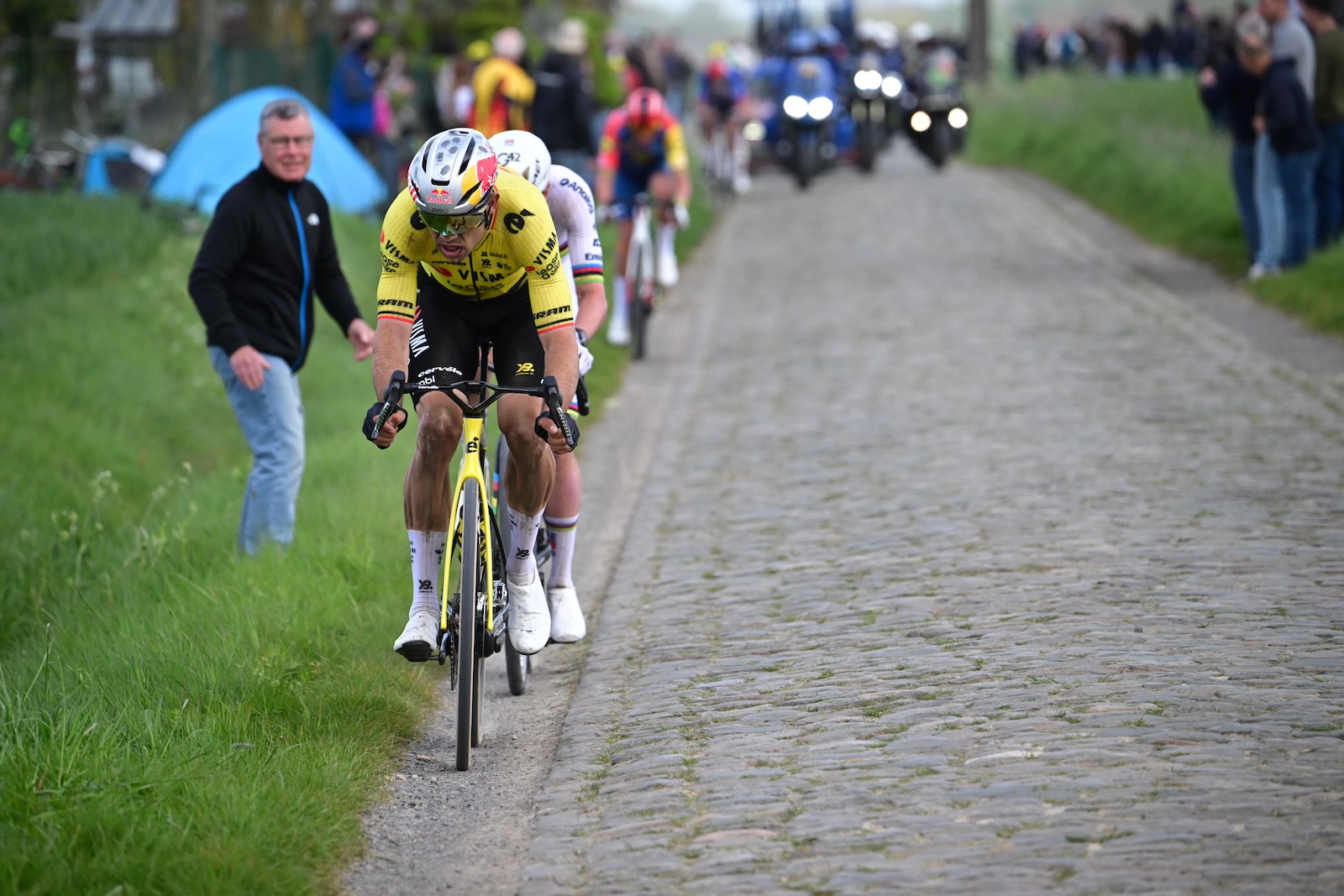
“Mons-en-Pévèle was the moment when I decided to stick on Tadej’s wheel through the cobbled sectors, so he couldn’t attack from behind,” Van Aert said. “It was a moment of realization — he is the strongest rider of the peloton, after all. I managed to keep up with that acceleration in Mons-en-Pévèle, and from then on stayed on his wheel.” The leading duo came out of the sector with a 42-second lead. Van der Poel and Van Dijke had bridged to the Stuyven group, making six chasers: Pedersen, Van der Poel, Laporte, Bissegger, Stuyven and Van Dijke. Forty-five kilometres to go.
Laporte’s presence in that chasing group was neither accidental nor irrelevant. The Visma–Lease a Bike co-leader, who had been with the lead group from Arenberg onwards, now found himself separated from his teammate — but not without purpose. From within the pursuers, Laporte disrupted every organised chase, slowing cooperation at critical moments, checking accelerations, choosing the wrong wheel at the right time. Stuyven watched it unfold with helpless clarity. “Honestly, I thought we were going to catch the two leaders,” he said. “Christophe Laporte did an excellent job. He was annoying, in a correct way, disrupting our chasing efforts. We were only 25 seconds short from catching them, but we never managed to do it.”
That moment of maximum threat came after sector 5, Camphin-en-Pévèle, at kilometre 238.4, where the six chasers had closed to 25 seconds. Five sectors remained. The gap had to hold for 20 more kilometres. It had to hold through the Carrefour de l’Arbre.
The Carrefour Settles the Question
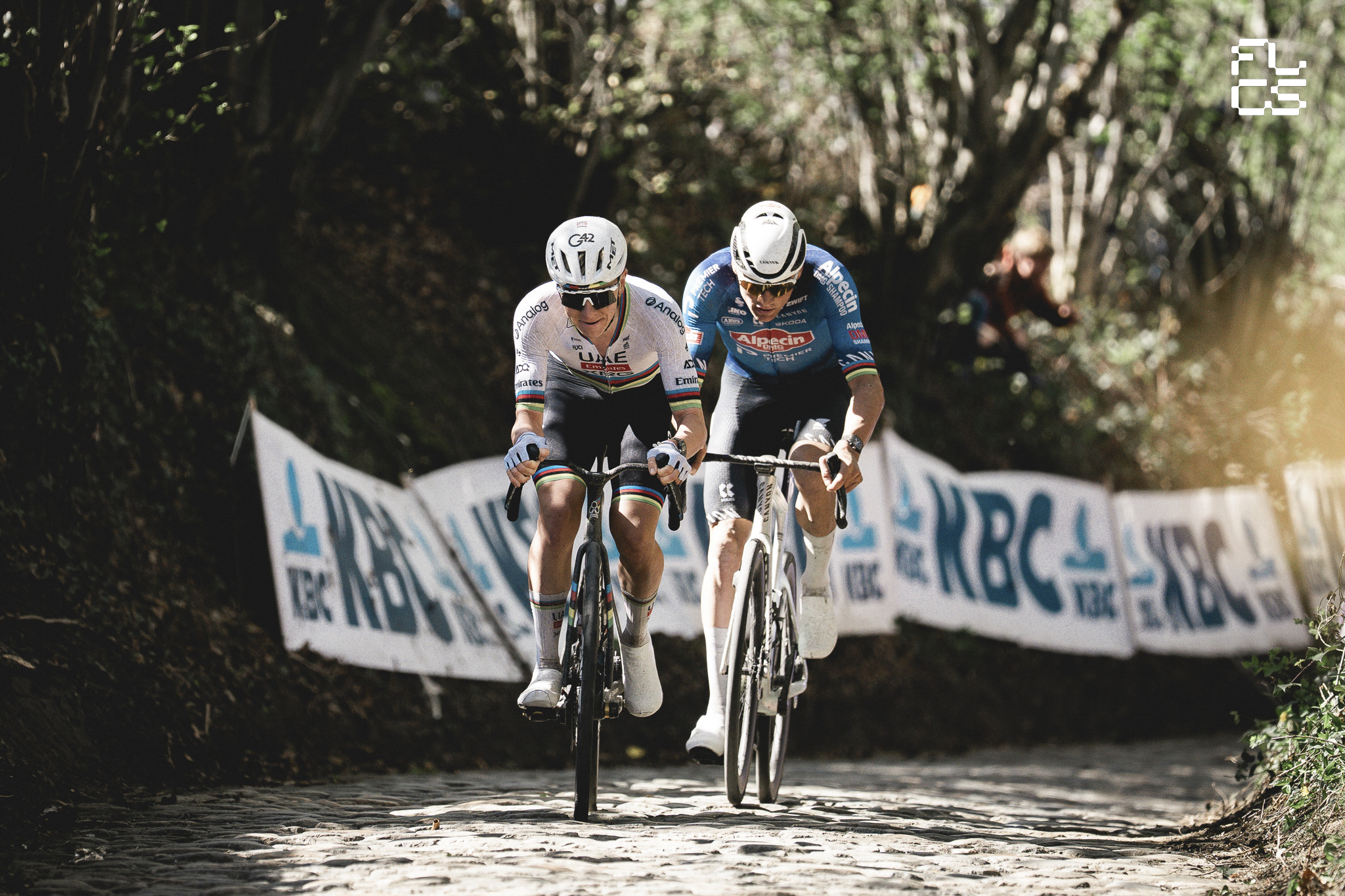
The Carrefour de l’Arbre has carried five stars in every edition of Paris–Roubaix for as long as the rating system has existed. Two kilometres and a hundred metres of the hardest cobbles in the race, at kilometre 241.2, with the finish 17 kilometres beyond. Everything tends to happen here, or to become irreversible here. Today was no different. Pogačar led his rival into the sector and unleashed a series of accelerations, going so hard that he nearly lost control on a left-hand corner — sliding briefly off the cobbled line before recovering. Van Aert held his wheel through every surge. The chasers, unable to match the pace being set at the front and still being managed by Laporte, lost further ground. They exited the Carrefour 40 seconds behind the leaders. The arithmetic was now unambiguous.
From the Carrefour, the two riders cooperated efficiently into Roubaix. They took turns at the front, sharing the wind in the economy of two men who understood that the sprint inside the velodrome was settled between them and that there was no advantage to be gained by attacking now. Van Dijke made a late acceleration with four kilometres to go in the chasing group; it came to nothing. Stuyven then went, with three kilometres remaining, at the precise location his racing instinct identified. “I kind of hesitated before attacking,” he said. “That’s the place where many winning attacks have taken place in the past, and that’s why I attacked there on pure instinct, trying to make the most of it. I felt it was not going to be easy to stick, but I kept trying because I knew it was going to be even harder to finish on the podium if I sprinted against Mathieu, Mads, and the others.” Pedersen gave chase; Van der Poel, Laporte and the rest could not close it. Stuyven held on.
At the velodrome, Pogačar led onto the track with Van Aert on his wheel. One 400-metre lap. The world champion carried the speed to the final straight and waited. Van Aert launched at 200 metres. He had rehearsed the moment — the exact sequence, the exact timing — many times in preparation and many more times in his mind. He knew what to do. Pogačar had nothing to match it. The margin at the line was unmistakable.
Tadej Pogačar has, at 27 years old, won enough races that defeat no longer surprises or destabilises him. He crossed the line in second place and spoke about Van Aert with something beyond the diplomatic generosity that champions sometimes offer. “Wout van Aert deserves this victory for how he always comes back from every setback,” he said. “He never gives up and he should be a hero for many young kids because of how he rides.”
On the sprint itself, he was candid about what he experienced from the front. “Every time I tried to drop Wout, my legs were not the greatest anymore. He always could ride back to my wheel. I could feel it was not meant for me today to drop him before the sprint. And, as for the sprint, well — it was great to see from up close how fast he can be after so many efforts.”
He also offered an assessment of the racing dynamic that has come to define the era — himself, Van Aert and Van der Poel operating at the same altitude, each trying to break the others. “I find it very cool, how we race together,” he said. “I really like when everybody races with their heart on their sleeve, doing their best without trying to flick others. Sometimes it’s better to sit back and save some legs, but I love making the race hard and have a lot of respect for those who do the same.” He will come back to Roubaix, he said. Maybe not next year. He has the years.
“I Attacked on Pure Instinct”
Jasper Stuyven joined Soudal–Quick-Step for 2026 after years at Trek–Lidl, and his first Paris–Roubaix podium arrived in his new colours. He was not sore from the crash he had suffered at the Tour of Flanders the previous week — the biggest pain, he said, was in his legs. He had ridden intelligently throughout, staying out of trouble in the early chaos and surviving the sector-by-sector attrition that eliminated so many others.
“It’s a very nice podium after many years of consistency, having just missed the podium before,” Stuyven said. “With the current generation of phenomenal riders, the task doesn’t get easier. I changed teams, and the trust and support from the team have been pretty nice. This result is a big reward for myself and for my team.” He acknowledged that experience and positioning — knowing the racing lines, knowing where to be on each sector — had been as valuable as physical condition. “You know, even with all the experience, I still had to be reminded of many things from the team car,” he added. “I’m very happy for Wout. Everyone who has been his teammate, either on a trade team or on the Belgian national team, knows what an incredible athlete he is. It’s great to see him win a Monument like Roubaix in this fashion.”
Eight Years, One Finger to the Sky
Wout van Aert has pointed a finger to the sky each time he has finished Paris–Roubaix since 2018. That was the year he first rode the race and lost a teammate. Michael Goolaerts, 23 years old, suffered a cardiac arrest on a cobbled sector and never regained consciousness. Van Aert has not forgotten. He stood second in 2022, third in 2023. Circumstances dismantled him in every other edition he entered — mechanicals, crashes, bad luck at bad moments — the race repeatedly finding new ways to take what seemed within reach. Today it found two more punctures, and he dealt with them and kept going.
“This victory means everything to me,” he said at the finish. “It’s been a goal since 2018, when I first did this race and I lost a teammate, Michael Goolaerts. He is the reason why I pointed my finger to the sky. This victory is for Michael, and also for his family and the staff — Marianne, Christophe … and all my friends and teammates from my previous team. It was a really tough day and, ever since then, I have always been unlucky in this race in one way or another. This also brought me some experience and, when luck was not on my side today, I kept believing I could win. Finally, the reward is here.”
He spoke about what believing through repeated failure actually feels like. “I didn’t stop believing a lot of times, but the next day I always woke up after falling short again.” He did not dress up his form or claim exceptional legs as the explanation for this one finally going right. “It would be a nice story to say I was feeling better than any other year before, but the reality is I also felt quite good in previous years when circumstances have played against me. The experience gathered in those previous editions of the race gave me the knowledge I needed to pull off this victory.”
On the sprint: “When I entered the Velodrome, I just stuck to my plan. In my mind and during my preparation I did this sprint so many times. I knew exactly what to do. The hardest part was making it to the Velodrome. Tadej attacked so many times. I was on my limit to stay in his wheel. Now it’s all worth it.”
He spoke about the race itself with the affection of a rider who has been shaped by a place that has hurt him more than almost anywhere else. “This is such a chaotic race,” he said. “Everybody coming through the finish line has his own story, and that’s what makes it so beautiful. It can be hard, but on a day like this it is the best race that exists.” He also acknowledged the role Laporte played from within the chasing group — the disruption of the chase, the invisible labour of the domestique who ends up on the results sheet 15 seconds behind his leader’s winning time. “Having Christophe in the chasing group definitely played a role in my victory too.”
Visma–Lease a Bike has raced Paris–Roubaix under its various names since its founding as Kwantum Hallen in 1984: Superconfex, Buckler, Wordperfect, Novell, Rabobank, Belkin, LottoNL-Jumbo. Eight podium finishes across four decades without the top step. Van Aert had been identified as the man to change that across multiple editions. Today he finally did. “I’m incredibly proud to finish off the work of years and years,” he said. “It was a dream for our CEO Richard Plugge to finally win Roubaix.”
Van Aert was the last rider to beat Pogačar on European roads before today — stage 21 of the 2025 Tour de France, on the Champs-Élysées, having gone clear on the slopes of Montmartre. Since then, Pogačar had won six consecutive European races: the European Championships, Tre Valli Varesine, Il Lombardia in 2025, then Strade Bianche, Milano-Sanremo and the Tour of Flanders in 2026. The streak is over. It took Paris–Roubaix, with everything it took, to end it.
Paris–Roubaix does not give itself away. It extracts a price, and then a higher price, and when a rider has paid everything and there is nothing left to take, it occasionally relents. Today it relented for Wout van Aert. For Michael Goolaerts. For 42 years of Visma waiting. For the finger pointed at the sky.
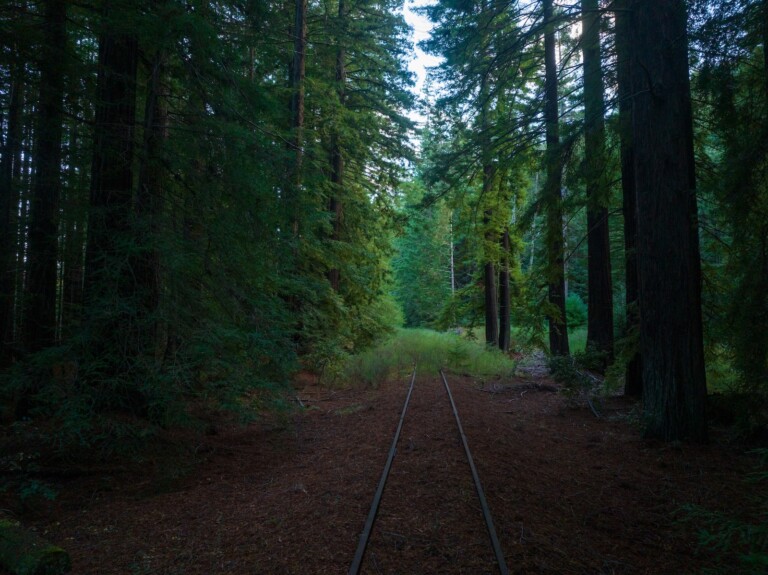
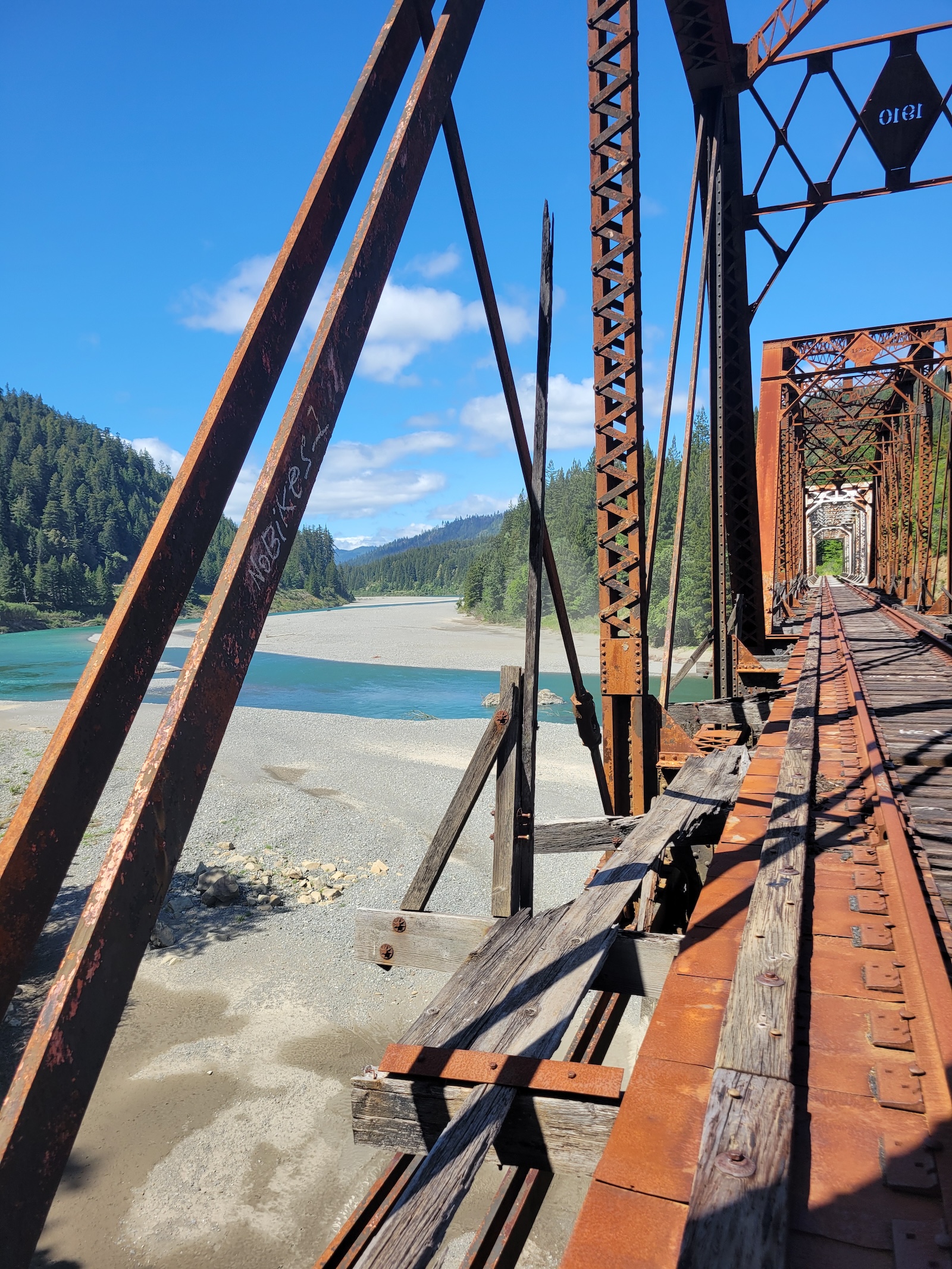
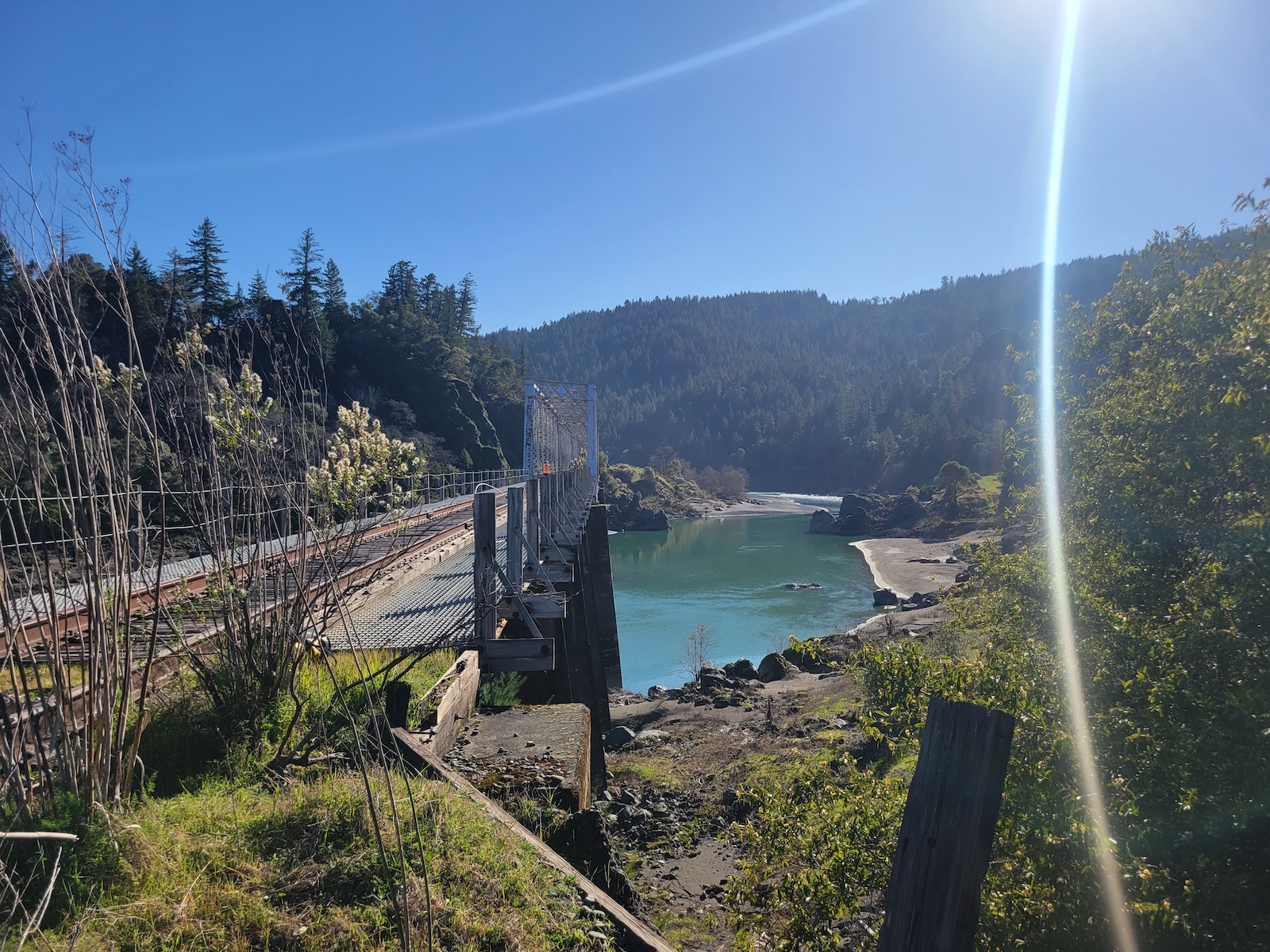
Trail development to commence for world-class Northern California rail-trail system
UKIAH, California (20 March 2026) – The Great Redwood Trail Agency (GRTA) board approved its Great Redwood Trail Master Plan during yesterday’s meeting. After more than three years of robust community engagement and careful planning, the roadmap is set for designing, constructing, and managing the Mendocino, Trinity, and Humboldt County segments of the world-class, rail-to-trail project on the former Northwestern Pacific Railroad line in Northern California. This project achieves multiple goals at once: ecosystem restoration and protection, tourism and economic development, and major state investment in a rural region.
State Senator Mike McGuire celebrated on March 19th: “Today marks a major milestone for the Great Redwood Trail and for Northern California. This Master Plan is the result of years of hard work and partnership—bringing together thousands from across the region including Tribal and local government leaders, neighbors and outdoor enthusiasts to build a trail that will help advance generational change in the North Coast, spur economic development, create jobs, and provide the public unparalleled access to some of the most stunning landscapes in the world.”
Eel River Bridge. Photo courtesy of The Great Railwood Trail Agency
McGuire added, “As implementation gets underway, we’re not just building a trail but creating jobs, boosting tourism, and driving long-term economic growth in rural communities. The Great Redwood Trail is a once-in-a-generation investment, and I’m grateful to the thousands of residents who spoke out to shape this document and for the GRTA Board for helping bring this vision to life.”
“And stay tuned,” the Senator flagged. “Now that the Plan has been adopted, we’ll have another major announcement about the Great Redwood Trail soon.”
The Great Redwood Trail
When completed, the 300-plus miles of the Great Redwood Trail (GRT) will be one of the longest rail-to-trail conversion projects in the United States, winding through five Northern California counties; from the San Francisco Bay through wine country, farm lands, mountains, Redwood forests, across rivers, to the Humboldt Bay and beyond. This newly-approved Master Plan covers 231 miles to be developed by the Great Redwood Trail Agency, traversing the northernmost three counties: Mendocino, Trinity, and Humboldt.
Cain Rock Bridge. Photo courtesy of The Great Railwood Trail Agency
“We’re transforming abandoned rail and ecological damage into restoration and beautiful trails. The Great Redwood Trail will create lasting memories for thousands of locals and visitors,” shared Mary Sackett, Chair of The Great Redwood Trail Agency and Marin County Supervisor.
While locals and visitors alike benefit from hiking, biking, horseback riding, kayaking, wildlife watching, rural town tourism, and even commuting, at its core the GRT is an ecological restoration project. Transforming the neglected properties once owned by the now-defunct Northwestern Pacific Railroad will involve removing hazardous materials and equipment, shoring up damaged slopes, restoring and protecting wildlife corridors and habitats for riparian species like the steelhead and salmon, restoring local native plants, and much more.
“The Coastal Conservancy is proud to have supported the Great Redwood Trail Agency since its inception with staff time, expertise, and funding.” said Amy Hutzel, Executive Officer of the State Coastal Conservancy. “The Great Redwood Trail will be a landmark trail for the State of California, opening public access to some of Northern California’s most extraordinary landscapes in ways that protect and restore their ecological values.”
Photo courtesy of The Great Railwood Trail Agency
The GRT is also a major infrastructure project with impressive economic benefits. Most of the tens of millions of dollars invested through state awards will go directly to the local partners, staff, contractors, and vendors whose work will make the GRT possible. Once completed, the Mendocino-Trinity-Humboldt stretch of the Great Redwood Trail alone is forecasted to create more than $102.5 million in local economic benefit per year (in 2023 dollars.) That’s nearly $170,000 a day in daily business revenue connected to the GRT.
Hank Seemann, Public Works Deputy-Director with the County of Humboldt, expects that the Master Plan will be a catalyst for advancing projects similar to the recently completed trail between Eureka and Arcata along Humboldt Bay. According to Seemann, “The historical railroad corridor on the North Coast is an immensely valuable and important public asset. The State’s vision and investment in creating the Great Redwood Trail is an incredible opportunity to create paved paths and natural surface trails for transportation and recreation while also reducing flooding risks, cleaning up legacy contamination, and restoring degraded habitat.”
The Great Redwood Trail Master Plan
The newly-approved GRT Master Plan is a roadmap for all elements of trail development, including trail design, operations and maintenance, habitat restoration, funding, and management. Its enumeration of applicable protections for the environment and for sensitive California Native American Tribe cultural spaces and resources applies to segments directly developed by GRTA as well as those developed by Tribal, nonprofit, or local government partners.
Photo courtesy of The Great Railwood Trail Agency
This Master Plan covers Mendocino, Trinity, and Humboldt counties. The Great Redwood Trail in Sonoma and Marin Counties will be planned and constructed by SMART (Sonoma-Marin Area Rail Transit.) Thanks to significantfunding and technical assistance from the State Coastal Conservancy, the Master Plan was developed by AltaPlanning + Design, with support from North Coast Opportunities, Redwood Community Action Agency, and Jen Rice Consults.
Feasibility. The process that led to this completed Master Plan began with a feasibility study from 2018 to 2020, which was initiated by the California State Legislature through the passage of SB 1029.
Community engagement. Several years of robust engagement with trail-adjacent communities followed. After the 2024 release of the draft GRT Master Plan 725 participants across 32 community and Tribal events, six in-person and four online workshops weighed in. The GRTA project team also held more than 70 direct stakeholder meetings with business owners, trail users, environmental advocates, landowner groups, ranchers, farm bureaus, rural economic development organizations, tourism and visitor bureaus, vineyard owners, houseless service providers, law enforcement, first responders, youth-focused non-profits and Tribal, local, state and federal agencies.
The GRTA also received 767 completed surveys, and more than 600 written comments, including 37 substantive letters during the scoping comment periods for the draft Master Plan and PEIR (Programmatic Environmental Impact Report). The input resulted in clearer policy recommendations, expanded management strategies, and more defined implementation responsibilities in the final version. Sections 2.2 and 2.3 of the Master Plan explain in more detail how public and Tribal input impacted the process and outcomes.
GRTA’s Executive Director Elaine Hogan commented, “I am impressed and deeply grateful to the hundreds of people who contributed their visions, concerns, and creative thinking to the development of the plan.” She added, “These years of broad and lively community conversations and input have been invaluable to building a Master Plan that serves the needs of communities along the trail corridor.” Hogan summarized, “As many have said, ‘If legacy industry is going to leave behind a mess, let’s clean it up together and in theend get a publicly accessible trail with amenities for recreation and active transportation.’ This solution isbetter for the environment, the economy, and community connections.”
Tribal engagement included direct outreach to more than 35 California Native American Tribes and Tribal/Native interest associations; attendance at more than a dozen tribal community events; presentations at many tribal government and coalition meetings and workshops; and a webinar for Tribal leaders and representatives.
GRTA representatives also held multiple direct and in-depth conversations with tribal members and leaders,including formal consultation meetings with four Tribes, through AB52 “Tribal Cultural Resources” and the State Coastal Conservancy’s tribal consultation policy.
Jason Ramos, Tribal Chairperson of the Blue Lake Rancheria, affirmed, “The Great Redwood Trail projectis a critical opportunity to restore fish habitat, protect cultural resources, and build an economy that benefits the north coast communities who have always called this place home. The Master Plan for trail development represents a meaningful step toward ensuring that Tribal communities are not just consulted, but are genuine partners in how this land is stewarded and celebrated. Blue Lake Rancheria is committed to staying at the table every step of the way.”
Organizing Trail Development. The Master Plan’s appendices dive deep into the complex planning and designparameters for each of the 43 segments. Segments were defined based on practical considerations like, “Doesthis stretch connect communities?”, “Are trail types and conditions similar across this segment?”, “Are there partners who could help develop this segment?”
Jurisdictions that have already designed and built segments of the GRT corridor covered by this Master Plan includethe Ukiah Rail Trail, Willits Rail Trail, Eureka Waterfront Trail, Humboldt Bay Trail, Arcata Rail Trail, Annie and Mary Trail, and sections of the California Coastal Trail.
Carol Vandermeer, long-time trails advocate and a member of The GRTA master planning team,reflected, “Never have I seen such sheer community joy as I did on the Bay Trail South opening celebration for the segment from Arcata to Eureka. I’m looking forward to seeing the segment continue to grow southwards from Eureka to College of the Redwoods, and then Loleta. Trail planning and development takes time, but I believe that piece by piece we will get there, learning and integrating knowledge as we go. Community and Tribal input and participation will be ongoing and an important partof realizing the full vision for the trail.”
What’s Next?
While a few GRT segments are already constructed or nearly done, the majority are not yet in development. With the Master Plan approved, GRTA can begin prioritizing development according to the criteria laid out in Section Six. These criteria ask, “Which segments will create the greatest and fastest benefits for trail users, adjacent communities, and the environment?”, “Which are low-hanging fruit, and could be developed efficiently because they have the fewest construction or permitting barriers, and the most community and trail partner support?”
Photo courtesy of The Great Railwood Trail Agency
Community engagement will continue as each segment is prioritized for development. The GRTA is developingmultiple modes for ongoing public communication and community engagement:
Good Neighbor: The immediate priority is to make sure the owners of all 10,000 – 15,000 parcels adjacent toeach prioritized trail segment are fully apprised, every step of the way, of trail development plans,approaches, timelines, and opportunities to ask questions and discuss unique situations. Communications channels will include letters, emails, community meetings, direct negotiations, and a text/phone alert systemspecific to each trail segment.
Collaborating: As trail segment priorities are announced, GRTA expects organized groups to contribute to or lead design and development of trail segment projects in their communities. Interested parties can sign up online to get notified about opportunities for ongoing community input and participation when a nearby Great Redwood Trail segment is being prioritized for development.
Earning: GRTA prefers to hire locally whenever possible. They invite landscapers, engineers, contractors, truckers, fence-builders, heavy equipment operators, grant writers, and more to bookmark GRTA Bids for upcoming opportunities.
Volunteering & Advocating: People with personal or professional dedication to outdoor recreation or tourism all along the GRT are invited to become a GRTA volunteer or advocate. Volunteerism opportunities will begin once a coordinator is brought on board. GRTA Advocates will receive spokesperson training and opportunities to tell their stories about how trails like this improve lives. Those interested can start by signing up for notifications. .
The Great Redwood Trail segments that have already been developed thanks to active local government andcommunity leadership are already seeing heavy use. Approximately 17 miles of trail are currently open to the public in Humboldt and Mendocino counties with about 40 miles in active planning or construction. The latest Ukiah segment is complete, with a grand opening celebration on April 26th in celebration of National Trails Day.
“For many of us, getting out on the trails is key to our health and wellbeing. In our rural communities people travel on highways and streets without sidewalks. And yet we all know that when you provide pleasant, convenient trails, people will hike, run, and bike more often. That’s why the local Ukiah Valley Trail Group has been working for more than ten years to mobilize volunteers to criss-cross Mendocino County with accessible trails through our beautiful landscapes. We’re thrilled to see this major state infrastructure investment in regional trail-building. This means taxpayer dollars are going directly into work that matches our local values and needs,” remarked Neil Davis, Director, Ukiah Valley Trail Group.
By Charles Pekow — The Wright brothers may have been the first to move from bicycling to flying, but many more people can—and should—do the same today, according to a new report from the Transportation Research Board. The report argues that airport managers should accommodate bicyclists as a way for travelers and employees to reach the airfield. Building cycle-friendly infrastructure, it says, could help ease the chronic traffic congestion that plagues departure and arrival areas and surrounding roadways.
Bicycle Parking at Amsterdam Airport Schiphol. Photo by Dave Iltis.
Some airports have already embraced the idea. Portland International Airport in Oregon offers bike parking, built a trail leading directly to the airport, and even provides an assembly stand for boxed bicycles. Oakland International Airport converted vehicle lanes into bike lanes on its airport access road. Los Angeles International Airport supplies bike lockers, showers, and changing areas for employees who ride to work.
DENVER, Colo. (April 7, 2026) —Colorado’s Ride and the Tour of the Moon have earned national recognition, landing at No. 5 and No. 7, respectively, in USA Today’s 10Best Road Cycling Events rankings—another sign of Colorado’s growing influence as a destination for marquee riding experiences.
Announced April 7, the rankings highlight two very different events that share a common appeal: big landscapes, thoughtfully designed routes, and a distinctly Colorado blend of challenge and community.
Colorado’s Ride Continues Rapid Rise
Now in just its fourth year, Colorado’s Ride has quickly positioned itself among the country’s premier multi-day tours. The five-day, fully supported event traverses some of the state’s most iconic terrain, including climbs over Cottonwood Pass and Monarch Pass, along with a dramatic stretch above the Black Canyon of the Gunnison.
Photo courtesy of Bicycle Colorado/Colorado’s Ride
The event’s intentionally limited field—around 350 riders—helps set it apart from larger tours, fostering a more intimate, communal atmosphere on and off the bike.
“We feel incredibly honored to receive this recognition in only our fourth year and to be included alongside some of the country’s most established rides,” said Ride Director Bill Plock.
Photo courtesy of Bicycle Colorado/Colorado’s Ride
The 2026 edition, scheduled for August 9–14, introduces a new route starting and finishing in Crested Butte, with overnight stops in Buena Vista, Salida, and Gunnison.
Tour of the Moon Showcases Western Colorado
If Colorado’s Ride is defined by alpine passes, the Tour of the Moon delivers something entirely different: a ride through the sculpted red rock canyons of Colorado National Monument.
Photo courtesy of Bicycle Colorado/Tour of the Moon
Set for September 12, the one-day event offers riders a choice between a 41-mile “Classic Loop” and a 64-mile metric century, making it accessible to a wide range of abilities. The route winds through a landscape shaped over nearly two billion years, with sweeping views and sinuous roads that have long drawn cyclists to western Colorado.
Photo courtesy of Bicycle Colorado/Tour of the Moon
The course also carries a deep connection to American cycling history, having featured in the Coors Classic and the film American Flyers.
Photo courtesy of Bicycle Colorado/Tour of the Moon
“There is nothing like riding a bike through the awe-inspiring landscape of Colorado National Monument,” said Ride Director Connor Ratte. “We’re thrilled to provide this truly unique experience to riders of all abilities from across the country.”
A Reflection of Colorado’s Cycling Culture
For Bicycle Colorado, the dual recognition underscores the broader strength of cycling in the state.
Executive Director Peter Piccolo pointed to events like these as central to Colorado’s identity as a riding destination, noting that both competitive and recreational events help drive tourism while reinforcing the state’s deep-rooted bike culture.
Together, Colorado’s Ride and the Tour of the Moon offer a compelling snapshot of that culture—one defined as much by high-altitude suffering as by scenery, history, and the shared experience of the ride.
From 22 to 140 miles, Huntsman Cancer Foundation SportsFest Ride returns June 13 with fully supported routes for every level of cyclist.
SALT LAKE CITY, Utah (April 9, 2026) – For Utah cyclists looking to log serious miles early in the season, the Huntsman Cancer Foundation SportsFest Ride has become a staple on the calendar. Returning Saturday, June 13, 2026, the ride offers a mix of distance, terrain, and support that appeals to everyone from first-time fondo riders to experienced endurance cyclists—all while backing cancer research at Huntsman Cancer Institute.
Scenes from the Huntsman SportsFest. Photo by Dave Iltis
Formerly known as the Huntsman 140, the event has evolved into a multi-distance ride that balances accessibility with challenge. Riders can choose from a range of routes starting and finishing at Fort Douglas Field, including approximately 22, 58, 80, and 140 miles. For those looking for a longer, more immersive day in the saddle, point-to-point options roll out of Salem, Utah, covering roughly 104 or 140 miles into Salt Lake City. A relay option on the 140-mile course also opens the door for team participation.
The routes showcase northern Utah’s road riding at its best—long stretches of open terrain, gradual climbs, and enough elevation to keep things honest, especially on the century-plus options. It’s the kind of ride that works equally well as an early-season benchmark or a stepping stone toward bigger endurance goals later in the summer.
Support is a key part of the experience. Riders can expect well-stocked aid stations, clearly marked courses, and on-route support throughout the day. Distances of 80 miles and above include a dedicated lunch stop, making the longer routes more manageable without sacrificing pace or experience.
While the ride delivers on the cycling side, its purpose remains front and center.
“SportsFest isn’t about how fast you go or how far you ride. It’s about showing up with your community,” said Jen Murano, Development Director of Events and Outreach at Huntsman Cancer Foundation. “Some participants come to honor someone they love, others to support friends or family currently facing a diagnosis, and many simply because the mission matters. Whether you’re pedaling, strolling, questing, volunteering, or cheering others on, everyone has a role in supporting this mission.”
For riders chasing bigger goals, the 140-mile route also serves as the opening leg of the Utah Triple Crank, a three-event endurance series that challenges cyclists to complete some of the region’s most demanding rides in a single season. The series continues with the Iron Lung Ride—known for its high-elevation mountain routes—and concludes with LoToJa, the 200+ mile one-day race from Logan, Utah to Jackson Hole, Wyoming. Together, the three rides total nearly 450 miles and are a badge of honor for dedicated road cyclists across the West.
Still, SportsFest stands on its own as a ride worth doing—whether you’re building toward Triple Crank status or simply looking for a well-supported, meaningful day on the bike. The event wraps at Fort Douglas Field with a finish line festival, giving riders a chance to refuel, recover, and connect post-ride.
Beyond the ride, SportsFest offers additional ways to get involved, including a 1K Stroll, Kids Fun K, 5K, and 10K Trail Run, as well as a team-based quest scavenger hunt—making it a full community event for participants of all interests and abilities.
For those unable to attend in person, the event also offers virtual and community-based participation options, making it easy to get involved from anywhere. Virtual participants can register, create a fundraising page, and complete an activity of their choice at their leisure. The foundation also partners with local organizations, including fitness studios, to host community events in support of SportsFest, expanding opportunities for people to get involved and make an impact.
Whether joining as an individual or as part of a team, participants have the option to direct their fundraising toward research for a specific type of cancer that is meaningful to them or select the area of greatest need. This year’s fundraising goal is set for $500,000. Since its inception, SportsFest participants, sponsors, and partners have raised more than $7.5 million for life-changing research at Huntsman Cancer Institute. Funds raised through the event go to advancing research, improving treatments, and expanding education around cancer prevention and care.
“SportsFest plays a vital role in advancing the lifesaving work at Huntsman Cancer Institute,” said Michael Delzotti, FAHP, CFRE, President and Chief Operating Officer of Huntsman Cancer Foundation. “With more than 650 research projects and hundreds of clinical trials underway, funds raised from this event help move promising ideas forward and bring new treatment options to patients faster, driving meaningful progress toward eradicating cancer.”
Registration is open through June 7, with onsite options available at packet pickup on June 12. Riders can register, fundraise, and find full route details at www.huntsmansportsfest.com.
Event info:
June 13 — Huntsman Cancer Foundation SportsFest, Utah Triple Crank, Salt Lake City, UT, A community-driven day of connection and impact with 100% of funds raised supporting the mission of Huntsman Cancer Institute. Ride, walk, run, quest, volunteer, or cheer. Ride distances from 22 to 140 miles and the first ride in the legendary Utah Triple Crank. Start lines in Salt Lake City and Salem, Utah, Jen Murano-Tucker, 801-584-5815, [email protected], Kristen VanLeeuwen, 801-584-5815, [email protected], huntsmansportsfest.com
Scenes from the Huntsman SportsFest. Photo by Dave IltisScenes from the Huntsman SportsFest. Photo by Dave IltisScenes from the Huntsman SportsFest. Photo by Dave IltisScenes from the Huntsman SportsFest. Photo by Dave IltisScenes from the Huntsman SportsFest. Photo by Dave IltisScenes from the Huntsman SportsFest. Photo by Dave IltisScenes from the Huntsman SportsFest. Photo by Dave IltisScenes from the Huntsman SportsFest. Photo by Dave Iltis
By Charles Pekow — The Center for Pedestrian and Bicyclist Safety has launched a five-year initiative aimed at improving safety for people who walk or ride bikes to and from bus stops. Understanding cyclist safety in this context has proven difficult because little research has focused specifically on passengers who bike to access transit. To address that gap, the center plans to develop a comprehensive research agenda.
The project will begin by reviewing existing studies, identifying data already collected by state and local governments, and examining records of fatalities that have occurred near bus stops. By compiling and analyzing this information, the center hopes to build a clearer picture of the risks people face when accessing transit by foot or bike.
The initiative also seeks to encourage researchers to place greater emphasis on transit access when studying pedestrian and bicyclist safety. At the end of the five-year effort, the center aims to recommend strategies that would make bus stops and surrounding infrastructure safer for all users.
By Gail Newbold — “Hog the road!” a fellow cyclist advised us. A Grand Teton National Park ranger told her she could continue riding all the way to String Lake in a designated bike lane alongside Jenny Lake Road beyond where the official paved Grand Teton Pathway ended.
The problem was the bike lane was only one-way. The return trip would require riding on the narrow road with cars. Hence, the recommended hogging. We decided to worry about that later. In the moment, we were simply excited to discover we didn’t have to stop riding at Jenny Lake like we thought.
Our ride had begun just six miles earlier at the Windy Point Turnout shortly past the Moose entrance to the park, so we were still full of energy. We wound our way through a gorgeous fall-colored forest before parking our bikes on the shores of String Lake.
Breaking the Rules
After eating snacks and soaking in the beauty, we were ready to head back. We conferred. Being a hog requires a certain level of cycling aggression, experience and confidence, we decided. We were three women with varying degrees of those attributes. I possess none of them. Knowing other cyclists would hate us for our decision, we nonetheless cycled the wrong direction on the one-way bike lane. Twice we met riders coming toward us and yelled our apologies before ducking out of their path. One couple laughed, another looked (rightfully) annoyed.
Fifty-six miles of trail connect the town of Jackson to GTNP and Teton Village and are nicely paved except for a two-mile stretch of narrow dirt road between Teton Village and the Moose entrance. Gabrielle Ernest enjoying what is said to be the most beautiful section that fronts the Tetons. Photo by Gail Newbold
Fortunately for us and other cyclists that day, we eventually re-entered the Grand Teton Pathway system designed for two-way traffic. The 56 miles of trail connect the town of Jackson to GTNP and Teton Village and are nicely paved except for one annoying two-mile stretch of narrow dirt road between Teton Village and the Moose entrance.
Pedaling Beneath the Peaks
There’s a lot to love about this trail system, but the most compelling draw is probably the incredibly close view of the jagged Teton Mountain Range on the six-mile section between the Windy Point Turnout and Jenny Lake. Other cyclists mention wildlife sightings of moose, bald eagles, bears and elk. We didn’t see any. It’s primarily a flat trail, if that’s a plus in your book, and very scenic.
After cycling to Jenny Lake and beyond, Gabrielle Ernest cycles toward the Moose Entrance on her way out of the park to Mormon Row. Photo by Gail Newbold
After our misadventure on Jenny Lake Road, we headed back the way we came, passing the Windy Point Turnout and exiting the park at the Moose entry station. Surprisingly, cyclists must pay $20 per person for a seven-day pass. Since we entered via car with an annual park pass, we stopped to make sure we could get back in without paying. We could.
On a Dark Highway
Just past the entry station, brilliant yellow trees lined the road to the Snake River Bridge and picturesque views of the river. Our destination was Mormon Row and the iconic T.A. Moulton Barn set against the dramatic backdrop of the Tetons. Again, we found ourselves road biking, this time on US Hwy 191 for two to four miles after the bike trail ended. True to its reputation as one of the most photographed spots in the area, the barn drew several shutterbugs perched behind tripods waiting for the sun to set.
Cycling the incredible Grand Teton Pathway allows you to experience the grandeur of the national park’s jagged peaks up close. Photo by Gail Newbold
By then it was almost dark and we dreaded biking on the highway. We checked whose head and tail lamps shone brightest, then arranged ourselves in a line hoping for best visibility to passing cars. Back at our car, we loaded our bikes in the near-dark and congratulated ourselves on riding 30 miles that day and staying alive.
Next time I bike the Jackson trails, I’d like to experience the ride from Jackson to Wilson, then along Moose-Wilson Road past Teton Village to where the dirt road begins, and then turn around. It would be approximately 26 miles round trip.
Hiking a Half-marathon and One Last Ride
On day two of our three-day trip, we opted to hike the equivalent of a half-marathon starting our day on the Taggart Lake Trail and ending on the Jenny Lake Trail where we hiked past Hidden Falls and Inspiration Point into Cascade Canyon, and then back alongside the lake.
After a day of cycling on the Grand Teton Pathway, we enjoyed the Victor to Driggs Rail Trail before heading back to Salt Lake City. September is a beautiful time to cycle in Teton Valley. Photo by Gail Newbold
Day three, we squeezed in one last 15-mile RT ride on a cool, overcast morning on the Victor to Driggs Rail Trail before driving home. Reviews posted on the Trail Link App were mostly negative, but it felt like a no-brainer to cycle it since our Airbnb in Victor was very near the trailhead. We were surprised at how much we enjoyed it. We loved the rural feel, colorful mountains in the distance, and incredible canopy of yellow trees at the end of the trail.
If you go:
Trail map for the Grand Teton Pathway: https://www.jacksonhole.com/maps/pathway-summer
When to go: Fall is an exceptionally nice time to visit because of the colorful foliage, but also the cooler temperatures, since much of the trail is exposed. For the same reasons, it’s also a beautiful time to hike on the park’s many trails. Just don’t imagine it will be less crowded. Even on the third weekend in September, the trailhead parking lots seemed every bit as crowded as in the summer. Another bonus to fall is the colorful drive getting to Jackson. The brilliant foliage enroute from Salt Lake City via Lava Hot Springs to the park nearly made the trip worthwhile on its own.
Where to stay: Jackson lodging is notoriously expensive so I like to stay in the cute town of Victor, Idaho. The downside is it’s about a 45- to 60-minute drive to and from the park, which feels long at the end of a day of biking or hiking. Console yourself in the morning with a huckleberry milkshake from the eclectic Victor Emporium.
Don’t miss Mama Mimi, Thomas Danbo’s massive troll sculpture at Rendezvous Park in Wilson built in 2021. Danbo is a Danish artist and recycling activist who uses recycled and renewable materials sourced locally. Mama Mimi is the 80th addition to the larger family of trolls located all over the United States and the world. Ideally, arrive before dark so you don’t find yourself, as we did, wandering the woods with phone flashlights.
Tadej Pogačar claimed his third Tour of Flanders with a solo performance of frightening authority, dropping Mathieu van der Poel on the final Oude Kwaremont while Remco Evenepoel — losing teammates to abandonment and mechanical failure from the opening hour — announced himself on his Classic debut with a stirring third place.
ANTWERP, Belgium — The 110th Tour of Flanders began, as these things always do, with theater. The start podium presentations in Antwerp had drawn thousands into the Flemish morning, and when Red Bull–Bora–Hansgrohe arrived as a group of six before their seventh rider made his entrance alone, the crowd understood what was being communicated. Remco Evenepoel — world champion, Olympic champion, Grand Tour winner — walked into his first Tour of Flanders to a wall of noise. He wore the expression of a man who has been waiting a long time for a particular appointment.
“Nervous? Not really,” he told the microphones. “Healthy tension.” It was a careful formulation — the kind of answer a man gives when he knows the question behind the question. Earlier that morning he had offered something more revealing: he was approaching the day, he said, like a child waiting for Christmas. “Healthy excitement.” The Tour of Flanders was the one Monument that had always been withheld from him, the palmarès entry that would confirm what many already suspected. He had ridden into Antwerp not merely as a participant but as a threat. The race, he suggested, could be an early opener.
Mathieu van der Poel arrived with his father Adrie, as he sometimes does on the days that matter most. The Alpecin–Premier Tech leader holds the Tour of Flanders record jointly at three victories; a fourth would put him alone at the top of the all‑time list. “I feel ready,” he said. “Hopefully I’ll have an exceptional day and can mix it up for the win.” His team manager Christophe Roodhooft, asked about Red Bull’s theatrical announcement of Evenepoel’s participation, kept his powder dry: “We would never have announced it that way. They’ll have had their reasons.”
UAE Team Emirates–XRG appeared with Tadej Pogačar and Florian Vermeersch walking together — the two had spent recent weeks reconnoitring the Flemish roads in preparation, a detail that had not gone unnoticed in the peloton. Asked about the apparent bromance, Pogačar laughed and said it was complicated, before settling into something more sincere: he thought this was the most beautiful day of the year. He had won here in 2023 and 2025, and his domestique had already drawn his own lines. “The form has been super in recent races,” Vermeersch said. “My plan is to stay with Tadej as long as possible, certainly through the second Kwaremont.”
Last to be presented was Visma–Lease a Bike, and when Wout van Aert emerged the roar exceeded anything the previous three had received. He was the clear sentimental favorite, the Belgian who has finished on the wrong side of this podium too many times. “Anticipating is always difficult in that very tough finale,” he said. “So the initial plan is to follow for as long as possible.” He had the look of a man who had rehearsed that answer until it no longer gave anything away.
Mayor Els van Doesburg fired the unofficial starting gun at 10:03. With Evenepoel, Pogačar, Van Aert, Mads Pedersen, and Van der Poel on the front row, the race was underway. It lasted approximately one second before Rui Oliveira, one of Pogačar’s UAE teammates, went down in the neutral zone after clipping a rear wheel and tumbling into the barriers. He continued, but the tone had been set. Through the heart of Antwerp, the peloton rolled in procession along the De Meir, and in the Konijnenpijp tunnel that leads out of the city, riders availed themselves en masse of a comfort stop. Then the road opened up, the flag dropped for real, and the racing began.
THE BREAKAWAY
The fight for the early break extended for more than 20 kilometers, through the outskirts of Antwerp and south toward Temse, before a group of 13 finally opened a gap that UAE was prepared to honor. Burgos–BH and Team Flanders–Baloise had been the most aggressive from the opening kilometers — Burgos making their Tour of Flanders debut and determined to announce themselves — and when the break finally went, it contained three riders making history: Eric Antonio Fagúndez of Uruguay, César Macías of Mexico, and Jambaljamts Sainbayar of Mongolia, each the first representative of his country ever to start the race. With Silvan Dillier, Kamil Gradek, Luke Lamperti, Connor Swift, Luca Van Boven, Dries De Pooter, Julius van den Berg, Edoardo Zamperini, Frederik Frison, Victor Vercouillie, and Hartthijs de Vries completing the group, the escape totaled 13 riders from 11 teams.
It was a break with more credibility than most. Lamperti had been among the most consistent riders of the Flemish spring — 10th at the Omloop, 9th at Kuurne, 9th in Brugge — and Swift had been in the Flanders breakaway the previous year. Vercouillie was in the move for the second year running, the Flanders–Baloise rider driven by something beyond pure racing: his father was battling bowel cancer. Van Boven felt the road differently too — he was born in Zottegem, the East Flemish city the route passes through in its early kilometers. Today’s edition was one of the five longest Tours of Flanders ever run at 278.2 km; the 13 leaders had plenty of time to contemplate that as their advantage climbed past five minutes.
Mathieu van der Poel was not pleased to see Dillier go. The big Swiss rider had been earmarked as a possible tempo‑setter for Alpecin in the peloton; instead he was up the road. In Dillier’s absence, UAE deployed Mikkel Bjerg for the donkey work, and the Velon power data told the story of the early race with unsparing clarity: while Pogačar sat in the belly of the group at a modest 210 watts, Bjerg was already putting out 350 at the front. That differential would only grow. By the time the first Kwaremont arrived, Bjerg had averaged 360 watts across more than two hours of pacemaking — this from a rider back in competition for only a week after breaking his hand in the Tour Down Under’s infamous kangaroo crash. He had finished fourth here two years earlier; he knew precisely what the day was worth.
In the peloton, the first trouble arrived early for Evenepoel. His teammate Jarrad Drizners crashed into a team car and abandoned — one domestique down before the race had reached its first cobbles. It was the kind of subtraction that would compound, and it left Evenepoel exposed to whatever the climbs would demand of him later.
THE LEVEL CROSSING
What should have been a routine stretch of racing through Lede became one of the day’s defining subplots. The level‑crossing lights turned red just as the peloton arrived; the front section slipped through, but the barriers came down on the rest. Among those who made it through: Pogačar and Evenepoel. Among those who did not: Van der Poel. The regulations required the two groups to rejoin before resuming racing but did not require the escapees to wait, and the leaders collected the windfall accordingly — their advantage ballooning toward five and a half minutes while the officials deliberated. A UCI commissaire later stated the obvious: “The rules are clear. Riders must stop at a red light. Anyone who rides through it should be removed from the race.” No action was taken. The incident generated debate long after the peloton had moved on, but Bjerg had no time for it. He got back to work.
Rain came and went in the first half of the race — enough to put jackets on and take them off again, enough to worry about the Koppenberg later in the afternoon. The peloton reached the cobbled Lippenhovestraat and Paddestraat sectors with Bjerg having reclaimed roughly 30 seconds from the break’s advantage: a modest return for an enormous personal investment.
FIRST COBBLES
Jasper Stuyven had been candid before the start about how he intended to ride. “Many riders will try to anticipate,” he said. “My best results have come from following.” Matteo Trentin of Tudor had offered a more explicit read of the field: “This year I see three top favorites — Pogačar, Van Aert, and Van der Poel. Evenepoel is a dark horse. I’m hoping for a top 10.” Mads Pedersen, nursing an injury through the spring, had been honest about his own standing: he didn’t feel like one of the big favorites, he said, even as he called it the most beautiful race of the year. Christophe Laporte had been precise about the Visma hierarchy: his role was to be with Van Aert in the finale and help him if necessary, nothing more complicated than that.
The first Kwaremont came and went without drama, which was to be expected. Sainbayar crested the summit first in the breakaway, to the delight of packed crowds on either side of the narrow lane. On the climb, those same crowds chanted the names of Van Aert and Evenepoel — and both men were buried deep in the peloton, absorbing the noise and saving everything they had for later. Van Aert, curiously, made a detour to the team car just before the climb — a strange choice given the jostling for position — before rejoining. The break held more than five minutes. There would be time enough for hostilities later.
EIKENBERG, WOLVENBERG, AND MOLENBERG
The Eikenberg changed the texture of the race. Gianni Vermeersch suffered a puncture before the climb — bad timing for Evenepoel’s right‑hand man, though he would rejoin at the foot. Benoît Cosnefroy came down in the descent, reportedly in significant pain, removing another helper from Pogačar’s toolkit. Then came a second blow for Evenepoel’s Red Bull team: Hagenes suffered a mechanical failure and was forced to the back of the peloton, effectively removing him from the equation for the rest of the day. Having already lost Drizners to abandonment hours earlier, Evenepoel now entered the decisive kilometers of the race with a skeleton crew.
On the Wolvenberg, Groupama–FDJ opened the racing with a series of accelerations, Laporte moving up in response. Connor Swift crashed heavily on the cobbles after fumbling with his jersey and clipping a curb; he got up but had lost his place in the lead group. Cyclocross champion Toon Aerts, making his Tour of Flanders debut, flatted. Tomas Kopecky tried a solo move on the Kerkgate cobbles that went nowhere. Luxembourg champion Arthur Kluckers drifted too close to the road’s edge and nosedived into the grass, fortunately away from rather than into the peloton. Jonas Abrahamsen was forced into an emergency bike change. The race was coming apart at its edges in the way it always does — the steady attrition that precedes the real thing.
But the Molenberg is where it truly ignited.
Florian Vermeersch drove to the front on the Molenberg’s opening meters, UAE stringing the race out with a crosswind. Van Aert — dangerously far back, in part because Hagenes was no longer available to help him move up — clawed his way forward just in time. Sheffield bridged across. Van der Poel and Pedersen came with him. With 101 kilometers remaining, all the favorites were together in a single elite group. The peloton was over a minute down and no longer relevant to the outcome.
BERENDRIES AND VALKENBERG
After the Molenberg, the elite group — now approximately 28 strong after absorbing what remained of the breakaway — worked smoothly across the Berendries. Behind them, Vacek and Braet maintained a disciplined chase as a duo, neither able to bridge across; the peloton had already ceded the day and was racing for scraps. Sainbayar, who had spent hours at the front and crested the first Kwaremont to brief Mongolian glory, was passed and shed on the Berendries, his moment in the spotlight giving way to the heavy machinery.
A second rain shower caught the leaders before Berg Ten Houte — nobody had a jacket left. Then came more carnage: Iván García Cortina went down, and in the aftermath Alleno, Biermans, Wærenskjold, Corkery, and Welsford all abandoned. The day had already consumed half a dozen riders by the time it reached its decisive terrain. Belgian TV commentator José De Cauwer had called the break’s endurance correctly at the outset: “These men can last until the second time up the Oude Kwaremont — and perhaps even further.” He had been right, but only barely.
On the Valkenberg, Pogačar made a cautious flex out of the saddle, Evenepoel cool on his wheel before taking a turn at the front. Stuyven began to lose ground. The race was thinning to its essentials.
BERG TEN HOUTE
On Berg Ten Houte, the favorites’ group merged with what remained of the breakaway to form a 28‑rider front group. Frison and Dillier were the first casualties; Edoardo Zamperini, who had spent hours in the move, bravely tracked Pogačar and Evenepoel before the gap became irrecoverable. Pedersen and Van Aert rode at the back of the group, managing their reserves. The rain had given way to a fragile, cautious sunshine, though the roads remained slick.
On the Nieuwe Kruisberg, an image materialized that will outlast the race itself: Pogačar, Evenepoel, Van der Poel, and Van Aert in positions one, two, three, and four at the head of the front group — the four most consequential riders in modern one‑day racing, arranged in a line with 70 kilometers still to race. On the Hotond, Florian Vermeersch tried to slip away quietly with Swift and Rick Pluimers; Laporte chased them down immediately, unwilling to hand out free ground to anyone. Red Bull drove the pace for Evenepoel as the race wound toward the second Oude Kwaremont. The breakaway was finished, its survivors absorbed or dropped. With 60 kilometers to go, this was a race between four men.
OUDE KWAREMONT: SECOND PASSAGE
The second ascent of the Oude Kwaremont arrived with the kind of expectation that silences crowds just before it releases them. Van der Poel and Pogačar approached in the second row, Van Aert and Evenepoel just behind. Swift set the pace at the front.
Van Aert jumped immediately to his wheel. Pedersen could not follow. Evenepoel came up. Van der Poel, caught out of position, launched a heroic chase and made contact as Pogačar drove toward the summit, Van Aert refusing to be shaken for most of the climb. But the last meters were too many; he cracked at the top, ceding to the three riders who would now contest the victory. He fought back to the trio on the asphalt beyond the summit, but Pogačar had already driven hard into the dip toward the Paterberg, and when Van Aert arrived at the rear of the three‑man group he was already spent.
PATERBERG: THREE BECOME TWO
Evenepoel led onto the Paterberg, but Pogačar was immediately beside him, fighting for the front, the pair side by side in the opening meters as if it were a sprint rather than a cobbled wall. Van der Poel took Pogačar’s wheel. Evenepoel came over the top a few lengths back with five seconds to make up.
It was not yet decisive. But Pogačar and Van der Poel were not interested in making it easy. They drove hard, and the gap held. De Cauwer identified the tactical logic precisely: “They need each other to keep Evenepoel behind. Man‑to‑man it wouldn’t have been easy.”
KOPPENBERG
The Koppenberg arrived dry — a mercy, given the earlier rain — and Pogačar pushed for the knockout blow on the steep cobbles. Van der Poel wobbled briefly but the two crested together. Evenepoel had been forced into a gear change at the worst possible moment and arrived at the summit 20 seconds down.
In the descent, he flew. He closed to within 10 seconds on the newly resurfaced Mariaborrestraat cobbles, the gap approaching something that might have been called catchable. But each time he drew within range, Pogačar drove through once more, opening the gap again by another handful of seconds. The Van der Poel–Pogačar head‑to‑head record entering this day stood at 10–10 across their last 20 one‑day races. The tiebreaker, it turned out, would be resolved between the two of them.
TAAIENBERG AND THE ROAD TO THE FINALE
The Taaienberg did not resolve the contest. Evenepoel matched the pace of the leading pair over the summit and kept his deficit intact, preserving his hopes for the Oude Kruisberg and Hotond combination ahead.
But a headwind on the transition section did what the climbs had not quite managed. Evenepoel crept to within 10 seconds at one point before the gap opened back to 20, then to 30 on the Oude Kruisberg, where Van der Poel was visibly straining at Pogačar’s wheel. The Slovenian looked the strongest he had all day. As the team cars passed Evenepoel on the connecting road toward the Hotond, he was grinding through the headwind with his gap over Pedersen and Van Aert stretching toward 50 seconds — fighting on two fronts simultaneously, trying to close the pair ahead while managing the pair behind. The Belgian was simultaneously the third‑best rider in the world at that moment and the most isolated, with no teammates remaining to give him shelter or pacing on the road. It was one of the most compelling individual performances in a Tour of Flanders that didn’t end on the podium in many years.
On the Hotond, Evenepoel closed again to within 20 seconds. An unrewarding stretch followed where Van der Poel and Pogačar could accelerate freely. The final Kwaremont was imminent.
OUDE KWAREMONT: THE DECISIVE THIRD PASSAGE
Pogačar attacked before the cobbles even began.
No hesitation. No feinting. No reading of Van der Poel’s response before committing. On the first setts of the Oude Kwaremont he was already alone, Van der Poel conceding ground with each pedal stroke. Van der Poel found something halfway up — summoning a second wind from wherever those come from — and came to within five seconds at the summit exit. Not quite over. But very nearly. Evenepoel’s gap exploded to a full minute at a stroke. Van Aert dropped Pedersen on the same climb, riding his own race for fourth. Pogačar topped the Kwaremont in 3:02. Van der Poel arrived six seconds later.
PATERBERG AND THE RUN TO OUDENAARDE
By the time the Paterberg arrived, Pogačar’s lead had grown to 15 seconds. On the cobbled wall he moved with the ease of a man who has already solved the problem. Van der Poel rose out of the saddle once more — not losing further time, refusing the humiliation of collapse, but unable to close the gap. At 25 seconds over Van der Poel entering the final 13 km to Oudenaarde, Pogačar had the race in hand.
He removed his gloves at the roadside and gave them to a young fan — the gesture of a man entirely at peace with what was coming. At 5 km to go, the gap read 35 seconds. At 2 km, it was over 40.
Tadej Pogačar crossed the line alone in Oudenaarde at 6:20:07, solo for the second year in a row, for his third Tour of Flanders. Van der Poel arrived 34 seconds later. Evenepoel — who had been shed on the Paterberg and chased alone for more than 50 kilometers, through the Koppenberg, the Taaienberg, the Kruisberg, and the Hotond, without a teammate in sight, never once fully conceding — came home 1:11 back for the most impressive Tour of Flanders debut in years. Van Aert finished fourth once again. Pedersen fifth.
“It was a really crazy race today,” Pogačar said afterward. “I don’t know what to say.” When asked why he had not waited for Evenepoel after the Koppenberg, he was precise: “I didn’t wait for Remco because his endurance is very good — he can beat you in the end.”
And thus, about 16 km from the finish, on the cobbled ramp of the Oude Kwaremont, is where the man from Slovenia decided it was time to end the conversation.
Three wins at Flanders. Two Monuments from two starts in 2026.
RESULTS — TOUR OF FLANDERS • ANTWERP → OUDENAARDE • 278.2 KM • APRIL 5, 2026