
The 2024 Pan-Am Mountain Bike Championships were held at Soldier Hollow in Midway, Utah from May 8-12, 2024.
Cycling West presents a photo gallery by Kristen Roskosh of scenes from the races.
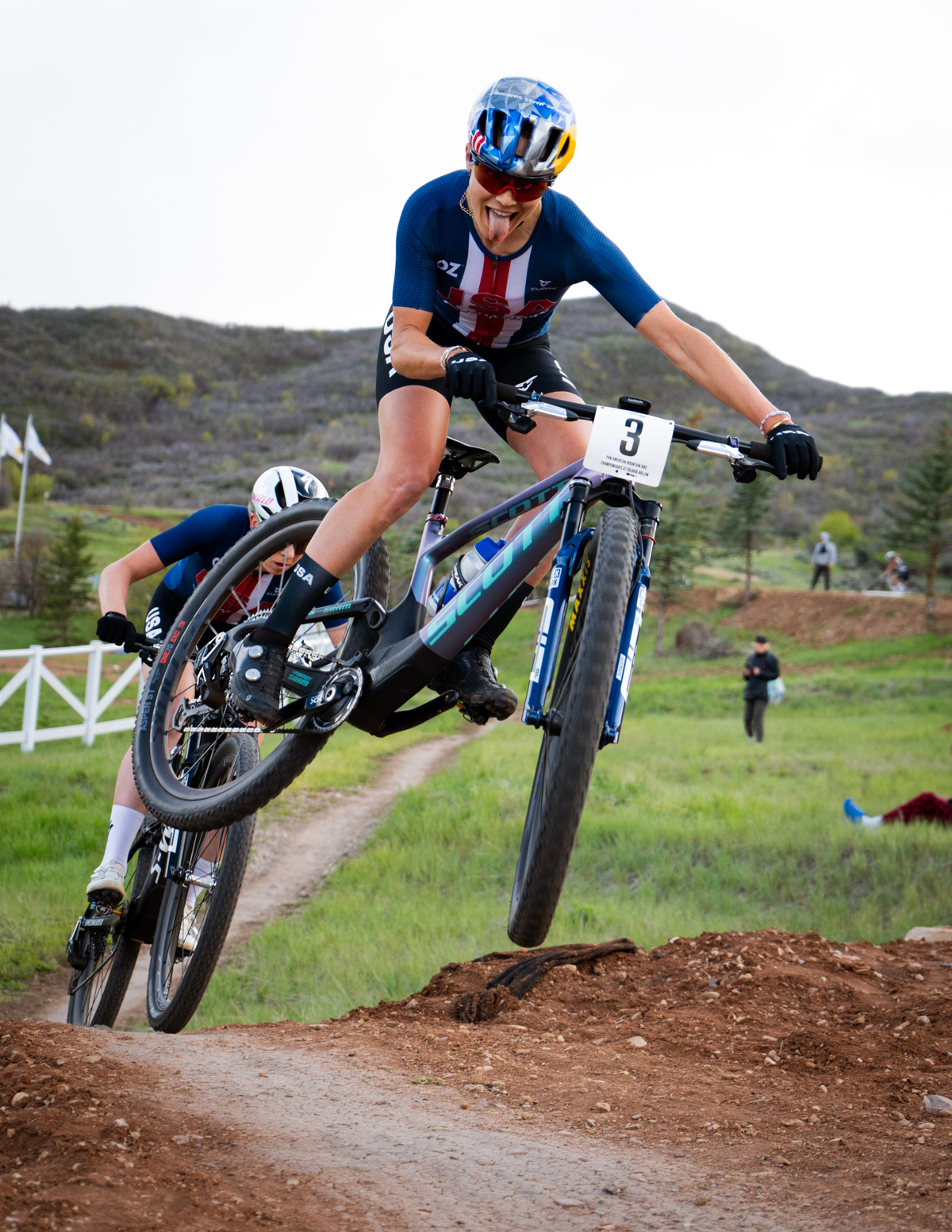
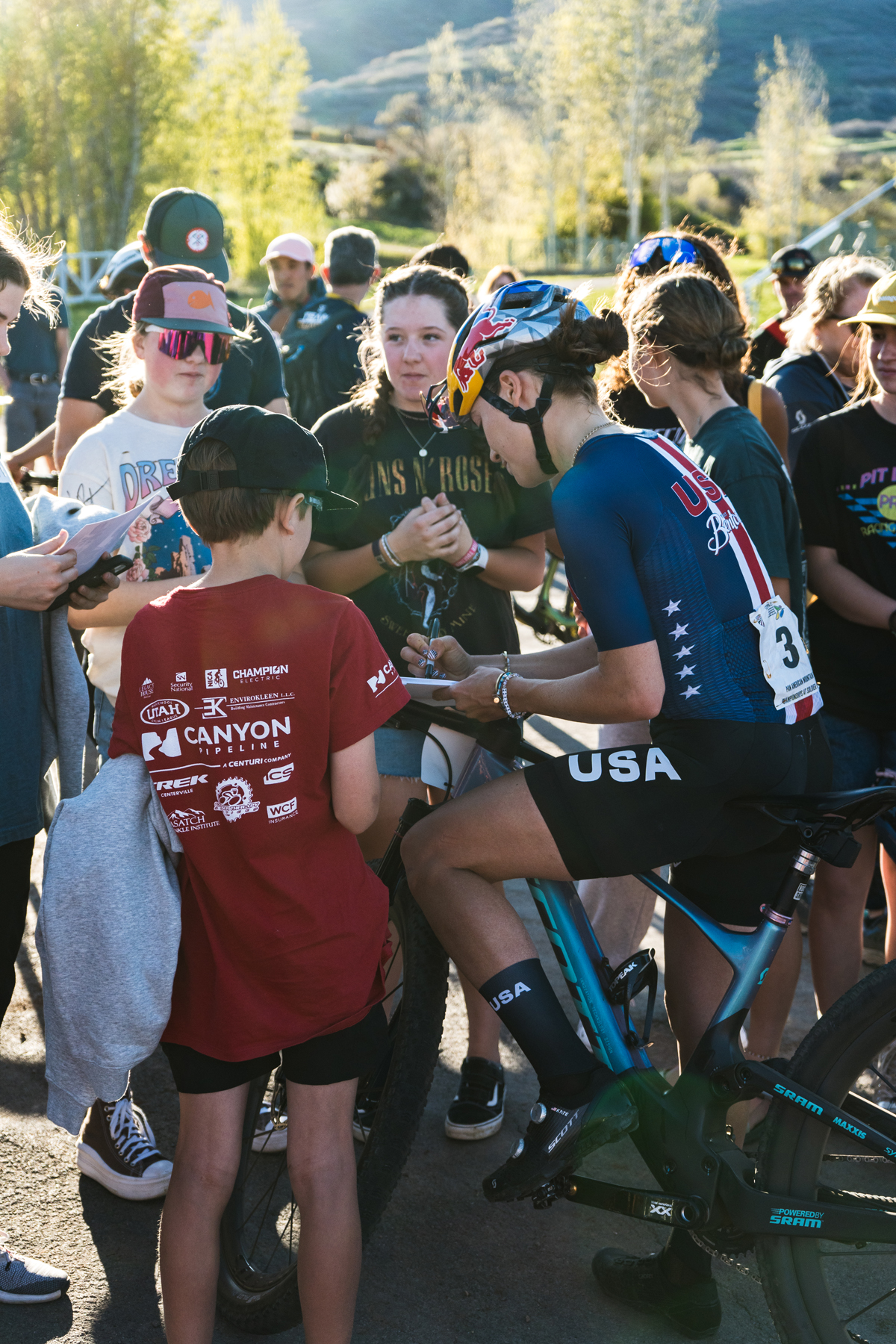
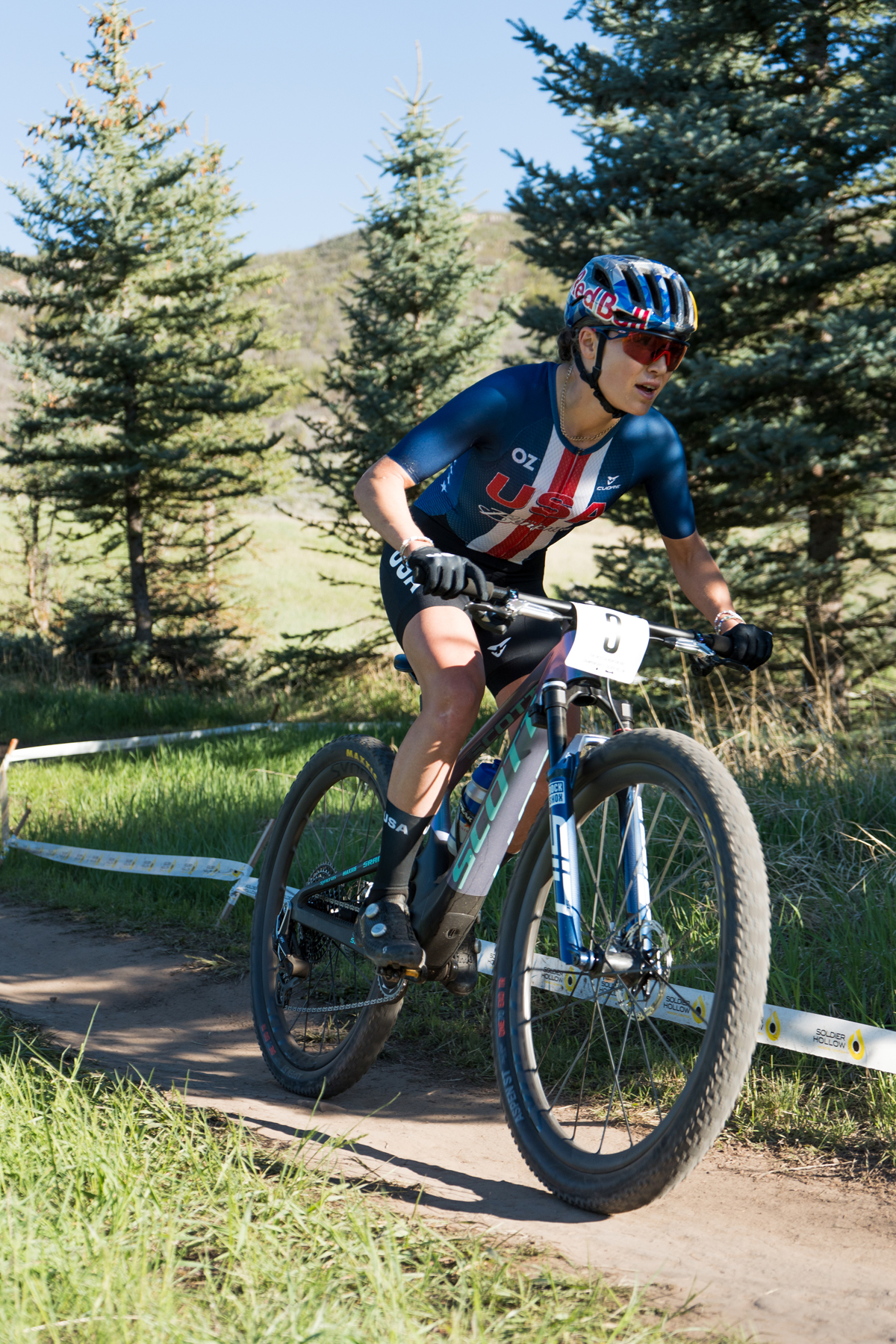
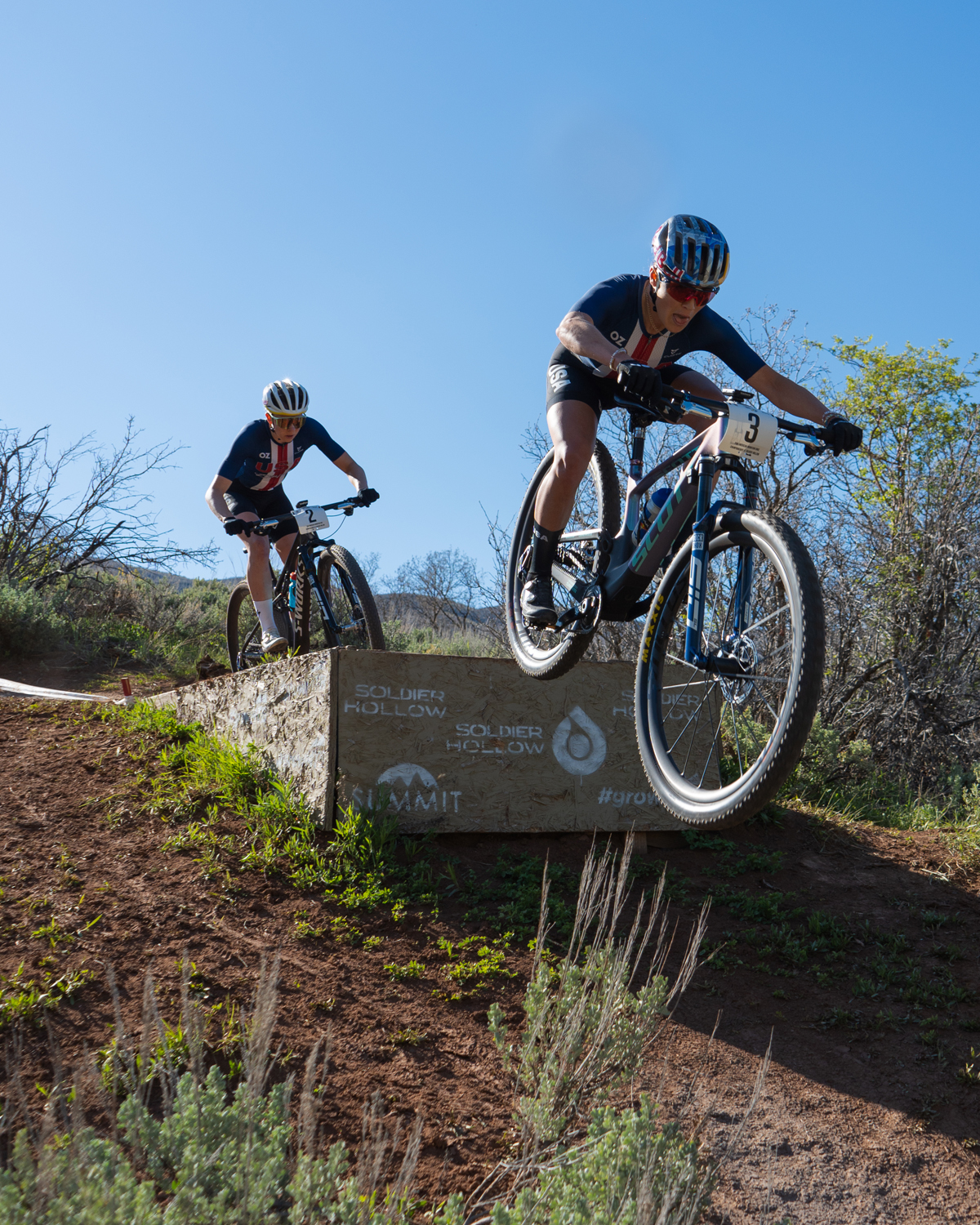
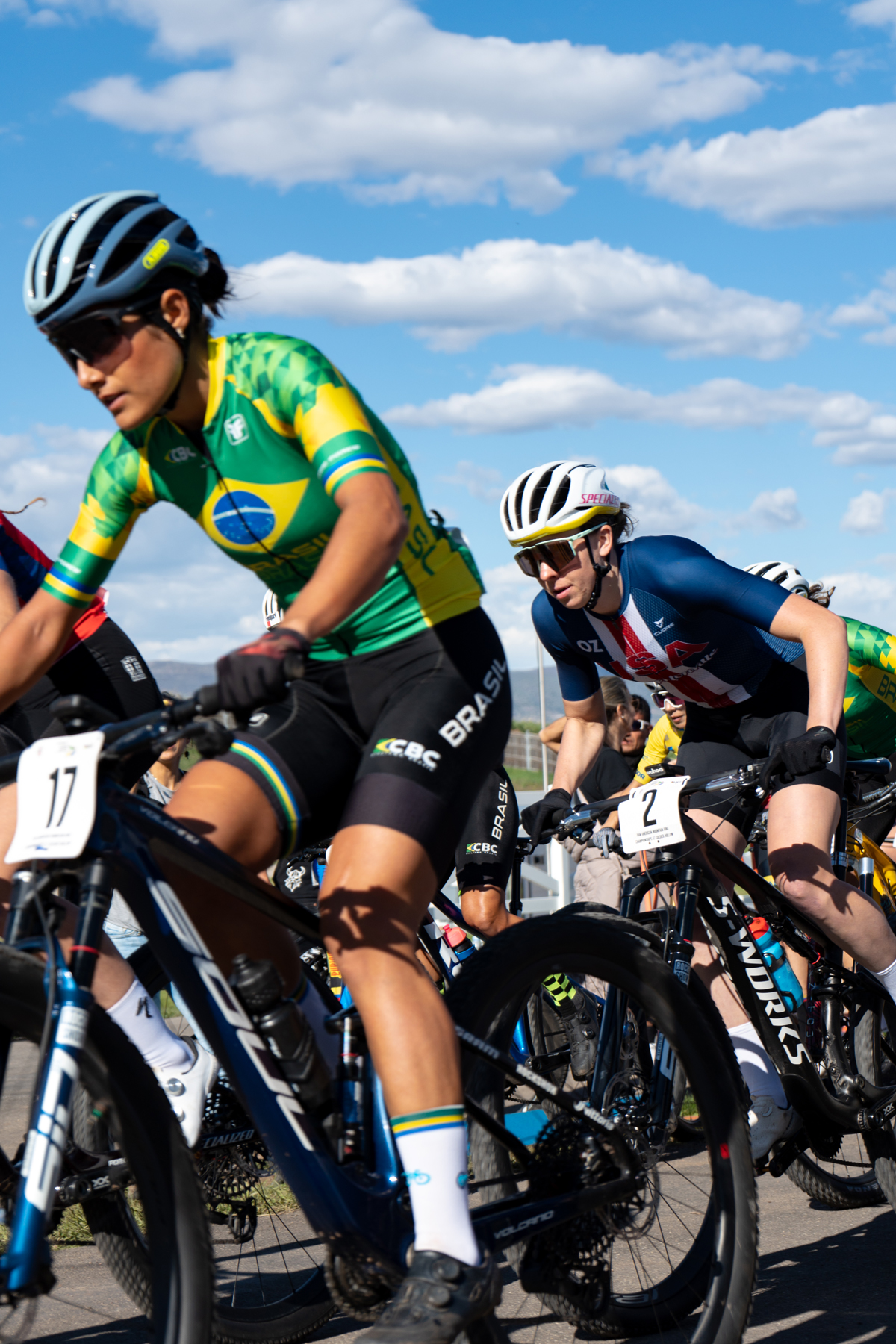
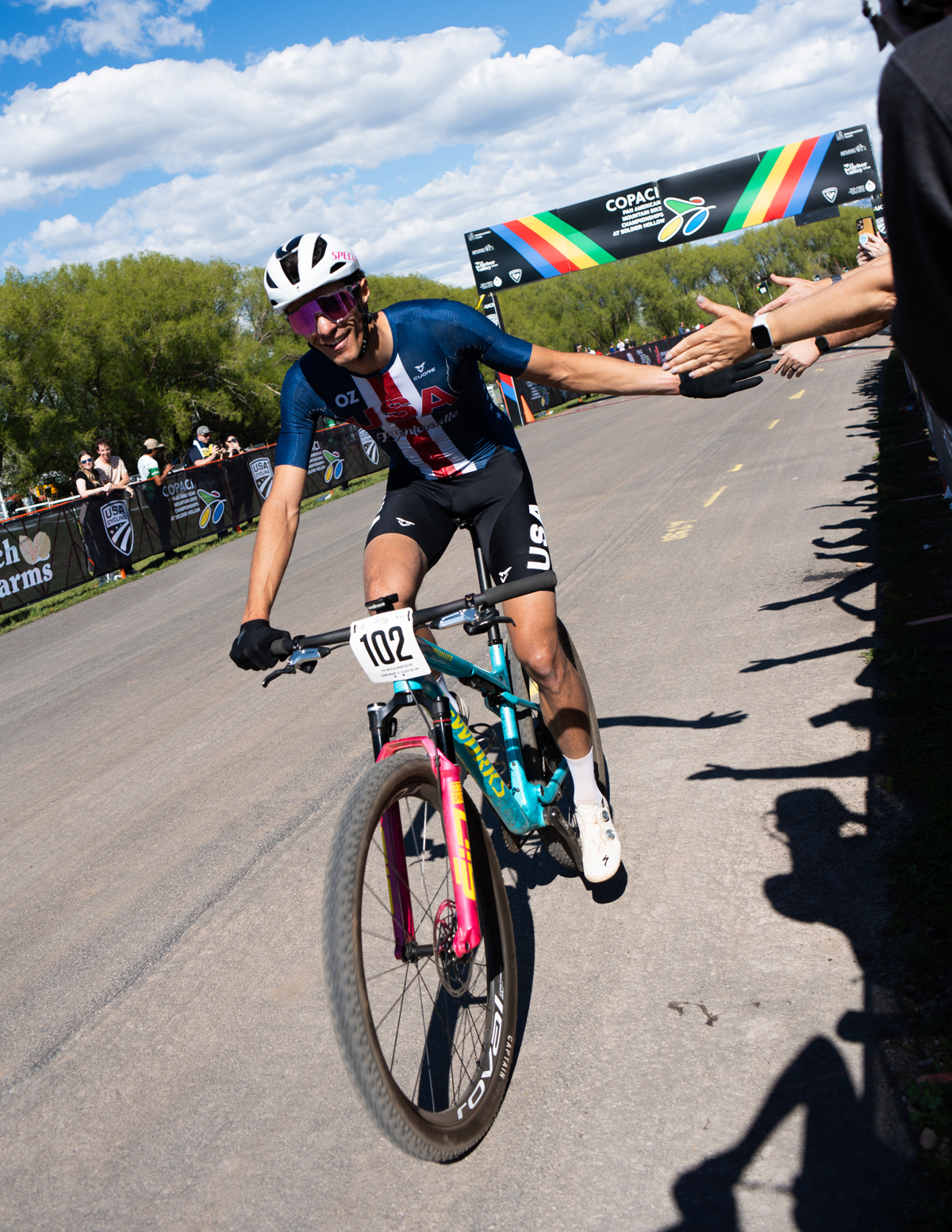
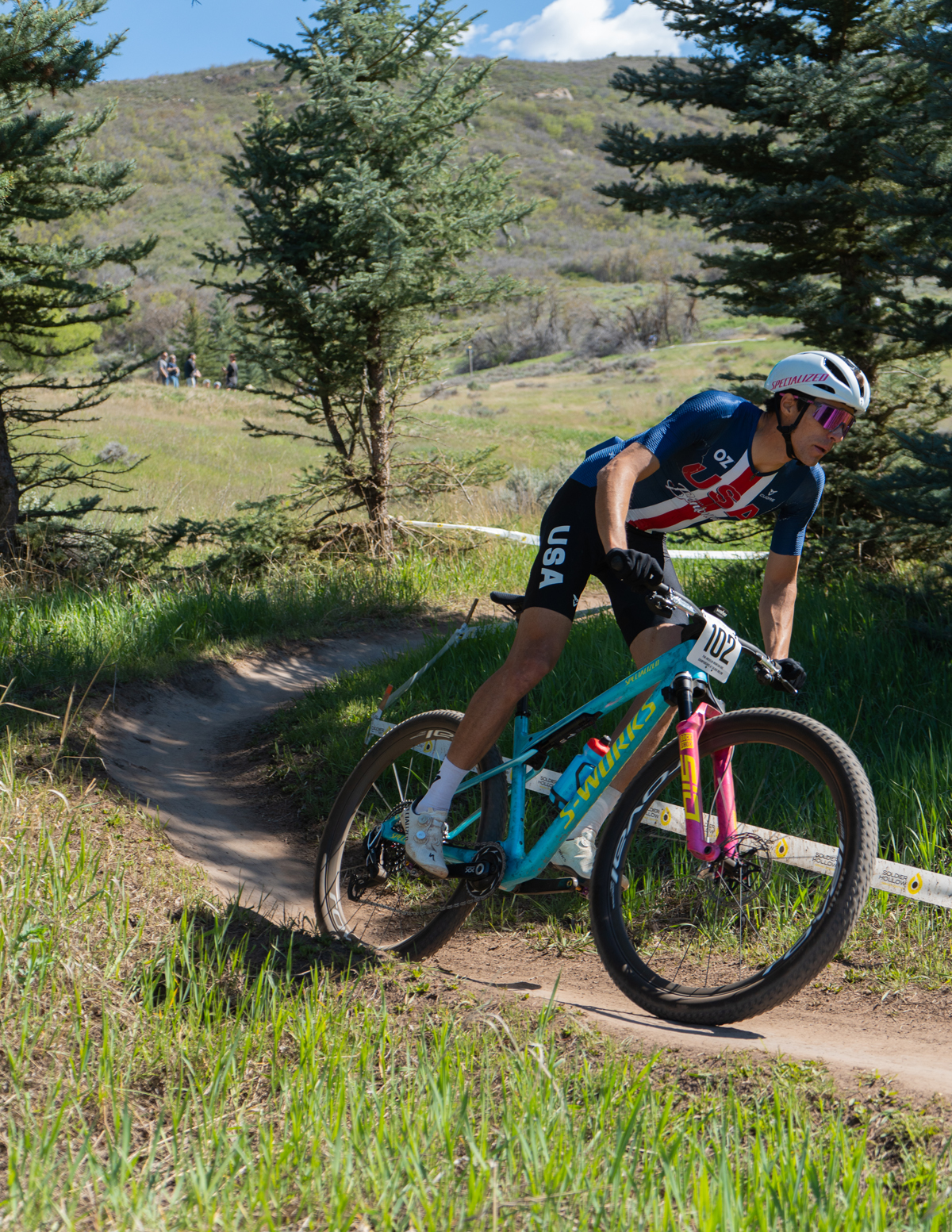
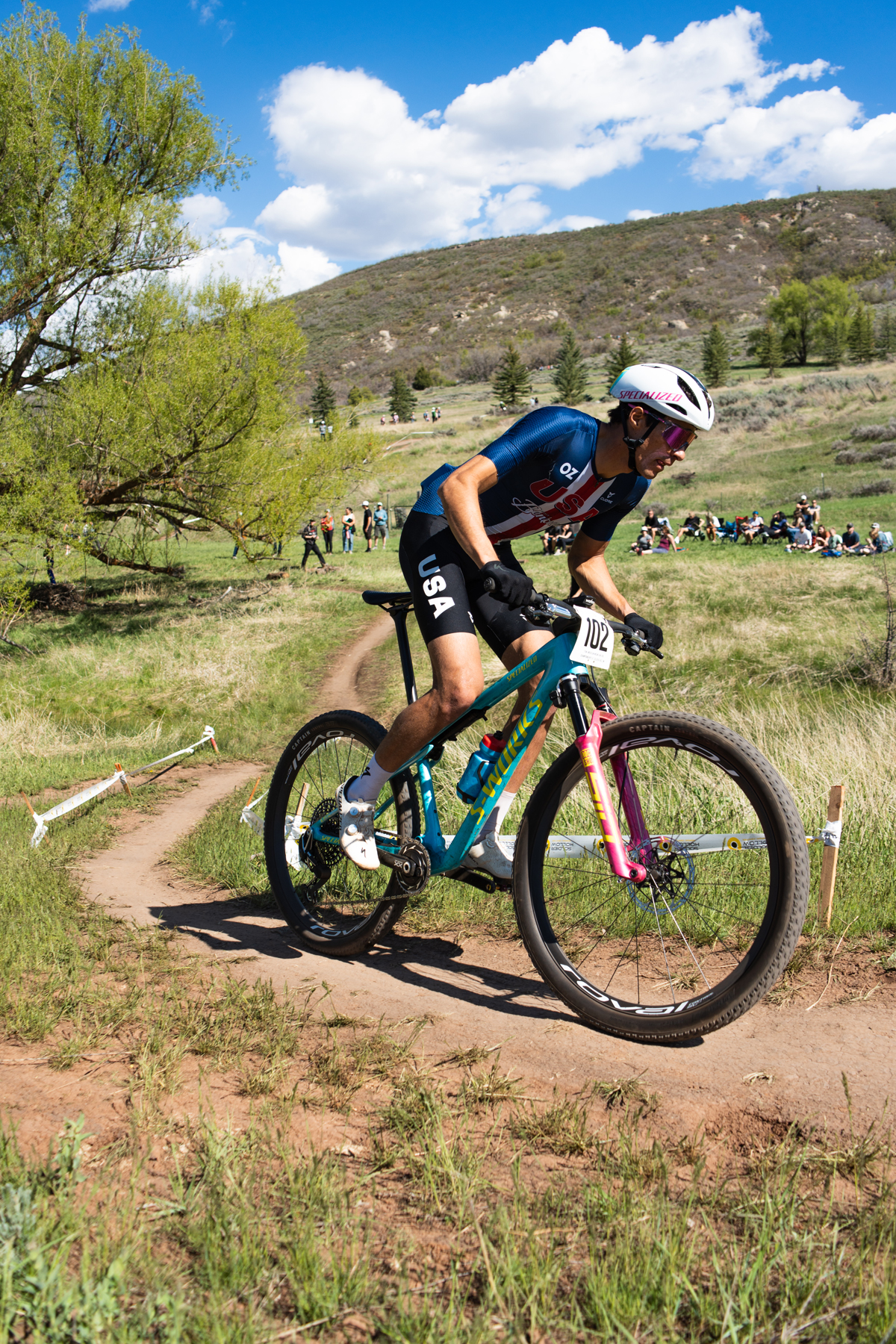
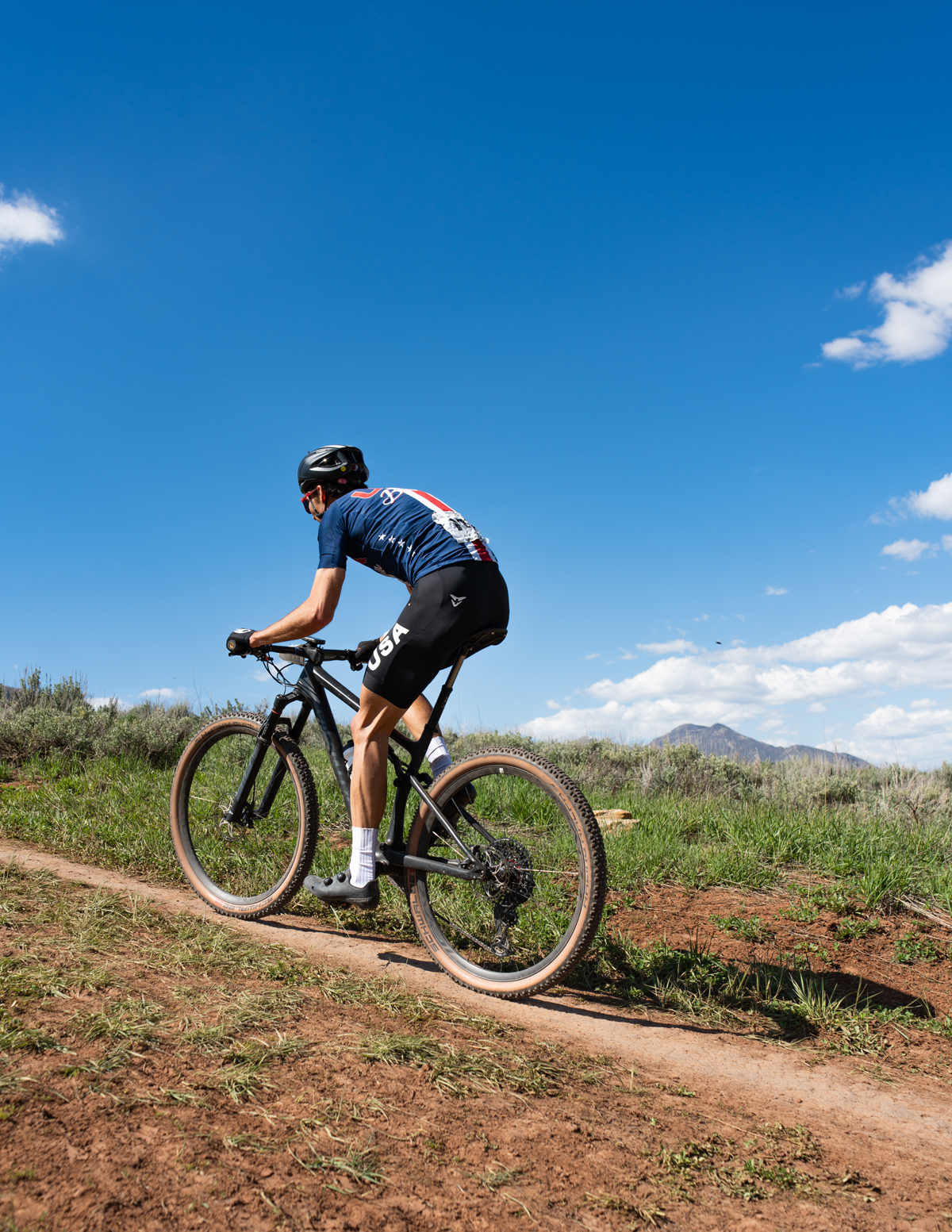
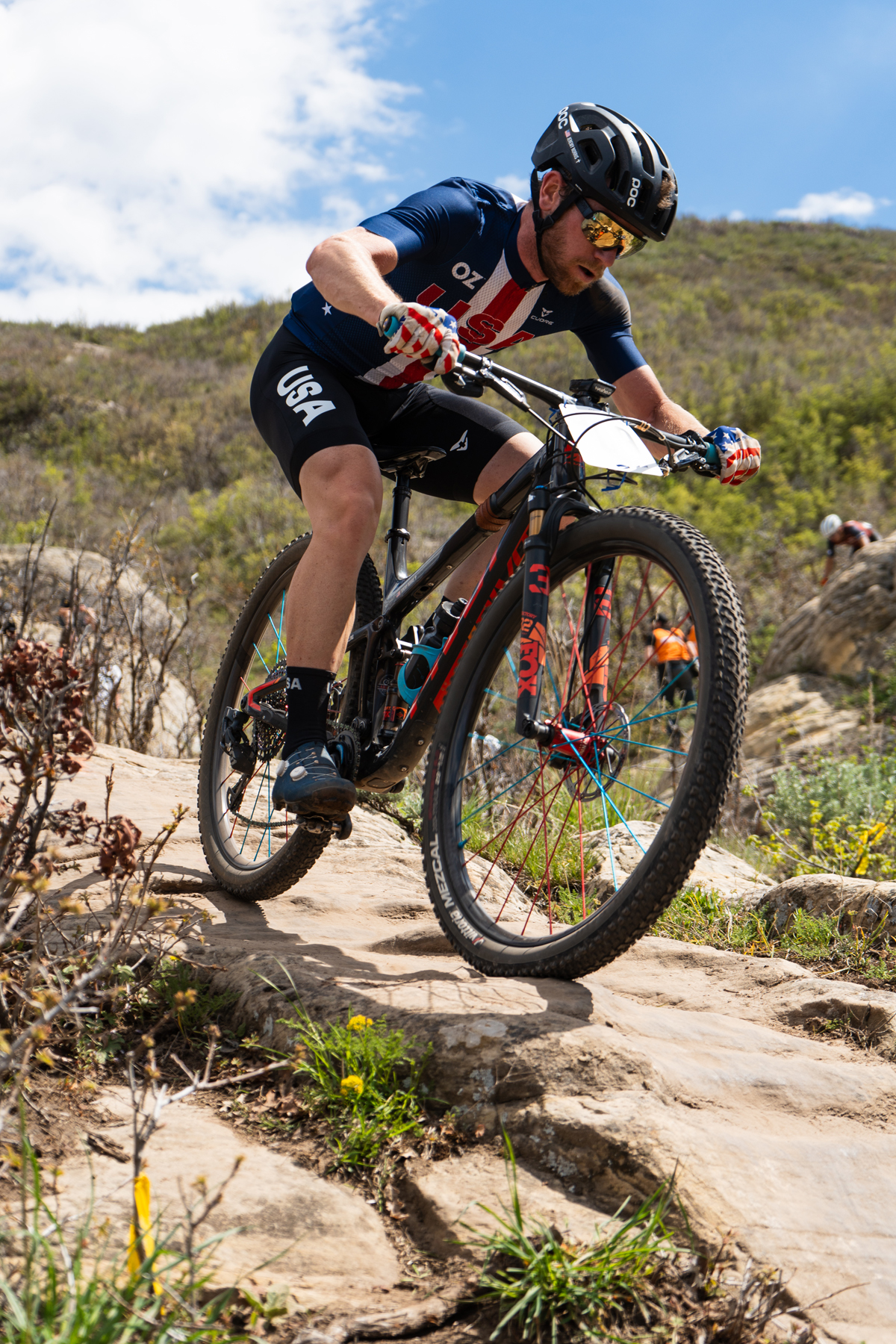
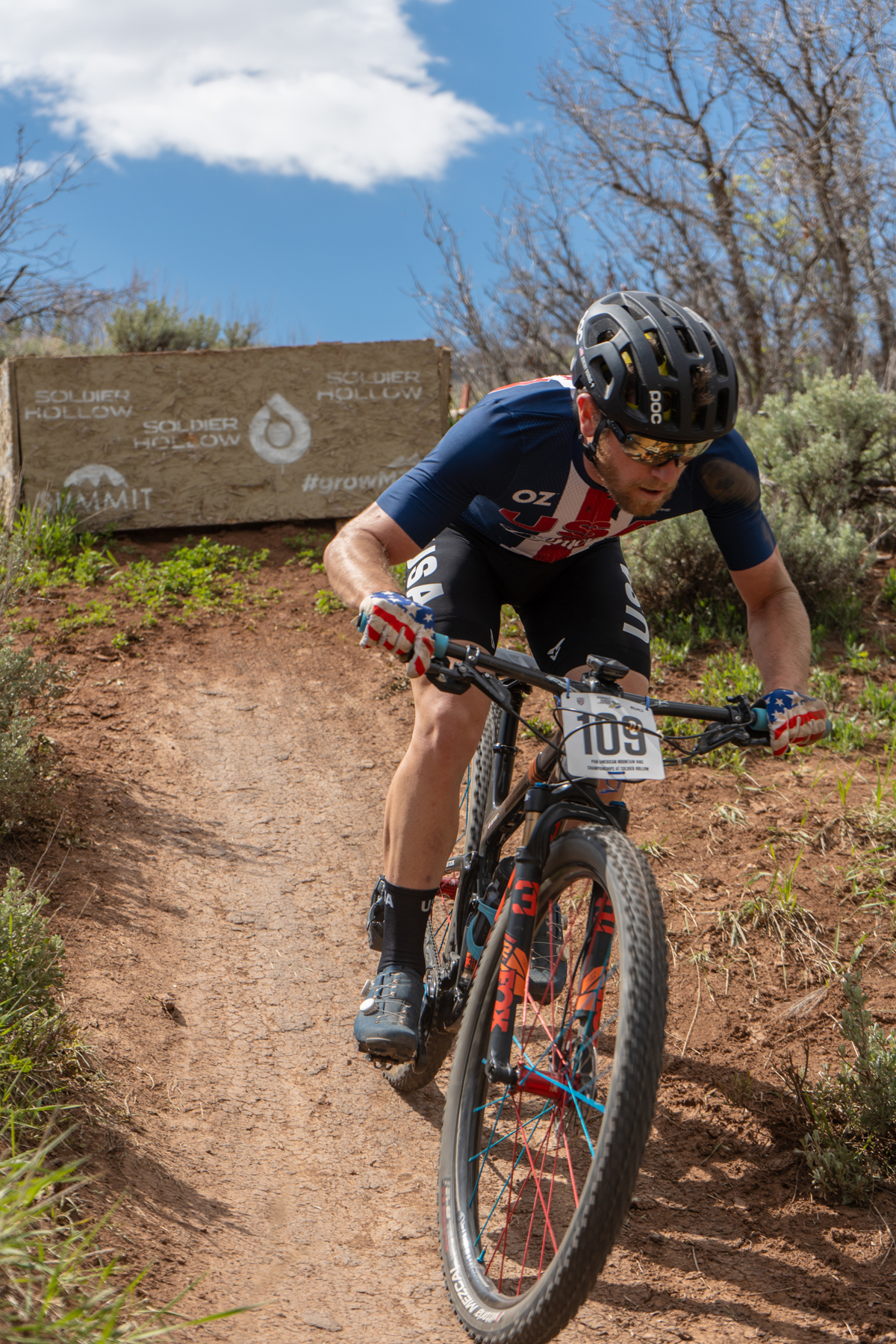
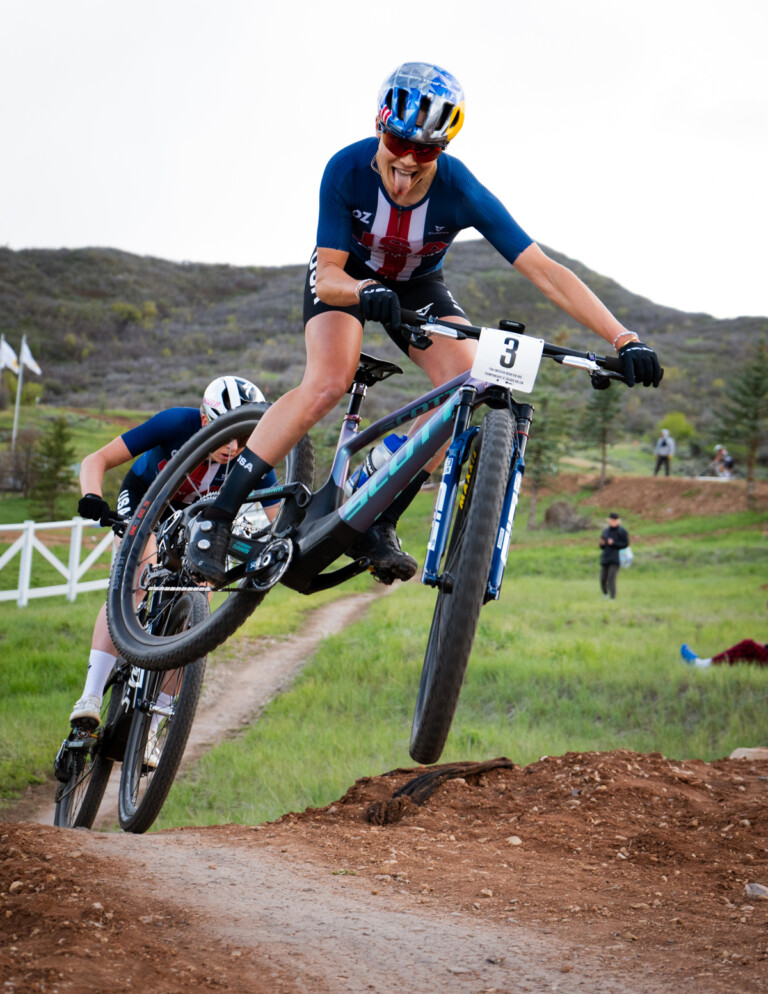
The 2024 Pan-Am Mountain Bike Championships were held at Soldier Hollow in Midway, Utah from May 8-12, 2024.
Cycling West presents a photo gallery by Kristen Roskosh of scenes from the races.
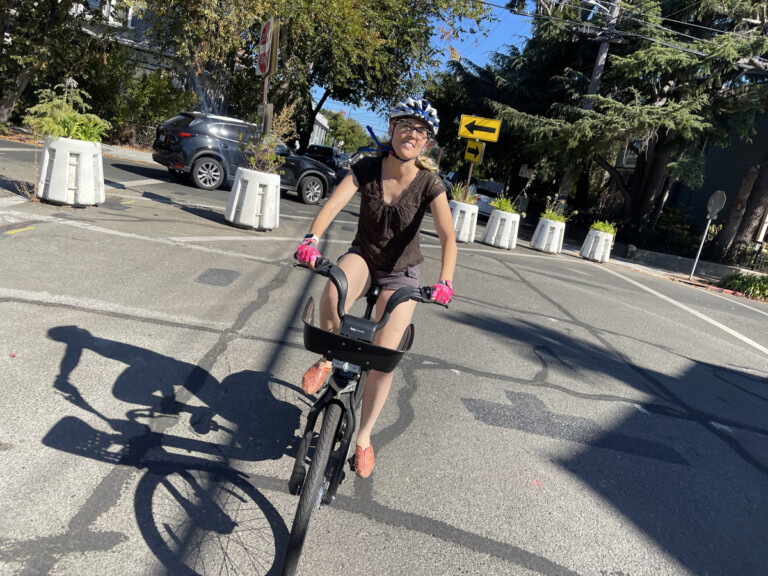
SAN FRANCISCO, California (May 24, 2024) — MTC and Lyft announced in April 2024 the addition of 24 new docking stations and 565 next-generation docked e-bikes to the Bay Wheels regional bikeshare system in Oakland and Emeryville. New e-bikes also are scheduled for arrival in Berkeley in the coming weeks, pending final local approvals.
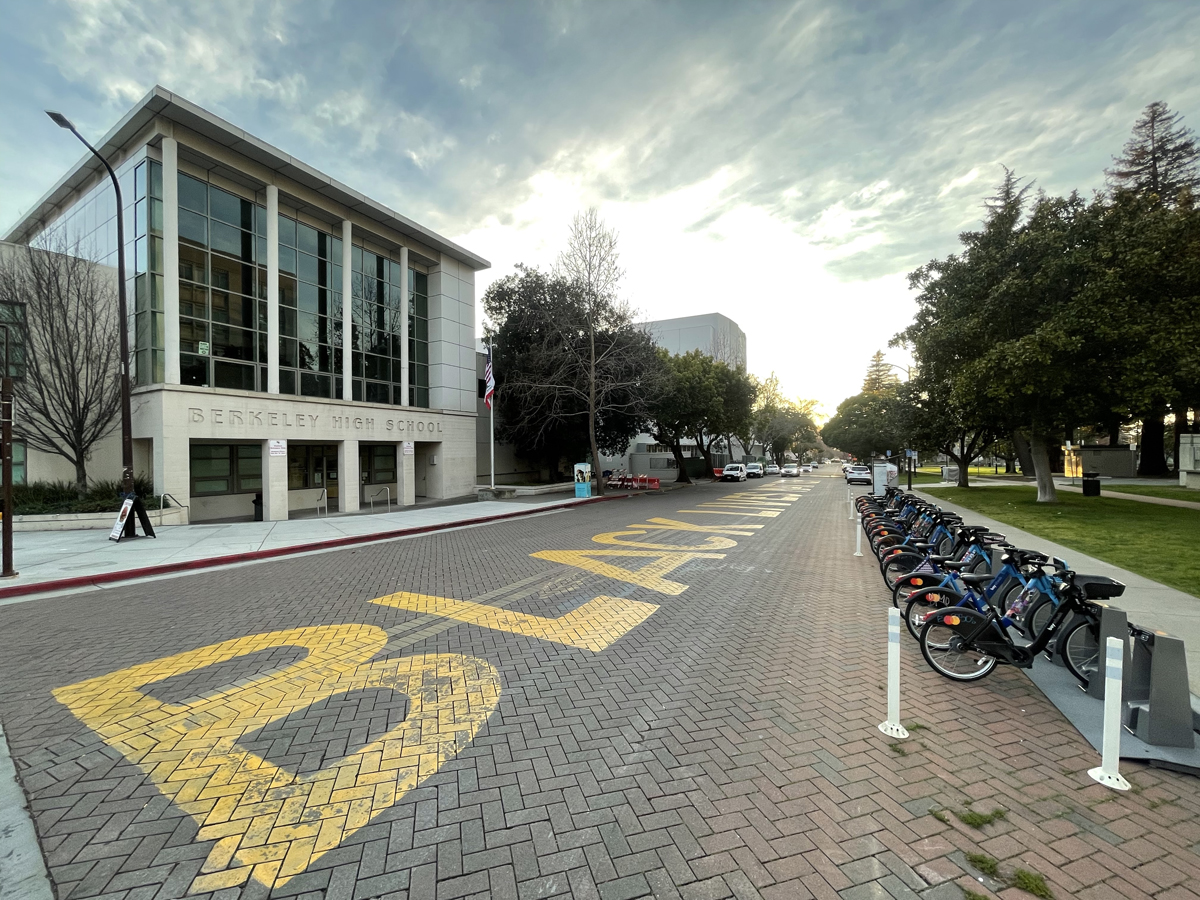
The East Bay expansion marks the second phase of a two-step Bay Wheels growth strategy that began last fall with the introduction of more than 1,500 new e-bikes and 30 new docking stations in San Francisco and San Jose as well as a reduction in both annual membership prices and members’ e-bike usage fees throughout the Bay Wheels network. These measures are aimed at improving Bay Wheels’ long-term sustainability by growing ridership and reducing operational costs. E-bikes’ ability to climb hills, travel longer distances, and attract riders of varying physical abilities could make them a transformational mobility option for Bay Area residents and visitors alike.
“Bikesharing, and e-bikes in particular, play a big role in our Plan Bay Area 2050 strategy for reducing greenhouse gas emissions,” noted MTC Chair and Napa County Supervisor Alfredo Pedroza. “The Commission committed $20 million to promote the use of e-bikes for more of the short trips people make each day. These improvements to the Bay Wheels system are a big part of that commitment.”
“This marks a significant milestone for Bay Wheels in the East Bay and for our partnership with MTC,” said Caroline Samponaro, Vice President of Transit and Micromobility Policy at Lyft. “The leadership shown by MTC and East Bay officials sets an example for other cities and regions around the country who want to strengthen their bikeshare systems to meet the challenges and opportunities of this moment in urban transportation.”
MTC later this year will launch a pilot program to provide reduced-cost annual Bay Wheels memberships for area college students. To enhance the growth of Bay Wheels’ e-bike fleet, MTC and Lyft also are piloting grid-connected charging stations using Lyft’s next generation station technology. Electrified stations improve e-bike availability for riders by increasing the number of bikes with sufficient battery charge and making operations more efficient. E-bike batteries traditionally had been charged in a warehouse and then manually swapped at the station.
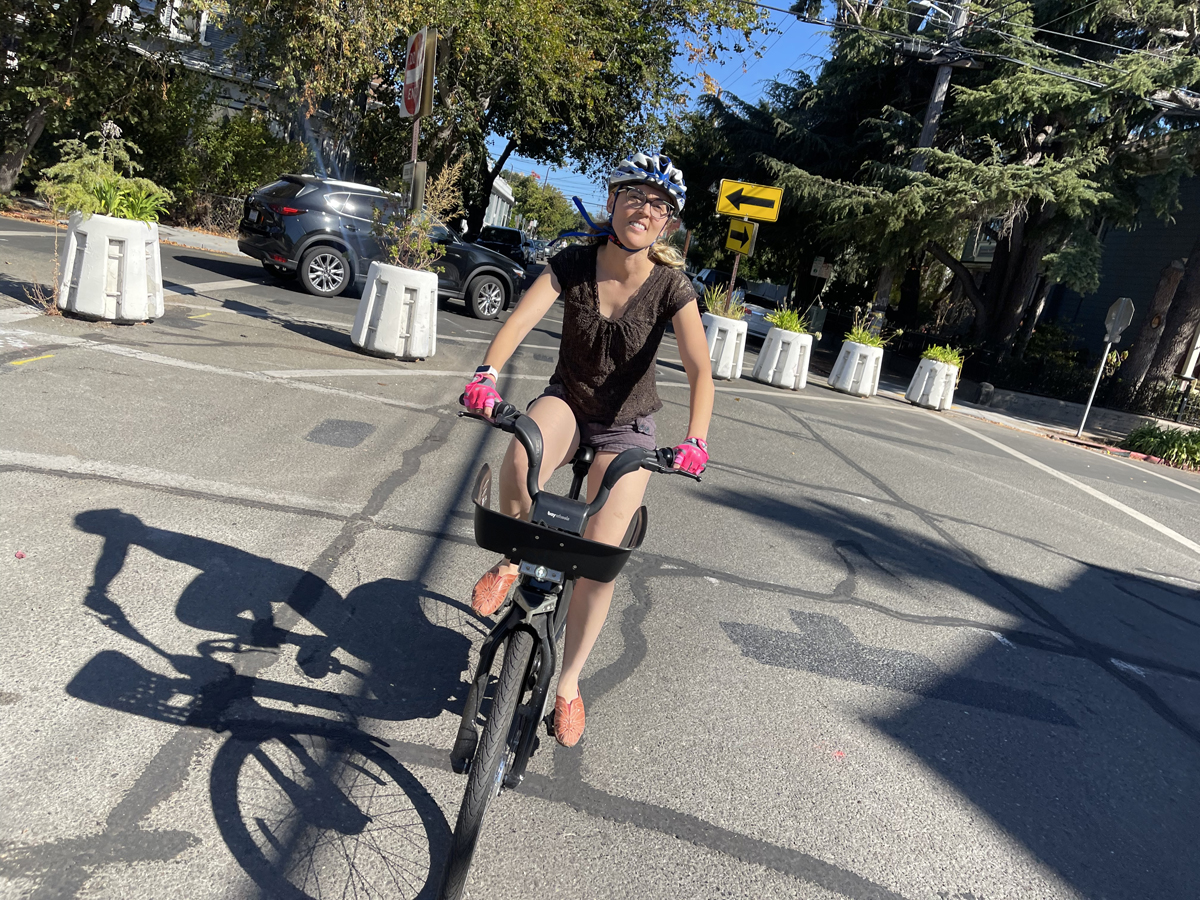
MTC and Lyft last November reduced the cost of an annual Bay Wheels membership to $150 from $169 and cut the cost for members to use a Bay Wheels e-bike to 15 cents per minute from 20 cents per minute. Monthly members now automatically transition to an annual membership at no additional cost when they renew for five consecutive months.
Bay Wheels’ next generation e-bikes are being used three times as often as classic pedal bikes. These new e-bikes have double the battery life, a more powerful motor for going uphill, improved stability and ergonomics, and better theft deterrents. They also use new bikes exclusively dock in stations to improve predictability and availability for riders.
“Berkeley is excited about the role every e-bike — whether shared or not — can play in achieving our transportation and climate goals,” said Berkeley Mayor Jesse Arreguin, who also serves as vice president of the Association of Bay Area Governments’ Executive Board. “The arrival of the Bay Wheels e-bikes will complement the e-bike loan and rebate programs provided by the City of Berkeley, the Alameda County Transportation Commission and East Bay Community Energy. More e-bikes give more people an alternative to driving.”
Launched in 2017, Bay Wheels is the Bay Area’s regional bikeshare program with over 6,000 bicycles — both pedal-powered and pedal-assist electric bikes — at more than 500 stations in San Jose, San Francisco, Oakland, Berkeley and Emeryville. Lyft operates the Bay Wheels program under a contract managed by MTC. MTC is the transportation planning, financing and coordinating agency for the nine-county San Francisco Bay Area.
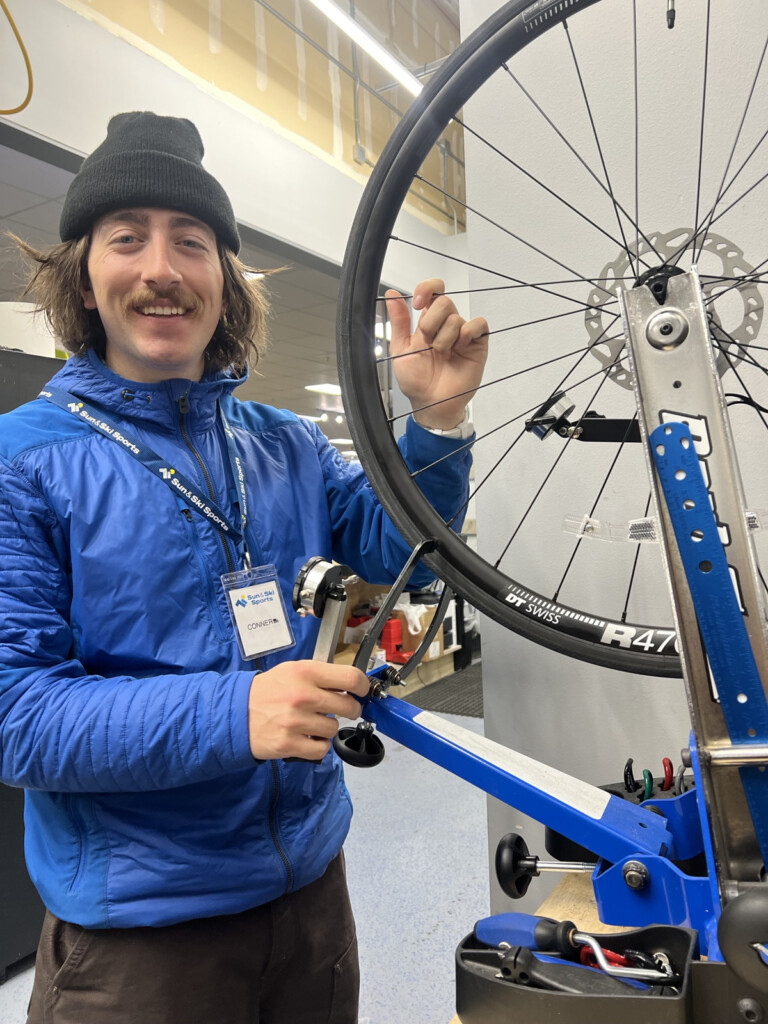
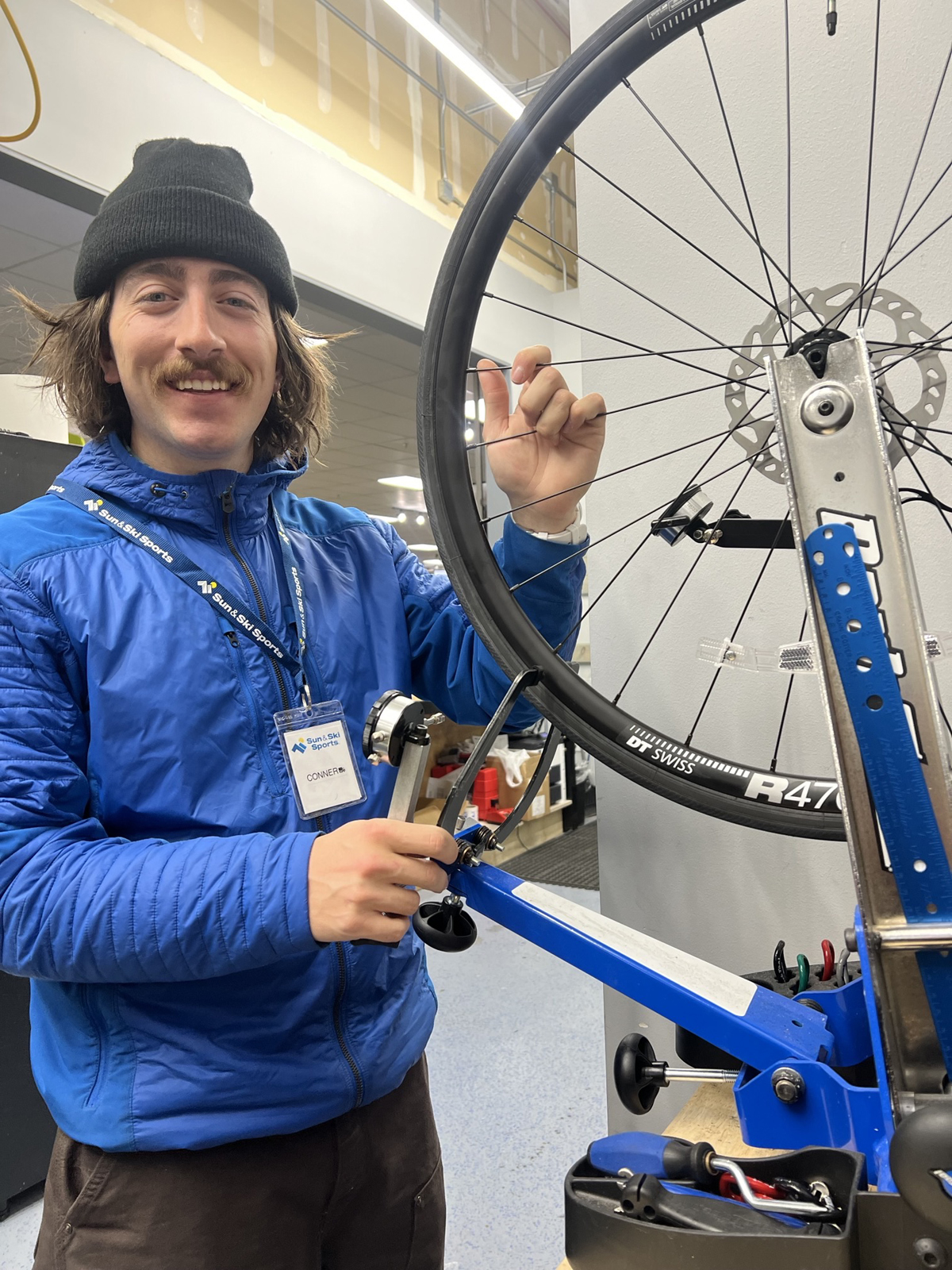
By Anthony J. Nocella II — Recently, I had the chance to sit down with Conner Lacey to talk about managing a bicycle shop and team. Conner has honed his skills at Contender Bicycles in Park City, and at Hanger 15 Bicycles in Millcreek, Utah. He currently manages Sun and Ski Sports in Murray, Utah.
Anthony Nocella: Being a manager entails a balance between possessing knowledge and skills and demonstrating care for both people and the environment. When establishing a bicycle shop or team, cultivating certain values is crucial. What are some of the important values you look for between your teammates and co-workers?
Conner Lacey: For both the shop and my teammates I’m looking for outgoing, fun, positive, and most importantly kind people, who are striving to pursue their passion for cycling. With that passion fosters a team that will work together and set goals for success.
AN: What are some of the most important skills and knowledge to have as a manager of a bike shop?
CL: First you have to be a good fit for a bike shop and vis versa. Let me explain, there is a lot that goes into running a successful shop; you have to be as knowledgeable as possible on all types of bicycles your bike shop caters to, (without being arrogant), which might not be all types of bicycles in general.
Some bike shops only cater to mountain bikers or road bikers, or e-bikers, or BMXers, or lowrider bikes, or used bikes, or affordable bikes, or triathlon bikes, or handmade bikes, or gravel/cyclocross bikes, while a few shops carry everything for the family.
I believe people who intend to spend thousands of dollars and those that are only looking to spend a few dollars, should all be served with the same excellent and respectful quality of service so they can get out of the door set up on a bike for success. I do not believe that if you spend more you get better service, and if you spend less you should not get great service.
AN: As a nationally competitive cyclist who has been immersed in the Salt Lake bicycle community for your entire life, what aspect do you cherish most about the cycling scene in Salt Lake City?
CL: I have been racing nationally road and mountain bikes for most of my life, one thing about the Utah cycling community that keeps me going is the generally friendly and outgoing nature of people. Though it can seem highly competitive and serious in Utah, most everyone is out there to have a good time. Road group rides such as TNE and Sunday Worship express that attitude that very well. I also see competitive cycling, but very friendly and fun attitudes at the local mountain bike race series Midweek and the Wednesday night weekly race series.
AN: What would you like to see more of in the cycling community in general and in Salt Lake City in particular?
CL: This one is tough, as much as I would like to see more high-level UCI mountain bike and road races locally, I really think we should be looking at supporting the youngsters in the Utah high school league, NICA (National Interscholastic Cycling Association). As great as that program is, it drills in a lot of these kids heads that cycling is only about competing and it’s not at all what that should be. Most teams focus on training for a race or racing, not bikepacking, bike safety on the road, dirt jumping, bike polo, fixie riding, lowrider bikes, or other fun activities with bikes. We should strive to give them that passion to just ride, having fun on a bike is much more than just being on a racetrack. The local Group Maybird Cycling is doing a great job at just that.
AN: What do you think we as cyclists can do to protect environment more?
CL: Commute! Not only is it good for the environment. It’s a really nice way to clear your head to or from — work, relationships, school, politics, or family.
AN: What would you say are the five best mountain bike trails in Utah and why?
CL: I have always tough time thinking of the best mountain bike trails in Utah, but the ones I always go back to are the; Mag 7 trail system located in Moab, Utah, Jacob’s Ladder in Corner Canyon Trails located in Draper, Utah, Pinecone located in Park City, Utah, Mill D located in Park City, and The Zen Trail located in Saint George, Utah.
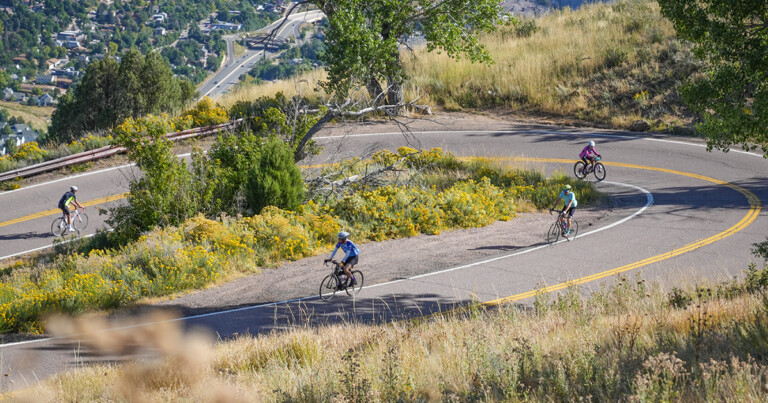
DENVER, Colorado (May 13, 2024) – Neary 2,000 cyclists will experience Denver’s most bikable streets, dedicated lanes, trails, and parks on Saturday, September 28, 2024, at the Coldwell Banker Denver Century Ride.
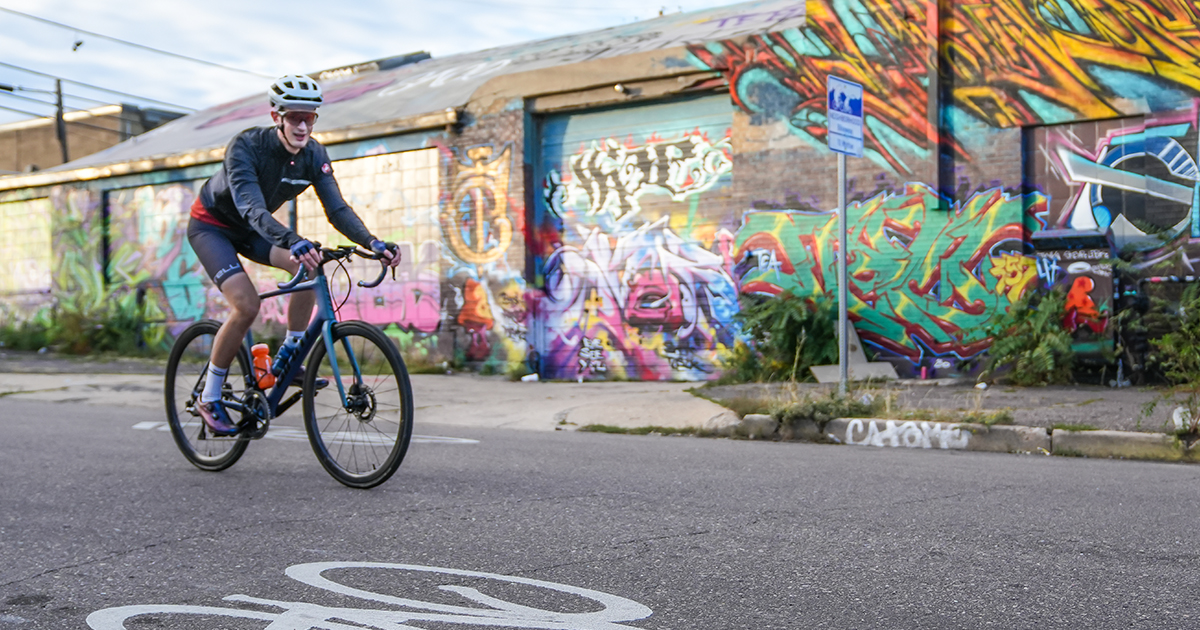
Celebrating its 13th year, this legacy bike tour provides cyclists of all abilities the opportunity to discover Denver on two wheels as they “cycle the city.” Starting and ending at The Shops at Northfield in Central Park, (8340 Northfield Boulevard, Denver, CO 80238), the Ride provides four courses, 100 miles, 85 miles, 50 miles, and 25 miles, showcasing many of the bicycle commuter routes that connect the city and surrounding communities.
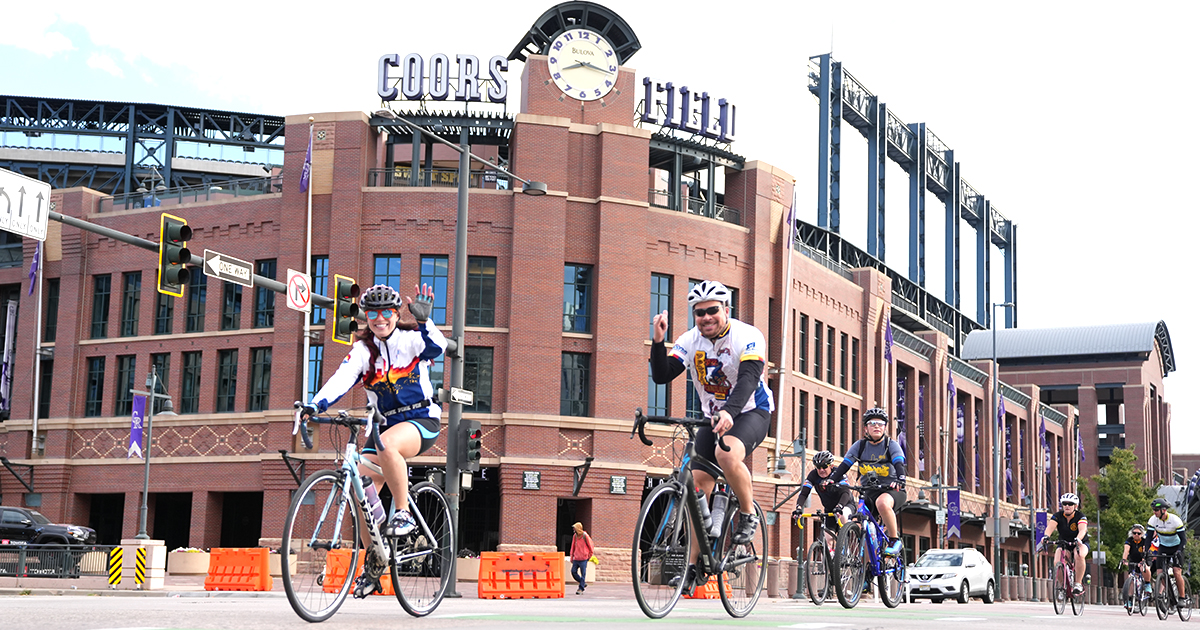
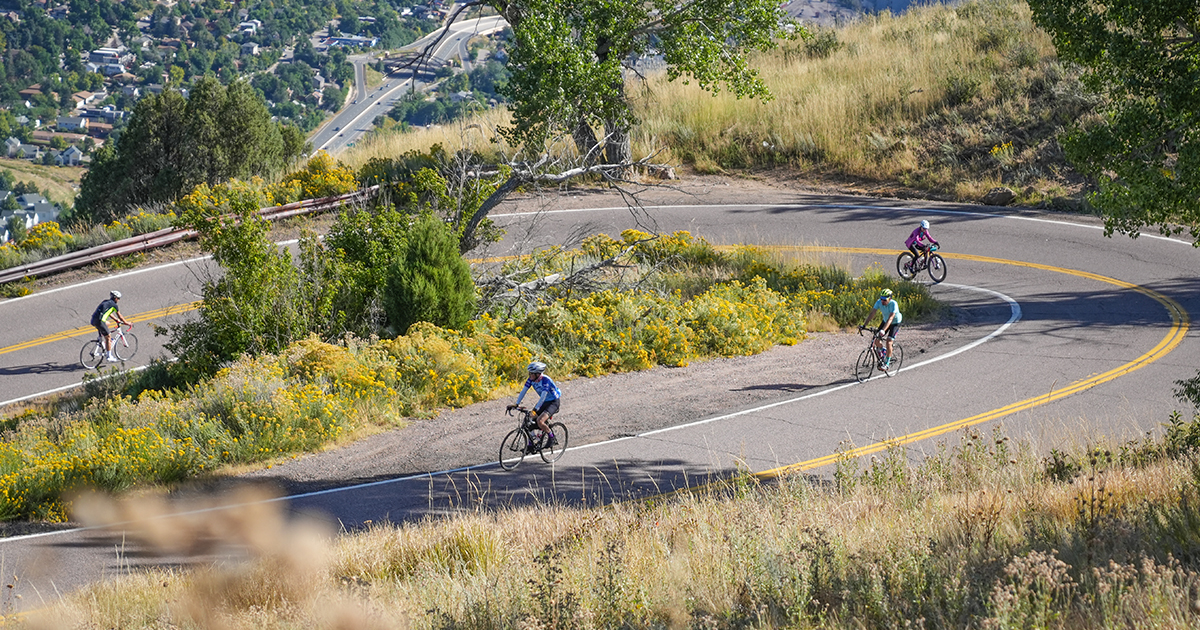
The Denver Century Ride’s four courses link cycling lanes, roadways, and biking paths that intertwine throughout the city for a casual cruise, a commute, or a challenging workout. Cyclists will roll past Union Station and Coors Field and through city parks. Based upon their selected distance, they can challenge themselves to climb Lookout Mountain and coast along the Hogback.
“What makes the Denver Century Ride so unique is its complexity,” explained Ride Director Sabra Nagel. “Producing a ride in an urban area like Denver and the surrounding municipalities requires a lot of cooperation and support from all the entities touched by the cyclists. The Cities of Denver and Lakewood have been gracious in permitting us to traverse their parks using a network of multi-use trails. This permission is special to the Denver Century Ride, she said”
“In addition, the Denver Police Department supports the ride with more than 50 officers to make sure the first 16 miles are as much of a rolling parade as is practical. Once the longer routes roll out of the city the support continues with assistance from the Colorado State Patrol, City of Golden PD, Jefferson Co Sheriff’s Office, Town of Morrison PD, Littleton PD, and Cherry Hills Village PD. Every community the ride touches reviews the route provides suggestions, and determines where support is needed,” Nagel added.
This is a fully supported ride with aid stations, course marshals, and bike mechanics from Epic Mountain Gear, as well as meals & nutritional supplements to meet the needs of cyclists of all experience levels and abilities.
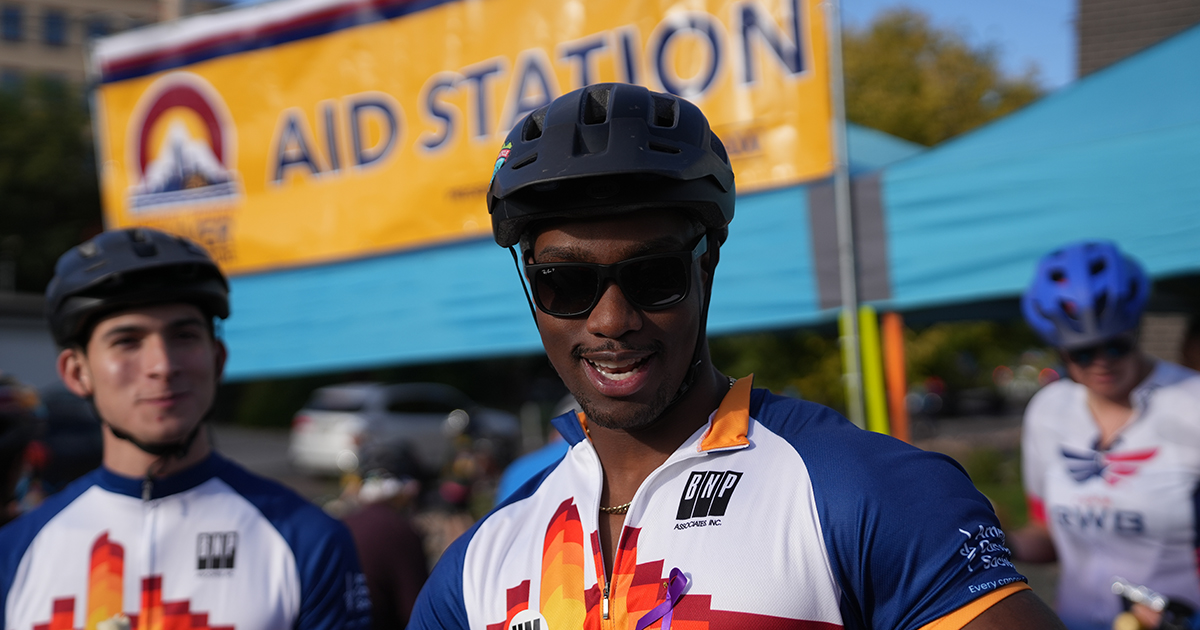
Considered by many to be Denver’s best post-ride celebration, cyclists as well as their families and friends are invited to celebrate their achievement at the Breckenridge Brewery Post Ride Street Party at the Shops at Northfield Stapleton. Family members are encouraged to join the spirit of celebration, frosty beers, fantastic food options, and a lifestyle expo, making a perfect finale for a great day on the bike.
The Coldwell Banker Denver Century Ride is a Champion Partner of Bicycle Colorado providing more than $100,000 to the state’s leading cycling advocacy organization. “This partnership allows us to execute our mission which is all about ensuring that every person who wants to ride a bike has access to safe cycling,” commented Pete Piccolo, Executive Director of Bicycle Colorado.
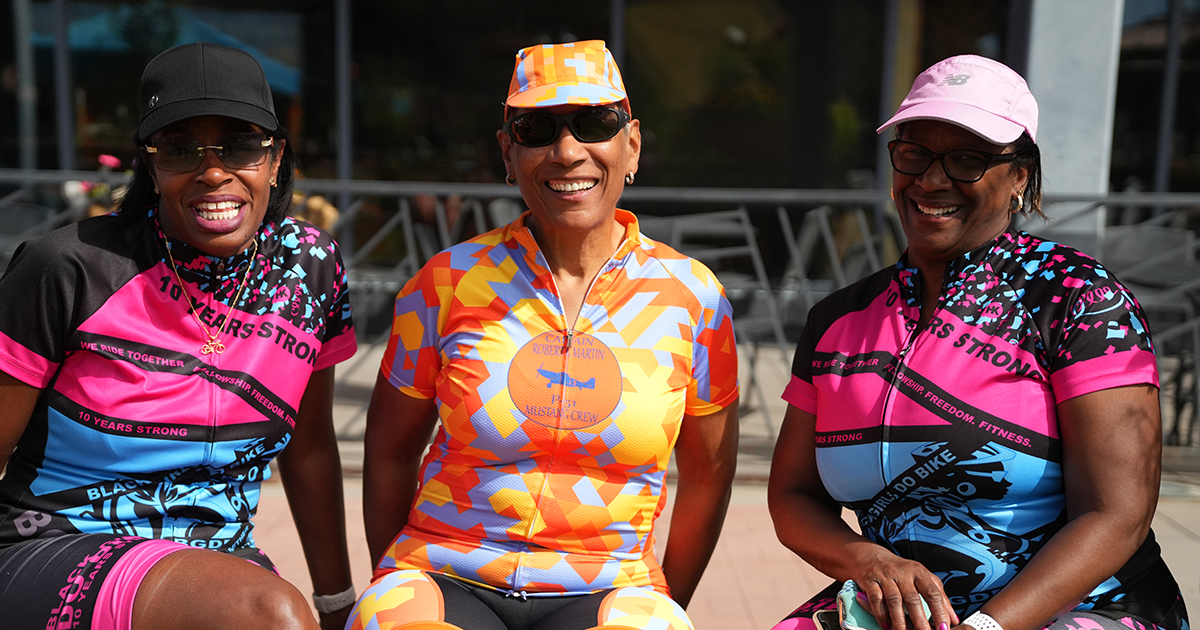
Last year a total of $25,000 was directly contributed by the ride to local charitable organizations including Bicycle Colorado. Further in 2023, the ride’s Charitable Partners Program generated more than $200,000 in fundraising pledges and donations for nonprofit causes.
For detailed route descriptions, complete event information, and updates, or to register for the ride visit DenverCenturyRide.com. Like us on Facebook at Facebook.com/DenverCenturyRide
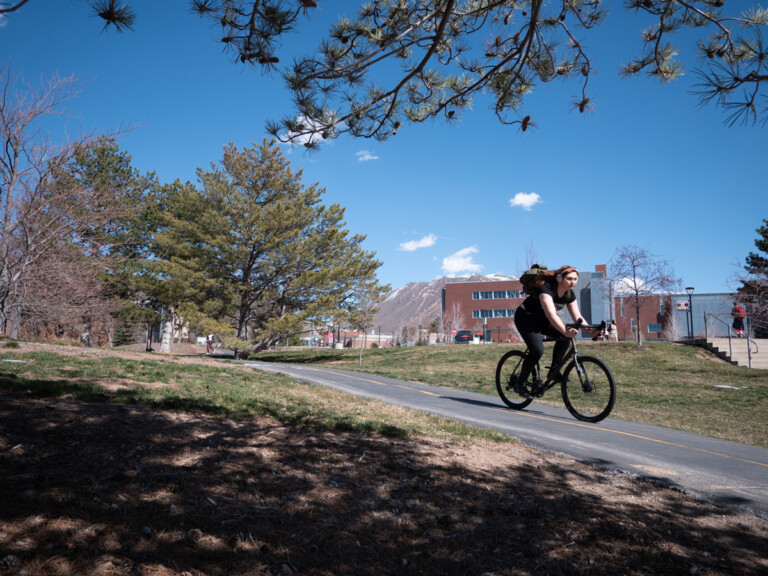
By Savannah Cottam — As we combat the intersecting crises of declining societal health and the degradation of Earth, a stark reality unfolds – those born after 1980 have never experienced a below-average global year or month in temperature (1). This underscores a shift in our climate. While Earth’s orbital changes might suggest gradual cooling, this has not been the case. Humans have caused 90-100% of global warming (2). This graph shows the temperature rise from 1880-2020 (3).
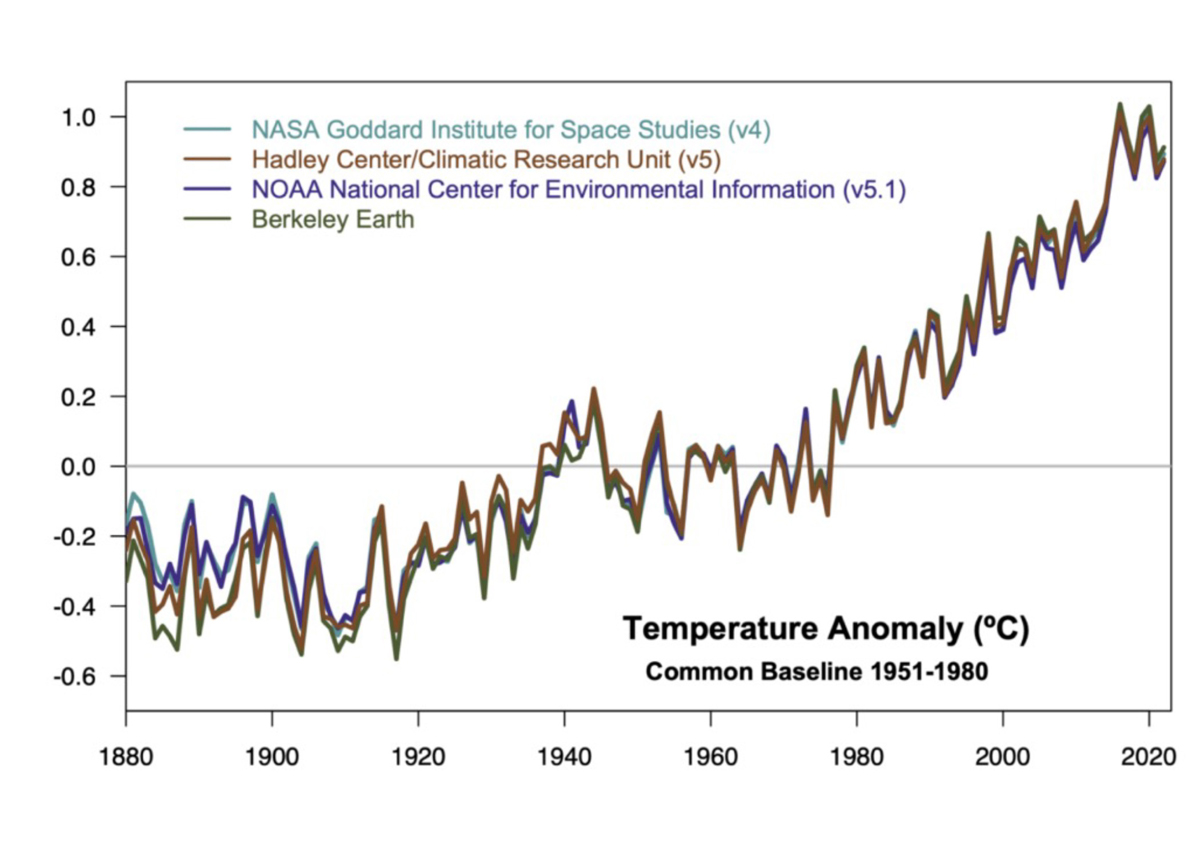
The deviation from expected patterns comes with severe consequences, impacting weather systems, triggering mass extinctions, and jeopardizing the well-being of communities worldwide. When confronted with this urgent dilemma, a potential solution emerges: cycling. Beyond being a mere mode of transportation, cycling embodies an integrated approach to mitigating both environmental and societal challenges. Here, we explore how the simplicity of cycling can pave the way for a healthier planet and healthier communities.
There are myths that many encounter when grappling with climate change. We can combat myths using science. “Climate has changed before, therefore humans aren’t responsible for climate change”. There is a portion of this statement that is true: yes, climate has changed before, however the rate of change is critical. Today’s climate change is 10-100 times faster than any previous changes in the past 50-60 million years. Other myths versus what scientists are saying are shown in the table below (4):
| Client Myth | What the Science Says |
| “Climate’s changed before” | Climate reacts to whatever forces it to change at the time; humans are now the dominant force. |
| “It’s the sun” | In the last 35 years of global warming, the sun and climate have been going in opposite directions. |
| “It’s not bad” | Negative impacts on global warming on agriculture health and environment far outweigh any positives |
| “There is no consensus” | 97% of climate experts agree humans are causing global warming |
| “It’s cooling” | The 10 hottest years on record have occurred since 2010. |
In 2021, the Intergovernmental Panel on Climate Change identified bicycling as a solution to ensure a sustainable world for everyone, both now and in the future. “Targets to reduce carbon emissions by 2030 in line with the 1.5-degree limit for global warming cannot be achieved without a systematic increase of cycling” (5). That one small decision you make to get on a bike versus in your car for a short distance errand has impacts on the air and noise pollution, the common good, as well as your own physical and mental health.
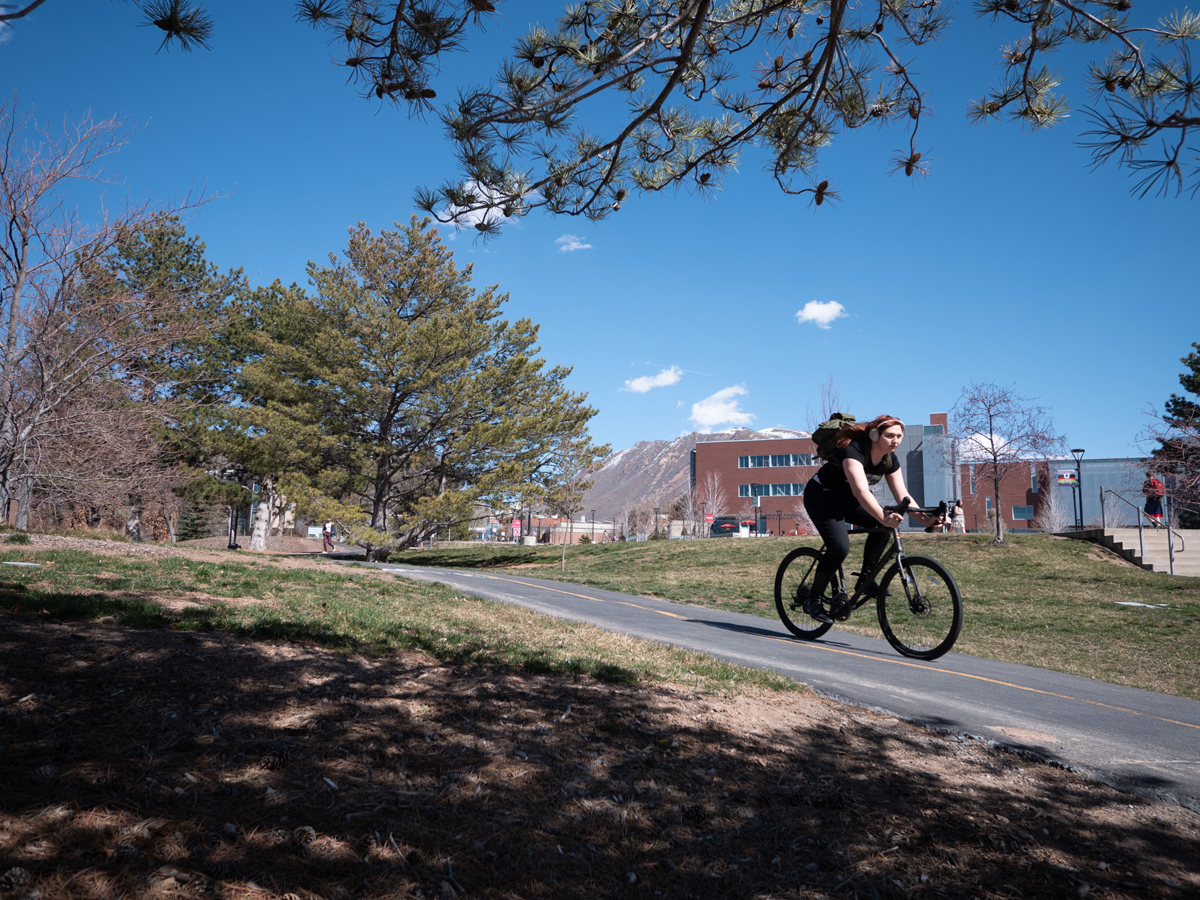
According to research, a standard vehicle releases around five metric tons of carbon dioxide a year. Choosing a bike instead of a car just once a day cuts an average person’s transportation-related carbon emissions by 67% (6). Cycling has a carbon footprint that is up to 30 times lower than a fossil fuel car. Surprisingly, cycling’s carbon footprint is less than walking or taking public transportation. Studies indicate, the significance of cycling in helping cities achieve net zero emissions could be 10 times greater than electric cars (6). In addition, noise generated by cars contributes to noise pollution. This has negative environmental impacts, disrupting ecosystems and leading to health issues for people (7).
From a community standpoint, cycling rather than driving is associated with participatory activities, helpfulness, and solidarity in the neighborhood thus positively impacting the orientation toward the common good. Cars reduce an individual’s direct contact with their environment. The direct experience that cycling has to the neighborhood environment leads to a stronger emotional bond within society. This emotional attachment of people to their neighborhood is considered a mediator for civic activities (8). Cycling gives rise to connectivity and orientation toward the common good (5).
From an individual’s perspective, cycling not only enhances brain functions like memory and creative thinking but also significantly contributes to cardiovascular health. The cardiovascular benefits of cycling include improved heart health, increased blood circulation, and reduced risk of cardiovascular diseases. Moreover, the endorphin release during cycling acts as a natural mood booster, further highlighting its positive impact on mental health. By reducing stress hormones like adrenaline and cortisol, cycling not only promotes relaxation but also contributes to better sleep quality. In essence, cycling becomes a holistic approach to well-being, combining physical fitness with improving mental health (7).
Cycling will save you money, “If you ride just 10 miles each week on average over the course of a year, you’ll save $299” (9). This could mean biking to various destinations such as grocery stores, events, meetings, or social gatherings just once a week. Moreover, if you increase your biking distance to 20 or 40 miles per week for commuting to work or school, your savings will substantially increase as you establish this habit. Choosing a bike over a car can eliminate the majority of expenses associated with driving. Once you’ve invested in your bike and any necessary equipment, your ongoing expenses are close to zero.
European communities have turned cycling into a transportation norm. In Denmark, 90 percent of the population own a bike while only 56 percent own a car. In Amsterdam, there are 800,000 bikes and only 263,000 cars. With a population of 779,808, that amounts to more bikes than people (10,11,12).
Why is cycling so prevalent in these places and how can we implement these ideas in the U.S.? Culture and infrastructure have proven to play a huge role in the norm and feasibility of cycling.
In America there is a certain brand or stigma around cycling. The feeling of not fitting in or being out of one’s comfort zone causes people that don’t fit the brand to veer away from cycling. In Denmark and the Netherlands all demographics bike, “The bike is an integral part of everyday life rather than a specialist’s accessory or a symbol of a minority lifestyle, so Dutch people don’t concern themselves with having the very latest model of bike or hi-tech gadgets.” Riding attire takes a similar ‘function over fashion’ aesthetic.” (13).
Time is at the top of many people’s priority list. To instigate a new form of transportation you must make it quick and convenient. According to Hanscom, Denmark has spaces dedicated to stacks of bikes parked in the hundreds instead of expansive parking lots. Additionally, bike lanes are visibly marked and undergo regular maintenance and ‘bicycle superhighways’ connect nearby suburbs to main city centers. Successful initiatives typically include: bike education programs, bike lanes, boulevards and off-street pathways, bike-sharing programs, cost-sharing programs, parking infrastructure, transit integration, and well-connected bike networks. (10,11,12). These changes range from small to big initiatives.
As an individual voting for those promoting better infrastructure or joining a cycling advocacy program will cause a ripple effect toward significant change.
As we navigate a climate crisis, the simple act of cycling emerges as a potent solution. Beyond reducing emissions and noise pollution, it fosters community bonds. By drawing inspiration from European models, we can redefine cycling in the U.S., making it inclusive and convenient for all.
Why not embrace the pedal-powered change? The time is now to make cycling accessible, not only for personal well-being but for the health of our planet. The revolution begins with each turn of the wheel, and the time to ride towards a sustainable tomorrow is now.
CHARLESTON, West Virginia (May 19, 2024) – The 2024 USA Cycling Professional Road National Championships concluded-on Sunday with the Elite/U23 Women’s Road Race and the Elite Men’s Road Race. Competing on a 13.1-mile course, riders had to battle two race defining climbs for multiple laps. Each climb had an average grade of 5.5%.
The Elite/U23 Women completed a total of 127-kilometers. The first climb up Bridge Road was just a few kilometers from the start which meant riders needed to move to the front early. Heading up the climb, the peloton immediately shattered apart leaving an opportunity for Veronica Ewers (Moscow, Idaho; EF Education-Cannondale) to push the pace on the downhill. Approximately 42 riders settled in to form a group at the front. On the second lap it dwindled down even further to less than 30.
With four laps to go, Lily Williams (Colorado Springs, Colo.; Human Powered Health) put in an attack. The group chose not to respond knowing that the climb would bring it all back together. On Kanawha Boulevard, the group split again but reconnected headed into the feed zone. Heidi Franz (Seattle, Wash.; Life-plus Wahoo) then launched a separate attack with just under 30-kilometers to go. Five riders joined her up the road. Lauren De Crescenzo (Atlanta, Ga.; Factor/TheFeed/Castelli/Maxxis/Perc) fought hard and was able to bridge up to that same group.
With 16.7-miles to go, Kristen Faulkner (Homer, Alaska; EF Education-Cannondale) attacked on the downhill heading into the city with Ruth Edwards (Nederland, Colo.; Human Powered Health) right on her wheel. The chase group became Nicole Steinmetz (Loomis, Calif.; UCI CTW: Cynisca Cycling), Lauren Stephens (Dallas; UCI CTW: Cynisca Cycling), Coryn Labecki (Tustin, Calif.; EF Education-Cannondale), and De Crescenzo. Without a rider up the road, Stephens increased the pace hoping to reconnect with the two leaders. Labecki reacted and hopped on her wheel. At seven kilometers to go, the two leaders were 1:50 ahead of the chasers. Faulkner strategically gave it everything she had on the final climb to get a gap on Edwards. At just over four kilometers to go, Faulkner’s gap had grown to 35-seconds. Crossing the line first after a tremendous effort, Faulkner earned the Stars and Stripes jersey. Edwards finished in second, and Labecki sprinted in for third. When Faulkner was asked about how it felt to win, she said, “I have never won it [a national title] before. I love riding in pink, but if there’s one thing better than pink, it’s the Stars and Stripes.”
View this post on Instagram
Nicole Steinmetz (Loomis, Calif.; UCI CTW: Cynisca Cycling) was the first U23 rider to cross the line. She also ended up sixth overall. Kaia Schmid (Marblehead, Mass.; Liv-Alula-Jayco) placed second, and Kayla Davis (Hidden Hills, Calif. Serious Cycling) earned third.
View this post on Instagram
Elite Women’s Results:
Under-23 Women’s Results:
In the event finale, 133 Elite Men lined up on the start line to complete their 212-kilometer race. The temperature hit its forecasted high of 81-degrees for the day, and riders were being fed ice socks as early as the second lap. By the end of the third lap, the field had dwindled down to 67 riders.
In a race-defining move at the top of lap five, Brandon McNulty (Phoenix; UAE Team Emirates) put in a massive group splitting attack across the bridge before the climb up Bridge Road. This group eventually caught up to leaders Colby Simmons (Durango, Co.; Team Visma | Lease a Bike u23) and Robin Carpenter (Norwood, Mass.; L39ION OF LOS ANGELES) at the bottom of the Wertz Avenue descent. The pack of twelve riders created a two-minute gap and became the peloton of racers in contention for the National Title.
With 37-miles to go, Scott Mcgill (Forest Hill, Md.; Project Echelon Racing), Neilson Powless (Roseville, Calif.; EF Education-EasyPost), Sean Quinn (Sherman Oaks, Calif.; EF Education-EasyPost), Gavin Hlady (Riverside, Calif.; Aevolo Cycling), and McNulty broke away. Heading back into the downtown stretch with 27.1-miles remaining, Quinn’s race came to a halt when he realized he had a front flat. His team mechanic was able to quickly fix it and get him back up and running. After a massive effort up Bridge Road, he reconnected with the leaders.
It all came down to a battle between Quinn, McNulty, and Powless in the final lap. When asked about the final few kilometers Quinn said, “I actually felt really good, I felt like I had a lot of power left in the legs, but it was more worried about cramping, ‘cause I started cramping with like two laps to go. Just tried to catch my breath, stay calm. I knew in the end I could use my final kick to win.” In an all-out sprint to the line between the three riders, Quinn earned the Stars and Stripes jersey with an extraordinary photo-finish win. McNulty finished in second and Powless earned third.
View this post on Instagram
Elite Men’s Results:
Thank you for tuning in for another year. The USA Cycling Professional Road National Champions will return to Charleston in 2025.
By Lou Melini — Imagine going back in time when you could hop on a train (perhaps with your bike) in the early evening from Salt Lake City, exiting the train in West Yellowstone the next morning. From June 11, 1908 to the late 1970s you could do that. With the tracks torn up after the train was abandoned, the railroad property was deeded to the Town of West Yellowstone and the United States Forest Service.
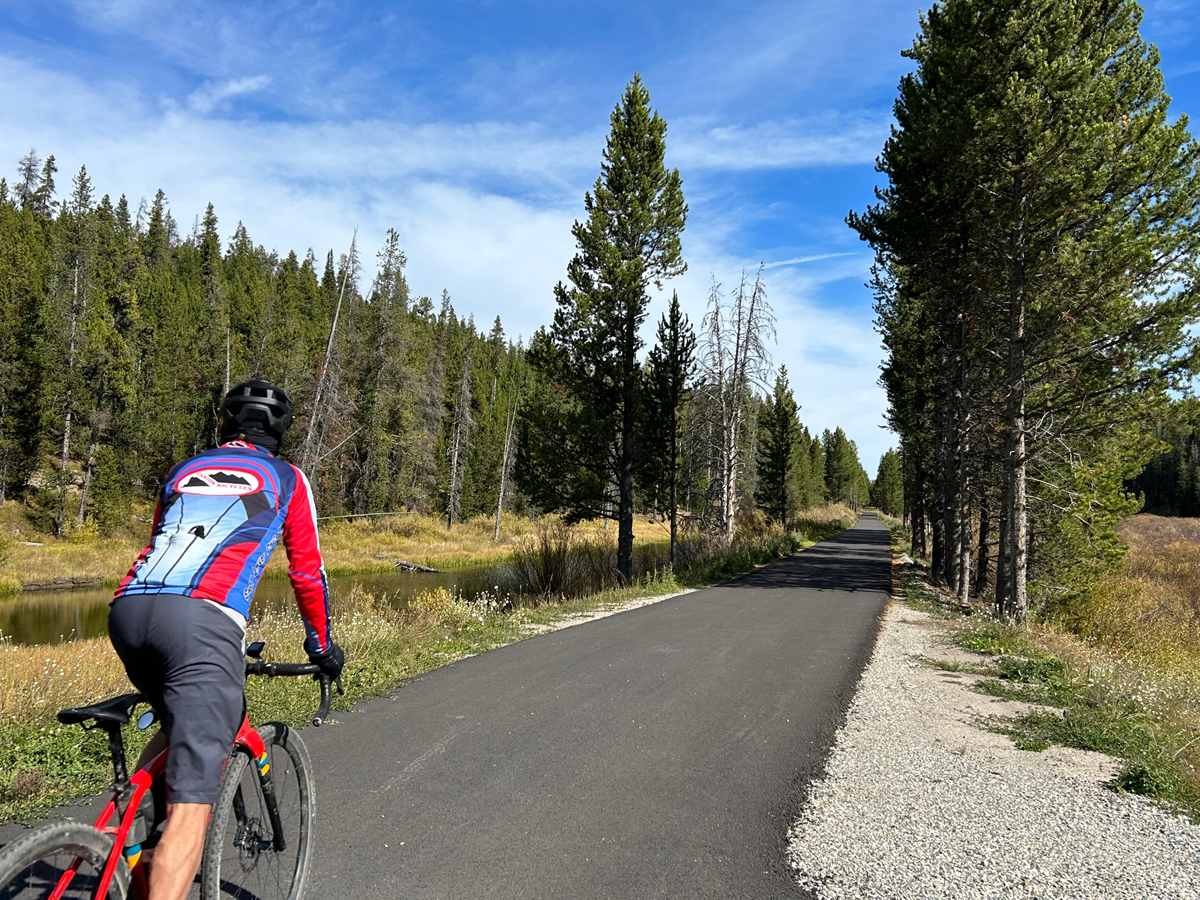
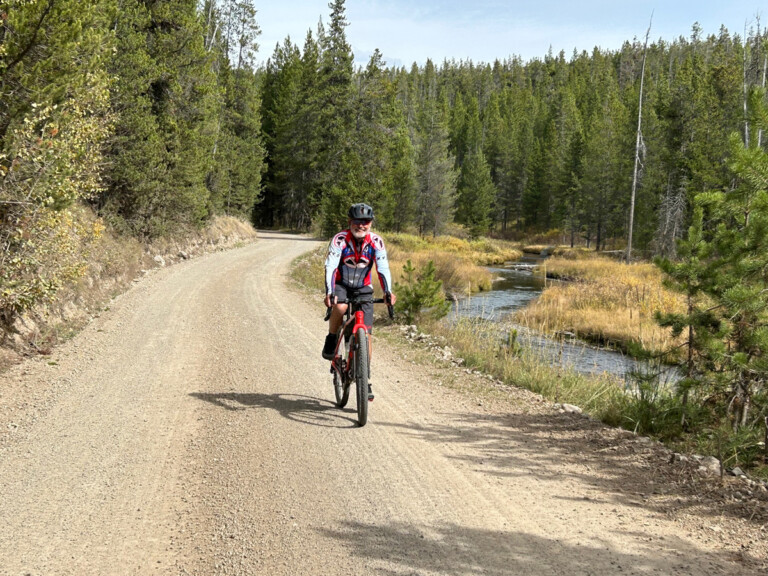
During the last week of September of 2023, Julie and I had an opportunity to ride the Yellowstone Shortline Trail. We were able to ride 7 miles on the paved trail until we came to the paving equipment. The final 2 miles to the Idaho border was to be completed, we were told, the first week of October. The West Yellowstone trailhead is located on Iris Street as it intersects with Obsidian Avenue. If you are traveling from Island Park as we were, take the first right (Iris Street) as you enter town and park at the end of Iris.
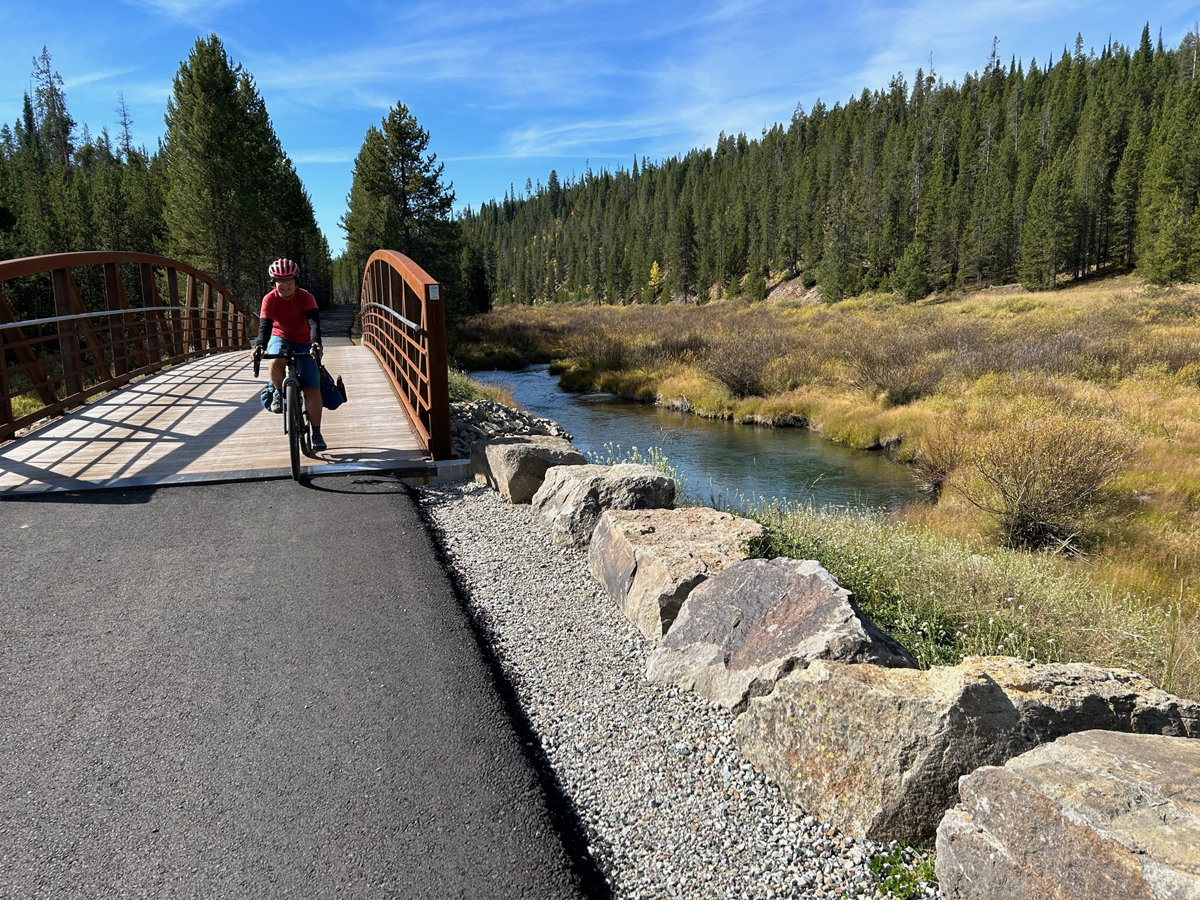
The trail has numerous educational kiosks and pullouts. It follows the south fork of the Madison River. Near mile 6 is the origin of the south fork. The scenery along the trail is, of course, worth putting this on your to-do list if you are visiting West Yellowstone. The paved trail, per Forest Service policy, is open to non-motorized vehicles which excludes e-bikes. This is bear country so having bear spray and knowing how to use it is a good idea. Bear spray can be rented at Free Heel and Wheel in West Yellowstone.
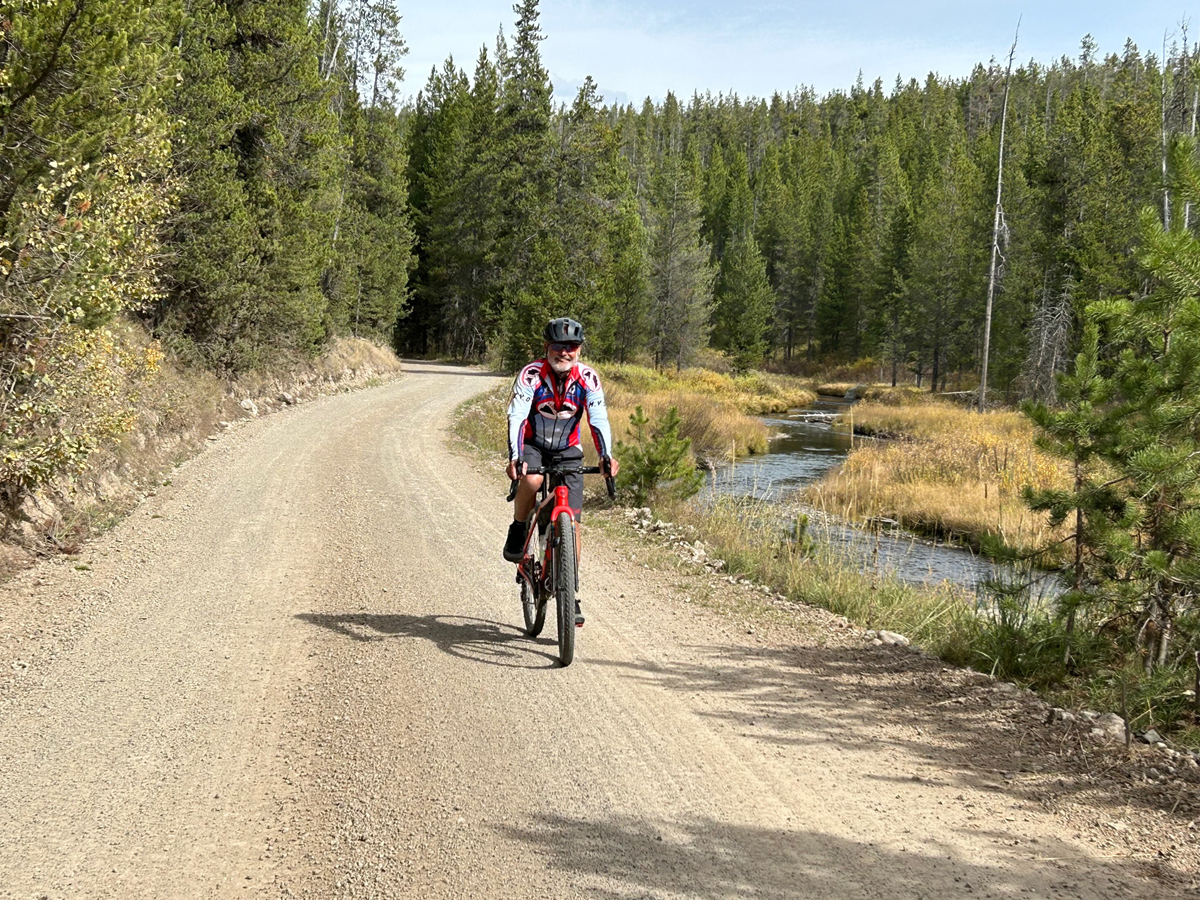
Converting the rail-bed has been dreams of many residents in West Yellowstone for decades. In 2019, with grant money in hand the project began. I should mention that the bike/Nordic ski shop, Free Heel and Wheel, in West Yellowstone was part of the team of locals spurring the development of the trail. As I understand the big picture, this trail will eventually connect with the paved trail in Tetonia and Victor, Idaho and go up and over Teton Pass. Cyclists will then connect with the bike trails in Jackson and onto the bike trail in Teton National Park. The Idaho portion east of Island Park is still in the dream phase and probably won’t happen in my lifetimeIf you prefer gravel, there is a parallel road that connects to the paved trail at the border at the 6940 foot Reas Pass so that you could ride up pavement and down gravel or vice-versa. Julie and I rode up and down each for a lengthy outing. The day we rode the ShortLine trail and gravel road was one of 4 gravel rides we did in the Island Park area during our 5-day stay. The remaining three rides ranged from 38 to 48 miles. One day was FS road 119 that connected onto FS road 082 that then brought us back near our timeshare on FS 291. Another day we used the Island Park OHV/ATV map and went off on shotgun gravel road (unnamed on most maps) that connected onto Kilgore-Yale road (part gravel-part paved) to return home. The third ride was an out and back on FS 119, 059,066, 001 to Montana border and back.
Get a map, bear spray, and enjoy the rides.
CHARLESTON, West Virginia (May 18, 2024) — The 2024 USA Cycling Pro Road National Championships continued-on Saturday morning with the U23 Men’s Road Race. With this being the first road race of the week, riders were on course early to scout it out. Two different courses were used in today’s championship events. The U23 Men competed on the 13.1-mile course that included an additional loop up Bridge Road, while the Junior Men and Women competed on a nine-mile course that looped around the outskirts of downtown Charleston.
The U23 Men had 91 athletes line up on the start line Saturday morning. With dense fog settling on the course, the first few laps of the 148-kilometer race were slick which made riders cautious on the steep descents. With over 1000-feet of climbing per lap, the field dwindled early due to the elevation gain. The first move to stick was made by Evan Boyle (Niskayuna, N.Y.; Hagens Berman Jayco) and Riley Wrightsman (Wauwatosa, Wisc.; First Internet Bank Cycling). After multiple exchanges, it was Boyle who remained out front all day. Focused on controlling the front of the chase group, the Aevolo squad kept their eyes on every move and wouldn’t let anything get away unless one of their riders was involved. It ultimately came down to a sprint finish where Gavin Hlady (Riverside, Calif.; Aevolo Cycling) sprinted against the main field to earn the National Title. Teammate, Brody McDonald (Escondido, Calif.; Aevolo Cycling) crossed the line inches behind Hlady in second and Colby Simmons (Durango, Colo.; Team Visma | Lease A Bike U23) rounded out the podium in third.
View this post on Instagram
Results:
The fog had lifted, the heat began to intensify, and the Junior 17-18 Men took center stage after the completion of the U23 Men’s race. 75 athletes were called up to complete six laps on the nine-mile course. Attacks were exchanged throughout the race, but the climb up Wertz Avenue is what really separated the field. With one lap to go, the EF Education-ONTO team stayed focused on controlling the front and pushing the pace on the climb. In a final-lap update from the announcer, Ashlin Barry (Toronto, Canada; EF-Education ONTO) had a 15-second solo lead ahead of the pack. Barry widened that gap and crossed the finish line 1:16 ahead of the group, earning his second National Title of the week. When asked about his win, Barry said, “I can’t even explain it, it feels incredible. I didn’t know how I was going to feel today but my teammates worked really hard to make the race difficult and to try to get one of us up the road. On the last climb my legs were just really good, and I was able to go over the top. Yeah, it feels incredible.”
It was a sprint for silver as the peloton raced around the last turn. With a final push, Braden Reitz (Carmel, Ind.; Decathlon-AG2R LA Mondiale Newgen) earned second and Adrian Groman (Bethesda, Md.; dcdevo Racing) rounded out the podium in third.
View this post on Instagram
Results:
The Junior Women raced a total of 72-kilometers on Saturday afternoon. 26 athletes battled the hills of West Virginia, but only one would earn the Stars and Stripes jersey. In a race of attrition, the main field dwindled lap after lap, leaving only eight riders in the main field with just a couple laps to go. In the last kilometer of the race, a rider attacked the group but was reeled in by dcdevo Racing Academy. In a strategic move, Lidia Cusack (Chevy Chase, Md.; dcdevo Racing Academy) led Alyssa Sarkisov (North Potomac, Md.; dcdevo Racing Academy) out in the final stretch which gave her the momentum she needed to cross the line first. When asked about winning the National Title, Sarkisov said, “It honestly feels surreal. I can’t really believe it. I keep thinking, oh is this like a dream? It’s actually amazing. It’s an amazing community here, it’s an amazing course, it was a super fun race, and I’m just super happy.” Jorja Bond (Louisville, Colo.; Boulder Junior Cycling) rolled through in second and Cusack rounded out the podium in third.
View this post on Instagram
Results:
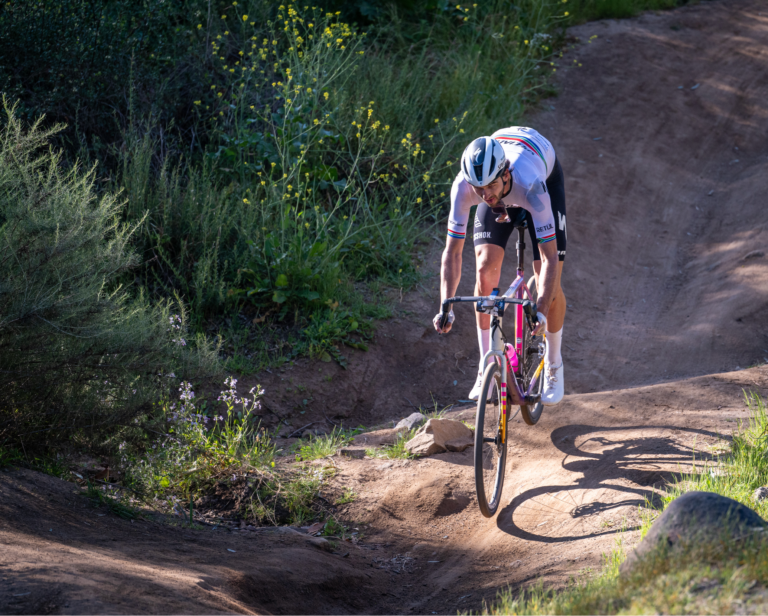
By Michael Marckx (BWR) — Two years ago, the BWR CA was Matt Beers’ first ever ‘gravel’ race (though we all know this is an Unroad Race). It’s hard to believe such a prolific rider hadn’t done any gravel yet, but now we can say he’s also a gravel rider. The South African cyclist who specializes in cross-country mountain biking has won the Cape Epic three times, in 2021, 2023 and 2024. He has won multiple national titles in South Africa including the cross-country marathon and the gravel race.
During that second-place finish to Alexey Vermeulen in 2022, Matt set 9 KOMs and displayed his trademark horsepower in scary ways to the other contenders. He did have a few mechanical issues that year, so, as his story will suggest below, he had some unfinished business.
This year, those of us in both the lead vehicle and in Matt’s wake got to experience what a VAM of 1791 feels like on the very first of 24 KOMs on the day (the last one was the overall course time). Matt set the tone for the day on that first clmb just five miles into the race and that was it. And for roughly the first 51-miles, as evidenced in the photos below, Matt was almost always on the front driving a relentless pace, except for an early attack by Ian Boswell and another by Lachlan Morton. Alas, with 69-miles to go Matt didn’t attack, but he rolled quietly, forcefully, gracefully off the front, with his pursuers either unwilling, unable, or uninterested in taking his power move with the significance it commanded. And when it came time to truly get together and address this extending threat to victory down the Unroad, it was too late. It was ultimately Alexey Vermeulen’s attacks that broke the pursuing group in two, and then later left Alexey as the lone chaseur gnawing into Matt’s lead. And while Alexey made up a lot of time in his chase, Matt had enough cushion and gas in the tank to sail into his most glorious Gravel and Unroad victories ever.
You can review Matt’s ride here: https://www.strava.com/activities/11286906396/
By Matt Beers — I was super excited to come back to BWR San Diego. The race that started my Gravel journey in the USA in 2022. I placed 2nd that year and the hunger definitely grew after missing it in 2023. I learnt a lot the year I came in 2nd, regarding equipment choice strategy, etc. so coming back this year now being on the Specialized Off-Road Team I knew I had all the resources possible to pull something special off. The day started much like 2022 I set the pace really hard up the first climb up toward Double Peak. My plan was to go over the top with a small group to keep it safe on that decent with the two cyclocross style dismounts.
From there we had a good small group of riders heading to the lake Hodges single track sector. We continued to rip along there all the way to raptor ridge, a few riders started to loose contact and when we got back onto the long road sector that group started rolling pretty well. It was a very strong group of riders with one big rider missing… Valverde who punctured out early in the race.
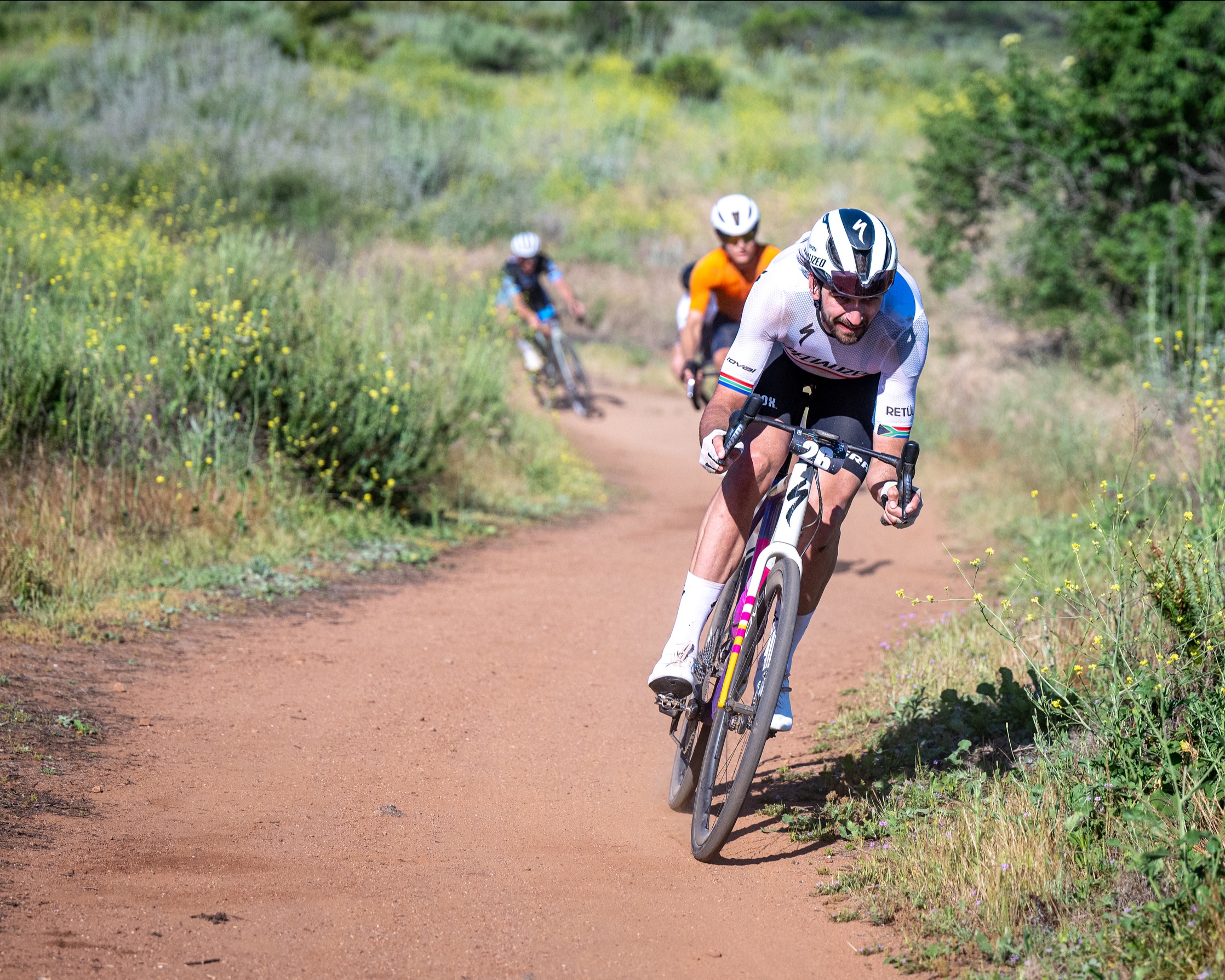
At around Km 80 I rolled through for my turn and noticed a gap… After that I had a plan. The next time I rolled through I kinda built speed and created a small gap, I knew there would be hesitation from the group and as I saw that I started pushing pedals really hard. I knew it was a long shot 110km or 69 miles to go but I was confident in my ability to pull that off as I knew the whole course.
From there we had a good small group of riders heading to the Lake Hodges single-track sector. We continued to rip along there all the way to raptor ridge, a few riders started to loose contact and when we got back onto the long road sector that group started rolling pretty well. It was a very strong group of riders with one big rider missing… Valverde who punctured out early in the race.
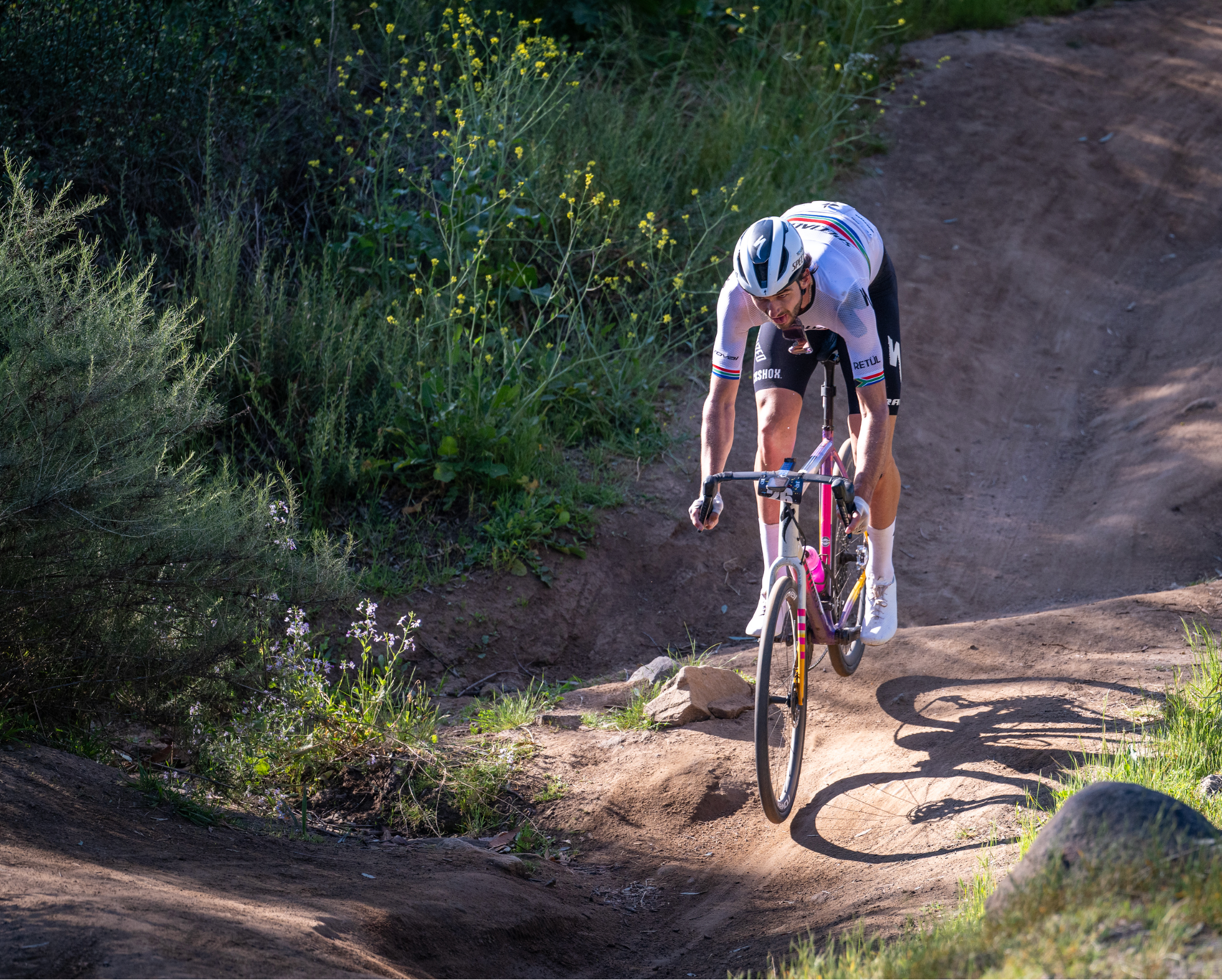
At around Km 80 I rolled through for my turn and noticed a gap… After that I had a plan. The next time I rolled through I kinda built speed and created a small gap, I knew there would be hesitation from the group and as I saw that I started pushing pedals really hard. I knew it was a long shot 110km or 69-miles to go but I was confident in my ability to pull that off as I knew the whole course.
I committed to the pain and suffering and settled in for the day. We had amazing support out there receiving bottles every hour from my team. which was crucial on such a long race attack. I kept the gap steady trying not to overreach, as I knew double peak was looming over me. I started to back off a bit heading to double peak knowing the gap would shrink a little, but I needed that respite to tackle the climb and not be caught. I got a time gap to Alexey who was coming like a freight train, I had 2min. I just had to crest double peak with 45seconds to be safe and keep my lead. That’s exactly what happened, it’s not often such a long-range attack works but when it does it makes for a spectacular race.
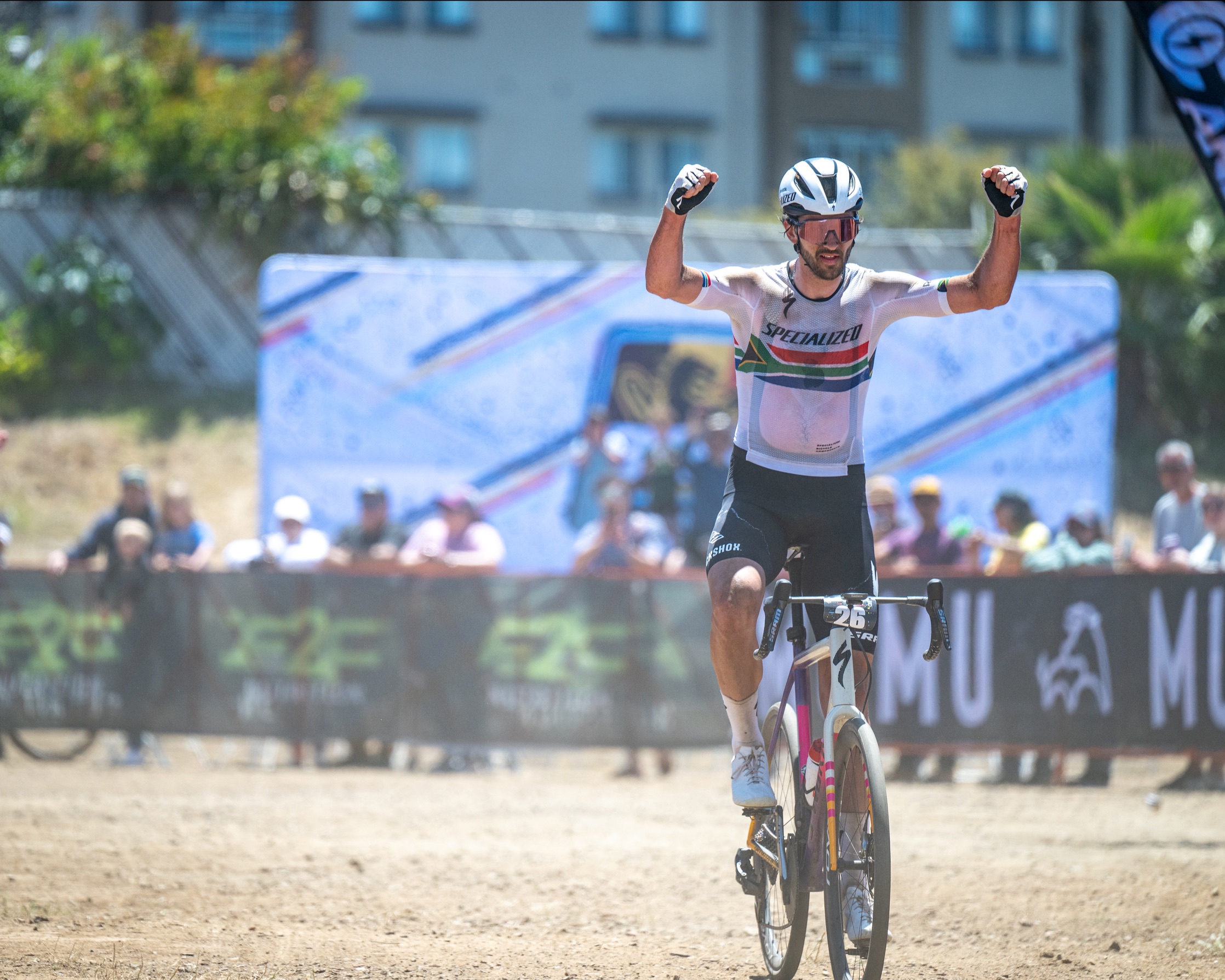
As I crossed the finish line I was so relieved to finally crack the American code and win a huge gravel race. It felt full circle coming to the USA racing BWR San Diego as my first ever gravel race in the USA and now winning the race as my first
Big gravel race in the USA. It’s a very cool story and one that show’s perseverance.
Over and out!
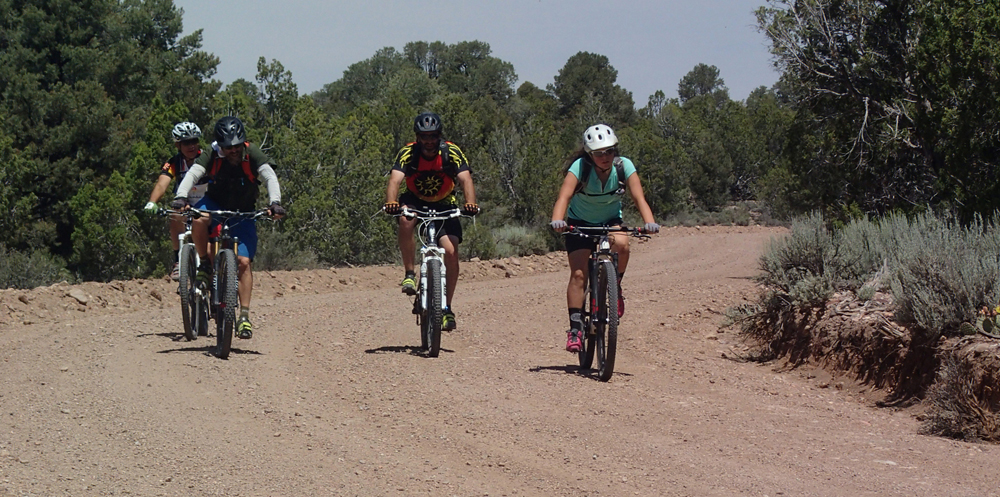
LINCOLN COUNTY, Nevada (Updated May 20, 2024) — The Beaver Dam Gravel Grinder is slated for June 15, 2024 at Beaver Dam State Park in Southeast Nevada. The ride will have 10, 35, and 45 mile options through the rugged and gorgeous terrain of Lincoln County, Nevada. A gravel grinder is a ride that takes place on gravel roads that are generally less technical than singletrack mountain biking. The ride starts at 6:30 am.
We asked organizer Dawn Andone to tell us about the ride.
Cycling West: What are the courses like for the Beaver Dam Gravel Grinder? Is the ride timed?
Beaver Dam Gravel Grinder: The course is mostly over dirt and gravel backcountry and jeep roads. There are some rocky patches that can be considered technical, but we have tried to keep those to a minimum. However, rain events can change the terrain—sometimes this results in having to change the route.
There are two main routes, one 45 mile and one 35 mile. We have a 10 mile cut-off for novice riders.
The ride is not timed. We want you to enjoy the scenery and take-in what Lincoln County and Beaver Dam State Park have to offer. Riders usually complete the course in six hours.
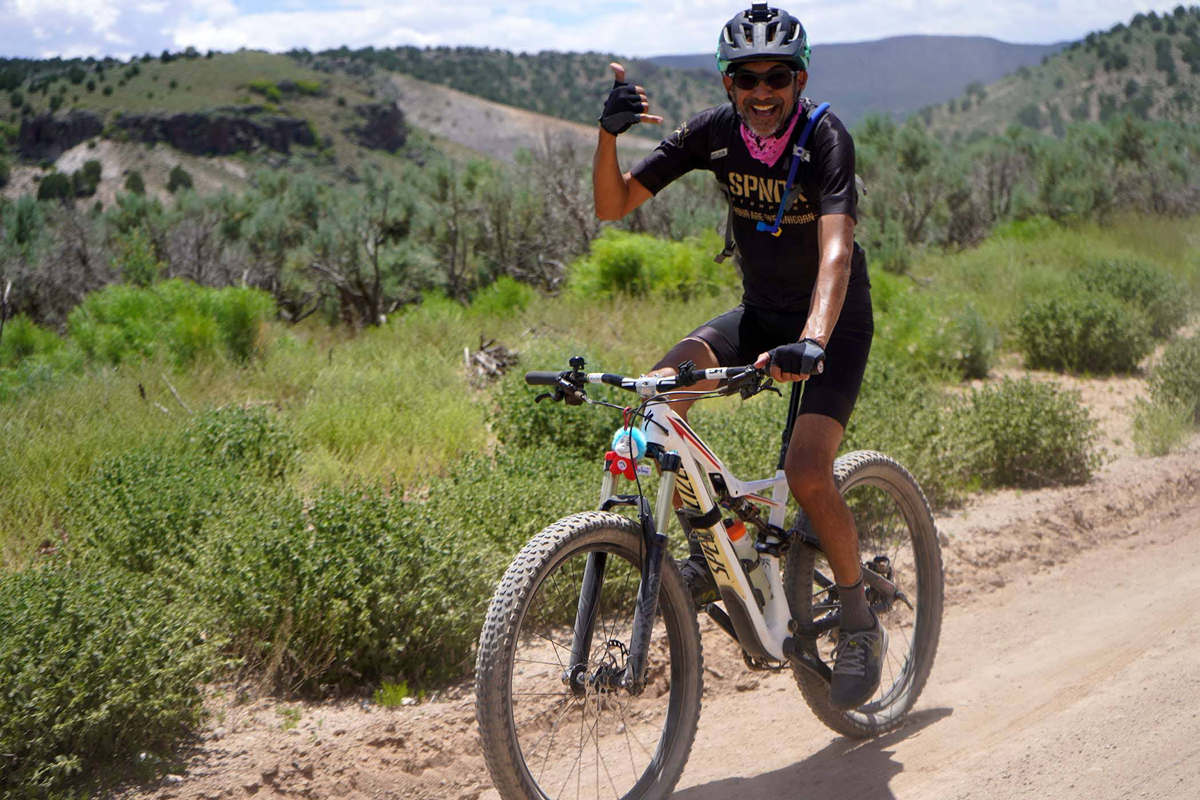
CW: What type of bike is best? Will Gravel Bikes work well?
BDGG: Fat tire, gravel or mountain bikes all work well. Some areas can be rocky and others sandy.
CW: What is the scenery like? What are the highlights along the course?
BDGG: The scenery is spectacular! The road taking you out of the park winds up a dirt/gravel road, through pines and junipers. The wildflowers will be in bloom so whites, reds, yellows, purples, and oranges will dot the landscape and standout against the evergreens.
You ride along the rim of the park so you can see all the geologic formations created during periods of volcanic activity millions of years ago.
The route takes you past old dams, and through ranching communities, with a lunch stop at the old one-room schoolhouse in Barclay.
CW: Can you tell us about the natural history of the park and the area? What are some of the highlights?
BDGG: Millions of years of volcanic activity formed the dramatic geologic outcrops of igneous and sedimentary rock, including pink rhyolite, dark red and grey andesite and white ash-fall tuff. Obsidian and volcanic glass nodules may also be found in the park.
At about 5,000 feet in elevation, this high desert park includes much more than sagebrush and cactus. Pinyon pines and junipers dominate the woodlands, with Ponderosa pines near the park’s springs. Gambel and shrub live-oak, sumacs and small-tooth maples provide fall color. Willows and cottonwoods along the wash are the preferred food and dam-building material for the native beavers.
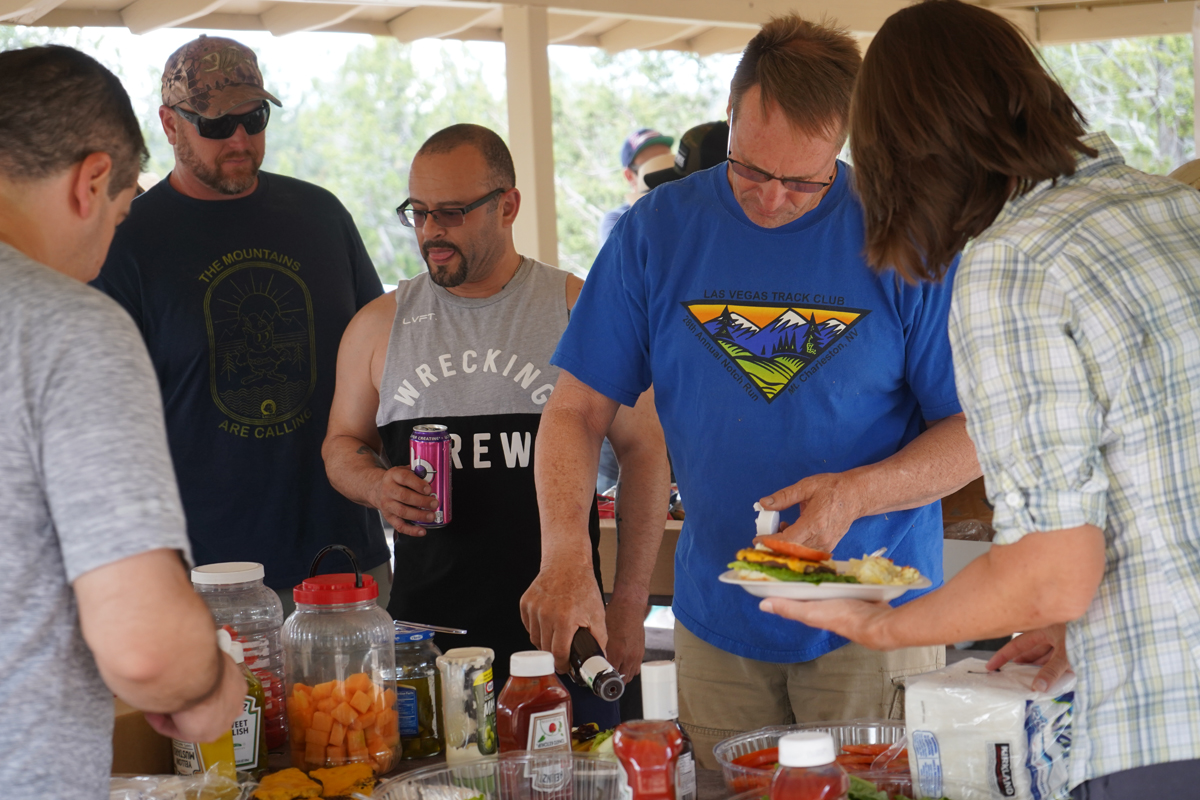
CW: Where can people stay that come to do the ride? What other attractions are there if people want to make a weekend of the trip?
BDGG: Stay at the Park! Come camp in one of two campgrounds at the park. The ride starts at 7:30 am and the closest town is 35 miles down a gravel road. Camping is your best option. Stay Friday and Saturday night.
If you prefer to stay in a motel, Caliente has the closest accommodations.
Hike, bike, fish. You can do it all right in the park. There are number of trails, historic sites, and beautiful streams and ponds. It’s a great way to spend the weekend.
There are also four other state parks in the area. Pioche is an old mining town you might like to checkout. And if you are willing to drive a bit there are some ghost towns and a site where you can dig for trilobites.
Visit www.lincolncountynevada.com for more information on sites and activities in Lincoln County.
CW: Is there anything else that you’d like to add?
BDGG: This is a fun time! Nevada State Parks strives to make your trip and the event one you will remember for a lifetime. We have a number of riders who return every year. We want you to come back, not just to the ride, but throughout the year to recreate and enjoy all Lincoln County has to offer!
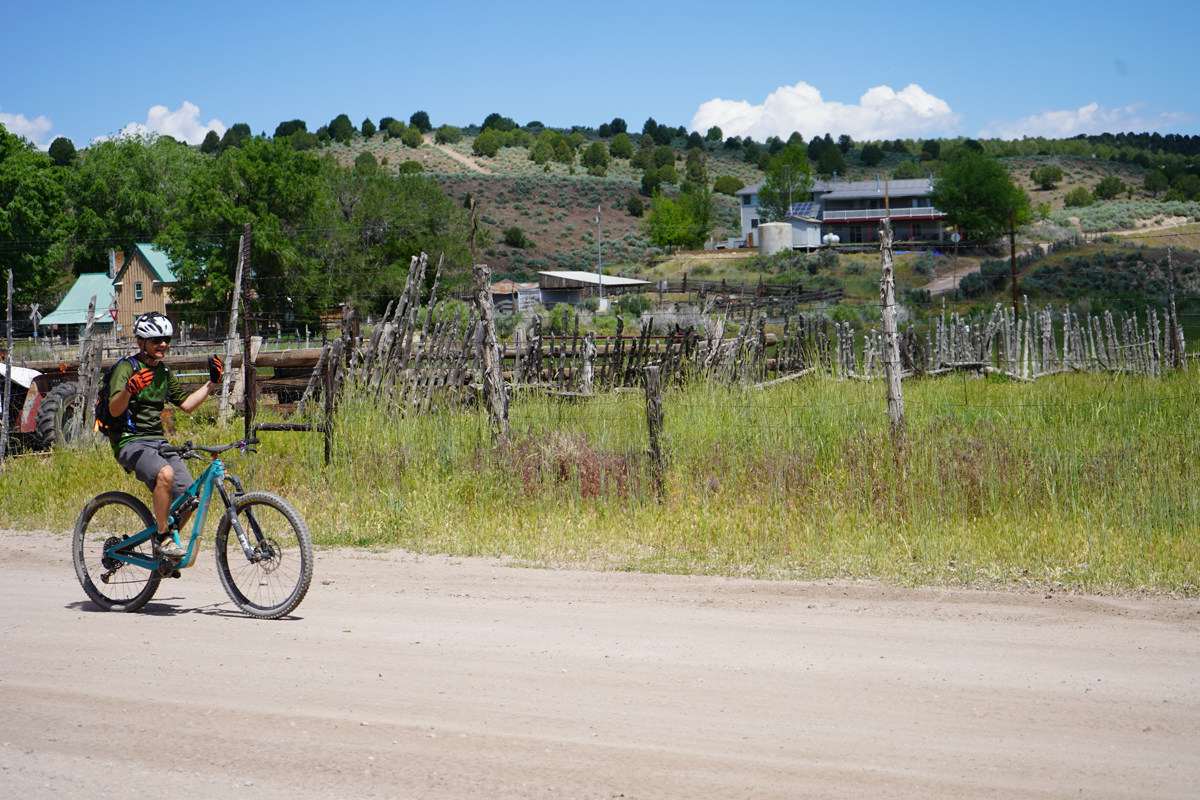
CW: Where is Beaver Dam State Park?
BDGG: Situated in rugged canyon country, this breathtaking, 2,393-acre park is located approximately three hours north of Las Vegas, Nevada on the Utah border.
June 15, 2024 — Beaver Dam 49er Gravel Grinder|, Beaver Dam State Park, NV, Ride the Rim and see the park from a different perspective. Pedal down an old chaining road that runs along the Park’s rim and winds you through Pinyon and juniper trees. Through the small town of Barclay where lunch is served at the one room schoolhouse. The course then swings around back to the main park road and down into Campground B where we end the ride with a BBQ. The course is subject to change based on weather conditions. 35 and 45 mile options., Dawn Andone, 775-728-8101, [email protected], beaverdamgravelgrinder.com
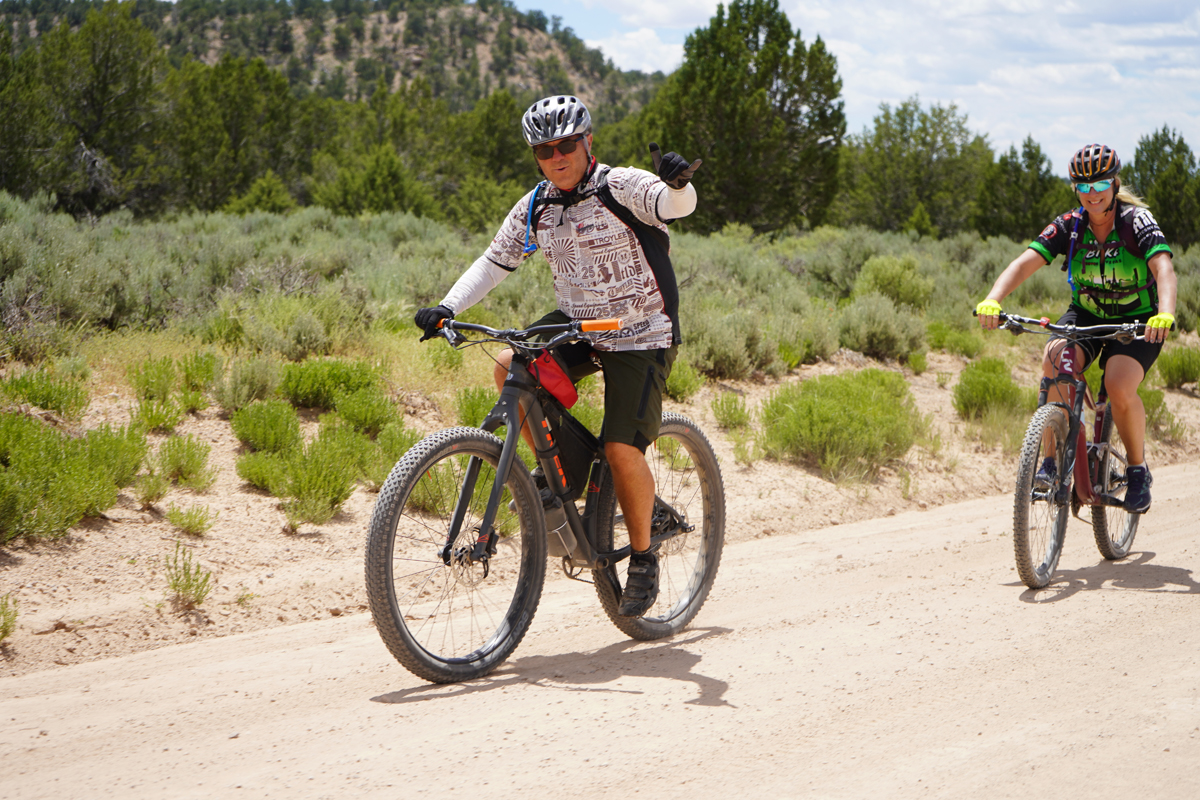
Original story: April 25, 2016
SALT LAKE CITY, Utah (May 16, 2024) — Today the Utah Department of Transportation (UDOT) announced the inaugural round of funding for the Utah Trail Network.
The Utah Transportation Commission approved nearly $95 million in funding to build and plan 19 new paved trails or complete existing trail gaps across the state. The vision of the Utah Trail Network is to create a regional paved trail network to connect Utahns of all ages and abilities to their destinations and communities.
“Generations from now people will look back at this moment and realize how pivotal the Utah Trail Network was in changing the way we travel,” UDOT Executive Director Carlos Braceras said. “These projects will connect communities in ways that provide transportation choices for everyone to commute, recreate and enjoy.”
UDOT worked closely with communities and planning partners across the state in selecting this inaugural project list. Of the projects selected for this inaugural round of funding, 13 are considered construction ready and could get underway as soon as 2025, depending on contractor schedules, supply availability and other factors like weather.
Bingham Creek Trail, Salt Lake County ($14 million): a new 6.3-mile trail to connect the Jordan River Parkway Trail to Bingham Creek Regional Park in Daybreak and the Mountain View Corridor trail. It will connect to multiple TRAX stations, parks, and neighborhoods over the length of the project.
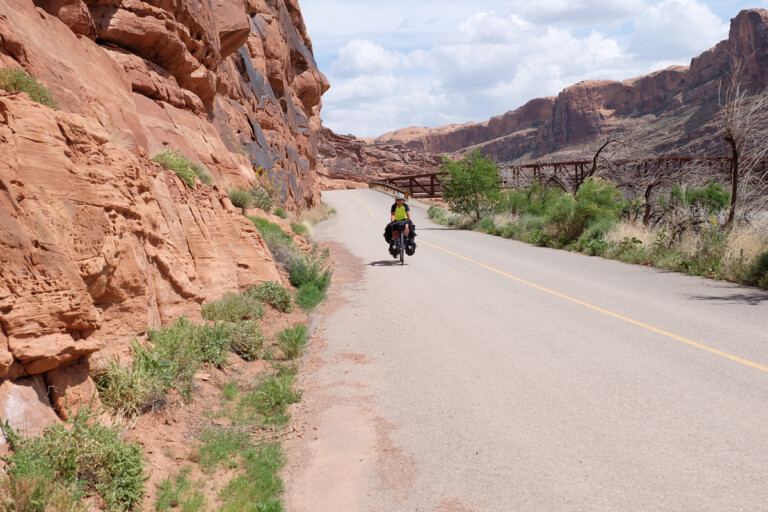
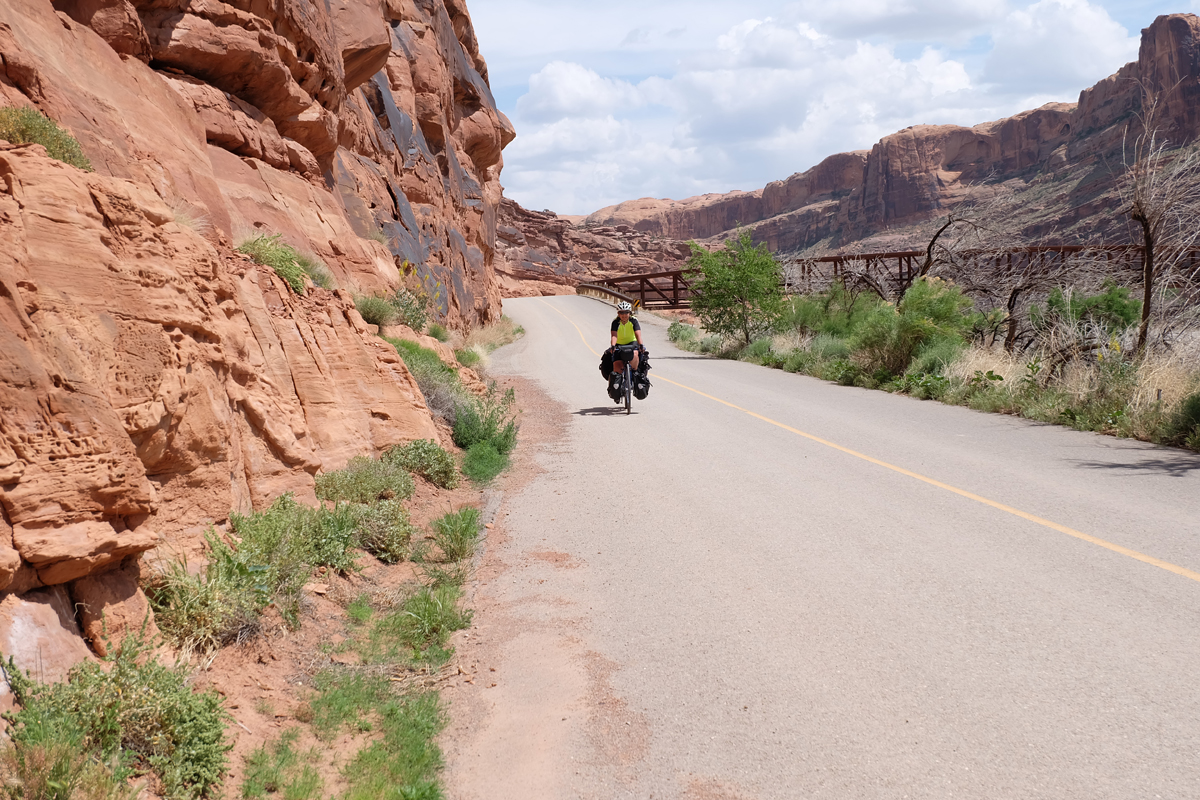
Colorado River Trail Gap, Grand County ($12.5 million): a new section of trail to fill a 0.7-mile gap on the Colorado River Trail along SR-128 in Moab. The complete trail will connect to numerous hiking trails, mountain biking trails, campgrounds, and river access points along this corridor.
3900/4100 South Shared Use Path, Salt Lake County ($10 million): a new east-west trail along 3900/4100 South for people to cross the Salt Lake Valley to the Jordan River Parkway Trail. The trail will take advantage of available space and avoids freeway interchanges. This funding will build 1.4 miles of trail from West Temple to Jordan River Parkway.
Moab Canyon Pathway, Grand County ($8.8 million): a new 3-mile trail extension to connect Moab Canyon Pathway with the future Raptor State Park Visitors Center. The trail will parallel US-191 and tie into the existing trail system that continues south into Moab.
SR-108 2050 North Trail Separated Crossing, Davis County ($8.7 million): a new separated crossing to allow people on 2050 North to safely cross SR-108. The underpass will complete the city-wide 2050 North trail, which currently has a gap at 2000 West, and connect the 1800 North Trail and Denver & Rio Grande Trail to the east.
Vineyard Connector/800 North Trail, Utah County ($5 million): a new 2.1-mile trail from I-15 to the Utah Lakeshore Trail in downtown Vineyard. The trail will parallel Vineyard Connector Road (SR-176), as well as a portion of 800 North (SR-52) and provide a critical east-west connection for residents and commuters and integrate with Vineyard’s downtown.
Welby Jacobs Canal Trail North – Riverton, Salt Lake County ($7 million): a new 1.5-mile shared use path from 12600 South to 13800 South in Riverton along the Welby Jacobs Canal. The trail is expected to cross over 13400 South using a separated crossing.
Jordan River Parkway Trail Connection at 1300 West in Bluffdale, Salt Lake County ($600,000): a new 0.5-mile trail along 1300 West in Bluffdale from a future separated trail crossing over Union Pacific Railroad and UTA Frontrunner tracks to a nearby segment of the Jordan River Parkway Trail to the north.
Steinaker Service Canal Trail, Uintah County ($4.5 million): a new 1.9-mile trail from 500 North (SR-121) to US-40 in Vernal. The path will follow a portion of the Steinaker Service Canal, as well as a segment of 500 North, and connect to a local school, senior citizens center, and office plaza.
Heber Valley Railroad Rail Trail, Wasatch County ($8 million): 1.8 miles of paved trail from the Train Depot in Heber City to 1200 South, and from SR-113 to the Deer Creek Trail at Soldier Hollow. The proposed trail will follow alongside the existing alignment of the Heber Valley Railroad Line, and will include the first two phases of the full corridor extent.
US-89 Trail: Mt. Carmel Junction to Orderville, Kane County ($7 million): a 5-mile separated trail from downtown Orderville to Mt. Carmel Junction in Kane County. This trail is one segment of a future network that will connect residents and visitors to local destinations along the US-89 corridor. The Long Valley Transportation plan identifies this path as a critical segment for commuters from Zion to Bryce Canyon.
Bear Lake Trail, Rich County ($3 million): a 0.8-mile trail that begins where the existing trail ends at the Bear Lake Marina and ends just south of Broad Hollow Road. The path will parallel Bear Lake Boulevard/US-89 to the west and connect to the many amenities on the west side of the lake.
Blacksmith Fork River Trail, Cache County ($4 million): a 1.8-mile trail connecting people from Ridgeline High School to the Blackhawk Soccer Complex in Cache Valley. The trail will follow the Blacksmith Fork River and will connect to the existing Logan River Walk trail.
Five additional trail projects were funded for feasibility study work:
Hill Air Force Base Gate Trail, Weber County ($300,000): a feasibility study for an 8-mile trail from Clearfield into downtown Ogden along Hill Air Force Base.
SR-130 Trail, Iron County ($300,000): a feasibility study for a 6.6-mile trail from Enoch to Cedar City in Iron County.
Carbonville Road Trail, Carbon County ($300,000): a feasibility study for the development of a 6.4-mile trail from downtown Helper to Price. The study will consider a number of potential alignments including US-6/US-191, the railroad corridor, and the Price River.
Phoston Spur Trail and Rail Trail SR-248 Overcrossing and Paving, Wasatch/Summit counties ($600,000): a feasibility study of the Rail Trail and the Phoston Spur Trail. The study will evaluate a separated crossing of SR-248 and paving of the Rail Trail from Promontory Ranch Road to SR-248. It will also study the alignment and paving of the Phoston Spur Trail to the south.
Deer Creek Reservoir Trail, Wasatch County ($300,000): a feasibility study for a potential 6.7-mile trail that would begin at Soldier Hollow and connect to the Provo River Parkway Trail.
In 2022, Governor Spencer Cox championed a vision for a statewide trail network that would connect Utahns of all ages and abilities to their destinations and communities throughout the state. Then in 2023, the Utah Legislature created a fund specifically for active transportation (the Active Transportation Investment Fund), demonstrating the state’s commitment to providing transportation access for all.
“We have heard the public asking for more trails and are inspired by the trail planning and development efforts across the state,” Braceras said. “These efforts are bringing people together, and we want to do our part by connecting communities through a state funded program that will build trails as part of the state’s transportation system.”
CHARLESTON, West Virginia (May 17, 2024) — The 2024 USA Cycling Pro Road National Championships continued Friday evening with the Elite/U23 Women’s Criterium and the Elite Men’s Criterium. With rain forecasted for the evening, riders would not only have to battle the demands of the six corner criterium but would also have to navigate the elements.
View this post on Instagram
The Elite/U23 Women’s Criterium saw 76 riders from across the nation line up to compete for the coveted Stars and Stripes jersey. Returning champion, Coryn Labecki (Tustin, Calif.; EF Education-Cannondale) was the first rider called to the line. With rain predicted to start shortly, riders had to strategically place themselves toward the front. The pack stayed together for most of the race with the occasional rider dropping off the back. Fount Cycling made several moves throughout the race. This caused the group to stay strung out, leaving Elizabeth Dixon (Chicago, Illi.; Fount Cycling Guild) room to break away. Dixon managed to stay away until the last 100-meters of the race. Labecki gave it everything she had out of the last corner to claw her way around Dixon to cross the line first. This win now makes Labecki a 74-time National Champion. When asked about this momentous win she said, “I love racing crits and I love winning… [I’m] really happy to pull off the win there. I needed a lot of patience today, and I think the rain also helped me win as well.”
Elizabeth Dixon finished the race in second, and Kendall Ryan (Ventura, Calif.; L39ION of Los Angeles) rounded out the podium in third. Chloe Patrick (Carson, Calif.; UCI CTW: Cynisca Cycling) was the first U23 rider to cross the line, followed by Mia Aseltine (Littleton, Colo.; Competitive Edge Racing) in second, and Katherine Sarkisov (North Potomac, Md.; UCI CTW: Cynisca Cycling) in third.
Many of the riders who competed tonight will be lining up on Sunday, including Labecki who knows that the course will bring an entirely new set of challenges. “Sunday is a whole different ballgame now. There’s a lot more climbing on Sunday than there is today, but obviously, you know, you take a lot of confidence from a win. [My] sprint is really strong. So, I can take that and bring it into Sunday,” said Labecki.
Elite Women’s Results:
Under-23 Women’s Results:
With exactly 100 riders on the start line, tonight’s Elite Men’s Criterium was one to watch. Racers stayed together for most of the night with the occasional team sending a rider or two up the road, but it didn’t take long for Project Echelon to take complete control. As racers flew around the corners in downtown Charleston, the Echelon train was at the front almost the entire time. With just two laps remaining, the train was interrupted when the third and fourth rider on the Echelon team went down at the front, but this gave the rest of the team an opportunity to get a gap. Rolling across the line in a one-two-three train, the Project Echelon Racing team swept the podium. Stephen Bassett (Knoxville, Tenn.; Project Echelon Racing) was officially crowned champion. When asked about the team’s race tactics Bassett said, “Yeah, that was the plan [to stay out front]. Especially, I think that was the plan regardless of weather. And then with the weather, it just makes it a lot easier and safer for us to just assert position early.” Brendan Rhim (Norwich, Vt.; Project Echelon Racing) crossed the line in second, and Scott McGill (Fallston, Md.; Project Echelon Racing) rounded out the podium in third.
Results:
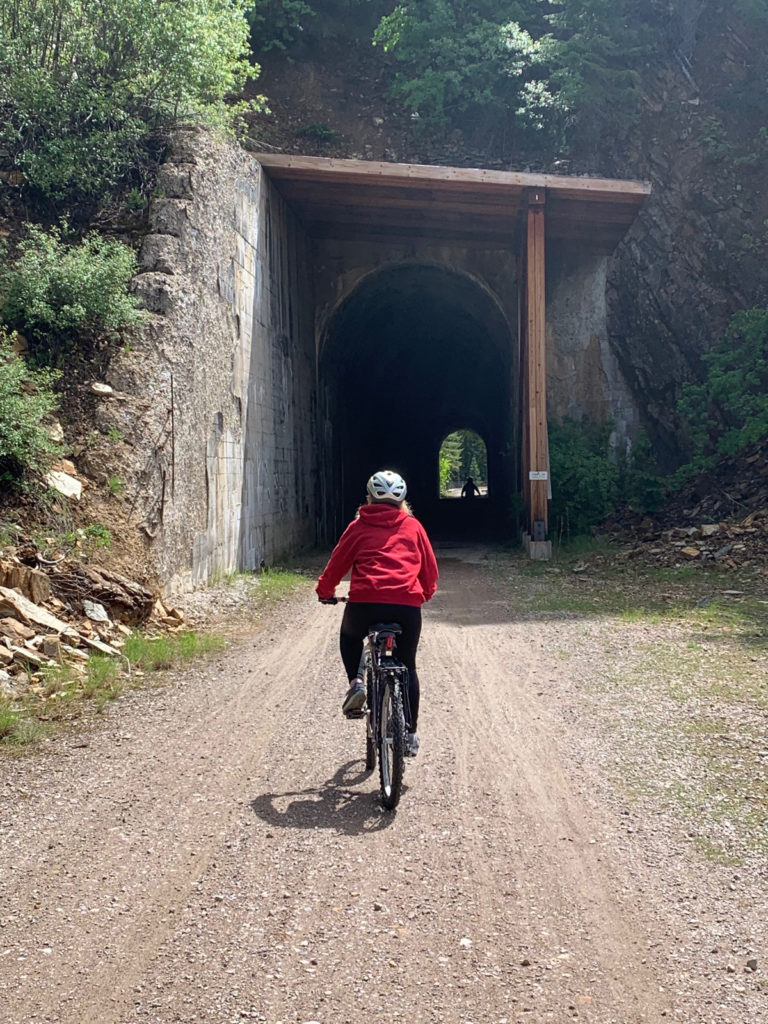
May 10, 2024 — The Forest Service today announced it issued a temporary order closing at night a large section of the popular Route of the Hiawatha Rail Trail near Lookout Pass.
The closure will be in effect from May 7, 2024 through May 24, 2024—prior to the trail’s public opening for the season—as well as from 6:00 p.m. to 6:00 a.m. May 24, 2024 through 6:00 a.m. Sept. 15, 2024.
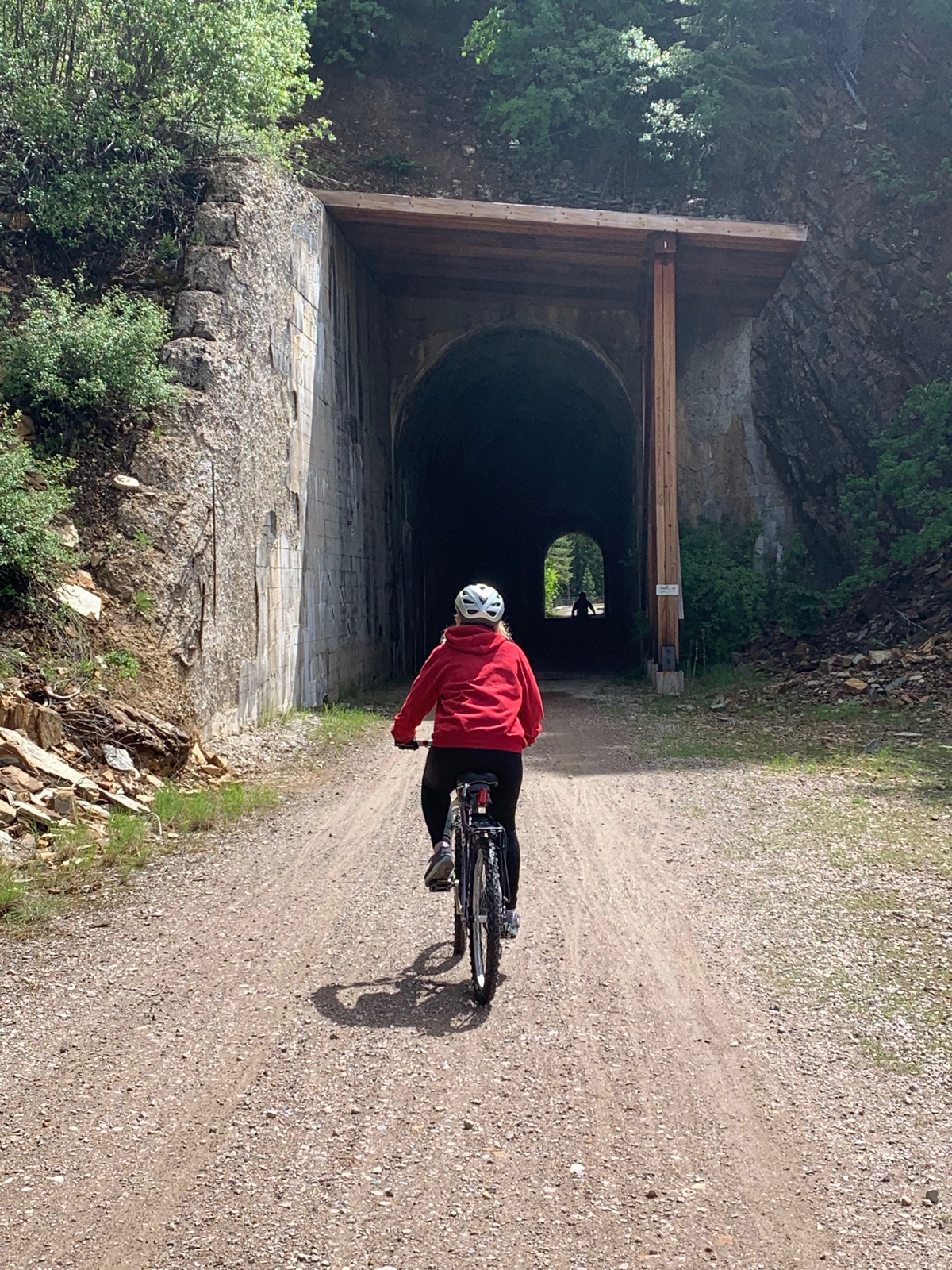
The trail will remain open during hours of regular public visitation throughout the summer and will not interrupt the route’s daytime operations for cycling and other activities.
The closure will facilitate tunnel maintenance activity required to ensure continued public safety and enjoyment of the route’s historic infrastructure, including survey and design for scaling, additional rock bolting, and shotcrete application on nine of the route’s 10 tunnels. The St. Paul (Taft) Tunnel will receive additional improvements.
The tunnel work this year comes two years after the Route of the Hiawatha Trail Resurfacing Project, which carried out improvements to the trail surface and drainage. Both projects were paid for with funding provided by the landmark 2020 Great American Outdoors Act.
The Route of the Hiawatha is one of the most visited sites on the Idaho Panhandle National Forests with close to 70,000 visits per year as of 2022.
Under permit from the US Forest Service, Lookout Pass Ski & Recreation Area operates the Route of the Hiawatha as a 15 mile scenic bike trail incorporating 7 historic railroad trestles and 10 historic tunnels including the 1.66 mile Taft Tunnel running under the state line.
The nighttime-only closure offers the public a unique opportunity to observe historic infrastructure maintenance work up close during daytime visitation.
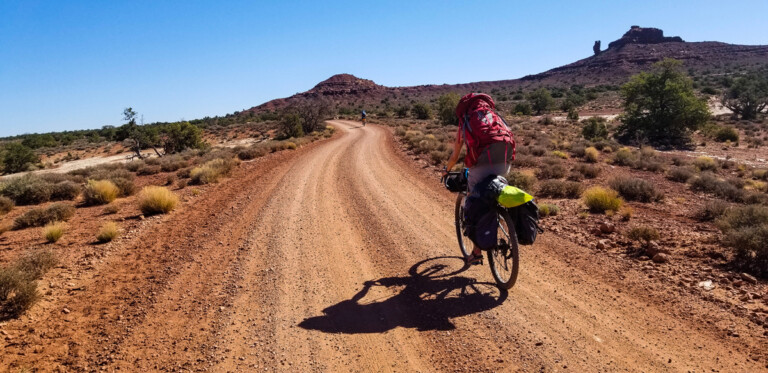
By Charles Pekow — “Keep an eye out for fossils while mountain biking in Bears Ears National Monument,” urges the U.S. Forest Service and Bureau of Land Management in their recent release of the Notice of Availability of the Draft Resource Management Plan and Environmental Impact Statement for the Utah monument. While the agencies aim to promote biking and other recreational activities in the area, they are also keen on uncovering the potential paleontological treasures hidden within its terrain. Should you happen upon any such discoveries, they encourage reporting them to authorities.
Due to concerns regarding soil softness and wildlife disruption, cycling is restricted to designated areas, although federal authorities anticipate an increase in the sport’s popularity. They note that transportation sports have already caused damage to ancestral sites, vegetation, and delicate soils.
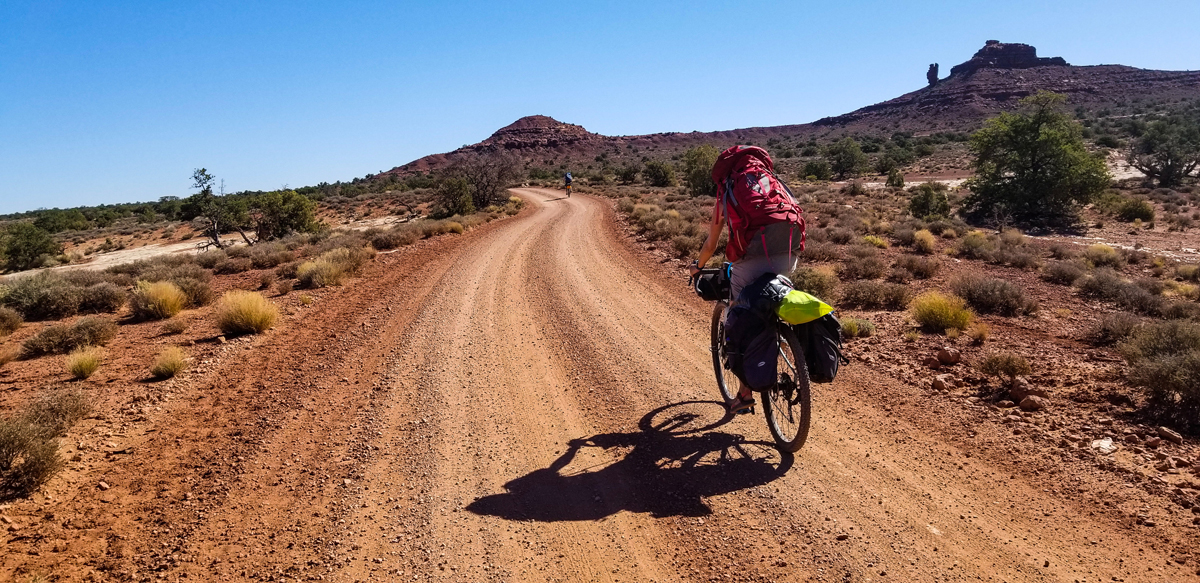
The proposed plan offers several options, including the expansion of mountain biking opportunities within the Canyon Rims Special Recreation Management Area, while also considering limitations to designated routes within the Indian Creek Area of Critical Environmental Concern. Certain zones, such as raptor nesting areas, would remain off-limits to riders.
Public feedback is being solicited, with a tentative deadline of June 11. Additionally, virtual and in-person public meetings have been scheduled by the agencies.
For more information, visit https://www.govinfo.gov/content/pkg/FR-2024-03-13/html/2024-05203.htm and https://eplanning.blm.gov/eplanning-ui/project/2020347/510

CHARLESTON, West Virginia (May 16, 2024) — The 2024 USA Cycling Pro Road National Championships resumed Thursday evening for night one of the twilight criterium. Junior Women 17-18, Junior Men 17-18, and Under-23 Men were the first to take on the course through downtown Charleston.
 Junior Women’s 17-18 Criterium
26 athletes from around the nation lined up for the Junior Women’s 17-18 Criterium. Racing for a total of 45-minutes, riders competed on a six-corner criterium course lined with hundreds of fans, including many professional athletes that raced the day before. In a game of cat and mouse, the dcdevo team launched several attacks off the front, which split the main field into two. Only 14 riders remained in the lead group for most of the race. West Virginia native, Alyssa White (Elkins, W.V.; dcdevo Racing Academy) launched a solo attack off the front with just a few laps to go but was caught on the last lap. Back together again just before the last corner, it came down to a group sprint where Landrie Mclain (Bella Vista, Ark.; BMC Walmart Oz Development) and Alyssa Sarkisov (North Potomac, Md.; dcdevo Racing Academy) finished just inches apart in first and second, respectively. When Mclain was asked about her victory ride she said, “It feels amazing to win. Honestly, I’m just so blessed to be able to be here and I thank my parents 100% for their support and I’m just so happy they came here with me. The race was so much fun. It was fast and technical with the mindset where you had to think about where everybody was. I enjoyed it so much!” Bridget Ciambotti (Charlottesville, Va.; Twenty24 Aevolo) rounded out the podium in third.
Results:
The Junior Men 17-18 took the line immediately after the completion of the Junior Women’s 17-18 race. 74 athletes were called up to race for 60-minutes. It was a game of exchanging launched attacks between the Hot Tubes Development Cycling and EF-Education-ONTO teams, with moments of solo breakaways, but the field continued to hang on and stay formed. All together going into the final lap, it came down to a group sprint where Alejandro Che (Torrance, Calif.; Hot Tubes Development Cycling) and yesterday’s Time Trial champion, Ashlin Barry (Toronto, Canada.; EF Education-Onto) finished just feet apart in first and second, respectively. Che was elated after the finish saying, “Oh, it was crazy! It was Hot Tubes vs. EF, and there were fireworks going on everywhere. But in the end, all the cards ended up where they were supposed to be, and it ended up happening how it was supposed to happen. It was perfect.” Eneas Caden Freyre(Redding, Conn.; Kelly Benefits Strategies Cycling) rounded out the podium in third.
Results:
The night concluded with the marquee event, the U23 Men’s Criterium. The roster was stacked with top teams from around the country. Kelly Benefit Strategies made the first attack but was soon reeled in by the group of over 40 riders. That attack was followed by a big push from Gavin Hlady (Riverside, Calif.; Aevolo Cycling). He was later joined byCaleb Landgrebe (Senoia, Ga.; Work Hard Be Humble Cycling Team) and Luke Elphingstone (Boulder, Colo.; Kelly Benefits Strategies). The group was caught with the tail end of the race approaching.
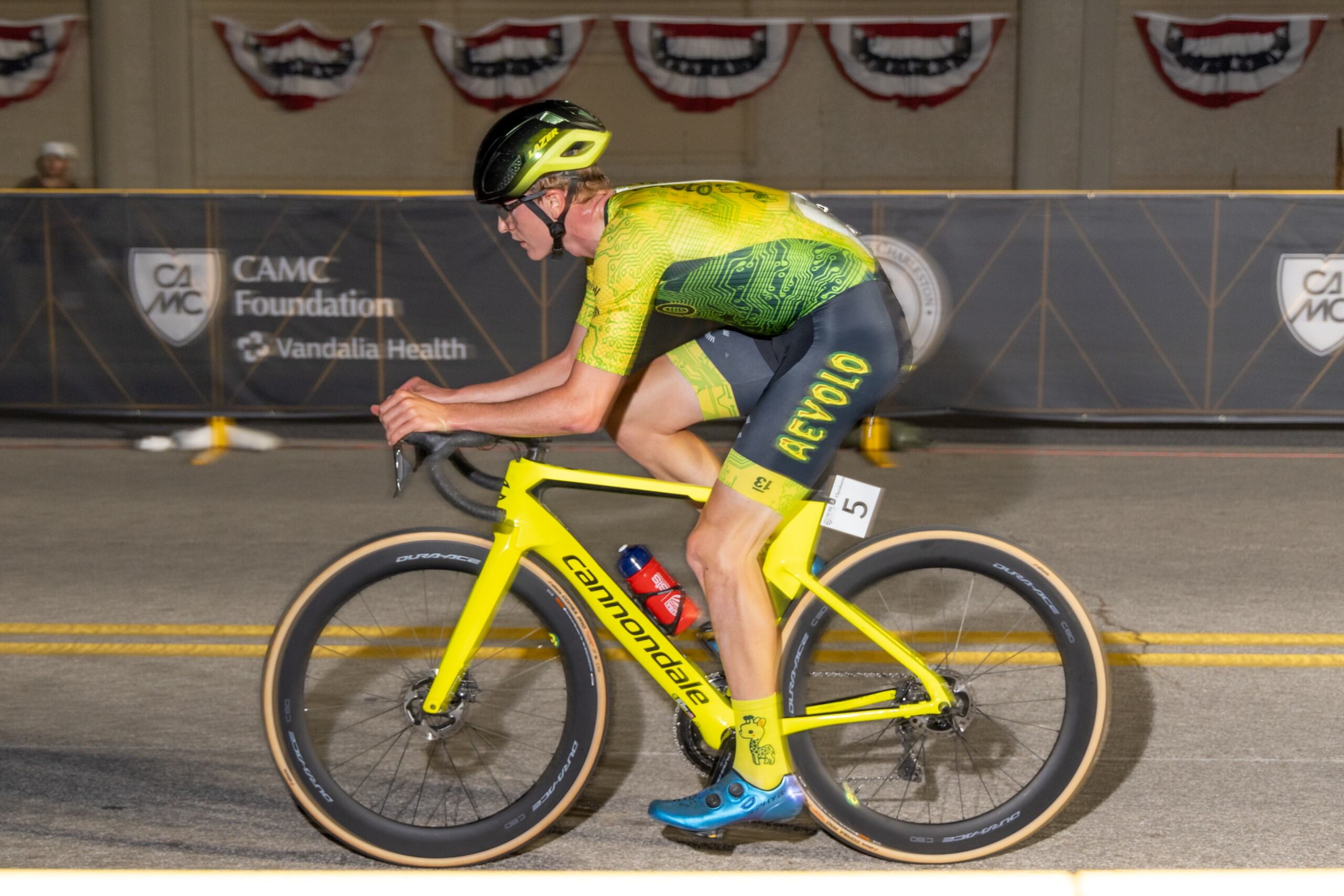
Several riders attempted a flier, but nothing stuck until Gavin Hlady (Riverside, Calif.; Aevolo Cycling) launched another solo attack. Hlady held it and crossed the line first to become the U23 Men’s Criterium National Champion.
Hlady originally had a different plan in his head heading into the last few laps saying, “I spent a lot of the day just rolling some breaks and just trying to help the team out, being up the road. And then just at the end, I was setting up for, maybe a lead out for Brody and the rider from Work Hard Be Humble sent one and I just hoped straight on, rode it for half a lap, dropped him, and by then the group had just completely sat up. So, then it was just a nice little victory lap.”
With hundreds of spectators surrounding the course the energy under the lights was barely insurmountable but Hlady’s win was a special one saying, “It was amazing under the lights, it just could not be better. The atmosphere was great here in Charleston. I could barely hear the crowds over my own screaming, I was super excited.” Finishing in second was Nathan Cusack (Chevy Chase, Md.; Kelly Benefits Strategies Cycling) with Luca Haines (Durango, Colo.; Team California P/B Verge) rounding out the podium in third.
Results:

About Cycling West: Cycling West is a print publication and website that works to grow, connect, and inform the cycling community in Utah, Idaho, Wyoming, Montana, Nevada, N. Arizona, N. California, and Western Colorado. We have a complete calendar of events in the region, and strive to reach cyclists of all types. We distribute approximately 13000-15000 copies each month throughout the region. We also post the issue for digital download. Our mission is to make the world a better place through bicycling. Please join us! Contact us: [email protected]
Contact us: [email protected]
© Newspaper WordPress Theme by TagDiv