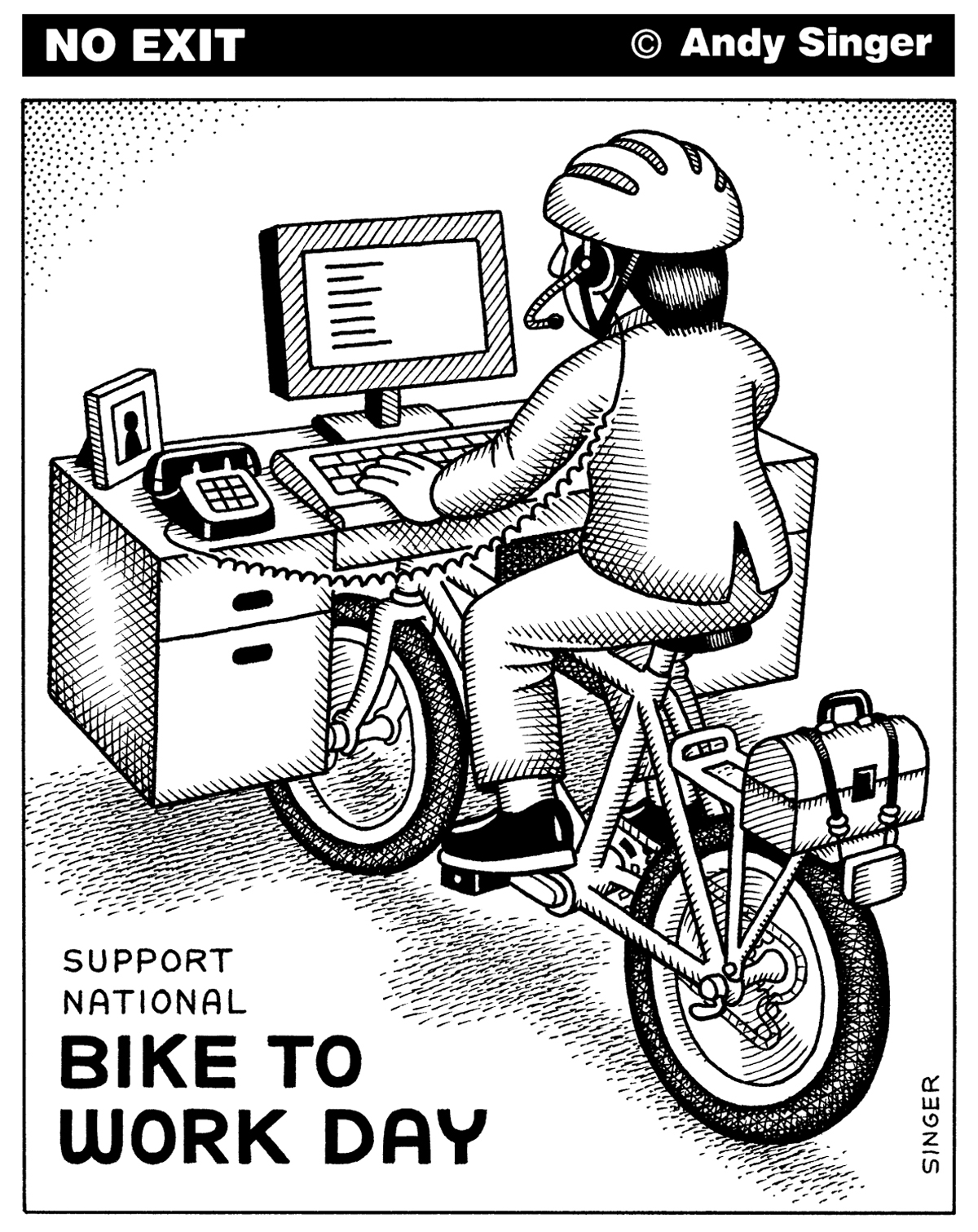
No Exit Bicycle Cartoon: National Bike to Work Day
5 Common Nutrition Mistakes Cyclists Make and How to Avoid Them
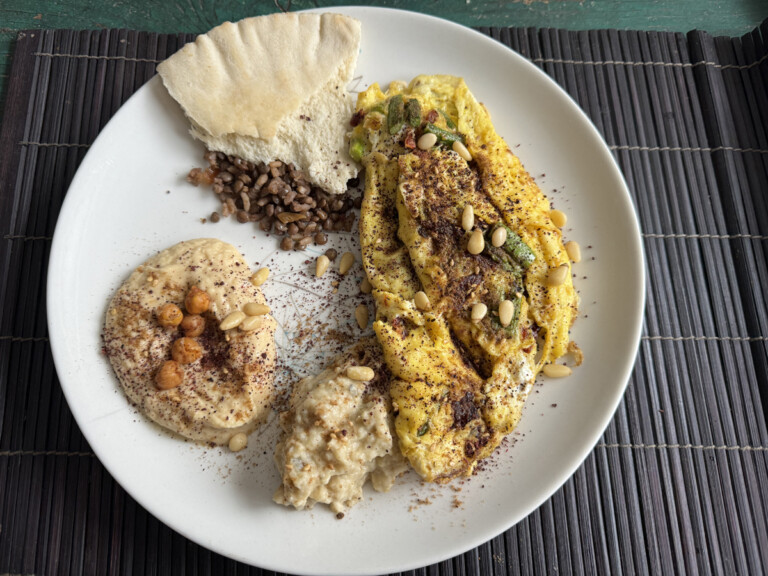
By Heather Casey — Cycling isn’t just about enduring those long, winding roads or mastering the art of pedaling through rough terrains—it’s also about what fuels the ride. Yes, I’m talking about nutrition. It’s the silent engine behind every cyclist’s performance, yet it’s often where many of us hit a pothole. Let’s navigate through the nutritional missteps that even seasoned cyclists might make and how to steer clear of them, ensuring you’re not just spinning your wheels regarding your nutrition.
Underestimating the Importance of Pre-Ride Nutrition
Oops, Did I Forget to Eat? Skipping a meal or munching on the wrong snacks before saddling up is like trying to start a car with no gas; you won’t get far. The key is to fuel up with a meal like your reliable riding buddy—there when you need it, offering sustained energy without the drama.
The Fix: Aim for a meal that’s a trio of complex carbs, lean proteins, and healthy fats. Think oatmeal with a side of fruits and nuts, a turkey and avocado sandwich on whole-grain bread, or a smoothie that’s more like a nutritional powerhouse than a drink. This isn’t just food; it’s your pre-ride pep talk.
Neglecting Hydration
Water, Who? It’s easy to obsess over solid food and forget that hydration is the silent hero of endurance sports. Ignoring your thirst is like neglecting a rattling noise in your bike; it only leads to worse problems down the road.
The Fix: Begin your hydration well before you pedal your first stroke and keep the momentum going with regular sips throughout the ride. Think of water and electrolyte-infused drinks as your support team.
Over-relying on Energy Bars and Gels
A Bar Too Far. While they’re convenient, relying too heavily on processed energy bars and gels is akin to expecting a temporary patch to permanently fix a flat tire. Sure, it’ll get you moving, but it’s not a lasting solution.
The Fix: Balance is essential. Mix in natural foods like bananas or homemade energy bites that pack a punch without the sugar crash. It’s about keeping it real—literally.
Poor Post-Ride Nutrition
Post-Ride, What’s That? If refueling after a ride was a forgotten country song, it’d be about lost love and missed opportunities. Your muscles are crying out for some TLC, and it’s your job to listen.
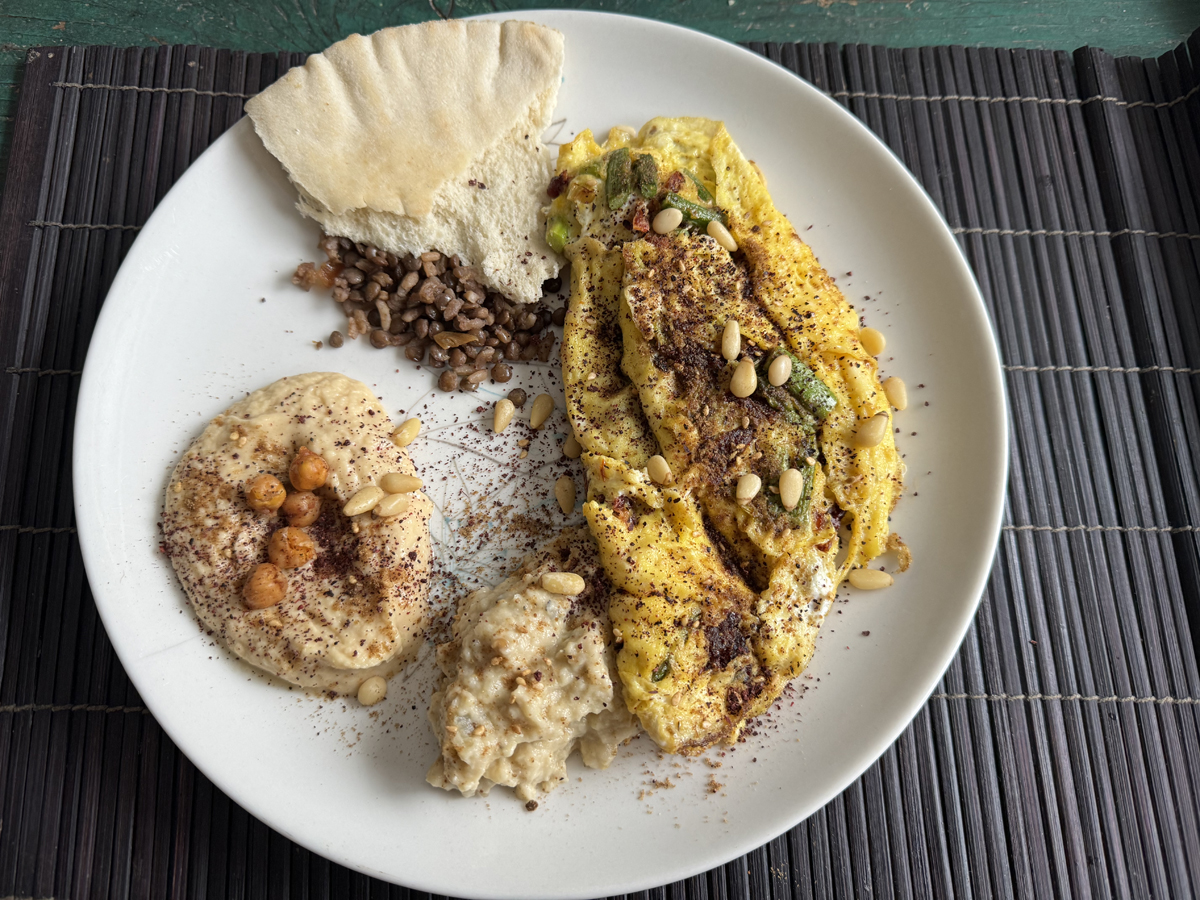
The Fix: Your go-to should be a blend of carbs and protein. Whether it’s a protein shake or chicken quinoa salad, make sure it’ll help you recover.
Not Tailoring Nutrition to Training
Using the same nutritional strategy for every ride is like wearing winter clothes to a summer ride—uncomfortable and impractical.
The Fix: Adjust your calories according to the ride’s demands. More intense or longer rides might require more carbs and calories, like packing extra layers for a cold day. It’s about being prepared.
Self-Assessment Quiz: Are You Fueling Right?
- Pre-Ride Nutrition: What’s your approach?
- Skip meals to avoid feeling full.
- Grab whatever’s convenient.
- Eat a balanced meal 2-3 hours before.
- Hydration: How do you manage it?
- Drink when thirsty.
- Stick to water only.
- Use a mix of water and electrolyte drinks.
- Mid-Ride Energy: What’s your source?
- I rarely eat during rides.
- Mainly energy bars/gels.
- A mix of real food and occasional energy gels.
- Post-Ride Nutrition: How do you refuel?
- I don’t plan it; I eat whatever’s available.
- Sometimes, a protein shake.
- A meal/snack with carbs and protein.
- Nutrition Tailoring: Do you adjust your diet based on activity?
- No, my diet stays the same.
- Somewhat, but not systematically.
- Yes, I adjust based on the ride.
Tally up your responses. If you mainly chose:
- As: Your nutrition strategy might need a tune-up, minor adjustments could significantly boost your performance and recovery.
- Bs: You’re on the right path, but there’s room for optimization to support your cycling efforts fully.
- Cs: You’re adept at fueling your rides! Personalized tweaks could further refine your performance.
Closing Thoughts
Dodging these nutritional slip-ups can propel your cycling to new heights. But remember, we’re all wonderfully different—what fuels a sprint in one cyclist might not even start the engine in another. That’s where the magic of personalized nutrition coaching comes in: tailoring a plan as unique as your ride. A personal touch might just be the tune-up you need.
Knibb and McNulty Win 2024 USA Cycling Elite Time Trial National Championships and Qualify for Paris 2024 Olympic Games

Hasse and Shmidt crowned Under-23 Time Trial National Champions.
CHARLESTON, W.V. (May 15, 2024) — The 2024 USA Cycling Pro Road National Championships continued Wednesday morning with the Men’s and Women’s Elite and U23 Time Trial events. Over 100 athletes from around the country completed the 33.7-kilometer course in downtown Charleston. Nearly 50 of those athletes were vying for a Paris 2024 Olympic Games team nomination.
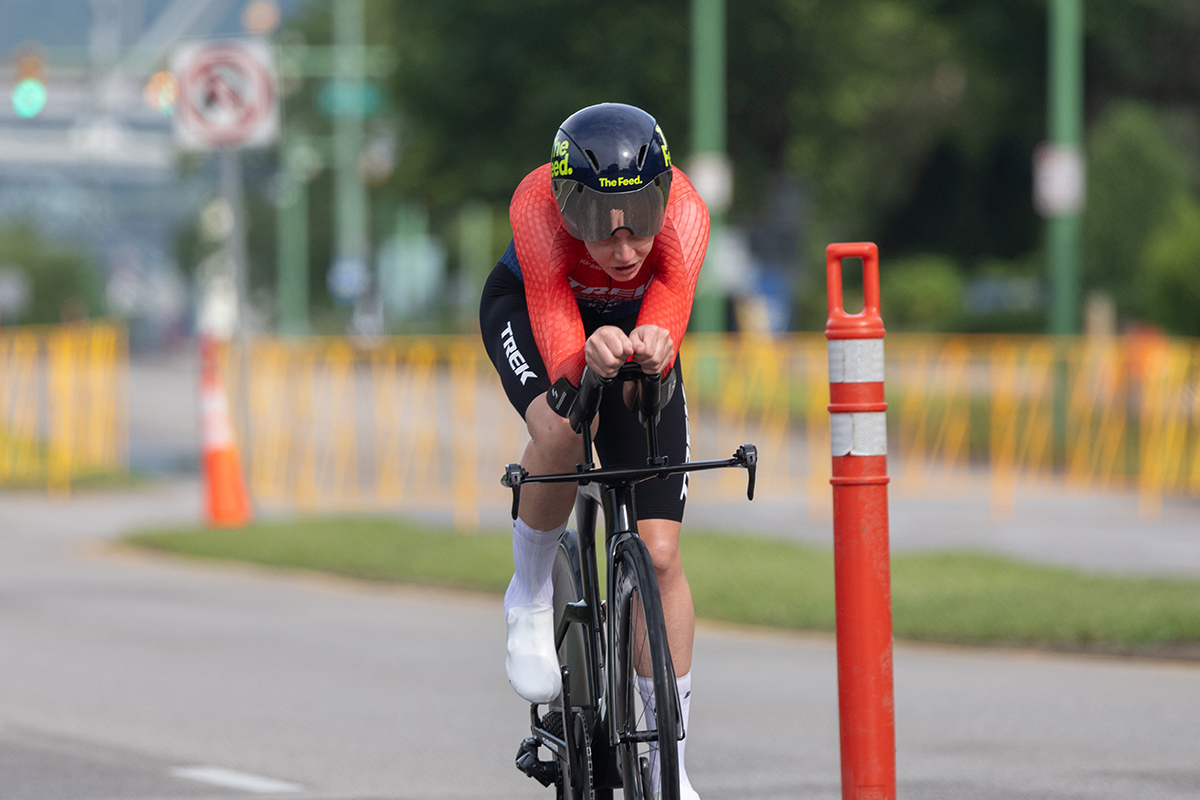
ELITE WOMEN’S TIME TRIAL
The Elite Women took center stage on the heels of the U23 Women’s wave. Finishing in a time of 41:54.69, triathlete Taylor Knibb (Boulder, Colo.; Trek Factory Racing) won the National Title in her second-ever Time Trial National Championship. This nominates her for the Paris 2024 Olympic Games team. A year ago, she qualified for the USA Triathlon team at the Paris test event and has now punched her ticket to Paris for USA Cycling. Knibb was stunned when she sat down in the hot seat saying, “I’m in shock. I’ll be perfectly honest, I’m just in shock. Last year was hard for the TT [National Championship]. And there are so many incredible riders out here, it was such an incredible day riding with them.”
As a professional triathlete, she went into today’s race knowing that the course suited her. “There were four turns and that’s it. Last year, there were so many turns and my coach said, ‘You’re really good at holding race pace. Your weakness is getting to race pace.’ So, there were only four times that I had to get to race pace, and that was a relief for me. If it was a little bit more surgy, it would have probably favored some other women a lot better,” said Knibb. This route was quite similar to the course the riders will be seeing in Paris – both virtually flat and roughly 33km.
Knibb excelled in today’s event, but not without some heavy competition behind her. 2024 La Vuelta Femenina stage winner Kristen Faulkner (Homer, Alaska; EF Education-Cannondale) kept pressing on. At the first split, Faulkner was only 0.2 seconds behind Knibb holding on to her pace. She ultimately finished in second. 49-year-old Amber Neben (Lake Forest, Calif.) rounded out the podium in third.
Results:
- Taylor Knibb (Boulder, Colo.; Trek Factory Racing)
- Kristen Faulkner (Homer, Alaska; EF Education-Cannondale)
- Amber Neben (Lake Forest, Calif.)
ELITE MEN’S TIME TRIAL
The Elite Men had over 28 athletes vying for the coveted Stars and Stripes jersey. Finishing in a time of 37:42.08, Brandon McNulty (Phoenix, Ariz.; UAE Team Emirates) beat second place finisher Tyler Stites (Tucson, Ariz.; Project Echelon Racing) by just under a minute.
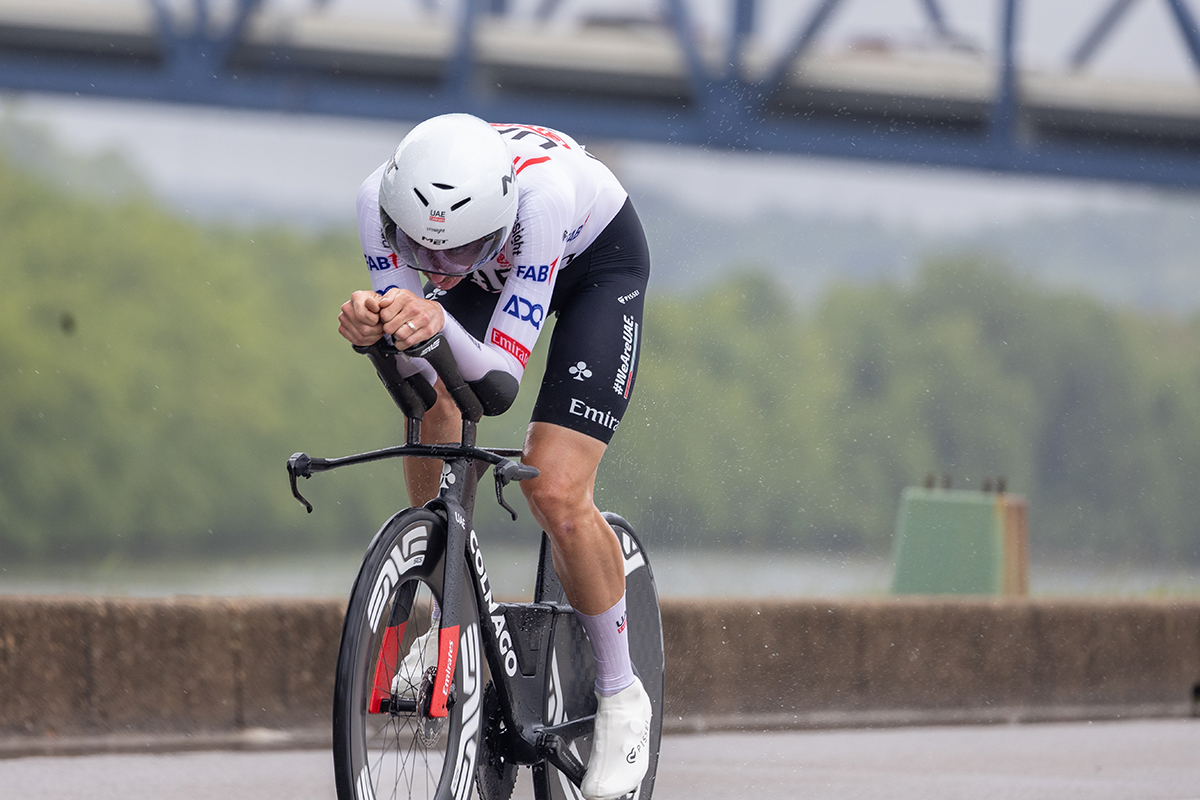
McNulty has had a busy season having raced since January. When asked about what was going through his head in the final stretch, McNulty said, “I knew there was a headwind in the final stretch, I knew that would be the last big push, and I was dying. Then luckily, I had a couple guys to catch in front of me to keep me motivated and pushing. But yeah, I was really suffering in the last few kilometers.” With today’s win, McNulty will be nominated to compete at the Paris 2024 Olympic Games for Team USA in his second Games appearance. When asked about how this accomplishment compares to others, he said, “Yeah, it’s definitely big, I’m super happy. It’s always special to win a National Title, but this one had a bit more importance to qualify for the Olympics. This is a big one for me.”
The rain came pouring down just in time for the last wave to start. Neilson Powless (Houston; EF Education – Easypost) has had plenty of experience racing in similar conditions this year. He rounded out the podium finishing in a time of 38:44.17.
Results:
- Brandon McNulty (Phoenix; UAE Team Emirates)
- Tyler Stites (Tucson, Ariz.; Project Echelon Racing)
- Neilson Powless (Houston; EF Education – Easypost)
U23 WOMEN’S TIME TRIAL
Defending U23 National Champion, Betty Hasse (Providence, R.I.; CCB p/b Levine Law Group) was the last rider out and quickly found her way to the hot seat with a time of 45:38.85. Chloe Patrick (Carson, Calif.; Cynisca Cycling) finished in second with Ella Brenneman (Gibsonia, Pa.; CCB p/b Levine Law Group) rounding out the podium in third.
Results:
- Betty Hasse (Providence, R.I.; CCB p/b Levine Law Group)
- Chloe Patrick (Carson, Calif.; Cynisca Cycling)
- Ella Brenneman (Gibsonia, Pa.; CCB p/b Levine Law Group)
U23 MEN’S TIME TRIAL
Finishing in a time of 38:52.17, Artem Shmidt (Cumming, Ga.; Hagens Berman Axeon) won the National Title. Troy Fields (Hendersonville, Tenn.; Team California P/B Verge) finished in second with Owen Cole (Chapel Hill, N.C.; UAE Team Emirates Gen Z) rounding out the podium in third.
Results:
- Artem Shmidt (Cumming, Ga.; Hagens Berman Axeon)
- Troy Fields (Hendersonville, Tenn.; Team California P/B Verge)
- Owen Cole (Chapel Hill, N.C.; UAE Team Emirates Gen Z)
Cusack and Barry Take Junior TT Gold in 2024 USA Cycling National Championships
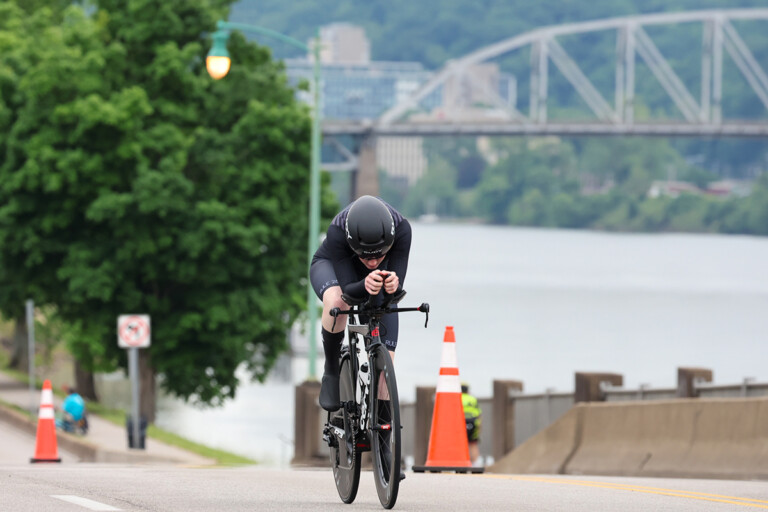
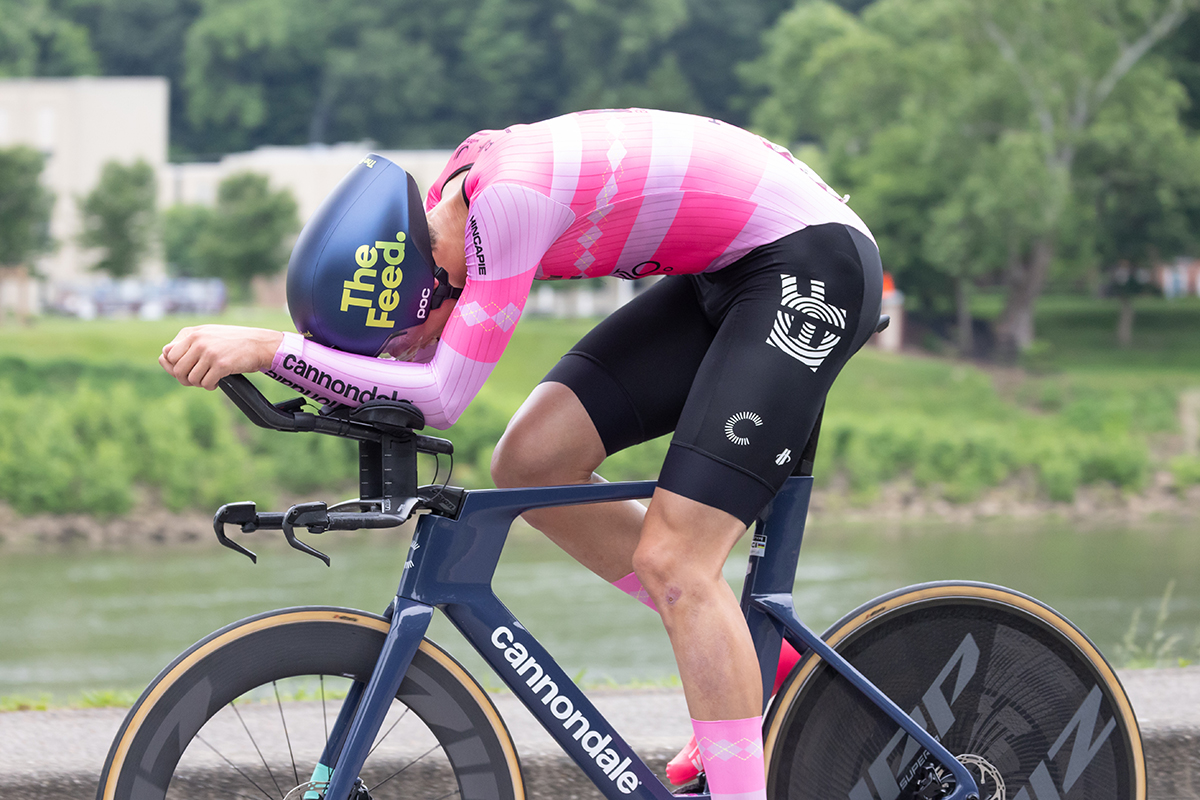
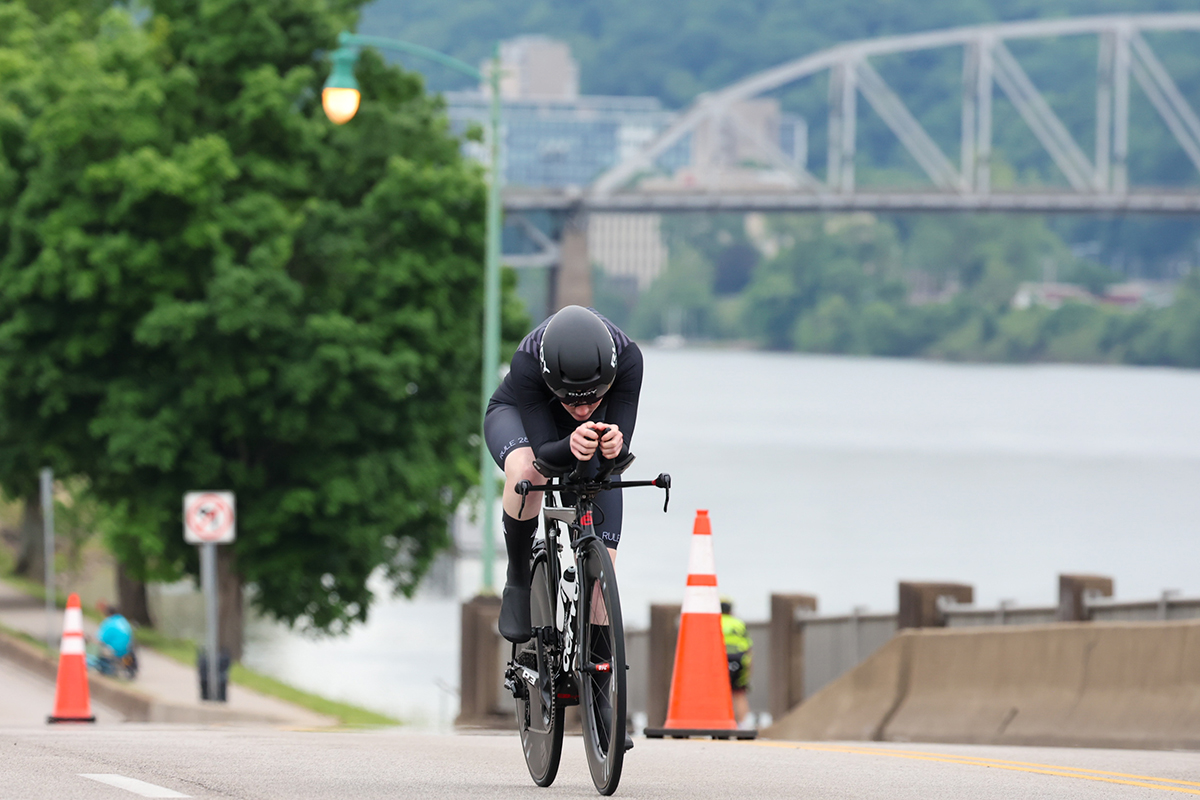
CHARLESTON, W.V. (May 14, 2024) — The 2024 USA Cycling Pro Road National Championships kicked off on Tuesday afternoon with the Junior Women’s and Junior Men’s Time Trial. Over 50 athletes from around the country completed the 16.9-kilometer Time Trial in downtown Charleston.
JUNIOR WOMEN’S TIME TRIAL
With light rain predicted in the forecast, the Junior Women were the first riders to compete on this year’s new course. Lidia Cusack (Chevy Chase, Md.; dcdevo Racing Academy) was the first rider out. She crossed the line in a time 22:55.63, which put her in the hot seat very early on. Even after getting a flat out on course, her time remained the standard for the rest of the race. Cusack has only raced one Time Trial this season so heading into today’s race she wasn’t sure what to expect saying, “I just gave it my all. It’s a fun and fast course. Overall, it was super hard.” Her teammate, Alyssa White (Elkins, W.V.; dcdevo Racing Academy) finished in second with Helena Jones (Boulder, Colo.; Twenty24 Aevolo) rounding out the podium in third. Cusack plans on racing the Criterium and Road Race later this week.
Results:
- Lidia Cusack(Chevy Chase, Md.; dcdevo Racing Academy)
- Alyssa White (Elkins, W.V.; dcdevo Racing Academy)
- Helena Jones(Boulder, Colo.; Twenty24 Aevolo)
JUNIOR MEN’S TIME TRIAL
The Junior Men took center stage after the completion of the Junior Women’s race. Finishing in a time of 20:39.21, Ashlin Barry (Toronto, Canada; EF Education-Onto) won the national title in his first Time Trial National Championship. When describing the race Barry said, “It was good, the conditions I thought were going to be wet, but it ended up being dry. It was a straightforward TT. I just paced it evenly, tried to take the corners well, and just left it all out there. I’m happy with how it turned out.” David Lapierre (Hebron, Conn.; Hot Tube Development Cycling) completed his race in a time of 20:42.02, which was good enough for second. Barry’s teammate, Noah Streif (Boise, Idaho; EF Education-Onto) rounded out the podium in third. All three riders will be competing later this week in the Criterium and Road Race.
Results:
- Ashlin Barry(Toronto, Canada.; EF Education-Onto)
- David Lapierre (Hebron, Conn.; Hot Tube Development Cycling)
- Noah Streif (Boise, Idaho; EF Education-Onto)
Idaho’s Over the Hill Gravel Grinder Benefits the Alzheimer’s Association
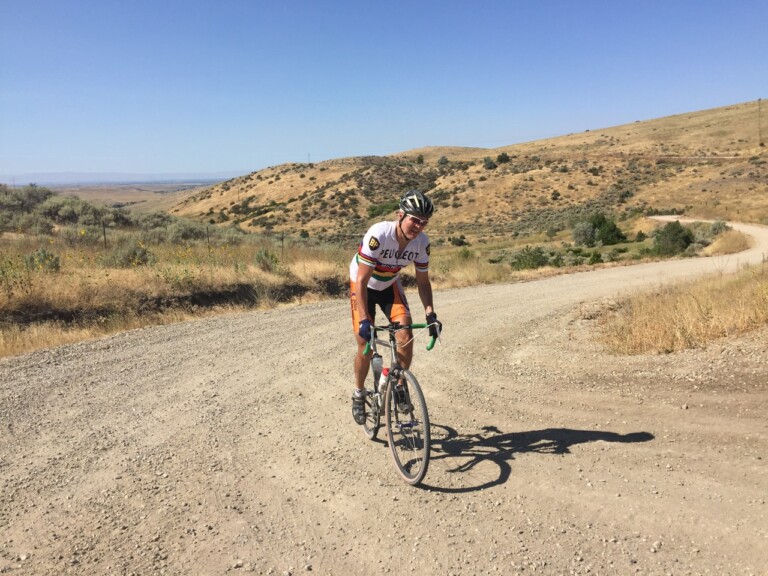
The Lost River Cycle Club’s Over the Hill Gravel Grinder is scheduled for Saturday, June 8, 2024, at 8:00 a.m. in Horseshoe Bend, Idaho. Proceeds from this event will benefit the Alzheimer’s Association Greater Idaho chapter. The ride will start and end at the Locking Horns Riverside Restaurant, 101 Payette River Avenue, Horseshoe Bend.
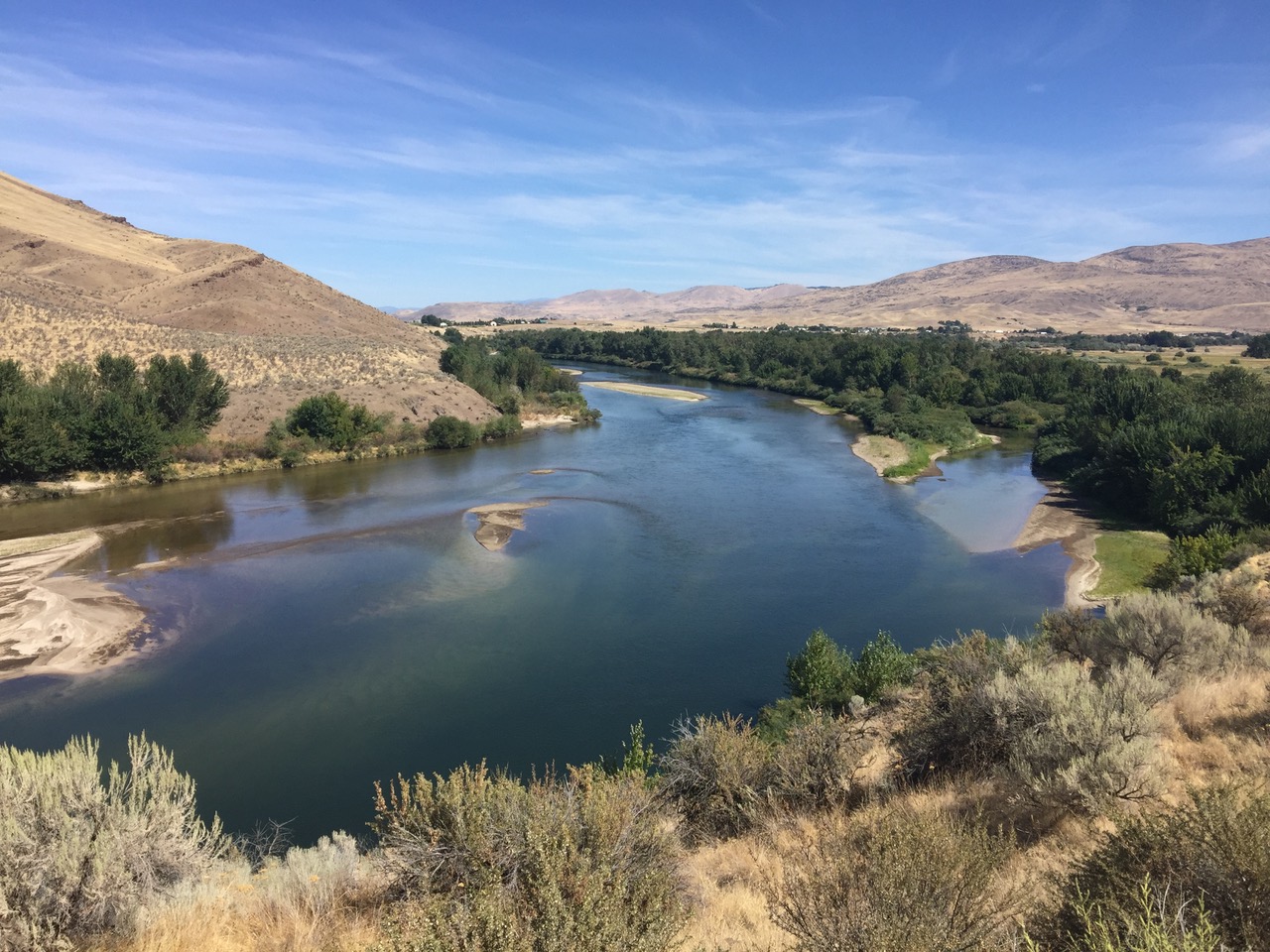
Now in its second year, the ride traverses the hills and gravel roads of the scenic Payette River basin. Organizers have created three different routes designed to attract riders of all abilities.
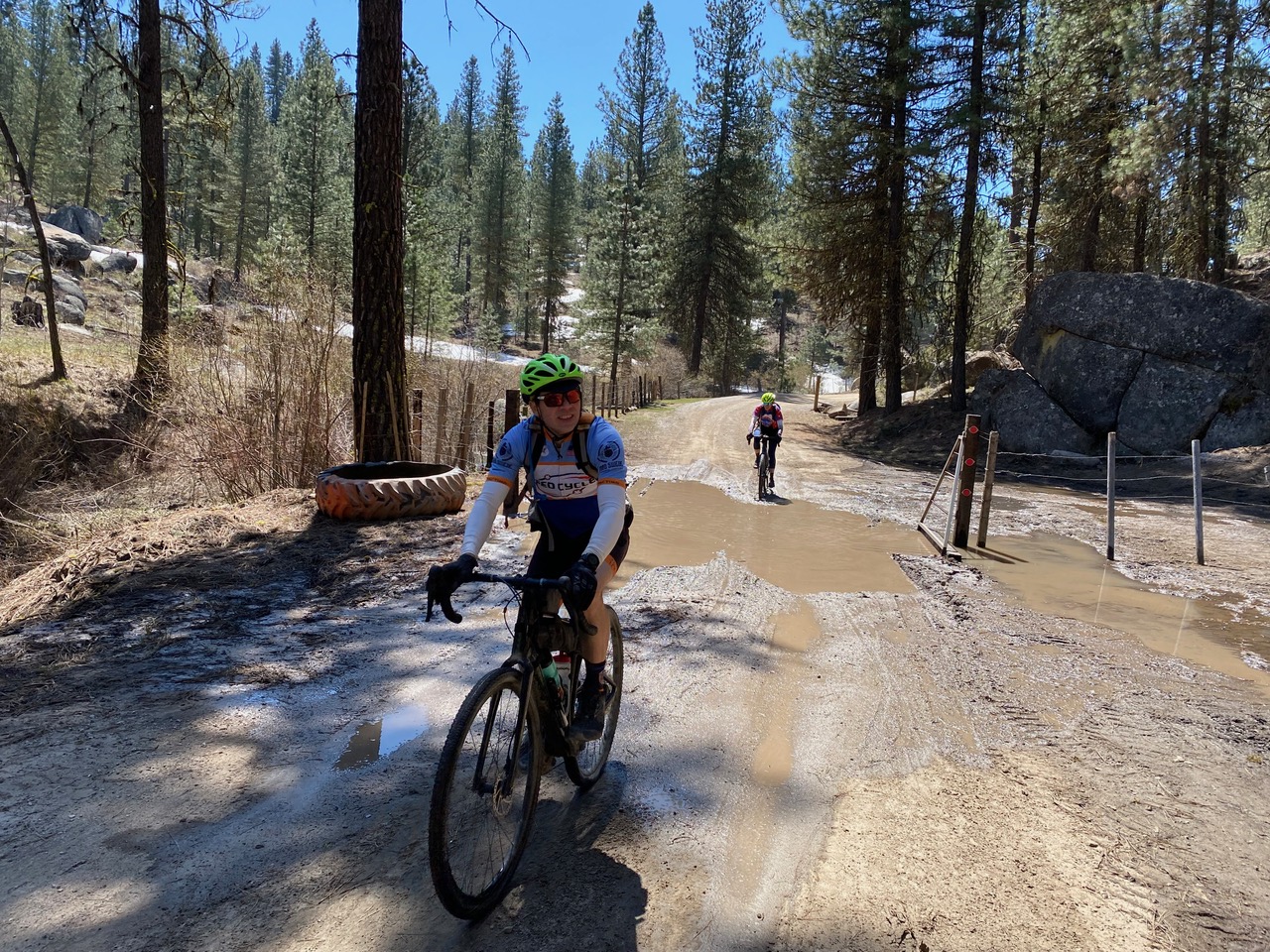
The Warhorse route is 84 miles with just over 8,500 feet of climbing. Sights include dramatic granite outcrops, wildlife, and the historic Brownlee School.
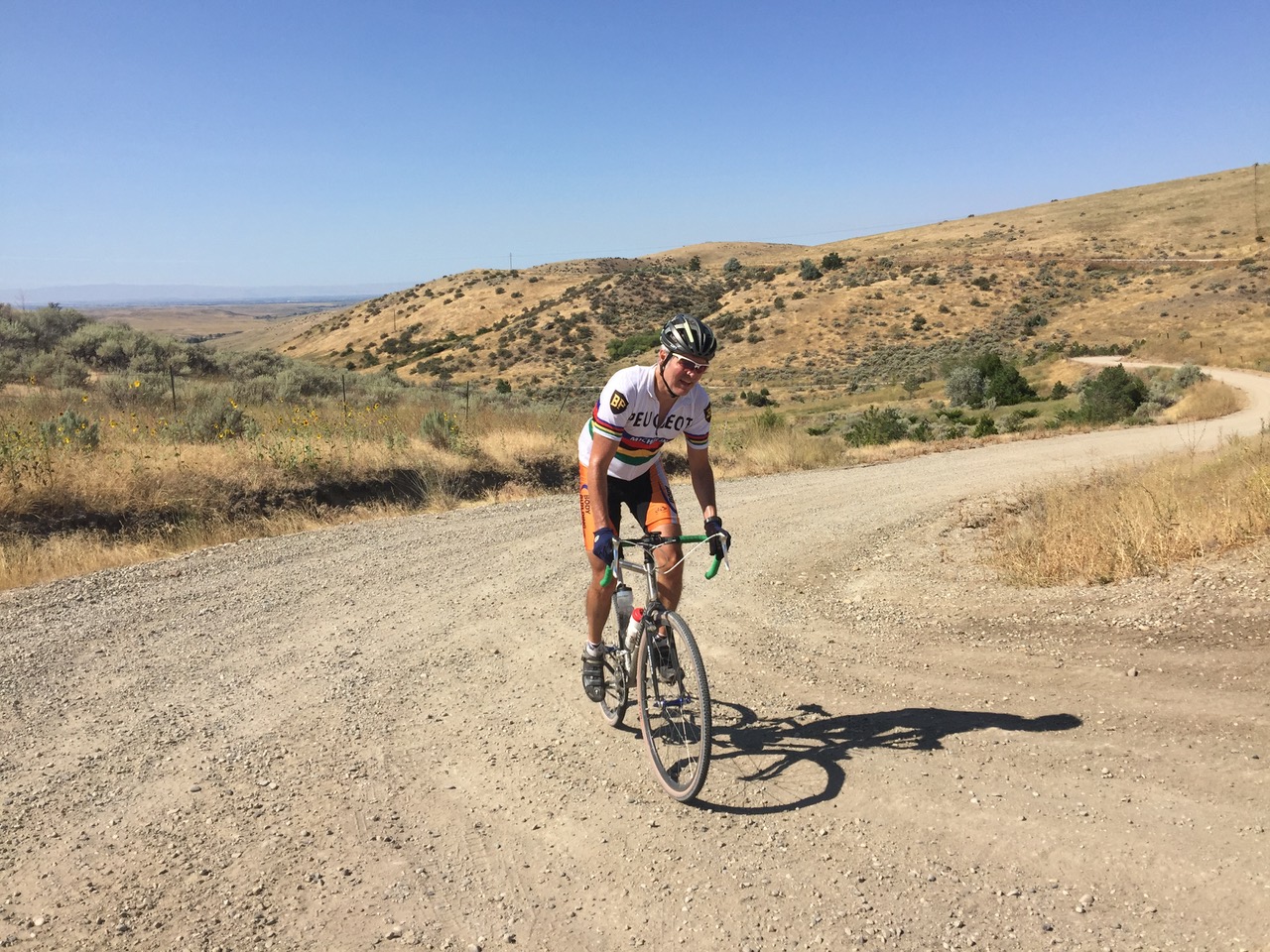
The My Little Pony loop follows the old Emmett highway along the Payette River before circling back toward Horseshoe Bend through the historic Pearl mining district. It’s 43 miles with an elevation gain of 4,200 feet.
Finally, there is the Hobby Horse route, which is an out-and-back of 17 miles from Horseshoe Bend to Montour, with 1,200 feet of climbing along the Payette River.
All routes will be fully supported with aid stations at key locations along the way. The ride will be followed by a fun after-party at the Locking Horns Riverside Restaurant.
Registration is open at BikeReg.com. (https://www.bikereg.com/over-the-hill-gravel-grinder) Registration is $75 for the Warhorse, $50 for My Little Pony, and $35 for the Hobby Horse, until Monday, May 27th when the fees increase to $100, $75, and $50 respectively. All proceeds after expenses go to support the Alzheimer’s Association Longest Day event.
More information and registration, including downloadable route maps, can be found at https://www.bikereg.com/over-the-hill-gravel-grinder, or on the event Facebook page https://facebook.com/events/s/over-the-hill-gran-fondo-grave/541862941451713
Book Review: Bicycle Junction Chronicles the History of Cycling in Grand Junction, Colorado
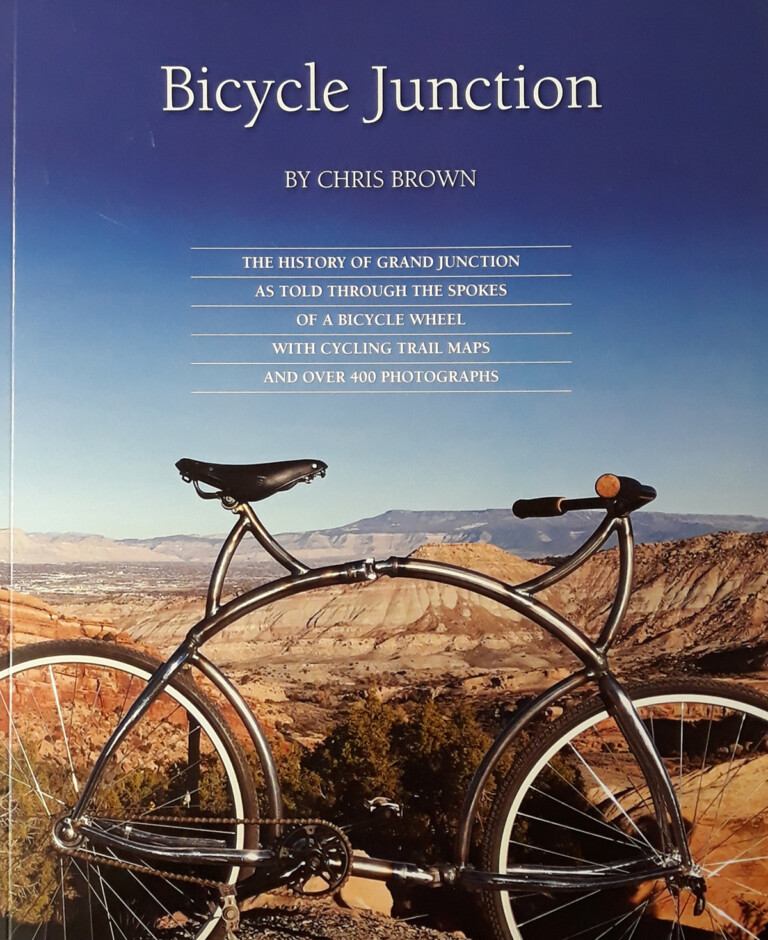
By Shanna Matheson — An historical fiction story woven through the history of Grand Junction and the surrounding areas; Bicycle Junction, by Chris Brown, is the story of a cycling time traveler. On his first day in Grand Junction, the main character crashes his bike on the Holy Cross trail and finds himself on a magical bike which takes him back to 1880. Each chapter takes you through a decade in time as the main character rides his way through history.
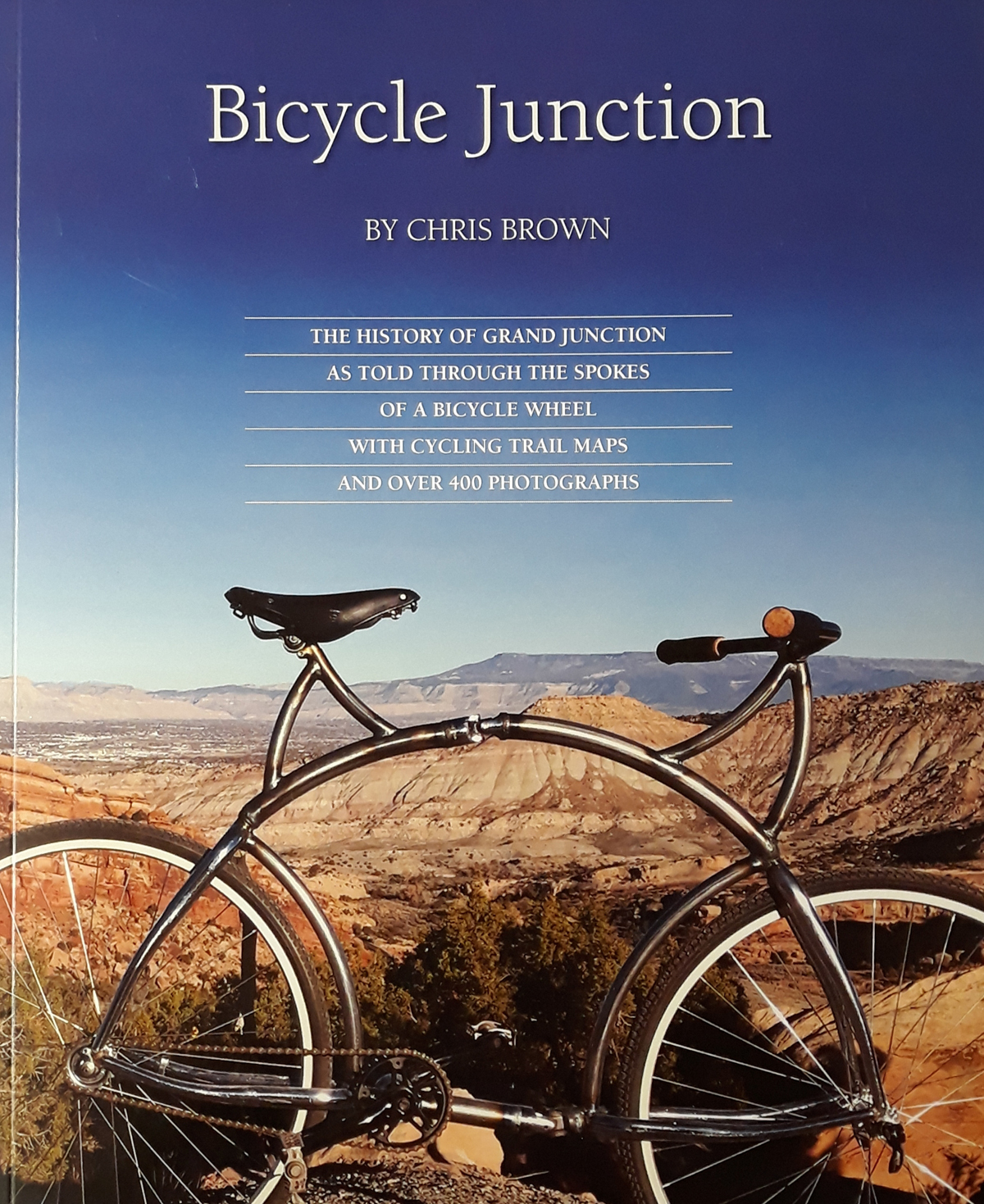
The history is well-researched. Many of the true stories are about the bikes themselves, bike racing, and bike clubs, all sprinkled with some local lore. Interspersed with the cycling tales, is the history of a western town from its pioneer days to the current (2015) Grand Valley of today.
I enjoyed the true cycling stories that took me through more than a century. Judges cheating in bike races, racers using buttermilk to seal their tires, world-record unicycle rides, and a dirt velodrome are great true stories from the more distant past. More recent history includes facts about the area hosting stages of the Coors Classic and the filming of American Flyers.
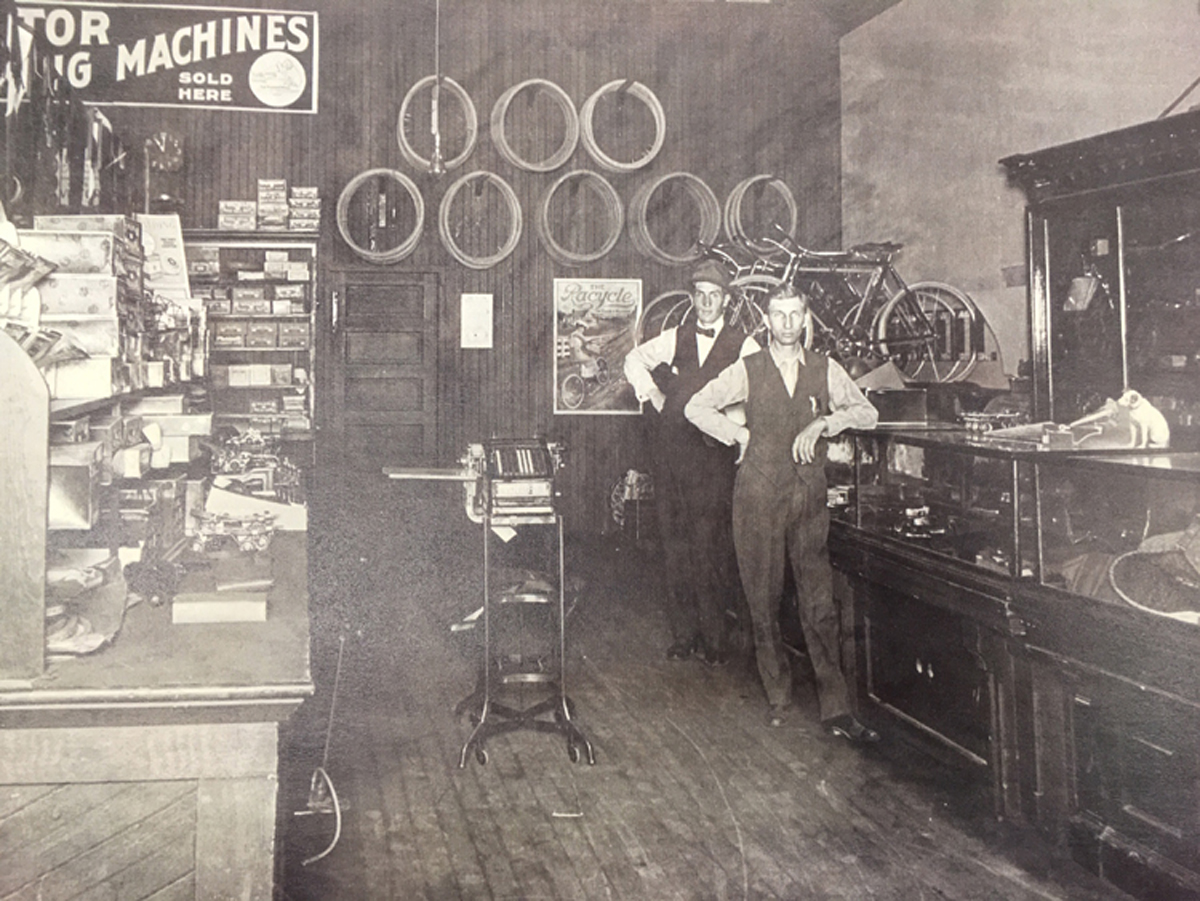
Woven into the history is a bit of a love story. Throughout the time jumps in history, the main character repeatedly has encounters with the same person. As one would expect, time travel makes having a relationship difficult. The main character’s love interest is an actual person who marries another man and moves to Salt Lake. No spoilers, but their story ends in a sweet and somewhat sappy way.
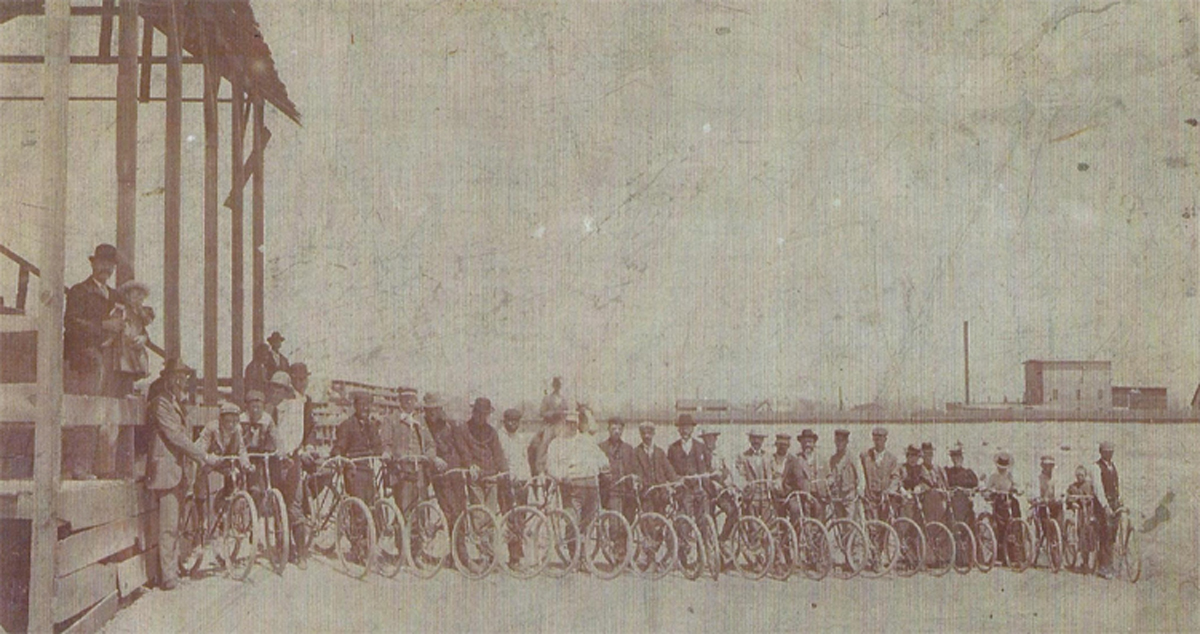
The book is full of great pictures throughout time. However, the story sometimes takes unnecessary sidebars attempting to tie every photo into the storyline, but overall, I enjoyed looking at the images and tying them into the historical stories. Occasionally, the stories also delve a bit too deep by providing race results won by people long forgotten.
The book also has lots of maps of road and mountain bike trails throughout the Grand Valley and surrounding areas. However, since it was published in 2015, its usefulness as a trail resource is limited. You will easily find more current and easier-to-use trail resources in any of the multitude of bike shops around the area.
I spoke with the author last week. He mentioned that out of about 200 books sold, he only knew of about 15 people who had read the book in its entirety. Given the plentiful sunshine and endless riding opportunities in the area, I’m guessing those who didn’t finish the book were out making their own cycling history.
On a side note, I have yet to see the opera based on the book.
Editor’s Note: There really is an opera based on the book: One Bike, a Folk/Jazz Opera by Music Writer and Composer Scott Betts is inspired by the book Bicycle Junction. Filmed by Cullen Purser of Fruita. Director and Choreographer Lana Rogal. Preformed Saturday, August 7, 2021 CMU Robinson Theater. Available now on DVD at the Mesa County Library or online here and on YouTube: https://browncycles.com/bc/fun-videos/
Title: Bicycle Junction
Author: Chris Brown
Publisher: Independently published (July 6, 2023)
Paperback: 326 pages
Over 400 photographs, 30 Modern day local trail maps, Historical Fiction, Softbound cover.
ISBN-13: 979-8397679886
Available from: https://browncycles.com/bc/book-store/
Colorado Mesa University and University of Colorado Boulder Win Team Omniums at the 2024 USA Cycling Collegiate Road National Championships
Anthony Hilligoss, Aria Mundy, Jonas Walton, and Cassidy Hickey all claim top steps of the individual omniums.
ALBUQUERQUE, N.M. (May 6, 2024) – It was an eventful and windy weekend in Albuquerque where collegiate athletes brought their A-game for the 2024 USA Cycling Collegiate Road National Championships.
TEAM TIME TRIAL
Friday kicked off with the Team Time Trial which covered 30.1 kilometers. For the Club Women, the University of Colorado Boulder took home gold, winning in a time of 41:41.03, followed by the University of Arizona in second and Arizona State University rounding out the podium in third. On the Varsity Women’s side, Colorado Mesa University stopped the clock at 40:18.83, which was good enough to secure first. Marian University and Fort Lewis College were hot on Colorado Mesa’s heels, finishing within .82 and 14.65 seconds of the winning team’s time.
In the Men’s Club event, Colorado State University won in a time of 36:22.10. University of Colorado Boulder earned second, and California Polytechnic-San Luis Obispo rounded out the podium in third. On the Varsity Men’s side, Marian University took first, finishing in a time of 35:07.10. Fort Lewis College earned silver, and Lindenwood University took bronze.
INDIVIDUAL TIME TRIAL
It was now the individual rider’s turn to race against the clock on Friday afternoon on a course that covered 22.6 kilometers. For the Club Women, Zoe Van Winckel (Reston, Va; UVA Cycling) won the event with a time of 36:15.0. Grace Walther (Indianapolis, Ind.; Indiana University-Bloomington) earned silver, and Claire MacDougall (Antigonish, Nova Scotia; Stanford University) took bronze. In the Women’s Varsity event, Molly Hayes (Wichita Falls, Texas; Midwestern State University) finished with a time of 39:30.3, which earned her gold.
In the Men’s Club event, Aaron Wenk (Scarsdale, N.Y.; Princeton University) took the win with a time of 29:20.3. Gavin Blair (Greenbelt, Md.; University of Maryland-College Park) and Sebastian Silberman (Columbia, Md.; Princeton University) finished second and third, respectively. On the Varsity Men’s side, Jonas Walton (Martinez, Ga.; Belmont Abbey College) earned the gold with a winning time of 29:21.2. Zach Fernau (Show Low, Ariz.; Lindsey Wilson College) and Nicholas Van Rooyen (Mooresville, N.C.; Lees-McRae College) finished second and third, respectively.
ROAD RACE
On Saturday, women and men raced a looped course for a total of 105 kilometers. The first race of the day was the Men’s Club event where Anthony Hilligoss (Eden Prairie, Minn.; University of Colorado Boulder) earned gold with a time of 2:24:27. Aaron Wenk (Scarsdale, N.Y.; Princeton University) earned second, and Nathan Cusack (Chevy Chase Md.; UVM Cycling) claimed third.
The Club Women raced next – Aria Mundy (Boulder, Colo.; University of Colorado Boulder) won the event with a time of 2:58:21. Sarah Duclos (Howell, Mich.; University of Michigan-Ann Arbor) earned second, and Nadine Visser (Boulder, Colo.; University of Colorado Boulder) took the third.
The Varsity Men’s event was a battle for the finish where the top four riders all sprinted in together. Ultimately, Luca Haines (Durango, Colo.; Fort Lewis College) took first, Jonas Walton (Martinez, Ga.; Belmont Abbey College) claimed second, and Ben Kolbie (Dublin, Ga.; Piedmont College) rounded out the podium in third.
The Women’s Varsity event concluded the day where there was another battle for the finish with the top three sprinting to the line together. Cassidy Hickey (Parker, Colo.; Colorado Mesa University) took first, Lizzy Gunsalus (Dudley, Mass.; Marian University) claimed second, and Kylie Small (Centennial, Colo.; Fort Lewis College) earned third.
CRITERIUM
Resilience, speed, and precision were on display for the final day of the 2024 Collegiate Road National Championships, where the Albuquerque wind posed quite the challenge. A 1.8-kilometer circuit was used for all of the criterium events. The first race of the day was the Women’s Club event where Aria Mundy (Boulder, Colo.; University of Colorado Boulder) earned the Stars and Stripes jersey. The battle for silver was a close sprint to the finish – Allison Crow (Golden, Colo.; University of Colorado Boulder) finished second and Zoe Van Winckel (Reston, Va; UVA Cycling) finished third.
In the Men’s Club event, there was another battle for the gold with the top three riders sprinting to the finish. Simon Abrahamse (Atlanta, Ga.; University of Colorado Boulder) won the event, Gavin Blair (Greenbelt, Md.; University of Maryland-College Park) earned silver, and Anthony Hilligoss (Eden Prairie, Minn.; University of Colorado Boulder) took bronze.
There was another close finish in the Women’s Varsity event, where the top seven riders all finished in a sprint to the line. Ultimately, Stephanie Lawrence (Colorado Springs, Colo.; Marian University) snagged it at the line, earning gold. Olivia Cummins (Fort Collins, Colo.; Colorado Mesa University) earned silver, and Katie Clouse (Park City, Utah; Colorado Mesa University) took bronze.
The Men’s Varsity event concluded the day. Jonas Walton (Martinez, Ga.; Belmont Abbey College) broke away from the pack early in the race and continued to advance that lead throughout, finishing over a minute-and-a-half ahead of the chasers. Kellen Caldwell (Milford, Mich.; Fort Lewis College) won the battle for silver, and Vaughn Veenendaal (Boulder, Colo.; Colorado Mesa University) took the bronze medal.
INDIVIDUAL OMNIUM
Club Men
Anthony Hilligoss (Eden Prairie, Minn.; University of Colorado Boulder) – 152 points
Gavin Blair (Greenbelt, Md.; University of Maryland-College Park) – 124 points
Jonathan Lane (Irvine, Calif.; Purdue Cycling) – 111 points
Varsity Men
Jonas Walton (Martinez, Ga.; Belmont Abbey College) – 166 points
Luca Haines (Durango, Colo.; Fort Lewis College) – 122 points
Kellen Caldwell (Milford, Mich.; Fort Lewis College) – 121 points
Club Women
Aria Mundy (Boulder, Colo.; University of Colorado Boulder) – 163 points
Nadine Visser (Boulder, Colo.; University of Colorado Boulder) – 148 points
Sarah Duclos (Howell, Mich.; University of Michigan-Ann Arbor) – 132 points
Varsity Women
Cassidy Hickey (Parker, Colo.; Colorado Mesa University) – 164 points
Lizzy Gunsalus (Dudley, Mass.; Marian University) – 131 points
Olivia Cummins (Fort Collins, Colo.; Colorado Mesa University) – 131 points
TEAM OMNIUM
Club Omnium
University of Colorado Boulder – 464 points
Colorado State University – 338 points
University of Arizona – 320 points
Varsity Omnium
Colorado Mesa University – 446 points
Fort Lewis College – 430 points
Marian University – 410 points
Learning To Fly: December Junior Camp at the US Olympic Training Center, 1985
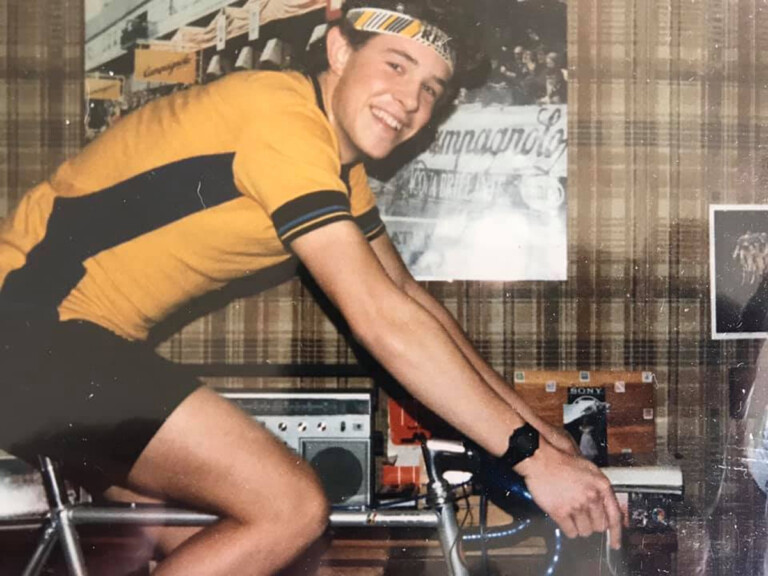
An excerpt from the forthcoming book “Saddling Up to Ride in Cowboy Country … in Spandex!”
By Dave Campbell — The letter from the US Olympic Committee arrived in mid-November of 1985 and I was thrilled to be one of 120 riders accepted. “Room and Board is provided by the US Olympic Committee. Your only expense is travel to and from Colorado Springs.”
Bikes were expected to arrive “clean and in perfect working order” but tools, glue, grease, and work stands will be provided by “National Team Mechanics! Help and advice is only a ‘Thank you’ away!” The camp would be held December 13-30 and so I would miss a week of school, with the bulk of the camp happening over Christmas break.
I was 17 years old; a junior in high school and I had been racing for five years. I lived in Lander, Wyoming, a little town at the foot of the Wind River Mountains. The letter explained what the camp would entail and what we should bring. A training program for the weeks leading up to camp was provided, as was an address to give friends and family for mail. I had never ridden through the winter, choosing instead to swim during Wyoming’s cold, dark, and snowy months. In addition to winter riding clothes, we also needed clothes for gymnasium work. The camp would include road riding, cyclocross, running, weight training, and basketball.
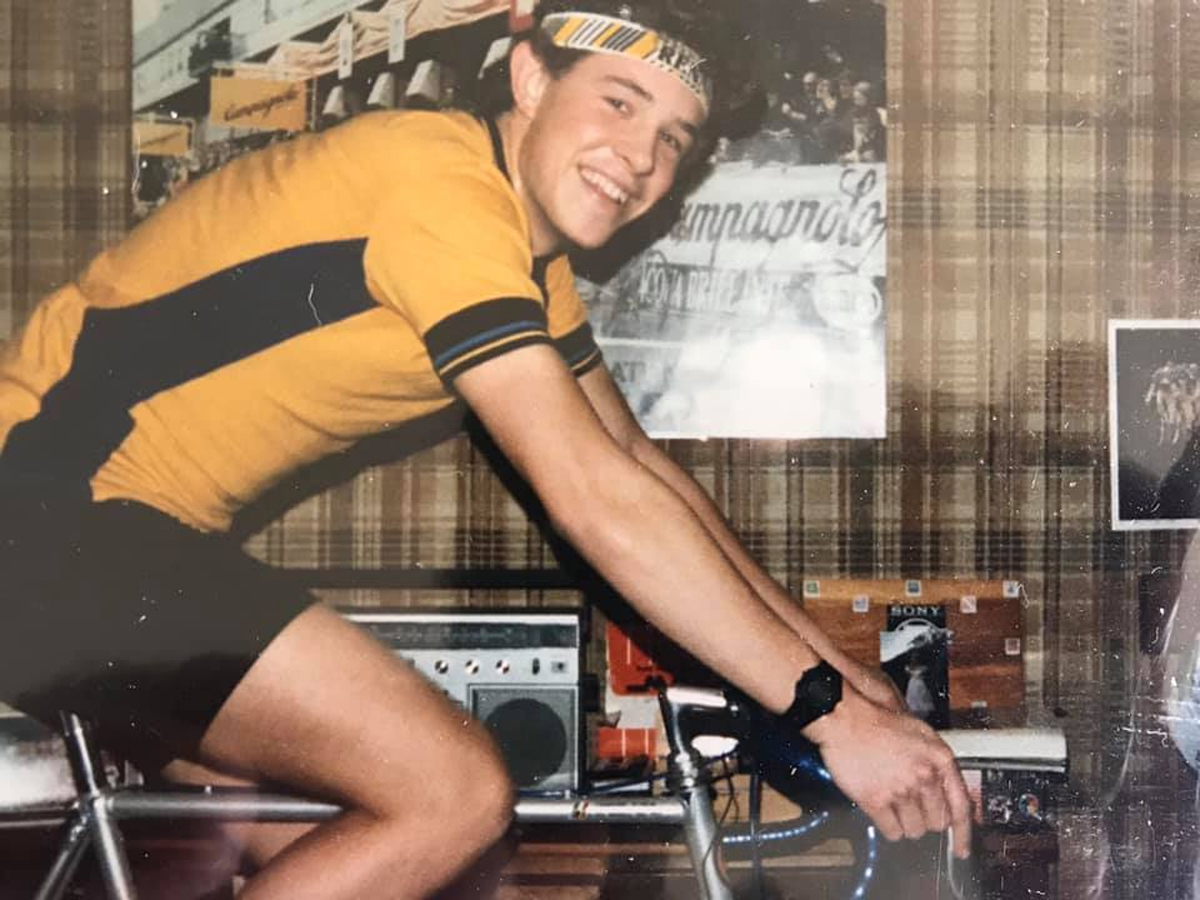
I was asked to bring a cyclocross bike as well as my road bike. I knew vaguely of cyclocross from my Winning magazines. ‘Cross was a winter combination of running and riding practiced on a variety of surfaces, but not only did I not have a bike, I had never done it! I bought THE ONLY bike frame (which was slightly too big) available in my town at Freewheel Sports and set about building one up with older, leftover parts I fortunately had on hand.
I sought advice Mike Stieb, a rider from Casper who had been to Colorado Springs the previous year. The culture of cycling at that time, particularly in Wyoming, was one of actively sharing information and helping each other. Everyone in our little cycling world was trying to elevate not only their personal performances, but the sport in general and since information was scarce, it was shared readily. He told me what kind of tires to use for ‘cross and about the daily training sessions and weather. Road rides peaked at two and a half hours, and you had to stay in the small chainring and spin. The hardest workouts were weight training and cyclocross; he recommended I practice a bit as riding around in the snow and mud with a hundred other kids was tricky!
As the departure date approached, I started getting the kind of attention you can only get in a small town. I was pulled out of class one day and interviewed for the school newspaper. The local paper ran the headline “Campbell to train for the Olympics”, which of course wasn’t true! The article itself, however, was accurate about what the camp was … a development camp for promising young riders from around the country. Physiological testing would choose 40 to 50 riders to return for a more intensive April camp. At the monthly High School Letterman’s Club meeting, I was presented with a check for $100 to help with my expenses at the camp!
At this point, I was very much a part-time cyclist. I was committed to school as well as the swim team. I was unsure how to integrate the two sports. The winter roads around Lander were unrideable anyway due to snow and extreme cold, so I had never trained as a year-round cyclist.
Although I had participated in a few high-level races, I was realistically limited to mainly Wyoming’s minimal but growing summer calendar (with occasional forays to Utah, Montana, and/or Colorado). Getting invited back for April seemed like a stretch and between school and parents, I didn’t even know if I could pull it off if I did!
Nonetheless, I wanted to learn as much as possible and make the most of this opportunity. I hacked around in the snow on my new ‘cross bike, rode my indoor trainer, and lifted weights at the pool in preparation. The idea of living in the dorms with a bunch of bike racers from all over the country and being a full-time athlete, if only for a few weeks, was thrilling! On my last day at school prior to departure, Gene Patch, our short and fiery little principal stopped me in the hall. “Campbell, you going down to Colorado tomorrow for that Olympic Camp?”
“Yes, sir,” I replied.
“Well, you give ‘em hell down there, son!” He enthusiastically instructed me as he patted me on the back. It was probably the most “Cowboy Country” moment in my entire cycling career!
The drive down was cold and windy with blowing snow. The weather made me a little anxious about bundling up and riding every day. Less than a year ago, the US cycling program had received some unwanted national attention for a “blood boosting” scandal at the 1984 Olympics, that while not technically against the rules, was clearly immoral and cheating. A lot like doping really. In a very prescient comment, my dad told me to “watch out for drugs down there, you don’t want to be involved in any of that”.
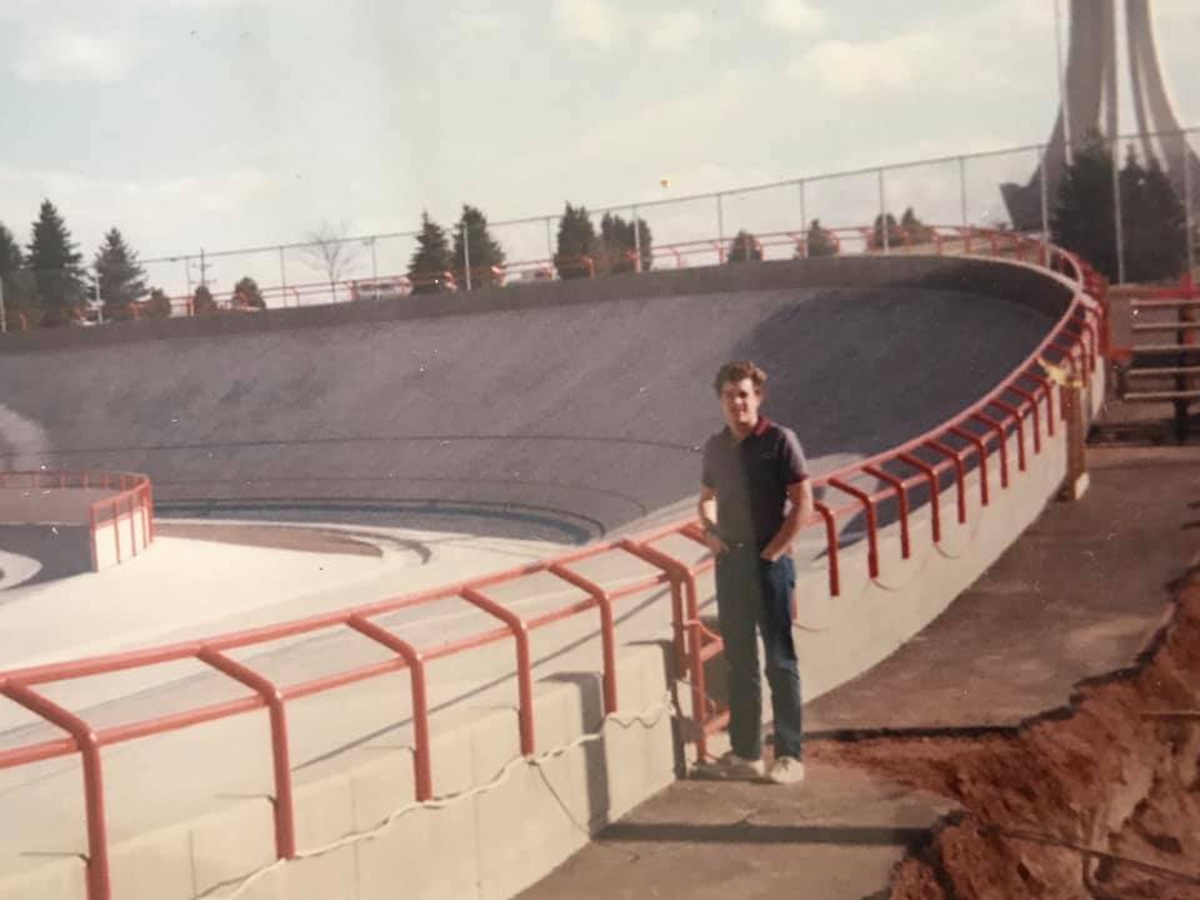
Upon arrival, I was issued a meal pass/ID card and given a room assignment. I ran into Darin Dewsnup from Utah, a friend I had made the year before at a race outside Salt Lake City. My roommates were two guys from San Antonio, Texas. Bryce was mainly a track racer and had brought a fixed gear bike. Andy was tall, skinny, friendly, and easy-going and it was immediately clear that we were going to be friends.
The wind and snow we had driven through moved into Colorado Springs, making road riding impossible on the first day, so instead we went to the gym. We were broken into twenty-man groups each with older, permanent resident (PR) riders assigned to lead us. In the gym, Darrol Batke and Kit Kyle led us through tumbling drills on mats so we “knew how to crash”. We did some circuit weight training after a little 5 on 5 basketball where the only rules seemed to be “run, run, jump, jump!”
We weighed ourselves each morning and took our pulse for 15 seconds upon awaking, then again another 15 seconds after standing. These were recorded daily and posted outside our dorm rooms on a chart for the coaching staff. A gap between the two pulse rates exceeding 5 was seen as a sign of fatigue and cause for a rest day. We jogged down to breakfast, stopping enroute to stretch and do “deep breathing exercises” where we got all the “stale air” out of our lungs from sleeping. We actually pushed and squeezed on our bellies!
Our rides were always done after lunch, in the warmest part of the day. After our day in the gym, the sun came back out and the snow melted, and we rode for two hours. Most days involved both gym work and riding. Helmets were optional and most of us wore wool ski hats. My group was assigned Mike McCarthy, a permanent resident from New York, as our ride leader. He was only a year or two older than us but friendly, outgoing, and encouraging … and very savvy on the nuances of cycling. We spun easily on an out and back course in a double paceline.
Most of the evenings after dinner had lectures or presentations and I dutifully took notes on all of them in my little leatherbound journal, a gift from my English teacher Mr. Mork. The first was just a video … of Greg Lemond winning the 1983 Worlds! We were instructed to look at how Greg was racing, his riding style, and his tactics. I had only seen pictures in the magazines and was thrilled to see all the key moments of the historic race!
The next evening Walter Golebiewski talked to us about bike position. My positioning was so random that my reason for the stem I had on my bike was that it was the only stem in my local shop when I built the bike up! The lecture revealed my many shortcomings, and time with the mechanics the next day helped me rectify some of the issues.
By the end of the first week, Dale Stetina (winner of the1983 Coors Classic on the very last day) spoke on tactics and training. It was information that I was starving for! I stayed after to thank him … and get extra tips! I used his “bluff to win primes” strategy quite often in the coming years. As the camp went on, Ed Burke would speak to us on nutrition and physiological testing. Steve Bishop, a national team mechanic spoke on bicycle maintenance and equipment, National Cyclocross team member Casey Kunselman spoke on cyclocross, and Junior National Coach Craig Campbell spoke about keeping a training diary and positioning in the peloton. I really took it all to heart and I knew it would all enable me to get better. In fact, these camps had been making American riders better since 1978 when Greg Lemond was a junior! We were just the latest beneficiaries!
After several cyclocross sessions so guys like me could (kind of) figure it out, we had a training race down in the park. We were informed that a “special guest” might be there watching. As we rode to the park, the riders all guessed that Eddie B., the Olympic Coach, must be the special guest and so everyone fired up to perform.
Daryl Price, from California, was the fastest on the day, and years later would become one of the very few Americans to win a World Cup Mountain bike race. I was left in the dust almost immediately, when someone started directing me on where to ride. I didn’t know the guy and we had pre-ridden the course, so I ignored him. He was trying to warn me of where the snow covered a curb and now revealed a drop off. I promptly crashed, basically right at his feet, understanding now what he was trying to do. I looked up and there was Eddie B! He scolded me with his thick Polish accent, “Silly Junior, you will learn!”
That evening Eddie B. himself gave our lecture! The architect of those nine Olympic Medals! The first point he made spoke right to me: “To be successful, you must be crazy for cycling!” Done! He told us we had to “eat like a pig, work like a bull, and sleep like a baby!”
I diligently took my notes. He detailed Speed, Power, and Endurance as the key components of cycling and how to train all three. One of his key points was understanding the difference between speedwork and intervals and how to incorporate them into your training. His funny bits and detailed training information were balanced by simple and logical tips like “learn something from every race” and “analyze why you win and why you lose races”. We received it like gospel coming down from on high!
The definitive moment of December Junior Camp at the OTC was the progressive ergometer test, by individual appointment. The other guys went to the gym to lift but I went back to my room to prepare for my big test. With my headphones blasting the most inspirational music I had, I bundled up and did a big warm up on my road bike, put my game face on, and then rolled up to the intimidating Physiology lab building.
The “Erg” was a stationary bike that was adjusted to your riding position. There were technicians who pricked your finger at set intervals to take blood and measure lactate. After a thorough warmup, the test began with a “load” of 3 “kiloponds”, whatever that was, for five minutes. Cadence was to be maintained at 90 rpm. Stripped down to just cycling shorts, shoes, and a headband, I was sweating and breathing hard, but it was manageable.
The load was then increased to 4 for the next five minutes and I was working very hard. The next phase of the test was a load of 5 until failure. As soon as they turned it up, it was like stomping on a big gear into a strong headwind … on a climb. It was eyeballs out! I gave everything I had as all the techs screamed and cheered, pounding that monster gear as long as I could. My final time was 11:40, decidedly middle of the pack when results came out. I believe it was the 50th or 60th best time and I wouldn’t be coming back in April. To me that was irrelevant, I came to do my best and to learn. Mission accomplished!
The dorm legend had it that Derin Stockton, a rider from Santa Barbara rooming next door, was so strong they just turned the machine off after 17 minutes! Coach Neil met with all of us one on one after the test to discuss the 1986 race calendar and our results. He was a little stern with me about getting out of Wyoming and doing more of the big races around the country. My parents didn’t want “my world to revolve around bike racing” but I didn’t tell Neil this! One race I was fairly sure I could do was the Iron Horse Classic in Durango, Colorado at the end of May. It went over two 11,000-foot climbs and served as the Junior Worlds Trials Qualifier for the western region of the country.
My parents picked me up on December 31st and I was happy to be back in Cowboy Country in time to go out on New Year’s Eve with my friends! And, of course, to share my tales about life at the USOTC. I would also share them with the Lettermen’s Club. I took photos during the camp and shared a slide show at the next meeting as a thank you for the financial help. I was never sure what the traditional “jocks” thought of cycling, so I was thrilled when one of the stars of the basketball team said “Wow, they were really checking you out!”
I did not make it to Juniors Worlds, but I did race the Iron Horse, finishing 28th. Best yet, I fell even deeper in love with cycling and kept racing until 2016 and I’m still riding to this day!
Post-scripts:
The first National Cycling Director of USA Cycling was Eddie Borysewicz, a Pole who defected after the 1976 Olympics in Montreal. Eddie was a multiple national road and track champion in Poland, later becoming a coach when Poland was a world cycling power. He had also served as a machine gunner in the Polish army. Under his guidance, US cyclists won nine medals at the 1984 LA Olympics, including four gold, the first of any kind since 1912.
Some background on the USOTC: President Jimmy Carter signed the Olympic and Amateur Sports Act in 1978, after the US Olympic Committee (OSAA) wrested control of everything Olympic related from the Amateur Athletic Union. The OSAA mandated the creation of National Governing Bodies (like USA Cycling) for each Olympic Sport. Additionally, a permanent Olympic Training Center was to be developed. The Colorado Springs facility, the old Air Force Academy, was the perfect place. “When Eddie learned that the OTC could provide free lodging and food for up to 120 riders (numbers he anticipated for future camps) he jumped on it!” [1]
The first USOC offices (“Olympic House” as it came to be known) had been the office of the commanding air general of the North American Air Defense Command (NORAD). NORAD monitored the skies for intercontinental missile and nuclear warheads. The epicenter for monitoring Cold War activities had now become the center of the American Olympic Movement. [2] Ironically, the first US coach to have an office there had, decades earlier been a Polish machine gunner stationed on a missile base in East Germany!
Eddie used the OTC for his February winter training camp in 1978, becoming the first coach of the first federation to utilize it. Junior riders Greg Lemond, Greg Demgen, Jeff Bradley, and Ron Kiefel attended and later won a bronze medal in the 1978 Junior World Championship Team Time Trial, the first ever World cycling medal for US men. The OTC administrators were delighted, as the training camp and the results justified the OTC’s existence. Upon his retirement from coaching, Eddie B. noted that the enormous progress and international success of American cycling in the 1980s would have been impossible without the meals, lodging, and facilities made available to he and his coaching staff at the USOTC. [3]
Kit Kyle would win a silver medal that fall in World Track Championships in the Tandem Sprint, paired with David Lindsey.
Mike McCarthy would represent the US in the Team Pursuit at both the 1988 and 1996 Olympics. In 1990 he earned a bronze medal in the World Amateur Pursuit Championships and in 1992, he became World Champion in the Professional Pursuit, the first ever by an American.
Doug Smith, another permanent resident who helped with the camp would win the 1986 Amateur National Road Title and become the first cyclist to appear on a “Wheaties” box.
USA Cycling revived the camps a few years back and charged campers $10,000 to attend. Of course, this also included USA cycling logo gear. Huh.
1. Borysewicz, Eddie and Riddle, Patty. (2020) Eddie’s Side of the Story: The Life and Times of Eddie B. Independently Published.
2. Badger, Emily, “United States of Innovation: How Colorado Springs Became the Heart of the U.S. Olympic Movement”, Fast Company, June 2012.
3. Borysewicz, et al.
Dave Campbell was born and raised in Lander, Wyoming and now resides in Bend, Oregon. A retired High School Science and Health teacher, Dave won four Wyoming state cycling championships before moving to Oregon to attend the U of O in Eugene. While there, Dave was a collegiate All American and went on to win six Oregon State Cycling Championships as well as a Masters National Road Title on the Tandem. He started writing Trivia in 1992 for Oregon Cycling News and continued the column with the Northwest Bicycle Paper. Dave also writes cycling history at “Clips_and_Straps” on Instagram and announces at cycling events throughout Oregon
CalBike Condemns Governor’s Cuts to Active Transportation
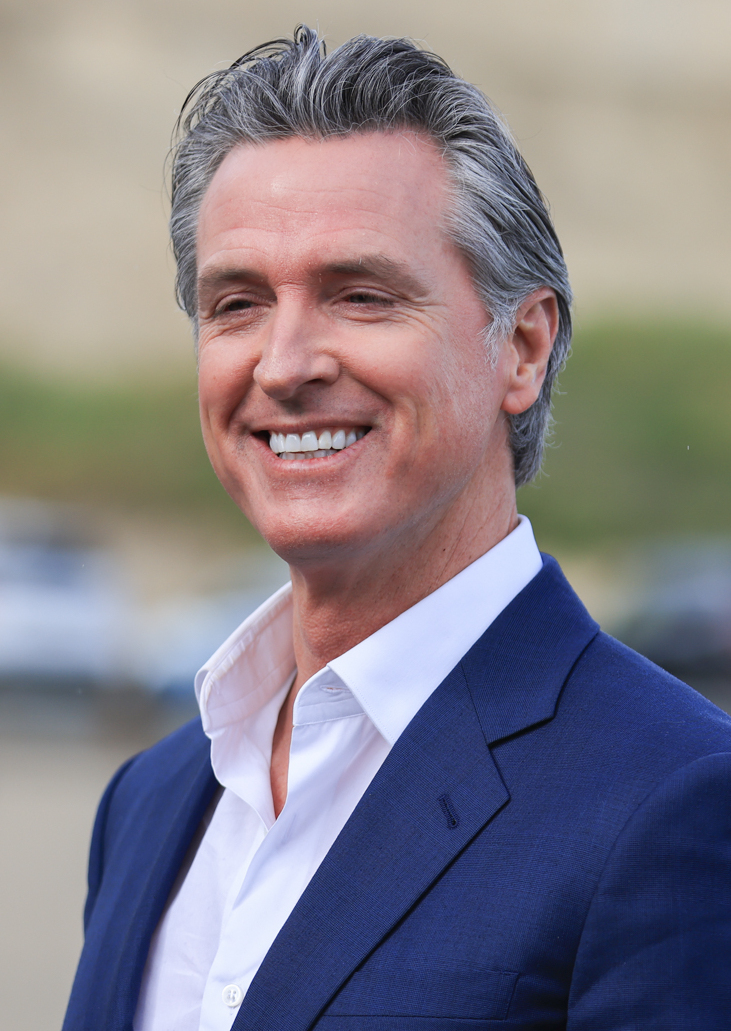
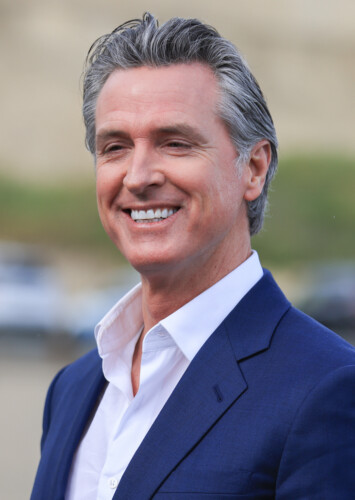
SACRAMENTO, California (May 10, 2024) — Governor Gavin Newsom’s May Revise of the California budget, issued today, increases the cuts to the Active Transportation Program from $200 million to $600 million. The program pays for critical pedestrian and bicycle safety improvements and is the only transportation program singled out for significant cuts. In 2023, the program gave $539 in grants, so the governor’s cuts are equivalent to eliminating an entire 2-year funding cycle for bike and pedestrian infrastructure.
 There is no need for this cut because there is no deficit in transportation funding.
California’s transportation budget has more money than ever, thanks to federal programs like the Infrastructure Investment and Jobs Act. The Active Transportation Program must be backfilled from the State Highway Account or from the influx of federal funds.
The Active Transportation Program is chronically underfunded and unable to greenlight most of the shovel-ready projects submitted for funding. Local governments are clamoring for support for active transportation projects and help to curb the rising death toll on our streets. This senseless budget cut does not serve our communities or our residents.
“In a time of climate crisis, the governor is choosing to cut funding for a transportation program that is also a climate program. He made a one-time commitment to active transportation, which was key to meeting the state’s climate goals, but has since tried to take the money back multiple times,” CalBike’s Policy Director, Jared Sanchez, says. “We have no time to waste, and yet California keeps taking actions that increase driving, fueling climate change. If Governor Newsom wants to be seen as a climate champion, he must match his actions to his words.”
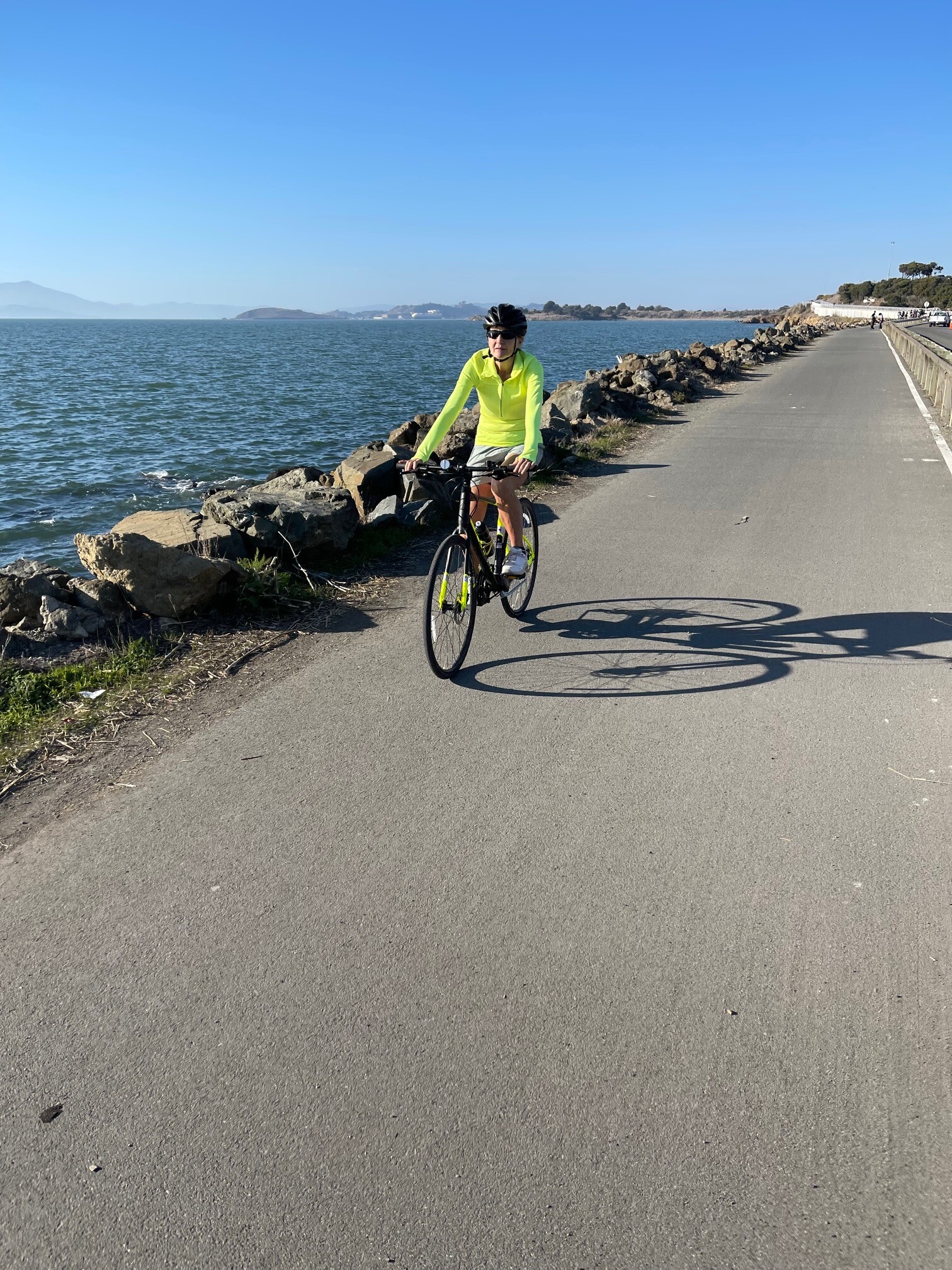
Cutting the Active Transportation Program will deepen our climate crisis.
CalSTA’s landmark Climate Plan, CAPTI, pledged not only to increase one-time funding for the ATP but to increase the program year over year in recognition of the critical importance of walking and bicycling projects to advance climate and equity for our communities. The May Revised Budget proposal does the opposite and undermines CalSTA’s commitment by pulling back one-time funding and significantly reducing funding to the program over the next several years.
As the negative effects of climate change in California grow every year, we should be increasing active transportation funding, not cutting it. We must not close our budget deficit at the expense of our climate and safety. CalBike calls on the legislature to reverse the governor’s cuts and restore full funding to the Active Transportation Program.
A Front Row Seat for the Growth of Women’s Bike Racing
By Peter Abraham — Over the last year, I’ve been paying attention to the theme of women’s empowerment in both sports and popular culture: the success of the Barbiemovie, Taylor Swift’s wildly popular Eras tour, the growing FIFA Women’s World Cup, and the most popular college athlete in America is Iowa’s basketball star Caitlin Clark. Each of these things, along with hundreds of other examples, testify to the growing clout of women across many aspects of society.
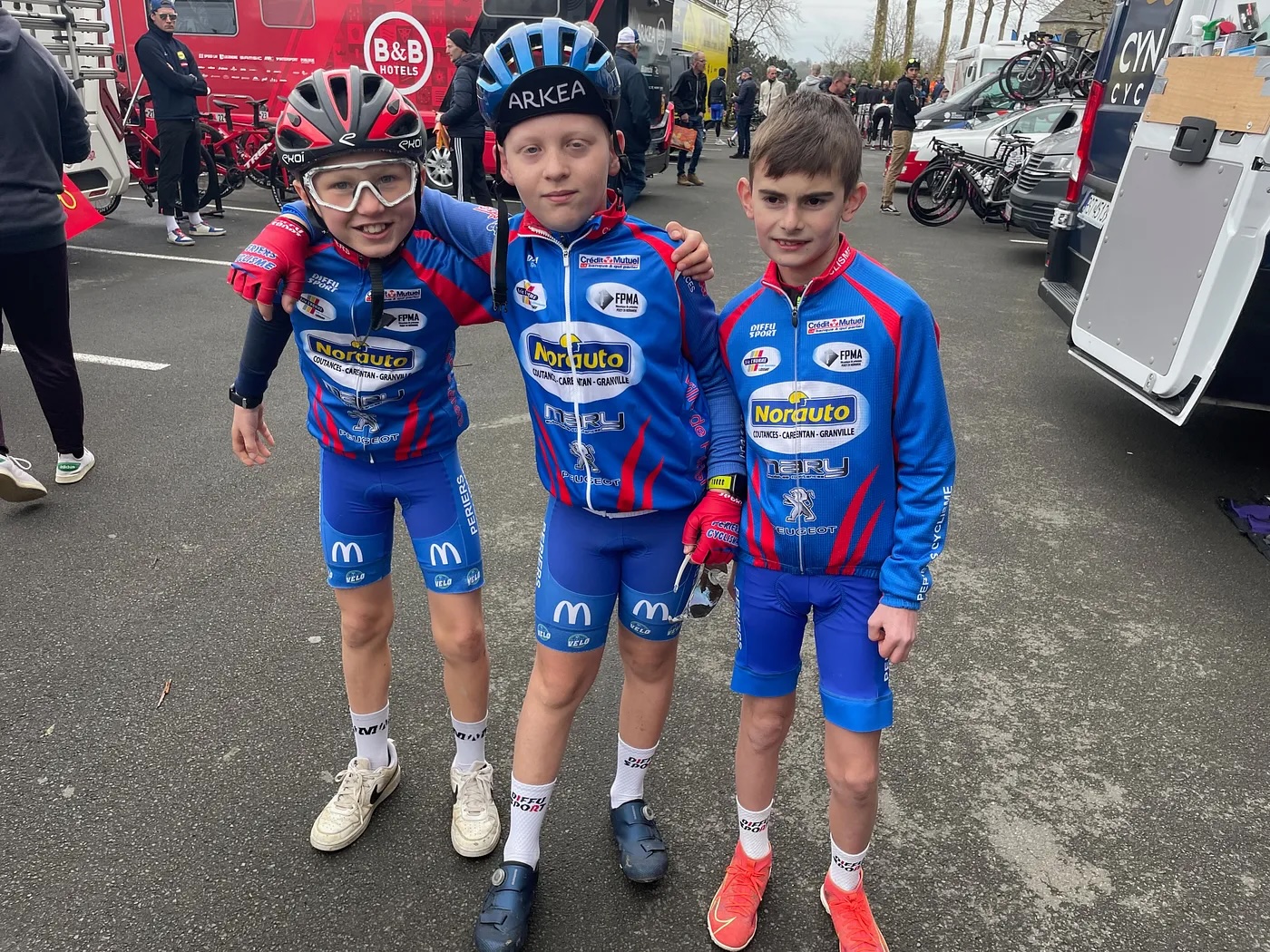
As this relates to cycling, the women’s side of the sport is currently undergoing explosive growth, evidenced by not only the wildly popular and relatively new (started in 2022) Tour de France Femmes avec Zwift, but also the women’s Paris-Roubaix avec Zwift event and a rapidly expanding calendar of races and teams. Moreover, the recent boom in gravel racing includes a huge number of female cyclists. The SBT GRVL event in Colorado, for example, had 31% women participating last year. That may not sound groundbreaking, but for a traditionally male-dominated sport like cycling, that percentage is a huge leap forward. There are also more and more women’s road racing teams sprouting up every year, and in 2025 for the first time ever the UCI World Championships will feature a U23 women’s race. This should encourage even more young women to start racing and aim high in their journey.
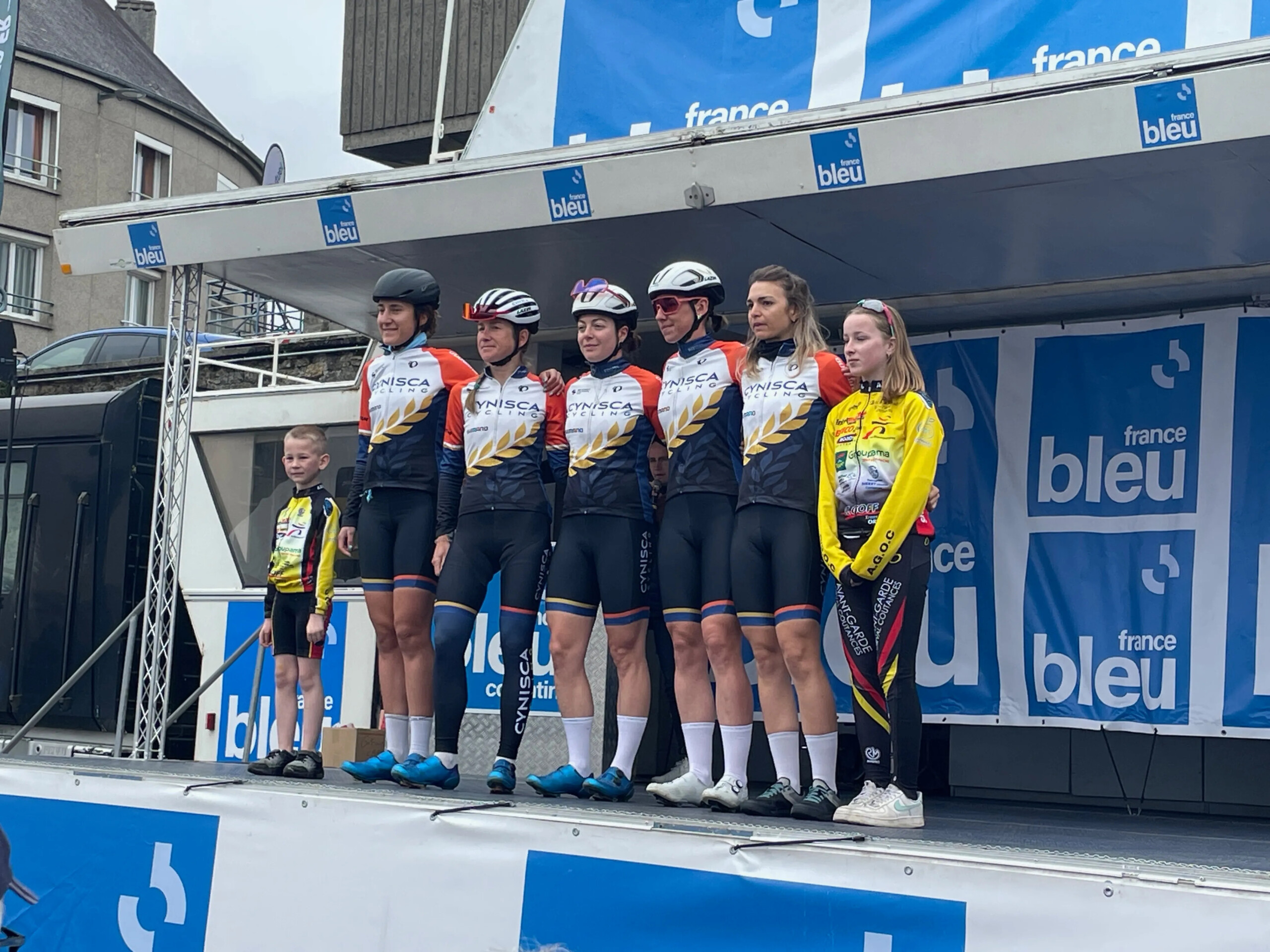
I wanted to see what the current state of European women’s racing looked like up close. After a recent work trip to London and Spain, I had a day or two do get from London to Paris, where I was meeting my daughter. As it happened, these days coincided with the Tour of Normandie pro women’s race, and my friend Chris Gutowsky’s Cynisca Cycling team was racing there. So I took the ferry across the Channel from Portsmouth to Caen and met up with the team at their hotel.
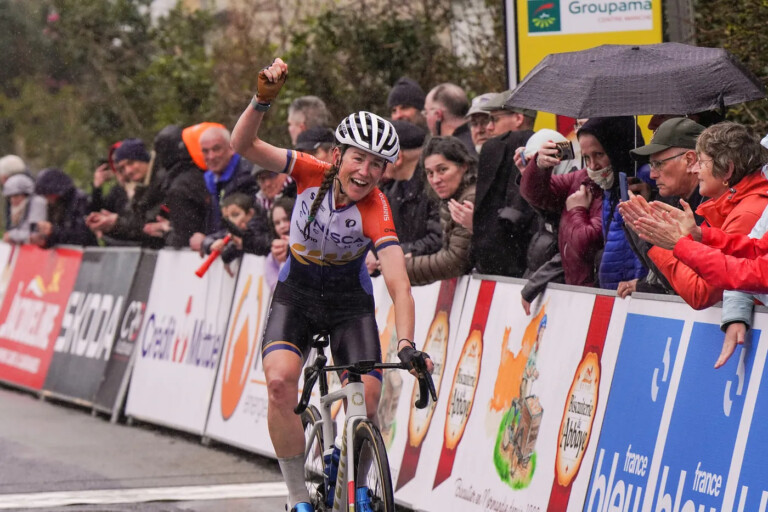
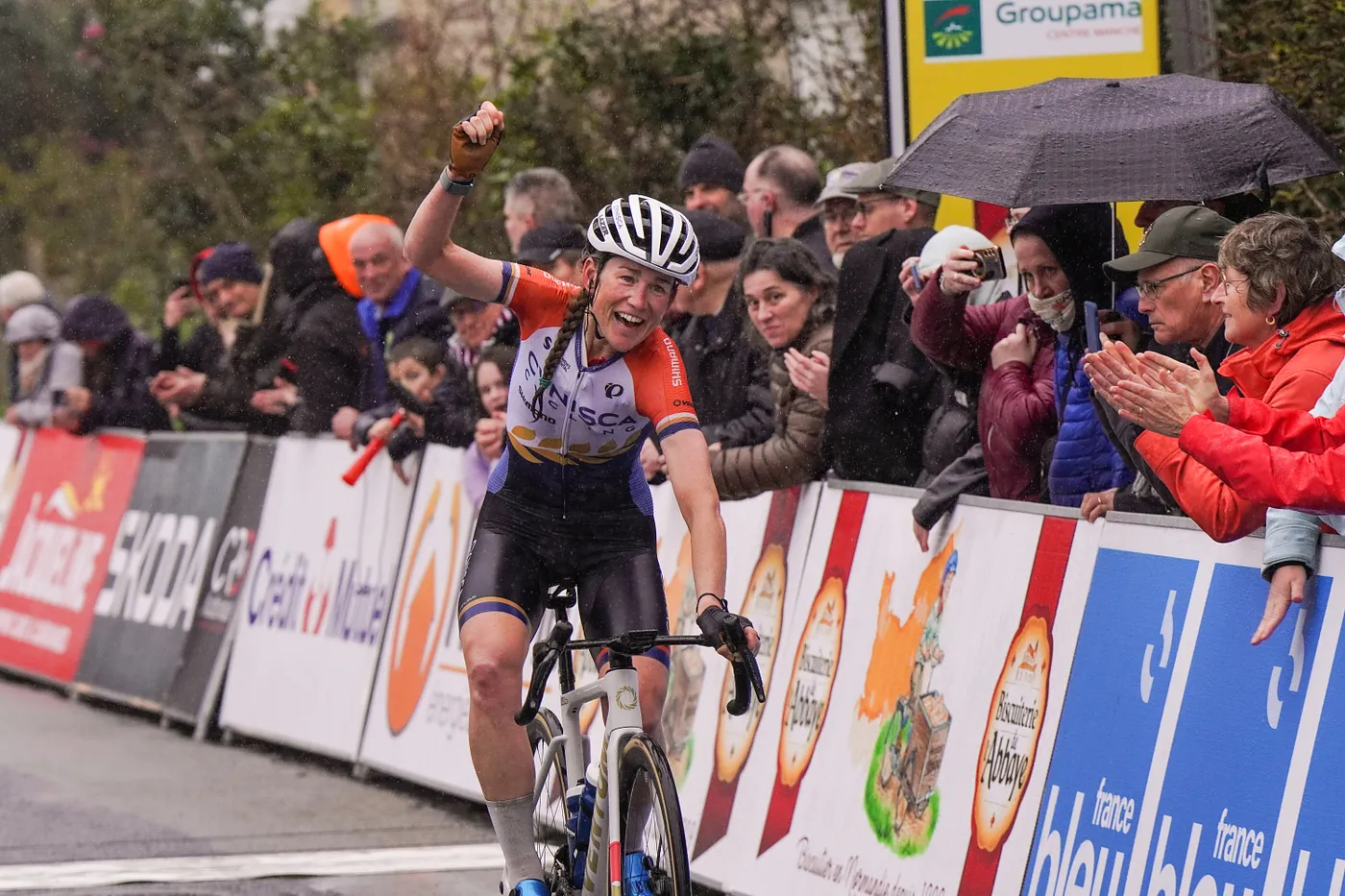
And, spoiler: Cynisca’s Lauren Stephens won the stage in a daring late race solo breakaway. I’ll never forget my good fortune to be in the car with team director Gillian Ellsay and mechanic (and Lauren’s husband) Mat Stephens that day.
Here’s what I learned during my day at the races:
- Women’s cycling is exciting and on the way up. I love what Cynisca Cycling is doing: they are the only American bike racing team that spends the majority of their season in Europe repping the USA. Men’s UCI World Tour teams like EF, Human Powered Health and Trek are registered in the US, but they have almost no American riders, and there’s almost no American identity to their teams other than maybe the bikes they ride. And there are some American teams, like DNA Pro Cycling at this race, who come over to a few races in Europe once or twice a year. Cynisca, on the other hand, has nine American riders out of 16 athletes. The balance of the team is Canadian, French and Irish. The team has a service course in France, and they are in Europe for the majority of the season. And Cynisca is a team focused on developing female bike racers. There aren’t many teams that do that, but it is changing. Many UCI Women’s World Tour teams are now starting up development programs and in 2025 there will be an entirely new team category, Pro Teams, which will form a second tier under the World Tour level. Given the popularity of the Tour de France Femmes avec Zwift, and the addition of the U23 women’s race at the UCI World Road Championships next year in Rwanda, there is tremendous growth happening in women’s cycling. And Cynisca is at the forefront of this movement. I expect to see this category grow a lot over the next five years, and it was great to see how the host towns in France embraced the race.
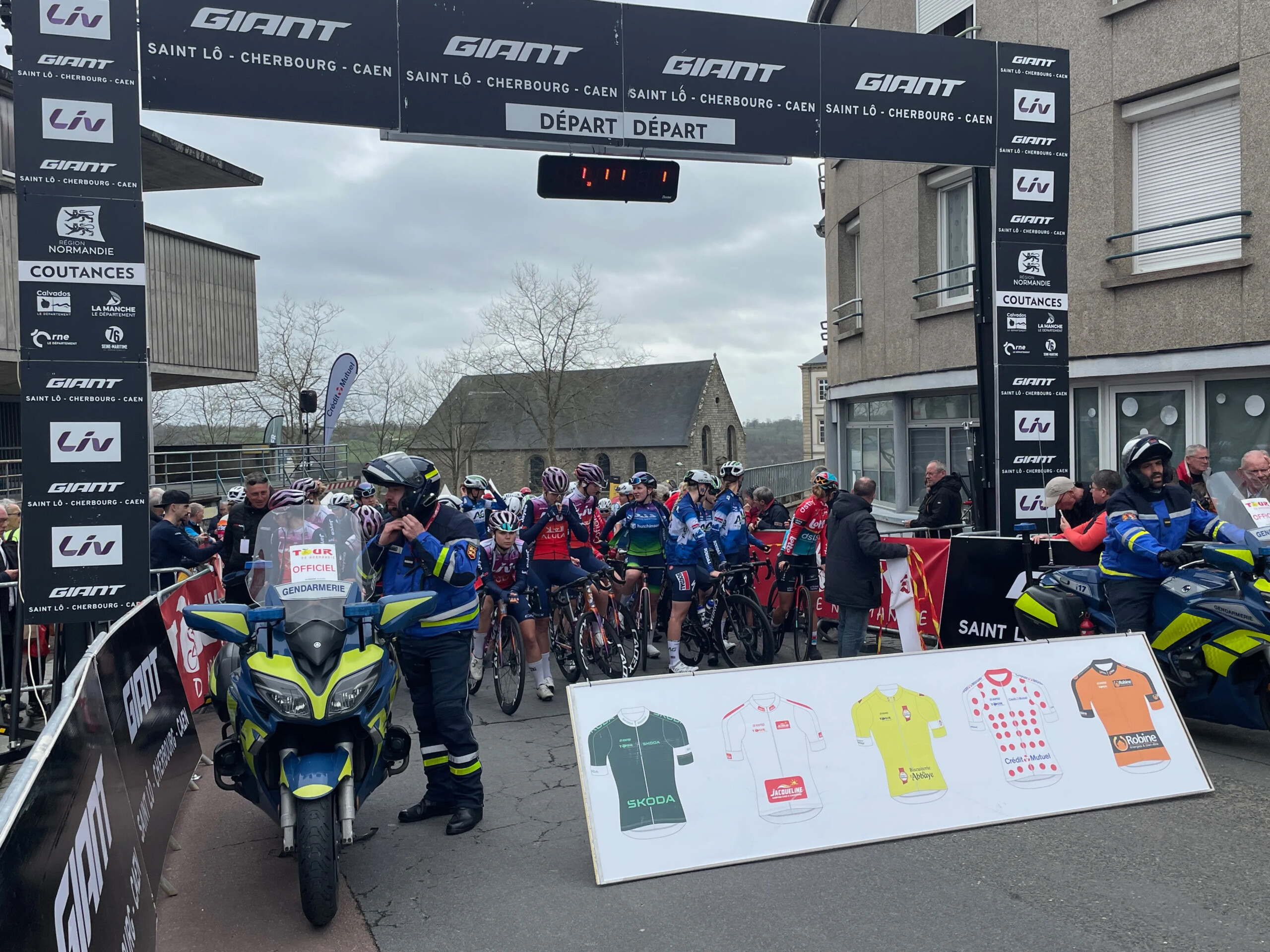
- European women’s racing is incredibly fast: Lauren won the stage 3, with its 83 miles and 6,000′ of climbing, at an average speed of 25 mph. That’s just very, very quick for either men’s or women’s racing. And there were about 120 women in the field. I would compare the speed of the women’s European pro peloton to a men’s Cat 1–2 race in the United States. It’s really that much faster over there.
- I learned about the importance of team bonding. Specifically, the team dinner after each stage in the evening is critical. Sitting with the team over vegetable soup and pasta the evening before the race, I realized it’s the only time during the week when the riders and staff can get to know each other. The rest of the day riders and staff are busy working, on or off the bike. And like a team in any sport, strong relationships between teammates are incredibly valuable and essential to success.
- Back in the long line of team cars behind the peloton it’s incredibly hectic and dangerous. You never see this part when you watch a bike race on tv. Each team car has a place in line behind the race (we were #11 on this day), but some cars are moving up to get past the peloton because they have a rider in the break. Or maybe a rider got a flat and their team car in the middle of the caravan has to pull over with the rider for a wheel change. Or some athlete has dropped back to the cars to hand off some extra clothing. This is going on continuously throughout the race, sometimes going down a hill at 60 mph and around blind corners. Honestly, it was amazing to me that no riders got run over, and I found it super stressful just being a passenger. Inside the car, there is the official race radio, from the official’s car just behind the peloton, blaring away in French, then the team radio communications with the riders, then VeloViewer on an iPad for the course map, then an iPhone showing average speed and elapsed kilometers, and I held up my phone with the live broadcast of the race on it. That’s a lot of stimulation to process in real time. I give Cynisca team DS Gillian Ellsay credit for staying calm and collected while navigating this “race within a race” in the team cars.
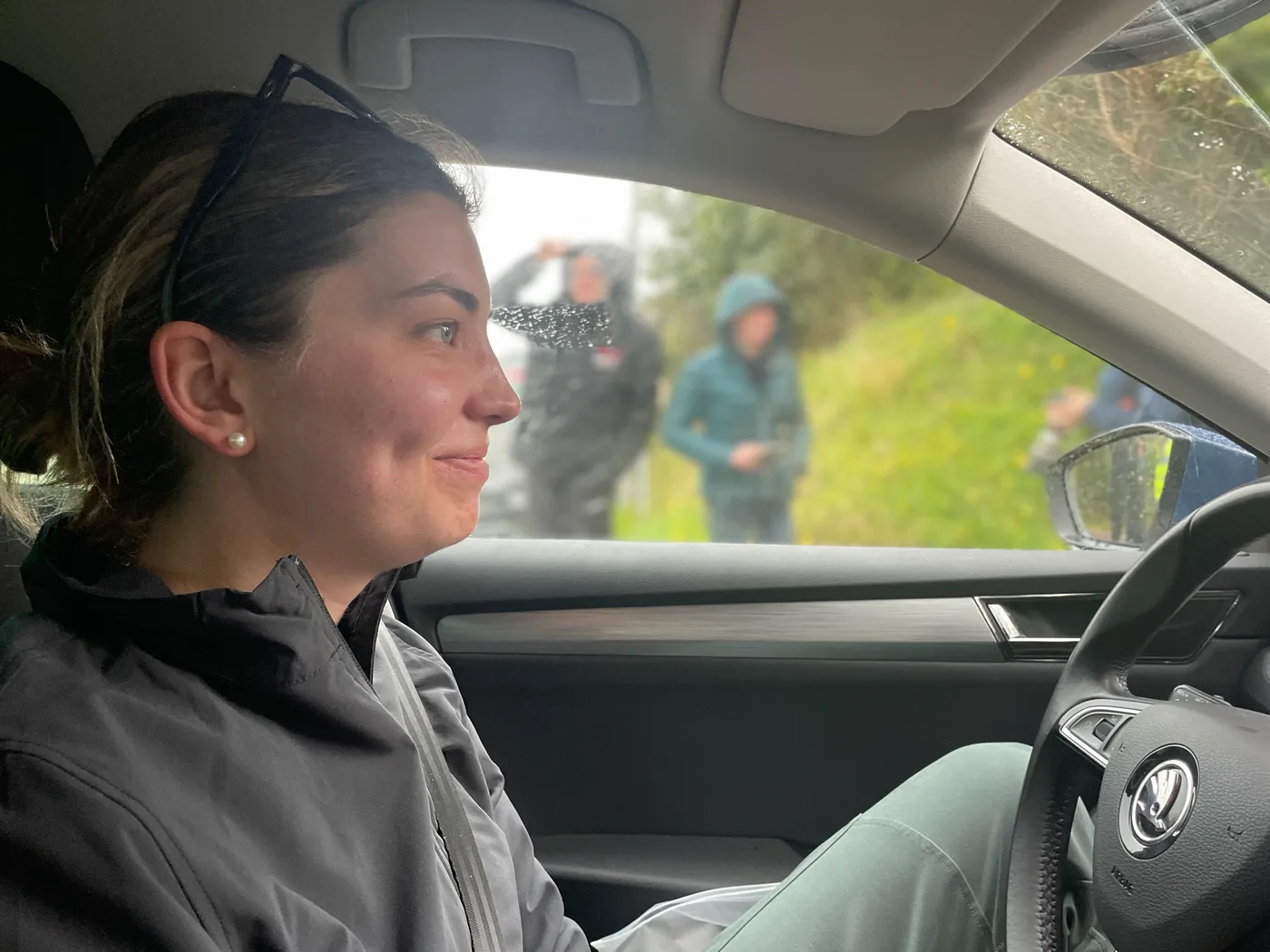
Cynisca DS Gillian Ellsay behind the wheel. Photo by Peter Abraham 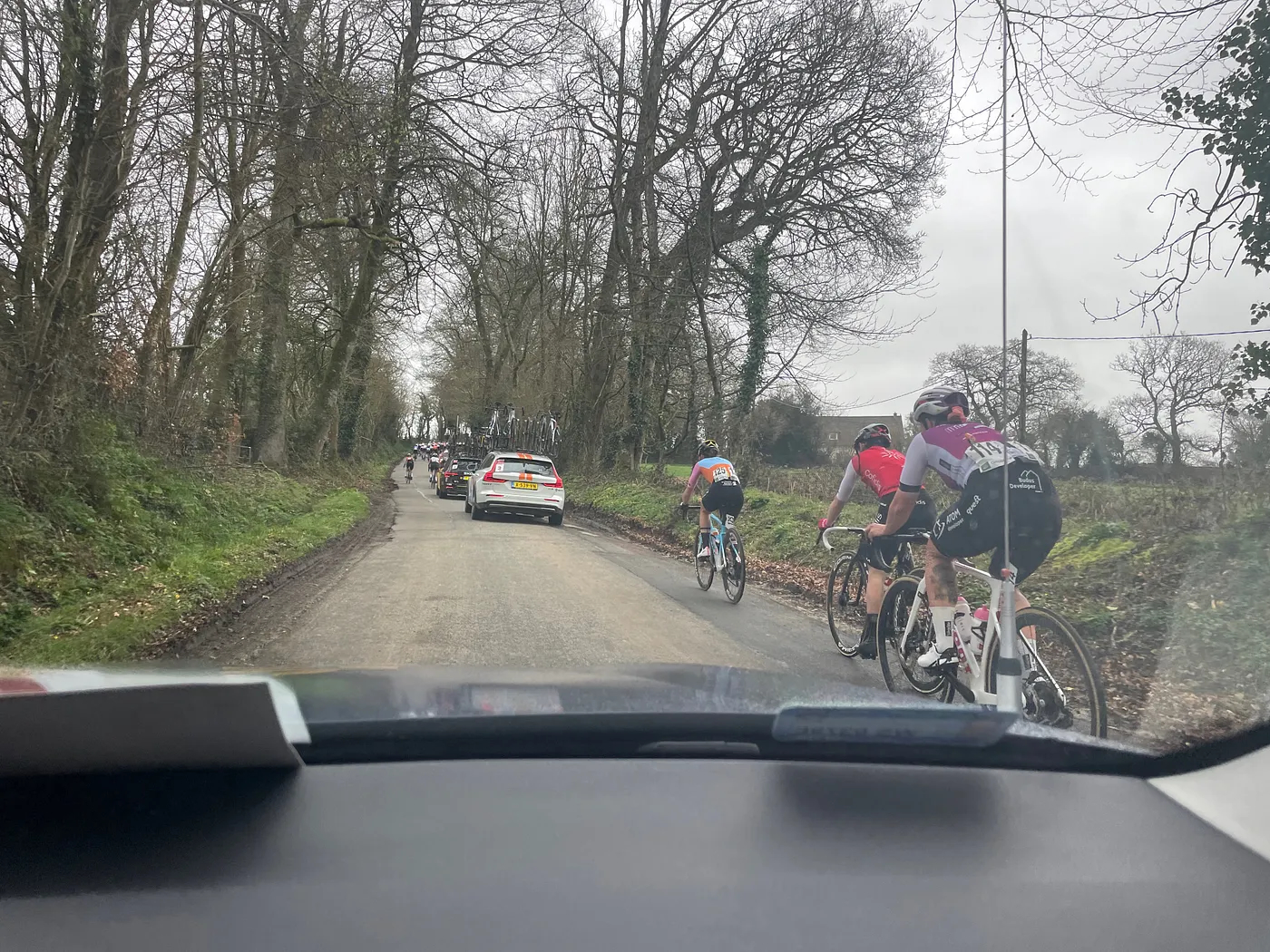
Navigating riders and other team cars behind the peloton. Photo by Peter Abraham 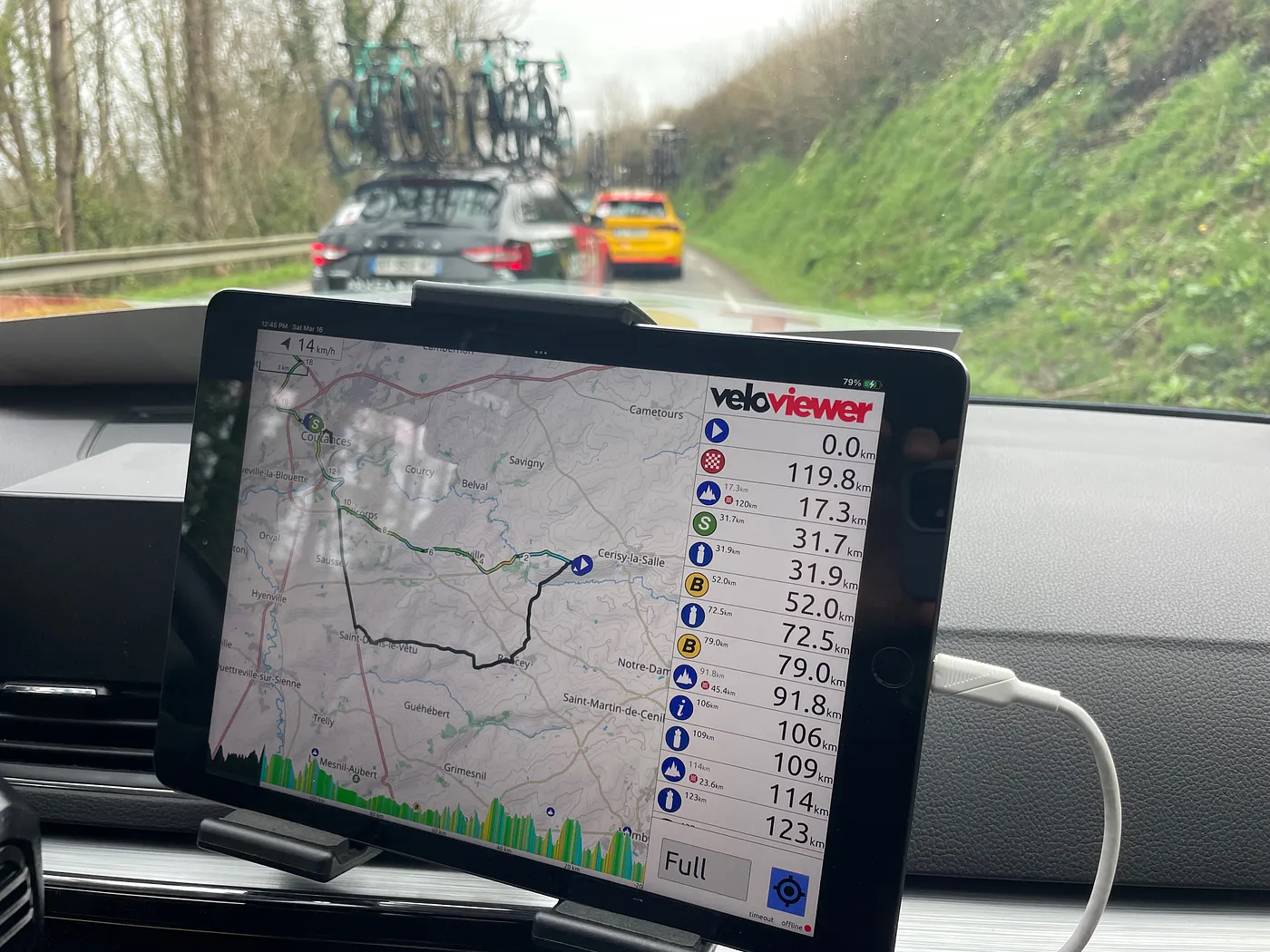
We used VeloViewer to follow a detailed map of the route. Photo by Peter Abraham - The staff works incredibly hard behind the scenes to make sure everything comes together for the athletes on race days. Mat and Lothar were out cleaning up and prepping bikes in the rain until about 8 pm, then directeurs sportifs Gillian and Billy and the soigneurs Dea and Mark were all working on various tasks in the evening and morning before the race. So much work goes into setting it up for the women to perform on the road. Prepping food, getting the bikes ready, putting gas in the vehicles, filling water bottles, and the list goes on. I have so much respect for the work that goes on behind the scenes to make the race happen for each team.
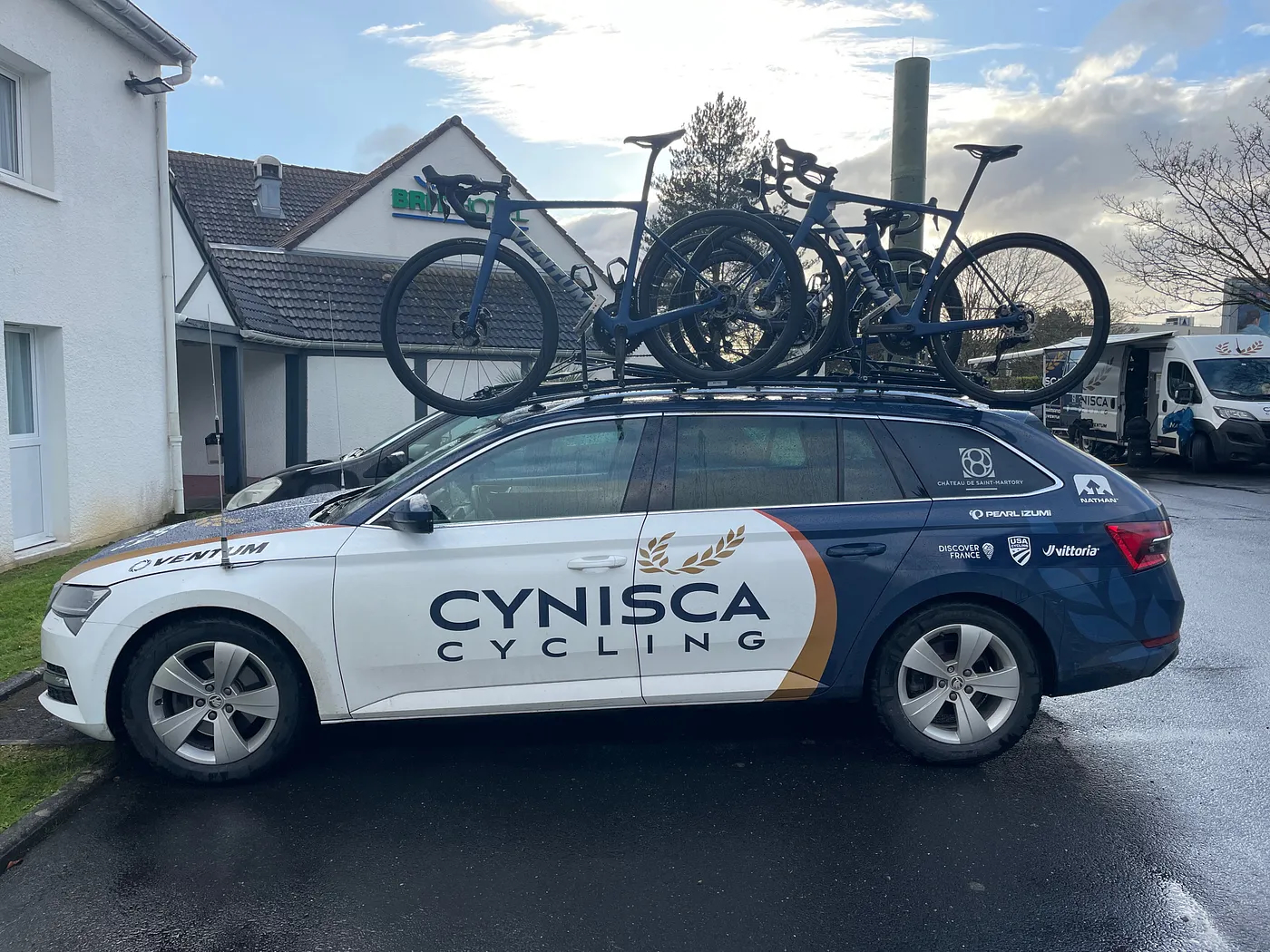
Our vehicle for race day. Photo by Peter Abraham 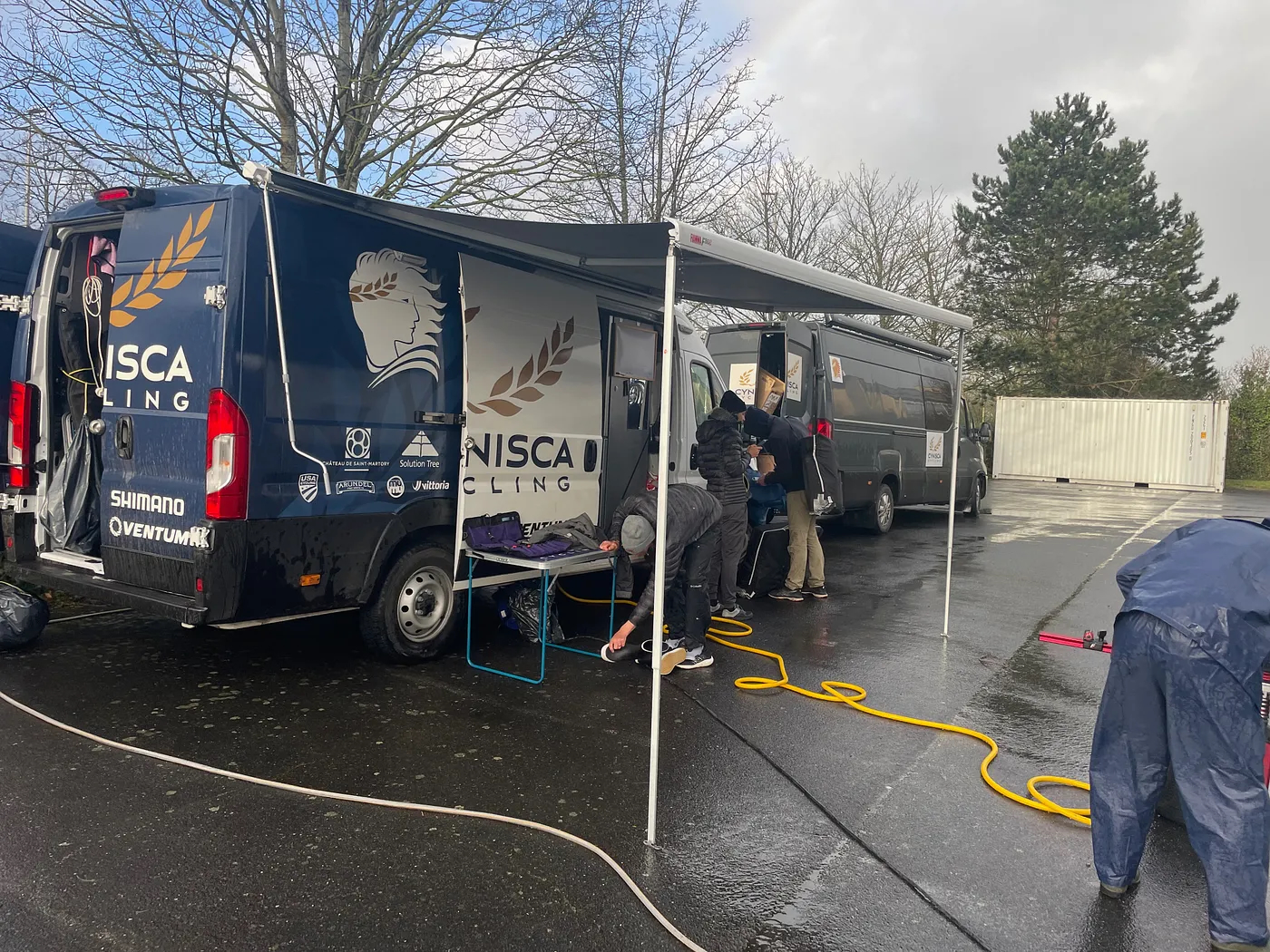
Mat and Lothar prepping equipment in the rain at the hotel between stages 2 and 3. Photo by Peter Abraham
Overall, it’s fair to say that women’s cycling will continue on its current growth trajectory for the foreseeable future. Based on the increasing number of races, the popularity of Tour de France Femmes avec Zwift and the overall up and to the right trend line of women’s sports this is a logical conclusion. On top of these things, it’s just more fun to have two kinds of racing to watch rather than just one.
Here’s the broadcast video of stage 3, which I watched from the car:
Golden Spoke Ride: Uniting Communities Across the Wasatch Front on May 11, 2024
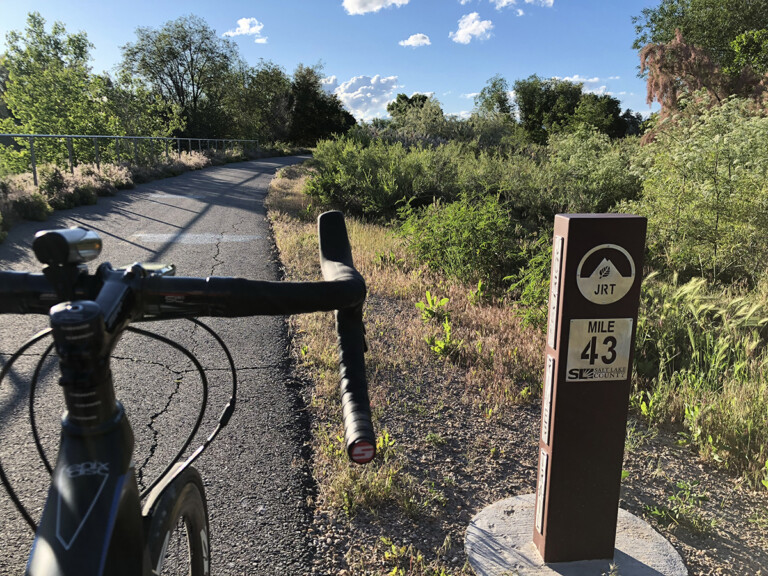
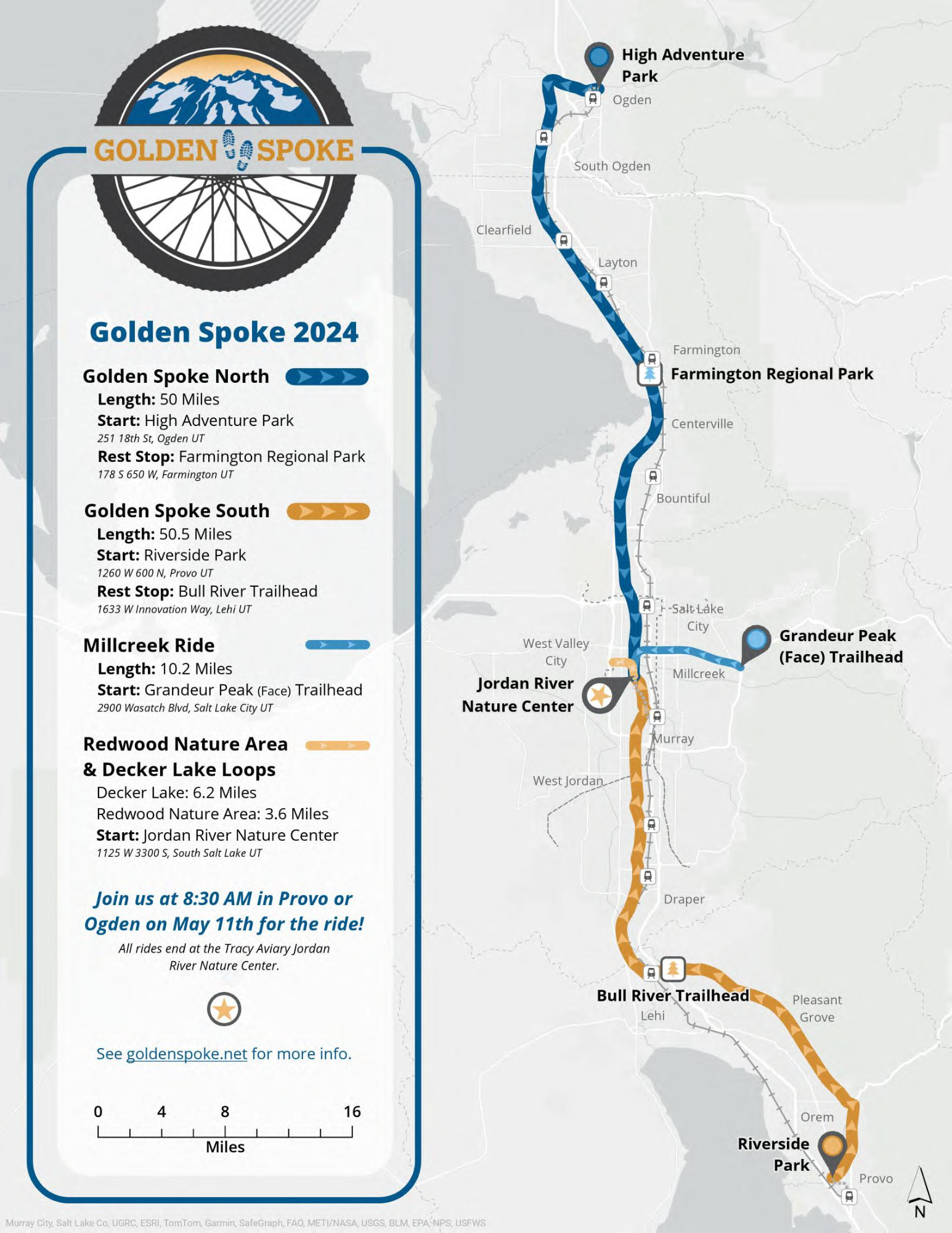
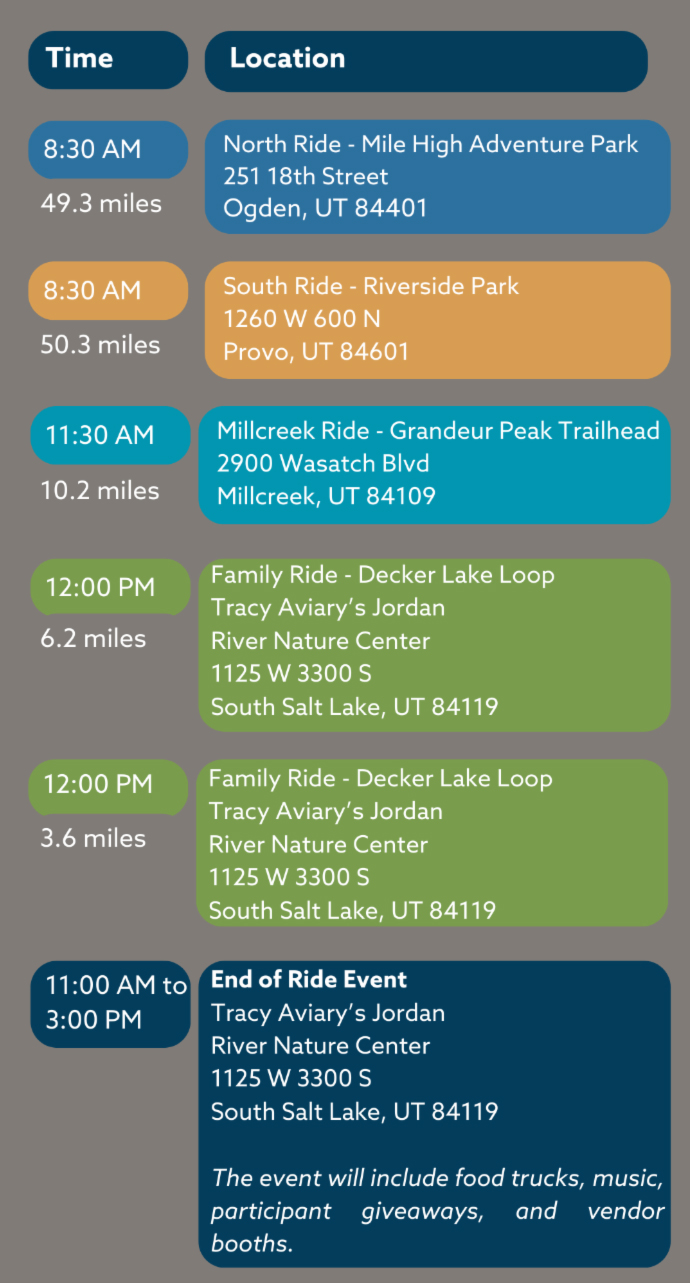
SALT LAKE CITY, Utah (May 9, 2024) — Each year, the Golden Spoke Ride brings together hundreds of enthusiastic riders to commemorate the extensive 170+ mile network of interconnected multi-use trails that grace the picturesque landscape of the Wasatch Front. This eagerly anticipated event not only highlights the direct trail connections bridging Ogden and Provo but also showcases the recent completion of the Parley’s Trail bridge, linking the Jordan River Parkway and the Crosstowne Trail in West Valley City, ultimately leading to Decker Lake. There are multiple starting points for the ride – see the map and schedule for details.
Scheduled for Saturday, May 11th, this year’s ride promises an array of engaging experiences tailored to riders of all ages and abilities. With five distinct rides of varying lengths, including two family-friendly options, participants will embark on a journey through scenic vistas and vibrant communities. The rides, featuring staggered start times, are strategically designed to culminate at the prestigious Tracy Aviary’s Jordan River Nature Center in South Salt Lake, where an enriching End-of-Ride Event awaits from 11 a.m. to 3:00 p.m.
At the Jordan River Nature Center, attendees will immerse themselves in a celebration of nature and community, complete with access to the newly expanded facilities, delectable offerings from food trucks, captivating musical performances, engaging vendors, informative community booths, and the opportunity to acquire a complimentary day pass for the UTA FrontRunner, TRAX, and bus system, facilitating convenient return transportation or enabling riders to continue their journey on two wheels.
In addition to the festivities, the Map of the Month features two Golden Spoke-inspired maps, serving as invaluable resources for participants. The event map, available in English, Spanish, or as an interactive digital format, provides essential guidance for navigating the May 11th Golden Spoke Ride. Complementing this, a printable coloring map of the regional trail system offers riders a delightful means to track their progress towards conquering the entire Golden Spoke trail network.
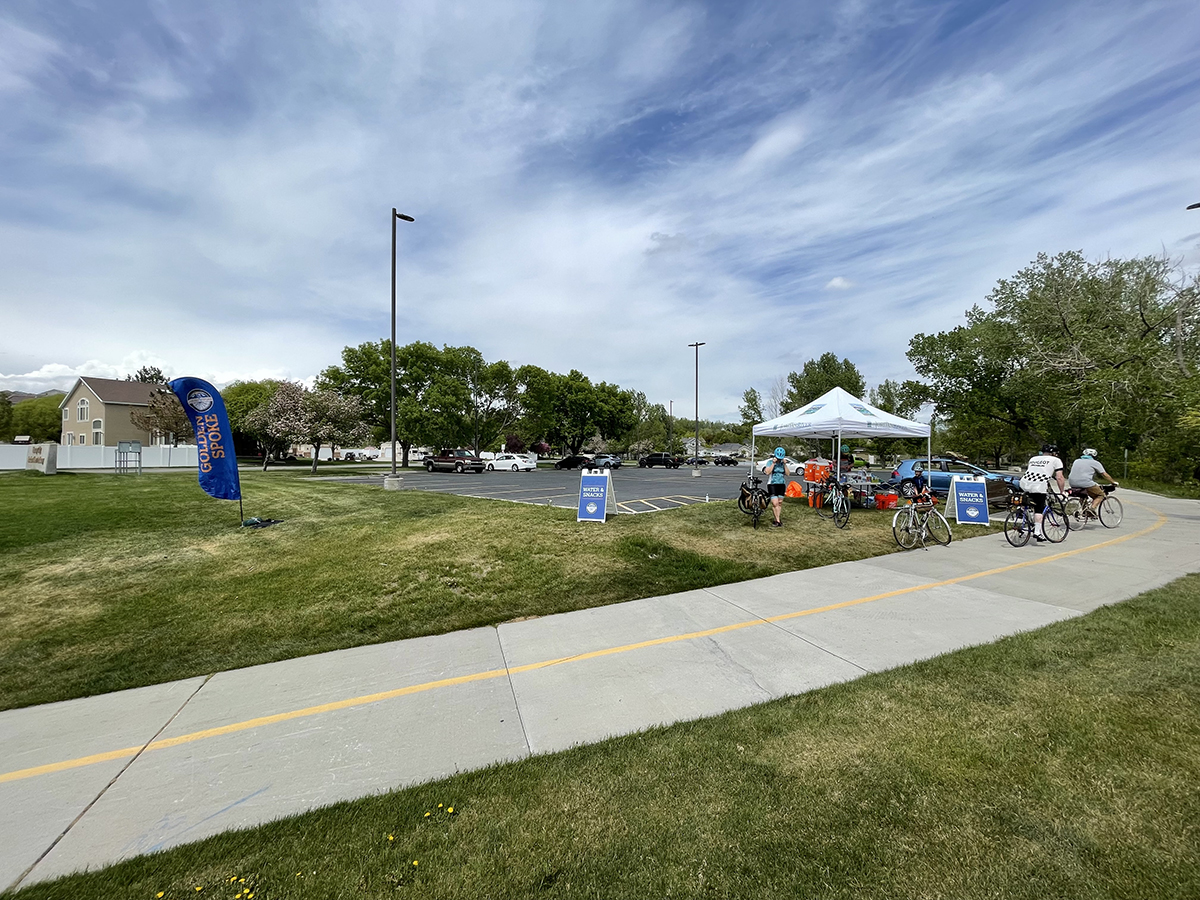
For comprehensive event details, route maps, and complimentary registration, please visit GoldenSpoke.net or simply click on the provided image. Embrace the spirit of adventure and embark on a memorable journey along the Golden Spoke. Enjoy the ride!
Bicycling in Traffic — The Bicycle Art of Savannah Cottam
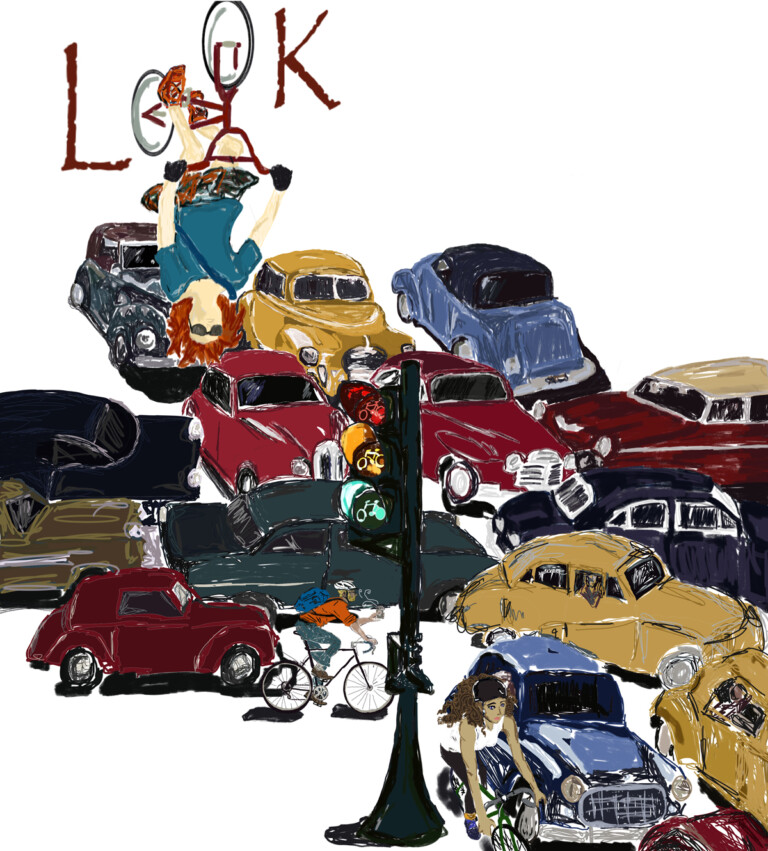
Name of artist: Savannah Cottam
About the artist: I’m currently studying film, art, and journalism at the University of Utah. My passion is in the environment and people’s well being. I aspire to actively use forms of art that engage in initiatives that contribute to meaningful transformations in people’s lives and advocate for positive change.
Title of piece: Bicycling in Traffic
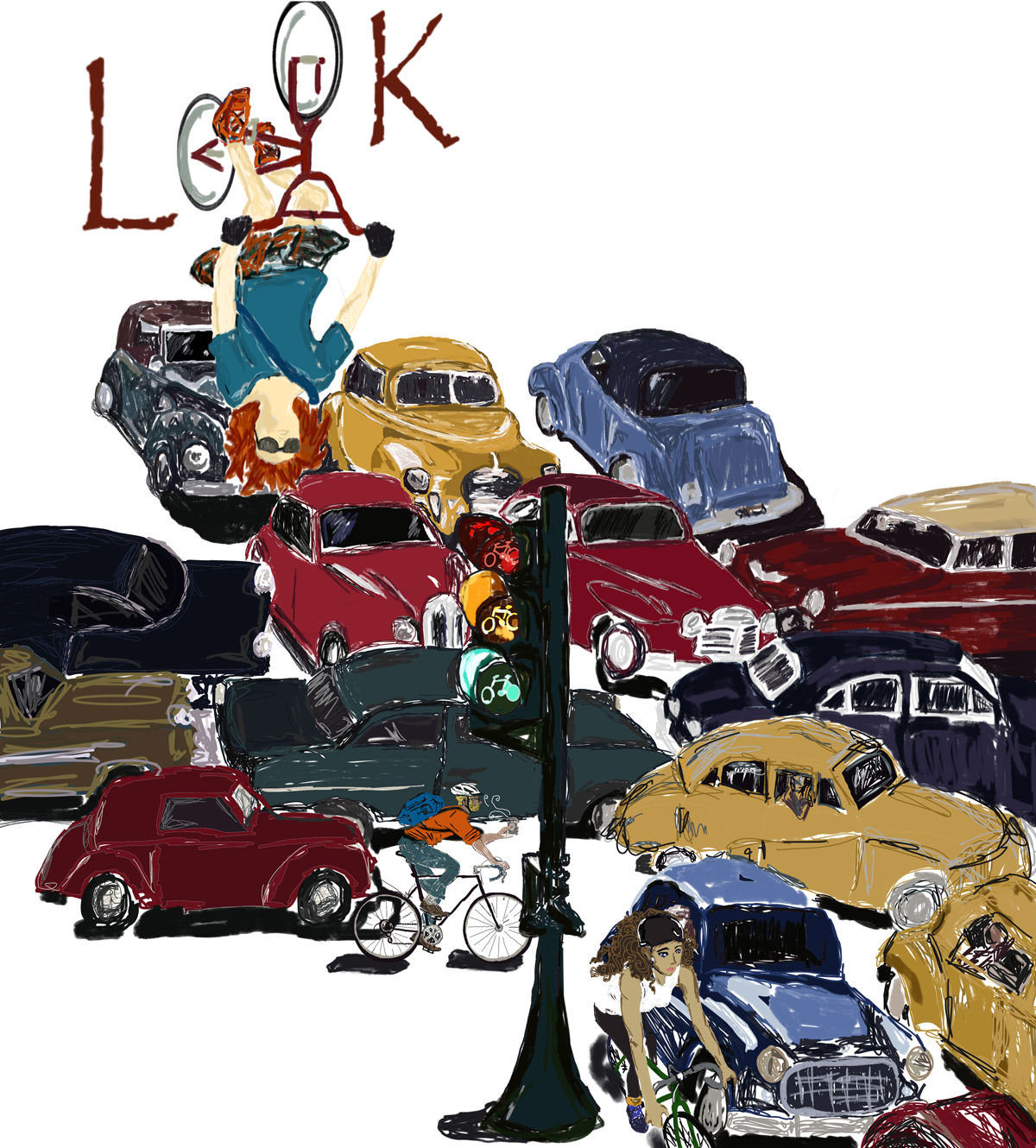
About the piece: This artwork symbolizes certain challenges associated with traffic. The rise in cycling fatalities is an ongoing concern that instills a fear in road bikers. Many roads favor the ease of cars and lessen the ability for individuals to bike.
Medium: Digital art
Artist’s statement: In a utopian world, everyone would experience a sense of peace while navigating the roads. This artwork captures the tension arising from congested traffic conditions.
Where can people find or buy your art/ social media: People can find and buy my art on my Instagram @A.RC._
Goals Are Dangerous
By Jill Homer —
Shut up already, illogical inner critic
My sister and I have been discussing personality tests, which can be a useful tool to justify your own bizarre behaviors. The Meyers-Briggs is my favorite; I usually get “INFP-T” which is “Introverted, intuitive, feeling, prospecting, turbulence.” I’m told this means I am passionate and have a vibrant inner life, which helps when you score 100% on the introverted scale. My sister wanted me to take the enneagram test, where I learned I am an “enneagram 6 wing 5.” I read through the description and it mainly told me, “You are a person with high anxiety” … which, okay, fair.
When I was a kid, fifth grade or so, I read about the two personality types — A and B. Type A’s are associated with high achievement, competitiveness, and workaholism, among other characteristics. Since I was … not those things … I was “Type B,” which the women’s magazine article assured me was easy-going and friendly and less likely to die of stress. This is what 10-year-old me wanted to be.
Despite being neither easy-going nor, I’m afraid to confess, effortlessly friendly … I have clung to this descriptor ever since. I didn’t need to fret that I frequently humiliated myself in gym class, because who needs that agro ego trip? I didn’t need to strive for straight-A grades, because easy-going, who cares? As an adult, the fast-lane careers and leadership roles were not for me. I did not need awards or book deals to produce high-quality work. Since I wasn’t chained to ambition and a drive to always move forward, I was free to explore, learn, observe, and grow. I didn’t have to link my life’s trajectory to a single path I chose when I was still a child. I was free to change.
“Type B” was like a protective coat of armor, a safe barrier from the inner critic who still sits on that fifth-grader’s shoulder, telling her she’s not good enough, not strong enough, not deserving of love.
The one, enormous A-shaped chink in this armor is endurance sports. For a person who has linked many of her life choices to not caring about achievement, I sure do get angry and frustrated when I don’t achieve. I thought about this frequently last weekend when I again did not finish the Cottonwood Crusher.
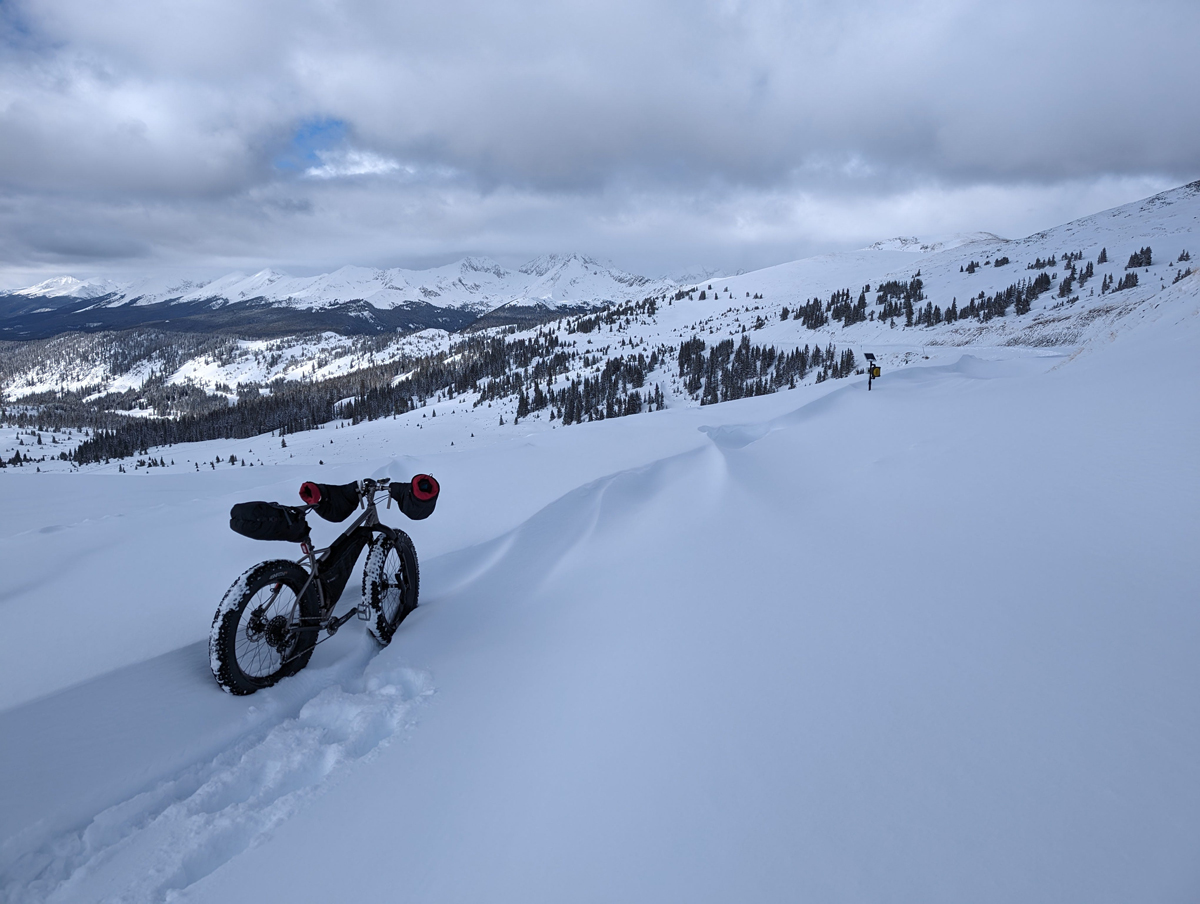
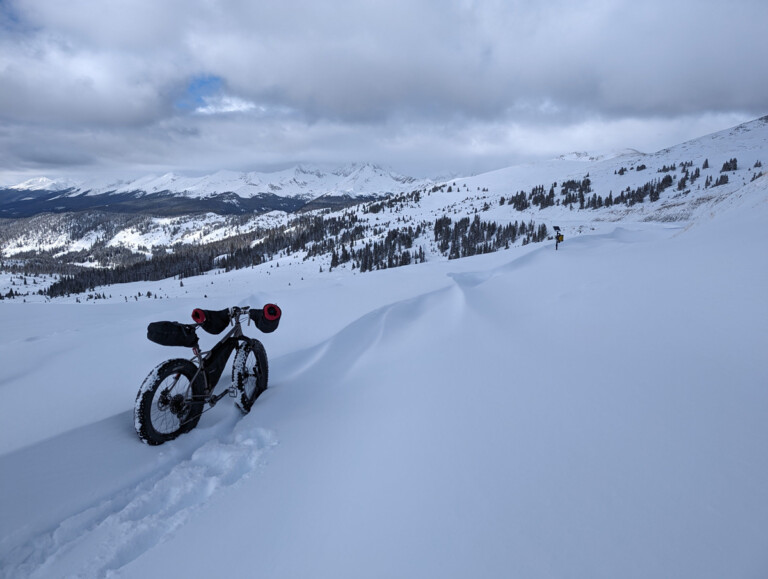
The Cottonwood Crusher is a grassroots, free, 45-mile fat bike “ride” (it’s not even an official race) over Cottonwood Pass and back on groomed snowmobile trails. This winter traverse over the Collegiate Peaks is organized by one of Colorado’s longtime endurance cycling experts, Jeff Kerkove. He first put the event together in January 2021 when COVID lockdowns were still in place and everyone was going through race withdrawals. At the time I had excellent cycling fitness and was excited to see friends who I don’t often see even in the best of times. I made the three-hour drive to Buena Vista in the morning, arriving early for the 8 a.m. start.
I felt strong and was enjoying a relatively fast ride until my shifter broke near the pass. It was the first time in my cycling “career” that a bike mechanical forced me out of an event. The setback made me so angry that I drove home that day and began scheming another challenge, the Old Man Winter Bike Rally.
This 100-kilometer gravel race in Boulder typically has hundreds of participants, but it also went “virtual” in 2021. I dislike big crowds but loved the ridiculousness of the course — half of the distance on ice-coated, muddy gravel roads in north Boulder, with the other half following a big climb up one canyon and frigid descent down another, connected by an absurd two-mile hike-a-bike through deep snow across a washed-out gully that barely qualifies as a trail. I was confident I could finish the course in under five hours, and while that’s hardly a standout result in the field, it would be a fun personal challenge.
After perusing the site, I realized I couldn’t participate on the scheduled weekend, and didn’t want to spend $150 for a self-supported solo ride just to see my name on a list of results. So I didn’t even sign up. I picked a random mid-week morning and packed my bike with water and snacks. I wasn’t even participating in a “virtual” race. There was nothing at stake.
On the planned morning of my ride, I woke up to beautiful sunshine at home — in Boulder’s foothills — and a smog-choked inversion in the lower elevations, where most of the ride took place. The AQI in town was 161 — hazardous to asthmatic individuals such as myself. I didn’t yet have the aversion to air pollution that I have now. This experience cemented my conviction that I cannot exercise outdoors when the AQI is over 150 and will avoid it from now on. But on this day, I went for it.
I rode as hard as I could, coughed up lung mucous for much of the ride, felt like roadkill, and still did not finish in under five hours (5:06.) In the immediate aftermath, I experienced a mental health collapse that still baffles me. But the line is clear. I filled my lungs with smog and inflammation, and filled my mind with oxygen-deprived darkness. It took me nearly two months to climb out of that particular episode of anxiety and depression.
Why did I push myself so hard? I had nothing to gain and so much to lose. I relayed these stories to my therapist when I told her I’d be going back to the Cottonwood Crusher in 2024. My cycling fitness is well below what it was in 2021. My fat bike hadn’t been out once all winter. I had to brush away cobwebs to lube the chain. Although I signed up when Jeff announced the ride in early January, mentally I backpedaled almost immediately. I should be in the peak weeks of training for my 100-mile ultramarathon in March. Exhausting myself in a fat bike ride would be a setback.
But then I thought that no, I was going to go. I need to reclaim the Cottonwood Crusher. In 2021, I had that mechanical. In 2022, I broke my toe and couldn’t go. In 2023, I was mired in another terrible anxiety episode and couldn’t muster the strength to leave my house. I wanted to make this trip for all of those versions of me that had endured too many failures.
“So what are your goals?” the therapist asked.
“Just to have a good ride,” I answered. “To enjoy the camaraderie and scenery. I haven’t done the training so I don’t have any expectations. It’s just for fun.”
Was I lying? I didn’t want this to be a lie. But I think it was.
I made a whole weekend out of it. I drove out to Buena Vista on Friday and spent Friday afternoon riding the first part of the course. I called this strenuous five-hour ride “training.”
“You don’t need to taper for a race that you didn’t train for,” I had told Beat.
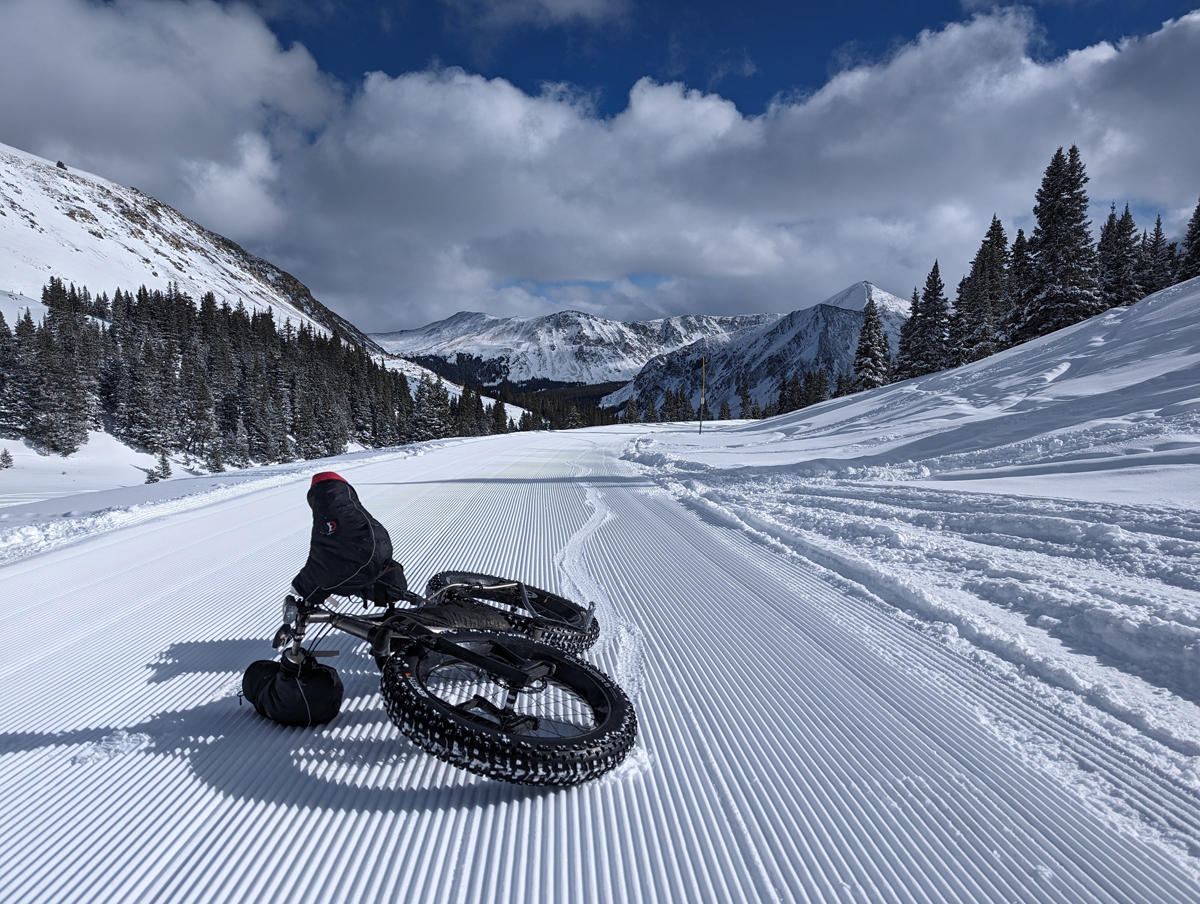
I’ve been riding fat bikes since 2007 and winter racing since 2005. I admit these days my relationship with the sport is more “it’s complicated” than “true love.” Winter riding can be thrilling and take me to wild, far-off places. But it also can be tedious and punishing, draining all the muscle power from my legs for speeds that feel unconscionably slow. With a bike, I’m completely at the mercy of weather and trail conditions, not to mention the bike itself. A lot can go wrong with all of these variables. Still, getting back on my fat bike always feels like reuniting with an old friend. We roll across the snowy landscape and share a unique sort of freedom.
Friday afternoon had been warm and the trail had seen a lot of snowmobile traffic. The mountain snowmobiles that are popular in Colorado have long, paddle-like treads. The riders tend to drive as fast as possible, churning up large quantities of snow. As this happens dozens of times over a day, the surface powder is tumbled and polished until it loses its crystalline properties and converts to particles more similar to sand than snow. Imagine a beach, where the sand that is close to the surf is packed, solid, and easy to walk across. The sand far away from the surf is bumpy, deep, soft, and much more difficult to traverse. Unless they are freshly groomed, Colorado snowmobile trails almost always resemble the deep sand beach.
My heart rate quickly shot to 165 and stayed there as long as I was pedaling — even in granny gear, and even and the unconscionably slow speed of 3 mph or less. I pedaled and gasped and threw a foot down when I began to feel dizzy. I let most of the air out of my tires, hoping to improve the floatation. But there’s no floating in deep sand. There’s only sinking and struggling and gasping.
Rest. Catch my breath. Pedal. Gasp. Repeat.
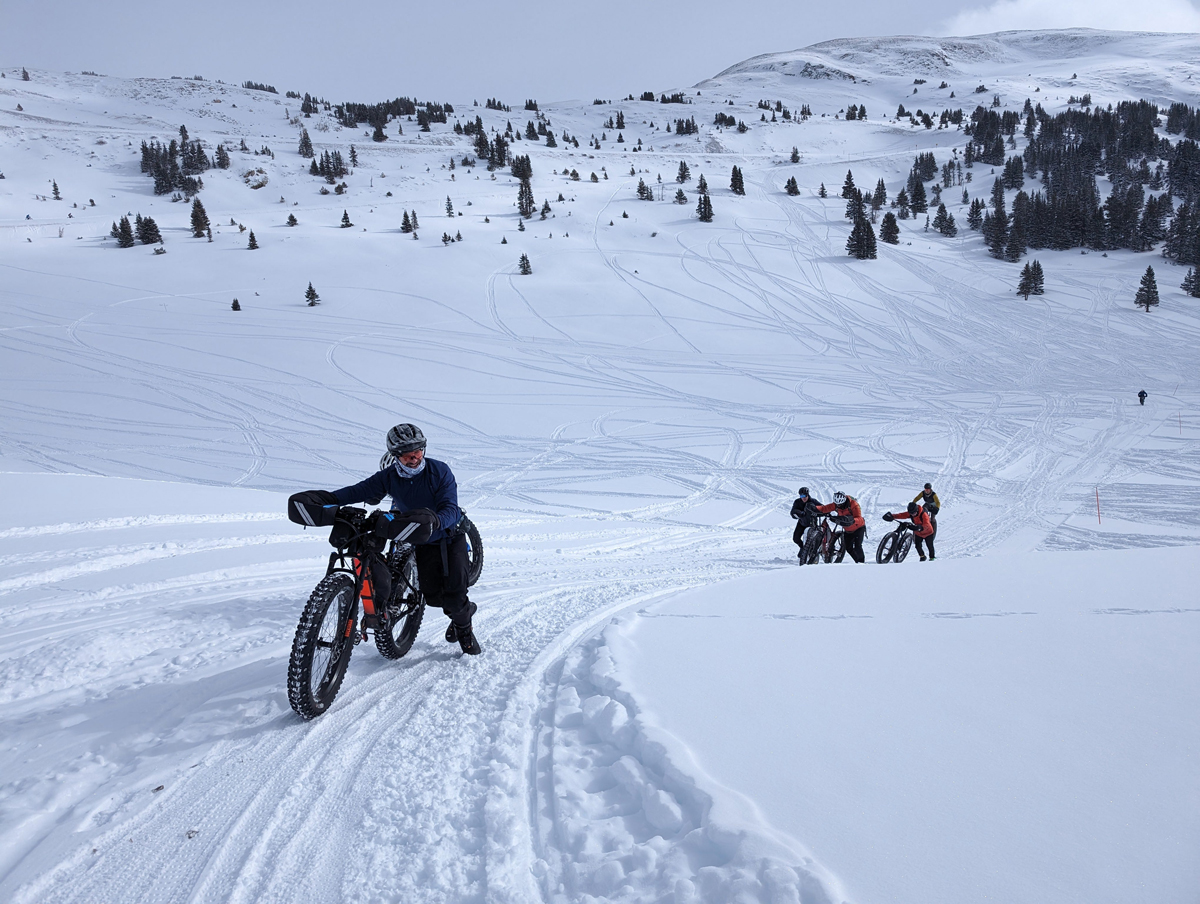
It took me 3.5 hours to climb 7 miles to the summit at 12,126 feet. It was a lovely day, and I thought perhaps this had been enough. I certainly was in no shape for the high-wattage pedaling required to crush the Crusher. I made sure to pack my snowshoes and backpack for a more reasonable plan B, which I decided would be a nice hike to Tincup Pass.
Still, it was silly to make this trip and not at least try. I set my alarm and awoke to two inches of fresh snow on my car. About halfway to the trailhead, I realized I had forgotten my hydration bladder and turned around to retrieve it. I arrived at the start with just five minutes to spare. By the time I used the outhouse and prepared my bike, it was 8:08 a.m. and the field of 20 or so was long gone. The temperature was a crisp five degrees and the trail had been groomed the previous evening, so the surface was smooth and much more solid than it had been on Friday afternoon. My tire pressure was nearly flat, so I had to stop and pump air back into the tires. I felt like such a rookie. As though I wasn’t already going to be at the back of the pack.
Still, it was a lovely morning and I was happy to be pedaling. The effort was so much easier on this groomed surface. I didn’t feel like I was about to choke on stomach bile. I wasn’t even dizzy. The weather forecast called for overcast skies and snow, and yet flecks of sunlight were sparkling on the snow. I felt good. I was going to finish. Finally.
As I neared the final switchbacks, I saw cyclists descending from the pass — the wrong way for the race course. At first, there were only three or four, and I smugly thought, “quitters.” But as the first group neared, I noticed that a half dozen more weren’t far behind. There could only reason that so many people would be quitting the race — the course wasn’t passable. My heart fell.
Sure enough, the leaders told me that the groomer turned around just beyond Cottonwood Pass, and the trail had not been used since more than a foot of snow had fallen the previous weekend. One man continued pushing his bike through the fluff, they told me, because “he’s training for the ITI and needs to practice suffering.” I thought, “I do not need to practice suffering.” But then I thought, “But I am pretty good at suffering and could probably push my bike through 20 miles of fluff.”
“But why? Why?” the rational angel on my shoulder pleaded. “No one cares if you can finish the Cottonwood Crusher. Literally no one.”
“But it would be so badass,” the devil illogical inner critic hissed. “Also, you’re not good enough, strong enough, or worthy of love.”
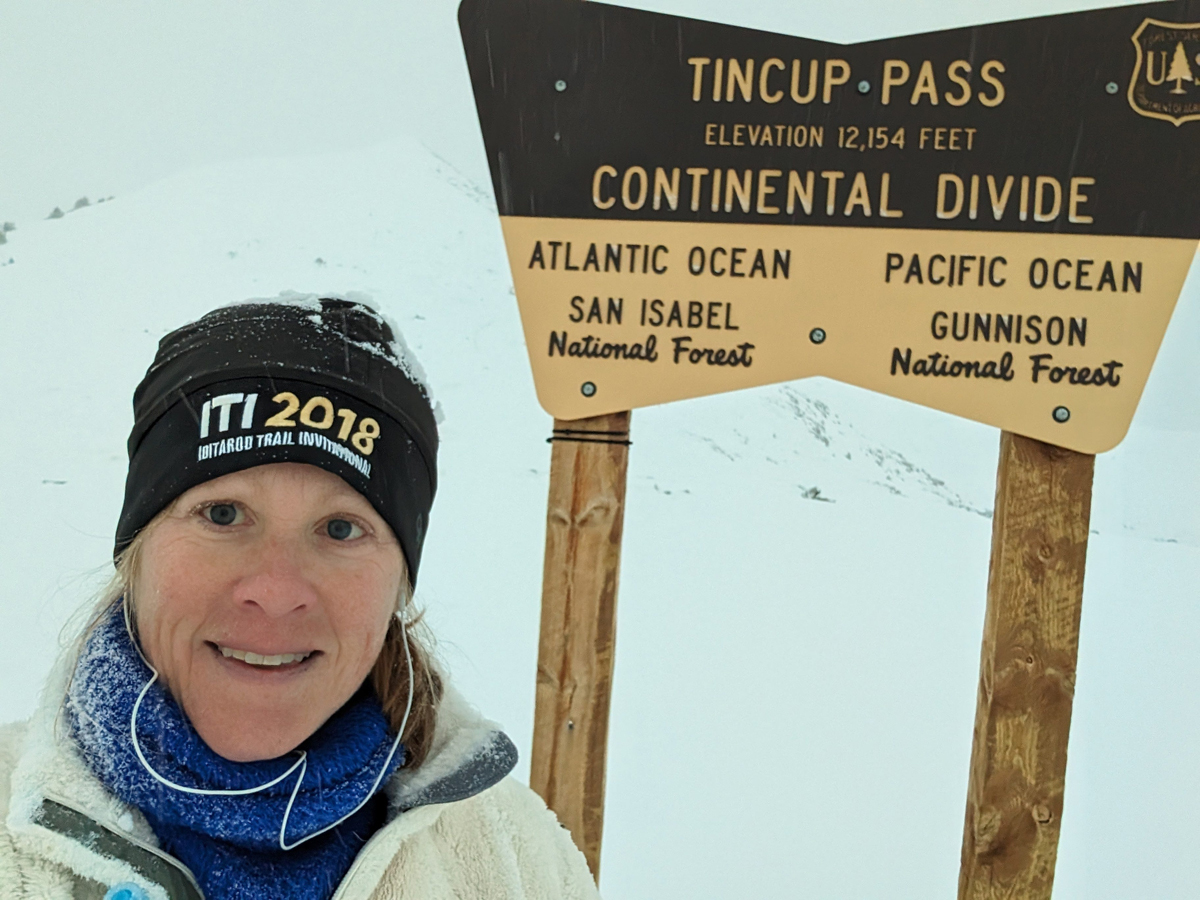
I listened to the angel and turned around at Cottonwood Pass. Then I had some lunch, repacked my gear, and drove through increasingly heavy snowfall to St. Elmo ghost town. There I strapped on my snowshoes and started hiking toward Tincup Pass. I was stoked that I had time for both the race and Plan B. No matter that my legs were already shredded, the trail toward Tincup was in much worse shape than Cottonwood, and I started hiking after 2:30 p.m.
Like wheels, legs also become mired in deep sand-like snow. I was reduced to a strenuous crawl up the steep trail. My muscles were in pain and I thought, “Well, this is silly. The pass is more than six miles away. I certainly don’t need to hike the entire way.”
The devil said, “Two Continental Divide passes by two modes of travel in one day. That’s pretty badass.”
“Nobody cares,” I replied. “Literally no one. Not even me.”
“Oh yes you do,” the devil hissed.
Neither the devil nor I were surprised when my laden feet continued to slog through bewilderingly flat light. I crossed a blank expanse to make the final climb to 12,000 feet just as the invisible sun was setting. Thick snowflakes swirled through the darkness as I switched on my headlamp and slogged six equally slow miles downhill through bottomless sand.
So I was exhausted, right? Seriously exhausted. And I had planned to come home on Sunday, expecting I’d been crushed by Crusher. But Sunday morning revealed a beautiful bluebird day. Temperatures were still crisp and cold — 12 degrees. And I was feeling vaguely dissatisfied after my failed race, even though it wasn’t race, it was a group ride and everybody failed (although I can’t confirm whether the guy who initially stuck with it finished the distance … I suspect he did not.) I discovered there was another groomed snowmobile trail farther south in the valley at Marshall Pass. Four Continental Divide passes in a weekend? Badass! I texted Beat and told him I wanted to stay one more day.
Despite the cool temperatures and relatively slim snowpack, the route to Marshall Pass was sandier, slower, and more soul-crushing than Cottonwood Pass could ever dream of being. Within a mile, I was seething with anger over this bad idea, over the curse of discovering fat biking in the first place, over the fact that snowmobiles were a thing that existed. (And yes, I realize I am choosing to share these routes and that they wouldn’t be rideable without motorized trail use. Still, snowshoeing pristine snow is more fun than this, and these roads could be lovely winter treks. But again, I realize that pristine low-angle snow is also abundantly available in Colorado, and using this garbage trail was a choice that I made.)
So I’m tired and angry and I turned around … right? Wrong. I was on the verge of quitting, but I’d remind myself it was such a lovely day. Or I’d hit a rare hundred yards where the trail didn’t feel like pedaling through molten lava, and I’d keep going. After five miles (TWO HOURS) I passed a sign that said Marshall Pass was still nine miles away. I nearly started to cry … and instead kept going. Snowmobiles zoomed past in clouds of white powder so thick that the spray hit my face and fell on my arms. The exhaust burned my throat. And still I kept going. Finally, after eight miles (THREE POINT FIVE HOURS), I hit a hidden rut and toppled headlong into the chunder. I cried out using many choice words. The angel fluttered into my blurred field of vision.
“Ok, you are not having fun and this is stupid,” the angel said.
“But Marshall Pass,” I sputtered.
“Is not an achievement and no one cares. Except for you. Because you have this malignant strand in your personality that is aggressively Type A and it’s choking the joy out of this thing you love the most — being free in the Great Outdoors.”
Finally, I listened. But as I descended, the devil assured me that I was bad and weak and unworthy of love.
Monday morning. I needed to drive home, and I had a therapy appointment and work in a few hours. And still, I craved redemption. I just needed to move through the Great Outdoors and have nothing else matter. I set out from downtown Salida and jogged toward the hills, slicked with ice and patches of snow in the 18-degree air. My legs were tired — so tired — but the solid surface felt almost like cheating. I jogged and breathed and smiled, knowing that I had nothing to achieve and that was okay. That meant I was free.
Bicycle Portraits: Sanitas Cycles at ENVE’s 2023 Grodeo
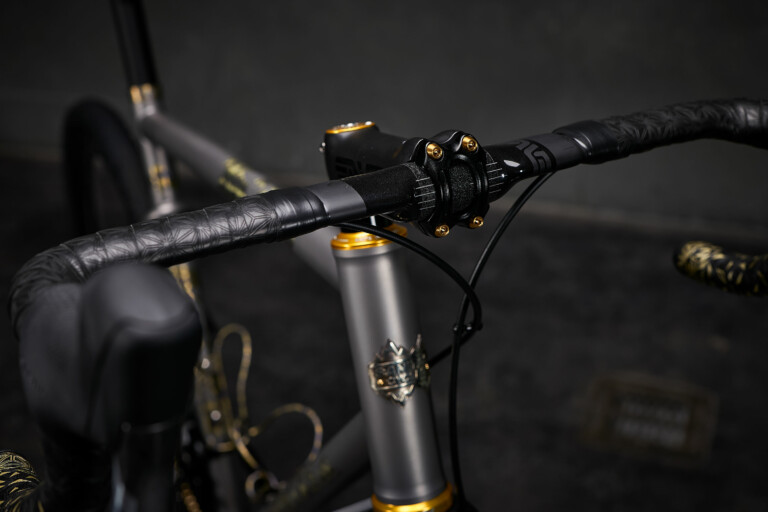
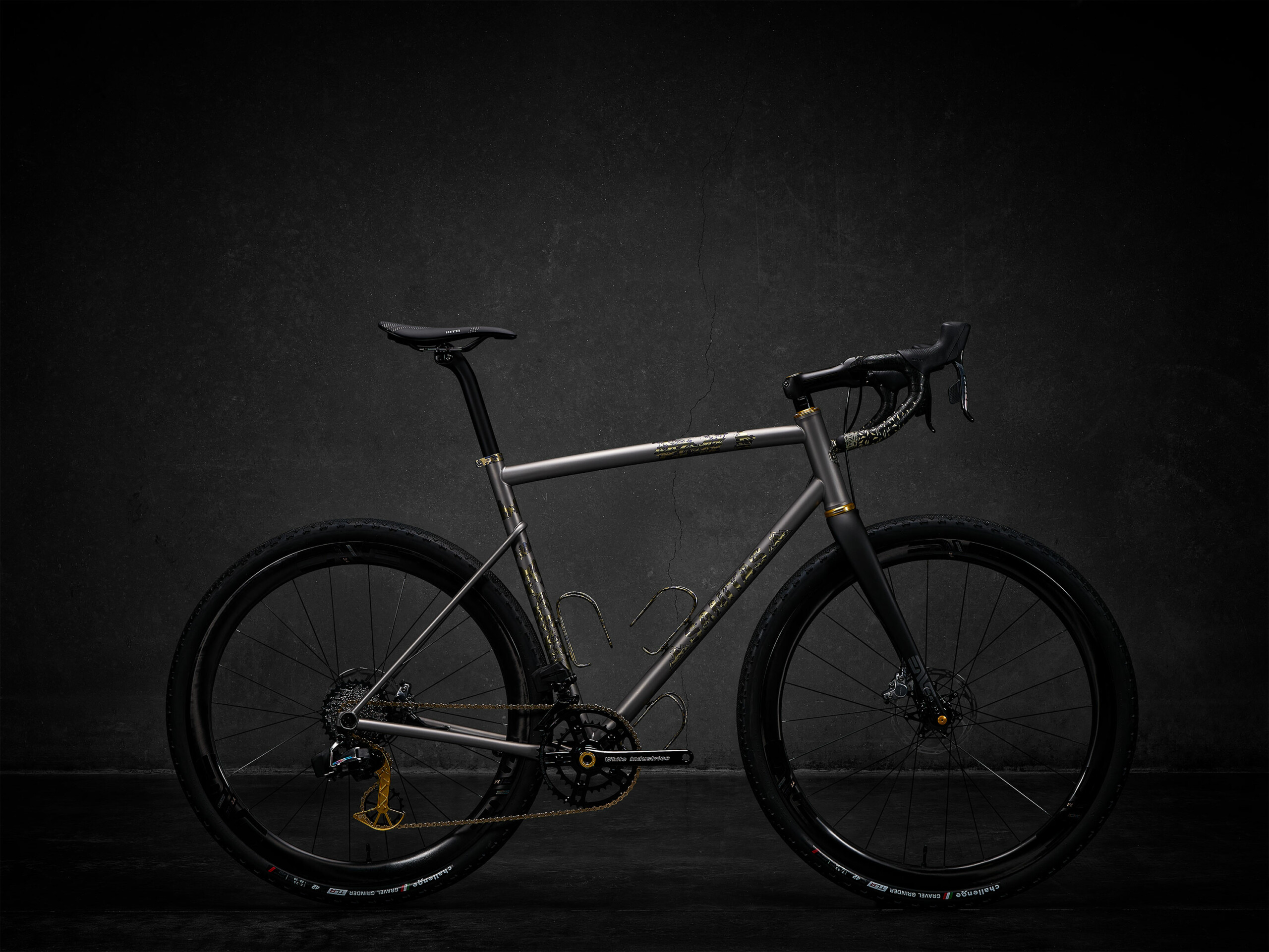
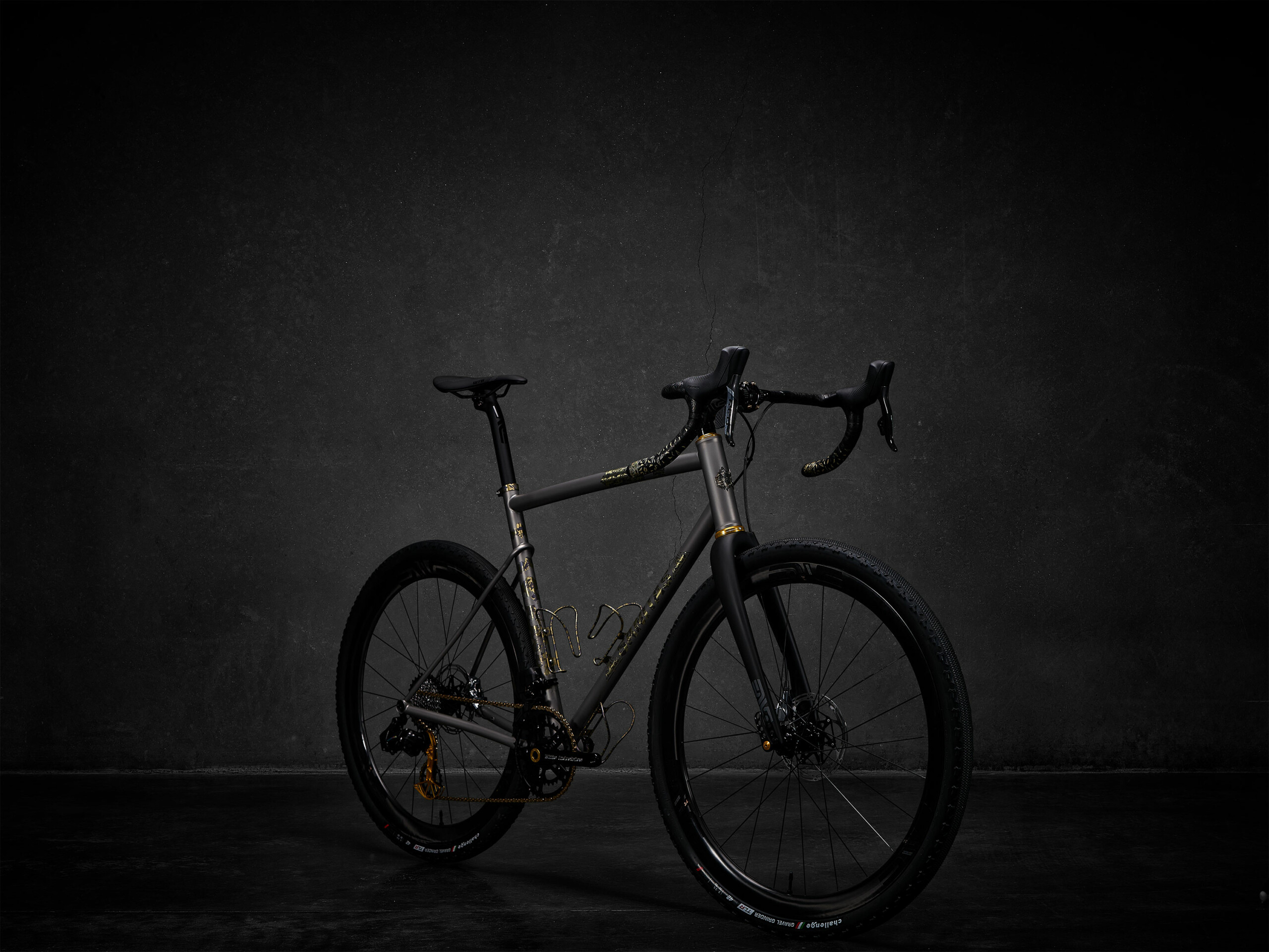
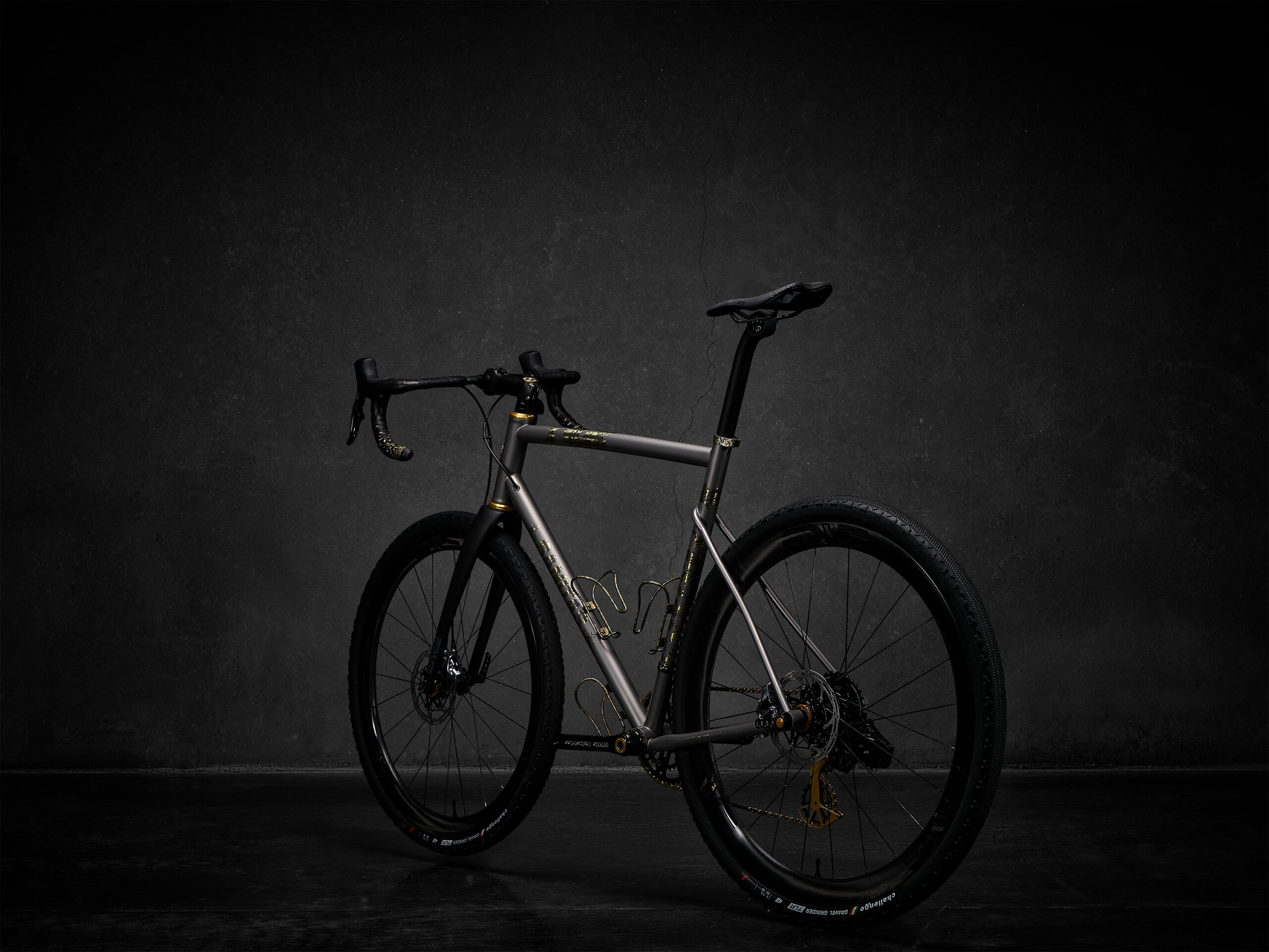
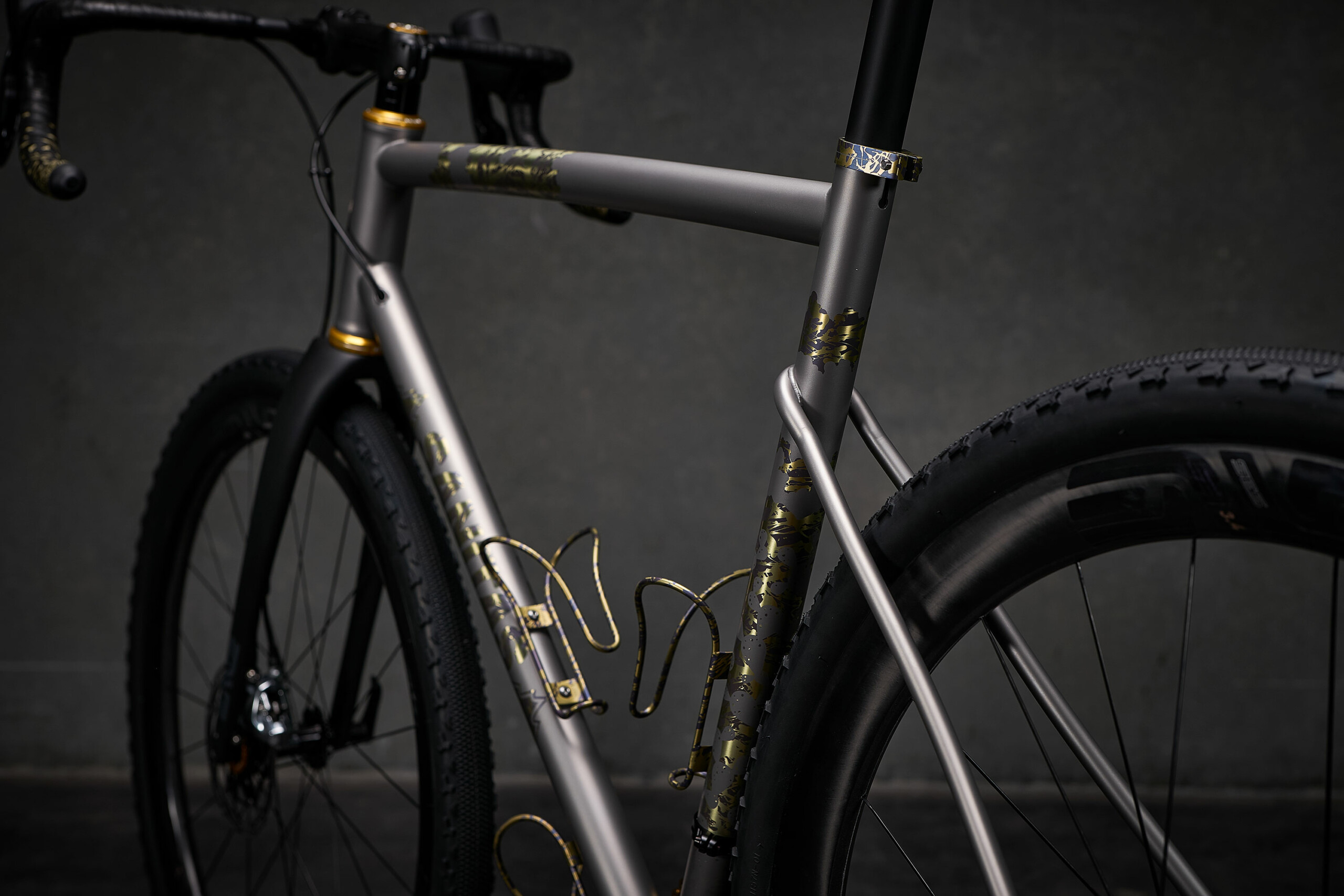
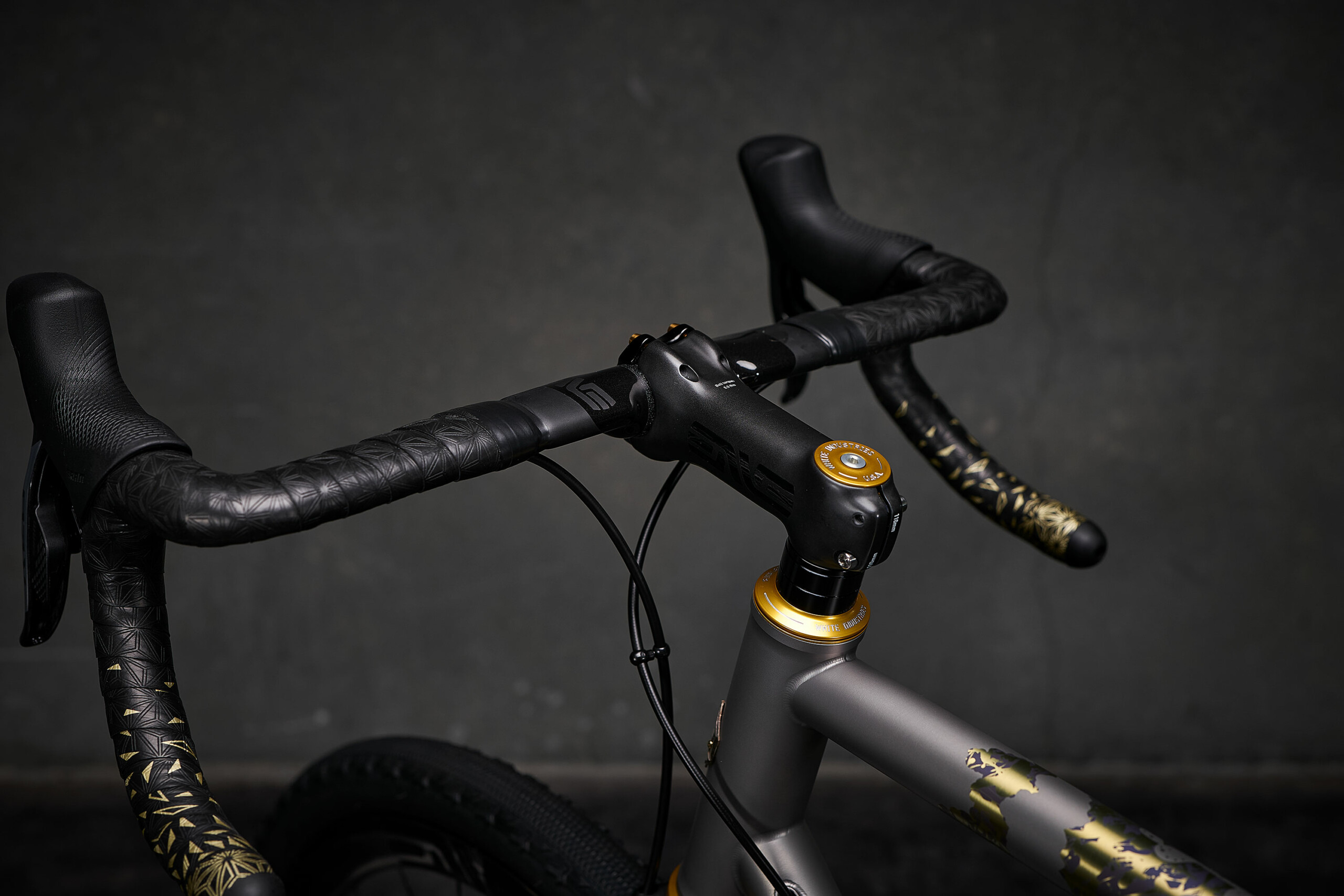
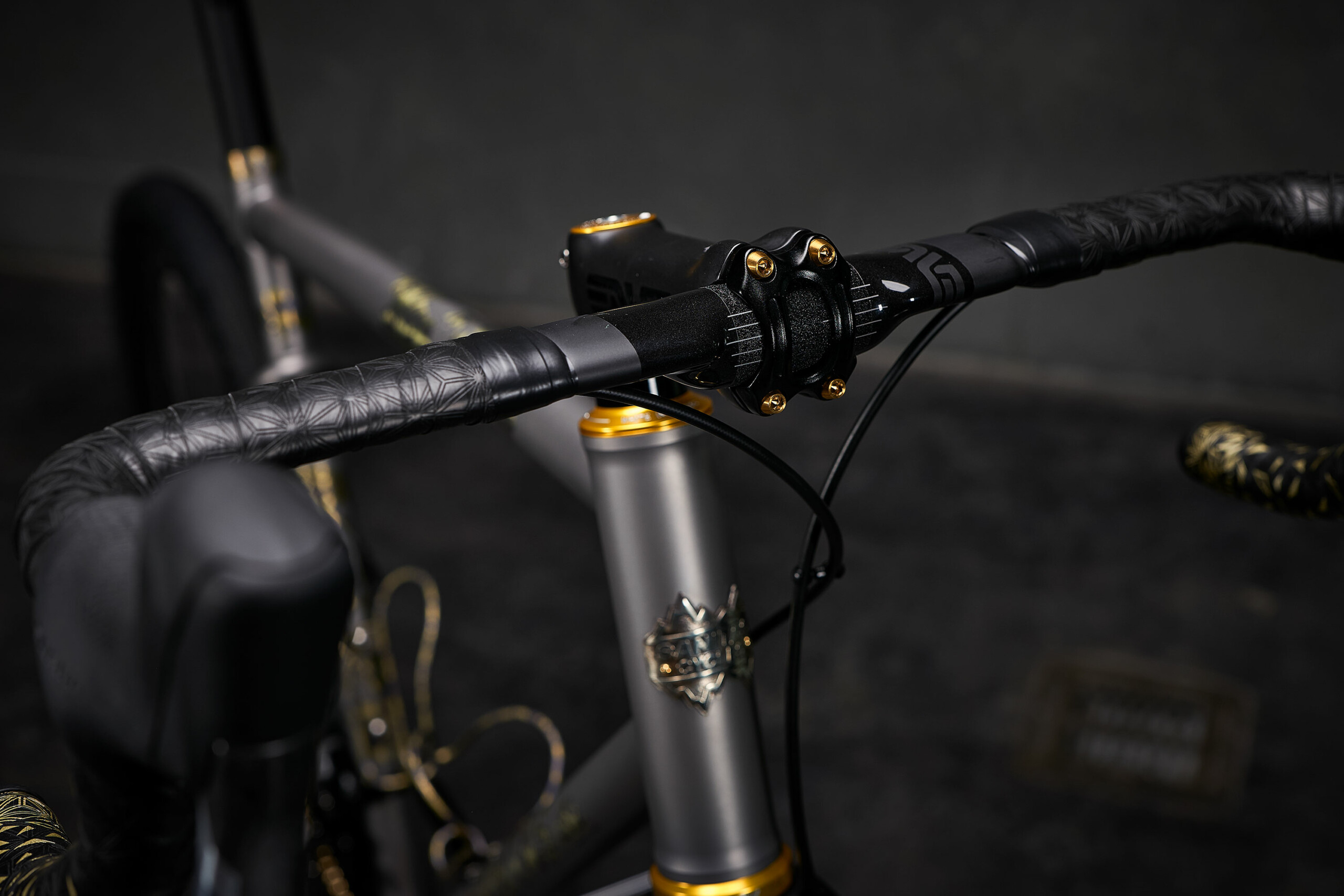
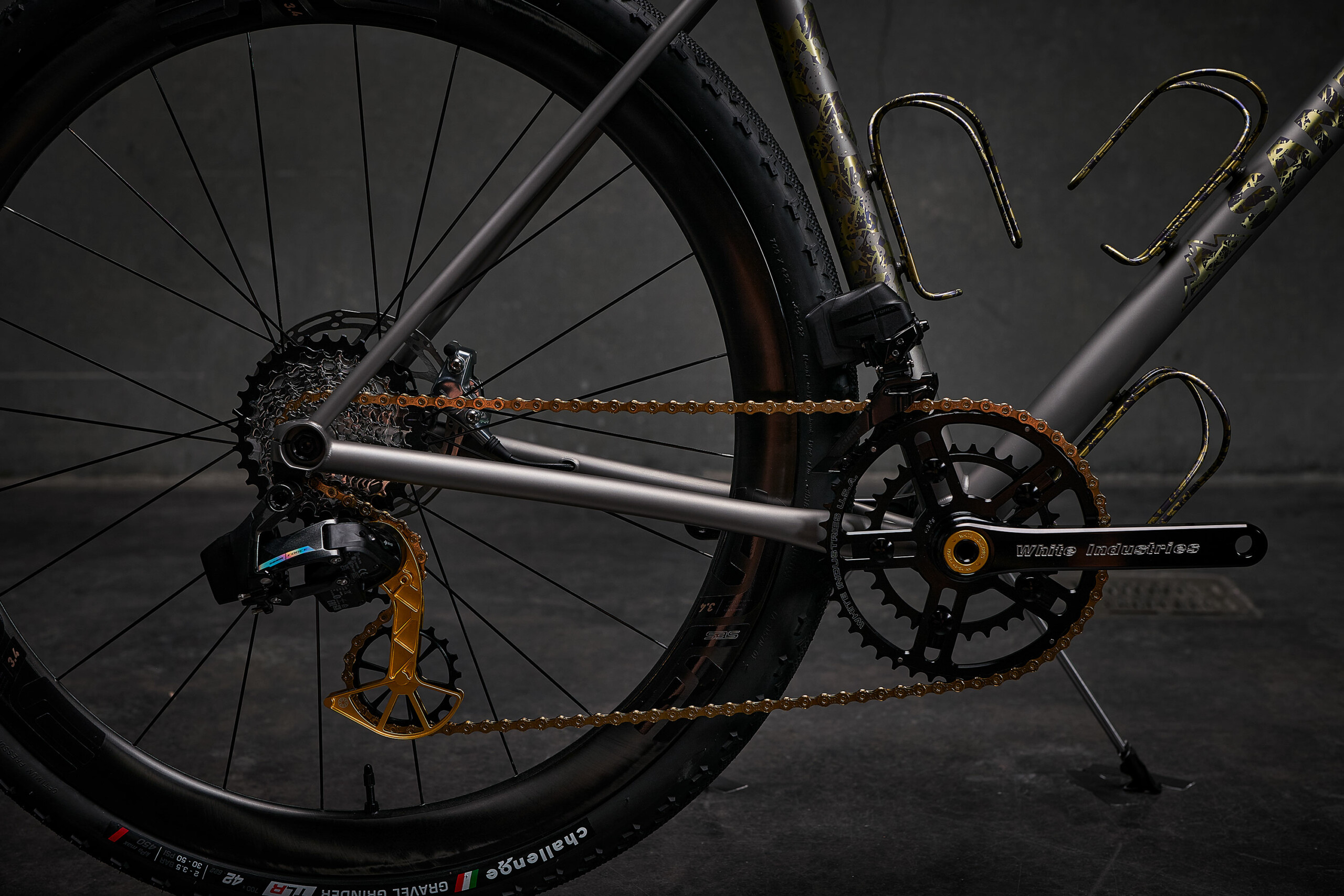
SANITAS CYCLES: Node Gravel Titanium, Made in Durango, Colorado, sanitasbikes.com
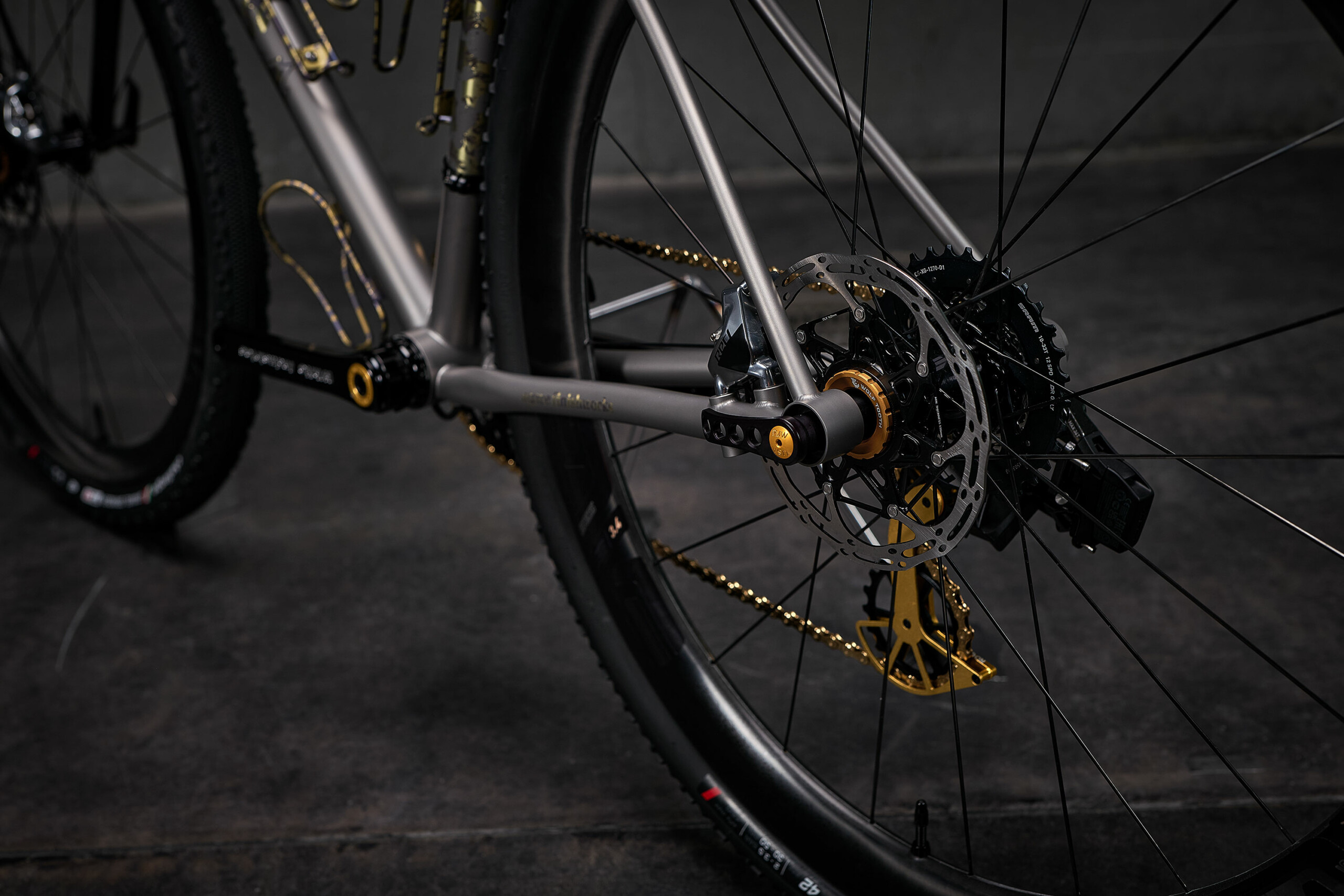
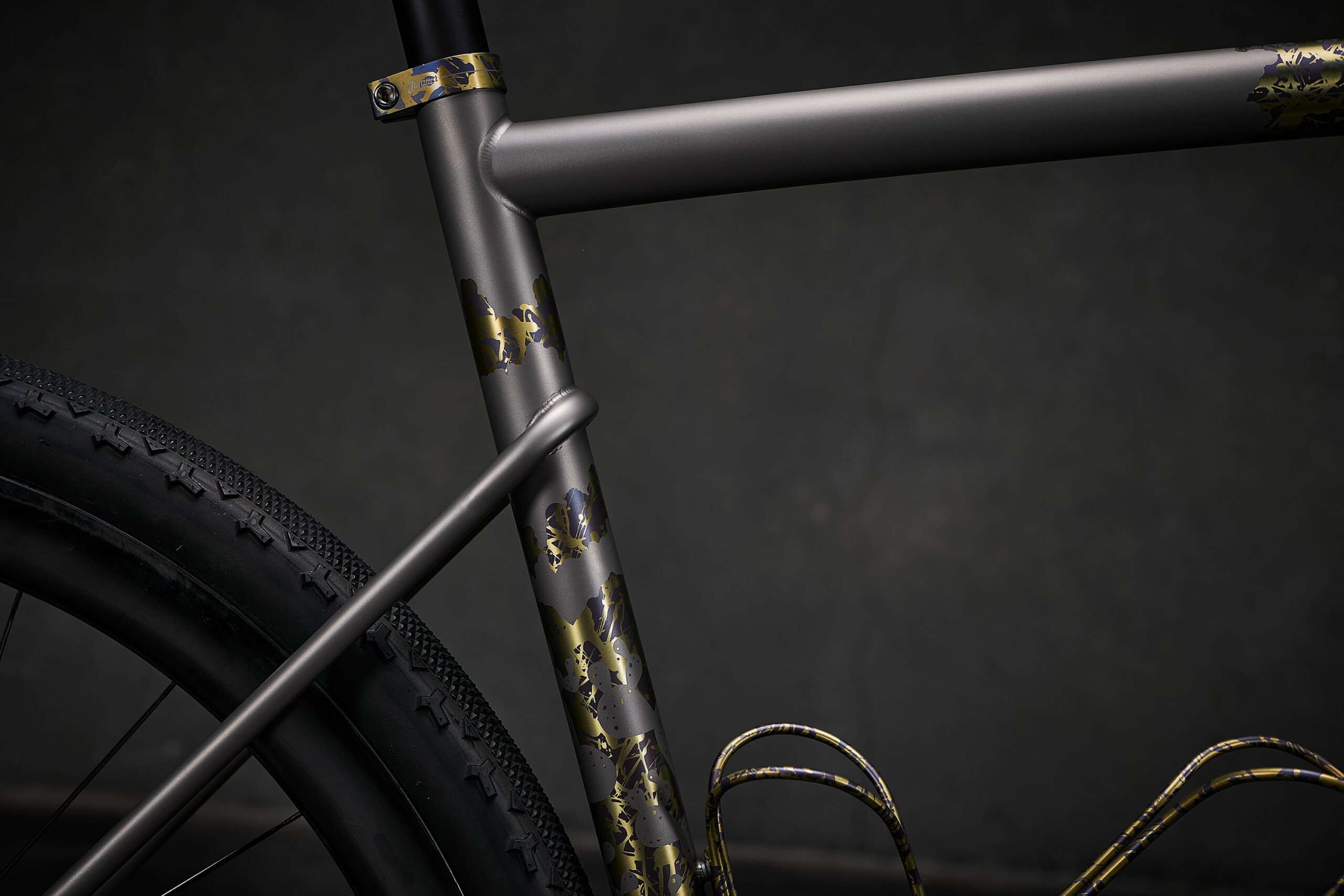
“We brought out the all-new Sanitas Node Custom Gravel. This frame features full 3/2.5 Aerospace titanium construction from tubing that is all milled here in the United States. Braze-ons, headtube, dropouts, and bottom bracket shell are all milled in California. We 100% design and fabricate the frame in-house; the shop is located in Durango, Co. The frame features a 44mm straight tapered headtube for many fork options and integrated cable routing upon request. The top tube is thin-walled and features a slight curve to allow for more vibration absorption. Seatube is reamed for 31.6 allowing for rigid seatposts but also dropper posts. We use T47 standard bottom bracket shells with a thicker wall to help increase lateral stiffness at the crankset. The chain stays are fully annealed 7/8ths material for more vibration absorption and endless customization of tire clearance and crankset combinations. The seat stays are thick-walled 1/2” tubing featuring a wrap-around construction while also being a bit dropped to keep the rear triangle laterally stiff for hard climbs and sprints. This frame is what we see as the final culmination of our 30+ years of combined frame-building experience.
The finish applied to the frame features custom anodization done through Agave Finishworks also located in Durango. From afar the gold, blues, and purples are eye-catching, but up close it really comes to life with details of mountains, clouds, and cacti using the negative space. Just like the finish applied on the frame, we build each and every bicycle one by one to the customer’s exact specifications and desires. Being a small-builder allows us to provide a unique and highly customizable shopping experience. The groupset features a mix of Sram Red AXS, Force AXS, White Industries cranks, a Kogel Ceramic bottom bracket, and their oversized cage. All being framed in the pinnacle of carbon works provided by ENVE Composites.”
– Sanitas Cycles
La Vuelta Femenina 2024: Demi Vollering Takes It All
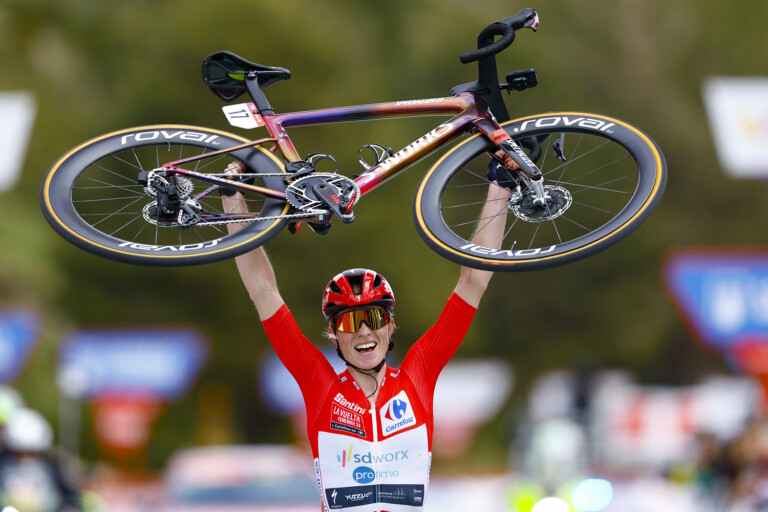
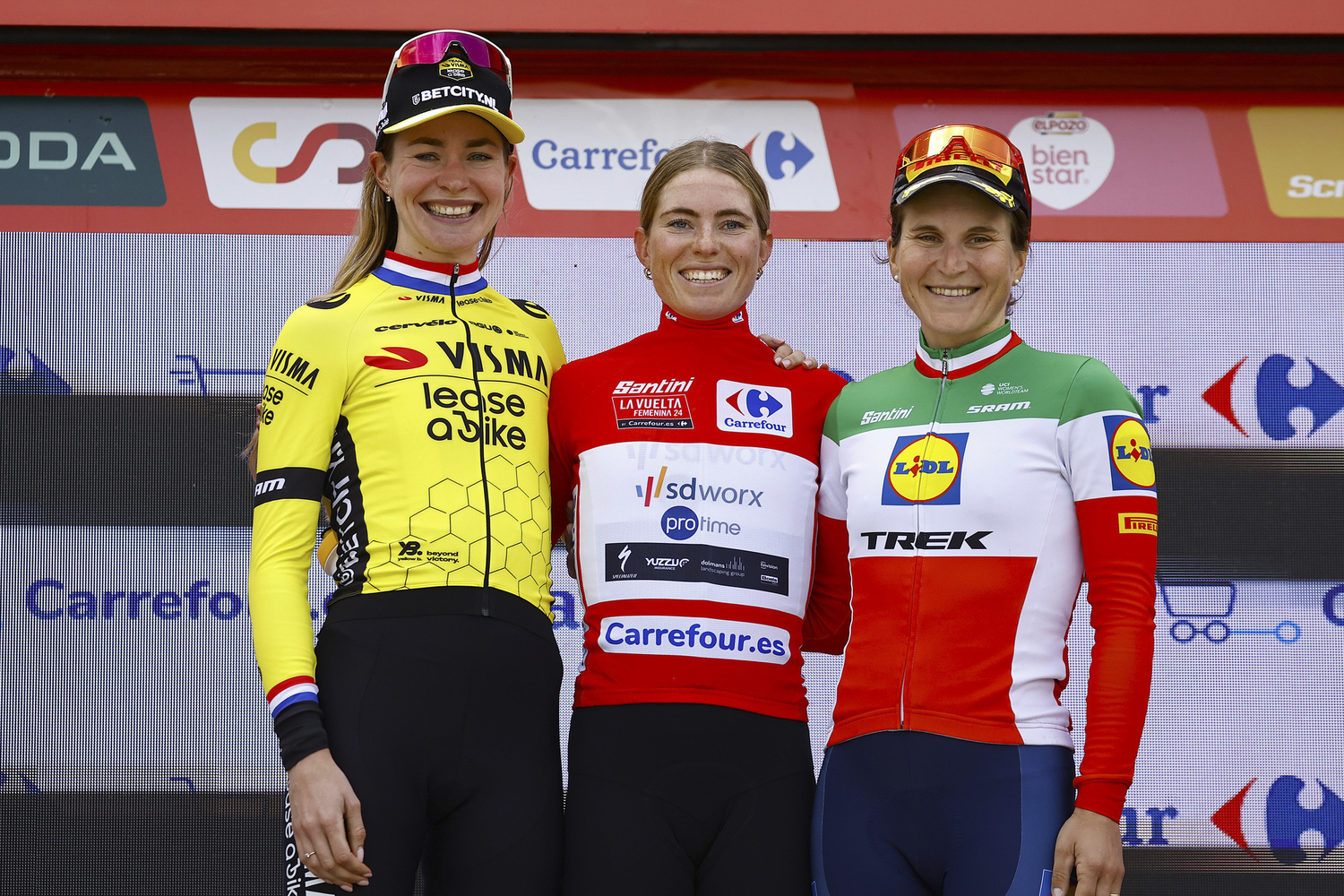
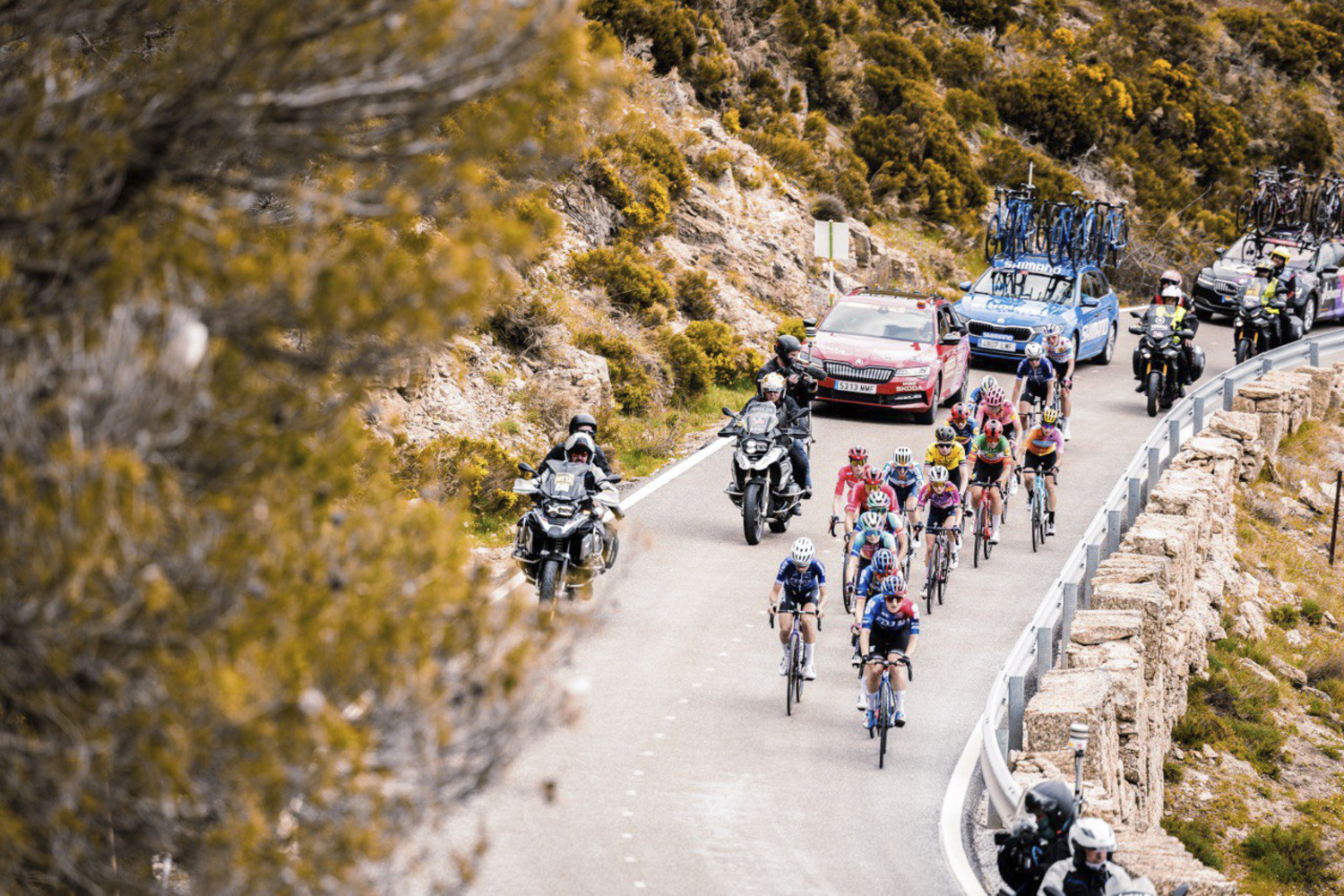
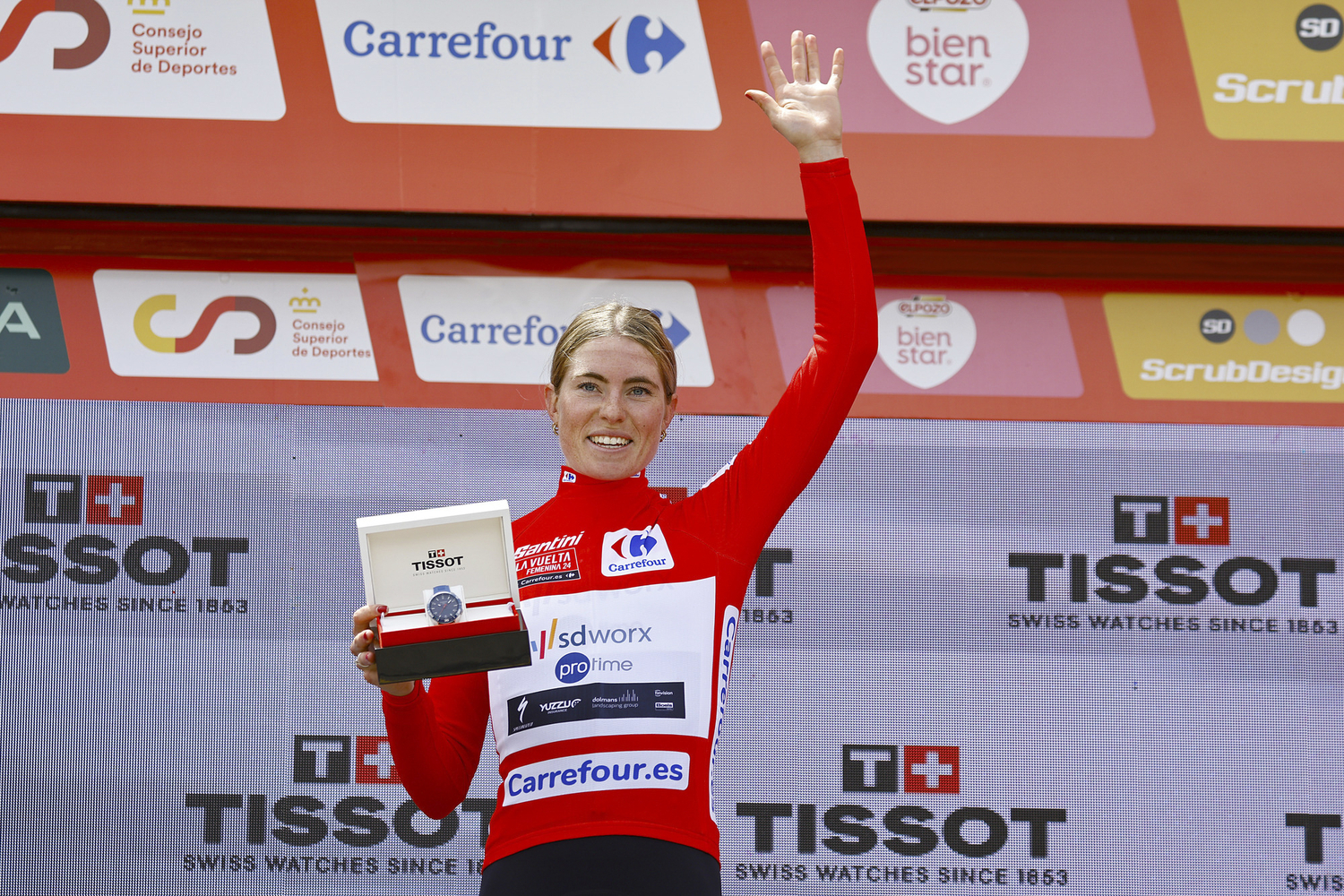
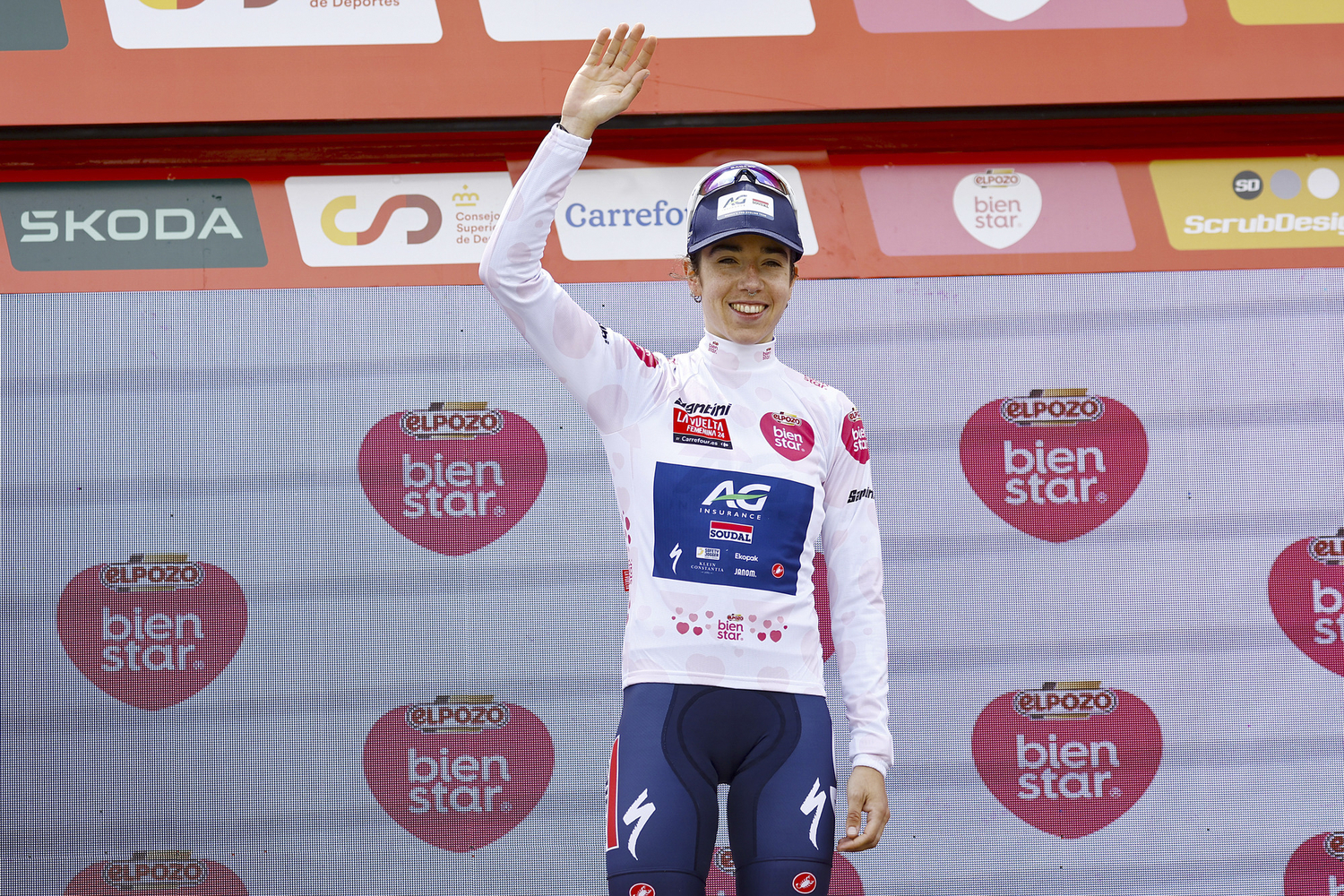
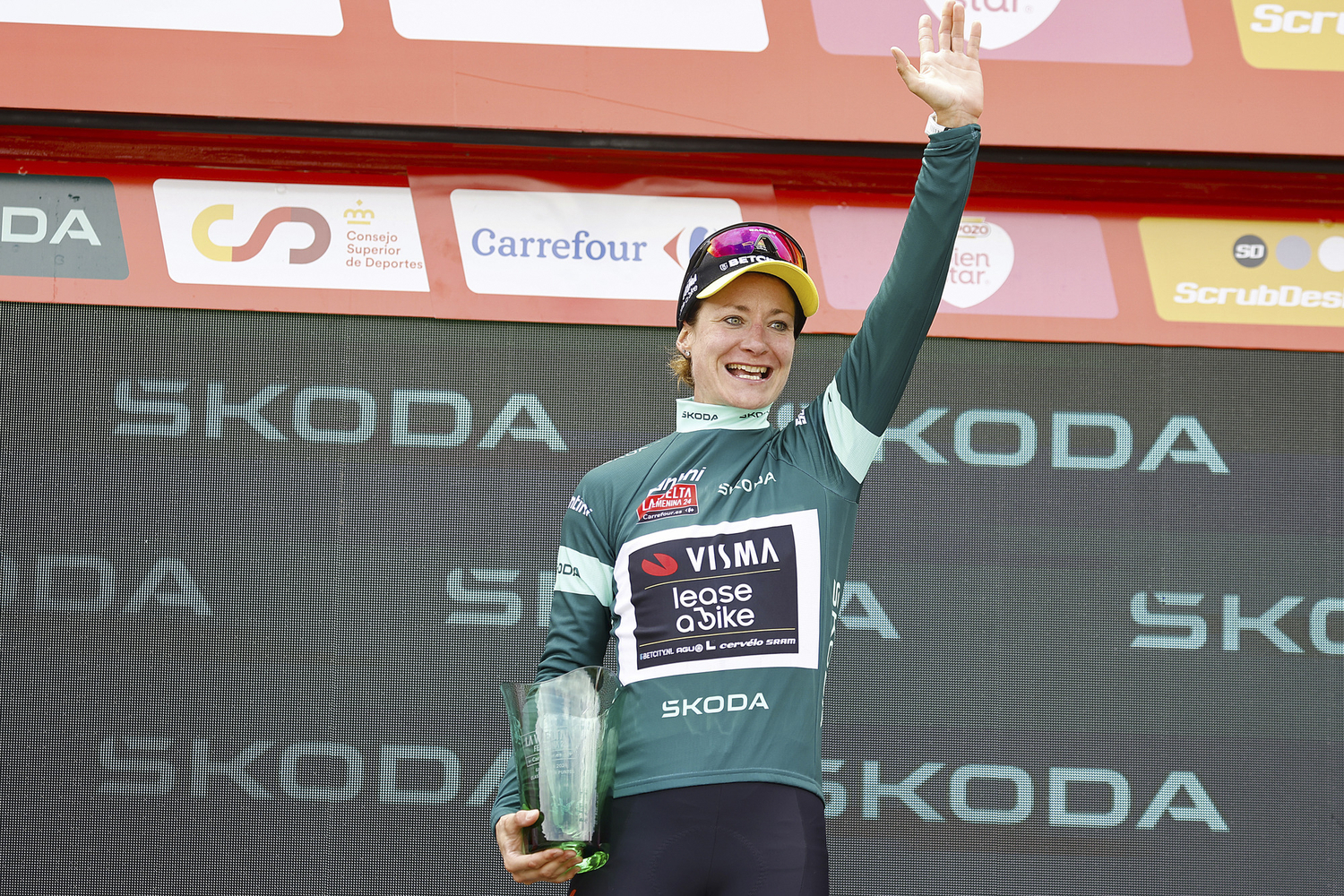
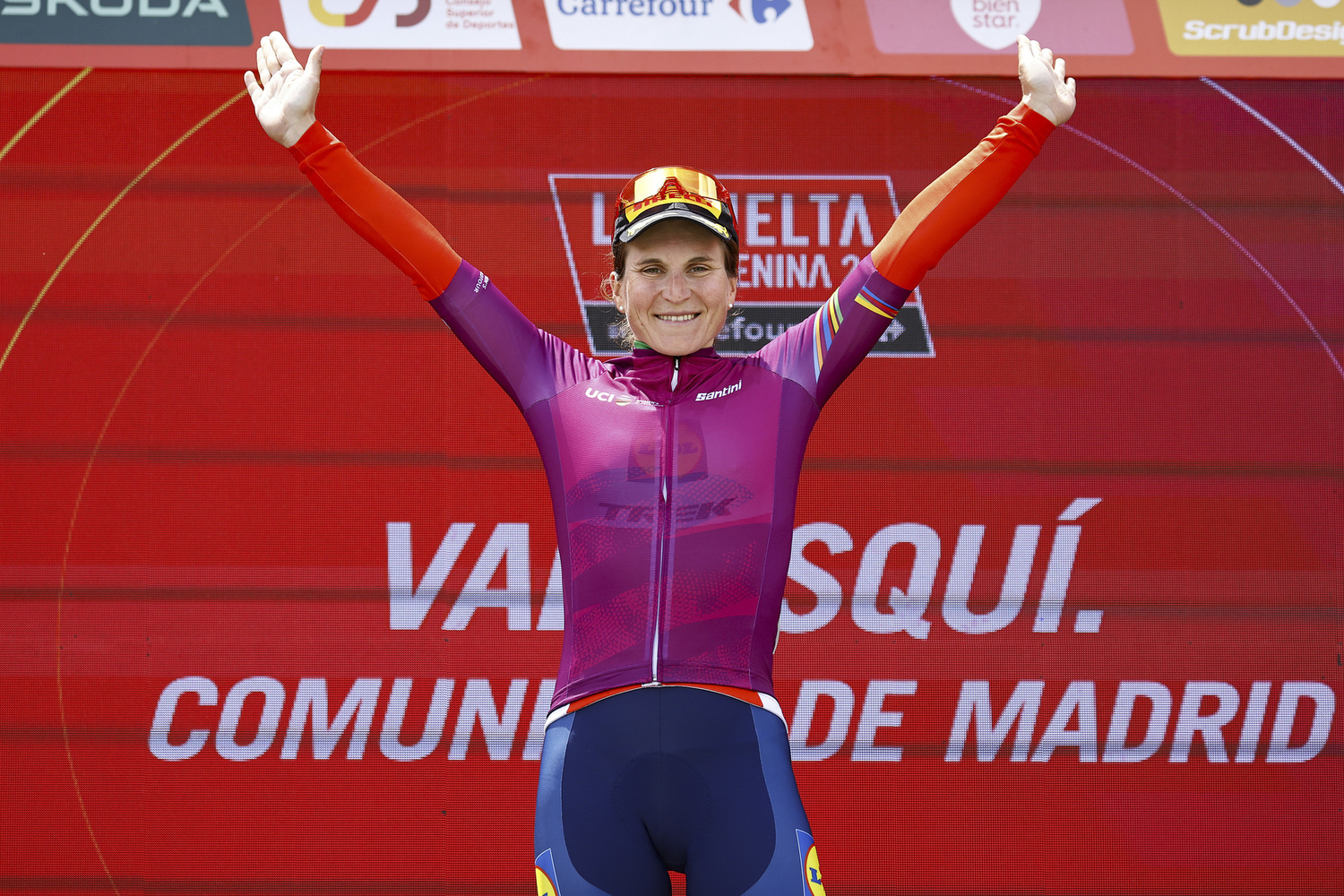
MADRID, Spain (May 5, 2024) — Two stage wins, including the queen stage. The polka dot jersey of the Mountains classification. The Premio Estela Domínguez, after conquering the race’s main climb. And, of course, the Red jersey as overall winner. The list of achievements of Demi Vollering (SD Worx-Protime) in La Vuelta Femenina 24 by Carrefour.es is as impressive as her ride was all over the week in general and in the final climb to Comunidad de Madrid’s Valdesquí winter sports station in particular. The Dutch rider made up for her painful defeat in last year’s edition of the Spanish Grand Tour with a week-long triumph. Riejanne Markus (Visma | Lease a Bike) and Elisa Longo Borghini (Lidl-Trek) stood on the final podium along with the real and absolute victor of the event. Marianne Vos (Visma | Lease a Bike) took the Points classification, while Mireia Benito (AG Insurance-Soudal) was awarded the white jersey as the race’s most aggressive rider.
Demi Vollering (SD Worx-Protime): “Proud that I could finally show how strong I am”
“The team did a good job all day long. In such a tough mountain stage, the racing is a bit nervous. I didn’t find this last climb super tough. There was headwind again, but it wasn’t super steep. There was a part where we had tailwind and you could pace yourself. There I thought: I have to attack to make sure I have an advantage on that stretch. After all, then the rest will have to chase me again later in the headwind. It’s nice that I was able to increase my lead later on the climb and thus win this stage as well.”
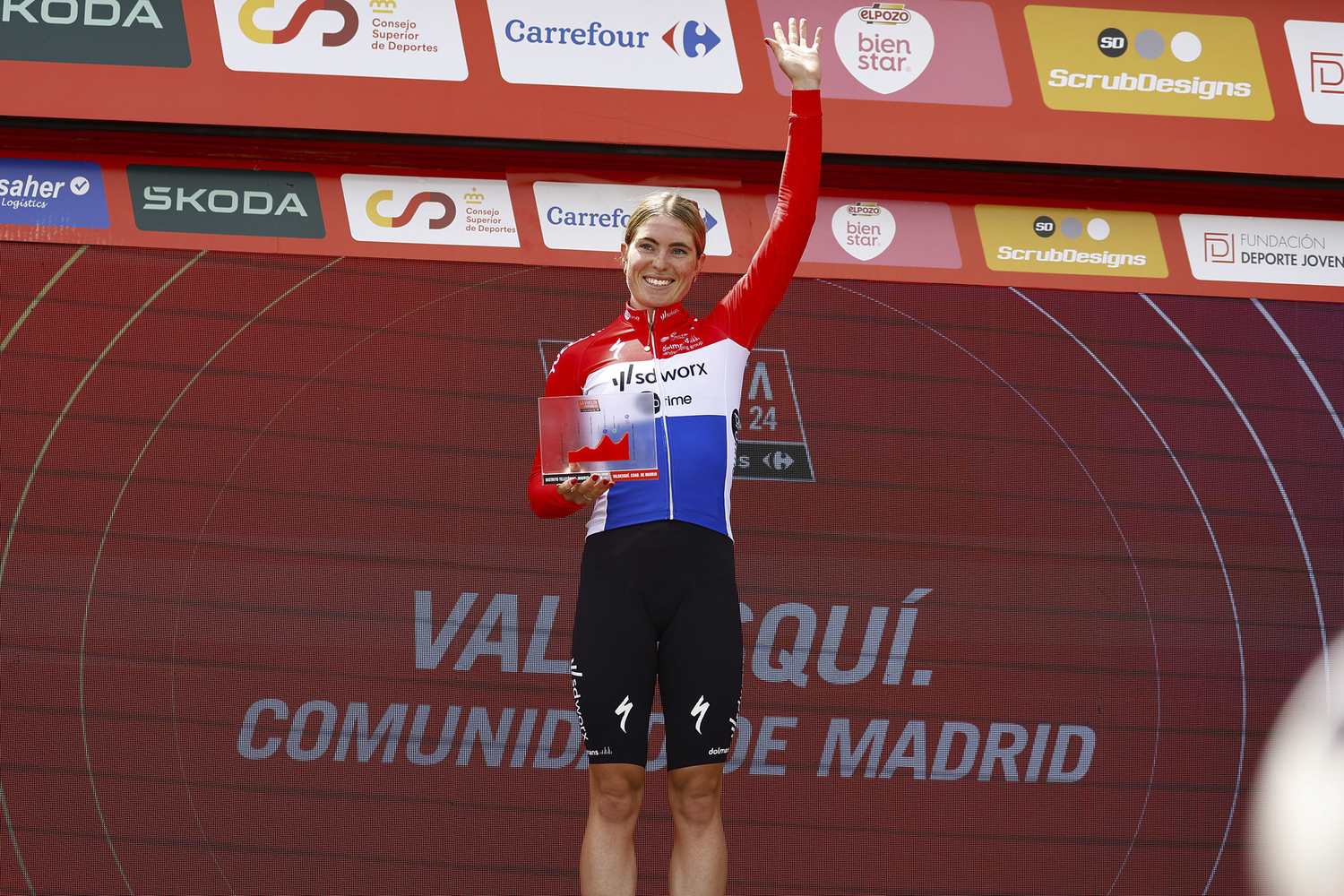
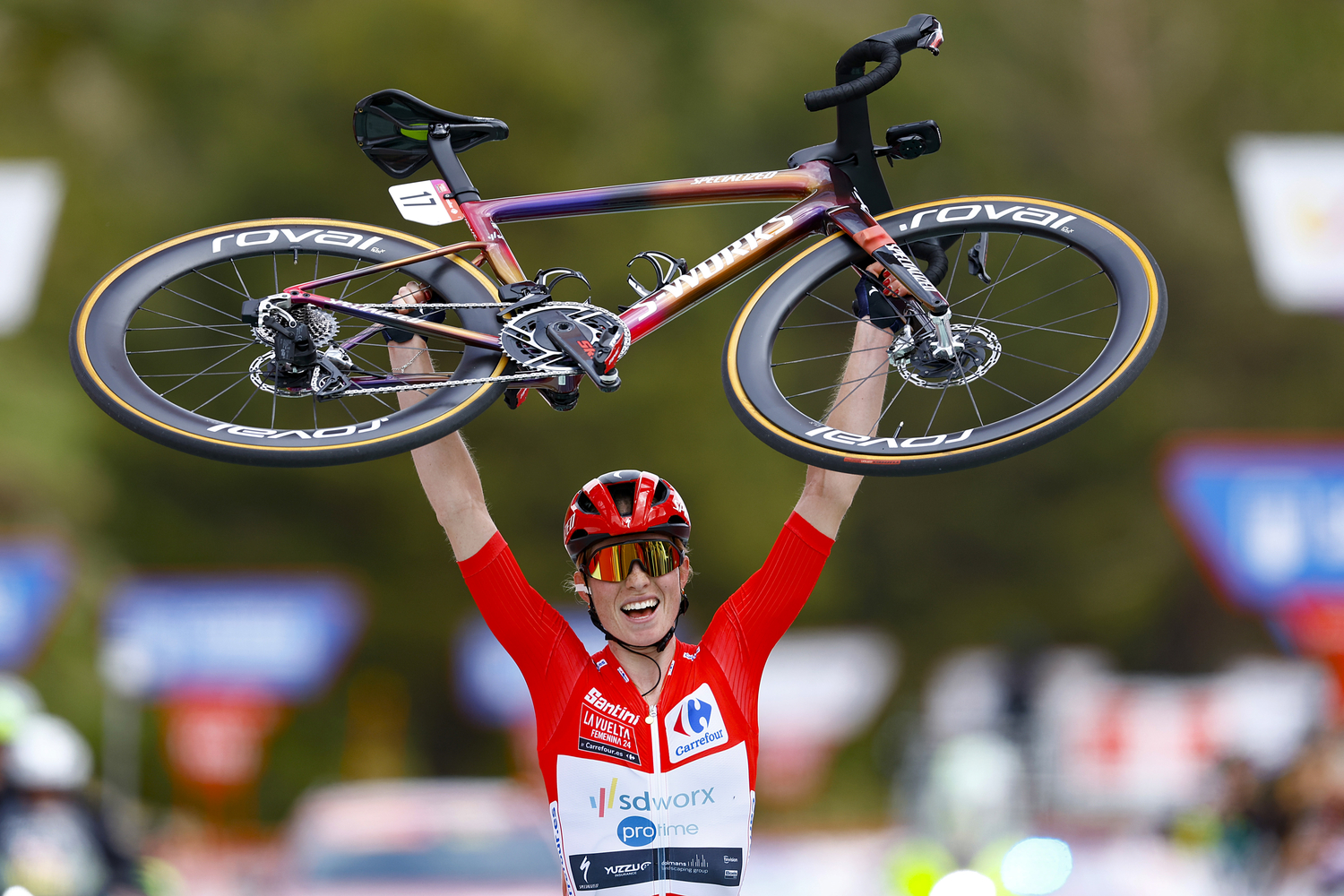
“To end the Vuelta this way is fantastic. As a team we rode strong here all week. With two stage wins, the overall victory and some podium finishes, we can be proud of ourselves as a team. This win does not make up for the Spring campaign, as I would have like to win a Classic and it’s a pity I didn’t do it – but I’m still proud that I could finally show how strong I am and how good I feel. I did really like that there was so much climbing in the course of La Vuelta Femenina 24 by Carrefour.es. I am happy to see that all the Grand Tours are stepping up for the women’s peloton. This overall win is hopefully a good ‘start’ for this summer. I hope to ride some nice stage races first here in Spain and then in the Tour de France Femmes in the coming months.”
Mireia Benito (AG Insurance-Soudal Team): “This prize will help me step up”
“This jersey is a stepping stone, confidence-wise. Last season didn’t finish well, as I suffered several crashes and different issues, and this prize will help me step up. As for my team, I believe we did very well. We have to keep going like this. We shouldn’t ease up, nor relax – quite the opposite! We have to keep working, we have to keep pushing, there are many things left to do! What will I do with this jersey? Well… I have one person in mind to give it to, but I first have to think of a nice writing to dedicate it…”
Marianne Vos (Team Visma | Lease a Bike): “We wanted to make the race as hard as possible”
“We are very happy. Our goals were going for stage wins and for the final GC. The whole team worked really hard, the two stage wins were great, and to have Riejanne Markus standing second on the overall podium is fantastic. It was a good La Vuelta Femenina 24 by Carrefour.es. We started off with a bit of bad luck with Anna Henderson crashing out in the second stage and we missed her this week, but hopefully she will recover well. The rest, we just were going for it every day, and we ended with a very good feeling. Today we wanted to make the race as hard as possible. We know Riejanne has a big engine, so if it’s hard, she’s on her best. My idea was to try to get in the breakaway and survive as long as possible, but I didn’t make it over the first climb. I’m very proud of the girls. They worked really hard and made it also hard on the climb, and then I’m also very proud of how Riejanne finished it off.”
Elisa Longo Borghini (Lidl-Trek): “I don’t think I made any mistake”
“It was a beautiful week in Spain. I have to say that the course of La Vuelta Femenina 24 by Carrefour.es was a great one, overall. No stage was easy – we always raced full on! I didn’t come here in my optimal form after the tough Spring campaign I had. I was not at my very best level, but I fought hard with my teammates as we did believe until the very end that we could keep the 2nd place. In the end, it wasn’t possible and I finished 3rd. This is sport – sometimes you win, sometimes you lose. I don’t think I made any mistake. I just gave my 100% and this what I got. I go home now, and I’m still happy. I am in the purple jersey as leader of the UCI Women’s WorldTour, and that means that I have been very consistent during my Spring. I’m satisfied with my first part of the season. Now it’s time to rest, reset and restart thinking of the second part of the season.”
Riejanne Markus (Team Visma | Lease a Bike): “I couldn’t wish for anything better”
“I’m super happy. I couldn’t wish for anything better. Last year I was 3rd in the GC until the last day and came 4th in the end. This time, I’ve moved up one position, from 3rd to 2nd. Everything went perfect this week. As a team, we got two stage wins and came close to a third one in the TTT – and we were present in the echelons, as well! I’m thankful to all my teammates. I was never confident that I could overtake Elisa [Longo Borghini] today, but I felt really strong and I was hoping I could somehow attack her today. Everything worked out as I was hoping for. I’m very proud of this result. La Vuelta Femenina is always a very hard race, and an all-round one with TTT, echelons and tough mountain stages. To be 2nd here, just behind Demi [Vollering], is really cool. Now I head home for two weeks before going on altitude training camp to prepare for the rest of the season. I won’t do the Giro, but the Tour de France Femmes avec Zwift.”