Home Blog Page 66

‘Hardly Anybody There’: How to Bicycle Through Yellowstone National Park Without Cars

0

Just Before the Main Roads Open to Cars for the Year, Yellowstone Allows Cyclists to Tour a Section of the Park’s Roads

By Clark Corbin — WEST YELLOWSTONE — Three of us were walking our bicycles through the barricaded entrance to the world’s first national park when the driver of a black minivan slowly approached the “road closed” sign, turned to their passenger, shrugged and started to turn around.
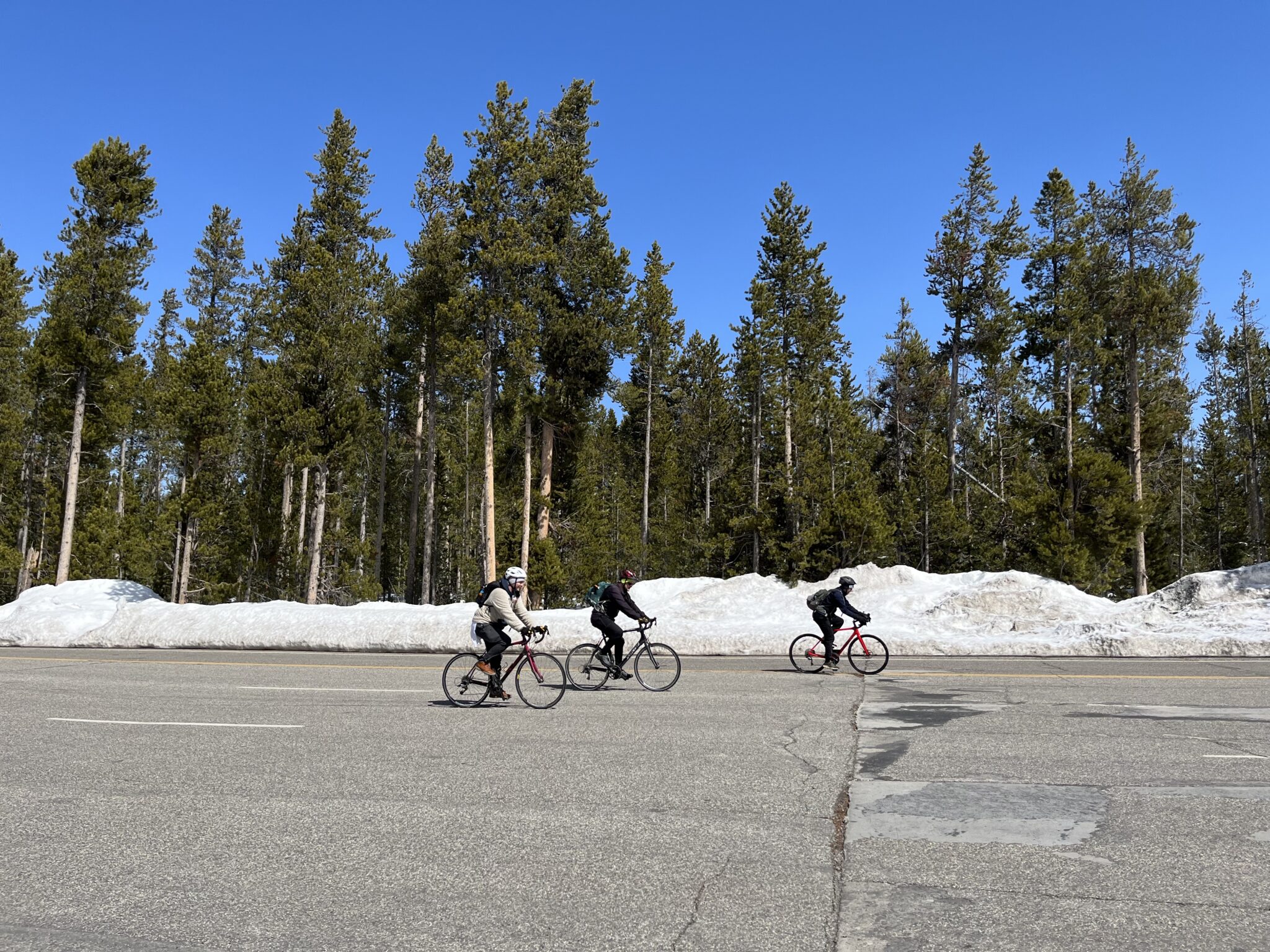
Bicyclists are able to ride into Yellowstone National Park each spring before many of park’s main roads open to cars. (Clark Corbin/Idaho Capital Sun)

We smiled, pulled our gloves on, kicked a leg over the frame of our bicycles and started pedaling east. 

Yellowstone National Park stretched out before us, the mountains and sprawling valleys covered in a blanket of deep, white snow.

“It feels like we unlocked a cheat code,” said journalist Heath Druzin, who along with his wife, Miriam, and 15-month-old daughter joined me for the ride.

“How often do you get to be in Yellowstone completely alone?” Heath asked later. 

Each spring Yellowstone National Park and Grand Teton National Park officials open sections of the parks’ main roads to bicyclists just before they open those roads to vehicles for the year. 

Until the main roads open, there is limited public access to Yellowstone National Park, services are limited and most roads are closed to public vehicle travel. That said, park employees are allowed to drive vehicles, snow plows and equipment through the park’s roads to prepare for opening the main roads to the public, and we did see several of them during our ride.

This year, Yellowstone National Park officials opened a 49-mile section of main roads from the West Entrance, north to the Norris Geyser Basin and continuing to Mammoth Hot Springs to bicyclists on April 7. A few days later, park officials announced they will open those roads and other main park roads to public vehicles beginning at 8 a.m. Friday. 
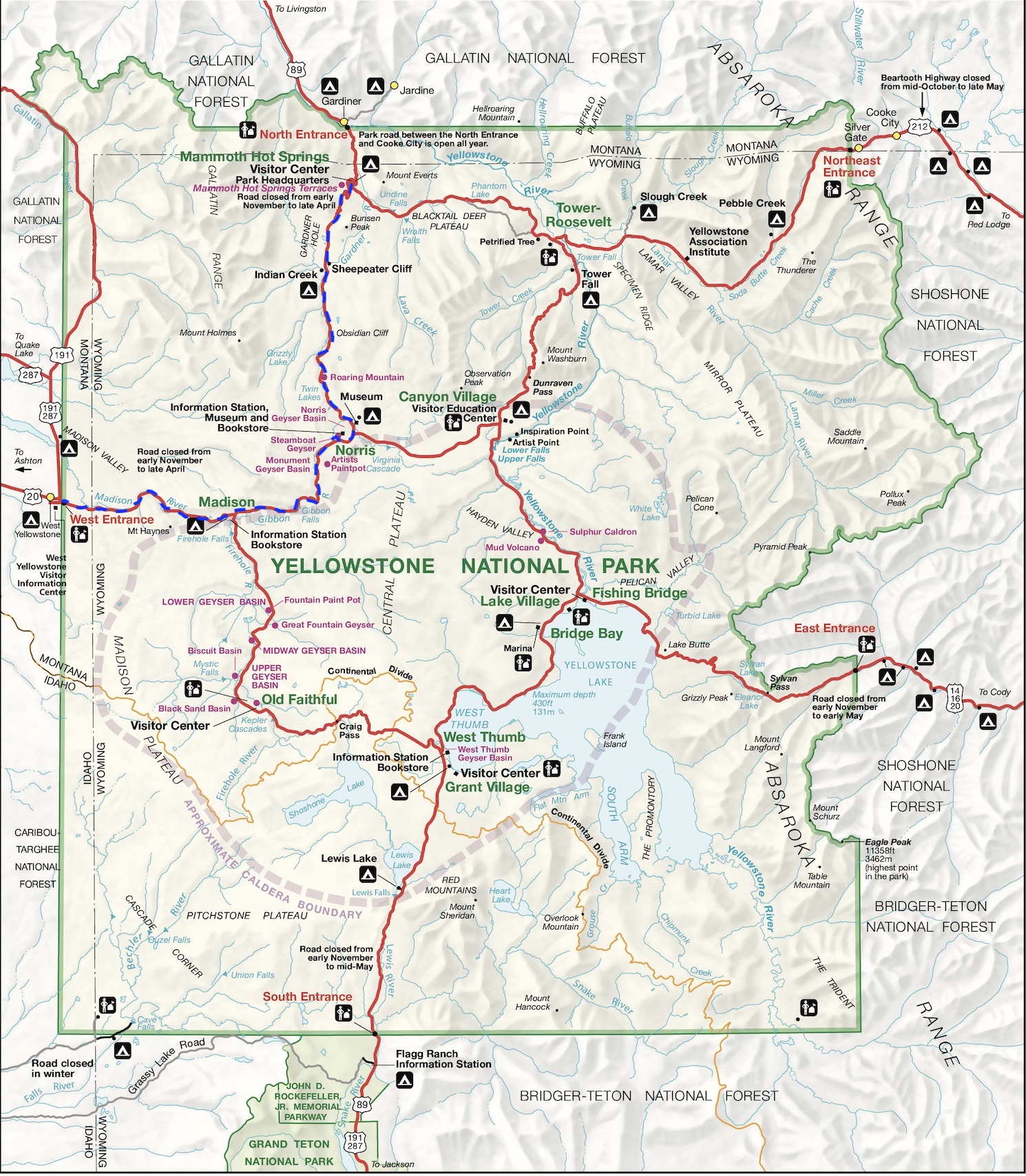
Portions of the main roads in Yellowstone National Park are opened to cyclists before cars each spring. The dotted blue line in the upper left portion of the map traces the approximate route, which covers almost 50-miles starting at the West Entrance and contemning to Mammoth Hot Springs. The road from the North Entrance to the Northeast Entrance via Mammoth Hot Springs and Tower Roosevelt is open year round to cycling. (Courtesy of National Park Service)

There is also a fall bicycling season in Yellowstone after the main roads close to public motorized vehicles in November. Bicyclists are also allowed on the roads at the same time as cars during the summer as well. Aside from the main roads, there are a handful of dedicated bike trails in the park, including an abandoned railroad bed and paved trails.

What is different about riding a bicycle in Yellowstone without cars? 

Last year, Yellowstone hosted 3.3 million recreation visits, with more than half of those visits concentrated in June, July and August, according to a news release from Yellowstone National Park. 

Anyone who has driven through Yellowstone during the summer months has experienced traffic jams known as “bison jams” and “bear jams” that can lead to traffic backing up for a quarter of a mile or more while tourists step outside their vehicles, craning their necks to catch a glimpse of wildlife. 

Bicycling through the park in April is pretty much the opposite of that. 
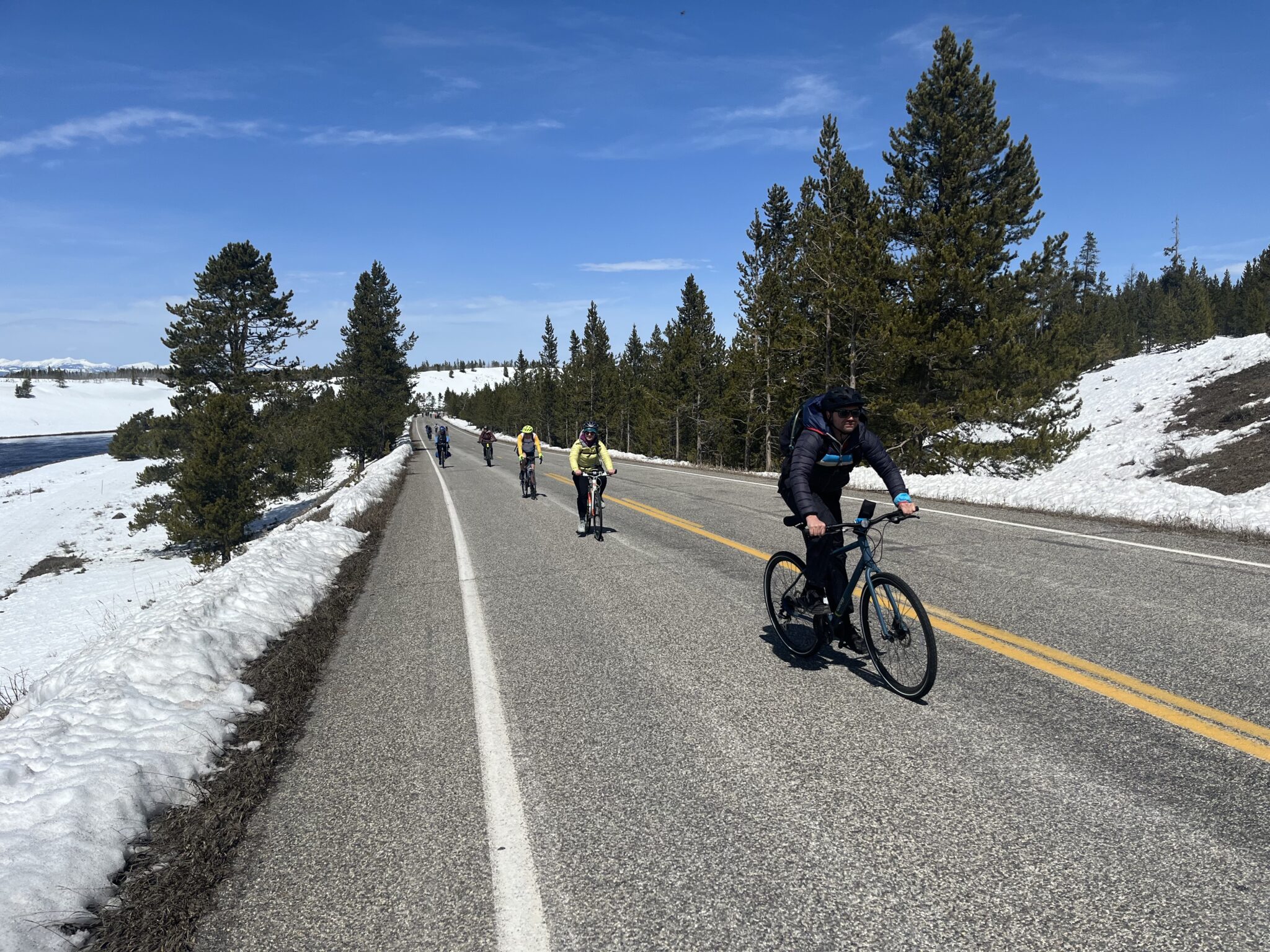
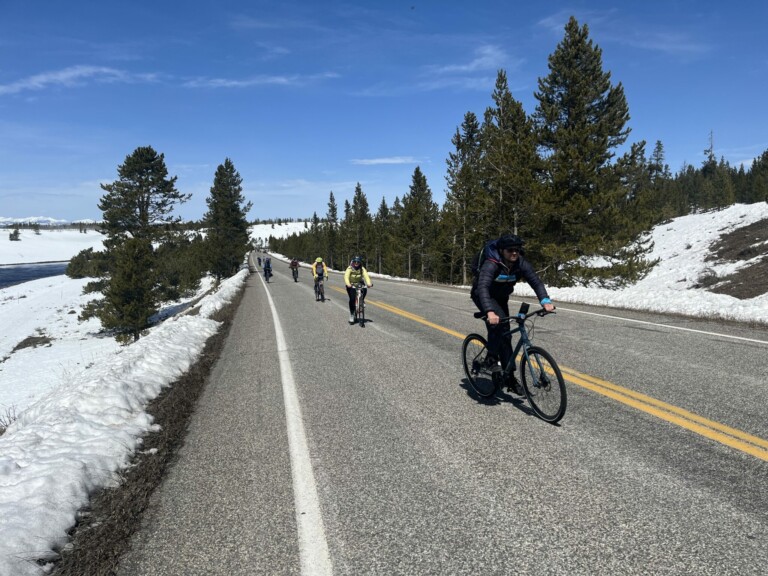
Yellowstone National Park officials open some of the main roads to bicyclists each spring shortly before they open the roads to cars. (Clark Corbin/Idaho Capital Sun)

With the sun shining overhead and a cold wind nipping at our cheeks, we followed the Madison River and watched the park slowly awaken from a long winter.

Water dripped from snow drifts piled up beside the road and the banks of the river.

Wind whistled through Douglas-fir forests.

Tree branches creaked and groaned under the weight of melting snow.

Every so often, natural avalanche debris fields littered mountainside slopes. Well before we arrived in the park, a few avalanches deposited tangled mounds of boulders and snapped tree trunks in heaps of rubble that nearly reached the park’s roads.

We eased our bicycles to a stop, pulled binoculars from our packs and watched as a coyote trotted along the far bank of the Madison River.

We snapped a few grainy photos from a distance of 200 yards and hoped that spotting the coyote within 20 minutes of entering the park was a good omen for more wildlife encounters.

The 14-mile section of road between the West Entrance and Madison Junction is mercifully flat, with a handful of short, rolling climbs and descents. 
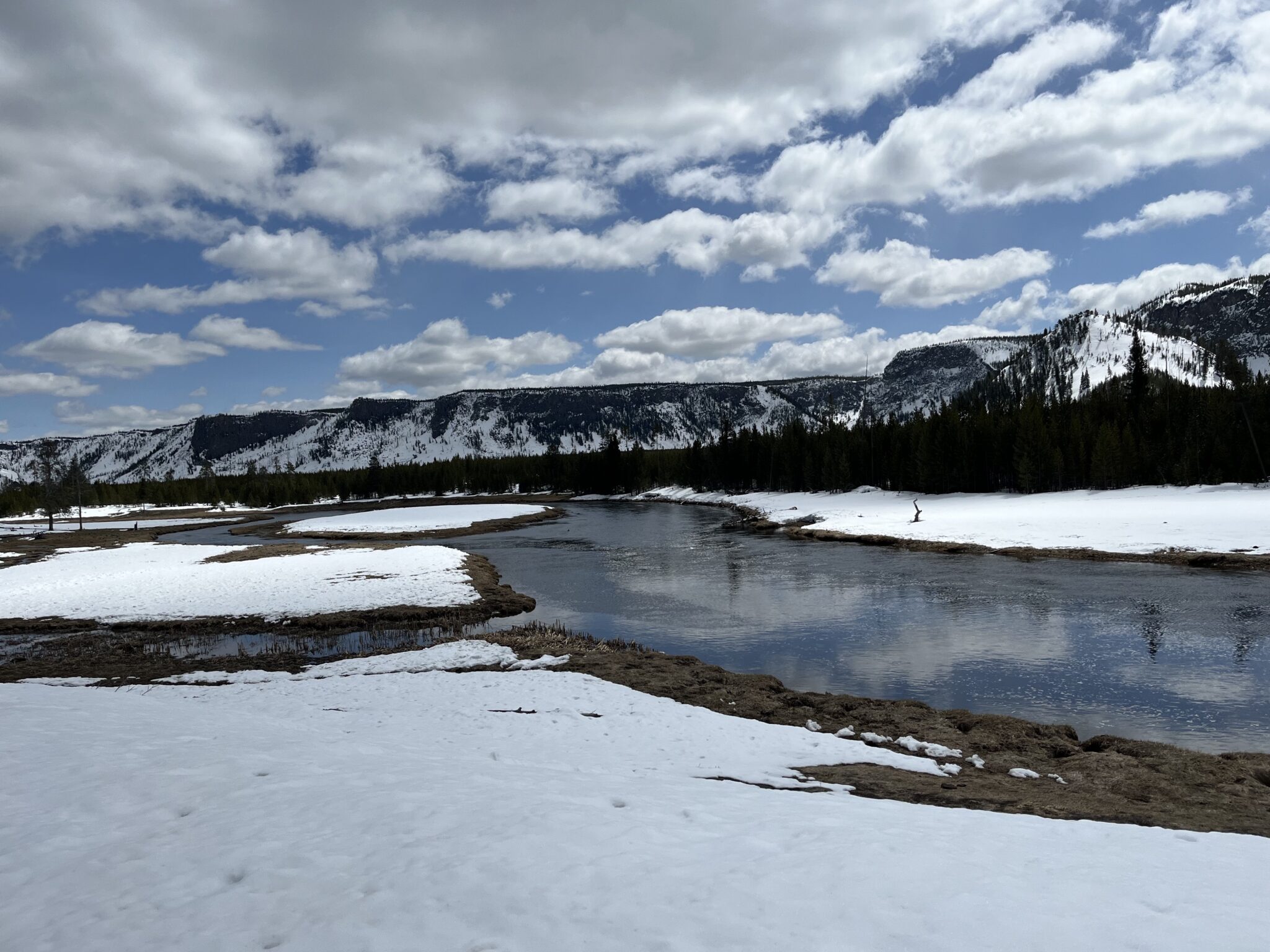
Snow covers the ground near the Madison River as it flows through Yellowstone National Park. (Clark Corbin/Idaho Capital Sun)

For two sunny days last weekend, we fell into a pattern, alternating between riding and stopping for rests, checking on Heath and Miriam’s daughter and watching for wildlife. We dressed in layers like we were skiing and we kept a mellow enough pace to maintain a conversation as we pedaled. I carried bear spray and rode a mountain bike. Miriam and Heath rode road bikes, with Heath pulling his bundled up daughter in a toddler trailer. (Remarkably, she slept most of the way and cooed softly to her stuffed animals and blankets at other points.)
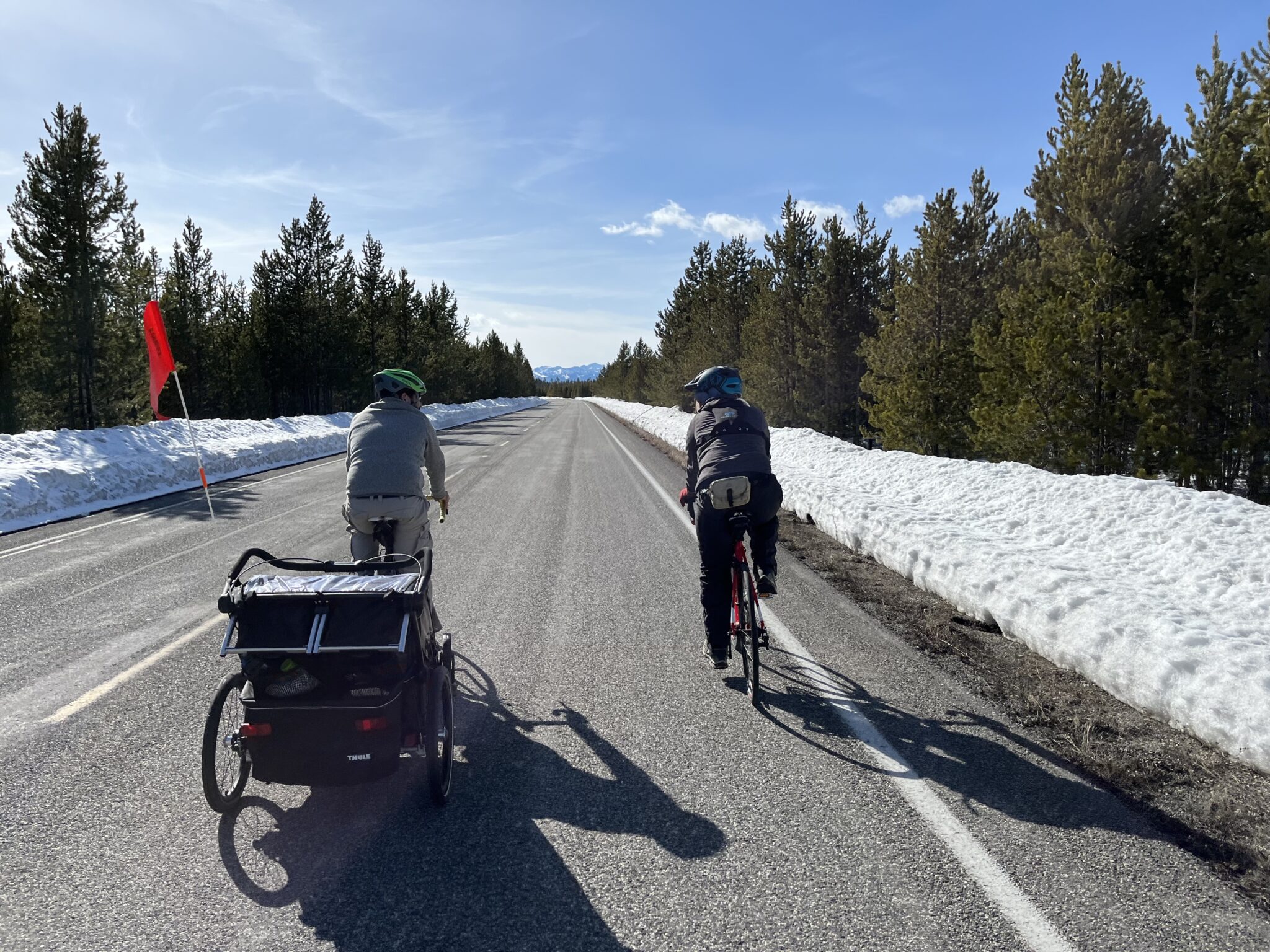
Heath and Miriam Druzin ride their bicycles into Yellowstone National Park in April 2023 shortly before the main roads open to cars. (Clark Corbin/Idaho Capital Sun)

Watching for wildlife, seeing the national park in a new way 

Rather than zooming through the park at 45 mph in a car during the tourist season, our pace allowed us to take in the park at a slower speed. 

We focused on watching for wildlife we might have otherwise missed. 

A fox leapt high into the air and pounced downward into the snowpack, hunting for its next meal. 

A bison waded slowly across the Madison River.
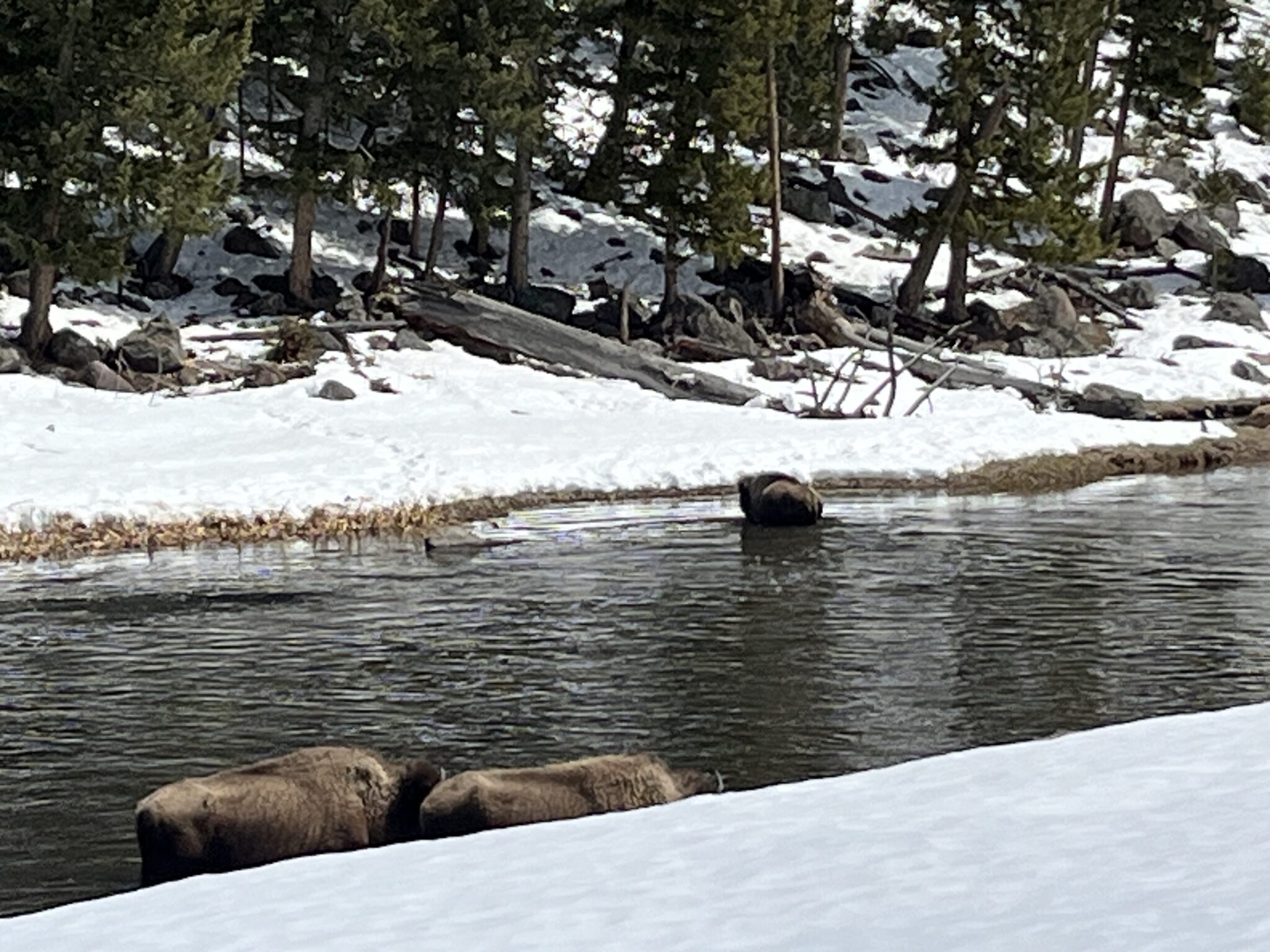
A bison crosses the Madison River in Yellowstone National Park in April 2023. (Clark Corbin/Idaho Capital Sun)

A bald eagle soared along the river’s edge, its long, broad wings stretched out flat in flight.

Beavers, an otter, loons and geese all came out on the river.

After reaching Madison Junction, we turned north and pedaled uphill.

A short distance later we stopped in the small parking area for a geothermal feature called Penny Pond and ate a picnic lunch. We stretched out on the pavement in the sun as steam rose off the nearby hot pool. 

After a long lunch, the wind picked up and we headed back toward the West Entrance, retracing the same roads as before.

The trip covered just over 32 miles, out and back, reaching an elevation of about 6,900 feet.
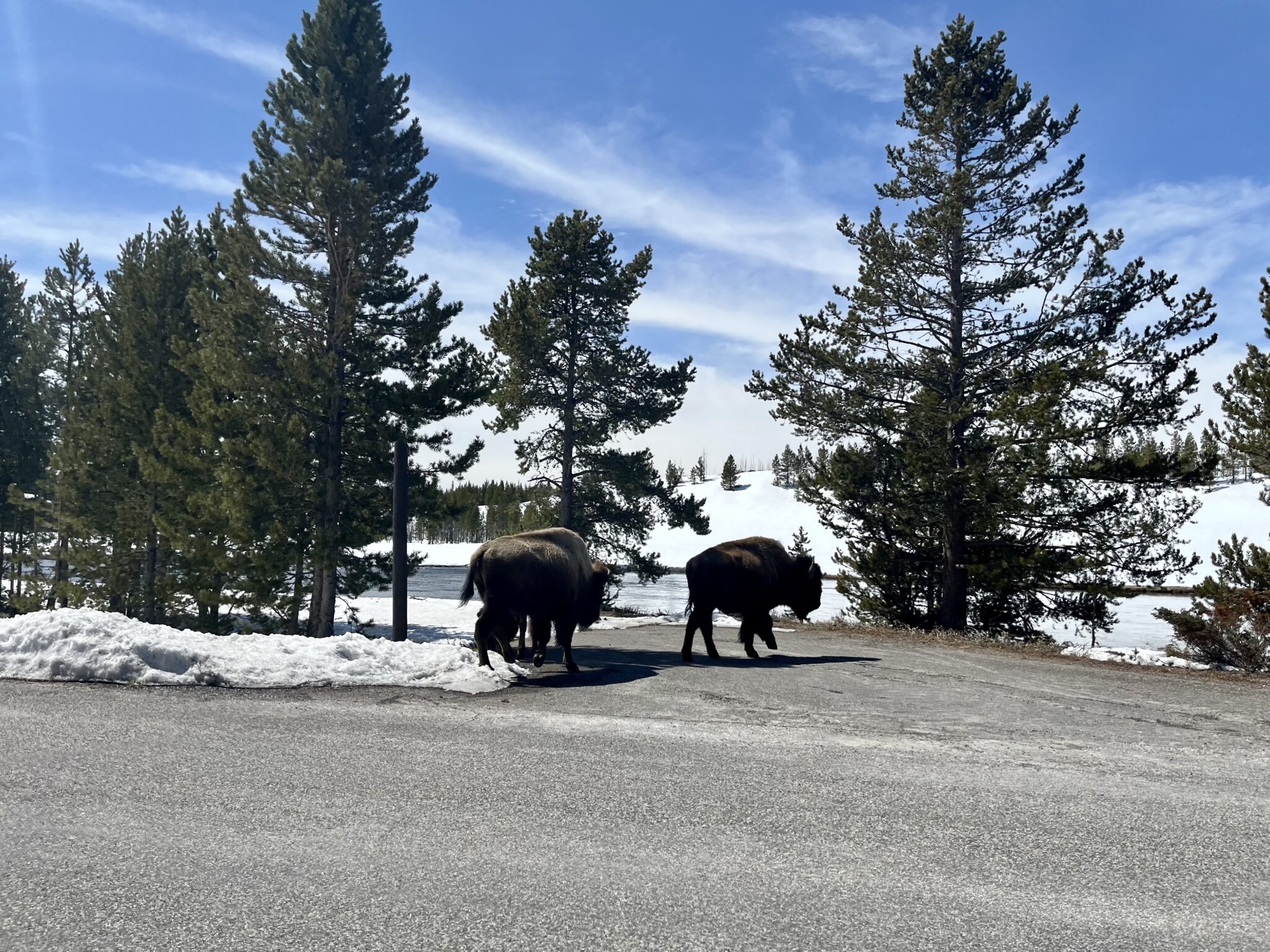
A group of bison cross the road in Yellowstone National Park near the Madison River in April 2023. (Clark Corbin/Idaho Capital Sun)

It was so incredible that we returned the next day and covered 22 miles, turning around a little before Madison Junction. 

We saw about 50 other cyclists on Saturday and more than 100 on Sunday. Adults of all ages, children and several toddlers riding in trailers all crossed our paths on the ride.

One of the last people I saw before leaving the park was a man wearing a cowboy hat and a smile that stretched ear-to-ear. A small black and white dog was riding with him inside of a milk crate attached to his bicycle. 

Tips for riding a bicycle in Yellowstone during the unpredictable spring weather months  

We lucked out with nice weather during our rides — sunny skies and temperatures in the mid 40s on Saturday and low 50s on Sunday. 

But when Yellowstone National Park officials announced they were opening some of the main roads to bicyclists, they warned people to be prepared for bad weather, snow, ice and remote conditions.

“No services will be available, except limited restrooms,” park officials wrote in an April 5 press release. “Plan for self-rescue or repair. Cell phone coverage throughout the park is sparse and unreliable for communicating emergencies. Prepare to spend an extended period in winter conditions in the event of a mechanical breakdown, injury or other emergency.”

Rapid temperature changes and sudden snow storms are possible on any day of the year in Yellowstone National Park.

Yellowstone officials asked bicyclists to carry bear spray and be prepared to keep plenty of distance from large animals that could be stressed out from a long winter using the roads to avoid traveling in deep snow. Yellowstone officials warn visitors to stay 100 yards away from bears and wolves and 25 yards away from all other wildlife. 
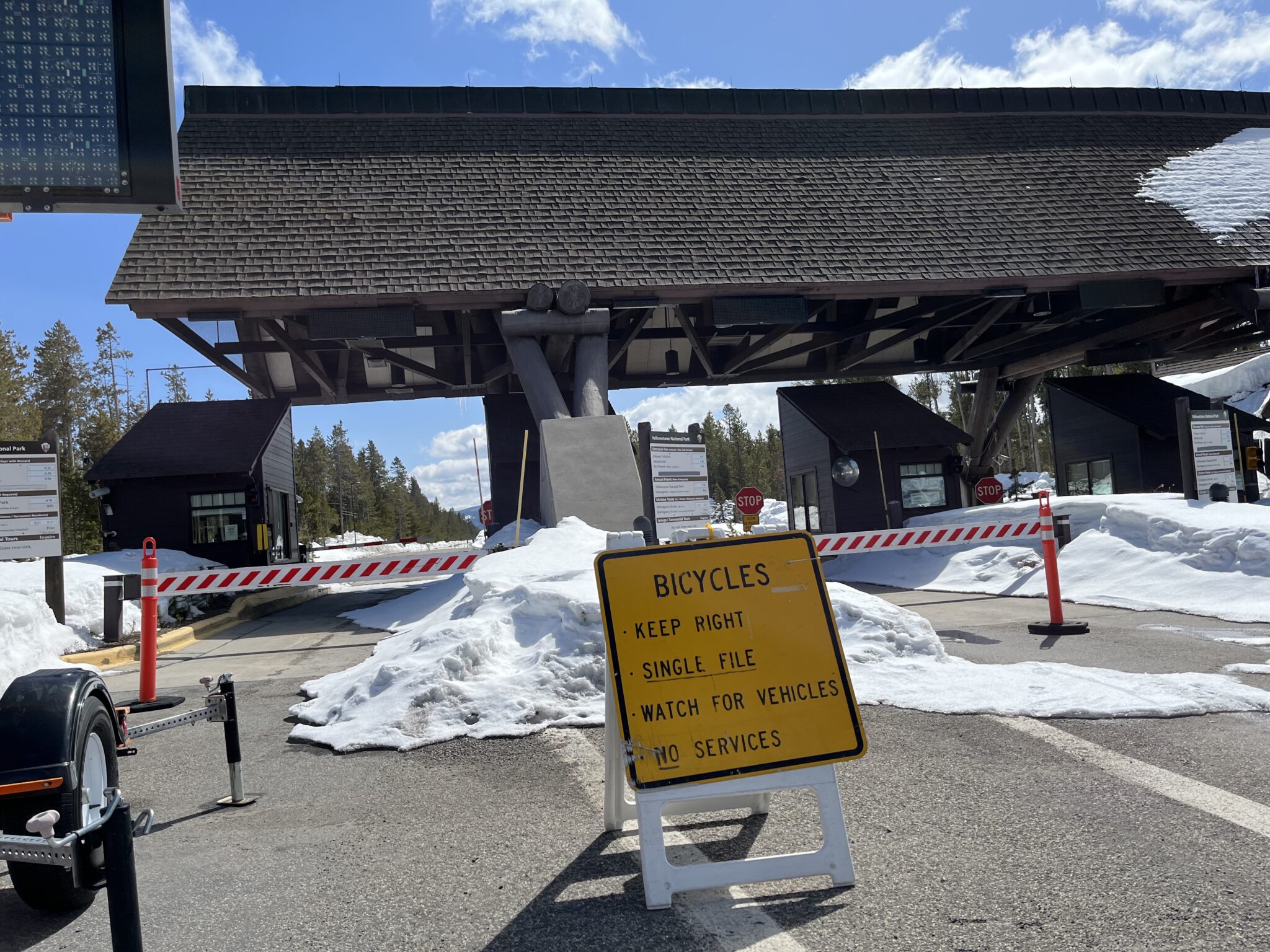
For a short time each spring, Yellowstone National Park opens some of the main roads to cyclists before cars are allowed in. (Clark Corbin/Idaho Capital Sun)

There was no entrance fee at Yellowstone’s West Entrance, and we didn’t need a permit or reservation or to check in with park officials. Many cyclists parked their cars in downtown West Yellowstone, Montana, or just outside of the park’s entrance and rode their bicycles in from there. Bicycles are also available to rent at Freeheel and Wheel in West Yellowstone, but advance reservations are recommended. 

Bicycling is only allowed during daylight hours, and bicycling is prohibited on backcountry trails, boardwalks and oversnow routes.

Additional tips and bicycling guidelines are available on Yellowstone’s website. 

Some experienced Yellowstone cyclists plan to stay in West Yellowstone, Montana, just outside the park’s West Entrance, for a few days in an attempt to avoid bad weather.

“I would say have two days just in case. If you drove all the way from Boise and it was storming one day, it would be a bummer,” said Susan Damm from Boise, who has ridden her bicycle in Yellowstone with friends for 11 years. “Plan for two days and hope that one is nice.”

Damm rode with a group of 17 friends this year. She said she rode under beautiful clear skies and thinks the snowpack is as epic and deep as she has ever seen it this year. 

“We enjoyed being together because we had some new riders in our group, which is always fun because they are enjoying it for the first time,” Damm said. 

Damm recommends riding in a group with friends for safety. Over the years she has been glad to have others there to lend a helping hand, particularly one year when she crashed her bicycle and damaged it five miles into a ride. 

But with preparation, a supportive group and halfway decent weather, Damm said the rewards are worth the effort. 

One year, her group ran into a herd of at least 50 bison and had to wait for the animals to cross the road so the cyclists could ride passed, single-file.

Damm looks forward to the spring bike rides because it’s such a different way to see the park and avoid crowds.

“We’ve been there all four seasons, and it’s just that you’re not fighting the crowds,” Damm said. “There is hardly anybody there and you can ride a bike on the road because it is actually safe at that time. There is just that safety to be able to ride and experience the park from two wheels versus four wheels.” 

Idaho Falls man forges lifelong friendships over mellower cycling trip through Grand Teton National Park  

The undisputed king of riding a bicycle through national parks before the cars arrive is a man named Matt Stanger who lives in Idaho Falls.

Stanger started riding through Yellowstone in the mid-1990s while he was working at the former Alpine Schwinn bicycle shop. 

Young and fit, Stanger and his buddies were always riding bicycles when they weren’t working on them. 

For four years, Stanger took long April bike rides into Yellowstone — 30-some miles in, plus 30-some miles out.

Seeing Yellowstone without cars blew him away, but he knew his ‘friend-friends’ who weren’t avid cyclists would never go for such a long ride.

The next year, Stanger mixed it up. He and his wife, Amy, rode bicycles into Grand Teton National Park right before it opened to cars and picked a mellow, four-mile stretch of the Teton Park Road between the Taggart Lake Trailhead and the Jenny Lake boat dock.
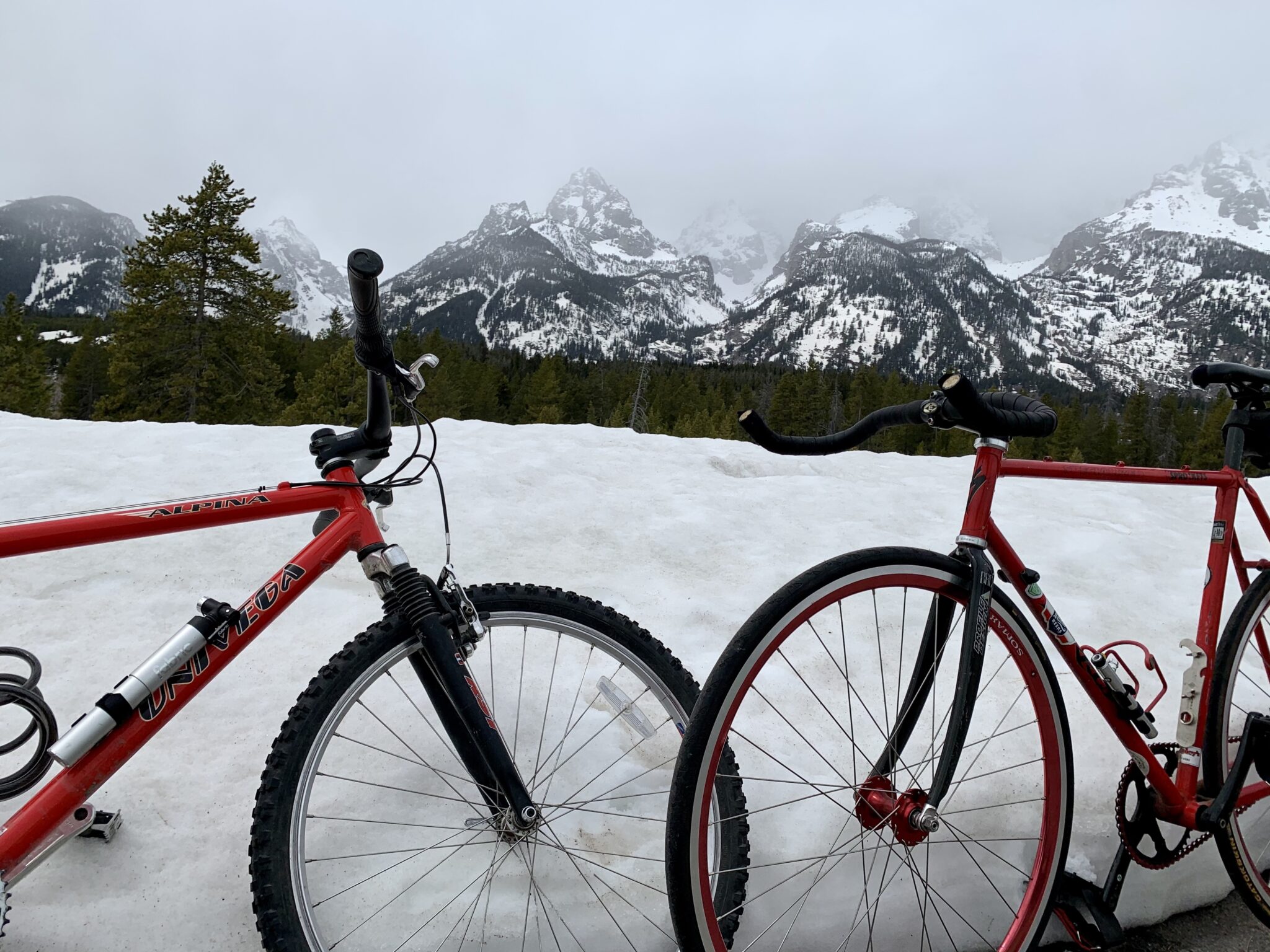
Grand Teton National Park also allows bicyclists to use the main road before it opens to cars on May 1. (Clark Corbin/Idaho Capital Sun)

“Amy and I went into Grand Teton National Park and it was incredibly cool, and from there I knew I could get people who weren’t, you know, bike fanatics to come enjoy something so wonderful,” Stanger said.

The next year, he invited five friends. 

The next year after that, attendance doubled. 
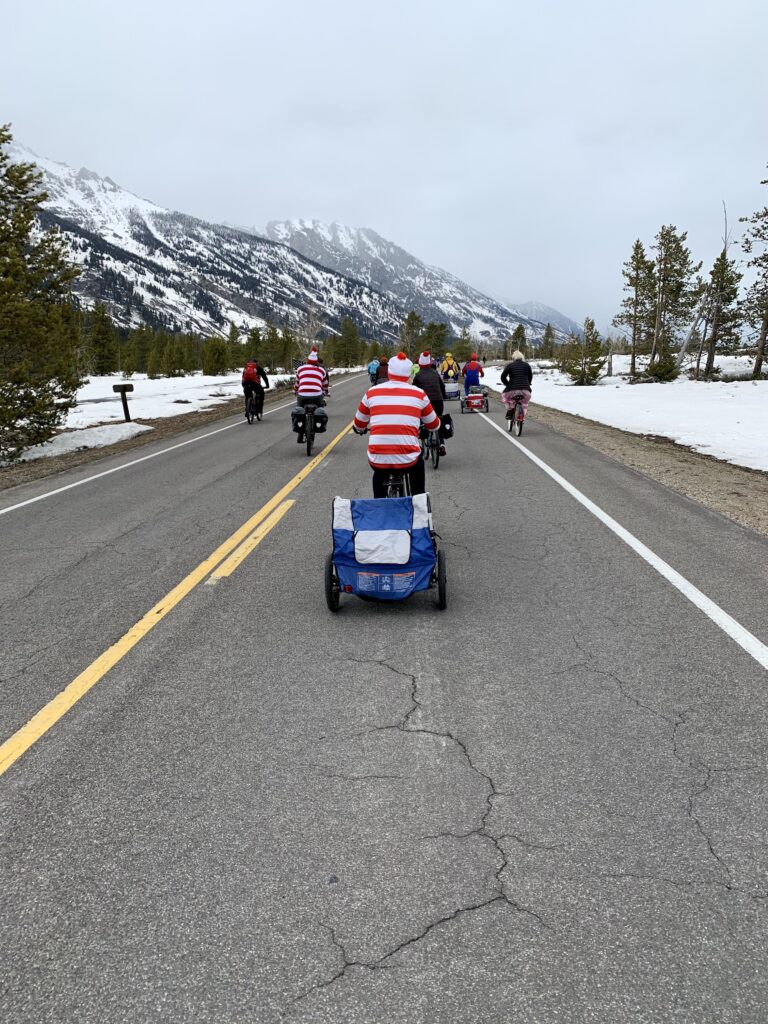
Costumes and a celebratory vibe are are a common sight during spring bike rides through Grand Teton National Park. (Clark Corbin/Idaho Capital Sun)

The ride turned into a celebration, with people drinking beer and sometimes donning “Where’s Waldo?” costumes or neon tutus.

It became a loose, unorganized tradition of friends who took to calling it the No Motor so they could have a name for the Facebook page they started to share photos from their rides.

Later this month, Stanger is preparing to ride into Grand Teton National Park for the 23rd year with friends.

“We’ve had cold and wind and snow that’s blowing as hard as you can ever imagine,” Stanger said. “Fog you can’t see through. One year there was lighting.” 

Despite the elements, Stanger said the vibe has always been celebratory. He estimates he has made more than 100 friends and facilitated dozens of other friendships among strangers during almost 25 years of riding bicycles into Grand Teton National Park. 

“The way I like to frame it is really around gratitude,” Stanger said. “It’s gratitude for spring, it’s gratitude for the national park system, it’s gratitude especially for Grand Teton National Park and those gorgeous mountains we have right outside of our doorstep.” 

“What the real appeal is and the reason it works so well is that that amount of gratitude for all of those things makes people wonderful,” Stanger said. 

Details:

April 1-30 — Yellowstone Cycle Days, TENTATIVE AND APPROXIMATE DATES – Check the Yellowstone Park Website in March, Yellowstone National Park, MT, Ride free in Yellowstone National Park before the roads open to the public. This is a unique way to enjoy the beauty of the park. Opening day depends on whether the road is plowed. Check for park service website to see if the roads are open., nps.gov/yell/planyourvisit/bicycling.htm

Note: ‘Hardly anybody there’: How to bicycle through Yellowstone National Park without cars by Clark Corbin, originally published in the Idaho Capital Sun, April 21, 2023
2024 Criterium National Series Dates and Locations Announced

The series offers 35 days of criterium-style racing across eight events.

COLORADO SPRINGS, Colorado (March 19, 2024) – USA Cycling today announced the 2024 Criterium National Series. In partnership with the American Criterium Cup (ACC), the series boasts 35 days of criterium-style racing along eight stops across the United States.

The 2024 edition will offer riders the opportunity to qualify for the 2025 USA Cycling Professional Road National Championships. The top ten Elite Men and Elite Women in the overall standings will automatically qualify for the Criterium at Pro Road Nationals.

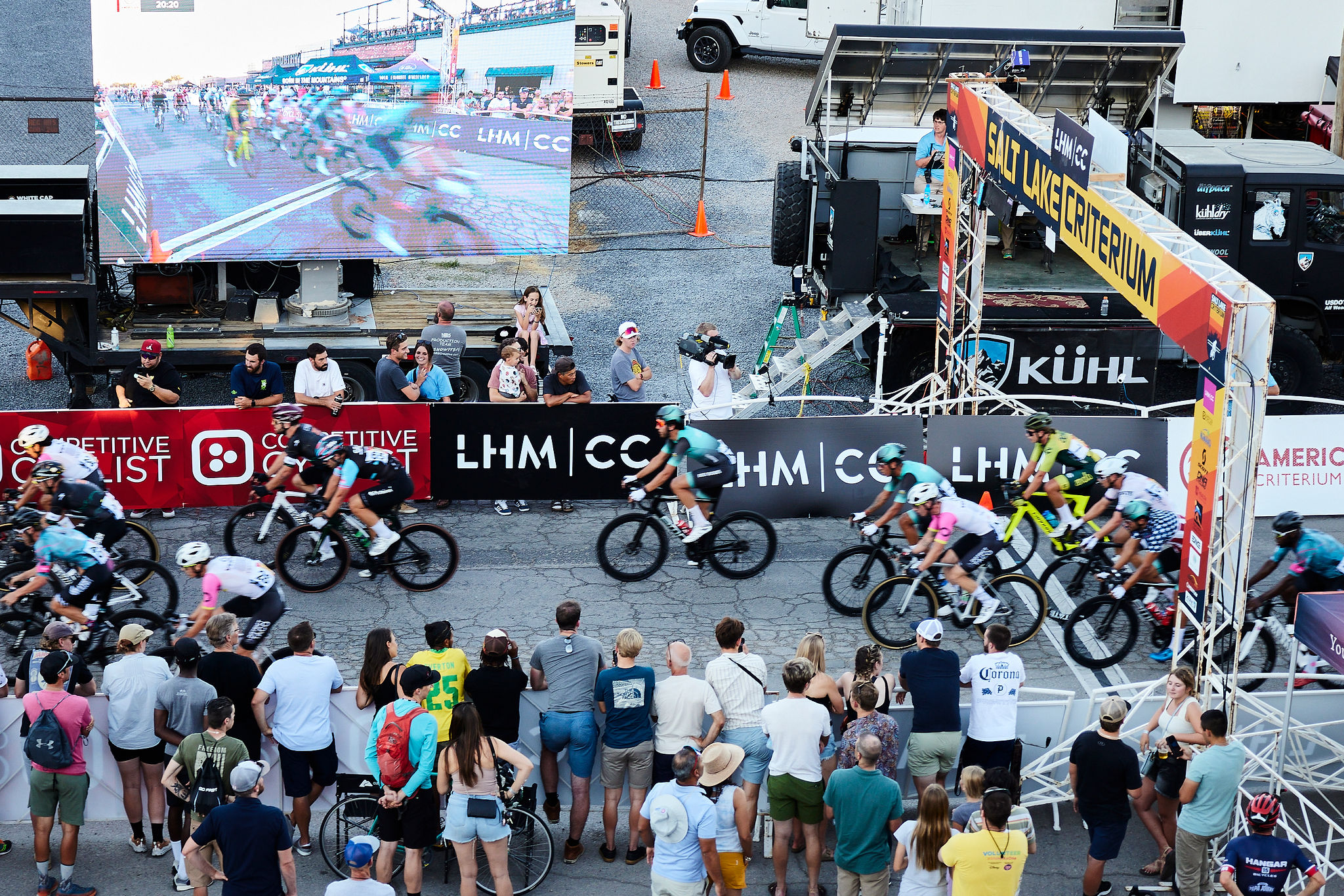
The professional men race through the start finish line of the LHM|CC Salt Lake Criterium at the INDUSTRY SLC course. Photo Courtesy Salt Lake Criterium 

“We are excited to be working with the American Criterium Cup for the launch of the USA Cycling Criterium National Series. The ACC has elevated the criterium scene in the United States. Each of the 35 races in the series will offer technical and challenging courses for racers to demonstrate their crit prowess.” said Kyle Knott, USA Cycling’s Director of National Events.

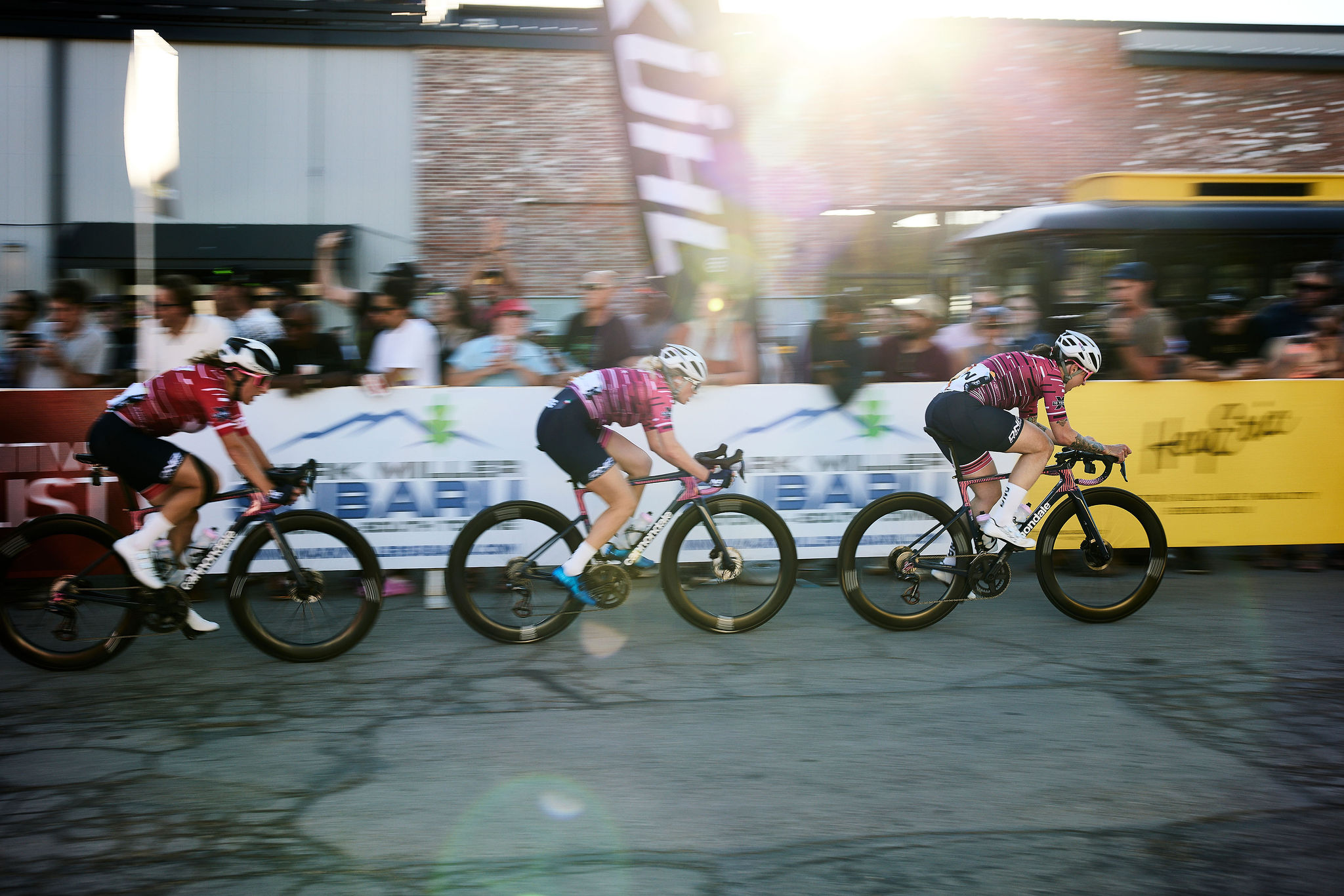
DNA Pro Cycling, a local Utah team leads out team leader Maggie Coles-Lyster while racing the LHM|CC Salt Lake Criterium at the INDUSTRY SLC course. Photo Courtesy Salt Lake Criterium

Many of the stops in the series will feature Elite, Junior, and Amateur level racing, offering the opportunity for riders of all ages and skill levels a chance to compete. After each event, individual rankings will be updated for the Elite Men and the Elite Women, and series standings will be added to the USA Cycling website.

The 2024 Criterium National Series is as follows:

Date
Event
Location
06/07 – 06/09
Saint Francis Tulsa Tough
Tulsa, Oklahoma
06/13 – 06/23
Kwik Trip Tour of America’s Dairyland
Wisconsin
06/29
Bailey & Glasser LLP Twilight Criterium
Boise, Idaho
07/06 – 07/07
LHM|CC Salt Lake Criterium
Salt Lake City, Utah
07/12 – 07/13
IU Health Momentum Indy
Indianapolis, Indiana
07/19 – 07/27
Intelligentsia Cup
Chicago, Illinois
08/03 – 08/04
Audi Denver Little Criterium
Littleton, Colorado
08/30 – 09/02
Bommarito Audi West County Gateway Cup
St. Louis, Missouri

Details including event locations, registration information, and additional event specifics are available on the USA Cycling website at https://usacycling.org/national-series/criterium-national-series.

Edwards, Rips Take Top Honors at 41st Annual LoToJa Classic

Popular race from Logan to Jackson Hole keeps attracting cyclists from across the U.S. and foreign countries

By David Bern — First it was Belgium. Now it’s Germany.

For the third consecutive year, a Pro 123 cyclist who cut their road racing teeth in Europe stood atop the winner’s podium in the 41st annual LoToJa Classic.

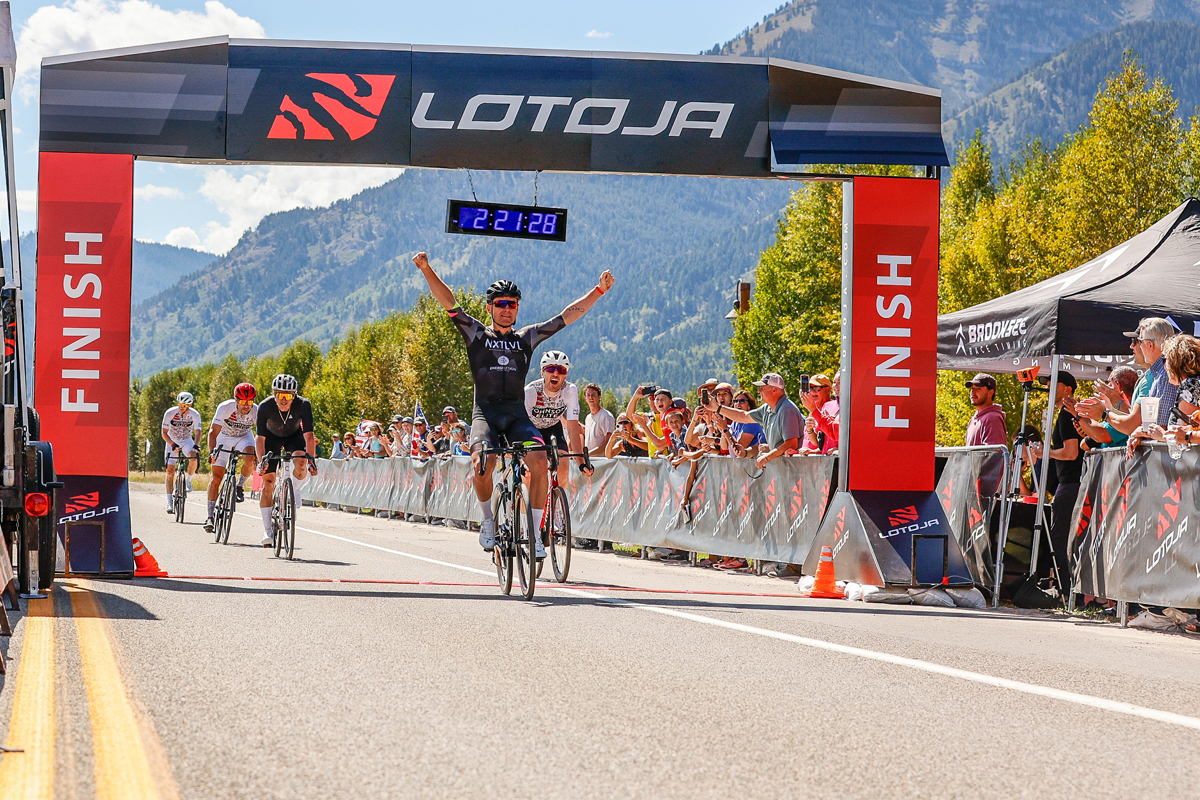
Cat. 1 Adrian Rips, 29, (Team Next Level Racing) of Kaltenkirchen, Germany, won the Men Pro 123’s in a hot sprint to the line against five breakaway companions on Sept. 9, 2023.

His winning time in the 203-mile (333 kilometer) race from Logan, Utah, to Jackson Hole Mountain Resort was 8:51:30.

“It was pure happiness to win!” Rips said. “My wife and support crew were there at the finish. … It was nice to win and give back to my support crew. It worked out. Gave it reason.”

The other Pro 123 cyclist who raced in Europe before coming to the U.S. was Cat. 1 Eileen Pannecoucke. Born and raised in Belgium, she won LoToJa’s Women Pro 123’s in 2021 and 2022.

For 2023 it was Cat. 1 Heather Albert, 55, (Team Hangar 15), of Eagle, Idaho, who won the Women Pro 123’s. Albert, a past medalist in the United States National Track Championships and the United States Road Race Championships, finished in 10:19:58.
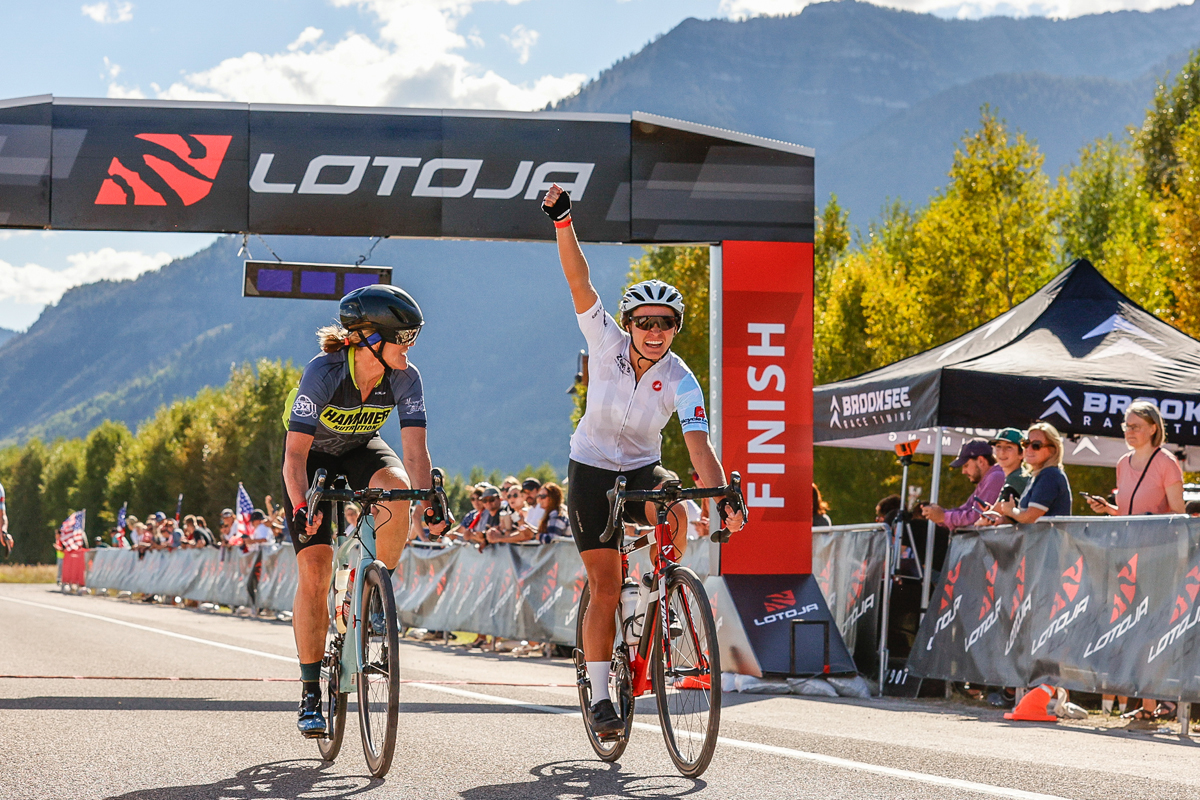
Winner: Elizabeth Edwards (Team Zone 5) exults after defeating Jennifer Halladay (Team Hammer Nutrition) in a photo finish sprint to become the first woman finisher in the 41st annual LoToJa Classic on Sept. 9, 2023. She set a time of 9:57:07 and won the Women’s 4/5 category in the 203-mile road race from Sunrise Cyclery in Logan, Utah, to Jackson Hole Mountain Resort. Halladay won the Women’s Master 45+ category — her sixth LoToJa title. Photo courtesy of Snake River Photo

However, she wasn’t the first woman to cross the finish at the ski resort. That honor went to Cat. 4/5 Elizabeth Edwards, 32, (Team Zone Five Racing) of Hyde Park, Utah.

Edwards finished in 9:57:07 — nearly 20 minutes faster than Albert — with an average speed of 20.3 mph.

“I went into it to make the most of the day,” Edwards said about her victory. “To enjoy it. The gifts. And the opportunity to ride together with other great riders.”

Taking a close second place with the same time as Edwards was five-time LoToJa winner Jennifer Halladay, 52, (Team Hammer Nutrition) of Kona, Idaho. The Cat. 1, Master Woman 45+ rider returned to the race after a 10-year hiatus.

She was the first Master Woman 45+ racer to finish, which gave her first place in that category and a sixth LoToJa title.

Because of lower field numbers, all Cycling USA licensed women start and race together in LoToJa regardless of category and age. But respective category wins are maintained despite mixed-category finishes.

Rips rode for Team AKT-Brandenburg, a Pro Continental development road team based in Munich, Germany, until 2020. As a teen cyclist, he wanted to race LoToJa in 2011 when he was a 16-year-old high school foreign-exchange student in Clearfield, Utah.

However, when Rips called his parents in Germany for permission, they said “no.”

“I think they were worried that I’d hurt myself racing such a long distance as a junior,” he said.

Thirteen years later, no more worries. Rips got to race LoToJa’s formidable distance and 10,000 feet (3,048 meters) of climbs that include three mountain passes.

Although he had never ridden or raced so many miles before, he said LoToJa didn’t intimidate him. He had researched both the course and past winners while home in Germany.

But Rips said that he did feel uneasy after a three-man break got 10 minutes up the road soon after the Men Pro 123’s and Master Men 35+ departed in the dark from Logan’s Sunrise Cyclery at 5:30 a.m. The peloton contained about 30 riders.

That break consisted of 2018 LoToJa winner and current course record holder Cat. 1 Spencer Johnson (Team Johnson Elite Orthodontics), 45, of Riverton, Utah; Cat. 2 Matthew Doyle (Unattached), 26, of Jackson, Wyoming; and Cat. 3 Charlie Hagen (Team Fitzgerald’s Bicycles), 37, of Wilson, Wyoming.

Also, because of lower field numbers and similar experience and ability, the Men Pro 123’s and Veteran Men 35+ are allowed to start and race together in LoToJa. The same applies to Master Men 60+, 65+ and 70+ categories.

“I started to get a little nervous,” Rips said about the break, “because I didn’t have any teammates.”

But he didn’t need teammates in the break or to help reel it in. The peloton chased hard past Preston, Idaho, (29 mi/47 km) and up 22-mile-long Strawberry/Emigration Canyon to its 7,424-foot-high summit (57mi/92km).

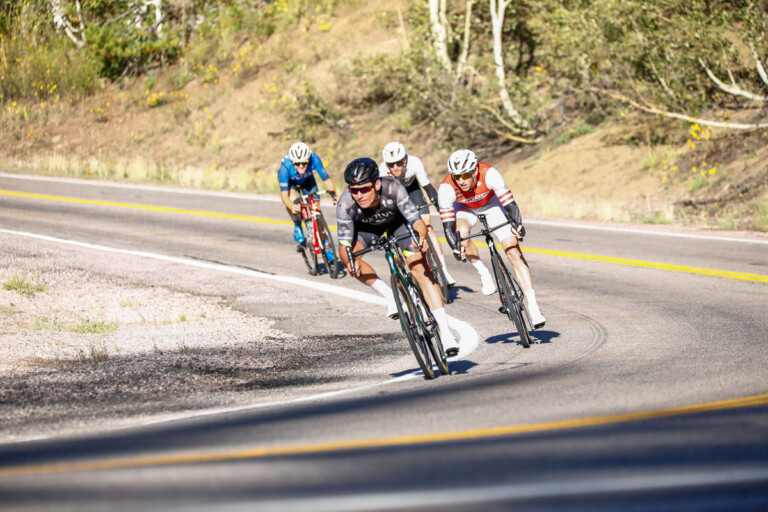
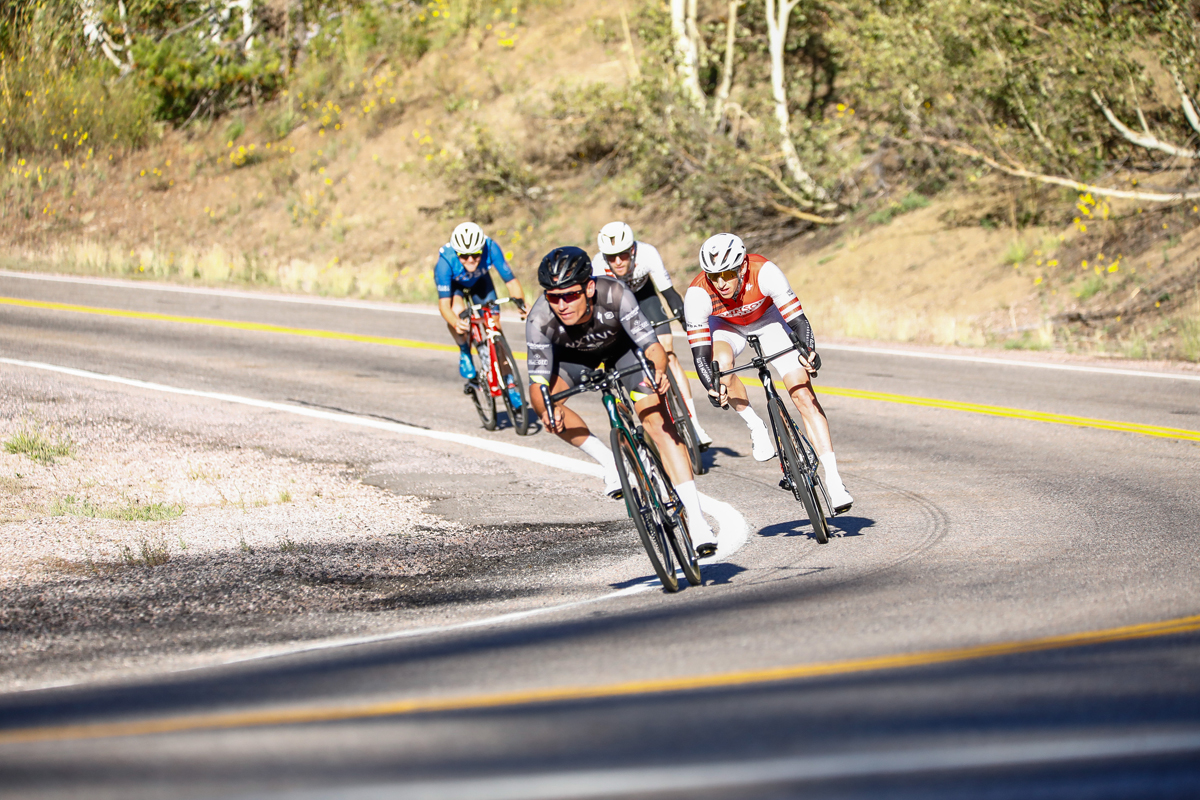
Fast descent: Adrian Rips (Team Next Level Racing) leads the break down from Strawberry/Emigration Canyon summit in the 41st annual LoToJa Classic on Sept. 9, 2023. Rips went on to win the Men Pro 123’s in the 203-mile road race from Sunrise Cyclery in Logan, Utah, to Jackson Hole Mountain Resort. Photo courtesy of Snake River Photo

The chase flew down into Bear Lake Valley, continued past Montpelier, Idaho, (76 mi/122 km) and over 6,923-foot-high Geneva Summit (84 mi/135 km). Along the way, several riders got dropped.

Even more fell behind on LoToJa’s third and final climb, 7,630-foot-high Salt River Pass (106 mi/171 km). It is four miles long and has a section of nine-percent gradient before the summit.

And that is where the day’s winning break originally formed when 2019 LoToJa winner Cat. 1 Roger Arnell (Team Johnson Elite Orthodontics), 38, of Farmington, Utah, and his teammate Cat. 3 Danny Van Wagoner, 31, of Fruit Heights, Utah, went to the front and hammered the pace. They hoped to catch Doyle, Hagen, and teammate Johnson, who had been off the front for more than 100 miles.

Rips, aware of Arnell’s climbing prowess, followed as did Cat. 2 Tanner Robison, 30, (Unattached) of Ithaca, New York.

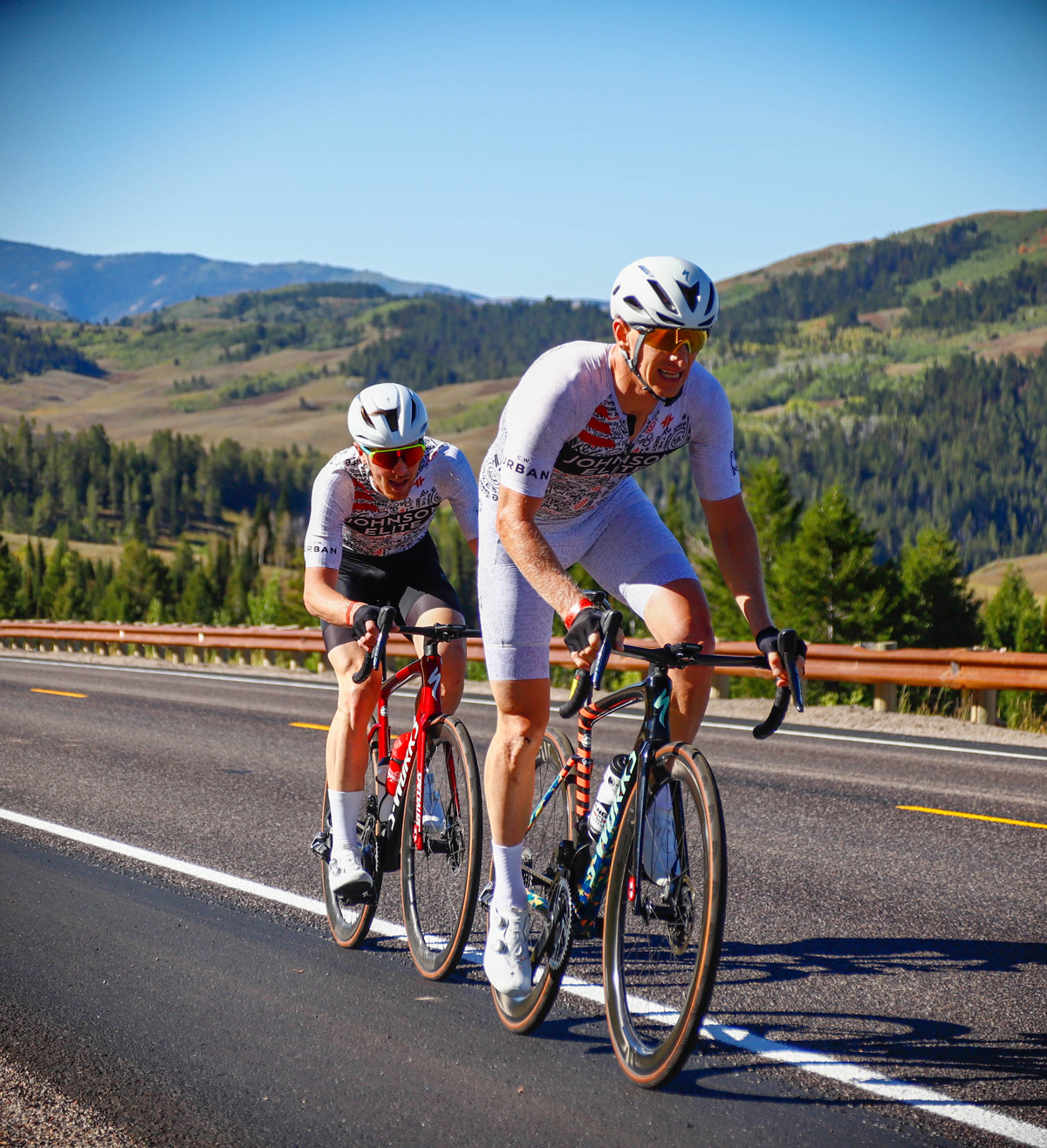
Hard climb: Roger Arnell (right) and Danny Van Wagoner, both of Team Johnson Orthodontics, lead the climb up Salt River Pass in the 41st annual LoToJa Classic on Sept. 9, 2023. Arnell won the King of the Mountain prize at the summit. Van Wagoner and Arnell finished second and fifth, respectively, in the Pro Men 123’s in the 203-mile road race from Sunrise Cyclery in Logan, Utah, to Jackson Hole Mountain Resort. Arnell won the Pro Men 123’s in 2019. Photo courtesy of Snake River Photo

Arnell won the King of the Mountain prize atop Salt River Pass with a time of 13:22 and an average speed of 15.7 mph. He was followed a second later by Van Wagoner, then Robison at 13:50 and Rips at 13:56.

Arnell and Van Wagoner descended together from the summit into Star Valley. They soon caught teammate Johnson and Doyle, who had forged on after Hagen lost contact.

About 10 minutes later, Rips and Robison bridged up to Arnell, Van Wagoner, Johnson, and Doyle to form a new six-man break. It was the move that blew the race apart.

Through Star Valley the six men worked cooperatively to stay away from chase groups. Rips said the cooperation continued past Alpine (156 mi/251 km) and for a few miles inside Snake River Canyon. But the esprit de corps didn’t last.

“I’d attack, get a little gap, and they’d bridge up to me,” he said. “Tanner [Robison] also attacked.” Rips said this occurred several times. Although there were three Johnson Elite Orthodontics teammates in the break, he said none of them attacked after catching him or Robison.

The break stayed together through Hoback Junction (178mi/286km), onto South Loop Road and over the Snake River Bike Path Bridge at Wilson. While rolling through Hoback, “Spencer [Johnson) turned to me and said, ‘Do you like to sprint?’” Rips said.

Johnson and the rest of the break soon got an answer.

The six racers began to eye one another after merging onto Moose-Wilson Road with seven miles to go. Although their pace slowed, a gap of several minutes remained between them and chasers.

With the finish line gantry in sight, Rips knew it was going to be a drag race to the line. The stalemate ended fiercely at 250 meters.

“The wind was coming from the northwest, so I stayed on the right side of the road,” Rips said. “Danny [Van Wagoner] opened the sprint and I stayed on his wheel. In the end, I could pass him.”

Winner: Adrian Rips (Team Next Level Racing) is jubilant after beating five breakaway companions in a finish line sprint to win the Men Pro 123’s in the 41st annual LoToJa Classic on Sept. 9, 2023. He set a time of 8:51:30 in the 203-mile road race from Sunrise Cyclery in Logan, Utah, to Jackson Hole Mountain Resort. Photo courtesy of Snake River Photo

Van Wagoner took second with the same time as Rips, followed a second later by Doyle for third at 8:51:31. Johnson took fourth with the same time as Doyle, followed by Arnell in fifth at 8:51:32. Robison took sixth at 8:51:37.

Rips’s average speed for the day was nearly 23 mph.

 Rips’s love of cycling and racing began when he was a boy, and was influenced by his father, who was a cyclist. The Tour de France also inspired him — as did the freedom a bike provides.

“What’s great about cycling is that you can do it alone or with people,” he said. “It’s up to you.”

Rips said cycling has mostly become a “hobby” for him since he left Team AKT-Brandenburg in 2020. The team he now rides for — Next Level Racing — is an amateur team based in Munich. He now races endurance mountain bike events in Germany that feature more than 4,000 meters (13,124 feet) of climbing.

But he said jumping on a road bike again to race LoToJa “was like coming home.” The experience has him thinking of defending his title in 2024.

“I want to come back,” he said. “I loved it.”

Although the Men Pro 123’s were the first to depart Logan and cross the finish line, they were not the fastest category that day.

Those laurels went to the Men 3/4 category and winner Seth Steed (Team Ascent Cycling), 40, of Layton, Utah. He finished first in a pack of 10 other Men 3/4’s with a time of 8:42:53 — nearly nine minutes faster than Rips. Steed’s average speed was over 23 mph.

For yet another LoToJa it was proven that the strongest, best-prepared — and patient — cyclists often make it to the podium. It was also proven again that being one of the first over Strawberry/Emigration summit often leads to the winning move of the day.

Such was the case for Edwards, the top woman finisher and Woman Cat. 4/5 winner. She said the field of 50 women stayed intact after its 6:42 a.m. departure.

“It was a weird start, with no breaks in [Cache] Valley and slow going to Preston,” Edwards said.

But at the U.S. Forest Service sign, at which Strawberry Canyon’s initial 13 miles of rollers give way to the summit’s sustained ramps, the climbers made their move.

The first to go was two-time LoToJa Woman 35+ winner Hallie French (Unattached, unlicensed), 38, of Salt Lake City, Utah. Edwards jumped on her wheel, as did Halladay and Edwards’s Zone 5 teammate, Cat. 4 Katie Bonebrake, 32, of Salt Lake City, Utah.

“Half way up Strawberry, it was just the four of us,” Edwards said. “It stayed that way the rest of the day.”

The break didn’t stop at the neutral feed zone on Strawberry and had a 90-second gap at Ovid (69mi/111km). Edwards said the gap increased to three minutes by Montpelier’s feed zone with chasers strung out behind. The four women briefly stopped for fresh bidons and food.

Together they rolled over Geneva Summit, crossed the Idaho/Wyoming state line, then faced LoToJa’s last major climb: Salt River Pass.

Edwards said there was an unspoken agreement that everyone would try for the Queen of the Mountain prize, then wait at the top.

“Jen [Halladay] and I were a few seconds behind Hallie [French] three-quarters of the way up,” Edwards said. “I then decided to go for it and passed Hallie.”

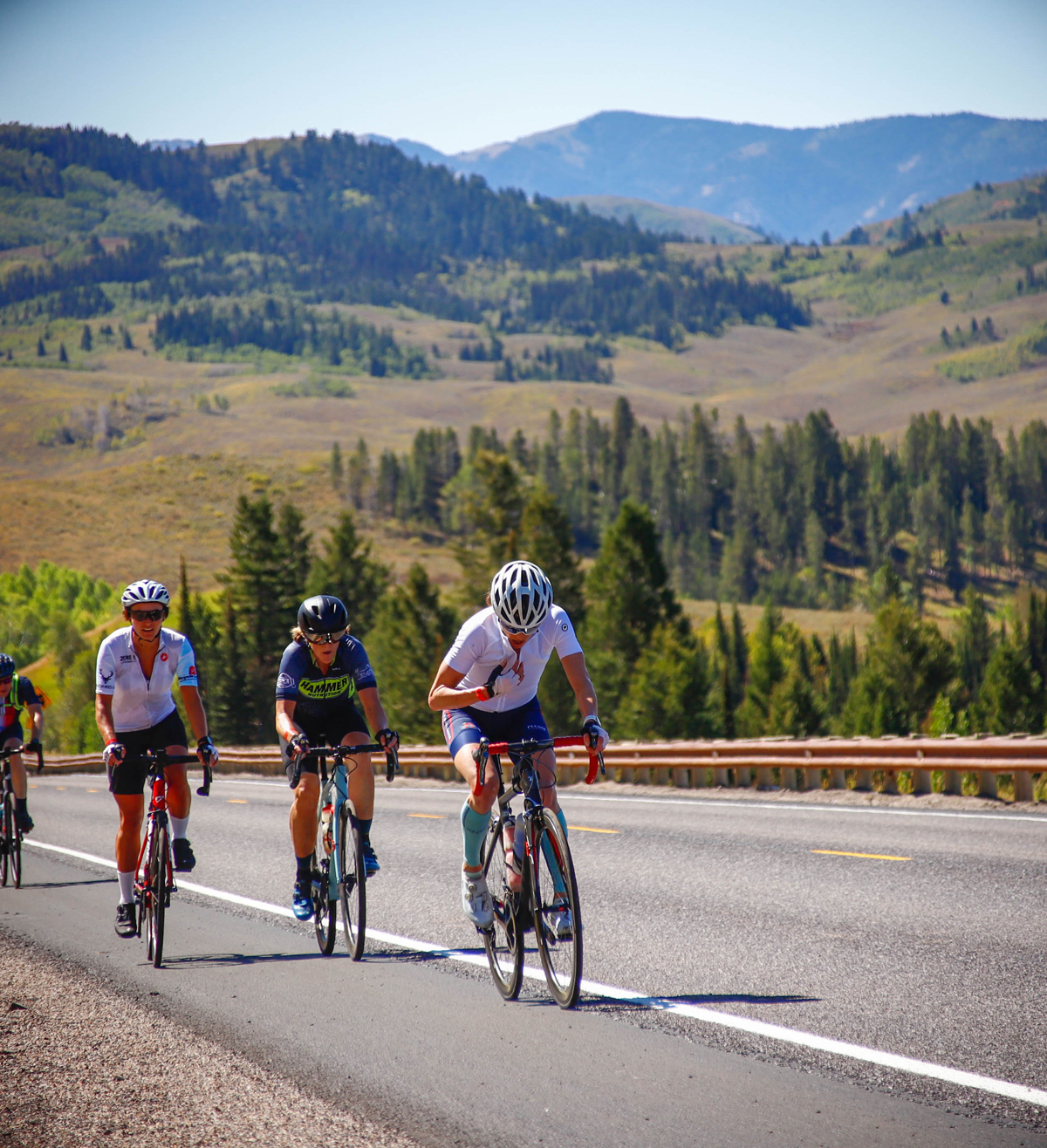
Big climb: Elizabeth Edwards (left) of Team Zone 5 and Jennifer Halladay (center) of Hammer Nutrition, prepare to pass Hallie French (Unattached) as the three climb Salt River Pass in the 41st annual LoToJa Classic on Sept. 9, 2023. Edwards won the Queen of the Mountain prize at the summit. Edwards went on to be the first woman to cross the finish line at Jackson Hole Mountain Resort and win the Women 4/5 category. Halladay won the Women’s Master 45+ category and French won the Women’s Master 35+ category. Photo courtesy of Snake River Photo

Edwards won the QOM with a time of 17:36 and an average speed of 11.3 mph. French was second at 14 seconds back, Halladay third at 19 seconds and Bonebrake fourth at 58 seconds.

The break regrouped at the summit and descended into Star Valley. By Afton, the four women had amassed a 10-minute gap.

Edwards said the big lead was created because of good cooperation. Although it was a race, each would take two-minute pulls to ensure the break’s success.

After a brief stop at the feed zone in Alpine (156mi/251km), the break was confident it wouldn’t get caught and focused on finishing under 10 hours.

Edwards was also feeling confident about her chances of winning overall.

“It was so gorgeous going up Snake River Canyon,” she said. “The warm day. The fall colors. And rafters on the river. … I felt so good there. I didn’t bonk. I felt mentally strong and thought about what I’m grateful for.”

But just before Hoback such thoughts were dashed when French, who was in front of Edwards, suddenly hit the tarmac.

“I was right behind her. I saw the crash,” Edwards said. “I don’t know how I missed [crashing into] her. It was a hard crash, and we didn’t think she was going to get up and continue.”

Nevertheless, Edwards, Halladay and Bonebrake stopped. They watched medics and race officials jump from their vehicles to help French. Seeing that she was receiving aid, they resumed, but slowly.

“We were really worried about Hallie,” Edwards said. “It took our minds out of the game for a while.”

With the finish line less than 30 miles away and the prospect of breaking 10 hours, the three women soon got back to work. Each took long pulls at the front.

Edwards said Bonebrake told her before Moose-Wilson Road that she was tired and wouldn’t contest the sprint. Bonebrake had been sick with a head cold the week before, yet still had the strength and resolve to be in the winning break.

Edwards said that she and Halladay knew by then that they were going to win their respective categories. Chasers were several minutes back. The pressure was off — except for who would be first across the line.

“I’m not a good sprinter, so I just went with it to have fun,” Edwards said. “Jen and I duked it out.”

At 300 meters to go, Edwards was at the front with Halladay on her wheel. The two sprinted and Halladay made a surge to come around Edwards’s right side. The two crossed the line together in a dramatic photo finish with Bonebrake right behind taking third.

“I was pretty sure that I had won,” Edwards said. “It took about 10 to 15 minutes before I was told that I did.”

Still, it wasn’t until she stood atop the podium that “the internal feeling of winning” arrived.

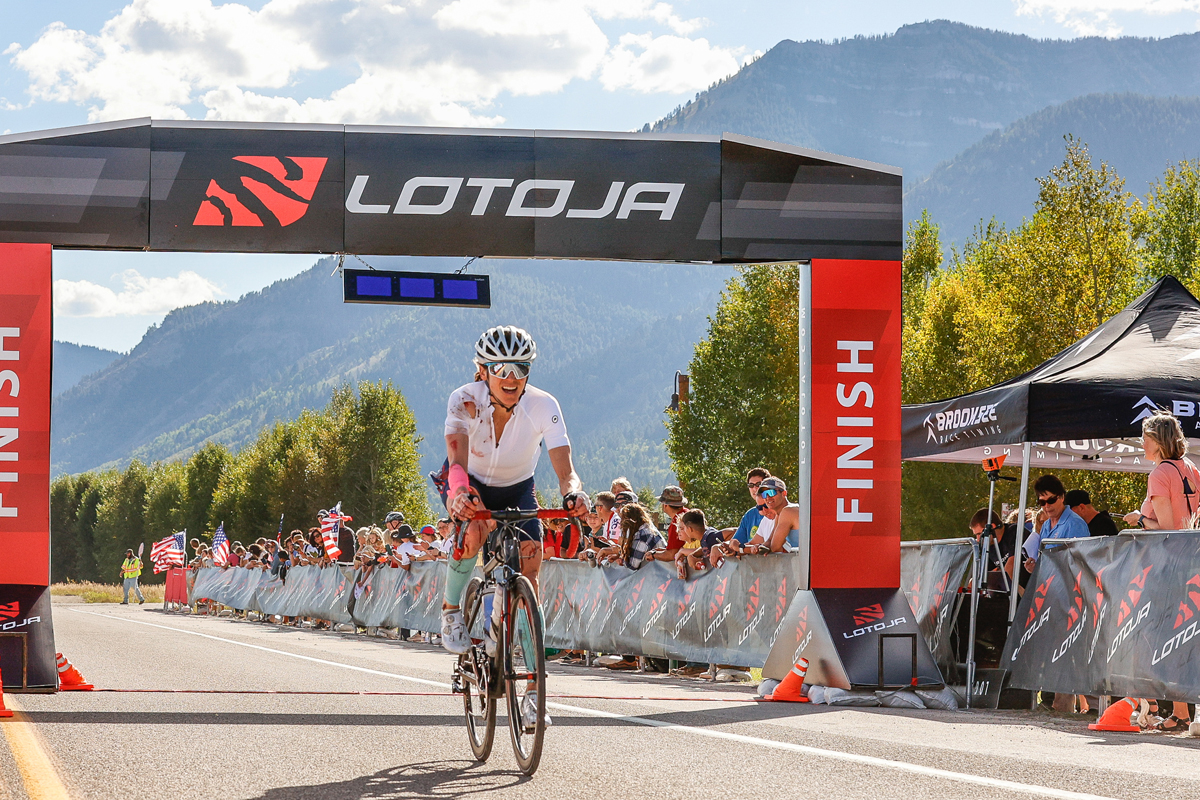
Winner: Bloodied and determined Hallie French (Unattached) crosses the finish line to win the Women’s Master 35+ category in the 41st annual LoToJa Classic on Sept. 9, 2023. She had crashed 30 miles from the finish while riding in a four-women break. Although injured, she remounted her bike and stayed away from chasers to win her third LoToJa title. Photo courtesy of Snake River Photo

Despite the hard crash before Hoback, French got back on her bike and crossed the line 12 minutes after Edwards at 10:09:32 to take fourth overall and win the Master Women 35+ category. Ten minutes later, Albert finished to win the Women Pro 123’s and fifth overall.

She was immediately followed by Lori Castagnetto, (Unattached, unlicensed) 45, of Provo, Utah, who took second in the Master Women 45+ category with a time of 10:19:59. Taking third was Cat. 4 Sonja Mitchell (Plan 7 Cycling Team), 45, of Draper, Utah.

Taking second in the Women Pro 123’s was Brittany Mercier (Unattached) 34, of Lethbridge, Alberta, Canada, with a time of 10:22:28. And third place went to Cat. 2 Finn Taylor (Automatic | ABUS Racing) 36, of Salt Lake City, Utah, with a time of 11:12:38.

Although Women Pro 123 winner Albert finished nearly 20 minutes back from Edwards, she won the top woman’s licensed category — at age 55. That’s 23 years older than Edwards.

If Albert had raced in the Women’s Master 55+ category instead of the Pro 123’s, she also may have won. But it was Cat. 5 Dixie Madsen (Team BSR/GPS), 59, of Layton, Utah, who took first in the 55+ category with a time of 10:41:09. It was her third consecutive LoToJa crown in that category, too.

Edwards’s started bicycle racing in 2021 with a background in running half-marathons. She rode LoToJa that year and in 2022, taking third and second place, respectively, in novice classes.

She said her win in 2023 was made possible because she got more serious about training and nutrition. She hired a coach to provide structure and force her to take recovery days seriously.
“I also rode a ton over the summer — 300-ish miles per week,” she said. “But I tapered two weeks before LoToJa. Less duration with some intensity. I had to trust the process.”

Edwards said she plans to come back to defend her title in 2024. But her bigger interest is to get more women into bicycle racing. Since winning LoToJa, she has been upgraded to Cat. 3.

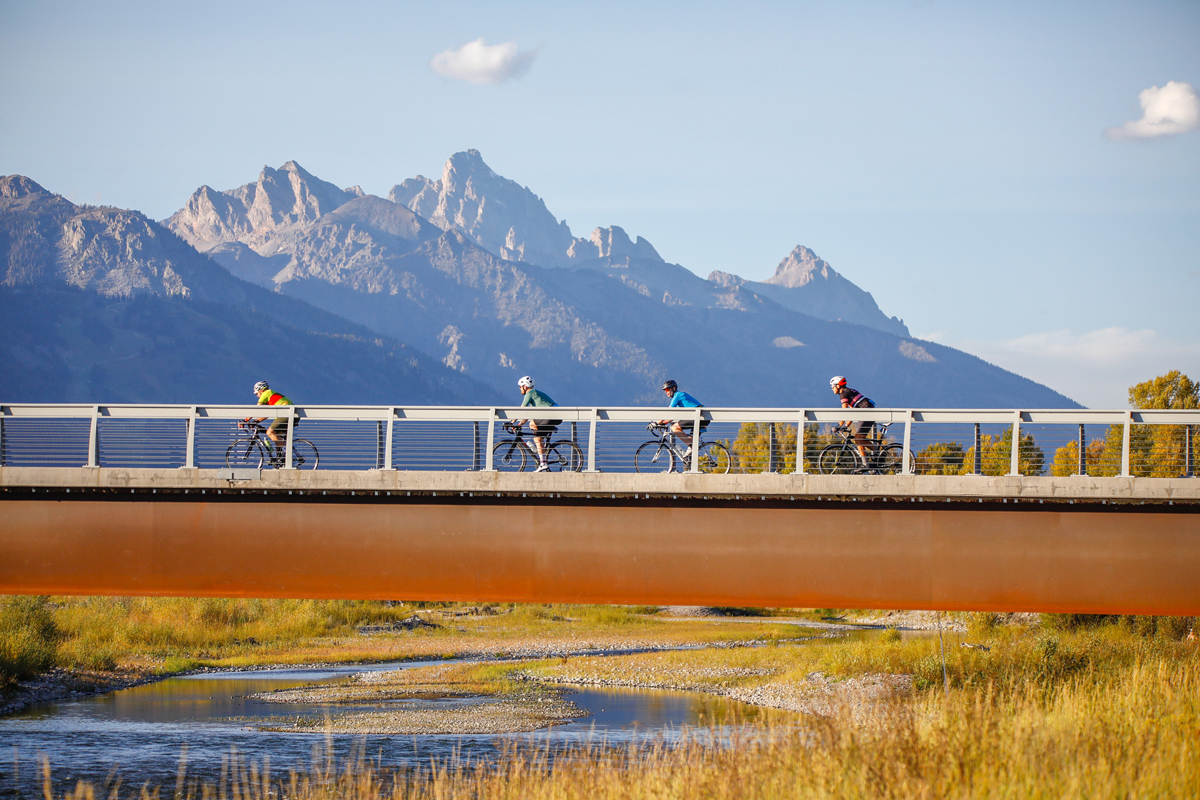
Almost there: With the Grand Teton in view, racers chase across the Wilson Bike Path Bridge in the 41st annual LoToJa Classic on Sept. 9, 2023. After crossing the bridge, cyclists have seven miles to the finish line in the 203-mile road race from Sunrise Cyclery in Logan, Utah, to Jackson Hole Mountain Resort. Photo courtesy of Snake River Photo

There were approximately 1,725 USA Cycling licensed and non-licensed cyclists in the race that comprised 29 start groups. They included licensed race categories and race relay teams, plus cyclosportive categories and ride relay teams.

The groups left Sunrise Cyclery in four-minute intervals to provide initial separation between race and ride categories.

Of note, the oldest female cyclist to start and finish last year’s race was Betsy Cordes (Team Rockford/ Owenhouse), 65, of Bozeman, MT, whose finish time was 11:00:11.

The oldest male cyclist to start and finish was Larry Peterson, (Unattached), age 79, of Centerville, Utah. He won the Master Men’s 70+ category with a time of 10:13:29 — under 90 minutes behind the Men Pro 123’s. His average speed was nearly 20 mph.

The youngest female to start and finish was 16-year-old Natalie Rehklau, of Billings, MT, with a time of 11:40:37; and the youngest male was 15-year-old Jack Atencio, of Cottonwood Heights, Utah, with a time of 12:35:23.

 After 41 years of existence, LoToJa remains the longest one-day USA Cycling-sanctioned bicycle race in the U.S. Its 203-mile parcours passes through northern Utah, southeastern Idaho, and western Wyoming.

The first edition was held in 1983. Seven riders started at Sunrise Cyclery and finished in downtown Jackson. Up to 2,000 cyclists now participate annually, either riding the entire parcours or a portion in the relay.

“We had yet another terrific race, with great riders and great weather,” said race director Brent Chambers. “I’ve said it before and say it again: I look forward to LoToJa every year and how the race challenges everyone and brings out their best.”

He thanked cyclists, event staff and volunteers, sponsors, and vendors for making LoToJa possible and a success year after year. He also thanked the communities along LoToJa’s parcours for their continued support.

“Without their backing, LoToJa wouldn’t exist,” he said. “To everyone who helps make the race possible, I am deeply grateful.”

The 42nd annual LoToJa will be held on Sept. 7. The race’s 2024 website will be launched in March with online registration beginning in mid-April.

Complete finish line results of 2023’s race are available at lotoja.com. Click on the “Results/Records” tab in the navigation bar. Complete results starting from 1998 (year 15) are also available. By clicking the “First 15 Years” icon (introduced last summer), some partial and complete results from LoToJa’s earlier years are viewable.

2024 Event Information:

September 7, 2024 — LOTOJA Classic Road Race, Logan, UT, 42nd Annual, 1 day, 3 states, 200-plus mile road race from Logan, UT to Jackson Hole, WY, Brent Chambers, 801-546-0090, [email protected], lotoja.com


Study: Cycling Past 50: A Closer Look into the World of Older Cyclists

By Charles Pekow — Don’t fear that you may get too old to bike. You may simply need to make adjustments. It may mean a new vehicle, different expectations, finding companions to ride with and more user-friendly paths. Maybe also ebikes, tricycles and tandems.

Carol Kachadoorian of the Mineta Transportation Institute at San Jose State University surveyed about 5,000 cyclists in 23 countries (mostly in the United States and Canada) aged 50 and up about their past and current cycling habits. Injury and illness didn’t seem to discourage people; once they recovered, they hopped right back on their cycle seats. And older Americans ride for the same reasons younger ones do: recreation, running errands, socialization, tourism, exercise and even competitively. They still ride off-road. Like younger ones, some cycle regularly; others occasionally.
Electric bikes help older people stay sharp. Photo by Dave Iltis

The study Cycling Past 50: A Closer Look into the World of Older Cyclists, Year 4 Survey had the following key findings:

  • Among those who don’t ride regularly, such as those running errands, distance is the main factor in deciding to take the bike. Respondents also preferred to bike to avoid hassles such as finding a place to park a car.
  • The most common reason seniors cited for cycling was to exercise, with nearly a third saying it was their main motivation. The next most common reason cited was a social activity, followed by running errands. Those doing errands generally didn’t travel more than 10 miles, shorter than the other reasons cited. Responses didn’t vary much by gender.
  • Once people got past their mid-60s, rates of overnight trips, mountain biking and gravel riding declined.
  • When people ride tandems, they most commonly shared the vehicle with their significant other; but others cited friends, children, or grandchildren. A few mentioned putting a blind person in the back seat to give them a chance to cycle. Tandems are good for exercise but seldom useful for getting to work or running (should we say cycling?) errands.
  • Respondents cited all sorts of reasons for buying an ebike, with no one answer standing out, though the most common one was that it enabled them to ride.
  • Only 3.6% of respondents said they owned a trike and nearly three-fourths of them said they used a recumbent. “The reasons for purchasing a trike range from mitigating medical issues, wanting more stability, getting on and off more easily, riding with someone else, carrying groceries and other items, and when they can afford it.”

Find it here: https://transweb.sjsu.edu/sites/default/files/2112-Kachadoorian-Cycling-Past-50.pdf


Monuments of Cycling Joins PeopleForBikes for 2024 BWR Gravel Finale

0

SAN DIEGO, California (March 14, 2024) — Monuments of Cycling (MoC), the renowned producer of the iconic Belgian Waffle Ride (BWR), unveiled its partnership with PeopleForBikes (PFB) as the Official Charitable Partner of the Belgian Waffle Ride California. PeopleForBikes, the U.S. bicycle industry’s trade association and a national bicycle advocacy organization, has a mission to make the U.S. the best place in the world to ride a bike.

PeopleForBikes is making biking better for everyone by uniting millions of Americans, thousands of businesses, and hundreds of communities to make every bike ride safer, more accessible, and more fun. The PeopleForBikes Coalition has more than 325 supplier members and 1.4 million supporters in its grassroots network. Their motto is, “When people ride bikes, great things happen,” and Monuments of Cycling couldn’t agree more, and this new partnership will launch with the Tripel Crown of Gravel Series finale at North City in San Marcos, California on April 27 – 28, 2024.

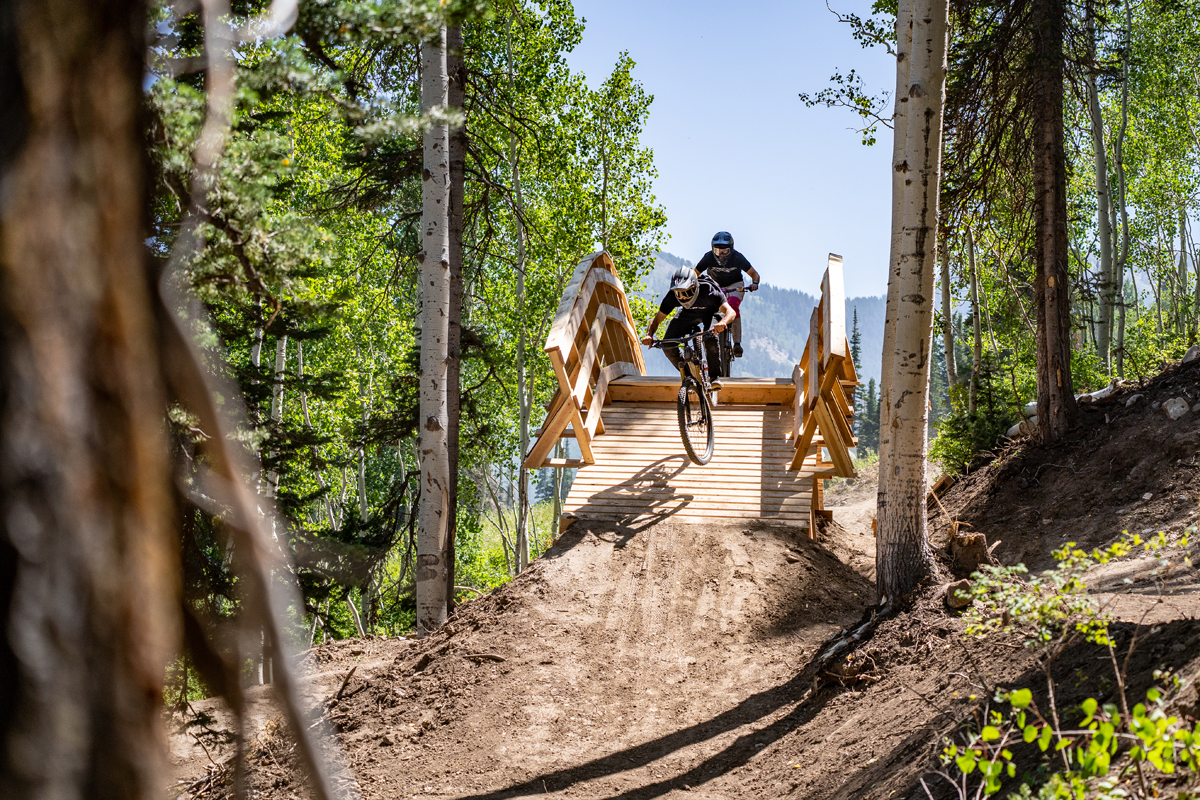
The Solitude Bike Park, funded in part by PFB’s Great Bike Infrastructure Project, opened in September 2023. Photo courtesy Solitude Mountain Resort

PeopleForBikes will leverage the opportunity presented by the grandaddy of unroad events, the BWR CA, to showcase its range of programs and campaigns like the Great Bike Infrastructure Project, taking a bold step to build more livable communities by advancing thousands of bike and active transportation projects and pro-bike legislation in all 50 states. PeopleForBikes will enjoy speaking to a very diverse group of BWR CA riders who come from all categories—road, MTB, Cyclocross, Triathletes, e-bikers, and Gravel racers. Monuments of Cycling will work with PFB to further its messaging and raise funds through sweepstakes to win a Canyon bike!

Our nation desperately needs immediate action to mitigate the detrimental effects of climate change. Thankfully, the simple act of riding a bike, even just a couple of times a week, can play a meaningful part in climate action.

Here’s a bit of knowledge that hits home with us – according to a recent study by Portland State University, if we convert just 15% of car trips to trips made by electric bicycle, we could reduce transportation-related carbon emissions by 12%. We don’t need everyone to ride a bike — just a small portion can achieve huge carbon reduction goals.

“We believe in the power of the bike,” said PeopleForBikes Vice President of Business Network Ravi Rajcoomar. We believe the bike is a real solution to improving Americans’ health, connecting their communities, boosting state and local economies, strengthening our nation, and protecting our planet.”

Monuments of Cycling will host PFB at the BWR CA, where the Tripel Crown of Gravel Series will culminate in full Spring Classic style, Americana style, with a grand party unfolding with the 13th Annual BWR California (April 28).

Crafted to provide both professional and amateur riders with the opportunity to compete in three distinct environments over a short timeframe, the Tripel Crown strikes a perfect balance between recovery and fitness gains for early-season competition. The series is being contested in a points-based omnium format, including both Waffle and Wafer distances for professionals and age-group riders. Participants vying for Tripel Crown honors, and the prize purse (for pros only) will accumulate points based on their performance across the three races, with the BWR CA carrying extra weighted points to conclude the series at North City in San Marcos, CA, on April 28, 2024.

Photo courtesy Monuments of Cycling/BWR

“We are genuinely excited to commence our partnership in California with PeopleForBikes to include in our reimagined Gravel Series in North America,” remarked Michael Marckx, CEO of Monuments of Cycling, and creator of BWR. He added, “This partnership underscores our shared belief in the power of the bike to bring people and communities together. At the BWR, we have a unique way of celebrating the joy of cycling through training for and competing in our events, which are designed to enrich people’s lives through the prism of extreme cycling challenges. Today, training for the BWRs has taken on an even greater importance, providing opportunities for physical and mental health, adventure, time outside, camaraderie, and lessons in perseverance. This is an acknowledgment of our shared dedication to building community, increasing access to new places and improving lives, and look forward to what we can achieve together in the years to come.”

Photo courtesy Monuments of Cycling/BWR

The Belgian Waffle Ride was initially conceived as an extremely challenging race in the spirit of the great European one-day Spring Classics and has evolved into a collection of the most unique cycling events globally. The races are renowned for their dynamic, multi-surface unroad parcourses featuring single track, gravel, sand, rocks, double track, water crossings, cyclocross features, and asphalt. The 2024 Tripel Crown of Gravel finale is anticipated to host the deepest field of professional riders in the series’ history, along with a diverse group of amateur riders eager to race alongside cycling icons, including Canyon pro riders such as Heather Jackson, Carolin Schiff, Pete Stetina, Tiffany Cromwell, Jasper Ockeloen, Jeremiah Bishop, Andrew Jackson, Griffin and Cullen Easter, and Tyler Pearce, the Vegan Cyclist.

Photo courtesy Monuments of Cycling/BWR

The BWR Unroad Expo during the race weekend promises to be a significant attraction, offering the largest cycling parties of the year at North City. Festivities kick off on Saturday, April 27, at North City in San Marcos, featuring a large brand activation by Canyon and all the other BWR partners. The BWR CA Unroad Expo will run from 9 a.m. to 6 p.m. on Saturday and on Saturday, April 28, from 5:30 a.m. to 7:00 p.m., for all the BWR festivities until the beers, jeers, and awards are distributed for heroic efforts, age-group podiums, and category victories.

Three different distances are offered in California – The longest is the Waffle (~130 miles), the Wafer (~73 miles), and the Wanna (~40 miles). Registration for this final stop of the Tripel Crown of Gravel is HERE. Interested participants interested in more information can visit BelgianWaffleRide.Bike or Facebook.
Silca Launches the Grinta Bags: Gear Up for Fast-Packing Adventure

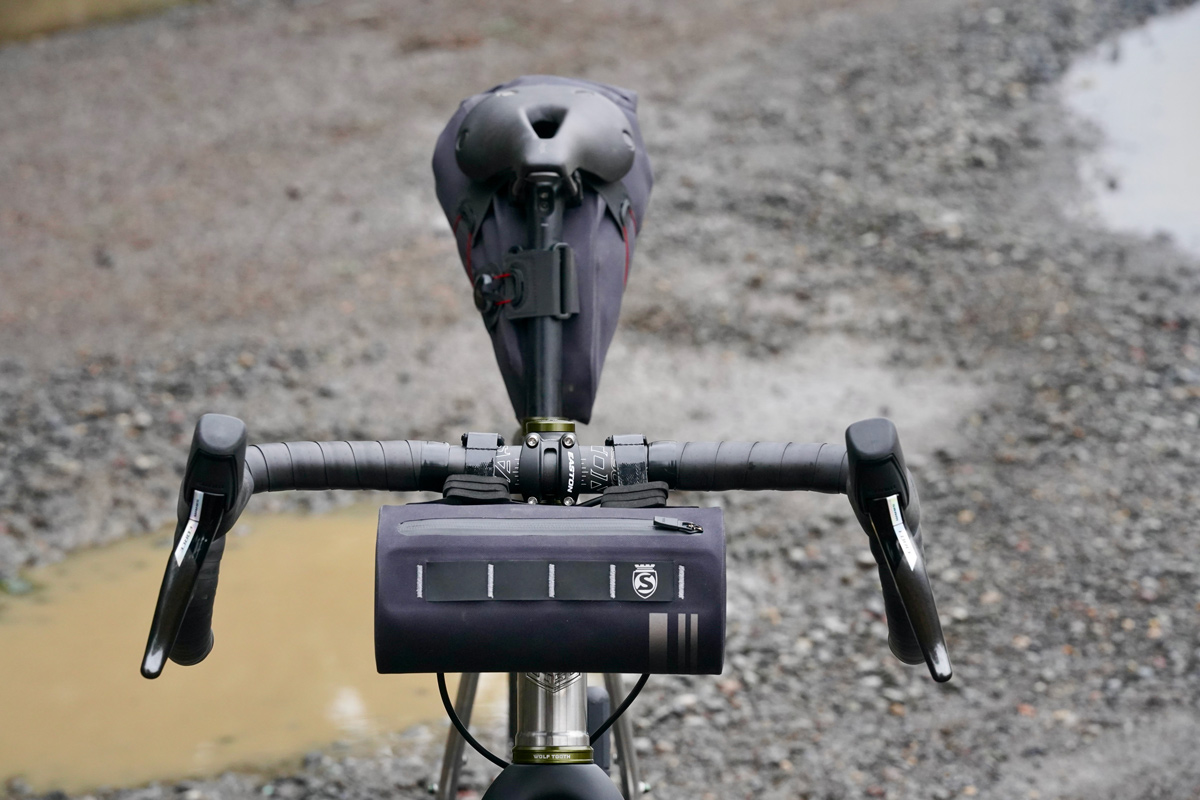
INDIANAPOLIS, Indiana / AMSTERDAM (March 14, 2024) — Silca, the iconic cycling brand known for its innovative and high-quality products, is proud to announce the launch of its first collection of fastpacking adventure bags, The Grinta Bags. This thoughtfully designed set, comprising of a handlebar bag and a roll top seat pack, embodies Silca’s commitment to performance, functionality, and rider experience, catering to both competition and casual exploration.

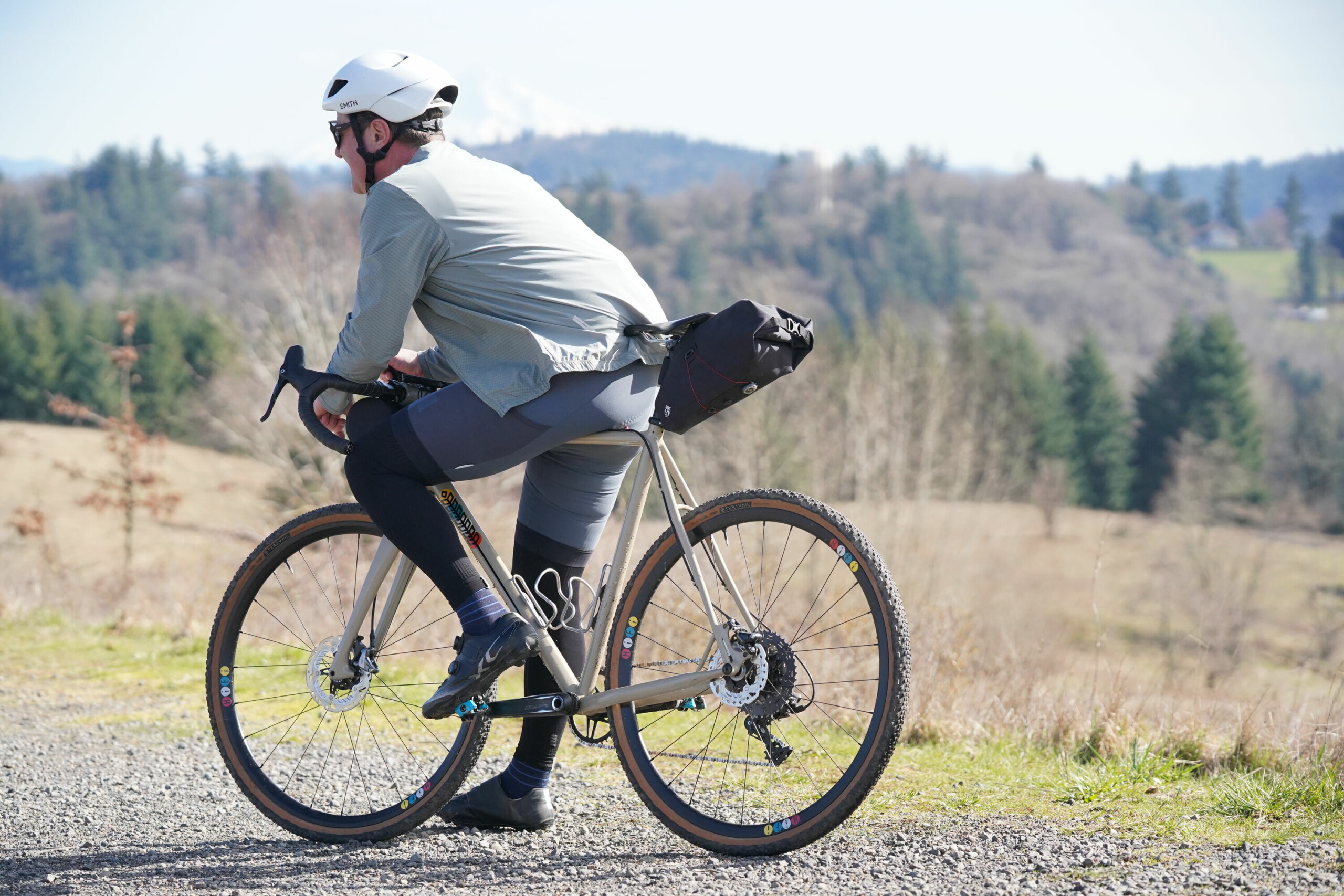
Silca Grinta Handlebar ($95 USD) and Saddle ($160 USD) Bags. Photo courtesy Silca

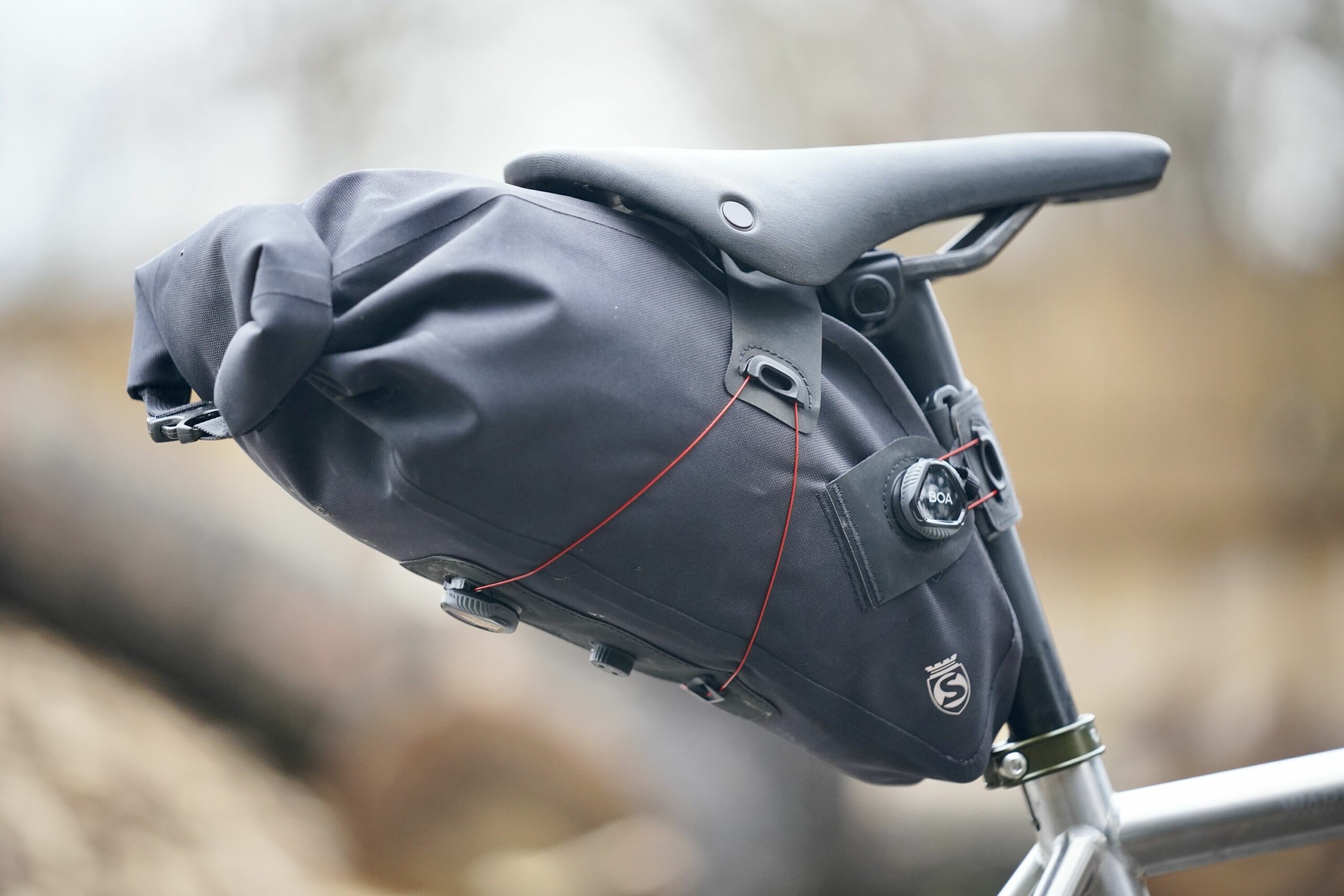
Drawing inspiration from the success of the Mattone Seat Packs, The Grinta Bags incorporate the proven BOA closure system for a secure and adjustable fit. This attention to detail ensures the bags stay put, even on the most demanding rides.

Whether you are an ultra-endurance rider or simply seeking a versatile solution for extended days on the road, The Grinta Bags have you covered. The easily accessible handlebar bag keeps essentials readily available, while the roll-top expandable seat pack can handle fast day packing, up to overnight adventure rides, as well as ultra distance gravel events. The seat pack shields your gear from the elements and wind. The bags’ seam-welded weatherproof construction guarantees worry-free rides.

Silca’s Grinta Handlebar and Saddle Bags are the perfect size for daypacking rides or an S24O. Photo courtesy Silca.

Beyond their technical prowess, The Grinta Bags feature a compact size that is ideal for carrying just what you need while not overpacking and weighing you down.

Richard Pool, Silca’s Marketing Director, shares the story behind the Grinta Bags and the company’s evolution:

Silca products grow out of how we ride, what we want to ride, and where we can make improvements or solve existing problems across the cycling landscape. Things as simple as curing saddle-bag-tail-wag, or strap systems that slip. Our mission is to improve the cycling experience, on and off the bike, with products that stand the test of time.

It has been a little over ten years since we moved the brand to Indianapolis, and a lot can change in ten years. The core of the crew is a bit older, wiser, and most now have kids, while the multi-day long tours and XL bike packing trips are behind us (just for now). We still need to get out, explore, and do the things that make us who we are as cyclists, and outdoors people. We have entered our S24O (sub twenty-four hour overnight) and ultra endurance fast-packing phase. Long weekend gravel events or quick burst into the woods, with a hammock, a beer (or maybe two), and a quilt. A night of solitude, recharging in nature, under the stars. When the sun rises it is a race home to arrive just in time to make breakfast for the family.

Product Specs

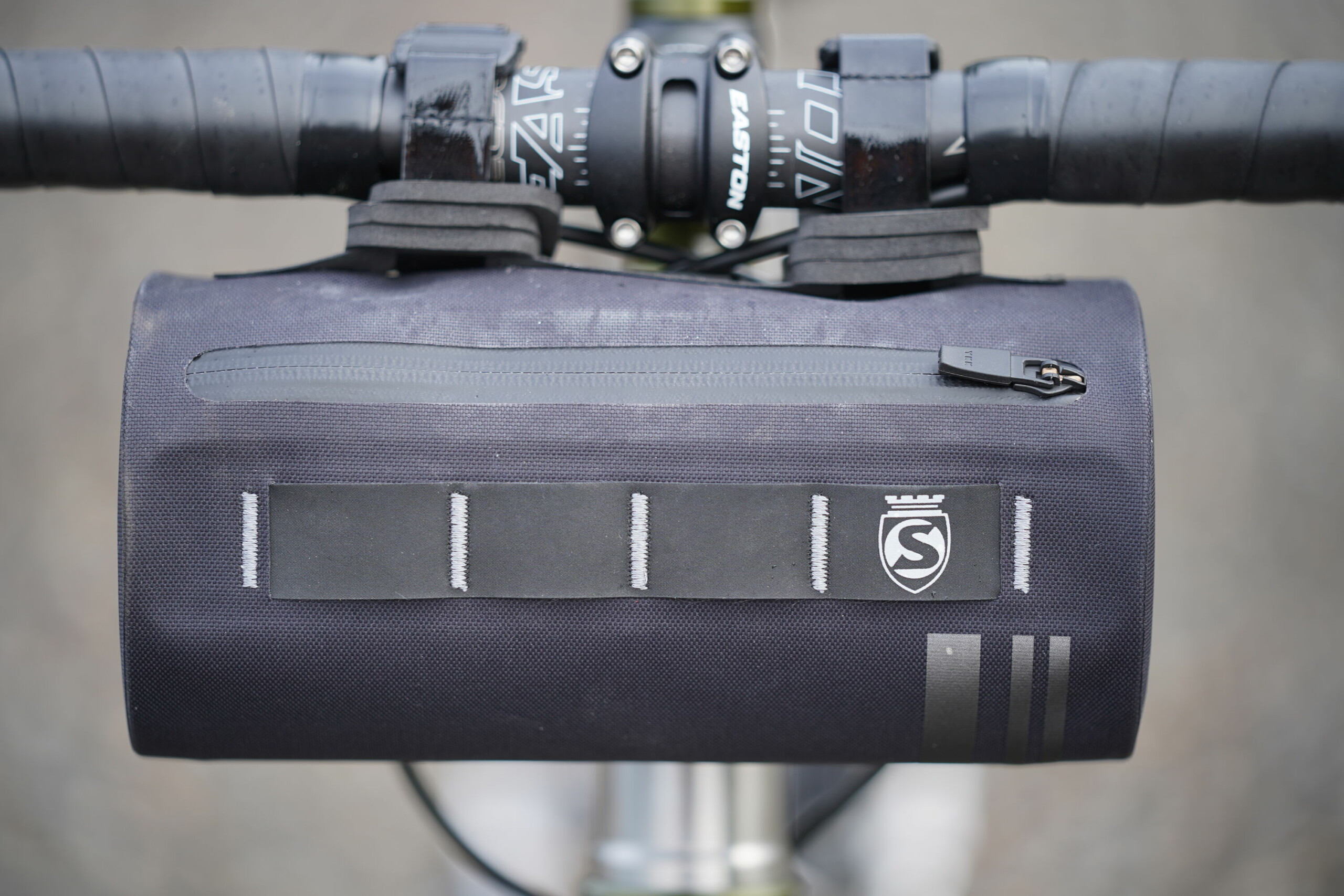
  • Grinta Handlebar Bag: ($95 USD / €115) – 2-liter capacity, featuring a secure, one-handed operation with the Magic Slide no-slip strap and buckle system. Constructed from durable CYCLEPET fabric and equipped with a YKK AquaGuard zipper for water resistance. Product Page: https://silca.cc/products/grinta-handlebar-bag

    Silca Grinta Handlebar Bag. Photo courtesy Silca
  • Grinta Saddle Bag: ($160 USD / €195) – 2–5-liter capacity, featuring the secure and adjustable BOA mounting system. Built with seam welded, weatherproof CYCLEPET fabric and an air release valve for easy packing. Product page: https://silca.cc/products/grinta-roll-top-bag

Book Review: “The Monuments” is a Monument to the Monuments

By David Ward — If I were to nominate one day as the greatest day of professional bike racing in terms of determination, wonder and pure grit, I would propose the 1910 edition of Milan-Sanremo, La Classicissima, won by Eugène Christophe, he of Tour de France fame who in 1913 had to run down the slopes of the Tourmalet carrying his bike for two hours before arriving at a smithy’s forge where he welded his broken fork before continuing on. In The Monuments: The Grit and the Glory of Cycling’s Greatest One-Day Races, author Peter Cossins quotes from Christophe’s account of that day which appeared in French magazine, Miroir des Sports. Only 7 of the 71 riders at the start line finished, with 3 being disqualified, as Cossins describes, “for what in the circumstances might be argued was legitimate bending of the rules.”

“’Not far from the summit [of the Passo del Turchino] I had to get off my bike because I started feeling bad. My fingers were rigid, my feet numb, my legs stiff and I was shaking continuously. I began walking and running to get my circulation back,’ said the Frenchman, who recalled the wind moaning frighteningly. As he continued on, he described seeing some riders swigging brandy straight from the bottle, others swallowing eggs and a few chewing on grass, all of which were thought to stave off fatigue. Told he was six minutes down on leader Cyrille Van Hauwaert, Christophe trudged on to the tunnel at the summit of the Turchino, where he got a brief respite from the elements …

‘I just got on with going down through the snow that lay on the road on that side of the mountain. The view was totally different now. The snow made the countryside beautiful. The sky was clear. But now it was my turn to have trouble. It was hard to keep going. In places there were 20cm of snow. Each time I was obliged to get off and push. Then I had to stop with stomach cramps. I collapsed on to a rock at the side of the road. I was freezing.’

Christophe noticed a house a few hundred metres away. He later admitted he was torn between carrying on (victory would see his wage doubled) or making for the house. In the end, a man emerged from nowhere and made the decision for him.

‘He led me to what was a tiny inn. The landlord undressed me and wrapped me in a blanket. I murmured ‘acqua calda’ and pointed at the bottles of rum. I did some physical exercises and started to get some feeling back in my body. I wanted to go on, but the patron wouldn’t hear of it and pointed to the snow still falling outside. Not long after, first Van Hauwaert and then Ernest Paul came in. They were so frozen they put their hands in the flames. Ernest Paul had lost a shoe without noticing.’

Looking out of the window, Christophe saw ‘at least four piles of mud’ weaving past. Knowing others were still racing, he decided to press on … ‘I had to trick the innkeeper by saying I was going to meet someone who would get me to Sanremo by train,’ said the Frenchman, who took up the innkeeper’s offer of dry clothes and a new pair of trousers, which he soon had cut down to shorts to relieve himself of the mud weighing them down. Back on the road, he steadily caught and passed the four Italians ahead of him, including defending champion Ganna.

‘At the control point at Savona everyone was astonished to see me alone … I was sure of my victory and with only 100km to go I felt a new strength. The idea of crossing the line brought back all my energy,’ Christophe recalled.

He finally completed the course in 12 hours and 24 minutes. Ganna came in second but was later disqualified for putting his bike in a car and walking up the Turchino. A second Italian was disqualified for taking the train between Pavia and Novi Ligure, while a third, Sante Goi, finished seventh but after the Sanremo control point had closed.

This is only one example of the spell-binding writing found in Cossins’s book. I can honestly say that of all the books I have read, and not just cycling books, this is one of the most fascinating. Being an avid cyclist and having followed professional cycling for nearly forty years, I was especially intrigued by the history, events and people featured in the pages of this book. Names of people and places that I have heard or read about began to fit together in a more organized fashion.

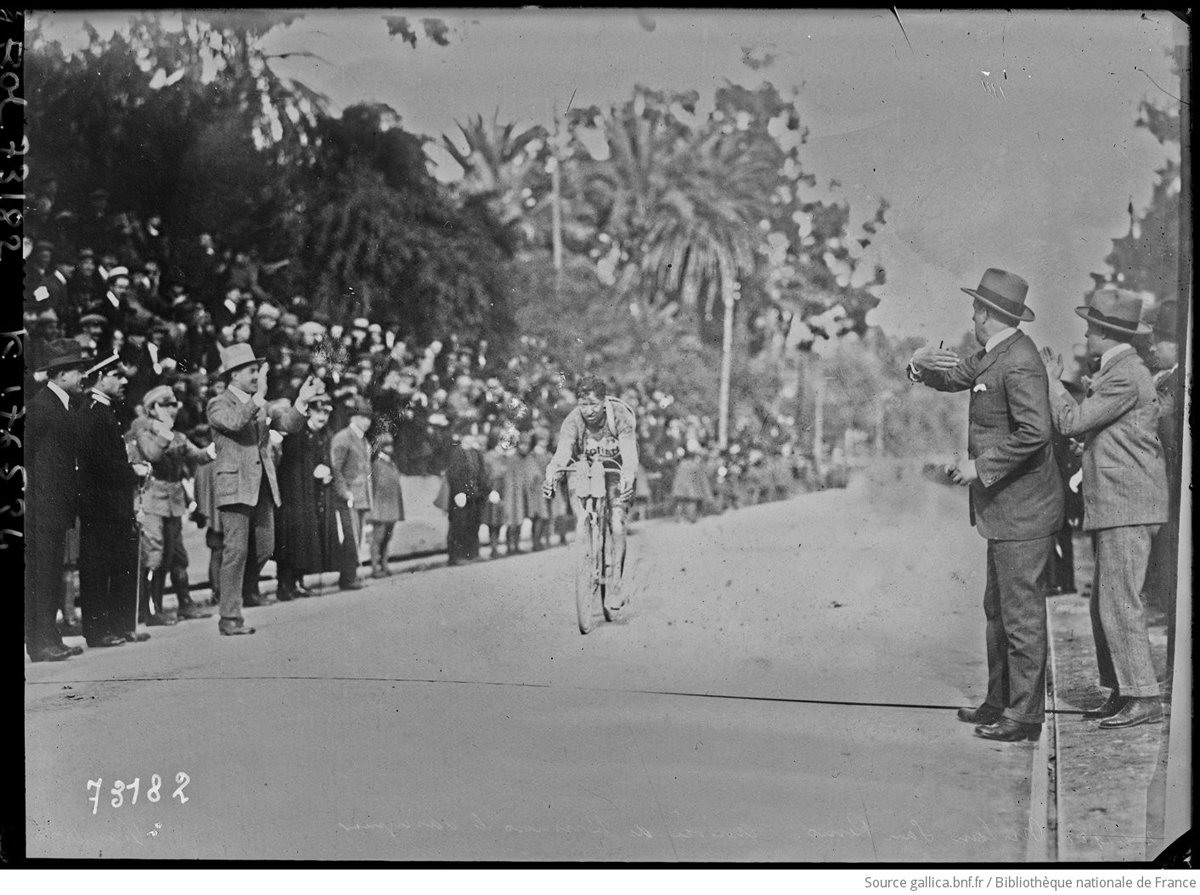
Giovanni Brunero winning Milan-San Remo 1922, photo by Agence Rol, courtesy Bibliothèque nationale de France, gallica.bnf.fr

Cossins takes on the task of telling the tale of five monumental classics: Liège-Bastogne-Liège (La Doyenne, 1892), Paris-Roubaix (La Pascale/Hell of the North, 1896), il Giro di Lombardia (The Race of the Falling Leaves, 1905), Milan-Sanremo (La Classicissima, 1907), and The Tour of Flanders (Vlaanderens Mooiste/Ronde van Vlaanderen, 1913). The book is divided into five sections, tackling each monument in order of the year it was established. In each section Cossins relates the founding and ensuing development and history of each classic. He interweaves the names and efforts of the founders, directors, team managers and, most importantly, the riders who have made these races great, who made them classics and continue to maintain their classic status. He also weaves in a lot of related history and incidents.

Liège-Bastogne-Liège is the oldest of the Monuments. But it had a rough time getting established, disappearing from 1895 – 1907, again in 1910, and then for the WWI years of 1914-1918. After WWI, it became well established and a recognized classic, only missing four years during WWII. As Cossins relates, most of the famous pro cyclists have sought to win this classic. A reading of the list of winners is a literal “who’s who” of renowned cyclists, including Jacques Anquetil, Eddy Merckx (a record five times), Moreno Argentin (four times), Bernard Hinault (his 1980 win in the wind and snow having been voted by the readers of French magazine Vélo as Hinault’s greatest win), Sean Kelly and Alejandro Valverde (three time winner) and a host of others.

The last half century of Paris-Roubaix is one of trying to preserve the cobbled roads on which the race is run. The organizers were constantly looking for new sections of “pavé” as roads continued to be resurfaced with tarmac. One such discovery is now almost synonymous with Paris-Roubaix, the Tranchée d’Arenberg (Arenberg Trench). Jean Stablinski, at 19, worked as a coal miner in this region prior to his career as a pro cyclist. Later, he introduced this area to the organizers of Paris-Roubaix who subsequently incorporated the Tranchée into the race in 1968. Stablinski was in his final season that year and was among those who raced over the Tranchée for the first time. Said Stablinski after the race, “Not many people know it, but an underground roadway runs directly below the Tranchée. I am the only man to have walked under and raced over the cobbles of Arenberg.

Cossins relates a few other fascinating Paris-Roubaix tidbits. Initially, racers were “paced” by other riders and subsequently, for a few years, by motor vehicles and motorcycles. Also, Paris-Roubaix took on the nickname, La Pascale, because it was often held on Easter. And finally, of interest to us Americans, Major Taylor raced in the Roubaix velodrome where Paris-Roubaix finished.

One tragic yet touching story arising from Paris-Roubaix is that of René Pottier. Cossins relates how Georges Passerieu, upon winning the 1907 edition, said, “I would like to point out that I am wearing the jersey of the unfortunate René Pottier. He was my mentor and friend.” The winner of the 1906 Tour de France, Pottier had hanged himself “after discovering that his wife was having an affair while he was away winning the Tour.”

The Tour of Lombardy is responsible for the birth of cycling’s most sacred location, the Madonna del Ghisallo chapel in Magreglio, Italy. As Cossins writes, “In October 1948, Pope Pius XII lit ‘the permanent flame of the Ghisallo’. The lamp containing the flame was transported by car to Milan … From there, a relay of cyclists including [Fausto] Coppi and Gino Bartali carried the flame up to the small chapel … at the top of the Ghisallo Pass”, the Tour of Lombardy’s most famous point.

Lombardy is also remembered for the antics of Italian fans in support of their home riders. In 1906, Italian Giovanni Gerbi was accused of orchestrating “damage to the route that slowed his rivals and caused them to crash, use of pacers and encouraging his supporters to block a level crossing and spread nails along the route.” And that, apparently, was just the start of such antics.

The Tour of Lombardy is the only classic in which a woman competed. Alfonsina Strada participated in two wartime editions of Lombardy, finishing both races and, in 1918, was only 23 minutes down on the winner, Gaetano Belloni. She also raced in the 1923 Giro d’Italia. Also of interest is that the man waving the red flag to start the first running of the Tour of Lombardy was Romolo Buni, a former track star who became famous after engaging in three races against William “Buffalo Bill” Cody, with Cody on a horse and Buni on his bike.

The Tour of Flanders, Ronde Van Vlaanderen, originated as part of an effort to publish a Flemish newspaper and raise the social stature of the Flemish people. At the time, the Flemish language was considered a baser language, with French being the language of the Belgian elite and those seeking a higher status. Cossins quotes Karel Van Wijnendaele, one of the originators of the Ronde, as saying, “We wanted to publish a paper to speak to our own Flemish people in their own language and give them confidence as Flandrians.”

So, Van Wijnendaele, Leon Van den Haute and Augustin De Maeght, inspired by Paris-Roubaix, came up with the idea of establishing a Tour of Flanders, recognizing that the race and the newspaper (Sportwereld) would help promote each other. Though initially boycotted by French teams as being beneath them, the bicycle manufacturers who sponsored the professional teams recognized the need to expand their markets into Belgium to generate more revenue with which to sustain their teams. So, they reversed course and started sending their top riders to the Ronde. Cossins notes that, initially only bicycle companies were permitted to sponsor professional cycling teams and it was not until 1954 that outside sponsors were permitted.

Monuments delves into other aspects of cycling relating to these classics. Cossins doesn’t shy away from the inclusion of the impact of doping, relating history that makes it clear that artificial performance enhancement was not uncommon in the early eras of bicycle racing. He also looks at its presence in modern cycling, particularly in the 1990s and 2000s. Cossins also looks at the impact of politics, and World Wars I and II, on professional racing, from those who used cycling to further political ends, to those who cooperated with the Nazis and/or puppet governments, as well as those who secretly worked against the Nazi occupation.

If I have a complaint about the book, it stems from the packed nature of Cossins’s narrative. Mostly, I found I would lose track of which year or which edition of a race he was referring to and kept having to refer back to orient myself or make a physical note about which year he was discussing. But that was a minor irritation in contrast to the rich nature of this book.

In his Endpiece, Cossins quotes Thor Hushovd: “These races are brutally hard, they are dirty, they are very long. Everyone knows the rider who wins these races is a really tough guy, a true hard man. Then you think about the history of these races, you look at the great names that have won them in the past, and you realise what it would mean to win one of them, that your name would go down alongside all of cycling’s legends. I love riding them.”

Cossins goes on to say, “The Tour [de France] may offer fame and wealth, but the Monuments provide their own special glory and an indelible connection with the great champions of the past, with those riders whose deeds made landmarks like the Poggio, Kwaremont, Arenberg, La Redoute and Ghisallo as renowned as any of the sport’s legendary places. No wonder Hushovd and every racer alongside him in the pro peloton wants to win one.”

Amen to that.

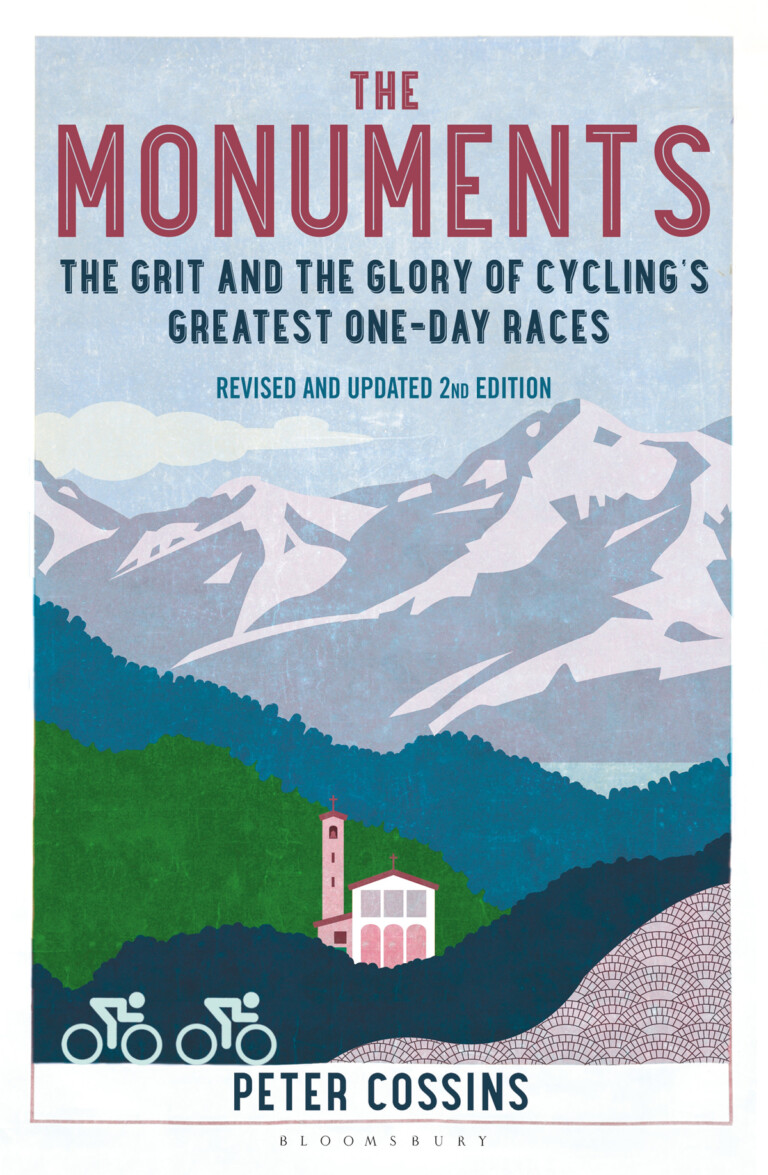
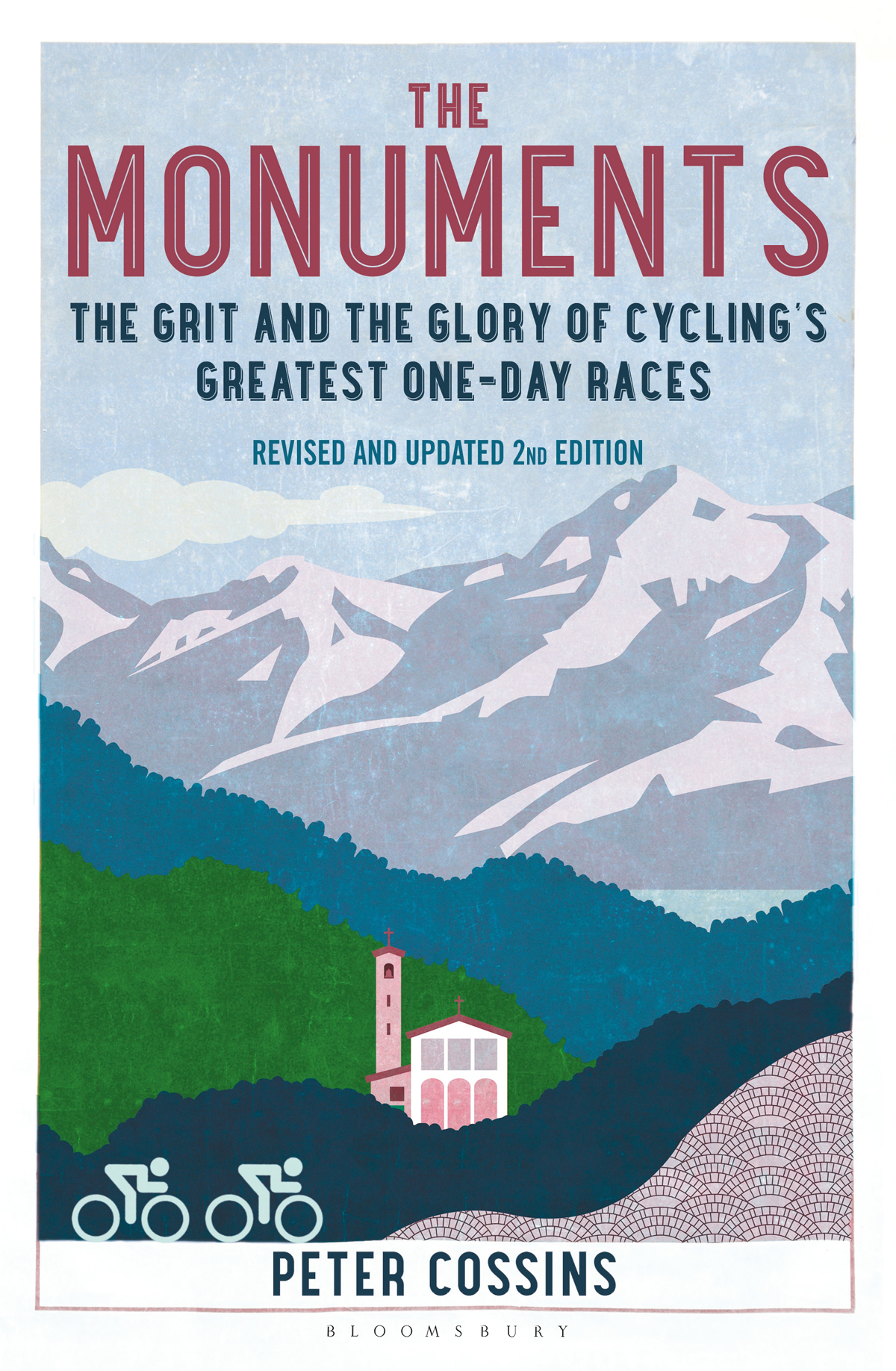
The Monuments 2nd edition: The Grit and the Glory of Cycling’s Greatest One-Day Races

Author: Peter Cossins
Imprint: Bloomsbury Sport
Price: $20.00
ISBN-13: 9781399407861


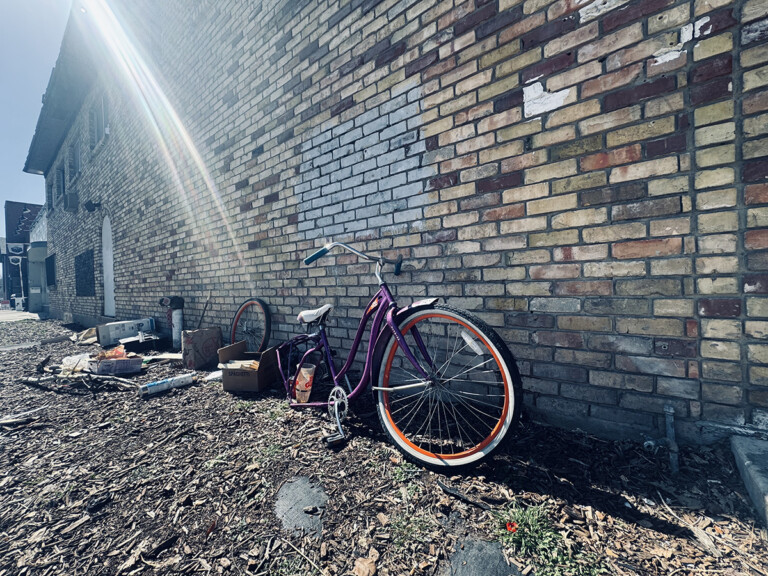
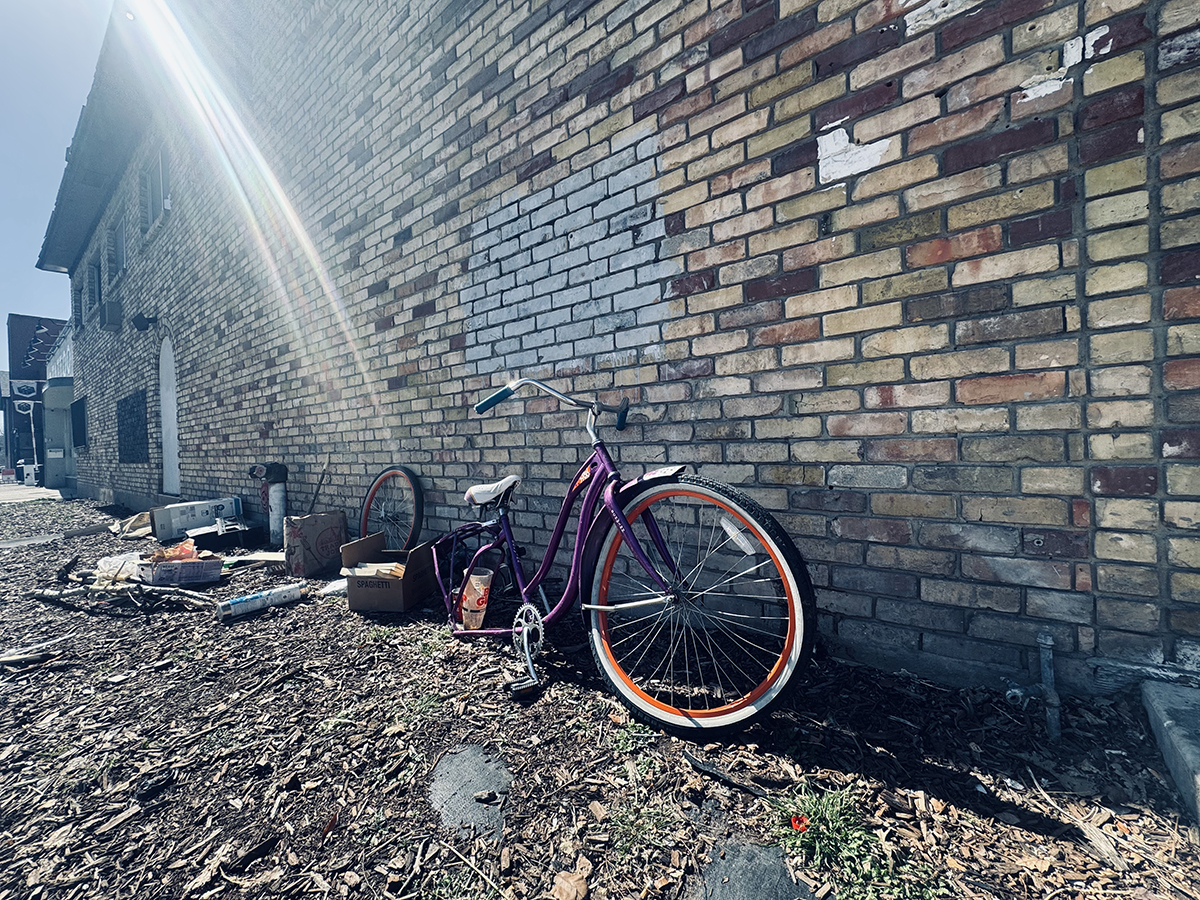
Photo: Forsaken Bicycle

0
Forsaken bicycle. Photo by Dave Iltis

Trouée d’Arenberg – The Bicycle Art of Dave Flitcroft

Name of artist: Dave Flitcroft

About the artist: Dave retired from the U.K. Police in 2009 and moved to France with his wife. He and his wife Sue are longtime tandem cycletourists and chose to live in Charente, near Limousin and Dordogne for the amazing cycling the traffic free lanes offer. In 2014 Dave started to sell his art.

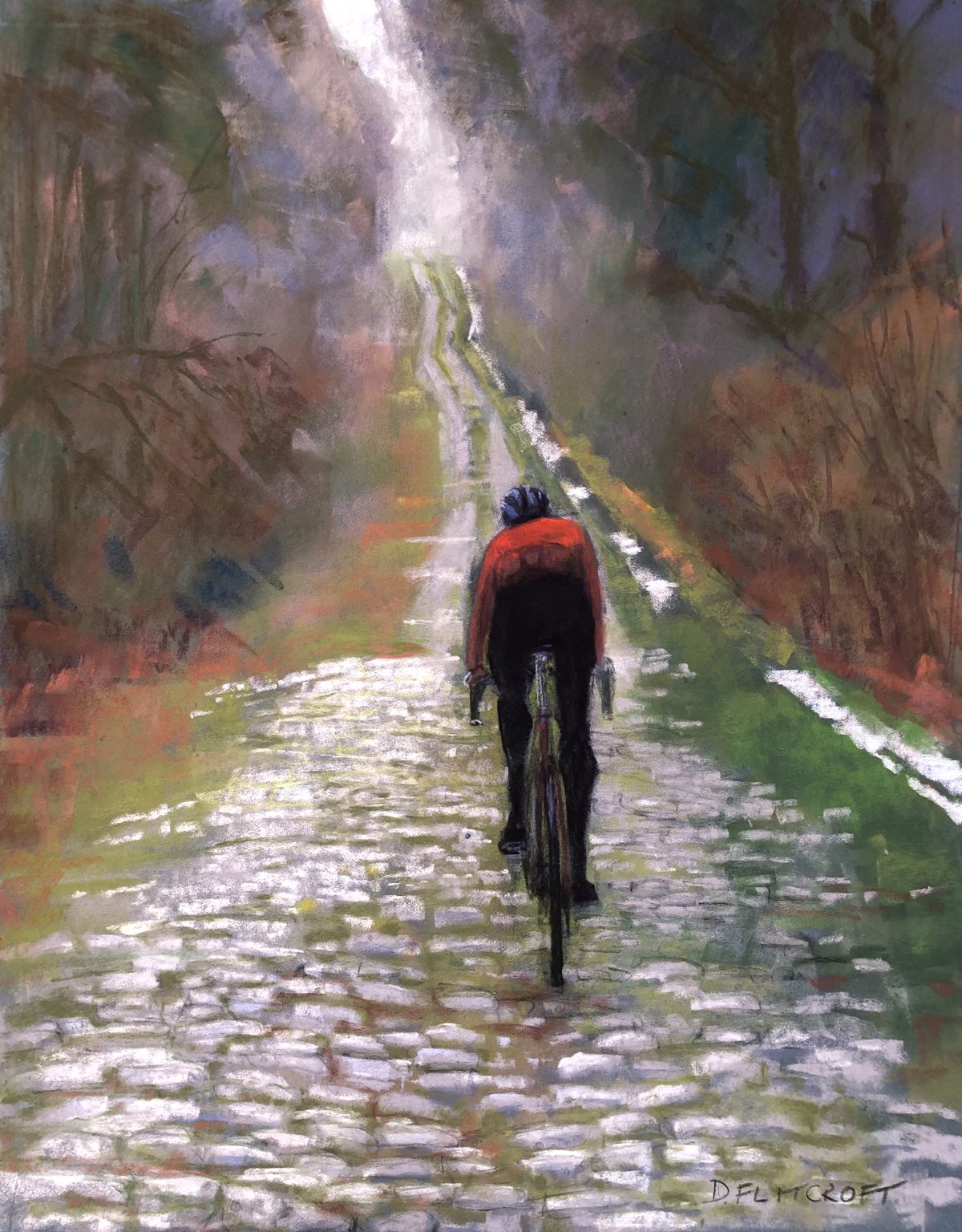
Title of piece: Trouée d’Arenberg

Trouée d’Arenberg, by Dave Flitcroft. Soft pastel.

About the piece: The spring cycling classic Paris-Roubaix is renown for the sections of pavé it traverses. The Trouee d’Arenberg is one of the hardest sections and is legendary in its severity. Many sporting cyclists emulate their heroes by riding the roads. I wanted to capture the essence of riding this route alone in bleak winter.

Medium: Soft pastel, 48 x 38cm

Artist’s statement: Dave aims to capture the feeling of a bike ride through art. Whether it’s the silence and isolation of a cobbled track in a forest, the thrill of a descent, the effort of a climb, or the joy of seeing wildflowers and animals in the roadside verge. He finds art and cycling to be perfect companions, one feeds the other. 

Where can people find or buy your art:

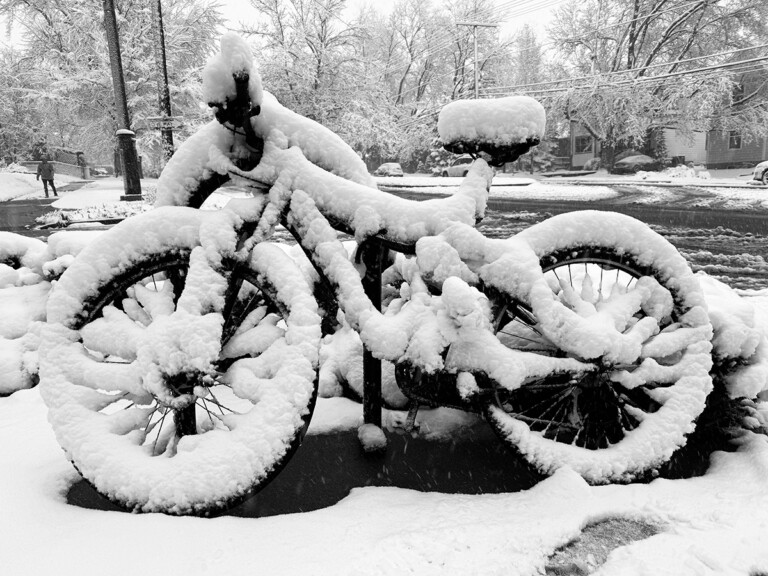
Photo: Snow Bike

0
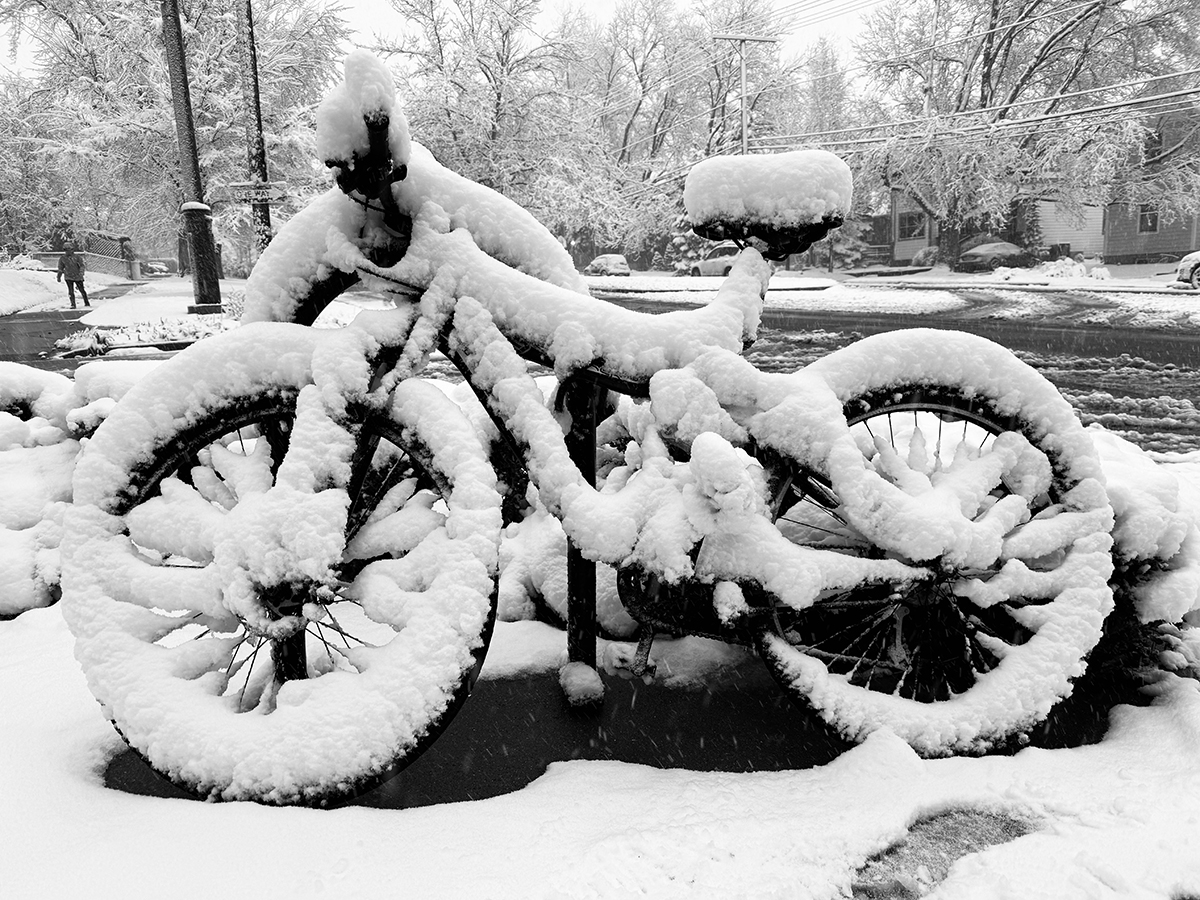
Snow bike. Photo by Dave Iltis
Snow bike. After the storm. Photo by Dave Iltis

Gòmez-Villafañe, Swenson Take Inaugural Valley of Tears Gravel Race

0

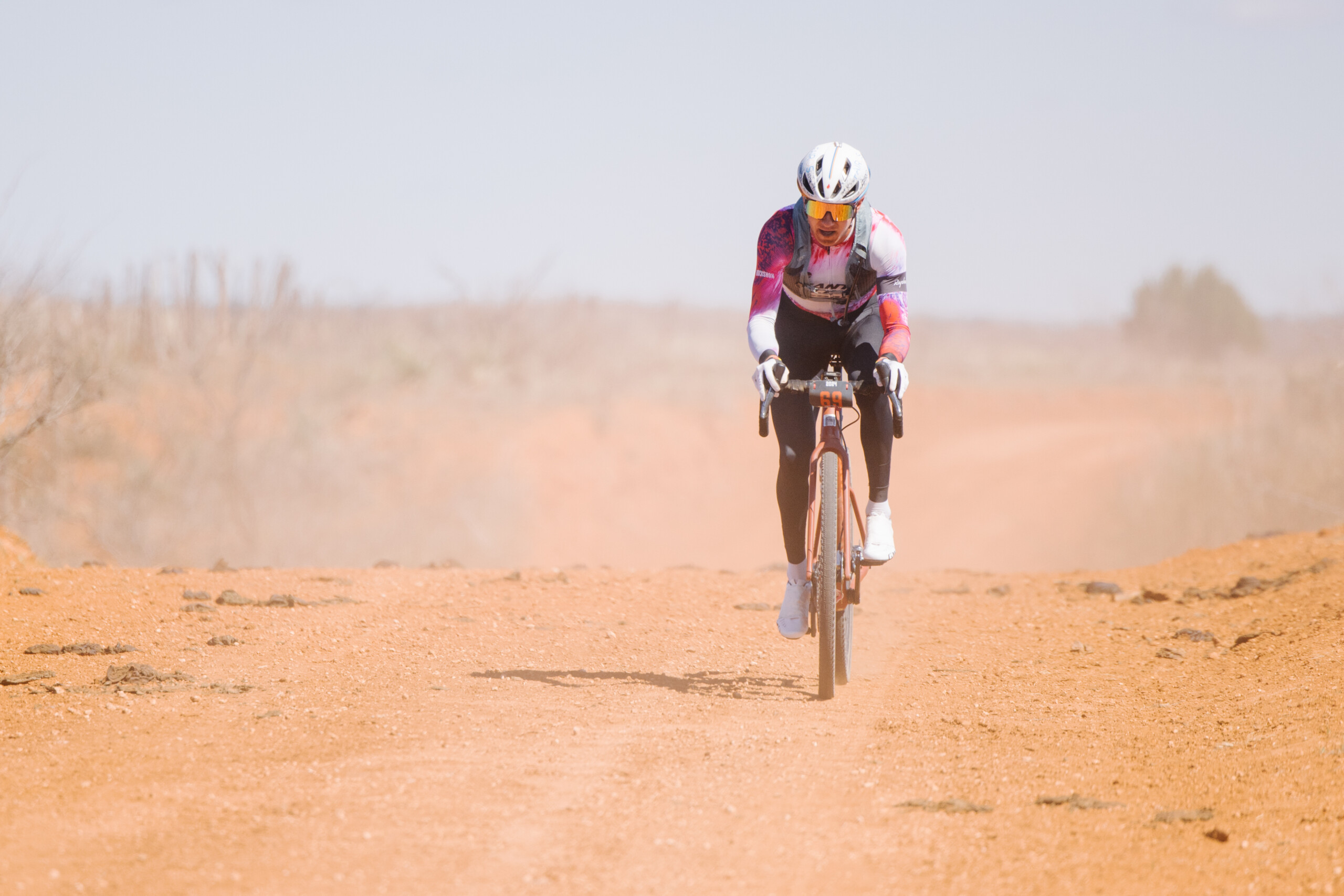
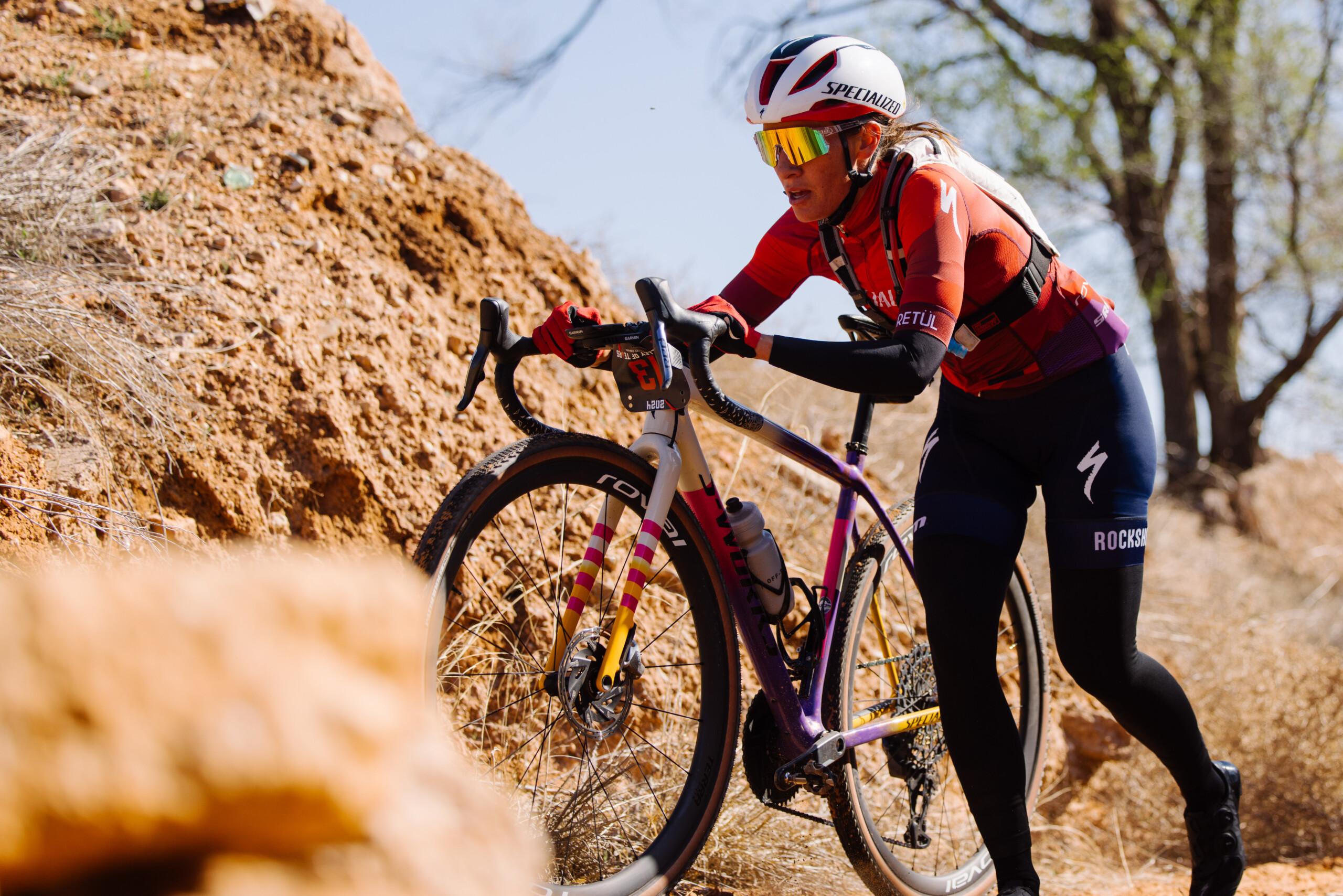
TURKEY, Texas (March 9, 2024) — In the heart of Texas, amidst the sprawling landscapes of Hall County, the inaugural Valley of Tears Gravel Race saw a triumphant debut with over 600 participants descending upon the small town of Turkey, tripling the population on the day. The Fairly family, overwhelmed by the outpouring of support, doubled the prize purse to a whopping $52,000 just a minute before the race commenced, setting the stage for an electrifying event.

As the mass start kicked off the 115-mile course, riders encountered challenging terrain, particularly the initial 18 miles fraught with sandy stretches. The intensity of the race was palpable from the outset as early splits occurred due to a top 10 rider’s crash, causing significant disruptions.

Notable contenders in the women’s race faced setbacks, including Emily Newsom’s valiant effort to bridge back after a crash which damaged her rear derailleur. Newsom was forced to chase while only being able to shift between her big and small chainrings, finally catching the leaders after 20-mile solo effort. Geerike Schreurs was also caught up in the crash but wasn’t able to continue after a race-ending handlebar snap.

Keegan Swenson navigates his way through the Limestone Pits. Photo by Alex Roszko, courresy Valley of Tears Gravel

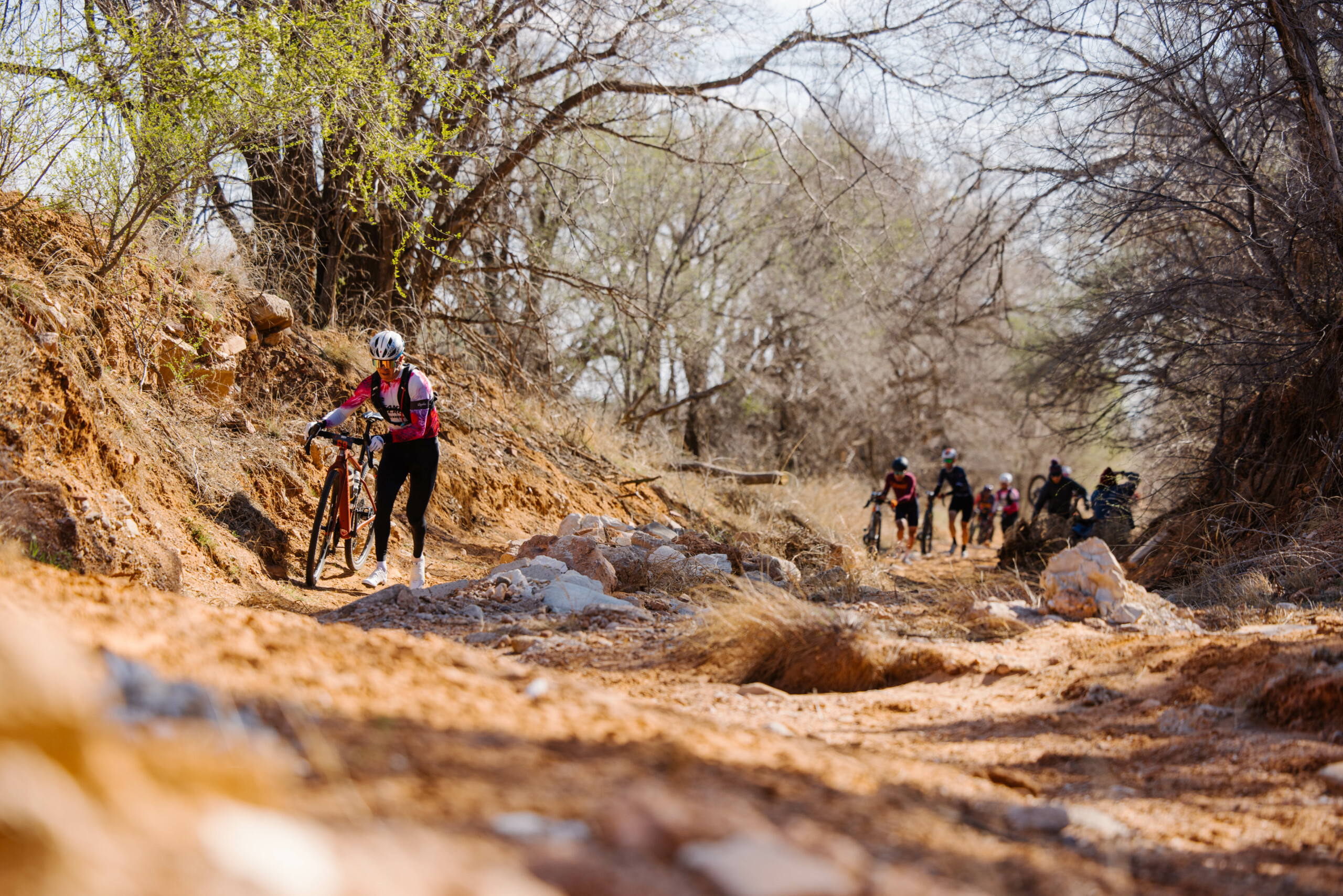
The riders then faced 15 miles of grueling conditions, including the extremely rocky Limestone Pits, which forced most of the leading riders off their bikes. Over the next 6 miles, the men’s race fragmented into three clear groups: Keegan Swenson and Chase Wark led the pack, followed closely by Brennan Wertz, Tobin Ortenblad, and Finn Gullickson. Trailing them was a cluster of 12 riders, which included Ted King and Alex Howes.

As they reached mile 20, the competitors embarked on a 10-mile gradual but grueling ascent up the Rails to Trails path through the Clarity Tunnel up the Caprock. The climb proved to be pivotal, with Swenson and Wark solidifying their lead, boasting a 1-minute advantage at the base of the climb and extending it to 1’40” at the summit. Meanwhile, the trio of Brennan, Tobin, and Finn maintained a 50-second lead over the third group at the peak.

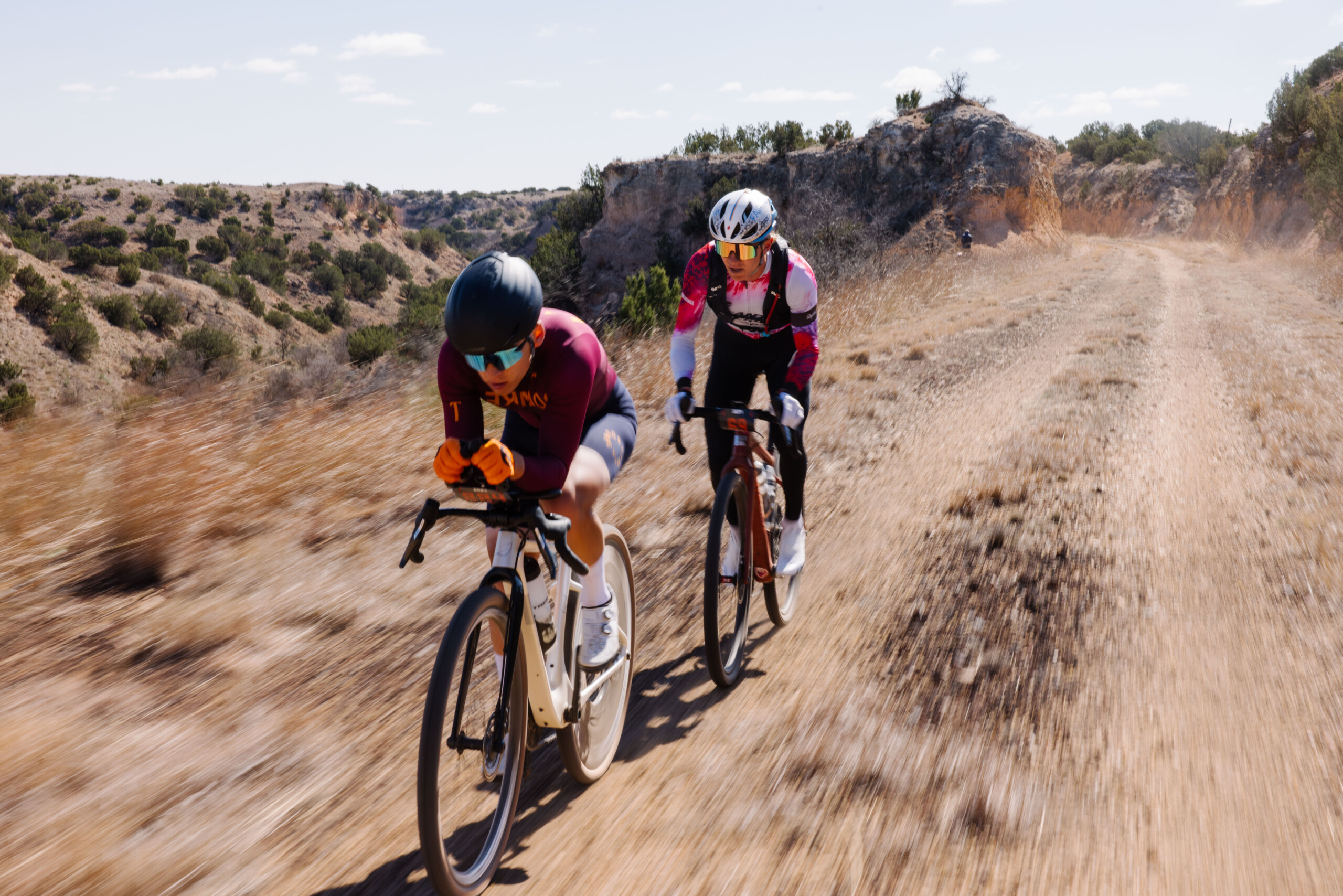
Keegan Swenson and Chase Wark trade turns putting in the work to increase their lead. Photo by Alex Roszko, courresy Valley of Tears Gravel

Keegan and Chase worked well together for next 30 miles and by time they got to the Tampico Tundra they had 5 minutes over the chasers, who never really organized nor worked together cohesively. Three miles into Tampico Tundra, on a short punchy climb, Swenson rode Werk off his wheel and soloed the final 20 miles, despite challenges like mishandled feeds and equipment malfunctions.

Ultimately, Keegan Swenson manages to breakaway, and soloes the last 20-miles to the finish. Photo by Alex Roszko, courresy Valley of Tears Gravel

Swenson’s tenacity propelled him to a remarkable victory, crossing the finish line with a commanding 5-minute lead over Wark, while Gullickson claimed victory in the group sprint for third.

In the women’s competition, a compelling duel unfolded between Sofia Gòmez Villafañe, Jenna Rinehart, and Emily Newsom.

Sonia Gòmez-Villafañe works her way through the Limestone Pits. Photo by Alex Roszko, courresy Valley of Tears Gravel

Going into the Rails to Trails path, Villafañe and Rinehart had a 3-minute lead over Newsom. Despite the setback from her crash and mechanical issues, Newsom showcased remarkable resilience, eventually rejoining the lead after the climb and descent from the Caprock back into the Valley.

However, Sofia’s decisive attack in the Tampico Tundra proved decisive, propelling her to a dominant two-up sprint finish victory, with Rinehart securing second place and Newsom valiantly clinching third just 1’38” behind Villafañe.

Against the picturesque backdrop of Hall County, the Valley of Tears not only tested the physical limits of its participants but also showcased the unyielding spirit and camaraderie inherent in the world of gravel racing.

Overall Men’s Top-10 Results

Place Name Overall Time
1 Keegan Swenson 4:49:41
2 Chase Wark 4:55:27
3 Finn Gullickson 4:57:47
4 Brennan Wertz 4:57:48
5 Adam Roberge 4:57:49
6 Julien Gagne 4:57:50
7 Alex Howes 5:01:22
8 Jack Makohon 5:01:22
9 Nathan Spratt 5:01:23
10 Tobin Ortenblad 5:02:41


Overall Women’s Top-10 Results

Place Name Overall Time
1 Sofia Gòmez-Villafañe 5:40:02
2 Jenna Rinehart 5:40:05
3 Emily Newsom 5:41:40
4 Marisa Boaz 5:55:53
5 Danielle Ravnikar 6:03:34
6 Terry Casey 6:05:04
7 Erin Reedy 6:16:50
8 Victoria Herring 6:52:20
9 Candace Matthies 6:53:47
10 Jessica Martin 6:59:25


2024 Paris-Nice: An American in Paris-Nice, Jorgenson Takes the Overall Win

0

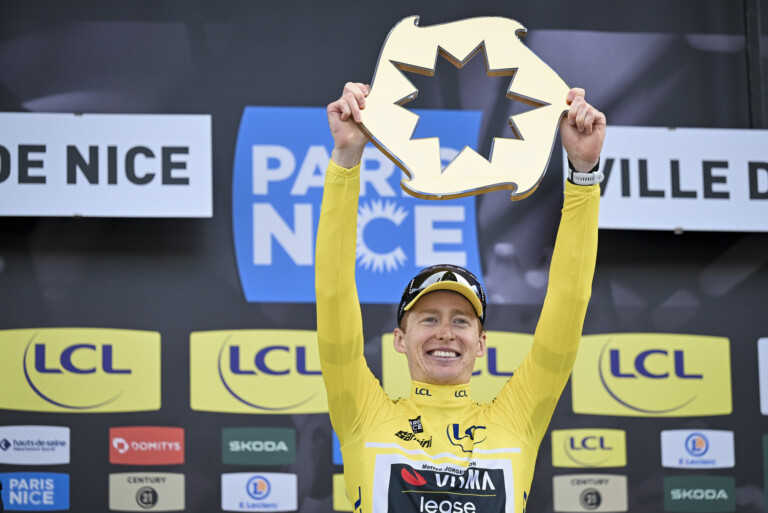
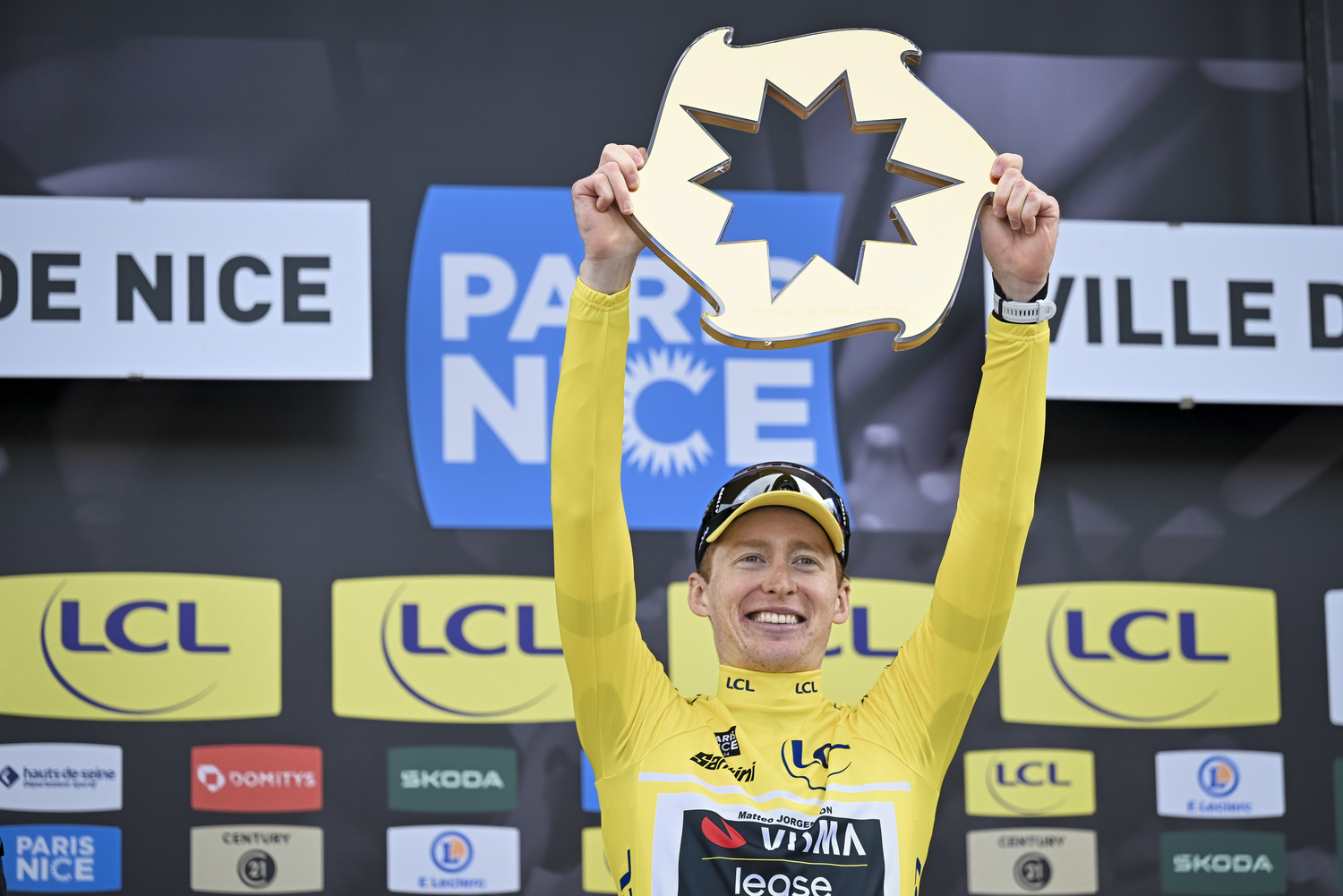
NICE, France (March 10, 2024) — Boise, Idaho’s Matteo Jorgenson bridged a gap of nearly two decades in Paris-Nice when he became the first American since 2006 to win the Race to the Sun on Sunday. It was almost a home win for the Californian, who lives in Nice and trains on the roads of the 109.3-km final stage. Gone on the five climbs of the day with Belgian champion Remco Evenepoel and stage 7 winner Aleksandr Vlasov, the Visma-Lease a Bike rider methodically dropped compatriot and childhood friend Brandon McNulty, the leader at the start, to clinch his greatest win to date. Evenepoel, who shook the race with several attempts, sealed a promising Paris-Nice with a prestigious stage win on the Promenade des Anglais.

10/03/2024 – Paris-Nice – Étape 8 – Nice / Nice (109,3km) – JORGENSON Matteo (TEAM VISMA | LEASE A BIKE) – Remporte Paris-Nice 2024. Photo credit: A.S.O./Billy Ceusters

Extended Highlights – Stage 8 – Paris-Nice 2024

Three escapees

The real start was given at 12:05 to 118 riders. David Gaudu (Groupama-FDJ), Elmar Reinders (Jayco AlUla) and Madis Mikhels (Intermarché-Wanty) did not start. At kilometre 4, Laurence Pithie (Groupama-FDJ), Victor Campenaerts (Lotto Dstny) and Johan Jacobs (Movistar) broke clear and the pack failed to react. They led the bunch by two minutes but Pithie was dropped in the ascent of Cote de Levens (Km 21). Campenaerts also dropped Jacobs and reached the top on his own.

Campenaerts on his own

At the back, Christian Scaroni (Astana) surged in the last kilometre of the ascent to take two points off KOM leader Mathieu Burgaudeau (TotalEnergies) while stage 1 and 5 sinner Olav Kooij abandoned. In the descent, the Belgian was chased by Laurens de Plus (Ineos), Bruno Armirail (Decathlon-Ag2R), Samuele Battistella (Astana), Scaroni and Jacobs, while a second chasing group included Ion Izagirre (Cofidis), Pello Bilbao (Bahrain), Ewen Costiou (Arkea), Quentin Pacher (Groupama), Harrison Sweeny (EF-Easypost), William Barta and Ruben Guerreiro (Movistar). The two groups merged at Km 30. A further group, involving green jersey Mads Pedersen (Lidl-Trek), Gijs Leemreize (DSM), Jakob Fuglsand and Hugo Houle (Israel-Premier Tech), was on their heels.

Buitrago out of the race

Scaroni added three points to his tally in Cote de Chateauneuf (Km 37). In the tricky descent, stage 4 winner Santiago Buitrago (Bahrain) and Kevin Geniets (Groupama) were forced out in a crash also involving Carlos Rodriguez and Egan Bernal (Ineos). With 65 km to go, the main contenders caught the group of chasers while Campenaerts went on with his solo ride. In the Cote de Berre les Alpes, the Belgian “rouleur” still retained a 30 seconds lead on the 23-man yellow jersey group, led by Mads Pedersen (Lidl Trek). Scaroni again took three points to come within two points of Mathieu Burgaudeau in the KOM classification.

Evenepoel attacks

Campenaerts was reined in into the 1st category Cote de Peille and Remco Evenepoel attacked twice from the bottom, trimming the leading group down to 11 riders: Evenepoel, Roglic, Vlasov, Grossschartner, McNulty, Jorgenson, Kelderman, Skjelmose, Harper, Plapp and Scaroni. Hampered by his crash, Egan Bernal was in a dropped group with Felix Gall (Decathlon-Ag2R), 40 seconds down. The Belgian champion’s third attack caused more damage as only Jorgenson managed to take his wheel, soon followed by Vlasov. But McNulty lost ground in the final kilometre of the ascent. At the top of Cote de Peille, Vlasov was first ahead of Jorgenson and Evenepoel as the yellow and white jersey holder kept losing time. Scaroni managed to snatch two points to go level with Burgaudeau in the KOM standings.

Leading trio

Evenepoel, Jorgenson and Vlasov steadily increased their lead while McNulty could not find any support from the riders chasing with him – Skjelmose, Plapp and Scaroni. In the intermediate sprint of Col d’Eze, the American white jersey holder picked six seconds to strengthen his virtual leader’s jersey ahead of the Belgian champion. The leading trio were left to battle it out for the stage win, if not for the overall victory, which could not elude Jorgenson at this stage. The polka-dot jersey was still at stake and was promised to the rider coming first at the top of Cote des Quatre Chemins, the last in this Paris-Nice. Evenepoel added the KOM leader’s jersey and the green jersey to his stage win and his well-deserved prize as the most aggressive rider in this final stage. He also finished second overall, 30 seconds behind Jorgenson, ahead of McNulty, third 1:47 adrift.

Boise’s Will Barta finished 15th overall.

Stage 8 Results:

1 REMCO EVENEPOEL 21 SOUDAL QUICK-STEP 02H 50′ 03” B : 14”
2 MATTEO JORGENSON 41 TEAM VISMA | LEASE A BIKE 02H 50′ 03” B : 12”
3 ALEKSANDR VLASOV 7 BORA – HANSGROHE 02H 50′ 53” + 00H 00′ 50” B : 6”
4 MATTIAS SKJELMOSE 66 LIDL-TREK 02H 51′ 42” + 00H 01′ 39”
5 BRANDON MCNULTY 34 UAE TEAM EMIRATES 02H 51′ 42” + 00H 01′ 39”
6 SAMUELE BATTISTELLA 142 ASTANA QAZAQSTAN TEAM 02H 52′ 16” + 00H 02′ 13”
7 MICHAEL STORER 211 TUDOR PRO CYCLING TEAM 02H 52′ 16” + 00H 02′ 13”
8 FELIX GALL 71 DECATHLON AG2R LA MONDIALE TEAM 02H 52′ 16” + 00H 02′ 13”
9 EGAN BERNAL 51 INEOS GRENADIERS 02H 52′ 16” + 00H 02′ 13”
10 LUCAS PLAPP 86 TEAM JAYCO ALULA 02H 52′ 16” + 00H 02′ 13”

General Classification (Top 3)

Rank Rider Team Time
1
JORGENSON Matteo (USA)
Team Visma | Lease a Bike 27:50:23
2
EVENEPOEL Remco
(BEL)
Soudal Quick-Step 0:30
3
MCNULTY Brandon
(USA)
UAE Team Emirates 1:47

Pro Racer Q&A – Boulder Roubaix catches up with Alex Howes

By Brook Watts — Racers of all types, from weekend warriors to seasoned pros, are prepping for The Boulder Roubaix Road Race powered by Wholesome, one of the earliest Paris-Roubaix “tribute” races. This year’s event is scheduled April 6 on a challenging 18.7-mile circuit with 60% dirt roads located north of the cycling mecca of Boulder, Colorado.

With about a month to go before race day we caught up with US pro rider Alex Howes to get his insights into the 2024 edition. Howes is renowned for his vast knowledge of all disciplines of cycling as well as a sharp wit.  He’ll be joining the 1,000+ riders who race The Boulder Roubaix.

Photo courtesy Alex Howes

Raised in the Denver area, Alex is no stranger to racing Boulder Roubaix beginning in his earliest years as a young amateur racer. Howes is a multi-time US National Champion, a veteran of many international races and, as his career has advanced, has become a fan of racing events that offer new challenges or a bit of perverse fun. In recent years that has included many gravel events and most recently the 2,750-mile Tour Divide stretching for Alberta, Canada to New Mexico along the continental divide, ending at the Mexican border.

Photo courtesy Alex Howes
First time you raced Boulder Roubaix?

Howes: I think I was 11 years old when I first “raced” Boulder Roubaix. It was my first race that wasn’t around a city block and I was instantly hooked. 

Best memory of Boulder Roubaix?

Howes: Seeing [Race Directors] Chris and Barb Grealish is always a treat. 

Worst memory of Boulder Roubaix?

Howes:  At the last edition of Boulder Roubaix, we had the unfortunate opportunity of chasing Riley Sheehan most of the day. At one point we nearly caught him before he hit the after burners again and left us in the dust. After the race we learned that at the point we nearly made contact, he had crashed with this fellow breakaway companion. It was a hard pill to swallow learning that the only time we made any progress on closing the gap was while he was sitting on the side of the road. Glad to know he’s got some faster people chasing him now in the World Tour. 

Your idea of the “perfect” Boulder Roubaix?

Howes: A nice day out where the ECG lines are tight and sharp. Maybe some casual road rash with no hospital trips required. Youthful swearing in the parking lot after and the lightness that comes from knowing you “did a thing” 

Best pre-race meal for Boulder Roubaix?

Howes: Five raw eggs and a steak. Or maybe some oatmeal. 

Best post-race drink for Boulder Roubaix?

Howes: Something light, something fresh, something that says cerveza on the side.

Favorite weather conditions for Boulder Roubaix?

Howes: Healthy drizzle and a stiff wind. 

Complete this sentence:  “If I were not racing Boulder Roubaix, I would be……?”

Howes: Six feet under ground 

Is The Boulder Roubaix a Road Race or a Gravel Race, or who cares?

Howes: It was a gravel race before gravel racing existed. I’d say it’s comfortably grandfathered into the “who cares” category. 

There’s still time to take part in Boulder Roubaix. Beginners and first timer’s races start at 8:00 am with other categories throughout the day. For the full schedule and registration see boulderroubaix.com.

And don’t worry if you’re a newcomer, there’s a deal for first time USAC Members that can be used to get $61 discount on Adult Race memberships.  Use Coupon Code “INTROMEMB24.”

Cycling West’s Early Spring 2024 Issue is Now Available!

Cycling West and Cycling Utah Magazine’s Early Spring 2024 Issue is now available as a free download (9 MB download). Pick up a copy at your favorite Utah, Idaho, Wyoming, Nevada, Montana, Colorado, Arizona, New Mexico, North Dakota, South Dakota, and Northern California bike shop or other location.

Download the Magazine Now!

Cycling West Early Spring 2024 Cover Photo: Max Carballo during an Over the Edge Hurricane shop ride at Guacamole with the cliffs of Zion National Park in the background.
Photo by John Shafer, photo-john.net

Contents

  • The Return of Regional Bike Manufacturing — page 2
  • Wyoming’s Caribou Loop Trail: Your Next Bikepacking Ride — page 3
  • Five Tips for Solo Mountain Biking — page 4
  • Federal Government Plans New Bike Research — page 5
  • A Guide to Buying a Used Bike — page 6
  • The Athlete’s Kitchen — Eggs: Unscrambling the Confusion — page 8
  • Conquering Challenges, Forging Connections: Huntsman Sportsfest Bicycle Ride Raises Funds and Fosters Unity — page 9
  • The Maze – Mountain Biking One of the Loneliest and Most Breathtaking Corners of the National Park System — page 10
  • Bikepacking Product Reviews (Part 2) — page 13
  • Study: Cycling Past 50: A Closer Look into the World of Older Cyclists — page 14
  • Cycling Trivia: Paris-Nice and Tirreno-Adriatico — page 14
  • Book Review: “The Monuments” is a Monument to the Monuments — page 15
  • Report: How to Use Bicycles For Disaster Response — page 21
  • March Cycling Trivia Answers  — page 22
  • (See Page 14 for the questions) — page 22
  • Montana to Build Freeway to Multi-Use Trails — page 22
  • Study: How Does a Bike Shop Know What to Buy? — page 22
  • Trouée d’Arenberg – The Bicycle Art of Dave Flitcroft — page 23

Senate Bills Could Expand Mountain Biking Options in Colorado and Montana

By Charles Pekow — Two Senate bills, the Blackfoot Clearwater Stewardship Act (S. 2149) and the Colorado Outdoor Recreation and Economy Act (S. 1634), could expand mountain biking options in Montana and Colorado, respectively, but under limited conditions.

The Committee on Energy and Natural Resources approved legislation that would save nearly 4,000 acres in Montana for mountain bikers and other recreational users. Specifically, the Blackfoot Clearwater Stewardship Act (S. 2149) aims to protect 3,835 acres in the Blackfoot River Watershed. Additionally, the bill proposes that the U.S. Forest Service consider developing trails through a collaborative process involving local citizens representing diverse interests.

As of mid-December, the bill had not yet been officially presented to the full Senate, and no companion bill was pending in the House. Updates on the status of the bill can be found at https://www.congress.gov/bill/118th-congress/senate-bill/2149

Bikepackers in the Grand Mesa Uncompahgre and Gunnison National Forests. If the CORE Act passes, more opportunities for riding and bikepacking will open to the cycling public. Photo courtesy U.S. Forest Service.

The Committee also gave its approval to the Colorado Outdoor Recreation and Economy Act (S. 1634), which proposes the designation of a Williams Fork Mountains Wildlife Conservation Area in Colorado. The bill outlines restrictions on mountain bikes in the area to “designated roads and trails.” However, it explicitly permits biking in the Ophir Valley Area of a Proposed Sheep Mountain Special Management Area in Grand Mesa, Uncompahgre, and Gunnison national forests.

For more details, refer to https://www.congress.gov/bill/118th-congress/senate-bill/1634