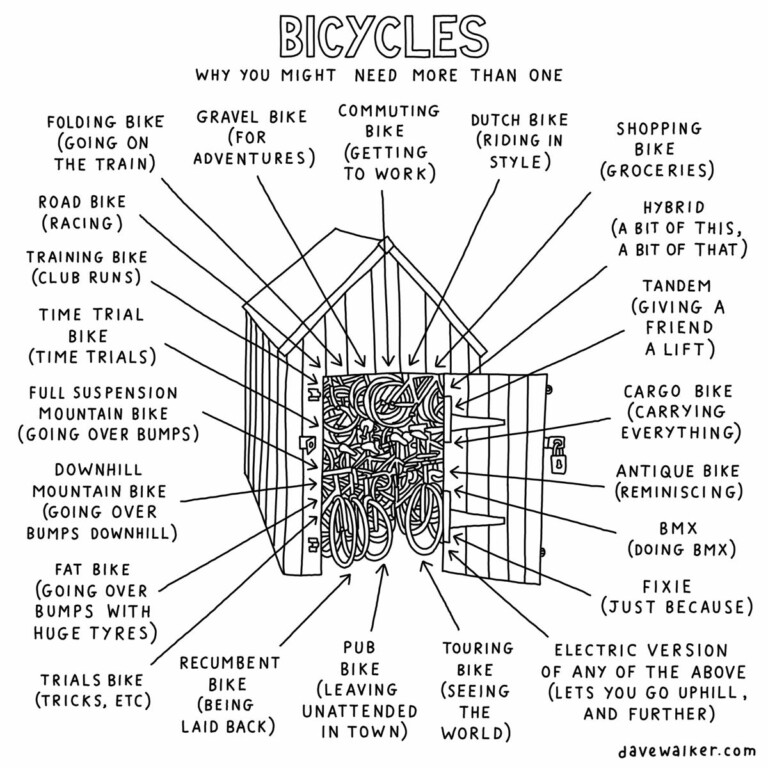
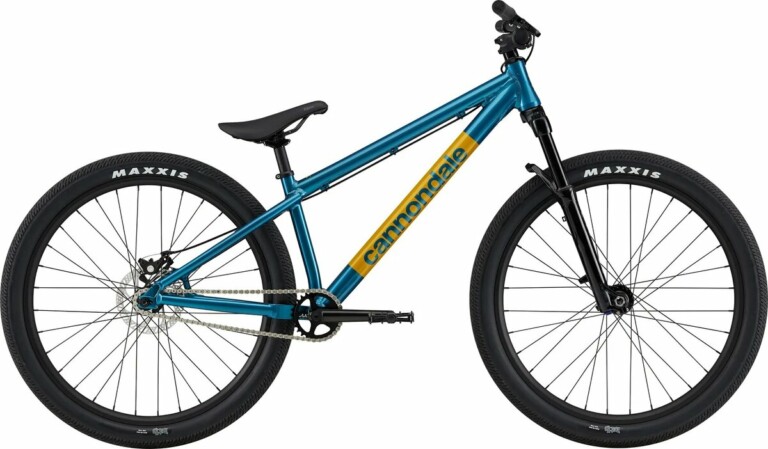
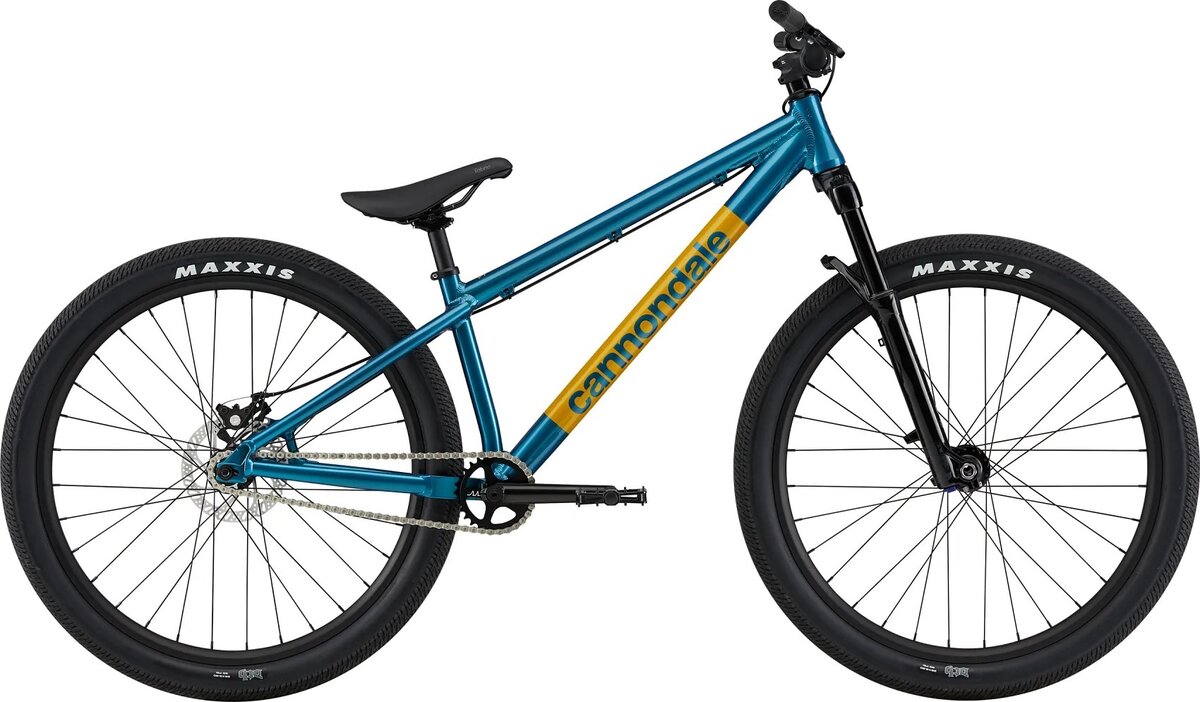
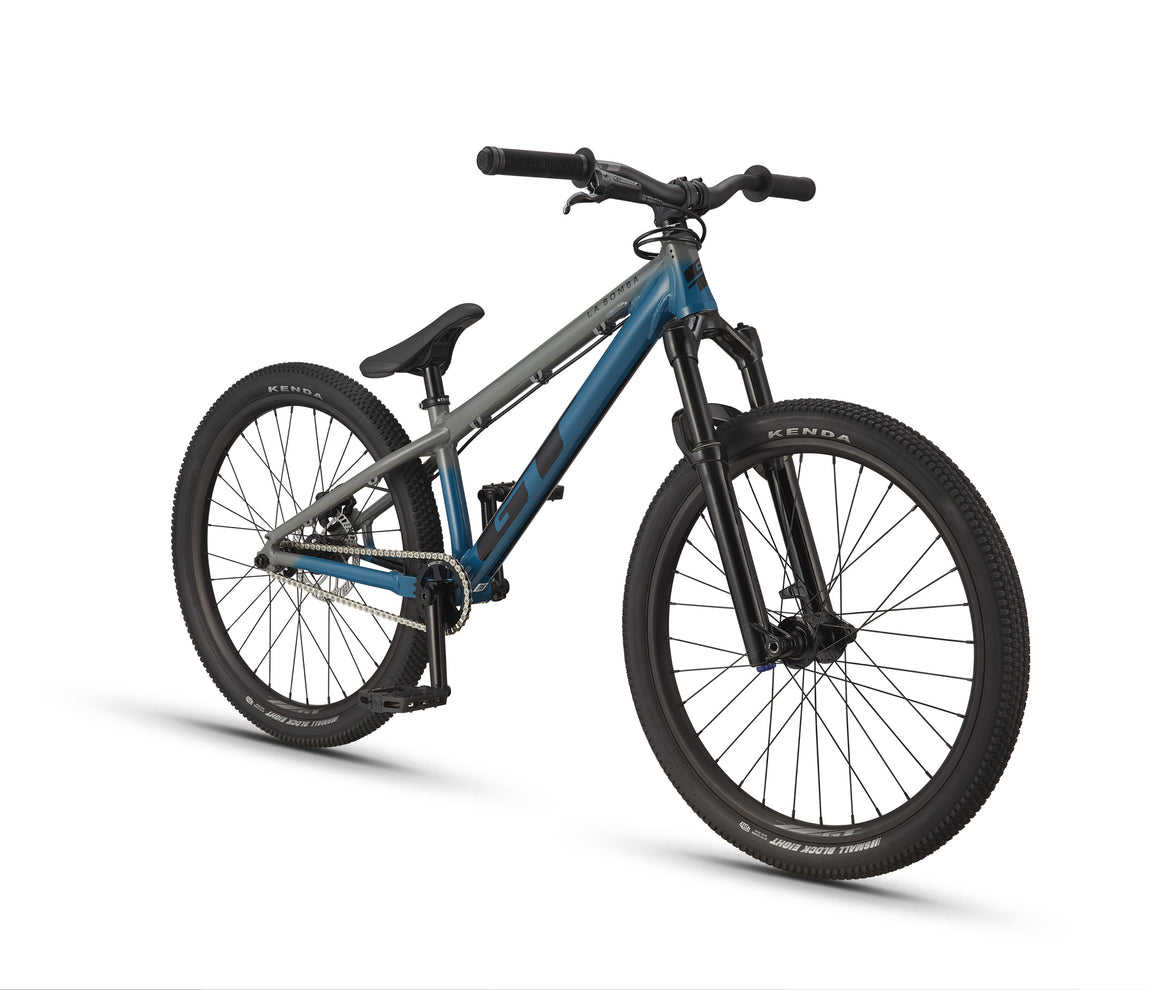
Description: This recall involves GT Model Year 2019 through 2023 LaBomba 24” bicycles, LaBomba 26” bicycles, LaBomba Pro bicycles, LaBomba Rigid bicycles, and LaBomba 26” bicycle framesets. The bicycles and framesets were sold in sea green, green, dusty blue, blue, purple, and red. The model name LaBomba is printed on the bicycle frame top-tube. “GT” is printed on the downtube.
Remedy: Consumers should immediately stop using the recalled bicycles and contact an authorized GT dealer for a free replacement frame.
Incidents/Injuries: The firm has received five reports of damage to the bicycle headtube/downtube weld, causing the bicycle headtube to separate from the bicycle frame. No injuries have been reported.
Sold At: Bicycle stores nationwide from October 2018 through September 2023 for between $400 and $1,450.
Importer(s): GT Bicycles LLC, of Aliso Viejo, California
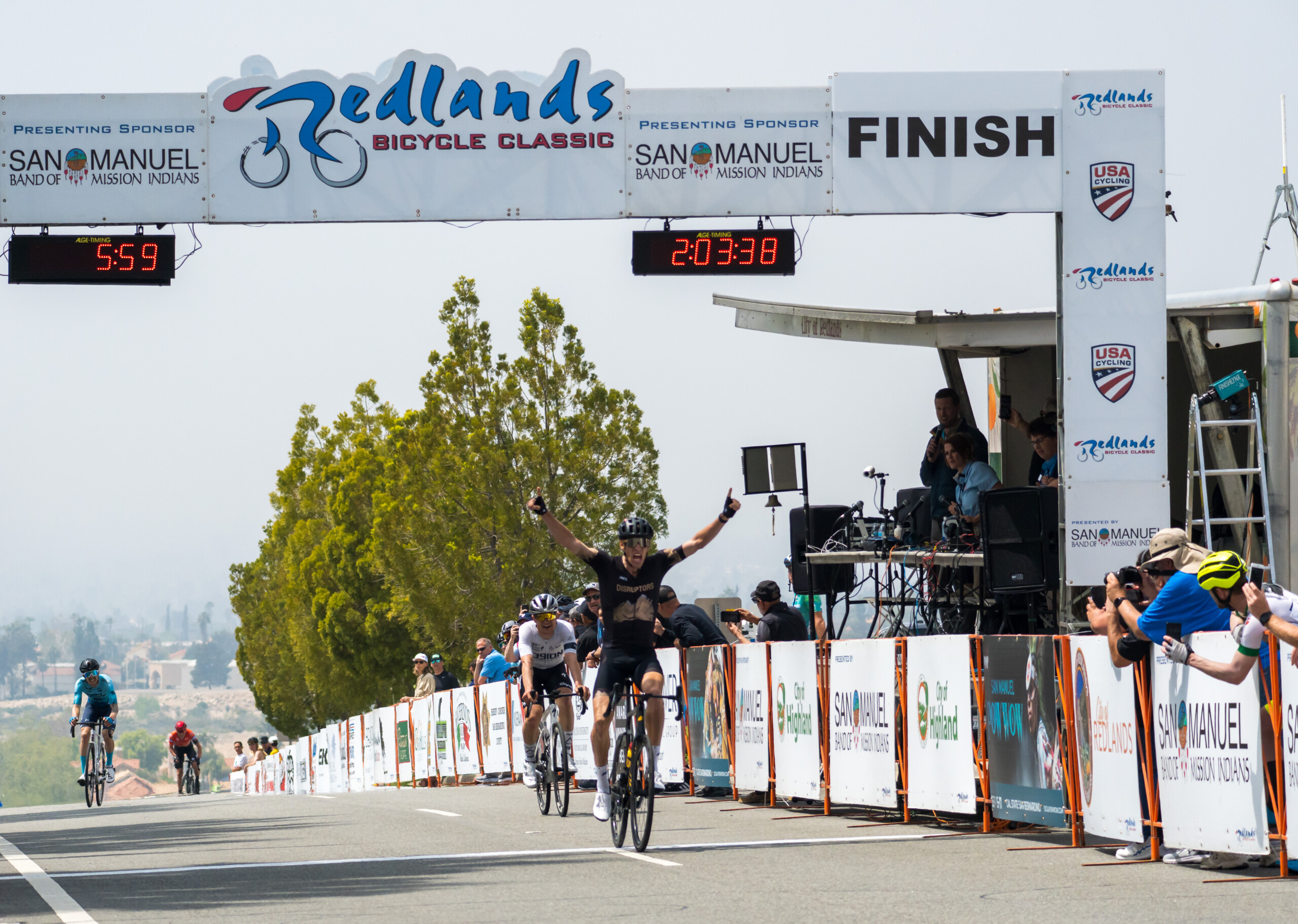
REDLANDS, California (March 6, 2024) — The 2024 Redlands Bicycle Classic, presented by the San Manuel Band of Mission Indians, will once again start the North American schedule of stage races with its 38th renewal April 10 through April 14.
The five-day event will feature road racing by professional and amateur cyclists, time trials, criteriums for men, women, masters and juniors as well as a vendor village in downtown Redlands, public racing, a BMX stunt show, corn hole contests, and the Stater Bros. Charities youth races, including the annual School Duel.
Photo courtesy Redlands Bicycle Classic
The Redlands Classic is considered the longest, continuous stage race for cyclists in American bike racing since its inception in 1985. It has featured current and future stars of road racing over the years, earning the event the reputation-enhancing “Where Legends Are Born.”
Following the opening circuit races in the City of Highland on April 10, there will be two new stages in this year’s lineup.
Photo courtesy Redlands Bicycle Classic
On Thursday, April 11, the pro racers will be tested by a point-to-point race from Redlands to Onyx Summit, at an elevation of 8,443 feet above sea level on Highway 38. The men will compete on a 50.4-mile course that starts at San Bernardino International Airport and then follows Highway 38 through Mentone, Forest Falls, Angelus Oaks to the finish line southeast of Big Bear Lake.
The women will travel 40 miles from the Hangar 24 Brewery and Tap Room at Redlands Municipal Airport on the same Highway 38 route to the finish line.
Photo courtesy Redlands Bicycle Classic
On Friday, April 12, the scene shifts to the Lake Perris State Recreation Area near the cities of Moreno Valley and Perris where junior cyclists, women and men will compete in a time trials covering 11.7 miles.
On Saturday April 13, all the action will be centered on the area of Citrus Avenue in downtown Redlands which will feature a vendor village and activities for the whole family as well as professional racing in the Arrowhead Orthopedics Criteriums for the professional women and men, competing on a one-mile circuit.
Photo courtesy Redlands Bicycle Classic
On Sunday, April 14, the 68-mile City of Redlands Sunset Road Race for women and the 91.1-mile City of Redlands Road Race for men will be featured along with criteriums for novice women, masters men (age 30-40 plus) and masters men (age 45- 55 plus). Other activities in the downtown area include an early-morning, timed Redlands Mile Run, a 5K run and Family Fun Walk.
Meanwhile, registration is now open for various racing events. Here are the links:
By Stephen Wasmund and Amy Andrews — You were likely in search of something when you picked up this issue (Winter 2023-24) of Cycling West. Information or maybe just entertainment. Presumably you’re a cyclist, or keen on becoming one, whatever your definition of ‘cyclist’ might be. Whether a racer, tourer, cyclomuter (bike commuter), or simply one who rides a bicycle, you immediately start searching for the ‘next’ … the next mountain biking destination, next exciting road race, or better cyclomuting route to work; the next level of fitness; lighter or blingier racing parts; a next bike; a next type of bike; next horizons. Eventually your search leads to the next big challenge, and often after that, to reason.
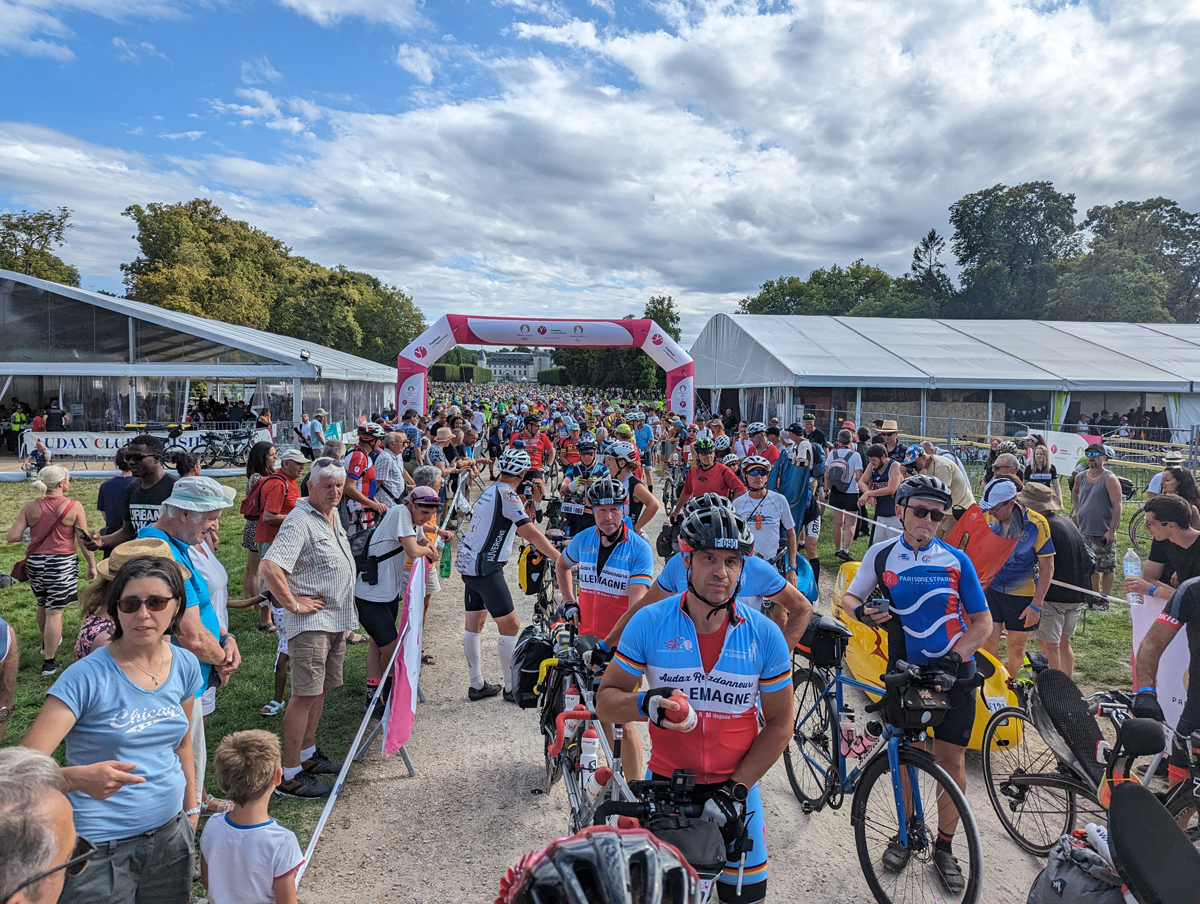
Staging at the start of Paris-Brest-Paris 2023: A triplet ridden by 3 brothers is right behind us. They finished! Photo by Steve Wasmund
Paris-Brest-Paris is one of the ultimate bookstores in that search. Once one has decided to take on this event, the list of ‘nexts’ starts growing rapidly. The 1200 km ride across northwestern France is most likely a new destination. Even if you’ve been there before, most cyclists visiting France will head for the mountains! I suspect it’s uncommon to voluntarily vacation in the ‘Wisconsin of France’. In addition to the new destination, a big brevet on the other side of the ocean provides endless opportunity for new equipment. I don’t care how much cycling equipment you have, an event like this will require something new. There is definitely a physical challenge in pedaling the 300-600km (180-370 miles) a day, over the course of 4, 3, or for some really fast folks just 2 sunrises. This challenge is tracked closely by the search for the reason so many people have been participating in this historic event for well over 100 years. Amy and I are far enough into our cycling quest to appreciate that search for reason.
Staging at the start of Paris-Brest-Paris 2023: Note the triplet ridden by 3 brothers. They finished! Photo by Steve Wasmund
Our search begins on Sunday at 5:15pm. The most ambitious riders have been heading out in waves at 15-minute intervals since 4pm. Their time cut-off is 80 hours! The waves of ‘90-hour riders’ start at 5:15 and will continue into the night. The waves will begin again early Monday morning for riders who don’t want to start their epic ride into the night after a long and restless day of trying to prepare. These riders trade a morning start for a time limit of 84 hours. This means thousands of cyclists are spread across western France for the next few days.
There was always someone to pass, always someone passing you, and always someone to ride with if you desire, and often someone riding towards you, as the route is, for the most part, out and back.
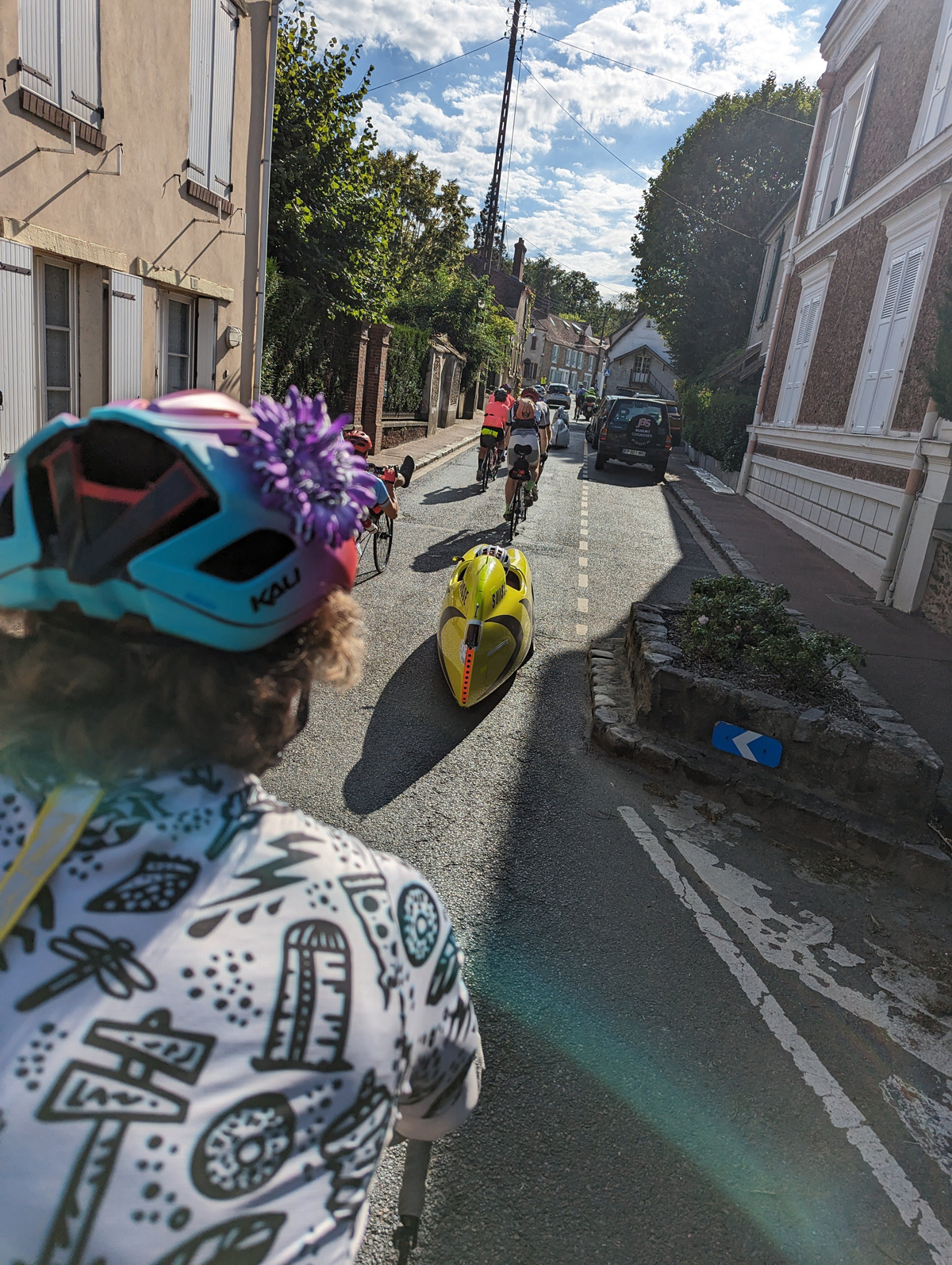
Our 5:15 ‘F wave’ is for ‘Special Bikes’ including tandems, triplets, tricycles, recumbents, and velomobiles (there are restrictions, but basically anything human powered, with 2 or 3 wheels, which can be steered with a handlebar). ‘Special Bikes’ are special in part because their rhythm is a bit different than standard solo bikes. A bit harder to get going, a bit harder to slow, pretty fast going downhill, and a bit slower climbing. The wild velomobiles are even more special in that regard. They can pass you like an owl in a low dark canopy of trees. Imagine a barely audible ‘whooosh’, with nothing to see, because they’re only 24 inches above the ground. They climb like sloths. So, starting a long ride with a bunch of nervous energy and a bunch of special bikes is an adventure. We didn’t have any mishaps but did spend a lot of that nervous energy chasing the sunset with several other tandems and continually leapfrogging the swooping and very slow climbing velomobiles. Unlike any riding we’d ever done. Unlike any roads we’d ever traversed. Unlike any challenge we’d ever undertaken. The search begins.
The very beginning of the ride: Tandems, recumbents, and velomobiles in Group F. Tiny French villages. Paris-Brest-Paris 2023. Photo by Steve Wasmund
Moments
Italian Pack Riding
On Monday afternoon we were schooled in Italian pack riding. We’d been cruising along by ourselves and slowly rolled up on a pack of 8 older Italian gentlemen. I didn’t quite want to expend the physical energy to pass them quickly and ride off, nor pull slowly to the front, have them slide into our slipstream and then expend the mental energy required to be a good engine (a tandem’s lot in life). So, we eased off a bit and started cruising about 10 meters behind them to catch a little break.
I think the captain of the Italian pack started talking about us. This is based on repeated looks over shoulders, foreign words spoken, and my guilty conscience. We eventually decided to be good citizens and rolled by smoothly on the gauche (left) leaving easy opportunity to hop on our wheel if they wanted to continue at our pace. The captain promptly came around, got right in front of us, slowed slightly, said more Italian words, and proceeded to pull us up the gentle climb at a very controlled pace all the while looking in his bar-end mirrors making sure we didn’t drop any of his pack.
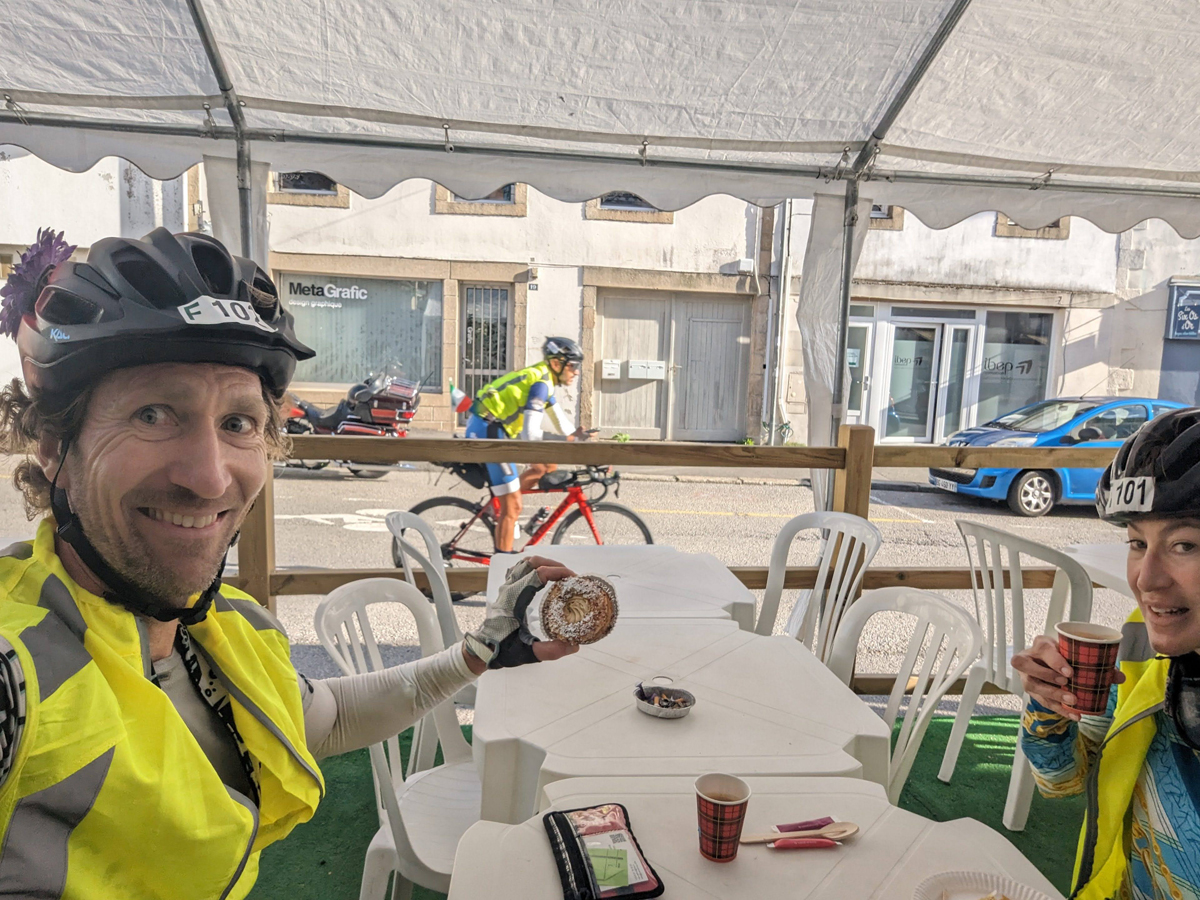
A fun stop not at a control point. Enjoying a Paris Brest pastry at a patisserie in Carhaix de Plouguer. Paris-Brest-Paris 2023. Photo by Steve
When the road turned downward the captain pulled off and let gravity have its way with us while leaving a large slipstream. Their entire pack tucked expertly into that draft and followed us across the next valley. When we started up the next hill, he promptly pulled back in front of us and kept us in check until the next downhill. This continued for the next few miles until the control point in Carhaix. I felt both wrapped on the knuckles, and greatly honored.
Crêpes
We were in search of the famous crêpes. You can survive PBP only buying food and hydration at the official Control Points, but we’d been advised by local PBP veteran Ken Moss that we needed to get a crêpe from this one particular family who handed them out freely in exchange for a postcard sent from the rider’s hometown. We’d forgotten which town the famous crêpe stand was located, so ended up stopping at several stands along the way and paying 1€ for a fine crêpe, but it wasn’t THE crêpe.
It wasn’t until about 12:30am Wednesday that we were peacefully cruising along when we see a couple folks sitting in lawn chairs at an awning covered folding table in front of a house just off the road, chatting, sipping coffee, and eating something. We decided a quick break was in order, so I hop off and inquire about their wares.
Crêpes! I’ll take one. When they ask what topping I want I give my standard answer of, “I’d like the topping that you like.” It’s usually fraise (strawberry) jam which is fine with me.
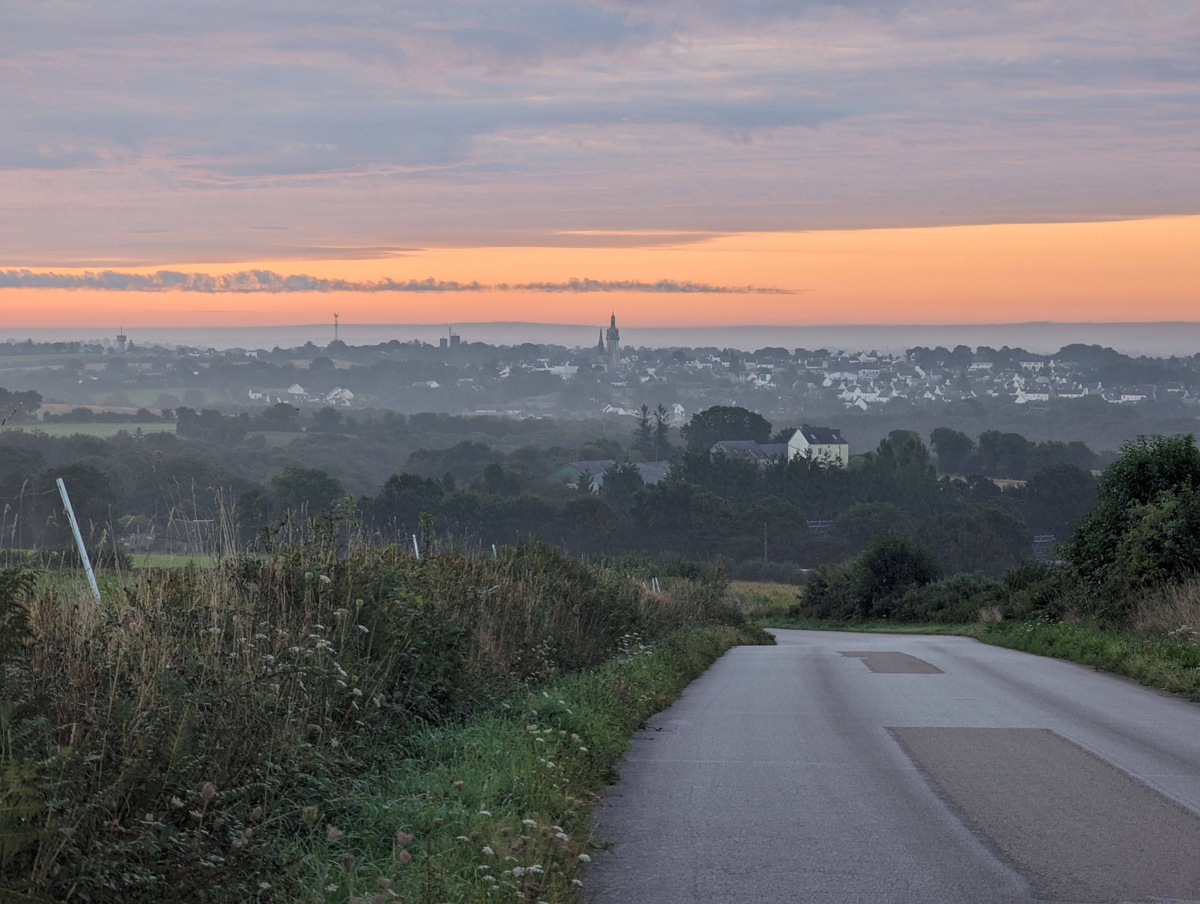
Our second sunrise. Idyllic. Paris-Brest-Paris 2023. Photo by Steve Wasmund
When I try to pay, I’m handed a little slip of paper with an address and asked to send a postcard. I’d completely forgotten about that! We’d found Ken’s stand. Interacting with families in their front yards in the middle of the night is definitely a joy and a reason for doing this event.
Update: As I’m writing this, I see a story in a blog by a tandem couple that I follow (link below) mention a different famous postcard crêpe stop… so maybe others had taken up the tradition of free crêpes for postcards and we hadn’t found the stop Ken had recommended, but I’m ok with that.
Intervals
We took part in early morning training intervals. It was about 6am on Wednesday. We’d been pulling 4 or 5 bikes for the last 45 minutes. The sun had come up and we were on our last couple hundred kilometers of the event. Life, although tired, was good.
A group of about 6 Frenchmen rolled up quickly behind us. One of them must have fallen asleep, forgotten his schooling, or wanted to play hijinks because instead of rolling by smoothly like they easily could have, things got a bit jumbled for a minute.
The road captain barked some orders, they got themselves organized again, and by the time they were back to making forward progress we decided… well, conscious decisions weren’t really being made anymore, but we still ended up sliding on to their wheels hoping we might get a good draft for the next little while.
For the next 30 minutes we hung on as they, in turn, attacked, and pulled, and sprinted, and surged between 40 and 45kph, and all the other inefficient moves completely inappropriate after 1000 kilometers of riding. We sat at the back as our momentum made it impractical to match all their rapid movements, but we still had the opportunity to roll around their captain when he’d been dropped and pull him back up to the tail of the pack. I think he got a kick out of that.
We bore down and hung on for one final climb (tandems CAN climb, on occasion, if the grade is just right) as a couple more of their team fell off the back. At the crest everything eased up and we all traded breathless laughs as we rolled into the checkpoint at Mortagne au Perche.
What WAS the reason for that? We may never know.
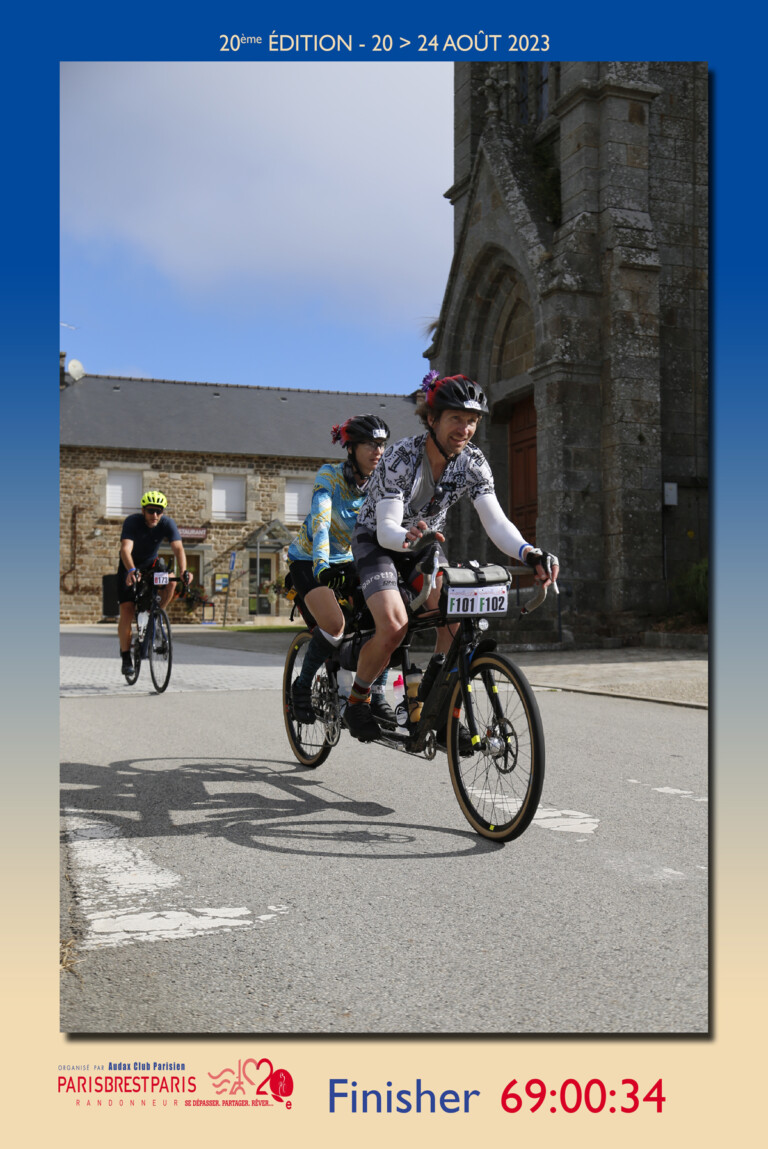
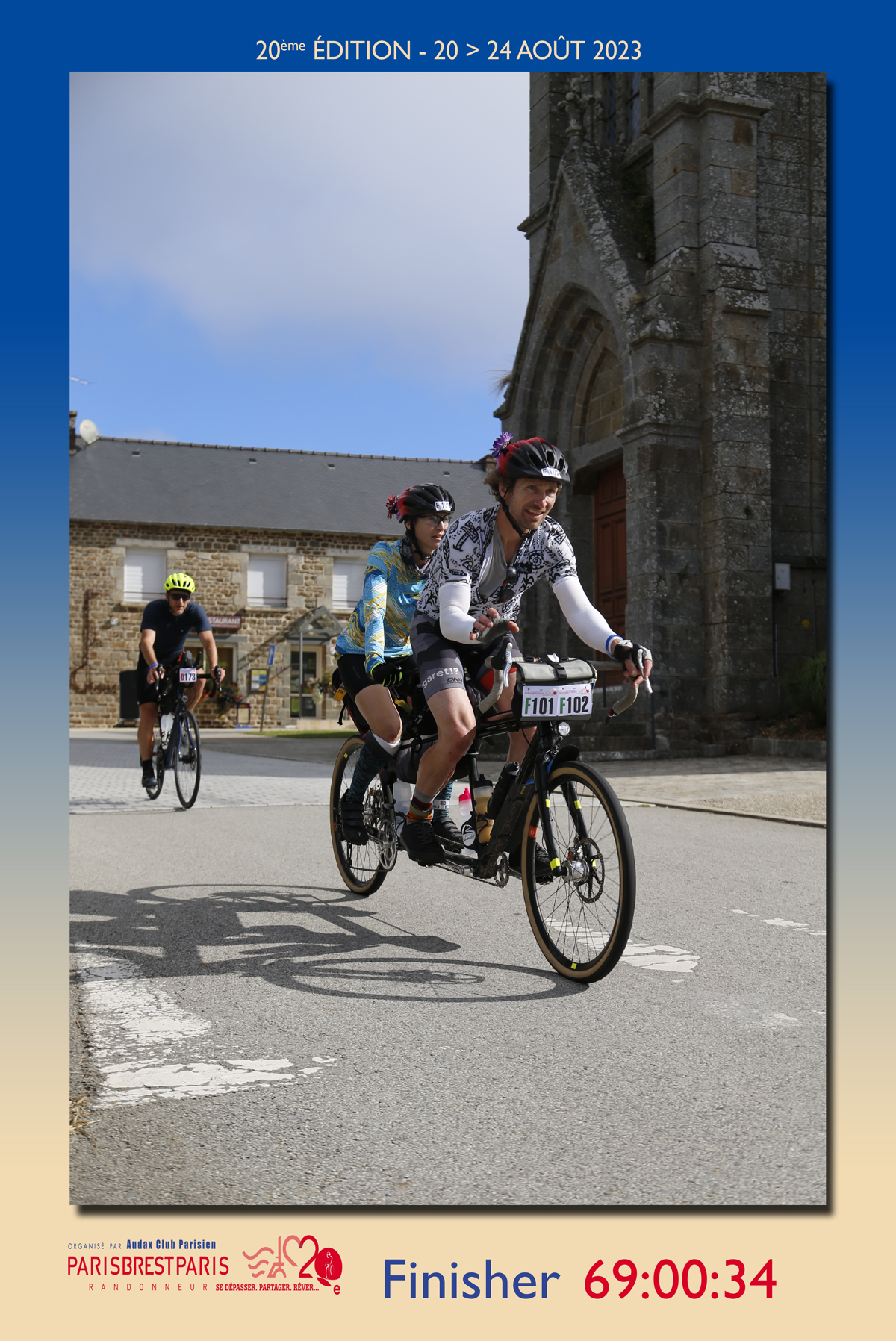
Cycling West Winter 2024 Issue Cover Photo: Steve Wasmund and Amy Andrews in the 2023 Paris-Brest-Paris event. They finished in 69:00:34. “One of the professional event photos taken in front of one of the many quaint churches along the route. I can’t place the town, but our sunken eyes suggest our return, Tuesday afternoon… possibly Tinteniac.” Photo by Maindru Photo
Why We’d do it Again
There are countless more recountings to be had after a ride this long. We experienced the magic of riding from one tiny French village to the next, and the next, and the next. We had fun conversations with riders from around the globe, ate many baguettes and drank many coffees and Cokes, and had plenty of time to wonder why we were doing this and why we’d likely do it again.
We finished in 69 hours and 34 seconds. That included 5 hours of sleeping in a dorm bed at the turn around control point in Brest after the first 28 hours of riding and then 42 minutes of sleeping on a bench in front of a church in Sougé-le-Ganelon at about 4 am Wednesday. We spent about 13 hours and 45 minutes eating and sitting at the various control points and two different shops that were not official stops but had fresher baguette sandwiches and pastries. Those stops were the best.
We discussed while riding that this is probably not the healthiest thing to do to one’s body. Nerve damage to hands, feet, and bums can result from this much riding induced sleep deprivation. We discussed how touring is likely a better way to visit new lands, with longer eating breaks and setting up camp for relaxed evenings. We also discussed how it’s quite possible the visiting of all the new lands makes the pain more bearable and the pain makes all the geographic and social interactions more memorable. Maybe this is the reason 39,722 have taken part in this event since its inception and why randonneuring has such a dedicated membership worldwide.
This event, not to mention a trip to Europe, had been on Amy’s and my radar for years. It finally happened and was all we hoped for and more. The preparation for a ride of this grandeur, not to mention preparing for an overseas vacation, made this entire year one we will never forget. Thank you for reading along as I get to recount these amazing memories. Now go search for some memory making events of your own.
In search of info on PBP
Paris-Brest-Paris, or PBP, is a 1200-kilometer brevet that was first run in 1891. The next 4 editions were spaced out by 10 years due to the presumed stress it put on the riders’ bodies. World War II disrupted the timing a bit with the 1941 event canceled. It happened again in 1948 and then realigned with its 10-year schedule in 1951. For some reason (maybe better roads), it fell into a 5-year interval for 4 editions and has then occurred every 4 years since 1971.
While it originally started within Paris, urban growth and logistics (6749 riders started in 2023) necessitated moving the circus outside the metropolitan traffic and the ride now starts at the beautiful and sprawling chateau of Rambouillet about an hour west of the city. The course changes on occasion, but always covers the approximately 600 kilometers due west out to the port city of Brest and then turns around and heads back to Rambouillet.
While some riders are ‘in search of a time’ (attempting to finish as quickly as they can), most are working to finish before the maximum time cutoff of 90 hours. In 2023 the first rider in was American Nicolas Dehaan who finished in an amazing time of 41 hours 46 minutes and 30 seconds. PBP is not a race and professional teams do not take part, although they have in the past.
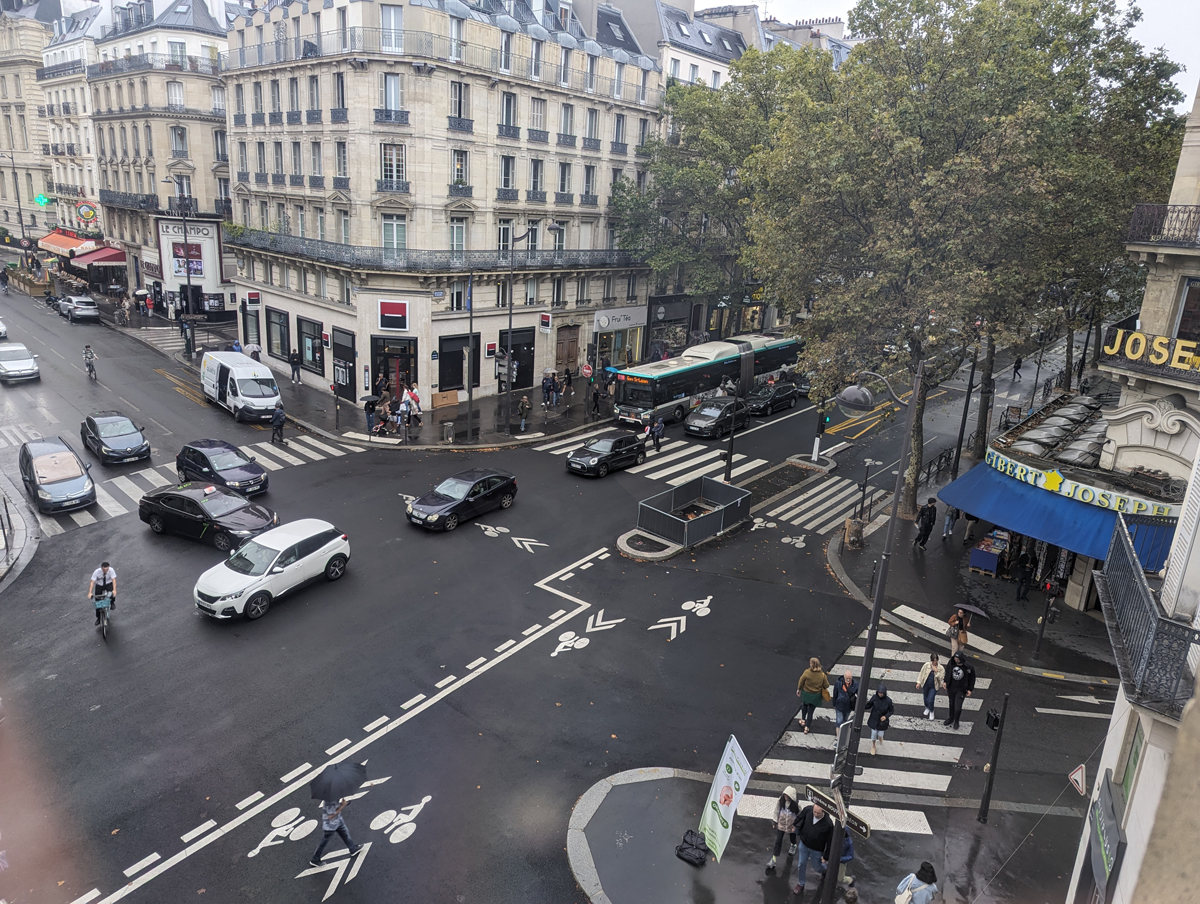
View of a typical Paris intersection. Always busy, always bicycles, always flowing. Photo by Steve Wasmund
The full history of this event is fascinating, and you should search it out. I would also encourage you to track down an issue of Bicycle Quarterly No. 84 and read Jan Heine’s write-up on this same ride.
Salt Lake Randonneurs
I encourage you to investigate Salt Lake Randonneurs, the small but very friendly chapter of Randonneurs USA, administered by Ken Moss, challenge yourself to realize that 100 miles can be a short ride, and maybe even start your search for a reason to ride PBP in 2027! Amy and I know we’ll be searching for one.
In search of the Parisian cycling scene
The French love bicycles. You’ve likely watched at least brief clips of the fans at le Tour de France. You’ve seen plenty of French bicycle art or wine bottle labels. We experienced it to our bones when families and bar patrons would cheer us riding through their sleepy village at hours suitable for neither roosters nor owls.
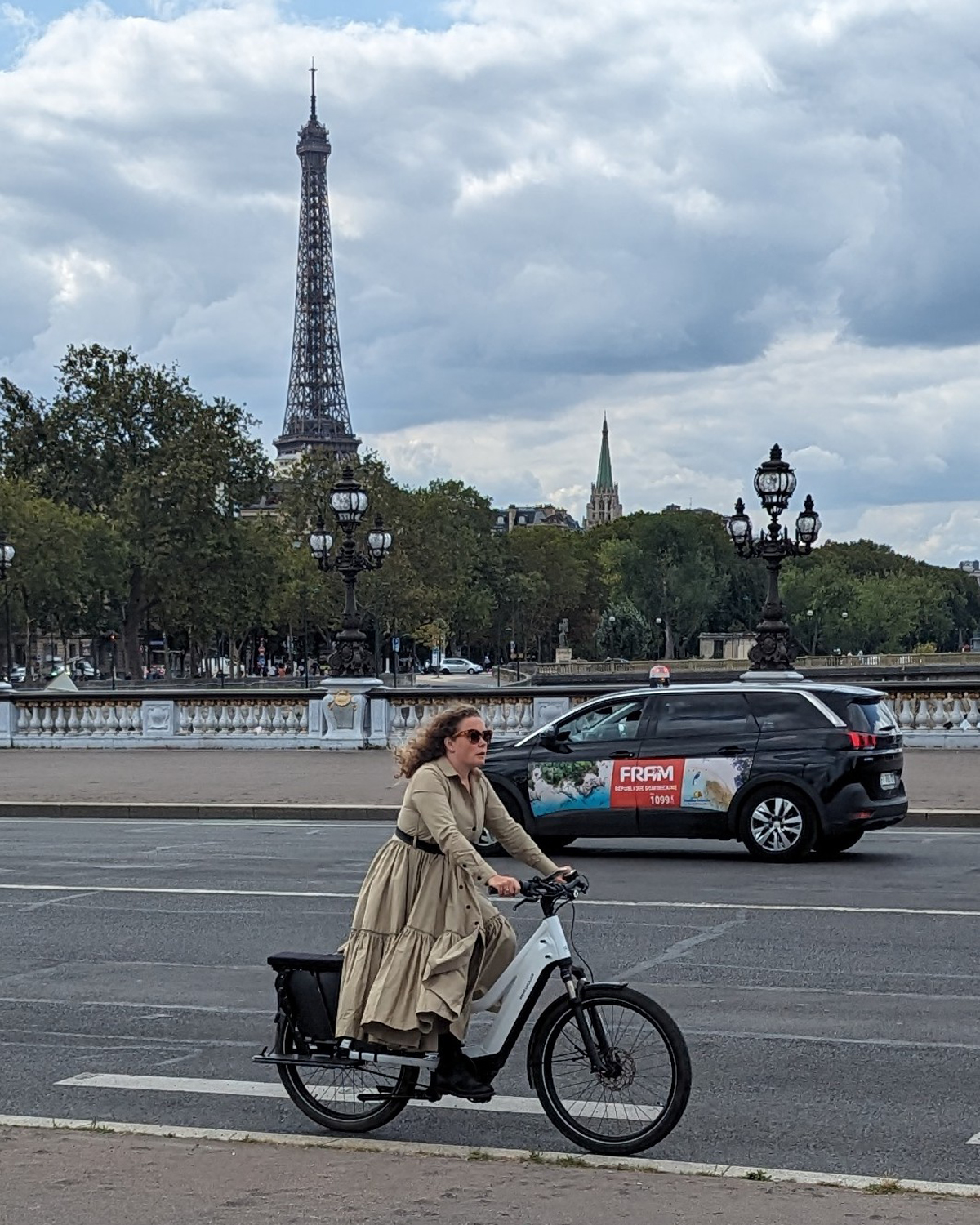
A common sight in Paris. She’s only missing the baguette and bottle of wine in her panniers. Photo by Steve Wasmund
Paris, however, is a large metropolitan city with business to conduct and plenty of people with places to be. The streets are narrow and decidedly not laid out on a logical Utah grid system. Like the language, street navigation was entirely foreign to us.
Also like the language, watching and listening to Parisians navigate the streets was like watching art. A horn honk serves a purpose: “Excusez moi. Move forward 6 inches so I can move my tail out of this intersection so the 3 other directions of traffic may pass through, s’il vous plaît.” Merging cars, scooters, bicycles, and pedestrians were an exquisitely choreographed dance.
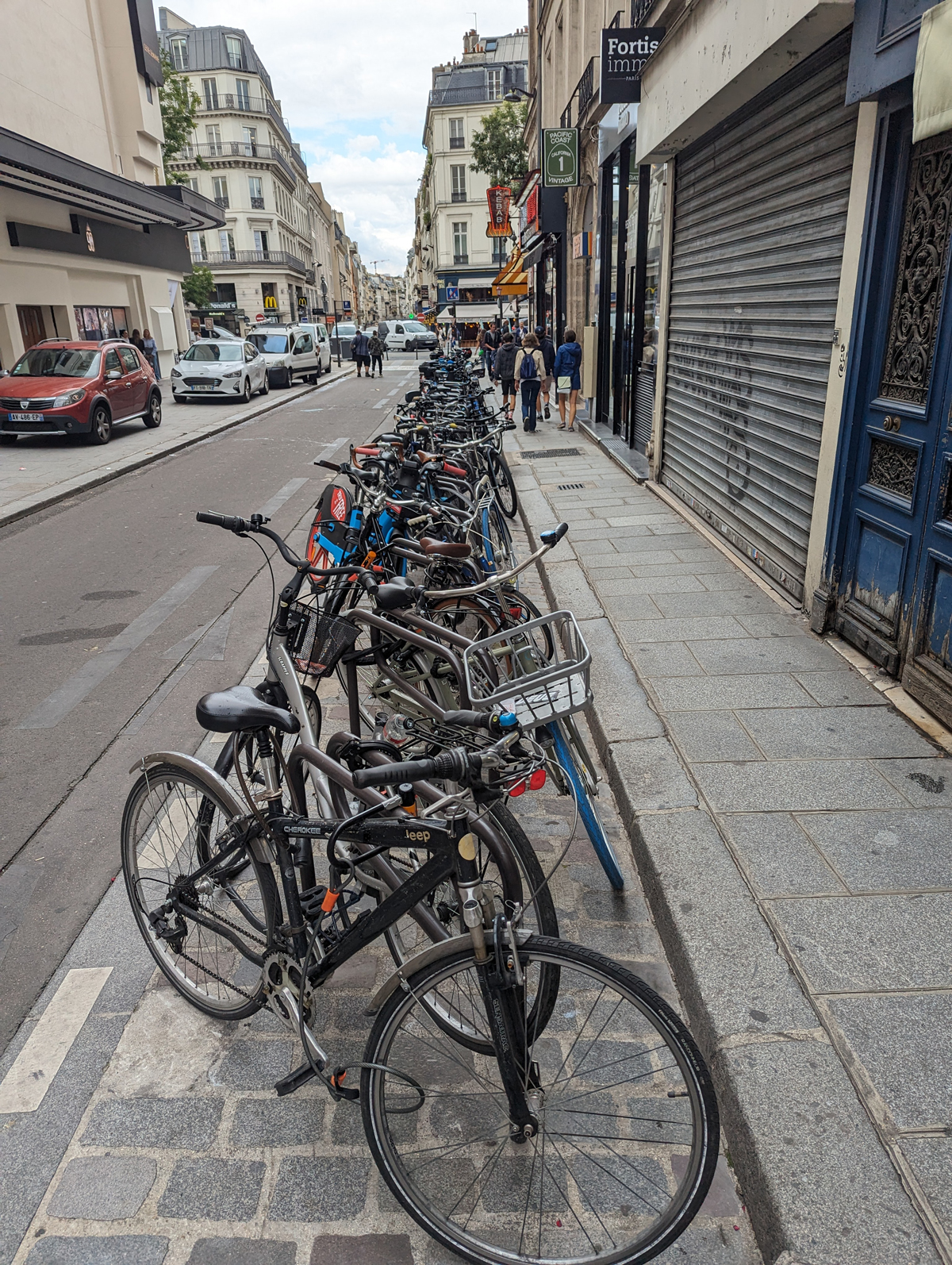
Paris. Bikes everywhere. Photo by Steve Wasmund
An entirely integral part of this orchestrated and choreographed cacophony was the bicycle. Business dressed, parents w/ 2 kids, errand runners, and presumably plenty of tourists either more experienced or braver than I, were omnipresent.
For the past few years, the city of Paris has been on a mission to increase bikeability. More dedicated bike lanes. More controlled intersections. More bike share bikes. More bike parking. Bicycles filled the separated bike lanes, utilized the narrow streets, riding both directions, and on both sides of traffic on one-way streets, pulling up in front of cars at lights, never on sidewalks, never getting honked at. It was impressive to see, and it seemed to work!
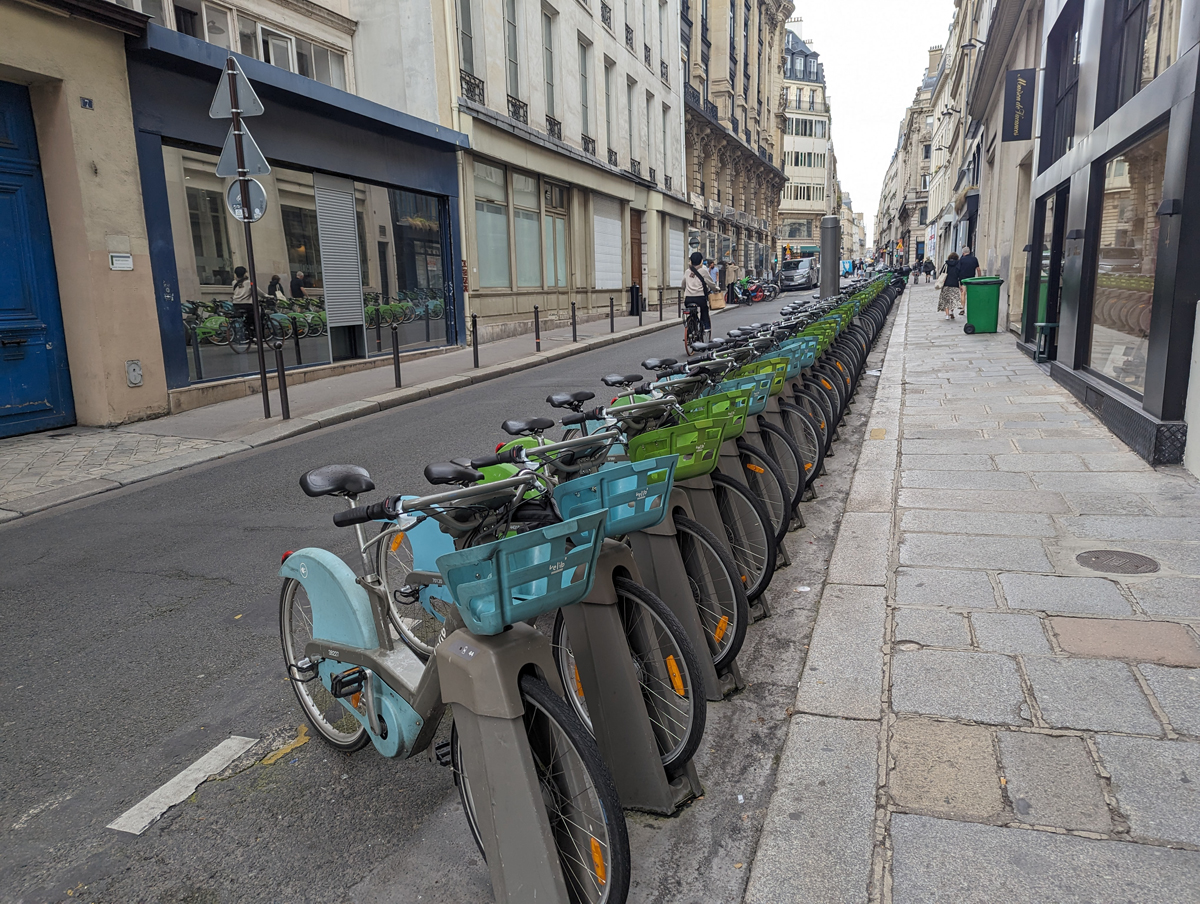
Velib Paris bikeshare was ubiquitous. Photo by Steve Wasmund
It should be noted that our taxi driver told us there were, indeed, many accidents in Paris, but we didn’t see any. I should say that we did ride a few kilometers on bike-share rides during our stay and it scared the digested pain out of me, but it was still beautiful to watch and with some practice, I think I would enjoy it more than riding on Beck St north of SLC.
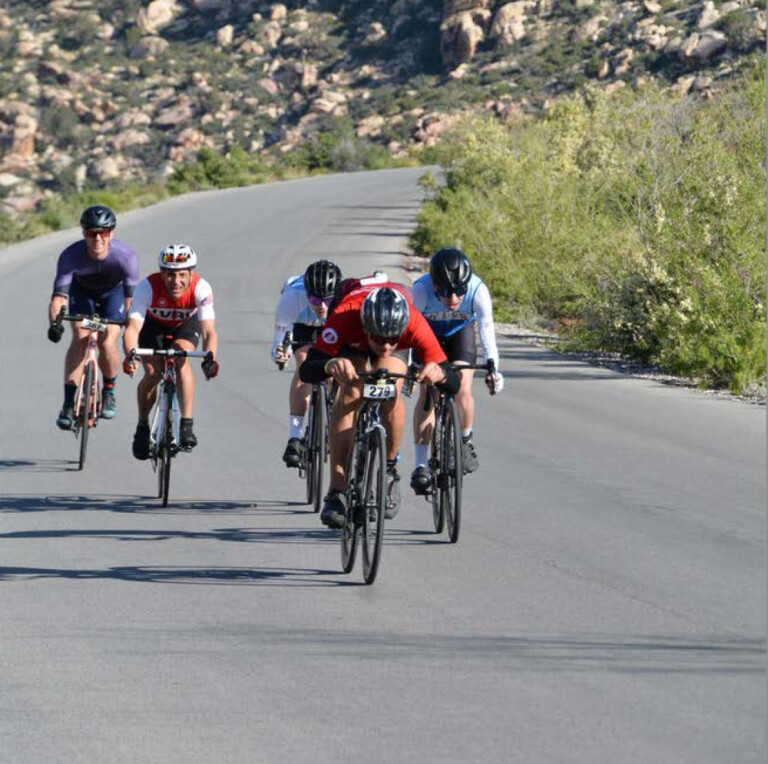
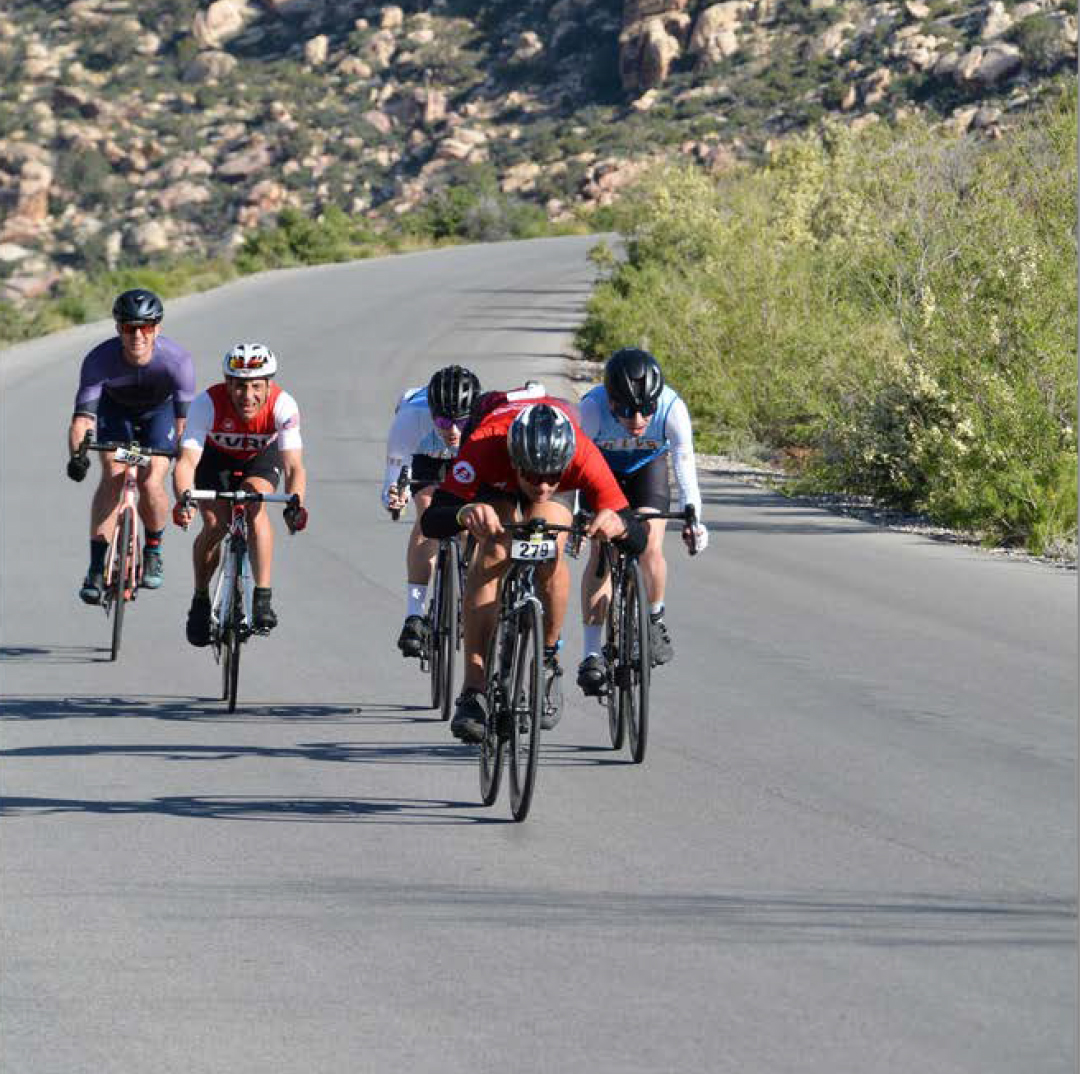
Closed race courses will be featured in 75, 45 and 25-mile routes for amateur cyclists.
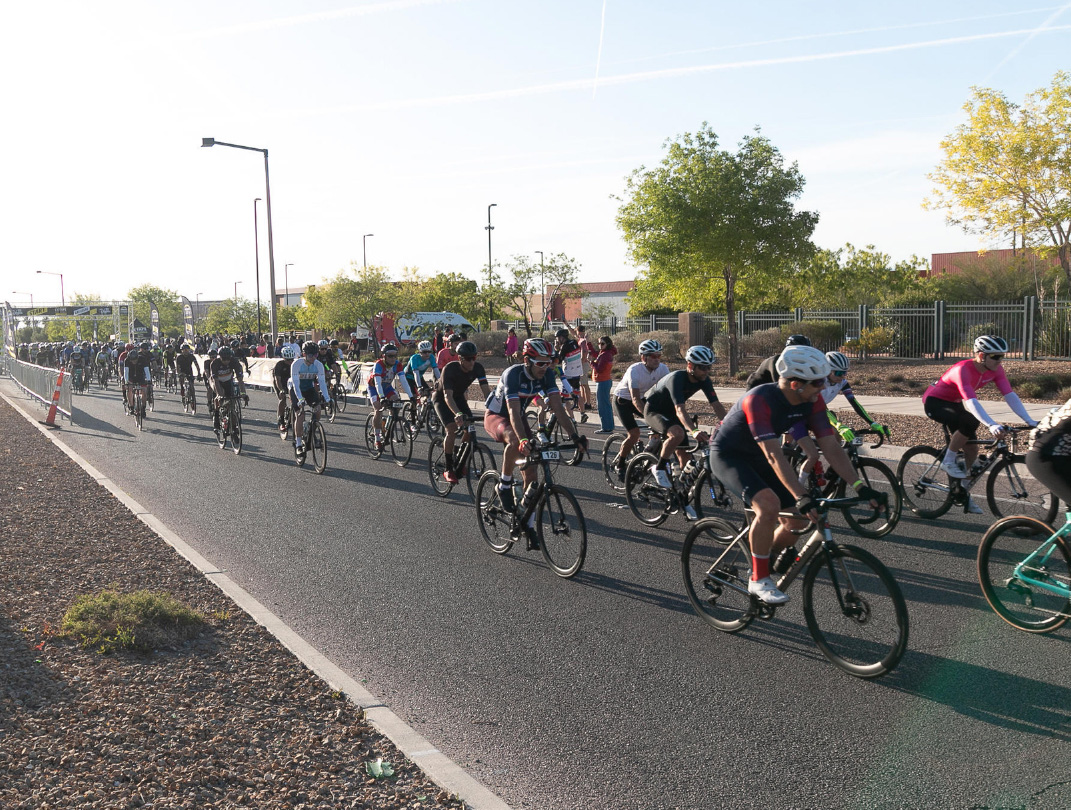
LAS VEGAS, Nevada (March 7, 2024) — L’Étape Las Vegas by Tour de France will return to the Sports and Entertainment Capital of the World on Sunday, May 5, 2024. This closed race course event will start and finish near the Las Vegas Ballpark, with all distances highlighted by a section of racing on the 13-mile Scenic Loop Drive through the Red Rock Canyon National Conservation Area.
After its debut last year, L’Étape Las Vegas by Tour de France is back under new management, with support from both the Las Vegas Convention and Visitors Authority and Las Vegas Events. L’Étape Las Vegas is once again part of an international cycling series known as L’Étape by Tour de France and provides amateur cyclists the opportunity totruly live the Tour de France experience where they will race like professional cyclists.
Photo courtesy L’Étape Las Vegas
There will be three course options in 2024 for novice level riders to advanced cycling enthusiasts. The L’Étape Las Vegas 75-mile event is the ultimate cycling challenge, with the route based on a similar format to a genuine Tour de France stage. For those who wish to immerse themselves in the atmosphere and experience of L’Étape Las Vegas by Tour de France without the added pressure of the tougher climbs and distance, the 45-mile and the 25-mile rides provide the perfect option for all ability levels.
Whether you wear the yellow, green, polka-dot or white jersey of the Tour de France, this will be an unforgettable experience for cyclists and cycling enthusiasts.
“Tour de France is a world-renowned global brand, and we are honored that Las Vegas is once again included in its international cycling series,” said LVCVA President/CEO Steve Hill. “Las Vegas has a long history of hosting amateur sporting events, and we are excited for these athletes to set new personal records as they ride throughsome of the country’s most magnificent landscapes.”
Photo courtesy L’Étape Las Vegas
One of the enhancements made in 2024, is the new start & finish location from the Las Vegas Ballpark in Summerlin. The course will then head west into the famous Red Rock Canyon National Conservation Area and include some smaller climbs and inclines on a fully closed cycling course.
“Las Vegas provides a unique backdrop for special events, and L’Étape Las Vegas is another outstanding addition to our annual event roster,” said Las Vegas Events President Tim Keener. “All ability levels of cyclists will be able to test their skills on our closed race courses, with the start and finish line right in the heart of Downtown Summerlin at Las Vegas Ballpark. We look forward to welcoming the cyclists from across the globe in May, where they can expect Las Vegas hospitality and an average temperature of 84 degrees.”
The first 500 new registrants will receive a custom L’Étape Las Vegas Cycling Jersey.
For more information including the race routes and other FAQs, visit the official site.
2024 Event Details:
May 5, 2024 — L’tape Las Vegas, Las Vegas, NV, Gives amateur cyclists the legendary Tour de France experience in the legendary city of Las Vegas! Cyclists, from seasoned veterans to beginners, can compete for an authentic Yellow Jersey; 75-miles, elevation +6,464 ft, 45-miles, elevation +3,035 ft, 25-miles, elevation + 2,260 ft, 10-miles Family Ride, Kids Race, Las Vegas Events, 702-260-8605, [email protected], lasvegas.letapebytourdefrance.com
TUCSON, Arizona — The 36th annual Tucson Bicycle Classic, a hallmark event in the cycling calendar, unfolded with an electrifying mix of anticipation and unexpected outcomes that captivated fans and athletes alike. Nestled in the heart of greater Tucson, this prestigious race not only displayed the scenic beauty of the region but also served as a battleground for both seasoned professionals and rising stars in the cycling world.
With a lineup that included top-tier pro women’s and men’s teams, alongside notable influencers and cycling aficionados, the event promised a thrilling spectacle of endurance, strategy, and raw speed. From the inaugural race in Marana to the challenging circuits of Sahuarita and Oro Valley, each stage was meticulously designed to test the mettle of the competitors, setting the stage for a series of stunning victories and shocking surprises that would be etched in the annals of the Tucson Bicycle Classic history.
This year’s classic attracted an unprecedented 601 riders, showcasing a significant uptick in participation and underscoring the event’s growing appeal across the nation and beyond. Cyclists from every corner of the country and the world converged on Tucson, bringing with them a blend of styles, strategies, and aspirations, making this edition one of the most diverse and vibrant in recent memory.
Moreover, the Tucson Bicycle Classic continued its commendable commitment to fostering new talent, particularly among women cyclists. For the third consecutive year, the event featured a Women’s New Racer Program, spearheaded by former professional cyclist Lauren Hall. This initiative is a testament to the series’ dedicated efforts to lower the barriers to entry for women in competitive cycling. The positive impact of this program is evident in the notable increases in women’s field sizes over the past three years, a trend that not only enriches the competition but also contributes to the sport’s overall growth and accessibility.
Day 1 – Marana Time Trial
The 36th Tucson Bicycle Classic kicked off with an inaugural event that would set a high bar for the days to follow: the Marana Time Trial. This year marked a significant first for the classic, introducing a race in Marana, a small yet innovative suburb of Tucson. Known for its forward-thinking community, Marana eagerly embraced its role as host, displaying its commitment to excellence with a meticulously prepared course that left no detail to chance.
The time trial, a true test of individual prowess, featured a short, flat, 8km out-and-back route that demanded both strategic pacing and raw power. Competitors faced the challenge of balancing their energy throughout the race, aiming to maintain a blistering pace without succumbing to the fatigue that could jeopardize their overall standing in the opening stage of the competition.
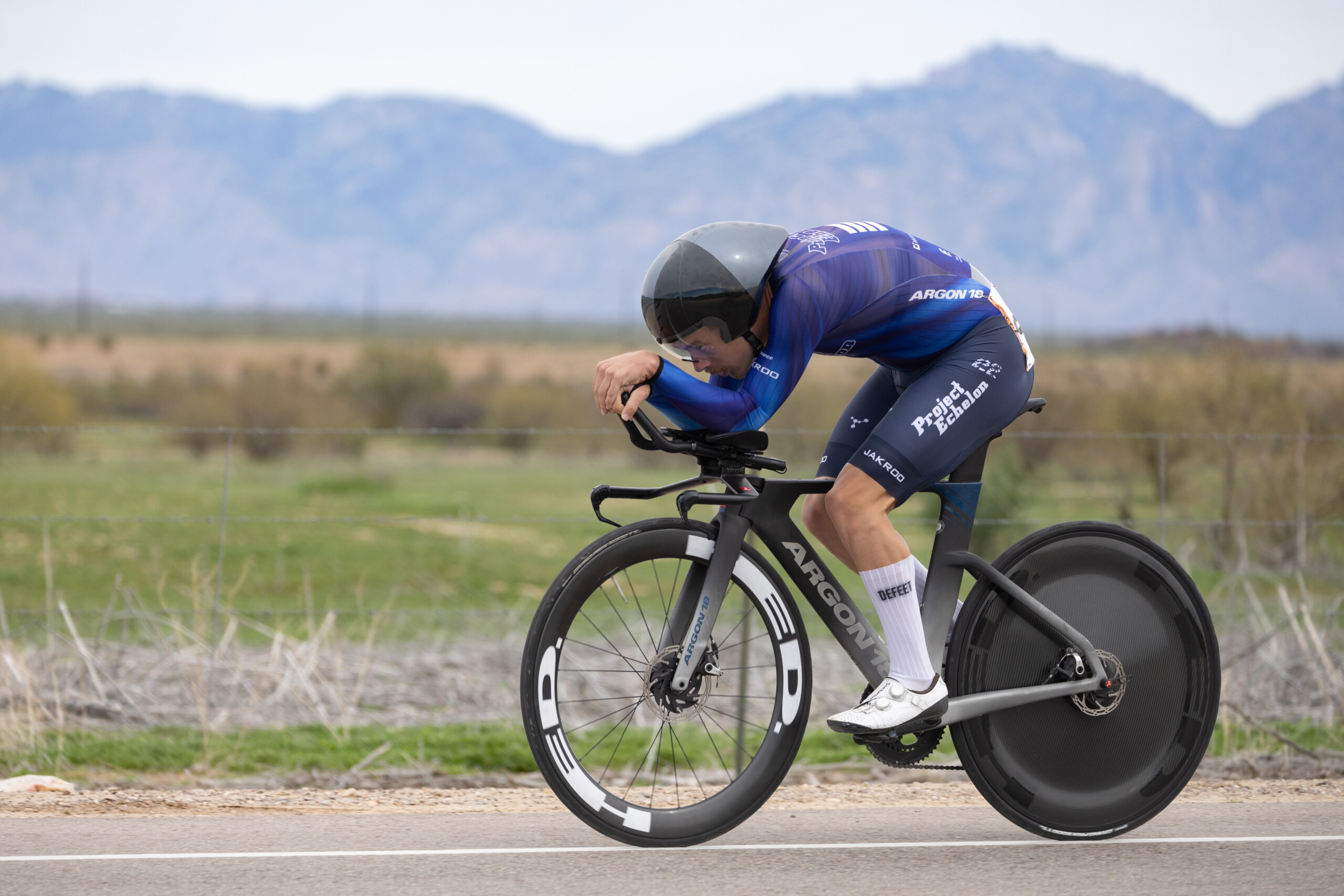
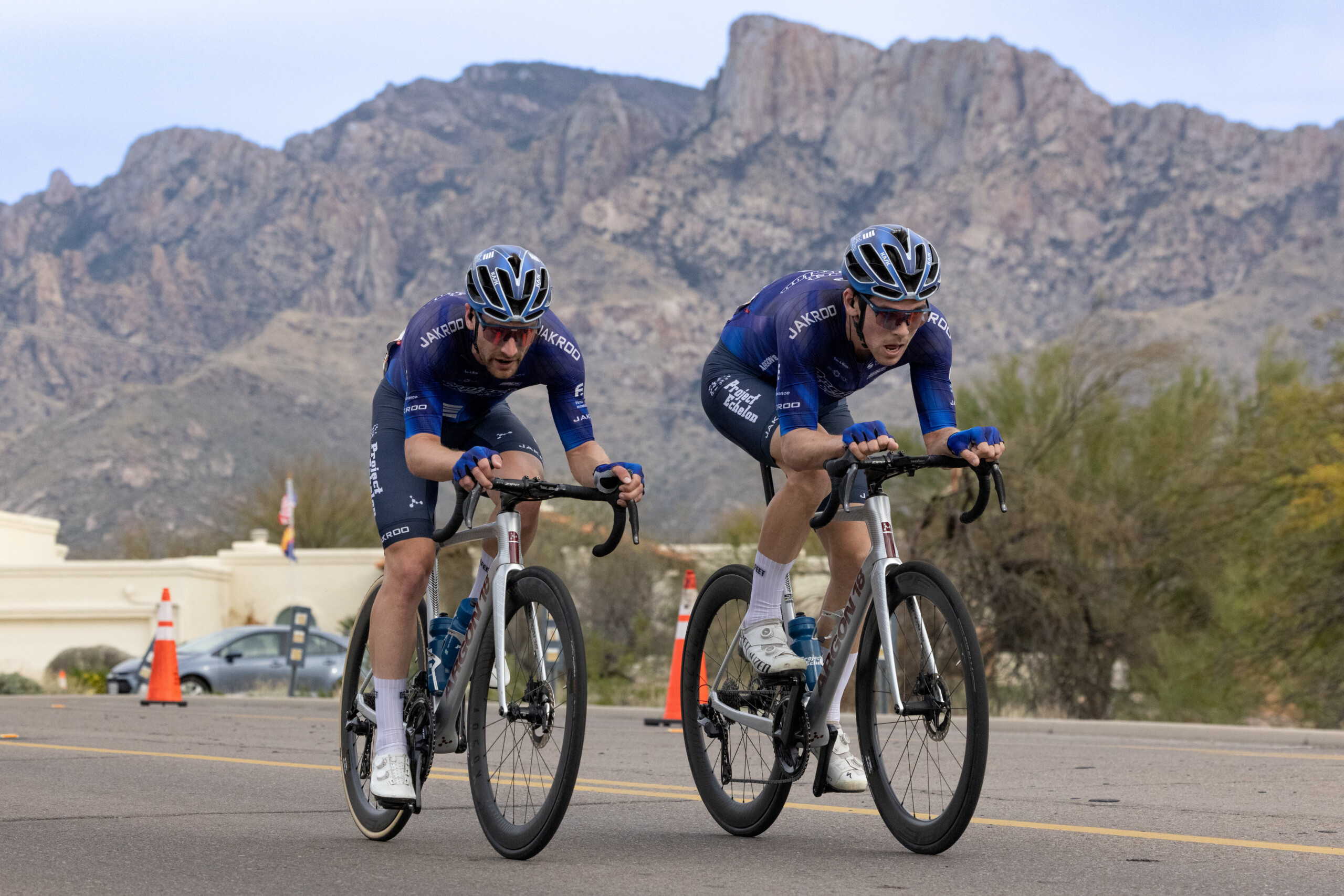
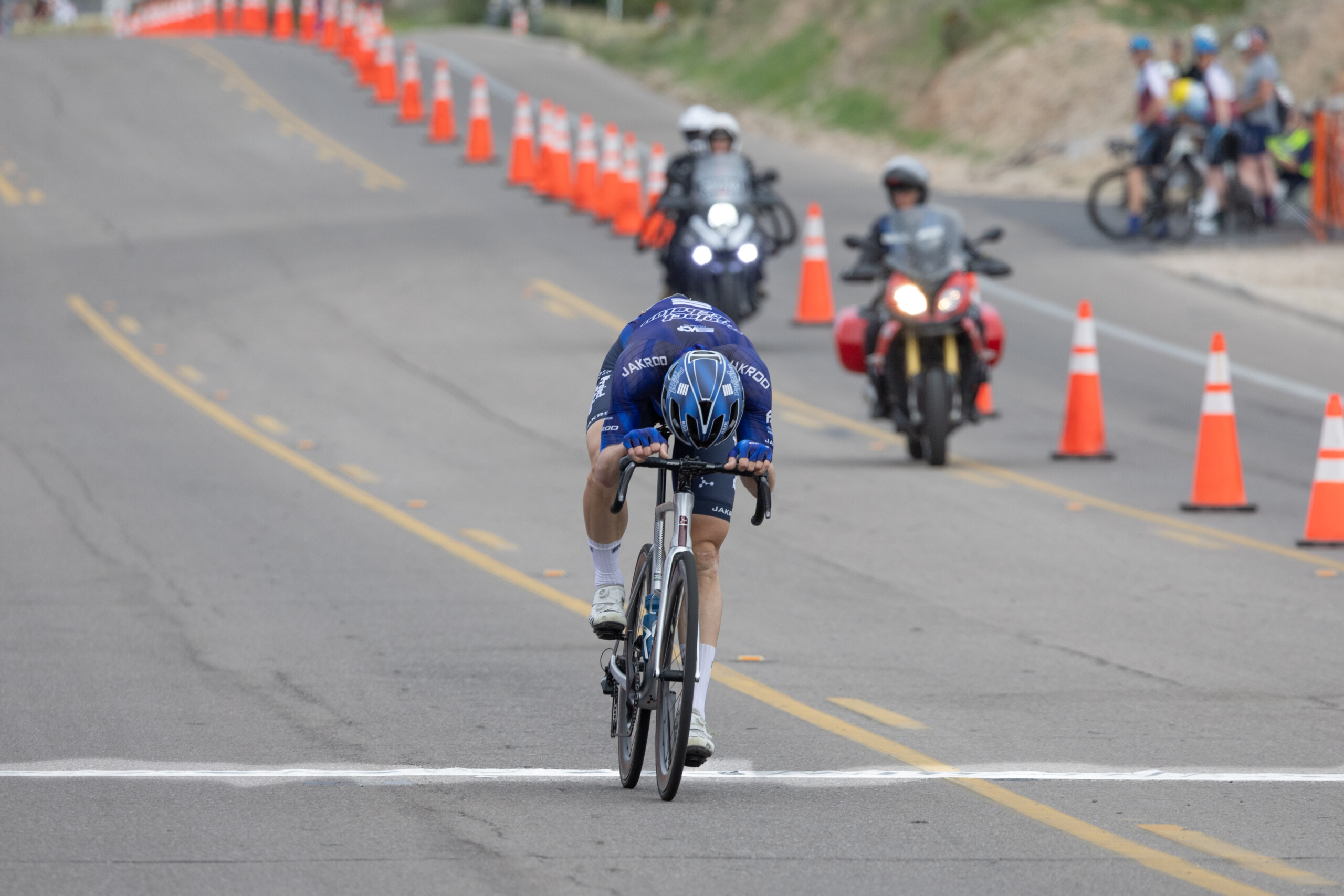
Brendan Rhim (Project Echelon) wins the Stage 1 Time Trial, 2024 Tucson Bicycle Classic. Photo courtesy TBC
Emerging as the day’s standout, Brendan Rhim of Project Echelon delivered an extraordinary performance that left spectators and competitors alike in awe. Clocking an impressive time of 8:56, Rhim not only clinched the fastest time of the day but also established a formidable 6-second lead over Troy Fields of Team California. This early advantage set the tone for Rhim’s campaign in the Classic, positioning him as the rider to watch in the ensuing stages.
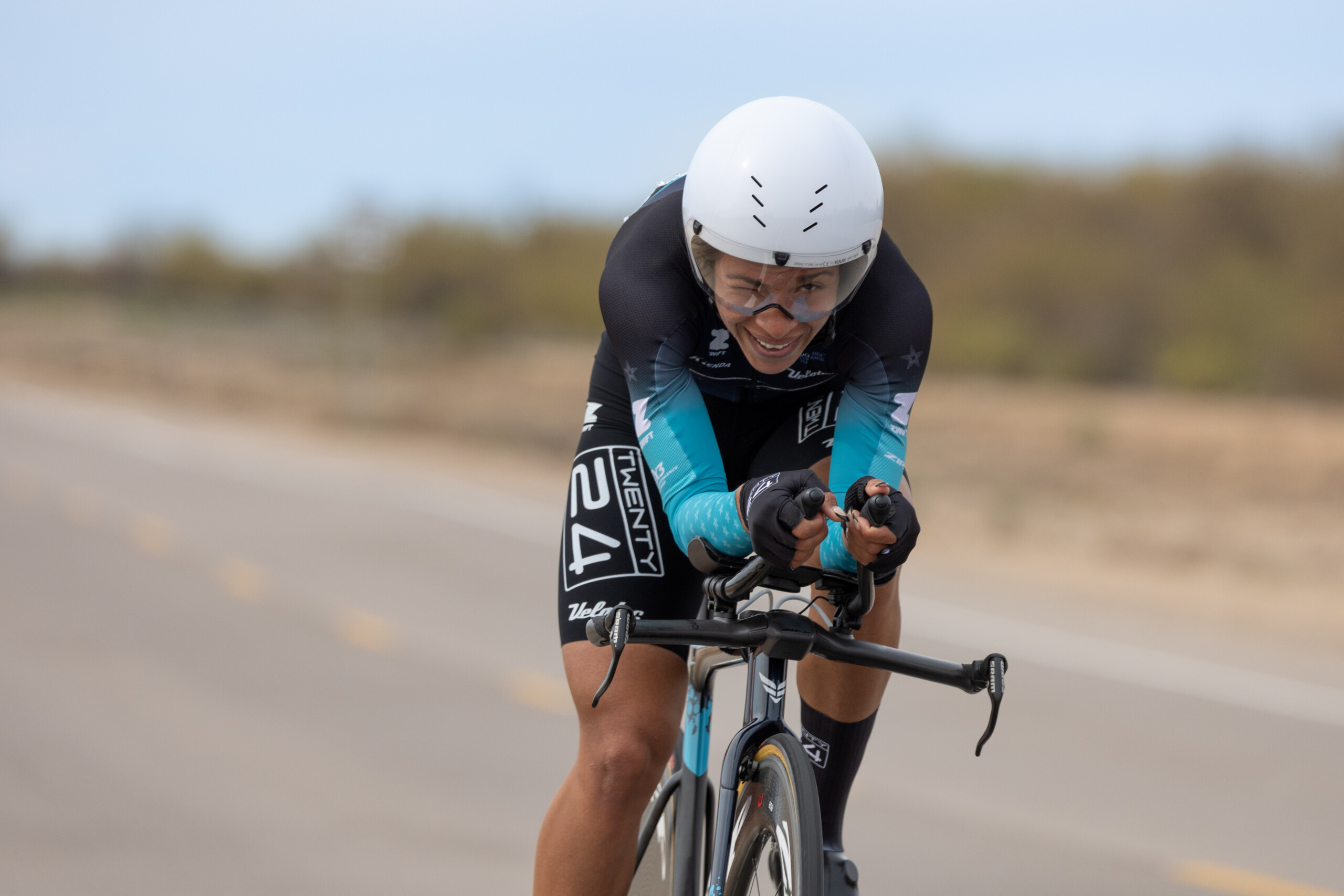
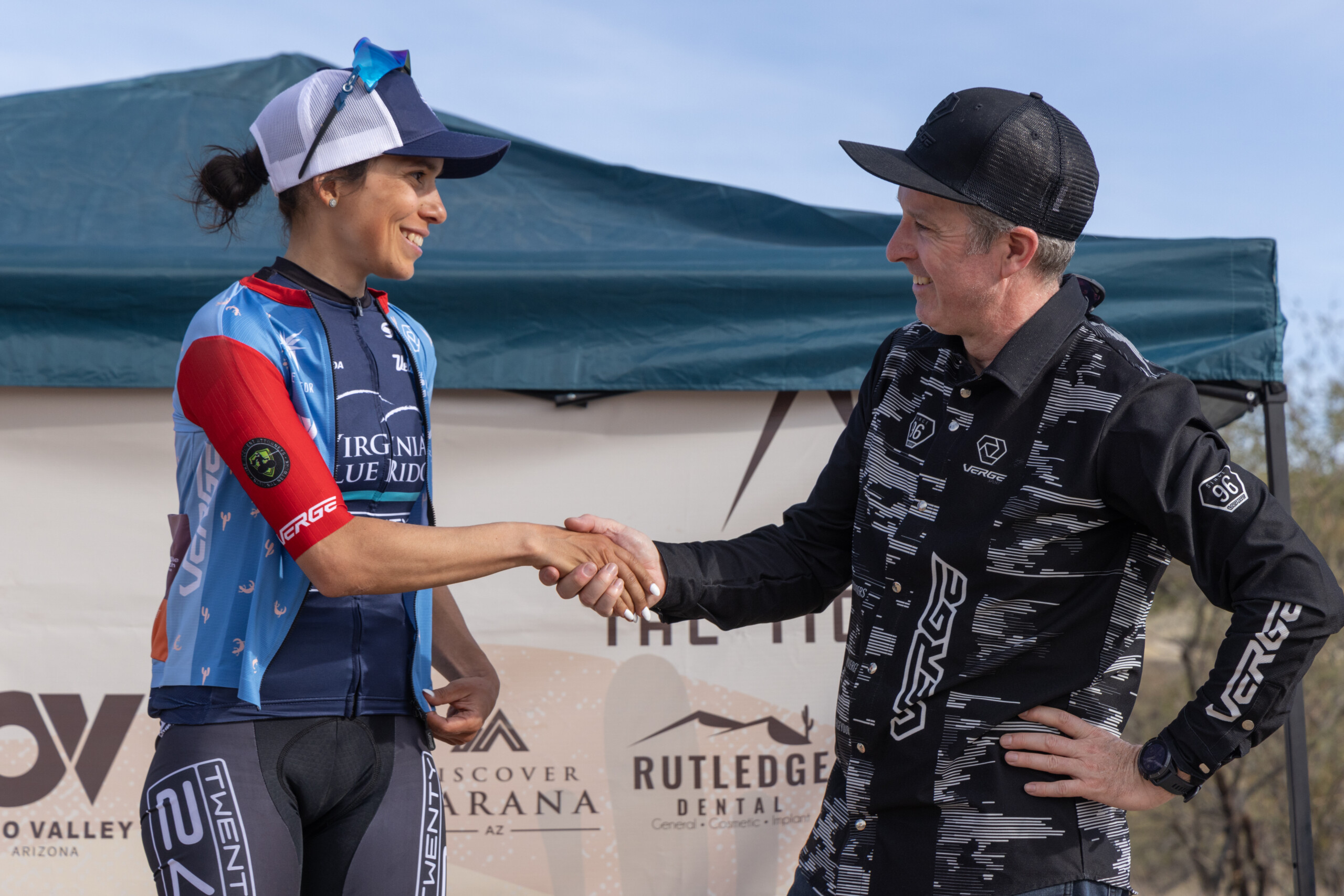
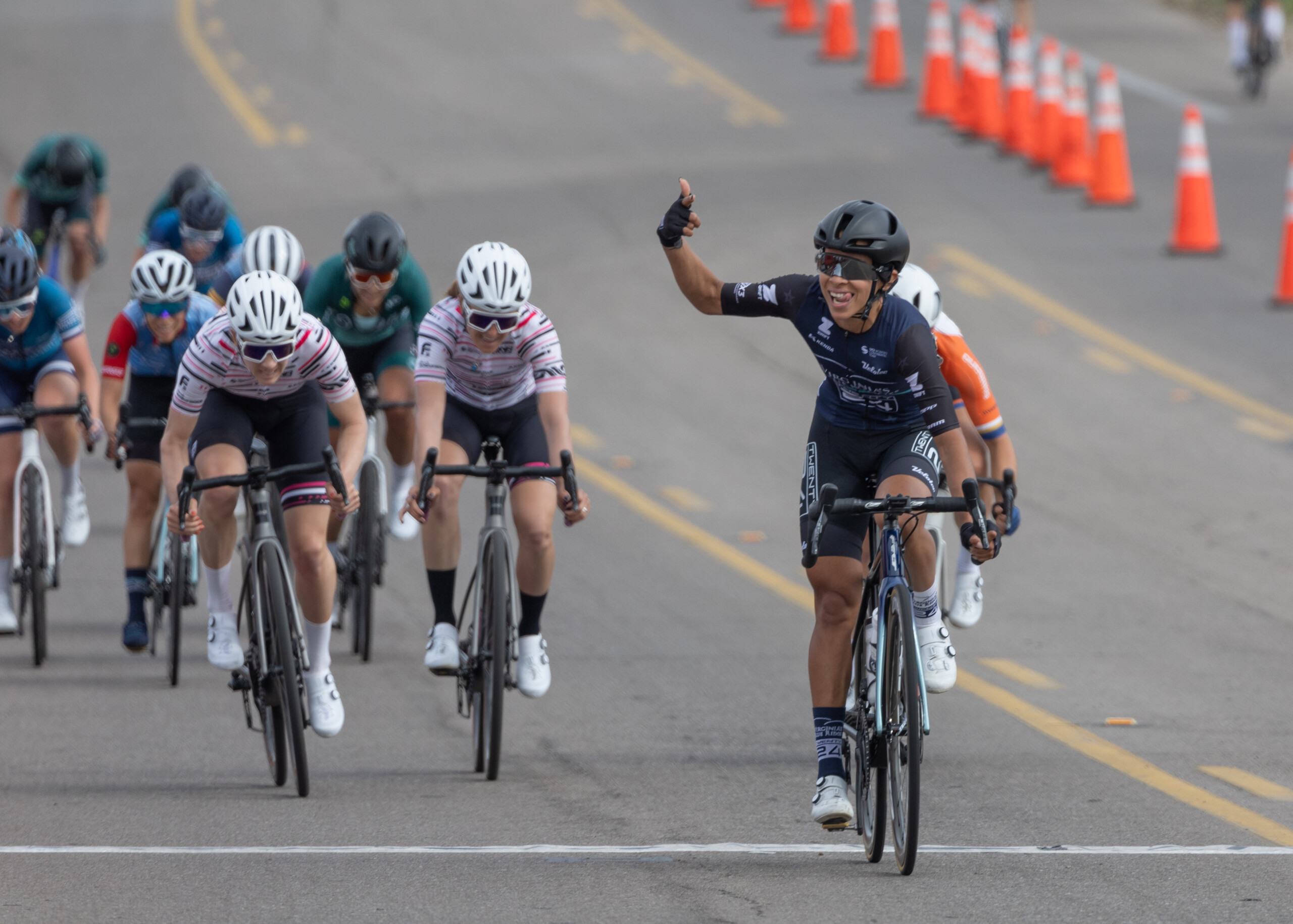
Marlies Mejias (Virginia Blue Ridge TWENTY24) wins the Stage 1 Time Trial, 2024 Tucson Bicycle Classic. Photo courtesy TBC
The women’s W1/2 race was equally gripping, with a nail-biting finish that underscored the depth of talent in the field. Marlies Mejias of Virginia Blue Ridge TWENTY24 and Alia Shafi of Fount Cycling Guild engaged in a fierce duel that came down to milliseconds, highlighting the competitive spirit and exceptional skill of the women’s pro teams. Mejias’ razor-thin victory not only earned her the stage win but also set up a tantalizing narrative for the battle for the General Classification.
The day’s events in Marana encapsulated the essence of time-trialing, where every second counts and every pedal stroke can make the difference between triumph and defeat. As competitors pushed themselves to the limit against the backdrop of Marana’s innovative landscape, the Tucson Bicycle Classic affirmed its reputation as a premiere event in the cycling calendar, setting up dramatic narratives and rivalries that would unfold in the days to come.
Day 2 – Sahuarita Road Race
It’s not every day that one witnesses a major shake-up so early in a competition, but Day 2 of the TBC was nothing short of astonishing, filled with unexpected turns and thrilling upsets.
The Sahuarita Road Race is a 33km loop with roughly 1,000 feet of climbing per lap, including a solid, sustained climb, rollers, flats, and a rapid descent. Riders repeat this loop a number of times, depending on their category. The pro fields complete a total of 4 laps (132km or 82 miles).
The first wave saw the P/1/2 men’s category take center stage, and from the get-go, it was evident that the battle would be fiercely contested. Following the prior day’s time trial, a three-way fight for the General Classification (GC) had emerged, with Brendan Rhim from Project Echelon holding a narrow lead. Close on his heels were Troy Fields from Team California, trailing by just six seconds, and Josh Lebo from CS Velo Racing, only a second further back. The anticipation was palpable, as all three teams braced themselves for a challenging day.
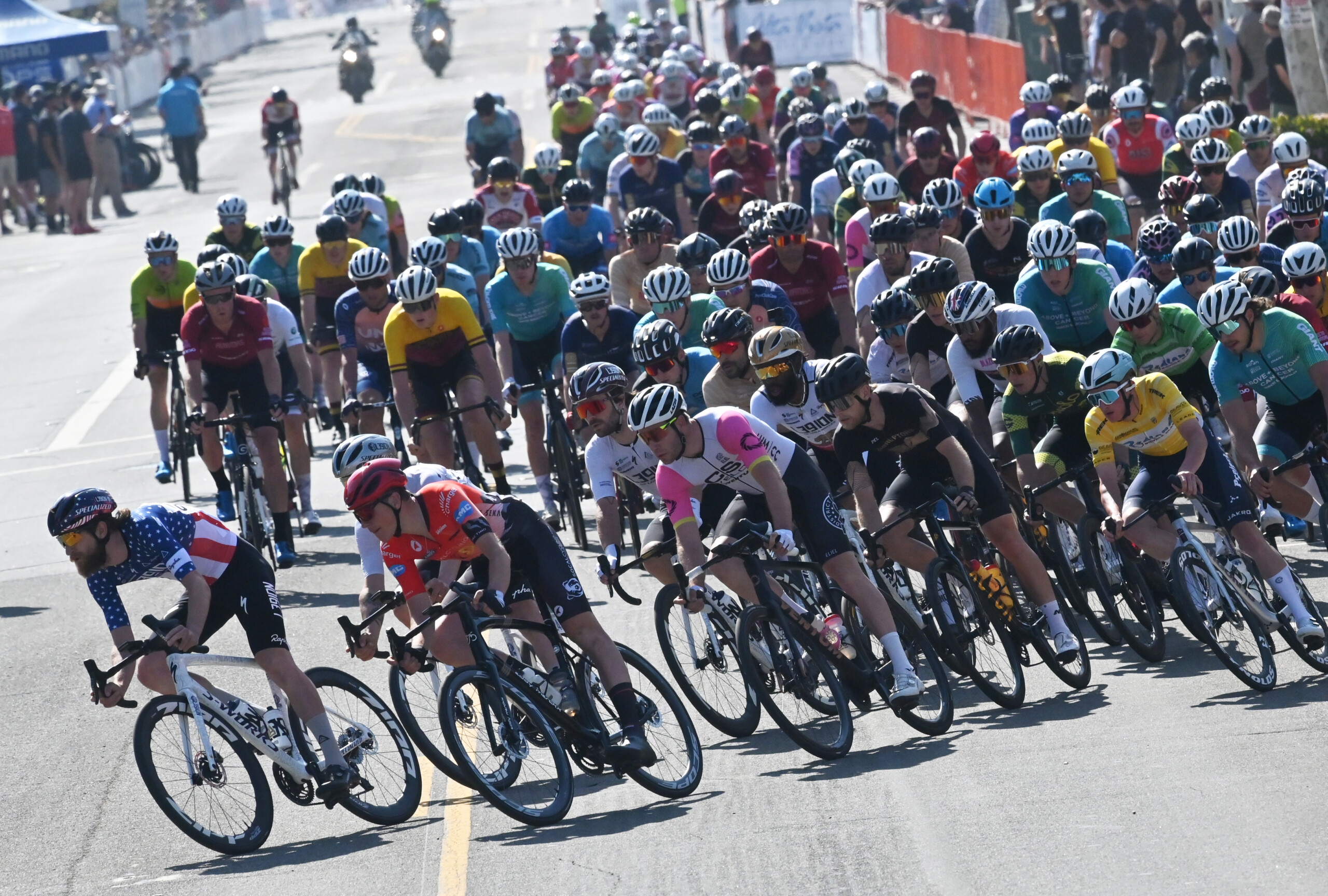
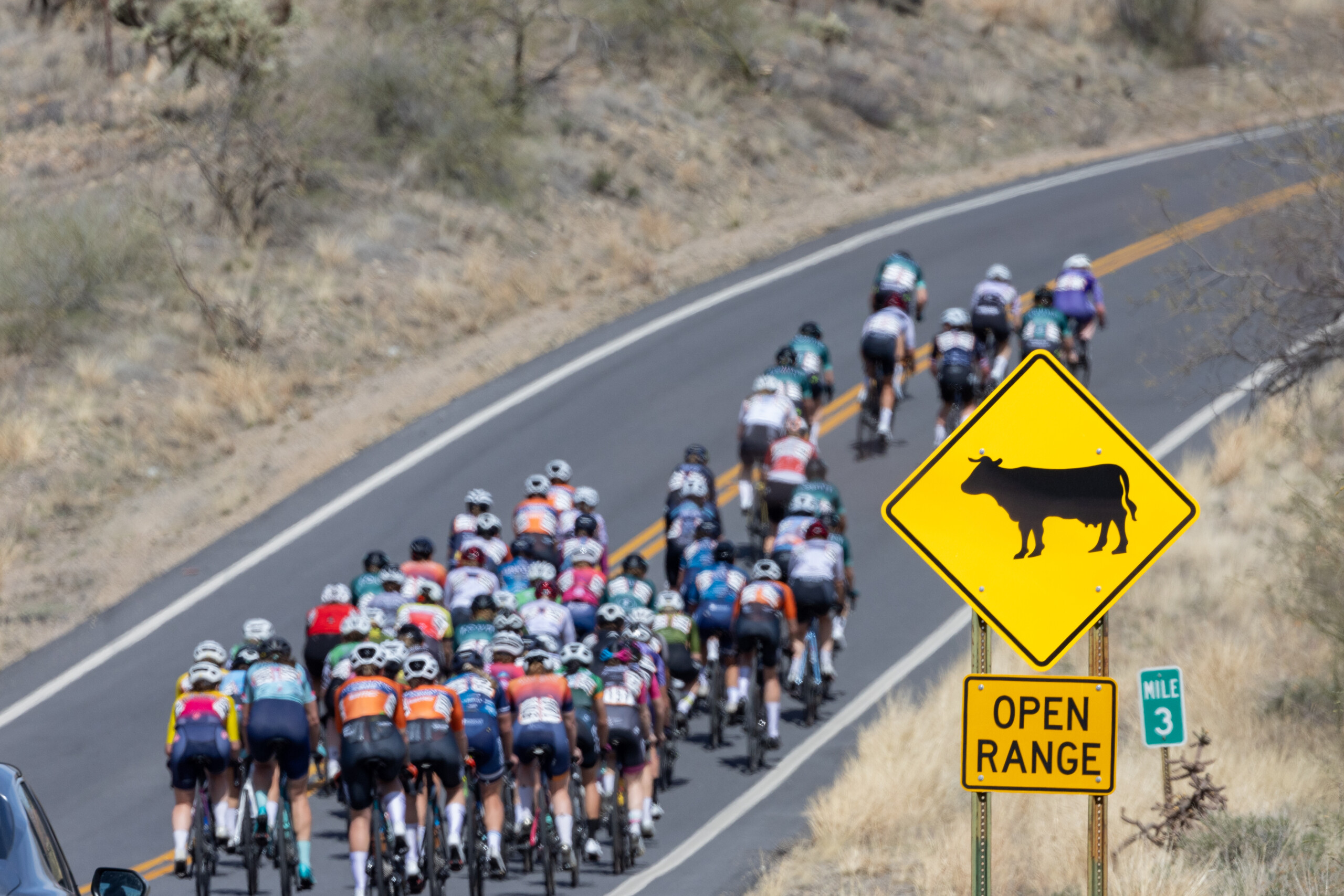
A peloton during the Stage 2 Sahuarita Road Race, 2024 Tucson Bicycle Classic. Photo courtesy TBC
True to their word, the day’s racing was intense. Time bonuses available at the end of laps 1 and 3 spurred an early breakaway, orchestrated by CS Velo and Automatic Abus. This move quickly drew in all the top contenders, setting the stage for a high-stakes showdown. By the third lap, the leading group had carved out a significant advantage, prompting Project Echelon to spearhead the effort to hold the gap, aiming to position Laurent Gervais for a sprint victory and, potentially, the GC lead.
The breakaway managed to maintain a sizable lead, allowing Kellen Caldwell of Team California to clinch the stage win and dramatically alter the GC standings. Patrick Welch, representing Above and Beyond Cancer, was now hot on Caldwell’s heels, trailing by a mere second heading into the final day. Garin Kelley, also from Team California, remained in contention, sitting 15 seconds behind in third place.
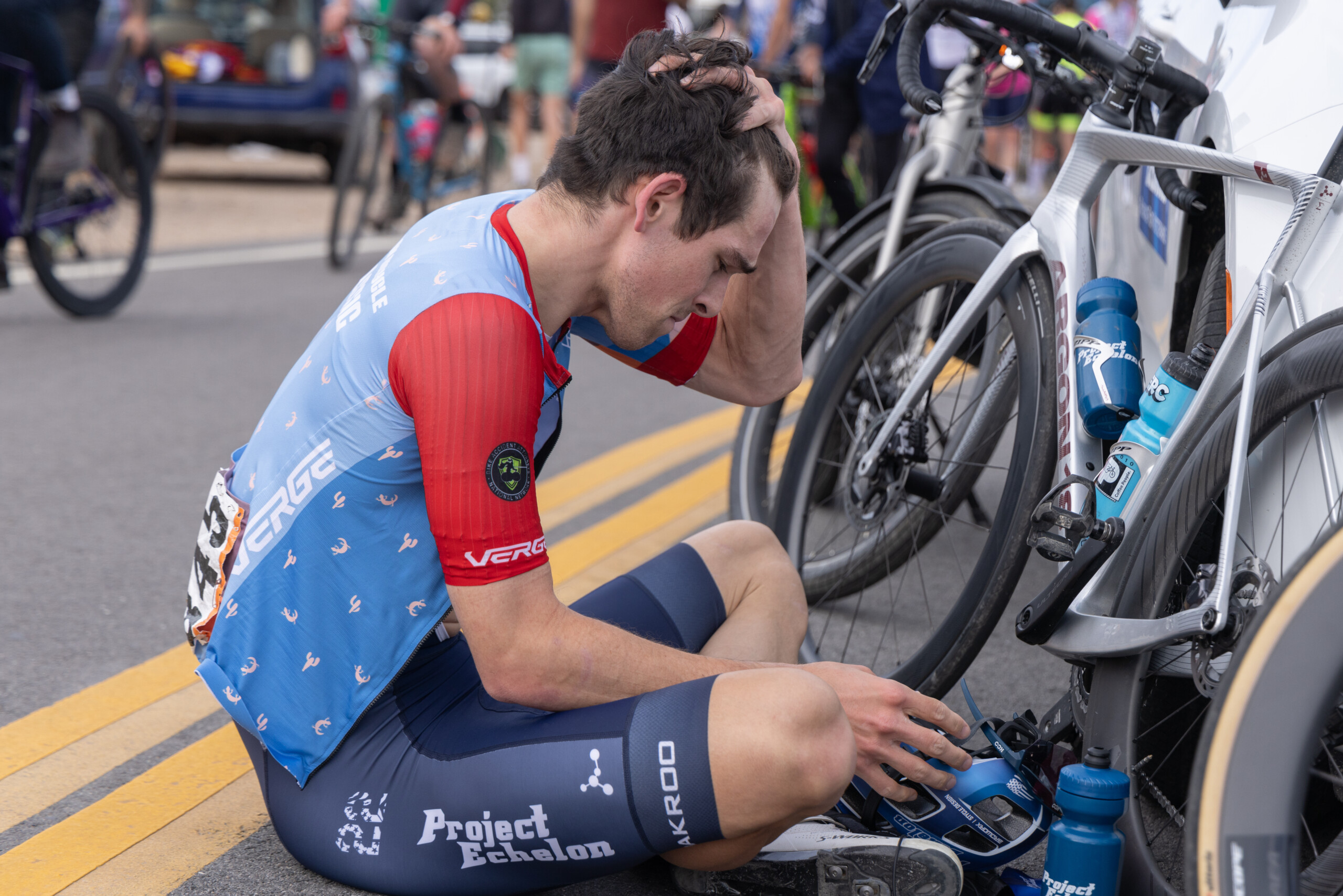
Stage 1 winner Brendan Rhim (Project Echelon) looking dejected after losing the leaders jersey in the Stage 2 Sahuarita Road Race. 2024 Tucson Bicycle Classic, photo courtesy TBC.
If the men’s race was the appetizer, then the p/1/2 women’s race was the main course, delivering an insane upset. Spectators were left in awe as GC leader Marlies Mejias powered through to snatch the lap 1 sprint points. This set the stage for her Virginia’s Blue Ridge TWENTY24 teammate Sofia Arreola to launch a daring attack. She was quickly joined by a select group of riders, and together, they managed to outpace the Master’s Men 50+, extending their lead with every lap. By the race’s end, this formidable group had established a staggering 10-minute gap over the peloton. Arreola, a Tucson local, dazzled the home crowd with her sprinting prowess, securing a victory for her team, with Alia Shafi of Fount Cycling Guild closely following her into the final day’s showdown.
Sofia Arreola (Virginia Blue Ridge TWENTY24) takes the Stage 2 Sahuarita Road Race and GC, 2024 Tucson Bicycle Classic. Photo courtesy TBC
Day 3 – Oro Valley Circuit Race p/b Rutledge Dental
TBC returned to Oro Valley for the second year in a row to cap off the series final day on a slightly technical, challenging final course. Witnessing the community come alive, with residents and spectators lining the course, cowbells in hand, and cheering on the riders, infused the event with unparalleled energy.
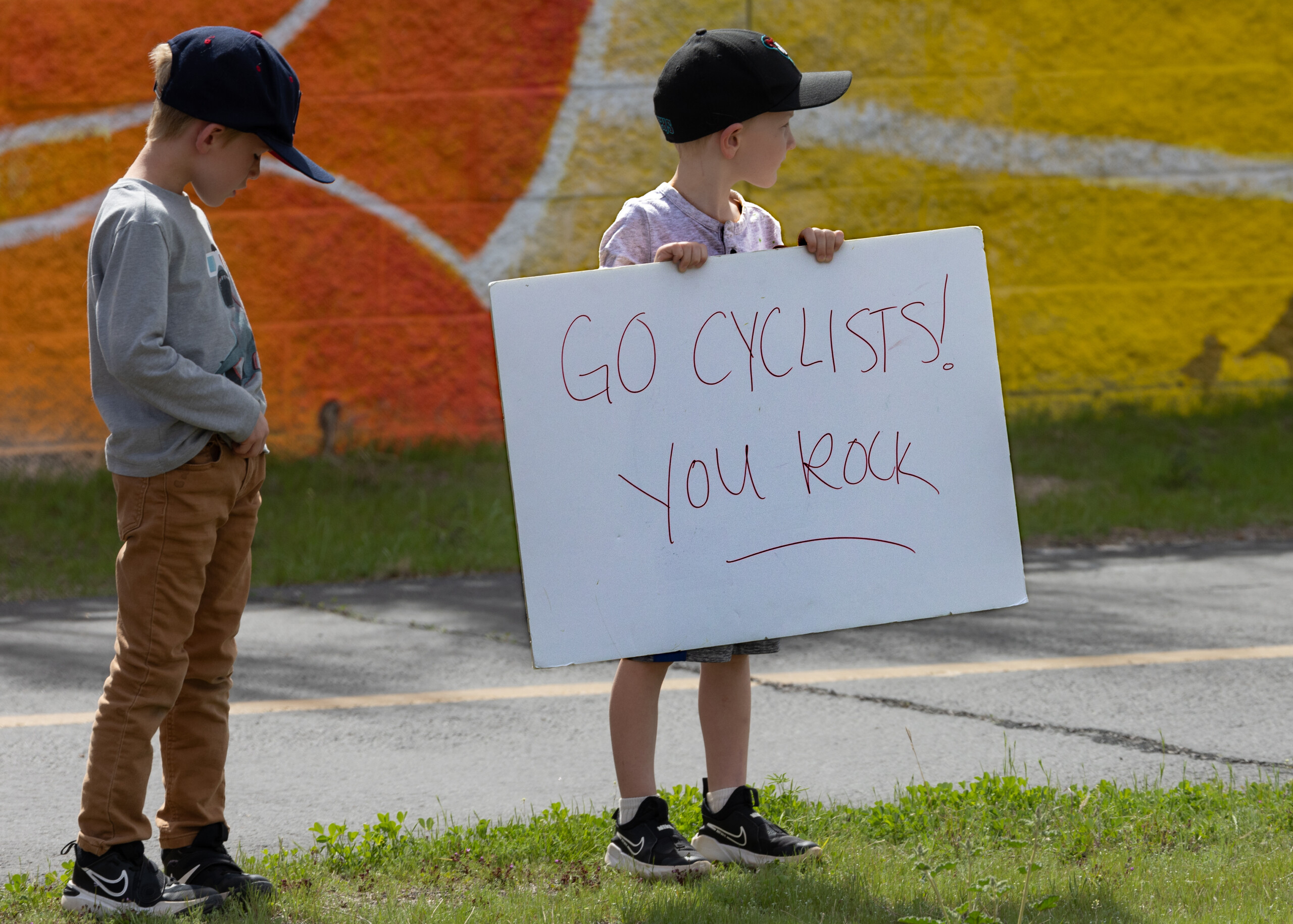
A young fan cheering riders during the Stage 3 Oro Valley Circuit Race, 2024 Tucson Bicycle Classic. Photo courtesy TBC
The course is just over 4 miles in length, and there is almost no flat surface. It is technically demanding, with a daunting downhill leading into the final turn, offering a unique challenge that can either thwart breakaway attempts or reward those with the audacity and skill to tackle it head-on (i.e.: crit racers).
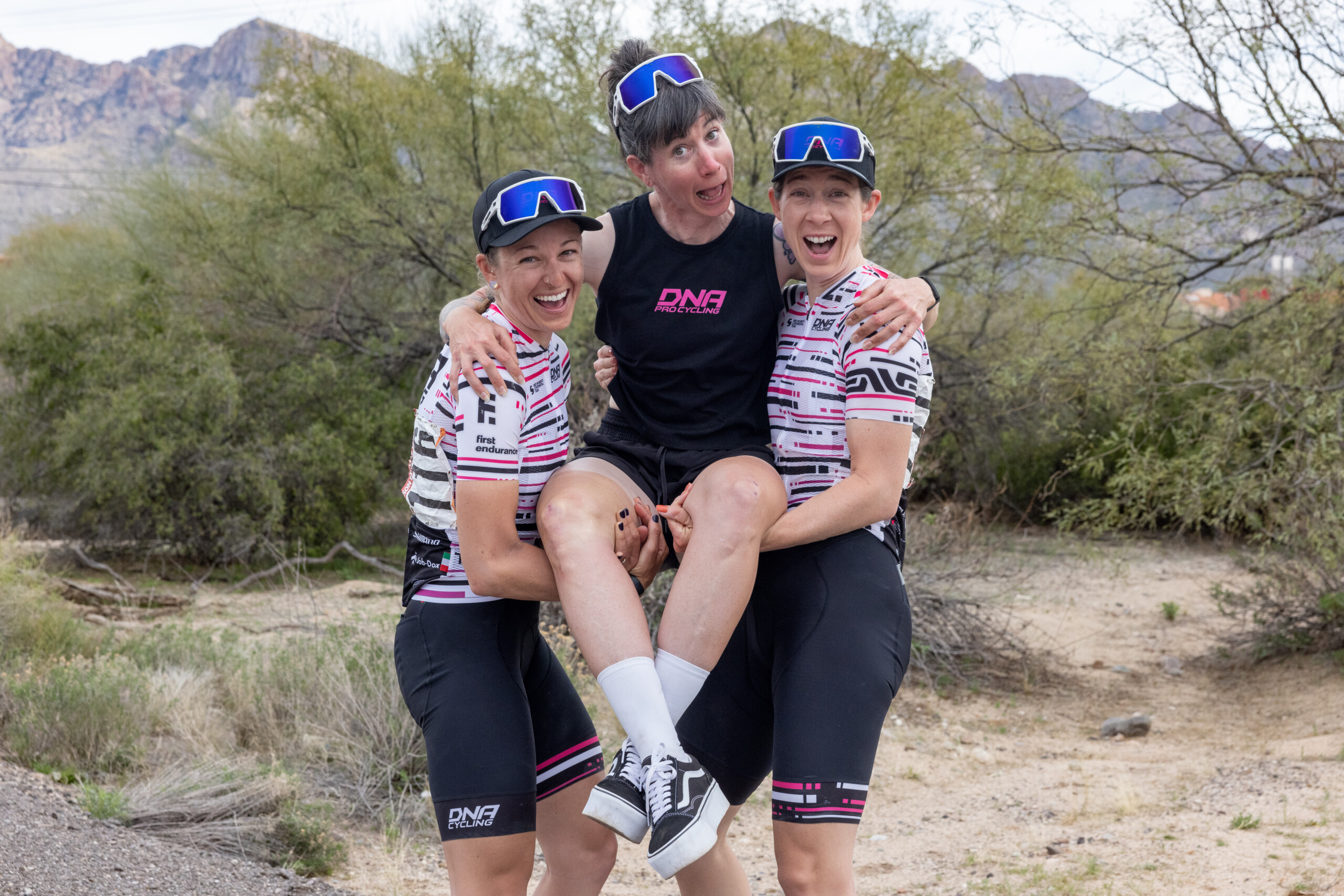
Holly Breck (L) & Heather Fischer (R) giving teammate Kimberly Lucie a lift. Breck & Fischer would go on to finish 2nd & 3rd in the Stage 3 Oro Valley Circult Race, 2024 Tucson Bicycle Classic. Photo courtesy TBC
Day 3 of any stage race – and TBC is no exception – can be a bit interesting. Some races are completely locked in by day 3, while others are wide open and primed for a shakeup. For those that are locked in, spectators are treated to fantastic sprint finishes as riders push for a stage win, abandoning hope of a GC grab.
Stage 1 winner Marlies Mejias (Virginia Blue Ridge TWENTY24) also takes the win on the Stage 3 Oro Valley Circuit Race. Holly Breck & Heather Fischer (both DNA Pro Cycling) finish 2nd & 3rd on the day. 2024 Tucson Bicycle Classic, Photo courtesy TBC.
In the W1/2 category, Sofia Arreola entered the day with a commanding lead in the General Classification, a testament to her formidable breakaway on Day 2. Although a major shake-up seemed unlikely, the anticipation for a riveting sprint finish was high. Team TWENTY24 made it clear from the outset they had two goals: protect Sofia’s GC lead and force the race to come down to a sprint so Mejias could grab a stage win.
The teamwork displayed by TWENTY24 was textbook perfection, as they masterfully controlled the race to prevent any successful breakaways, setting the stage for a mass sprint to the finish. Marlies Mejias rose to the occasion, clinching a stage win, while Sofia Arreola secured her victory in the General Classification.
The M1/2 race was aggressive from the moment riders exited the neutral zone. The race was incredibly tight going into day 3, and truly anyone’s game. Project Echelon, Team California, CS Velo and Automatic Abus launched nonstop attacks as they jockeyed for domination and intermediate sprint points. Every lap riders were shelled out the back and our field of 130 was quickly whittled down to roughly half that.
Team Echelon on the move to try and put Brendan Rhim back in the leader’s jersey. Stage 3 Oro Valley Circuit Race, 2024 Tucson Bicycle Classic
With 4 laps to go, Project Echelon’s Laurent Gervais (who sat 12 seconds off GC), and Brendan Rhim launched out of the intermediate sprint into a breakaway. They managed to stay away and together for about 2 laps until Laurent dropped back into the pack. Brendan – who had held GC leader going into day 2 and tragically lost it – soloed away, slowly gaining on the chase. With time bonuses and intermediate sprint points, he needed to hold 25 seconds on the group to lock in GC.
Legendary announcer Brad Sohner came in clutch, narrating the unfolding drama. The crowd erupted as Rhim emerged around the final corner, a solitary figure pushing against the odds to cross the finish line in a triumphant solo victory.
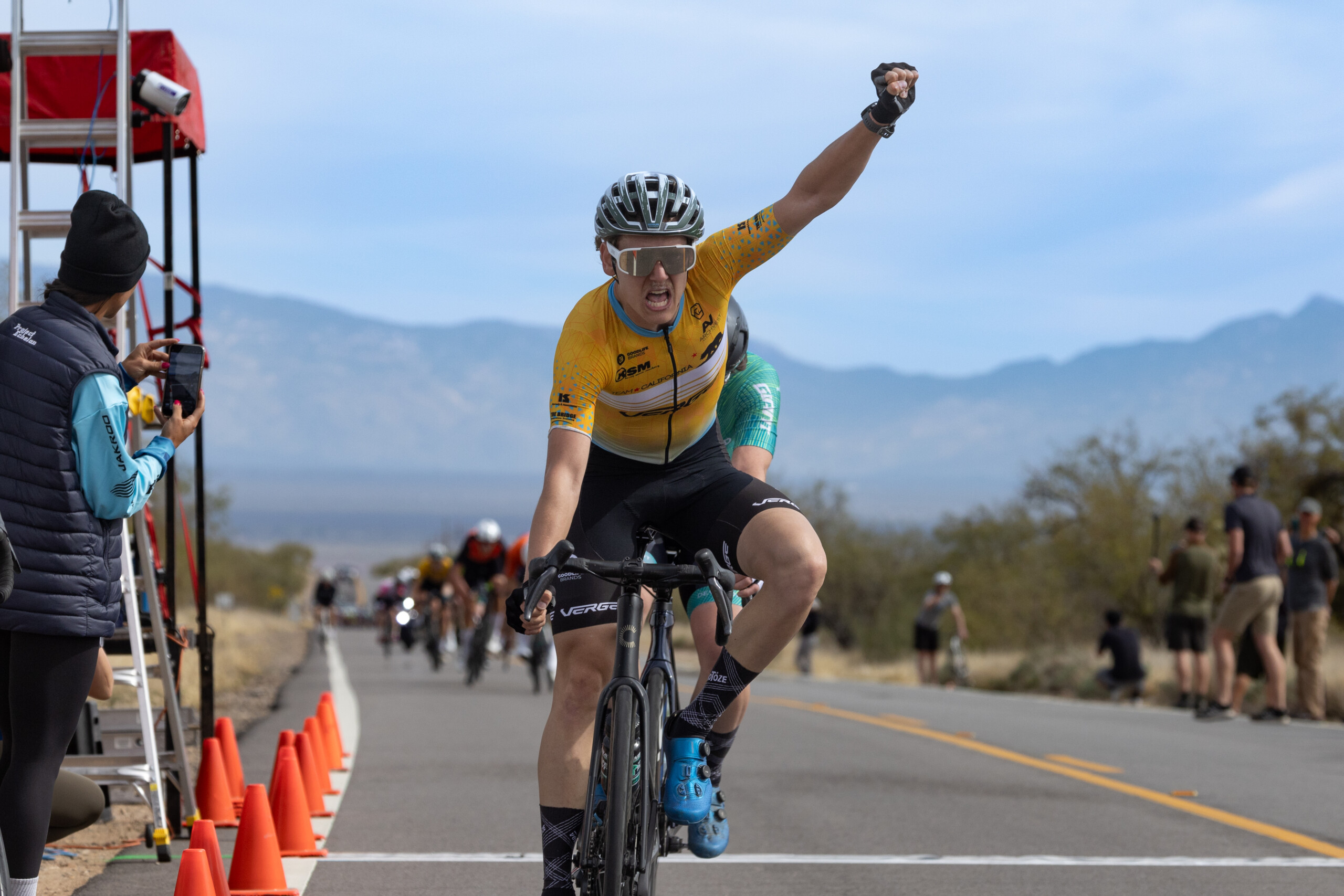
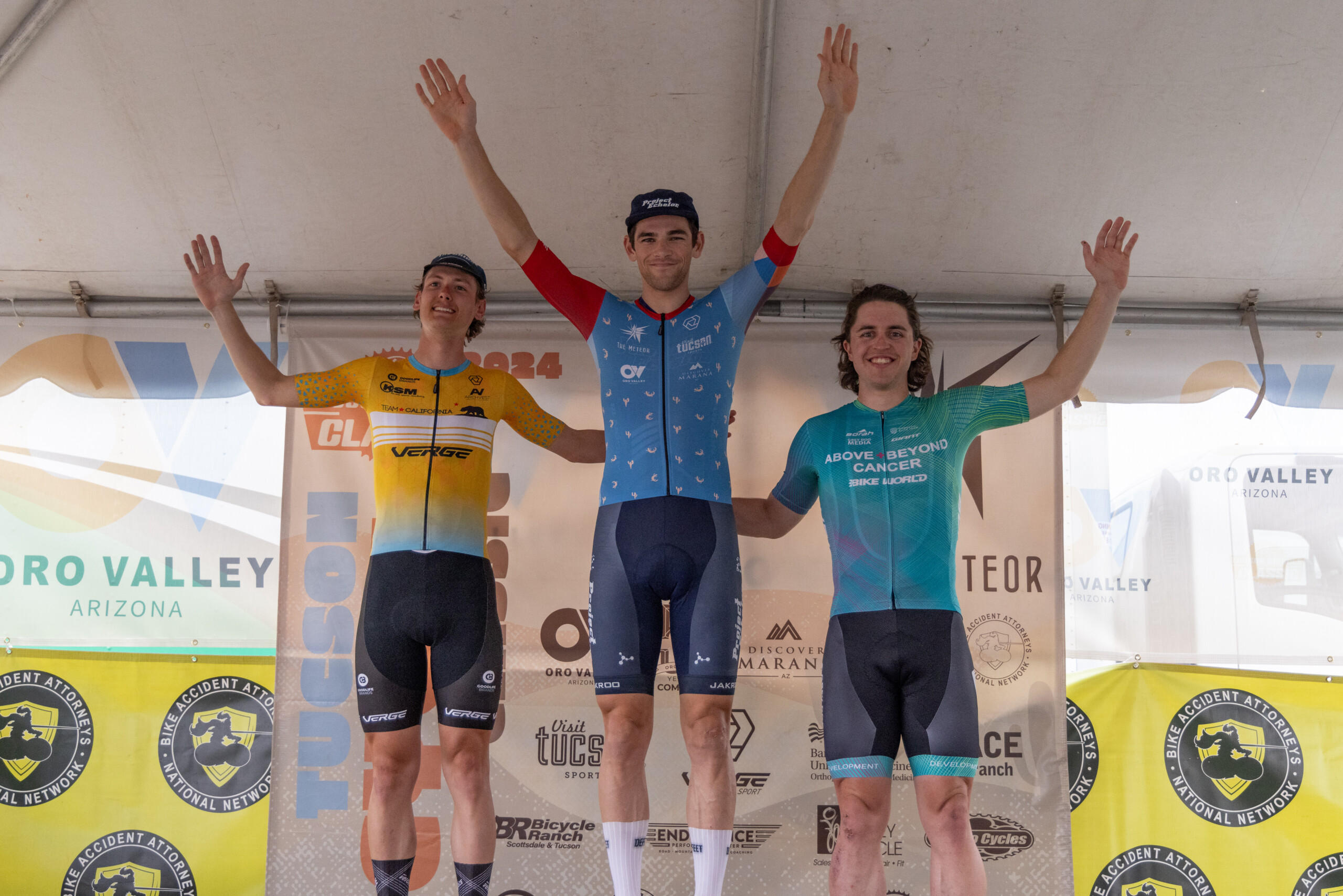
Success! Brendan Rhim (Team Echelon) wins the Stage 3 Oro Valley Circuit Race after a solo break, retaking the overall general classification in the process. 2024 Tucson Bicycle Classic. Photo courtesy TBC.
Not only did Brendan clinch a win in the final stage of Tucson Bicycle Classic 2024, but he was able to reclaim GC, which made for an electric and memorable finish to TBC 2024.
As the 36th Tucson Bicycle Classic draws to a close, its impact extends far beyond the immediate thrill of victory and the sting of defeat experienced on the roads of Tucson. Positioned early in the season, this event not only sets the stage for a year of racing but also serves as a crucial barometer for athletes’ form and strategy as they gear up for the challenges ahead. The performances witnessed here, from the commanding solo victory by Brendan Rhim to Sofia Arreola’s strategic dominance, offer a fascinating glimpse into the potential trajectories of these athletes in the coming months.
As we look forward to the rest of the cycling season, it’s intriguing to contemplate how the lessons learned and the fitness gained at the Tucson Bicycle Classic will translate into success in subsequent races. Events like the Tour of the Gila and Tour de Bloom await, each with their own unique demands that test endurance, strategy, and teamwork in different ways. Moreover, the technical prowess demonstrated in Tucson bodes well for those looking to excel in highly technical races such as the IntelliCup, Tulsa Tough, Indy Momentum, and Tour of America’s Dairyland, where split-second decisions and bike handling skills can be just as crucial as raw power.
This early-season showcase in Tucson not only ignites the competitive spirit of the cycling community but also sets the tone for a season of thrilling races, personal bests, and perhaps even the emergence of new champions. The progress of athletes from this point forward, how they build on their early-season form, and adapt to the diverse challenges of the race calendar, will be a captivating narrative to follow. The Tucson Bicycle Classic, with its blend of individual time trials, grueling road races, and technical circuit courses, provides a comprehensive foundation that athletes can build upon. As they move on to face the varied terrains and competition of the cycling season, the lessons learned, and confidence gained here in Tucson will undoubtedly play a pivotal role in shaping their journeys.
As the dust settles on this year’s classic, the stories of shock, awe, and triumph that emerged inspire both amateur athletes and enthusiasts to chase their dreams on the open road. The Tucson Bicycle Classic once again reaffirmed its status as a cornerstone of the cycling calendar, encapsulating the beauty, challenge, and camaraderie of cycling in its purest form.
By David Ward — October 7 of this past year found me in Nevada’s Kershaw-Ryan State Park, just outside of Caliente, Nevada, trying not to shiver in the 40°F temperature and awaiting the start of the Park to Park Pedal Century Ride. I chose this event as motivation to maintain my LOTOJA fitness for a while. This is always my best cycling fitness of the year, even though I now ride the annual LOTOJA as part of a relay rather than solo. This year I hoped to avoid an immediate dive into my post-LOTOJA/winter cycling fitness slump.
I really enjoyed this ride. The format was appealing, taking in four Nevada State Parks. Beginning in the Kershaw-Ryan State Park, the course takes you to Cathedral Gorge State Park, through Echo Canyon State Park, to the turnaround point at Spring Valley State Park and then finishes back in Kershaw-Ryan. And we had ideal weather: Clear blue skies with temperatures ranging from the aforesaid 40°F to mid 80°sF, but never uncomfortably warm, and very little wind.
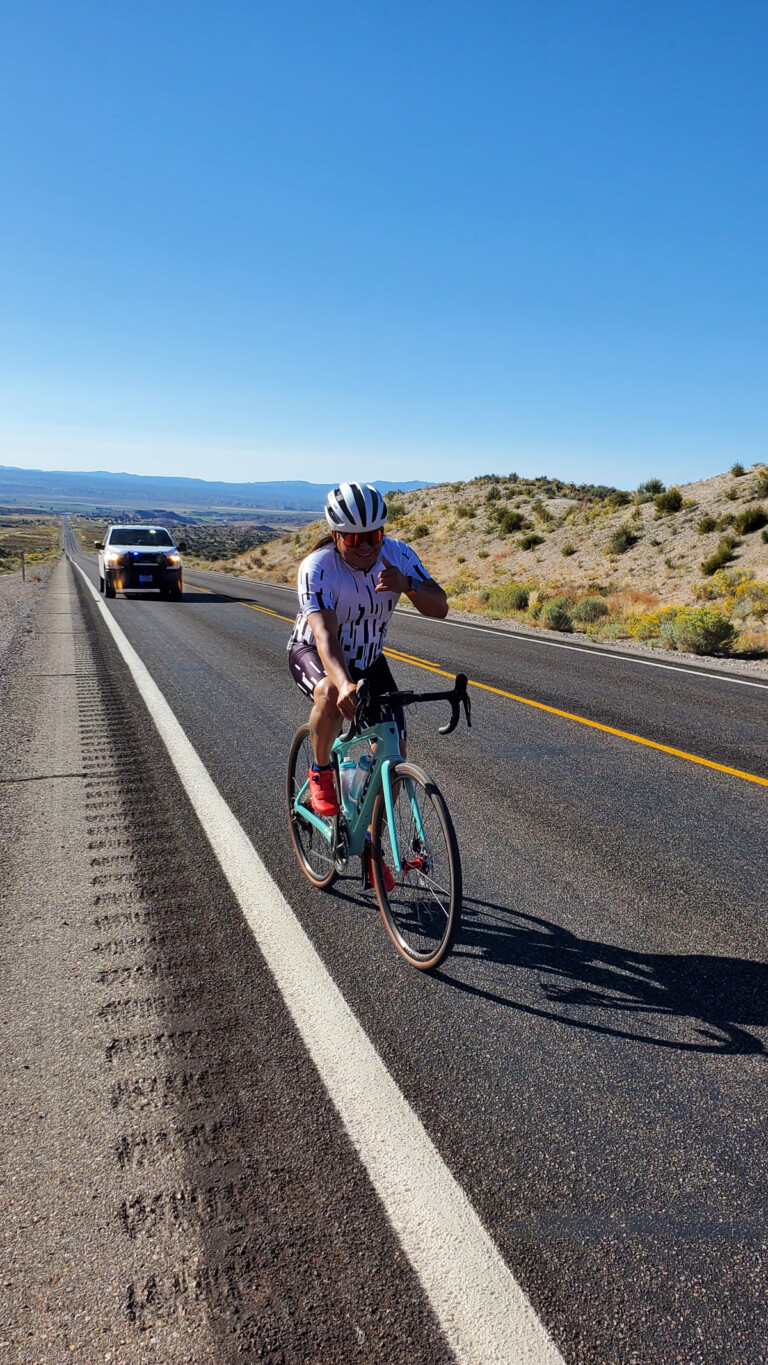
A rider on the road to Pioche, NV in the Park to Park Pedal Century Ride 2023. Photo by David Ward
Though advertised at a total ascent of 5600′, my computer logged “only” 4500′. Though short of what was advertised, that is still a lot of elevation gain for most of us amateur, recreational riders. Additionally, the climbing is not harsh. There is a long, 11-mile climb early on from Cathedral Gorge to Pioche in which you gain about 1600′, another good climb after the lunch break at Spring Valley about two miles long and 600′, and the final climb back to Pioche and a little beyond of 500′. And even these climbs are not extremely daunting, the steepest sections being around 6%. The rest of the climbing was gradual uphill and small rollers, mostly between Echo Canyon Dam and Spring Valley. Frankly, it was a perfect post-LOTOJA ride for me, challenging in both distance and ascent, but not too overwhelming.
It is also a beautiful ride. Make no mistake, this is desert, and you are pedaling alongside a lot of sagebrush surrounded by other desert flora including an abundance of a yellow-flowering plant that covered the landscape. (I have tried to identify this plant, but with no success.) Born and raised in rural southeastern Idaho, this landscape felt like home to me, a landscape that I love. And the ride alongside the lush Meadow Valley Wash with its rising canyon walls from Echo Canyon Dam to Spring Valley is simply desert gorgeous.
But my loudest raves for this event are for the organization and support. Preceding the ride is a rider’s breakfast of muffins, fruit and/or oatmeal. There are five food stops along the way, the stop at Pioche technically being two stops, first on the way out and a very welcome stop on the way back. Each stop is well-stocked with treats, fruit, colas and other canned soft drinks, energy drinks and plenty of water. The lunch stop at Spring Valley is a true lunch stop, serving up sandwiches made with your choice of meat and cheese, and self-serve condiments, as well as chips, fruit, and other snacks. The only thing I would have appreciated but which they didn’t have was pickle juice.
At the end of the ride, we were served up a Dutch oven dinner I would have been willing to pay good money for. But I didn’t have to: It was included in my registration fee.
Also, and a very much appreciated perk, at both Cathedral Gorge and Pioche stops you can take off extra clothing. It is put in a bag with your number on it and you pick it up at the finish. This solves a common early morning dilemma for me: Do I dress so as not to be too cold (especially on an early, very cool fall morning) and later find someplace to stuff the extra gear, or do I suffer in the cold for a goodly time before I finally warm up? Problem solved.
This ride has a lot of support staff. Local police and park rangers patrol the roads keeping an eye out for, protecting, and helping riders. There are plenty of folks staffing the food stops, and they are cheerful and helpful, making the stops enjoyable as well as refreshing.
And finally, addressing one of my pet peeves, they didn’t give out water bottles. Maybe others like getting these, but I have way too many cheap plastic water bottles. I have taken to refusing them at registration. Instead, with the registration came a quality long-sleeved t-shirt instead of a cheap short-sleeved one of which again I have way too many.
So, I give this ride an excellent rating and high recommendation. It met and, indeed, exceeded all my expectations, both for the ride itself, its organization and support, and what I was looking for at this time of year. A great post-LOTOJA ride.
2024 Event Details:
October 12 — Park to Park Pedal Extreme Nevada 100|, Caliente, NV, Road bike ride starting and ending at Kershaw-Ryan State Park. Cyclists visit the towns of Caliente and Pioche, and three other state parks: Cathedral Gorge, Echo Canyon, and Spring Valley. 3 rides available: 100, 60 and 40 mile options. There is a Dutch oven dinner at the end!, Dawn Andone, 775-728-8101, [email protected], parktoparkpedal.com, lincolncountynevada.com/exploring/biking/park-to-park-pedal/
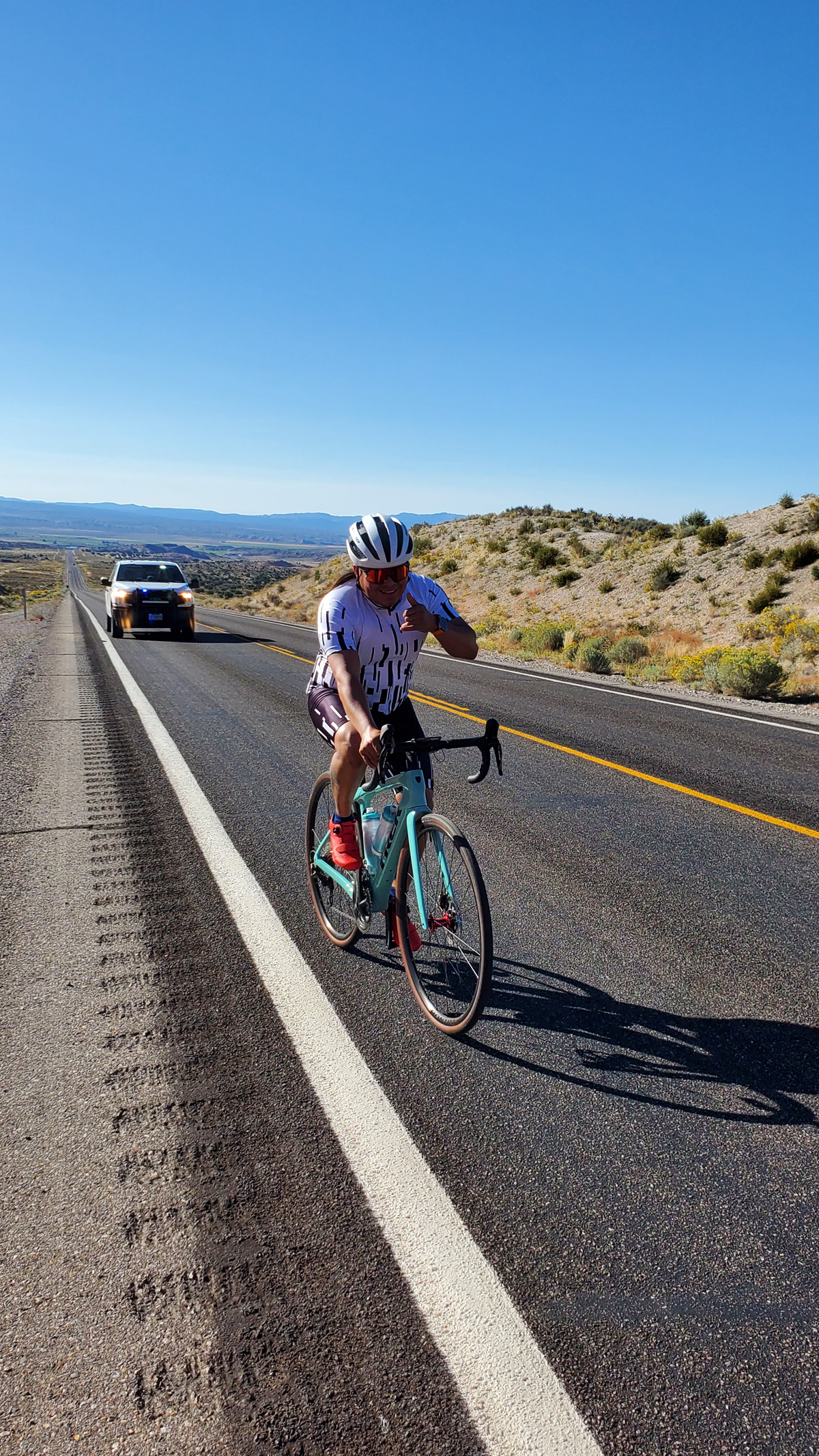
A rider on the road to Pioche, NV in the Park to Park Pedal Century Ride 2023. Photo by David Ward
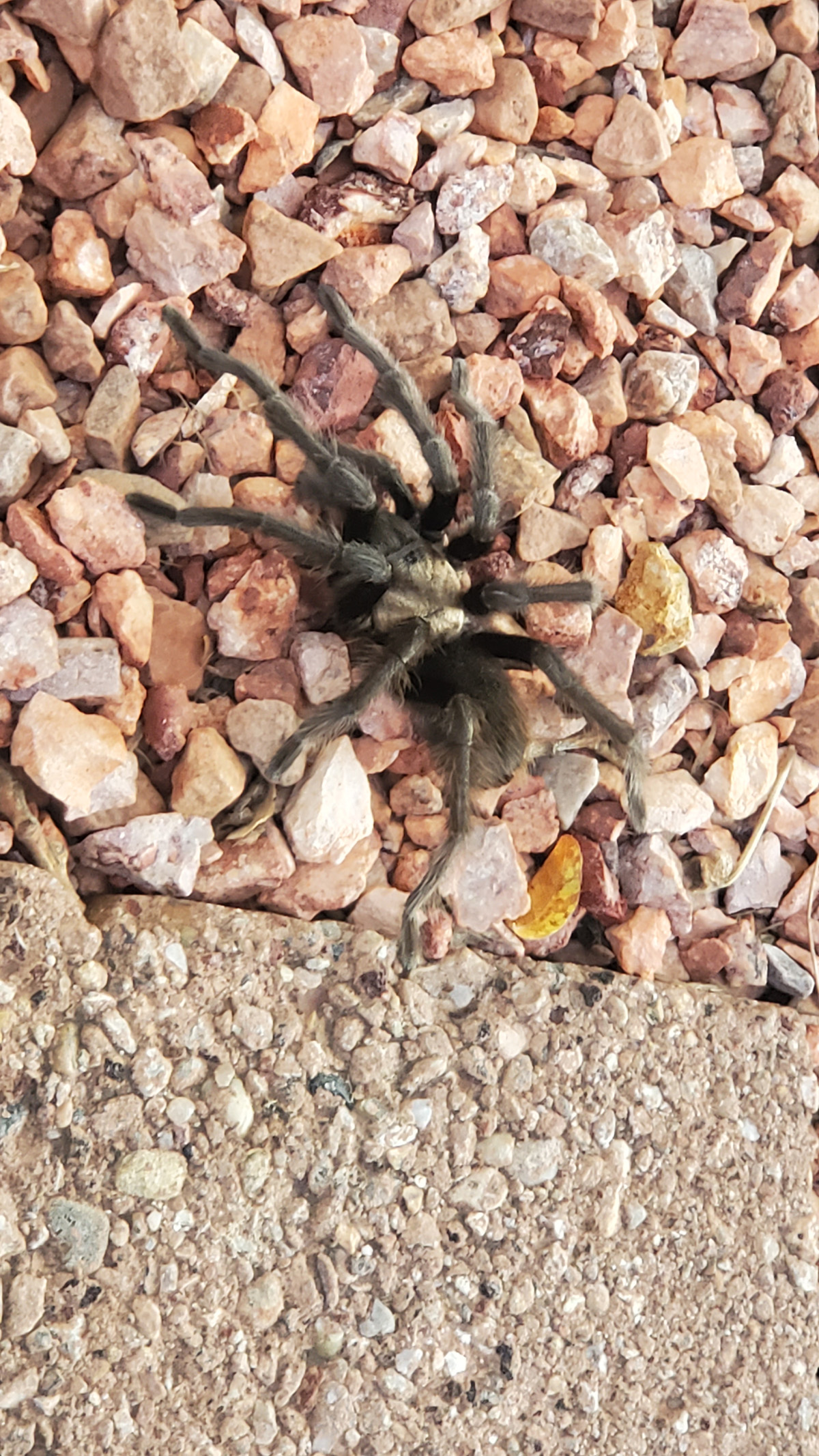
A visitor (Wood Tarantula) to the Dutch Oven Dinner after the Park to Park Pedal Century Ride 2023. Photo by David Ward
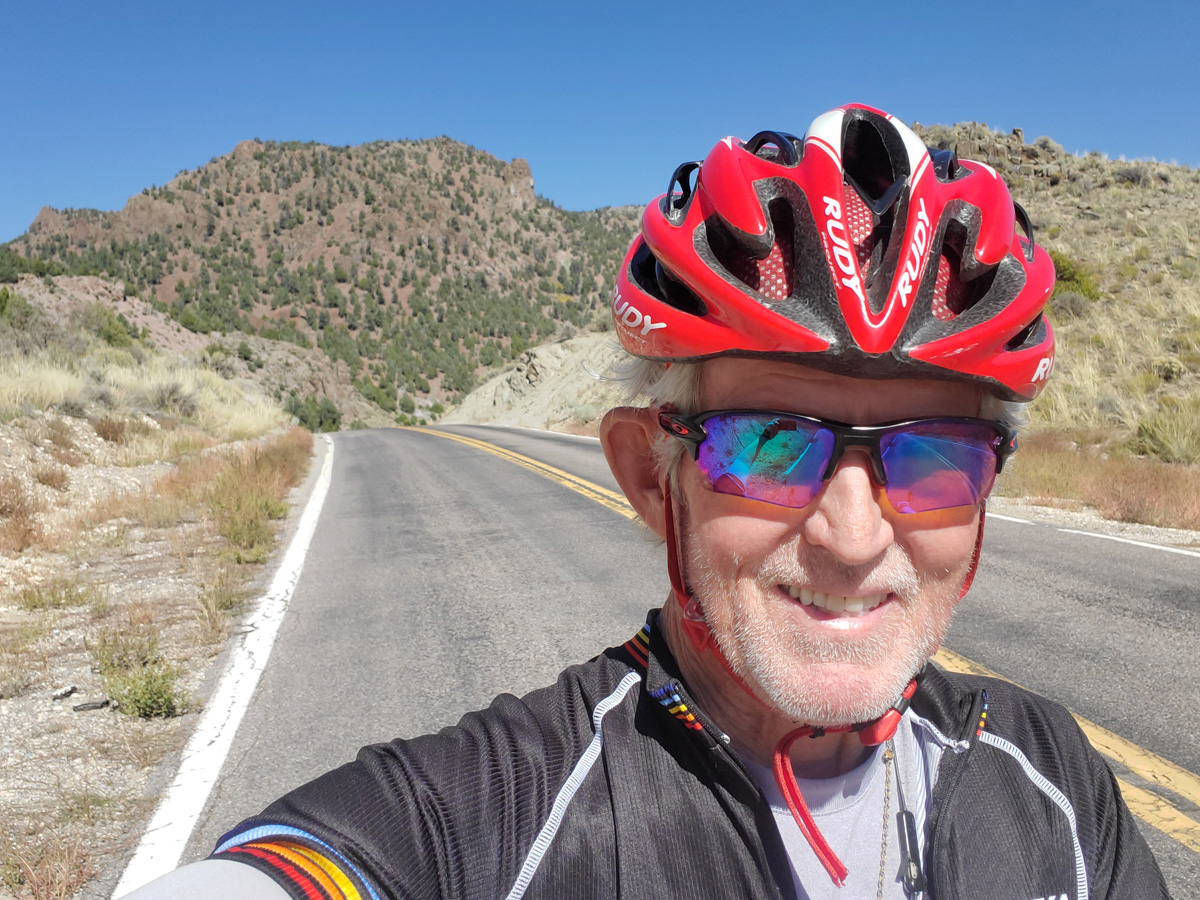
David Ward on the final rise in the road to Spring Valley Reservoir, NV. Park to Park Pedal Century Ride 2023. Photo by David Ward
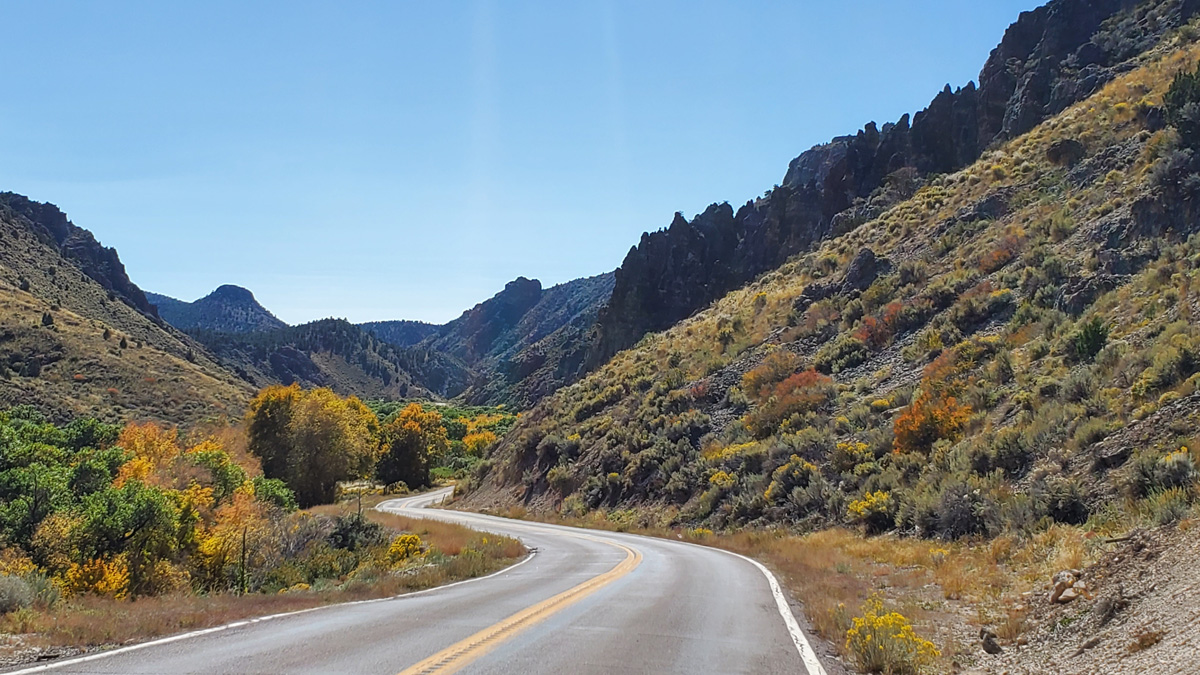
The road through Meadow Valley Wash, NV. Park to Park Pedal Century Ride 2023. Photo by David Ward
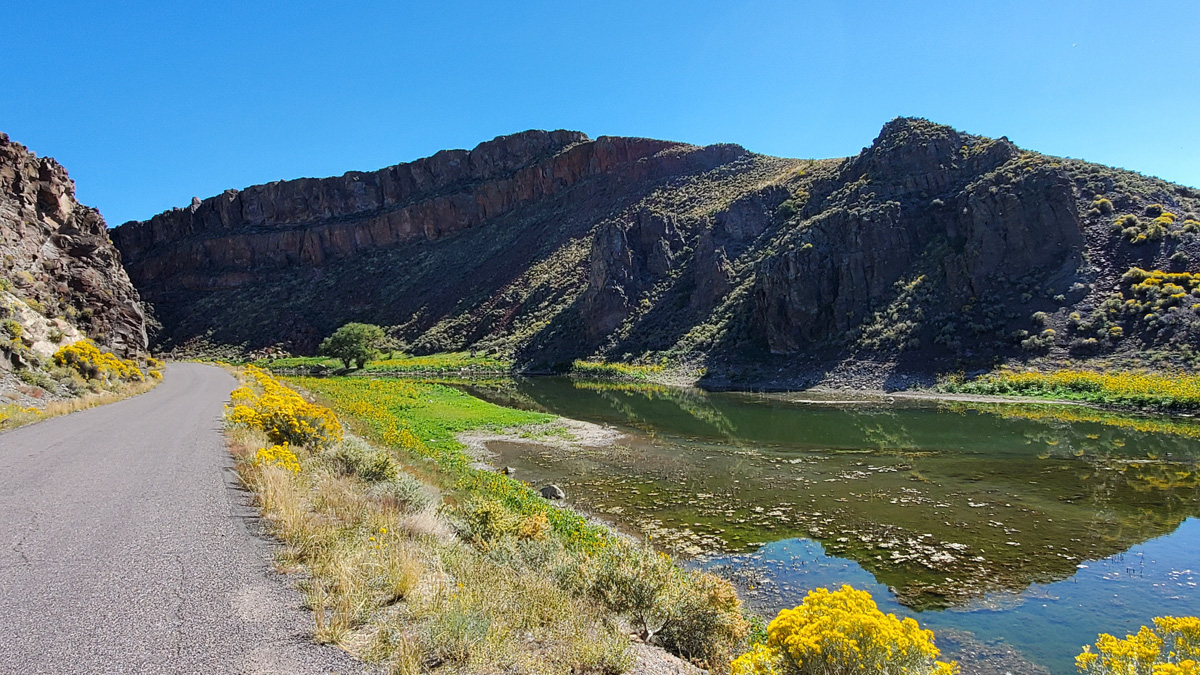
Echo Canyon Reservoir, Nevada. Park to Park Pedal Century Ride 2023. Photo by David Ward
An old mining aerial tramway. Park to Park Pedal Century Ride 2023. Photo by David Ward
Name of Product: 2021 through 2023 Model Year Cannondale Dave bicycles
Hazard: The bicycle headtube/downtube weld can become damaged, and separate from the bicycle frame, posing fall and injury hazards.
Remedy: Replace
Recall Date: February 29, 2024
Units: About 660 (In addition, about 113 were sold in Canada)
Consumer Contact
Cannondale at 800-245-3872 from 9 a.m. to 6 p.m. ET Monday through Friday, email at [email protected] or online at www.cannondale.com/en/safety-and-recalls or www.cannondale.com and click on “Recalls & Notices” at the bottom of the page for more information.
Recall Details
Description: This recall involves Model Year 2021 through 2023 Cannondale 26” Dave bicycles and framesets. The bicycles and framesets were sold in deep teal and stealth gray. “Dave” is printed on the bicycle frame top-tube. “Cannondale” is printed on the downtube.
Remedy: Consumers should immediately stop using the recalled bicycles and contact an authorized Cannondale dealer for a free replacement frame.
Incidents/Injuries: The firm has received two reports of damage to the bicycle headtube/downtube weld, causing the bicycle headtube to separate from the bicycle frame. No injuries have been reported.
Sold At: Bicycle stores nationwide and online at Cannondale.com from June 2021 through September 2023 for about $1,300.
Importer(s): Cycling Sports Group Inc., dba Cannondale, of Wilton, Connecticut
By Charles Pekow — The COVID pandemic not only triggered a surge in bike riding but also confined the surge primarily to metropolitan areas, especially suburbs, as suggested by a new report. Rural states, on the other hand, experienced declines.
An eBook titled Bike Boom or Bust? Metro & Statewide Bicycle Activity Trends from Streetlight Data, Inc. concludes that nationwide bicycle activity in the continental U.S. substantially increased in 2020 and 2021 and remained steady in 2022.
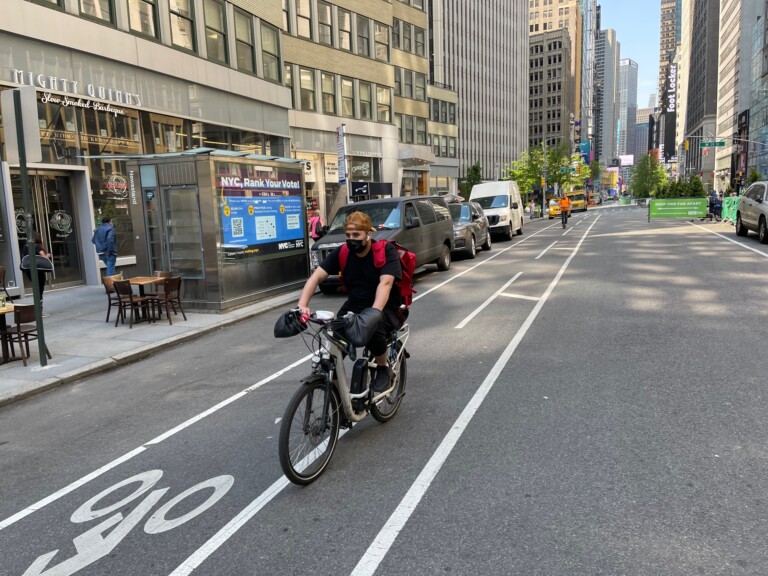
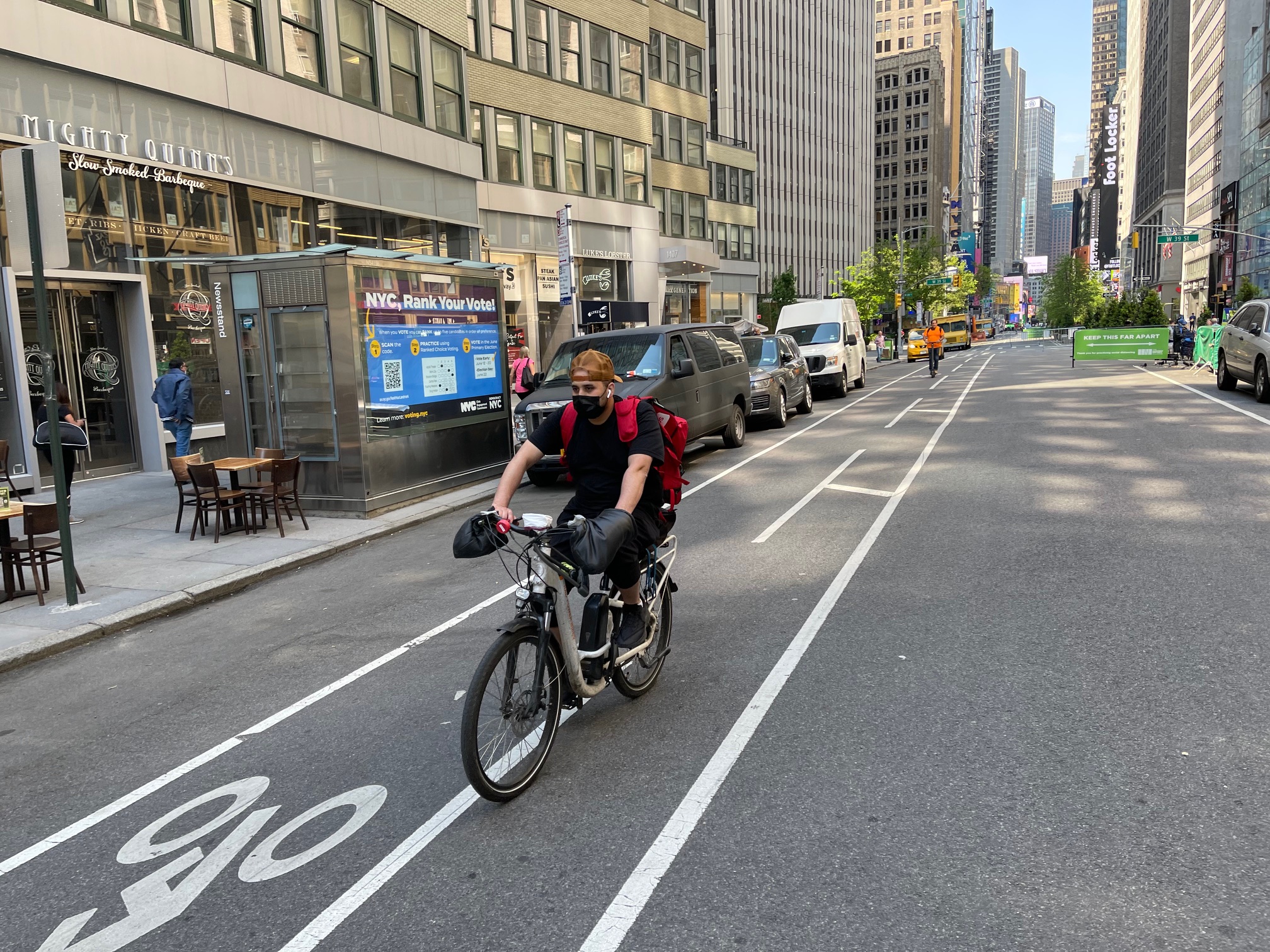
An e-cyclist in Manhattan. Photo by Dave Iltis
The report estimates a 24 percent jump in the number of bicycle trips from 2019 to 2020, another nine percent increase in 2021, and a stable figure in 2022. However, the growth was predominantly observed in the East, while several largely rural Mountain West states, including Idaho, Montana, and Wyoming, saw a decrease in bike trips. Nevertheless, 41 states witnessed an increase in the number of trips.
While the short stage races in Australia, the Middle East, and Spain during January and February serve as warm ups, the true season openers for the peloton’s GC men are Paris-Nice in France and Tirreno-Adriatico in Italy. The Italian event, known by the riders as “The race of the Two Seas” is the youngest of the two, having begun in 1966. The race crosses Italy from west to east, running from the Tyrrhenian coast to the Adriatic Coast and consisting of seven stages since 2002. The event, like the Giro d’Italia is also organized by RCS-Sport/La Gazzetta dello Sport will be held this year from March 4-10.
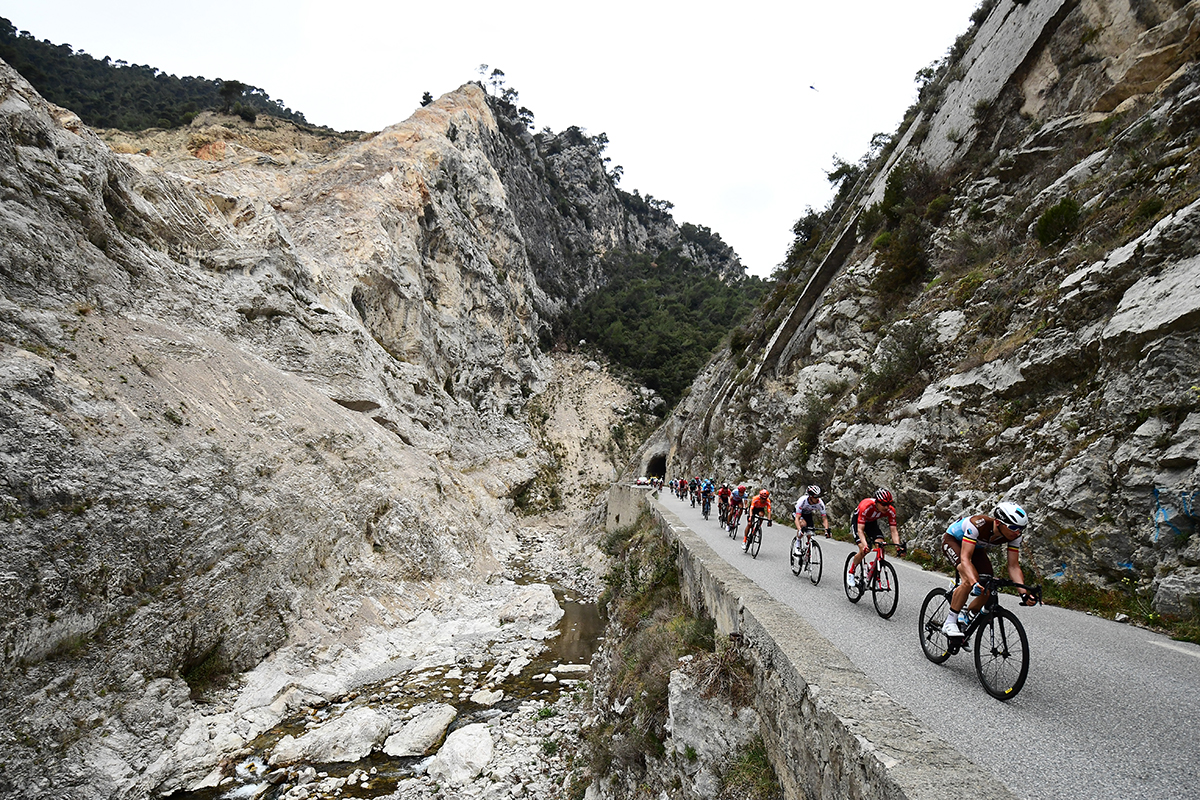
Paris-Nice 2019 – 2019/03/17 – Stage 8 – Nice / Nice (110 km) – 25 km from the finish. Photo by ASO/Alex Broadway
Paris-Nice consists of eight stages and was first held in 1933. Known as “the race to the sun”, the event starts in the chilly suburbs of Paris and heads straight south to finish on the Cote d’Azur of the Mediterranean Sea. It is not uncommon for the riders to encounter snow enroute. Organized by the Amaury Sport Organization, which also promotes the Tour de France, this year’s race runs concurrently with the Italian event, from March 3-10. Interestingly, two-time Tour de France winner Laurent Fignon promoted the 2000 and 2001 editions prior to selling the event to ASO. Essentially all of the world’s best professional European professionals will race one of these two stage races prior to the spring classics and shorter stage races.
Q1. Who holds the record for victories in Paris-Nice?
Q2. What is the best finish by an American in the “Race to the Sun”?
Q3. Because Paris-Nice is organized by the ASO, it is an important showcase for Tour de France contenders and their teams. When was the last time a rider who triumphed in the March event also claimed Le Tour in July?
Q4. Who holds the record for the most victories in “The Race of the Two Seas”?
Q5. What is the best finish by an American in Tirreno-Adriatico?
BONUS QUESTION: Milan-San Remo is the season-opening classic and happens shortly after the finish of Tirreno-Adriatico. To win both in succession is very prestigious, especially for the Italians! When was the last time this happened?
By Savannah Cottam — A new study by Schuster, H., Van der Noll., & Rohmann, A. in Hagen, Germany examines how cycling plays a role in the orientation toward the common good. Orientation toward the common good describes how people feel responsible and willing to help others, as well as abide by basic rules and participate in social and political life (Schiefer and Van der Noll., 2016). In this particular study scientists hypothesize “that in an urban context, people who use bicycles experience a greater orientation towards the common good than those who use cars.” To test this hypothesis a sample of 410 participants in Germany surveyed from 2014-2019 were asked how often they biked vs drove, as well as questions that rated their political and social participation, local helpfulness, and neighborhood solidarity.
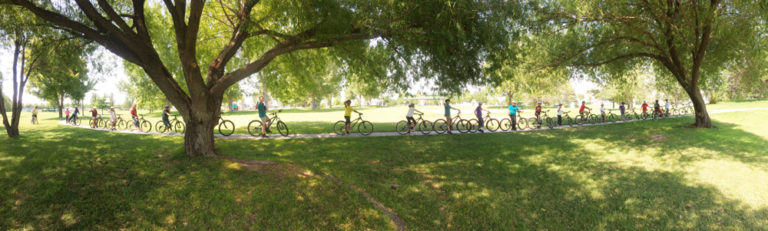
Students at Pacific Heritage Academy out for their community ride. Photo by Bike Utah
Cycling, as opposed to all other variables recorded in the study — homeownership, personal income, education, and sex — was the only variable that showed a positive effect and was significant in all four models tested. The authors conclude that cycling, rather than driving, is associated with participatory activities, helpfulness, and solidarity in the neighborhood. Cars reduce an individual’s direct contact with their environment. The direct experience that cycling has to the neighborhood environment leads to a stronger emotional bond within society. This emotional attachment of people to their neighborhood is considered a mediator for civic activities (Stefaniak et al., 2017). And thus, cycling gives rise to connectivity and orientation toward the common good in cities.
References
Schuster, H., Van der Noll., & Rohmann, A. (2023). “Orientation towards the Common Good in Cities: The Role of Individual Urban Mobility Behavior.” Journal of Environmental Psychology, Academic Press, 2 Sept. 2023, www.sciencedirect.com/science/article/pii/S0272494423001731.
Schiefer, D., & Van der Noll, J. (2016). The essentials of social cohesion: A literature review. Social Indicators Research, 132(2), 579–603. https://doi.org/10.1007/s11205-016-1314-5
Stefaniak, A., Bilewicz, M., & Lewicka, M. (2017). The merits of teaching local history: Increased place attachment enhances civic engagement and social trust. Journal of Environmental Psychology, 51, 217–225. https://doi.org/10.1016/j.Jenvp.2017.03.014
“We Are Rock n Roll” chronicles the thrilling 2023 season of the American Criterium Cup, a captivating series that brings together ten of America’s most cherished criterium races.
Filmmaker and producer Justin Balog traveled back-and-forth across the country, capturing the essence of this uniquely American discipline of bicycle racing. The heart-pounding world of criterium racing is fast, technical, and tactically intense, allowing athletes and teams to showcase their unwavering love for the sport on the road to victory.
Many would enjoy the adventure of a bicycle expedition to Yellowstone National Park. But imagine doing it in 1896, before pavement, lightweight cycles and modern camping equipment.
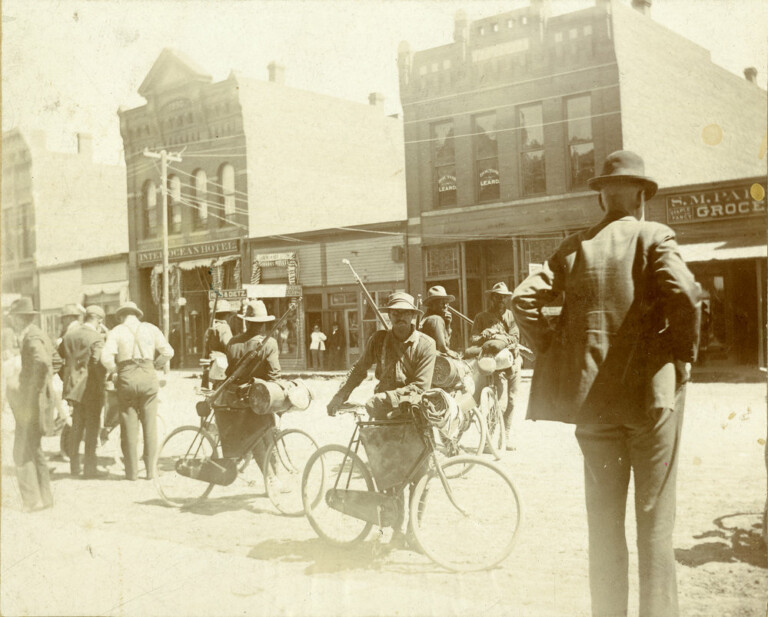
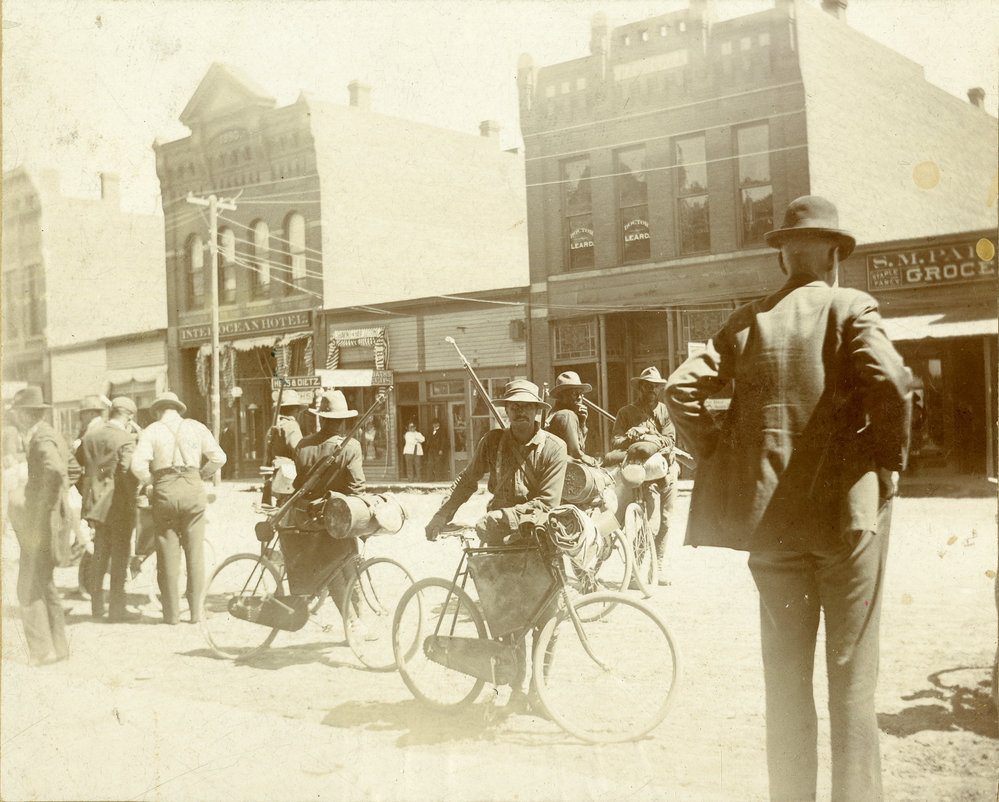
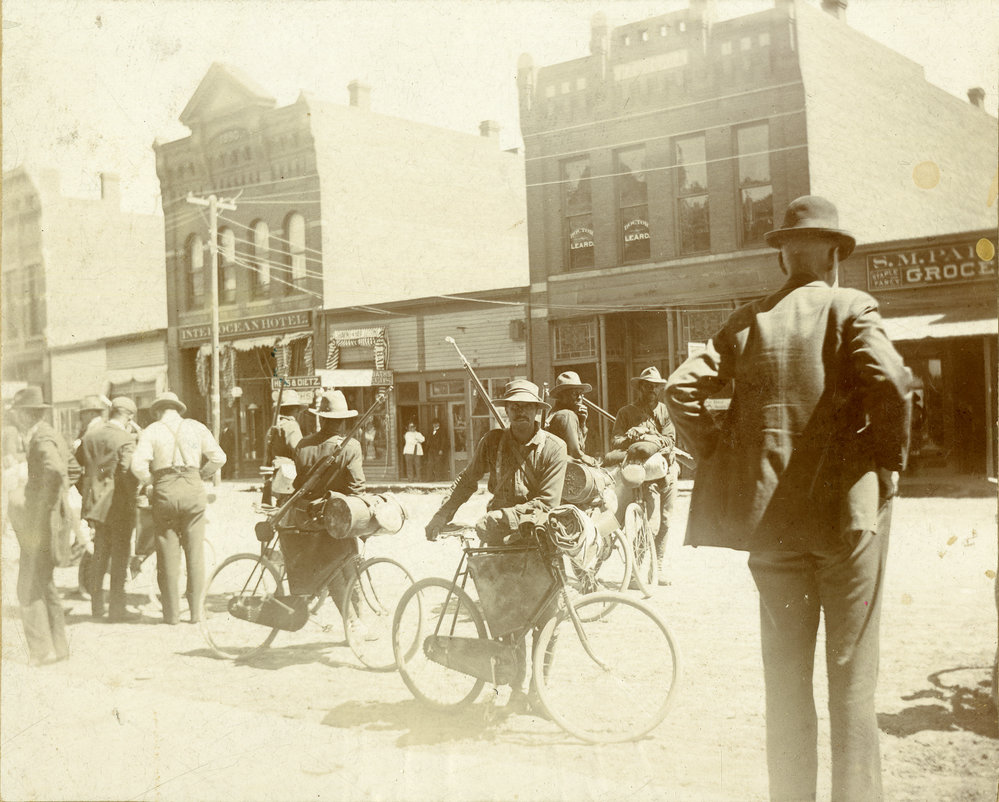
Members of the 25th Infantry Regiment Bicycle Corps of the United States Army, Buffalo Soldiers, pictured on Main Street, Livingston, Montana. The Regiment stopped in Livingston for rations during the 1897 bicycle trip from Fort Missoula, Montana to St. Louis, Missouri. The trip was led by Lieutenant James A. Moss included Sgt. Mingo Sanders, Lance Cpl. William Haynes, Lance Cpl. Abram Martin, Musician Elias Johnson, Pvt. John Fridley, Pvt. George Scott, Pvt. Hiram L.B. Dingman, Pvt. Travis Bridges, Pvt. John Cook, Pvt. Frank L. Johnson, Pvt. William Proctor, Pvt. Elwood Forman, Pvt. Richard Rout, Pvt. Eugene Jones, Pvt. Sam Johnson, Pvt. William Williamson, Pvt. Sam Williamson, Pvt. John Wilson, Pvt. Samuel Reid, Pvt. Francis Button. The six soldiers visible in the photograph are unidentified. Reverse reads, “Livingston, Mont. Soldiers passing through Livingston and Mr. Thompson of Thompson Mercentile.” Photographer unknown, Sax and Fryer Collection. Courtesy Yellowstone Gateway Museum and Montana State Library Archives and Special Collections.
The Buffalo Soldiers who made up the volunteer Bicycle Corps of the 25th Infantry Regiment were up to the challenge.
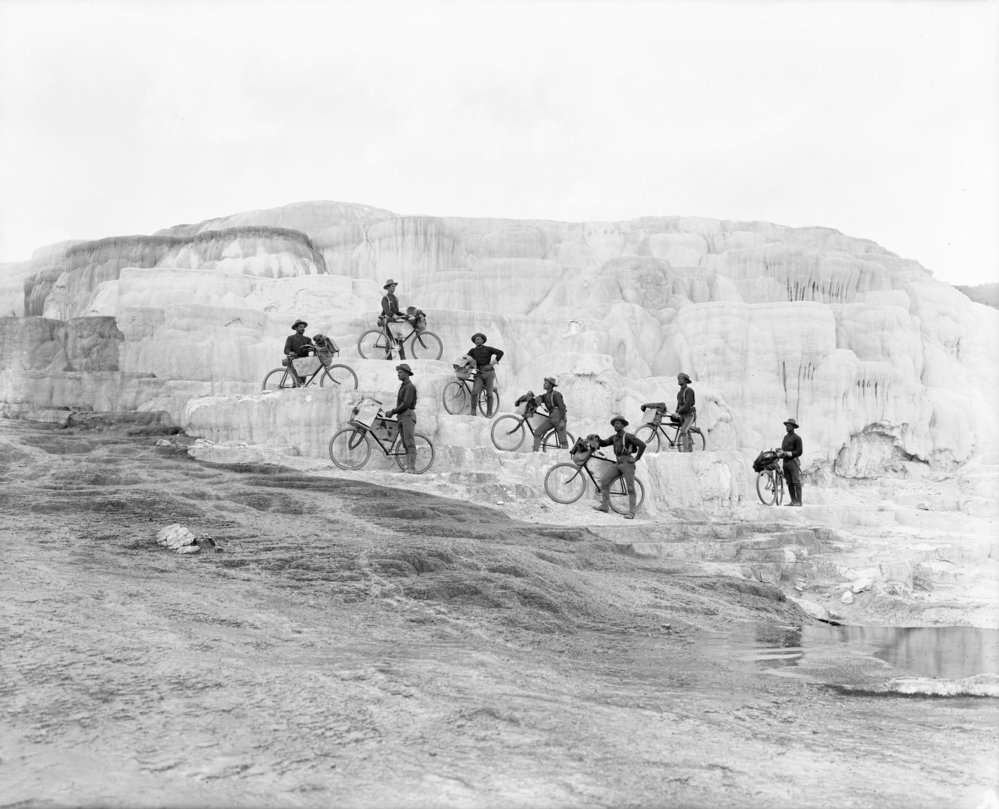
An iconic photo (below) from Yellowstone’s early history depicts eight soldiers of the 25th Infantry Regiment posing with bicycles on Minerva Terrace at Mammoth Hot Springs. These men were not stationed in Yellowstone, but rather cycled from Missoula to the park and back. The regiment had been based at Fort Missoula since 1888, and although the ranks were composed of Black men, the officers were white. The 25th was one of four regiments (also including the 24th Infantry and the 9th and 10th Cavalry) that were made up of Black soldiers — these were the Buffalo Soldiers.
Group of black soldiers from the 25th Infantry Bicycle Corps with bicycles posed on the side of Minerva Terrace at Mammoth Hot Springs, Yellowstone National Park, Wyoming. 1896. Photo by Haynes, F. Jay (Frank Jay), 1853-1921. Courtesy Montana State Library Archives and Special Collections.
Following the Civil War, Congress passed legislation to reorganize the military and included these regiments of African-Americans, many of whom were among the approximately 180,000 African Americans who previously served in the Union Army. From 1867 to the early 1890s, these regiments served at a variety of posts in the southwestern United States and the Great Plains regions. It was from one of these regiments, the 10th Cavalry, that the nickname “Buffalo Soldier” was born.
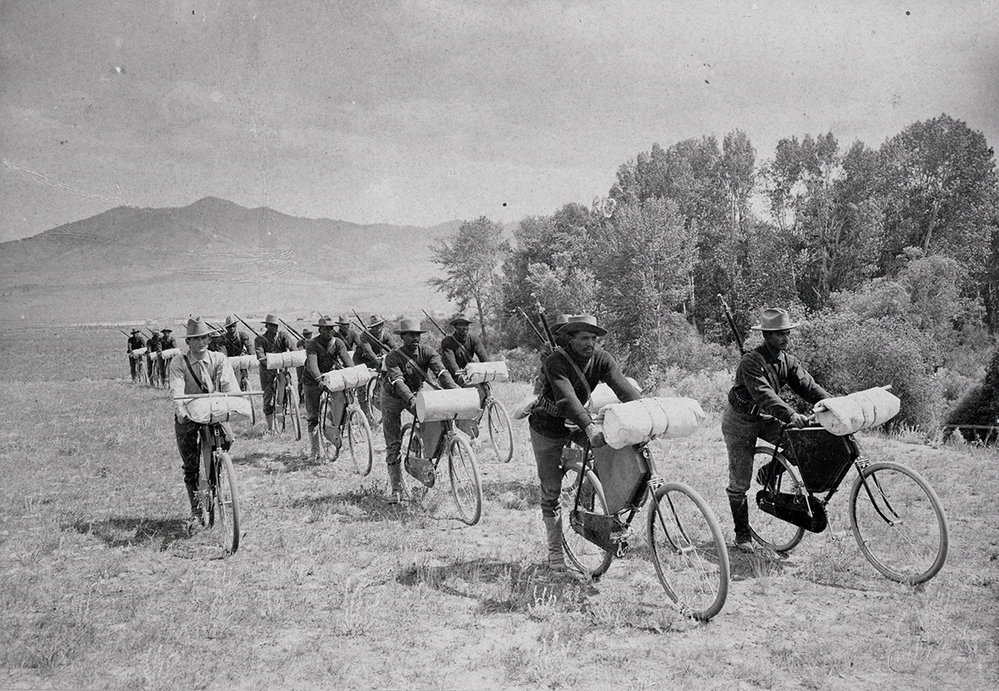
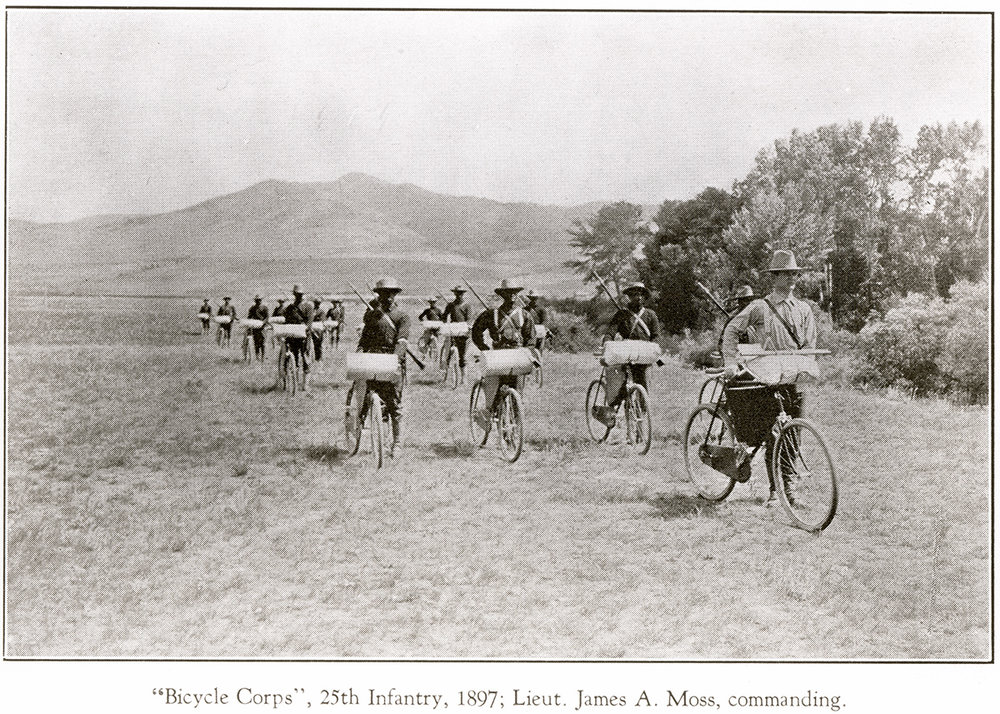
In the field – the U.S. Army Bicycle Corps stationed at Fort Missoula, Montana. Corps in formation. The man riding beside the two rows of soldiers is Lieutenant James A. Moss. 1897. Photo by Ingalls, F. M. (Frank M.), 1861-1934. Courtesy Montana State Library Archives and Special Collections.
Indigenous tribes of the American plains who fought against these soldiers allegedly referred to the Black cavalry troops as “buffalo soldiers” because of their dark, curly hair, which resembled a bison’s coat, and because of their fierce nature of fighting. The nickname soon became synonymous with all African-American regiments formed in 1866.
Bicycles as a means of military transport in the U.S. Army was suggested by Lt. James Moss, an officer in the 25th Infantry, following the example of some European armies. Bicycles offered several advantages over horses — they didn’t require food or water, didn’t make as much noise, and could be repaired if they broke down. His proposal to test the concept was approved by Army leadership, so Lt. Moss began training volunteers from the 25th Infantry Regiment.
The eight cyclists of the Yellowstone expedition were Sgt. Dalbert P. Green, Cpl. John G. Williams, Pvt. John Findley, Pvt. Frank L. Johnson, Pvt. William Proctor, Pvt. William Haynes, Pvt. Elwood Forman, and Musician William W. Brown.
The Bicycle Corps pedaled into action for the first time in early August 1896, starting with a four-day, 126-mile ride in the vicinity of Missoula. This might not sound spectacular, given that Ironman Triathlon bicycle legs cover about the same distance, but remember, this was 1896. The roads were not paved, and the one-speed bicycles, custom built by A.G. Spalding & Co. of Chicopee Falls, Massachusetts, each weighted more than 30 pounds. Importantly, unlike the Ironman, the soldiers also had to carry food, utensils, weapons, ammunition, clothes, repair parts and tools, bedrolls and tents — well over 100 pounds all told.
After a few days of rest, the Bicycle Corps began their next expedition on Aug. 15 — to Yellowstone National Park and Fort Yellowstone, a journey of more than 300 miles that took just more than eight days.
After two days of rest and reprovisioning at Fort Yellowstone, the Corps set out on a tour of the park on Aug. 25, stopping at Lower Geyser Basin, Upper Geyser Basin (where they observed Old Faithful, Giantess and Castle Geysers all erupting at the same time), West Thumb, and the Grand Canyon of the Yellowstone and its waterfalls, returning to Mammoth Hot Springs on Aug. 29. After two additional days of rest, during which the iconic photo and several others were taken, the soldiers headed back to Fort Missoula, riding in on Sept. 8 — a total journey of nearly 800 miles.
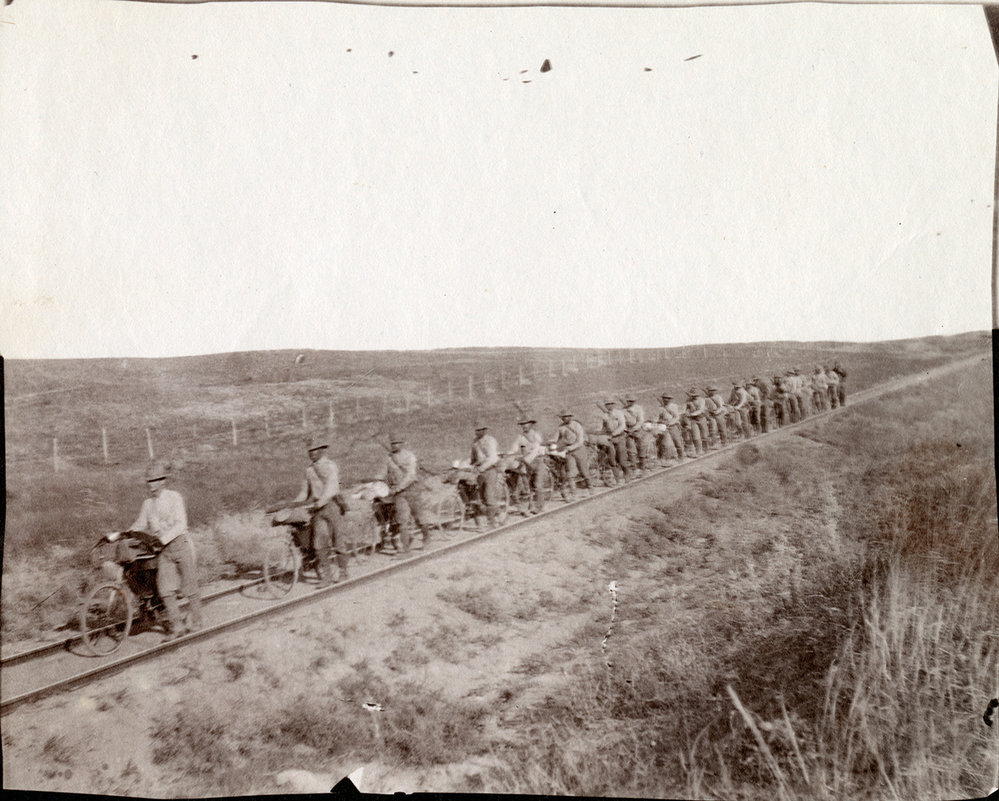
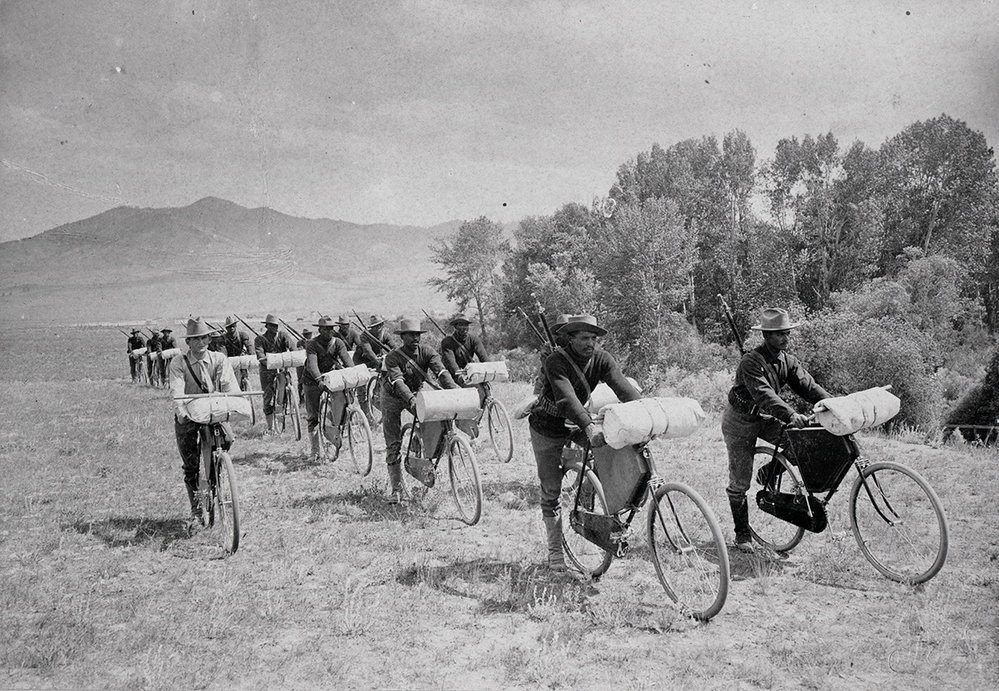
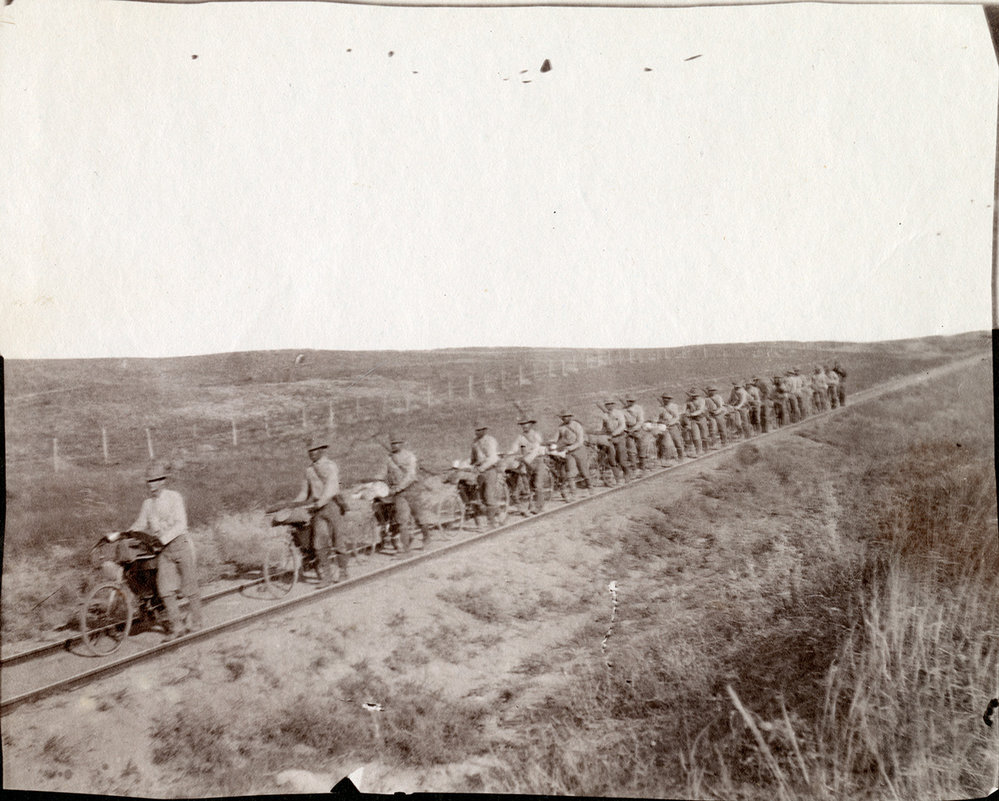
Bicycle Corps walking bicycles along a railroad track. Rolling grassy hills extend in the distance. Photo by Edward H. Boos. Courtesy Montana State Library Archives and Special Collections.
As part of his official report, Lt. Moss recorded that the trip through Yellowstone included 132 miles completed in 19 hours of actual bicycling. The slowest pace was between Upper Geyser Basin and West Thumb, when the soldiers had to cross the Continental Divide — twice. The fastest time was between Fort Yellowstone and Norris Geyser Basin.
Although there are no records of what the soldiers themselves thought, Moss recorded, “The soldiers were delighted with the trip … thought the sights grand …and seemed to be in the best of spirits the whole time.” Moss also remarked on “the moral effect of the seething water, the roaring of the geysers and the sulphuric fumes.”
Even the Yellowstone journey was just a warmup. In 1897, Moss organized 20 soldiers of the 25th Infantry on a 40-day, 1,900-mile ride from Fort Missoula to St. Louis. A planned ride to San Francisco the following year was canceled owing to the outbreak of the Spanish-American War, and the 25th Infantry was deployed to the Philippines.
Although never based in Yellowstone National Park, Buffalo Soldiers had a profound and lasting impact on the early national parks. Serving under perhaps the first Black officer, Charles Young, they were rangers and interpreters in places like Yosemite and Sequoia national parks, helping tourists and even blazing trails — for example, to the summit of Mount Whitney.
The next time you drive — or cycle! — around Yellowstone National Park, think of the challenging conditions that faced the intrepid Buffalo Soldier bicyclists of the 25th Infantry Regiment, who completed a tour of the park after riding from Missoula and carrying their own provisions, spare parts and equipment. And the challenges were not purely physical and logistical — of course, they also faced discrimination and were paid less than their white counterparts.
But wherever they went, the men of the 25th distinguished themselves, with one Montana newspaper editor remarking, “The prejudice against the … soldiers seems to be without foundation for if the 25th Infantry is an example of the [Black] regiments there is no exaggeration in the statement that there are no better troops in the service.”
For more information on the exploits of the 25th Infantry Regiment Bicycle Corps, see:
Yellowstone Caldera Chronicles is a weekly column written by scientists and collaborators of the Yellowstone Volcano Observatory.
Idaho Capital Sun is part of States Newsroom, a nonprofit news network supported by grants and a coalition of donors as a 501c(3) public charity. Idaho Capital Sun maintains editorial independence. Contact Editor Christina Lords for questions: [email protected]. Follow Idaho Capital Sun on Facebook and Twitter.
Republished under Creative Commons license CC BY-NC-ND 4.0.
Members of the 25th Infantry Regiment Bicycle Corps of the United States Army, Buffalo Soldiers, pictured on Main Street, Livingston, Montana. The Regiment stopped in Livingston for rations during the 1897 bicycle trip from Fort Missoula, Montana to St. Louis, Missouri. The trip was led by Lieutenant James A. Moss included Sgt. Mingo Sanders, Lance Cpl. William Haynes, Lance Cpl. Abram Martin, Musician Elias Johnson, Pvt. John Fridley, Pvt. George Scott, Pvt. Hiram L.B. Dingman, Pvt. Travis Bridges, Pvt. John Cook, Pvt. Frank L. Johnson, Pvt. William Proctor, Pvt. Elwood Forman, Pvt. Richard Rout, Pvt. Eugene Jones, Pvt. Sam Johnson, Pvt. William Williamson, Pvt. Sam Williamson, Pvt. John Wilson, Pvt. Samuel Reid, Pvt. Francis Button. The six soldiers visible in the photograph are unidentified. Reverse reads, “Livingston, Mont. Soldiers passing through Livingston and Mr. Thompson of Thompson Mercentile.” Photographer unknown, Sax and Fryer Collection. Courtesy Yellowstone Gateway Museum and Montana State Library Archives and Special Collections.
Group of black soldiers from the 25th Infantry Bicycle Corps with bicycles posed on the side of Minerva Terrace at Mammoth Hot Springs, Yellowstone National Park, Wyoming. 1896. Photo by
Haynes, F. Jay (Frank Jay), 1853-1921. Courtesy Montana State Library Archives and Special Collections.
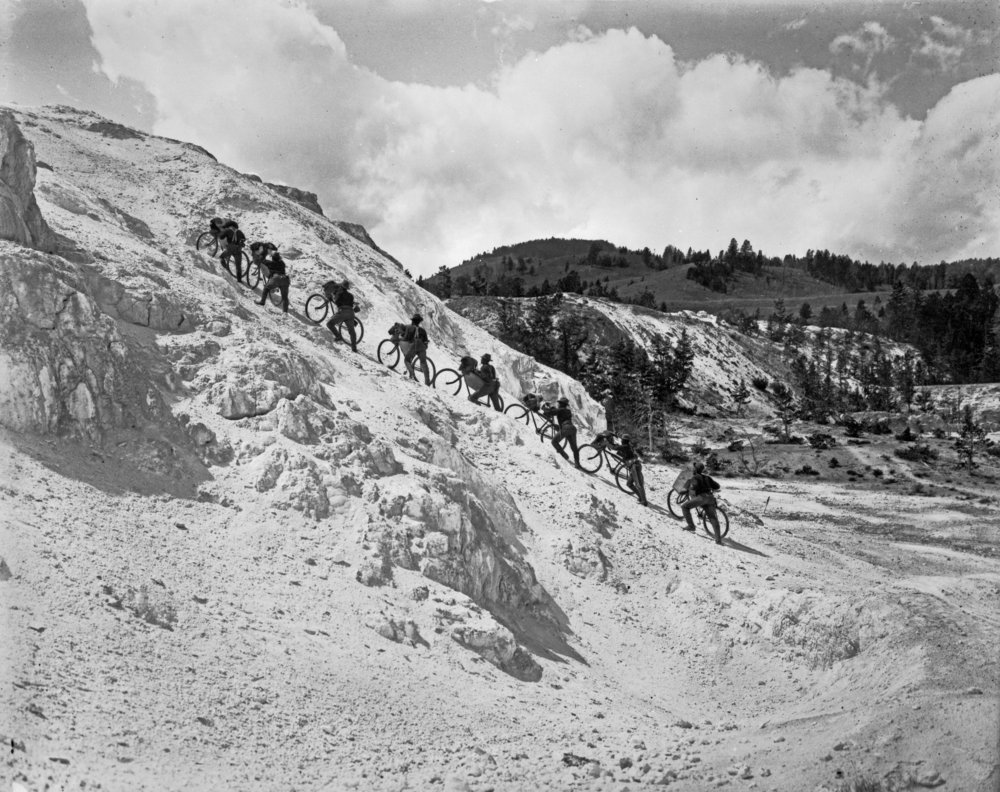
View of group of African American soldiers pushing their bicycles up the side of Minerva Terrace at Mammoth Hot Springs in Yellowstone National Park. Oct. 7, 1896. Photo by Haynes, F. Jay (Frank Jay), 1853-1921. Courtesy Montana State Library Archives and Special Collections.
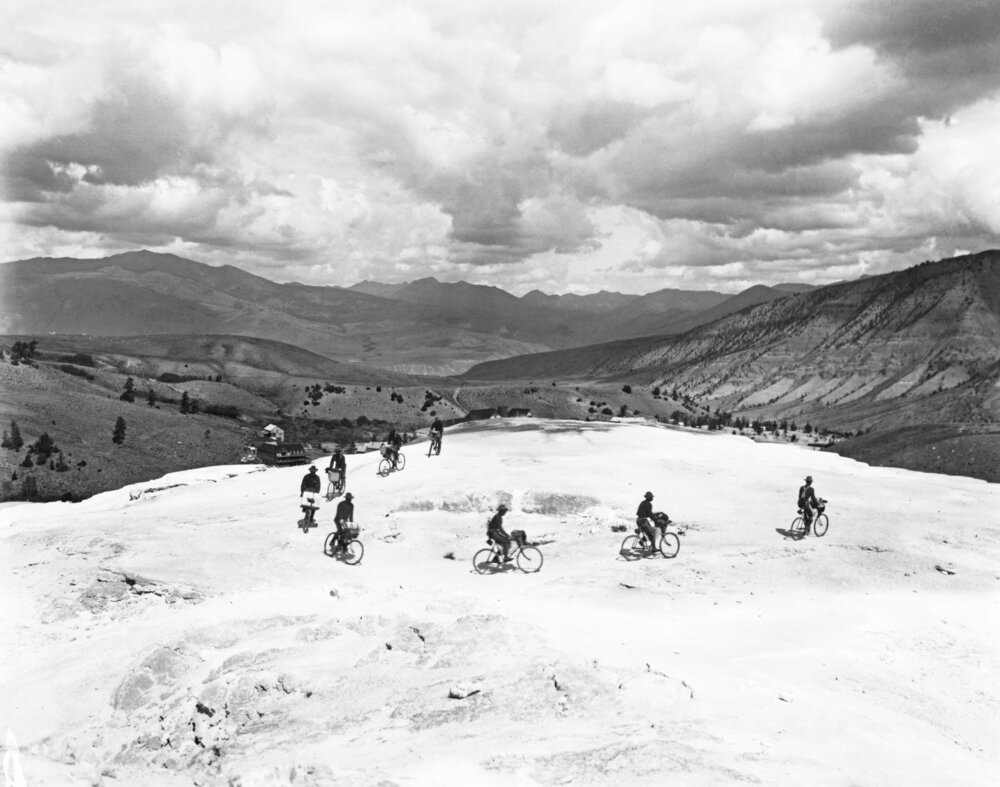
View of group of eight black soldiers riding bicycles in a circle on top of Minerva Terrace, Mammoth Hot Springs, Yellowstone National Park. Photo by Haynes, F. Jay (Frank Jay), 1853-1921. Courtesy Montana State Library Archives and Special Collections.
In the field – the U.S. Army Bicycle Corps stationed at Fort Missoula, Montana. Corps in formation. The man riding beside the two rows of soldiers is Lieutenant James A. Moss. 1897. Photo by Ingalls, F. M. (Frank M.), 1861-1934. Courtesy Montana State Library Archives and Special Collections.
U. S. Army, 25th Infantry Bicycle Corps. James A. Moss commanding (reproduced from unidentified publication). 1897. Courtesy Montana State Library Archives and Special Collections.
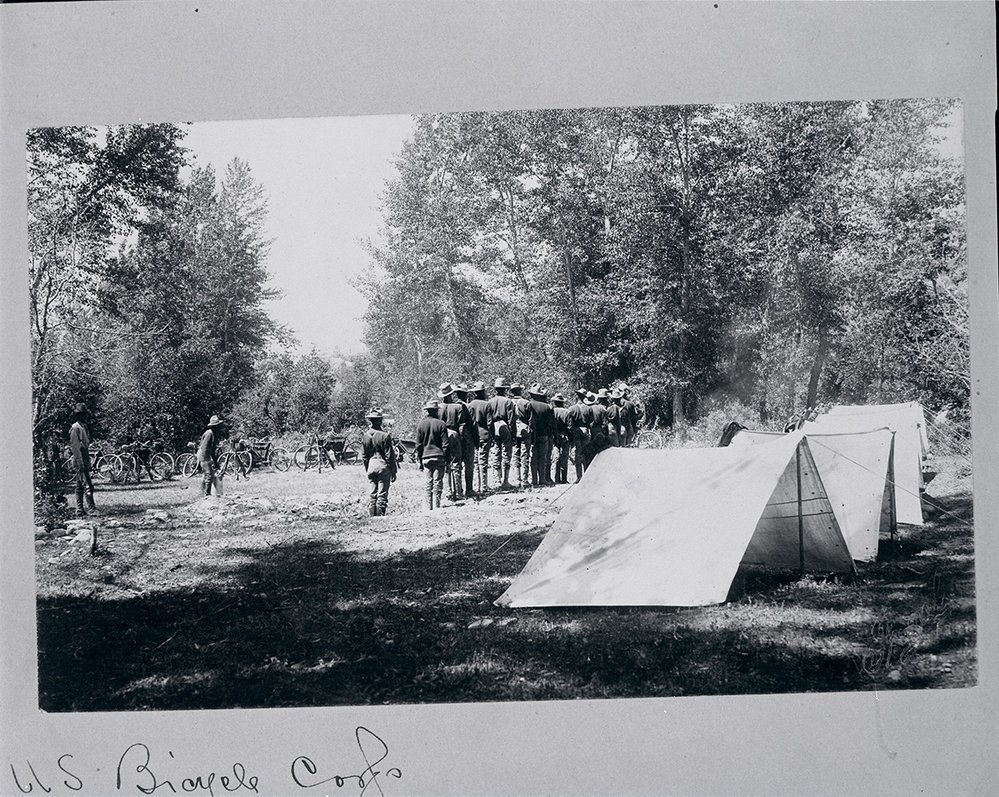
U.S. Army 25th Infantry Bicycle Corps stationed at Fort Missoula, Montana. In image, Corps is lined up single file in front of their tents with their backs to the camera. Bicycles are in background. Courtesy Montana State Library Archives and Special Collections.
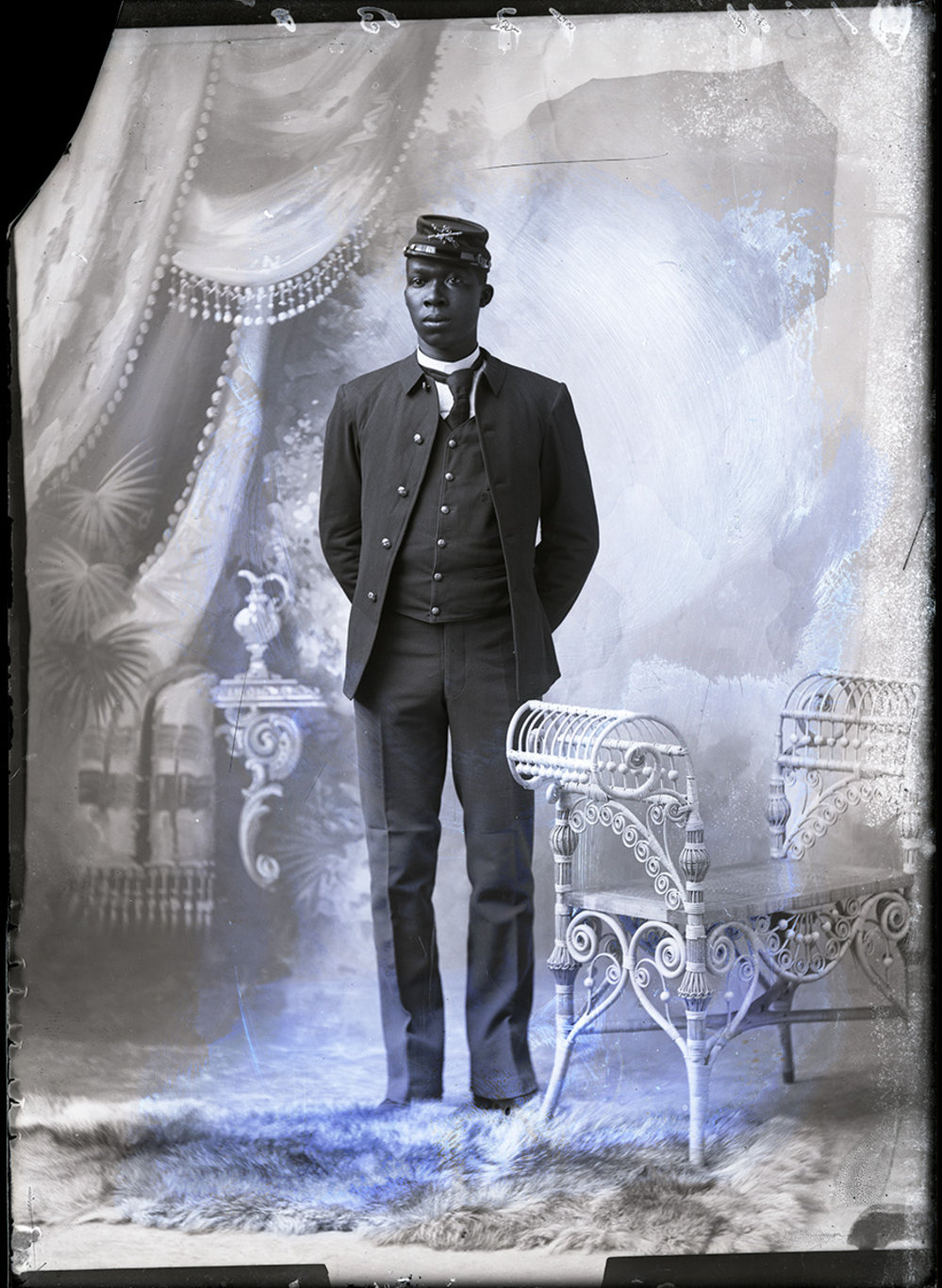
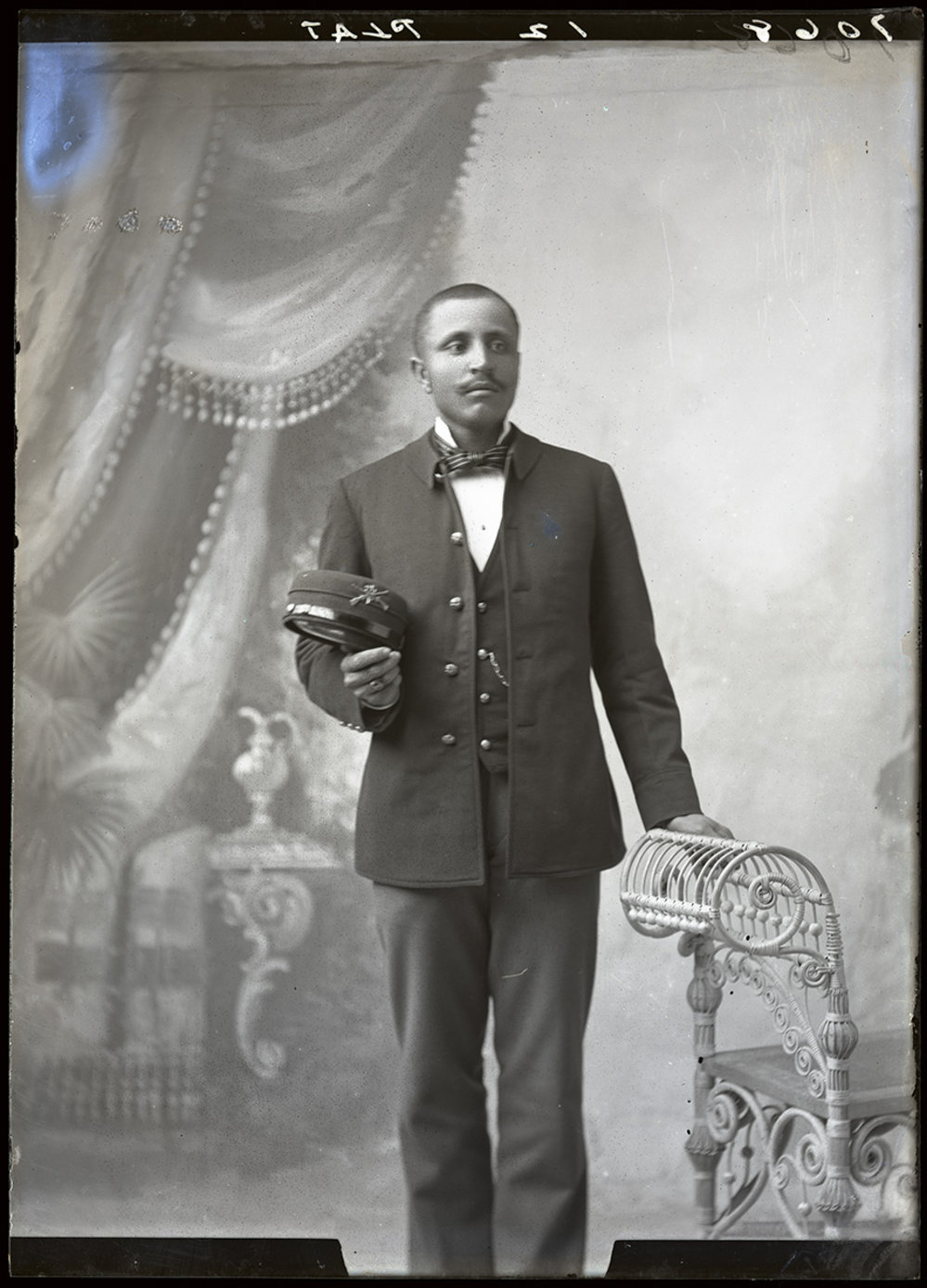
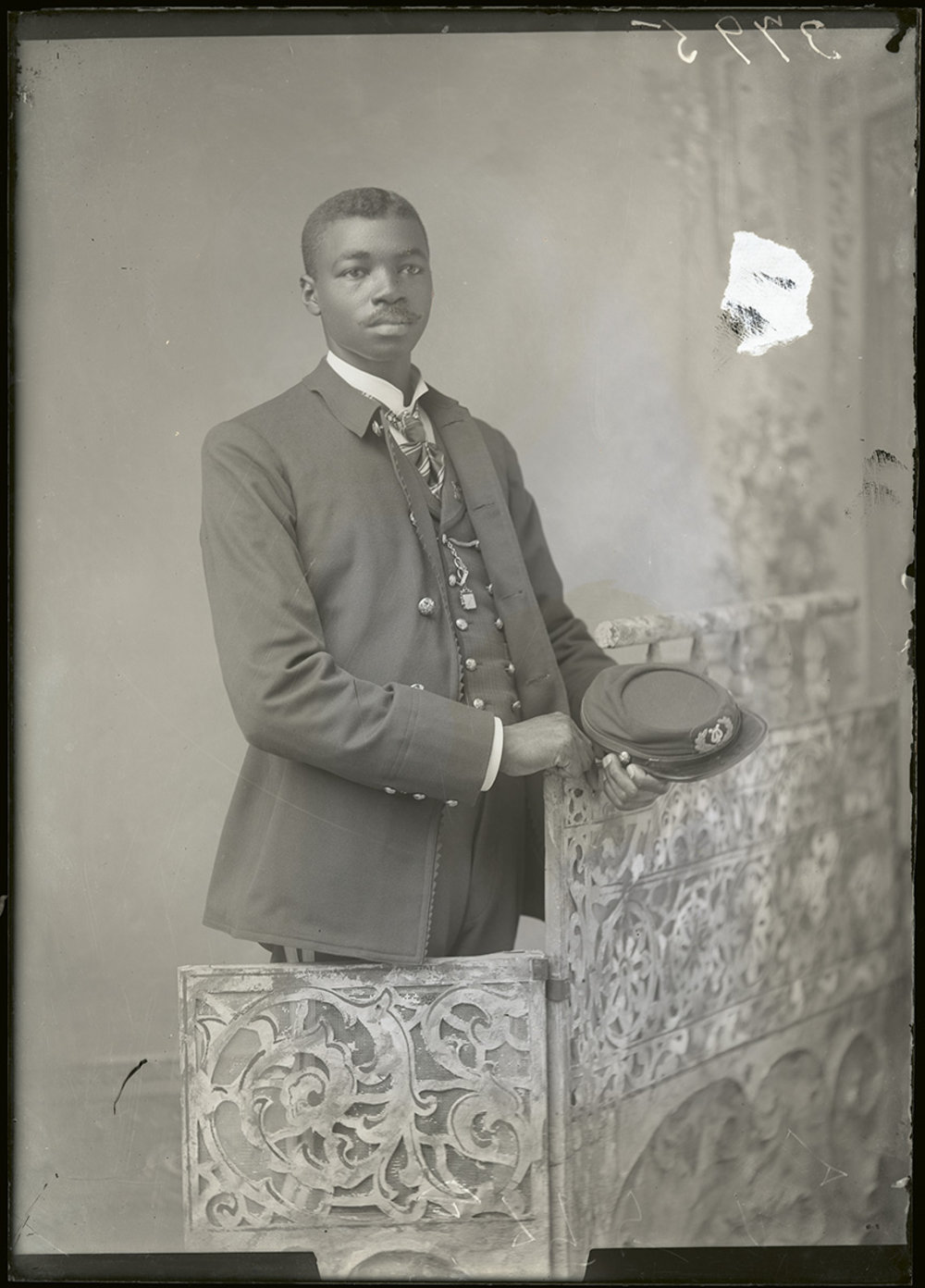
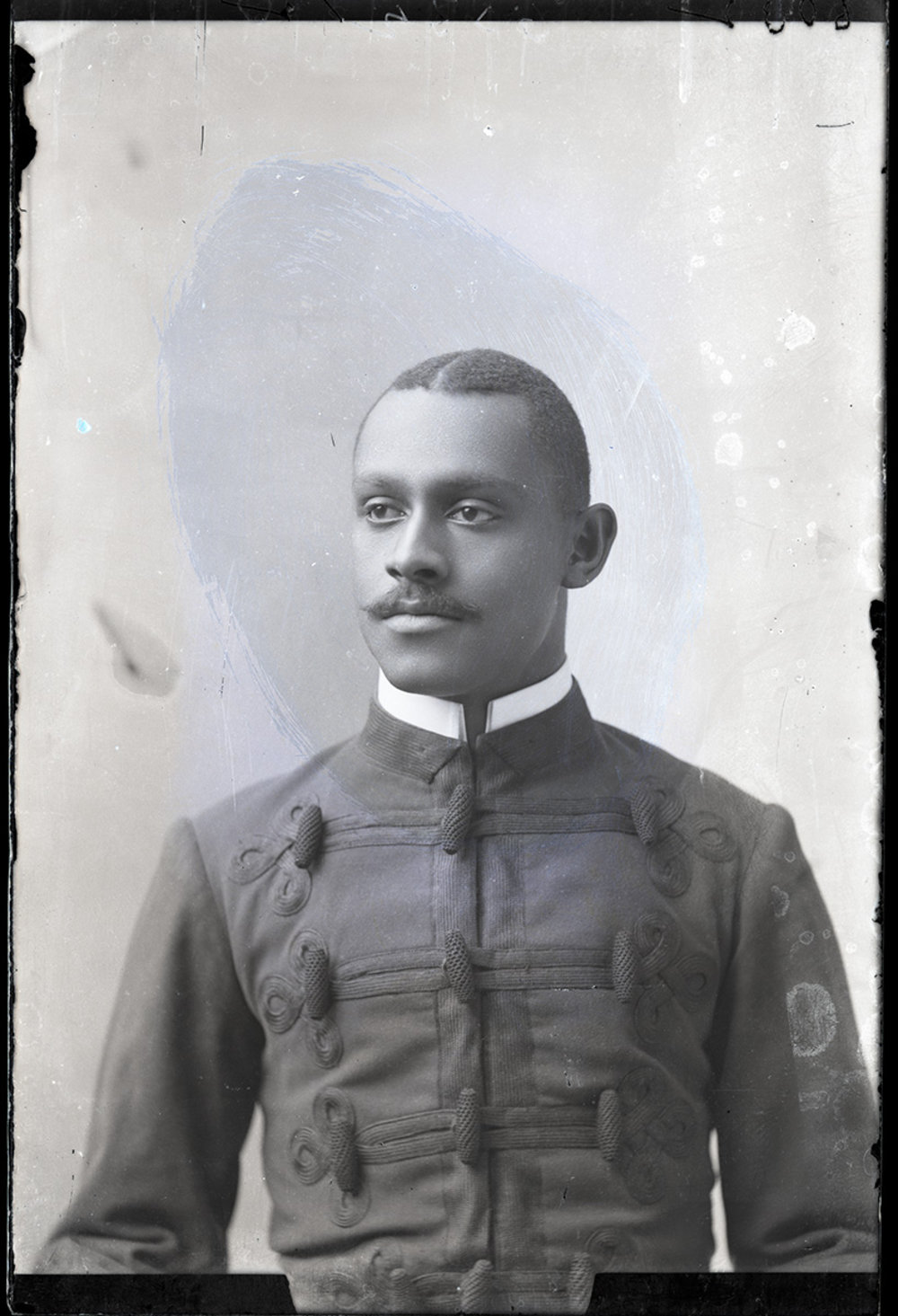
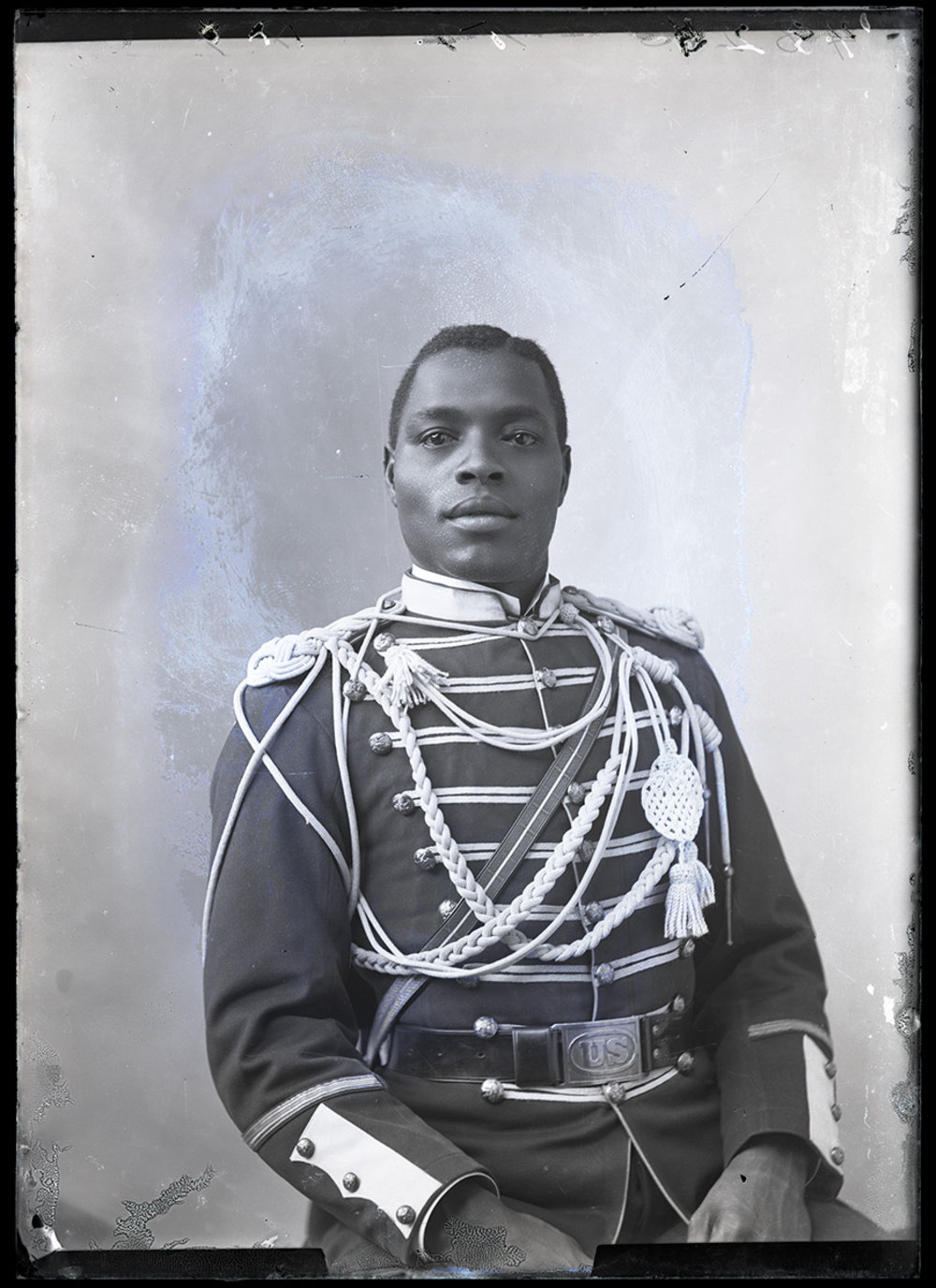
Portrait of an unidentified black male in military uniform. Possibly member of 25th Infantry U. S. Army Bicycle Corps. Missoula, Montana. Photo by Ingalls, F. M. (Frank M.), 1861-1934. Courtesy Montana State Library Archives and Special Collections.
Portrait of an unidentified black male in military uniform. Possibly member of 25th Infantry U. S. Army Bicycle Corps. Missoula, Montana. Photo by Ingalls, F. M. (Frank M.), 1861-1934. Courtesy Montana State Library Archives and Special Collections.
Portrait of an unidentified black male in military uniform. Possibly member of 25th Infantry U. S. Army Bicycle Corps. Missoula, Montana. Photo by Ingalls, F. M. (Frank M.), 1861-1934. Courtesy Montana State Library Archives and Special Collections.
Portrait of an unidentified black male in military uniform. Possibly member of 25th Infantry U. S. Army Bicycle Corps. Missoula, Montana. Photo by Ingalls, F. M. (Frank M.), 1861-1934. Courtesy Montana State Library Archives and Special Collections.
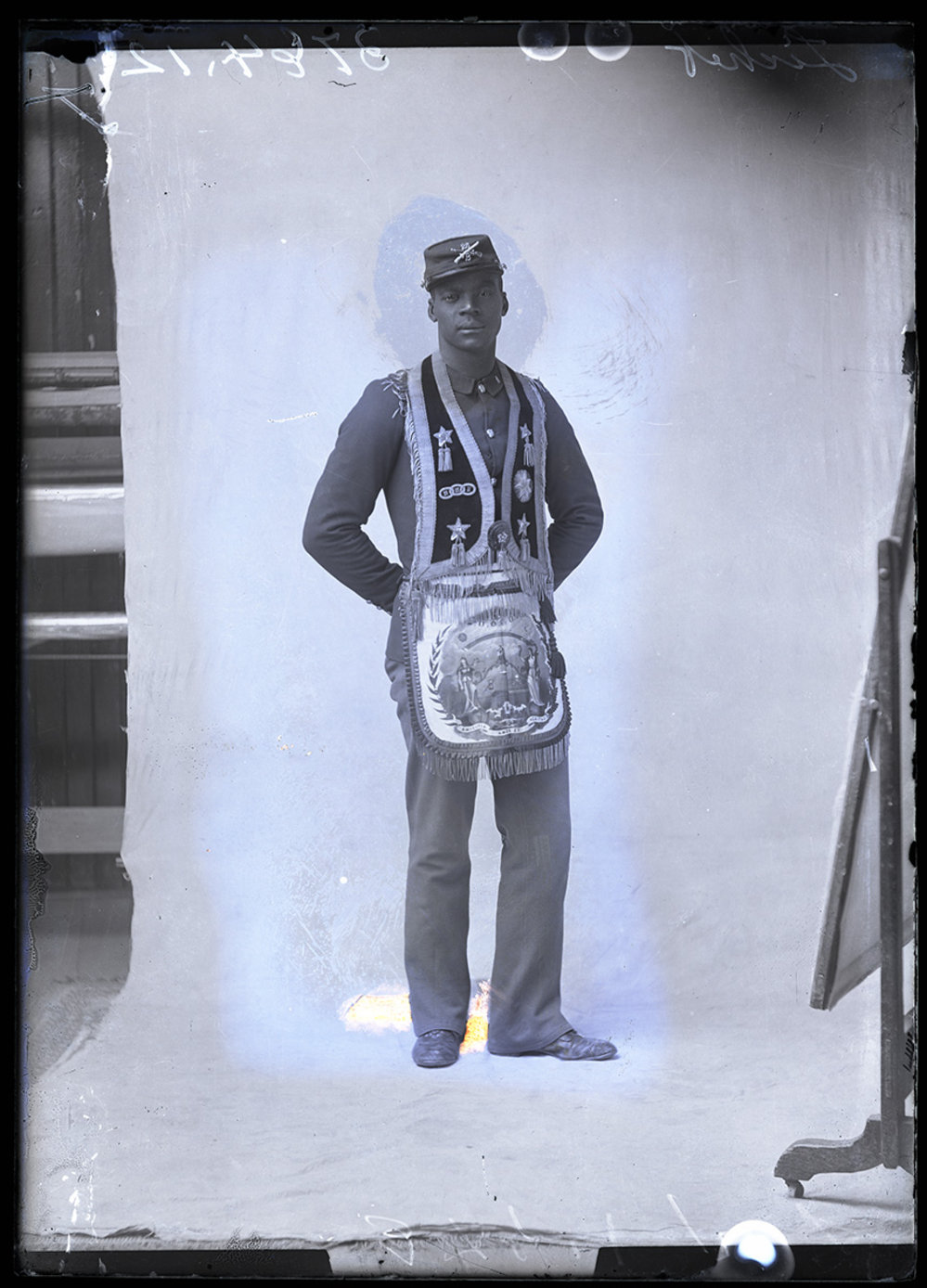
Portrait of an unidentified black male in military uniform. Possibly member of 25th Infantry U. S. Army Bicycle Corps. Missoula, Montana. He is wearing an Oddfellows apron and vest. Photo by Ingalls, F. M. (Frank M.), 1861-1934. Courtesy Montana State Library Archives and Special Collections.
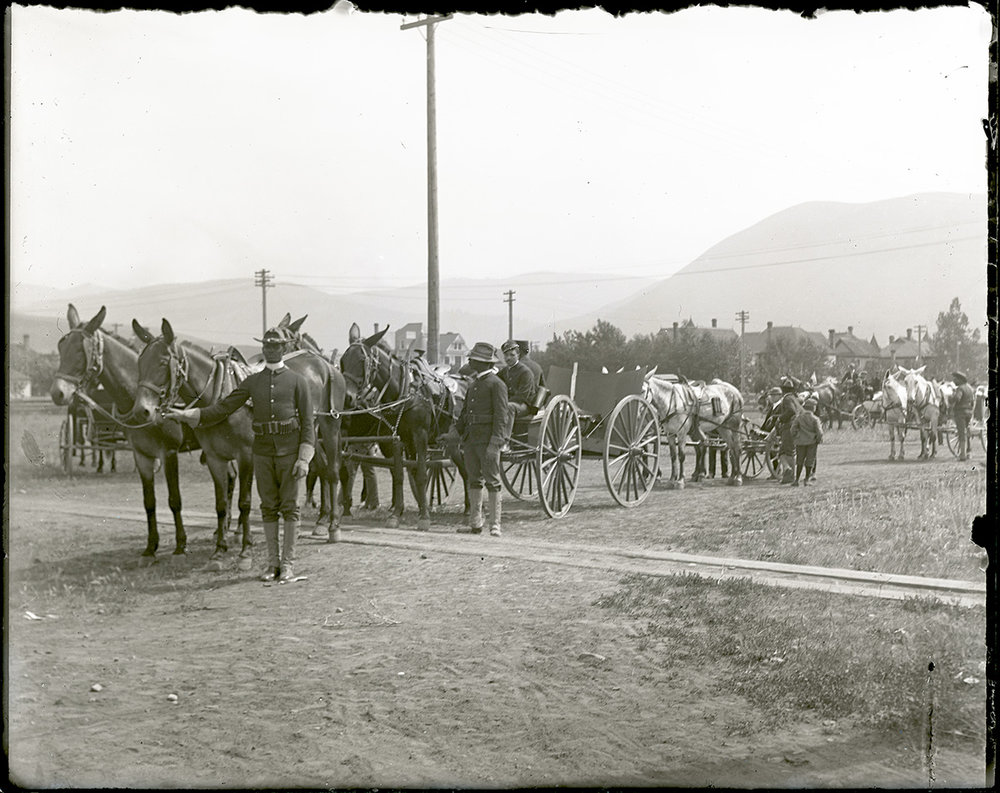
Soldiers of the 25th Infantry, an African-American regiment stationed at Fort Missoula. Image shows men standing by teams of mules pulling wagons. Buildings of Ft. Missoula in background. 1900. Photo by Dunn, John E., 1871-1935. Courtesy Montana State Library Archives and Special Collections.
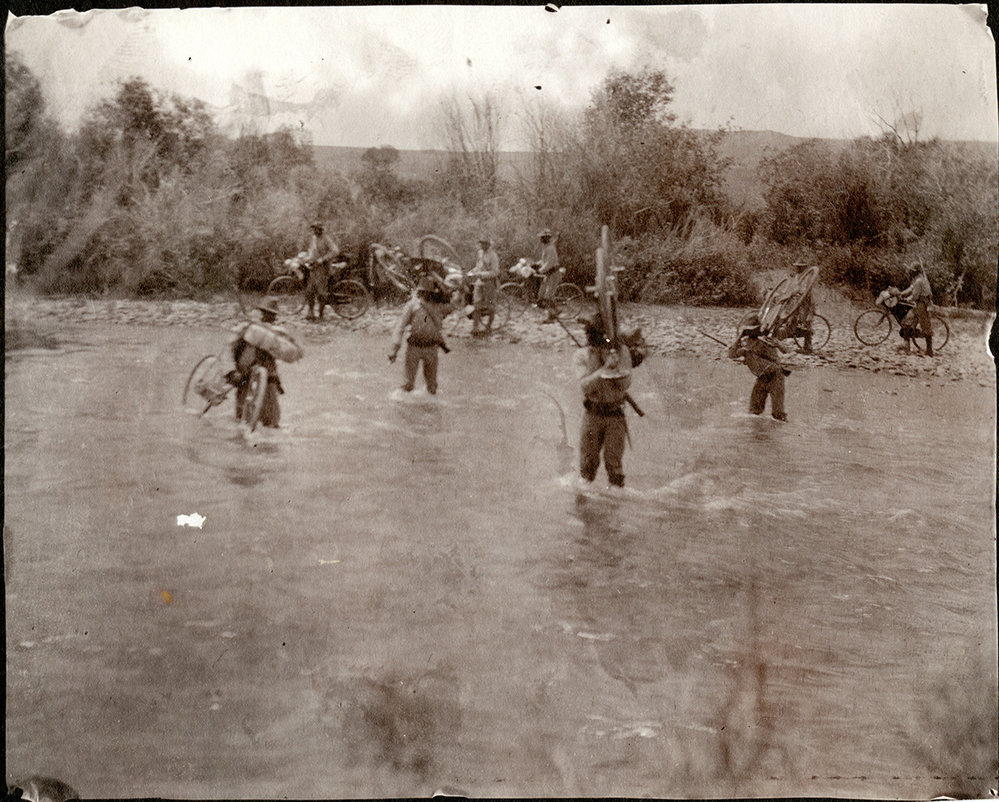
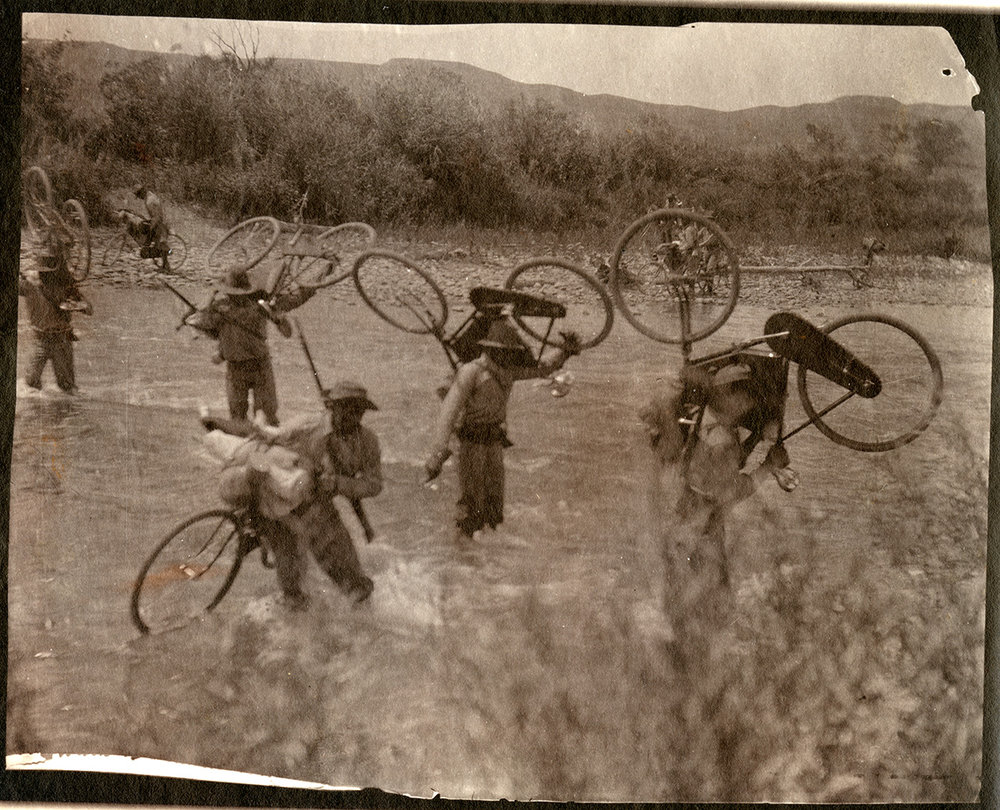
25th Infantry Bicycle Corps crossing a creek at an unknown location. Photo by Edward H. Boos. Courtesy Montana State Library Archives and Special Collections.
25th Infantry Bicycle Corps crossing a creek at an unknown location. Photo by Edward H. Boos. Courtesy Montana State Library Archives and Special Collections.
Bicycle Corps walking bicycles along a railroad track. Rolling grassy hills extend in the distance. Photo by Edward H. Boos. Courtesy Montana State Library Archives and Special Collections.
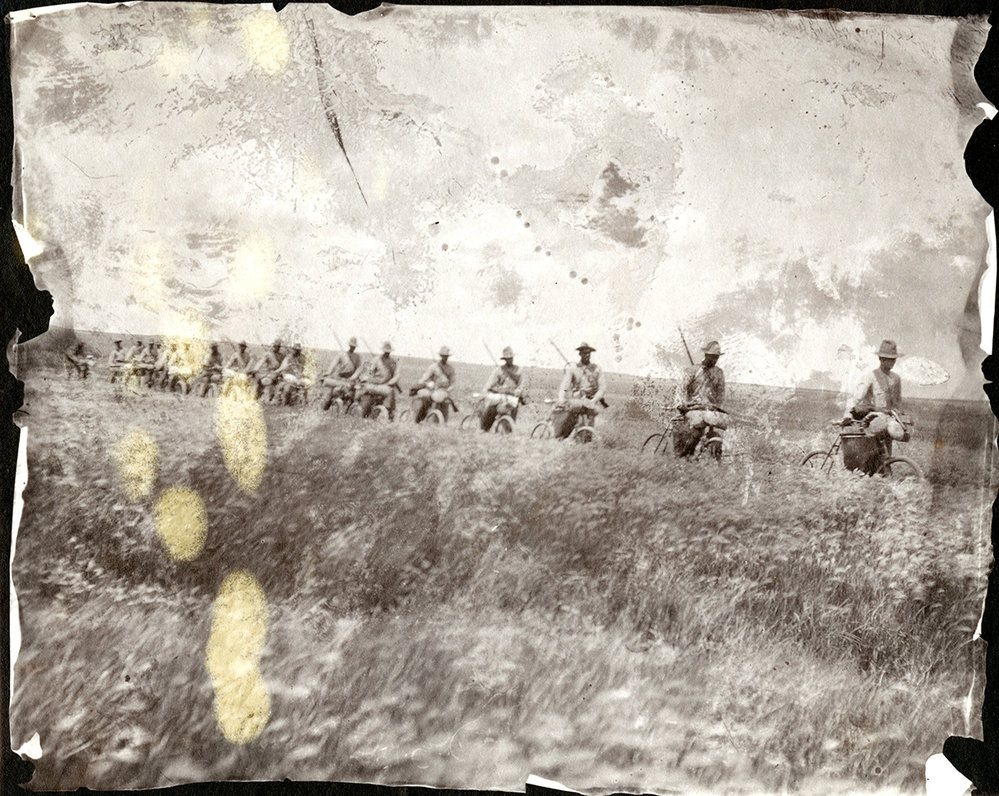
25th Infantry Bicycle Corps, walking single file in a field with their bikes, unknown location. 1897. Photo by Edward H. Boos. Courtesy Montana State Library Archives and Special Collections.
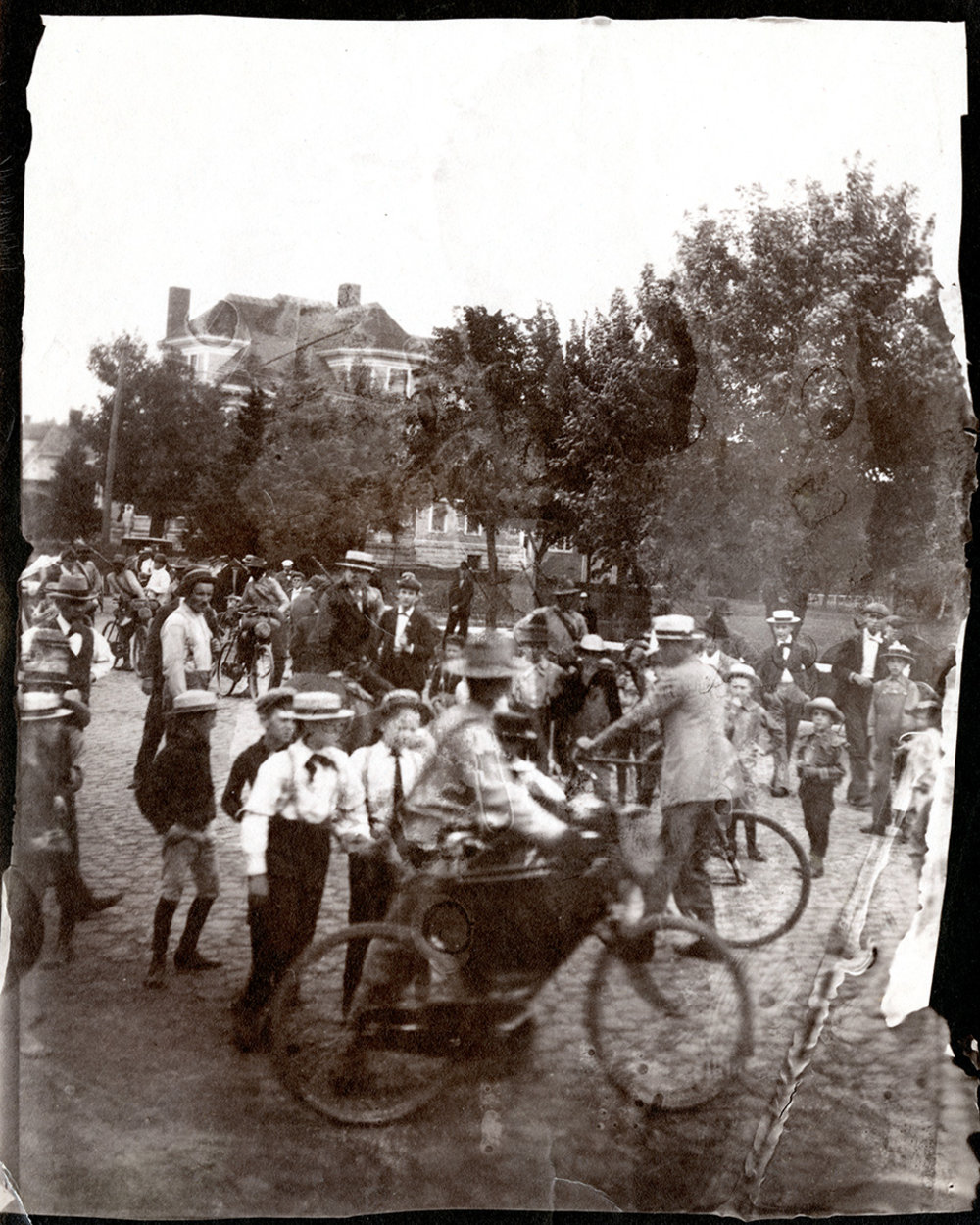
Unidentified people gathered around 25th Infantry Bicycle Corps. Location is unknown; however, buildings can be seen in the background. Photo by Boos, Edward H. Courtesy Montana State Library Archives and Special Collections.
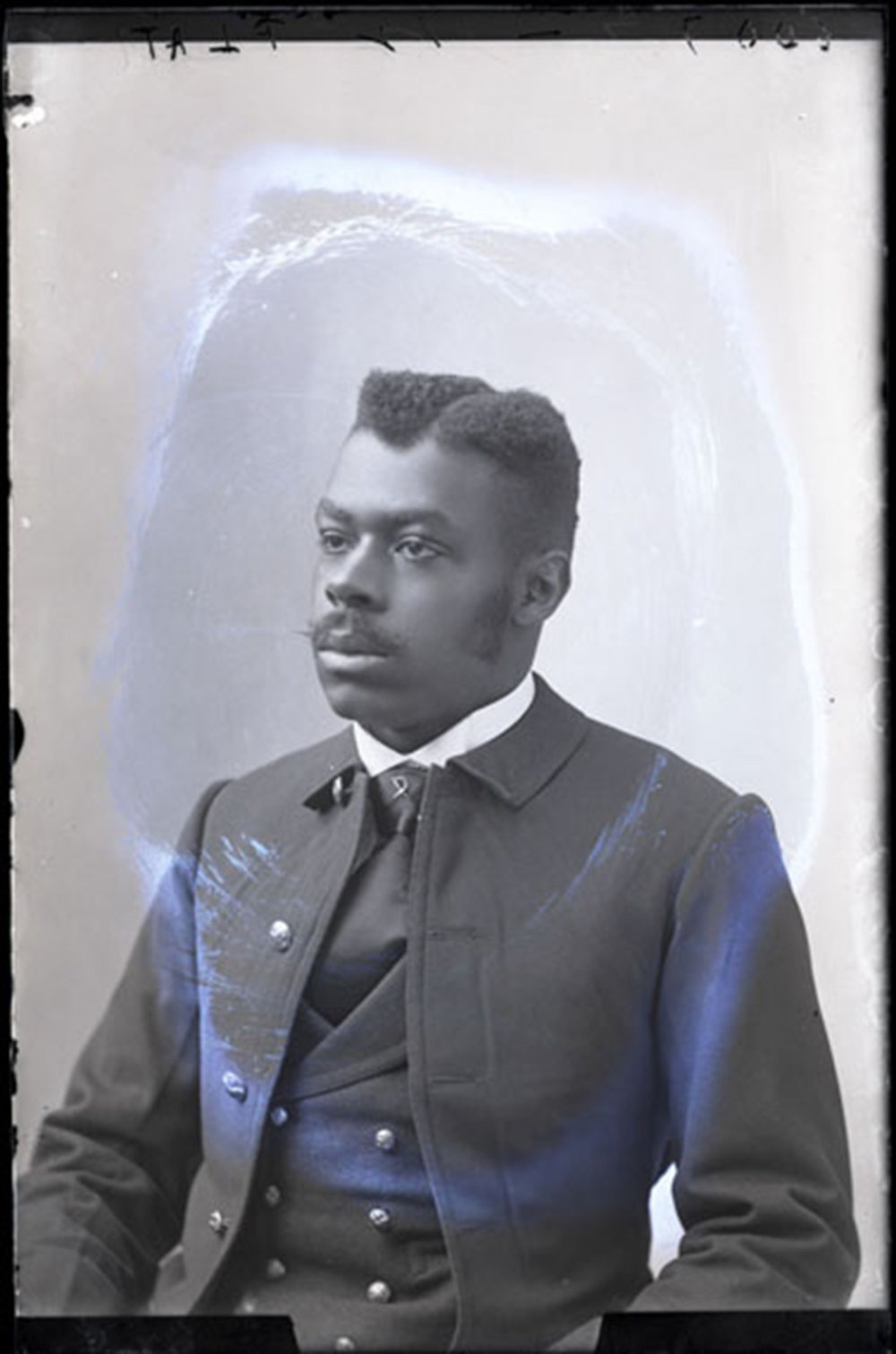
Portrait of an unidentified black male in military uniform. Possibly a member of 25th Infantry U. S. Army Bicycle Corps. Missoula, Montana. Library note: Further research reveals this is a portrait of Lance Corporal William J. Haynes. Photo by Ingalls, F. M. (Frank M.), 1861-1934. Courtesy Montana State Library Archives and Special Collections.
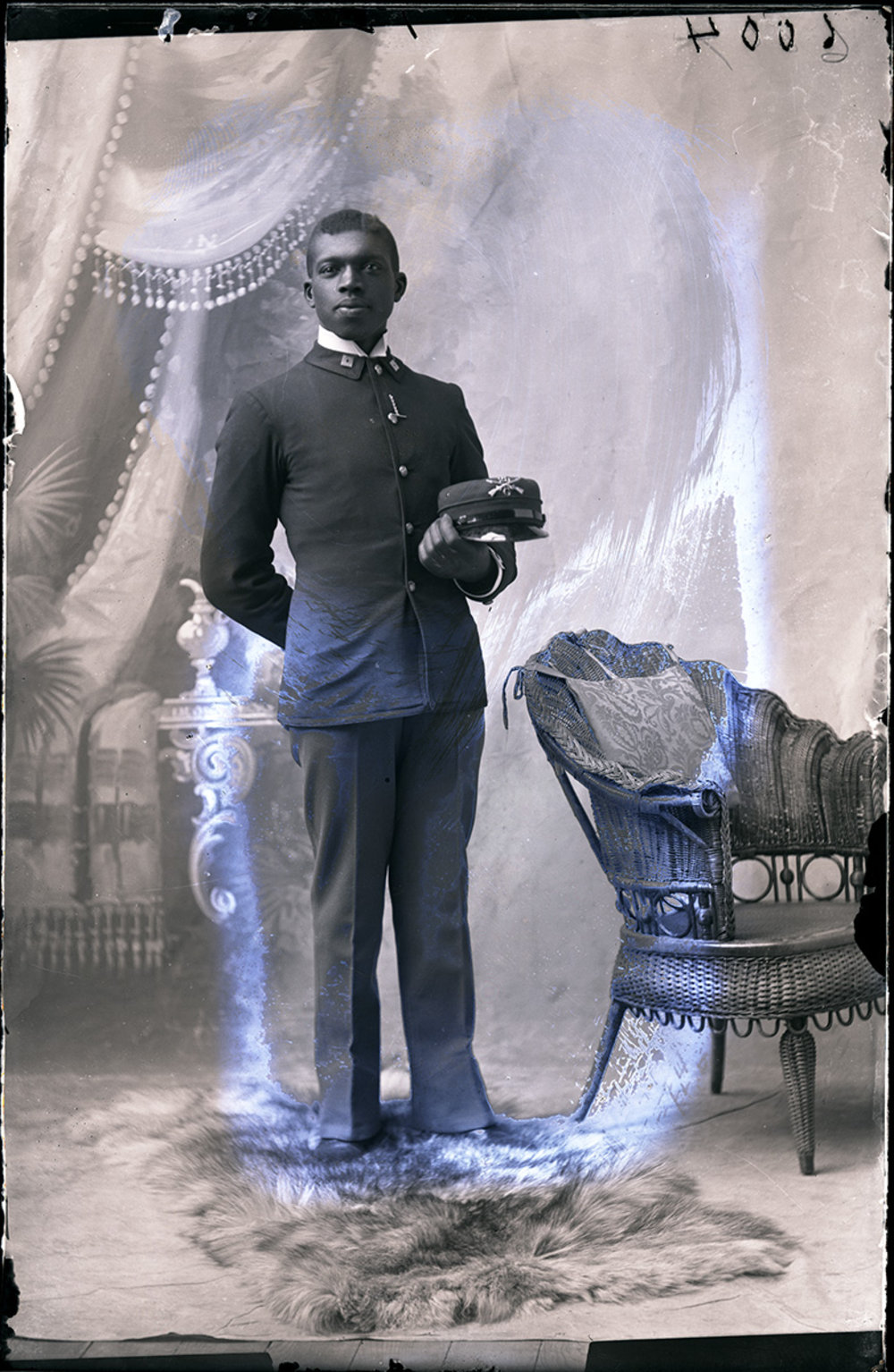
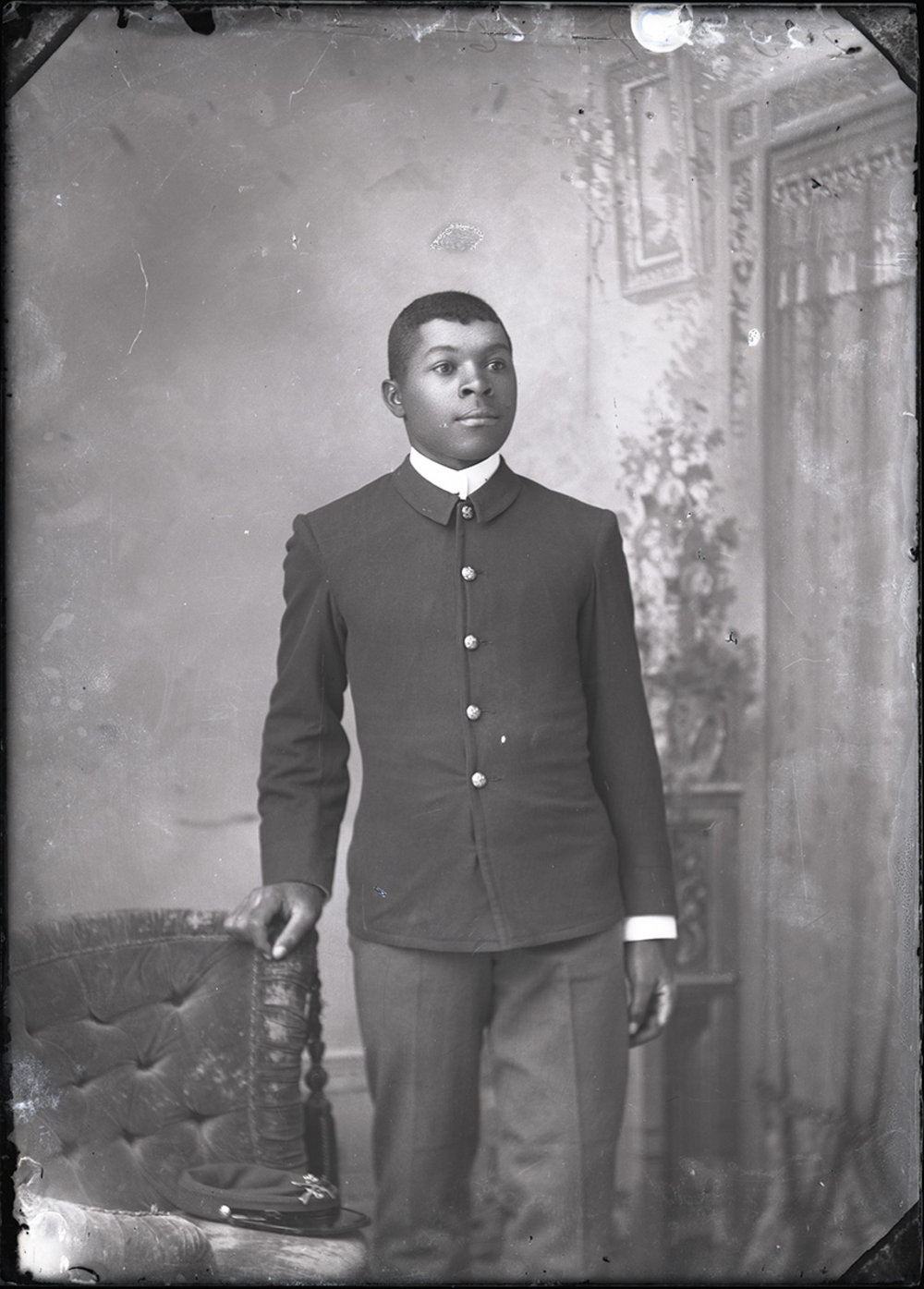
Portrait of an unidentified black male in military uniform. Possibly a member of 25th Infantry U. S. Army Bicycle Corps. Missoula, Montana. Library note: The forage cap on the chair appears to be the enlisted man’s forage cap for the 1895 uniform. Photo by Ingalls, F. M. (Frank M.), 1861-1934. Courtesy Montana State Library Archives and Special Collections.
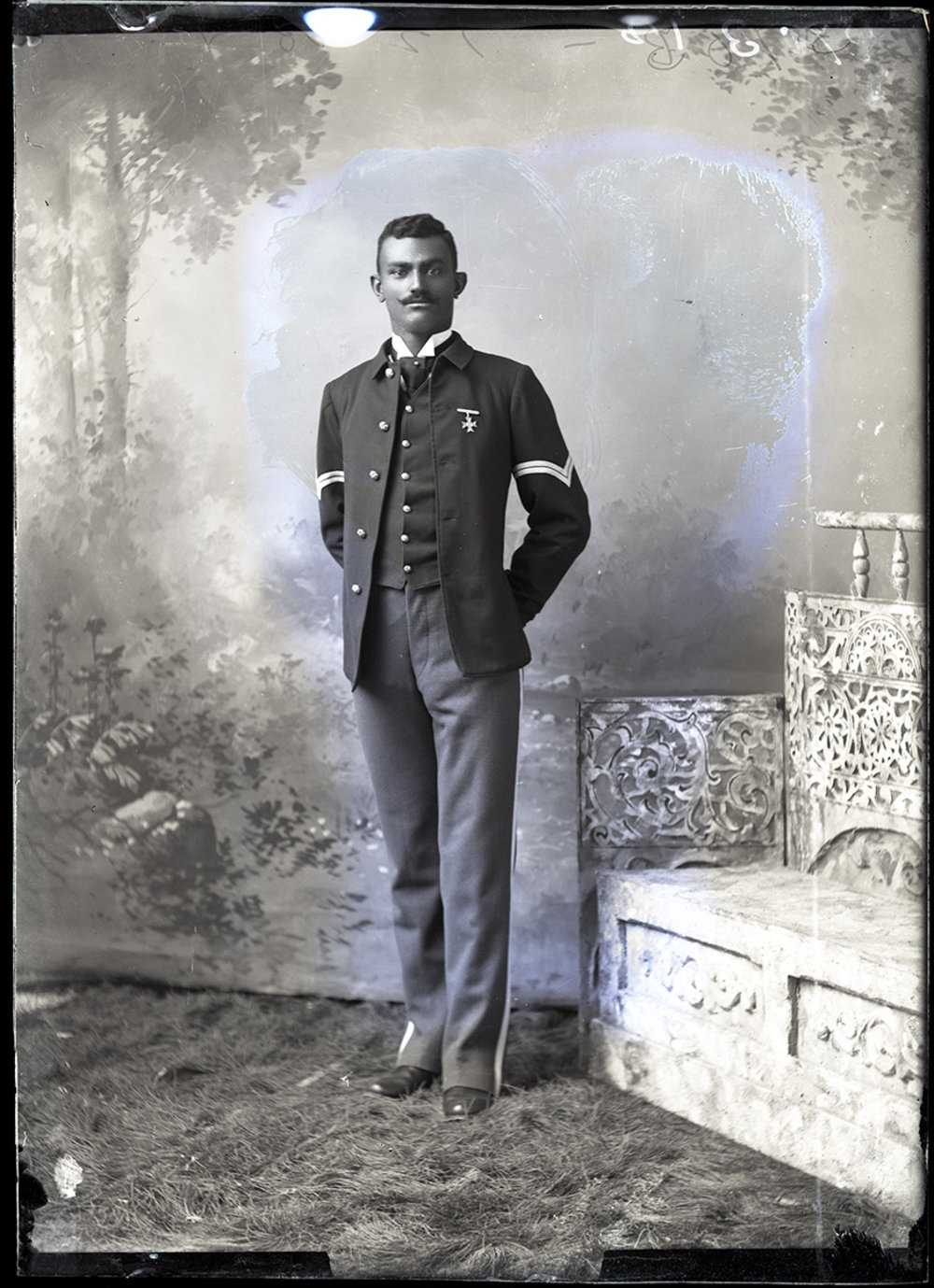
Portrait of an unidentified black male in military uniform. Possibly a member of 25th Infantry U. S. Army Bicycle Corps. Missoula, Montana. The man is probably a corporal based on the two stripes on his sleeve. The medal may be a pistol sharpshooter badge. Photo by Ingalls, F. M. (Frank M.), 1861-1934. Courtesy Montana State Library Archives and Special Collections.
Portrait of an unidentified black male in military uniform. Possibly member of 25th Infantry U. S. Army Bicycle Corps. Missoula, Montana. Photo by Ingalls, F. M. (Frank M.), 1861-1934. Courtesy Montana State Library Archives and Special Collections.
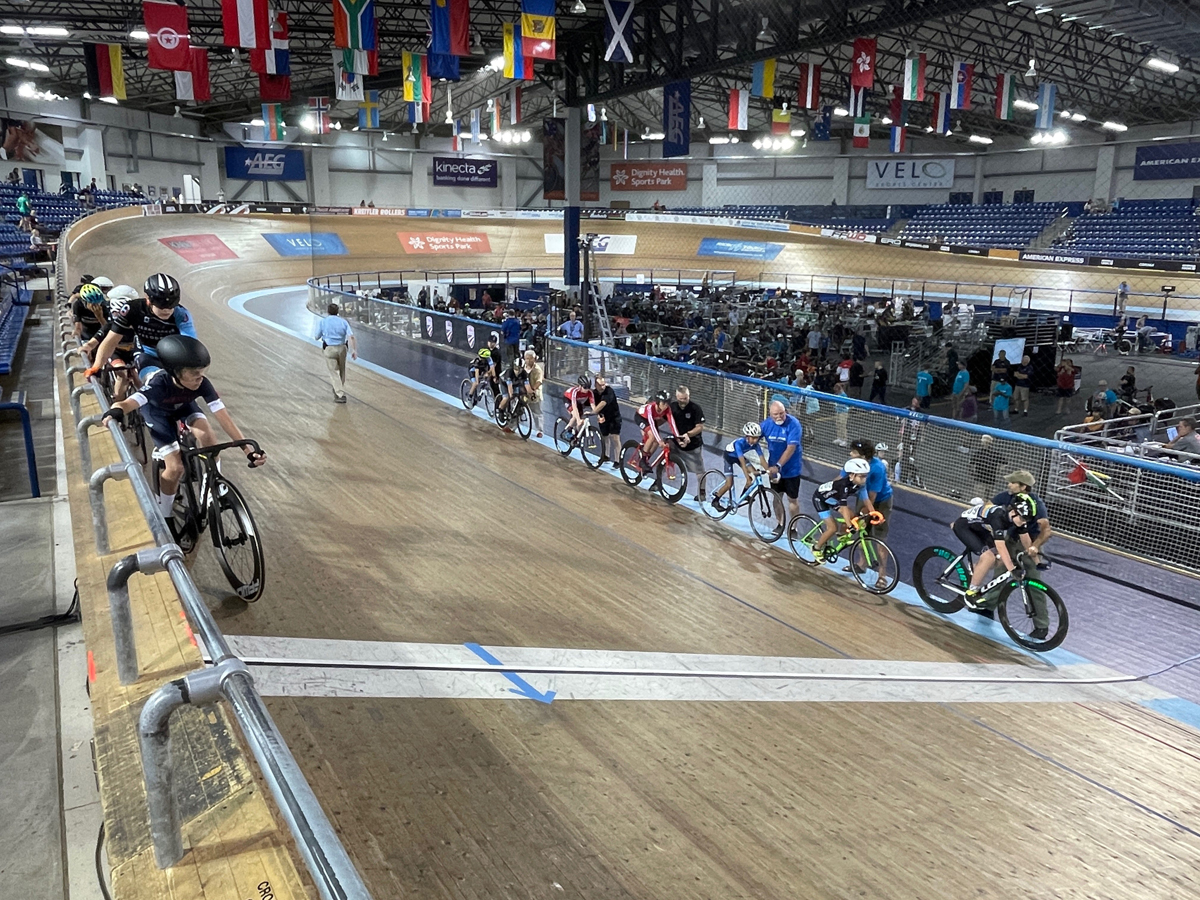
By Peter Abraham — In July I drove 45 minutes south to the VELO Sports Center in Carson, CA to spectate at the USA Cycling Track National Championships. I wanted to root for local athlete and friend Chloe Patrick and watch World and Olympic Champion Jen Valente racing that night in the women’s points race. It was a Saturday night, and given that this is the best track cycling facility in the US and the biggest event of the year, I was hoping to see a packed house of fellow cycling fans. Instead, I was greeted by a mostly-empty facility with maybe 150 spectators in attendance.
Moreover, I was surprised by not only the small field sizes, but the lack of local athletes particularly in the junior races. If we can’t attract young people to race at the best facility in the nation, which is right in the middle of Los Angeles, how are we going to build a team for the 2028 Olympics?
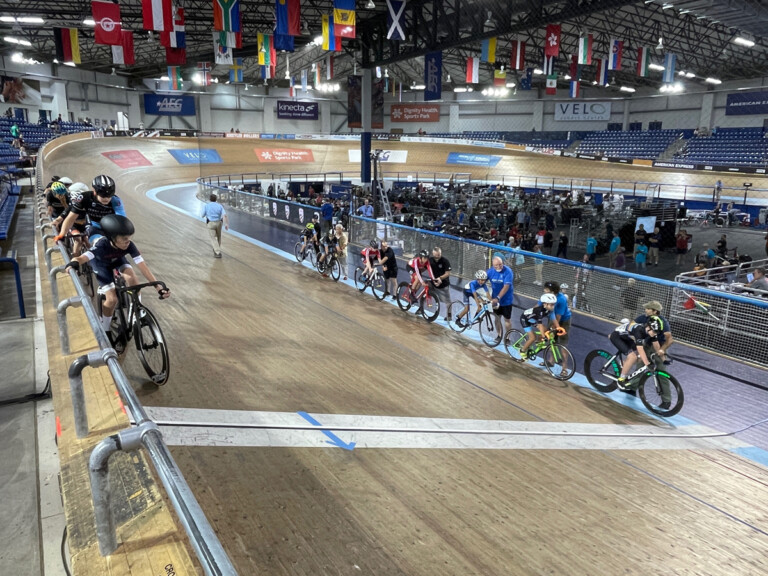
One of the youth races at VELO Sports Center during the USA Cycling National Track Championships in Carson, CA. Photo by Peter Abraham
This got me thinking about getting kids on bikes and into the sport of cycling. Are we, as a country, doing the best job we can building the sport? Or, in the cases where this is happening (on mountain bikes), how come we can’t continue the momentum into other cycling disciplines? I spoke to my friend Scott Johnson, owner of the Serious Cycling shops and their extensive cycling team. We decided to start talking to stakeholders around the country who could help us understand best practices and pain points within the American youth cycling journey.
Scott and I started by talking to people who had a handle on youth cycling in the US. We wanted to understand the issues from those on the front lines, including Dale Hughes at the Lexus Velodrome in Detroit, Steve Westover of the booming Team Booger in Seattle, David Huntsman of the LA Velodrome Racing Association, Drew Kogon from the VeloSport Club and Damon Turner at LA Bike Academy. And previous to this, I’d spoken with NICA high school MTB league President Amanda Carey, Scott Nydam from Silver Stallion in New Mexico, Roy Knickman from the now-defunct but wildly successful Lux junior program, and the St Augustine’s University HBCU cycling team
Many of the solutions we suggest below will require funding and staffing that don’t currently exist. We’re clear on that. How to come up with those resources is a subject for another post. So consider our ideas a starting point for discussion.
Here’s what we learned:
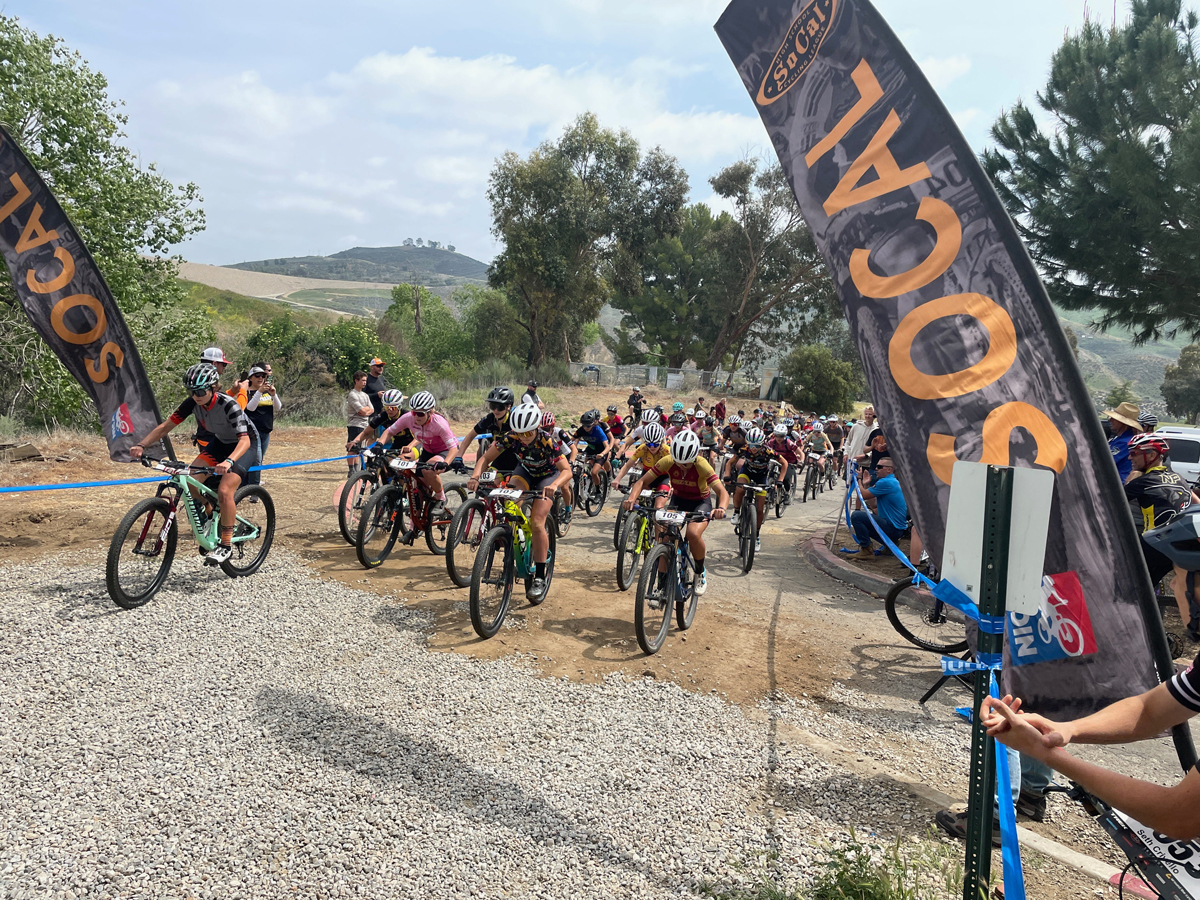
The start of a NICA race in the Los Angeles area. Photo by Peter Abraham
Problem 1: Cycling youth development programs are fragmented and disconnected.
Any healthy sport needs a strong foundation to build from. While there are some success stories across the youth cycling landscape, there’s nobody in charge of getting them working as a big system. Mountain bikes are currently the most attractive gateway for youth cyclists. NICA, the high school mountain bike league founded in 2009, has been a runaway success, with over 30,000 kids (counting the breakaway leagues) racing bikes in 33 states. NICA, as the world’s largest youth bike racing program, has essentially taken over the top of the funnel in the US to get kids started in competitive cycling.
NICA gets kids started on their cycling journey, but the organization is not set up to serve young athletes who want to try other disciplines outside of MTB. And there’s no path from high school racing into more competitive racing at the national and global level. This is not a bad thing; NICA is not trying to find the next Tour de France star. They’re just trying to get as many kids as possible onto mountain bikes so they can try out the sport and enjoy the outdoors. Some NICA athletes eventually find their way to road success (Neilson Powless, Megan Jastrab, Kevin Vermaerke, Sepp Kuss) or to the MTB World Cup (Kate Courtney, Gwendolyn Gibson). But those success stories are incidental, often driven by motivated parents or happenstance.
However, given the sheer volume of high school kids racing mountain bikes, there should be a way to connect passionate young athletes to other parts of the bike ecosystem: gravel, road, cyclocross, BMX, and track. Where does USAC, the national governing body for the sport, fit into this effort? Where does their job start and NICA’s stop? How does USAC collaborate with NICA (and other organizations) so that different programs are part of a national strategy? Given the USAC’s limited resources, it’s not possible for them to recreate what NICA has already built. But there are ways to work together. There is currently a huge gap between high school mountain biking and other forms of cycling. So even though we have the world’s biggest grassroots bike racing program, it’s not fully utilized as a tool to develop a lifelong love of cycling.
Solution:
USA Cycling should have regional staff whose only job is to serve as community managers and connectors who work hand in hand with organizations (NICA, college cycling) and events (CX, road, BMX, gravel, MTB, criteriums) with the goal of getting more young people into more cycling events. Someone needs to be “The CEO of Bike Racing” in the US.
Problem 2: Velodromes around the country are underutilized.
One thing I’ve learned in decades of youth sports work is that intentional onramps must be built that reduce the friction of getting new athletes into a program. The two best onboarding platforms for getting kids on bikes are 1) Mountain bikes (see above), and 2) track cycling. They both offer safe, closed course riding separate from cars and often in groups of other kids. Importantly, this is a scenario that parents are ok with; they can drop off their 12 year old without worrying about a distracted driver killing their child on the road. While youth MTB riding is growing, due to the thriving NICA league system, velodromes often sit empty. The 27 tracks in the US (here’s a map) are mostly owned by cities or counties that lack staffing, funding and expertise to build thriving youth programs at the tracks. These are also mostly outdoor facilities, so they’re unusable in bad weather or during the winter. The only indoor, wooden track that meets UCI guidelines is the VELO Sports Center in Los Angeles. It’s owned by Anschutz Entertainment Group, the world’s largest owner of sports teams and sports events. But the velodrome is an afterthought for them, just an add-on to the LA Galaxy soccer stadium next door. There’s nobody who has the job of filling the facility with kids and events seven days per week.
Solution:
Velodromes need full time community managers. Any track that wants a thriving community of riders needs someone who can build programs and reach out to schools, NICA leagues, parents and cycling clubs. Additionally, USA Cycling should have a national office sharing best practices in velodrome management to all of the different velodromes. They could coordinate across facilities for sponsorships, events and relationships with governing bodies.
Problem 3: The cycling development pathway for young riders is broken.
This is related to problem #1 above: there are a bunch of bridges missing between the various levels of the sport. In particular, getting from a NICA high school league to a travel team in either MTB or road is not an obvious transition. It’s possible, but oftentimes kids (and their parents) don’t know how to do it or who should guide them in the process. If a young athlete gets really good and wants to try racing internationally or at the U23 level, it’s another gap that’s hard to get across. Young bike racers are often asked by USA Cycling to fund their own trips to Europe, so the system is immediately biased against athletes without resources at their disposal. One very talented young professional cyclist told me that she had to choose between paying rent and taking a national team trip to race in Europe. So she stayed home. Road racing in particular is a sport that mostly happens in Europe. I would compare it to baseball, which is largely based in the United States. A young bike racer has to travel across the Atlantic to learn the sport. That’s expensive, time consuming and takes guidance. There is currently a lack of mentoring and education as it relates to racing in Europe, with just a few teams and programs that focus on that opportunity. USA Cycling has restarted their European development program, but it needs to grow much bigger to get enough kids learning and riding internationally.
Problem 4: College cycling needs a reboot
As a veteran of college cycling myself (UC Davis), I have seen how fun this sport can be: you’re with your friends, learning a sport together and traveling to races. The social nature of cycling aligns with being in college, where spending time with friends is often the most important thing in your life. And riding for a university team is a great next step for kids (like me) who got started racing in high school and want to keep going with the sport. There are 22 varsity (funded) teams in college cycling. These schools have some resources, maybe scholarships, paid coaches, equipment and are set up like a proper sports program. Mostly these are small colleges that have used their cycling team to build a national profile for the school: Lees-McRae in North Carolina, Milligan College in Tennessee, Marian University in Indianapolis and Colorado Mesa University in Grand Junction, Colorado are examples.
Then there are another 200 or so universities with club programs. These schools have no paid staff, no budget to speak of and no equipment. Many of the famous destination universities you’ve heard of — Stanford, UCLA, University of Colorado — have club cycling (all volunteer) teams. They’re entirely dependent on donations and the labor of their own athletes to keep the program going. I recently spent a couple years working with the new St Augustine’s University HBCU cycling team, and I saw how much work it is to get a program going from scratch. It takes fundraising, recruiting, event management, collaboration with university staff, equipment, transportation, and more. For college students, who are “just passing through,” to build and maintain a sports program is a huge ask. Often it’s too much. So club teams come and go depending how motivated the current group of athletes are. This DIY model in the non-varsity programs has set up college cycling to fail.
Solution:
As the existing governing body for college cycling, USAC should lean into this sport with greater involvement, more mentoring, and some fundraising help. In addition, more universities should build varsity programs. For a tiny fraction of the cost of a traditional college sports program, a school could build a thriving cycling team. They need continuity of staffing and some budget for travel and equipment. In addition, there needs to be a bridge built between NICA and college cycling, so high school kids know that riding is an option at the university level.
If we prioritize these solutions (along with many other things) we can get many more people outdoors and on bikes.
Please feel free to reach out with ideas or comments.
Peter started racing bikes in high school and has continued to ride his entire life. He also runs the Abraham Studio (ABRHM.com), which works with purpose-driven brands in sports, technology and healthcare to find their voices and tell their stories. He lives in Los Angeles, California.

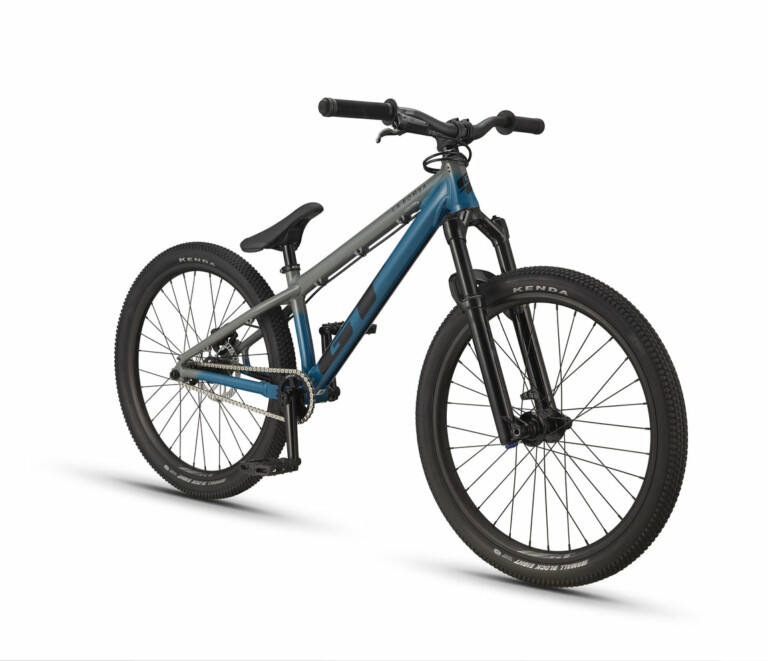
 Name of Product: GT LaBomba bicycles
 Recall Details