Five-mile cross country lap is a nod to the 2001 Durango World Cup race, won by Julien Absalon and Mary Grigson
DURANGO, Colorado (March 6, 2023) — This year’s Iron Horse Bicycle Classic Subaru Mountain Bike Race will harken back to the past, using similar trails as the 2001 UCI World Cup course. The 5-mile lap will start and end at Chapman Hill and loop around the prominent mesa just east of downtown for a total of more than 500 feet of climbing per lap.
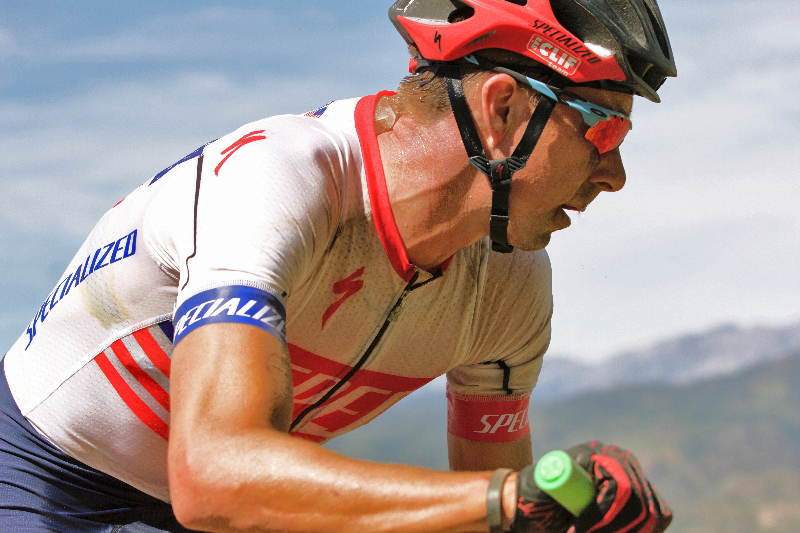
Todd Wells. Photo courtesy IHBC
Durango’s cycling and mountain bike legacy–being home to hundreds of miles of singletrack and numerous Olympians–is closely linked with the Iron Horse, which began in 1972. Things really took off for Durango after the inaugural UCI Mountain Bike World Championships in 1990, with the town hosting a World Cup in 2001 and multiple NORBA races.
Photo courtesy IHBC
“This year’s mountain bike course has been ridden and raced many times by the sport’s biggest stars,” said race director Ian Burnett. “The Iron Horse cross country race has been a mainstay in the Durango cycling calendar for years so we wanted to nod back to our history while creating a course that challenges the current crop of pro riders.”
Photo courtesy IHBC
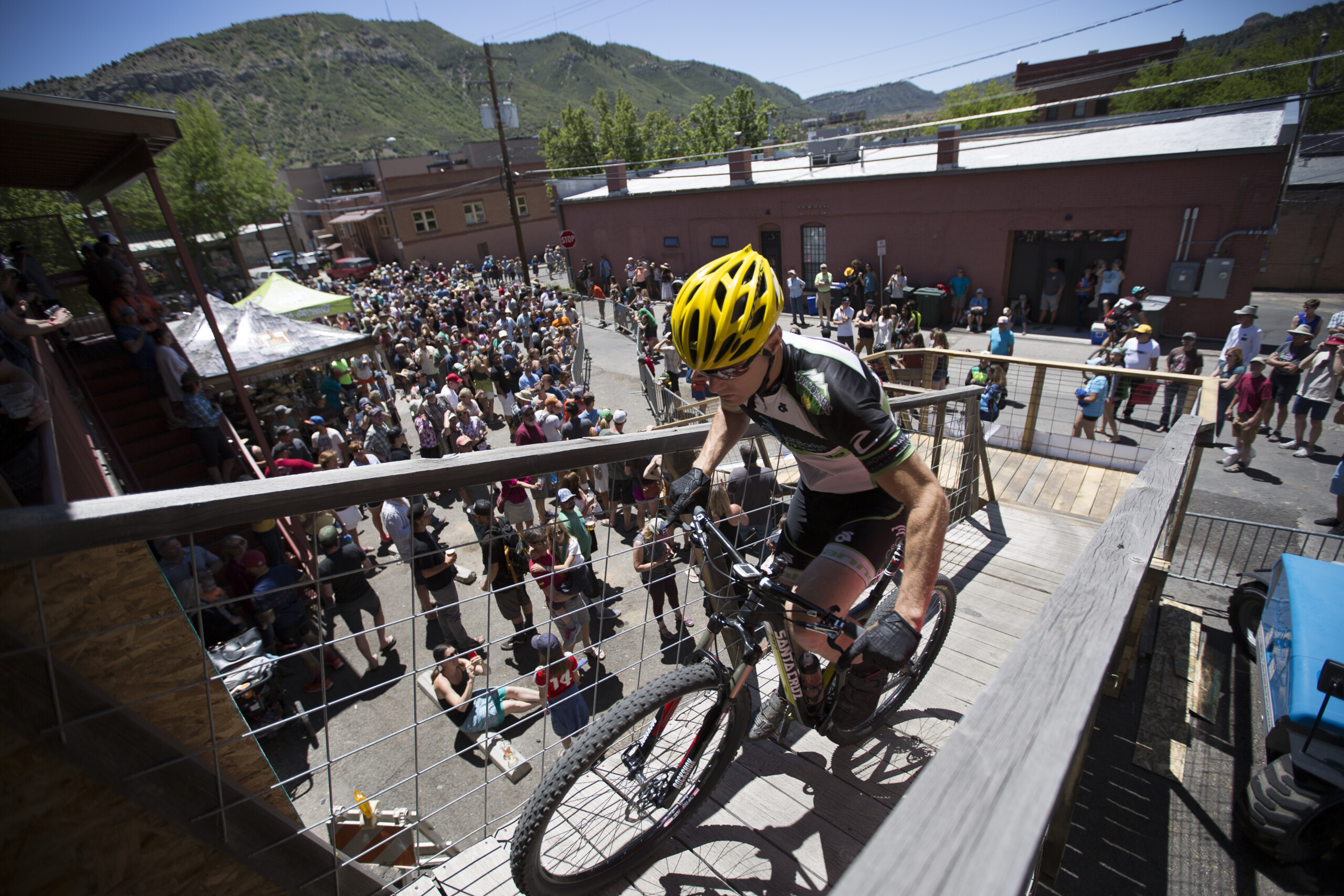
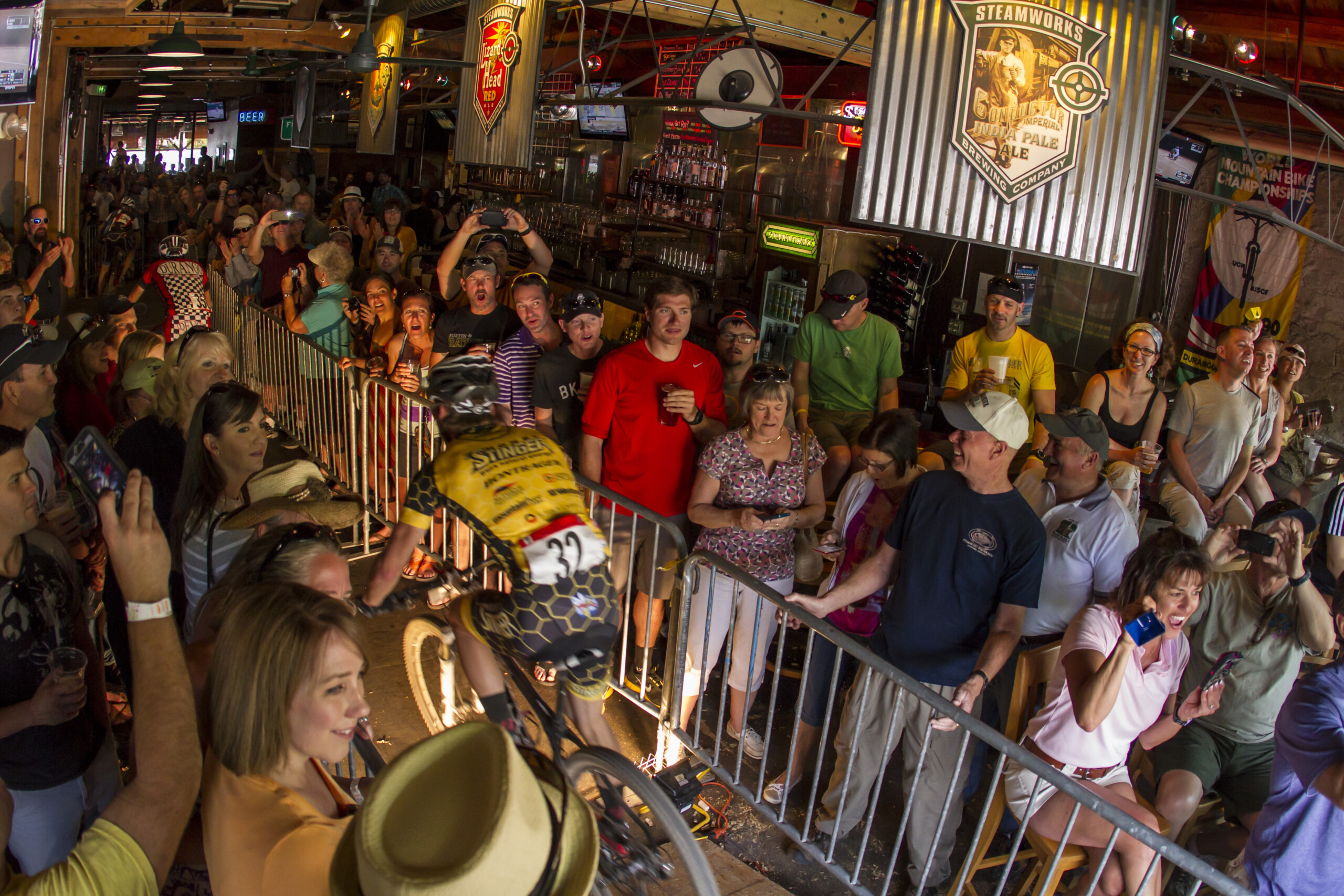
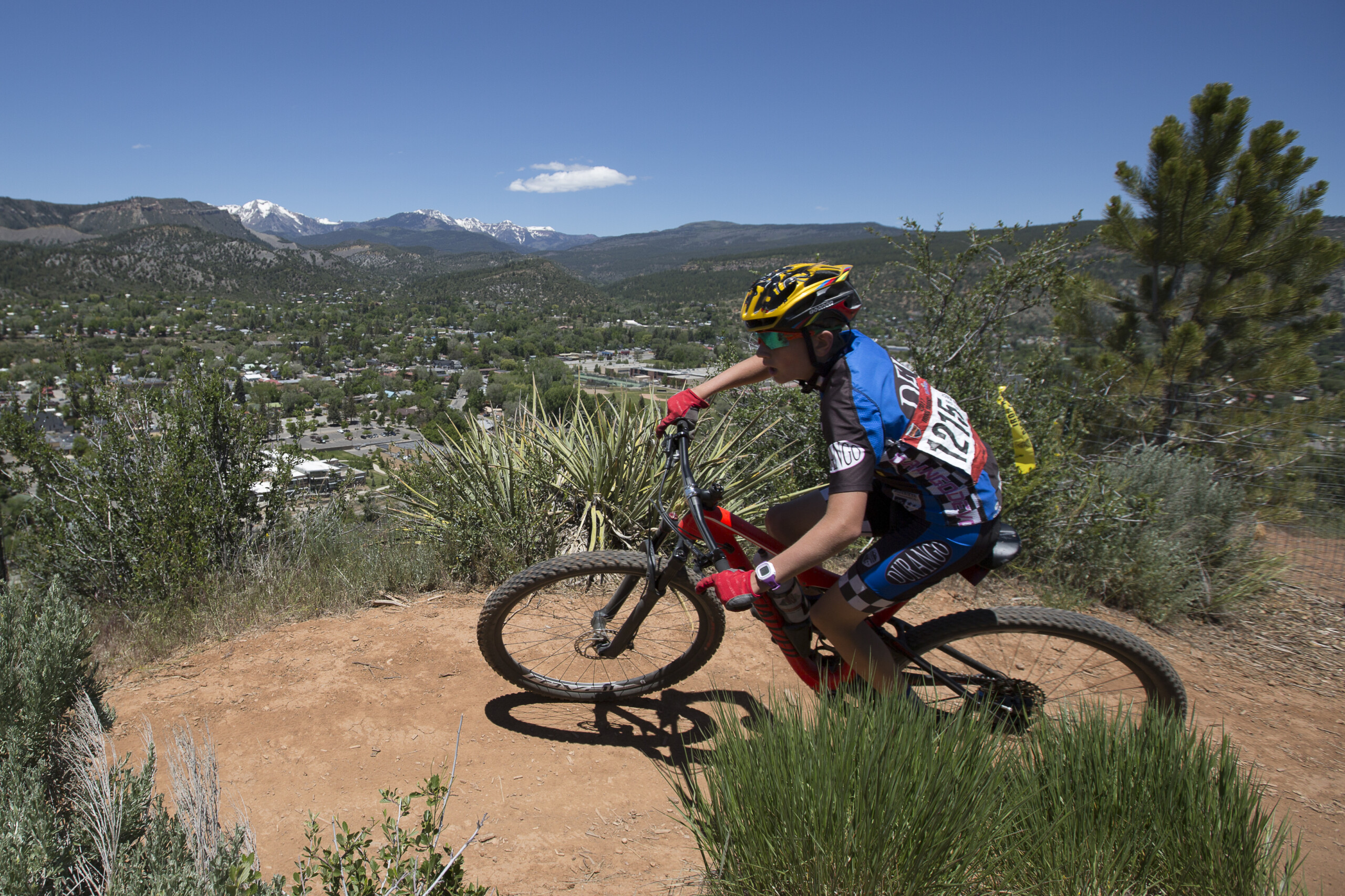
Starting at the base of Chapman Hill, racers will storm toward the half-mile climb up Lion’s Den Trail before topping out on the mesa overlooking town. From here the course flattens out as it skirts around the east side of the Fort Lewis College campus, home to the National Championship-winning FLC Cycling Team. After some flowy yet tricky turns on the south side of the mesa, racers will tackle a few short, punchy climbs as they head back toward Chapman, where they will plunge down the ski hill amid throngs of spectators.
Photo courtesy IHBC
Racers will complete a set number of laps depending on which category they are a part of. There will be three waves of racers taking off throughout the day on Sunday, May 28, and there are plenty of spectating opportunities along the course. Start times by category are posted here, and the course map is available here.
Mountain biking has been a mainstay at the Iron Horse Bicycle Classic, which is known for the Durango-Silverton road race and tour, where riders “race the train” over two mountain passes for a total of 50 miles and 5,700’ of elevation gain. In recent years, the event has also added the Alpine Bank La Strada La Plata gravel event, which will also start and end at Chapman Hill.
Both the long and short gravel courses will start off on city streets before tackling the loose and rocky Horse Gulch Road climb. Riders then head east toward the punchy Glockenspiel climb and the steady yet scenic Texas Creek climb. The short course is 59 miles with 5,400 feet of climbing. The long course adds an additional loop with rolling terrain for a total of 98 miles and 8,000 feet of climbing.
By Jake J. Lee — For years, we’ve received questions about the obligations of cyclists at intersections. And for years, unfortunately the answer was: do what a car does. However, in many circumstances and for many reasons, what a car does, doesn’t always make sense for a cyclist. One example of this is what to do at a stop sign when there are no other cars. A car would have to stop. But does that really make sense for a cyclist?
The Utah Yield law allows cyclists to treat stop signs as yield signs. Photo by Dave Iltis
Utah Representative Carol Moss fought to give cyclists the right not to stop for 11 years without any success. She was tragically close in 2018 when she got approval from the House Transportation Committee, and it passed on the House floor with a vote of 58-11. From there, she got approval in the Senate Transportation committee. Sadly, the bill died on the Senate floor because the session ended before it could get a final vote.
However, in 2021 she was victorious. House Bill 142 sailed through the Senate floor with a vote of 28-1 and became law under Utah Code § 41-6a-1105. Now, this code section permits a cyclist approaching a stop sign to proceed through the intersection without stopping at the stop sign if (1) the individual slows to a reasonable speed; and (2) yields the right of way to: (A) any pedestrian within the intersection or an adjacent crosswalk, (B) other traffic in the intersection, and (C) oncoming traffic that poses an immediate hazard during the time the individual is traveling through the intersection.
In common speak, that means that if the intersection is clear, cyclists no longer have to come to a complete stop. They can roll on through.
Does this new law apply to stop lights?
The bill had previously contained a provision that allowed cyclists to roll through stop lights when there was no traffic. However, that provision had to be removed to obtain sufficient votes to pass the bill. As of now, Utah Code § 41-6a-305(7) requires a cyclist to come to a complete stop at a red signal and wait 90 seconds before entering the intersection if there is “no other car who has the right of way at, passing through, or approaching the intersection” and no pedestrians are trying to cross in front of you.
What does the law say about intersections without stop lights or signs?
Remember that a bicycle is considered a vehicle. With a few exceptions, a cyclist has the same rights and obligations as any other vehicle. Utah Code § 41-6a-1102(1). Therefore, you would do what a vehicle should do in this circumstance. The operator of a vehicle approaching an intersection not regulated by a traffic-control device would yield the right of way to any vehicle that has entered the intersection from a different road. Utah Code § 41-6a-901(1). When several cars approach an intersection from different roads at the same time, the operator on the left yields to the vehicle on the right. Utah Code § 41-6a-901(2).
What about other states?
Idaho and Colorado also have stop sign laws. But they are a little different than what we have in Utah.
Idaho has a long-standing law. Under Idaho Code § 49-720(1), a cyclist is supposed to treat a stop sign as a yield. Specifically, “a bicycle approaching a stop sign shall slow down and, if required for safety, stop before entering the intersection.” However, you must stop at a red light and yield to all other traffic. Once you have yielded, cyclists can proceed through a steady red light with caution. Idaho Code § 49-720(2).
Colorado on the other hand, has a new law effective as of April 13, 2022. Under Colorado Code § 42-4-1412.5(2)(a)(I) and (b) a cyclist approaching an intersection with a stop sign shall slow to a reasonable speed (10 mph or less) and yield the right of way to any traffic. Once done, cyclists can proceed without stopping. However, if required for safety, you must stop before entering the intersection.
When a cyclist approaches an intersection with a red light, you must stop and yield to any traffic. However, once you have yielded, you may cautiously proceed.
For now, we count these as great wins for the cycling community. As our community becomes better educated about the law and is more vigilant about making sure they abide by it, the law is continually becoming more cyclist friendly. We hope to see many more legislative wins in the future.
Jake Lee is the managing attorney at UtahBicycleLawyers.com. He is an avid cyclist and devotes his legal practice to helping cyclists injured in motor vehicle collisions by no fault of their own. Jake sits on the board of the Utah Association for Justice and with them works to create and pass legislation that benefits Utah cyclists. Utah Bicycle Lawyers also have lawyers licensed in Idaho, Colorado, and California.
By Fuzzy Nance — In May of 2017, the Bureau of Land Management issued a press release saying they’d “spent the last two years building and mapping” the “Wood Hill Trail System”. The folks who had been building and riding those trails since 2002 loudly laughed at the absurdity of that claim. Here’s the actual history of Luke and Buster’s Mountain Bike Trails, and the culture they created.
In September of 2002 Luke the Pitbull moved to Carbon County with his human, who everyone knew as “Fuzzy”. Luke was 8-years-old and had spent much of his life in the Bicycle Shops and on the Trails of the Wasatch Front. He was a Singletrack Trail Dog through and through. It didn’t take long for him to get bored with the dirt roads on the mesa above Price, and in early October, he decided it was time to start laying in what would become Luke’s Trail. Fuzzy, being a little dense, took a while to catch on, but before long he acquired some trail building hand-tools and the two worked earnestly through that Winter and had about 2/3 of today’s Luke’s Trail section finished by Spring.
During the Summer of ’03, Luke and Fuzzy spent all their spare time on that mesa, finishing out Luke’s Trail and extending up the Mead’s Rim section to what would become the starting point of Floating Rocks. Floating Rocks named for the large boulders on spires that could be seen across the ravine. 2003 was also the year that Luke and Fuzzy founded the Price Area Singletrack Society (PASS), a riding club that would eventually become known throughout the West for its renegade attitude and annual Trailfest event. That August, PASS held its first official Group Ride; a trail rides up to the town of Kenilworth and down into Helper for the Helper Arts Festival. Fuzzy and Matt Huff were the only attendees, but you’ve got to start somewhere.
Fuzzy thought that involving the local land management agency would be helpful in accelerating the trail development, and against Luke’s better judgement, met with BLM’s Recreation Department to talk about the project. The BLM’s agents stated on the record that the agency had no plans to develop trails in the Wood Hill area and would not tolerate illegal trails. That already mentioned renegade attitude kicked in and became a source of motivation, as Luke, Fuzzy, Matt, and a fellow named Alan Peterson (builder of Alan’s Alley) continued working on what they believed to be a worthy cause. The Big Wednesday Group Rides became a weekly event, and ridership started growing.
In 2004, a young rider named Ben Kilbourne needed an Eagle Scout project. Ben worked with Luke and Fuzzy to design and build Ben’s Switchbacks, a somewhat brutal zig-zag climb up the side of what would become known as the Dead Dog Mesa, a mesa taller than Wood Hill on the East side of Mead’s Wash and overlooking the Carbon County Airport. Luke and Fuzzy spent much of the Summers of ’04 and ’05 putting in The Dead Dog Loop on top of that mesa, so named for the massive dog whose grave under the Dead Dog Rocks (huge boulders on the spine-bridge in the middle of the loop) had washed-out over the years. Rebuilding and dedicating that grave was an important part of the project. The Dead Dog Loop has developed a fairly hardcore following, as it’s a more technically demanding ride than much of the Wood Hill trails and is separated from those trails by the Mead’s Wash drainage.
In 2005 Luke, a life-long confirmed bachelor, became a father. Buster, Son of Luke was born. When Buster was only 3 months old his feet were almost as big as Luke’s, and that was a sign of what was to come. Luke was a big, healthy 75lb ADBA papered American Pit Bull Terrier, and Buster’s momma was a shorter but similar weight Pitty. By the time Buster was 2-years-old, he was 120lbs and a full hand taller than Luke. Luke was about ready to retire, and so Buster started joining trail work days, preparing to step into his father’s proverbial shoes. In time he also became the official Greeter in Fuzzy’s bike shop, Bicycleworks.
In Spring of 2006, PASS put on its first “Trailfest” Mountain Bike Festival. That first year only drew about a dozen riders, but it was the beginning of what would become a considerable annual rager. Emery County’s MECCA had been conducting the San Rafael Mountain Bike Festival for many years, a family-oriented weekend of touring the San Rafael Swell by bike. PASS decided to conduct a slightly more hardcore event, and not quite as family-oriented. Micro-Brewery beer sponsors and Huffy-Toss competitions kept things a little rowdier, which seemed fitting for the Carbon County vibe. PASS held Trailfest a couple of weeks before MECCA’s festival each year so people could easily attend both, and members of both clubs supported each other’s events. The Mountain Bike scene really started growing at that point.
In 2007 PASS established a relationship with the International Mountain Bike Association (IMBA), and taught Trail School with IMBA’s Trail Care Crew. Luke and Buster had designed the route for a connector trail from the top of Luke’s over to Mead’s Rim, so Trail School was taught building the trail named IMBAtween. Trail builders from as far away as Taos New Mexico came to build, learn, and enjoy the comradery of digging in the soil together. Many friendships were formed that endure still today.
In 2008, a PASS member named Kaylum Paletta was working as a counselor for the foster-parents system and had a group of kids who had been sentenced by the courts to service hours for delinquency. Considering these kids were actually sentenced due to their parents being convicted of Contributing to The Delinquency of Minors, Kaylum didn’t think they should be put through the humiliation of picking up trash along the highway in public, so he petitioned the courts to let them do trail work. The petition was granted. Kaylum, Buster and Fuzzy scouted out a return trail from upper Lukes to Alan’s Alley, and the kids spent their weekends building the trail they named Del Quincy (a play on “delinquency”). Years later a fellow named Bill started saying he built the trail, and renamed it “Bill’s Trail”, but everyone who matters knows who really built it. Those kids are grown now, some with families of their own, and have every right to be proud of the trail they built. For many of them, it was a turning point, and it matters.
Later that year, good old Luke passed away at 14-years-old. The founder of the Carbon County Singletrack movement and original member of PASS was laid to rest alongside his namesake trail, in the spot where he and Fuzzy shared many a lunch in those early trail building days. His grave is marked by a large stone with his name carved into it, a stuffed animal (which he loved), and his collar around the tree shading his resting place. Many people riding his trail stop to pay respects and throw beads into the tree to thank him for starting it all.
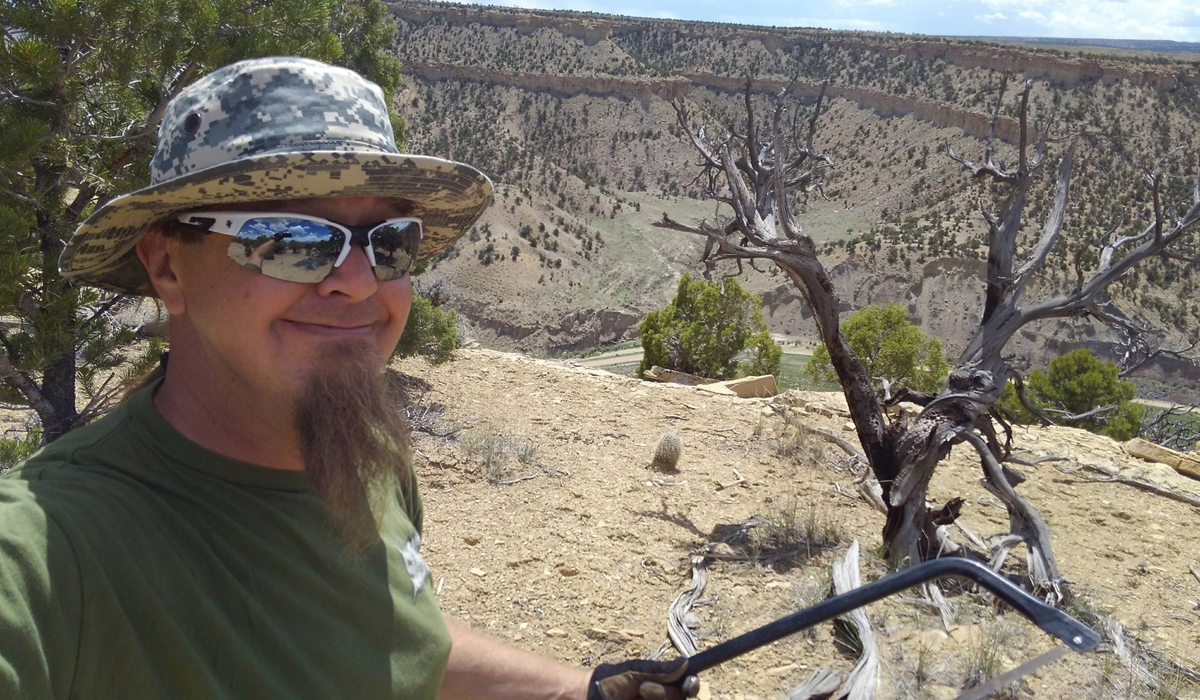
Fuzzy Nance on Therapy, about 10 years ago. Photo by Garth Frandsen
In 2009, Buster and Fuzzy put in the section called Therapy, which runs from the top of IMBAtween South to the BLM fence line. It’s a fun, fast, technical downhill that quickly became a favorite. Joe Dyer then helped continue the line South along the edge of the mesa with “Smokin’ Joe’s”, and then Pete Kilbourne (Ben’s dad) helped put in “Knot Pete’s Rim” to finish what would become known as “The Main Loop” back to the Luke’s Trail original starting point.
The name “Knot Pete’s Rim” was Fuzzy’s little joke with Pete. Pete was employed by a certain Federal resource management agency and had real concerns with being outed as contributing to what was, at that point in time, still an “illegal trail”. Since he was nearing retirement, his concern was justified, but Fuzzy being the insensitive jerk he was still wanted to name the section “Pete’s Rim”. Pete wasn’t having it and stated emphatically “It’s NOT PETE’S RIM!!”, and so the trail was named. Pete has since retired happily with no repercussions from his renegade activities. His trail runs along the edge of the mesa above the Coves neighborhood and makes for a perfect finish to the Main Loop.
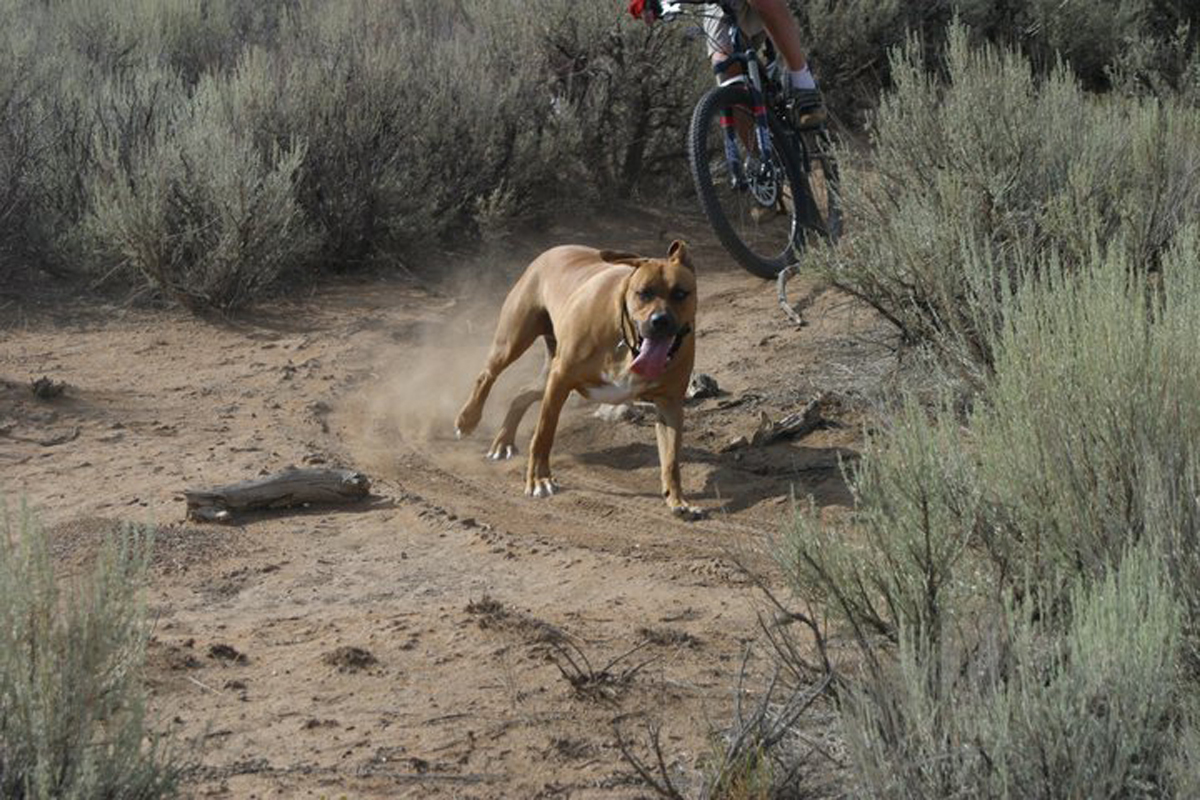
Buster the dog on a Carbon County Trail. Photo by Brian Jewkes
About this time Buster and Fuzzy had begun scouting Bull Mesa, which was just behind (West of) the Carbon County Golf Course and Country Club. The first section they put in was entirely Buster’s design. It forked off of the main Jeep Trail directly above the Driving Range, North to the mesa’s edge, then around the edges back to the gas well road. It would be the first section, named “Driver”, of what is now called The Country Club Trails. This was just the beginning of Carbon County’s second Trail System designed by great Trail Dogs.
In 2010, Joe Dyer and another crazy Irishman, Josh McCarrell, worked with Buster and Fuzzy to build a section they named Shamrock and Roll, which came off the top of Floating Rocks (above Kenilworth) and looped up and around what’s known as the Spring Glen Rim. It’s a fabulously technical section that took a lot of rock work and adventurous planning and is another favorite of those who like a challenge.
In 2011, Buster adopted his little brother Reno, an undersized Pit Bull who was rescued from dogfighting in Idaho. Reno was only about 45lbs and looked even smaller next to the massive Buster. The two were inseparable, and over the next several years, they worked together diligently to continue the Country Club Trails through 3 Wood, 5 Wood, and Out of Bounds. These trails above Gorley Wash give an epic view of Consumer’s Canyon and the Book Cliffs beyond. The cliff line on the South side of Bull Mesa offered an opportunity for a marquee section. It’s an easily ridable and photogenic but spooky sheer cliff, which Buster and Reno absolutely loved. The first long section was named Cliff Burton (after the late Metallica Bassist), because it’s in a rock band and is really high (wink).
As the Country Club Trails were taking form and gaining ridership, Buster began showing signs of slowing down. He didn’t like long work days and the hot sun anymore, and unfortunately in 2017, we found out why. He succumbed to the cancer that had been growing inside him for some time. His grave is at the South end of Therapy, the first trail he designed, across the Wood Hill Mesa from his father. Luke and Buster are interred on what is their monument to the joys of Singletrack.
Fuzzy Nance working on the Reno’s Rim Trail. Photo by Fuzzy Nance
Little Reno eventually recovered from the loss of his big brother and mentor, returning to Bull Mesa with Fuzzy to continue building the South Side of the Country Club Trails. Reno’s Rim, which runs from Cliff Burton to the West end of the mesa, is a tricky, technical, incredibly fun area that alternates between singletrack and ledges, and then loops back to connect with Out of Bounds. The loop, and a nice little campground named Camp Reno (just above his Rim Trail) were completed in 2019, not long before Reno joined Buster and Luke in Trail Dog Heaven. Reno’s grave is in the West corner of his namesake campground, with a view of the canyon his trail follows.
In more recent years, a select few dedicated souls have taken up the cause. People like Jordan Steele, Dustin Carlson, TJ Christiansen, and others have taken up the movement started by Luke and Fuzzy and Buster and Reno, and continued the tradition that makes Carbon County Singletrack a unique and sought-after thing. More trails, features and trailside art continue to be added, and the movement continues to grow. Carbon has a NICA High-School racing team, and the local Travel Bureau advertises the trails as a destination. The joys of tight, twisty, winding trails will live on forever thanks to the spirit that inspired these trails in the first place. The spirit of freedom, and unbridled passion for dirty fun.
The impact that Luke, Buster, and Reno had on Mountain Biking in Central Utah cannot be measured. If it weren’t for their adventurous, energetic efforts, it wouldn’t have happened. Carbon County, and Mountain-West trail lovers in general, owe them a huge hug and a head rub. God Bless Luke, Buster, and Reno. God Bless the Trail Dogs.
April 4, 2023 — Michael and Kathryn Austin announced recently that The Tour of Walla Walla is cancelled permenantly. The Walla Walla, Washington race had been a mainstay on the Northwest road racing calendar for almost 25 years.
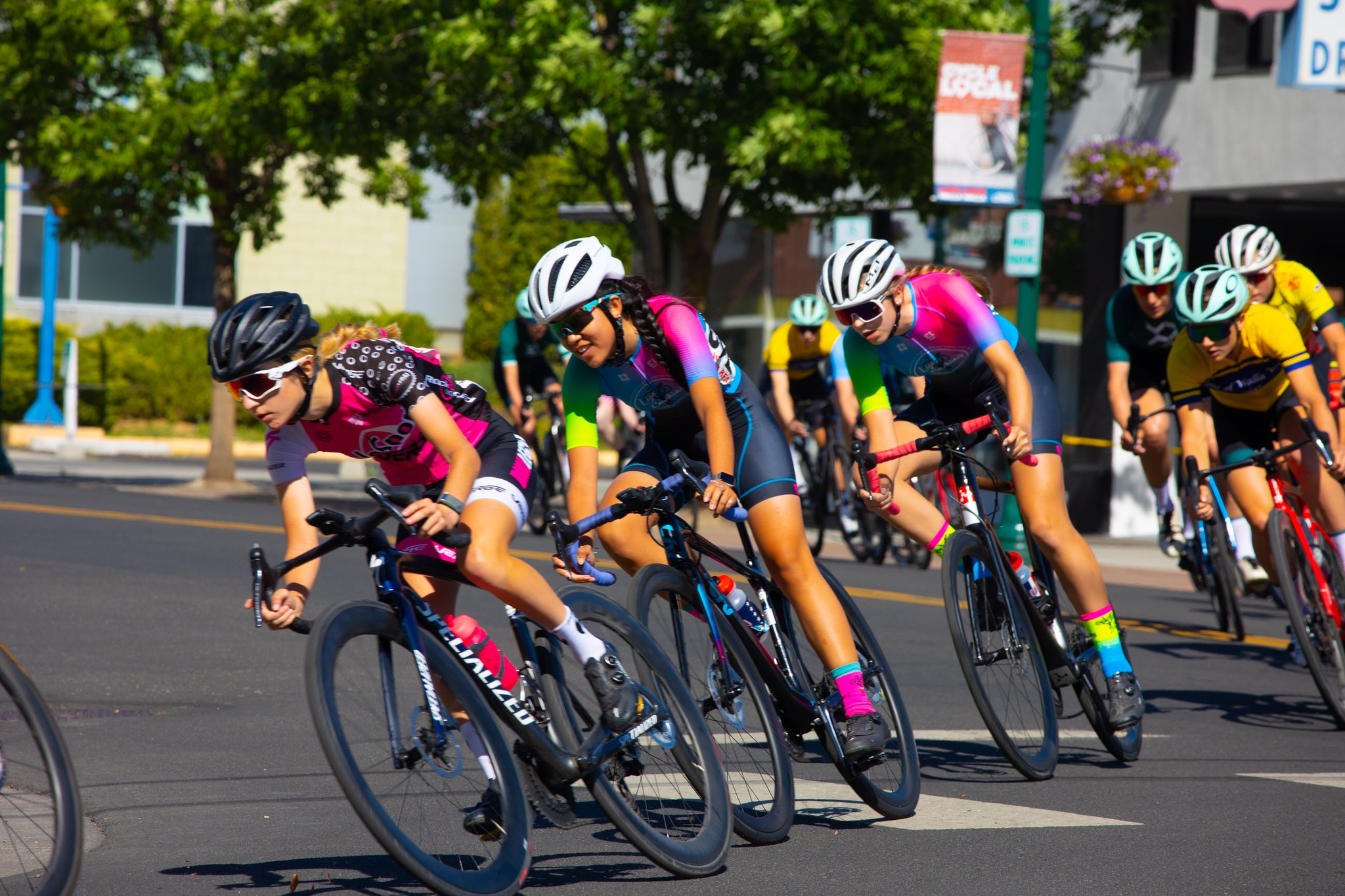
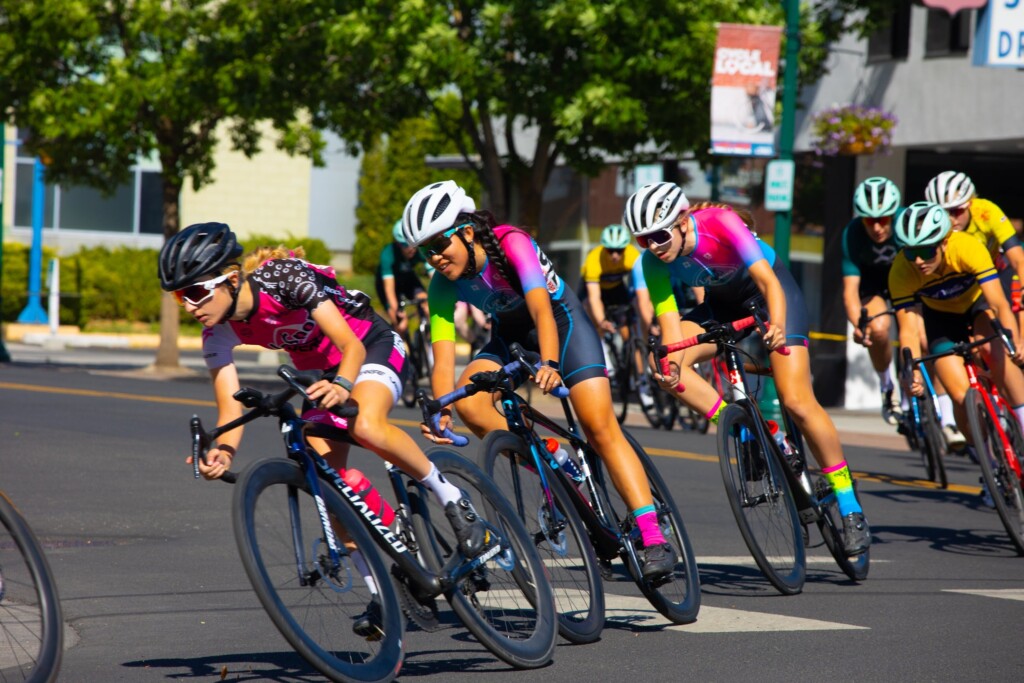
The 2022 Tour of Walla Walla women’s race. Photo courtesy Allegro Cyclery
Their announcement is below:
Racers,
Kathryn and I have made the difficult decision to cancel the Tour of Walla Walla, this year and for the future. We were really hoping to make it a “25th year” of this race but there just are not enough racers that share that sentiment.
All things change with time, road racing being one of them. Interest is waning on the regional and national level. Fewer younger riders are moving up through the ranks, gravel riding has become a force in the industry taking riders away from the road scene. Of course, Covid has played a part in the road racing decline, many riders are simply not returning to racing. We have strived to offer a venue that would provide a setting for competitive Road Stage Racing, and we have! Problem is there are not the numbers nor the enthusiasm from the riders needed to sustain the event. We feed off the enthusiasm, without it we feel a void.
Baker City joined TofWW and TdeBloom this year for the PNW Stage Race Series in hopes that power with numbers would help encourage ridership. Those two events will still be offering to the PNW great racing we had hoped to be a part of. Sign-up! These races need your support to continue. Promoters need the early show of support.
Please allow us a few days to work through refunds as our plates are pretty full – closing our event down.
Thank you from the bottom of our hearts for past support, for showing up, and for sharing the love of road racing with us; it has been a wonderful 24 year run!
Michael and Kathryn Austin
TOFWW Race Directors
They went on to add a note of thanks:
To the Pacific Northwest (and beyond) Peloton,
Kathryn and I just wanted to let everyone know how much it has meant to us over the years to be the home of the Tour of Walla Walla. We do not discount the disappointment many of you are feeling with our announcement. We’ve given 24 years for the love of the sport, and that means the racers. We’ve made so many new friends over the years; racers, officials, volunteers, etc. because of TOFWW, all will be missed! I could often be heard saying “racing this event is easier then putting it on”, it’s the truth! But we did, year after year and loved it. This isn’t easy and come June there will be void, but it was time. I might now find the time to race again!
Thank you everyone from the bottom of our hearts for the support over the years, it wouldn’t have happened without you, now go race your bikes!
Michael and Kathryn are the owners of Allegro Cyclery in Walla Walla. They are continuing their promotion of the Walla Walla Grit Gravel Race in September.
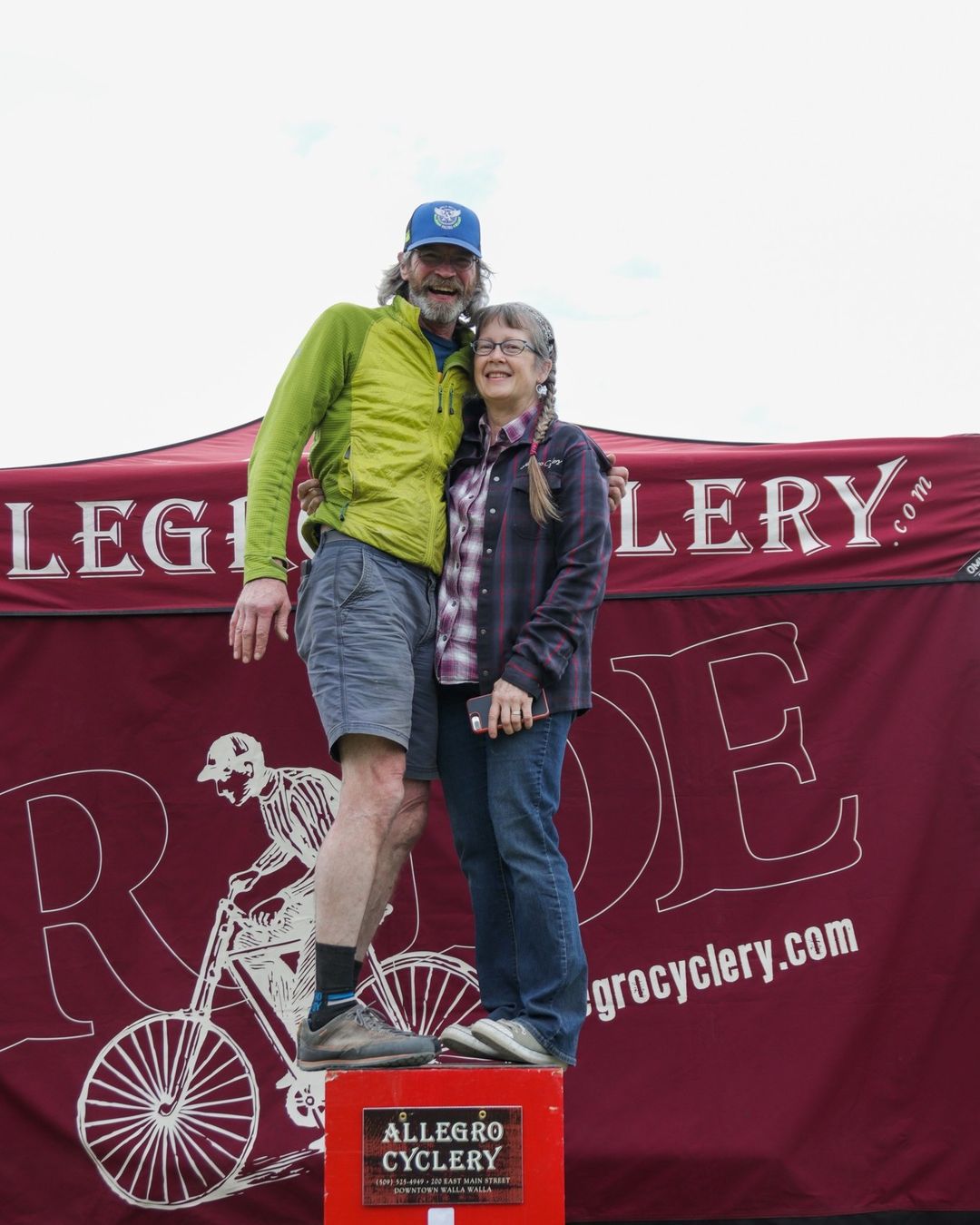
Michael and Kathryn Austin of Allegro Cyclery have promoted the Tour of Walla Walla for almost 25 years. They announced that the race is cancelled permanently in 2023. Photo courtesy Allegro Cyclery
September 10 — Walla Walla Grit, Walla Walla, WA, This Grit has three course lengths which include long, medium, and short routes. The long course starts at 6 a.m., medium begins at 8 a.m., and the short course commences at 9 a.m., 45, 65, 96 mile options, Michael Austin, 509-386-1149, 509-525-4949, [email protected], Kathyrn Austin, 509-964-8951, [email protected], allegrocyclery.com/events/walla-walla-grit-pg117.htm
By Gene Hamilton — Here in the Mountain West, we have amazing sunny weather that leaves our trails hardpacked with a thin layer of sand on top. We aren’t exactly blessed with the tacky, loamy dirt of the PNW. This lack of traction limits your control, speed, and confidence.
The main things you need traction for while descending are braking, cornering, and slippery surfaces (off-camber, wet roots, ice, mud, gravel, etc.).
When climbing you need traction for power production and to get through roots, rocks, technical sections, and steering.
Here are the proper strategies to minimize the effect of slippery conditions:
I originally got this idea from motorcycle coach Keith Code and then one of my students taught me a better way of explaining it. Keith Code uses dollars, my student’s motorcycle coach used units of 100. So, at any given moment, your tires have 100 units of traction to use as you are riding. If you exceed 100 units, your tires will slide and you will likely crash or at least get a good scare.
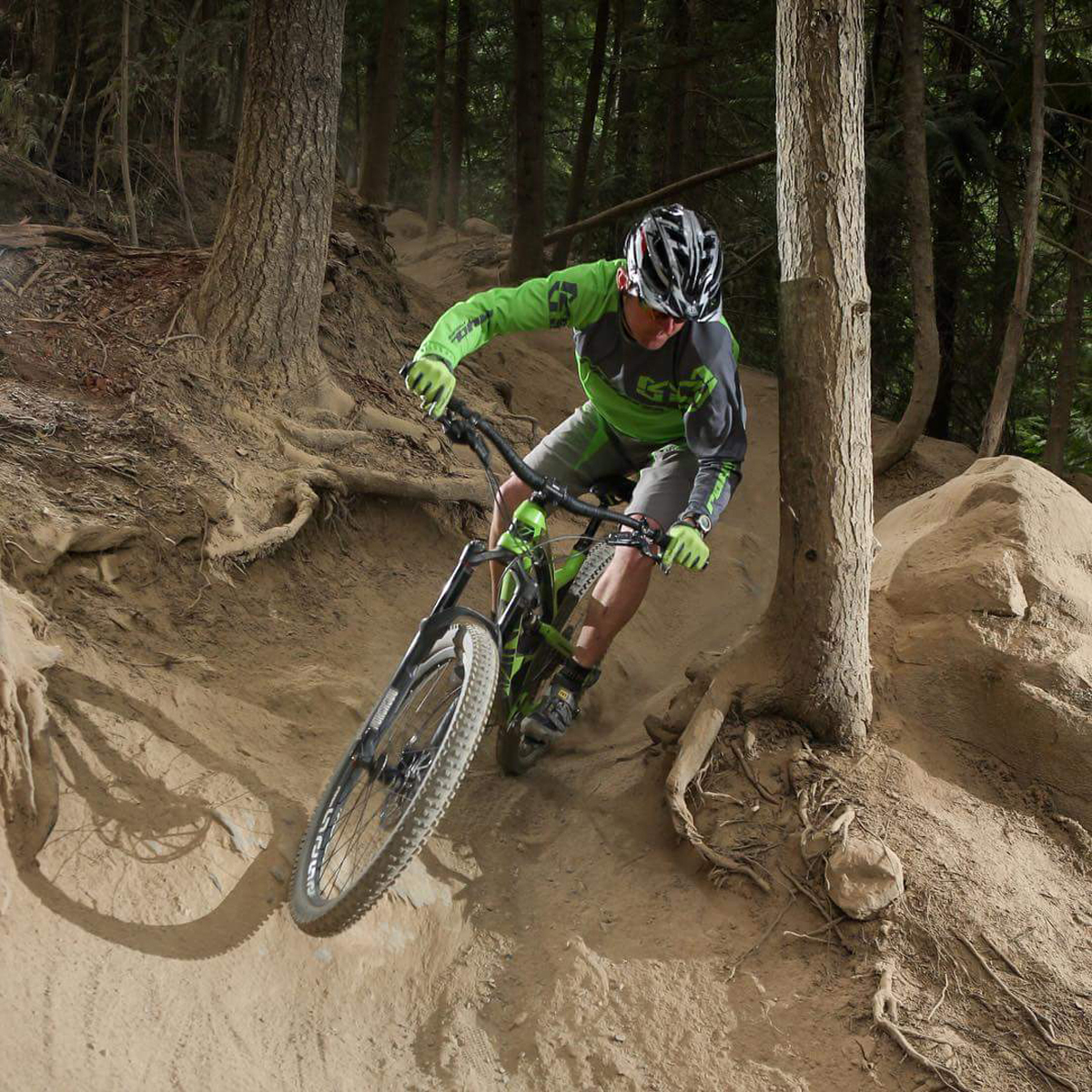
Syd Jacklin tackles a slippery trail in Whistler, Canada. Photo courtesy Syd Jacklin
Strategy 1:
Learn to be aware of how many units you are currently using and/or how many units you are about to need. If you exceed 100 units bad things are going to happen!
If it feels like you are using 100 units of traction to get across that off-camber section of trail you have no units left to slow down with. Therefore, if you brake on that off-camber you will probably slide out and crash.
Strategy 2:
“DON’T brake on off-camber!” Greg Minnaar yelled during one of my courses with him years ago. He is right, brake BEFORE the off-camber and/or after the off-camber. When you brake on off-camber you are rolling the dice. The steeper, looser or more slippery the off-camber is more traction is required to ride it. Do you have enough traction? Or will your tires seek the path of least resistance and slide down the off-camber?
You need all 100 units of traction for most corners (if you’re not using approximately 100% you could be cornering faster and more efficiently). Therefore, if you brake hard in that corner you will probably slide out and crash.
Strategy 3:
Brake to slow down before corners. (Once you have cut your speed, dragging your rear brake gently so you don’t accelerate is okay). Do not try to cut speed and change direction at the same time, this is a recipe for disaster as you will overload your tires.
Watch Greg Minnaar or Mitch Ropelato, they do this so well they often look slow as they have slowed a hair more than their competitors at the entrance of the corner. Then they carve their turns and generate exit speed. Sliding may look cool but when your tires are sliding you are scrubbing speed, not accelerating.
Strategy 4:
Brake where you have the most traction. If the last 15 feet of the trail leading into the corner is loose or brake bumped, do most of your cutting of speed before the loose or brake bumped section. If the centre of the trail is loose or brake bumped do your braking on the outside edge of the trail.
You need a lot of traction when climbing, especially when doing “up and over” manoeuvres and when it is loose and steep. This is where weight placement is critical as well as power management. When the trail gets loose and/or technical how you use your 100 units of traction is very important.
If you put too much power into your pedals as you go over that wet root you will spin out (as you needed 180 units of traction to power over that root). Sometimes a soft pedal accomplishes more. Learn to manage your power output.
Strategy 5:
Manage your weight placement and power output when climbing technical climbs.
When climbing you have two goals regarding traction, keep enough weight on your rear wheel so you can apply power without spinning out while also keeping enough weight on the front wheel so it doesn’t come off the ground. You do this by sliding forward and back on your saddle and by hinging forward lowering your chest towards the bars.
If you slide and/or hinge a little too far forward your rear tire will spin out on the climb (your front tire may have had 60 units of traction while your rear tire needed 65 units). If you don’t slide and/or hinge enough your front wheel pops up and you loop out.
The timing of your power output is extremely important too. There is a slow, steep up and over rock move on Amasa Back trail in Moab that requires all of my power and I need as much traction as I can get to not spin my rear tire.
After wheelieing my front wheel halfway up the rock there is a “dead space” as I shift my weight up and forward before my rear wheel gets traction. First, my rear tire has to contact the rock, then, after contacting the rock which compresses my rear suspension, my suspension rebounds, unweighting the rear wheel for a millisecond. So I pause my pedal stroke until my rear wheel is planted before applying power.
When I am in a hurry or thinking about the timing of my power output, I usually don’t make this rock move. When I am in my groove and relaxed it’s actually easy! The timing is so quick you must do it by feel, you can’t think about it. This takes practice!
Going up and over a wet root is similar. Often I need power the whole way, but I can’t power the rear wheel over the root (as I need about 600 units of traction to do that!). In this situation, I stomp on the pedal as I wheelie to give me a little more momentum. Then I back off to 50% power as my wheel is in contact with the wet root and as I feel the rear wheel crest the root I’m back to 100% power.
This is why I love mountain biking these subtle applications of skills challenge me and keep me in the zone.
By Chatham George Paulson-Thomas & Stefan Schoofveldt
AIGLE, Switzerland (April 1, 2023) — The Union Cycliste Internationale (UCI), in association with the Fédération Internationale de l’Automobile (FIA), shocked the world this morning by announcing the launch of a new Formula 1 Cycling Series for bicycle racing, set to begin in 2024. The announcement was made during a press conference in Aigle, Switzerland, where UCI President David Lappartient revealed that Lance Armstrong had been named as the Series Race Director.
“We are thrilled to be launching the world’s first Formula 1 Cycling Series,” said Lappartient. “This will be a game-changer for the sport, and we can’t wait to see the world’s top cyclists battling it out on the track.”
The UCI also announced that legendary cyclist Eddy Merckx will be named as the honorary chairperson of the series. Merckx expressed his excitement about the new series.
“I am honored to be named as the honorary chairperson of the Formula 1 Cycling Series,” said Merckx. “This is a new and exciting chapter for the sport of cycling, and I look forward to seeing how it develops.”
Merckx, who is widely regarded as one of the greatest cyclists of all time, has won multiple Grand Tours and world championships throughout his career. He is also a respected figure in the cycling community, and his appointment as honorary chairperson is seen as a major coup for the UCI.
“We are thrilled to have Eddy Merckx on board as our honorary chairperson,” said UCI President David Lappartient. “Eddy is a true legend of the sport, and his support and expertise will be invaluable as we work to establish this new series.”
According to the UCI, the Formula 1 Cycling Series will take place on many of the same specially-designed tracks as the automotive Formula One World Championships and will feature hairpin turns, banked corners, and high-speed straights. The races will be divided into multiple stages, with riders competing for points that will be awarded based on their finishing positions. The Series will culminate in a double-points Cahampionship race, where the world’s top riders will compete for the title of Formula 1 Cycling Series champion.
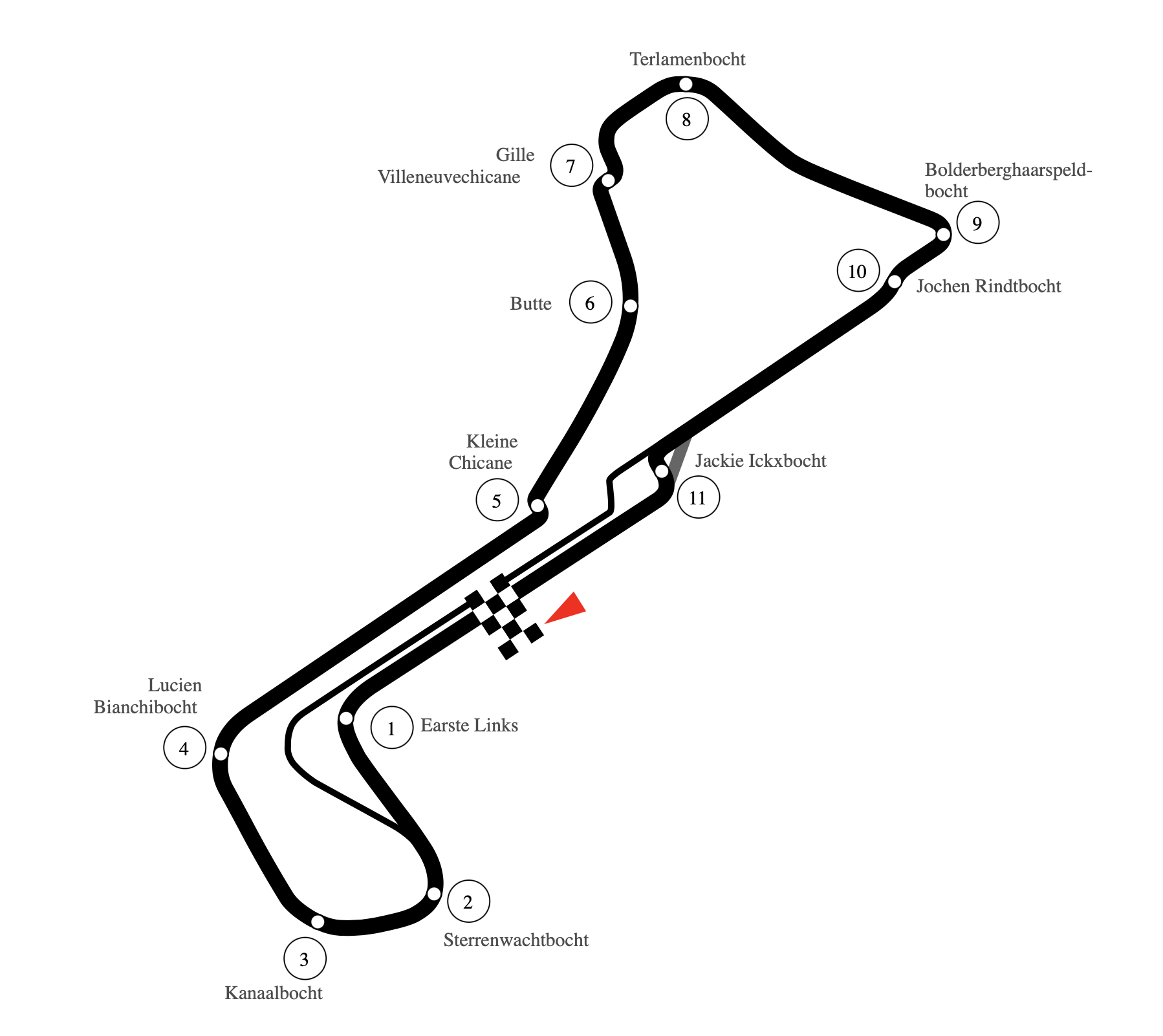
The first race is anticipated to be held at the Circuit Zolder, near Hasselt, Belgium.
The FIA (Fédération Internationale de l’Automobile) has responded positively to the UCI’s announcement of a new Formula 1 Cycling Series. In a statement released today, the FIA welcomed the proposed series as a way to bring new revenue to each of the tracks.
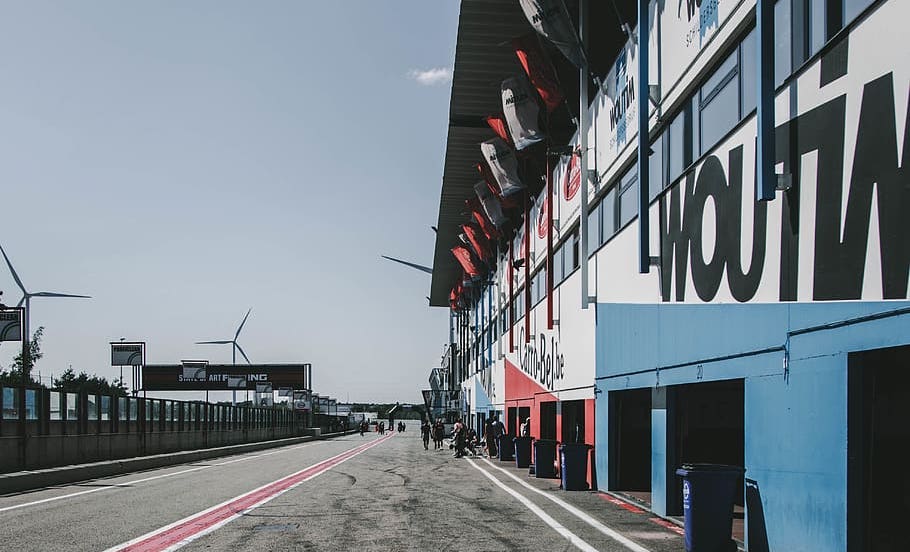
The pit lane at Circuit Zolder, in Hasselt, Belgium.
“We are excited to hear about the proposed Formula 1 Cycling Series, and we believe that it has the potential to bring a fresh, new energy to the world of sports,” said the FIA statement. “We welcome the opportunity to explore new avenues of collaboration with the UCI and look forward to working together to create a successful and sustainable series.”
The FIA also highlighted the potential benefits of the series for each of the tracks that will host the events.
“Hosting a Formula 1 Cycling Series event will provide an excellent opportunity for each of the tracks to diversify their revenue streams and attract a wider range of audiences,” said the FIA statement. “We believe that this Series will bring a new level of excitement to the sport of cycling and help to elevate it to new heights.”
Armstrong, who was stripped of his seven Tour de France titles after being found guilty of doping, said he was excited to be involved in the new series.
“This is a fantastic opportunity for the sport of cycling,” said Armstrong. “I’m honored to be named as the Series Race Director, and I can’t wait to work with the UCI and the world’s top riders to make this series a success.”
In response to the announcement of the new Formula 1 Cycling Series, several Formula One teams have expressed interest in designing bicycles for affiliated teams to use in the races. The teams see this as an opportunity to showcase their engineering prowess.
“We are very excited about the prospect of designing bicycles for use in the Formula 1 Cycling Series,” said Toto Wolff, team principal of Mercedes-AMG Petronas Formula One Team. “We believe that this is an opportunity to demonstrate our engineering expertise and innovation in a completely new context.”
Other teams have echoed this sentiment, with many citing the potential for cross-pollination of ideas between the two sports.
“We think that there is a lot that we can learn from the world of cycling, and vice versa,” said Andreas Seidl, team principal of McLaren F1 Team. “We are looking forward to working with our teams to develop the best possible bicycles for the races.”
The UCI has yet to respond to the teams’ statements, but it’s clear that the proposed Formula 1 series for cycling has the potential to create new opportunities for collaboration and growth between the two sports. With some of the top engineering talent in the world already expressing interest in the Series, it will be exciting to see what kinds of innovative new designs emerge as a result.
While teams are readying their engineering and design staff to get to work, the UCI have yet to announce the formula for the new bicycles. It is currently unknown if they will resemble modern racing bicycles with aerodynamic enhancements, or pedal-powered Formula One automobiles. Rumor does indicate that the vehicles will be partially powered by lithium batteries, which means that in a crash they will be just as likely, if not more so, to burst into flames.
In spite of positive reactions from key stakeholders in both cycling and motor sports following the UCI’s announcement of the new Formula 1 Cycling Series, not everyone feels quite the same way. The Formula One Group, owners of the Formula One World Championship, have responded with surprise and skepticism. In a statement released today, Formula One Group CEO Stefano Domenicali expressed doubts about the feasibility of such a series.
“While we appreciate the UCI’s enthusiasm for creating new racing series, we have serious reservations about the viability of a Formula 1 Cycling Series,” said Domenicali. “F1 is a complex and sophisticated sport that has taken decades to develop, and we believe that it cannot simply be replicated in other disciplines.”
Domenicali also expressed concern about the choice of Lance Armstrong as the series race director, given his history of doping.
“We have no comment on Mr. Armstrong’s appointment, but we would like to emphasize that clean sport is a top priority for F1,” said Domenicali. “We would welcome any efforts to promote clean and fair competition in cycling, but we would also caution against any attempts to glamorize doping.”
The UCI has yet to respond to the Formula One Group’s statement, but it’s clear that the proposed Formula 1 Cycling Series will face significant challenges as it moves forward.
The UCI has not announced which teams and riders will compete in the Series, but insiders say negotiations are already underway with several top teams and riders.
The Formula 1 Cycling Series is set to begin in April 2024, but with today being April Fool’s Day, it’s best to take this announcement with a grain of salt.
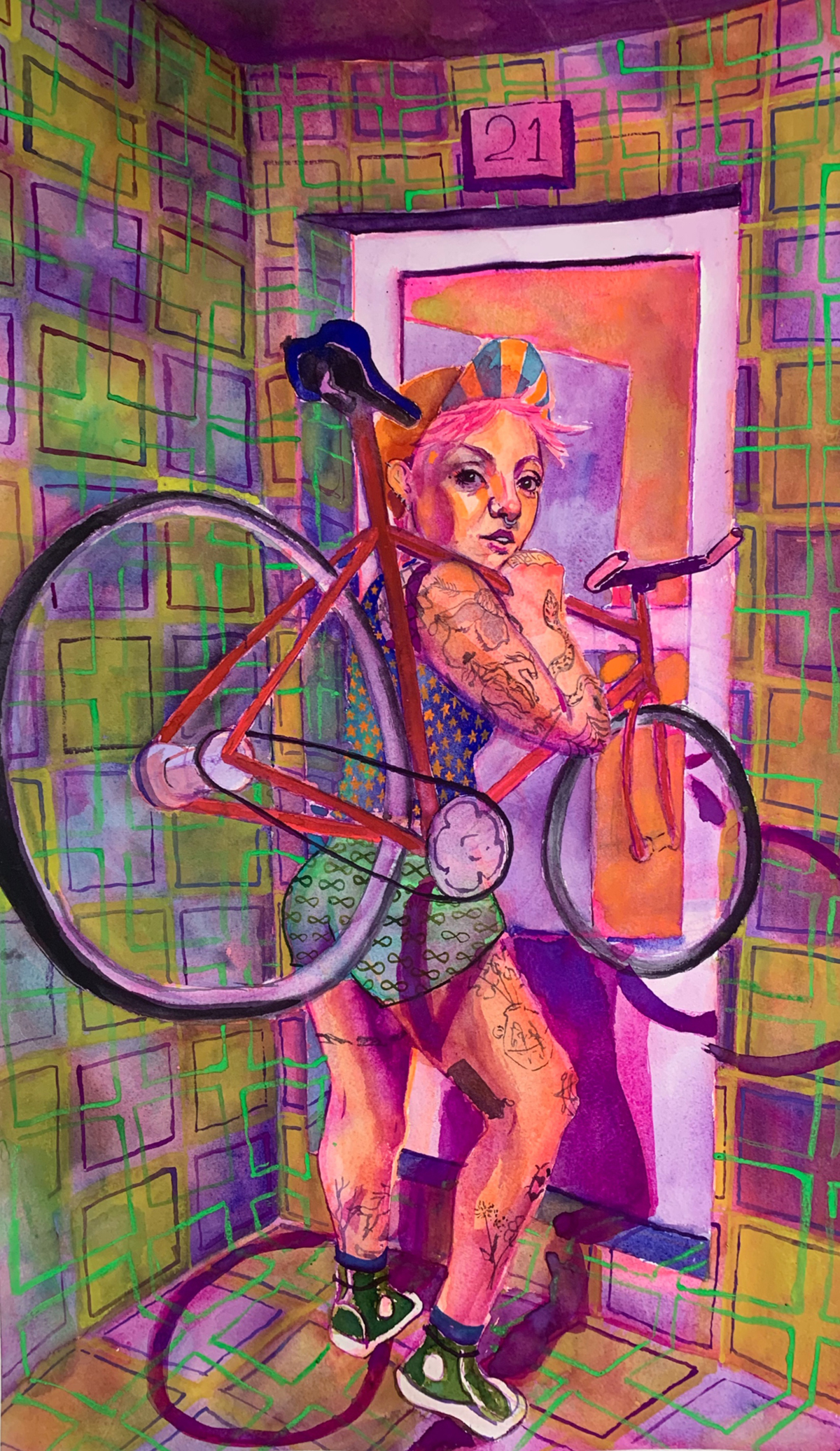
Kate Wilhite (she/they) is a watercolor artist exploring queer identity through light and color. They work with themes of ambiguity, duality, and personal realities. Kate’s most recent project was a 78-painting tarot series featuring locals from the Salt Lake City queer community, and is now focusing on a series about radical authenticity and intimacy. Kate is exploring a new medium this year as a tattoo apprentice and is excited to further their journey of radical self-expression through art making.
Artist name: Kate Wilhite, Title: The World (from Queer Revolution Tarot), Medium: Watercolor
Artist statement:
My work centers around queer identity and radical authenticity. I use color and light to explore spaces between binaries. My paintings seek to examine questions such as where does the boundary lie between enjoyment and indulgence? When can self-medication become self-harm? Does reality exist? How can one find stability in a world of constant change and impermanence? At what point does self-expression become a charade? I use co-existing opposites, contrasting colors and values, and a combination of organic shapes and patterns to explore these questions.
My goal is to relay universal themes — isolation, self-medication, constructed identities, etc. — through specific snapshots of a particular subculture. I live and work in Salt Lake City, Utah, and my community is a vital part of my work. The queer artist subculture is so unique here. Because the state is religiously oppressive, queer and trans people tend to collect in the city, creating a queer bubble where we can live authentically and safely. I paint people in my community who live between binaries as a way to explore my own identity and to show the world how beautiful queer radical authenticity is.
About the art:
“The World” is part of the Queer Revolution Tarot. This is a deck of tarot cards that all people—cis, trans, gay, straight, agender, asexual, etc. can use to meditate on queerness within their own identities.
The World card represents completion, accomplishment, integration, and fulfillment. You have completed a journey and reached a goal that you have long been working for. Look back on your achievements, mistakes, struggles, and lessons learned with pride. All of those experiences brought you here to where you are now. As this journey draws to completion, reflect on your wisdom gained, and look forward to your next journey with fresh eyes and enthusiasm.
Queer Revolution Tarot takes a gender-expansive view on masculinity and femininity that allows viewers to break down gendered terms into attributes present in all people.
By Tom Jow — When shopping for a new bike, it is easy to get caught up in the excitement of the latest and greatest. What’s that new suspension system and how much travel does it have? How many gears does that new electronic shifting set have? How many watts will that new aerodynamic wheelset save? Is the color of those grips going to match the bike? Are the grips going to “what?!”
I will freely admit that I selected the current grips on my bike because they match my bike. I will also admit that as someone that can tolerate a large amount of dysfunction on a bike that my hands are not happy all the time. To all you readers out there, if your hands hurt, it does not have to be this way.
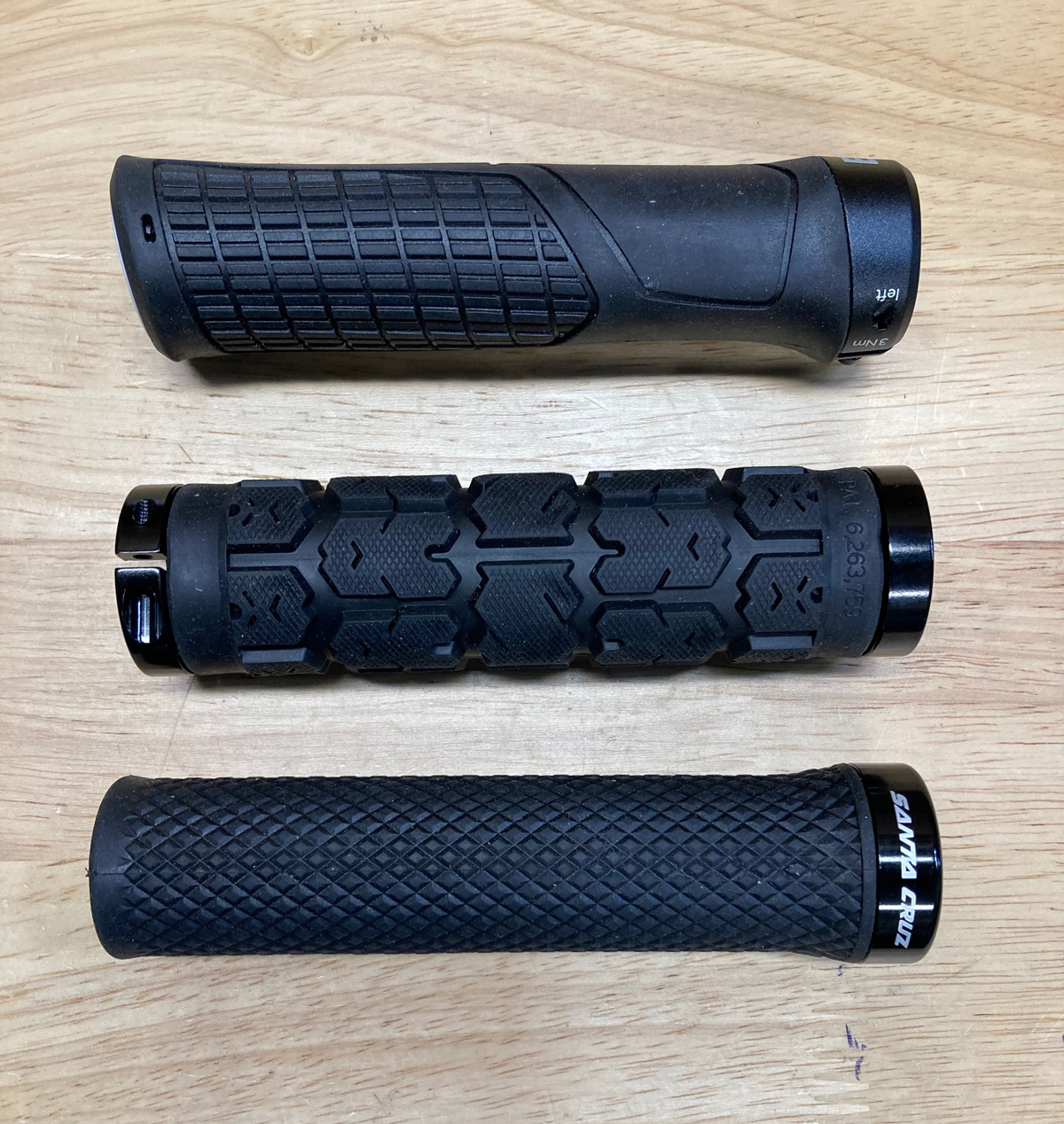
Tapered, Large diameter and Small diameter grips (top – bottom). Photo by Tom Jow
Selecting a pair of grips for more than just color, however, will be a little challenging. A visit to the Competitive Cyclist website shows sixty (sixty!) different grips. They come in different diameters, ranging from about thirty to thirty-four millimeters. Some have shape to them; bulge in the middle, tapered down from lateral to medial, flared with a platform on the outer end. There is a choice of material too; rubber or foam? With all these choices how is a person to choose?
If lightweight is the criteria, then foam grips are the lightest of all. As a material foam is also kind of cushy. The shock absorption of foam works well for many riders. Foam, however, may not work well for smaller hands due to the slightly larger diameter. In general, small hands tend to like small diameters.
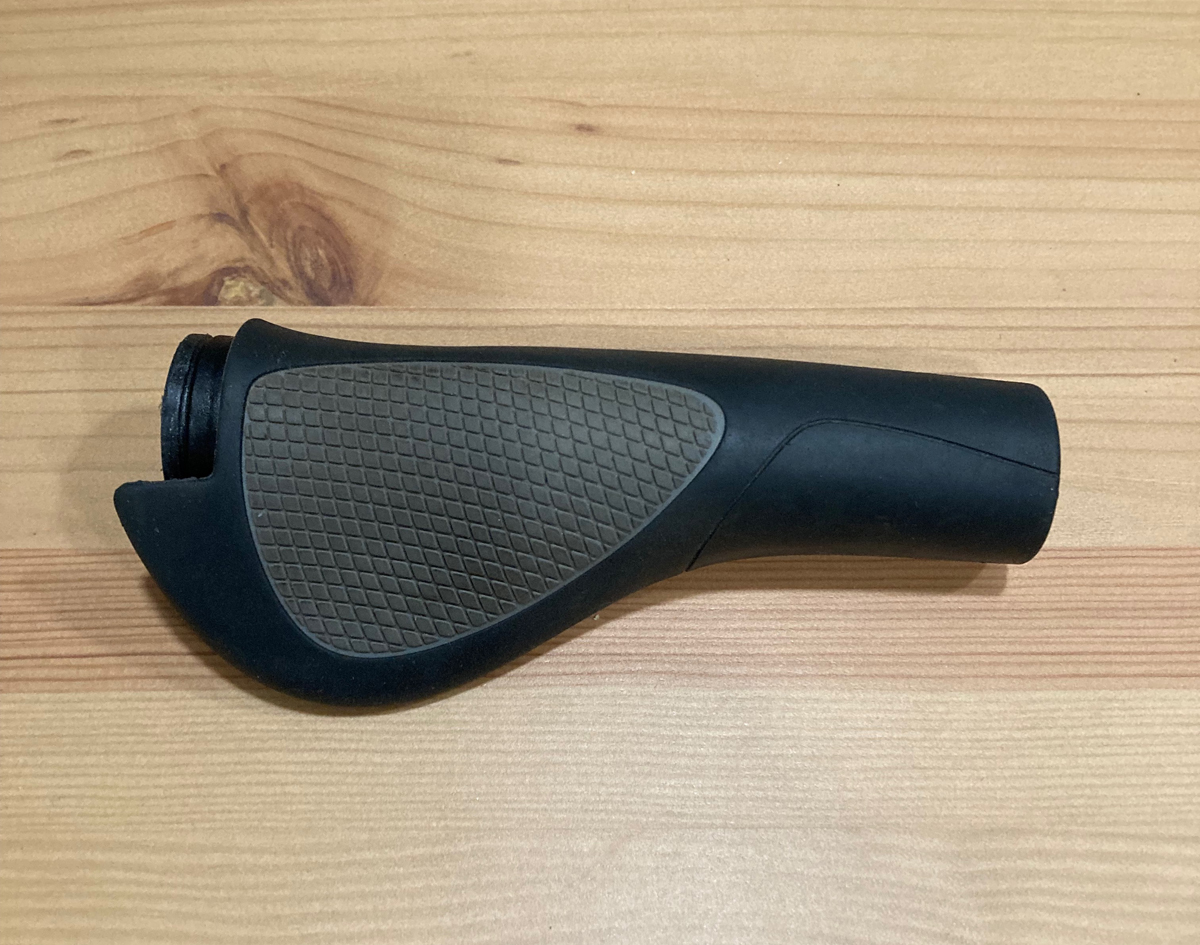
A mountain bike grip with palm support. Photo by Tom Jow
Having a little shape to the grips can be a good thing. A slight taper from the end or a small bulge in the middle can add some cushion without greatly increasing the diameter. A tapered end will also slightly change the angle of the wrist. Some riders may benefit from some support for the palm and wrist. For these riders there are grips with a platform on the outer end that can be adjusted to reduce strain on the wrist.
Unfortunately, the only way to find a pair of grips your hands will like is to try them out. There are no demo programs for grips, but friends can be a good source for recommendations. Also, with lock on grips they are easy enough to borrow from friends. Keep in mind there is also a “for better and for worse” concept in grip shopping; what works for one hour doesn’t necessarily work after three. So yes, there is a need to spend time testing grips but if it means more time on the bike then the better.
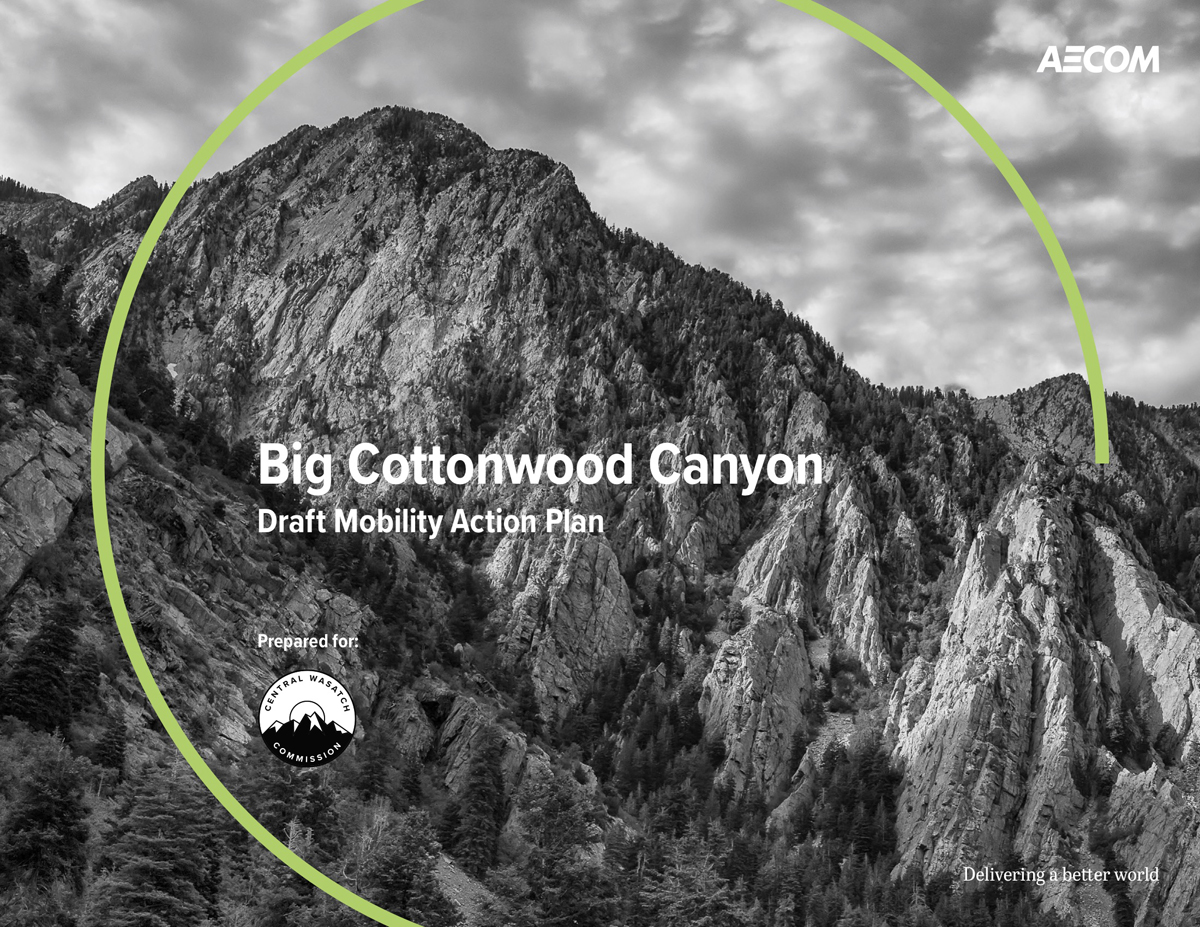
March 29, 2023 — Utah’s Central Wasatch Commission yesterday released the Draft Big Cottonwood Mobility Plan. With Mobility in the title, it seems as though cycling, walking, and running should be included. Unfortunately, improvements for these modes of active transportation are not addressed.
Big Cottonwood Canyon is heavily used by cyclists, runners, and walkers in the summer months. The shoulders are too narrow, and were not improved the last time the canyon was repaved. Running and cycling races are held yearly in the canyon. Ironically, and sadly, the shoulders by Solitude were narrowed, despite the fact that this was near the location where Josie Johnson was killed in 2004 by an inattentive driver.
Cyclists’ comments are needed by April 17, 2023. Information on how to comment and our comments are below.
From the website, to comment: “You may submit comments on the BCC MAP in various ways: by completing the comment form below, by sending a comment to [email protected], or by sending a written letter to the CWC office at: 41 N. Rio Grande Street, Ste 102, SLC, UT 84101.”
Our comments (feel free to borrow or add to these):
Dear CWC,
After looking through the BCC mobility plan, it seems like it’s solely focused on cars and buses.
Why is there little to no mention of improvements for cyclists, pedestrians, and runners? This is really not a good plan if you don’t include mobility for active transportation.
For example, you could work on the shoulder striping throughout the canyon to improve things for the above active transportation users.
Particularly, when the road was last repaved, the shoulder was narrowed near Solitude, leaving less room for active transportation. Ironically, and sadly, this is near the spot where Josie Johnson was killed by an inattentive driver in 2005.
You really need to look at improvements for all user groups and not release this plan in a final form until you have done so.
Some suggestions:
1. Look at the plan that the Big Cottonwood Community Council had from several years ago.
2. Look for any restriping possibilities to make things safer for active transportation.
3. Reduce the speed limit to make things safer for active transportation.
4. Make sure that summer transit for mountain bikers is available for those that would like to ride Solitude or Brighton would be a good addition. See what Park City has done with transit for mountain biking.
5. Add the Canyon Climb Signs that myself and Salt Lake City’s Tom Millar have been working on would be a good addition too. Cost for this is minimal.
6. Make the intersection of Ft. Union and Wasatch Safer for cyclists.
7. Improve the striping on Wasatch near BCC. It was narrowed recently, and is not ideal for cyclists.
By Dave Campbell — April means Spring Classics in European Professional Cycling!
Classics season actually began in March with Milan-San Remo in Italy and Gent-Wevelgem in Belgium but April is really the heart of Classics season. The Tour of Flanders in Belgium and Paris-Roubaix in France kick things off on the first two weekends.
Both are considered monuments of the sport, and both feature cobblestones, Flanders occurring on short, steep climbs and Roubaix’s being much rougher but long and flat. After Roubaix, the races get hillier with Holland’s only classic The Amstel Gold Race, followed by the two Belgian Ardennes classics, Fleche Wallonne and Liege-Bastogne-Liege. As we eagerly anticipate these spring races of legend, let’s test your knowledge!
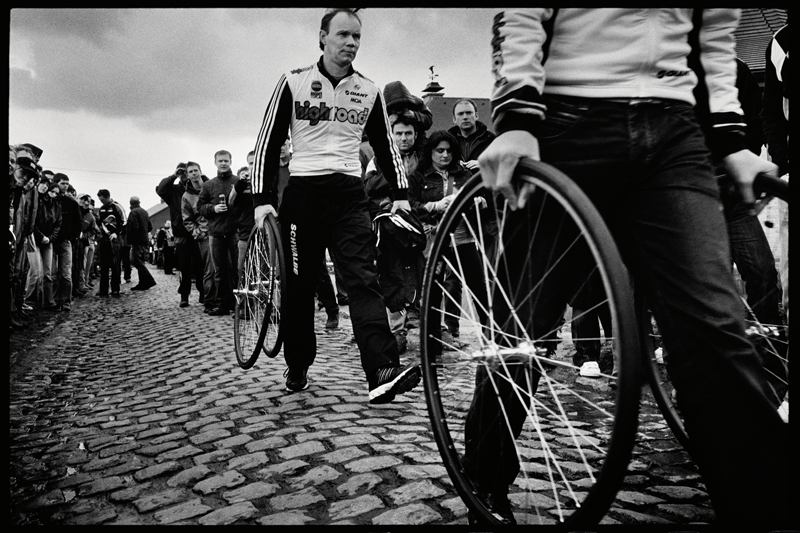
Soigneurs with spare wheels are spread all along the race. Extreme events like Paris-Roubaix can mean up to 20 extra mechanics and team helpers out on the course.
For the Answers, click on the next page (2) button below!
Q1. Paris-Roubaix, the Queen of the Classics, with its long stretches of brutal cobblestones is probably the most familiar of the spring classics to Americans. It was the first Classic televised (1984) in the United States. An American, however, has yet to win this Monument. What is the best ever finish here by a US rider and when did it occur?
Q2. Slovenian Tadej Pogačar, a two-time winner of the Tour de France, has a very realistic chance of winning this spring’s Tour of Flanders, one of the cobbled classics along with Paris-Roubaix. When is the last time that a Tour de France winner triumphed in a cobbled classic? What about specifically in Flanders?
Q3. Earlier this spring, Dutchman Mathieu van Der Poel convincingly won the Milan-San Remo in Italy to emulate his grandfather Raymond Poulidor, who triumphed there back in 1961. Mathieu’s father, Adri, was also a Classics winner and Mathieu had already emulated his victory in the Tour of Flanders (1986) by winning there in both 2022 and 2020. He had earlier matched his father (1990) in the 2019 Amstel Gold. However, there remains a spring classic that Mathieu’s father won that he has not … can you name it? When did Adri win it?
Q4. What is the first Spring Classic to ever be won by an American? When did this occur?
Q5. Milan-San Remo kicked off Classics season last month in Italy. Only TWO Americans have ever stood on the podium there. Who are they and when did they achieve their results?
For the Answers, click on the next page (2) button below!
By Nancy Clark MS RD CSSD — If you are a solo athlete, such as a singles rower, figure skater, or runner, the benefits that come from fueling your body wisely benefit you personally. Team athletes, how-ever, commonly participate in group meals that may focus less on nutrition and more on fun foods. (Nachos and beer, anyone?) Coaches may find it hard to enroll all their athletes in responsible fueling. Yet the team that fuels wisely will have an edge over the team that eats a sub-optimal sports diet, particularly when traveling to competitive events.
Team athletes and their coaches—as well as individual athletes—want to seriously acknowledge that smart food choices can help them get to the next level. Nutrition is invaluable for optimizing not just performance during training and competitive events, but also their health throughout a long season. When all athletes pay attention to what, how much, and when they consume foods and fluids, their chances for enjoying a winning season get stronger.
Preparing for Game Day
The day before the competitive event, athletes should:
train only lightly; this allow muscles time to refuel.
hydrate well; the goal being copious light-colored urine.
choose carbohydrate-based meals and snacks.
For a 150-pound athlete, the goal is about 1,800 to 2,100 calories from grains, fruits, veggies, sugars, and starchy foods to replenish the muscle and liver glycogen stores that got depleted during training sessions. That’s no Paleo or Keto-ish diet!
More precisely, the target is 3 to 3.5 grams of carbohydrate per pound of body weight (6-8 g/kg). For a 150-pound athlete, this means about 450 to 525 grams carb the day before the game to refuel—plus two to three more days afterwards. Divided into three meals plus two snacks, we’re talking oatmeal + bagel for breakfast, sub sandwich + fruit for lunch, a pile of pasta with dinner, plus some pretzels and dried fruit for snacks.
Every meal should be carb-based. Athletes who fill-up on excessive protein at meals, plus choose protein bars and shakes for snacks, commonly eat only half this recommended carb intake. While protein helps build and repair muscles, it does not fuel muscles. Athletes who start a game with low muscle glycogen tend to run less distance and be slower than carb-loaded players; this is particularly noticeable in the second half of the game.
Game Day Fueling
A pre-game meal, eaten 3 to 4 hours before start-time will optimize liver glycogen stores that can drop by 50% overnight. Anxious athletes who sleep poorly could burn even more. A pre-game meal helps fuel high intensity sprints; it delays fatigue so that players perform better. An adequate pre-game meal is particularly important for a lunch-time kick-off.
For a 150-lb athlete, “adequate” means 300 to 450 calories from grains, fruit or other source of carb that settles well and digests easily. This could be a bagel and a banana; oatmeal with raisins and maple syrup, or two packets of Nature Valley granola bars.
More precisely, target ~0.5 to 1.5 g carb/lb body weight (1-3 g/kg).
Players want to tank-up with water, sport drink, coffee or a familiar fluid in the 2 to 4 hours pre-game. This allows time for them to void the excess fluid.
During the game
The overall nutrition goals during the event are to:
drink ample fluid to prevent dehydration (but not over-hydrate), and
consume ample carbohydrate to prevent blood glucose from dropping. The brain uses carbs to think clearly and focus on the task at hand.
After warm-up and again at half-time, teammates want to consume about 100-250 calories from carbohydrate (~30 to 60 g carb). In soccer, this has been shown to improve dribbling speed, passing, and shots on goal. Sport drinks and gels can be handy sources of carbohydrate at this time. Most gels offer 25 g carb. Athletes who poorly tolerate gels can get the same benefit from natural foods (banana, raisins, honey). Real food works just as well.
For athletes who cannot tolerate any food or fluid in their anxious stomach, swishing and spitting a sport drink during breaks in play can potentially enhance performance. No need to spit it out if they can tolerate it!
Sweat rates vary from 500 to 2,500 ml/hour. The goal is to prevent a drop of more than 2-3% in pre-match body weight (and also to avoid over-hydrating). That means a 150-lb athlete should lose less than 3 to 4.5 pounds per game.
Post-game Recovery
Athletes need less time to fully recover if they do a good job of fueling and hydrating before and during the event. This is particularly important in tournament situations and back-to-back games.
To rapidly replenish depleted glycogen stores, athletes want to consume 0.5 g carb/lb. body weight (1 g/kg) per hour for the next hours. This equates to 300 calories for a 150-pound athlete and can be accomplished with carb-based drinks and snacks in the locker room, followed by a post-game meal at the stadium, and snacks while traveling. Refuel-ing after night games needs to be planned ahead!
Athletes with a poor post-game appetite may initially prefer commercial sport foods, but natural foods offer more electrolytes, along with carbs, protein and fluid.
The post-game goal is to maintain a carb-rich diet (3-3.5 g carb/lb.; 6-8 g/kg) in the 24-hours post-game, and again for the next 2-3 days. Athletes are either fueling up or refueling!
To repair muscles, athletes want to target 20 to 25 grams of high quality protein at 3 to 4 hour intervals. While more research is needed, cottage cheese (or another source of casein) before sleep might enhance overnight muscle repair. Tart cherry juice might help reduce muscle soreness.
When teams want to celebrate with alcohol after a match, take note: More than two drinks (2 beers, 10 oz. wine, 3 oz. alcohol) can impair glycogen replacement, muscle repair, and rehydration—to say nothing of hurt the next day’s performance. When recovery is a priority, athletes should avoid alcohol. Good thing the thrill of victory comes with a natural high!
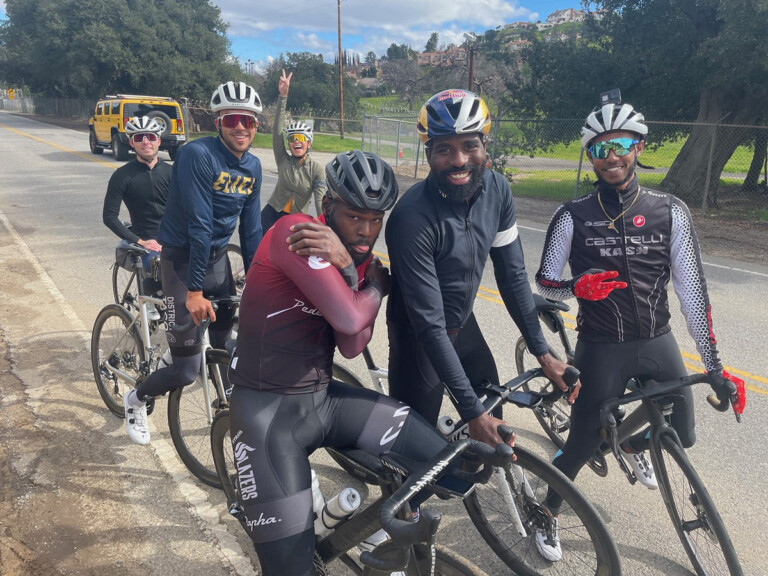
By Peter Abraham — Recently I attended, for the second time, the All Clubs LA weekend in Long Beach, California. It’s three days of events — rides, seminars, a black tie gala — that welcome cycling clubs from all over. The weekend is anchored by clubs in the Black Cycling community, and over 350 cyclists came in from all over the country.
I believe every community should be represented on bikes: every ethnicity, every sexual orientation, kids, men, women, everyone. But I want to focus for a minute on recreational cycling and the Black community, which has a unique story in the United States and a unique set of road blocks that have prevented their participation in a number of sports.
When I attended and spoke at this event last year — screening an episode of my HBCU cycling documentary series — I realized, looking out across the ballroom, that there is a defined Black Cycling culture in the US. That’s now a thing. But seeing the dramatic growth and tangible energy at this year’s All Clubs weekend showed me that Black Cycling is quickly picking up steam. The momentum is real. Not only that, but this community is arguably the most culturally relevant group of people on bikes. Even if you’re not a cyclist, you see the swagger, energy and cool factor of these clubs. It’s visible and energizing.
Members of the Black Watts Cycling Club in Orange, New Jersey. Photo courtesy Black Watts Cycling
Black Cycling has hit the tipping point and is now poised to transform cycling at both the recreational and competitive levels. Here’s what I’ve learned as someone who’s worked on diversity initiatives for decades and specifically in bikes for the past four years:
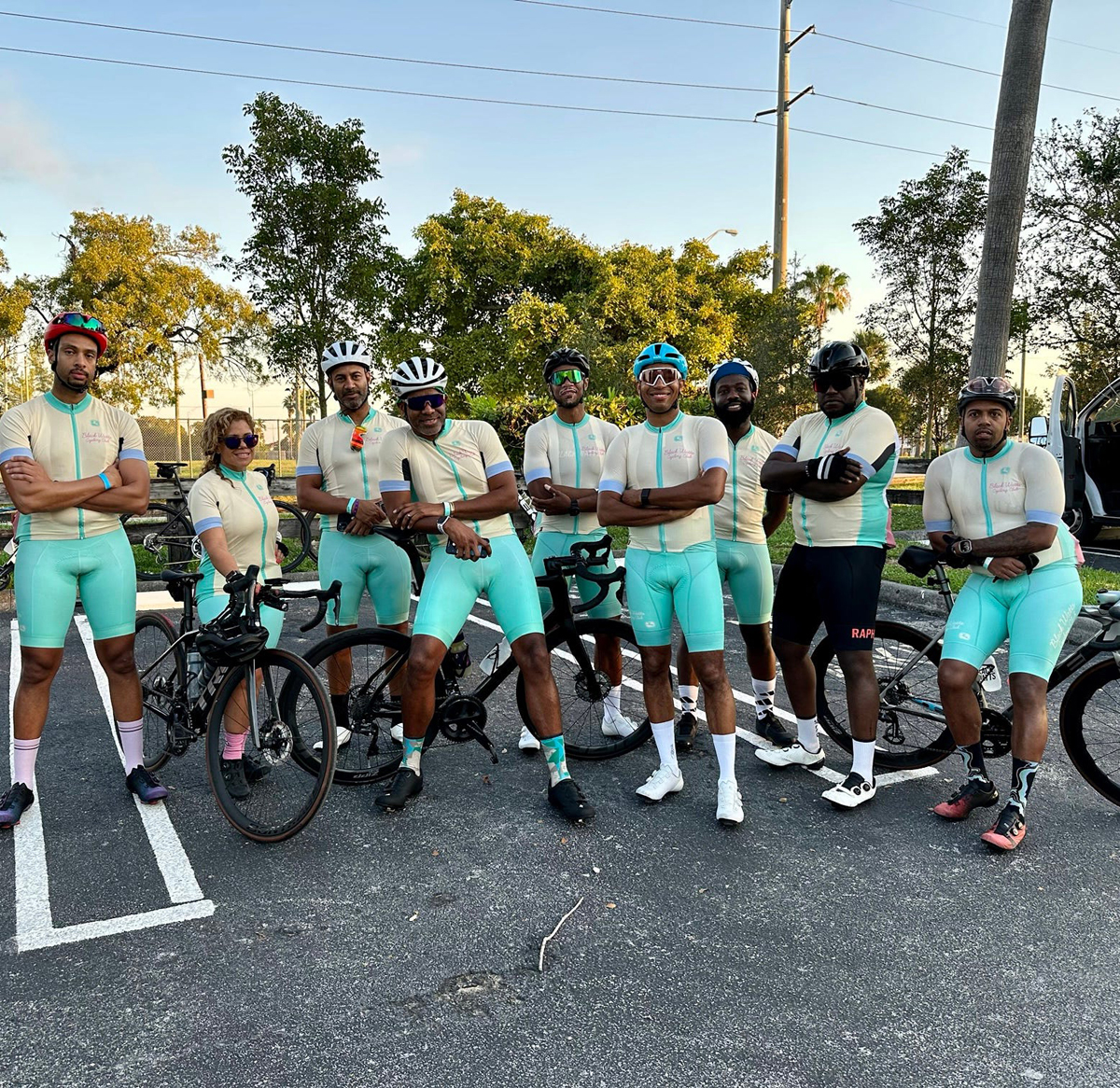
A huge number of riders in the Black Cycling community just picked up a bicycle during the pandemic. These folks are new to bikes and unencumbered by what has come before. Clubs like Kings Rule Together/Queens Rule Together (400 members) in Philadelphia and the Black Watts Cycling Club (70 members) in New Jersey have gotten really big just in the last two years. The growth has been driven by new cyclists who are not necessarily enamored with, or even aware of, European professional racing. That’s not a cultural reference point for this community in the same way it is for someone like me who’s been around the sport for decades.
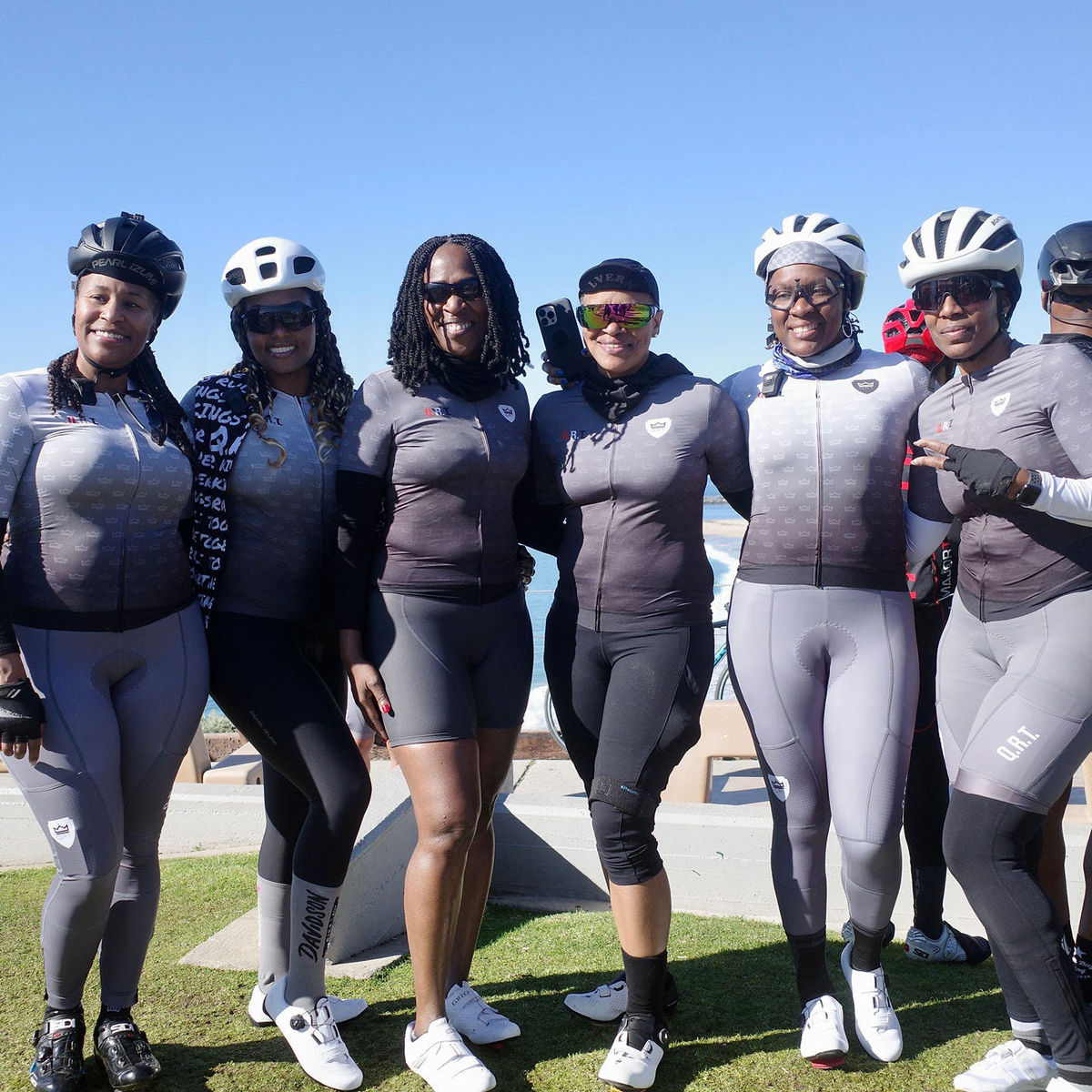
Some of the 80 members of the KRT/QRT club that traveled out from Philadelphia. Photo by Peter Abraham
The passion of these new cyclists and clubs is unlike anything I’ve seen. The KRT/QRT club in Philadelphia brought more than 80 people out to California for this one weekend. That’s pretty staggering, and I can’t think of an example like this in traditional cycling clubs, with this kind of growth and commitment to travel. The co-founder of the Black Watts club came out from New Jersey, and I met cyclists from Washington DC, Atlanta, Raleigh, Charlotte, Boulder and New York. The reason they showed up is that the All Clubs event welcomed them with open arms. Traditional cycling events typically don’t reach out to diverse clubs with intention like this.
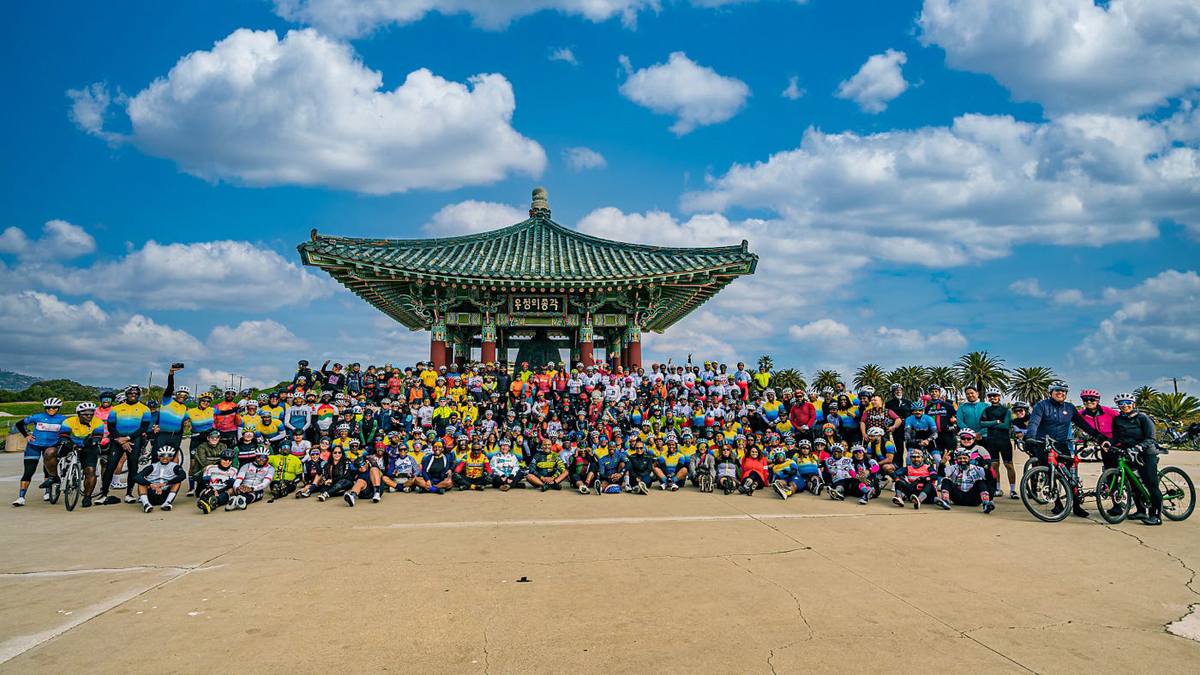
One of the group rides finished at the Korean Bell in San Pedro, California. Photo by Peter Abraham
Black culture approaches cycling like they have music, basketball and everything else: with their own spin, their own community and their own vibe. It’s fantastic to see a historically white, tradition-bound sport get an injection of culture like this. It makes me think of NBA basketball in the 1950s, before Black players had arrived in large numbers, compared to the same league in the 1970s, after Kareem Abdul Jabbar, Wilt Chamberlain, Bill Russell and Julius Erving had transformed the game. Could American bike culture be in for a similar reset? I sure hope so.
Black Cycling culture is inclusive and welcoming. I walked into the ball room for the black tie gala on Saturday night and saw that of the 350 of us in attendance, maybe 20 were white. At first I felt uncomfortable — Do I belong here? — but that only lasted a few minutes. As soon as we started talking about bikes I realized that all cyclists share a love of endorphins, adrenaline, gear and community. These personality traits make it likely that you will connect quickly and intuitively with others in the bike community, no matter their age, skin color, sexual orientation or socioeconomic status. So immediately the crowd felt gracious, familiar and fun. We bantered about group rides, kits, saddles, climbing, Strava. The things all cyclists talk about when they’re in a group. We were all there together to celebrate the joy of cycling. This is why the bicycle may be the best cultural bridge ever created. And like Rahsaan Bahati, a co-founder of this event, told me, “Hospitality has always been part of Black culture.”
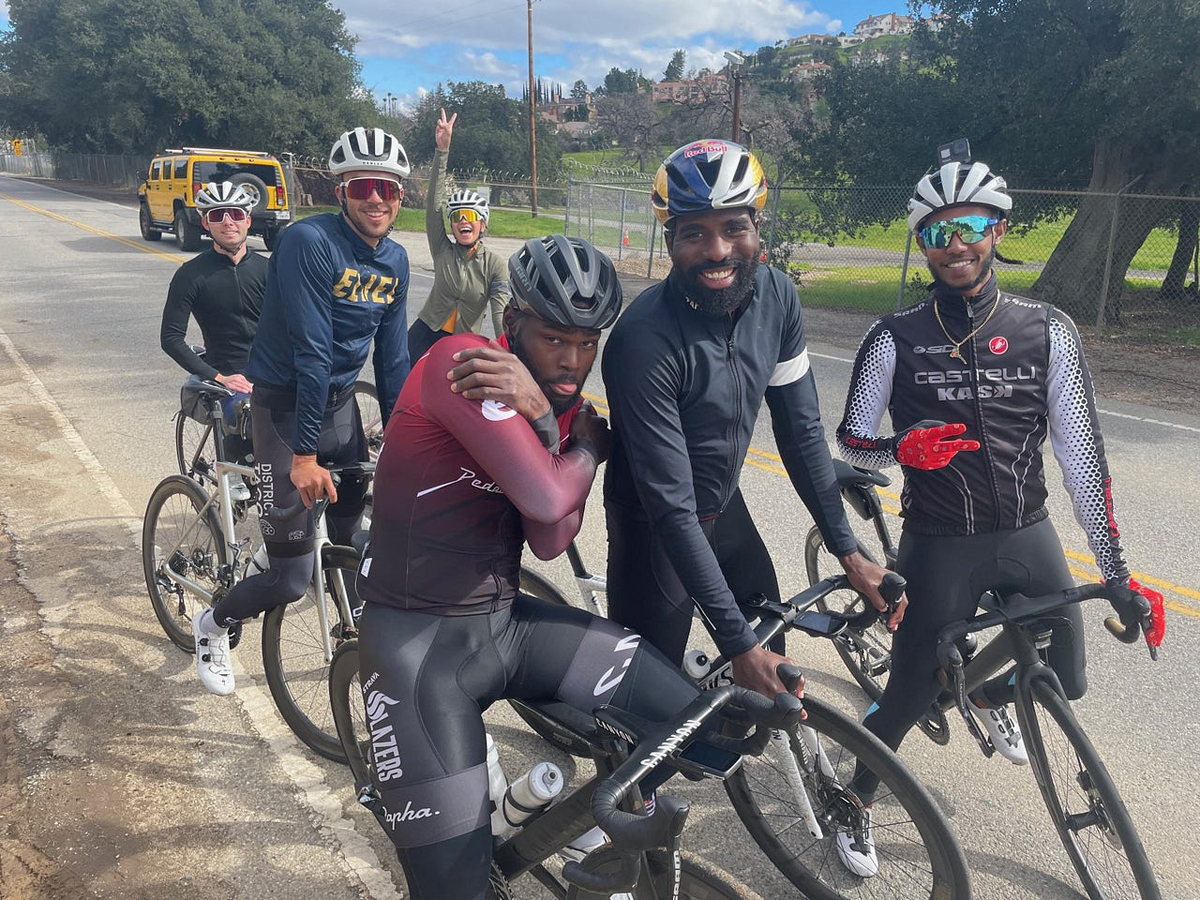
Young Black cyclists now see bike racing as a sport they have a right to participate in. I recently met Jelaani Davis, who works at the Rapha Clubhouse in Santa Monica. He is evidence of the change that is coming to bikes and bike racing. A nationally ranked triple jumper in his final year of eligibility on the UCLA track & field team, he’s also diving passionately into bike racing. He’s got a coach, he rides with pro racer and L39ion of Los Angeles team founder Justin Williams and he fits in MTB races and fast group rides between UCLA track meets. At 23, I’d call him part of the “post-Justin” generation: he’s aware of what Nelson Vails, Rahsaan, Justin and the St Augustine’s University HBCU team have done. He knows about Major Taylor and he sees the sport becoming more diverse. Jelaani looks at bike racing and says, “There’s a place for me here. I can do this.” I’m not sure he would have said that even five years ago. I expect to see a lot more young and diverse bike racers in the near future, and it will be a huge positive change for the sport of cycling.
The bike industry is mostly unaware of Black Cycling and slow to jump on board with the movement. There were only a handful of brands in attendance at the All Clubs event, but good for the ones I did see there: Zwift, Strava, Giant, Brompton, USA Cycling, Serious Cycling and the People for Bikes non-profit. This lack of commitment is representative of brands in many industries with leadership that is stuck in their traditional bubbles and unable to see customer trends. It’s unfortunate because the Black community is waiting with open arms for industry outreach. Black Watts co-founder Chad Bennett told me, “One of the frustrating things is how we are ignored. Nobody is marketing to us. Our members are brand new and buying bike bags and flying across the country. That speaks to the passion in this community.”
HBCU cycling team pioneer Finote Weldemariam (right) and to train with pros Dante Young, Justin Williams and their teammates. Photo by Peter Abraham
In 2017 I rode my first gravel race, The Belgian Waffle Ride, and I immediately saw the potential for that kind of racing. If you were paying attention back then, you knew gravel was going to get huge. I feel the same way about the Black Cycling movement and its power to make bikes accessible and welcoming for all communities, ethnicities, gender orientations and ages. I believe that the All Clubs weekend will grow into a national movement with thousands of members. Like Black Watts co-founder Chris Harvell told me, “Cycling is better when the door is open to everyone.” I couldn’t agree more.
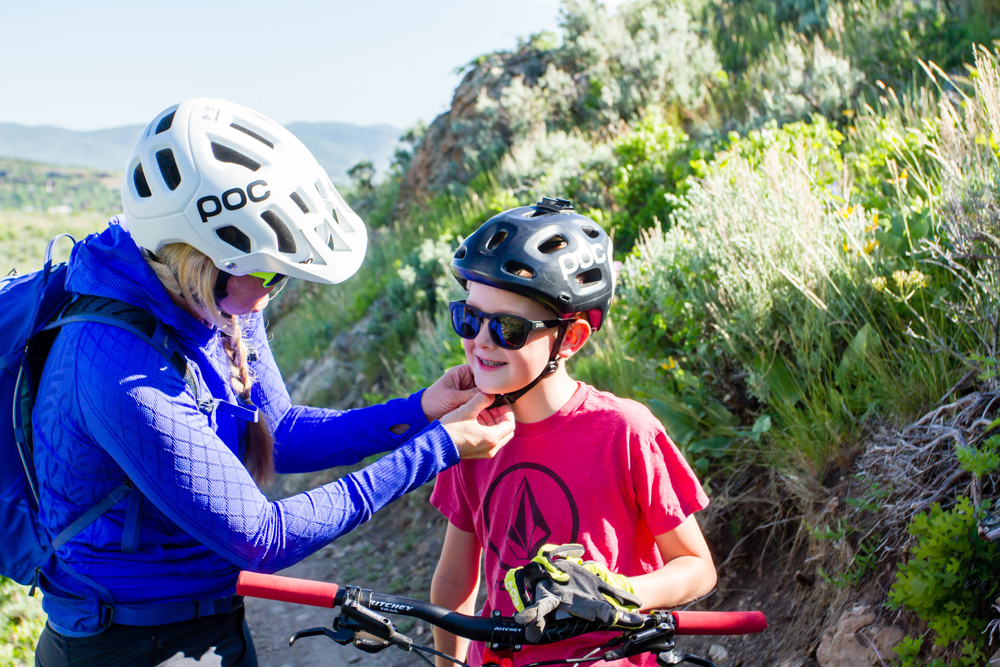
By Charles Pekow — Children are less likely to wear a helmet properly while biking than adolescents or grown-ups, observers in Montreal found. A research team watched 2,000 cyclists across the city in the summer of 2021 to see if an increase in biking during the pandemic affected the rate of helmet use. It discovered that helmet use had increased over a similar study done a decade earlier, despite the addition of bikeshare programs, which generally don’t provide helmets.
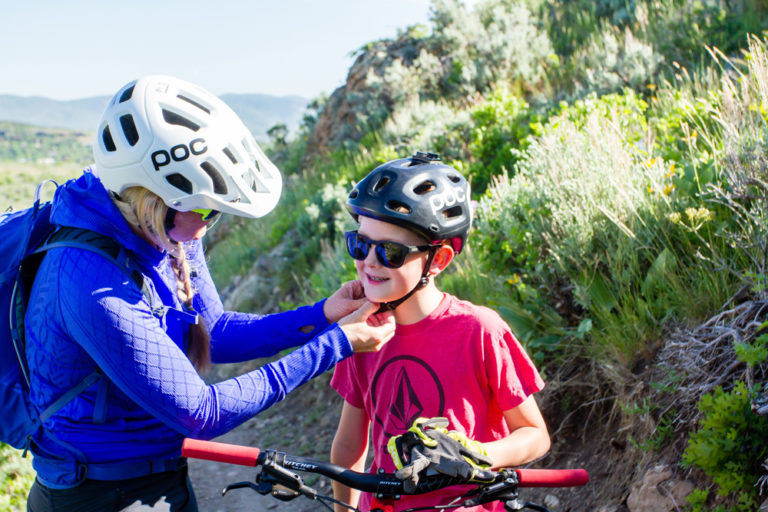
A well adjusted helmet is key for safety. Photo by DIscover Utah/Monique Beeley
But men and minorities were less likely than others to wear a properly-fitted helmet.
The study suggests considering mandatory helmet legislation, subsidies for helmets, and targeted education to children and their caregivers.
LOS ANGELES, California (March 7, 2023) — The California Coast Classic, known to cyclists for decades as “The Ride of a Lifetime” because of its epic route down the California Coast and its fully supported bike tour format, will once again be presented by Amgen in 2023. The 23rd edition of the tour, scheduled for September 30 to October 7, 2023, will span eight days of riding 525 miles down the California Coast and is expected to raise more than $1M for Arthritis Foundation’s programs, research, and member support. Fewer than 100 spots remain, and the event is expected to sell out this year with more people across the country enjoying cycling than ever before.
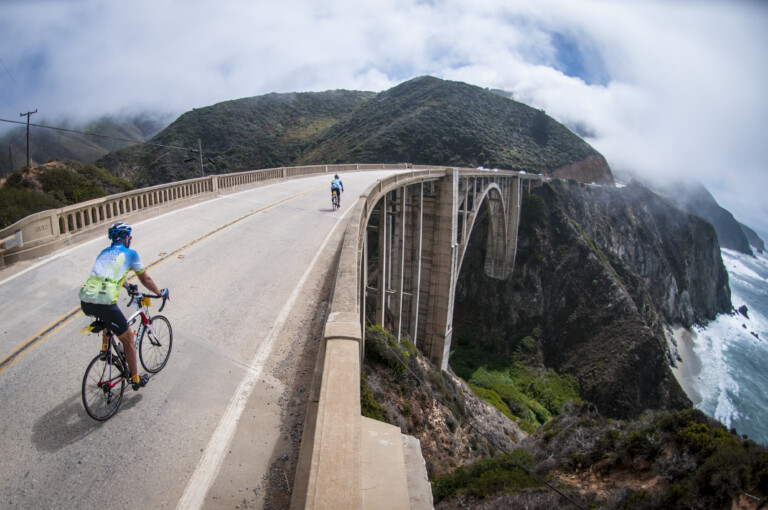
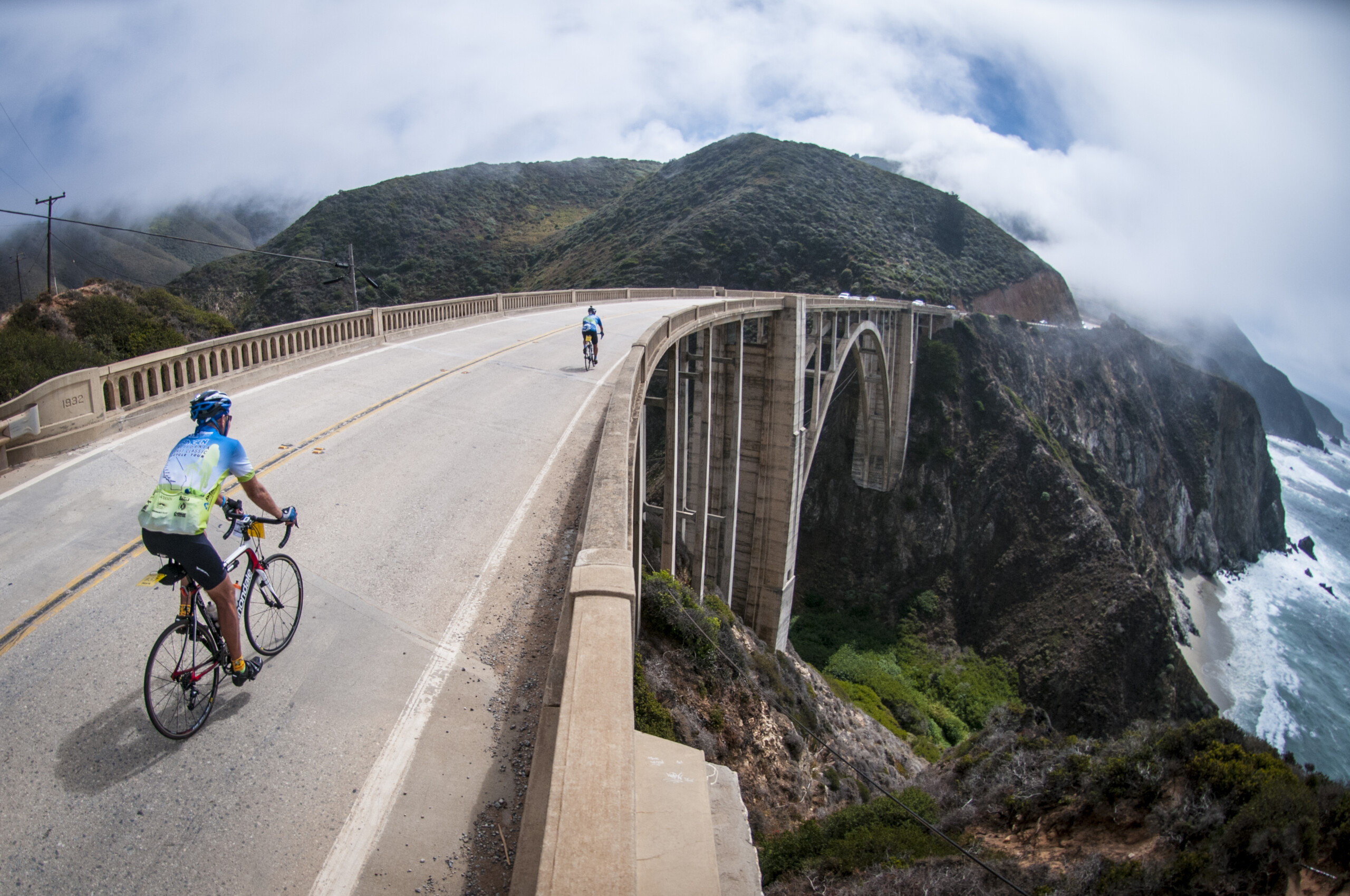
Photo courtesy California Coast Classic
“The California Coast Classic is the Arthritis Foundation’s flagship fundraiser, bringing in more than $1M each year. For 22 years, Amgen’s support as both a presenting sponsor and company team participant has benefitted the 60 million adults and 300,000 children that we serve,” said Shannon Marang Cox, Ride Director and Associate Executive Director of the Arthritis Foundation. “The support we’ve received from Amgen is invaluable. It has provided critical assistance, created opportunities, and had positive impacts that will last for generations.”
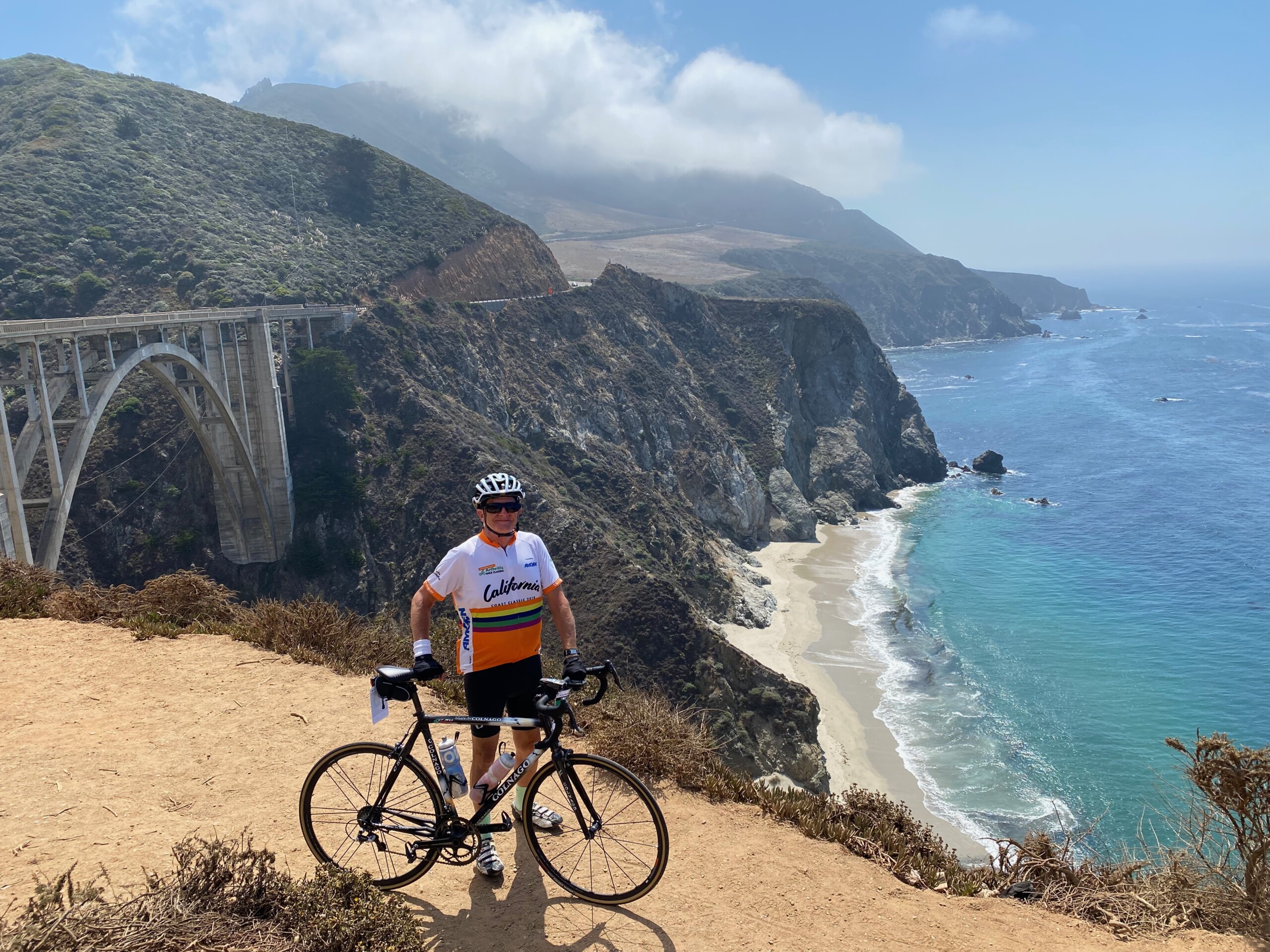
The California Coast Classic is a boutique, bucket-list bicycle tour that showcases the scenery of one of the world’s most fabled coastlines as it travels the iconic California Highway 1. Last year, riders came from 25 U.S. states, Canada, and Great Britain and total fundraising topped $1.26 million.
Photo courtesy California Coast Classic
Each rider and team raises critical funds, which allow the Arthritis Foundation to increase quality of life with support and advocacy, improve access to health care, provide kids’ summer camps, arthritis conferences, and more – as well as fund research for better treatments and a cure for arthritis. Approximately 40% of CCC riders either have arthritis or are riding for a loved one with the autoimmune disease that affects one in four Americans.
Throughout CCC’s long history, presenting sponsor Amgen, one of the world’s preeminent biotechnology companies, has provided financial support for the ride and encouraged its employees to participate in it. In 2022 alone, Team Amgen brought 25 riders from seven states.
Unique to the CCC, supporters who cannot attend the in-person bike tour have the opportunity to participate in an Arthritis Challenge Experience (ACE), choosing their own adventure and participating from home while still connecting with the vibrant CCC community.
More information about the bike tour, including its detailed itinerary, is available at the California Coast Classic website and in this short video. The self-paced pedaling adventure is open to cyclists of all levels and welcoming of e-bike riders. It is Gran Fondo Guide’s “Best Charity Bike Tour” and has been named one of “The 30 Best Road Biking Trips” by Outside Magazine.