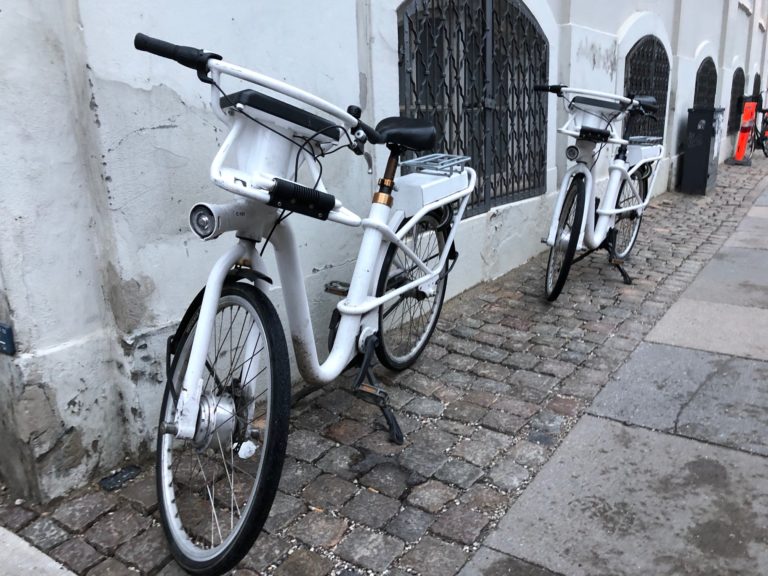
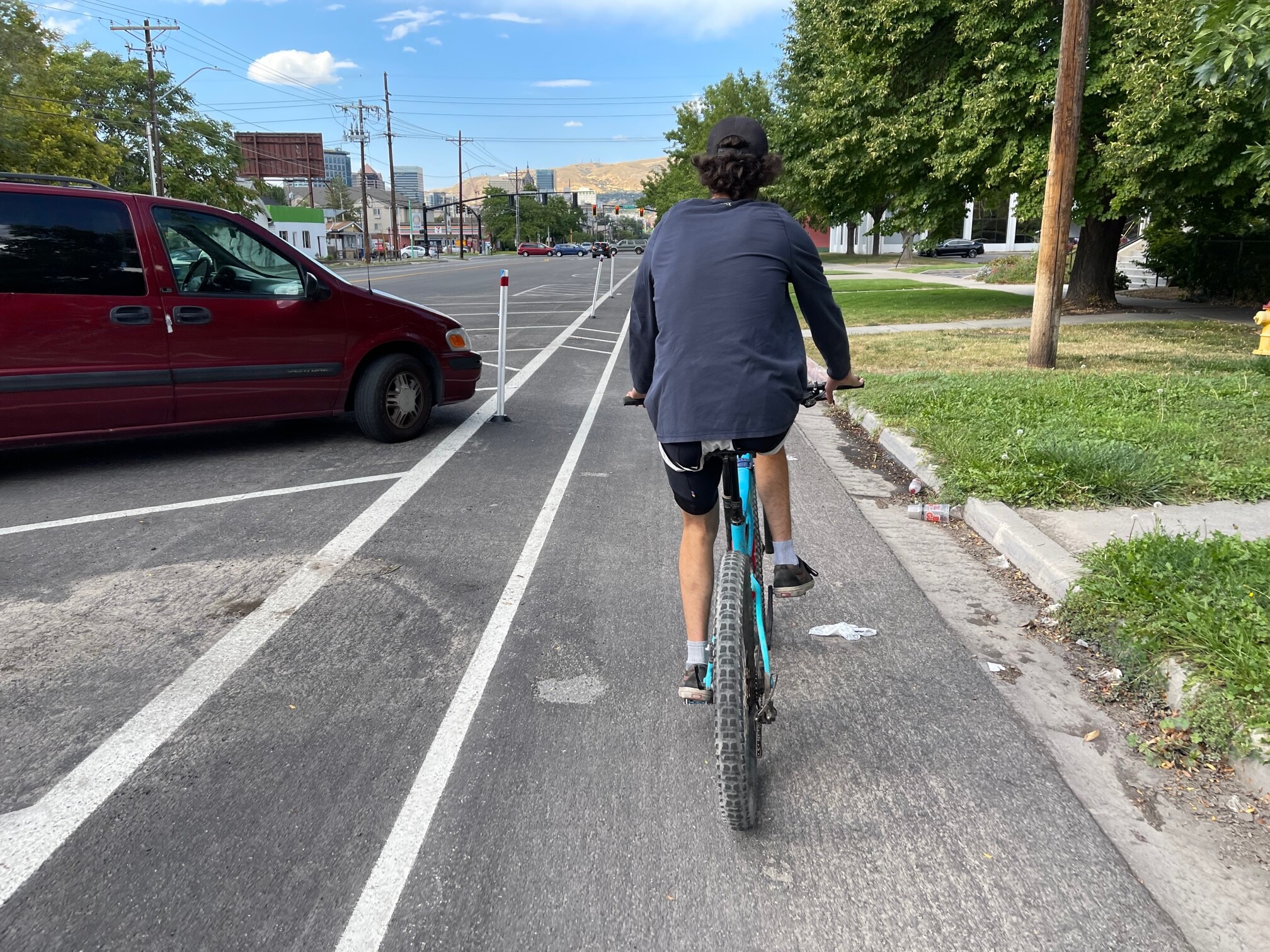
By Charles Pekow — Imagine a sensor that can give an audible sound in time to avoid a collision from an auto getting too close to a bicycle. University of Minnesota researchers think they’ve invented it. The device, compact and small enough to fit on a bicycle, provides an echo location that can warn motorists when they can create a hazard by getting too close too fast to a bicyclist from behind or from a right turn at an intersection. The device is sensitive enough to tell when a car is turning. When a vehicle gets to close, a loud horn will warn the motorist.
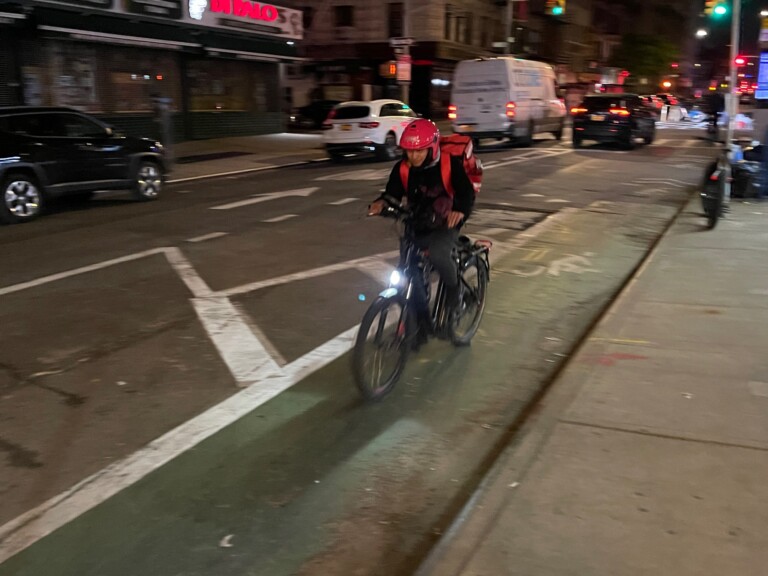
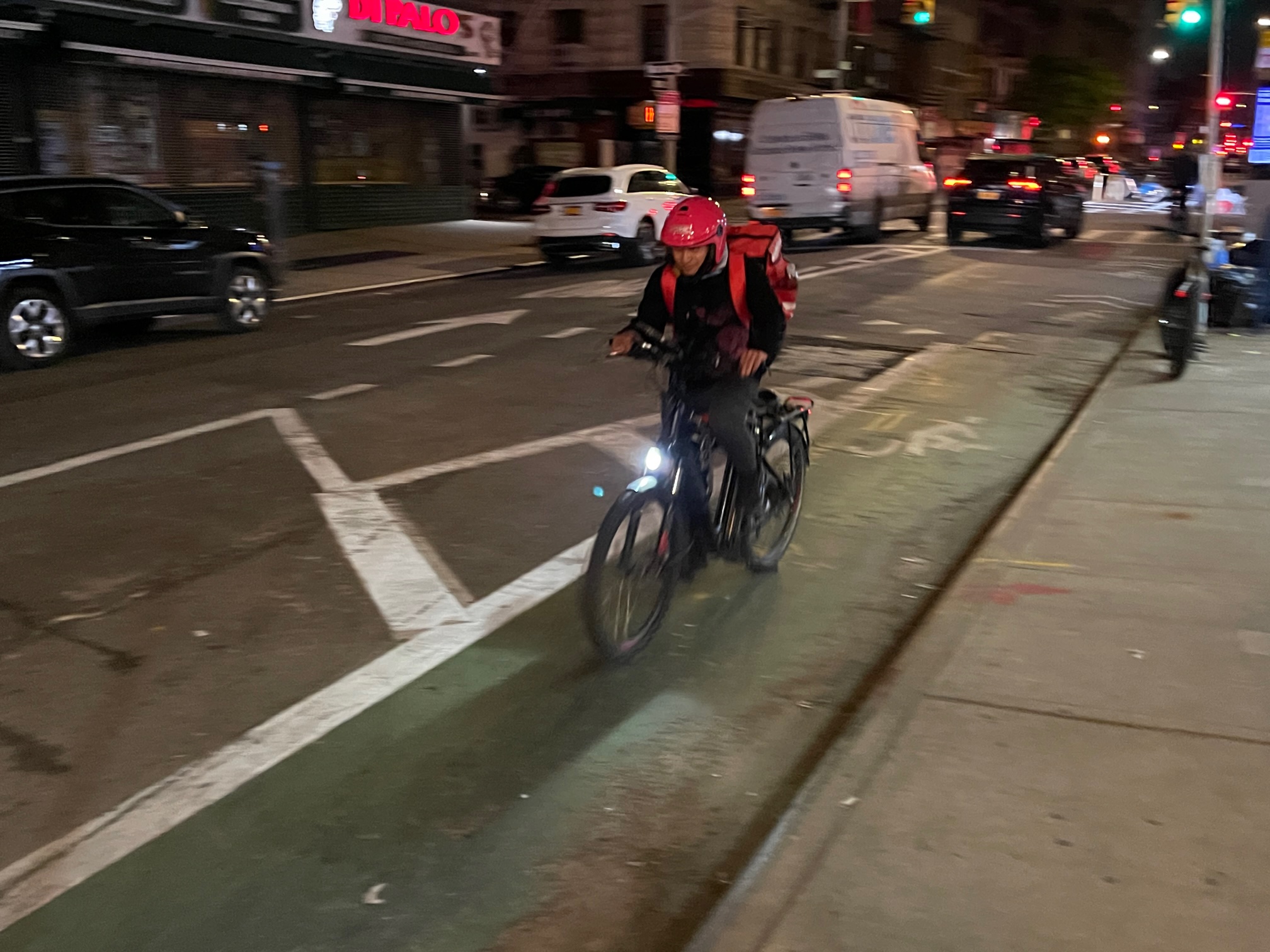
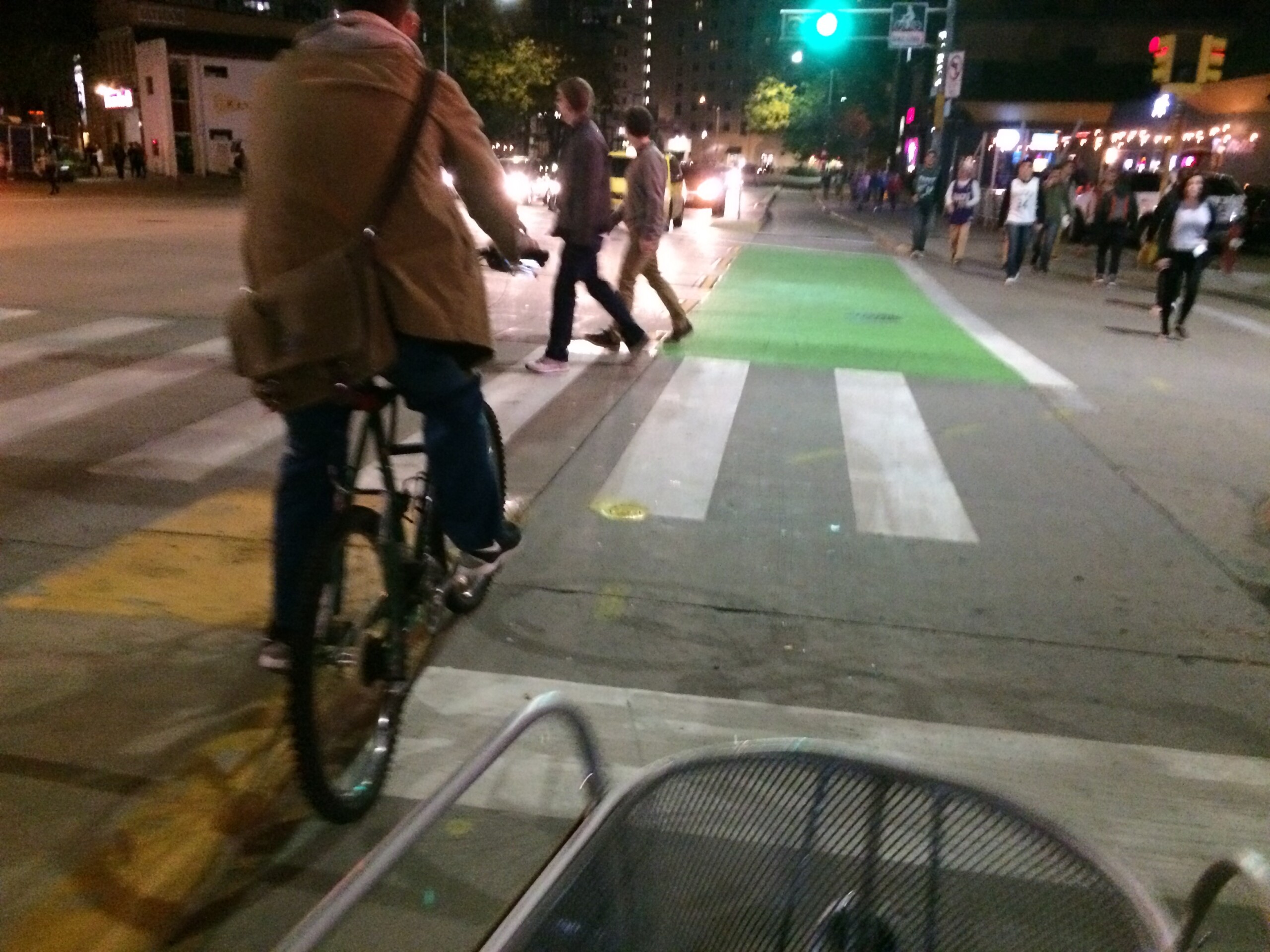
A New York City deliverista navigates the streets of NYC. Cyclists would benefit from a collision warning system in development. Photo by Dave Iltis
Researchers said they tried the device out on a Minneapolis road and it works, but they acknowledged it needs more testing and they need to devise a way to alert motorists coming from other directions, specifically left-turning vehicles. Similar devices for cars are too big to fit on a bicycle. And camera systems would be too expensive and big.
The National Science Foundation has provided the authors with a grant for more study. They plan a field test starting next spring with 10 bicycles over six months, says Rajesh Rajamani, professor of mechanical engineering and chief of the study. Cost may be a catch: “Our objective has always been to keep the cost at $500 or below” but the price would be up to whatever company markets it, Rajamani says. He says “the sensors and electronics will be light-weight and not heavy at all. They should not be hard to install.”
While the systems should hold up in all weather conditions, the project has not addressed the issue of preventing stealing them, the plague of all cyclists. Developers haven’t named the device yet.
A few years ago, Jen and I took a break from mountain bike stage races, and vwent from what felt like a developing civilization in Cuba to racing in the earliest expanse of western civilization; I can’t imagine a greater contrast from out last stage race to the Mitas 4 Islands mountain bike stage race in Croatia. From racing in the untouched interior of Cuba we transitioned to racing on trailssbuiltsdsin the Roman era; the start of stage one traverses through castle ruins!! A castle built well before discovery of the Americas, when the earth was still thought to be flat. How’s that for a contrast?
Race Overview
Despite the differences in location there were several constants shared between this and other stage races we’ve done, the most important being incredible trail riding.
The 4 Islands organization know they have a special gem in their hands and they want to share it with all their mountain bike friends. From the opening climb through the castle Baska ruins on day one to the seaside trails and beach finish on the final day in Losinj, 4 Islands serves up an all-you-can-eat feast of dope singletrack, breathtaking views, rowdy descents, and steep steep steep climbing. This is an amazing race but you best be ready to throw down because 4 Islands will test you in everyway.
The 4 Islands stage race follows a course through historic Croatia hitting 4 of the over 1,000 islands in the Eastern European nation. Tucked just across the Adriatic sea from Italy, Croatia is a beautiful country with a rich mixture of old world charm, modern European comforts, and post-Soviet culture.
Each stage of 4 Islands begins on a new island starting with Krk then moving on to Rab, Cres, and finally Losinj. Participants have a choice of staying on a yacht, the race hotel package, or arranging their own lodging.
The race is a team event so each racer needs a teammate. Teammates have to stay within 2 minutes of each other throughout each stage. The race hosts roughly 300 teams during the 4-day race.
4 Islands is a UCI event so it’s guaranteed that some of Europe’s fastest riders will be in attendance. This year accomplished UCI riders like Fabian Geiger and Esther Suss were pushing the pace up front and although you won’t be starting with them, unless you have your UCI license, the men’s and women’s times will definitely be measured against these superstars.
There is no doubt 4 Islands will provide what you are looking for in a European adventure. Incredible scenery featuring everything from hidden inlets and secluded coves bathed in the pristine turquoise waters of the Adriatic, towering mountain scapes of jagged, jostled limestone, to medieval cobblestoned villages seeping with old world charm. 4 Islands will not disappoint.
And if challenging yourself on the bike is your goal well you’re in for a real treat with this race. Without a doubt Croatia offers up some of the very best riding I’ve seen in all of Europe. And I don’t mean groomed flow trails. I’m talking about narrow, rough, rowdy singletrack that never lets up from the start of stage one to the final beach on Losinj.
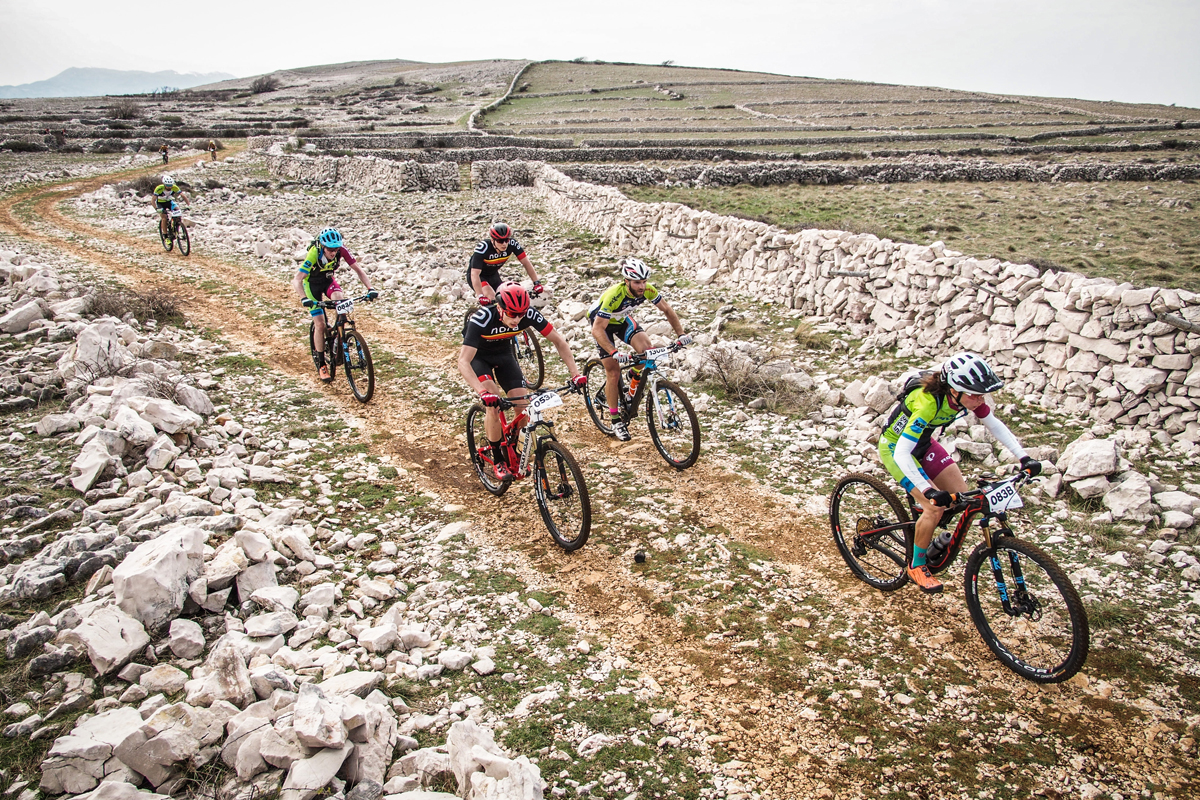
Unlike some other European stage races, 4 Islands is a real mountain biker’s race and you won’t do well if you can’t ride your bike. Croatia’s unique geology leads to a land covered in babyhead, limestone rocks and when I say they are everywhere, they are literally everywhere. The porous limestone on the Croatian islands, called karst, allows water to seep through the rock rather than run off in streams and rivers. This slowly erodes and dissolves the top layer of sediment exposing an ocean of baby heads. Over centuries the Croatians have used these stones to build their paths, trails and endless stone walls that line everything, the only clear land visible is because some intrepid Croat cleaned away all the rubble using it to create an endless maze of rocky ramparts (thank you Les Brown, professor of geology and 4 Islands finisher.)
What I’m trying to say is riding in Croatia is a blast! The difficulty level of riding at 4 Islands was a real treat. Each day you are being challenged not just by distance, fatigue, and competitors but by the trail itself. Full suspension is a must and even a dropper post would be a welcomed addition for most riders who find themselves hurling their way down rock strewn descents with 5-foot stone walls on each side funneling the riders through 10 to 20 minute descents that feel like one never-ending rock garden.
Despite having 600 racers on course at the same time and an abundance of singletrack riding, the racers rarely encountered bottlenecks or slowing on course because of slow moving riders. The 4 Islands crew does an admirable job of dividing riders into 4 different starting waves and because racers start most days right from the ferry it means you often face a brutally steep climb right out of the gate that does a great job of stringing out the pack and allowing riders to attack the singletrack when they approach it. A real treat in any big stage race.
Outside of the racing activity the 4 Islands staff are nice as hell, as were all Croatians we encountered, they will bend over backwards to help you out even if what you actually need may get lost in translation a bit. The food provided on course and at the race hotels is fantastic and plentiful with a wide variety of meal options that made it easy even for a gluten-free and vegetarian racer to stay well fed throughout.
Our Experience
Mitas 4 Islands stage race is our fifth stage race competing as a mixed team, male and female partners. We arrived in the start village of Baska on the island of Krk two days before the race. Just enough time to get bikes built, pick up our registration, ride some of the opening stage, and take a quick tour of the Baska harbor.
One of the more exciting aspects of racing in an international event is having no idea who you will be facing out on the trail or how high up in the race you’ll be. It’s all a mystery until the start.
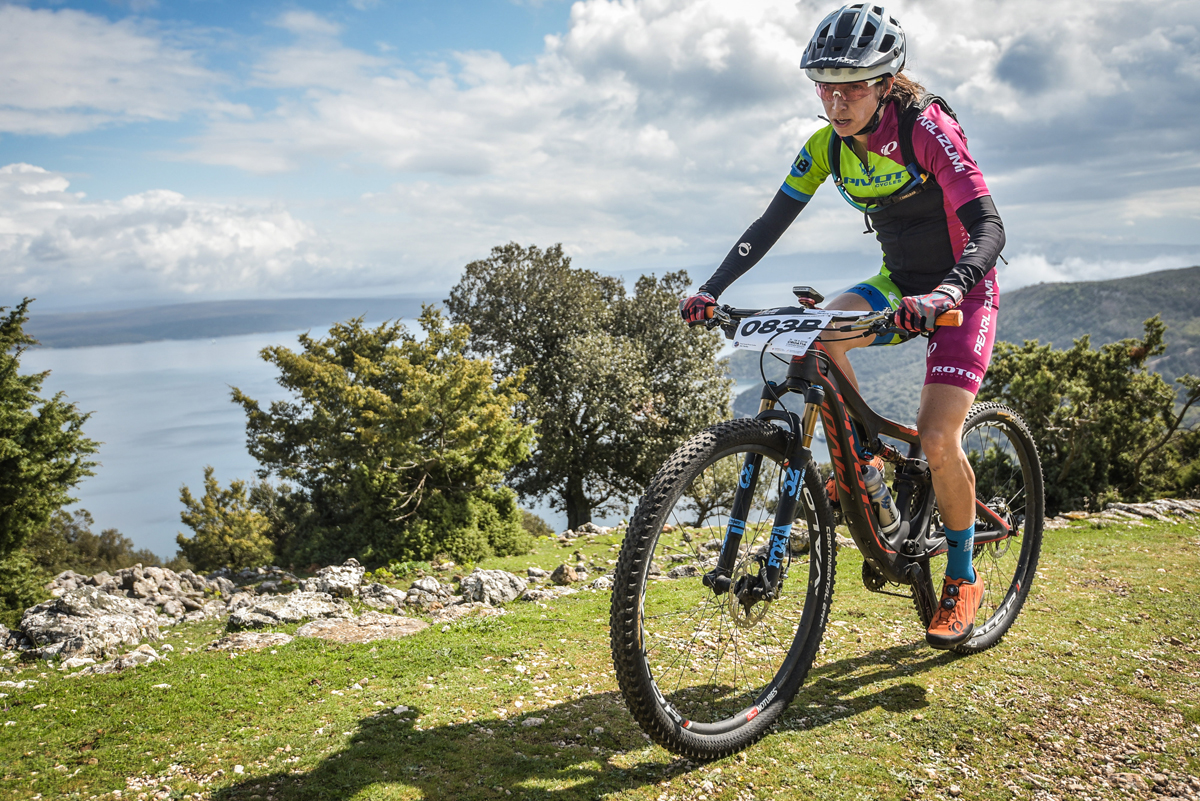
Jen Hanks leads the group across the Moonsurface on stage 1. Photo courtesy of 4 Islands MTB Stage Race
Day one began with a big climb of about 1,200’ right out of the gate. The pack spread out quickly and we found ourselves surrounded by about five other mixed teams heading up the long first climb that empties out onto a rubble-strewn mountain top called the “Moonsurface”. The riding gets tough here as you weave your way through fields of babyheads. Jen surged ahead through the rough riding and moved us into second place for a bit before settling back in to fourth.
We spent the rest of the day chasing a Belgian duo who would give up time on the techy parts but make up time on the roads using a cable that allowed the male rider to tow his partner in the open sections.
We crossed the finish pretty happily in fourth place not far behind the Belgians. We had spent about four hours weaving our way around Krk. All the talk at the finish line focused on the abundance of gnarly descending throughout the day as I think everyone was happily surprised by the quality of the trail riding.
Day Two
The morning immediately had a different feel. It was raining. An early transfer to the island of Rab offered no respite from the rain as it was coming down in sheets by the time the race started.
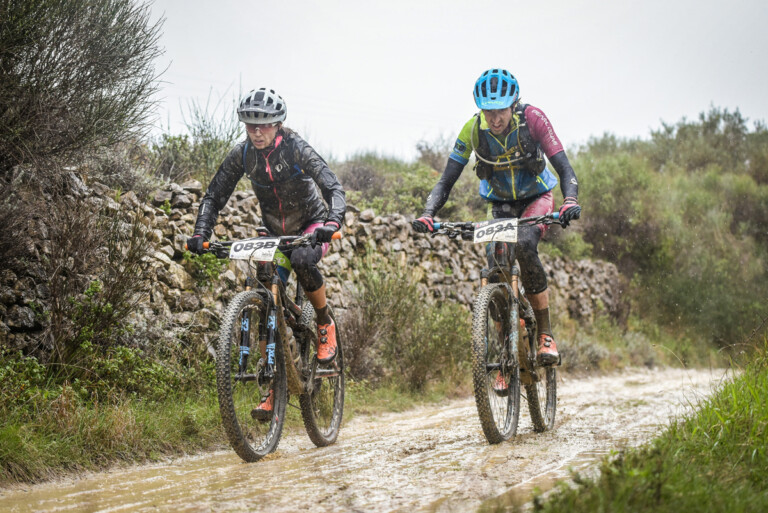
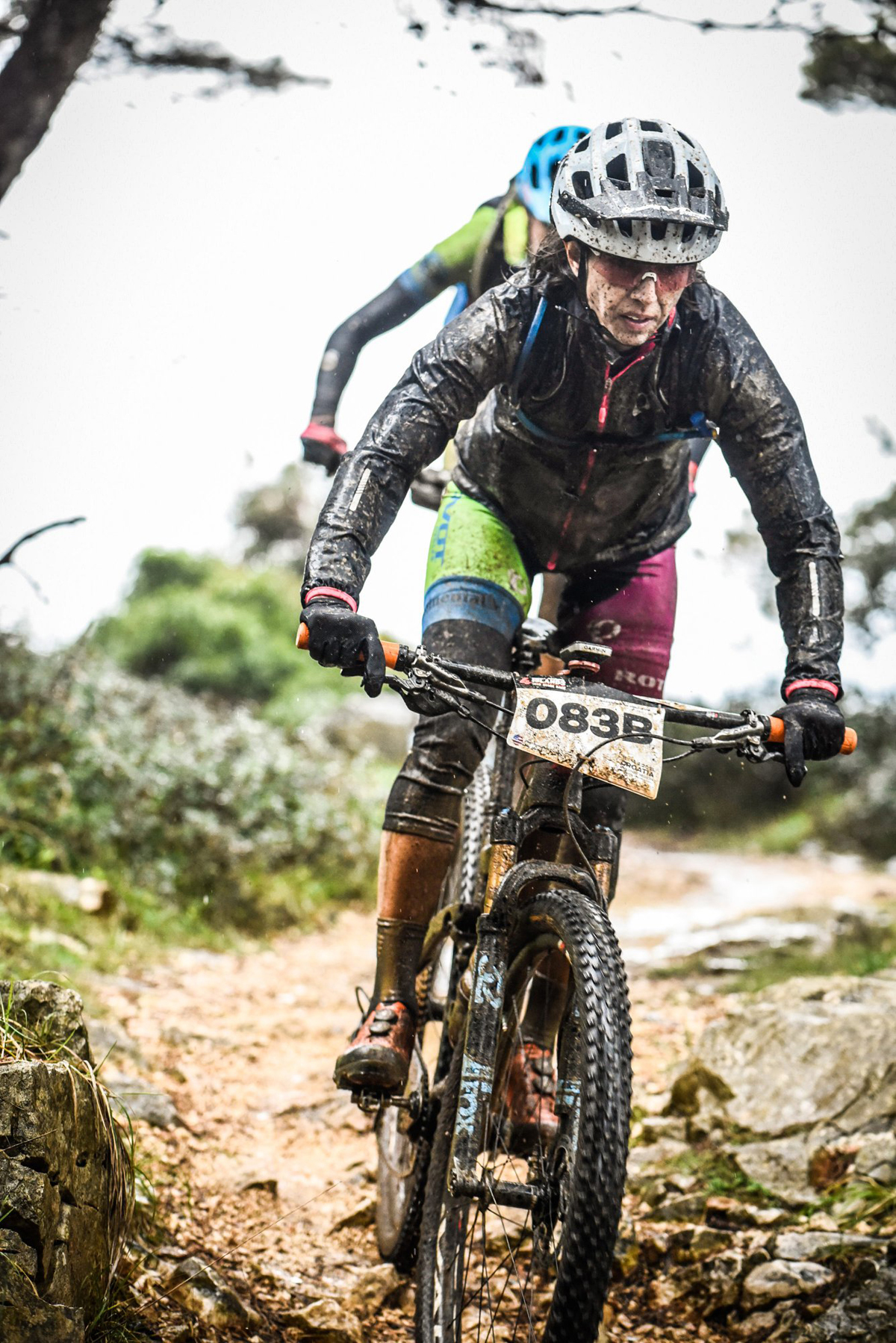
Croatian mud – Stage 2 was a nonstop rain from start to finish. Photo courtesy of 4 Islands MTB Stage Race
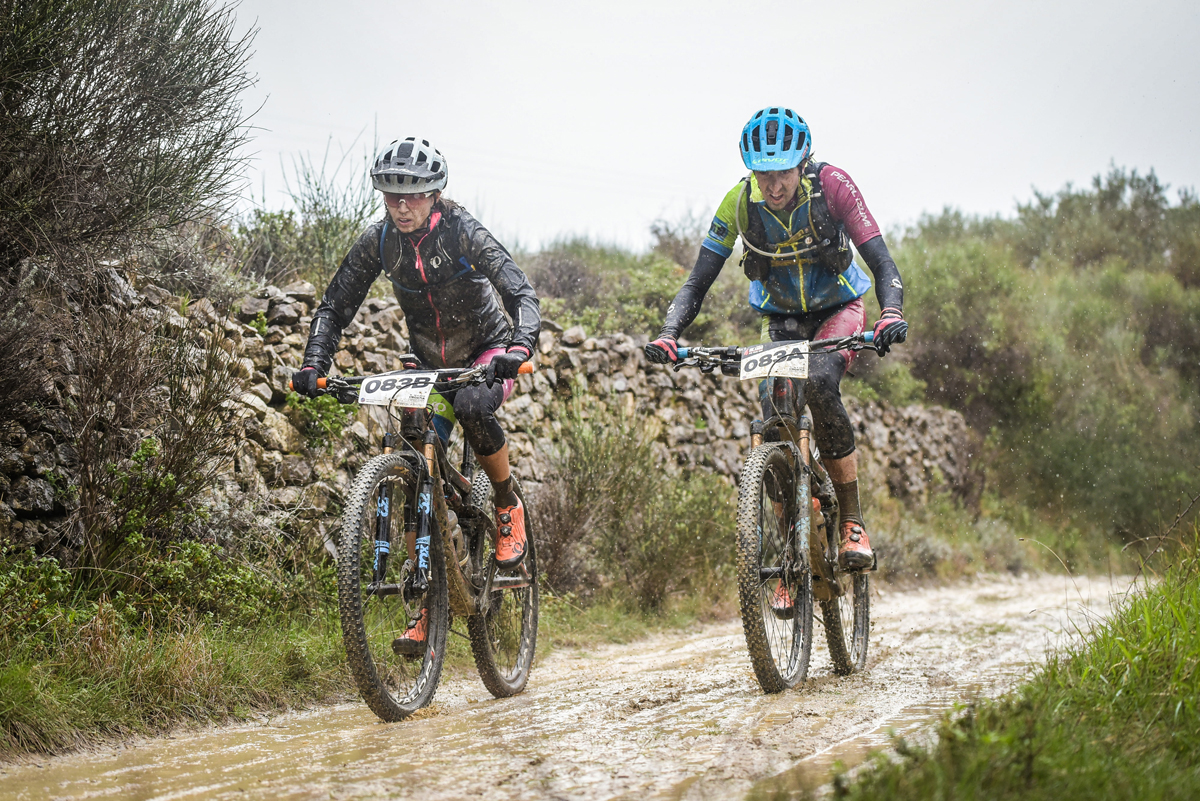
We were instantly drenched from a combination of the persistent rain and water pooling on the road and trails. Once again we opened up with steep climbs but the rain and cold deadened our legs a bit. Once again we were battling with the Belgian squad but without the tow cable this time. As it turns out, towing is illegal and they were given a 30-minute time penalty after stage 1. They seemed to have a bit more juice than us and, I’m going to presume, perhaps a bit more experience with cold and rainy conditions coming from Belgium.
Shannon and Jen deal with the wet conditions on day 2. Photo courtesy of 4 Islands MTB Stage Race
About an hour in, the second place team (MT Zoom) were on the side of the trail with a mechanical and despite not feeling our best we were excited to be in third again.
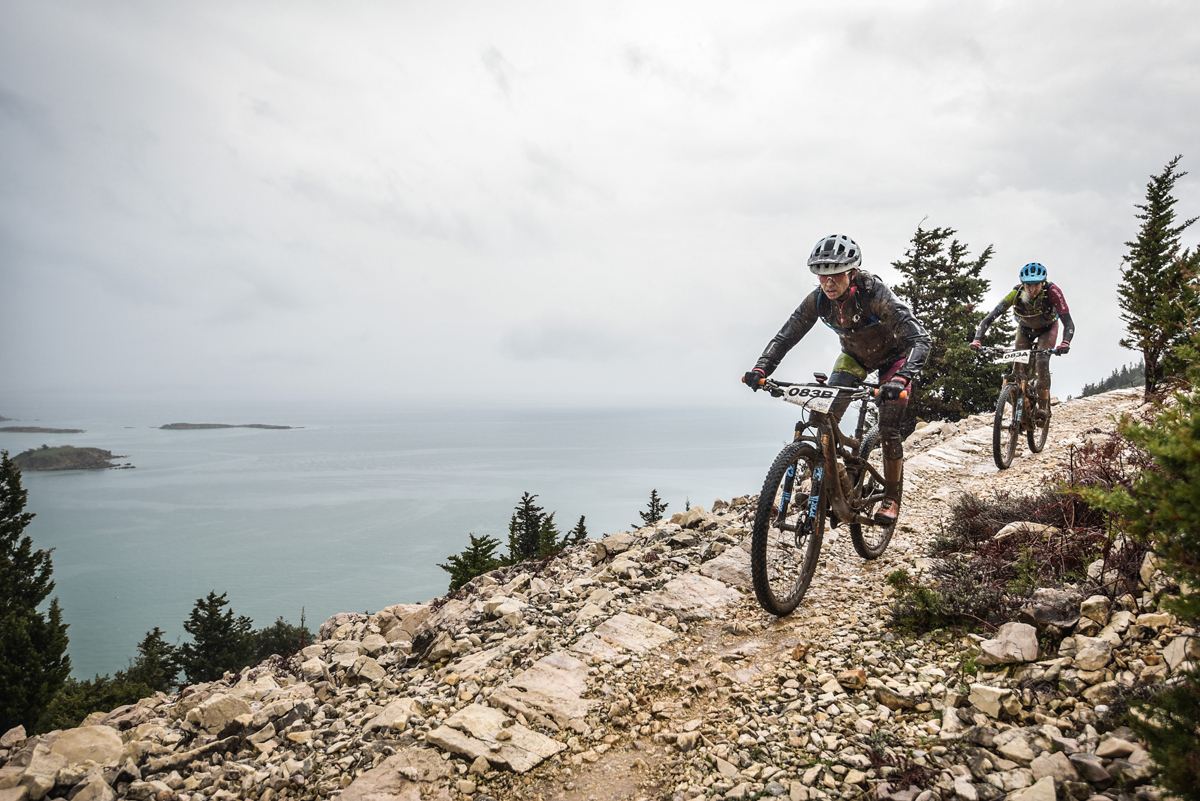
Rab was one the most scenic days of riding in 4 Islands as the trail skirted along endless miles of shoreline within inches of the sea offering riders views of the incredible hidden coves and inlets around the island. Enjoying the scenery was tough as water, mud, and more water poured over us all day long. The stage finished with a massive descent into the resort town of Lopar which our drenched bodies were unable to enjoy; as the descending just made us colder.
Jen Hanks and Shannon Boffeli are too busy fighting off chills to enjoy the final descent on a wet stage 2. Photo courtesy of 4 Islands MTB Stage Race
After crossing the line most riders quickly retreated back to the port where dry clothes were waiting. Recovery was critical on this stage.
We were excited to finish third again but lost over 18 minutes to the Belgians. Things could always be worse though as we later found out that Ant White from the MT Zoom team had broken a crank arm and, incredibly, rode over half of the race with one leg! Mountain bike stage racers are a tough bunch.
As difficult as the day was the aftermath was almost as bad. Cleaning bikes, cleaning bodies, cleaning clothes, getting warm, eating, cleaning bikes again, replacing brake pads and cables, drying shoes, and preparing for the next stage left very little time for recovery and rain was, again, in the forecast.
Day 3
Mercifully we woke to clear blue skies and much warmer temperatures the morning of stage 3. We prepared for another ferry transfer to Cres. The location of the day’s stage. As we boarded the ferry we were told the race mechanics had run out of brakepads overnight and anyone needing new pads would have to wait until we landed at the port to get them. The exhausted race mechanics had been working until 5 in the morning getting bikes ready for riders the next day but a shortage of brakepads meant either you would be going without or frantically work some of your own bike magic when we hit shore.
Luckily, I used the 2 pairs of pads we had with us on Jen’s bike the night before. That meant I only needed stoppers for my bike.
A sunny stage 3 brings out the smiles and good legs. Photo courtesy of 4 Islands MTB Stage Race
We hit the shore with about 50 minutes before the start. After navigating a long line of distressed racers I finally got my pads and had just enough time to change the front set of pads while we waited on the start line; only having front brakes is better than no brakes at all and there were plenty of people who would be going without.
We started off the ferry deck and immediately up a 1,200-foot leg-burner. After that we were dumped again into fabulous Croatian singletrack flowing through vineyards and fields of olive trees, lined with rock walls of course. The warm weather and sun helped to fuel us to a strong start sitting comfortably in third on the stage in front of the Belgians this time.
Midway through we hit a long stretch of two-track hugging the Cres coastline. A breathtaking track but wide and flat enough that it allowed our rivals to catch up just as we hit the base of the day’s steepest climb. About a mile long and well over a 20% grade for long sections the Belgians attacked early. We were able to close the gap back down and when it kicked up again we countered their attack and briefly got a gap of our own before they brought us back. They launched to final counter attack just as the climb crested and that was it. We were in damage control mode again.
We rode strong the rest of the day enjoying the dry trail, tacky dirt, and endless Croatian singletrack.
We finally finished the stage charging down a long section of cobblestoned streets and narrow passageways through the medieval town of Osor.
Despite losing more time to our rivals we really enjoyed the day and felt good about our performance on the 4 Island’s queen stage on Cres. Finishing in Osor was icing on the cake. Cobblestoned streets, canals, a rusty old drawbridge, all in the shadows of centuries old steeples and facades made an amazing stage that much more memorable. With big smiles, we boarded the bus for our final transfer to our finishing hotel on Losinj.
Last Day
Another warm day and no transfers made for a more relaxing feel to this final morning of 4 Islands. We were a bit nervous though wanting to hold onto our second place in the GC and knowing we only had just over 5 minutes to work with. With a shorter stage on tap it seemed possible especially if we could get off to a quick start like we had the previous day.
After a mile or two cruise to the day’s start venue in Mali Losinj we found ourselves right in the middle of a perfectly picturesque scene in the quaint port city. Imagine the most idyllic European seaside town square and that’s Mali Losinj. Cobblestone streets lined with cafes and coffeehouses, majestic sailboats resting in crystalline blue waters set the scene for the final day’s start.
The last stage was the shortest but featured two very steep climbs at the start and a long flat run into the finish line following the coastline.
The start was fast and our Belgian rivals managed to get in front of us as the climbing started. It was tough to enjoy another warm, clear day as we pushed hard to limit the time gap.
One big climb down, we reached the bottom of the final big ascent of the race. A beast of a mountain that starts hurting before you even start. It’s so steep you can see the final climb for a half kilometer before actually getting there. The climb itself is so steep they recently had to pour two parallel ribbons of concrete running from top to bottom to help the 4×4 trucks get up. Pick one ribbon at the bottom and stay on it if you hope to have any chance of riding your way to the top. You need every bit of your 50-tooth Eagle rear cassette to get up this thing.
As painful a climb as this was it lifted our spirits a bit as we could see the Belgian duo in front of us and they were off walking.
We crested the climb and attacked the usual mixture of rock-strewn singletrack, walled descents, and seaside walkways literally giving everything we had to get to the finish line.
We spent no time enjoying the incredibly scenic final kilometers, running just feet from the Adriatic, we were pushing with all we had for the finish line. When we finally crossed, it was a mixture of accomplishment and disappointment that waited for us as we were so happy to be on the podium but lost second place by just 21 seconds!
The disappointment quickly passed as we enjoyed another great post race meal and shared our stories with new friends we made throughout the week.
4 Islands is an incredible race. It gives riders everything they could possibly want from a multi-day stage race; unrivaled scenery, tough competition, challenging course design with loads and loads of singletrack, friendly staff, and excellent food and sleeping accommodations. My two tricks for making your 4 Islands experience the best would be: pay the extra coin to stay on the boats during the race and take advantage of the race mechanics to service your bike each night (your legs will thank you for the extra time to recover).
Shannon Boffeli is the managing editor for mtbracenews.com
Rails-to-Trails Conservancy Invests $300,000 in Community-Led Projects to Boost Safety, Connection and Inclusion on America’s Trails
RTC’s 2022 Trail Grants fund projects to build organizational capacity and bring more inclusive and equitable programming to trail and active transportation networks
WASHINGTON, DC (November 16, 2022) — Rails-to-Trails Conservancy (RTC) today announced that it has awarded $300,000 to support organizations working to create a more inclusive trail experience nationwide. RTC’s 2022 Trail Grants program is funding 25 community-led projects working to boost safety, connection and inclusive use of the nation’s trails and trail networks.
“At RTC, we believe that trails have the power to transform communities and create joyful, vibrant public spaces that are welcoming to everyone,” said Liz Thorstensen, RTC’s vice president of trail development. “These grants are intentional investments in the partners and people who are working on the ground—in their neighborhoods, states and across the country—to build community on trails, through programming and infrastructure that is inclusive and equitable. Together, we are building a future where trails connect everyone to safe spaces where they can walk, bike and be active outside—which is fundamental to our well-being.”
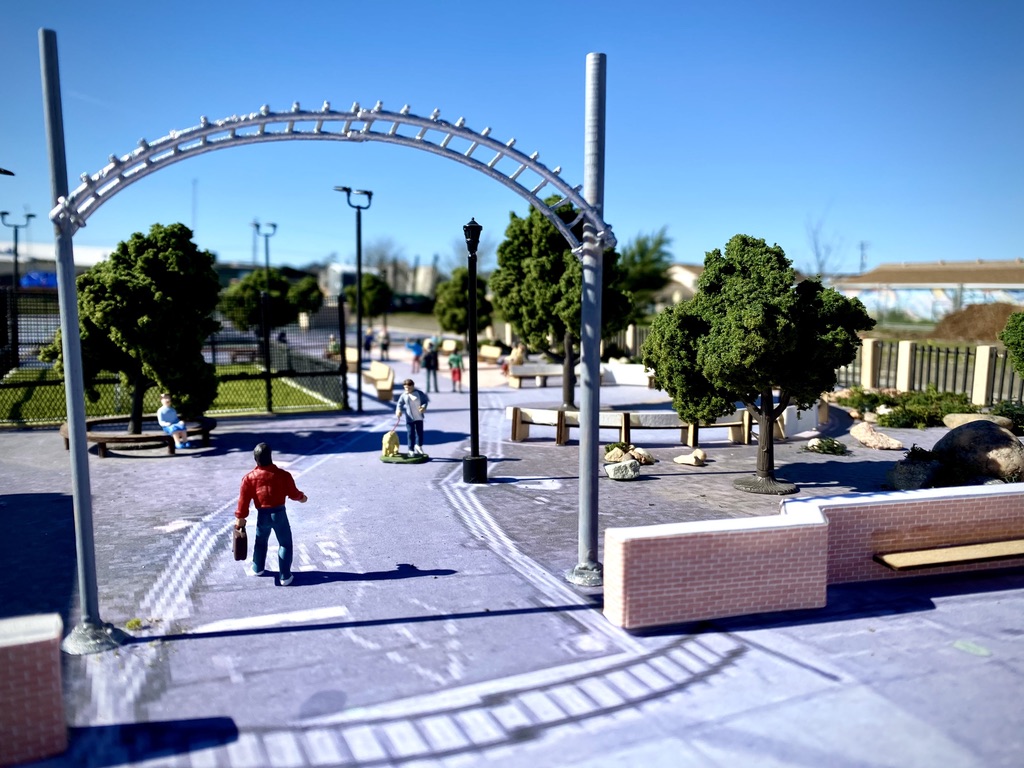
A hand-made, 3/4″ model of the arched entry to Harbour-8 Park on the Richmond Greenway. Photo courtesy Pogo Park
National studies have shown that a lack of physical access or connection to trails in the community, alongside concerns over safety can be barriers that stand in the way of trail use for communities of color. The 2022 Trail Grants recipients are creating direct trail access and providing trail programming for diverse communities who are often underrepresented among the nation’s trail users.
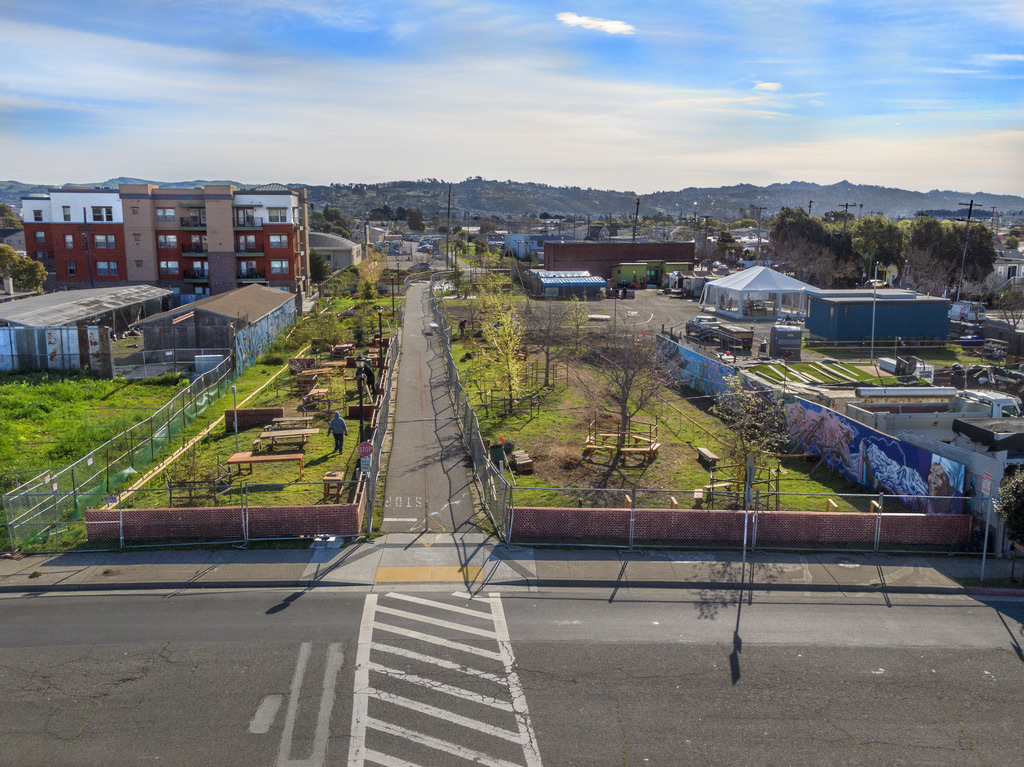
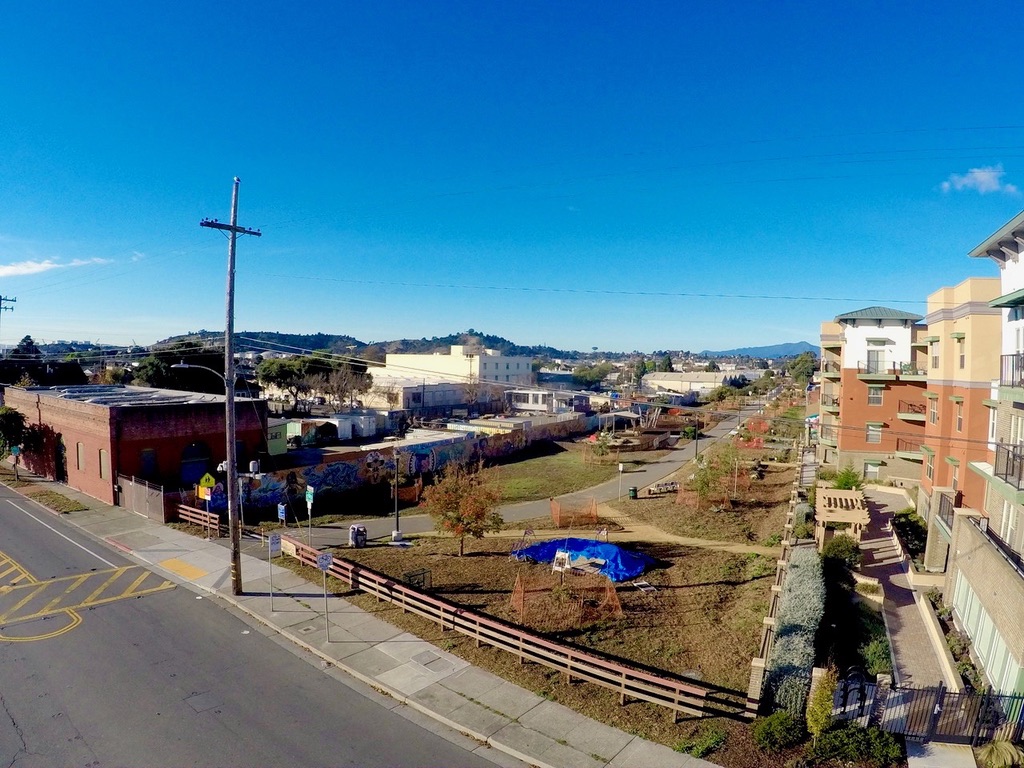
Harbour-8 Park on the Richmond Greenway, looking east. Photo courtesy Pogo Park
Latino Outdoors, one of three national organizations that received a 2022 RTC Trail Grant, works to bring Latino representation in the outdoor movement through education, conservation, recreation and programming.
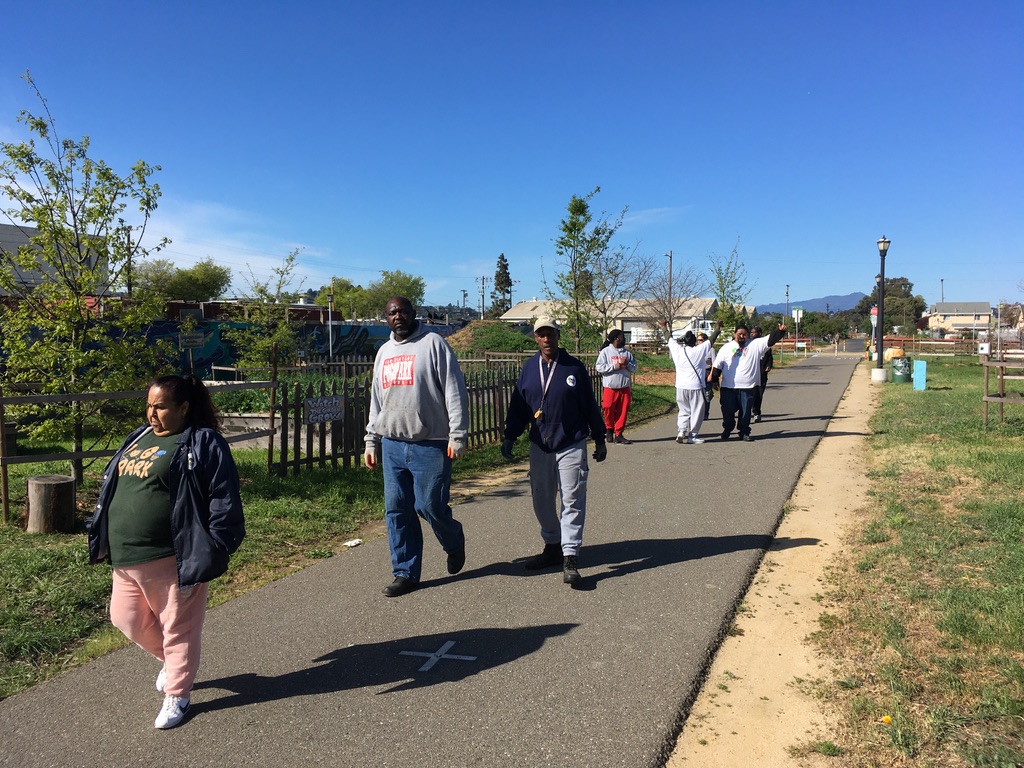
Pogo Park’s Community Development Team walk down the Richmond Greenway during a visioning session for the design and layout of Harbour-8 Park. Photo courtesy Pogo Park
“When we invite our community to connect with each other, our history and our heritage, outdoors, we inspire leadership and celebration in nature among our friends and family,” said Vanessa Herrera, development manager for Latino Outdoors. “This grant supports our Vamos Outdoors program, which is centered on fostering outdoor engagement among Latino and other communities. We’re looking forward to bringing more of these events to multiuse trails, which create space for everyone outside in all types of neighborhoods—whether it’s your first time exploring nature or you’re an enthusiastic adventurer.”
Harbour-8 Park on the Richmond Greenway that is about to be developed into a two-block long public park. Photo courtesy Pogo Park
The trail grants program also prioritized investment in projects and partners who are advancing trail development and community engagement in RTC’s flagship initiatives—TrailNation™ and the Great American Rail-Trail®. TrailNation™ is a portfolio of model trail networks across the country working to prove what is possible when you connect millions of people and places by trails. The Great American Rail-Trail is the nation’s first multiuse cross-country trail, which will one day link Washington, D.C., and Washington State.
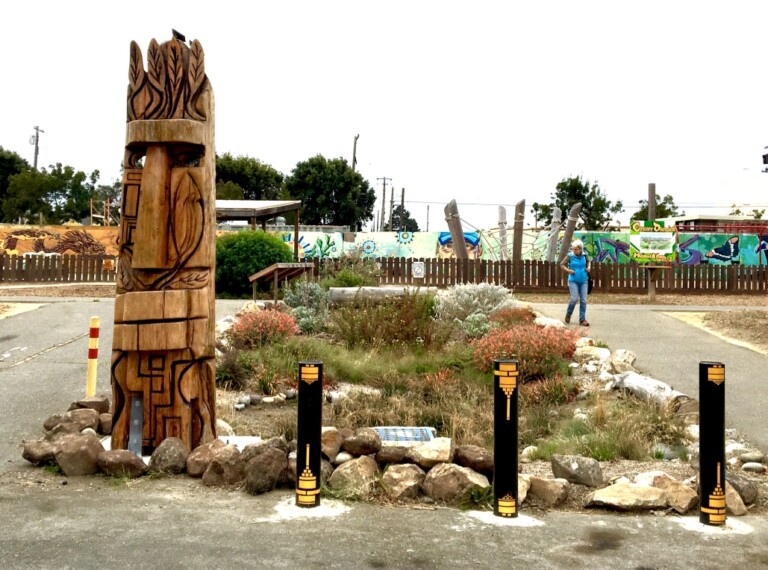
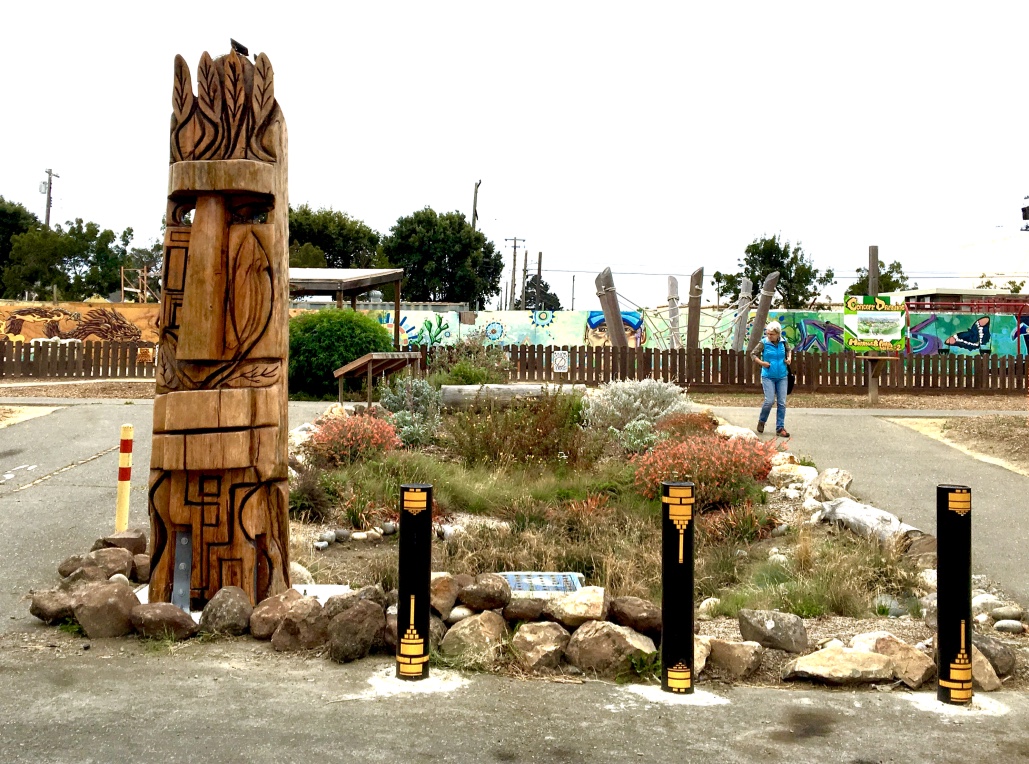
Pogo Park’s Community Development Team created a hand-crafted public art sculpture to mark Harbour-8 Park on the Richmond Greenway. Photo courtesy Pogo Park
Remember Us Urban Scouts, an RTC Trail Grant recipient based in Ohio, is planning regional youth cycle rides along a portion of the Great American Rail-Trail that runs through Columbus and its surrounding counties.
“Urban Scouts cycle across the Columbus metro area and are excited to explore parts of the Great American Rail-Trail,” said Geno Tucker, Remember Us Urban Scouts’ executive director. “With this grant, young people and their families will experience safe biking in the city and along scenic routes. These rides allow the community to practice bike safety and learn about resources in their community through training and education as the foundation of our cycling program. Teaching our urban communities about the trails close to their neighborhoods and building their confidence to ride from their homes to the trails is our 2023 goal.”
The 2022 Trail Grants include investments in the following regions. The entire list of grantees is available at railstotrails.org/grants:
National Organizations: $75,000 to support programs, including Latino Outdoors’s Vamos Outdoors, to celebrate diversity in the outdoors and position multiuse trails as an opportunity to welcome more people from more backgrounds outside.
Baltimore Greenway Trails Network: $35,500 to support partners to design programming and events that inspire neighborhoods to connect with each other and enjoy the benefits of the city’s trail network.
Bay Area Trails Collaborative: $12,000 to encourage use of the 2,600-mile-plus regional trail network through community rides and wellness programming in Richmond, California.
Capital Trails Coalition: $22,500 to encourage and empower youth and adults from communities of color in the D.C. region to walk, bike and use trails, as well as providing bike-mechanic job training for teens and young adults.
Circuit Trails: $90,000 to help build new connections within the 800-mile Circuit Trails network in Greater Philadelphia’s Kensington, Fairhill and Port Richmond neighborhoods and assist community programming, with support from the William Penn Foundation.
Great American Rail-Trail: $20,000 to support trail programming for Black women and youth in Columbus, Ohio, and introduce them to trail experiences along a portion of the 3,700-mile route that will connect across 12 states between Washington State and Washington, D.C.
Industrial Heartland Trails Coalition: $10,000 to produce programming and advocate for safe walking and biking infrastructure within Cleveland and Pittsburgh, particularly in underserved communities and those facing road safety challenges.
Miami LOOP: $16,000 to create youth bike safety programs and beautify trails along the developing 225-mile Miami LOOP trail network across Miami-Dade County.
Route of the Badger: $20,000 to address the diverse needs of Milwaukee’s neighborhoods along the 30th Street Corridor and raise awareness of the developing 700-mile Route of the Badger trail network that links the city with six surrounding counties.
By Wayne Cottrell — Returning us to the San Francisco Bay Area, Kirker Out to Marsh Creek is a 38.0-mile, clockwise road bike ride in eastern Contra Costa County. There is over 2,500 feet of climbing along the way, broken into three separate climbs. The distance from downtown San Francisco to Clayton Community Park, where the ride stages, is 33 miles. This is just outside of the region covered in my Best Bike Rides San Francisco, but would be in my forthcoming Cycling Centra Contra Costa. The route is long enough to creep into the adjacent, smaller Antioch urban area. The ride begins in Clayton, a little-known city of 11,600 located immediately to the southeast of Concord. Getting there from San Francisco by car is easy: Bay Bridge to I-580 to the CA 24 freeway (through the Caldecott Tunnel). After exiting to I-680 north in Walnut Creek, exit immediately to Ygnacio Valley Road, and head east. Once in Concord, turn right on Clayton Road and enter Clayton. Look for Clayton Community Park on the left, near the eastern limit of the city. By public transportation, ride BART (Bay Area Rapid Transit) to the Concord station. From here, bus transit service is available to Clayton, via Central Costa County Transit Authority´s route 10.
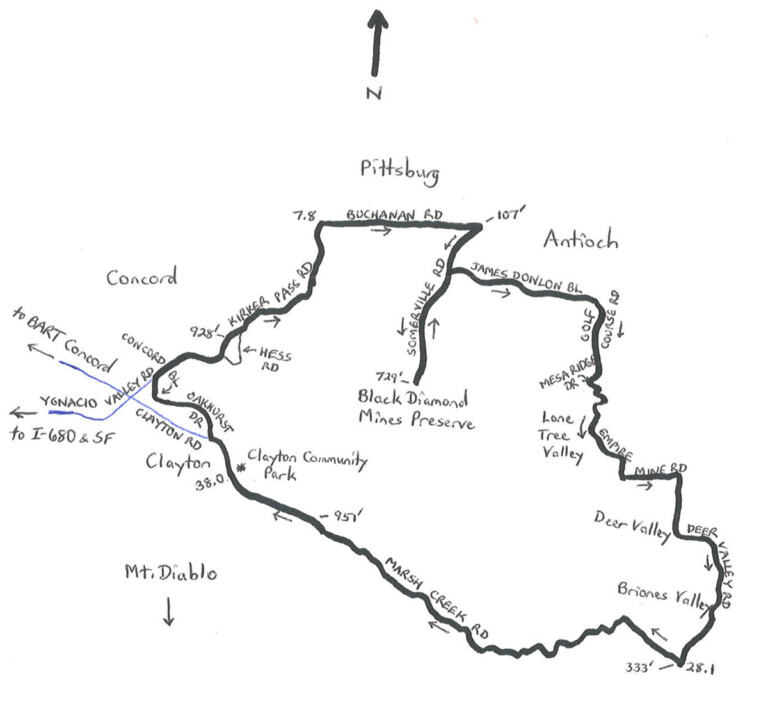
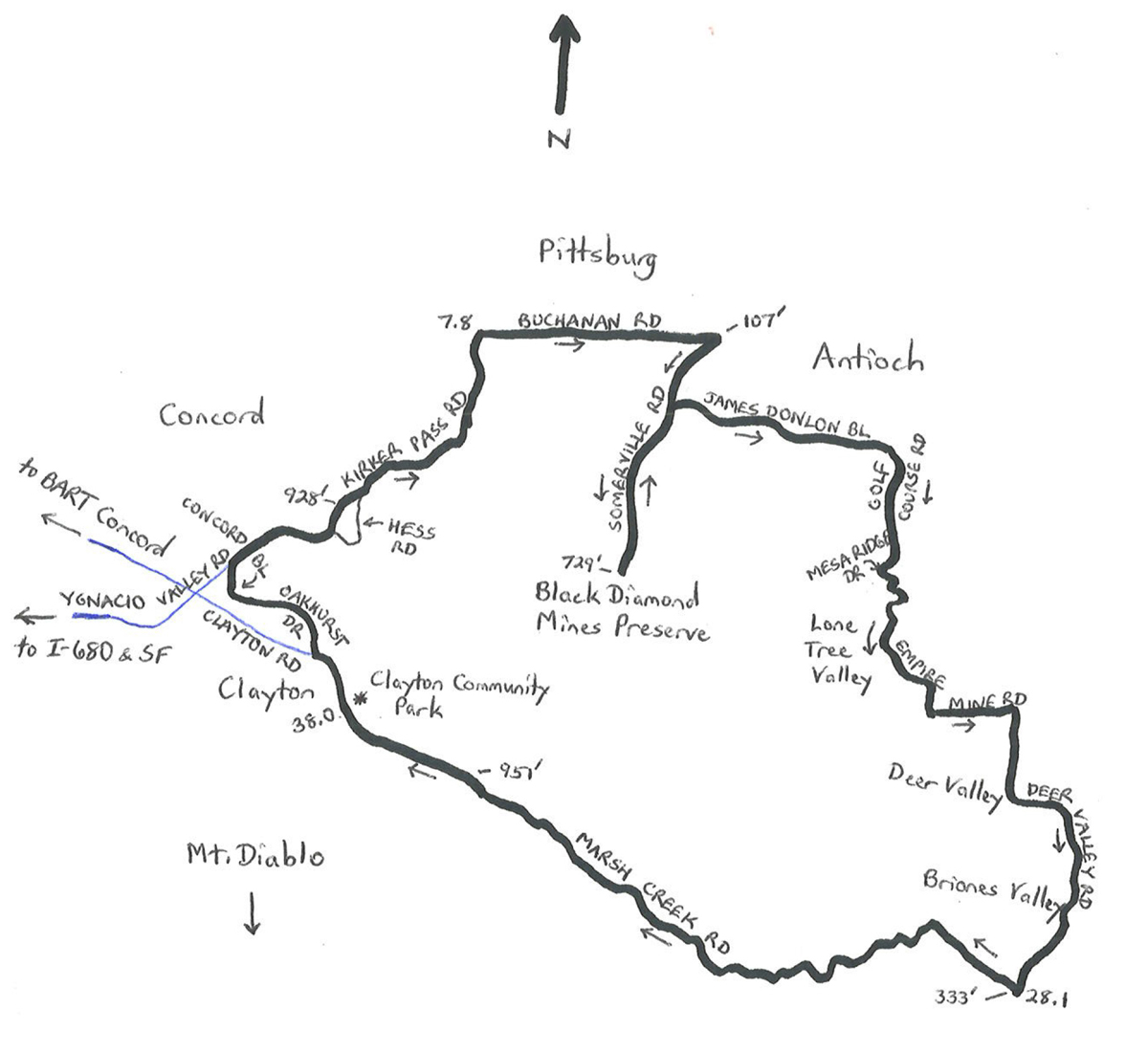
Kirker Out to Marsh Creek is a 38.0-mile, clockwise road bike ride in eastern Contra Costa County, CA. Map by Wayne Cottrell
Start the ride by leaving the park and turning right onto Clayton Road, and riding through Clayton. The starting elevation is 549 feet. The city is dominated – as is nearly all of Contra Costa County – by mighty Mount Diablo, which is directly to the south. Turn right on Oakhurst Drive (mile 1.25). Enter the city of Concord at mile 2.45 – you are now on Concord Boulevard. With a year 2020 population of 125,400, Concord is the largest city in the county. Concord is best-known for the 1944 Port Chicago disaster, in which a munitions explosion killed 320 sailors, seafarers and civilians (and also led to a Supreme Court case against “mutinous” black sailors, who subsequently refused to work at the port). The city is also the birthplace of Jazz musician Dave Brubeck (1920-2012). Turn right on Kirker Pass Road at mile 3.0, and begin the route´s first significant climb. To the right, at the base of the climb, is Concord Pavilion, home of the annual Concord Jazz Festival (and numerous other concerts). The road, named after James Kirker, was undergoing a name change review as of this writing. Although Kirker was one of the founding settlers of Contra Costa County and the Concord area during the early 1850s, he was reputedly an Apache scalp hunter. His raids with others on Indigenous tribes produced nearly 500 scalps, according to the records, including women and children – consequently, there is a renaming campaign. Kirker Out!
As for the road, it climbs at an average grade of 7.1% for the next mile, then kicks up to 9.8% for the ensuing one-third mile, after passing Hess Road. Note that Hess is a bypass, as the main road’s shoulders may be uncomfortably narrow for some riders, particularly while rocking and pedaling a bicycle up a nearly 10% grade(!). Hess has even steeper segments, but far fewer motor vehicles. Back on the main road, which peaks at 928 feet, the descent is brisk, entering the city of Pittsburg at mile 7.25. You are now at a lower elevation (243 feet) than you were at the start. Turn right on Buchanan Road (mile 7.8) and head east. Buchanan gradually descends, passing Stoneman Park, which is on the site of Camp Stoneman, a major staging area for the U.S. Army during WWII and the Korean War. Buchanan enters the city of Antioch at mile 10.0, reaching the ride’s lowest elevation (107 feet) at the intersection with Somerville Road (mile 10.6). Turn right on Somerville Road, now heading south and climbing. It is a gradual climb to James Donlon Road, at mile 11.5
At this point, the ride is extended by a 4.45-mile out-and-back on Somerville. The road, climbing at an average grade of about 4%, enters Black Diamond Mines Regional Preserve, and continues to a dead end at a parking lot (elevation 729 feet). The preserve’s name might be misleading, in that no diamonds were ever mined here – the “black diamond” is coal. A total of 400 million tons were produced, starting in 1859. Twelve mines and five towns were located within the Preserve´s present-day boundaries – relics and ruins from these can be found, including a cemetery in which most of the bodies remain unidentified. There is also an extensive network of trails, some steep, that are suitable for hiking, running, orienteering, and mountain biking. After reaching the end lot, return to James Donlon in a thrilling descent. Be watchful of motor vehicles, pedestrians, and other road users. Turn right on James Donlon (mile 15.95) and head east. The city of Antioch is nearly as populous as Concord (115,300), large enough to have its own urban area. Turn right on Golf Course Road (mile 15.0), followed by another right onto Mesa Ridge Drive (mile 16.05). These roads climb gradually. While riding through the mild-mannered Dallas Ranch community, make an abrupt departure from suburbia with a right turn on Empire Mine Road. This is an old country road that was here long before the subdivision. Motor vehicle access to the road was impeded by large rocks when I did this, but the road is otherwise accessible to bicycles. It is lightly-maintained, so watch out for road damage and debris. It also passes through an open range, so cattle could literally be in the road. Empire Mine continues for 3.45 miles, and is net downhill, but there are a few short uphills along the way. There is little to no development out here; you have entered Lone Tree Valley, a rural area marked by ranches, some horticulture, and open space. At the end of Empire Mine (mile 23.75), turn right on Deer Valley Road and head south. Deer Valley is another lightly-traveled, rural road that undulates, climbing gradually, for the next 4.4 miles. Unlike Empire Mine, Deer Valley is accessible to motor vehicles, so be alert to passing motorists.
The final stretch of the ride, beginning at mile 28.1, is on Marsh Creek Road, perhaps the marquee road of the route. You are bound to see other cyclists out here, including elites who use the road for training. Marsh Creek Road winds through Marsh Creek Canyon, gradually ascending from 333 feet, at Deer Valley, to the highest elevation of the ride, 951 feet, at mile 36.15. There are numerous elevation changes along the way, but all of the climbing is gradual. Other than a small community (Clayton Palms), dog training facility, rehabilitation center, and isolated residences, there is little development out here. From the peak elevation point, it is another 1.85`miles, all downhill, to the finish at Clayton Community Park.
Starting & ending point coordinates: 37.928897oN 121.919139oW
By Joey Geurts and Duane Schaffer — Electric bikes, also known as e-bikes, are rising in popularity with approximately 7% of US bike sales last year. They are a great way to get around town and can make the commute to work or to the grocery store just a little bit easier. They don’t eliminate exercise, you just get there a little faster and a little easier. There are many reasons to get an ebike, and along with that, many decisions that go into purchasing one. Cycling West asked Blue Monkey Bicycles, an all electric bicycle retailer located in Murray, Utah to go over the reasons for purchasing an ebike, the types of bikes available, and the considerations for what type of bike to buy, and how much to spend.
Why should you get an electric bike? Why should you get one even if you own other bicycles?
When a person gets on an ebike for the first time, there is an inevitable smile that crosses their lips. The bicycle is arguably the most incredible invention ever but when you mix it with modern technology that helps propel you faster and further, it creates a sensation like no other. If you already own and ride traditional bicycles, an ebike is a natural step to relying on your car even less. Your commute becomes quicker and less sweat inducing and that trip to the grocery store becomes a fun activity. The extra speed and help of the motor allows you to carry those groceries and leave your car in the garage one more time.
What do you look for when shopping for an ebike?
Shopping for an ebike can be daunting. They are becoming more and more accepted and new brands are popping up constantly. Now the big names in the bicycling world are offering ebikes along side smaller companies that started out building only electric bikes.
The first thing to look for is stability of the company behind the bike or brand. Since many of the systems have proprietary parts, you want a company that will be around when it’s time to replace your battery or you need repair parts. Many cheaper ebikes are basically disposable as you won’t be able to get replacement parts for them.
Secondly, focus on your main intent or usage. Have a purpose in mind. There is always a bigger, better, or more expensive ebike out there, and when you start looking it might be tempting to find something that offers you more and more. But in the end, you don’t want to spend more money than you need to for unnecessary features, especially since these ebikes are designed to last you for years and years to come.
And finally, you don’t have to buy the first ebike you ride. All ebikes are a lot of fun and will put a smile on your face the moment you use that pedal assist or throttle. Even the sub par ones. Make sure to compare and contrast all the options that sound good to you before putting the money down on such a purchase. Not all ebikes are created equal, and countless variables can make for bikes that have a day and night difference in how they feel and ride, so make sure you are doing some type of comparison. Ride several and go with the quality ebike that feels the best and fits your budget.
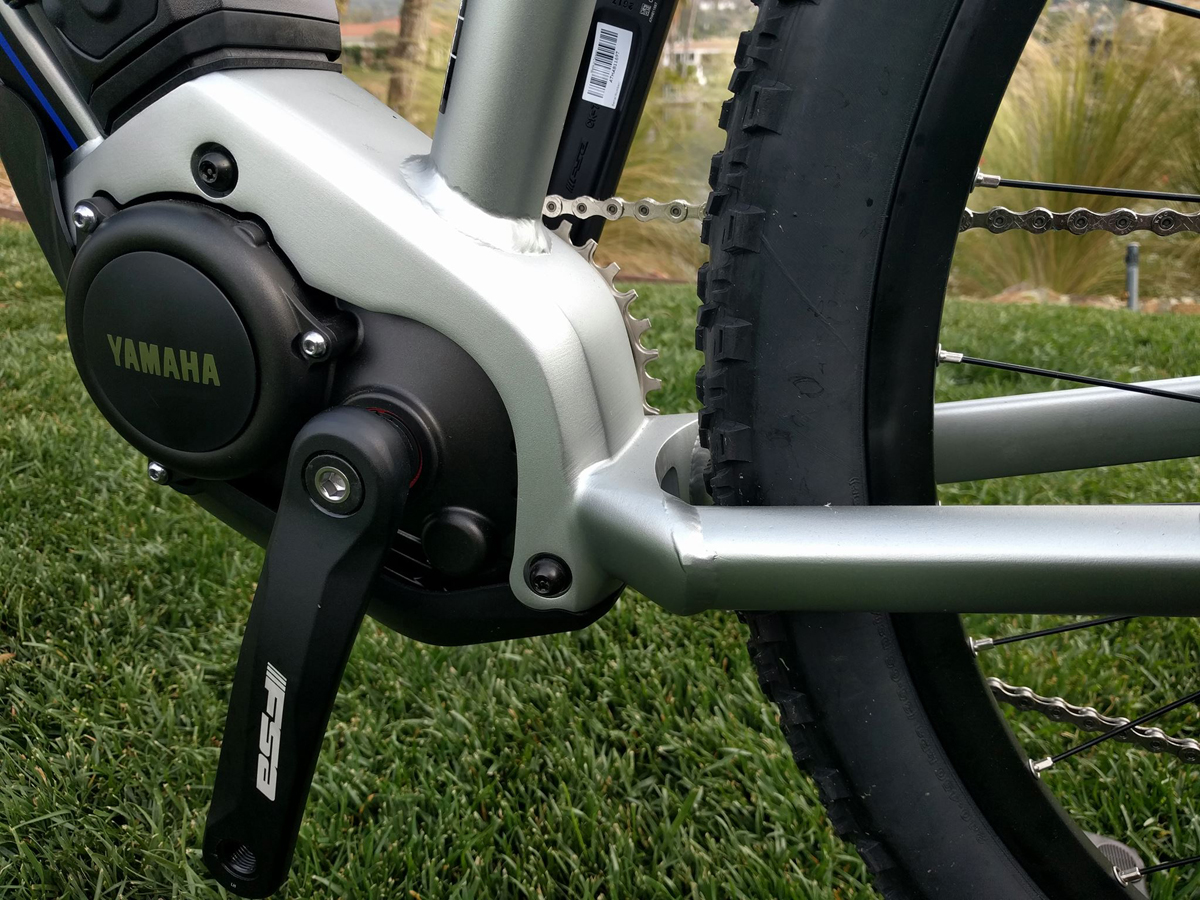
A Yamaha mid-drive. Photo by Mikey Geurts
How do you choose? Choose what fits your type of cycling the best.
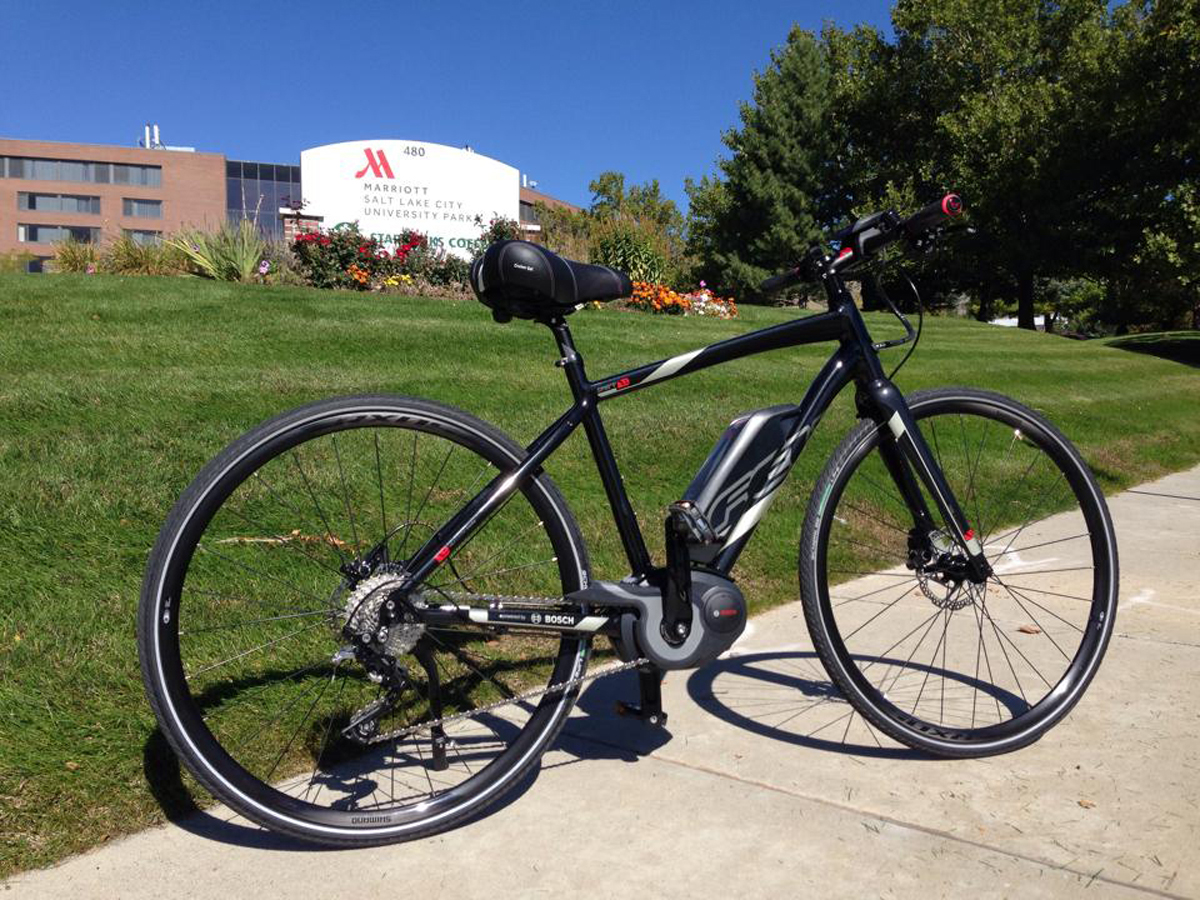
If you come from the cycling world and want a great, natural, and intuitive feel, then you will probably want to choose what is known as a “mid drive” (motor mounted in the bottom bracket) option with a torque based pedal assist. These have been made popular by Bosch, Yamaha and Brose. A torque based pedal assist is a type of pedal assist that works as a reward system. The motor only gives back what you put into it to help you out, so you are still getting the cardio and heart rate exercise aspect of traditional cycling, you are just able to go faster and further. Couple this with the balance of the weight of the motor down low and squarely in the middle, and you will feel like a natural on one of these. Ebikes like this appeal great to commuters and mountain bikers, which is why so many commuting and mountain ebikes are mid drive. Oh, another good thing about mid drives is traditional wheel sets. No need to unplug a motor cable to change a tire!
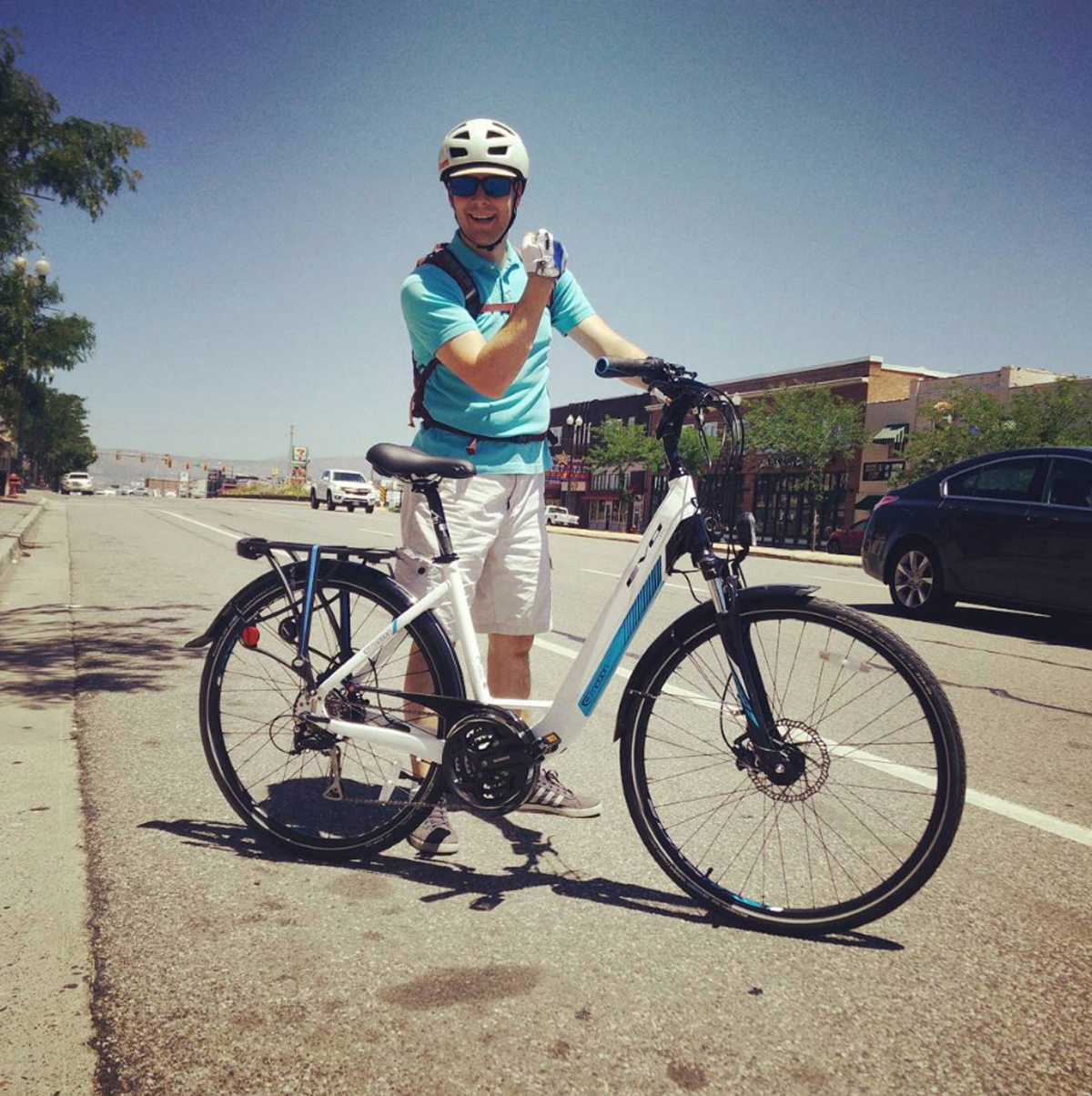
Mikey Geurts on an upright commuter e-bike with rear hub drive. Photo by Duane Schaffer
Another common set up is what’s called the hub drive (motor is in the hub of the wheel, usually but not always in the rear). This has a kind of rear-wheel-drive-get-up-and go feeling. This is for the person that wants to have fun on the weekend, and may not necessarily want to pedal a lot. These bikes typically have a throttle and are a real kick to ride around. This setup is for someone that wants to really feel what its like to ride something electric, go fast off the line, or even those that want to take it easy or rehabilitate. Some people just like the concept that they can challenge themselves to pedal as far as they can knowing that they can engage the throttle and get back home or up that last hill. Hub motor bikes are also popular commuter bikes.
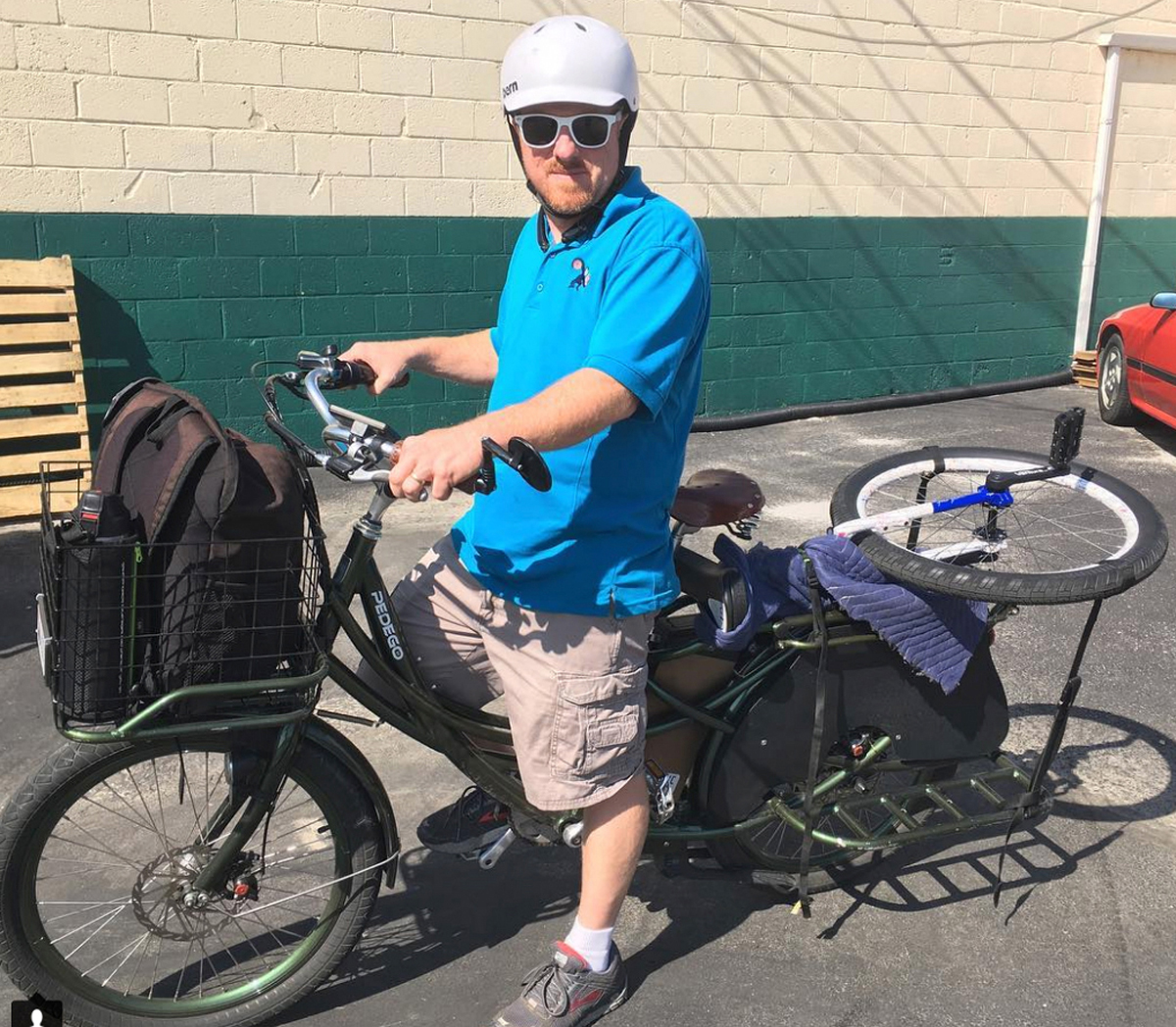
Duane Schaffer on a Pedego cargo e-bike. Photo by Miles Schaffer
Are there other kinds?
Every kind of cycling is now represented with ebikes. Just like conventional bicycles, you have cargo ebikes, fat tire ebikes, e-trikes, hardtail and full suspension mountain bikes, commuter and even electric drop bar road bikes. The list goes on and on. There are also electric vehicles that blur the line between bicycle and scooter. High speed ebikes are commercially available but they are only allowed off road. You’ll find that the most common ebikes comply with Utah law which states that any bike up to a 750 watt motor and a 28 mph top speed is considered a bicycle and can be ridden where regular bicycles are allowed.
A Bosch mid-drive road e-bike. Photo by Duane Schaffer
So how long do the batteries last?
Great question. It all varies and depends on many factors. The easy answer is a good quality ebike should be able to go at least 30 miles of full assist riding on a full charge. All the ones we carry at our store do. You may see many brands advertise insane numbers like +100 miles on a charge, but what they don’t tell you unless you follow the little asterisk is that many times those numbers are created using low level modes of pedal assist like “eco” mode and lot’s of pedaling on flat ground. A best case scenario. We range test every brand and model that comes through our store on full assist or throttle, trying to eat the most battery so you can have an idea what you can expect under extreme conditions. We would rather under promise and over deliver I guess.
Now if you’re asking about the life of the battery itself, that can vary on how you treat it. Bring the battery indoors like a laptop or cell phone when you charge it. Don’t let the battery sit in the cold winter garage or in the hot sun during the day. This will help insure that you get years usage from your battery and really protect your investment. You can ride in any temperature but just make sure that you store the battery above 40 degrees. They prefer that. Today’s Lithium Ion batteries can be charged at any time and for any amount of time. You don’t need to drain them fully like the old NiCads. Generally, a battery will get to 80% charge from empty in an hour and a half and then another 3 hours or so will build up a charge for distance. Batteries are usually completely charged in 4-5 hours.
How much should you spend?
Again, this comes down to what fits your individual needs best. There are ebikes for well over $10,000 all the way down to less than $1,000. On average, most customers usually end up deciding on something in the $2,500-$3,500 range. Does that mean a $1,500 ebike is terrible? Not necessarily. It just might be stripped down or have lesser components, but if there are things you don’t need for your ride (like a rear suspension for a commuter) then don’t pay for it. The good news for the consumer, as with any electric product, is that battery prices are indeed coming down. A couple years ago, we couldn’t find anything we liked under $2000. Now there are several bikes in that price range that meet our approval. Keep this in mind though: You get what you pay for with ebikes. By the time you add a lithium ion battery, motor, controller, and a quality company to back it up, you will be going well north of $1000. Add in quality bike components and you can see how costs will start climbing. When speaking of lower priced ebikes something will always be sacrificed.
Anything else to add?
Ebikes can help existing riders go faster and further than traditional bikes and use their car less but ebikes provide another benefit that helps the whole cycling community – bringing more people to the wonderful world of cycling. The more people out riding bicycles, the more bicycles will be taken seriously as a viable transportation option. If bikes are seen as transportation, more infrastructure will be approved and society’s grasp on the car will lessen a bit. Ultimately, the more active a society, the healthier it will be. We appreciate this chance to talk about ebikes. We’re making a difference one ebike rider at a time.
By Becky Hadfield — Amit Kalatri wrote, “The smell of the sweat is not sweet, but the fruit of the sweat is very sweet.”
Seattle to Portland (STP) left me with some especially sweet fruit — personal satisfaction stemming from a long, grueling day of arduous work and persistence and a fruit basket of life lessons learned in the saddle.
Maybe you’ve never had the privilege of riding STP — the largest multi-day cycling event in the Northwest. Imagine 8,000 cyclists gathering before dawn with headlamps and bike lights in mid-July at the University of Washington and leaving in waves over the span of an hour, then weaving through backroads, military grounds, big highways and across scenic bridges for 206 miles. Most of the riders spend the night at the halfway point and enjoy an evening of camaraderie and celebration (and I doubt much sleep) before finishing the second century on Sunday. I chose to join the crazy ones (about 25% of the riders) and do the 206 miles all on Saturday, finishing at Holladay Park in Portland just in time for dinner. This is a ride, not a race. No timing chips; just Strava, if you choose to use it, which I’m sure everyone that rode it in one day chose. After all, we’re the crazy ones.
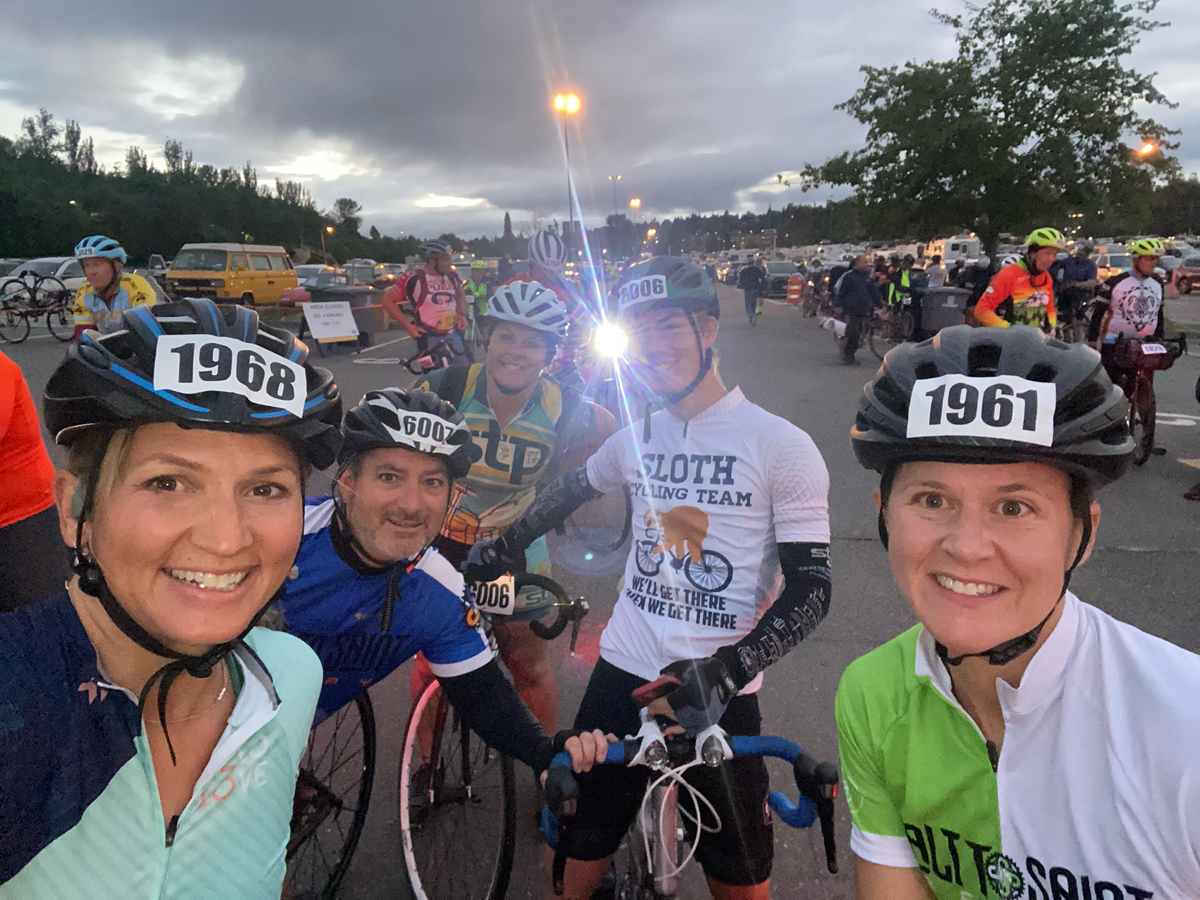
Becky (left) and her STP group. Photo by Becky Hadfield
The Cascade Bicycle Club does an amazing job organizing the ride, which is an enormous feat involving mailing 8,000 rider packets, shuttles for cyclists and gear and bikes, parking and dormitory arrangements at the University of Seattle, 5 major rest stops with a full spread of food, mechanical support and first aid, plus 13 additional stops with water and snacks, a finisher’s event with booths, photo ops, merchandise and food trucks, countless volunteers and months of informative emails. The profits go to support bicycle education and outreach programs in the Seattle and Portland areas. I don’t live in Washington or Oregon, but I love this ride and love supporting cycling education, especially among school age children.
My first STP was back in 2018, ridden just 8 weeks after breaking my hand in a mountain bike crash. Despite less than stellar training, I was happy to be back on the bike, which was a perfect combination for riding with some less experienced cyclists I had invited along. In response to the heat wave that year, the Cascade Bicycle Club supplies all 8,000 riders with neck coolers and frequently placed ice buckets to help us keep cool in the 90+ degree weather. It worked wonderfully and the route supplied enough shade that the heat did not detract at all from our experience. Somewhere after the 100-mile mark, our less experienced friends started feeling the pain of spending all day in the saddle and we had to band together to pull them to the finish line. The sacrifices made to help them succeed only added to our satisfaction and deepened friendships. That’s one of the great parts of STP being a ride, not a race: it’s okay to slow down, help a friend and enjoy the scenery.
That ride filled my bucket and I’ve been looking forward to round 2 for a couple of years. Unfortunately, STP was canceled in 2020 and 2021 but this year it was back in full swing, and we were determined to be there. I found 4 friends to join me and spent hours one night working out all the details of the transport. The drive out from our hometown is 13 hours, so we started Thursday afternoon loading bikes and heading to Idaho for the night. Friday, we finished the drive, found a great waterfall hike just outside of Seattle where we could stretch our legs and arrived in time to enjoy some great food at the University Village. This year we opted out of the dorm lodging because we had a coed group and wanted to be together. Instead, we booked a couple rooms in a nearby hotel and biked from there Saturday morning. I brought along my husband and son, who went mountain biking in the area Saturday, then drove down with all our gear and met us at the finish line. I recommend bringing your own shuttle driver if you come with a group, although I’ve spoken with a lot of people that had successful experiences using the event buses as well. Someday I’ll come back and try out the “party style” riding of a two-day event, complete with camping and bus shuttles.
Our group this year included three riders hoping for a 16-mph average and then me and Annie who were shooting for an 18+ mpg average. Luckily, there are so many people on the road that there is always someone your speed. You will never be without company at STP, even in the one-day event. This year, the coastal currents came through for us, delivering perfect weather in the mid 70s all day (even the 10 minutes of sprinkles were delightful). The ride begins on campus and soon weaves along a quiet road beside Lake Washington for ten miles. It is a perfect way to start any day. The views over the lake as the sun is rising are spectacular and inspiring. From there, it’s a game of watching for the neon road markings leading us toward the Army Joint Base Lewis-McChord at mile 58.
Annie and I made a great team — never hesitating to join other cyclists for some drafts and pulls. Finding a good group to ride with and contribute to is vital for endurance rides, even when it is not a race. There was some chatting on the road with our newly found friends and even more at each rest stop. Often, we found ourselves leaving the stops together to enjoy more teamwork on the road. The group fluctuated during the day, losing some and gaining others but there was always gratitude felt for the shared effort. Later in the day when we were all having to dig deep, I appreciated the encouraging words that were shared in the group.
At about mile 70, I was with a group that neglected to give sufficient hand signs up front and found myself on top of a nasty pothole with no time to adjust course. My back tire hit the rough edge hard and 100 yards later I realized I was going flat. That particular section of road had a half dozen cyclists pulled over fixing flats. Luckily, I’ve had experience changing a lot of flats in my years on a bike and this didn’t slow us down much. Annie stopped with me, and we were soon back on the road. There are always risks included with drafting and depending on others to point out road hazards is high on that list.
Annie and I welcomed the halfway point with gusto, ready for some serious refueling after 100 miles of electrolyte tablets and protein bars. There had been more food offered at the previous stops, but we were saving up for lunch. We came across a bike shop tent first. The mechanics drained the CO2 and re-aired my tires and even touched up the gears before we moved on in search of food. That’s a luxury left only for non-competitive rides. Thank you STP bike shops!
Some confusion transpired when we only found French fries and frozen KIND bars at this point. Those bars tasted like manna from heaven, but they aren’t a complete lunch. After a few minutes of investigation, we learned the “real” lunch stop was about 7 miles ahead. Apparently, we hadn’t studied the course map well enough and didn’t realize that the organizers separated the halfway point (Saturday finish line for two-day riders) from the one-day rider lunch. Those seven miles were fueled by the frozen KIND bars and to our delight, the real lunch was much more sufficient — well stocked piles of snacks, sandwich materials, fruits, and drinks.
The second half of a double century is always a mind game. Gautama Buddha said, “What you think, you become.” It’s in mile 101 that I choose to become a finisher. Yes, things hurt — occasional numbness in hands and feet and general muscle fatigue. But I’ve learned to refuel smartly over the years and to just keep pedaling. Knowing that everyone on the road was struggling in the same way brought comfort. We continued the give and take in the peloton. Coming from Utah, this ride is considered a flat, easy (because it’s at sea level) ride, but there are sections of rollers that add up to about 4500 feet of climbing — still not a lot of elevation, but also not flat. If you’re coming out to ride, be ready for the hills. There are plenty of them.
Miles slipped by and soon we found ourselves approaching the bridge over the Columbia River. Luckily, the endorphins that spiked upon crossing the state line into Oregon were just enough to power me over the surprisingly long climb over the bridge, and I absolutely loved flying down the other side. The views over the river were spectacular. Cycling the bridge required my concentration — stay in your lane and ignore the cars whizzing by, but remember to look around and notice how high over the water you are and how far you can see into beautiful Oregon. We noticed the road markers changed when we crossed the state line — they were no longer painted on the road but instead posted on signs, which took a little bit of adjusting to. Coming off the bridge, we began a forty-three mile stretch along the Columbia River Highway. Luckily, the shoulder is wide and there are some picturesque, forested sections that helped distract from the physical discomforts.
Somewhere in the last 30 miles, I met a group that didn’t allow help in their peloton. I rested adequately behind them and offered a pull but was told I could stay behind them or ride on ahead. My mind may not have been in its best form at that point of the day, and I took offense. The irritation kicked in and I took off ahead of them. Unfortunately, I didn’t give the rest of my group any warning and no one followed me. I was alone on the road, left to do all the work myself by my own choice. But sometimes in life, we are alone and only then do we really have time for introspection and correction. In the silence, ideas flowed and my mind was opened. Savor the friendships, but also the solitude. They are both to be cherished and desired.
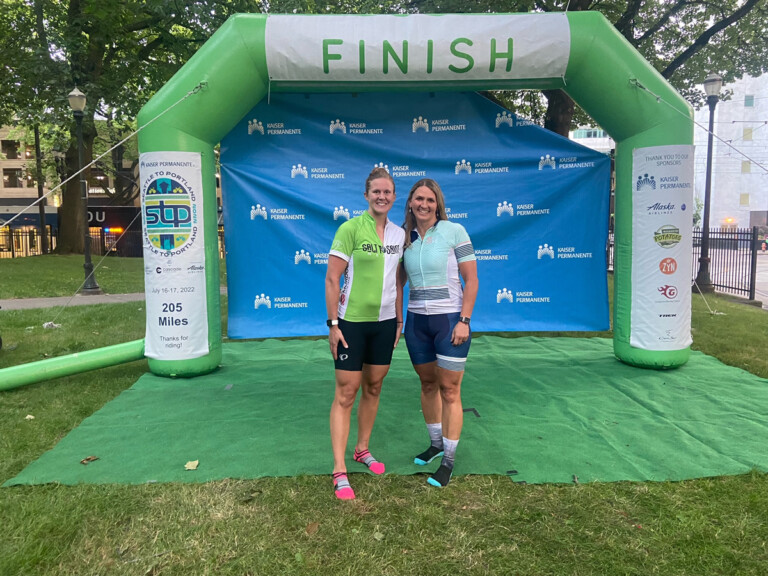
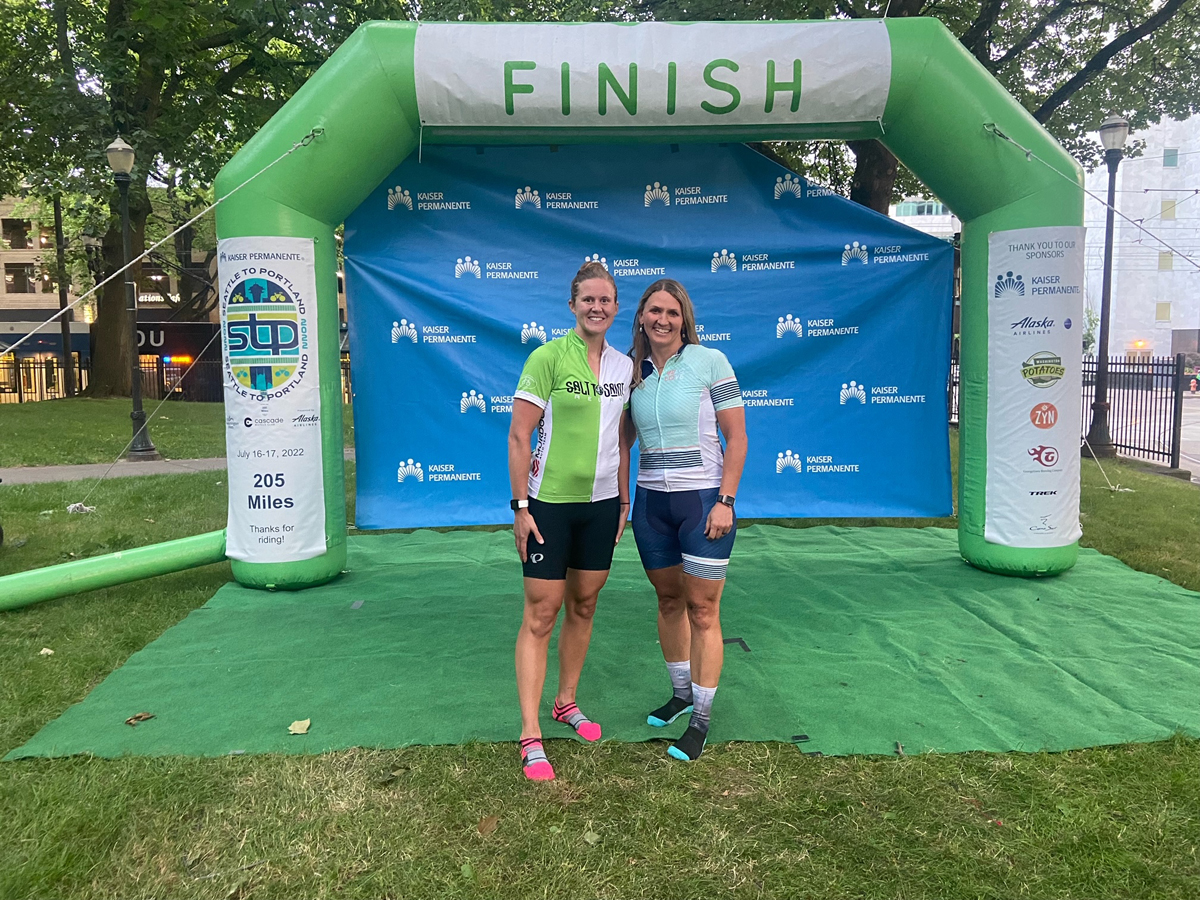
Annie (left) and Becky (right) at the finish of Seattle to Portland 2022. Photo courtesy Becky Hadfield
That last bridge finally appeared, the Zipfizz (my favorite form of caffeine) was in full force, and I was on the homestretch. If only there were no red lights! There’s nothing quite as frustrating as stopping repeatedly at red lights after mile 195, but those red lights helped me to celebrate all the green lights with enthusiasm. And that’s my last life lesson of the day: opposition breeds gratitude. You never appreciate the tailwind (which I was later told we had riding that long highway) until you turn and face the headwind. After suffering through the final red light, 15 yards from the finish line, I clipped in for the last time and rode under the Finish Tunnel and through the long chute to the sounds of people cheering and ringing cowbells, and found my husband and son waiting there for me. After 11 hours of riding, I took my shoes and socks and helmet off, propped my bike up against a tree, and stood in the park splash pad rinsing off the day’s asphalt. And it felt amazing.
Sometimes, when I observe others’ hobbies, I wonder what possesses them. But when I pause to look inward, I must recognize that riding 200+ miles in one day seems a little crazy to most people. And I do it for fun. For cheap therapy. For friendships and for solitude. This is my medicine. After all, “Life is the most brutal endurance sport of all time,” (David Goggins) so excelling at endurance is key for everyday survival. This is your invitation to get outside and just keep pedaling! And if you’re ever in Seattle in July, pedal on over to STP for a ride you won’t regret.
By Charles Pekow — Lets face it: electric bicycles have become a significant part of the cycling community, both for transportation and recreation. But research into who rides them and their effect on the bicycle business is lacking. In an attempt to partially fix this lack of knowledge, researchers at the National Institute for Transportation & Communities at Portland State University in Oregon surveyed owners in 2013. To see what has changed since the, they released a follow-up in March 2018.
E-Bikes in Copenhagen, Denmark. Photo by Dave Iltis
They found not much has changed since 2013 in terms of why people buy e-bikes: they’re easier to ride than standard bikes, especially when climbing hills and they cut automobile trips. And yes, more people can ride bikes, go for longer distances and carry more cargo (including children) than on standard bikes, the research found. The survey, however, was done disproportionately in the Portland area and the sample wasn’t random. About 70 percent of respondents were male and almost all of them rode a standard bicycle before buying an e-bike; only about seven percent stated the first bike they bought as an adult included a motor.
The authors suggest that use of e-bikes could reduce smog and energy use, since many riders use them in lieu of driving an auto. “The majority of the utilitarian trips (i.e., errands and commutes) being made by e-bike are replacing motor vehicle trips, which signifies an impressive decrease in vehicle miles traveled,” the report says. “I am 63 years old and have had 3 knee surgeries and cardiac bypass. Having an e-bike enables me to ride more often than I would on my regular bike,” one respondent noted.
Many owners also said they felt safer on an e-bike than on a conventional bicycle, but it’s not clear if safety was a major factor in determining whether to buy one. E-bike riders are more inclined to take indirect routes to stay off major roads, can accelerate more quickly to get through intersections and can go faster than other cyclists, improving safety or the perception thereof. The downside, however, lies the fact that motorists may misjudge their speed. Safety remains an open question, the report notes.
Americans aren’t pedaling to the e-bike stores with the same speed as Asians. Americans bought between 200,000 and 250,000 e-bikes in 2006, but by then 200 million had been sold in China. The study didn’t conclude in what parts of the USA e-bikes were most popular but they seemed more common in major cities, particularly Los Angeles and hilly San Francisco.
On difference over time between the two surveys (which are not completely comparable as they used different methodology) is that now people are more likely to buy e-bikes rather than conversion kits for standard bikes.
But communities will need to deal with code and policy questions. Are e-bikes considered bicycles or motorized vehicles? Should they be allowed on sidewalks or recreational trails. (The U.S. Forest Service is dealing with the question of allowing them on mountain bike trails). The authors concluded that e-bikes can go a long way to encourage longer and more bike trips. But first, they say, “they will not be met to their full potential in the absence of policies and regulations which support and protect the use of e-bikes.”
By Charles Pekow — Small infrastructure improvements — or starting with them — can make a big difference in getting people out on bikes. Just combine land use with active transportation planning elements, suggests a federal panel. The Community Preventive Services Task Force of the Centers for Disease Control & Prevention suggests communities use environment approaches that combine one or more interventions to improve transportation systems (activity-friendly routes) with one or more land use and community design interventions (everyday destinations) to increase physical activity.
Adding bike infrastructure can improve public health. Photo by Dave Iltis
The the task force recommends in a recent brochure building bicycle infrastructure that will keep cyclists away from autos and make it easy to cross streets. Factor this into planning of places that get a lot of daily use, such as schools, parks, health care facilities, grocery stores, etc.
The task force compiled a chart (https://www.cdc.gov/physicalactivity/downloads/built-environment-recommendation.pdf) of eight communities of all sizes across the United States that successfully combined design of activity-friendly routes with everyday destinations. Only two of the eight, however, specifically included bicycle infrastructure as a major element.
Atlanta produced the most comprehensive project of the eight with its BeltLine converting former rail lines to various uses. It will eventually encompass 22 miles of trails connecting 45 neighborhoods.
And Houghton, MI, a rural community in the upper peninsula, wanted to improve access to its waterfront. The effort included buying abandoned industrial waterfront property and converting it into parks with bike paths and extending the paths to downtown and residential areas.
The task force looked at 90 studies to draw its conclusion and says that communities can start small and build upon small efforts. All it takes is adding bike parking. It doesn’t suggest a minimum effort. Communities are encouraged to start where they can and then build toward larger scale improvements to increase physical activity, the task force recommends.
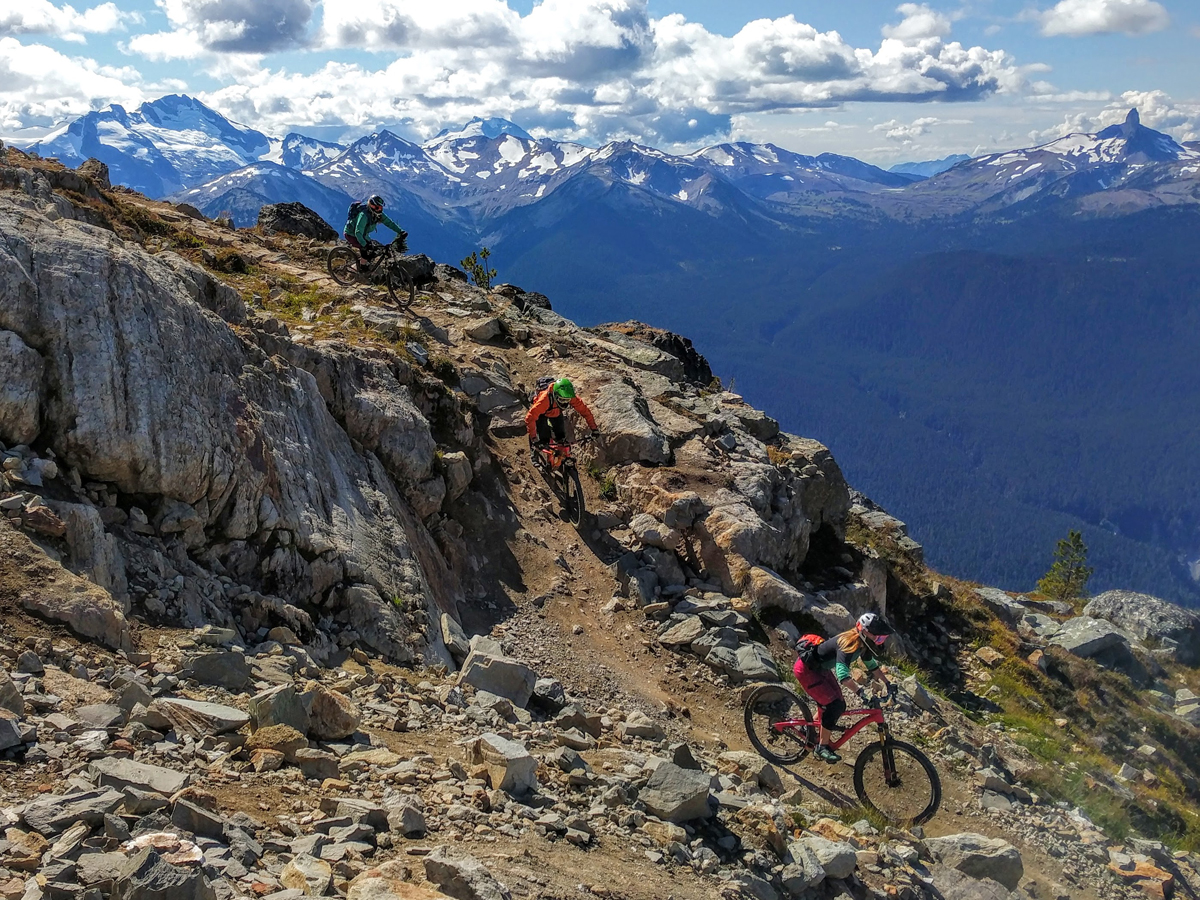
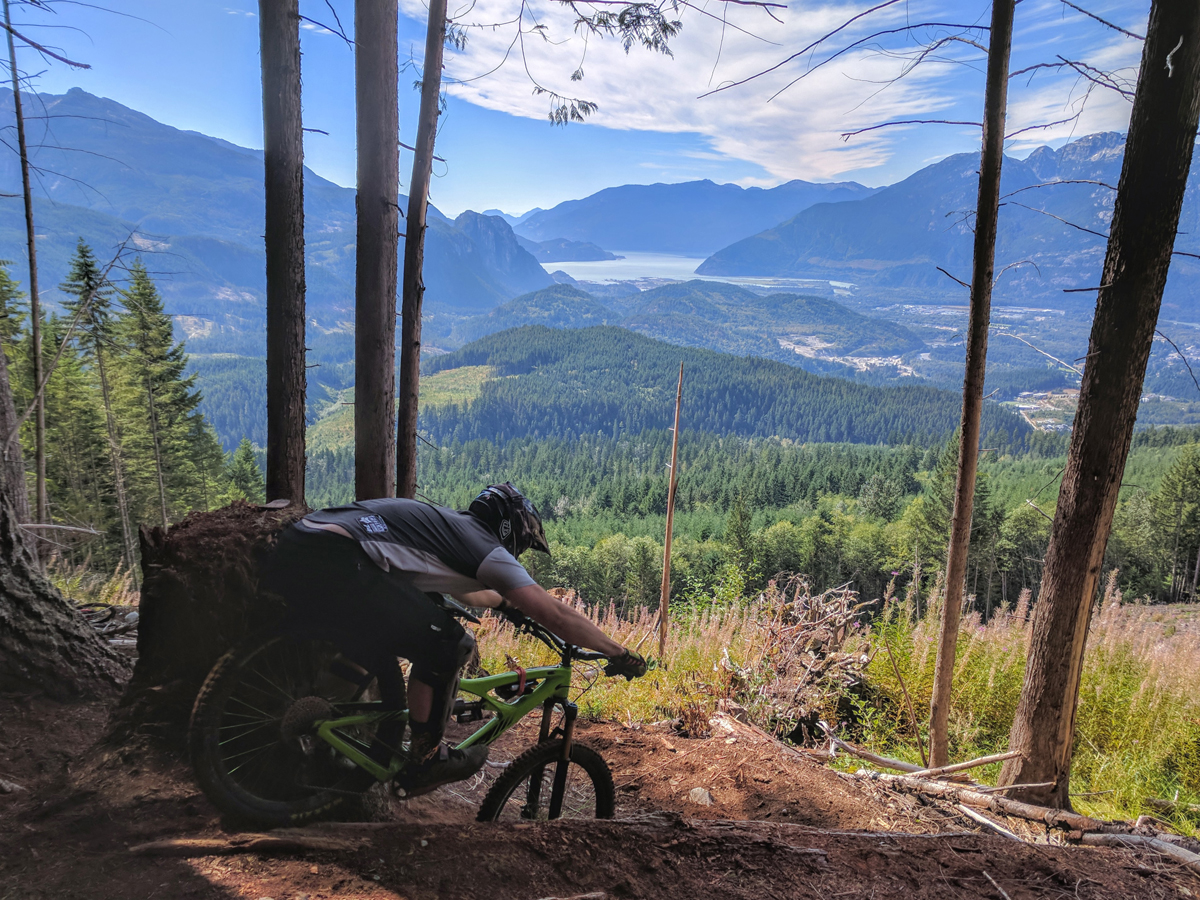
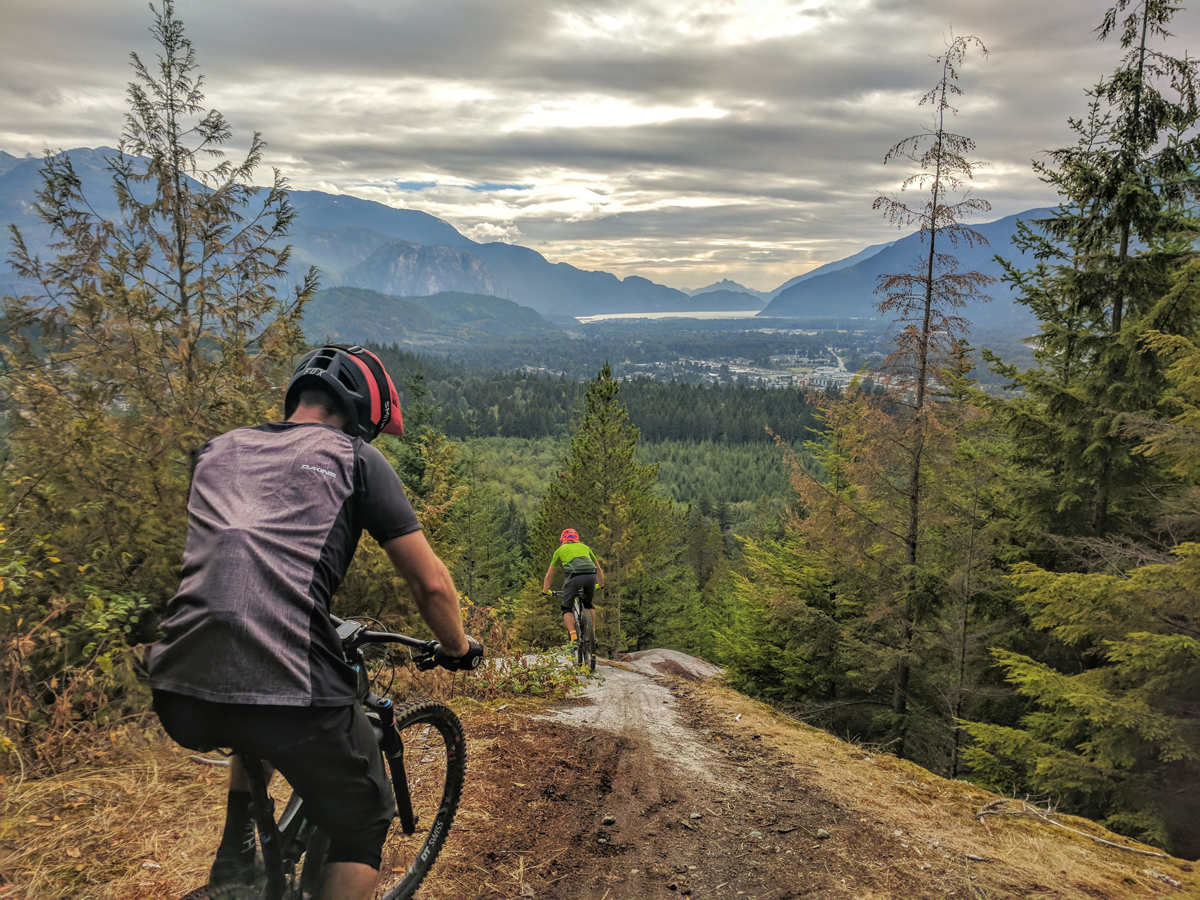
By Eric Kramer — Ambitious plans have a way of falling through. Work gets in the way, resolve weakens, and friends bail. But occasionally the stars align and a great idea materializes, and what started out as a casual discussion bloomed into a full-on road trip to Squamish, British Columbia with seven friends.
One might wonder what would possess someone to drive sixteen hours to ride bikes when we have so many good trails right here in Utah, but once you’ve ridden Jacob’s Ladder and Rush for the umpteenth time, you begin to long for something completely different. Plus, the stories of Squamish and Whistler B.C. are legendary. Loamy dirt that never gets muddy or dusty, granite peaks adorned in glaciers in all direction, and some of the steepest and most challenging terrain in the world. We had to see it for ourselves.
The scenery is epic, but Bryson Deppe keeps his head down to finish the grueling climb up Into the Mystic. Photo by Eric Kramer
After doing some research we determined that June and September are the best times of year to go because there’s more moisture to keep the trail conditions perfect; we opted for September because the high terrain would be open. The weeks leading up to our departure were worrying, though. Forest fires ravaged the Pacific Northwest (PNW), and reports were that Whistler was blown-out, dusty dry and that the air was full of smoke. Then the Deer Valley Enduro Cup ran two weeks before we planned to leave, and we told everyone “Don’t get hurt! Squamish!” at which point Steve proceeded to knock himself out at the bottom of NCS (the only upside of which was briefly forgetting Trump was president), and Sam hurt his shoulder re-running the same stage after Steve’s crash halted the race.
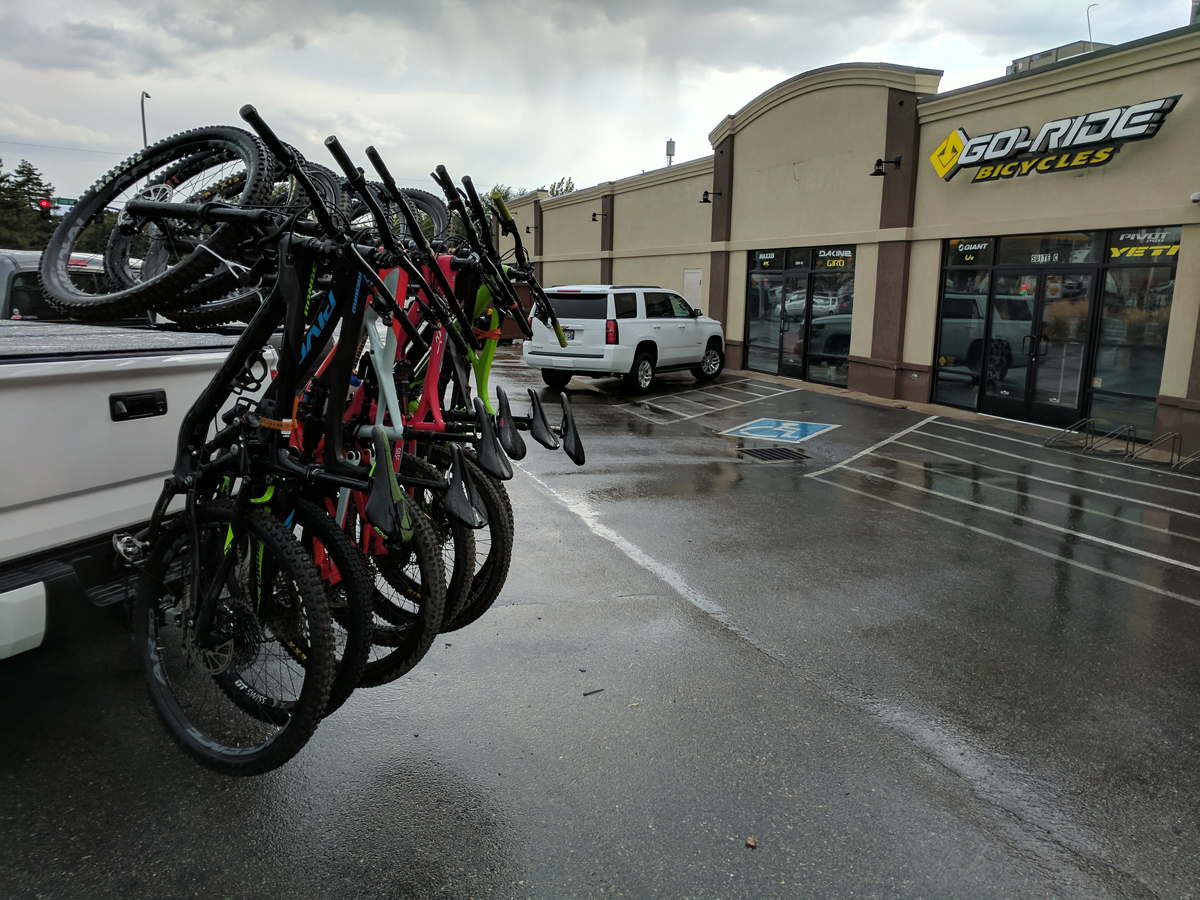
Two weeks later, though, Steve was given the clear to ride again, and the forecast was looking favorable with rain in B.C., so Steve, Bryson and I loaded up Jon’s truck with our bikes, made a final stop at Go-Ride for last minute supplies, and hit the road. Sam, a confirmed “van guy,” would drive up in his van, and Piper and Brett would both be flying in a couple days later. The drive through Idaho, Oregon, and Washington was unsettling. A thick haze of smoke permeated the air, and the sun shown red during the midday hours. But as we reached Bellingham, Washington a sweet, light rain was falling, clearing the air and perfecting the dirt, so we decided to pull off the highway and ride bikes. Within the first few feet of trail at Galbraith Mountain we were all ecstatic to be riding in the PNW; it was raining yet the dirt was hard and tacky, the trails were brilliantly sculpted for flow and speed but with enough intervals of rooty, rocky tech to keep you on your toes. Steve, recovering from a concussion, hadn’t been on a bike for two weeks since the crash, and Piper, his wife, instructed him not to “send it.” But when you’re feeling the flow, you can’t help but send it, and that’s exactly we did.
The Highliners travel crew loaded up in front of shop sponsore Go-Ride ready to hit the road and the 16 hour drive from Satl Lake City, Utah to Squamish, BC. Photo by Eric Kramer
At the bottom of our last descent, the clouds cleared and the sun came out revealing pine-covered mountains rising out of the mist and Bellingham Bay in the distance. This was going to be a good trip. A few hours later we pulled into our Airbnb in Squamish, a cozy place with coffee and bike shops within walking distance, and some of Squamish’s best trails within riding distance. Heading into the Squamish forest for the first time was like entering the forests of Endor, so green with moss and fern and still glistening from the recent rain. We started with a lap down Half Nelson, a fun flow trail that was a little worse for wear after a long dry summer. Nevertheless we all high fived at the bottom, blown away by the quality of the trail.
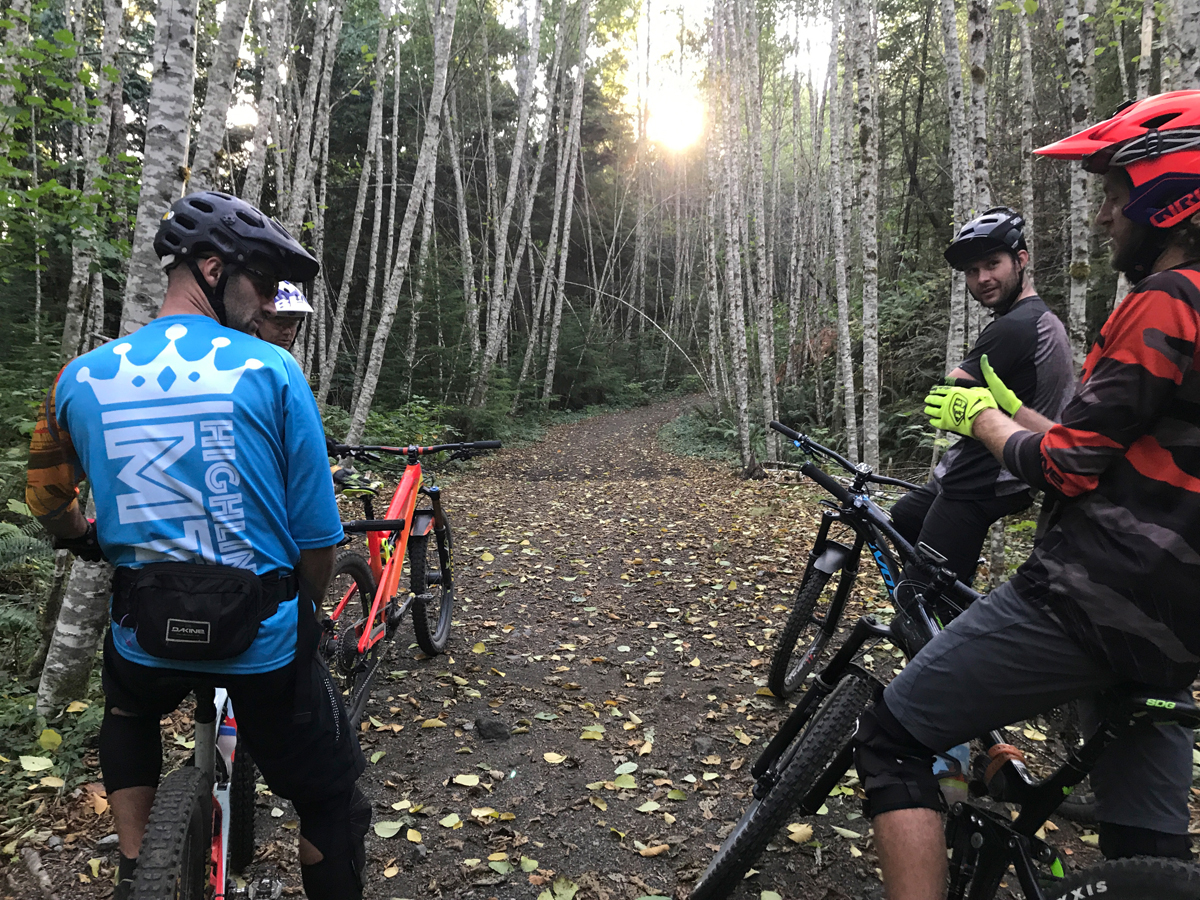
Eric Kramer, Sam Fox, Bryson Deppe, and Steven Sadler getting in all the riding they can before the sun sets. Photo by Jonathan Cracroft
Our real initiation happened later that afternoon when we met up with Sam’s buddy, “Angry Jon,” an American expat who somehow managed to get himself a job at the one tiny college in a town known the world over for incredible biking and skiing. Word was Angry Jon had only skipped riding seven days that entire year, and those were due to his bike being in the shop. He doesn‘t Strava or Instagram; for him riding a bike isn’t about getting likes or KOMs, but is as core to his existence as breathing. I imagine he devoted himself to his scholarly field with the same intensity, landing him a great job in one of the most coveted places you could imagine for a mountain biker.
We met up with Angry Jon and his buddy Tim and loaded our bikes into the back of their decades old trucks into homemade racks made from 2x4s. Blasting up gravel roads at ludicrous speeds, my bike nearly fell out of the rack and off the truck, so Angry Jon had to gun it even more to catch up with Tim so we could yell at him to stop. The trailhead was nothing more than an easily-missed entrance into the thick forest. This trail is not on Trailforks, and it probably didn’t even exist a few months earlier. Dropping in we discovered a whole new definition of steep. Your tires are desperately searching for grip in the soft loam, brakes begin to fade, and you realize that gravity is no longer your friend but your constant enemy who would rather see you lose control and tumble down the mountain.
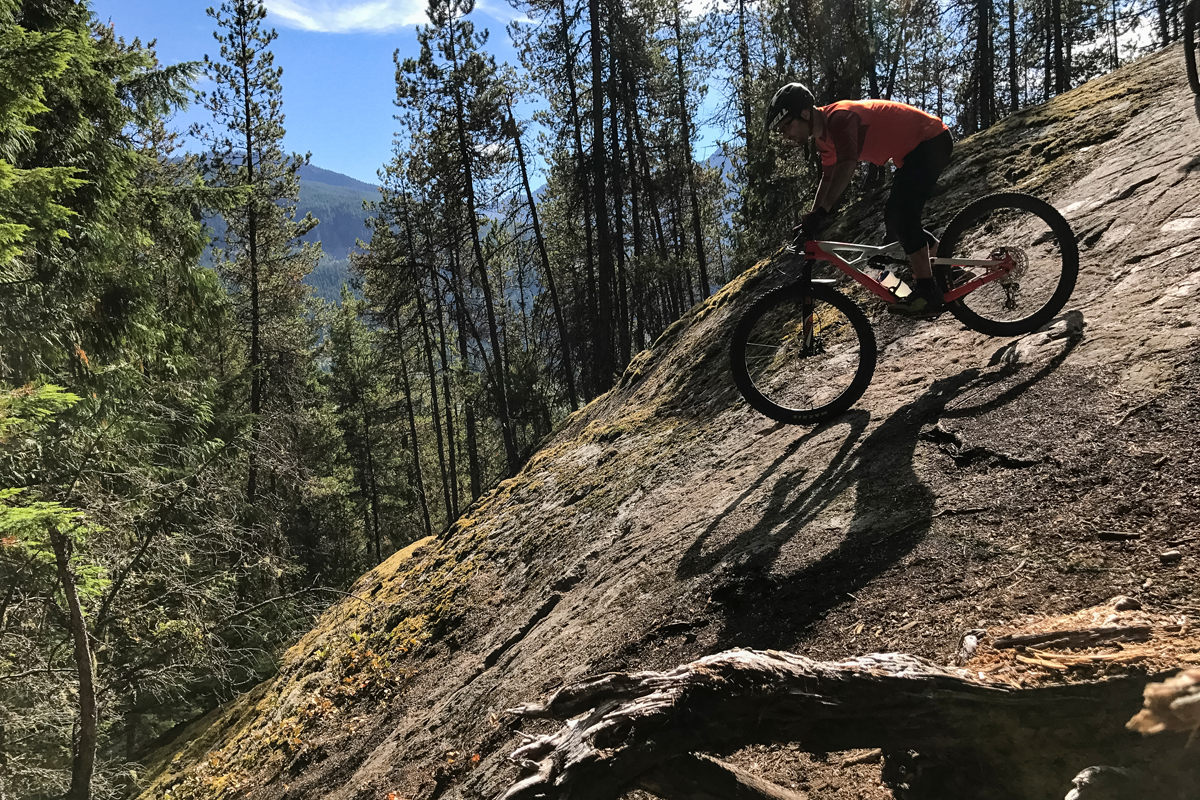
Eric Kramer testing the limits of grip on a Squamish slab. Photo by Jonathan Cracroft
And then there were the granite slabs. The closest thing we have to granite slabs is the sandstone terrain in Moab, yet these are more intimidating than anything I’ve seen there. They tend to be steeper and longer, but you have more grip. They’re usually incorporated into the trail in a way that there’s no ride-around. Angry Jon did his best to prepare us newbs for this novel surface by telling us to grab as much front brake as our forearms could muster, and try not to let the back wheel skid. This is counter-intuitive to most riders who’ve been told over and over that too much front brake results in OTBs. Yet the approach worked: our tires held fast despite the fact that I squeezed my front brake so hard my forearms started to cramp.
Stephanie Nitsch, Sam Fox, and Piper Sadler on the Top of the World trail in Whistler. Photo by Eric Kramer
It doesn’t take long in Squamish to find your limits, though. Angry Jon warned us that a particular chute had taken out many of the best local riders, but I was feeling confident and decided to give it a go. Within seconds I was over the bars going end-over-end while my bike tomahawk-ed down the trail. Later on, after too long a break and idle chit-chat, Sam coined the phrase “less talk more tomahawk-ing!”
For most of my 25+ years of riding, I’ve relied on a good dose of speed to carry me through sketchy sections of trail. But in Squamish the terrain is so steep and unforgiving that the smarter approach is to go in slow with as much control as possible. You have to alter your thinking and turn off the Strava in your brain and realize that going fast isn’t the only measure of riding ability. When it comes to difficulty, every trail in B.C. is rated below an equivalent trail in Utah, so a “blue” trail in B.C. is similar in difficulty to a “black” trail in Utah, and a double black trail in Squamish is more difficult than just about anything we have here. Forget about going fast — riding and surviving the trails here is the ultimate rush.
Jon Cracroft getting over the back wheel on some steep Squamish loam. Photo by Eric Kramer
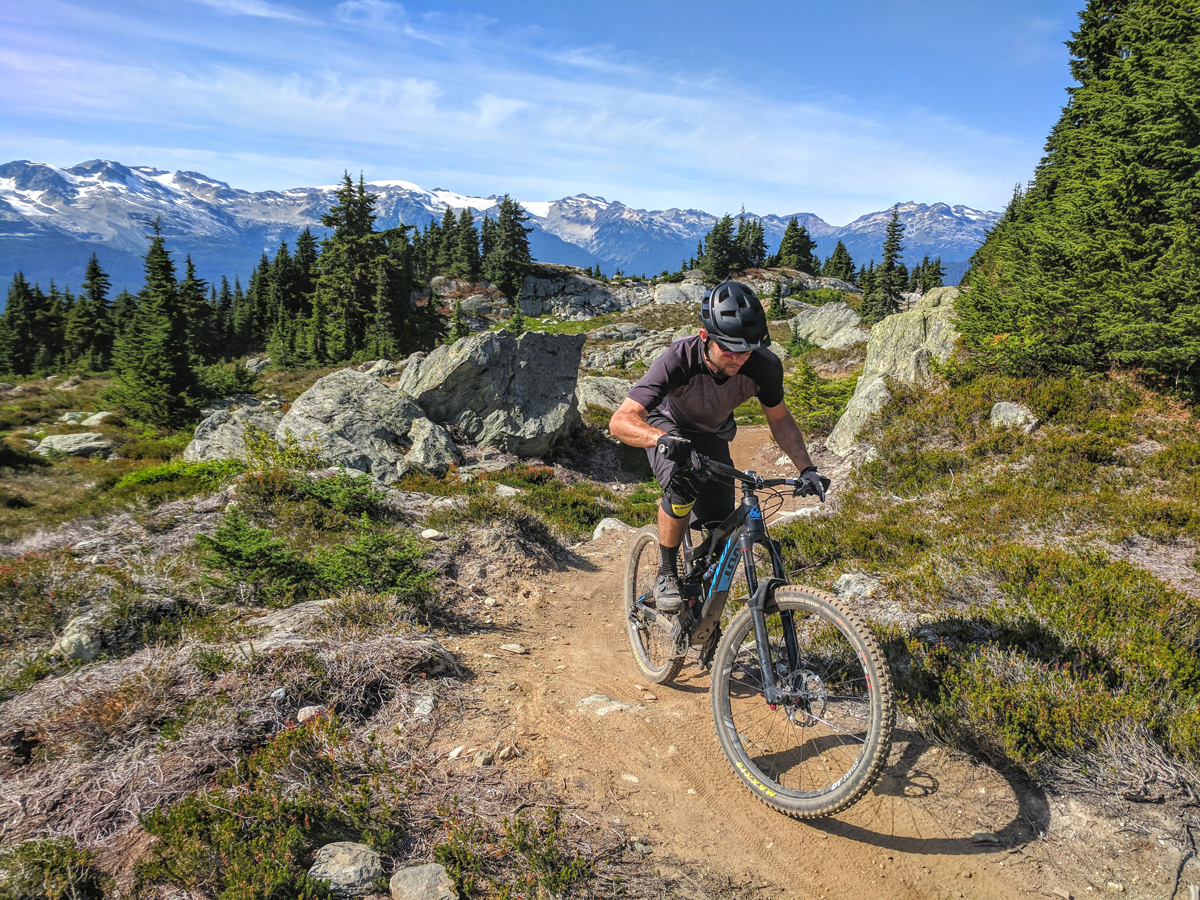
And the steepness doesn’t just apply to the descents. The Canadians are a hardy people and they don’t worry themselves with manageable grades for mountain bikes. Straight up the mountain is the most direct route, so that’s the one they take. It was obvious that Angry Jon was far better at technical downhill riding than us, but he lives at sea level. For our next ride with him there would be no shuttling and surely we would redeem ourselves by showing him how riders from the high elevation state of Utah can climb. When we met up with Angry Jon and his buddy Phil for another ride, both of them had their jerseys off with their helmets strapped to their bars. We were all thinking how undignified that was, but half way into the climb we started to understand. We kept up pretty well until about half way up an old mining road, when we hit a wall. The road went straight up and the surface was full of loose rocks. I was determined not to walk, but after spinning out with my heartrate well beyond the lactic threshold, I gave up and watched Angry Jon and Phil ride away from me. When I finally made it to the top, I was so drenched with sweat from the deceptively humid air that even the contents of my hip pack were soaked. To add a little salt to my wounded ego, Angry Jon remarked that when you see the locals doing something, you should probably do it too. Yeah, he was probably right on this one.
Bryson Deppe and Steven Sadler dropping a granite slab with Squamish and Howe Sound in the distance. Photo by Eric Kramer
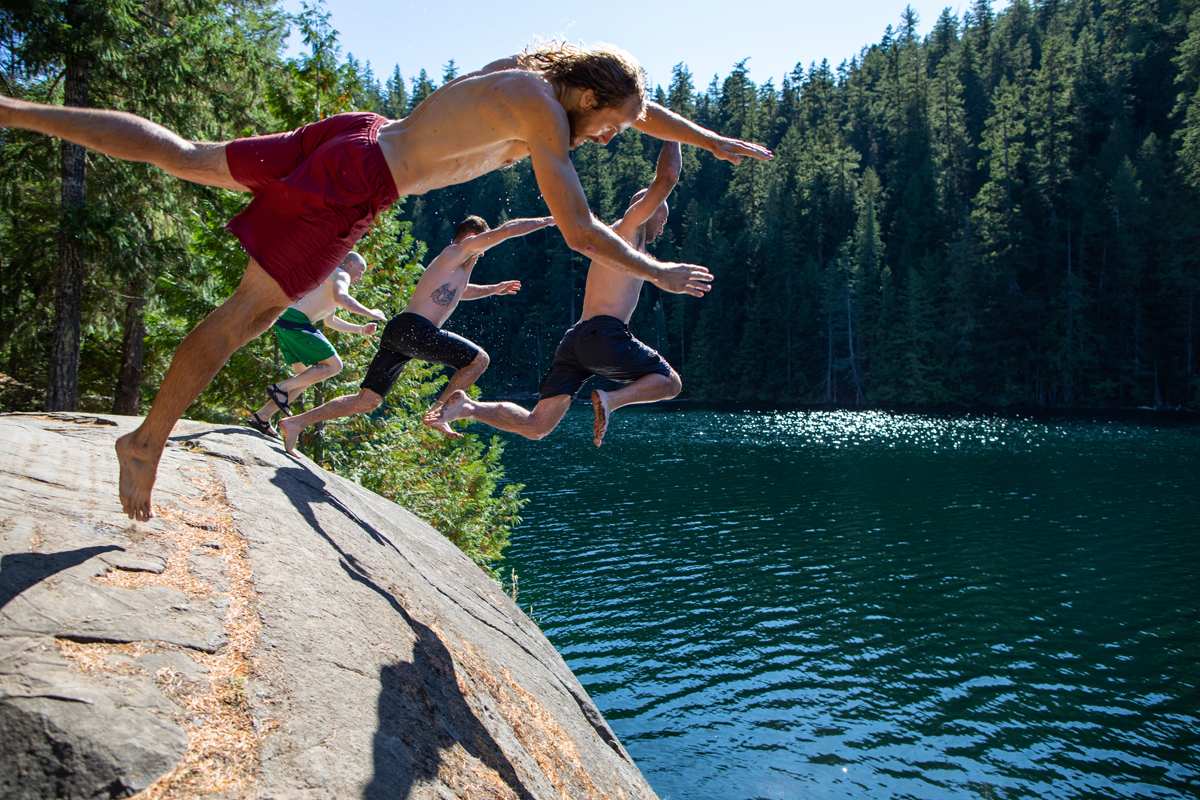
As the week progressed we gained confidence, but our bodies struggled to adapt to the fact that we were doing two big rides every day. We kept it up, though, and by mid-week we rode Top of the World in Whistler, followed by Khyber, Middle of Nowhere, Kashmir, and Kush. This was the most unrelenting technical terrain I have ever ridden with mile after mile of steep, rooty drops and thousands of feet of descending. My arms were failing me and with every g-out my chest came closer to colliding with my handlebars. So the next day we only did one easy ride and spent the rest of the day at a mountain lake cliff diving, swimming, and relaxing with some cold beers.
Steven Sadler, Sam Fox, Bryson Deppe, and Eric Kramer cliff jumping on a much needed rest day. Photo by Jonathan Cracroft
The rest was much needed because the next morning we would ride Into the Mystic and Lord of the Squirrels, a 22-mile, 4500-foot climb into the high alpine of B.C. It’s easy to mistake Into the Mystic as the B.C. equivalent of Park City’s Armstrong trail (after all it’s a similar machine cut wide format trail), but I was quickly reminded as I Eagle’d out into my easiest gear: everything in B.C. is a lot steeper. But the effort was worth it as a couple hours later we entered the most magical zone of granite, glistening alpine lakes and a 360-degree panorama of distant peaks and glaciers. The Lord of the Squirrels descent is only rated as a blue trail, but in Utah it would easily be a black or double black. It’s fairly technical, and dropping 3000 feet in four miles resulted in jello legs at the bottom. From there we decided to be prudent and take the easiest way back, but the double black “AC/DC” trail looked like too much fun, so we dropped it and found even more steep terrain with rock slabs.
Piper Sadler in an alpine wonderland on Into the Mystic. Photo by Jonathan Cracroft
After years of riding the hardest trails in Utah, I started to feel pretty confident in my abilities, but Squamish was an awakening to just how demanding trails can be. We all came back sore and scratched up but in one piece, (although Brett the bee harasser came back with about a dozen bee stings) and with the most satisfying feeling that we went to Squamish and Whistler and gave it our all. The steepness–both up and down, the soft loamy dirt, roots, and rock slabs are what make B.C. trails unique, but we actually have pockets of terrain in Utah that share a lot of these features, and I hope we can learn from the British Columbians and emulate their trails here. In Utah it seems like most of the trails are machine-cut sidewalks, but in B.C. even the XC trails are technical, and the number of double black trails that can work you is mind-blowing. We tried to ride as much as we could, but we barely scratched the surface. And that’s why we’ll be going back this summer, with a little more experience and confidence to take it up to the next level. Riding in B.C. is humbling. There are so many trails and so many of them are harder than anything we have here, but spending time there will make you a better rider, and I came back to Utah with more confidence to ride trails and features that used to scare me.
Tips for planning a trip to BC
Do a thorough tune-up on your bike beforehand and replace anything worn past 50% and put some fresh rubber on for maximum grip
Replace your cables and housing as the B.C. moisture will bond with the months of built-up Utah dust and ruin your shifting
Bleed your brakes–you’ll want them to be performing at their best on the steeps
Take as many spares (derailleur hangers, tires, cables, etc.) as you can as everything is a lot more expensive up there
Take a bike stand and tools if possible, because you’ll end up doing a lot of work on your bike
Train for it like you are training for a week long mtb race–you’ll want to ride as much as you possibly can, and your body will be the limiting factor
Take the biggest bike that still climbs decently, as everything is steep and gnarly and a slack bike with big, grippy tires will make it more rideable; it’s also not a bad idea to go with a smaller chainring because the climbs are so steep
Get as much local knowledge as you can: Angry Jon took us on trails we never would have found and gave us advice on which trails ride and in what order and direction to ride them.
By Katherine A. Beals, PhD, RD, FACSM, CSSD and Breanne Nalder, MS
In the last two protein articles we discussed the role of protein in athletes’ diets, recommendations for protein intake for training and competition and getting adequate protein on a vegetarian diet. In this third and final article we will discuss protein supplements. What are they? Are they necessary or beneficial? Who (if anyone) can benefit from supplementing with them? And, are there any potential hazards associated with consuming them?
Protein shakes are a great way to get additional protein. Photo by Dave Iltis
What are Protein Supplements?
The Dietary Supplement Health and Education Act (DSHEA) defines supplements as any product that is intended to supplement the diet, contains one or more dietary ingredients (including vitamins; minerals; herbs or other botanicals; amino acids) or other constituents, is intended to be taken by mouth as a pill, capsule, tablet, or liquid, and is labeled as being a dietary supplement.
A key aspect of this definition is the notion that a protein supplement is meant to supplement the diet, not replace food sources of protein in the diet. Unfortunately, many athletes overlook this distinction to the detriment of their wallets and possibly their health and performance (as will be discussed later).
There are a plethora of protein supplements on the market today, including powders, drinks, shakes, bars and even pills. In addition, supplements can be comprised of whole or intact proteins or single amino acids and derived from a variety of animal or plant sources. The most common animal sources of intact proteins are albumin (egg protein), casein (one of the milk proteins) and whey (the other milk protein). Soy is the most common plant source of intact protein found in supplements. Each of these is described in more detail below.
Albumin: The primary protein found in eggs. Despite popular belief, all of the protein is not found in the egg white. In fact the average egg contains about 6.29 grams of protein, of which just over half (3.6 grams) is found in the white. The rest is found in the yolk (along with most of the other important vitamins and minerals!)
Whey: is a soluble protein and comprises about 20% of the total protein in milk. It’s often referred to as “fast” protein because it remains soluble in the digestive tract; thus, it is digested and absorbed more quickly. Whey protein supplements generally come in one of three forms:
Whey concentrates: are 80% protein, which means on a dry basis, 80% of the total weight is protein.
Whey isolates: are typically about 92% protein (dry basis), meaning you get more protein and less total carbohydrate, lactose, fat and cholesterol per equivalent dose.
Whey Hydrosylates: Most whey concentrates and isolates are available as intact proteins, but either can be also hydrolyzed. Hydrolysates have been partially broken down by exposing the protein to heat, acid or enzymes that break apart the bonds linking amino acids. This makes it taste more bitter and theoretically promotes more rapid digestion and absorption. However, whey concentrates and isolates are already rapidly digested so a hydrolysate is likely not worth the bad taste or the extra cost.
• Casein: Comprises about 80% of the total protein in milk. Casein is an insoluble protein and is often referred to as a “slow” protein because it remains insoluble in the digestive tract; thus, it is digested and absorbed more slowly.
Soy Protein: is the protein isolated from the soybean. It is made from soybean meal that has been dehulled and defatted. The soybean meal can then be further processed into soy protein concentrate and soy protein isolate.
Soy Protein Concentrates: produced by removing the oil and most of the soluble sugars from defatted soybean meal, come in the form of a white powder containing 65-90% protein (average 70%), plus most of the soybeans vitamins, minerals, and finely pulverized dietary fiber.
Soy Protein Isolates: essentially soy protein concentrates minus almost all their dietary fiber. It contains at least 90% protein.
As discussed in the first article of this series, there are 20 amino acids and, thus, single amino acid supplements can be comprised of any number or combinations of amino acids. The most common amino acid supplements include L-arginine (often marketed as nitric oxide or NO), L-glutamine, the branch chain amino acids (BCAAs) leucine, isoleucine and valine and HMB, (which is not an amino acid but, rather, a metabolite of the amino acid leucine). The merits (or lack thereof) of each will be discussed below.
Will protein supplements enhance athletic performance?
The answer is “maybe”. Certain types of protein supplements, for certain athletes under certain conditions may be beneficial. But before getting into those specific provisos, lets rule out those supplements that are not helpful for anyone under any conditions, starting with amino acid supplements.
Research examining effects of single amino acid supplements on promoting muscle protein synthesis, preventing muscle injury or soreness, and/or enhancing recovery post-exercise has consistently shown no beneficial effects in young healthy, trained individuals (i.e., athletes). A few studies have demonstrated some limited benefits of leucine and HMB supplementation in terms of enhanced protein synthesis and/or prevention of protein catabolism for older and/or untrained individuals. Similarly, there is some limited evidence to suggest that supplementing with BCAAs during high-intensity, ultra endurance events may improve performance; but the dietary comparisons were generally inadequate/inappropriate; thus, the results of these studies need to be interpreted with caution.
The disappointing results from amino acid supplementation research are really not surprising when you think about it. Remember, muscle protein is comprised of peptide chains consisting of hundreds of amino acid. Delivering a single amino acid (or even couple of amino acids) via a supplement is not going to be sufficient to support muscle protein synthesis. Similarly, the amount of the amino acid supplied by a serving of the supplement (typically milligrams) is inadequate in terms of the amount needed to stimulate muscle protein synthesis (i.e., grams). And, the provision of non-essential amino acids, such as L-glutamine is a complete waste because muscle tissue synthesis will never be limited by a lack of this amino acid since it is non-essential (i.e., the body manufactures as much as it wants when and where it wants it).
The research on possible benefits of whole or intact proteins is a little more inconsistent and, thus, more difficult to interpret. The most frequently studied protein supplements include whey, casein, milk and soy. Some studies indicate that muscle protein synthesis is greater after whey protein consumption than either casein or soy both at rest and after resistance exercise. While, others show that protein supplementation before or after resistance training, regardless of the source, increases lean tissue mass and strength over isocaloric placebo. It is worth noting that those studies, which have shown benefits of whey over other protein sources, have examined short-term effects on indirect measures of muscle protein synthesis (i.e., not actual gains in lean tissue and/or strength). The few long-term studies examining the effects of different protein sources on lean body mass accrual and/or strength gains have either found no difference between sources or have found milk protein to be superior to either whey or casein.
It should also be emphasized that of the studies demonstrating beneficial effects of protein supplementation on muscle protein synthesis, the majority have been done on individuals undergoing resistance-training protocols. There is little scientifically valid evidence indicating that protein supplementation will improve either performance or recovery in cyclists (especially if carbohydrate intake is adequate). In fact, of the few studies that have examined this issue (three at last count) only one has shown a benefit, and again it was on acute, indirect indices of muscle protein synthesis. Studies that have actually employed direct measures of recovery (i.e., markers of muscle tissue damage, indices of muscle soreness and fatigue and/or subsequent performance) have found no advantage of protein supplementation post exercise.
Finally, it is important to point out that the amounts of protein typically used in supplement studies are small (in the range of 10-20 grams of protein supplying just 6-10 grams of essential amino acids). Such small amount are easily and much more inexpensively obtained from protein rich foods. And, research has shown that there are diminishing returns with protein intakes greater than 20 grams (i.e., protein taken in amounts greater than that is simply oxidized—in other words, used for energy, not muscle protein synthesis).
Ok so they don’t really help; but can they hurt?
Besides being expensive, protein supplements may displace carbohydrate-rich foods from the athlete’s diet. And, for the endurance athlete this can be extremely detrimental to performance (since carbohydrates are the primary fuel for high intensity exercise). Once your muscles become carbohydrate depleted, fatigue sets in and you can kiss your performance goodbye. A cyclists diet should provide extra carbohydrates, not extra protein. Finally, excess intake of protein supplements (to the exclusion of “real food”) may result in nutrient deficiencies since no manufactured supplement can provide the extensive variety of vitamins, minerals and phytochemicals found in whole, natural foods.
So is there anyone who can benefit from a protein supplement?
As was indicated in the first article of the series, both research and anecdotal evidence suggests that the majority of endurance athletes either meet or exceed the current protein recommendations; thus, a supplement is completely unnecessary (and largely a waste of money). However, for those athletes who are unable or unwilling to consume adequate amounts of protein from food sources, a supplement might help them meet their protein requirements. If an athlete falls into the above categories he/she should choose a whole/intact supplement containing albumin, soy and/or milk proteins at a dose of approximately 20-40 grams.
Katherine Beals, PhD, RD, FACSM, CSSD is an associate professor (clinical) in the Division of Nutrition at the University of Utah. She is a registered dietitian, a certified specialist in sports dietetics and a fellow of the American College of Sports Medicine.
Breanne Nalder, MS recently completed here master’s degree in nutrition with an emphasis in sports dietetics at the University of Utah and is a competitive Cat 1 cyclist. For personal nutrition coaching, you can reach Breanne at 801-550-0434 or [email protected].
SALT LAKE CITY, Utah (November 9, 2022) — An uptick in distracted and impaired driving resulted in April 2022 having the highest number of road fatalities involving people not in a vehicle in Utah history.
A cyclist on the 200 E protected bike lane. Protected bike lanes are a key part of safe cycling systems. Photo by Dave Iltis
To address this uptick, Bike Utah, a statewide advocacy organization, is hosting policy makers and professionals from multiple industries around the state at the first Utah Safe System Symposium on November 10. Participants will engage in discussions and presentations about current trends, as well as begin to identify a collaborative statewide approach to safety-related research, education, policy, and outreach that improves outcomes for all road travelers.
“We started planning for this symposium in the spring of 2022, when Utah first experienced the uptick in deaths of cyclists,” said Bike Utah Executive Director Jenn Oxborrow. “Sadly, just last week, we were again reminded of the need for enhanced safety when two Ironman cyclists suffered serious bodily injuries caused by an impaired driver in St. George. These preventable deaths and injuries confirm the exigency for policy makers and industry professionals to collaboratively implement complete networks of safe transportation systems for all travelers in Utah.“
With the recent announcement from Governor Cox and Utah Department of Transportation, to expand a network of bike paths throughout Utah, planning for the safety of all Utahns on roadways is more important than ever.
WHERE: University of Utah, Hinckley Institute of Politics, 260 Central Campus Drive (Gardner Commons, Room 2018)
WHO: Presenters and panelists include Positive Psychologist Louis Alloro; Deputy Director Sarah Hodson, Utah Department ofHealth and Human Services, Office of Health Promotion and Prevention; Deputy Director Ted Knowlton, Wasatch Front Regional Council; Representative Jeff Stenquist, Utah House of Representatives; Mayor Dirk Burton, City of West Jordan
This desire line crosswalk on Highland Drive is an injury waiting to happen. Salt Lake City has delayed a safe crossing here for years. Photo by Dave Iltis
Crosswalks:
You may have heard that the law requires cyclists to walk their bikes through crosswalks, but this is more of a suggestion than a rule. However, intersections can be dangerous, so become familiar with these rules, and use good judgment:
Don’t ride where bikes are prohibited
Obey signs and city laws that prohibit bikes on sidewalks, crosswalks, or pathways. These rules often have good reasons, and you can be fined for not doing what they say.
Remember that you have the same responsibilities as a driver
You must yield to pedestrians before turning through a crosswalk. Also, if there is a T-intersection on your left, you are still required to stop at the stop sign or stop light. There could be a pedestrian in the crosswalk – if you don’t stop and hit the pedestrian, you will be responsible.
You Must Ride or Walk at a Reasonable Speed
The law states that a cyclist may not ride in a crosswalk at a speed greater than is reasonable and prudent under the existing conditions, while paying attention to any potential hazards. Some arbitrators and judges have interpreted a “reasonable speed” for a cyclist crossing a crosswalk to be the same speed at which a pedestrian would travel.
Riding Your Bike on the Right Side of The Road, May Be Your Best Option
If you keep your bike on the same path as the shoulder of the road and out of the crosswalk then the crosswalk rules above do not apply. You just have to ride as close to the righthand edge of the roadway (or left of cars turning right) as practicable and under the speed limit.
Jamie Morningstar and her DIY Handlebar lights. Photo by Stephen Morningstar
Bike Lights:
Its that time of year when temperatures start to warm up, but the days remain short. Many rides start or end in dark. Proper preparation and understanding of your duties as a cyclist is important.
Make Yourself Visible
Take extra steps to ensure your safety every time you ride in the dark. This includes thinking about what you wear and about what you put on your bike. Most cycling kit manufacturers have reflective materials built into their kits. If you know your ride will include low visibility or darkness, then choose the kit that has bight colors and reflective materials.
Keep Bike Lights with You and Know When They Are Required
Utah law requires bicycles to be equipped with a white headlight, red taillight, and side reflectors – all visible from 500 feet. The lights must be on a half hour after sunset till a half hour before sunrise. So if you morning ride starts are 6:30am, but sunrise isn’t until 7:15am, you must have lights on until 6:45am. Same thing in the evening, if sunset is at 7:50pm, then lights must be turned on at 8:20pm.
Always make sure your bike lights are fully charged before a ride. If the battery dies and you are hit by a car, then you will bear some responsibility for the collision.
If for some reason your light dies, then end your ride and have someone pick you up. Do not continue riding in the dark.
By Eric Kraan — Whether you understand Utah’s present traffic safety shortcomings as a recent uptick in traffic fatalities or see it as a long-term trend, it is undeniable that changes are necessary.
The Utah Department of Transportation’s (UDOT) 2016 Strategic Safety Plan set a goal to reduce fatalities by 50% by 2030. This meant, back then, an average annual reduction in fatalities of 2.5%. Today, UDOT would need to reduce fatalities by about 10% annually to meet this goal.
In simple terms, the current strategy has failed.
Thankfully, the new National Roadway Safety Strategy offers the transportation community an opportunity for meaningful change. We must seize the moment.
Protected bike lanes like this one on 200 West in Salt Lake City are a key part of a safe transportation system. Photo by Dave Iltis
Change is Disruptive – Resistance a Choice
The National Roadway Safety Strategy calls for state and local transportation organizations to implement a radically new Safe System Approach and realign their safety culture to these six principles:
Deaths and serious injuries are unacceptable
Humans make mistakes
Humans are vulnerable
Responsibility is shared
Safety is proactive
Redundancy is crucial
Long-held values of the transportation profession are most likely to be challenged by principles #2 and #4, and as a result, the decision-making process could suffer from cognitive biases.
If the safe system approach is to succeed, it is critical to identify and proactively address this safe system fallacy.
Let us first consider what principle #2; humans make mistakes, asks a transportation professional to accept:
Thus, the insistence by many DOTs to overly rely on educational campaigns aimed at changing roadway user behavior (an inevitable external factor) to reduce the negative outcome of crashes is not part of the safe system approach.
Let us now consider what principle #4; responsibility is shared, asks a transportation professional to accept:
Organizations that engage in cognitive bias while defining the second principle will find it hard not to double down and assign responsibility to people who inevitably will make a mistake, confirming the existence of a safe system fallacy.
Self-serving bias is the tendency to attribute internal, personal factors to positive outcomes but external, situational factors to negative outcomes.
Are the Utah Department of Public Safety and UDOT entangled in a safe system fallacy?
On May 18th, the Utah Department of Public Safety (DPS) presented a report to the Utah State Legislative Transportation Interim Committee titled: The National Roadway Safety Strategy — How Utah is Applying the Principles. This document depicts heavy reliance on efforts to influence road user behavior, such as; community education, media campaigns, and high visibility enforcement campaigns.
The DPS also denies that the National Roadway Safety Strategy offers anything new to the state’s Zero Fatalities Strategy:
These principles are not new initiatives in Utah, as they align with the current strategies of the Department of Public Safety and the Utah Department of Transportation.
The DPS continues, in predictable fashion, to double-down and redefine the fourth principle as:
Shared responsibility crosses all stakeholders, including law enforcement agencies, local government, advocacy groups, nonprofits, health and medical, emergency medical services, and most importantly, the drivers and road users themselves. (Stress added)
This evidence suggests that UDOT and DPS are entangled in the safe system fallacy. Academic papers point out the need of individuals and organizations become aware of this condition, and for Federal Agencies and State Legislators to provide them the appropriate tools to correct the condition.
Fortunately, Federal agencies are voicing out awareness of this problem. NTSB Chair Jennifer Homendy has voiced her concern that the highway safety community remains confused about how the Safe System Approach differs from flawed traditional approaches, such as Utah’s Zero Fatalities:
We need to ditch our overreliance on ineffective education and enforcement campaigns to address increasing death and look to much better, long term solutions, Chair Homendy stated.
Similarly, the FHWA has shared the correct definition and context that state agencies, like UDOT and the DPS, must employ when defining the fourth principle:
The intent is to de-emphasize the role of individual road users and rebalance the distribution of responsibility for road safety outcomes. While individual users play a role and their behavior is wrapped into the design of vehicles and roadways, a systems approach assigns responsibility to those who plan, build, and maintain the transportation system and the vehicles that travel upon it.
Overcoming Safe System Fallacy
As we stated already, overcoming cognitive biases requires awareness made with some sort of benchmarking tool to help gauge the decision-making process.
The Vision Zero Network, for example, has long identified the lack of a best practice benchmark as one of the most pressing obstacles to its successful implementation.
What is a best practice benchmark, and how can it help the safe system approach succeed?
Safe System Benchmarks
A safe system approach must provide a planned process for organizations to compare their health and safety processes and performance with others and learn to reduce roadway fatalities and serious injuries. A Safe System Benchmark must answer the following questions:
What does it want to achieve? This question enjoys universal agreement – ZERO fatalities.
What to benchmark against? The yardstick must embody the values of the system it tries to measure.
The cost of benchmarking? It must be cheap enough to implement, but not too cheap to fail.
How will a benchmark improve compliance and reduce costs? A safe system is an efficient system.
Lamentably, the US DOT did not provide a safe system benchmark to assist state and local stakeholders overcome a potential safe system fallacy when implementing the National Roadway Safety Strategy. Therefore, it is necessary to search elsewhere for feasible solutions to this troublesome issue.
A reasonable approach calls for narrowing my search to places where the safe system approach has seen success and comparing their strategies to ours: The Netherlands was an obvious first choice.
First, there is no reason why Dutch transportation professionals would be less prone than their American counterparts to find themselves entangled by a safe system fallacy. Examining their safe system approach may provide evidence of a safe system benchmark, and explain how their professional transportation community has been given the tools to overcome this fallacy.
Reference: Sustainable Safety 3rd edition – The advanced vision for 2018-2030, SWOV.nl
How does this table answer the four questions of a safe system benchmark?
It agrees with the goal of achieving Zero Fatalities.
It creates a yardstick that embodies the values of the safe system approach and measures tangible progress towards the creation of a safe roadway system.
It is data-driven and requires almost no upfront cost since it uses established and generally accepted scientific information. Further, benchmarking the current inventory of existing roads and new projects can also be done at little additional expense.
Adopting this safe system benchmark improves transparency: the public can easily compare an existing or proposed roadway against a simple-to-read table. It improves accountability: transportation agencies are held accountable only for internal elements they control. It improves budgeting: roadway inventory can be prioritized based on a safe system rating.
Conclusions
The success of a safe system approach requires that transportation professionals, such as UDOT and the Utah DPS, be able to overcome a safe system fallacy. The US DOT appears to recognize this problem but has not provided a safe system benchmark to assure compliance with the National Roadway Safety Strategy.
As a result, it is up to the public to pressure State Legislators into adopting a safe system benchmark, similar to the Dutch approach, to safeguard public safety and prevent state transportation professionals from stalling their efforts by engaging in cognitive biases.
By Tom Jow — While on a riding trip last month a friend had a derailleur cable break near the end of that day’s ride. It was no big deal because we were at the top of the downhill back to the car, and I had a new one back at camp. Even if we didn’t have a spare, we were near a town with several capable bike shops. But what if we weren’t?
When traveling it may be difficult to find a bike shop that is easy to reach during their business hours. In addition, arriving at said bike shop does not guarantee they will have the parts we need, or the time to install them right away. Not being able to find a part we need can really ruin a trip. For these reasons, it is a good idea to carry at least a small inventory of tools and parts.
Spare parts for travel. Photo by Tom Jow
There are several things to think about when selecting spare parts for the trip. One factor to consider when packing our travel spares is our repair skill level. It makes no sense to bring a hydraulic brake bleed kit if no one in the group knows how to use it. Another consideration, as mentioned before, is how convenient is the nearest bike shop that will have what we need. It is impossible for a bike shop to have everything for every type of bike. Finally, what is the likelihood of breaking something? For example, I like jumping. On a different trip not long ago, I came up short on a jump with my rear wheel making a direct hit on a log. It sounded to me like my wheel would have at least one crack in it.
Lucky for me, the wheel suffered no apparent damage and lasted through four more days of increasingly rugged riding. Also keep in mind that whatever breaks might ruin the trip. Any proprietary component, or component that is not compatible with mass market parts (my friend still has 10-speed shifting) needs to be considered. However, don’t get carried away. For the rare case when something big, like the frame, breaks we probably have bigger problems than just the broken frame.
As someone whose job was maintaining a fleet of racing bicycles across far flung corners of the world, it’s easy to think I travel with everything including the kitchen sink. Nothing could be farther from the truth. What do I travel with? Toolbox, tire pump, shock pump, chain lube, spare tubes, cables, cable housing. Since my last few trips (and this article), I will be stocking up on more items for the future. Keeping in mind road riding offers less opportunity than dirt riding to break things, here are some suggestions:
By Joe Kurmaskie — If you’re anything like me, then a good bike ride not only clears your head and moves your blood around, but it can put you into the best of trances. The bike acts like a perpetual meditation machine.
I tend to go quiet; a very unnatural state of existence for me, but not an unpleasant one, just damn hard to achieve on my own. Rain, wind and car horns become background. My outer shell performs lifesaving moves that have become second nature over the years. When I come back to Earth I either think I have the next great thing, or a bunch of broken thoughts that make me happy, or at least engaged. Either way the bike helps tap into something.
Joe Kurmaskie riding in Africa. Photo by Dave Welch
That’s where I came up with my Things-I-Used-To-Do List.
Today My To-Do list had gone missing somewhere between the garage and my rain jacket so I was flying blind, trying to conjure a virtual version of it on a screen inside my head. As I squinted my mind’s eye to get a better look, my list kept morphing into something else; old cartoons of Foghorn Leghorn, a few favorite food items from the actual list, a scene from The Big Lebowski, the one where The Dude gets hit with the coffee mug by “that reactionary police officer up in Malibu.” So I let go of my list and kept pedaling in the direction of the first place I needed to be that day. I could remember that at least.
Somewhere during the first climb, the trance set in and a new list formed.
My Things-I-Used-To-Do List
I used to play the trumpet morning and night. (seriously, I was my junior high school’s bugle player. Rain or shine, I had to pedal to school before the bell to play the morning revelry and the afternoon dismissal. And when our vice principal had a breakdown and was carted out in an ambulance, I resisted the urge to play taps. On the last day of school I did blow a couple bars of Hit The Road Jack. Dean Abel chased after me but I had my bike waiting in the wings and an entire summer into which I could escape.
I used to sit on roofs with my best friends, watch planes fly over and stars come out, and sneak a beer up there that Jim or Norwood would knock over after two or three sips. Someone would always jump instead of climb down for it.
I used to race anyone on two wheels… mostly without them knowing it. Sometimes they’d take up the charge. Now I act like it’s an affront to my civility if someone blows by me. What they hell happened to me?
I used to get my hands dirty helping others. Now I send in a check and get a membership card. But dirty feels better.
I used to taste each piece of candy. I can’t remember what I ate yesterday.
I used to wear Hawaiian shirts because I liked them. I looked bad in them, still do, but I didn’t care.
I used to sit at the bottom of the pool until it was almost too late. Then crack the surface and it felt like being reborn. I need to find a pool stat.
I used to own no electronics. Wait, I gotta take this…
I used to order three scoops. Not three scoops of nonfat, taste-free fro-yo, but the real stuff.
I used to laugh at people who said they were tired too often. Now…
I used to never check the weather.
I used to take long bike tours with no destination.
With each item added to the list, I pump the pedals harder.
At the end of the ride, my extensive Things-I-Used-To-Do list should have made me a jumble of regret and melancholy. But no, it woke me up. All of it made me smile because much of it I’m going to do again, soon. Whomever you race home next, promise me you’ll invite them up to the roof, to laugh under the stars again, and bring up a carton of real ice cream. And if it’s me you’ll know, I’ll be in one in the Hawaiian shirt with the chainring grease marks on my calf.