By Joe Kurmaskie aka the Metal Cowboy — Let’s talk about slipping into something a little more uncomfortable; a no holds barred bike ride. Don’t look at the forecast or your schedule, just roll that rig out the door and go.
I’ll make the case for ending more of your days tired, sweaty, hungry, wet, grease covered, maybe bloodied in a few places, parched, legs like two bags of wet cement, but a grin so wide and lasting it’ll take weeks to wipe it off your face.
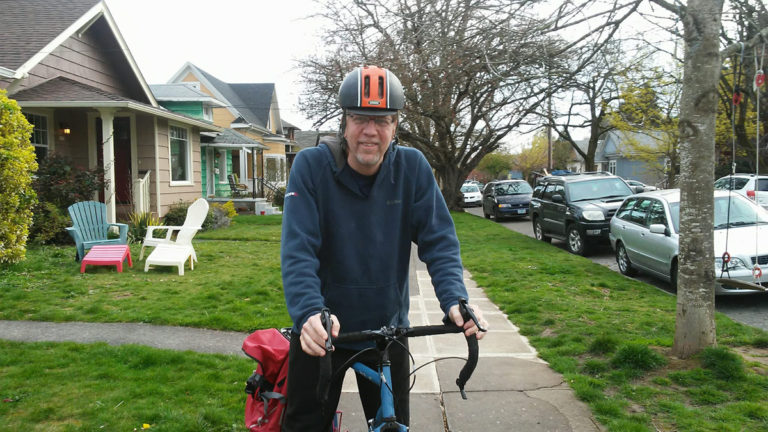
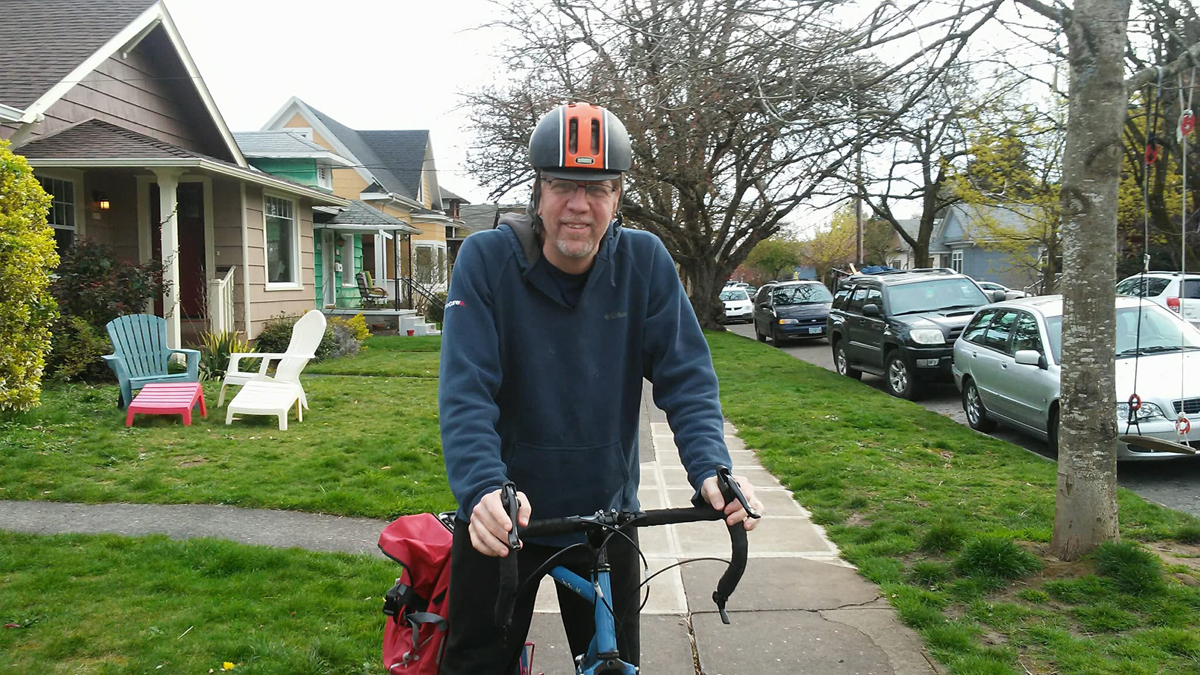
Joe Kurmaskie on a recovery ride. Photo by Matteo Kurmaskie
Why would I want to help you find this redemption through sweet suffering? Because, as a travel adventure writer seeing the world from atop a bike saddle, that’s my calling. But more so since a life threatening genetic disorder rode shotgun in my life the past few years, steering me right up to the brink of death. But it couldn’t close me out. This has made me appreciate every sore muscle, headwind, hill, sideways rain and the baptismal cleanse of a 100 percent humidity ride.
Funny that the first words in my first book were:
Oh to be young… and go very, very fast. Today I’m thrilled with my new mantra: Oh to be anywhere, and get to go at all.
The genetic disorder? Hereditary Hemochromatosis, the world’s most common deadly genetic disorder – that few have ever heard of but 1-200 are walking around with undetected. It causes the body to store dangerous amounts of iron in organs, leading to well over 100 presenting, end stage illnesses include 12 cancers, liver and heart failure, diabetes, arthritis and heart attacks – it took down Beethoven, Hemingway, Steve McQueen and Patrick Swayze.
But it’s hard to kill a guy who’s pedaled 200,000 miles on six continents; out sprinted charging elephants (youtube.com/watch?v=jnUWSSe69YI) in Botswana, been hit by the smallest car in Ireland, and lost all my possessions playing darts in an Outback bar…only to win them back in a mountain bike race.
The good news, when caught it in time it’s treatable, without drugs and offers a normal life expectancy. Following a year of hospital visits and treatments that included weekly bloodletting/phlebotomies, I was made whole and put my whole self back into the ride; the delicious, delirious suffering, seeing the world at the perfect pace. I’ve also put my efforts into saving others from the same fate www.ironitout.org
Just as I was beating the odds, another cyclist, one I held in high esteem, lost his rhythm and left the race for good.
One of the best perks of being a contributing writer and columnist for such publications as Bicycling Magazine, Men’s Journal and Outside has been that once in awhile you’ll get a dream assignment. Mine? Interview Robin Williams for 10 Questions About The Bike.
It was time out of mind and something of my own Make-A-Wish Foundation moment, when I heard that familiar voice on the other end of the phone.
I opened the conversation explaining that we’d already met. At least I’d met part of him once. What followed was an awkward silence on the other end of the line. I sputtered on about standing behind a man at Toyboat Ice Cream shop in San Francisco, circa 1988 when a hand so hairy I mistook it for an Amazon rainforest spider reached out for some napkins. I handed the papers goods in question to him.
“So, you see, I’ve met your right hand!”
Williams shot right back with, “You know, I’m on intimate terms with that hand as well!”
This was followed by a half dozen, rapid fire masturbation jokes volleyed back and forth. Both ends of the phone crackling with laughter. From there we were off and running.
We got on like peas and carrots. Riffing with the always on, helium based version of Williams, I was downright giddy about fulfilling a lifelong dream – doing a two person, virtual stage act with a genius for an audience on none. Then I realized in horror that I had only a few journeyman, garden variety answers about cycling… and the allotted time on the phone was almost up.
A little frantic now, I mentioned that for the adventures I wrote about in Metal Cowboy, I thought of my bike as a magic carpet that could take me anywhere. I half expected Williams to do an Aladdin voice and riff in that direction, but there was a long pause…
“You wrote Metal Cowboy?” And everything changed. It was as if he came down off the stage he kept himself protected on and was sitting beside me now. Just two guys on the stoop who liked to ride bikes and make people laugh.
We talked beyond the 30 minutes. Finally, I asked him what the bicycle had come to mean to him.
“No question, Joe. The bicycle’s extended my life. When I ride, everything inside goes quiet. I’m 10 years old again and anything is possible.”
Good journalist trick for expanding a piece is to put the words you like best into other people’s mouths and hope they will agree with it. Then you can go with it as a quote.
“So you’re saying the bike saved your life,” I said.
“No…no I’m not. I’m saying the bike has extended my life. See, nothing in this world can save your life, Joe. Cause life isn’t to be saved. It’s to be spent…but here’s the thing, only you get to choose how to spend the rest of it.”
A flesh on bone moment, something straight out of the film Good Will Hunting that should have made the cut, but didn’t on account of me being the poor man’s, face fit for radio Matt Damon on the other end of the line.
When we hung up I was shaking with gratitude, exhaustion and a little tearful wondering how to spend the rest of mine.
By Russ Hymas and Ken Christensen — The 2013 legislative session was referred to by some as the “Year of the Bike” on Capitol Hill. That year, the Utah legislature passed six bicycle related bills – including Utah Code 41-6a-706, listing bicyclists as vulnerable users and removing the “or other safe distance” language from the 3-foot rule; 41-6a-705.5, making it legal for cyclists to pass cars on the right while traveling on the shoulder of the road; and 41-6a-305, allowing cyclists to pass through a red traffic signal after waiting 90 seconds and determining that the traffic control signal did not detect the cyclist’s presence.
Since 2013, very few bicycle laws have been presented to the legislature. However, during the 2017 legislative session, our office drafted and asked Representative Karen Kwan to sponsor legislation (HB170) that helps cyclists receive fair compensation for their damaged bike as quickly as possible. Both legislative bodies passed the bill, which was recently signed by Governor Herbert. 78A-8-102 now allows a cyclist injured in an accident to resolve the claim for damage to their bicycle (and other personal property items) in small claims court, without limiting their ability to make a claim for bodily injury against the same defendant in a separate legal action.
A few years ago, the legislature had passed a law creating a pathway for injured persons to resolve their property damage claims in small claims court without affecting their ability to later pursue an injury claim. However, the original law didn’t have cyclists in mind, and limited that right to claims of property damage to a motor vehicle only – meaning that in cases of an auto vs. bicycle collision, the cyclist would be forced to bring all their claims at one time. This meant that the repair or replacement of a damaged bike was often put on hold for months, sometimes years, while the cyclist recovered from his/her injuries.
We drafted HB170 to fix that problem and give cyclists the same rights that other motorists enjoyed. And thanks to Rep. Kwan’s efforts and support, the law has now been changed to allow any property damage (including bicycle damage) from a motor vehicle accident to be brought in small claims, without affecting a future bodily injury claim for the same incident. The bill also raised the small claims court limit from $10,000 to $11,000.
This change in law was important because most insurance adjustors do not understand the value of road bikes, including their wheels and componentry. As a result, they routinely make settlement offers so low that they leave the injured cyclist bewildered and frustrated. A client of ours was recently given a settlement offer for their damaged bike that was 30-40% of his bike’s actual value. The adjustor’s reasoning? He had found a “comparable bike” on Ebay – it wasn’t carbon fiber and had Shimano Tiagra components instead of the Dura Ace that was on our client’s bike!
In the past, when insurance companies refused to increase their offers, cyclists couldn’t get money for their bikes until their injury claims settled months or years down the road. Many cyclists would just give up and take the low settlement offer for their bike so they didn’t have to wait so long. Now, as of May 1, 2017, cyclists can present their property damage claims (bikes and accessories) to small claims court and force the insurance companies to pay fair value for the property damage associated with the motor vehicle accident.
If you have any suggestions for legislation, or see a need for changes to our Utah cycling laws, please reach out to us on Facebook or on our website at UtahBicycleLawyers.com.
By Charles Pekow — Everybody gets around faster when e-scooters are available. So says a study from the universities of Florida and Alabama. Scooters keep some people out of cars, reducing traffic, says the report Micro-mobility as a Solution to Reduce Urban Traffic Congestion. It drew its conclusions from examining systems in Washington, DC, and the University of Birmingham in Alabama.
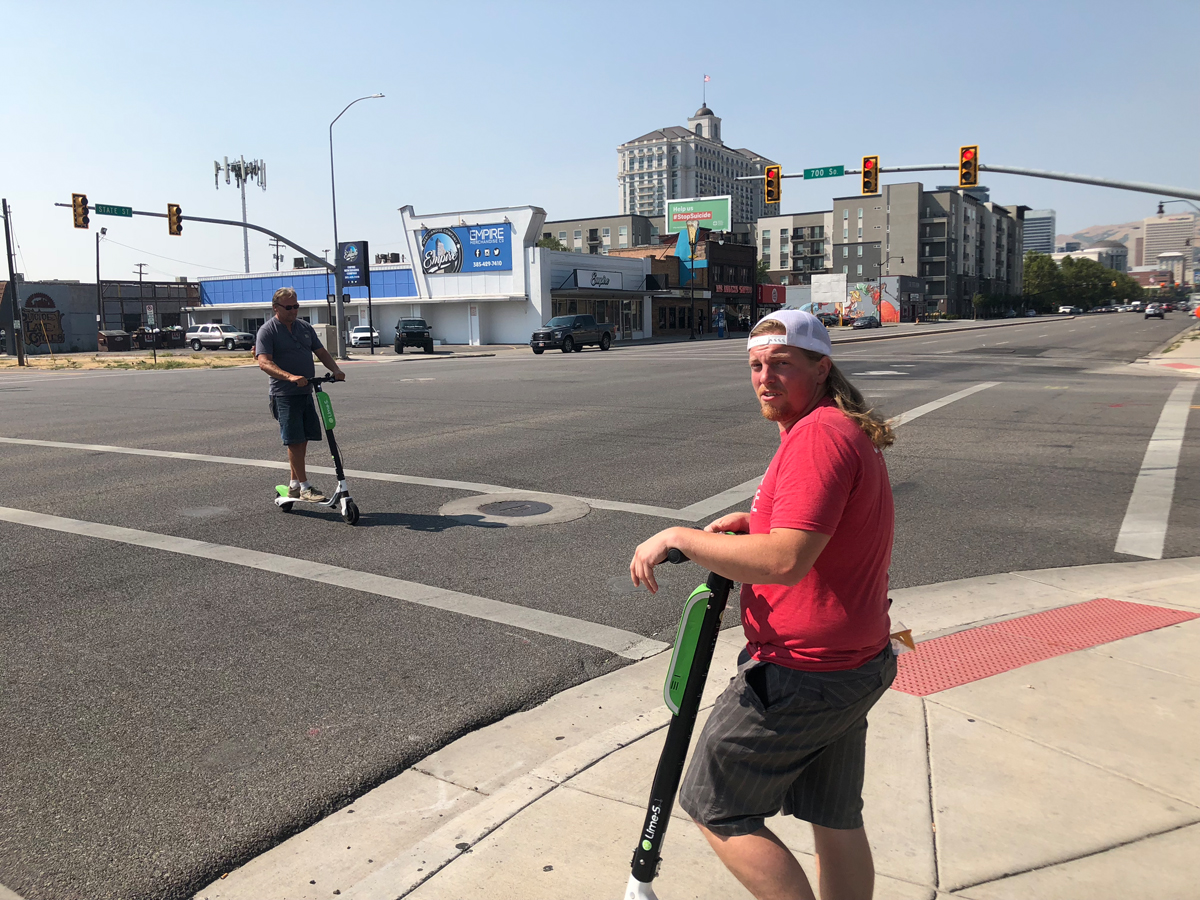
Scooters are a new form of Active transportation on State Street in Salt Lake City. Photo by Dave Iltis
The researchers found that very few studies have been done on the effects of micro-mobility on reducing traffic and smog.
The highly-technical study offers tools for cities on how to measure scooter use and design and operate scooter systems. It includes a research review and methodology. Only a real mathematical nerd could understand it but those who do could use it as a tool to understand and improve scooter/bikeshare systems. The authors note that the specific characteristics of Washington could play a factor (the greatest scooter use, for instance, took place in the tourist zones). See https://stride.ce.ufl.edu/project-b3/
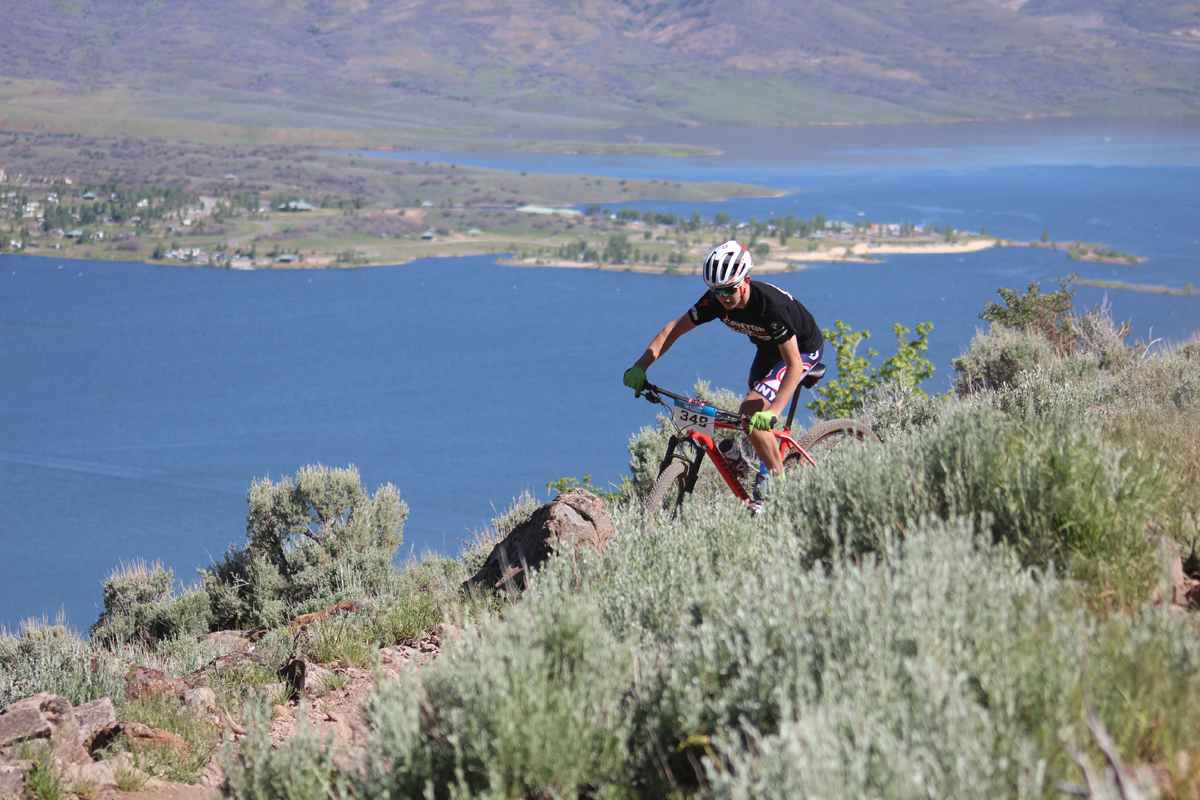
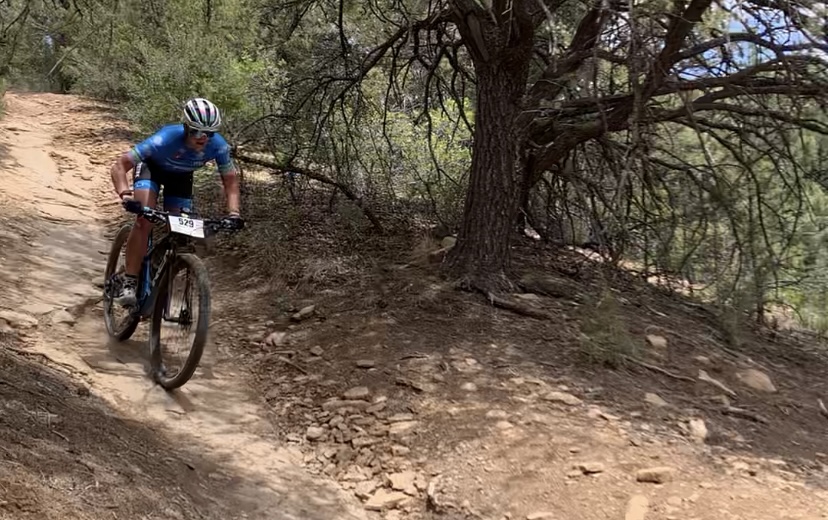
Heber City, Utah—Clif Pro Team rider Hannah Finchamp won the Elite Women’s division while Felt Assos’ Robbie Squire took top spot on the podium of the Elite men’s category at the Intermountain Cup’s Wasatch 50 endurance MTB race on June 3, 2017.
Junior Boys winner Henry Larson in the Wasatch 50 on June 3, 2017. Photo by Nate Gibby
With the course starting just east of Utah Valley University’s Wasatch campus, the 21-mile loop featured approximately 1,700 of climbing per lap. With the majestic Mount Timpanogos looming to the west and the Jordanelle Reservoir to the north, the spectacular scenery was matched only by the stiff competition.
In the Elite Women’s division, Finchamp, edged out Meghan Sheridan (Bingham Cyclery, Peak Fasteners, W | Law) and KC Holley (Kuhl, Racers Cycle Service) by just over one minute after two laps and approximately 42 miles. “Hannah and I hung together over the first climb,” said Sheridan. “She kept almost 1 minute ahead of me the whole time, gaining little by little on the second climb. We were putting in a really good pace and then just hung on coming down this raging downhill—rocky, rubbly, cornering like crazy for miles. It was a great race.”
On men’s side, Squire seized the victory by almost pulling away from Justin Lindine (Targetraining, BikeReg.com/Cannondale, Joe’s Garage, Redline Factory, and most recently Apex/NBX/Trek) and Alex Grant) and Alex Grant (Cannondale/Gear Rush) by nearly 1:30 after approximately 42 miles.
“Drew Free hit it out of the gun, which was a kind of rude wake-up call,” said Squire. “I was suffering pretty good for the first 20 minutes following Drew Free (KUHL/PIVOT/Go Ride), but fortunately, we settled into a little pace, and the first lap was pretty fun. Coming into the second lap, I was like all right, this is the only hill on the course—time to go as hard as I can, lay it out there. Fortunately, it was enough because there were a few times where my legs started to seize up.”
About I-Cup
Founded in 1991, the Intermountain Cup consists of X-country and endurance MTB races throughout Utah. With seven X-country races of approximately 25 miles and one endurance races of approximately 50 miles, the series covers some of the most pristine and difficult rides in the state.
The next races in the 2017 Intermountain Cup series will be the Chris Allaire Solitude Cup on July 29 at Solitude Resort in Big Cottonwood Canyon, Utah and Snowbasin in Eden, Utah on August 12.
Matt Elizondo lives a life of service—he’s a registered nurse who spent 10 years in the military, including a tour of Iraq in a trauma support unit. After a diagnosis of a rare but treatable chronic blood cancer, Matt’s sense of duty was stronger than ever.
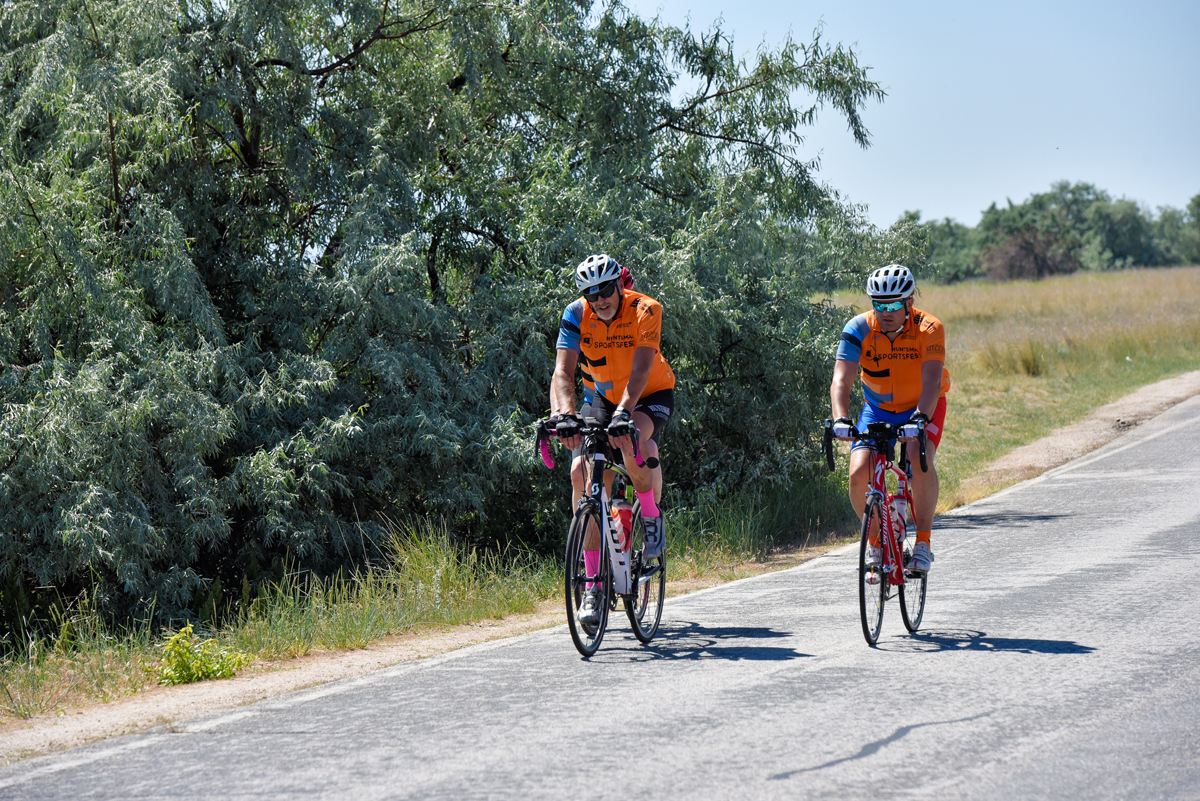
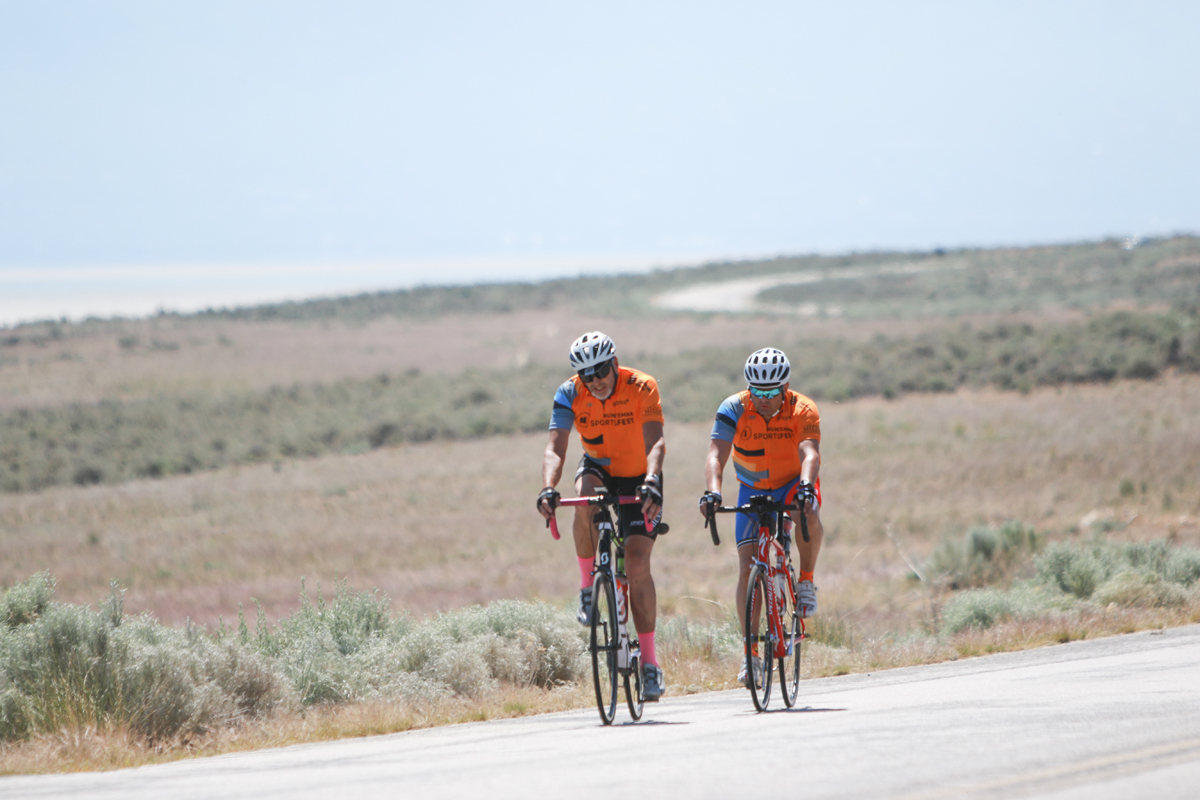
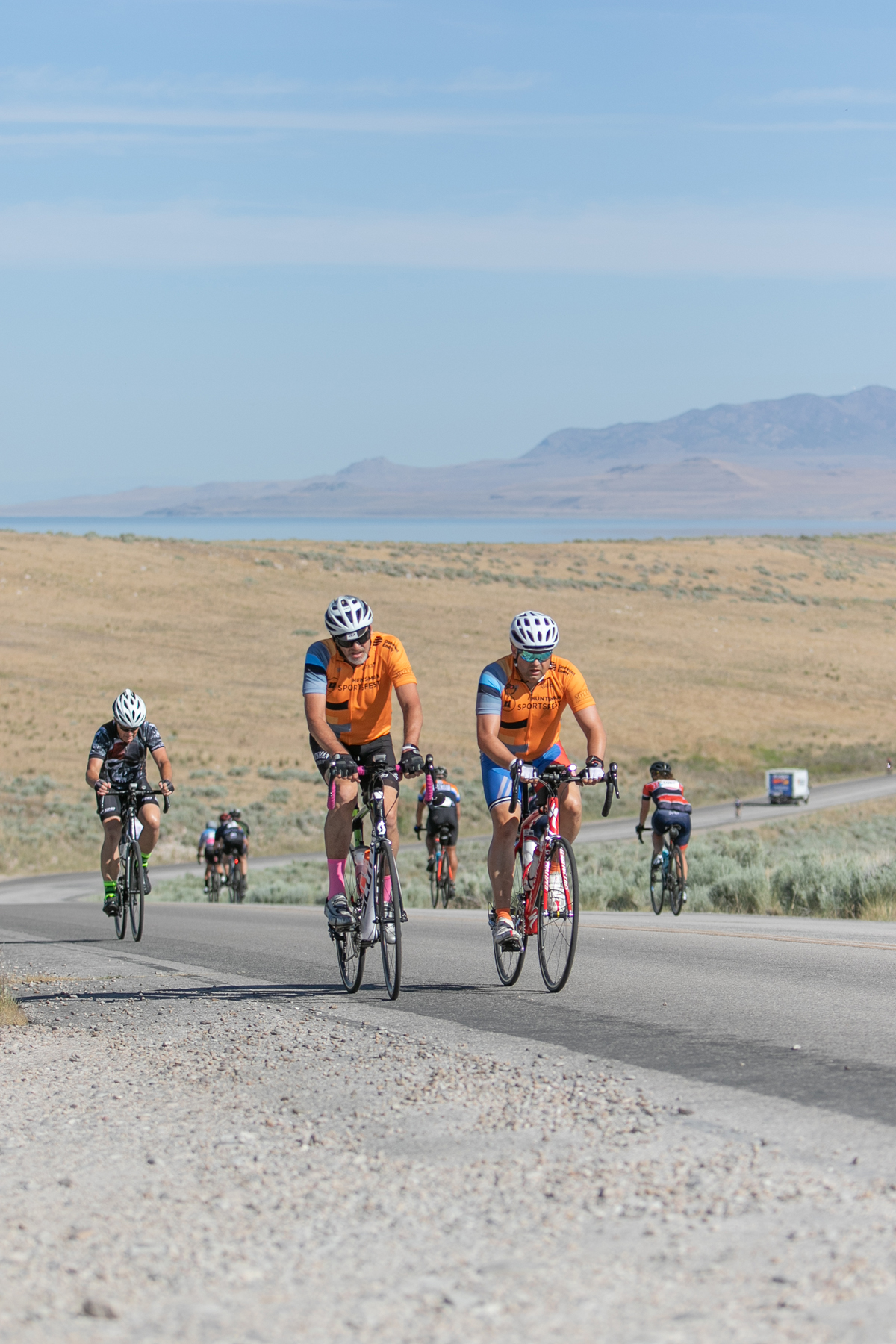
From left, Huntsman Heroes coach Kelly Hicks and Matt Elizondo ride 140 miles in Huntsman SportsFest on June 12, 2021. Photo courtesy Huntsman Cancer Foundation
Matt started treatment at Huntsman Cancer Institute with a week of chemotherapy. He recalls his thought process as he went home each day and passed individuals who couldn’t do the same: “My cancer may not be as insidious as theirs. I have no excuse but to reach out and help any way that I can,” he says. “That was always in the back of my mind during chemo.”
Later that year, Matt met Huntsman Heroes cycling coach Kelly Hicks at a gym in Bountiful, Utah. Kelly noticed Matt’s bike shorts and struck up a conversation. He invited Matt to try the Huntsman Heroes cycling program in order to train and race with a supportive group while raising money for Huntsman Cancer Institute. “I felt like this was something I could do to start to help give back,” Matt says.
Matt has cycled since his time as a University of Utah (U of U) student in the 1990s, when he rode for the club team. He enjoys the sport’s fitness benefits and freedom, as well as the opportunity to experience new settings. Matt had participated in long-distance rides before, but after meeting Kelly, one in particular stood out—Huntsman SportsFest’s 140-mile trek.
Matt started to train for the June 2021 event until a March crash left him with a broken hand. He had surgery and stopped cycling for several weeks. Then he worked closely with Huntsman Heroes coaches, including Kelly and Solomon Brumbaugh, to train without exacerbating his injury. As he pushed himself, he thought of the patients he saw during his treatment—those who couldn’t leave the hospital every day like he did: “I’m going to ride for them.”
On race day, one of Matt’s goals was perseverance. He experienced hand pain, mechanical difficulties, and fatigue, but crossed the finish line with support from his coaches and fellow Heroes. He also surpassed another goal: he raised $1,425 for Huntsman Cancer Institute, nearly three times his target. And he has raised $1,790 and counting for the 2022 event, when he rides 140 miles for a second time.
Huntsman Cancer Institute’s mission is near and dear to Matt, who previously worked there as a nurse and now trains clinical staff across several U of U Health areas. “I’m biased, but during treatment I had a lot of hope because of how Huntsman Cancer Institute treats patients,” Matt says. “It has a fantastic reputation and a home-like, family atmosphere.”
Even as a Huntsman Heroes freshman, Matt brought that family atmosphere to the team. “Matt embodied the ideal Huntsman Hero, putting his ego to the side and striving to participate in a way that inspires those around him to have a positive impact in the world,” Solomon says. “He did that through his cheerful demeanor, and keeping the focus on our mission despite the hurdles he was facing.” Kelly echoed that sentiment. “Matt is simply someone who will not quit.”
Matt’s time in the military taught him to lead by example and protect others. As a Huntsman Hero, he wants to apply those values by encouraging his teammates to cross the finish line with him. “I’m still new to this, but it’s very important to me,” he says. “My motto is, however or wherever I can help.”
Cancer Survivors in Huntsman SportsFest
In 2021, nearly 10% of event participants were cancer survivors
Cyclists: 59
Including 30 in our toughest event, the 140-mile ride!
Walkers/Runners: 31
Virtual Participants: 2
Total Cancer Survivors: 92
June 11, 2022 — Huntsman SportsFest – Run. Ride. Play. Support Cancer Research, Salt Lake City, UT, An epic ride supporting Huntsman Cancer Institute (HCI). Distances: 25, 50, 75, 100 & 140-miles. 100% of all funds support the mission of HCI., Jen Murano-Tucker, 801-584-5815, [email protected], huntsmansportsfestival.com
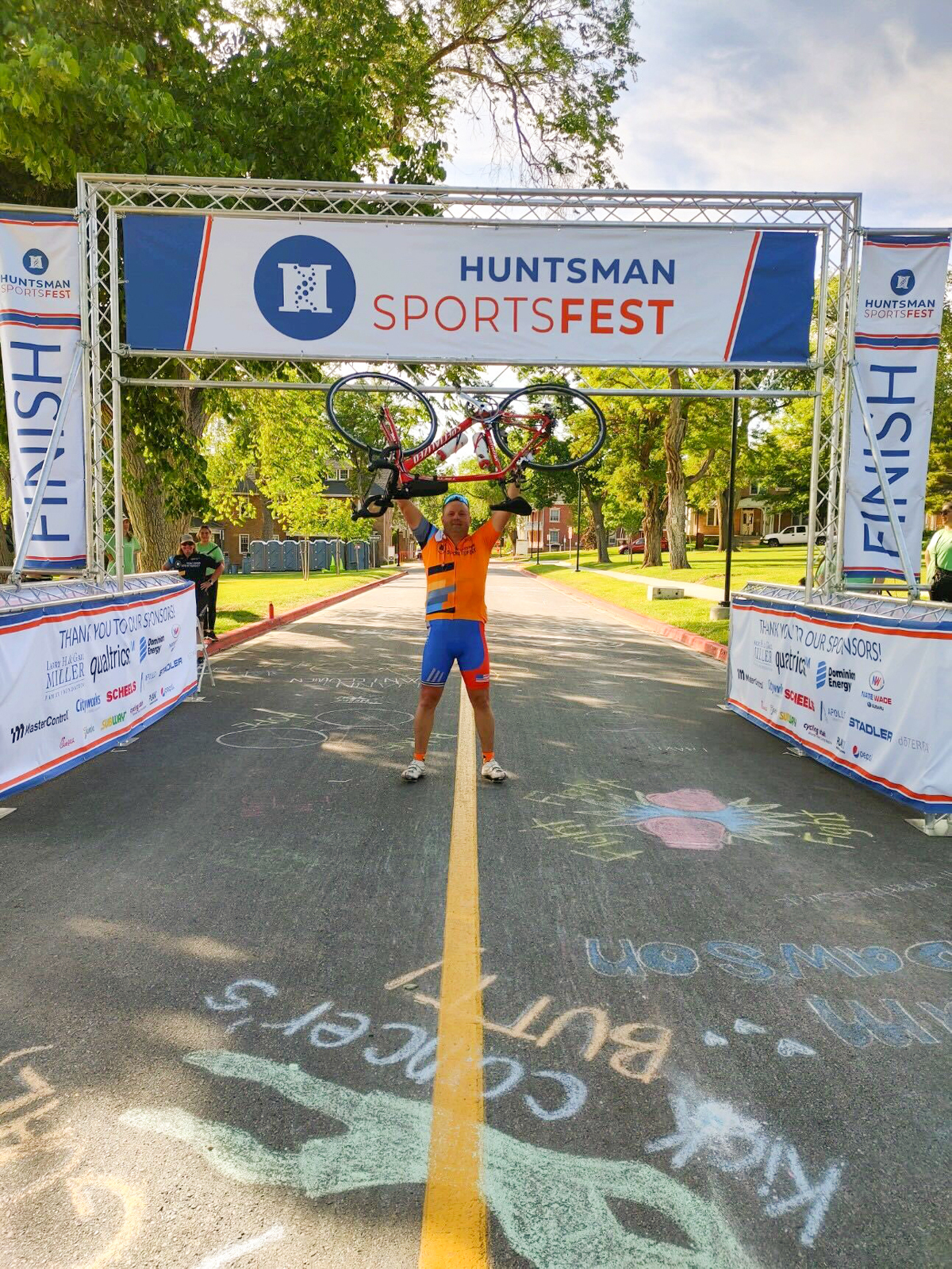
From left, Huntsman Heroes coach Kelly Hicks and Matt Elizondo ride 140 miles in Huntsman SportsFest on June 12, 2021. Photo courtesy Huntsman Cancer FoundationFrom left, Huntsman Heroes coach Kelly Hicks and Matt Elizondo ride 140 miles in Huntsman SportsFest on June 12, 2021. Photo courtesy Huntsman Cancer FoundationHuntsman Hero Matt Elizondo at the 2021 Huntsman SportsFest finish line. Photo courtesy Huntsman Cancer Foundation
By Heather Casey, CSCS, Pn2 — Most of us choose to improve both health and performance through exercise, not one over another. When it comes to reaping the best results from your training program, metabolic analysis is the gold standard. Not only is metabolic analysis scientifically based, but it’s proven to work. Keep reading to find out how metabolic analysis will help you reach the results you seek!
Before we dive in, let’s clear something up. Sports performance services like metabolic testing are not just for elite athletes. The information provided through metabolic testing will allow riders to set more accurate training zones for heart rate and power based on your physiology rather than calculated mathematically using a single number, FTP derived from a Functional Threshold test. Accurate zoning based on physiology highlights areas of metabolic inefficiency. With appropriate programming, your metabolic efficiency will allow you to drive the aerobic engine with a broader range of power and heart rate. This translates to increasing your magical mitochondria density, the ultimate source of energy at the cellular level.
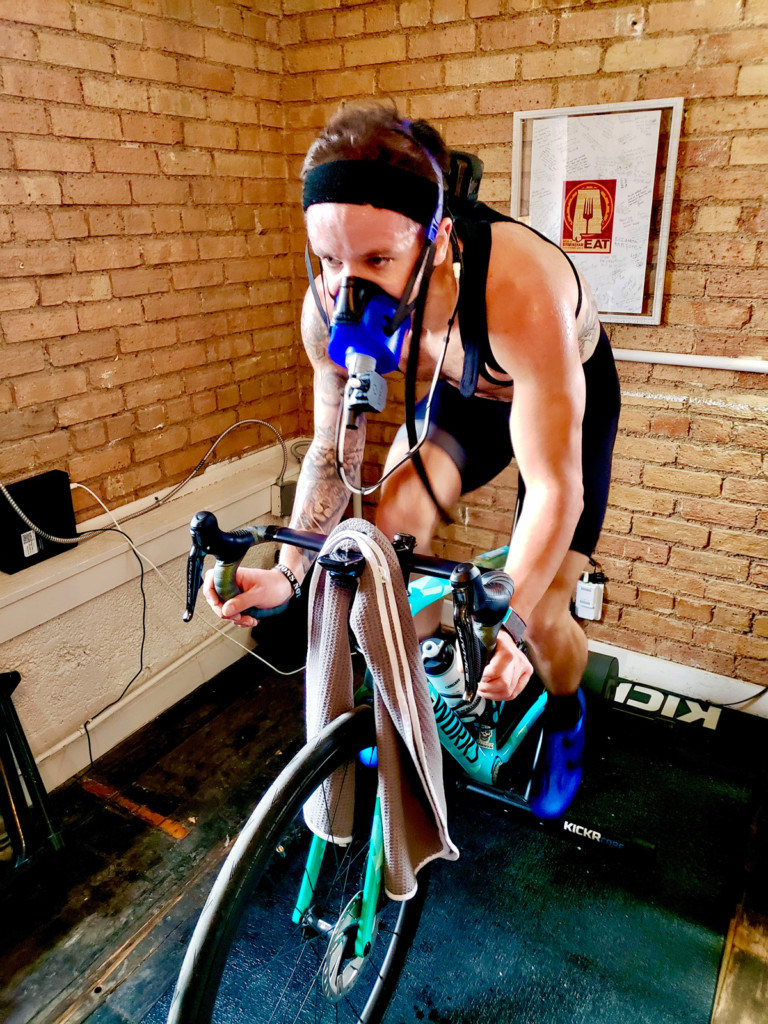
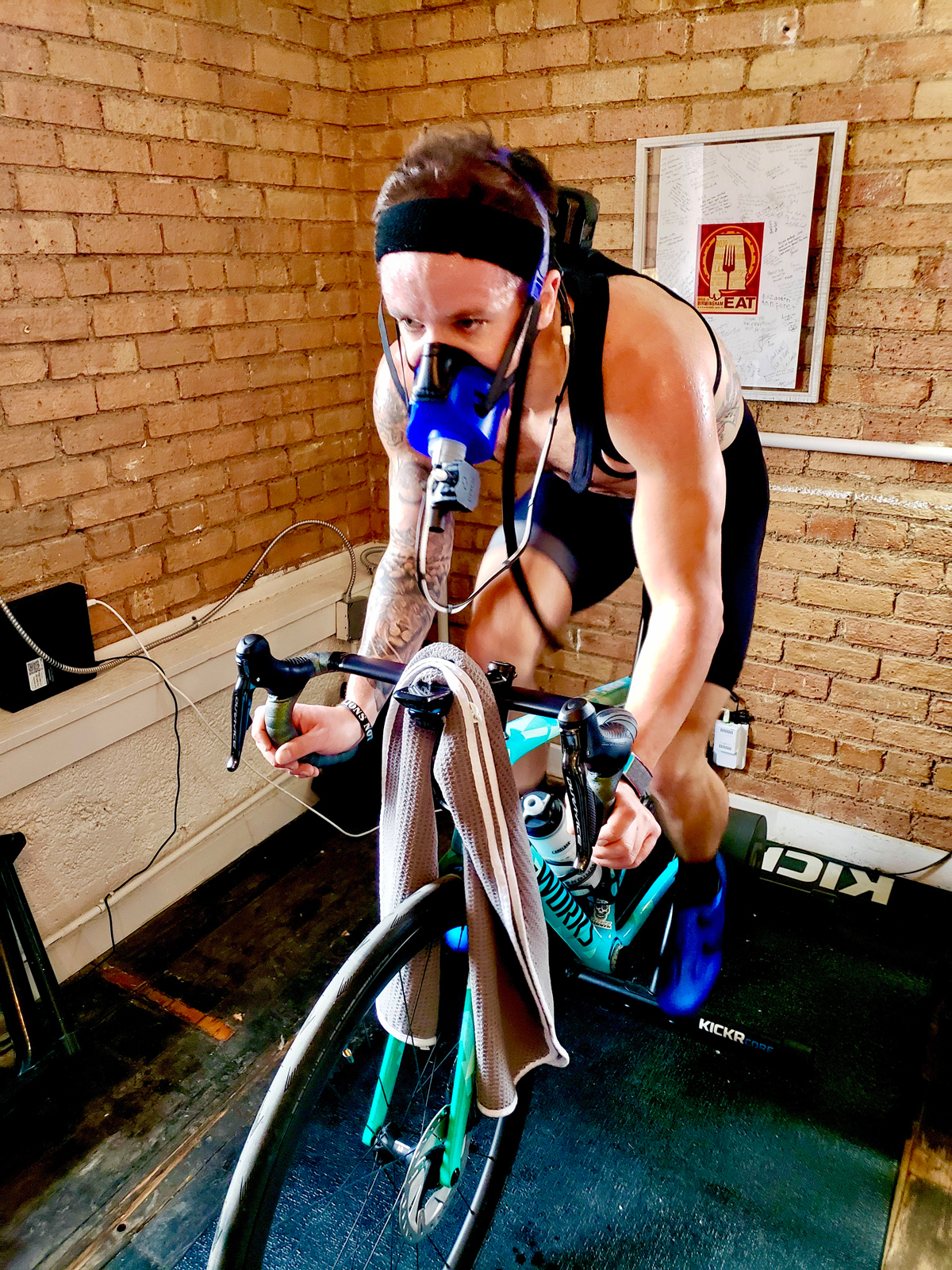
Kody King undergoing a cycling active metabolic test. Photo by Pat Casey
Furthermore, caloric requirements and macronutrients don’t have to be so confusing. When to eat, what to eat, and knowing if the quantities and timing of food are helping fuel your body properly is no longer in question with metabolic analysis.
Through metabolic analysis, we look at the relationship of Oxygen to Carbon Dioxide and determine where you are most efficient, at what heart rate your training is most sustainable, and what fuel your body uses to supply energy. We define where your intensity starts and optimize your program to manage your metabolic stress to lead you to ultimate health and performance!
1. Track Progress That Isn’t Visible
Metabolism, from the Greek root metabole or to change, is a term describes the chemical processes that occur within a living organism in order to support life. In basic terms, metabolism is how your body converts food into energy needed for survival and activity. Just because you don’t visibly see a change in your body doesn’t mean there isn’t transformation going on inside. It’s common for a client to seek metabolic testing after they’ve become metabolically impaired. This is a common result of extreme dieting as it can significantly slow down the metabolism. As we lose weight, our metabolism slows down because there is less body weight to support. So how do you lose weight without tanking your metabolism? You do it with a balance of dietary changes and exercise specific to your individual needs.
It’s important to understand the way your body works using scientifically proven measures. If you are putting in the work with the correct training advice but not seeing results, remain patient! Metabolic analysis and periodic retesting will let you know whether you are wasting your time, or if you’re on the right track.
2. Cardio, Strength, or Interval Training?
Everyone’s body is different. This makes sense considering how we require different amounts of food and calories to meet our individual needs. But did you know that the level, intensity, and type of exercise that you engage in should also be designed specifically for you? There is no “one size fits all”, as individuals we react differently to set workout routines. It all depends on the individual’s metabolism and body type. The results from your metabolic analysis can help develop an individualized training program that provides visible, long-lasting results.
3. Create Personalized Training Zones
Another way metabolic analysis will help you train more intelligently is by being able to determine optimal training zones based on how your body uses the fuel sources fat and carbohydrate. It can help develop appropriate caloric targets, training zones and even calibrate your wearable device like Apple Watch or Garmin. As the saying goes, train smarter, not harder! Tailored training zones will help you gain muscle, maximize fat-burning abilities, and achieve your goals.
4. Prioritize Metabolic Base Training First
One of the most misunderstood types of training is metabolic base training. Athletes often don’t understand how slowing down will pay off overall. Through metabolic analysis, we demonstrate its importance. There are two basic energy systems you use when training: anaerobic and aerobic. Unfortunately, you can’t build both your aerobic and anaerobic systems at the same time very well. The idea behind base training is to train your aerobic energy system specifically.
Why is this important? The more work you perform aerobically, or in the presence of oxygen, the more efficient you are. Prolonged aerobic training produces muscular adaptations that improve oxygen transport to the muscles, reducing the rate of lactate formation, improving the rate of lactate removal, and increasing energy production and utilization. These adaptations occur slowly over time. Fat is a primary fuel source for the aerobic energy system. Over the course of a base period, your body learns to break down and use fat as an energy source more efficiently. As an added bonus, this adaptation helps post-exercise fat metabolism as well.
5. Improve Breathing and Posture
Our breath and its vital life force can be a powerful performance enhancer with proper posture and breathing mechanics, but with poor posture or mechanics diminished by more than 50%. With breath analysis technology we can show you where improvements in your breathing will boost metabolism, improve cognitive function, and increase athletic performance.
Types of Metabolic Testing
Resting Metabolic Test
This analysis allows us to measure your caloric expenditure at rest to design a custom nutrition program to meet your goals for weight loss, conditioning, or muscle gain goals.
Why get a resting metabolic test? Your RMR, resting metabolic rate, is your body’s baseline caloric requirement. Knowing your RMR enables you to:
Craft individualized calorie intake targets for your goals to help you lose, gain, or maintain your weight.
Verify if a training or nutrition program has increased or decreased your metabolism
Compare the speed of your metabolism to others of your gender, age, height, and weight
Active Metabolic Test
Gain unparalleled insight into the systems of your body that generate power. Identify gaps in your fitness profile that can be used to push through plateaus in your training.
The Active Metabolic Test includes:
Find your ventilatory threshold powers, VO2 Max Fat, and Carb max intensities and utilization rates.
A look into your Cardiovascular, Respiratory, Cellular, and Neuromuscular function with regards to exercise performance.
An expert breakdown analysis to form a detailed in-depth view of your physiological profile and current fitness levels.
Training prescription outline based around your goals and the results of your test sent to you and/or your primary coach.
Conclusion
Although we are highly individualized in our biological design, there are healthy lifestyle choices that can benefit anyone wanting to ignite their metabolic rate. Start by finding your resting metabolic rate, the essential calories needed if you just lay in bed all day. It’s enough calories to keep the heart beating, blood pumping, lungs breathing, everything moving to sustain life. Metabolic testing can provide you with information about how effectively your body burns calories and uses oxygen during workouts. The results from metabolic testing and recommendations can help you make decisions based on your individual needs that will speed up your metabolic rate.
Other healthy habits to adopt for a thriving metabolism are decreasing stress, quality, and adequate sleep, balancing hormones, and strengthening our muscles through weight training.
Scientists know that metabolism varies significantly from one person to another, even after you account for factors such as size and body composition. We still don’t know exactly why this variation occurs, but there are thought to be an entire range of factors, from genetics to organ sizes, the immune system, and even the species of bacteria in their gut microbiome. Breath analysis presents a uniquely valuable tool as it measures the exact number of calories a person’s body is burning, and what fuel sources the body relies on for fuel.
Long-term weight loss and maintenance of a healthy weight can be achieved through responsible methods backed by science and the perspective that hacks, and extreme dieting is not the solution.
By Ken Christensen and Russ Hymas — You have probably heard us say it before, but since the weather is improving and a new cycling season is upon us, it’s important that we say it again – every cyclist needs really good car insurance coverage!
As a cyclist, your worst fear is being struck by a car while you’re out on the road. You might do everything right, follow every law, and a careless driver can still plow into you. And if you don’t have the right type of car insurance coverage, you could end up paying for an accident you didn’t cause. As bicycle accident attorneys, we see this unfortunate situation far too often. That’s why it is critical that every cyclist understands how their own car insurance can protect them from serious financial harm after a wreck.
Damages from a collision can include past and future medical bills, lost wages, pain and suffering, inability to participate in activities you previously enjoyed, and damage to your bike and gear. You can quickly find yourself in the hole or rack up serious debt if all these expenses fall on you after an accident.
The best way to prevent or eliminate these debts is through car insurance. The first line of defense is the car insurance for the driver that hit you. The at-fault driver’s car insurance company is required to pay for the damages caused by the collision, but only up to their insured’s policy limits. This means you should never rely solely on the other driver’s car insurance, because that driver might have insufficient insurance coverage – or worse, no coverage at all. In Utah, drivers are only required to carry $25,000 in liability insurance, and the injuries and damages from a bike vs car collision can easily exceed those low policy limits. That’s why you need to have at least $100,000 (and we’d recommend $250,000 if possible) in Uninsured and Underinsured motorist coverage. Note: For other states, please check your state code for requirements.
Uninsured motorist coverage (UM) is available to help cover your damages when the at-fault driver doesn’t have any car insurance at all. Underinsured motorist coverage (UIM) is available when the at-fault driver is underinsured – meaning you received the driver’s full liability limits but still have damages outstanding. You can then claim the remaining value of your damages through your own car insurance policy. Raising your uninsured and underinsured motorist coverage to $100,000 or $250,000 will likely cost less than an additional $10 a month, and it’s more than worth it to ensure you are protected in the event of a car vs. bike wreck.
Now what happens if you’re not in a collision with a car, but your bike is stolen or wrecked? In that case, you can make a homeowner’s or renter’s insurance claim. Some insurance companies require you to pay extra or add a rider provision to your homeowner’s policy to cover your bike – others do not. We recommend choosing an insurance company who will cover the full value of your bike without requiring a rider. In either of these scenarios, you will have to pay your deductible before the insurance pays out, so you’ll want to decide whether that deductible should be $500 or $1,000.
We are passionate about protecting cyclists and making sure that they have the right insurance coverage. Send us your car and home insurance declaration pages. We will review your coverage for free. We will also send you a free UtahBicycleLawyers.com cycling headband – the most important items in our summer cycling bags. You can email your declaration pages to [email protected] and we will make sure they are reviewed and that your sweatband is mailed out.
Boaz and Overson win the 100-mile gravel races while Frazier and Harrison take the 350-mile XL titles.
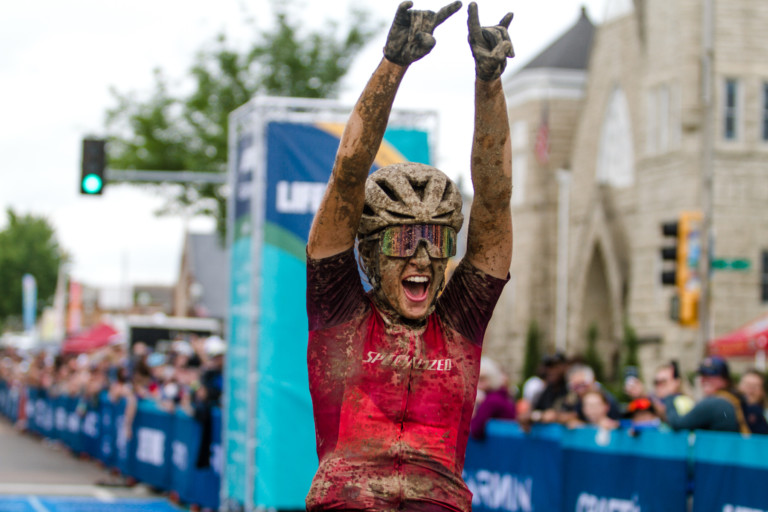
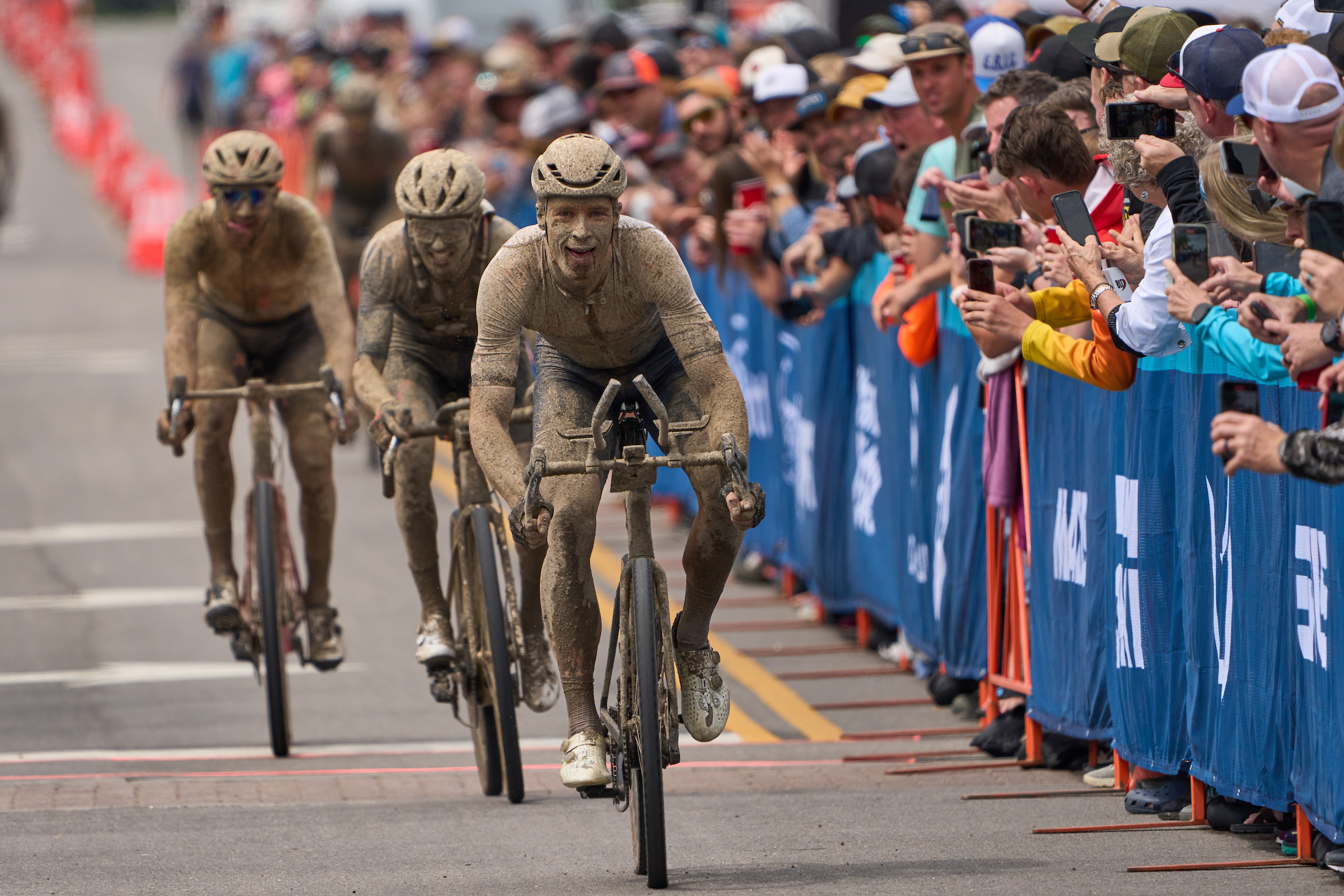
EMPORIA, Kansas (June 5, 2022) — With 4,000 riders across all distances, Life Time’s (NYSE: LTH) Garmin UNBOUND Gravel presented by Craft Sportswear returned to Emporia, Kansas this weekend as riders took on the relentless Flint Hill gravel. Cyclists ranging in age from 10 to 89 representing all 50 states and 44 countries took on the Junior, 25-mile, 50-mile, 100-mile, 200-mile and 350-mile XL distances on a new, southbound course.
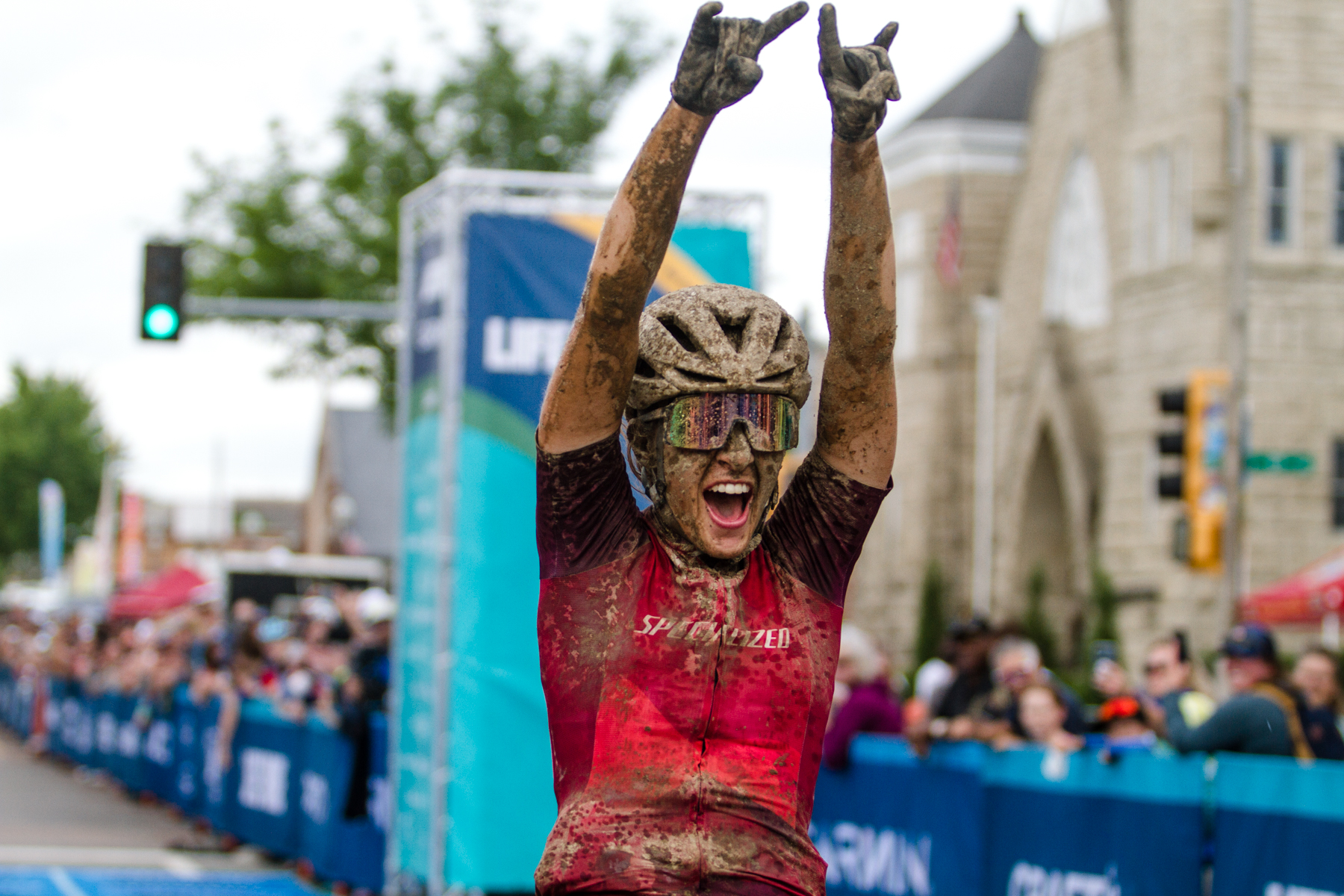
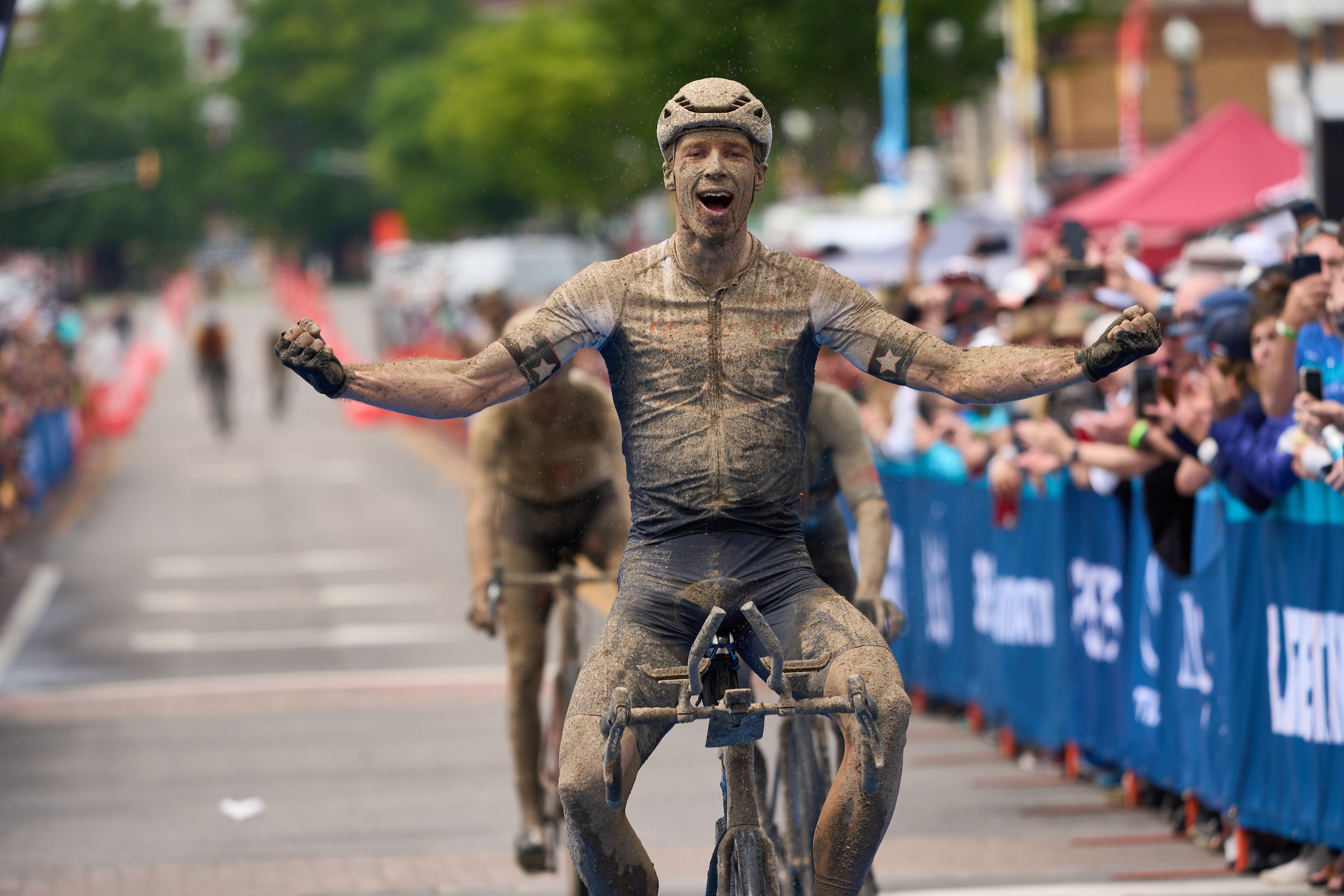
“This was a fantastic weekend of racing, riding and camaraderie” said Kimo Seymour, President of Media and Events at Life Time. “After a start with some amazing weather, the rain and mud provided epic conditions. Feedback from athletes has been overwhelmingly positive. From the intensely competitive pro race at the front, to the masses of amateurs, the Life Time team is so pleased to hear all the amazing memories that were created at this year’s Garmin UNBOUND Gravel.”
Ivar Slik leading out the sprint against Keegan Swenson and Ian Boswell in the Men’s 200-mile race. Photo courtesy Life Time
“When I came over [to the United States] UNBOUND was my big goal for this year. It’s a long race–200 miles–and so much can happen. You need a little bit of luck, but I was in top shape and did everything to be in the best condition,” said Slik, the 2022 Garmin UNBOUND Gravel 200-mile champion. “It’s super to finish it off in a sprint with five, just amazing, and I’m happy to win the biggest gravel event in the world.”
Sofia Gomez Villafane takes the win in the Women’s 200-mile event. Photo courtesy Life Time
200-Mile Distance Women’s Division
1st: Sofia Gomez Villafane*, 28, of Heber City, Utah with a time of 10:27:41
2nd: Lauren De Crescenzo, 31, of Atlanta, Ga. with a time of 10:36:47
3rd: Emily Newsom*, 38, of Fort Worth, Tex. with a time of 10:49:44
4th: Whitney Allison, 34, of Fort Collins, Colo. with a time of 10:57:24
5th: Melisa Rollins*, 26, of Salt Lake City, Utah with a time of 11:01:46
Ivar Slik takes the win in the 200-mile event. Photo courtesy of Life Time
200-Mile Distance Men’s Division
1st: Ivar Slik, 29, of Dulvendrecht, Netherlands with a time of 9:22:04
2nd: Keegan Swenson*, 28, of Heber City, Utah with a time of 9:22:05
3rd: Ian Boswell, 31, of Barnet, VT with a time of 9:22:05
4th: Laurens ten Dam*, 41, of Oudorp, Netherlands with a time of 9:22:12
5th: Alexey Vermeulen*, 27, of Boulder, Colo. with a time of 9:22:27
“I’m glad [the rain] made the race hard. I do better at races of attrition and so I was thinking that this is going to play to my advantage,” said Boaz, the 2022 Garmin UNBOUND Gravel 100-mile champion. “There were so many cool parts, so many cool people I met, but I think my favorite part was going under the bridge and coming up by Emporia State University. I looked back and realized nobody was there and that was a really happy moment.”
100-Mile Distance Women’s Division
1st: Marisa Boaz, 35, of Waukee, Iowa with a time of 5:23:16
2nd: Marjie Bemis, 21, Corona, Calif. with a time of 5:26:59
3rd: Jessica Cerra, 40, Encinitas, Calif. with a time of 5:26:59
4th: Karen Jarchow, 37, Eagle Colo. with a time of 5:39:21
5th: Grace Williams, 22, Bloomington, Ind. with a time of 5:44:16
100-Mile Distance Men’s Division
1st: Ethan Overson, 21, of Longmont, Colo. with a time of 5:01:01
2nd: Canyon Emmott, 27, of Midway, Utah with a time of 5:05:48
3rd: Ben Delaney, 46, of Boulder, Colo. with a time of 5:09:37
4th: Donoven Fracis, 19, of Dallas, Texas with a time of 5:09:38
5th: Kenn Pike, 35, of Sioux Falls, SD with a time of 5:09:39
350-Mile (XL) Distance Women’s Division
1st: Cynthia Frazier, 29, of Lexington, Va. with a time of 22:25:18
2nd: Scotti Lechuga, 39, of Springdale, Ark. with a time of 23:24:40
3rd: Andrea Dvorac, 41, of Longmont, Colo. with a time of 25:36:37
4th: Betsy Welch, 41, of Boulder, Colo. with a time of 26:29:35
5th: Tina Hart, 35, of Boulder, Colo. with a time of 26:34:36
350-Mile (XL) Distance Men’s Division
1st: William Harrison, 34, of Charlotte, N.C. with a time of 20:17:29
2nd: Marius Karteusch, 33, of Plettenberg, Germany with a time of 20:22:28
3rd: Ernie Lechuga, 46, of Springdale, Ark. with a time of 20:35:08
4th: Chris Mehlman, 22, of Manchester, Mass. with a time of 20:36:08
5th: Mat Stephens, 39, of Dallas, Tex. with at time of 21:12:11
By Tom Jow — Electronics are becoming an ever-increasing part of our lives. In our pocket, in the car and in the house. And since Shimano released their Di2 electronic shifting in 2009, electronics are on the bicycle. Campagnolo followed shortly with their EPS system. In 2015, SRAM upped the bicycle components game by introducing wireless electronic shifting called eTap. When SRAM AXS wireless shifting for mountain bike became available in 2016, I started to get interested. Finally, in the summer of 2021, I bought a SRAM AXS Wireless shifting kit (unsolicited by any manufacturer or sales outlet). What follows is my experience installing and riding with an electronic shifting system.
Introduction
The first question most people ask about electronic shifting is, “how much does it cost?” The price of the entry-level SRAM GX AXS wireless shifting kit is approximately $600. Second-best X01 AXS comes in at around $800 and top-of-the-line XX1 AXS is a whopping $1000.
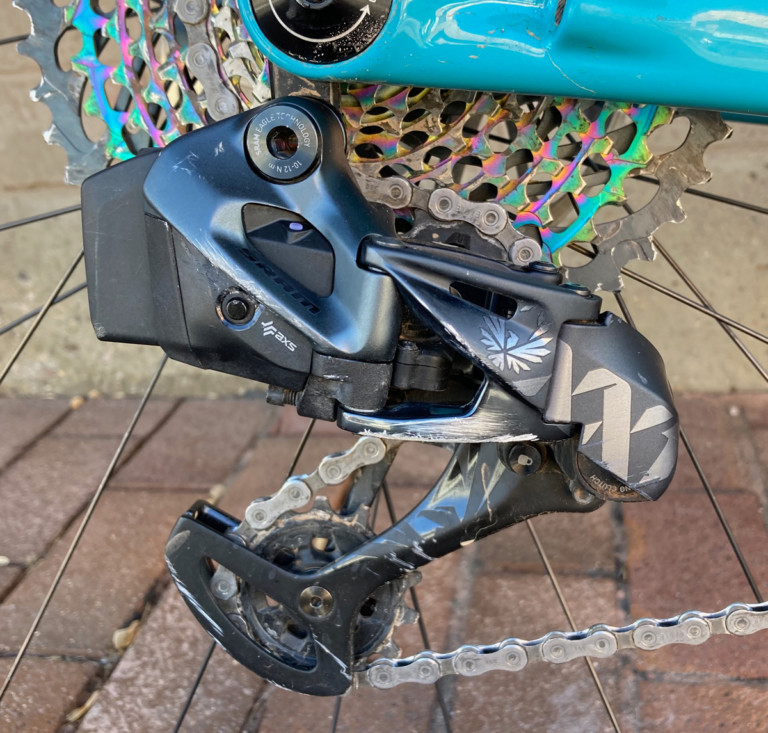
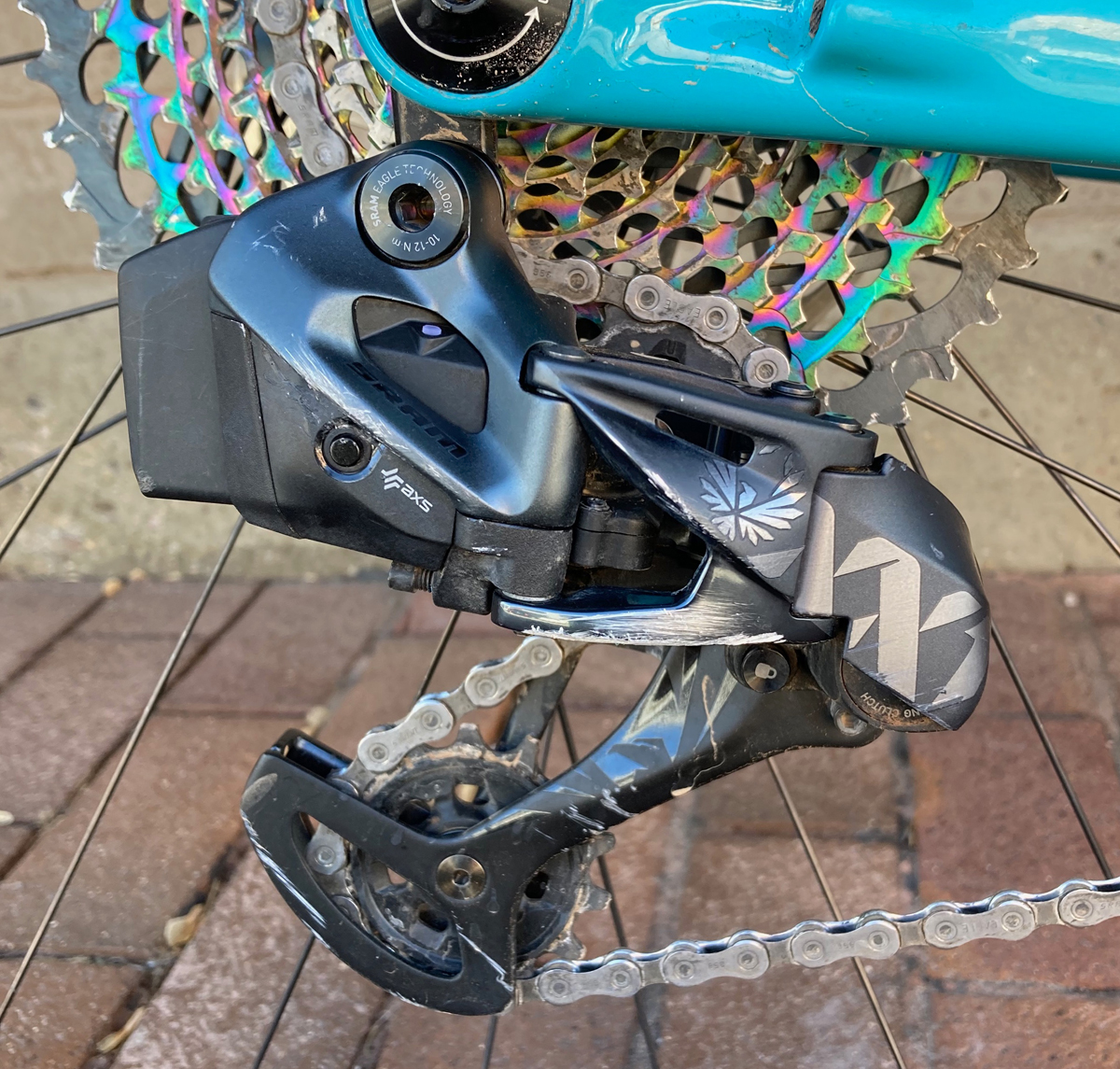
The SRAM XX1 AXS wireless derailleur in all its glory. Photo by Tom Jow
What is included when spending twice the price or more than a mechanical shifting system? Each box contains a shifter, derailleur, battery, battery charger and b-tension gauge. The shifter is powered by a standard cr2032 coin battery. The derailleur uses a custom lithium-ion battery. Length of battery life is usually the second question people ask. According to SRAM, the average time of use on a fully charged battery is 20-25 hours. The time to charge from drained to full is claimed to be about one hour.
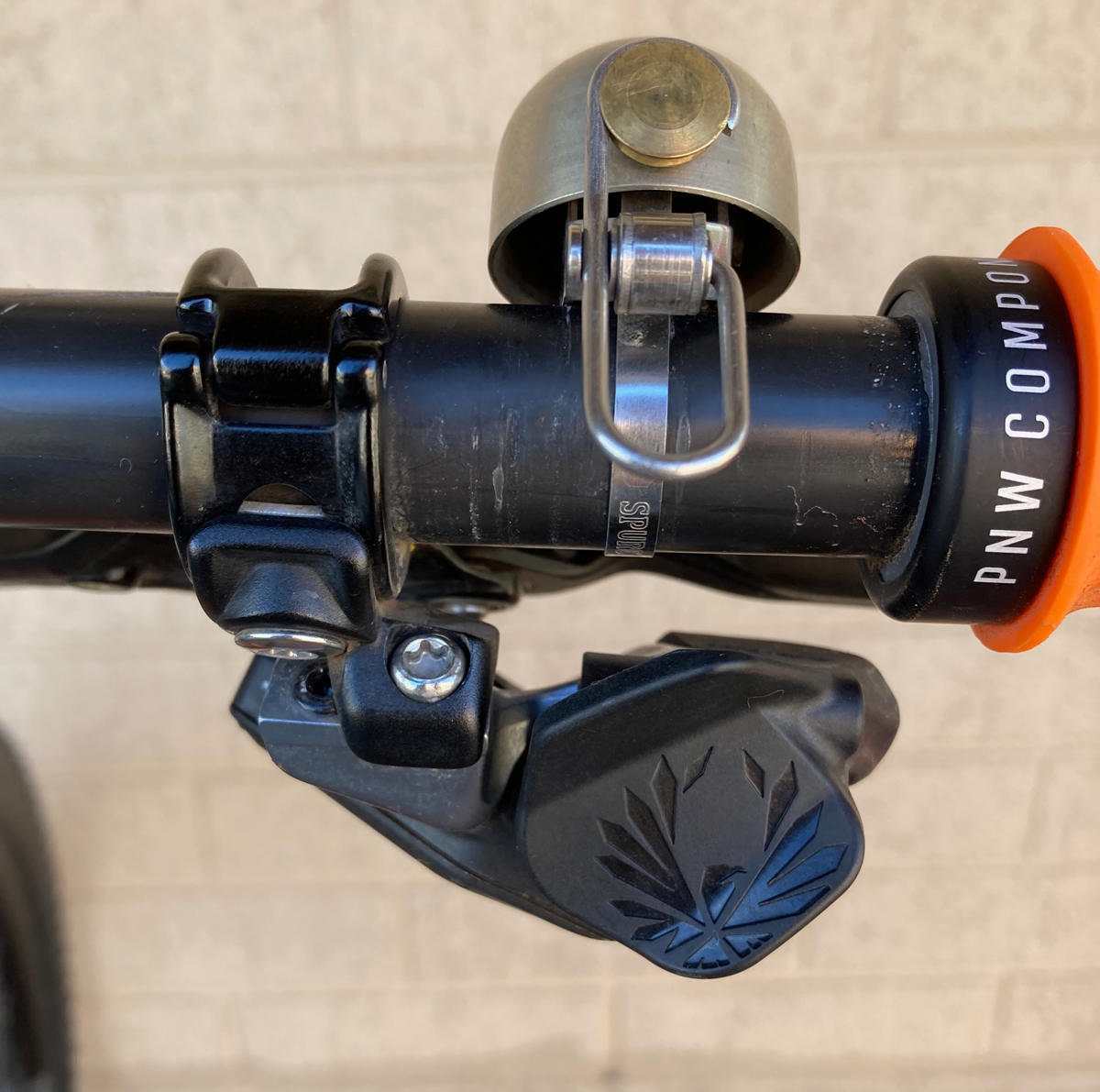
The Eagle AXS toggle shifter with one bolt mounting on Matchmaker clamp. Photo by Tom Jow
Installation
I will be honest. After having been a professional bicycle mechanic for over 30 years, I do not always love working on my own bike. For ease of installation the AXS wireless system does not disappoint. After yanking the old parts off, bolting on the new parts is a breeze. Because I use SRAM brakes, the shifter bolts on with one bolt. No need to remove the controls to install a clamp, a necessity with other brake brands. Next attach the derailleur. Be sure to place the b-tension tab in the correct place. Install the chain and using the included b-tension gauge, adjust the derailleur angle. The last step is the pairing of the derailleur and shifter. The process goes like this: press and hold the small button on the derailleur until it blinks, then, press and hold until it blinks. Press the button on the derailleur one final time and you are ready to ride.
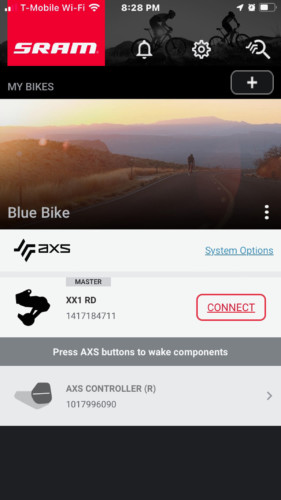
The connect page of the SRAM AXS mobile app.
Set Up
Once the shifter and derailleur are paired, one can ride without downloading the app or customizing the shifting. However, using the SRAM mobile app enables checking the battery level, customizing the shifting, and updating the firmware. The app works so well there is no reason not to use it.
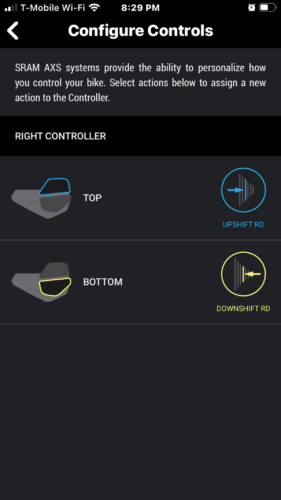
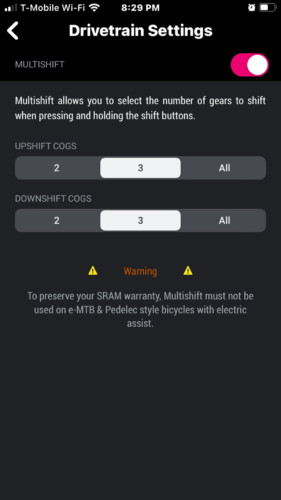
After downloading, open the app. Create a profile and follow the instructions to search for available components. My system was recognized at once. Once connected, we can see the amount of battery charge remaining. From there we can move on to customizing the shift pattern if desired. I highly recommend using multi-shift. Select drivetrain settings. Then, toggle multi-shift to on. Next, select the number of shifts desired, two, three or all. I chose three for both upshifts and downshifts. Multi-shift can be adjusted independently for both the low and high direction. There is also an option to change the toggle direction of the shifter.
Customize the controls on the control configuration page of the mobile app.
The Ride
I noticed two things on my initial rides with electronic shifting. The first was how quickly the derailleur shifts upon pressing the shifter (I don’t know why I was surprised. I have installed many electronic shifting systems). The second was how perfectly it shifted, right out of the box. It shifted so well in fact, that I rode for 3 weeks before remembering that I should check the stop screws. Despite the stop screws being quite far open, the chain did not come off the cassette at either end even once.
As I have spent more time with it, I have realized how much muscular effort is needed to shift a mechanical derailleur. This became even more clear after riding one of my other bikes. Shifting with a cable requires overcoming the friction and springs of several parts. In order to shift three gears, the shifter lever must move approximately 40mm. After using electronic shifting, that 40mm feels enormous. In addition, push button shifting takes much of the mental stress away from shifting. I no longer have to finesse the shifting lever, making sure that I use just the right amount of pressure. It’s not a license to shift under full power, but I felt I could focus a little less on the consequences of shifting poorly.
Configure the shifting options on the drivetrain configuration page of the mobile app.
What I did focus on is the fact that there is a $700 dollar derailleur sticking out the side of my bike waiting to break off after hitting a large rock, and I have hit a few. This is where the AXS overload clutch comes in. When the derailleur suffers an impact, the clutch disengages the motor, allowing the derailleur body to move freely, then re-engage the motor upon return. As you can see in the photograph, the derailleur has taken some impacts and still works fine. A bonus feature of the overload clutch is that it reduces impact stress on the derailleur hanger as well.
Conclusion
After four months or so of using the SRAM AXS Wireless shifting system, I would rate my experience as particularly good. Installation was easy. The elimination of cables and wires reduces the installation time by about half. Sure, there is some setup required using the SRAM mobile app, but it is simple and quick. Worries over loss of battery power have not yet come into play. At first, I forgot that I needed to charge a battery. Then, because I carry a spare, I waited to see when it would go dead on me. Over the space of about a month, including three trips to southern Utah, the battery didn’t run out on me. However, I am still a little hyper-focused on destroying the derailleur when squeezing between big rocks.
To answer my question: “Did I need electronic shifting?” No, I did not need it. I do feel like my riding experience has improved because of it. Do I recommend it? Let’s just say I am saving my money for another one.
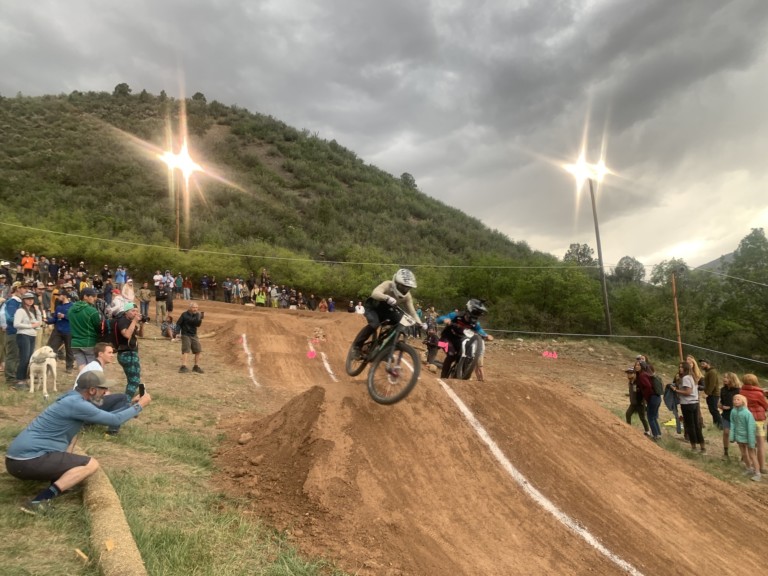
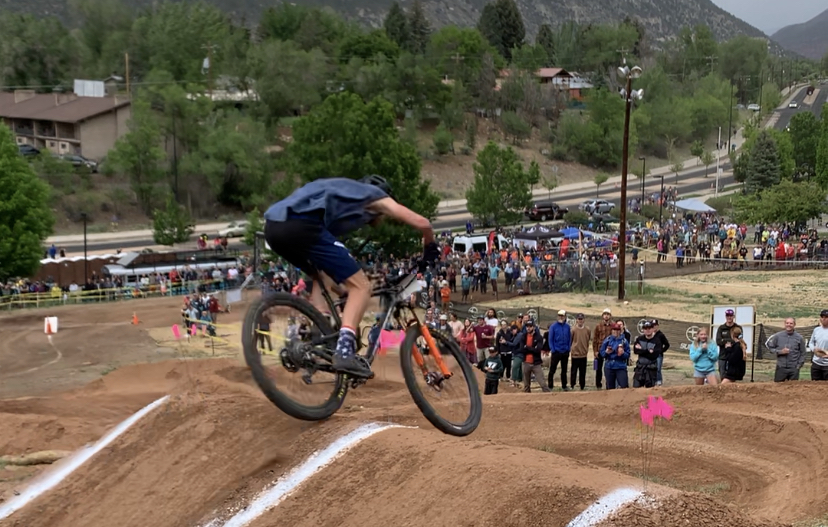
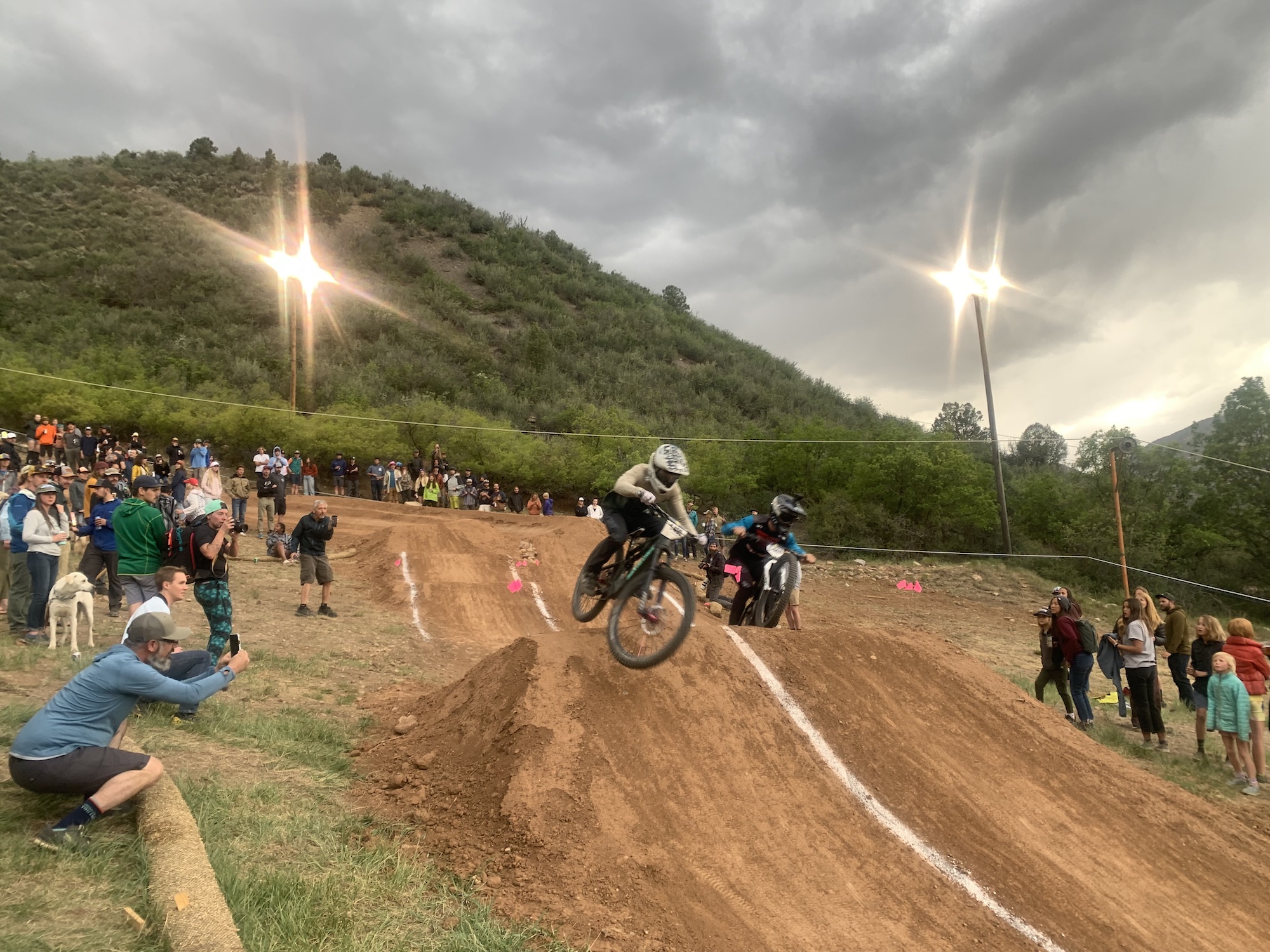
DURANGO, Colorado (June 2, 2022) — The Iron Horse Bicycle Classic hosted three mountain bike events over Memorial Day weekend, including the invite-only Roostmaster and Dual Slalom races, which attracted hundreds of spectators to Durango’s Chapman Hill Sunday night.
Stephan Davoust in the Roostmaster. Photo courtesy IHBC
The Roostmaster is a made for TV event that’s similar to short track cross country. Women and men riders raced in three 10-minute heats. Points were awarded each heat, with first place getting one point, second place getting two points, and so on. The rider with the least amount of points after the three heats won.
After tight battles that took racers straight up Chapman Hill and down the Dual Slalom track, Savilia Blunk and Brayden Johnson were victorious. In the women’s race, Ruth Holcomb and Bailey Cioppa rounded out the podium. In the men’s race, Stephan Davoust was second and Todd Wells rolled across the line in third.
Dual Slalom. Photo courtesy IHBC
That evening, head to head racing on the dual slalom track provided even more entertainment for the crowd. In the men’s field, Collin Hudson took the win with Layne Gainer in second and Cameron Joye in third. In the women’s field, McKenna Merten won, with Elle Runyan and Sophie Allen rounding out the podium. Bradley Lamoroux won the junior race, with Kahlil Kem in second and Bryan Hastey in third.
Ruth Holcomb in the Pro Women’s cross-country race. Photo courtesy IHBC
On Monday, cross country racers tackled the seven mile course that started and ended at Durango Mesa Park, soon to be the site of Colorado’s largest bike park. Ruth Holcomb won the pro women’s race followed by Bailey Cioppa and Lauren Aggeler.
“The Iron Horse really went all out for the 50th anniversary and I don’t think I’ve ever smiled more in a bike race. Thanks for all the love Durango,” Holcomb said.
In the pro men’s race, Brayden Johnson took the victory followed by Howard Grotts and Todd Wells.
“Now that’s a good weekend. Nothing like racing with your friends 3 days in a row. Thanks to everyone who made this weekend great,” Johnson said.
Howard Grotts and Bailey Cioppa won the King and Queen of the Mountain competition, which is awarded to the best ranked rider from the Iron Horse road race and cross country mountain bike race based on an omnium style points structure.
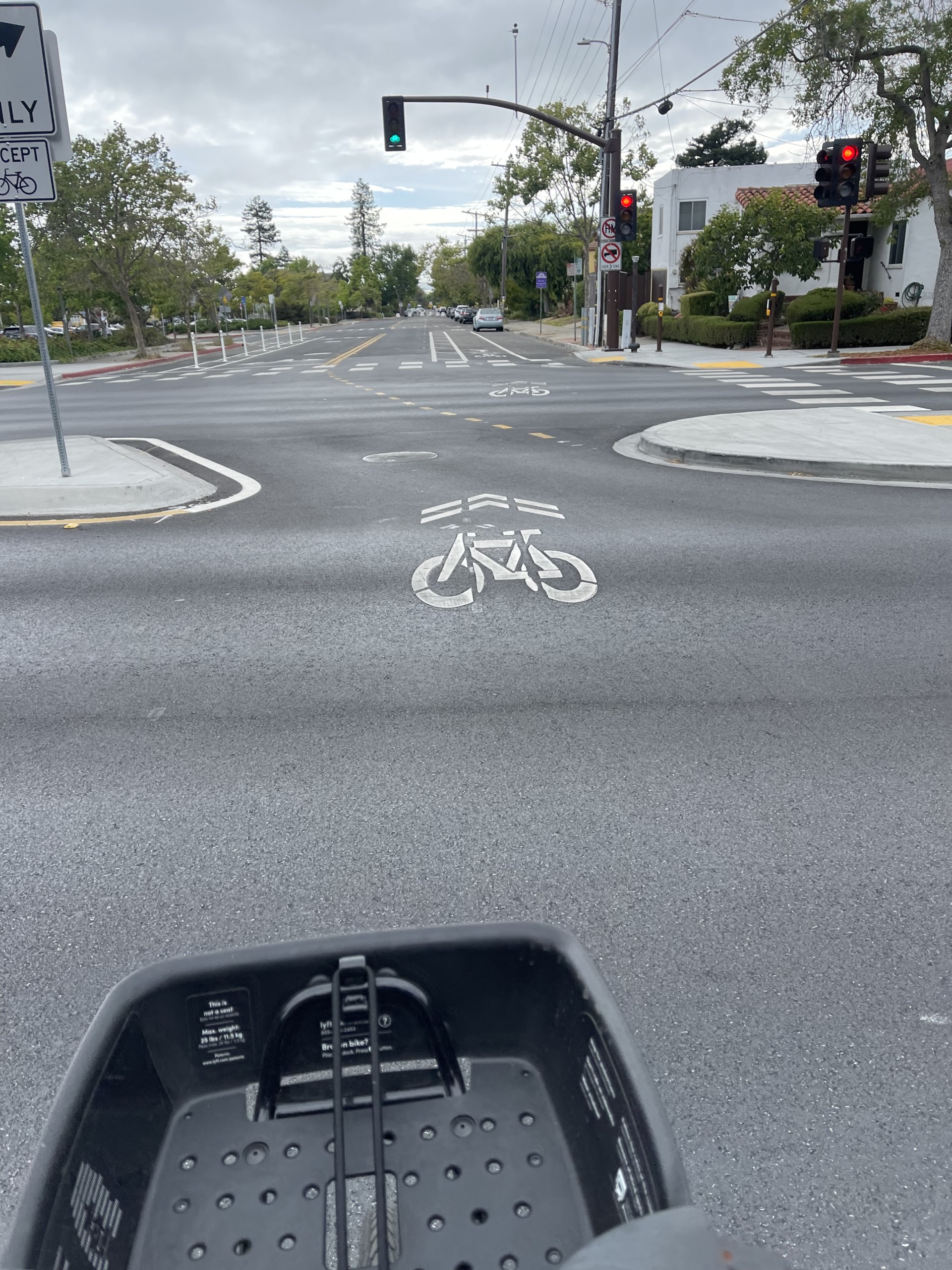
By Charles Pekow — Cities worldwide are becoming more aware of the need to make roads safer for all users, not just the traditional motorist. The International Transport Forum has just published a guide based on ideas from across the globe to make it safer at crossings, with protected bike lanes, via speed controls and more.
While the study endorses separated cycle lanes, it notes that too often intersections come as an afterthought. When designing bike lanes in the first place, planners need to figure how to get cyclists across the street safety. Methods can include different signal times for cyclists than motorists and “conspicuous road markings” to guide riders across the street.
A newly opened bike-only crossing in Berkeley, California. Photo by Dave Iltis
Barcelona, Spain created a “superblock” program that gave cyclists and pedestrians priority and reduced auto traffic on some blocks to a single one-way lane. Residents report enjoying the quiet, safety and opportunity to mingle more with neighbors. Barcelona plans add more superblocks.
And rather than rely on reporting of potholes and bumps that interfere with a smooth ride, Dublin, Ireland provided bike lights to 200 volunteer cyclists with sensors that indicted where cyclists had to make a harsh move because of a pavement problem. The city used the data to determine where it needed to improve the street or track.
By Sarah Kaufmann — A bad ride or race can really cut us to our core. If you have been working hard, preparing and training consistently, it can be pretty demoralizing to feel like the energy and time you have put in is not paying off. Sometimes it feels like a bad ride or race is a deeper reflection of your identity as a person or athlete. Try to separate those feelings of inadequacy and view this as a singular outcome and an opportunity to gain experience. (If you are interested in learning more about how to modify your psychology around this, look up Brené Brown’s work on guilt versus shame).
Photo courtesy Sarah Kaufmann
There are some days that are hard to explain and we don’t have a clear way to identify what went wrong. But usually there are one or more reasons things didn’t go as we would like or expect and here are some questions to help identify what might be the cause. I write these considerations to be relevant for both a key workout and for a race/event. When an athlete I coach writes in their notes that the workout or event didn’t go well, here are the items we address generally in order;
If they are training with power and we have a clear idea of where their fitness is, we need to first assess their expectations. Was it as bad as they think? If it’s a race result, is their expectation in line with their current fitness? Are they simply being too hard on themself?
If it was a race and below the athlete’s current ability, we dig and find what specifically caused the outcome. In a gravel, MTB, or CX race, was the athlete losing time in pedaling sections or technical sections? In the above or a road race, were there tactical errors made?
If there is both heart rate and power data, I look at both and compare whether heart rate is abnormally high or low for the power output. Abnormally high HR, especially with poor recovery, could be related to heat, dehydration, central nervous system dysregulation (some kind of outside stress), lack of sleep, sub optimal taper, altitude, the athlete may be on the verge of getting sick, there may have been a fueling issue, or many other things and it does indicate that something is off. A clue to dig in further. Unusually low heart rate for the power output could indicate general fatigue or overtraining, also a fueling issue, cold temperatures, and, again, many other things but, also again, a sign that something is off. If there is no power but we do have heart rate data, we can still get an idea of whether HR was high or low compared to how this person’s HR typically behaves at those intensities. If this is the case for you, assess whether you felt like you were pushing as hard as you could and at your physical max, but you weren’t going as fast as you could reasonably expect OR did it feel like you could not access deeper intensities and you felt governed.
What did you eat and drink during the event? If you are confident that your endurance fitness is solid, but you faded late in the race, there is a good chance you did not fuel or hydrate appropriately. If your in-race fueling and hydration seems adequate and appropriate, go through what you ate and drank in the 24-36 hours prior to the race, with extra consideration to the 4-6 hours leading up to the race. Was that balanced and adequate? Were those foods and drinks you have used before with success?
Did you get enough sleep in the leadup to the event? We worry less about the night immediately before but pay more attention to the general trend over the several nights prior.
If the rider is a woman, is she about to start her menstrual cycle? Women experience ups and downs with training as related to the timing of their cycle. We typically see a decrease at some training intensities (largely max and neuromuscular power production) in the week or so prior to menstruation and/or around ovulation. Although this is often mitigated in a race situation, a poor race could be attributed to the timing of her cycle. A poor training session could more likely be attributed to such. Tracking your cycle is a great tool for this purpose and can help pinpoint the likelihood. The Notes app on your phone or a dedicated app for this purpose can be really useful. Although sprint and neuromuscular power production are the intensities most likely to be affected, PMS can affect overall energy levels and increase the requirement for exogenous carbohydrate. So, the need to stay on top of fueling becomes a higher priority and what you might normally think is adequate could be leaving you under fueled. Likewise, core temperature is elevated in the days prior to menstruation, so the likelihood of being under hydrated increases as well.
Finally, were there outside factors that may have contributed to a poor outcome? Was it excessively hot or cold and/or were you not acclimatized for those conditions or was your clothing not appropriate for the temperatures? Was the start time earlier or later than your normal ride time and could that have thrown off your rhythm? Were you at high altitude compared to where you normally live/train? Each of these different factors could be their own column and each of them can be mitigated with some planning and different protocols.
A “bad” ride or race is an opportunity to learn. A win or a great ride feels good, but it doesn’t provide us with those same opportunities. Try to shift your perspective so disappointment is not a reflection of yourself but an opportunity for growth. Ask yourself these questions and see if you can avoid the same mistakes going forward.
Sarah Kaufmann is the owner of K Cycling Coaching. She is an elite level XC and CX racer for DNA Pro Cycling Team. She is based in Salt Lake City, UT and can be reached at [email protected] or 413.522.3180.
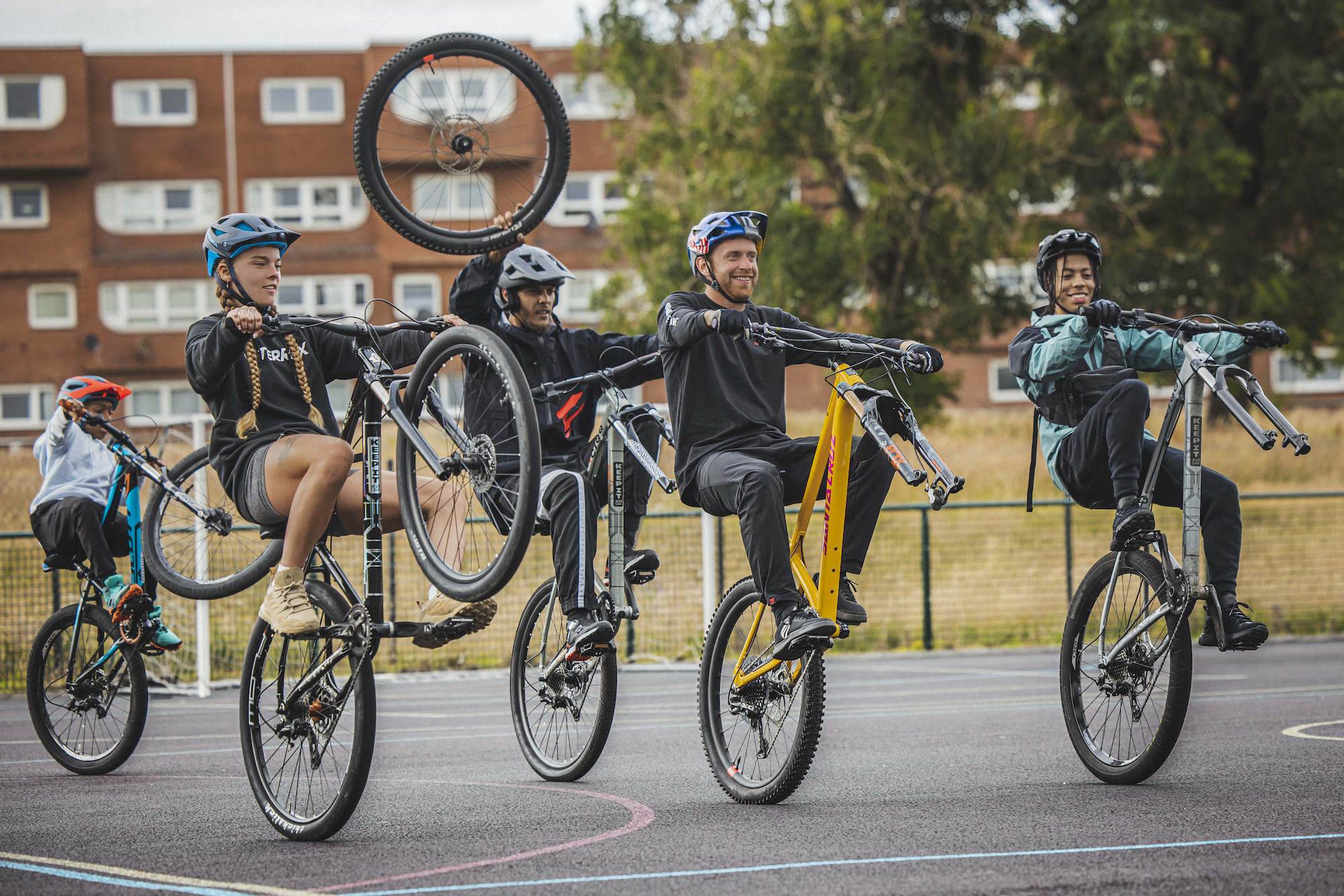
Professional mountain bike rider and YouTube legend Danny MacAskill joins forces with friends new and old in a celebration of the humble wheelie.
In the summer of 2021 Danny MacAskill put out a call to action to his 3.5 million social media fans asking them to #WheelieWithDanny. Riders and fans applied from around the world to feature alongside Danny in his latest project from adidas Five Ten and Cut Media. Join Danny MacAskill and a host of friends as he pushes the boundaries of the humble wheelie and learns a thing or two from friends old and new.
Photo by Dave Mackison, courtesy adidas Five Ten
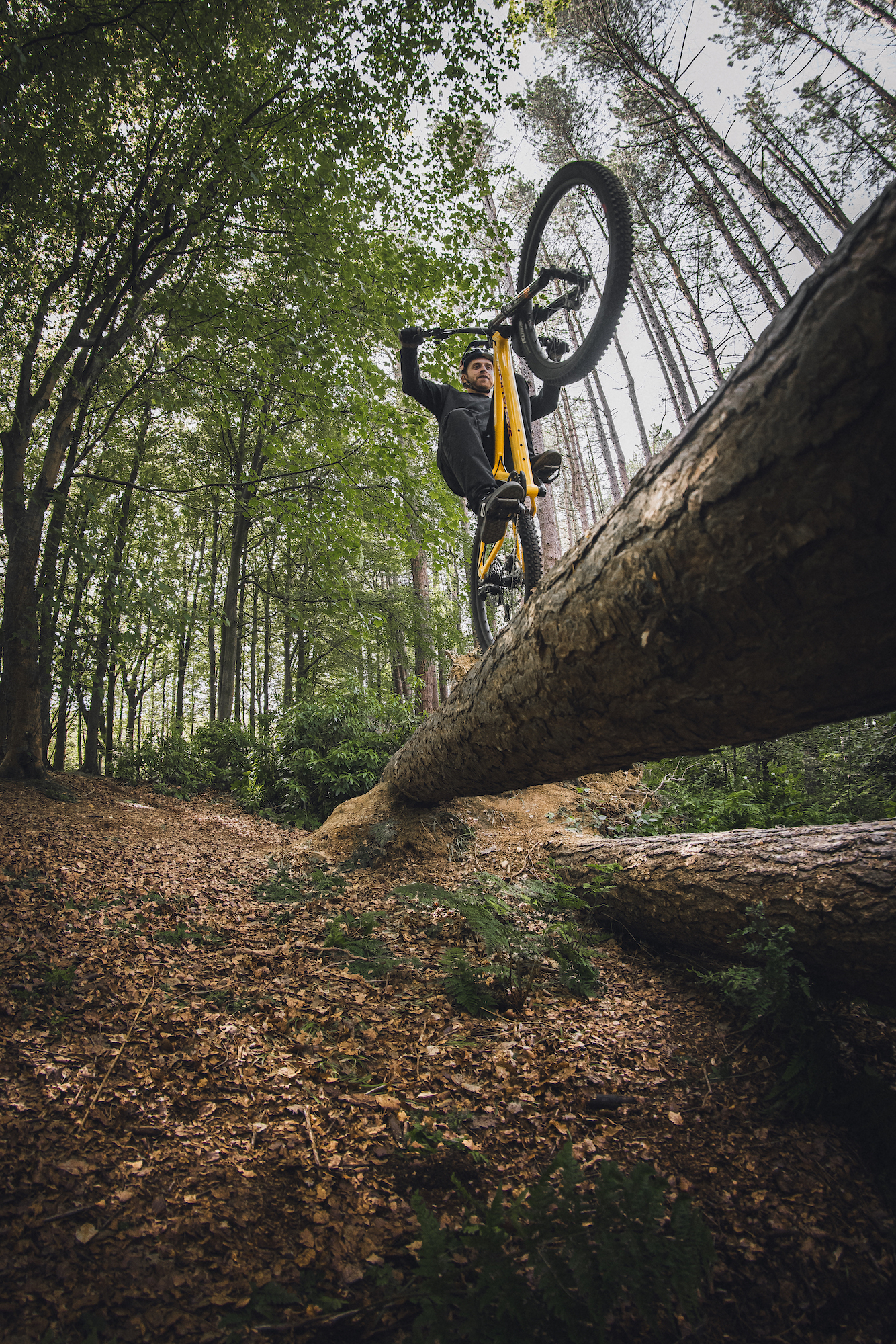
There is something instinctive built into us, no matter our age. From the first moment we put a leg over the frame of a bike and begin to pedal something takes over, we are drawn to tug on the handlebars and lift the front wheel off the ground. The endorphins rush and a sense of shock turns to a smile – this is how it often begins, doing a wheelie for the first time. The humble wheelie is a gateway into a whole new world that for many will become a lifelong passion. For Danny MacAskill his first wheelie would be the start of an incredible career, in his latest film ‘Do A Wheelie’, Danny shows just how much he loves some back wheel action.
With the new breed of riders in the mix, Danny wanted to showcase the other end of the spectrum and knew he had to reach out to his personal childhood hero, Hans Rey. Hans is a former trials World Champion, Five Ten teammate and legend of the mountain bike industry. At 55 years old he is not slowing down one bit and a testament to the sport of mountain biking being for all ages.
Photo by Dave Mackison, courtesy adidas Five Ten
“Danny MacAskill has pushed the boundaries of the sport beyond what I could have ever imagined possible, but just like him, it started with that first wheelie for me too. I jumped at the chance to join Danny and help share our love of some back wheel action” – Hans Rey, Professional Mountain Bike Rider
The wheelie however is not exclusive to the mountain bike world and is embraced by all cycling disciplines and Danny wanted to share this with the world and knew exactly who to reach out to. Viola Brand is a social sensation in her own right, famed for incredible performances as an artistic cyclist, performing mind melting routines on her fixed gear bike.
“My sport is definitely not as well-known as Mountain Biking but when I got the call from Danny I knew this was an opportunity I couldn’t turn down. Danny is an incredibly talented athlete and to feature alongside him and show the world how I embrace the wheelie was special and we have more in common than not. We love bikes!” – Viola Brand
Don’t be fooled by the title of Danny’s latest film, ‘Do A Wheelie’, there is a lot more on offer. You can expect to see a collection of tricks, incredible feats of skill and world firsts that Danny has become famous for. As MacAskill ventures through a series of iconic Scottish locations, he pushes the boundaries of his riding across all types of bikes as well as being joined by a cast of riders who put Danny’s riding to the test.
“I have seen first-hand the popularity of bike riding explode over the last few years and it puts a smile on my face to see so many people loving getting outside on their bikes. Working with adidas Five Ten, we wanted to make a film that included as many types of riding as possible and let other riders become the star of the film. The wheelie was the best place to start, if you can ride a bike, you can have a good go at doing a wheelie and from there the opportunities are endless. We wanted to celebrate the wheelie, show how accessible riding bikes can be and put a smile on peoples faces. If someone picks up a bike and has a big grin trying to wheelie, then job done.” – Danny MacAskill
By Art O’Connor — The Iditarod Trail Invitational is the human powered version of the famous Iditarod Sled Dog race. Competitors can choose to bike, walk, or ski the route. The ITI follows the same trail as the dogs, but we leave a week before they do. For us two legged competitors there are 2 distance options. The 350 or the full 1000 miles. In order to do the 1000, you must first complete the 350.
As a rookie, the 350 was my only option and believe me, I was intimidated enough by that distance. The race itself is semi self-supported. There are checkpoints along the way that have food and lodging options. Some are free others you pay out of pocket. Riders are expected to carry all the gear they think they will need to make the trek. Unlike most races that have a required gear list the ITI does not have one. Competitors are free to pack as light or as heavy as they feel comfortable doing. The guys gunning for the win go really light and really don’t stop to sleep. I was hoping to finish in under 5 days and definitely planned on sleeping.
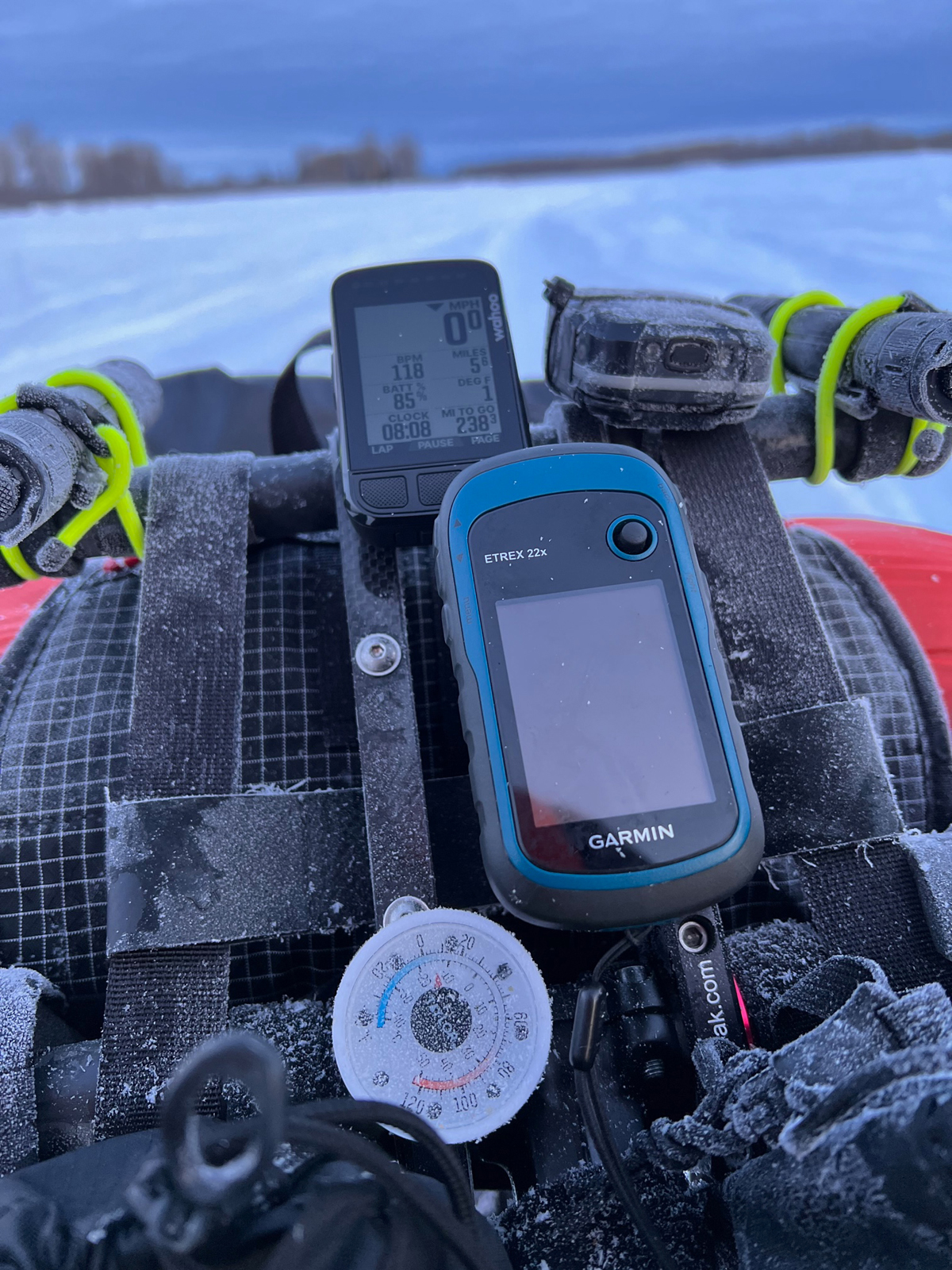
The dashboard of Art’s bike. It’s a balmy 6 degrees. Photo by Art O’Connor
As a rookie I definitely packed for my fears. I had redundancies for my redundancies. I never weighed my bike, but I would guess I was in the 75-80lb range. The fast guys were more like 40. The race bible and the pre-race meeting are pretty clear that if you get in trouble, you had better be prepared to self-rescue.
It’s not that the race organization won’t help if you’re in trouble, but more of an expectation that they may not be able to help given the huge amount of ground the course covers and the extremes of Alaskan weather. Even if you hit the rescue button, help could be days away. This event is invitation only. You must have finishes in qualifying events and demonstrate that you have the ability to handle yourself in extreme conditions. You can’t buy your way into this race. So, understanding that explains why no required gear list. If you are coming to Alaska, you better be ready for whatever it decides to throw at you. Given that I felt more comfortable packing for my fears than embracing my inner weight weenie.
I have always had a fascination with winter expeditions and the Arctic. I have read all the Jack London tales, books about Shackleton, and the insane Twight, Krakauer, and Messner stories. I have always wanted to do something like that and see if I could test myself to my limit. Not being a climber or really having any interest in becoming one this seemed like my best shot. With 4 Fat Pursuits (two 50k and two 200k’s) under my belt and one of Jay Petervary ‘s Fat Camps under my belt I sent in my application. In July of 2021 I got the email that I was in. Holy moly, this is happening!
I got to Anchorage 3 days before the Sunday start. I wanted some time alone to get my head ready for what was to come. My old friend and former Utahn Tom Miller was flying in on Friday from Canada and I was looking forward to catching up with him, but I was really happy to have some alone time in the hotel room to get myself sorted. Events like this are more of a mental challenge than a physical one IMHO. Months of talking about it and planning it were over. Time to act now. I spent those days telling myself that no matter what happened I would finish. I would not panic. I would be grateful, and I would finish. I did have a performance goal in mind, but the primary objective was to finish.
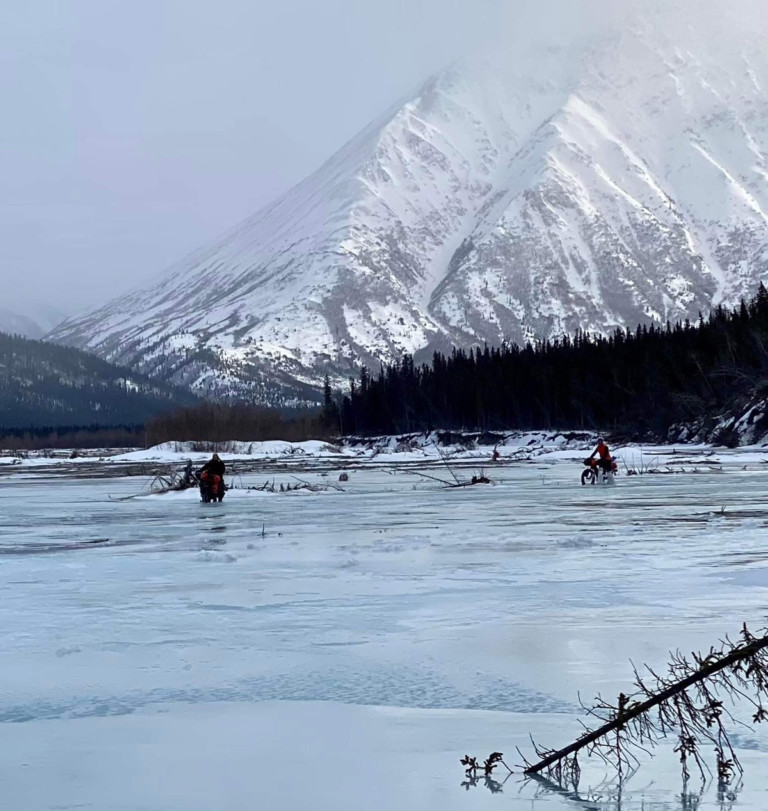
The big topic on everyone’s mind was overflow. Overflow is when the ice cracks on the lakes and rivers and water comes up between the ice and the snow covering it. Lots of pics and videos in the days before showed knee deep water on the lakes. One other unique thing about ITI is that there is no official course map or GPX file given to the racers. Navigation is part of the skill set and the experience of ITI. The first 30-50 miles of the race usually cross several lakes that are usually frozen solid. Unusually warm temperatures had changed that. So now the challenge was finding alternative routes around the soggiest sections. I had several routes loaded on the Gaia app but if I am being honest, I was scared shitless of getting lost. More on that later.
The race starts with a 90-minute bus ride to Knik Lake for a 2pm grand départ. As the school bus rattled down the road to everyone was pretty quiet and focused on the task at hand. At the start Tom and I connected with Jenny and Jason Hanson from Arizona. We all did Fat Camp and Fat Pursuit together and it was reassuring knowing other people in the race. We got a start line pic and sent it to our friend Andy who was supposed to be with us but had to pull out after having back surgery right after Fat Pursuit.
I got a spot near the front and in front of all the walkers and skiers. When the gun went off, I settled into a good pace and found myself in a nice group of locals and race veterans. About an hour in as we were flying through some rollers, I carried a lot more momentum into a hill than the guy in front of me. This resulted in me hitting brakes to avoid hitting him and tipping over while still clipped in.
Low speed crashes are always where I get hurt. Today was no exception. My left knee was wrenched pretty good, and I found myself pedaling with one leg. Peachy. I settled back into a good pace despite my knee and was with a guy who had done the race before and knew the way around the overflow. This relieved a lot of my concerns about navigation even if it meant going harder than I wanted to.
We made it to the first checkpoint at Butterfly Lake just before dark. The trail was mostly good with minimal walking and no overflow! My new friend and I ate some soup, topped off our water and hit the trail in short order. From here on we had really good trail. My knee was not great, but I kept my mind off it and kept pace with my partner.
The next checkpoint was Yentna Station. I had originally hoped to make it past that to Skwentna on the first day. When we rolled into Yentna around midnight I made the choice to buy a meal and a bed in the hopes of giving my knee some relief. After a grilled cheese and soup, I hit the pillow around 1 am and was instantly sound asleep. When my alarm went off at 5:30 it took me a minute to remember where I was.
I rolled out of Yentna around 6:30am in the dark with Tom. Today was going to be mostly river miles for which my knee was thankful. On the flats it was not too bad, and I had plenty of Ibuprofen to take the edge off. Tom and I ride at different paces so I was alone for a while until a friendly guy name Matt caught up with me after I veered off course for a short time. He and I were about the same speed, and it was nice to have the company. We made it to Skwentna around lunch time to crush the best lasagna I think I have ever eaten.
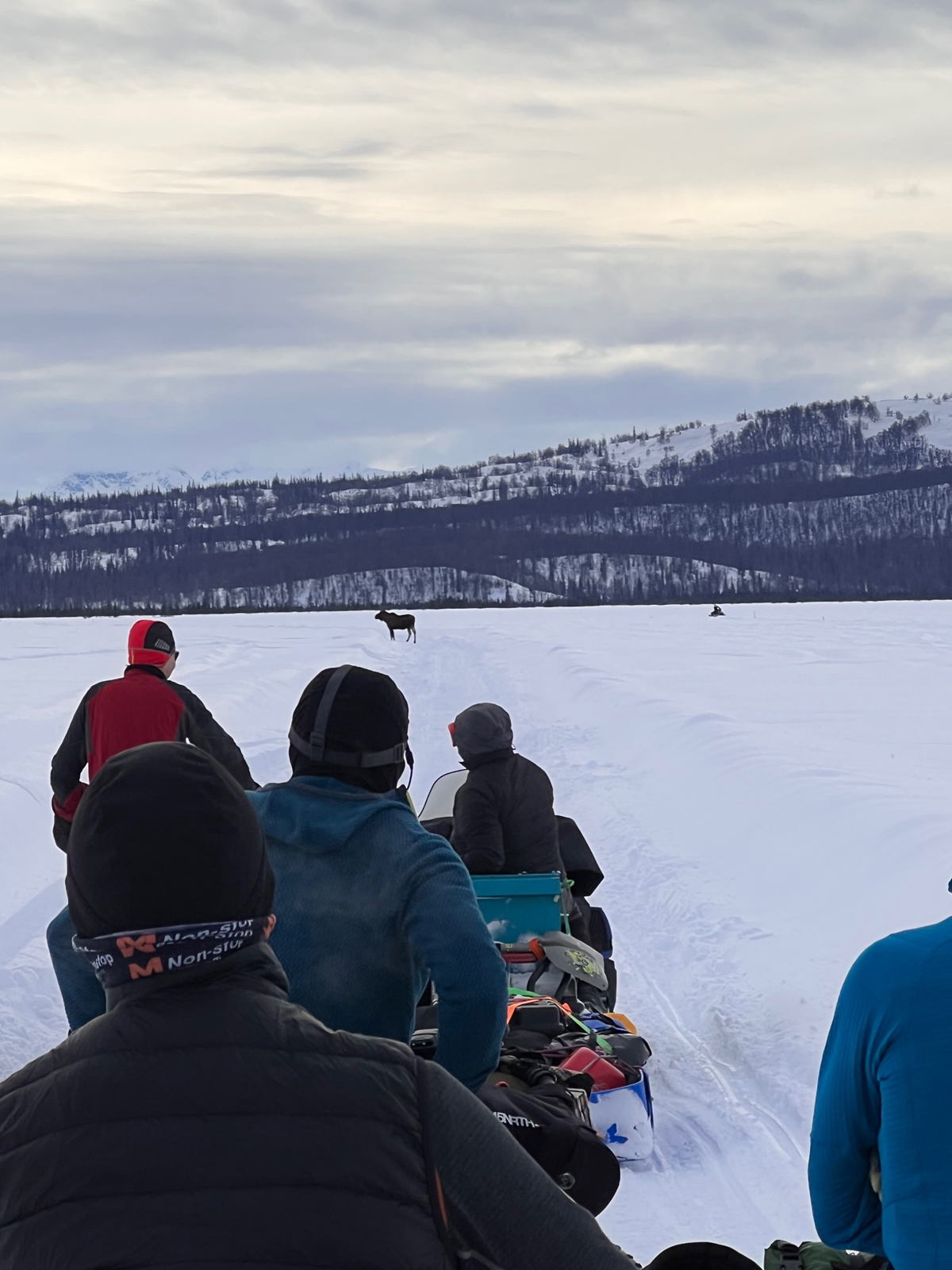
The moose was in no hurry to get off the trail. Photo by Art O’Connor
Shortly after leaving Skwentna, we entered a huge valley. Matt told me this is where the real Iditarod starts. We would be leaving the easy river miles and entering the Alaska Range which we could see in the distance. Not long after that we came upon a group of riders who stopped for a moose in the trail. Moose are the most dangerous animal that we will see in this race. With the snow they WILL NOT get off the trail. A week prior there was a much talked about story of a musher who got stomped in this same area. Before long there were about 20 of us waiting for this moose and trying to figure out how we would get around it. Stepping off the trail meant sinking up to your waist while trying to push a 75lb bike. No wonder the moose wouldn’t get off for us! The race director arrived on a snowmobile and tried to scare it off the trail. No luck. At one point it laid down in the trail and the race director launched his drone to get it to move. It did move. Towards us! A warning shot from a pistol thankfully stopped the charge. We had no choice but to try and push this moose down the trail to an intersection to get around it.
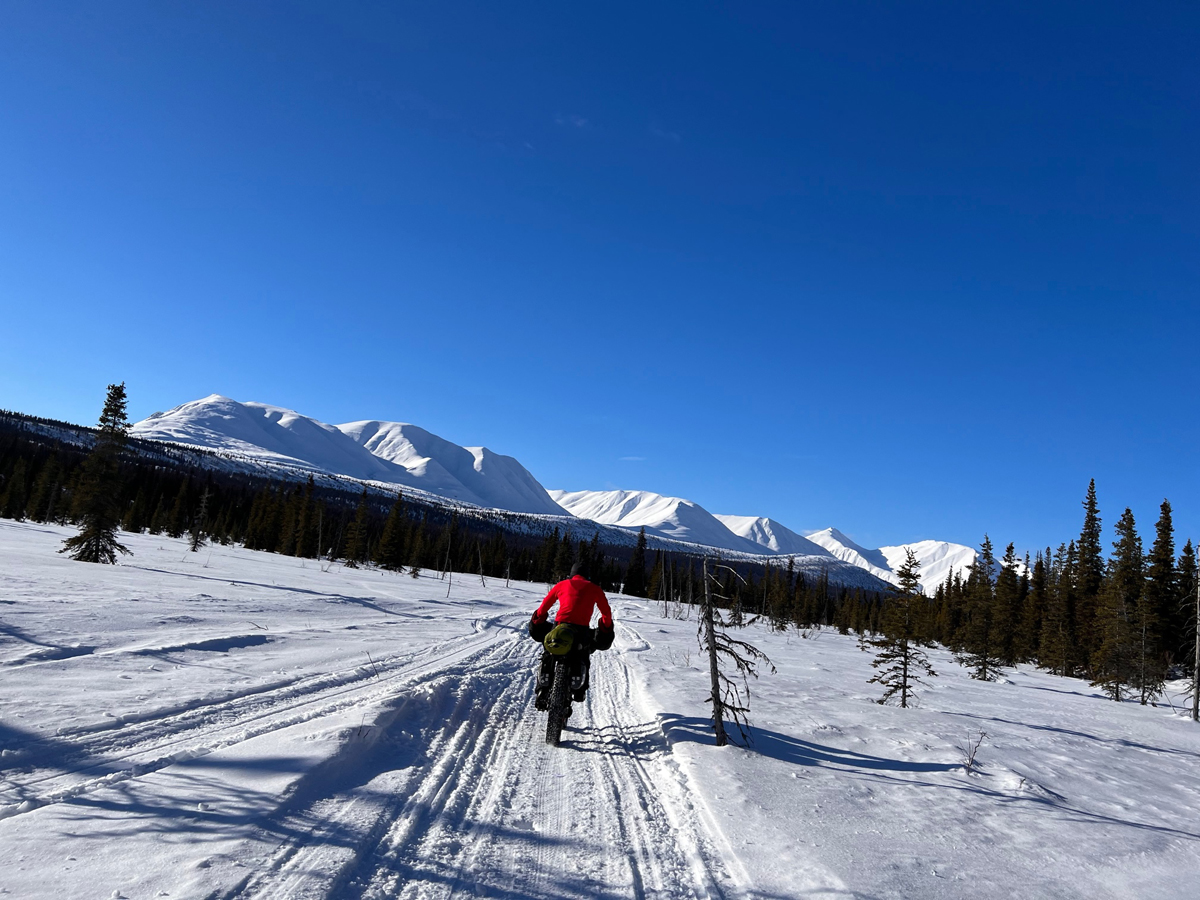
Alaska Range. Photo by Art O’Connor
Two hours later we finally had clear trail. We were running out of daylight and were told the next checkpoint stopped serving dinner at 7 o’clock! Needless to say, our pace got pretty aggressive. We rolled into Shell Lake at 7pm. The bar owner was actually really happy to see us and to hear that a bunch more were behind us. Everyone got a warm meal! While the bar owner made a great meal and was extremely nice his trail reports were uh, suspect. He told us to get ready for the fastest best trail we have seen yet. The next checkpoint, Finger Lake, was only 3 hours away. Matt and I decided to head out knock off some easy miles. Well, 6 hours later, and a lot of walking we rolled into Finger Lake. Today was 18 hours and would be my longest push of the trip. I was tired but happy.
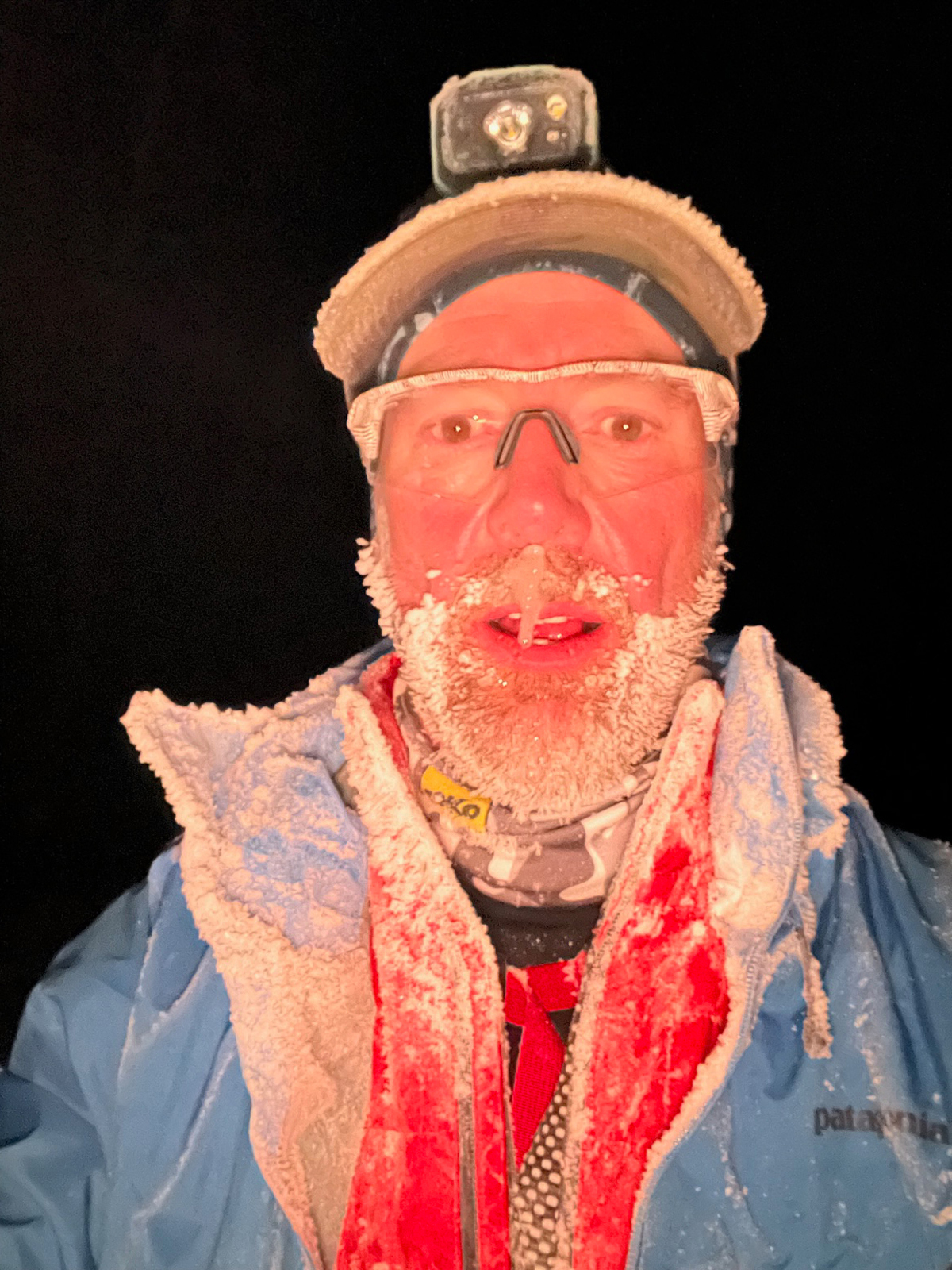
Brrrrrr. Photo by Art O’Connor
Another 5am wake up and we were back on the trail to Rainey Lodge. We were deep in the Alaska Range now and the easy river miles were a fading memory. My knee was really pissed, and I had to walk hills that I would normally ride. As much discomfort as I was in today was the most beautiful and powerful part of the course for me. The Alaska Range is spectacular, and I was feeling so humbled to be able to see it in this way. I am not a religious man, but I really felt blessed. I was glad to have Matt with me. He was having his own physical issues, but we never spoke of it.
Also, he knew a way around the infamous butt slide that precedes the Happy Steps. It is a descent so steep you can’t ride it. The technique is to hold your bike in front of you as you slide down on your butt. I was glad to miss that. The Happy Steps are what take you up from a brief section of the Skwentna River. Riding them is definitely not an option. Steeper than the steepest section of Puke Hill on the Wasatch Crest Trail in Salt Lake City, and about 800 meters long.
Basically, you push your bike in front of you. Grab the brakes, take a few steps up and repeat. It is that steep. We had caught up to 2 more riders at that point and we were all talking about the steak dinner waiting at Rainy Pass Lodge. I was in a really bad way, physically this would be my hardest day. I never considered stopping but I was fighting for every inch of forward progress. We rolled into Rainy Pass Lodge around 5pm. I was so happy to get off the bike that day. Dinner wasn’t steak but it was amazing. BBQ Ribs and Chicken. I normally don’t like meat on the bone but on this day, I think an ant would have starved if they found my plate of bones.
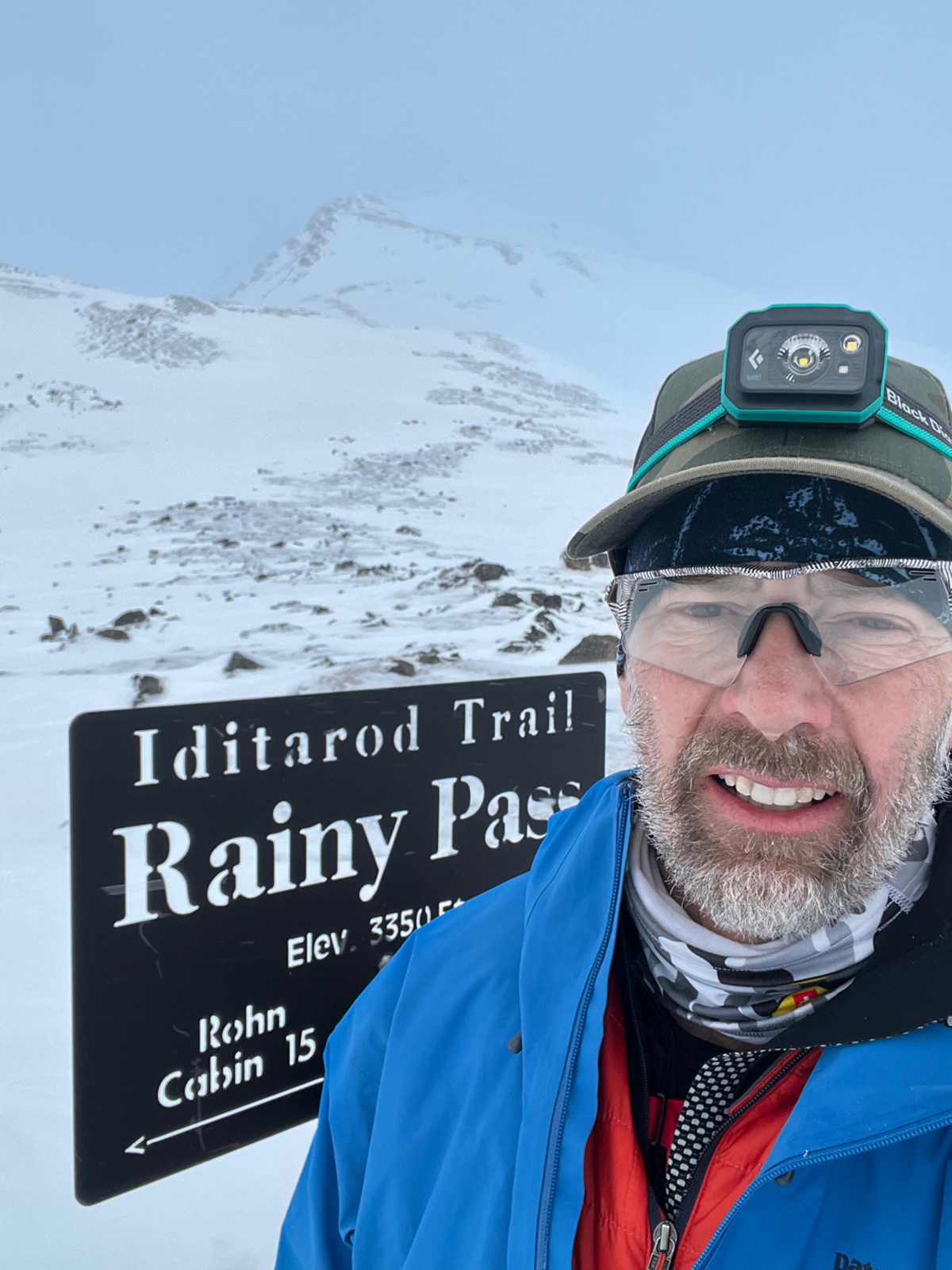
Art at the summit of Rainy Pass on the Iditarod Trail. Photo by Art O’Connor
I was planning full night’s sleep here but reports of a storm coming meant another 4am alarm. Today we would hit the high point of the course, Rainy Pass. The trail here is exposed and prone to being blown in. I wanted to avoid that if possible. I set out alone into dark as it was just starting to snow. The first part of the climb was good going and even with my bum knee I was able ride most of it. The flat section after that which connects to the final climb though was a soft mess made worse by a group of snowmobilers who passed me earlier. Lots of walking.
Rohn. Photo by Art O’Connor
This section though was amazing. It looked like a scene out of Game of Thrones. I was expecting White Walkers at any minute! There were also hundreds of ptarmigans in the area. In the low light I could not see them since they are white, but I could sure hear them! Their weird call only added to the surreal landscape. I reached the summit around 10:30am. Took the obligatory selfie and bike leaning on the sign picture and then began my descent to Rohn, the next checkpoint. It was slow going at first as the trail was soft and blown in. Once I got into the trees though I had some of the most fun trail of the trip. I saw a few moose, well off the trail thankfully, and rolled into Rohn. Around 2:30pm I met up with Matt again. We also caught up with his sister Janice. After eating as much as I could and filling my thermos and hydration pack, we set out again with another guy I had ridden with a bit, Rob.
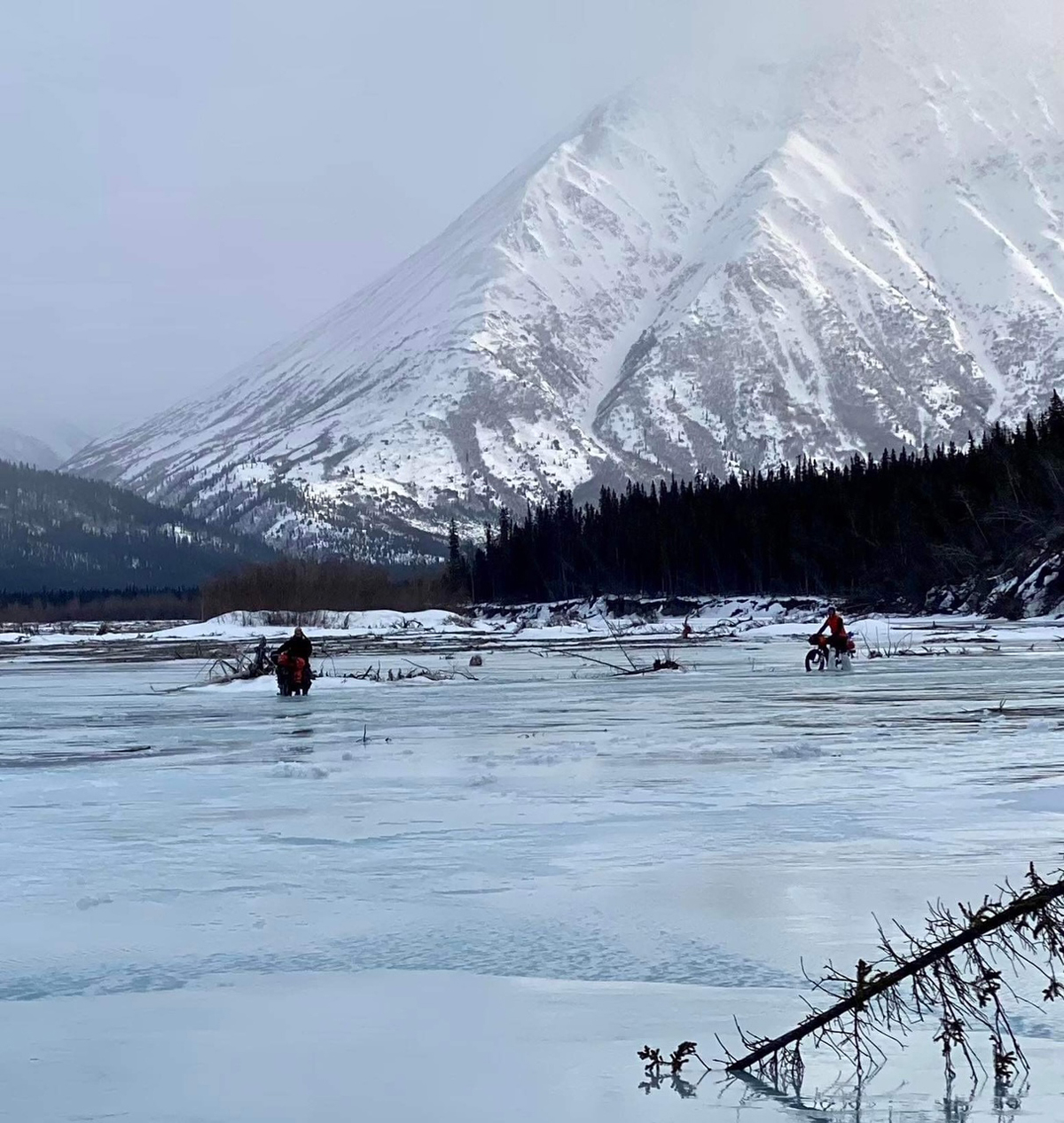
Art (right) crossing the Tatina overflow. Photo by Janice Tower
From Rohn to Nicolia would be the longest stretch between checkpoints. 80ish miles. Immediately after leaving Rohn, we faced the scariest part of the ride for me. We finally had real overflow to deal with on the Tatina River. Up to that point we were delighted with the fast, good ice on which we were riding. Just as we were within sight of where we would depart the river, we lost the good ice. We were looking at crossing 100 meters or so of what looked like open water. I was freaking out internally trying to hold it together. Matt and Janice having done this race a bunch knew this was no big deal. We all put our waders on. And I watched as Rob took the lead and waded across the open water. He made it across. Hell yes.
Now I just mentioned waders. Well, somehow, I managed to leave mine in the bunkhouse that morning, so my waders were 2 trash compactor bags that I thankfully packed as a SHTF situation (one is none 2 is one). I was not super confident they would make it across without tearing. So here I am walking SLOWLY across knee deep water on top of ice that I could hear and feel cracking under the combined weight of me and my bike. I am sure that was the highest heart rate I had the entire ride. I did make it across, and the bags held. Hail Odin!
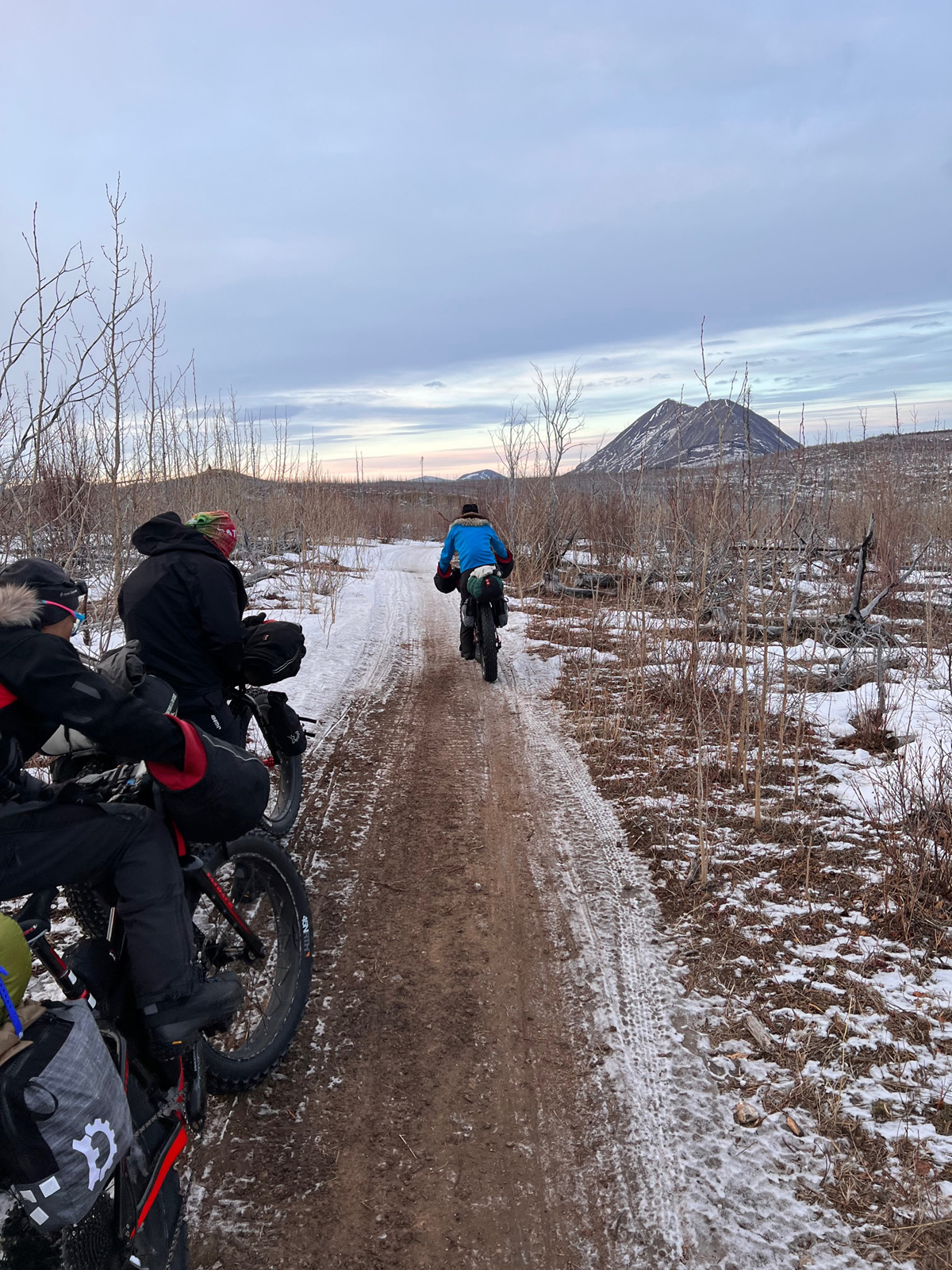
The Burn. Photo by Art O’Connor
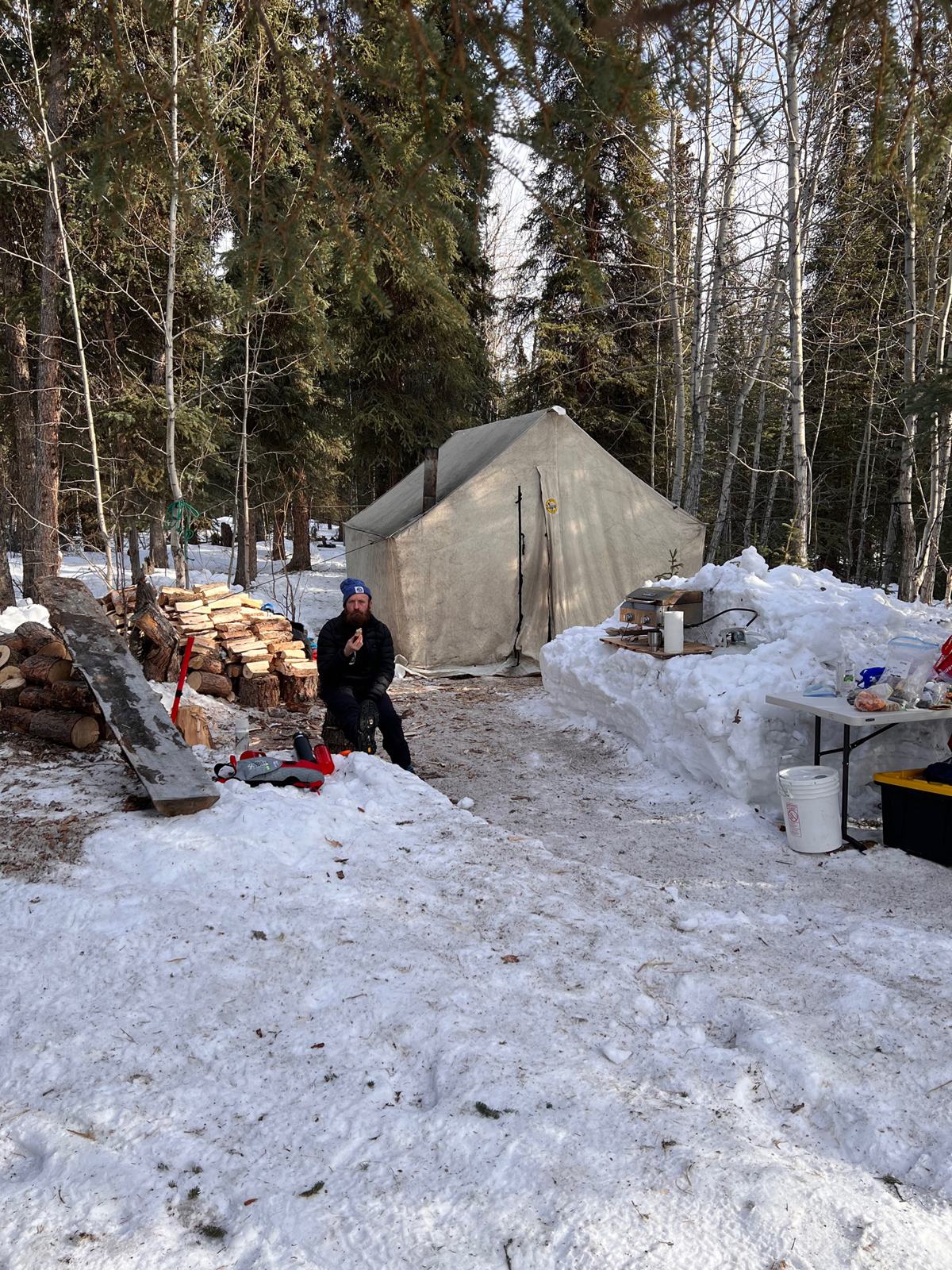
The next section of trail is known as the Farewell Burn. The site of a huge wild fire in 2009, it still has not fully recovered. This section of trail is noted for not having much snow. We had long stretches of dirt trail. There is also a wild bison herd in the area. We did not see any but saw plenty of dung! We also had a big tailwind, so we were making really good time, for now. This would be the only night I would have to bivy. As we got deeper into the Burn, we started looking for a place to camp for the night. Around midnight we did find a low spot out of the wind and set up camp.
We all set out around 7am the next morning. My knee had taken a turn for the worse as did the trail. The Irondog Snowmobile race had used this same trail a few days prior. Apparently, what the leaders do is when they get in the trees where they can’t be seen they stop and do a burn out. A lot of them. The result is an 18” trench where the track was and huge squared off mounds of snow between them. The do this to slow down the riders behind them. Nice sportsmanship huh?
Anyway, I was unable to pedal over these mounds and found myself wishing all manner of plague and pestilence on the snowmobilers. I would guess I walked 12-20 miles that day. There is nothing in this section of trail in terms of support or villages. There is Sullivan Creek though, which has a drinkable creek with a bridge over it. My plan was to make it there and then cook a meal. I arrived around 3pm and had a nice little feast of freeze-dried Shepard Pie and some tea. Miraculously the trail began to improve here and I made it to Nicolai around 7pm.
At Nicolai I smashed down 2 massive cheeseburgers. This would be the last checkpoint before the finish in McGrath, only 40 miles to go! We had free indoor sleeping at the community center in Nicolai. I set my alarm for 3am and slept like a log. I set out at 3:30 after a bowl of oatmeal and ramen. It was pretty windy and with mostly river miles to go the trail was getting blown in. I was not worried about getting lost, but I was hoping to make a better pace. I rode this entire section alone. I spent the time thinking about how far I had come. The amazing people I met. How much discomfort I dealt with. It was a mix of being relieved to be almost done, and yet wishing it would never end. I missed my wife; I missed my dog. Still though, part of me wanted to keep going. This entire trip I was more present than at any other time in my life. The days are remarkably simple. Wake up and ride.
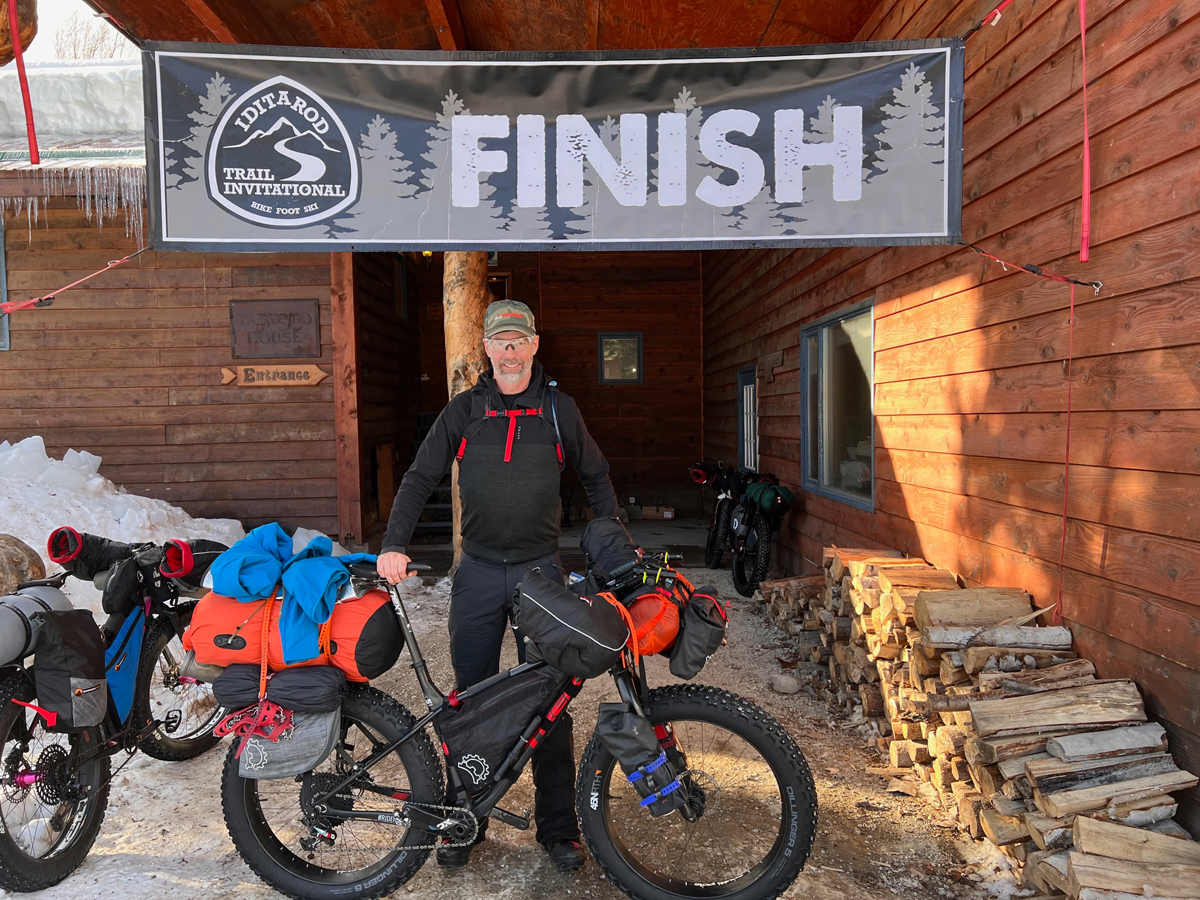
Art at the finish of the 2022 Iditarod Trail Invitational. Photo courtesy Art O’Connor
I made it to the finish in McGrath at 1:08pm. 4 days 22 hours and 45m after I left Knik. It was over. A year of planning, training, testing gear, over. I knew Suzanne was cheering in Salt Lake and that she probably got less sleep than I did these past few days. I would not have been able to do this without her support, I could not wait to get back to her. At the finish line, I was reunited with a lot of the folks I met along the trail. We spent the rest of the day and evening telling tales about our adventure and experience. It was a really special way to wrap things up.
When I started this, I had a performance goal in mind. I did not meet it. I have spent a lot of time thinking about it since the finish. Would going faster have made this a better experience? The answer is a hard NO? Ultimately, I went to Alaska to test myself, to find adventure. What place I got is not relevant. As a younger man I would have focused just on that and been pissed I didn’t get the place I wanted. That would have taken away from the sheer beauty of this event. I will always be a racer at heart, but I have to say that bikepacking and multi-day trips are something I never thought I would enjoy but now I am obsessed. That is the cool thing about bikes. Even after 30 years of riding I am still finding new things to do. Thanks for reading. Hopefully, this encourages you to find your own adventure.
Art O’Connor is the owner of WUKAR Fit (wukar.com), making stronger cyclists one rep at a time since 2012.