Utah’s toughest gravel race will now feature a middle-distance option and a start/finish at a former Olympic venue
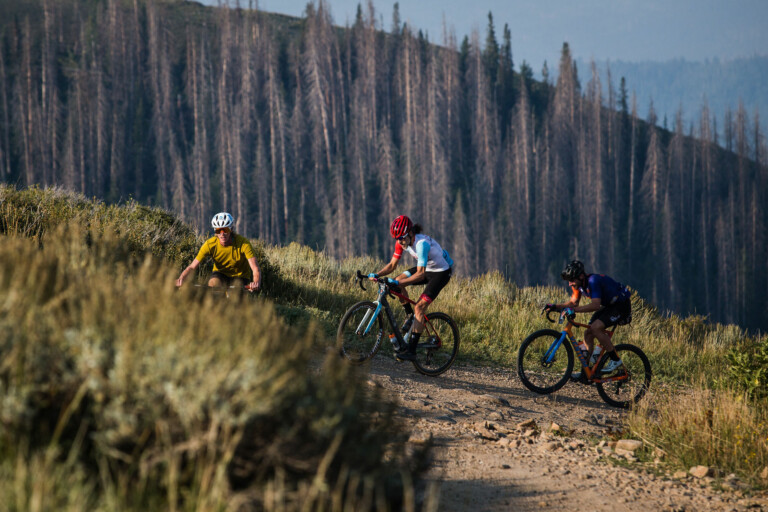
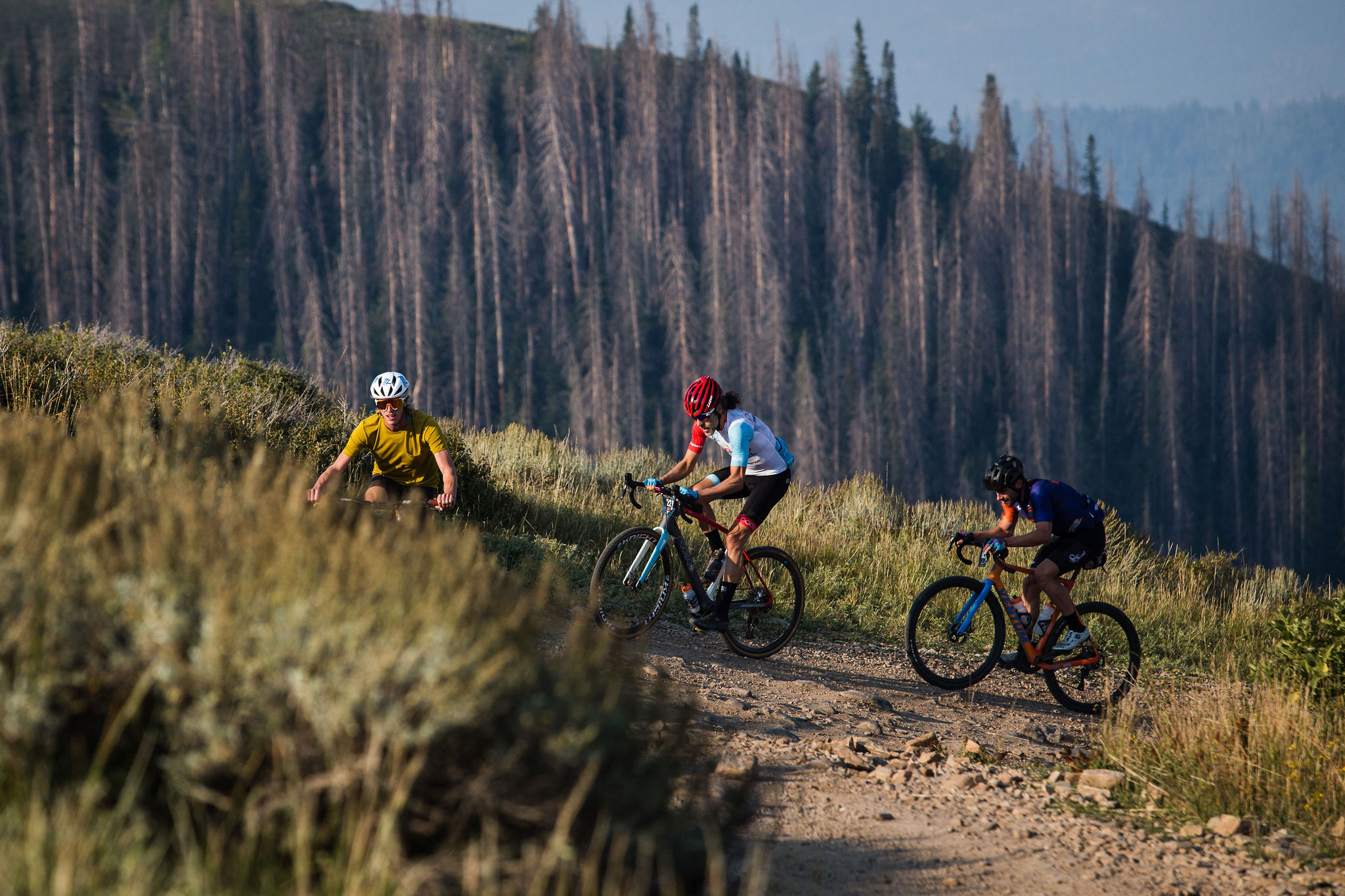
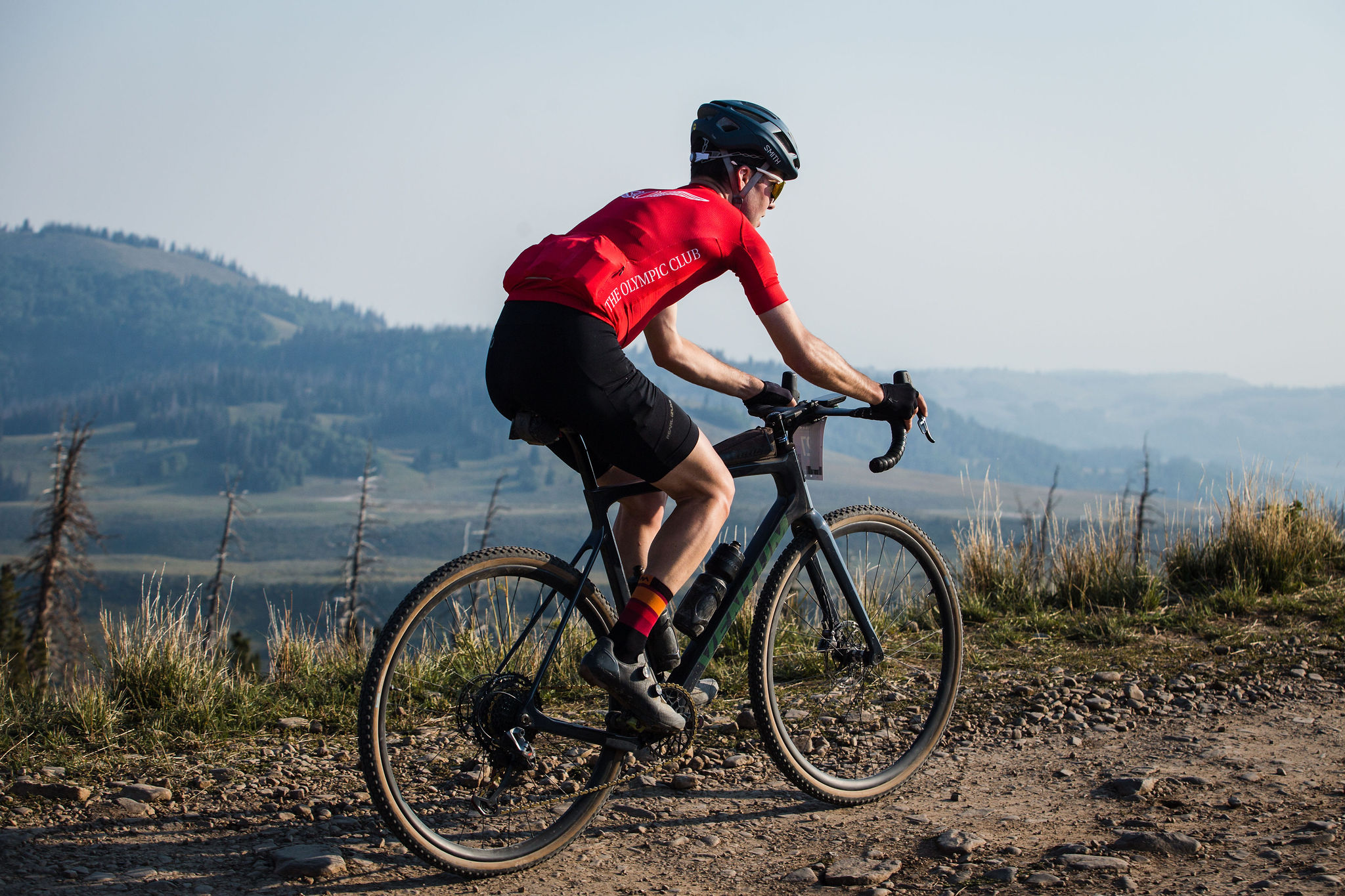
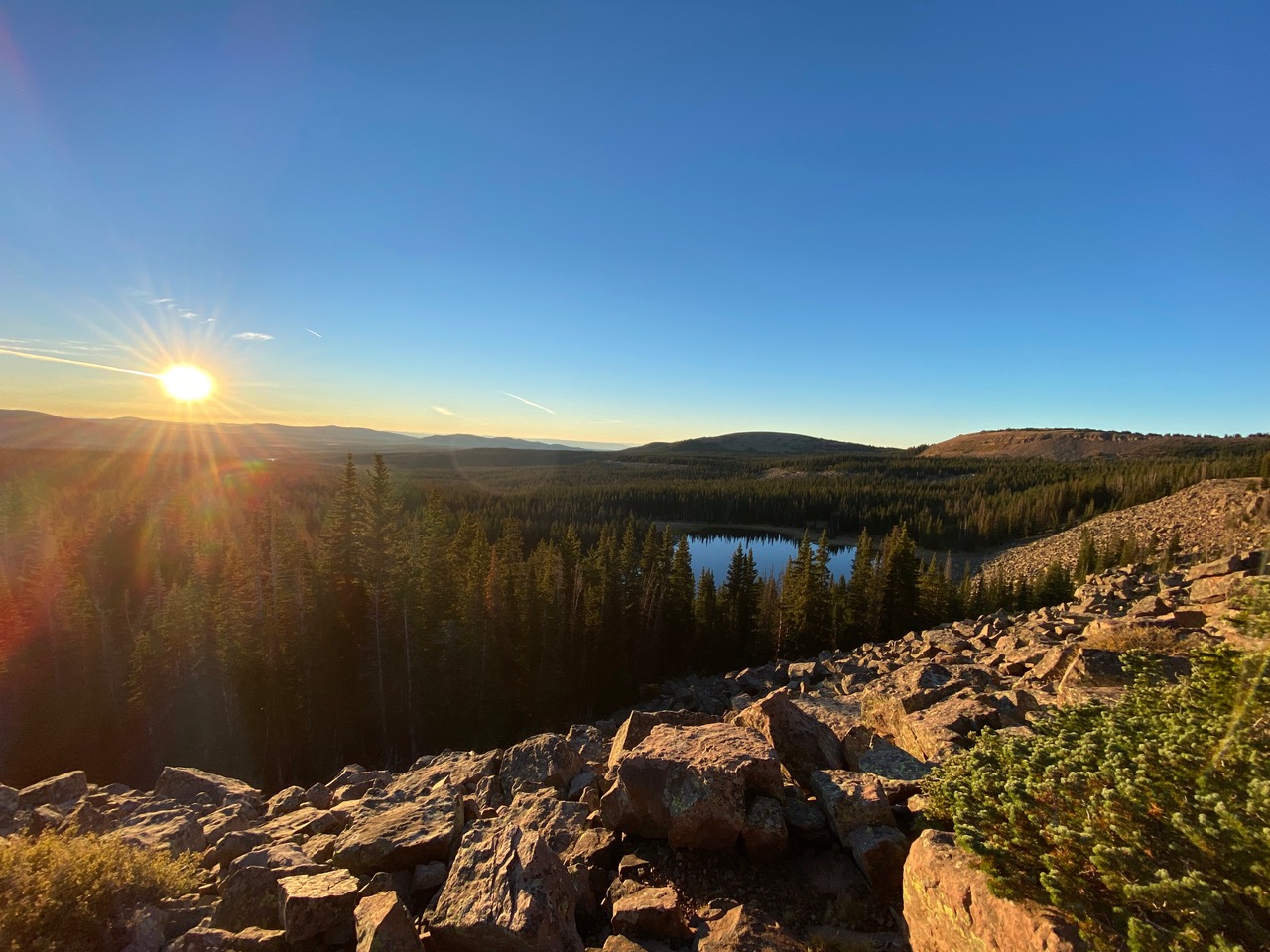
MIDWAY, Utah (June 21, 2022) — Now in its second year, the Wasatch All-Road Bicycle Race returns August 27, 2022, with a challenging day of riding around Utah’s stunning Wasatch County and the Uinta National Forest. This year’s iteration features two big changes: the race will start and finish at Soldier Hollow Nordic Center in Midway, Utah, and a new course option has been added to the lineup.
Photo by Venny Alub
Host Venue
Located about an hour from the Salt Lake City Airport, Midway’s Soldier Hollow Nordic Center is most well-known as a winter Olympics venue. Throughout the year, though, the venue offers a variety of activities and plays host to major events.
“We want a permanent home for the race, and we think Soldier Hollow is an ideal venue for the event,” Louder says. “It’s in a great location and the facility is world class which makes it a perfect complement to the vision we have for the Wasatch All-Road. With their summertime road and trail network, it also allows us to incorporate a finish circuit at Soldier Hollow to allow participants to complete their race on dirt.”
Starting and finishing at Soldier Hollow also allows organizers to create a festival atmosphere with live music and food so finishers can celebrate together. “We want to continue to build on that experience and make it better,” Louder says.
Photo by Venny Alub
New Course Distance
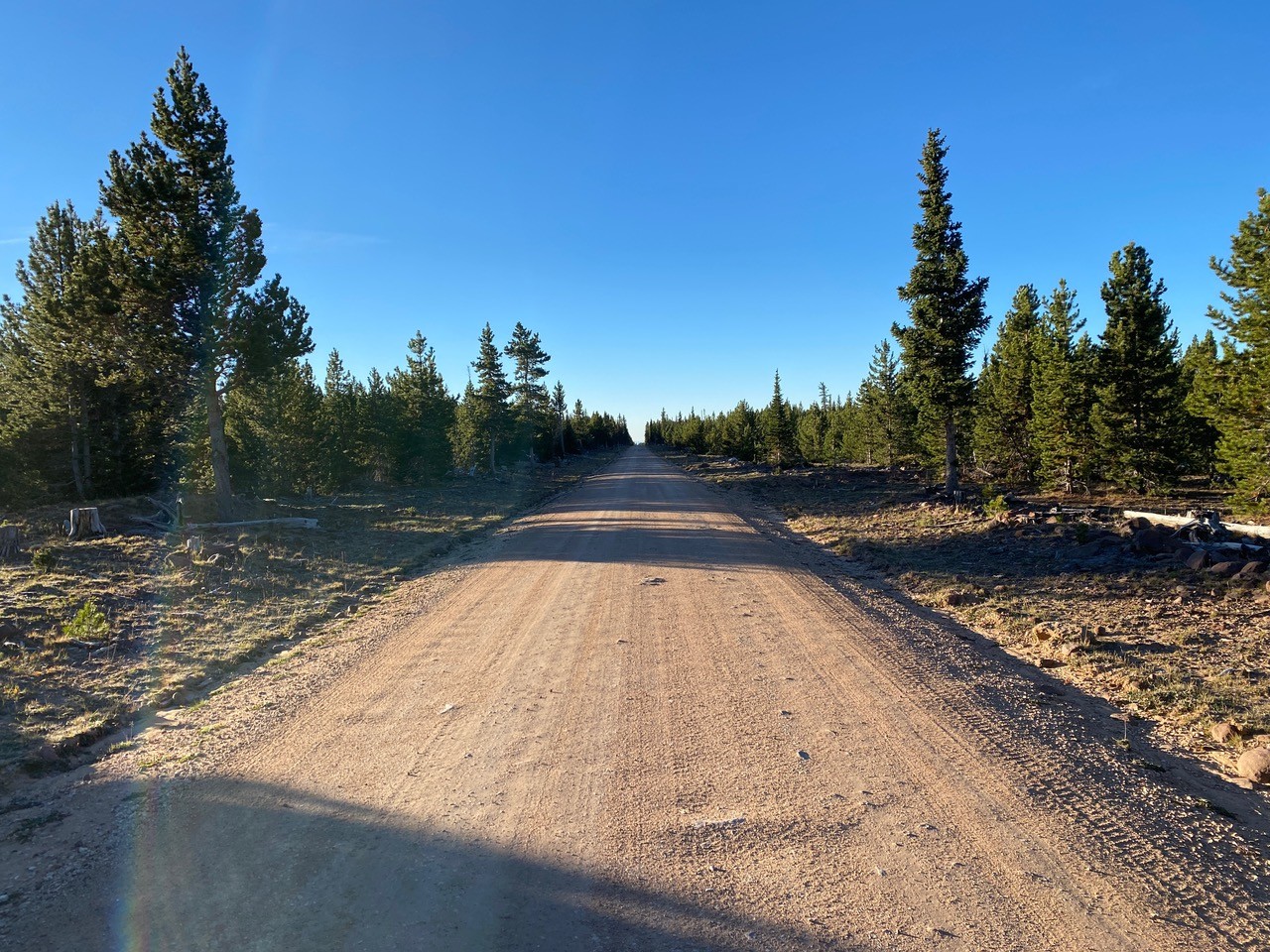
Athletes now have three distances to choose from: 100 miles (Full Yeti), 75 miles (Mid Yeti—new for 2022), or 20 miles (Mini Yeti). Designed by former Tour of Utah winner Jeff Louder, the course is intentionally demanding. “It’s a big challenge,” he says. “It’s obviously doable by many people, but it’s a really difficult course. The Full Yeti is one of the hardest gravel races out there.”
The goal for this year, Louder says, was to try to recreate the best parts of the inaugural race and expand on it. Which means that the infamous Wasatch Wall—a 12-mile climb up to 10,000 feet on chunky gravel—is still a part of the course.
“We fell in love with the area and the views while riding, and Jeff and I just thought ‘we have to put something there,’” says Barrett Brandon, a former professional triathlete who helped design the course. “The race is a confluence of the difficult topography, the views, and showing people the beauty of the Heber Valley. Hopefully we can encourage people to challenge themselves accordingly.”
Registration is open for the 2022 race, and prices increase Sunday, July 31. There will be a $10,000 prize purse divided evenly between men and women, and $1,000 for the First Utahns. For more information, visit thewasatchallroad.com or contact the race director Jeff Louder.
Third edition of Red Bull Formation sparks “spectacular” MTB progression.
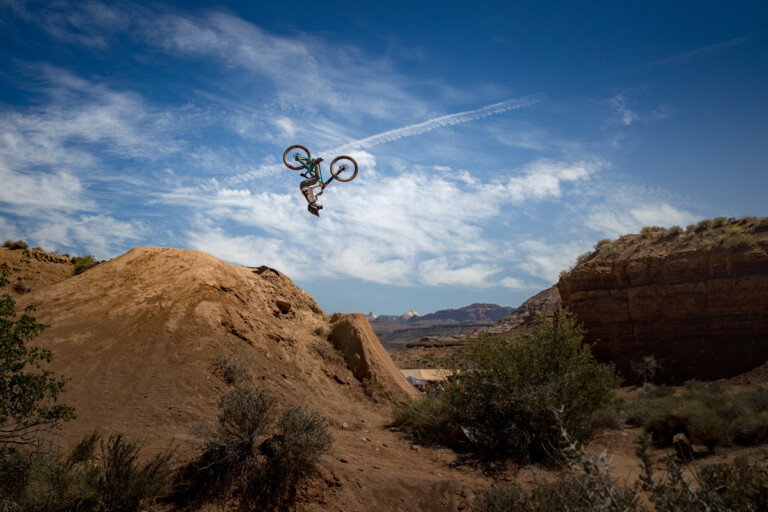
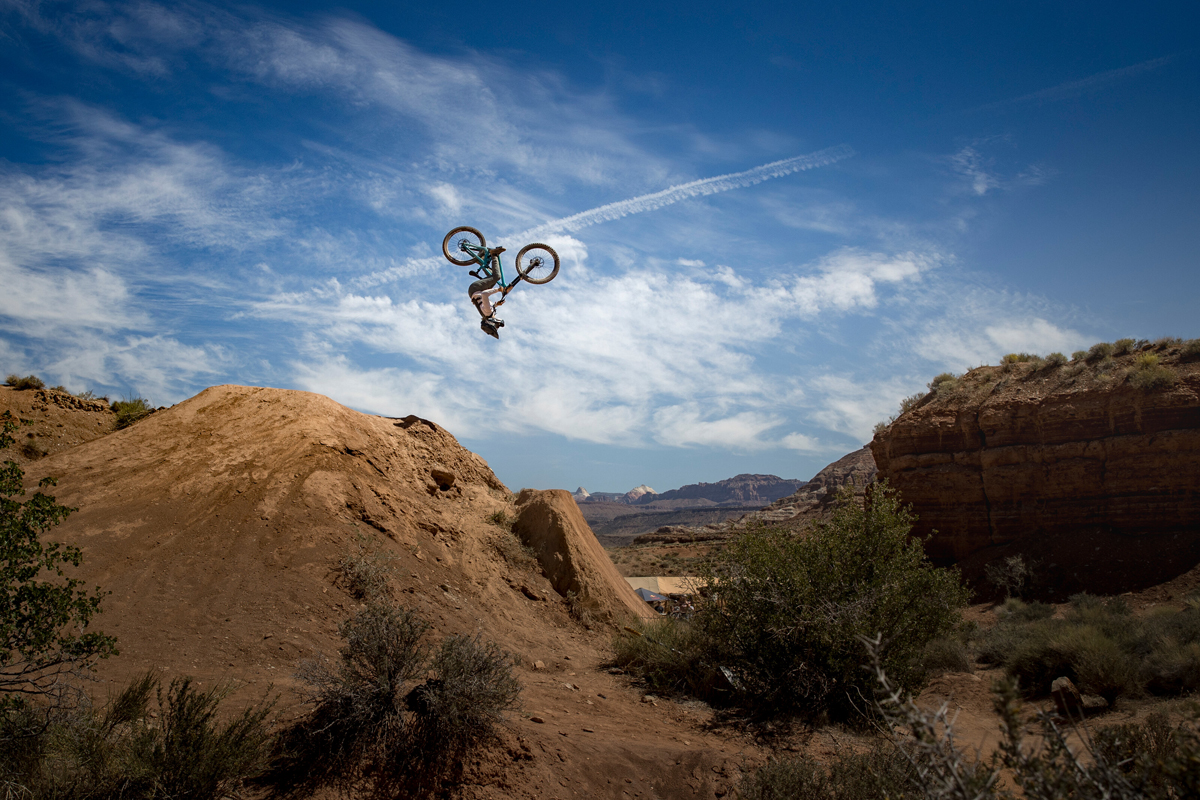
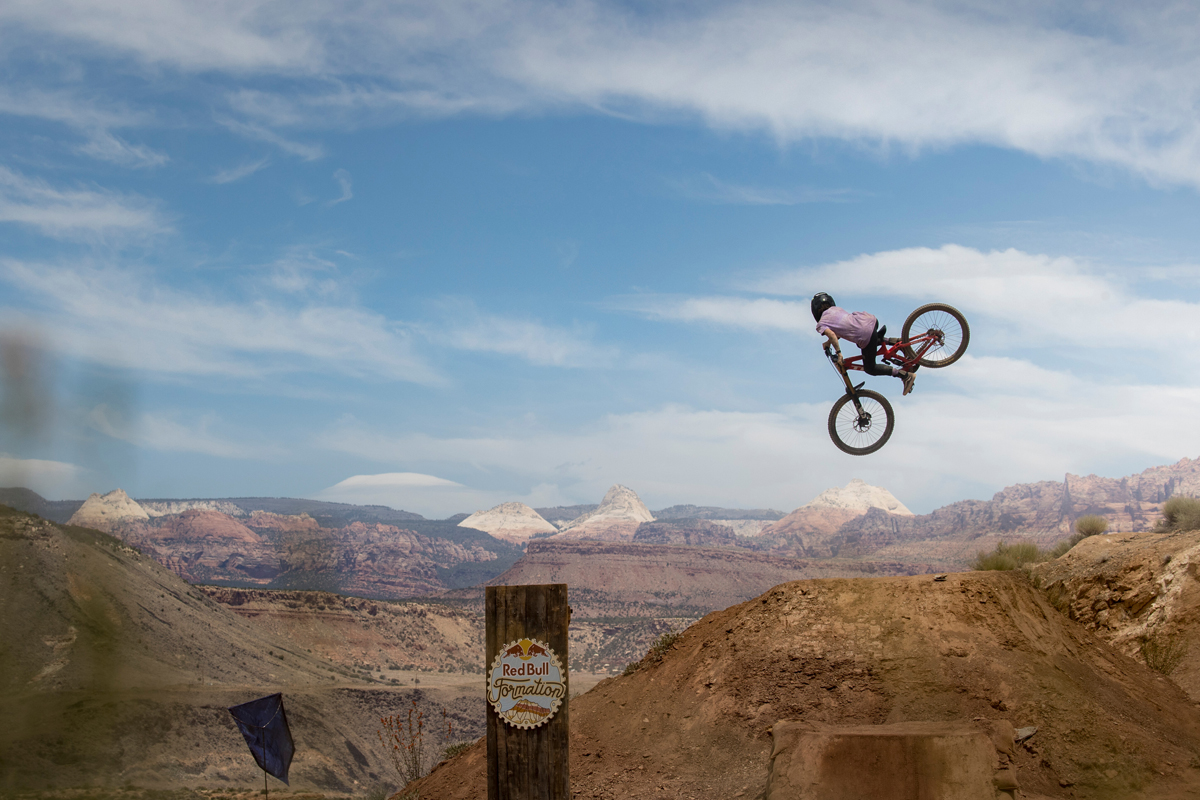
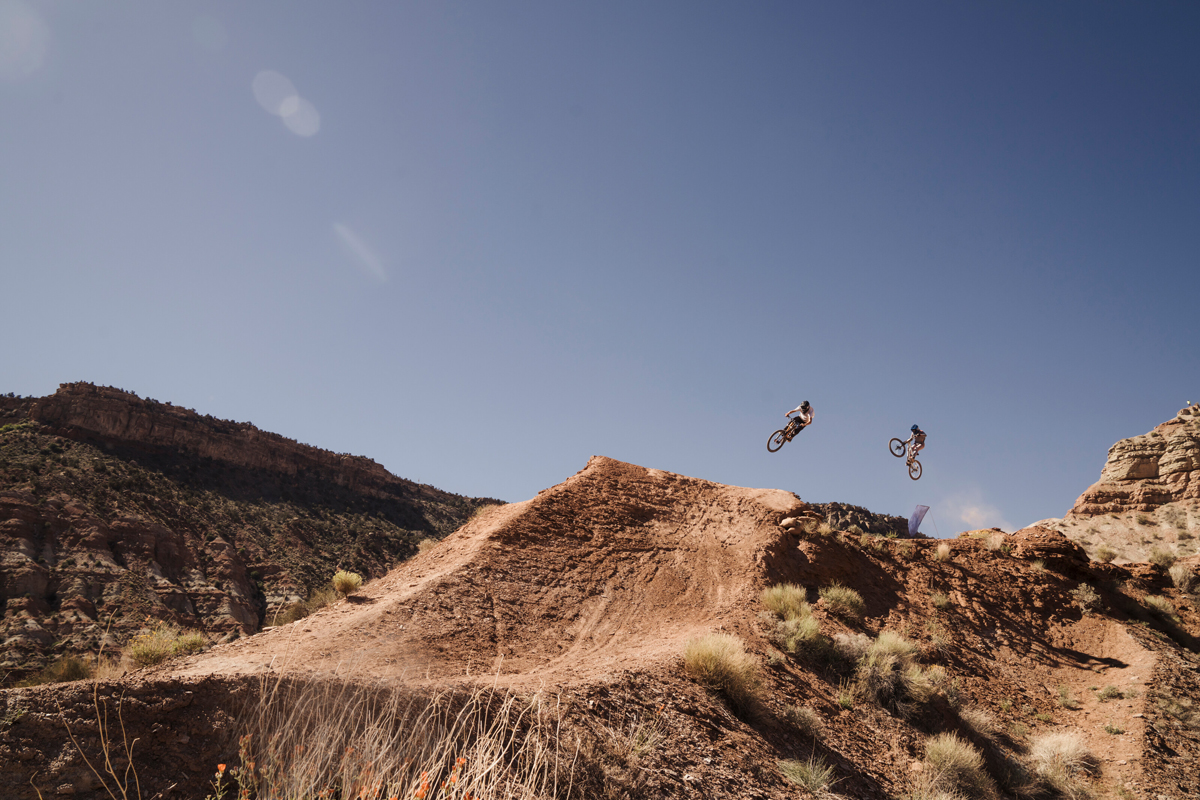
VIRGIN, Utah (May 16, 2022) – Twelve of the best women’s mountain bike freeriders spent last week pushing new boundaries in Southwest Utah as the third Red Bull Formation event saw “spectacular” progression as the likes of Hannah Bergemann and Camila Nogueira helped elevate the sport further and New Zealand’s Robin Goomes threw the first-ever backflip at the event.
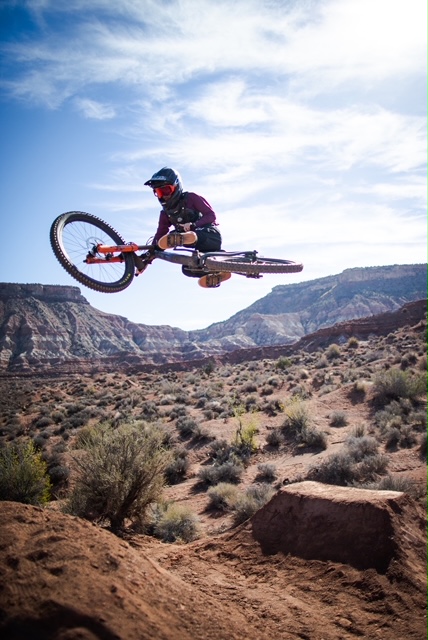
Robin Goomes finishes her line with a backflip, in Utah, USA, May 15 2022 // Robin O’Neill / Red Bull Content Pool
After the first two events advanced the sport to exciting new levels in the women’s arena, the third event saw 12 of the planet’s best female riders chosen by judges to carve out thrilling new lines in Utah.
From May 8-15, Bergemann, Nogueira, Goomes, Casey Brown, Chelsea Kimball, Georgia Astle, Harriet Burbidge-Smith, Louise Ferguson, Sam Soriano, Vaea Verbeeck, Vinny Armstrong and Vero Sandler dug out brave lines down the dusty course before freeriding down the mountain.
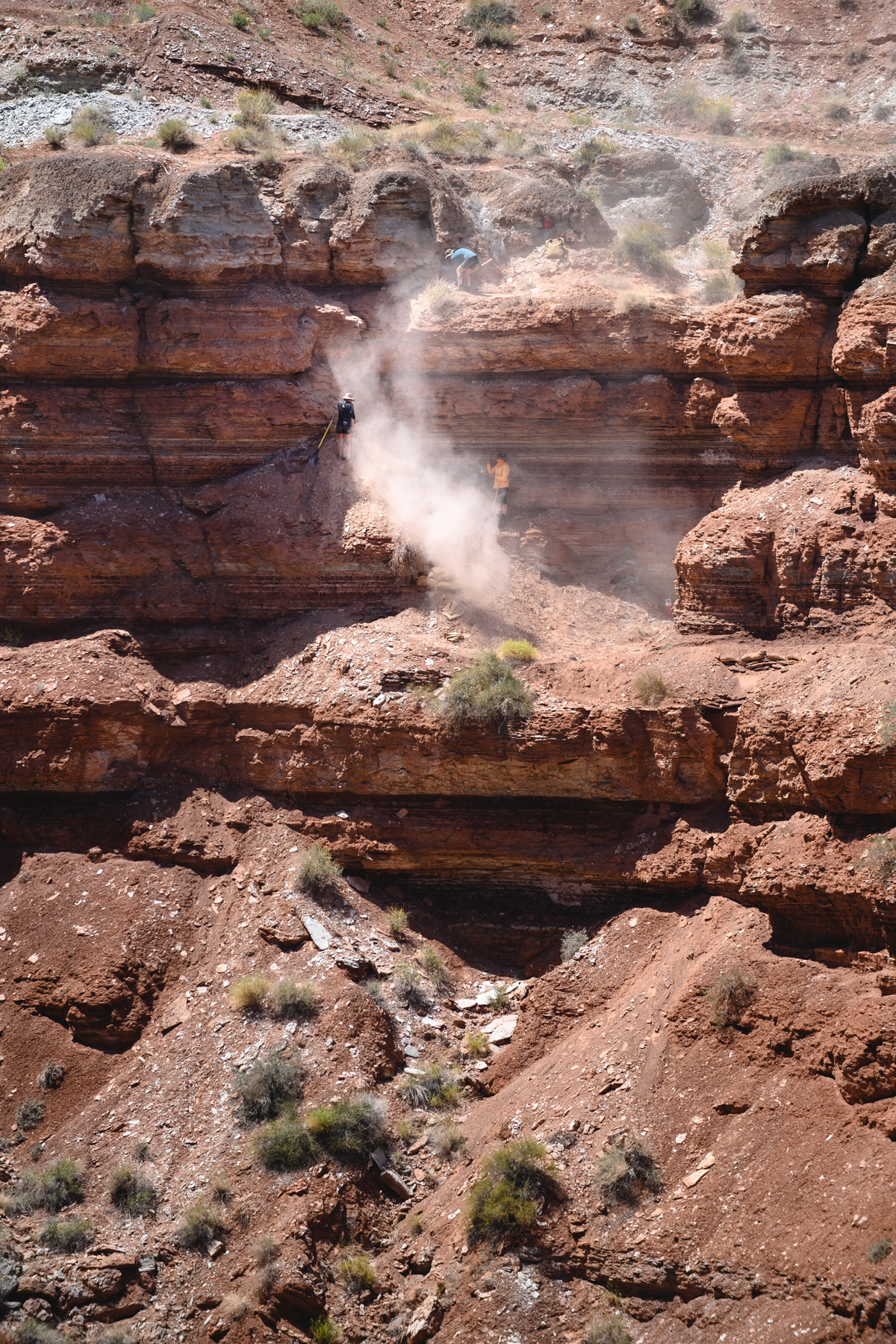
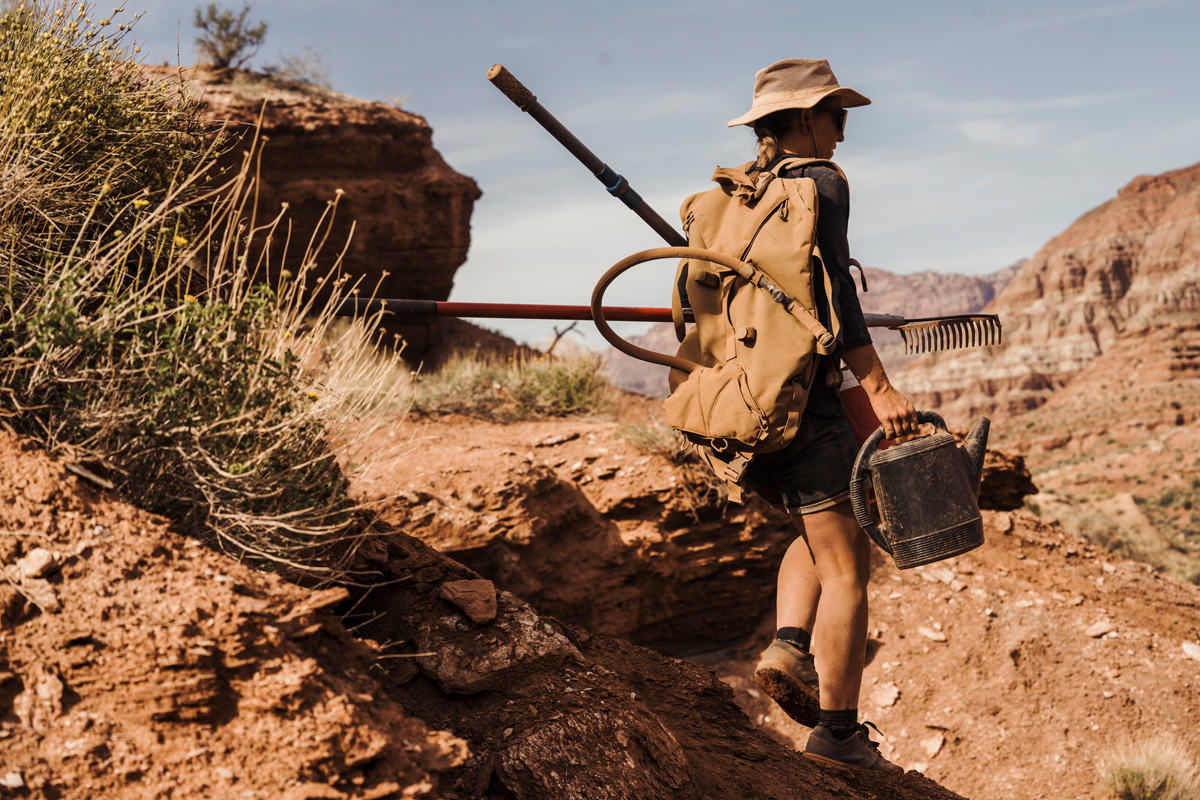
There were three dig days, one rest day – where they found community in each other and industry mentors – and three ride days, where the mountain was host to the gnarliest ever women’s MTB freeriding.
Founding organiser Katie Holden revealed: “The progression witnessed was spectacular and truly marks a turning point for women’s freeride mountain biking. We have seen a tremendous amount of confidence from the riders. From tackling steep drops to choosing lines that played to their styles and incorporating tricks, we hit a major milestone.”
Following the final runs, athletes voted on the rider who ignited the sessions and “brought the spice” to the progression session with Argentine Nogueira receiving a trophy to mark the accolade. She enthused: “Winning this award is the perfect end to an epic event. My goal was to challenge myself with a daring line, one that would challenge my courage due to its exposure and where I would need to stay calm under pressure. I truly believe everyone riding today deserved this honour as they are my friends who continue to push and inspire me.”
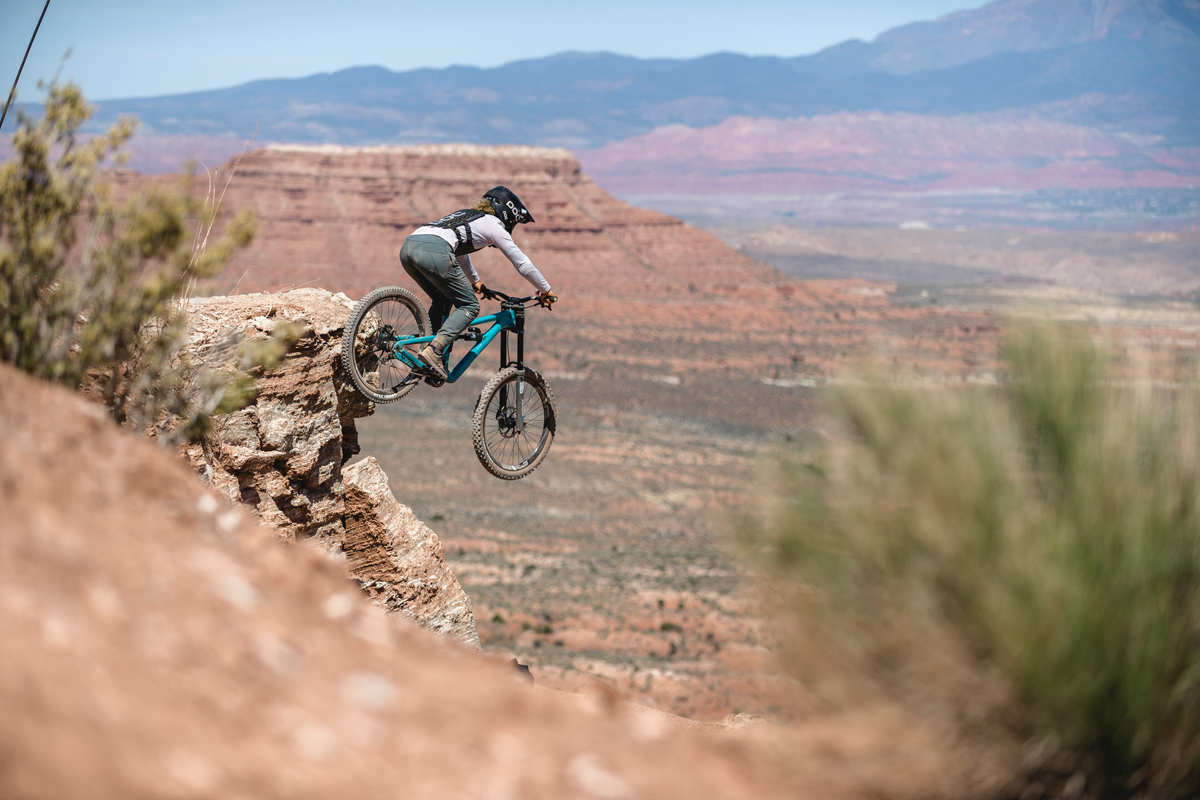
Kiwi Goomes’ historic backflip line started at the top Scissor Drop then ran through looker’s right to end in the Snake Pit, the lower portion of the course that has a series of jumps and features.
Other highlights from the event included Bergemann and Nogueira tackling a highly technical entrance off the top of the mountain that fed into a series of large, exposed drops while rookie rider Ferguson had full authority of her line for her first time on the challenging terrain.
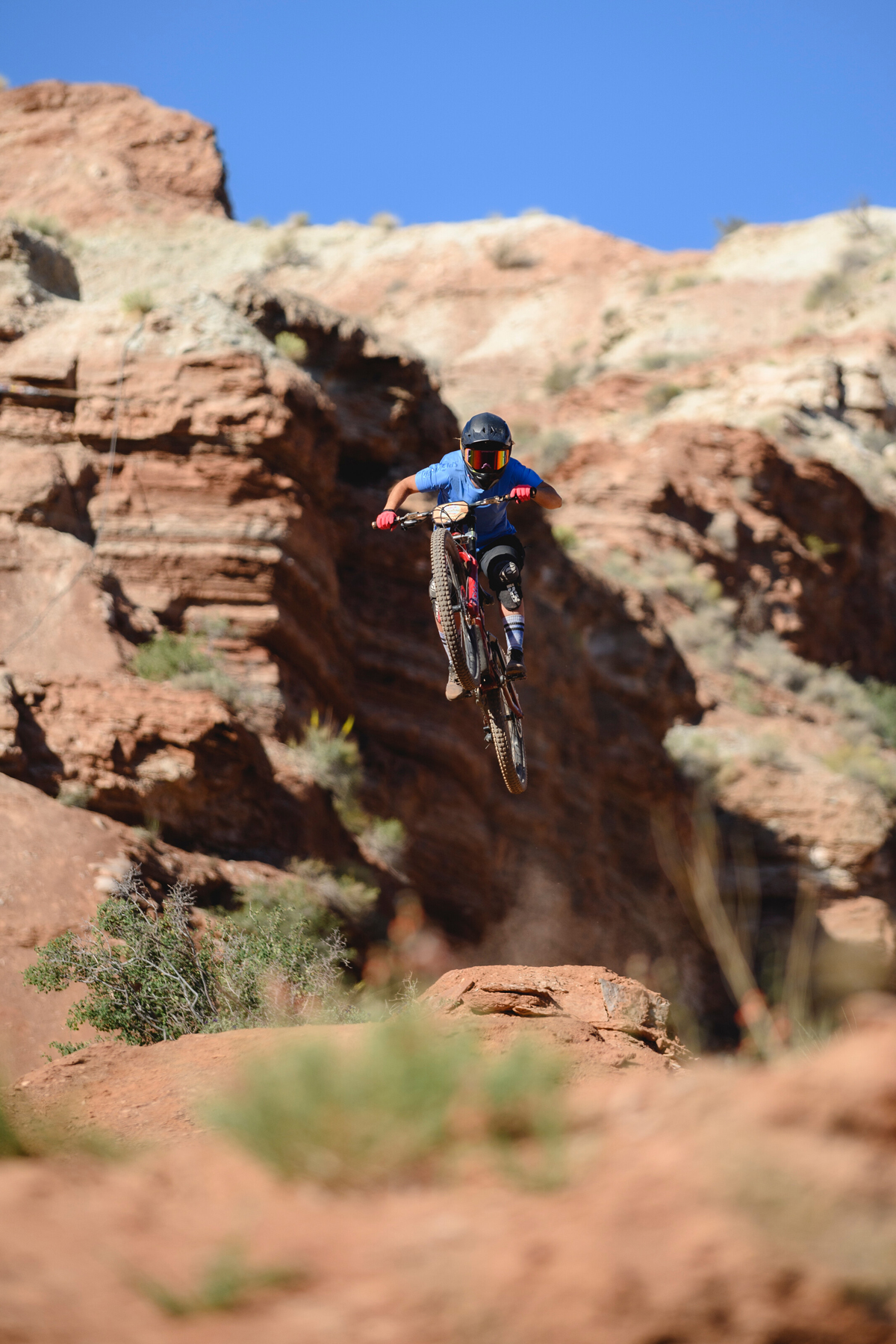
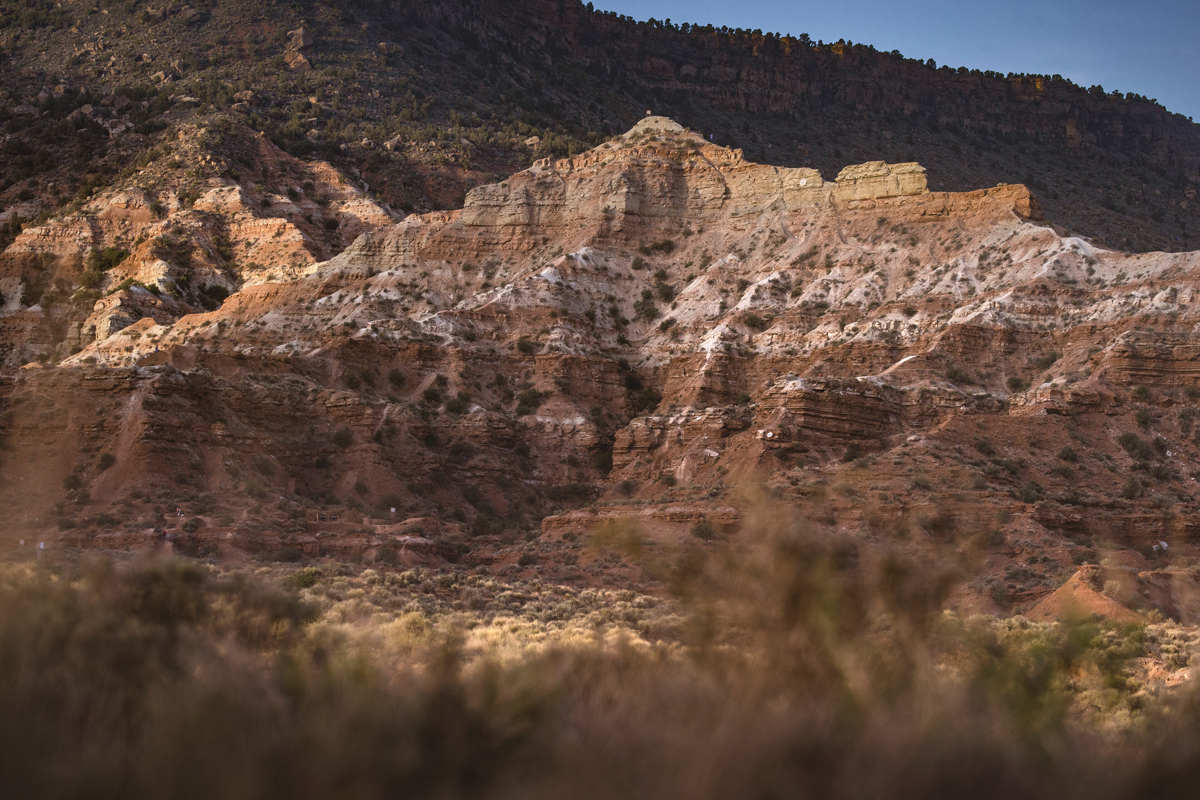
Vinny Armstrong. Red Bull Formation 2022. Photo: Red Bull Content PoolChelsea Kimball warms up on a jump at Red Bull Formation in Virgin, Utah, USA on 12 May, 2022 // Re Wikstrom / Red Bull Content PoolChelsea Kimball, CJ Selig, Brooke Trine at Red Bull Formation in Virgin, Utah, USA on 09 May, 2022 // Re Wikstrom / Red Bull Content PoolVaea Verbeeck and Ryan McNulty hit the massive hip in her line at Red Bull Formation in Virgin, Utah on May 14 2022 // Natalie Starr / Red Bull Content PoolRed Bull Formation 2022 venue. Photo: Red Bull Content PoolChelsea Kimball wraps up the final dig day at Red Bull Formation in Virgin, Utah. // Natalie Starr / Red Bull Content PoolRobin Goomes. Red Bull Formation 2022. Photo: Red Bull Content Pool
Electric bike-share program to begin in early July
BOISE, Idaho (June 21, 2022) — Valley Regional Transit (VRT) announced that a pilot electric bike-share program will launch this summer in Boise.
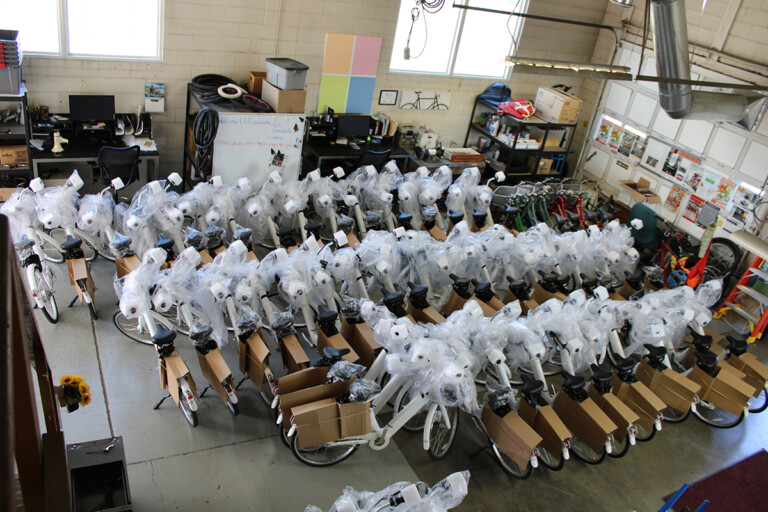
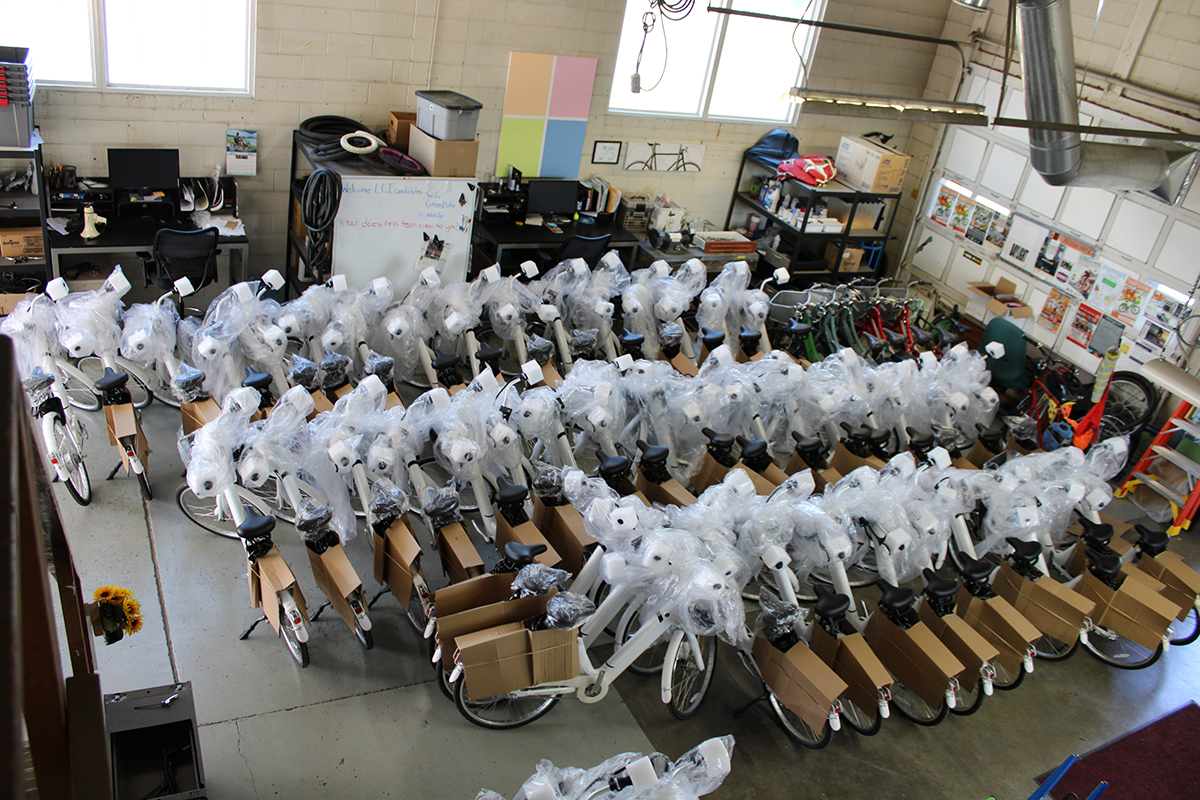
50 new ebikes are on the way to Boise, Idaho for Valley Regional Transit pilot bike share program. Photo courtesy Valley Regional Transit
With the pilot program, which will run from early July through October 31 this year, VRT hopes to demonstrate the benefits of electric-assist bike-share as an additional mobility solution for the region. Bikes will be available for rental 24-hours a day at a rate of $10 per hour. Monthly memberships will also be available for $39, which will include an hour of free ride time daily.
The 50 electric-assist shared bicycles will come from Drop Mobility, a company that won a VRT bike-share request for proposal more than two years ago. Drop offered a low-cost lease of the demonstration bikes, with the goal of generating interest in the new system and attracting sponsors for a more extensive system next year.
Electric-assist shared bicycles have transformed the bike-share industry. Cities that have adopted the technology routinely see a dramatic increase in ridership because users can more easily get to their destinations with the added electric boost. Plans for the bike-share system include more bikes, but also efforts to distribute the bikes more equitably throughout the community.
Valley Regional Transit operated the Boise GreenBike system from April 2015 until September of 2020. VRT closed the system because of the negative impacts of the COVID-19 pandemic, the loss of title sponsors, and equipment technology issues.
Capital City Development Corp. (CCDC) has committed to $50,000 to support the launch of the new bike share pilot program. In addition to their initial investment in the program, CCDC is matching the next $50,000 in sponsorships. VRT has secured $10,000 from the Treasure Valley Clean Cities Coalition and $5,000 from the Idaho Advocates for Community Transportation, which will be matched by CCDC. The match offer from CCDC will expire on September 1, 2022. Interested sponsors should contact Dave Fotsch, Programs Director with Valley Regional Transit, at [email protected] or by phone at 208-331-9266.
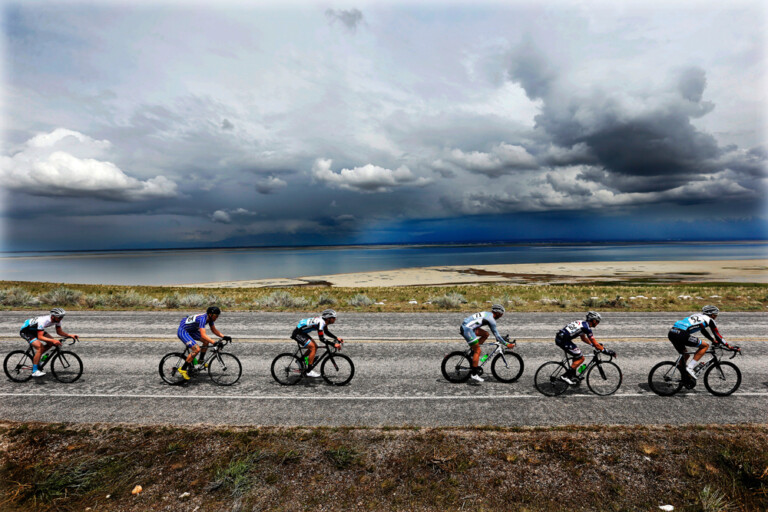
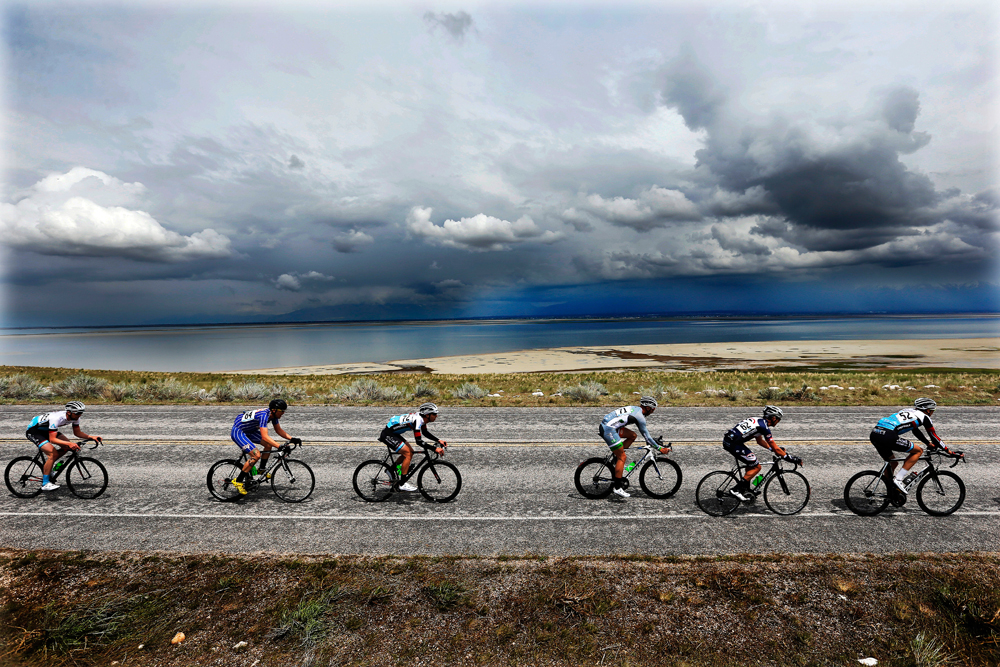
By Ryan Barrett — The Antelope Island Classic was held on Saturday May 7, 2016 a beautiful day for bike racing at one of our most popular venues. The Pro-Category 1-3 Men’s Event was won by a super aggressive Tyler Riedesel (Canyon Bicycles). Riedesel was active in breakways throughout the event and refused to submit after being caught. At the end of the 73 mile event, he held on for a beautiful solo victory. Brent Cannon (Team Elevate) attacked the field in the last few miles to take second with Joe Waters (Canyon Bicycles) taking the uphill group sprint for 3rd.
The Antelope Island Road Race, held on Saturday, May 7, 2016, is incredibly scenic.
The Women’s Pro-1-3 43 mile event was less controlled with Alison Frye (Ski City Cycling) taking a commanding win by more than three minutes. Her Ski City team mate Laura Patten lead the next group home in front of Kelly Hunsaker (Plan7 DS).
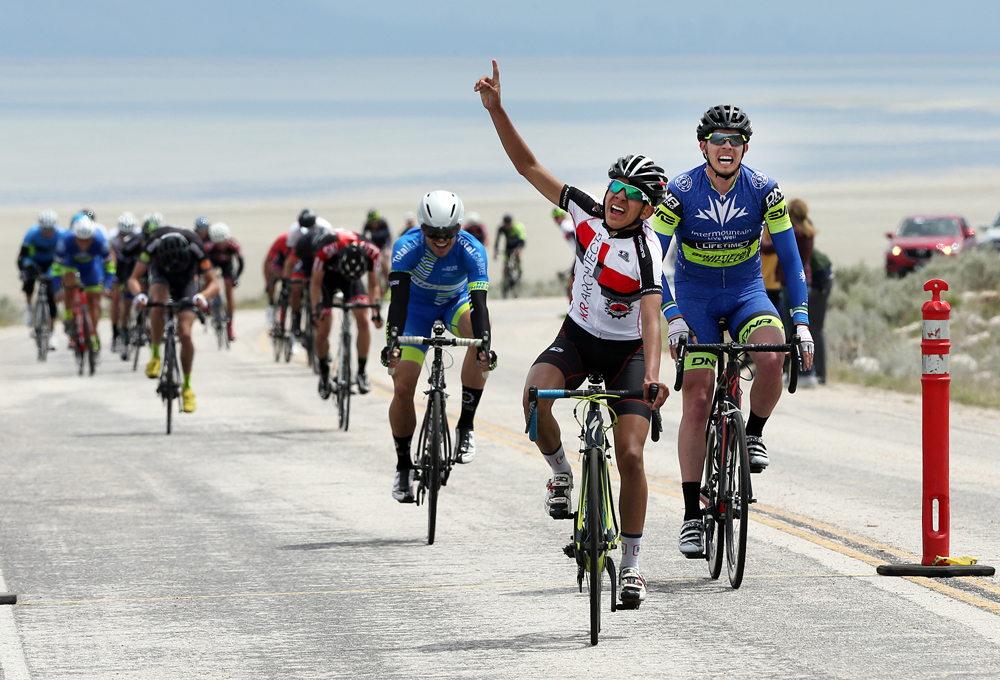
Abraham Torres wins the men’s 3-4 event at the Antelope Island Road Race, Saturday, May 7, 2016.
In the Men’s 3-4 field, young rider Abraham Torres notched the win in a bunch finish.
Antelope Island also served as our junior state championships. Viggo Moore (FFKR Architects) and Kayleigh Maloney (BYRDS) won the 10-12 year old championships. In the 13-14’s, it was Moses Maloney (BYRDS) taking the win in front of Utah State Champion Jack Shuckra (FFKR Architects). Garrison Asper (FFKR Architects) won the men’s 15-16 race with Makayla Prince taking out the women’s 15-16 titles. Cole Warner (FFKR Architects) and Alison Craig (Salt Cycle-Intellitechs) won their respective 17-18 events.
By Charles Pekow — A vicious or virtuous (bi)cycle syndrome: biking instead of driving cleans the air. So the more people who bike in a city, the cleaner the air they breathe. But the fact that so many people drive rather than pedal makes the air dirtier and discourages people from biking. So how to turn the vicious circle into a virtuous one?
The researchers didn’t answer that, but they looked at the bikeshare program in Taiyuan, the capital of the North China province of Shanxi, a manufacturing town. The city runs one of the most successful bikeshare program in the developing world, according to the authors of Seasonal Analysis on Factors Affecting Bike Sharing Choice: With a Focus on Air Pollution’s Impact (goo.gl/jCkWYc) from University College London.
The authors reported “an increase in air pollution level has the expected significant negative impact on bikesharing only when the air is polluted at relative (sic) severe levels.” But opting to forgo bike-sharing on smoggy days also varied depending on users socioeconomic status and weather.
The study also notes that factors and policies in a developing country like China may not apply in wealthier nations.
By Lou Melini — Though we are a generation apart in age, Eileen and I share a few things. She grew up close to where I attended college in New Jersey and we both had our early medical training in Camden, N.J. We also have shared the “joys” of big city riding. Dr. Hwang came to Salt Lake City from New Jersey for her residency in ophthalmology at the Moran Eye Center. Despite her long hours, she has managed to frequently ride her bike to the University during her years of training. She has become a dedicated physician and bike commuter.
[Editor’s Note: This story appeared in print in 2017, but never made to the website. So here it is.]
Eileen Hwang commutes each day to the University of Utah medical complex. She notes that drivers in Utah are more respectful than drivers in New Jersey and Pennsylvania. Photo by Dusty Layton
Cycling Utah: Dr. Hwang, may I call you Eileen for the column?
Dr. Hwang: Please do!
C.U. During my years at Primary Children Medical Center I watched the demands placed on residents. I am immensely impressed with your choice of transportation given the hours you put in. Why have you chosen to commute on your bike?
Eileen Hwang: Cycling to work helps me fit exercise into my day, and exercise helps me to be happier and less stressed. I ride from 21st South and State St. uphill to the University of Utah. If the weather’s bad, I drive or take the bus.
In the summer, I bring a change of clothes and shower at the University of Utah gym. I prefer the winter since I don’t have to shower when I get to work. Bar Mitts and Bluetooth earmuff headphones keep me comfortable in the cold.
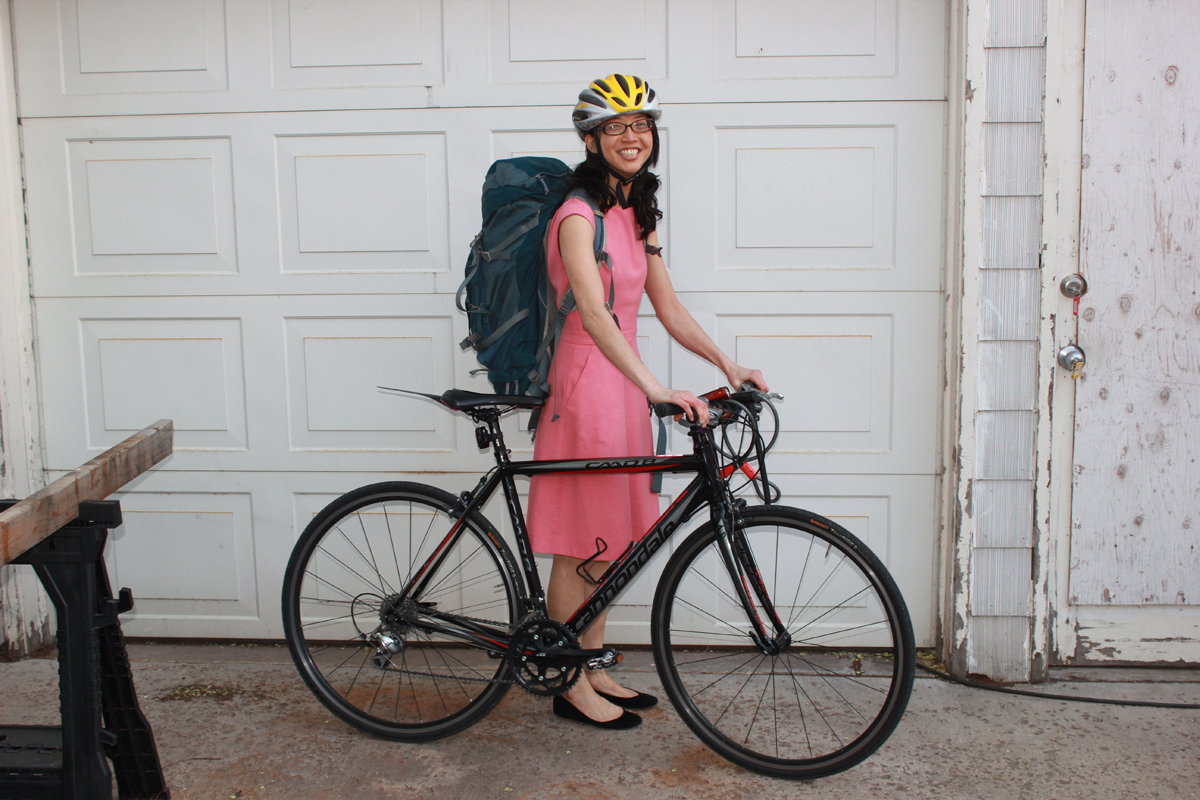
People constantly mock my large backpack. It contains my lunch, dinner, clothes, towel, toiletries, books, laptop, and eye examination equipment. I once realized that I put more stuff in my backpack for work than for a weekend of backpacking
C.U.: Is your commute nice?
E.H.: The best thing is that I usually ride in around 6:30am and home around 8 pm when there aren’t many cars out. I usually take 1700 S. and 1500 E.
C.U.: I can assume that your commute here in Salt Lake City is quite a bit more pleasant than it was in New Jersey.
E.H.: During medical school, I rode my bike to the train station every day. Driving was not an option due to traffic and parking issues. I had to use a folding bike because there was a rule that only folding bikes could go on the train.
I got a lot of stuff stolen off my bike over the years. At first, my bike light was stolen about once a month, but then I put unicorn stickers on it and wrote; “please don’t steal me” on it. This reduced the frequency of theft. I also had my seat stolen. Riding around without a seat is a pain!
During my third year of medical school in Camden, New Jersey I lived across the Delaware River in Philadelphia, Pennsylvania. In Philadelphia, people would yell at me to get off the road even though I was in the Bike/Bus lane. Sometimes I would try to yell back that it was a no cars lane. I’ve never been yelled at for biking on the street in Salt Lake. I also have never had anything stolen off of my bicycle in Salt Lake, which is amazing.
C.U.: Do you still ride the folding bicycle here in Salt Lake?
E.H.: I used my folding bike for a while but going downhill on 17th South was frightening. Currently I use a Cannondale road bike that my boyfriend gave me, He also got me a panniers, but I prefer my backpack because I have to carry my bike up 3 flights of stairs at the hospital.
C.U.: May I ask for a curbside consult about eyewear?
E.H.: While I ride, I just wear my regular glasses. I don’t see that many bike-related eye injuries except when people get hit by cars. It is a good idea to wear sunglasses because we live in a sunny, high elevation place, and exposure to ultraviolet light causes pterygia, cataracts, and skin cancer of the eyelids. Pterygia are when the white part of the eye grows onto the colored part of the eye and cataracts are when the lens inside your eye gets cloudy.
C.U.: When discussing your bike commuting you mentioned to me that you rented out your car. How did that evolve?
E.H.: I lent my car to my brother for a month when he was volunteering in Yellowstone. Then I realized that not having a car was preferable because it forced me to bike commute. I tried to rent my car out through the website, Turo. I made a chunk of change but the hassle wasn’t worth it.
C.U.: What were some of the “hassles”?
E.H.: One guy I rented the car to, had agreed to meet at a certain time, but didn’t show up at the house to pick up the car until after midnight. He was supposed to return the car to my friend’s house, but then he just left it in the airport parking lot! When I finally got into my car, it smelled badly of smoke.
There was another guy who kept arranging to rent the car via the website, but it would get cancelled each time because he had no money in his bank account.
C.U.: Eileen, Thank you, Thank you for your time. I had a good time discussing bike commuting, especially the New Jersey stuff.
Ed. Note: Dr. Hwang will complete her residency in June. She will pursue fellowship training starting in July in Milwaukee where she will have yet another experience in the world of bike commuting. The good news is that the Wisconsin Bike Federation reports a recent 25% increase in bike commuting in the city. The bad news is that the state legislature repealed the Complete Streets Law and cut funding for bike infrastructure.
If you have a suggestion for a commuter profile, especially from Idaho, Montana, Nevada, Wyoming, W. CO, and N. AZ, have a commuter question, or other comments, please send it to [email protected].
By Charles Pekow — The Department of Veterans Affairs set up a Task Force on Outdoor Recreation for Veterans, which is planning a project to find ways to get veterans with disabilities to enjoy outdoor recreation. It is interested in ways to get them to ride bicycles, such as use of recumbents or hand cycles. The task force intends to work with public land agencies and other interested groups on programs to improve health and therapy and deal with conditions such as post-traumatic stress disorder.
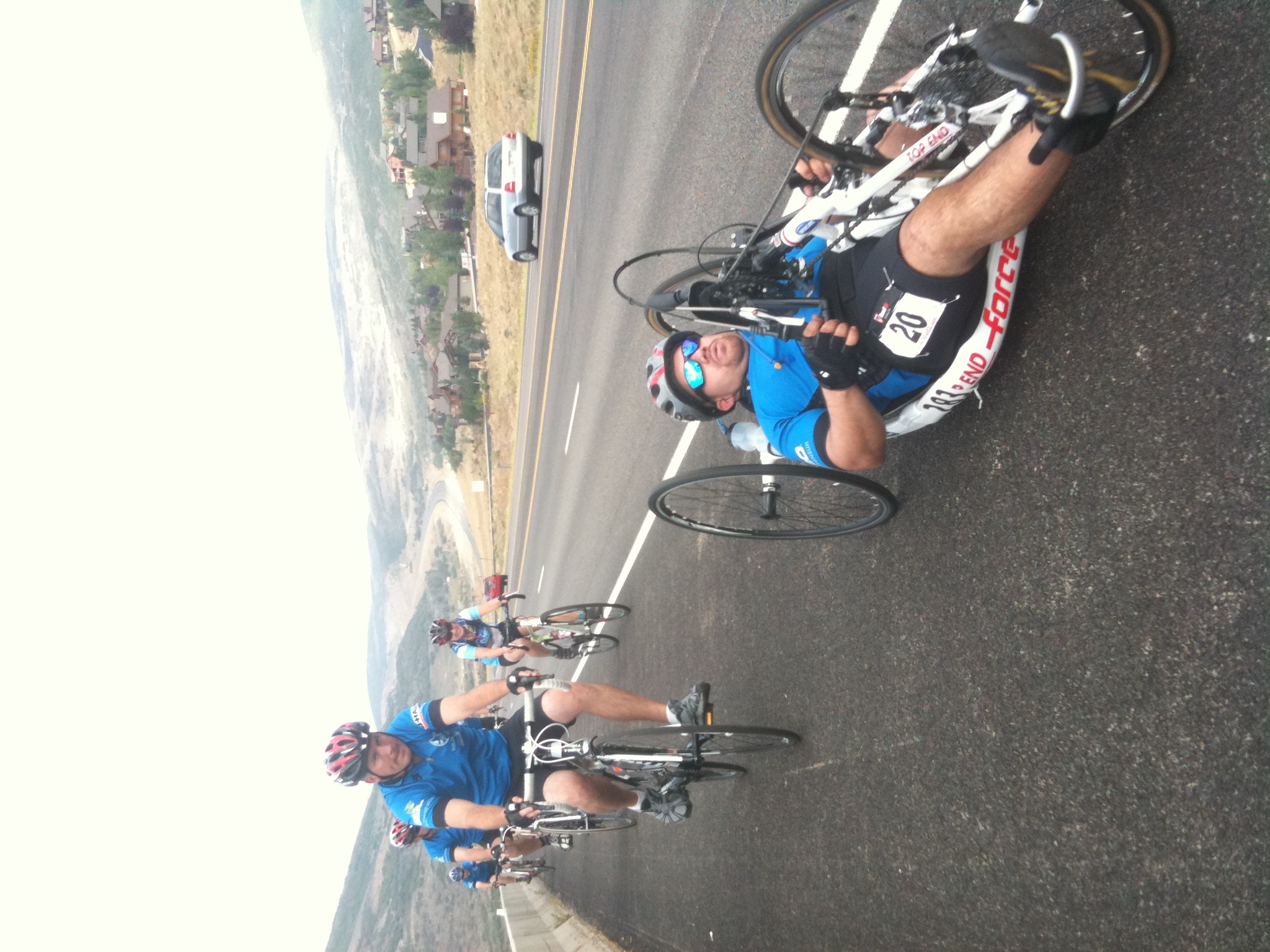
Wounded Warrior Project riders in the Summit Challenge Century, our event of the year. Photo: Dave Iltis
A request for public comment elicited a response from Julie Barnett, a fitness instructor in Huntsville, AL, saying “I teach an indoor cycle class and another class that helps (women veterans) get stronger at a local gym. I would love to teach at the VA Clinic for those who prefer to be around other veterans. Many people think they can’t, but in fact they could if they had positive and encouraging techniques taught to them. We all can do something.”
Cycling West and Cycling Utah Magazine’s Early Summer 2022 Issue is now available as a free download (13 MB download). Pick up a copy at your favorite Utah, Idaho, Wyoming, Nevada, Montana, Colorado, Arizona, New Mexico, and Northern California bike shop or other location.
JACKSON, Wyoming (May 2, 2022) — Teton Gravity Research, the global leader in action and adventure lifestyle media, has unveiled the trailer for its new film Esperanto, which explores how mountain bikers can share their stoke of the sport through the universal language of two-wheels no matter what native tongue you speak.
In conjunction with legendary action and adventure director Jeremy Grant, TGR’s latest film boasts some of the most stunning mountain bike footage ever captured, in state-of-the-art 8K resolution. Esperanto was filmed across eight exotic locations including Barcelona, Japan, Zambia, Ecuador, Utah, Jackson Hole, Canada, and La Fenasosa Bike Park in Alicante, Spain.
With a multinational roster of athletes, the film showcases the worldwide appeal of mountain biking while living up to the film’s name. Esperanto is a universal second language created by a Polish-Jewish doctor in 1887 intended to find a way to ultimately end war and bring people together with a common tongue. The film is a worldwide celebration pushing the limits of the sport.
Esperanto will make its world premiere on June 16 at the Red Butte Amphitheatre in Salt Lake City. TGR will then show the film in more than 120 locations around the world during an expansive global tour this summer. The trailer for Esperanto and a list of tour dates can be found at https://www.tetongravity.com.
“TGR continues to push the boundaries of film and creativity. Esperanto is the latest example of that hard work and commitment,” said TGR co-founder Steve Jones. “This film features some of the most cutting edge riding in the world, shot in stunning landscapes across the globe. Esperanto aspires to bring people together to celebrate the common love of sport and culture.”
With an athlete list that includes 21 different mountain bikers from around the globe, Esperanto showcases a variety of different types of riding, with rockstar names in the industry and up-and-coming heroes ready for their next challenge. The film acts as a visual tapestry of next-level riding with names such as Cam Zink, Brage Vestavik, Emil Johannson, Brandon Semenuk, and others, while expressing that the idea of a shared language is still alive.
“We wanted a mixture of stories to highlight how global cycling is. I was really excited to explore this idea of common ground, whether it be the big names like Semenuk and Zink, or names you’ve never heard of, like Rene and Gift,” Grant said. “All of the performances were amazing. That’s what is special about this film, every segment is vastly unique and shot from different corners of the globe.”
The film was supported by Tin Cup Whiskey, Dometic, JHMR, Canyon, Schwalbe Specialized and Ride Concepts, who will be engaging audiences across the tour with prize giveaways and product demos.
By Martin Neunzert — They say life’s what happens as we try to re-center from the little detours chance puts in our path. Here’s a little story that encircles medicine, perseverance and evolving bicycle technology and chronicles three trips on the White Rim Trail in Southern Utah taken over the last 33 years.
December 1989:
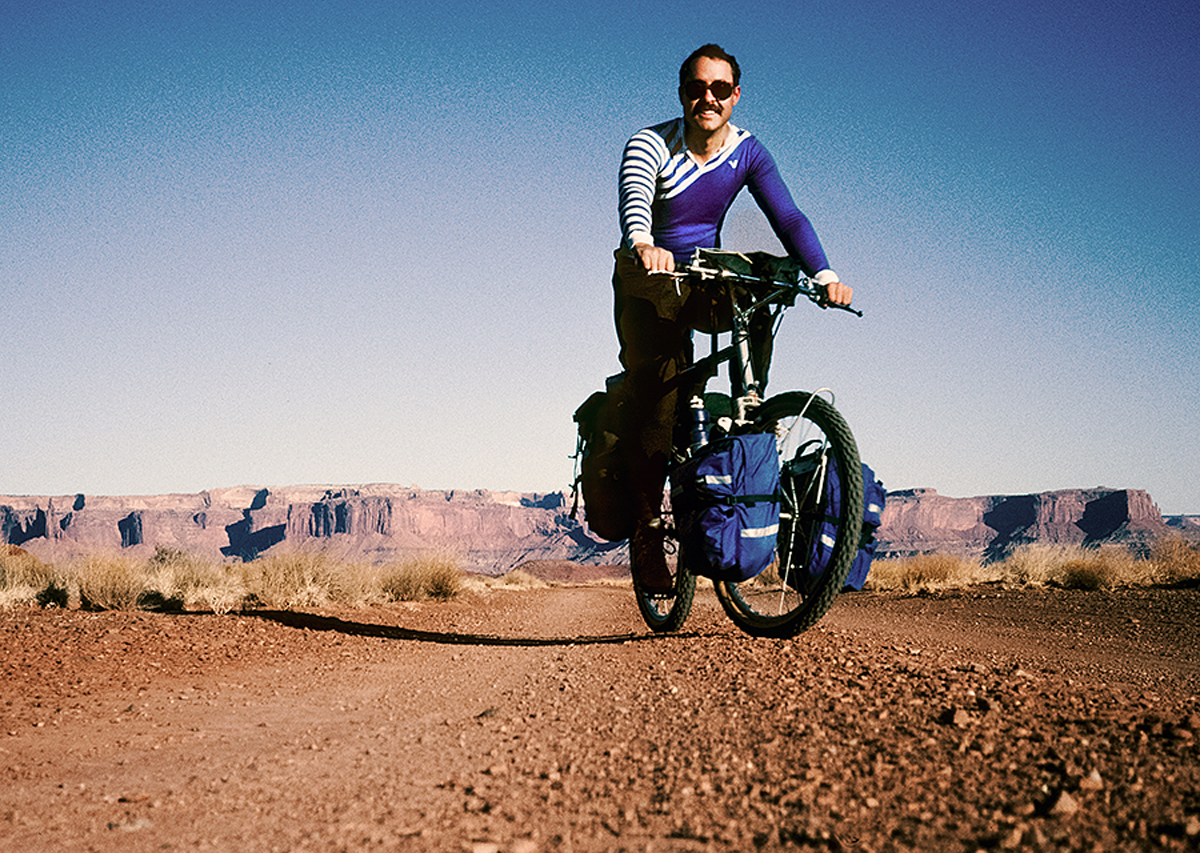
CRAAARACK-ACK! The sound yerked me from half-sleep and echoed around the Wingate Sandstone cliffs, unseen above me in the darkness. What the…? It sounded like a rifle shot! In the middle of the night? At Hardscrabble Bottom, deep in the heart of Canyonlands National Park? When I had gotten my permit to camp on the White Rim, the ranger had chuckled and said, “You’re on your own!” to my query about there being anyone else in the area. I shivered the rest of the night away, and at first light threw everything into the panniers and rode as fast as I could to the sun. Once I got a good look at the Green River, I could see what had made the noise: Long shelves of ice had formed along the banks. When the water level dropped during the night, the shelves snapped off violently.
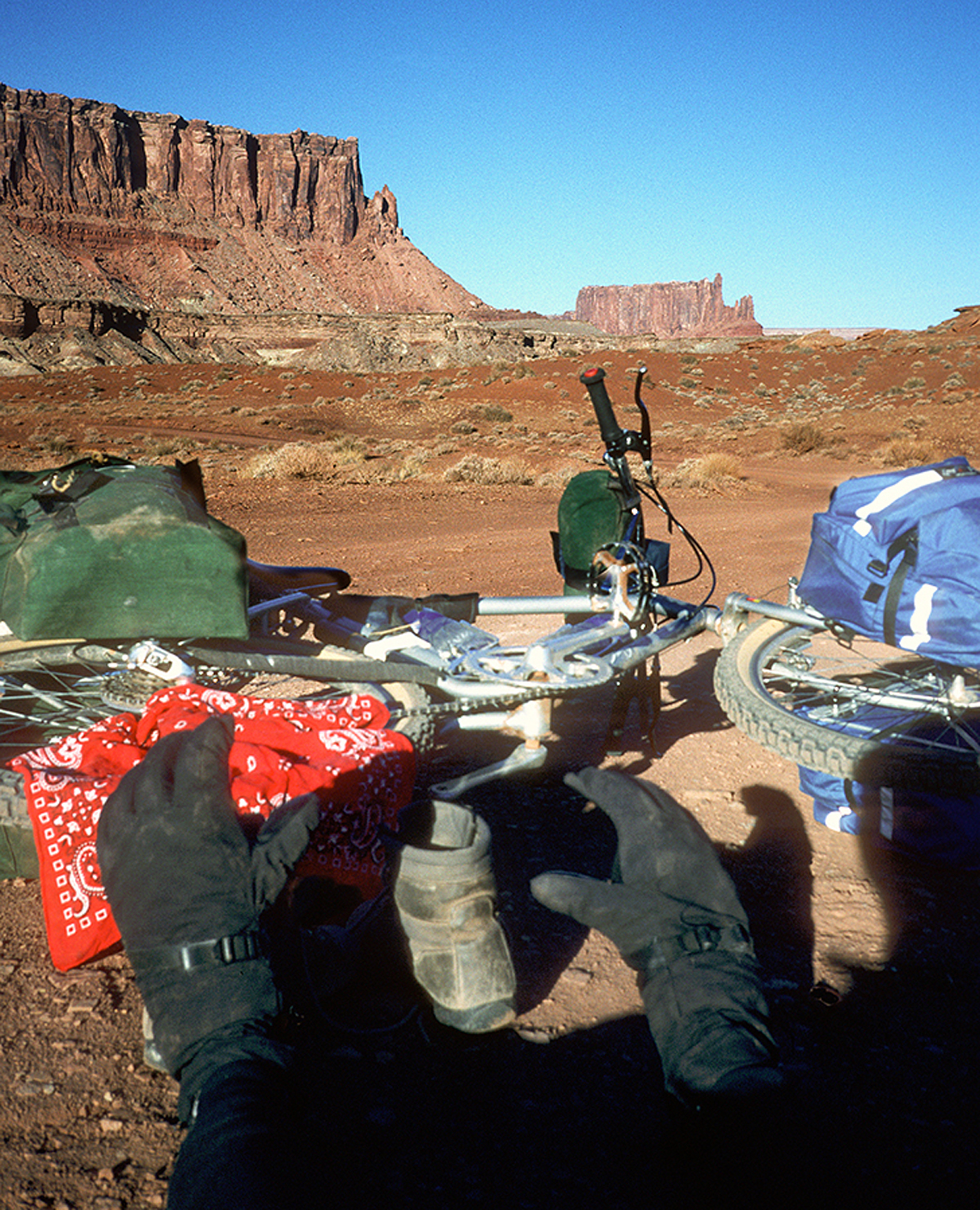
The author’s glove-covered feet and equipment, near Hardscrabble Bottom (December 1989). Photo by Martin Neunzert
I had never been so cold. I had stripped my equipment well past the point of comfort—just a summer-weight synthetic sleeping bag and a bivy sack—in order to carry enough water. That night it was 14 degrees in Moab. The photo is of my feet wearing my heavy gloves in an attempt to get some feeling back into them.
September 2015:
A modern treatment for leukemia is to kill off the patient’s bone marrow, chemically, then rebuild it using stem cells from a suitable donor, my brother in my case. Although a miraculous procedure, the recipient’s body feverishly, literally, tries to reject the transplant. I ran a 104 degree fever for four days yet I felt intensely cold. Even under heated blankets, my uncontrollable shivering was so bad at times they gave me Demerol just so I could sleep for short periods.
November 2016:
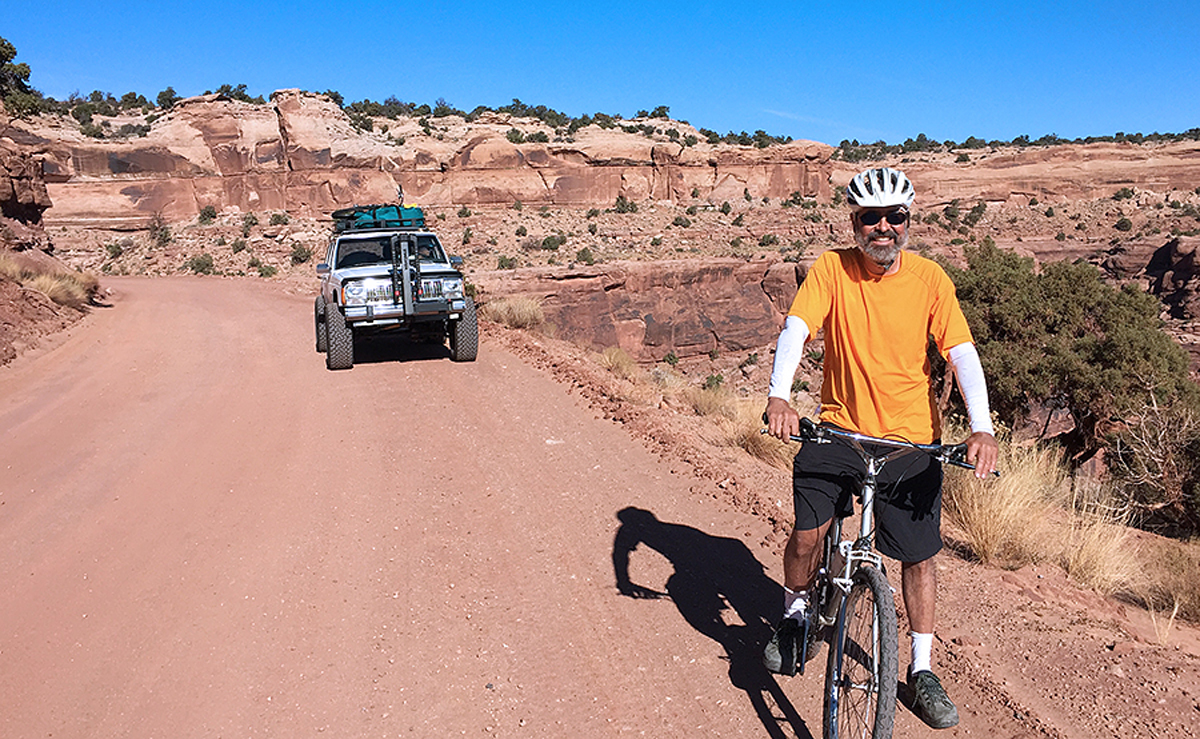
PD and I stopped next to a woman standing at the edge of one of the uppermost switchbacks on the Shafer Trail. East of our toes, the road dropped 1,300 feet to the White Rim. A whooshing sound behind us caused us all to whip around. A guy on a mountain bike flew by. Nobody spoke for a few seconds, watching. “Can you believe he’s doing it in flats and tennis shoes?” the woman asked the sky. “He forgot his cleats this morning.” I turned slightly and half-stepped toward my bike so she couldn’t see my platform pedals and light hiking shoes. Then she was gone, too, and silence returned, in its enormity. I muttered “Try that with partial vision loss, anemia (only two-thirds the amount of red blood cells of normal), osteopenia, chemo-brain, persistent left-side weakness, and, depending on who you talk to, sleep apnea, elevated creatinine level and residual PTSD.”
Martin Neunzert near the top of the Shafer Trail with the support vehicle (November 2016. Photo by Travis Laker
“I know who the real hero is,” PD said quietly.
Two switchbacks lower, we stopped again as some vehicles were bunched up. Young Dude asked “What kind of bike is that!?” His tone of voice hovered between complete incomprehension and incredulousness, as if he had only seen a lugged-and-brazed frame used as a rusty bike rack, bolted to a sidewalk outside a bike shop.
“It’s an antique…” I said, politely leaving unsaid the part that it was state-of-the-art before he was born. It was bikes like these that blew open the whole mountain biking industry. Want to see it? Go to the parking area at the Slickrock Bike Trail above Moab and find the little interpretive sign at the south end that provides the history of the Trail. Mine’s a twin to the one in the photo, except silver.
We weren’t out to be the first or to break records. After all, websites for bragging about your accomplishments wouldn’t go on-line for another twenty years. I wasn’t even sure mountain biking in the desert would be practical: Too hot, too big, too sandy. But with each experience, we gained confidence and efficiency, always dreaming of future adventures.
December 1989:
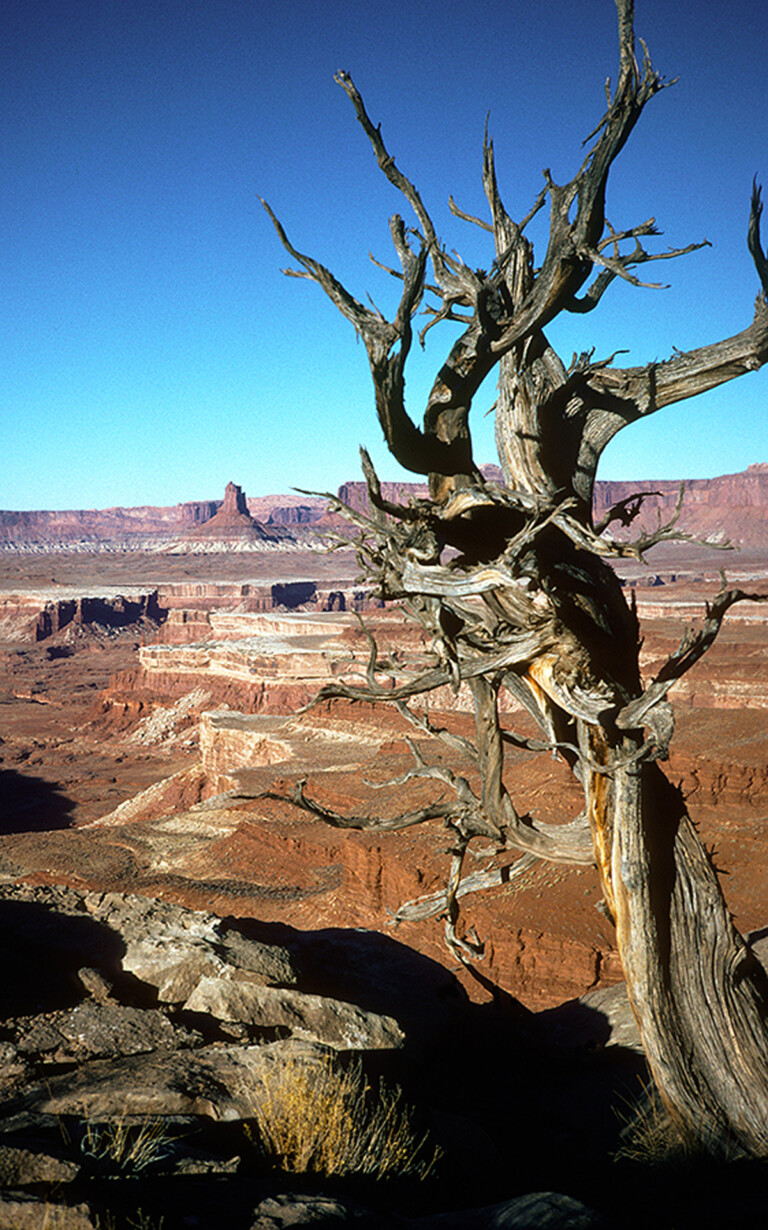
Somewhere near Candlestick Butte, a movement and clattering of rocks caused me to skid to a halt. A mature desert bighorn ram had come partway down a shaly slope, our paths crossing by incomprehensible randomness. He intently studied me, perhaps confused by my bull moose handlebars. I was in awe, and a little jealous. Until then, I had felt smugly autonomous, carrying all my water for four days, yet he thrived in this environment, sculpted by evolution, sustained by the instinctive drive to survive.
Candlestick Butte, from Murphy Hogback, December 1989). Photo by Martin Neunzert
November 2016:
“Thank God for disc brakes!” another woman said, grinning and letting gravity take her easily down the fun descent off Murphy Hogback. I wondered if she knew what center-pull brakes were. I was confident they were capable of locking up the wheels even when loaded with all my camping gear and nine quarts of water. Then as now, logistics are the real challenge of cycling the White Rim. My first time around, I chose to do it solo and self-contained. I had managed to cache a gallon at Potato Bottom, but failed to place another near Monument Basin. But when the opportunity came, I adapted by figuring out how to carry enough and going when it wasn’t hot. Not once did it occur to me to mooch water the way modern bikepackers sometimes do, mostly because I truly value self-sufficiency, but partly because there was no one else.
Martin Neunzert somewhere near the White Crack (December 1989). Photo by Martin Neunzert
Out by the Black Crack, I stopped to take in the expansive panorama, from Ekker Butte to the Buttes of the Cross. “You’re riding a non-suspended bike?” Mister More-Brand-Logos-Than-Spokes asked, pulling alongside. I laughed because I could see he was in too much of a hurry to listen to me explain why I wasn’t on my full-suspension off-road recumbent, so I just answered, perhaps a little too flippantly, “Oh, I’ve been doing this for 30 years, I don’t know what the big deal is.”
“Well,” he replied, “It makes a big difference to your forearms!” and he flapped his hands as if he was shaking water from them. I flashed back to my initial days in rehab. After six weeks of immobilization from pneumonia and a stroke, my muscles were so weakened that my joints, particularly my knees and hips, would separate when I tried to relax or sleep. I don’t mind telling you I had never felt such exquisite pain. It got so bad I asked for Oxycodone several times. That was kind of scary in itself. My physical therapists thought I was working extra hard in the gym to get back on my bike, I just wanted to build up my strength to stop the pain.
But in the present, I watched him sprint away, no doubt a drum-machine-and-synthesizer soundtrack playing in his mind like in the bike porn videos. I sincerely hoped he would someday learn the value of developing skills, tenacity and patience…
When PD had invited me to ride the Rim again, I was terrified. It had been six months since I had tried to ride a diamond-frame bike, and that attempt had ended in a crash. But he refused to accede. I think my physical therapists had secretly gotten to him and persuaded him to find ways to get me back on the horse. I seriously considered moving him to the “ex-friends” category. Nevertheless, I was deeply curious to see if anything had changed in two-and-a-half decades. Fundamentally, no, nothing has. One still feels very insignificant out there in the vastness. But when I dragged into camp that evening at dusk, I sensed something was different.
Not just the breeze rustling the yellow cottonwood leaves, not the position of a cactus spine, definitely not the enduring sandstone that changes only imperceptibly during a human’s lifespan. No, it was I who had changed.
Cancer (and its treatment and complications) had, for a time, taken away my freedom, my sanity, my dignity, my hair, my balance, my mobility, strength, even my appetite, leaving me only with my determination. Now everything I do is, in some way, therapy in the long fight to return to some level of normalcy.
Just last week one of my docs mentioned she was amazed at how well I handled 22 days in the ICU, horribly uncomfortably proned, with what felt like a garden-hose-sized ventilator tube jammed down my throat. Inspirational tenacity? I’m not sure. I just did what it took to get through it. Perhaps there was an element of luck. One of the nurses in the ICU where they took me to after my stroke told me “In the six years I’ve worked here, you’re the only one who has survived the combination of acute myeloid leukemia, a bone marrow transplant, pneumonia and stroke.”
And I learned so much. Like genetics, the insane complexities of medicine or about being a professional patient. Stuff I never wanted to know that will now haunt me forever. Never again would I take for granted the profound compassion and intrinsic nonjudgmental nature of the myriad of people who helped me along the way. Or to be able to just jump on a bike and ride. Or to sleep under the rotating stars.
The White Rim Trail is a classic and deservedly popular 100-mile loop, mostly in Canyonlands National Park, mostly off-pavement.
Martin Neunzert is a long-time cyclist and tourer. He cycled the White Rim in 1989, 1990 and 2016 and has completed many other on- and off-road adventures along the way. He is now likely seen around Ogden, Utah, on his recumbent trike.
By Tom Diegel — The California Coast is legendary for bike touring. It makes up a long, critical section of the Pacific Coast route that extends from Alaska to South America. In the fall of 2021, my wife Ashley and I had an opportunity for a longish road trip through California that focused on doing a few bikepack/bike tours by the ocean. California is understandably famous for its cycling: the huge size of the state, the wide array of environments from rain forest to desert to vast farmlands to one of the the biggest mountain ranges in the lower 48, very mild weather, and it’s home to a lot of adventurous and speedy cyclists up and down the state. We wanted to do sections of the Pacific Coast route, but we weren’t going to be able to do long point to point tours, so we worked on finding some fun loops that would take us along the coast and then up and over the mountains to return on the inland side. We anticipated figuring out some nice alternatives, but what we didn’t expect is a rogue “atmospheric river” that would change our course.
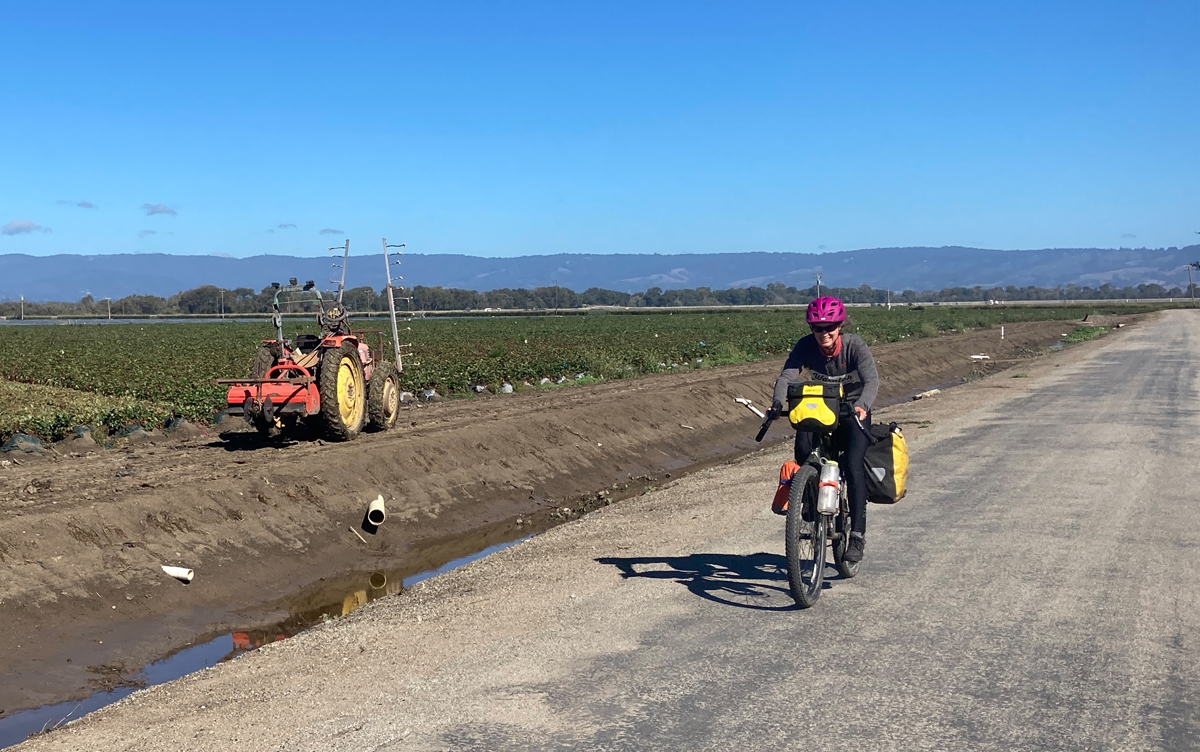
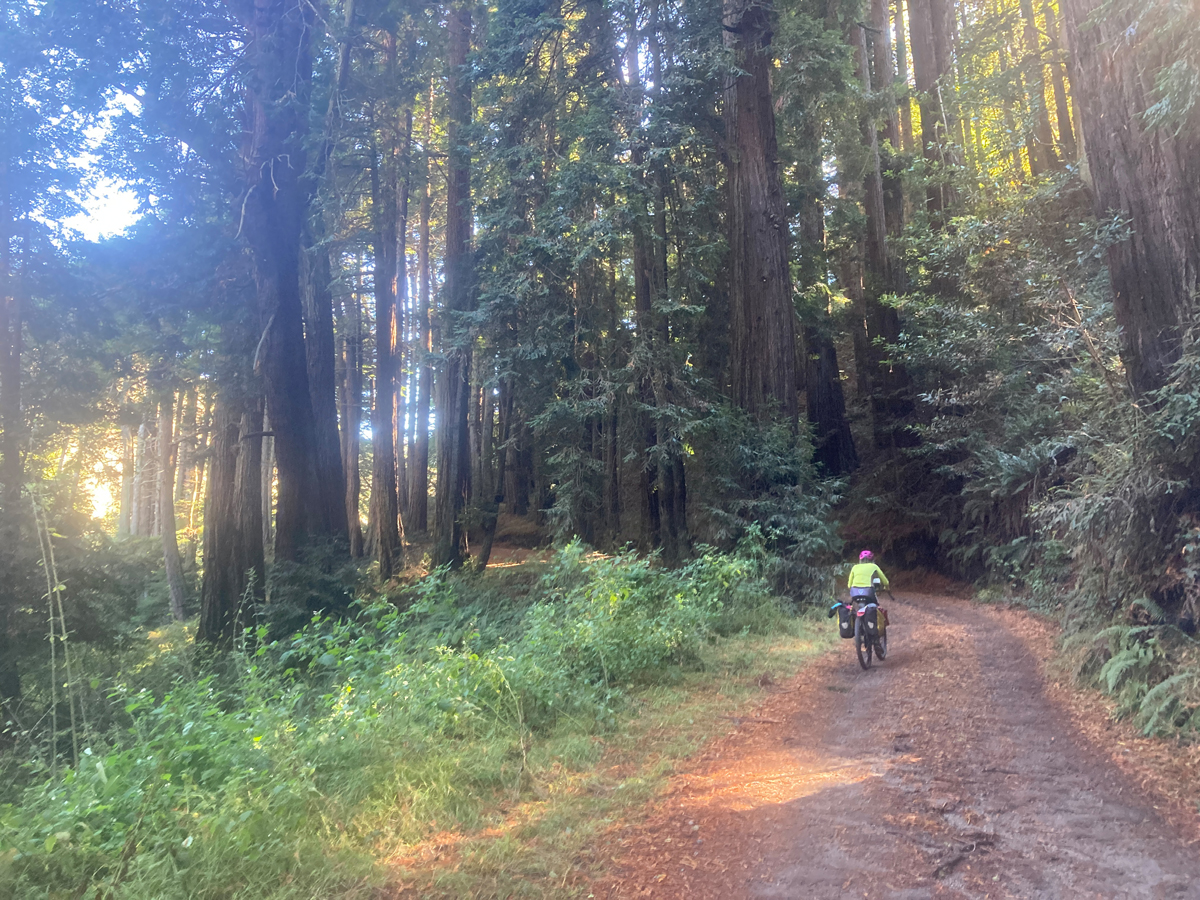
Only tractor traffic, with Highway 101 just a distant memory. Photo by Tom Diegel
California has been in a long-term, well-advertised drought, but long-term droughts don’t care about short-term, moisture-laden storms raging out of the South Pacific, and the two days prior to the start of our ride the northern California coast and Bay Area got drenched with over a foot of rain. As the storm moved east and the skies cleared and crews started cleaning up, we pondered our tour start in the Silicon Valley area at the base of the Santa Cruz mountains.
Our relatives had lost a huge tree when the ground holding its roots got unusually liquified, so we knew we had to strategize how to get over unfamiliar mountains that were drenched and lost a lot of trees that create the beautiful corridors of hundreds of miles of great, windy, and quiet roads snaking through endless groves of big redwood trees between the South Bay and the coast. But with one exception of downed trees and power lines that had a convenient gravel bypass, our roads were only littered with redwood needles and branches, and we had a long, glorious descent down to the Coast Route, and typical southerly winds welcomed us to roll easily along a scenic coastal plain into the great beach town of Santa Cruz.
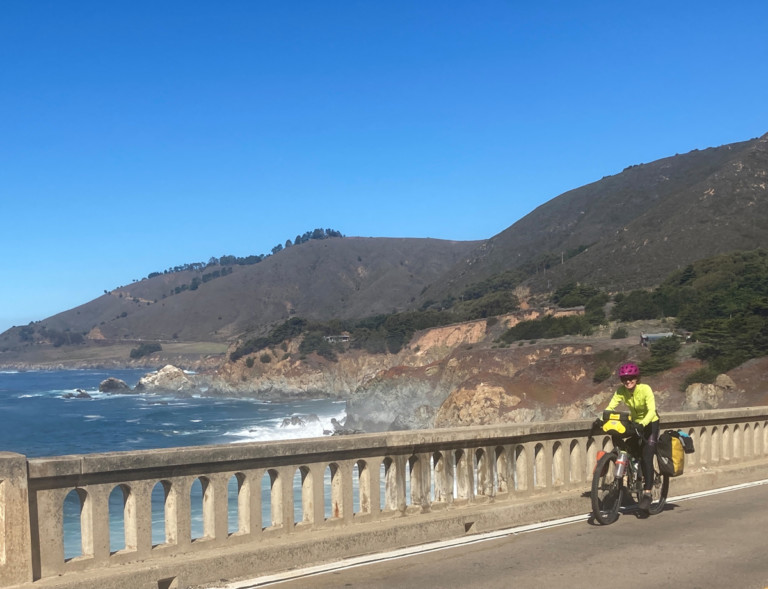
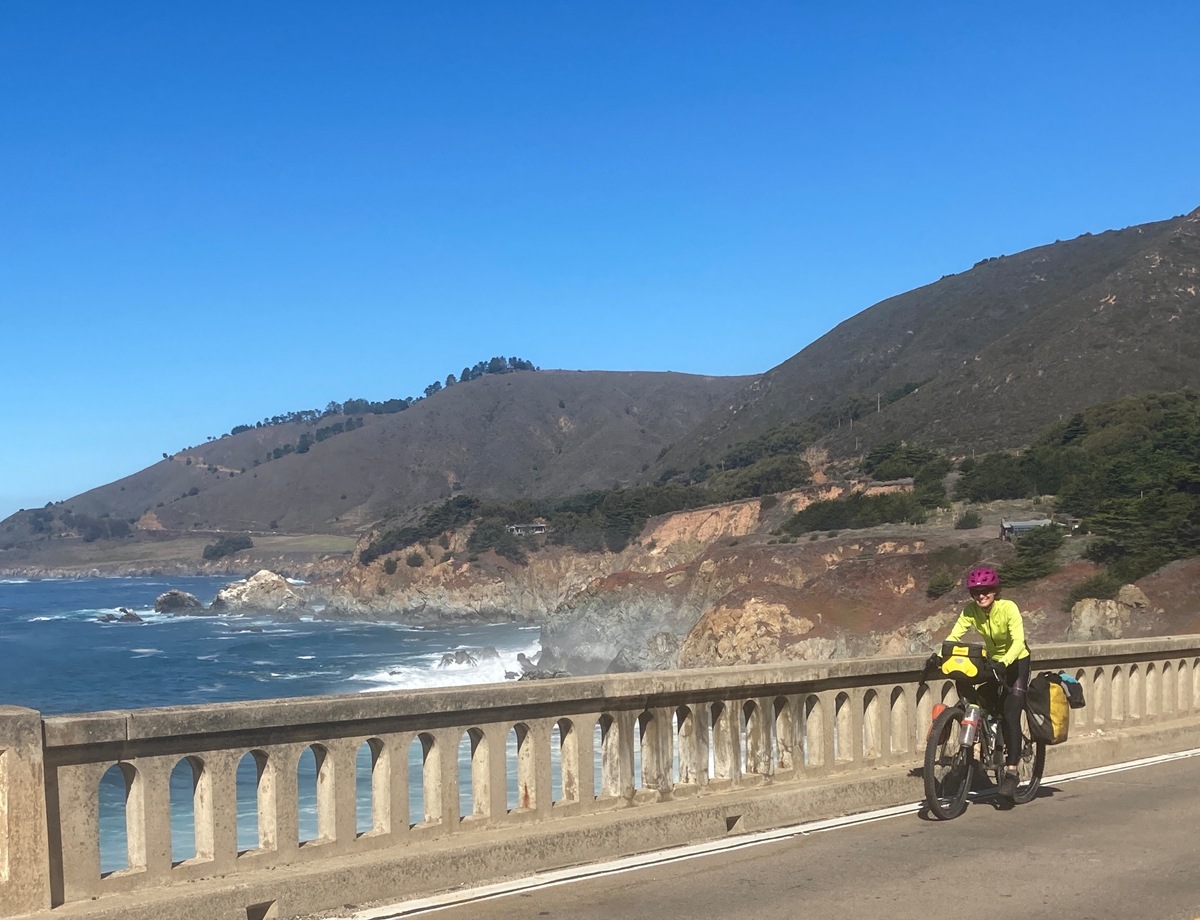
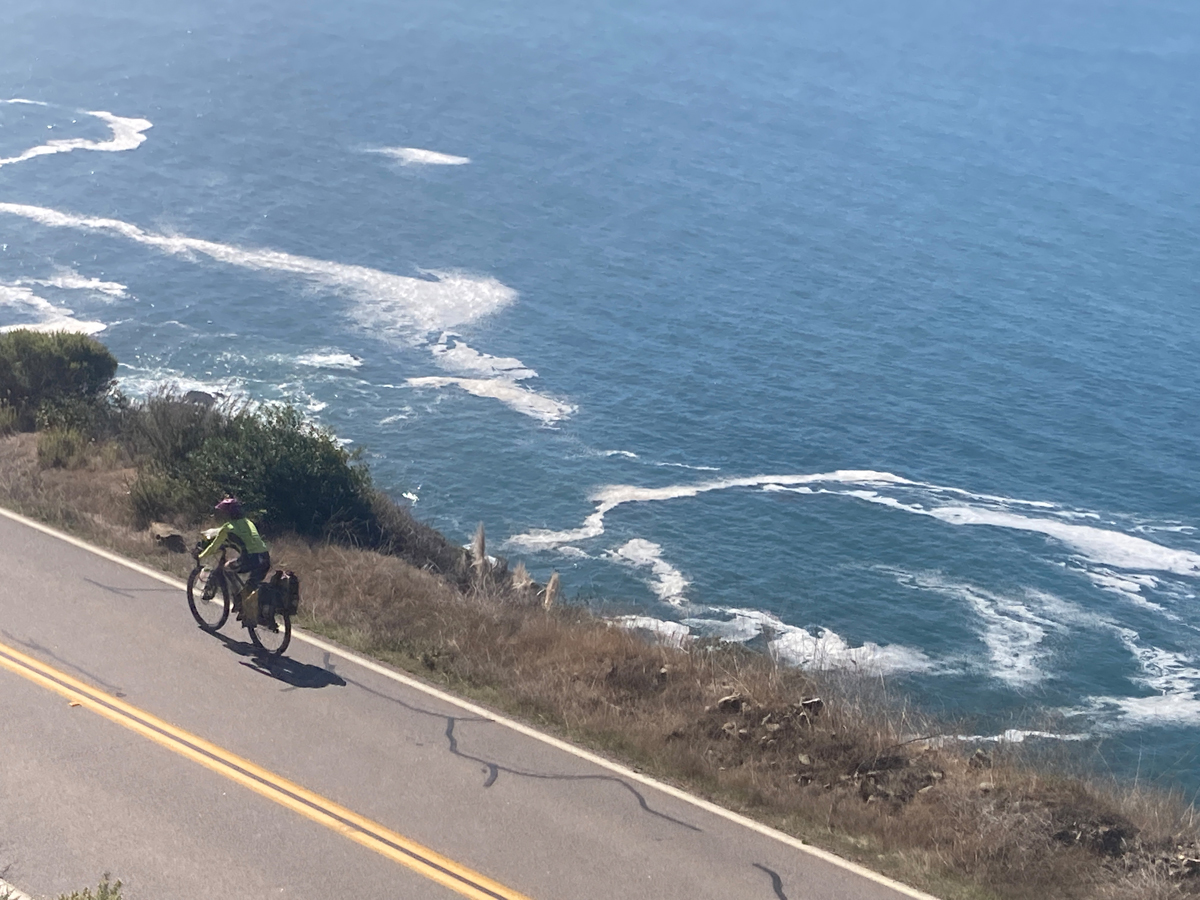
Ashley Patterson riding California’s iconic Highway 1. Photo by Tom Diegel
Santa Cruz is a quintessential surf town, and in the aftermath of the storm the surf was still raging; the seafront path was full of the typical people riding, skating, strolling, as well as the surfers walking barefoot back to the point after their epic, mile long rides on perfect waves. Soon the route took us out of the busy town and gave way to thousands of acres of commercial agriculture. We thought the riding through this area might be a bit grim, but likely due to the popularity of the coast cycling route and the fact that California is simply an amazing state in its embrace of The People’s recreation, there was a signed route on roads that were mostly used by tractors. It was also fun to see the amazing agriculture of the Salinas Valley; October was harvest time for strawberries, artichokes, Brussels sprouts, cauliflower, broccoli, raspberries, blueberries….and amazingly, much of that farmland looks like prime real estate development land near the coast; seems like California very much appreciates its agriculture as well.
Back at the coast, the route rolls for 18 miles on deserted separated bike path to the next notable town of Monterey, which is famous for its aquarium, which is pretty amazing and absolutely worthy of a few-hour stop, especially if you live in the intermountain West and don’t get a chance to partake in the ocean too much.
A nice cool climb through the Coastal Redwoods. Photo by Tom Diegel
When riding out of Monterey, it was natural for us to take advantage of a pretty famous and relatively car-free coastal road: 17-Mile Drive. As we toodled around the one-lane road along the coast that was still bursting with storm surf, we saw that it is far busier with cyclists who ride for free, while for better or worse there’s an expensive toll for cars holding way-too-rich folks heading for the two iconic golf courses of Pebble Beach and Cypress Point (both of which Ashley has played but that’s another story; almost another life). 17-Mile Drive feeds into the “charming” (code for too-rich) city of Carmel, where we got back on Highway 1 and started heading south in earnest.
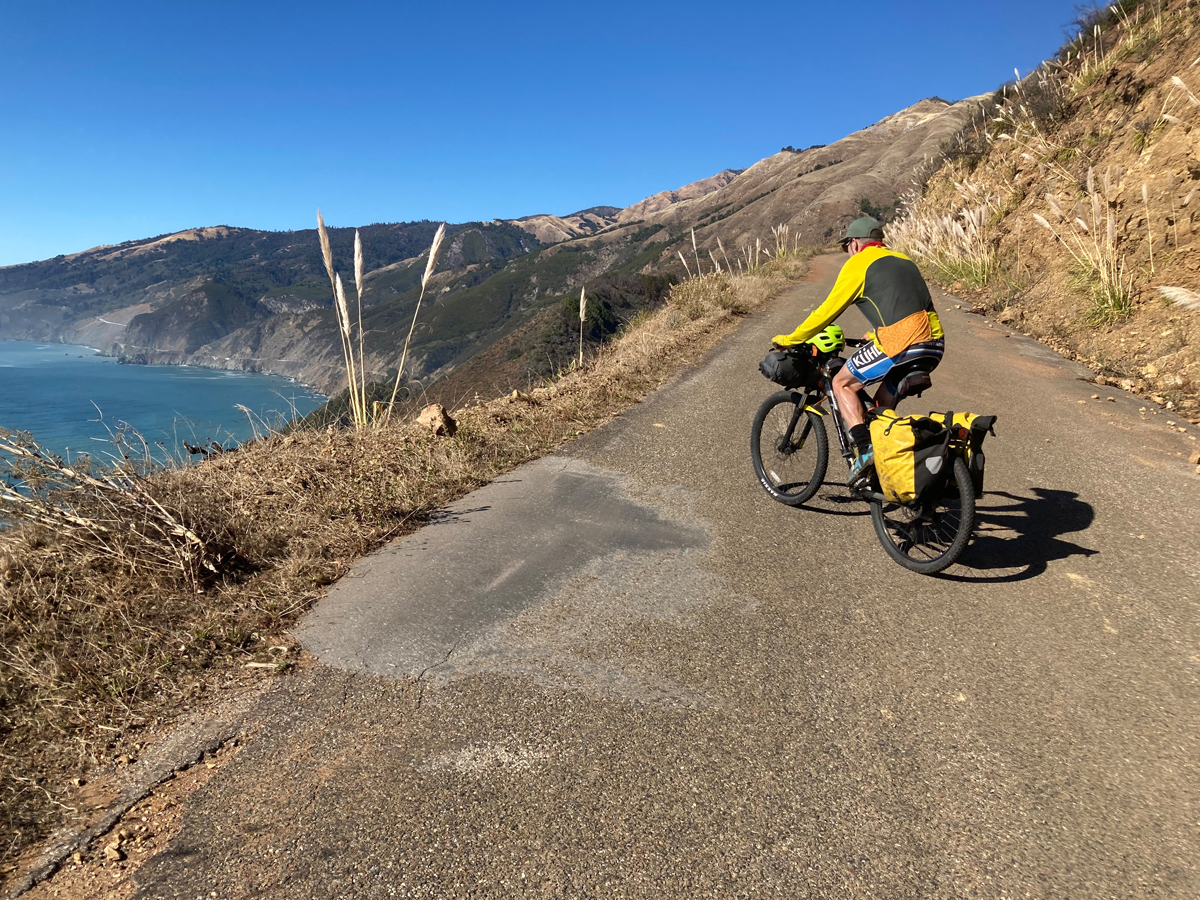
Highway 1 to/through Big Sur and beyond is an iconic road; it was built over a period of 40 years and stretches from the Bay Area to Las Angeles, with the Big Sur section being the first to be finished in the 30’s, which is quite impressive considering it crosses the most rugged terrain of the California coast, with steep mountainsides tumbling straight onto rocky shores and side canyons slicing through that require impressive bridges across wide and deep chasms, which is interspersed with long corridors of cool, shady redwood trees. It’s fame as a cycling route is well-earned; the two lane highway rolls and twists along the torturous coastline, and even though there’s not too much traffic, a guy at a Carmel bike shop gave us a hot tip to do a 12 mile gravel detour that took us into the mountains above the famous Bixby Bridge through more redwoods on the shadowed sides and mahogany and sage on the sunny sides.
Highway 1 to and through Big Sur and beyond is an iconic road. Photo by Tom Diegel
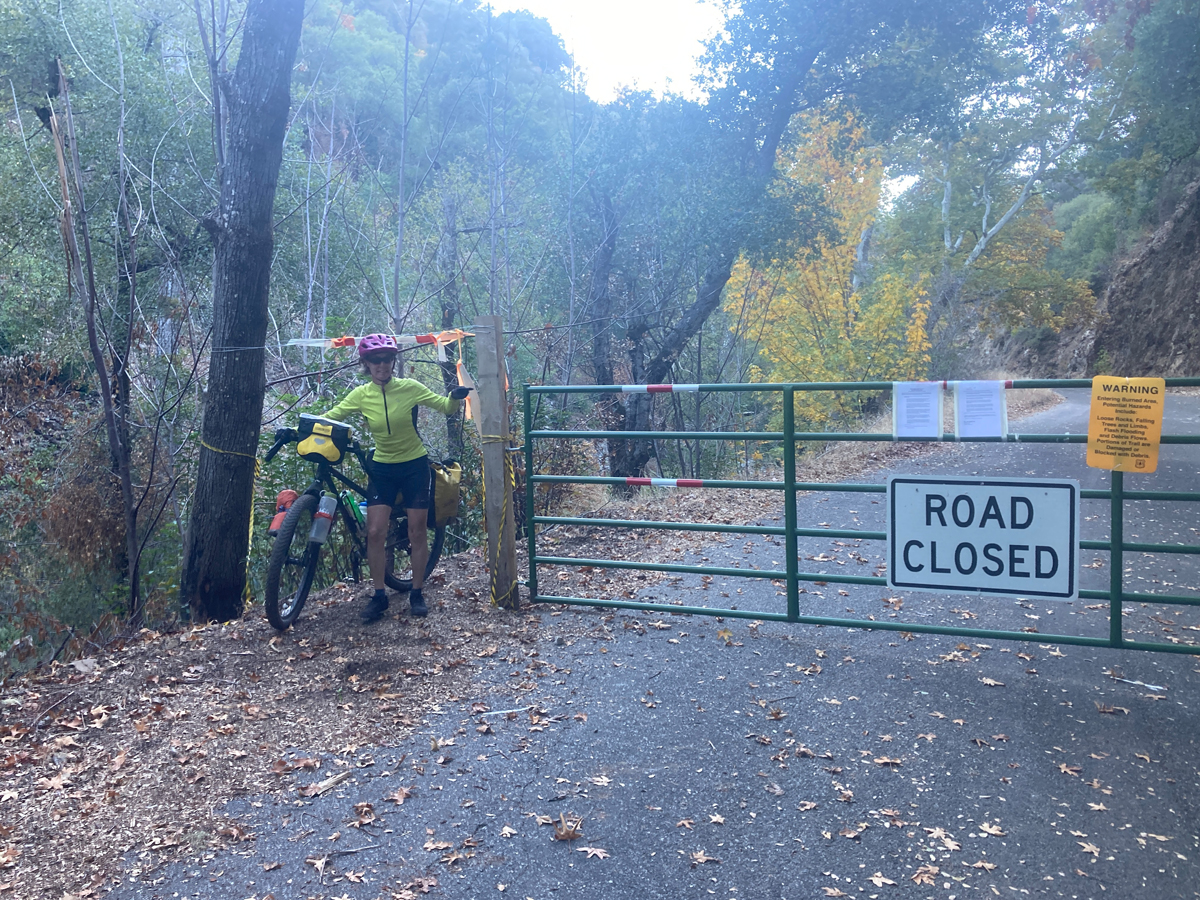
Not far south of Carmel we had seen a digital electric sign saying “Highway Closed” at some place that wasn’t familiar to us; we blithely rode past without giving it much thought; road closures rarely affect cyclists, right? We didn’t really understand the history of big rain events creating big landslides down across the road. But as we rolled into the “community” of Big Sur (a store, a state park, and a campground) we heard some folks talking about the closure. Again, they were motorists, and we didn’t worry about it much, but then we saw a guy on an enduro motorcycle, and I asked him about it.
“Oh yeah, it’s FULLY closed. There was a huge landslide, and there’s a huge boulder perched very precariously above the road, and they are trying to figure out how to move it without getting crushed. There’s no way around or through the closure, and they got guards there 24/7.”
Hmm…that sounded problematic.
He went on: “I live a mile south of the closure, and I’m riding 5 hours around to get home, and they think it’ll take at least 5 days to deal with it.” The closure was near Gorda, about 45 miles south, and we had planned on camping in the Big Sur campground, so we had some time to ponder our options.
The closed gate…leading to the best riding of the trip. Photo by Tom Diegel
California takes its cycling seriously, so we were excited to roll into the campground and find a designated bike site for $5. We shared it with a few other cyclists who were on long Pacific Coast road tours, and there was much talk about what to do about the closure. Our original plan was to ride south of Gorda and take a small road over the mountains into the valley on the other side and work our way back north.
A quick look at a map showed us that there was another, smaller Forest Service road that did the same thing about halfway between Big Sur and Gorda, and the problem seemed to be solved, even for the road-intensive tourers, but apparently the prospect of a 2400 foot climb on a small forest road that would probably add a half day was pretty daunting, and of course the Big Rain increased the probability that a small, closed mountain road would have its share of washouts as well.
Our fellow cyclists continued to perseverate on “what are we going to do?” the entire rest of the night and the next morning as we prepared to ride, which grew a bit tiresome. As we rolled into the Big Sur Forest Ranger station for the latest info, we saw a Kiwi couple stuffing their bikes into the camper of pickup; they were opting to hitch a ride for the long back-up-and-around detour. We shrugged and just pedaled on to find our new forest road.
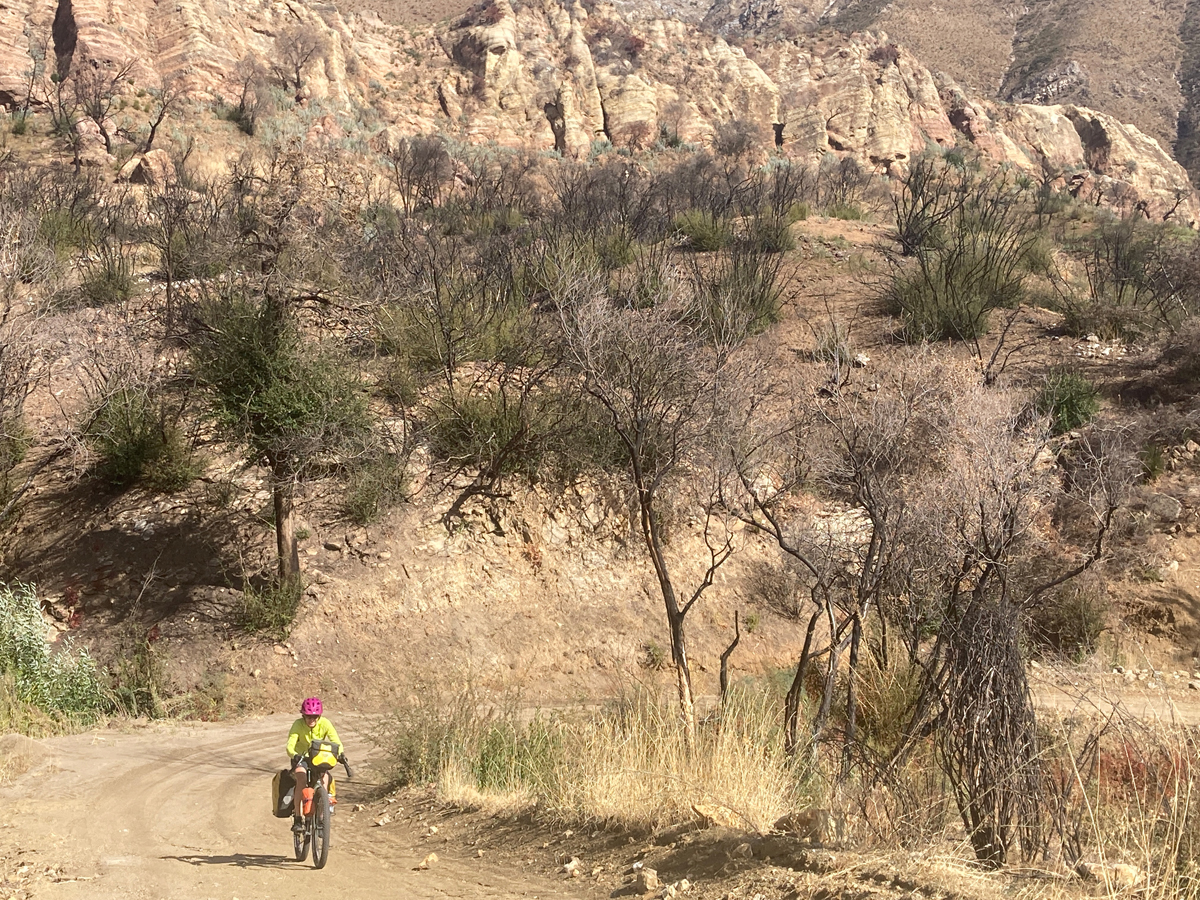
Ashley ascending through the Chapparal. Photo by Tom Diegel
After a couple of hours of riding we got the little road, which had a locked gate across it where it left the Highway 1. No traffic now! As advertised, it was a nice long climb up to pass through surprisingly-burly mountains that went through the heart of the 2020 Dolan fire, which burned 128,000 acres over 3 months, and it was easy to see why it burned so much because of the steepness of the terrain and relative inaccessibility from either the coastal or inland sides. We did ponder the fact that the Big Rain may have had a bigger effect on the burned-out terrain, but while there was plenty of debris strewn onto the road and a couple of minor washouts that would have stopped a car, there were no awkwardly-placed boulders or huge redwoods to impede our progress.
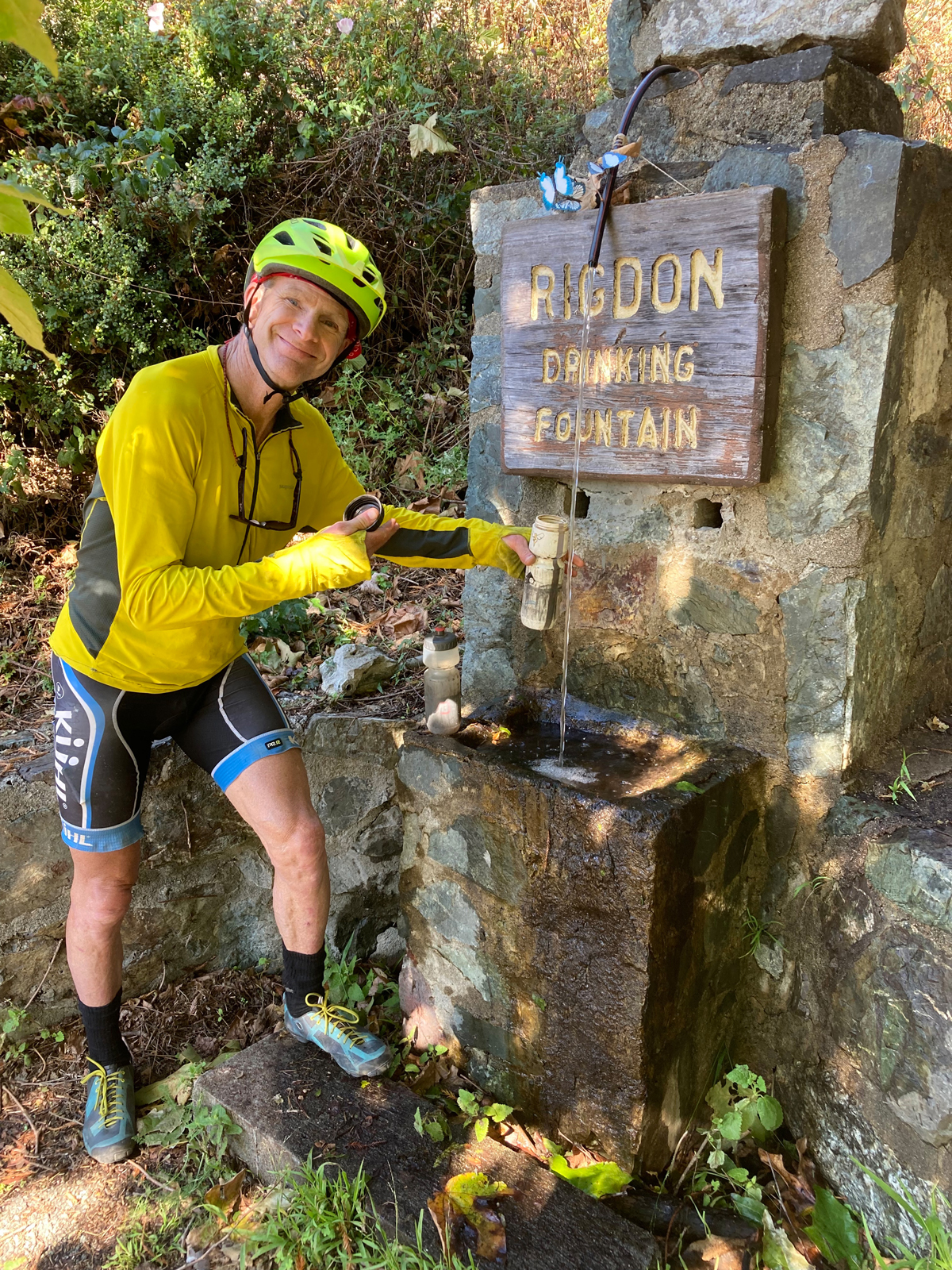
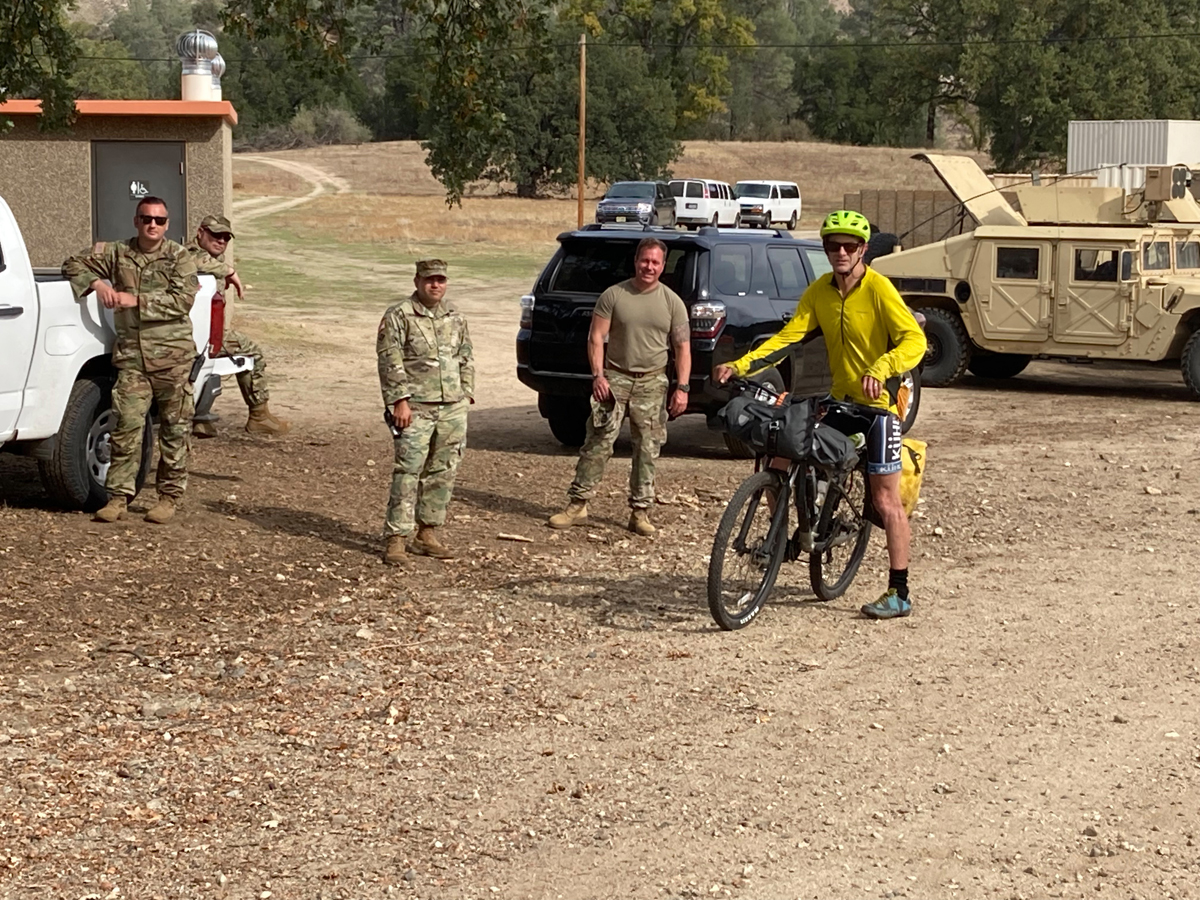
Down a glorious descent into oak grasslands and around the second locked gate we eventually dropped into Fort Liggett. We were warned by signs every few hundred yards to stay on the road to avoid unexploded ordnance, which was an easy order to follow, and we were happy to pass by an actual working army camp where we were – as always – able to beg some water from some bemused soldiers. We exited the apparently ordnance-laden area on a nice paved road with literally no cars, and eventually the road ended at yet another locked gate, beyond which lay a great double track heading up into the coastal mountains again, with an ultimate plunge into the dramatic limestone gorge of Arroyo Seco Creek, which was un-campable, but we stumbled into a nice campground with water.
It appeared that we were still well-shy of any purchasable food and hadn’t quite planned for that situation, so I I asked the campground host where the nearest place was where we could get some snack food for the next day and it was pretty far out of the way, but she said “you know, the firemen working that fire last year had these energy bars and we have a few left; you want those?” Sure, why not? She came back a little later with a grocery bag full of an off-brand protein bar and plopped them down; as much as I wondered how hungry young firefighters couldn’t/wouldn’t finish those off, I agreed to take all 6 pounds-worth. Some weeks later we finally and ceremoniously gagged down the last one….
Tom Diegel filling up. Photo by Ashley Patterson
From there we continued to gradually we worked our way northward back into civilization on mostly quiet, serpentine, and roll-y roads, and ultimately ended up at the Laguna Seca car raceway, home to the famed Sea Otter Classic cycling festival that had happened just a couple of weeks prior. In the midst of lots of the surrounding suburbia I knew there was a campground at the raceway, but just as I was about to throw down the extraordinary expense for a site the host said “Oh, by the way, our water is toxic.”
Huh? what about the drinking fountains and such at the big raceway? All toxic. I don’t know how a cycling festival had happened without potable water. But, okay, we’ll figure out something else.
Amazingly, just past Laguna Seca is yet another army base – Fort Ord – but this one has been abandoned and now is just open land riddled with trails. We rode through it and found a nice campsite, I ducked out of the “fort” into a very average neighborhood and begged some water, and then sidled back in for a nice night of camping.
We rolled back through the Salinas valley on the other side of the valley, amazed at the seemingly effortless transition of clearly-wealthy California suburbs and working-class towns that seemed plucked straight out of Mexico, complete with a far livelier vibe than the relatively sterile suburbs with their plethora of fenced/gated, too-big homes and too many Teslas.
Tom weaving on a steep climb on the coast. Photo by Ashley Patterson
We rode through Santa Cruz heading for what sounded like some more amazing deep redwood forest camping, but as the refreshing mist gradually evolved to an impressively strong rain and we got closer to the latest California strip mall town of Scott’s Valley, “camping” gave way to a Best Western and a hot bowl of real Ramen, and the folks cleaning the room the next day earned their tip from all the muddy drippage from our bikes and clothes that we left behind. Fortunately, this latest rain was just a normal rain, and no problems loomed.
While the Santa Cruz mountains aren’t big at a couple thousand feet high, they are surprisingly long, and after climbing up to the ridge from Scott’s Valley we had well over 30 miles of undulating, twisty Skyline Drive that took us to the final descent back down to our start in the Silicon Valley.
The California Coast is best known for its incredible through-riding on the iconic Highway 1, but if you’re willing to climb into the adjacent coastal mountains and have a bit of adventure, there are some great ways to actually loop the coast. Just be conscientious about big rainstorms that might alter your plans!
Getting water some water from some bemused soldiers. Photo by Ashley Patterson
By Dave Iltis — The Dirty Dino Gravel Grinder is a new event starting in Vernal, Utah on June 18, 2022. The beautiful courses ride through the Uinta Mountains and Dinosaur National Monument. We asked race director Breanne Nalder Harward about the ride and courses.
Cycling West: This is an exciting new event. Is it a race or a ride or both? Can anyone participate?
Gravel Dino: We are thrilled to bring a new gravel event to a part of Utah that has so much to explore on bike! Of course, anyone is welcome to take part. While we have categories with podiums and prizes, we consider this a fun ride as much as a race. The goal is to include everyone and have a blast!
Scenic vistas on the Dirty Dino Grave coursel Photo by Joe Potter, courtesy Uintah County Travel & Tourism
CW: Tell us about the course. What are the roads and trails like? What’s the best type of bike for the event? What about the distances and climbing?
GD: There are 3 options of courses. The main route is the Dino-Mite and is 106 miles and gains 9400 ft with the highest point at 11,000 feet. The middle-distance route is the Dino-Bite which is 59 miles and 5350 ft elevation gain total. The friendliest route is the Dino-Lite which is an out and back on Dry Fork Canyon covering a total of 32 miles and 2000 ft of vertical.
All courses feature dirt and asphalt and endless breathtaking views. Honestly, you could ride anything from a gravel bike to a cross bike to a full squish MTB. Most riders will be on gravel-specific bikes as that will be the most comfortable for all the terrain. You’ll definitely want knobby tires at least, though the gravel sections are not super technical.
One of the many gravel roads you’ll experience racing the Dirty Dino Gravel event. Photo by Joe Potter, courtesy Uintah County Travel & Tourism
CW: The event takes place in the Uinta Mountains. Can you tell us a little about the history of the area?
GD: Vernal, Utah is most known for its incredible amount of dinosaur fossils, footprints, and other prehistoric sites. Features on course include the famous Highline Trail and picturesque Dry Fork Canyon, full of monolith rock formations. This is Dinosaurland. So much of the course rolls through the terrain where the Fremont Indians — and of course the dinosaurs — roamed!
CW: Where can people stay when they come to Vernal? Is there camping nearby?
GD: The website has links to all the hotels offering discounts to Dirty Dino participants. There are plenty of great places to stay in town, or anyone is welcome to camp and make an adventure out of the weekend. There are multiple sites and areas to explore. Bring the family and make a full weekend out of it!
CW: What are some things that families can do when they are not racing?
GD: If I haven’t said it enough, there is much adventuring to do in Vernal and right outside. Make sure to visit fossil sites and go on hikes throughout Dinosaurland. In town, visit the museums and restaurants, particularly the Vernal Brewing Company. They are sponsoring the event and have tons of fun food and drinks for everyone to enjoy.
CW: Is there anything else that you would like to add?
GD: Honestly, I just want to emphasize how special this event is going to be. I took on the director role because what I’ve always loved about gravel races is the community aspect, the mass starts, conquering challenging terrain with all types of riders on course together, and of course the after parties make gravel rides so fun. This is definitely a grassroots style event and we have amazing sponsors and partners that are going to make it so rad: a shakeout ride with Ventum (they are giving away a bike frame too!), unique swag from DNA Cycling, nutrition support from First Endurance, ride support from local Grail Cycles, and so much more. We hope you’ll join us and help make this event a regular MUST on the annual calendar!
BUTTE, Montana (June 4, 2022) – Due to the success of last year’s inaugural event, Bike Walk Montana (BWMT) is planning the return of the Divide Scramble. This one-day event features 3 mountain bike/gravel bike rides of 33, 57 and 68 miles. In addition, this year’s schedule will also include a 4 mile guided history and geology tour along the paved trail system which overlooks Butte.
The Continental Divide Trail on the Grizzly course of the Divide Scramble bike event. Photo courtesy Bike Walk Montana
The Golden Eagle Routes 1 and 2 are 33 and 57 miles, respectively. They utilize a mix of paved and gravel roads on part of the Great Divide Mountain Bike Route (created by Adventure Cycling). The Grizzly Route is 68 miles, and also includes a section of the Continental Divide Trail (not suggested for beginners). All 3 rides feature unrivaled scenic beauty, and are fully supported with aid stations, SAG vehicles and a lunch following the completion of the rides.
The guided tour/walk will feature a short mine tour, half-price admission to the World Museum of Mining and commentary from Butte history buffs. Lunch will also be provided.
Proceeds will benefit the work of BWMT, a non-profit, statewide advocacy organization working to make walking, bicycling and rolling safe and accessible for all Montanans. Additional information can be found at www.bikewalkmontana.org.
Event information, registration links and sponsorship opportunities can be found at www.RidetheDivideMontana.
On the Divide Scramble course. Photo courtesy Bike Walk MontanaRiders in the first Divide Scramble. Photo courtesy Bike Walk MontanaRiders in the first Divide Scramble. Photo courtesy Bike Walk Montana