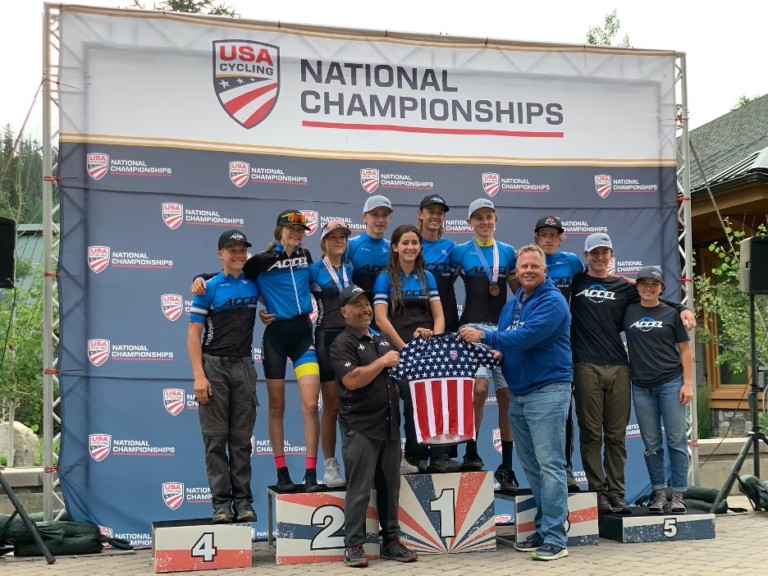
Southern Utah based youth mountain bike development team, ACCEL Cycling, has brought home a team high school National Championship last summer from Winter Park, Colorado. The USA Cycling Event saw youth from all over the United States shredding the mountain trails at 9,000+ elevation while competing for individual and team awards.
USA Cycling held this first-ever high school-geared mountain biking competition in conjunction with its long-standing national championships with Elite- and Pro-level races.
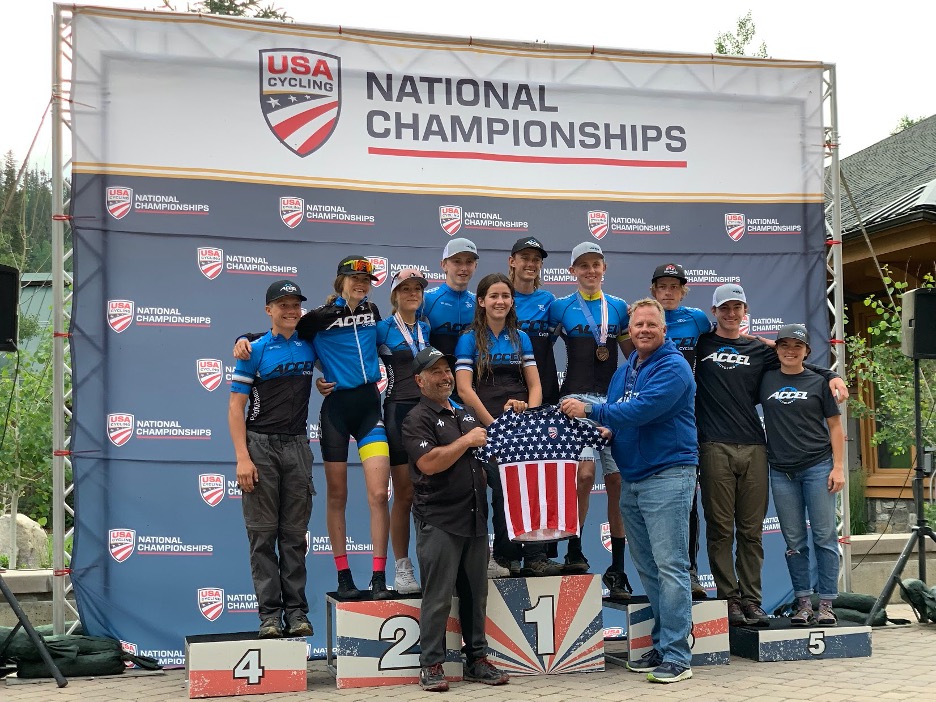
ACCEL team manager Brandon Price and the members of the team show off their national championship jersey after winning the 2021 High School National Championships. Photo courtesy NAIExcel
Head Coach, Jason Ranoa, known to his riders as “Coach J,” joyfully said, “I knew the ACCEL team was capable of landing on the podium because of the depth and strength of its members.”
Since starting this team in January 2021, Coach J and team manager, Brandon Price, have worked to help these athletes rise to the goal of competing at the national level. Most of the team had experience racing with their high school clubs and they were looking forward to advancing to the next level.
St. George locals, Hadden Beykirch and Emi Dorman, brought home individuals medals, as did their ACCEL teammate and Park City native, Abigail Pruyn. Dixie High graduate Gwen Sepp had a strong race, and many other team members helped by securing overall points.
Utah has loads of untapped mountain biking talent and youth looking for the knowledge and skills to progress. Right now, the state has approximately 6,000 high school age youth participating in mountain biking teams, clubs, and races.
ACCEL Cycling is looking forward to a great future of mountain bike racing in more national and local races.
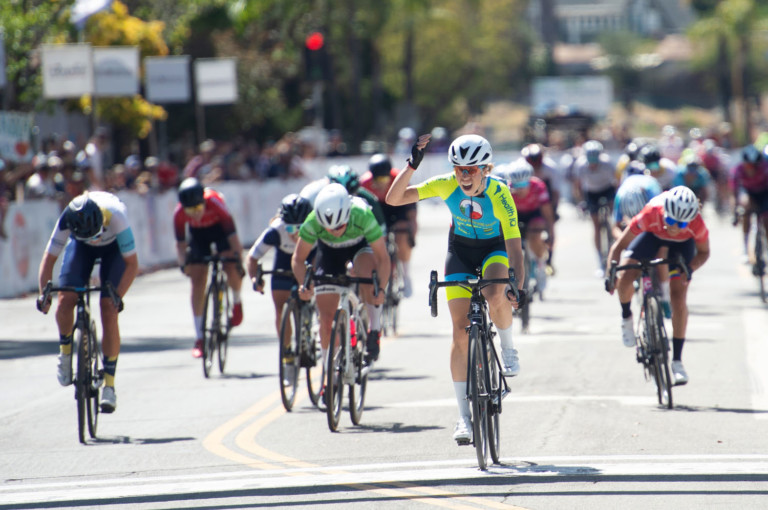
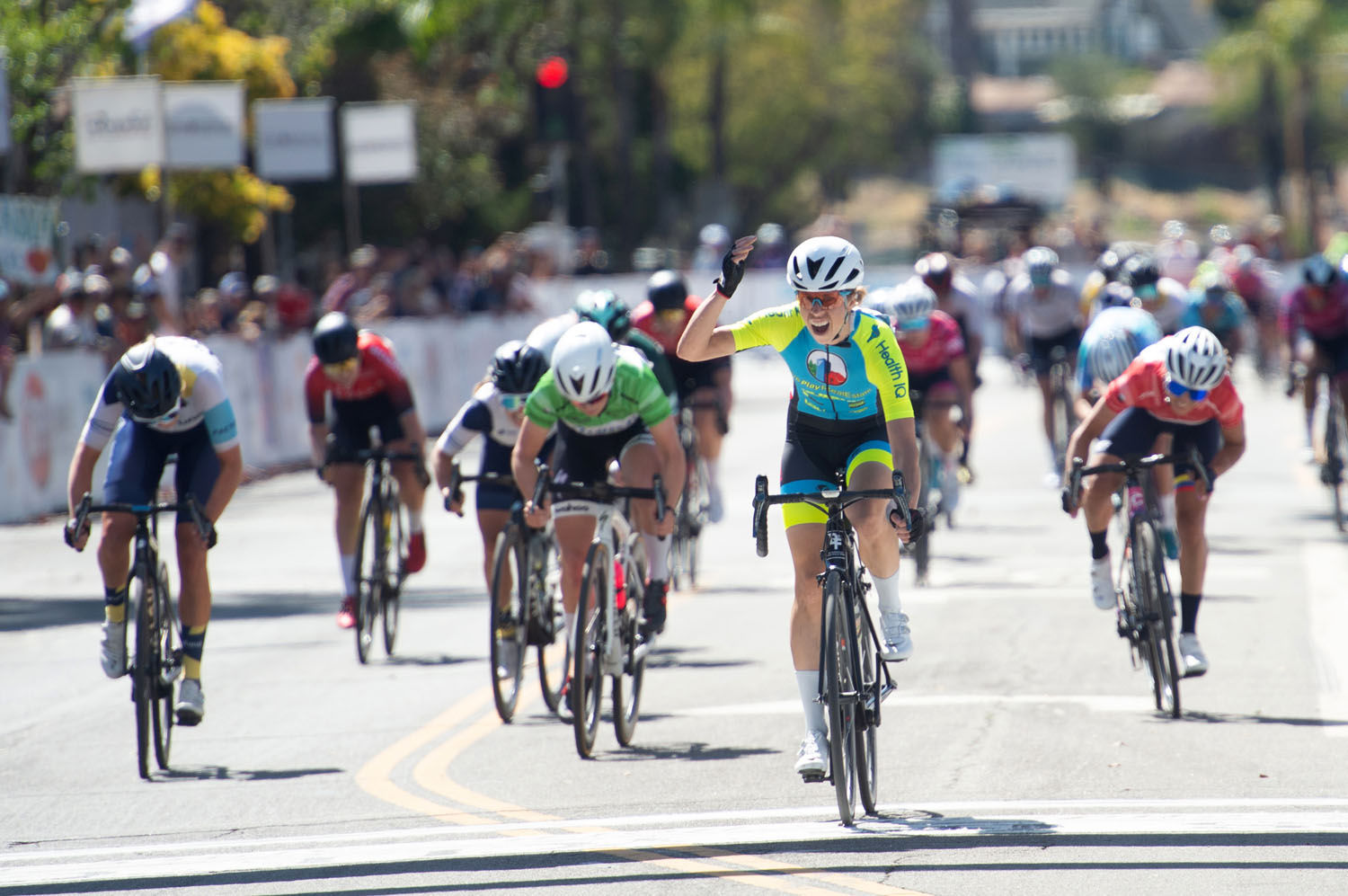
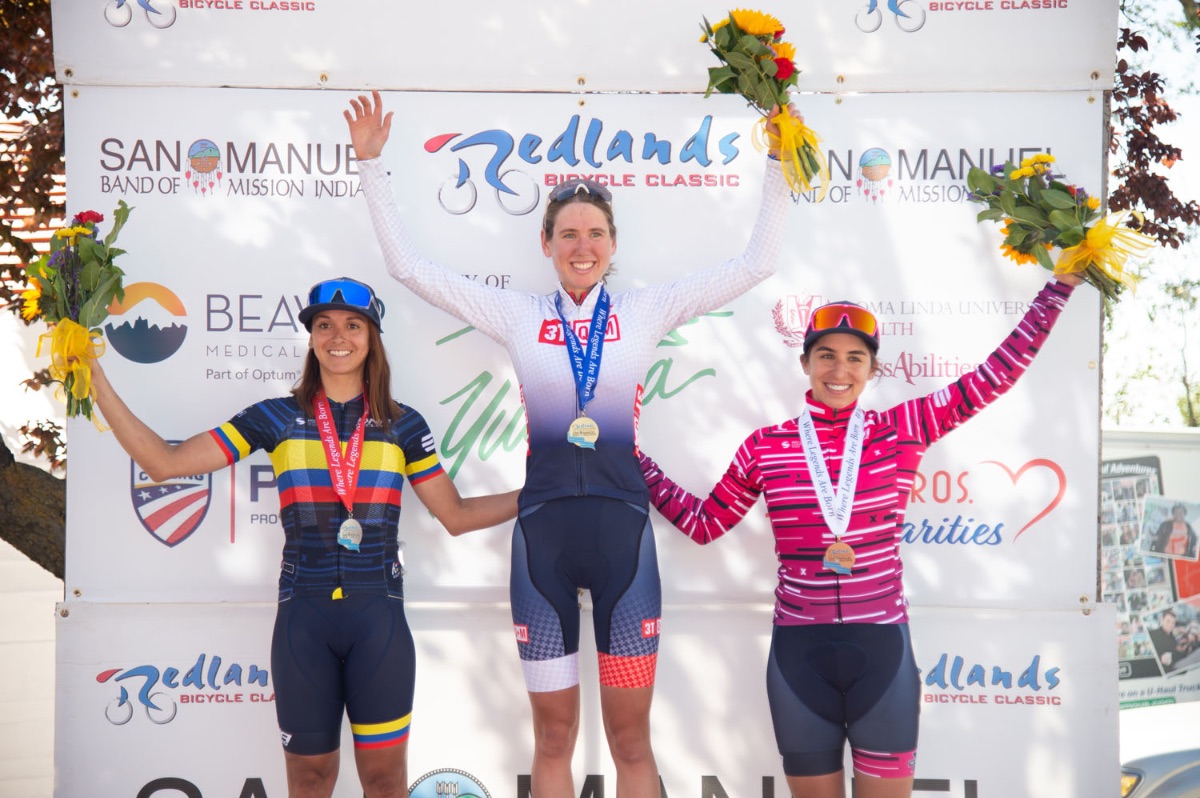
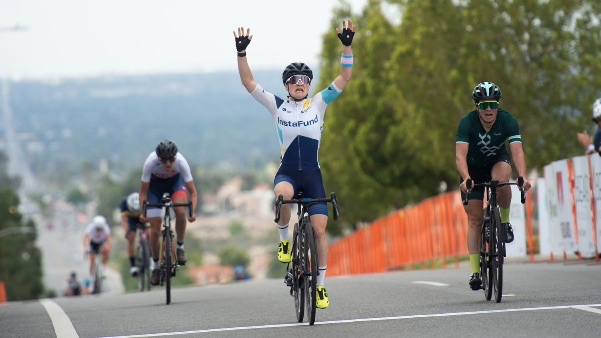
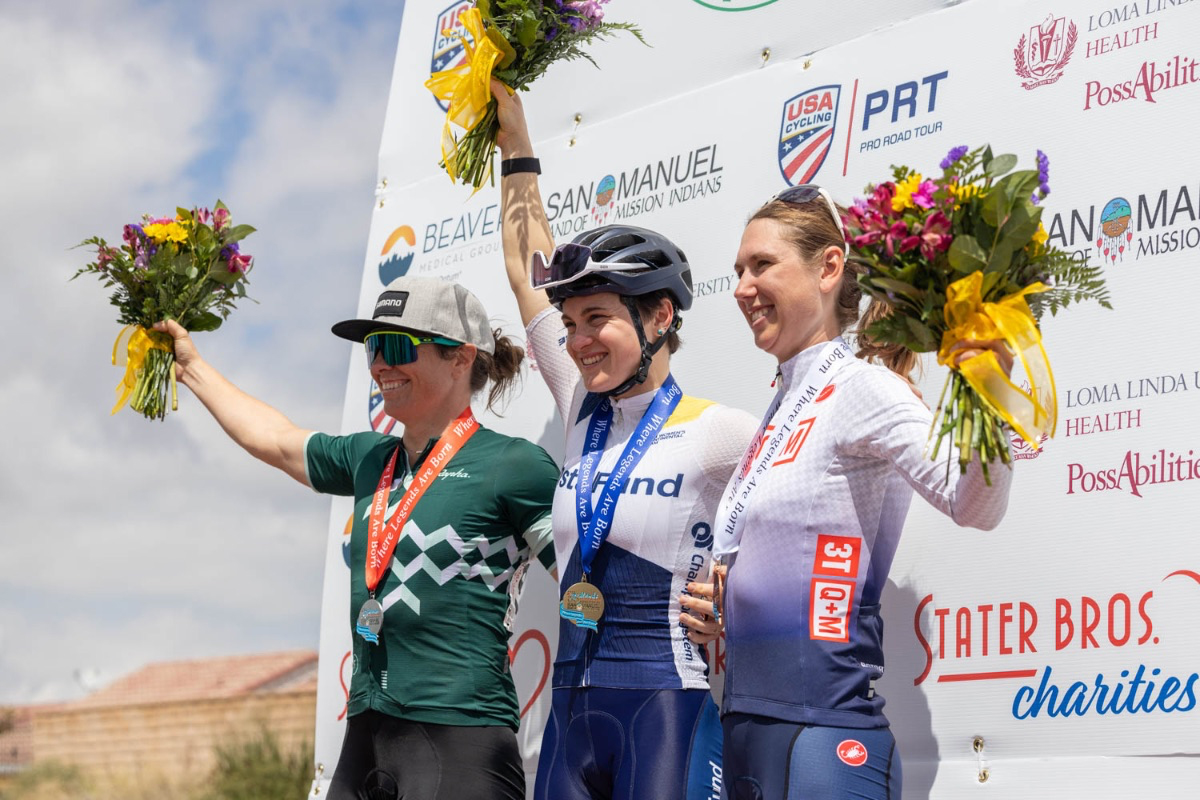
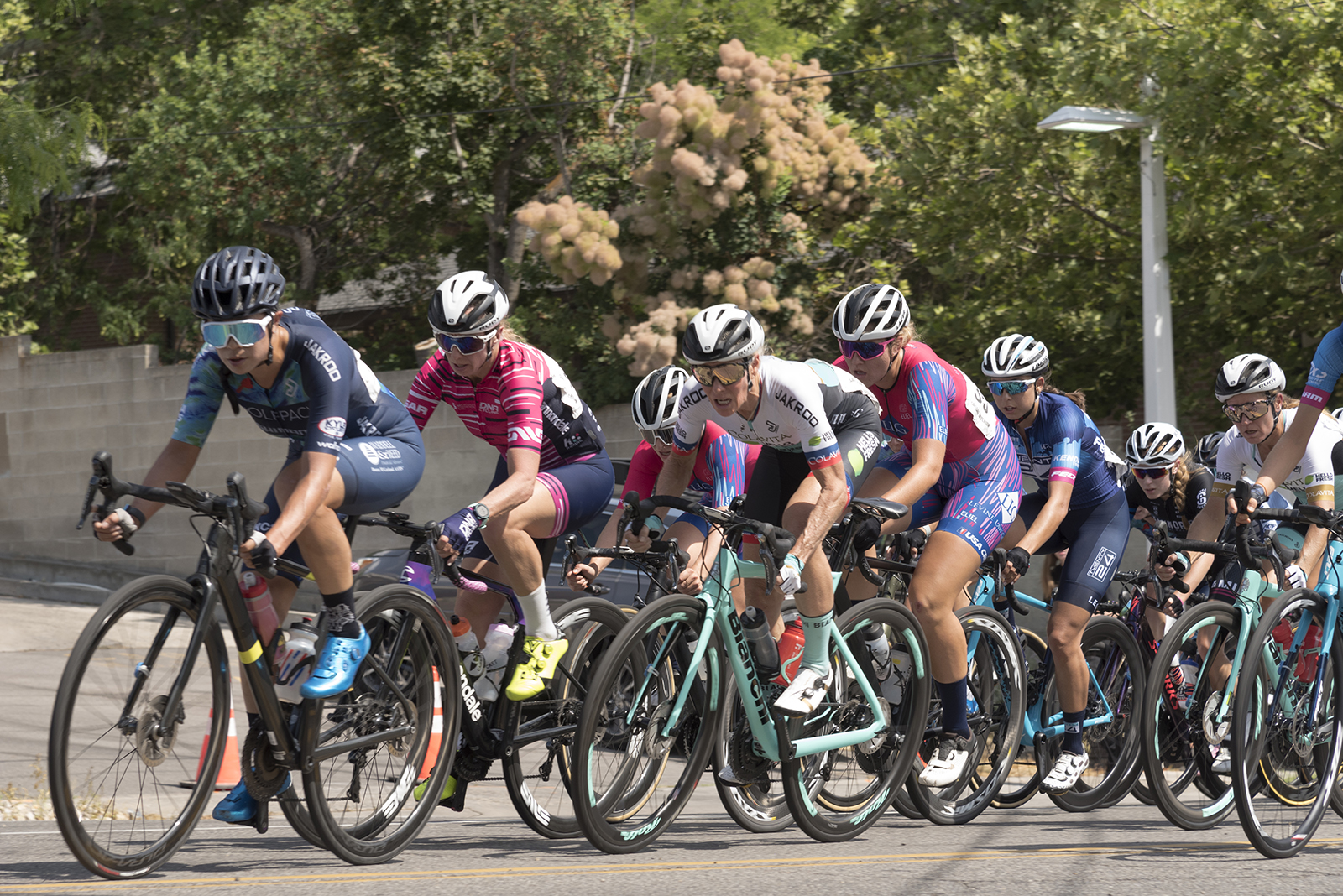
REDLANDS, California (April 23, 2022) — Lisa Cordova stole the win Saturday, racing for California squad Live Play Real Estate in downtown Redlands. The Oregon native took the surprise win from the heavy favorites of DNA Pro Cycling and Team Wolfpack, both prized teams on the US criterium national circuit. Cordova is no stranger to crits herself, having raced for crit squad Levine Law Group in the past. Olivia Cummins followed in second for LUX-CTS ahead of Rylee McMullen of Instafund La Prima.
Lisa Cowan sneaks past ATX Wolfpack and DNA Pro Cycling to steal the Stage 4 win. Photo by Casey B. Gibson, Courtesy Redlands Cycling Classic
“We’re a development composite team from Northern California, so we were doing the best we could to try and follow certain moves,” Cordova said after her win. “We’re a small team, so really just the last few laps it was trying to follow the right wheels. I knew where Heidi Franz (Instafund LaPrima) was. I knew she was going to be up there, so I tried to stick to her wheel for a while and then last lap it was just trying to get to the very front in the last three corners and go for it.”
The 9-corner, 1-mile circuit makes for a technical race, often allowing for breakaways to escape. Attacks were going straight from the start, with both DNA Pro Cycling and Instafund LaPrima burning several matches trying to control them, before the battle for the green jersey took over.
Cummins had her sights on the multiple sprint points up for grabs, with Daphne Karagianis (DNA Pro Cycling) chasing her down. The LUX rider won the first round of points, Karagianis would later win the fourth round. Cummins had only 5 points lead at the start of the day, but would cross the line extending her lead to 19 points.
Emily Marcolini (3T/Q+M) finished safe in the pack, retaining her yellow jersey with only one stage left to defend it. DNA’s Diana Peñuela was 4th on the stage, just missing important bonus second on the line, which would have returned the seconds she lost in the time trial. Haley Smith (ATX Team Wolfpack) remains in the lead for Best Amateur.
Men’s Race
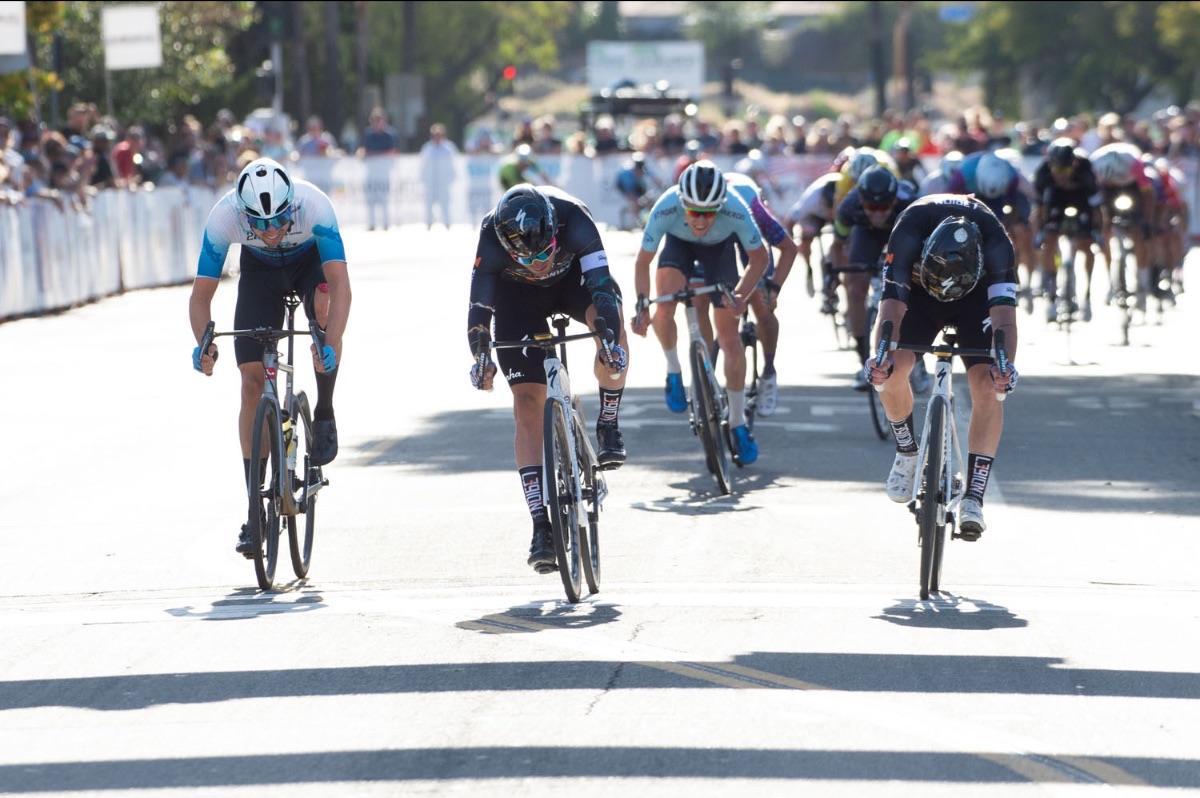
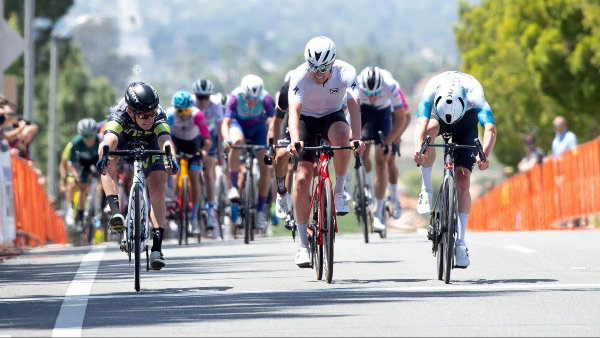
It was the L39ion of Los Angeles show today in downtown Redlands as the dominant crit squad lived up to the hype, delivering Tyler Williams and Alec Cowan to the line to finish 1-2 after 90 minutes of controlling the race. Hugo Scala Jr. rounded out the podium in third place for Project Echelon.
T. Williams edges out his L39ion of Los Angeles teammate, A. Cowan for the win. H. Scala, Jr. (Project Echelon) takes 3rd. Photo: Casey B. Gibson, Courtesy Redlands Cycling Classic
“The race was really a perfect ride by the whole team,” Williams said. “It was a huge team effort – for them to deliver me to the line like that. With Alec (Cowan) almost winning the race, I just pipped him at the line. It was perfect. We kept it safe. Tomorrow we have big ambition, obviously different execution, but hopefully, it’s just the same great team effort.”
L39ion was in complete control for nearly the entire race, save for a gutsy, but short-lived attack from LUX Cycling’s Alex Gustin mid-race. It was business as usual for the crit squad, while the yellow jersey, Xander White (CS Velo), sat behind the six L39ion riders, biding his time for tomorrow’s final showdown – the Sunset Loop Road Race.
“That was my first experience of an American crit,” White said. “It definitely lived up to everything I’ve been told. It was pretty sketchy and tight on all the corners. L39ion rode a great race, they controlled from the start. We’ve got seven seconds on GC going into tomorrow. It’s not ideal, but we’ve got the team to ride tomorrow. The last stage suits me way more than today, so I’m happy to get through today with the yellow jersey. Bring it on.”
The final stage on the Sunset loop begins at 10 AM PDT with the pro women, followed by the pro men at 2 PM.
White moves into race lead, Marcolini retains yellow
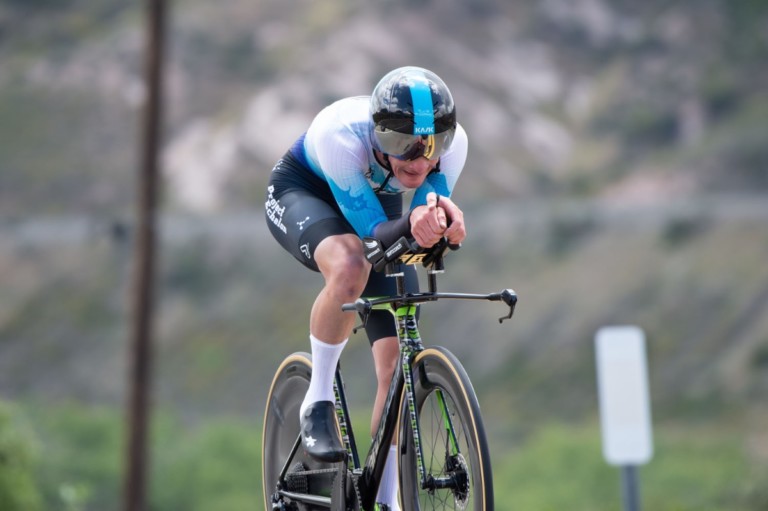
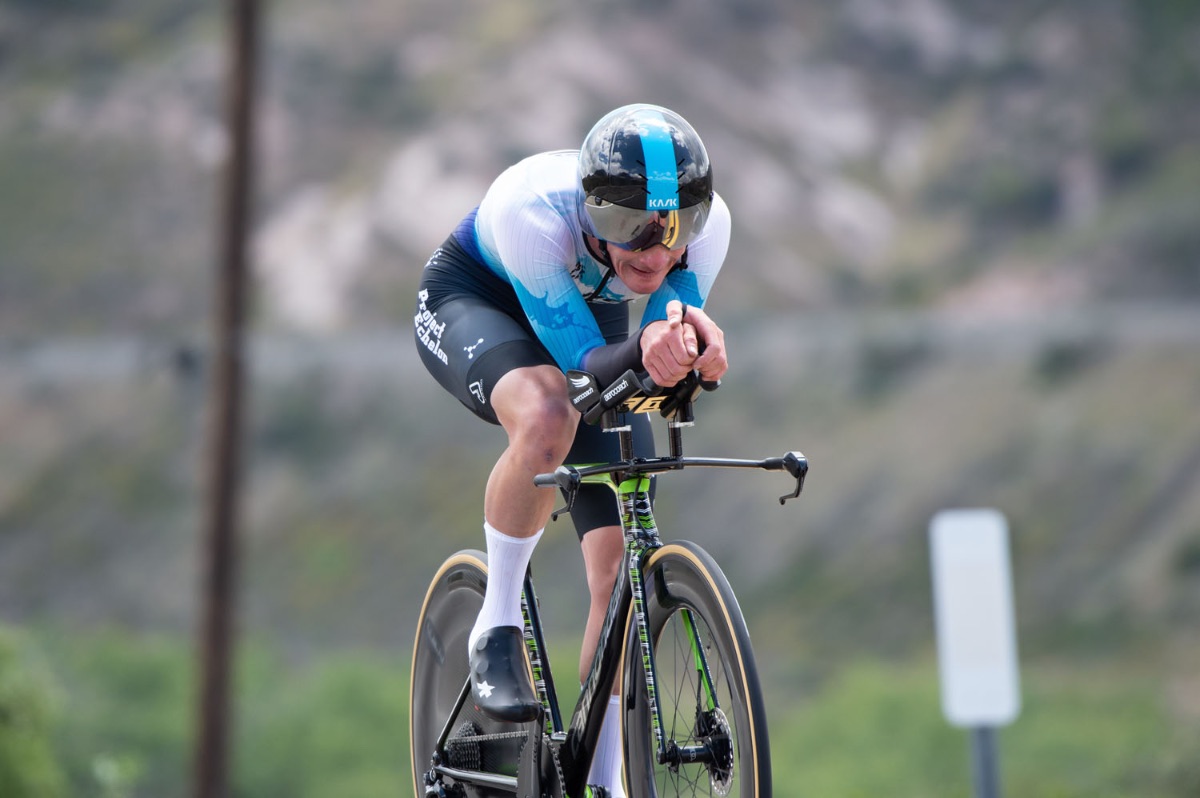
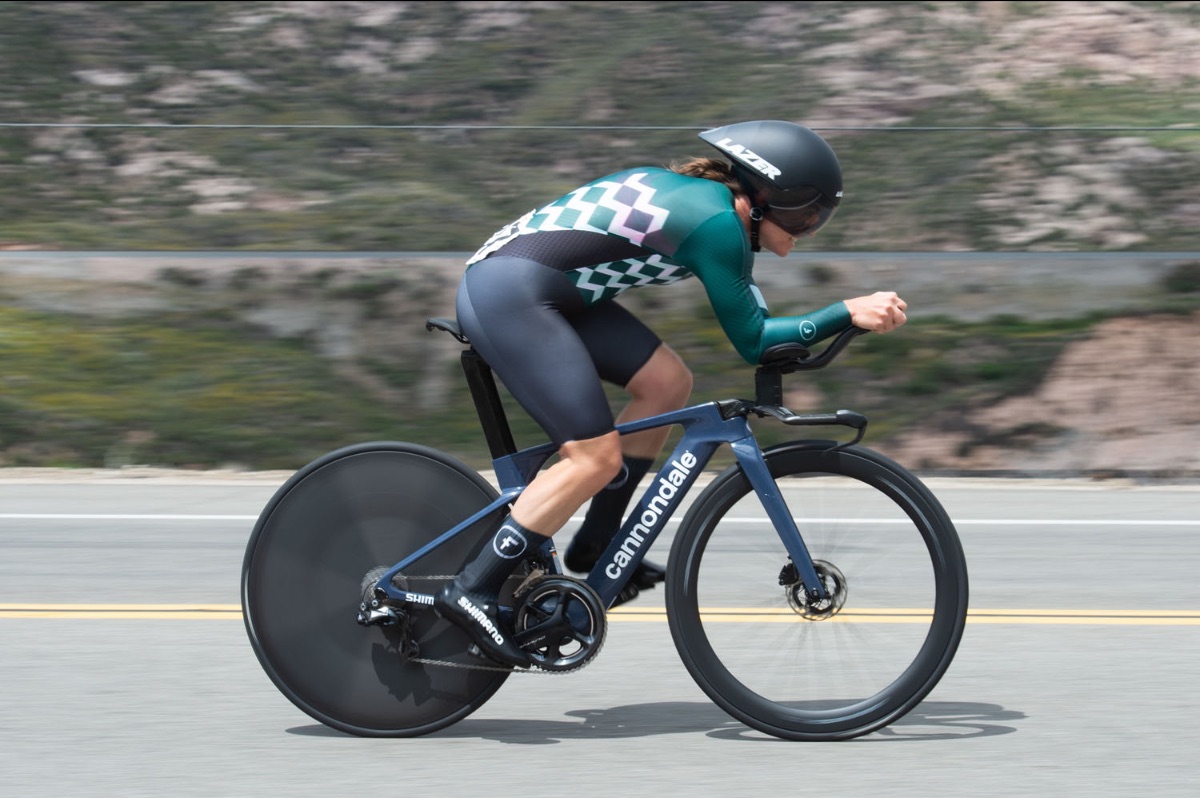
CAJON PASS, California (April 22, 2022) — On a brisk, blustery day on old Route 66, Tyler Stites (Project Echelon) stormed the 9.1 mile out and back time trial course with a time of 17:39, beating Xander White (CS Velo) by 18 seconds to take stage 3 of the Redlands Bicycle Classic. Tim McBirney also delivered an impressive performance, rounding out the podium and taking the Best Amateur jersey after finishing 22 seconds in arrears.
Tyler Stites Powering to the Stage 3 win. Photo by Casey Gibson. Courtesy Redlands Cycling Classic
“I’ve been looking forward to this TT for a while,” Stites said after the stage. “It’s a really cool course with good pavement, so I just wanted to go fast. I’m kind of a TT dork so I just love going fast. You never know how your legs are going to feel in the middle of a stage race, but I just felt really good. I took it easy on the way out on the downhill and on the way back just gave it everything. It was a lot of fun and I think I moved up a bit on GC, but we’re still on the hunt for yellow, so it will be a fun final two stages.”
Xander White’s strong performance launched him into the overall race lead with a slim 10 second lead over Stites heading into tomorrow’s downtown criterium.
“I had a really good day today,” Kiwi Xander White said. “We came here to win the yellow jersey and took it in a race that I really like. I really enjoy time trials. Tyler (Stites) pulled a ripper out of the bag on what turned out to be a really fast course. We have our work cut out for us over the next two days. Honestly, we haven’t thought too much about how we’re going to play it, but I think we’ve got the strength to hold on to it.”
Photo by Casey Gibson. Courtesy Redlands Cycling Classic
Women’s Race
Jenn Wheeler (Fount Cycling Guild) continued to show excellent form again today on stage 3 of the Redlands Bicycle Classic, powering to first with a time of 21:04, beating Maddy Ward (Instafund LaPrima) by nine seconds over the 9.1 mile course. Sprint leader Olivia Cummins (LUX-CTS) continued to impress, finishing third with the same time as Ward.
Stage 3 winner, Jennifer Wheeler (Fount Cycling Guild). Photo by Casey Gibson. Courtesy Redlands Cycling Classic
“It was a very tough headwind on the way downhill, so it was surprisingly easier on the way back up,” Wheeler said. “It went by a lot faster. I thought the course was pretty easy, just out and back with no turns, so it suited me. I hadn’t been in it for a long time, so I didn’t really know what to expect. When I crossed the line, I thought I had a good day, but I didn’t know what that meant in this field. So, I was pretty surprised.”
Race leader Emily Marcolini (3T/Q+M) finished 10th on the stage, 44 seconds off the pace of Wheeler, but it was enough to keep her in the yellow jersey by 1:01 over Colombian road champion Diana Peñuela (DNA Pro Cycling). Maddy Ward (Instafund LaPrima) sits in third at 2:31.
“The main goal for today was to try and put a little more time into the GC,” Marcolini said. “I was definitely feeling yesterday’s effort in the legs today. I didn’t quite have the ability to put as much into the pedals as I wanted or needed to. I also had a little bit of a mishap at the start ramp. My foot actually came unclipped, I actually had to clip back in, so that threw me off my game a little. I was able to keep my head down and push as hard as I could and hope that it was enough.”
Photo by Casey Gibson. Courtesy Redlands Cycling Classic
Stage 2: City of Yucaipa RR Recap
YUCAIPA, California (April 21, 2022) — Australian Freddy Ovett won the City of Yucaipa Road Race today after an exciting attack in the closing meters of the brutal uphill finish to Oak Glen. The L39ion of Los Angeles rider timed his final move perfectly to take victory ahead of LUX Cycling’s Jesse Maris and Xander White from CS Velo, and now leads Redlands Bicycle Classic by a slim four-second margin ahead of Maris, who moves into the Best Amateur jersey after an incredible performance on junior gears.
“It was a super hard race,” Ovett said. “Chapeau to Project Echelon for making the race hard. I felt good, I gave it my all. I had my teammates believing in me, so I had no choice but to go full gas. I got a nice gap and managed to get the win. I’m wearing this beautiful jersey, and hopefully I can hold onto it for a few more days.”
“I was feeling okay at the start of the race,” Maris said. “It was a long race so it wore down on me, but it wears down on everyone. I was feeling okay. Maybe I could have done better, but I’m really happy with how I finished.”
Today’s challenging 90-mile road race started with six laps of a 14-mile circuit before turning onto the final climb. Attacks started almost immediately, but it took a lap before KOM leader Kaler Marshall (Expeditors) and Chris Riekert (Mikes Bikes) formed an early break. The duo took turns lapping up points in the KOM and sprint competition, with Marshall intent on keeping his red jersey and Riekert eyeing the green.
With four laps remaining, the duo were joined by Luke Feuerhelm (Above and Beyond Cancer) Will Teal (Fount) and Tom Schellenberg (TaG) and together gained an advantage of more than four minutes before the peloton began their chase.
With 40 miles (60km) to go, the officials opted to stop the race due to safety concerns.
“The reason why we stopped the race is that we got separated from our marshals and we weren’t able to contact them,” Chief Referee Jeff Wu said. “We had to pull those marshals back to make sure the riders were protected.”
When the race restarted, the break began to fracture as the laps counted down, and on the final circuit, only Marshall was left to collect the remainder of the KOM points, further solidifying his lead in the mountains classification. By the time the peloton reached the foot of the Oak Glen climb, it was all together and anyone’s race.
“Going from the start of the climb was really steady,” Marris added. “There weren’t a lot of attacks until about halfway up the climb. A L39ion rider and a CS Velo rider attacked. I just stayed in the group, it was still pretty steady. Eventually, I got in another attack, we caught the 2 riders off the front and then we went down to 3 riders, then sprinted. I was third wheel, I was only able to come around one rider.”
With less than 35 seconds separating the top 5, tomorrow’s 9.1mi/14.6km time trial has the opportunity to shake up the overall standings. The first rider in the men’s competition will set off at 12:30 p.m. PST.
Women’s Race
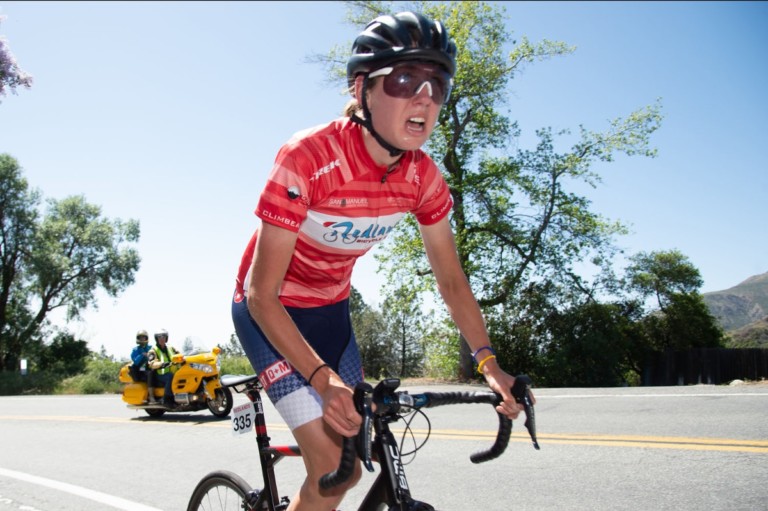
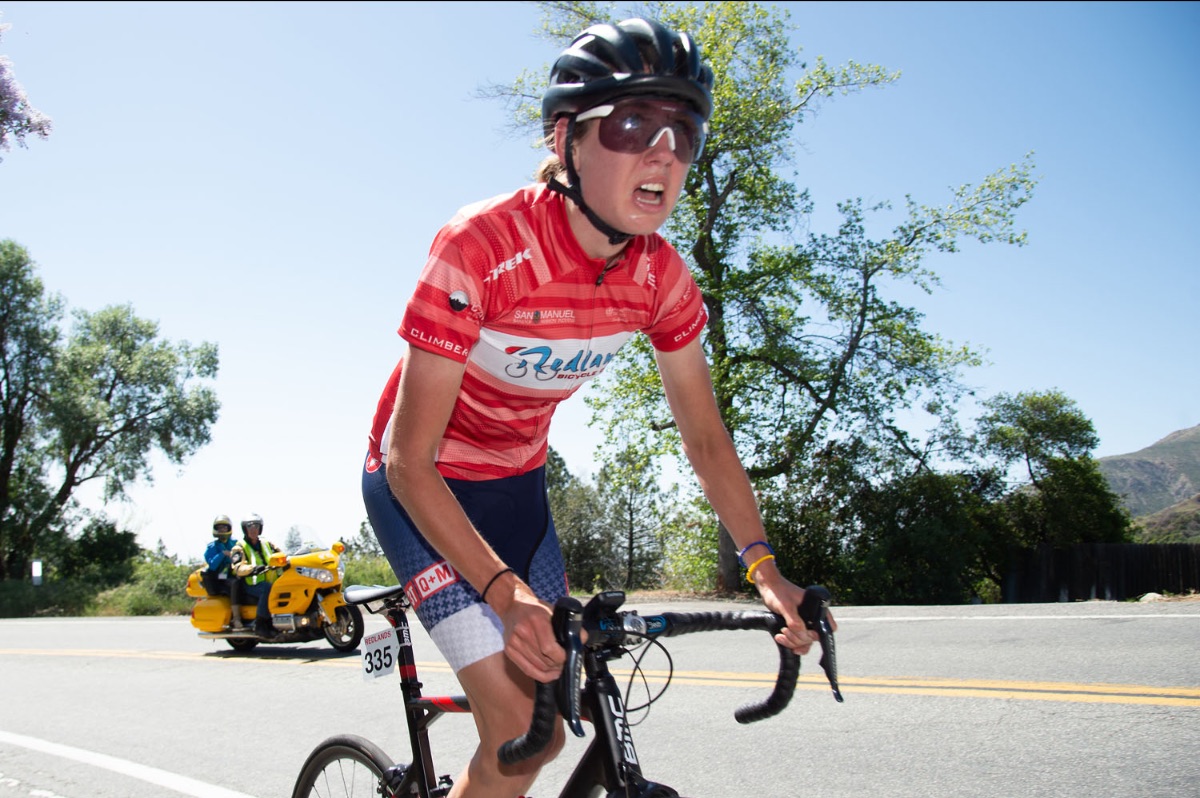
The pro women set off for their 61.8-mile trek on the Yucaipa circuits later Thursday morning, with all eyes set on the Oak Glen finishing climb. Heidi Franz of InstaFund LaPrima began the day in yellow with only a 5-second lead. The day would belong to Emily Marcolini of 3T / Q+M Cycling, who would build on her success in stage 1, conquering the stage in the end.
Emily Marcolini (3T / Q+M Cycling) climbs to victory. Photo by Casey Gibson. Courtesy Redlands Cycling Classic
The Canadian attacked shortly after the turn off the circuit, near the base of the 5.4-mile climb. She was followed by a chase group of 7-riders, including three from DNA Pro Cycling – the Colombian National Road Champion, Diana Peñuela, Anet Barrera, and Erica Clevenger. Marcolini looked back to see a growing gap, kept her head down set in time trial mode, crossing the finish to win 41 seconds ahead of Peñuela and Clevenger in third.
“Just before we made the last turn to come up the climb, I had my team go to the front so that I could for the QOM points,” Marcolini said at the finish. “Instafund came to the front, they were riding a moderate tempo and it just felt like the right time to go. I launched my attack. I was hoping a few other riders would go with me, I wasn’t planning on going solo for 5K but that’s how it ended up happening. I looked over my shoulder and saw that I had a gap. I put my head down and hoped that I had enough in the legs to get to the end.
“I still feel relatively new to the sport even though I’ve been in the sport 4 years now. Today, I could feel that I was more comfortable in the pack then I have been in the past. That definitely gives me a huge amount of confidence going into the rest of the week. I haven’t time trialed in a long time, so we’ll see how tomorrow goes. The crit is always interesting and hard to predict so we’ll see what that brings.”
DNA Pro Cycling had numbers on their side in the chase group. Once Marcolini attacked however, the group was unable to match her pace to bring her back. Peñuela was the only rider able to respond in the end, managing to move up to second on GC.
“The strategy was to be in the front and follow the attacks. Emily went early, from the bottom of the climb and we didn’t expect that,” Peñuela said. “We tried to catch her but she’s very strong. This race, the final stage is pretty important for the overall result, it is really tough. We are waiting for that day as a team. The crit is a target also since we are a crit-focused squad. We are excited to see what will happen.”
Haley Smith of Team ATX Wolfpack Racing was part of the chasing group, finishing 7th on the stage to maintain her lead in the Best Amateur Jersey competition. Olivia Cummins of LUX-CTS leads the Points Classification green jersey. Marcolini also extended her lead in the Queen of the Mountain classification, leading Peñuela by 9 points, and on GC by 58 seconds.
The women start the stage 3, 9.1-mile Devore Blvd. time trial at 11 AM, with the men racing directly after.
Photo by Casey Gibson. Courtesy Redlands Cycling Classic
REDLANDS, California (April 20, 2022) — Heidi Franz opened the 36th Edition of the Redlands Bicycle Classic Wednesday morning winning the 41.3-mile Highlands Circuit Race for stage 1. Instafund LaPrima had several cards to play with three riders who were part of a 10-rider breakaway that managed to escape midway in the stage following a slew of attacks from the start. Working together, the group was able to maintain their lead, battling it out up the final climb to the finish. Jennifer Wheeler racing for Fount Cycling Guild was second, with Emily Marcolini (3T/Q+M Cycling) in third.
Heidi Franz (Instafund La Prima) powers to win stage 1. Photo: Casey B. Gibson
“We had such a strong team today, Izzie (Bertold) bridged up after the last QOM and Maddy (Ward) and I were just perfectly set up,” Franz said at the finish. “It was just the right combination of riders to keep the break going and in the last couple laps, we knew we had the legs to pull it off today. I just can’t believe it. I think I sat down and sprinted all over again 3 different times! I’m just so happy!”
The victory was an emotional one for Franz, three years after Megan Jastrab had won in Highland. Both had been racing for Rally when a fellow teammate passed away one month before the start of Redlands that year. The team had honored their loss before and after the stage.
“I just think of that every time I come here,” Franz said. “So, it’s super special to come back to this stage and be able to pull it off. We have such a special team. I’m so proud of them; they worked so hard. This stage is such a tough one to start Redlands with. I’m super proud of everybody.”
Emily Marcolini (3T / Q+M Cycling) earned enough points to lead the Queen of the Mountain classification. Haley Smith (Team Wolfpack Racing) was awarded the Best Amateur Rider for her efforts as part of the day’s breakaway.
“Being the first stage this year, I wasn’t sure what to expect,” Marcolini said. “Also, being from Canada I hadn’t really raced in the US that much over the past few years due to travel restrictions. I wasn’t too familiar with who the big names are anymore.
“I didn’t come in with too many expectations, I just wanted to get back into the flow of racing and try and get up the road and do well. Overall. I’m really happy with how the race went and how my teammates rode. They helped me a lot staying up near the front and following moves, which was great. This is our first big race together so that was awesome to see that.”
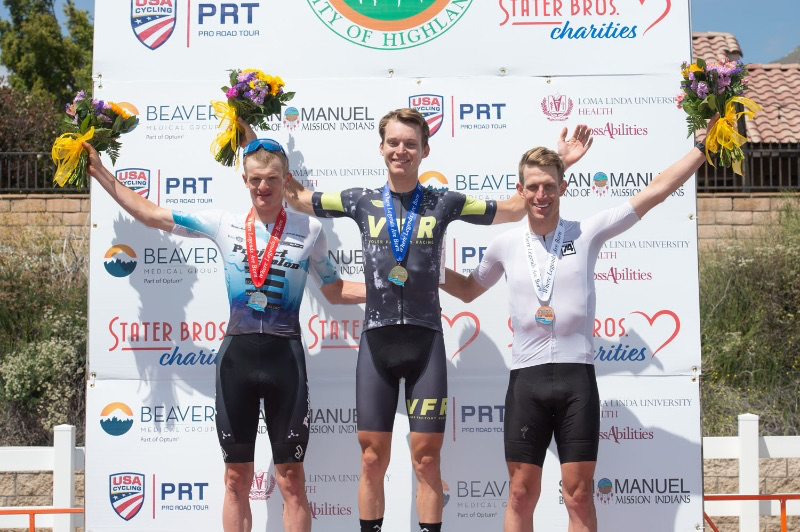
Cole Davis (Voler Factory Racing) narrowly edged out Tyler Stites (Project Echelon) in a thrilling uphill bunch sprint during the opening stage of the 36th edition of Redlands Bicycle Classic today. Cameron Piper (Project 74) rounded out the podium in third after 20 aggressive laps of a 2.8-mile circuit around Highland.
Cole Davis (Voler Factory Racing) wins stage 1 in photo finish. Photo: Casey B. Gibson
“The last lap was hectic as it always is,” said Davis, a Sacramento local. “The lead-out trains blew apart as we entered the neighborhood where it gets super sketchy, and everyone tries to fight each other. My team and I played through the chaos. My guys stayed behind me, protecting me from behind. I started my sprint a little earlier than I would have liked, but I held the side of the barrier so I could make sure they couldn’t come around both sides. I think I got it in a bike throw. It was a photo finish, I still haven’t seen the photo yet, but I know it was close.”
“It still doesn’t feel real,” Davis continued. “I’m going to wait until I’m on top of the podium before I really let it sink in. Winning here is so much more special than the result. I have my family coming up from Sacramento to watch this race. It’s a big result for this team – we’re a smaller team competing here. It’s all the things you don’t see that mean a lot about this victory.”
Despite the high speeds and constant attacks, it took about three laps before a group of two snuck off the front. Kaler Marshall (Expeditors Elite Cycling) and Alex Gustin (LUX) built up a lead of 30 seconds before Jared Scott (Aevolo) and AJ August (Blue Competition Cycles) bridged across with seven laps remaining. It looked like the added firepower stoked renewed energy into the breakaway, and the gap grew to more than a minute before Project Echelon began cranking up the dial. The four riders were reabsorbed into the peloton with one lap remaining, and from there, the final battle for positioning began.
Marshall’s time in the breakaway allowed the Expeditors rider to collect valuable king of the mountain points, which he said his team plans on defending during the week.
“I was pretty aggressive early on,” Marshall said. “It really wasn’t the plan to go in the break from that early in the race. I think it was lap 3. I just settled into maintaining the gap and seeing what would happen. Eventually, we had additional riders come over to the break. I think we were up to four towards the end. It came to the last lap before we got caught.
“At this point, because we’re in the KOM jersey, we want to defend it if we can. Other than that, we’re a smaller team, so we play it like 5-days of 1-day racing, and then on the last day, we figure out how that’s going to play out for GC or the jersey competition.”
Quinn Felton (Team California) claimed the final jersey on offer as Best Amateur Rider.
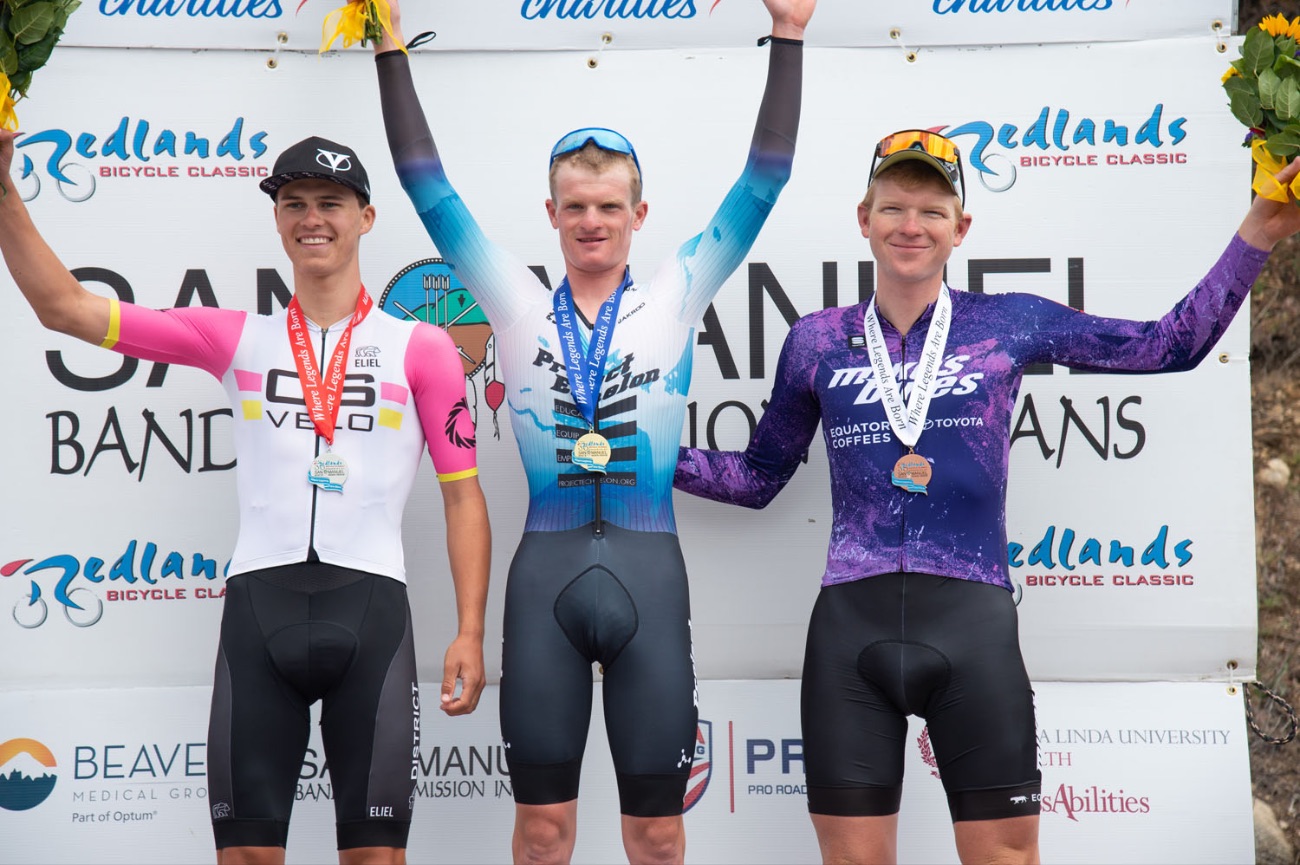
Redlands 2022 Stage 1 Men’s Podium. Photo by Casey B. Gibson
Registration spots are still available for the inaugural TransRockies Gravel Royale
PANORAMA, B.C., Canada (April 21, 2022) — As the summer race season approaches, TransRockies Race Series, the global leader in adventure stage races, is looking forward to a successful inaugural TransRockies Gravel Royale gravel stage race August 22-25, 2022. Initially set for August 2021, COVID-19 restrictions canceled all events in British Columbia’s Interior. The gravel stage race will now debut in August 2022, and there are still registration spots available for interested riders.
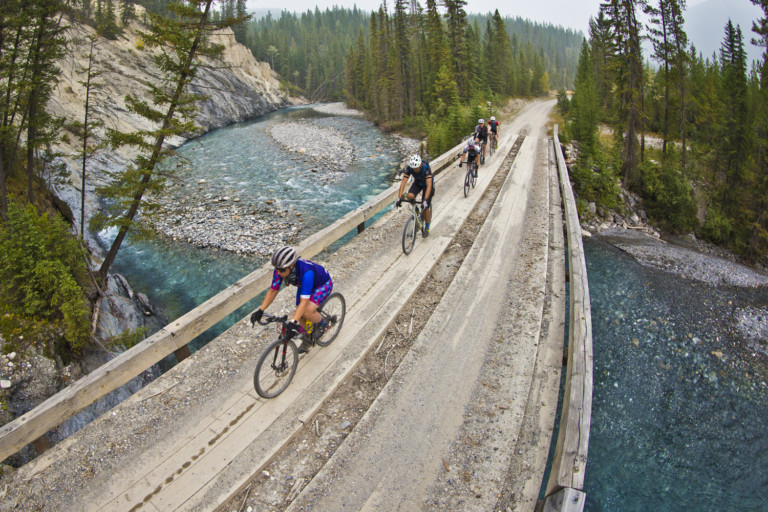
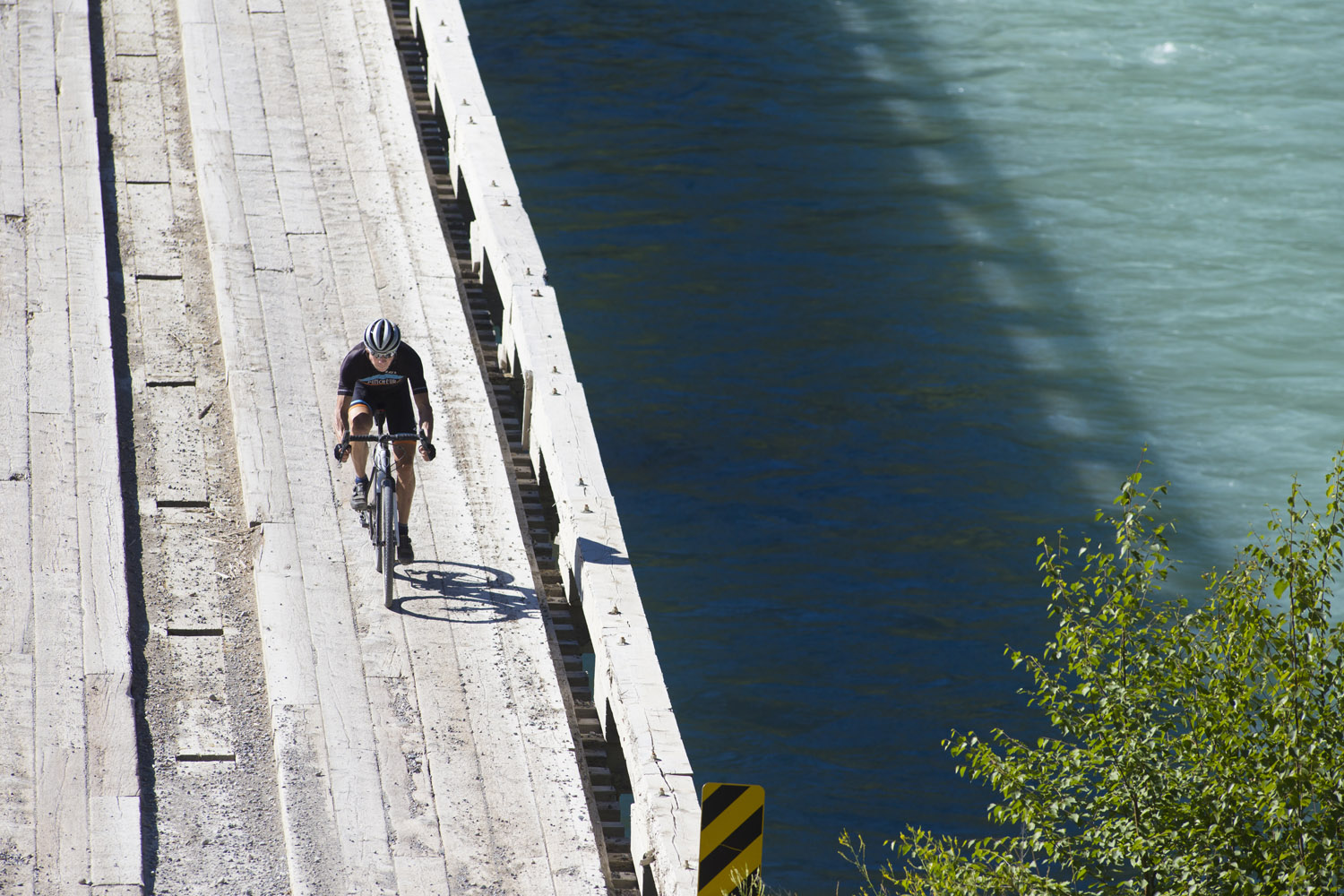
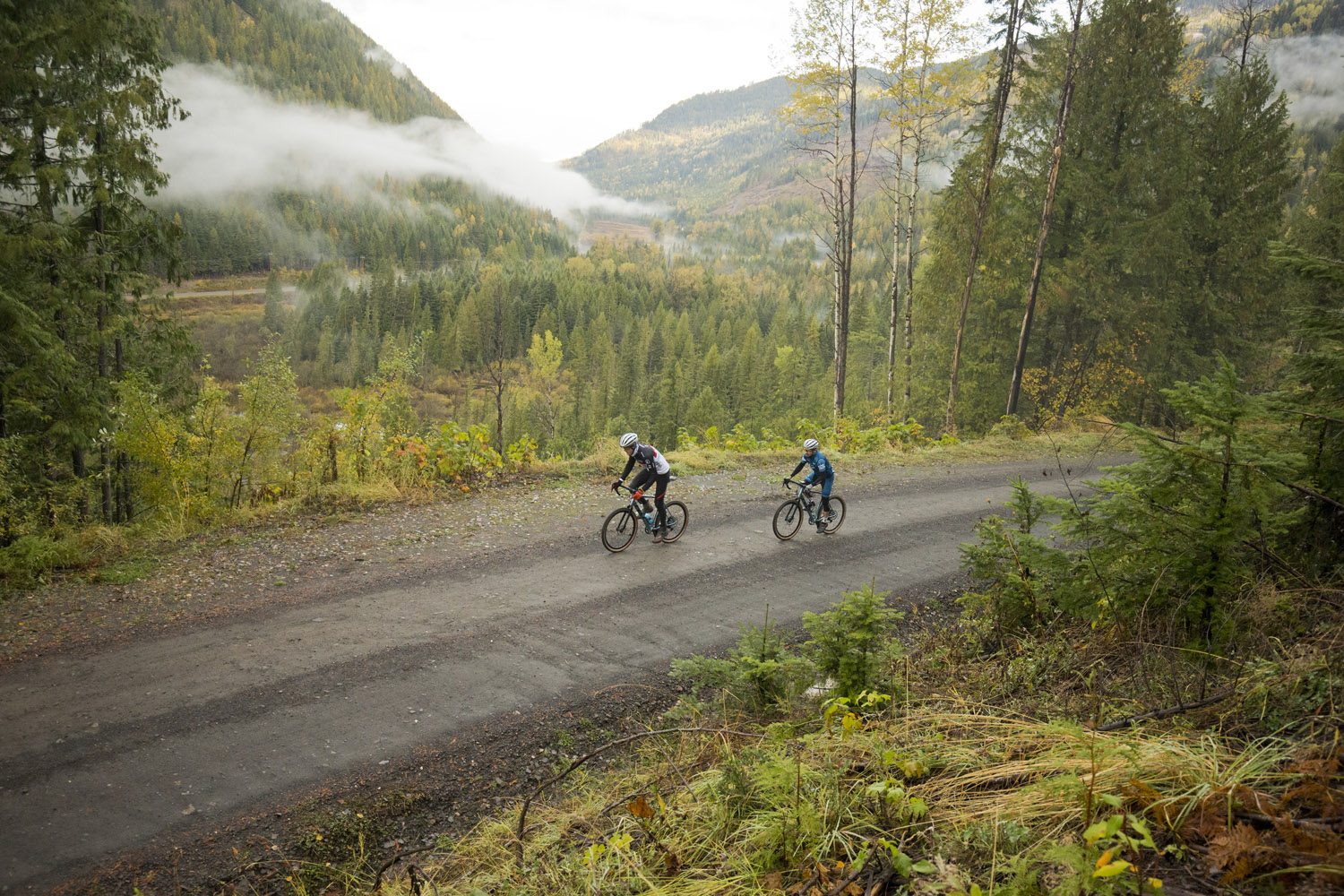
Ted Savin gravel road riding over the Kootenay River near Canal Flats, B.C., Canada. Photo courtesy TransRockies Race Series
The TransRockies Gravel Royale course kicks off at Panorama Mountain Resort and tours some of the most scenic and challenging gravel routes in British Columbia. The route will also visit Nipika Mountain Resort and the Village of Canal Flats before finishing in the City of Fernie. The four-day stage race will cover 375 km (233 miles) and around 7,000 m (23,000 ft) of climbing.
“After two years of planning, we can’t wait to bring the legendary TransRockies stage race experience to the gravel community,” said Aaron McConnell, President of TransRockies. “This part of British Columbia is so perfect for a wilderness gravel experience.”
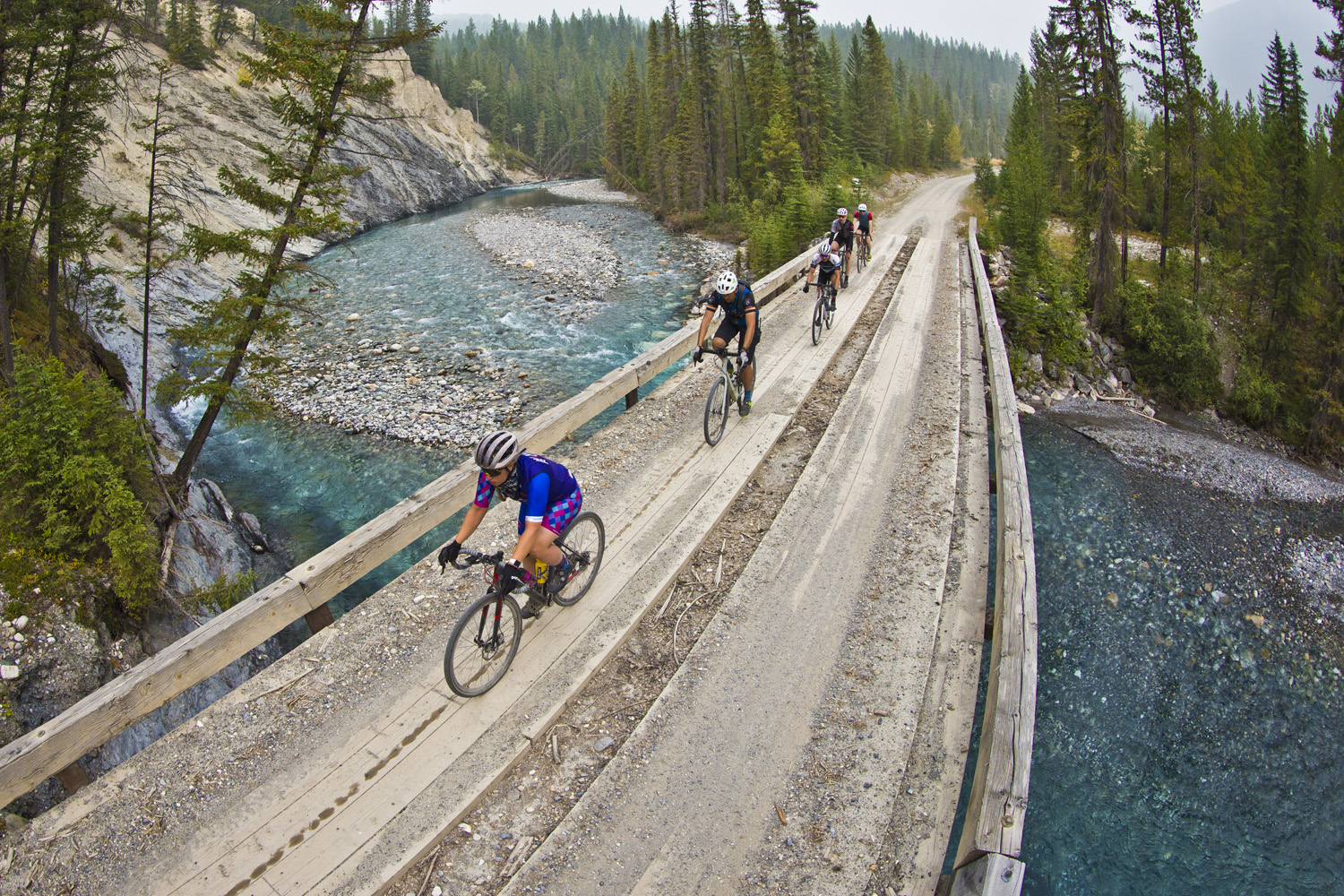
Riding the forestry roads near Nipika Mountain Resort. Photo courtesy TransRockies Race Series
As of April 1st, a negative COVID test is no longer required for fully vaccinated visitors to Canada, making the Gravel Royale even more accessible for riders coming from the United States and other parts of the world. Daily direct flights into Calgary International Airport are available from 85 destinations in 15 countries, including Denver, San Francisco, Minneapolis, New York, London, Amsterdam, Frankfurt and many more.
Continuing in 2022, TransRockies Gravel Royale will offer alternative options for riders, including a two-day “Ante Up” ride and a three-day E-Bike “Poker Ride.” The shorter options are ideal for riders who are looking to dip their toes into the stage race experience.
Riders: Ned Woods, left, and Travis Hauck. Photo courtesy TransRockies Race Series
The stages of Gravel Royale will take riders on secluded gravel roads through the Canadian Rocky Mountains, traditional home to the Ktunaxa Nation Indigenous people. Riders will experience vast mountain views, native wildlife and winding stretches of gravel in this difficult, but achievable challenge. The extensive network of well maintained fire roads in the region guarantee great riding and racing conditions.
After each stage, participants can anticipate a relaxing, fun and memorable time at camp.
After 20 years, TransRockies has perfected their camp hospitality and provides all of the amenities riders could need. The TransRockies team transports gear/luggage, sets up tents at each stage, provides showers and prepares meals.
Each night, massage and athletic therapy stations are available along with mechanical support and a bike wash for participants. With all TransRockies stage races, the Chillville will make an appearance at Gravel Royale and will be equipped with music, snacks and a nice campfire for riders to socialize and hang out with other participants.
“People hang out for hours after the races and just hang out and talk about their day and celebrate the things that went well and laugh about the things that didn’t go so well,” said pro mountain biker Emma Maaranen. “It’s pretty incredible. I haven’t been to races like that in years and years that have such a community feel to them.”
For additional information on the stages, locations and registration, please visit transrockiesgravelroyale.com or follow along on Instagram, Facebook and Twitter.
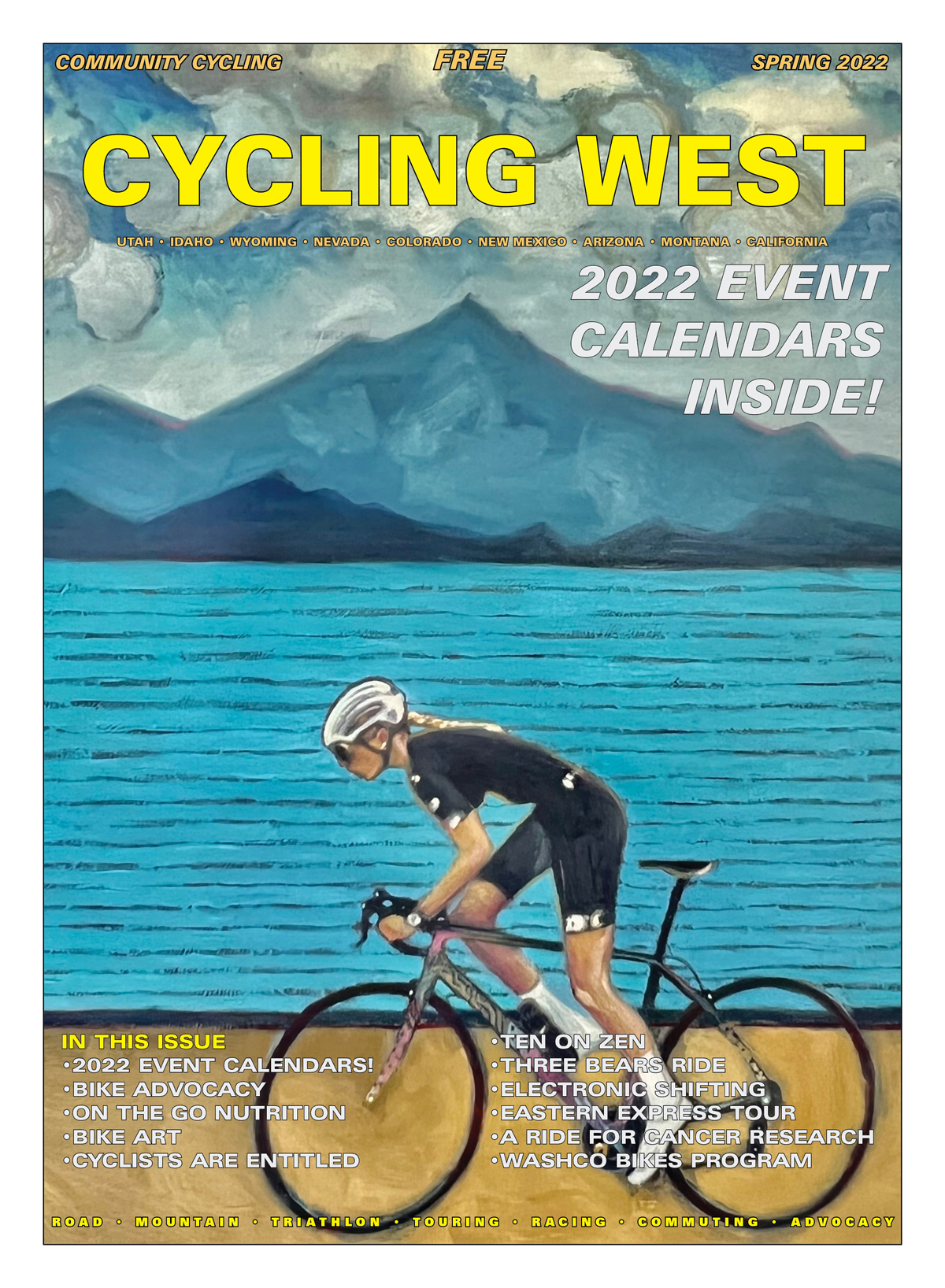
Cycling West and Cycling Utah Magazine’s Spring 2022 Issue is now available as a free download (13 MB download). Pick up a copy at your favorite Utah, Idaho, Wyoming, Nevada, Montana, Colorado, Arizona, New Mexico, and Northern California bike shop or other location.
Cycling West Spring 2022 Issue Cover Art: “Solo” oil on canvas (handmade frame by Jenni Klunk) trentonhigley.com for more information. 36×36. Painting by Trenton Higley On display at Contender Bicycles in Salt Lake City, Utah.
Contents
Women Still Under-represented in the Bike Industry — page 2
Cities Beginning to Realize Safe Streets Are Important — page 2
Cyclists Are Entitled — page 3
Cycling May Help Vets With Disabilities Recover — page 4
By Tom Jow — Every few years or so there is a bicycle component that changes the way people ride. Take front suspension for example. Before that mountain biking on rough pretty much rattled your fillings out. Then came rear suspension. Then disc brakes. Do you see what I’m getting at? Technology can make our riding experience much more enjoyable. The most recent “gotta have it” component is the remotely adjustable, or dropper, seatpost (I know, it’s been more than a few years). If you haven’t seen one, it’s a seatpost that, with the press of a button, can be adjusted to allow a rider to adjust their seat height for the terrain. It allows for using full height for climbing and flat ground or low and out of the way for downhill and technical terrain. Sound too good to be true? Yes. Do you need one? Very likely. Why do I need one and how do I purchase the correct one?
Believe it or not, the idea of lowering the seatpost for going downhill is not a new idea. This is one reason mountain bikes were always equipped with a quick release seatpost clamp. It allowed the rider to be able to lower the seat for downhill and technical terrain without fishing around for a tool. By lowering the seat, the rider is able to lower their center of gravity for maximum traction and stability at downhill speeds. Having the seat lower also provides room for the rider to adjust their position in technical terrain. When jumping and riding steep drops the seat is of the way and the rider can move around as much as is necessary. This added stability and room to move provides additional control and confidence for all riders in all terrain.
Choosing the Right Post
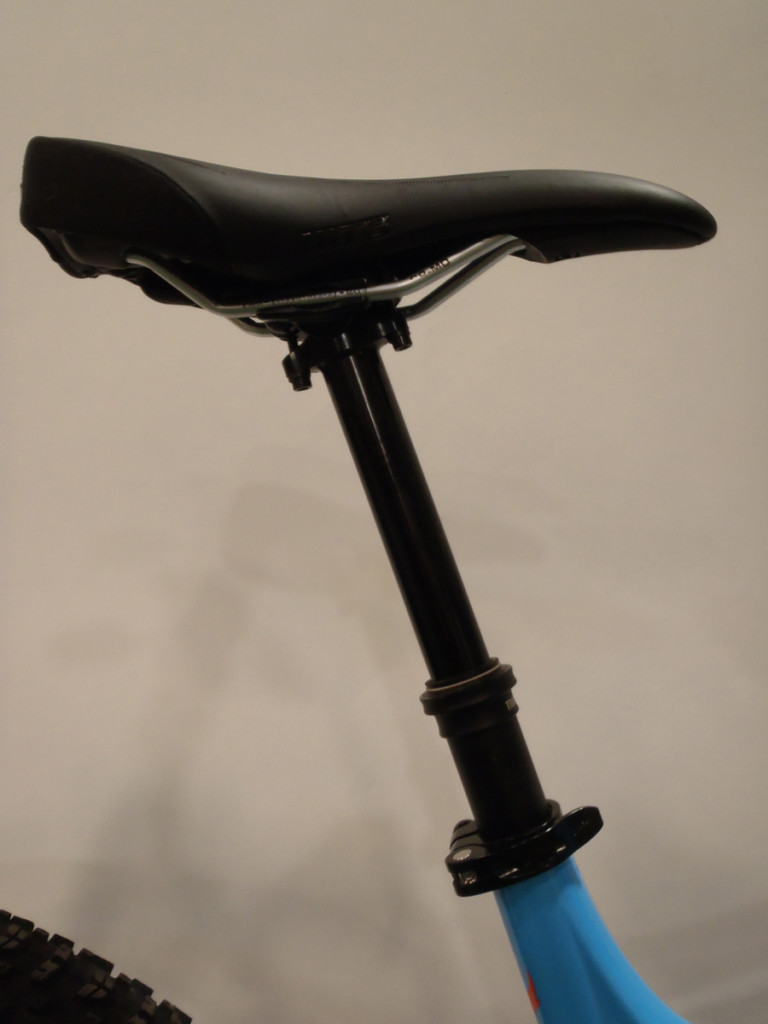
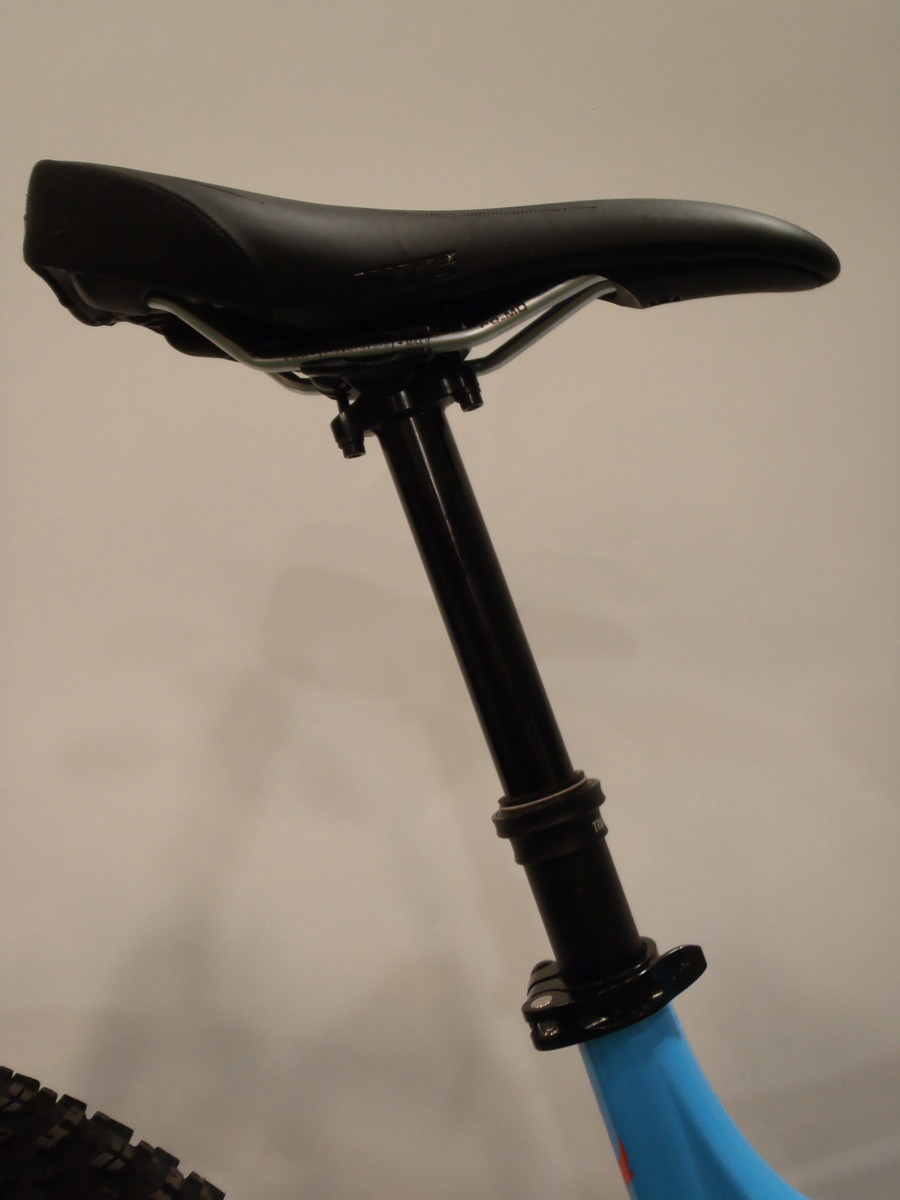
The first step in purchasing the correct seatpost is determining the diameter and length. Almost every seatpost has the diameter and length labeled near the bottom of the shaft. The most common sizes for mountain bike are 30.9 and 31.6 millimeters. Common lengths are 350 and 400 millimeters, measured from the bottom of the shaft to the seat clamp. The dropper seatpost has a third measurement, the drop or travel. Travel length varies from 100 to 150 millimeters or more. The longer the travel, the longer the seatpost. The ideal seatpost length has very little of the main seatpost extending out of the frame at the maximum extension when the seat height is at the proper level for climbing.
A well sized dropper seatpost. Photo by Tom Jow
Finding the right length seatpost can be tricky. Small and medium size frames may not have enough seat tube to accommodate every seatpost. If the frame has a curve in the seat tube or a suspension pivot attached it could interfere with inserting the seatpost far enough to obtain the proper seat height. A good tool to measure this is the old seatpost. Gently slide the seatpost in the frame as far as it will go. Measure up from the seat tube collar 30mm and place a piece of tape there. Remove the post and measure the distance from the bottom of the post. Now let’s pick a seatpost. For example a 335mm dropper seatpost has 100mm of travel. There is a 30mm collar at the top of the main shaft. Therefore, there is 130mm outside the frame and approximately 205mm inside. The result? At full extension there must be less than 205mm required to be inside the frame. A 400mm post with 125mm travel needs approximately 250mm of space in the seat tube.
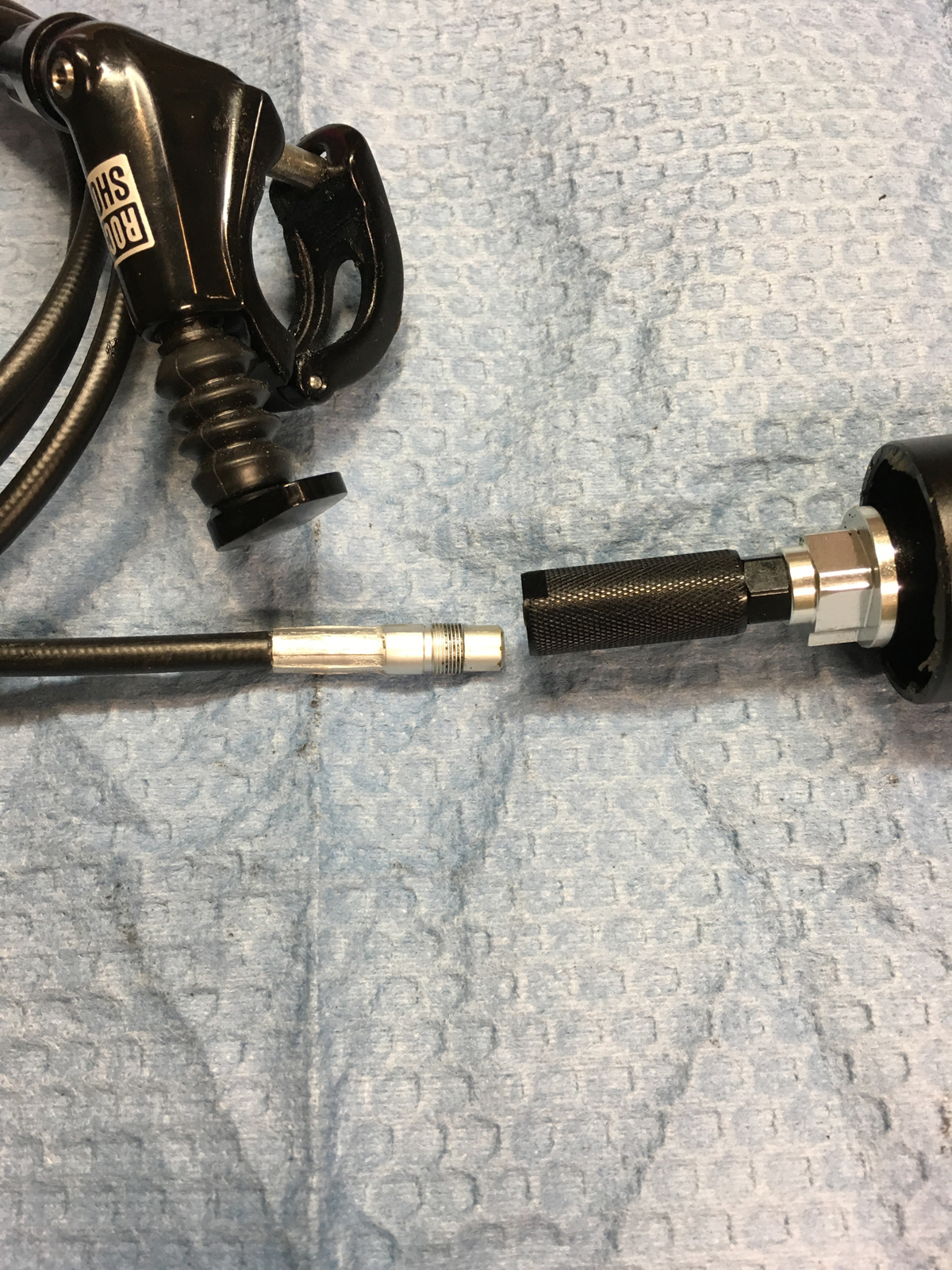
The RockShox uses a quick disconnect to ease installation. Photo by Tom Jow
In addition to size, dropper seatposts come with the option of external or internal (stealth) cable routing. The first dropper posts had external routing because there were no frames with internal routing. Now, nearly every mountain bike frame has internal routing for the seatpost. The only reason to purchase a post with external routing is if the frame does not have internal routing, which is probably more than 4 years old.
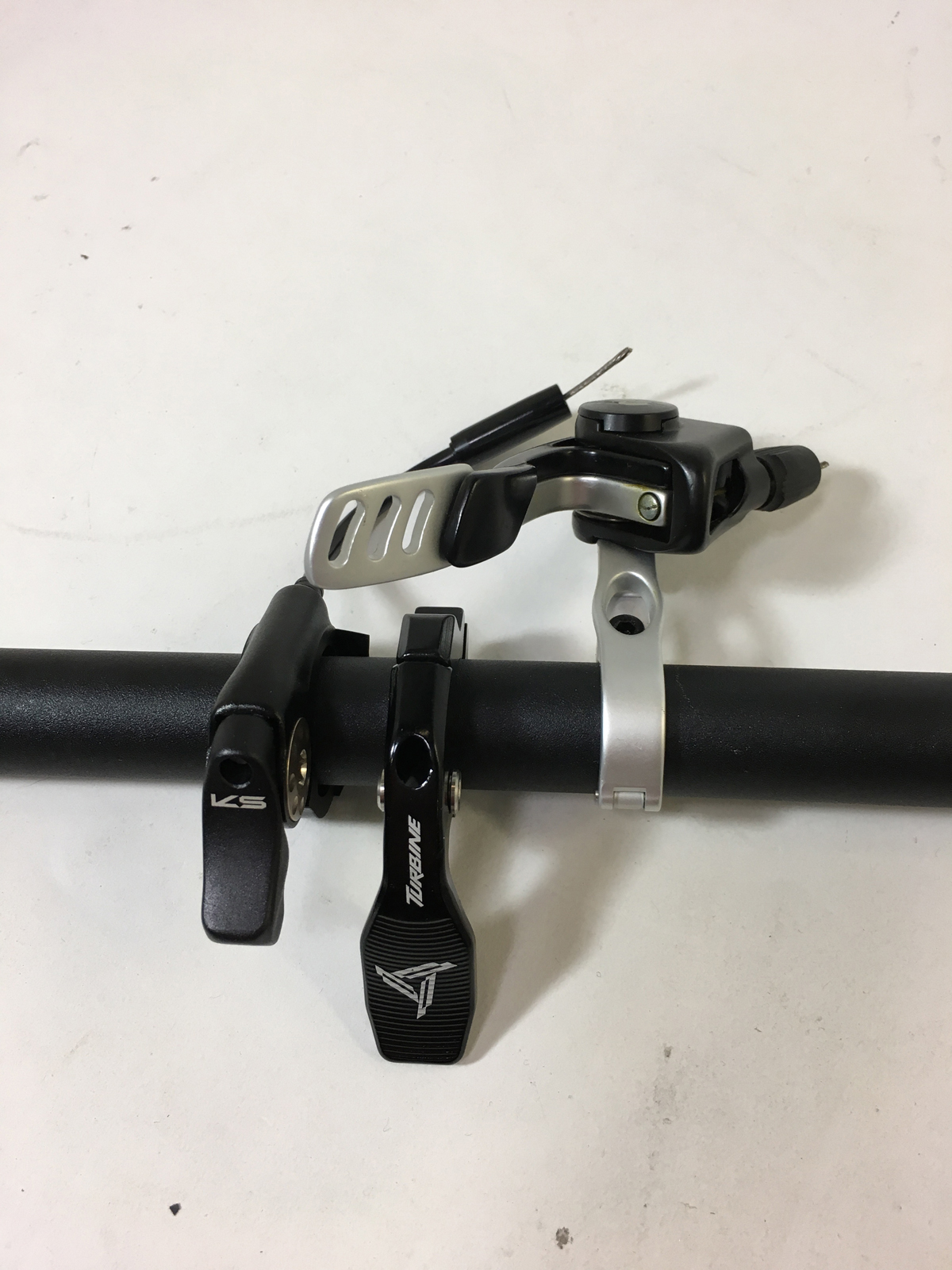
A collection of remotes. Photo by Tom Jow
The seatpost is operated with a handlebar mounted remote lever. This remote opens and closes a valve which allows the rider to compress and extend the seatpost. Most dropper posts only have one option for placement of the remote. This could be right side, left side, under bar or over bar. If possible, it would be a good idea to test out a variety of remote styles to see what feels best. When making this decision, keep in mind how many shifters are on the bike. If it’s a 1x system, remote location is a no brainer. It’s on the left. On a 2x system, no matter if it’s right or left it must be over bar.
Installation and Maintenance
Once a seatpost is purchased please follow this advice: read the instructions. Every brand has a detailed method for measuring and installing the cable housing or line. Also, each brand has specific way that the cable is required to be adjusted in order for the post to work properly. In most cases, a cable operated dropper requires 1-2mm of movement in the remote lever. The RockShox Reverb is unique because it is hydraulically actuated. This allows the benefit of an adjustment on the remote for the speed at which the post drops and extends. It is, however, not uncommon for this adjustment to be set to full slow, effectively locking the post in position.
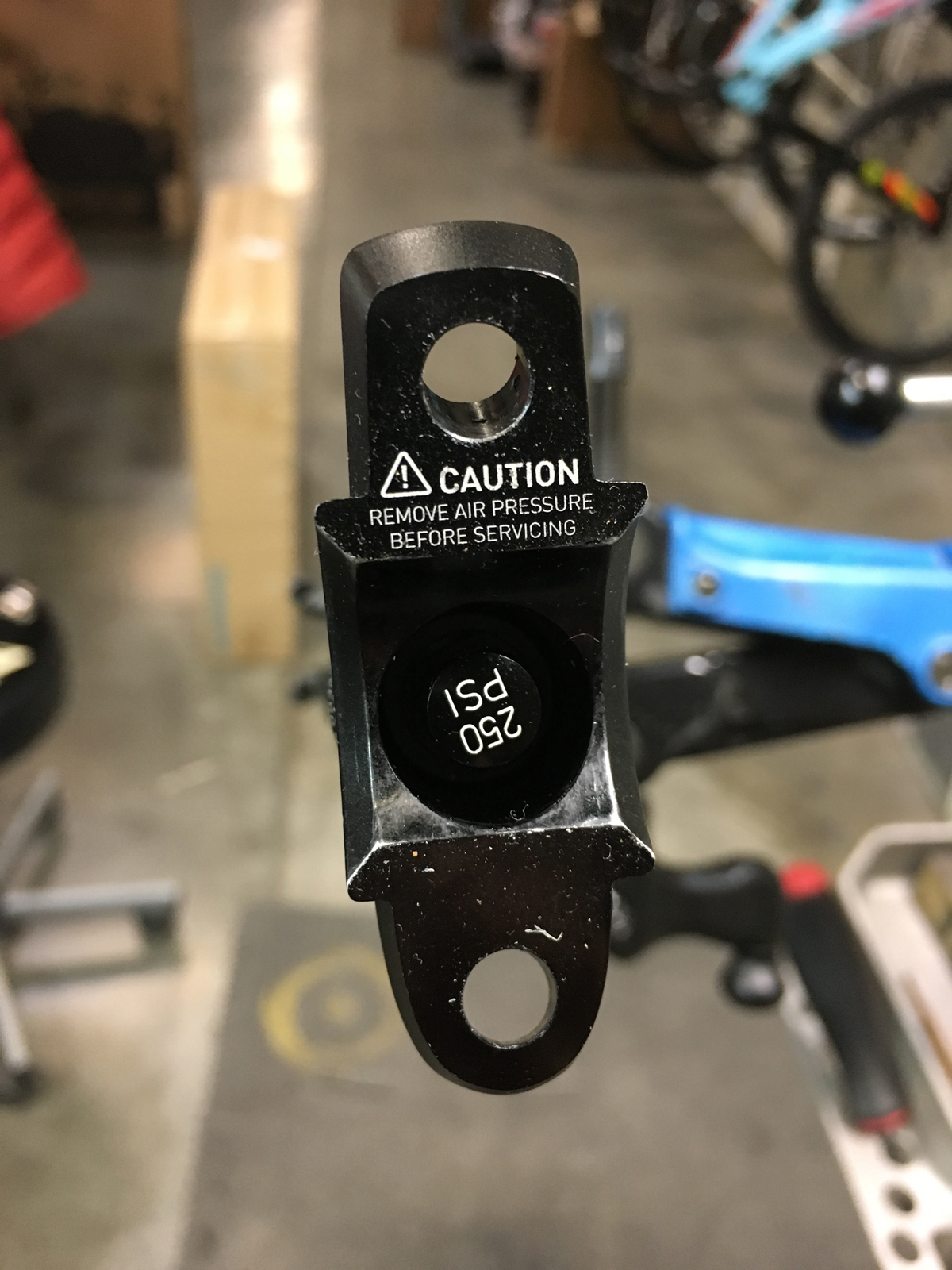
The air valve is located under the seat clamp. Photo by Tom Jow
There are a couple things to remember to keep your dropper seatpost working properly. One thing is do not lift the bike by the compressed seatpost. This will risk dislocating the upper shaft seal inside the chamber. The seatpost will then no longer extend fully. Also, as a moving part, the dropper seatpost requires maintenance. Keep the upper shaft clean. Like a suspension fork, there is a seal that can be damaged by dirt. Air pressure is what makes the post extend back to full height. Check it once in awhile and follow the manufacturer’s recommendation for air pressure. In addition to this simple maintenance, most manufacturers recommend a major servicing every 50-60 hours or so. Also remember that because it is a moving part, there will be movement between the two parts. It is not uncommon for there to be 1-2mm of up and down movement of the post. Likewise the upper shaft may wiggle a little bit side to side. If the movement is outside this range, contact the place of purchase or the manufacturer to file a warranty claim. Be aware that a post that has not been serviced according to recommended time tables, the claim for warranty may be denied.
It really seemed unnecessary at first, but having a seatpost that can be adjusted to the for the terrain while riding has been a great idea. It may also seem like a complicated purchase and installation, at least for the do-it-yourselfer. The benefit however is huge. Every rider wants to have fun. For beginner, intermediate and expert, this one component will allow each rider to attack difficult terrain with confidence. Being able to ride with more confidence means more fun. This is why you need one.
By Marty Jemison — Monday after Paris-Roubaix I woke feeling ill again. The progress I had made just before Paris-Roubaix had reversed itself. I had a slight fever and was coughing, etc.
La Flèche Wallonne. One of my favorite races, but originally not part of my schedule this year. I was replacing Kevin, Jamie, or David … take your pick. Cedric and Benoit were also replacement riders.
Before the race started, I thought I could push myself. I know this race. On the first climb though, I was fighting to stay in the bunch; at the top there was a crash, and I was caught behind. A small group of us had to chase hard, but I had nothing in the legs, and I was coughing hard.
After 80kms we reached the Mur d’ Huy. I started the climb in the middle of the bunch and rode over the top with no more than 10 riders behind me. I thought twice then pulled over. Honestly in my condition, I should hot have even started. My equilibrium was off which was a bit dangerous in the bunch. I was digging a hole that could have been too deep to get out of if I continued.
Last year, I had placed 19th in Flèche Wallonne and 18th in Liège. By stopping, I still aspired to have a good ride in Liège. In the race, I felt much better. I was comfortable and while looking around I thought others were suffering more. Again, I have an experience which indicates the level of World Cup racing.
Yes, I had been sick during the last week and that must be the reason that after 180-200k I was starting to suffer. My muscles were aching in an odd way, and I was starting to cramp in places that never have cramped before. I managed to finish the race (77th) but for me the race was over on La Redoute, a climb that I like a lot.
Last year I went over it in around 12-15th watching as Frank VDB jumped away. This year though many more riders nimbled up the climb ahead of me. Christian finished 18th, the exact same placing I had 1 year earlier.
The day had started at 6:40 am and by 1:30 am I was in my own bed, back in Spain.
The last several weeks have been hard, the weather and travel being greatest contributors. I have decided to take it easy this week. Wednesday, I did a nice ride to Cadaqués
where I checked into a hotel with an ocean view. On Thursday I would ride back to Girona, about a 90kms ride.
After a nice dinner Wednesday night, we (my wife, her sister, and myself) walked into a club where we could hear good music. It happened to be Salvadore Dali’s old hangout. Originally, I thought someone was trying to capitalize on Dali’s death but, upon inspection of the many Dali paintings (all originals!!!), I realized we were in a quite a place. There was a tapestry made by Dali, more than one framed newspaper article with Dali and the owner (Marci? Marceau?).
Marci or Marceau was there standing behind the bar, and he was the man pictured many times with Dali and other famous people. The art was worthy of a museum but being viewed through thick smoke and the crowd there, I think somehow this is where Dali wants them to stay. Amazing.
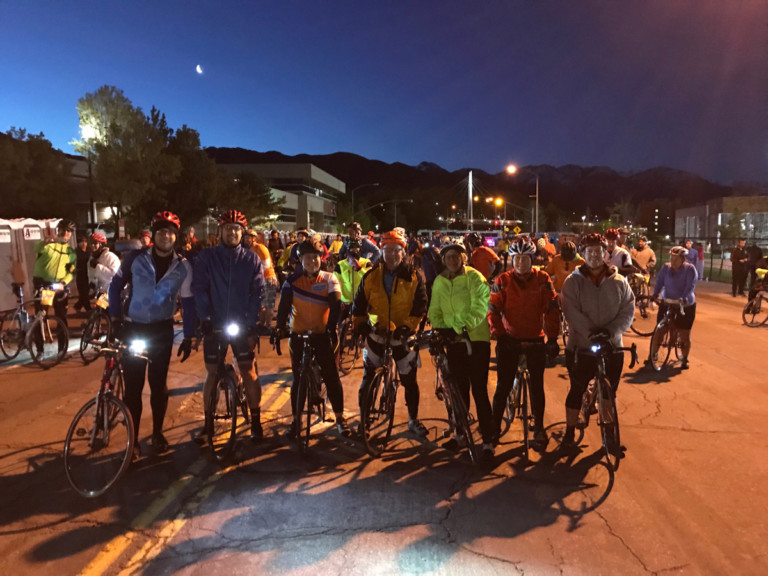
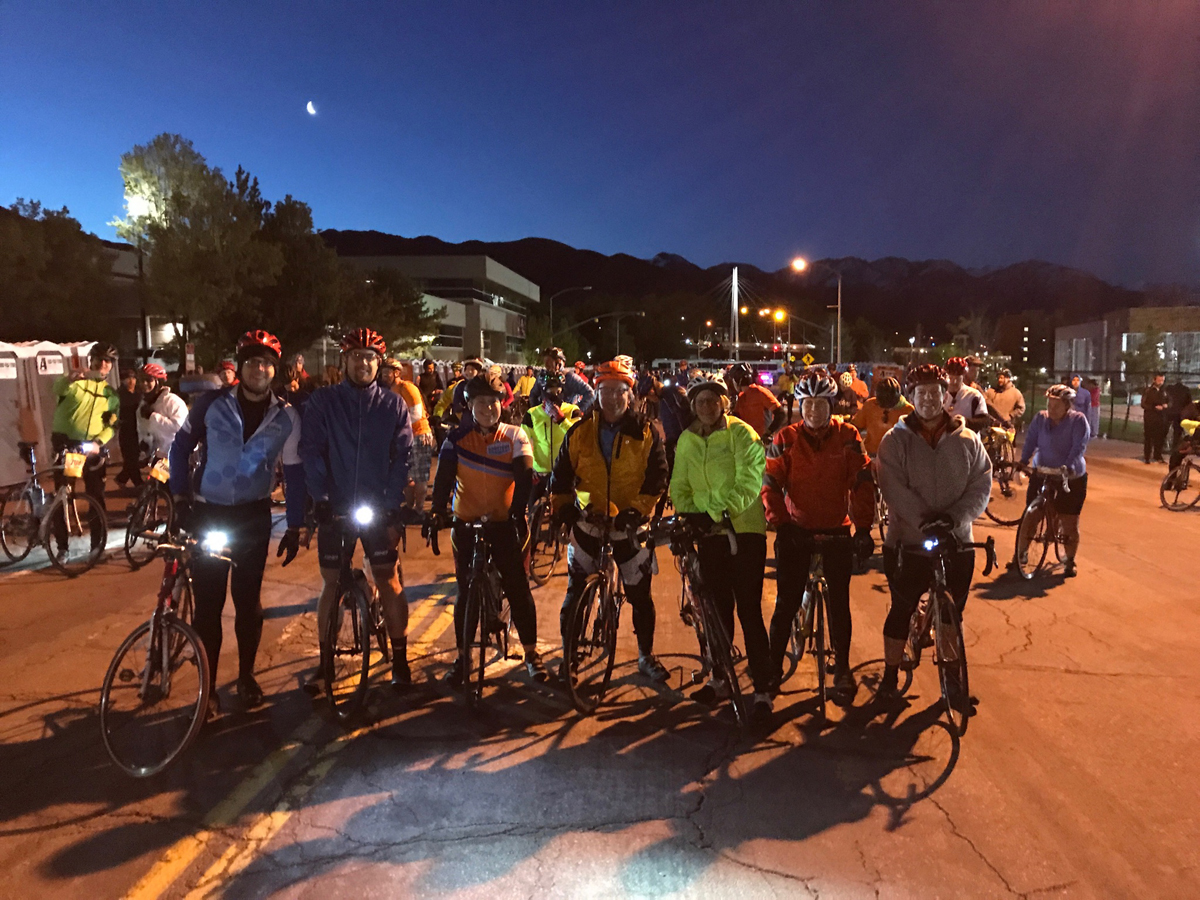
By David Ward — The Salt Lake Marathon Bike Tour is not my kind of ride. Don’t get me wrong. It is a great ride. How often do you get the opportunity to pedal your bike for 26 miles around a busy metropolitan Salt Lake City and not have to stop, not even once? Nor do you have to negotiate, or even worry about, traffic. That is the draw of a marathon bike tour, and the Salt Lake Marathon Bike Tour is one of the best.
Bryce, Ryan, Kristine, Nick, Nancy, David Ward, and Kimball. Photo courtesy David Ward
So why is it not my kind of ride? Two reasons: Too early and too cold. The marathon itself starts at 7 a.m., and understandably they want to have us cyclists well out of the way of the runners. So we get to start at 6 a.m. That means a 4:30 a.m. alarm setting. With 4 hits on the snooze button, that gets me up by 4:45 a.m. I am then able to be ready and out the door by 5:30 a.m. I live about 5 miles from the start of this event, so I just jump on my bike and head to the start line. That’s the too early issue.
Since this event usually takes place around the third week of April, it is a pretty good bet it will be chilly, and maybe even downright cold. Like 2017. When I rolled out my driveway at 5:30 a.m., it was 34° F. Basically freezing. Now, I naturally run a little on the cool side, always a little chilled when others are comfortable, so I generally don’t like cold.
Wimp, you say. Many of you regularly arise in the wee hours, and simply find the cold refreshing. Good for you, but that doesn’t change me. I generally stay snuggled in my warm bed for at least a couple hours more. And in my defense, I did do the ride, and enjoyed it, thank you very much. And why was I able to enjoy it? Good, modern gear.
When I arose, I first donned my long-sleeved undershirt, made of some wonderful wicking synthetic material, complete with thumb holes to keep it pulled down to my palms and inside my gloves. Next came my bib shorts. I love bib shorts since they guarantee my lower back will be covered at all times. I followed that with my socks and long lycra (or some similar modern fabric) pants that are tight yet comfortable. I then put on my jersey, light vest and insulated jacket. Finally I donned my skull cap, helmet, cycling shoes, insulated booties, and last but not least, my long-fingered, insulated gloves.
Sounds like quite the process, and when done, you would think I looked like the little kid in “The Christmas Story” movie. But remember, this is lightweight, modern gear, and though I had 4 layers over my core (4½ if you count the tops of my bib shorts), I didn’t feel bulky or restricted. Nor did I feel cold. A little chilled at times, especially riding to the start, but not cold. And it stayed cold, so I also never felt too warm.
I really do like the Salt Lake Marathon Bike Tour. When I say it is not my kind of ride, I really mean that, on my own, I would not set my alarm at 4:30 a.m. to start a ride at 5:30 a.m., especially when it is freezing outside. But this is an event, and a good one. For me and those I often ride with, it marks the end of the ski season (though we will still sneak a few days in) and the start of the days we ride and train regularly on our bikes. And modern gear makes it possible for me to enjoy this event.
Speaking of gear, I remember the days (yes, I am a 60+ guy reflecting back on the days over 30 years ago when I got into cycling) when we rode steel frames, had friction shifting with shift levers on the down tube, pedals with toe clips and sew-up tires. Now, everyone is on carbon fiber, and has indexed shifting with shifters incorporated into the brake levers. Plus, we all have clipless pedals and light-weight clincher wheels. That’s just the major stuff, and it has transformed cycling.
And now we even have electronic shifting. I must admit, I have a bit of an issue with that, since it requires an outside source of energy (a battery). I have always admired how a bicycle is powered solely by human energy, becoming a synergistic unity with one’s body. Still, I bought my wife a new bike with Shimano Di2 electronic shifting, and she loves it. So, while it seems a hole in the dike, it is here to stay I suspect, and who am I to stand in the way of progress and something that helps people enjoy riding?
So, here is a shout-out to modern gear and equipment. While I may balk at electronic shifting, I am no retro freak. I am grateful for the advances in these machines I love to ride. And I am grateful for good, warm and comfortable gear in which to ride them.
And here is a second shout-out to the Salt Lake Marathon people for incorporating the bike tour into their event, and getting me up early and out in the cold for this great ride. It was fun.
Event info:
April 23, 2022 — Salt Lake City Marathon Bike Tour, Salt Lake City, UT. Ride the closed 26.2 mile marathon course through the most iconic sites of Salt Lake City! All abilities welcome! Start at 6:00am, just north of the Legacy Bridge on the University of Utah Campus., Steve Bingham, 720-608-1783, [email protected], Jennifer Nelson, 801-455-9623, [email protected], saltlakecitymarathon.com
LAYTON, Utah (April 18, 2022) — Making Utah a better place to ride, for everyone and in all locations around the state, is the focus of Bike Utah’s annual Utah Bike Summit on April 19, 2022.
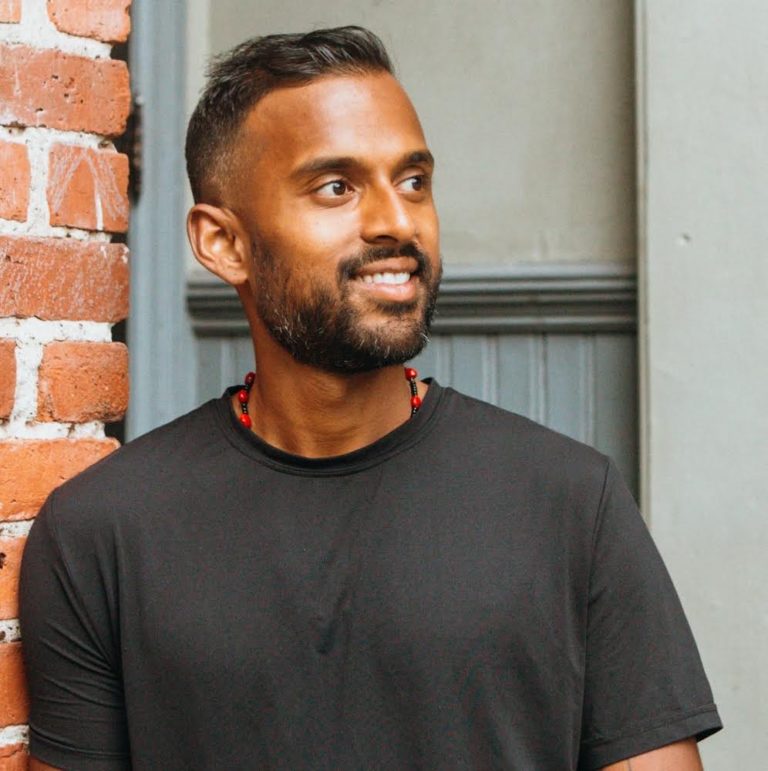
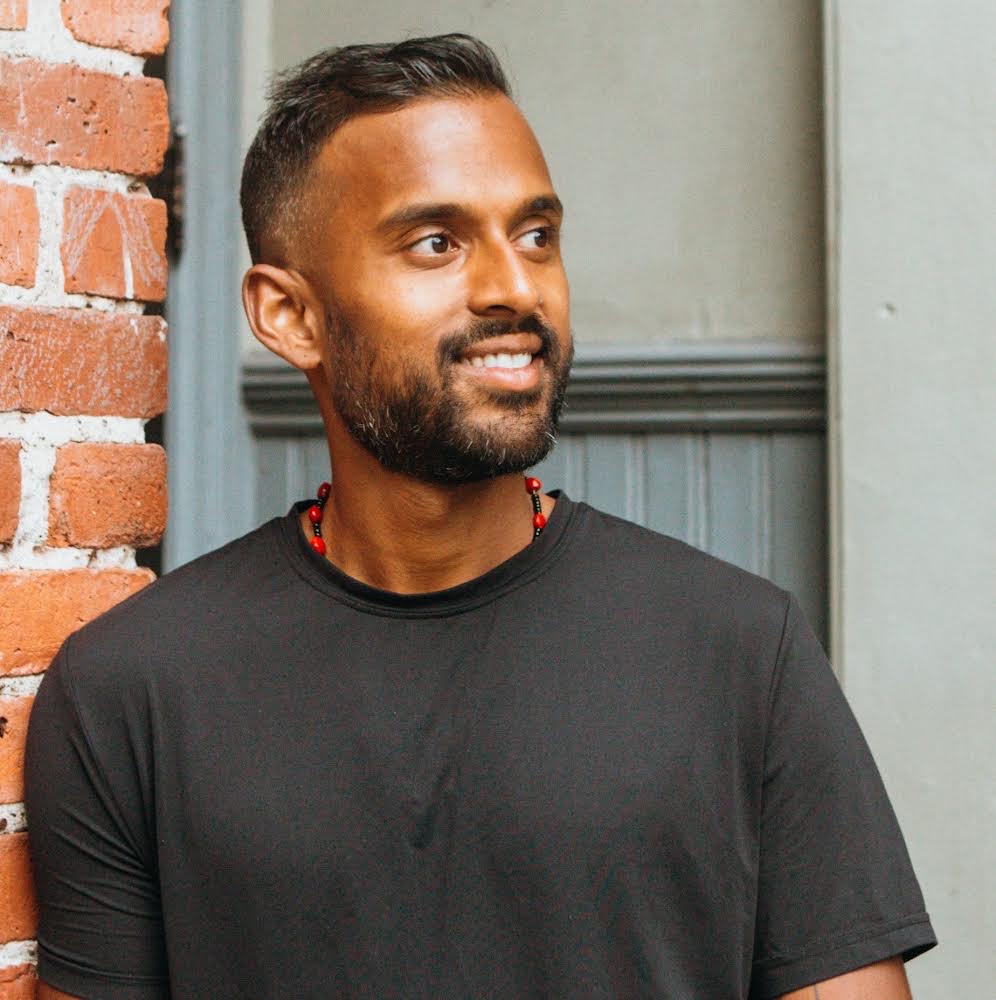
Robin Mazumder will be the keynote speaker at the Utah Bike Summit.
The Summit kicks off with Dr. Robin Mazumder whose research on environmental neuroscience demonstrates the ways in which people experience stress in urban environments and the importance of designing cities that support well-being, equity, and our planet. Other sessions focus on equitable, accessible, active transportation as well as the impact of cycling tourism on rural communities.
Unique to this year’s conference is a cycling session around Layton City where attendees, Layton City employees, and Bike Utah staff will participate in a 45-minute tour around the city to discuss and observe Layton’s goals around first/last mile improvements to the FrontRunner Layton Station, a pedestrian overpass, and active transportation plans for Historic Downtown.
The Summit will close with a Cycle Social Party, from 3:30 pm–5:30 pm.
By Jamie Morningstar — Qualtrics prides itself on being a cycle-friendly company. As a former title sponsor of the Huntsman 140 ride, every Qualtrics employee is encouraged to ride to support the Huntsman Cancer Institute, and a love for road cycling, mountain biking, and cycle commuting is shared by many employees.
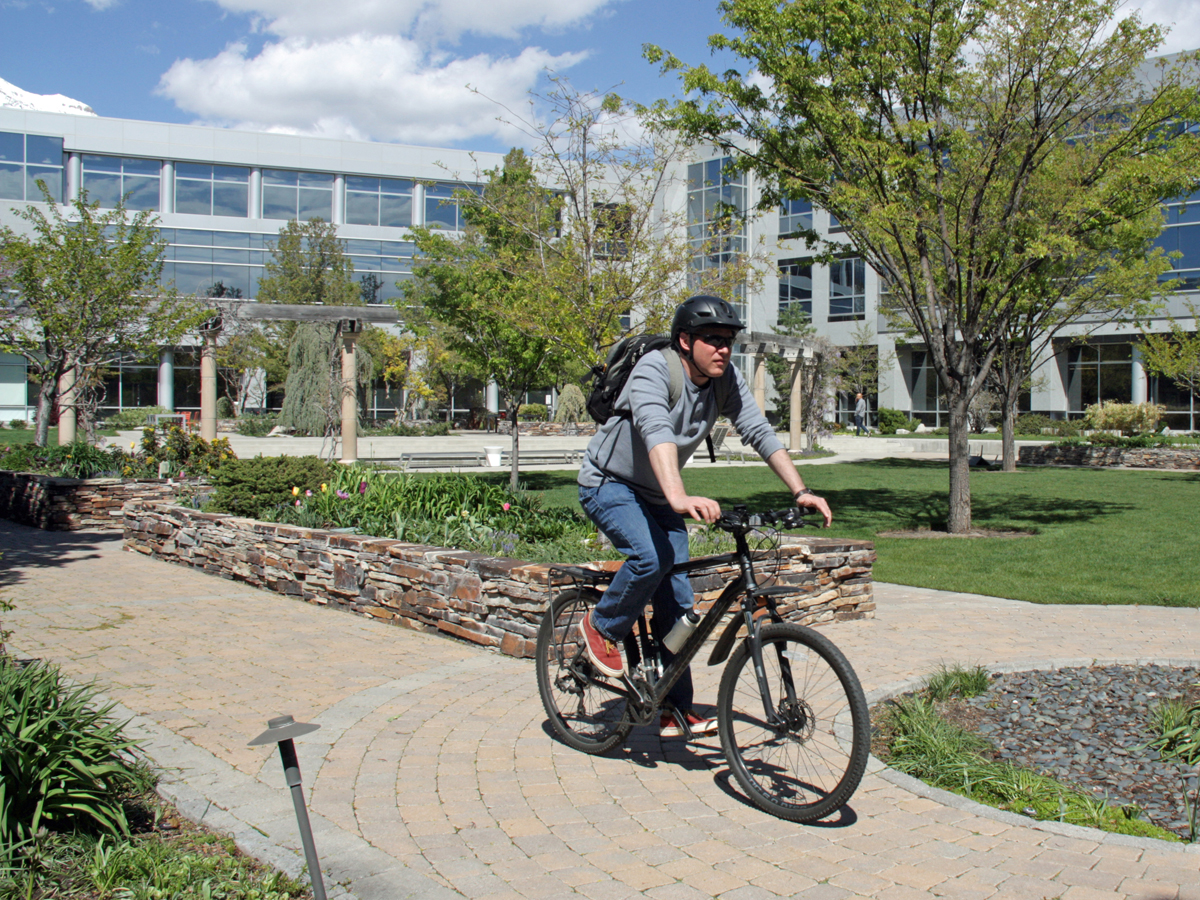
Scott Larsen leaving the Qualtrics building in Provo, Utah. Photo by Jamie Morningstar
In August of 2016, Qualtrics relocated to a new building in Provo and decided to devote some of the new space to a revamped commuter room. Barry Webster, head of facilities at Qualtrics, shares some tips for adding a bike room to your workplace:
Security: Security is the most important aspect of designing a bike storage room – if people don’t feel comfortable leaving their bikes unattended in the room, it simply won’t get used. Our bike room at Qualtrics has security cameras inside and out and is controlled by key card access so that every cyclist feels safe and confident leaving their bike there.
Easy Access: For a bike room to be well used, it has to be easy to get in and out of the building with all your gear. Qualtrics has underground parking, so we allocated a storage room adjacent to the underground parking to bike storage. It’s easy to enter because the garage doors used by cars are available to cyclists.
Choosing Racks and Other Equipment: We started small with 6 wall-mounted racks and a floor rack. The wall racks are proving popular and we’re watching to see which are used most (those designed for fenders vs skinny tires vs mountain bike tires) and will add to the room as its popularity builds. We’re lucky to have a gym at Qualtrics, so we didn’t have to worry about adding showers or changing rooms for the cycle commuters since those amenities are already included in the gym.
Ask your Cyclists: We talked with several avid cyclists at Qualtrics before deciding on which racks, mounts, pump, stands, etc. to include in the room. They had a lot of experience with different brands and styles and were really helpful as we decided on the room’s equipment.
By Charles Pekow — The key to promoting sustainable transportation such as bicycling in downtowns? Just teach people in every way you can. That’s what an effort in Ithaca, NY found. The State of New York hired Ithaca Carshare to study SmartTrips Ithaca, an effort to encourage people to try sustainable transportation in the small college town. Part of the project involved getting residents to pledge to shift a certain number of trips from car to bus, bike or foot – and then following up on them. The project also gave people bike maps and LED lights as incentives.
Berkeley bike lanes are good for business. Photo by Dave Iltis
The city also had added new bicycle boulevards and the Cayuga Waterfront Trail. Two-to three-hour weekend afternoon workshops also gave people tips on how to increase loads they could carry by bike. But a workshop on riding in traffic was canceled because of low enrollment, though people had expressed concern about the issue.
Carshare’s report notes that access (such as good bike lanes to destinations like grocery stores) are needed as well as education and encouragement. Find the report, SmartTrips Ithaca: Encouraging Sustainable Transportation Options Through a Personalized Educational Campaign at https://www.trb.org/main/blurbs/175956.aspx
SALT LAKE CITY, Utah (April 15, 2022) — The Salt Lake City Criterium will be celebrating its third year bringing pro bike racing back to Utah, for a two-day event this summer July 16-17, 2022. The Saturday circuit is the sixth of ten stops on the new 2022 National Criterium Series Calendar entitled The American Crit Cup. Come see the pros battle it out for the chance to gain important points in the series and over $22,000 in cash! Following Utah, the series will head to Chicago, Illinois and a few other stops before the grand finale in St. Louis, Missouri in September to award the $100,000 prize purse!
The Pro women charging hard up 2300 East at the Holladay Criterium, July 18, 2021 (Day 2 of the Salt Lake Criterium weekend). Photo by Steven L. Sheffield.
Day 1 In Salt Lake City kicks-off in the Granary District near downtown and INDUSTRY SLC, with a fast, 4-corner, 1.4 km. counter clock-wise rectangle circuit. The racing starts with amateur categories before the pros take the stage in the evening. Along with Your Favorite Bartender Co., INDUSTRY SLC will be providing an amazing VIP experience from the upper deck of their building to catch an impressive bird’s-eye view of the action.
Day 2 will see a change in location, moving the racers South to Sugarhouse Park, near the Sugarhouse neighborhood. The 1.4 mile rolling course will feature a similar route to a circuit road race, rather than a tight, 4-corner course associated with crits. The location is a long-time favorite of local racers, who will be looking to use their home field advantage after a hard day of racing on Saturday! Sunday’s race will feature additional junior and master categories throughout the day, before the pro men and women take the stage to cap off what is sure to be a thrilling weekend of racing.
“We are excited to bring top level criterium racing to Salt Lake City once again,” said Eric Gardiner, director and founder of the race. “These two new courses will once again create different types of racing each day and test teams ability to control a race. We also hope to spice it up a bit more with a lot more primes than in previous years.”
In 2021, L39ion of Los Angeles swept the podium with Tyler Williams crossing the line on day 1 ahead of his teammates Cory and Justin Williams. Justin continued the team’s momentum into day 2, outsprinting rivals Thomas Gibbons of Automatic Racing, and Travis McCabe of Best Buddies. McCabe has since retired, but we will see if Justin Williams is able to return from an early season injury along with his L39ion team in time to defend his title.
The women’s race was swept both days by Harriet Owen of InstaFund Racing, with Colavita’s Christina Gokey-Smith in second, and Olympian Mia Kilburg of DNA Pro Cycling in third on day 1. Day 2 saw Kilburg move to second with Owen’s teammate Rachael Langdon round the podium in third. Owen has recently signed with Team Wolfpack Racing, who were a force on the crit scene last season. Watch for the Wolfpack to defend the title against rivals from L39ion, to DNA Pro Cycling and others this summer.
The 2022 Salt Lake Criterium registration, sponsors, and schedule of events may be found on our website (www.saltlakecriterium.com) along with information on volunteering and other ways you may become involved in our event.