Home Blog Page 123

2000 Paris-Roubaix (A Look Back)

0

By Marty Jemison — I think getting sick after Ghent-Wevelgem actually helped me for Paris-Roubaix. Thursday, Friday, and Saturday I had the symptoms of a cold/flu. I was deadly focused to be ready Sunday, by being ill I started to focus harder, I believe. I did all that was possible (not much) take an exaggerated amount of Vitamin C with aspirin and multivitamins. Rest was important.
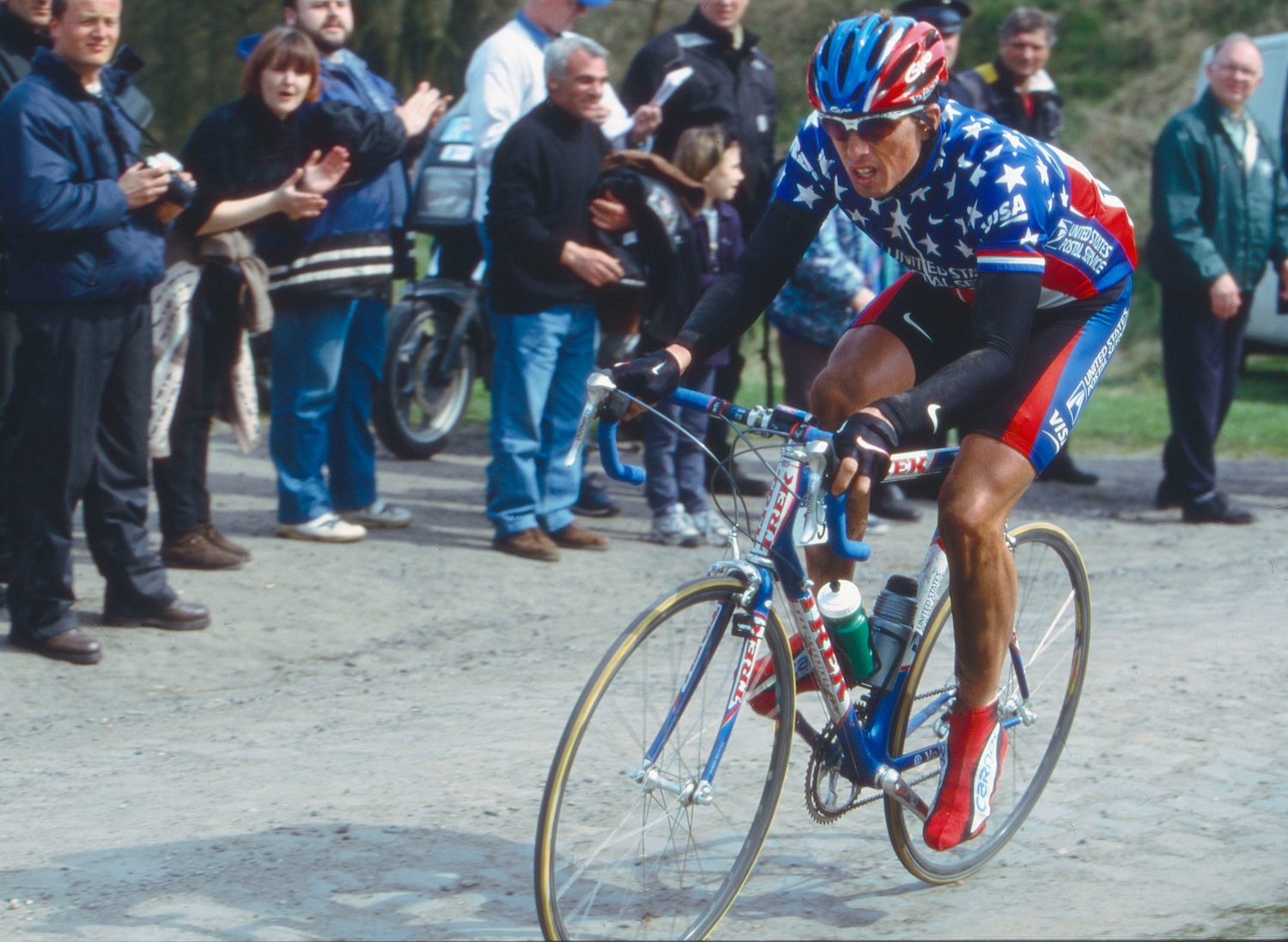
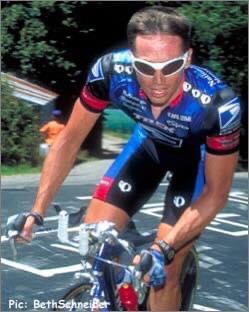
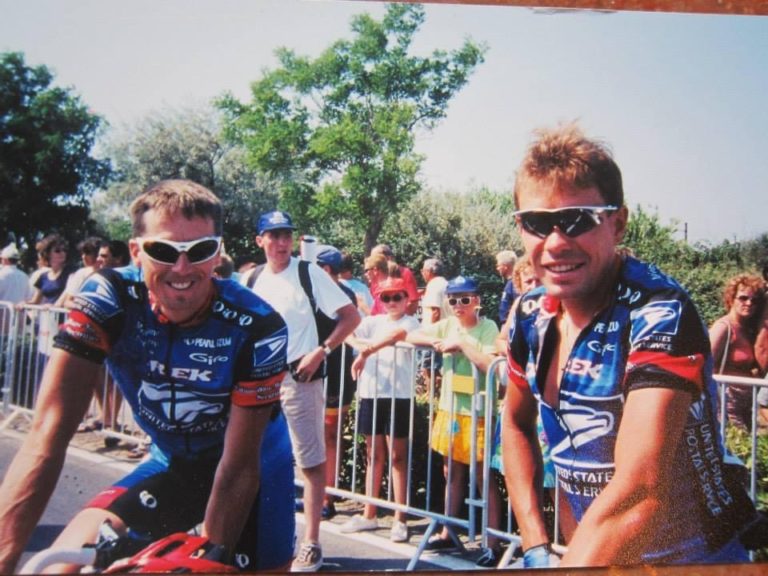
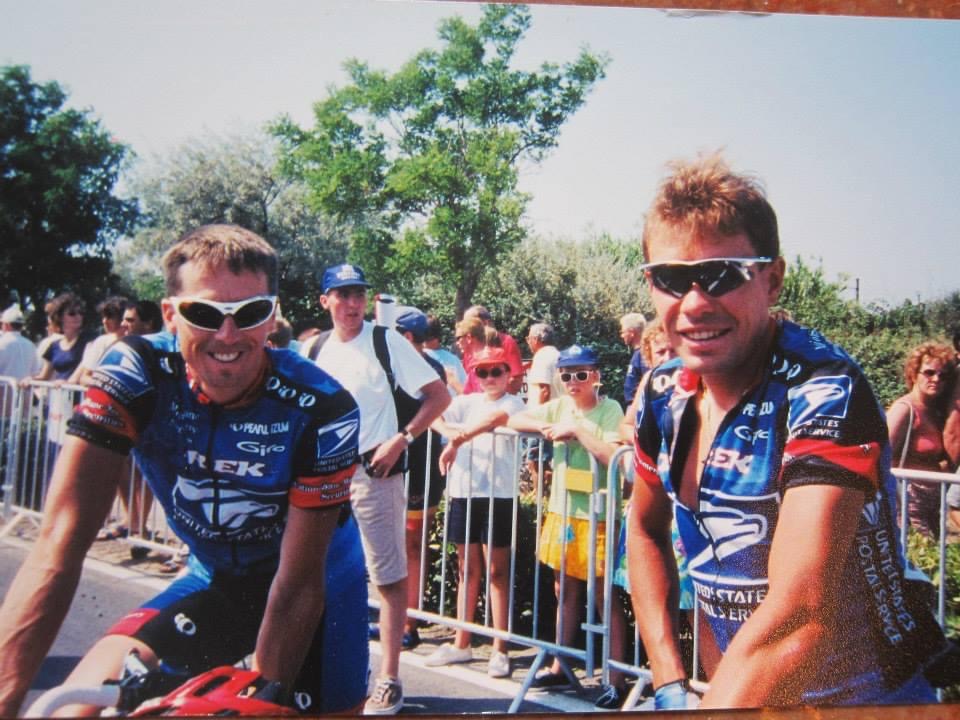
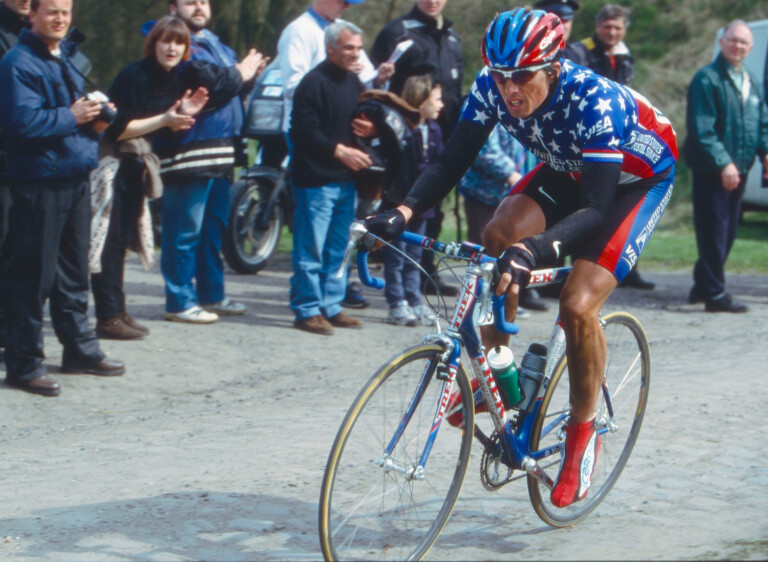
Marty Jemison (USA / Team US Postal Service) – pictured during the 2000 edition of Paris-Roubaix 2000. Photo by Cor Vos

I felt OK on Saturday; my symptoms were reversing and on Sunday even better. My immune system was clearly kicking. I was as ready as ever for Paris-Roubaix, ready for my domestique role.

Cedric, Benoit, and I (Marty) were to cover/make the inevitable break. We worked well in concert. Christian was to stick with George through the first feed (115kms) Eki would take over then, working exclusively for George. Frankie made sure all was ok in the first half of the race and managed control in the last. Frankie was impressive.

I made the break, after the three of us had covered 10++ attacks each.

10 intense intervals.

I then found myself in the break of 12-14, at roughly the 25km mark. We rode into a stiff headwind. For the longest time the gap hovered around 1:00. Everyone except Jackie Durand was pulling through. Tom Steels set a stiff tempo through the first section of “pavé” (cobbles).

We lost riders through each section and by the feed zone #1 we were down to 6 riders, after only 3 of the 25 sectors of pavé. All this time the gap was not much more than 1:00, now though the 6 of us would pull away and get around 4:00.

It was important for me to make it to/through the Arenberg Forest with this break. The Forest is an especially crucial point of the race. This section is terribly rough and breaks the rhythm, it is where a leading group often breaks away. I have seen 10- 40 riders exit together, 75% of the peloton left in pieces.

The Arenberg Forest is 2.7 kms long and comes after 168 kms. It is a very rough section … imagine crossing rough rail-road tracks for 2.7 kms, shaken silly. 6 of us entered together, 3 exited together, Matt White dangled just in front of me and would regain.

When I stood on the pedals, my legs were jelly, vibrated into mush. Slowly I regained speed, but I was now alone. I recovered a bit, ate, and drank. A select group was on its way up to me. I waited. Now on the radio, George was talking to me.

“Get ready to ride on the front”.

Frankie and Eki were there with George on their wheel.

They were leading the group. (The team was riding well!!) When they caught me, I rode on the front, hard, setting a very stiff tempo to set up for the next section of pavé.

I later heard from Cedric, that he was in the back desperately wanting to come up to help, but I was “dialing it up”.

Cedric did not make it up to help. I continued this solo effort for 3-5kms. Frankie knew the sharp turns and coached form behind. I did take one turn too fast. Frankie led the team past me, I then tried to move back up, but the pavé was too nearby. When the group entered, their legs being fresher, they simply rode away, and my role in the race was ending. Now I rode as hard as possible, looking for a teammate who may have had a flat.

When they were far up the road, I knew my race was over. The director’s car passed, and they told me the 2nd feed was not far, indicating to stop there. I had done my job.

I would watch the end of the race in the Velodrome after taking a shower.

Frankie, Eki, and George looked good, the rest is history. George finished 6th. The public would say that Postal were second to Mapei in moving the race. I believe we had done an excellent job, worthy of podium, but …


The Athlete’s Kitchen: Midlife Weight Gain

By Nancy Clark MS RD CSSD — 

“I used to be skinny when I was a runner in college. Look at me now. My BMI says I am “obese.”

“Despite exercising regularly, I’ve gained weight with menopause … frustrating!!!

“I’ve always been able to manage my weight by eating a little less and exercising a little more. Since I turned 50, that’s not working for me anymore.”   

If any of the above comments sound familiar to you—or your parents or friends, keep reading. I counsel too many mid-life athletes who express frustration about undesired weight gain. Women blame increased belly fat on menopause. Men blame only themselves for letting the pounds creep on. So, what’s the story with midlife weight gain? And how can younger athletes avoid it?

Women, Weight and Menopause

Menopause, defined as 12 consecutive months without a menstrual period, happens around age 51. Peri-menopause, defined as the run-up to menopause, is vague. No single event signals the start of peri-menopause other than, in their late 40’s, women start experiencing irregular periods, mood swings, hot flashes, and poor sleep. Fat often appears around the mid-section, and previously-lean female athletes start complaining about their muffin tops.

Despite popular belief, women are not doomed to gain weight due to hormonal shifts related to menopause. In their book The Menopause Diet Plan registered dietitians Hilary Wright and Elizabeth Ward explain weight changes are related more to midlife than to menopause. That is, during the years spanning ages 45 to 55, many women experience major life changes: an empty nest, concern about aging parents, and illnesses that may reduce physical activity and encourage weight gain. Add the COVID lifestyle with a home office and closed gyms— and an inactivity can take a bigger toll. Genetics also plays a role.

Weight gain commonly is associated with sleep deprivation. An estimated 90% of peri-menopausal women report having hot flashes and night sweats that disrupt sleep and contribute to chronic fatigue. In a study with sleep deprived subjects who slept an extra 1.5 hours a night, their cravings for sweet and salty snacks dropped by 66% and appetite by 14%. Maybe the sleep more, lose weight diet is key to weight management success?

If you are sleep deprived due to night sweats, seek professional advice from your MD or gynecologist on how to control them based on your personal medical history. In The Menopause Diet Plan, authors Wright and Ward report that researchers have yet to identify any dietary supplements proven to alleviate hot flashes. Black cohosh and dong quai might help some women, but well controlled studies deem them and other touted hot flash cures to be a waste of money for most women.

Men and mid-life weight gain

While men do not experience the hormonal changes that confront women, they do deal with similar midlife changes and career demands that can lead to eating more and exercising less. Hence, men also gain weight with aging. I’ve seen many male athletes grab their love handles and say “This is what I want to get rid of.” Belly fat can get the better of males and females alike!

Despite their fat gains, men tend to escape the social pressure that drives women to obsess about expanded waistlines and perceived loss of beauty. Society seems more forgiving of men. Regardless, the translation of “I feel fat” is “I feel imperfect.” Given many athletes tend to be perfectionists, midlife might be a good time to practice being just “human”—and grateful for our excellent bodies and all the wonderful things they allow us to do.

Managing midlife weight gain

The best way to manage midlife weight gain is (obviously) to prevent it from happening in the first place. Young athletes take note: The “average person” gains one to two pounds a year during early-to-middle adulthood. This leads to creeping obesity over time, accompanied by increased risk of diabetes, heart disease, high blood pressure, and several types of cancer. Athletic people who exercise regularly gain less weight, so keep active!

The following five core principles from The Menopause Diet Plan offer a framework for both men and women to invest in your future well-being:

  1. Eat according to your body clock. Pay attention to not just the number of calories you eat, but when you eat them. Every cell in your body, including the microbes in your gut, work differently according to the time of the day. For example, cells respond better to insulin earlier in the day. By front-loading your calories into breakfast and lunch, you’ll not only refuel better from morning workouts or have better afternoon workouts, you’ll be nourishing your body when it is expecting to be fed.
  2. Choose a plant-based diet. You need not become a vegan or vegetarian, but you do want to lean in that direction. Two-thirds of your plate should be covered with grains, beans, vegetables, and fruits. These quality carbs fuel your muscles and brain. Fill the remaining third with some protein (tofu, yogurt, nuts, fish, chicken, eggs, etc.) to repair and build your muscles. Lean red meat can be included, if desired, but follow the American Cancer Society recommendations for less than 12 ounces (two servings) per week.
  3. Eat fewer processed and refined grains. As bodies get older and become less fit, they can have trouble metabolizing sweets and refined carbohydrates (crackers, cookies). You want your carbohydrate-based sports diet to focus on nutrient-dense carbs: whole grains (brown rice, quinoa), beans, lentils, veggies and fruits.
  4. Pay attention to calories from alcohol. Alcohol calories can quickly add up—as can the calories from nibbles that accompany the beverages. If over-imbibing interferes with exercise, the skipped workouts can also take a toll…
  5. Maintain regular physical activity. Cardio, plus lifting weights to maintain muscles, helps curb weight gain so it doesn’t happen in the first place. And more important than vanity, exercise helps keep you out of the nursing home, adds years to your life, and life to your years.

References:

  • Ward, E. and H. Wright. The Menopause Diet Plan. Rodale, 2020
  • Tasali, E at al. “The effects of extended bedtimes on sleep duration and food desire in overweight young adults: A home-based intervention.” Appetite 80:220-224, 2014


Spitting in the Soup Chronicles the History of Doping in Sport

By Lou Melini — French Olympic founder Pierre de Coubertin wanted the games to be based on purity and chivalric romance. That idea was quickly squashed as the will to win took over. Whatever it took to win, even if it was poison, was soon the law of competition. Historically, it was the duty of the athlete to take drugs to perform at one’s best. Over time, drug use in sports was demonized. This sequence of events is chronicled in the book, Spitting in the Soup.

The reviews that I read about Spitting in the Soup spoke of the book as a history of doping in sports. It is, in part, a book about doping history, but for most of the book it discusses the conflicting attitudes, policies, laws and knowledge about drugs as they have been used and are currently used in sports. It is, to say the least, a very thought provoking book that is remarkably well researched. Our favorite sport, cycling is frequently mentioned, along with passages from other sporting organizations such a baseball, football, track and field, weightlifting and Olympic sports in general.

Spitting in the Soup by Mark Johnson

I have been interested in doping in sports going back to my high school wrestling days, in particular the 1967-68 wrestling season. I wrestled at 98 pounds during the ‘66-‘67 wrestling season, dropping 8-10 pounds to make weight. I expected to be slotted for the 106-pound position my Jr. year but a new kid moved into the school district that was a little better than I. I made the choice to go back down to 98 pounds, a requirement that meant 10-12 pounds of weight loss after finishing 7th in the county cross-country championship.

On my 3rd visit to physician to be certified at 98 pounds, I finally received the OK along with a prescription for what I remember being told were “vitamins”. The next day after my first dose I spent the lunch hour talking to a teammate about how much we were talking. He also received a prescription for vitamins from the same physician.

I had a fairly successful season beating nearly everyone I wrestled including the number one seeded wrestler at the upcoming district tournament. However I still had difficulty making weight thus missing half of my matches. A few days prior to the districts, I ran out of “vitamins”. I spent the 36 hours prior to the meet overweight, crying, and without any energy. I had one cup of tea and a half-cup of spinach to eat during this time in order to make weight. Needless to say, I got my ass kicked, losing 2 of the 3 matches.

More than twenty years later after this incident, I went back to school to be a Physician Assistant, where I had an “Ah-Ha” moment in my pharmacology class. My vitamins were a very strong dose of “Vitamin A” for Amphetamines! Though I obviously cannot prove that hypothesis, my symptoms fit well enough to support the theory. My story may not be terribly interesting, but what may be of interest is that I have never looked back and thought that I doped or cheated. Perhaps this is in part due to the elapsed time or perhaps that the amphetamines helped me make weight, not enhance my performance, a hair-splitting rationalization.

That dilemma of my (theoretical) use of amphetamines and its associated cheating, are a large part of Spitting in the Soup. Chapter 15, “Amphetamines for All” is where Mr. Jackson states that my prescription for amphetamine was one of “8-10 billion 10-mg amphetamine doses” (in 1969). It seems that the entire country took amphetamines for weight loss, depression and other assorted reasons, an acceptable practice at the time. As an extension of this use of amphetamines, Spitting in the Soup spends a lot of time defining and redefining the morality of what constitutes cheating, legal and illegal drug use, and basically the hypocrisy in our country of sports and performance enhancement.

For local Utahns, there is also a chapter entitled “Supplements: Government-Approved Dope”, that is basically a history of the supplement industry within Utah. Orrin Hatch, our long-time elected senator and protector of the supplement industry, receives a lot of print in this chapter that is alone worth the price of the book.

For me as the reviewer, I found that there is one major aspect of the book to make it a must read. In this day and age what is the “truth” in the news is difficult to discern, as there seems to be a lot of “false news” and “alternative facts”. In Spitting in the Soup, Mr. Jackson does a lot of legwork chasing footnoted citations to the primary source. He skillfully traces the chronology of statements such as “EPO kills” or “doping kills” through time. There are many pages tracing the history of “EPO deaths”. Though you, the reader, may believe that “18 Dutch cyclists died after the use of Epo”, Mr. Jackson follows the paper trail to show that those deaths were no more than rumor and innuendo.

The only documented death (autopsy and drug findings) to drugs in cycling, according to Mr. Jackson, was Tommy Simpson’s collapse and subsequent death to amphetamines and alcohol during the 1967 Tour-de-France, the same year, coincidentally, that I received my prescription. Mr. Simpson’s drug combo produced dehydration and a heart attack. Mr. Jackson also chronicles the death of a Danish cyclist during the 1960 Olympic 100-km time trial. Though reputedly the cyclist died of drug use, there isn’t a shred of evidence to make that claim according to the book. Heat stroke and poor medical care caused the death, but the media jumped on the “drugs kill” bandwagon.

Spitting in the Soup is a thorough and encompassing book about all-things doping. There are interesting historical pieces about drug development and potential futurist doping via gene replacement. Even non- sports drug use is discussed when Mr. Jackson takes on Adderall and similar drugs for ADHD as drugs for “performance enhancement” to support what appears to be his take on the balance of what is acceptable and legal when it comes to performance enhancement. It is well done, even though it is not truly sports related.

In concluding chapter, the reader is left to ponder the question of doping. “The WADA code cites 3 justifications for it’s anti-doping project: (1) performance- enhancing drugs give unfair advantage, (2) doping is unhealthy, and (3) doping violates the spirit of the sport”. Following this are several pages that make recommendations to “the code” and point out the arbitrary nature of the code.

So after reading the book, have I changed how I feel about my possible amphetamine use? Not at all, but I have learned much from this thought provoking book. I highly recommend Spitting in the Soup.

Spitting in the Soup
By Mark Jackson
Velopress, 2016
Boulder, Colorado
www.velopress.com

2000 Paris-Camembert (A Look Back)

0

By Marty Jemison — Paris-Camembert, 2000. Yes, where they make the cheese……..

208 kms: 130 kms mostly flat to undulating, then two large laps followed by a smaller 20 kms loop. Postal was motivated because Lance was motivated. Lance takes command and when he does, he usually delivers. I had orders to cover the early breaks.

Before the start Johan, again, stressed the point of me covering the breaks…. I assured him that I would not miss a move…. Eventually I did make the break, after several of us had covered several moves.

We were controlling the race from early on. My break lasted for about 20-30kms, never gaining more than 2:00min. Eventually, we were brought back. Lance immediately had the team on the front dialing it up….

The day had been in the gutter from the start, and now our team was causing some hurt for the peloton. No more than 50 riders were with us…. but for them it was too easy, so we eventually eased up. Later we lined it up again, Lance taking pulls as well, then yielding to Tyler, Eki, Cedric, Christian and myself. Lance was asking for a lot, but by taking a pro-active offense, others would have less of a chance.

On the first 25km lap, the peloton was down to 60 riders or so. Many riders were dropped on the first climb here. Coming around the second time up a critical climb, Johan asked for Steven and me to line it up, to go as far as possible. Eki, Christian and Cedric would then take over…. Tyler had managed to get in a break on the first lap. As Steve and I faded back, there were only 6-8 riders left in the wheels of the team…. Yes, over the top others would regain. As I was finishing the climb and standing on the pedals, my chain came off the derailleur pulley and broke it… my bike seized.

The race was going up the road. When Johan arrived, the mechanic jumped out to inspect my bike. It was obvious that I would need a spare (my spare is not on the car). It was also obvious that there was little to no chance to make it back to the front. Johan knew, and I knew, that my role for the team result was over…. He told me to limp it to the finish line (3 kms away). I had been in the break, rode on the front (a lot), etc., etc.

I still do not feel I did enough, but with no spare bike, there was no chance for me to contribute any further. In the big tours, there would be a spare bike for me on a second car, but there is no second car in races like Paris-Camembert.

I heard later that Eki rode an incredible race for Lance…

Job done … Lance came home with 2nd place.

PeopleForBikes Comments on U.S. Forest Service Final Guidance for E-Bike Access

Electric Bicycles will remain classified as motor vehicles, but the guidance offers new tools for land managers to determine electric bicycle access.

On March 31, 2022, the U.S. Forest Service (USFS) finalized guidance for electric bicycle access on National Forest System (NFS) trails and grasslands. The guidance largely reflects the USFS’s 2020 proposed directives for electric bicycle access: Electric bicycles will remain classified as motor vehicles but local land managers can now recategorize trails from nonmotorized to motorized to allow electric bicycle and e-mountain bike access. The finalized guidance answers our call for local land managers to determine electric bicycle access by the three class system, but fails to go far enough on reclassifying electric bicycles as nonmotorized.

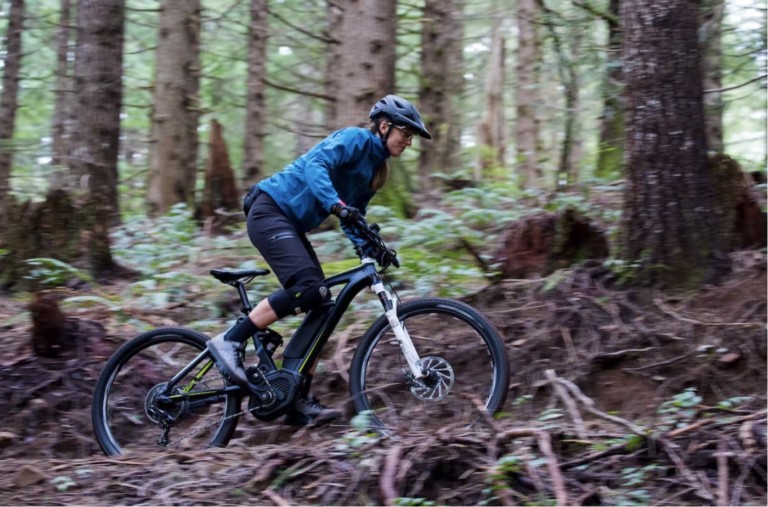
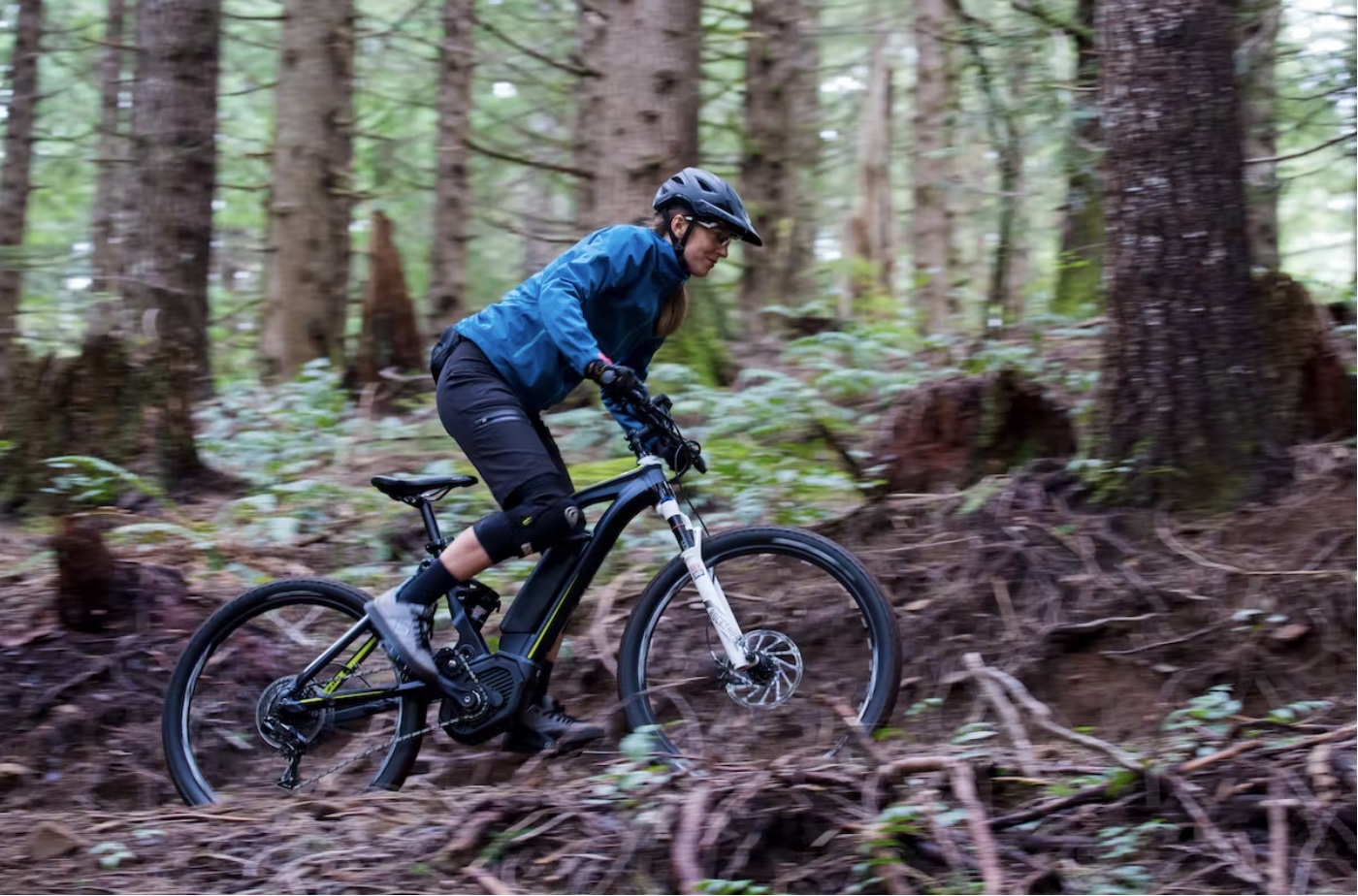
Photo courtesy PeopleForBikes

“Expanding opportunities for electric bicycle riders to access National Forest System trails is an important step forward,” said PeopleForBikes President and CEO Jenn Dice. “While we will continue to urge the U.S. Forest Service to reclassify Class 1 electric bicycles as nonmotorized, we encourage local land managers to implement this guidance for more accessible, equitable and diverse electric bicycle ridership on our public lands.”

Specifically, this new guidance will:

  • Establish new criteria for designating Class 1, 2 and 3 electric bicycles on National Forest System trails, roads and lands.
  • Create specific criteria for designation of motor vehicle use on trails and guidance for designated electric bicycle use on trails. This includes an additional category (Trails Open to Electric Bicycles Only) to identify classes of motor vehicles on a motorized vehicle use map.
  • Add an objective to consider emerging technologies, such as electric bicycles, that are changing the way people access and recreate on NFS lands.

PeopleForBikes remains a strong advocate for the reclassification of electric bicycles as nonmotorized across federal public land jurisdictions. We submitted a public comment in 2020 in response to the USFS proposed revised directives requesting a change in classification alongside the inclusion of the 3-class electric bicycle definition, which was successful.

Electric mountain bikes (eMTBs) offer a low impact, emissionless and quiet solution to helping more Americans enjoy the outdoors and our public lands. Ample studies and pilot projects like that in the Tahoe National Forest show that Class 1 eMTBs and traditional mountain bikes are similar modes of recreation in terms of components, speed, impacts to trail and health benefits. Class 1 eMTB use does not create any different effects to singletrack trails or social experiences while riding.

Segway Recalls Ninebot Children’s Bicycle Helmets Due to Risk of Head Injury

0

Name of Product: Ninebot Children’s Bicycle Helmets

Hazard: The bicycle helmets do not comply with the positional stability and retention system requirements of the U.S. CPSC federal safety standard for bicycle helmets. The helmets can fail to protect in the event of a crash, posing a risk of head injury.

Remedy: Refund

Recall Date: March 24, 2022

Units: About 960

Consumer Contact: Segway toll-free at 888-523-5583 from 5:30 a.m. to 5 p.m. PT any day, email at [email protected] or online at https://segway-ninebot.force.com/hc/SegwayRequestNewForm or www.Segway.com and click on “Recall” under the Customer Support Column and then on the blue Help chat icon on the right side of the page for more information.

Recall Details

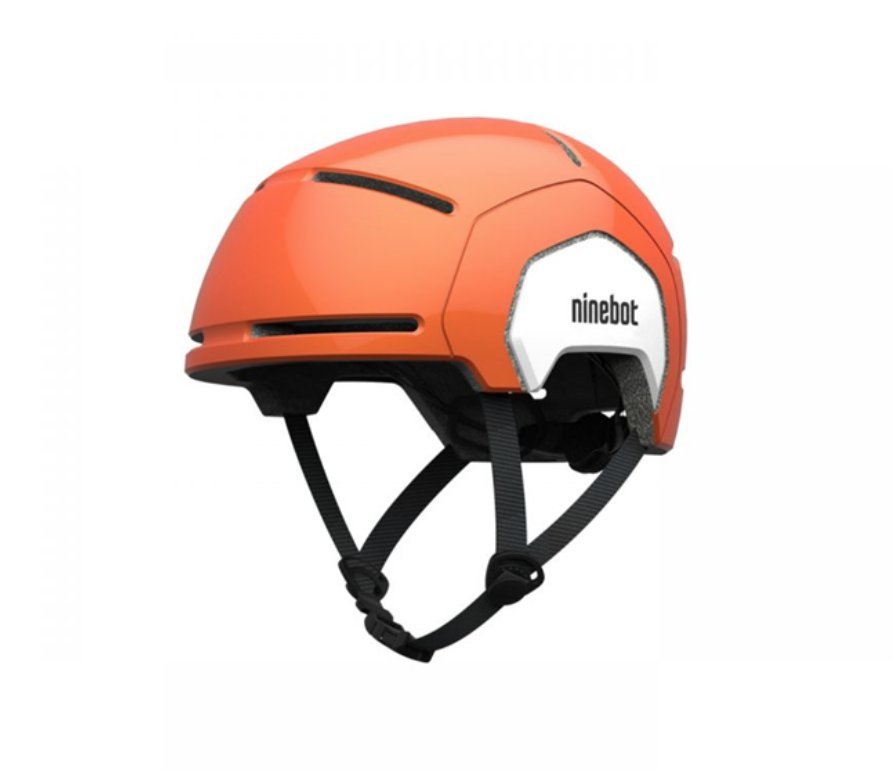
Description: This recall involves the Ninebot Kids bike helmets. The helmets were sold in an orange/white exterior color and in size extra-small (XS), fitting head circumferences from about 19 ½ inches to 21½ inches. Ninebot is printed on the sides of the helmet. Model NB-410 is printed on a label on the inside of the helmet. The batch code and date can be found on a separate label on the inside of the helmet. Only helmets with batch code SN4500056024 and Date: August 2020 are included in this recall.

Remedy: Consumers should immediately stop using the recalled helmets and return them to Segway for a full refund. Segway is contacting all known purchasers to facilitate returns using prepaid postage.

Incidents/Injuries: None reported

Sold At: Best Buy and other retailers nationwide and online at Segway.com and Amazon.com from December 2020 through May 2021 for between $30 and $50.

Manufacturer(s): GuangZhou NOW Sports Gear Co. Ltd., of China

Importer(s): Segway Inc., of Bedford, N.H.

Manufactured In: China

Recall number: 22-107

It Will Soon Be Easier to Cycle Yellowstone

By Charles Pekow — If you like to bike through the outback in Montana, you’ll be able to enjoy two new possibilities.

Adventure Cycling's new PPP route will connect Yellowstone to Minneapolis. Photo by Tom Robertson, Adventure Cycling
Adventure Cycling’s new PPP route will connect Yellowstone to Minneapolis. Photo by Tom Robertson, Adventure Cycling

The long-sought Yellowstone Shortline Trail should become reality this year in Custer-Gallatin National Forest in Montana. The U.S. Forest Service (USFS) plans to pave 8.75 miles of the former Oregon Short Line Railroad line between West Yellowstone, MT, and the Idaho border near Reas Pass. The 10-foot-wide paved trail will include three concrete and one wooden bridge. USFS also plans to improve access roads and include historical interpretive signs, benches, and pavilions.

USFS is seeking a contractor and plans to start paving this spring.

A grant through the Great American Outdoors Act and individual contributions are funding the project. Details: https://yellowstoneshortlinetrail.org/

And under the federal Forest Legacy Program; the Montana Department of Fish, Wildlife and Parks has bought 772 acres of the Bad Rock Canyon along the Flathead River near Columbia Falls for a wildlife management area. The plan includes a bike trail built by Gateway to Glacier Trail, Inc., a local non-profit. Ebikes won’t be allowed, however.


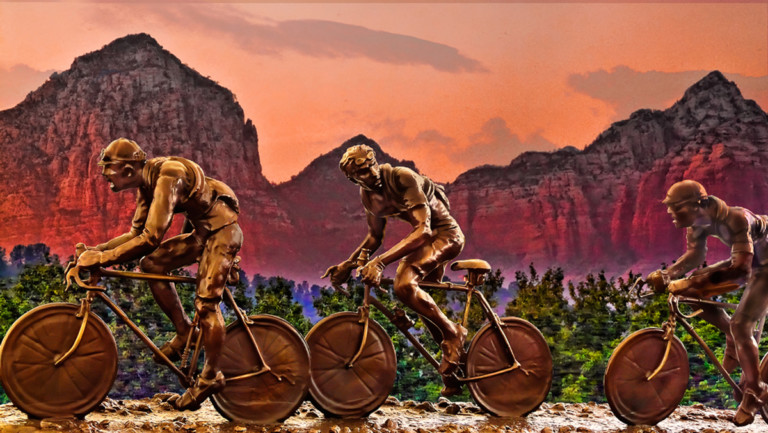
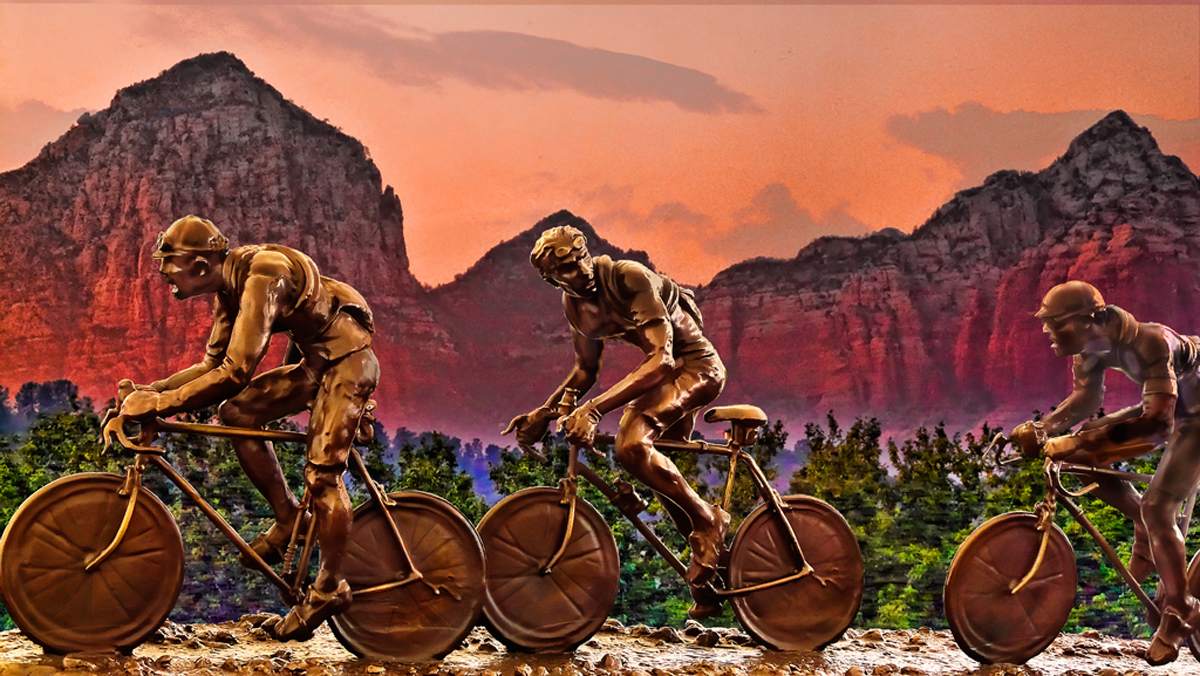
Bronze Gods of Cycling: The Bicycle Art of Cary Wolfson

Artist Name: Cary Wolfson, Title: Bronze Gods of Cycling, Medium: Composite digital photo, Size: 2131 × 1200 pixels

Brief artists statement:

My interest in digital photography was piqued by a trip to Italy in 2007. Since then my work has been featured at many venues in and around my hometown of Boulder, CO, and has received numerous awards and jury selections. For this image I took a snapshot while wandering around at the Loveland, Colorado, Sculpture Show in 2009. It took many painstaking hours to isolate and then process the riders before combining them with a mountain backdrop I shot in Sedona, AZ.

Unlike this piece, most of my recent work is solely done using an iPhone and I teach iPhone photography classes here at home and every summer at Common Ground on the Hill Music and Arts Camp’s Traditions Week in Maryland.

Where can people find your art and/or purchase prints?

Facebook: Cary Wolfson PhotoGraphic Arts; Instagram:@mrwolfo
Website or contact info: [email protected]


Just Meandering … On A Bike

By David Ward — A few years ago, we returned from a trip to the Netherlands and France. Toward the end of this sojourn, we were staying with some friends, Dominique and Annie. I had met Dominique, his mother and his sister, when I represented them in a wrongful death lawsuit involving Dominique’s father who was killed in a cycling accident while on a bike tour which was passing through Utah.

Dominique, knowing of my passion for riding, offered me the use of a bike, either his old road bike or his father’s old mountain bike. While I preferred the road bike, it was old enough that the threads on my pedals (which I had brought in hopes of being able to ride a few times) would not screw into the cranks on his road bike. But they would go on the mountain bike. So, that became, fortuitously for me, my chosen ride.

The evening before my first ride, Dominique pulled out a map showing some designated and separated bike paths and set about explaining how to get to them. This gesture was appreciated, but actually missed the point of why I like to ride when I travel. Well, actually, I simply love to ride. But beyond that, I have found that I love to get on a bike and go exploring. I don’t like having a goal or a specified route or destination, but prefer rather to meander and see what I come across.

Take this ride for example. When I left the next morning, I headed down the road through this picturesque French village of Hirtzbach where Dominique and Annie live, located in the Alsace region of eastern France. After about a kilometer, I came to a junction where I had a choice of turning either right or left. So, for no particular reason, I chose right. I can’t even say it was the road less traveled.

The road then took me to Hirsingue where a road turned off to the right from the main road. It appeared to be heading up a hill a little further ahead. That attracted me, so off I went. After a short distance, I had reached the edge of this small town, and the pastures and fields of local farmers that abutted it. Since the road continued on, so did I, meandering along fields of grain and pastures with grazing cattle.

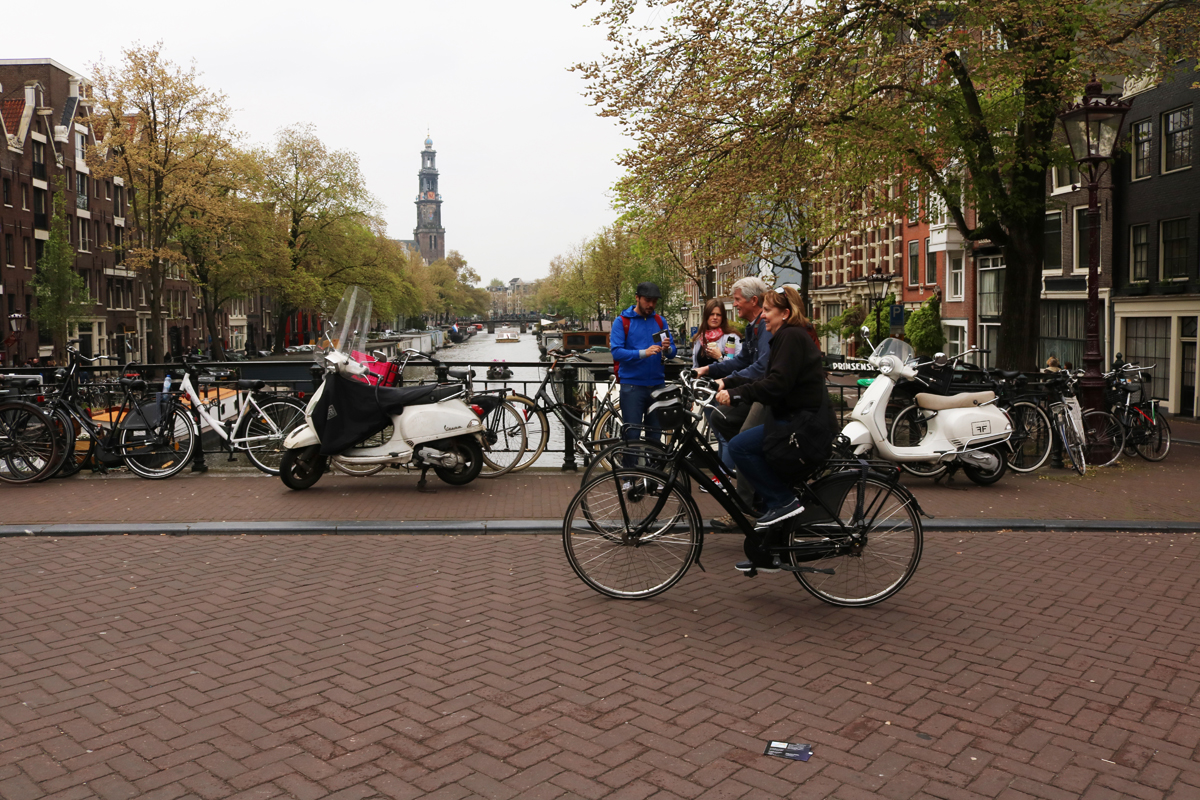
Karma and David Ward meander through Amsterdam. Photo by Shawn Wright

After awhile, the pavement ended, and I was confronted with the decision whether to turn back or continue on. Fate had me on a mountain bike, so I figured I was fated to continue on, which I did. I climbed on up a grassy, rutted dirt road till I crested the hill. Not knowing the area, I decided I needed to consult my maps app, just to make certain I was not headed to a dead end in descending the other side. The app confirmed that roadways of some sort continued on till there was a junction with a major road, the D17.

From there, I descended through fields till I entered a forested area. The roadway rolled on through this small forest till it emerged into a hay field where some farmers were bailing and loading hay. We exchanged waves, and I moved on. Shortly thereafter, I found paved road which led to the town of Largitzen and the D17, which took me back to Dominique’s home.

The night before, it had been raining, and it drizzled off and on during my ride. But that only made it more refreshing, and enhanced the colors along my route. In each town I stopped to gaze upon and photograph the church which has served as the town’s religious center and anchor, and to ever so briefly bask in the sights, sounds and people that originally kindled my love of France so many years ago.

I had one more opportunity to ride while staying with Dominique. This time, I turned left at the first junction, and soon found myself riding again on unpaved forest roadways through a regional nature park. I eventually emerged onto another major road, this time the D16. I could see from my app that I could make this ride into a loop by taking the D16 to the D78, then turning left onto the D17 which, like my previous ride, would take me back to “chez Dominique”.

So, off I rode, pushing my pedals to propel this mountain back along smooth paved roadways through several small towns, Fulleren, Mertzen, Strueth, Hindlingen, Friesen and, once again, Largitzen. How I love riding the winding roadways of France through small, picturesque French towns. Frankly, these rides were two of the highlights of my time in France.

I only had a couple of other opportunities to ride during this trip. We had flown into Amsterdam where we stayed with my niece, Shawn, for a couple of days. One of those days, we rented a couple of those distinctly Dutch upright urban bikes, and my wife, Karma, Shawn and I took a ride out to the town of Ouderkerk aan de Amstel where we enjoyed lunch on a deck adjacent to the river before pedaling our way back into the heart of Amsterdam.

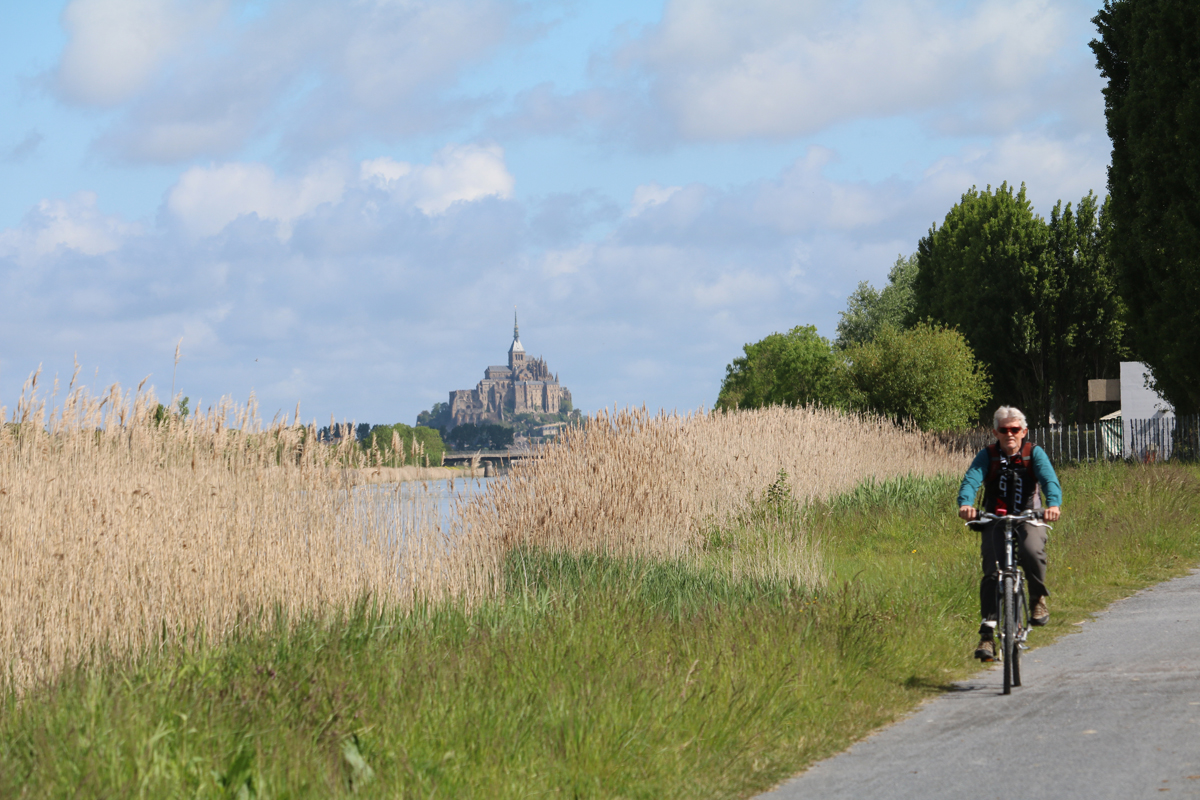
David Ward with Mont St. Michel in the background in the Normandy region of France. Photo by Karma Ward

Our next opportunity to ride came at Mont St. Michel, that iconic abbey on an island. Our bed and breakfast had a couple of bikes we could rent, so we used those to ride on a greenway path along the river to where we had to park the bikes before crossing the causeway to Mont St. Michel. This is that same causeway where our own David Zabriskie edged out Lance Armstrong to take the first yellow jersey of the 2005 Tour de France. Armstrong was piqued, to say the least.

Anyway, after visiting the island and abbey, Karma and I rode back to our B&B, and then at dusk we pedaled our way back to Mont St. Michel to see it bathed in lights at night. It was beautiful, and made more so by our refreshing ride there. The ride back, however, was a bit challenging as our bikes had no lights, and the greenway path is not lighted. So, we used our cell phone flashlights, holding them with one hand as we tentatively peddled the nearly four dark miles back to our B&B.

The next morning, I went out for one last ride in Mont St. Michel, this time meandering through the adjacent area. I soon found myself on a short climb up to the small town of Beauvoir, coming to the beautiful small church whose spire I had been able to see from some distance away. The road then took me through some fields, past a picturesque windmill, then down through another small town, Saint Laurent, where I turned to head back to our B&B.

Well, this article just sort of meandered. It reflects the nature of my opportunities to ride during my time in France and the Netherlands, describing nothing major (except perhaps Mont St. Michel), but illustrating the many small and lovely things to be seen when on a bike. That is the beauty and excitement of meandering on a bike.


Second Annual Mad Gravel Race Returns to Elbert County, Colorado Memorial Day Weekend

Rattler Racing Hosts Second Annual Mad Gravel Race (A 3 Day Biking, Running & Camping Event) at The Peaceful Valley Scout Ranch in Elbert County, CO

Elbert County, CO — Rattler Racing will host the Second Annual Mad Gravel race at the picturesque Peaceful Valley Scout Ranch in Elbert County, Colorado on Saturday, May 28th, Sunday, May 29th and Monday, May 30th, 2022. Mad Gravel is now a full 3-day weekend event with a little something for everyone.

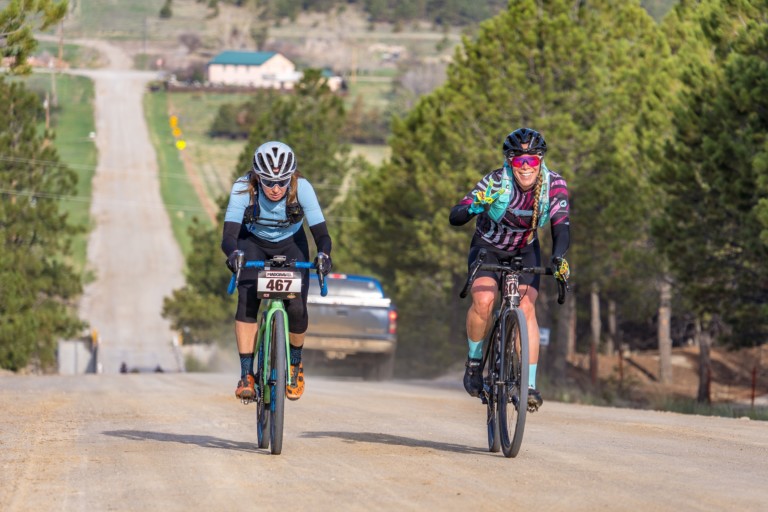
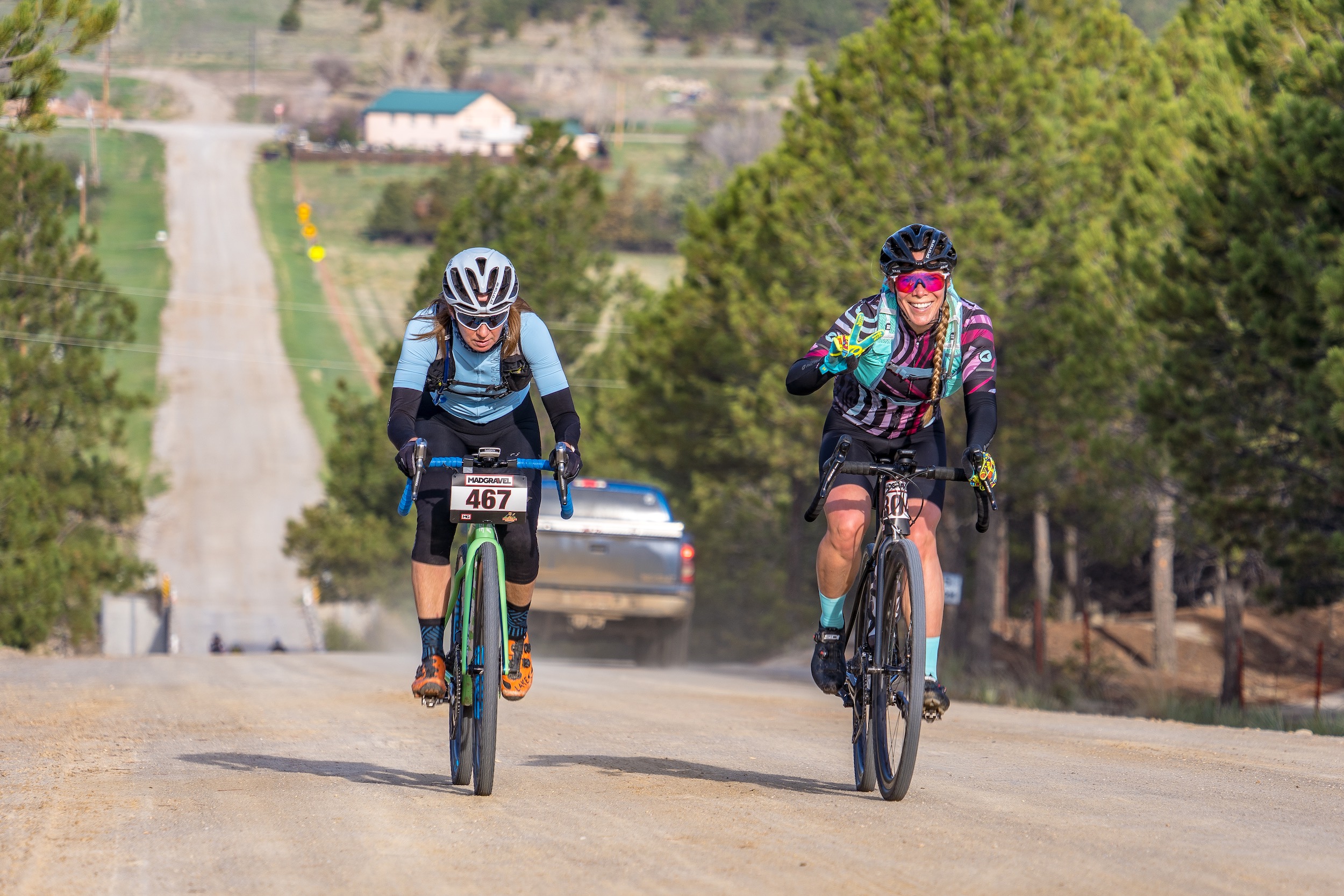
Photo courtesy Mad Gravel

Saturday will be a fast and furious circuit race within the boundaries of the Peaceful Valley Scout Ranch. Runners also get to enjoy most of the same course on a 5K trail course before the cyclists take off. Look for some great winding gravel roads, double track, and a mix of twisty single-track sections.

Sunday is the biggie. Racers have the option to pick one of 3 epic routes along the eastern Colorado slope.

Monday treats you to a sweet mountain bike course highlighting the great trails within the ranch. Participants will get to take in amazing views of Colorado’s high fourteeners and enjoy an optimum vantage point of the entire front range.  All three days of Mad Gravel are fully supported with multiple aid stations.

This fully supported and ultra-scenic race is one of the first gravel events on the Colorado race calendar for spring of 2022. When the riding is over, the party begins with food, drink, music, and other post-race festivities at the expansive hall overlooking the venue.

Register at madgravel.com.

“We put every effort in to cover all the bases and deliver the best race experience.” – Dave Muscianisi, Race Director


Advocacy Alert: Comments Needed To Make I-15 Bike Crossings Safer

It might get easier and safer to cross I-15 by bike between Salt Lake City and Farmington – in the long run. The Federal Highway Administration and Utah Department of Transportation (UDOT) started the preliminary phase of a plan to improve all types of transportation in the corridor.

The agencies announced a notice of intent to prepare an environmental impact statement that may include improving and/or expanding bike crossings of the interstate and improving highway traffic flow in ways that make biking safer and more pleasant.

“The proposed project study area extends on I-15 from the Park Lane interchange (I-15 milepost 325) in Farmington to the 400 South interchange (I-15 milepost 308) in Salt Lake City,” according to the plan announcement in the Federal Register.

The public may submit suggestions until May 13. UDOT will conduct public hearings and outreach later. UDOT intends to issue a draft next year and a final decision early in 2024. “We will definitely look at all modes of travel. We are going to ask the community what do they want,” Project Manager Tiffany Pocock explains.”We are looking at a 2050 design scenario.” At this stage, the agencies haven’t developed specifics.

2000 Tour of Flanders (a personal reflection)

0

By Marty Jemison — Julian Dean, Kirk O’Bee and myself (Marty Jemison) covered every attack in the first 80 kms….. there never were more than 3-4 riders making an attempt without us. We burned a lot of matches, but there was not going to be a break where Postal was not represented.

The Peloton and ourselves allowed two riders to escape…… then things could calm down.. I went back for feed bags even though the feed zone was within 10kms….this was security against attacks there, the first cobbles were close.

Marty Jemison and Viatcheslav Ekimov. Photo courtesy Marty Jemison

The approach to the first section of cobbles is very nervous. I was trying to move up on the left, but it was very difficult. At the moment the first riders braked into the left hand turn I accelerated up the left, egged on by Martin den Baker’s voice behind me… I was able to move up into the top 30 riders or so.

Not a bad position…… I felt comfortable through this section.

We emerged back onto the main road….. the peloton would regroup….

Leading to the Molenberg I was able to position myself into the top 10….. I did this on a fast descent….sprinting up the right side of the peloton before another sharp left hand turn. Positioning is so important in this race. It is a right hand turn for this climb, the speed we had in the front gave us a great advantage. In the back of the group they would wait nearly in a track stand before starting the climb….. On top the wind made it hard for riders to close gaps as they finished the climb….. the peloton was in pieces…. all single file. I was still fresh and was in the front group…. probable one of the easiest climbs of the day for me. It was all positioning.

Somewhere around the Paddestraat I moved away with 20 riders or so…..some riders gave it some gas but it was hardly the right combination….. I soft pedaled only, as neither Eki or George were there ….. Postal’s undisputed leaders. I could see Mapei working on the front of the group behind….. 80-100 riders would regroup around the second feed zone at 180kms…

At 188kms Frankie came to the front, just before the Kluisberg. I rode in this wheel into the base of the climb and then took over…. I led the group over the top at a controlled pace.

I had a FLAT! my tire was soft, in the descent I thought I was going to miss a turn.. The peloton is picking up steam….. Dylan gave me his rear wheel. I chased hard, we were on a large road but I knew we were approaching another left turn onto small roads once again… just before the Knokteberg. I was in the cars, gaining one position then losing two……. until the group hit the left turn, there I was able to make a big effort and came back……

Improving your position on these small roads is nearly impossible…..I may have lost some friends as I quacked my way past whomever I could…..in the back this is not too difficult as these riders are at the limit, being dropped is inevitable. (my turn is coming )

My race gets a bit blurry now, only because I do not know the names of the climbs by sight. Somewhere after around Oude-Kwaremont, Patersberg, Kortekeer. (210kms)…Eki was behind and bridging back on his own. I had missed him when he damaged a wheel…. I was with 20 or so riders and 20 or so riders ahead by 20 seconds or so. I thought both Eki and George were in that front 20… It was a great surprise when Eki came to me and tapped me on my hip….. Time to work. At first two Lotto riders were riding in pursuit, then Eki and I took over… A two man team time trial that took us maybe 5kms to bridge…. Eki regained and moved up.

My body was starting to fade…… after all the work in the first 80 kms etc etc… Eki and George were now in the front , all other Postal riders were dropped (except Cedric who helped Eki as well)

4 of us would finish the race…… We did not win , we did not make the podium. Eki did though make a solo attempt to catch Tchmil in the last kilometer…… he was close.

Marty

Selphian Industries Announces New BOOST Valve Stems for Bicycles

0

SALT LAKE CITY, Utah (April 1, 2022) — Following the trend of an increasing number of options for bottom bracket and hub standards, Selphian Industries, a boutique bicycle products manufacturer, announced today a new improved standard for valve stems, The BOOST Valve stem.

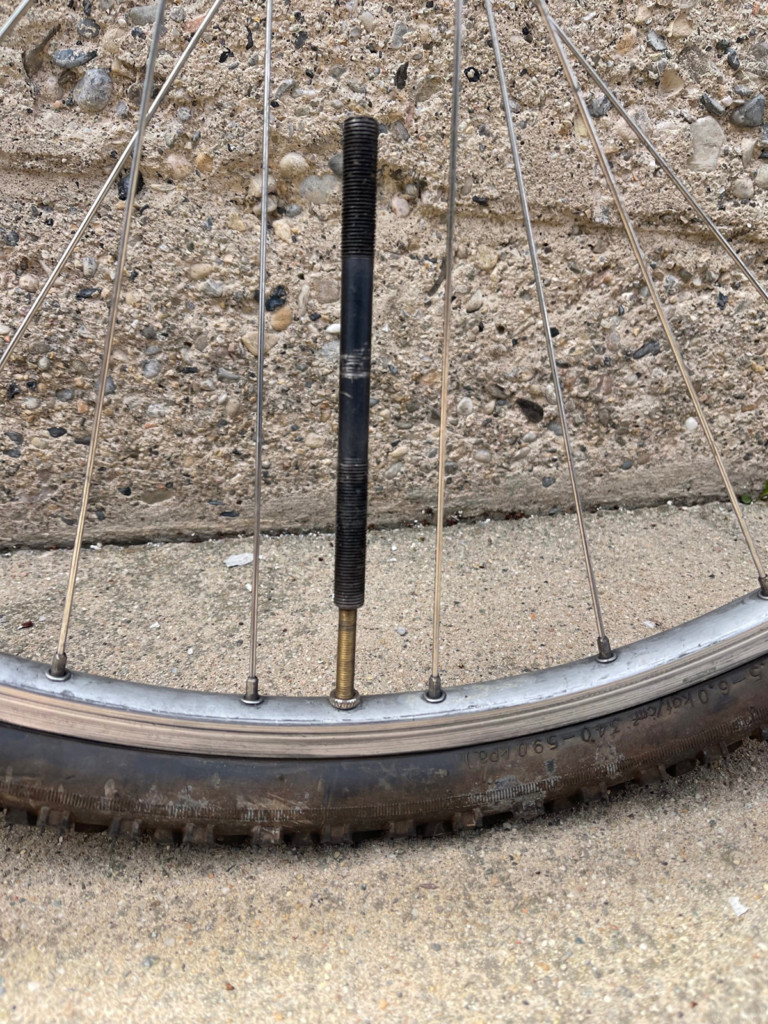
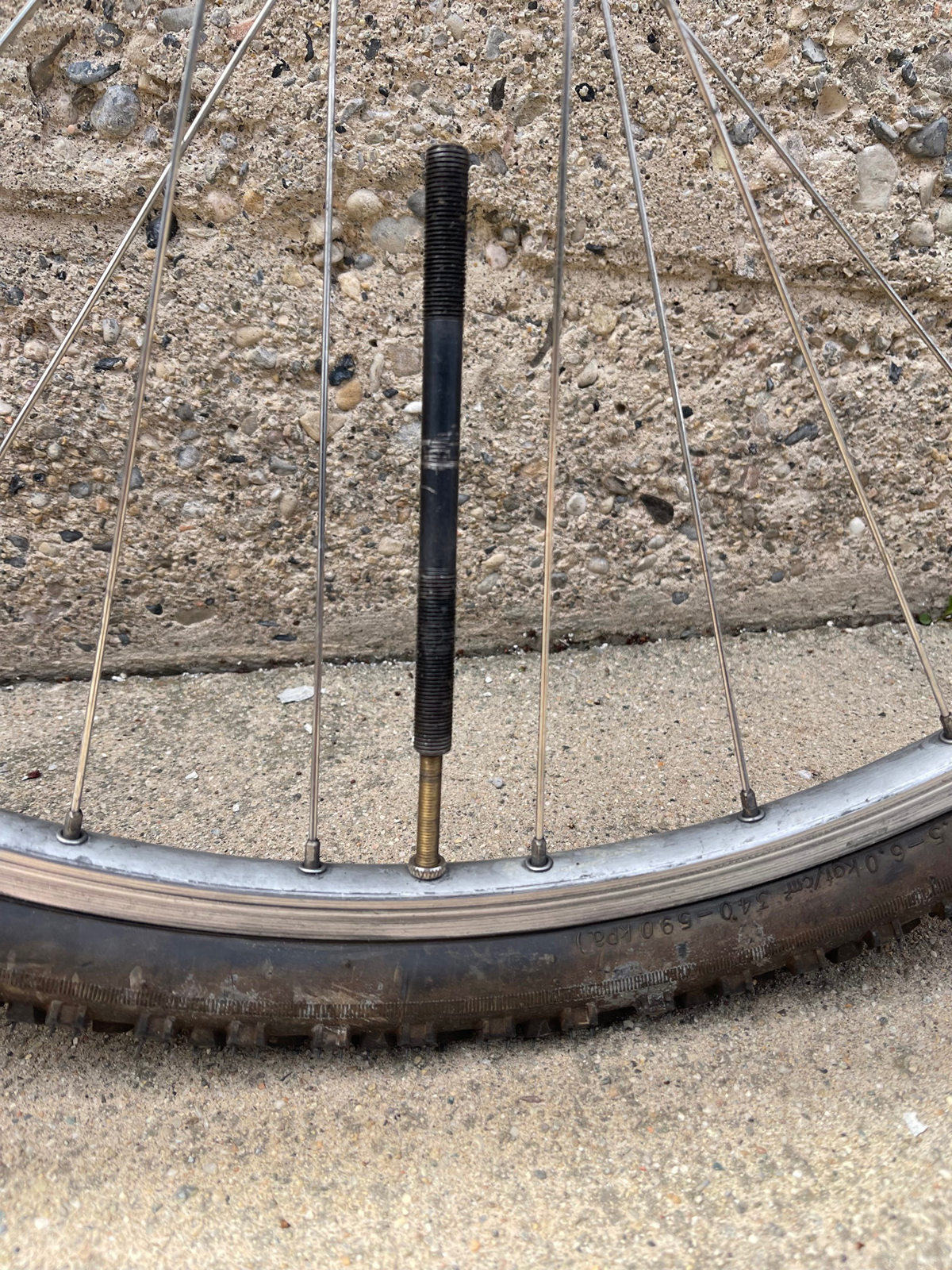
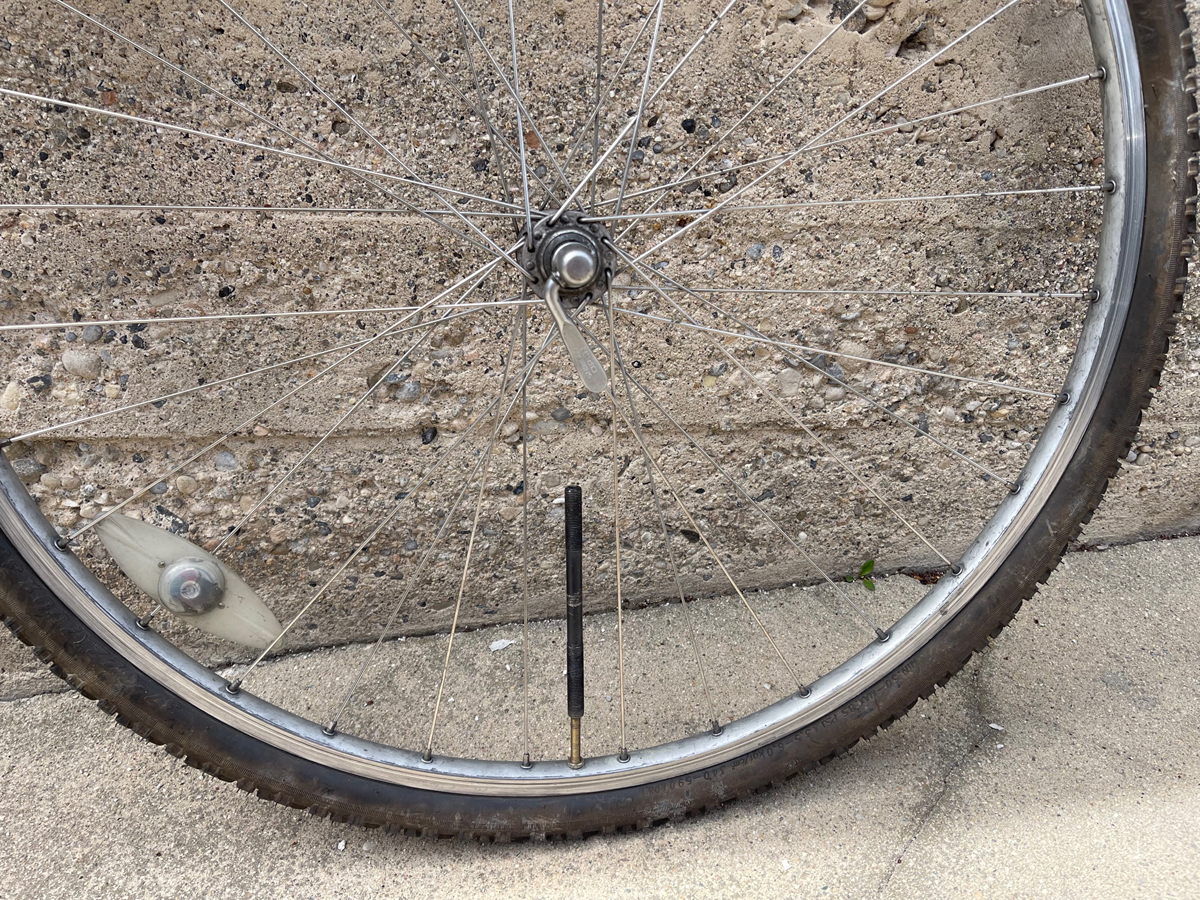
BOOST 148mm Valve Stem by Selphian Industries.

“We see this as an evolution of incompatibility with billions of existing pumps, tubes, and rims that have permeated the bike world since the late 1800’s,” said Selphian CEO Bill Jelavich.

He continued, “the bike industry has been missing out on replacing those functioning products with something that is new that won’t work with anything out there currently. It’s a money making opportunity of epic proportions. In fact, we are going to sell NFT’s too of each individual valve stem.”

The BOOST valve standard takes an existing hollow boost axle from a rear hub and repurposes it as a custom air delivery system for both tubes and tubeless setups.

Although the stem is 148 mm long, the extra weight, length and diameter provides faster air delivery, along with greater rolling momentum, and decreased rim integrity.

It features a 10 CFS airflow, up from 1 CFS for both Presta and Schraeder valves. This translates into faster pumping speeds and tire pressures up to 250 psi, on both road and mountain tires. Additionally, the higher volume means faster seating of tubeless setups.

Selphian is partnering with OVAL wheels, a carbon wheel manufacturer that is currently providing the first oval rim in cycling history to deliver a one-two punch for better cycling. OVAL rims are the latest in biosensitive bike technology and are designed to be paired with oval shaped chainrings to deliver power when and where the rider needs it most.

“The combination of OVAL wheels and BOOST valve stems will provide both road and mountain racers with an unbeatable advantage in time trials and on descents!,” exclaimed OVAL spokesperson Bucky Fuller.

Selphian is best known for their 2015 designer air CO2 cartridges (for more on that see: https://www.cyclingwest.com/tech/selphian-industries-announces-new-bicycle-accessories/)

BOOST 148mm Valve Stem by Selphian Industries, featuring better airflow and higher rolling resistance.