
Home Blog Page 137

The Athlete’s Kitchen: Quality Calories for Weight Management?

0

By Nancy Clark MS RD CSSD — If you are like most athletes, you are busy juggling work, workouts, family, and life. You likely eat meals and snacks on the run, grabbing an energy bar here, a frozen meal there, and a protein shake to go. You can easily fuel yourself with highly processed foods that are ready to heat and/or ready to eat.

While you can choose a nutritionally well-balanced diet when eating on the run, you might want to pay attention to the amount of ultra-processed foods that sneak into your meals and snacks. They have a food matrix far different from natural foods, and they might have an impact on your weight and health.

What are ultra-processed foods?

Cooked eggs, canned beans, and dried raisins are all considered processed foods. Technically speaking, a processed food is one that has been altered from its original form. The foods have been cooked, dried, or canned in a way that’s safe for your health.

Ultra-processed foods include fast foods, sugary drinks, chips, candies, sweetened cereals, etc. They span the spectrum from minimally processed foods that are prepared to make them edible (bran flakes) to industrial formulations with five or more ingredients (Cap’n Crunch). Ultra-processed foods commonly have added flavors, sugars, fats, preservatives and ingredients that you are unlikely to have stocked in your pantry, such as sodium benzoate. These foods are designed to be convenient, ready to eat, palatable, affordable and welcomed as replacements for freshly prepared meals and snacks.

More than half the calories consumed in the US come from ultra-processed foods (think packaged soups, instant noodles, frozen meals, hot dogs, cake mixes.) The foods tend to be high in calories, salt, and fat, and low in fiber. Ultra-processed foods can be marketed as natural, healthy and organic. (Those words don’t refer to the process of how the food was made.) Yes, your favorite all-natural, organic energy bar likely counts as an ultra-processed food.

A diet rich in ultra-processed foods has been associated with high blood pressure, heart disease, Type 2 diabetes, and stroke. While these foods might not cause those health problems, people with the health issues are more likely to consume a fair amount of ultra-processed foods. We need more research to determine if these easy-to-overeat foods are the problem (“I can’t eat just one…”), or if their high caloric density makes them easier to over-consume.

Ultra-processed foods and your waistline.

Speaking at the Academy of Nutrition and Dietetics’ (AND) 2019 Food and Nutrition Conference and Expo (FNCE), Kevin Hall PhD of the National Institutes of Health spoke about the ease of weight gain among people who eat a plethora of ultra-processed foods. He conducted a study in which 20 healthy adults (10 men, 10 women) ate as much or as little as they wanted for 14 days from a buffet of minimally-processed or ultra-processed foods (1). The buffets were matched for calories, sugar, fiber, carbohydrate, protein, fat, and salt. The subjects rated both diets as being equally palatable. Yet, when the subjects ate from the ultra-processed buffet, they consumed about 500 calories above their baseline intake and they gained about 2 pounds in two weeks. (Some of that weight gain can be attributed to water-weight, given the ultra-processed foods they chose were higher in sodium than their standard diet.)

When the subjects ate the unprocessed diet, they chose their typical caloric intake, yet they lost about 2 pounds in two weeks. How could that be? Some weight loss was related to water-weight loss, but some might be related to a higher amount of calories needed to digest the whole foods. (This is called the Thermic Effect of Food—the increase in the body’s metabolic rate related to the consumption, digestion, metabolism and storage of food.) Foods in their natural state take more energy to be digested and metabolized than highly processed foods. For example, a grilled cheese sandwich made with whole wheat bread and cheddar cheese uses about 20% of the ingested calories to digest and metabolize the nutrients. In contrast, the same sandwich made with white bread and processed American cheese uses only 11% of ingested calories (2)

Ultra-processed foods tend to be high in simple-to-digest sugar, with a low thermic effect. They also tend to be low in fiber. Fiber-calories are not readily accessible to the body. Almonds, for example, reportedly offer 170 calories per ounce (23 almonds), as written on the food label. The reality is, your body can access only 130 of those calories (3). Fiber-rich plants foods can be better for your waistline (and your overall health).

Processing changes the food structure (matrix), and this impacts satiety, the feeling of fullness that persists after eating. The more a food is processed, the lower it’s satiety, likely related to its higher glycemic response (rise in blood glucose). Simply put, devouring 500 calories of ten (ultra-processed) Oreos is far easier than chewing through 500 calories of almonds (~70 almonds)—and is far less satiating.

The bottom line

At this time, we have no data to confirm that ultra-processed foods cause obesity, but they are certainly associated with obesity. Dr. Hall is planning another study to look at the impact of energy-density on calorie intake. Til then, common sense tells us for weight management, our best bet is to snack on whole grains, fresh and dried fruits, nuts and other minimally processed foods. Limiting ultra-processed foods may be an effective weight-management strategy.

Recipe for Super-Seedy Granola Bars

 These crunchy, seedy bars offer fiber, protein, and healthy fats. They are minimally processed and a wrapper-free alternative to yet-another energy bar in a shiny wrapper.

When making these bars, you are welcome to mix-and-match the ingredients. That is, don’t fret is you don’t have chia (although the chia seeds add a fun crunch) or if you want to use chopped walnuts instead of sunflower seeds.

These bars are best stored in the refrigerator for a quick and hearty snack. At room temperature, they can become crumbly, though the crumbs are totally enjoyable by the spoonful and as a topping for yogurt or oatmeal.

  • 1 1⁄2 cup dry oatmeal
  • 1⁄2 cup sunflower seeds, hemp hearts, or chopped nuts of your choice
  • 3 tablespoons chia seeds
  • 1⁄4 cup dried fruit of your choice, such as craisins or chopped dates
  • 1 teaspoon ground cinnamon
  • 1 cup peanut butter or nut butter of your choice
  • 1⁄2 cup honey
  • Optional: 1 teaspoon vanilla extract, 1⁄2 teaspoon salt
  1. Line a 9-x 9-inch square pan with parchment paper or plastic wrap with enough overhang for easy removal.
  2. In a medium-sided bowl, combine oats, sunflower seeds, chia seeds, dried fruit, cinnamon (and salt).
  3. In a small microwaveable bowl, combine peanut butter, honey (and vanilla extract); warm in the microwave oven (30 to 60 seconds), and then mix together until very smooth.
  4. Pour the peanut butter mixture over the dry ingredients. Using a sturdy spoon, stir until evenly combined.
  5. Transfer the mixture to the prepared pan. Using the back of the spoon or a spatula, firmly press the mixture evenly into the pan.
  6. Cover and refrigerate for at least 1 hour or overnight.
  7. Gently lift the parchment or plastic overhang to remove from pan and slice into 16 bars. Id desired, wrap individual bars and place them in a freezer-safe bag to store in the fridge or freezer.

Yield: 16 bars. Nutrition information: 2,900 total calories; 180 calories per bar; 20 g carbohydrate; 5 g protein; 9 g fat

References:

  1. Hall, K et al. Ultra-processed diets cause excess calories intake and weight gain: An inpatient randomized control trial of ad libitum food intake. Cell Metabolism 2019; 30:67-77.
  2. Barr, S. and J. Wright. Postprandial energy expenditure in whole-food and processed-food meals: implication for daily energy expenditure. Food & Nutrition Research 2010; 54: 5144-5153.
  3. Novotny J. et al, Discrepancy between the Atwater factor predicted and empirically measured energy values of almonds in human diet. Amer J Clin Nutr 2012 96(2):296-301.
Rebecca’s Private Idaho Wrap-Up Report

0

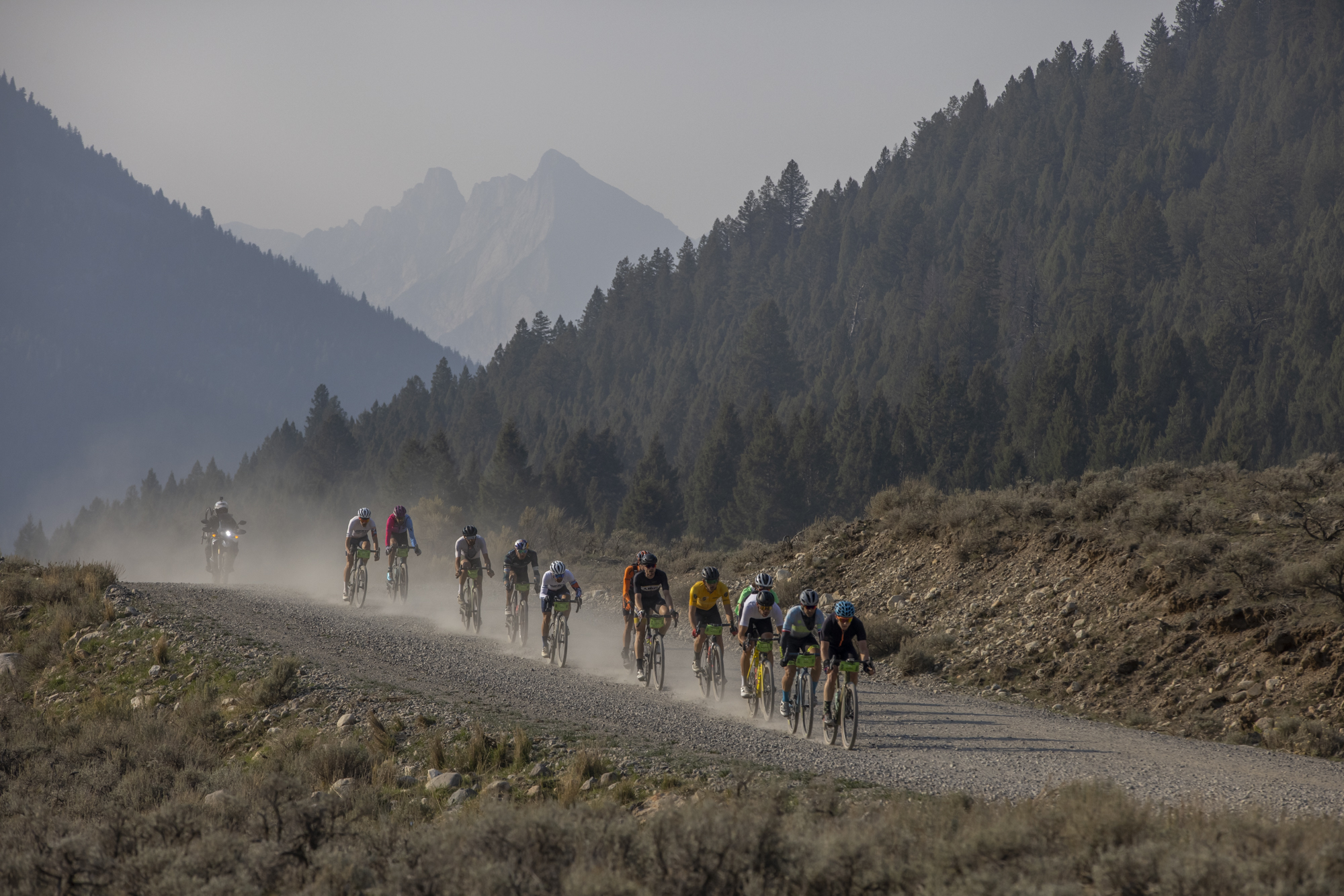
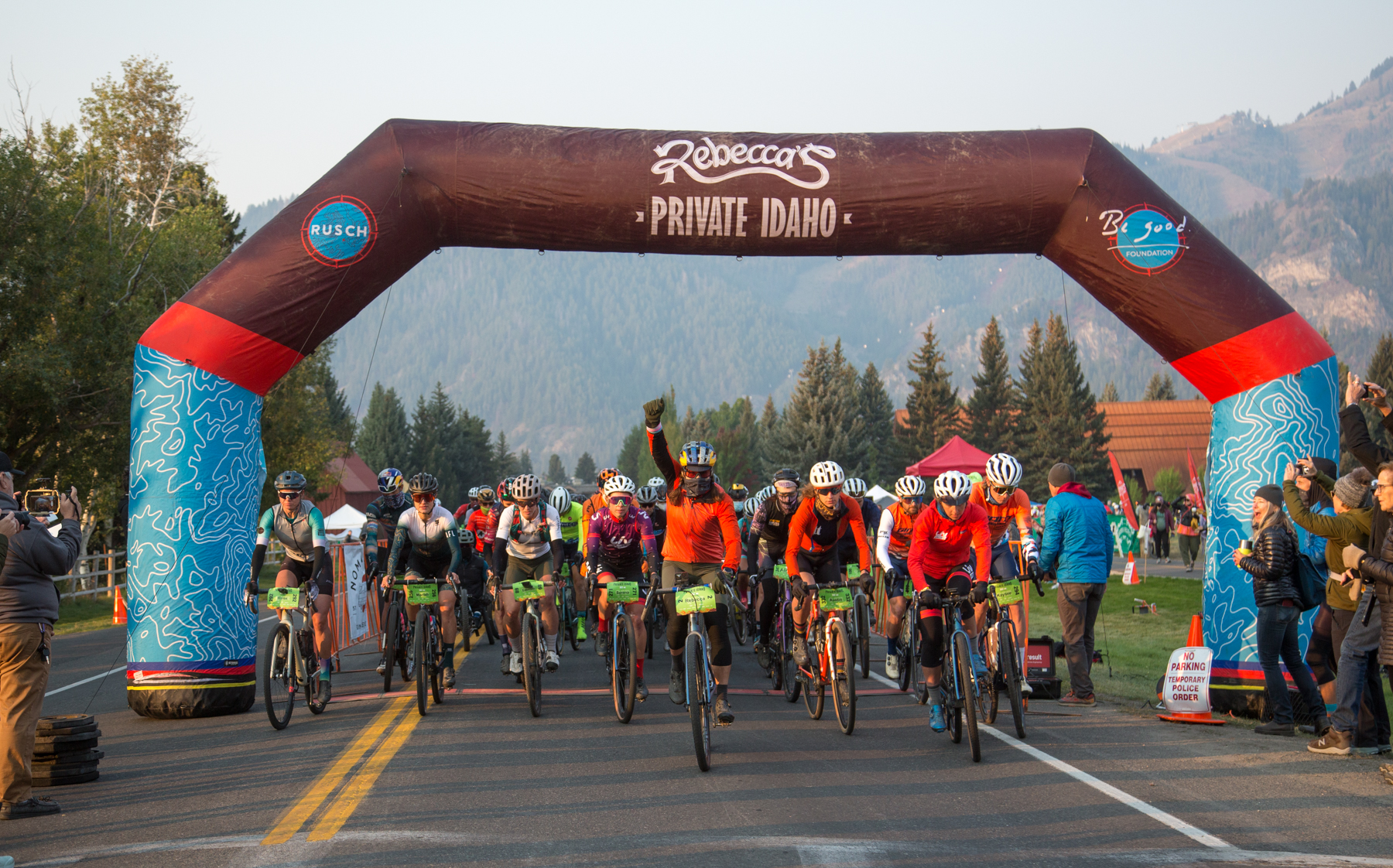
Rebecca’s Private Idaho (RPI) Queen’s Stage Race winners are crowned after 1,500 riders complete final race of four-day event. Rebecca’s Private Idaho wrapped up its ninth year on Sunday, September 5, with three gravel races (102-mile Baked Potato, 56-mile French Fry and 20-mile Tater Tot).

Rebecca Rusch leads riders out at the start of The Baked Potato at Rebecca's Private Idaho. Photo by Linda Guerrette, courtesy Rebecca's Private Idaho
Rebecca Rusch leads riders out at the start of The Baked Potato at Rebecca’s Private Idaho. Photo by Linda Guerrette, courtesy Rebecca’s Private Idaho

Rebecca Rusch, founder of the event, reflected on the power of bikes to affect personal transformation: “I truly believe you grow when you do something hard. Watching people cross the finish line with dirt on their faces and tears in their eyes means more to me than any podium I have been on. Cycling can change the world, and this is an example of that.”

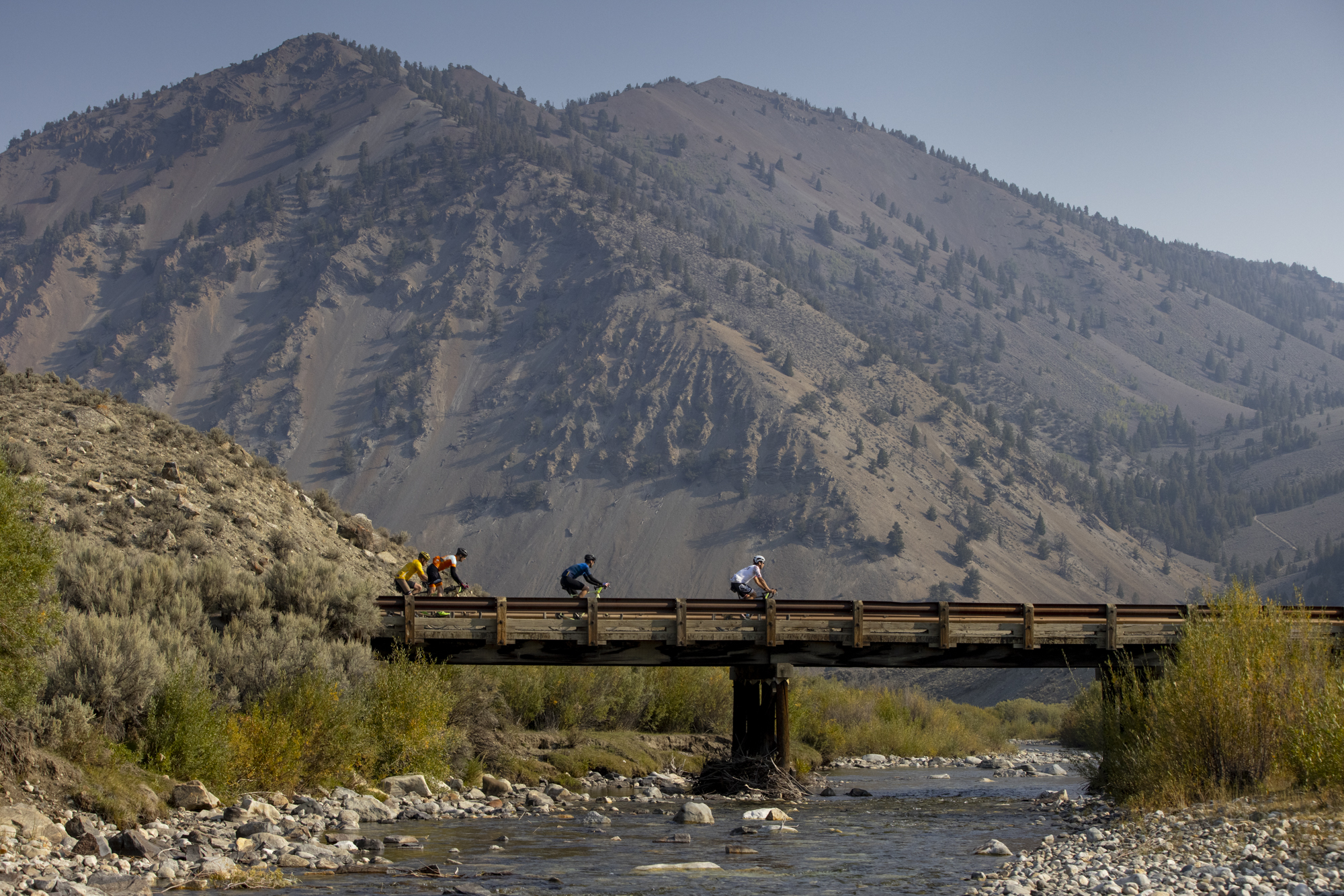
Photo by Wyatt Caldwell, courtesy Rebecca's Private Idaho
Photo by Wyatt Caldwell, courtesy Rebecca’s Private Idaho

The Baked Potato event provided a dramatic finale to the four-day Queen’s Stage Race, with surprise winners Griffin Easter and Rose Grant emerging victorious after 102 miles of gravel, heat and climbing in the Idaho backcountry. Rose cemented her overall victory in the stage race, as did Pete Stetina after his third place finish on the day. RPI also awarded winners in Non-Binary and Femme/Trans/Women (Apollo Leonard), as well as Para-Cycling (Megan Fisher). Sunday’s racing included, for the first time, three hand -cyclist finishers.

Photo by Wyatt Caldwell, courtesy Rebecca's Private Idaho
Photo by Wyatt Caldwell, courtesy Rebecca’s Private Idaho

Bethel Steele, Non-Binary cyclist podium finisher, said, “RPI hit a home run by creating an inclusive atmosphere and equity for the Non-Binary category. Rebecca followed through with all of the important steps like call ups before the race and a podium ceremony alongside the pro men and women. We got the same visibility and respect as all of the other categories. Now the seed has been planted for having a Non-Binary division at all gravel events. I give credit to Rebecca and RPI for stepping into this space of discomfort that has been historically overlooked in cycling.”

Baked Potato 102-mile Race Results

  • Women: Rose Grant
  • Men: Griffin Easter
  • Non-Binary/Femme, Trans, Women: Apollo Leonard
  • Para-Cycling: Megan Fisher

Queen’s Stage Race overall Results

  • Women: Rose Grant
  • Men: Peter Stetina
  • Non-Binary/Femme, Trans, Women: Apollo Leonard
  • Para-Cycling: Megan Fisher

National Parks, Bicycle Travelers, and Entrance Fee Confusion

By Lou Melini — Perhaps you have entered Yellowstone National Park on your bike with 3 other cyclists. The attendant at the entrance station tells your group that entry for bicycles is $20 per bike. You then look at an adjacent entrance booth at a car with 4 people realizing that the fee for the car is $35. Does that seem fair?

For the record, I am a fan of the National Parks and wish to see parks such as Yellowstone NP fully funded. To show my support I am or have been a member of the National Parks Foundation, Yellowstone Forever and Zion Forever, non-profits that support National Parks. To meet revenue shortfalls, Yellowstone NP, as one example, increased fees for cyclists by $8 and the fee for cars was raised $10. (The original proposal that cars pay $70 and cyclists $30.did not occur) For me, the hiker/biker sites are worth the admission price. Having a guaranteed place to camp beats my 1975 experience when I had to spend an hour asking (or begging) someone to share a site.

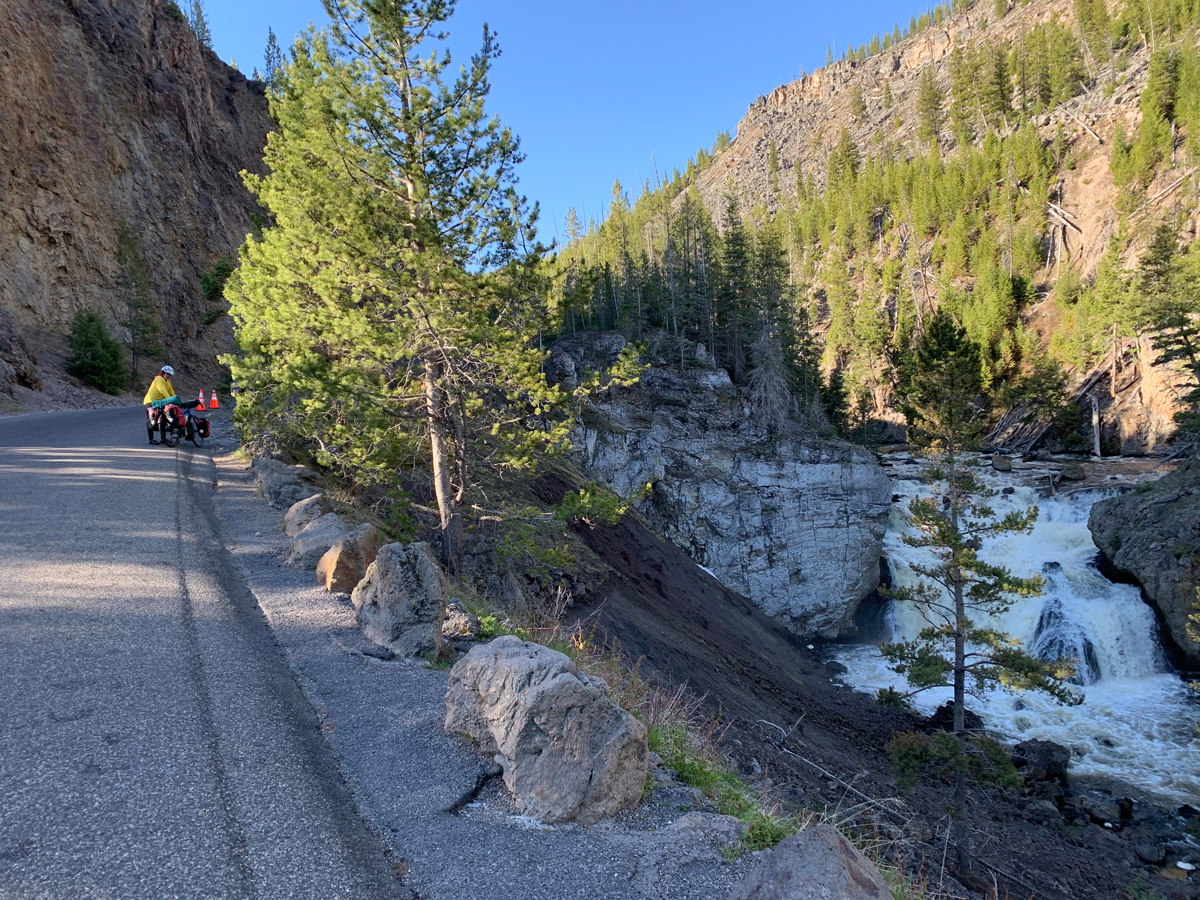
Yellowstone area bike tour. Photo by Chris Blinzinger

Despite my support for the parks, the hypothetical scenario that I presented above is unfair, and it was handled incorrectly. The National Park Service (NPS) Recreation Fee Management Manual states: “At parks with both a vehicle fee and a per-person fee, individuals entering together by a mode other than a single, private, non-commercial vehicle pay a total fee of no more than the vehicle fee.” For example, if four adults are traveling by bike together, this policy states they should pay no more than the vehicle fee.

This policy is not well known by cyclists or park officials and is not published on-line. The Adventure Cycling Association, a non-profit that supports traveling bicyclists recently found out about the regulation from a park staffer in D.C. Given the wording of the regulation it is unclear how many individuals can enter a park paying only the car fee. Let’s assume 4 for this article.

I presented a hypothetical scenario above, but it recently happened in real life. Over Memorial Day weekend of 2021, I rode through Yellowstone and Teton NP where I met a group of 6 girls traveling across the U.S. (OK, I am 70 so 6 females between 21 and 24 are girls) They were asked to pay $120 ($20/person) to enter Yellowstone. They told me that they then purchased an $80 pass (an annual pass I presume) and were then allowed in the park.

The National Park Service offers numerous “passes” that are annual or lifetime. The MOST likely passes to be used by traveling bicyclists are the $80 annual pass, the $20 annual senior pass or the $80 lifetime Senior Pass. The regulation concerning passes is: Each bicyclist is required to have a “per person” entrance pass or be covered under an annual or lifetime pass, which covers the owner and up to three additional cyclists. Passes require photo identification to verify ownership. The annual pass states that the pass is good “for the owner and up to 3 adults at sites that charge a per-person fee” The language also states that the pass “can be signed and shared by two main owners that are friends or family”. Given that the girls were not going to any other national parks, it would have been less expensive to go in with a “car” fee (or two car fees).

When I went to the entrance booth on my Memorial Day weekend trip, I presented my Senior Pass. The attendant looked at my touring buddy Chris. I immediately said that I am allowed to take others in with my pass. She replied: “Yes, I think you are correct”. I am not sure she knew the regulation but given how long the line of cars was she hurried us through.

My senior pass also gives me half-price camping. However if other cyclists in my group camp in a hiker/biker site, each person (or tent) is responsible for their own camping fee. If one cyclist holds a senior pass it may be cheaper for that pass holder to rent a regular campsite for the group (but a prior reservation may be necessary). The $80 Annual Pass only covers entrance fees to parks and federally managed lands.

Please note that individual national parks may have annual passes specific to that park that may or may not have specific language pertaining to bicycles, something that cyclists living close to a specific park could consider. For more information about park fees and passes go to the national park website or the particular park to which you are going.

GFNY Santa Fe Returns September 19, 2021

0

Olympic Cyclist, Nelson Vails, Among Participants

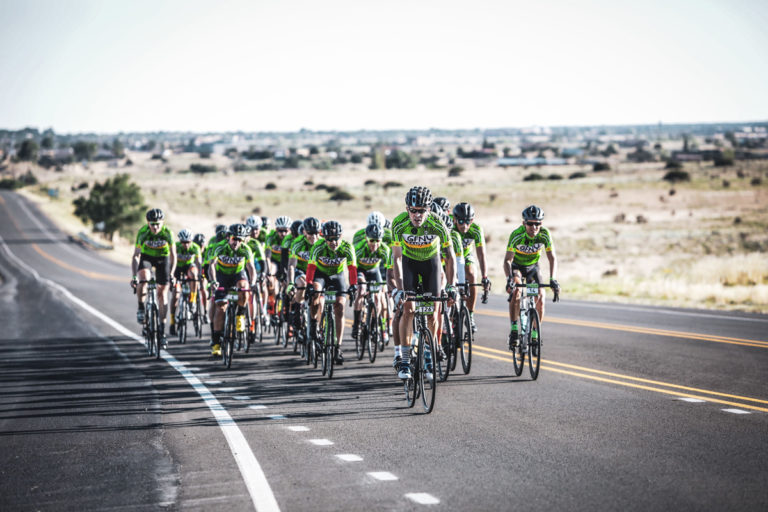
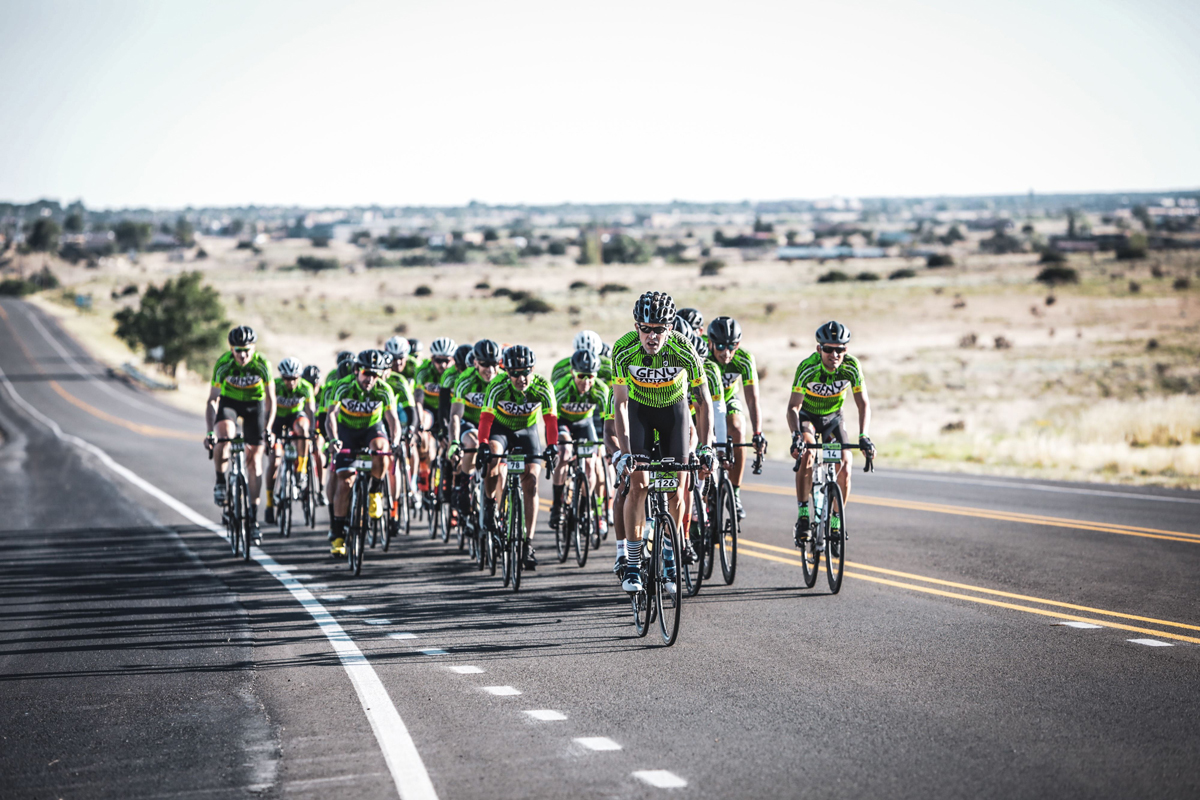
SANTA FE – September 9, 2021 – GFNY Santa Fe returns to the GFNY World racing calendar on September 19, 2021. This year’s participants include Olympic cyclist—and the first African American to win an Olympic medal in cycling—Nelson Vails.
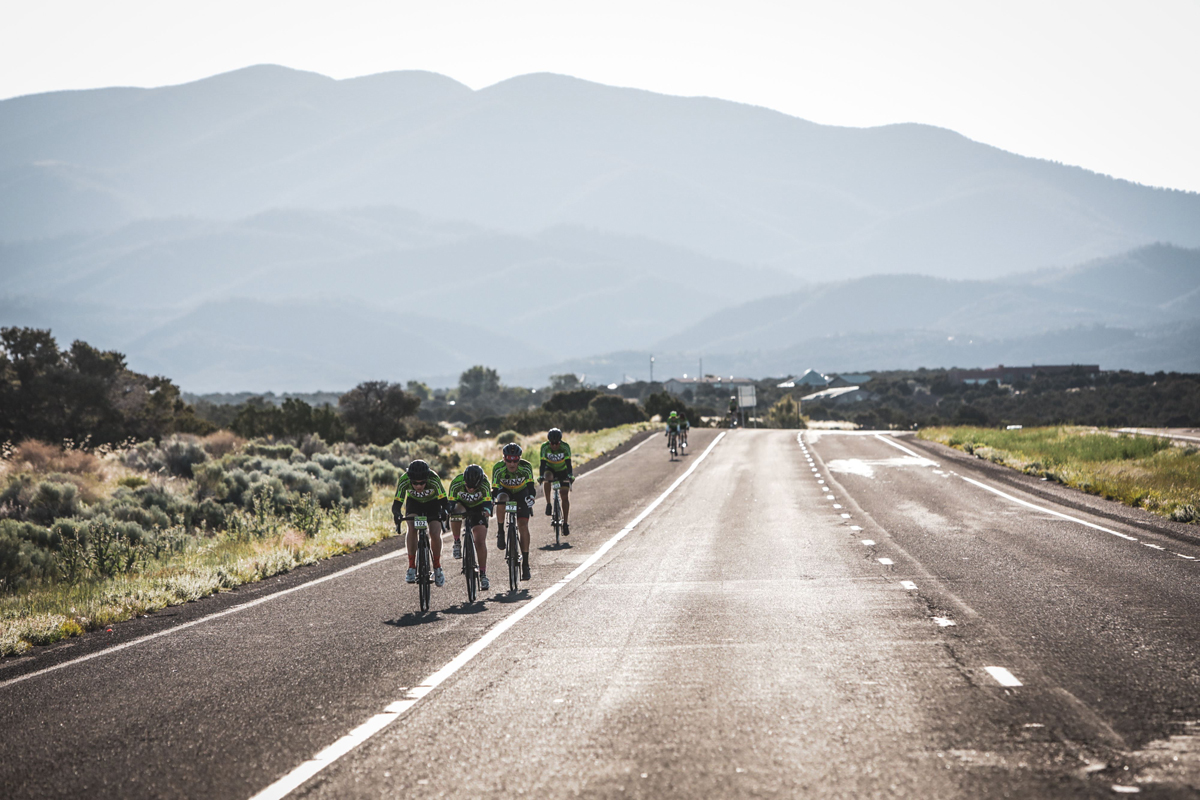
GFNY Santa Fe takes place on September 19, 2021. Photo Courtesy GFNY Santa Fe.

Vails, who worked as a bike messenger in New York City and played a bike messenger in the movie Quicksilver, won a gold medal in the Pan American Games in the individual sprint in 1983 and the silver medal in the 1984 Olympic Games in Los Angeles. Coming back for his second year to GFNY Santa Fe, Vails cites Santa Fe’s incredible scenery, art, and challenging altitude among his reasons for returning.  

“GFNY Santa Fe was an eye-opener, because of the altitude,” said Vails. “It’s a good feat in a fun way. Once I was able to climb out of town, I was able to enjoy my ride for the entire loop. You can ride at your own pace, but you’ve got to look around at all the scenery. The best part of GFNY Santa Fe is that for the recreational cyclists and the elite top of the line cyclists, you get to come test your skills and enjoy yourself at the same time.”

In addition to Vails, GFNY Santa Fe offers elite and recreational cyclists a rare opportunity in the U.S. to race a long-distanced marathon with the roads closed or monitored. Riders get to race the challenging 75-mile high-altitude course with 7,150 feet of climbing and a peak elevation of 10,350 feet at the finish high atop Santa Fe. The course transitions from the open plains and high desert to the dense pine, fir, aspen and spruce forests of the high mountains.

Following the race, there will be a block party with New Mexican food and local microbrews. Held this year on September 19th, riders will experience the beauty of Santa Fe as the seasons change, along with the area’s world-famous history, culture, art and cuisine.

For more information go to GFNY Santa Fe.

GFNY Santa Fe takes place on September 19, 2021. Photo Courtesy GFNY Santa Fe.

The League of American Bicyclists Launches Campaign to Reach 1 Million Miles of Bike Trips

1

WASHINGTON, DC (August 31, 2021) — Bikes can be used for any type of transportation – from commuting to work or school, running errands around town, and even getting groceries. Beginning on September 1, the League of American Bicyclists is challenging Americans to begin taking more transportation trips by bike rather than hopping in a car for its “Drive Less, Bike More” campaign. Using the Love to Ride platform to track participants’ rides, the League is encouraging Americans to rack up 1 million miles in bike trips that would have been car trips by the end of 2021 as part of “Drive Less, Bike More”.

Bike more. Drive less.“You don’t have to turn your life upside-down and sell your car to make an impact,” said Bill Nesper, executive director of the League of American Bicyclists. “Just converting one or two short car trips per week to bike trips is good for your health, your family’s health, the environment, and even putting cash usually spent on gas money back into your pocket. Start with one trip a week, track it through the Love to Ride app, and see the benefits add up.”

In the United States, nearly 50 percent of trips taken by car are less than three miles long and 35 percent are less than two miles long. These are short trips that if taken by bike instead of by car could be both convenient and contribute to big changes for the planet and the participant.

The launch of the “Drive Less, Bike More” campaign coincides with Cycle September, the final month in the National Bike Challenge hosted by the League and Love to Ride. Already, participants in the National Bike Challenge, which began in May, have ridden more than 200,000 miles by bike for transportation. Seeing the amount of biking for transportation people have already pedaled, the League and Love to Ride felt it only natural to up the ante and encourage people to contribute to a shared goal of reaching 1 million miles.

To participate, riders sign up through the League’s partner Love to Ride at www.lovetoride.net/usa, complete a survey on their current transportation habits, and begin logging bike rides. All rides under 3 miles and other bike rides marked as “transportation” rides will count towards the 1 million miles goal of “Drive Less, Bike More.” Love to Ride offers integrations through various applications such as Strava so that riders can either track and upload their bike rides as they normally would, or they can manually add trips and miles directly through Love to Ride.

“At Love to Ride, we’ve been encouraging more people to ride bikes for years through our platform, partners, and campaigns like the National Bike Challenge,” said Thomas Stokell, CEO of Love to Ride. “We’re stoked to be working with the League to track our riders’ progress to 1 million miles of bike trips for transportation and promote the ‘Drive Less, Bike More’ initiative.”

2021 IRONMAN 70.3 World Championships Set for September 18, 2021 in St. George, Utah

0

ST. GEORGE, Utah / TAMPA, Fla. (September 2, 2021) – Following a COVID-induced hiatus in 2020, more than 3,000 professional and age-group athletes from over 80 countries, regions, and territories will descend upon stunning Southwestern Utah on Saturday, Sept. 18 for the 2021 Intermountain Healthcare IRONMAN® 70.3® World Championship presented by the Utah Sports Commission. Among them will be over 100 of the world’s top professional triathletes who will battle for a piece of the $350,000 USD total professional prize purse and the title of IRONMAN 70.3 World Champion.

“After a long wait, we are thrilled to again host a world championship race for our top competitors with this stunning Southwestern destination of St. George, Utah,” said Andrew Messick, President & Chief Executive Officer for The IRONMAN Group. “We have a truly world-class field of professional athletes coming to compete which promises to provide an exciting race day.”

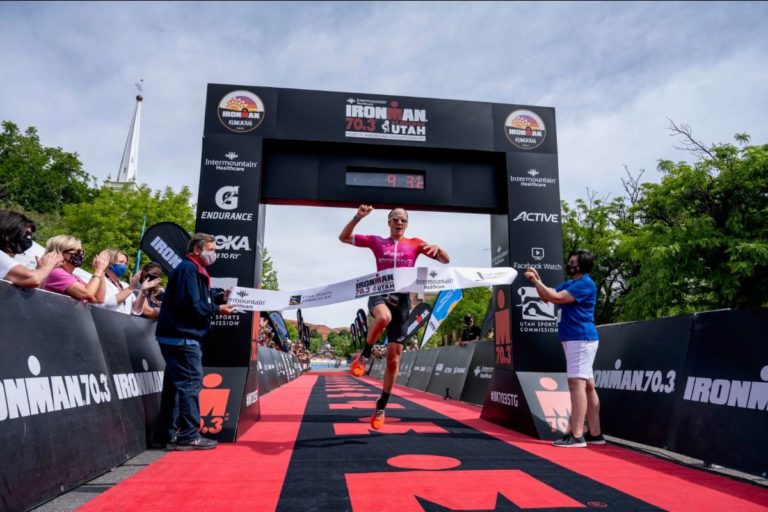
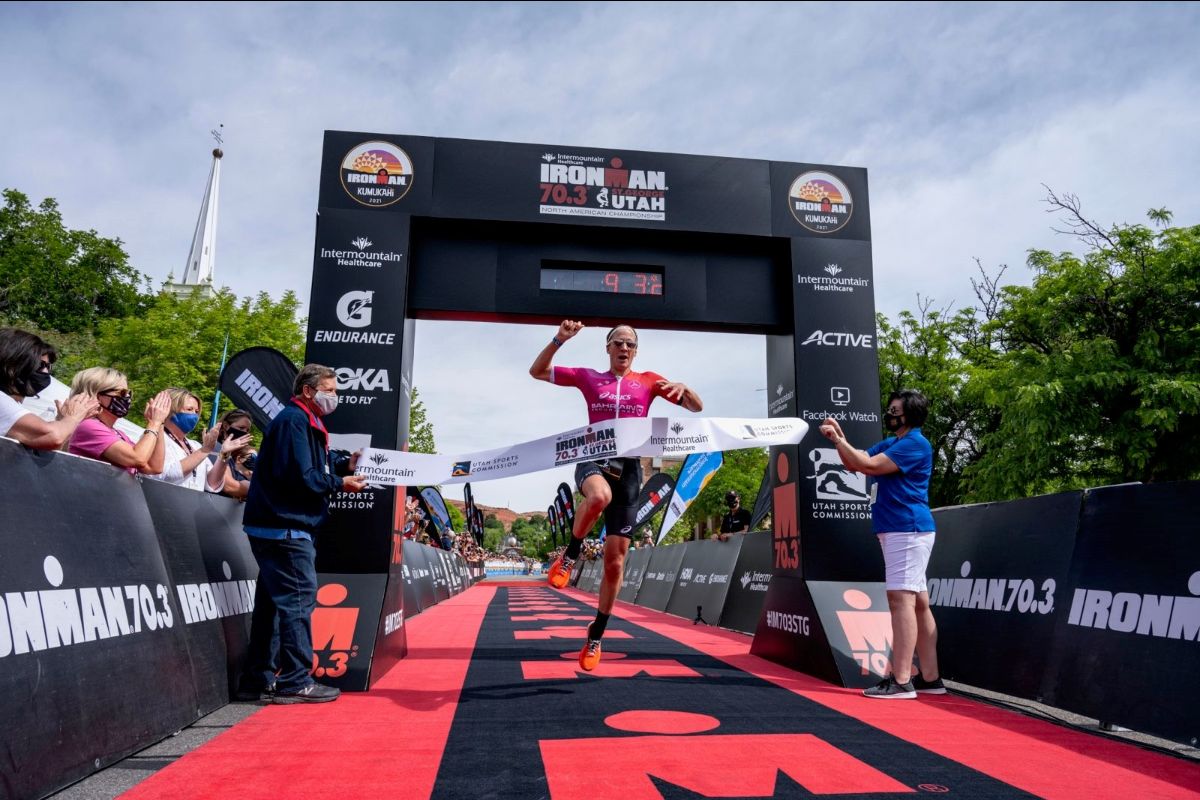
Daniela Ryf (CHE) claims victory at the 2021 Intermountain Healthcare IRONMAN 70.3 North American Championship in St. George, Utah. Photo courtesy IRONMAN

Professional Women’s Field

Since the first IRONMAN 70.3 World Championship was held in 2006 the women’s race has seen 10 different champions from five different countries. Swiss Daniela Ryf has won an event-best five times, and is coming off an undefeated season, including a win in St. George at the IRONMAN 70.3 North American Championship earlier this year. Together with Mirinda Carfrae (AUS) and Leanda Cave (GBR), Ryf also holds the distinction of having won both the IRONMAN World Championship® and the IRONMAN 70.3 World Championship.

Aiming to dethrone Ryf will be a stellar group of professional female triathletes, including Lucy Charles-Barclay (GBR), who is coming off a recent win at 2021 IRONMAN 70.3 European Championship Elsinore. Charles-Barclay edged out Holly Lawrence (GBR) in that event, who as the 2016 IRONMAN 70.3 World Champion and multiple-time IRONMAN 70.3 winner will also be aiming for the top podium spot in St. George. Additional global competition will come from Paula Findlay (CAN), Taylor Knibb (USA), Kat Matthews (GBR), Skye Moench (USA), Emma Pallant-Browne (GBR), and Ellie Salthouse (AUS), each of whom continue to impress on the IRONMAN and IRONMAN 70.3 circuits.

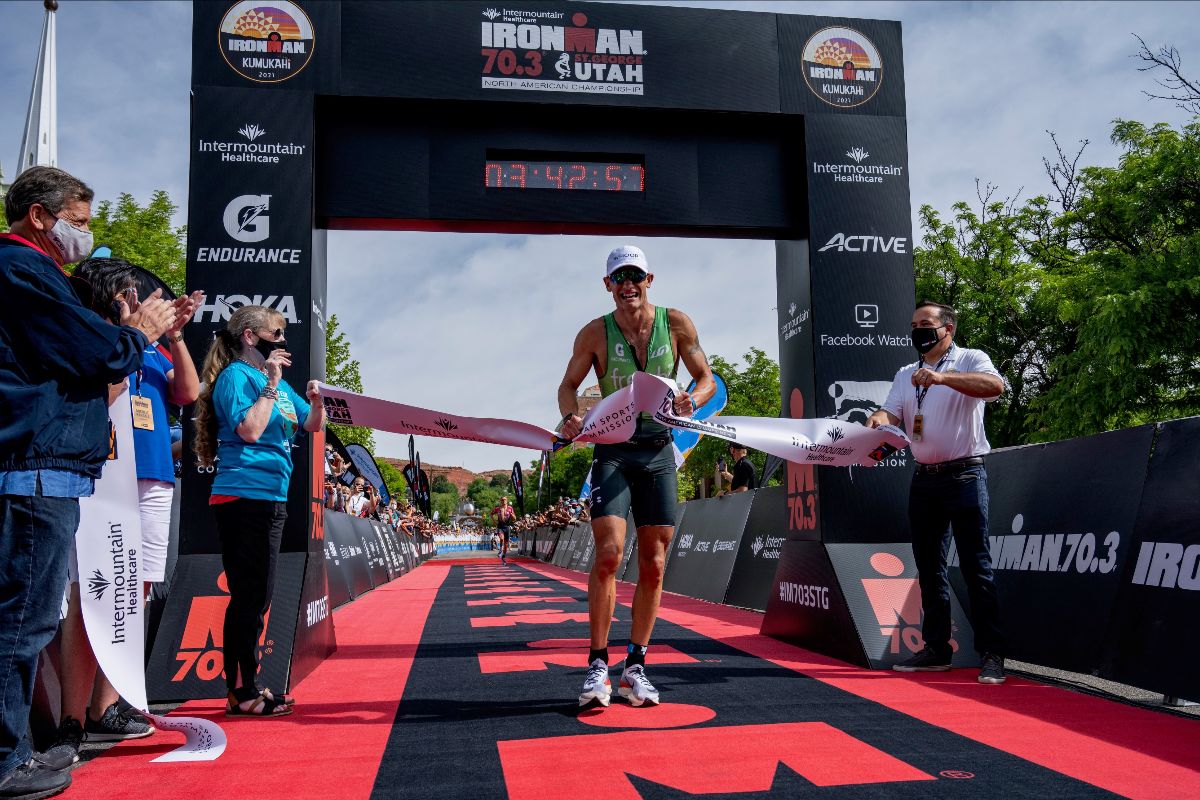
Lionel Sanders (CAN) claims victory at the 2021 Intermountain Healthcare IRONMAN 70.3 North American Championship in St. George, Utah. Photo courtesy IRONMAN

Professional Men’s Field

On the men’s side, a star-studded field of professional talent will come together aiming to create history in St. George. With no clear frontrunner, a few of the dominant competitors that could take a shot for a podium spot include the defending IRONMAN 70.3 World Champion from 2019 in Nice, France, Gustav Iden (NOR); Kristian Blummenfelt (NOR), who has momentum coming into St. George following his recent Tokyo 2020 Olympic Triathlon win; and Lionel Sanders (CAN), who won the IRONMAN 70.3 North American Championship in St. George earlier this year and has over 20 IRONMAN 70.3 wins to his name. Also in contention are Alistair Brownlee (GBR), the 2012 and 2016 Olympic Triathlon Gold Medalist as well as Javier Gomez (ESP), the 2017 IRONMAN 70.3 World Champion and 2018 IRONMAN 70.3 World Championship third place podium finisher. Finally, American’s Ben Kanute (USA) and Sam Long (USA) look to claim home nation victories. Kanute has multiple IRONMAN 70.3 wins and podium finishes in recent years and a second-place finish at the 2017 IRONMAN 70.3 World Championship, the last time the event was held on US soil. Sam Long comes in on the top of his game having won the 2021 IRONMAN Coeur d’Alene triathlon and the 2021 IRONMAN 70.3 Boulder triathlon.

The 2021 Intermountain Healthcare IRONMAN 70.3 World Championship presented by Utah Sports Commission will kick off with a 1.2-mile (1.9km) ROKA Swim Course, which takes place in Sand Hollow Reservoir located in Sand Hollow State Park in Hurricane, Utah. Next, a challenging 56-mile (91.3km) Ventum Bike Course will lead athletes through stunning desert landscapes with 3,442 feet (1,049 meters) of elevation gain and an unforgettable climb into Snow Canyon State Park and surrounding Washington County. The 13.1-mile (21.2km) HOKA ONE Run Course will take athletes on two loops through the stunning Red Hills Parkway and wind through historic downtown St. George where the finish line is located.

Since 2014, the IRONMAN 70.3 World Championship has been rotating among premier cities around the globe following its early years in Clearwater, Fla., USA (2006-2010) and Henderson, Nev., USA (2011-2013). The IRONMAN 70.3 World Championship has included picturesque locations like Mont-Tremblant, Quebec, Canada (2014); Zell am See, Austria (2015); Queensland, Australia (2016); Chattanooga, Tenn., USA (2017); Nelson Mandela Bay, South Africa (2018) and Nice, France (2019). Following the cancellation of the 2020 edition, St. George, Utah, USA will play host to the event in 2021 and 2022. In 2023, the event returns to Europe with Lahti, Finland hosting.

For more information about the 2021 Intermountain Healthcare IRONMAN 70.3 World Championship presented by Utah Sports Commission event, please visit www.ironman.com/im703-world-championship

XTERRA Racing Returns to Utah for 16th Year September 25-26, 2021

OGDEN, Utah (August 30, 2021) — It’s long been said that XTERRA is more than just a race, it’s a lifestyle. Perhaps nowhere is that more evident than in Ogden, Utah where the Mayor, Mike Caldwell, was the founder and race director for the first XTERRA event in Ogden back in 2004. 

Mayor Caldwell and a collection of the most welcoming locals to be found anywhere rallied the entire community to bring off-road triathlon to their hometown 16 years ago and are themselves everyday XTERRA people. They swim, bike, and run in the mountains, have fun, eat well, laugh, and unpretentiously perpetuate the sports’ motto to “Live More.”

Photo courtesy XTERRA.

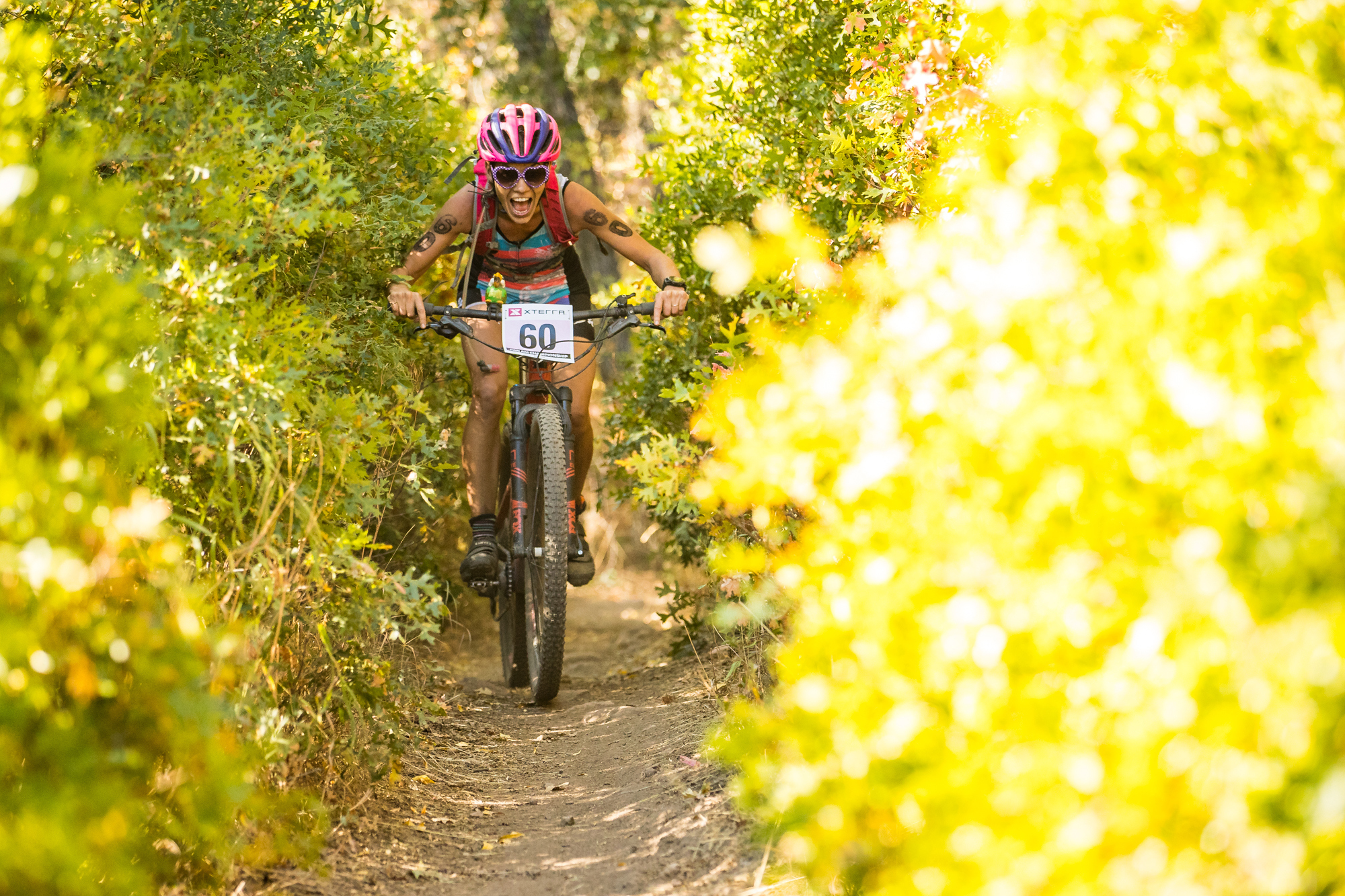
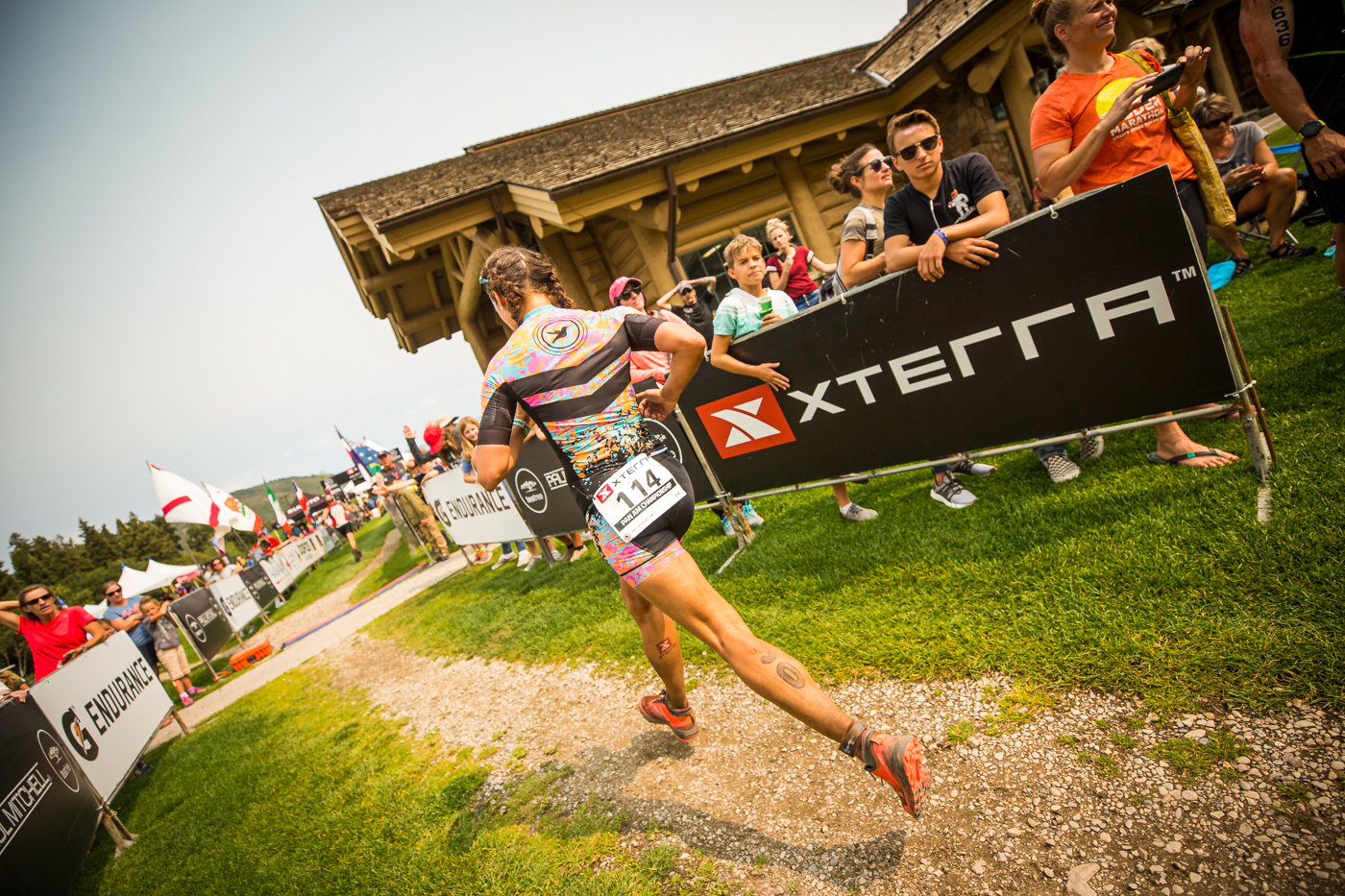
This September 25-26, hundreds of the very best amateur and professional triathletes and trail runners from around the world are traveling to the State of Sport to battle for the title of XTERRA Champion.

The main event, the XTERRA USA Championship off-road triathlon, combines a one-mile swim in Pineview Reservoir (4,900-feet elevation), follows with an 18-mile mountain bike leg that climbs more than 3,000-feet to the top of Sardine Peak (7,300-feet elevation), and culminates with a 7-mile trail run featuring another 600-feet of climbing on trails around Snowbasin Resort in the Wasatch Range.   There is also a half-distance sprint off-road triathlon and relay-team options.

The fastest racers in each five-year age group will be honored as the XTERRA USA Champion. Elites will be competing for $25,000 in prize money, and cameramen will position themselves around Wheeler Canyon and the Wasatch Range to capture all the action for a nationally syndicated TV show.“We love bringing the XTERRA Tribe together in Utah, the energy level is just incredible,” said Janet Clark, president of XTERRA. “Ogden and Snowbasin are simply the best – between the facilities at Snowbasin, the great restaurants and atmosphere along Historic 25th Street in Ogden, and the unbelievably supportive community – we can’t ask for a better venue.”

Photo courtesy XTERRA.

The triathlons are Saturday, September 25 and on Sunday, the 26th, it’s the trail runners turn on the mountain.

The XTERRA Trail Run National Championship half-marathon features scenic views, technical trails, and big climbs.  The half-marathon, 5x5K relay, 5K, and 10K trail runs are open to everyone, and it’s important to note that you don’t have to be fast to join in the fun.  For some, it’s just about finishing and that’s okay as XTERRA is all about perpetuating the healthy, active, outdoors lifestyle.

In addition to the weekend races XTERRA will host a free community-based Mountain Bike Night on Thursday, and an expo on Friday with free run and bike races for kids, triathlon clinics, and the Paul Mitchell hair cut-a-thon for charity.

This year, experience XTERRA in Utah for yourself.  Have a look at the schedule for places and times, and whether you race or not – join in the fun and excitement of XTERRA.  For more info and links to registration visit www.xterrautah.com, or call toll-free to 877-751-8880. Live More!

Hot Local Tours (in Cool Utah Places)

By Tom Diegel — This June was a harsh early reminder that Utah is a HOT place in the summer! And while bicycling is a good hot weather activity since we enjoy the convection associated with our speeds, realistically it’s weather that allows for short rides. But we still want adventure rides! Long days in the saddle, and overnight/multi-day bikepack trips, especially as our summer fitness comes around. So what to do? Sun Valley singletrack and Teton area gravel grinders are nice, but at 4.5 hours away those are a bit painful for weekend forays. So, what’s an ambitious Utah adventure cyclist to do locally? Go high!

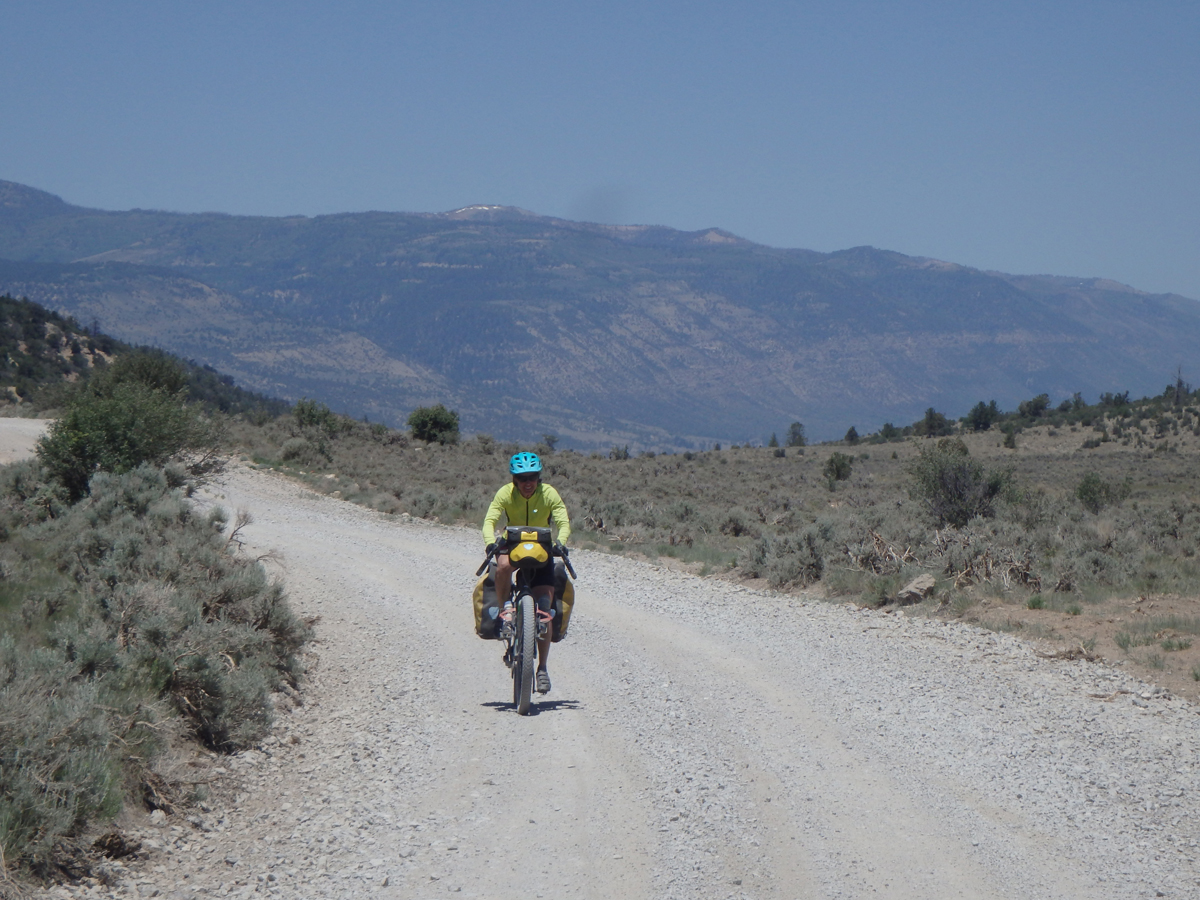
When you are in Salt Lake Valley it’s easy to look up towards the Wasatch for the alluring mountains and the associated lower temperatures, and indeed we are blessed with a lot of good singletrack that is both high and shady. But it’s pretty challenging to find a good combination of bikepack-able trails or roads, available water, and decent campsites in our steep local Wasatch. However, doing a bit of a drive beyond the Wasatch gets one quickly into the land of endless gravel roads, little traffic, a surprising amount of water, great campsites, and blessedly cooler temperatures at 9,000 to 11,000 feet.

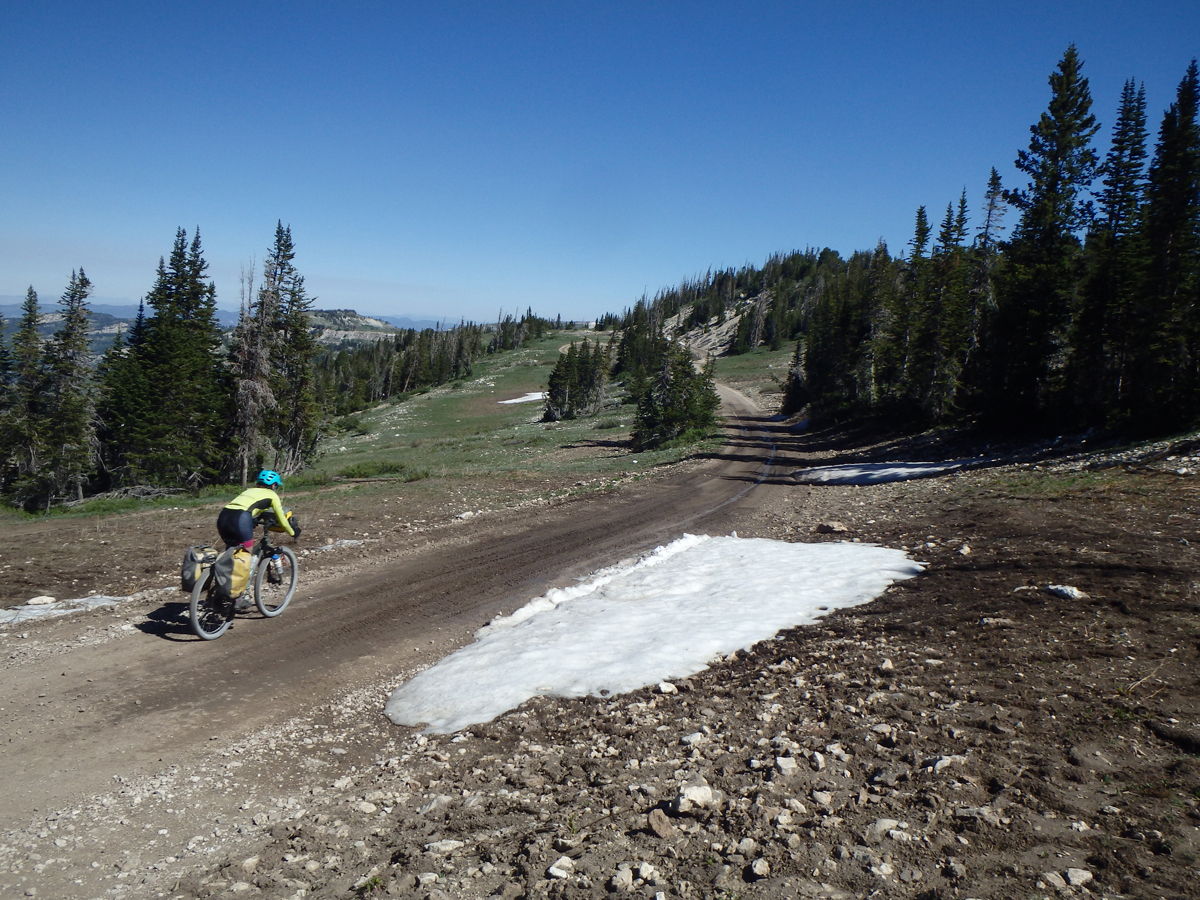
Ashley Patterson on Skyline Drive in Central Utah. Photo by Tom Diegel

Uintas – the forgotten stepchild of local mountains, the Uintas are probably best known to cyclists for a couple of great road rides up the Mirror Lake Highway and Highway 35 up to Wolf Creek pass. But a keen eye will spot a few gravel roads heading off from each of those, and those represent plenty of opportunity for adventure. The Soapstone Basin road is a gravel connection between those two highways via a nice climb and descent, and has spurs going off it to the east and west that get you into even-more remote high elevation gravel roads. Another good Uinta access option is the road that climbs up out of Heber City (Center street) past Timber Lakes up over 4000 feet into the Uintas, and after the summit it connects to the west side of the Wolf Creek pass on highway 35 via Mill Hollow road, to the east side of Wolf Creek Pass via the West Fork of the Duchesne road, and to Highway 40 via Currant Creek Road, which in turn provides an easy connection past Daniels Summit and Strawberry Reservoir into the 9000+ foot terrain between Highway 40 and Highway 6.

Many of us have ridden or raced up the Chalk Creek Road out of Coalville as an out and back on the pavement, but what is lesser known is that off the end of the pavement it turns to nice dirt/gravel and connects over to the northwest side of the Uintas, where the North Slope Scenic Byway road traverses the whole north slope of the Uintas around the cool 9000 foot level and crosses many permanent streams with great adjacent camp sites en route to Flaming Gorge reservoir.

Great views and an escape from the heat on Skyline Drive in Central Utah. Photo by Tom Diegel

Manti Skyline – If the Uintas are the forgotten stepchild, the Manti Skyline is the never-known third cousin. We see it off to the west as we drive down to Moab, but as more of a plateau than a mountain range it doesn’t really get the respect it probably deserves since it’s not as craggy and dramatic as its neighbors Mt. Nebo, Timpanogos, and Cascade Ridge, but it hides a cycling jewel: Skyline Drive. Discreetly leaving highway 6 about two-thirds on the way between Spanish Fork and Soldier Summit, Skyline Drive climbs and then winds and undulates for 27 miles to the intersection with Highway 31 (the paved road that connects Fairview/highway 89 with Huntington and Price), follows that paved road for 10 miles, then peels off it and goes 55 more miles all the way to I-70, and spends most of its time between 9,500 and 11,000 feet, where even on a 100 degree day in the valleys it’s only in the mid-70’s at those elevations.

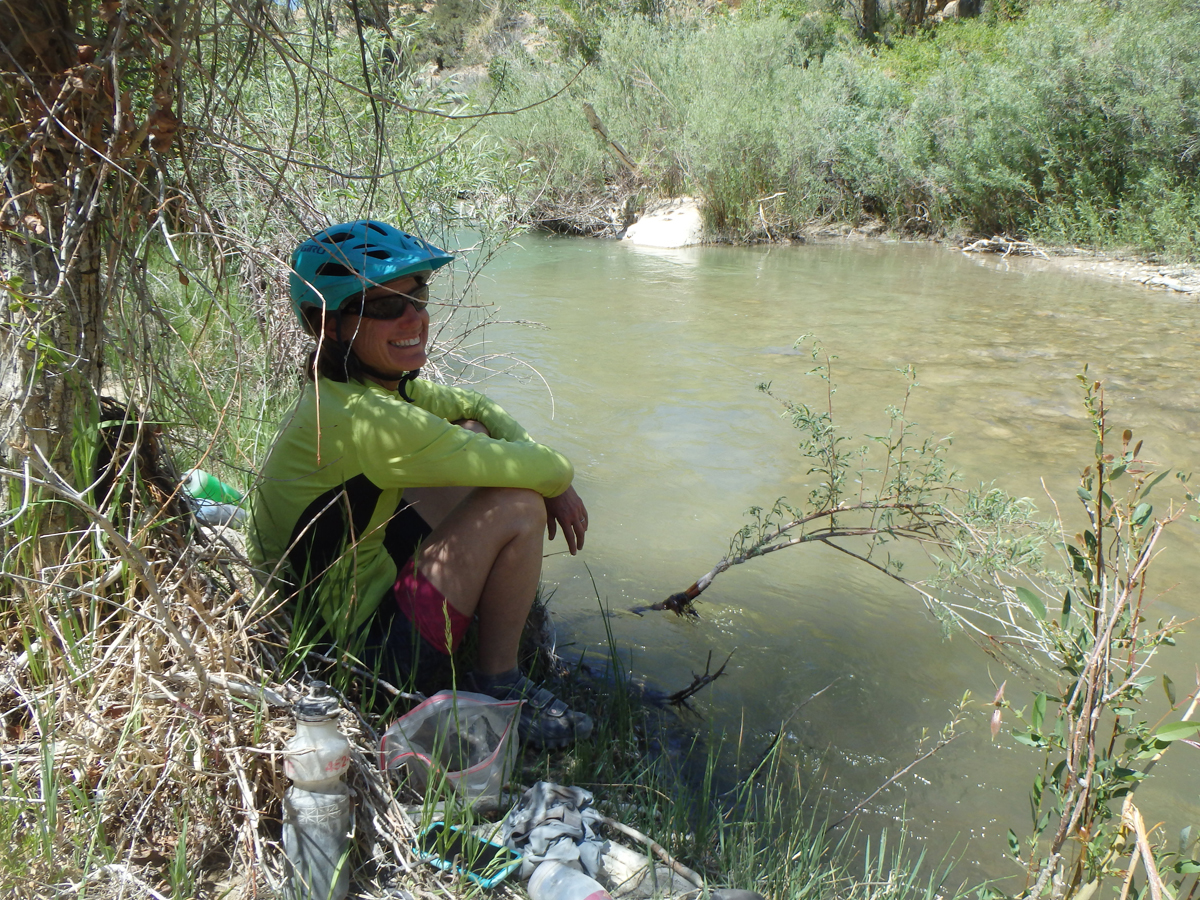
Taking a break by the river. On Skyline Drive in Central Utah. Photo by Tom Diegel

If you can figure out a point to point trip that’s great, but there are also lower elevation parallel roads that connect Scofield reservoir and Joe’s Valley Reservoir on the east side to enable nice loops. Even though these are lower elevation roads they are still mostly over 7000 feet, and due to the Central Utah Project, there are reservoirs seemingly everywhere both down low and up on Skyline Drive that were built to supply farmers in the valleys on both sides of the plateau, so camping and refreshing swim options are plentiful. Note that the southern section of the Skyline Drive provides more enjoyable riding, but it is a bit rockier and therefore slower than the relatively well-graded graded gravel road of the northern section, and despite the fact that it’s called a “plateau”, the whole thing has many 500+ foot climbs and descents that will test your legs and lungs at over 10,000 feet.

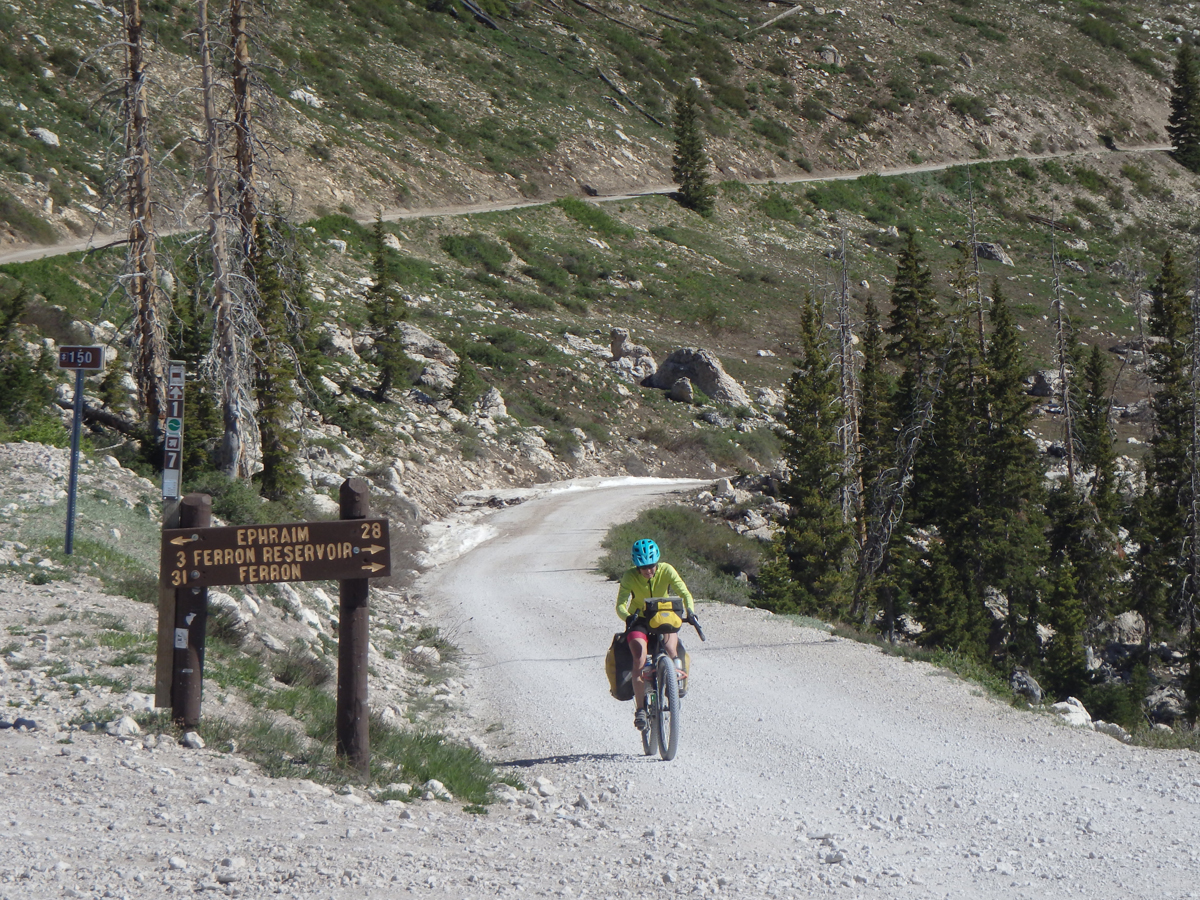
Midway between Ferron and Ephraim, on Skyline Drive in Central Utah. Photo by Tom Diegel

The up-and-coming Western Wildlands route that is a farther-west – and ruggeder – version of the Great Divide route utilizes some of these roads as it winds through Utah, and south of I-70 it continues up into the equally-high and cool Aquarius Plateau and the Bryce area, which are also great mid-summer zones but are a bit more of a drive for an adventurous weekend of riding.

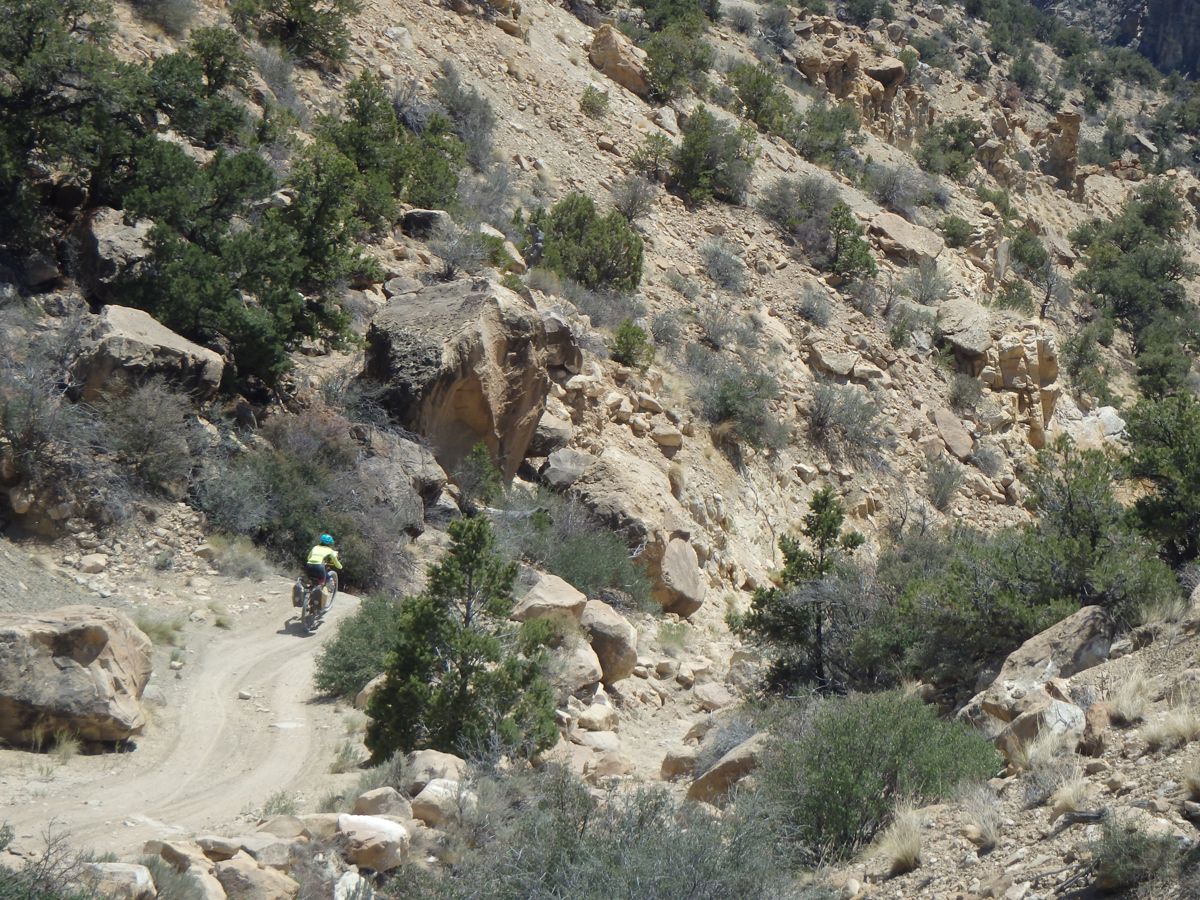
Ashely Patterson descending Skyline Drive in Central Utah. Photo by Tom Diegel

It doesn’t take too much map-reading to identify plenty of 50-100 mile loops in that Uinta-to-Highway 6-to-Skyline Drive that can be done over a weekend, and being only a 1-2 hour drive from the Salt Lake Valley, it’s easy to leave from home Saturday morning and get in a nice weekend of bikepacking in to recharge the batteries and get in some nice adventurous riding without cooking yourself in the Utah heat!


5 Canyons Ride Set for September 25, 2021 in Salt Lake City

0

5 Canyons Gaining National Renown

The beauty and serenity of an early morning canyon bike ride is unmatched, and on Utah’s Wasatch Front, there is an abundance of beautiful canyons to ride. Many cyclists enjoy a (literally) breath-taking ride up one of these canyons and then call it a day. Some even occasionally string a few canyons together to up the ante, but how many cyclists can say they’ve tackled all five of the major riding canyons surrounding Salt Lake City in one day?

Scenes from the 5 Canyons Bike Challenge. Photo courtesy 5 Canyons.

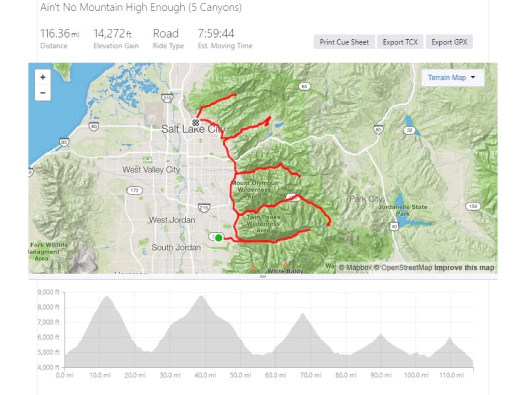
The 5 Canyons Bike Challenge has been attracting cyclists who thirst for challenge (and glory) for four years now. Held ever year on the second odd-numbered Saturday in September, the ride is one of the most daunting—and beautiful—cycling challenges in the country, ascending more than 14,000 feet over 116 miles through all five of Salt Lake City’s picturesque riding canyons before finishing at the Utah Capitol building complex.

Comprising three HC climbs and two Category 2 climbs, the ride has the steepest average gradient and more elevation gain than most other rides in America. It is for this reason that riders from around the country (and even world) are starting to take notice.

Scenes from the 5 Canyons Bike Challenge. Photo courtesy 5 Canyons.

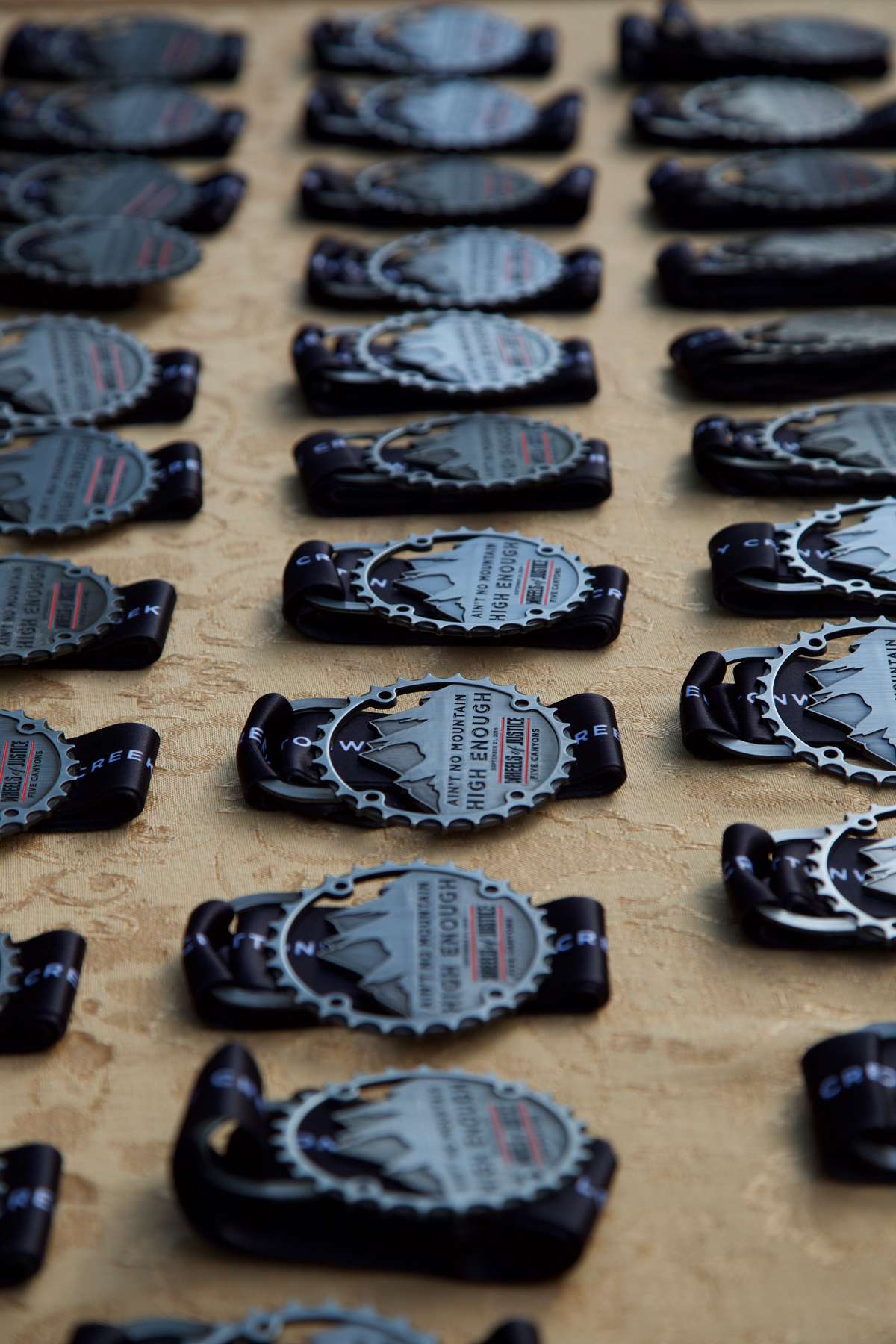
The ride starts at the parking lot in front of the Black Bear Diner in Sandy and then proceeds to climb up Little Cottonwood Canyon, Big Cottonwood Canyon, Millcreek Canyon, Emigration Canyon, and finally City Creek Canyon. Riders can choose to climb one, two, three, four, or all five canyons. Those who conquer all five canyons will receive a killer finisher’s medal, courtesy of Utah-based DNA Cycling (Drive Marketing).

All riders, regardless of how many mountains they conquer, will enjoy fully stocked aid stations, and will receive a free event drawstring backpack, Specialized water bottle, event t-shirt, $25 credit for the 5 Canyons Silent Auction, discounted lodging, and good karma!

The 5 Canyons ride is a fundraiser for Wheels of Justice, a local nonprofit dedicated to putting an end to child abuse. Wheels of Justice is not only a cycling club but a confederation of cycling clubs, all dedicated to the cause. Wheels of Justice and its members recognize that even the most serious of problems can be addressed in a fun way.

Wheels of Justice Riders in the 5 Canyons Bike Challenge. Photo courtesy 5 Canyons.

For the past few years, Wheels of Justice’s sister organization, Wings of Justice, has been organizing a challenging ultramarathon on the same day as the bike challenge, so runners as well as cyclists can take part in the fun.

However, you don’t have to be a cyclist or a runner to enjoy 5 Canyons or support the fight. The night before the ride, Wheels of Justice and Wings of Justice put on the 5 Canyons festival in Holladay, with food, exhibitors, and a silent auction for everyone to enjoy. The 5 Canyons Festival will take place on Friday, September 24th at 5:00 PM with the ride starting the following morning at 7:00 AM.

5 Canyons 2021 Ride Map

To learn more about the ride, visit www.5canyons.org. To learn more about Wheels of Justice, including how you can join for free, visit www.teamwheelsofjustice.org.

Awards from the 5 Canyons Bike Challenge. Photo courtesy 5 Canyons.

Caliente, Nevada Offers Trails to Satisfy Any Type of Rider

By Danica Fife — Popular mountain biking influencer Danica Fife recently took a trip to Caliente to test out new trails in the area. Check out her review below!

Less than 2.5 hours from Las Vegas is a stunning biking destination. In the small town of Caliente, Nev., there are multiple trails to satisfy any type of rider. From the progression jumps at the skills park to chunky rock gardens at Barnes Canyon, this area will bring a smile to any tech or flow rider.

Caliente skills park. Photo courtesy Danica Fife

Caliente Skills Park

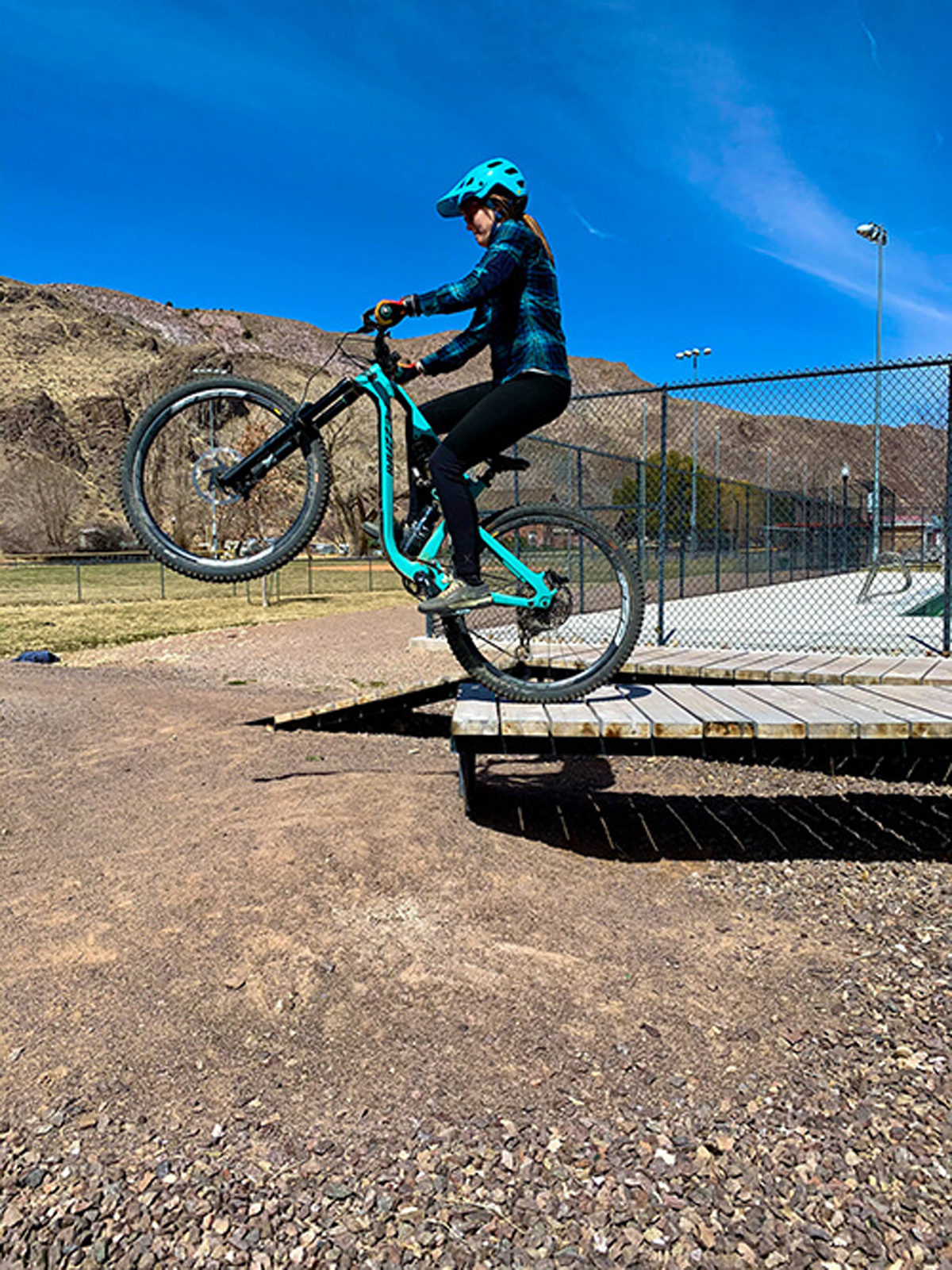
Jumps, skinnies, a pump track, you name it! This mountain bike skills zone is an optimal place to hone in some essential bike handling skills.

My favorite area was the progression jumps. They were poppy and smooth. Also, the jumps were built in a way that made them extremely case-friendly. Trust me, I had my fair share of cases that day!

Barnes Canyon mountain biking, Caliente, Nevada. Photo courtesy Danica Fife

Barnes Canyon

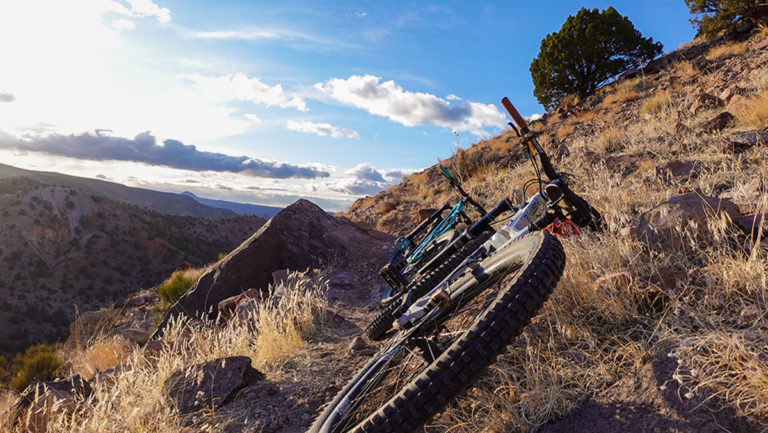
These trails keep you on your toes. One trail can be full of flow, then the next consists of slow rock moves. After a riding-filled day, I can’t think of a better way to end the adventure than pitching up camp at the bottom of the majestic Tepee Rocks. The scenery here is definitely one of those special places where you have to stop mid-ride just to take it in.

Kershaw-Ryan State Park in Lincoln County, Nevada. Photo courtesy Danica Fife

Kershaw-Ryan State Park

This area has a mellow 5.3 mile loop with views for miles. It has a bonus short black diamond option as well, if you are feeling spicy.

This trail called Skidsteer was the favorite of the trip. Even though it only took a few minutes to ride down! It consisted of steep sandy corners and rock gardens that made you realize the trail’s name was extremely accurate.

Cathedral Gorge

You caught me, this isn’t biking. However, we have to strech our legs out every once in a while right? While Cathedral Gorge does have a biking option, I opted for exploring the slot canyons. This state park is 15 minutes out of Caliente and 10/10 would recommend this area. Just the views alone from the road were worth it.


Melisa Rollins joins TWENTY24 Pro Cycling

From Long-Time Support Crew to Sixth Place in LIFETIME Leadville 100 MTB and Second Place in LeadBoat Challenge

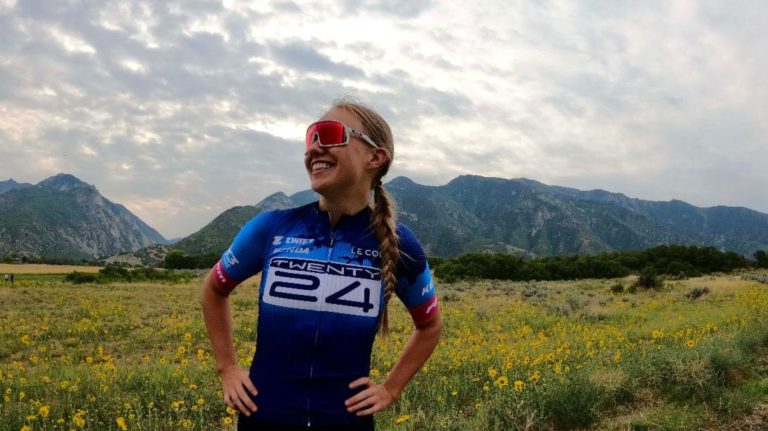
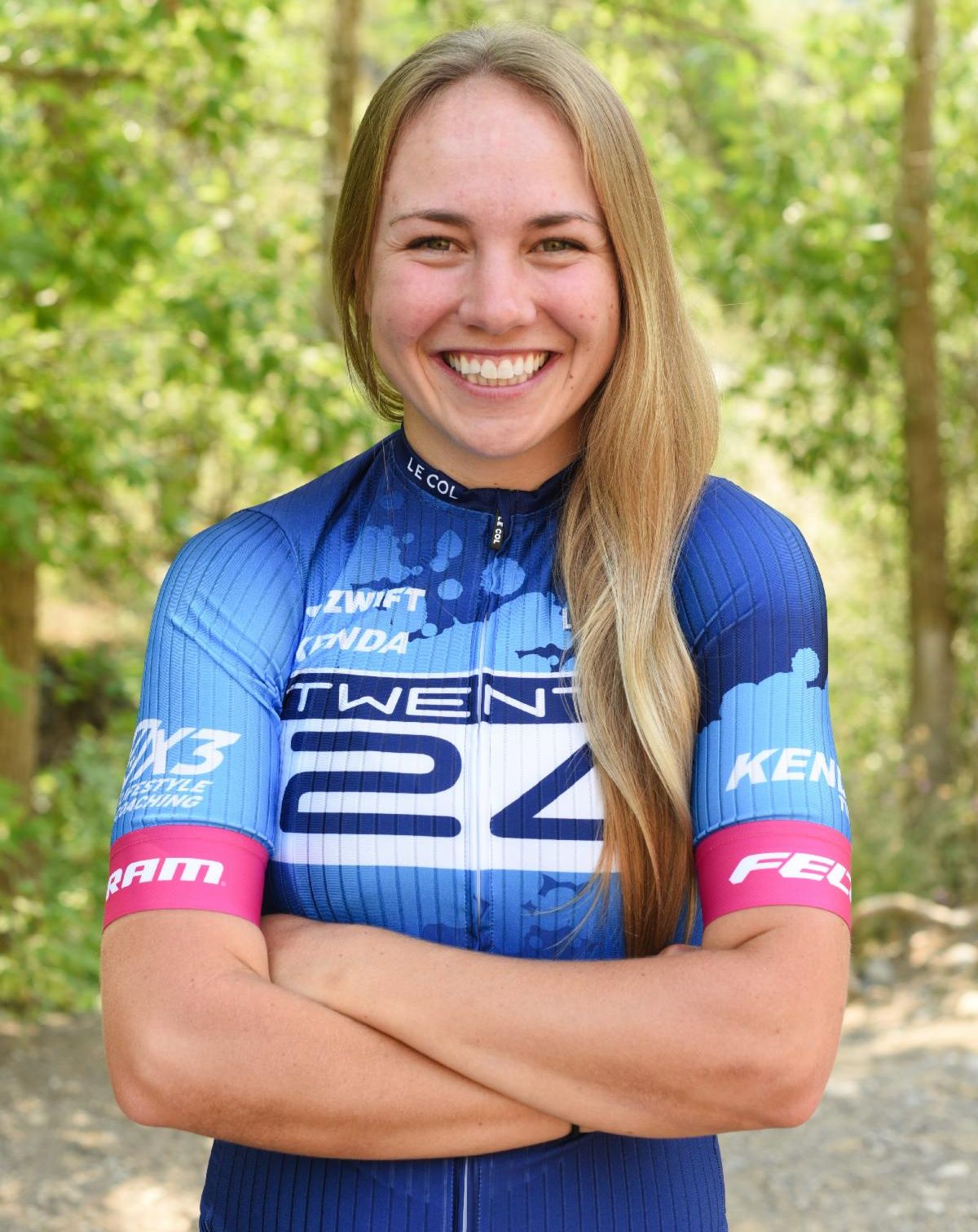
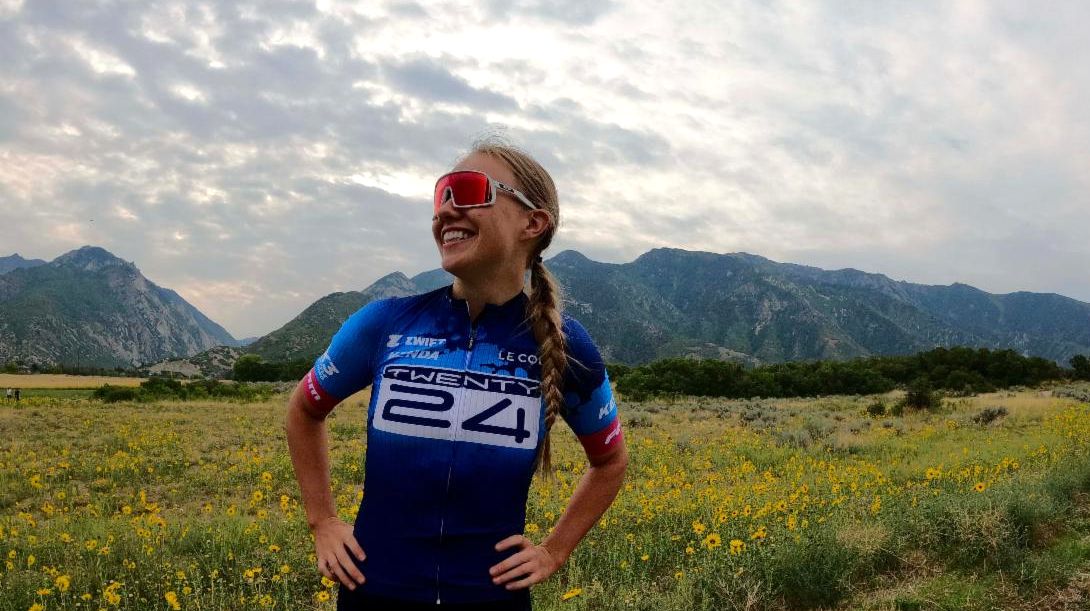
BOISE, Idaho (September 2, 2021) — Near the end of a breakout 2021 season, while competing at the legacy LIFETIME Leadville 100 MTB race, University of Utah graduate Melisa Rollins was recruited by TWENTY24 Pro Cycling. As the team develops a new roster and new team goals heading into the 2022 season, Rollins has the versatility and adaptability the team is looking for.

Melisa Rollins joins TWENTY24 Pro Cycling Team for remainder of 2021 and 2022. Photo courtesy TWENTY24 Pro Cycling.

“I have been recruiting talented development athletes for more than a decade and I know Melisa has what it takes to go as far as she wants in cycling regardless of discipline,” said TWENTY24 Pro Cycling General Manager, Nicola Cranmer. “I was impressed with her top ten finish and her positive attitude—Melisa checks so many of the boxes that determine a rising star and I’m excited to create a pathway to her performance goals,” Cranmer added.

Rollins’ debut race with TWENTY24 is set for September 4, 2021 at the Park City Point to Point MTB Race in Utah, which features 75 miles of mostly single-track and 12,000 feet of climbing. She’ll follow with the renowned LIFETIME Chequamegon 40 event in Wisconsin, a race held on the famed American Birkebeiner Ski Trail on September 18, 2021. Rollins will roll into winter with a competitive Zwift race schedule ahead of her.

“I’m super excited to join the team—there is a wealth of knowledge on Team TWENTY24,” said Melisa Rollins. “Though I’ve had a lot of help from the Hangar 15 Bicycles shop team this past year, I have never really had any actual teammates to ride or race with. I’m excited to be able to get to know and watch some experienced ladies. I’m fairly new to participating in such a high level of racing, and I’m excited to be able to learn from women who I have looked up to for years. I am so proud and honored to line up in Team TWENTY24 colors,” Rollins added.

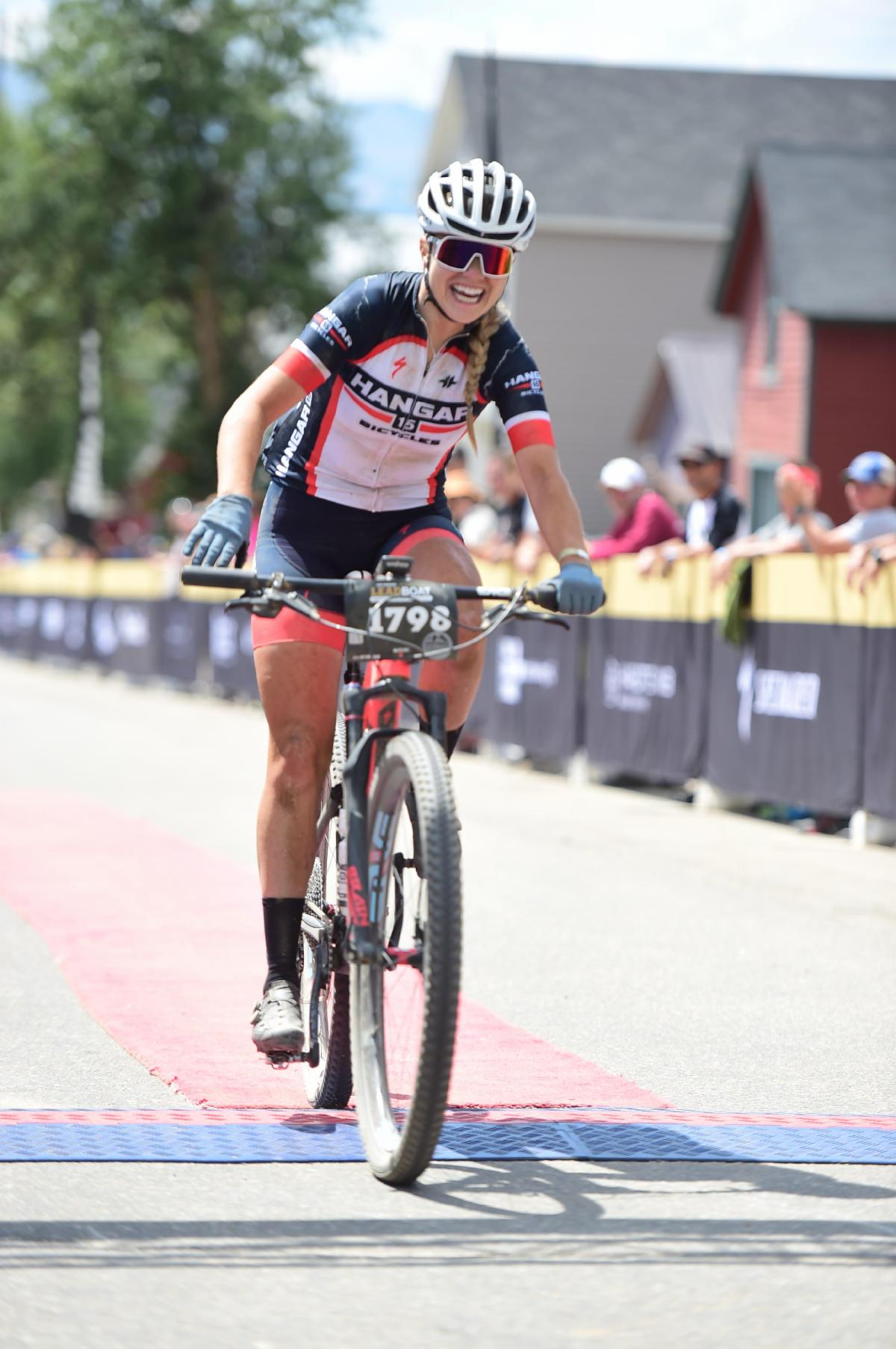
Melisa Rollins finishing 6th at the Leadville 100. Photo courtesy TWENTY24 Pro Cycling

A Utah native, Rollins balances her blossoming cycling career with her work as a chemist at ARUP Laboratories, a national nonprofit and academic reference laboratory at the forefront of diagnostic medicine based in Salt Lake City, UT. She swam competitively in high school, establishing school records in the 100 breaststroke, 200 freestyle relay, and 500 freestyle. Her road to the bike began in 2016 when her stepdad won a mountain bike in a raffle. He offered her the bike if she would commit to racing the Leadville 100. She accepted the gift and the challenge.

Why Leadville? The Leadville 100 has been a family affair for as long as she can remember. Rollins has been a support crew member for her mom, uncle, stepdad, and brother at Leadville events for many years. Her stepdad, legendary Leadville 100 MTB podcast host Elden Nelson, aka Fatty, has competed in the Leadville 100 MTB twenty-three times, her mom sixteen times (running it once), her uncle three times, her brother twice, and her biological father several times as well.

Photo courtesy TWENTY24 Pro Cycling Team

That challenge led Rollins to finish 36th in her first Leadville 100 MTB. In 2017, Rollins sustained an injury on a recon Leadville MTB ride. Completely defeated; she sidelined the bike and began competing in ultra running events. She was back in Leadville in 2018—this time on foot. The year included a string of Leadman events: Leadville Marathon, Silver Rush 50 MTB, Silver Rush 50 Run, Leadville 100 MTB, Leadville 10k run, and the Leadville 100 Trail Run. The combination of having never run more than a few miles off-road, and training for the 100-mile run, left her chronically fatigued for the following year and she has not competed in a running race since.

In 2019, recognizing that she was shooting from the hip with her training, she hired a cycling specific coach. After training with structure and purpose for six months, it was time for her third Leadville 100 MTB, this time securing a solid 6th place performance and a PR by nearly 1.5 hours. In 2021 she earned another sixth place—but this time in a highly competitive and much deeper field. She improved on her finishing time by 50 minutes.

[Editor’s Note: Melisa’s coach is longtime Cycling West contributor Sarah Kaufmann. Sarah is the owner of K Cycling Coaching. She is an elite level XC and CX racer for the DNA Pro Cycling Team. She is based in Salt Lake City, UT and can be reached at [email protected]. Check out Sarah’s articles at https://www.cyclingwest.com/author/sarah.kaufmann/]

Rollins’ palmares include wins at the 2020 Eden Epic MTB and the 2021 Firecracker 50 MTB, and a fifth place in the 2020 Belgian Waffle Ride in Cedar City, UT.

2021 Leadville 100 MTB

  1. Rose Grant, 07:23:57
  2. Moriah Wilson, 07:27:32
  3. Sarah Sturm, 07:30:56
  4. Hannah Finchamp, 07:45:13
  5. Katerina Nash, 07:47:39
  6. Melisa Rollins, 07:48:29

2021 LeadBoat Challenge

  1. Sarah Sturm (Specialized / Rapha)
  2. Melisa Rollins (Hanger 15)
  3. Jasmin Duehring (TWENTY24)
  4. Kaysee Armstrong (LIV Racing)
  5. Kristen Legan (Unattached)

Studies Show Bikeshare Programs Need More Money

By Charles Pekow — Subsidies to either riders or operators of bikeshare systems are needed to tell us more about how systems can best operate in the long term. So suggests a report from the National Academy of Sciences (NAS), The Role of Transit, Shared Modes and Public Policy in the New Mobility Landscape. “Unanswered questions are society’s commitment to provide the funding for such subsidies and who should pay what kinds of taxes, charges, and fees to fund them,” the paper says.

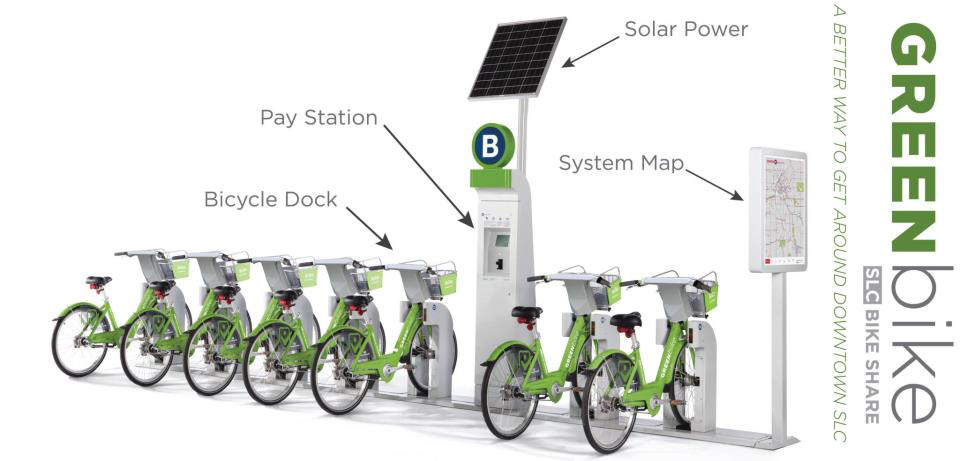
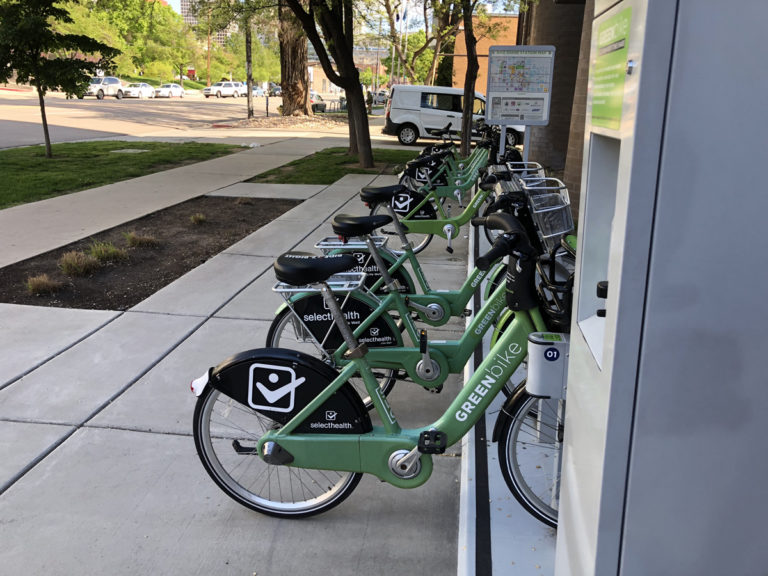
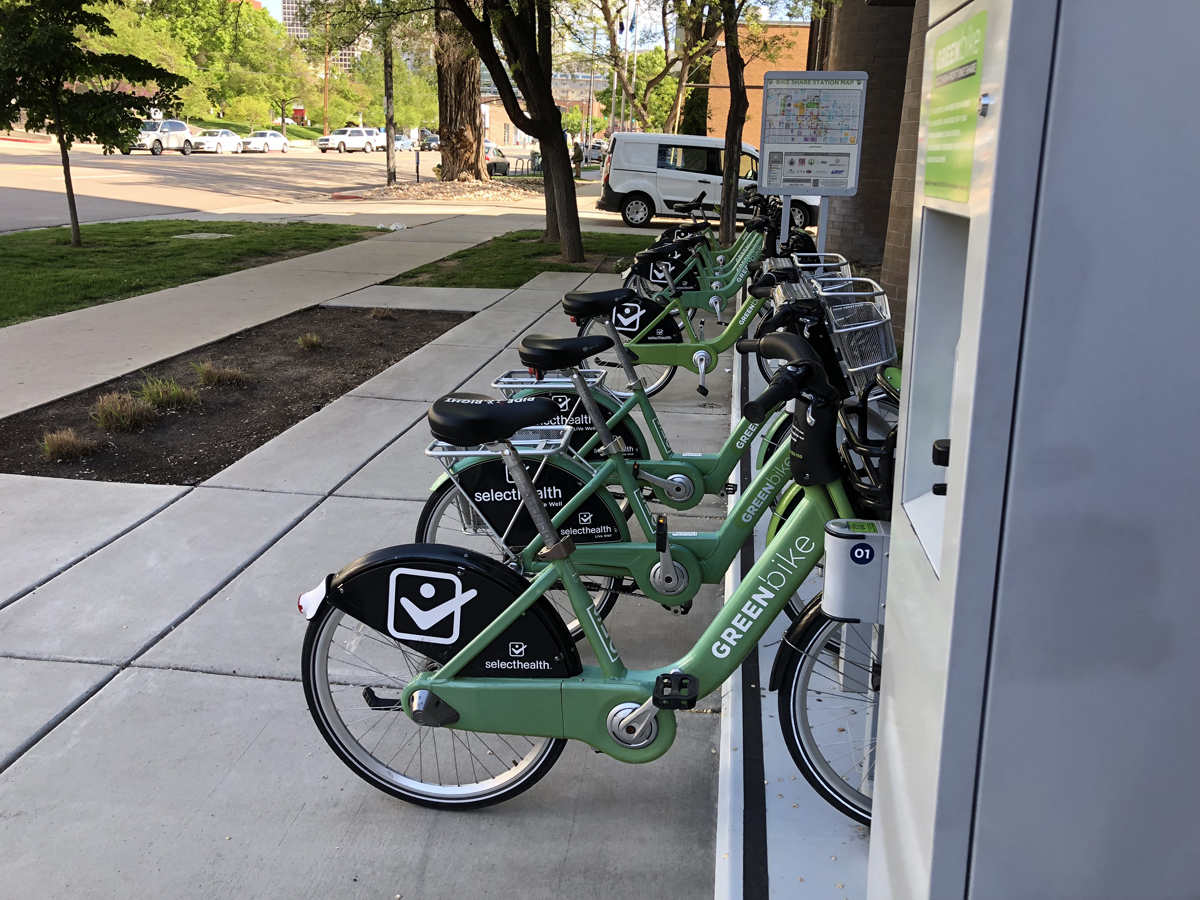
GREENbike Bike Share has changed downtown Salt Lake City! Photo by Dave Iltis

While bikeshare has grown in popularity over the last decade, the increase has been somewhat slowed since 2018 with the arrival of e-scooters. While most early programs required docking, more recent ones involve dockless bikes. Results are mixed. On the one hand, dockless programs make bikes more available throughout cities. But they also get dumped in places that can obstruct sidewalks, making transportation difficult especially for people with mobility issues, NAS reported. (If docks aren’t located well, they can also obstruct people.)

Bike share diagramAs a rule of thumb, NAS found that docked systems tend to receive more public subsidies than dockless ones. Cities also varied in if or how they required providers to serve all or specific neighborhoods.

The report says isn’t clear is if dockless systems will work outside central cities without substantial public transit.

Note: NAS largely completed the research before the COVID-19 pandemic so its findings don’t include how that may affect the future of transportation. Download the report at https://www.nap.edu/download/26053 (free registration required).


Voter Initiatives Approved $1B in Bicycle Infrastructure Funding in 2020

By Charles Pekow — State and local initiatives added $1 billion for bicycle infrastructure funding last year, according to data compiled by People for Bikes (PFB). Voters showed they don’t have to wait for legislative action – they can approve resolutions directly.

PFB counted 48 state and local initiatives that might help bicycling voted on last year across the country, and 42 of them passed, often as part of general park, conservation or transportation initiatives. Not all specified funding for bike projects, though. Denver, for instance, passed a Climate Sales Tax to fund an Office of Climate Action. Overall, few of the initiatives passed in Mountain West states.

And will 2020 be better? “States and municipalities across the country are advancing ballot measures that, if passed, would make investments in expanded bicycle infrastructure and improved quality and accessibility of places to ride,” PFB says. See https://action.peopleforbikes.org/2021ballottracker/.

But so far this year, PFB says it knows only of four initiatives to be decided at the polls this year, including a statewide Colorado Transportation Bond on the ballot Nov. 2. If it passes, the Colorado Department of Transportation could issue $1.337 billion in bonds, with 15 percent of the money earmarked for a Multimodal Transportation Options Fund, which could fund bike projects {https://ballotpedia.org/Colorado_Transportation_Bond_Issue_(2021)}.


39th Annual LoToJa Classic set for Sept. 11, 2021

Cyclists ready to pedal in America’s longest, one-day sanctioned bicycle race from Logan, Utah, to Jackson, Wyoming

Layton, Utah — More than 1,500 cyclists will race from Logan, Utah, to Wyoming’s Jackson Hole in the 39th annual LoToJa Classic on Sept. 11.

USA Cycling licensed racers will ride 203 miles/327 kilometers to Jackson Hole Mountain Resort while cyclosportive cyclists and relay teams will ride 198 miles/319 kilometers to Jackson Hole High School.

The one-day race begins before the crack of dawn at Sunrise Cyclery in Logan. The course takes cyclists on scenic back roads through northeastern Utah, southeastern Idaho and western Wyoming. The fastest licensed racers will reach the finish line at the ski resort around mid-afternoon.

The current men’s record is 8:18:29 and the women’s is 9:35:00. The majority of cyclists take about 10 to 13 hours to complete the course. But regardless of time, to endure and finish LoToJa — with a spectacular view of the 13,776 foot-high Grand Teton nearby — is always a big reward.

“We’re looking forward to a remarkable day of bicycle racing through some of the American West’s most breathtaking landscape,” said Brent Chambers, who has been LoToJa’s race director since 1998. “To all cyclists, support crews, event staff and volunteers, I say let’s celebrate the day, while also remembering and honoring those who lost their lives on 9/11 20 years ago.”

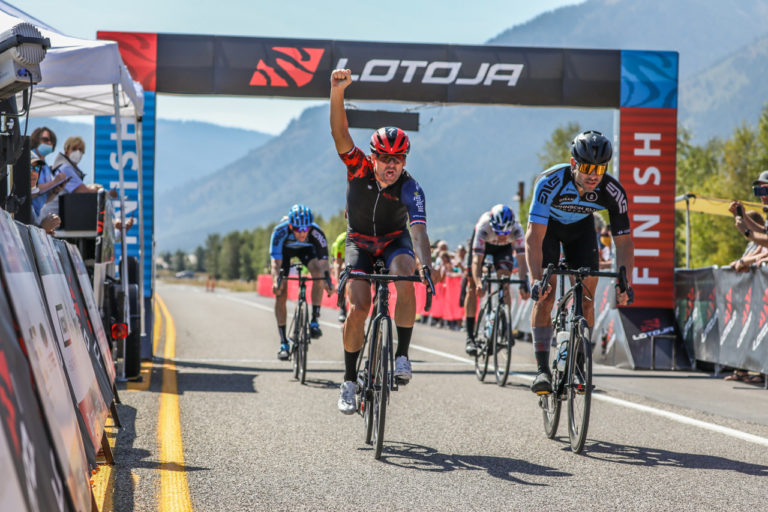
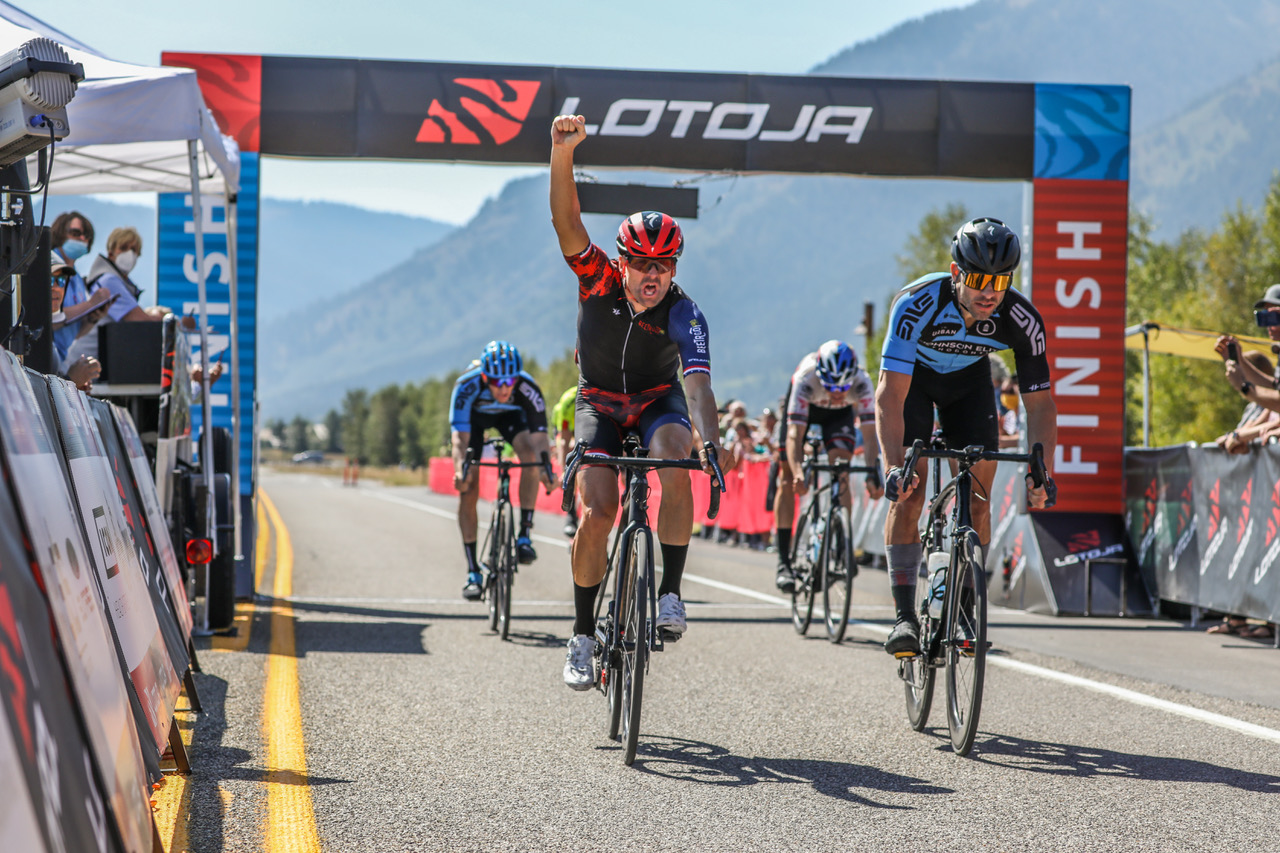
Cameron Hoffman (left, Team Endurance360) reacts after beating Spencer Johnson (Team Johnson Elite Orthodontics) to the line for the Men’s Pro 123 title in last year’s LoToJa Classic. This year’s event is set for Sept. 11 with more than 1,500 cyclists racing 203 miles from Logan, Utah, to Wyoming’s Jackson Hole. Photo courtesy of Snake River Photos.

If the scenery doesn’t take cyclists’ breath away, the long, challenging course will. It features three mountain passes that total 35 miles and almost 10,000 vertical feet of climbing. Also seen on course are Utah’s Cache Valley, Idaho’s Preston and Montpelier, and Wyoming’s Afton and Alpine Junction in Star Valley.

LoToJa is recognized as the longest, one-day USA Cycling sanctioned road race in America. After nearly 40 years of existence, it is one of the nation’s most popular cycling events. Several thousand riders from across the U.S. and foreign countries register every April, but less than 2,000 are accepted for safety reasons and to keep the cycling experience quality high. LoToJa’s challenging distance, scenery and finish in Jackson are all part of its allure.

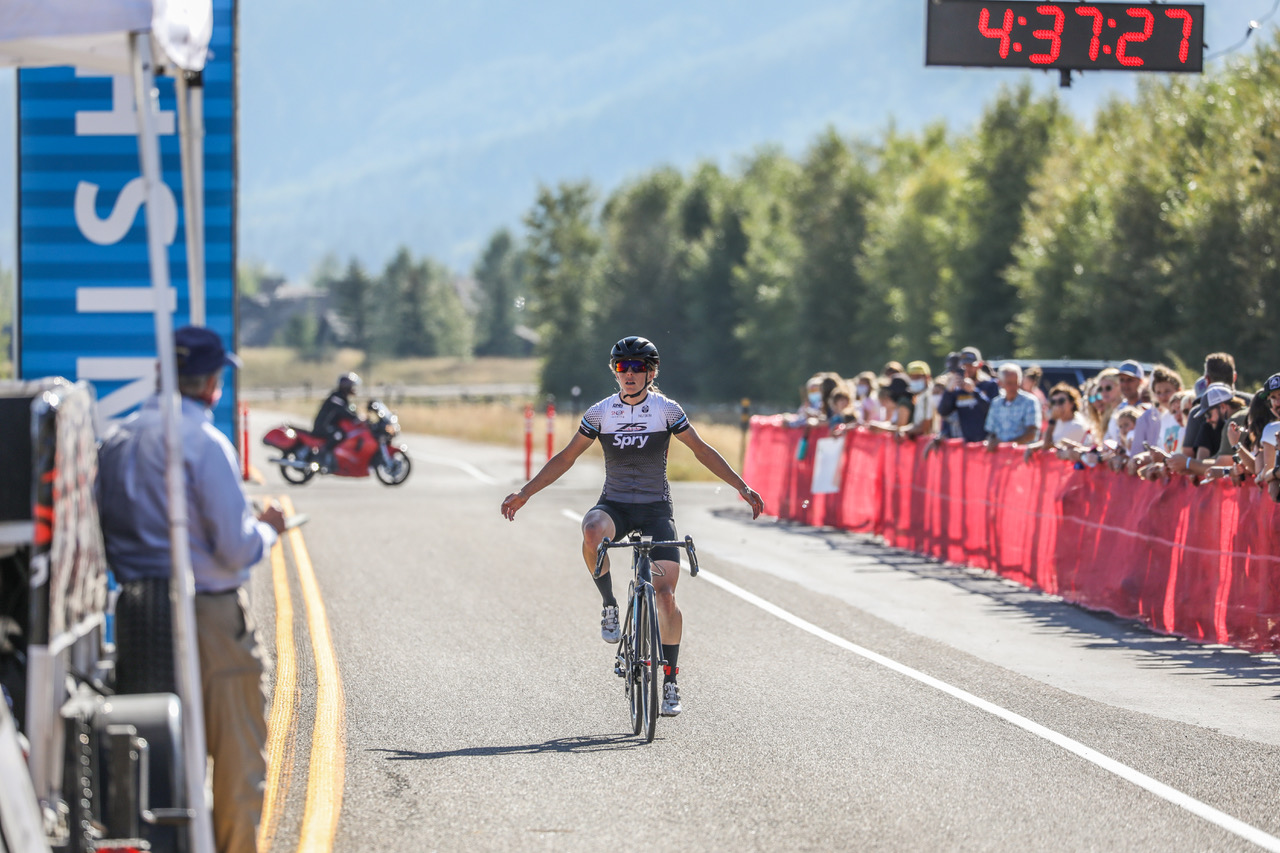
Lindsey Stevenson (Team Spry/Zone 5) crosses the finish alone at Jackson Hole Mountain Resort to win the Women’s Pro 123 title in last year’s LoToJa Classic. This year’s event is set for Sept. 11 with more than 1,500 cyclists racing 203 miles from Logan, Utah, to Wyoming’s Jackson Hole. Photo courtesy of Snake River Photos.

So, too, is the event’s focus on fundraising for worthy causes. While becoming one of America’s premier amateur cycling races, LoToJa has evolved into a major fundraiser for the Huntsman Cancer Foundation and other health-related organizations. More than $2.2 million has been contributed to Huntsman alone by cyclists and sponsors. LoToJa also sponsors local fund-raising groups that assist the event.

LoToJa began in 1983 by two Logan cyclists who wanted to create an enduring one-day bicycle race in the spirit of European professional cycling’s five grand monuments like Paris-Roubaix and Ronde van Vlaanderen. Logan-Jackson was born, and given the acronym, LoToJa.

In that first year, seven cyclists competed and crossed the finish line near downtown Jackson. The winner was Bob VanSlyke of Logan who finished the 186-mile course in 9 hours. In 1986 the finish line was moved to Jackson Hole Mountain Resort, which increased the race’s distance to over 200 miles.

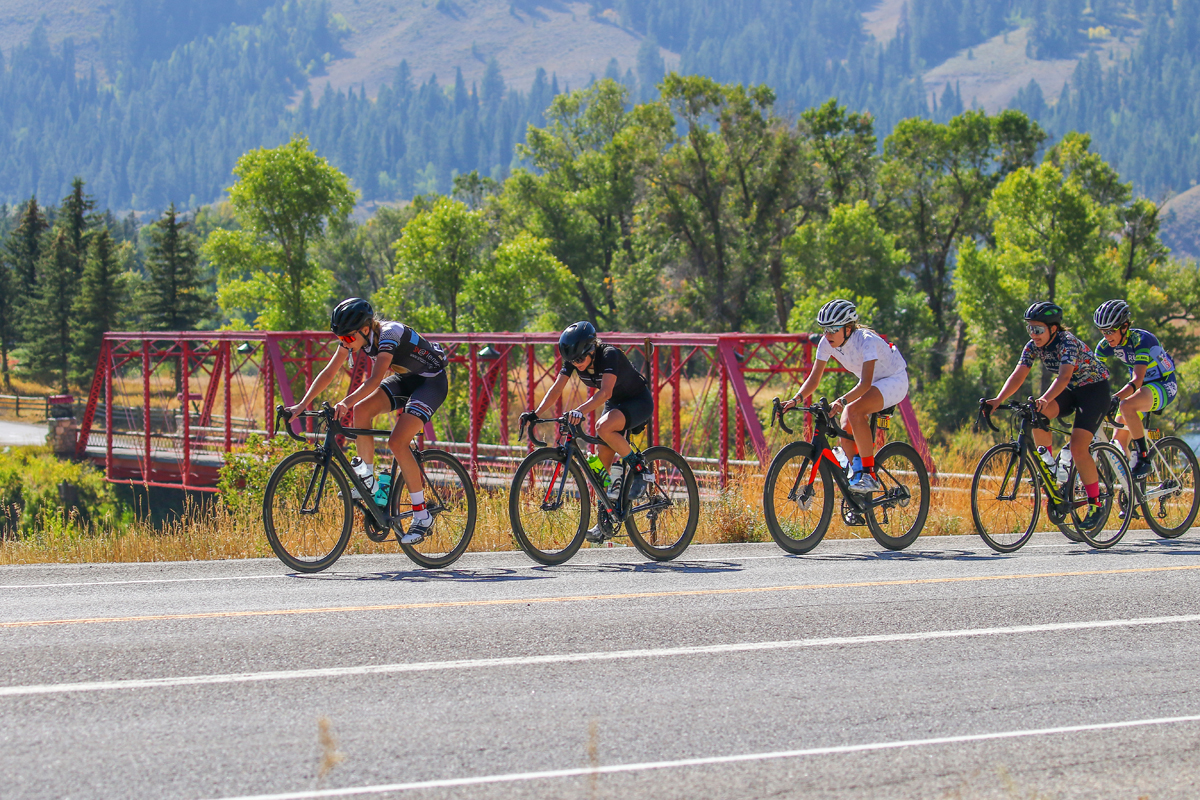
A peloton of women cyclists work a pace line along the Snake River a few miles south of Hoback Junction, Wyoming, in the 38th annual LoToJa Classic on Sept. 12. A total of 41 licensed women cyclists ranging from Pro 123s to Women’s Master 45+ Open competed in the race. Photo courtesy of Snake River Photo.
A peloton of women cyclists work a pace line along the Snake River a few miles south of Hoback Junction, Wyoming, in the 38th annual LoToJa Classic on Sept. 12, 2020. A total of 41 licensed women cyclists ranging from Pro 123s to Women’s Master 45+ Open competed in the race. Photo courtesy of Snake River Photo.

Chambers said this year’s LoToJa again features multiple categories for USA Cycling license holders, plus a cyclosportive rider class, which consists of non-licensed cyclists who are either competing against riders within their age group, or are just riding for fun. A relay race and categories for tandem riders are also held.

Chambers stressed LoToJa wouldn’t be possible without its volunteers and the cooperation and assistance it receives from businesses, civic leaders, public safety officials and community volunteers.

This year’s race will have 600 course volunteers, which includes 150 Ham radio operators from the Bridgerland Amateur Radio Club, he said. They provide uninterrupted communication throughout LoToJa’s mountainous and remote terrain.

He also emphasized that LoToJa’s top goal is to have a safe race. All cyclists, support crews, volunteers and event staff will be required to follow Covid-19 safety guidelines that were implemented for last year’s race in response to the pandemic.

“We have again worked tirelessly to include several Covid-19 safety adaptations to mitigate the health risks to all participants and the communities that LoToJa passes through,” Chambers said. The two separate finish lines in Jackson are key parts to those health risk mitigation efforts. The two finish lines were used in last year’s race.

Chambers added that while the pandemic continues, LoToJa will adapt with effective health safety measures to keep the race moving forward. A complete list of LoToJa’s Covid-19 Adaptations, along with other event-related information, can be viewed at lotoja.com.

Also, in the name of safety, motorists traveling on LoToJa’s course on Sept. 11 are asked to use caution when approaching cyclists. Groups consisting of several riders may be present.

To further increase safety on race day, the Idaho Transportation Department will restrict eastbound traffic on state Route 36 north of Preston between Riverdale and Ovid from 6 a.m. to 12 p.m. Eastbound traffic on US-89 between Montpelier and the Wyoming state line will also be restricted from 8 a.m. to 2 p.m.

The temporary travel restrictions are used to add an extra layer of safety for cyclists, Chambers said. Motorists are asked to use caution while traveling on these two roadways during LoToJa. Cautious passing is advised to ensure safety for everyone.

Chambers defined “cautious passing” as slowing down, giving at least three feet of space between the vehicle and cyclist(s), and patiently waiting for oncoming vehicle traffic to clear before pulling around a cyclist or group of cyclists.

LoToJa cyclists, plus their support crews, well-wishers, event staff and volunteers, represent an entourage of approximately 3,000 people, Chambers said. Several of the communities through which LoToJa passes organize roadside fundraisers to capitalize on the influx of visitors. The host cities of Logan and Jackson also enjoy a welcomed economic boost from the race, specifically restaurants and hotels.

According to Chambers, it is estimated more than 20,000 cyclists have pedaled more than 6 million miles during LoToJa since the race began 39 years ago.

“After nearly four decades of existence, LoToJa continues to be an epic bicycle race that challenges every cyclist’s endurance and spirit,” he said. “Those who commit to ride the distance and cross the finish line experience a euphoria that changes them forever — a life change for the better. It’s always an honor and a privilege for me to help create an event that gives so much in return.”

You Never Forget Your First … LoToJa

By Amy Heaton

LoToJa 2020, my first LoToJa, was an experience I will never forget.

In fact, my instilled reverence for LoToJa started thirteen years ago – before I ever rode a bike or dreamed of racing one – when I was part of the support team for my graduate school colleagues in their valiant LoToJa ride. That’s when I learned: This was THE bike race.

Now it was my turn.

Amy Heaton on course in the 2020 Lotoja. Photo by SnakeRiverPhoto.com

Denise Higgison, an advanced racer herself, graciously offered to support me for the race. Her excitement was absolutely engaging. She thought of everything, and we had each detail from food to clothing to bottles all sorted out – and how I would see her and where she’d be at each stop. Denise’s enthusiasm stepped up everything. She changed my mindset and my race.

Here’s how it went:

All women’s categories started together at 6:30am. We had about :30 of darkness before sunrise, and I was equipped with front and back lights and layered up with a stuffed newspaper, arm and knee warmers, a full jacket and buff, two pairs of gloves, and multiple hand warmers stuffed about. The temps were in the 40’s and would get into the 30’s before things started warming up. We rolled off the line, and I tried to stay in the front 10 or so. I made sure to take pulls, and the group stayed together as we made it through Preston then to the start of Strawberry. The sun came up, and Lindsey Stevenson (former multi-time winner of the race and total cycling celebrity) came back to me and told me she’d like to work together. She advised that she was going to push up the climb and try to whittle the group down to 5 or so at the top, and she told me to try to stay with them. I was glowing.

Then the move came, and I was able to see it, get out of the pack on the left-hand side, and follow the effort. The pack was chasing hard, and I thought we might fall back. Lindsey looked over, “don’t let up yet.” We kept the pace, and sure enough we broke out in a group of 6 midway through the climb.

She counted heads and asked that we all take :45 pulls to the summit. She took the first, but the next two ladies refused to participate or communicate. Things got contentious, Lindsey was talking to Eleise Hinton Lowe, and next thing I knew, the two of them were in a breakaway move off the front. As soon as I realized what was going on, I sprinted towards them from the back, but I just didn’t quite have it in me. I held back and got behind the two ladies. I rested for a minute, but I knew this was a pivotal moment. I had to catch Lindsey and Eleise at the summit before the descent. So I charged out of the saddle, all-out, and gave a full VO2 effort and barely made it. They accepted me graciously and we descended together. Then we pace-lined together to Montpelier and agreed to make it a :60 stop – tops. I couldn’t believe what was happening.

I rolled up, and true to plan, there was Denise waving me down! And…Chad! (My boyfriend who had started in the Men’s field 1:40:00 prior. I would later find out that he had a mechanical early in the race and had to bow out. Now he was all-in with Denise to support me)! I rolled up. “Everything off! Gloves! Jacket! Arm warmers! I need sugar! Gels! Jellybeans!” I had a pit crew catering to my every need. I was ready to roll!

Lindsey, Eleise and I jetted off toward the Geneva climb, back in pace line. My legs felt a little stiff at the base, but after a few rounds I was able to make a strong pull all the way to the top. “I gotta earn my keep,” I said. Then we descended and I grabbed onto their wheels and cruised – one of my favorite things to do on a bike. Next came the final climb, we kept the structure but then faintly heard, “I’m cramping.” And Eleise was off the back. “No! We need her!” I said. But it was just Lindsey and me now.

We started the QOM, and she was in front. I asked if she was going for it when I saw a yellow sign ahead. She answered, “Yes, but you should too.” So, I started making an effort, wondering why she wasn’t chasing – only to realize that the yellow sign was the “1 km to go.” Ah! I started to fade, and she opened up a gap. But I kept it steady and caught up to her. We pushed it at the top and her front wheel rolled over the line just ahead of mine. But since she started ahead of me, I ended up taking the QOM by a fraction of a second.

Amy Heaton at the finish of the 2020 Lotoja Classic. She was the first licensed rider to cross the finish line. Photo by SnakeRiverPhoto.com

We rolled the descent and started alternating 3-minute turns on the front. We were going well, then at one point I looked back, and she was talking to the motor bike. “I have a flat.” I looked down at her bike, and sure enough. She said she had a spare with neutral support, they just had to bring it. I asked if I should wait. She said I could, but that I should do what I want. I swore out loud. Then I said I’d keep going and keep it steady, and I told her to come catch me.

So there we were. 80 miles to go. Both solo. I rode the pace I had been pulling and just kept pedaling. I didn’t see anyone, and then asked the motor bike if he had a gap time. 2:30. I was expecting Lindsey alone or in a group to catch me, but nothing. I asked again. 5:00. I didn’t know what was behind the gap. Lindsey solo? Lindsey and Eleise? A group? “Keep it steady, Amy,” I told myself. I asked for a gap time again. 7:00. I kept riding. Again. 8:30. I couldn’t believe it.

When I rolled into the last support stop in Alpine, I didn’t really want to stop. I guess it was meant to be, because Denise and Chad barely missed me! I still had water, I couldn’t stomach any more food. I just kept going. I could tell I was fading, but I kept charging ahead with everything I had left in me. At 180 miles I started, “99 bottles of beer on the wall … 98 … 97.” I think I got to 19. Then a new game: final mile countdowns. The headwind picked up, I couldn’t spin the pedals anymore, so I shifted into my biggest gear and grinded to make power. “5 miles to 3 miles left.” Then, “1 mile to 1 mile to go.” I saw the finish. I got out of the saddle and sprinted across the line. I took it by 5:30. 203 miles. 80 of them solo. Chad was there. He picked me up. “You just won LoToJa!” Denise was there. She kept me upright. I couldn’t believe it. I still can’t believe it.

As with the many important experiences that make up or lives, the calm aftermath brings reflection. And mostly appreciation. I am so grateful to the LoToJa race organizers, my amazing crew, the awesome Johnson Elite Orthodontics guys that let me ride as a part of their team, and of course my coach, Sarah Kaufmann. Sarah’s coaching transformed me as a cyclist. Her support, targeted training, interval work, supercompensation, and taper to race day was the mark of perfection. And utmost, I profoundly appreciate the cycling community and the strong, talented women I get to ride with. Racing with Lindsey was a dream come true. I write this in hopes to inspire new cyclists and prospective new racers to get out there. And crush it!