Home Blog Page 138

You Never Forget Your First … LoToJa

By Amy Heaton

LoToJa 2020, my first LoToJa, was an experience I will never forget.

In fact, my instilled reverence for LoToJa started thirteen years ago – before I ever rode a bike or dreamed of racing one – when I was part of the support team for my graduate school colleagues in their valiant LoToJa ride. That’s when I learned: This was THE bike race.

Now it was my turn.
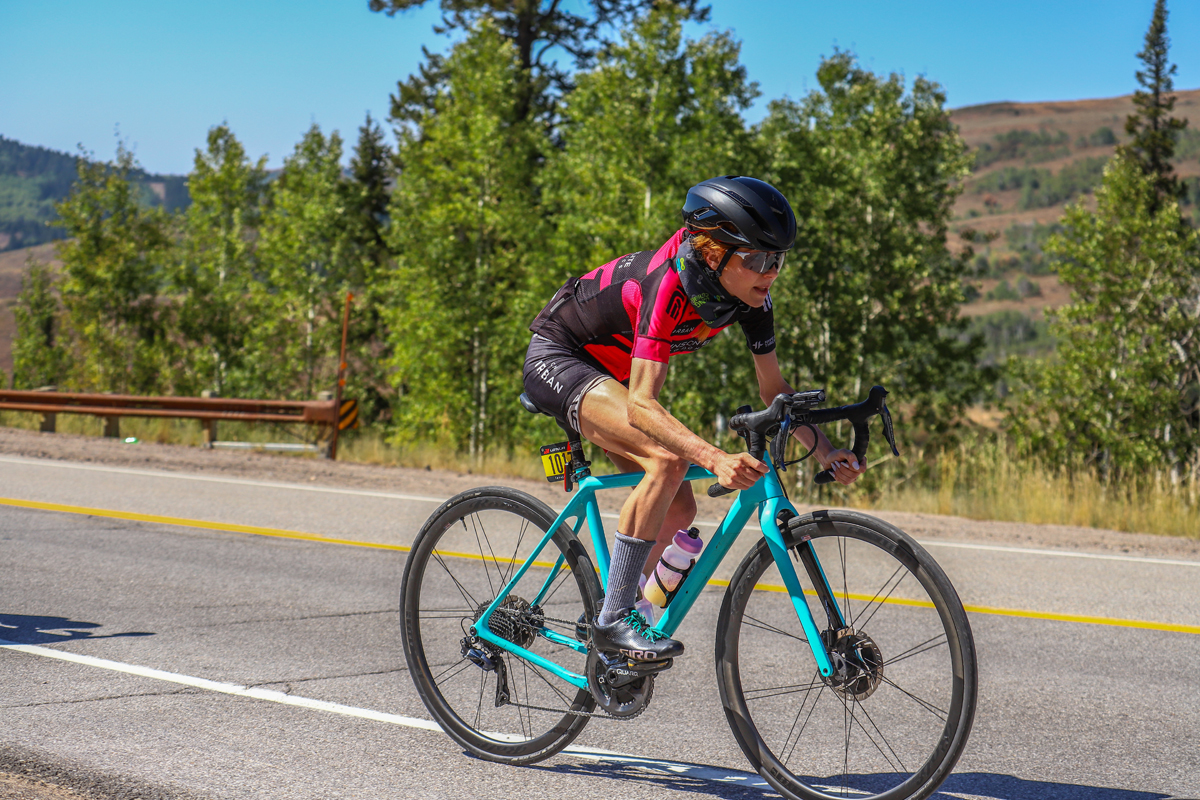
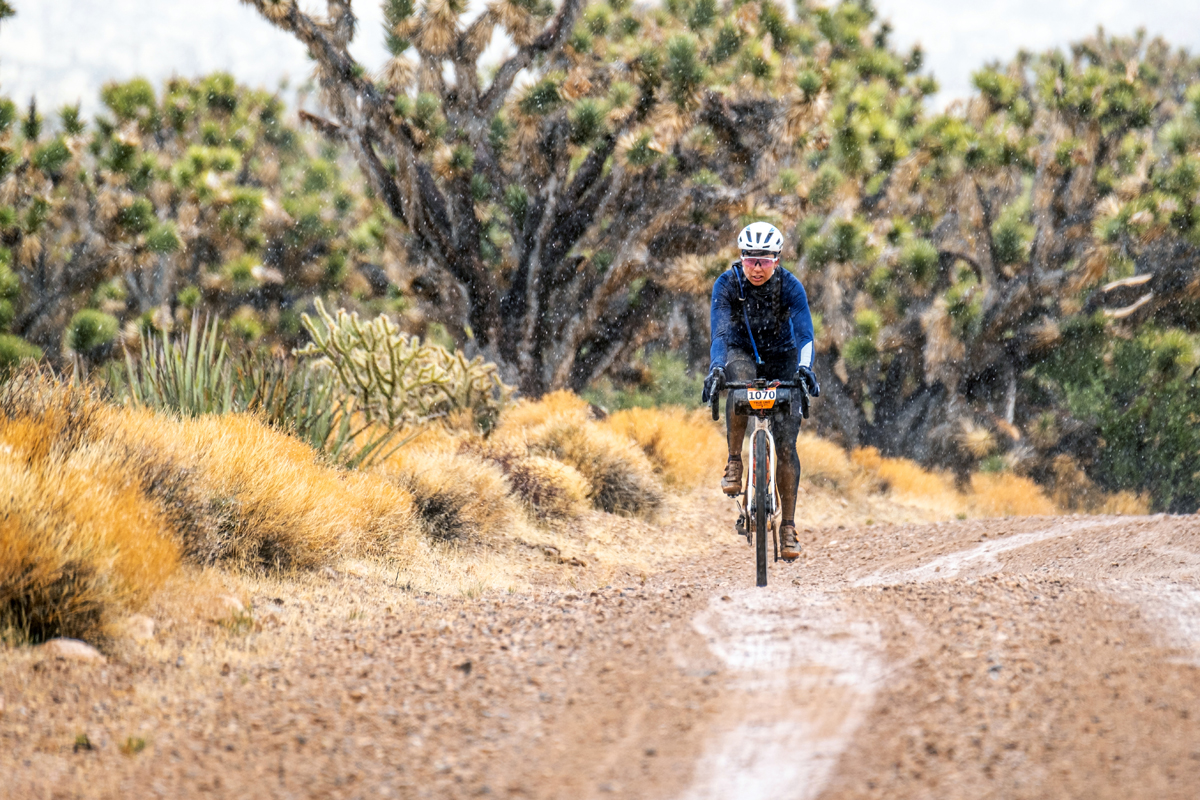
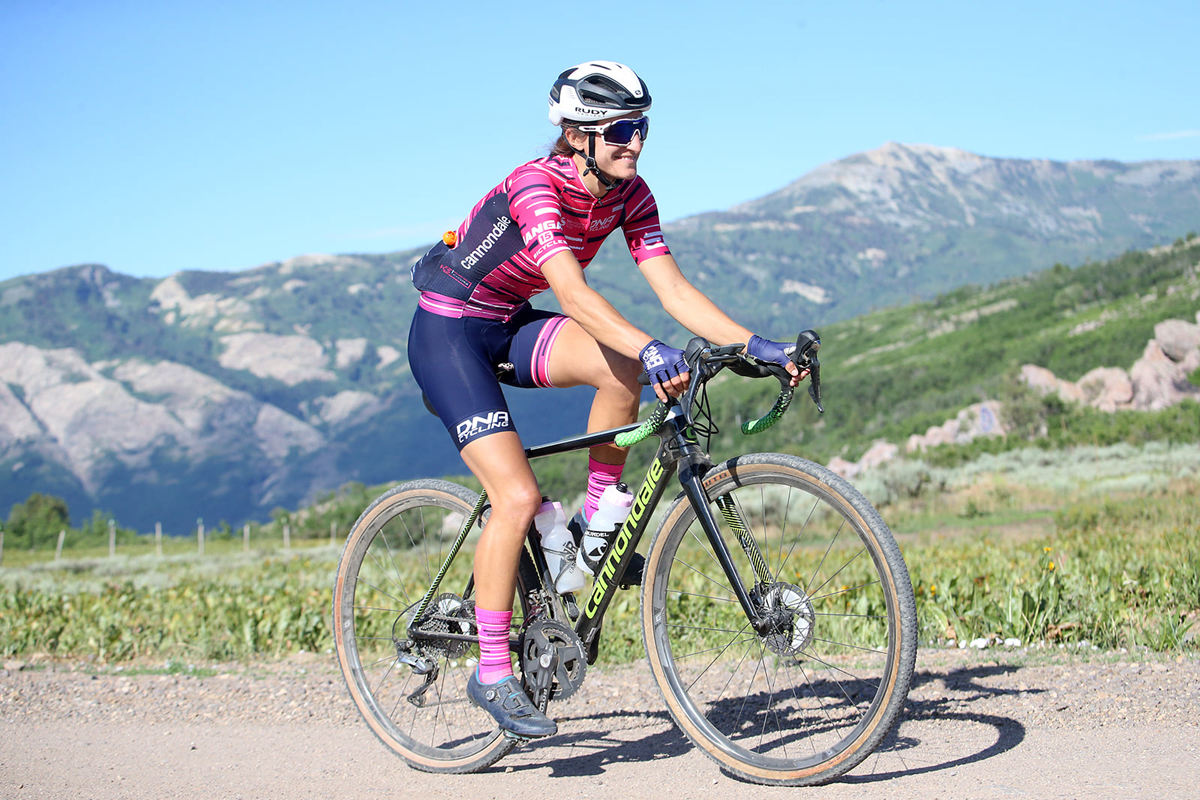
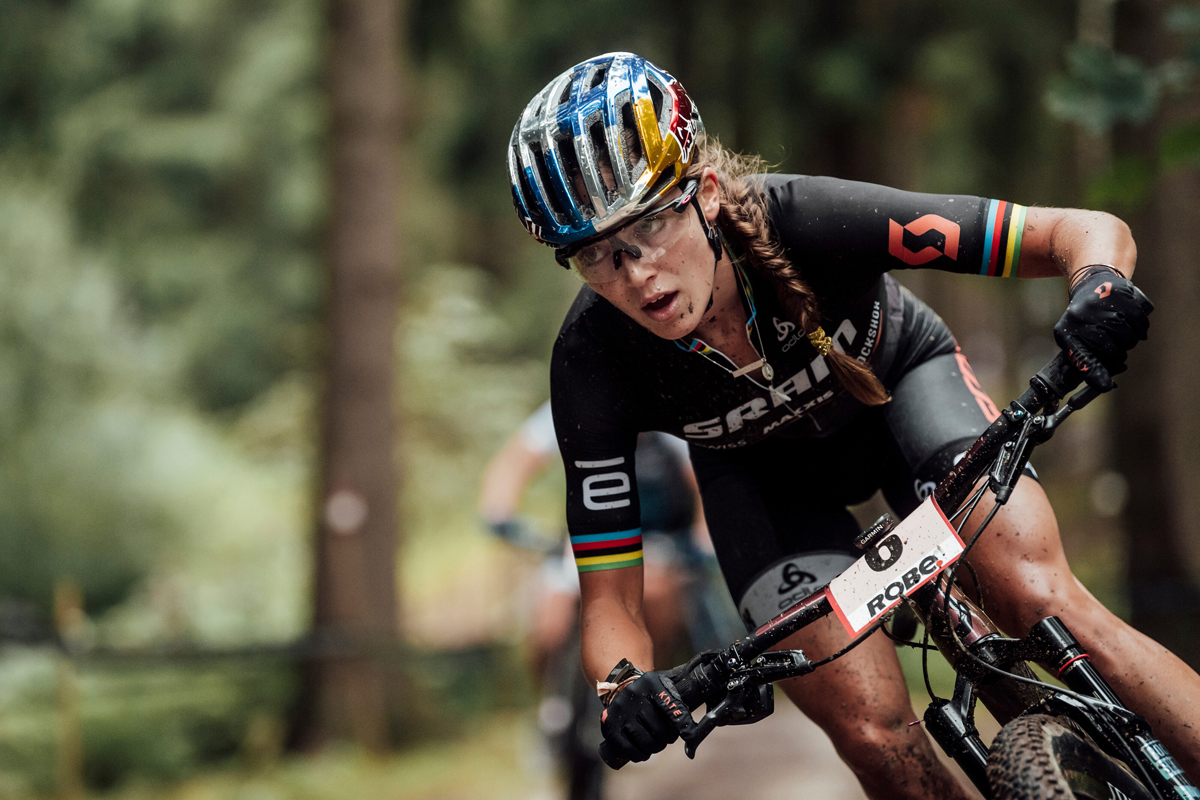
Amy Heaton on course in the 2020 Lotoja. Photo by SnakeRiverPhoto.com

Denise Higgison, an advanced racer herself, graciously offered to support me for the race. Her excitement was absolutely engaging. She thought of everything, and we had each detail from food to clothing to bottles all sorted out – and how I would see her and where she’d be at each stop. Denise’s enthusiasm stepped up everything. She changed my mindset and my race.

Here’s how it went:

All women’s categories started together at 6:30am. We had about :30 of darkness before sunrise, and I was equipped with front and back lights and layered up with a stuffed newspaper, arm and knee warmers, a full jacket and buff, two pairs of gloves, and multiple hand warmers stuffed about. The temps were in the 40’s and would get into the 30’s before things started warming up. We rolled off the line, and I tried to stay in the front 10 or so. I made sure to take pulls, and the group stayed together as we made it through Preston then to the start of Strawberry. The sun came up, and Lindsey Stevenson (former multi-time winner of the race and total cycling celebrity) came back to me and told me she’d like to work together. She advised that she was going to push up the climb and try to whittle the group down to 5 or so at the top, and she told me to try to stay with them. I was glowing.

Then the move came, and I was able to see it, get out of the pack on the left-hand side, and follow the effort. The pack was chasing hard, and I thought we might fall back. Lindsey looked over, “don’t let up yet.” We kept the pace, and sure enough we broke out in a group of 6 midway through the climb.

She counted heads and asked that we all take :45 pulls to the summit. She took the first, but the next two ladies refused to participate or communicate. Things got contentious, Lindsey was talking to Eleise Hinton Lowe, and next thing I knew, the two of them were in a breakaway move off the front. As soon as I realized what was going on, I sprinted towards them from the back, but I just didn’t quite have it in me. I held back and got behind the two ladies. I rested for a minute, but I knew this was a pivotal moment. I had to catch Lindsey and Eleise at the summit before the descent. So I charged out of the saddle, all-out, and gave a full VO2 effort and barely made it. They accepted me graciously and we descended together. Then we pace-lined together to Montpelier and agreed to make it a :60 stop – tops. I couldn’t believe what was happening.

I rolled up, and true to plan, there was Denise waving me down! And…Chad! (My boyfriend who had started in the Men’s field 1:40:00 prior. I would later find out that he had a mechanical early in the race and had to bow out. Now he was all-in with Denise to support me)! I rolled up. “Everything off! Gloves! Jacket! Arm warmers! I need sugar! Gels! Jellybeans!” I had a pit crew catering to my every need. I was ready to roll!

Lindsey, Eleise and I jetted off toward the Geneva climb, back in pace line. My legs felt a little stiff at the base, but after a few rounds I was able to make a strong pull all the way to the top. “I gotta earn my keep,” I said. Then we descended and I grabbed onto their wheels and cruised – one of my favorite things to do on a bike. Next came the final climb, we kept the structure but then faintly heard, “I’m cramping.” And Eleise was off the back. “No! We need her!” I said. But it was just Lindsey and me now.

We started the QOM, and she was in front. I asked if she was going for it when I saw a yellow sign ahead. She answered, “Yes, but you should too.” So, I started making an effort, wondering why she wasn’t chasing – only to realize that the yellow sign was the “1 km to go.” Ah! I started to fade, and she opened up a gap. But I kept it steady and caught up to her. We pushed it at the top and her front wheel rolled over the line just ahead of mine. But since she started ahead of me, I ended up taking the QOM by a fraction of a second.
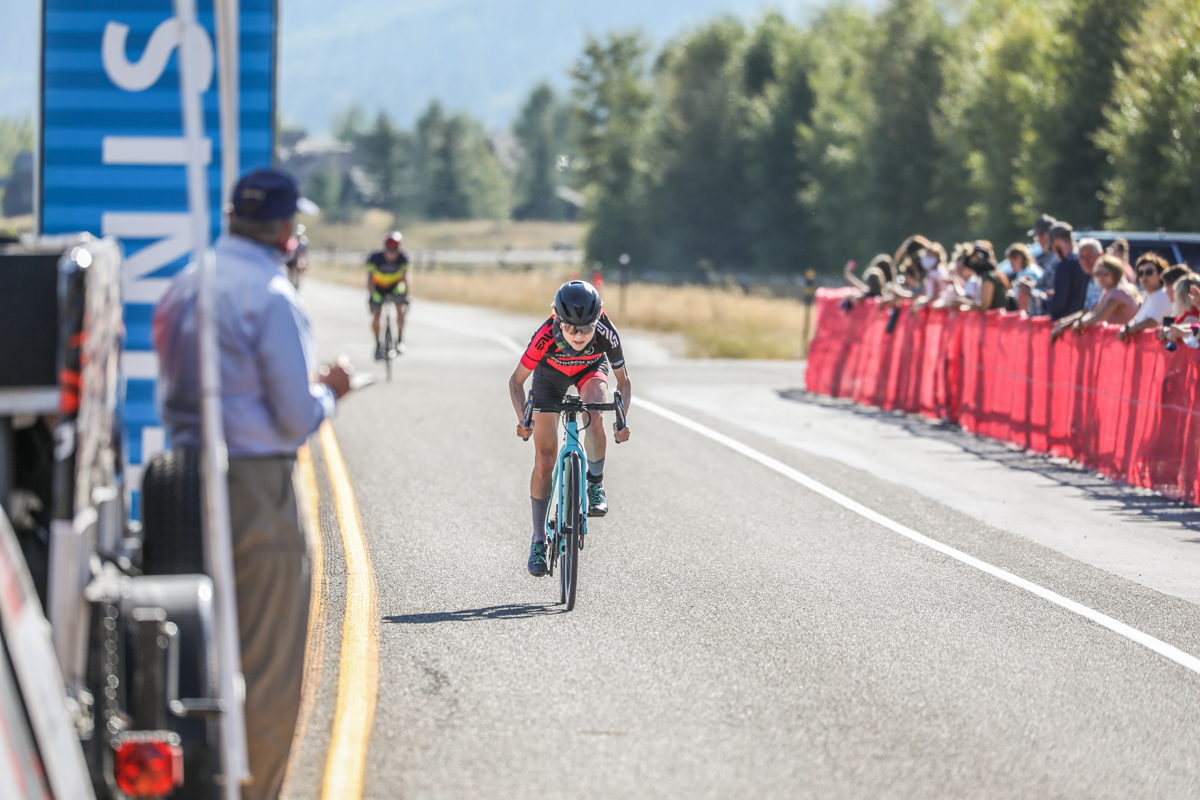
Amy Heaton at the finish of the 2020 Lotoja Classic. She was the first licensed rider to cross the finish line. Photo by SnakeRiverPhoto.com

We rolled the descent and started alternating 3-minute turns on the front. We were going well, then at one point I looked back, and she was talking to the motor bike. “I have a flat.” I looked down at her bike, and sure enough. She said she had a spare with neutral support, they just had to bring it. I asked if I should wait. She said I could, but that I should do what I want. I swore out loud. Then I said I’d keep going and keep it steady, and I told her to come catch me.

So there we were. 80 miles to go. Both solo. I rode the pace I had been pulling and just kept pedaling. I didn’t see anyone, and then asked the motor bike if he had a gap time. 2:30. I was expecting Lindsey alone or in a group to catch me, but nothing. I asked again. 5:00. I didn’t know what was behind the gap. Lindsey solo? Lindsey and Eleise? A group? “Keep it steady, Amy,” I told myself. I asked for a gap time again. 7:00. I kept riding. Again. 8:30. I couldn’t believe it.

When I rolled into the last support stop in Alpine, I didn’t really want to stop. I guess it was meant to be, because Denise and Chad barely missed me! I still had water, I couldn’t stomach any more food. I just kept going. I could tell I was fading, but I kept charging ahead with everything I had left in me. At 180 miles I started, “99 bottles of beer on the wall … 98 … 97.” I think I got to 19. Then a new game: final mile countdowns. The headwind picked up, I couldn’t spin the pedals anymore, so I shifted into my biggest gear and grinded to make power. “5 miles to 3 miles left.” Then, “1 mile to 1 mile to go.” I saw the finish. I got out of the saddle and sprinted across the line. I took it by 5:30. 203 miles. 80 of them solo. Chad was there. He picked me up. “You just won LoToJa!” Denise was there. She kept me upright. I couldn’t believe it. I still can’t believe it.

As with the many important experiences that make up or lives, the calm aftermath brings reflection. And mostly appreciation. I am so grateful to the LoToJa race organizers, my amazing crew, the awesome Johnson Elite Orthodontics guys that let me ride as a part of their team, and of course my coach, Sarah Kaufmann. Sarah’s coaching transformed me as a cyclist. Her support, targeted training, interval work, supercompensation, and taper to race day was the mark of perfection. And utmost, I profoundly appreciate the cycling community and the strong, talented women I get to ride with. Racing with Lindsey was a dream come true. I write this in hopes to inspire new cyclists and prospective new racers to get out there. And crush it!
 

True Grit and Knowing When to Quit

By Lindsey Stevenson — Sunny St. George did not live up to its reputation on March 12, 2021. The first race of the season for me, and for many others, was thwarted by Mother Nature.

The True Grit Epic MTB 50 and 100-mile course is 13 years old, but the gravel race made its debut just two years ago. The inaugural True Grit Gravel was in 2019, but I was pregnant so I watched from afar as my friends and teammates participated in this incredible event. The following year, I was still lacking in endurance, and I watched from the sidelines again as my husband jumped into the gravel scene.

I was finally ready to tackle True Grit Gravel this year as my first race for the Abus Pro Gravel team. Two weeks before the race I drove down to Santa Clara to do some reconnaissance of the course with a few friends. We rode the original course that is comprised of mixed terrain, with pavement, single track MTB trails, and gorgeous rolling gravel roads surrounded by Joshua trees. Our recon ride could not have been more perfect. We lucked out with blue skies, sunshine and temperatures that hovered around the mid-50s. The course suited my strengths on the bike, with nothing too technical and plenty of climbing at 8000 vertical feet of elevation gain throughout the course. There were some chunky sections of gravel, but overall the course conditions were pristine. I felt more eager to race than ever now that I knew the course. Unfortunately, I was in no way prepared for the curve ball that Mother Nature threw at us on race day.

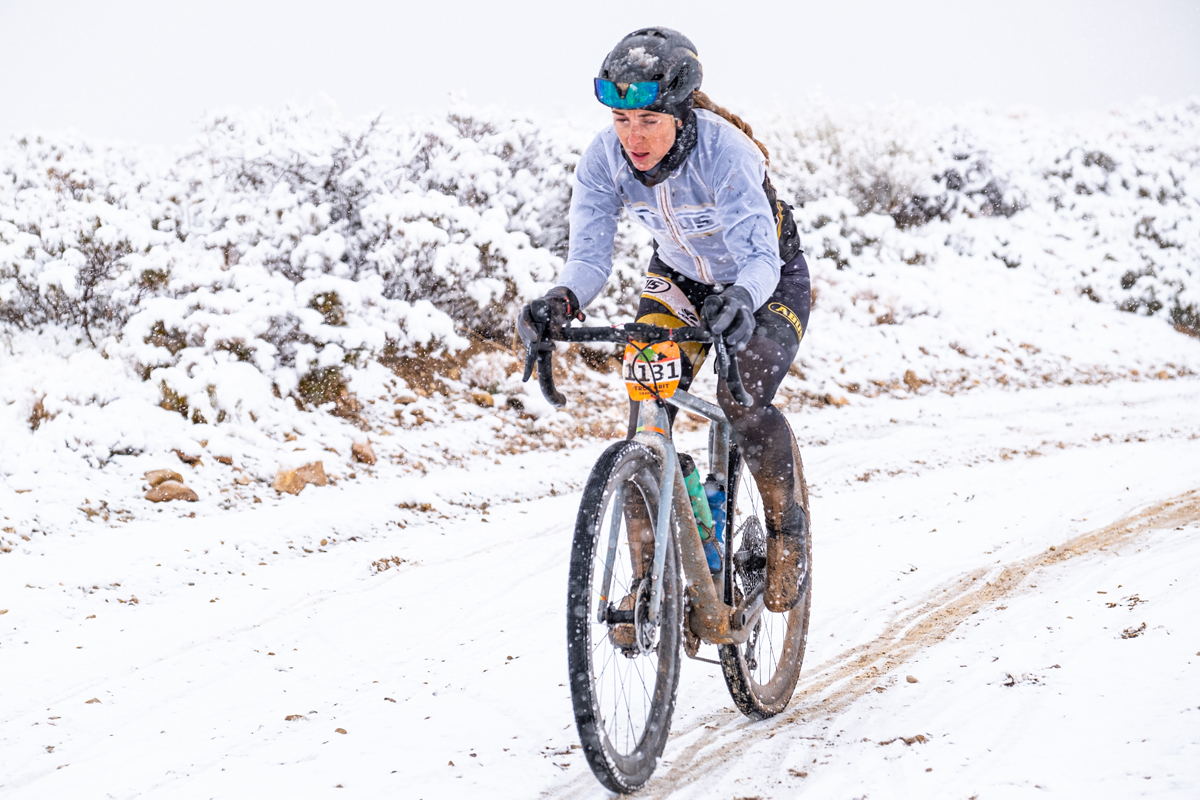
Lindsey Stevenson suffering in the snow storm during the 2021 True Grit Gravel event. Photo by Dave Amodt, True Grit Epic

As race day approached it looked more and more likely that a storm would roll in and dump snow on us all weekend. But it was St. George…it never snows in St. George! It was cold and rainy during the True Grit Epic weekend in 2020, and I thought there was no way that bad weather would happen on the same weekend two years in a row, but indeed it did. Riders with whom I have spoken, who raced in 2019 and 2020, said that it was much rainier, but about 15 degrees warmer during the race last year. This year was absolutely frigid, and we got caught in a blizzard instead of a rainstorm.

I was apprehensive as I approached the start line, but still giddy at the idea of racing since it was so sparse last year. It was 38 degrees and the rain had turned to light snow. I kept thinking and hoping that maybe the race would have a delayed start time, or that the course would be shortened, or that Mother Nature would shape up for us, but none of those things happened. I was in awe at the number of cyclists that I saw all bundled up and ready to go on their bikes, along with the many creative ways to stay dry/warm. Apparently, peer pressure is real, because I knew that I would be heading to the start line as well, and I had every intention of finishing this race, with high hopes of finishing on the podium in a field of some strong women.

With 180 people registered for the race, there were just about 100 that showed up to the starting line, and only 23 who completed the race. Unfortunately, I was not one of them, but I’m getting ahead of myself, so let’s back up to the start.

I lined up and looked for my friends, teammates and husband. Just before the gun went off my husband came up next to me and said, “I’m not doing this. I’ll drive out to the feed zone and see you there.” He kissed me on the cheek then rode back to the car. At this point I questioned whether or not this was a good idea. But I was already dressed and ready to go. I was still committed, though beginning to waver.

Cycling West Spring 2021 Cover Photo: Shayna Powless of Team TWENTY24 on her way to the women’s win in the 2021 True Grit Gravel race held on March 12. Find her on Instagram: @shaynapowless Photo by Dan Amodt, True Grit Epic
Shayna Powless of Team TWENTY24 on her way to the women’s win in the 2021 True Grit Gravel race held on March 12. Find her on Instagram: @shaynapowless Photo by Dan Amodt, True Grit Epic

The gun went off. Finally! We were moving and the race was on. The race starts with a 7-mile stretch of pavement, and with all of the water splashing up from the riders in front of me I was drenched within the first mile of riding. I was okay. I wasn’t cold, and I felt fine. The visibility wasn’t great, but with a neutral start I just stayed steady and fixated on a high-vis green helmet in front of me and kept rolling. I stayed toward the front, marking the two women that I thought would be my fiercest competitors – Shayna Powless and Charlotte Backus from Team TWENTY24 Pro Cycling.

Once we hit the dirt, or rather mud, it was chaos. There was a surge from the front of the pack that I was able to follow, but then a second surge shortly after that blew up the field. I could still see Shayna up ahead and I knew I was in second, but at this point, I was just trying to stay on my bike. I saw a few guys slide out and go down in the mud, and after fishtailing a bit I backed off just to stay upright.

I was relieved to start climbing, because it strung out the field, and I was working hard enough to stay warm. As I made my way up the first part of the 1-hour Gigabit (as known on Strava) climb, I saw several riders, including the likes of Tinker Juarez and TJ Eisenhart riding in the opposite direction, as they had decided the conditions were too treacherous and they were calling it a day. We climbed up to just over 6000 feet of elevation, and the gravel roads were covered in snow. Up to this point, I was still focused on eating and drinking to make sure that I was getting enough calories in to get to the finish. The descent is where it literally went all downhill for me.

Temperatures had dropped from 38 degrees at the start to 24 degrees according to my bike computer, and there was no sign of the snow letting up. I began to feel water seeping through my gloves, and my feet had been soaked through 2 layers of shoe covers and my wool socks since the paved start. My hands were throbbing, but I knew that I just had to get to mile 32, where I would get a new pair of warm, dry gloves, and then I would be fine, or at least so I thought. There was one more uphill pitch before the long descent to the highway. I was less than 10 miles from the feed zone.

With every passing mile, my hands ached more and more. I finally had to stop to try to get some blood flowing through them. This is where I made my first terrible decision. I had HotHands in my gloves that had been soaked and they were no longer doing their job. I thought that if I could get them out maybe I’d be able to grip my handlebars better. I took my gloves off, wrung them out and got rid of the handwarmers, but my hands were too cold and my gloves were too wet to get them back on.

I stuffed my gloves in my jacket and began riding with bare hands. I thought for sure that I would have permanent nerve damage on my fingertips. I couldn’t hold onto the bars anymore, and it was at this point that I was really questioning my life choices. I kept stopping to try to warm up my hands, and to check for cell service, but I kept striking out. I had a friend catch me while I was stopped, and she asked if I was okay. It’s a little fuzzy now, but I think I just said, “Please go get Ben!” Was I in a bike race or was I on a battlefield trying to survive? “This is my hobby, right? Like, I’m choosing to do this, and I do this for fun, right?” Also, “I’m a Mom, and I have a small human to raise. What on earth am I doing out here?” These were some of the more coherent thoughts that were going through my head at this time.

At this point I knew that I would not be finishing the race, but I did not know how I was going to make it 4 more miles to get to the car. Cue Andrew Judkins – my husband’s teammate and perhaps the most decent guy out there that day. He came flying by me, but recognized me standing in the middle of the road, looking a bit dazed, without gloves on in a snowstorm. He stopped to check on me and I didn’t know if I felt like crying or laughing when I saw him.

I was not thinking very clearly at this point, but I encouraged him to keep going because he was still smiling and looking pretty good on the bike. Thankfully, he did not keep going. He took his gloves off and put them on my hands, and then took my bike while I was shaking violently with the chills. He started walking with me and telling me random stories to keep me distracted from how miserable I was. Once I regained some composure, I was able to hop back on the bike again, and still, Drew stayed with me. A text message came through his head unit, which indicated that we had cell service. We stopped to call Drew’s wife and my husband to come get us, although I think Drew would’ve been fine to finish the race. We were 2 miles from the feed zone, but both Cari (Drew’s wife) and Ben (my husband) drove up. Hallelujah! I was saved.

I changed out of my sopping wet, muddy bike clothes and into some sweats and a hoodie while my husband loaded my bike that had been thrashed in the mud and snow. This is when Bri Hoopes rode up on us, still smiling, and still crushing it on the bike. I told my husband to offer her a ride, but of course, she declined and pressed on. Bri is incredible. She went on to finish the race as only 1 of 2 women that day. She is truly the grittiest one out there! Her brakes went out with 30 miles to go, so she had to unclip and slide her foot on the ground when she needed to slow down.

As my husband and I rolled back up to the feed zone, it looked like a war zone, but with bikes. There were riders all over, shivering and just trying to get warm. And there were some really great volunteers and rider support crew out there who were handing out beanies and hoodies to help warm up these poor souls. Melisa Rollins, who would be racing the MTB 50 the following day was out there offering up a seat in her van, and every bit of spare clothing she had to people that she didn’t even know.

Once I started gaining feeling back in my fingers and toes the disappointment began to set in. I had been so excited to race, and I love this course. I went through the stages of DNF grief – feeling good about my decision to drop-out, justifying my reasoning for dropping out, feeling disappointed in my decision to drop-out, then just bummed about the idea of not finishing. I was so impressed with all of the riders that showed up that day, and then shocked and amazed by those who finished. I did not have what it takes to finish the race in those conditions, but it was certainly an experience that I will always remember.

While this was certainly less than ideal conditions, race director Cimarron Chacon put on a great event, made some tough decisions that weekend, and made the most of it for everyone. Mother Nature got the best of me this time, but I’ll be back next year.

For more information on the True Grit, visit: https://gropromotions.com


The Most Important Stretch for Bicycling Health

By Erik Moen PT — The human body was designed to walk and run, not ride a bicycle. Adaptation of the human body is required for best tolerance of bicycling. Forward reach to the handlebars requires flexibility through the back of the legs. Limits in flexibility of hamstrings and gluteals will limit a person’s ability to assume certain bicycle positions. Increases in flexibility should lead to improvements in postural tolerance of the bicycling positions. This is especially true if you are hoping to utilize an aerodynamic bicycling position. Good postural/positional tolerance of bicycling includes the ability to “hinge” forward through the axis of the hips. This is largely a function of hamstring flexibility and hip mobility. Poor flexibility of the hamstrings in relationship to a chosen bicycle position can lead to injury and limits in mechanical efficiencies.

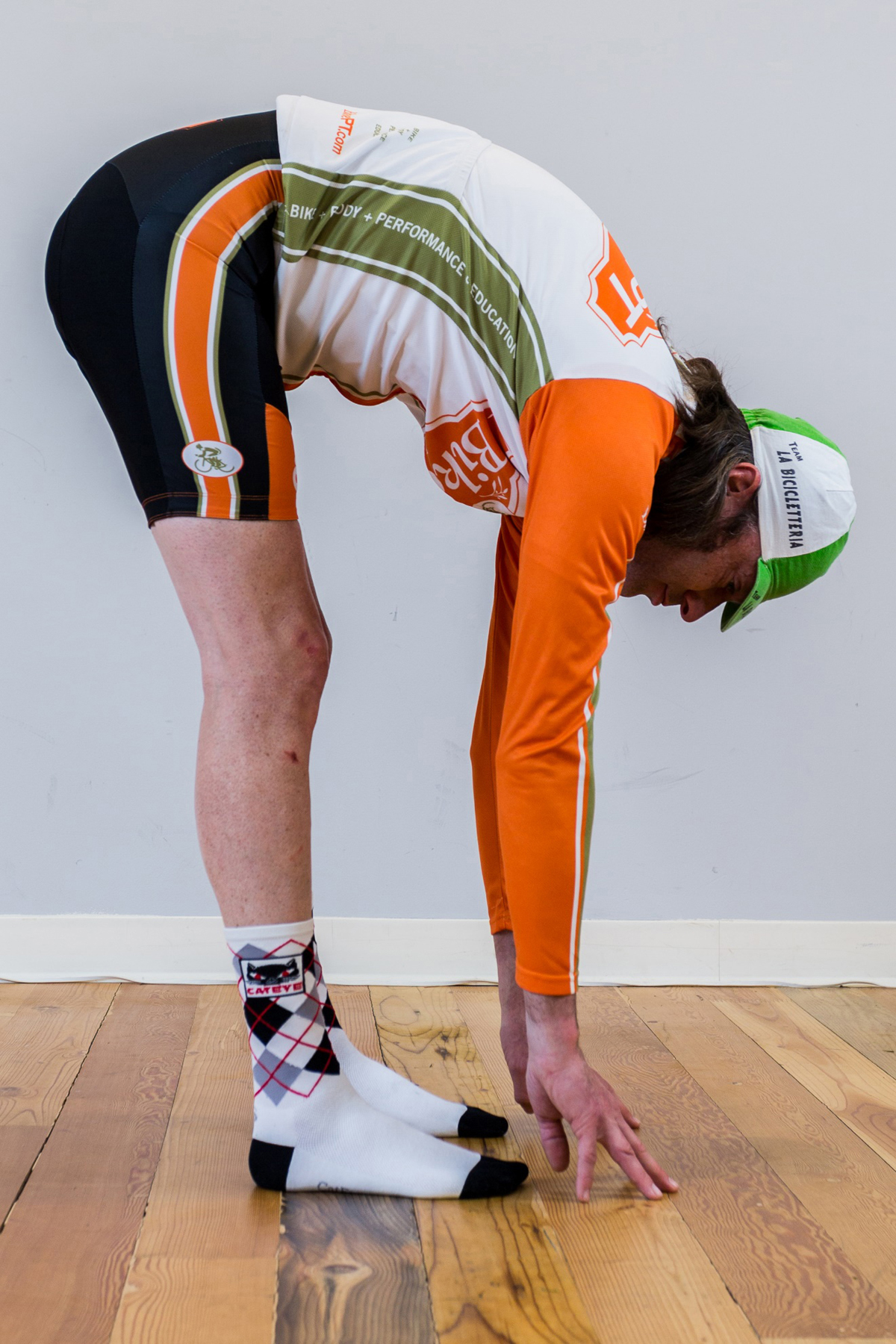
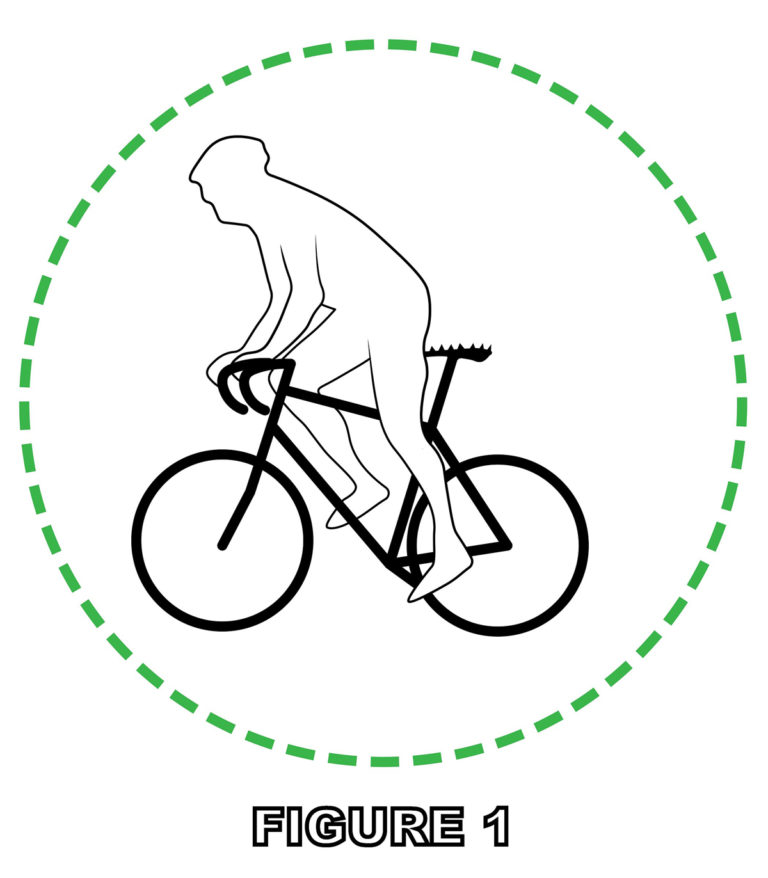
A method to assess your hamstring flexibility is simply trying to touch your toes. This is performed with your legs straight, feet hip width apart and feet straight forward.

Figure 1: Good Hamstring Flexibility. Photo by Erik Moen

Good hamstring flexibility will allow you to touch your toes with your fingers (Figure 1). You will notice good rotation through the hip and minimized “reach” through the mid-back (thoracic spine). Aggressive aerodynamic positions should have this flexibility goal as a minimum requirement.

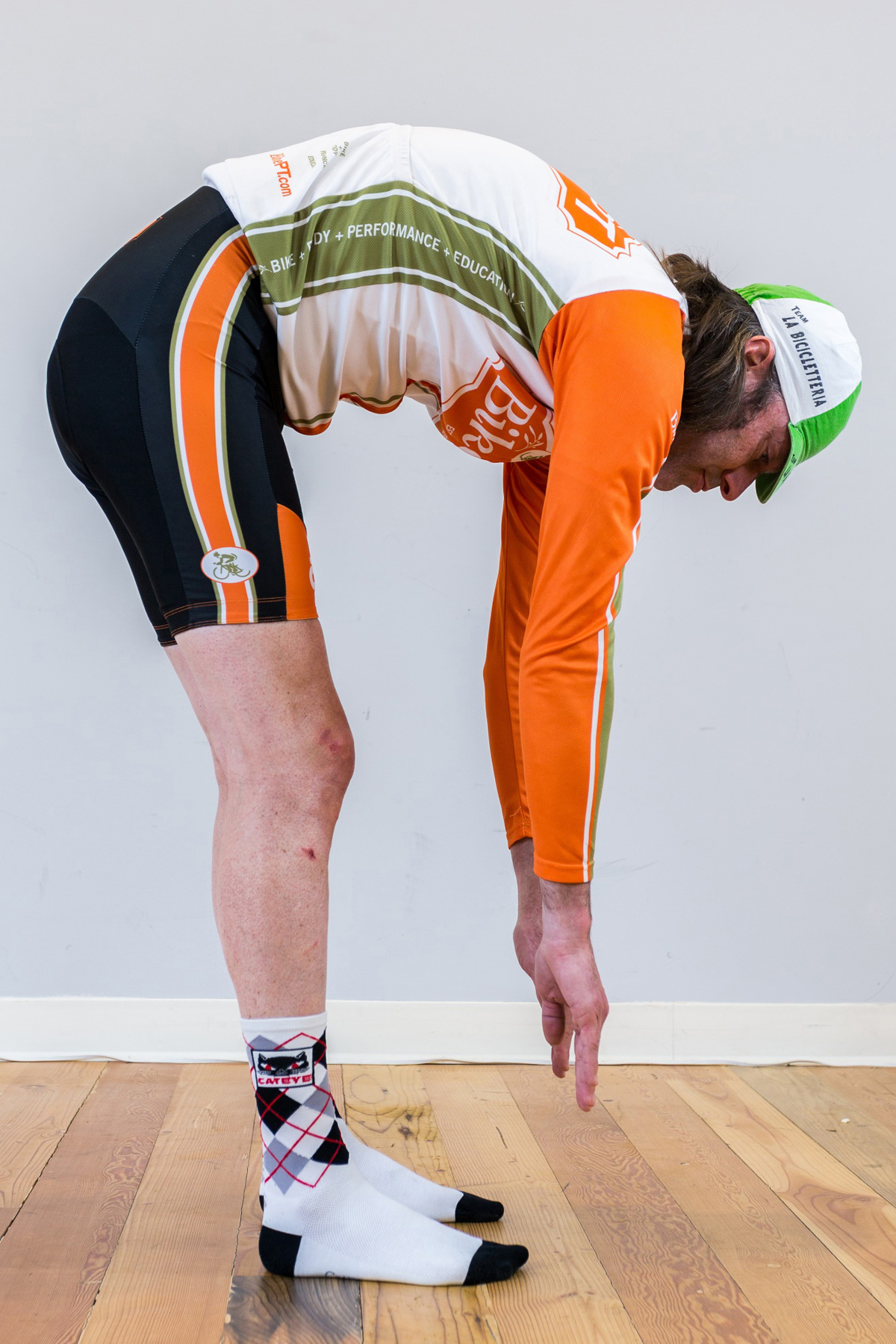
Figure 2: Limited Hamstring Flexibility. Photo by Erik Moen

Bicyclists with limited hamstring flexibility cannot touch their toes (Figure 2). You will notice excessive arching through the mid-back (thoracic spine) to compensate for limited hamstring flexibility. Spinal compensation for a lack of hamstring mobility is likely a habituated motion compensation. Significantly limited hamstring flexibility will require a more upright torso position on the bicycle. Bicycle positions that push the limits of hamstring flexibility will increase a bicyclist’s risk of overuse injury and limit efficiency.

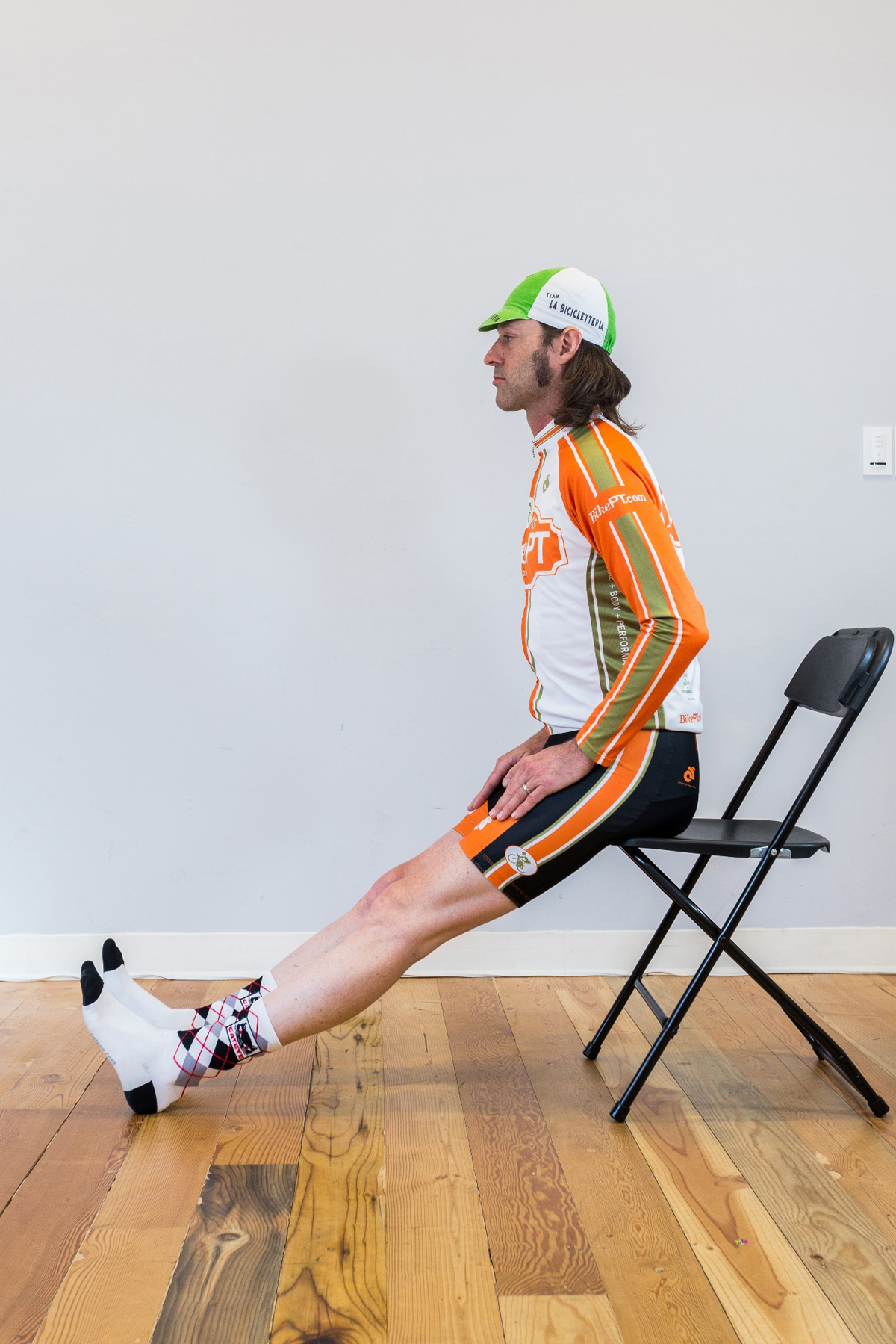
Figure 3: Simple Seated Hamstring Stretch. Photo by Erik Moen

A simple hamstring stretch is easily performed from sitting at the edge of a chair. Sit forward to the front of the chair. Place your feet/legs straight forward, “pedal-width” apart. Feet should be upright, not rotated outwards. It is crucial that you keep your torso “straight”. Slowly rotate forward from the axis of the hips until a moderate stretch is experienced on the back of your legs. Hold this stretch for a total of two (2) minutes (Figure 3).

Research demonstrates that stretching for length/flexibility should be performed for a prolonged duration. Two minutes seems to be the minimum time period that demonstrates some length gain. Stretching for length should be performed daily. This is an easy stretch that can be performed almost anywhere. No excuses. Stretching for length should not be performed immediately prior to vigorous exercise. This may increase your risk of injury. Improvements with flexibility are more likely to be realized when you stretch daily. Please be aware that gains in flexibility take time. Use care with your flexibility gains expectations. Adaptation of the human body takes time. “More” is not necessarily better. Excesses in frequency and deep stretching load will significantly increase your chance of injury. If you can easily “palm” the ground, you may not benefit from getting more flexible. If you can easily touch palms to the ground, you should probably only consider stretching as a means of motion/muscle recovery and to maintain a reasonable level of flexibility.

Gains in hamstring flexibility will improve your ability to achieve advanced bicycle positions/postures. Flexibility takes quality and regularity of stimulus over a prolonged period. A good goal for hamstring flexibility is the ability for you to touch your toes from straight leg standing.

Consult a local qualified professional if you have special considerations, need assistance assessing your flexibility, or helping you achieve your bicycle specific musculoskeletal goals.


Tour de France 2021: Redemption, Dominance and a New Generation

By David Ward — The major story from this year’s Tour de France is, of course, the remarkable return of Mark Cavendish. Following that is Tadej Pogačar’s domination and overall victory. But a more subtle and yet compelling take-away is the cementing of the emergence of a new generation in the pro peloton.

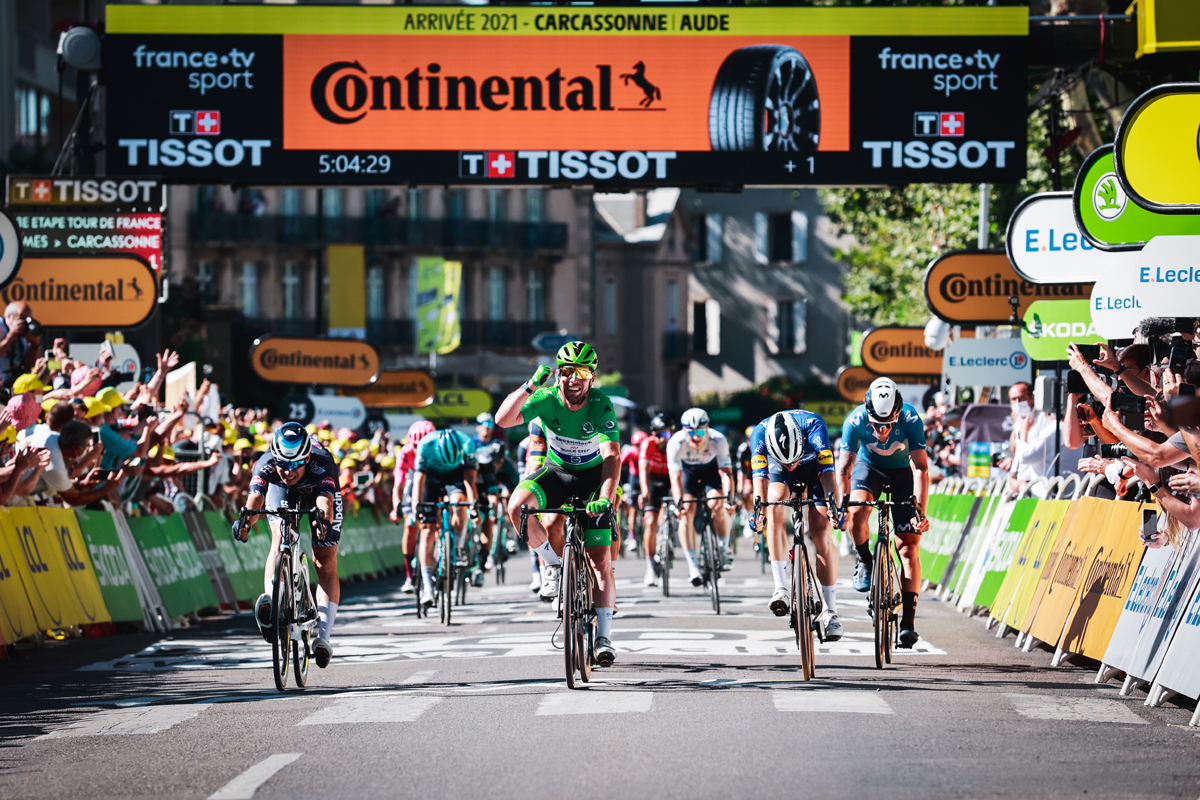
First, Mark Cavendish. Everyone knows the story: Cavendish was gifted a slot on the Deceuninck-Quick Step team when it appeared his career might be over, and then he was tapped for the Tour as a last-minute substitute for the injured Sam Bennett. Cavendish then went on to stun everyone with four classic Cavendish sprint victories, the last equaling Eddy Merckx’s record of 34 Tour de France stage wins.

Mark Cavendish ties Eddy Merckx's record of 34 Tour de France stage wins. 2021 – Stage 13 – Nimes / Carcassonne (219,9 km) - Mark Cavendish (DECEUNINCK - QUICK - STEP). Photo by A.S.O./Aurélien Vialatte
Mark Cavendish ties Eddy Merckx’s record of 34 Tour de France stage wins. 2021 – Stage 13 – Nimes / Carcassonne (219,9 km) – Mark Cavendish (DECEUNINCK – QUICK – STEP). Photo by A.S.O./Aurélien Vialatte

I can only imagine the overwhelming emotion Cavendish felt when he won his first stage in this year’s Tour. Only a year ago he thought his career might be over, and only a year ago, indeed only a week before this year’s Tour started, he likely thought he would never be in the Tour again. So when he won Stage 3’s sprint, the professional and emotional satisfaction he felt was clearly clear, captured by the cameras for us all to see, and we all cheered him. It is the kind of comeback story we all love and cherish.

While his next two sprint wins in Stages 6 and 10 were exciting, they also built anticipation for the victory that would equal Merckx’s record. And while these first three wins were classic sprint victories with Cavendish being pulled to victory by the best lead-out train in the pro peloton, the record-tying win in Stage 13 was a great example of turning a difficult and sketchier sprint into victory. Indeed, with just a couple of hundred meters to the finish, Cavendish appeared poorly positioned and I was certain a record-tying attempt would have to wait for another day. But his instincts and his lead-out man, Michel Morkov, managed to navigate the charging chaos and deliver Cavendish to the finish line for a thrilling victory. It seemed a fitting way to tie Merckx’s record.

The Tour’s final stage on the Champs-Elysées was anticlimactic as Cavendish did not grab the win. While the world, or at least the cycling world, waited anxiously and hopefully for Cavendish to break Merckx’s record, he and his team were both outmaneuvered, and frankly Cavendish was simply outsprinted, by Wout Van Aert and Jumbo-Visma to snatch the victory, and deny and deflate all our hopes for Cavendish’s Cinderalla ending. His attempt to break the record will have to wait another year, and I hope, with everyone else, I’m sure, that Mark will be back and in top form to set a record that, could potentially never be broken.

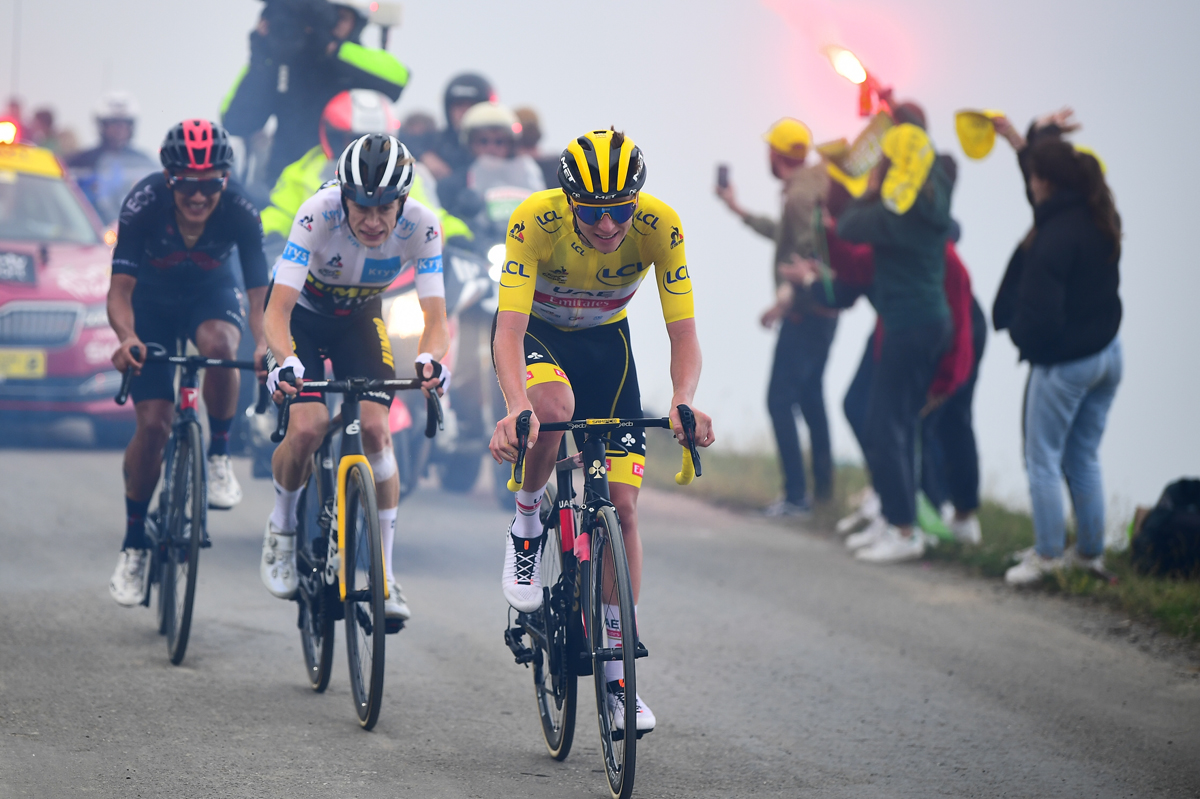
For Tadej Pogačar, Cavendish’s return to glory and the anticipation of him tying and possibly breaking Merckx’s record overshadowed what was a very dominating overall victory in the Tour. Pogačar virtually sealed the overall victory on Stage 9, a stage he did not even win but rather placed 4th. But he put on show of real strength when he dropped Richard Carapaz, Rigoberto Uran, Jonas Vingegaard and all other pretenders to gain over three minutes on them and secure the yellow jersey, to never be relinquished. While there was a lot of talk of trying to overtake Pogačar, his victory was understood by all, barring a fantastic implosion, crash or other unfortunate circumstance, to be virtually assured.

Tadej Pogacar (UAE TEAM EMIRATES) leads Jonas Vingegaard and Richard Carapaz on his way to winning stage 17 of the 2021 Tour de France. Muret / Saint-Lary-Soulan Col du Portet (178,4 km) Photo by A.S.O./Pauline Ballet

And a deserving winner he is. While he didn’t win Stage 9, he did win the Stage 5 time trial, and then impressively won both Stages 17 and 18 with mountain top finishes at, respectively, Saint Lary-Soulan and Luz Ardiden. He matched all attacks by those trying to distance him and with a real show of strength sprinted to the finish of, and victory in, each stage. He clearly stamped the 2021 Tour de France as his.

Now we are getting prognostications of multiple Tour victories, a dominance of the peloton for years to come, and even comparisons to the great Eddy Merckx. All premature. But Pogačar has shown consistency and a love for racing. Time will tell.

Finally, this year’s Tour underscored and highlighted what most of us had suspected for the last couple of years: The rise of a new generation. Beginning with Egan Bernal in 2019 and continuing with Pogačar’s victories in 2020 and this year, I believe the old guard of Chris Froome, Richie Porte, Vincenzo Nibali, Geraint Thomas and others are on the downslide. While there may be some minor resurgences (think Mark Cavendish), this new generation is young, strong and hungry to be at the top.

This is underscored by a number of other showings in the Tour. First, how about Wout Van Aert? He wins the most grueling mountain stage with two passes over Mont Ventoux. He wins the final time trial. And he wins on the Champs-Elysées, the Tour’s biggest sprint prize (for which, while I really like him, I was extremely frustrated with him at the time for beating Cavendish as I really wanted Cavendish to win). I don’t think he is going to be fighting for Grand Tour victories, but his ability to win in all three disciplines makes him a better comparison to Merckx than anyone else.

Then there are both Richard Carapaz and Jonas Vingegaard who took the third and second spots, respectively, on the podium below Pogačar. Egan Bernal just won this year’s Giro d’Italia to add to his Tour Victory in 2019. And there are a host of young sprinters, led by Caleb Ewan, eager to contest those chaotic sprint finishes.

Watching the Tour with its overall aspirations, individual stages and many subplots makes for exciting bike racing at its more elevated and professional level. And a new generation is going to keep it exciting for years to come.

What a great way to spend a hot July.


Going Big For Real – Adaptive Cycling at the Teton Mountain Bike Festival

By David Treinis

The time-honored encouragement from one all-mountain rider to another is to “go big.”

So nothing should have seemed particularly out of the ordinary for riders and onlookers watching David Poole approach modest kickers on Grand Targhee’s trail features on Labor Day weekend 2015. Or seeing Jake O’Connor aggressively leaning into the high-banked berms on the hill’s “Bullwinkle” switchbacks, with Sherene Ricci in hot pursuit, occasionally catching some air on the table-tops as they neared the Dreamcatcher chair lift.

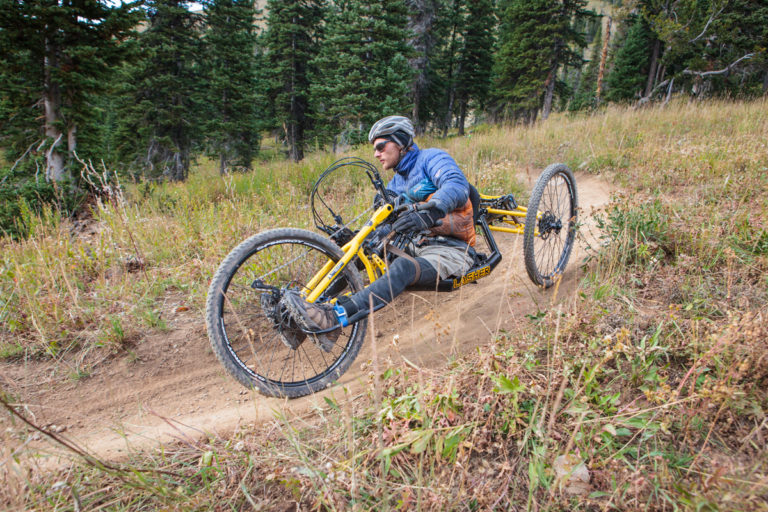
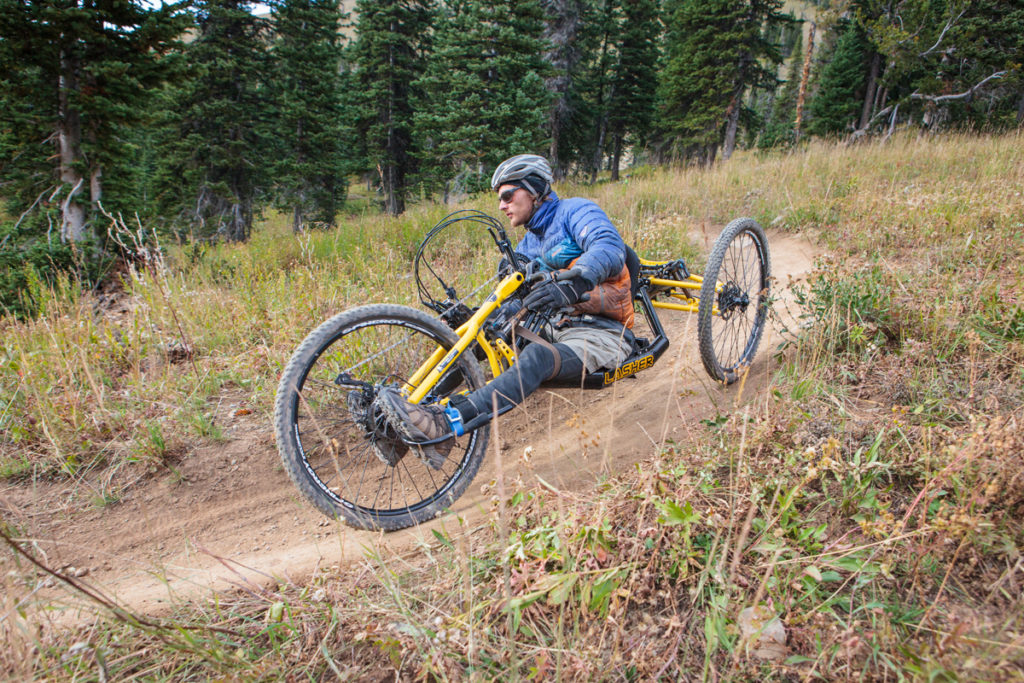
Joe Stone leans into a turn on Sidewinder on his recumbent-style hand-cycle. Photo by Eric Helgoth, helgothphoto.com

What was it, then, about these three riders on blue runs that had attracted a small crowd of spectators, pumping their fists and cheering in a collective show of awe and appreciation?

What is was, was this: each of them was riding with such gusto and abandon despite being disabled. Sherene “Lefty” Ricci lost a leg to an aggressive cancer; Jake and David suffered accidents that rendered them paraplegics.

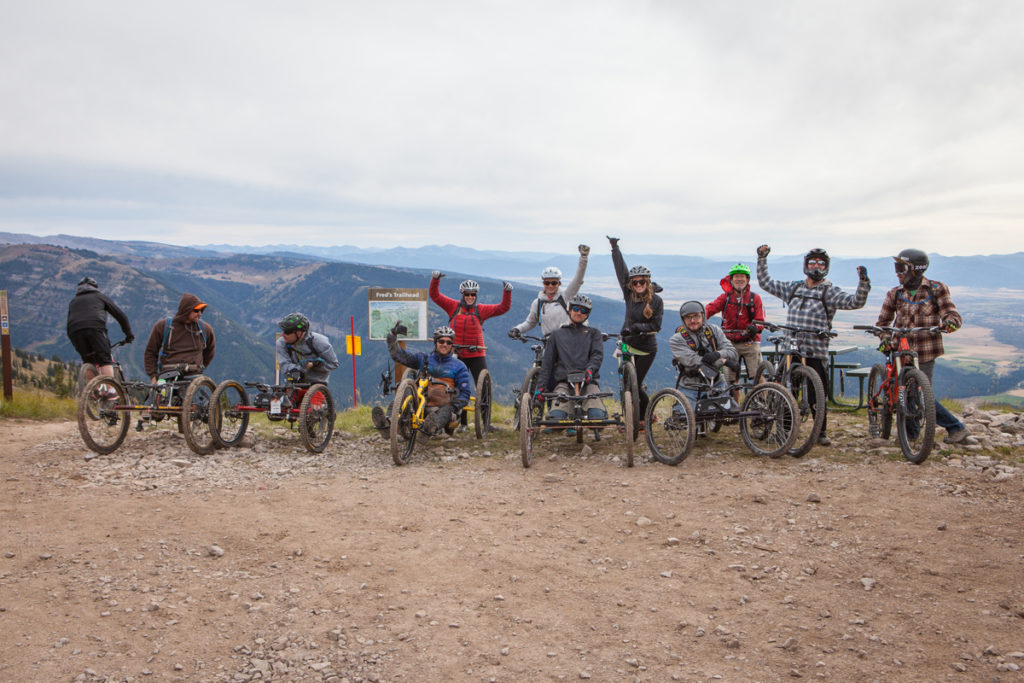
The kudos for these three—and the half- dozen more in their cadre—was in recognition of their skills and daring in taking their “adaptive mountain bikes/trikes” on the very same trails with the other riders. Each of the courageous athletes in this group had a story that would give any able-bodied rider pause, and they’d gathered at 2015 Wydaho Rendezvous Mountain Bike Festival to show they were not about to yield to disability.

Joe Stone, an “incomplete” C-7 quadriplegic from a near-fatal paraglider crash, was the first adaptive rider at the Festival and been a regular attendee and contributor the last several years, each time bringing with him more adaptive cyclists also drawn to the allure of Teton trails, mountain weather, and camaraderie. On breaks between runs, he chats with curious riders, as always the eloquent and passionate spokesman for adaptive riding.

“Prior my injuries I was an active outdoorsman, so I ached to get back on the trails and rivers, doing the things I’d always loved. I especially missed mountain biking, so it wasn’t long into my recovery before my internet searches turned me on to adaptive off-road riding,” Joe explained, gesturing to the burly three-wheeler on display beside him.

A group shot of the riders during the 2015 Teton Mountain Bike Festival. Photo by Eric Helgoth, helgothphoto.com

To the uninitiated eye, an adaptive bike strikes an image worthy of a Rube Goldberg contraption. Chains, pivots, cogs, straps and grips are arranged in a bewildering sequence atop a chassis that looks like a diminutive top-fuel dragster pointed backwards. So it’s fortunate that manufacturer Jake O’Connor, founder of Reactive Adaptions, rolled his wheelchair up to Joe’s tent just in time to explain the impressive and clever technology behind these truly capable machines.

“The ‘Bomber’ is designed for a rider in the prone body position, allowing him or her to leverage bodyweight over the crankset and as well as assess the terrain ahead,” Jake explained. Turning his attention to another adaptive bike on display, he continued. “The ‘Nuke’ model, by contrast, was developed for riders who prefer a recumbent style.”

“Makes and models vary in features and performance, but all off-road adaptive bikes offer suspension, gearing with derailleurs, disc brakes, and knobby tires—all the features of conventional mountain bikes. There are even fat-bike variants.” Jake added that, “Platforms aside, the biggest differences between adaptive and conventional riding are 3 wheels, and that most use hand cranks to pedal.”

In addition to the sophisticated offerings from manufacturers like Jake, adaptive off-roading inevitably piques the interest of garage band tinkerers like David Poole.

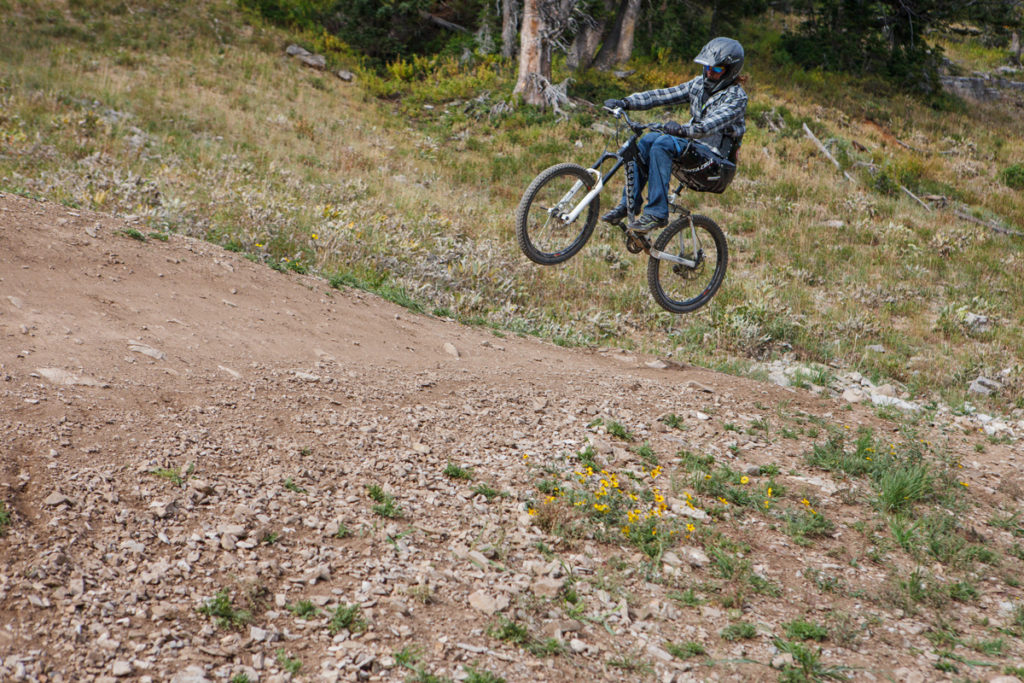
“My homemade ‘bucket bike’ mates a full-suspension mountain bike frame with a sit ski seat. Once I strap my feet to the pedals and head downhill, my technique is pretty much the same as the able-bodied riders on the trail.” David paused for effect and added, “Except that once I’m rolling, I’m committed.”

Ready to drop in on Sidewinder, a 2000′ vertical single-track descent starting at the top of Dreamcatcher. Photo by Eric Helgoth, helgothphoto.com

His last comment led to the obvious question of what happens on an uphill section—say, a roller on an otherwise DH run that would normally require a few pedal strokes. It turns out his companion-rider (who doubles as hero-footage cameraman) simply puts a hand to David’s shoulder and pedals with just enough energy to keep them both from stalling.

“Sometimes,” he laughed, “that doesn’t quite work out as planned.” Looking more closely at the adaptive group, I noticed that most of these enthusiastic riders sport a few scrapes and bruises that are the badge of honor in mountain biking.

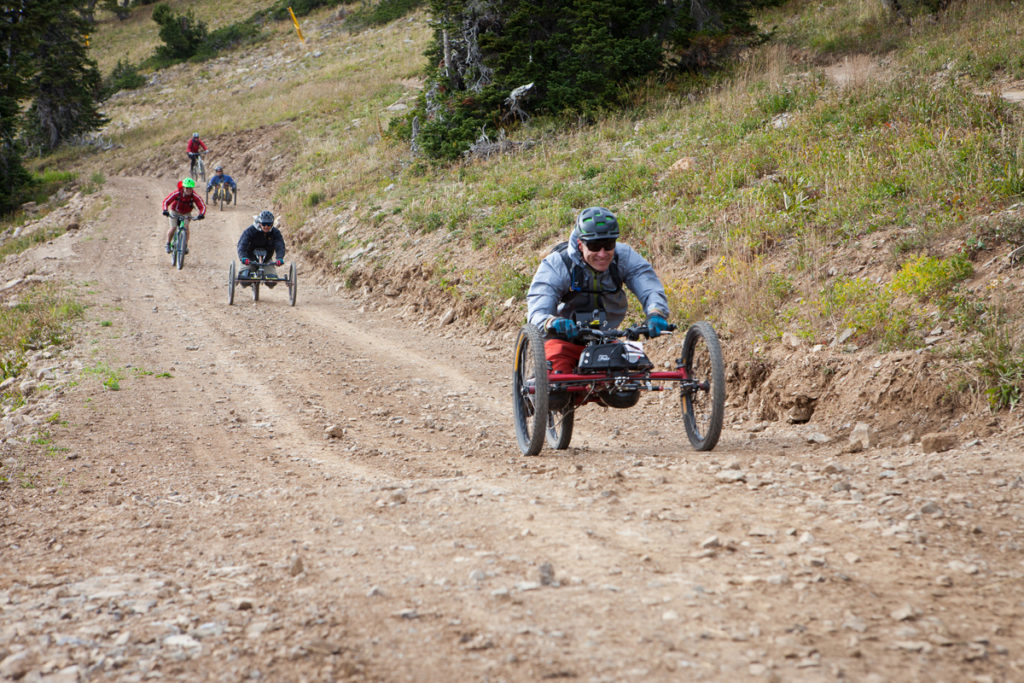
Both individually and as a group, these riders are undaunted. When on the last day of the previous year’s Wydaho it rained hard enough to chase nearly nearly everyone else off the trails, the adaptive group remained out in force. Soaking wet, cold, muddied and tipped over on occasion, they all agreed it was one of the best days of the Festival. “We had the trails to ourselves,” recalled Joe, “plus the Festival organizers held a raffle just for us, sending us on our way with lots of cool swag and free gear.”

Being at home on the most of Targhee’s trails, I reckoned that hand-cycling on a beginner run would prove little challenge for me. Approaching the first, embarrassingly small rise revealed I was in over my head from the get-go. Arms burning from pedaling furiously on the hand-cranks, I was saved from rolling backwards only by a timely shove from a sympathetic bystander.

No sooner was I over the top than I was faced with a far more threatening challenge: changing gears, braking and turning, not to mention doing my best to avoid tipping over in the too-fast-approaching banked corner. I went from being cocksure to looking like Chevy Chase leading up to a pratfall, heading for the inevitable digger. I held it together for my short demo ride, though thinking all the while, “How in the world do adaptive riders rail on these things?”

I figured maybe it might be smarter, not to mention safer, to learn hand-cycling first by watching it being done properly. So I mounted my two-wheeled trail bike to join a run with the adaptive riders. In the interest of saving the proverbial thousand words as well as the remaining shreds of my dignity, I’ll let the photos tell the story of our group ride on an all-mountain trail.

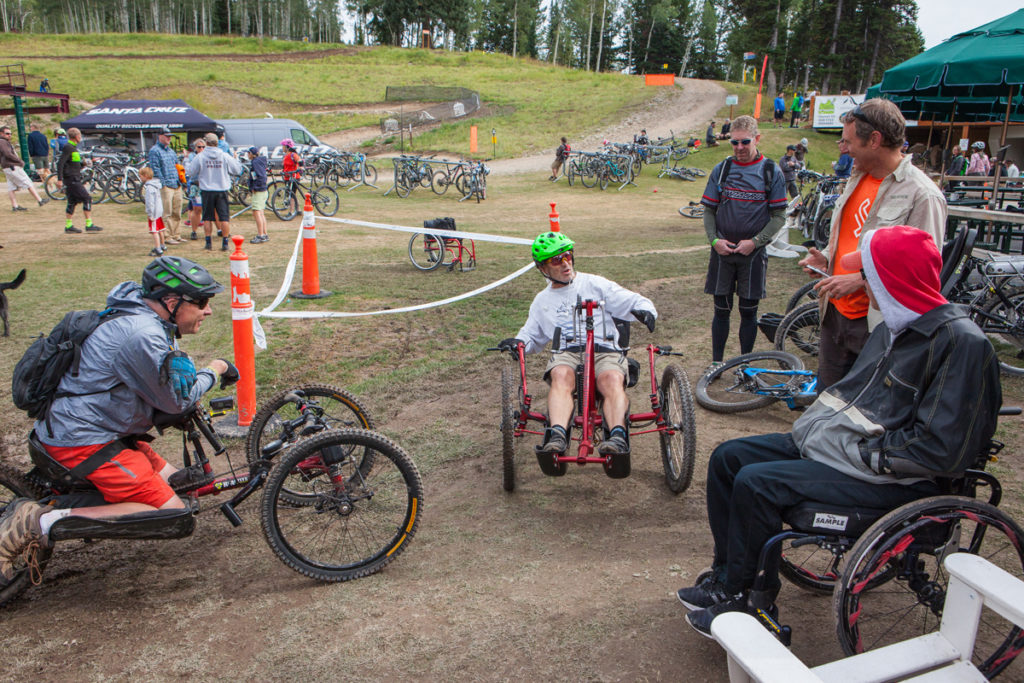
The author, David Treinis (green helmet) getting his briefing from other adaptive riders before taking on a short section of trail during the 2015 Wydaho Rendezvous Festival. Photo by Eric Helgoth, helgothphoto.com

Behind these individuals at Wydaho Rendezvous were at least three key organizations dedicated to serving the needs of adaptive athletes: Teton Adaptive Sports, The National Ability Center, and Higher Ground. “People with disabilities are more than capable of enjoying a wide range of outdoor activities but often are held back by the cost of the gear and the support needed to get them started,” observed Steve Robinson of the NAC. “Our organizations try to fill that gap by providing skills training, adaptive equipment and a supportive environment.”

Joe Stone’s neon-orange tent serves as central gathering spot for the adaptive riders and their gear at each year’s Wydaho. If there’s one common thread among the disabled riders assembled there, it’s their evangelical zeal in encouraging others with disability to get back fully into active lives. “Just 25 years old, and I thought my life was essentially over, that I’d never again get to enjoy the things that meant so much to me prior to my accident,” said Joe. “But adaptive off-road cycling offered me the chance to ride the same trails, with the same joy and thrill, as able-bodied cyclists.”

Sherene echoed Joe’s sentiment, adding, “I’ve learned there are many ways to adapt and be fully engaged with life in spite of my disability,” she said with confidence. “The only limitation we truly face is that of overcoming what we perceive to be our limit.”

For more information on the various organizations mentioned in the story, see:

Wydaho Rendezvous: tetonbikefest.org

Teton Adaptive Sports: tetonadaptivesports.com

Jake O’Connor/manufacturer: reactiveadaptations.com

Joe Stone Foundation: meetjoestone.com

Mountain Bike Tetons: mountainbiketetons.org

National Ability Center: discovernac.org

See also: Wasatch Adaptive Sports wasatchadaptivesports.org

Teton Mountain Bike Festival Details:

Teton Mountain Bike Festival, Alta, WY, held at Grand Targhee Resort. Come enjoy endless miles of cross-country, singletrack, dirt road, lift-served downhill, jump park, freeride, and an IMBA Epic Trail, tetonbikefest.org, grandtarghee.com

Author David Treinis was a member of the founding committee for Wydaho Rendezvous, for which he continues to serve as an advisor. He lives in the Teton foothills of Alta, “Wydaho,” so he hardly ever puts his bike on his car.

David Poole hits a kicker on his DH run on his “bucket bike” with sit ski saddle.
Photo by Eric Helgoth, helgothphoto.com

Rail Trail Best Practices

By Charles Pekow — We hear a lot about converting abandoned railroad lines into trails. But we don’t always have to wait for the trains to stop running before turning the lines into bike paths. In 2002, the Federal Highway Administration (FHWA) issued a report called Rails with Trails: Best Practices and Lessons Learned, providing evidence-based guidance on how the two means of transportation can co-exist paralleling each other. And on the 19th anniversary of its guidebook, FHWA has updated it.

Park City Rail Trail
Park City Utah Rail Trail is a mix of pavement and easy rolling dirt.

The new report notes that of the eight largest US railroads, four don’t allow parallel trails. Nevertheless, in 2018, FHWA counted 343 rails with trails. But most evidently were rather short: they covered only 917 miles, though they existed in 47 states. FHWA noted that “since 2000, there has been an increasing trend of building” them. Most of the trails parallel commuter routes, as freight operations generally are heavier and on private property and owners don’t see bike routes complementing them.

But if you want to build a trail along a railway, FHWA tells you what you need to do, from contacting the railroad and its customers “early and often,” to studying feasibility. This means everything from figuring out how to acquire the land to whether the terrain is suitable to figuring out how to create safe crossings.

Find the report at https://railroads.dot.gov/elibrary/rails-trails-best-practices-and-lessons-learned-0


Advocacy Alert: Speak out for Bike Safety on 100 South in Salt Lake City

2

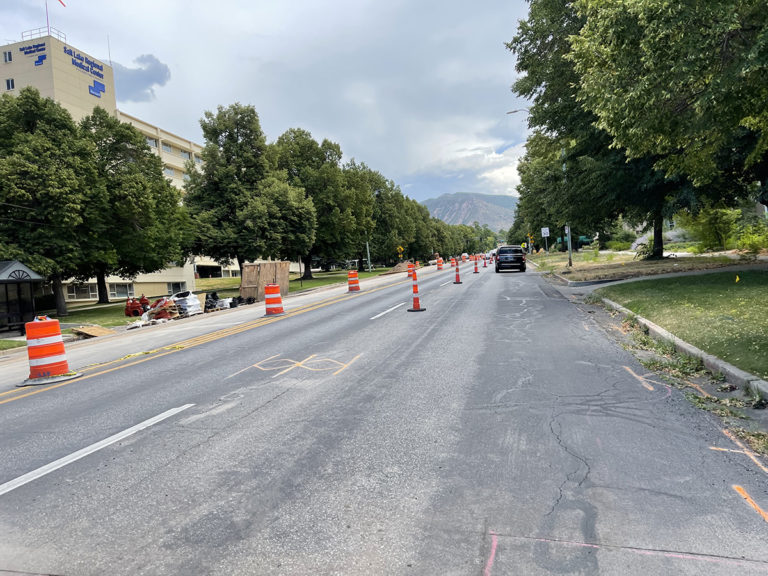
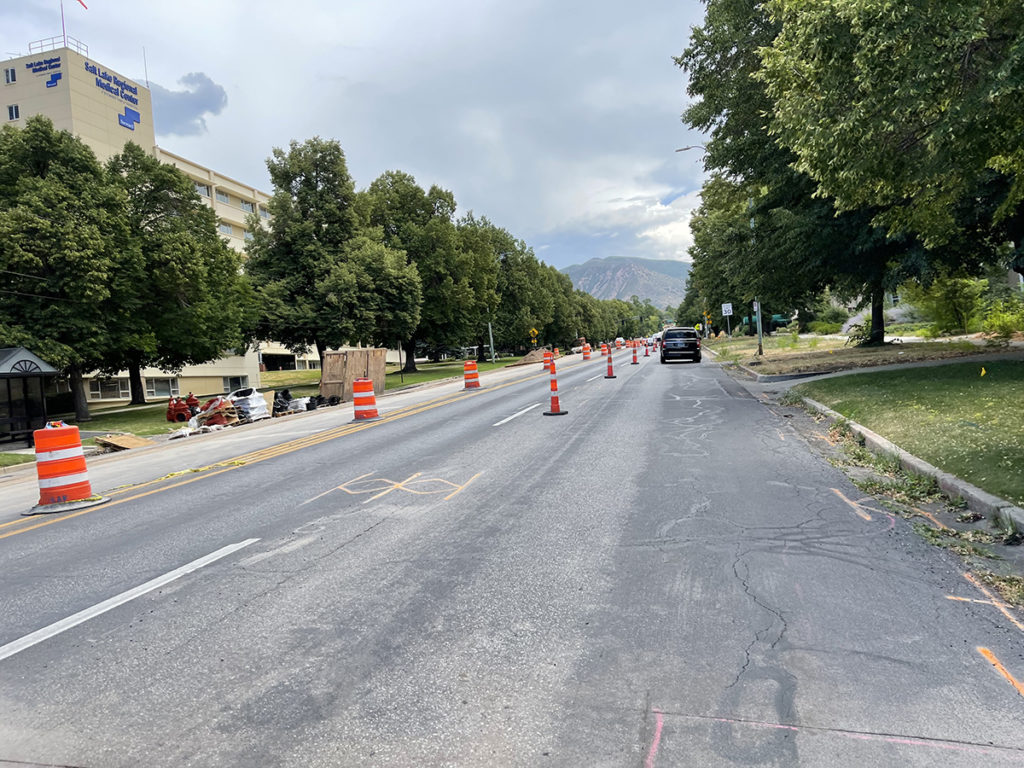
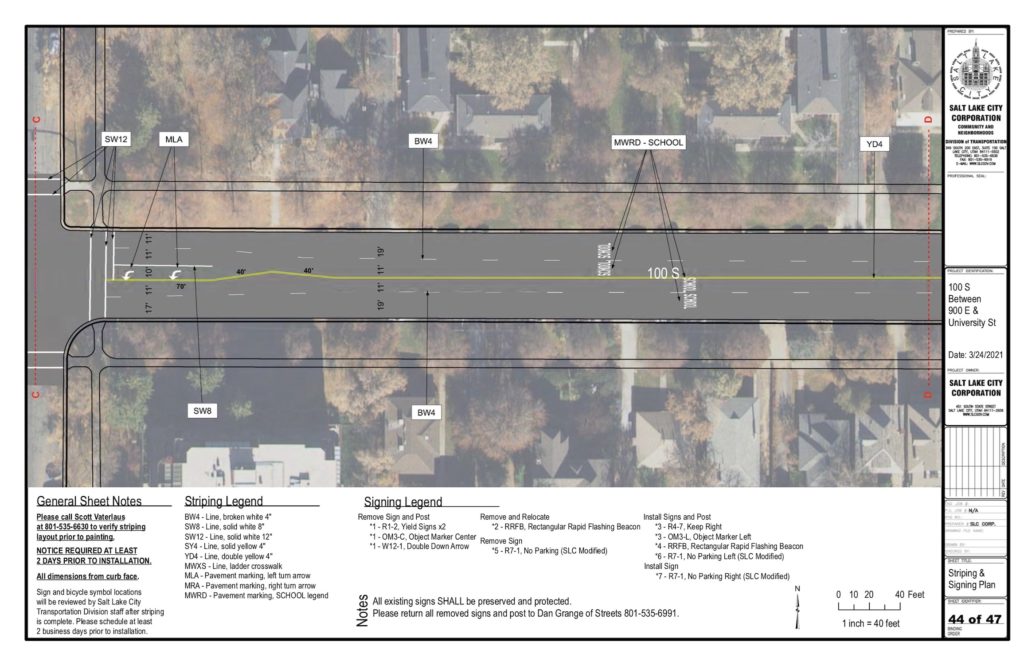
August 27, 2021 – On Monday, August 30, Salt Lake City will hold its likely first ever Complete Streets Commitee Meeting for the purpose of creating a post hoc justification of what we believe to be an illegal decision to not include a bicycle way on 100 S in the current street reconstruction. 

100 South in Salt Lake City is getting rebuilt with no bike lanes planned. Photo by Dave Iltis

The reconstruction is happening from 900 E to University St, and despite being funded by public bond money, and having a Complete Streets Ordinance that mandates bike facilities on the roadway, and despite there being room for safer conditions for cyclists, Mayor Mendenhall’s administration is moving ahead with a bike unsafe, high speed design for the roadway. We first raised this issue in 2019 in an editorial stating the Salt Lake City is set to violate the Complete Streets Ordinance on 100 S.

100 South Design Drawing showing wide lanes between 1100 and 1200 E, and no bike lanes or road diet.

We have sent numerous emails to Salt Lake City Transportation Director Jon Larsen. He has responded that there would not be enough room for bike lanes and that they cannot do a road diet because it’s a route to the University Medical Complex. The responses and justifications for those responses have been vague, and non-specific. Our emails have prompted Salt Lake City to have, as far as we know, their first ever Complete Streets Committee Meeting in the 12 years since the ordinance was enacted. Clearly the city is aware that they are not doing the right thing.

How to Comment and Participate:

What can you do? If you can, please attend the virtual meeting at 9 am on Monday morning (details in the link) August 30. You can also email the Complete Streets Committee with comments prior to the meeting: [email protected], [email protected], [email protected], [email protected]

Ask Salt Lake City for a bicycle safe, lower speed, complete street on 100 S. See our comments below for talking points. Please feel free to use any of this that you like for your email.

You can sign our petition (edit the text if you want), which will send the email below to the Complete Streets Committee:

[emailpetition id=”5″]

Cycling Utah’s Comments to Salt Lake City on 100 S:

I am asking that you make travel on this street safer for cyclists and add additional measures to slow traffic speeds.

The plans in place are unsafe for cyclists in that they do not include bike lanes, a shared bike/parking lane, a safety lane, or a road diet. It’s clear that SLC did not follow the Complete Streets Ordinance on 100 S, despite using Funding Our Future Bond money for the project.

The Complete Streets Ordinance states:
All city owned transportation facilities in the public right of way on which bicyclists and pedestrians are permitted by law, including, but not limited to, streets, bridges, and all other connecting pathways, shall be designed, constructed, operated, and maintained so that users, including people with disabilities, can travel safely and independently. (Ord. 4-10 § 1, 2010)

Additionally, it states:
A. Bicycle and pedestrian ways shall be established in the city’s new construction and reconstruction projects in the public right of way, subject to budget limitations, unless one or more of the following three (3) exemption conditions is met:…
(Note that SLC does not meet any of these exemption conditions.)

The design put forth for 100 S does not allow cyclists to travel safely. It needs to allow this. It will be better with the bulbouts for pedestrians, however your design will be worse than the existing condition for cyclists for a number of reasons. The current speed 85th percentile is approximately 39 mph. The new design will do little to slow this.

But it could with a few small changes.

Options:

1. A road diet with bike lanes. The traffic volume on 100 S, ~13000/day, is low enough to justify a road diet. This would provide room for bike lanes. Emergency vehicles can easily use the center turn lane.

2. 10’ lanes throughout and bike lanes. If you use the 2’ gutter as part of the parking area (like you have on 1100 E) and/or the bike lane (as on 1300 E), this provides room for 7’ parking area and 5’ bike lanes (assuming a 64’ curb to curb area, including the gutter). Note that 300 E has 4’ bike lanes; as do other streets in the city.

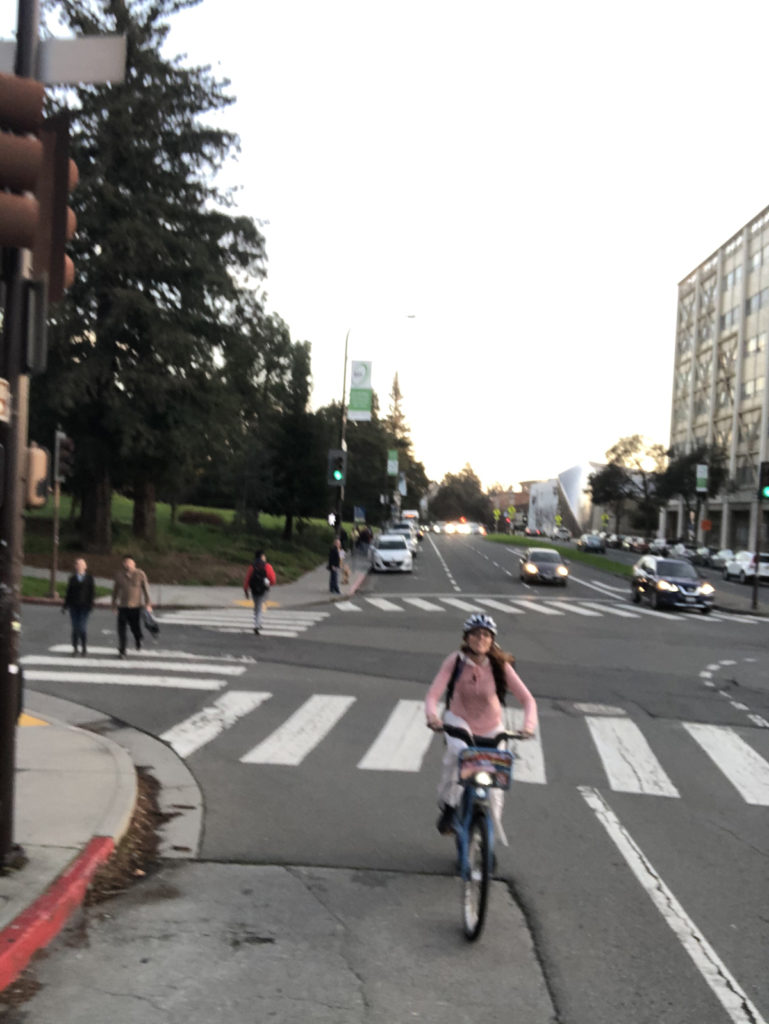
3. 10’ lanes throughout and a shared bike/parking lane. This is similar to what Denver and Berkeley do. The current parking utilization on 100 S works for this option.
Denver includes this in their Bikeway plan. See page 32.
https://www.denvergov.org/files/assets/public/doti/documents/standards/pwes-014.0-bikeway_design_guidelines.pdf

Many other communities like Hartford, CT, Carbondale CO, Manteca, CA, Chicago, IL etc. use shared bike and parking lanes. While not ideal, they are a better solution than nothing at all.
See
https://www.google.com/search?q=”SHARED+BIKE+AND+PARKING+LANES”

Berkeley Shared Bike/Parking Lane:

An example of a shared bicycle and parking lane from Berkeley, California. Photo by Dave Iltis

4. If you don’t want to follow these other cities examples, you could at least stripe all traffic lanes at 10’ and thus leave a safety/parking lane. This would provide some refuge for cyclists and would slow motor vehicles too.

The design put forth by Salt Lake City does not comply with the Complete Streets Ordinance, and is less safe for cyclists than the current design. Please make some adjustments to make this street safe for cyclists to travel on.

These adjustments, particularly the bike lanes and 10’ travel lanes will make conditions better for the residents of 100 S too as they will slow traffic down.

Lastly, in our world of global warming/climate change, the details matter. Every single project must be viewed with the lens of reducing fossil fuel usage. Bike safety on 100 S would do just that.

Please seize this and every opportunity to transform Salt Lake City’s Transportation System. The safety and health of all of us is counting on that.


Trail Etiquette on the San Rafael Swell’s Good Water Rim Trail

By Pete Kilbourne — It was inevitable that the place would be discovered for its massive Wingate and Navajo towers, walls, and deep intricate canyons relatively close to the Wasatch Front. Agency management has been relatively low key lending an air of permissiveness and freedom to the place. So, by now you realize I am not talking about Moab but the San Rafael Swell. Visitation by ATVers, climbers, hikers, sight seers, and cyclists has boomed. The Good Water Rim Mountain Bike Trail is a case in point.

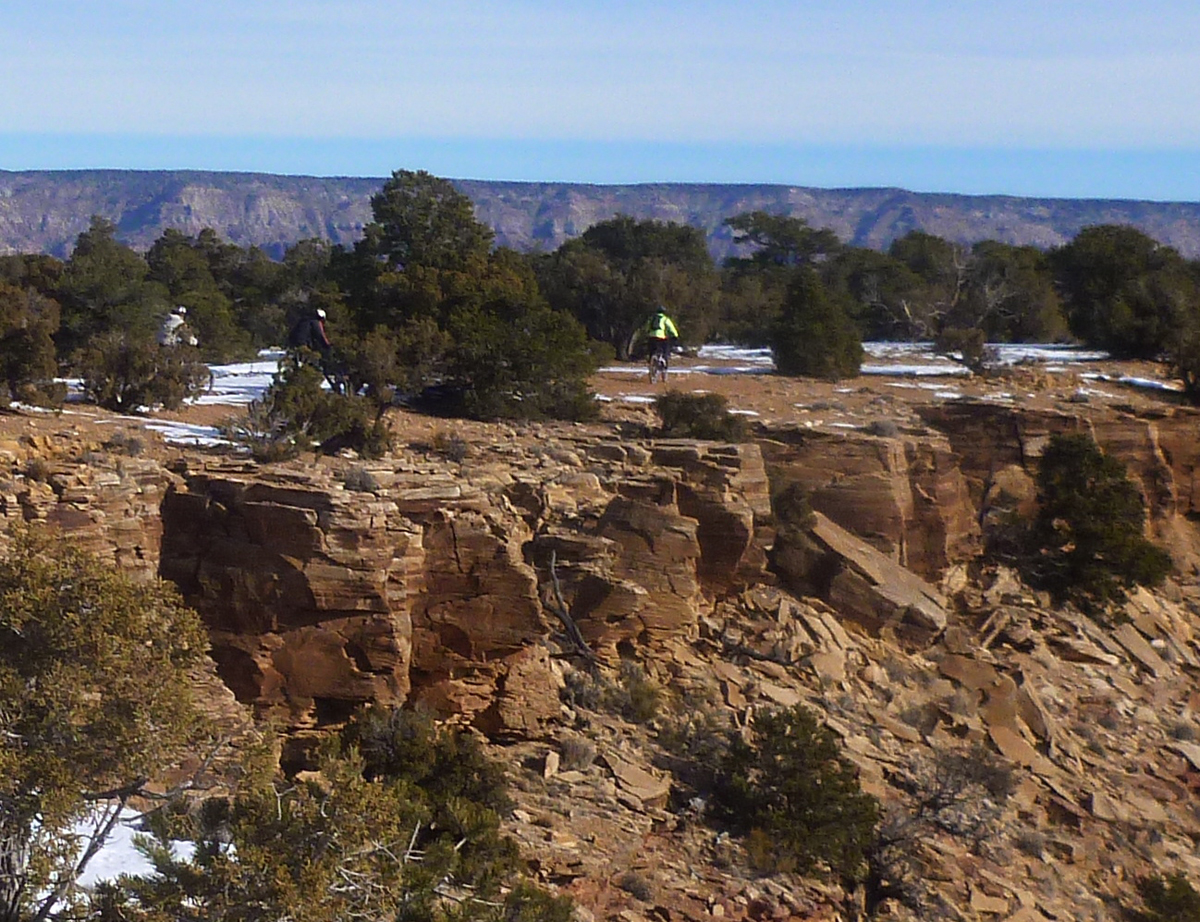
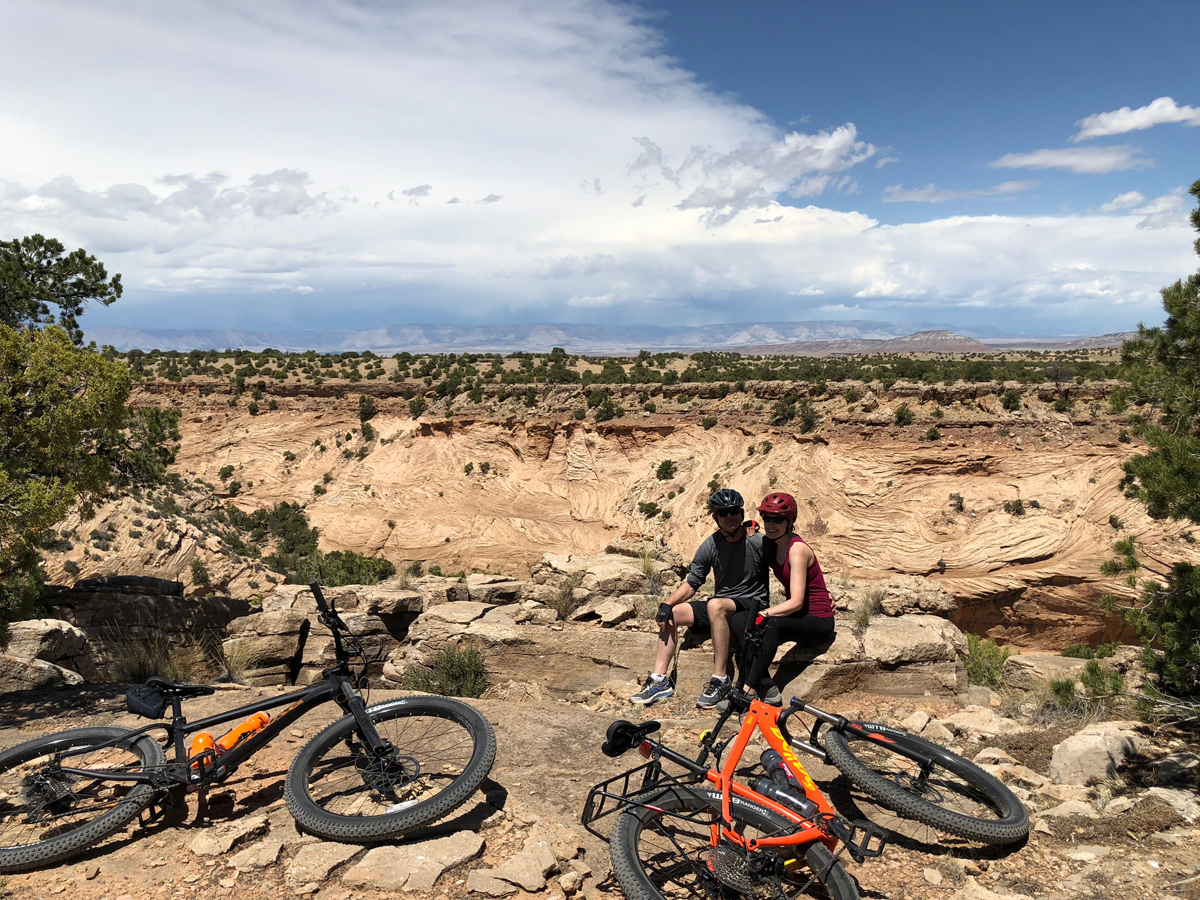
Riders on the Goodwater Trail in Utah's San Rafael Swell. Photo by Kim Player/MECCA Bike Club
Riders on the Goodwater Trail in Utah’s San Rafael Swell. Photo by Kim Player/MECCA Bike Club

The trail circumnavigates the rim of Good Water Canyon, a tributary to the San Rafael River. It roughly traces the rim for 17 miles, twisting around pinyon and juniper trees and along cliff edges with stunning views and attention demanding intermediate riding. Although the trail had been on the ground for a number of years, it was only designated by the BLM in 2021; an environmental analysis was needed to address issues such as the presence of an endangered cactus.

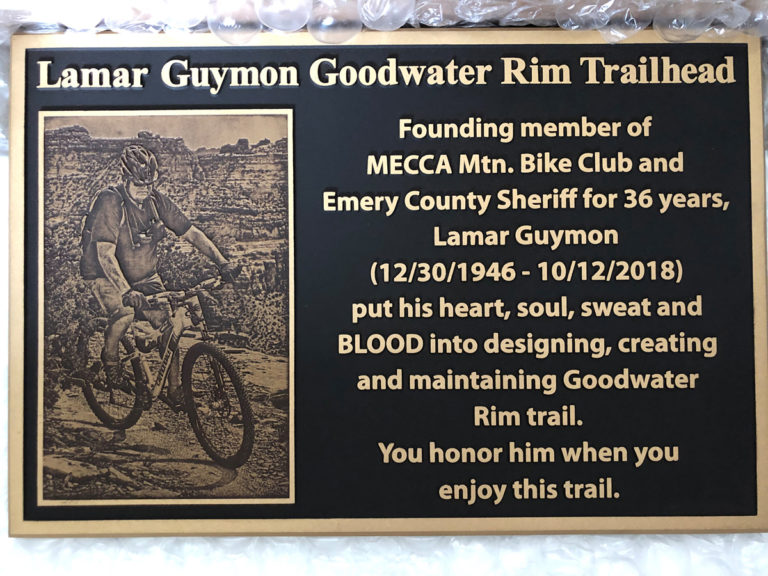
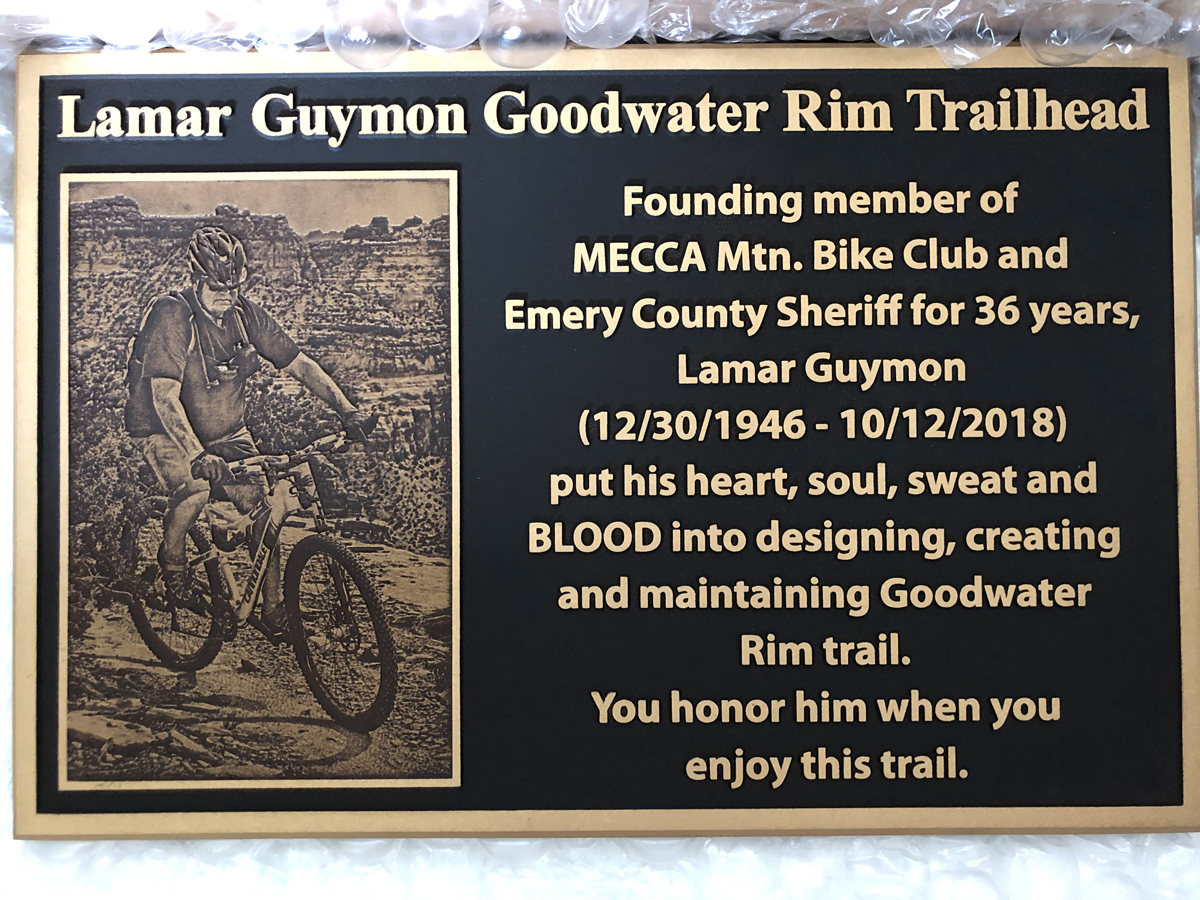
The plaque on the Goodwater Trail commemorating Sheriff Lamar Guymon. Photo by Kim Player

The Trail was created by Lamar Guymon, founding member of the MECCA Mountain Bike Club and former Emery County Sheriff. The Guymon Good Water Rim Trailhead plaque reads, “Lamar Guymon (12/30/1946 – 10/12/2018) put his heart, soul, sweat and BLOOD into designing, creating, and maintaining Good Water Rim Trail. You honor him when you ride this trail.”

At first traffic on the Good Water Rim Trail was light. Mountain bikers began coming in increasing numbers as the trail’s reputation for scenery and fun became better known. Plenty of other riders are on it now, especially on weekends.

The trail is well designed and a hoot to ride, but it is a bit of a frontier with respect to trail etiquette. The only norms are those riders bring with them from other areas. By establishing and adhering to a set of norms at Good Water Rim, riders could help resolve three primary issues.

For one, the trail is narrow, twisty, and treed. On-trail visibility can be limited and there are few places to pull over. The second is speed and mismatch of speed of riders. Faster riders who refuse to slow down can run others off the trail. The third problem and victim is the environment. When riders dive out of the way to avert a collision, they can crush sensitive cryptobiotic soils and trample the endangered cactus that made official designation of the trail uncertain in the first place. 

To be sure, on a typical weekend you will encounter slower riders in front, faster riders behind, and two-way passes perhaps a dozen times, much as you would on Bonneville Shoreline Trail. There, accepted norms are in place. For the most part, downhill riders give uphill riders the right of way and passes are slowed and cordial there. This is less so at Good Water. 

Both fast and slow riders and the environment can coexist given norms that beneath it all are simply based on the idea of looking after each other so all can enjoy the trail. But the specifics need to be tuned to the terrain and the clientele. We must adjust for narrow, twisty, low-visibility trails, environmental concerns, and the mix of fast and slow riders. So here goes. 

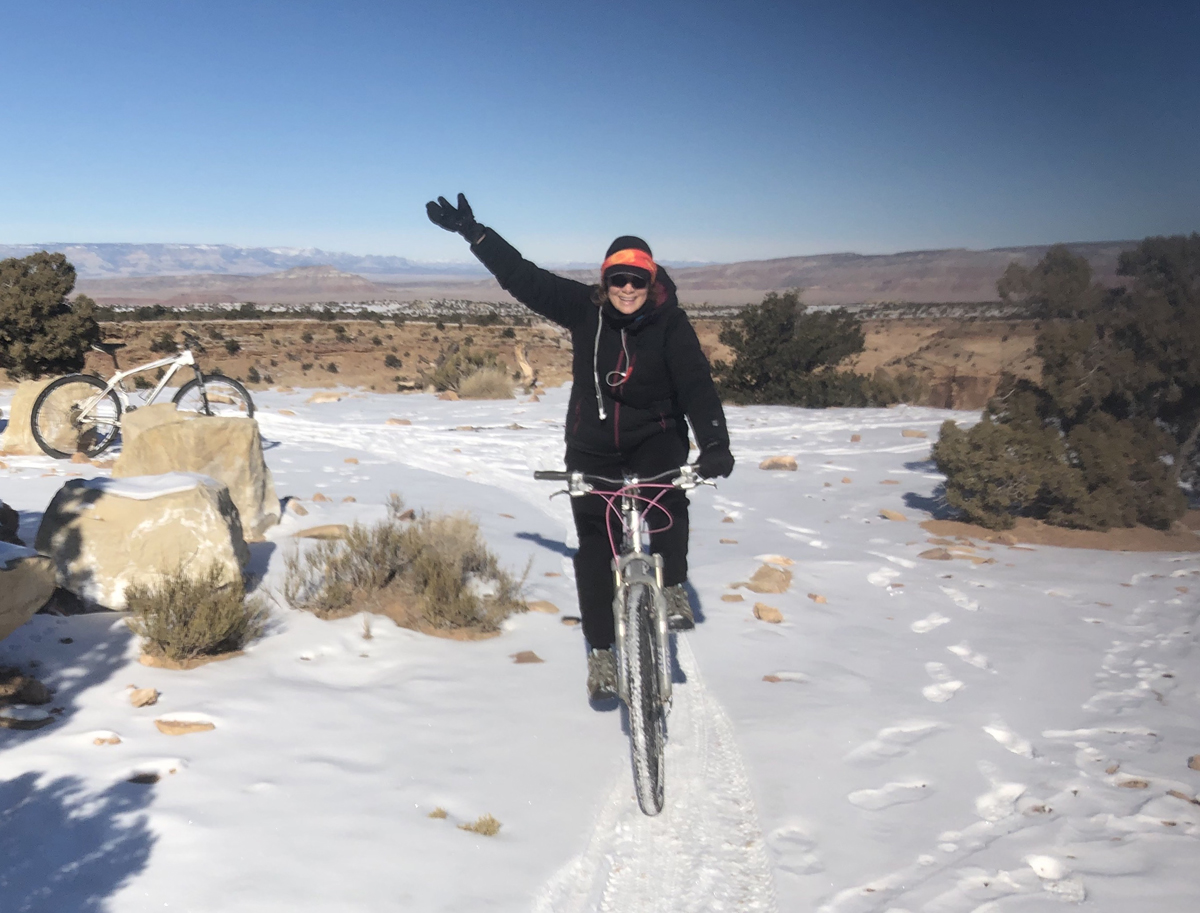
Riders on the Goodwater Trail in Utah’s San Rafael Swell. Photo by Kim Player/MECCA Bike Club

Fast riders, keep an eye out for what is ahead. If uncertain, then slow down. If you drive someone off the trail as you emerge unseen from around a tree, that is on you, not your victim. Where you can see, on straight sections, intimidating passing speed is impressive in a bad way. Slow down to pass other riders. Hopefully, both of you can stay on the trail.

In defense of fast riders on Good Water Rim, a quick slalom rhythm of linked single-track turns can be fun. That said, blind corners and cliff edges on the trail demand speed moderation no matter how experienced you are. At Good Water Rim, a personal best ride is one that is fun, cleanly run, and safe. Time is pointless because of what has been previously mentioned about coexistence with other people and the stunning overlooks. Stop the clock and enjoy the place and the experience.

A special note about E-bikes. The Bureau of Land Management has authorized the use of Class 1 E-bikes on Good Water Rim. Class 1 E-bikes provide assistance only when pedaled. E-bikes are categorized by the level of pedal assist ranging from Class 1 that provides pedal assist only to 20 mph to throttled E-bikes that can assist to 28 mph. Only Class 1 E-bikes are authorized on this trail. 

Good Water Rim is not particularly hilly but like in most areas other than lift operated downhills, uphill riders have the right of way, except of course, when the downhill rider needs to clear some semi-technical terrain first before they stop. 

Riders congregate. People bunch up at lunch stops, rests, or while waiting for their slower partners to catch up. These stops should ideally target wider hardened areas such as the viewpoints. This not only minimizes impacts on sensitive soil and vegetation but also provides riders more room to pass.

For slower riders, bail with care because of the damage you may cause by trampling sensitive soil and vegetation. If possible, leave your tires on the trail and tilt your bike out of the way without venturing into untrammeled soil. If that isn’t good enough for an aggressive rider, that is their problem. 

Never cut the curves, which widens the trail and damages sensitive soils. Paid and volunteer trail crews have spent many weeks completing trail repairs and repairing rider impacts off trail. Their efforts have also focused on maintaining a single track and keeping the trail in good condition. 

The BLM is addressing the most pressing problem, sanitation, with more toilets. They have also added signs, designated sites, and a bit more presence, but there is only so much they can do. It is up to the users to play well with each other and minimize their impact on the land. Act as part of a community that engenders friendly and respectful behavior. Lamar, by the way, was a very respectful guy. Please honor him as you ride Good Water. 

Riders on the Goodwater Trail in Utah’s San Rafael Swell. Photo by Kim Player/MECCA Bike Club


Tips for Getting Into Gravel Grinding

By Sarah Kaufmann — So you want to grind some gravel? Gravel riding is the latest uber popular trend in cycling and for good reason – it opens a whole world of new areas to explore, it gets us away from cars, and off the beaten path, while still ‘road riding.’ Races like the Crusher in the Tushar, Unbound Gravel, and the original Belgian Waffle Ride have been around for a while and their popularity has exploded as this trend has taken off. Competition has gotten stiffer as Olympic and World Tour riders now regularly make appearances at these races.

But if you are gravel curious, where do you start? Whether you are coming from a road riding or MTB background, gravel takes all. It’s where everyone meets in the middle. I chatted with some elite gravel racers to get their input and tips and tricks for gravel riding.

From Lindsey Stevenson, ABUS Pro Gravel Team and a racer I get to coach;

  1. Even the smoothest gravel beats you up when you are on it for hours and hours. It’s a bit of an acquired taste for some and it takes some getting used to. Riding really rough terrain on a gravel bike has certainly made me love and appreciate the primo gravel roads that I’ve ridden.
  2. Practice fueling on the gravel. It’s definitely more of a challenge to get in enough calories when you’re on bumpy terrain all day. I have tanked in a few races because I waited too long to eat. I finally figured out a few ways to eat safely while on gravel. I keep unwrapped food in my top tube bag and in the pockets on my bib shorts for easy access. It’s much easier than reaching into the back of my jersey while trying to hold a straight line in loose gravel.
  3. Take it easy on sharp turns. This one is pretty self-explanatory, but I’ve seen several people wash out because they try to take corners too hot in loose dirt/gravel.
  4. Keep it fun. Gravel riding is about adventure! There are endless gravel roads to explore… sometimes they’re incredible and sometimes they’re a nightmare. But gravel rides always make for good stories!
Riders tackle the ENVE Grodeo in Ogden, Utah on June 26, 2021. Photo by Cathy Fegan-Kim, cottonsoxphotography.com

From Neil Shirley, former professional road racer and current Marketing Manager at ENVE Composites in Ogden, UT;

  1. Go big on tires. Now that there are so many good tubeless tire options in a vast range of sizes and tread patterns, we’re definitely spoiled. The gravel conditions should dictate tire size, but never look to tires as the place to save weight or improve aerodynamics. Otherwise you are likely trading comfort, performance, and flat prevention for the sake of a handful of grams. 40c tires are the starting point for me and for Utah gravel I never have a need to go with anything smaller. Tire pressure is also key, which is why I always reference ENVE’s tire pressure chart to find the ideal recommendations based on rim width, tire size, and rider weight: www.enve.com/learn/tire-pressure/
  2. Spend time in front of paper maps, online maps, or whatever app you might have that can help you truly explore your own backyard. My favorite thing about gravel riding is finding new routes that I stumbled upon when pouring over a map and finding some connector road or trail that allowed an entirely new ride to come together. Don’t just settle for the same stuff you already know, dig deep and you’ll be rewarded.
Hanna Muegge grinding some gravel. Photo by Cathy Fegan-Kim, cottonsoxphotography.com

From Hanna Muegge, DNA Pro Cycling Team

  1. Use drafting to your advantage. If you are coming from an MTB background, get comfortable sitting in the group and letting other people ride on the front and do the work. Just because you feel good isn’t a reason to attack or pull everyone around. Be patient and be strategic. Form alliances and share the work. It’s a transition from MTB to sit in and be patient but it will pay off in gravel racing. Those coming from a road background are familiar with these ideas but it may be new for MTBers.
  2. Let it rip on the descents. After years of riding pavement on half an inch of rubber, it’s so confidence inspiring to descend on wider gravel tires. Enjoy the extra rubber and open it up on the descents.

I enjoyed compiling this list from these elite riders. As an experienced MTB racer but newer to gravel, getting to pick the brains of these riders gives me some tools for my toolbox as I get ready to do my first gravel races this summer.

Sarah Kaufmann is the owner of K Cycling Coaching. She is an elite level XC and CX racer for DNA Pro Cycling Team. She is based in Salt Lake City, UT and can be reached at [email protected] or 413.522.3180.

Back in the Saddle Again: An Argument for Recumbents

By Martin Neunzert — Remember Stage 21 of the 1992 Tour de France, undeniably the most exciting stage ever? Leonard “The Lion” LaRue battling Martino “the Hammer” Martello on the Col de la Mort.

Liggett: …The approach grade to the pass is known locally as Montagne Némésis because of its unrelenting nature and it has both rider sweating buckets.

Sherwin: Yes, they are both at their physiological limit after so many hard days of cycling.

Liggett: And the final section to the pass is the steepest ever in the history of the Tour.

Sherwin: I think the Lion’s mass is hurting him a bit. He’s so strong, but all that muscle…

Liggett: Martello’s strong, too, and keeps pressing him—oh, he’s out of the saddle and going for it!
Sherwin: LaRue catches a glimpse of him and he’s quickly out of the saddle, too! Exciting stuff, considering they’re still 1.28965 kilometers from the pass…

Liggett: Martello just can’t keep up the attack and is back in the saddle.

Sherwin: LaRue sinks down again, too, his face in agony. He just can’t sustain the attack.

Liggett: Wait! there’s Müller, just spinning along and closing! What an upset! No one could have predicted this!
Sherwin: The roar of the crowd alerts both Martello and LaRue, now neck and neck. They’re both out of the saddle and giving it everything!

Liggett: Oh, wait, they’re do in and back in their saddles again.

Sherwin: Crushing defeat…there’s just nothing left in them, every muscle stressed to its limit…

Liggett: …Müller breezes by for the win…

Of course you don’t remember that epic contest, I just made it up. But that kind of thing plays out again and again, in races and during your own rides. The result is always the same.

The first thing to understand is your body is a heat engine. Food and water goes in one end and, well, various things come out the other end.

Engineers frequently use the concept of a “control volume” to simplify the understanding of an energy system. Figure 1 shows a conceptual spherical surface around a climbing cyclist. We can keep track of things which cross that boundary. Measurable things like calories, of course, but also less tangible things like heat, sound, moisture, and methane. And power.

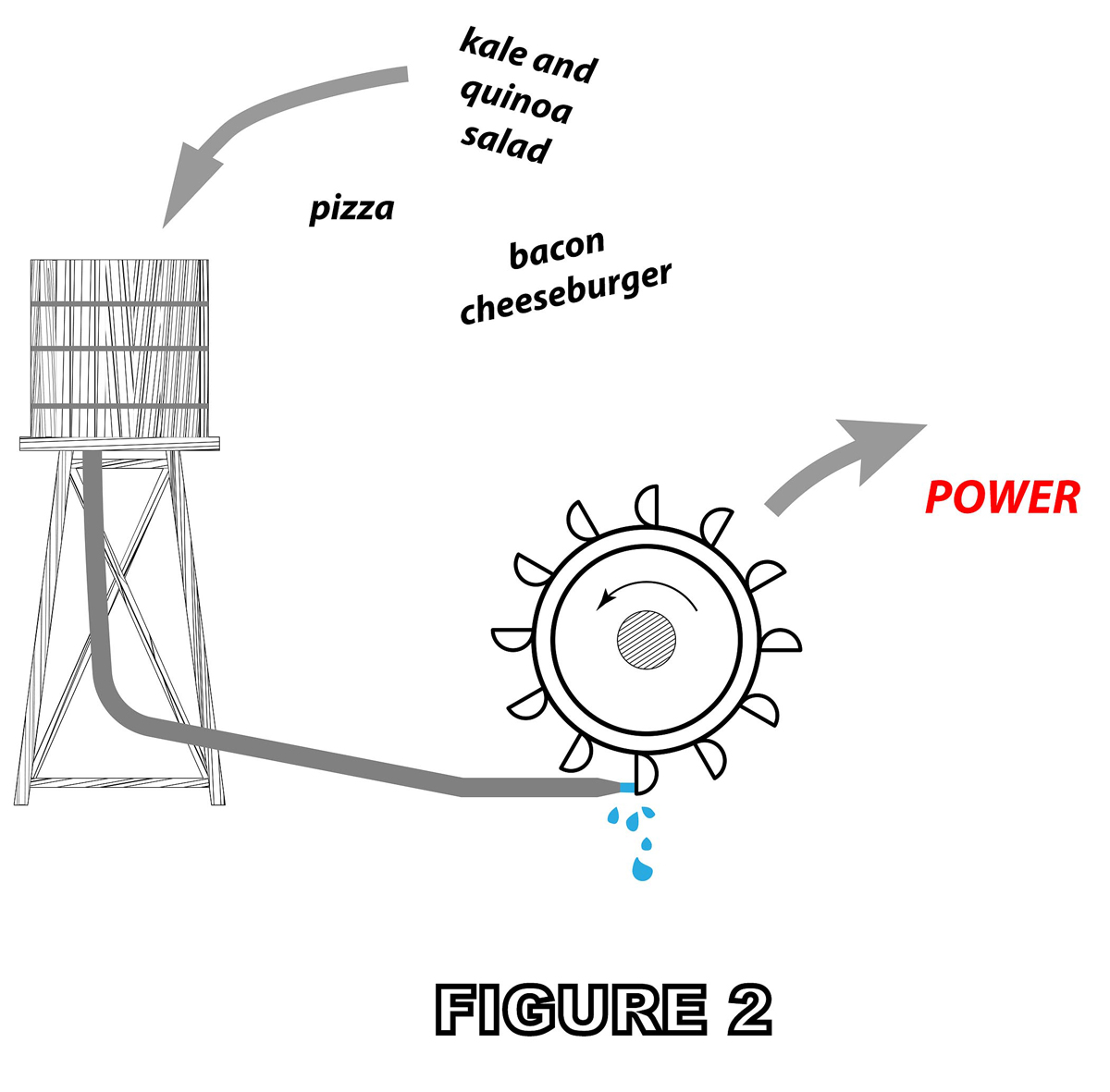
A totally inaccurate but intuitive analogy is shown in Figure 2. Imagine food is like water in a tank. Falling water converts its potential energy into kinetic energy which can be converted to useful power by a turbine.

In the case of a cyclist, the energy in food is converted to muscle power at a surprisingly constant rate for sustained efforts. And it’s all about power, right?

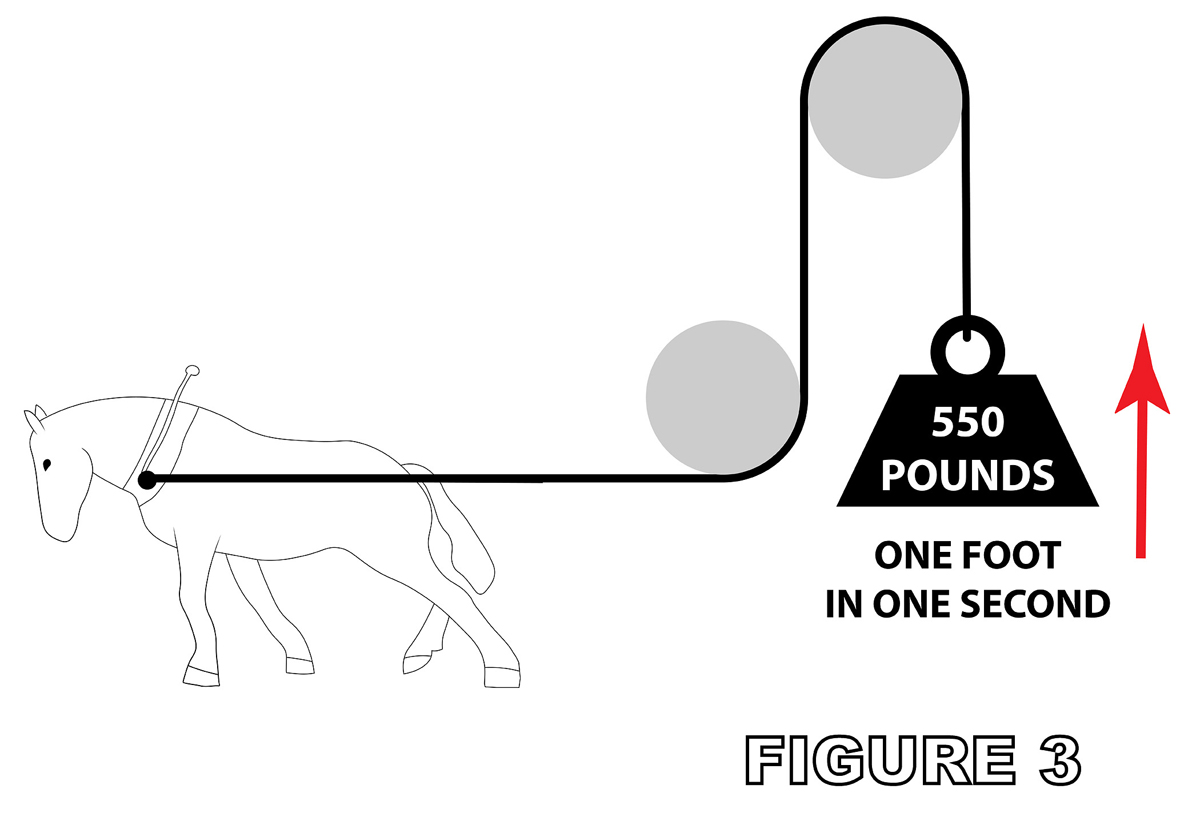
Figure 3 gives the definition of horsepower. Just so you know, you are nowhere near capable of producing 550 foot-pounds per second. Highly trained cyclists who don’t value their knees can sometimes sustain, like, 0.2 horsepower for a while. Your cycling “friends” who just dropped you produce maybe half that because they are always ahead of you.

So, standing on your pedals creates more power and allows you to crush the competition, right? Sorry, no. Sitting, standing, recumbent, there is no exchange of energy or mass across the control boundary with changes in body position.

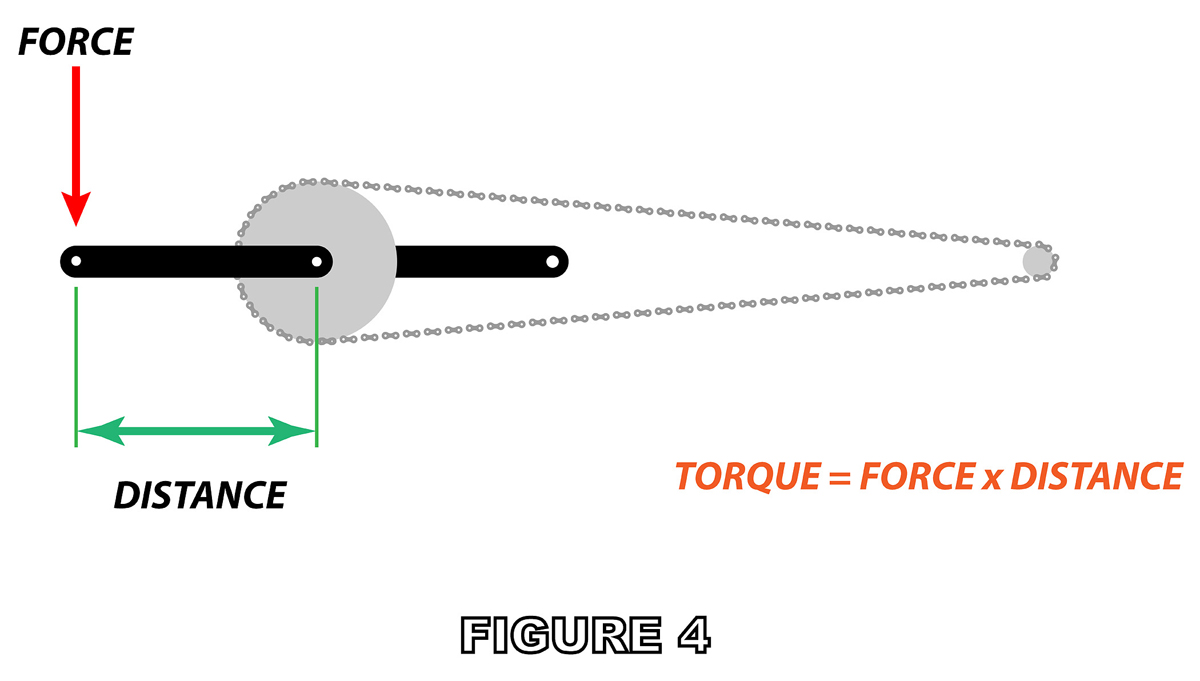
Standing just creates more torque (see Figure 4). But you already know that because recumbent cyclists climb at the same rate even though they can generate tons more torque because they have something to push against. Besides air, I mean.

In fact, it could be successfully argued that standing and flopping your bike wildly side to side using undeveloped muscle groups just expends energy that does not propel you upward.

For those still reading this, the inescapable conclusion is torque does not equal power. Torque is force times distance, like foot-pounds. Power is force moving a mass through a distance over time, like foot-pounds per second. The key is in that pesky denominator, the time element. For very brief periods, you can physiologically produce more power, yes. But not for long. Only so much water comes out of that nozzle after all, no matter how many ZowerBars® you eat or how many neutrino treatments you’ve undergone.

But high torque is not the primary reason recumbents will always be faster than upright bikes. Let’s look at a specific embodiment of the much more complicated “Bicycle Equation,” a balance of forces for a cyclist climbing at constant velocity:

E – V – R – A = 0

where:

E is the energy output of the rider,

V is the energy loss due to climbing, that is, lifting a mass through a vertical distance,

R is the energy loss due to rolling resistance and drivetrain losses

A is the aerodynamic drag.

The last term is the primary reason the Union Cycliste Internationale (UCI) decided recumbents were not bicycles 87 years ago; the aerodynamic drag of a recumbent rider will forever be less than that of an upright rider. [Note that in 1934, the UCI defined a bicycle in such a way that recumbents were no longer considered racing bicycles.]

The really awesome part about science is you don’t have to believe me, the internet or anyone else about how all this works. You can do a simple experiment on your neighborhood Nemesis Hill. Next time you decide to rip up Little Cottonwood Canyon, for example, unbolt your saddle at the bottom and stash it in the weeds (nobody’ll touch it and you can pick it up later on the way down). Do you know any cyclists wouldn’t want to smash their personal best record with 250 grams less weight? Just observe how far you get standing on your pedals compared to others passing you, seated, spinning. Repeat this evaluation as many times as you need to trust the physics.

Last autumn, I was happily cruising across the Antelope Island Causeway on my recumbent tricycle. The locals know this section for being so flat and level you can see the curvature of the earth (if you believe that sort if thing). I was soon overtaken by a peloton obviously in a desperate hurry to get off their bikes. Someone in the group must have been standing because I heard someone say, as if in response to a silly question, “Any time out of the saddle is time out of the saddle.”

Martin Neunzert has been riding recumbents of all kinds for so long he’s forgotten what cycling pain is. When a bout with blood cancer nearly ended his life, he found a recumbent tricycle was instrumental in allowing him to get back on spoked wheels. That, and a 30 year career as a design engineer, has given him a unique perspective on cycling science.

He hastens to note no caricatures of horses were harmed in the writing of this article.

Looking Back: The Kokopelli Trail

0

By Loren Hettinger — I had thought about the ride again, wondering with my cousin, Tom, in February if we could do enough training to hone the old bodies into something resembling our former selves. But COVID-19 put an end to any plans—perhaps mercifully. I dug out a report that I had written about the tour we had done in 2011. In reading the account, it seemed quite fun . . . of course the climbs were long and sometimes really steep, but not that bad . . . were they? . . . I read through the account in more detail:

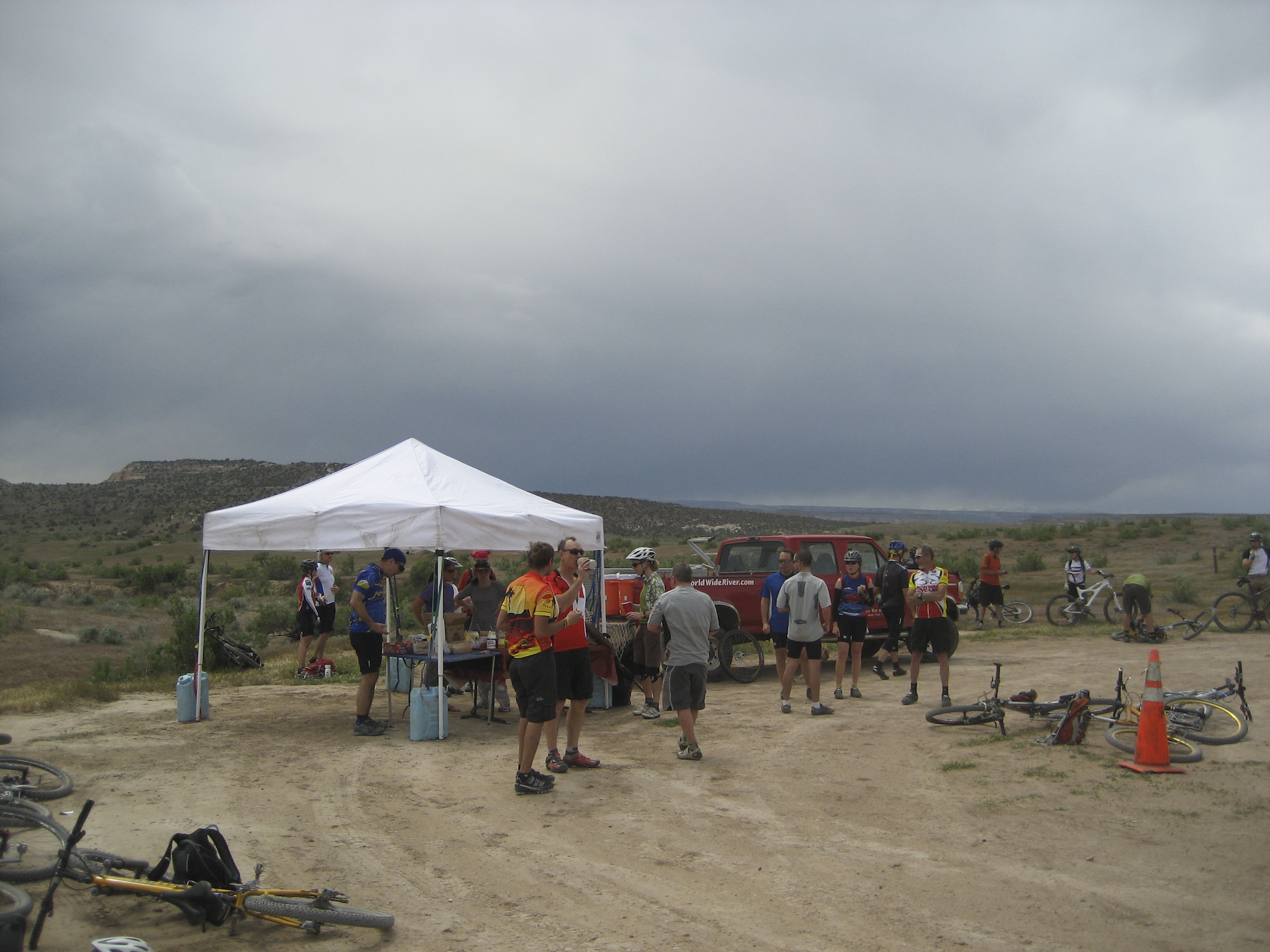
The Kokopelli symbol guides travelers along a trail of ~ 140 miles between Fruita (Loma actually) and Moab. The dancing flautist image is now common throughout the southwest, generally embodying carefree and joyous adventure. However, Kokopelli’s Native American origin has other meanings such as a fertility deity, and among Hopi, a humped-up carrier of unborn children for distribution–and feared by young girls and possibly any unmarried male or female. Another aspect is that Kokopelli’s flute playing chases away winter, bringing spring, or in Zuni culture, is associated with rains. I think most of us at the trailhead in Loma, CO in 2011 for this trip latched onto the carefree, rock skipping, joyous caricature, hoping no surprising news of children or rain storms interrupted our mountain-biking journey.

After meeting the organizers, guides, and other riders at the trailhead–and in gazing at the daunting first climb up the ridge of Mary’s Loop, we carefully did a last lube of the chain, and topped-off our water bottles and Camelbacks. I did a final check, making sure that support items, such as spare clothes, extra gloves, sleeping bag and a tent (and maybe a few bottles of beer) had been placed into the World-Wide River outfitter’s trailer, which would meet us for a lunch stop and then at a camp site at the end of each day.

First Lunch Stop. Photo by Loren Hettinger

This trip was headlined as the Tour de Bloom by the COPMOBA trail advocacy group; a worthy cause to maintain existing trails and construct new ones in the western Colorado and eastern Utah area. And by being scheduled in mid-May, the ride was aptly named, as there were flashes of brilliance among the hills—paintbrush, scarlet claret-cup cacti, scarlet globemallow, the beautifully ornate sego lily or mariposa, and indigo-blue larkspur.

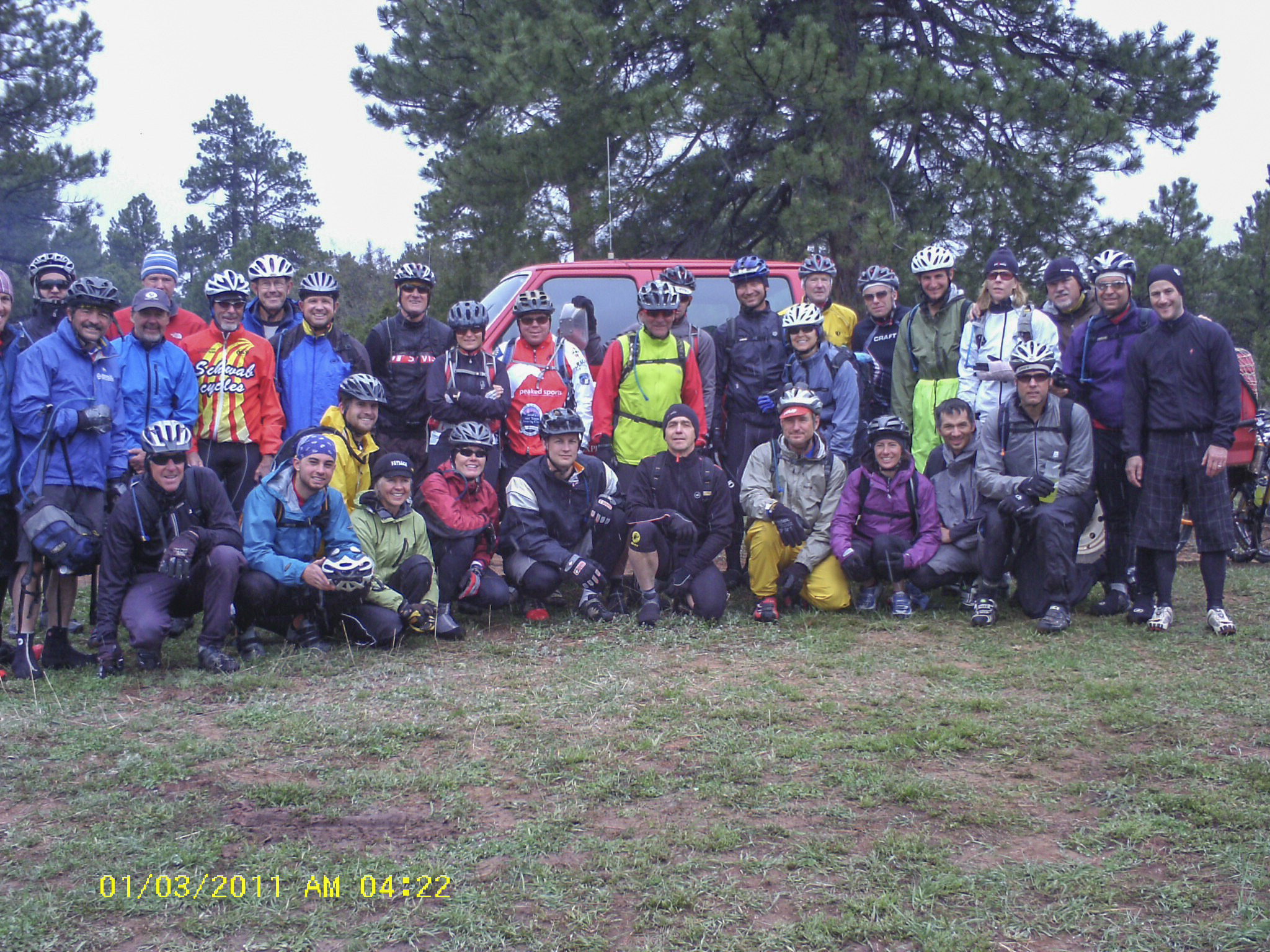
There were 30 of us on this trip, mostly seasoned mountain bikers, led by five younger, hard-body guys—quite lean I had observed the first day–who often disappeared into the distance, but with the ability to circle back to keep track of the “herd.”

Bitter Creek. Photo by Tom Lebsack

On this, the second day of the trip, I scouted a premium campsite in the Cowskin Campground. This site is situated in a partial amphitheater of Navajo Sandstone, and is protected from the winds in Rabbit Valley that had bedeviled us with occasional small dust devils and sandblasts a day earlier–and an interesting coalminer visage of dirt on sunblock.

Rabbit Valley Storm Brewing. Photo by Loren Hettinger

I spied a nearly level site for my tent near the cliffs in the shade of a juniper tree and then waited in a long line for the hand-pumped portable showers, drying with a long-sleeved undershirt, the price of forgetting a towel. This “towel” was left to dry, impaled on several branches of antelope bitterbrush. I climbed into the tent soon after dinner of fajitas, chips and salsa, all washed down with a tasty beer (yeah, all relatively plush), as the next day was to be a long jaunt of ~ 30 miles and 6,000 feet of climbing.

Cowskin Camp Navajo Sandstone Amphitheater
Cowskin Camp Navajo Sandstone Amphitheater. Photo by Loren Hettinger

In addition to protection from the wind, an added feature of this campsite was the acoustics provided by the amphitheater-like cliffs; I could hear patches of conversation from those still around the campfire. Sometime during the night or perhaps the wee hours of the morning, I slipped on my running shoes to protect my feet from prickly pear and shuffled out from the tent for a much-needed pee. I gazed into the sky, hoping for a view of the constellations, the Milky Way. The tranquility of the night with the bright, seemingly close stars was profound, and I stood transfixed staring skyward while watering a clump of grass. My reverie was abruptly shattered by . . . how do I describe this tactfully . . . a loud, resonating, flatulent explosion–as if a huge rock had been thrown into the middle of my serene contemplation of the sky. This from a tent farther along the small wash that angled across the site. The sound was amplified as it echoed off the sandstone walls. I was quite amazed by this achievement, saying to myself, “Wow!” and hoped I could identify the creator of such an acoustical masterpiece. I wasn’t sure exactly from which tent the sound had emanated. The episode though reminded me of an old joke, of a prospector in the early days who would yell out across the wide canyons and rocky towers, “Get outta bed,” upon retiring and have the echo come back in the morning as his alarm clock.

In the morning, we gathered around the outfitter’s cooking area and “kitchen,” this in response to the aroma of frying bacon, and waited for the full monte, holding steaming mugs of cowboy coffee. Breakfast wasn’t a time to dally though, and after hustling my baggage into the outfitter’s trailer, I stuck several Honey Stinger and Hammer Gel packs into a jersey pocket and a large water bottle of mix into a cage, ready for a long morning.

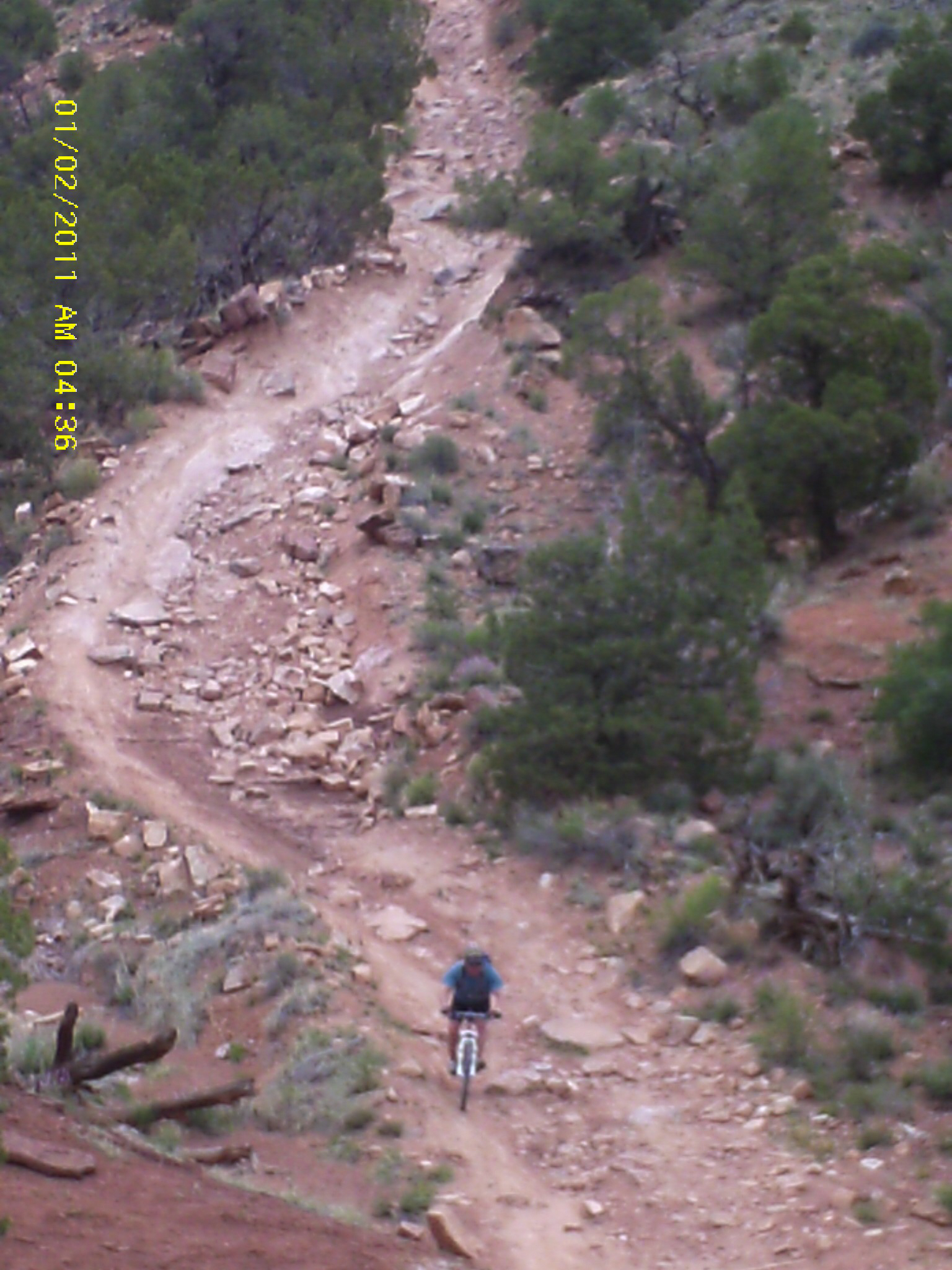
The trail from the camp quickly transcended into a steep climb, and I tried to settle into a rhythm, but soon noticed a strong taste of pancakes, hoping breakfast stayed where it was. The climb continued into Cottonwood Canyon, including a long section of rocky–or more appropriate bouldery–hike-a-bike and veered from the Top-o-the-World Trail. From this apex, the track then steeply descended via a series of drops over broken rock; a track that has seen its share of four-wheeling activity, evidenced by frequent tire scuff marks. Everyone seemed to take the series of drops in stride, although some of the younger guys and the guides seemed to revel in this terrain, taking bigger risks.

Descent from the Top-O-The-World-1
Descent from the Top-O-The-World. Photo by Tom Lebsack

A second climb took us to Big Cottonwood Canyon and a broad, scenic vista across red towers, buttes, and intervening deep canyons. This climb was a long-haul, first on a relatively smooth, sandy trail, but this quickly devolved into more rocky, double track. In riding up a series of ledges, the rear tire of my bike slipped out, and I suddenly performed a sort-of horizontal pommel-horse maneuver in response to a new combination of gravitational and centrifugal forces, landing on the upright end of the handlebar with my abdomen. As I was pirouetting around the bike in pain, I was aware of some luck–the one-point landing had missed an even-more sensitive area. After catching my breath, I tugged the front of my shorts outward to check the damage–a circular, purplish tattoo-like bruise had already formed. Thank God my appendix was no longer part of the picture or it may have been plucked out–a sort of grisly trophy of technical ineptitude—as the location was close.

We fled the climb in a fast descent on the Cottonwood Canyon Trail, first in a very technical, beyond-category descent called the “Rose Garden” (but with raspberries the likely reward of a mistake) and then a swooping and nicely carved single-track and to the Fisher Valley-Onion Creek Road for a lunch stop. By now, my crotch was feeling a seemingly inverse relationship of thinning chamois and conversely swelling seams, and I thought about changing, thinking this, along with a sore abdomen, might portend a long afternoon. I had a vision that the current pair of shorts had been baseball-stitched with wire, and made sure to again amply smear Chamois Butt’r onto tender places—this somewhat discreetly to avoid any smirks. At the same time, I had another look at the circular bruise to make sure nothing was bulging. It didn’t feel great, but my abdomen looked intact. The mark consisted of an imperfect circle with a short scrape leading to it, as if I had been tagged with a hot iron and perhaps part of some Bar-O ranch remuda.

Ruby and Horsethief Canyons A long way down. Photo by Loren Hettinger

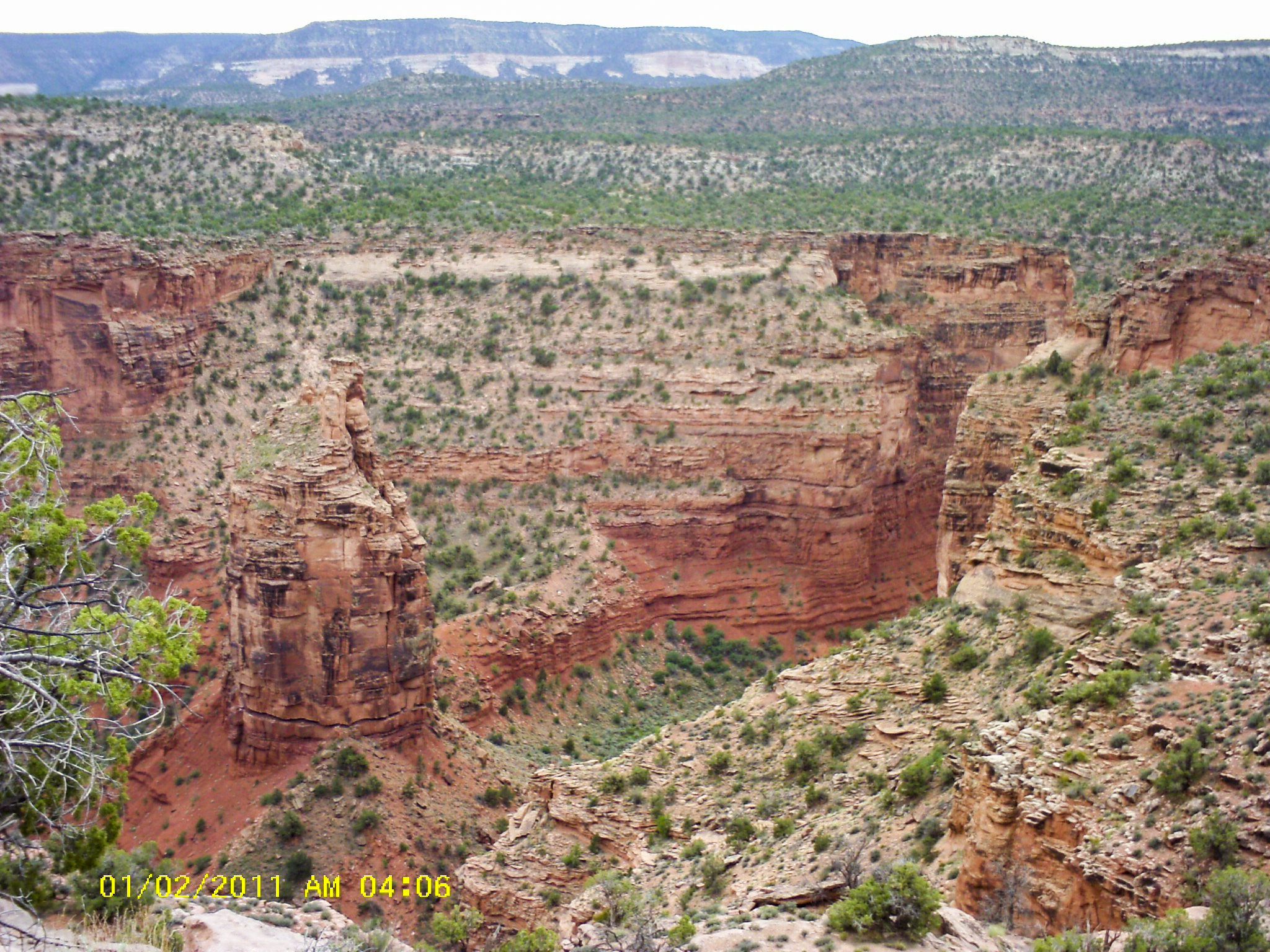
The afternoon consisted of another approximately 3,000 feet of climbing alongside the Fisher Valley on the Thompson Canyon Trail, mostly on ledgey double-track or Jeep road. The climb was long and steady, so most of us took a break at the Hideout Canyon viewpoint and posed for photos. The abyss into the valley here was vertigo-inducing with drops of approximately 1,000 feet, to be offset by vertical canyon walls and several tall, narrow iron-red towers, as if part of some long-ago forgotten Medieval castle.

We continued climbing and the trail became smoother. Riding time (wheels moving) by now was over five hours. I suddenly had the out-of-gas feeling, so after thinking about the empty tank for maybe a mile, stopped and sat on the side of the double-track, sucking on energy gels. One of the guides (Rus) stopped to see what was up and noted the campsite was only about a mile farther up the road.

The North Beaver Mesa campsite is at 8,200 feet and on the shoulder of the La Sal Mountains. We had started out in the high-desert canyon landscape of sagebrush-saltbush scrub at approximately 4,500 feet, but now had ascended to the Montane Zone of ponderosa pine and Douglas-fir. This was our last night on the trail, and the group gathered after dinner around a campfire for a few beers, toasting our accomplishment and trail-forged companionship. It didn’t take long though for the cool of the evening to descend, and I wished I had thicker down in my jacket. Another day and we would complete the journey, descending to the Sand Flats Road or the Porcupine Rim Trail, depending on technical preference, respectively, and then onto Moab.

Photo by Loren Hettinger

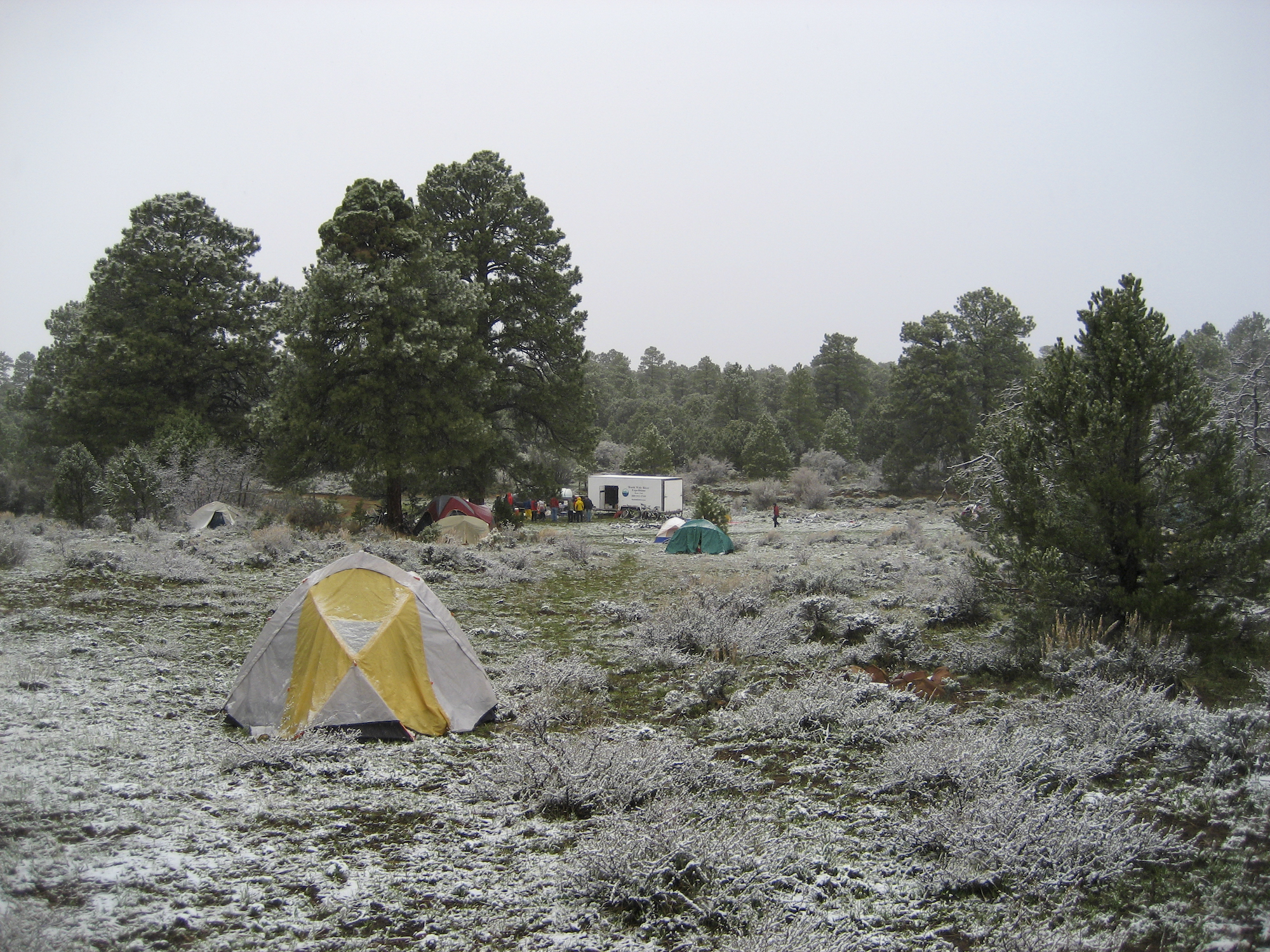
During the night, the elevation put its stamp on our journey, and early in the morning I could feel lumps of precipitation hitting the tent. I poked my head out the zippered door to a frosty scene; several inches of snow were already on the ground. I noticed my shirt towel frozen quite stiffly, crucifix-like, onto a gooseberry bush. I pulled the zippered door of the tent shut and thought about sliding back into my sleeping bag, but instead pawed through my duffle bag for a long-sleeved jersey, tights, and thick gloves.

It took a while for all of us to gather around the fire of the “kitchen” for much needed coffee. Then secondly, to figure out the clothing ensemble for the day, and hoping some of the snow would melt. We finally descended from this high-point on greasy, splashy gravel roads. At the junction to the single-track we avoided a destructive mud-fest by bailing out onto roads connecting to blacktop that parallels the Colorado River and then back on the highway to Moab.

Riding the roads and highways back to town increased the distance and delayed the time of our arrival. We jettisoned a scheduled shower after linking up with the outfitters to grab fresh clothes. Most of us (at least the guys) changed by crouching down—or some not so much—behind a retaining wall placed to protect the town from Mill Creek floods, not realizing that the view from the opposite side was unimpeded for tourists walking along a path. Bare asses and torsos seemed strikingly white in the afternoon sun compared to the rest of the ride-exposed flesh. By-passing showers was to keep a reservation at Zak’s Pizza and Beer. I mean . . . it’s all new sweat anyway . . . isn’t it? Well, maybe not so new to some of us as we closely packed ourselves into the van for the ride back to Fruita.

The Group. Photo by Tom Lebsack

If the skipping, flute-playing Kokopelli symbolizes adventure in this area of canyons, rim-rock, desert-like sand, and towers, we were well served, and the trail is appropriately named. Maybe we joyously skipped among the rocks a little somewhere along the way like Kokopelli, if only in our minds. Bar-O brand aside, selective memory had me wanting to go again.

Interview with Brad Copeland, Professional Team Mechanic for Scott-SRAM MTB Racing

By Anthony J. Nocella II, Ph.D. — Anthony Nocella: As the Scott-SRAM team mechanic, you do not race mountain, but you are followed on Instagram because you have a fun humorous style. You make people smile and laugh around you, including the whole Scott Mountain Bike Race Team. There was a picture of you and Gary Fisher together a few years ago on Instagram, where both of you were dressed over the top and ridiculous at Rampage. Can you tell me why it is important to not be so serious, but to have fun in mountain biking?

Brad Copeland: We have a saying on our team: Fun is fast. It is fairly well proven in more academic environments but even through my own empirical studies it’s clear that the best performances come when everyone is in a positive-minded headspace. So, in some ways I take having fun very seriously!

Kate and I prefer to work that way, and our team manager and former racing legend Thomas Frischknecht himself has stated that in life both personally and professionally, he is aware of and sensitive to the positive or negative energy that people possess and exude, and he is drawn to those who approach life from the positive side.

In fact, that is something very central to who he invites to join his team, because when the inevitable unexpected problems arise as we travel around the globe together, remaining positive and working together with people you like and want to help succeed can make all the difference. So fun is encouraged on our team, because it is a proven element that is necessary for a team to succeed in the long run.

For most of us, too, we began riding bikes because it was fun. To lose sight of that fundamental aspect of the shared cycling experience would be to miss the point of what it is we are doing. Bikes have made our lives better and we are happy to have an opportunity to share that with others.

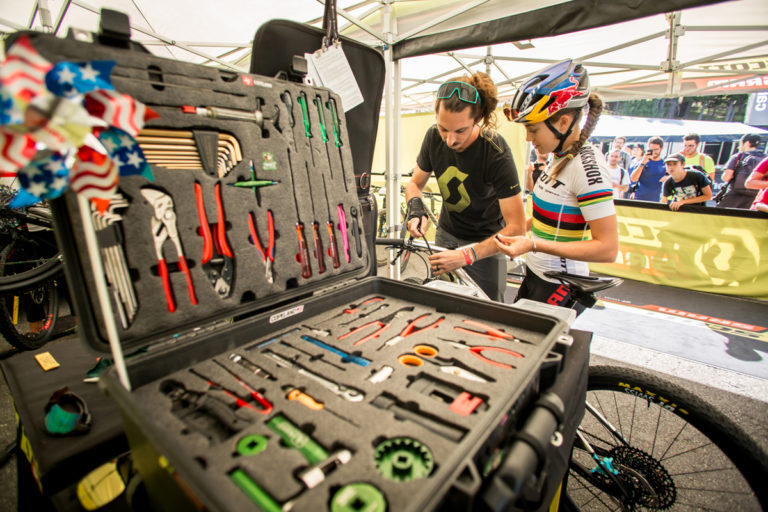
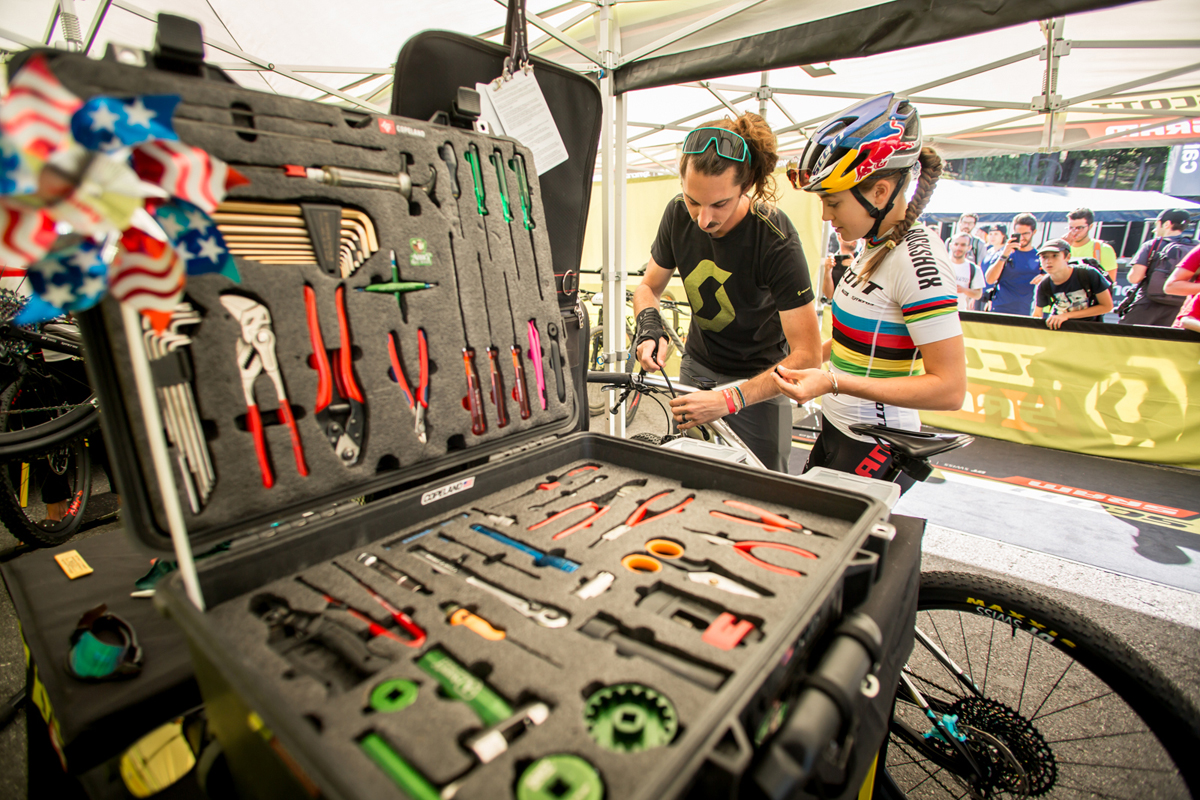
Brad Copeland with Kate Courtney. Photo by Jochen Haar

AN: As a mechanic working on Kate Courtney’s bicycle you cannot be joking or messing around. In your opinion, what is the difference between a good mechanic and a brilliant mechanic?

BC: That is a good point and one that should probably be stated for the record: although we do laugh and joke around a lot, we take what we do very seriously—both Kate and myself. I think that’s one of the big reasons we get along so well, too. We share a lot of the same interests and share a similar sense of humor, but we are also hyper-obsessed with the details, and the preparation that we both put into our jobs.

Kate is a very gracious athlete who is quick to share the successes she earns with those who have contributed to them, and I am grateful to be a part of that.

You are right that just about anyone working in the same environment as I do can be assumed to be a good mechanic. I have known a few GREAT mechanics in my life (in shops, on teams, and in R&D roles within the industry) and have been fortunate to work closely with some of them early on in my development—it boils down to having a very sophisticated appreciation for nuance and specificity, an innate ability to focus and remember, and a refusal to cut corners. If you can combine these abilities, the worst possible outcome is that you’ll be a good mechanic.

I think the very best, though, are those for whom the aforementioned attributes are or have become virtually innate and who then look at what they are given to work with not as the end, but as the beginning. Those who understand how, why, and when to modify or alter equipment to further enhance the performance, fit or feeling of the bike and really take it several steps beyond perfect—perfect is the starting point. Then, it becomes a game of making it not just perfect but perfectly tailored to Kate (or any rider I work with) to ensure the bike functions just short of telepathically, with no energy wasted on cumbersome functionality, to give the bike the feeling of being a second-nature extension of Kate’s body when she’s riding it. Mechanics who know not just the equipment, but the athlete extremely well can do even more to enhance the performance of the machine.

AN: You are a very fit and outstanding cyclist beyond being a mechanic. Do you think it is important to be a cyclist if you are a mechanic, and if so or not why?

BC: This is a great question and in my lifetime, I’ve known a lot of mechanics but not many who truly love riding and make the time to do that as a part of their lifestyle. I raced for a long time starting at age 11, both as a cross country mountain bike racer and later on the road bike, too. I grew up riding a lot from a very early age and began working as a mechanic to help subsidize the costs of racing and maintaining my equipment when I was pretty young (before I had help and resources to make that part of racing a little bit easier).

It was in these moments that I learned the value of having a well-prepared bike—that differences in equipment quality often have much less impact on performance than a well-adjusted bike versus one that isn’t. Knowing how bikes work definitely makes a difference when riding them, and I think decades of experience racing and riding them makes a big difference in how I work on them, and especially how I choose the final setup for a given race day.

Taken a step further, knowing how my own riders use their equipment makes me even more able to tailor their bikes to suit a given race course or conditions, and these are all very valuable things that I believe contribute to the success that Kate and I have enjoyed so far. Being familiar with the physical and also mental aspects that come into play during a race week, including the stress and anxiety that a rider experiences, certainly helps to navigate that environment even when I step out of my role as mechanic and into one of the many other roles, I contribute to throughout a race week.

AN: After a number of years with Specialized, Kate switched to Scott Sports in 2019, and brought you with her. Can you tell me why Scott mountain bikes are the best for what you’re doing?

BC: We had a very smooth and easy time transitioning onto Scott bikes in 2019. They are very well engineered and are very efficient. Their racing pedigree speaks for itself, and after almost 2 years with the team it is clear to me why that is. The engineering and product management side of Scott’s business takes a very active role interfacing with our team (and all of their sponsored athletes’ teams), and take any and all feedback with great interest and interpret that feedback into real changes, even when they are nuanced and so small that most might ignore them. They invest in our program as once of the best teams on earth, and use it as a real-world test platform to develop the next generation of products. When a company invests that much research and financial assets into continuously refining the performance of its products, you can count on good results. We are very fortunate for the support of Scott Sports and their enthusiasm for our program.

AN: As a professional mechanic, what are the key steps you take in preparing a bike to be ready to be raced?

BC: Well, every race is a little bit different, but as a mechanic for a big pro operation we are fortunate to have plenty of equipment on hand—spare parts and all needed service items, tools, etc.—so there is not really an excuse for the bike to be anything short of perfect every time!

It really just comes down to wanting to be perfect and being willing to invest the time necessary to get it there, while always being mindful of other variables like the course conditions, weather forecast, and sometimes other factors—like in cases when Kate has a lead in a series overall title competition like last year’s World Cup, we might make selections that enhance the bike’s durability at the expense of a bit of added weight as insurance against any mid-race mechanicals, flat tires etc.

So, it depends a lot on what’s going on in the world around us as we make decisions on the bike setup at a given race. However, we always start with the same baseline setup at every race in terms of suspension settings, pressures, and tire pressure, and make little changes here and there to tune it to the course conditions or whatever other factors may be in play and that may influence some of these choices.

AN: Can you tell me a great moment as a professional mechanic that woke you up and said you made it as one of the best mechanics in the world?

BC: Haha! Well, it’s not over yet, but the trajectory I am on now feels a little more certain than it used to. As Americans, for both Kate and myself, it takes a bit more of an investment for a team to be interested in having us be a part of it because so much of what we do takes place halfway around the world. That means a lot of extra expenses for travel and associated things for Americans to participate. (Fundamentally this is a big obstacle for growing the American presence in pro racing, but that’s another topic.)

So I guess I would say that when Scott-SRAM MTB Racing team owner Thomas Frischknecht (a MTB racing legend and someone I grew up following) recognized the value of my relationship with Kate and invited me to continue working alongside her on his team when she decided to join it at the end of 2018 was a moment when I felt like okay, this guy knows everything about mountain bike racing and is known as a brilliant tactician in the sport, who has a legacy of running his program with an emphasis on developing incredible talent and delivering consistent results year after year.

So for him to see and acknowledge the ongoing value of my alignment with Kate, and being willing to accept whatever costs and challenges came with the decision to bring me into his team with Kate, was the closest I’ve come to thinking “I made it!” It was the first time someone actively decided to do something a little more complicated and expensive than he had to do, just to have me be a part of Kate’s operation going forward. So I am very grateful for that, for the acknowledgment and the opportunity that came with it. And I am happy we delivered some big results early on for the team to prove that we were as good as he seemed to think we were!

AN: With so much going on socially and politically globally, how can the cycling community care more about the world and are there any issues that you think cyclists should care more about?

BC: There are always issues going on that we should be mindful of, whether social or political or in terms of public or environmental health. Some may be very broad while others may affect only our immediate surroundings.

So, I think it’s important to remain engaged in doing our best always—not just when things boil over to the point of rioting in the streets, or a global health crisis. Even small acts can make a big difference, so while 2020 may have been the year a lot more people actively engaged in topics like health policy or politics, I hope that we learn from our difficult year and that these types of concerns remain at the front of our collective consciousness going forward, leading to perhaps more collective consideration for one another and to future decision-making that can mitigate crises like we are experiencing right now.

While this year has been crazy and that craziness has been a bit louder than in years’ past, I have always done my best to remain positive, open and accepting of those around me no matter what the sociopolitical climate is at a given time. Traveling internationally on a regular basis has opened my eyes to what I believe to be the inherent good nature of most people across cultural and political boundaries.

Engaging with members of the global community in a positive way leads to positive exchanges. Remaining humble and gracious in spite of whatever highs or lows you are in the midst of personally usually leads to positive outcomes. We try to keep this in perspective as we pursue our own goals because at the end of the day, bike racing is a small and somewhat insignificant activity, but it gives us a platform to lead by example.

I think Kate would agree that we have kind of realized that maintaining a positive approach to the world, to unknowns, to stress and to new experiences and new relationships is the best way to improve your experience with life when encountering those moments. Remaining optimistic and humble while giving others the benefit of the doubt is the best way we have found to tackle uncertainty, and we have had a lot of opportunity to practice that approach this year!


An Interview with Mountain Bike World Champion Kate Courtney

American mountain biker Kate Courtney reveals her training regime and 2021 goals

With a cross-country World Championship and overall World Cup title already in the bag, Kate Courtney is rightly viewed as one of the world’s best mountain bike riders.

But the 25-year-old is only just getting started and has created the ultimate home backyard training set-up to help her add to her already significant haul of trophies.

Known as her fitness fortress, the area boasts a well-stocked gym complete, Zwift set-up, ice bath and even her very own outdoor sauna.

Kate Courtney racing in the UCI XCO in Nove Mesto na Morave, Czech Republic on October 4, 2020. Photo by Bartek Wolinski/Red Bull Content Pool

Here is what the American had to say about her training regime, the importance of recovery and what she hopes to achieve during the 2021 race season:

What’s your first memory of cycling?

My first vivid cycling memory is riding on the back of the tandem with my dad. We went out in the rain, there was no-one else on the mountain and the weather continued to decline. We ended up seeking shelter and we found five crumpled up dollars in my dad’s saddle bag, so we got blueberry pancakes. Of course to me that was the most epic day and for the longest time that’s what cycling was; a way to spend time with my dad, to get out and if I’m lucky, get some blueberry pancakes.

I think the connections that you form while cycling are really unique, partly because it’s a sport where you can be side by side, or on the tandem I was behind and you can talk. It’s really a great way to connect with people, whether it was my parents, my brother growing up, or now some of my closest friends.

What does your typical training regime look like?

I would say my lowest weeks are 15 to 17 hours on the bike and my biggest weeks are 25 to 30 hours, but those are rarer. I consider strength training part of my fitness training and I spend anywhere from two to six hours a week in the gym. I trained a lot more volume last year, as I didn’t travel much and did 20 to 25 hour a week of training, every week.

I approach it on a two-year cycle and last year was what we referred to as a development year, which also changes this year quite a bit and that for me is quite exciting. I think it’s producing different results and I’m definitely coming into this second year approaching Tokyo more rested physically and mentally.

The focus this spring is on the high-intensity, knife-sharpening race prep, which is my typical race build up; you do base, you have to do moderate training, then I start in spring to do intensity and for me that’s in the form of training camps.

I just got back from Malibu where we did ‘Mali-Boot Camp’ with three of my old team-mates. We design these camps to really push me and help me progress towards racing, then training gets a bit more intensity-and recovery-focused once we hit the race season.

I do yoga, I do mobility work, I work with a PT and do a lot of recovery activities outside of training like foam rolling, ice baths and saunas. And number one – very good sleep!

How important is recovery in the training process?

I think that’s the frontier of sports performance right now. If you are always going at 75 to 90 percent of max, you never recover, but you also never hit that 100 percent. It’s about using your motivation and your skills at planning and resting to maximize those important sessions and avoiding those medium-effort, medium-motivation which burn you out in the long run.

Do you find it hard to switch off on your rest days?

I’m working on it! I’m proud of this year; I’ve taken more complete rest days and that’s something that I used to not do. I use Whoop to track my recovery and every day that I take as a complete rest, the next day I’m in the green, so it definitely works.

It’s a challenge for me managing how much I do on these rest days, because I have to do something during and I think my dog has been my secret weapon! I’ll take him for a walk, I’ll take him to the beach; I’ve done something, but it’s quite relaxing.

What about the mental side of fitness and health – do you train that?

Definitely! I work with a sports psychologist and I have for the past five years. I personally think that the mental game is a huge part of success, but it’s also a huge part of just being a healthy, happy person in the long run. I think that dealing with situations and emotions requires certain skills and perspectives that need to be developed and for me that’s done through sports psychology, plus reading, journaling and all of those kinds of things where I give myself space and time.

Do you get nervous before races and if so, how do you manage that?

I do, definitely; I think everyone does and I think nerves are a sign you really care about something. For me, I think preparation is the antidote to those challenging situations, because at the end of the day you can only control what you can control. If you manage those things, hopefully the outcome takes care of itself and if it doesn’t, hopefully you’ll have more opportunities in the future.

Do you use online training as part of your preparation?

I’m doing my first Zwift race! I’m trying to embrace the opportunities that we do have to stay in shape, not just ‘in shape’ in the normal way – I can train – but I think there are some things you definitely get from competition that you can’t replicate and that’s what I learned last year. You can race yourself around as much as you want, but for your central nervous system actual racing is just a different stimulus. We’ve been looking for more ways to incorporate that into my training, whether it’s Strava segments, getting fast people to ride with or compete with, or even Zwift racing, which I said I would never do! I’m doing some small warm-up ones, some very random races, because I think that there’s some finesse to it, but I will report back!

What about the research being done into female athletes training around the menstrual cycle? Is that something you look at within your training?

I have and I’ve worked with Red Bull on that. I think it’s very important and very interesting that people are finally looking at the differences between men and women. Hopefully there’ll continue to be more studies, not just around menstruation but also nutrition in the future and training. I think a lot of these baselines that we take for granted are based on research done primarily on men and so that kind of cutting-edge research is going to be important moving forward and it’s exciting that they’re finally doing more.

What drew you to study human biology – did it come from your interest in sport or is it something you’ve always had a passion for?

I think it was a little bit unrelated to cycling. I studied human biology, which at Stanford University is a very interdisciplinary major and we have a lot of freedom to tailor it to your interests. I was interested in global health and technology innovation, so it was a very Silicon Valley thing to be looking into.

I really enjoyed learning about health, less on a biological individual basis and more on an aggregate basis. Of course we had to take bio and get all of those fundamentals, but I was more interested in public health and global health level of analysis and that’s certainly something that’s been very interesting this year!

Did your studies include wearable tech?

It was health tech and wearables, mobile apps, those kinds of things. And being where Stanford is, in Silicon Valley, meant it was a really unique experience – we got a lot of exposure to local start-ups and people coming in and telling us about things that might be on the horizon, which was really exciting. I hope to head back to some of that someday, but I enjoy focusing on bikes right now.

What does 2021 hold for you and what does it feel like to be competing in Tokyo?

There is a lot of excitement and emotion around it being the Tokyo Games; around the global connectivity and the media presence at this particular event. Last year I was much more wrapped up in it; I had qualified for my first team, I was on track to have a good performance there and had two very good years leading into it, where I took home the big titles that I wanted to take home, so I’m thinking ‘This is the last one! We’re good to go!’

But this year I think that things are quite different and having that year to do everything but the race – I got to do the emotional build-up and the media and all those other things – has actually been really helpful for me. You hear people say that the first time you go, you almost need a practice one because it’s so overwhelming and I think that after this year my ability to self-regulate and deal with challenging situations and emotions is heightened and I’ll be able to be much more calm and relaxed.

Also, it’s going to be much like other races. We don’t have a completely different field for it, it’s just smaller than a World Cup. It is a bit different from other sports, where they don’t compete against each other, then all of a sudden, they do.

Where does your confidence come from?

I heard a definition of it recently that was ‘confidence is the belief that you can uphold promises that you make to yourself’. You can develop confidence from different parts of your life, but for me it’s about believing that I can do things that I set out to do on the bike.

It’s a strategic combination of working on mental skills and managing the external environment to give me an opportunity to build confidence. It’s not always going to be linear and perfect, but if you’re progressing and getting better, you’re going to feel great!

Interview courtesy Red Bull Media

What Should I Do If I’ve Been Involved in a Hit-and-Run Accident?

By Russ Hymas and Ken Christensen — A car veers into the bike lane in front of you, forcing you to lay down your bicycle. And in a very literal sense, the driver adds insult to injury by speeding away. In any case, this would lead to extreme frustration for any cyclist. But what if you are seriously hurt and forced to seek medical aid, and then end up with overwhelming bills and long-term injuries? What if the culprit is never found? Who pays for your medical bills, lost wages, damaged bike, and other out-of-pocket expenses? The surprising answers often lie within your own car insurance policy.

A ghost bike was placed near the location where Brynn Barton was killed in a hit-and-run in June 2011. Photo: Dave Iltis

For purposes of this article, we’ll discuss the two most common scenarios: first, a collision caused by someone who makes contact with the cyclist and then hurries away (hit-and-run collision); and second, a collision that is caused without any contact between the at-fault vehicle and the cyclist (phantom vehicle).

Hit-and-Run

Hit-and-run accidents occur when a party responsible for a collision leaves the scene of the accident. These accidents can involve motorists, bicycles, motorcycles and pedestrians. Though blatantly criminal in nature, hit-and-run accidents have been steadily increasing since 2003. According to the National Highway Traffic Safety Administration, one in five pedestrians killed are victims of hit-and-run accidents.

The increasing numbers can be attributed to many factors. A recent study suggests that the surge of hit-and-run accidents is likely due to an increased number of unlicensed drivers on the road, as well as drivers who are under the influence – many of these drivers seem more concerned about the possibility of charges for their actions than the well-being of any individuals that may have suffered injuries as a result of their carelessness.

Some motorists drive away, never to be found, but sometimes the driver stops for a moment to see if the cyclist is alright. If this happens to you, you should call the police and file a report, but at a minimum do not let the motorist leave without taking a picture of their license plate, insurance card, and driver’s license. If you don’t, and later discover injuries or damage to your bike, you will have to make an uninsured claim under your personal car insurance.

Phantom Vehicles

Phantom vehicles are unidentified vehicles that leave the scene of an accident in which they were involved. A phantom vehicle does not need to make contact with another vehicle for the driver to be held responsible for careless actions. However, the phantom vehicle driver’s actions must be corroborated by something other than the victim’s account. Evidence left at the scene by the phantom vehicle or eyewitness testimony can be used to support the cyclist’s claims.

These accidents fall under the same coverage as hit-and-run accidents and are treated as such. Phantom vehicle drivers may not be as nefarious as hit-and-run drivers; in fact, they may simply not notice what their actions have caused. This, however, does not excuse their carelessness. If the driver of a phantom vehicle is identified and found, he/she may still be charged with negligent driving and will be held responsible for his/her actions.

In the case of either a hit-and-run or a phantom vehicle accident, the police and insurance company representatives will try to identify the responsible parties. However, if the at-fault driver is never discovered, the driver will be treated as an “uninsured motorist” and you will be able to make a claim for damages under the UM coverage of your own automobile policy – even though you were on your bike when the accident took place. With hit-and-run collisions and phantom vehicle incidents on the rise, it is more important than ever that cyclists carry maximum levels of UM coverage (We recommend $250,000 coverage).

Case Study: A poignant example of a hit-and-run bicycle accident happened in Salt Lake City a few years ago. While riding a bicycle on a busy road, a female cyclist was cut off by a car that made a quick right turn in front of her, leaving the cyclist no warning and the victim of a collision. After the motorist realized what had happened, he/she fled the scene, leaving the injured woman on the road. The injuries suffered by the cyclist included broken vertebra in the neck, a broken clavicle, and a concussion. Due to the extensive injuries, the cyclist lost eight weeks of wages from work. The driver of the car was never identified or brought to justice. Luckily, the cyclist had UM coverage, which paid her medical bills, lost wages, and compensation for pain and suffering. Had she waived this coverage, the bills would have been placed squarely on her shoulders and her time lost from work would not have been recoverable.

5 Things You Should Do After a Hit & Run Accident:

  1. Immediately file a police report – the insurance company requires proof beyond your own statement that the accident occurred due to no fault of your own.
  2. Identify all witnesses – do everything you can to get the name and phone number of anyone who may have witnessed the accident or its aftermath. Request copies of the 911 calls. Often witnesses call 911, but do not stop and wait at the scene.
  3. Take photographs / video – take photos of the accident scene, your injuries and your bike. The more proof of the accident the better. Video of the collision (or near-collision) taken from a camera on your person or bicycle can be extremely beneficial, for obvious reasons.
  4. Get medical treatment – even though you weren’t in a car, your own car insurance policy has $3,000 no-fault personal injury protection coverage available for medical care, so do not hesitate to see a doctor and document your injuries.
  5. Make an insurance claim – you should contact your auto insurance company as soon as possible. This will allow you to use the $3,000 for medical treatment and it will help protect your case if the hit-and-run driver is never found.

So if you’ve been involved in an accident due to a phantom vehicle or hit-and-run driver, all is not lost as long as you have the right car insurance coverage. That being said, we want to keep these dangerous drivers off our roads. With moral integrity seemingly on the decline, bystanders and passers-by are increasingly important in ensuring that guilty parties do not go unpunished. In order to encourage eye witnesses to report these wrongful actions, our law firm offers up to $1,000 for any information leading to the arrest and felony convictions of hit-and-run drivers.

Ken Christensen and Russ Hymas are avid cyclists and Utah attorneys at UtahBicycleLawyers.com. Their legal practice is devoted to helping cyclists injured in collisions with motor vehicles. They are authors of the Utah Bicycle Accident Handbook and are nationally recognized legal experts on cycling laws and safety.

Pete Buttigieg Has a Mixed Record With Regards to Bicycle Policy, But Cycling Advocates are Hopeful

By Charles Pekow — Will our new U.S. Secretary of Transportation use his position to improve and expand bicycling? Time will tell and evidence is mixed but hopeful.

Pete Buttigieg does have some understanding and experience with riding bikes and promoting cycling. He recently told the Silicon Valley Leadership Group “the more people commute by bike, actually the safer it gets because vehicles start to take that into account, and everybody gets used to it. But we’ve got to build for it. We’ve got to plan for it and that’s something that can work in big cities and small (ones).” He said he just acquired “a great used bike.”

Advocates are hopeful that Secretary of Transportation Pete Buttigieg will improve cycling. Photo – Official Government Portrait

At the spring virtual Bike Summit of the League of American Bicyclists (LAB), Buttigieg also said he toured European cities known for cycling and was inspired to replicate that culture in the United States. Buttigieg also indicated a need to work more closely with states. “State highway departments may not be as on the ball as locals,” he told LAB. “We can definitely be more of a bicycling country.”

However, in prepared remarks to Congress on the administration’s transportation plans, Buttigieg didn’t mention bicycling.

He was seen riding his bike to a cabinet meeting but that appeared to be a publicity stunt as a video caught the bike being lifted out of an SUV, which tailed him as he biked. Local media also showed him riding a bikeshare to work in February but ridiculed him for not adjusting the seat properly.

“I think we still need to see … but there’s a real opportunity for action as we are waiting for something like an infrastructure package to move,” says Noa Banayan, Federal Affairs Manager for People for Bikes. Any major increases in funding for bike programs will have to be included in reauthorization of the FAST Act, which is technically due Sept. 30, she says.

But Banayan says “we’ll be making sure those comments [Buttigieg made about cycling] are not just comments; that they are actually action.” She added that “we’ve had some really good meetings with staff as they’re getting on board [at the U.S. Department of Transportation] …. Some people have been brought into the Department who are really committed to this work … they even identify as bike riders.”

She said not to worry if Buttigieg didn’t mention the topic at one hearing.

How did Buttigieg do as mayor?

South Bend did get some recognition for bicycle improvements under Buttigieg, but it could make a lot more progress. In 2018, LAB awarded the city silver status as a Bicycle Friendly Community, noting it was implementing a bike plan. But LAB’s report said South Bend needed to make a lot of improvements to meet the gold standard, such as dedicating a fulltime bicycle coordinator and adopting a bike parking ordinance. Buttigieg only devoted one percent of the city’s transportation budget on bicycling, whereas the average gold awardee dedicated 14 percent. The city’s bicycle advisory committee met quarterly, whereas LAB suggests at least monthly.

LAB noted in a blog post that in 2013, shortly after Buttigieg became mayor, the city started a Smart Streets initiative, which included its first cycle tracks and bike signals downtown. The post also noted an active bikeshare system.

People for Bikes’ City Scorecard treated South Bend more harshly last year, giving it 1.5 stars out of a possible five. (No city scored better than 3.5). The scorecard cave South Bend a terrible .6 rating for “commitment to growing bicycling quickly” but noted it didn’t have data to judge “growth in bike facilities and events.”

And Buttigieg did some cycling himself as mayor. “He bought a used cycle from us,” recalls John Hall, owner of Avenue Bicycle Station in South Bend. “It was a Saturday; he came in with his husband. They were looking for a used bike. I happened to have a couple that fit their need. He was a happy customer as he left” with his three-speed. But Hall adds that he never came back for a tune-up or spare parts.