Home Blog Page 186

Study Shows Bike Lanes are Safer for Cyclists and Protected Bike Lanes are Even Better

Yes, protected bike lanes do make streets safer to cycle on. Evidence comes in the form of a new study conducted by the University of Minnesota for the Minnesota Department of Transportation. And advocates can cite it to planners, politicians, transit officials and motorists who object to losing driving or parking space on the roads to cyclists.

Researchers examined driver behavior on Minnesota roadways with different types of bicycle accommodations. “Drivers on roadways with bicycle lanes were less likely to encroach into adjacent lanes, pass, or queue when interacting with cyclists than drivers on roadways with sharrows, signs designating shared lanes, or no bicycle facilities,” the report states.

Drivers were more likely to leave cyclists in peace when the cyclists were in their own lanes. Sharrows and “share the road” or “bike route” signs didn’t help significantly. “From the perspective of reducing potential traffic impacts, bicycle lanes are to be preferred over sharrows or signage,” the researchers conclude. And separated lanes work better than ones merely striped.

One study, however, doesn’t prove anything. The researchers acknowledge that their observations didn’t include any traffic jams or perpetually overcrowded roads and they only looked at nine streets. But the study concludes that it adds “to the body of evidence in the literature that the addition of buffered and striped bicycle lanes to a roadway increases the predictability of driver behavior, increases the likelihood that drivers will remain in their travel lanes, and reduces the risk that may be associated with drivers encroaching into or shifting travel lanes.”

And if they’re wide enough, unmarked shoulders can function as bike lanes and protect users, the study adds.

Find the report, Traffic Impacts of Bicycle Facilities, at http://dot.state.mn.us/research/reports/2017/201723.pdf

What To Love About Cyclocross

Every fall the cycling world turns its attention to a previously niche aspect of the sport. A niche where riders compete in all kinds of weather, from late summer heat to wintry freezing rain, mud and snow. Where the races include a mix of pavement and dirt and riders hop off and back on their bikes to run over obstacles or up steep embankments: Cyclocross.

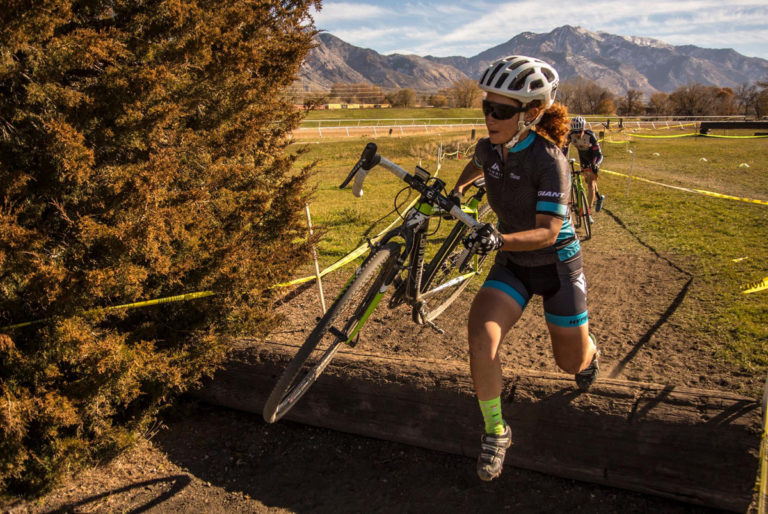
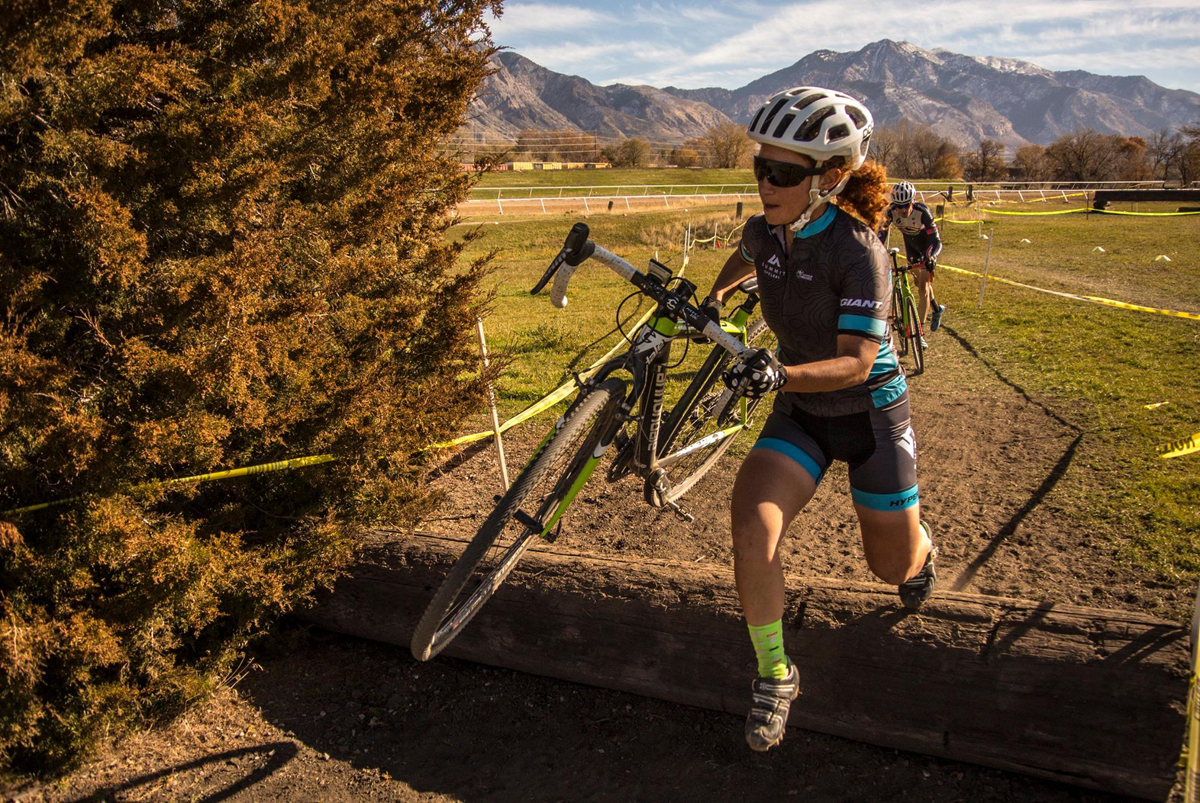
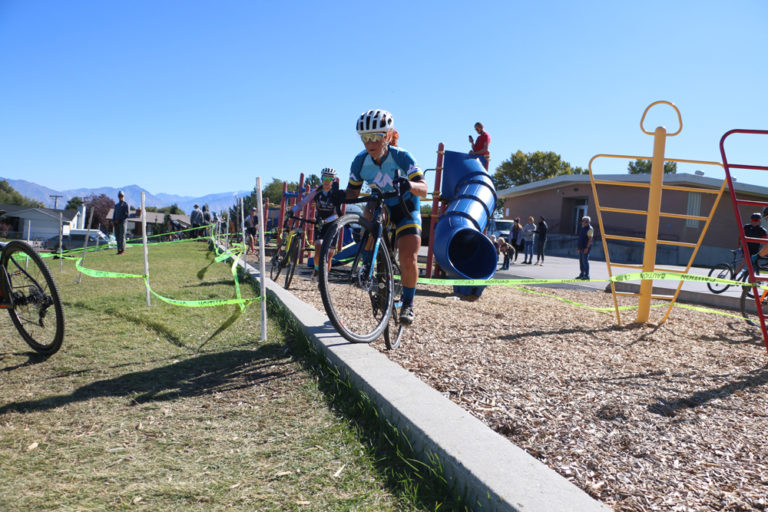
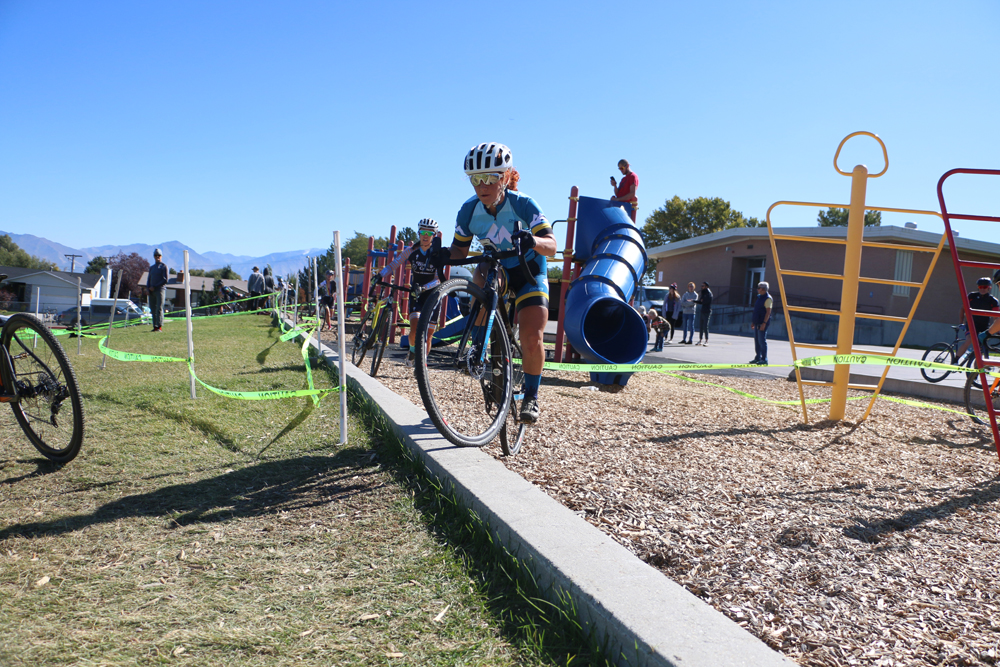
Sarah Kaufmann vaults over a log during a Utah Cyclocross Series race. Photo by Ali Goulet

As silly as it may sound or look, cyclocross is one of the fastest growing segments of the sport thanks to its welcoming atmosphere and minimal requirements to compete. The races are short (often 30 minutes for beginners, 45 to 60 minutes for pros), the laps are short (less than a mile usually), most beginner categories do not require dedicated CX bikes (though different sanctioning bodies have different rules so check the rule book) and technical elements are usually low consequence.

Originally developed organically as way for road racers to stay in shape in the off-season, cyclocross was first called ‘steeple-chasing’ as riders simply agreed on a landmark and raced toward it, taking whatever route options they liked, including getting off their bikes to climb over fences or wade through rivers. As it developed into an organized sport, it attracted more participation and CX became a dedicated discipline, no longer an also-ran to road and MTB racing, but it’s own unique brand with dedicated participants and fans.

Road cyclists can benefit from the short, high intensity nature of CX. And the opportunity to fine-tune technical skills that, while often different from those required on the road, are useful for overall bike handling prowess. When riders get used to handling the knobby tires of a CX bike over rocks, roots and other technical terrain, gravel edges or deep potholes on the road are not as intimidating.

Preston Yardley of Sommet Apparel is a SLC based cyclist who found CX as a welcome alternative to road racing. “The first year was a real learning curve… I learned a lot of skills, techniques and how to train for hard, fast efforts.” He preferred racing in the mud and snow to riding his trainer through the winter, “Don’t worry about cancelling for weather, that’s the best part!”

Mountain bike riders will also benefit from the short, high end power requirements of CX. Riding a CX bike on technical terrain will fine-tune MTB handling as more finesse is required to ride off-road without relying on suspension or wider MTB tires. Additionally, the CX style dismounts and remounts are helpful for mountain bikers when faced with hike-a-bike sections or other times a rider must come off their bike quickly and smoothly.

The short laps and short races make for a great spectating and fun for the whole family. Compared with a road or XC race, where spectators may wait for two to four hours and only see their favorite riders a couple of times, a CX race will be over in an hour or less and the riders will pass maybe four to ten times. Additionally, with winding courses that often double back on themselves, spectators can run between viewing spots, see their rider multiple times and get their own workout!

As summer wanes, and fall leaf rides turn to bitter cold, CX is such a welcome way to stay on the bike through the winter weather. When it’s freezing cold or the torture of a trainer ride is too much to bear, somehow a CX race always sounds fun. Laughing around an icy, muddy course with a bunch of other folks is actually a lot of fun. Get in a solid workout when it would have been tough to get on the bike at all.

Sarah Kaufmann is the owner of K Cycling Coaching based in Salt Lake City, UT. She is a professional XC and CX racer and can be reached at [email protected] or 413.522.3180.

Ride: Ely to Cave Lake Nevada Express

While Nevada in the summertime may generate images of extreme desert heat, the state actually contains some 50 mountain ranges, offering relief from the heat at higher altitudes. The city of Ely is situated at an elevation of 6,437 feet in Nevada’s Egan Range, in the east central part of the state. Ely had a population of just over 4,000 in 2016, about the same as it did in 1940. One source claims that Ely’s population peaked at 12,000 in the late 1950s, during the economic boom years of copper mining. That population may have included Ely’s satellite towns of Ruth, McGill and East Ely, though. Official census data shows Ely’s population as nearly flat for over seven decades. Ely was established during the 1850s as a stagecoach station along the Pony Express route. The transcontinental railroad and telegraph both came later, passing through this area. Still later came the Lincoln Highway, the U.S.’s first transcontinental highway.

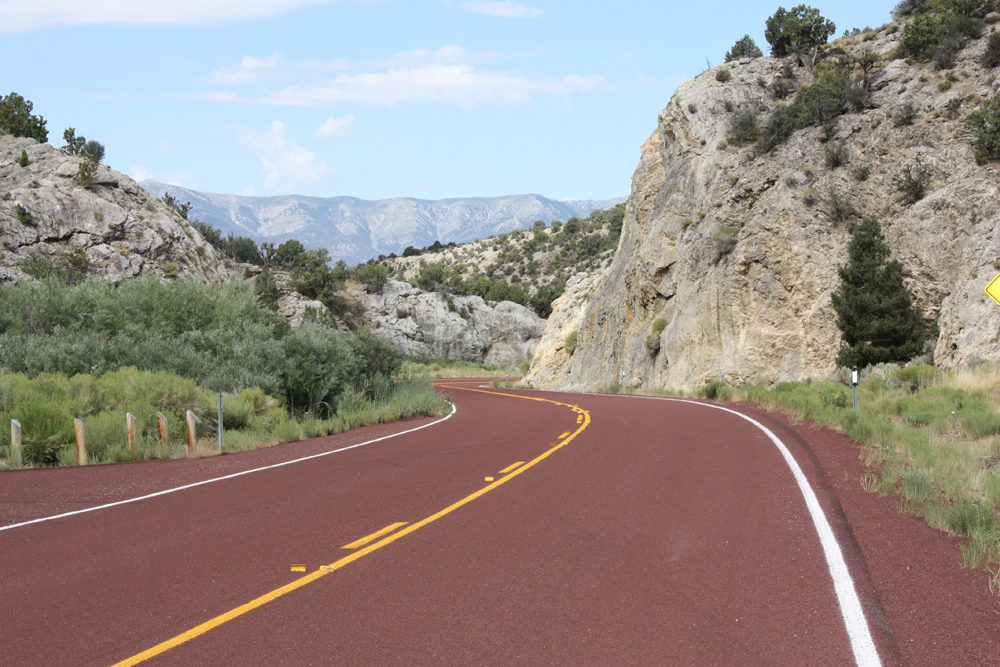
The road to Cave Lake is pretty, and isolated. Photo courtesy White Pine County Tourism & Recreation Board.

The highway morphed into U.S. 50. Today, three U.S. routes – 6, 50 and 93 – pass through town. Copper mining activities all but ceased in the late 1970s, and unemployment spiked at about 25%. The town’s economy was boosted, however, with the conversion of the old Nevada Northern Railway into the “Ghost Train of Old Ely,” as well as the designation of U.S. 50 as the “Loneliest Road in America.” Later, copper mining returned, in the mid-2000s, in response to an increase in demand. Today, copper concentrate is mined here, transported by rail to Seattle, and then shipped to Japan for smelting!

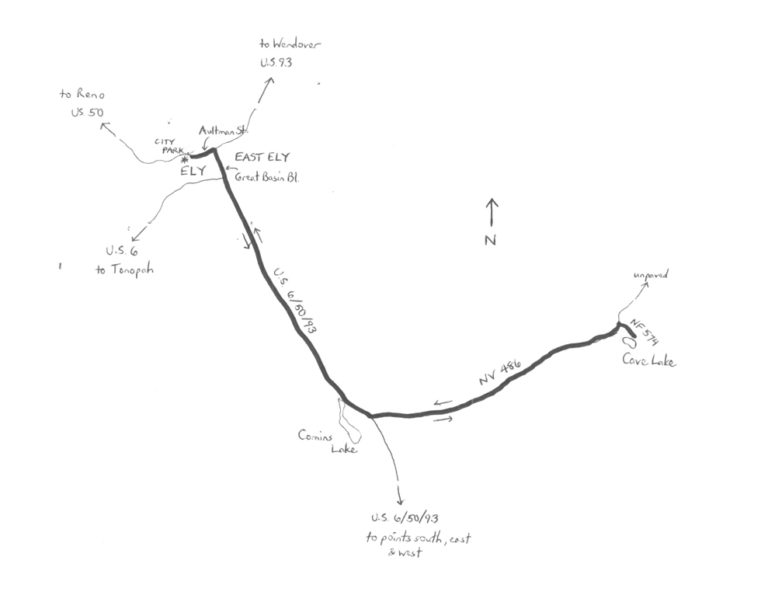
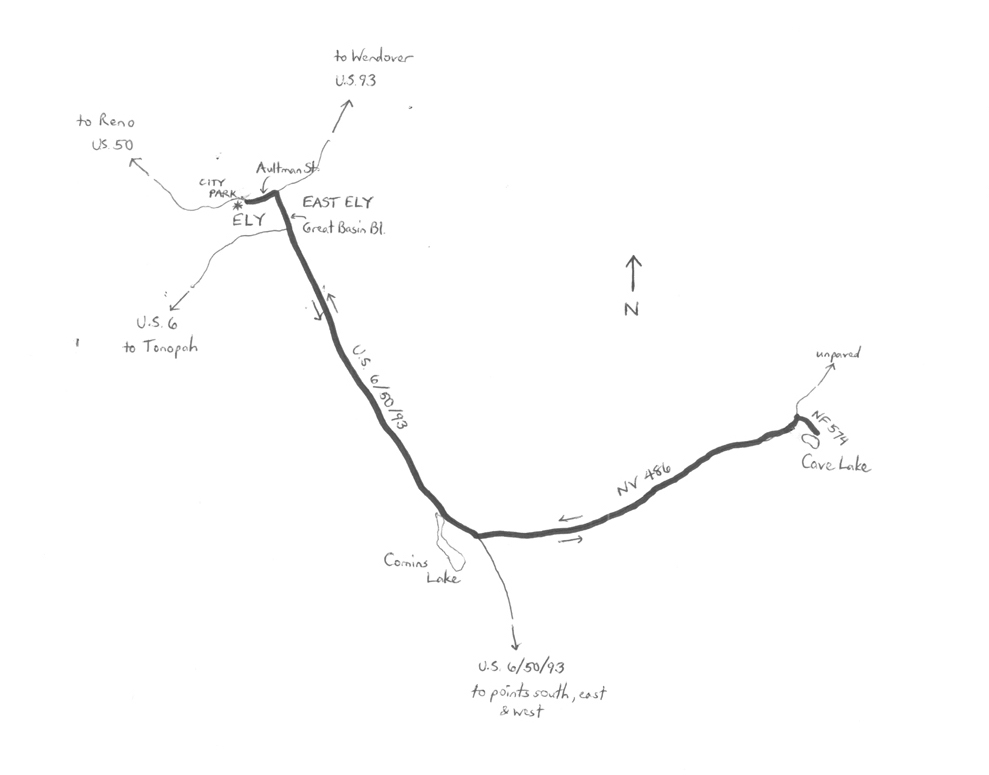
Ely gets seasonal snowfall; the accumulation was up to two feet during 2010’s heavy winter. Summertime highs may reach the upper 80s. As for the ride, the Ely to Cave Lake Express (the name recognizes Ely’s tie to the Pony Express) is a 32.5-mile trip, from the town’s center to Cave Lake State Park and back. There are no challenging climbs along the route, but there is a net elevation gain of just over 900 feet on the outbound ride. Start at Ely’s city park (elevation 6,419 feet), located in the heart of the town’s historic district, on U.S. 50 (Aultman Street). From 10th Street, turn right and head eastward on Aultman, which is a 30 mph, 4-lane road with wide shoulders through here. Note that, to the left on U.S. 50, in the opposite direction, is the Hotel Nevada, once the tallest building in the State, and still a bustling casino. Also, the Bristlecone Convention Center has a display of “Prometheus,” a local bristlecone pine tree that was cut down in 1964, and was later determined to be the oldest living thing on Earth, at about 4,900 years. Perhaps there was no way to confirm this without cutting the tree down (Editor’s Note: This can be done with a core sample that doesn’t kill the tree).

Back on Aultman, the road descends slightly before climbing to a junction with U.S. 93 (Great Basin Boulevard). Turn right here, continuing the gradual climb, and head south. There is some retail along this road. After the next major junction (U.S. 6), you are now on the outskirts of town, heading south on triply-signed U.S. 6, 50 and 93. The highway narrows to two lanes as development becomes sparse. The highway has a forgiving profile, from 6,537 feet at U.S. 6 (mile 1.55) to 6,600 feet, and then to 6,553 feet at the next point of interest, Comins Lake (mile 7.65). In between, much to the chagrin of most cyclists, the highway features rumble strips along the outer edges of the highway. With the shoulder varying in width – sometimes essentially disappearing – there are segments along which there is no choice but to ride slightly in the roadway. Fortunately, author Deke Castleman claims that U.S. 93 is “even lonelier” than U.S. 50, so there should not be many motor vehicles out here. As for Comins Lake, it will be on the right, covers about 400 acres, and is accessible to the public. The lake was originally stocked with trout and bass, but northern pike were, somehow, illegally introduced to the waters about 15 to 20 years ago. The trout have since disappeared, and the bass have nearly “crashed,” while the pike have flourished.

Less than one mile later, at mile 8.45, turn left onto Nevada Route (NV) 486. This is the main road to Cave Lake. It is a gradual climb from U.S. 6/ 50/ 93 (elevation 6,631 feet) to mile 13 (7,135 feet), where the road begins to curve and descend slightly. The gradual climb continues, though, as the road nears the lake, entering Humboldt-Toiyabe National Forest. Steep slopes along the sides of the road, as you enter The Narrows, increase the drama of the approach to the lake. You cannot see the lake from NV 486, though, as the road enters the Schell Creek Range. Just before NV 486’s pavement ends, turn right onto National Forest Route 574 (mile 14.9). From here, it is a short climb (6% grade) to the main park entrance, and the edge of Cave Lake (elevation 7,307 feet). You can view the lake without officially entering the park. It is an exquisite setting, with clear waters backed by steep slopes. The lake is small, at 32 acres. While Comins Lake has lost its trout, Cave Lake has plenty of them. During the winter, the lake features ice fishing. Take some time to enjoy the scene before starting the return ride to Ely. The return ride is the reverse of the outbound ride. Once back in Ely, be sure to take in some of the town’s historical sites and attractions, and its great outdoor artwork. Also, in September, Ely would be hosting “Race the Rails,” in which mountain and road bikes go head-to-head against the “ghost” train mentioned above. The road course is substantially different from the one described in this article.

Starting point coordinates: 39.248736oN 114.887708oW

For more rides, see Road Biking Utah (Falcon Guides), written by avid cyclist Wayne Cottrell. Road Biking Utah features descriptions of 40 road bike rides in Utah. The ride lengths range from 14 to 106 miles, and the book’s coverage is statewide: from Wendover to Vernal, and from Bear Lake to St. George to Bluff. Each ride description features information about the suggested start-finish location, length, mileposts, terrain, traffic conditions and, most importantly, sights. The text is rich in detail about each route, including history, folklore, flora, fauna and, of course, scenery.

Wayne Cottrell is a former Utah resident who conducted extensive research while living here – and even after moving – to develop the content for the book.

The Cave Lake Express is a beautiful and low traveled 32.5 mile road ride in Ely, Nevada. Map by Wayne Cottrell

Osborne, Paterson win 2019 XTERRA Pan Am Championship at Snowbasin

0

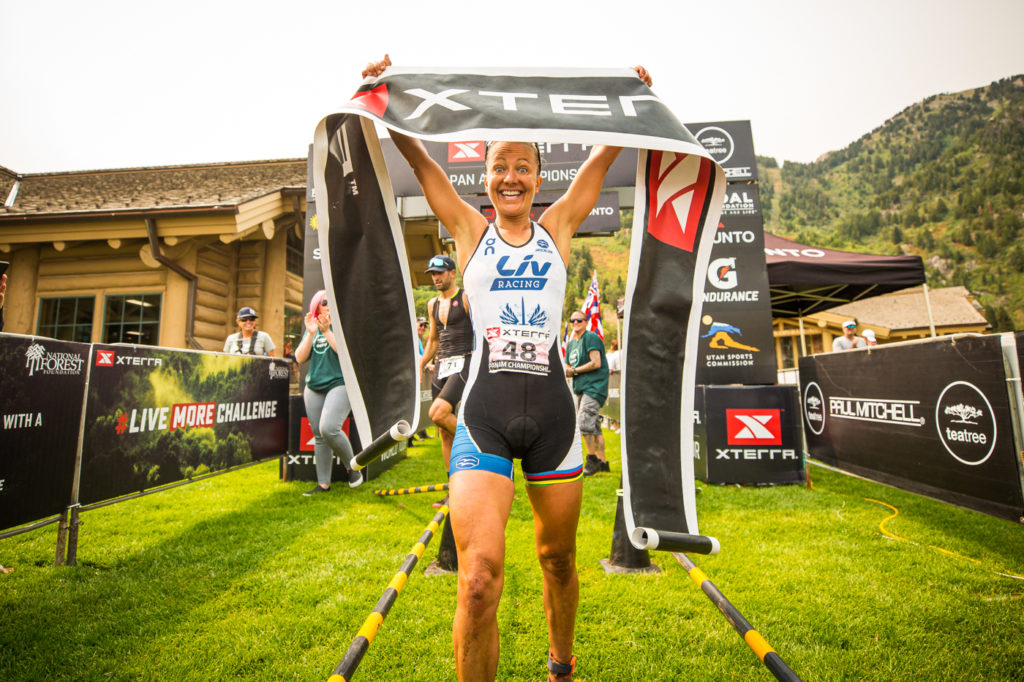
Sam Osborne from New Zealand and Lesley Paterson from Scotland captured the XTERRA Pan American Championship off-road triathlon elite titles on a beautiful day at Snowbasin Resort near Ogden, Utah on Saturday, September 7, 2019.

It’s the sixth XTERRA World Tour win of the season for Osborne, and for Paterson, her third straight victory at the Pan Am Champs in Utah.

The race combined a 1.5-kilometer swim in Pineview Reservoir with a grueling 30-kilometer mountain bike that climbed to 7,300-feet elevation and followed with a tough 10K trail run.

ELITE MEN’S RACE

In the men’s elite race Osborne, one of the sports’ finest strategists, was first out of the water followed closely by Canadian Karsten Madsen, and Americans Branden Rakita, Brad Zoller, and Mike Meehan.

“I made a point of leading the swim and I tried to kick pretty hard after that first buoy, it was a very specific thing I wanted to achieve,” said Osborne, who set the pace early on the bike with Madsen charging hard and just six seconds behind him at the four-mile mark after the first big climb.

“I struggled a bit with the early pace and intensity, but I had this discussion with my coach just after XTERRA Mexico where we decided we should go back to a really big aerobic block with eyes on Maui,” explained Osborne. “I’ve raced well before after an aerobic block, but I struggled a little bit with that early intensity today. Karsten came across early on and I got away, but I could hear him breathing.”

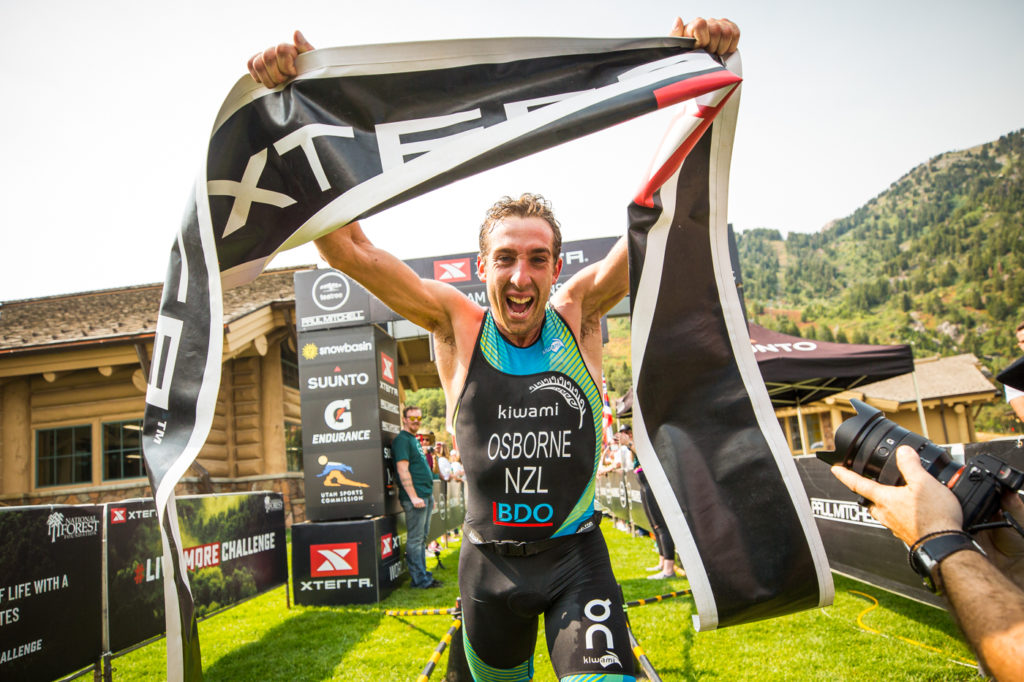
Sam Osborne (NZL) captures the XTERRA Pan American Championship off-road triathlon Elite Men’s title at Snowbasin Resort in Ogden, Utah, September 7, 2019. Photo courtesy XTERRA Planet.

By mile eight, Madsen had moved to the front with Osborne right on his wheel and 20-year-old Australian Dean Cane riding in third just 20-seconds back. And when the course started to climb up to the top of Sardine Peak, Cane made a big move and pulled into the lead.

“He’s a young guy but that was a clever move and he’s obviously done some mountain bike racing,” said Osborne about Cane, who posted the fastest bike split of the day in 1:26:21. “It took me a little bit to get around Karsten to try to close the gap halfway up that climb and Dean was riding really strong. I got across to him just before the top.”

The two came down the hill and into transition tire-to-tire but Osborne bolted out of transition and pulled away from the young Aussie immediately and put nearly two-minutes on him in the first mile of the run. He went on to post the second-best run time and took the tape in 2:28:38, more than three-minutes ahead of Madsen in second.

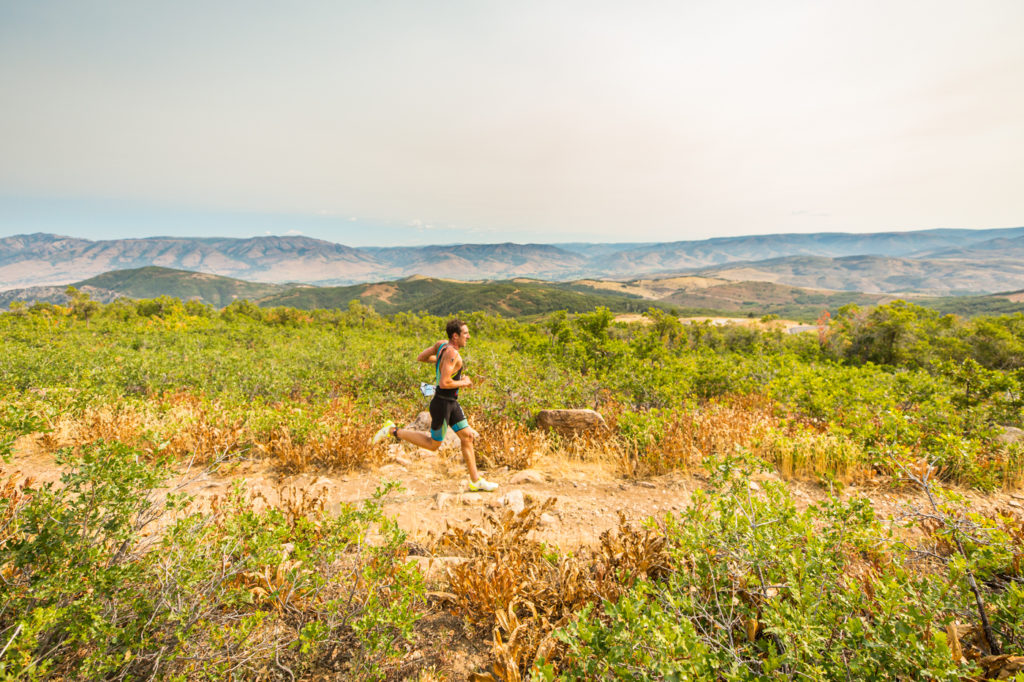
Sam Osborne (NZL) during the run at the XTERRA Pan American Championship, at Snowbasin Resort in Ogden, Utah, September 7, 2019. Photo courtesy XTERRA Planet.

“A little bit at a loss for words, really, to be standing up here as the champ,” said Osborne, who was third at XTERRA Worlds last year. “Going to take it easy for a couple of days and go to Moab and enjoy ourselves here in Utah, but then we’re going back to Boulder and it’s 100% focused on Maui.”

For Madsen, who was just six days removed from winning XTERRA Dominican Republic, the runner-up spot was well earned.

“I believe Sam is the guy to watch in Maui, so I’ve got no excuses, he had a phenomenal day and keeps on raising the bar for all of us,” said Madsen. “I’m really happy with today, and Utah is phenomenal. The temperature was perfect, the trails were in great shape, and this community really gets behind the sport. I always enjoy coming here.”

Rakita finished third, followed by Meehan in fourth and Brian Smith in fifth.

“That was my best result here ever,” said Rakita, a long-time XTERRA elite who as the top American was crowned the XTERRA U.S. Elite Champion today. “I really need to thank Josiah Middaugh, who has been coaching me to another level. I think this U.S. title is as much his as it is mine, just so grateful for him, and we’re all rooting for him to do well at the Eco Challenge in Fiji where he’s racing now.”

Of note, Chad Hall posted the fastest run split in 40:43 to finish sixth, and Cane – who entered T2 in first place, faded, but didn’t falter, to finish in seventh.

“I was so happy on the ride, I put everything into that climb,” said Cane. “I had a good swim and I saw them up the road and I thought, I have to get there. And I got there and was sitting there and thought, ‘Well, it’s going to be hard to run with these guys, so I better give them a run for their money now so I tacked onto the climb and Sam and I got away. That was really good, because I was able to relax into transition. I had a few issues on the run but other than that I am super happy to be here and super happy to finish.”

Elite Men’s Results
Place Name, NAT Time Points
1 Sam Osborne, NZL 02:28:38 100
2 Karsten Madsen, CAN 02:32:06 90
3 Branden Rakita, USA 02:34:23 82
4 Mike Meehan, USA 02:36:19 75
5 Brian Smith, USA 02:37:15 69
6 Chad Hall, USA 02:37:43 63
7 Dean Cane, AUS 02:41:02 58
8 Ryan Ignatz, USA 02:42:18 53
9 Trevor Wurtele, CAN 02:44:07 49
10 Evan Pardi 02:45:14 45
11 Brad Zoller, USA 02:46:28 41
12 Nelson Hegg, USA 02:48:20 37
13 Benny Smith, USA 02:48:46 34
14 Will Ross, USA 02:50:46 31
15 Andy Lee, USA 02:53:38 28
Also Alex Willis, Barret Fishner    

 
ELITE WOMEN’S RACE

In the women’s elite race Samantha Kingsford from New Zealand posted the fastest swim of the day, followed one-minute later by Fabiola Corona from Mexico and Americans Suzie Snyder and Julie Baker, then Canadian Heather Wurtele. Paterson was out of the water sixth more than two-minutes back.

Once on the bike Kingsford extended her lead by posting the fastest split of the day in 1:43:32.

“The bike suited me well, I like riding that kind of technical flowy stuff, and I guess I put about three minutes into the girls by T2 but I didn’t really know because it’s hard to get splits when you’re riding at the front.”

Lesley Paterson (GBR) captures the XTERRA Pan American Championship off-road triathlon Elite Women’s title at Snowbasin Resort, September 7, 2019. Photo courtesy XTERRA Planet.

As Kingsford took to the mountain for the run with a big lead on the field it looked like she had the win all wrapped up, but then came Lesley Paterson.

“They don’t call her the ‘Scottish Rocket’ for no reason,” laughed Kingsford. “That girl can run. And I knew I had to run at my own pace. I didn’t want to go out too hard and blow up, and still, halfway through the run I hit a bit of a bad patch and then I turned around and there was Lesley. She was looking strong and just flew past me on the hill somewhere around mile four/five. I tried to hold on but couldn’t, and regardless I’m absolutely stoked with my race and how the season’s gone for only being my second year on the circuit.”

Paterson, the three-time XTERRA World Champion, ran more than four minutes faster thank Kingsford to take the tape in 2:55:10.

“I’ve had some pretty good running legs lately,” said Paterson. “I’ve always come into this race with a lot of durability because of how I phase it with Maui. I don’t have the top hand speed, but I have the strength and I think that showed on the run. Definitely gave me confidence going into Maui, getting that fight back. Sam was going really hard today, we’ve been training together a bit in Boulder so that’s been fun. She’s awesome, and super fun to be around.”

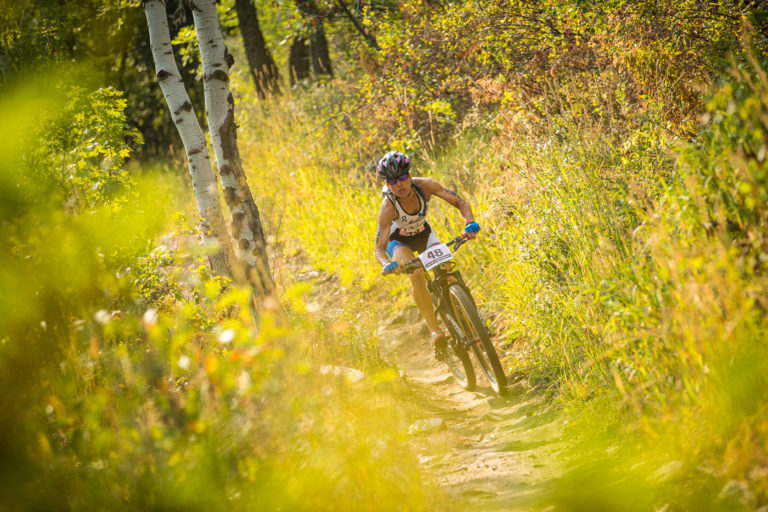
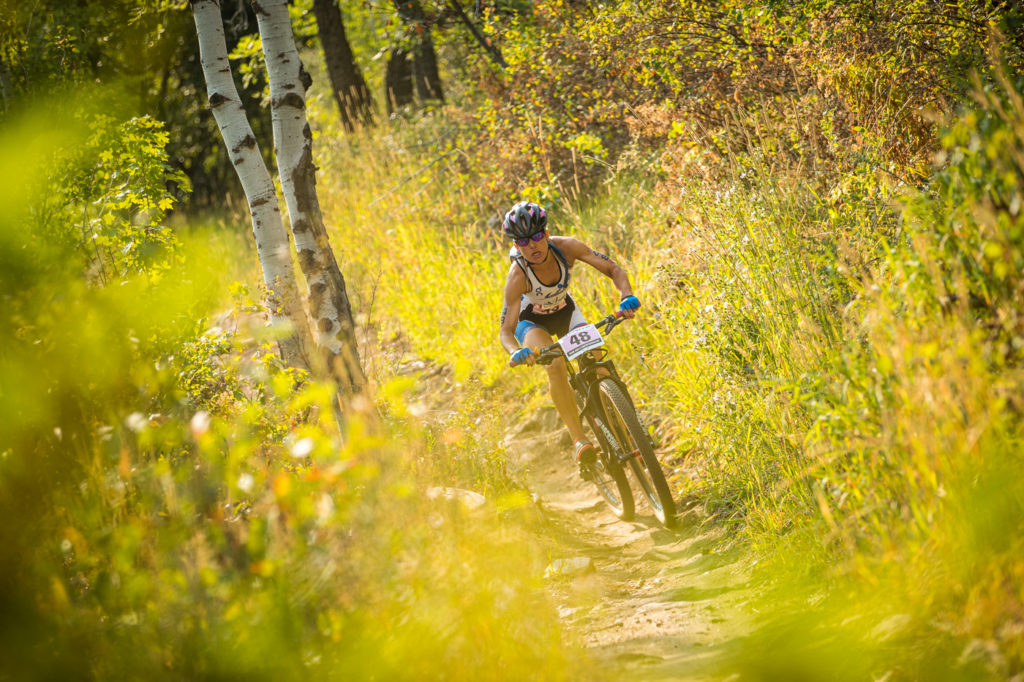
Lesley Paterson (GBR) during the MTB leg at the XTERRA Pan American Championship, at Snowbasin Resort in Ogden, Utah, September 7, 2019. Photo courtesy XTERRA Planet.

Kingsford held on for second, with Corona in third, and Americans Julie Baker and Suzie Snyder in fourth and fifth.

“I was nervous because I was really tired from the XTERRA Dominican Republic,” said Corona, who won XTERRA Dominican just six days ago. “I felt good at beginning of the swim, I think I was second out of the water, then Suzie caught me, and I tried to go with her. Then on the last uphill Lesley caught me, and Suzie was stopped, something happened with her wheel. Then I was in third place, and that was my goal to be top three. I am very happy and feel blessed and thankful for XTERRA and to be part of this family.”

Corona is racing four XTERRA events in four countries in four weeks. Next week it’s XTERRA Japan, and then on September 22 she’ll compete at the inaugural XTERRA Kunming off-road triathlon in China, the XTERRA Asia-Pacific Tour finale.

“Right now, I’m going to put my legs up and maybe have a beer for recovery and then I’ll look forward to XTERRA Japan next week. It’s crazy but right now, I’m really happy and I’m enjoying this moment,” she said.

By finishing as the top American on the day, Julie Baker took home the women’s XTERRA U.S. Elite title.

“Thrilled to be out here and mixing it up with all these amazing ladies,” said Baker. “Like Branden, I need to thank Josiah as well, he’s done such a great job preparing me for these tough races.”

Snyder, who was second last week in the Dominican Republic, had her shift lever break which made a brutal climb even harder.

“That happened a little after Green Pond, so I got off a couple times and was trying to figure if I could tighten something, but just couldn’t shift gears going,” said Snyder. “That kind of trashed my legs, and I had nothing going up the first climb on the run, and my legs were cramping. I finally came around towards the end of the run and I saw Maia coming behind me on the last mile and freaked out and just tried to lay it all out in the last mile for that podium spot.”

Positions 3,4,5 and 6 for the women were decided by just about one-minute, with Ignatz posting the second-best run of the day to come in sixth. Ironman great Heather Wurtele from Canada finished seventh.

Elite Women’s Results
Place Name, NAT Time Points
1 Lesley Paterson, GBR 02:55:10 100
2 Samantha Kingsford, NZL 02:56:48 90
3 Fabiola Corona, MEX 03:04:03 82
4 Julie Baker, USA 03:04:32 75
5 Suzie Snyder, USA 03:05:05 69
6 Maia Ignatz, USA 03:05:20 63
7 Heather Wurtele, CAN 03:07:48 58
8 Kara LaPoint, USA 03:09:21 53
9 Jennifer Smith, NZL 03:15:49 49
10 Marta Menditto, ITA 03:17:26 45
11 Katie Button, CAN 03:19:16 41
12 Nicole Valentine, USA 03:20:16 37
13 Kelli Montgomery, USA 03:25:42 34

 
OSBORNE, KINGSFORD WIN XTERRA PAN AM TOUR TITLES

With the win for Osborne and second place showing for Kingsford, the power couple from New Zealand captured the 2019 XTERRA Pan American Tour elite titles, a dream that started for them at the end of last year.

“It’s crazy to think we set this goal way back last year in December before we even had our visas sorted, and now I’m here in Ogden with five wins and one second and the title,” said Osborne, who won five races – Brazil, Oak Mountain, Victoria, Mexico, and here today in Utah. His only blemish was a second-place finish to Josiah on his home course.

“I don’t know if I could ask for a better season,” he said. “I really love this Pan Am Tour. You have the mountains here in Ogden and the rocks in Victoria, which were insane, and the single track in ‘Bama, and the crazy jungle in Brazil. It’s awesome this tour, and it shows what a consistent and well-balanced athlete you need to be to perform during the season.”

As the culmination of a 10-stop series of off-road triathlons spanning South and Central America, Mexico, the Caribbean, Canada, and the U.S., and with $80,000 in prize money at stake for elites, there was a lot on the line today in Utah and the women’s race was decided today.

“We wanted to try something different,” said Kingsford, who won XTERRA Brazil, was third at Oak Mountain, won XTERRA Victoria, was fourth at Beaver Creek, won XTERRA Mexico, and was second here today. “My goal was to get top two on the Tour, so to win it is absolutely amazing.”

PAN AM TOUR ELITE STANDINGS
ELITE MEN
PLACE NAME, NAT TOTAL AR CH BR OM VC QC BC MX DR UT
1 Sam Osborne, NZL 565 x x 100 100 75 x 90 100 x 100
2 Karsten Madsen, CAN 465 x x x x 61 67 82 90 75 90
3 Branden Rakita, USA 419 x x x 63 56 x51 69 82 67 82
4 Josiah Middaugh, USA 332 x x x 90 67 75 100 x x x
5 Will Ross, USA 291 43 56 x x 51 61 49 x x 31
6 Rom Akerson, CRC 225 75 75 x x x x x 75 x x
7 Kieran McPherson, NZL 216 67 67 x 82 x x x x x x
8 Felipe Moletta, BRA 212 61 61 90 x x x x x x x
9 Brian Smith, USA 191 x x x 69 x x 53 x x 69
10 Evan Pardi, USA 191 x x x 58 47 x 41 x x 45
11 Ryan Ignatz, USA 165 x x x 49 x x 63 x x 53
12 Alejandro Bulacio, ARG 156 51 47 58 x x x x x x x
13 Rafael Juriti, BRA 153 39 51 63 x x x x x x x
14 Mike Meehan, USA 150 x x x x x x 75 x x 75
15 Elliot Bach, USA 120 x x x 75 x x 45 x x x
16 Alex Roberts, NZL 99 56 43 x x x x x x x x
17 Brad Zoller, USA 99 x x x x x x 58 x x 41
18 Alex Rhodes, GBR 85 36 x 49 x x x x x x x
19 Sebastian Neef, GER 82 x x 82 x x x x x x x
20 Diogo Malagon, BRA 75 x x 75 x x x x x x x
21 Marcus Fernandez, BRA 69 x x 69 x x x x x x x
22 Francisco Serrano, MEX 69 x x x x x x x 69 x x
23 Leonardo Saucedo, MEX 63 x x x x x x x 63 x x
24 Chad Hall, USA 63 x x x x x x x x x 63
25 Arturo Rodriguez, MEX 58 x x x x x x x 58 x x
26 Dean Cane, AUS 58 x x x x x x x x x 58
27 Edmond Roy, CAN 56 x x x x x 56 x x x x
28 Hugo Barbosa, BRA 53 x x 53 x x x x x x x
29 Walter Schafer, USA 53 x x x 53 x x x x x x
30 Trevor Wurtele, CAN 49 x x x x x x x x x 49
31 Lucas Mendez, ARG 47 47 x x x x x x x x x
32 Matthew Alford, USA 47 x x x x x 47 x x x x
33 Raul Furtado, BRA 45 x x 45 x x x x x x x
34 Will Kelsay, USA 45 x x x 45 x x x x x x
35 Barret Fishner, USA 43 x x x x 43 x x x x x
36 Vince Bethumeur, CAN 43 x x x x x 43 x x x x
37 Edivando Cruz, BRA 41 x x 41 x x x x x x x
38 Zach Winter, USA 41 x x x 41 x x x x x x
39 Carlos Chang, CAN 39 x x x x x 39 x x x x
40 Ronaldo Ferreira, BRA 37 x x 37 x x x x x x x
41 Alex Willis, USA 37 x x x x x x 37 x x x
42 Nelson Hegg, USA 37 x x x x x x x x x 37
43 Jean-Philippe Thibodeau, CAN 36 x x x x x 36 x x x x
44 Benny Smith, USA 34 x x x x x x x x x 34
45 Andy Lee, USA 28 x x x x x x x x x 28
                         
ELITE WOMEN
PLACE NAME, NAT TOTAL AR CH BR OM VC QC BC MX DR UT
1 Samantha Kingsford, NZL 522 x x 100 82 75 x 75 100 x 90
2 Suzie Snyder, USA 485 x x x 100 67 x 100 82 67 69
3 Laura Mira, BRA 328 67 61 75 x x x51 x 69 56 x
4 Julie Baker, USA 296 x x x 75 56 x 90 x x 75
5 Fabiola Corona, MEX 247 x x x x x x x 90 75 82
6 Valentina Carvallo, CHI 240 x 75 90 x x x x 75 x x
7 Maia Ignatz, USA 214 x x x 69 x x 82 x x 63
8 Kelli Montgomery, USA 201 x x x 45 x 61 x x 61 34
9 Lesley Paterson, USA 190 x x x 90 x x x x x 100
10 Katie Button, CAN 167 x x x x 51 75 x x x 41
11 Deanna McCurdy, USA 116 x x x 49 x 67 x x x x
12 Tess Amer, USA 116 x x x 53 x x 63 x x x
13 Kara LaPoint, USA 106 x x x x x x 53 x x 53
14 Nicole Valentine, USA 95 x x x x x x 58 x x 37
15 Sabrina Gobbo, BRA 82 x x 82 x x x x x x x
16 Erika Simon, ARG 75 75 x x x x x x x x x
17 Mirian Gomes, BRA 69 x x 69 x x x x x x x
18 Anne Nevin, NOR 69 x x x x x x 69 x x x
19 Johandri Leicester, RSA 67 x 67 x x x x x x x x
20 Amanda Felder, USA 63 x x x 63 x x x x x x
21 Sofia Rodriguez, MEX 63 x x x x x x x 63 x x
22 Melanie McQuaid, CAN 61 x x x x 61 x x x x x
23 Jessie Koltz, USA 58 x x x 58 x x x x x x
24 Heather Wurtele, CAN 58 x x x x x x x x x 58
25 Javiera Gainza, CHI 56 x 56 x x x x x x x x
26 Amanda Bayer, USA 56 x x x x x 56 x x x x
27 Michelle Mehnert, USA 49 x x x x x x 49 x x x
28 Jennifer Smith, NZL 49 x x x x x x x x x 49
29 Emanuela Bandol, CAN 47 x x x x 47 x x x x x
30 Marta Menditto, ITA 45 x x x x x x x x x 45
31 Anne Usher, USA 43 x x x x 43 x x x x x
32 Allison Arensman, USA 41 x x x 41 x x x x x x
33 Brittany Oliver, USA 37 x x x 37 x x x x x x

 
Also of note, Stefano Davite and Jen Razee won the overall amateur titles today at the XTERRA Pan American Championship. 

Thriving vs. Surviving the End of Season: A Coach’s Perspective

By Dave Harward, PLAN7 Endurance Coaching – Late season motivation to ride and train can frequently be challenging. It’s August. It’s hot every day. You have to balance work, family, training, racing, resting, eating, etc., etc. Riding bikes is our common passion, but it can be tough to stay motivated to keep going hard, day in and day out. If you’re having any of these thoughts, you are not alone. We all want to perform at our best. As a coach, it’s my job to review and consider goals and intentions for all types of athletes. The purpose of this article is to address late season “burn out” with methods and goal setting throughout the year to keeping the gears turning strong.

Cyclocross is a great way to stay in shape after a long riding season. Photo by Dave Iltis

The first step is set realistic goals for yourself. These include events and races that you want to participate in and a timeline that is attainable so you know you can accomplish those goals (Cycling West is a great reference tool right at your fingertips). Next, we want to schedule training to match up with those goals and intentions, without over training of course. Having a timeline promotes constant assessment of how things are going. Cycling season can be year round, especially if you do ride multiple disciplines and incorporate off season training. The fitness build up is solid. However, it’s unrealistic to think that we can be at peak fitness year round. This is an example of how referring back to goals and intentions can keep you going strong when there may be a waver in motivation.

We are so lucky to have some of the most amazing riding in the country; road, trail or gravel. Terrain and weather get better and more beautiful in the late Summer and Fall. I want to throw out some options and consider not only how to use your built-up fitness to enjoy what is on offer, but also to think about how to translate it all into next season. Alright, time to find some events and set some goals! Let’s get creative!

Late Summer Options

Between mountain bike racing, road races or century rides, and the fast growing gravel grinder events, you’ve likely been curious about a different discipline. Why not explore a bit? There’s nothing like trying something new to grab your interest and help energize your passion for pedaling.

Most cycling communities have midweek race series going on through the summer months (see the calendar of events for road and mountain biking race series). These are great opportunities to check out a discipline you find interesting. Another great option is to check out local cycling clubs. Many clubs organize group rides, both road and mountain. You’ll be able to ride with experienced riders who are welcoming and interested in bringing people along, as well as mentor.

It may be intimidating to plug in to a new discipline. There are equipment and gear challenges as well as building technical skill for something new. However, it’s all about pedaling and building up a new skillset. Take things progressively. Find trails or routes that are appropriate for your level. You’ll soon know if it’s too much. When you reach that point take things back a bit and work on skills.

Fall Options

Rolling into the fall months you’re going to find cooler temperatures and amazing trail conditions. The scenery is spectacular and it will feel refreshing to get out and pedal. It’s time to get out on your favorite trail or embark on that long road route that you have been thinking about. Pick a different spot for each upcoming weekend in September and October.

Another great thing about the fall and even into the winter months is cyclocross (CX) season. Combining skills from road racing and mountain biking, as well as adding in a little bit of running, can be a thrill that opens up a whole new skill set whole challenging your fitness. Preparing for a serious assault on the CX season takes solid preparation. There are many groups throughout the area that practice and mentor new riders, and the race scene is a blast for any level of experience, even spectators!

CX preparation can start to take place when you’re in those summer doldrums. You’ll need to make some shifts to your training. As I mentioned you’ll be doing some running in CX races. It’s typically not long bouts of running. It’s more about explosive sprints, maybe 2-3 sections per lap. You’ll be dismounting at speed, running through an obstacle such as barriers, a steep hill or sand. Check out the PLAN7 Clinic Series on WUKAR Wednesdays if you want to develop you CX skills.

No matter the discipline of cycling that you may choose to try, taking a learned skill and applying it in a new format will definitely stimulate neuromuscular advancement and keep your mind fresh. This will definitely bring in some new motivation and engagement, all while taking advantage of the fitness you’ve been building all season.

Setting Goals for Next Season

This time of year offers some time for reflection on how you set up your current season. It is important to evaluate your goals and intentions. Did you hit the mark? Were there unforeseen obstacles? Did you make reasonable goals? What could you do differently next year?

Having an intention for the season along with dates, even if they aren’t events, can help you stay on track and remain motivated when the going gets tough. Even when you’re the goal setter, it’s a game of managing your expectations and intentions while keeping the plan on target. Ahhhh, keeping your plan on target.

Whether you are developing your own training plan or working with a coach, be sure to make frequent analysis, setting attainable goals with the ability to measure progress. You can choose mileage goals, time per week on the bike, goals around performance, even metrics to gauge your fitness.

Wrapping Things Up

This isn’t the typical coaching article I write. Usually you can expect something very particular to building a training program or focusing in on specific types of workouts or intervals. Maintaining motivation throughout a long season requires us to be a little more creative than changing up intervals or volume of time spent training.

We’ve addressed a number of ideas to stay engaged with the sport you love. Be ready to try something new. Look at some options that you know will be challenging. Step out of the normal routes or trails you typically ride. One big recommendation I have is go into the mountains as the summer is ending and we move into fall. Climb the canyons on the road. Go up high and ride the trails. We can always use the neuromuscular task of pedaling uphill. Enjoy and embrace the grand hills that many travel to see and we have in our backyards. More than anything enjoy being out of the city while you’re pedaling!

If I haven’t said it enough yet, set some goals. Decide on specifics to finish out the remainder of this season and maintain the fitness you’ve worked so hard to build. Find a way to move yourself into something new and stimulating. Start to think about your strengths and weaknesses from your regular assessments. Tailor your training to maintain and advance your strengths. Take a few weeks completely off! and then work through the winter months toward your goals.

If you’re struggling on how to put goals and intentions together, talk to a coach. One of the aspects of my job is to help people translate their love of this sport to improved fitness and optimal performance. Together we make sure your training plan fits into your life, while keeping you motivated and having fun. After all that’s what it’s all about.

Dave Harward founded PLAN7 Endurance Coaching in 2006, building individualized training plans for endurance athletes, offering optimized bike fitting and training consultations. PLAN7 also offers Sport Nutrition services, metabolic testing and the House of Watts indoor winter program. Learn more at plan7coaching.com.

Tetrick and Arnell win 37th annual LoToJa

By David Bern — Nearly 2,000 cyclists competed in 2019 race from Logan to Jackson Hole Mountain Resort

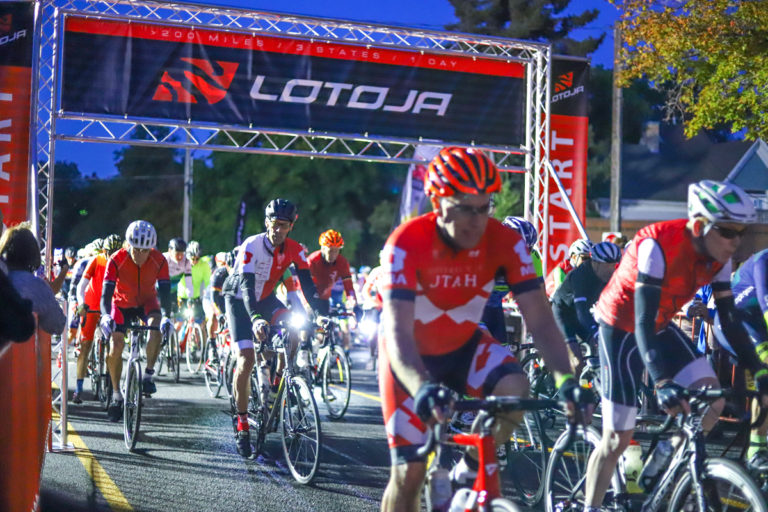
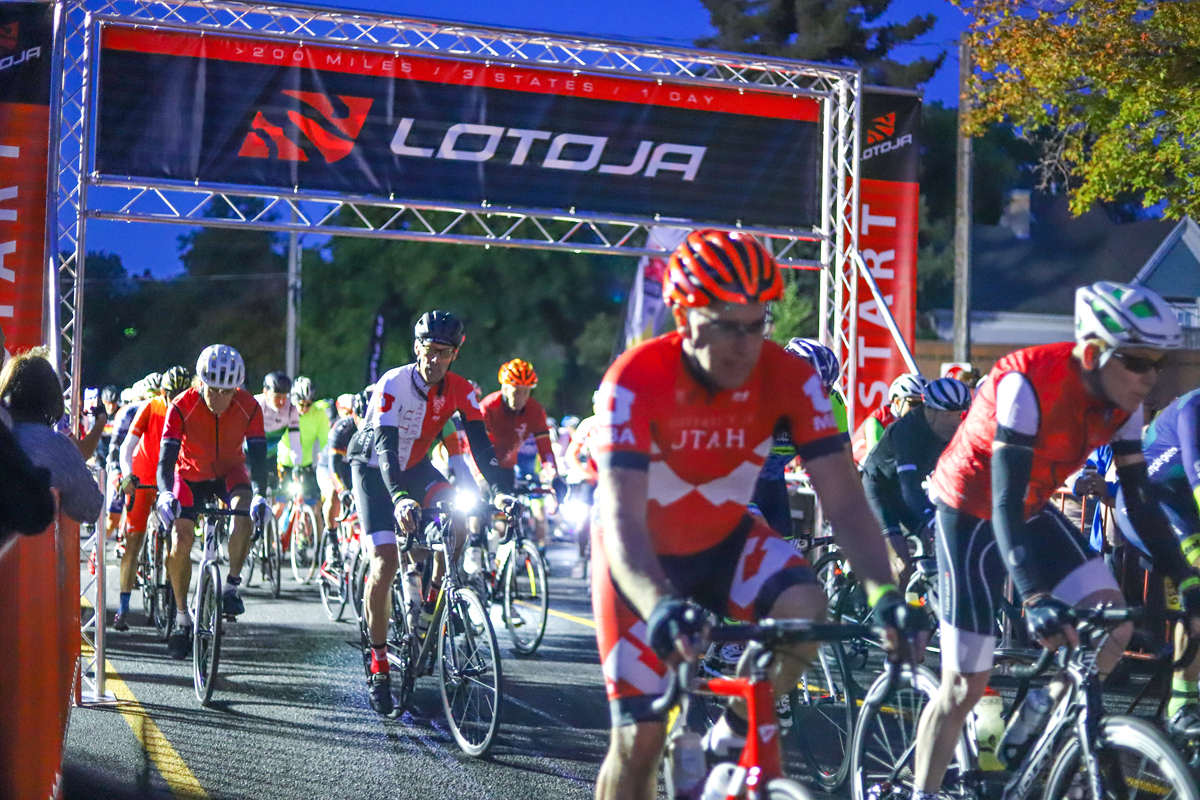
Cyclists leave the start line at Sunrise Cyclery in Logan, Utah, in the 37th Annual LoToJa Classic. The race was held on September 7, 2019. Nearly 2,000 cyclists participated. Photo courtesy of Snake River Photo

For Roger Arnell winning the 2019 LoToJa Classic on September 7 was more about having a great day on the bike with his team than trying to set a new record on the 202-mile (325K) parcours.

And for Alison Tetrick it was a pleasure to win the endurance road race from Logan, Utah, to Wyoming’s Jackson Hole Mountain Resort that she’s heard about for years.

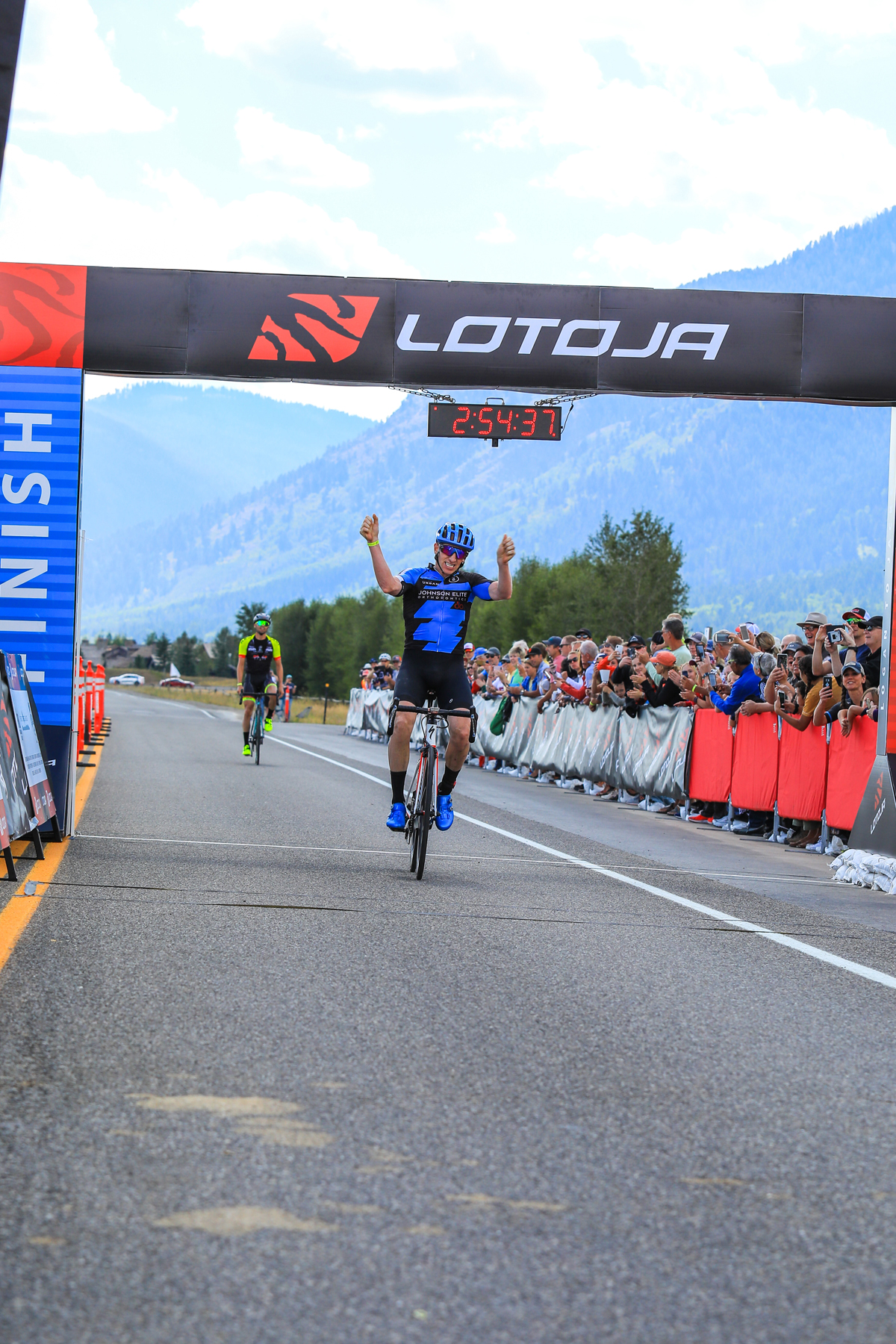
Roger Arnell (Johnson Elite Orthodontics) celebrates after winning the Men's Pro 123 race in the 37th Annual LoToJa Classic held on September 7, 2019. Arnell finished the 202-mile course in 8:45:51. Photo courtesy of Snake River Photo
Roger Arnell (Johnson Elite Orthodontics) celebrates after winning the Men’s Pro 123 race in the 37th Annual LoToJa Classic held on September 7, 2019. Arnell finished the 202-mile course in 8:45:51. Photo courtesy of Snake River Photo

Arnell, 34, who rides for Johnson Elite Orthodontics, won the Men’s Pro 123 race with a finish time of 8:45:51 and an average speed of 23 mph. The Cat. 1 racer from Farmington, Utah, beat Gilberto Melendez (Team Stonehouse P&S Racing p/b Masi) of Tucson, Arizona, to the line by 3 seconds after the two broke away with 14 miles to go.

“It was really super cool to win,” Arnell said, who has ridden LoToJa seven times with several high finishes and a first-place in 2008 as a citizen racer. “As a team, we executed everything perfectly. I didn’t care about trying to break the record. … It meant more to have a great experience with the team. … And to have teammates also place well.”

His teammates, Spencer Johnson and Nathan Manwaring, took third and fourth place, respectively, in a five-man sprint with a time of 8:47:59. Johnson won the Men’s Pro 123 race in 2018 and set a new course record of 8:18:29 with an average speed of 24.35 mph. The women’s course record is 9:35:00, which was set by Melinda MacFarlane in 2013.

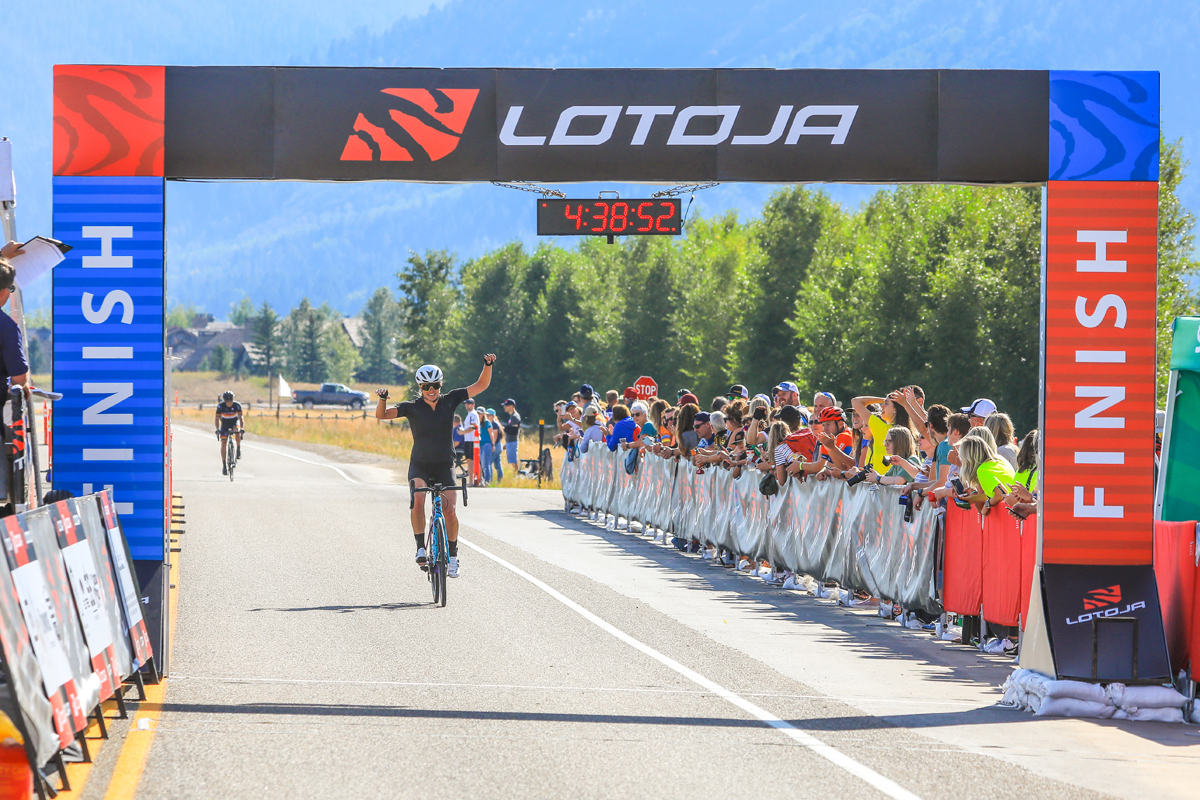
Alison Tetrick (Specialized) acknowledges the cheering crowd after winning the Women's Pro 123 race in the 37th Annual LoToJa Classic held on September 7, 2019. Tetrick finished the 202-mile course in 9:42:07. Photo courtesy of Snake River Photo
Alison Tetrick (Specialized) acknowledges the cheering crowd after winning the Women’s Pro 123 race in the 37th Annual LoToJa Classic held on September 7, 2019. Tetrick finished the 202-mile course in 9:42:07. Photo courtesy of Snake River Photo

Tetrick, 34, won the Women’s Pro 123 race with a time of 9:42:07 and an average speed of 21 mph. Sponsored by Specialized, the Pro UCI rider from Petaluma, California, soloed 47 miles after Alpine Junction (156mi/251km) to the finish at Teton Village after leaving behind breakaway companions Marci Kimball (Team Plan 7) and Heidi Madsen (Team Ascent Cycle RBHealth).

“This was the first road race I’ve done that’s more than 120 miles,” Tetrick said. “It was a great day. The race is so well supported and organized. … And seeing the Grand Teton coming in really got me going, like blood in the water.”

Tetrick raced professionally on the road in Europe for 10 years, competed in the 2014 UCI World Road Championships, and won the 200-mile Dirty Kanza gravel race in 2017. She still holds DK’s women’s course record of 11:40:41, which she set in 2017. Tetrick took second place in DK 2019.

Kimball, a past LoToJa winner and the race’s current QOM record holder, took second place at 9:50:36 with Madsen taking third at 9:52:20. Next in was multiple past LoToJa winner Jennifer Halladay (Team Bob’s Bicycle) at 9:57:22, followed by Eleise Hinton (Team Zone 5) at 10:12:16 and Anne Perry at 10:12:20.

Arnell, who has been racing for 10 years, said his strategy on race day was to stay in the breaks, and to respond to opportunities to be in a good position at the end.

In a 10-man break with 20 miles to go, Arnell rolled off the front and soon had a gap while crossing the Snake River and starting the day’s last climb before turning onto South Loop Road outside of Jackson. On the climb, Melendez bridged up to Arnell and the two began to work together.

Although the break tried to chase them down in the final kilometers, the two stayed away. Arnell said Melendez went to the front with 1K to go and soon after began to sprint. Arnell hung onto his wheel and after the 200-meter mark, sprinted around Melendez.

“I had to win,” Arnell said about his determination to take first. “There was no other option.”

There were 30 cyclists in the Men’s Pro 123 race.

Tetrick said she, Kimball and Madsen got away from the field, which had 55 total riders at the start in Logan, while climbing to Strawberry/Emigration Canyon’s 7,424-foot summit (57mi/92km). The trio stayed off the front through Montpelier (76mi/122km) and over 6,923-foot Geneva Summit (84mi/135km).

The three regrouped at the top of LoToJa’s highest summit, 7,630-foot Salt River Pass (106mi/171km), after Kimball rode off to win the QOM prize. The climb features a 9-percent pitch during the last mile.

Tetrick said the three worked together through Star Valley to the feed zone at Alpine Junction (156mi/251km). But Tetrick didn’t linger at the feed zone.

“I got antsy,” she said, and rode the rest of the way to the finish alone. The sight of the Grand Teton made her pedal even harder to make sure she stayed away. The effort kept Kimball more than 8-minutes back.

In all there were nearly 2,000 USA Cycling licensed and unlicensed riders in the race, which featured 31 categories including relay teams and cyclosportive riders. Categories left Logan in three-minute intervals.

Weather was favorable with mild fall temperatures and clear skies. However, cyclists faced hard head- and cross-winds through Star Valley.

LoToJa is billed as the longest one-day USA Cycling-sanctioned bicycle race in the U.S., with three mountain passes, and nearly 10,000 vertical feet of climbing. Licensed cyclists ride 202 miles (325km) and cyclosportive riders 207 miles (333km) while passing through northern Utah, southeastern Idaho and western Wyoming.

The race begins at Sunrise Cyclery in Logan and finishes at Jackson Hole Mountain Resort. The race was first held in 1983 with only seven cyclists. Nearly 2,000 rode LoToJa last September. It was the race’s 37th anniversary event.

LoToJa Race Director Brent Chambers said the 2019 race was a success and plans are well underway for 2020’s event, which will be held September 12. LoToJa’s 2020 website will be launched March 1 with online registration April 8-15.

LoToJa Facts

  • LoToJa is the longest one-day USAC-sanctioned bicycle race in the United States (Race Route: 202.3 miles; Ride Route: 207.3 miles).
  • The course features almost 9,800 feet of climbing, most of it in the first 110 miles.
  • The event offers several “race” and “ride” categories for competitive as well as recreational cyclists.
  • In a typical year, LoToJa cyclists travel to Logan from 40 U.S. states and five foreign countries.
  • Most participants finish in 10-12 hours (on average, 80-85% of the participants who start LoToJa will finish); 82.7% finished in 2019.
  • Fastest cyclists will average over 23 miles per hour
  • It’s estimated a racing cyclist burns up to 15,000 calories in LoToJa.
  • Since 1983, more than 20,000 cyclists have pedaled over 6 million miles to cross the finish line in LoToJa.
  • LoToJa’s average participant age in 2019 was 45
  • Youngest individual finisher’s: Male: 13 (several years); Female: 13 (2013)
  • Oldest individual finishers:
    • Male: Michael Washburn, 76 (2018)
    • Female: Diane Tracy, 67 (2018)
  • Oldest individual category winner:
    • Male: Larry Peterson, Centerville, Utah, age 74 (2018)
    • Female: Celeste Liljenquist, Bountiful, Utah, age 56 (2016)
  • For all LoToJa Course Records, see lotoja.com
  • LoToJa involves over 600 course volunteers; 150 are HAM radio operators providing radio communications and neutral support
  • LoToJa’s fundraising efforts for Huntsman Cancer Foundation (HCF) exceeds $2 million.
  • National Ability Center, Common Ground Outdoor Adventures, Utah High School Cycling League, Bike Utah, and several community organizations/youth groups also benefit from the event.


It’s Time to Cross Over!

By Heidi Westfall –

Fall is coming. Yes, it is time to hang up the skinny tires and downhill bikes, it’s time to cross over from summer to fall, which means only one thing – Cyclocross season is coming. Time to let the cow bells ring. Affectionately known as Cross, cyclocross started in the early 1900’s as a way for European road racers to stay fit through the winter months. From a humble start of navigating the muddy backroads and cobblestones of Europe, cyclocross has evolved into cycling’s fastest growing sport.

Today, cyclocross is a mash up of pavement, gravel, single track, stairs, grass, sand and barriers. All lovingly put together in a closed course. Usually found at local parks Saturday mornings September through December, Cross attracts an eclectic family-friendly tribe of fun loving diehards. Whether the summer was spent on single track, pavement or gravel, cyclocross welcomes all cycling enthusiasts to come out and play.

Cowbells and donut hand ups are just part of fun. The real fun is out on the course. Cyclocross is not about staying on your bike, it is about navigating each lap most efficiently. This can mean running the stairs, bunny hopping the barriers or carrying your bike up a grass hill. It’s this combination of cycling, stunt riding, carrying, running and scrambling over obstacles that makes cyclocross so exciting, such a phenomenal workout and so darn much fun! The best part of cross is that you are welcome to come as you are at local races. Bring the bike you have and give it a go — cross, gravel, or mountain bikes work great. There isn’t any better tribe to spend Saturday mornings riding bikes with.

From the first mud soaked image or tutu clad cyclocross U-Tube video this sport can look a little intimidating. Remember, looks can be deceiving. Cross is fun. All out fun. Whether a toddler on a strider bike or Grampa kicking up mud to the chasing Cat 1-2 racers, there is a place for you to soak in the love on a great course away from traffic, surrounded by cheering and yes sometime tutu wearing team mates and toddlers alike. Super hero capes also welcome. So how do you learn to navigate a cross course and find the local races? The best place to start is at your local bike shop, cycling club or team (CyclingWest.com has a great directory of teams and clubs to help you find your local cross tribe). Many shops and teams offer cyclocross clinics in the late summer and early fall. These clinics are a great place to learn the basics of dismounting and remounting on the fly, riding sand, cornering on mixed surfaces and meet other cross converts. Whether you are a newbie or seasoned rider, clinics are a great way to start off the season. Having an understanding of cross skills and getting to practice them will make you more confident and make you appreciate that you will probably get a little dirty. Okay really dirty. Everyone, yes everyone, even the most experienced riders will tip over out there on the course. Cross is not always a graceful sport. That is all part of the fun. If you really get excited after your first cyclocross race and want to make an impression the next season join a Cross training program. The conditioning and strength building are quite different than preparing for long road rides or technical MTB tracks. Look for a great cycling coach to help you prepare for being part mountain goat, ballerina (running through sand may look graceful but it will work you!) and sprinter rocking that tutu or super hero cape.

Sometimes it’s hard to hard to fit in riding, family, friends and time to play into a busy schedule. That is the beauty of Cross. It is a timed race. Depending on your category races last from 30 minutes to 60 minutes. Leaving lots of time for full day of activities after all the donuts are gone. And don’t feel bad if you want to bail on a drizzly Saturday morning. Even the most seasoned Cross disciple may wake up whiny, making up many, many lame excuses while dreaming of fireplaces or beaches in their pj’s, anything to skip out on suiting up for the race. But Cross is calling and you can still can take the kids to pumpkin patch, hike with the dog or brunch with friends – after the race. Even if you have convinced yourself that skipping the race would be better for the whole family. The whole family will be more grateful if you get out there. The smiles and cowbells are worth every minute. Just remember with fall comes the mud, sometimes rain or snow, along with a little sunshine and always the cow bells cheering every rider on. Cyclocross can be a sport of all seasons wrapped into one day. Bring layers and a towel. Your friends and family are more likely to let you back in the car for the ride home if you at least attempt to towel off.

Have fun out there!


Biking Through The Dog Days Of Summer

By Joe Kurmaskie – As I grow older, I grow younger… let me explain. The ice cream truck rolled by the pool as I swam with my kids – you gotta hand it to that industry, they know and locate their consumer base and exploit the heck out of them – it’s the first line in the ice cream trucker’s manifesto, I believe. If not, it should be.

But the second line, check the freezer is plugged in, but it’s the third instruction that set me time traveling back four decades; Play The Entertainer and only The Entertainer on a loop to bring them running. 
But you like Led Zepplin? Tough, put the tape in and press play or sell the truck and go into stationary retail, you conformist. The ice cream biz ain’t for everyone.

August 1978, we’d reached the truly feral part of summer vacation; carmel tans and an unbound restlessness that comes so close to the next school year. All of us, handsome in an unfinished way, leaning over ape hanger handlebar bikes, stingrays and orange crates with chopper front fork extensions on one or two of them, waiting for the hammer to fall.

I wouldn’t try running along side any one of us at this point in the summer. We’d trample your bones to dust without meaning to, we’re at the end of our suburban leashes, barking AND biting without so much as  opening our mouths.

June made us brand new and improving, but once we crossed a certain dateline there was no getting all the way back, Now, each afternoon, after Grape Nehi’s are drunk and summer league ball is done for the day, it’s an slow burn until dinnertime, a lazy rage against what comes next. 

Nothing moves. Even the birds are hunkered down and gone mute in the big chestnut grove across from Hyde Park playground. Then I hear the ice cream truck blocks away and with cold clarity I know what needs to be done.

“Dave, you still have that Casio synthesizer organ from Christmas?”

Dave nods.

I’d wanted SOMETHING to happen all summer… so now I was gonna force that something into the world and it was gonna be… something else.

This knowledge makes me giddy. I offer a mad dog and Englishmen’s chuckle and huddle the gang together. We pedal to Dave’s uncle’s house with purpose.

It took less than an hour to get our musical abomination road worthy. Street legal it would never be, but wasn’t that the point? We weren’t going rogue and looking over our shoulder, we’d gone native weeks ago. This was just our way of parading it before the world. 

Time tends to pass us while we look the other way, but that afternoon we chose to stare it in the eyes… and with the audacity of what was left of the summer and our childhoods, we aimed to stop that relentless fucker in its tracks for a moment or two.

The organ sat atop and X wing leg stand, which we duct taped to skateboards. It wobbled the first time we towed it on water ski ropes behind a bike, but once we attached the office chair to it with a bungee chord things trimmed out and steadied. The chair had sturdy, steel wheels. The chord gave it the right bounce and distance from the keyboard. We considered duct taping the musician to the organ, but in the end, decided against it, going with a second bungee attached to the musician’s shorts instead. 

Using a Mr. Microphone was Paul’s brainstorm. We’d been spitballing as to where we might track down a bullhorn. Some big, empty talk of distracting hard working heroes down at the fire station while one of us swiped a horn, when Paul popped up with that Ronco sensation. We duct taped the mic to the front of the keyboard and the FM radio in the apex of the X wing legs. Once we taped the button down for permanent transmission… it was showtime.

“OK, which one of you mooks knows how to play the Entertainer?” I asked.

Crickets.

“Don’t look at me,” Johnnyboy said. “I play baseball… that’s it.”

“And I play your mother.” Mike, Dave’s cousin, couldn’t hold back with.

I shook my head. These were my summer park day camp friends. A pick up sticks box of guys, one visiting each summer from Michigan, another dropped off mornings by his single working mother. Paul went to the Episcopal school, I saw him at church sometimes but we hung summers cause he lived just down from the park. 

My school year roster; Glenn, Steve, Ellery, musicians all, and to a man miles away at that moment and the foreseeable future

“This was your Christmas present, Dave.” I said, spreading my arms across the keys like a Price Is Right presenter, willing him to hop up and channel Liberace at that moment. 

“Yeah, I liked screwing around with the drum beats and the prerecords for a day or two. Then it went in the closet.”

He looked down, then back up, hopeful. “I know chopsticks.”

Paul smacks the back of Dave’s head almost lightly. “Everyone knows chopsticks, you Jackass.”

We were so close to something here. I couldn’t let it go. But aside from Witchy Woman and a few bars of Mr. Blue Sky, I didn’t play… but I could read music.

“Dave, did the Casio come with a song book?”

The lesson here; if you want something bad enough, and you’re bored enough during the back forty of August, you too can learn how to play a fairly passable version of The Entertainer. Also, it’s only like 13 notes, rinse, repeat.

But could we pull it off at speed. I bungee my Ron Jon surf shorts to the contraption and offer the let’s roll wave. A grade older than the rest of us, Dave was selected to be the mule on the bicycle. 

We crashed the whole damn thing to the ground just beyond the drive way, the Casio hitting pavement with a sickening thud. I kept yelling whoa! whoa! whoa! but it hadn’t prevented shit.

A couple of of the presets didn’t work anymore, but the keyboard still played.

“Someone go get a bunch of pillows. Who’s got the duct tape?”

Johnnyboy replaced Dave as pedicab driver. Not as bulky, but he owned slightly more impulse control though there was a higher level of crazy in his eyes and better response time. That, and untethering my pants from the contraption seemed to do the trick. It also allowed me to spin around in the office chair between stanzas. 

Everyone else pedaled in a flying V formation to my left and right. A half block of runway to get our rhythm then we were rolling the streets, looking for the punchline. I played, if not with skill, then enthusiasm to burn. I tried to give it the ragtime feel of Joplin, all elbows akimbo and fingers bouncing off the keys. 

For a few blocks, the summer was completely ours again.

Florida near dinner time, 100 percent humidity and not a cloud in the sky; an ice cream trucker’s golden hour. Kids bursting from behind fences like the chest scene in Alien. Pouring themselves off porches, surfacing from pools, toweling off as they ran, counting change hidden in the secret little pocket of their swim trunks. 

Only to find this wasn’t the rewards of the ice cream truck after a long day of lounging and trying like hell to fill the final freedom hours of summer. No this was some bizarre prank… some sort of – is that an office chair? Is he spinning around in an office chair between stanzas? 

Most of the kids stood along the parade route in stunned silence. I was getting pretty good with the tune but it was lost on them.

Where’s all the sound coming from? And Stars Wars pillow cases? What is this? What the actual hell happening? Hold me Momma.

A few chuckled, but it was mostly hound dog panting, trying to catch their breath while squinting hard, hoping to puzzle out some deeper meaning… or at the very least produce a star pop or creamsicle. 

For our part, it was the high point of the vacation. A rolling ramshackle carnival, the lost boys of summer laughing and cruising and circling back now; I thought of us as a pack of teenage shriners who’d traded in soul sucking jobs and middle age regrets, little cars and funny hats for youth and bikes and ball caps… and an event horizon that bled into forever. 

Jane, shaking her head from the porch in that tight black ACDC tank top made me lose the thread of the song entirely. I spun myself around and gave her a devil may care shrug.

Who knew at the time that we were doing a version of the David Letterman Show decades before he did it…. sans cameras, advertisers, a network, but with a growing audience, many of whom were getting over their initial shock and wanted answers.

“You got ice cream or not?”

Our arrogance was uncalled for, but not unexpected. That late in the summer it’s all a teenage boy has against the slow click of the ticking clock. Misplaced anger and more than a little sadness just under all our bravado, about what we did not know… not yet.

We could have promised to return with Otter Pops and even flipped a profit. Instead, some of us, well, most of us, got mouthy and taunting until some older brothers showed up to exact justice. I thought I could make amends with a few bars of Mr. Blue Sky but I thought wrong. 

In the end I had to bail into thick bermuda grass and launch into a full sprint. This was the summer before I filled out and took up wrestling so my go to move was still running away. 

Just enough time to see the upended office chair being dragged behind the still upright Casio behind Johnnyboy’s BMX bike. Johnnyboy frantically dancing on the pedals away from danger, cackling all the way home or to a beating.

A chaotic thing of beauty. Orange Crate chopper forked bikes leading him out, the rest of the gang breaking formation and scattering down side streets. I thought of the bike scene in ET, only there was no wrinkly being to tell us BEEEEE GOOOOOD! Just a skinny blond haired kid urging them to be… alive and kicking before another school year swallowed them whole. 

Younger kids had taken up the charge now that their older brothers were backing their play. I observed one young lad swinging a set of click clack balls over his head, heat lighting across the bay adding to the drama as he ran. It was only a matter of time before lawn darts appeared. Then the urge to break and run and the joys of doing it took over and I saw no more. 

As I covered ground I felt the misgivings of contentment and abundance fall away. That left only time and the pleasures of outrunning it once more. Straight through August and whatever came after that.

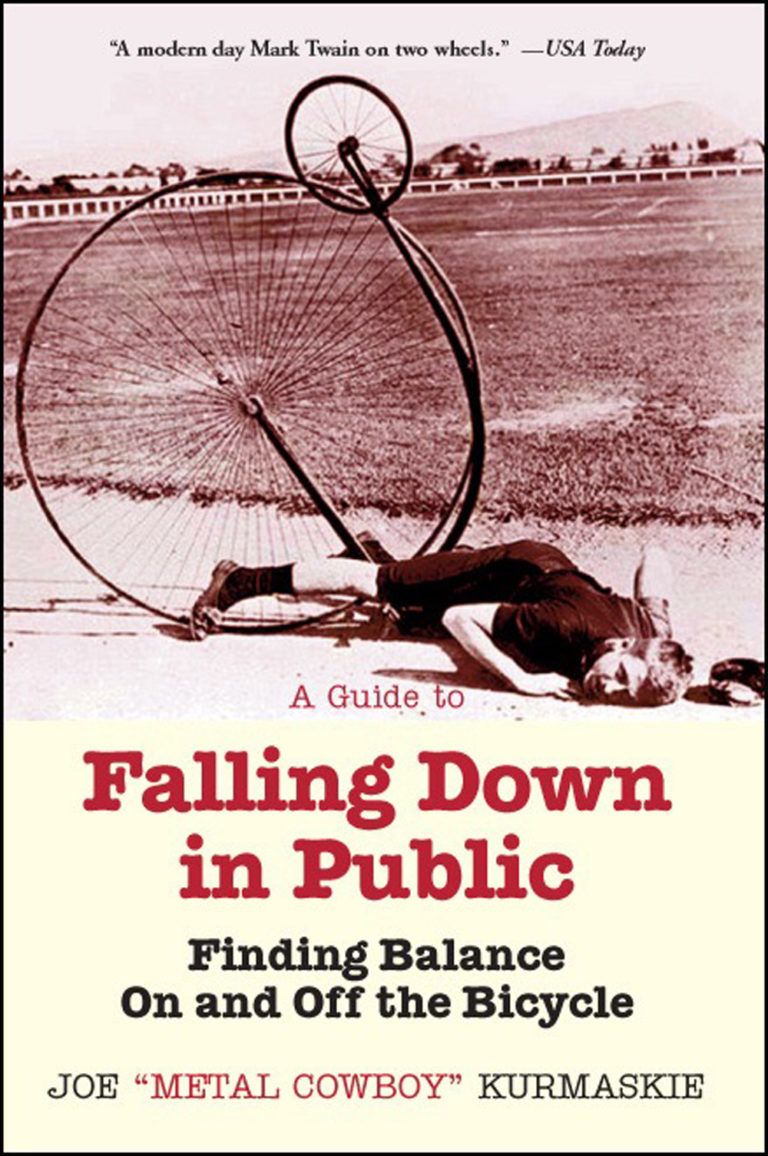
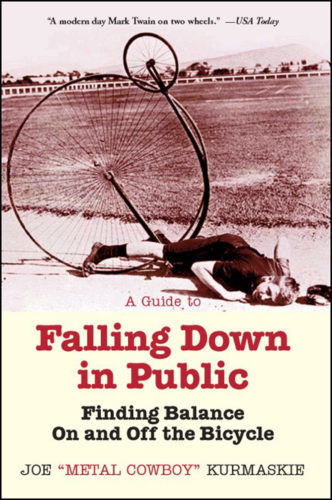
Joe Kurmaskie is a journalist, syndicated columnist, and contributor to numerous magazines including Outside, Bicycling Magazine, Men’s Journal and Parenting. He’s a bike advocate, activist, founder of Cadence Press, and a Random House author of seven books including Metal Cowboy, Mud, Sweat and Gears and A Guide To Falling Down In Public.


Bike Utah Names Crys Lee as New Executive Director

SALT LAKE CITY (September 5, 2019) – In July 2019, Bike Utah, the state’s nonprofit infrastructure, education, and advocacy organization, announced that Executive Director Phil Sarnoff would be stepping down from his five and a half year tenure. He will be moving to Bozeman, Montana where he will add a few layers to his winter bike commuting kit.

Says Sarnoff of his departure, “Leading Bike Utah has been a career highlight and I’m extremely proud of all we have accomplished to improve bicycling around the state. The organization has a great staff, board of directors, and advisory council that will only accelerate our programs, initiatives, and the improvement of bicycling in Utah.”

Crys Lee, new Executive Director of Bike Utah. Photo courtesy Bike Utah.

During his time with Bike Utah, Sarnoff launched the Youth Bicycle Education & Safety Training Program (Youth BEST), which educates students throughout the state of Utah about how to safely experience their neighborhoods by bicycle. The Youth BEST program has educated more than 10,000 students since its inception in 2016.

Sarnoff worked with Wasatch Front communities to grow the percentage of cities and towns with active transportation plans from 13% in 2016 to 63% in 2019. Active transportation plans are the foundation for improving and creating infrastructure and connectivity for bicyclists and pedestrians. He also helped to develop and fund the Governor’s 1,000 Miles Campaign. Implemented in 2017, the goal of the 1,000 Miles Campaign is to build 1,000 new miles of family-friendly bike lanes, paths, and trails by 2027.

Diane Rosenberg, Bike Utah’s Board Chair comments, “The board is immensely grateful to Phil for developing impactful programs and creating mutually beneficial partnerships, which are making Utah a better place to ride. We are excited to welcome Crys Lee to our team, with her nonprofit expertise and passion for creating an active transportation network that will contribute to a livable, healthy Utah.”

With this context, Bike Utah is pleased to announce the selection of Crys Lee as new Executive Director.

Lee comes to Bike Utah from the nonprofit organization Empower Playgrounds, and brings with her a decade of nonprofit resource development and management experience. Lee graduated from Brigham Young University with a Masters in Public Administration, and has a passion for seeing the world by bicycle.

She is ready to apply her skills in strategic planning and marketing to grow Bike Utah’s positive impact on Utah’s youth, the state’s bicycle commuting population, and everyone’s access to safe trails, bike lanes, and paths. “Utah’s population is exploding. Our future depends on people utilizing cycling as a mode of transportation. I am thrilled for this opportunity to be a part of Bike Utah with the solutions to making Utah a safer and more breathable place to ride.”

Both Sarnoff and Lee will work together until September 16, when Lee begins the Executive Director role full- time. Feel free to email an introduction to her at [email protected]. She is excited to meet and work with Bike Utah’s many stakeholders!

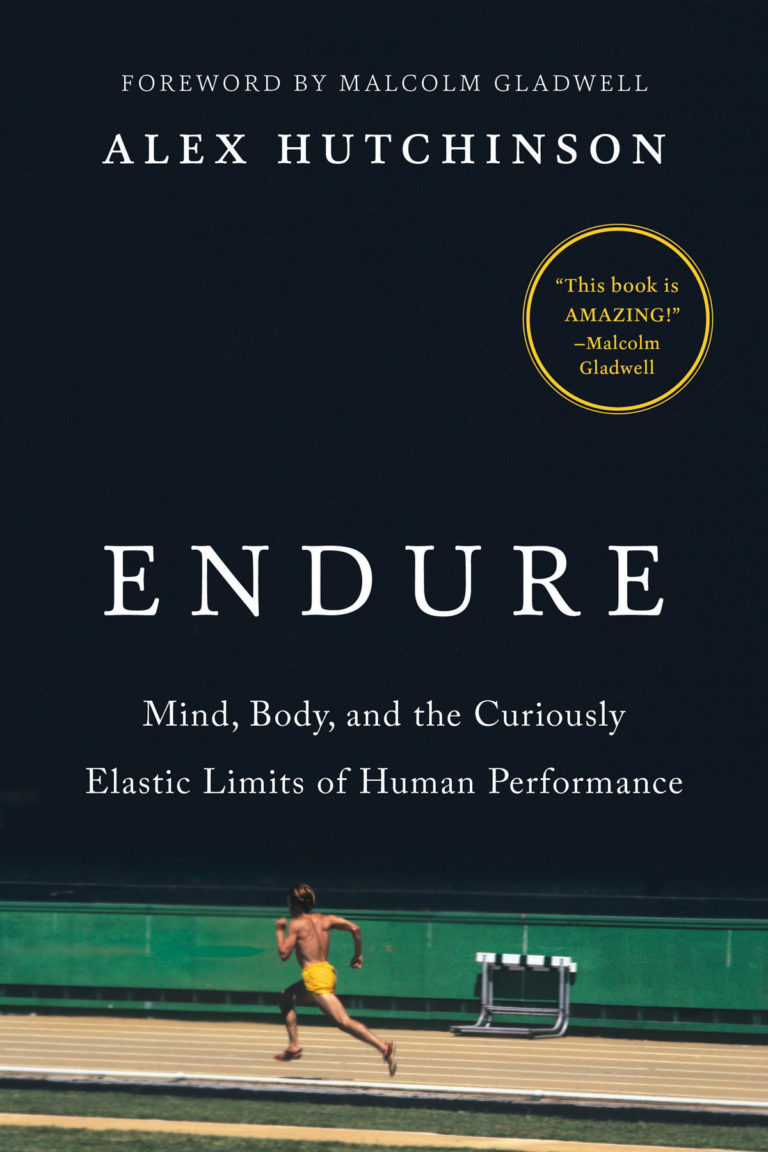
Endure: Mind, Body and the Curiously Elastic Limits of Human Performance

By Lou Melini – How far can we push ourselves? What is stopping us from pushing further? In Endure, you probably won’t find the absolute perfect answer to those questions, but you will gain a lot of information about those questions.

Alex Hutchinson is a former national-team long distance runner, a Cambridge-trained Physicist and a journalist, one of 2 journalists granted access to Nike’s training project to break two-hours for the marathon time. The Forward of the book is written by Malcolm Gladwell, who had 5 books on the NY Times best selling list. (I read 4 of them.) So of you are a fan of Malcolm Gladwell, Mr. Hutchinson’s book mirrors Mr. Gladwell writing style.

Mr. Hutchinson takes you back over the past century to discuss case studies, science and success stories involving human endurance. He then brings in modern day physiologists to discuss the questions of human endurance and how far can we push ourselves. Can the Nike training project break 2-hours for the marathon. (They missed by 25 seconds though not an official record and the project will retry later this year).

Chapter 5 is titled “Pain”. In this chapter, cyclist Jens Voigt is featured, famous for his response to leg fatigue by saying; “Shut-up, Legs!. Shut-up Legs is the title of his book where he states; “I learned to set my pain threshold higher than other people’s”. Mr. Voight gives credit to his ability to endure pain to make him a successful cyclist. In the same chapter, Eddy Merckx, perhaps the most famous cyclist in history, set the 1-hour world record in 1972. At the end of the world record; “he couldn’t move, he couldn’t speak” When he could speak he said; “it had been terrible. No one who had not done it could know what it was like”.

Much of the chapter discusses the science of pain to show how elite athletes can tolerate pain more than non-elite, though most of us probably knew that if one saw Merckx race. At the end of the chapter, Jens Voight is again featured as he also set the hour record. The question of suffering again came up. Did Mr. Voight simply set the record by tolerating pain more than the others that set the record before him? Do elite athletes have the capacity to suffer more or does their training push them to be able to tolerate greater levels of pain? Read the book.

With additional chapters titled Muscle, Oxygen, Heat, Thirst, Fuel, Training the Brain and Belief, the reader of this book will find an immense amount of data, studies, case studies, and athlete examples backed by 24 pages of “notes” at the end of the book. Interviews with notable physiologists such as Tim Noakes add much to the book. There is a lot to digest and I will find myself rereading sections to obtain a better understanding of the concepts.

After reading the book the question of what is primarily stopping us from pushing further, the mind or the body is never fully answered. Having completed 2 10-weeks rides across the U.S. and a 25-week walk on the Appalachian Trail, my vote is the mind is the controller of pushing the limits. In Mr. Hutchinson’s book, the mind is given a lot of credit. After reading the book I thought that a statement by physiologist Michael Joyner in the chapter, Belief, summed up what most athlete’s know, “All the blandishments of modern sports science-altitude tents and heart-rate-variability tracking and bioengineered sports drinks and so on- amount to minor tinkering compared to the more elemental task of pushing your mind and body in training, day after day, for years.

There are a lot of books on the market that discuss how to improve human performance, endurance and success in sports and life. I’ve read a few such as Fast after 50 by Joel Friel, The Pursuit of Endurance by Jennifer Pharr-Davis (who once held the record for fastest time completing the Appalachian trail, and Grit by Angela Duckworth (a non-sport book but relevant to success) Endure is good read and would be an excellent complement to any training manuals that may adorn your book shelf.

Endure: Mind, Body, and the Curiously Elastic Limits of Human Performance, by Alex Hutchinson 2018; HarperCollins Publishers. ISBN: 9780062499868


Translate Your Mountain Bike Skills to Cyclocross

Happy fall, it’s cyclocross (CX) season! This is always a refreshing change of pace if you have been riding or racing your mountain bike all summer. The races are short, it is a different challenge to ride on a tire with half the rubber width and no suspension and you will be hopping off your bike, running and jumping. It will help to practice the most CX-specific skills like dismounts, remounts and getting over the barriers. But in honing your CX skills, remember that much of your technique on the MTB will translate to the CX bike with few adjustments.

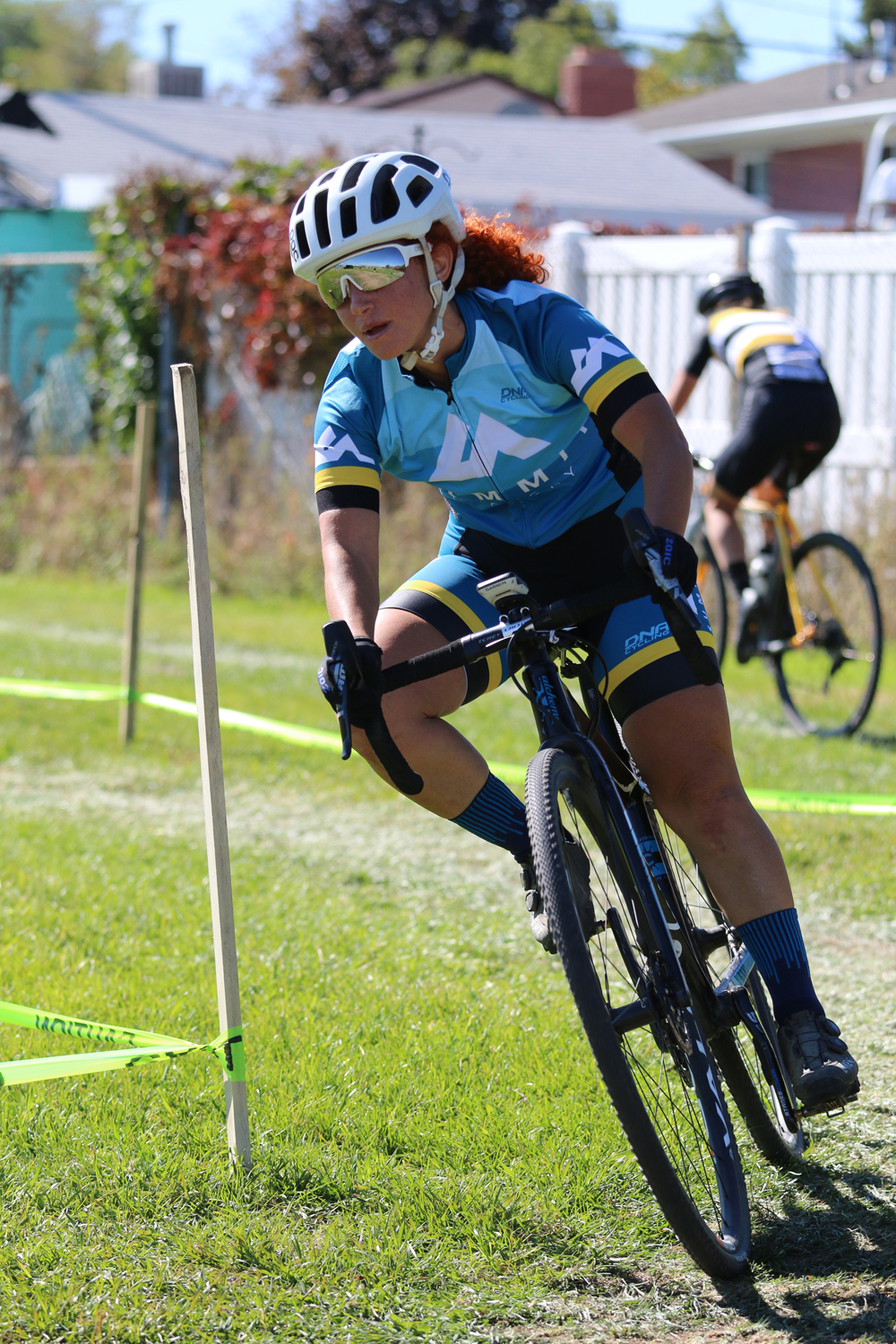
Sarah Kaufmann putting her mountain bike skills to the test in the 2017 Utah Cyclocross Series. Photo by Dave Iltis

With narrower tires and no suspension, there is less room for error. You will need to be more precise through technical terrain and corners. Keep as much of the tire tread in contact with the ground as possible. Just like on your MTB, when you corner, you will lean the bike while keeping your body upright. This keeps your weight centered over the bottom bracket and spread evenly over the tire tread. You can practice this in a grassy field or somewhere else with low consequences by leaning the bike from side to side under you as you stay in a vertical plane. Get comfortable separating your bike from your body.

CX races are filled with sharp accelerations and your training will need to reflect that. Each acceleration has a physiological cost. As you approach corners, transitions, barriers, run-ups, etc., anywhere where you will need to quickly get back up to speed, anticipate the gearing it will take. Try to avoid being overgeared and mashing a heavy, slow gear that will waste your muscles. That said you want enough torque to make each pedal stroke count so not too light a gear either. Practice in training so you can anticipate and spin quickly back up to speed.

Because CX courses are filled with corners and transitions, being able to carry speed is very important. As above, every acceleration is a match burned for later in the race. Just like with mountain biking, timing your braking is key for carrying as much speed as possible through the corners. You need to be off the brakes once you are IN the corner so you need to do all your braking BEFORE the corner. Braking in a corner throws the rider off balance as the tires fight for traction against competing braking and cornering forces. (There are some instances like corners on steep descents where you will feather the brake in the corner). To practice being off the brakes in corners, try approaching a corner, slowing down a lot (more than you think, nearly to a stop), then let off the brakes and let your bike coast and gain speed as you lean around the corner with your eyes up, pulling you around. Approach the corner again and this time carry slightly more speed. Keep this progression until you grab the brakes in the corner. Now you know your speed to enter that particular corner and it will help you gauge for others. Remember: start slow! You will pick up speed as you look up around the corner. Enter the corner slow for faster exit speed and exit speed is what matters!

Whether you are coming off of a solid base of summer riding or developing your aerobic base, the intervals and speed work for CX fitness are challenging and fun. A solid CX rider has proficient skills and fitness. You can expect unique on/off or over/under style intervals and plenty of sprint work while maintaining or building aerobic fitness. CX gets fun when the weather turns south so don’t worry about getting a late start.

Sarah Kaufmann is the owner of K Cycling Coaching based in Salt Lake City, UT. She is a professional XC and CX racer and can be reached at [email protected] or 413.522.3180. Contact her today to make the most of your CX season.

Sarah Kaufmann putting her mountain bike cornering skills to the test in the 2017 Utah Cyclocross Series. Photo by Dave Iltis

Bikes Are Faster for Most Short City Trips

0

]]Urban transit frameworks need to include bicycling, the Paris-based International Transport Forum warns planners. “For trips of 15 minutes…the bicycle performs better in most cities” than autos or public transit in most instances, based on research in Europe. The study includes time spent getting to your vehicle and finding a parking space as part of transit time.

Bikesharing, e-bikes, and scooters also be figured into the equations, says Benchmarking Accessibility in Cities: Measuring the Impact of Proximity and Transport, the forum’s recent guide for urban planners.

In the typical European city, you could take your choice of visiting any of 400,000 people with a bike ride of half an hour or less, says the guide (https://www.itf-oecd.org/sites/default/files/docs/accessibility-proximity-transport-performance.pdf).

The study didn’t include walking. But it found that 97 percent of people in European cities live within a 15-minute bike ride of a park. The study assumed a steady ride of 16 km/hr (about 10 mph).


5 More Great Northern Utah Century Rides

By David Collins — Northern Utah is blessed with iconic geography, famous resorts and gentrified mountain towns. Although these rides include stunning scenery, they often feature hidden gems and forgotten highways and byways – a cyclist’s dream – filled with unforgettable imagery, points of historical interest and quirky pit-stops.

A scene from the Eden to Bear Lake ride. Photo by David Collins

[Editor’s Note: This article is the second part of a series, to see the first, checkout the article online or in the 2019 Early Spring / March issue of Cycling West]

Extended shoulder seasons are usually the best time of year to ride most of these routes but depending on your skills and equipment, you might be able to ride nearly year round. Be weather aware, riding conditions can swiftly change.

Excursions and explorations are part of the fun of unsupported bicycle touring at your own pace. Mileage estimates are approximate and may vary depending on your tracking system and whims of the ride. Be sure to tell someone your plans and allow them to track your location using a smartphone or other device.

Solo or unsupported distance cycling often presents potentially dangerous situations related to terrain, weather, equipment, traffic, navigation and mental awareness. Even experienced cyclists must plan carefully and use wise judgment to successfully mitigate inherent risks of the sport or terminate a ride before it turns injurious or deadly. If you are new to the sport, or have never ridden a bicycle 100 miles in a single day, learn the ropes with a seasoned buddy or local riding club before giving one of these routes a go.

Make sure to check maps, plan your route and check local road conditions before you go. As with any ride, be aware of your surroundings and of roadway traffic.

Time to fill water bottles, stuff gear bags, click in and start pedaling more of northern Utah’s great century rides.

Eden to Bear Lake

  • Route: Eden, Huntsville, Monte Cristo, Woodruff, Randolph, Garden City, 102 miles
  • Terrain: Alpine terrain marked by multiple climbs and descents including miles of riding higher than 9,000 ft. above sea level.
  • What to See: Mountains (Wasatch and Monte Cristo ranges); high mountain meadows loaded with wildlife and colorful wildflowers; distant vistas and repeating mountain ranges layered on the horizon; rural farm towns; ranchlands; barns and out buildings; hiking and snowmobiling trailheads; a ride along one of the most beautiful lakes in the western United States; Bear Lake is a blue marble plopped down in the middle of a memorable valley, surrounded by alpine mountains. Nothing quite like it.
  • Selfies and Photo Ops: Eastern rim of Pineview Reservoir with the collection of Snowbasin Ski Resort’s peaks in the distance; an archway of deer and elk antlers in the front yard of a local rancher (at the turn-off for Causey Dam, across the street from Sill’s Cafe); river side stops with dramatic foothills and cliffs throughout the first canyon entry (about miles 8-12), high mountain vistas on top of Monte Cristo (9,000+ ft.), smiley barn just outside of Randolph on the west side of Hwy 16, the miles along the southern and southwestern shoreline of Bear Lake from Laketown to Garden City.
  • Wildlife: Elk, deer, birds of prey, buzzards, fox, coyotes, beaver, trophy fish, black bears, badgers, jackrabbits, raccoons and little ground scurriers.
  • Best Post-Ride Eats: Cody’s Gastro Garage in Garden City. A converted mechanic’s garage (complete with a couple of hot rods on lifts inside the restaurant). Open year round and a great place to tuck into two or three pounds of wings (be sure to get the raspberry chipotle sauce for the wings – the area is famous for mountain raspberry farms). If you do this ride in reverse and end up in Eden, grub-up at Carlos and Harley’s Fresh-Mex Cantina. It’s loaded with mountain vibe, delicious chow and chilled drinks for every fancy.
  • Still Have Legs, Lungs and Sunlight? Turn east on Hwy 30 at Sage Creek Junction and follow the road to Cokeville Wyoming. The road skirts Cokeville Meadows National Wildlife Refuge for miles. It’s a 70 mile round trip detour all the way to Cokeville and back, but you can bite off as much as you want to chew.
  • Note: The road through the Monte Cristo Mountains is closed during winter months and although snowmobiles often gather at the entry gate to explore the area, cyclists should not be tempted to cross through the closed gate since the passage is often dangerous and/or impassable for bicycle travel. Also, cell coverage is not available for about 30-35 miles (from about halfway to Causey Dam from Eden, through Monte Cristo, until the final descent into Woodruff).
Bald Mountain Summit – a scene from the Park City and the High Uintas ride. Photo by Scott Collins

Park City and the High Uintas

  • Route: Park City, Deer Mountain, Hideout, Kamas, Mirror Lake Highway past Iron Mine Mountain, Upper Provo Falls, Bald Mountain, Mirror Lake and back. Riders looking for a one-way adventure may continue on past Mirror Lake and finish in Evanston, Wyoming. 100 miles
  • Terrain: Alpine terrain marked by multiple climbs and descents. Ride begins at 7,000 ft. above sea level and peaks out at 10,759 ft. above sea level on the highest paved road in Utah. The ride features 7,500 ft. of high altitude ascent.
  • Wildlife: Elk, deer, moose, birds of prey, buzzards, ducks, geese, fox, coyotes, beaver, trophy fish, black bears, mountain lions, badgers, porcupines, snakes, jackrabbits, raccoons, mountain goats, pica, and other little ground grounders.
  • Best Post-Ride Eats: Freshies in Park City. The owners are nationally known for their lobster rolls (yep, award winning lobster in Utah). They are made with lobster tail and knuckle claws flown in from New England. These rolls compare favorably to my favorite lobster pound in Trenton, Maine. Oh, and don’t miss the blueberry pie – it’s made with those little tiny wild blueberries like they serve in the best bakeries in Bar Harbor.
  • Still have Legs, Lungs and Sunlight? Take a detour through Heber City, home of the Heber Valley Airshow and Heber Valley Railroad (a heritage railroad with two 1907 Baldwin steam locomotives). While you’re there, checkout Midway (right next door) and soak your bones in the 90 degree waters of a geo-thermal caldera, but you may not have the will to return to the saddle afterwards. That’s okay, get a room at The Homestead Resort and finish your ride the next day. The detour adds approximately 40 miles.
  • What to see: Mountains (Wasatch and Uinta ranges—Uinta range is a subrange of the Rocky Mountains and is unusual for being the highest range in the contiguous United States running east to west); Jordanelle State Park and reservoir; world-class fly fishing Provo River; high mountain meadows loaded with wildlife and colorful wildflowers; distant vistas and repeating mountain ranges layered on the horizon; Upper Provo Falls; Mirror Lake, a high mountain lake stocked with rainbow, brook and tiger trout and named for the near-perfect reflection of surrounding mountains and trees; rural farm towns; ranchlands; barns and out buildings; hiking and snowmobiling trailheads.
  • Selfies and Photo Ops: Tranquil Silver Creek ponds along the Historic Union Pacific Rail Trail (plenty of wildlife activity in the early morning hours); Park City Ice Arena and Sports Complex; Northern rim of Jordanelle Reservoir with a collection of Deer Valley Ski Resort’s alpine peaks and trails in the distance (be sure to look behind you as you climb past Jordanelle in the early morning hours, especially just before dawn); Beaver Creek Nudist Ranch road sign – about 30 years ago somebody added “Nudist Ranch” on the bottom of the Beaver Creek sign); the Provo River flowing alongside the Mirror Lake Highway climb including Upper Provo Falls; Lilly Lake; the “SUMMIT 10,759 FT” sign; Bald Mountain and Mirror Lake.
Beaver Creek Nudist Ranch – from the Park City and the High Uintas ride. Photo by Scott Collins
  • Note: Cell coverage is not available past Kamas. Also, Mirror Lake Highway, is closed during winter months. Check the local weather forecast before you ride and be prepared for quickly changing conditions.
A scene from the Over the Border ride. Photo by David Collins

Over the Border

  • Route: Ogden, Brigham City, Corrine, Tremonton, Riverside, Collinston, Petersburo, Newton, Trenton, with quick detour to Clarkston and back, Cornish, Preston—the first town in Idaho after crossing the border (one way). 101 miles
  • Terrain: Early route through city suburbs, long streaky roads lined by regal mountains, rural valleys, mountain pass, historic river sites, farmlands.
A Brigham City scene from the Over the Border ride. Photo by David Collins
  • What to See: Historic Bear River City (home to first recorded white man discovery of the Great Salt Lake, although it was thought to be the Pacific Ocean); defunct U and I sugar factory; old stomping grounds of famous mountain men and fur trappers; mountains and valleys typical of the intermountain region; big game; farmers working their craft (or silent fields in the off-season with farm machines parked and waiting—livestock wandering nearby, wondering when the next feed is scheduled). As you pedal by, try your best/loudest mooo, whinnie or bray, see if you can get livestock to respond.
  • Selfies and Photo Ops: Martin Harris (early senior Mormon leader) gravesite in Clarkston; Bear River City historical marker featuring mountain man Jim Bridger story; old Bernard Mason and Co. Grocer façade on Main Street in Bear River City; U and I Sugar mural in Garland; the gap in distant mountains as you head east toward the mountain pass a few miles after the turn in Riverside; Welcome to Idaho sign; quaint store fronts and buildings featured in Napoleon Dynamite (the lead character is depicted in the film as being from Preston and most of the movie was shot in Preston).
  • Wildlife: Elk, deer, black bear (although remote chance to see bears close to the road), birds of prey, beaver, muskrat, waterfowl, otters, snakes, fox, coyote.
  • Best Post-Ride Eats: It’s an Idaho farm community but you can find a pretty decent pizza at Sporty’s on Main Street in Preston. They are cyclist friendly and are anxious to fill your belly with all things pizza. They’re generous with toppings–just tell ‘em to cover it with meats and stuff. You might be surprised how good a post ride pie can be chased by a cold Mountain Dew or two and accompanied with some greens.
  • Still Have Legs, Lungs and Sunlight? Head 60 miles north after a brief stop in Preston and finish your long day at Lava Hot Springs Resort. The healing waters of Lava will be a perfect way to celebrate your brevet. Congratulations, you are now an informal randonneur plus.
  • Note: If you ride due north from Brigham City (rather than slipping over through Corrine before heading north again) you’ll cover fewer miles and see fabulous mountains up-close and you’ll pass by Call’s Fort Monument, an important roadside landmark related to early Utah history.
A scene from the Riding the Shelves ride. Photo by David Collins

Riding the Shelves

  • Route: Payson to Richfield (one way), 101 miles
  • Terrain: Rolling plains from shelf to shelf to shelf to shelf, you get the picture.
  • What to See: Lavender fields (stunning color near Mona if you ride when the lavender is in bloom); Mount Nebo, the highest peak in The Wasatch; tiny quaint townships including Mona, Levan and Salina; long stretches of semi-arid rolling plains through huge swaths of BLM lands; valley after valley lined with mountains running north and south all the way to your destination; rural homesteads and old pioneer buildings slowly crumbling under the bright sunlight (seems like this place has 365 days of blue skies each year, surely that’s an exaggeration, but it probably won’t be difficult to find a day drenched with sunshine); windswept vistas; tempting turns into feeder canyons and periodic arroyos.
  • Selfies and Photo Ops: Historical public square tile display in Gunnison; lavender fields near Mona (especially during bloom season); long empty road looking north with Mount Nebo on the horizon and the road disappearing into infinity; dilapidating pioneer era out buildings strewn along the way; Famous Mom’s Café mural in Salina; Welcome to Mona sign with elk and tree silhouette (north entry into town).
  • Wildlife: Rabbits, coons, deer and elk, snakes and lizards, birds of prey, waterfowl, and buzzards.
  • Best Post-Ride Eats: Sagebrush Grill on Main Street in Richfield. Get the House Blackened Ribeye with roasted garlic bleu cheese butter and have them top it off with a scoop of blue crab if it’s in season. Best proteins in the region.
  • Still have Legs, Lungs and Sunlight? Turn east at Gunnison and ride to Sterling, a fabulous 14 mile detour featuring memorable geology, water pockets, and farmlands.
  • Note: Pay attention to the local wind forecast. Steady winds may be relatively safe but sometimes parts of the ride can whip up gusts that may prevent safe passage, especially if they are crosswinds.
A scene from the Rockets and Cattle ride. Photo by David Collins

Rockets and Cattle

  • Route: Brigham City, Corrine, Howell, Snowville (and back). 104 miles
  • Terrain: Mostly flats, some rolling hills, one minor mountain pass
  • What to See: Horizons loaded with mountains and hills including the Wasatch, Promontory, Blue Spring and Hansel Mountains; wetlands and the Bear River Migratory Bird Refuge; long stretches of grazing cattle and farmlands; Howell (tiny cowboy town); Snowville township (named after early Mormon leader Lorenzo Snow); Rocket Garden at Northrop Grumman’s base (rocket display is free to the public and includes a space shuttle booster and patriot missile).
  • Selfies and Photo Ops: Roadside water strips throughout the bird refuge; Rattlesnake Pass; NASA and USAF rockets; roadside cattle who seem to have a knack for photobombing; Welcome to Howell sign on the northern end of town and the Bernard Hansen and Co. Grocery storefront in Bear River City (see Still Have Legs section below).
  • Wildlife: Migratory birds, birds of prey, coyotes, deer, rattlesnakes and various little furry fellows.
  • Best Post-Ride Eats: Maddox in Brigham City. Famous fried chicken (on my top five list for best fried chicken in America) and they serve delicious steaks in a casual ranch style setting. Be sure to get a piece of banana cream pie – a delicious finisher and a house specialty.
  • Still Have Legs, Lungs and Sunlight? Turn north at Corinne and ride to Bear River City (total ten mile detour there and back to route). To settle a wager, old west mountain man Jim Bridger floated down the Bear River in a bull boat to discover its outlet. His 1824 journey was the first recorded white man discovery of the Great Salt Lake. His termination point is nearby the small town. While you’re there, check out the old storefront of the Bernard Hansen and Co. Grocery stand before it’s gone. It still stands proudly in the afternoon sun but appears to be on its last legs –looks like it belongs in a ghost town.
  • Note: Part of the ride is on Interstate 84, which has generously wide shoulders and is usually clear of debris, stickers etc.

David Collins is a cycling enthusiast and amateur randonneur. Follow him on Instagram @rockypumpkin.

Salt Lake City to Rebuild 300 W – Bicycling Advocacy Alert – Comments Needed

1

Advocacy Alert – September 4, 2019 – Salt Lake City has begun the process of rebuilding 300 West between 500 S and 2100 S, with construction to take place in 2021 and 2022. The project is in the planning stages, and Salt Lake City is conducting a survey on how the road should look. The street is slated to be completely reconstructed, and will get better sidewalks and bike lanes as a result.

300 West between 500 S and 2100 S in Salt Lake City will be reconstructed in 2021-22 using Funding Our Future bond money. Project Graphic from Salt Lake City Transportation
300 West between 500 S and 2100 S in Salt Lake City will be reconstructed in 2021-22 using Funding Our Future bond money. Project graphic from Salt Lake City Transportation

According to the Salt Lake City project page on the Mystreet section of the city’s website, the street will be reconstructed  and will “follow our city’s Complete Streets Ordinance, Transportation Plans, and Climate 2040 Plan.”

According to the city’s website, 300 West “improvements will include upgrades to curb and gutter to improve drainage, upgrades to sidewalks and bus stops to increase safety and access for people walking and taking transit, in addition to other street enhancements to increase mobility, transportation options, and air quality.”

The stated goals of the project are:

·     To incorporate safety features to reduce and prevent serious or fatal crashes

·     To improve access and travel conditions for people walking to key destinations along the street

·     To provide a comfortable travel experience for people driving, biking, and taking the bus

·    To prolong the lifespan of the roadway by renovating underground utilities and pavement surface

·   To keep community members informed and mitigate construction

The survey looks at multiple options for bike lanes, including regular bike lanes, buffered bike lanes, 2 way cycletracks, protected bike lanes, and European style raised ‘sidewalk’ bike lanes. 

Take the Survey on 300 W by September 16, 2019

This is good news for cyclists, as the Complete Streets Ordinance requires that all user groups be accomodated when a street is rebuilt. Since Funding Our Future bond money is being used for the project, this will help to ensure that bike lanes and better sidewalks are installed as part of the project. 

Submit comments on 300 W or email to be added to the project notification list: [email protected]

Our comments on the project:

We can’t wait to see new bike lanes on 300 W!

The biggest issue with the 300 West project is that it is too narrow in scope. UDOT needs to be part of the process so that 600 S to N Temple and then to 600 N is included. The entire stretch needs bike lanes. 300 W between N. Temple and 600 N could have bike lanes tomorrow if it were restriped. The lanes are ridiculously wide there, and this would slow speeds and improve mobility in Salt Lake City by serving all user groups: pedestrians, bicyclists, transit, delivery, and cars, in that order.
But, if UDOT isn’t part of the conversation then we will end up with a piecemeal solution that is better than the current situation, but that fails at the boundaries.

300 West has too wide lanes and too high speed limits and speeds. The 300 West project needs to incorporate speed limit reductions from the start. Since narrower lanes help to slow speeds, the 300 West project should strive for 10 foot lanes for automobile traffic.

Overall, we are very pleased that this street will be reconstructed. Consider adopting some of the provisions from Life on State (although that study may lead to a failed State Street since it doesn’t consider reducing lane widths or removing car lanes, and doesn’t seriously consider adding bike lanes).

Some needs for 300 West:
1. 10′ travel lanes.
2. Fully protected bike lanes.
3. If sidewalk bike lanes are chosen, please be careful so that this doesn’t result in higher speed car traffic.
4. Please immediately lower speed limits, and absolutely include lowering speed limits and speeds as a goal in the project.
5. Reconfigure the unsafe Target crossing.
6. Reconfigure the bike crossing for the 1300 S ‘alternative’. It appears to us to be not so great for cyclists.
7. Plan for safe ingress and egress to and from the new homeless shelter, with bike lanes.
8. Add a bike path along the Trax line from 1300 to 2100 S. (out of scope, but should be part of the discussion of the bigger project).
9. Make sure any new streetlighting is low color temperature and power and doesn’t blind drivers and cyclists with glare, and is Dark Skies compliant.
10. Fix 700 S to include bike lanes so that the crossing at 300 W is better.
11. Same for 1700 S – but add protected bike lanes on 1700 S. Think big, not small.
(While a few of these suggestions could be considered outside the scope of this project, they really are part of it in that we need a connected bike lane system that interfaces with 300 W).
12. Salt Lake City needs to ask businesses such as the Burger King and Lowe’s at 1300 S to actually clear their sidewalks in the winter. In the storms last winter, they did not.
13. Salt Lake City needs to work with S. Salt Lake so that the bike lanes on 300 W continue south of 2100 S and connect to the S Line trail.
14. Salt Lake City needs to work with UDOT on 2100 S at 300 W so that they actually pay attention to the transportation needs of SLC instead of repaving with the same configuration as before.
15. We can’t wait to see new bike lanes on 300 W!


The Athlete’s Kitchen: What’s the Latest on Carbohydrates?

By Nancy Clark MS, RD, CSSD – Too many of today’s athletes believe carbohydrates are “bad.” If that’s true, what does the latest sports nutrition research say? The following studies, presented at the American College of Sports Medicine’s 66th Annual Meeting (Orlando FL, May 2019) indicate sports scientists agree that carbohydrates (grains, fruits, veggies; sugars, starches) can be health and performance-enhancing sport foods. As you may (or may not) know, ACSM is a professional organization for sport science researchers, exercise physiologists, dietitians, doctors, and health-care providers for athletes (www.ACSM.org). Here are some answers to questions posed by ACSM researchers.

Does sugar cause diabetes?

No. The problem is less about sugar, and more about lack of exercise. Most fit people can enjoy a little sugar without fear of health issues. Muscles in fit bodies burn the sugar for fuel. In unfit bodies, the sugar accumulates in the blood. Fitness reduces the risk of developing Type 2 diabetes.

In a 6-week training study to boost fitness, 35 middle-aged men with over-weight or obesity did either endurance cycling, weight lifting, or high intensity interval training. Regardless of kind of exercise, all types of training improved the bodies’ ability to utilize glucose with less insulin.

These subjects had blood glucose levels within the normal range at the start of the study; their glucose levels improved with exercise. While we need more research to fine-tune the types of exercise that best manage blood glucose, rest assured that living an active lifestyle is a promising way to reduce your risk of type 2 diabetes.

Can natural foods replace ultra-processed commercial sport drinks and foods?

Yes, standard (natural) foods can be fine alternatives to commercial sport fuels. Look no farther than bananas! In a study, trained cyclists who enjoyed bananas (for carbs) plus water (for fluid) during a 46 mile (75 km) bike ride performed just as well as those who consumed a sport drink with an equivalent amount of carbs plus water.

Natural foods offer far more than just fuel; they contain abundant bioactive compounds that have a positive impact on health and performance. For example, after the ride with bananas, the cyclists had lower levels of oxylipins (bioactive compounds that increase with excessive inflammation) compared to the sport drink ride. Athletes who believe commercial sports foods and fuel are better than standard foods overlook the benefits from the plethora of bioactive compounds found in real foods.

Are potatoes—an easy-to-digest sports fuel—a viable alternative to commercial gels?

Yes. In a study, trained cyclists ate breakfast and soon thereafter competed in a 2-hour cycling challenge that was then followed by a time trial. For fuel, the subjects consumed either potato puree, gels, or water. The results suggest 1) both emptied similarly from the gut, and 2) potatoes are as good as gels for supporting endurance performance.

The cyclists completed the time trial in about 33 minutes when they ate the potato or the gel. This is six minutes faster than with plain water. Any fuel is better than no fuel!

Is fruit juice a healthful choice for athletes?

Yes, fruit juice can be an excellent source of carbohydrate to fuel muscles. Colorful juices (such as grape, cherry, blueberry, orange) also offer anti-inflammatory phytochemicals called polyphenols. In a study, subjects did muscle-damaging exercise and then consumed a post-exercise and a bedtime protein recovery drink that included either pomegranate juice, tart cherry juice, or just sugar. The protein-polyphenol beverages boosted muscle recovery better than the sugar beverage.

Does carbohydrate intake trigger intestinal distress for ultra-marathoners?

Not always. During a 37 mile (60-kilometer) ultra-marathon, 33 runners reported their food and fluid intake. They consumed between 150 to 360 calories (37-90 g carb) per hour, with an average of 240 calories (60 g) per hour. This meets the recommendation for carbohydrate intake during extended exercise (240-360 calories; 60-90 g carb/hour). The majority (73%) of runners reported some type of gut issues. Of those, 20% of the complaints were ranked serious. Interestingly, the GI complaints were not linked to carbohydrate intake or to gut damage. In fact, a higher carbohydrate intake potentially reduced the risk of gut injury. (More research is needed to confirm this.) Unfortunately, runners cannot avoid all factors (such as jostling, dehydration, and nerves) that can trigger intestinal problems.

We know that consuming carbohydrates during extended exercise enhances performance, but does it matter if endurance athletes consume a slow-digesting or a fast-digesting carbohydrate prior to extended exercise?

Likely not, but this can depend on how long you are exercising, and how often you want to consume carbohydrate. Well-trained runners consumed 200 calories of carbohydrate in UCAN (slow-digesting) vs. Cytocarb (fast-digesting) prior to a 3-hour moderate run during which they consumed just water. At the end of the run, they did an intense sprint to fatigue. The sprint times were similar, regardless of the type of pre-run fuel.

That said, the slow digesting carb provided a more stable and consistent fuel source that maintained blood glucose concentration during the long run. Hence, endurance athletes want to experiment with a variety of beverages to determine which ones settle best and help them feel good during extended exercise. A slow-digesting carb can help maintain stable blood glucose levels without consuming fuel during the run. Fast-digesting carbs need carbohydrate supplementation throughout the exercise to maintain normal blood glucose.

Concluding comments: These studies indicate carbohydrates can help athletes perform well. To be sure your muscles are fully fueled, include some starchy food (wholesome cereal, grain, bread, etc.) as the foundation of each meal. Consuming carbs from just fruit or veggies will likely leave you with inadequately replenished muscle glycogen. Think twice before choosing a chicken Caesar salad for your recovery meal.

Nancy Clark, MS, RD counsels both casual and competitive athletes at her office in Newton, MA (617-795-1875). Her newly updated Sports Nutrition Guidebook is now available in a new sixth edition. For more information, visit www.NancyClarkRD.com. For her popular online workshop, visit NutritionSportsExerciseCEUs.com.