Home Blog Page 194

Does Bikeshare Serve All Communities?

No question that the bikeshare programs sprouting up across the USA have helped many people get around, often providing the last link between public transit and the office. But probably bikeshare systems disproportionately serve the relatively well-to-do who work in business areas where stations are located. Meanwhile, people in low-income and minority communities can’t avail themselves of the service because of a lack of stations or bikes, even though they could well use it to get to work, school or other destinations if they could afford and find the service.
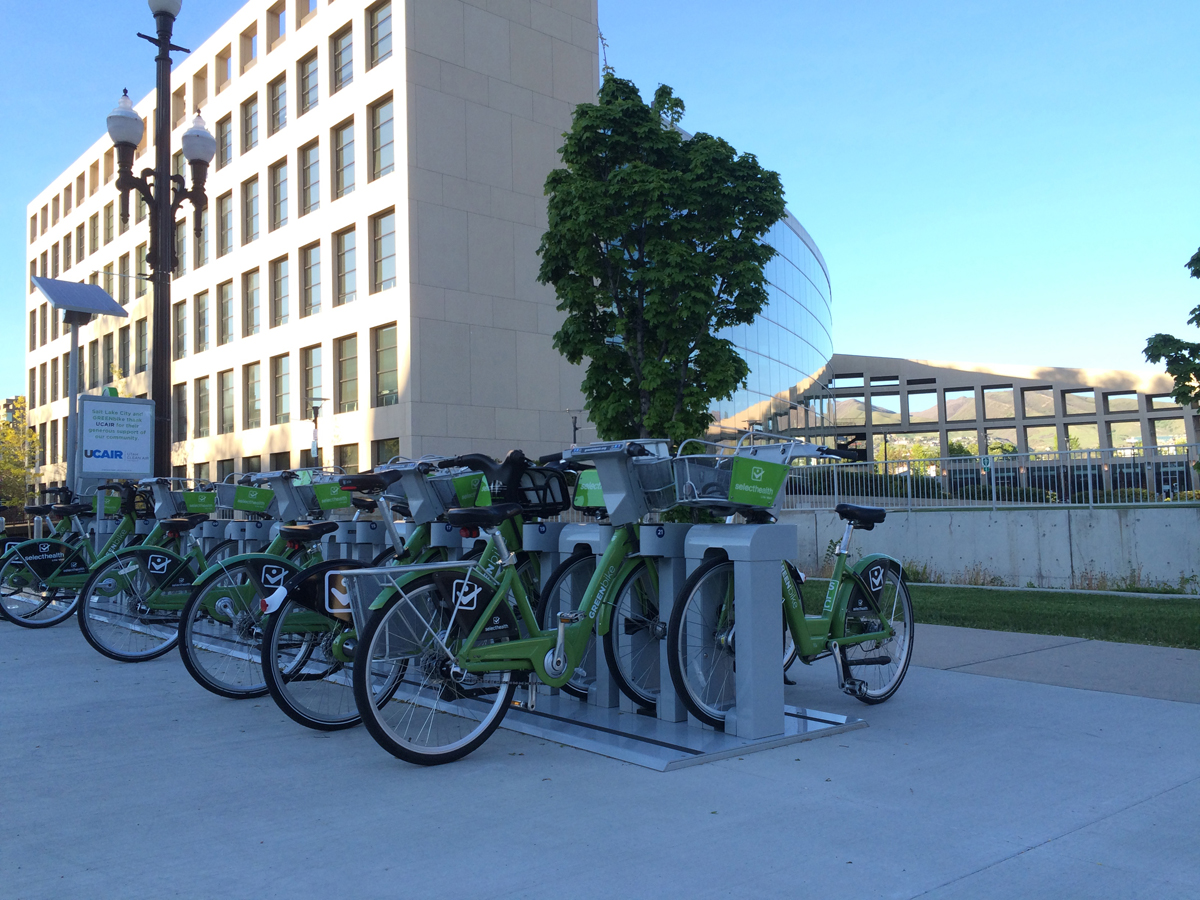
A GreenBike station in Salt Lake City, Utah. Photo by Dave Iltis

Bikesharing has caught the eye of many a transportation policy maker and researcher. But while academic investigators focus on issues ranging from stocking bikes reducing congestion to coordinating with other modes of transit, etc., not much official research has focused how well bikesharing is or isn’t or could be playing a major role in helping people in underserved areas.

Until now. A study from the National Center for Sustainable Transportation (NCST), a federally funded think tank headquartered at the University of California Davis, has released a report designed to spur cities to expand bikeshare to the financially neediest communities.

High Impact Prioritization of Bikeshare Program Investment to Improve Underserved Communities’ Access to Jobs & Essential Services (goo.gl/6ow2V9) discusses barriers to serving low-income populations and says cities should do a better job.

The report says “existing bikeshare systems are typically aimed at users that tend to be white, affluent, and educated. Underserved communities have largely been invisible when planning and implementing private bikeshare solutions.” It goes on to explain that “(a)s a way of ensuring profitability, bikeshare operations have targeted populations more likely to use the service, typically, male, white, younger, employed, affluent, educated and those more likely to be already engaged in cycling independent of bikeshare.” Also, they tend to place stations near bike lanes and paths or popular starting and drop-off points, such as shopping centers, employment centers and transit hubs.

Other than lack of access, people in lower-income neighborhoods may face additional problems in using bikeshare, ranging from lack of helmets to no insurance, a presumption that bikeshare is designed for the more affluent, lack of money or credit cards to pay the fees, or not possessing a smartphone with the appropriate app.

NCST examined bikeshare in 34 US cities but focused on Chicago and Philadelphia. “Our modeling suggests that, in fact, bikeshare stations tend to be located in areas with a more affluent and white population” in those two cities, NCST reports.

So how are cities trying to deal with the issue? Some are offering price breaks to those with economic issues but that won’t alter the infrastructure challenges.

“Our stations are unfortunately in more affluent neighborhoods but we do offer low-income memberships,” says Martin Giang, a customer support employee at Denver Bcycle. Those who show financial need, such as Medicaid or public housing ID, can join for an annual fee of $10, as opposed to the standard $135.

Denver Bcycle, which uses exclusively docked stations, focuses primarily on downtown. “Our system doesn’t have many stations out in more low-income neighborhoods or anything like that,” Giang says. “A limiting factor is the cost of stations themselves, a minimum of $50,000.”

And BOISEGreenBIKE (BGB) in Idaho focuses primarily on downtown and Boise State University. Valley Regional Transit, the local transportation agency, runs the service. “One of the challenges we face is the way our system is set up, you need a credit card to be a member in case you incur additional fees” such as overtime, BGB Director Dave Fotsch says.
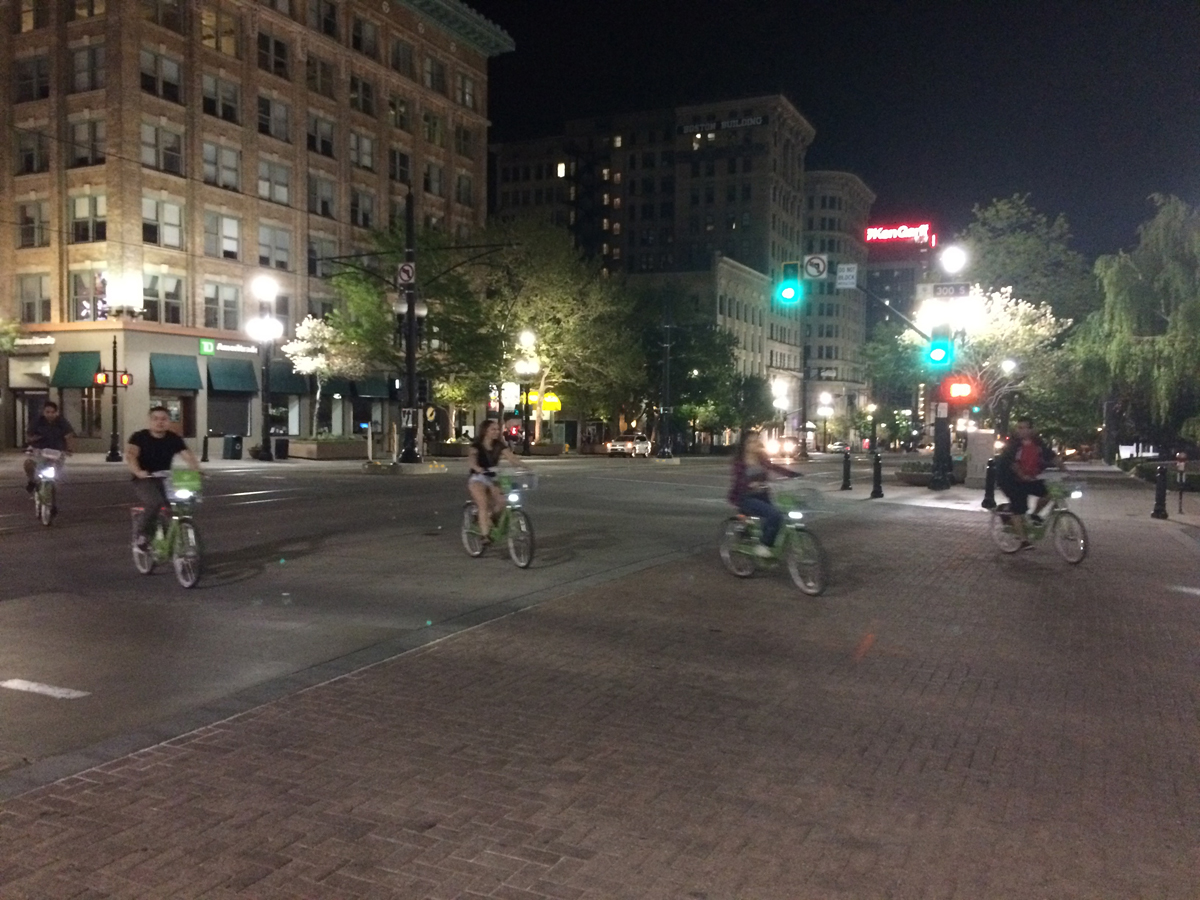
GreenBike Bikeshare in Salt Lake City has changed downtown by making it easier to get around without a car. Photo by Dave Iltis

“Our biggest challenge is we only have 127 bikes. We’d love to expand further than our core service area. Until we have more bikes, we can’t do that. We have on order 115 new bikes. Unfortunately, they’re not expected to arrive until December,” Fotsch says. Before then, however, BGB has arranged to acquire about 90 bikes from another bikeshare service in Topeka, KS. “They are all red. We’re going to have to strip them and repaint them green. We hope to complete that by the end of August. That would allow us to stretch out a little more,” Fotsch explains.

Last time BGB had the money to expand, it set up stations “in city parks because our data showed that’s where people ride,” Fotsch says. On the other hand, he acknowledges that perhaps people don’t ride in some areas because the zones lack bikes. “It’s a chicken and egg kind of thing,” he says.

“It’s been an ongoing issue since bikeshare rolled out,” says Ben Bolte, founder and director of GREENbike, Salt Lake City’s non-profit bike share. GREENbike relies on docks, so it can’t just dump bikes wherever, like dockless systems might. “You have to get people from the community advocating for it,” Bolte says.

That said, GREENbike plans to open a station across from Catholic Community Services transitional housing for the homeless and at other locations near affordable housing. Next year, GREENbike plans to offer free membership to Salt Lake City residents eligible for Utah Transit Authority discount passes.

“The difference between us and our for-profit counterparts is our goal is about ridership, community,” Bolte says. “We’re going to take it on the head because that’s what we think is the right thing to do. Our goal isn’t to make money; it’s to break even.”

Boulder B-cycle in Colorado, meanwhile, is trying to diversify the economic class of its audience with two programs. It’s too early to judge their impact, says Kevin Bell, Boulder B-cycle’s marketing and sales director. One involves giving free passes to those getting public assistance. The other involves a cash option. The trouble with people paying cash is that you don’t know who is using the bike, which makes it harder to recover them if stolen or vandalized.

“We had a pilot program a couple years ago with prepaid cards. It didn’t have a high take rate,” Bell recalls.

Boulder B-cycle focuses on the most densely populated parts of town. So you won’t find many stations in more sparsely populated wealthier parts of town as well as in poorer areas, Bell points out. The strategic plan describes a “vision to create a viable, sustainable bikeshare system that serves and benefits all reaches of the Boulder Community.”

The Institute for Transportation Development Policy, an international non-profit headquartered in New York City, issued its Bikeshare Planning Guide 2018 Edition (goo.gl/5gj17W). It devotes a section to Building Political Will. It asks “Bikeshare offers a less-costly alternative to owning and maintaining a personal bike,especially for first time and occasional riders. So why isn’t there more diversity of races and socioeconomic statuses among bikeshare users?”

The guide goes on to suggest that “(c)ities must recognize equity as a critical component of the success of their bikeshare system and should measure equity and access to the system over time. Indicators such as the availability of bikes (number of bikes per 1,000 residents), the percentage of low-income populations who live and/or work within the service area, and the convenience and usability of the system (number of stations per square kilometer, number of trips per bike) are important to track.”

Yet the Institute says efforts to expand into low-income neighborhoods can backfire – it cites a community in San Francisco that vetoed bikeshare stations because residents thought it meant an effort to kick them out in favor of wealthier folks moving in. Therefore “(a) truly equitable system should integrate equity into its hiring practices – —for system staff and vendors -– as well as ensure that community outreach and promotional efforts are organized with input and/or direct involvement from champions and advocates from target communities.”

Meanwhile, another study released in July indicated that the same problem exists in Canada. “Public bicycle share users are predominantly Caucasian, employed, and have higher incomes and education levels, as compared to the general population,” says Who Are Public Bicycle Share Programs Serving? An Evaluation of the Equity of Spatial Access to Bicycle Share Service Areas in Canadian Cities, written by researchers at the University of British Columbia (goo.gl/ZvU2Zn). Or so they found in four of the five cities studied. “This analysis indicates that in most cities, substantial effort is needed to expand service areas to disadvantaged areas in order to increase spatial access for lower socioeconomic populations,” they write.

 

Roundabouts and Cycling – How Safe are They?

History doesn’t give us a guide to determine how to make roundabouts safer for cyclists because hard data are lacking. The National Cooperative Highway Research Program, however, did its best and came up with Development of Roundabout Crash Prediction Models and Methods (https://www.nap.edu/catalog/25360/development-of-roundabout-crash-prediction-models-and-methods).

The study looked at more than 350 roundabouts in the United States and examined previous worldwide research on the topic. Studies dating back as far as 2000, indicated that the more lanes entering a a circle and the greater the variation in speed of vehicles entering, the more dangerous for cyclists. An Australian study showed that bicyclists were more likely to get hit when vehicles entered the circle than when in the circle or upon exiting.

Not only have few researchers studied the subject, few crash reporting agencies note that an accident occurred at a roundabout, making examples unavailable to study. Most of the studies of roundabout safety simply don’t consider cyclists. But this one says that fortunately, “frequency of vehicle–pedestrian and vehicle–bicycle crashes at roundabouts is typically very small.” Bicycle incidents amounted to only about one percent of accidents found.

But the program’s effort found “insufficient vehicle–pedestrian and vehicle–bicycle crashes represented in the assembled database to enable the development of a model for predicting the frequency of these crashes.”

While the database included some injuries to cyclists, it found no fatalities. But with a paucity of data, the project couldn’t recommend ways to make roundabouts safer for cyclists.


AASHTO to Update Bikeway Design Guide

By the time design standards for bike lanes are implemented, they are already out of date. And the current Bike Guide for the Development of Bicycle Facilities from the American Association of State Highway & Transportation Officials (AASHTO), published in 2012 is going through the process of being replaced. In fact, only three years after it was published, AASHTO hired Toole Design Group to study an update. Toole, an engineering consulting firm based in Silver Spring, MD, does considerable bike planning work (tooledesign.com).

AASHTO hired Toole “not to write the guide but to give info so they could consider redoing the 2012 guide, Toole Director of Strategy Andy Clarke explained at the League of American Bicyclists’ National Bike Summit in March. Toole delivered its recommendations last year (tooledesign.com/project/update-to-the-aashto-guide-for-the-design-of-bicycle-facilities-2019/).

The new guidelines will have to consider e-bikes and scooters, not mentioned in the current ones. “If scooters go 15 miles per hour on a path designed for 15 mph, it’s OK – but questionable if they go 15 mph on a sidewalk designed for pedestrians walking four mph,” Clarke said. AASHTO will also reconsider when to recommend shared use signs and when cyclists should be separated from pedestrians. And when cyclists get their own lanes, the new guidelines will need to address when to recommend on-street bikelanes v. sidepaths.

Other questions involve whether and protected bike lanes should include marked lines for two-way bike traffic. How much of a buffer should be provided between cyclists and motorists and pedestrians? “When you don’t’ have enough room, what to cut out?” Clarke asked. What types of buffers to recommend?

The new guidelines may also include a separate section on rural roads, Clarke said.

The draft includes 350 pages of text plus 100 pages of graphics and while no date is set, AASHTO hopes to get it done next year and sent to state and local officials.

AASHTO’s Technical Committee on Non-Motorized Transportation has reviewed the draft, which has to go through several other AASHTO committees.

But don’t expect it to answer all questions about scooters. “Electric scooters are a relatively new phenomenon and their widespread usage did not occur until well after the revision process of the guide was well underway. As a result, there will not be detailed information on electric scooters in this guide,” according to a statement given to us by Tony Dorsey, AASHTO manager of media relations.

But the guidelines will note that designers should consider adding sight distance and lane width if they anticipate e-bike usage, since e-bikes can go faster and may need passing room.

A chapter of the guide will discuss what type of bikeway to use. Planners should consider the level of cyclist skill they seek to accommodate, roadway speed and traffic level, etc. The guide will also discuss the pros and cons of two-way separated bike lanes but won’t prescribe what to do in any given situation.

And if you don’t have room for the best solution, such as a separated bike path? “There is a section in the guide which discusses strategies for achieving the ‘next best’ design when there are space constraints. Such strategies may include narrowing travel lanes, removing travel lanes, making changes to on-street parking, reorganizing street space, narrowing bicycle facilities, etc.” according to AASHTO’s statement.

The Utah Department of Transportation is working on revising its own guidelines but will wait to incorporate what AASHTO comes up with, says Heidi Goedhart, Utah’s active transportation manager.

In any event, by the time designers and planners get to use the guide, it will certainly be out of date already, given the speed in use of scooters, bikeshare, and whatever comes next.


Cannondale CAADX Cyclocross Bicycles Recalled

Cycling Sports Group Recalls Cannondale CAADX Cyclocross Bicycles Due to Fall and Serious Injury Hazard; One Fatality Reported

WASHINGTON, July 25, 2019 /PRNewswire/https://www.cpsc.gov/Recalls/2019/Cycling-Sports-Group-Recalls-Cannondale-CAADX-Cyclocross-Bicycles-Due-to-Fall-and-Serious-Injury-Hazard-One-Fatality-Reported

Recall Summary

Name of Product: 2013 through 2016 Cannondale CAADX cyclocross bicycles

Hazard: The fork can break, posing a fall hazard with the risk of death and serious injury.

Remedy: Repair

Consumers should immediately stop using the recalled bicycle and take it to the nearest authorized Cannondale dealer for a free repair. Cannondale dealers will replace, free of cost, the bicycle’s fork with a full carbon fiber replacement fork.

Consumer Contact: Local Cannondale authorized dealer or Cycling Sports Group at 844-370-1536 from 9 a.m. to 6 p.m. ET Monday through Friday, by email at [email protected] or online at www.cannondale.com and click on Recalls & Notices at the top of the page.

Recall Details

Units: About 9,700 (in addition, about 1,900 were sold in Canada)

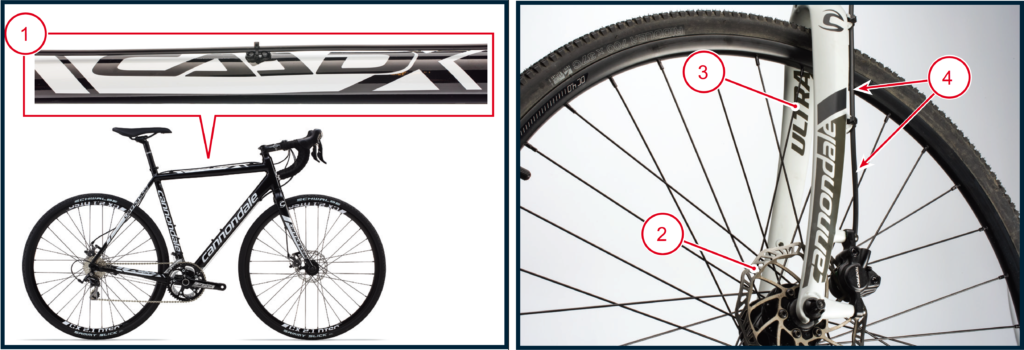
Description: This recall involves model year 2013 through 2016 Cannondale CAADX Cyclocross bicycles equipped with disc brakes. Cyclocross racing combines both off-road and on-road cycling.

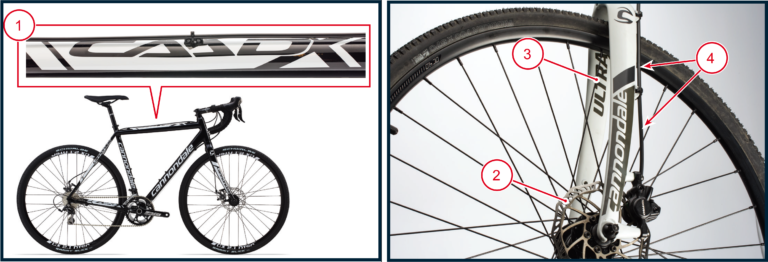
The bicycles were sold in a variety of colors and configurations. Consumers should inspect their bicycle to determine if it is affected by this recall by confirming:

  1. The bicycle has a prominent CAADX marking on the top tube or other location.
  2. The bicycle has disc brakes.
  3. The inside of the fork leg has a large “ULTRAX” marking.
  4. The cable running to the front disc brake is outside of the fork, as opposed to inside the fork.

For assistance determining if a bicycle is affected, consumers should bring it to a Cannondale authorized dealer.

Incidents/Injuries: Cycling Sports Group has received reports of 11 incidents worldwide of the bicycle’s fork breaking, including five in the United States. Seven of these incidents resulted in serious injuries, including concussions and a spinal injury, and there was one fatality.

Sold At: Authorized Cannondale dealers nationwide from August 2012 through August 2017 for between $1,000 and $2,220.

Importer/Distributor: Cycling Sports Group Inc., of Wilton, Conn.

Manufactured in: Taiwan

In Conjunction With: Canada

Health Canada’s press release is available at: Health Canada’s press release is available at: http://healthycanadians.gc.ca/recall-alert-rappel-avis/hc-sc/2019/70389r-eng.php

Recall Number: 19-175

SOURCE U.S. Consumer Product Safety Commission
Web Site: http://www.cpsc.gov

About U.S. CPSC:

The U.S. Consumer Product Safety Commission is charged with protecting the public from unreasonable risks of injury or death associated with the use of thousands of types of consumer products under the agency’s jurisdiction. Deaths, injuries, and property damage from consumer product incidents cost the nation more than $1 trillion annually. CPSC is committed to protecting consumers and families from products that pose a fire, electrical, chemical or mechanical hazard. CPSC’s work to ensure the safety of consumer products – such as toys, cribs, power tools, cigarette lighters and household chemicals – contributed to a decline in the rate of deaths and injuries associated with consumer products over the past 40 years.

Federal law bars any person from selling products subject to a publicly-announced voluntary recall by a manufacturer or a mandatory recall ordered by the Commission.

For more lifesaving information, follow us on Facebook, Instagram @USCPSC and Twitter @USCPSC or sign up to receive our e-mail alerts. To report a dangerous product or a product-related injury go online to www.SaferProducts.gov or call CPSC’s Hotline at 800-638-2772 or teletypewriter at 301-595-7054 for the hearing impaired.


4 Peaks Gran Fondo to be held August 10, 2019 in Pocatello, ID

By Dave Iltis –

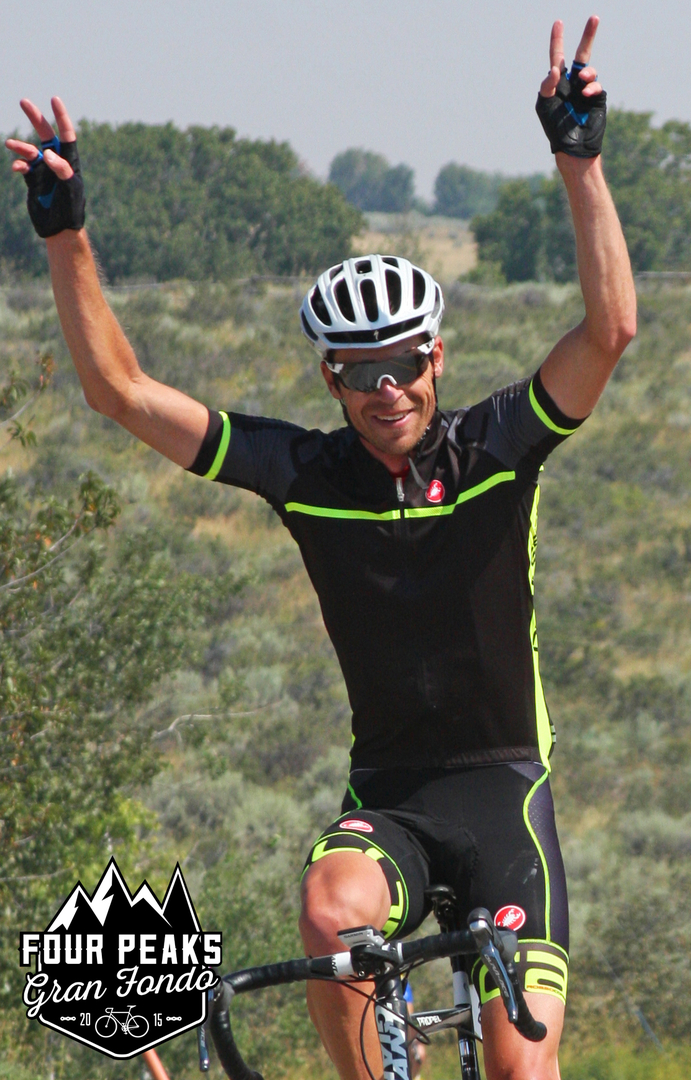
The 4 Peaks Gran Fondo is in its fifth year. The ride will be held in Pocatello, Idaho on August 10, 2019. The ride gets its name from the 4 summits it traverses over the 80 mile long course. The shorter courses cover some of the climbs too.

The 4 Peaks Gran Fondo features 4 great climbs in Pocatello, Idaho. It will be held on August 10, 2019. Photo by Nick Call

We asked organizer David George of 4 Peaks Gran Fondo about the ride.

Cycling West: The ride is in its 5th year, how is it going? What’s new for 2019?

4 Peaks Gran Fondo: The 4 Peaks Gran Fondo is in its 5th year. It is hard to believe that we have already hit year 5.  Our Gran Fondo will take place on Saturday, August 10.  What started out as a dream to get riders from all over to experience the best Gran Fondo in the West, is now a reality. We had over 200 riders last year and expect even more this year.

Cycling West: Tell us about the courses. What are the different course options? What are the highlights of each?

4 Peaks Gran Fondo: It is a beautiful course with rollers, great climbs, and nice scenery. As far as options go, we have added teams (2-4 people) and also what we call a valley ride for those who want to participate, but are newer to cycling.  The valley ride takes you from base to base without any of the peaks. The highlights of each are that you can challenge yourself.  You can ride it all yourself, or enjoy it with friends. It is hard to choose a favorite peak: Crystal is a good warm up, Scout is beautiful, there is a sense of accomplishment with Pebble, and you may see wild turkeys and some deer on Buckskin. Those that ride this area know that Pocatello is a cycling mecca.  Great scenery, little traffic, and tons of variety.

Cycling West: Part of the ride is timed. Can you tell us how that works?

4PGF: The ascents are the timed portion. The KOM and QOM are strictly for the uphill portions. We want people to be careful and safe on the downhills, which by the way are fantastic!

Cycling West: Tell us more about the climbs. How hard are they? What gearing might riders need?

4PGF: The climbs vary.  Crystal, Scout, and Buckskin are nice climbs with their own challenges (Category 3-4), but you will just find that gear that works for you and crank away. I think Pebble would be a Category 1 climb.  She will test you, but the sense of accomplishment when you hit the top is awesome. As far as gearing goes, you won’t need anything special for the climbs, just some determination.

Cycling West: The event is a fundraiser. Can you tell us more about the beneficiary?

4PGF: 4 Peaks has donated thousands of dollars into the growth of the Pocatello Poineers High School Mountain Bike Race Team along with the Idaho Cycling League. It is a great pleasure and honor to help get and keep kids on bikes and watch them develop their own love and passion for the sport.

Cycling West: Is there anything else that you would like to add?

4PGF: Many don’t know this, but the Pocatello area is really second to none as far as quality of cycling (road and mountain). We have beautiful scenery, great climbs, and typically, very little traffic. For us that get to enjoy it every day, we feel lucky, but now it is time to share. If you come and ride, you will not be disappointed.

Event Details:

August 10, 2019 — Four Peaks Gran Fondo, Pocatello, ID, One Day: 82 miles, Four Peaks: 7800ft total elevation gain. Climb the 4 peaks of the Portneuf Valley; Crystal, Scout Mountain, Pebble Creek, Buckskin. The hill climb portions are timed with timing chips. Downhill portions are not timed. Cumulative climb times will be combined to determine rank. Ride 1-4 peaks as you wish, DanielleBagley,208-339-2043, [email protected], David George, 208-317-2225, [email protected]4PGF.com

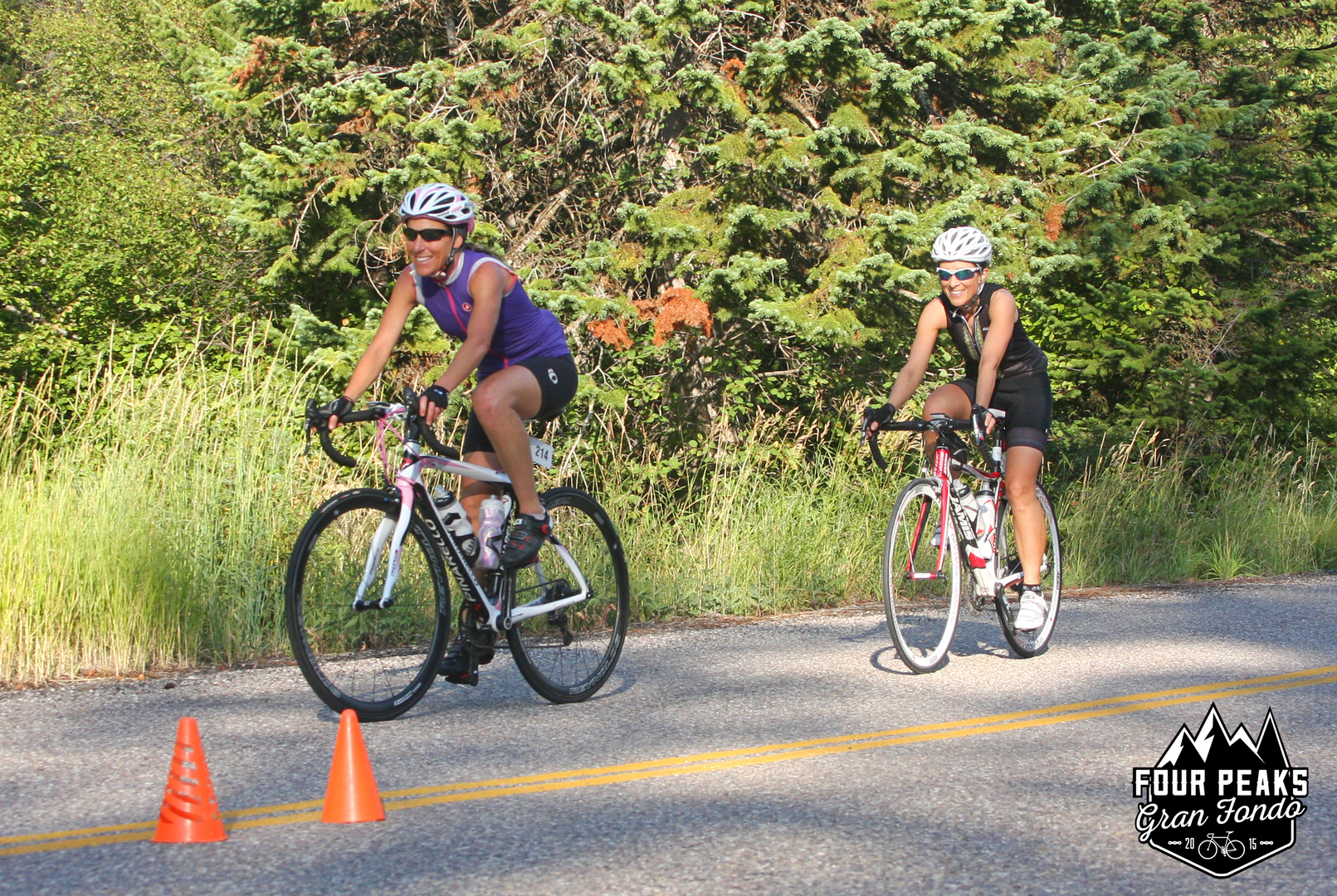
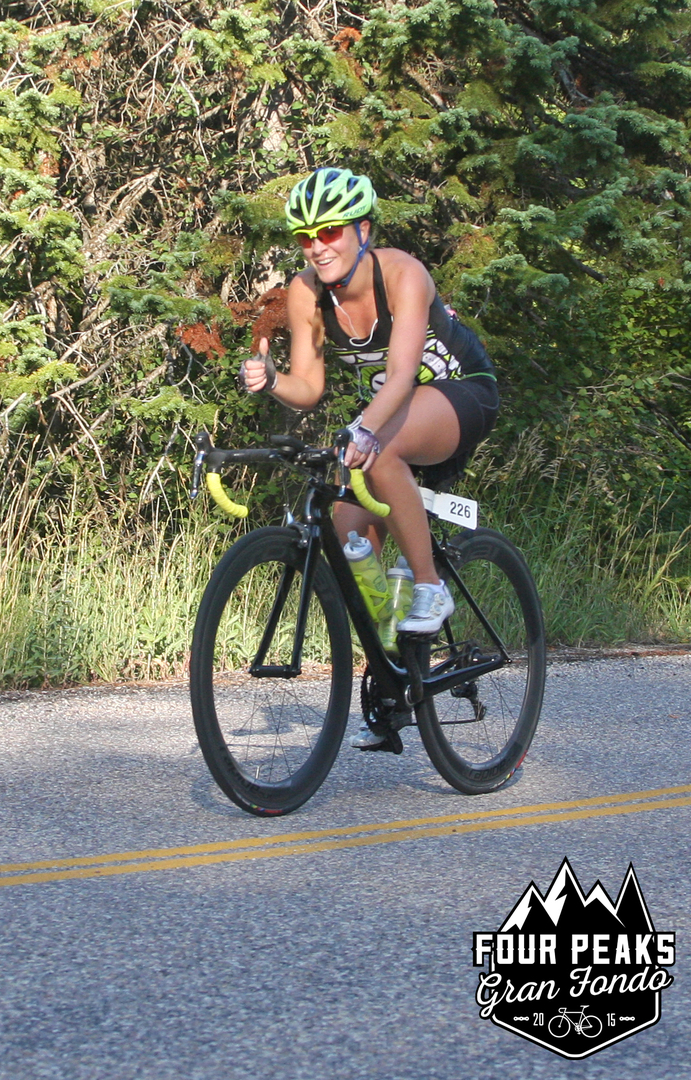
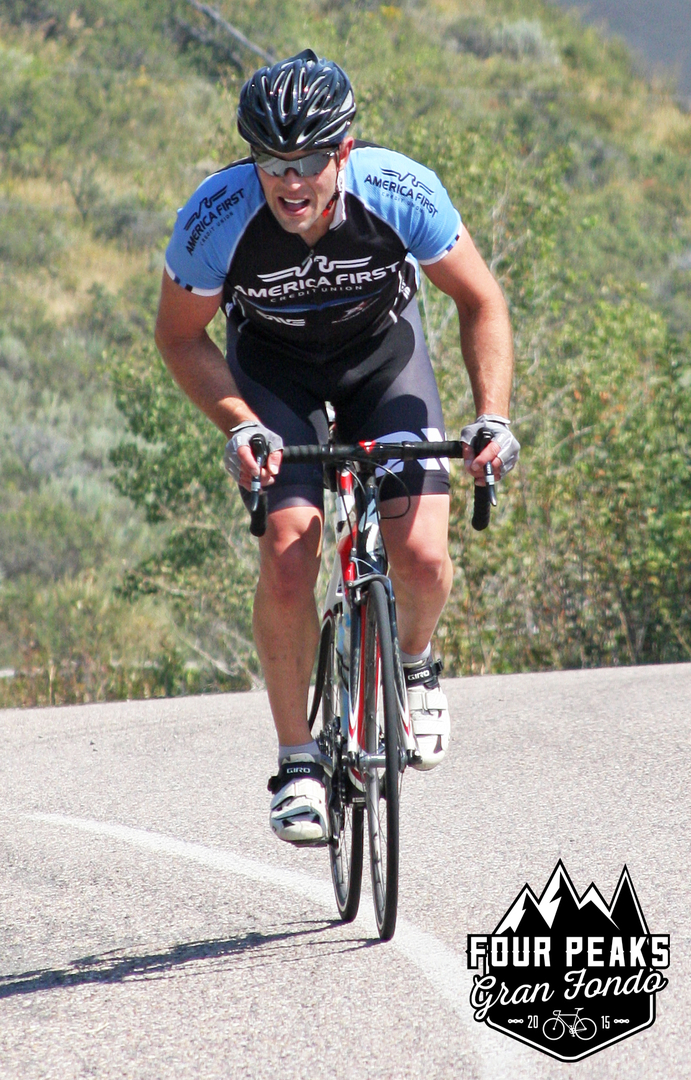
The 4 Peaks Gran Fondo features 4 great climbs in Pocatello, Idaho. It will be held on August 20, 2016. Photo by Nick Call
The 4 Peaks Gran Fondo features 4 great climbs in Pocatello, Idaho. It will be held on August 10, 2019. Photo by Nick Call
The 4 Peaks Gran Fondo features 4 great climbs in Pocatello, Idaho. It will be held on August 20, 2016. Photo by Nick Call
The 4 Peaks Gran Fondo features 4 great climbs in Pocatello, Idaho. It will be held on August 10, 2019. Photo by Nick Call
The 4 Peaks Gran Fondo features 4 great climbs in Pocatello, Idaho. It will be held on August 20, 2016. Photo by Nick Call
The 4 Peaks Gran Fondo features 4 great climbs in Pocatello, Idaho. It will be held on August 10, 2019. Photo by Nick Call

Trek Recalls Kickster Bikes Due to Fall Hazard

WASHINGTON, July 24, 2019 /PRNewswire/https://www.cpsc.gov/Recalls/2019/Trek-Recalls-Kickster-Bikes-Due-to-Fall-Hazard

Recall Summary

Name of Product: Trek Kickster

Hazard: The steer tube clamp on the bike can break, posing a fall hazard to children.

Remedy: Repair

Consumers should immediately take the recalled bikes away from children and take it to a Trek retailer for a free repair.

Consumer Contact: Trek at 800-373-4594 from 8 a.m. to 6 p.m. CT Monday through Friday, or online at www.trekbikes.com and click on Safety & Recalls at the bottom of the page for more information.

Recall Details

Units: About 11,560 (In addition, 1,800 were sold in Canada)

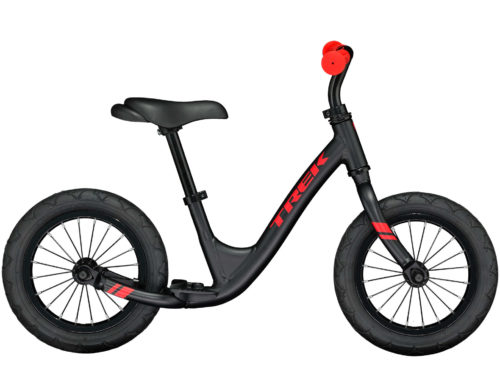
Description: This recall involves all model year 2013 through 2019 Trek Kicksters. The bikes are made for toddlers who are learning how to ride a two wheeler. The Kicksters do not have pedals so children can focus on balancing. They come in black, blue, red and pink and “TREK” is written on the crossbar

Incidents/Injuries: The firm has received 11 reports of broken steer tube clamps, including one injury with minor scrapes and bruising

Sold At: Independent bicycle stores nationwide and online at www.trekbikes.com and other online retailers from August 2012 through April 2019 for about $170.

Importer: Trek Bicycle Corporation, of Waterloo, Wis.

Distributor: Trek Bicycle Corporation, of Waterloo, Wis.

Manufacturer: Lee Chi Enterprises Co., of Taiwan

Manufactured in: Taiwan

In Conjunction With: Canada

Health Canada’s press release is available at: http://healthycanadians.gc.ca/recall-alert-rappel-avis/hc-sc/2019/70515r-eng.php

Footer

This recall was conducted voluntarily by the company under CPSC’s Fast Track Recall process. Fast Track recalls are initiated by firms, who commit to work with CPSC to quickly announce the recall and remedy to protect consumers.

Recall Number: 19-173


SOURCE U.S. Consumer Product Safety Commission
Web Site: http://www.cpsc.gov

About U.S. CPSC:

The U.S. Consumer Product Safety Commission is charged with protecting the public from unreasonable risks of injury or death associated with the use of thousands of types of consumer products under the agency’s jurisdiction. Deaths, injuries, and property damage from consumer product incidents cost the nation more than $1 trillion annually. CPSC is committed to protecting consumers and families from products that pose a fire, electrical, chemical or mechanical hazard. CPSC’s work to ensure the safety of consumer products – such as toys, cribs, power tools, cigarette lighters and household chemicals – contributed to a decline in the rate of deaths and injuries associated with consumer products over the past 40 years.

Federal law bars any person from selling products subject to a publicly-announced voluntary recall by a manufacturer or a mandatory recall ordered by the Commission.

For more lifesaving information, follow us on Facebook, Instagram @USCPSC and Twitter @USCPSC or sign up to receive our e-mail alerts. To report a dangerous product or a product-related injury go online to www.SaferProducts.gov or call CPSC’s Hotline at 800-638-2772 or teletypewriter at 301-595-7054 for the hearing impaired.

2019 Crusher in the Tushar Gallery by Steven Sheffield

Cycling West presents a photo gallery by Steven L. Sheffield of the 2019 Crusher in the Tushar, held in Beaver, Utah on July 13, 2019.

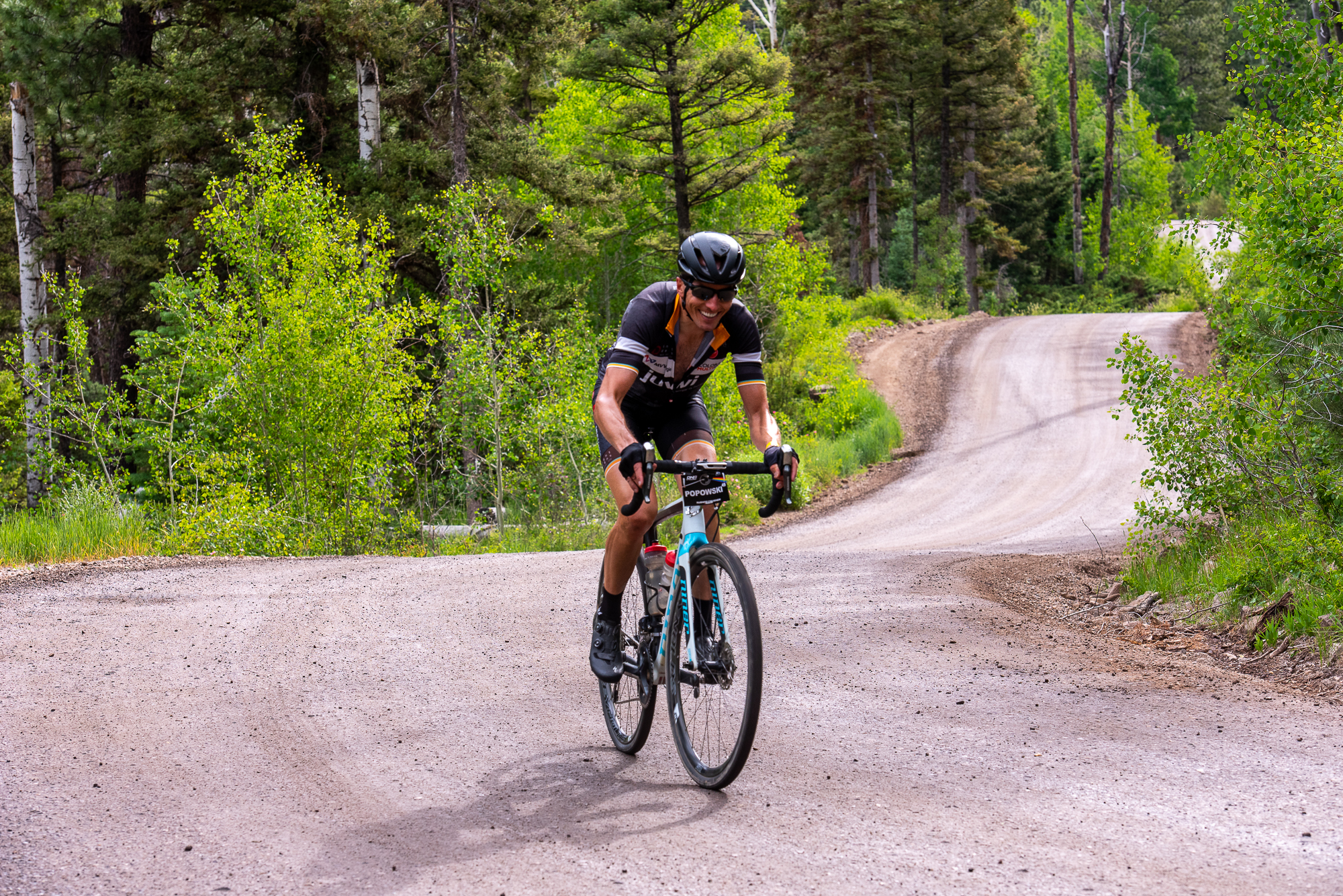
LeRoy Popowski (Juwi Solar) on the early climb towards Betenson Flat. Photo: Steven L. Sheffield.
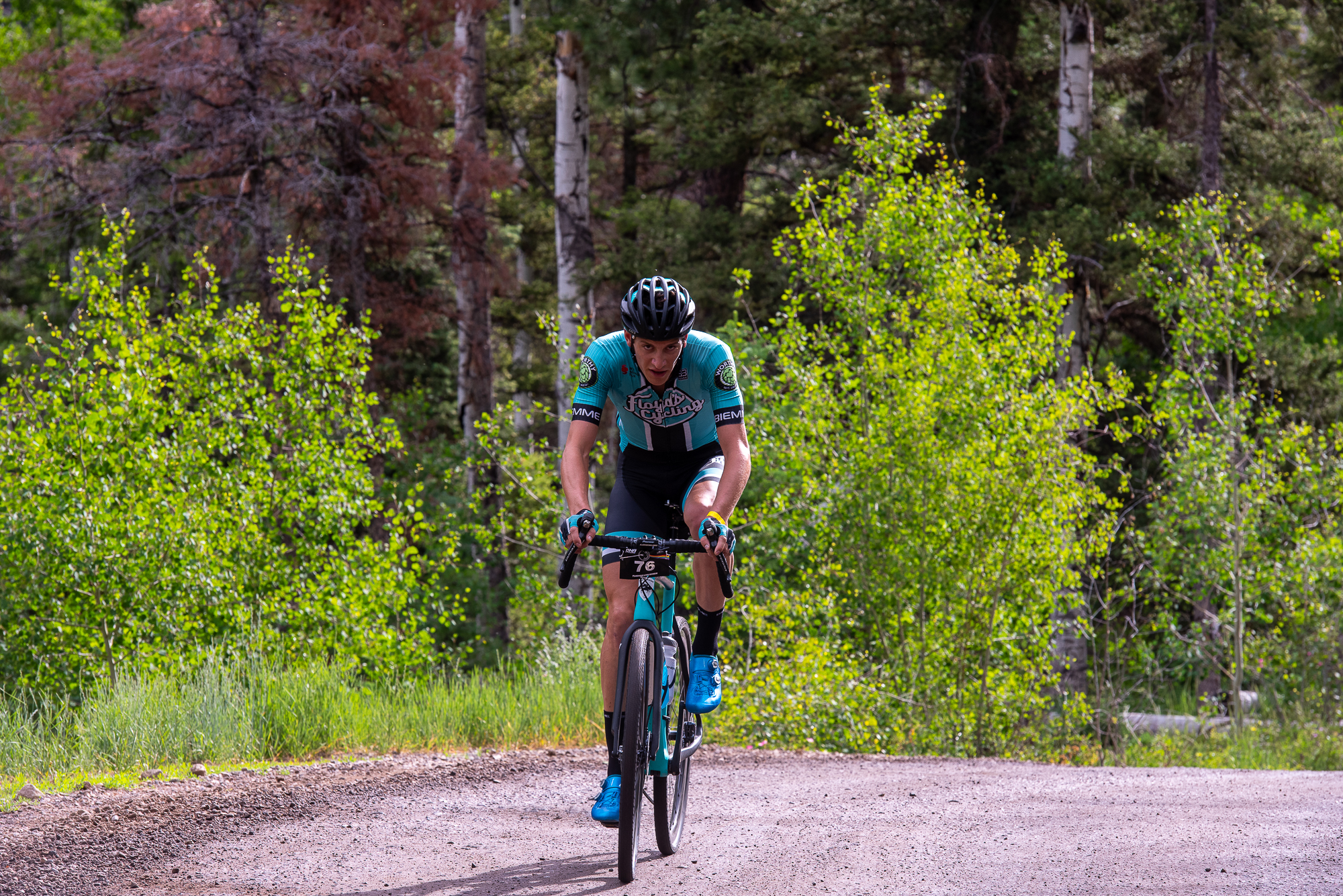
Noah Granigan (Floyd’s Pro Cycling) on the early climb. Photo: Steven L. Sheffield
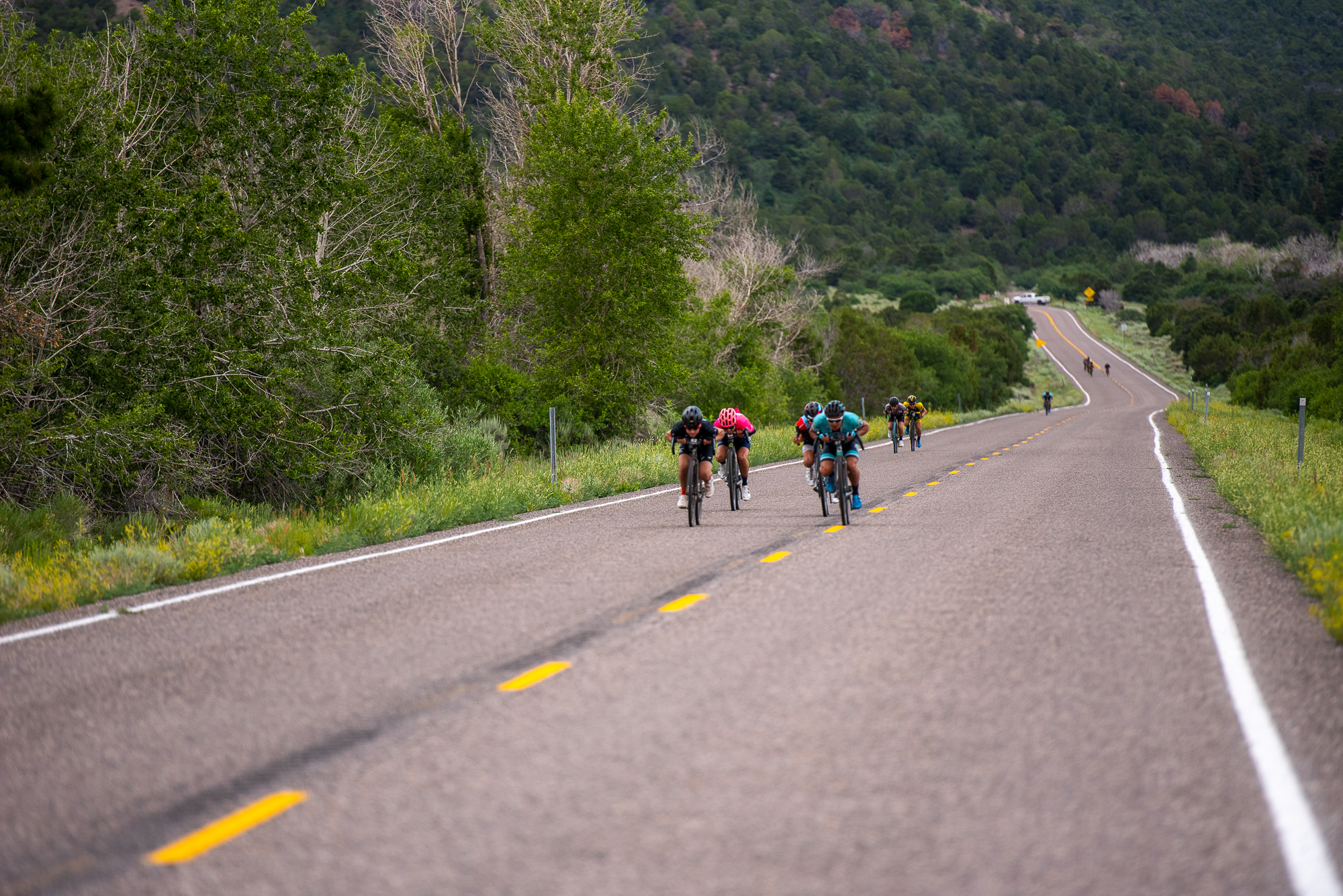
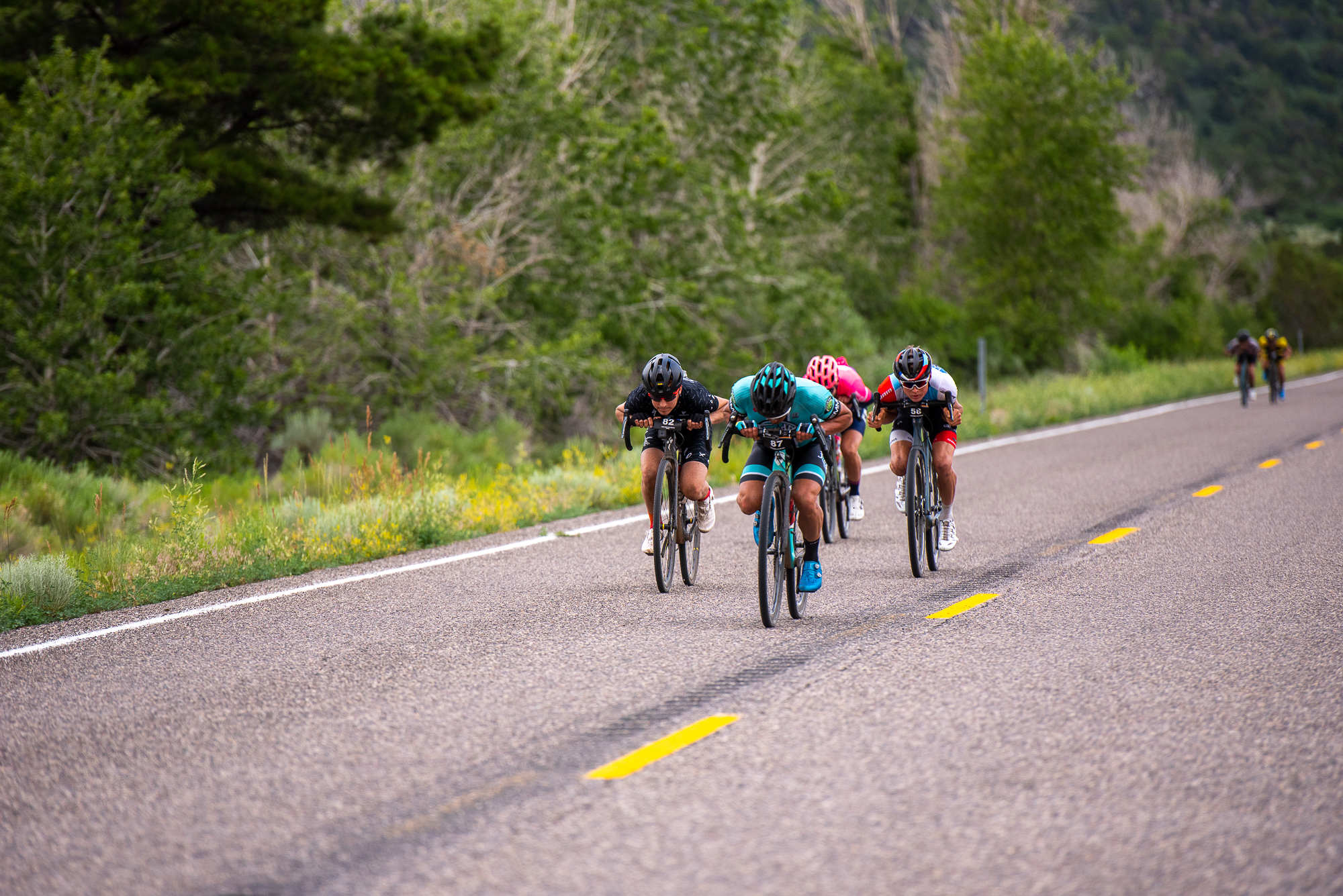
The Pro men’s field split into several small groups on the Highway 153 descent into Junction. Photo: Steven L. Sheffield
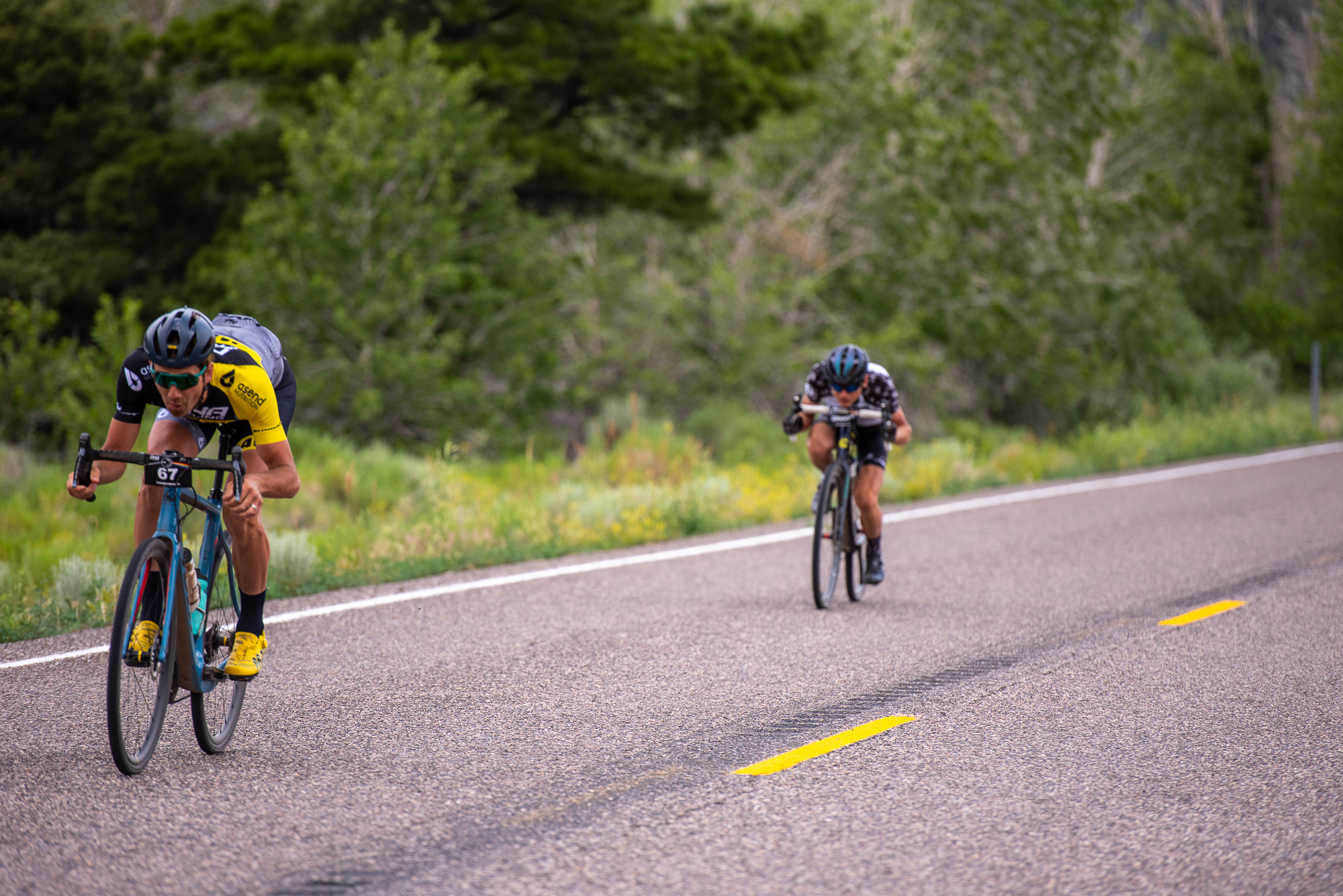
Jamey Driscoll (DNA Cycling-Mavic) leads Alex Grant (Gear Rush) down the Highway 153 descent. Photo: Steven L. Sheffield
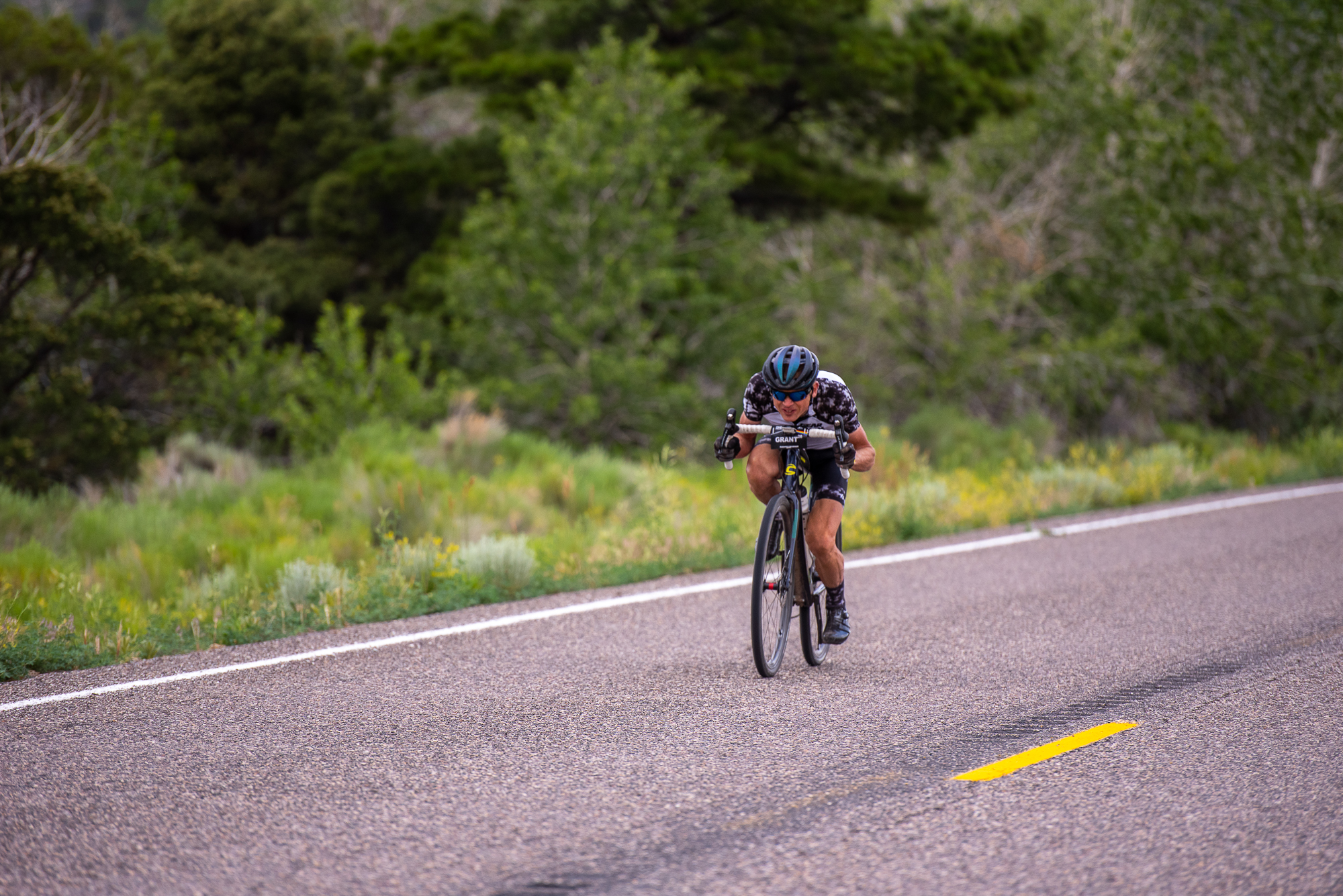
Alex Grant (Gear Rush) on the descent. Photo: Steven L. Sheffield.
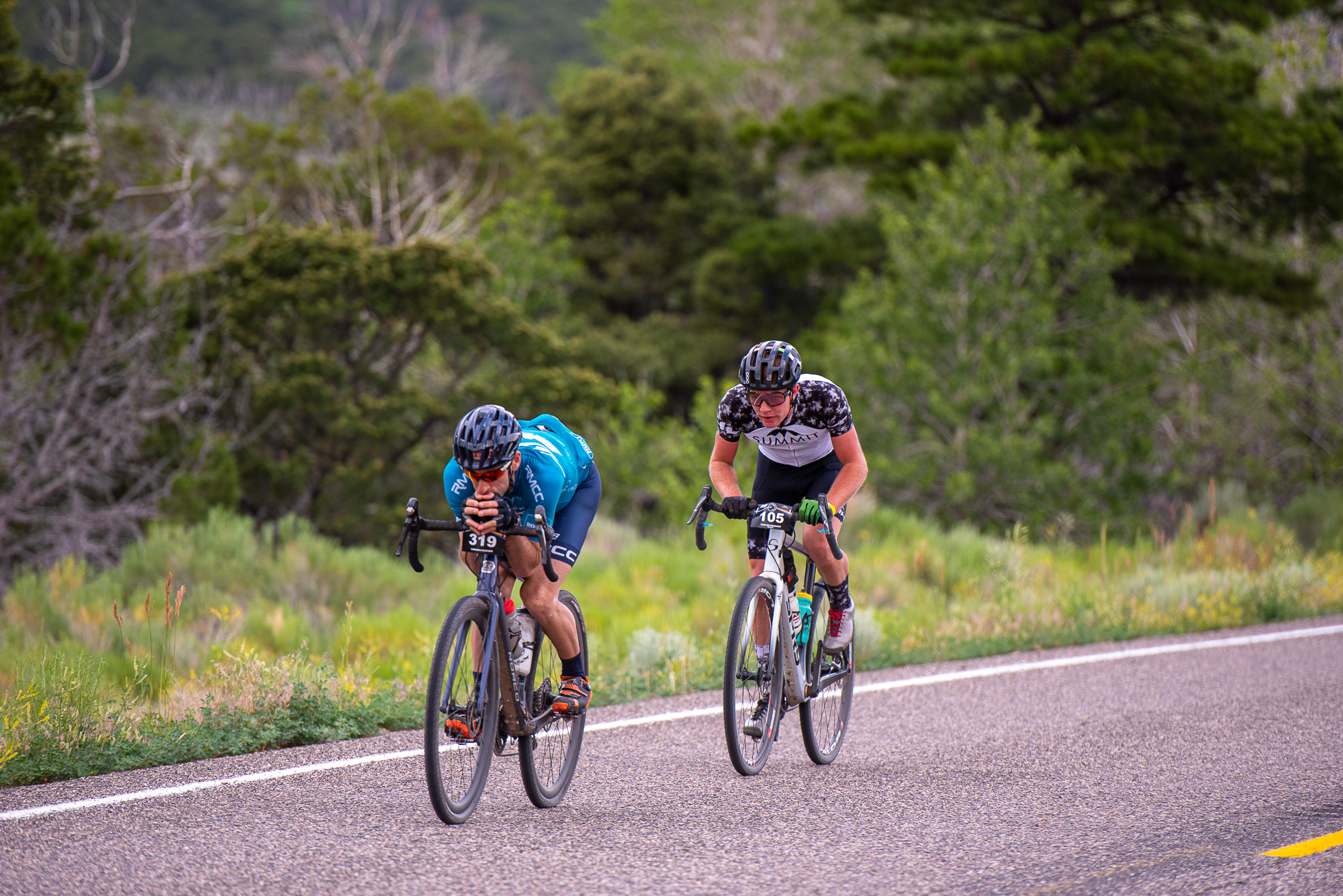
Erik Harrington (#319), leader of the Mens 40-44 group leads Matthew Turner, racing in the Pro/Open field, down the Highway 153 descent. Photo: Steven L. Sheffield.
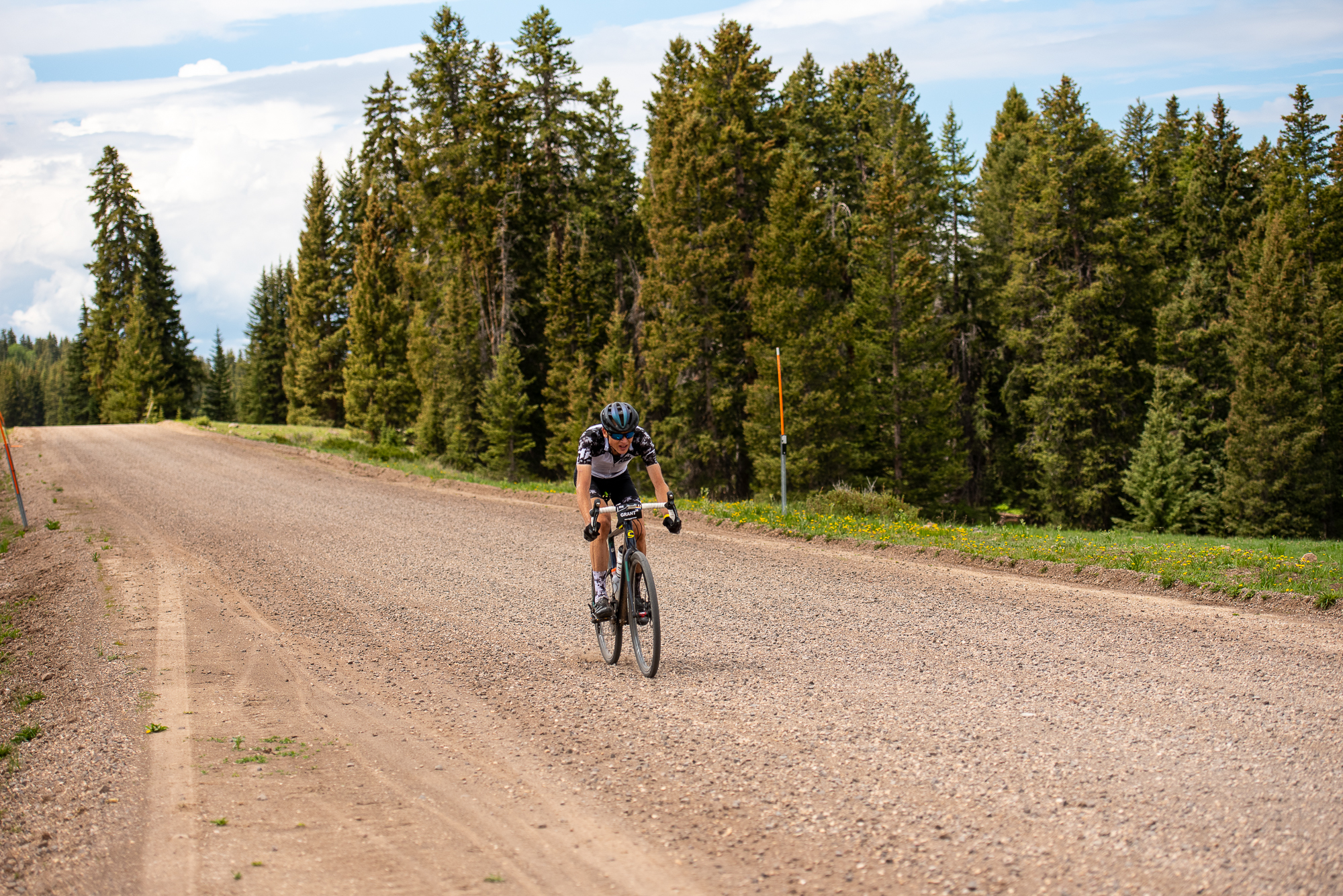
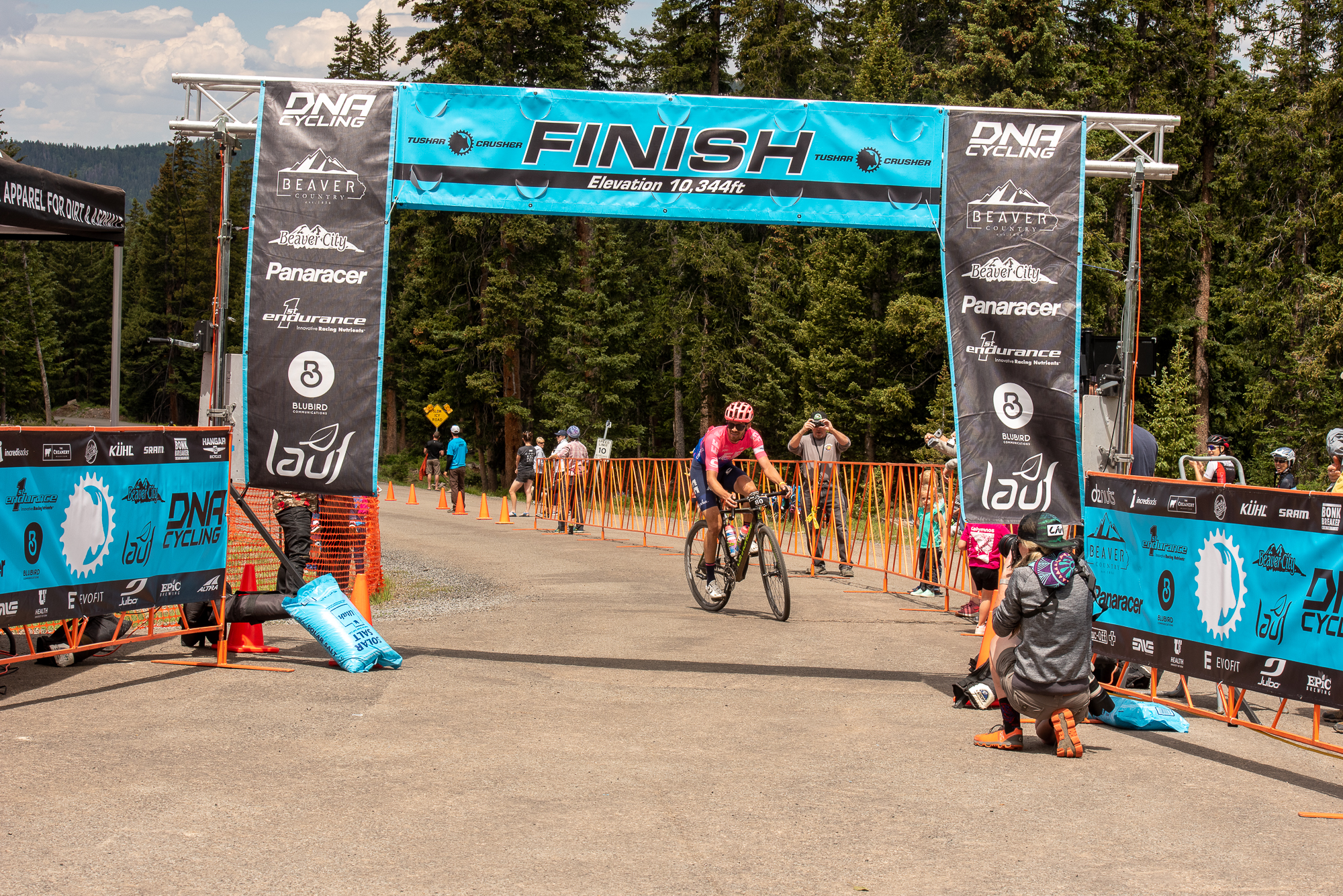
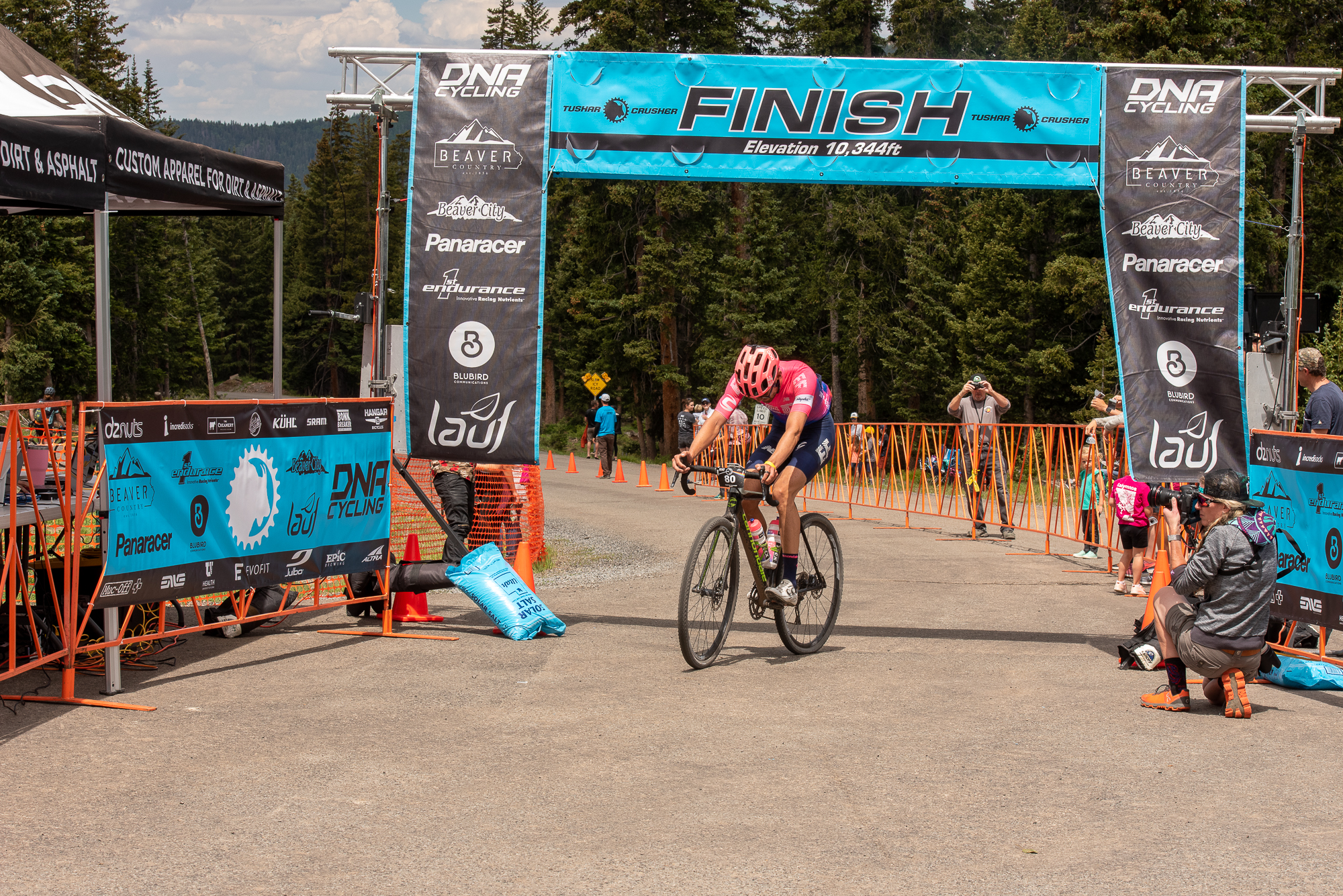
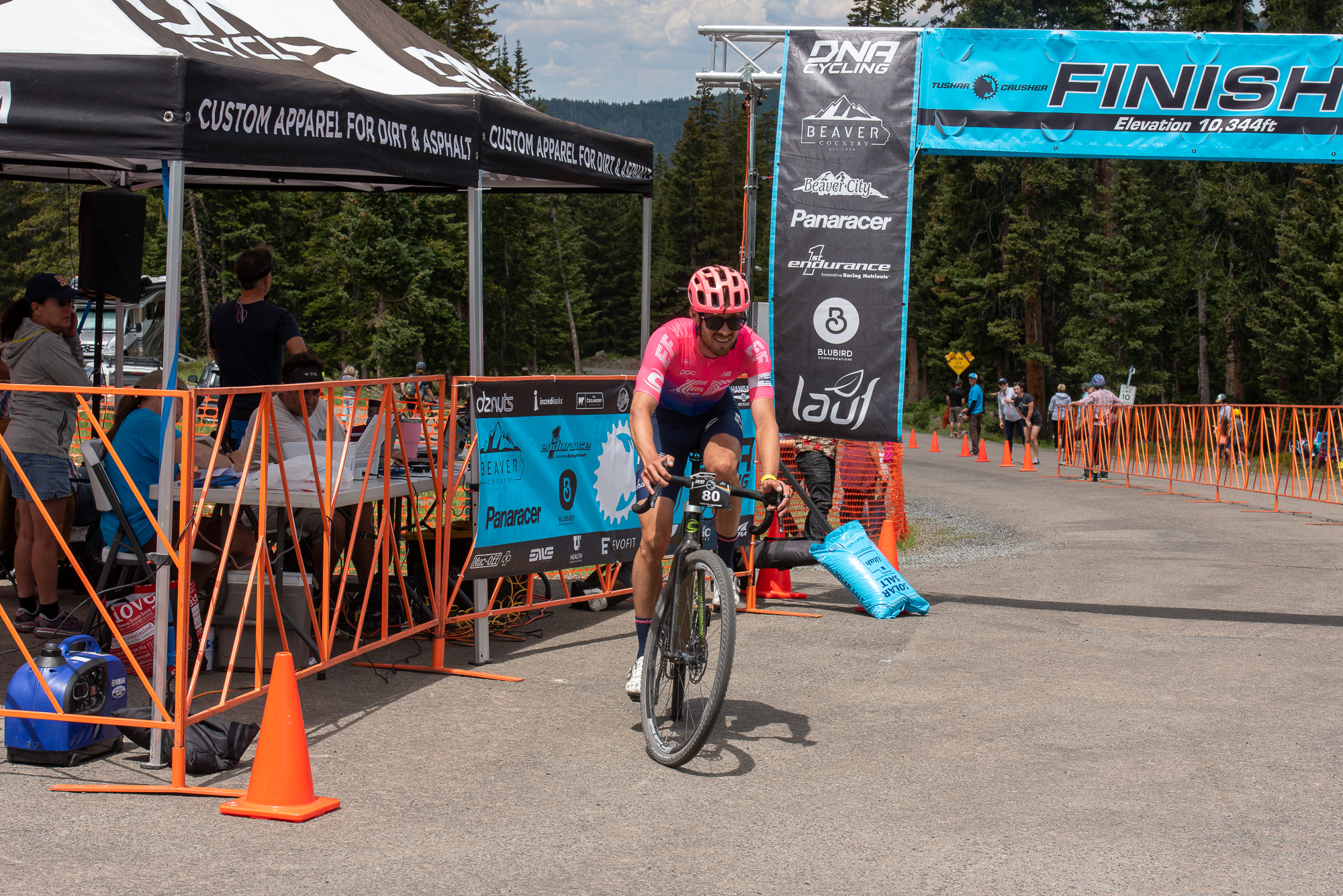
Alex Grant (Gear Rush) on Big Flat, as he soloes towards the finish. Photo: Steven L. Sheffield.
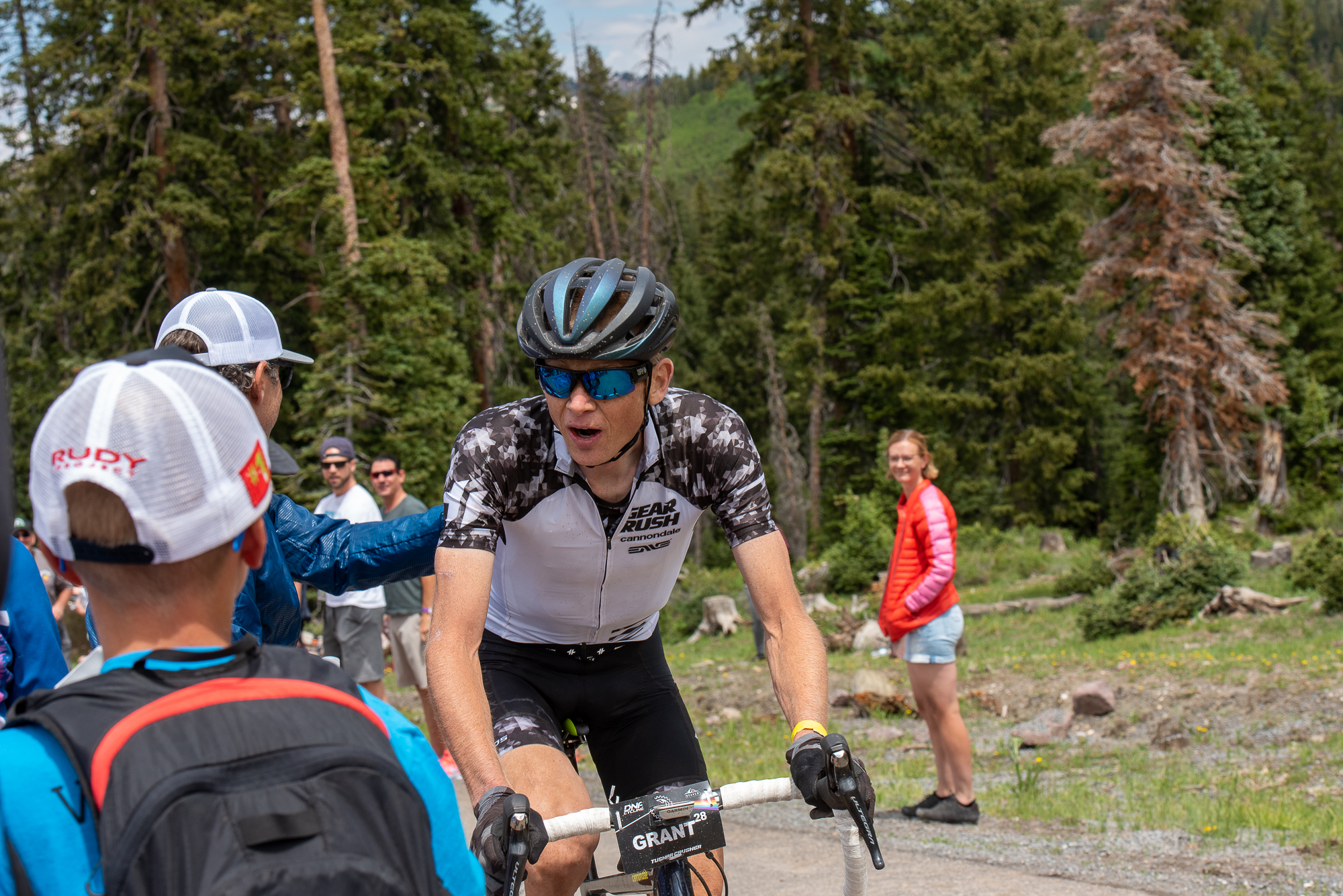
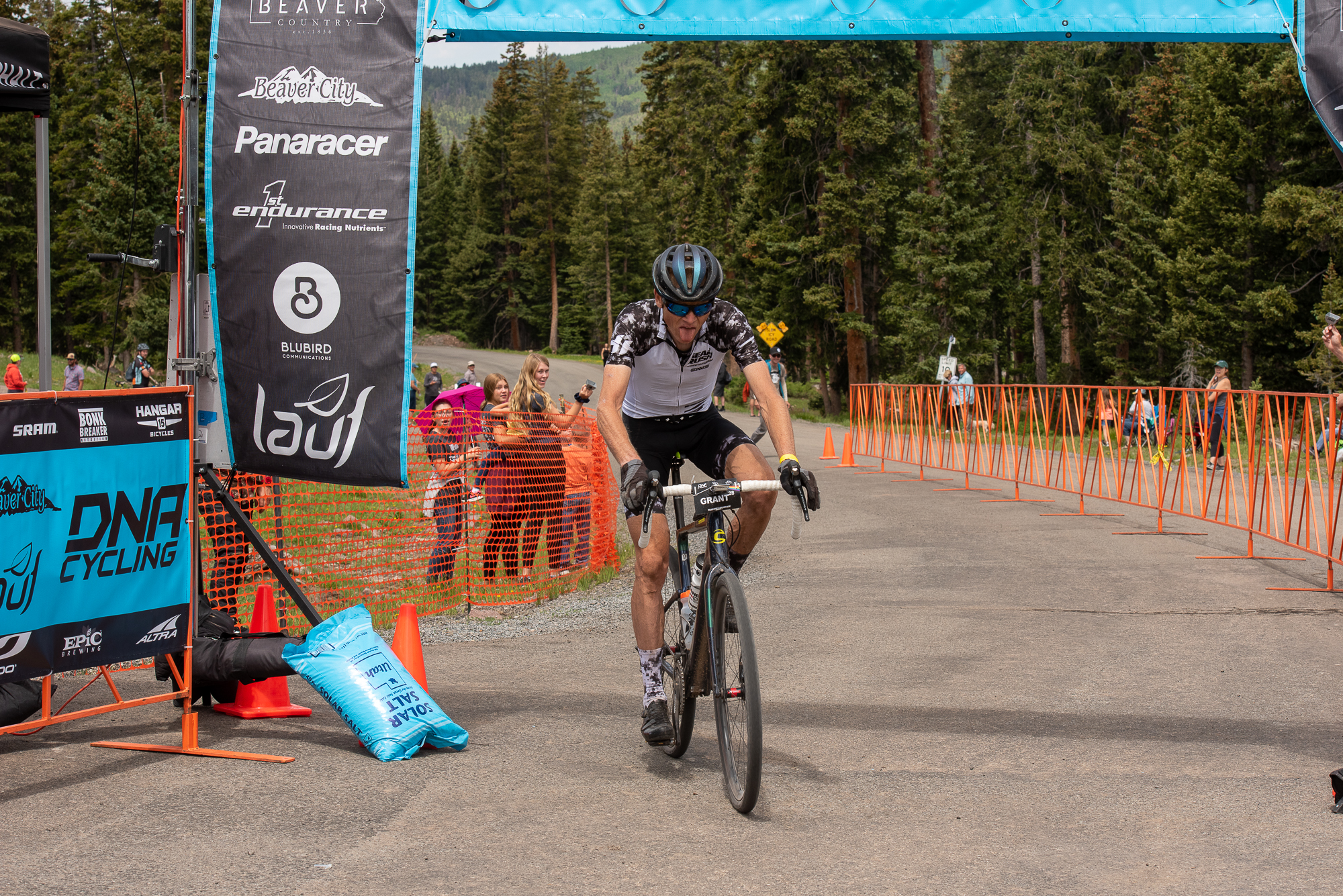
Alex Grant looks surprised as he initially comes up the wrong side of the finish chute fencing. Photo: Steven L. Sheffield.
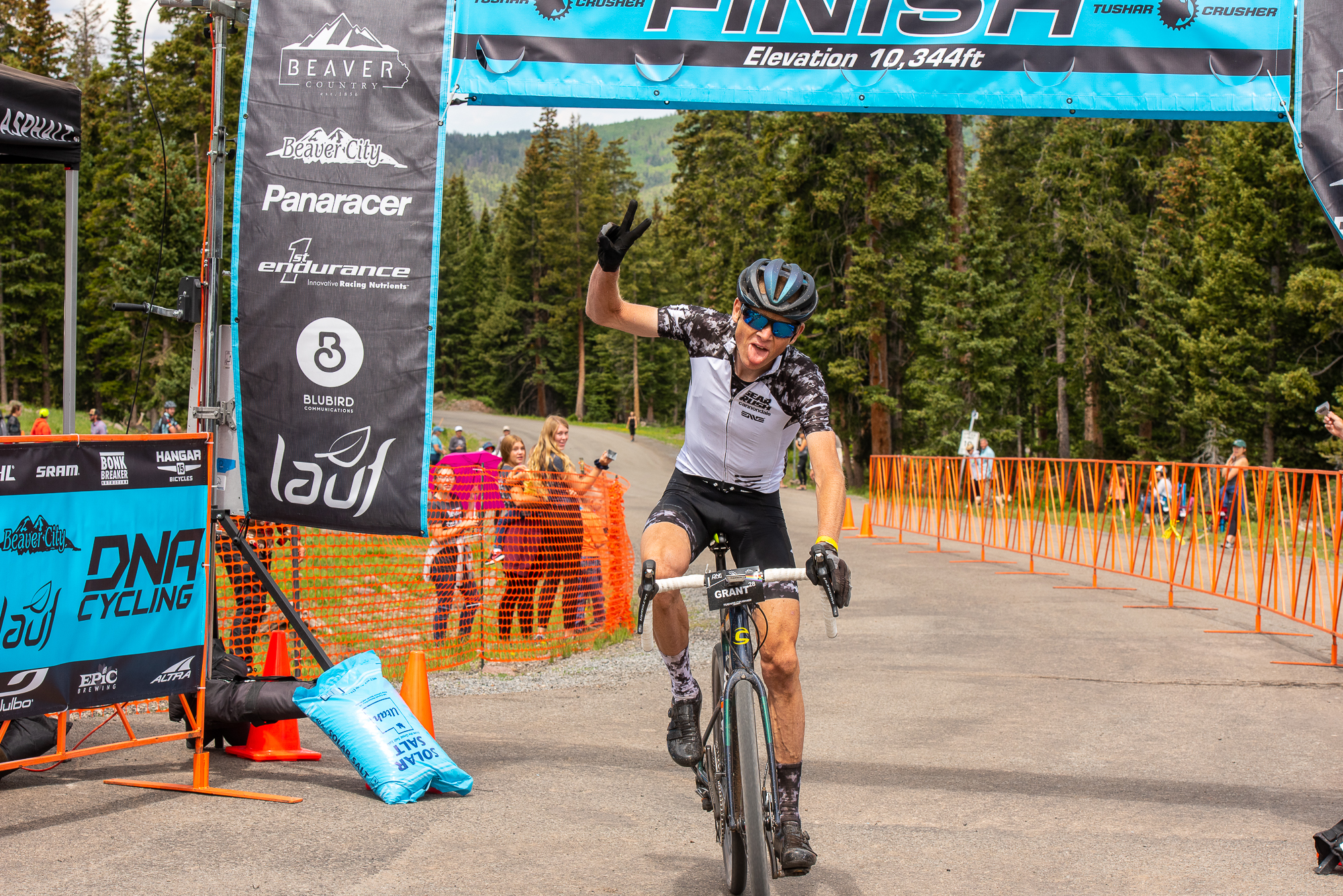
After making a U-turn to get back on the right side of the fencing, a tired Alex Grant finally crosses the line … Photo: Steven L. Sheffield
… and raises an arm in a victory salute. Photo: Steven L. Sheffield
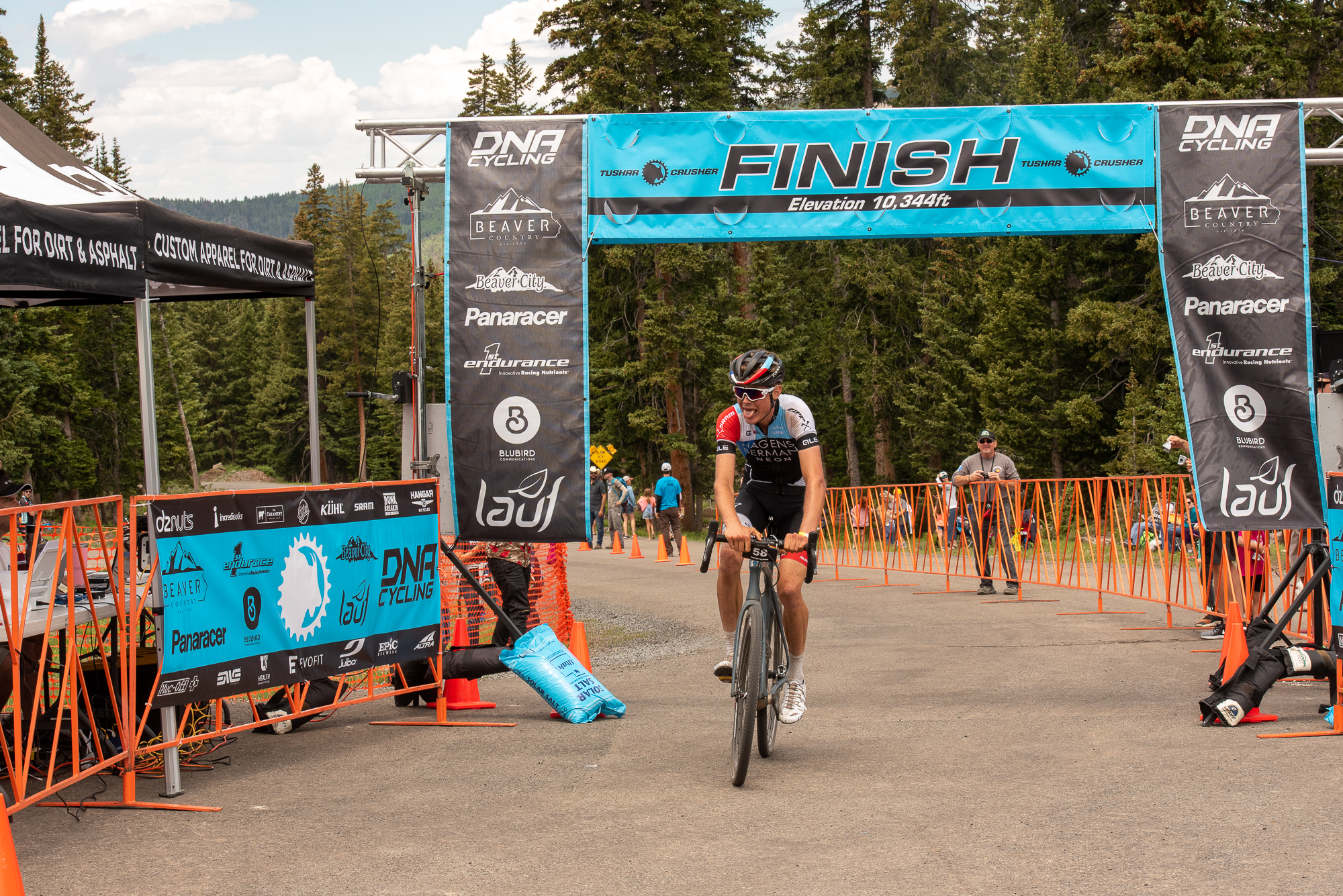
Something about the Crusher causes people’s tongues to hang out. Eddie Anderson (Axeon-Hagens Berman) crosses the line in second place. Photo: Steven L. Sheffield.
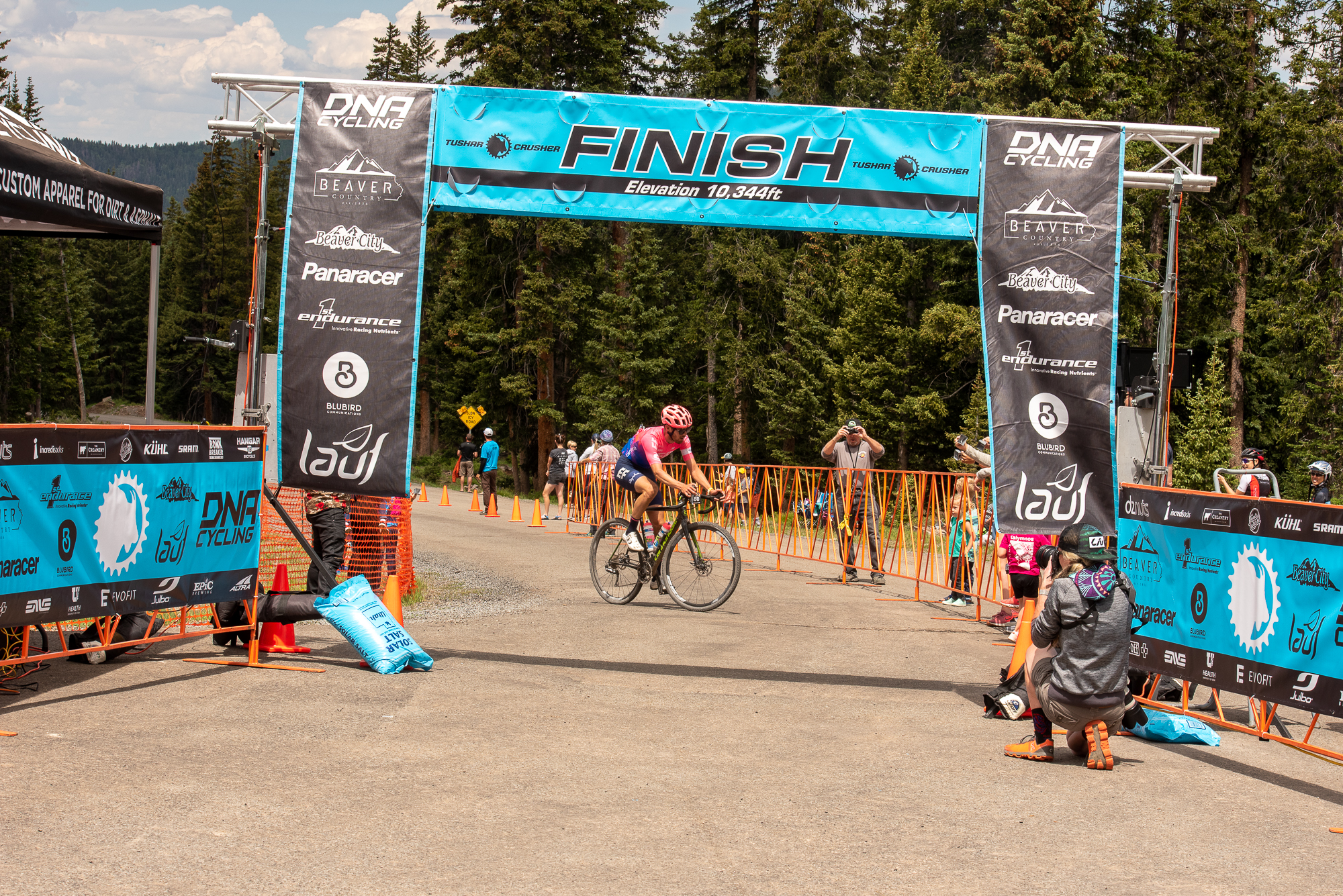
Alex Howes (EF Education First) decides to paperboy the last few meters to cross the line in third place. First a swing to the left … Photo: Steven L. Sheffield.
… and then back to the ri-i-i-ight … Photo: Steven L. Sheffield.
Howes then throws his bike in a lunge across the line to win the sprint against the altitude demons … Photo: Steven L. Sheffield.
Once across the line, Howes goes back to delivering newspapers. Photo: Steven L. Sheffield.
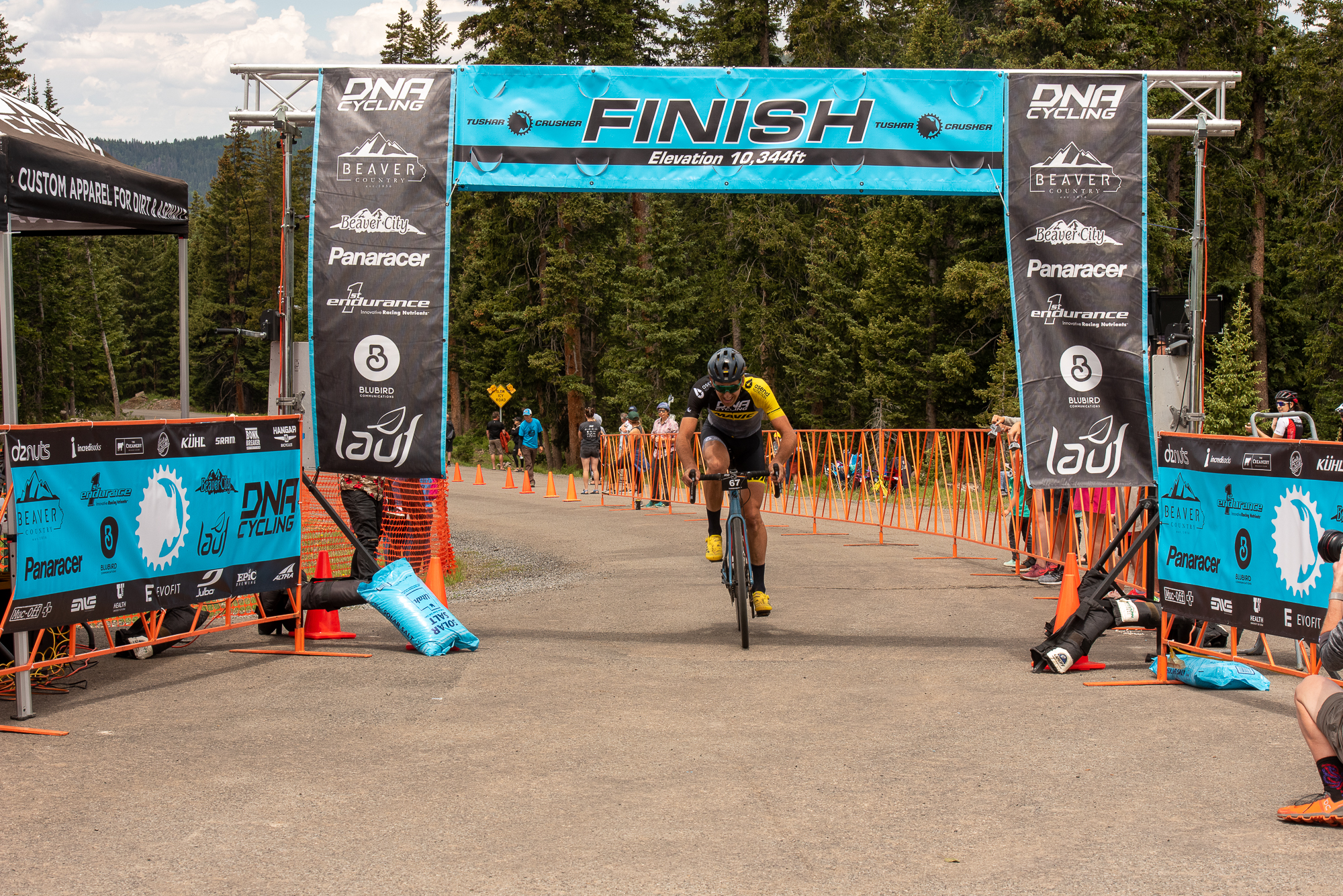
Jamey Driscoll (DNA Cycling-Mavic) crosses the line in 4th place. This is his 7th consecutive top-5 finish in 8 attempts. Photo: Steven L. Sheffield.
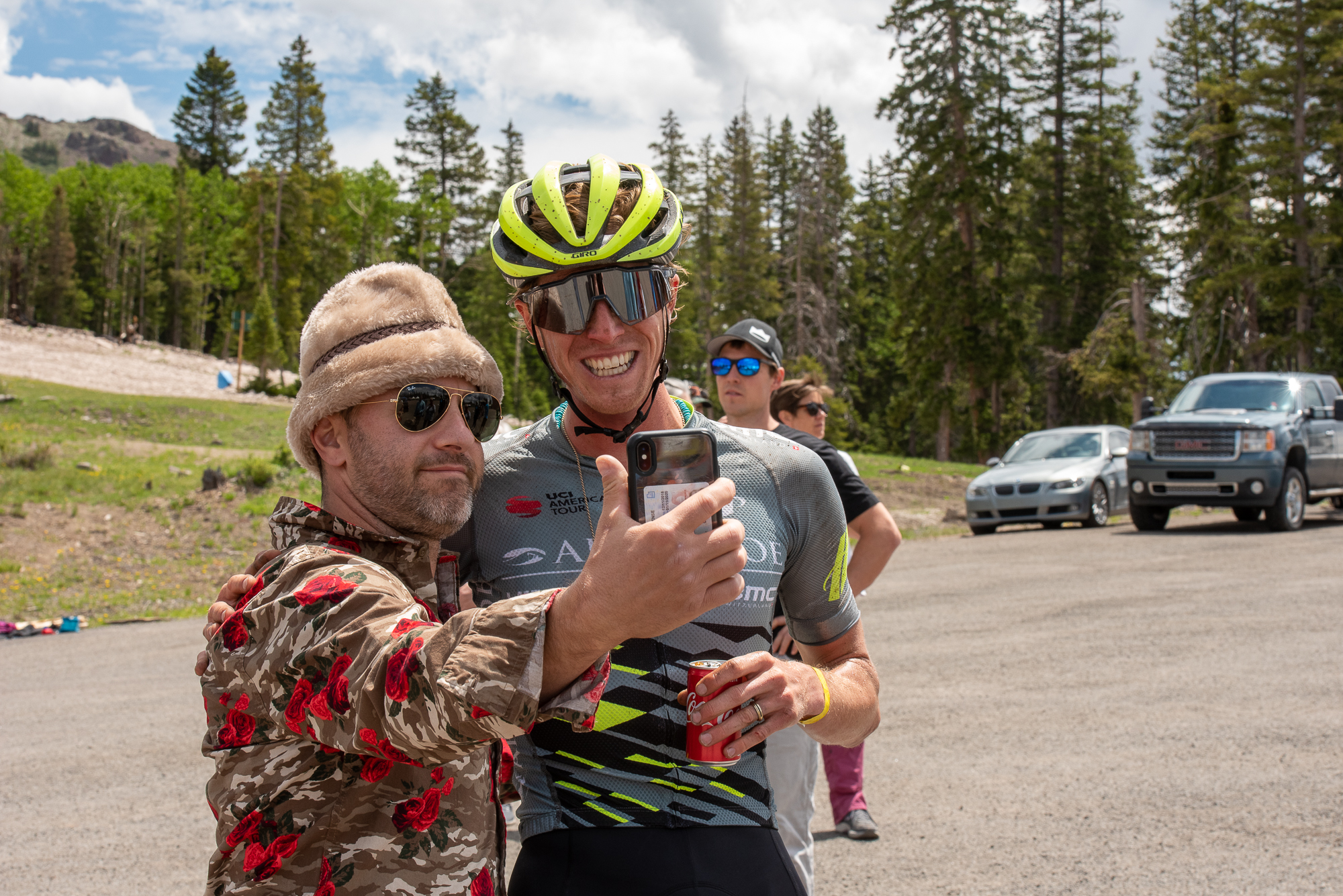
Race announcer Ali Goulet grabs a selfie with 6th place finisher TJ Eisenhart after the finish. Photo: Steven L. Sheffield.

Las Vegas Area Lee Canyon Ski Resort May Add Mountain Biking

The Lee Canyon Ski Resort may add a mountain bike component. The U.S. Forest Service (USFS) is developing a plan to allow it at the resort in the Humboldt-Toiyabe National Forest in Nevada. The proposed forest plan amendment would have to not alter the area in a way to disturb the habitat for the the Mount Charleston Blue Butterfly, which was listed as an endangered species three years ago.

So USFS is taking public comments on its Draft Environmental Impact Statement for the Lee Canyon Ski Area Master Development Plan and a proposed forest plan amendment. USFS announced the proposed plan last year.

Currently, the Lee Canyon resort offers winter sports and summer activities such as hiking and camping but no dedicated bike trails. The resort lies at the end of Hwy. 156 in Lee Canyon, Clark County. USFS has proposed adding mountain biking along with other activities such as ziplining and more hiking. USFS frequently allows mountain bike trail development in ski areas. The proposal calls for 13 miles of cross country trails of varying difficulty (in some parts shared with hikers) and one mile-long downhill trail with jumps, bridges, seesaws, etc.

USFS tried to devise a trail system that would not go through the butterfly habitat, but some of the former caterpillars have been seen in the area in the past. USFS’ scoping report of last year stated that the plan was designed to avoid disturbing plans the endangered butterfly likes and it will try to improve conditions in the areas the plants grow. The report also noted that a plan will have to deal with the possible erosion problems the downhill trail could cause.

The draft up for review notes the possibility of collisions between hikers and bikers where trails intersect and notes that adding recreational activities would change the natural feel of the area.

Find links to all the details here: https://www.federalregister.gov/documents/2018/08/17/2018-17730/humboldt-toiyabe-national-forest-clark-counties-nevada-lee-canyon-notice-of-availability


Montana’s 12 and 24 Hours of Flathead Features Adaptive and Bicycle Courses

By Dave Iltis –

The 12 and 24 Hours of Flathead, a mountain bike race in its seventh year, will be held on August 17 and 18, 2019 in Kalispell, Montana. The race will be held in the beautiful Herron Park. The race will feature both a hand-cycle, adaptive course, and a bicycle course.

We asked race organizer Tia Celentano to tell us more about the event.

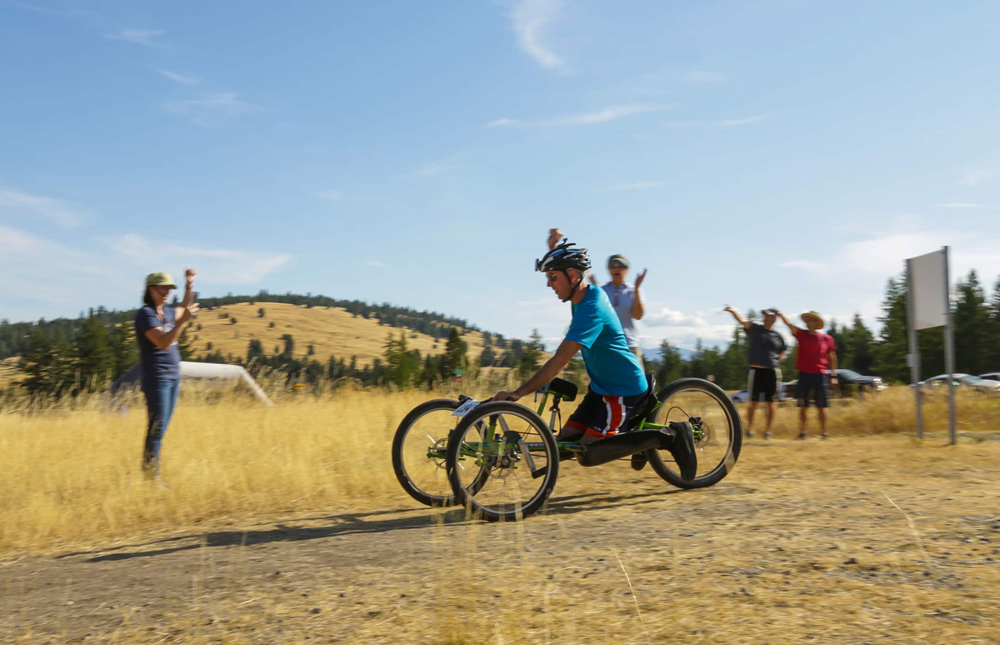
The 24 Hours of Flathead has an adaptive category. Photo by Heather Cauffman, courtesy 24 Hours of Flathead

Cycling West: Tell us about the history of the race. The race has an adaptive component and is one of the few, if not the only, 24 hour race with an adaptive category. Tell us more about this.

24HF: We are Montana’s only 12hr, 24hr and Adaptive mountain bike race! Our bike race is a 501(c)3 and our mission since day 1 has been to provide adaptive equipment and recreational opportunities to individuals living with paralysis. For the first 4 years of the race, we really wanted to incorporate an adaptive course, but there were some logistics we needed to figure out and connections we needed to make. We made a connection with Moving Forward (they have a similar mission as ours) and they are run by a group of individuals that are paralyzed. So Mark, one of our board members, made contact with Matt Sather of Moving Forward and together with the help of a few others they were able to design an adaptive mountain bike course for the race!

CW: Can you describe the course?

24HF: The non adaptive course is roughly 8.5 miles with just over 1330ft of elevation gain. You start out on a fun single track for a few miles and then you hit a dirt road, which is where you get some of the elevation, you follow the dirt road to the top of the Chase downhill section and then you take a ride down the Chase and then you connect with the Boundary single track which you climb to the top of the Notch overlook and then you come down the Notch single track and make your way back to the start! The Chase and Notch downhill sections are not the same and each offers a different type of experience. The Chase has some pretty fun berms and sharp corners, while the Notch has some technical rock features and sharp corners and no berms. As long as you remember and know to sit back on both of these DH sections, then this is a course for everyone! We’ve had 13 year old kids and 70 year old adults do this course.

CW: What sort of pre, post, and in-race festivities are there?

24HF: All summer long many of the breweries in Flathead Valley host us with their community nights. This is where they donate a portion of all their sales to us, like $1 for every beer sold. On these nights, we give away a free entry to the race and give away stickers, bottle openers and other fun stuff. We also answer questions people may have about the race as well and try to entice them to register! For the race festivities, we have 2 musical acts this year performing, we try to have 2 every year, this year we have the Mike Murray Duo and Dan Dubuque, both are local musicians who are super talented! We’re stoked to get them! On Sunday, right before the awards ceremony, we will be having a Tex-Mex lunch that is free to all the participants. This is being sponsored by Red’s Taco House of Kalispell.

CW: Proceeds of the race go to an adaptive grant. What sorts of things do the grants fund?

24HF: This grant can go towards the purchase of new tires or equipment that an adaptive person may need in order to recreate or just to get outside or it can go towards bigger things like a mountain bike, adaptive paddleboard or kayak. We really believe that everyone who lives here shouldn’t be restricted to the types of activities they can do just because their not able bodied. We want to help them, because this stuff is so expensive and we want to help with that burden. An adaptive bike can cost anywhere from $6k – $12k…that’s as much as a car!

CW: What options are there for motels and camping in the area? Are there options for family fun after the race?

24HF: There is actually a bike hostel right in downtown Kalispell, Kalispell Hostel. It’s owned and run by Wheaton’s Cycle, which is our 24hr Title Sponsor- they’ve had our backs and believed in our mission and us since the beginning. The hostel sleeps up to 8 people and it’s right downtown! People can also continue to camp at Herron Park for $10 a night or head over to Bigfork and camp right on Flathead Lake; there are a ton of State Parks on Flathead Lake and many offer paddleboard rentals and kayak rentals too. They can also head over to Glacier National Park, camp in the park or at a hotel; and on the way there are a ton of family places to stop at (water slides, tree house, go carts, mini golf, house of mystery and zip lining) or they can head up to Whitefish Mountain Resort for more fun mountain biking; they have DH trails which are accessible by lift or cross country trails down below and a ton of fun family activities to do as well such as Alpine Slides, walk in the tree tops and even tubing!

CW: Is there anything else that you would like to add?

24HF: When people hear 12hrs or 24hrs of mountain biking, they automatically assume they have to bike for that long, but that’s not the case, at all! First, you can ride this event solo or in a team of up to 5. Second, you don’t have to ride the entire 12 or 24 hours, you can take a break whenever you want, because everyone wins a prize or even two! We do have special prizes for most and fastest laps though. If you do the 12 hour course with a team of 5, each person only needs to ride two times and they are done! Because we heard that so much, we incorporated a Hot Lap, which is just a single lap, there’s a small fee, but you start when you want in the 24hr time frame and just do one lap! One of my favorite things about our race is, the fee to enter is small compared to other races, especially if you sign up early. We don’t giveaway a cotton t-shirt that’s 3 sizes too big; we give away performance t-shirts or something sweeter. This year we had custom Buffs made, which are awesome and totally unique AND we get a ton of sweet bike stuff donated by Wheaton’s and QBP and that allows everyone who enters to win something; bike tire, tools, socks, etc. In so many ways this isn’t your traditional bike race, from the music, to the food, the courses and the prizes; we think we’re pretty unique and we hope our past and future racers think so too!

Event Details:

August 17-18, 2019 — 12 and 24 Hours of Flathead|, Kalispell, MT, A non-profit race to provide awareness and adaptive equipment to individuals living with paralysis and other life altering disabilities. Race features both bicycle and hand cycle courses. Held in Herron Park., Tia Celentano, 406-261-1769, [email protected], 24hoursofflathead.org, facebook.com/24HoursOfFlathead

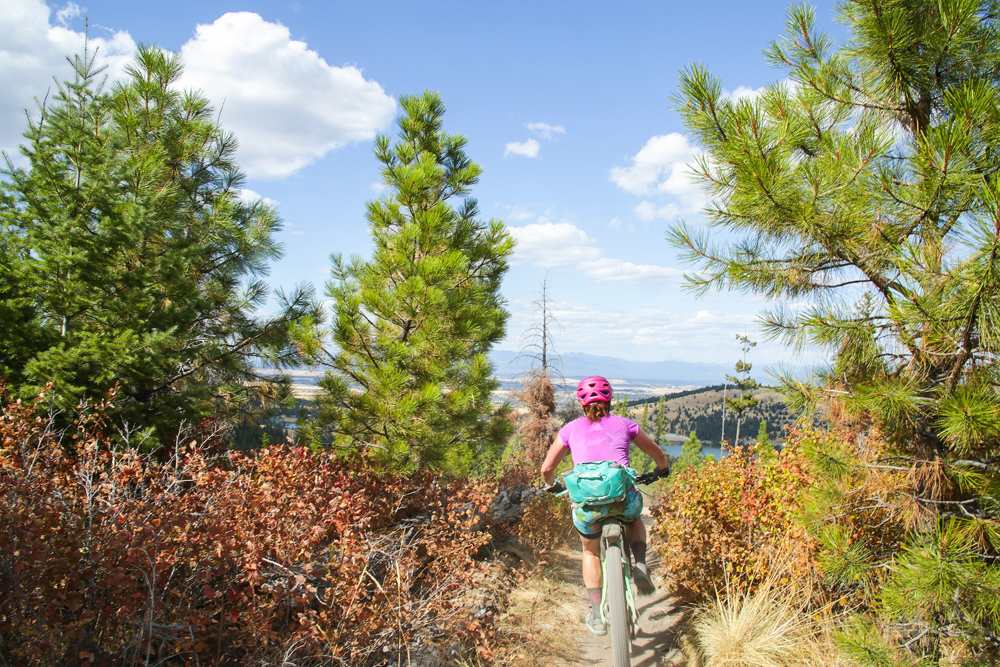
On course with Foys Lake in the background. Photo by Heather Cauffman, courtesy 24 Hours of Flathead

Bike Friendly Communities 2018: Glenwood Springs, Colorado & Orem, Utah

Small town status can bring some advantages when it comes to becoming a bicycle friendly community (BFC). Glenwood Springs, a city in western Colorado with an official population of less than 10,000, won silver status as a BFC in the spring round of awards given by the League of American Bicyclists (LAB). Only one other city in the Mountain West got a BFC designation this round (Orem, UT; more about it below.)

Glenwood Springs, Colorado

Glenwood Springs scored with LAB’s reviewers because of its bike ambassador program started last year with a new local bicycle advocacy group, Glenwood Springs Bicycle Advocates. They stationed volunteers at key intersections. Volunteers in bright yellow vests help riders find their way around town, tell people how to ride safely and so forth, explains Tanya Allen, Glenwood Springs transportation manager.

The Rio Grande Trail. Glenwood Springs, Colorado was designated a Bicycle Friendly Community by the League of American Bicyclists in 2018. Photo by Jack Affleck, courtesy visitglenwood.com

The city started the collaboration last year when it realized that a major construction project was going to block roads downtown. “To keep traffic flowing through downtown, we needed to get 30 percent of cars off the road. Bicycling was seen as a big contributor,” Allen explains. The advocates asked the city how they could help. The bike group also was able to point out some quick fixes, such as adjusting curbs and adding signage to make it easier to get around town by bike,” Allen recalls.

The volunteers “reported back to us on how many people they saw and what kind of signage they needed,” she added. “We are now building on the partnership to continue the momentum.”

“In a smaller town, the education and encouragement can be easier because you have a smaller crowd and can reach a higher volume of the population,” explains Amelia Neptune, LAB’s bicycle friendly America director. Placing volunteers at a key intersection, “you can probably reach a higher percentage of commuters than you can in a big city…It might be easier to make connections between local advocacy groups, volunteers and local businesses where you have a more tight-knit community.”

Also, in a small town, more people might be able to bike to work. The bicycle commuting rate in town totals 2.63 percent, better than a lot of places, Neptune says.

LAB was also impressed by Glenwood Springs’ trail connections, including the Glenwood Canyon Trail managed by the Colorado Department of Transportation connecting the town to Glenwood Canyon; and the Rio Grande Trail, connecting to Aspen; Neptune says. LAB also liked the city’s bike-ped bridge over the Colorado River that opened last year.

But if Glenwood Springs wants to score higher, it needs to create a bicycle advisory committee and come up with a “Vision Zero-type road safety comprehensive plan,” Neptune says. Allen says she hasn’t seen the recommendations yet.”We have a transportation committee with a couple of bicycle advocates but we don’t have a standalone committee that deals with bike and pedestrian issues. Some of our neighboring communities have and we can see that in the future.”

And the city expects to open more bike trails in the next year or two, she adds.

Orem, Utah

Orem, meanwhile, won bronze status. It impressed LAB with events such as its “Roll with the Mayor and Cruise with the Council bike ride. In 2015, the city passed a transportation master plan “that did a good job of prioritizing biking and walking,” Neptune explains. LAB also liked the fact that city buses allow bikers to bring their bikes in the cabin and rack them vertically.

If Orem wants to score higher, it should create an official bicycle advisory committee and increase staff time for cycling, such as by designating a bike program manager. Neptune acknowledges that creating a position “can be hard for smaller communities. It doesn’t have to be full time but we want to see more staff time dedicated for bicycling.” Orem is also working on bike connections with neighboring towns, and LAB will want to see how they work.

For more, see: bikeleague.org/community

Tour de Fat Announces Dates for 2019

You’ll have to spend the day in one of three cities to attend a Tour de Fat bicycle fundraiser this year. In its 20th year, New Belgium Brewery has cut the number of events in half to three events for 2019. It overexpanded to 33 cities in 2017, so it cut back to six last year.

You can count on attending a Tour de Fat in the two cities where New Belgium operates breweries: Fort Collins CO on Saturday, Aug. 31; and Asheville NC on Saturday, Sept. 21. A third Tour de Fat is planned for Tempe AZ on Saturday, Oct. 5.

The events will be free this year; last year New Belgium charged admission for the first time.

Details will be available at newbelgium.com


Montana Trails to see New Trail Grants

By Charles Pekow –

Trails in Montana can share in a new source of funding. In May, the state legislature enacted SB 24, which increases vehicle registration fees and earmarks the additional funds for outdoor recreational purposes such as bike trails. The legislation sets up a new Trails and Recreational Facilities Account and Grant Program. The Department of Fish, Wildlife and Parks will operate the fund. Local governments and private recreational organizations can get grants to build and rehab trails and finance accessories such as trailheads, signs, picnic tables, fencing, etc.

Grantees can use up to seven percent of the money for administrative expenses and would get three years to spend a grant.

Registration fees will vary depending on the age and weight of the auto, trailer, boat or snowmobile. The law takes effect next January (https://legiscan.com/MT/research/SB24).


Congressional Act Officially Establishes McCoy Flats Trail System

By Charles Pekow –

As to BLM provisions, the John D. Dingell, Jr. Conservation, Management & Recreation Act (S. 47) officially establishes a McCoy Flats Trail System in Uintah County and a San Rafael Swell Western Heritage & Historic Mining Recreation Area.

With regard to McCoy Flats, the law calls for establishing an official McCoy Flats Trail System to be developed within two years and include new mountain bike trails. “It is going to be super; we are really looking forward to it,” says Amber Koski, assistant field manager for BLM’s Vernal Field Office. Other than that, Koski referred questions to Jonathan Moor, public affairs specialist for BLM’s Green River District.

“We are still taking a look at this and trying to develop plans,” Moor says. “It is still a work in progress.” BLM hasn’t decided how to handle the public input process, he added.

The law gives BLM five years to come up with a recreation management plan for the San Rafael Swell and two years to develop an outdoor recreation plan, including bicycling. It must establish an advisory council within six months. The seven member San Rafael Swell Recreation Area Advisory Council must include one representative of “nonmotorized recreational users.” Moor says BLM will publish a notice in the Federal Register when it’s ready to seek nominations.


Biking to Transit: First Mile, Last Mile?

By Charles Pekow –

Can better connections to bus and train depots increase ridership? A new research brief from the Transitway Impacts Research Program at the University of Minnesota asks that question. The university looked at how Twin City commuters and others in 16 areas around the country got to public transit (cts.umn.edu/Publications/ResearchReports/reportdetail.html?id=2776).

“Women are more likely to view biking negatively than men do. This possibly indicates barriers to bike usage compared to other modes,” the report says. And while people considered time the biggest factor in choosing how to get to the bus, they also factored in safety.

A specific question the program asked was whether better bike connections would help. It came up with a quite unsatisfactory answer: “There was a lack of nationally consistent data about bike and pedestrian facilities. As a result, the study could not determine if better bike or pedestrian connections would create more transit trips.”

The project did, however, come up with a new way to measure bike connections to transitway stations. Rather than just counting routes or trips, it calculated the geographic area (but not the number of people) who could bike to the station on local roads within 15 minutes.


Word Art: Le Tour de France

Le Tour de France 

Prologue.
The clock ticks.

Visions of heroes.

Le favori porte le numéro cinquante-et-un, comme Merckx en 1969. 

Speedsters hiding behind a train,
waiting, waiting, waiting.
Sprint!

Post up, arms aloft.

Maillot vert.

Breakaway glory,
or hopes dashed until the next stage?

Dossard treize à l’envers pour la bonne chance. 

Mountains loom,
peloton climbs, eagles fly.

Tourmalet.

Sweat drips,
sun beats down,
lungs burst,
heart pumps,
legs spin.

Ventoux, tragic memories of Simpson.

Seconds gained.
Minutes lost.

Screaming descents,
Alps and Pyrenees.

Chute au peloton! 

L’Autobus,
struggling to finish,
only to fight another day.

Les grimpeurs attaquent avec leurs rêves de pois rouges. 

Galibier. Souvenir Desgrange,
Dutch Corner, l’Alpe d’Huez.

Contre-le-montre. 
Cinq, quatre, trois, deux, et aller. 
Tic-tac, tic-tac. 

Paris, aux Champs-Élysées, 
enfin, le maillot jaune.