Home Blog Page 197

Road Racing Lessons to Remember

It has been a few years since I wrote my first article “New Road Racing Adventures of a 43 year old Mom” when I wrote about that first terrifying crit race at RMR and my first tentative steps into the world of competitive cycling. Since that day, I have raced countless more times, pedaled my bike to amazing places that I never thought I would be, met incredible people, joined a club, gotten significantly stronger on the bike, almost finished a solo Lotoja, crashed several times, lived to ride again and learned a ton. Below are a handful of things I have learned. None of them will likely make you finish faster. That is still not my strength. They might be of use to the newbie just considering rolling up to a starting line as well as the seasoned cyclist who is finding themself in need of remembering a few things.
  1.  
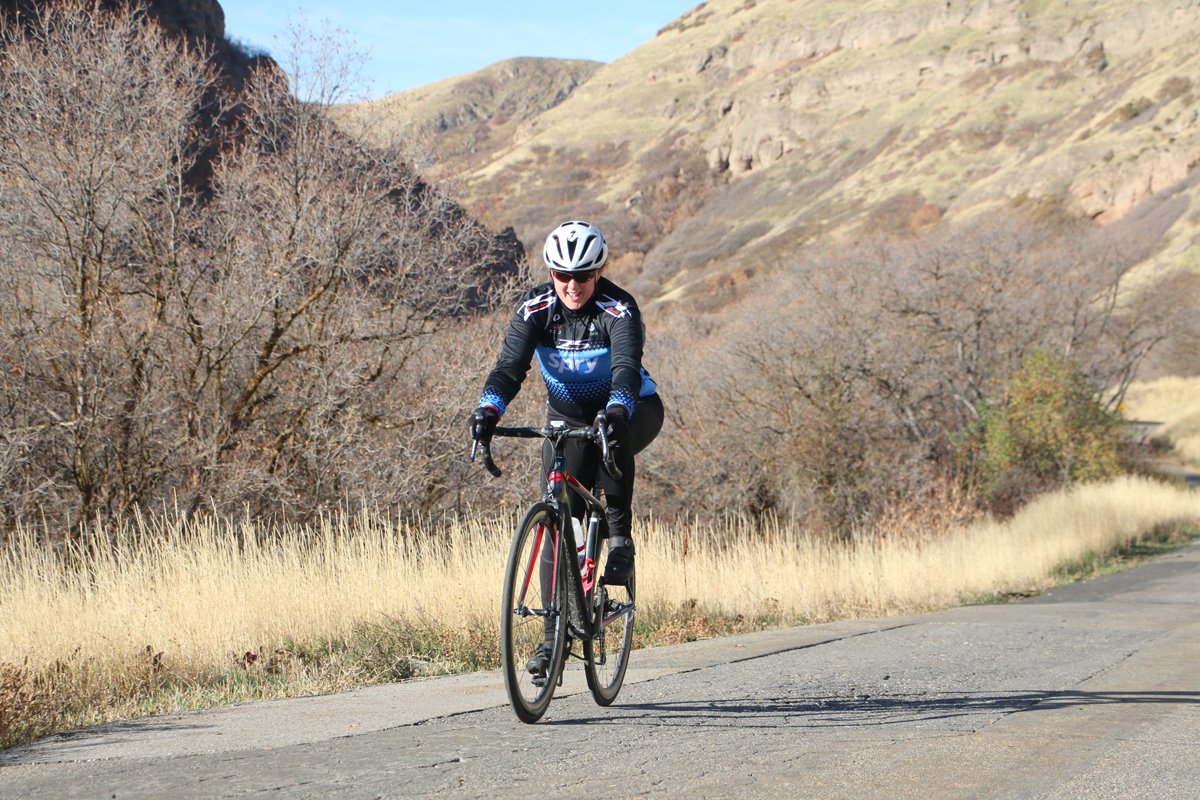
Kelly McPherson in the City Creek Bike Sprint. Photo by Dave Iltis
  1. Weight is important. I am a heavier cyclist. I have been trying to lose weight since I started cycling, but really haven’t had a ton of success. It is frustrating to Strava-stalk people after a ride to compare power measurements and find that I am generating 30% more power than those around me while they are riding easy and I am doing everything I can just to hang on. More weight equals more mass to move as well as more for my heart and lungs to support. It is simple physics. I saw a girl go from back of the pack to front of the pack in one season, just by losing a few pounds. As one of my teammates recently pointed out, it is sad that you can line girls up by weight and often that is the order they will finish in. If you want to be faster, be lighter.
  2. Weight isn’t everything. While it is important to be light, you can make up some of the difference by being more experienced, smarter or more skilled. Knowing that the attack won’t last forever, how to corner well and how to fuel and hydrate properly can make the difference between staying with the pack or getting dropped. Last summer, I beat a lighter girl at a DLD crit because I realized that she didn’t know how to corner or descend well. I used that to my advantage to put as much distance as possible between me and her so she couldn’t make up too much ground on the climb, where I am weaker. Of course, the next time I raced her, she figured out how to corner and so beat me instead.
  3. Get help, when you need it. I don’t care how long you have been an athlete, you don’t know everything. Oftentimes, I see athletes who started in another sport try cycling with lots of athletic ability get frustrated and quit because they aren’t used to losing. Don’t quit! Get help and learn what you need to do to get where you want to go. A good coach is worth their weight in gold, even if you only use them for a short time. A nutrition clinic could give you that one tip you need to solve your GI issues. That question you post to the Facebook group isn’t proof that you are stupid. It’s proof that you are smart enough to learn wherever you can. Keep reading. Keep asking. Keep yourself inquisitive about your sport.
  4. It isn’t always about the win. I had a teammate ask me why I continue to race crits even though I almost always come in last. I have learned that if the only reason you race is because you win, you will likely stop racing when you stop winning. Someone has to be the one in back. If only the winners continue to race, then that becomes a very small race. Everyone races for their own reasons and I would strongly suggest that you find your “why” other than winning. For me, there are several reasons, but mostly it is to continue to overcome the overweight, type II diabetic, non-vegetable eating, sugarholic that I used to be. That isn’t me anymore, but I have to fight for that each and every day. I could probably do that with regular casual century rides, but I don’t feel the drive to improve with those like I do with racing. It is this desire to improve that keeps me focused on power kale salads, interval work and consistent daily workouts toward my goals. It is this craving for improvement which keeps me focused on the healthy behavior changes that have led to measureable physiological changes that show I am winning my war against the diabetes, stroke and heart disease that plagues my family and sets a strong positive example for my children.
  5. Don’t watch the Youtube crash videos. For every video of a race going smoothly, there are 100 videos of someone crashing spectacularly. For every crash, there are at least 100 races that don’t have a crash. Youtube videos unfairly represent how dangerous cycling really is. Yes, racing has its risks, but most of the time no one crashes. If you are scared of racing because you don’t want to crash, stop watching crash videos! Instead, watch the videos that give good instruction on how to ride in a group effectively, how to lead attacks or how to support another rider. Those would be a much more productive use of your time.
  6. Cycling friends are more valuable than your bike. I don’t care how valuable your bike is or how good of a rider you are, all on your own. Cycling friends are the ones who will get you back on the road when you have lost your motivation, encourage you to try again when you have had a bad race, give that one tip that you needed to overcome a barrier and even help you win a race that you wouldn’t have otherwise been able to win on your own. Finding those friends often means the difference between staying in the sport or leaving it. Find a team that fits who you are and get involved. Ride the group rides. Give kudos on Strava. Comment on the message threads. Consistently and regularly give support to others whether or not they might be able to help you at some point. I cannot tell you how many times a well-placed comment or word of encouragement has gotten me back on track. I hope I am doing the same for others.
  7. Consistency is King … or Queen. Go for the long game. Small habits consistently performed over time will have a greater impact than massive efforts in the short term. This is true no matter the area of life, cycling or otherwise. You will have up days and down days. The true and most significant gains are made when you are consistent for a long period of time. Keep it up!
  8. There is always more hill. Once you get to the top of the hill, there is always another one. Continue to set goals that excite you. I have been training to complete Lotoja for 6 years. Yes, that is a long training plan and it has sometimes been a struggle to stay excited about it. The first year I rode it, I finished 159 miles before it got dark. The 2nd year, I didn’t get in, but continued to train. The 3rd year, I successfully rode it with a relay. The 4th year, I broke my wrist 4 weeks before the race, got my cast off 2 days beforehand and finished 185 miles before it got dark. Last year, I got a nasty concussion in May that kept me off my bike until almost July and then got shingles in mid-August. I finished the entire course, but 15 minutes too late to count as a finish. I am positive, if I can stay rubber-side-down, that I will finish Lotoja before 8:30PM this year. My training is good and I am stronger than I ever have been in my life. This will be the year that I finally complete the goal that proves to me that I am no longer that overweight mom that I was many years ago, that I have finally completed the transformation into a new, healthier person. Am I done? What will I do next year once I have accomplished this? Not quit, of course! I am not sure yet. . . but I have been plotting a route on Google Maps from Washington DC to Lincoln City, Oregon. Hmmm. . . maybe? Anyone want to join me?

Kelly McPherson is a 40+ cyclist who lives in South Jordan UT with her husband of 27 years and 5 kids. She has a BS in Health Education from the University of Utah and loves to stay healthy and fit and take as many people with her as she can.


Study Looks at How to Encourage Women to Cycle

By Charles Pekow

Cycling West - Cycling Utah Magazine logoA new twist on an old issue: what keeps women from cycling? It has been well documented that women don’t cycle as much as men. But what are their attitudes? A research team surveyed 1,868 women who do cycle confidently in the United States and Canada and asked them what problems they saw, though many evidently overcame them. The team published its findings as Advancing Cycling among Women: An Exploratory Study of North American Cyclists, published in the Journal of Transport and Land Use (https://jtlu.org/index.php/jtlu/article/view/1461).

Most of the women surveyed cycled because they wanted to – few did because of a lack of other options, though presumably those most apprehensive to cycle wouldn’t be included in the survey. Some did like the fact that it saved gas or bus/train fare, however. The report goes on to say that communities can encourage women to cycle in various ways. These include everything from building proper infrastructure (women said they preferred riding on bicycle-separated routes) to encouraging cycling culture in workplaces and schools. Planners also need to consider the different skill levels among cyclists and cater to all of them.

Most of the survey respondents had graduated college. They ranged in age from their 20s to 50s, with 87 percent white and only 23 percent with school-aged children. While some didn’t mind riding on streets with traffic, one impediment for a lot of them was not wanting to. Even most of those feeling confident on street riding said they’d prefer cycle lanes – especially separated ones.

Even the most experienced and confident women cyclists expressed safety concerns about sharing roads with autos, but that concern probably doesn’t vary by gender.

“This study found that most women cyclists were environmentally focused, given that sustainability was frequently reported as an important motivation for them to cycle. This could be a potential marketing message to encourage more women to cycle in the future,” the report suggests.

It also notes that making cycling fun and appear safer may encourage riders to bike for transportation: “Participation in recreational cycling may help to build the cycling skills and comfort needed to shift to utilitarian cycling,” it suggests. A good number of women ride on trails but don’t bike when they need to go somewhere and trails or paths aren’t available, and maybe many would if they found separated bike lanes along the route.


Preview: 9th Crusher in the Tushar Set to Roll from Beaver, UT July 13th

World Tour Pros, Gravel Crushing Joes Gear up for a Huge Day in the Saddle at the 9th annual Crusher in the Tushar. 

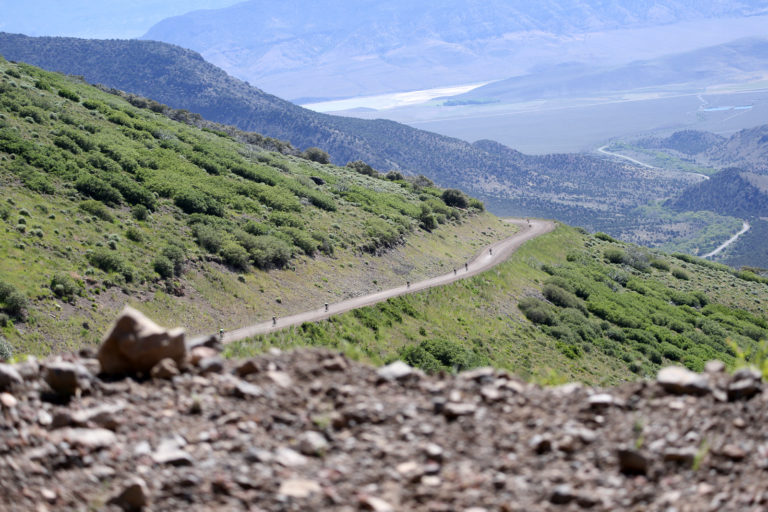
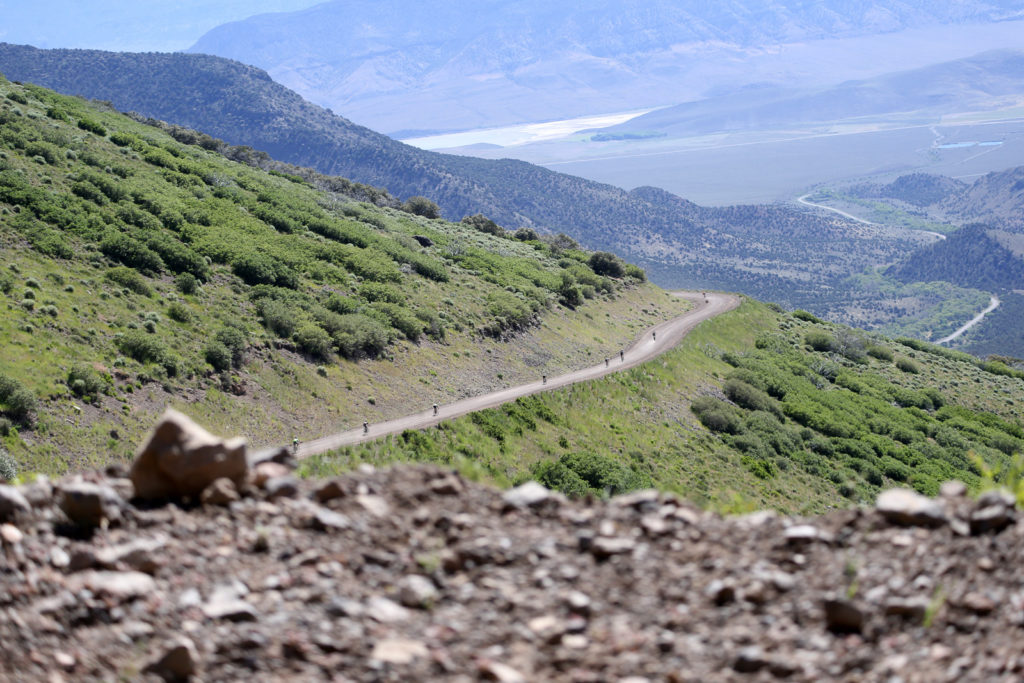
Col d' Crush
Col d’ Crush. Photo by Catherine Fegan-Kim.

BEAVER, Utah (June 27, 2019) –The sold out 9th edition of Crusher in the Tushar presented by DNA Cycling is set to roll out of Butch Cassidy’s hometown and into the Tushar Mountains on July 13th. More than 600 riders including defending champs Zach Calton & Lauren De Crescenzo; reigning Queen of Kanza Amity Rockwell, EF Education’s Alex Howes, and domestic pros TJ Eisenhart, Travis McCabe and recently crowned U23 National Road Champion Lance Haidet will take on the 69-mile route with 10,000 feet of climbing, which tops out at a lung-searing el 10,500 finish line.

One of the “monuments” of mixed-surface events, through the years Crusher has drawn the likes of active WorldTour pros Danny Pate of Team Sky and Dimension Data’s Ben King; Dirty Kanza winners Colin Strickland, Allison Tetrick, Rebecca Rusch & Ned Overend, Olympians and other notables. Yet whether pro or Joe, event director Burke Swindlehurst has never wavered in his dedication to every rider that toes the line.

“I’m stoked on that so many active and former professional road, cyclocross and mountain bike racers are drawn to Crusher,” said Swindlehurst. “But it’s riders like 8-time finishers Josh McCarrel and Brandon Banks who come back year after year, that really makes me proud that The Crusher is a fixture of this cycling community. I view it as more than just a bike race, but an experience for each participant—regardless of ability level—to seek out their own personal challenge.”

Billed as “road + dirt”, the Crusher challenges not only one’s legs but the equipment choices they power. While best tackled on a modern gravel bike, riders have taken to the course aboard cyclocross rigs, road frames, mountain bikes and in some cases the seemingly illegitimate offspring of all three.

On-course aid is provided by First Endurance and Bonk Breaker. Premier event partners include DNA Cycling, Panaracer, Lauf, Beaver Country and Beaver City. All supporting partners can be found here

Crusher At-A-Glance

  • 9th edition, sold out with 600 registered riders
  • 69-mile route with 10,000 feet of climbing. Peak elevation of 10,500 feet
  • Departs from Beaver, UT, birthplace of Butch Cassidy, and ends at Eagle Point Resort
  • Traverses Tushar Mountains and Fishlake National Forest 
  • Course highlight: the 8% average, 5-mile long Col d’ Crush KOM/QOM washboard climb that tops out just below el 10,000 ft

For more information visit http://tusharcrusher.com.  

Single speed racers have more fun. Photo by Catherine Fegan-Kim.
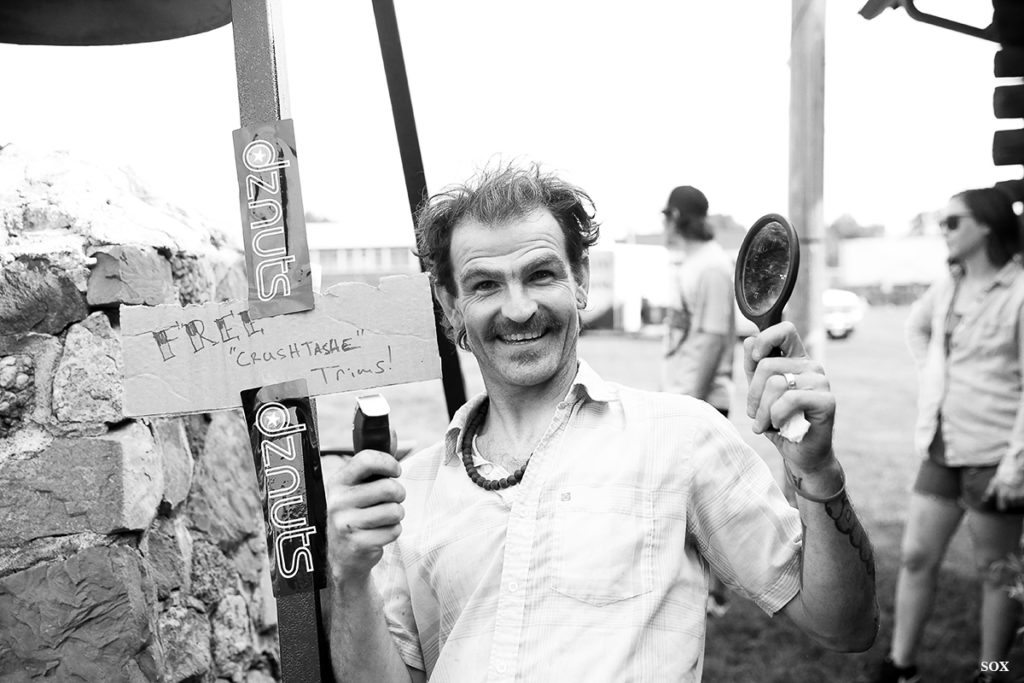
Crustache station. Photo by Catherine Fegan-Kim.
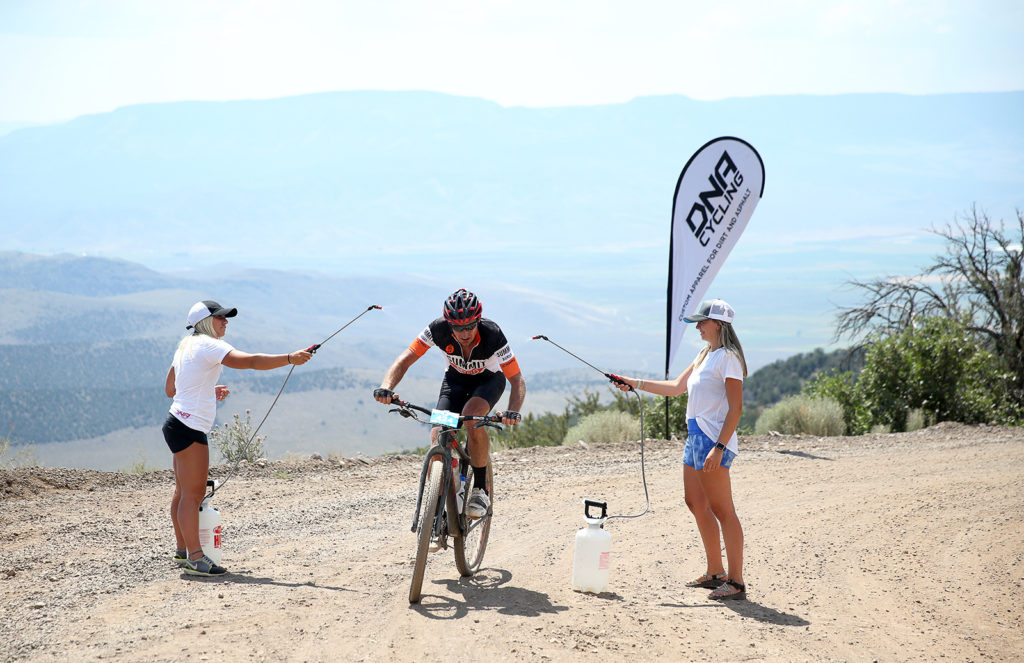
A little spritz’n. Photo by Catherine Fegan-Kim.
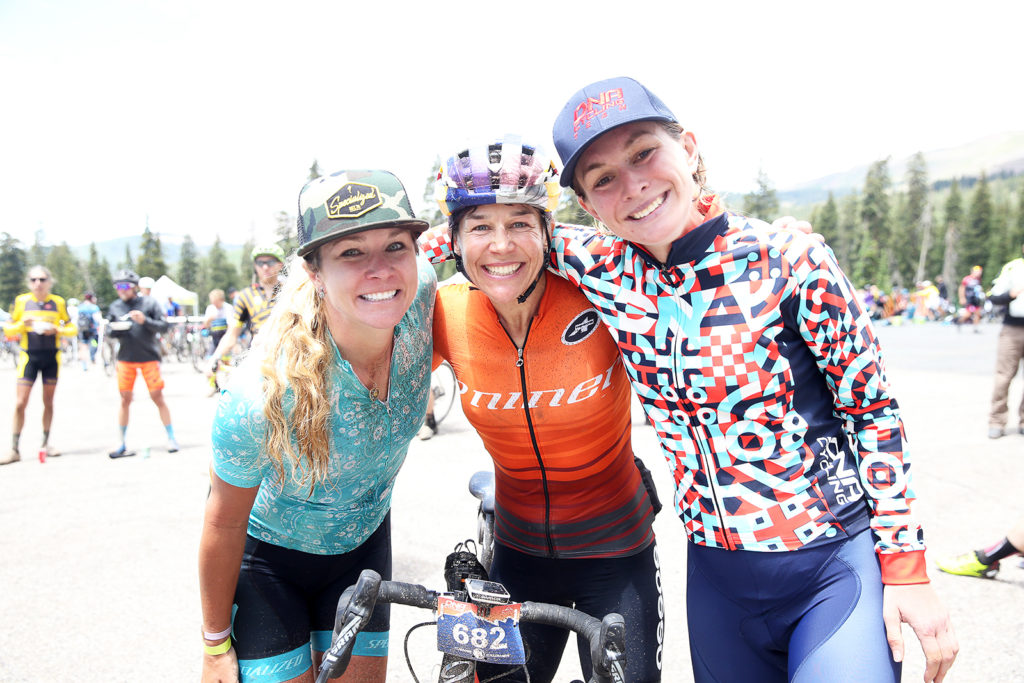
Ali Tetrick, Rebecca Rusch and Lauren De Crescenzo. Photo by Catherine Fegan-Kim.
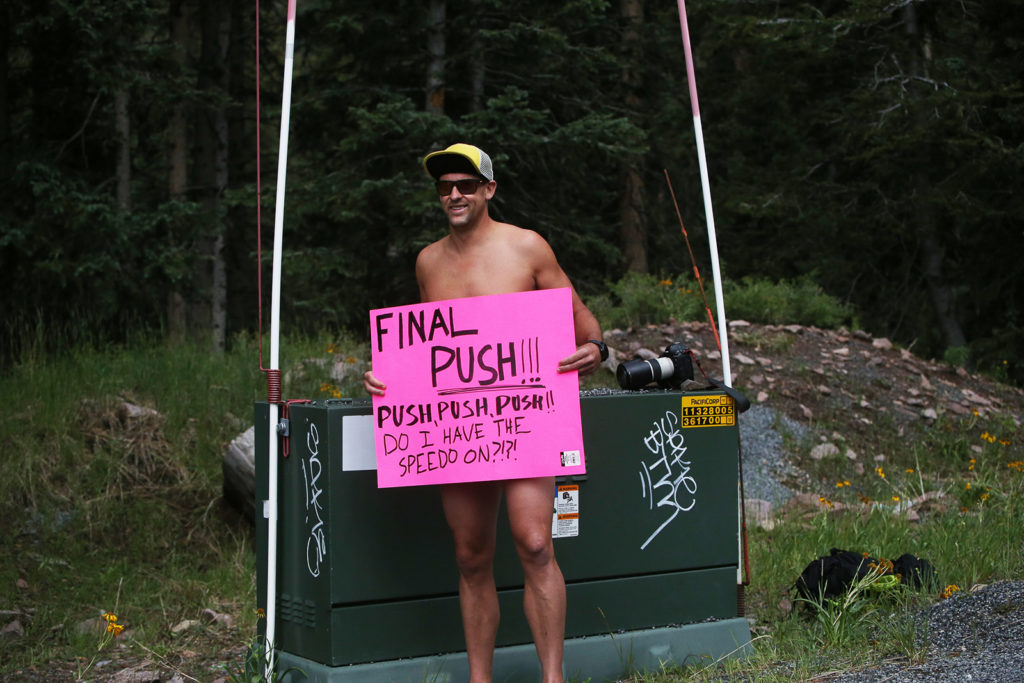
Final Push. Photo by Catherine Fegan-Kim.
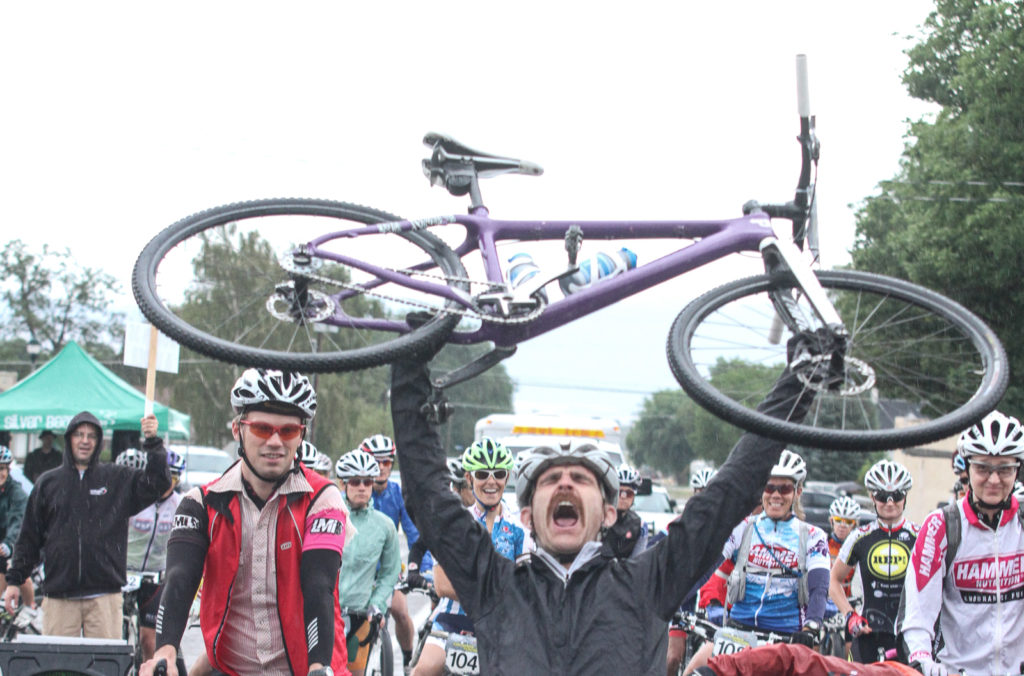
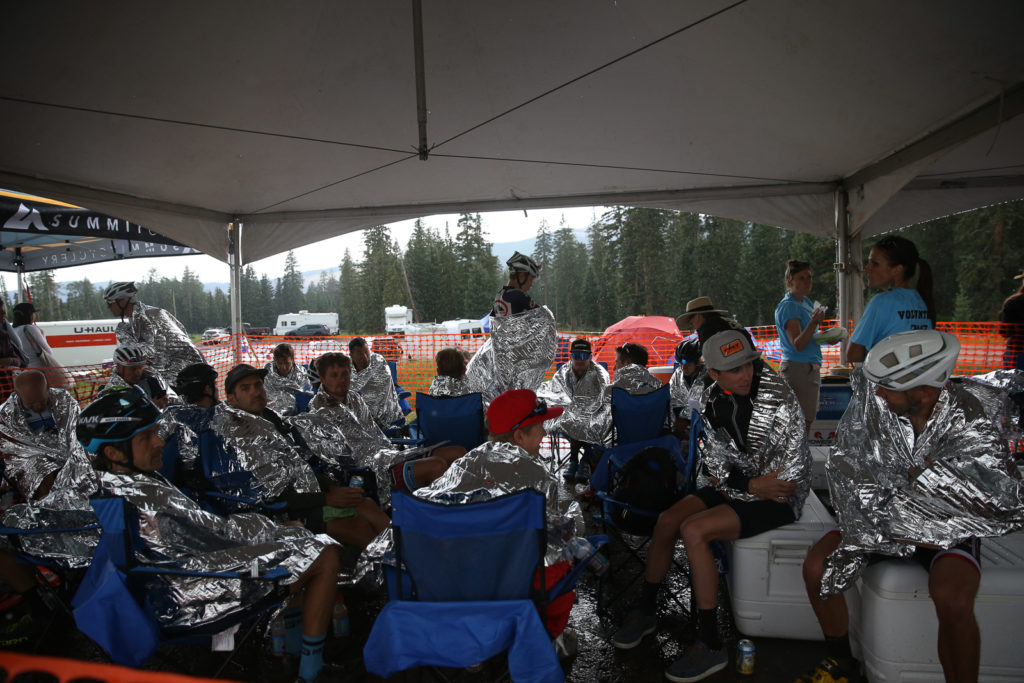
Racers tried to warm up after riding through a hail storm over the last few miles of Crusher 2017. Photo by Catherine Fegan-Kim.
2017 had an epic finish – Janel Holcomb was the winner of Pro Women. Photo by Catherine Fegan-Kim.
Neil Shirley grabs some cash at the KOM. Photo by Catherine Fegan-Kim.
2016 winner Robbie Squire climbs with a smile. Photo by Catherine Fegan-Kim.
Crusher announcers fuel up for race day in Beaver, Utah. Photo by Catherine Fegan-Kim.

Study: Mountain Bikers are More Efficient, Hardier, and Have More Fun than Road Bikers – On the Road

By Charles Pekow

Cycling West - Cycling Utah Magazine logoWhat can you tell about riders by the kind of bikes they ride? And can this information be useful in planning? A Canadian study looked at the issue. And while the authors acknowledge they haven’t answered all the questions, they found some differences in behavior among Vancouver cyclists depending on whether they rode mountain bikes, hybrids or road bikes around town.

Researchers from the universities of British Columbia and Bologna studied 531 bicyclists using the three different types of cycles. Those using mountain bikes, as a rule, rode more efficiently, faster and comfortably on major roads and rode more year round. Those who rode road bikes scored worse on those criteria, with hybrid riders in the middle.

The study, Appearance & Behavior: Are Cyclist Physical Attributes Reflective of Their Preferences & Habits?, appeared in the July Travel Behaviour & Society (https://www.sciencedirect.com/science/article/pii/S2214367X17300856) journal produced by the Hong Kong Society for Transportation Studies. The authors note that they only could document associations, not cause. They also note that local conditions could affect results and cyclists may inflate data about how much they ride.

But the report says that “cyclist physical attributes have been largely excluded from bicycle transportation analysis, limiting consideration of important aspects of physical performance….” In addition to type of vehicle, researchers have generally neglected matters such as clothing, tire type and pressure, and riding position.

Researchers queried cyclists at nine locations in summer 2016 at university, residential, downtown and waterfront bike path areas. They found that mountain bike users “had significantly lower household income than the other two clusters” and were less educated. (The study didn’t examine whether these people were riding mountain bikes on the streets because they couldn’t afford another bike and how many other cyclists also may have owned a mountain bike.) It merely notes that the least-efficient mountain bike riders “are significantly lower-income, likely related to purchase cost differences among bicycle types.” The mountain bike crew tended to report riding more year-round, though all three groups did about the same amount in summer.

Road bike riders reported cycling more for commuting and shopping, but mountain bikers reported riding more for fun. But within all the clusters, amount and type of riding varied widely. In fact, the differences between the three weren’t all that great “and the lack of large differences…could be viewed as a refutation of common cyclist stereotypes,” the report says.


Electric Bikes Can Boost Older People’s Mental Performance and Their Well-Being

By Louise-Ann Leyland, Ben Spencer, Carien van Reekum, Tim Jones

Electric bikes help older people stay sharp. Photo by Dave Iltis

Getting on your bicycle can give you an enormous sense of freedom and enjoyment. It can increase your independence and knowledge of the local area, and improve your access to the natural (or urban) environment. It can also be highly nostalgic – reminding you of your childhood cycle rides and the joy of being young.

But beyond the feel-good factor, can cycling actually make any difference to mental abilities and well-being? This was something our new study aimed to investigate – specifically looking at cycling among older adults.

While most studies incorporate exercise in a gym situation, our study wanted to examine the impact of cycling in the real world – outside a controlled environment. So older adults, aged 50 and above, were asked to cycle for at least an hour and a half each week for an eight-week period.

Participants either cycled on a conventional pedal bike, on an electrically assisted “e-bike” or were instructed to maintain their regular non-cycling exercise routine as a comparison group. Mental abilities, mental health and well-being were measured before and after the eight-week cycling period.

Mental boost

Exercise is thought to improve mental functioning through increased blood flow to the brain – as well as encouraging regrowth of cells, specifically in the hippocampus. This is known to be an area associated with memory. So it was expected that the greater physical exertion required for pedal cycling, compared to cycling an e-bike with a motor, would result in greater benefits to mental functioning.

One of the tasks we used to measure mental ability is the “Stroop test”. The task involves participants being shown the name of a colour printed on a card in a different colour script – imagine the word “blue” printed in red ink. Participants are asked to saying the colour of the ink that the word is printed in, rather than reading the name of the colour. The Stroop test measures how accurately someone is able to minimise distraction from the written word when reporting the ink colour.

We found that after eight weeks of cycling, both pedal and e-bike cycling groups were better at ignoring the written word, indicating that their mental function had improved. This was not the case for non-cycling control participants.

Pedal power

Aside from the benefits found to some mental abilities, we also saw a trend for mental health improving for the e-bike cyclists, but pedal cyclists did not change on this measure. This could be because e-bikes may be more enjoyable and easier to ride than normal pedal bikes – helping to improve mental well-being.

We also found e-bike cyclists spent more time cycling on average each week than the pedal cyclists. Many of the participants commented that they felt they could go further on the e-bike as they could rely on the motor to get them home if they could not manage it by themselves.

This research, to some extent, provides support for many bike-related motivation quotes, including the following from Sir Arthur Conan Doyle: “When the spirits are low, when the day appears dark, when work becomes monotonous, when hope hardly seems worth having, just mount a bicycle and go out for a spin down the road, without thought on anything but the ride you are taking.”

It seems then that e-bikes have the potential to re-engage older adults with cycling and provide a great opportunity to increase physical activity and engagement with the outdoor environment. So given that more than three million older people in the UK live alone, of whom more than two million are older than 75, it might just be that the use of an electric bicycle could help to improve older people’s lives by increasing independence and mobility – all of which can have a significant impact on their well-being.

Reference:

Leyland LA, Spencer B, Beale N, Jones T, van Reekum CM (2019) The effect of cycling on cognitive function and well-being in older adults. PLOS ONE 14(2): e0211779. https://doi.org/10.1371/journal.pone.0211779

  • Louise-Ann Leyland is a Research Associate in the Faculty of Brain Sciences, UCL
  • Ben Spencer is a Research fellow, Oxford Brookes University
  • Carien van Reekum is a Professor of Psychology and Neuroscience, University of Reading
  • Tim Jones is a Reader in Urban Mobility, Oxford Brookes University

This article is republished from The Conversation under a Creative Commons license. Read the original article: theconversation.com/electric-bikes-can-boost-older-peoples-mental-performance-and-their-well-being

Electric bikes help older people stay sharp. Photo by Dave Iltis


Farewell To A (Cycling) Friend

By Joe Kurmaskie — Alejandro Alverez had a way of moving a bicycle through space so effortlessly that, even though I stood half a foot taller than him, he dwarfed me with his skills. My friend from Monterrey, Mexico rode like it was the first AND last time he might own a pair of legs.

I hated him a little for that. But he seemed to live as effortlessly as he rode and so I loved Alejandro as one loves a brother from another mother.

I featured him in the final chapter of Riding Outside The Lines, and tried, but surely failed, to learn much from his style.

We met on a mountain bike adventure high in the hills above Puerto Vallarta. Alejandro and Chiquis were our guides for the week. When I asked why they weren’t taking the small airplane of questionable mechanical repute the next morning, Chiquis mumbled something about being attached to living for another day, but it was Alejandro who offered up the real reason, “Because I want to get in a warm-up ride.”

Holy Moly, that warm-up ride involved pedaling uphill while we flew, not metaphorically, but actually flew to the starting point. When Alejandro arrived not ten minutes behind the last panic stricken shuttle of tourists and bicycles, many of whom were kissing the ground after disembarking the Cessna, I knew I wanted to hang with my guides more than any of the guests.

“When did you start?” I asked. His smile was the size of the world. “Today.”

Autumn in the mountain town of San Sebastian, high up on “La buffa,” is almost heaven. We were relaxing in what was still John Houston’s villa. Lit only by hurricane lamps and a fat harvest moon, we decided to hike out to a cornfield where a flatbed truck missing its wheels, but featuring a working radio, provided a comfortable bed to view the stars. We passed around some herb and concurred that even Mexican radio stations overplay the Eagles.

By the end of the week the three of us were joined at the hip. On a long climb, just to show me how strong he was, Alejandro would talk during the push to the top of the next switchback. And though he would not have been confused for a New Age facilitator, at that moment he did ask me what animal I would compare my riding style to.

“El Gato” but only because it was one of the few animal names I knew how to say in Spanish and to say in one quick breath. He knew as much, laughing so hard I was able to pass him for a few yards.

When this racer, once ranked number one in Mexico, caught up, Alejandro looked me in the eye, gave me a keen smile and said, “ No, no, my friend. I ride like el gato. Remember you told me how I float and glide and pedal lightly and land on my feet. You? More like el armadillo.”

On the downhill, back in earshot, I yelled, “The world needs armadillos, you know!”

When someone emailed me the link to that article and horrific photo of the bike race tragedy in which a Texas man killed a cyclist and injured 10 more in a drunk driving nightmare at a bicycle race in Mexico, I did what most of you who saw it did.

I wrung my hands, felt a piece of myself sag, and even though it is not my daily practice, I said a silent prayer for the dead. Then I read the name of the cyclist who had been killed. Then his age and his hometown. Respect for the passing of an anonymous fellow cyclist became very personal. The bottom fell out of my heart and I desperately needed to put some speed in the saddle, some velocity to help slow my anger and dull this loss. I went for a very long ride. Home after darkness.

I told Alejandro I thought he was bigger than Mexico’s race scene, that he could be a player on the world stage, he just smiled, “You know, I used to sell crap to tourists at the airport. We are friends now so I say it’s a nice idea, but it won’t sell for someone like me, someone from here…not today, maybe not ever.”

I like to think that the reason Alejandro was the one cyclist out of 420 racers who got his ticket punched that day… it’s because he was the one out front, always floating and gliding and making it look effortless.

Forever young and always going very, very fast.

Joe Kurmaskie is a journalist, syndicated columnist, and contributor to numerous magazines including Outside, Bicycling Magazine, Men’s Journal and Parenting. He’s a bike advocate, activist, found of Cadence Press, and a Random House author of seven books including Metal Cowboy, Mud, Sweat and Gears and A Guide To Falling Down In Public.

Editor’s note: The crash discussed occurred in June, 2008. A photo of the crash was widely circulated at that time. A contemporaneous news article with the image can be found at https://www.brownsvilleherald.com/news/local/one-dead-four-injured-as-car-hits-bike-racers/article_b238804d-b138-57dc-9c7c-9726115065ff.html.

The Bicycle Art of Anna Day

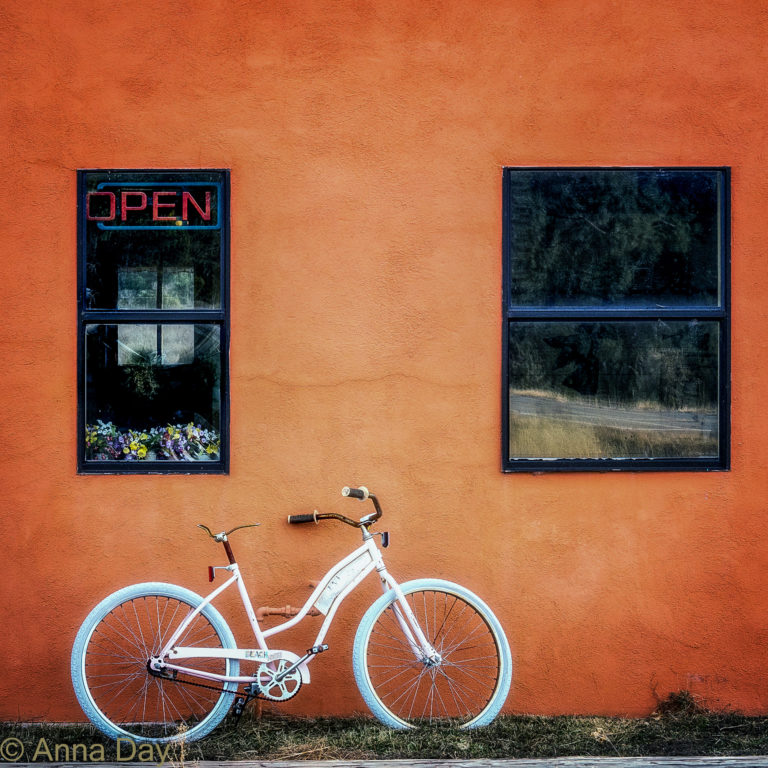
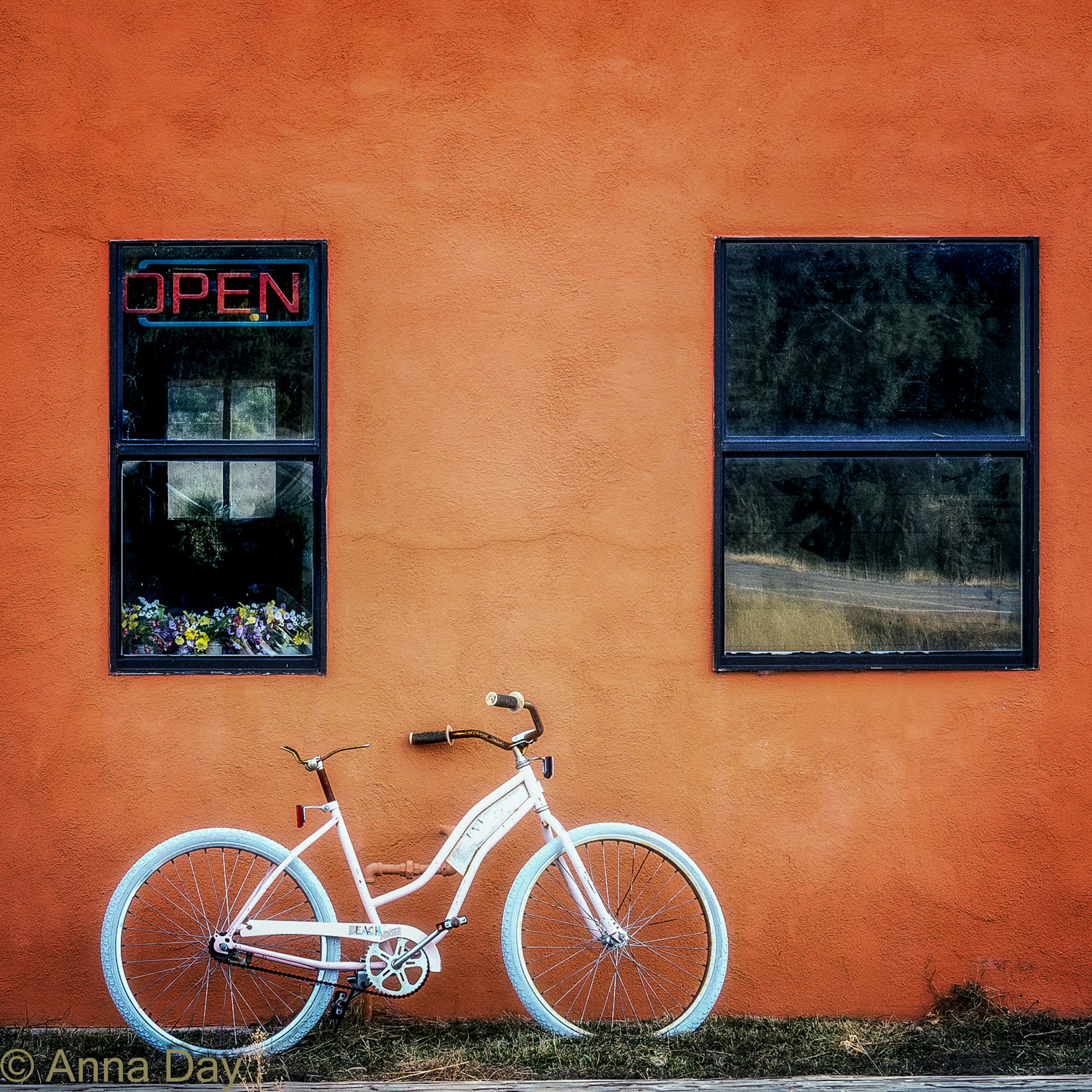
RETIRED: Photo by Anna Day.
  • Artist: Anna Day
  • Title: Retired
  • Medium: Digital photo edited in Photoshop
  • Artist statement: As a Nurse Practitioner my life’s work is in Medicine. As an Artist, my life’s passion is Photography. Through my life’s work and life’s passion, I have experienced the powerful interplay between Art, Science and Nature.

The Science of Medicine is characterized by hard facts: understanding anatomy, identifying a diagnosis, treating a symptom or prescribing a drug. But practicing the Art of Medicine is what truly heals. It’s the ability to coax details from my patients, to earn their trust and confidence, and to recognize their needs and their definitions of health. Then I must respond in a way they understand. This requires a connection between me and the patient.

A similar structure exists in the Science of Photography. I have read countless books, taken classes, attended lectures and seminars and studied the work of other artists. I recognize the elements of a technically correct photograph in the same way that I recognize the symptoms of a physical condition. But it’s the *Art* of Photography that sparks the emotions and inspires me to capture that moment in time. This requires a connection between me and nature.

I believe how we choose to focus on something, that focus remains with us -whether it becomes beautiful and empowering, or unpleasant and disheartening. I choose to focus on things that inspire me, and – I hope – inspire others. Feeling this connection to nature and beauty, all through the lens of Art and Science, can help us heal ourselves and, in so doing, support healing our world.

A portion of photography proceeds are donated to organizations dedicated to preserving the environment, trails and wildlife.

Anna can be found at www.annaday.com or on Instagram at MOABCHICA


Riding the Colorado Rockies — Bikepacking Doesn’t Need to be Expensive

By Cole Taylor – You don’t need a lot of money to go bikepacking.

As the once-overlooked sport has become more mainstream, many people have forgotten this. We ogle high-res photos of professionals on carbon Salsas and decked-out Surlys as they take on remote, exotic terrain. The internet bombards us with ads for frame bags, trail gizmos, and ultralight camping gear. Price tags surround us everywhere we look. Sometimes I have to remind myself to take a breath and ignore the hype for a moment. I think we mountain bikers (maybe cyclists in general) often spend too much time spitting brand names and comparing our bikes’ specs and not enough appreciating the sport itself. Bikepacking, especially, is becoming drowned in a swamp of commercialism. This trend worries me, so recently, I set out on a ride to remind myself, and hopefully some others, that it doesn’t matter if the bike is steel, aluminum, titanium or carbon- what matters is the journey you complete on it.

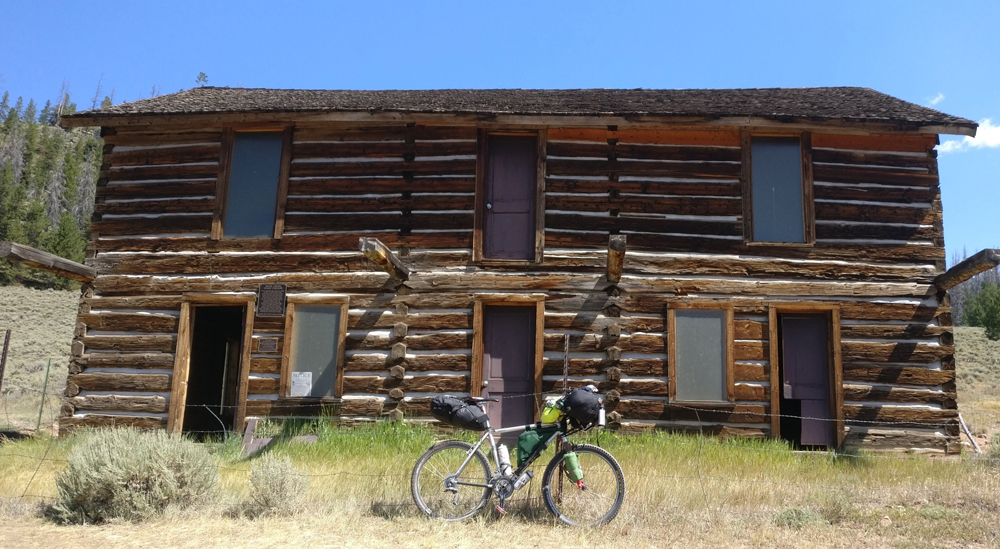
This road was once a stage route; the building served as a motel for weary travelers. Photo by Cole Taylor

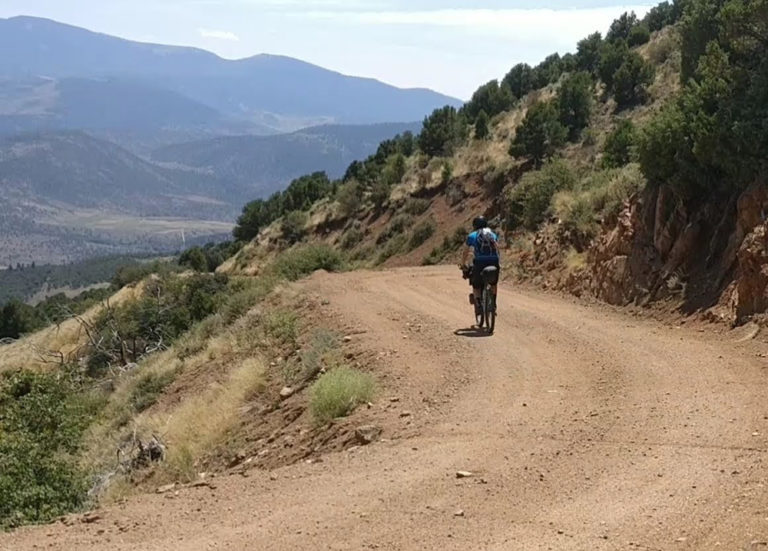
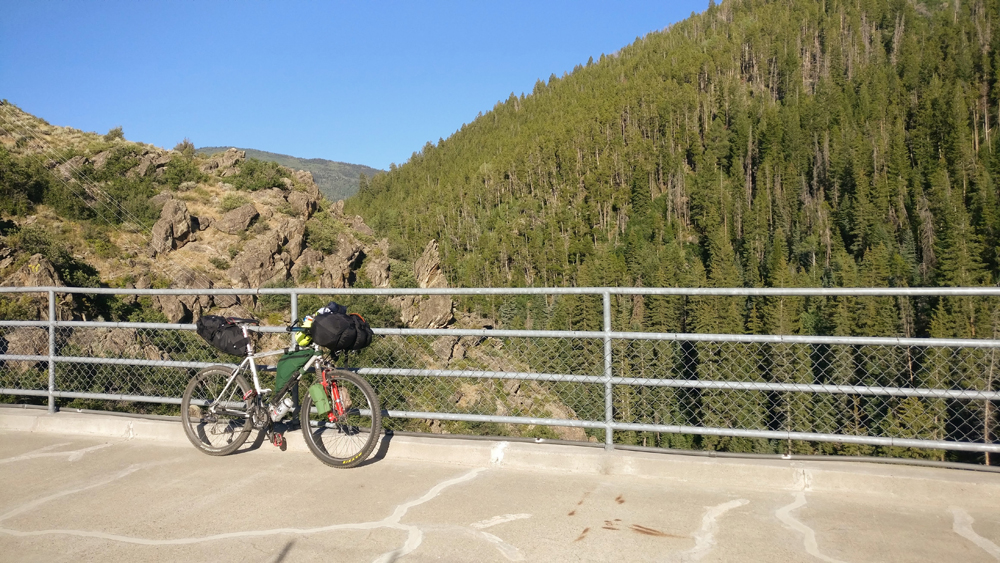
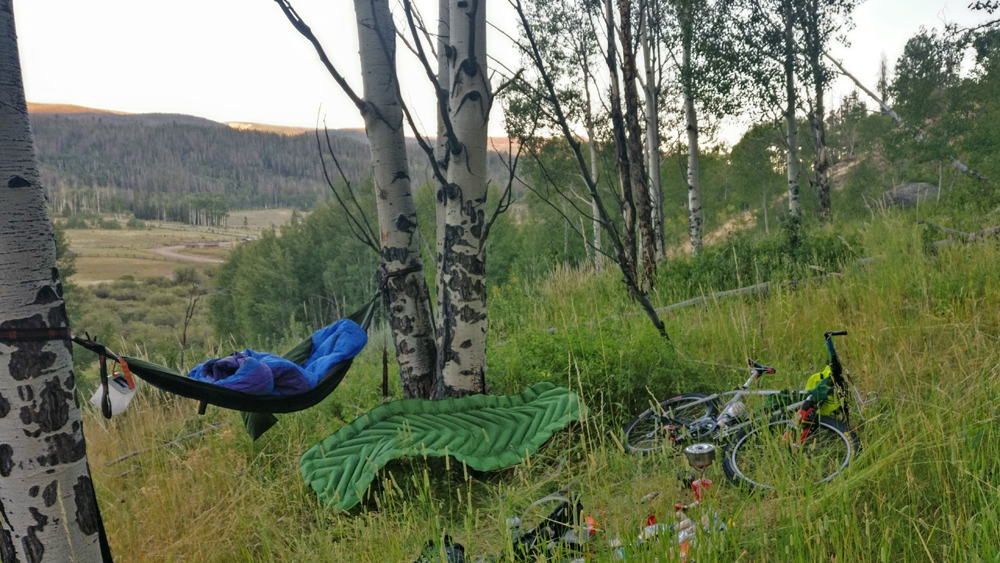
I decided to do a four-day solo adventure following the Colorado section of the Great Divide Mountain Bike Route. It would have been nice to have a dedicated bikepacking rig, but I found that my commuter bike (a 90s Gary Fisher built from used parts) worked just fine. The only bikepacking bag I have ever purchased is a seat bag made by Giant, which retails for $70 (more basic than most others on the market, but it’s worked just fine for me). Besides that, I used a homemade frame bag, a backpack, a small handlebar bag that I found for free, and a lot of straps and hose clamps. The result was a dependable, solid rig that I wasn’t afraid to scratch, ding, or jury rig.This being a solo trip, I needed extra safety precautions. I rented a DeLorme InReach from a local who charges only $30 a week (this is a seriously good deal compared to rental companies or buying one new). This device allowed me to check in daily with my family over satellite text and provided an emergency beacon feature. I carried the DeLorme as well as a cylinder of bear spray ($45) on my person at all times, and I felt very safe. For a total of $75, these items were well worth the cost. I slept in a hammock every night, which worked fine in this forested area and saved weight and money compared to a tent.

My trip began in Steamboat Springs, which was a good place to grab some last-minute supplies. There were three bike shops to choose from and the one I picked, Orange Peel Cycles, had good service and friendly people (plus, it was housed inside of a decades-old kiln. How cool is that?). On the first day my goal was simply to go as far as possible without pushing myself too hard. By following this guideline each day and not having predetermined campsites, I was able to figure out how many miles I could anticipate if I were to do the whole Great Divide in the future. Of course, I still researched potential camping spots beforehand. By the end of day one, I had covered only 42 miles (mostly gravel with about 15 on road), but that was fine by me as I had just reached National Forest and could camp in the woods. I set up my hammock and slept comfortably with my bear spray and InReach at my side.

By the next morning, I was energized and ready for a long day in the saddle. I departed my camp at 9:00. As it turned out, this would be the worst day of the trip. First, my drive side crank started clicking slightly on each revolution. Upon inspection I quickly realized that I couldn’t fix it without replacing the whole crank arm, which of course was not an option. It didn’t slow me down or endanger me, but I had to slowly learn to tune out the clicking of the spindle as I ground my way up a large mountain pass. Later, I made the frustratingly amateur mistake of crossing a stream with my shoes and socks on. This forced me to stop for 45 minutes while I waited for my insoles to dry out in the sun. After that, all seemed to be going well at last — the scenery was gorgeous and the road wound downhill for miles and miles, all the way to the Colorado River. It was after that that I faced my final challenge: the climb out. I learned a good lesson here, so it deserves its own paragraph.

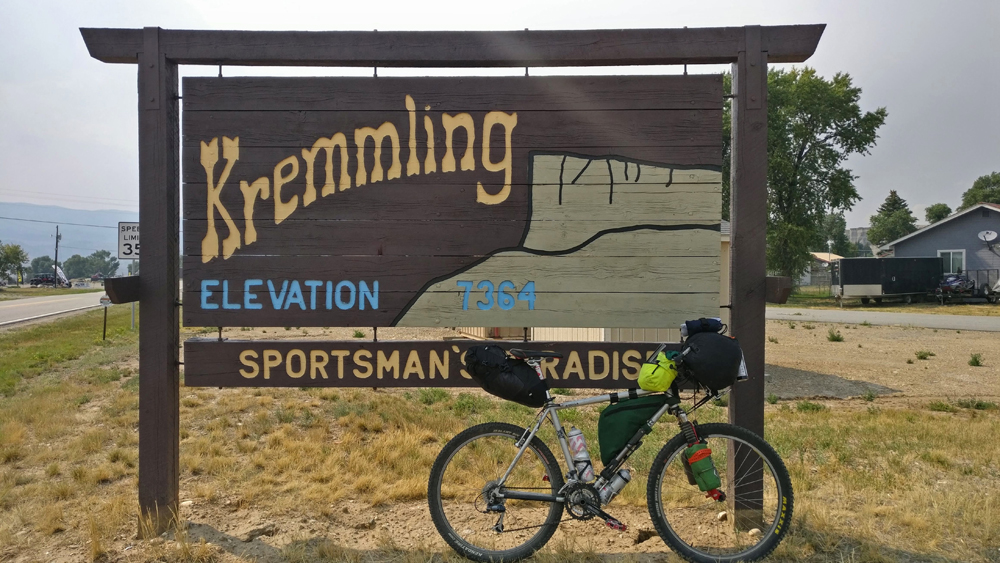
The road was wide, straight, and stretched out in front of me as far as I could see. One thing that I noticed throughout the trip, but especially here, was that when cars were passing me, I felt like I was going slower than I actually was. Halfway through the climb my water ran dry and my morale took a serious blow. However, this was a blessing in disguise because it forced me to adopt a different mindset. I started taking it slower, keeping a higher cadence, and focusing on the view instead of staring at my front tire. I became more patient; I got rid of my “Just get to this next turn” mindset and stopped pushing myself too hard. I discovered that this newfound attitude made me more consistent and resilient, plus I enjoyed the ride a lot more. Soon the climb was over and I coasted down a gravel road into the tiny town of Kremmling.

The sun was setting, and I had a long way to go until the next possible campsite. I decided to take a shortcut by going south on Highway 9. This way, I could stay in a campground next to Green Mountain Reservoir and restock in the town of Heeney, and I could still follow the official route on my way back to Kremmling. As I pulled into a campsite near the lake and started cooking dinner, I began to listen to the laughter and faint talking in the sites adjacent. Combined with the fatigue of a 77-mile day, this made me feel rather alone.

Going solo was definitely an interesting aspect of this trip. As I sat at my table eating dinner, I realized that I’d never gone so long in my life without talking to somebody. Of course, there were obvious benefits to being on my own: coordinating the trip was easier, and I was able to go at my own pace for the entire ride. It also felt liberating and boosted my confidence to complete a multi-day trip on my own. As I sat there on that second evening, however, I would have given a lot to have a companion to talk to. I wanted someone who had been through the highs and lows of the day with me, someone who I could pass the time with, complaining and reminiscing together. I’m still not sure how long I could live with this kind of solitude.

I slept in the next morning and left the campsite at eleven. The third day out of four was straightforward and held few surprises. I got back onto the official route and followed it into Silverthorne. From there it was nothing but forested, paved bike paths all the way up to Breckenridge and back. I camped in Frisco, which is very close to Silverthorne and contains a variety of beautiful campsites near Dillon Reservoir. Total distance was 61 miles, all paved. Sweet.

Day four! The finale! 51 miles to go. My morale had gone up thanks to the pleasant ride the day before. I hit the road soon after the sun rose and blasted out of Silverthorne on my no-longer-food-laden bike. I followed the proper route north on Highway 9, then east on Ute Pass road. Oh dear. A group of roadies. That’s when you know you’re in for a good climb. I chugged up the pass, then stopped at the top to enjoy the view of an enormous molybdenum mine and its respective plains of slag. Woo! From there it was mostly downhill on gravel to get to Kremmling. There’s not much of interest to note, unless you’re particularly fond of hay bales and ranch houses stretching out for miles. I met my getaway vehicle at a gas station in town and just like that, it was over. Four days, 230 miles, and a lot of experience gained.

When I consider all the lows and all the highs, doing this route was definitely a net positive experience. I would highly recommend it because there are many points for resupply and camping, allowing you to be flexible in how you divvy out your daily miles. As for going solo, if you can do so responsibly and your family/spouse is okay with it, I say send it! And remember, the best bike is usually the one you own. It’s easy to make do with sub-optimal gear by making use of cheap racks, straps, and panniers (note the large sleeping bag strapped to my handlebars). Cost shouldn’t stop anybody from experiencing the wonder of bike touring and bikepacking. At the end of the day, it seems that one cliche rings true: the most important thing is to get out there and start riding. See you on the trail.

Cole’s Packing List:

  • Bike repair – zip ties, chain breaker, quick links, multi-tool, mini cone wrenches, tire boot (dollar bill), patch kit, 2 tubes, tire sealant, chain lube, trail pump, FiberFix emergency spoke
  • First aid kit, minimal survival kit
  • Clothing – light jersey, wool jersey, chamois, overshorts, extra boxers, extra socks, base layer, half-finger gloves, light long-sleeve top, shell, buff
  • Camping gear- hammock, plastic tarp, sleeping bag, Klymit pad, toiletries
  • Cook kit – propane stove, pot, sporknife, plastic mug, lighter,
  • Water- two foldable bags, Sawyer straw filter, two water bottles (mounted on bike), 3L bladder (in backpack)
  • Extras – Headlamp, solar charger, power bank, bike lights, Luminaid inflatable lantern, glasses, phone charger, maps, rope

Cole Taylor is entering his senior year at the Academy for Math, Engineering and Science (AMES). He also works and volunteers at the SLC Bicycle Collective and loves the Utah cycling community.

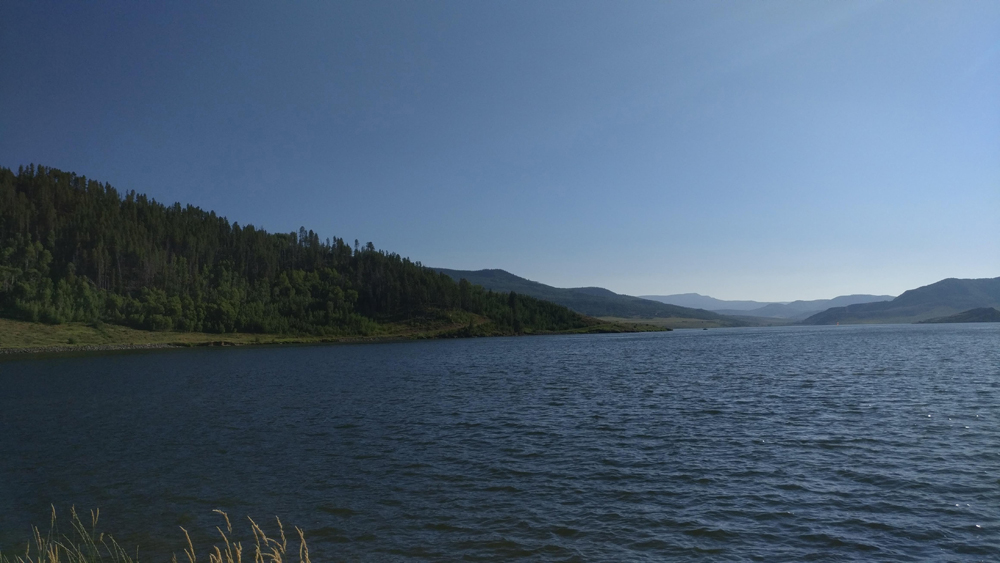
I passed this lake on the first day, which was the most scenic day of the ride. Photo by Cole Taylor
Trusty old Gary. I won’t say how much he weighs with all that gear. Photo by Cole Taylor
I camped in some beautiful national forest the first night. Photo by Cole Taylor
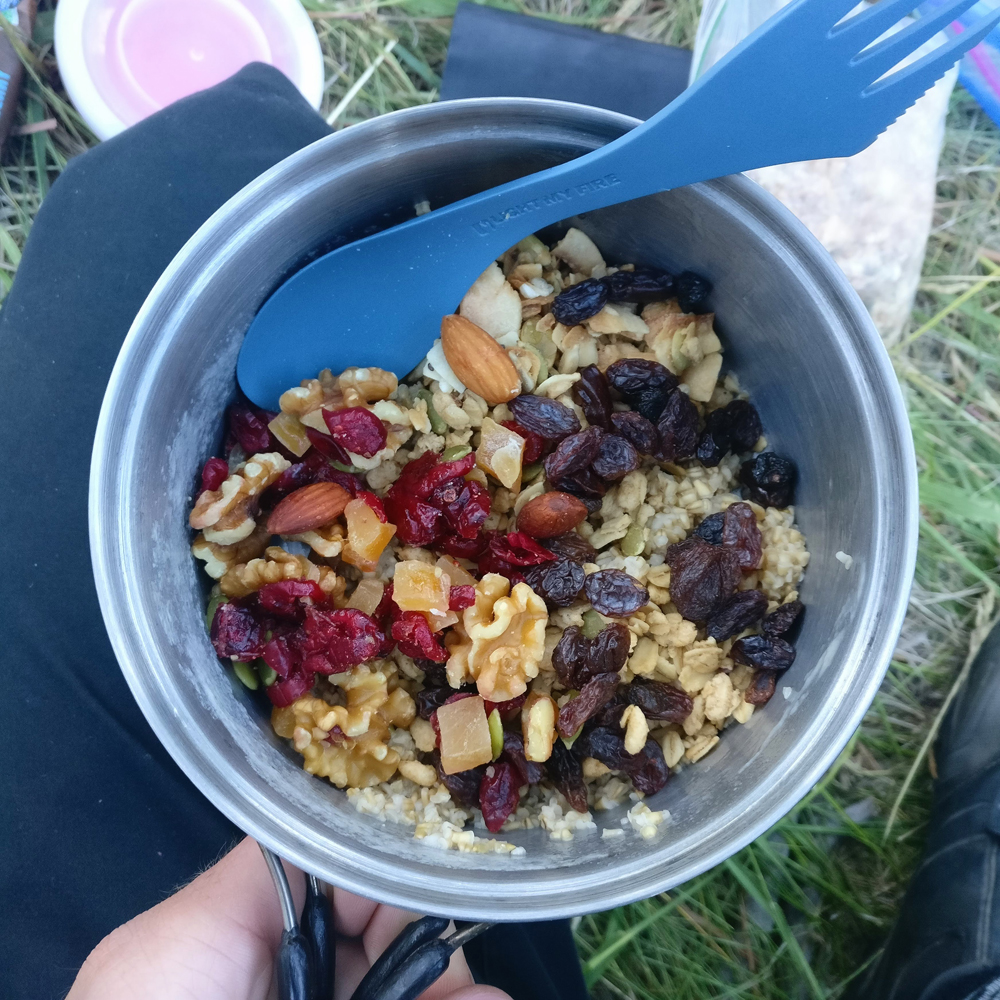
Breakfast: Steel cut oats, granola, granulated honey, coconut, and trail mix. Photo by Cole Taylor
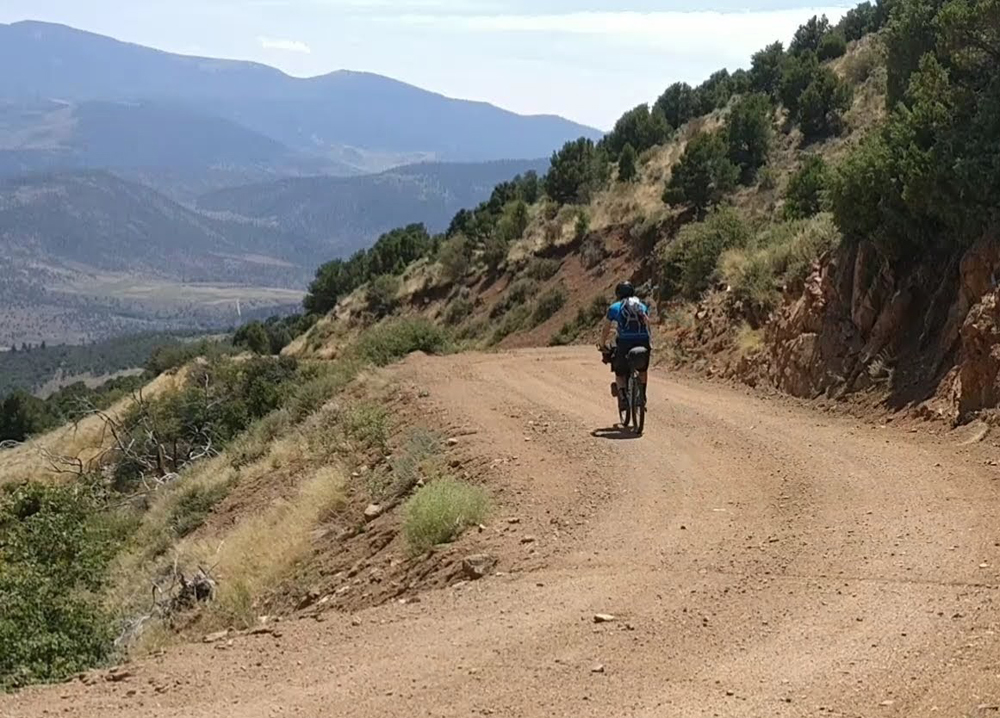
Coasting down a fire road to the Colorado River. Photo by Cole Taylor
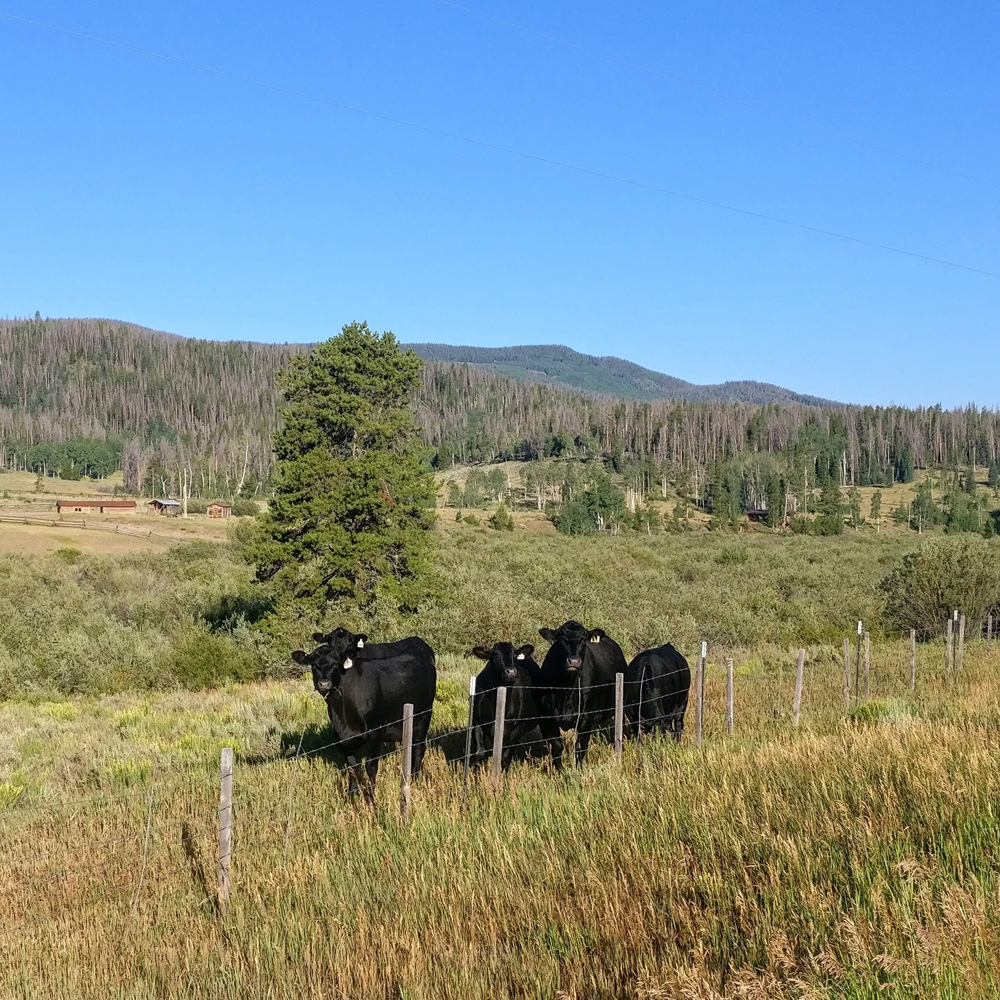
Cows really liked to sit and stare at me as I passed. Photo by Cole Taylor

230 miles down, zero to go. Photo by Cole Taylor

Wyoming’s Bridger Valley Historic Byways Ride

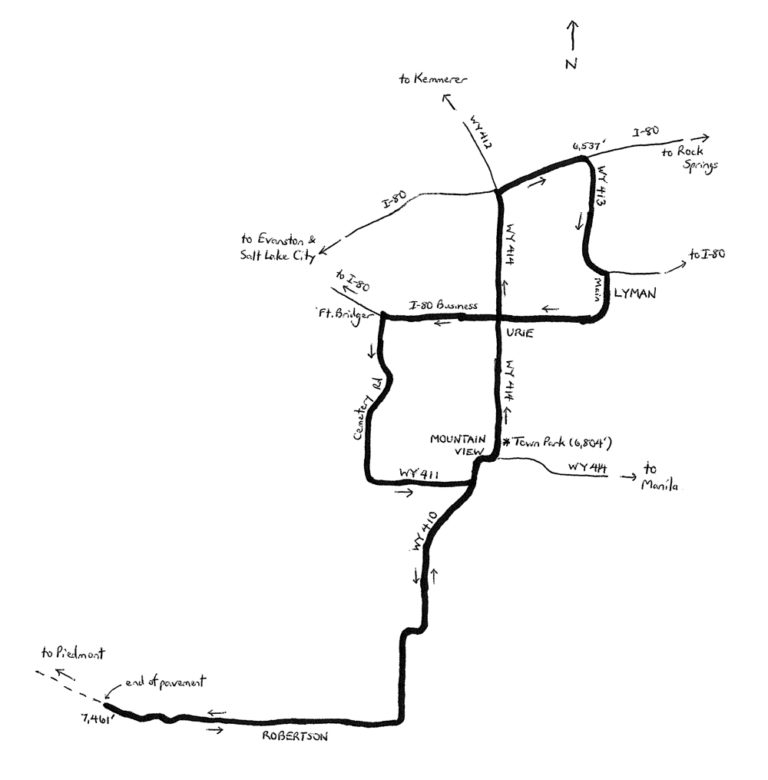
The Bridger Valley Historic Byways Ride is a 49.7-mile route in Wyoming’s Bridger Valley, including an extension to Bigelow Bench. The layout is that of a figure eight with a tail. The figure eight is 25.2 miles in length, while the tail adds on 24.5 miles. One could do the loop, without the tail – but why would you do that? Completing the entire route is highly recommended. The minimum elevation is 6,537 feet, while the maximum is a gasping 7,461 feet, so be prepared for some heavy, high-altitude breathing. This is a great summer ride; be sure to check the weather and road conditions during other times of the year.

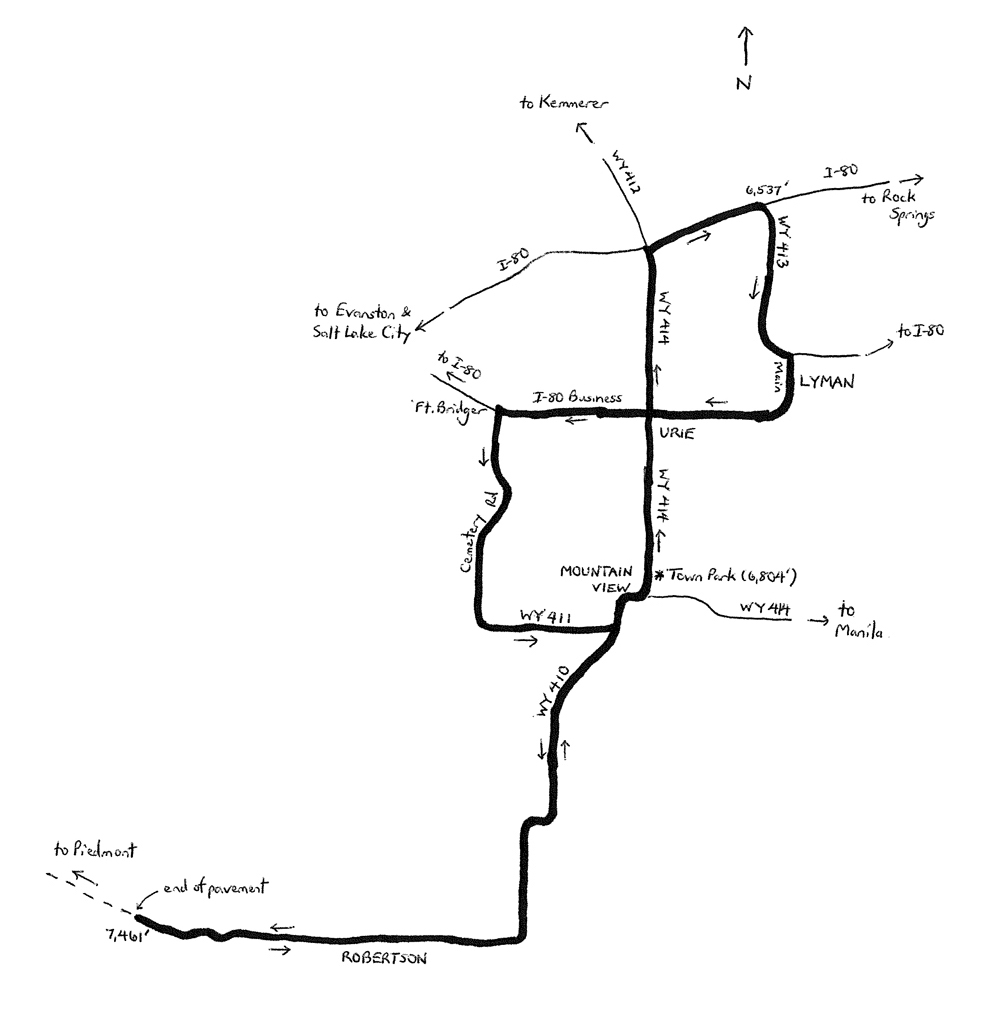
The Bridger Valley Historic Byways Ride is a 49.7-mile route in Wyoming’s Bridger Valley. Map by Wayne Cottrell

Start the ride at Town Park in Mountain View, located at 405 North Wyoming State Highway 414 (WY 414). Mountain View is located to the south of I-80, along WY 414, 122 miles east northeast of Salt Lake City. The ride starts here, in the town of Mountain View, and visits the town of Lyman, and the communities of Urie, Fort Bridger, and Robertson, all in Bridger Valley. A total population of just over 4,000 resides in the valley. While this is small by today’s standards, the valley was a hubbub of activity in the mid-19th century. After the legendary “mountain men” began to rendezvous in the region, starting in the 1820s, Fort Bridger was established as a fur trading outpost in 1842. Later, the fort became a critical supply center along the California, Mormon and Oregon Trails, all of which passed through the area. By the late 1850s, hostilities between Mormon pioneers and the U.S. government had escalated, and the outpost was converted into a military fort. By the 1860s, the fort was also serving as a stop along the Pony Express. Yet, when the Transcontinental Railroad was completed in 1869, thereby relegating the Pony Express and wagon trains to extinction, the fort’s role diminished. Military positions had shifted elsewhere by then, to Camp Lloyd and Fort Douglas near and in Salt Lake City. Fort Bridger was shut down in 1890. Historical sites in the valley are limited to Fort Bridger, and an old bridge across Black’s Fork. The real history, though, is in retracing the routes of the travelers who passed along those trails.

From Town Park, turn right and head north on WY 414. The starting elevation is 6,804 feet, and the highway is effectively downhill as you head north. Enter the community of Urie at mile 3.0, and keep right on through, all the way to I-80. The I-80 freeway? Yes – there are not enough roads in this area to avoid a short stretch on the shoulder of the freeway. The freeway was carrying 16,480 vehicles per day in 2016, though, which is very light by Interstate standards. Cross over Black’s Fork at mile 7.75. At mile 8.1, turn right and enter I-80. Stay to the far right, on the shoulder. Take the next exit (Lyman). At the end of the off-ramp, turn right and head south on WY 413. This is the lowest elevation of the entire ride (6,537 feet; mile 10.2). From here, the highway climbs gradually, and then steeply (8.2% grade) to enter Lyman. With over 2,000 residents, Lyman is the largest town along the ride. Follow WY 413 as it climbs and curves to the left. At the end of WY 413 (elevation 6,714 feet; mile 13.0), turn right onto Main Street. Main takes you through the heart of town. Beyond Lyman, Main curves to the right, becoming “Business I-80.” You are on the Bridger Valley Historic Byway, retracing the route that many pioneers took, long before I-80 was built. Return to Urie at mile 16.1. Keep straight through once again, heading west toward Fort Bridger. Once there, turn left onto Cemetery Road (mile 18.6), just in advance of Fort Bridger. In fact, a slight detour to the fort would be in order, as part of your historical journey!
Once back on Cemetery, head south. It is a steady climb to WY 411 (elevation 6,963 feet; mile 22.4). Turn left here, to head east on WY 411. Now you are descending, heading in Mountain View’s direction. At the end of WY 411, to continue the ride, turn right onto WY 410 and head south. (The alternative is to return to Mountain View). You are now at mile 24.0 (elevation 6,855 feet). The next part of the ride is an out-and-back segment, on WY 410. The outbound ride is a steady climb to Bigelow Bench. The highway heads south, and then turns 90o to head west, taking you through the community of Robertson, and on to the end of pavement (mile 36.25; elevation 7,461 feet). This is the turnaround point. The unpaved road continues to Piedmont, a ghost town that once thrived because of its timber, and its location along the railroad. Save that trip for your mountain bike, perhaps, and begin the return ride to Mountain View. Follow WY 410 as it descends, heading eastward, and then curving to the left to head north. Return to the figure eight loop at mile 48.5, at the intersection with WY 411. Keep straight here, heading toward Mountain View. Follow WY 410 as it turns to the right, to head east, coming to a T-intersection with WY 414. Turn left here to return to Mountain View Town Park, which will be on the right.

Starting & ending point coordinates: 41.272369N 110.336367W

For more rides, see Road Biking Utah (Falcon Guides), written by avid cyclist Wayne Cottrell. Road Biking Utah features descriptions of 40 road bike rides in Utah. The ride lengths range from 14 to 106 miles, and the book’s coverage is statewide: from Wendover to Vernal, and from Bear Lake to St. George to Bluff. Each ride description features information about the suggested start-finish location, length, mileposts, terrain, traffic conditions and, most importantly, sights. The text is rich in detail about each route, including history, folklore, flora, fauna and, of course, scenery.

Wayne Cottrell is a former Utah resident who conducted extensive research while living here – and even after moving – to develop the content for the book.

SRAM Recalls RockShox Front Suspension Forks

0

WASHINGTON, July 2, 2019 /PRNewswire/https://www.cpsc.gov/Recalls/2019/SRAM-Recalls-RockShox-Front-Suspension-Forks-Due-to-Crash-and-Injury-Hazards

Recall Summary

Name of Product: RockShox Lyrik and RockShox Yari front suspension forks

Hazard: The fork’s lower leg assembly can break and cause the rider to lose control, posing crash and injury hazards.

Remedy: Replace

Consumers should immediately stop using their recalled forks and contact SRAM or a local dealer to receive a free replacement suspension fork. Consumers can check their serial number at www.sram.com or contact SRAM for assistance.

Consumer Contact: SRAM at 800-346-2928 between 10 a.m. and 7 p.m. ET Monday through Thursday and 10 a.m. to 6 p.m. ET on Friday, or visit www.sram.com and click on Recall Notice for more information.

Recall Details

Units: About 840 (In addition, about 80 were sold in Canada)

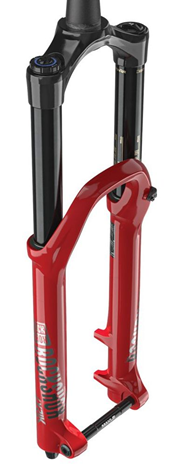
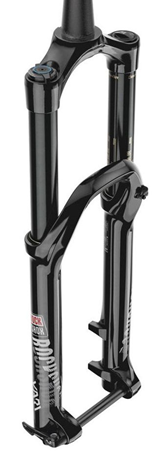
Description: This recall involves RockShox Lyrik and RockShox Yari front suspension forks with serial numbers 02T95514009 through 08T96214665. A bicycle fork is the part that holds the front wheel. The recalled forks are black or black and red and are for 29″ bicycle wheels. RockShox is printed on the side of the fork and casting code 18 and O or 19 and A is embossed inside the webbing of the arch. The serial number can be found on the rear of the fork crown.

The forks were sold as aftermarket equipment and as original equipment on the following mountain bicycle brands and models:

Recalled RockShox Lyrik Suspension Fork
Recalled RockShox Yari Suspension Fork

BRAND

MODEL

Kona

Process153 29

Process 153 DL 29

Process 153 CR 29

Process 153 CR DL 29

Process 165 29

Santa Cruz

Megatower 29

Trek

Powerfly LT 7 US


Powerfly LT 9.7 US

Scott

Ransom 930


Incidents/Injuries:
None

Sold At: Bicycles with the recalled forks were sold at bicycle stores nationwide from January 2019 through March 2019. Bicycle forks sold as aftermarket accessories were sold at bicycle stores from February 2019 through April 2019 for between $700 and $1,000.

Importer: SRAM LLC, of Chicago, Ill

Manufacturer: Sandleford Limited Taiwan Branch, of Taiwan

Manufactured in: Taiwan

Recall number: 19-157

SOURCE U.S. Consumer Product Safety Commission

The U.S. Consumer Product Safety Commission is charged with protecting the public from unreasonable risks of injury or death associated with the use of thousands of types of consumer products under the agency’s jurisdiction. Deaths, injuries, and property damage from consumer product incidents cost the nation more than $1 trillion annually. CPSC is committed to protecting consumers and families from products that pose a fire, electrical, chemical or mechanical hazard. CPSC’s work to help ensure the safety of consumer products – such as toys, cribs, power tools, cigarette lighters and household chemicals -– contributed to a decline in the rate of deaths and injuries associated with consumer products over the past 40 years.

Federal law bars any person from selling products subject to a publicly-announced voluntary recall by a manufacturer or a mandatory recall ordered by the Commission.

To report a dangerous product or a product-related injury go online to www.SaferProducts.gov or call CPSC’s Hotline at 800-638-2772 or teletypewriter at 301-595-7054 for the hearing impaired. Consumers can obtain news release and recall information at www.cpsc.gov, on Twitter @USCPSC or by subscribing to CPSC’s free e-mail newsletters.

Mechanic’s Corner: Shifting Business – B Tension

In our last article Shifting Business – Rear Derailleur Discussion, I discussed setting up the rear derailleur. I hope you read it and it helped establish your already growing knowledge of derailleur adjustment. This issue I will discuss the B-Tension adjustment. I’m devoting this article entirely to the matter because B-Tension is not very easy to figure out. This is proven by the wide range of improperly adjusted B-Tension screws I come across. The most important part of this is knowing why it is there and what it does.

What is B-Tension?

B-Tension is an adjustment using that mysterious third screw on the back of your rear derailleur. Its proper adjustment is the final step to clean and quiet shifting. It also provides a degree of chain tension assuming:

  1. Chain is properly installed and the right length.
  2. Rear derailleur cage is appropriate length for your chainring, yes chainring, configuration (I.e., 1x, 2x, or 3x) – Fewer chainrings, shorter the cage can be.
  3. High and low limits properly adjusted .
  4. Cable tension is properly set.

The more B-Tension the derailleur has, the further from the cogs it will naturally sit. This is generally called B-Gap. This allows the chain to have a certain amount of flection as it travels from the upper (jockey) pulley of the derailleur to the cogs. Using larger climbing cogs usually demands a larger B-Gap.

Despite the differences in the derailleur design, B-Tension always performs the same job. It transcends almost all rear derailleurs, except the most inexpensive units. It is not marked by an “L” or “H”. The screw that makes the adjustment either contacts the derailleur hanger either directly or indirectly. Some units are spring loaded – allowing for dynamic chain tension – while others are static.

Locate the B Tension Screw

Almost all rear derailleurs are slightly different in regards to B-Tension location. Finding this screw could be as simple as locating the non-marked screw. Other derailleurs may take guess work. Get to know your derailleur by getting close and inspecting or searching on the internet for specifications.

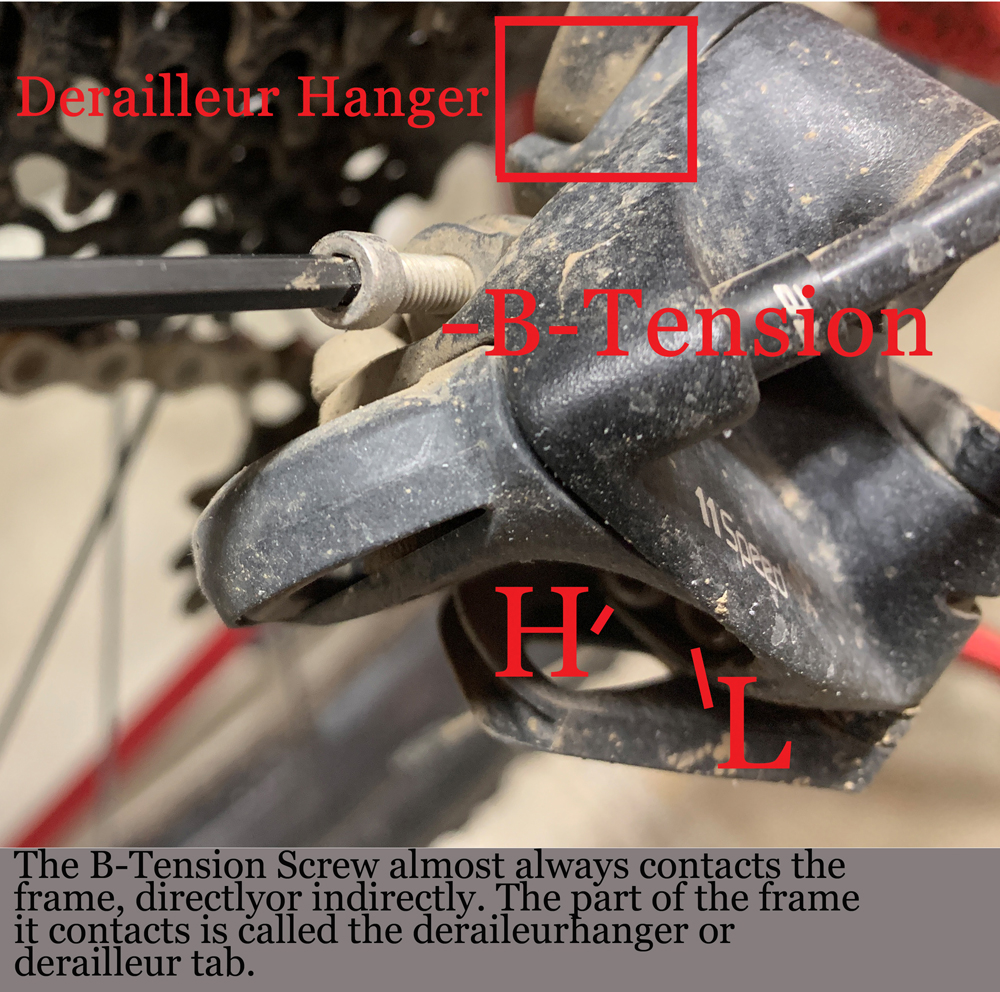
The B-Tension Screw almost always contacts the frame directly or indirectly. The part of the frame it contacts is called the derailleur hanger or derailleur tab. Photo by Eric Ramirez

Identify the Need to Adjust

If the jockey pulley sits too close to the cogs, it will struggle to shift. This is most notable when shifting into the largest cog. The chain is forced into a sharper angle moving from one cog to the next. As the chain bounces around on the edges of the teeth, it misses the shifting ramps of the cassette cogs. And it won’t shift unless it is forced.

Conversely, the gap could be too large and then shifting simply becomes unpredictable and erratic. It worsens when shifting into the smaller cogs. If there is way too much of a gap it will even struggle to get to the smallest cog. One must find the sweet spot.

Double check your “low” limit (covered in previous CW issue) to be sure that the derailleur is actually getting to the lowest cog. If it is, then the B-Tension is likely the culprit. The derailleur may have too large or too small of a B-Gap.

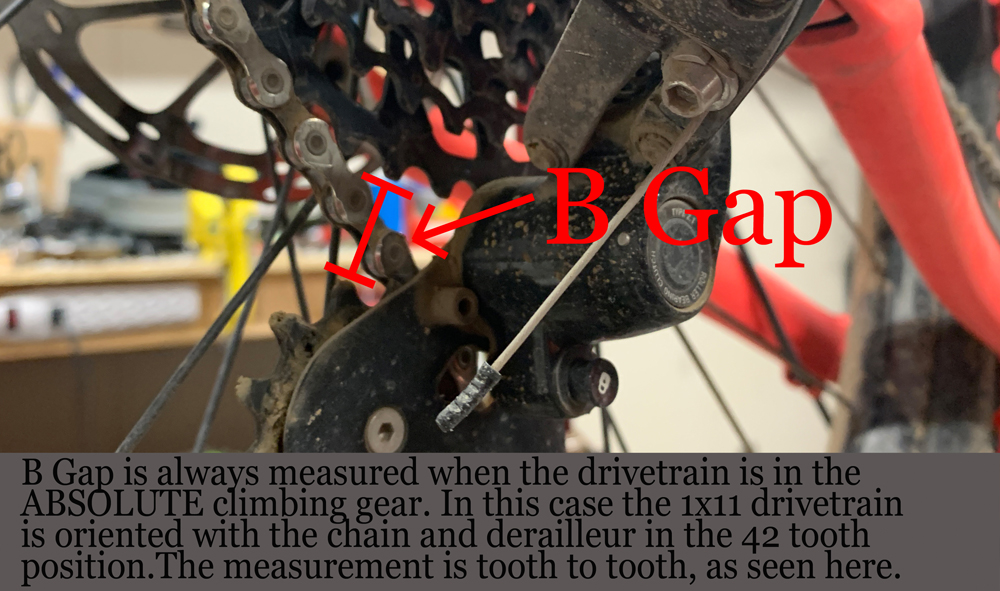
B-Gap is always measured when the drivetrain is in the absolute (easiest) climbing gear. In this case, the 1×11 drivetrain is oriented with the chain and derailleur in the 42 tooth position. The measurement is tooth to tooth, as seen here. Photo by Eric Ramirez

Adjustment

Locate your B Tension adjustment screw and find the correct tool to do the job. (Hint: Phillips head screws usually work better with JIS screwdrivers). My first move is to shift the rear derailleur to the lowest geared cog. Then, supposing there is more than one chainring, shift into the smallest chainring. If there is no B-Gap, the upper derailleur pulley will look like it is dragging on the cog as the chain passes between them. On certain configurations this will make a rumbling sounds as it is pedaled in the work stand.

If there is a gap then back off on the B screw until the derailleur’s upper pulley appears to almost touch the cog. This is your control point. It is where technicians start the B-Tension adjustment process.

From this point progressively turn the B Tension screw 1/2 turn at a time clockwise, or in. Pay close attention to the B-Gap. As the derailleur starts to pull down and away from the cogs, try shifting again. Sometimes, it requires the smallest gap.

If it offers the same result, repeat the steps by adding 1/2 turn at a time. Shift again.

Does chain change gears?

Is it a clean and quick shift?

If so, shift through the range and make sure that all gears are crisp and clean. If you have made a rather large correction to the B-Tension, you may need to adjust your low and high limits, and, possibly, cable tension.

SRAM Rear Derailleurs

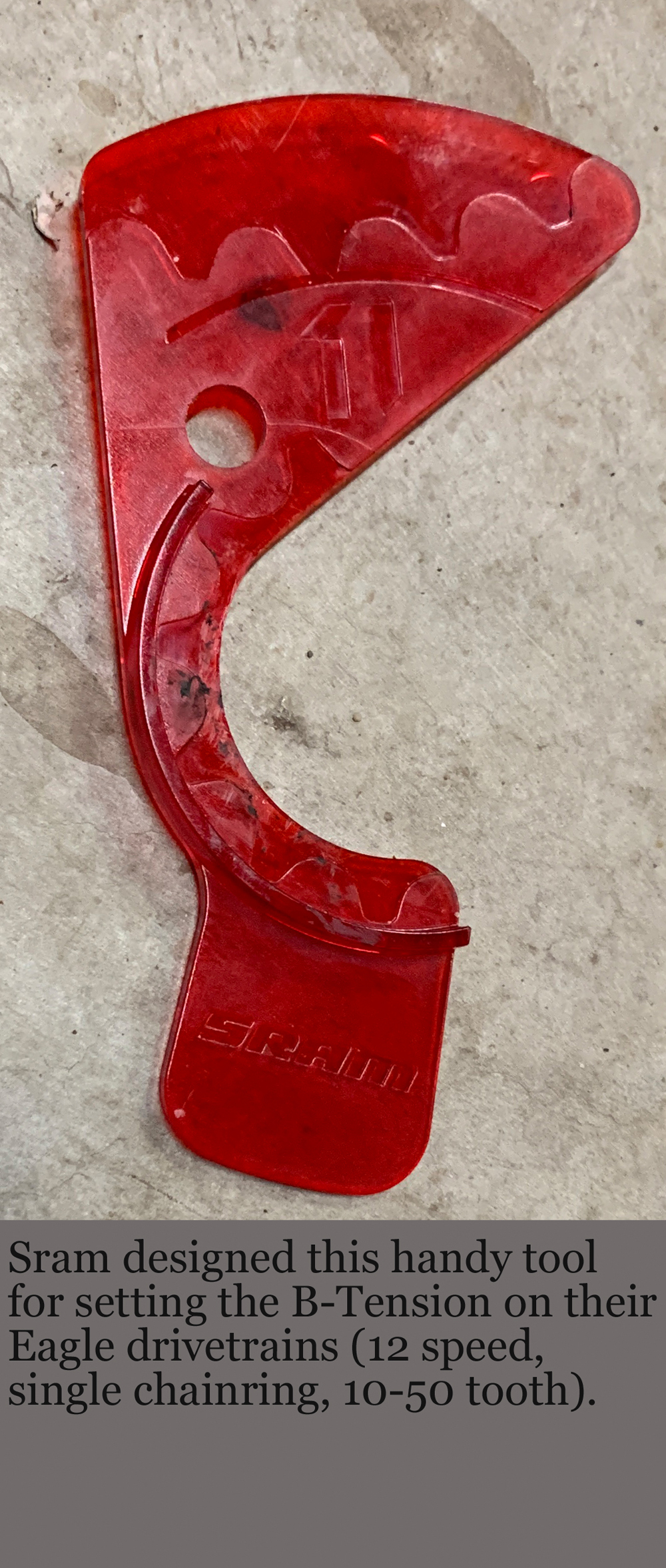
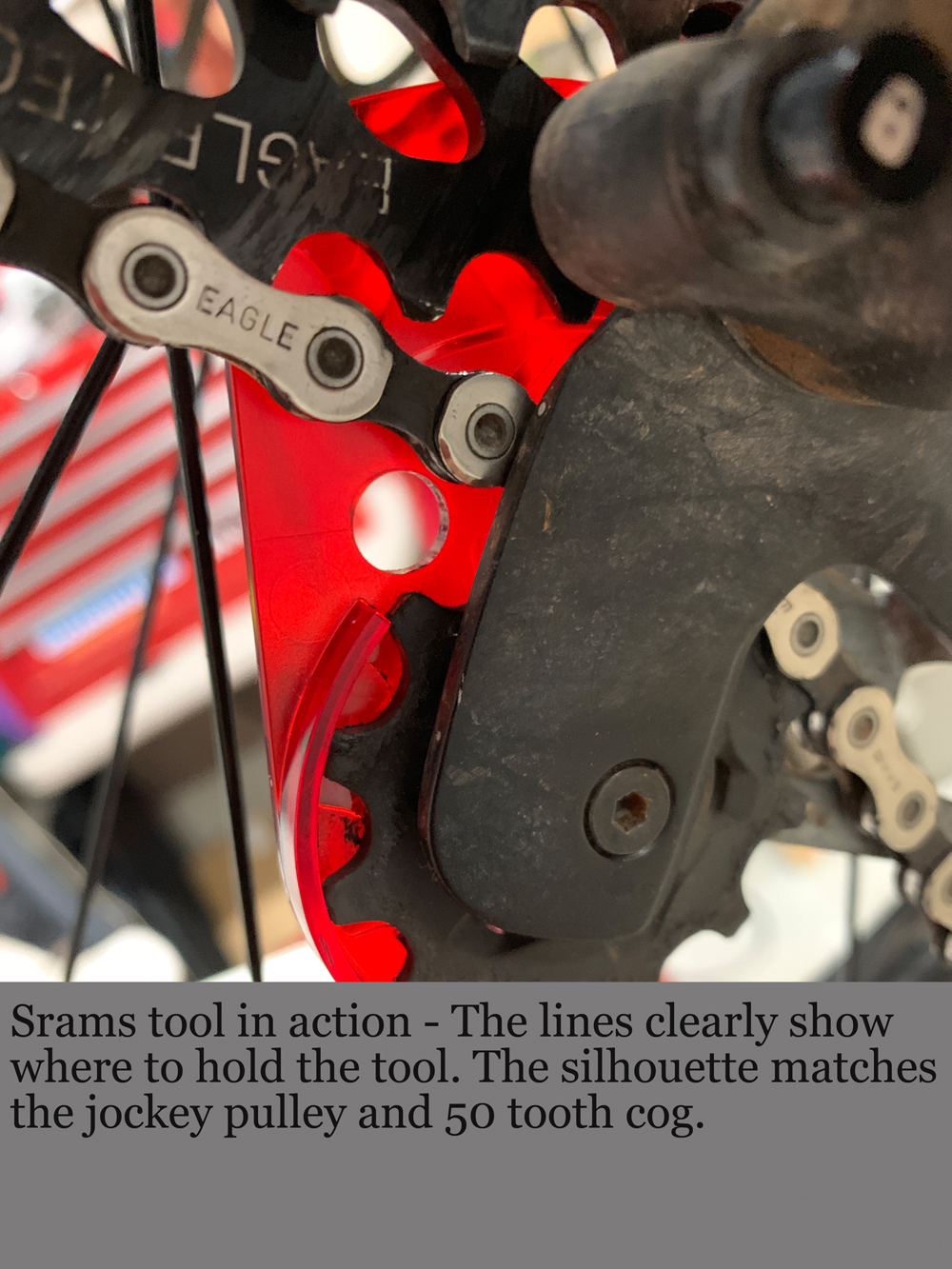
What about SRAM derailleurs? Their road rear derailleurs typically have a 6mm B-Gap. Their 1×11 drivetrains require roughly a 14mm B-Gap. Their 1×12 derailleurs come with a really neat tool. It’s translucent red and fits behind the low gear and upper pulley. Adjust the B Tension to these measurements and it is generally smooth sailing. Depending on mountain bike suspension designs and drivetrain wear, B Tension measurement may vary. Thus, this article is still relevant to SRAM derailleurs.

SRAM designed this handy tool for setting the B-Tension on their Eagle drivetrains (12 speed, single chainring, 10-50 tooth). Photo by Eric Ramirez
SRAM’s tool in action – The lines clearly show where to hold the tool. The Silhouette matches the jockey pulley and 50 tooth cog. Photo by Eric Ramirez

Be Patient – Don’t Throw Wrenches or Bikes

Working through the shifting and tensioning process can take some time, especially if this is an adjustment you have never done before. The experience of a seasoned wrench may be what you need on this one. But hopefully you have a better picture of why B-Tension is there and what it does for your ride.

Eric has 20 years experience working on bikes, starting in Park City. Today he’s a head technician at a shop and maintains a blog about wrenching and adventures at angrybikemechanic.com

Why are Some Drivers so Reluctant to Share the Road?

By Michael Wolcott, High Country News

Dangerous hostility toward bicyclists is rooted in distrust of those who are different.

The German couple was out to see America by bicycle. It was day two of their big adventure, a perfect springtime afternoon. We met by chance on U.S. Highway 180, halfway between Flagstaff, Arizona, and the Grand Canyon.

I was making the 40-mile trip by bicycle back to my eco-shack in the boonies, pulling a single-wheel trailer loaded with groceries. They were outfitted for a month-long ride with stout panniers and lightweight camping gear. We stood astride our bikes by the side of the road, chatting in the sunshine.

David Ward riding through the Ponderosas outside of Flagstaff. Photo by Karma Ward

The two had flown into Flagstaff the day before and planned to watch the sun set that night on the south rim of the Grand Canyon. “We still have jet lag,” the guy said, “but we can’t wait to see it. This is great.”

A big motorhome swept past, and we all leaned, involuntarily, away from it. I mentioned that the road was far safer at night, when there’s less traffic.

“Oh, we won’t be riding at night,” the woman said. “We’re here to see the West. Forty-four miles so far. What a beautiful road.”

Indeed it is. Route 180 climbs the west flank of the San Francisco Peaks through ponderosa pine forest, tops out in bright-green aspen groves a mile and a half above sea level, then drops 2,000 vertical feet into the high desert.

I asked my new friends what they thought of the traffic. Sharing any pavement with motor vehicles is risky for bicyclists, but Route 180 is truly a death trap — crowded with tourists in a hurry who generally look everywhere except at the road. Shoulders, where they exist, are less than 18 inches wide.

“Oh, it’s not so bad,” the guy said. “I was a little scared by the drivers at first, but now I’m starting to trust them.”

“Well, don’t!” I practically shouted, then reeled out my bike-load of worries onto the formerly blissful travelers. We agreed to ride together for a while, and headed off, single file and way over on the right side of the road, where we belonged.

But the driver of the big Dodge Ram was displeased anyway. He came up fast behind us, stood on the horn, and sped up as he passed us — so closely that if he had hit a pothole and swerved, he would have creamed us. Then he stuck his arm out the window and flipped us the bird.

Welcome to America, I thought, the land of Get Out of My Way.

The Germans were puzzled by the incident. “What just happened?” they asked.

I explained that there are lots of angry people in America. For some reason, the sight of a bicycle on the highway really triggers rage in some drivers. I said that in my years of bike touring I’ve been cursed at, swerved at and spit at. A beer bottle has been lobbed my way. More than once, a stranger has yelled out the window, “Get a job!”

To my knowledge, there is no statistical link between bicycling and employment status. Maybe there’s some research I don’t know about. But I do have some guesses about where this kind of inexcusable behavior comes from.

Perhaps some of you are thinking, “Well, that driver in the truck was probably just fed up with bicyclists who don’t obey the traffic laws.” Maybe, but even if that were true, the driver’s pointless, threatening display was way out of proportion to any perceived “offense.” And there was no actual offense, by the way: We two-wheelers were following Arizona traffic laws to the letter.

No, that kind of hostility comes, I believe, from deep in a person’s psyche: a disdain for and fear of people who are perceived as different. To some drivers, the bicyclist is the “other,” the one who is different. And difference, for some at least, presents a threat. To these people, the other can’t be trusted, and the other shouldn’t even be here.

That distrust makes no sense, but humans do not always make sense. Despite our undeniable skill at abstract reasoning, we are largely irrational beings, with violent tendencies. Fear of the other just is.

This fear is probably at the root of most of the world’s ailments. It sparks wars, fuels religious persecution and keeps demagogues in business. In the past, it has led to lynchings, and it leads to unarmed black men being shot in America today.

And on a perfect spring day in Arizona, it could have gotten three bicyclists killed on a highway. Imagine that.

Michael Wolcott is a contributor to Writers on the Range, (writersontherange.org), the opinion service of High Country News. He writes from northern Arizona. This story was originally published at High Country News (hcn.org/articles/opinion-why-are-some-drivers-so-reluctant-to-share-the-road) on May 24, 2018.

Erin Mendenhall – Salt Lake City 2019 Mayoral Election Candidate Survey

3
General Candidate Statement: Erin Mendenhall is a two-term City Councilwoman, proud mother of three, and Chair of the State Air Quality Board. She represents the 5th District, where she has lived for nearly twenty years. She served as City Council Chair in 2018. Erin graduated with a bachelor’s degree from the University of Utah with a degree in Gender Studies and just recently graduated from the U with a Professional Master in Science and Technology. Prior to joining City Council, she co-founded Breathe Utah, helping to create curriculum used to educate tens of thousands of Utah schoolchildren on air quality issues.

Public contact info: [email protected]
Website: erinmendenhall.com

Salt Lake City Mayoral Candidate Erin Mendenhall, photo courtesy Mendenhall for Mayor.

Mayoral Candidate Questions:

Salt Lake City has not had an update to the Transportation Master Plan since 1996. What is your vision for transportation in Salt Lake City, and what would you do to get a new transportation master plan in place?

Salt Lake City is due for a new Transportation Master Plan, one that keeps up with the robust commercial and residential growth both the city and region are experiencing. Such an update could bolster the city’s recent Transit Master Plan, leveraging mutual priorities to expand our multi-modal transportation needs. Undertaking any new master planning process requires financial and talent resources, extensive community and stakeholder outreach, and a political willingness to not only adopt, but implement the plan.

As a Councilwoman, I have worked on several master plan processes and, as Chair of the Council, brought new revenue to implement phase 1 of the Transit Master Plan.

We need growth to pay for growth by way of impact fees. This is a huge missed opportunity by the current Mayoral administration, which has returned more than $3M for lack of requisite Impact Fee Facility Plan documents that allow the funds to be spent on appropriate growth-related projects. As Mayor, I will prioritize these updates and work with the City Council to ensure we are using those dollars wisely.

What is your vision for cycling (both road and mountain biking, commuting and recreation) in Salt Lake City? What would you do to make that vision happen (planning, budget, infrastructure, education, safety, economy, etc.)?

Part of the draw of living in Salt Lake City is as access to our amazing foothills, mountains, and the trails they hold. Thoughtful integration of mountain-bike trail access to safe, paved bike lanes in the city, act to strengthen our city. We can do more to make cycling more accessible for recreation and commuting. Our alleyways are an underutilized community-connectivity asset and should be a priority as we grow. Alleyway improvements don’t necessarily mean a big price tag; other mid-sized cities have taken creative and collaborative approaches to beautify these oft-forgotten arteries.

The forthcoming SLC Foothills Trail Master Plan is a major effort that will impact our trails for the next decade, taking the current 20-mile system to 121 miles. In order to implement the vision, we know we will need significant capital. I would like to restart a community conversation about a recreation bond, as was considered in 2015. In addition, County Transportation grant money should be applied for with each phase of implementation.

Climate change is endangering the planet. Car and Truck Transportation is responsible for approximately 23% of the US CO2 output according to the EPA. And, transportation accounts for approximately 50% of PM2.5 emissions according to UCAIR. Salt Lake City is moving towards carbon free electricity generation. What will you do to move towards a carbon free transportation system in Salt Lake City and consequently obtain better air quality? How do biking and walking fit in your plan?

We have to make public transportation cheaper and easier. Period. The new revenue our City Council created last year allows Phase 1 of the Transit Master Plan to hit the streets this August. As Mayor, I will prioritize funding for implementation of Phases 2 and 3, that collectively work to better connect the West and East side and providing new North-South routes. I have lead the Council’s request that the bus fleet serving our new routes be electric buses and believe we can get there in future phases.

As wonderful as these new, circulator-style buses will be, we know we cannot afford to build out bus service to cover the entire city’s needs. City-subsidized ride sharing connections to transit stops and more safe-route options for biking, scootering, or walking, are all good investments we can make.

Complete Streets are streets for people of all ages using all types of mobility. Salt Lake City has a Complete Streets Ordinance that was passed into law in 2011. Yet the ordinance is often ignored, or circumvented (for example on 100 S, 700 S, and 2100 S). Salt Lake City recently passed the Funding Our Future Bond and implemented a city and county sales tax that will go to fund transportation. What would you do to ensure that the ordinance is strengthened and followed, especially in regards to those streets reconstructed with the bond?

The evaluation of traffic flow and cycling-expansion opportunities should be evaluated with every street reconstruction, making streets better serve our multi-modal future.

Being in city hall for almost six years and a cyclist, myself, I have listened to many community voices on different sides of the Complete Streets conversation. I know there are streets being designed for new bike lanes (like 2700 South) with neighbors who strongly oppose such a design, but who favor a bike lane on Stratford, the next parallel street. When we rebuilt 1300 South, we needed to shift the bike route off 1300, North onto Paxton and Lucy Avenues to ensure safe width for bikes and cars. I believe these kinds of accommodations are reasonable and that it’s important to work toward connectivity and safety through a community-wide conversation.

UDOT Roads are important corridors for bikes as well as cars. What would you do to work with UDOT to ensure that UDOT and SLC implement bike facilities on these roads such as State Street (see Life on State)?

The Life on State visioning project is an incredible opportunity to transform one of our key ‘gateways’ to the city. Having UDOT at that table is key to it’s future implementation and success. As a long-time participant in Wasatch Front Regional Council planning and funding efforts (as a member of Regional Growth and Transportation Committees), I have worked alongside UDOT representatives and would welcome theopportunity as Mayor to grow UDOT’s engagement in Salt Lake City’s strong, multi-modal future.

The 2015 Bicycle and Pedestrian Master Plan guides bicycle and pedestrian facilities in Salt Lake City. What will you do to ensure its rapid implementation? Are there improvements that you would like to make to the plan?

New Salt Lake County Transportation Sales Tax dollars are an incredible opportunity for cities like ours, with strong Bike-Ped master plans, to receive grants for implementation of projects. The city recently received over 3 million dollars from this grant to build out sections of the 9-Line Trail, greatly leveraging our own local investment. As Mayor, I will ensure that Salt Lake City is taking every opportunity to submit strong applications for future grants that will help us implement the Bike-Ped master plan.

Salt Lake City currently does not have a formal Vision Zero program. What will you do to work towards Vision Zero (zero fatalities) for cyclists and pedestrians in Salt Lake City? Would you commit to establishing a formal Vision Zero program? What would you like to see in regards to speed limits in Salt Lake City?

As Mayor, I will convene a committee of interested stakeholders and SLC transportation experts to review Vision Zero opportunities–including speed limits–for Salt Lake City. Pedestrian and cyclist safety is critical, particularly amid such population and transportation growth.

What do you think of the new shared electric scooters in Salt Lake City?

They come with many benefits and tradeoffs! They are fun to ride, but not necessarily fun to encounter as a pedestrian. They seem to move more people in and around the city, supporting more businesses and increasing vibrancy, but also can be pedestrian or ADA obstacles when strewn on the sidewalk. I believe we will have scooters around the city far into the future and should accommodate for their presence–both when parked and in motion–in our future public right-of-way infrastructure projects, especially in the downtown core.

What is the biggest issue for cyclists currently in Salt Lake City and what will you do to address it?

The majority of Salt Lake City streets are in ‘poor’ to ‘worse’ condition. Potholes and other decaying roadways are a serious hazard for cyclists. As the Council Chair in 2018, I worked to raise ongoing revenue for streets maintenance and to place the $87M bond on last year’s ballot. Even with all of that investment in our streets, we still have a long ways to go. I will work with the community and our bonding ability, as available, to help our city move our streets back toward health.

Do you ride a bicycle? Tell us more about how and where you ride.

I do! I live in the 9th & 9th neighborhood and am able to ride to the grocery store, restaurants, my kids’ school, city hall, or just along McClelland Trail with my family for fun. We like to take McClelland Trail to Westminster College and let the kids climb on the outdoor climbing wall, then ride back home.

Is there anything else you would like to add?

I came to politics because I love people, I love Salt Lake City, and I wanted to bring my experience as an air quality advocate to policy for our community. I currently serve as Chair of our State Air Quality Board and am a co-founder of Breathe Utah, a 501(c)3. I went back to get my Masters in Science and Technology with an emphasis on environmental policy so I can strengthen our policies with a better understanding of current scientific research and the opportunities it affords.

As a mother of three amazing kids, I want Salt Lake City to be a place where they want to spend their lives, with healthy air and a vibrant and thriving community that is diverse, welcoming, and active. We live here, as Salt Lakers, because we wantto, not because it’s the cheapest or easiest place to stay. That collective intention is part of what makes this place so special and inspires me to want to serve as your next Mayor.

Stan Penfold – Salt Lake City 2019 Mayoral Election Candidate Survey

2

General Candidate Statement: Stan Penfold is a two-term City Councilman for the Avenues, Capitol Hill, Marmalade, and Guadalupe neighborhoods. Stan is running to be your neighborhood mayor.

Through his experience in leadership on the City Council, two decades of managing a non-profit, and a foundation in neighborhood activism, Stan has nurtured the relationships necessary to bring people of diverse backgrounds together to achieve common goals. That’s how he changed City ordinance and zoning to allow locally owned businesses like Avenues Proper to operate in neighborhoods, passed the first “Free Fare Friday”, built the Eccles Theater and new Marmalade and Glendale libraries, and how he renamed 900 South to honor civil rights leader Harvey Milk.

Stan has the vision, skill, patience, empathy, boldness, and executive experience to be Salt Lake City’s next mayor. To learn more about Stan’s Plan, please visit stanformayor.com.

Name: Penfold
Contact info for campaign (for the public): 385-422-1995; [email protected]
Website: stanformayor.com

Salt Lake City Mayoral Candidate Stan Penfold, photo courtesy Stan for Mayor.

Mayoral Candidate Questions:

1. Salt Lake City has not had an update to the Transportation Master Plan since 1996. What is your vision for transportation in Salt Lake City, and what would you do to get a new transportation master plan in place?

Currently, Salt Lake City has a number of separate transportation studies complete (i.e. traffic studies, bike studies, etc.), many of them several years old. We need to do a Comprehensive Transportation Master Plan – one that takes a wholistic approach at how we get from Point A to Point B. We have been hosting a number of roundtable focus groups, including one around transportation, and this was one of the top priorities transportation planners, advocates, and experts wanted to see done by the next administration.

2. What is your vision for cycling (both road and mountain biking, commuting and recreation) in Salt Lake City? What would you do to make that vision happen (planning, budget, infrastructure, education, safety, economy, etc.)?

Salt Lake City government needs to do a better job of connecting the dots when it comes to educating residents on how issues like air quality, transportation, bike infrastructure, quality of life, and public safety are all intertwined. I envision an expansion of bike infrastructure throughout our City, for all types of biking. But this investment in bike infrastructure isn’t just for the biking community, it’s for all of us. More people biking leads to reduced congestion on roads, less tailpipe emissions, greater public safety because of street activation, is a boost to our outdoor recreation economy, and culminates in a higher quality of life for Salt Lake residents. The role for the next Mayor is crafting that vision and making sure residents have a greater understanding of why bike infrastructure is important for us all. This would be a part of my proposed Wholistic Transportation Master Plan.

3. Climate change is endangering the planet. Car and Truck Transportation is responsible for approximately 23% of the US CO2 output according to the EPA. And, transportation accounts for approximately 50% of PM2.5 emissions according to UCAIR. Salt Lake City is moving towards carbon free electricity generation. What will you do to move towards a carbon free transportation system in Salt Lake City and consequently obtain better air quality? How do biking and walking fit in your plan?

We need to be building a city ready for a “car-lite” future. In my role on the Council, I was constantly approached by constituents asking what they themselves could do to help mitigate the damages of climate change and our poor air quality. I believe the City needs to do a better job of educating residents on how small changes play into the bigger picture.

We need to increase frequency of public transit service, provide Salt Lake City residents with a no-cost UTA Hive Pass, look into giving low-income residents credits to take alternative forms of transportation like GreenBike passes or Lyft/Uber credits, better utilize our grid system and make “Bus Only” lanes and bicycle corridors, build childcare facilities close to transit centers, and offering bicycle maintenance courses in schools.

We also need to be doing a better job as a city to provide services and amenities to neighborhoods to reduce the need to drive a car in the first place. My vision is for Salt Lake City to have a “Five-minute walk shed” meaning any resident is within a five-minute walk from a grocery store, bank, café or restaurant, or a transit hub that can get them to one of those services.

4. Complete Streets are streets for people of all ages using all types of mobility. Salt Lake City has a Complete Streets Ordinance that was passed into law in 2011. Yet the ordinance is often ignored, or circumvented (for example on 100 S, 700 S, and 2100 S). Salt Lake City recently passed the Funding Our Future Bond and implemented a city and county sales tax that will go to fund transportation. What would you do to ensure that the ordinance is strengthened and followed, especially in regards to those streets reconstructed with the bond?

Politics needs to be taken out of our transportation system. There is real concern that the $86 million transportation bond will become a political tool and residents might lose out on the opportunity to push the envelope with transit needs. We need to take a more wholistic, community-based approach to how we build a City for every Salt Laker and visitor. This includes prioritizing dedicated bicycle infrastructure funding.

5. UDOT Roads are important corridors for bikes as well as cars. What would you do to work with UDOT to ensure that UDOT and SLC implement bike facilities on these roads such as State Street (see Life on State)?

Repairing relationships between UDOT, UTA, the County, and the State will be a top priority for me. It is only through collaborative, working relationships that we will create transportation and bicycle corridors that work for both motorized and non-motorized vehicles.

6. The 2015 Bicycle and Pedestrian Master Plan guides bicycle and pedestrian facilities in Salt Lake City. What will you do to ensure its rapid implementation? Are there improvements that you would like to make to the plan?

This is an example of how the City does a great job of conducting studies with narrow focus, and then doesn’t implement the findings. I would like to take a wholistic approach and formulate a Comprehensive Transit Master Plan that looks at not only bicycle and pedestrian traffic and transportation, but looks at how we can seamlessly combine all modes of transportation and make it work for the masses.

7. Salt Lake City currently does not have a formal Vision Zero program. What will you do to work towards Vision Zero (zero fatalities) for cyclists and pedestrians in Salt Lake City? Would you commit to establishing a formal Vision Zero program? What would you like to see in regards to speed limits in Salt Lake City?

Public safety should be the number one priority of any elected official, and zero pedestrian and bicycle fatalities should always be the goal. Rolling this objective into a Comprehensive Transportation Master Plan is a no brainer. I would direct my administration to incorporate Vision Zero guidelines into the comprehensive plan and work toward achieving the fundamental goal of zero fatalities. One way to begin the process is by better timing our traffic lights. Too often, cars speed down roadways in an attempt to beat our poorly timed lights. This is a public safety issue, it is an air quality issue, and an enforcement issue.

8. What do you think of the new shared electric scooters in Salt Lake City?

I believe the new electric scooters are a great start to solving our “last mile” issue. Electric scooters offer a cheap and convenient transportation option to get from major transit hubs to a final destination. I do though have concerns around sidewalk and rider safety. The electric scooter craze is another example of why we need to invest more in bicycle infrastructure throughout Salt Lake City as a way to make riders feel safe in the roadway, while not clogging up or causing harm on our city sidewalks.

9. What is the biggest issue for cyclists currently in Salt Lake City and what will you do to address it?

My overarching answer is safety. Creating safe corridors for vehicle, cyclist, and pedestrian traffic is the biggest issue. But the overarching term “safety” breaks down to so much more. Safety means a Comprehensive Transportation Master Plan. Safety means an investment in bike infrastructure. Safety means public education programs. Safety means smart urban design. Safety means moving away from a car-centric lifestyle. There has been a lack of vision on all of these fronts and as Mayor, I will lead out on connecting the dots to paint a broader picture of how these issues are all intertwined.

10. Do you ride a bicycle? Tell us more about how and where you ride.

An arthritic knee keeps me from enjoying cycling as much as I would like, as does living in the Avenues, where gravity has a way of really bogging down riders. That being said, I am a strong proponent and user of GreenBike and bike sharing programs. I would love to see an expansion of GreenBike from just the urban core to every neighborhood of Salt Lake City.

11. Is there anything else you would like to add?

Transportation is the second largest household expense for residents of our city. Transit is an empowerment tool, and how we empower our residents is important. We need a mayor with the vision to move us beyond our current car-centric model and expand alternative transportation options. We need to build a city where driving a car is a secondary, less convenient option; one where most amenities and services are within a five-minute walk. I know how to build that type of city because I have the track record of doing it during my time on the City Council. I encourage all residents and voters to check out my Stan Plans on how to move our city forward at stanformayor.com.

For all Salt Lake City Mayoral Candidate Responses click here

David Garbett – Salt Lake City 2019 Mayoral Election Candidate Survey

1

General Candidate Statement: As a father of two young girls, I’m constantly reminded of the challenges our city faces. In the coming years, Salt Lake City will have an opportunity to lead the way in providing clean air, a stable climate, affordable housing, and resources for those in need.

My career has been built around these challenges, and as mayor I’ll use my experiences to address our most important concerns. As an attorney for the Southern Utah Wilderness Alliance, I dedicated 10 years of my life to fighting for our environment and public lands; as the executive director of the Pioneer Park Coalition, I worked on the ground with those experiencing homelessness to provide greater resources.

Contact info for campaign (for the public): [email protected]
Website: garbettformayor.com

Salt Lake City Mayoral Candidate David Garbett, photo courtesy Garbett for Mayor.

Mayoral Candidate Questions:

Salt Lake City has not had an update to the Transportation Master Plan since 1996. What is your vision for transportation in Salt Lake City, and what would you do to get a new transportation master plan in place?

Salt Lake City will likely see significant population growth in the coming years and decades but our roads will not grow with them. We do not have room for more roads. We will not be able to move people around our city efficiently if we all use cars. Not only this, we have now learned that car-centric city design makes our communities less healthy, more polluted, and less neighborly.

To help address these problems, we need more people on bikes, public transit, and on foot.

I think the most important step the next mayor can take is to boldly pursue our Transit Master Plan (2017) and the Pedestrian & Bicycle Master Plan (2015). The lack of political leadership and support for city plans and staff has been the key shortcoming to realizing the vision of a city that supports many different ways of moving people efficiently.

What is your vision for cycling (both road and mountain biking, commuting and recreation) in Salt Lake City? What would you do to make that vision happen (planning, budget, infrastructure, education, safety, economy, etc.)?

Bikes are a key solution in addressing a growing population and constrained public roadways. As with active transportation issues generally, a supportive, engaged mayor is the key to making Salt Lake more bikeable. We can make significant progress by following our Pedestrian & Bicycle Master Plan. In addition, a safer bike network will help draw more people onto bikes for recreation and leisure.

Our foothills are a great resource for recreation. I will work to see our foothill trail plan to completion so that we expand offerings for mountain biking, among other activities.

Climate change is endangering the planet. Car and Truck Transportation is responsible for approximately 23% of the US CO2 output according to the EPA. And, transportation accounts for approximately 50% of PM2.5 emissions according to UCAIR. Salt Lake City is moving towards carbon free electricity generation. What will you do to move towards a carbon free transportation system in Salt Lake City and consequently obtain better air quality? How do biking and walking fit in your plan?

Our city’s climate goals were developed at an earlier time. They are no longer bold or commensurate with the challenge we face. As mayor, I would work to speed them up.

First, I want Salt Lake City’s electricity supply to come from 100% clean energy–wind and solar–by the end of my first term. We can do this without raising rates. This step alone will reduce our carbon footprint by 50 percent.

We are actually paying more for electricity because Rocky Mountain Power is dependent on old, costly coal-fired power plants. Recently, Rocky Mountain Power acknowledged that 60% of its coal fleet is more expensive to operate today than to switch to alternatives.

In 2021, Salt Lake City will renegotiate its franchise agreement with Rocky Mountain Power. Our franchise agreement gives Rocky Mountain Power access throughout our city to run power lines and also includes commitments to move forward on renewable energy. It provides us with the key opportunity to push Rocky Mountain Power for the rapid and cost-saving implementation of wind and solar energy.

Next, I would like to see the city move up its overall goal of 80 percent reduction in our carbon footprint from 2040 to 2030. The remaining portion of that goal can come from new construction standards that incentivize net zero buildings, fuel switching from cars, and improving transportation design to facilitate non-car trips.

Complete Streets are streets for people of all ages using all types of mobility. Salt Lake City has a Complete Streets Ordinance that was passed into law in 2011. Yet the ordinance is often ignored, or circumvented (for example on 100 S, 700 S, and 2100 S). Salt Lake City recently passed the Funding Our Future Bond and implemented a city and county sales tax that will go to fund transportation. What would you do to ensure that the ordinance is strengthened and followed, especially in regards to those streets reconstructed with the bond?

We need political leadership and courage to implement what is best for our growing city. The mayor plays a critical role as the visionary for the city. The next mayor must engage with residents and standing up for improvements that will help our city in the long run.

UDOT Roads are important corridors for bikes as well as cars. What would you do to work with UDOT to ensure that UDOT and SLC implement bike facilities on these roads such as State Street (see Life on State)?

The Salt Lake City mayor has to be at the table with UDOT. There are critical UDOT roads in Salt Lake City that are unsafe for bikes and uninviting for pedestrians. I think continued engagement from the mayor with UDOT is the most effective way to make changes here.

The 2015 Bicycle and Pedestrian Master Plan guides bicycle and pedestrian facilities in Salt Lake City. What will you do to ensure its rapid implementation? Are there improvements that you would like to make to the plan?

I think the key on this plan is a mayor who is willing to lead and explain to residents the benefit of this plan, even for those who remain in their cars. I also think a key to implementation is getting city departments to improve communication and collaboration so that funding can come from various departments to build new infrastructure.

I would like to see more robust metrics for evaluating whether the plan is succeeding. I would also like to see us be bolder and have more multi-use paths for moving around the city than what the plan calls for.

Salt Lake City currently does not have a formal Vision Zero program. What will you do to work towards Vision Zero (zero fatalities) for cyclists and pedestrians in Salt Lake City? Would you commit to establishing a formal Vision Zero program? What would you like to see in regards to speed limits in Salt Lake City?

The most important step for improving safety is being willing to move forward on the plans we have. A mayor who is willing to stand up and be a strong leader can create safe streets for cyclists and pedestrians. A prime example of this is on 2100 S where our current political leadership backed out of creating a safer environment for cyclists. We have to do better.

What do you think of the new shared electric scooters in Salt Lake City?

I use them on occasion to get around the city. They can be convenient. I have had the brakes fail on two different scooters while going downhill so I am not convinced they are terribly safe. I think they can be a helpful part of our city’s transportation network, though we should be mindful of safety, their impact on air quality, how sustainable their business model is, and where they are used on our streets and sidewalks.

What is the biggest issue for cyclists currently in Salt Lake City and what will you do to address it?

The two biggest issues I notice when riding in Salt Lake are, first, deteriorating roads and, second, that we still have many streets that are unsafe for riders.

The scariest moments I have on my bike are usually related to riding 800 E between 900 S and 1300 S at night because there are some serious potholes that can be hard to see until too late. These could easily throw a rider to the ground.

Fortunately, because of recent bonding and our sales tax increase, we will be able to make some improvements to our deteriorating roads. However, we will likely not be able to address all of our road needs with these improvements and the next mayor will have to again broach the topic of street funding.

As for the lack of safety, I think the most important step is implementing our city’s Pedestrian and Bicycle Master Plan.

Do you ride a bicycle? Tell us more about how and where you ride.

I do ride a bicycle for commuting and getting around town. I have used my bike as my main form of transportation for my entire professional career.

Is there anything else you would like to add?

No.

For all Salt Lake City Mayoral Candidate Responses click here