Home Blog Page 233

JCC’s Ride Louder Winter Training Program Launches with New Bikes for 2016

0
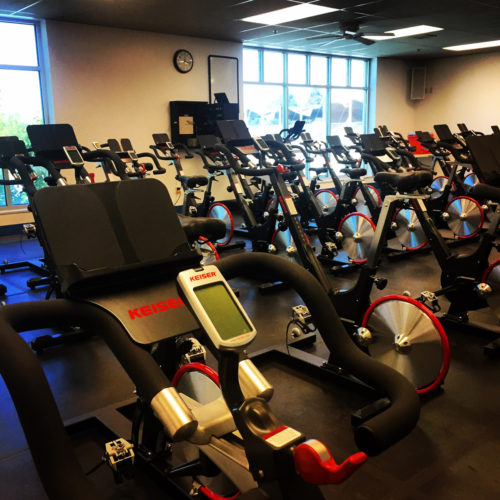
The Ride Louder program launched this year with new bikes. Photo by Tyler Ford

November 15, 2016 – Salt Lake City, Utah – The JCC’s Ride Louder winter cycling program, designed by legendary Utah cyclist Jeff Louder, is underway and runs through March 5, 2017. The program features the new Keiser M3i spin bikes which have power output in watts, Bluetooth wireless technology, the Eddy current magnetic resistance system, and adjustment options to fit any rider.

Ride Louder is designed for any level of fitness or expertise, and with the Keiser M3i’s Bluetooth capabilities, participants will be able to easily track their progress toward their goals

Before they begin the program, I test each rider and set training zones. Over the course of the winter,” says former pro cyclist and head coach Louder, “these zones will be used to follow specifically designed training blocks built to get the most out of each Ride Louder class.” Classes are available six days a week, allowing riders to train for races, stay in shape during the winter, or just reach the next level in riding with their friends.

More information, including registration, full schedule, and program overview, is available at slcjcc.org/louder.

The I.J. & Jeanne Wagner Jewish Community Center is located at 2 North Medical Drive, Salt Lake City, UT 84113.

Inside this Issue and a Look to the Future!

Happy Holidays! We hope you have enjoyed the 24th year of Cycling Utah, and the first year of Cycling West. In each issue, we strive bring you diverse articles about all aspects of cycling from racing to touring, commuting and advocacy, road and dirt, and much more. Inside this issue, we have great articles on our Rider of the Year Awards, Fat Biking in Wyoming/Idaho, Lotoja, Red Bull Rampage, tandem cycling, and much more.

Cycling West - Cycling Utah Magazine logoOur mission with Cycling West is to grow the cycling community by providing great content and resources for cyclists, athletes, and bike shops. Over the winter, and in the next year, look for more great coverage, new programs, new opportunities to contribute cycling news and stories, and new ways to sponsor and support Cycling West and Cycling Utah. In the meantime, please take a moment to follow us on social media and subscribe to our newsletter.

Connect: cyclingwest.com, cyclingwest.com

Subscribe: cyclingwest.com/subscription-info/

Follow: facebook.com/cyclingwest

facebook.com/cyclingutah

twitter.com/cyclingutah

twitter.com/cyclingwest

Feedback: Send comments to [email protected]

We hope you enjoy this issue!


What’s Happening in Weber County? An Interview with Marriott-Slaterville’s Bill Morris

By Turner C. Bitton – Many readers are familiar and frustrated with the gridlock that exists at many levels of government but are often less familiar with the impressive actions being taken by municipal and county governments to provide recreational, commuter, and mountain biking infrastructure and amenities. I sat down with Bill Morris, City Administrator of Marriott-Slaterville City in Weber County to talk about the city’s efforts to improve bicycle infrastructure and recreational opportunities. Marriott-Slaterville is a small community of just over 1,700 people located along the north bank of the Weber River between Ogden City and Plain City.

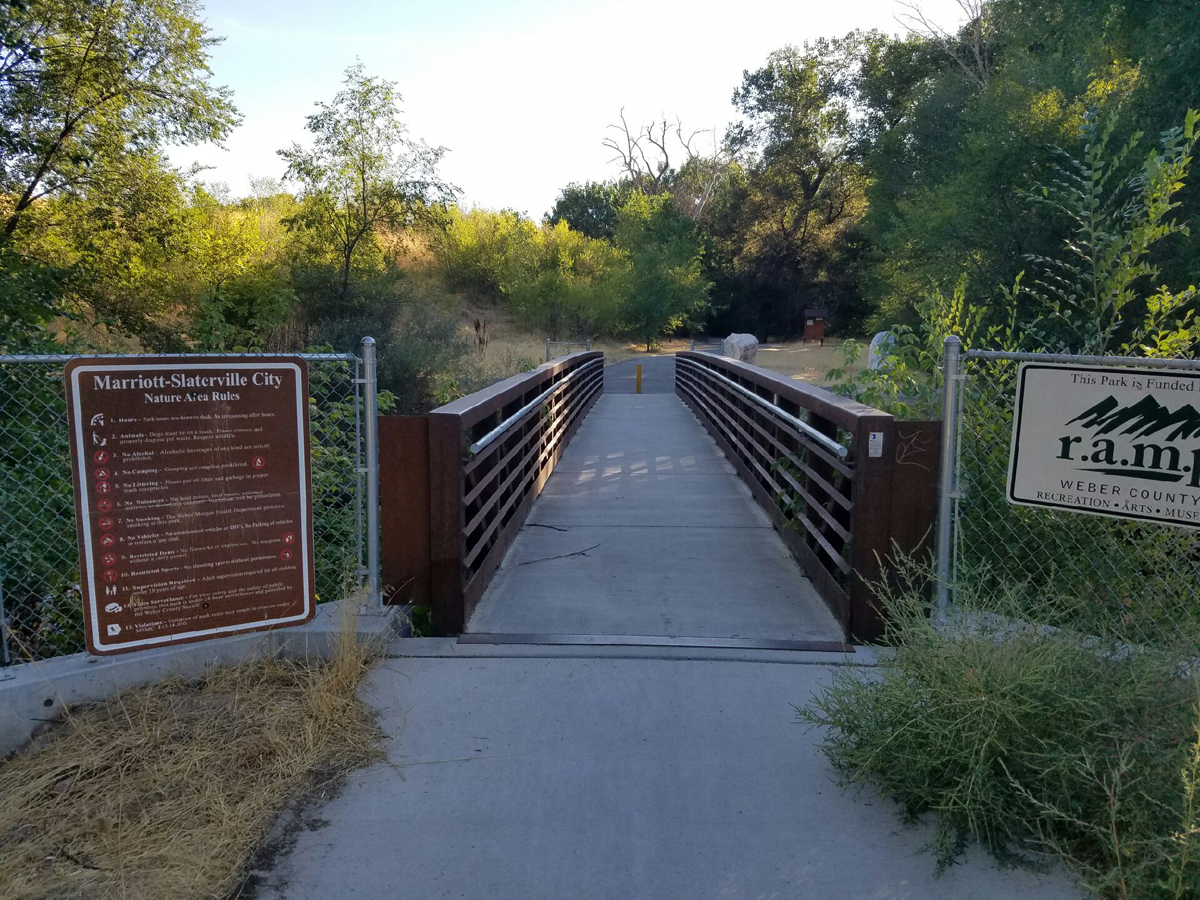
The Centennial Trail along the Weber River is a key part of Marriott-Slaterville City’s bike plans. Photo by Turner Bitton

1. Can you explain the projects you are working? What led you to invest city resources in the project? What does Marriott-Slaterville City hope to accomplish through the project?

Our ambitious city has plans to extend the Centennial Trail along the Weber River from Ogden to Plain City. We have worked in cooperation with county officials to support the interconnected trail system that is growing everyday throughout Weber County.

A portion of this trail has already been completed between Ogden City and State Road 126 (1900 West). The Centennial was constructed several years ago and the city is currently working to add amenities such as trail markers and bike racks. A new trailhead parking area was installed in 2014 on 1700 South and provides one of the only direct access points to access the trail from the road between 21st Street and 1900 West. A trail map, bench, markers, and a bike rack are the some of the amenities that the city is looking to provide.

As a city in the heart of Weber County we hope to provide connections between our neighboring cities to one another to tie communities together and to support commuter and recreational cyclists.

2. How have you financed the project? Why is it important to you that the city invest in bicycle infrastructure?

The city has financed its trail project with RAMP funds received from Weber County and from fees generated by the city. The city also utilizes and is seeking donations to provide amenities listed above. It is important to invest in bicycle infrastructure to create a safe and usable alternative transportation system, and enhance the trail route. The scenic ride along the Weber River is one of the most popular recreational cycle routes in Northern Utah.

3. Have you learned any lessons during the project? Have any difficulties arisen?

Difficulties have arisen from transients who traffic the area and who are often disruptive. Three were arrested last month in the area after it was discovered they had felony warrants. The markers and bike racks will enhance safety and provide a greater level of recreation on the trail. More bikers will deter transient traffic and increased traffic will lead to greater community ownership of the trail.

4. What other bicycle infrastructure has the city invested in? Do you have plans for future infrastructure investments?

The city has many other plans to support bicycle infrastructure, including linking the river tail on 1700 South along 1200 West to the Weber County Fair Grounds a few miles to the north on 1200 West. This will provide a great bike route to this major recreation and event location and allow commuters from within Ogden City’s downtown to commute directly to the Weber County Fairgrounds. In addition, new bike racks are planned to be located at Marriott Park and the City Hall Park in Marriott-Slaterville.

5. Have you sought state or federal funding to assist with projects such as this? If so, what has been your experience?

Securing federal funds has proven difficult in an age of sequestration. There is not a significant amount of interest in bike funding when there is a constant battle over basic federal funding such as the budget. State funding is nearly just as difficult. None of the trail projects has secured state or federal funding to date. The Republican-dominated legislature and governor have eliminated many of the historical funding programs and critical land preservation programs such as the LeRay McAllister Critical Lands Conservation Fund. As a result, many conservation projects and trail projects have been left entirely to small municipalities to fund. Oftentimes, small cities such as Marriott-Slaterville are unable to fund the work that they would like to.

In contrast, county funding is much more attainable and as it is supported by local voters and elected officials who share a desire to extend the trail system and beautify the community. The Weber County RAMP program has been incredibly helpful in funding not only bicycle infrastructure but parks, theaters, museums, and other recreational opportunities.

Turner C. Bitton is an avid cyclist and serves on the Board of Directors of several organizations and in many volunteer leadership capacities. He lives in Ogden with his husband Chase and their two dogs Charley and Moose.

Salt Lake Valley Trails Society Objects to Trails Portion of 2016 Central Wasatch National Conservation and Recreation Bill

The Central Wasatch National Conservation and Recreation Area Act of 2016 would protect and preserve the Central Wasatch in Utah. While the bill is for the most part balanced, it may impact several key mountain bike trails. This trail is Alta, and would not be impacted by the bill. Photo by Dave Iltis

Trails Group Wants to See Boundary Adjustments to Accommodate 3 Trails

November 12, 2016 – The Salt Lake Valley Trails Society is objecting to certain provisions in the Mountain Accord’s key outcome, the Central Wasatch National Conservation and Recreation Area Act of 2016 (H.R. 5718) bill (CWNCRA) that is being introduced into Congress by Rep. Jason Chaffetz (R-Utah). In particular, the SLVTS objects to the alignment of the proposed mountain bike trail in Parley’s Canyon, the Little Cottonwood Canyon Trail, and the alignment of the Bonneville Shoreline Trail at the foot of Mt Olympus in Cottonwood Heights, Utah.

The Mountain Accord is a planning process that has led to a consensus outcome for the future of the Central Wasatch. It considered environment, economics, recreation, and transportation. Many stakeholders met over a couple of years to come together and discuss the key issues in preserving the Wasatch Mountains. 

According to Chaffetz’s press release, the CWNCRA would do the following:

This bill designates approximately 80,000 acres of U.S. Forest Service land including critical watershed, scenic ridgelines, treasured landscapes and recreation areas while facilitating ski resorts to own more land in their established base areas. In this bill:

•  All existing recreational uses and permits will continue;
•  Natural resources and watersheds will be protected;
•  Existing Wilderness Area boundaries will be adjusted for the Bonneville Shoreline Trail alignment and for transportation improvements.
•  Approximately 8,000 acres of wilderness will be added;
•  The U.S. Forest Service will maintain ownership and management of the lands;
•  Land exchanges between the U.S. Forest Service and the four Cottonwood Canyons ski resorts are authorized;
•  Ski resort permit boundaries on U.S. Forest Service land will be fixed permanently after some adjustments through the existing permitting process;
•  New roads for automobiles will be prohibited on U.S. Forest Service land;
•  No restrictions will be placed on U.S. Forest Service management for fire suppression, vegetation maintenance, avalanche control or other emergency measures;
•  Private land within the area or adjacent to the area being designated will not be affected;
•  Future transportation improvements are not precluded and can be made on an as needed basis.

In a statement released today, SLVTS takes a position on each of the three trails mentioned above.

On the Bonneville Shoreline Trail, perhaps the keystone trail in Utah, the Mountain Accord had recommended a realignment of the Mt. Olympus Wilderness Boundary to accommodate mountain bikers on the foot of Mt. Olympus. As it currently is, since mountain biking is not allowed in wilderness, mountain bikers must detour onto Wasatch Boulevard in order to bypass the off-limits section of the trail.

In Little Cottonwood Canyon, the SLVTS is asking for a realignment of the right of way at the base of White Pine Canyon. This will allow mountain biking to co-exist with potential transit solutions, and with the riparian area of Little Cottonwood Creek. This would allow the existing Little Cottonwood Canyon Trail to connect to Snowbird.

In Parley’s Canyon, a soft-surfaced mountain bike trail is proposed on the southside of Interstate 80 from the mouth of Parley’s Canyon to Mountain Dell, approximately halfway up the canyon. The current Mt. Aire and proposed new alignments of the wilderness boundaries would preclude a trail from ever being built in this area. 

The full statement by SLVTS can be found here and also is pasted below in this article.

SLVTS is asking interested mountain bikers to write letters of support for their position to some of Utah’s House of Representatives delegation:

[email protected]
Mia Love’s legislative aid for natural resources

[email protected]
Chris Stewart’s legislative aid for natural resources

[email protected]
Jason Chaffetz’s legislative aid for natural resources

[email protected]
Natural Resources Committee Clerk

Editor’s Note: Cycling Utah has not yet taken a position on the bill or on the final version of the Mountain Accord process. We did sit on the recreation committee, and provided a great deal of input, some of which was incorporated.

Full Statement by SLVTS on the Central Wasatch National Conservation and Recreation Area Act of 2016

Salt Lake Valley Trails Society

Central Wasatch National Conservation and Recreation Area Bill Position Statement

The Salt Lake Valley Trails Society (SLVTS) is appreciative of its opportunity to engage the Mountain Accord (MA) process on behalf of the more than 50,000 active mountain bikers in the Salt Lake Valley, as well as the tens of thousands of cyclists who visit the Wasatch from around the state and across the country. While we appreciate that the MA is actively considering ways in which to provide sustainable recreational opportunities for cyclists in the Central Wasatch, the Central Wasatch National Conservation and Recreation Area (CWNCRA) bill as proposed by Rep. Chaffetz is flawed with respect to historic and planned mountain bike routes.  Without MA curing the three primary deficiencies outlined below, the SLVTS will be unable to support the CWNCRA.

  1.       The Bonneville Shoreline Trail (BST). Statutorily designated as Utah’s Millennium Legacy Trail, UCA §79-5-503, the BST is the primary trail resource for the vast majority of Salt Lake Valley residents.  A cherished trail by the residents across the Wasatch front, the BST is intended as a multi-use trail (see, BST Trail Design Memorandum of Understanding). However, its functionality as a multi-use trail is interrupted by wilderness areas as it skirts the edges of the Mt. Olympus, Twin Peaks and Lone Peak wilderness areas.  One of the stated objectives of the CWNCRA is to adjust the boundaries along small portions of wilderness that interrupt the BST, but, unfortunately, the revised wilderness area boundaries, as presently drafted, are insufficient to achieve the goal of creating mountain bike accessible trail connectivity. The boundary adjustments are based on bad data, inconsistent with existing Forest Service work and plans, and would require the building of trail in unsustainable or infeasible locations, such as across cliff faces.  The MA team was alerted to these problems through written correspondence at least as early as April of 2016. The SLVTS requires that adequate accommodation for the preferred alignment of a sustainable multi-use trail be facilitated by the wilderness boundary adjustments
  2.       Parley’s Canyon. Parley’s Canyon is the principal travel route between the Salt Lake Valley and Summit County and has been studied extensively for development of alternate modes of transportation, principally cycling (see Parleys Canyon Trail Feasibility Study 2012). As part of this analysis, Salt Lake County proposed and sited a soft surface trail running along the south of Interstate 80, extending from Wasatch Boulevard to Interstate 80’s Mountain Dell exit. As presently drafted, the CWNCRA-proposed Mt. Aire wilderness area includes arbitrary-drawn “corners” that approach the Interstate 80 right of way near the mouth of Parley’s Canyon, where the canyon is narrow and steep and would require segments to be built across cliff faces, effectively precluding construction of a usable trail. The lack of consideration for trail construction in this heavily congested area (and lack coordination with existing trail plans) in favor of arbitrarily drawn “wilderness” areas will effectively permanently preclude any constructing of a soft surface cycling route through Parley’s Canyon. As discussed below, the SLVTS proposes that the arbitrary wilderness “corners” that prevent trail construction be removed and the Mt. Aire wilderness area boundaries be slightly revised in a manner that will allow for the construction of a usable and sustainable multi-use trail.
  3.       The Little Cottonwood Canyon Trail (LCCT). The LCCT has long been a favorite summertime recreation area for many user groups, including mountain bikers.  As currently constructed, the LCCT suffers from user conflict due to gradient, trail design and constriction caused by existing rights of way (ROW) along the canyon floor. As presently drafted, the CWNCRA proposes to establish a Special Management Area (SMA) in and around White Pine Canyon that would disallow bicycles.  This SMA designation would essentially manage the area as wilderness, but allow helicopters. In addition, the CWNCRA would revise existing wilderness boundaries to permit a transit corridor to the west (or down-canyon) from the White Pine SMA.  The SLVTS would like to see the CWNCRA slightly revised to allow for improvements to be made to the existing LCCT and permit the LCCT to continue through the northern edge of the White Pine SMA to connect the trail to Snowbird. In order to minimize user conflict and create sustainable trails in a riparian area such as this, it is necessary to have a right of way that is substantial enough to accommodate proper and sustainable trail design. The proposed removal of wilderness for a transit corridor right of way and designation of the White Pine SMA make a sustainable LCCT through this area impossible. The SLVTS members need a minimum 60-foot ROW for this trail across the mouth of White Pine and in addition to the transit corridor.

Resolution of these three challenges will involve detailed mapping, which the current draft of the CWNCRA contemplates will come only after the bill has passed. This presents an opportunity for two possible solutions:

  1.      “Snap to” wilderness boundaries determined by an offset (50 ft.) from the centerline of an environmentally assessed trail alignment.
  2.      Give the above identified opportunities a wide berth by ensuring that wilderness and SMA lands provide for a robust multi-use trail right of way.

Interestingly, these all of these issues arise because of totally arbitrary, usually rectilinear, boundaries which do not reflect on-the-ground realities. Furthermore, the solutions proposed above would affect less than 1% of lands conserved under the bill and will not affect the wilderness characteristics of the areas. Instead, all of the adjustments to wilderness boundaries will be in and around existing roads, houses and other development.  There is a great opportunity to create sustainable trails which will be lost for generations if the CWNCRA is not amended to provide for the environmentally sustainable construction/reconstruction of the Parley’s Canyon soft surface trail, the Little Cottonwood Canyon Trail and the Bonneville Shoreline Trail. SLVTS membership believes that now is the time to get this right.


Salt Lake County Seeks Input on New Bike Route System – Comments due by 11-15-16

0

Cyclists are Encouraged to Provide Feedback on Planned Bike Routes

The ATIP is planning for more bike lanes throughout Salt Lake County. The lane shown here on Redwood Road in S. Jordan is of sub-standard width. The ATIP process allows for commenting on issues like this, and on the planned bike routes. Photo by Dave Iltis

November 12, 2016 – Salt Lake County, Utah is seeking public comment on the Active Transportation Improvement Program (ATIP) Draft Map by November 15, 2016. The ATIP is a network of low-stress bikeways that Salt Lake County is planning on implementing over the next few years. 

Active Transportation, generally understood as biking and walking (but could include any other form of human powered transportation), is seen as a way for Salt Lake County to improve air quality, health, and recreation.

The ATIP will create a network of 638 new miles of bike routes, including 272 miles of protected and buffered bike routes. From the Salt Lake County website, “The purpose of this plan is to identify and prioritize specific routes and spot improvements throughout the valley that contribute to safe connections between cities, townships, neighborhoods, schools, commercial centers, transit, parks, and regional off-street paths, such as the Jordan River Parkway.”

Additionally, it is a goal of the plan to provide more transportation options, and to improve air quality. The plan is continuation of ongoing plans for cycling on the Wasatch Front, including those of the Wasatch Front Regional Council, UDOT, and UTA.

Salt Lake County Mayor Ben McAdams encouraged people to comment on the plan with both likes and dislikes in this video posted to Twitter:

So far, there have been four open house on the draft map with numerous attendees, as well as a set of initial open houses that helped to inform planners in making the map. Unfortunately as of today, the number of commenters on the web version of the map has been relatively low.

More information on the ATIP is available here: http://slco.org/planning-transportation/active-transportation/

To comment on the draft map, see: http://wikimapping.com/wikimap/Salt-Lake-County-Bike-Facilities.html

Follow the directions on the map to comment on areas of concern for you. Turn on layers to see other people’s comments and add to those.

For more information on bicycling programs in Salt Lake County, visit http://slco.org/bikes

Choosing Tires for Road Touring

By Lou Melini

For the person that travels by bike for several days, several weeks or several months, choosing the right tire for the tour may assist in the enjoyment of the tour either by improving speed and comfort of the ride or perhaps making the ride flat free. Fortunately, and perhaps surprisingly, there is a large selection of tires to choose from. There is also a lot of advice from various forums and blogs, some of it from bike travelers that spent years on the road in remote parts of the world on roads that would be classified as high-clearance jeep roads in the U.S. The question for bike travelers is; “Do you need a tire capable of world travel for a 3-week bike tour from Salt Lake City to Yellowstone NP and back” and “Should I use tires specific for each tour’? Tires for touring are about durability, stability, speed, comfort, price and the feature of a folding vs. non-folding tire. Buying a tire for one characteristic, such as high durability, will most likely decrease other characteristics such as speed and perhaps comfort, making purchasing decisions more complicated.

Schwalbe Marathon Plus
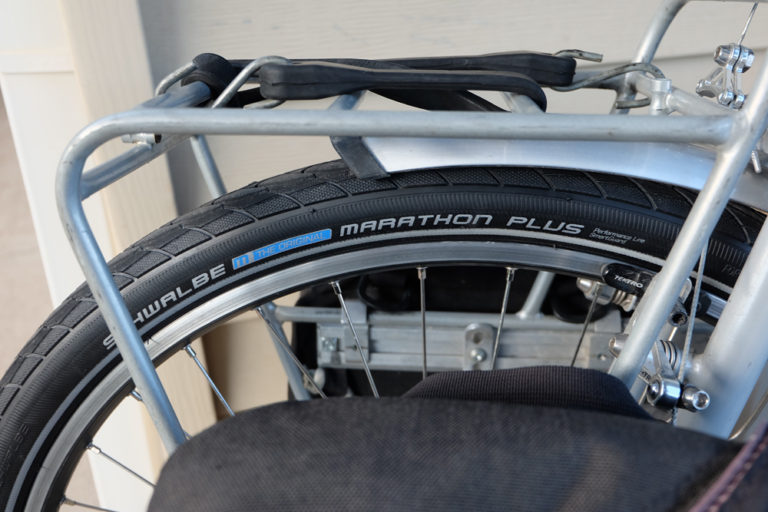
The Schwalbe Marathon Plus is a 700 X 38C and 960 gram tire rated 5 stars for durability and protection but only 3 for speed. Photo by Lou Melini.

The choice of a touring tire will depend on the length of the tour, typical roads that one travels on, your body weight and the weight of the gear, your aversion to punctures, and how big of a tire will fit on your bike. I will focus this article on tires for road and maintained gravel roads and not off-road bike packing tires. I do not have enough experience with off-road touring where tire pressure may be a larger consideration with off-road bikepacking tires that have a larger air volume. I will also not discuss tubeless tires for bike touring. I do not think there is enough generalized touring experience to objectively evaluate tubeless tire for road touring, though I know that tubeless can work on off road tours.

The tires discussed in this article will be 700C (ETRTO 622) with widths of 25, 28,32,35 and 38C (ETRTO 25-40) so that a 700 X 35C tire will have an ISO/ETRO # of 37-622. Certainly one can use a 23C tire or one larger than 38C for touring, but most people use the 25-38C range for road touring. For overseas travel in Asia or South America it is recommended to use a 26” wheel and tire (ETRTO 559). Some of the information that I am providing is from SheldonBrown.com. If I comment about a “wider” tire, I am referring to a 32-38C tire and a comment about a “narrow” touring tire being 25-32C.

For the purpose of terminology consistency, I may be referring to the tires found on the Schwalbe tire website, one of several tires brands I have used for touring. I have no affiliation with Schwalbe as I have also used tires for touring from Vittoria, Continental, Panaracer and Specialized. In addition you may purchase tires for touring from Vee Tires, CST, Michelin, Clément, Compass and “non-touring” tires such as ‘city’ tires or cyclocross tires.

Durability: As a general statement, durability can simply be defined as any tire that completes the intended bike tour. As a technical definition, durability refers not only to the number of miles the tread will last, but also to how well the sidewalls hold up to cracking and resisting cuts. Some tires will have an additional puncture resistance layer incorporated into the tire. Keep in mind that changing a tire due to wear can be a planned part of your bike travels in order to ride on a lighter tire.

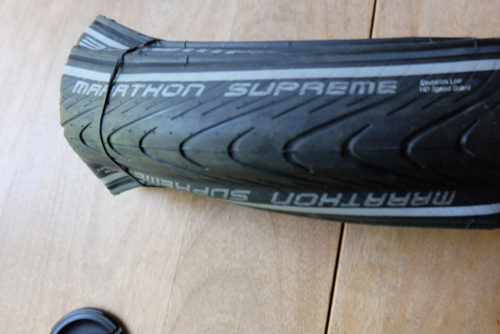
You will find that the more durable the tire the heavier it will be. A 700 X 35C (non-folding) Schwalbe Marathon Plus HS440 tire with SmartGuard flat protection weighs 900 grams compared to the 35C Marathon Supreme HS 382 (folding tire) at 440 grams. In my experience, probably all cyclists traveling around the world that have stayed at my house use tires in the 800-1000 gram range. I have also had a cyclist traveling across the U.S. on 25C tires, a tire no larger than what most recreational cyclists use on social rides.

Flats are always an annoying part of any tour. Tires that promise to be “flat-proof” are popular, but add to weight. I think a flat-protection layer is a nice feature on a tire designed for bike travel. There are several in-house brands among manufacturers and several types of flat proofing incorporated in a tire tread by a tire manufacturer such as Schwalbe. I do not have enough experience or engineering knowledge to rate the different types. On the Schwalbe website the varying types of flat protection can weigh 100-200+ grams above the type of protection incorporated in the marathon supreme model that I have.

Nearly all of my flats occur for a couple of reasons. I run my tires too long so I get flats due to excess wear. The second reason is simply bad luck. I’ve had 2 flats from goatheads (puncturevine) on 2 tours using the D & RG bike trail north of Kaysville. Another source of flats is on roads frequented by heavy trucks. The flats come from staple-like pieces of metal thrown from truck tires due to wear. Julie and I have had a combined 3000 miles with one flat on some of our tours. On our 1350-mile Canadian Rockies tour neither one of us had a flat.

Stability: Stability is a subjective term. The Schwalbe website uses the term grip. I use stability as a general term for how well does the tire handle in wet weather, on loose gravel (sitting on a paved road or as the material of a dirt road), rolling over small potholes or obstacles on a road and cornering, down a mountain pass. Usually the width of a tire will determine stability. According to Sheldon Brown’s website inflation pressure, rubber formulation and tread pattern also influence traction or grip. Softer rubber formulation will improve grip but decrease durability. Sheldon Brown also states on his website that the best tread pattern for on-road use “are perfectly smooth, with no tread at all!”

Speed: How fast a tire rides is usually a function of the weight of a touring tire. These tires may not be as durable as larger tires but for a trip of less than 1000 miles they should be durable enough. As I previously mentioned, one may not care about durability and would rather replace a tire more frequently to gain speed. Lighter tires (28C) in my experience should be able to satisfy stability concerns on smooth gravel roads and packed limestone trails.

Comfort: Comfort in a tire is a rather subjective term for a tire that rides fast without the rider feeling the vibration from the road.

Comfort of a tire will be a function of air volume, high thread count (TPI) of the sidewalls and tire pressure. Too low of a tire pressure will increase risk of pinch flats. Lighter sidewalls with high TPI are more prone to cuts. Compass has light tires with higher TPI than the other brands of touring tires I mentioned. These tires should be a comfortable, though I question the durability. The website claims a 3-mm tread enhances the durability.

Folding tires: One of the reasons I choose folding tires is that I always carry a spare tire on a tour. Some people scoff at the idea of the extra weight of a spare tire and advocate hitchhiking or a tire boot if a tire becomes severely damaged. I’ve been in at least one situation where neither was an option. I also feel that I am more independent with a spare. If one needs a tire, you can usually find one at a bike shop. My experience is that the inventory of touring tires will be limited to a 28C tire.

Folding tires are lighter than non-folding though the difference may be too small to consider. For example the Continental Gatorskin folding 700 X 32 is 70 grams lighter but there is only a 10-gram difference noted on the website for the Schwalbe Marathon Mondial model. Folding tires are generally easier to mount and remove from a rim. This feature may also cause the tire to blow off the rim during inflation if not mounted properly, which I have done a few times. I do not see prices on most websites but folding tires are usually more costly but some of that cost difference may be due to other performance features in the tire.

The Ideal Tire

So is there an ideal tire? When Julie and I travel on our bikes we are on paved roads, though we have hundreds of miles on packed gravel roads and packed dirt and crushed limestone trails. If I need to purchase a touring tire, I currently look for a folding tire in the mid-300 to 400-gram range with a width of 32C. This weight and size range gives me a good balance of speed, comfort, durability and stability that I desire for the touring that I do. For whatever reason, 32C Schwalbe Marathon Supreme and 32C Continental Gatorskin hardshell tires were unavailable this year (2015) so I went with the Marathon Supreme 35C at 440 grams.

Though I prefer a 32C tire, I put 28C tires weighing 310 grams on Julie’s bike (along with lighter rims) to help equalize our abilities. She has not stated any concerns with stability. I might use 28C tires if I am touring with a younger and stronger rider. Julie and I do not need a very large tire, as we do not ride on rough enough roads to need tires larger than 32C. A 35C tire is more than adequate for our needs.

Schwalbe Marathon Supreme
The Schwalbe Marathon Supreme. Lou’s tire of choice. The tire is 440 grams for the 700 X 35C. 4 stars for durability but 5 for speed and protection. Photo by Lou Melini.

I used a cyclocross tire on the rear of my bike for a recent tour that took me on Ant Flat road, a 15-mile rough dirt road that runs between Hardware Ranch and Monte Cristo Road (SR39) in northern Utah. The cyclocross tire was comfortable with the large air volume. It does not have a flat-proof layer so this could be an issue. The Michelin Jet I used weighs 330 grams. I wished I had put a similar tire on the front wheel as well. There are now “gravel” tires available from Panaracer, Maxxis and Challenge. The 32C size by Panaracer is the largest tire at this time in their gravel line-up and weighs just 320 grams with a puncture resistant layer. If gravel is part of your travel, perhaps this is the tire for you.

As a side-note, there are some blogs that would argue for “name-brand” tubes such as Schwalbe as they claim to hold air better and will be more likely to be free of defects. I do not have a strong opinion or experience with this advice.

In summary, your ideal touring tire will depend on a lot of variables. Many experienced bicycle travelers have their favorite tire, while others ride with whatever came with their bike or available at their local bike shop. My current “ideal” tire may not be your ideal tire depending on the variables I mentioned earlier in the article. Don’t get too hung up on tires. If you start your tour with tires in good condition and appropriately inflated you should be fine.

I hope that this article gives you a little more insight and thought when you look at your tires.


Big Changes at the Amgen Tour of California

By Dave Richards

The 11th edition of the Amgen Tour of California Pro Cycling Road Race (AToC) was held from May 15-22, 2016. The race consisted of 8 stages starting in San Diego working its way up the coast to finish in Sacramento. 18 teams of 8 riders each competed for the men’s prizes. What was significant is that the roster included 10 World Tour Teams. For those of you who don’t follow racing closely, there are currently 18 World Tour Teams and they represent the highest level of road racing. For comparison, in the past I think the most World Tour teams I’ve seen at a USA event was 6.

The women’s race consisted of 4 stages beginning near the men’s finish in South Lake Tahoe. Then it followed the men’s route for the other stages. Unfortunately, due to the start times and long transfers between events, I wasn’t able to cover the women’s race except for the final stage, a criterium around the state Capitol grounds in downtown Sacramento.

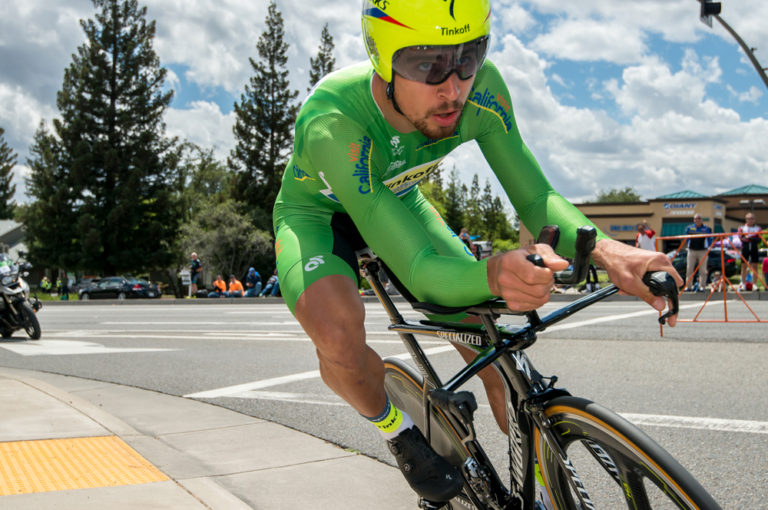
Peter Sagan Tour of California
Peter Sagan (Tinkoff) drillin’ a turn in the Stage 6 Time Trial in Folsom, 2016 Amgen Tour of California. Photo credit Dave Richards.

AToC has steadily evolved into what many consider to be the premier stage race held in North America. With Colorado’s USA Pro Cycling Challenge canceled this year due to lack of funding, and our Tour of Utah more of a climbers race, it’s only natural that AToC is drawing the biggest names in European based cycling. Teams such as Tinkoff, Sky, Extixx-Quick Step, BMC, Cannondale, and Trek were there among others. Riders included top sprinters such as Cavendish, Kristoff and Degenkolb not to mention big crowd pleasers Sir Bradley Wiggins and Peter Sagan. All things considered, the level of talent in attendance was unprecedented this year.

For a history on the event, I turned to Sean Weide. Sean has been a press officer at AToC for nine of the eleven years it’s been held. He was with BMC Racing until recently joining the Axeon Hagens Berman team. According to Sean, the significant changes he’s seen are due to the time of year the race is held and the course selection. “Up until 2010, the race was in February. This provided the European teams a chance to compete in nice weather conditions when the race calendar was otherwise a bit sparse. The first two years of the race, 2006 and 2007, there was hardly a drop of rain to contend with. But the 2008 and 2009 editions were particularly soggy, which was a contributing factor in the race organizer’s decision to move the race to May”.

Tour of California
The peloton rolls out under Sacramento’s historic Tower Bridge for the start of Stage 8, 2016 Amgen Tour of California. Photo credit Dave Richards


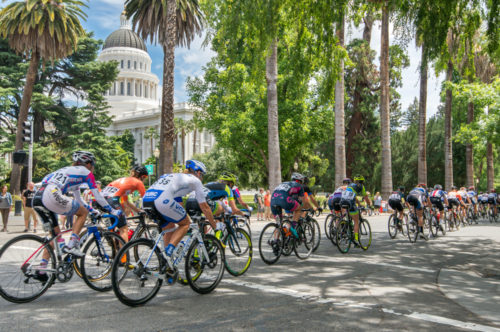
Women Tour of California
Palm trees line the grounds of the California State Capitol as the women race the 20 lap criterium during Stage 4, 2016 Women’s Tour of California. Photo credit Dave Richards.

When the race was moved to May, he felt that AToC faced more competition for media coverage from other sports such as baseball and basketball. The race now competed directly with the Giro d’Italia, also held in May.

Course selection has affected media coverage and fan attendance. Sean says “In an attempt to make the race more challenging, the tradition of having finishing circuits in metropolitan areas was largely abandoned. Instead, the race was moved to more remote areas for mountainous stages and summit finishes. This, in turn, led to fewer spectators and diminished media coverage due to the remoteness of the finish venue.”

This year ASO was hired to replace Medalist Sports (who managed AToC in the past) and some glitches were bound to happen. The transfers between stages were long. In fact, the riders gave the race the nickname of “Tour de Transfer”. As the owner of the Tour de France, ASO has lots of experience running big cycling races. I don’t think organizers of Euro races realize the impact of the bigger distances involved when traveling a large state such as California.

Toru of California
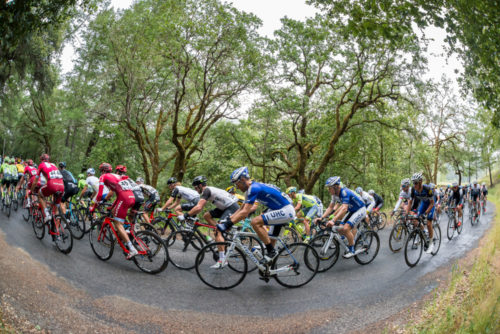
The peloton under a green canopy of trees, King Ridge Road, Stage 7, 2016 Amgen Tour of California. Photo credit Dave Richards


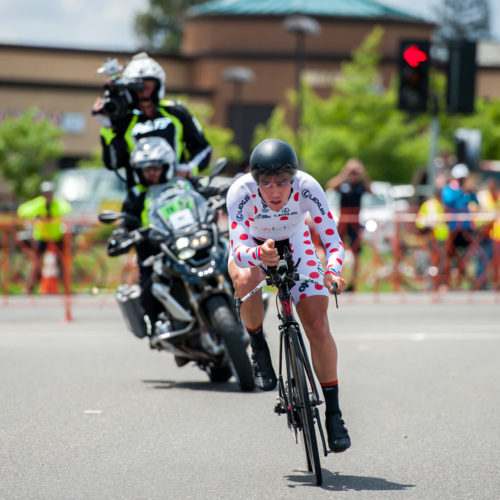
The TV moto shadows King of the Mountains leader Evan Huffman (Rally Cycling) during the Folsom Time Trial, Stage 6, 2016 Amgen Tour of California
The TV moto shadows King of the Mountains leader Evan Huffman (Rally Cycling) during the Folsom Time Trial, Stage 6, 2016 Amgen Tour of California. Photo credit Dave Richards

What does the future hold for the Amgen Tour of California? One strong point in its favor is that the race has a stable title sponsor in Amgen. Races and teams continually fold due to lack of money or sponsors, so this is fortunate. ASO’s involvement could bring bigger and better racing. ASO owns the Tour de France as well as other major European races. They are definitely the big dog in road racing. Also, with AToC in May it allows ASO compete directly with RCS the race organizer of the Giro. Thus we’ll probably see ASO push teams and riders to come to AToC instead of the Giro in preparation for the Tour de France in July. This was evident by the number of prominent riders at AToC this year, including the current World Champion, Peter Sagan.

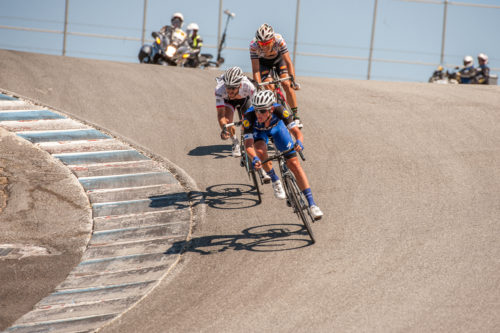
Racers are deep into the Corkscrew turn heading towards the finish line on the Laguna Seca racetrack, Stage 4, 2016 Amgen Tour of California.
Racers are deep into the Corkscrew turn heading towards the finish line on the Laguna Seca racetrack, Stage 4, 2016 Amgen Tour of California. Photo credit Dave Richards

This sentiment was repeated when I spoke with Brad Sohner. Brad and his associate Dave Towle are the longtime race announcers for AToC, Tour of Utah, and pretty much all of the major races here in the U.S. Brad said that AToC has gone from a fun race for the Euro riders to come to with nice hotels, pretty scenery and good racing conditions. It’s now become serious. Brad predicts that with ASO’s involvement we might see AToC become part of an “ASO Race Calendar” with AToC possibly moving up to become a World Tour event.

Time will tell, but all indications are that the Amgen Tour of California will continue to rise in stature, firmly establishing itself as North America’s premier stage race.

Tour of California
Mark Cavendish (Team Dimension Data) salutes as he takes the sprint to win Stage 8, 2016 Amgen Tour of California. In the background, Julian Alaphillppe (Etixx-Quick Step) provides the double salute celebrating his overall win of the race. Photo credit Dave Richards

Short Race Recap: SACRAMENTO, CALIF. (May 22, 2016) – After 782 miles and eight days of racing, 23 year-old Julian Alaphilippe (FRA) of Etixx – Quick-Step Pro Cycling Team clinched the 2016 Amgen Tour of California championship, becoming the youngest rider to hold that title in the race’s 11 years. U.S. National Road Race Champion Megan Guarnier (Glens Falls, New York) of Boels-Dolmans Cycling Team also celebrated victory in Sacramento as the four-day Amgen Breakaway from Heart Disease Women’s Race Empowered with SRAM which concluded along with the men’s event.

Dave Richards is a Utah-based photographer. You can find his work at daverphoto.com and in the pages of Cycling Utah.


Tour of California
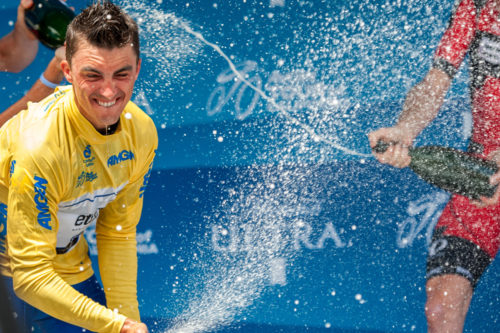
The champagne is flying as Julian Alaphilippe (Etixx-Quick Step) celebrates his win of the 2016 Amgen Tour of California. Photo credit Dave Richards

Crested Butte to Host Fat Bike Worlds Again in January 2017

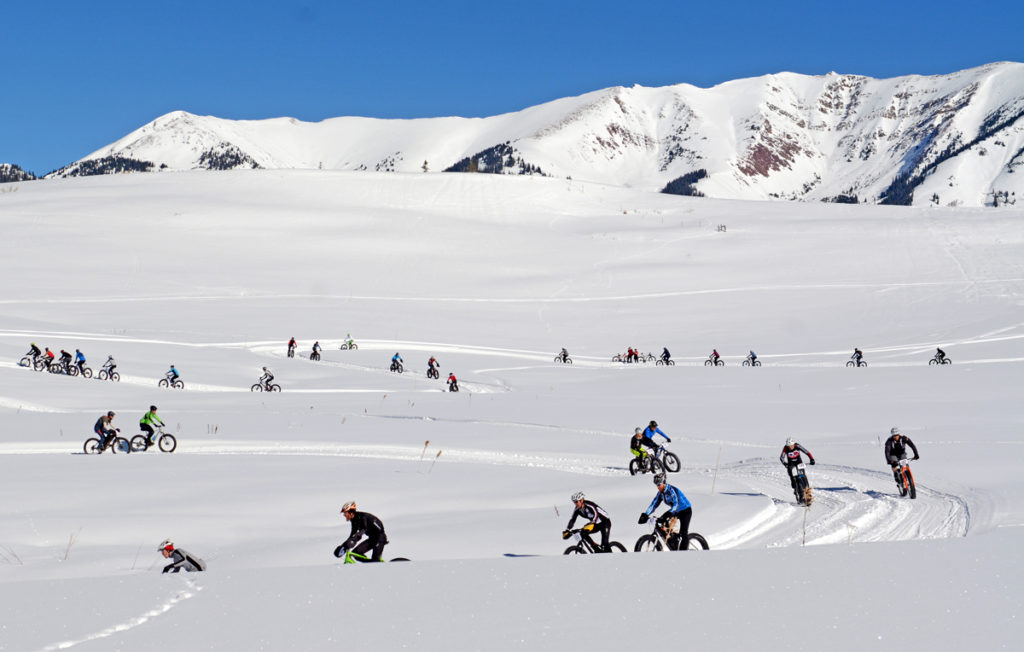
Crested Butte, Colorado, Tuesday, November 1, 2016 – Mountain biking mecca Crested Butte, Colorado will host the second annual Borealis Fat Bike World Championships from January 25-29, 2017. This year’s event will be bigger and badder with more mountain bike legends, competitors, fat bike demos, industry participation and your fill of craft beer and sizzling meats from the ever-present post-race grills.

Day one of the 2016 Borealis Fat Bike World Championships at North Village in Mt. Crested Butte, Colorado. Photo by Pat Addabbo

The second annual Borealis Fat Bike World Championships is not for the faint of heart. We are looking for fat bike fanatics from all over the world that share Crested Butte’s love for the sport, drinking beer, listening to music and having an overall great time. If you love to pedal as much as you love to party and prioritize fun over your finishing time, Borealis Fat Bike World Championship was planned with you in mind.

Featuring two races, a demo day and lift served downhill fat biking at Crested Butte Mountain Resort, live music, tons of swag, down home grilling and beer, the Borealis Fat Bike World Championships will leave participants hungry for four more days of fat bike festivities! We’ll be sure to brand some more buns this year! The winner gets a brand on their behind (no kidding!)

Come be a champion! Or at least join the mayhem!

Crested Butte hotels are offering discounted rates for participants and families. Go to www.cbfatbikeworlds.com for more information.


Utah’s RakAttach Makes Any Hitch-Mount Bike Rack Better

By Chris Magerl

Heft a 30 pound 27+ dual suspension mountain bike on to the roof rack? No thanks. Hitch racks make life so much easier. And there are so many feature-packed brands, from Kuat to Inno, Yakima to Thule. Hitch racks are great!

Until you try to open your rear hatch. Or the tailgate of your truck. Or the back doors of your minivan. You’ve made a deal with inconvenience.

Walter Anyan said no deal. He wanted a simple, reliable way to make any hitch mount rack better.

“We were so tired of climbing over our bike racks when trying to get into the back of our cars and trucks,” said Anyan. “We like our bike racks. They have taken a beating and work like champs but they are always in the way! We figured there had to be a way to make our racks work better.”

Six prototypes later, Anyan was confident he had a version that was solid and reliable enough to offer to consumers.

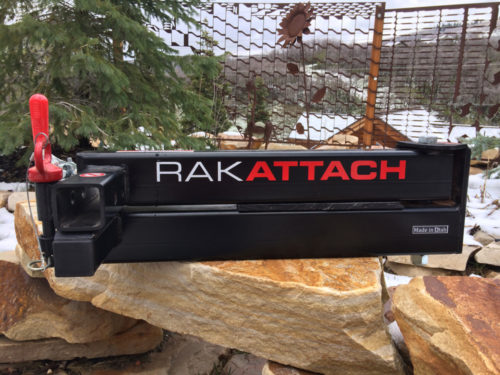
RakAttach Hitch-mount rack
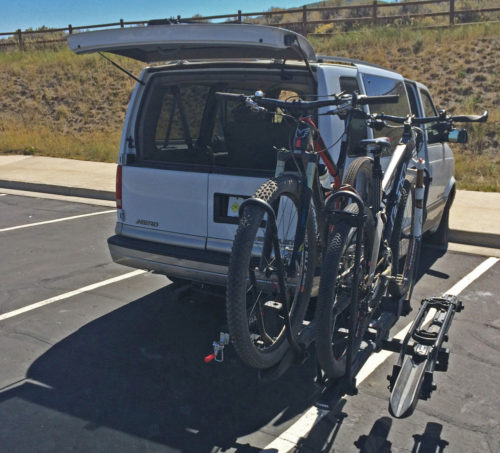
The RakAttach is a swing-arm that allows easy access to the tailgate when used with rear mount bike racks. Photo by Chris Magerl

The RakAttach is a swing-arm that allows any 2-inch receiver hitch to pivot to the side, allowing full access to rear hatches, truck tailgates or rear doors.

The RakAttach was born and bred in Utah. Design started in Summit Park. All of the welding and fabricating is done by MetaDesignsSLC in, yup, SLC. The steel used in the RakAttach is rolled and formed in the US.

“We know that if a product can be designed here, it can be built here,” said Anyan. “We believe in supporting local craftsmen and local businesses.”

The RakAttach comes in three sizes. Small is suitable for your Subaru, Medium works well on the Explorer and Large is at home on any full-size truck, SUV or Sprinter. I am using a Large on my minivan.

The operation is very simple. There is a pin that holds the rack in the unswiveled position, and a simple throw-lever that locks everything in place. Yes, you need to do both. But if you were to space one or the other, catastrophic results would not be likely. The pin can also be used to secure the rack in the opened position, which is helpful if you are on an incline.

Have your Kuat 4-mount filled up with gravity bikes? No problem. The RakAttach has a 300 lb weight limit, well beyond the weight of four bikes. Even most 250cc motos, with an average curb weight of about 250 lbs, wouldn’t topple this swing arm.

As expected, something so sturdy is also heavy. The Large unit weighs about 55 lbs, including lock and hardware. Roughly 35 lbs for Small, 45 lbs for Medium. It is a bit awkward to install solo, and you won’t want to put it on and off each week. But you won’t need to, either. The rack is so quick to swing to the side. After a few days of using the RakAttach, I started feeling sorry for all those people I saw with a hitch-mount rack that aren’t using the RakAttach.

RakAttach is not the only swing-away rack in the game. Yakima and Thule both make a rack that swings out of the way. But both those models carry bikes by the top tube. I find tray-mount better for a many reasons. They are easier to load. They work with large bikes, small bikes, bikes with sloping geometry, and dual-suspension bikes that might have an awkward shock mount. Bikes do not bang and sway. Want a tray mount that swings away? RakAttach plus your existing tray mount seems the best option.

RakAttach Hitch-mount rack
The RakAttach makes hitch mount racks better. Photo by Walter Anyan

Just simple tasks that are a part of everyday ride prep are so much easier when the rack swings aside. It is great to be able to reach into the back of the van to grab a pump without needing a contortionist’s skills. Going on a camping trip to the desert with bikes? Such a treat to be able to load and unload without having to remove all the bikes.

RakAttach can swing to the driver side or passenger side, but that choice has to be made before you purchase. It is not possible for consumers to switch the sides.

The unit comes with a locking hitch pin and an anti-rattle clamp, to securely snug the RakAttach to your vehicle. It is a good idea to recheck the clamp after the first week of use. Each unit comes with a one year warranty.

RakAttach

A simple, strong and easy to use trailer hitch adapter that lets you swing your bike rack or cargo tray out away from the back of the vehicle.

$375 plus shipping for any size

Purchase through RakAttach.com

Utah’s Reynolds Cycling Adds New Employees

1

Reynolds Cycling Brings on New Hires and Restructures Existing Staff

Sandy, Utah (Nov. 1, 2016) – Sandy, Utah-based manufacturer of premium carbon wheels, Reynolds Cycling, has recently completed a phase of hires and restructuring of current staff.

Mike Riley, Reynolds Cycling’s new marketing coordinator, joined the company on day one of Interbike 2016 after having enjoyed the past nine and a half years with BikeSource. Riley’s career at BikeSource began in Columbus, OH in sales while attending Ohio State University. In 2010, Riley was promoted marketing coordinator and moved to the company’s headquarters in Highlands Ranch, CO. In 2014 he became the marketing manager when all of the marketing was brought under one roof. “Joining the team at Reynolds has been a huge stepping stone in my career—I can already tell I am going to learn an immense amount about our industry while working here. The team is great and I couldn’t be more excited about my new role,” stated Riley.

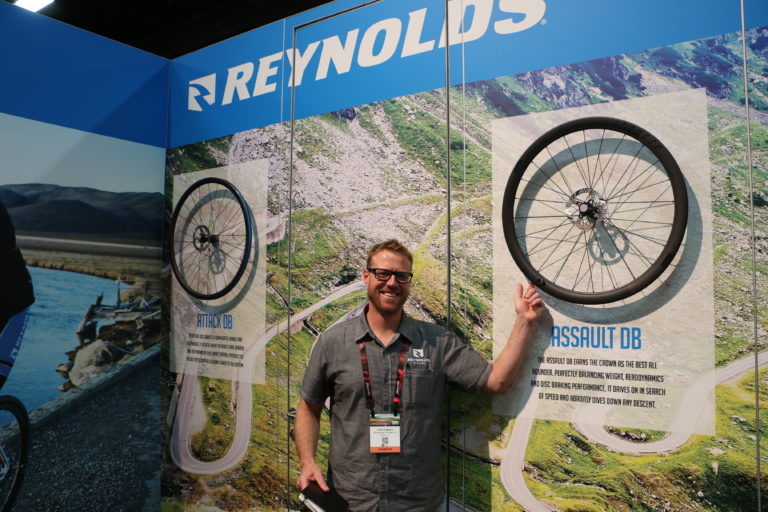
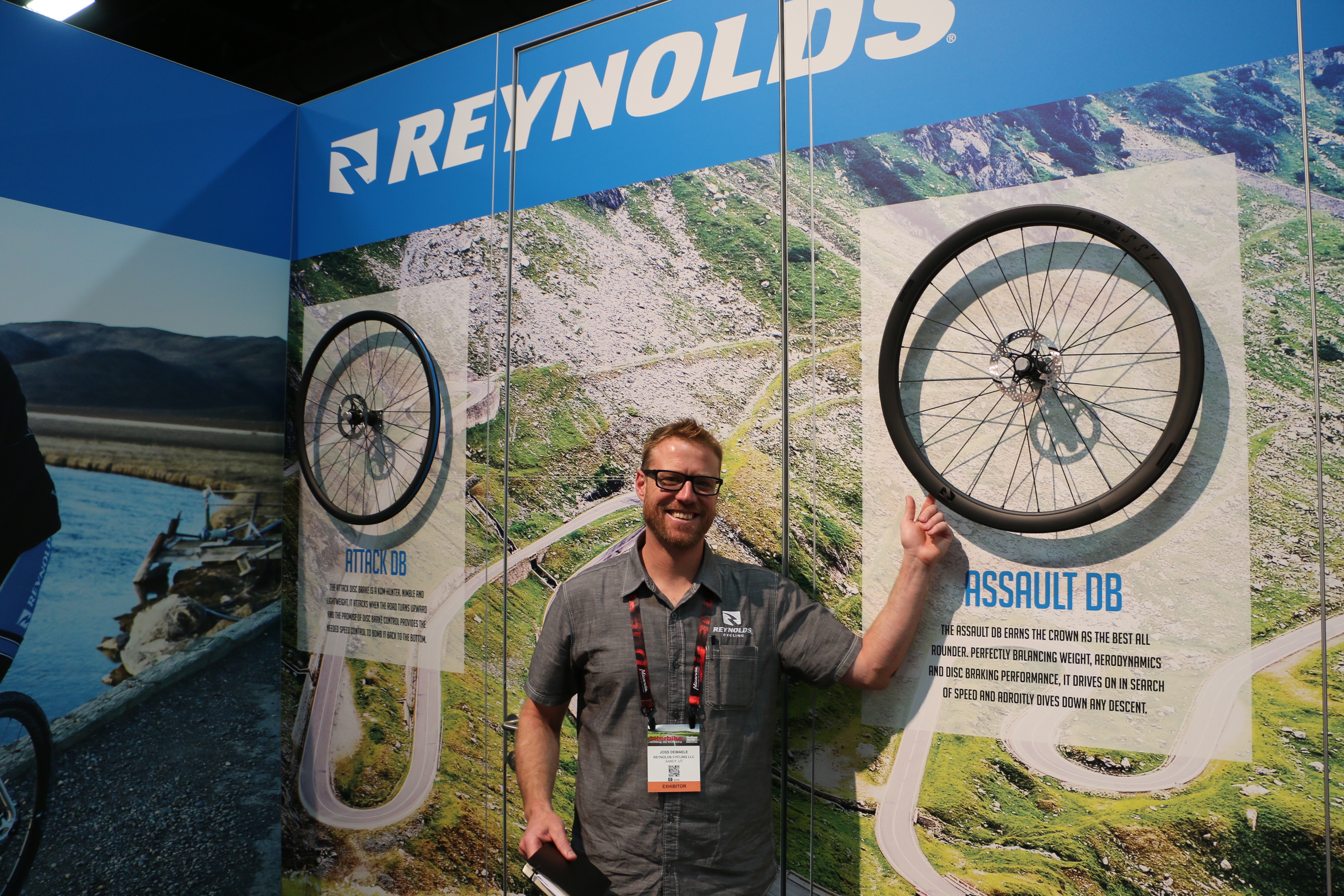
Reynolds Cycling's Joss Dewaele at Interbike 2016. Photo by Dave Iltis
Reynolds Cycling’s Joss Dewaele at Interbike 2016. Photo by Dave Iltis

James R. Farmer, Ph.D., joined Reynolds Cycling in August 2016 as director of engineering. Given his extensive background in aerodynamics and computational fluid dynamics, he recently switched roles to assume the position of director of technology and aerodynamics. In his new role, James will focus his efforts on rim and wheel design using advanced CFD techniques and wind tunnel testing. James graduated from Princeton University in 1993 with a Ph.D. in mechanical and aerospace engineering, focusing on development of CFD-based design models for the aerospace industry. James is also a registered patent attorney and oversees all intellectual property matters and general legal affairs of Reynolds. “I can already tell Reynolds is a great fit for me—shortly after joining the team, a vacancy opened up that ultimately suits my background the best, designing rims and wheels with CFD and wind tunnel data—couldn’t be happier in my new role,” said Farmer.

Karsten Bench joined Reynolds Cycling in 2015 within its sales department. As of recently, Karsten has been promoted to Reynolds Cycling’s product support and service/warranty specialist for the domestic market. Before joining Reynolds Cycling, Karsten worked in a number of bicycle shops in North Carolina as a mechanic and salesperson. . “I really enjoyed the sales environment here at Reynolds, but I had to opportunity to move to a more product-oriented job and I couldn’t more excited about my new position—the role suits me incredibly well,” cited Bench.

Colin Blanchard joined Reynolds Cycling in August of 2016 as the company’s newest inside sales specialist. Blanchard will be assisting all outside sales representatives with order placement along with shop and customer-direct communications. Blanchard began working in bicycle shops at the age of 15 and has been working in the bicycle industry ever since. Blanchard began his career in the service department and worked his way up to service manager. In 2013, Colin became a wheel builder at Industry Nine Componentry. Collin went on to create the service and warranty department there and was promoted to the global director of service and warranty from 2015-2016. “Given the overlap of Industry Nine and Reynolds, this move has been pretty seamless for me. The new environment is great, and I now feel I have a great opportunity to grow professionally here at Reynolds,” said Blanchard.

AJ Ariss has recently moved from an inside sales position, where he worked with IBDs and smaller OEs fulfilling orders while also managing several outside territories with sales support, to the role of Jr. product manager at Reynolds Cycling. Now working under head engineer Todd Tanner, Ariss will assist nearly every department in seeing new product through its life cycle, from concept, to development, and eventually to a completed product. Ariss held a management role at Cottonwood Cyclery in Utah for two years prior to joining Reynolds Cycling. “I could not be more excited to have the opportunity to grow with a company like Reynolds. We are at the forefront of technological advancement, and with the guidance of Todd Tanner, I’ll be able to learn the finite details that are necessary to develop and produce the nicest wheels available,” said Ariss.

Lance Tolbert has recently accepted the role of global information systems manager. Tolbert’s prior role at Reynolds Cycling was information systems manager. Now as global manager, Tolbert will assist the drive and development of online access worldwide to Reynolds Cycling product. Tolbert is also now responsible for keeping the company’s worldwide network and security systems running to the best possible degree. Tolbert joined Reynolds Cycling following a ten-year career in networking and web programming at companies including Dynamic Media Group and Complete Network Solutions. “Moving to a global role here is a huge responsibility for me, one that I’m looking forward to. We have loyal customers around the globe, and I now have the means to make sure their access to our product is as easy and seamless as possible,” cited Tolbert.

Susan Rich has been hired as the company’s Engineering Manager. Rich earned her BS in Mechanical Engineering from the University of Utah in 2007, followed by an MBA in 2016. Rich brings years of experience in composites engineering to Reynolds Cycling stemming from her decade-long position as a Composites Development and Tooling Engineer at Radius Engineering. In the position, Rich developed net-shaped composite designs for aerospace applications, designed closed-mold tooling for net-shape composite fabrication, supported aerospace clients in transitioning R&D programs to production setting, and managed design and construction of equipment specific to supporting composite part production. “I’m so excited to be applying my skillset within the cycling world—composite engineering in this industry is experiencing such a boom right now, I’m very eager to be a part of it and showcase what Reynolds has to offer,” stated Rich.

For more information, visit reynoldscycling.com 

Ask Noak: Tom Noaker Answers your Questions

0
Wild Rose Mountain Sports Flexnight Advertisement

By Tom Noaker

Q#1 In response to Ivonne regarding entry into cycling via mountain bike or road bike:

Dear Ivonne: Based on the type of riding you described (Legacy Parkway and mellow trails) I would say your friend’s advice to go mountain rather than road bike is sound. A road bike will restrict you (initially) to mostly pavement riding, while an MTB will open up more route options.

Also, yes, tire selection and PSI (tire pressure) can have a big effect on ride quality. Just be aware that a road bike will always be faster and more efficient on pavement than an MTB. I always suggest having a professional bike fit right from the start. This will assure not only a more comfortable introduction to the sport, but also better pedaling efficiency. Enjoy your new ride!

Q#2 Regarding best winter training for runners:

Dear Sleepless When It Snows: Nordic skiing, either classic or skate, is an excellent winter activity that can actually improve your running fitness. Classic is most like running (sagital movement), but both recruit more muscle mass than running, and require distinct technique skills. I recommend renting ‘no wax’ bases for beginning classic technique. Work on position, timing, balance and agility before progressing to skate.

Once you can negotiate turns and feel somewhat proficient, give skate skiing a try. It is possible to develop both techniques simultaneously, but definitely seek professional instruction to avoid early adoption of bad habits. Mark Deterline and Laurie Humbert conduct great learn-to-skate clinics at Mtn Dell (you will see more about this in Cycling West in the fall issues), and White Pine Touring, Solitude Nordic, Soldier Hollow and Sundance Nordic all offer beginner and intermediate classic, and skate lessons daily to get you started. There is no off season!

Q#3 What is the best way to improve my cycling; get a coach?

Dear Excited/Undecided: When I began cycling, the only riders with coaches were pro roadies. Now everyone can be coached with the click of a mouse (and a debit card). Before hiring a coach or subscribing to an online service, here are some questions to ask yourself: How much time do I have to train and compete? What are my goals? How much can I budget for coaching services? How much detail do you want with data and scheduling?

If you have never worked with a periodized program, you will certainly benefit from even a basic schedule. Finding and working with a coach who provides honest and frequent communication is key to success. Best of luck!

Q#4 What cold weather training outside do you recommend for cyclists in winter?

I consider Nordic skiing to be the best and most time efficient form of winter training, but I happen to live in a prime location near multiple facilities. Nordic requires specific equipment and, like swimming, can punish even the super fit who aren’t willing to perfect technique. Conversely, those who develop good technique can punish the super fit!

Snowshoeing offers a pretty good workout without the technique barrier, and for a lower price tag. The cost/benefit ratio may favor snowshoes, but I would never give up a marginal day of Nordic skiing for a great day of snowshoeing. Also, you can shop the early season ski swaps for great prices on Nordic equipment. #gonordic

Q#5 Backcountry or skate skiing?

Backcountry is currently the fastest growing segment of the ski industry. Advances in equipment (AT and split board technology) have changed the experience dramatically, but one thing that remains constant is avalanche danger. Once you own the gear, you need to acquire avalanche safety skills and skiing backcountry solo is probably one of the biggest mistakes you can make. (I’ve done it — don’t do it!)

Backcountry is also time intensive; usually an all day affair. Can’t tell you how many times I’ve headed out ‘just for a few hours’ and staggered in after dark.

Nordic classic and skate track skiing provides a great workout solo or with friends, potentially every day all winter. Avalanche concerns are usually replaced by, “What’s the best wax for today?” I suppose it comes down to, ‘pick your poison’, but I can’t imagine a winter without a healthy dose of each.

Get out, stay out!

Tom Noaker is a well respected and accomplished sales rep and business owner in both the bicycle and ski industries. He has won sixteen State Championships in cycling across four age divisions, as well as three Mountain Bike National Championships, and competes as a cross-country skier at the elite and elite Masters levels. Tom coaches some of the best young riders in the country, and is board president of the South Summit Trails Foundation. Please send your training, equipment and event preparation questions to [email protected] with Ask Noak in the subject line.

Salt Lake Valley Trails Society Work for Better Riding

By Kevin Dwyer – Want More Trails for the Salt Lake Valley? Can you believe that, up until recently, mountain bikers in the Salt Lake Valley have had no group to represent them in planning and building trails? The Salt Lake Valley Trails Society (SLVTS) is the newest cycling nonprofit in the state, working on behalf of the MTB community in the greater Salt Lake Valley.

The Bonneville Shoreline Trail is a key part of the underdeveloped Salt Lake City Trails System. Photo by Photo John.

Since its organization, the SLVTS has been active in engaging Mayor Ralph Becker’s Parks, Trails and Open Space Bond Proposal, The Mountain Accord process, and connecting with area land managers to prioritize trail development. The SLVTS is currently in the process of gaining IMBA membership and hiring staff to advocate and manage members’ engagement in trail work. In the past we’ve helped with the Bobsled and Maple Hollow trails, our upcoming projects include Bonneville Shoreline Trail, Little Cottonwood Trail and a sheltered dirt jump park in Salt Lake City.

The foundation has been laid and now we need your support! If you are passionate about trail expansion and advocacy in your community, consider making a donation to SLVTS. Your support of the SLVTS is critical to getting the organization established as the advocate for the valley’s more than 50,000 mountain bikers.

You can help us take trail building, advocacy and management to the next level with your tax deductible donation by visiting the website.

About The Salt Lake Valley Trails Society: Formed in March of 2015, the SLVTS received its 501(c)3 status with the mission to educate, promote, develop and maintain bike trails in the Greater Salt Lake Valley. All donors will receive a tax deductible receipt and copy of the IRS letter to SLVTS, with federal EIN # 47-3622769. Thank you for your support of MTB trails in the Greater Salt Lake Valley!

For more information and to donate, visit: www.saltlakevalleytrailssociety.org


Bike Fitting for Mountain Bikes, Part 2 – Do-It-Yourself

By John Higgins

This month I am going to delve into the primary bike fit adjustments on a mountain bike and offer up some do-it-yourself guidance for checking and adjusting your setup. Most of this is geared toward your cross country, endurance (not enduro), and trail rider, but much is applicable for any bike.

Foot to Pedal: If you are riding on flat pedals, then your foot is going to find its own position on the pedal, and mostly likely your foot will be further forward on the pedal than if you were clipped in.

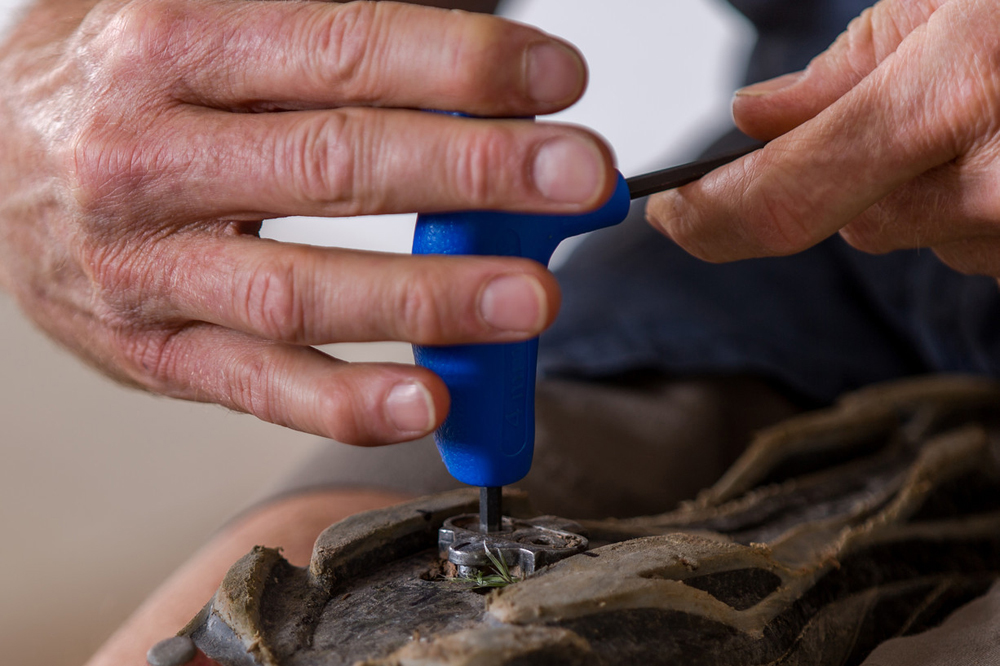
If you are using cleats, then there are three positional adjustments: forward/back, in/out (side to side) and rotational alignment. A general guideline for forward/back position is to locate the first and fifth metatarsal heads (ball of foot for the big toe on the inside and the little toe on the outside), and to align the cleat bolt-holes between these, or biased towards the 5th met-head. This gets you off your toes and moves the cleat contact pressure back under your foot for extra stability. For in/out, most riders will center their cleat between the lugs. That’s sound, but if you are large framed you might prefer a wider pedal stance, so move your cleats toward the inside in order to move your feet outward. You may feel more stable and balanced over the bike. Vice versa also applies. If you are slender you may want your feet closer together, so move the cleats to the outside, which moves your feet in. Rotational Alignment is the most subtle adjustment. If you are riding Crank Bros then there is so much float it’s rarely an issue, but SPD’s can be sticky and self-centering. If the cleat rotation is not ideal you could transfer stress up the leg into the knee. When riding you should have enough play to move your heels both inward and outward (to the point of release) equally. i.e. when the cleats are centered in the pedals, the shoe angle should match your natural cycling foot angle, with no crank-arm interference. Check that the sole lugs are not impeding pedal entry and exit. You might have to shave off a bit of lug rubber to improve pedal engagement and release. When the cleats are set properly, clicking in feels natural and automatic, and you don’t have to hunt around to engage in the pedals.

Other possible adjustments can include canting or shimming to correct alignment issues or leg length issues.

Butt to Saddle: Always a potential sore point! Firstly your saddle should be wide enough to support your sit bones. Sit on your saddle and prod a finger up into your glutes to find your sit bones. They should be just inside the edges of the saddle, not on the edge or hanging off so that you are supported by perineal soft tissue. After width is profile. Your butt should automatically snuggle into a “home” position on the saddle that feels supportive, and not be squirming around trying to find the sweet spot. If you are squirming around, you may have the wrong saddle shape. If you have a flat saddle, try a semi-round. Saddle tilt will also affect comfort on the saddle, and to the bars. The general guideline is for a saddle to be level from nose to tail.

Adjust mountain bike cleats
Cleat adjustment can affect knee comfort and power. Photo by Angie Harker

On a hardtail a level saddle becomes nose down due to front suspension sag, so you might want to angle it up a degree or two. On a full suspension bike a level saddle often becomes nose up if the rear suspension sags more than the front. XC riders may want to then tilt their saddle down a touch, as there may be too much soft tissue pressure when climbing, but riders focused on the down usually prefer a nose up saddle to reduce the propensity to slide forward when descending.

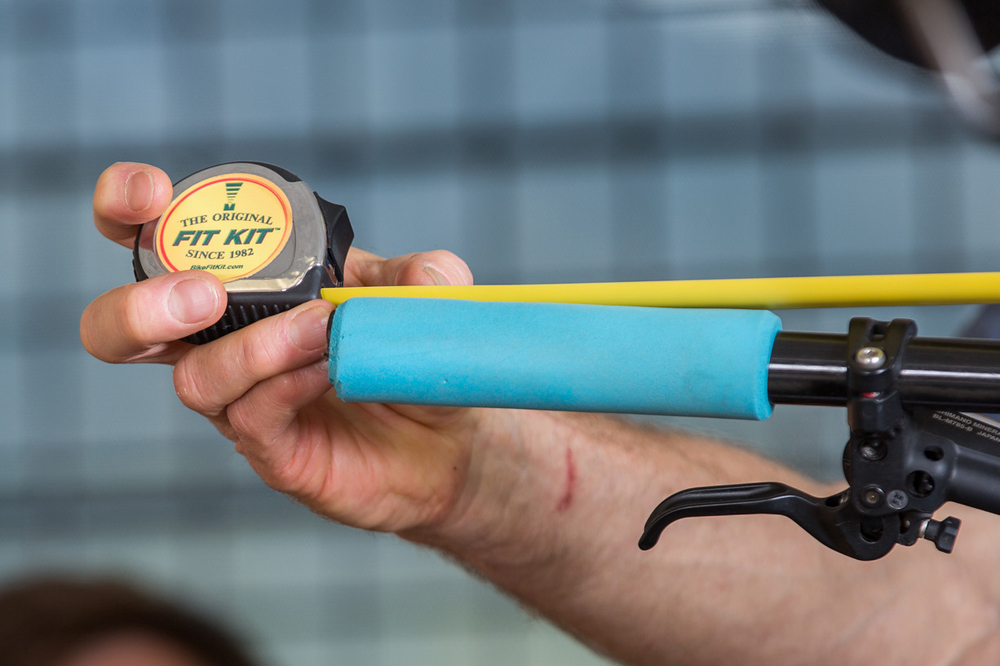
Hands to Bars: I’m referring to direct contact here. i.e. the grips. Getting numb fingers or hands? That’s from compression of blood vessels and nerves in the hands. If you are newish to mountain biking you may be too tense and “gripped”. Think about relaxing your hold on the bars a little bit, while still maintaining bar control. Consider ergonomic grips instead of standard round grips. They help spread out your hand pressure over a larger surface area and stabilize your wrists. It may take several attempts to get them rotated to an ideal position, so be prepared to stop and adjust them on your first trail ride. Hand discomfort can also be from bars that are too wide, bars too high and close to you, or bars too far out or down, and this will be usually indicated by the addition of arm, neck, shoulder or back tension and fatigue.

Saddle Position: Setting saddle height can be a compromise between optimizing uphill climbing power, and bike control and handling in technical terrain and when descending. If you have a dropper post, you can have it all. Set the saddle height for climbing, because you can easily drop the saddle to lower your body mass, increase control and reduce the chance of being catapulted off the bike. Without the benefit of a goniometer or 3D motion capture system to assess leg angles, a DIY guideline is to be able to have your heel touch the center of the pedal with your leg straight and knee locked out, without having your pelvis either drop down (saddle to high) or tilt up (saddle too low) from that position. This should result in a modest knee bend when clipped in. Riding on flat pedals? This method may leave you a bit too high, because with a mid foot pedal position you are operating a shorter lever from pedal to saddle.

Adjusting saddle mountain bike
Saddle tilt can affect perineal soft tissue comfort as well as comfort and control on the bike. Photo by Angie Harker

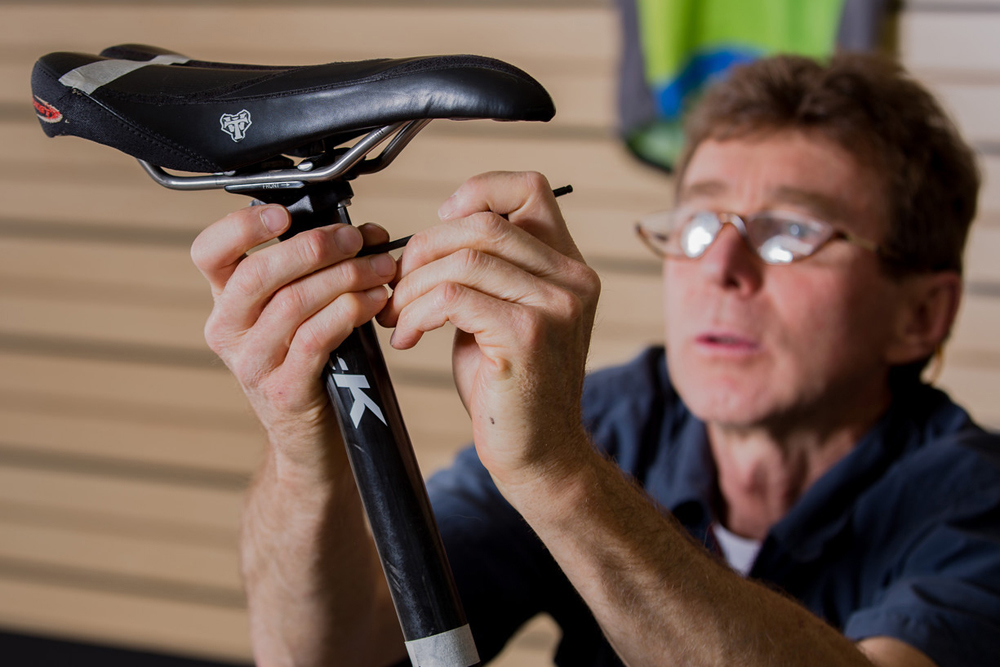
No dropper post? If you are a non-competitive rider, the $20 alternative is the quick release seat post, which will enable you to enjoy good leg extension for ups, flats and rolling terrain, but lower your saddle for greater control and safety on technical descents. You are probably not sitting on the saddle during these sections, but this quickly gets it out of the way, with a bonus rest stop. Once your ideal climbing saddle height has been determined, mark the post at the top of the clamp for reference. Lightly score an alloy post, or use a colored nail varnish or grey sharpie marker on a carbon post.

Saddle forward/back should never be adjusted because of an issue with reach to the handlebars, although it directly affects that. This adjustment is about finessing your knee joint angles for wellbeing, being balanced on the bike (while seated), and attaining biomechanical efficiency for pedaling. The simplest DIY approach (which requires a second person) is the well known “knee over pedal spindle” method. It’s not an end in itself but is an indicator about these other factors, and a good starting point.

Bar Position: This is really about upper body comfort. Firstly, bar width. Just because they come wide, doesn’t mean you need to keep the width. If you experience shoulder or arm tension and feel “stuck” on the bike, try moving the controls and grips inboard a little bit and seeing how that feels and rides. Test ride different simulated widths before cutting the bars shorter. Bar height and reach can be adjusted by changing stems and the headset spacers. There is not a simple diagnostic DIY guide for this, but neck, shoulder and upper or lower back tension and aches often originate with a handlebar position that is not ideal for you. More commonly this is from a front end that is too low and long, but it can also result from the opposite. You don’t want to be supporting your upper body with your hands (that’s what the core is for), nor stiff-arming off the bars and holding your upper body too erect for comfort. The aim is a light tough on the bars with versatility to move around over the bike and keep your weight centered when riding on or off the saddle.

John Higgins operates the BikeFitr fitting studio, and Fit Kit Systems which provides education and equipment to bicycle retailer and fitters. Contact: [email protected]

Laramie Awarded Bronze Bike Friendly Honors; Provo Moves to Silver

By Charles Pekow – A class project has turned a city into an official Bicycle Friendly Community (BFC). That’s right; sustainability class students at the University of Wyoming (UW) completed the BFC application for the City of Laramie and earned it bronze status, the lowest level (other than honorable mention), in the League of American Bicyclists (LAB) fall round of BFC awards. But the class project earned Laramie the only new BFC award in the Mountain West region this round.

Cycling West - Cycling Utah Magazine logoTo earn a minor in sustainability, Wyoming undergraduates work in groups with a mentor to complete a community project. In 2015, students taking the class pushed the university to earn bronze Bicycle Friendly University (BFU) status. So in 2016, Dan McCoy, assistant director of campus recreation, “got us in front of the city council at one of its board meetings. We got the full involvement of the city council to help us with the project,” recalls Tyler Carroll, now a UW junior and one of four student participants. The class officially ended in May but “a few of us stayed in contact with McCoy and he got the application turned in in August.”

The students also worked with a bike shop, the local tourism board, city planners and others, Carroll relates.

Laramie won because of its high 6.9 percent level of bike commuting and the city’s efforts to implement a bike plan, explains Ken McLeod, LAB state & local policy manager. The city enjoys a “pretty good overall bicycle network model and a lot of bike trails,” McLeod says. “They have a current bike plan being implemented” and plan to improve.

But it didn’t get the next highest level (silver) because “compared to other communities, it doesn’t spend as much of its transportation budget on cycling. It doesn’t have as much of its staff working on cycling issues,” he adds. It didn’t report a full-time equivalent working on bike/ped issues and lacks a Complete Streets policy. The city also needs to improve bicycle education in schools and “do a better job to communicate progress on bicycle paths and make sure the public is aware of the program.” Specifically, the city should use tools such as signs and maps to help riders find “lower stress routes.” It also should encourage public safety officials to ride bicycles,. LAB suggested.

Todd Feezer, Laramie’s director of parks and recreation, says “it’s going to take time” to retrofit the city streets to make them bicycle friendly. “It’s a question of manpower.” One reason so many people in town bike to work is that they develop riding habits while attending UW “and people who live here after college who got used to that lifestyle continue to commute when they graduate.”

But Feezer acknowledges that the class did “the lion’s share” of the application and “if it wasn’t for Dan McCoy and the class, we wouldn’t be able to complete the survey.”

Provo and Coeur d’Alene

While no other town in the area got a new award, Provo, Utah and Coeur d’Alene, Idaho moved up from bronze to silver this round.

Provo

Provo improved because it adopted a new bicycle master plan and moved to integrate cycling and public transit infrastructure. It did “a really good job with encouragement, such as Bike Month events and encouraging people to bike to work, McLeod points out.

But, he adds, to go for the gold (the next level up), Provo needs to increase staffing levels dedicated to cycling and develop goals for getting people to bike to work. “We didn’t find any goals listed on the application. We couldn’t find specific safety-related goals. Publicly stating them would be a good step toward reaching them,” McLeod says. He also suggests that the city form a partnership with local Brigham Young University, which earned bronze BFU status in 2015, (Think of what UW did, speaking of partnerships!) The city, in fact, works with the university on bicycle awareness and rules of the road projects. It is trying to come up with ways to improve the links so people can ride smoothly to and from campus.

Provo worked with the Utah Transit Authority to put bicycle parking (including lockers in some areas) at its commuter center and at bus stops “and we’ve made bike lanes along roads that interconnect in those area so it is easier for people to get to transit and then park their bicycles,” says Gary McGinn, Provo director of community development.

“We’d like to add more staff, of course, but that’s all constrained by budgets,” McGinn says. The city established a bicycle committee that meets monthly. The mayor leads a bicycle ride around the community and the city arranges some bike tours,” he adds.

LAB also suggests that Provo improve its education program and continue improving the transit links. “We are taking about working with the school system so before school starts next fall, we’ll try to have some high-visibility activities where kids and their parents can come to downtown Provo to a rec center to register bicycles and learn about bicycle safety,” McGinn says. The local Bicycle Collective has been a great help in refurbishing two-wheelers to provide them to local kids, he adds.

“Hopefully, we’ll go for the gold” next time, McGinn says.

Coeur d’Alene

Coeur d’Alene ID also improved from bronze to silver this round. It first won bronze in 2008 and renewed the four-year bronze designation in 2012. The city improved by installing its first bike boulevard and bike corral and buying railroad property to add to the trail system, McLeod says.

But to get gold, the city should update its design manual and add separated or buffered bike lanes, he adds. LAB also says Coeur d’Alene should designate a specific bike or bike/ped staffer. City Trails Coordinator Monte McCully says he spends most of his time doing bike/ped work for both the roads and parks; it’s just that his title is “trails coordinator,” not “bicycle coordinator.”

The city is developing a bicycle master plan; when it finishes and implements it, it will be on its way toward gold, McLeod says. LAB also recommended doing bicycle counts and getting more people to bike to work.

The city is doing better than many gold awardees in many ways already, McCully says. It has a higher percentage of bike lanes than most gold cities and spend a higher share of its transportation budget on bicycling (14 percent) while the average gold spends only 13 percent. But he acknowledges the government needs to improve its efforts to encourage businesses to provide amenities such as showers and bike parking. It also needs to work on enforcement, evaluation and planning.

The city is also working with the North Idaho Centennial Trail Foundation on a grant to put counters along the Centennial Trail, which will provide bike counts that LAB values so highly. “They recently asked me if we should use this grant money for other things. I say bike counts are one of the most important things you can do to see what bikes can do for your community,” McCully says.

The city is also working with a University of Idaho economics professor to study the impact of bicycling on the local economy. McCully hopes it will “show the powers that be and the community and the elected officials that bicycling brings a lot of money to the community.”

He says “I believe by the time we reapply in four years, we’ll have all these things down and move up to gold.”

Regional Bike Friendly Cities

Meanwhile, several other jurisdictions in the region renewed at the same level but failed to move up. These include Durango CO at gold (next step consists of platinum, followed by diamond that no community has yet reached). Ada County ID, Aspen CO, Bozeman MT and Longmont CO stayed at silver. Lakewood CO remained at bronze.

Also, Greeley CO remained at bronze for the third time. It was so eager to move up that it applied a year early but failed to achieve silver. “The data didn’t support it. Ridership is low for silver; staff to population is close to silver but still low,” McLeod explains. Greeley also hasn’t placed enough bike facilities along high-speed roads, he adds.

“We were disappointed” at the news, replies Greeley Traffic Engineer Eric Bracke. “We’ve done a lot in the last three years in terms of bike planning and events.” The city developed a Complete Streets policy and bike plan and many infrastructure improvements, he says. “We were kind of weak on the education side and that’s where we have to put some more effort,” he acknowledges.

“We started off with an incredibly low ridership level” but have improved it greatly, he says. Greeley just wasn’t able to document it to LAB’s satisfaction. “Anecdotally, we’re seeing more and more bicycles but we can’t officially quantify it.” An effort to do so would drain scarce resources. “We have a limited budget. We just can’t go out and buy more and more counters. Maybe I should.” But that would mean less money for street signs, paint, lights and other maintenance and improvement needs.

While the city doesn’t employ a specific bicycle coordinator, it’s got plenty of people who work on it in various city departments working on bicycle matters as part the government’s culture. “A dedicated staff member to push it would probably be marginally helpful,” Bracke says. “Do we need a bike person to say we’re bike friendly or do everything we do to say we’re bike friendly?”


 

Happy Birthday Wonder Woman!

Congratulations to you Wonder Woman on your designation by the United Nations to be the honorary ambassador for the empowerment of women and girls. This designation supports the United Nations Sustainable Development Goal 5: to achieve gender equality and empower all women and girls.

For those in the know, DC Comic’s Wonder Woman became available to the public in newsstands on October 25th, 1941.

At Cycling West/Cycling Utah magazine, we have supported women bicyclists with diverse content for twenty-four years.  Check out women’s content in our archives. Inside you will find interesting and diverse articles about woman participating in all forms of bicycling.

Wonder Woman on Bicycle in front of the United States Capital