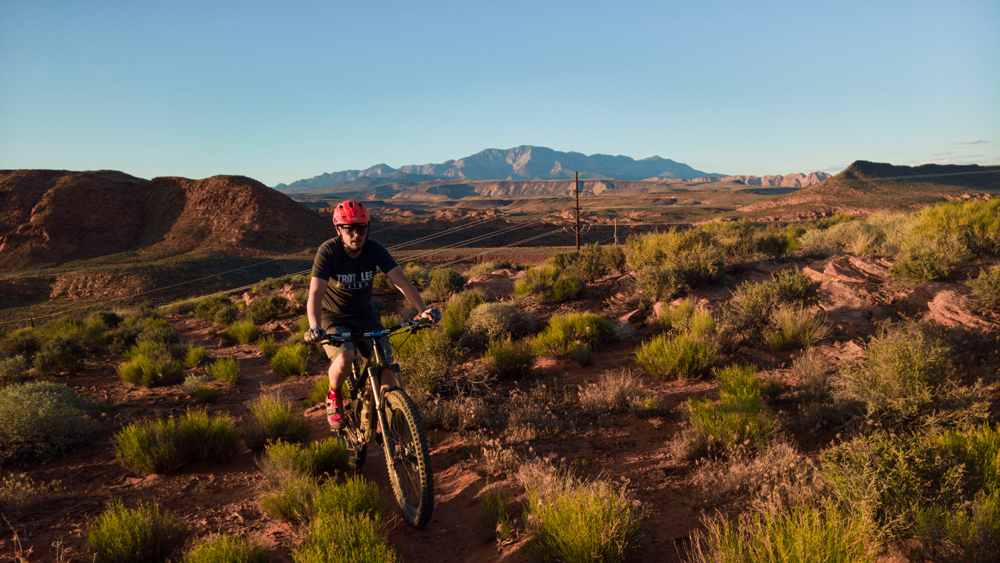
The trail was vacant of human beings. When we left the trailhead, there were multiple cars in the parking lot and we could see people riding across the wash on the next mesa over. In fact, the trail looked as if no one had ridden it since the last rain. The last rain was three weeks ago and the tread still held the rain drops that had fallen. We had the trail all to ourselves. Five miles of riding bliss on a trail that felt like it was virgin singletrack and no one around, I guess god does love Mooseknucklers. Where did we find this heaven? You ask. Well, to be honest, it was about ¾ of a mile from one of the busiest trailheads in Southern Utah.
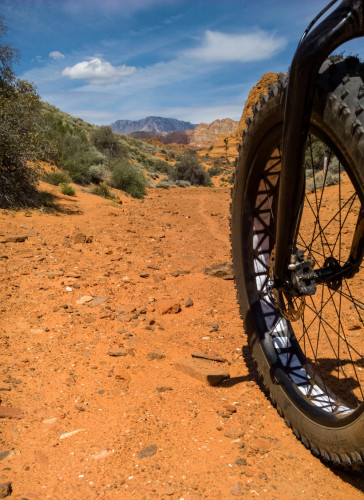
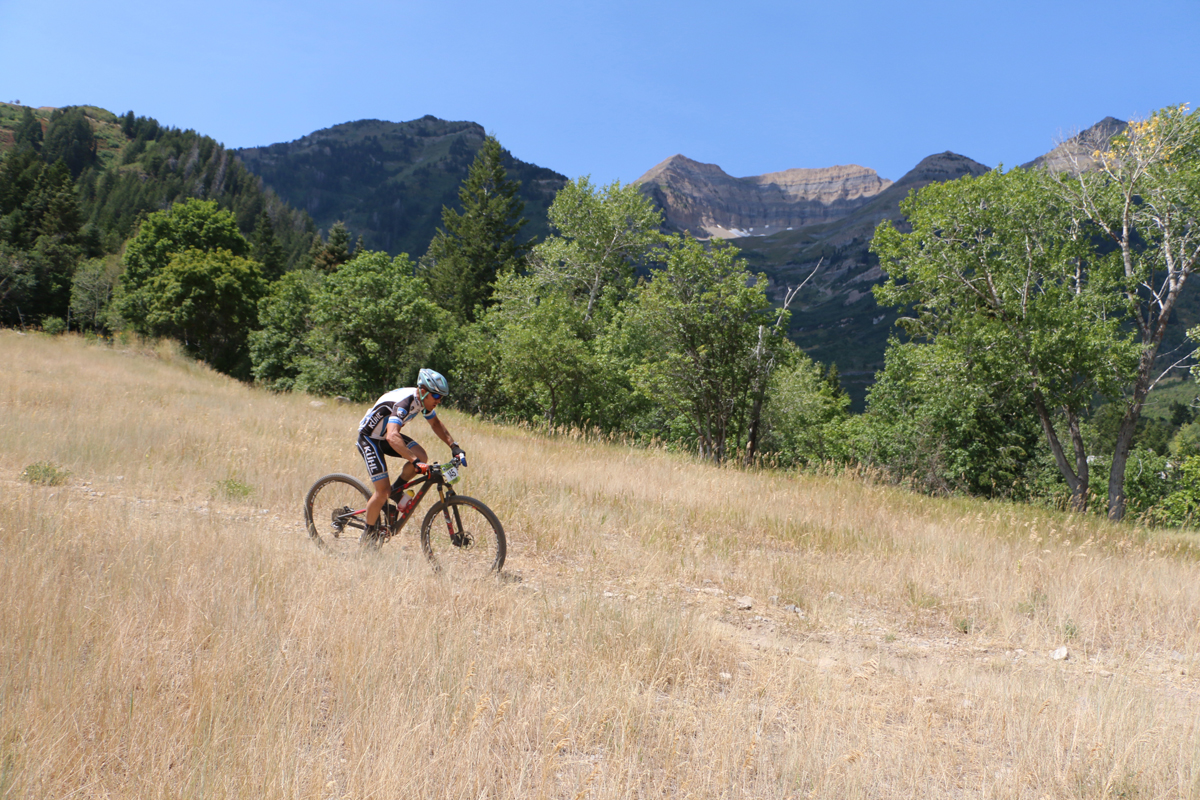
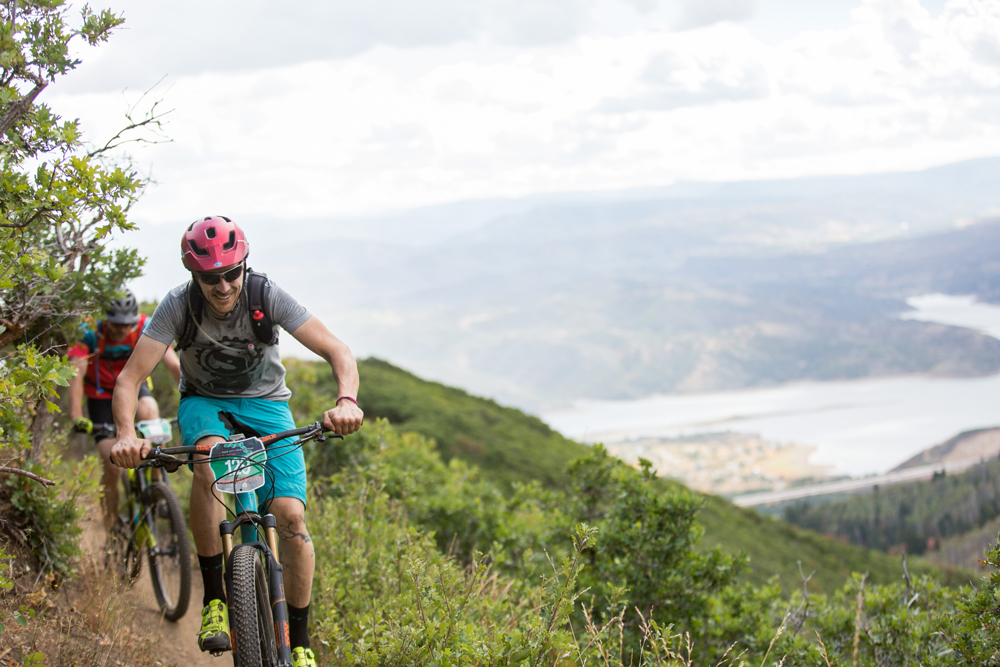
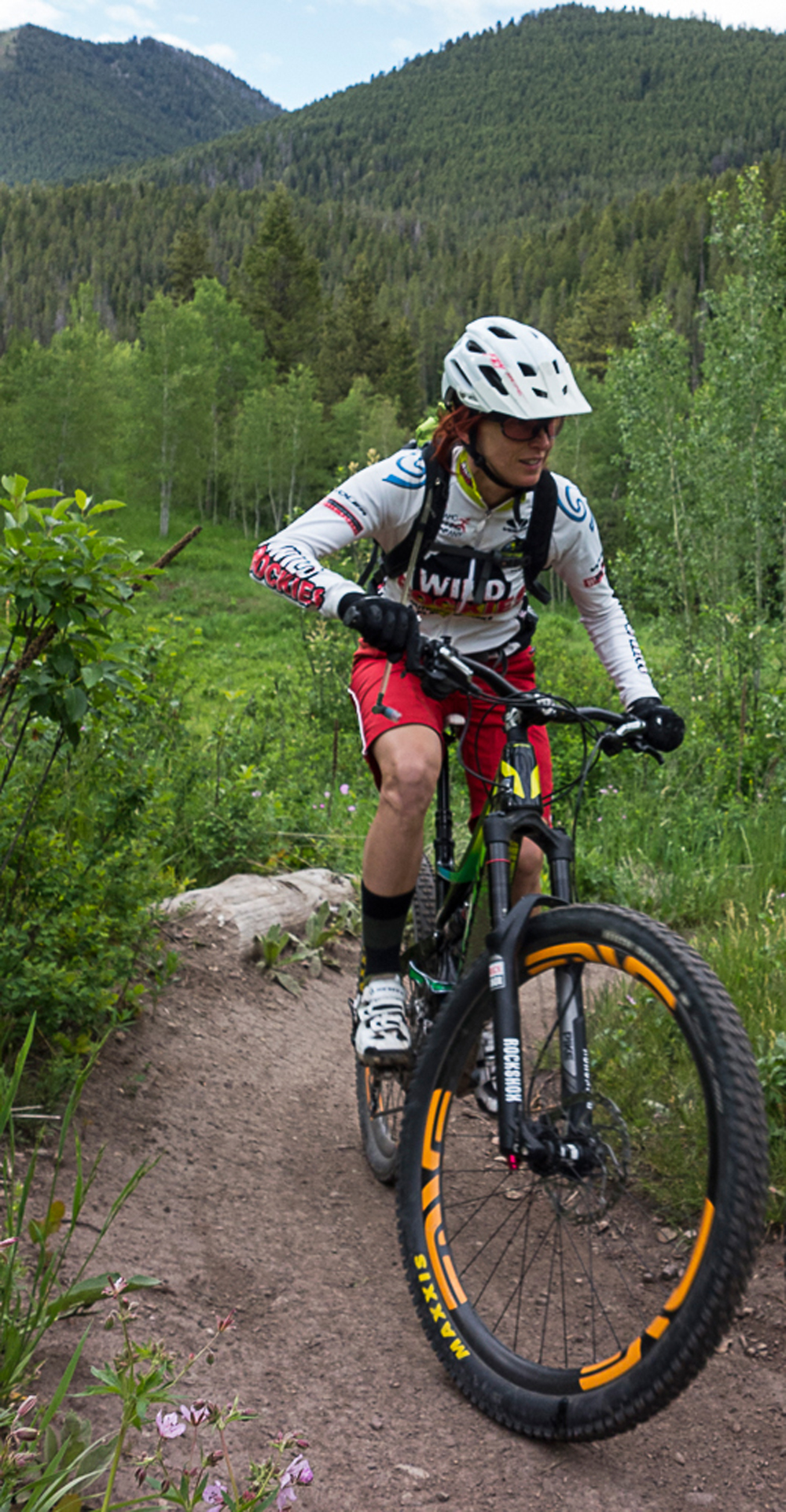
Sometimes just finding a place that only big tires can go, will leave you all alone. Photo by Lukas Brinkerhoff
It’s an interesting phenomenon and one I like to call the Couple Mile Rule. The CMR states that about 85% of people using a trail system will be found within a couple miles of the trailhead. Go a little past that couple of miles, and you lose another 10% of the people. Push it just a little farther, you know, a couple miles more, and there are only about 5% of the users who will ever put rubber on that portion of trail. It’s not because the trails are bad, or too hard, it’s just because the barrier for entry is slightly higher and the majority of folks find what they are looking for just a couple miles from the car.
If you are a seeker of solitude or just like to ride farther than most, you’ve probably witnessed the CMR in full effect. You probably also love the CMR and seek out trails and places that are just beyond the masses. Sure, there’s a bit more effort required. You need to be more self-contained and be able to deal with things without the help of others, but the payoff for pushing past that point where others turn around and return to their cars is always, yes always, worth it.
There are a few basic barriers that should be pointed out to help you seek and ultimately find your solitude if you wish to be part of the 5%.
Distance
This is the most obvious one. Regardless of who you are, going 10 miles takes longer than going 3. If you are limited on time, which most of us are when riding our bikes in the mountains because we have to get back to our work and lives, then your ride will be
determined by the amount of time you have to spend. Assuming most people who ride only have 1-2 hours of free time means you will see them close to the trailhead. Overcoming this barrier is simple, you ride farther.
Climbs
I’ve always claimed that I pedal half the time so I can coast the other half. This does imply that at some point I will be going uphill. Most people avoid going uphill. Even if there are some sweet views, solitude, killer trail, all of which gets followed by a thrilling
descent, you will find less people at the top of a climb. The harder the climb, the less people at the top. The trail I described above is literally ¾ of a mile from a busy trailhead, but that distance goes down into a wash and then back up a steep double track. That short distance isn’t what keeps people from riding the trail, it’s that short, steep climb. Overcoming this one is a bit harder but comes down to learning to spelunk in the pain cave with a giant smile on your face.
Technical Difficulty
I have never ridden the Flying Monkey and ran into someone that wasn’t in my group. Never. Maybe I’m just lucky or maybe the filter is set high. If the trail starts with an inverted roller with a wall on one side and a serious drop on the other, you will most likely find yourself alone on that trail. The harder the trail, the bigger the effect. This is also the hardest of the barriers to overcome. Back in the good ol’ days, we kind of just had to figure out how to ride. There weren’t classes or defined skills that one would necessarily practice to become a good mountain biker. Now that the sport of mountain biking has evolved and we are more mature, there are plenty of clinics you can take that will teach you the skills to blow past this barrier.
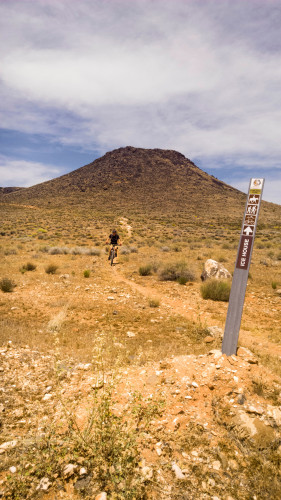
Broken Mesa is a once-a-year trail combing distance, climbs and technical difficulty. Photo by Lukas Brinkerhoff
Once-a-year Trails
Trails that combine all three barriers into one ride are what I like to call Once-a-year Trails. These are trails that will challenge you, require you to go farther and give back solitude in spades. They require a time commitment that you probably don’t have on a regular basis. Seeing that you only ride them about once a year, the technical sections will always challenge you because each time is like the first time. It’s almost a guarantee that you will be required to leave a blood sacrifice and when you get home you will collapse into your favorite lounging spot and hopefully have someone there that can bring you your favorite recovery drink.
You could argue that laying out the CMR for you is counterproductive. And you might be right, but having bounced around in the desert and watched the trends come and go, there are places I know will always have an extremely low population density. The barriers to enjoying them are too high and the reward may seem too low for the 95%. However, for those who push through, they will find that view that you haven’t seen on Instagram, they will ride that techy descent that no one talks about and doesn’t have a segment on Strava. The trail will feel like it was just built for them and maybe they won’t go back the next day, but they will certainly commit to the required effort to experience it all again.
Canyon Bicycles – Shimano will move to UCI Continental professional status for the 2017 cycling season. The team is run by Utah-based bike shops Canyon Bicycles and will ride on Scott bicycles for 2017.
With a strong showing across the country the last few years, team owner Mike Pratt decided it was time to go to the Continental level, “with the team’s current momentum, it seemed like the right time to do this. I want to do my part to grow this sport in the US. I could not be happier with our squad this year, both our returning riders and our impressive new guys.”
Canyon Bicycles – Shimano sees returning riders Cortlan Brown, Michael Burleigh, Steve Fisher, Kaler Marshall and Eric Slack return in 2017 and welcomes new riders include Chad Beyer, Cory Greenberg, Rob Squire and Chris Winn. Alan Schmitz will return as Director Sportif after guiding the team over the last few years. Chad joins the team after a resurgent year in 2016. His multiple top 10’s at Gila, Philadelphia Cycling Classic, Winston Salem and US Pro have proven Chad to be among the top riders in the US.
Greenberg joins the team after a strong season in which he won one of the fan favorite events of the year, the River Parks Criterium (Cry Baby Hill) at the Tulsa Tough. Additionally, he is excited to be continuing his work representing the UC (ulcerative colitis) community this season ( www.cycle4UC.com ), a cause near and dear to his heart.
Rob Squire had a strong year in which he was the KOM at the Philadelphia Cycling Classic, another top 10 overall at the Tour of Utah, top 5 at Winston Salem and won the KOM jersey at the Tour de Beauce.
Chris Winn rode with the team periodically last year and will be a full-time rider in 2017. Winn brings his tireless work ethic, great knowledge of the sport, and constant upbeat personality to the team.
Canyon Bicycles – Shimano’s race calendar will include the Pro Road Tour as well as a handful of international events.
Canyon Bicycles – Shimano 2017 roster:
Chad Beyer (USA)
Cortlan Brown (USA)
Michael Burleigh (USA)
Steve Fisher (USA)
Cory Greenberg (USA)
Kaler Marshall (USA)
Erik Slack (USA)
Rob Squire (USA)
Chris Winn (AUS)
Follow the Canyon Bicycles – Shimano team at: canyonprocycling.com
By Ian Scharine – To begin with, we would like to clarify the succession of committee chair announced in February’s update. It was reported that Kate Sturgeon “stepped down as committee chair”, rather, she chose not to run for chair in a successive year and Betsy Byrne was thus elected acting chair by the committee for 2016. With this topic in cue, December’s meeting on the 14th will feature a delicious catered meal courtesy of the County Bicycle Committee as well as elections to determine the executive positions for 2017. We welcome the public to attend and enjoy the festivities!
The past year has been productive and seen unprecedented strides made not only by Salt Lake County, but the state of Utah as a whole; beginning with the awarding of a federal Tiger Grant to multiple cities along the Wasatch Front area and northern Utah. This funding will be applied during the next several years to improve infrastructure, increase resources and expand Active Transportation (biking and walking) routes for all of our citizens. Next, Bike Utah spearheaded the revival of the Salt Lake County Bicycle Ambassadors Program as well as initiated the first bicycle education program focused at youth throughout the state. Both programs are off to groundbreaking and encouraging starts and we are enthusiastically awaiting to see what the next year will bring. Finally, a program known as the Latina Bike Initiative was funded and implemented by the County with great success. Director, May Romo, met with the committee in July and elaborated on the program’s focus. As a result, SLCBAC agreed to assist the program with funding and hopes to continue forging relationships with programs such as these and more diverse demographics in our community.
There is only one meeting remaining in the 2016 year and we believe that this year has seen us continue to develop and improve our focus on our Mission and service to the Salt Lake County Mayor’s office. Moving forward, if you know of any groups or organizations that may benefit from partnership with the Salt Lake County Bicycle Advisory Committee, please consider attending one of our public meetings held the second Wednesday of each month, or contact us at [email protected]. With the colder winter months ahead, make sure to keep warm and display noticeable illumination at night should you choose to ride. We wish you a happy holiday season and look forward to another progressive year for cycling in 2017!
Program to teach 3,000 kids annually bike riding skills and safety, helping them be more physically active
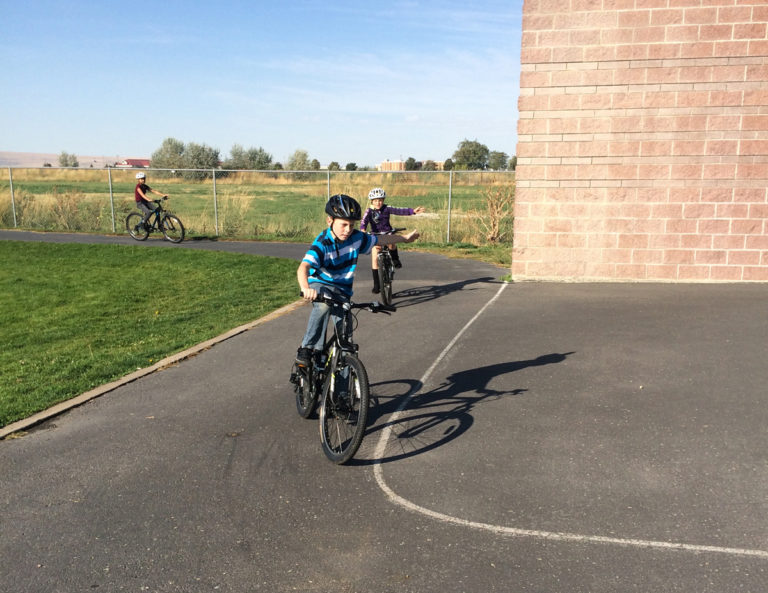
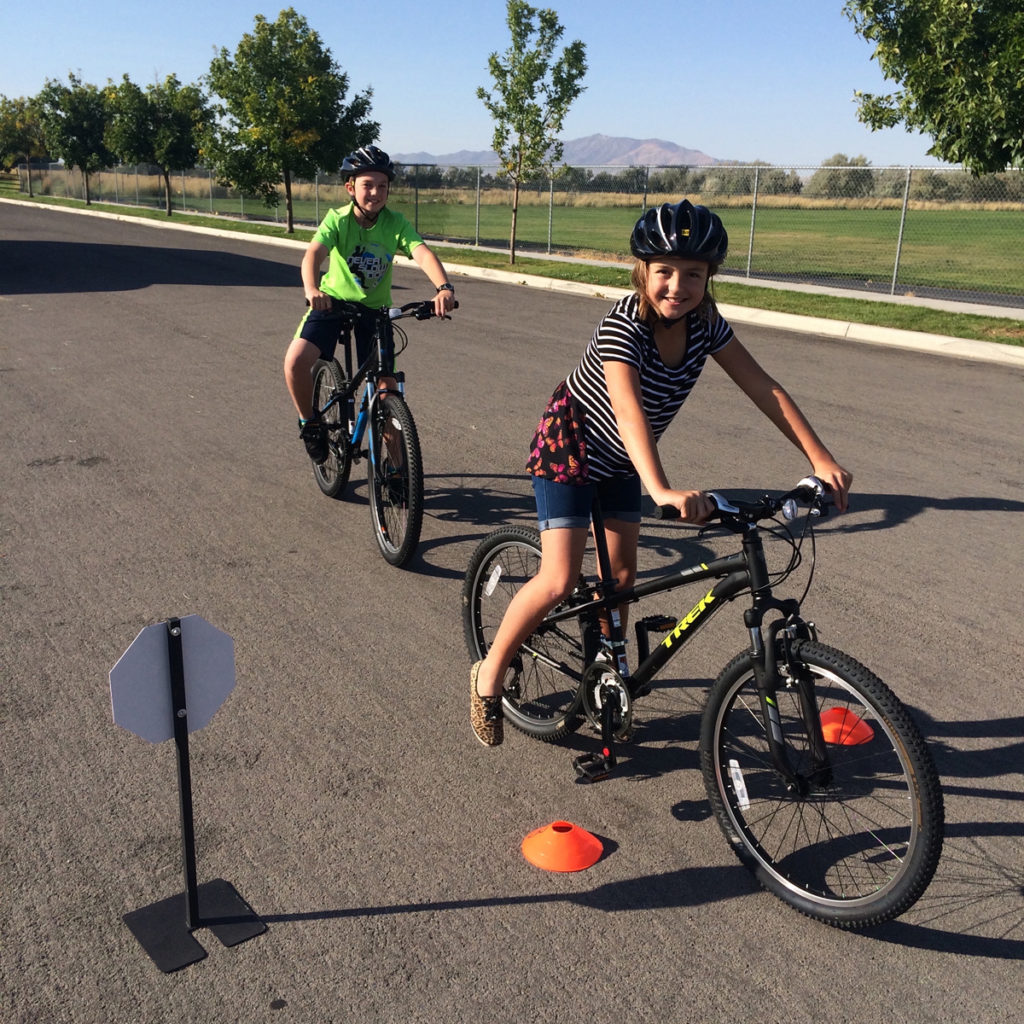
Students of Buffalo Point Elementary in Syracuse, Utah participating in Bike Utah’s Youth Bicycle Education and Safety Training (BEST) program, Sept. 14th 2016, the first week of the program. Photo by Bike Utah
After two years in development, Bike Utah has launched their Youth Bicycle Education and Safety Training (BEST) program, a no-cost statewide effort to teach kids how to safely and confidently get around by bicycle. The Youth BEST program officially started in September, and is held at schools as a 5-hour, hands-on program for 5th through 7th graders.
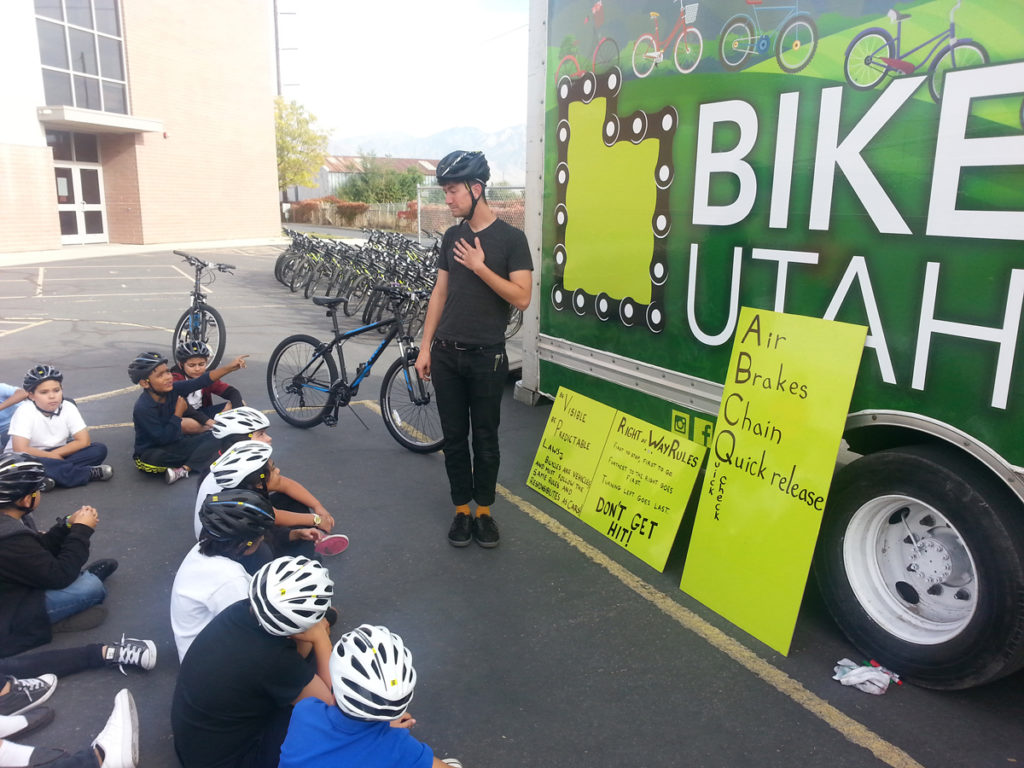
During the course of the program, kids learn the benefits of riding a bicycle, the rules of the road, how to adjust and wear a helmet, how to navigate intersections, how to avoid hazards, and how to make sure their bike is in safe working order.
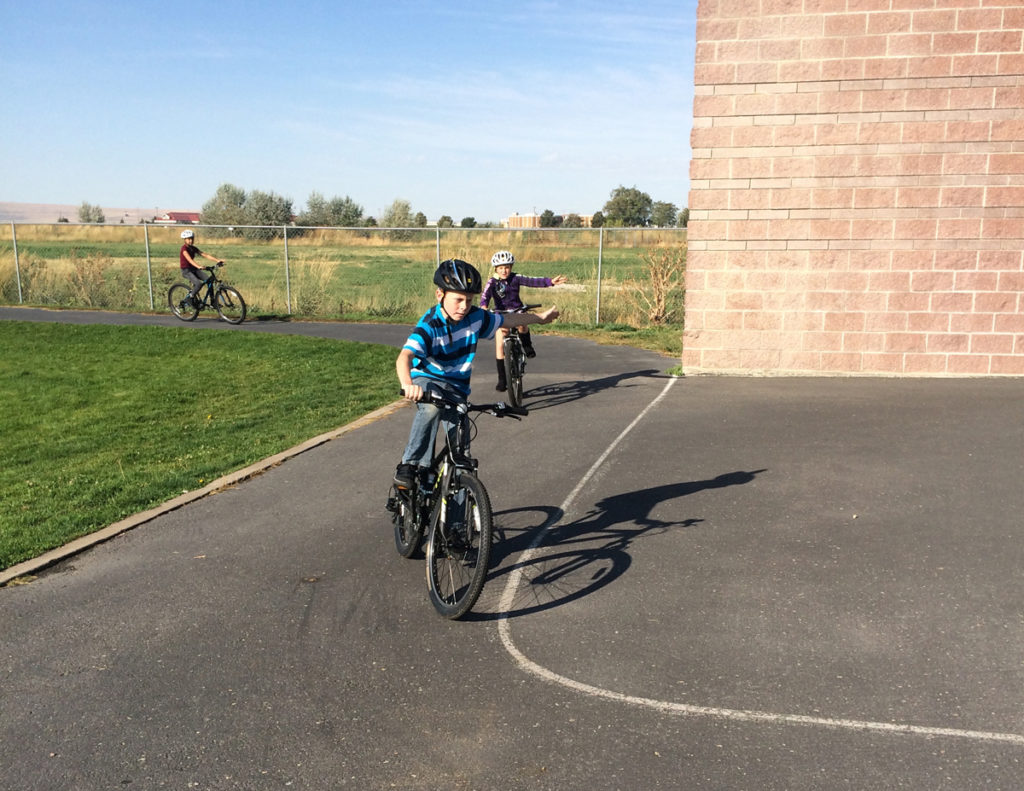
Students at Buffalo Point Elementary in Syracuse, Utah practicing their hand signals in Bike Utah’s Youth Bicycle Education and Safety Training (BEST) program. Photo by Bike Utah
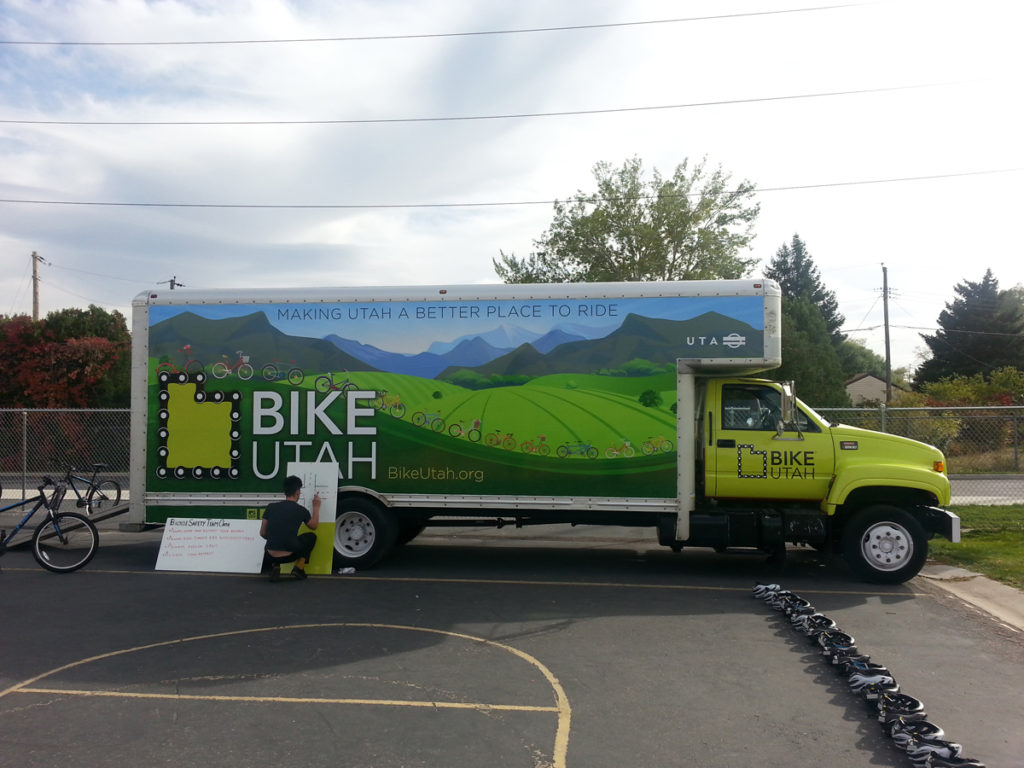
Bike Utah secured several grants to fund the program, so it’s free to any school or student wanting to participate. Bike Utah provides a trained instructor, bicycles, helmets, and all other necessary equipment to be used during the program. The program is mobile and has the capacity to be implemented at schools in all corners of the state.
“Fifty years ago, nearly 45 percent of students walked or rode a bicycle to school and only about 15 percent caught a ride in a family vehicle. Today’s numbers are virtually the exact opposite,” said Phil Sarnoff, executive director of Bike Utah. “As a state, we need to create an environment where students can get to school under their own power. Through the Youth BEST Program, we hope to encourage schools, students, and families to recreate their communities into places where everyone can be physically active.”
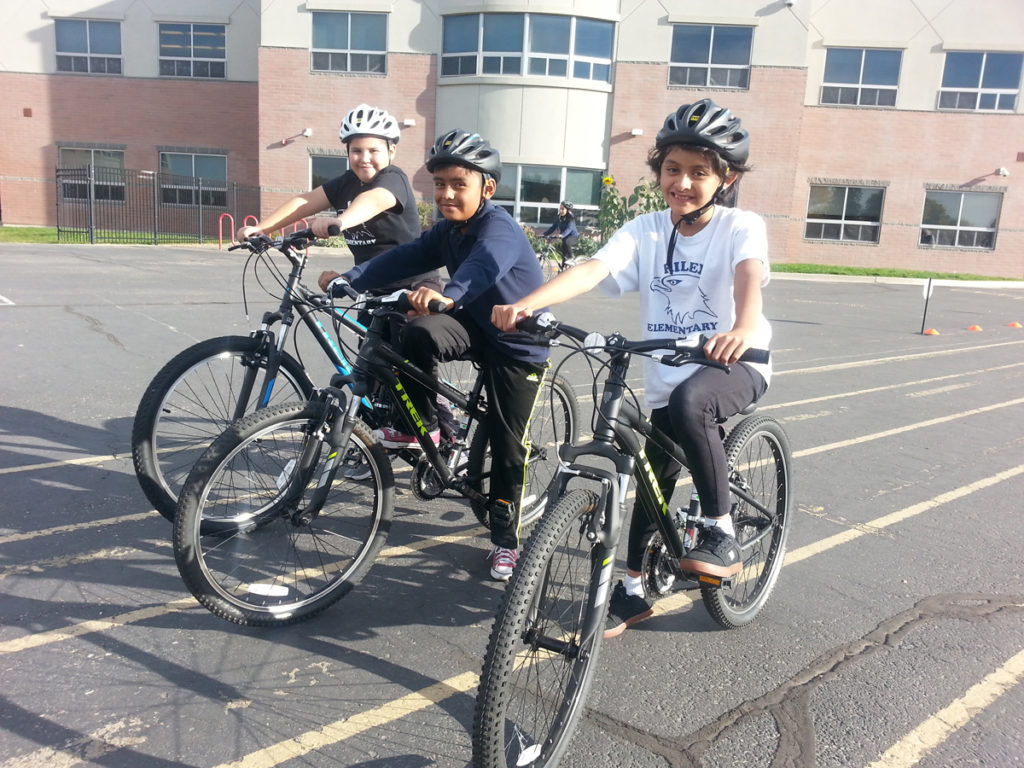
Students at Riley Elementary in Salt Lake City, Utah learn about safe bicycling strategies as part of Bike Utah’s Youth Bicycle Education and Safety Training (BEST) program. Photo by Bike Utah
In addition to the student curriculum, the program works with schools to determine how they can make their surrounding environments better and safer for bicycling and walking. Bike Utah is also interested in collaborating with parent groups such as PTAs that are interested in developing school-based transportation solutions.
In just six weeks, the program reached more than 330 students and the results have been impressive. Based on initial assessments, students have increased their knowledge of safe bicycling by 80% and parents are indicating that their students are almost twice as likely to want to bike to school after participating in the program.
Students at Riley Elementary in Salt Lake City, Utah practicing safe bicycling as part of Bike Utah’s Youth Bicycle Education and Safety Training (BEST) program. Photo by Bike Utah
Bike Utah received support for the Youth BEST Program from Utah Department of Public Safety, Utah Department of Transportation, Sorenson Legacy Foundation, Utah Department of Health, George S. and Dolores Dore Eccles Foundation, Mavic, Trek Bikes, Salt Lake City Bicycle Company, Utah Transit Authority, Salt Lake City Transportation Division, and Bike Utah members.
Anyone who is interested in inviting the Youth BEST program to a Utah school can contact Bike Utah’s Youth Education Coordinator Jace Burbidge at [email protected]. More information about the program can be found on bikeutah.org.
Bike Utah’s Youth Bicycle Education and Safety Training (BEST) program is able to travel to schools all across the state. Photo by Bike Utah
Cycling West: When and where was the company founded? Who are the main partners?
Why Cycles: Why Cycles was started just over a year ago in Ogden, UT by Adam Miller and Ben Craner. I (Adam) moved to Utah from Colorado Springs, Colorado where I started, and later sold another bike company (Borealis Bikes). A mutual friend and industry veteran, Jason Schiers, put Ben and I in touch. It’s fun because Ben and I have very different backgrounds in cycling. Ben is a former downhill pro racer with an affinity for the gravity side of the sport. I on the other hand have a long history with road, XC, Tri and endurance. It’s given us a nice balance. It wasn’t long before Ben and I started dreaming and sketching beautiful bikes, discussing better ways to construct them and eventually sell them to customers in a way that allows everyone to win. And with that, Why Cycles was born. After a year of development and hard work, we were ready to launch. We introduced our brand and new products to the world at the Eurobike trade show in Germany this past August. We were overwhelmed by the encouraging words and positive response. The show was a huge success and things have been pretty hectic and busy since then!
CW: Brief Description of your company:
WC: We started Why Cycles confident that we could offer something new to the industry. In addition to current aggressive geometry, modern updated uses of materials like titanium and a different perspective on distribution, we believe our customers deserve the best customers service and the best high end, unique bikes out there. The truth is…we selfishly build bikes for ourselves. Bikes that we know will be fun to ride, explore and push our limits on. It just so happens that other people like them and we’re willing to share in the adventure. Our first three models are made out of high-grade titanium, but we’re not stopping there. We believe in building each bike for a specific purpose with the best materials for that application. For now that’s titanium. (But stay tuned, we’re currently exploring a new approach on a full suspension bike in a different material.) We sell each bike directly to consumers on our website, and are working on setting up a network of local service center bike shops across the US. This partnership will give customers a chance to meet face to face with local shop partners for things like assembly, fit, and service of their Why products, while still giving them the ability to get a unique high end bike at a better price. Oh yeah, and one more thing…We ship every bike in the best bike travel bag on the market- the Evoc Pro case. For free. We wanted to do things a bit differently.
CW: What types of bikes do you build? How and where are they built?
WC: We build bikes that are fun, bikes that allow you to push your limits on and off the beaten path. They’re unique and eclectic. Currently, we have a 27.5+ titanium hardtail called the S7, a titanium gravel/cyclocross bike titled the R+, and a titanium dirt jumper aptly named the TF (Take Flight). While we made the TF because a few of us wanted a sweet, belt driven, ridiculously pimp DJ bike, it has actually been incredibly popular. The R+ gravel bike is a real quiver-killer. It’s arguably the most versatile road bike, and is incredibly comfortable and fun to ride. The S7 hardtail plus bike is built to climb well and be a killer fast, fun bike to ride. We’ve surprised even ourselves at what this aggressive hardtail can do. Each of our bikes are hand built in a small, extremely high end factory in Asia and we assemble all of the bikes here in Ogden, UT.
CW: Tell us about the philosophy of Why Cycles
WC: It’s pretty simple: bikes are fun. We want to offer the best products made out of the best materials for each application, that are fun to ride. We put a modern twist on geometry, construction and traditional titanium. The performance of our bikes and resulting happy customers is reinforcing that that formula works. Of course, we aim to offer the best customer service and a distribution model that allows everyone the best of both worlds…So far our customers have been thrilled.
CW: What’s the best thing about your bike, products, and/or company?
WC: They’re built for fun! Honestly, the best thing for us is to see people ride our bikes and come back with a huge grin on their face. Titanium is magic. Hell, bikes are magic and we spent countless hours building prototypes, dialing in the best geometry and tube shapes possible for these bikes. It’s rewarding to see people ride them and love how well they ride. It’s WHY we do this.
CW: Why did you choose to move or stay in Utah?
WC: I had lived in Colorado for 6 years, and had spent a lot of time visiting and riding in Utah. When I had the opportunity to come out here and start a new bike brand with Ben, I didn’t hesitate! The trails, riding community and people are incredible here. The access to mountains and different types of terrain for riding is truly the best I could imagine. The state of Utah and Ogden City are very friendly to new outdoor type businesses, and there is no shortage of awesome talent around to hire as we grow.
CW: Where can someone buy or demo your bikes?
WC: We offer demos to anyone around Utah at our office headquarters in Ogden! Best to arrange ahead of time by calling 801-698-3678. All bikes can be purchased online at www.WhyCycles.com or by calling us.
CW: Is there anything else that you’d like to add?
WC: We’re thrilled to be pushing the limits of what bikes can do here in Utah. The community here is fantastic, and the versatile mix of products we sell allows us to make excuses to show up to multiple different bike events around Utah. So we hope to see you at races or at trailheads in the future- if you see us, stop and say hello and try out one of our bikes!
By Nate Gibby — The Intermountain Cup Mountain Bike Racing Series wrapped up its 2016 series in August with the final races of both the X-country and Endurance Series. Jeff Bender won the overall X-Country series in the Elite Men’s category, followed by Chris Holley and Justin Desilets. KC Holley won the Elite Women’s category of the X-Country followed by Nicole Tittensor.
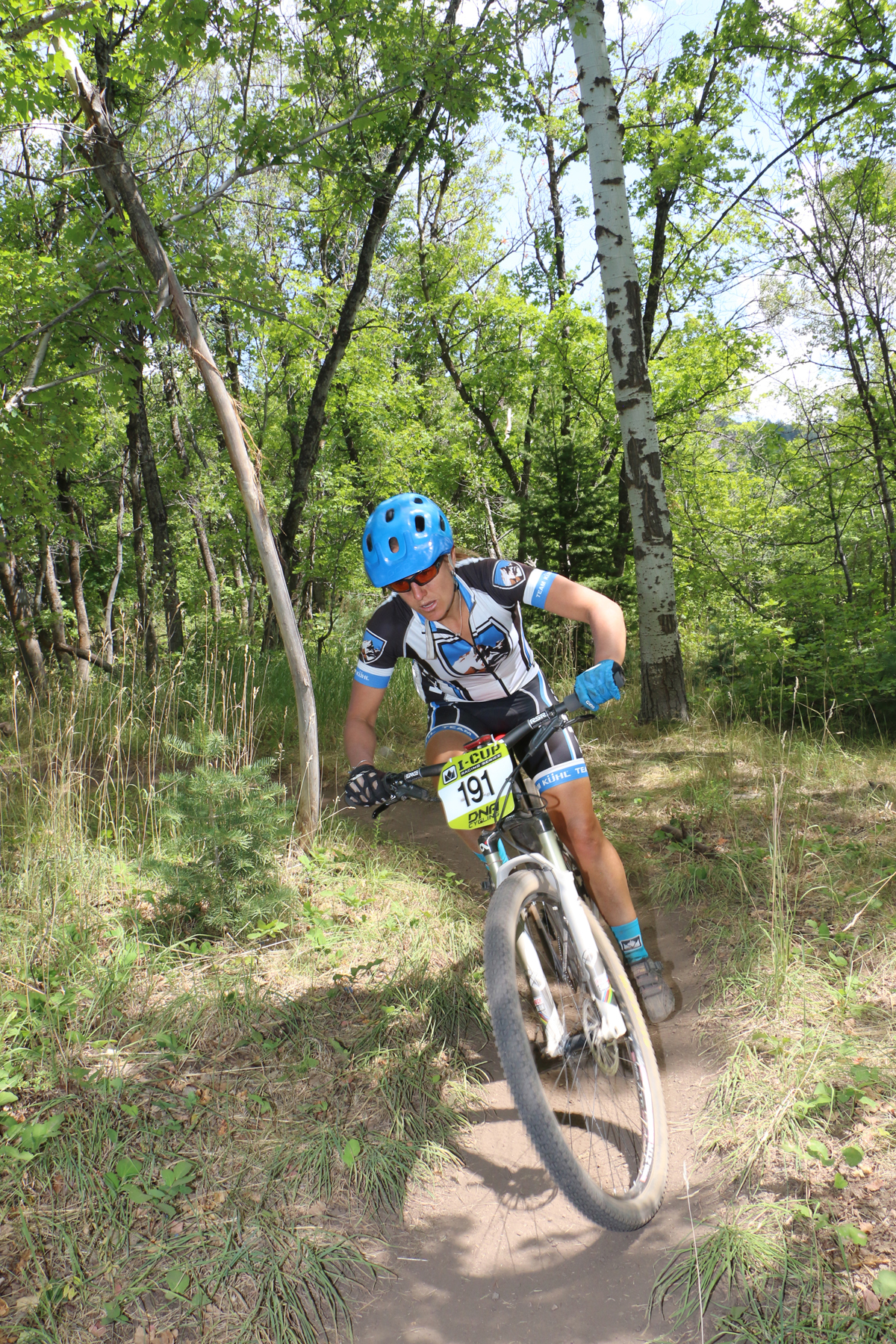
Chris Holley (Kühl Cycling) won the ICUP Endurance XC Series and finished second in the XC series. Here, he’s on his way to second place at the Sundance Intermountain Cup on August 13, 2016. Photo by Dave Iltis
Chris Holley took the victory in the Elite Men’s category of the Endurance series with Justin Desilets and Justin Lindine finishing off the podium. KC Holley also won the Elite Women’s category in the Endurance series, followed by Jen Hanks and Sofia Gomez Villafane.
KC Holley (Kühl Cycling) won both the XC and Endurance XC series in the 2016 Intermountain Cup. She is shown here on her way to second place in the Sundance Intermountain Cup on August 13, 2016. Photo by Dave Iltis
“The Intermountain Cup racing series is likely one of the most recognized series throughout the state of Utah,” said Joel Rackham, executive director of Intermountain Cup. “In acquiring the series in 2016, our goal was to work toward making this a top tier event. Throughout the off season we will be taking key learnings, working with participants in feedback session, and coordinating with great sponsors to make each event one that stands out as among the great events.”
2016 proved to be a great year for the Intermountain Cup as the series experienced a 130% in participation over prior years. “We saw great growth, which means fantastic competition for our local riders,” said Rackham. “Between the awards, live bands, food, pristine course, and overall great racing we really enjoyed putting on the series final at Sundance.”
“The Intermountain Cup will always be my favorite courses to race,” said Tittensor, who rode to a top-10 finish at the XC National Championships in Mammoth, Calif. in July. “National races are awesome, intense, and very exciting, but the trails in Utah cannot be beat. Every time I line up for an ICUP race, it feels like I’m coming home.”
According to Rackham, big plans are in the works for the Intermountain Cup series. “Look for us to focus heavily on the ‘rider first,’ specifically on things to attract more junior riders, and female riders,” he said. “With over 25 years of racing being provide to local cyclist through Intermountain Cup, we look for to identifying the best courses throughout Utah to provide an even richer experience to the riders.”
The Intermountain Cup Series offers both a traditional seven-race cross-country (X-Country) format mountain bike races, as well as a four-race endurance series featuring longer courses of up to 50 miles. With the 2017 series set to be announced, keep your eyes open for upcoming races. For full details or to register for a race, visit: www.intermountaincup.com
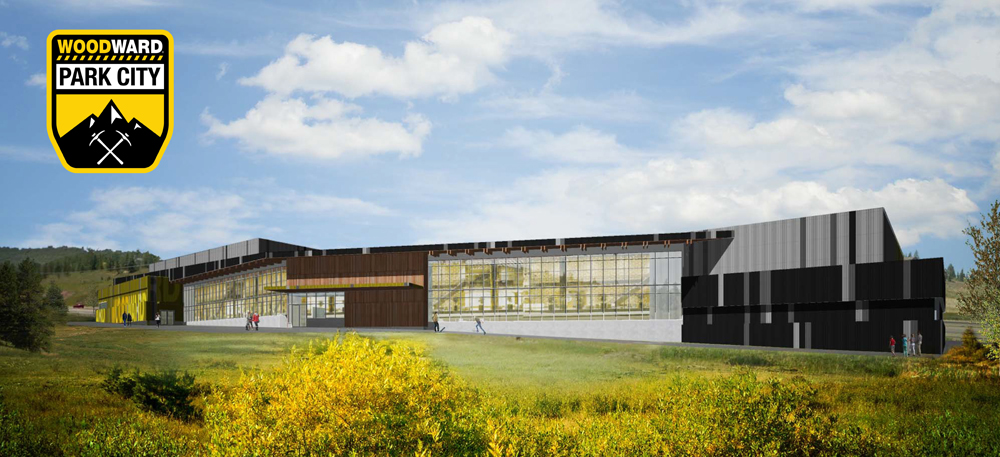
The Powdr Corporation, a Park City based corporation, and former owners of the Park City Mountain Resort, will be opening a state of the art action sports complex at the Gorgoza Tubing Park (on I-80, just east of Kimball Junction). The new facility will include both indoor and outdoor bike features, as well as a skatepark digital media studio, lounge, and coffee house.
Bike features will include ramps, foam pits, and pump tracks inside, as well as mountain bike, slopestyle, BMX, downhill trails, and a pump track outside. Lift access will be available.
The facility will have as a focus development of action sports athletes, and provide summer camp opportunities for youth.
Woodward is an amazing compilation of state-of-the-art facilities, talented staff of instructors and counselor’s and professional athletes that are as much about skill development as mentorship,” said Jody Churich, executive vice president and chief operating officer, Woodward. “We couldn’t be more excited to bring the Woodward experience to Park City.”
Park City MTB Race Features 75 Miles of Singletrack
Park City, Utah – In its 8th year the Park City Point 2 Point continues to establish itself as a favorite of racers throughout the country. Over 75 miles the Point 2 Point circumnavigates the resort town of Park City, Utah, traversing the Wasatch mountains and the two world-class ski resorts of Deer Valley and Park City/Canyons.
A classic fall scene greeted the riders on September 3, 2016 as the maples of the Wasatch range speckled the 9,000 foot peaks with shades of red and yellow and temperatures on race day hovered in the mid-seventies. Overnight rains tamped down the dust on a landscape that hadn’t seen rain in almost 80 days.
Riders were twitching with anticipation as Fruit Loops, fired from a potato gun, rained from the sky signifying the start of the race.
Pro Men’s and Women’s Recap
The race was won by Keegan Swenson (Cannondale) who posted a mind-bending and record time of 6:11:04, winning the race over Ben Sonntag (Clif Bar), and Rob Squire (Felt/Assos).
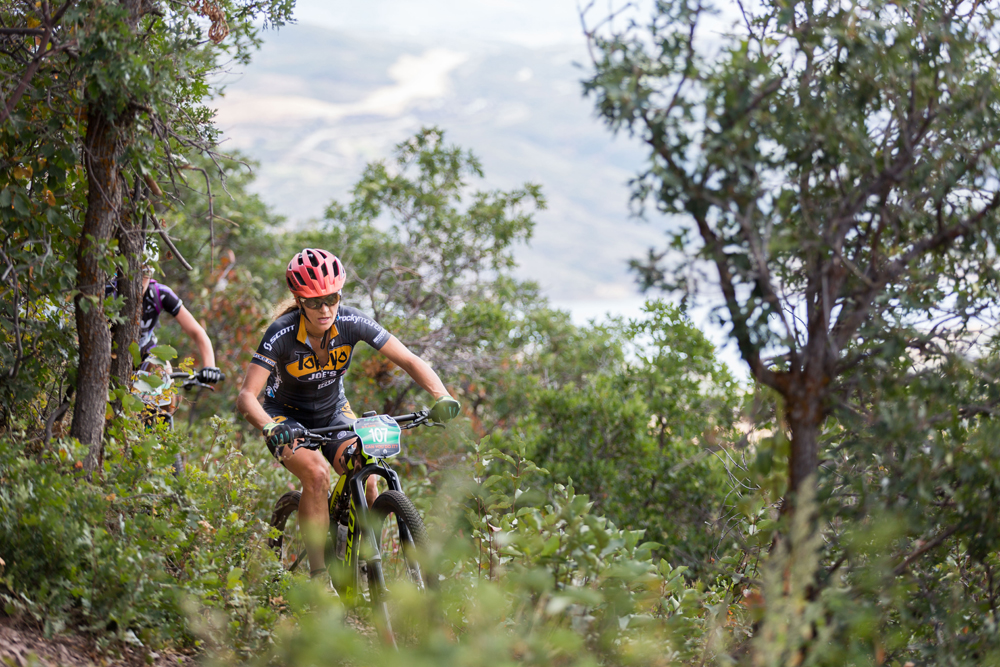
Colorado-based rider Gretchen Reeves took the women’s title, her second win of the Park City event. Marlee Dixon (Pivot/DNA Cycling) crossed the line in second followed by Sofia Gomez-Villafane (Competitive Cyclist).
Men’s Elite
In the open men’s group everyone expected a showdown between Park City native Keegan Swenson (Cannondale), who also happens to be one of the United States top World Cup racers, last year’s winner Rob Squire (Felt/Assos), and multi-year Point 2 Point runner-up Ben Sonntag (Clif Bar).
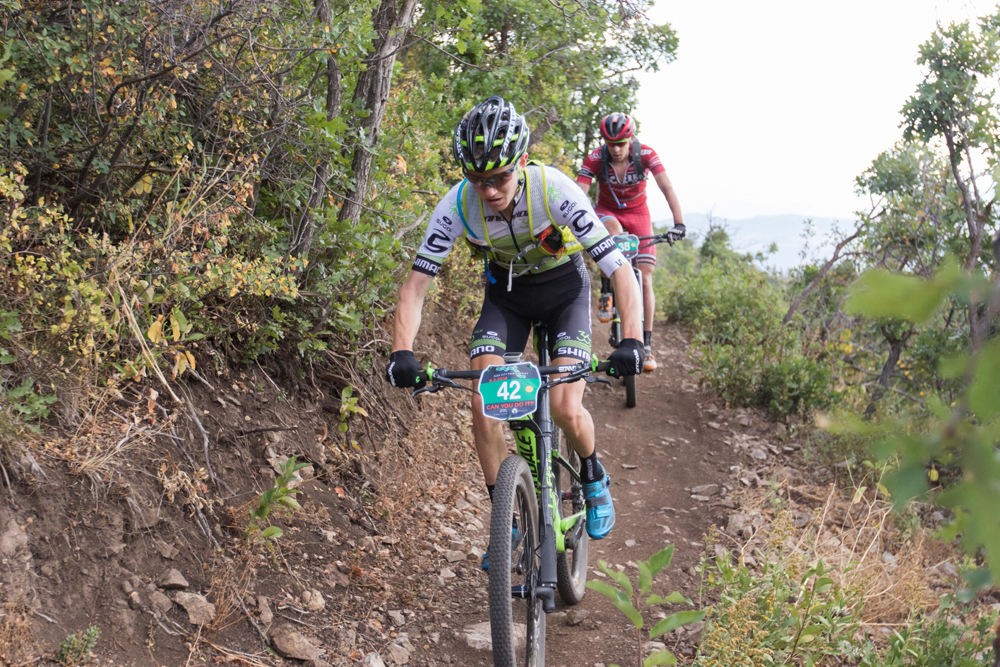
Keegan Swenson leads Ben Sonntag. Swenson set a new course record in 6:11:04. Photo by Angie Harker, Selective-Vision.com
And the trio didn’t disappoint as the created a clear separation early in the race and continued to power away from the chasers.
Around mile 32 the three leaders approached the base of the Team Big Bear climb, the steepest of the races early climbs, Swenson’s pace opened a slight gap that Sonntag was unable to cover. Squire attacked around the Clif Bar rider in an effort to close the gap but the separation stayed.
“I felt it might be a little early for me to be on my own,” Swenson shared after the finish, “But I figured if I kept Robbie off my wheel on the descents and didn’t let him follow my line I could keep putting time on him.”
The strategy seemed to work as Swenson crushed the enduro segment by over a minute on Squire and Sonntag.
With some climbing mixed in, Swenson went to work on the John’s trail, Powerline, and Crescent Mine Grade descents and had over 8 minutes in hand by the time he reached the Park City feedzone at mile 55. Still looking fresh with an all but insurmountable gap all that was left for the young Cannondale phenom was the course record, set by his teammate and 6-time Point 2 Point winner Alex Grant, of 6:16:31.
Out front most of the day, Keegan Swenson steered clear of any trouble and hammered his way through the final sections of the course in record time. He crossed the line 15 minutes in front of second place with an incredible finish time of 6:11:04 to take home the $2,000 race winner’s purse plus an extra $100 for posting the fastest time in the enduro segment.
Sonntag cross the line with a time that would have won in 2015 of 6:26:00. Rob Squire put his misfortune behind him for third place at 6:33:17.
Women’s Elite
The women’s group packed equal punch with previous winner Gretchen Reeves (Tokyo Joe’s), multi-year runner-up Marlee Dixon (Pivot/DNA Cycling), Canada’s U23 national champion in 2011 Mikaela Kofman (Ridebiker/Liv), reigning collegiate cyclocross national champion Sofia Gomez-Villafane, and local speedster Nicole Tittensor (Scott).
Gretchen Reeves on her way to winning the women’s pro category of the 2016 Park City Point 2 Point for the second year in a row. Photo by Angie Harker, Selective-Vision.com
The front group formed early with Kofman, Reeves, Dixon, and Gomez-Villafane establishing an early lead.
Kofman and Reeves would break away to form a lead group surging ahead on the climbs and rollers in Round Valley and on their way to Deer Valley Resort.
Kofman eventually faded, and Marlee Dixon took her place in second.
By the end Reeves would claim her second Point 2 Point title by just over 16 minutes with a time of 7:34:52. The Avon, Colorado, rider posted on Facebook later that the Point 2 Point is the toughest single-day race she has done.
Marlee Dixon powered through the finishing miles of the race to take another second place at Canyons Resort with a time of 7:49:59.
Sofia Gomez-Villafane finished in third, Nicole Tittensor in fourth, with Kofman rounding out the top five.
Point to Point Not Just About the Pros
While it’s a premier professional event, the Park City Point 2 Point isn’t only about the pros. Originator of several unique event promotions the Point 2 Point strives to provide a rewarding experience for everyone. A raffle just for showing up to the pre-race meeting sent one rider home with a $500 cooler from Yeti. The “I’m Somebody” award sent Robert McDonald home with a brand new frame from Scott for being the 68th rider to cross the finish line.
The most difficult of all awards to take home from the Point 2 Point however is the Red Lantern award for the final rider to finish the race.
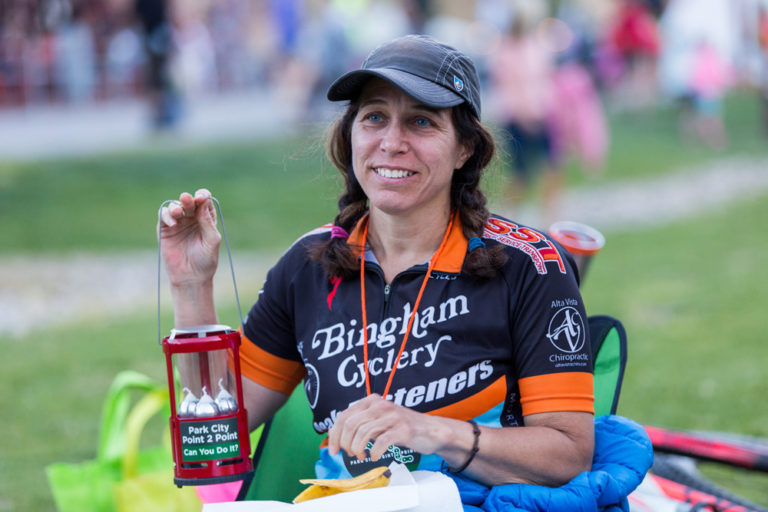
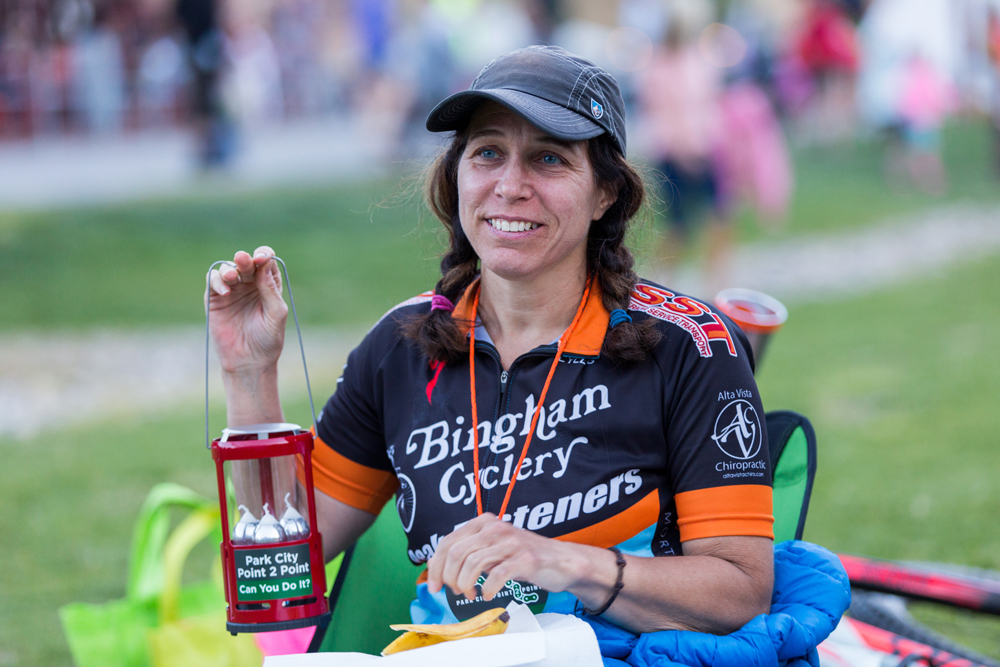
Lyna Saffell sits for a well-earned rest after finishing the P2P and taking home the red lantern award. Photo by Angie Harker, selective-vision.com
While the race winner completed the course in just over 6 hours the annual Red Lantern winner usually rolls in closer to the 12 hour mark, a truly heroic effort that takes all the strength and perseverance someone has, an effort that should clearly be rewarded. This year the prize went to Lyna Saffell (Bingham’s Cyclery) with a time of 12:23:45. Lyna was greeted at the finish by her husband Bob and the traditional red lantern along with a bike shower kit provided by Rinse Kit. Lyna is a veteran and finisher of multiple editions of the Point 2 Point but this one may have been her most challenging. At the finish she shared some of her thoughts:
“I do the Point 2 Point because of the super fun trail system, it’s a well run event and to challenge myself. I wasn’t the last rider on the course until Armstrong trail (the final long climb on the course at about 2,000 vertical feet).
I thought about turning around a lot. In fact, I have never entertained the idea of calling it quits for as long as I did on Armstrong. We all know Armstrong is a gradual smooth climb and I am walking, riding, walking, riding. Other riders would cheer me on or ask if I was ok when they passed. I was pretty frustrated with myself but I had already ridden 58 miles. So, if I did turn around now, would I be ok with it tomorrow?
I didn’t have a mechanical or a crash or even a single flat. My body didn’t want to go anymore.
I forced myself to eat even though I felt sick to my stomach and keep moving forward. I looked up and saw Ed Chauner (former director of the Intermountain Cup)! All of a sudden it took me back to when I first started riding/racing in the Intermountain Cup racing series and smiled. He gave me a biker push and next thing I knew I made it to Mid-Mountain trail. No turning back on Mid-Mountain. No bale out points. I knew once I was on that trail I had made my choice. As, I neared the Colony, I was hopeful of a Coke. And, YES! there was a Coke waiting for me. There was talk of the first finisher completed the course in 6 hours and something. I looked down at my Garmin and felt discouraged. Ten miles left, at least 5 of that would be descending. Ok, even if I have to walk five miles I can do it.
I am not going to lie, there were some dark thoughts, even tears, but I want to finish this thing. It is a bit uncomfortable how close you get to your inner self. But I chose this, I wanted this, I freely elected to participate in this.
“Riding my bike is a gift”, Bob says this all the time. He is right. It is a gift. Just like all the trees and turning leaves. But when I am physically suffering it can be hard to remember. All, I can say, is I was so happy to cross the finish line. For me, it is about finishing. I felt so loved and supported when I finished. I have the best hubby and some amazing friends.
I’ll be back next year. Maybe as a volunteer, maybe as a racer. But the truth is, sometimes we don’t know if we get to do something again. So, for today, I am really happy I pushed through the darkness, it sure is bright now.”
After the crossing the line riders and spectators spread out onto the lush lawn surrounding the finishing at Canyons Resort. Both exhausted and elated, riders of all levels spun tales of their shared 75-mile struggles over free drinks and meals provided by the event organizers. After 8 years the quality of the Park City Point 2 Point remains high; from the racecourse to the volunteers and race organizers, this five-star event keeps packing in the participants year after year.
Registration for the 2017 Park City Point 2 Point starts in February. The event has sold out in under 10 minutes that past 6 years so get ready when the exact date is announced.
See the results section in this issue category placings.
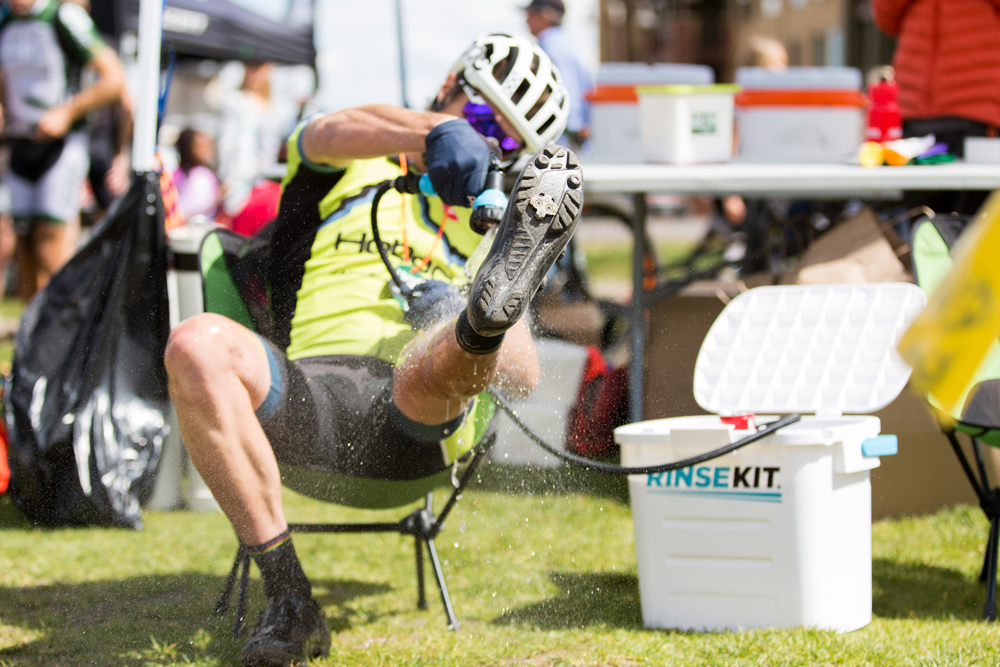
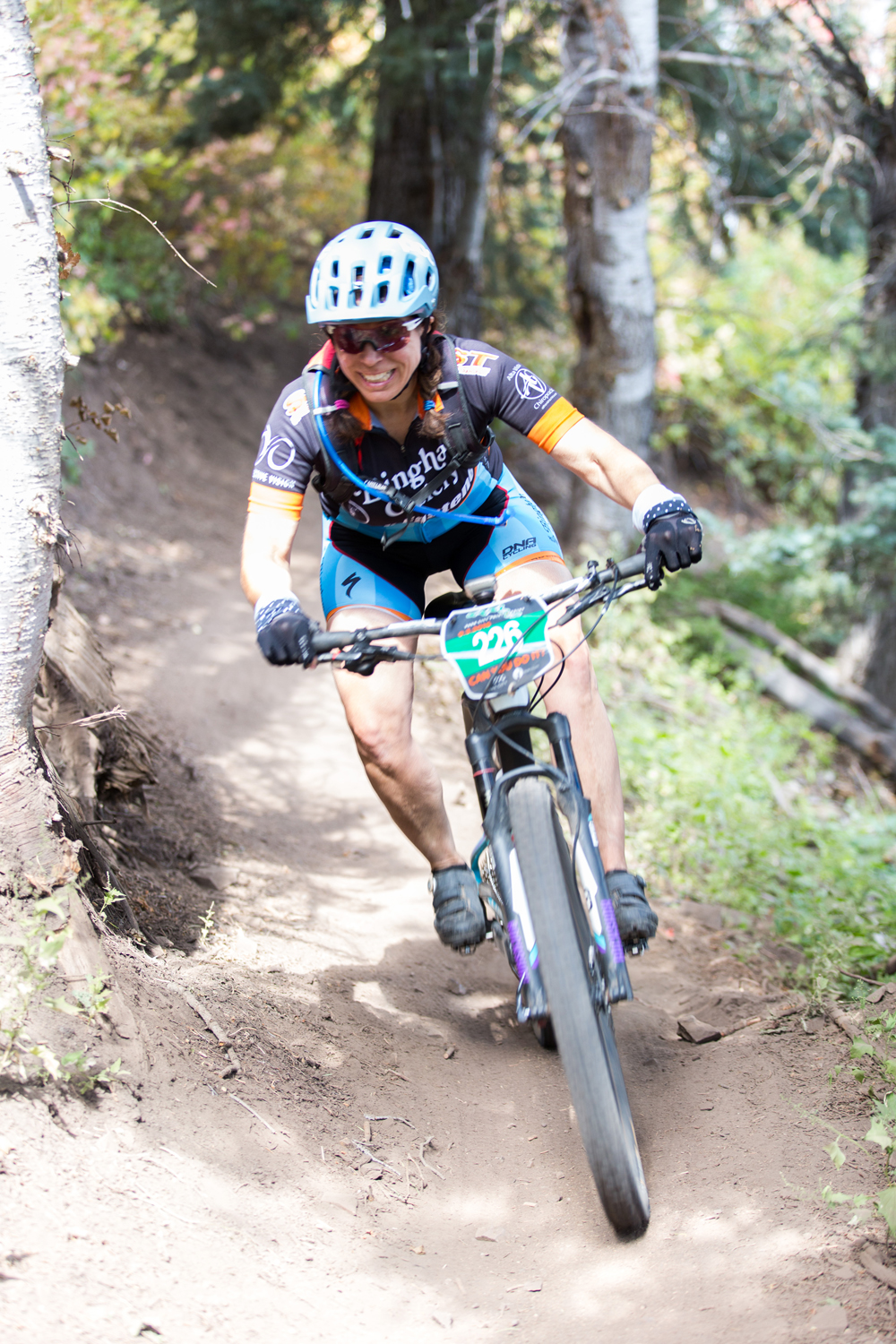
Cooling off and cleaning up at the P2P finish line. Photo by Angie Harker, selective-vision.comLyna Saffell on course, enjoying some of the flowing P2P descents. Photo by Angie Harker, selective-vision.comJason Hawkins is the only rider to participate in all 8 editions of the Park City Point 2 Point and he’s still enjoying the ride. Photo by Angie Harker, selective-vision.comJonna Palmer enjoys great views and exceptional one track on her way to Deer Valley Resort. Photo by Angie Harker, selective-vision.comGretchen Reeves on her way to winning the women’s pro category of the 2016 Park City Point 2 Point for the second year in a row. Photo by Angie Harker, Selective-Vision.com
Did you know that until recently, it was illegal under Utah law for a cyclist to ride on the shoulder past stopped cars in order to wait at the front of an intersection for a red traffic signal to turn green?
That’s right, for many years, Utah Code 41-6a-705(3) simply stated that “the operator of a vehicle may not overtake and pass another vehicle if the movement is made by driving off the roadway.” As most cyclists know, bikes are considered “vehicles” under the law. But few were aware that Utah’s definition of a “roadway” does not include the shoulder. So, cyclists were breaking the law every time they passed a car while riding on the right side of a solid white line.
At first glance, this may not seem like an important change to the law. After all, for many years it had been a common practice among cyclists, and police officers were unlikely to ever issue a citation for “passing on the right.” However, as bicycle accident attorneys, we noticed a trend with several auto insurance companies in these circumstances. The insurance companies refused to accept liability when, for example, a motorist turned left into a parking lot through a gap of stopped cars and hit a cyclist who was riding down the shoulder. They would quote the law above and deny payment for any of the cyclist’s medical expenses or bike damages, arguing that both the driver and the cyclist were in violation of Utah laws and were equally at fault.
Obviously, this led to unfair results, and the law needed to be changed. Before the 2013 legislative session, we drafted a bill and presented it to some of our local legislators, asking them to sponsor the bill and modify the law. They agreed to run the legislation. The bill passed unanimously through both the House and the Senate, and was signed into law by Governor Herbert. The Utah Code now allows persons operating bicycles to utilize the shoulder to pass on the right, assuming it can be done “with safety.”
This experience was a good reminder that there are several necessary exceptions to the general rule that bicycles are subject to the same rights and responsibilities as any other “vehicle” on the road. Some of these exceptions have been incorporated into law; others have not. Each year, our firm – along with the editors at Cycling Utah and several other cycling advocacy groups – works with the legislature to make needed changes to the Utah Code.
Bills for the upcoming legislative session are already being drafted. If you are aware of any law that needs to be changed to help protect cyclists on Utah’s roadways, please reach out to us on our Facebook page or at UtahBicycleLawyers.com.
Ken Christensen and Russ Hymas are avid cyclists and Utah attorneys at UtahBicycleLawyers.com. Their legal practice is devoted to helping cyclists injured in collisions with motor vehicles. They are authors of the Utah Bicycle Accident Handbook and are nationally recognized legal experts on cycling laws and safety.
The sport of hardcourt bicycle polo can be a daunting world from an outsider’s view. A typical game with seasoned players can be fast paced and intense displaying seemingly impossible bike maneuvers, ball handling, and incredible coordination, all while managing to not end in disastrous wrecks between players though admittedly not always successful at the latter.
Trying to enter such a competitive and oftentimes dangerous sport can be very intimidating and routinely scares some of the toughest potential players away, not to mention those who lack bike experience, coordination, or general athleticism. But, if the initial intimidation can be overcome, those interested in trying out the sport will find a welcoming community more than willing to assist new players and just as any technique, the skills required to play bike polo can be learned with practice and encouragement even for the least athletically inclined people.
Beehive Bike Polo has been working hard to expand the club by recruiting and encouraging new members to the club. Each week on Thursday nights, they host “rookie night” a night of polo practice devoted to introducing new players to the ins and outs of bicycle polo in a nonthreatening environment, as well as working on skills and training for returning rookies. Three of their regular rookies, Becky, Oscar, and Andrew have just returned from Davis, California where they took second place in Davis’ first all rookie tournament. The tournament, arranged by Jennifer and Able Kutzleb of the Davis Bike Polo club, was a way to introduce new players to the competitive side of the sport in a less intimidating manner, i.e. a tournament exclusive to newer players rather than seasoned pro’s.
Oscar Arce and Becky Hedrick of the SLC rookie team speak about their newfound passion for bike polo:
Oscar: “I had a lot of fun at the rookie tournament. It was amazing to meet new players from so many places and to play outside of Salt Lake City for the first time. It was really well organized and I played against very challenging competitors.
I started playing polo in July 2015 while visiting one of the bike polo pick up nights occurring weekly in the Beehive Bike Polo Club. The speed and maneuvers people could do on their bikes was attractive to me and I finally opted to give it a try. After my first game I knew I had tasted the fruits of bike polo and found them sweet. Since then I decided to practice with the club and learn from the more experienced players. I enjoy bike polo because of the competitive spirit it brings out from everyone. I see the more experienced players put time and effort into learning new skills and do well in tournaments.”
Becky: “The Davis rookie tournament was my fourth tournament, though I have only been playing for about eight months or so. It was a great experience playing against other newbies to see where my skills have developed in regards to my status as a rookie. The team that took the title, Los Beaners from Fresno, California, were very skilled and challenging to play against a good example of how far a rookie can go with a lot of practice and dedication. It was really a privilege to play in the finals against such a strong team and it felt good to know how apprehensive they were to play against us as well.
I started playing polo last September after my best childhood friend, Tina Greene (who’s been playing for 78 years) moved to SLC and brought me to my first pickup game. At the time we didn’t have a rookie night, so I was thrown into the fire right away with the seasoned players like Les Beehive Boys ’ Gabe, Jimmy, and David. Rather than being intimidated though, I was immediately hooked. I wanted to be able to play like them!
Though competitive by nature, the bike polo community is really an all-inclusive group of friends all over the world. It’s like having family in all corners that is always willing to help, encourage, and cheer for you, even when you’re playing against them. This is what I really like about bike polo the camaraderie.”
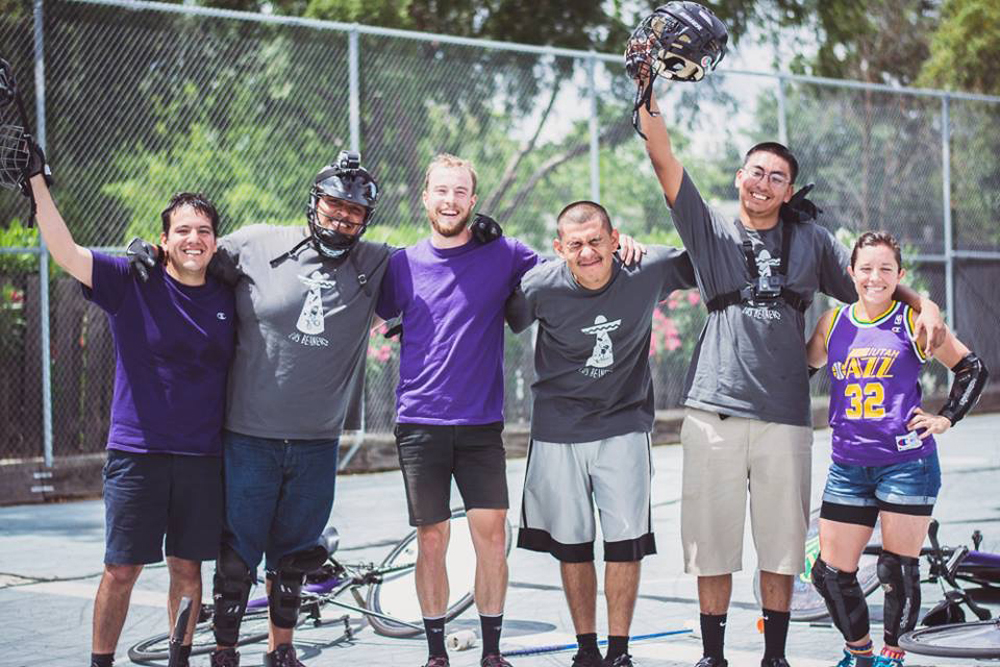
Oscar, Andrew, and Becky (2nd place) with 1st place team, Los Beaners at the Davis All-Rookie Bike Polo Tournament.
Apart from the weekly rookie nights and regular pickup on Sunday’s and Tuesday’s, Beehive Bike Polo is working with the Bicycle Collective to develop other programs, such as the Youth Polo Program (part of the Collective’s Youth Initiative Programs) aimed at giving youth a safe environment to get involved in the cycling world and providing a healthy outlet for troubled youth. Developing the Youth Polo Program is an ongoing process because the BBP club still lacks an official and sufficiently safe court to play on regularly, an issue which they are working with the City of Salt Lake to rectify.
Utah Bike Polo Information:
Beehive Bike Polo Club — Salt Lake City, UT, Weekly hardcourt and grass bike polo. Tuesdays at 8pm, Saturday afternoons. Check out the Beehive Bike Polo Club on Facebook for location, Chuck Heaton, 801-688-7268, [email protected], facebook.com/groups/189631497724953/, beehivebikepolo.wordpress.com
The more cyclists on the road, the safer for all of them. A new study from the Norwegian Centre for Transport Research found that “(w)hen more cyclists turn to the roads in Oslo each spring, the risk for each cyclist of being involved in a conflict or near miss is reduced.”
By Charles Pekow
The report, Safety in Numbers: Uncovering the Mechanisms of Interplay in Urban Transport, says “(t)here has been a concern that an increase in walking and cycling will create more accidents.” But the fear is as misguided as going the wrong way down a one-way street.
Researchers looked at a variety of studies in Scandinavia. They were able to gauge traffic volume and crash data well because in the northern environment, cycling traffic varies tremendously by season. The greater the cycling traffic, the lesser the chance not only of collisions, but the lesser the number of near-misses. A main reason: with more cyclists on the roads, the more likely motorists were to see them and look out for them. Read report.
It’s been nearly a month since all of us heard the catastrophic news that five people who loved to ride the bicycle on Tuesday evenings in Kalamazoo, Michigan lost their lives because one deranged and careless driver plowed right into them. Four other riders were injured but none of these nine veteran riders had a chance to avoid the collision. There was absolutely nothing they could do to since this 50-year-old local native was driving recklessly, far over the 35 mph speed limit on the tree-lined, two-lane road in Cooper Township, a few miles north of Kalamazoo.
Millions of riders around the country, and probably around the world, have felt powerless, angry and extremely sad that an atrocious act of this nature took place. The Kalamazoo reporters wrote that there were at least three telephone calls to the local police from citizens who saw someone in a blue truck driving recklessly. The pickup driver, Charlie Pickett, of Battle Creek, MI had been driving erratically for 30 minutes before running into the bicyclists, witnesses told the police.
Eyewitness Markus Eberhard told local station WWMT, “I saw a Dodge Ram fly past me coming past my house and I saw a blue truck spin around and land in someone’s yard. They caught him from running and I hope all the other ones live.”
According to an article in The Daily Beast, Kalamazoo County Prosecutor Jeffrey Getting said, “As members of the Kalamazoo community, we have all been dealt a devastating blow by the deaths and injuries of so many people. Our hearts are saddened for the victims, their families and friends who are trying to cope with this tragedy. As a community, we must reach out to them and give them our support as we all struggle to deal with what has happened.”
Among the people killed were a former nurse, a research manager and two retirees. One of the retirees, Tony Nelson, has a sister and a son who both live here in Salt Lake City, UT.
On Wednesday June 22, Pickett was accused of five additional charges of operating while intoxicated causing death, on top of five charges of second degree murder. Pickett also faces four charges of operating while intoxicated causing bodily injury. Those charges replace the reckless driving charges he had faced. The operating while intoxicated charges allege Pickett had controlled substances in his system at the time of the crash, said Kalamazoo County Prosecutor Jeff Getting.
The Daily Beast also reported that Pickett often showed off an angry side on Facebook. “I’m not an asshole. I’m actually one of the nicest people you will ever meet,” read one memo he posted. “I may look calm, but in my head I’ve punched you in the face 5 times,” read another.
The evening after the tragedy, hundreds of local bicycle riders gathered for a silent tribute, with cyclists wearing black and red armbands in memory of the victims. Paul Seldon of Bike Friendly Kalamazoo told a newspaper, “Last night our community experienced a senseless bicycling tragedy the likes of which I cannot recall. This is worth repeating: motorists and bicyclists need to share the road safely throughout the year, but be especially alert during peak bicycling season. I believe that as more facts come out, the kind of awareness-building messages and education we should be sharing with each other, will become clearer.”
Throughout the country, many bicycle riders are asking, “What can be done to avoid such an atrocious tragedy like this one?” The group of nine riders was in a peloton that could obviously be seen by automobile and truck drivers in both directions. The riders were no doubt wearing bright jerseys so their visibility was also apparent. There has not been a report concerning whether the riders had turned on their front and/or rear flashing lights. Perhaps that is something all riders should consider doing even if you are riding in broad daylight. There are also flashing lights that are easily attached to the back of your helmet. Under the circumstances of what happened in Kalamazoo on June 7 at 6:35 p.m., there was absolutely nothing they could have done to avoid being struck by this careless idiot. But as all of us continue to ride and enjoy this wonderful sport, remember to do everything possible to maximize your safety on the road.
Bill Roland is an avid bicycle rider who recently transferred from Columbus, Ohio to Salt Lake City. In the 1980’s he was the editor of The Golf Traveler Magazine published here in Salt Lake City. Two years ago he published a biography entitled, “Champagne Tony Lema:Triumph to Tragedy.”
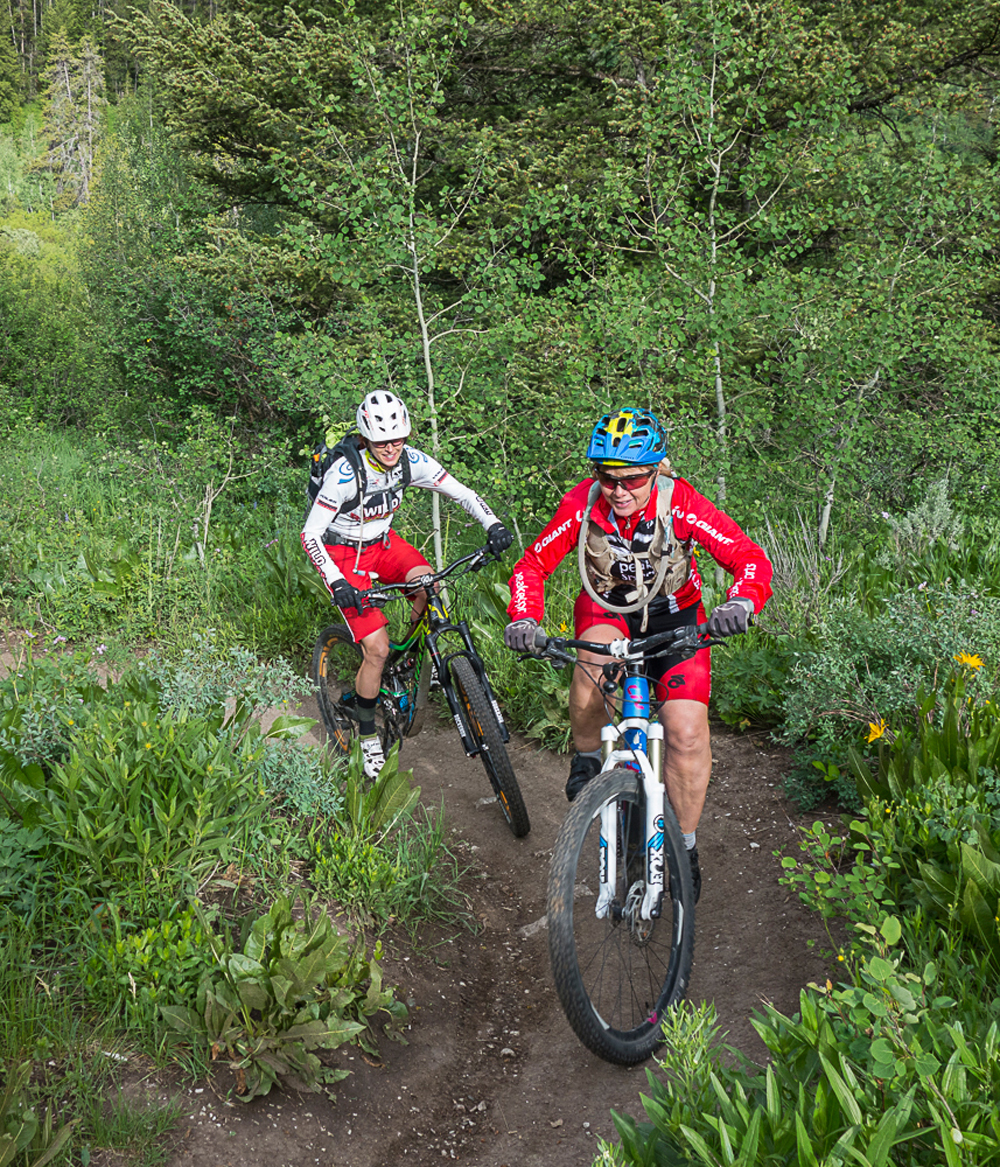
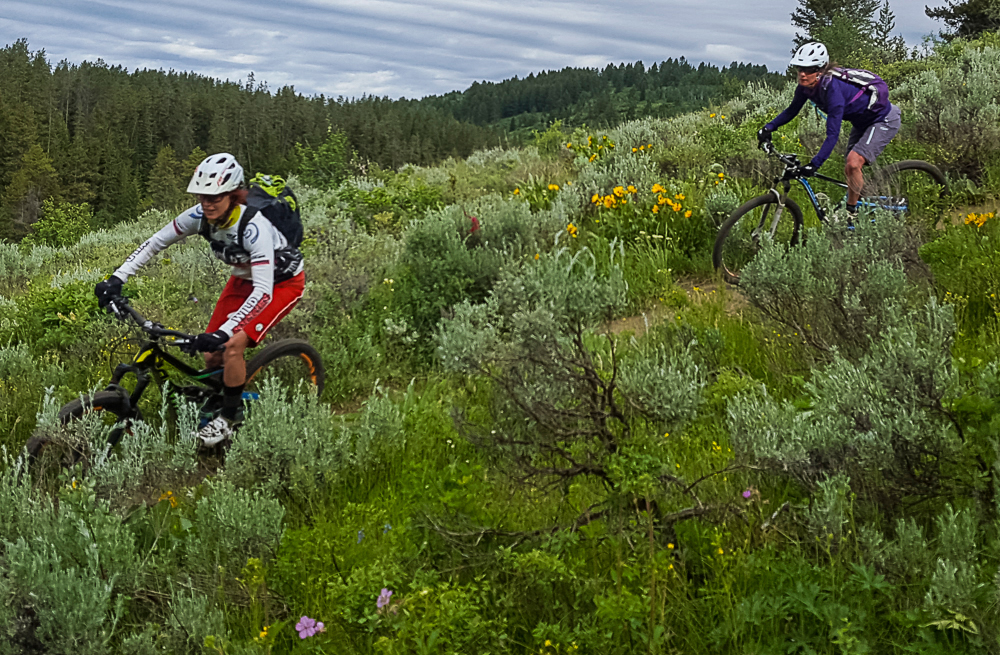
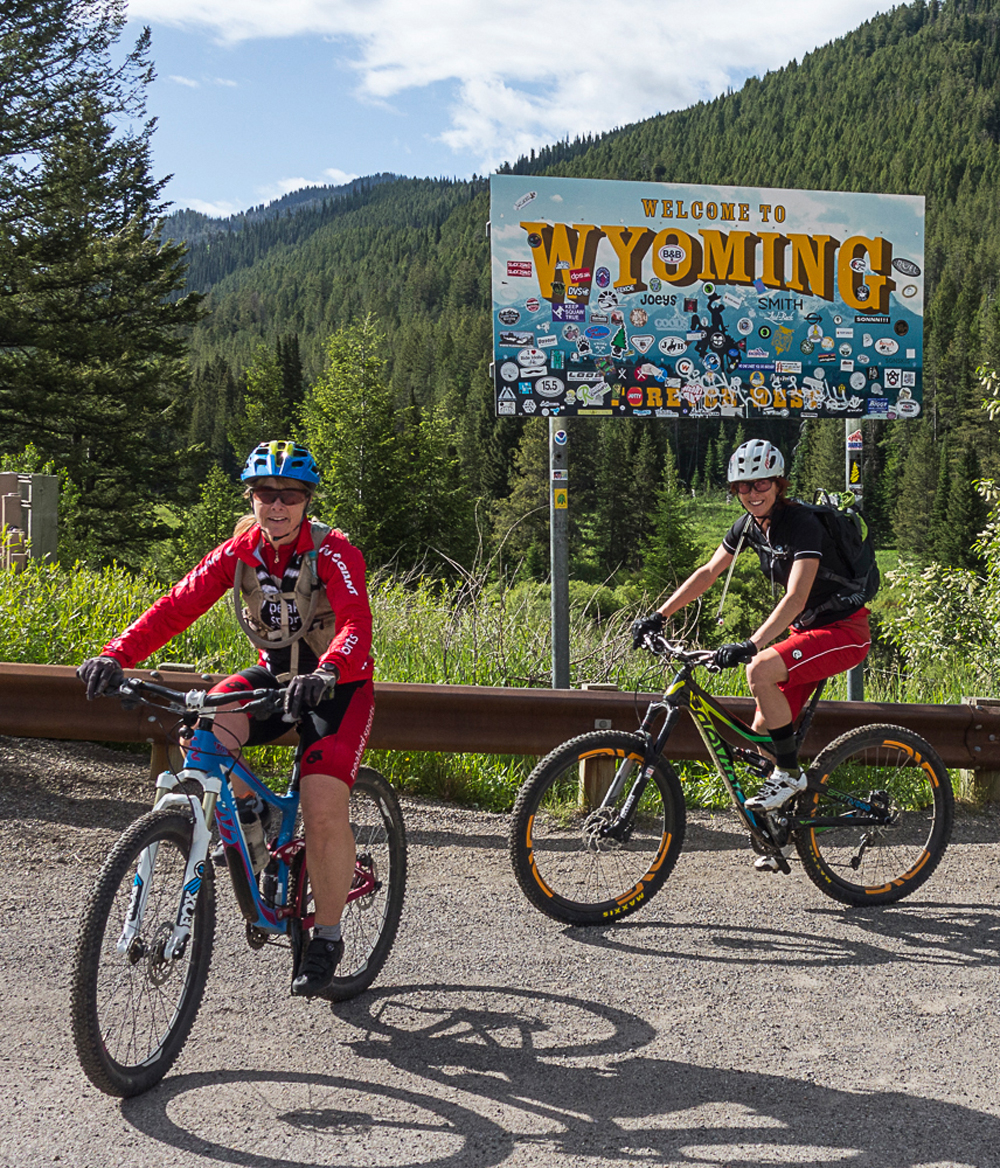
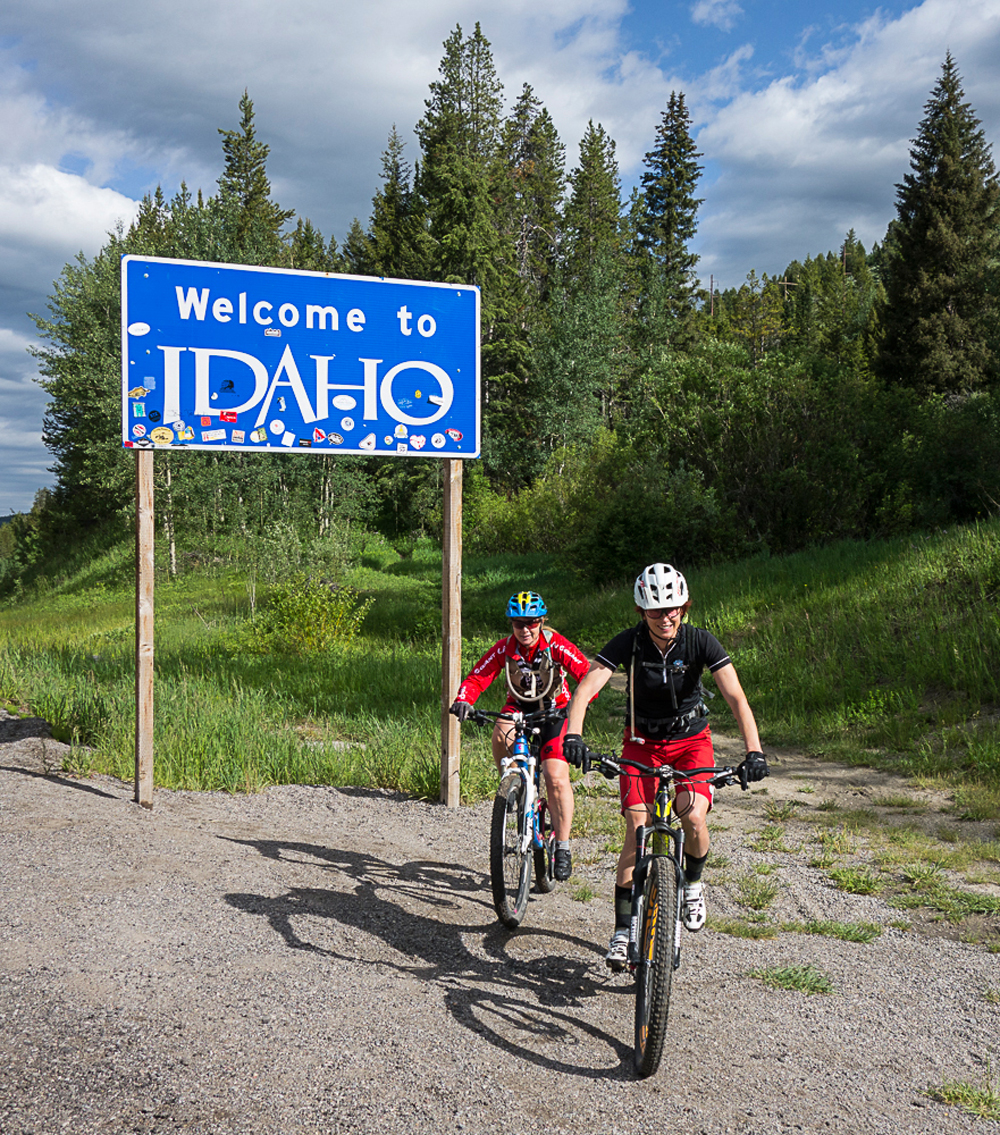
The area along the state lines of Wyoming and Idaho is affectionately referred to as Wydaho. The area is quickly becoming known as a mountain biking mecca, with trails for everyone from beginners to experts, thanks to the many people and groups who have worked hard over the past decade or two to make this area a singletrack destination.
Nancy Rutheford and Celeste Young on the Rush Hour trail in the WYDAHO Region. Photo by Joanne Labelle
On this particular day, three of us headed to Jackson, Wyoming, from our home in Victor, Idaho, for a 20ish mile after work ride. We went through the mandatory checklist at the house, “Does everyone have their helmet, glasses, gloves, shoes, and bike?” Yet at the trailhead someone said, “Where are my shoes??” I always keep a pedal wrench, spare pedals (flat and clipless), spare tube, and other various emergency supplies in the car, but not shoes. Since we had already unloaded all the bikes and were almost ready to ride, the three of us jumped on our bikes and rode to the nearest Local Bike Shop, (riding in sandals and clipless pedals is not recommended, but you do what you have to do) and bought a new pair of shoes and cleats. A new pair was needed, as the old pair was pretty beat up. With sandals stuffed into the hydration pack, we headed out on my favorite mountain biking loop in Jackson: Game Creek Loop.
Game Creek Loop
Game Creek Loop: 20ish miles, intermediate/advanced. Park anywhere in town near Snow King, or at the Josie’s Ridge trailhead, at the Putt Putt trailhead, or at the Cache Creek Trailhead. Ride to the Josie’s Ridge parking area, and head up the hill. When Sink or Swim branches off, take it to traverse Snow King’s winter alpine ski trails and the summer hiking trail to Ferrins, a climb with many switchbacks. Remember that uphill traffic has the right of way; everyone we came across that day yielded to us. At the top, you’ll be in the Snow King Saddle, with the new Skyline trail to the left (construction in progress; when it’s completed, it will be a 6-mile connector that runs along the ridge. Warning: it will be closed for winter range from May 1 – July 1.) Head straight to descend the West Game trail. Be sure to stop a few times to enjoy the breathtaking surroundings. Check out the wildflowers that are blooming around mid-June: the pink sticky geraniums, deep purple larkspurs, and yellow arrow leaf balsam root flowers. You’ll pass through a couple of the burn areas from a fire a few years ago: blackened tree trunk remnants are offset by the emerald green of the spring grasses. Pass by the turn to Wilson Canyon to stay on West Game trail. Once you reach the T on the trail, head left and return to Cache Creek. Enjoy the reroute winding through the aspens; you’ll see the old trail that once was a grunt up the middle of the gully. At the summit, imagine you see where the Skyline trail will empty out once it’s completed. Descend down the rocky and precipitously steep (in one section) trail to where it meets up with the two-track. While you scream down the two track, be on the lookout for Putt Putt trail on the right. Follow Putt Putt back to town. Don’t be fooled! The climbing isn’t over yet, but the winding fun descents make the climbs in between worth it.
Joanne Labelle and Nancy Rutherford on the Rush Hour Trail. The WYDAHO area is a Silver level IMBA Ride Center because of trails like this.
Once we completed the loop several hours later, only having to recover a lost sandal from the hydration pack once, we headed toward home. At the base of Teton Pass we were lured into Streetfood at the Stagecoach in Wilson, Wyoming, for dinner and a post-ride beverage. This is a popular hangout for both winter and summer adventure enthusiasts. It was packed with fellow riders who enjoyed the afternoon shuttling the DH trails on Teton Pass, cross country riders who had epic fun on the Phillips Ridge Trail, families relaxing on the deck, and even a couple of Wyoming cowboys who rode their horses.
The Game Creek Loop isn’t the only epic ride in the greater Wydaho area. The International Mountain Biking Association (IMBA) bestowed the award of Silver Ride Center status to the “Wydaho” area in 2014 and named it the Teton Region Ride Center. An IMBA Ride Center is known for having trails for all abilities and riding styles. There are endless possibilities of riding in the Teton Region from the Big Hole Mountains that border Teton Valley, Idaho on the west to east of the West Game loop ride described above.
Grand Targhee
Grand Targhee Resort (GTR), just 20 minutes from Driggs, Idaho, is home to an IMBA Epic Trail and a top five best bike park as ranked by MTBParks.com. Andy Williams, Harlan Hottenstein, and their trail crew are continuously working on building new trails and maintaining the current trails so they are in tip top shape. According to IMBA.com, the criteria to be rated an IMBA Epic trail are: technically and physically challenging, more than 80% singletrack and at least 20 miles in length. There are about 35 miles of singletrack that you can do, if you choose, at Grand Targhee Resort. That doesn’t include the 11 miles of lift-access downhill trails. I recommend the singletrack in this order: Andy’s, Buffalo Soldier (counter clockwise for a view of Grand Teton), Colter’s Escape, go past the yellow tent to continue down on the Mill Creek reroute. Be sure to stay right to ascend Rocky Mountain Way. Return to the resort via Action Jackson. Stop long enough to get more water and some more food and head out Pika Traverse to ride the loops out there counter-clockwise. If you’ve still got the legs for it, you can end your ride on Jolly Green Giants and Greenhorn, or by heading back out toward Peaked.
The greater Teton region mountain bike community is supported through the efforts of many non-profits that help build and maintain great trails in Wydaho. With volunteer trail days, afternoon dig parties, raising funds to pay trail crews, and by working closely with land managers the area trails are only getting better and better.
Teton Mountain Bike Festival
The 7th annual Wydaho Rendezvous Teton Mountain Bike Festival will take place over Labor Day weekend, September 2-5, 2016, at Grand Targhee Resort and the surrounding Wydaho area. The festival highlights the great and ever growing mountain biking scene in Wydaho, and is a fundraiser that supports trails. Join group rides, explore part or all of the trails at Grand Targhee Resort’s Bike Park, ride Teton Pass or the Big Holes, and be sure to take a 2017 demo bike out for a test ride. For more information, check out tetonbikefest.org.
Backcountry Tips
Before heading out on any ride, but especially an epic ride in the Wydaho area, there are a few things to know. First, you are in big animal country. There are bears, moose, mountain lions – be sure to have bear spray and know how to use it. It’s best to ride in groups and make your presence known by chatting, laughing, and even singing. Beware of the elevation. In both Wyoming and Idaho, you are at a minimum at 6,100 feet of elevation. Some trails go as high as 9,862 feet. Give yourself extra time in case you need to slow a bit from your normal speed. The sun is strong and mountain weather can change in an instant. Even if your favorite weather app predicts a sunny 72-degree day, it behooves you to be prepared with sunscreen, a rain coat, an extra layer, and a basic first aid kit that includes an emergency space blanket. Of course, bike breakdowns can happen anytime. Toolkits with a flat repair kit are a must. In terms of trip timing, keep in mind that opening weekend at Grand Targhee was June 17, 2016, and they still had to shovel the snow in spots to clear the trails. The lower valley trails, such as the Horseshoe loops and Aspen Trail typically open after the winter closure ends in mid-April with an occasional patch of snow and a few mud holes. Your best bet is to wait until mid-June when the wildflowers start to pop and the weather is typically better. Typically, the riding is good through mid-September and can sometimes extend into October; other times it snows in October and doesn’t melt out until June the following year. If you’re looking to camp, there are several options for RV, tent, or dispersed camping. See Camping resources section.
Wydaho Biking Guides
The riding time for the West Game loop was about 3 hours. That didn’t include view breaks, pee breaks, or food breaks. A good estimate per hour of riding is roughly a liter of water and about 100 calories of food. A way to navigate is always helpful; there is the trusty map and/ or guidebook such as Teton Valley Trails and Pathways 3rd edition of the Wydaho Mountain Biking Guide. You can swing by bike shops in Jackson, Teton Valley Idaho, or purchase online at tvtap.org. If you haven’t downloaded the MTB project app on your phone, do so. It is a wealth of information, and the best feature is the GPS lets you know “You are here” with a blue dot on the digital trail map. The beauty in the Teton region is unparalleled; one way to take a piece of it home with you is with a camera. The most important thing to pack is a smile. Oh! And your shoes.
Other trails worth checking out:
Rush Hour – Beginner; Victor, Idaho to the Wyoming border.
By May Romo – The Latinas Bike Initiative is a concept that seeks to inspire Latina women to bike by teaching them basic bike principals and offering resources and support in their primary language. The initiative’s ultimate vision is a network of Latina Bike Clubs throughout Salt Lake County that encourage Latina women to become cycling advocates within the county and in their communities.
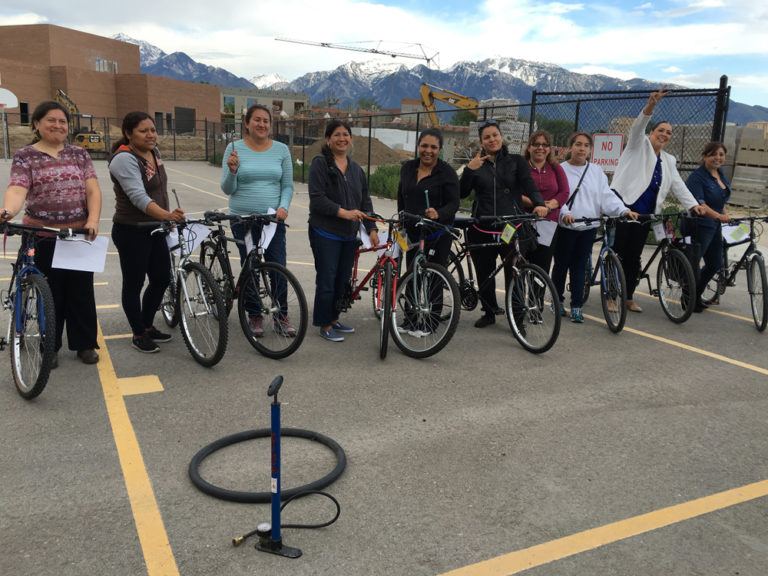
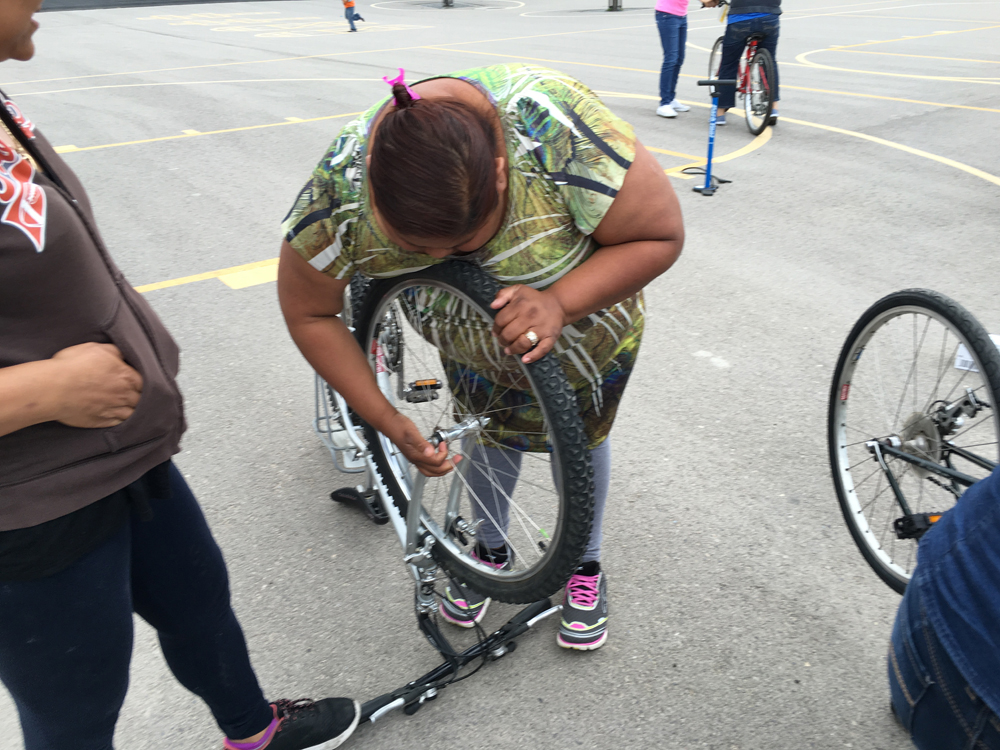
The participants in the Latinas Bike Initiative learn mechanics skills. Photo by May Romo and Merecedes Rodriguez
In May 2016, the Latina Bike Initiative launched by offering educational sessions in the Midvale area. This endeavor is the first step in helping state bike initiatives reaching ethnically diverse groups—especially Latinas. The riding skills sessions taught the Latinas about basic bike safety, the mechanics and maintenance of a bicycle, theft protection, bicycle rodeos, and how to form community group rides.
The initiative’s original goal was to recruit 10 women and teach them bike safety and maintenance so they, in turn, could recruit others and cultivate cycling in their own community; organizers were pleasantly surprised in the community’s interest in cycling, with more than 30 women registering for the classes in Midvale.
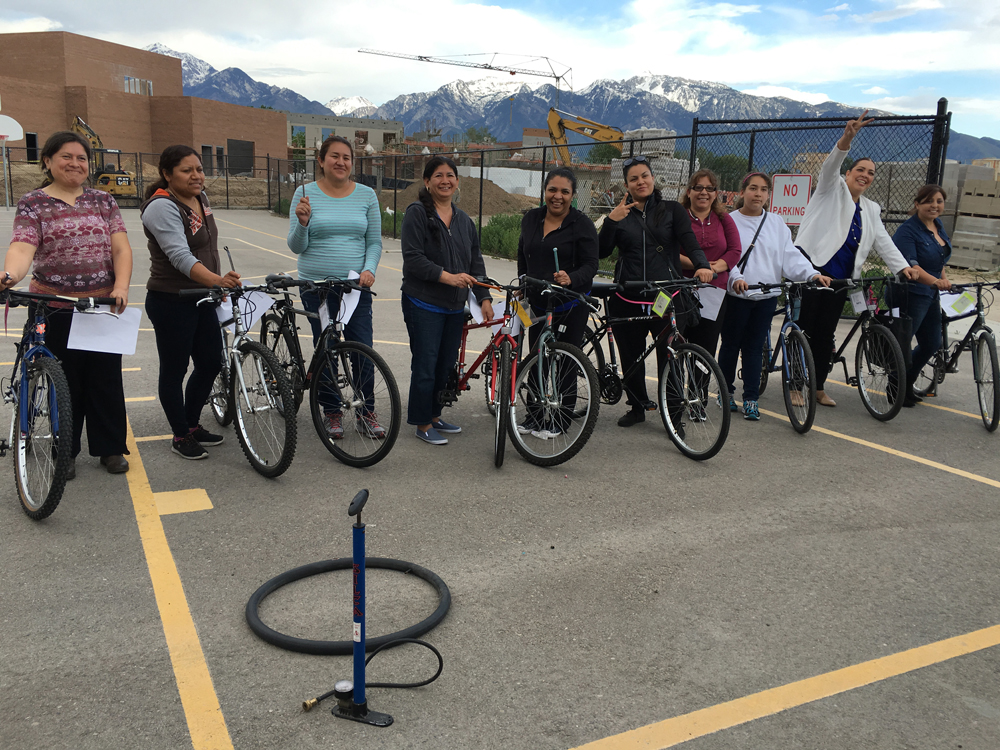
Mujeres en bicicleta de Midvale. Photo by May Romo and Merecedes Rodriguez
For the Midvale classes, the initiative provided bicycle equipment, including bikes from the Salt Lake City Bicycle Collective and SLCBAC. The women demonstrated varying degrees of riding confidence, but in the end all the attendees learned to ride a bike. One participant mentioned that the classes would also help her fix her son’s bicycle at home, and another said it inspired her to be active in her city and participate in community events.
The Latina Bike Initiative’s success in Midvale has created interest in other cities. Initiative leaders plan to expand to West Valley City next year, while continuing to provide support to the Midvale Latinas Bike group.
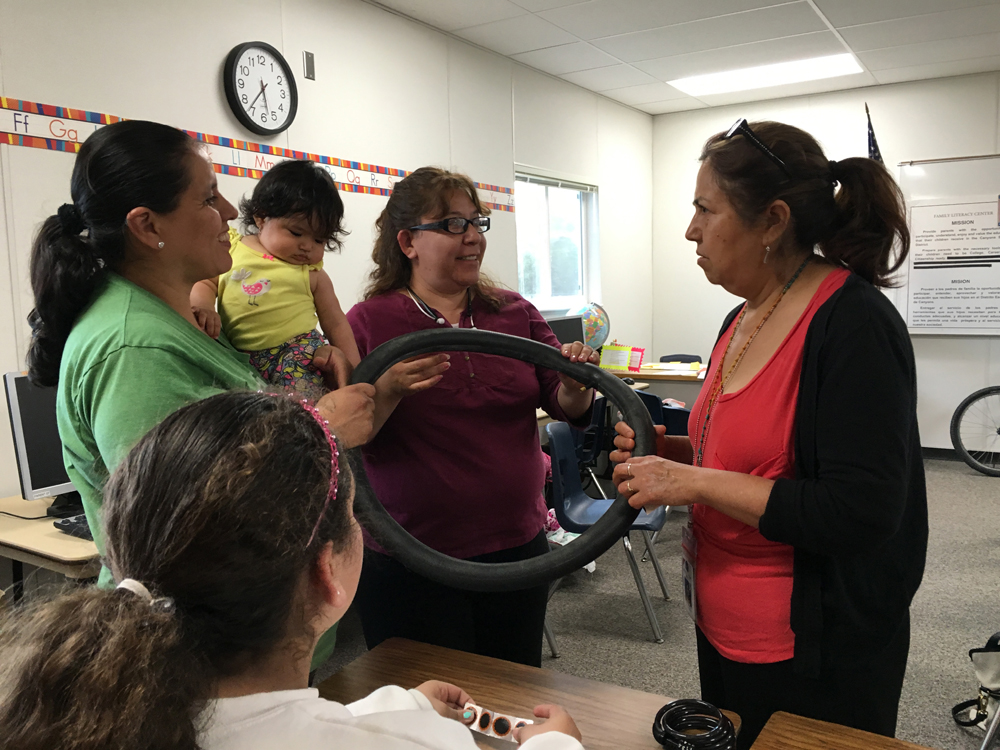
Learning to change a tire. Photo by May Romo and Merecedes Rodriguez
Organizers look forward to expanding this pilot effort and engaging other communities in Salt Lake County; the initiative is always looking for bike donations to continue growing the program.
The Latina Bike Initiative is a collaborative effort between Safe Kids Salt Lake County, the Salt Lake County Health Department, and the Salt Lake City Bicycle Collective. In addition, Bike Utah provides essential resources.
The Latina Bike Initiative can be reached by contacting Safe Kids at 385-468-3880.
Mindy McCutcheon has been a Western States golden girl for multiple seasons, and takes a well earned spot on Utah’s UCI pro women’s team – Visit Dallas DNA Pro Cycling. We had the opportunity to pose her questions we figured many of you would have for this likeable athlete and feared competitor.
This year, you have won races in cyclocross, MTB and road. How does the ‘cross discipline contribute to your success?
I love each discipline for different reasons, and I love the challenge that each discipline presents. They’re so totally different from each other, but the crossover between them helps make me stronger across the board.
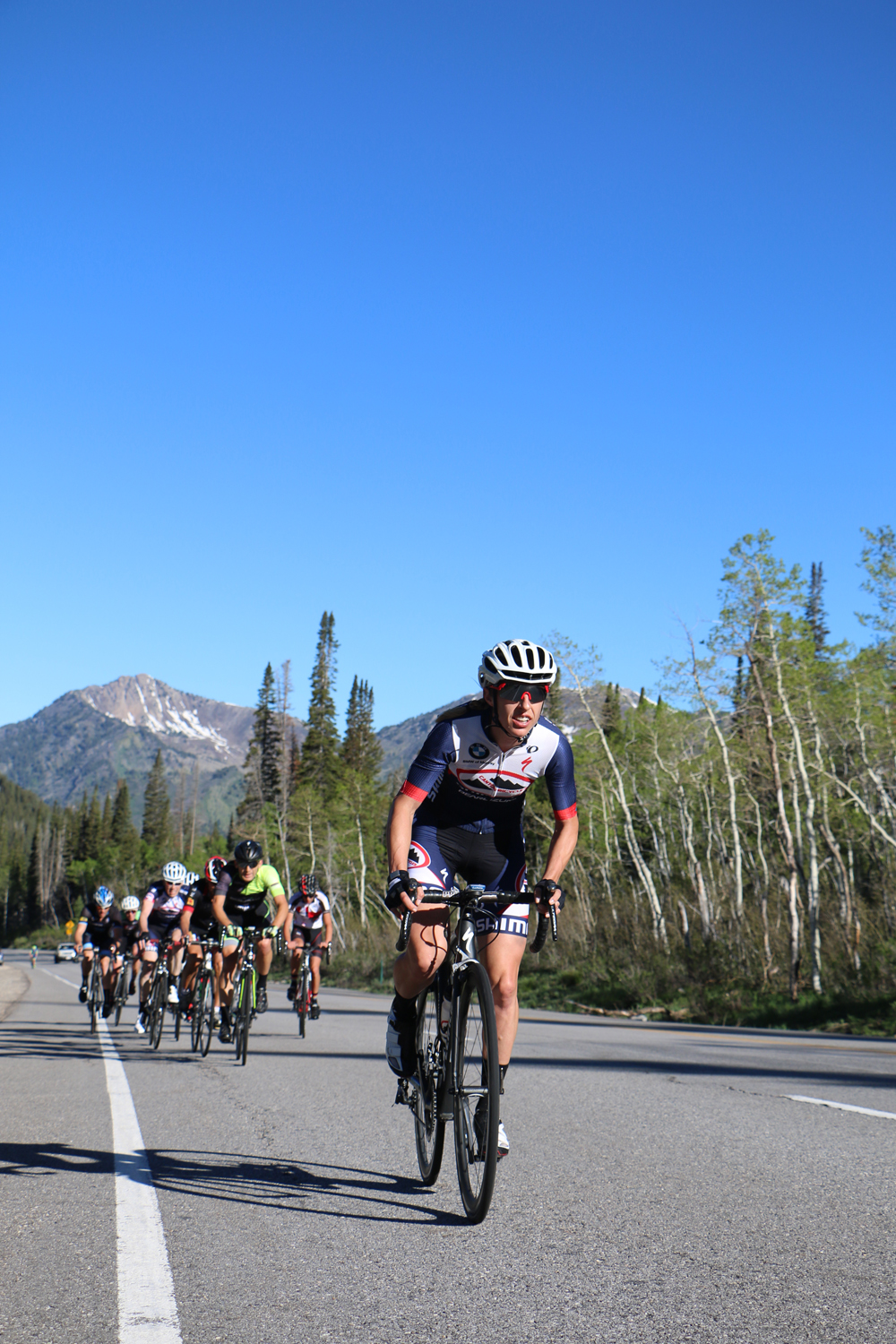
Mindy McCutcheon on her way to winning the women’s pro category at the Porcupine Big Cottonwood Hill Climb on June 4, 2016. The long time Canyon Bicycles rider is moving to UCI status with Visit Dallas DNA Pro Cycling.
For instance, I wouldn’t be nearly as comfortable in cyclocross if I didn’t practice my handling skills on the mountain bike. Or I wouldn’t be nearly as strong of a climber on the trails if I didn’t slog for miles up canyons on my road bike. My biggest peeve is not having enough time to ride all my bikes as much as I’d like!
You have been with Canyon Bicycles Racing Team for a long time. What are your feelings on leaving that team and riding for a new one on a larger competitive stage?
I owe a huge amount of my success to Mike Pratt and Sara Baker at Canyon Bicycles. I met Sara when we were both cat 4’s and she invited me along on their Sunday group rides. That became my bike family, and she became one of my best friends.
Mike and the crew at the shop have been amazing to work with, and they’ve always had my back. I can’t thank them enough! Everyone has been super supportive in seeing me take this to the next level and helping me to grow as a racer. I wouldn’t be where I am today without their support since day one, period. I’m definitely sad to be leaving Canyon, but they’re still my pals and will always have a special place in my heart!
How did you first get involved in bike racing?
My history with bikes goes back a while. I always had bikes as a kid, but it wasn’t until I was heading to college in the U.P. (Upper Peninsula… that often forgotten part of Michigan near Canada) that I decided I wanted a REAL bike for all the great mountain bike trails I had heard about (seriously, they’re awesome). So, I bought myself a Specialized Rock Hopper with money I had earned working at Dairy Queen throughout high school.
I started mountain bike racing a bit around 2006 and had a blast. I dabbled in it around the Midwest and did okay locally, but didn’t take it super seriously.
In late 2008, I moved to Utah. I remember thinking “There are so many amazing athletes in Utah, I’ll never be at the top level.” I rode a bit, but was still running marathons, so again, I didn’t take it seriously. In 2011, I decided to test my skills on the road at the Bear Lake Classic. I had no idea what I was doing! However, it was that fateful day, I met my dear friend Cathy Kim. She was great out there; pointing out who was who, what to do, and whose wheel to avoid. I had a blast, but disappeared until mid-season 2012. That’s when I decided, I wanted to upgrade to Cat 3 and learn more. By the end of 2012, I had earned my upgrade and met Sara. That’s when I got connected with Canyon and the rest is pretty much history.
Any advice to other women who want to start racing?
I was so fortunate to have met some great ladies early in my cycling adventures. It is so intimidating showing up to a race, not knowing anyone and having no clue what to do. I’m pretty sure when I first started road riding in Utah, I still thought you wore underwear with your chamois [insert pad in cycling shorts]. Luckily I figured stuff like that out pretty quickly. But this sport is crazy.
I think what helped me the most was hitting group rides and being attentive. As a new rider or racer, it’s not enough to just hop on your bike and ride. You need to watch what’s going on around you, ask questions, and process everything. If you’re in a good group, the other folks will give you good tips, like how to draft, what side to be on depending on the wind, how to attack and counter, or how to spit without spitting on everyone behind you. There also are clinics put on by various folks like Plan7, where you can learn all sorts of awesome skills.
Some feel that this recruitment and move to the DNA women’s program is long overdue; any thoughts you can share about that?
Oh boy, is it ever! I’ve long wanted to step up to the next level of racing, but faced obstacles in my personal life that held me back. It got to the point about a year ago where I had to do some serious reflecting and determine what would make me happy and fulfilled. I knew I ultimately had to see how far I could take this or I would have huge regrets down the road. Some people think bike racing (or any professional sport) is selfish. Well it is. You spend hours upon hours training, cross training, eating well, not going out with your friends, trying to sleep as much as possible, and doing a lot of laundry.
For me, making the decision to hit the national circuit this year, (which lead to getting picked up by Visit Dallas DNA Pro Cycling) was never about choosing bike racing over something or someone. My decision centered around choosing to take care of myself. This led to some tough decision making, but I’m confident in the choices I’ve made. Sure, now I have the opportunity to be part of an amazing team and fulfill my personal goals, but I also have a new found level of confidence that carries over into racing — and the rest of my daily life. I’m in the best place mentally and physically I’ve ever been, so there’s really no better time to chase my goals.
For athletes who may be reading, who are interested in excelling in multiple sports, not just cycling, what insights have proven most helpful to you in your athletic and crosstraining endeavors?
Before I was ever a cyclist, I was a collegiate runner and alpine ski racer. I ski raced from 5th grade through my undergrad years at Northern Michigan University, and I ran track from 6th grade until 2010, when I suffered stress fractures in L3 and L5. I loved both of these sports, but was always just mediocre. If it weren’t for injuries suffered in these sports, I may never have started cycling so much to begin with. Recovering from injury made me focus on cross training like yoga, Pilates, and strength training. This has all played into my becoming a stronger athlete on the bike than I ever was as a runner or ski racer.
Riding a bike is actually only a small portion (ok, that’s not true, it’s a big portion…) of bike racing. What people don’t realize is how much other stuff you have to do to be a strong, injury free athlete. Each week, in addition to my on-the-bike training, I do strength and plyos, yoga, and core. During my cyclocross season I try to run once a week and during the winter I Alpine and Nordic ski.
For me, yoga has been one of the hardest things to dedicate myself to — mentally and physically. I try to hit several different classes (yin, power, and restorative) each week. Each class offers something totally different, but they all allow you to focus on being present and facing the shit in your life. It’s the closest thing to meditation or religion that I practice. The challenge of yoga is so different than being on the bike, but I really think the mental clarity you get from it (or whatever your “yoga” is) is just as powerful as the training you put into your primary sport.
What advice would you give specifically to female endurance athletes, and are there age-specific insights you feel important to share with any particular demographic or age group?
One of the greatest things I’ve noticed over the past couple of years is the ability to connect to other women through social media. It has allowed groups of women of all ages and ability levels to share in adventures. Having these little meet-ups has helped me grow friendships in my life and has helped provide opportunities to meet other gals I may not have met otherwise.
As for female endurance athletes, no matter the age, I think it’s so crucial to have realistic expectations and patience. If you’re just starting out, it’s easy to be super motivated and want to do it all. However, that can lead to burn-out or injury. Aside from the potential negatives to being an endurance athlete, probably the greatest thing is: age doesn’t matter! I ride with friends who are 20 years older and have friends who are 15 years younger. That’s the beauty of these sports — your training partners don’t have to fit some cookie-cutter mould. I’ve learned so much in the hundreds of hours I’ve spent riding alongside my older, wiser friends. These moments are sometimes more gratifying than any race because you get to really connect with a person while doing the things you love.
Finally, are there aspects of the cycling and broader endurance sports community in Utah and beyond that you would like to see evolve in any particular way?
I feel there’s a bit of ebb and flow with the cycling community in Utah. When I first started racing, the numbers in the women’s categories were much larger. For whatever reason (injuries, retirement, life!), they seem to have dipped a bit lately. Sometimes I see long, wordy threads on Facebook with speculation as to why this is happening. It’s easy for people to get worked up and have strong opinions about how things should be run. I’m personally grateful for what we do have here in Utah because it is such an incredible community of cyclists, racers, and advocates who make this all happen. On the positive side, we also have some great programs focusing on the younger generation of racers, which will hopefully translate into some bigger numbers down the road.
In addition, we have Marek and Dirk who run nearly every cycling event in Utah, and I’m certain they don’t get the recognition they deserve. They work so hard to bring us quality events that are safe, challenging, and fun. I’d love to see more people actually offering viable solutions to issues that might be present, like low turn-outs or fewer events, instead of ranting about it on social media. It’s why I still love participating in local events — I enjoy supporting the guys putting on the events. Sometimes you get the opportunity to teach someone else in the group something new or push them harder, which makes them a better racer, too. I’ve gotten so much love and support from our community; I hope I’m able to give back in some way.
As in all sports, it’s really about being part of your community. Don’t just show up to get a race number and get a result. We all should take the opportunity to mentor someone, or have enough curiosity to be mentored. We have to work together to make these things great, because Utah is an amazing place, filled with great people.