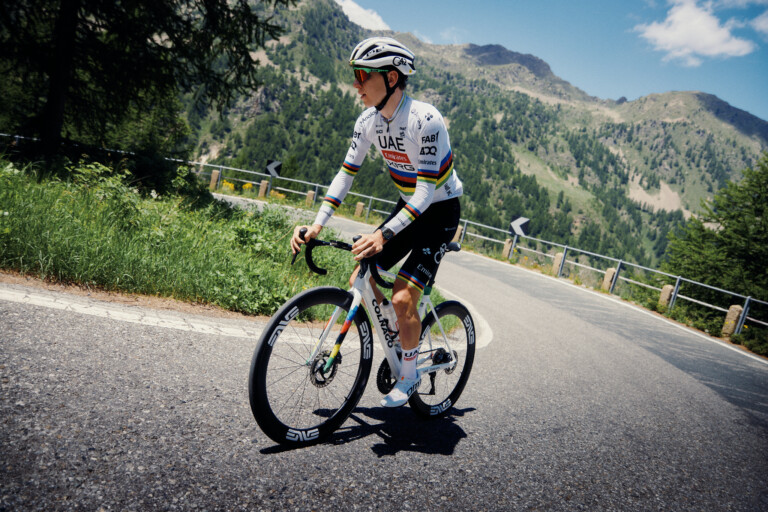
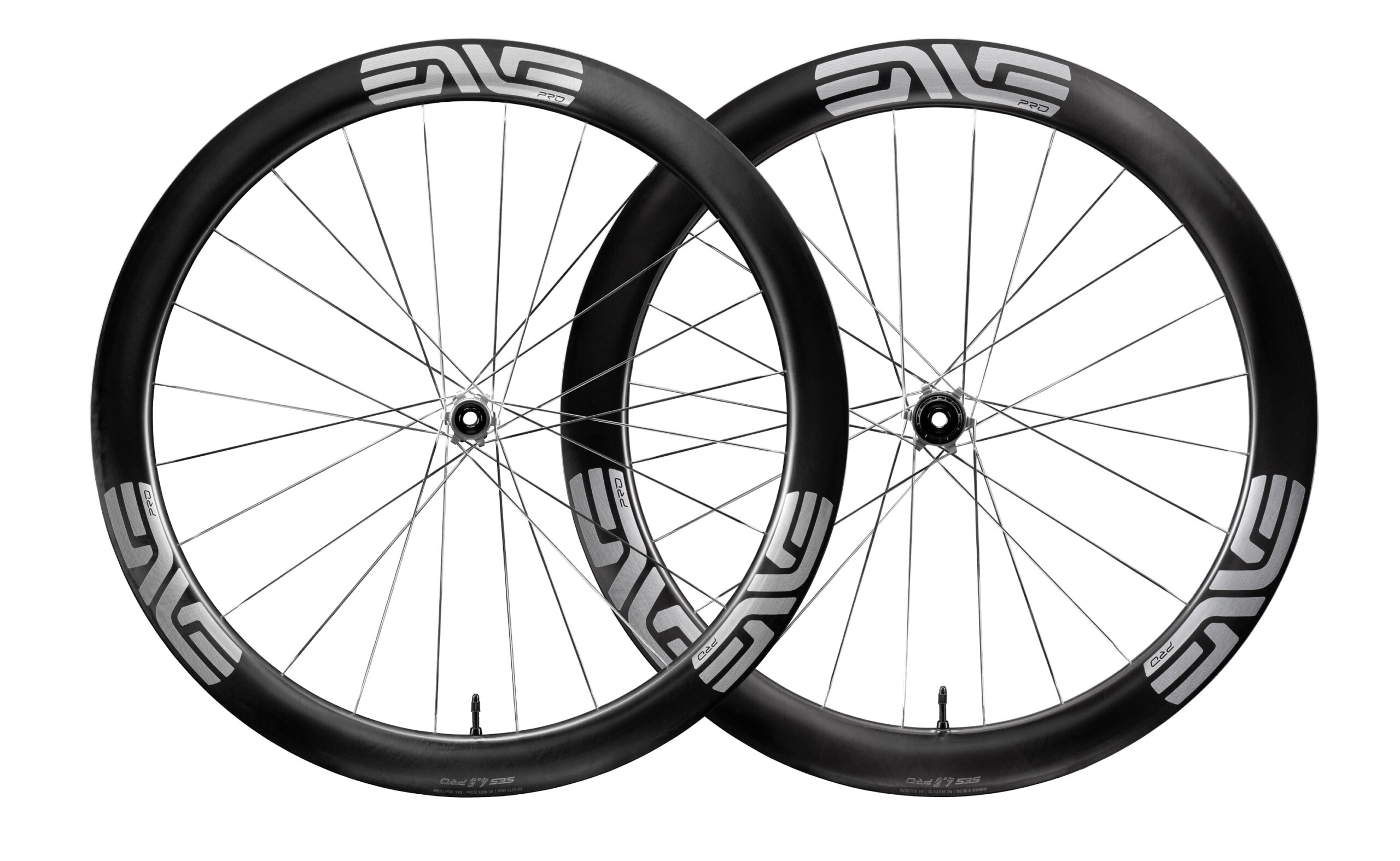
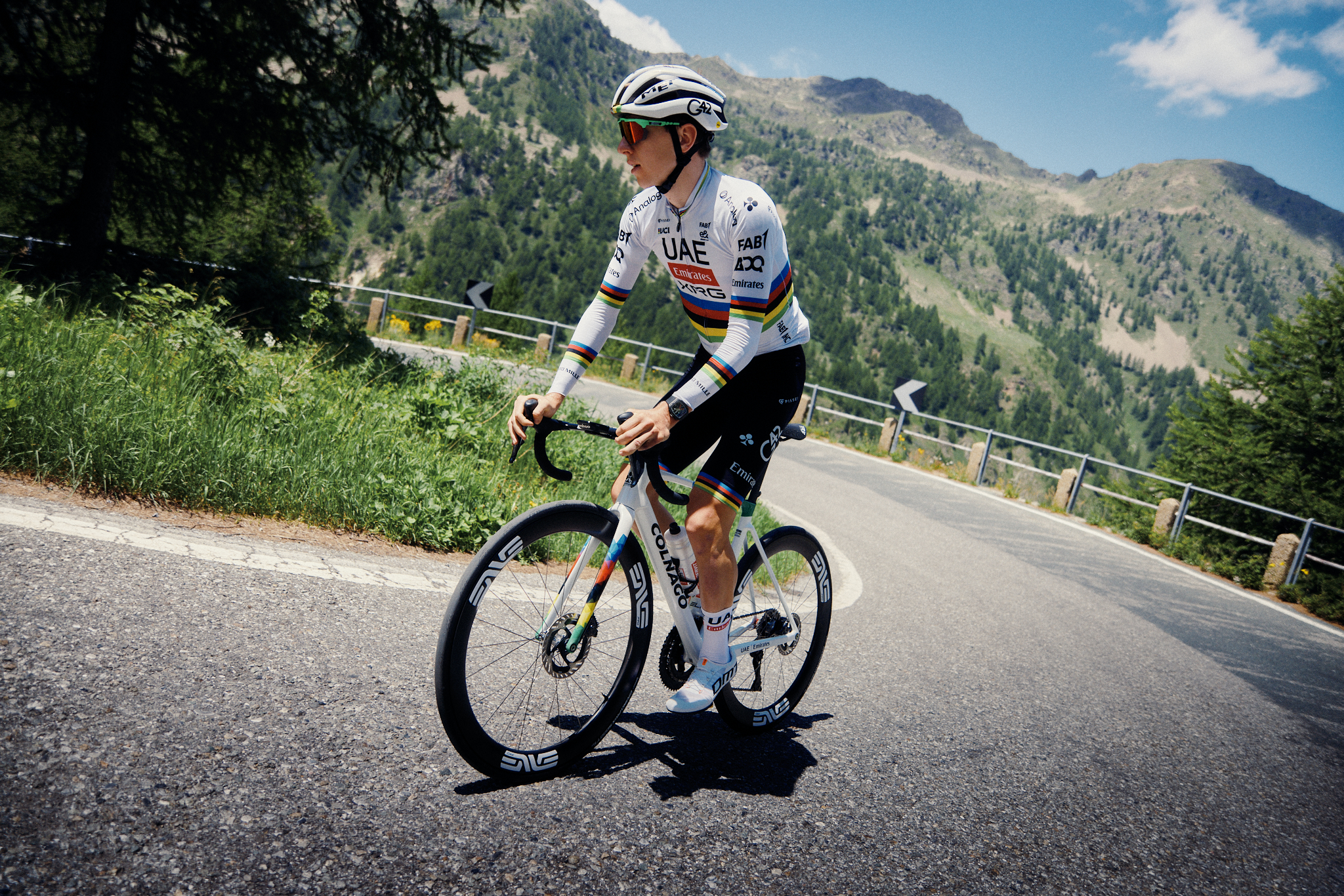
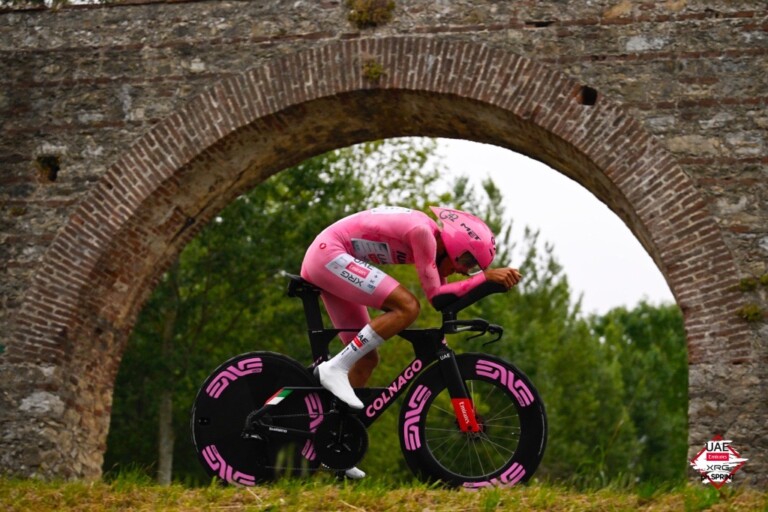
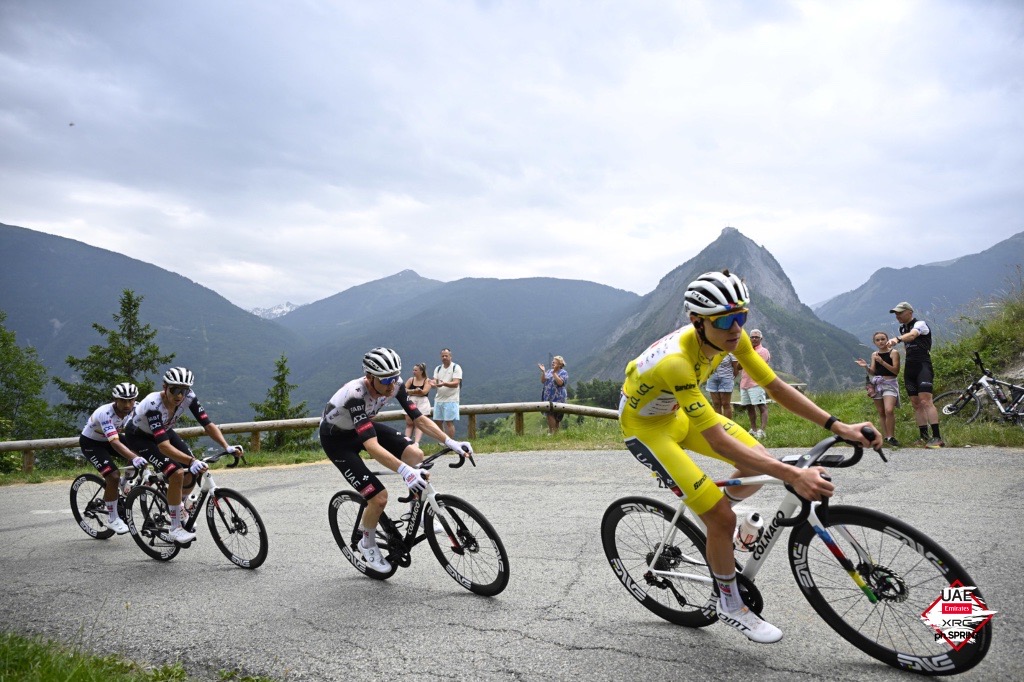
OGDEN, Utah (July 3, 2025) — With direct input from Tadej Pogačar and UAE Team Emirates—XRG over two seasons, we’re pleased to introduce the SES 4.5 PRO—a wheel that has already amassed 25+ victories this season. It is designed for cyclists seeking the ultimate wheelset, where low weight, aerodynamics, and rolling efficiency meet.
Progress at the highest level is incremental and iterative, and ENVE has redefined the benchmark SES4.5 to deliver more speed and less weight. Winning everything from the Tour de France to World Championships and Ronde van Vlaanderen, Tadej elevated the SES 4.5 to be the most dominant wheel in the pro peloton, conquering cobbled classics, steep mountain summits, and the most grueling terrain with unparalleled speed. He prioritized aerodynamic supremacy over sheer weight savings, trusting the SES 4.5’s class-leading efficiency to deliver results. However, he and UAE Team Emirates envisioned something even more ambitious—a wheel that preserves the SES 4.5’s aero advantages while achievingthe featherweight precision of elite climbing wheels.
Photo courtesy of ENVE Composites
The SES 4.5 PRO was created after over a year of meticulous hub development, carbon laminate refinement, and manufacturing breakthroughs.
SES 4.5 PRO HIGHLIGHTS
New rim laminate using higher modulus, lower areal weight carbon fiber
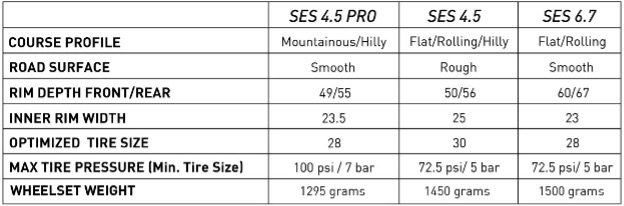
5 mm inner-rim width meets ETRTO recommendation for 28 mm tires
Rim Depth Front/Rear: 49/55
Innerdrive PRO Hub
ENVE PRO Ceramic Bearings
Lightweight rim graphics
Wheelset weight: 1295 grams (including valves and tape)
Wheelset price: $3750, 4499€
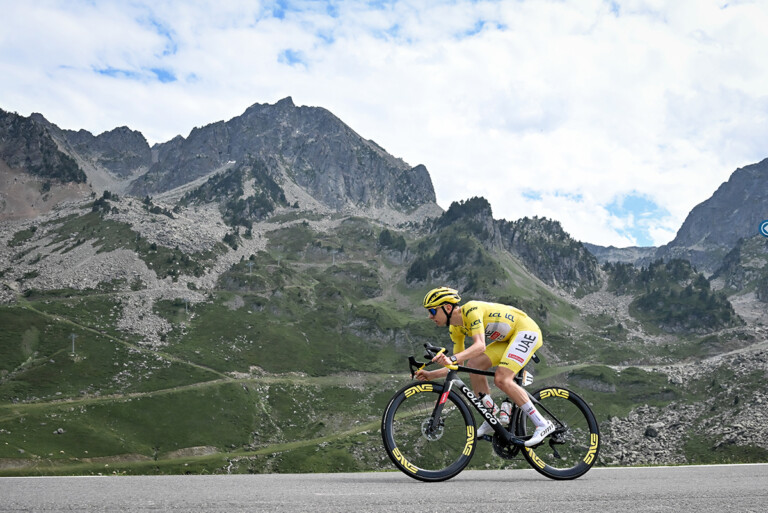
Tadej Pogačar. Photo courtesy of ENVE CompositesTadej Pogačar. Photo courtesy of ENVE Composites
ENVE PRO LINE
PRO in the name means it is a product developed in direct collaboration with the world’s top racers and represents the pinnacle of innovation—engineered and built for race-winning performance. The SES 4.5PRO is the second product in our road line to receive the designation after the SES Aero PRO One-Piece Handlebar.
SES 4.5 PRO CONSTRUCTION
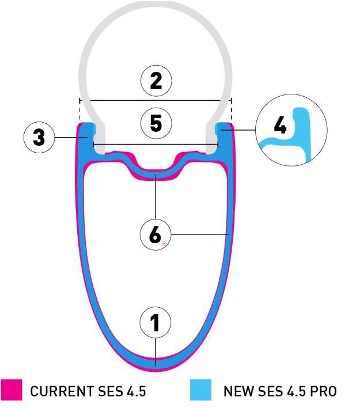
The new rim design saves roughly 50 grams per rim over the SES 4.5. This is where the weight savings come from.
Reduced rim depth
Narrower overall rim width
By removing material from under the Wide Hookless Bead™, pinch-flat and impact performance are preserved
A small hook is created by eliminating material from below the Wide Hookless Bead™ (critical tubeless dimensions are preserved with new channel manufacturing technique)
Low rolling resistance is preserved by achievinginner-rim width of 5 mm at widest point of channel
New materials allow for thinner sidewalls and channel
AERODYNAMIC PERFORMANCE
The foundation of the Smart ENVE System (SES) philosophy is the concept of Real-World Fast™. A performance philosophy that goes back to 2009 when we partnered with leading aerodynamicist, Simon Smart. That means chasing maximum speed, but not at the cost of important performance attributes, such as weight, durability, and stability. The SES 4.5 PRO meets these requirements by preserving the SES4.5’s patented shape and therefore its best-in- class aerodynamics and handling characteristics. Simply put, after nearly 10 years, the SES 4.5 shape continues to punch above its depth. That’s how ENVE came to be the wheel partner of UAE Team Emirates. Unbeknownst to ENVE, UAE had purchased the leading wheels on the market and independently tested them in the wind tunnel and on the road. The rest is history.
INNERDRIVE GOES PRO
At the core of the SES 4.5 PRO wheel is the Innerdrive PRO Hubset, which brings ENVE’s proven driver technology to an ultralight straight-pull hub shell. After benchmarking the lightest hubs on the market for weight, stiffness, and durability, we refined Innerdrive for lightweight performance while maintaining the system’s reliability. At just 281 grams for the hubset (rear 194 grams,front 87 grams), the Innerdrive PRO goes head-to-head with the lightest hubs out there without sacrificing the stiffness required by the world’s best.
Utilizing the same Innerdrive technology featured in the Premium Straight-Pull hubs that have been raced in the World Tour for their second season, the Innerdrive PRO Hubset receives the very hop-up kitdeveloped for our professional teams. This includes a light-action ratchet spring for drag reduction and a 40-tooth count ratchet. Like the Premium Innerdrive Hub, the Innerdrive PRO Hub uses the same spoke alignment feature to reduce spoke twisting.
PRO CERAMIC BEARINGS
Bearing drag is influenced by numerous factors, including the bearing seals, ball bearings, races, and carrier. Other factors such as manufacturing consistency, tolerance, grease content and viscosity play rolesas well. To control each of these variables, we worked with a leading bearing vendor to create what we believe to be the best ceramic wheel bearing available. ENVE’s new PRO Ceramic Bearings feature hardened stainless-steel races that won’t rust, grade 5 ceramic balls, non-contact seals on the interior-facing bearing for drag reduction, and low-contact seals on the outboard bearing faces to keep out debris.The ENVE Pro Ceramic Bearing solution is one that feels fast in-hand and promises reliability in the long run.
SES 4.5 PRO vs. SES 4.5 vs. SES 6.7
IN-HOUSE MANUFACTURING
We pride ourselves on making the highest performing products on the market in our Ogden, Utah, USA facility. The SES 4.5 PRO is no exception. It was designed, developed, and manufactured in our state-of-the-art composite facility, and proven on the roads of Europe.
“There comes a time when a man must hide. Must slip away from the human world and its clutching, insane, insatiable demands.” —Edward Abbey, “Coda: Cape Solitude” in Abbey’s Road: Take the Other
By Don Scheese — In the pre-dawn light I could hear, from the cozy warmth of my sleeping bag inside the tent, the soft hoots of great horned owls from the rim of the gorge. Donning layers of clothing in the 40-degree chill, I slowly emerged from the cocoon of the bag and tent. Looking west I saw the lovely light of sunrise softly illuminating the peaks of the fire-scarred Jemez Mountains. Below twisted the river, a silvery blue, still lying in the cold morning shadows. The sky was clear and cloudless and there was barely a breath of wind. It was going to be another good day.
I was camped on the rim of the Rio Grande gorge on the Caja del Rio, about 10 miles from the trailhead, on a section known as Chino Mesa, worlds away from the tourist trap referred to in some circles as “Santa Fake.” The Caja del Rio, Spanish for “box of the river,” is a plateau around 100,000 acres in size lying west by southwest of the capital of New Mexico. It is bounded on the west by the canyon itself, on the south by the Cochiti Indian Reservation, on the east by the city of Santa Fe, and on the north by the reservation of the San Ildefonso tribe. Its elevation ranges from 7300 feet above sea level at its highest points to a low of 5400’ along the river.
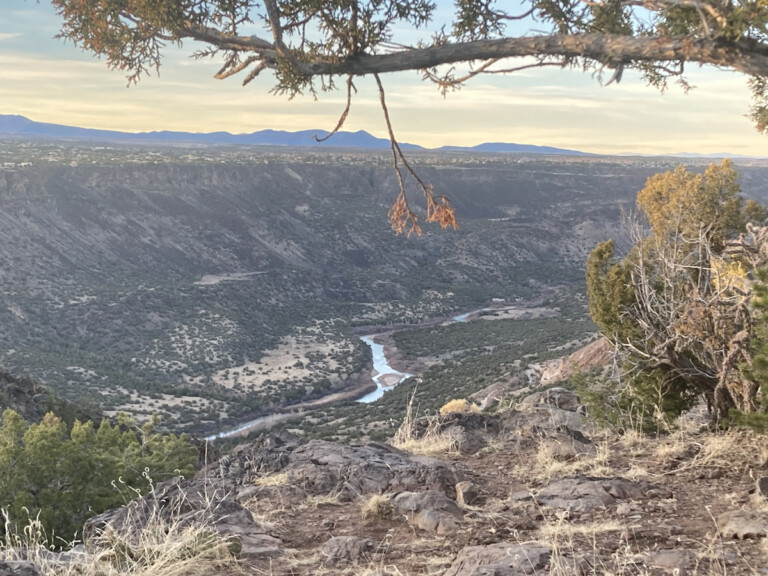
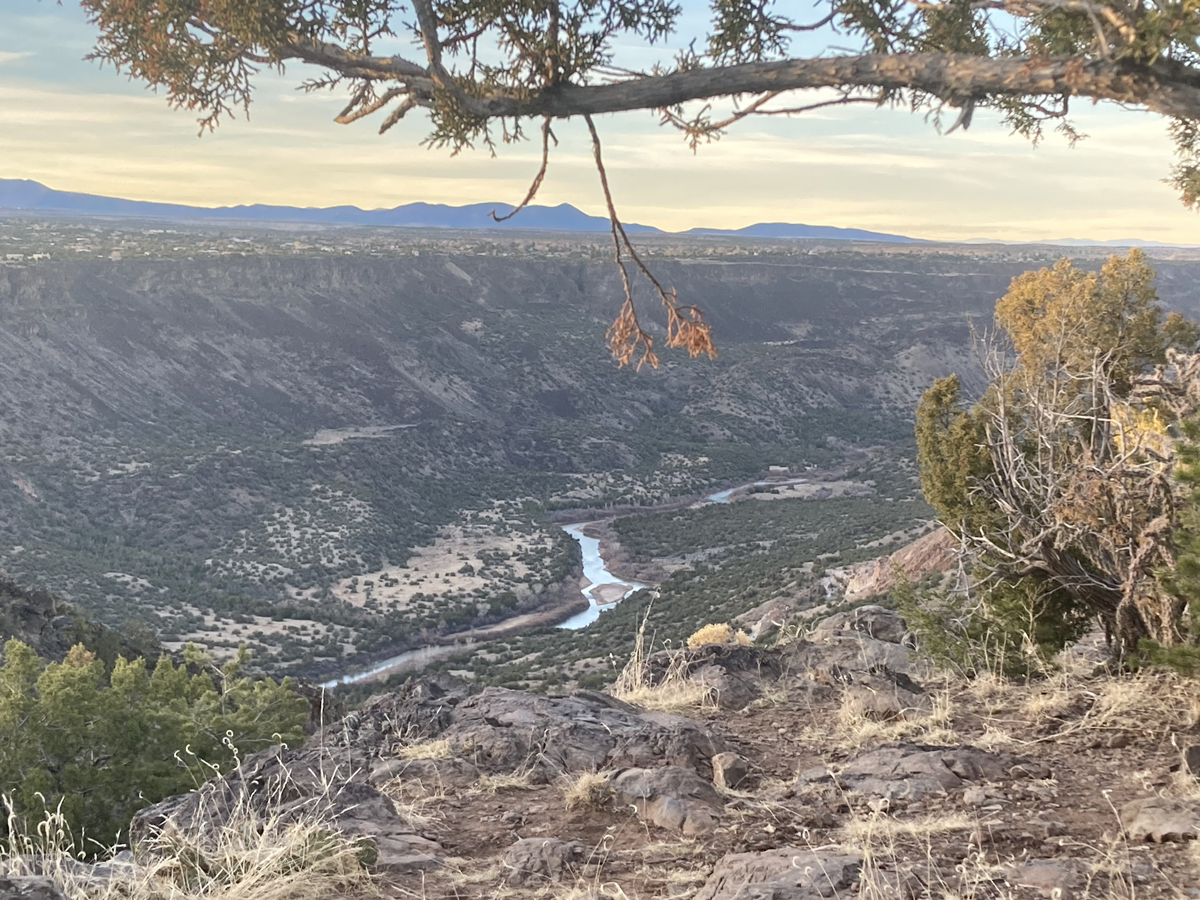
View from camp. Bikepacking New Mexico’s Caja del Rio. Photo by Don Scheese
The terrain is rocky, full of lava-strewn igneous chunks the result of volcanic activity over a million years ago. Atop this volcanic soil grow blue grama and sacaton grasses, sagebrush, prickly pear, staghorn cholla, banana yucca, and pinyon-juniper forest. The only reliable water sources are the river far below and scattered wells dug by ranchers to keep their cattle alive.
For thousands of years indigenous peoples lived on and visited this plateau, evidenced by scattered remains of habitation sites and petroglyphs carved onto the faces of the basalt rocks. The nearby Puebloan tribes still consider this land sacred and part of their homeland. In Euroamerican times the Caja was sliced by the El Camino Real, or the “Royal Road,” the connecting route from Mexico City to Santa Fe, a 1600-mile supply road dating back to the 1600s following Spanish conquest and colonization of the territory. Centuries of grazing and over-grazing by Spanish and then Anglo-American ranchers followed. Today the Caja is managed as a unit of the Santa Fe National Forest, and ranching remains a main use. More recently, however, recreation is flourishing, with hiking, biking, and horseback riding growing in popularity as the Caja becomes better known. Unfortunately, abuses like illegal dumping and target shooting have been longstanding practices as well.
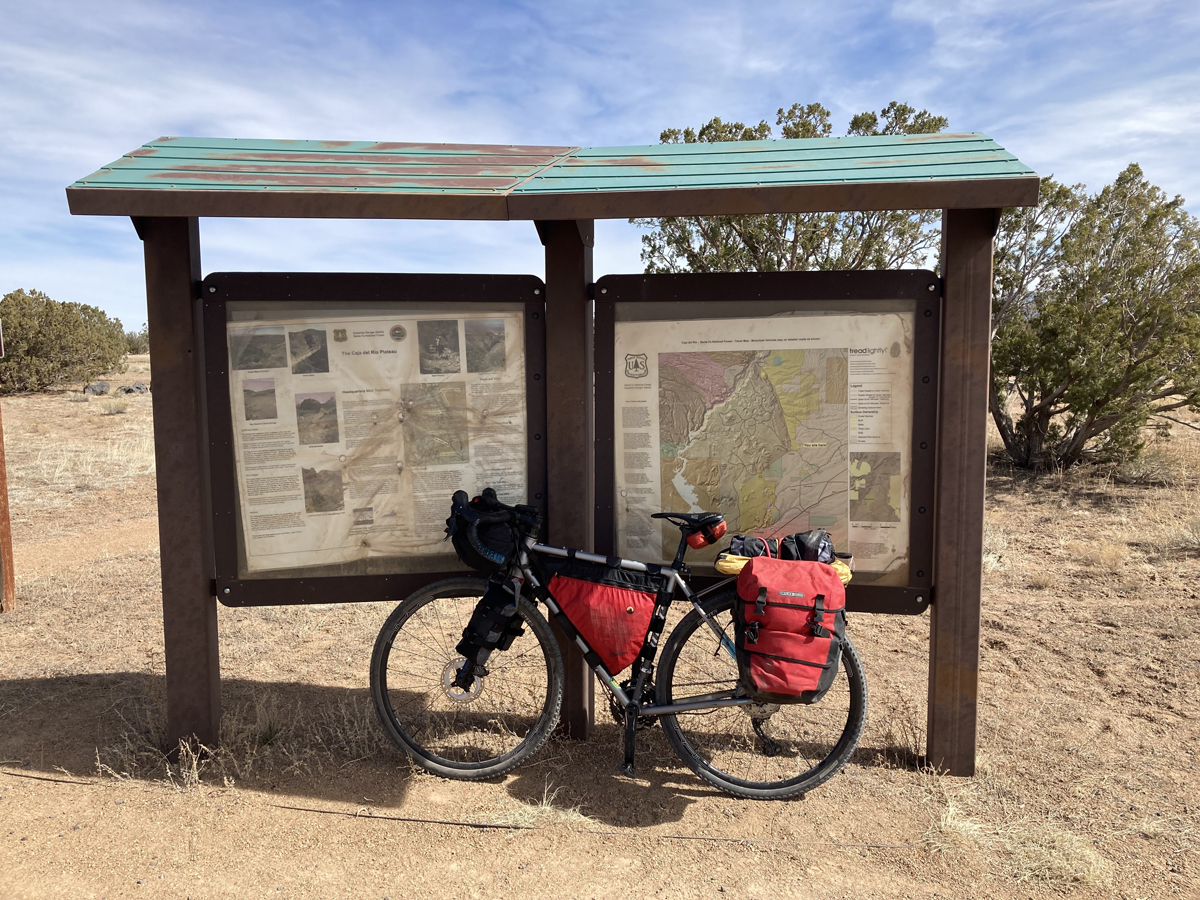
The trailhead. Bikepacking New Mexico’s Caja del Rio. Photo by Don Scheese
I’d started my bikepacking trip the day before around noon from HQ Well, a main trailhead on the Caja. Carrying around 30 pounds on my trusty steel Niner RLT, including 6 liters of water, I anticipated a challenging but not overly taxing adventure. There are no steep long climbs on the plateau, the main challenges being the occasionally rutted, sandy, rocky stretches across rolling terrain interrupted by shallow arroyo crossings. The first six miles took me through a P-J forest with spur roads leading to and around nearby summits like Twin Hills, Ortiz Mountain, and Montoso Peak, all modest rises in the topography. On the northeast horizon soared the snow-capped Sangre de Christos, representing the southernmost reaches of the Rocky Mountains.
Montoso Peak. Bikepacking New Mexico’s Caja del Rio. Photo by Don Scheese
I managed to maintain my momentum grinding down to lower gears on the short punchy rises, while enjoying the freewheeling if short descents and the not-frequent-enough stretches of champagne gravel, always on the lookout for the best line amidst the ruts, sand traps, and soft spots of the road’s crest.
At mile six I turned off the main artery onto a spur road heading due north, across Chino Mesa. Here the road surface worsened to deeper ruts and softer crests, slowing me down even further. No matter: I had plenty of time to reach my intended destination of a camp on the edge of the gorge, silently chanting my mantra, “It’s not how far you travel, it’s how much you enjoy the ride and the experience.” I came to several chunky sections across more arroyos, and ever the cautious older solo rider, chose to hike-a-bike these sections—why risk a cracked rim, popped spoke, and/or broken bones for the cheap short thrill of bombing across the rocks? Gradually the gradient decreased, and I could cruise leisurely on a long flat plateau extending to the edge of the gorge, a nice finish to the day’s ride.
A typical road. Bikepacking New Mexico’s Caja del Rio. Photo by Don Scheese
At road’s end, I stopped, stunned by both the views and the silence. I had not met a single vehicle or another person since leaving the trailhead. Now the only sounds were the wind through the trees and the occasional chirp of a bird. I thought: this is exactly why I came here, why I took the time and effort to reach this point.
To the west lay the burnt-over country of the Jemez Mountains, in the foreground glimpses of the city of Los Alamos, home to the national laboratory where the atomic bomb was developed. Along the western edge of the escarpment was White Rock Canyon, named for the soft volcanic tuff in which Ancestral Puebloans carved out cavates, or cave dwellings, in nearby Bandelier National Monument. Immediately below, 1000 feet below, lay the Rio Grande, its waters backed up by Cochiti Dam some ten miles downstream. There was some evidence of civilization, admittedly…but given the quietude, I experienced the illusion, if not the total reality, of wild country.
A fire ring with a pile of readily placed firewood lay nearby. There was enough space for me to set up my 1-person tent, small kitchen, and Helinox chair to take in the surrounding views, sheltered by scattered junipers. It was a good site.
For the rest of the afternoon and into the early evening I did nothing but take in the views and contemplate the eternal question: Why was I here? Truthfully, I was in something of a funk—the recent unexpected death of a beloved family member, toxic politics, the totalitarian and oligarchical directions this country is headed towards, had had me in a melancholy mood for days if not weeks. So, I came here, like Abbey, to escape….to discover my own Cape Solitude….
“Each time I come here; I wonder why I ever go back. Every time I go anywhere out in the desert or mountains, I wonder why I should return. Someday I won’t.” (Abbey, “Cape Solitude”)
The Caja is not wilderness per se, but it is wild country. Granted, there are obvious signs of civilization. There are numerous roads (disqualifying the area for wilderness designation). A towering power line transects the northern part of the plateau. There are scattered cattle tanks, corrals, and wells strung about the landscape. A far greater threat to the area’s wildness is the plan to build yet another power line, from Los Alamos across the river to Santa Fe. Proposed by the Los Alamos National Lab (LANL), it would extend for 14 miles and connect to the existing power grid; the LANL claims it needs an additional power supply for its operations. As part of the power line a new highway, connecting the west side of the river to the eastern side, is also being proposed, which would require the highest bridge in New Mexico to be built. Because the project runs across federal lands, an environmental impact statement is required, to be conducted by the U.S. Forest Service. Both the New Mexico Wilderness Alliance and a group recently formed to protect the area from such further incursions, the Caja del Rio Coalition, have vehemently opposed this new project, along with some one hundred organizations and individuals.
Members of the New Mexico Congressional delegation drew up legislation to declare the Caja a national monument, but, for whatever reasons, the bill was never signed into law in the waning days of the Biden administration. As a result, the Caja remains a severely threatened landscape.
Such thoughts were not helpful in easing me out of my funk….
“All my life a loner, an outsider, a barbarian from the steppes, the wolf on the snow-covered hill looking down at the lights of the village, I think I’ve never been accepted by my fellow men, fellow women, never been a bona fide member of the club. And looking back at the human race, feeling I never belonged, my first thought, right now, is—thanks God. Or Whatever.” (Abbey, “Cape Solitude”)
Occasional sips of whiskey helped to improve my attitude the rest of the afternoon. After all, I thought, I’m not here to solve the world’s problems, I’m here to escape them, If only momentarily. And to be reminded of the virtues and benefits of the Simple Life and (as the saying goes) Getting Back to Nature.
Does the Caja del Rio deserve further protection as a national monument? An interesting question. The Antiquities Act, passed by Congress and signed into law by President Teddy Roosevelt back in 1906, gives the president sole authority “to declare by public proclamation historic landmarks, historic and prehistoric structures, and other objects of historic or scientific interest that are situated upon the lands owned or controlled by the Government of the United States to be national monuments….” Roosevelt then wasted no time the next three years of his presidency by setting aside 18 new national monuments. Many of them, like Montezuma Castle in Arizona, Chaco Canyon, and Gila Cliff Dwellings in New Mexico, were clearly preserved for their archeological and historic value. Others, like Devils Tower in Wyoming, Petrified Forest in Arizona, and Muir Woods in California, had obvious scientific—i.e., geological or ecological—value. Since Roosevelt’s time, many other presidents have created more national monuments, often in the last hours of their administration, much to the delight of environmental organizations, and much to the anger of some local residents opposed to “locking up” valuable natural resources like timber, minerals, and grazing rights. The continuing brouhaha over Bears Ears National Monument in southern Utah epitomizes the conflict over preservation versus exploitation. Two states—Alaska and Wyoming—have recently passed laws prohibiting the creation of national monuments unless they are enacted by Congress, not the President.
To get back to the question at hand: does the Caja del Rio deserve to be set aside as a national monument? It has some archaeological value given the evidence of ancient residences and rock art but compared to the spectacular ruins of Chaco and other Ancestral Puebloan sites set aside as national monuments, clearly does not measure up to the standards established by the Antiquities Act. As for “scientific value,” the volcanic landscape of the Caja possesses some geologic value, but it’s hard to make the case that it is as visually impressive as national monuments like Devil’s Tower, Petrified Forest, or Mount Olympus (now Olympic National Forest).
The gorge of the Rio Grande on the western edge of the plateau does, I would argue, represent sublime scenery, but the Antiquities Act does not specifically mention aesthetic values of nature as a criterion for preservation. The gorge itself is an example of geologic value, which I think renders the Caja at least worthy of consideration as a national monument. Maybe the best case for stronger preservation than simply national forest land lies in the idea of the Caja as an island of solitude and serenity within close proximity to a metropolitan area of well over 1 million people (if you include Albuquerque, just 30 miles south). Solitude and serenity, though not explicitly stated as criteria for national monument status in the Antiquities Act, should be included as such. After all, wild lands comprise only about 4-5% of the total US land mass.
National monument or not, the Caja represents a local retreat from the stresses and tribulations of what Abbey called “syphilization.” It is said that Time heals all wounds. So does solitude in nature, if only temporarily. So, I spent the rest of the twilight taking in the sensory pleasures of the natural world. Like the passing of time, the seamless transition from dusk to darkness…the ephemeral beauty of a spectacular sunset… the phenomenon of alpenglow on the distant peaks of the Sangre de Christos… the appearance of the first star…the lights of Los Alamos glowing across the canyon like the embers of a dying campfire…the incessant insistent calls of a couple of common poorwills…the appearance of the Big Dipper, standing on its handle, in the dark night sky….
Don Scheese, Bikepacking New Mexico’s Caja del Rio. Photo by Don Scheese
The ride back was uneventful. I returned to the vehicle, refreshed and ready to face the human world, and its myriad problems, once again.
“As any honest magician knows, true magic inheres in the ordinary, the commonplace, the everyday, the mystery of the obvious. Only petty minds and trivial souls yearn for supernatural events, incapable of perceiving that everything—everything!—within and around them is pure miracle.” (Abbey, “Cape Solitude”)
The Audi Denver Littleton Twilight Criterium transforms downtown streets into Colorado’s premier after-dark battleground this August
On August 2, Downtown Littleton becomes the epicenter of Colorado cycling as the Audi Denver Littleton Twilight Criterium returns for its 12th edition. What started as a local race has evolved into one of the state’s marquee cycling events, drawing national-level talent to a tight 0.8-mile circuit through historic downtown streets.
The event’s signature twilight-to-darkness progression creates pure cycling theater. Racing begins in afternoon sunshine, building intensity as the lights come on and elite men’s and women’s fields take center stage for primetime showdowns under the glow.
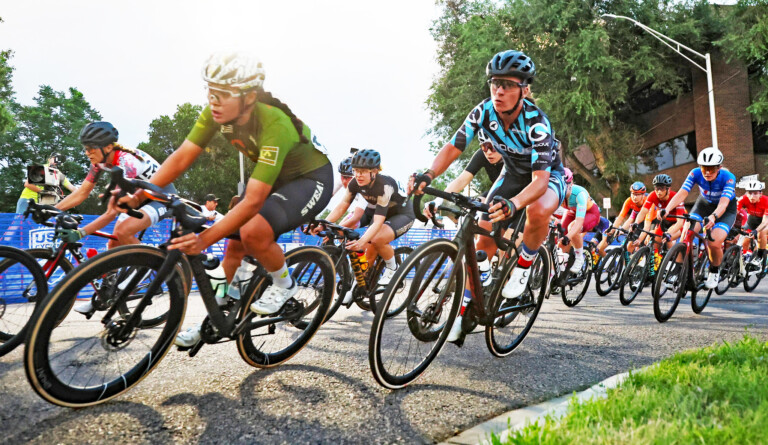
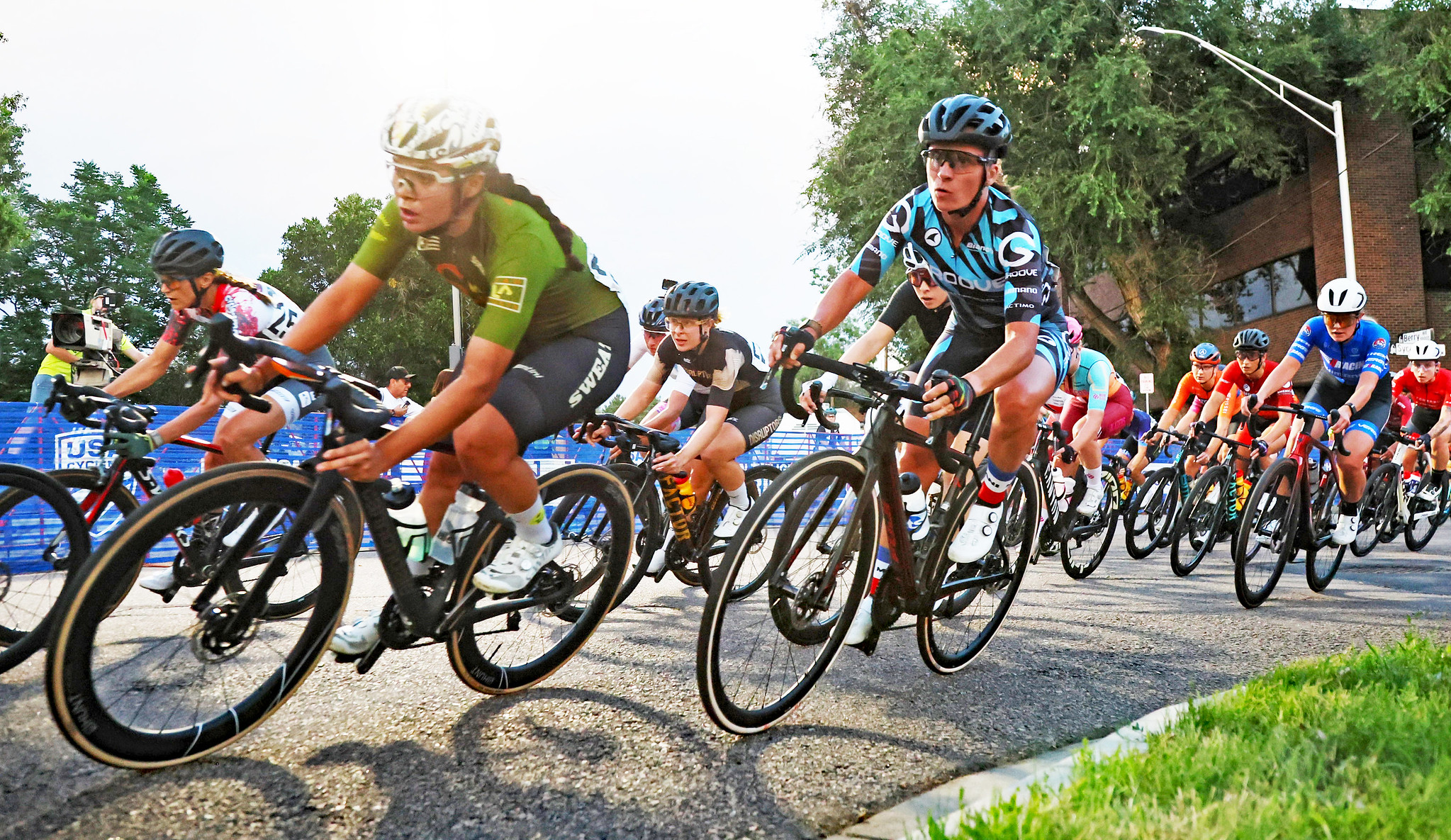
Scenes from the Women’s Pro race at the 2024 Littleton Twilight Criterium. Photo courtesy of Littleton Twilight Criterium
“This event has grown into one of the premier criteriums in Colorado,” says Alexandra Vander Pol, Littleton’s event manager. “It’s everything you want in a crit: fast laps, full crowds, and a festival atmosphere that celebrates cycling at every level.”
The technical 0.8-mile course demands complete focus, with quick turns and demanding corners where gaps open and pelotons splinter. Spectators line the barriers just feet from the action, creating an electric race-day atmosphere.
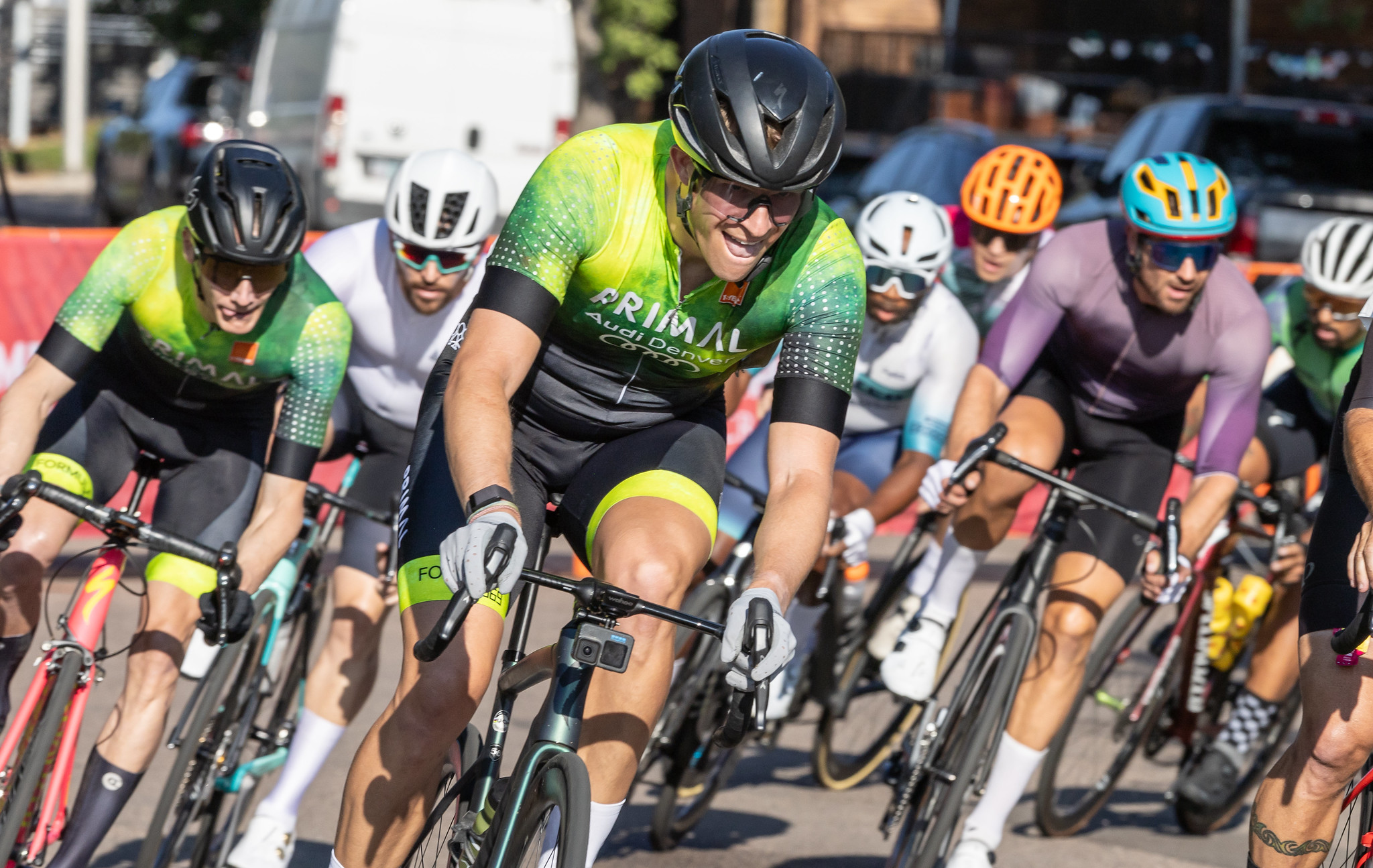
Scenes from the Men’s Pro race at the 2024 Littleton Twilight Criterium. Photo courtesy of Littleton Twilight Criterium
Racing for Everyone
Beyond the elite spotlight, the event offers a full day of racing spanning juniors to masters categories. New for 2025 is the Unified Ride, an adaptive and inclusive wave focused on accessibility and community participation. Fan favorites like the Family Cruiser Ride and skills zones for young riders return, transforming the event into a true cycling celebration.
Festival Meets Racing
The Twilight Criterium extends beyond pure racing into a community celebration. This year debuts the Littleton Arts Festival, featuring local artists, music, food trucks, and beer tents alongside the cycling action. With thousands of fans expected to line the barriers, it creates one of the highest-energy cycling environments in the region.
Audi Denver’s continued title sponsorship elevates the event’s production and racer experience. “The Twilight Criterium is a perfect expression of precision, power, and performance,” says Steve Powers, VP of Operations for McDonald Automotive. “It’s one of the few events where world-class racing meets a true festival experience.”
When the lights come on August 2, Downtown Littleton proves that some of cycling’s best theater happens right in our backyard.
All 21 Stages of Tour de France July 5-27 Live Across Peacock with Select Coverage on NBC
Peacock to Stream Daily Tour de France Pre-Race Shows. Production Elements Include Interactive Stage Maps, GPS Race Tracking, & More
THEMOVE, Live Post-Race Show Hosted by Lance Armstrong Offering Incisive Perspective on Tour de France and Cycling on Peacock Following Each Stage
STAMFORD, Connecticut (June 30, 2025) – In the United States, NBC Sports will present three weeks of full live coverage of the 112th Tour de France streaming on Peacock beginning this Saturday, July 5, and concluding with the final stage on Sunday, July 27. NBC will also broadcast live and encore coverage of select stages.
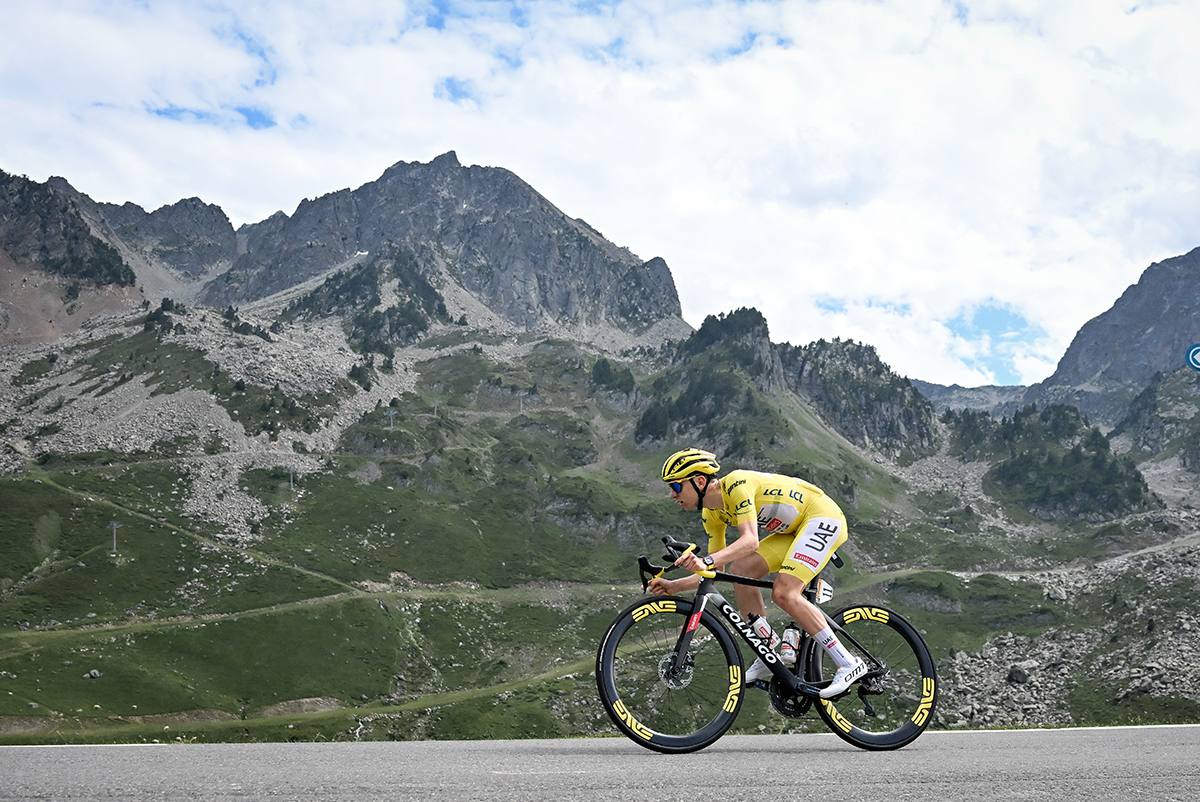
13/07/2024 – Tour de France 2024 – Étape 14 – Pau / Saint-Lary-Soulan Pla d’Adet (151,9 km) – POGACAR Tadej (UAE TEAM EMIRATES), Col du Tiourmalet. Photo Billy Ceusters/ASO
This year’s Grand Départ takes place from Lille-Nord de France, and the 2025 Tour de France marks this first time since 2020 that all 21 stages will occur domestically within France.
Daily live coverage of the Tour de France, featuring all 21 stages, begins this Saturday, July 5, at 6:30 a.m. ET on Peacock with Stage 1 beginning and ending in Lille Métropole. After finishing in Nice last year due to the 2024 Paris Olympics, the 2025 Tour de France will once again conclude in the French capital in Paris’ Champs-Élysées with the final stage on Sunday, July 27 at 9:30 a.m. ET on Peacock.
NBC will present live coverage of Stage 1 (Saturday, July 5) and Stage 20 (Saturday, July 26) at 8 a.m. ET, as well as encore coverage of Stage 15 (Sunday, July 20), the penultimate Stage 20 (Saturday, July 26), and the final Stage 21 (Sunday, July 27) at 2 p.m. ET.
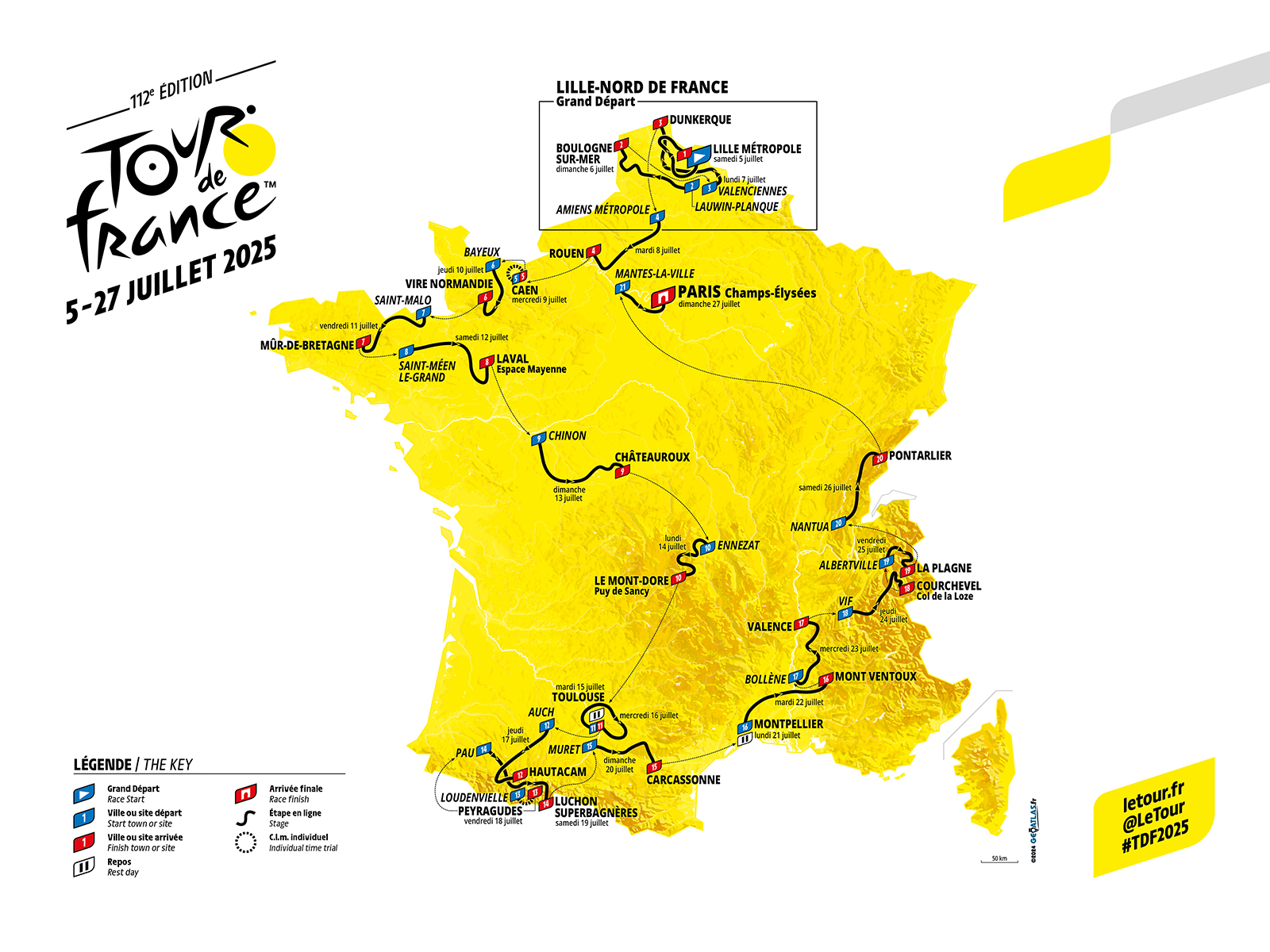
Tour de France 2025 Course:
Tour de France 2025 – Route Map.
Coverage throughout each day of the 21-stage event begins with the Tour de France Pre-Race Show on Peacock, followed by live race coverage.
Peacock will stream live start-to-finish coverage of every stage of the 2025 Tour de France, as well as full-stage replays, highlights, stage recaps, rider interviews, and more.
To sign-up and watch every minute of live action from the 2025 Tour de France, click here.
Following each stage, NBC Sports NOW will stream one-hour Daily Recaps, featuring highlights and daily special episodes of Tour de France: Beyond the Podium, providing analysis of the day’s stage and looking ahead to the next day’s live coverage on Peacock.
2025 Tour de France
The 2025 Tour de France will cover a total distance of approximately 2,075 miles, beginning in Lille and finishing 22 days later in Paris.
Expected yellow jersey frontrunners in this year’s field include three-time and defending champion Tadej Pogačar (UAE Team Emirates) of Slovenia and two-time champion Jonas Vingegaard (Team Visma | Lease a Bike) of Denmark. Pogačar (2024, 2021, 2020) and Vingegaard (2023, 2022) have combined to win the past five Tour de France titles. Contenders are also expected to include Remco Evenepoel (Soudal Quick-Step) of Belgium, Primož Roglič (Red Bull BORA – hansgrohe) of Slovenia, and João Almeida(UAE Team Emirates XRG) of Portugal, among others.
Green jersey contenders expected to compete include Jasper Philipsen (Alpecin-Deceuninck) of Belgium, who has won nine individual stages since 2022, 2024 green jersey winner Biniam Girmay (Intermarché–Wanty) of Eritrea, and nine-time Tour de France stage winner Wout van Aert (Team Visma | Lease a Bike) of Belgium.
Americans expected to participate in this year’s Tour de France include Matteo Jorgenson, who has won back-to-back Paris-Nice titles, and Sepp Kuss of Team Visma | Lease a Bike, and Neilson Powless of EF Education-EasyPost, who recently won the GP Gippingen in Switzerland.
Commentators
NBC Sports’ cycling play-by-play caller Phil Liggett, universally known as the ‘voice of cycling,’ will cover his 53rd Tour de France alongside analyst Bob Roll. Liggett and Roll will be on-site at each stage, along with reporters Steve Porino and former professional cyclist Christian Vande Velde.
Paul Burmeister will host daily pre-race and post-race studio coverage alongside analysts Brent Bookwalter and Tejay van Garderen.
Production Highlights
NBC Sports will integrate several features into its coverage of this year’s Tour de France:
‘Team Radio’ Audio: NBC Sports will present select ‘Team Radio’ audio, playing clips of the communication between team directors and riders throughout the race
NBC Sports will utilize a cutting edge “Virtual” graphics Telestrator, which debuted throughout the 2019 Tour de France and produces augmented reality cyclist graphics for the commentators to move and analyze
Interactive maps that track rider locations in real time along the route and highlight the stage terrain profile
Vande Velde will have a camera focused on him as he reports to offer real-time updates on race situations, while traveling aboard a motorcycle on the course
Real-time data of course gradients and the riders’ speeds
NBC Sports’ coverage will include real-time speeds of both the leaders and the peloton, and additional maps that show more detailed versions of the finishes and each mountain climb.
Coverage will also utilize several production enhancements and updated graphic elements, including a pointer feature to easily identify and focus on one rider in the peloton, and exclusive profiles on teams and riders.
THEMOVE on Peacock
THEMOVE, a post-race show offering an incisive perspective on the Tour de France and cycling hosted by Lance Armstrong and George Hincapie, will be available live on Peacock following each stage of the 112th Tour de France.
NBC Sports Cycling Social Media
Fans can keep up with the Tour de France through NBC Sports’ social media platforms throughout the race, including, interviews, video clips, up-to-date news reports and stories from around the cycling world via @NBCSCycling on X and the NBC Sports CyclingFacebook page. In addition, fans can visit NBCSports.com/cycling for a live stream schedule, stage maps, results, routes and more.
NBC Sports’ 2025 Tour de France Schedule
(subject to change, all times ET)***All live coverage on NBC is also available on the NBC Sports app:
Yasmin, a cycling fan from Denmark, created this overview and watch guide to the 2025 Tour de France, complete with a watch score. Follow her on Twitter (X) – @CyclingYazz or Instagram at @cycling.yazz
A brief overview and watch score for each stage of the 2025 Tour de France. Art by Yasmin @cyclingyazz
She also created this list of stage start times (France time). In the United States, watch live on Peacock and on NBC (stages 1 and 20 only).
2025 Tour de France stage times by Yasmin, @cyclingyazz
Starting on July 1, people riding bicycles in New Mexico will be able to ride through stop signs without coming to a full stop, and stop at red traffic lights and continue even if the light hasn’t turned green — as long as it’s safe to do so.
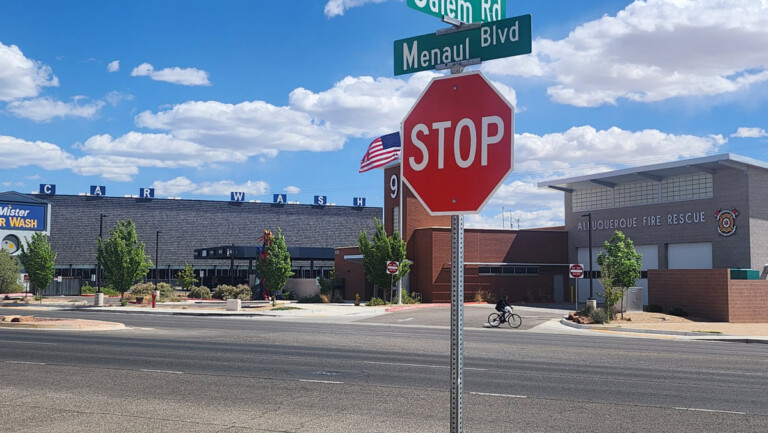
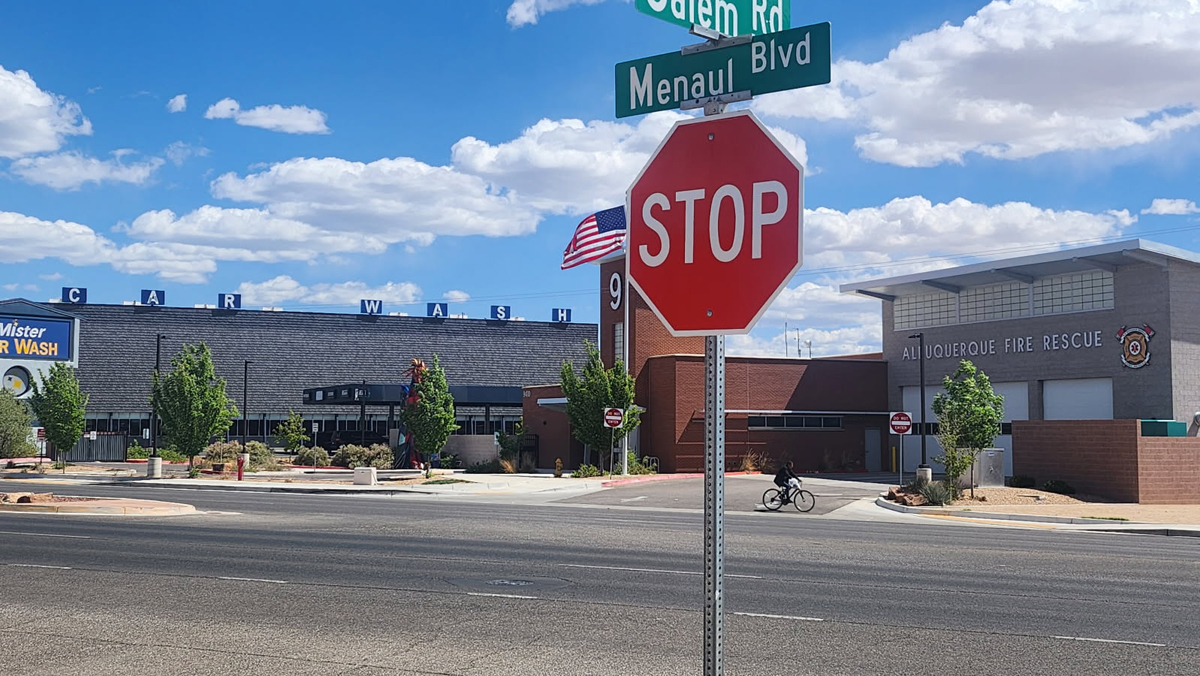
New Mexico is implementing the Idaho Stop Law starting July 1, 2025. This photo features the Albuquerque car wash from Breaking Bad. Photo by Mark Phillips
That’s according to a new state law Gov. Michelle Lujan Grisham signed on March 21.
Senate Bill 73 changes New Mexico’s traffic law to allow cyclists to treat stop signs as yield signs, and to treat red traffic lights as stop signs and proceed if there are no other cars, cyclists or pedestrians.
While it may seem counterintuitive to people who don’t use bicycles, this is already common practice among bicycle riders in New Mexico because a cyclist wants to carry their momentum on the bike, said Sen. Antoinette Sedillo Lopez, who carried the bill, during a hearing in the Senate Judiciary Committee.
Doing this gets the cyclist out of the blind spot of motorists who have stopped at an intersection, Sedillo Lopez told the committee.
Eric Biedermann, a board member at-large of nonprofit advocacy organization BikeABQ, told the committee being able to treat a stop sign as a yield sign and a traffic light as a stop sign enhances cyclist safety because it reduces their exposure to cars, increases their visibility to cars and reduces the risk of being “right hooked” if a car doesn’t see them or a “left cross” from oncoming traffic.
“There are a number of ways in which being able to proceed through an intersection with a head start before the cars move really enhances cyclist safety,” Biedermann told the committee. He was also speaking on behalf of Bike Santa Fe and Velo Cruces.
The so-called “Idaho stop” — taking its name from the first U.S. state to ease traffic laws for cyclists — resulted in a 14.5% reduction in cyclist injuries a year after the state of Idaho enacted a similar law in 1982, according to a review of Idaho Office of Highway Safety data.
In New Mexico, between 2019 and 2023, 1,457 cyclists had crashes, according to the University of New Mexico Geospatial and Population Studies Center. Of those, 39 were killed, 115 were seriously injured and 694 were able to walk away.
Lynn Pickard, a retired New Mexico Court of Appeals judge and member of Santa Fe Seniors on Bikes, told the committee data show that as many as half of collisions between cars and bikes happen within intersections.
“So anything we can do to get cyclists into and out of the intersections quickly — leaving of course, for us, to determine our own safety if there are other cars there or pedestrians there — would be really helpful for us,” she said.
Source New Mexico is part of States Newsroom, a nonprofit news network supported by grants and a coalition of donors as a 501c(3) public charity. Source New Mexico maintains editorial independence. Contact Editor Julia Goldberg for questions: [email protected].
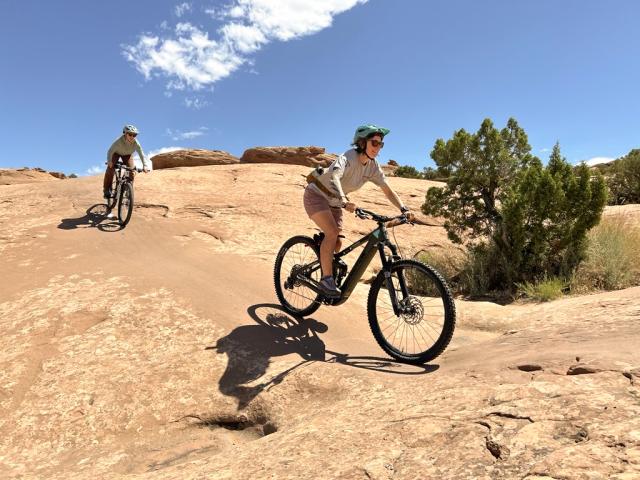
MOAB, Utah – Bureau of Land Management officials are considering the use of Class 1 (pedal assist) e-bikes on designated mountain bike trails within the Moab Field Office. They are inviting input from the public. The 30-day public comment period will begin today, June 30, and end July 30. Comments may be submitted on ePlanning by clicking the green Participate Now button.
Currently, Class 1 e-bikes are only permitted on 1.4 miles of trail, out of 216 miles of mountain bike trails managed by the field office. Otherwise, e-bikes are only authorized on routes designated for motorized use, such as the Slickrock National Recreation Trail.
E-biker and mountain biker on the Slickrock Trail in Moab, UT
The intent of the environmental assessment is to determine what, if any, impacts allowing Class 1 e-bike use would have on existing designated mountain bike trails and other resources.
The most useful comments present new information relevant to the analysis, suggest additional reasonable alternatives, and/or question the accuracy of the existing alternatives and analysis.
Alternatives and additional information on the potential addition of e-bike usage on mountain bike trails within the Moab Field Office are available on the e-Planning website.
Utah Sen. Mike Lee withdraws a plan that could have auctioned more than a million acres.
by Angus M. Thuermer Jr., WyoFile.com (June 28, 2025) — Utah Sen. Mike Lee withdrew his land-sale provision from the Senate reconciliation budget bill Saturday evening.
“I was unable to secure clear, enforceable safeguards to guarantee that these lands would be sold only to American families – not to China, not to Blackrock, and not to any foreign interest,” Lee posted on X. “For that reason, I’ve made the decision to withdraw the federal land sales provision from the bill.”
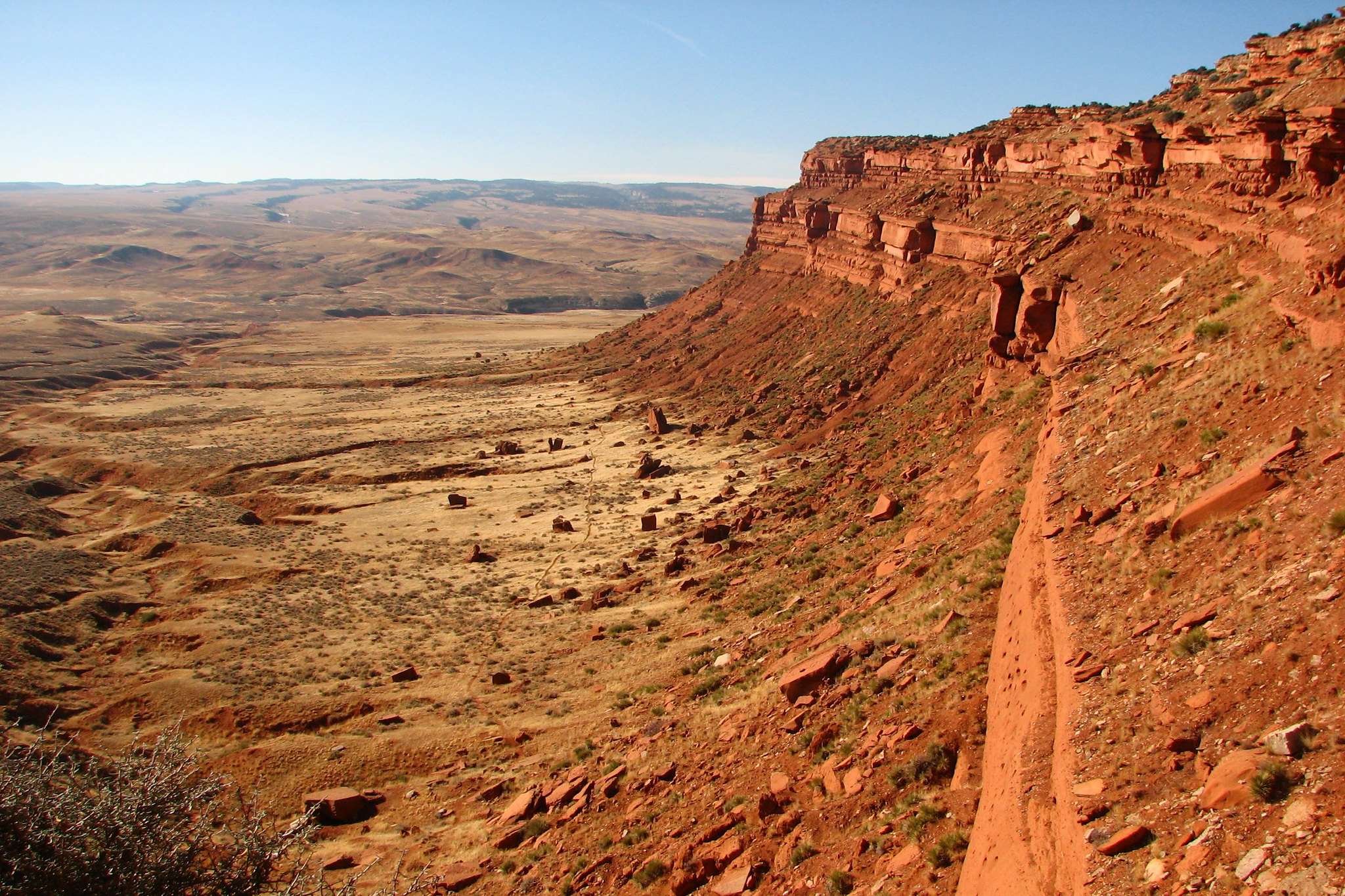
Wyoming’s public lands, like the BLM-managed Hole-in-the-Wall (a favorite hiding place for the infamous Butch Cassidy and the Wild Bunch Gang) are safe … for now. BLM Photo, (CC BY 2.0 Deed; Attribution 2.0 Generic)
The Republican had sought to require the sale of Bureau of Land Management property — owned by all Americans — to help Western communities resolve affordable housing worries. Critics said existing laws allow such sales and that the measure violated a core western value — public access to public land.
“Total faceplant.” —Land Tawney
More than one million acres of public land were at stake. The provision required the government to auction the property rapidly and with curtailed public involvement.
Conservationists, hunters and anglers and outdoor recreation businesses erupted in virtual applause after Lee conceded. Opposition across the West stirred thousands to rally in support of continued ownership of and access to their publicly owned property.
“Public lands are the cornerstone of our conservation legacy,” Chris Wood, president and CEO of Trout Unlimited said in a statement heralding the provision’s demise.
Others were less reserved.
“Total faceplant,” wrote Land Tawney, co-chair of American Hunters & Anglers.
“He rewrote his scheme multiple times,” Tawney said of Lee. “And tonight? He yanked his own language from the bill,” Tawney wrote in a statement.
A coalition of outdoor businesses that claims to be part of a $1.2 trillion recreation economy said the budget reconciliation process “was the wrong vehicle for deciding the fate of America’s public lands.
“Selling off public lands in this way was not just out of touch with public sentiment,” the Outdoor Recreation Roundtable coalition said, “it could have impacted businesses, jobs, public health, and the many rural communities that depend on access to outdoor recreation for economic development and quality of life.”
WyoFile is an independent nonprofit news organization focused on Wyoming people, places and policy.
By Dave Campbell — It was mid-June of 1988, and I had just taken the last final of my freshman year at the University of Oregon and was strolling through the Student Union. My mind was on the packing I still had to do back in my dorm room before heading back to Wyoming when I ran into my U of O cycling club teammate Michael Keep. His face lit up when he saw me with that manic passion for bike racing that we shared.
“Have you heard?” he asked. “Andy Hampsten just won the Giro!” he exclaimed. Mike was always flush with the latest news on cycling because unlike me, he had a subscription to VeloNews, as well as friends at the Olympic Training Center in Colorado Springs. I had not heard and was absolutely thrilled and craving details.
“I guess it was just a classic Giro victory, and he took the lead through horrible snowy conditions in the mountains that were totally epic!” he continued. “And then his 7-Eleven team had to defend his lead and they did it! Can you believe it?”
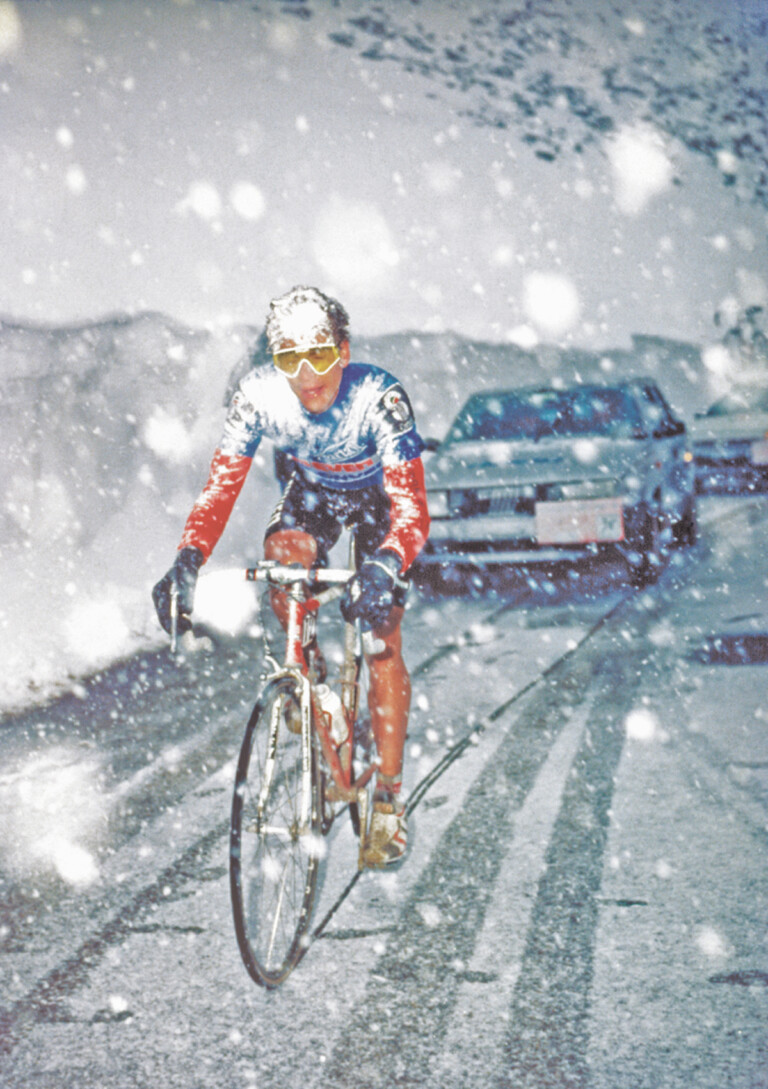
Andy Hampsten in the snow on Gavia Pass in the 1988 Giro d’Italia. Photo by Sergio Penazzo
Given that Greg Lemond became America’s first Tour de France winner in 1986 and his young teammate Hampsten was fourth, I could believe it, but what an incredible and historic accomplishment. Hampsten left Lemond’s French team the year before, which many felt was “the best in the world” to return as leader of the fledgling American 7-Eleven squad, giving additional significance to the victory…he won with an American team!
“We” Americans had come so far in such a short period of time. George Mount, after all, was the first to ride a Grand Tour, taking on the Giro in 1981, followed by Jonathan Boyer tackling the Tour later the same year and we hadn’t gotten a rider on a Grand Tour podium until Lemond was third in the 1984 Tour, the same year an American team (Gianni Motta-Linea MD) first contested the Giro.
When the 7-Eleven team first tackled the Giro d’Italia in 1985, it was their first attempt at a Grand Tour, and they were seen as a bit of a novelty… “the criterium boys go to Europe”. Their goals were modest: win a stage and place a rider in the top twenty overall. They accomplished both goals, first with Ron Kiefel winning into Perugia and then struck again with Hampsten (on loan from the Levi’s-Raleigh team) claiming victory atop Gran Paradiso and squeaking into twentieth overall. They rode the Tour de France in 1986 and 1987 and when they returned to the Giro in 1988, their goals and capacity had risen significantly.
From the late-1970s through the mid-1880s the Giro routes had been a bit anemic. The Italian stars of the era, Beppe Saronni and Francesco Moser struggled in the high mountains but shone in time trials and sprints. As such, race director Vincenzo Torriani designed courses to best suit them, with minimal mountains and few summit finishes. By 1988, however, Moser had retired and Saronni was well past his prime and racing as Del Tongo’s road captain.
The 71st Giro was the most difficult in years, featuring seven mountain stages, five summit finishes, and a mountain time trial over its 3579 kilometers. On Italian television prior to the start the twenty teams of nine riders each were presented, and the leaders were asked who they thought would win with all deflecting the pressure to other riders. Italian Franco Chioccioli of Del Tongo was a favorite as was Swiss Urs Zimmerman, Frenchman Jean-Francois Bernard of Toshiba-Look, Spaniard Pedro Delgado of Reynolds, and Dutchman Erik Breukink of Panasonic.
When the interviewer asked Raul Alcala of the 7-Eleven squad what he thought, he said “Oh, Andy is going to win!” bringing his bored teammates to their feet as they thrust out their arms and exclaimed “Yeah!”
The team had enjoyed an excellent spring with Hampsten winning a mountain stage at Paris-Nice, Kiefel placing third in Ghent-Wevelgem and winning the Giro di Toscana, and Bob Roll and Davis Phinney both winning stages of the Tour of Romandie, where Hampsten came fourth overall. Hampsten had trained especially hard that winter, at the urging of coach Mike Neel, who convinced him to train for up to eight hours solid in rugged weather to build a bigger foundation. Hampsten had taken this to heart, often doing long snowy hikes in the dead of the Colorado winter.
Having won the Tour de Suisse in 1986-87, Hampsten had chosen to focus on the Giro instead and studied the route meticulously. Italian cycling legend Gianni Motta, the 1966 Giro champion who had supported the first Americans in the Giro back in 1984, counseled him about the fearsome Passo Gavia which would feature in Stage fourteen. Motta noted the pass was last used by the Giro in 1960, the Italian riders didn’t know it, and they had no idea how hard it was. Starting at an elevation of 1258 meters, the Gavia rises to 2621 meters, over 8500 feet high, in just over 17 kilometers, at an average gradient of 7.9%. The road turns to dirt after 6 km and the steepest pitches occur shortly thereafter and peak at 16%. There was likely to be difficult weather there and the Giro, he assured Hampsten would be won and lost on the Gavia.
Hampsten was 13th in the opening time trial in Urbino, twenty seconds down on Bernard. His team was 9th in the Team Time Trial on Stage four in Vieste, conceding over a minute and a half to Chioccioli’s Del Tongo squad. The Italian would take the lead two days later with victory in the first summit finish to Campitello Matese, but Hampsten was second, just twelve seconds behind and moved into eighth overall, just over two minutes down.
The next big test came on the summit finish of the 205-kilometer stage twelve from Novara to Selvino. Hampsten attacked with three kilometers to go and won the stage solo. He joyously crossed the line eleven seconds clear of Delgado to move into fifth, now just 1:18 in arrears. He told Geoff Drake, who penned the definitive book “Team 7-Eleven” that “I just felt so good, I thought other people were playing a practical joke on me. I just rode away.”
As the Gavia stage approached and severe weather moved in, team director Jim Ochowicz raided the local ski shops for warm clothing for his riders. The 7-Eleven soigneurs coated the riders with lanolin as if they were preparing to swim the English Channel and prepared extra bags with warm clothes and tea for the summit, because the Gavia stage would finish not on the summit but rather in Bormio following a 25-kilometer descent. The rain was already turning into snow at the 9 a.m. start at 600 meters elevation so the riders knew when they climbed to 2600 meters the conditions would be brutal.
Dutch points leader Johan Van der Velde led an eight man break away over the Passo Tonale in heavy sleet while the race favorites waited for the final climb. As his teammates delivered him hot tea throughout the stage, Hampsten looked over his competitors and decided they were suffering more than he was. He thought many of them looked scared and as they approached the Gavia, he removed his raincoat, hat, and legwarmers and the team led him out for his big attack. On the advice of team doctor Max Testa, Hampsten punched it as soon as the road turned to dirt, marked by a stand of larch trees at a hairpin with 14 km to go, just as they entered the steepest section.
Riding within himself in a low gear of 39×25, knowing the race will be won on the descent, Hampsten’s first time-split is 47 seconds over Breukink. As the snowfall gets heavier, he takes a wool neck warmer and hat and when he brushes the snow off his head to pull on the cap, is shocked to feel a giant snowball roll down his back! Van de Velde hits the summit first but has very little warm clothing on, and according to Neel was “frozen like a statue” and will go on to lose over forty-five minutes on the descent. Hampsten, meanwhile, stops to put on a rain jacket and is caught by Breukink.
The dirt road beneath the slush actually provided the riders with good traction but visibility was almost zero and there is no lead car, no helicopter, no follow car, and no escort whatsoever. The riders just followed the tire tracks in the road and tried to make it down the mountain as best they could and just survive in the frigid conditions. At one point, Hampsten looked down at his legs, which were bright red, and his shins were covered with ice, and he decided he wouldn’t look down again.
As the snow turned to rain with seven km to go, Breukink accelerated away with Hampsten unable to respond. The Dutch rider would win the stage seven seconds clear, but the physically and emotionally exhausted American took the pink jersey with a 15 second cushion over his rival while Chioccioli was the next closest on GC at nearly four minutes down. Eight stages still remained but the Gavia had been decisive.
Continued snowfall shortened the following stage, and the riders climbed the Stelvio pass in team cars. Bernard, who lost nine minutes on the Gavia, won the abbreviated stage into the ski station at Merano 2000 and Hampsten put another 27 seconds into Breukink on the fifteen-kilometer-long finishing climb. All of the favorites finished together on Stages 16 and 17 with Hampsten’s next major challenge being the Stage 18 time trial, 18 kilometers from Levico Terme up to Vetriolo Terme. After six kilometers on flat city streets, the stage would climb nearly 1000 meters at an average of 8.4% through a dozen switchbacks. After calmly warming up on rollers listening to music, Hampsten pegged his heart rate at 180 beats per minute on the advice of Testa and laid waste to all comers. Leading at every check point, he won the stage by 32 seconds and increased his GC lead to 1:51 over Breukink and 5:10 on Zimmerman. It was the best time trial performance of his career, and he later said, “it hurt so much, it was almost like a meditation.”
Stage 19, a 233-kilometer slog through the Dolomites to Arta Terme was where it could have all come undone. Zimmerman attacked on the Passo Duran and crossed the summit nearly a minute clear, but Hampsten stayed alongside Breukink and didn’t worry. But when Italian Stefano Giuliani bridges across, the gap starts to really grow. Hampsten only has teammates Jeff Pierce and Bob Roll with him and Breukink is forcing him to chase as the gap grows to four minutes. Roll is dropped with only sixty kilometers remaining and Mike Neel makes the difficult call to wait for a chasing group behind that contains several more teammates, risking losing the race in order to win it. While Hampsten’s group soft pedals, “Slim Zim” moves seven minutes up and is now the leader on the road, while Breukink has effectively lost his GC spot as well.
Fortunately, the forty-rider group contains Slurpees riders Ron Kiefel, Dag-Otto Lauritzen, Raul Alcala, and Bob Roll who were ready to give everything for their team leader. Hampsten, meanwhile, convinces Breukink to commit his Panasonic teammates to the chase as well and slowly and with great effort, the gap comes down to just three minutes on the line and Hampsten’s Giro is saved.
Just two sprint stages and a 43-kilometer closing time trial in Vittorio Veneto remained for the 125 riders left of the 180 that set out. Hampsten has 1:49 on Zimmerman and 2:06 on Breukink, but the Dutchman is a ferocious time trialist on flat terrain. A thunderstorm rolls in during the stage and Hampsten wisely backs off on a slippery descent while Zimmerman, riding double discs in the gusty winds, takes risks and crashes heavily, ultimately conceding his second place on GC to Breukink. The Panasonic rider finishes fifth behind Polish chrono specialist Lech Piasecki but puts only 23 seconds into the pink-clad American, who finishes seventh on the day.
Following the awards ceremony, where Hampsten also won the combined jersey and King of the Mountains competition, the 7-Eleven squad piled into their team cars to drive three hours up the autostrada to Villa d’Alme, just outside Bergamo to celebrate. Why so far? They had reserved tables at the Bar Augusto, where team members Davis Phinney, Kiefel, Hampsten and others had regularly stayed during their amateur days while racing in Northern Italy with the US National Team.
The adopted Italian home of the American riders is filled with trophies and framed jerseys, including Fausto Coppi’s maglia rosa from his first Giro win in 1940. In the early 80s, the team was so proud when they finally brought their own small trophy from an amateur race back for the proprietor to put on the mantle and now, they had claimed the very biggest prize in Italian cycling. That night, amidst the popping of champagne corks, another pink jersey was proudly hung on the wall, with the signature of a proud American…Andy Hampsten!
Drake, Geoff with Ochowicz, Jim. (2011) Team 7-Eleven: How an Unsung Band of American cyclists took on the World and Won. Velopress.
Dreier, Frederick. (2024) Giro d’Italia Redux: The Amazing Story of Andy Hampsten’s 1988 Giro d’Italia Victory. VeloNews.com
Wilcockson, John. (2008) Hampsten and the 1988 Pink Jersey: Parts 1-4. VeloNews.com.
Dave Campbell was born and raised in Lander, Wyoming and now resides in Bend, Oregon. A retired High School Science and Health teacher, Dave won four Wyoming state cycling championships before moving to Oregon to attend the U of O in Eugene. While there, Dave was a collegiate All American and went on to win six Oregon State Cycling Championships as well as a Masters National Road Title on the Tandem. He started writing Trivia in 1992 for Oregon Cycling News and continued the column with the Northwest Bicycle Paper. Dave also writes cycling history at “Clips_and_Straps” on Instagram and announces at cycling events throughout Oregon.
OGDEN, Utah (June 24, 2025) – ENVE and UAE Team Emirates – XRG have announced a multi-year contract extension, continuing their partnership as the team’s official wheel and handlebar supplier.
ENVE’s first contract began in 2023 after UAE Team Emirates independently conducted in-house testing of the leading wheels on the market—both in the wind tunnel and on the road. ENVE came out on top in performance and rider preference. Since then, UAE Emirates has been ranked the #1 team in men’s professional cycling, with Tadej Pogačar holding the title of the world’s top-ranked male cyclist. In addition to topping the rankings, the team has claimed two overall Grand Tour victories, six Monuments, and a World Championship since the partnership began.
Tadej Pogačar, Photo courtesy of ENVE/UAE Team Emirates – XRG
Mauro Gianetti, Team Principal & CEO, said, “Our path to becoming the number one team in the world has been built on more than just having the best riders—it’s about assembling the right team, from staff to partners, and using the best equipment available. Since joining forces back in 2023, ENVE has proven to be a key partner for us, sharing our commitment to performance, innovation, and excellence.
We are proud to extend our partnership with ENVE as we continue to pursue victories at the highest level of the sport in the years to come.”
Isaac Del Toro at the 2025 Giro d’Italia, Photo courtesy of ENVE/UAE Team Emirates – XRG
ENVE equips UAE Team Emirates with its full range of SES road wheels—including the U.S.-made SES 2.3, 3.4, 4.5, and 6.7. Among these, the SES 4.5 has become the team’s go-to wheel in most race scenarios, thanks to its class-leading aerodynamic performance and rolling efficiency.
The collaboration also extends beyond race-day products. In 2023, ENVE and the team launched their first joint R&D project: the SES Aero Pro One-Piece Handlebar. Designed specifically for World Tour-level demands, the bar combines precise handling with optimized aerodynamics. Additional products developed with UAE Team Emirates will be commercially available later this season.
Tadej Pogačar during the 2025 Critérium du Dauphiné, Photo courtesy of ENVE/UAE Team Emirates – XRG
“Securing the original contract with UAE Team Emirates – XRG was a proud moment for the company,” said ENVE CEO Mike Stimola. “Being recognized as a leader in the industry and seeing our products win at the highest level is a testament to the strength of our engineering and manufacturing teams. But extending that contract—especially when every other wheel and component brand is competing for the same opportunity—demonstrates the depth of our partnership with the team and our ongoing commitment to innovation and making riders faster.”
As UAE Team Emirates – XRG prepare to defend their Tour de France title beginning July 5, ENVE will be there to support them with both road and time trial wheels, as well as road and time trial handlebars.
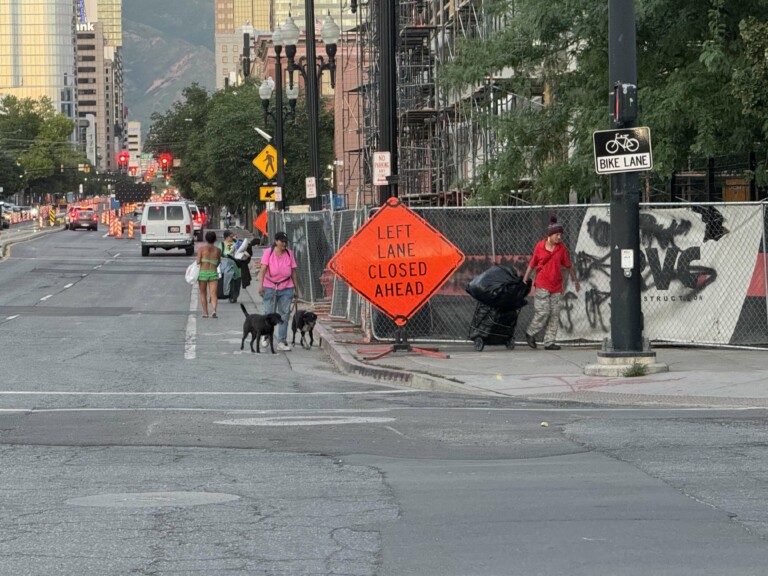
By James Knight — A new bill prohibiting drivers from blocking bike lanes passed the Utah Legislature and signed into law by Governor Spencer Cox on March 27, 2025. Bicycle Lane Safety Amendments (HB290) passed in the House of Representatives by a vote of 61-10 and the Senate by a vote of 16-8. The bill states that a motor vehicle may not drive in a bike lane, that motor vehicles must yield to bicyclists when crossing a bike lane and may not park or stop a car in a bike lane. It further states that highway authorities (transportation departments) may obstruct bike lanes but must provide an alternate route for bicyclists and minimize the impact on cyclists. Lastly, it clarifies the definition of a bike lane including that a bike lane does not include shared lanes intended for both motor vehicles and bicycles. The bill was sponsored by Rep. Verona Mauga. The bill will take effect on May 7, 2025.
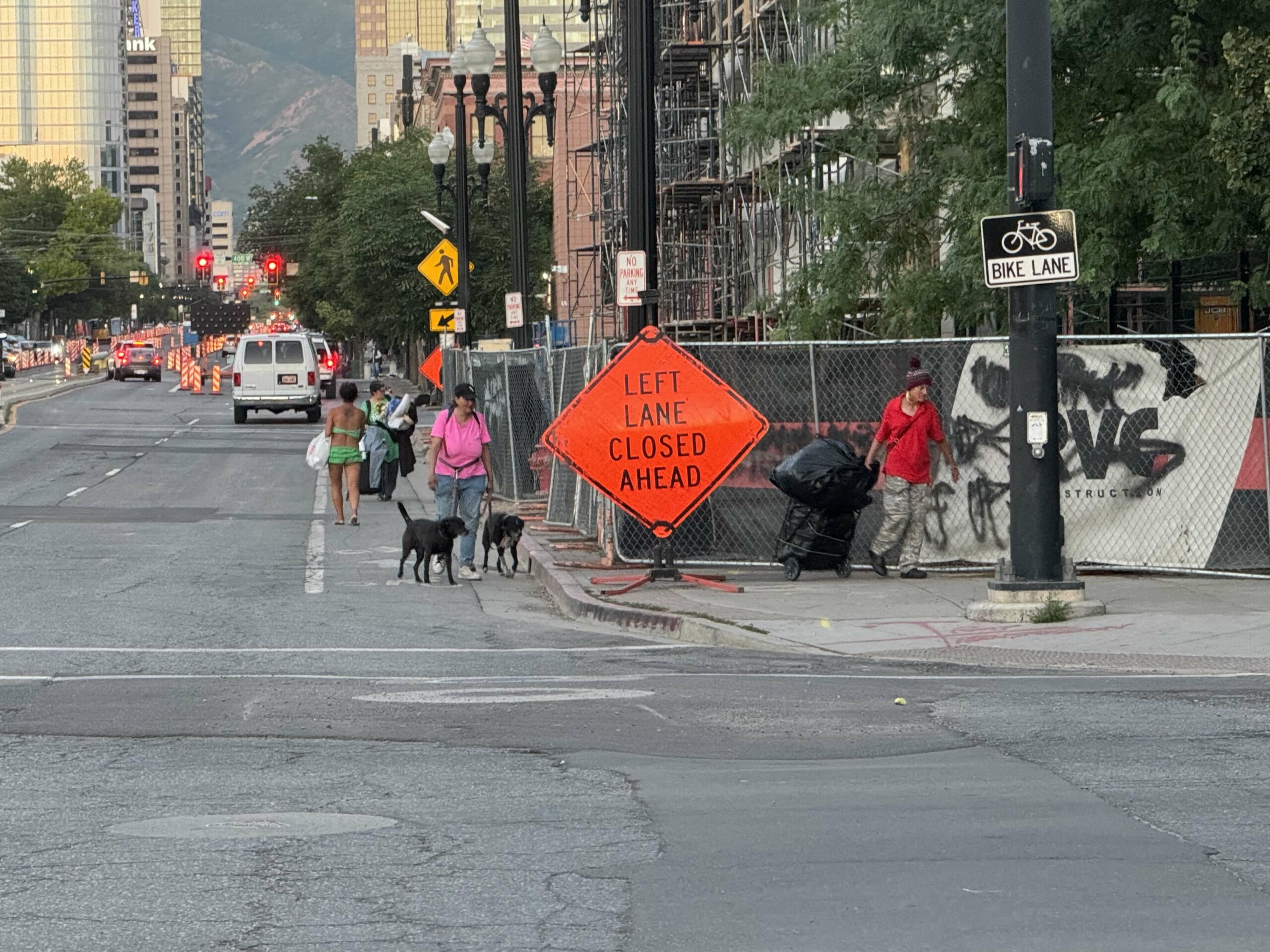
A 2025 Utah bill would prevent bike lanes from being obstructed like this one on 200 S in Salt Lake City. Photo by Dave Iltis
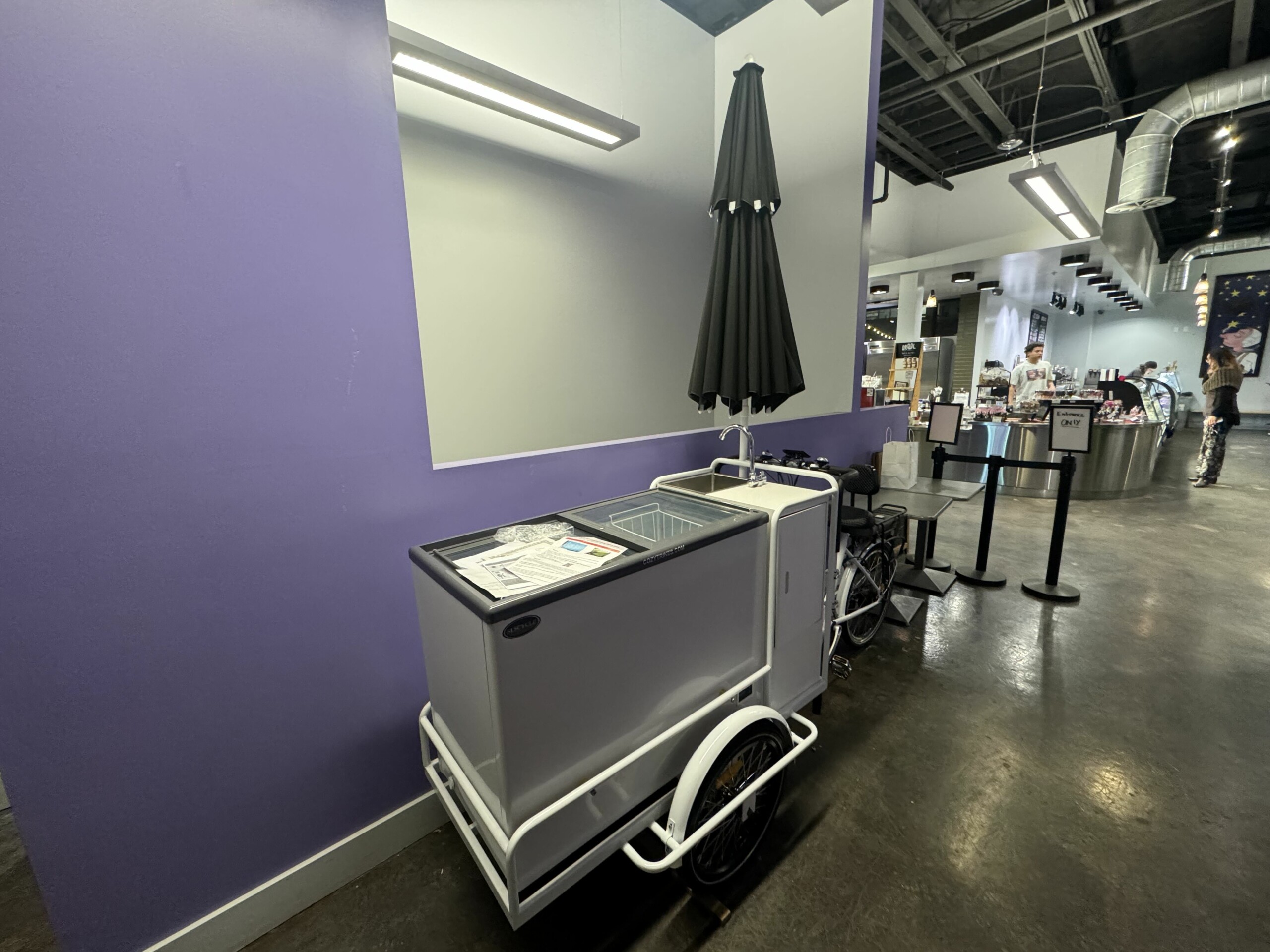
Another bill, Food Cart Amendments (HB134), was signed by Governor Cox on March 19, 2025, and will also take effect on May 7th. The bill changes the law so that a food cart can be moved with a class 1, 2, or 3 electric bicycle. Previously, motorized food carts were not allowed. Food carts, as opposed to food trucks, are mobile kitchens set up on the street to prepare and sell street food to passers-by.
A 2025 Utah legislative bill would allow this electric bike powered Ice Cream food cart to hit the road. Photo by Dave Iltis
Dave Iltis, editor of Cycling West, discussed his role in getting the bill passed. He said, “In 2024, when visiting Hatch’s Chocolates in Salt Lake City, I noticed that they had a brand-new electric bike powered ice cream cart. When I asked the owner about it, he said that they weren’t allowed to use it because Salt Lake City wouldn’t issue a permit because it had a motor.” This led to learning that the state law was the ultimate problem since it didn’t allow for motorized food carts. So, we worked with Rep. Jen Dailey-Provost to introduce the bill and get it passed. The next steps are to notify Salt Lake City when the law goes into effect and see if they will finally issue Hatch’s a permit. This is just one more step in promoting a non-polluting, bicycle-powered economy.”
For more information on these two bills, visit the official website of the Utah State Legislature at https://le.utah.gov/.
Hundreds of racers competed at Silver Mountain Resort, crowning 19 Enduro National Titles.
KELLOGG, Idaho (June 24, 2025) — The 2025 USA Cycling Enduro National Championships took place over the weekend on June 21-22 in partnership with the North American Enduro Cup. Over two days and seven stages of racing, riders battled through cold, wet conditions. The timed sections featured nearly 11,000 feet of descending, adding up to about an hour of intense racing at Silver Mountain Resort.
In the Men’s Pro/Open class, tough conditions led to several crashes and mechanicals, but Colton Peterson (Buena Vista, Colo.; Specialized) held strong to take the win by 26 seconds in a field of 37 riders. He claimed victory on three of the seven stages and laid down consistently fast times on Saturday to stay in contention throughout the weekend. Nik Nestoroff (San Marcos, Calif.; Ari Factory Racing) secured second place, posting some of his best runs on stages one, two, and seven. Tucker Shearer (Canaan, Conn.; Transition Bikes) rounded out the podium, finishing just 34 seconds behind the winner.
In the Women’s Pro/Open class, Amy Morrison (Carson City, Nev.; Transition Bikes), Kailey Skelton (Rancho Santa Margarita, Calif.; Ari Factory Racing), and Porsha Murdock (Bend, Ore.; Specialized) battled closely, trading seconds all the way to the final stage. Morrison clinched the win by just 15 seconds, taking two stage victories and finishing second in the rest of the stages. Skelton won three stages but lost crucial time on stages four and five. Murdock stayed consistent throughout, keeping both Morrison and Skelton within striking distance. In the end, Morrison secured the overall over Skelton, with Murdock just three seconds behind Skelton, taking third.
In the Pro/Open E-Bike categories, Max Beaupre (Sutton, Mass.; Ari Factory Racing) put down the fastest laps on every stage, totaling 45-minutes of intense racing. Kera Linn (Watsonville, Calif.; Cannondale) also had the perfect day, winning the Women’s E-Bike category. In the U17 E-Bike class, Jaxson Schmitz (East Lyme, Conn.; CCF Devo) took the win.
In the Junior Men’s categories, Hudson Nablo (Haddam Neck, Conn.; Stage1 Cycling) claimed the title in the 13-14 age group, while Jeru Gidley (Sandpoint, Idaho; Panhandle Gravity Squad) took gold in the 15-16 class. Milo Deem (Durango, Colo.; GRTxPTP) powered through the stages to top the Junior Men’s 17-18 podium.
The Junior Women’s races were equally competitive. Mayumi Wakefield (Auburn, Wash.; Transition) won the 13-14 title, with Madison Fogerty (Ben Lomond, Calif.; Ibis) taking the 15-16 category. Daisy James (Incline Village, Nev.; Leatt) rode consistently to secure victory in the 17-18 race.
In the adult age-group categories, Daniel Moon (Upton, Mass.; CCF Devo) won the highly contested Men’s 19-29 field. Ethan Flanigan (Clarksburg, W.Va.; Cycle Strategies) took top honors in the 30-39 category, while Kyle Gillespie (Provo, Utah) earned gold in the 40-49 race. Joe Lawwill (Irvine, Calif.; Shimano/Yeti) and Cary Smith (Salida, Colo.; Avout Racing) rounded out the Masters titles with wins in the 50-59 and 60+ categories, respectively.
In the Women’s fields, Sydney Nielson (Highland, Utah; Imaginary Collective) secured the title in the 19-29 division. Ginny McFall (Greenville, S.C.; Specialized) won in the 30-39 group, and Miki Razo (Tryon, N.C.; Team Jtree) took home the stars-and-stripes jersey in the 40-49 category.
Full results for the 2025 USA Cycling Enduro National Championships can be found here.
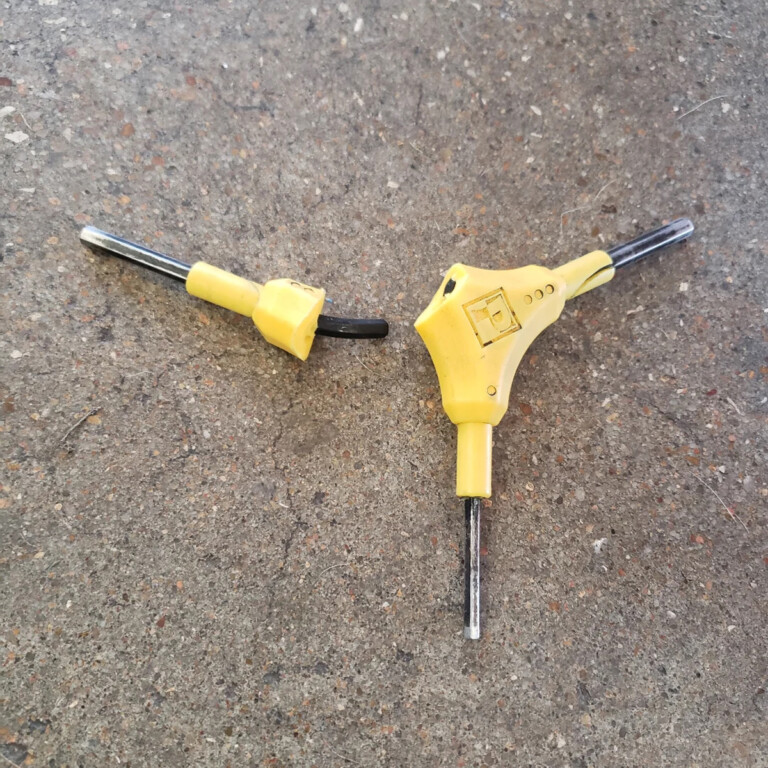
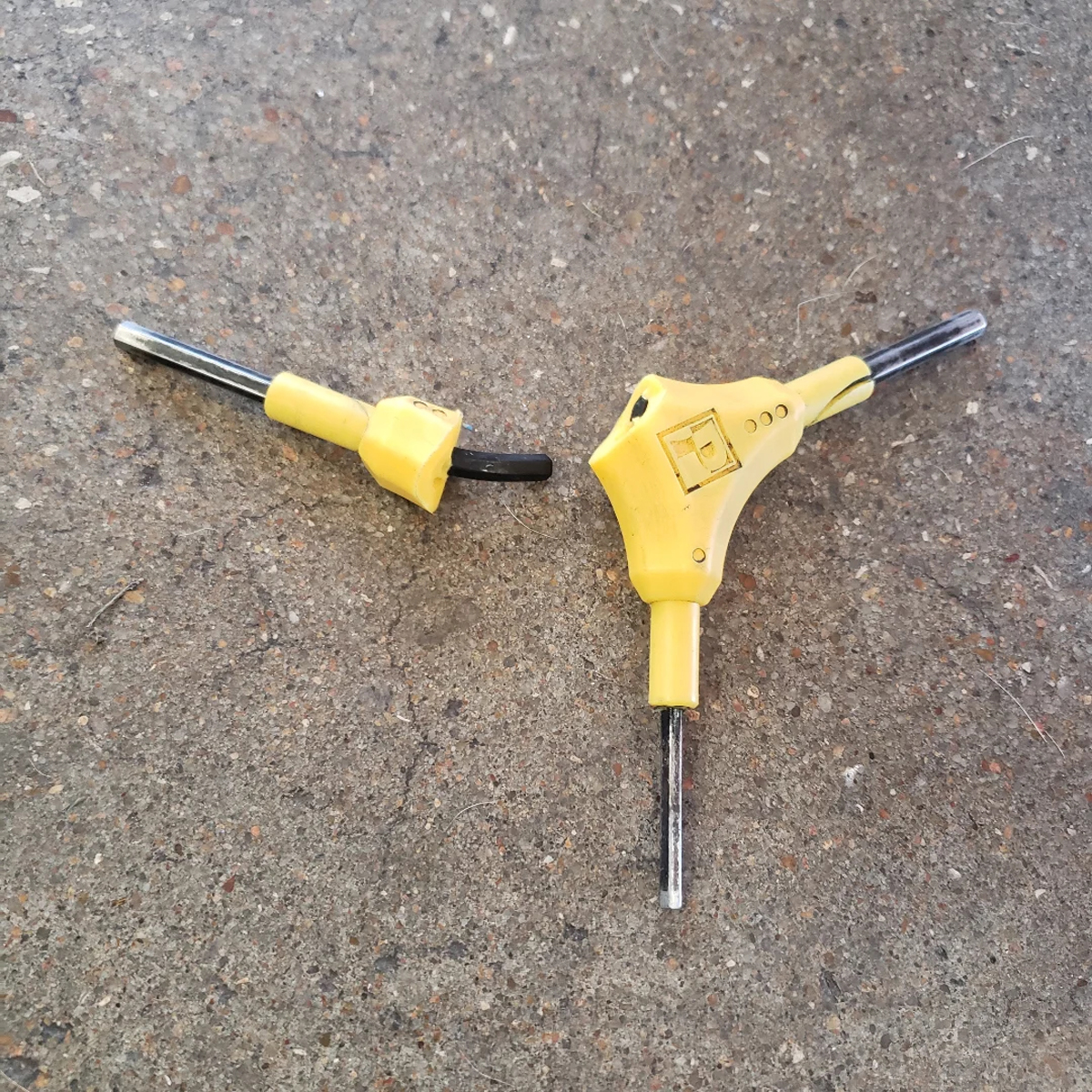
By Fuzzy Nance — The Tool had been overworked since day one. Years and years of daily abuse, fatigue and stress over time taking its toll, as he worked on undaunted. Literally thousands of bicycles and riders benefited from his touch.
The Tool had been overworked since day one. Photo by Fuzzy Nance
He lived in my apron with a few other grizzled veterans, always on call and ready to go. The fatal day was indistinguishable from any other, and gave no warning of the looming specter of death. The seemingly endless years of toil finally broke him, unceremoniously, and he fell to the shop floor, dead.
By Charles Pekow — We still lack a clear understanding of which strategies are most effective in improving cycling and pedestrian safety. While states employ various methods, the National Cooperative Highway Research Program (NCHRP) notes that there isn’t enough data to determine which work best. To address this, NCHRP conducted a study to assess current knowledge and identify gaps in research on these strategies, known as countermeasures. The most common approach involves bike lanes, but other measures include roadway diets and flashing or hybrid beacons.
One unique countermeasure highlighted in NCHRP’s synthesis is Colorado’s approach, which factors cyclist and pedestrian volume into speed limit determinations.
However, there is no nationwide standard for deciding where and when to accommodate bicyclists. Policies vary by state—Arizona’s Department of Transportation only considers bicycle safety if a local plan includes it in a project, while California requires complete streets planning by default, with exemptions granted only by the state.
“Many states have developed high-level overview documents that describe the types of bicycle facilities available—buffered bicycle lanes, separated bicycle lanes, shared-use paths, and shared lanes or bicycle boulevards—as well as selection criteria and facility benefits,” the report states.
Meanwhile, the National Highway Traffic Safety Administration (NHTSA) is preparing to hire a contractor to develop the 13th and 14th editions of Countermeasures That Work and the 2nd edition of Countermeasures At Work. These publications offer state highway offices guidance on improving roadway safety, including bicycle safety measures. The updated guides will provide the latest data, detail successful interventions, and outline costs and implementation timelines.
Utah senator trims plans, calling targeted BLM land ‘unused,’ ‘mismanaged’ and ‘only appropriate for housing.’
by Angus M. Thuermer Jr., WyoFile.com (June 25, 2025) — In the face of a backlash, Utah Republican Sen. Mike Lee has revamped his public land sell-off measure to target only Bureau of Land Management holdings while also declaring, “we’re just getting started.”
A reconciliation budget proposal revised by Lee’s Senate Energy and Natural Resources Committee targets BLM land within five miles of undefined “population centers.” It puts checkerboard BLM holdings back on a priority list for his “mandatory disposal” measure and takes lands under permit for grazing off the auction block.
A two-track road cuts through Bureau of Land Management property west of Pinedale in April 2024. (Mike Koshmrl/WyoFile)
The revision would shift 15% of revenue to local governments and conservation. The bill would appropriate $5 million to carry out the mandatory sales, which are designed to be offered within 60 days of passage and regularly thereafter.
Lee has not said or mapped how much land must be sold, ostensibly for affordable housing.
“Folks like Elon Musk … will make money off the public lands that should belong to the American people. That’s horseshit.” —Martin Heinrich
“We haven’t put out maps because there are a whole bunch of criteria established by the legislation, and those criteria are very difficult to reduce to a map,” Lee told conservative radio host Charlie Kirk in a video posted on X.
But opposition to Lee’s measure comes from “all walks of life,” said Land Tawney, former president and CEO of Backcountry Hunters and Anglers. That includes “Democrats, Independents, Republicans, hunters, anglers, bird watchers, kayakers, ranchers [and] loggers,” he said Wednesday at a roundtable hosted by Democratic U.S. Sen. Martin Heinrich of New Mexico.
Heinrich excoriated Lee’s measure.
“Eighty-five percent of the money from these sales would go to pay for tax cuts,” Heinrich said. “That means that folks like Elon Musk, who already own[s] 4,400 acres of land in Texas [worth] some $3.4 billion, will make money off the public lands that should belong to the American people.
“That’s horseshit,” Heinrich said.
A spectrum of opposition
Lee’s plan to include U.S. Forest Service land in the “mandatory disposal” provision flunked a parliamentarian’s rules test that limits reconciliation budget measures to relevant budget matters. The revised provision must undergo the same scrutiny, Democrats say.
Heinrich poo-pooed the notion that Lee’s measure would result in affordable housing. “An out-of-town billionaire can show up, buy a 100-acre parcel and throw a trophy home on it,” he said.
Powell resident Mike Tracy criticized Lee’s linking of public land and affordable housing.
“If you put those two concepts in the same sentence,” he said of Lee’s proposal, “it makes them seem somehow related, maybe even somehow causal.
“It makes people not feel comfortable speaking out against it because who wants to be against affordable housing?” he said at the roundtable. “I don’t think it’s proper to say that they’re related.”
U.S. Sen. Catherine Cortez Masto, a Democrat from Nevada, had a message for Lee. “Don’t come into our states and dictate what should be done.
“It is clear they’re trying to sell this public land to pay for this reconciliation package, which gives tax cuts to billionaires,” she said. “That’s what this is about.”
“Right now, we are pissed,” said hunting advocate Tawney, who represented American Hunters and Anglers. “They want to defund, dismantle and then divest,” he said of President Donald Trump’s administration.
Native American tribes are upset, too, said Hilary Tompkins, former solicitor for the Department of the Interior.
“The Southern Ute Indian tribe in southwestern Colorado is concerned because they have off-reservation hunting and fishing rights on an area that includes BLM lands,” she said. “They have not heard from anyone who is advocating for this proposal about the impact on those off-reservation treaty rights.”
Wyoming Gov. Mark Gordon sees opportunities to resolve the state’s challenges with the checkerboard land ownership pattern along the Union Pacific Railroad line, said Jess Johnson, government affairs director with the Wyoming Wildlife Federation.
“I want to figure out how we do this in a Wyoming way,” she said of the checkerboard conundrum. “This budget reconciliation is not it.”
Not sensitive lands?
Wyoming’s U.S. Sens. John Barrasso and Cynthia Lummis, Republicans who continue to support Trump’s agenda, did not respond Wednesday to requests for comment about the backlash. “It is clear that our congressional delegation isn’t in it for Wyoming,” the state’s Democratic Party chair, Lucas Fralick, said in a statement.
Lee, however, explained some of his thinking.
“I’m working closely with the Trump administration to ensure that any federal land sales serve the American people — not foreign governments, not the Chinese Communist Party, and not massive corporations looking to pad their portfolios,” he said in a post. “This land must go to American families. Period.”
In the radio interview, he said opposition was ginned up.
“The left is working overtime to dupe conservatives about my federal land sale bill,” he said. “This is just basically surplus land that’s suitable for housing because it’s right next to where people live.”
He characterized critics as having an agenda. “What I’ve heard is that people on the left generally want people moving from rural areas into urban areas, more suburban areas and from single-family housing into multi-family housing, higher density housing units,” he said. “They believe that that’s good for them, perhaps for Mother Earth, or whatever their reasons might be.
“These are not sensitive lands,” Lee said of the targeted BLM parcels. “They are not lands that are out there, that are part of an environment that’s appropriate for hunting, for hiking, for fishing, etc.”
Wyoming’s Johnson challenged that notion at the roundtable. She said she arrowed her first mule deer on public land near town.
“I was on this amazing parcel of public land — tiny,” she said. “It’s little. It’s one to three miles from Lander. It’s BLM. It’s really nothing special to look at, except it is everything to me.”
WyoFile is an independent nonprofit news organization focused on Wyoming people, places and policy.