About the artist: Utah born artist now living in SC, grew up with a strong love for racing bikes. When he turned 16 he was racing in Europe with Team USA. He signed with the U23 BMC racing team and raced in Europe for 4 years before racing 3 years with the USA Team Hincapie. He now owns the brand IMAGINARY which blends his love for art and cycling.
De Ronde by TJ Eisenhart. Oil on canvas.
Title of piece: De Ronde
About the piece: I was inspired by the incredible ride by Tadej Pogacar at the Tour of Flanders. I wanted to capture this moment in a portrait using cubism.
By James Knight — Recently passed Utah Senate Bill 195 would threaten the creation of new bike lanes in Salt Lake City, making Salt Lake City streets less safe. The bill, sponsored by Senator Wayne Harper, would essentially prevent new bike lanes in the general area of the city center of Salt Lake City. It seeks to do so by banning narrowing or reduction of travel lanes from at least February 25, 2025 to mid-2028 without approval of each project by the Utah Department of Transportation. This means that the city will not be able to put in new bike lanes or do any road work that could potentially slow car traffic down, without initiating a cumbersome traffic study for each project. The bill also targets the Salt Lake City Vision Zero Program, which is an initiative that seeks to eliminate traffic fatalities, in that it will hamper projects designed to make streets safer.
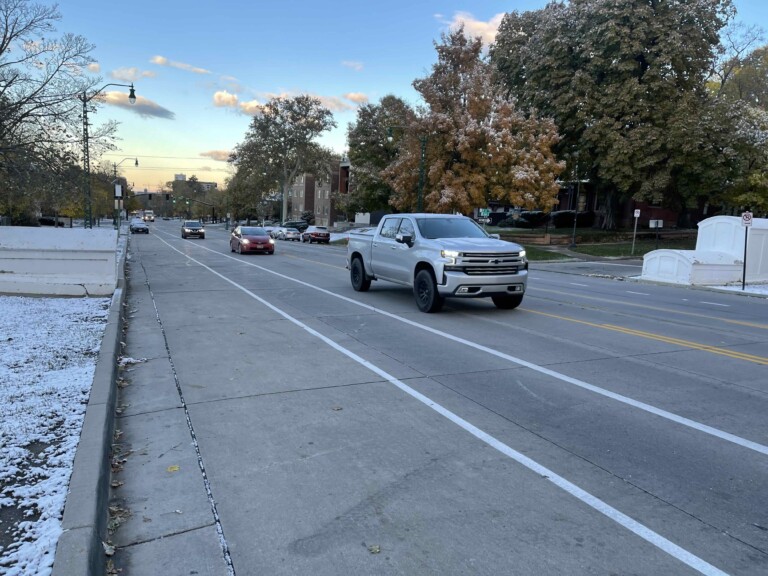
Bike lanes like these on South Temple would be banned because they were installed as part of a road safety project that included a road diet and lane width narrowing. Bike lanes, road diets, and lane narrowing all contribute to a safer street. Photo by Dave Iltis
Jon Larsen, Salt Lake City’s Transportation Division director, discussed the bill in detail, saying “SB-195 puts a hold on any lane reductions or projects that could impede traffic flow on major roads in Salt Lake City, east of I-15, west of Foothill Blvd, south of 600 North and north of 2100 South. This impacts our ability to build new bike lanes and implement projects that improve safety for all users. The bill requires Salt Lake City to do a study of the impacts of these types of projects over the past five years, as well as an analysis of planned projects. The Utah Department of Transportation (UDOT) will review this study, and any projects that they approve will be allowed to move forward.”
Benjamin Wood, the Chair of Sweet Streets, a local street safety advocacy organization, and editor for Salt Lake City Weekly, seconded the problems with the bill, saying that “it really can’t be overstated just how damaging this law is to the effort to create safe, multi-modal transportation options on the Wasatch Front.”
Due to so many people relying on their own cars or public transportation in larger cities, city officials don’t seem to put in sufficient bike lanes or other safety measures. Wood described SB195 as “essentially codifying this paradigm that car traffic is superior to all other forms of movement and that it’s not worth the hassle to try and get trail and bike lane users’ safety across an existing right-of-way for car travel.”
While Wood believes Salt Lake has the resources and means necessary to get a quality project done, he expects street planners to get tired of UDOT’S review process.
While not taking bicycle safety seriously on Salt Lake City streets sounds like a major problem, Wood isn’t surprised at the legislature’s lack of commitment to street safety. Wood said, “We knew something like this was coming. We’ve seen similar “ban the bike lane” backlashes in Canada, the UK and areas around the world. The question now is whether the Legislature will take the lesson that it’s not worth picking on SLC streets, or whether they’ll be emboldened by the fight to extend these anti-safe streets posture statewide.”
Politicians, scores of businesses, join rapidly growing criticism of budget measure targeting federally owned land in Western states.
by Angus M. Thuermer Jr., WyoFile (Opposition to a Republican plan to sell millions of acres of federal public land in the West intensified over the weekend, with politicians, individuals and scores of businesses criticizing the budget proposal.
The groundswell of opposition has grown beyond green groups, tree huggers and naturalists after the Wilderness Society published a map of the federal properties eligible for sale, including iconic western landscapes at New Fork and Green River lakes.
Eighty-five Wyoming businesses representing myriad entities from small-scale loggers to international brands called the proposed sell-off “a non-starter for Wyomingites and all Americans.” In letters to Republican U.S. Sens. John Barrasso and Cynthia Lummis, they said the state’s outdoor culture “is under threat by a concerted movement to transfer or sell federal public lands.”
Politicians, including former Wyoming Speaker of the House Albert Sommers, R-Pinedale, weighed in. The plan will affect “literally everyone in Wyoming, as well as out-of-state visitors our tourism industry depends on,” Sommers wrote Barrasso.
“Why do the lifestyles of 11 Western states have to bear the burden of paying national debt created by the other 39 states as well?” —Tom Lubnau
Another former speaker warned that “billionaires and corporations, and perhaps foreign countries,” will be the successful bidders if the measure passes. Those rich and powerful entities will use their purchases to control public access, locking up public lands “tighter than a miser’s fist on a handful of pennies,” former Rep. Tom Lubnau, R-Gillette, wrote in an op-ed in the Cowboy State Daily.
The way the bill is written “will not benefit the people of Wyoming,” state Democrats in the Legislature said in a statement Friday. “We are strongly against,” the eight lawmakers wrote.
“The bill provides very little if any guardrails or transparency,” Rep. Mike Schmid, R-LaBarge, president and CEO of a well-services company, wrote in another opinion piece. “That should alarm every single American who values public access and national security.”
Teton County asked to be exempted from any sales.
“Disposal of public land in Teton County, as contemplated in the reconciliation bill, is much more likely to worsen our housing crisis rather than to mitigate or address our housing shortage,” county commissioners said in letters to Wyoming’s senators.
“The development of additional luxury homes, as almost certainly dictated by our real estate market, only creates more jobs and worsens the imbalance between local jobs and local houses that our workforce can afford.”
What it does
Republican Utah Sen. Mike Lee’s proposed “mandatory disposal” of an estimated 2-3 million acres of land managed by the U.S. Forest Service and Bureau of Land Management would fast-track the sales. The measure, which is expected to be part of the Senate version of the “Big Beautiful Bill,” would purportedly cure the twin problems of scant affordable housing and the national deficit. Critics say the measure would fund tax breaks for the wealthy.
The provision targets 11 Western states and would bypass existing laws and regulations, like those of the BLM, that allow public-interest land sales “developed with public involvement and environmental analysis.” It would funnel land sales proceeds into the treasury instead of the agencies themselves, as existing laws mandate.
Lee’s proposal would require agencies to quickly — within 60 days and regularly thereafter — start accepting nominations from individuals and entities for tracts to be sold. It gives sales authority to the secretaries of the Interior and Agriculture departments.
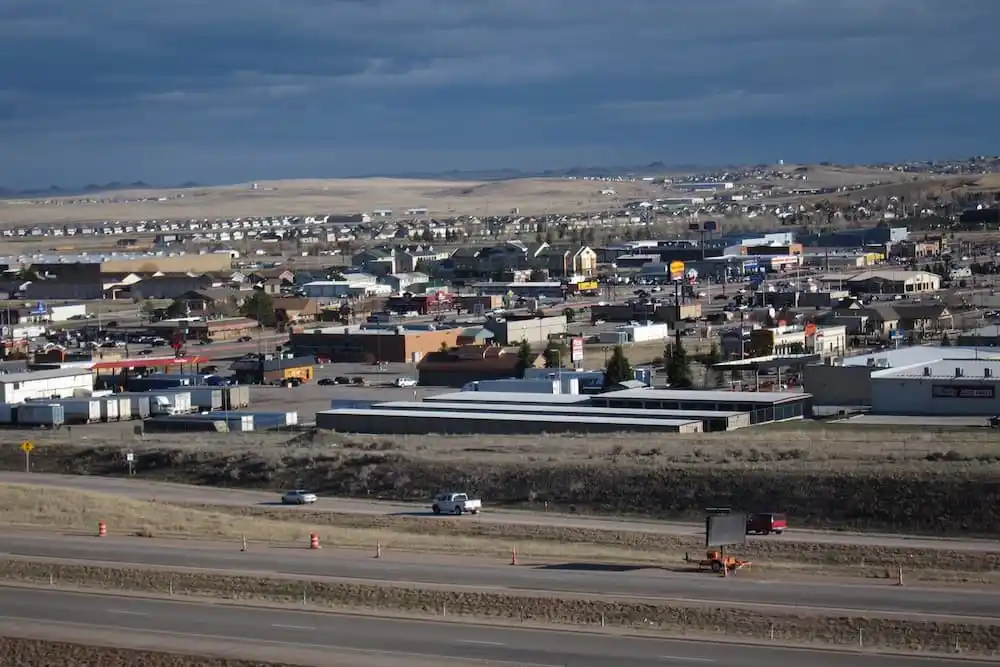
This view of Gillette south of I-90 reveals new construction on the town’s edges. Layoffs in the Powder River Basin mining industry are quickly changing the economic dynamics of a town that was once a blue-collar mecca for workers and their families. (Dustin Bleizeffer/WyoFile)
The measure would prioritize sales of parcels nominated by state or local governments near existing development and suitable for housing. It does not require or ensure that housing would be or remain affordable. It would also allow land to be sold and used for infrastructure.
A provision that put checkerboard-area holdings on the priority list was dropped in a rewrite. WyoFile did not receive a response from the GOP staff on Lee’s Senate Energy and Natural Resources Committee as to why checkerboard lands were first prioritized, then removed.
Lee’s measure originally excluded lands on which the agencies had issued grazing permits, an exemption that’s also since been removed, according to the National Wildlife Federation.
The measure would exclude from the sale protected lands such as national parks, wilderness areas and so on. It also excludes Montana. Critics say that’s an effort to curry favor with U.S. Rep. Ryan Zinke, who opposes the sale of public lands and whose budget vote is critical.
In letters to constituents, Barrasso and Lummis sought to quell fears.
“Please be assured,” Lummis wrote one resident, “it is one of my top priorities to maintain and improve public access on public lands for activities such as hunting, fishing, snowmobiling, hiking and biking.”
She wrote that state citizens could better control the property belonging to all Americans. “I believe that the people of Wyoming are the best stewards of the land, not unelected bureaucrats in Washington, D.C.”
Barrasso said he supports federal land sales “when they serve the interests of states, local communities and the public.” What’s on the table would impact “less than one percent of our federal lands,” he wrote.
“I am committed to efficient multiple-use management of our public lands to ensure continued public access, healthy wildlife, and productive ecosystems,” he wrote. Contrary to analysis by the Wilderness Society and the National Wildlife Federation, Barrasso said he believes the measure would not allow the sale of land permitted for grazing.
Barrasso’s staff did not immediately respond to an inquiry Monday regarding how the senator’s Wyoming Range Legacy Act might conflict with the land sales provision.
In 2007, Barrasso fulfilled a promise to push the act previously championed by the late U.S. Sen Craig Thomas of Wyoming, by successfully withdrawing more than 1.2 million acres in the mountains between Afton’s Star Valley and Pinedale’s Upper Green River country from new oil and gas leasing. Now, however, much of that country is open to be nominated for sale, according to the Wilderness Society map.
Hageman attacks “ecoterrorist”
U.S. Rep. Harriet Hageman, another Wyoming Republican, lashed out at the Wilderness Society in a Cowboy State Daily opinion column published Friday.
“There has been an awful lot of misinformation in recent days,” Hageman wrote, with “a lot of the talk surrounding [Lee’s] efforts … misleading or flat out untrue.” She said the Wilderness Society was “the biggest culprit so far … working overtime to misrepresent what [Lee’s provision] actually does.”
The TWS map is “a fundraising rant, attempting to scare us,” she wrote, calling TWS president Tracy Stone-Manning a “hypocritical ecoterrorist,” and the interactive map “hogwash.”
The conservation group’s caterwauling, Hageman wrote, is “an effort to control these lands to ensure our amenities are used solely by the independently wealthy, who have little concern as to whether there is affordable housing available for the people who seek to make their lives in places like Kemmerer or Green River or Pinedale.”
But the map “accurately use[s] the exact criteria for eligible lands included in the most recent publicly available draft,” Wilderness Society Wyoming State Director Julia Stuble said in a statement Monday. “Broad sell-offs of public land are deeply unpopular in Wyoming and it is entirely understandable that laying out the lands eligible for sale in the bill, without exaggeration or bias, would elicit outrage.”
Lee’s provision is headed down a complex path in the Senate where it could be stricken, dropped, amended or adopted before the reconciliation bill moves back to the House. Meantime, former Wyoming Speaker of the House Lubnau wondered: “Why do the lifestyles of 11 Western states have to bear the burden of paying national debt created by the other 39 states as well?”
WyoFile is an independent nonprofit news organization focused on Wyoming people, places and policy.
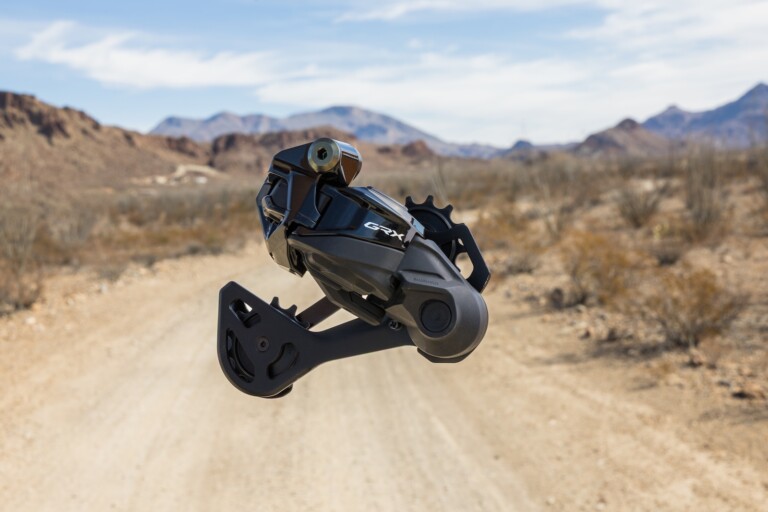
The Japanese component giant finally brings cable-free shifting to the gravel masses with the new RX827 1×12-speed system
After years of watching road riders enjoy the clean cockpits and crisp shifting of wireless drivetrains, gravel cyclists can finally cut the cord. SHIMANO’s new GRX RX827 1×12-speed system marks the company’s first foray into fully wireless drop bar components specifically designed for gravel riding, and it’s been worth the wait.
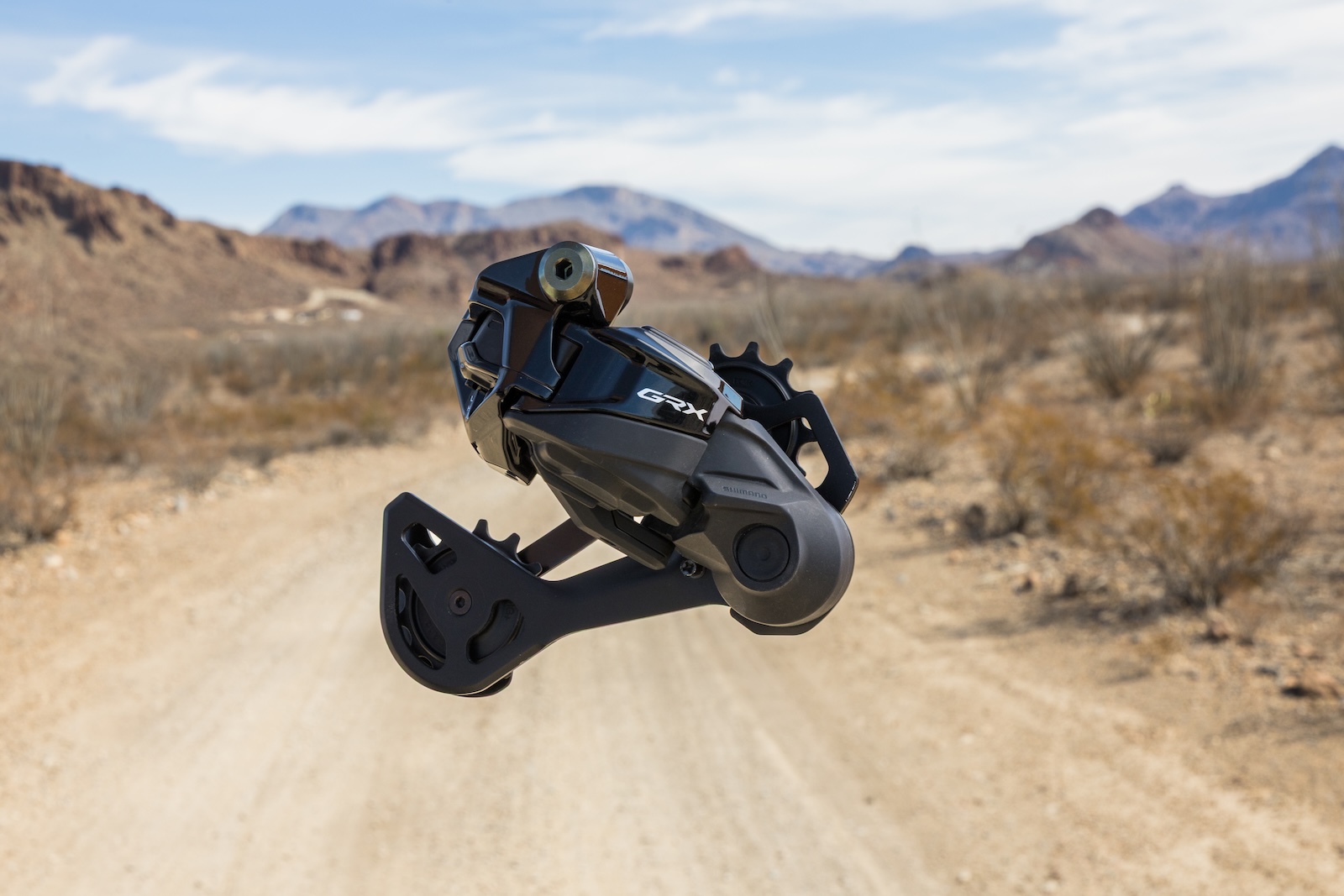
Photo courtesy of Shimano
Freedom Without Compromise
The beauty of the RX827 system lies in its universality. Unlike some wireless systems that demand specific frame routing or proprietary mounts, SHIMANO’s approach is refreshingly straightforward—if your bike has a derailleur hanger, you’re good to go. This means you can transform your favorite gravel rig with cutting-edge technology without shopping for a new frame.
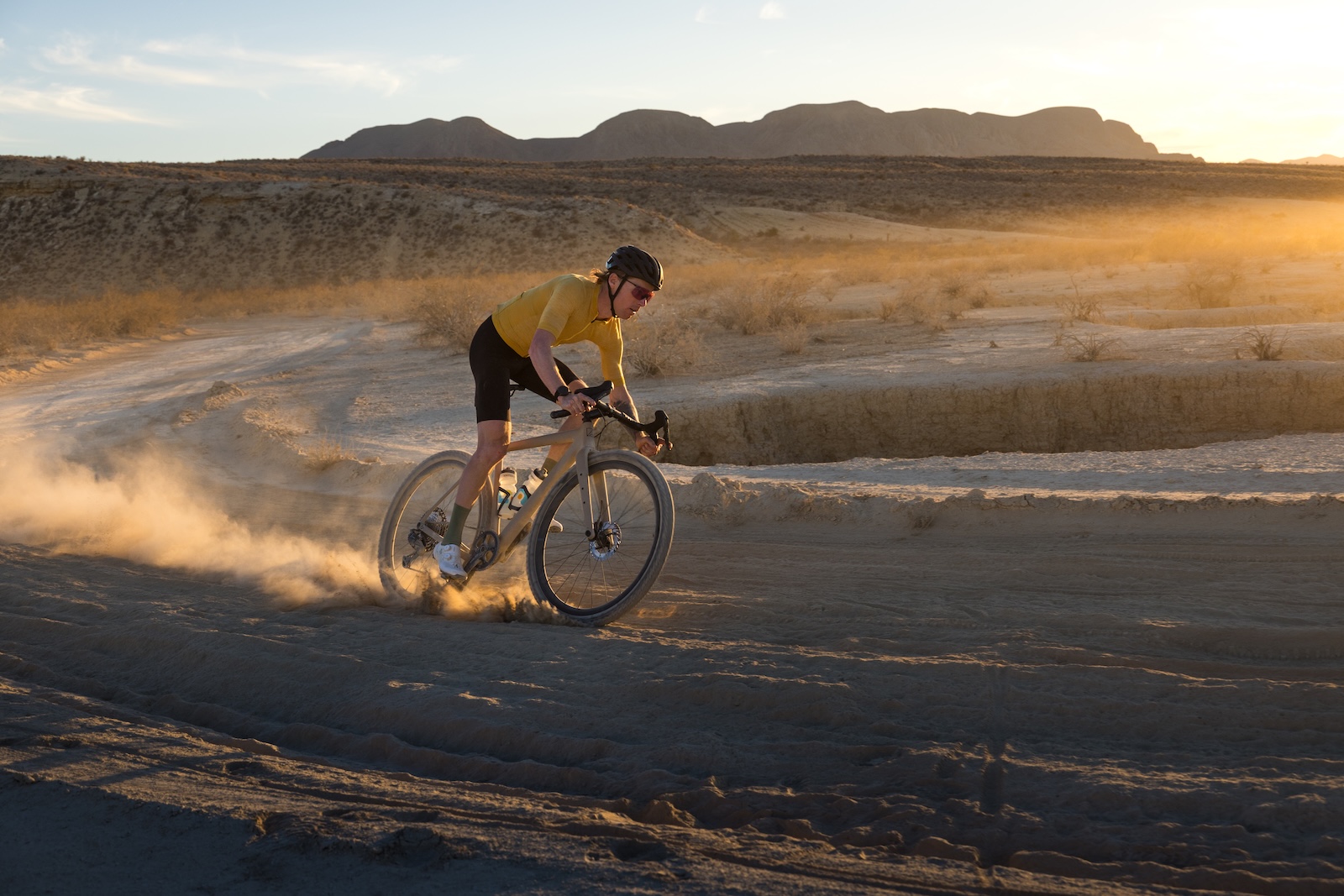
SHIMANO | GRX | TEXAS Photo courtesy of Shimano
At the heart of the system sits the RD-RX827 wireless rear derailleur, which borrows heavily from SHIMANO’s mountain bike DNA. The derailleur features the same robust SHADOW ES technology found on their trail-tested MTB components, with a low-profile wedge design that tucks the mechanism closer to the bike and away from trail hazards.
Built for the Beating
Gravel riding demands equipment that can handle everything from smooth tarmac to chunky singletrack, and the RX827 delivers. The derailleur’s skid plate design and rounded edges help it glance off rocks and roots, while the automatic impact recovery function ensures it bounces back to proper alignment after taking a hit.
The battery, sealed and protected within the derailleur body, promises 700-1,000 kilometers of riding between charges—enough for most multi-day adventures. At 449 grams, the long-cage RX827 SGS isn’t the lightest option on the market, but its durability-focused design justifies the extra weight for serious gravel riders.
SHIMANO | GRX | TEXAS, Photo courtesy of Shimano
Gearing for Adventure
SHIMANO pairs the RX827 with their proven 10-51T MICRO SPLINE cassettes, offering a massive 510% gear range that handles everything from steep climbs to flat road sections. Riders can choose between 40T or 42T chainrings, providing flexibility to match the drivetrain to their preferred riding style and local terrain.
The system maintains compatibility with SHIMANO’s existing 12-speed wireless shifters, including options from their road (DURA-ACE, ULTEGRA, 105) and mountain bike (XTR, DEORE XT) lines. This cross-compatibility opens up interesting possibilities for riders who want to mix and match components or use the same shifters across multiple bikes.
Cockpit Evolution
For riders committed to the 1x setup, SHIMANO introduces the BL-RX825-L brake-only lever. This streamlined option eliminates the shifter mechanism entirely, saving 19.5 grams per lever while maintaining the same ergonomic excellence as the full DUAL CONTROL units. The lever features raised hoods with ribbed surfaces and anti-slip coating—details that matter during long days in the saddle.
Those who prefer the full DUAL CONTROL experience can stick with the ST-RX825 levers, which offer three programmable Di2 buttons plus compatibility with accessory switches. This flexibility allows riders to customize their shifting experience, whether they prefer traditional paddle shifting or want to add buttons on the bar tops for climbing access.
Wheels to Match
Alongside the drivetrain components, SHIMANO introduces the RX180 tubeless aluminum wheelset. While not groundbreaking, these wheels address a real need in the market for reliable, affordable gravel hoops. The 25mm internal rim width accommodates tires from 32mm to 50mm, and the convertible rear hub accepts both MICRO SPLINE and HG freehub bodies.
At 2,105 grams for the pair, the RX180s aren’t featherweight, but they’re positioned as value-oriented workhorses rather than race-day exotica. The hooked tubeless rims and replaceable freehub body design suggest these wheels are built for the long haul.
SHIMANO | GRX | TEXAS Photo courtesy of Shimano
The Bigger Picture
The RX827 system represents more than just another wireless option—it’s SHIMANO’s statement that gravel deserves purpose-built technology. By combining the reliability of their mountain bike heritage with the refinement of their road components, they’ve created a system that feels at home whether you’re racing cyclocross or bikepacking across continents.
The wireless revolution in cycling has moved beyond mere convenience to become a reliability upgrade. Fewer cables mean fewer things to break, adjust, or replace on the trail. For gravel riders who demand performance without compromise, the GRX RX827 offers a compelling path forward into the cable-free future.
Availability and Pricing
SHIMANO has not yet announced pricing or availability for the GRX RX827 system. Given the positioning between their mountain bike and road wireless offerings, expect pricing to reflect the system’s premium technology and gravel-specific engineering. Check with your local SHIMANO dealer for updates on availability.
By Charles Pekow — The I-15 24th Street Interchange Project in Ogden City, Utah, has received final approval from the Federal Highway Administration and the Utah Department of Transportation (UDOT). The project aims to improve biking access to downtown Ogden. Unless legal action is taken by May 9 to block it, the project will move forward.
According to UDOT, the plan includes a 10-foot-wide shared-use path starting at 1900 West and extending east along the north side of New Midland Drive. Near the new interchange, the path will turn north at Pennsylvania Avenue, pass under I-15, and end at the 24th Street/25th Street intersection. Spanning 1.8 miles, the path will connect industrial and commercial areas west of I-15 with residential neighborhoods east of I-15, promoting active transportation. The design also positions active transportation users near facilities with lower traffic volumes compared to current conditions.
By Gail Newbold — When a friend from Washington told me biking in Zion National Park was the highlight of her entire Southern Utah trip, it jumped to the top of my bucket list. It didn’t sound too difficult or complicated: Book an e-bike from a rental shop in the charming town of Springdale and cycle into the park. Lock up at a bike rack located at any shuttle stop on Zion Canyon Scenic Drive if you want to hike. Get back on the bike and do it again.
So, while it should have been simple, it wasn’t. But once everything fell into place, it felt monumental. What could be better than two of my children flying into the St. George Regional Airport from Brooklyn and Denver for this ride of my dreams, and on Mother’s Day, no less?
Cycling West Early Summer 2025 Cover Photo: Gail Newbold loving Zion on her “new” HP Velotechnik e-trike. Photo by Brooke Newbold
The basic logistics weren’t the problem. Pretty quickly my daughters and I nailed down compatible dates, flights for them, driving for me, and lodging for all. Renting bikes was a breeze. The biggest challenge stemmed from my desire to buy a recumbent trike before the trip. I’d been contemplating this move ever since renting one for a six-day ride into Canada in the fall of 2024. I loved the comfort and security it offered. No sore butt, neck, shoulders or wrists. No worries about tipping over on fast starts and stops. But trikes are expensive and I wasn’t sure I could justify the purchase. Would it be like the proverbial treadmill-turned-clothes-hanger and sit in my garage gathering dust? Friends and family convinced me that over time it would pay for itself in avoidable rental costs. And hey, if I didn’t use it, I could always sell it.
I combed the classifieds for a month before the bike of my dreams popped up in Fort Collins, Colorado—a shiny red HP Velotechnik Gekko 26. I live near Salt Lake City, but the seller was willing to meet me halfway at a Love’s Travel Stop in Wamsutter, Wyoming. The next hurdle was the stream of money required for all additional accoutrements (something I hadn’t anticipated): helmet, pedals with straps, hydration vest, lock, headlamps, tail lamps, phone mounts, panniers and more (most of which I still don’t have.)
More urgent was getting the gear shift system changed to levers instead of twisting, and then figuring out how to fold and unfold the trike for transport. The videos made it look deceptively simple. My husband Dave is a super handy guy, but the folding gave him no end of grief. Every time I watched him struggle, my stress levels skyrocketed. He wasn’t going to Zion with me and I was worried my daughters wouldn’t be able to figure it out. I don’t have the strength to do it myself. I debated buying a rack to avoid the folding challenge, but the cost felt prohibitive.
The day before my drive to Southern Utah to pick up my daughters, I made a 10-point checklist of bike details to review with Dave. We’d been busy all day, so it was 5 pm. Suddenly Dave strode into the house looking stricken. “You have a flat tire,” he said. I have a high panic reflex. My legs felt like I’d just avoided being killed in a car accident. So much effort had gone into planning and prepping, and I was so excited to ride my new bike in Zion. I was devastated. What would I do? I frantically called Bountiful Bicycle who’d gamely gotten my unusual bike into shape earlier that week and begged them to let me bring it down on a Friday night just before closing. They kindly agreed to my immense relief.
Mother’s Day in Zion
Fast forward to the big day. My very can-do Brooklyn daughter Brooke Newbold who bikes regularly in the city, got tired of waiting for my not-so-sporty Denver daughter Farrah Lamoreaux to help her haul my heavy Gekko out of the car. I watched in shock as she singlehandedly lifted it out of my car and unfolded it in record time. The two of them walked to the rental shop for their RADs while I had another panic attack because the LCD display on my trike wasn’t lighting up, which meant no power for the hills. Yes, I was a total novice. I finally found an on/off button on the underside of the battery.
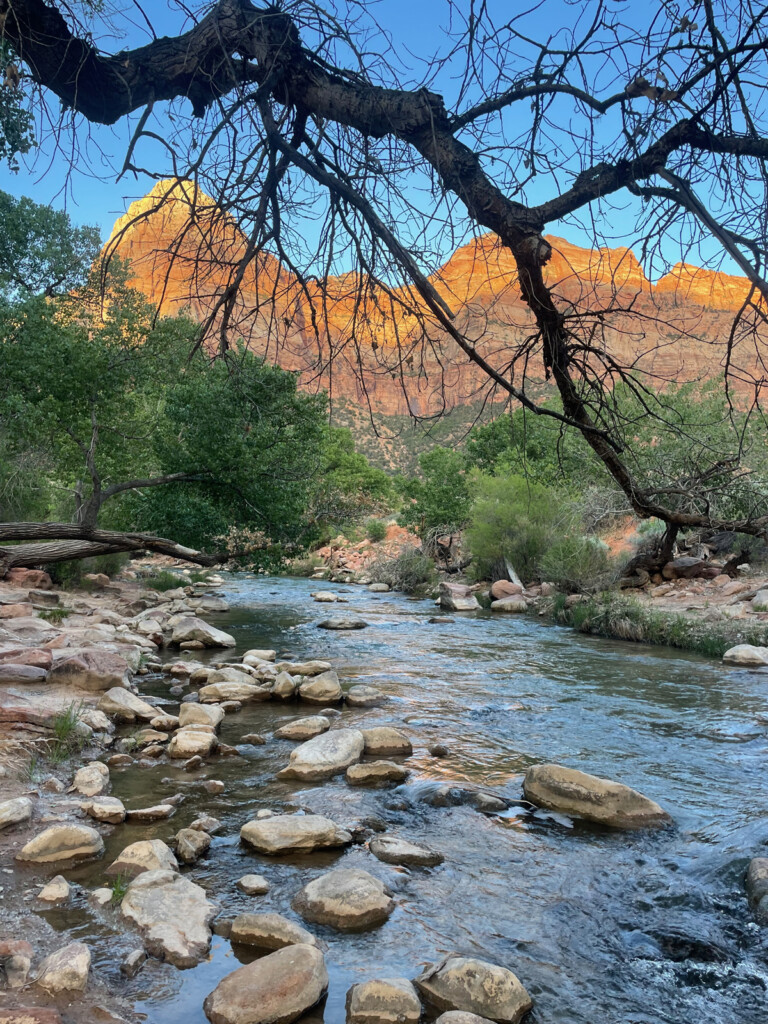
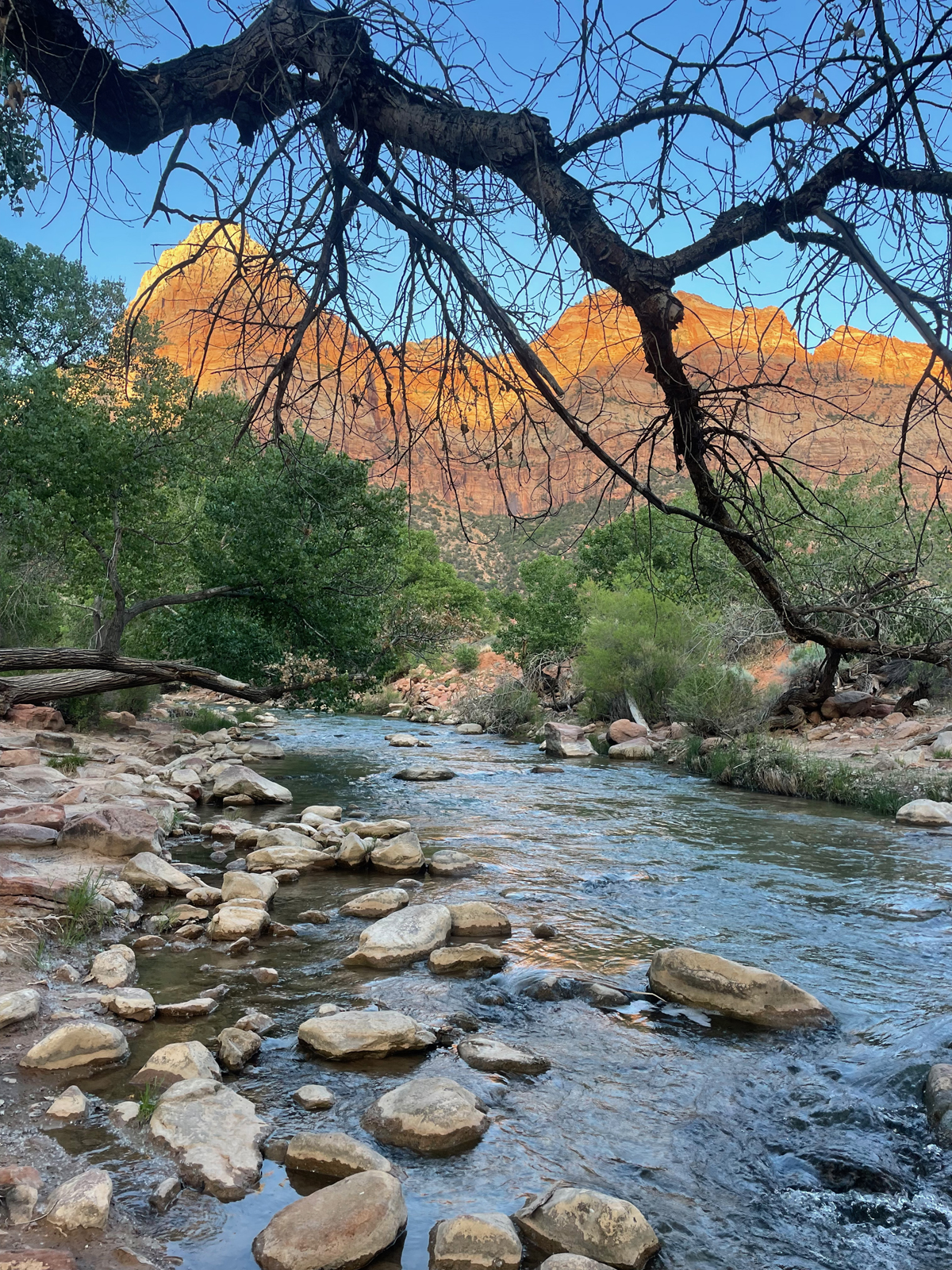
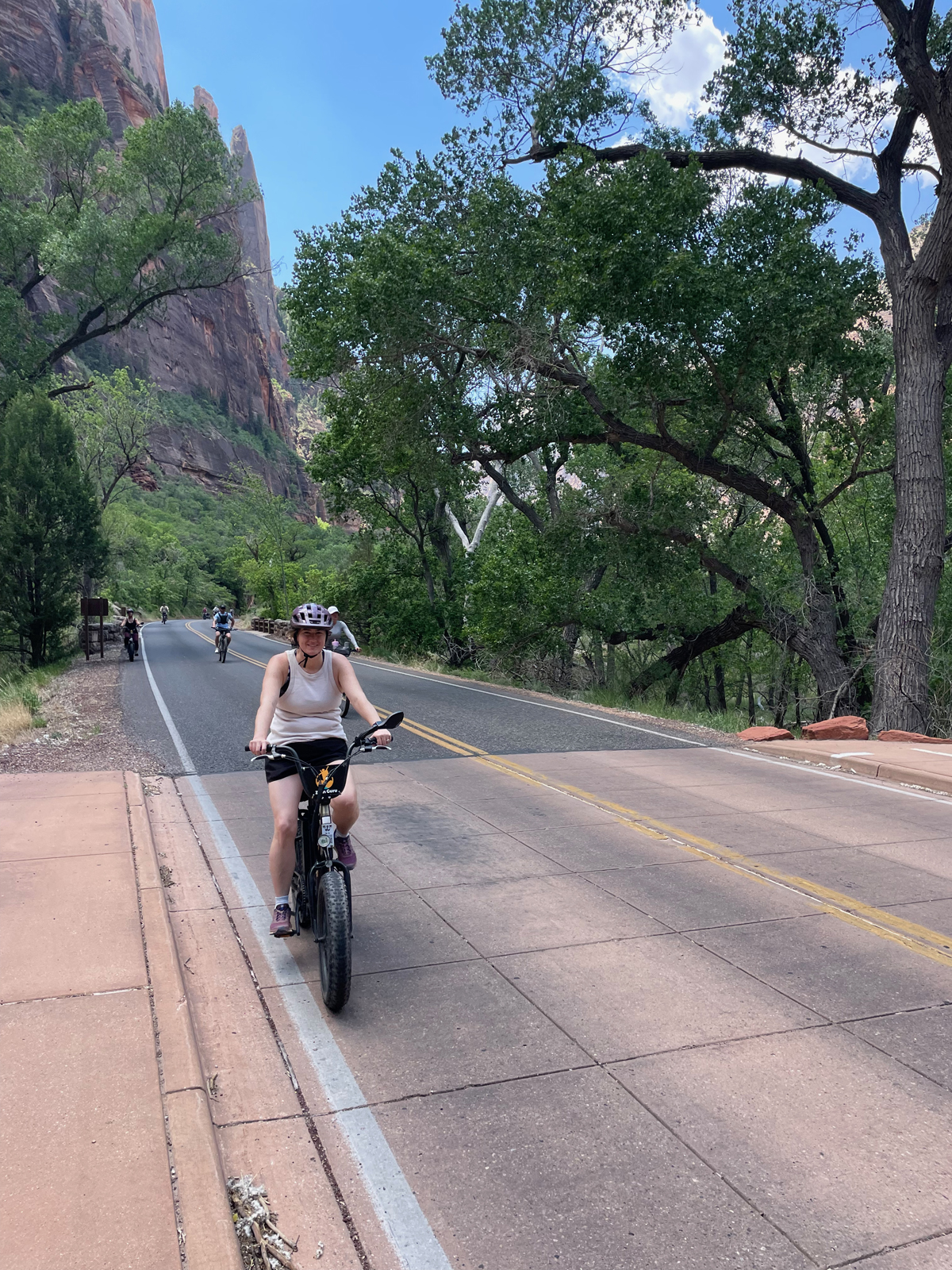
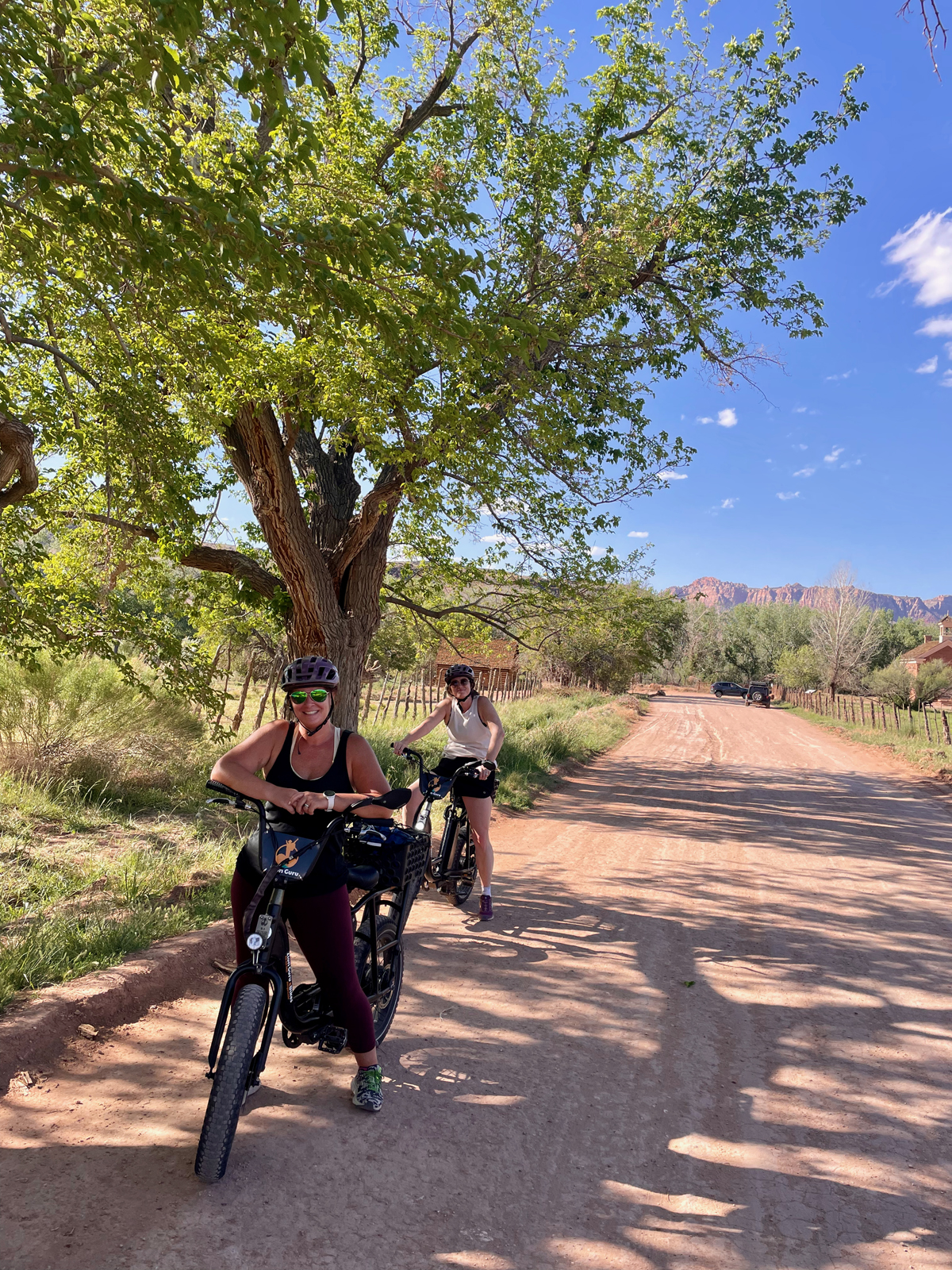
We started our ride on the Pa’rus Trail, the designated multi-use path within the park that connects to the 7-mile Zion Canyon Scenic Drive. The towering cliffs, brilliant May foliage, deep blue skies and morning breeze were an intoxicating combination. I wiped away tears of joy and gratitude.
The views in Zion were spectacular. Photo by Gail Newbold
Experiencing Zion’s spectacular and dramatic scenery from a bike is entirely different and vastly more rewarding than seeing it from inside the shuttle where you might be standing or not by a window. And once off the shuttle, all you can see is the area immediately surrounding one of the nine stops.
We biked up the scenic drive for our first hike. I’d targeted Scout Lookout because it takes you to the point just before the Angel’s Landing permit area where people braver than me navigate the final scary ascent along the ridge. Brooke hiked Angel’s Landing as a young teen but had no interest in doing it again. It was unseasonably hot, so the 2-mile ascent with 1,122 feet of elevation gain wiped me out. I begged my daughters to hike at their faster pace and let me slog behind, but they refused, saying they weren’t in a hurry. Happy Mother’s Day to me. The views at the top were worth the effort as were the pair of owls tucked into the foliage enroute.
After our descent, I was exhilarated to be back on my bike with a breeze in my face. We cycled at a slow pace to the end of the scenic drive. None of us wanted to hurry through the breathtaking scenery, and were too hot to tackle anymore hikes. During lunch at Zion Lodge, I suggested we behave like Gen Z’s and catch up on our phones since we had cell service. It was fun to read our Mother’s Day messages.
My daughters maximized their all-day bike rentals when we cycled to fascinating Grafton Ghost Town in the late afternoon. Photo by Gail Newbold
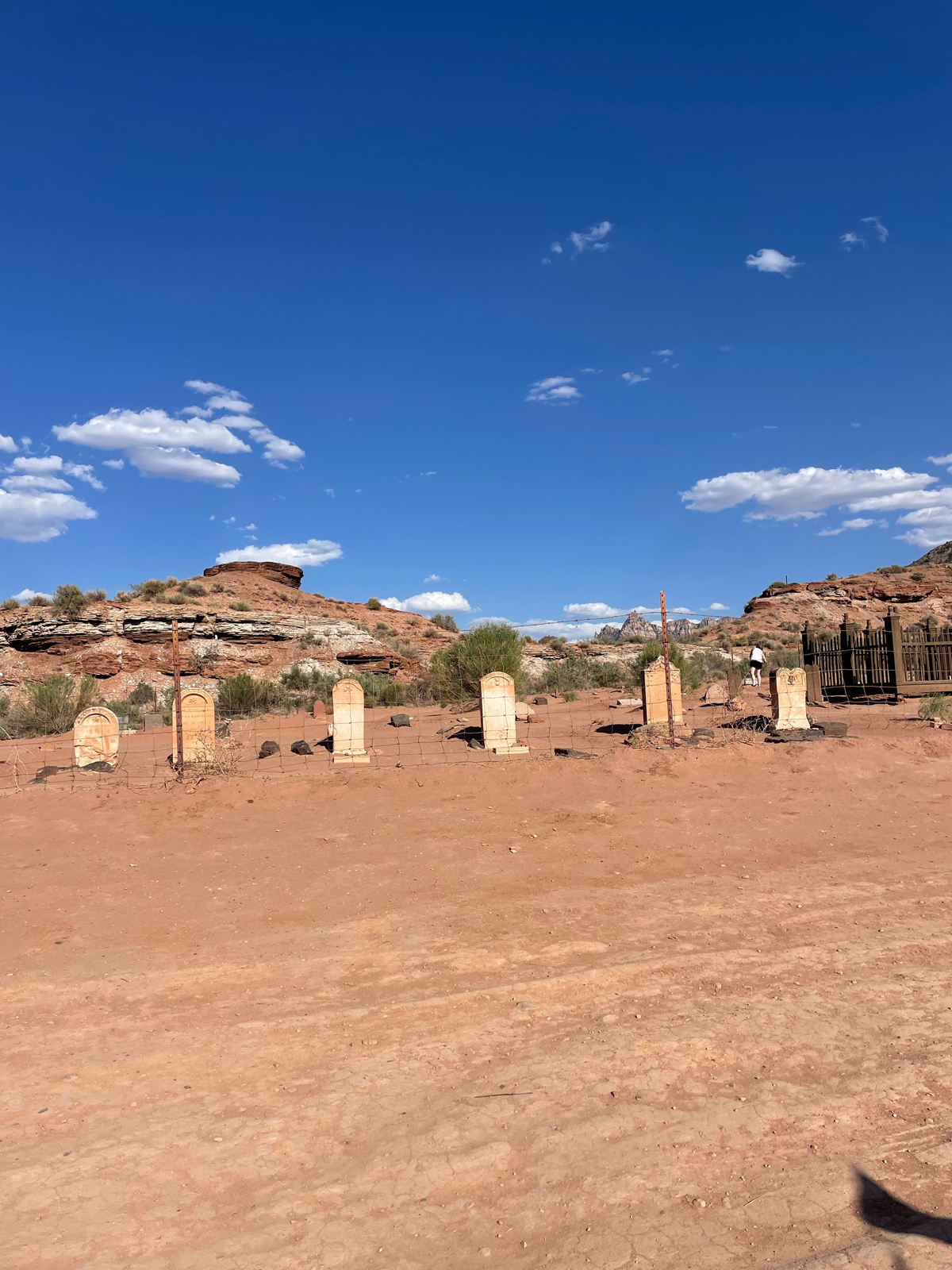
Even though it was late afternoon by then, the rental bikes weren’t due till 7:30 pm so we decided to ride to Grafton Ghost Town and cemetery. I began questioning the wisdom of this since some of the ride was along the busy highway in and out of Springdale and some on washboard dirt roads. It was hot. Happily, the ghost town and cemetery felt worth the effort. We especially loved the ride back to Springdale facing towering cliffs and buttes.
We loved the historic Grafton Cemetery. Photo by Gail Newbold
My daughters peeled off to return their bikes while I cycled alone to our lodging. Once in the parking lot, I sat by my car feeling physically spent, and utterly dusty, dirty and sweaty. But in the best way possible. We’d biked a total of 32 miles. I was incredibly happy and proud. And grateful—for my daughters, for the beautiful world I live in, and for my physical ability to do the ride—something I do not take for granted.
From Central Park to National Park
The day after our ride, I asked my daughters to share their perspectives on this first-ever experience. Were they nervous? Brooke, who has a Citi bike pass and lives in Brooklyn, said, “If I need to go any place within five or six miles I take a bike instead of the subway. Or I’ll ride when I need a break and want to get out of the apartment. I’m on a bike about five days a week, so no, I was not at all nervous.”
Accustomed to biking around Brooklyn, New York, Gail’s daughter Brooke Newbold had no problem with her heavy RAD rental e-bike. Photo by Gail Newbold
Farrah owns a bike in cycle-friendly Denver, but said, “It’s had a flat for five or six years. I think the last time I rode it was during Covid with my son, and I tried to jump a curb and fell over and got all scraped up.” She admitted to being a little nervous at first on the RAD e-bike. “There were a lot of people and other bikers on the initial trail and my bike was so heavy, I was afraid if someone did something erratic, I’d have to jerk to a stop and fall off my bike or lose my balance. I wanted to be far enough behind them so I could slow down easily. Once we were on the paved road, I felt more comfortable but I wanted to bike slowly to enjoy the scenery.”
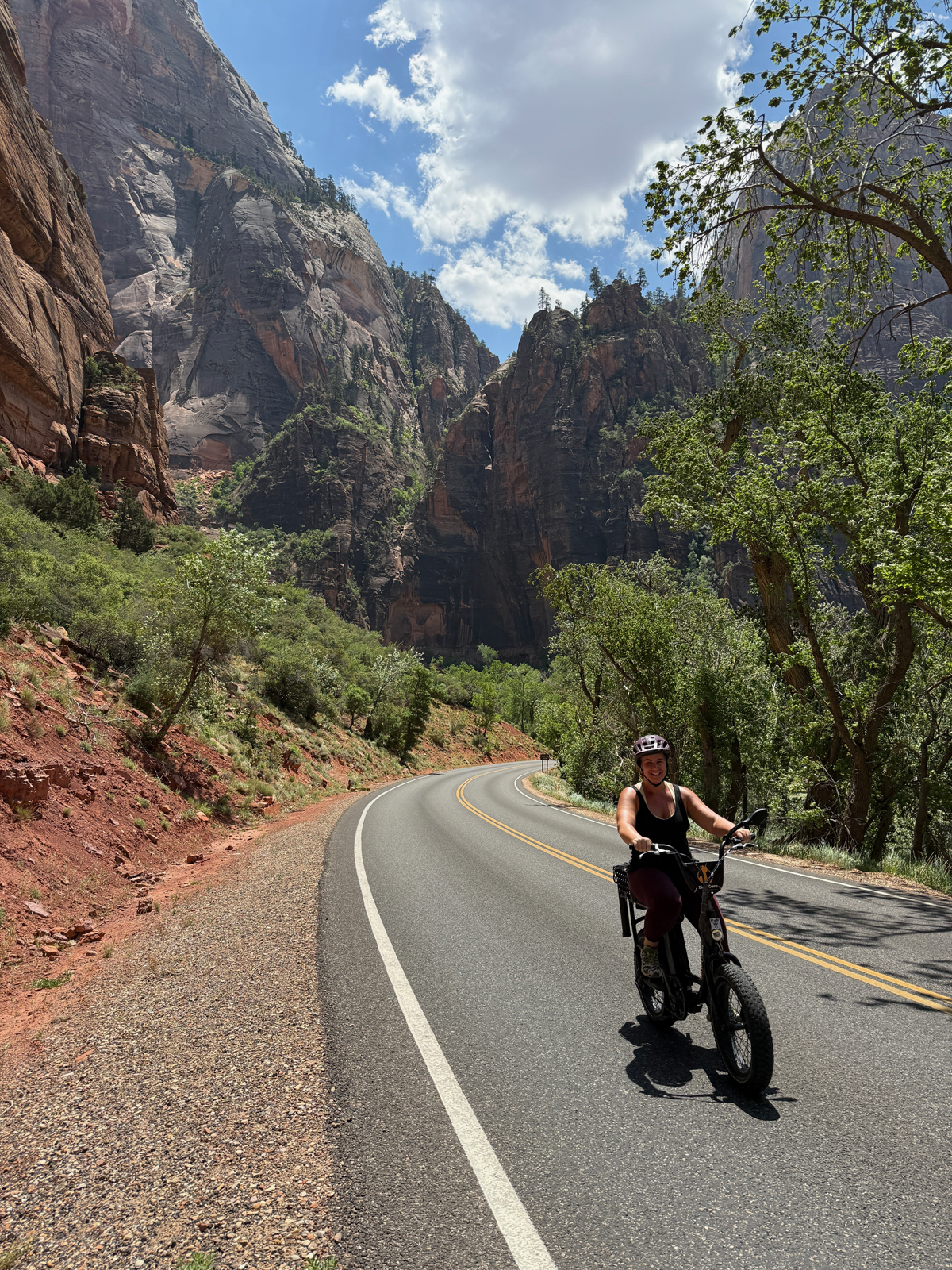
Our kids were raised in Utah, but this was my daughter Farrah Lamoreaux’s first trip to Zion National Park. Photo by Gail Newbold
I expressed surprise that on our way back from Grafton, Farrah led the pack. “By then I just wanted to get back to our lodging as fast as possible and get off my bike,” she laughed. “Also, the RAD cruisers were really comfortable but at some point your bottom starts to hurt.”
My daughters resting under a shady tree in Grafton Ghost Town. Photo by Gail Newbold
What did they like most about the ride?
“I enjoyed being out in the open covering a lot of ground,” said Brooke the city-biker. “And it was really nice to have a designated bike path and scenic road where you only had to worry about shuttles and an occasional car. It was a whole new way of seeing Zion. I’ve been here multiple times, but biking made it all fresh. And I hate the shuttles. I hate waiting in long lines. I hate being packed in with people standing. Last time I was here, the shuttles weren’t air conditioned.”
Farrah liked the feeling of being up close and personal with the scenery and having the freedom to hop on and off the bike at any point instead of being trapped on a shuttle. “Even though I grew up in Utah, I’d never been to Zion because I’m not very outdoorsy. I think sometimes when you grow up in a place, local sights feel sort of old hat and it’s more interesting to explore further afield. I was really impressed with how dramatic the scenery was and very different from the mountains in Colorado. I was grateful for this trip because I probably never would have done it on my own. Now I want to bring my husband and kids back and it doesn’t feel hard or scary.”
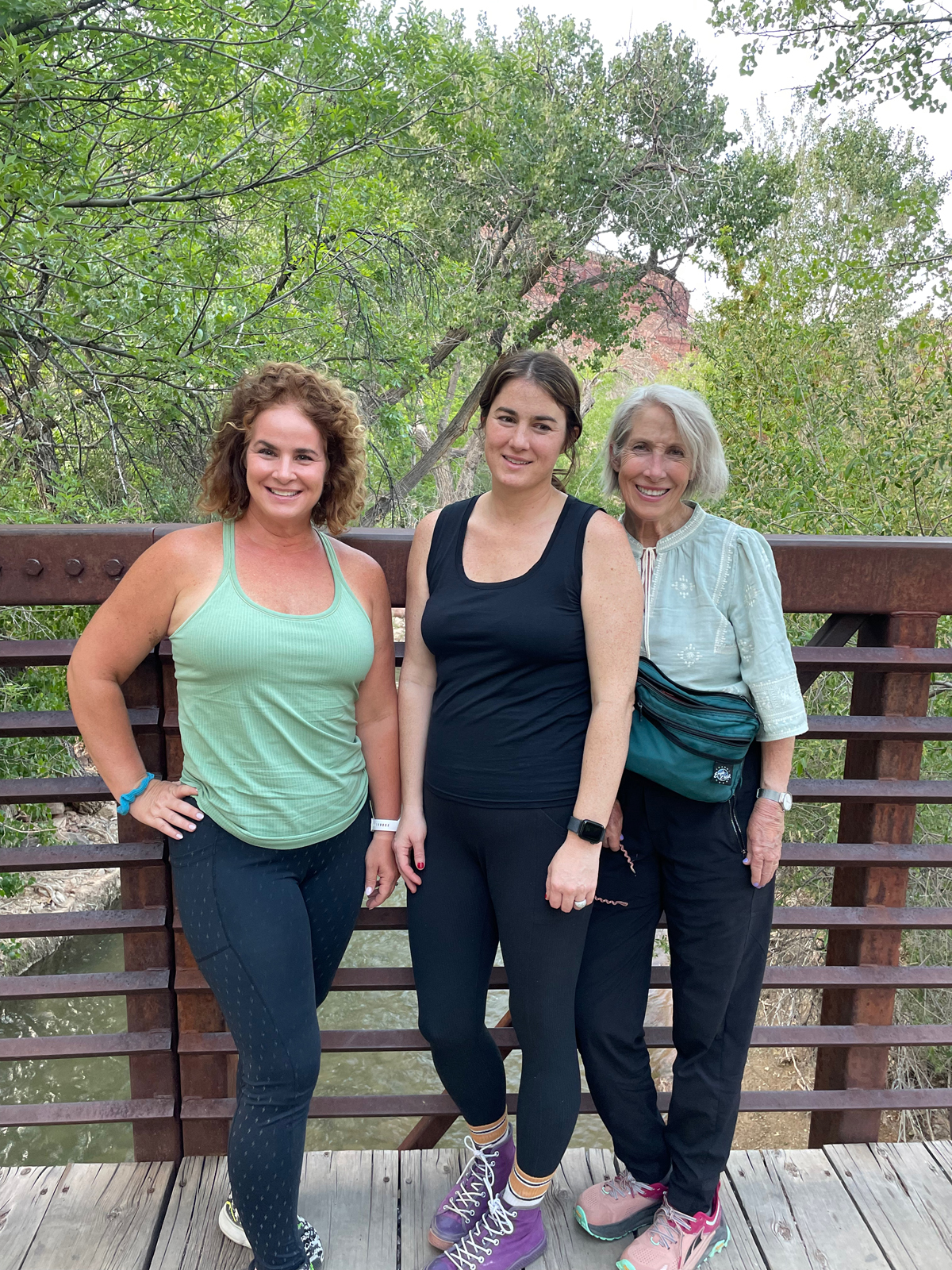
From left: My daughters Farrah Lamoreaux, Brooke Newbold, and I. Photo courtesy Gail Newbold
If you go (and you should):
It’s easy to rent e-bikes from one of the many shops in Springdale. My daughters paid about $94 for an all-day rental at Zion Guru. The shops provide instruction, helmets and locks. I researched bike theft in the park, and the consensus was it’s very low. Other rental shops in Springdale include: Zion Peddler (zionpeddler.com), EBikes Zion (ebikezionrental.com), Utah E-bike Adventures (utahebikeadventures.com), Zion Cycles (zioncycles.com), Greater Zion E-bike rentals (greaterzionebikes.com), Outta Here E-Bikes (outtahereebikes.com) and RideZion Adventures (does tours)(ridezion.com).
I’d read that no cars were allowed on the scenic drive from March through November, so was surprised to see some. Evidently people staying at Zion Lodge are allowed to drive to the lodge, but no further.
The scenic drive is seven miles up and seven miles back.
Bikers are required to pull over and stop whenever a shuttle approaches.
The new shuttles are electric and air conditioned.
Biking is by far the best way to experience Zion for both cycling and hiking. It provides all the joy and none of the pain.
Bring your own food or eat at Zion Lodge.
Refill your water bottles at several locations along Zion Canyon Scenic Drive: Zion Canyon Visitor Center, Zion Human History Museum, Zion Lodge, Temple of Sinawava shuttle stop (Riverside Walk/The Narrows), the Grotto and South Campground.
It probably goes without saying that the summer months from May through September can be very hot and crowded, so be prepared. Best times to go are March – early May and later September – November.
The GOP reconciliation budget bill would allow entities to nominate Forest Service land, including land around the town of Jackson, for sale and housing development. There’s no provision in the measure requiring the housing to be or stay affordable. (Mike Koshmrl/WyoFile)
The Wilderness Society map, however, shows that in addition to the Pinedale-area lakes, many other National Forest and Bureau of Land Management properties could be nominated for sale and development. Some 15 million acres in Wyoming could be nominated for sale, according to calculations made by The Wilderness Society.
All told, an estimated 2-3 million acres across the West would be sold after nomination and secretarial approval, the National Wildlife Federation calculated.
The bill would “drive a dagger into the heart of our Wyoming way of life,” Casper resident Neil Short wrote to friends and colleagues, urging them to ask Wyoming’s senators to oppose the bill. “We hunt, fish, ride horseback, ride ATVs, mountain bike, hike, camp, run, climb, ski, snowmobile, roam and exercise our Second Amendment rights on these beautiful, sacred landscapes,” he wrote.
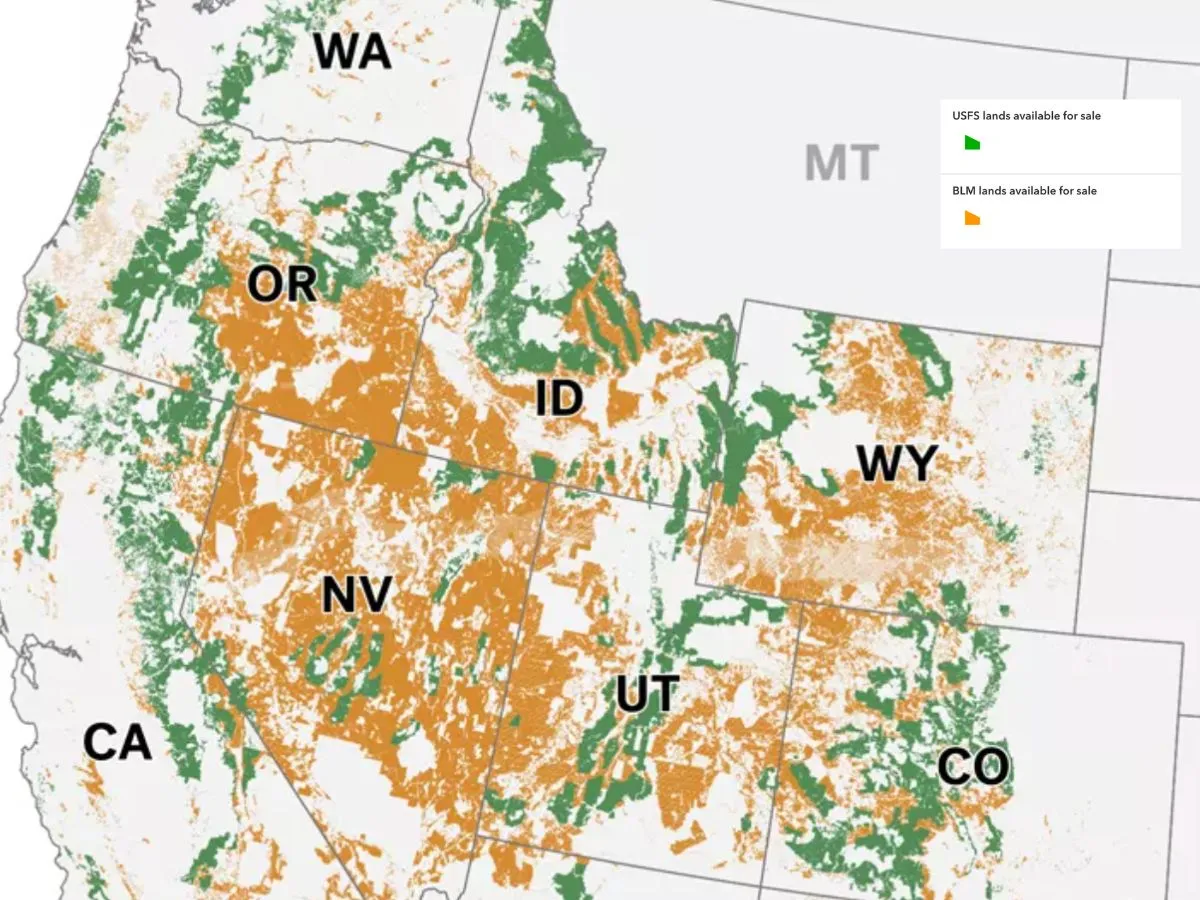
Screenshot of the Wilderness Society’s interactive map of the 258 million acres across the West that could be nominated for sale. (The Wilderness Society)
The map of eligible land includes almost the entire Wyoming Range, the Jackson Hole Mountain Resort, swaths of National Forest land surrounding Jackson Hole, Forest Service land on the west side of the Tetons and tracts bordering Star Valley.
West of Laramie, The Wilderness Society mapped large portions of the Medicine Bow National Forest, including Sheep Mountain and parts of Lookout Mountain, as available for sale. Land West of Cody also could be nominated, as well as Forest Service property on both sides of the Bighorn Mountains.
Scattered BLM lands around the state also qualify for sale, according to The Wilderness Society map.
Grazing permits in flux
The budget measure proposed by Utah’s U.S. Sen. Mike Lee requires the sales as part of the Republican plan to reduce the nation’s deficit. The Congressional Budget Office has warned that the bill would not do that; critics say it provides tax breaks for the wealthy and would use land sales to offset them.
The “mandatory disposal” provision would require the secretaries of the Interior and Agriculture departments — who oversee the Forest Service and BLM — to sell land owned by all Americans at fair market value. David Willms, associate vice president for the National Wildlife Federation, estimated the 2-3 million acres on the chopping block after studying the bill.
Interested parties could nominate a parcel for sale, and local governments, not including Native American tribes, would have a right to match the sale price. The land would be developed as housing and “affordability” would be among the criteria a secretary could consider in offering nominated parcels for sale, according to a draft of the measure obtained by WyoFile.
The Senate committee amended Lee’s “mandatory disposal” measure Saturday, adding federal grazing lands used by ranchers to the list of property subject to sale. Land used by ranchers under grazing permits had been exempted from nomination and sale before the revisions.
“Selling off 3 million acres of public lands without public input or consideration is bad for America and is bad for Wyoming’s way of life.” —Peter Linn
After news of those changes reached Western states, committee staffers in Washington, D.C., scrambled to protect ranchers, Jim Magagna, executive vice president of the Wyoming Stock Growers Association said Monday.
“I have been told they have drafted new language that totally protects any land with grazing rights from being sold,” Magagna said. “They assured me anything they go forward with will absolutely protect grazing permits.
“That satisfies our concerns,” pending a reading of the final language, he said.
Along with the deficit-reduction goal, Lee characterized the effort to sell land owned by all Americans as a way to boost affordable housing in the West. He’s been a critic of federal land ownership, supporting the Beehive state’s petition to the U.S. Supreme Court to wrest 18.5 million acres of BLM land from federal control.
There’s no language in the budget measure, however, that requires any development to be or stay affordable.
Any nomination for sale “shall include a description of [how the sale] would address local housing needs including housing supply and affordability,” according to the latest language in the measure.
Willms agreed that the Lee provision now opens the door to the development of resorts and exclusive housing.
The Lee provision also would circumvent federal environmental laws aimed at analyzing and documenting the effects of a sale and requiring notice and comment. The measure would fast-track sales, requiring the two agencies to begin accepting nominations within 30 days of the bill’s passage.
Montana out, Wyoming in
The Lee measure excludes Montana, a concession to U.S. Rep. Ryan Zinke of Montana, who opposes any sales and will be a key vote in passing any bill in the House. The bill also excludes “federally protected lands” like national parks, wilderness areas, battlefields, wild and scenic rivers and other similar areas.
The bill would direct sale proceeds to the general treasury, a “huge shift” Willms said. Today, such funds must be used by the agencies themselves for things like landscape restoration.
Hunters and other outdoor recreationists see trouble in the bill.
Peter Linn, who operates Pendergraft Outfitters, urged Wyoming residents to speak out. “Contact Senators John Barrasso and Cynthia Lummis and tell them selling off 3 million acres of public lands without public input or consideration is bad for America and is bad for Wyoming’s way of life,” he wrote in a post for the coalition Keep It Public Wyoming.
Staffers for Barrasso and Lummis did not respond to WyoFile last week when asked about the senators’ views on Lee’s proposal. In a separate statement, Lummis did express support for Lee’s general approach to public land sales.
The Wyoming Outdoor Council posted a “red alert” saying “selling public lands to the highest bidder to fund tax cuts flies in the face of our Wyoming values.”
Casper resident Short told his friends “if our precious landscape is sold, multi-billionaires would own our sacred lands and we would be peasants, locked out forever.”
WyoFile is an independent nonprofit news organization focused on Wyoming people, places and policy.
By Charles Pekow — A new bikepath appears to be on the way along the Interstate 84)/US-89 Interchange Reconstruction project in South Weber City, Uintah City, and South Ogden City, Utah. The Federal Highway Administration and Utah Department of Transportation approved the project, which will include a bikepath the whole way. Anyone who wants to stop it can sue until April.
The project still requires funding, design and access to the right-of-way. The shared-use path would run from South Weber Drive on the south across the Weber River to north of Skyline Drive, running west of US-89. This will provide cyclists with a partial route after bicycles were banned from 89 in the recent reconstruction.
First 50 Para-/Adaptive Cyclists Can Register for Free
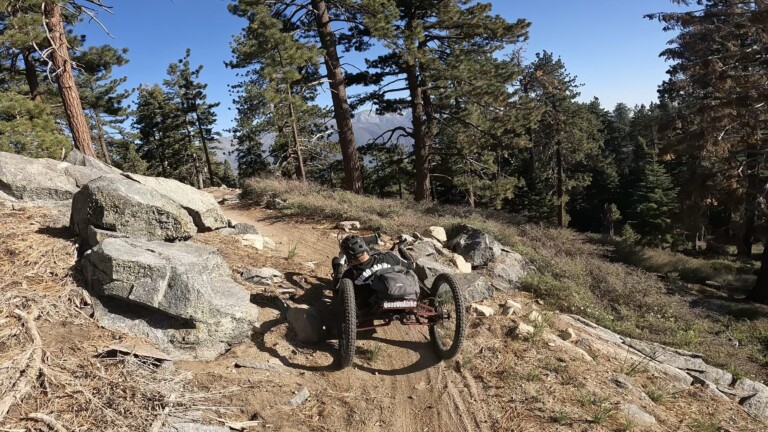
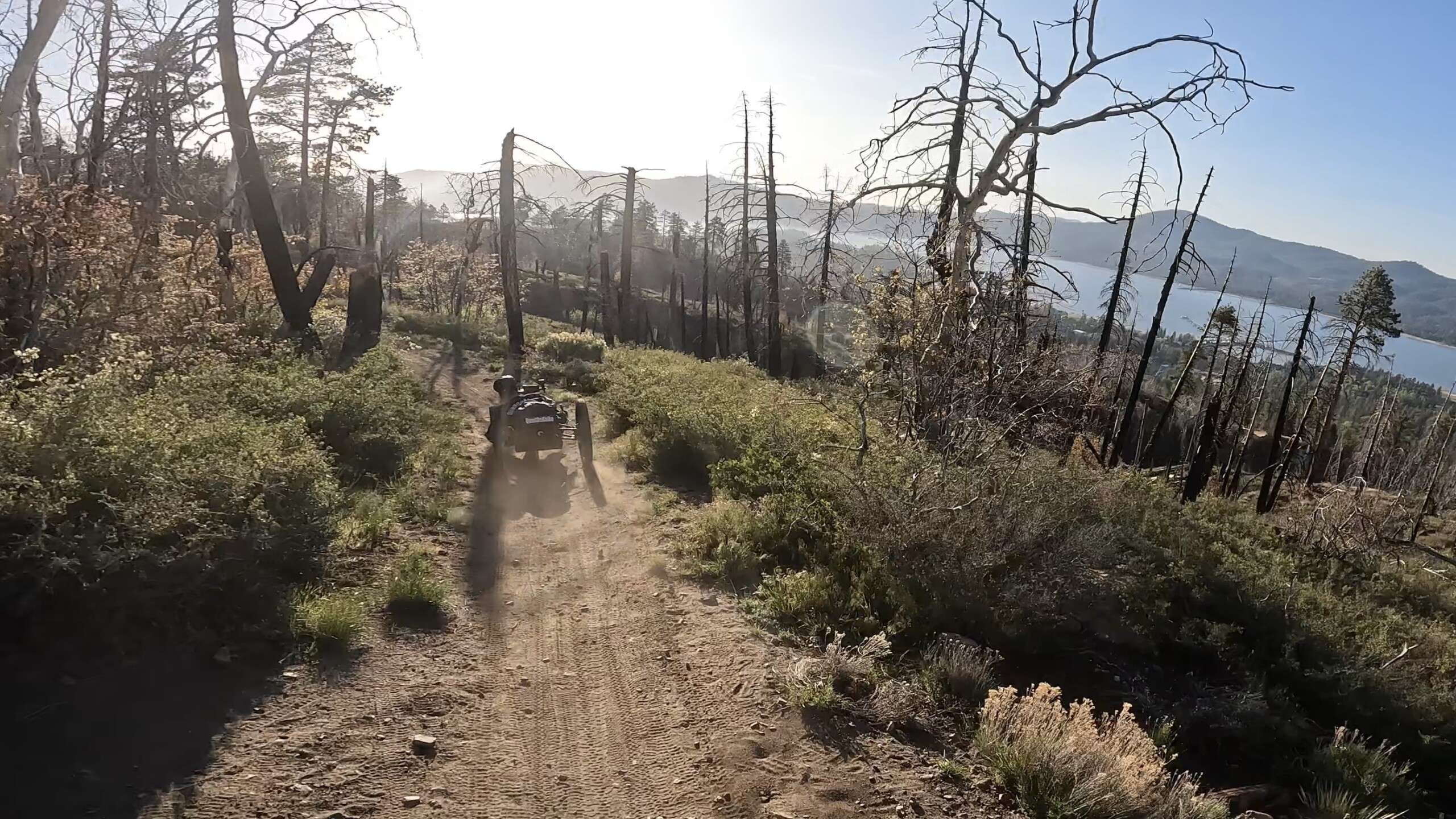
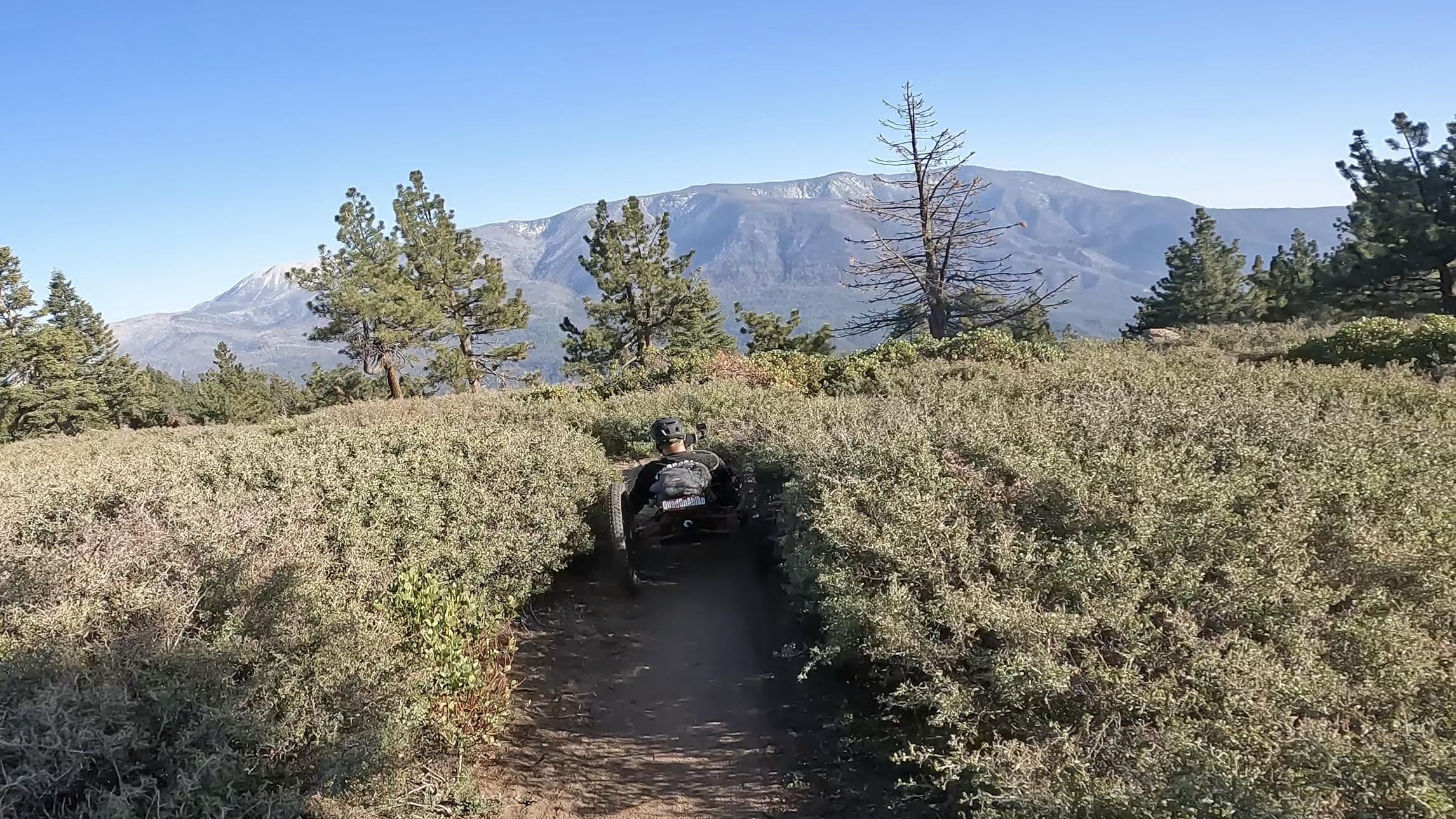
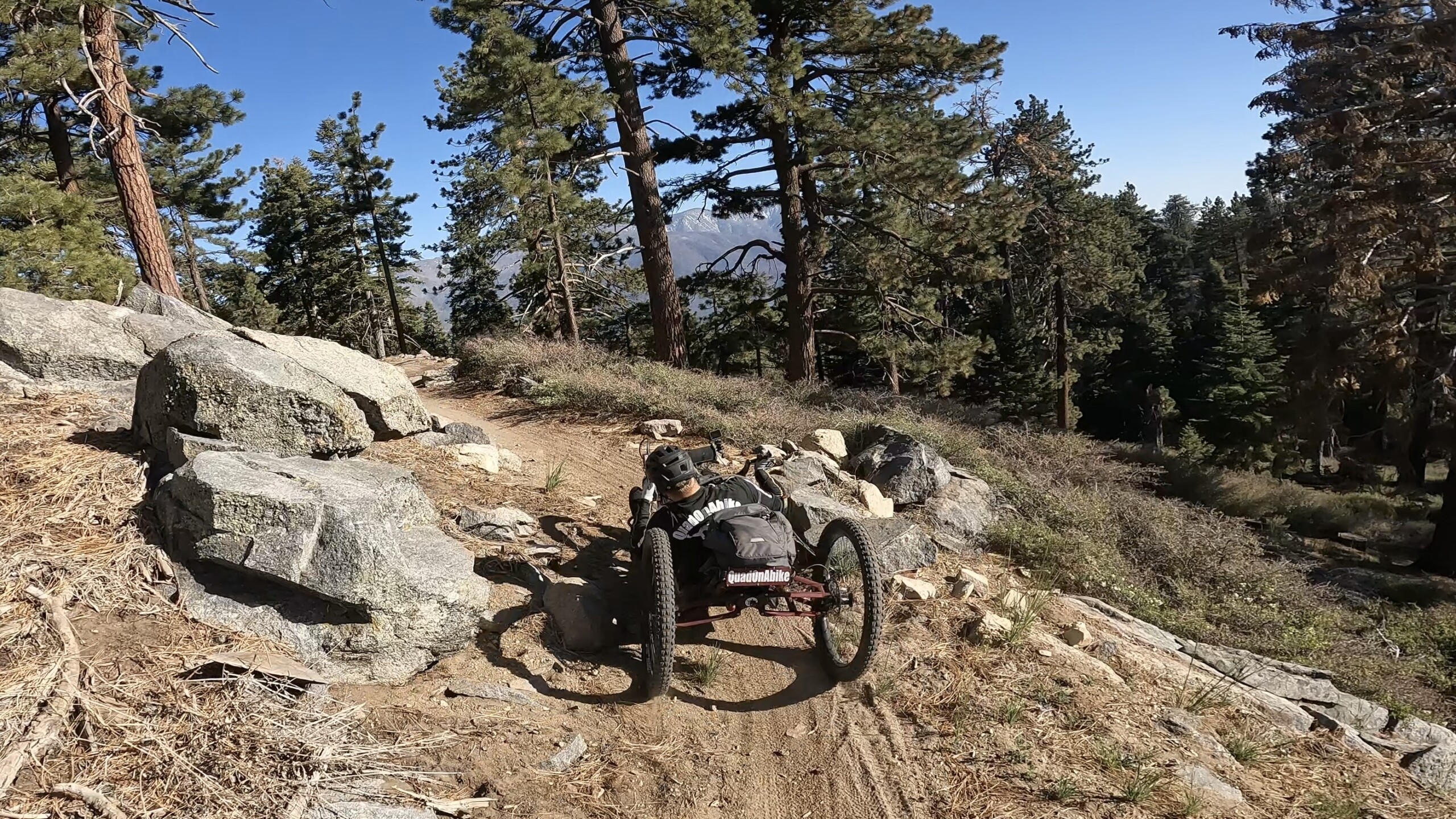
BIG BEAR LAKE, California (May 28, 2025) – The Big Bear Cycling Association (BBCA), in partnership with the Yuhaaviatam of San Manuel Nation and the United States Adaptive Recreation Center (USARC), is proud to announce the inclusion of adaptive cycling categories in the 2025 Tour de Big Bear. This new addition invites para cyclists, hand cyclists, and adaptive mountain bike (aMTB) riders to participate in one of Southern California’s premier cycling events.
Big Bear Lake Trails & Gravel. Photo by Phil Hashem/QuadOnABike
The expanded categories reflect BBCA’s strong commitment to accessibility and inclusion, allowing more athletes to experience the challenge and beauty of Big Bear Lake’s scenic roads, gravel paths, and trails.
In line with UCI standards, the 2025 Tour de Big Bear will feature adaptive events across road, gravel, and mountain disciplines—welcoming a broad range of impairment types. Adaptive athletes will have the opportunity to ride and compete alongside the general field in a supportive, world-class environment.
Big Bear Lake Trails & Gravel. Photo by Phil Hashem/QuadOnABike
To encourage participation, para cyclists are eligible for a 50% discount on registration. Registration is available online and onsite. Discount codes can be requested at TourdeBigBear.com/adaptive-cycling.
Big Bear Lake Trails & Gravel. Photo by Phil Hashem/QuadOnABike
Additionally, thanks to the generous support of the Yuhaaviatam of San Manuel Nation, the first 50 handcycle and aMTB riders to RSVP will receive free entry—including their support rider. After those slots are filled, the 50% discount will still apply. RSVP and registration details are available at TourdeBigBear.com/adaptive-cycling.
Big Bear Lake Trails & Gravel. Photo by Phil Hashem/QuadOnABike
The 26.4-mile road course features spectacular lake views and 1,300 feet of elevation gain, with a particularly challenging final 2.5 miles. The Dirty Burro aMTB course offers a 13–15 mile ride across paved roads, dirt tracks, and narrow singletrack trails through towering pines. This course is a non-competitive, timed event, designed to welcome various aMTB equipment types.
Big Bear Lake Trails & Gravel. Photo by Phil Hashem/QuadOnABike
The Tour de Big Bear is thrilled to welcome adaptive athletes to its diverse lineup of events, celebrating community, courage, and the spirit of cycling.
By Peter Abraham — As I have done for the last three years, I drove up to the long-running Sea Otter Classic last week. The event, held at Laguna Seca Raceway in Monterey, has been held every year since 1991. It’s a combination bike racing festival, trade show and community gathering for all kinds of bikes. I like just walking around the event and taking it all in. I also enjoy riding in some of the races if possible. Between observing things and talking to bike industry leaders, you can get a picture of what is happening in the ecosystem. Here’s what I learned this year:
Trade Tariffs
These were like a black cloud hanging over the event. From a distance, you could look across the venue and it seemed normal: thousands of cyclists, booths, brands — but when you got leaders one on one, you understood how devastating the tariffs are. I met with dozens of bike industry CEOs and leadership teams last week, and opposition to and anger with Trump’s reckless trade policies was unanimous. It’s not only the tariffs themselves but also the drunken, on again/off again nature of them that is preventing many businesses in America (not just bikes) from doing any planning for the future. Bike brands are truly paralyzed because they have no idea what they will be paying for their goods moving forward. And the tariffs come after three years of the worst recession the bike industry has ever had. Many brands were already on the ropes. It’s going to be a very, very difficult few years for bike businesses.
Brand America
You can’t deny that American brands selling abroad, particularly in Europe, Asia and Canada — are facing stiff headwinds right now. The collective anger around the world towards the United States should not be underestimated. Any brand associated with our country — Nike, United Airlines, Ford, etc. — is going to have a hard time selling in those markets. And I believe bikes are no different. We’ll see this more clearly when publicly traded companies release their Q2 earnings in early July.
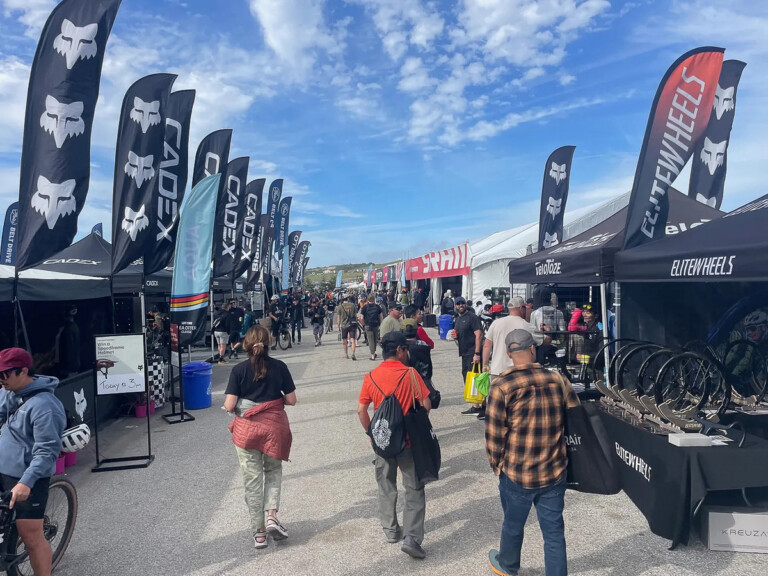
Sea Otter 2025 looked like business as usual. Photo by Peter Abraham
Technology
I’ve been writing about this for a couple years, but I did not see much new/interesting technology on display at Sea Otter. Most high-performance bike frames are all made using the same pre-preg carbon fiber process, at the same Asian factories, with designs that are almost identical. The only thing differentiating them is the paint job. There were some interesting 3D Printed MTB frames and parts, but you’d have to know to look for them. They were not promoted at all. (Disclosure: I’m part of a 3D Printing technology business in the UK) It feels to me like there’s whitespace for brands to experiment with new & different ways to make frames that solve customer problems.
Duopoly
There are two brands — SRAM and Shimano — that dominate bike components around the world. I grew up riding the Italian brand Campagnolo, which, while it still technically exists, feels like a historical footnote at this point. I know people at both SRAM and Shimano, and they make fine products. I’ve used both extensively over the last 20 years. But would the entire ecosystem be healthier with some competition? The Classified shifting system is interesting, and there may be some other people doing interesting things. But never once in three days at Sea Otter did I hear anyone say, “Peter, you have to go see what these guys are doing.”
Liv held an excellent panel aimed at women in the bike industry, with Rachael Burnside, Anne-Marije Rook, Michelle Duffy and Cassondra Spring. Photo by Peter Abraham
Diversity
I feel like a broken record here. The bike industry — both employees and customers — is too white and male. That category is only 30% of the American population, and the other 70% of our country is being mostly ignored by the bike world. This is not something that can be solved overnight by any single business. It will take collective energy over decades to overcome this. But it’s not impossible. I used to be in the running business, and I watched 5K races go from 25% female in 1990 to 57% female in 2015. Bikes could make similar progress if all of us commit to it.
Brand Energy
Where is the young, fresh energy around bike brands? I’m currently seeing the running world explode with innovative brands — Satisfy, Tracksmith, Bandit, Soar, etc. — and I ask myself why this isn’t happening in bikes. I do believe that Maap and Pas Normal Studios have some of this energy. But in the hardware category I don’t feel this, and there was very little creativity on display at Sea Otter that was inspiring. At least half of the brand booths at the event were just a tent with some bikes underneath. Can these brands not come up with something, anything, more interesting than that? Feels like many bike businesses don’t understand the importance of having a brand, a point of differentiation and a point of view.
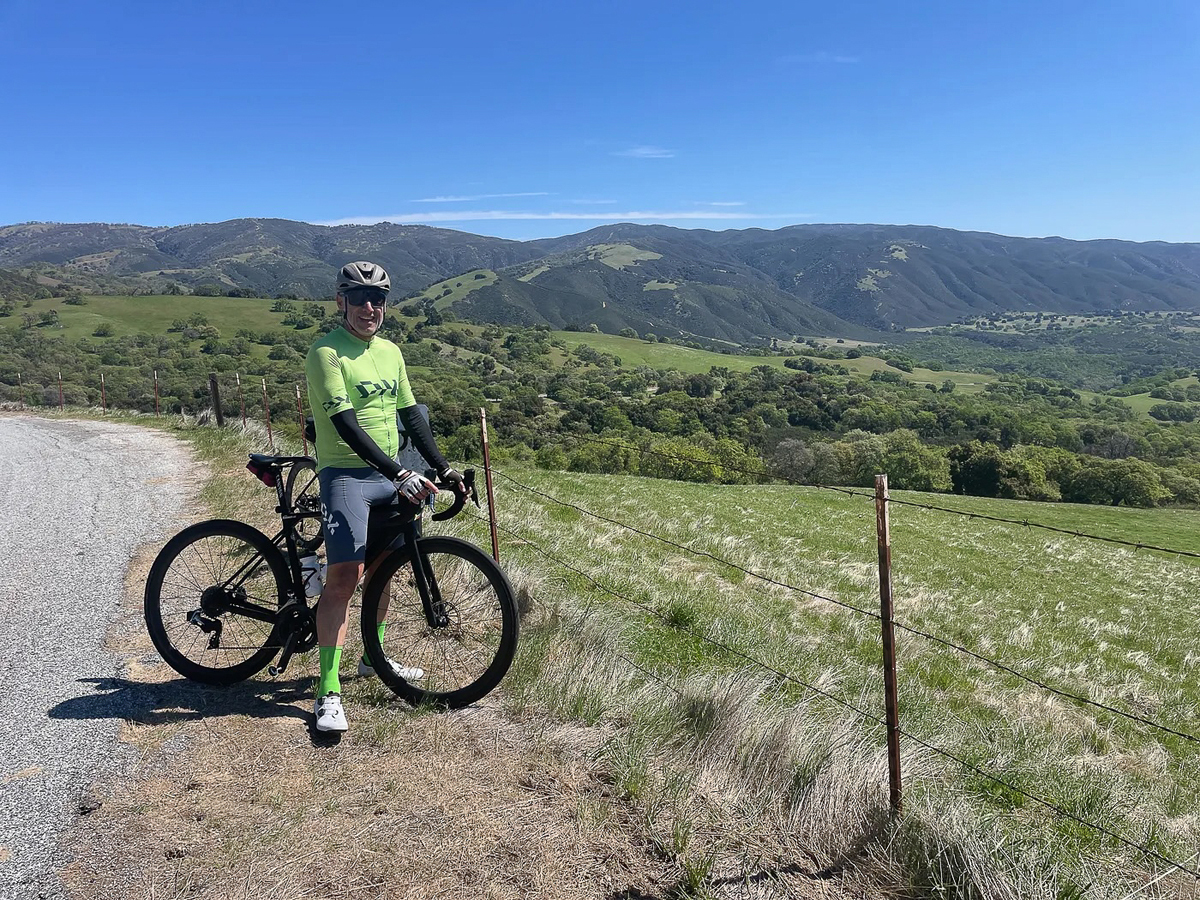
I rode in the beautiful 90-mile Carmelo Fondo. I love riding bikes in places like this! Photo courtesy Peter Abraham
Athletes
The first event of the Grand Prix gravel series took place on Thursday, and I was struck by how many pro athletes told me that the speeds were “insanely fast.” As is happening in European road racing, people seem to show up to the first races fitter and fitter each successive season. “Racing your way into shape” is no longer possible, and in any cycling discipline in 2025 — road, MTB, gravel — the fitness levels are exceptional, the fields are deep, and the racing is very fast from the gun.
Conclusion
Overall it feels like the bike industry is in a flat spot right now. Part of that is due to circumstances beyond its control — unnecessary trade tariffs — but also the industry has stopped innovating, building diverse communities and building compelling brands. I look at the current landscape, and I smell opportunity. The time is ripe for some interesting businesses to enter the bicycle space and grab market share. Let’s see what happens over the rest of this year.
Peter started racing bikes in high school and has continued to ride his entire life. He also runs the Abraham Studio (ABRHM.com), which works with purpose-driven brands in sports, technology and healthcare to find their voices and tell their stories. He lives in Los Angeles, California.
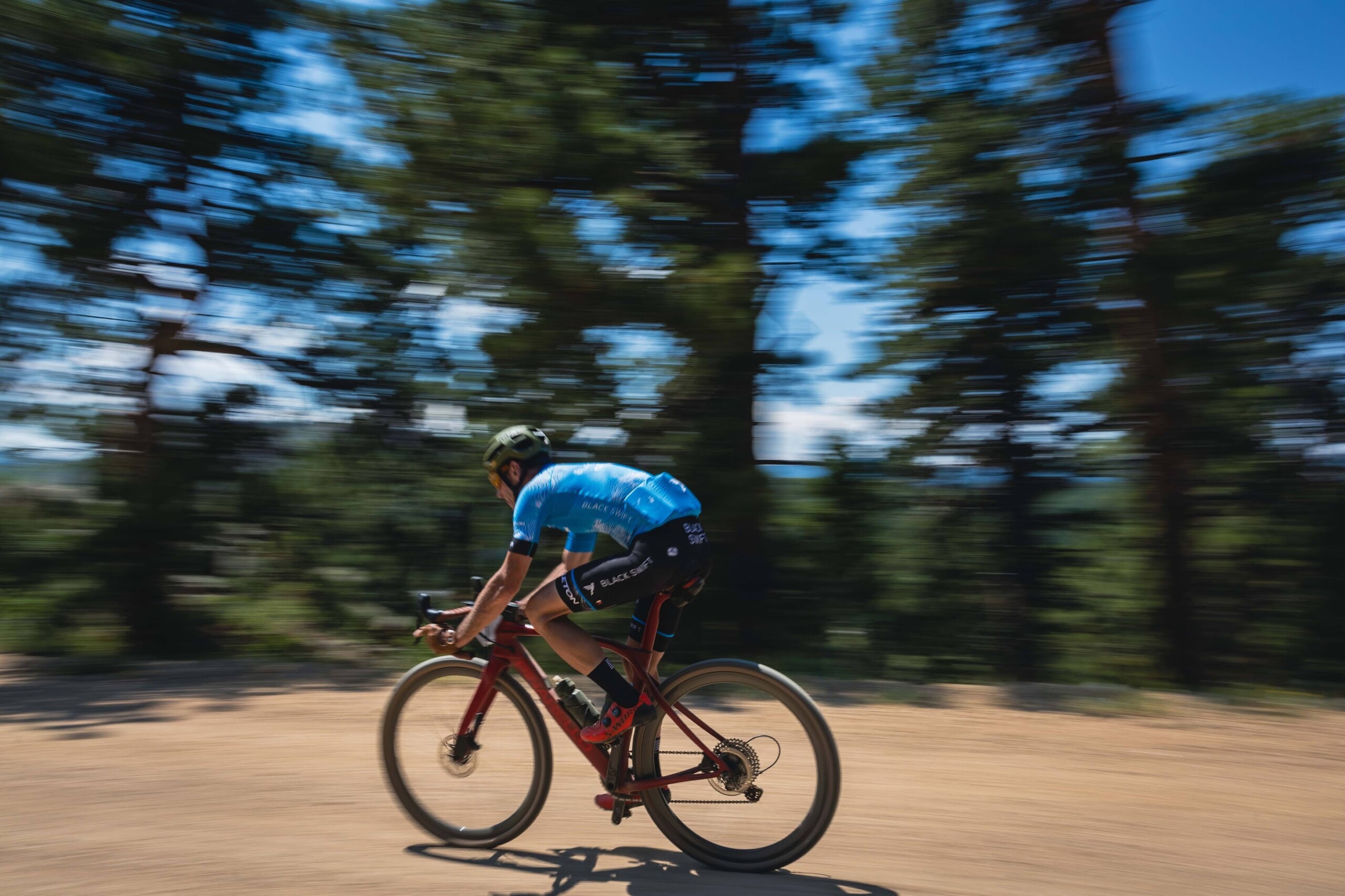
BOULDER, Colorado (June 5, 2025) — Tucked high in Colorado’s Front Range, at the cusp of alpine wilderness and bohemian charm, Nederland is no stranger to grit, grandeur, or good coffee. But once a year, the town’s winding roads, wildflower-lined climbs, and weathered soul converge in something altogether magical: Ned Gravel.
Now entering its fifth edition on July 12, the Ned Gravel event returns not only bigger, but more thoughtfully dialed than ever—a celebration of both cycling’s rugged individualism and its enduring power to build community.
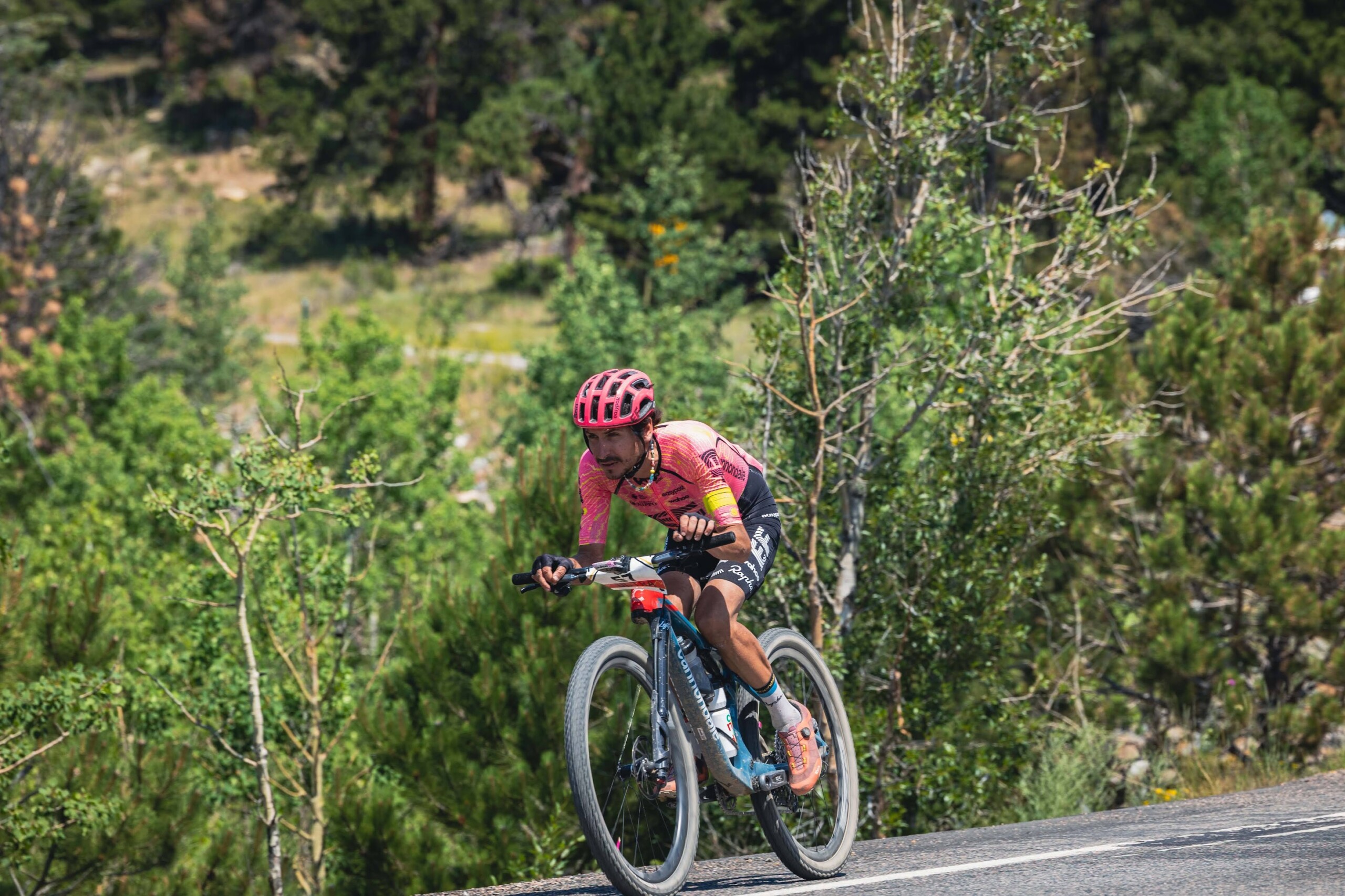
Lachlan Morton racing at the 2024 Ned Gravel. Photo by @jacestout, courtesy Ned Gravel
From its start in 2021, Ned Gravel has quickly evolved into a must-ride for gravel connoisseurs. Equal parts challenge and celebration, the race attracts everyone from elite riders chasing altitude-induced transcendence to locals and newcomers eager to test their legs—and lungs—on some of the highest gravel terrain in the U.S. Courses range from accessible to audacious, with routes spanning altitudes of 8,000 to 10,300 feet, across a medley of chunky dirt, weathered tarmac, technical descents, and grinding climbs.
But Ned Gravel is more than just elevation and watts. It’s a vibe. A mountain town festival-meets-endurance crucible, where inclusivity and community aren’t marketing bullet points—they’re baked into the DNA.
Photo by @jacestout, courtesy Ned Gravel
“Ned Gravel is such a great bike race, but it’s also so much more than that,” says Founder and Race Director Gavin Coombs. “We’ve worked hard to cultivate something that feels genuinely local, genuinely inclusive—and powerful in its ability to give back.”
Indeed, every rider who clips in is also supporting something far bigger. Ned Gravel is the flagship event for the Peak to Peak Endurance Foundation, a nonprofit rooted in Nederland that funds youth sports programs including hockey, soccer, basketball, and mountain biking. With registration proceeds and fundraising efforts, the event is expected to top $50,000 in local contributions this year—a milestone that reflects the generosity and values of the Ned Gravel community.
The expo and race bring a seasonal boost to Nederland’s economy as well, filling cafés, taprooms, and restaurants with riders and spectators who often return later in the year—not for a KOM, but for a good pour-over or a hike with the family.
Photo by @jacestout, courtesy Ned Gravel
Still, make no mistake: Ned Gravel is a serious test of form. Whether tackling the short but spiky “Taster” course or the grueling “Big Daddy” route, riders should come prepared for lung-searing climbs and technical terrain—with panoramic payoffs and a roaring local crowd to soften the suffering.
But the real magic? It’s the feeling that this race—this place—belongs to everyone. The vibe is unfussy, the support is fierce, and the air at 9,000 feet has a way of clearing more than just the lungs.
By Charles Pekow — First, the encouraging news: traffic fatalities in the United States fell by 4.3% in 2023 from 2022. Now the distressing part: pedalcyclist fatalities went up 4.4% over the year—49 more deaths. The figures come from the final Traffic Safety Facts Research Note published by the National Highway Traffic Safety Administration (NHTSA) for 2023 (crashstats.nhtsa.dot.gov/Api/Public/ViewPublication/813705).
The number of pedalcyclist injuries increased a statistically significant 8.2%, as 3,794 more riders got hurt. The figures include e-bikes, mechanical bikes, tricycles, unicycles, and other pedal-powered vehicles.
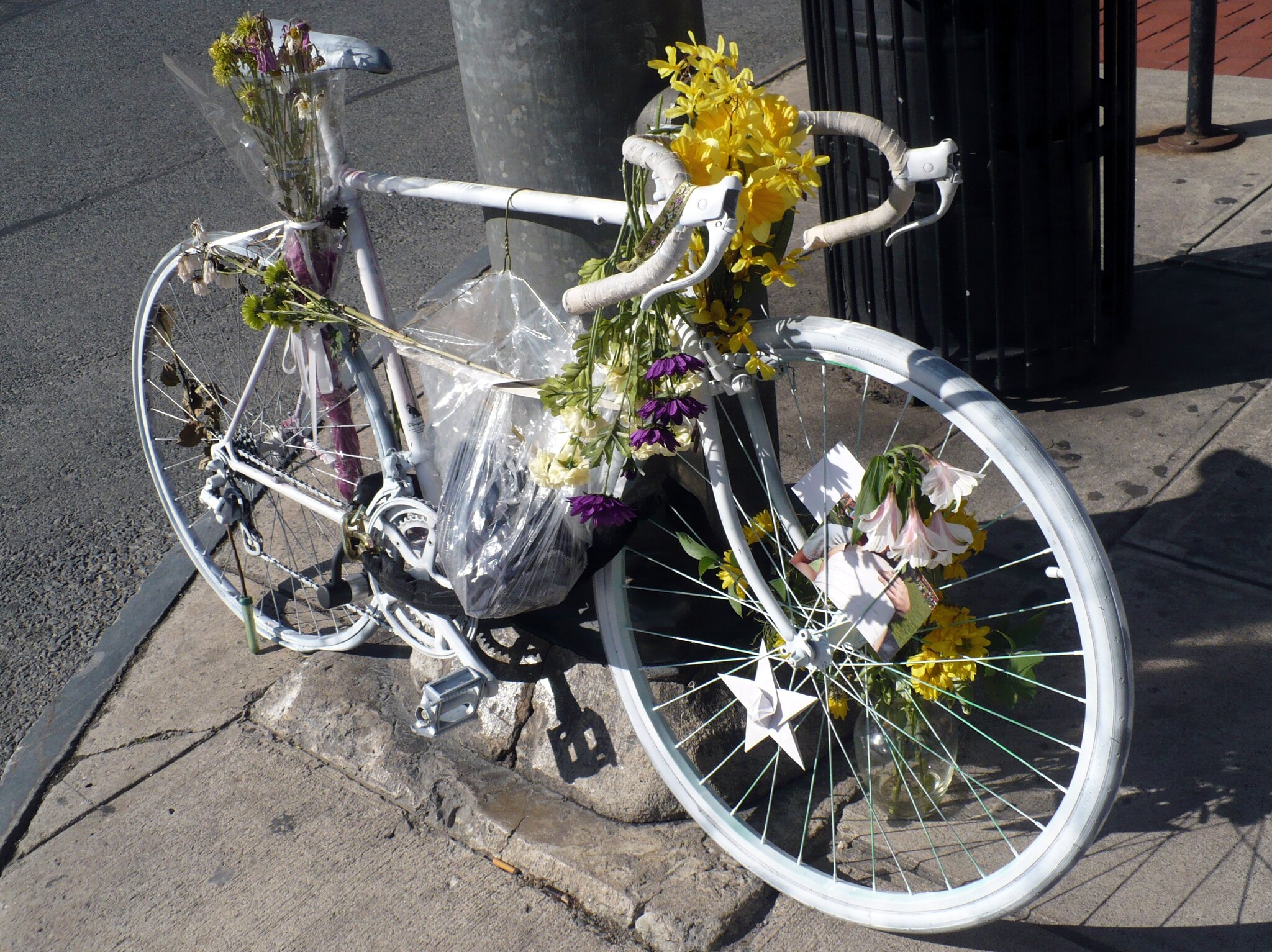
Even a slight reduction in cyclist deaths is welcome. One less death means one less ghost bike. Photo by Philip Chapman-Bell, CC BY-NC-SA 2.0 ATTRIBUTION-NONCOMMERCIAL-SHAREALIKE 2.0 GENERIC
NHTSA reports that of the 1,166 pedalcyclist fatalities, 274 (23%) were involved in hit-and-run crashes in 2023. That represents a 1.9% increase, or five more deaths than in 2022.
NHTSA’s press office says the agency can’t explain what causes changes in the accident rates. On a cheerier note, we reported last issue that NHTSA’s preliminary data for the first half of 2024 showed a slight decline in cyclist deaths (cyclingwest.com/advocacy/cyclist-death-rates-down-in-2024/). Of course, that means that the death rate picked up in the latter half of the year..
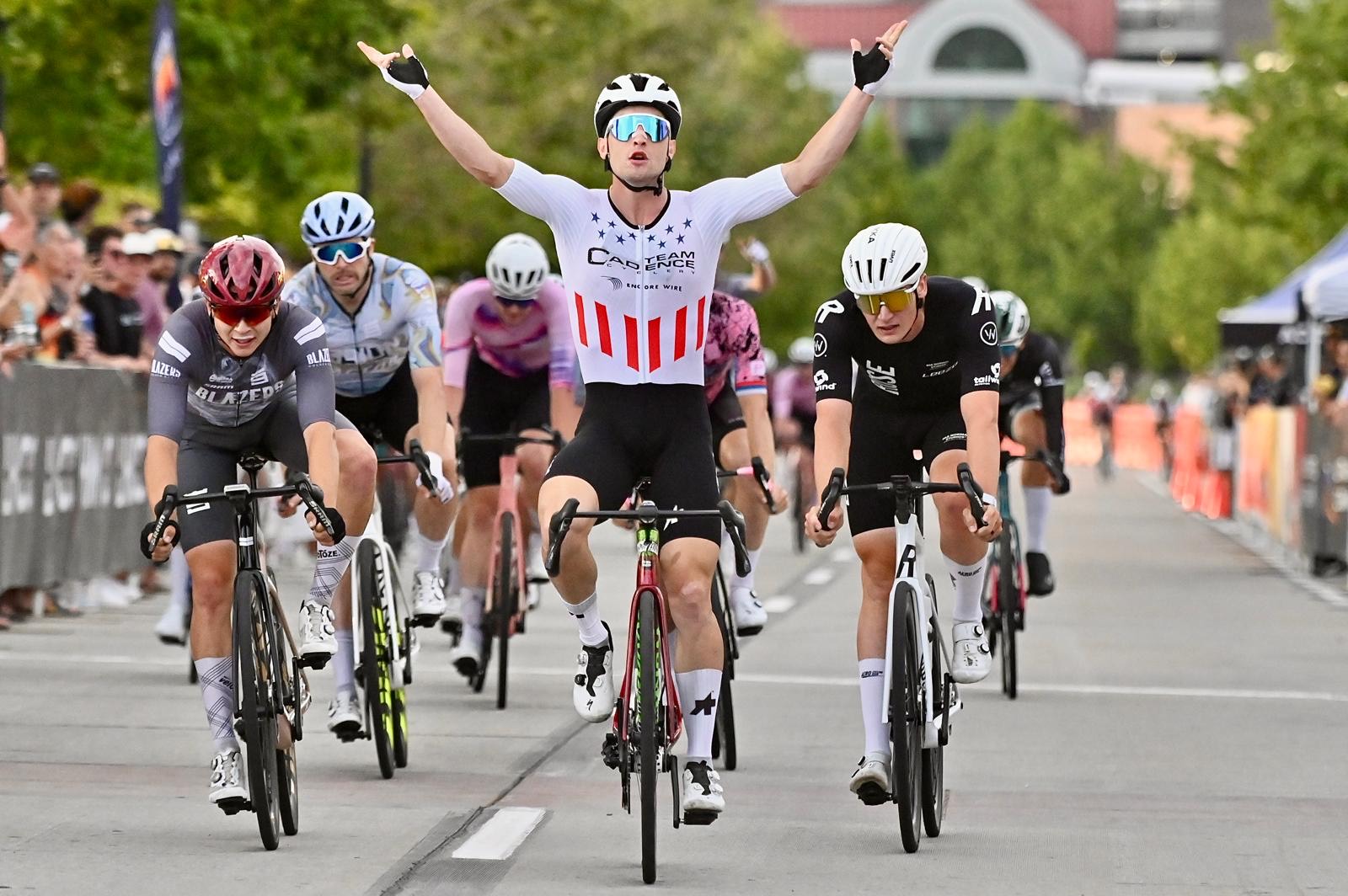
By Logan Jones-Wilkins: SANDY, Utah — Lucas Bourgoyne (Cadence Cyclery) and Kendall Ryan (L39ion of Los Angeles) took sprint wins on night one of the Utah Crits series in Sandy. The ACC showdown in the Beehive state was perfectly suited for sprint finals with a short, wide course around the Sandy Promenade, the site for Saturday’s race.
In the women’s race, Ryan had to fend off a series of late breaking moves from Kingdom Elite and Cynisca Cycling. Without a team, all eyes were on her, but the veteran sprinter was able to stay the course, be patient, and make it count when the sprint opened up with a hundred meters to go.
The men’s race flipped the script with a lot of aggressive racing early as the team-less riders tried to forge clear. One team that was especially active was Cadence Cyclery, which was curious given that it was the team of Lucas Bourgoyne — perhaps the fastest sprinter in the field. Yet, as Bourgoyne raised his hands across the line, it was clear there was a method to the strategy.
Bourgoyne bounces back in Sandy sprint
The men’s race in Utah was set as a perfect chance for redemption for Lucas Bourgoyne and Cadence Cyclery team after striking out at the Saint Francis Tulsa Tough ACC stop. Despite an early season of great form, Bourgoyne was sick in the lead into Tulsa and the team couldn’t get together for the final sprint. From the word go in Sandy, it was clear the team was going to go all out to reverse their fortunes at stop number two.
Luke Fetzer (Cadence Cyclery) was the early aggressor for the team, rolling a few attacks early including a solo breakaway for almost ten laps in the opening 30 minutes of the race. Bourgoyne and their teammate Richard Holec were both active in tracking down the counter attacks and made their presence felt at the front of the peloton for much of the early attacking period of the race.
They were countered by the strong solo riders who were trying to get up the road rather than fend for themselves in the sprint with Danny Summerhill (L39ion of Los Angeles) and Brody McDonald (Golden State Blazers) among the more active aggressors. While plenty of riders and teams seemed open to a breakaway, ultimately, nothing beyond Fetzer’s early solo challenged the odds of it being a grand sprint final in the end.
Most of the action instead came from the big money primes during the race, primary of which was the ACC Green Jersey points at the halfway point. Summerhill, who won the jersey last year, is back to fight for the jersey again this season and dutifully claimed full points at the halfway point.
In the second half of the race, all the attacks started to peter out as the sprint seemed more and more likely. The teams that were present consolidated around their sprinter, while the solo riders found the wheels they wanted to follow into the last few laps. All of this culminated in the final lap when Cadence Cyclery came with three riders out of turn one and ready to launch Bourgoyne to the line. With Holec as the lead out and Fetzer as the sweeper, they were in perfect position setting up for the tight final two turns.
Nevertheless, a gutsy challenge from Dusan Kalaba (Parks Law Firm All-Stars) and Maurice Ballerstedt came at the last moment and suddenly Bourgoyne was sprinting from third in a tailwind sprint. Bourgoyne remained calm, however, and stepped out of the draft with 50 meters to go to kick clear of Ballerstedt and claim his first ACC victory ahead of the German and McDonald who completed the podium.
“In the altitude and in the heat everyone was really flat,” Bourgoyne said after the race. “Breakaways would look like they would get away, but after 5 minutes of effort everyone was obliterated.”
“It made for a slow sprint as well because our team was a little spread out. We had Richard Holec come through with one to go, I couldn’t find Luke [Fetzer] but then I looked back and saw him dive bombing like a crazy man into turn one and we were lined up from then on.”
Maddox Simmons — Chaney Windows and Doors Pastaria
Conor Mullervy — Clif Family Drifters
Alejandro Che — Kelly Benefits Cycling
Jade Rohde — Rio Grande Elite Cycling
Ryan snatches another sprint win at the last moment
Heading into the second ACC race of the season, Kendall Ryan knew she had less of a margin for error compared to her win on night one of competition. Without the help of teammates, like Holly Breck and Laurel Rathburn who were key to her win at the Blue Dome DIstrict, she’d have to find a way to keep it all together on her own.
For most riders, that would be a tall order. Yet, Ryan has a way of being a one woman wrecking crew if the conditions are right.
The first half of the race proceeded with a few moves, mostly coming from Kingdom Elite which was the team with the biggest collection of riders after crashes took a few of the Virginia’s Blue Ridge Twenty28 riders out of contention early, but most of these moves were in ones and twos. More significantly, there always seemed to be other riders willing to close things down despite Ryan being the odds on favorite at the end.
Throughout this attacking, Heidy Praderas (Kingdom Elite) was the most prolific with multiple stints off the front. One of those expeditions netted the ACC Green Jersey for her mid race prime win, while the other one came towards the end of the race and looked for a time like she might just take the win. Praderas at one point in the final ten laps had over half a minute on the chasing peloton without a clear cut team to nail the gap back.
Nevertheless, a last pitch prime in the final three laps got the peloton motivated enough to close the gap down before the sprint could proceed.
One final move from Tess Edwards (Cynisca Cycling) looked like it could rip up the script at the last possible moment, just as a move from Cynisca in Tulsa looked like it would as well, but ultimately the outcome was the same: in the end, Kendall Ryan catches the attacker at the last most, times her sprint to perfection, and wins.
Behind Ryan it was Aline Seitz and Rylee McMullen completing the podium.
“It’s a cool course, really fast, but the wind did a total 180 on us after I prerode this morning,” Ryan said after the race. “We had a tailwind finish instead of a headwind so I had to rethink where I wanted to sit heading into the last corner.”
“It kind of got dicey because of the last minute move by Tess Edwards but during the race I tried to not do too much. I lit one match to see what would happen, but it stayed together the whole time. Kingdom Elite did ride a really strong ride today and sent a few attacks way up the road which did make me nervous, without any teammates.
“I have been racing in the humidity and today it was so dry, I drank both my bottles, but yeah its a fun course and I am just happy to be out here.”
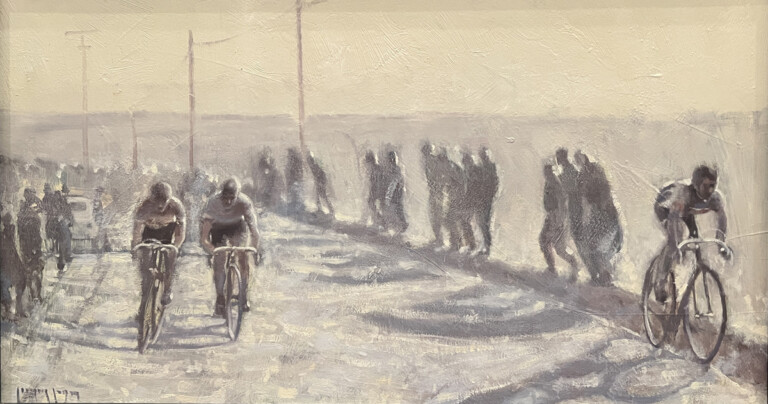
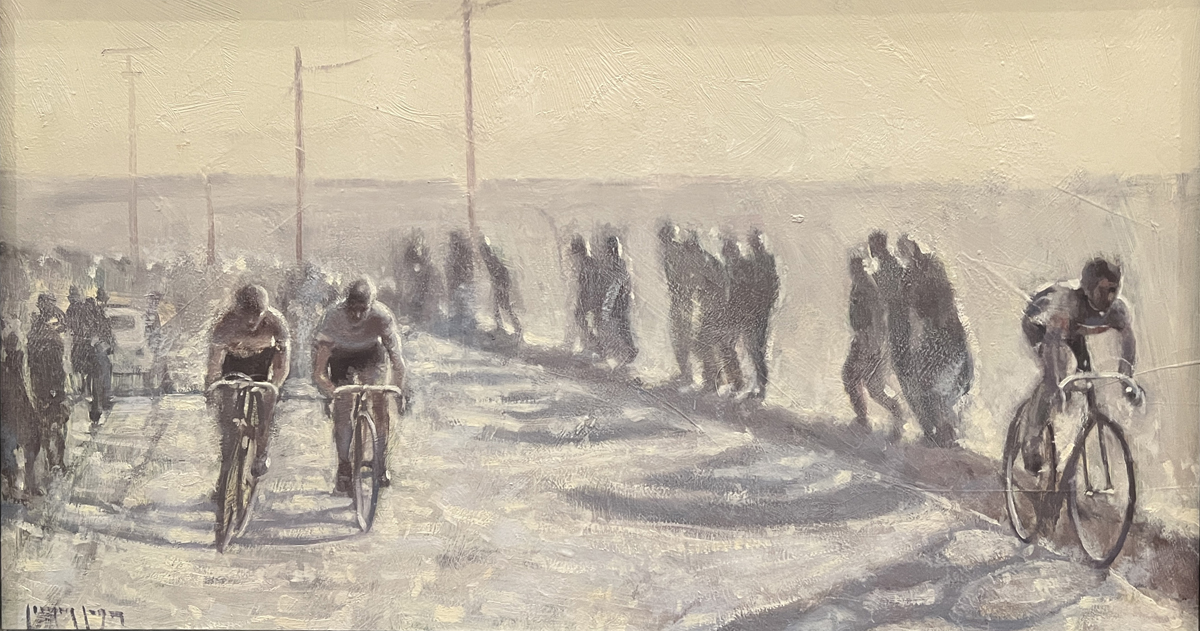
Artist: Trenton Higley
Title: Roubaix
Medium: Oil on canvas
Size: 24: x 12″
Roubaix. 12×24 oil available at 15th Street Gallery in Salt Lake City. Painting by Trenton Higley
Artist bio: Trenton Edwin Higley (b. 1970) is a American Artist specializing in beautifully handcrafted representational figures, landscapes and narrative works in oil and watercolor.
Often set within and around the Wasatch Mountains near by, his timeless paintings of strong alluring figures placed in intriguing situations or simply posed in a Landscape, strike a pleasing balance between the classical and the contemporary. His paintings are part of his desire to be in the outdoors riding his bicycle or skiing with his family.
Along with solo, joint and group shows in Jackson Hole Wyoming, Park City and Salt Lake City Utah and countless commissions, his artwork has been in many collections including Robert Duvall and Stetson inc.
Where: Trenton’s work is featured at 15th Street Gallery in Salt Lake City. The gallery is located at 1519 S 1500 E, Salt Lake City, UT 84105; 15thstreetgallery.com
Lenny Martinez’s stunning victory on the final stage caps a dramatic week in the Alps, while Tadej Pogačar secures his first Critérium du Dauphiné title ahead of the Tour de France
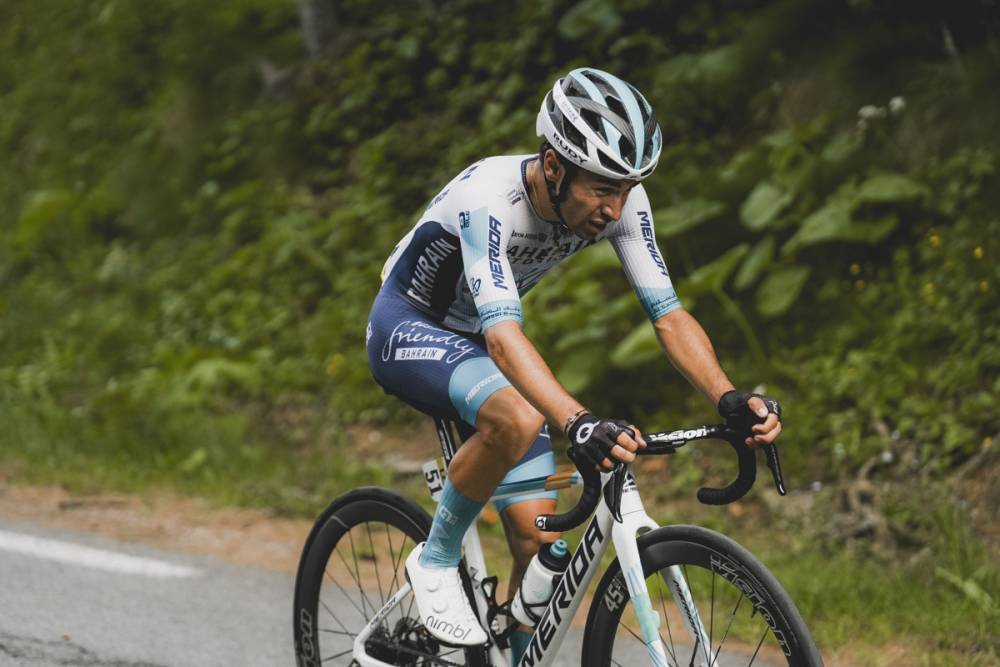
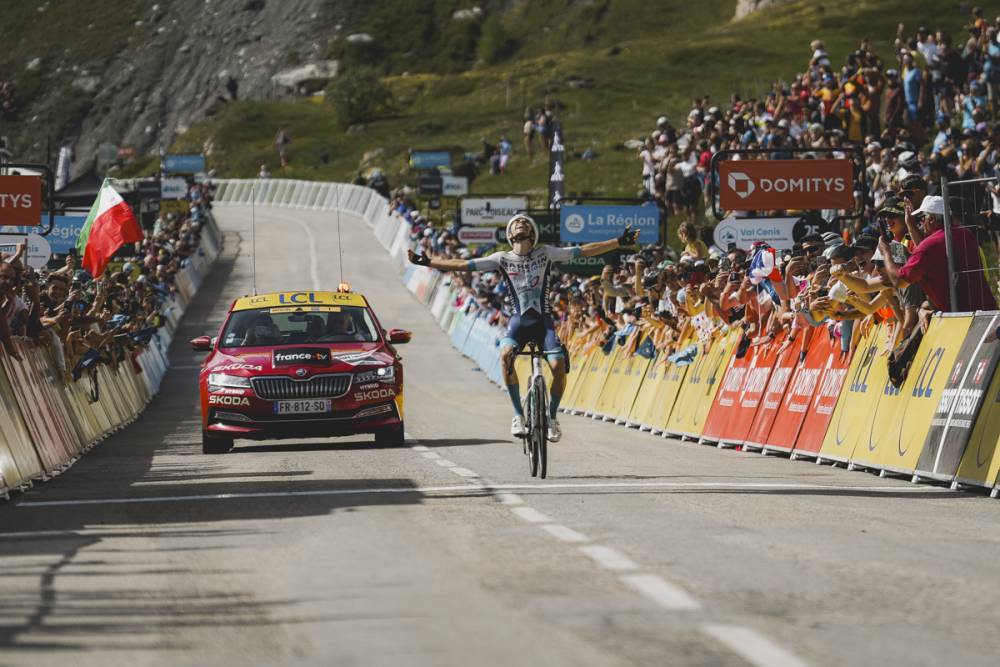
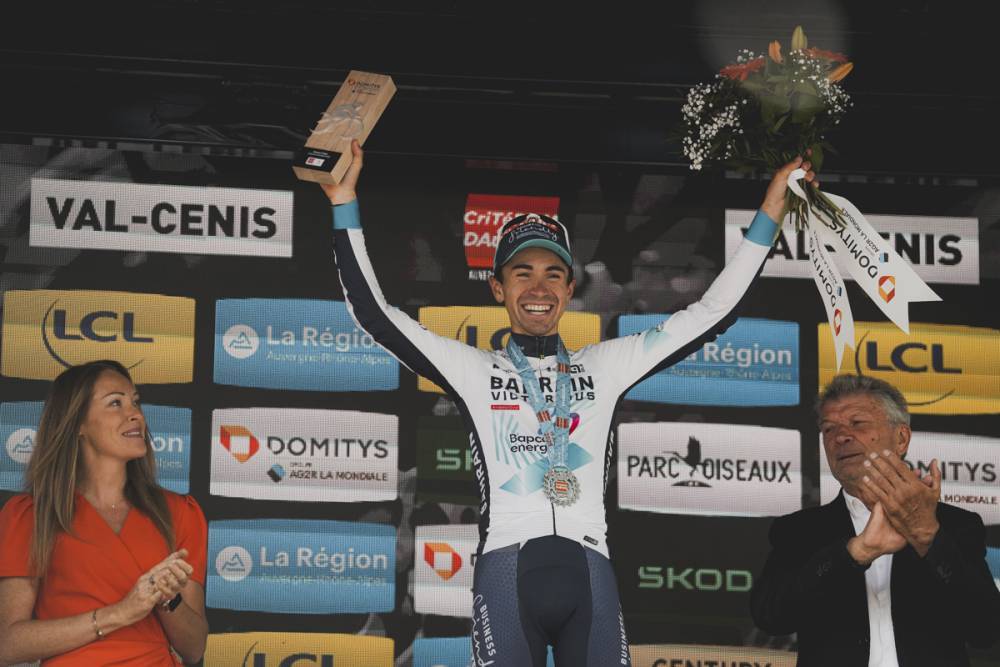
VAL-CENIS, France — The thin mountain air at 2,000 meters seemed to suit Lenny Martinez just fine. With eight kilometers of climbing still ahead of him, the 21-year-old Frenchman dropped Enric Mas of Spain like a stone and never looked back, soloing to victory on the punishing final stage of the Critérium du Dauphiné as cycling’s biggest stars watched helplessly from behind.
It was a moment of pure audacity from a rider who had entered the day with modest expectations. Martinez, riding for Bahrain Victorious, had struggled in recent stages and wasn’t feeling particularly confident. But sometimes in cycling, as in life, the legs surprise you when it matters most.
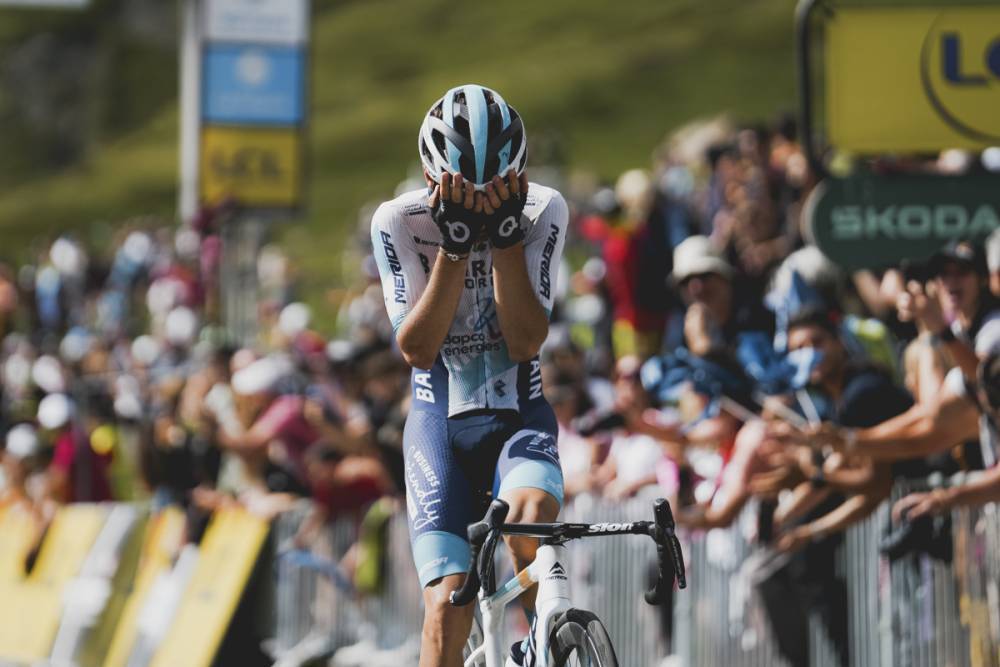
“I wasn’t expecting much today,” Martinez said after his triumph on the slopes of Col de Mont-Cenis, still catching his breath from the effort. “Yesterday, I was really bad, and I hadn’t been feeling great the days before either. So I wasn’t expecting much today. But then I finally felt good at the start, so I decided to go for it.”
His victory — the third World Tour win of his young career — provided the perfect exclamation point to a week that saw Tadej Pogačar of Slovenia methodically dismantle his rivals to claim his first Critérium du Dauphiné title, a traditional dress rehearsal for the Tour de France that begins in just over two weeks.
The Battle Unfolds
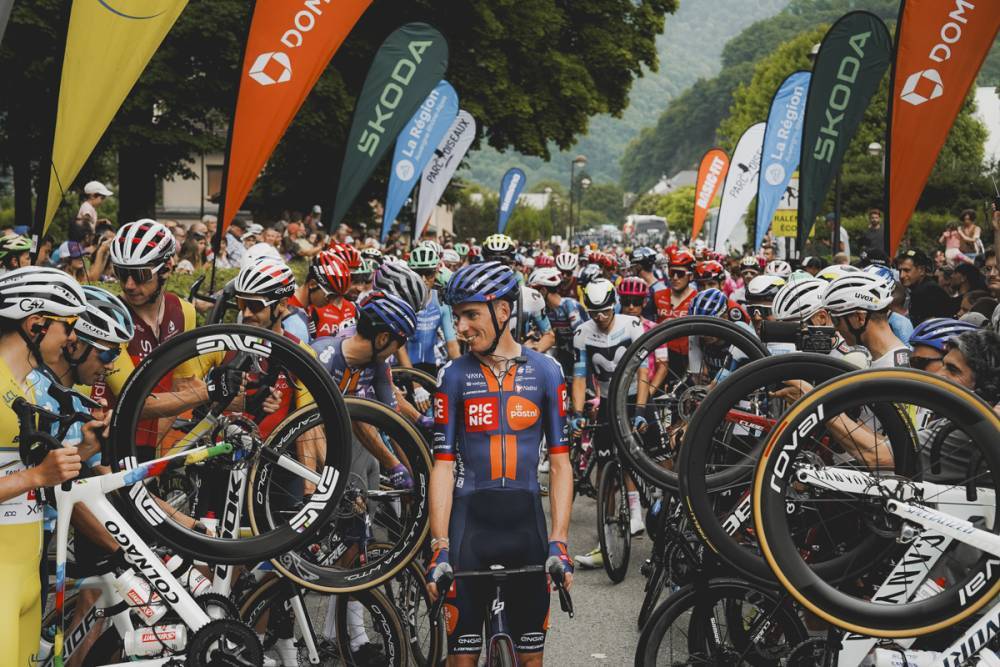
The stage began with 135 riders rolling out from Val-d’Arc, including Romain Bardet, who was honored with a guard of honour as he began his final day as a professional cyclist. But ceremony quickly gave way to combat as the race exploded into action from the opening kilometers.
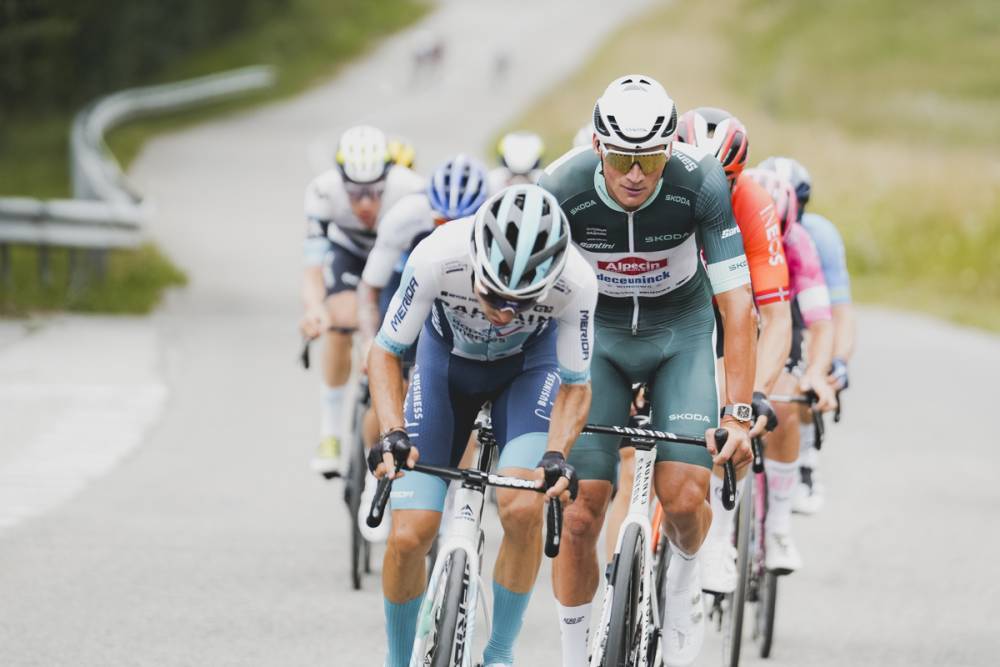
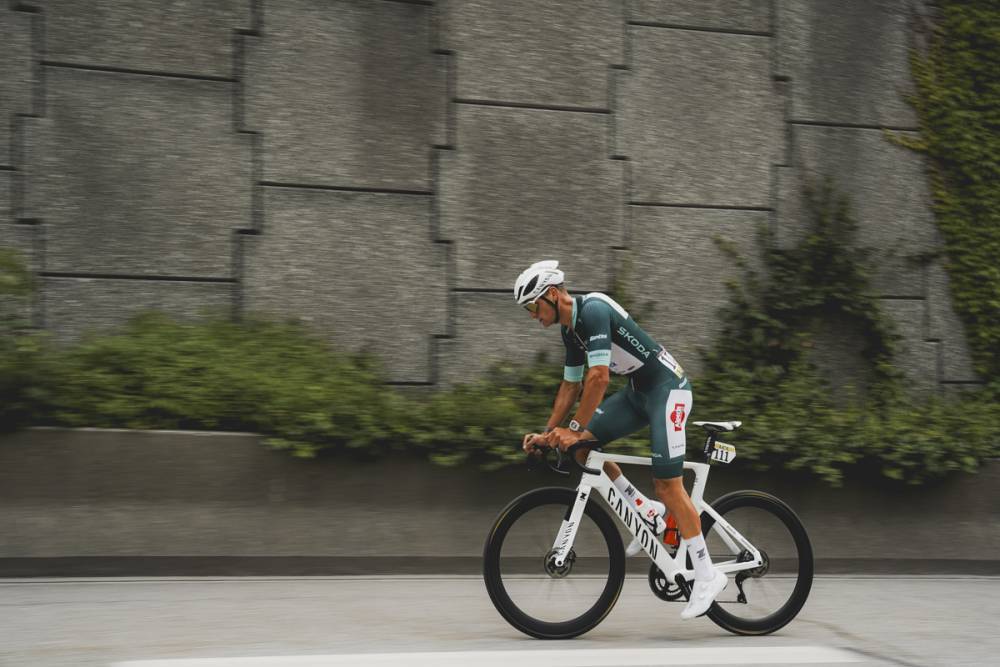
As has become his trademark, Mathieu van der Poel of Alpecin-Deceuninck fired the first shots, attacking over the category-3 Côte d’Aiton just 4.7 kilometers into the stage. The Dutch superstar’s initial move was neutralized, but his relentless pressure eventually cracked the peloton open, allowing a star-studded 12-man breakaway to form at kilometer 14.
The composition of the break was telling: alongside Martinez and van der Poel rode Max Van Gils (Red Bull-Bora-Hansgrohe), Sepp Kuss (Team Visma-Lease a Bike), Valentin Paret-Peintre (Soudal Quick-Step), Bruno Armirail (Decathlon AG2R La Mondiale), Ben Healy (EF Education-EasyPost), Enric Mas and Ivan Romeo (both Movistar Team), and Alexey Lutsenko (Israel-Premier Tech).
With four minutes of breathing room by kilometer 36, the break seemed destined for glory. But cycling rarely rewards complacency. Behind them, Uno-X Mobility began a methodical chase to protect Tobias Johannessen’s fifth place overall from the dangerous Mas. The gap hemorrhaged time — down to 2:30 by the summit of Col de Beaune at kilometer 66.7.
Van der Poel’s Gambit
The race’s narrative shifted dramatically when van der Poel, never one to sit idle, launched another explosive attack before the intermediate sprint in Saint-Michel-de-Maurienne. The former world champion’s acceleration was devastating, instantly creating a 1:10 gap as he crested the Côte d’Aussois alone at kilometer 101.
For a tantalizing moment, it appeared the Dutchman might solo to victory, his powerful pedal strokes eating up the kilometers toward the final climb. Behind him, Ivan Romeo of Movistar Team worked desperately to organize the chase, the Spanish climber understanding that his teammate Mas’s overall ambitions hung in the balance.
But van der Poel’s heroic effort came undone just before the base of the Col de Mont-Cenis, the day’s decisive climb. The elastic had stretched too far, and cycling’s harsh mathematics caught up with him. He was swept up by his former companions, setting the stage for the day’s real drama.
The Mountain Decides
The Col de Mont-Cenis — 20 kilometers of climbing at an average gradient of 5.1% — has always been a brutally honest judge of form. As the breakaway hit the lower slopes, the attacks came in rapid succession, each one winnowing the group further.
Mas, the experienced Spanish climber, made the first serious move, his acceleration designed to drop everyone except the very strongest. Only Martinez could match him, the young Frenchman’s climbing style appearing effortless as he shadowed the Movistar rider’s every move.
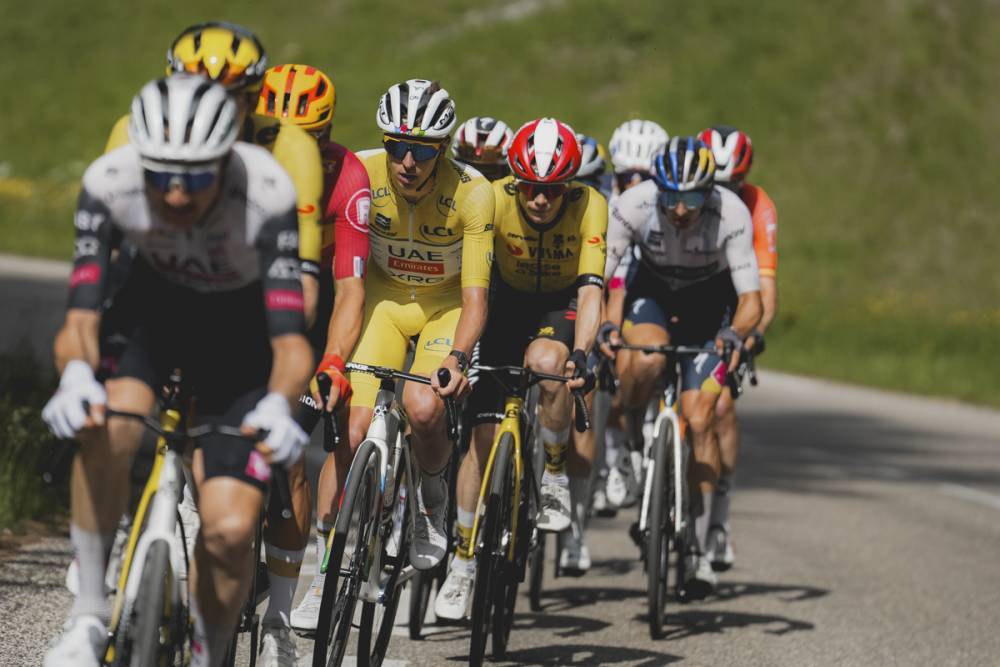
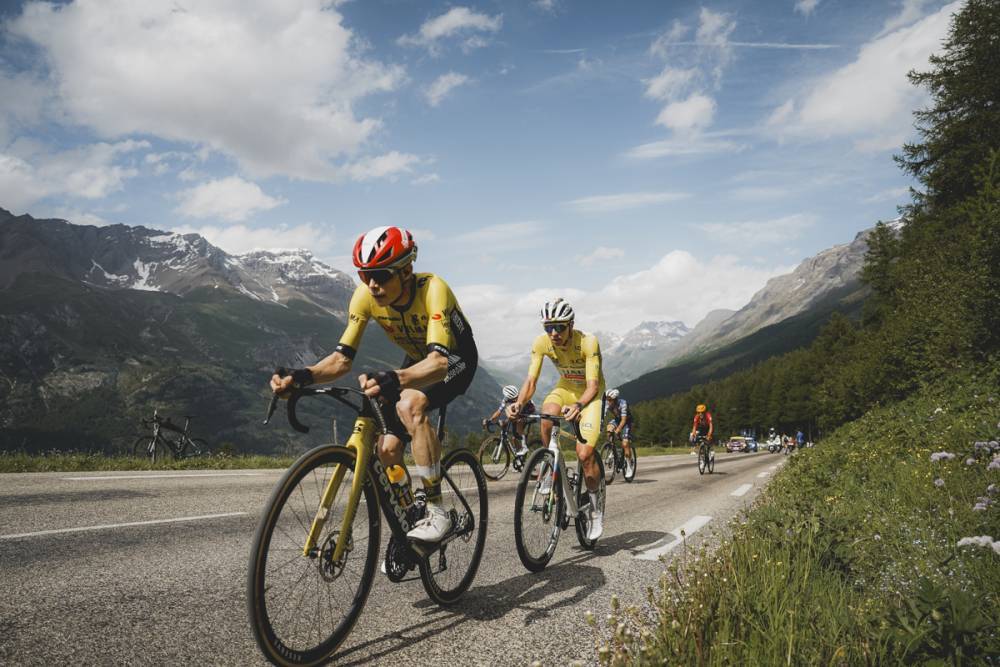
Behind them, chaos reigned. Jonas Vingegaard of Team Visma-Lease a Bike, the two-time Tour de France champion, began his own series of probing attacks in the main field. Only Tadej Pogačar of UAE Team Emirates XRG could follow, the two rivals locked in their familiar dance of thrust and parry.
With eight kilometers remaining to the summit, Martinez made his decisive move. It wasn’t a violent acceleration — more a gradual ratcheting up of pace that left Mas grasping at thin air. The Frenchman crested the summit with a 50-second advantage over the Pogačar-Vingegaard duo, who had dispatched the remnants of the breakaway in the final 1.5 kilometers.
A Champion’s Calculation
The five-kilometer descent to the finish in Val-Cenis became a test of nerve and tactical acumen. Martinez, despite his youth, rode with the composure of a veteran, taking calculated risks on the technical descent while maintaining enough of his advantage to secure victory.
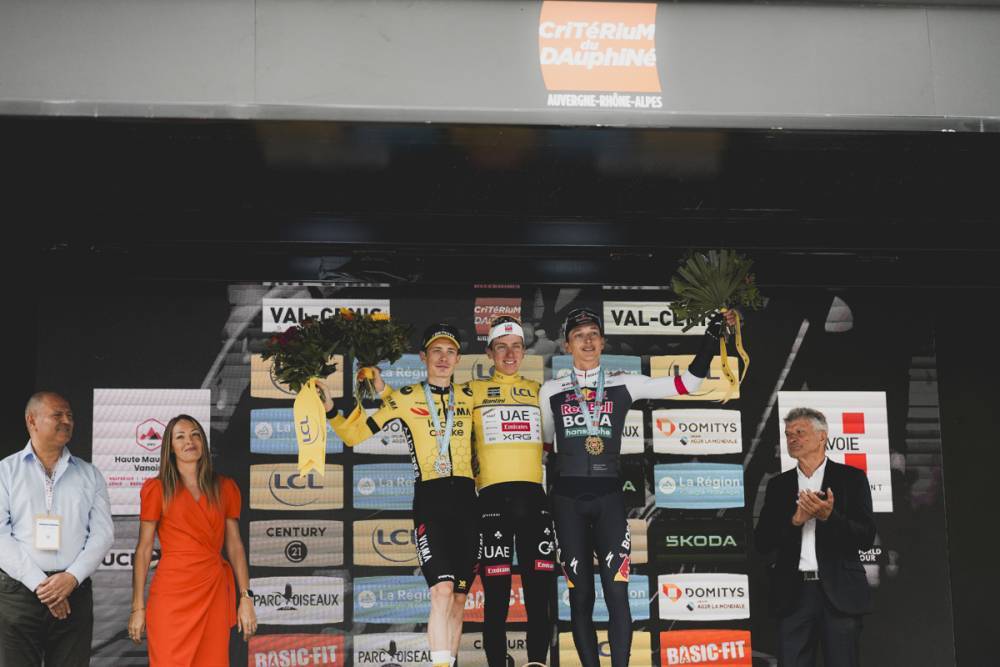
Behind him, Pogačar had already accomplished his primary objective — securing his first Critérium du Dauphiné title with his 59-second overall victory margin over Vingegaard. Yet the Slovenian continued to match his Danish rival’s every acceleration, a psychological statement that spoke volumes about their ongoing rivalry.
“At one point, I thought Van der Poel was going to win, then I thought I was going to get caught by the Pogačar-Vingegaard duo a little later,” Martinez reflected afterward. “It would have been a real shame, but it worked out! I was going all out until the last kilometre and it was only at the end that I really believed it was possible to win.”
When Martinez crossed the line 34 seconds ahead of Vingegaard and Pogačar, his arms raised in triumph, it marked not just a stage victory but the announcement of France’s newest climbing sensation.
The Anatomy of a Masterclass
Pogačar’s path to overall victory was anything but straightforward. After losing significant time in an early time trial, the two-time Tour de France champion found himself facing deficits that would have demoralized lesser riders. But the 26-year-old possesses an almost supernatural ability to turn adversity into opportunity.
“There’s a lot of positives from this week and we turned all the negatives into positives, so it’s all good,” Pogačar said with characteristic understatement after securing his 99th professional victory. “It’s been a really amazing week. Once again today, the team did a great job. We managed to defend the jersey and we can go home happy and prepare for the Tour.”
The tactical chess match that unfolded over eight stages showcased why Pogačar is considered the most complete rider of his generation. His climbing prowess was never in doubt, but his ability to limit losses when the terrain didn’t suit him, then strike decisively when it did, demonstrated the calculating intelligence that separates champions from also-rans.
Supporting Cast Excellence
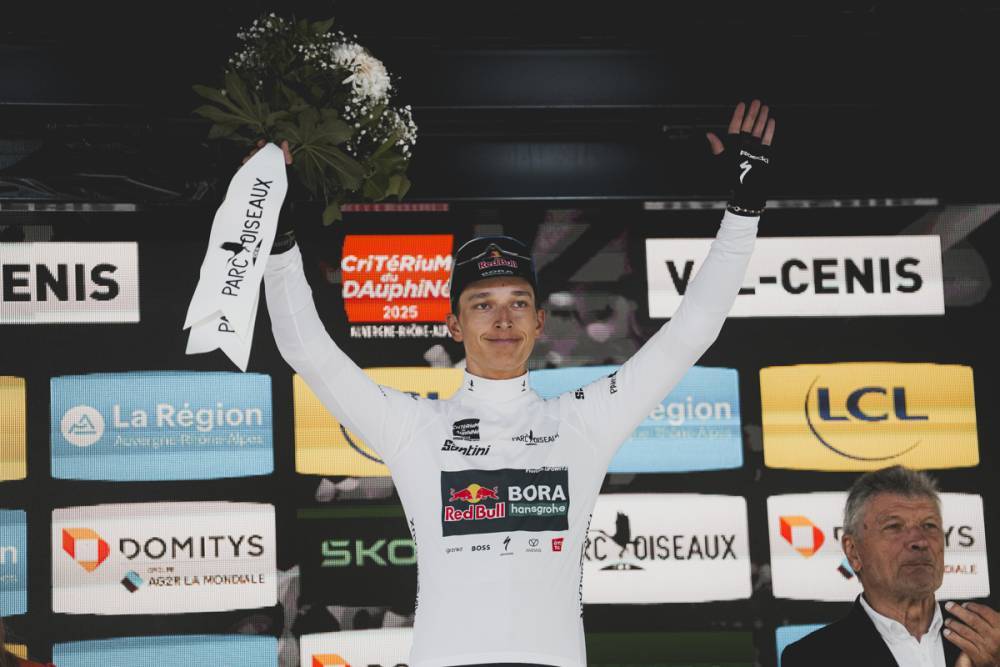
The week also showcased the emerging talent of Florian Lipowitz, the 23-year-old German who claimed third place overall for Red Bull-Bora-Hansgrohe. His consistent performance throughout the eight stages marked him as a rider to watch in the upcoming Tour de France.
“I would never have thought I could compete like this in the Criterium du Dauphiné,” Lipowitz admitted. “It’s an incredible week for me and I’m delighted with the result. Three weeks is super hard but now I have more confidence and I’m really looking forward to the Tour de France.”
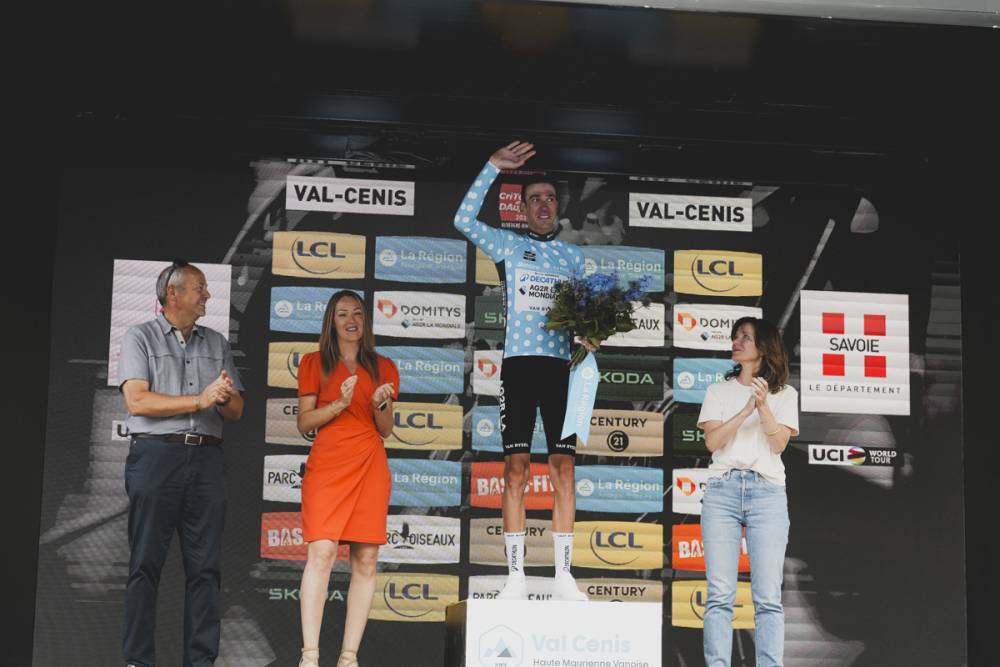
Perhaps most remarkably, Bruno Armirail of Decathlon AG2R La Mondiale Team secured the King of the Mountains classification despite being, by his own admission, far from the prototypical climber. At over 70 kilograms (154 pounds), Armirail represents the modern evolution of the climbing specialist — tactical intelligence compensating for what might be considered physical disadvantages.
“That’s not bad for a guy who weighs over 70 kilos,” Armirail said with evident satisfaction after claiming the polka-dot jersey. “This morning I was thinking a little bit about the polka dot jersey, but Buitrago was well placed, as were Higuita and Pogacar. Every day I was able to pick up a few points, I went for it, and I guess it worked.”
The Road to July
As the cycling world’s attention now turns to the Tour de France, the Critérium du Dauphiné has served its traditional purpose: sharpening form, testing tactics, and providing psychological markers for the sport’s biggest names.
Pogačar heads to his altitude training camp at Isola 2000 with the confidence that comes from victory, but also with the knowledge that Vingegaard remains dangerous. “Now we go to an altitude camp at Isola 2000,” Pogačar explained. “There’s not much to do ahead of the Tour. I rest a bit, maybe some extra work for the time-trial, and then I’m ready.”
Martinez returns to his team with newfound confidence and the experience of beating the world’s best when it mattered most. His tactical intelligence — remaining patient when van der Poel seemed destined for victory, then timing his attack to perfection on the final climb — suggests a maturity beyond his 21 years.
“I came here for the overall classification: it didn’t work out, but I’ve salvaged the week,” Martinez reflected. “The team told me never to give up, so that’s why I tried again today. Now we can be proud of what we’ve done here with this victory. I hope to win in the Tour too, we’ll see.”
For cycling fans, the storylines emerging from these Alpine roads suggest that the Tour de France may be one of the most compelling in years. The young French climber who surprised everyone may yet have more surprises in store when the racing resumes on cycling’s biggest stage.
In a sport where seeing is believing, Martinez has given fans plenty to see — and reason to believe that France’s next cycling star has already announced himself on the slopes of Val-Cenis.