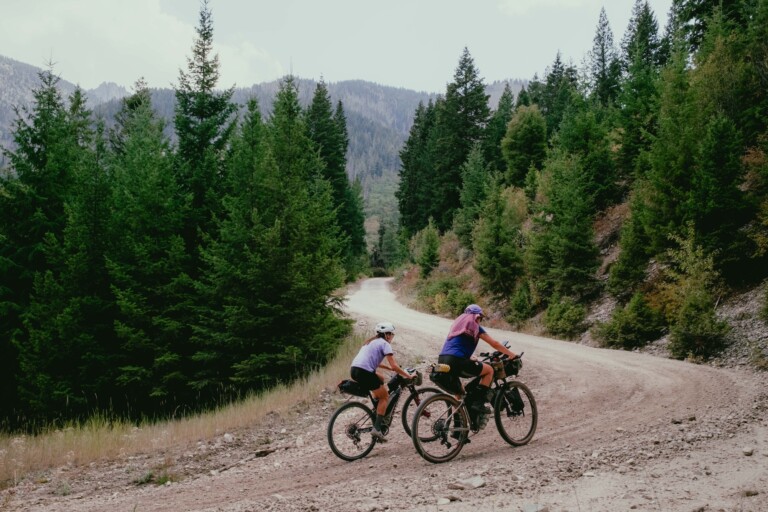
MISSOULA, Montana (March 10, 2026) — A new cross-country bikepacking route stretching more than 3,800 miles will debut in 2026 as part of the 50th anniversary celebration of the Adventure Cycling Association.
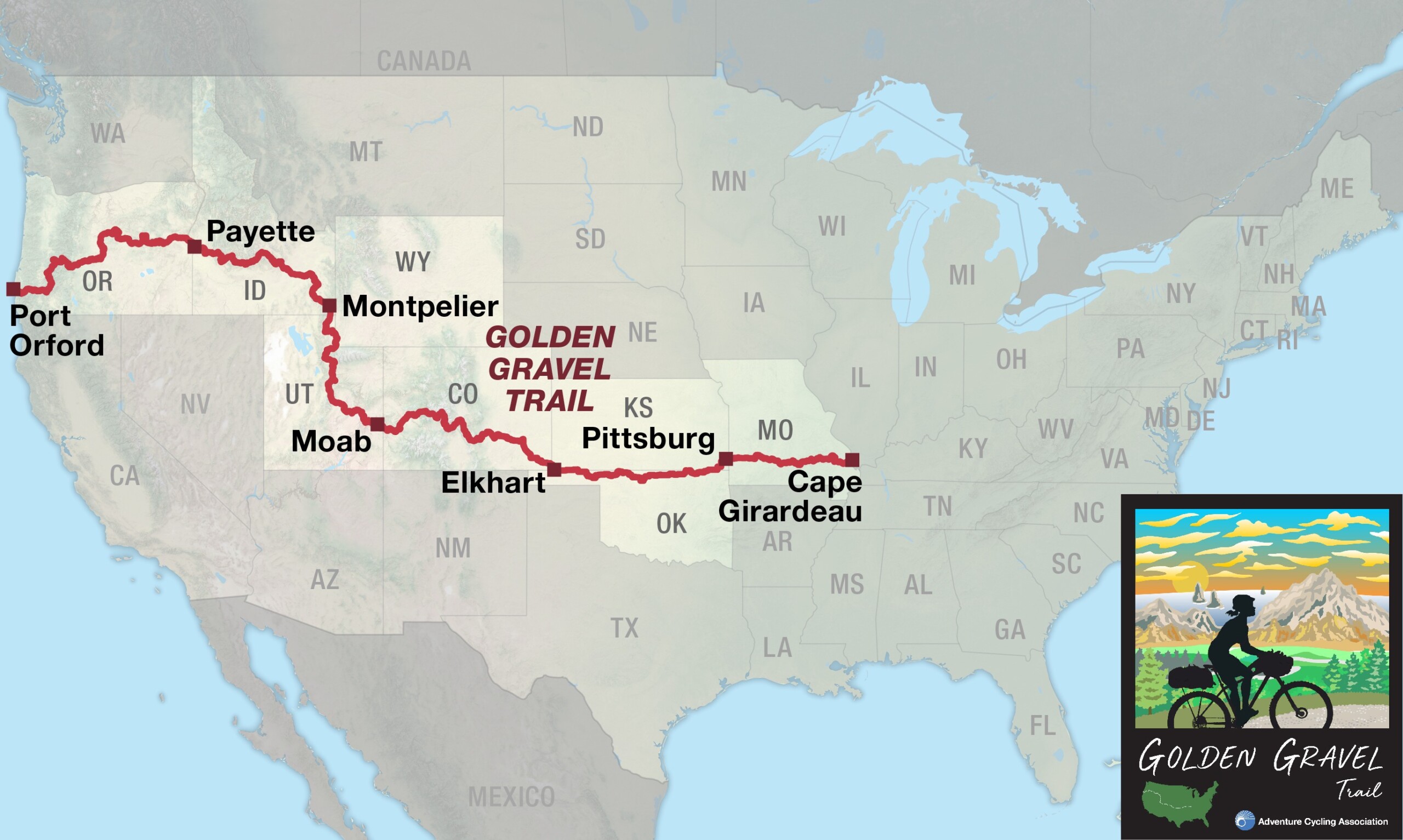
Golden Gravel Trail. Map courtesy of Adventure Cycling Association
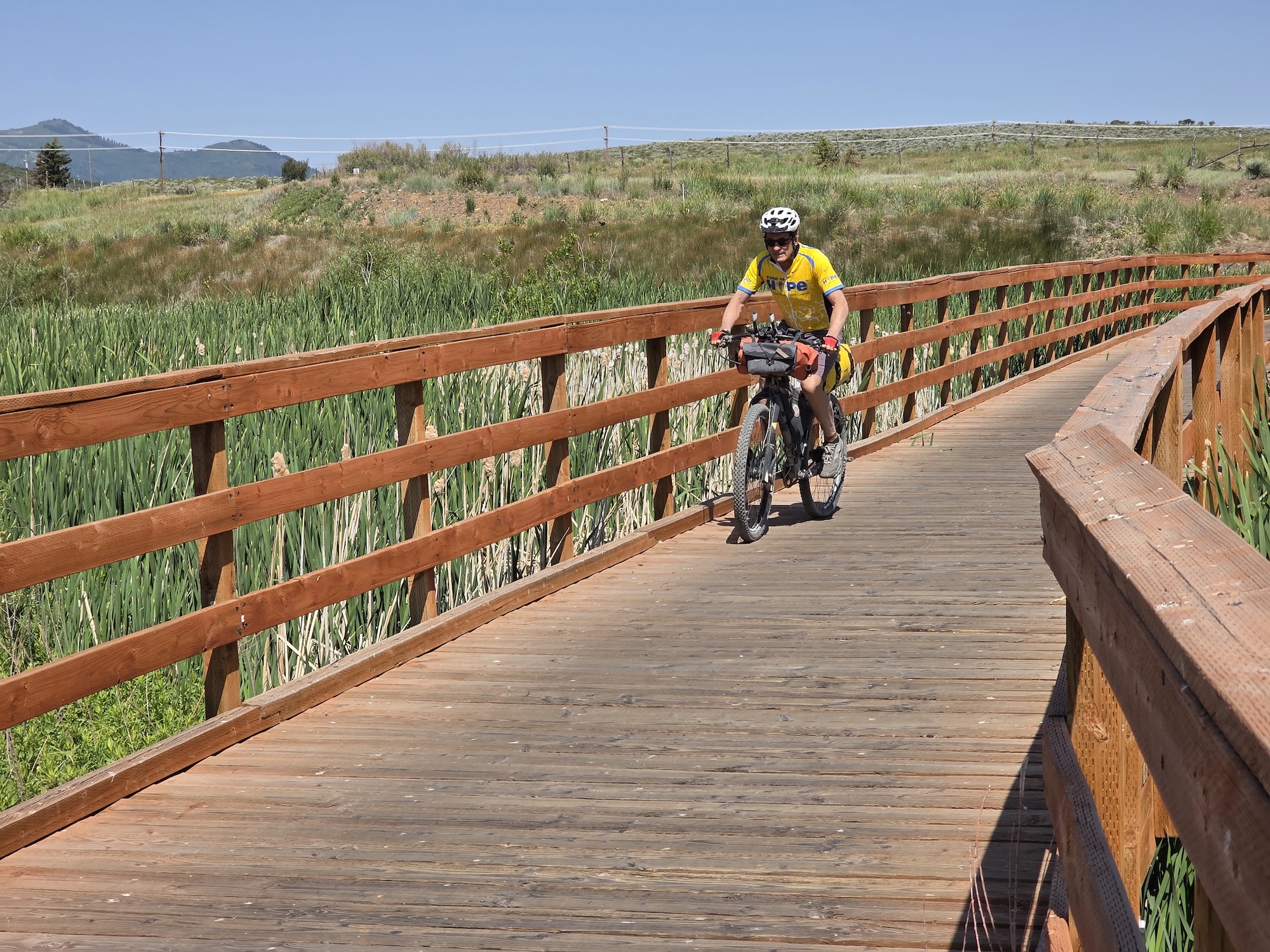
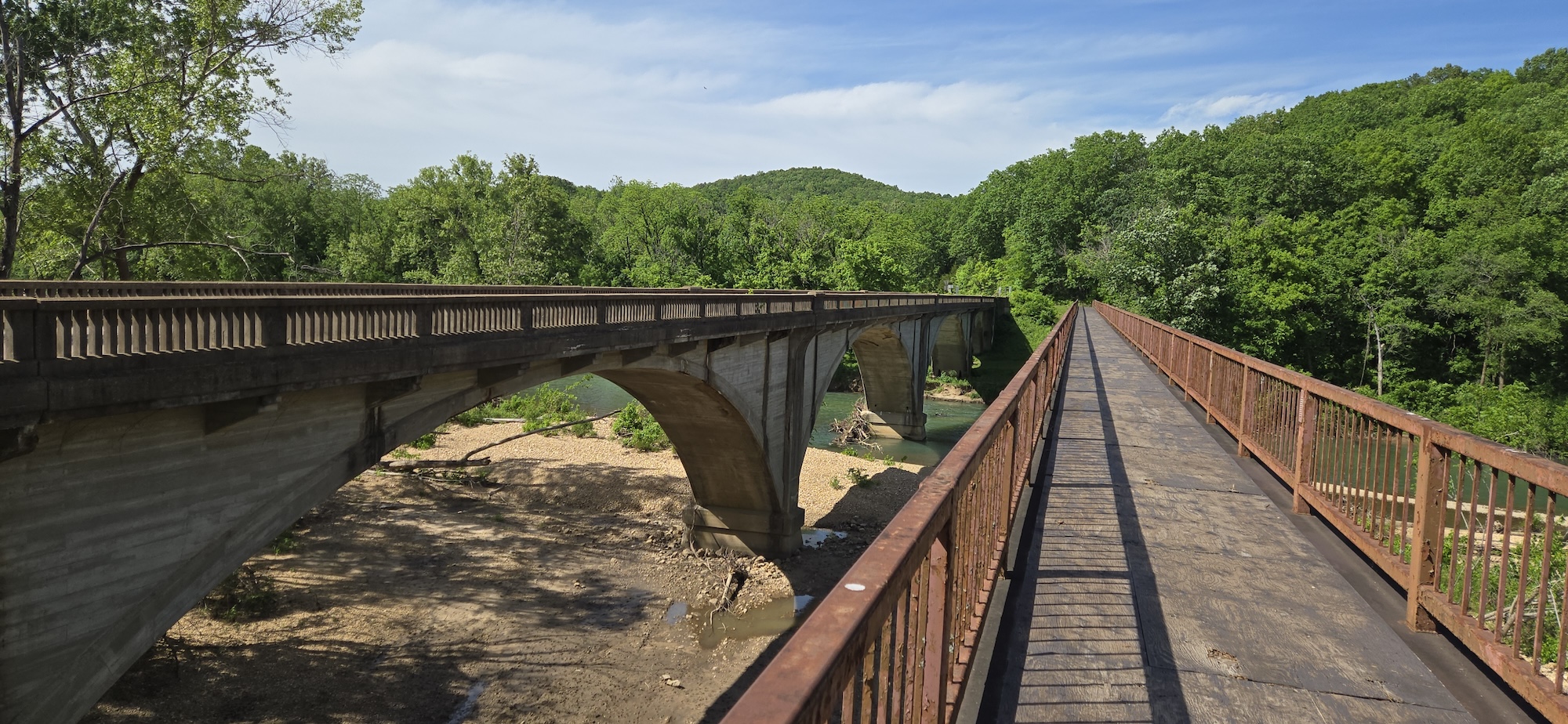
Called the Golden Gravel Trail, the 3,804-mile mixed-surface route runs from the Mississippi River to the Pacific Ocean and crosses eight states: Missouri, Kansas, Oklahoma, Colorado, Utah, Wyoming, Idaho, and Oregon. About 65 percent of the route follows unpaved roads, reflecting the growing interest in gravel riding and backcountry bikepacking.
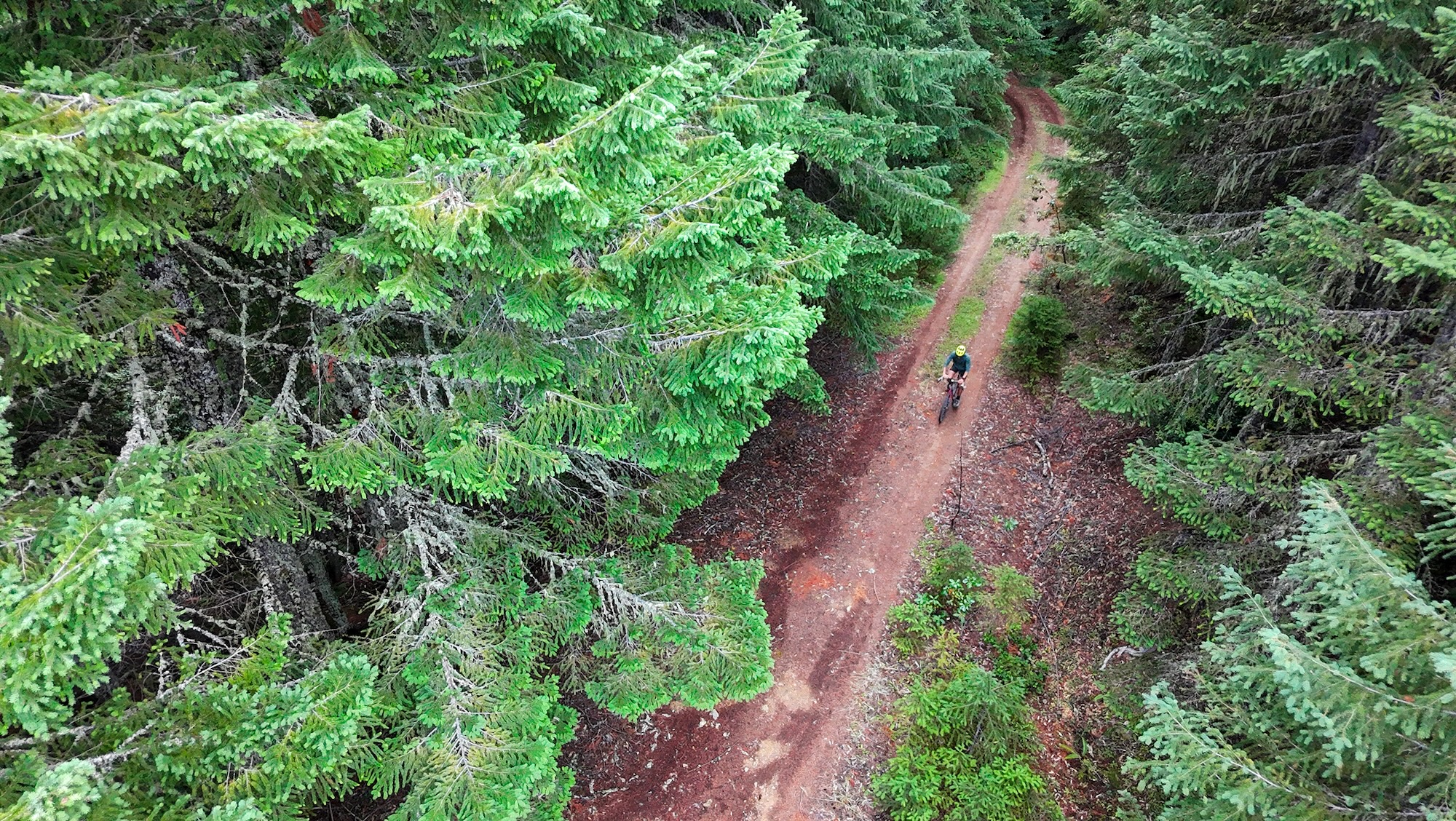
Oregon. Photo by Jeremy Nolan, courtesy of Adventure Cycling Association
Adventure Cycling officials say the route showcases a wide cross-section of American landscapes while emphasizing quieter roads and remote travel. Riders will pass through rolling Ozark hills, the open Great Plains, deserts of the interior West, and challenging alpine passes before reaching the Pacific coast.
“For five decades, Adventure Cycling has been inspiring people to travel by bicycle, and the Golden Gravel Trail represents our vision for the next 50 years,” said routes director Jeffrey Mizell. “This route honors our legacy while embracing the evolution of bicycle touring and the growing bikepacking community.”
Idaho_Golden Gravel Route Research_2025
Built on a legacy of bicycle travel
Adventure Cycling was founded in 1976 when approximately 4,000 cyclists rode across the United States during the Bikecentennial, a coast-to-coast event celebrating the country’s bicentennial. That ride helped establish the original TransAmerica Trail, which later became the backbone of what is now a 57,298-mile national network of bicycle touring routes.
Idaho_Golden Gravel Route Research_2025
Today the organization maps and maintains the Adventure Cycling Route Network, publishes Adventure Cyclist magazine, leads guided tours, and advocates for safer cycling infrastructure across the United States.
The Golden Gravel Trail represents the next step in that evolution, combining the organization’s route-development experience with the growing popularity of off-pavement touring.
Early excitement for the anniversary route
The new route is one of several initiatives marking Adventure Cycling’s 50th anniversary in 2026. Through the organization’s Drop-in Rides program, cyclists can ride portions—or the entirety—of major Adventure Cycling routes at their own pace during the anniversary year.
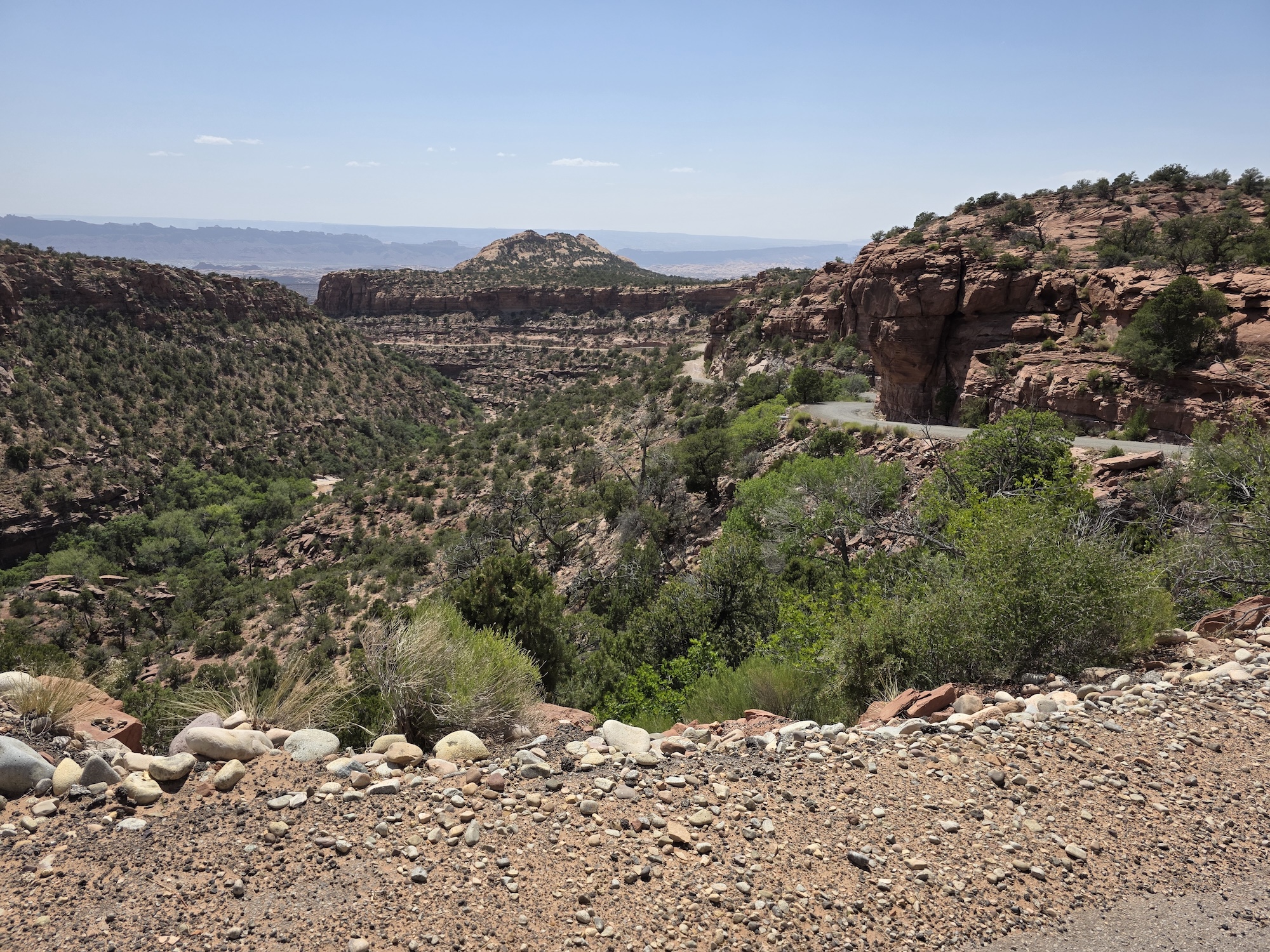
Utah. Photo by Carl Gable, courtesy of Adventure Cycling Association
Those routes include the classic TransAmerica Trail, the Great Divide Mountain Bike Route, and the new Golden Gravel Trail.
The program has already drawn strong participation. Nearly 800 rides have been registered for 2026, with roughly one-third of those riders planning to tackle sections of the Golden Gravel Trail.
Utah. Photo by Carl Gable, courtesy of Adventure Cycling Association
“The response to our 50th anniversary initiatives has been extraordinary,” said Routes and Advocacy Coordinator Ellie Zachary. “Nearly 800 rides have already been registered with us in 2026, and the strong early interest in the Golden Gravel Trail proves that our community is excited not only to celebrate our history, but to help build what comes next.”
Among those planning to ride the route are Canadian adventure cyclists Ali Becker and Mat Leblanc, who together have logged more than 60,000 miles of bike travel and often seek out newly launched long-distance routes. The pair plan to ride both the Great Divide Mountain Bike Route and sections of the Golden Gravel Trail this summer as Drop-in Rides.
Colorado. Photo by Nat Cobb, courtesy of Adventure Cycling Association
Route development and testing
Development of the Golden Gravel Trail involved extensive research and partnerships. The concept was partly inspired by an off-road route known as the Trans America Trail, a rugged 5,000-mile dirt route originally designed for motorcycles and other off-road vehicles.
Adventure cyclist Sarah Swallow helped validate portions of the new bicycle route. Swallow rode approximately 1,800 miles of the Golden Gravel Trail in 38 days during the fall of 2025, documenting her experience along the way.
“The Golden Gravel Trail represents a new chapter in American bike touring,” Swallow said. “It blends the spirit of classic cross-country routes with the growing desire for dirt, quiet roads, and immersive travel. I believe it will inspire more people to explore by bike and to see the country from a different perspective.”
Missouri_50th Anniversary Route Research_2025
Free access for riders
In recognition of its 50th anniversary, Adventure Cycling will make the Golden Gravel Trail available free to riders. The digital route will include detailed route lines, service listings, and up-to-date information about riding conditions and weather.
Cyclists can also register free Drop-in Rides along any segment of the route throughout 2026, receiving route information, planning support, and help connecting with other riders along the way.
“Just $18 builds one mile of route,” said Maxton Caplanides, Adventure Cycling’s vice president of community engagement. “And thanks to our donors, we can get this route in the hands of riders everywhere.”
More information about the Golden Gravel Trail and Adventure Cycling’s 50th-anniversary rides is available at adventurecycling.org.
SALT LAKE CITY, Utah (March 12, 2026) — The Utah Cycling Association (UCA) announced the launch of its 2026 Grand Championship Points Series (GCPS), a season-long, age-group based championship spanning USA Cycling sanctioned events throughout the UCA’s region.
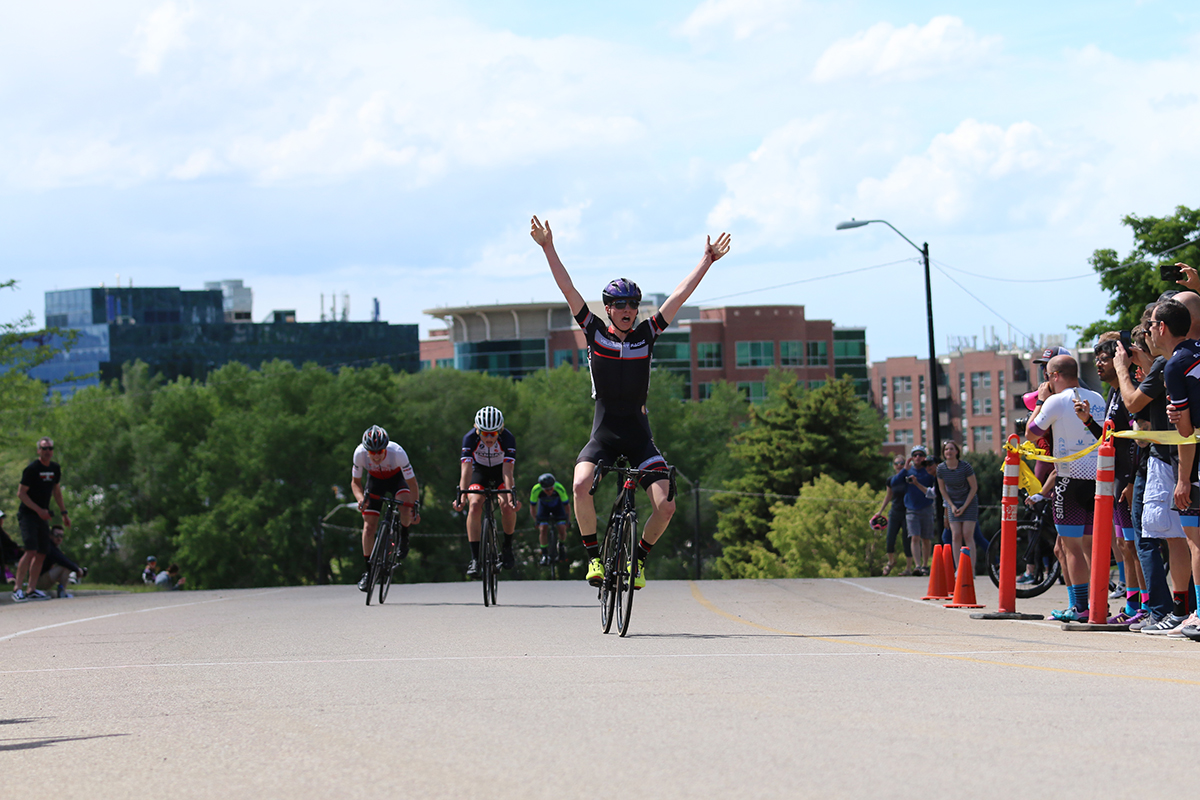
Winner! Action in the Sugar House Criterium. Photo by Dave Iltis
The GCPS rewards consistency and multi-discipline participation across both asphalt and dirt racing, including road, criterium, time trial, hill climb, mountain bike, gravel, cyclocross, BMX, and IMCC collegiate competition.
Points are awarded by age group only, based on finishing position and field size. UCA Championship events carry double points, and athletes must complete a minimum of four eligible events to qualify.
To encourage cross-discipline engagement, the series includes:
A 50-point bonus for competing in both asphalt and dirt disciplines
Discipline bonuses of 20 points per additional discipline (up to 100 points)
NICA integration, allowing up to two Utah High School MTB League races to count toward participation requirements
The 2026 GCPS is designed to strengthen long-term athlete development while creating a clear, season-long competitive objective across Utah, Southeastern Idaho, and Western Wyoming.
Two of California’s Top Cycling Events Join Forces with a Third
Riders can participate in three renowned events across California over three months.
Big Bear Lake, California (March 12, 2026) – Tour de Big Bear and Mammoth Gran Fondo today announced the 2026 expansion of their California Pass Challenge (CalPass Challenge). Alongside the two alpine cycling events, Phil’s Cookie Fondo in Malibu will add a coastal twist to this California cycling trifecta.
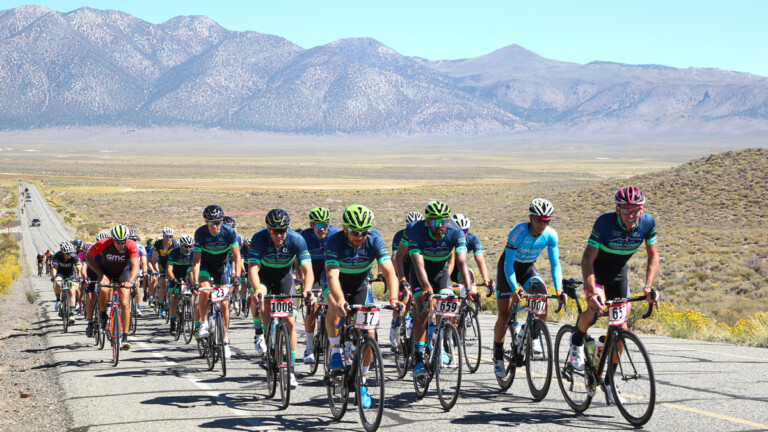
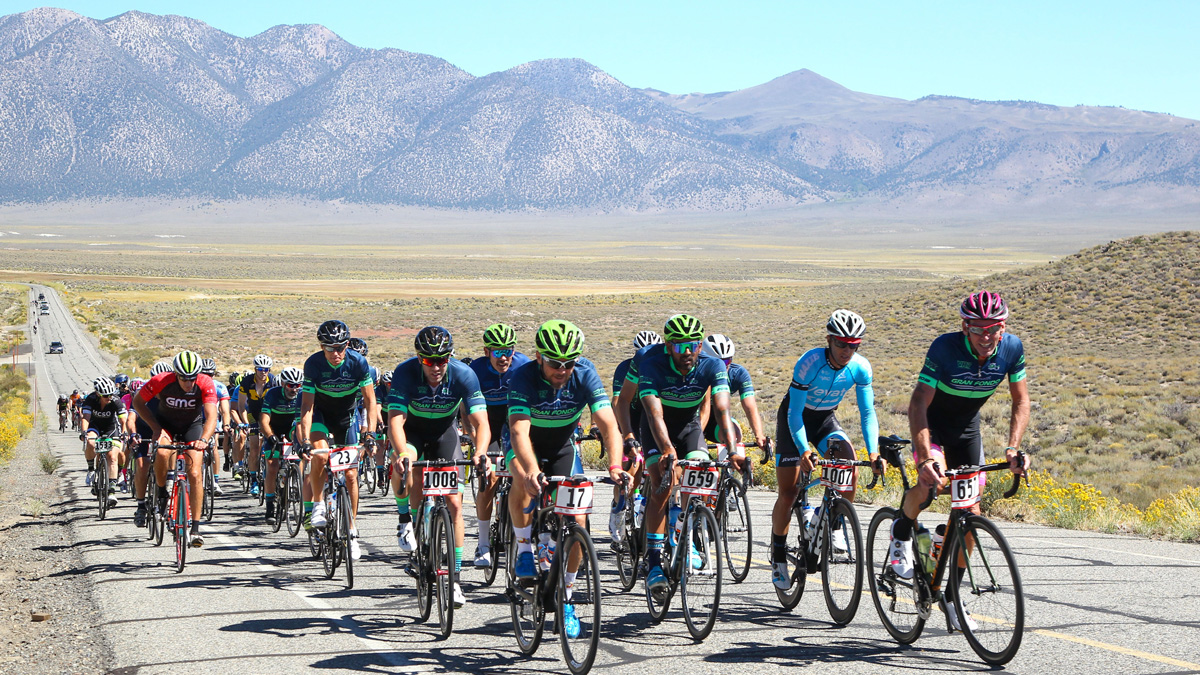
The leading group at the Mammoth Gran Fondo. Photo by Captivating Photos
“We’re excited to include Phil’s Cookie Fondo in the CalPass lineup,” said Phil Gaimon, former professional cyclist and event organizer. “Joining forces with Tour de Big Bear and Mammoth Gran Fondo allows us to offer riders an exceptional challenge across California’s diverse settings. Our Malibu Fondo will deliver the coastal riding that people love. And with us being the final event in the series—10,000 gourmet cookies are a sweet reward.”
Beyond personal achievement, each event supports charitable causes, promoting a broad community impact. Participants will enjoy numerous perks, including commemorative medals, limited-edition jerseys, and VIP experiences. The journey includes the following:
Tour de Big Bear (July 31 – August 2, 2026) – A high-altitude adventure at Big Bear Lake. Participants can select from mountain bike races, gravel rides, or Gran Fondo events suitable for all skill levels. The event is known for its renowned aid stations and vibrant festival activities at Bear Mountain Resort.
2025 Top 10 Gran Fondo in the US, Gran Fondo Guide
2025 Best Gravel Ride, Gravel Rides California
Location: Big Bear Lake, CA, 6,752’ elevation
Events: 9 | Gran Fondo / Gravel / XC Mountain Bike
Distances: 25 – 100 miles
Scenes from the Tour de Big Bear. Photo courtesy Tour de Big Bear
Mammoth Gran Fondo (September 12, 2026) – Gran, Medio, and Piccolo riders will experience the dramatic beauty of the High Sierra with 75 miles of closed-course riding and ample rider support, all while supporting local community programs.
2024 Top 10 Gran Fondo in the US, Gran Fondo Guide
Location: Mammoth Lakes, CA 8,075’ elevation
Events: 3 | Gran Fondo
Distances: 42 – 102 miles
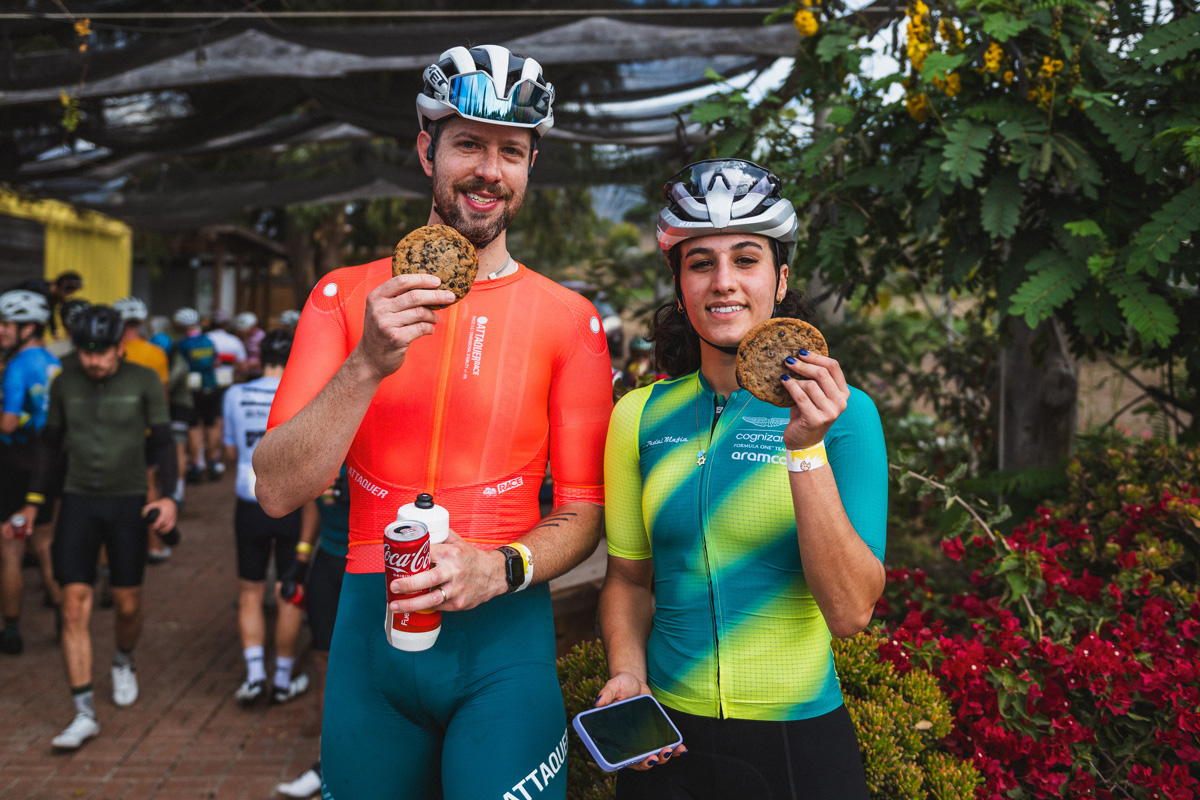
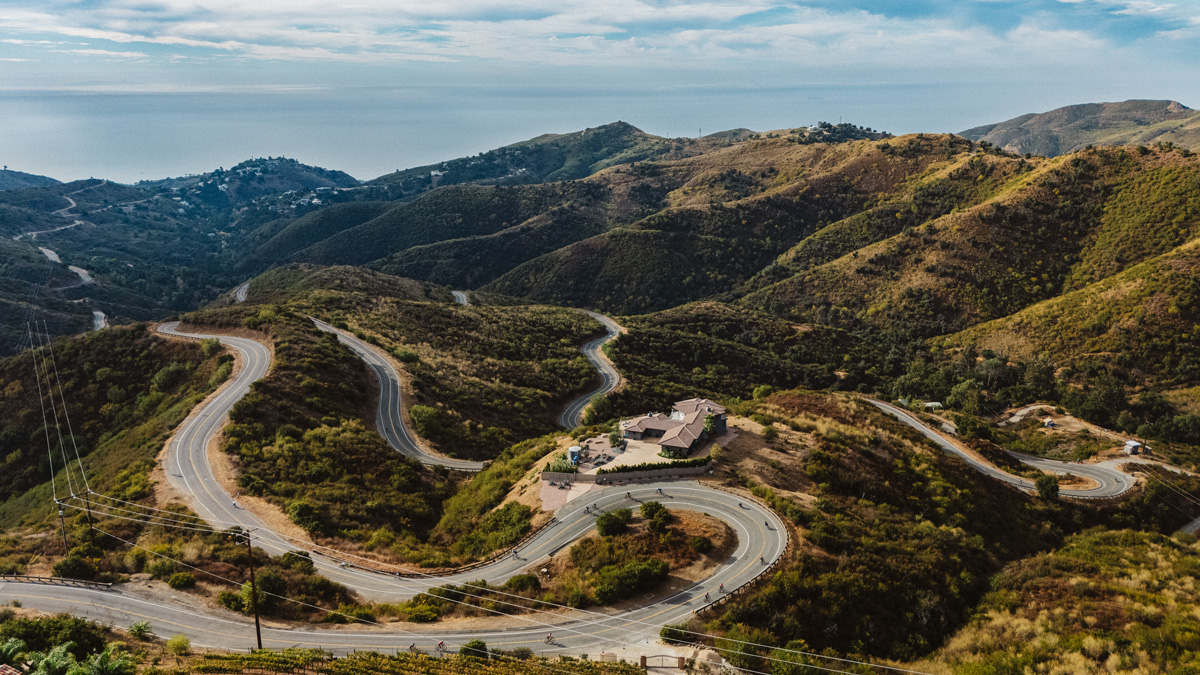
Phil’s Cookie Fondo (October 24-25, 2026) – Tackle the challenging yet rewarding terrain of Malibu, complete with delectable cookie-themed aid stations (10,000 cookies on course) and a gourmet post-ride feast.
2025 Top 10 Gran Fondo in US, Gran Fondo Guide
Location: Malibu, CA 105’ elevation
Events: 7 | Gran Fondo
Distances: 20 – 100 miles
Cookies at Phil’s Cookie Fondo. Photo courtesy Phil’s Cookie FondoScenes from Phil’s Cookie Fondo. Photo courtesy Phil’s Cookie Fondo
Discounted registration for the combined three event series is open and must be finalized by July 27th, 2026. Event organizers currently have an excellent incentive program underway, those who register before the end of March are entered into a giveaway for a complimentary pass for a friend, with three winners to be selected.
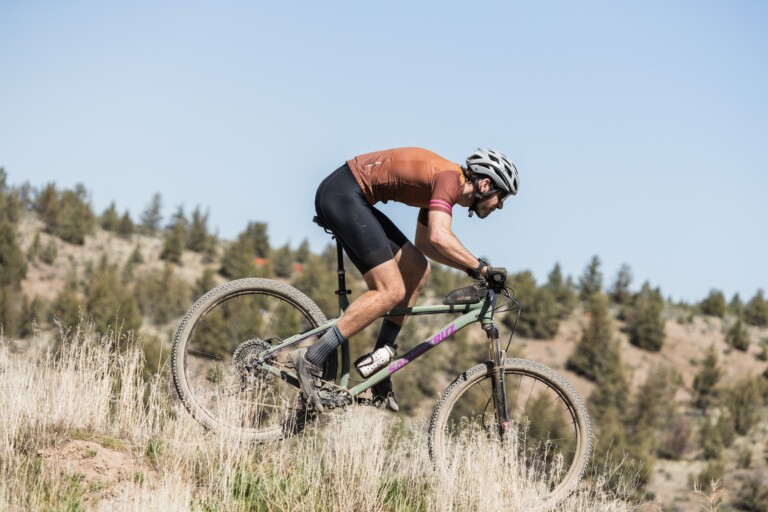
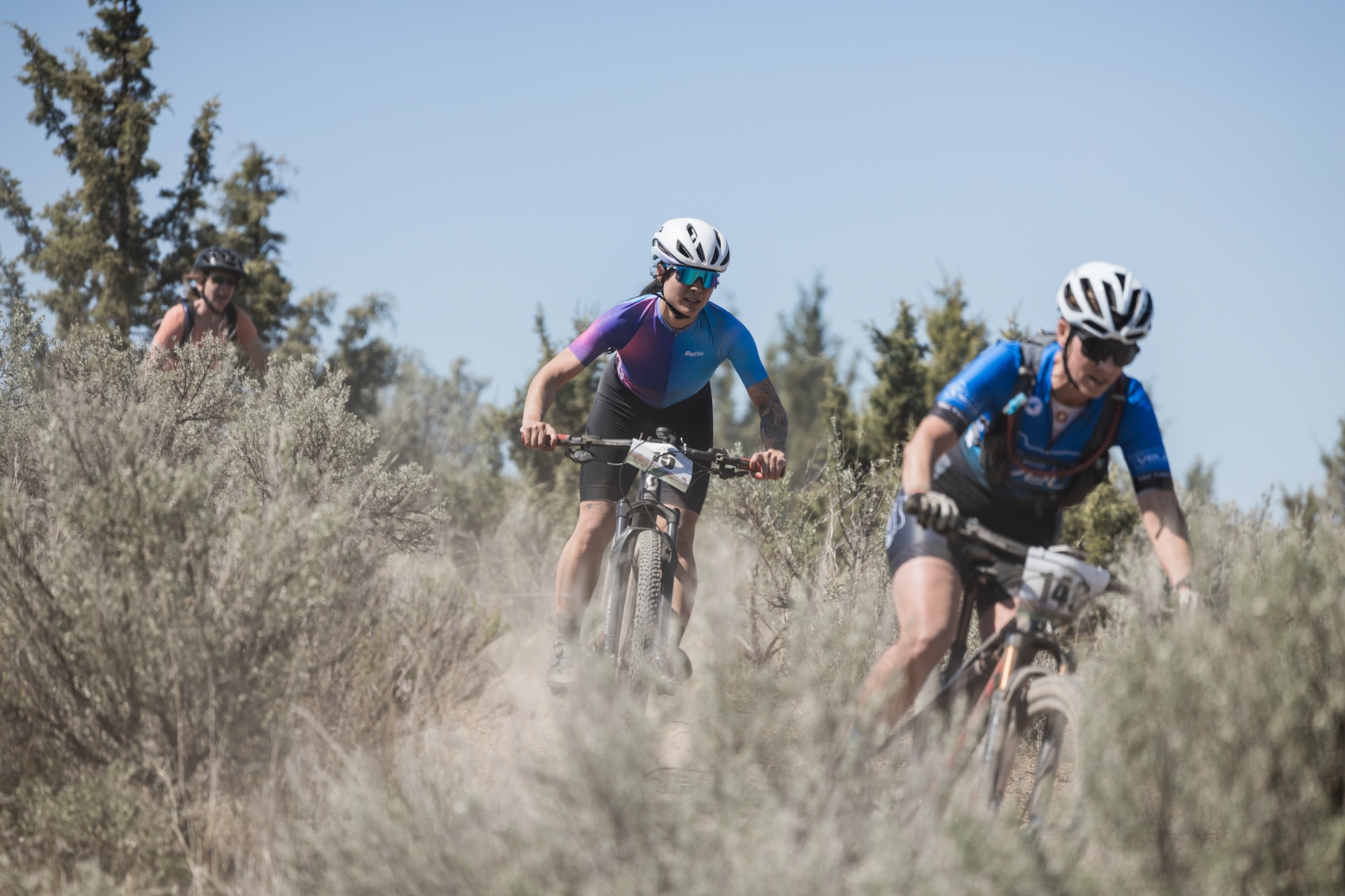
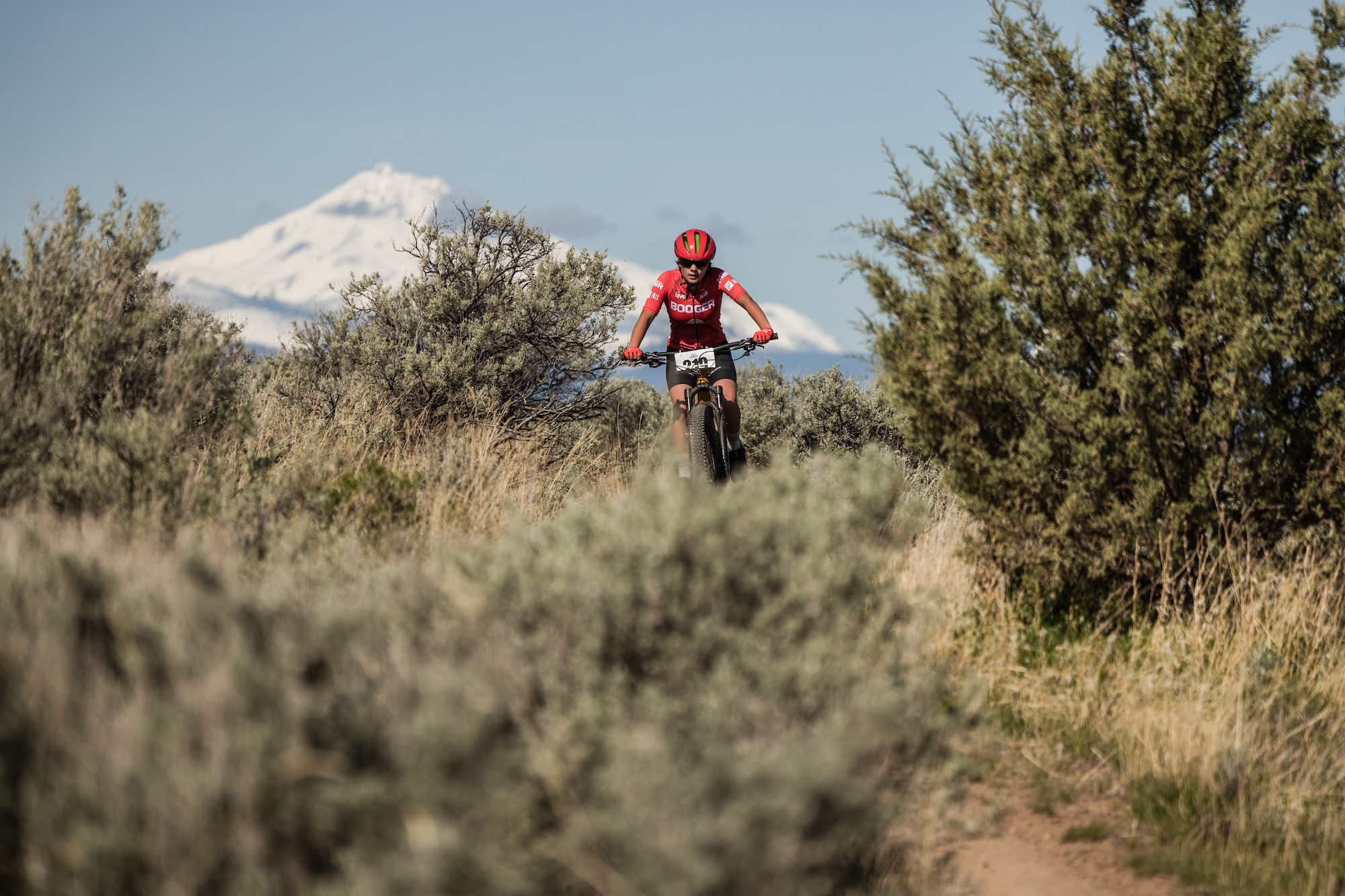
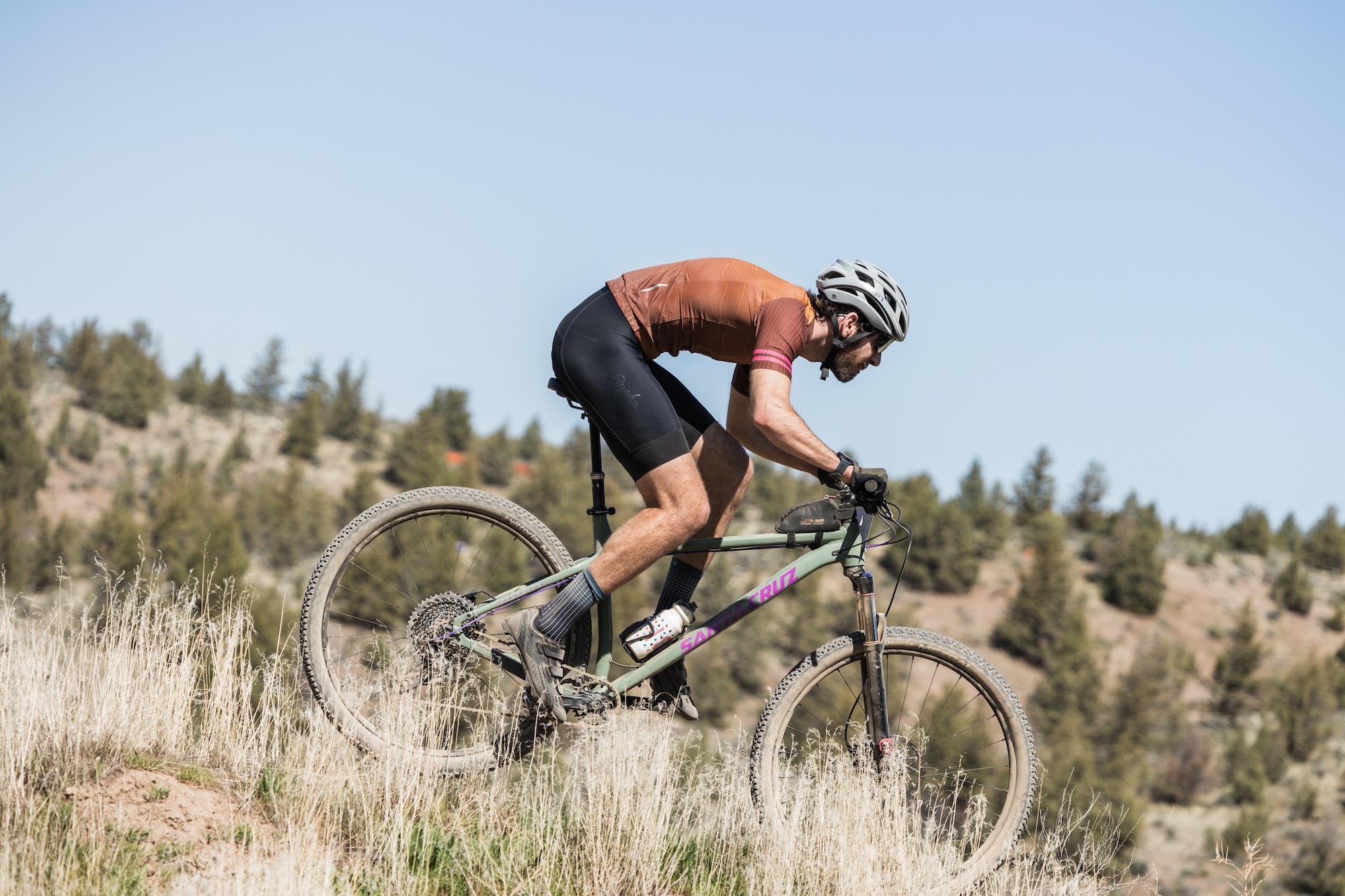
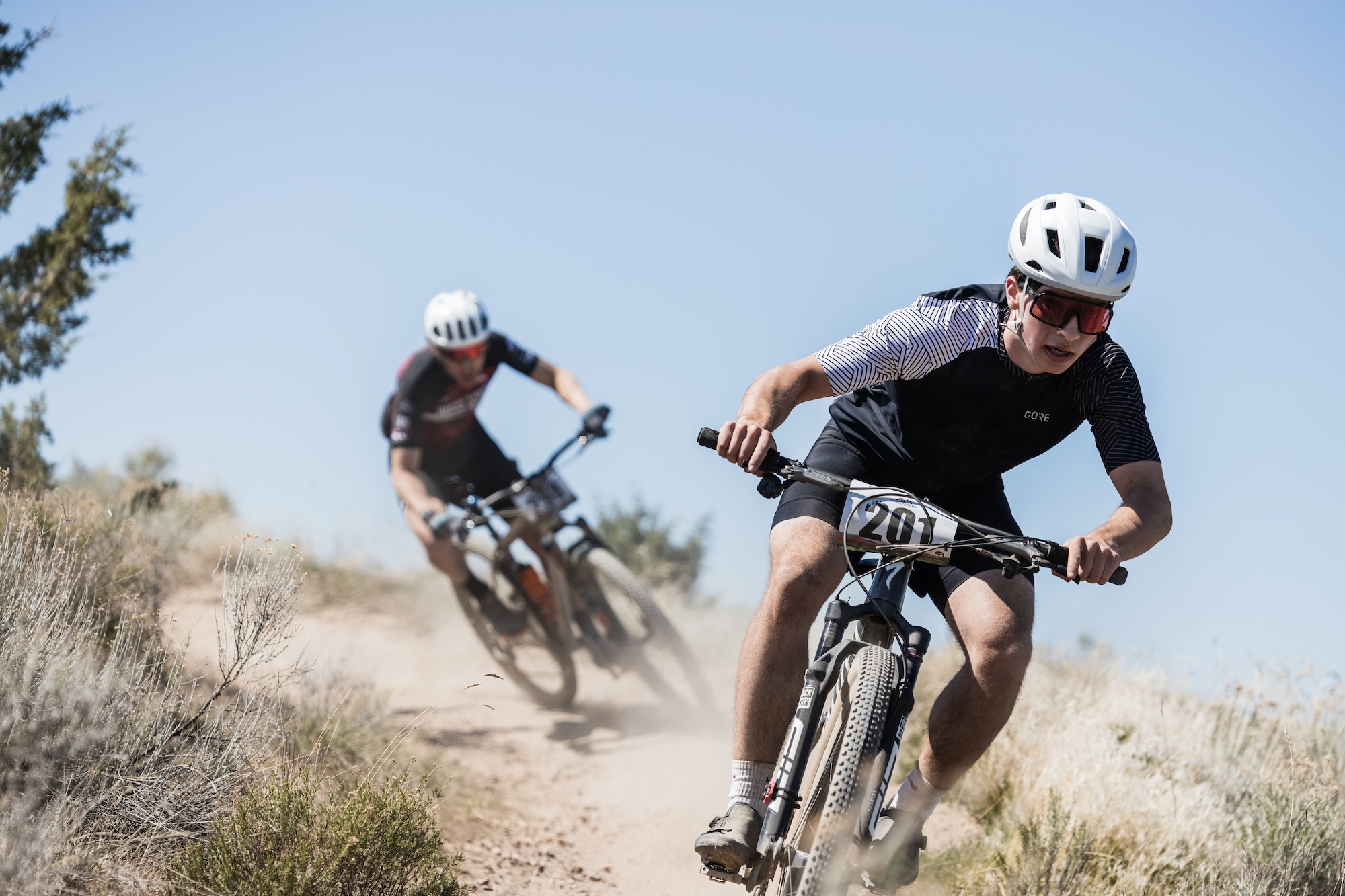
MADRAS, Oregon (March 5, 2026) — Cross-country mountain bike racing returns to the high desert this spring as the Madras MTB Race rolls back into Central Oregon on April 4. Organized by Zone 5 Promotions, the event highlights the rapidly growing Madras East Hills Trail System while continuing the legacy of one of the region’s longtime off-road races.
The race takes place on the expanding network of trails in the hills east of Madras, where riders will encounter fast singletrack, punchy climbs, and wide-open views of the Cascade Range. Known for its dry conditions early in the season, the high-desert terrain has become an increasingly popular destination for mountain bikers looking to start their race calendar before many mountain trails elsewhere have melted out.
Scenes from the 2025 Bonecrusher. Photo by Sean Benesh
The Madras MTB Race follows a classic cross-country format designed to reward strong climbing, efficient pacing, and careful line choice. Competitors will ride a course that mixes rolling terrain with purpose-built singletrack, showcasing the character of Central Oregon riding—flowing trails punctuated by short, sharp efforts and open stretches of rugged landscape.
Scenes from the 2025 Bonecrusher. Photo by Sean Benesh
The event traces its roots to the former Bonecrusher race, which built a reputation for tough racing and demanding terrain. While the event now carries a new name, organizers say the spirit of the original race remains intact. At the same time, the updated Madras MTB Race highlights the significant trail development that has taken place in the area over the past several years.
Scenes from the 2025 Bonecrusher. Photo by Sean Benesh
Local riders, volunteers, and trail advocates have steadily expanded the Madras East Hills Trail System, transforming the hills above town into one of Central Oregon’s emerging mountain bike destinations. The growing network now offers a variety of riding options, from fast flow trails to more technical sections, making it well-suited for cross-country competition.
Scenes from the 2025 Bonecrusher. Photo by Sean Benesh
Race organizers expect a range of participants, from experienced mountain bike racers chasing early-season fitness to newer riders eager to test themselves on a well-designed XC course. Junior categories are also part of the event, reflecting the continued growth of youth mountain biking programs throughout Oregon and the Pacific Northwest.
Beyond the race itself, the event offers riders an opportunity to explore Madras and the surrounding high-desert landscape. With expansive views, a dry climate, and steadily expanding trail infrastructure, the region continues to attract cyclists from across the state and beyond.
Registration for the Madras MTB Race is currently open, with early pricing available ahead of race day.
[Editor’s Note: With Tadej Pogačar winning his first race of the season at this past weekend’s Strade Bianche, it seems appropriate to have a look back at his 2025.]
By Dave Campbell — Most cycling historians have long held Eddy Merckx’s amazing 1972 season as the greatest single year of performance in Professional cycling. Slovenian Tadej Pogačar clearly achieved similar heights this year. In my mind, 1972 and 2025 represent the two greatest seasons in the history of Professional cycling.
To be clear, ranking cycling accomplishments from different eras remains a fool’s errand. So many aspects of our sport have changed. Riders in Merckx’s era raced more often but faced a much smaller and less international peloton. Equipment, nutrition, and training methodology have vastly improved, and premier events now enjoy much higher levels of support and organization. While both riders competed in the Monuments and Grand Tours, other important events like the Montjuich hill climb and Baracchi Trophy have disappeared, and newer races such as Strade Bianche now command high esteem. Nonetheless, analyzing what both men achieved in their respective eras proves not just interesting but informative. The parallels and similarities strike me as quite remarkable. I make no claims about which rider achieved more, simply laying out the statistics for readers to judge (or not) as they will.
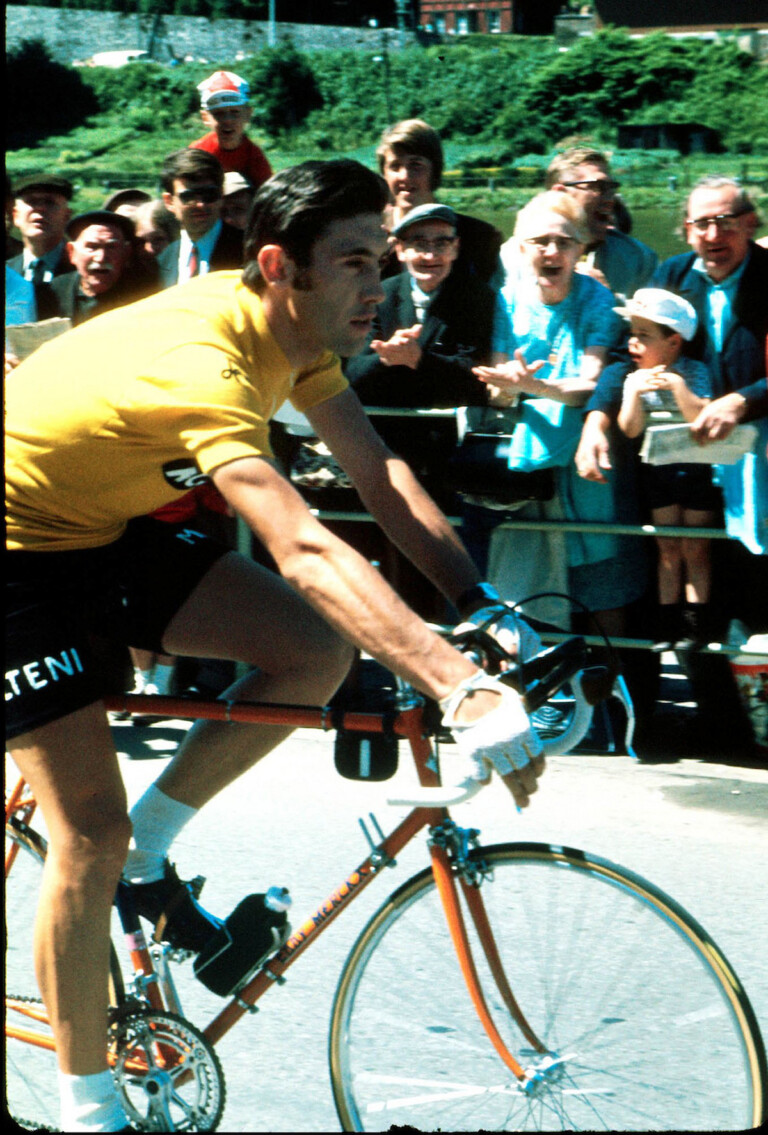
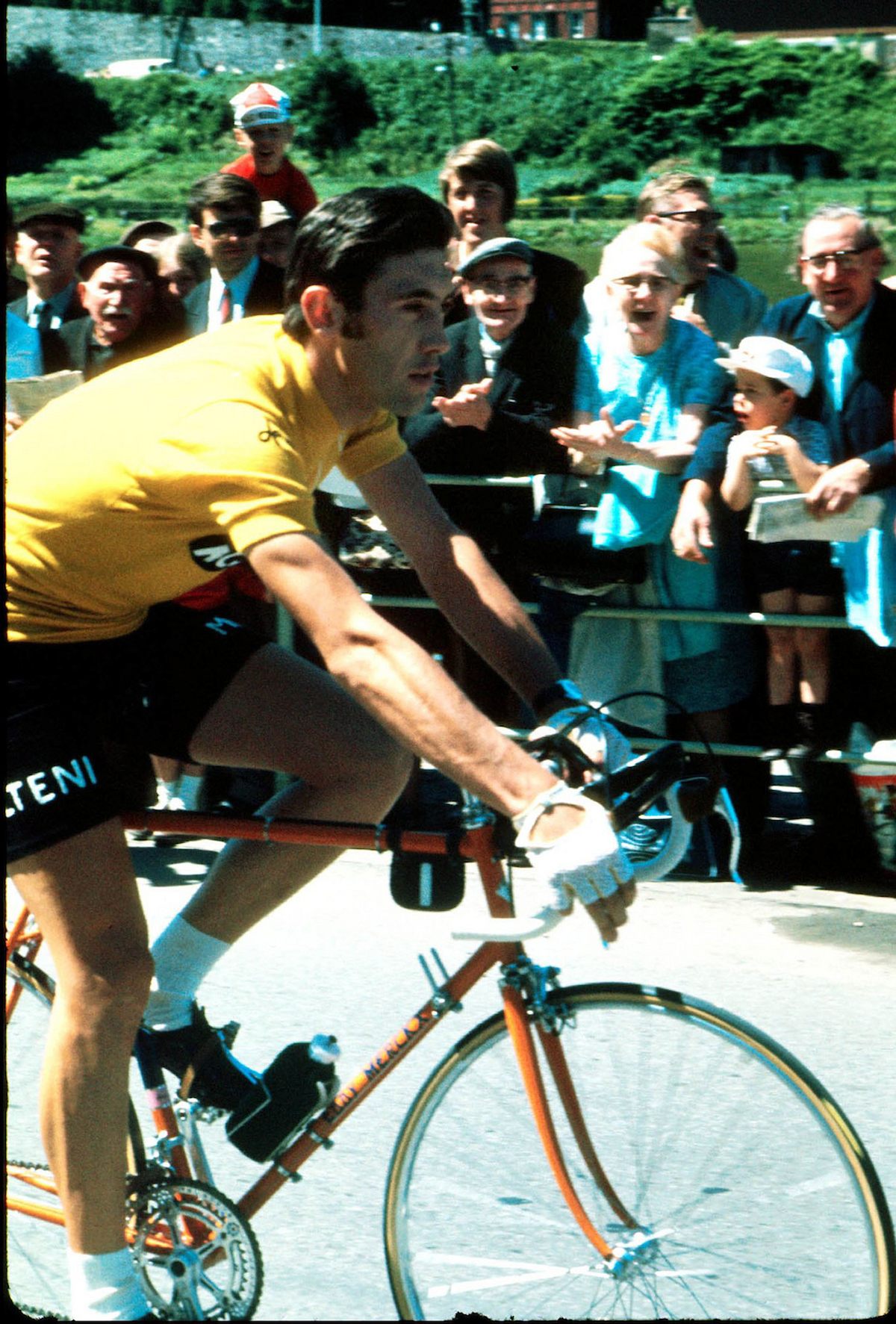
Eddy Merckx in possibly the 1972 Tour de France. The bike graphics are similar to those of his 1972 hour record ride. Photo by Cor Vos
Both riders began racing in February wearing the rainbow stripes of defending World Champion and would turn twenty-seven during their respective monster seasons. Tadej began winning almost immediately, taking stages three and seven enroute to the overall win at the UAE Tour to launch his season of immortality. Eddy, on the other hand, opened with the Trofeo Laigueglia one-day race in Italy, finishing third, then rode the Tour of Sardegna, notching three top-ten stage results but finishing just 33rd overall. Het Volk saw him finish third again, with his first win coming on his eighth day of racing at the prologue of Paris-Nice, where he would win two more stages enroute to second overall. In very non-Merckx-like fashion, he lost the leader’s jersey on the final time trial. Pogačar, in contrast, won his next race, the “new classic” Strade Bianche over the white gravel roads of Tuscany.
Thus, Pogi began Classics season with four victories under his belt while the Cannibal had three. However, Merckx won Milan-San Remo for the fifth time in dominating fashion while Pogačar’s constant attacks could not dislodge Mathieu Van der Poel, undoubtedly the finest Classics rider of his generation, leaving him second. Merckx, for his part, distanced Roger DeVlaeminck, one of only three cyclists in history who claimed all five monuments.
Pogačar tackled Flanders next, indicative of the modern approach of racing less and targeting the biggest events. He triumphed decisively while Merckx managed only seventh. The Belgian, in contrast, had first tackled three prior semi-classics, earning two second places and winning Brabantse Pijl. The Cannibal then notched third in the (then) mid-week Ghent-Wevelgem before finishing seventh in Paris-Roubaix. Pogi skipped Ghent but achieved a fine second in his debut at the “Hell of the North”. All-time greats DeVlaeminck and Van der Poel defeated both riders, respectively. Both riders dominated in the Ardennes, winning Flèche Wallonne and Liège-Bastogne-Liège. Tadej finished a close second at Amstel Gold whereas Eddy missed the Dutch Classic but notched a second place at the now-extinct German Classic Henninger-Turm. Both riders won two monuments in their spring campaigns and stood equal on victories with seven at the conclusion of the spring classics.
At this point the differing approaches of each era become most clear as Pogačar took a six-week hiatus from competition while Merckx never went a week without racing and notched another win (GP Momignies) before tackling the Giro d’Italia. The Cannibal tore through the Italian Grand Tour, claiming four stages and wearing the leader’s jersey from stage seven to the finish in Milan in mid-June. Pogačar resumed racing in mid-June, and he picked up where he left off, winning the first stage of the Dauphine in France. After claiming two more stages, he won the race overall as well as the Points Classification.
Merckx took a rare two weeks away from racing after the Giro but then finished second in his National Championship prior to starting the Tour de France the following week. Pogačar, in contrast, had no more racing prior to his attempt at a fourth Tour win. Eddy faced a field of 132 riders in 1972 from nine different nations as he also chased his fourth Tour victory. Pogačar, in contrast, competed against 184 riders from twenty-seven different countries, highlighting the growth and globalization of the sport.
Merckx won the Tour’s opening prologue, and his Molteni squad claimed the Team Time Trial. Five more stages went his way enroute to overall victory, the points jersey, and a staggering seventeen days in the yellow jersey. Pogačar proved not quite as dominant, claiming four stages, notching thirteen days in yellow, and claiming the mountains jersey in addition to the overall title. 88 riders—66.7% of the starters—finished the 1972 Tour de France, which covered 3,846 kilometers. In 2025, in contrast, 87.0% of the starters made it to Paris after 3,302 kilometers of racing.
Whereas Pogačar, very vocal about his fatigue, took six weeks away from racing, Merckx won the Scheldeprijs a week after finishing the Tour and finished fourth in his World title defense the following week. In the final eight weeks of the season, he claimed a staggering twelve victories including every stage and the overall of the now-defunct Montjuich hill climb in Spain and the À travers Lausanne stage races. He won two Italian semi-classics (Giro del Piemonte and Giro dell’Emilia) before winning his third monument of the season with Il Lombardia and taking the Trofeo Baracchi two-man time trial with Roger Swerts. Capitalizing on his great form, he then set the Hour Record at the end of the season!
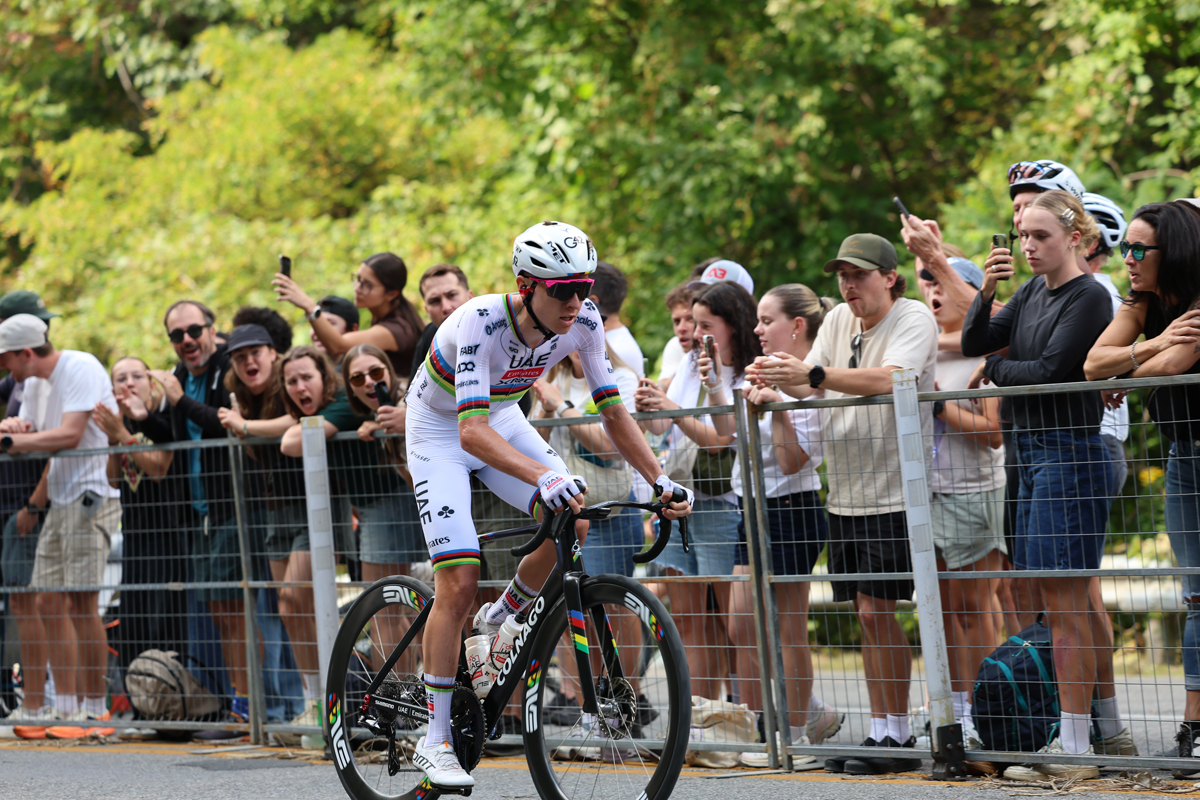
Tadej Pogacar in the Grand Prix Cycliste de Montréal 2025. Photo by Dave Iltis
Pogačar returned to racing after the Tour at the two Canadian Grand Prix events which didn’t exist in Merckx’s day. He finished 29th in Quebec but then second in Montreal, after gifting the win to his teammate Brandon McNulty in a dominating performance. He appeared off his game with fourth at the World Championship time trial but rebounded with a performance for the ages, defending his title in the road race with an epic escape. Three more races to finish the year yielded three more wins at the European Road Championships, Tre Valle Varesine, and his third monument at Il Lombardia.
Despite some marked differences, many similarities emerge. Both riders claimed three monuments and won both Ardennes Classics. Both men won the Tour de France while taking an additional category (Points for Merckx and Mountains for Pogačar) as well as multiple stages (six for Eddy and four for Tadej). The second major stage race of the year differs notably—Merckx won the Giro while Pogačar took the Dauphine. Eddy wore the leader’s jersey on a staggering 32 of 43 days (74.4%) raced in the four stage races he won, while Tadej led 23 of the 36 (63.9%) days he raced in the three stage races he won. Pogačar went three for three on the stage races he contested while Merckx took four out of six.
The most striking result of this analysis remains the remarkable similarity between each rider’s win rate. Pogačar raced less, only fifty times, but won twenty races, achieving a stunning success rate of 40%. Merckx raced much more, notching eighty days of competition, but by winning thirty-four times, he won an astounding 42.5% of the time he raced. Adequate superlatives simply don’t exist for the staggering accomplishments of these two great champions. Just winning the events they claimed in ONE season would make for an outstanding career for a more mortal rider. Since I was too young to follow Eddy Merckx’s career, I feel grateful to have gotten to follow probably the only other rider at that caliber throughout an entire season of excellence. Chapeau to both campionissimos!
HURRICANE, Utah (March 10, 2026) — Riders from across the region are invited to dust off their bikes and mark their calendars for the 15th Annual Hurricane Mountain Bike Festival, taking place March 27–28, 2026, at the scenic campground at Quail Creek State Park. Set against the dramatic red-rock mesas and sweeping vistas near Zion National Park, the festival brings together mountain bikers for a weekend of riding, learning, and celebrating the sport in one of the Southwest’s premier trail destinations.
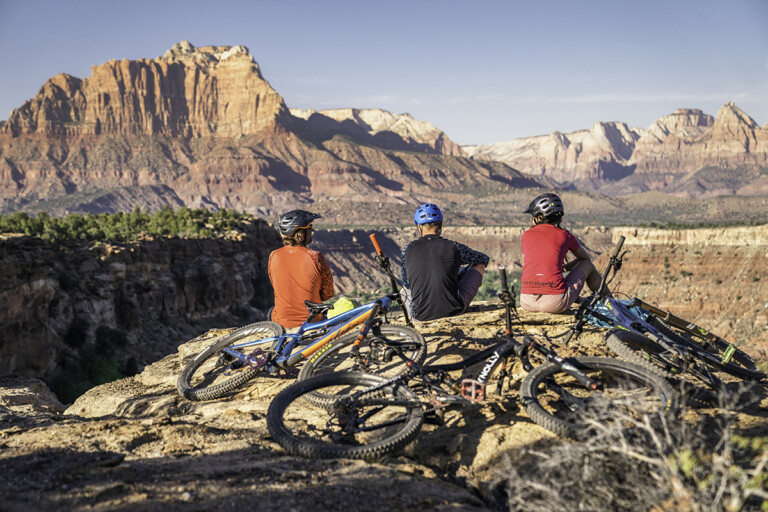
Scenes from the Hurricane Mountain Bike Festival. Photo by MiguelSantanaPhotography
A longtime spring tradition for riders, the festival blends world-class singletrack access with a lively community atmosphere. Attendees can expect group rides, music, games, giveaways, free swag, and an exhibitor expo—all designed to bring riders together around their shared love of mountain biking.
For 2026, festival organizers are placing a renewed emphasis on community, connection, and progression, encouraging riders of all backgrounds—from first-time trail riders to seasoned veterans—to take part in the weekend’s activities.
Rides:
The festival features group rides each day. Rides will take place on Friday and Saturday and feature choices like Gooseberry Mesa, JEM Trail, and Guacamole (weather and trail condition dependent). Shuttles are there to take you to the Mesa.
Skills Clinics Designed to Build Confidence on the Trail
One of the highlights of the festival is its lineup of small-group skills clinics, designed to help riders build confidence on Hurricane’s unique terrain. Clinics focus on foundational technique and skill progression so participants can make the most of the region’s renowned technical trails.
Sessions include:
· Fundamentals of Technical Riding – Covering body positioning, line choice, shifting, energy management, and strategies for navigating rocky terrain, switchbacks, and technical descents.
· Drops & Jumps Clinic – Teaching the fundamentals of safely approaching drops and jumps through structured progressions, including body positioning, suspension setup, and landing techniques.
· Turns & Corners Clinic – Helping riders confidently tackle tight turns, switchbacks, and high-speed corners with proper technique and control.
Clinics are typically recommended for intermediate riders and are conducted in controlled environments that allow participants to practice skills and drills they can take back to the trail. Small group sizes ensure individualized instruction and one-on-one coaching time.
Importantly, the clinics are inclusive of both traditional mountain bikes and e-bikes, reflecting the festival’s welcoming approach to riders across disciplines.
The festival has become a vibrant meeting point where the riding community come together.
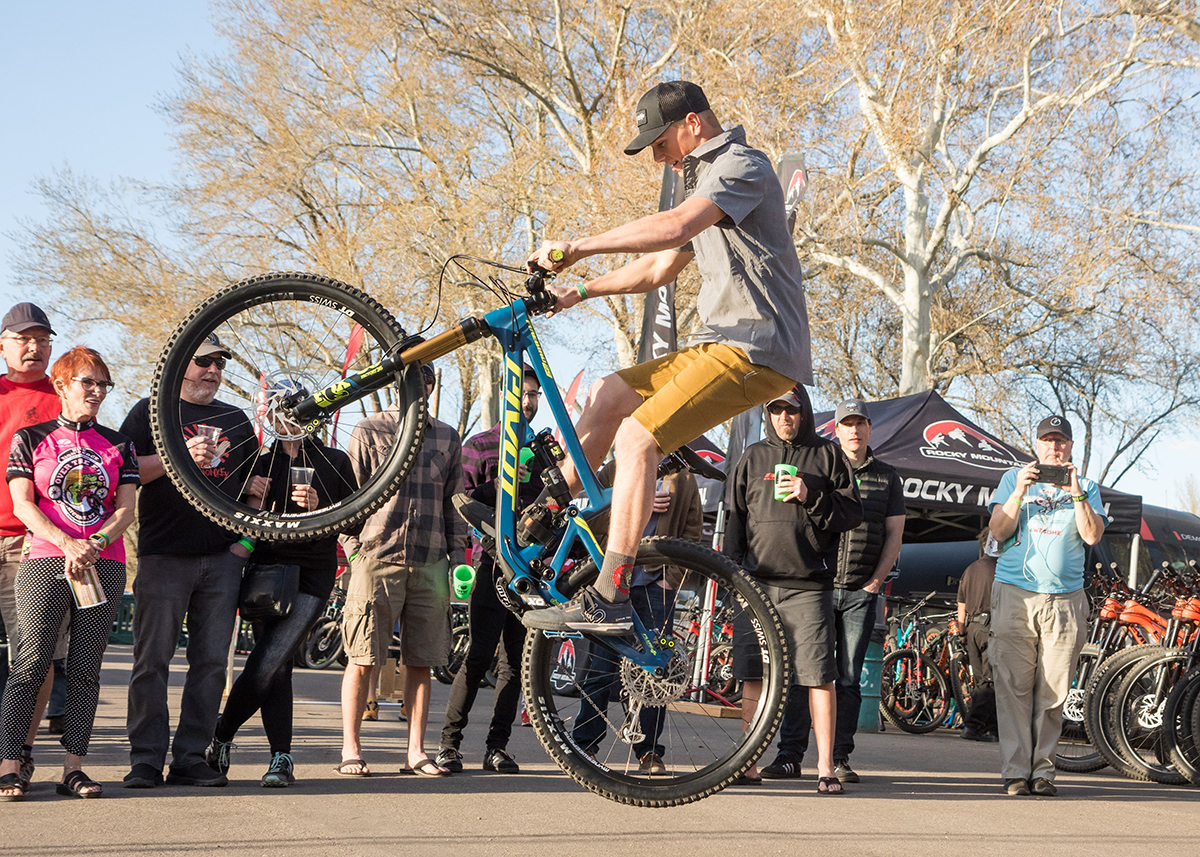
Scenes from the Hurricane Mountain Bike Festival. Photo by John Shafer
Riding for a Cause
Beyond the trails and festivities, the Hurricane Mountain Bike Festival also supports meaningful causes. Festival registration helps sustain and improve local trail systems through the Trails Alliance of Southern Utah (TASU), which works to build, maintain, and advocate for responsible trail access throughout the region.
In addition, festival proceeds help support the humanitarian work of Free Burma Rangers, a relief organization that provides medical care, aid, and assistance to vulnerable communities in conflict zones around the world.
By participating in the festival, riders are not only enjoying some of the best trails in Southern Utah—they are also contributing to efforts that strengthen both local outdoor recreation and global humanitarian relief.
Packages, Camping, and Festival Experience
Festival registration offers several participation options, including a VIP package that includes reserved on-site camping, access to demo bikes, a private shuttle day to the mesas, and festival meals. Additional packages allow riders to tailor their experience with options such as camping at the venue and local rides.
For those looking to fully immerse themselves in the weekend, camping at the festival site allows riders to stay close to the action and enjoy evening gatherings, food, and festivities after a full day on the trails.
A Celebration of Riding in Southern Utah
With iconic landscapes, world-class trails, and a welcoming festival atmosphere, the Hurricane Mountain Bike Festival continues to grow as a signature spring event for riders across the Southwest. Whether participants come to improve their skills, try new gear, or simply enjoy the camaraderie of the riding community, the festival promises an unforgettable weekend on and off the trail.
For registration, schedules, and additional details, visit:
Event location and camping info: Quail Creek State Park RV Campground (472 5300 W, Hurricane, UT 84737)
Event info: March 27-28, 2026 — Hurricane Mountain Bike Festival, Hurricane, UT, Ride with us on world-class singletrack at the foothills of Zion National Park. Join us for 2 days of bike festival shenanigans, festival with great food and shopping, bike shuttles, skills clinics, dinner, prizes and more!, DJ Morisette, 435-635-5455, [email protected], hurricanemtbfestival.com, otesports.com
Russell Finsterwald chased for 95 miles, caught Andrew L’Esperance on the final climb, and edged him in the closest finish in BWR history. Haley Batten rode away to win by 13 minutes in scorching desert heat.
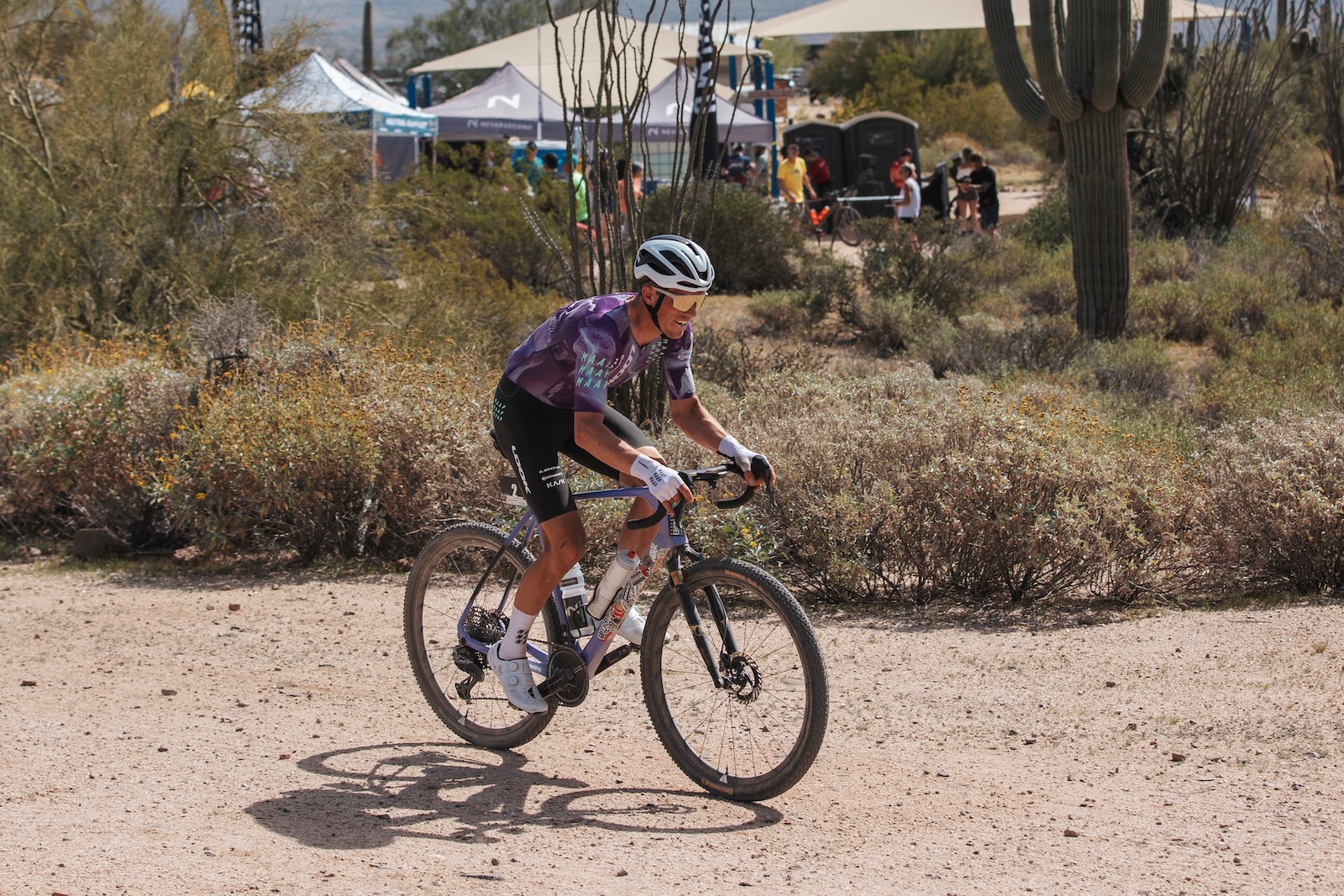
SCOTTSDALE, Arizona (February 28, 2026) — The 2026 Belgian Waffle Ride Arizona delivered one of the most dramatic finishes in the event’s history on Saturday, as Russell Finsterwald overhauled long-time leader Andrew L’Esperance in the final 200 meters to win by half a wheel in a lung-searing sprint. In the women’s race, Olympic silver medalist Haley Batten turned the 100-mile gravel test into a solo exhibition, crossing the line 13 minutes clear of the field.
The race unfolded under the hottest conditions in BWR Arizona history, with temperatures reaching 88°F, a fact that shaped everything about the day’s tactical dynamics and turned the McDowell Mountain Park course into a crucible of attrition. More than 600 riders started; many did not finish.
Men’s Race: L’Esperance Lights the Fuse Early
Andrew L’Esperance dispensed with the usual opening pleasantries. Just five miles into the race, he and Chase Wark launched off the front, and the Canadian quickly established himself as the stronger of the two. L’Esperance dropped Wark on a long singletrack section and pressed on alone, building an advantage that stretched beyond four minutes at its peak. It was the kind of move that either looks like genius or folly, and for most of the day, it looked like genius.
Behind, the peloton fractured under the desert heat. Finsterwald found himself in a committed chase group of four riders, and they set about the long, grinding work of bringing the gap down. The math was simple; the execution was not. L’Esperance rode with purpose at the front, pressing the advantage through the technical singletrack sections and fast gravel straightaways that define the BWR Arizona course.
With 60 miles remaining and the chase group making no inroads, Finsterwald made his decision. He attacked solo and committed to running down L’Esperance by himself. It was a gamble built on patience and a belief that the Canadian, after 90 kilometers off the front in searing heat, would eventually crack.
Russell Finsterwald, 2026 BWR Arizona winner. Photo courtesy of Belgian Waffle Ride
He nearly ran out of road. Finsterwald did not make contact until roughly 10 miles to go. When he did, he immediately tried to dislodge L’Esperance with a series of accelerations. L’Esperance absorbed every one.
“I tried to shake him, but he still had some left in him,” Finsterwald said afterward. “We both knew it was going to come down to a sprint.”
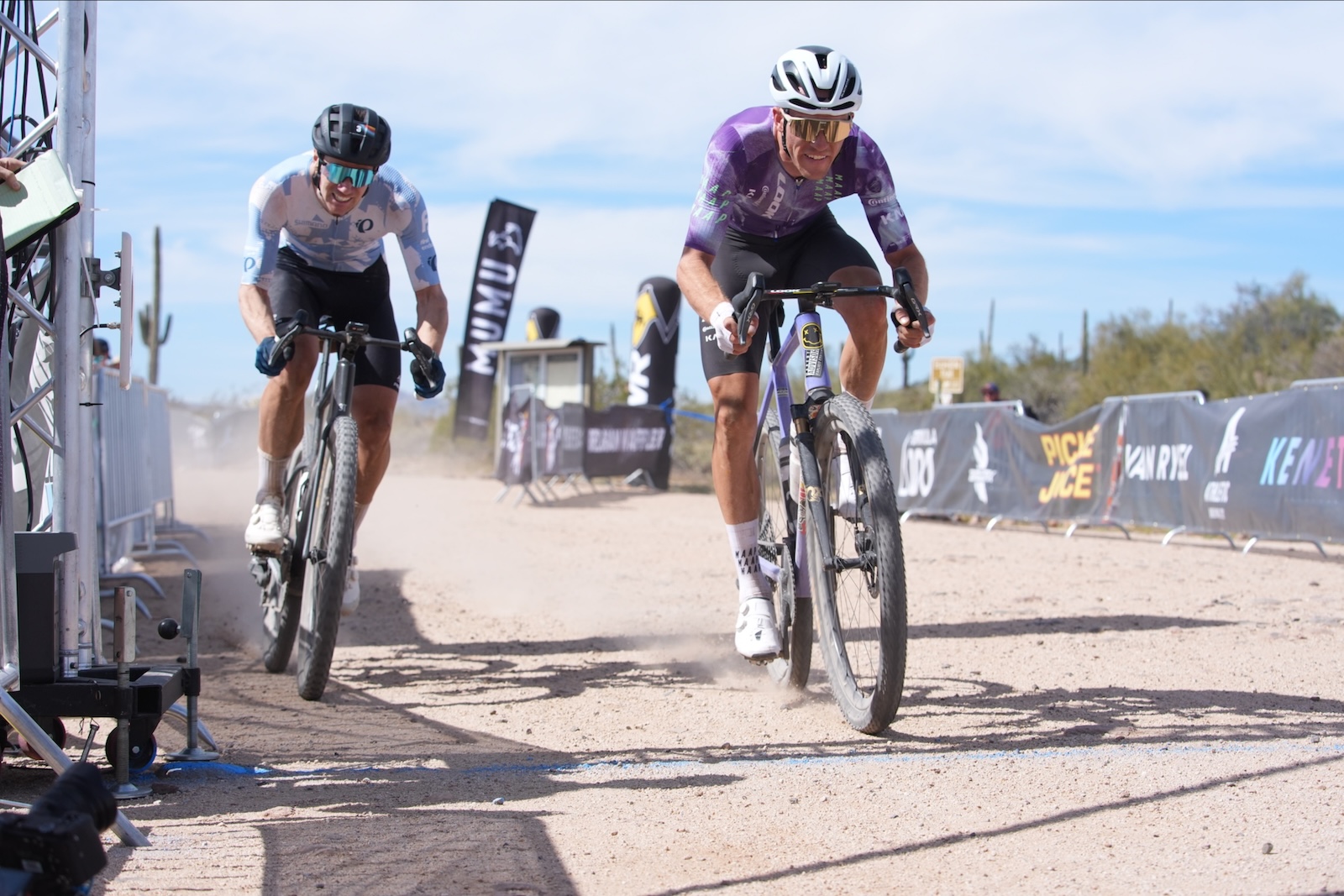
It did. The two riders entered the finishing straight together after 100 miles of racing, and Finsterwald timed his jump perfectly, entering the final stretch first and edging past L’Esperance to take the win by a single second—the smallest margin in BWR history. For Finsterwald, the reigning BWR Quad-Tripel Crown series champion who finished second to Keegan Swenson at this same event last year, the win added another significant chapter to his gravel palmares.
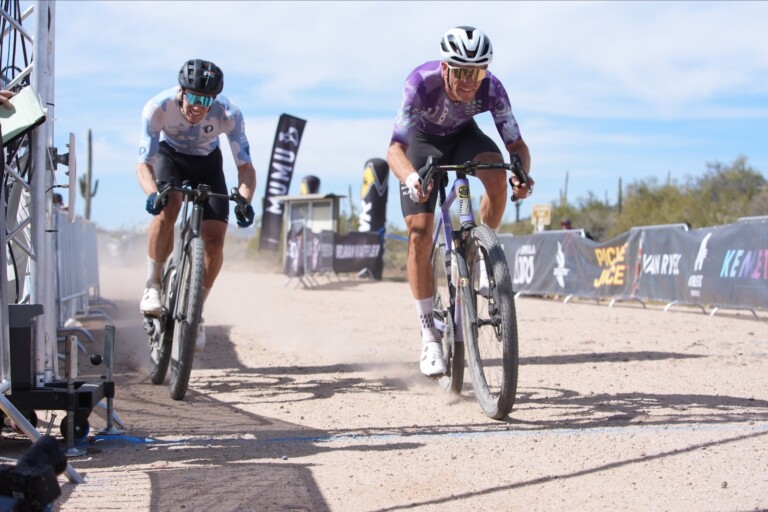
Russell Finsterwald outsprints Andrew L’Esperance to become 2026 BWR Arizona winner. Photo courtesy of Belgian Waffle Ride
Torbjørn Røed (Trek Driftless) finished third for the third time in four editions of BWR Arizona, crossing the line 4:03 behind the winner. Lunchbox Racing teammates Julien Gagne and Andrew Dillman rounded out the top five.
Women’s Race: Batten Puts on a Clinic
If the men’s race was a chess match resolved by a sprint, the women’s race was a demolition. Haley Batten, the Olympic silver medalist in cross-country mountain biking, used the first singletrack sector to establish her superiority and never looked back.
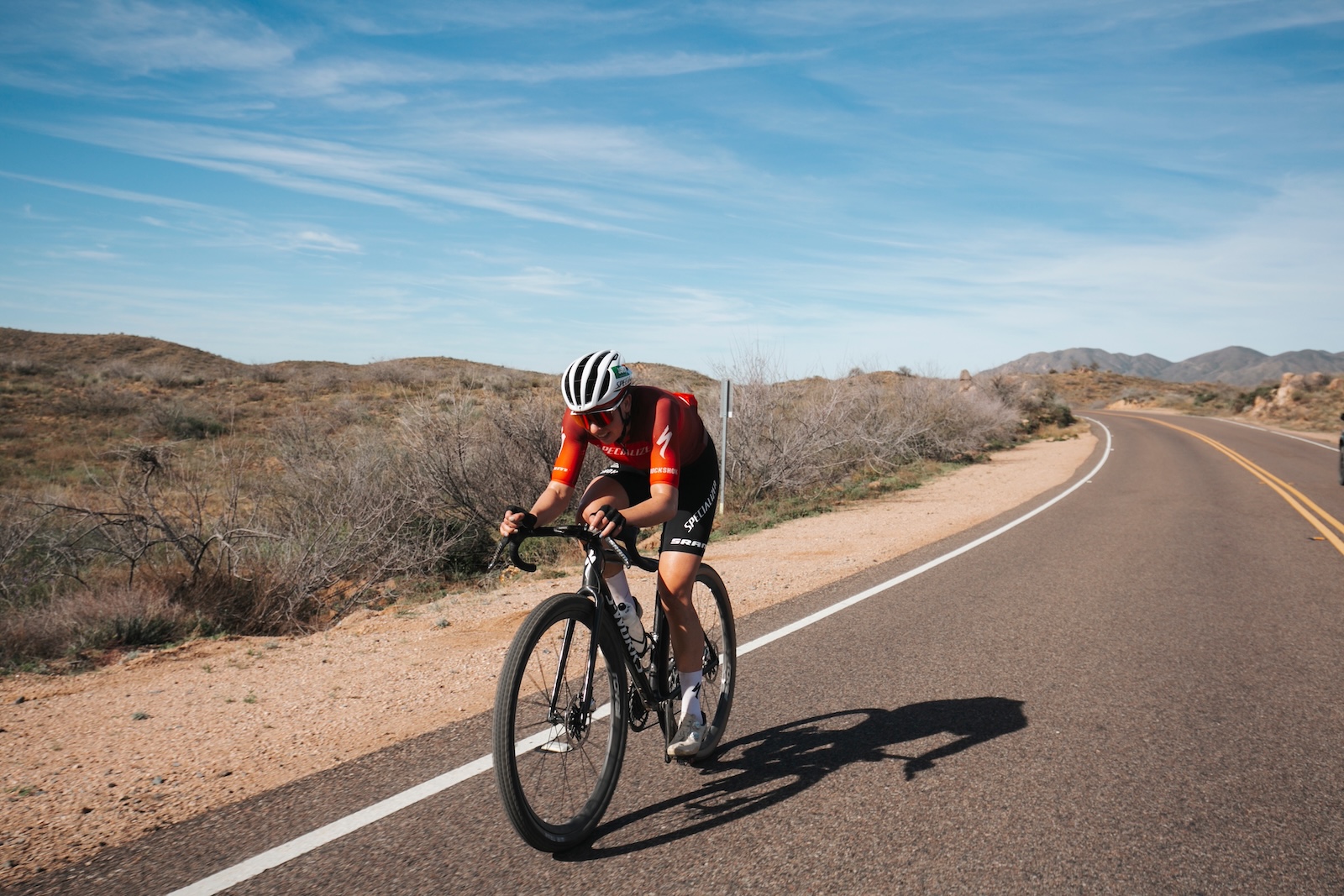
Haley Batten, 2026 BWR Arizona winner. Photo courtesy of Belgian Waffle Ride
Racing from a dedicated women’s start wave, Batten capitalized on her technical mountain bike handling skills to gap the field on the loose, rough singletrack. Once clear, she kept the pressure on the pedals through every sector, extending her advantage with each passing mile. Her lead grew to more than 10 minutes at times, with the field rarely able to make a dent.
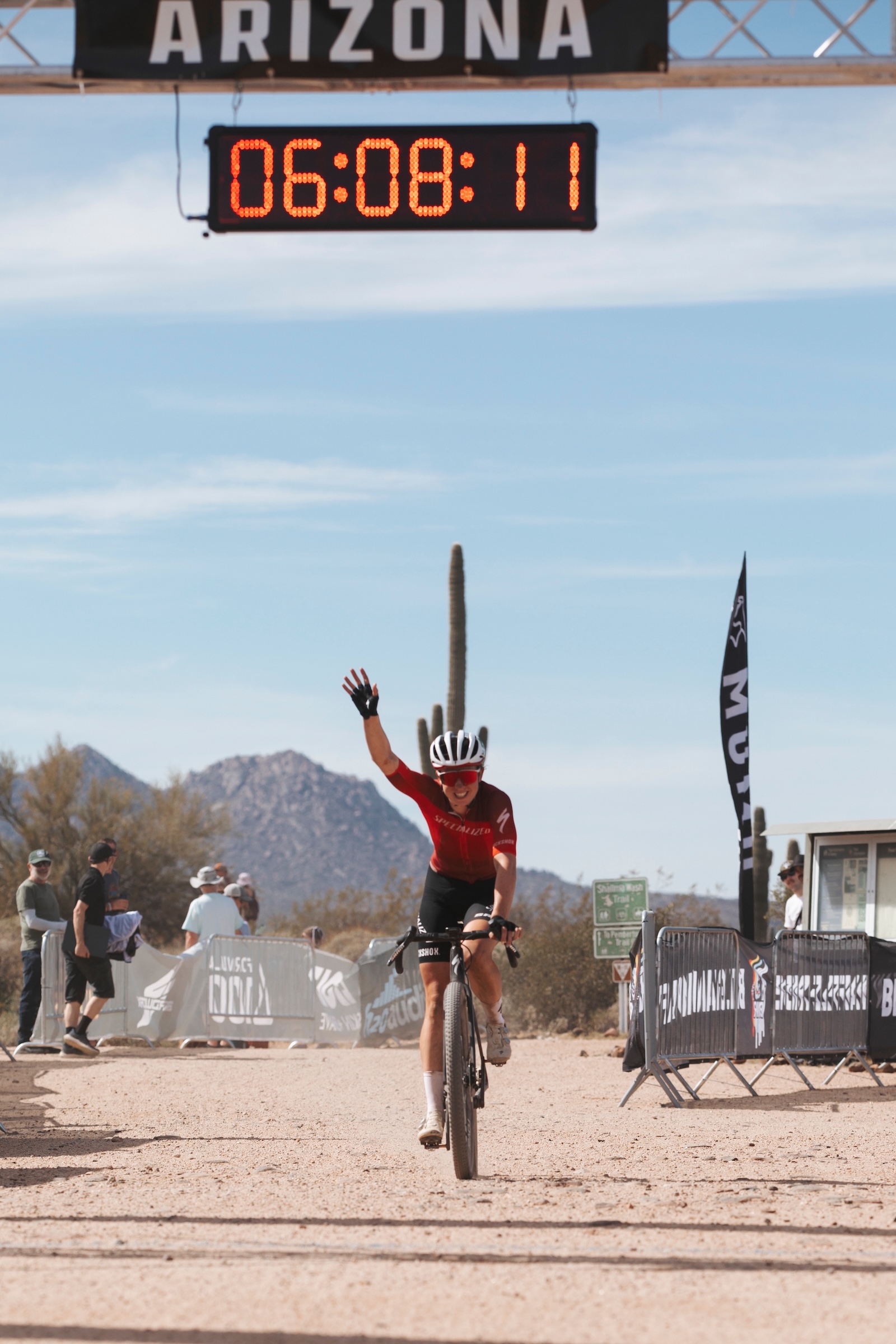
The margin at the finish told the story: Batten crossed the line in 5:58:13, more than 13 minutes clear of second place. It was a dominant, unassailable performance, and the kind of ride that reminded the gravel world that Batten’s cross-country pedigree translates with terrifying efficiency to mixed-surface racing.
Haley Batten, 2026 BWR Arizona winner. Photo courtesy of Belgian Waffle Ride
“It was absolutely smokin’ hot out there and the 100-mile course was relentless,” Batten said at the finish. “I’m satisfied with my effort and to ride away with the win. That was hard. It’s hot; I’m pretty fried.”
Behind her, Haley Smith (Factor Racing) and Cécile Lejeune (Trek Driftless) fought a race-long battle for second, with Smith crossing the line at 6:11:22 and Lejeune finishing just 26 seconds later. Alexis Skarda (Scott Bicycles–Q36.5) took fourth and Holly Henry (Broad Street/Bici) rounded out the top five in a strong ride from the Victoria, B.C., rider.
Equipment choices played a role in Batten’s dominance. She ran a RockShox Reverb XPLR AXS dropper seatpost and opted for a split tire setup—a Specialized Tracer 50c in the rear and an Air-Track 2.2 in the front—to handle the loose, punishing terrain. It was a setup built for confidence on a course that punished hesitation.
The Heat Factor
The extreme temperatures reshaped the race in ways both obvious and subtle. The BWR Arizona course through McDowell Mountain Park already demands a particular kind of rider—one comfortable on technical singletrack, fast on gravel, and resilient across 100 miles—but the heat added another variable entirely. Fueling strategies broke down. Pacing calculations went sideways. Riders who started too aggressively paid double for it in the final third.
Photo courtesy of Belgian Waffle Ride.
It was a day that rewarded the patient and the prepared, and both race winners exemplified those qualities in different ways: Finsterwald through his long, disciplined chase and perfectly timed sprint; Batten through her decisive early move and unrelenting tempo across the remaining miles.
The 2026 Belgian Waffle Ride Arizona—now in its fourth edition—confirmed the event’s reputation as one of the most demanding and unpredictable races on the American gravel calendar. It served as the opening round of the BWR Quad-Tripel Crown of Gravel Series, which continues at BWR California in Del Mar on May 3.
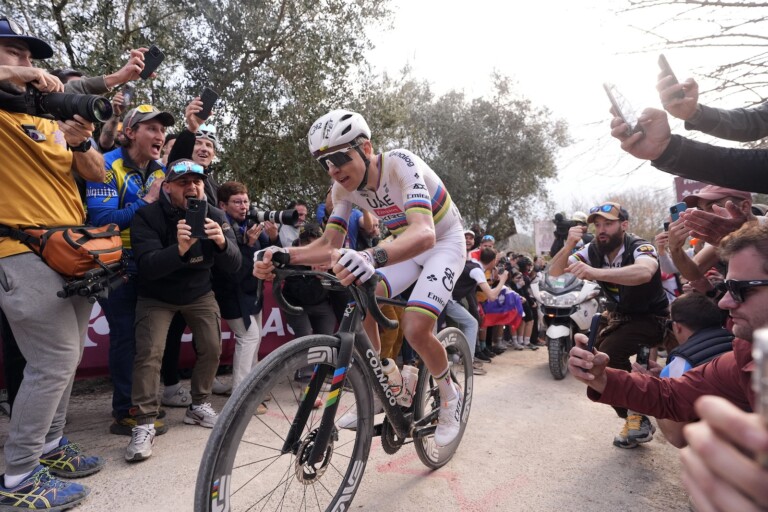
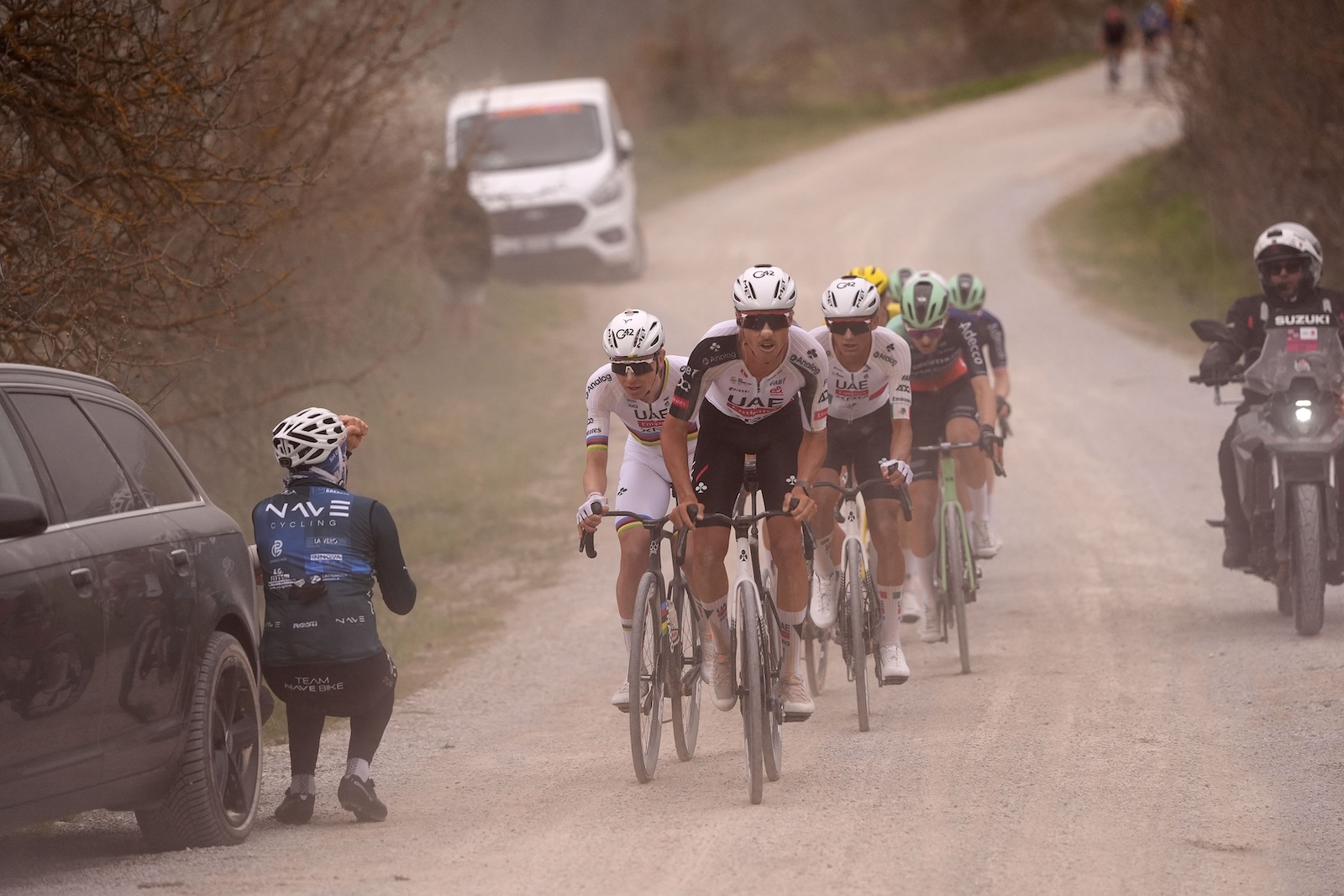
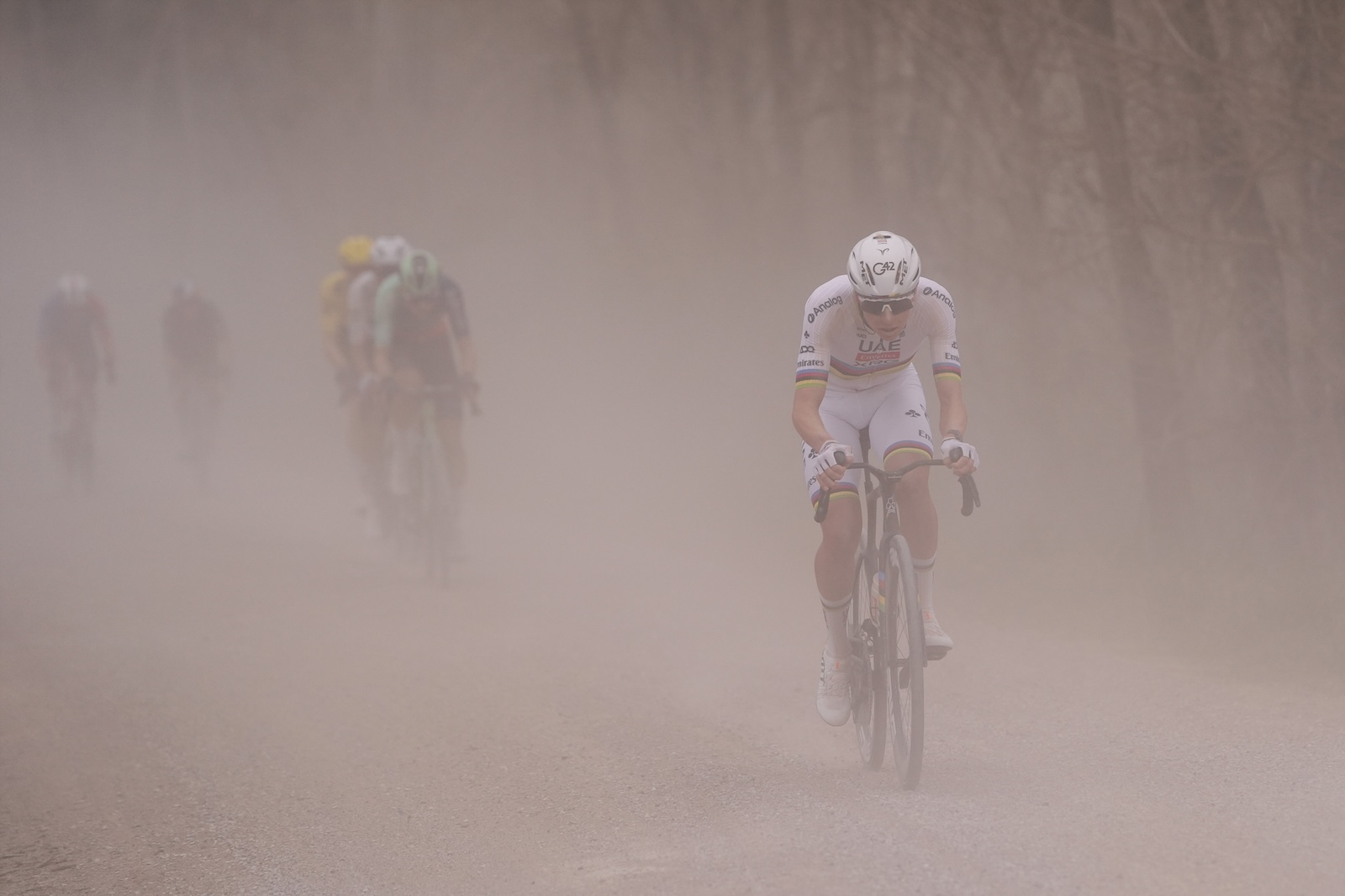
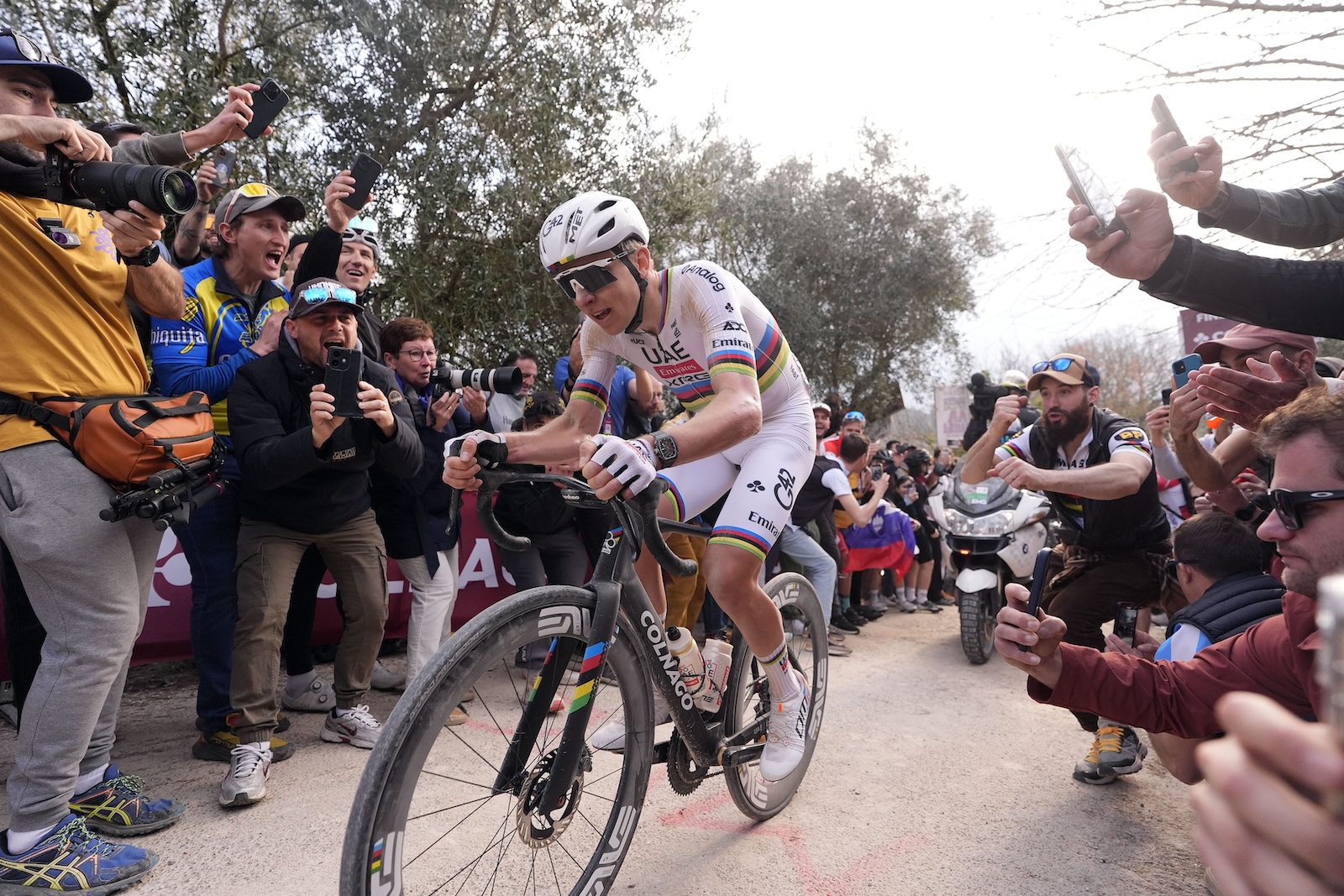
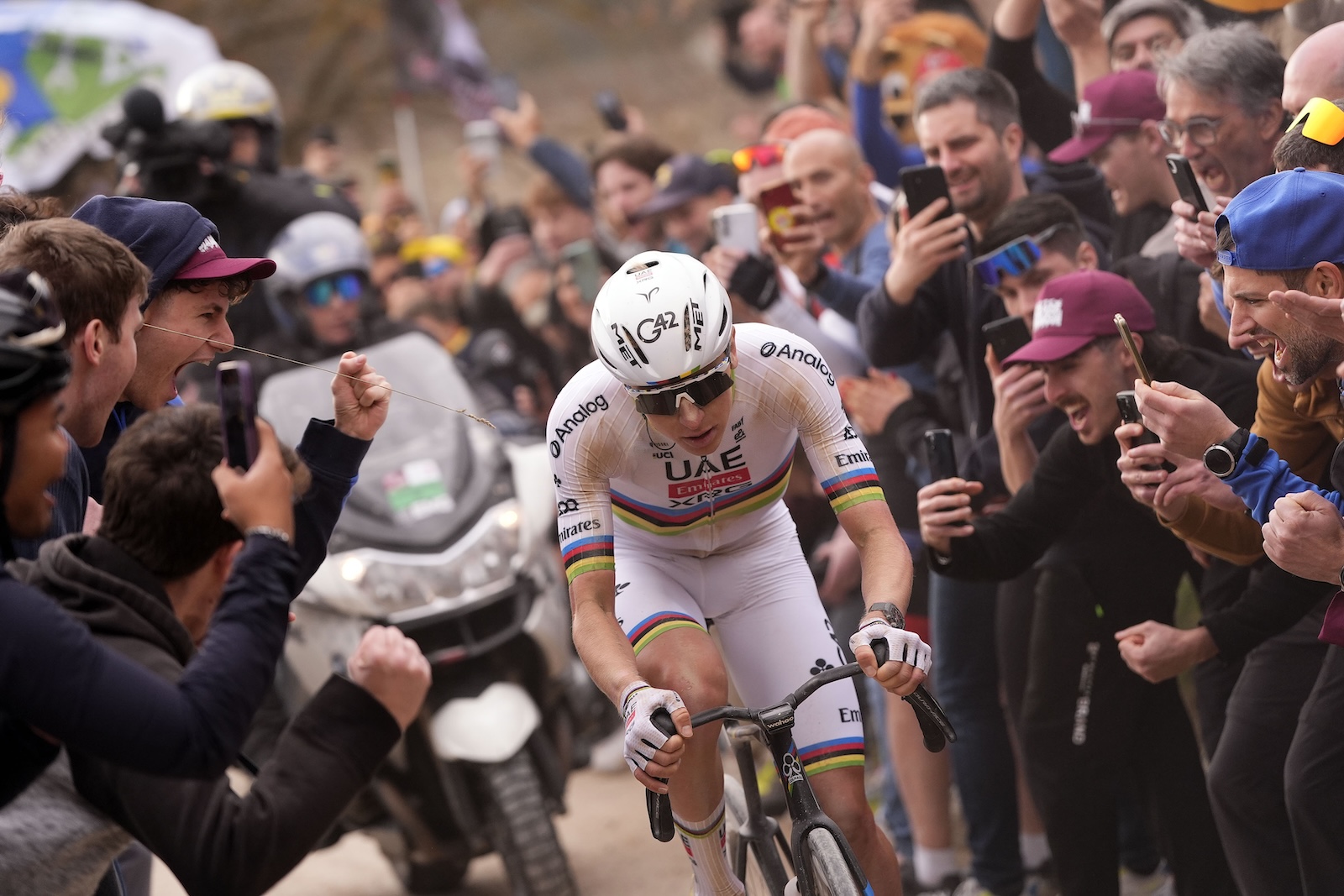
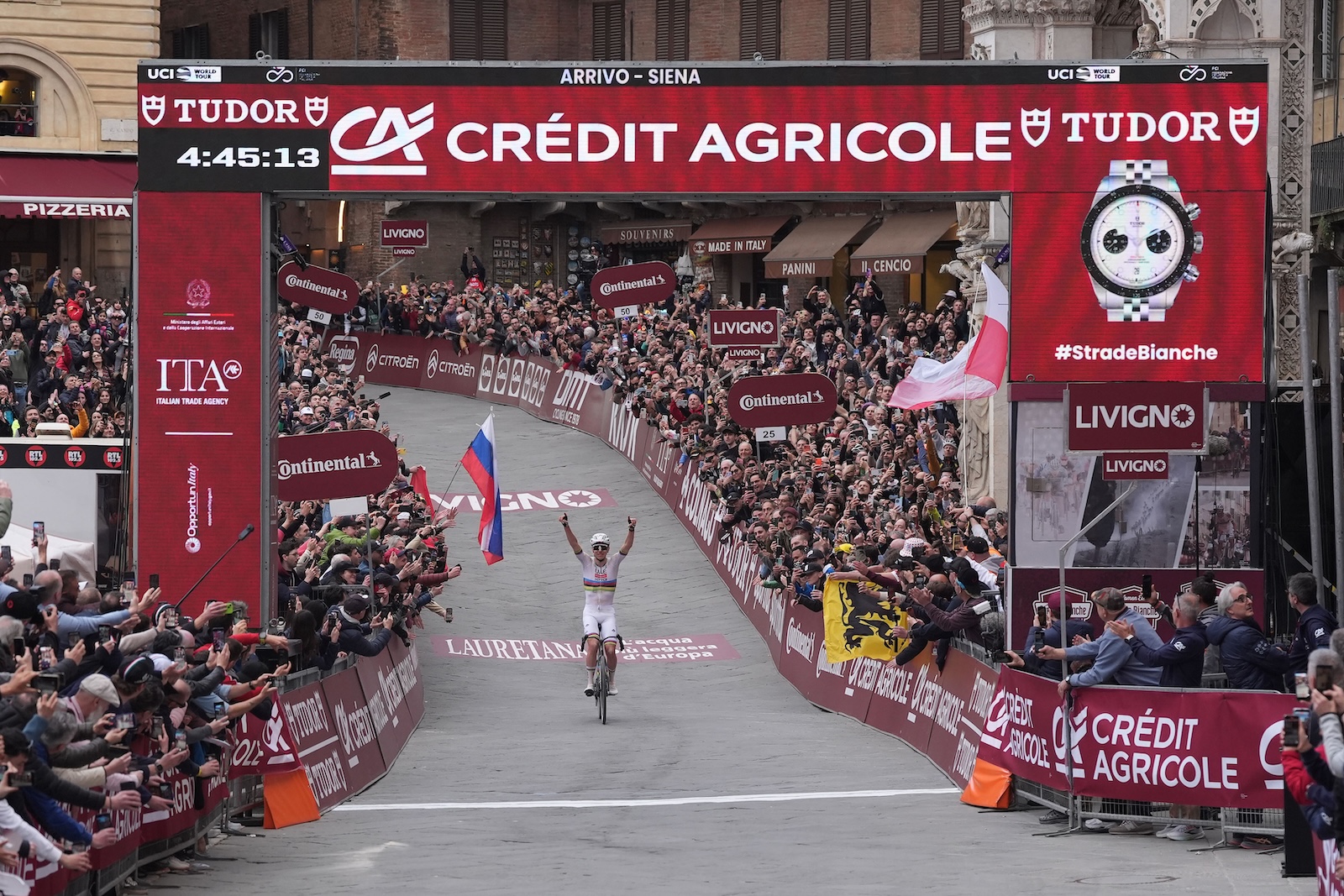
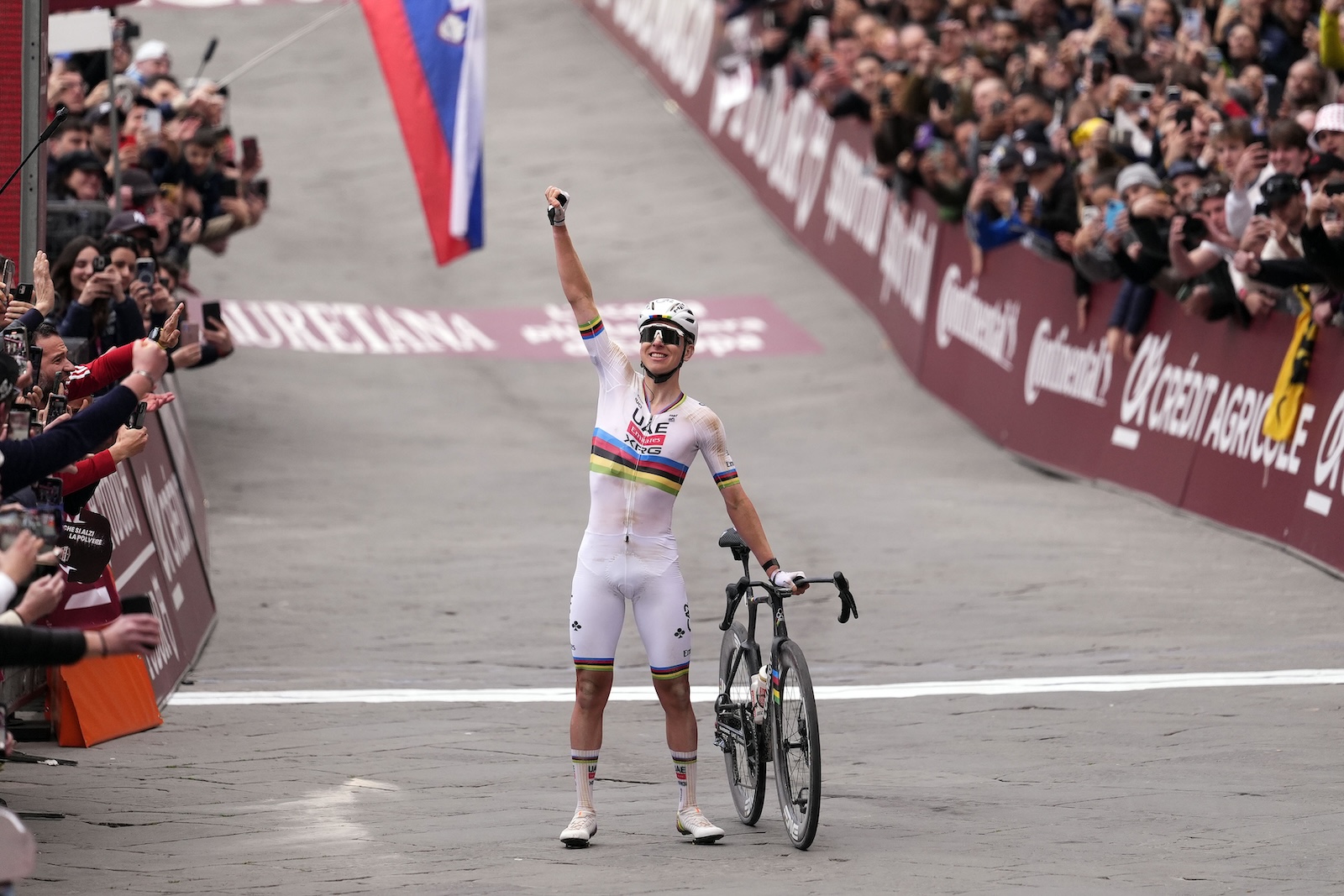
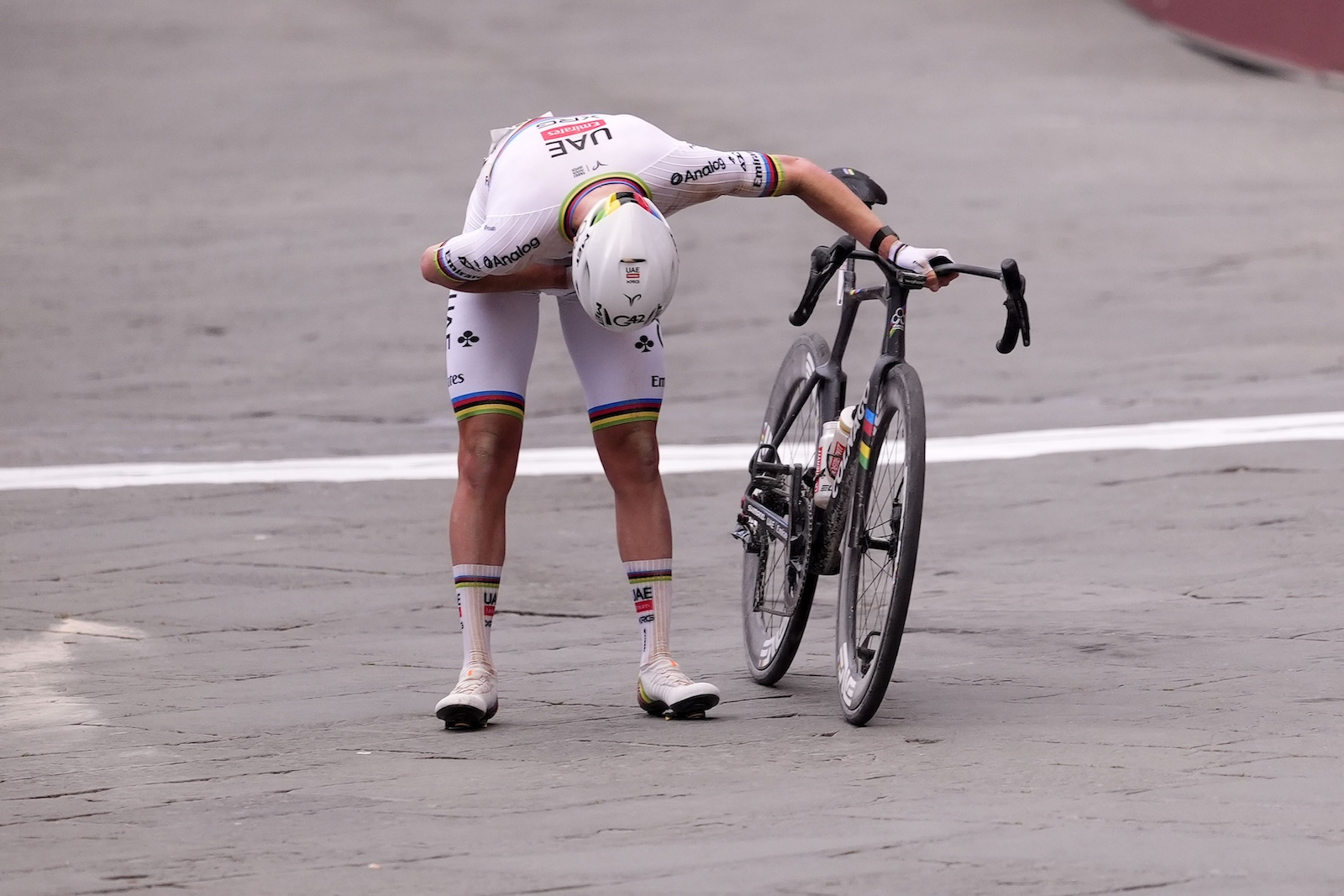
SIENA, Italy (March 7, 2026) — Tadej Pogačar attacked with 78.5 kilometers still to race and rode alone through the Tuscan dust for nearly two hours to claim a record-breaking fourth Strade Bianche title. It was the 109th victory of his professional career. The Slovenian world champion, making his 2026 season debut, surpassed Fabian Cancellara’s all-time mark of three victories and confirmed, once again, that the white roads of Siena remain his personal playground.
No rider had ever won the race three years running. Pogačar has now won every edition he has entered since 2022—four in a row, the 2023 race the only one he skipped—and is the only reigning world champion to win Strade Bianche, having done so in consecutive years. Since 2020, he has won the first race or overall classification of every season he has contested. The pattern holds the force of natural law.
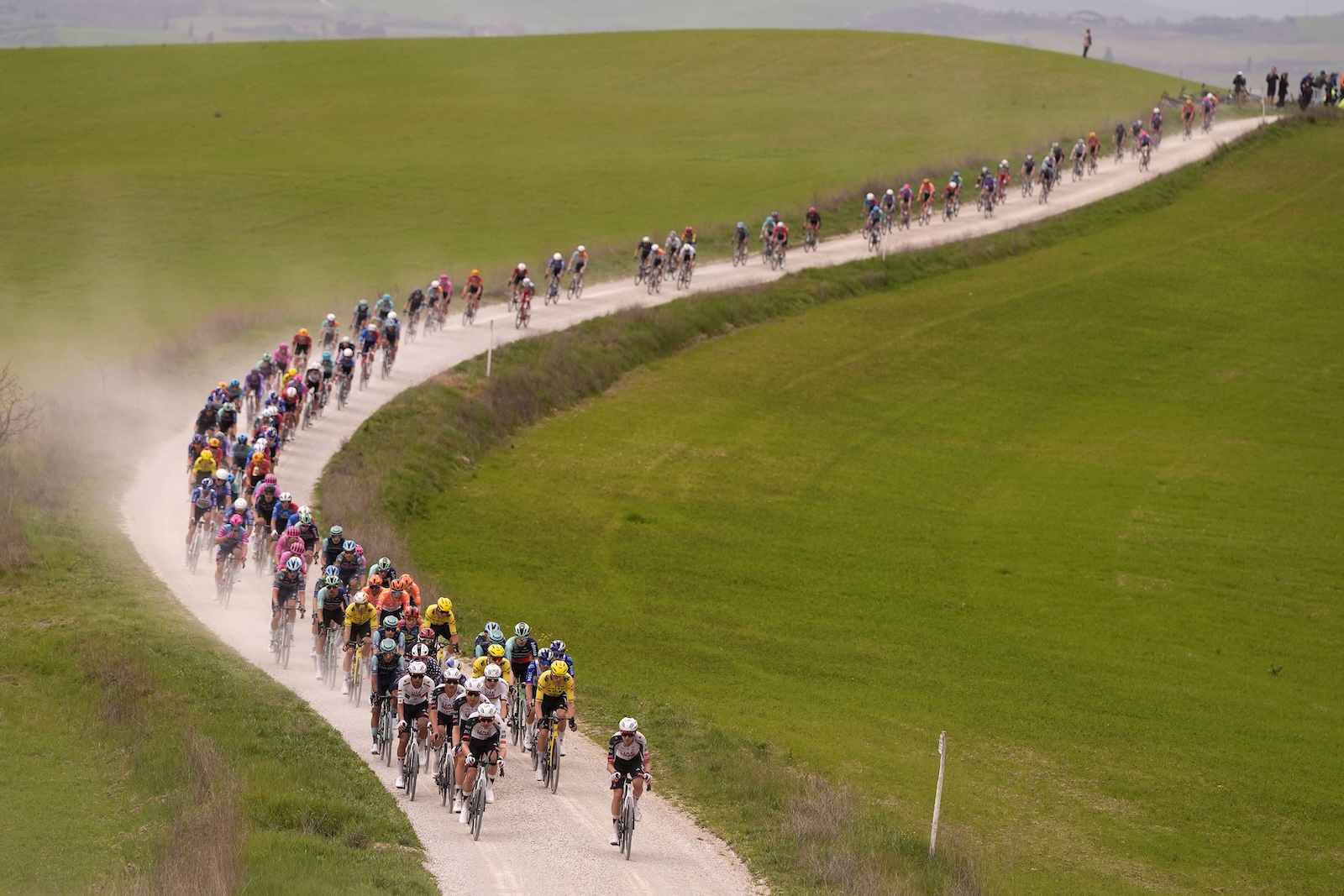
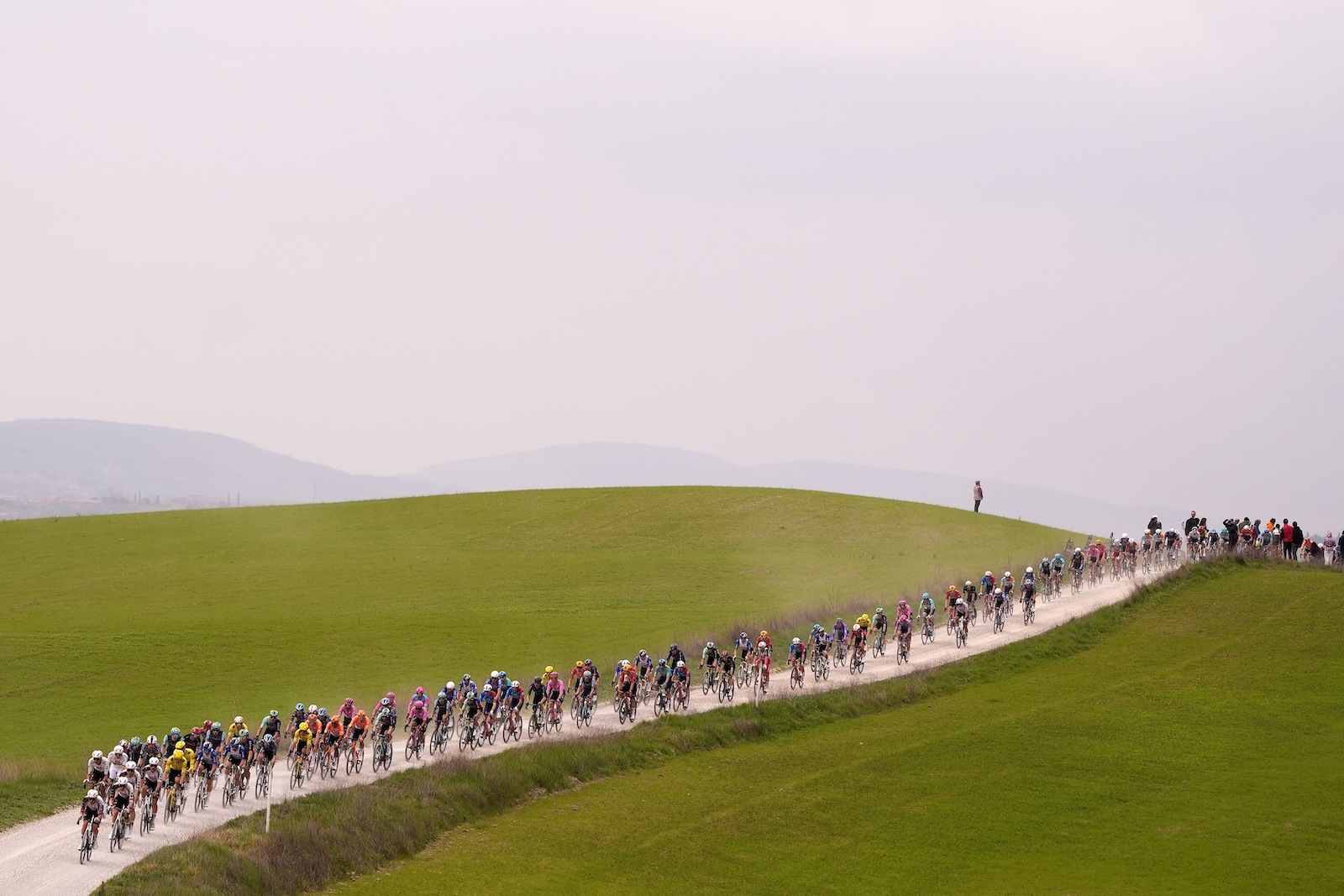
The pack rides during the Strade Bianche (White Roads) a 203 km one day cycling race from and to Siena (Tuscany), Italy – Saturday March 7, 2025 – Sport – cycling (Photo by Fabio Ferrari/LaPresse)
Behind him, a teenager announced himself on the biggest stage. Nineteen-year-old Paul Seixas of Decathlon CMA CGM finished second, one minute down, the best result of his young career, while Pogačar’s UAE Team Emirates-XRG teammate Isaac del Toro completed the podium in third at 1’09”. At 19 years, 5 months, and 11 days, Seixas shattered the record for the youngest rider on the Strade Bianche podium—a mark previously held by Moreno Moser, who won in 2013 at 22 years and 2 months. He is the fourth Frenchman to stand on the podium, following Romain Bardet (2nd, 2018), Julian Alaphilippe (1st, 2019; 2nd, 2021), and Valentin Madouas (2nd, 2023). Del Toro, meanwhile, became the first Mexican on the Strade Bianche podium and the first non-European since Egan Bernal finished third in 2021.
The pack rides during the Strade Bianche (White Roads) a 203 km one day cycling race from and to Siena (Tuscany), Italy – Saturday March 7, 2025 – Sport – cycling (Photo by Fabio Ferrari/LaPresse)
In a race that has increasingly favored pure climbers over the cobbled classics men, the youth of the podium—Seixas at 19, del Toro at 22, fourth-place finisher Romain Grégoire at 23—hinted at the shape of a rivalry still taking form. Their combined average age of 23 years and 28 days set a new record, beating the 2018 podium of Tiesj Benoot, Bardet, and Wout van Aert by nearly a year and a half. The future arrived in Siena. It just wasn’t fast enough to beat the present.
A Familiar Script, Written Early
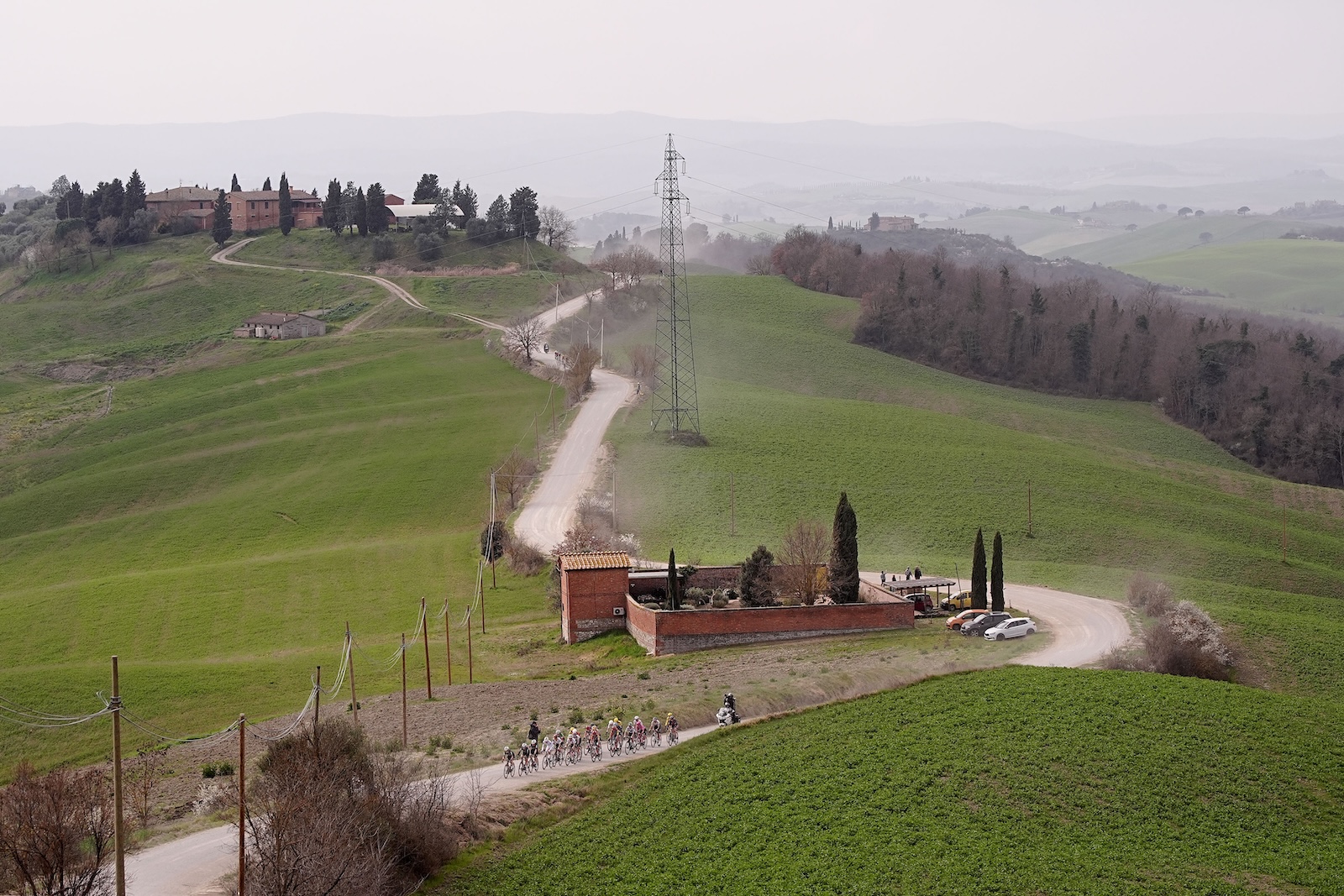
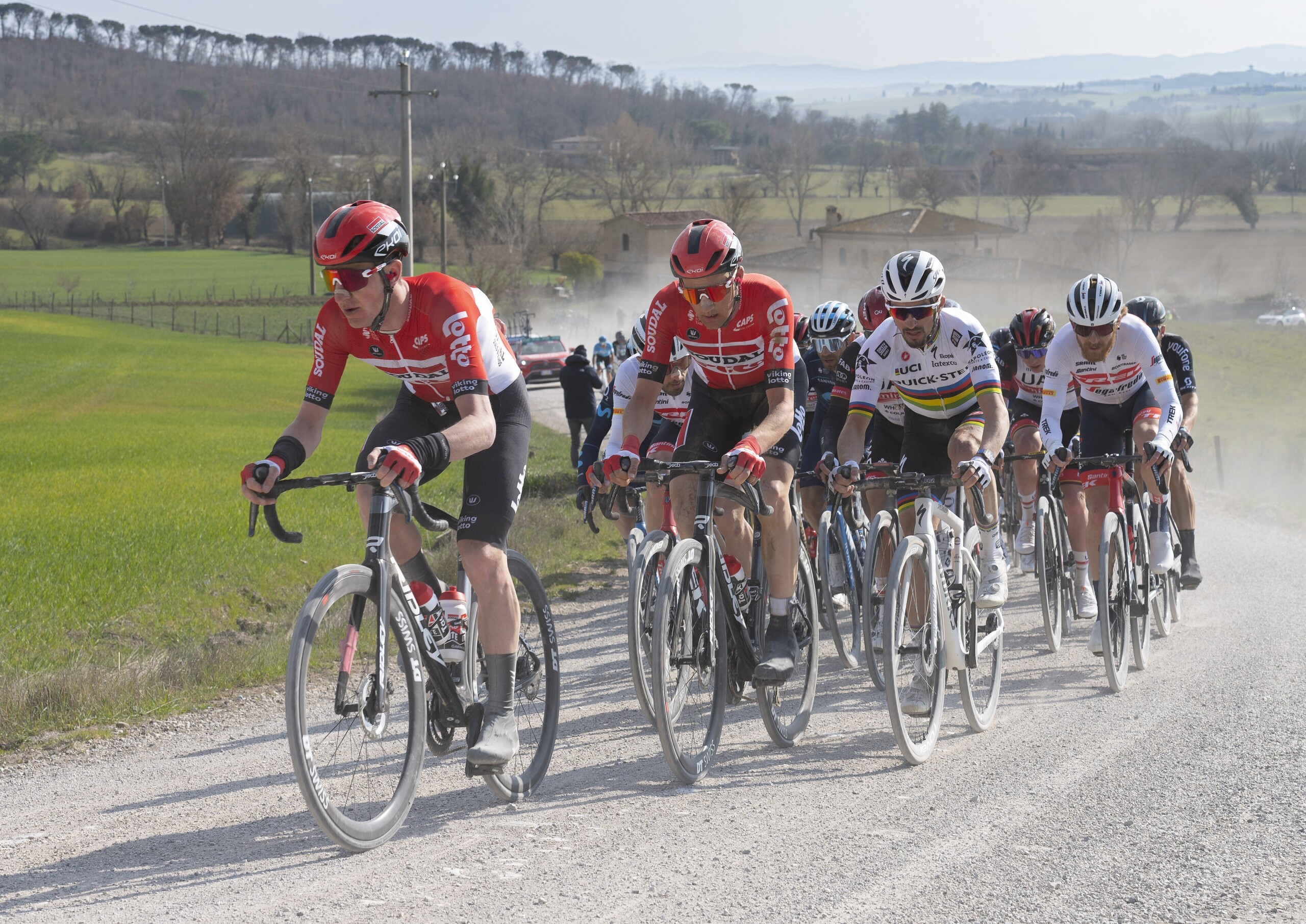
The 20th edition of Strade Bianche unfolded under dry skies and mild temperatures, the spring sunshine baking the gravel sectors into their fast, firm, dusty form rather than the thick Tuscan clay that clings to wheels and breaks chains in wetter years. The light was golden and flat across the Val d’Arbia, the kind of afternoon that makes Tuscany look like a painting even when the peloton is tearing it apart. Organizers had shortened the course and trimmed the number of gravel sectors to fourteen, hoping to tighten the race and deny Pogačar the attritional distance that had served his previous demolitions. It did not matter.
POGACAR Tadej during the Strade Bianche (White Roads) a 203 km one day cycling race from and to Siena (Tuscany), Italy – Saturday March 7, 2025 – Sport – cycling (Photo by Fabio Ferrari/LaPresse)
Pogačar would later admit to the nerves that accompany any season opener. “Every year, it’s the same,” he said. “I feel a bit nervous before the first race but it’s a super nice feeling to restart, especially with Strade Bianche.” Whatever anxiety he carried was invisible on the road. His UAE Team Emirates-XRG squad rode the first three hours with the quiet authority of men executing a plan they had rehearsed until it bored them.
A nine-rider breakaway featuring Tibor Del Grosso, Jack Haig, Patrick Konrad, and Tim Rex established itself around 160 kilometers to go and built a lead of nearly two minutes with UAE content to patrol the peloton behind. The real racing, everyone understood, waited on the Monte Sante Marie. For Pogačar, the break was scenery.
When the break’s advantage collapsed to twenty seconds under the pressure of the UAE-led peloton, the catch came just as the field swung onto the famed gravel climb. Florian Vermeersch led first, Pogačar glued to his wheel. Then the world champion moved to the front on a downhill section of gravel and accelerated. The field shattered.
About ten riders initially held contact—del Toro, Seixas, Tom Pidcock, Matteo Jorgenson, Grégoire, and Jan Christen among them—but Pidcock suffered a mechanical, a slipped chain at the worst possible moment on the sterrato. The disruption forced him to expend energy just as the race was splitting, and the rhythm he lost never fully returned. He would later downplay it with the careful honesty of a man who knows the result wouldn’t have changed. “Some mechanical issue on Santa Maria and that really killed my momentum there,” he said, “but I wouldn’t have been easy with Tadej anyway. I don’t think it changed the race much apart from taking a bit more out of me.”
– during the Strade Bianche (White Roads) a 203 km one day race from and to Siena – Tuscany,- Saturday March 7, 2025, Italy. Sport – cycling (Photo by Fabio Ferrari/LaPresse)
And when Pogačar stamped again, harder, only Seixas could respond. The French teenager rode his way back onto the Slovenian’s wheel in a moment of audacious defiance—a move that took nerve, power, and the kind of ignorance about consequences that only a 19-year-old possesses. It earned him nothing but delayed punishment.
– during the Strade Bianche (White Roads) a 203 km one day race from and to Siena – Tuscany,- Saturday March 7, 2025, Italy. Sport – cycling (Photo by Fabio Ferrari/LaPresse)
Seixas would later describe the sequence with a teenager’s bluntness: “It was a bit strange when Pogačar attacked. I tried to follow Pidcock and del Toro tried to block me, not once or twice but three times. I was stuck and that’s the game they chose to play so I had to try and bridge the gap. But just a twenty-meter gap to Pogačar is too much. I’ve been very close but there were five hundred meters of climbing too much for me. I could see he was managing his effort. He looked back and just didn’t want to have me on his wheel.”
The Strade Bianche (White Roads) a 203 km one day cycling race from and to Siena (Tuscany), Italy – Saturday March 7, 2025 – Sport – cycling (Photo by A Garofalo/LaPresse)
Pogačar surged a third time, and Seixas cracked, falling twenty seconds behind, then forty-five, then a minute. The winner explained his calculus afterward. “I knew before the start that Paul Seixas was a serious opponent,” he said. “After I attacked, I looked back at one point after the steepest section—he wasn’t that far, so I thought, ‘OK, I need to really give it all.’ I’m glad I succeeded to drop him rather than having to ride together with him.”
With 78 kilometers still to ride, Pogačar set off alone at the front of the race. It is a distance that would break most riders just to contemplate. Pogačar treats it as a commute.
The Long Road Home
Del Toro caught Seixas on the road and sat on his wheel, refusing to take a pull—textbook team tactics with his leader up the road. It left Seixas to choose between chasing alone and waiting for the group behind. The Frenchman, wisely, chose to wait. A quintet formed: Seixas, del Toro, Jorgenson, Pidcock, and Christen, along with Grégoire and others who bridged across. They organized a chase.
For a time, it worked. Pogačar’s lead, which peaked at 1:50, began to shrink. It dropped to 1:35, then 1:20. The chasers, driven by Seixas and Pidcock with Jorgenson contributing, dared to believe. Gianni Vermeersch and Grégoire bridged up to add fresh legs. But del Toro and Christen—both UAE riders—sat in like passengers on a train, consuming no energy, contributing nothing. It was infuriating and correct.
Pidcock, still feeling the cost of his mechanical, kept working, but the earlier disruption had drawn down his reserves. The gap hovered around the one-and-a-half-minute mark, close enough to hurt, far enough to mock. “It’s so difficult when you’re in the group behind and you know the race is gone,” he said. “You can always think, this is just the race now, but yeah, it’s not really how it is when one guy’s in front.”
POGACAR Tadej (UAD UAE TEAM EMIRATES XRG ) during the Strade Bianche (White Roads) a 203 km one day cycling race from and to Siena (Tuscany), Italy – Saturday March 7, 2025 – Sport – cycling (Photo by Fabio Ferrari/LaPresse)
Then the road tilted upward again, and Pogačar found his rhythm. On the Montechiaro gravel sector, and then Colle Pinzuto—the stretch renamed in his honor after previous exploits—the gap stabilized and began to grow. He rode with the metronomic consistency of a man who had done the arithmetic in his head and found the answer satisfactory. By fifteen kilometers to race, the lead held at 1:20. The chase died. It had never really lived.
POGACAR Tadej during the Strade Bianche (White Roads) a 203 km one day cycling race from and to Siena (Tuscany), Italy – Saturday March 7, 2025 – Sport – cycling (Photo by Fabio Ferrari/LaPresse)
Seixas, who had spent himself driving the pursuit, found one final burst of acceleration on the approach to Siena. He attacked del Toro, dropped him, and rode into the Piazza del Campo alone for second place. “For the podium, I managed to get him out of my wheel,” he said afterward. “It was really unbelievable.” It was a remarkable ride from a rider still too young to vote in most countries. Del Toro held on for third, his highest World Tour classic finish, a reward for disciplined teamwork. Grégoire attacked the remnants of the chase group to take fourth, followed by Vermeersch and Christen.
The Dust Settles
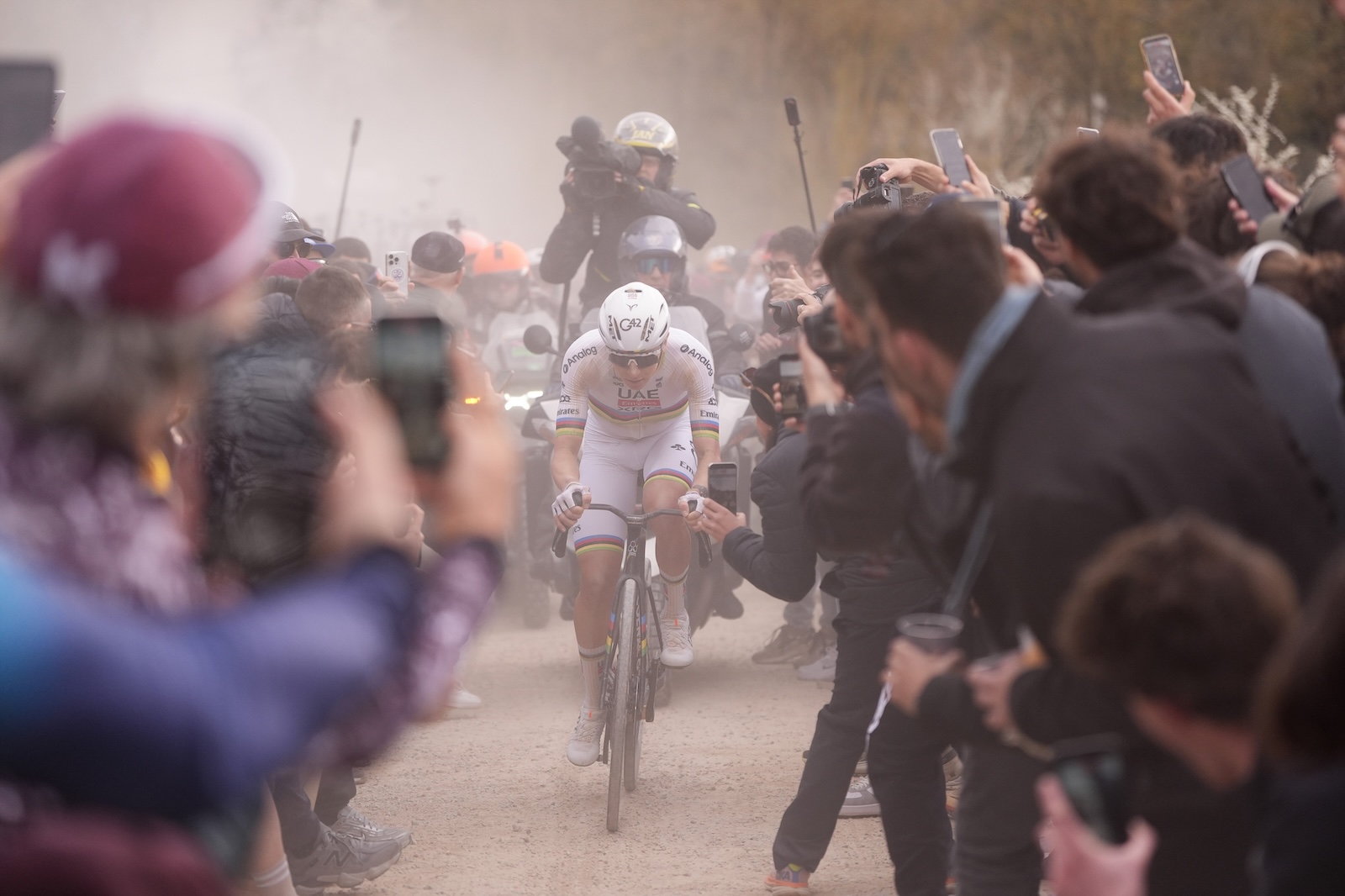
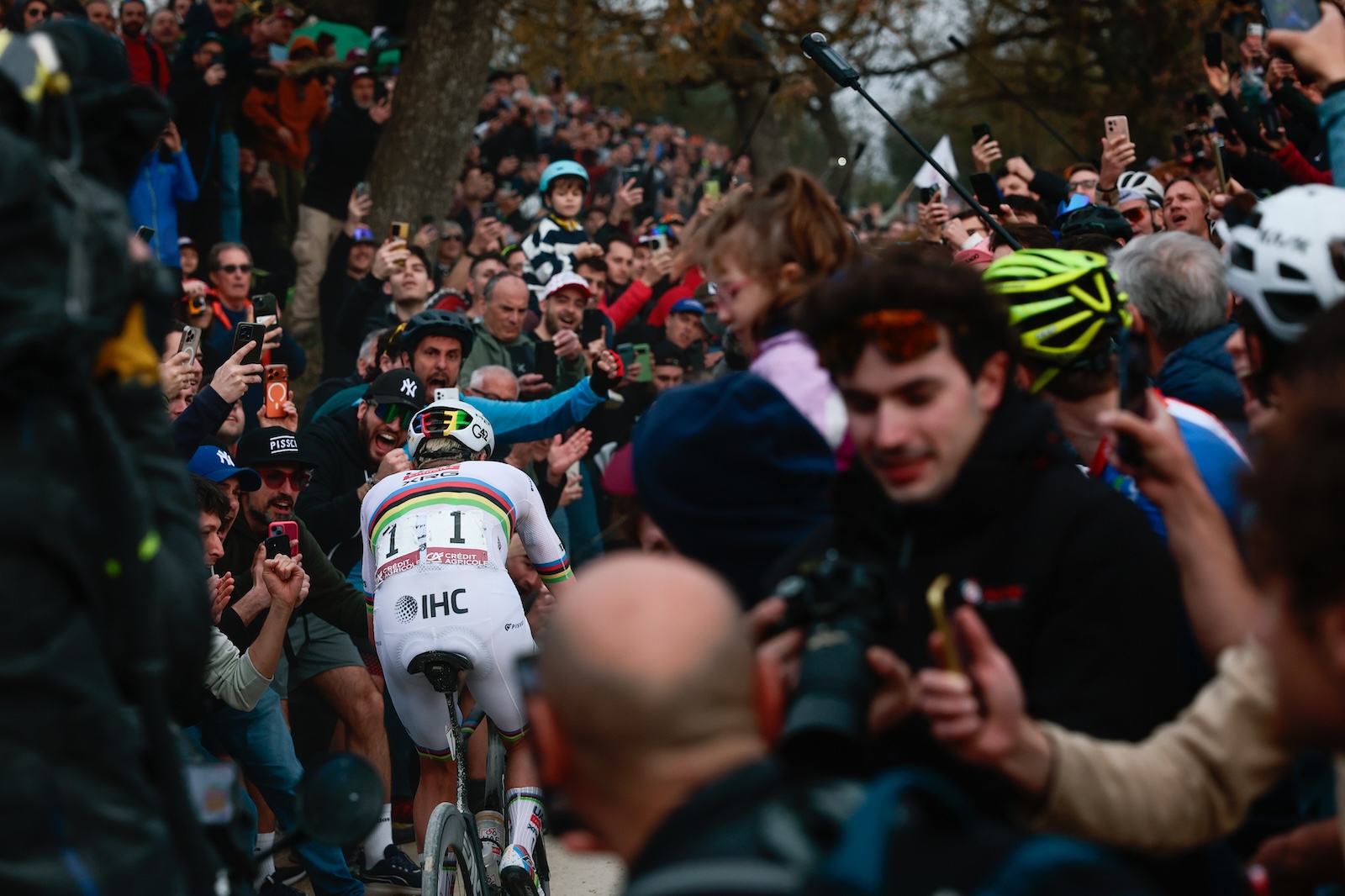
Pogačar entered Siena alone, sweeping past the Duomo and down the narrow streets, the roar of the crowd funneled between the medieval walls. He did not sprint up Via Santa Caterina. He did not need to. He slowed, smiled, and soaked in the noise, crossing the line with the leisure of a man collecting something he already owned. The average speed of 42.699 kph was a new race record, up from 40.705 kph the previous year—a measure of how fast the dry roads ran, and how relentlessly UAE had set the tempo from the gun.
POGACAR Tadej (UAD UAE TEAM EMIRATES XRG ) winner of the race after the Strade Bianche (White Roads) a 203 km one day cycling race from and to Siena (Tuscany), Italy – Saturday March 7, 2025 – Sport – cycling (Photo by Spada/LaPresse)POGACAR Tadej (UAD UAE TEAM EMIRATES XRG ) winner of the race after the Strade Bianche (White Roads) a 203 km one day cycling race from and to Siena (Tuscany), Italy – Saturday March 7, 2025 – Sport – cycling (Photo by Fabio Ferrari/LaPresse)POGACAR Tadej (UAD UAE TEAM EMIRATES XRG ) winner of the race after the Strade Bianche (White Roads) a 203 km one day cycling race from and to Siena (Tuscany), Italy – Saturday March 7, 2025 – Sport – cycling (Photo by Fabio Ferrari/LaPresse)
Speaking seconds after the finish, Pogačar paid tribute to his teammates. “Chapeau to the team today,” he said. “They’ve done an incredible job from the start, controlling the breakaway and setting up a great pace. It was beautiful to see all the guys from the team performing so well. I’ve seen Paul Seixas chasing really hard on the steepest part of the climb when I attacked on Monte Sante Marie. I said to myself, ‘Go all out to the top then I’ll see either he’ll come to my wheel or he’ll explode.’ Then I saw the gap was enough and Isaac and Jan were there. It helped a lot to go alone. It’s a great start of the season. I’ll take the rest of the year race by race and we’ll see if it goes as well as last year.”
Later, in the press conference, he was asked whether any of his four Strade Bianche victories stood apart. “There isn’t one that stands out,” he said. “They’re all unique.” He addressed the obvious question about the solo distance with a shrug. “Reality is that I don’t like long breakaways. It’s just because the best place to make a difference is now with eighty kilometers to go. It used to be with fifty, but we have no reason to complain, especially after winning.” He paused. “Sometimes I had personal thoughts too.” He did not elaborate.
Four Strade Bianche titles now, added to a palmarès that includes four Il Lombardia wins, three Liège-Bastogne-Liège victories, and two Tours of Flanders. His dominance of the Monument and one-day calendar continues to grow in ways that resist comparison to any single predecessor. There is no historical template for what he is doing. He is writing the template.
Pidcock, the only other man to win Strade Bianche in the past four years, finished seventh after his mechanical cost him a realistic shot at following Pogačar’s wheel in the crucial moment. The effort of the earlier phases eventually told in the final kilometers. “I think that was a pretty big gap when people are thinking about the final,” he said, “and yeah, I ran out of legs in the final as well.” Despite the setbacks, his performance on the gravel sectors confirmed Pinarello Q36.5’s competitive condition heading into the spring. Jorgenson took eighth. Wout van Aert, a former winner who admitted before the race that he carried more question marks than confidence, finished tenth after spending much of the second half in a chase group that never found the legs to rejoin the front.
Ben Healy, who animated the middle portion of the race with a string of aggressive attacks, eventually paid the price for his efforts and faded. It was a more unfortunate day for Pidcock’s teammate Quinten Hermans, who abandoned after a crash earlier in the event. Initial reports indicated no serious injuries, but the incident ended any chance of contributing to the finale.
In the press conference, Seixas could barely contain himself. “This is the best result I could get today,” he said. “Tadej Pogačar racing the same way he did in 2024 and 2025—he’s one step ahead of the others. I’m really happy to be second. It’s just insane to be here.” He is 19 years old. The insanity, one suspects, has barely begun.
Del Toro, who played the team role to perfection, kept his focus on the collective result but allowed himself one dream. “It’s so nice to get the victory with the team,” he said. “I was supposed to be a little bit in front of Tadej but he decided to go early. Paul Seixas was very impressive. He showed before that he’s at a super high level. I’m super happy to race against guys like him. Hopefully one day in my career, I’ll win Strade Bianche. I really like this place where I took the Maglia Rosa at the Giro d’Italia last year.”
The conversation afterward centered not on whether Pogačar could be beaten, but on when. The youth of the riders filling the places behind him—Seixas, del Toro, Grégoire—suggested the answer might eventually come, but not yet. As long as Pogačar starts a race on these roads, the white dust of Tuscany settles in the same pattern: first across the line, alone, the gap yawning behind him like a geological fact.
His next appointment: Milan-Sanremo, in two weeks. A race, he has acknowledged, that he finds much harder to win.
2026 Strade Bianche Donne • Siena to Siena • 133km
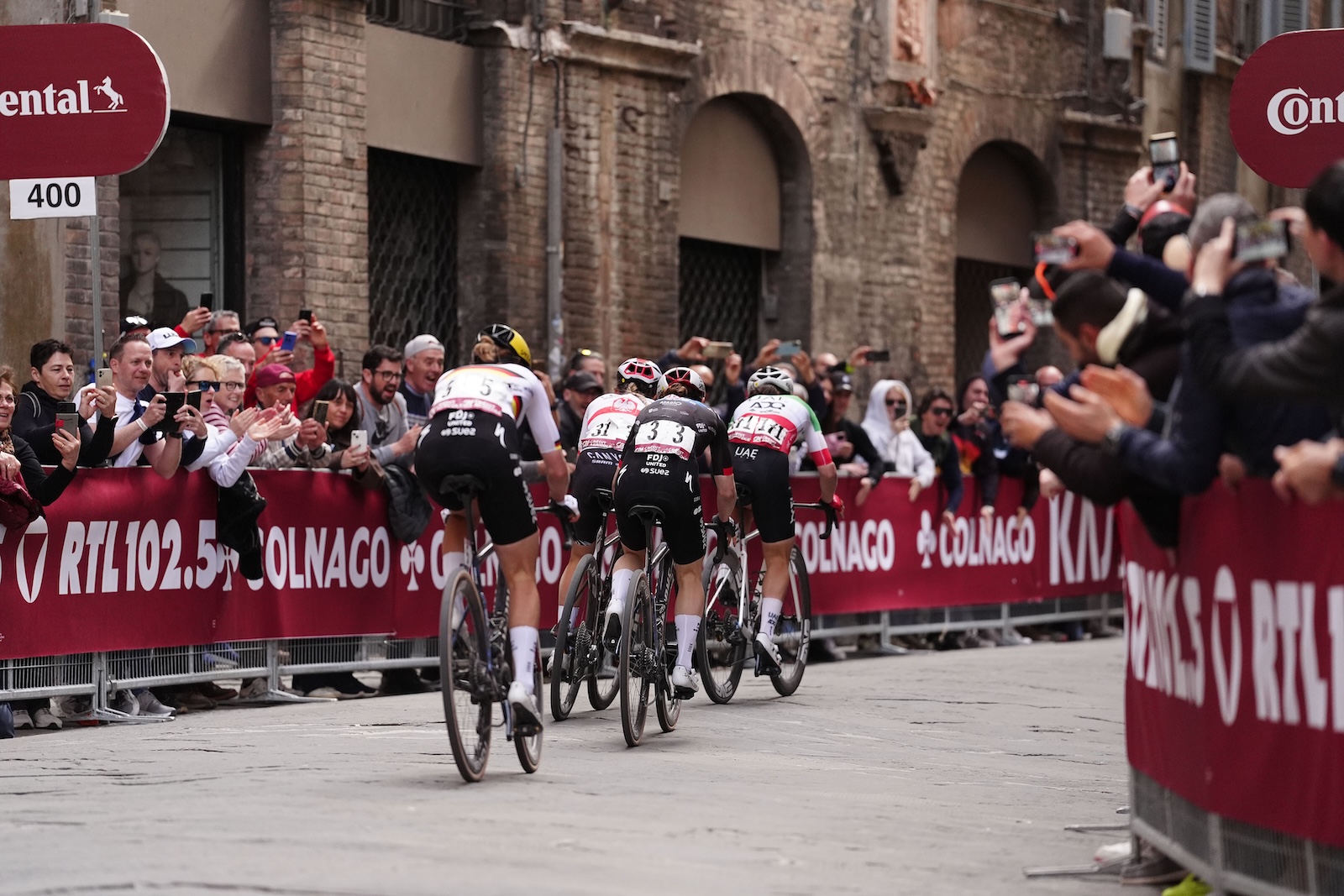
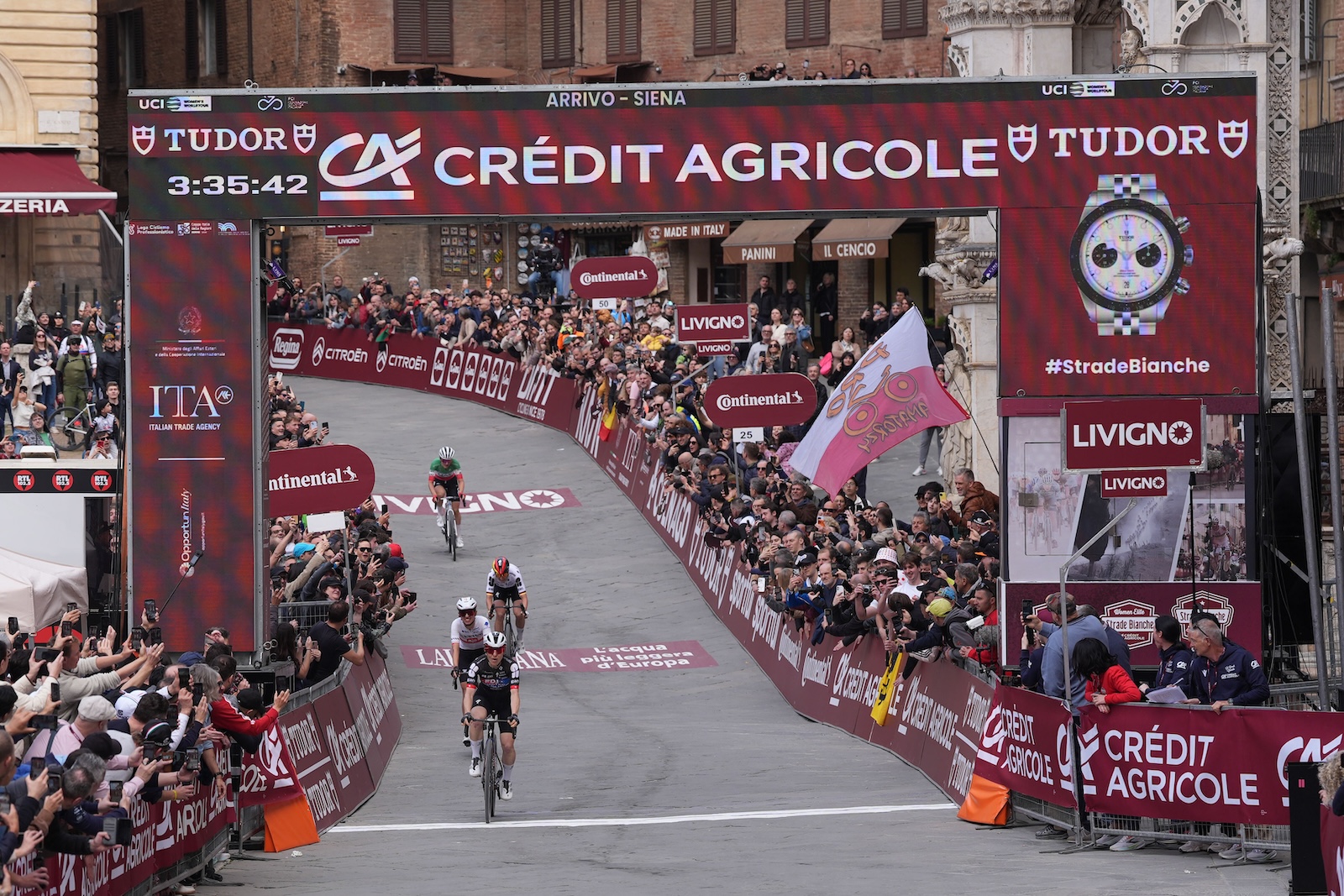
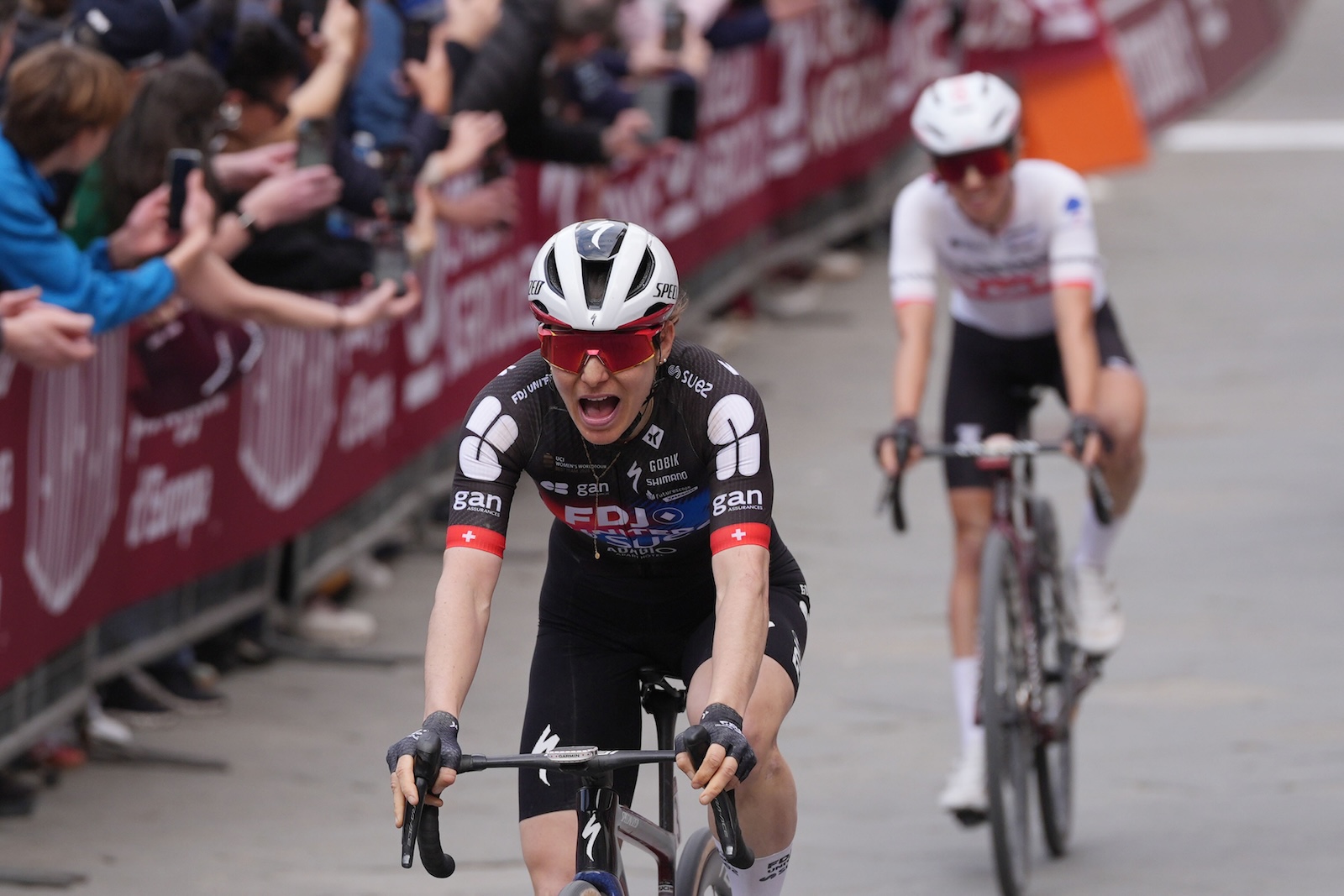
SIENA, Italy (March 7, 2026) — Elise Chabbey darted through a gap that existed for barely a second, swept past three riders who had spent the entire final kilometer trying to destroy each other, and sprinted to the biggest victory of her career at the 2026 Strade Bianche Donne. The Swiss rider from FDJ United-SUEZ, who began the day as a domestique for Demi Vollering, finished it as a champion in the Piazza del Campo—the unlikely beneficiary of a race torn apart by mechanicals, a wrong turn, and the kind of chaos that only 133 kilometers of Tuscan gravel can produce.
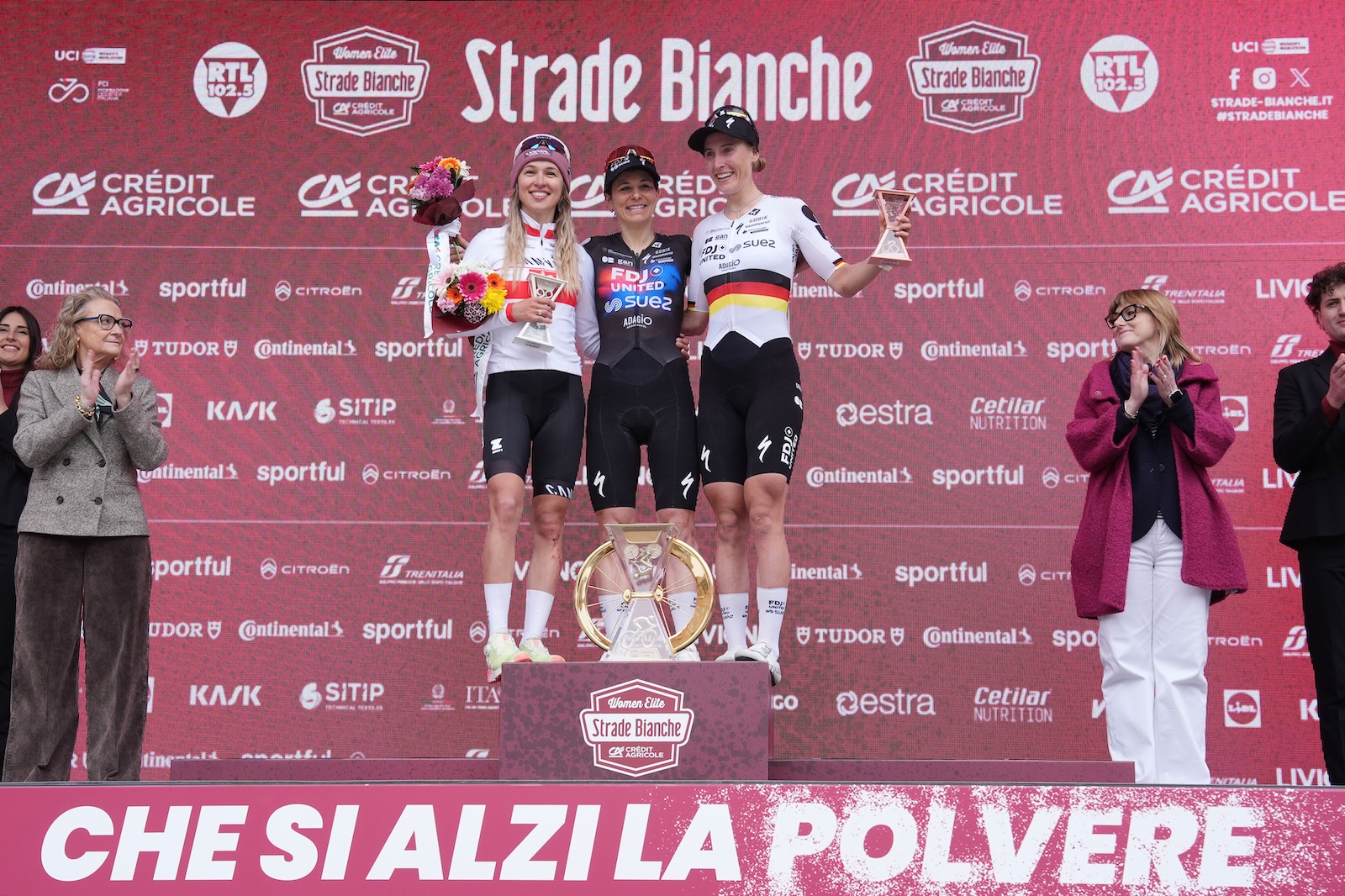
Kasia Niewiadoma of CANYON//SRAM zondacrypto took second for the fourth time at this race, while Chabbey’s teammate Franziska Koch completed the podium in third. Elisa Longo Borghini, who had done as much as anyone to animate the finale, finished fourth. World champion Magdeleine Vallieres rounded out the top five.
A Race of Elimination
The 12th edition of the women’s Strade Bianche unfolded under the same dry, mild skies as the men’s race, the spring warmth baking the white roads into fast, dusty ribbons through the Tuscan hills. Organizers had trimmed two gravel sectors from the route and cut five kilometers from the distance, leaving eleven sectors and 33 kilometers of sterrato across 133 kilometers. None of it calmed the racing.
The pack rides during the Strade Bianche Woman Elite (White Roads) a 133 km one day race from and to Siena (Tuscany), Italy – Saturday March 7, 2025 – Sport – cycling (Photo by Marco Alpozzi/LaPresse)
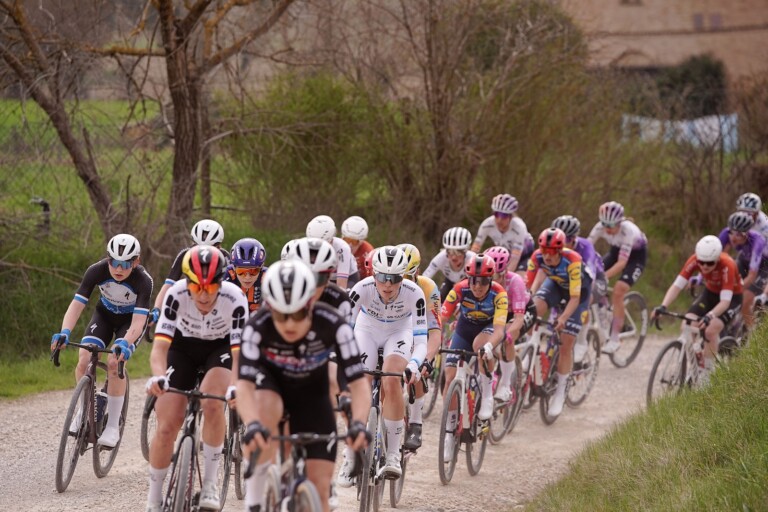
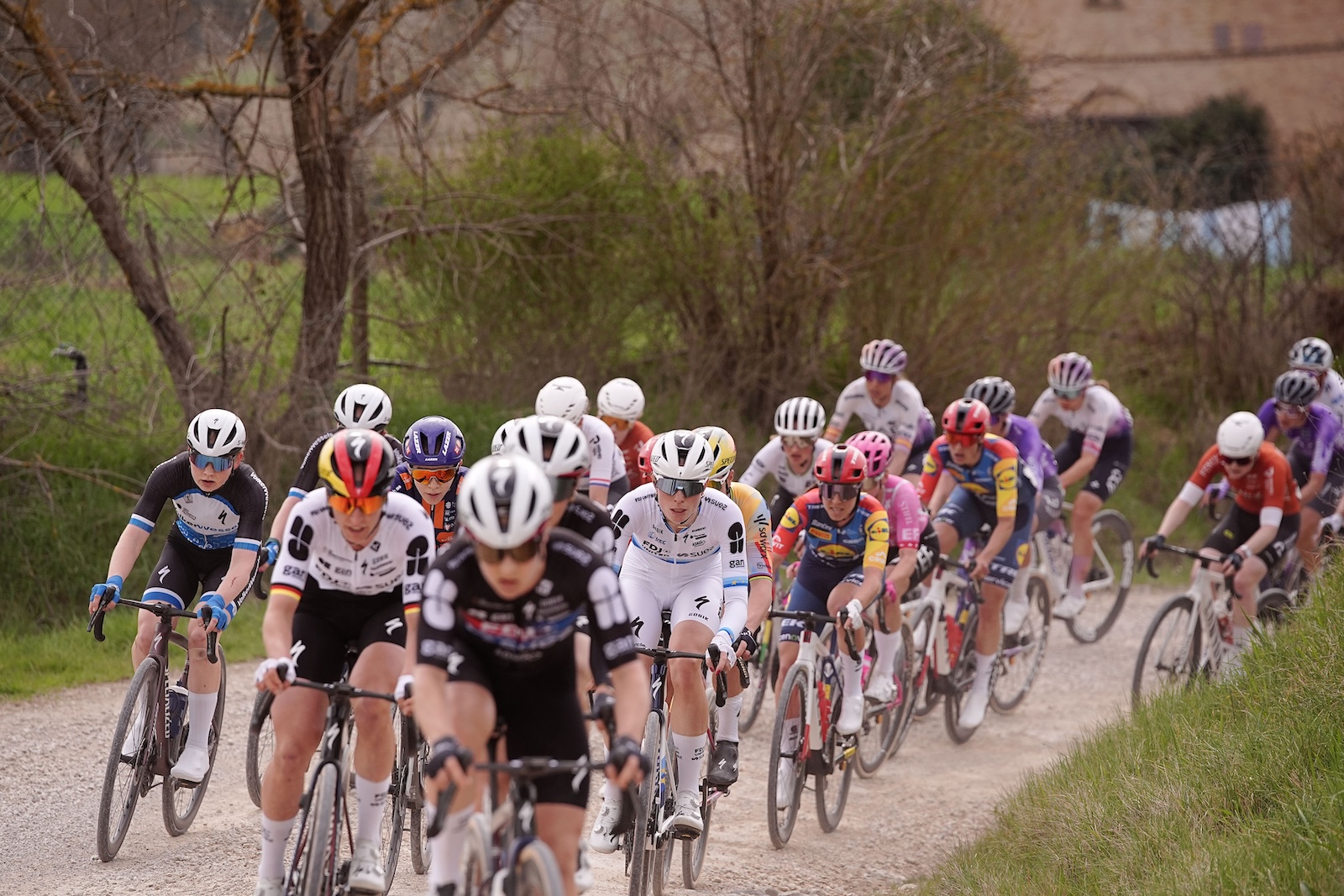
Unlike the men’s race, no breakaway ever established itself. The big teams—FDJ United-SUEZ, Visma-Lease a Bike, Lidl-Trek, and EF Education-Oatly—rode the front from the gun and kept the pace high enough that no escape gained breathing room. Alison Jackson, the former Paris-Roubaix champion, tried her luck with 85 kilometers to go but the peloton swallowed her within seconds. Crashes on the first gravel sector split the peloton into three groups before they had traveled twenty kilometers. A further crash on San Martino in Grania, the longest and hardest sector of the day, caught riders from EF Education-Oatly, Movistar, and CANYON//SRAM zondacrypto, with Niewiadoma herself going down but remounting quickly. Anna van der Breggen suffered a mechanical in the same sector. By the time the field emerged from the five-star gravel, only about twenty-five riders remained at the front.
The pack rides during the Strade Bianche Woman Elite (White Roads) a 133 km one day race from and to Siena (Tuscany), Italy – Saturday March 7, 2025 – Sport – cycling (Photo by Marco Alpozzi/LaPresse)
FDJ United-SUEZ still had five riders in that group, a show of strength that appeared to guarantee control of the race for Vollering. Then the sterrato ate the script.
The Puncture, the Wrong Turn, and the End of the Favorites
Chabbey lit the fuse on the first passage of Colle Pinzuto, the steep four-star sector that the riders would tackle twice. She attacked at the base and Dominika Włodarczyk of UAE Team ADQ latched onto her wheel. The pair built a gap of twenty-five seconds while behind them the group fractured under attacks from Marianne Vos. Lotte Kopecky, the two-time champion battling back problems all season, lost contact.
Worse was to come. On the first passage of Le Tolfe, Pauline Ferrand-Prévot—the reigning Tour de France Femmes and Paris-Roubaix champion—suffered a mechanical and had to wait for the team car. Moments later, Vollering had a problem of her own at the top of the same climb and began slipping backward through the field. The defending champion, who had won Omloop het Nieuwsblad just a week earlier, found herself riding alone, chasing the group that contained her own teammates.
Then came the episode that will define this edition. With roughly 33 kilometers to race, the chase group containing Vollering, Kopecky, Ferrand-Prévot, and others followed a race motorbike that turned right instead of left, leading them down a gravel track that was not part of the course. By the time they realized the error and climbed back to the road, nearly three minutes separated them from the front of the race. Their chances of winning evaporated on a stranger’s mistake.
Vollering eventually finished twentieth, more than six minutes down. She celebrated her teammate’s victory at the finish line.
Thirteen Became Eight
At the front, the lead group of thirteen riders contained those who had, by luck or design, avoided every incident: Chabbey and Koch from FDJ, Niewiadoma, Longo Borghini and Włodarczyk from UAE, Vos from Visma, Pieterse from Fenix-Premier Tech, Vallieres and Noëmi Rüegg from EF Education-Oatly, Van Anrooij and Niamh Fisher-Black from Lidl-Trek, Liane Lippert from Movistar, and Monica Trinca Colonel from Liv AlUla Jayco.
Włodarczyk rode selflessly on the front for fifteen kilometers without once asking for help, setting up Longo Borghini. Fisher-Black attacked with 22 kilometers to go. On the second passage of Colle Pinzuto, Longo Borghini and Chabbey went clear, but the Swiss rider refused to pull through—Koch waited patiently in the group behind, and Chabbey had no interest in towing the Italian champion to a solo victory. Longo Borghini drove the pace regardless, fueled by frustration and ambition.
On the final passage of Le Tolfe, Longo Borghini pushed ahead again, this time with Niewiadoma. Pieterse was dropped on the climb but fought her way back after the summit. With 6 kilometers remaining, Vallieres, Chabbey, Koch, and Vos bridged across, and Trinca Colonel joined soon after. Eight riders entered the final approach to Siena together—a rare sight in a race built to break groups apart.
Cyclists during the Strade Bianche Woman Elite (White Roads) a 133 km one day race from and to Siena (Tuscany), Italy – Saturday March 7, 2025 – Sport – cycling (Photo by Massimo Paolone/LaPresse)
The Final Corner
Via Santa Caterina rears up at gradients that touch 20 percent in the final kilometer, and it shed Vos and Trinca Colonel immediately. Vallieres drove the pace before the steep section, then Pieterse moved to the front as the gradient bit. Longo Borghini attacked with 400 meters to go, stringing out the remnants, and Niewiadoma matched her. Koch and Chabbey clung on. Pieterse and Vallieres could not.
The Strade Bianche (White Roads) a 133 km one day race from and to Siena (Tuscany), Italy – Saturday March 7, 2025 – Sport – cycling (Photo by Spada/LaPresse)
What happened next took three seconds and decided the race. Koch dove around the outside of Niewiadoma and Longo Borghini in a left-hand bend, all three riders ran wide and lost momentum, and Chabbey—sitting in fourth, invisible until this moment—carried her speed through the inside of the corner, slotted past all three, and hit the front with 250 meters to run. She never looked back. Niewiadoma came closest but could not close the gap. Koch held on for third.
Koch’s move, which looked like it might cost FDJ the victory, turned out to be the opposite. “I opened up the corner for Elise,” she said afterward. “It was perfect for the finale. Elise took the last corner in first position, that’s the way to win.”
CHABBEY Elise of FDJ UNITED – SUEZ team, winner of the race during the Strade Bianche Woman Elite (White Roads) a 133 km one day race from and to Siena (Tuscany), Italy – Saturday March 7, 2025 – Sport – cycling (Photo by Spada/LaPresse)
The Dust Settles
Chabbey became the first Swiss woman to win Strade Bianche—and the first Swiss winner of either edition since Fabian Cancellara’s final triumph a decade ago in 2016. Her sixth professional victory, and first since the Tour de Romandie Féminin last August, made her the second-oldest champion in the race’s history at 32 years and 10 months, behind only Annemiek van Vleuten.
“This win brings so many emotions that it’s hard to realize what I’ve achieved,” Chabbey said at the finish. “Strade Bianche is one of my favorite races. We had put such a strong team together today, originally for Demi, but she faced some problems and it came down to me. I was at the limit so many times. But I wanted to win for Demi and all my teammates.”
In the press conference, she elaborated on the tactical pivot that defined her afternoon. “The plan was to win with Demi. I had to anticipate, and when we realized she couldn’t come back to us anymore, we decided to change our plan and just try to survive until the finish line. Franziska and I did a great job and in the final I decided to give it everything on pure instinct. I knew that if I came out of the last corner in the lead I would win, and that’s exactly what happened. It will take some time to fully understand what I’ve done.”
For Niewiadoma, a record-equaling fifth Strade Bianche podium—matching Longo Borghini’s tally, though neither woman has won the race—was bittersweet. “I don’t know if I’d say I’m satisfied,” she said. “Obviously coming second and celebrating a win are very different. The win here is something I’ve been chasing for many years. It’s a little heartbreaking but on the other hand it’s also beautiful to stand on the podium.” She spoke warmly about the atmosphere on the gravel. “It was so loud on Le Tolfe! For us women to experience such a vibe is what we train for. It makes the pain go away.”
Koch, who wore the German national champion’s jersey on the podium—the first German woman to stand on one at Strade Bianche—framed the result as validation of her move to FDJ. “I’m very happy with my beginning of the season. Joining a new team gave me a lot of motivation. The podium here confirms it’s a very positive change for me.”
The absence of Vollering, Kopecky, and Ferrand-Prévot from the finale—three of the strongest riders in the world, removed by punctures, mechanicals, and a motorbike’s wrong turn—left an asterisk hovering over the day that Chabbey did not deserve but could not avoid. Yet her race had been anything but passive. She attacked on the first passage of Colle Pinzuto, drove the break with Włodarczyk, sat in shrewdly behind Longo Borghini, and then found the decisive gap when it mattered. She rode an aggressive, intelligent, complete race. The inside line was not luck. It was the reward for everything that came before it.
CHABBEY Elise of FDJ UNITED – SUEZ team, winner of the race on the podium during the Strade Bianche Woman Elite (White Roads) a 133 km one day race from and to Siena (Tuscany), Italy – Saturday March 7, 2025 – Sport – cycling (Photo by Spada/LaPresse)
By Steven Sheffield — The Strade Bianche is cycling’s most cinematically beautiful race — a modern classic born from ancient roads, set against the burnt-sienna hills of Tuscany. While the great Monuments carry centuries of history, this race has conjured legend in less than two decades, earning a place in the hearts of cyclists and fans with a speed that surprised even its creators. It is a race of contradictions: brutal and beautiful, medieval and modern, intimate and operatic. The white gravel roads that give the race its name are not some nostalgic affectation — they are living arteries through one of the world’s most storied landscapes, and they have a way of reducing the sport to its essentials. Wheels slip, riders suffer, tactics dissolve, and what remains is the rawest possible expression of what it means to race a bicycle. The finish in Siena’s Piazza del Campo — a medieval shell of pale brick and history, ringed by thousands of screaming fans — is unlike anything else in the sport. No other race ends quite like this. No other race feels quite like this. Before Saturday’s edition sends the peloton into the dust and the drama, test your knowledge of la corsa dei bianchi.
Scene from the 2022 Strade Bianche, featuring World Champion Julien Alaphilippe. Photo by Adrian Betteridge, CC BY 2.0 <https://creativecommons.org/licenses/by/2.0>, via Wikimedia Commons
Q1. The race takes its name from the unpaved strade bianche — white roads — that crisscross the Crete Senesi and Chianti wine country south of Siena. The race we know today as Strade Bianche was born in 2007, but it grew out of an older event that had been incorporating these unpaved sectors since 1997. What was the name of that predecessor event, and what made it truly unlike anything else in cycling?
Q2. The most iconic single stretch of the Strade Bianche is the dramatic final approach into Siena’s medieval Piazza del Campo — a short, viciously steep climb through the old city streets that ends with riders crossing the famous shell-shaped square to the finish line. What is the name of this celebrated final climb?
Q3. The inaugural Strade Bianche Donne in 2015 was won by a rider who was, at the time, perhaps better known as a Grand Tour contender than a classics specialist — and whose nationality made the victory a minor sensation in the cycling world. Who won that first edition, and what made her victory particularly notable?
Q4. Fabian Cancellara is the most decorated men’s champion in Strade Bianche history, winning the race three times. His victories came in 2008 — the first spring edition after the race moved from its original autumn slot — then again in 2012 and 2016. His final win, in 2016, was particularly poignant. Why?
Q5. The total distance of the white gravel sectors has varied over the years, but the race typically includes somewhere between 60 and 80 kilometers of unpaved roads. One sector has appeared in nearly every edition and is considered the race’s defining stretch — a long, relentless gravel road through open Tuscan farmland where the race often fractures decisively. What is its name, and what distinction does it carry beyond its role in the race itself?
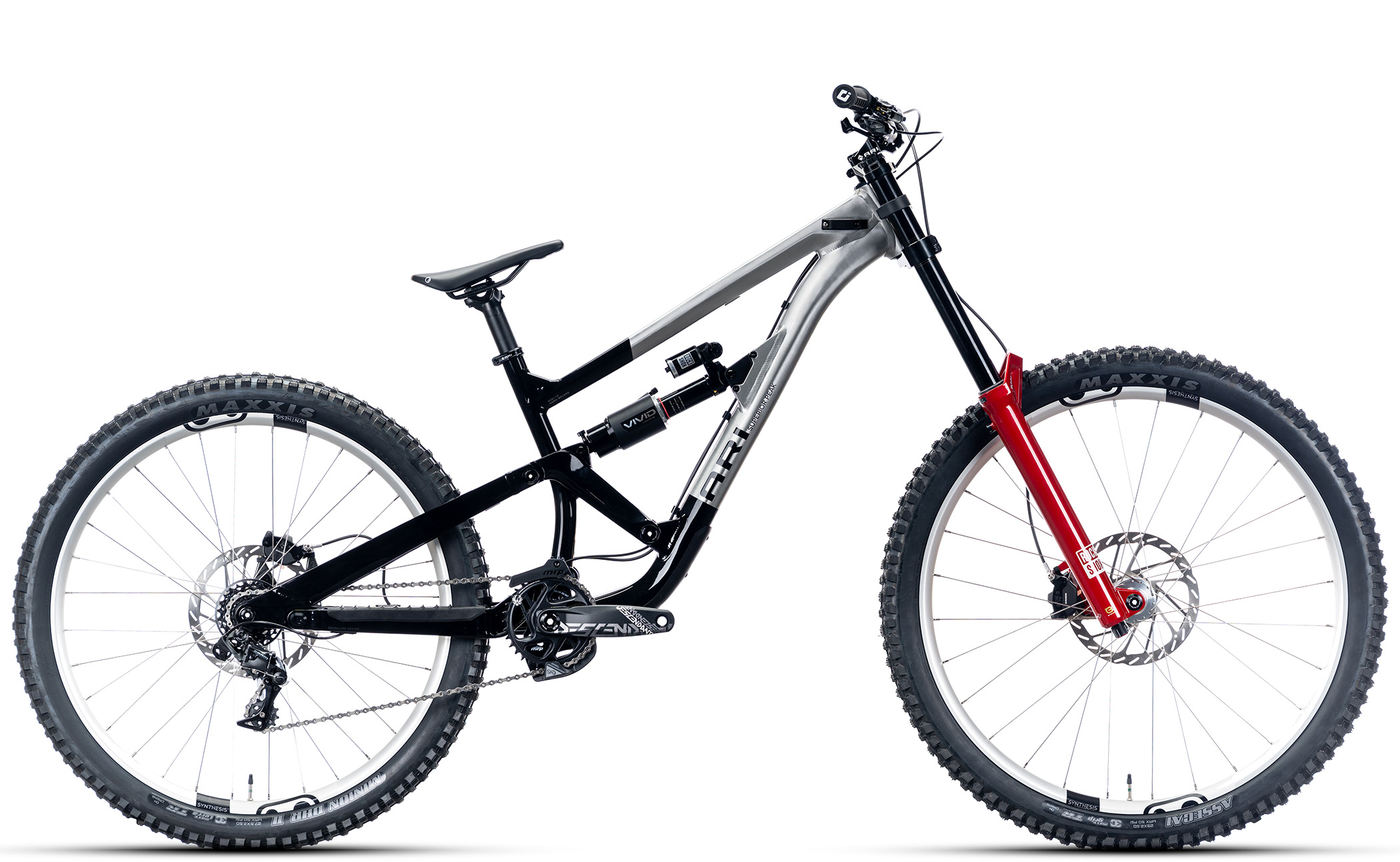
LINDON, Utah (February 24, 2026) — Ari Bikes has updated its flagship downhill machine, the Ari Superior Peak, for the 2026 season, adding mixed-wheel capability, revised suspension components, and updated drivetrain and braking options.
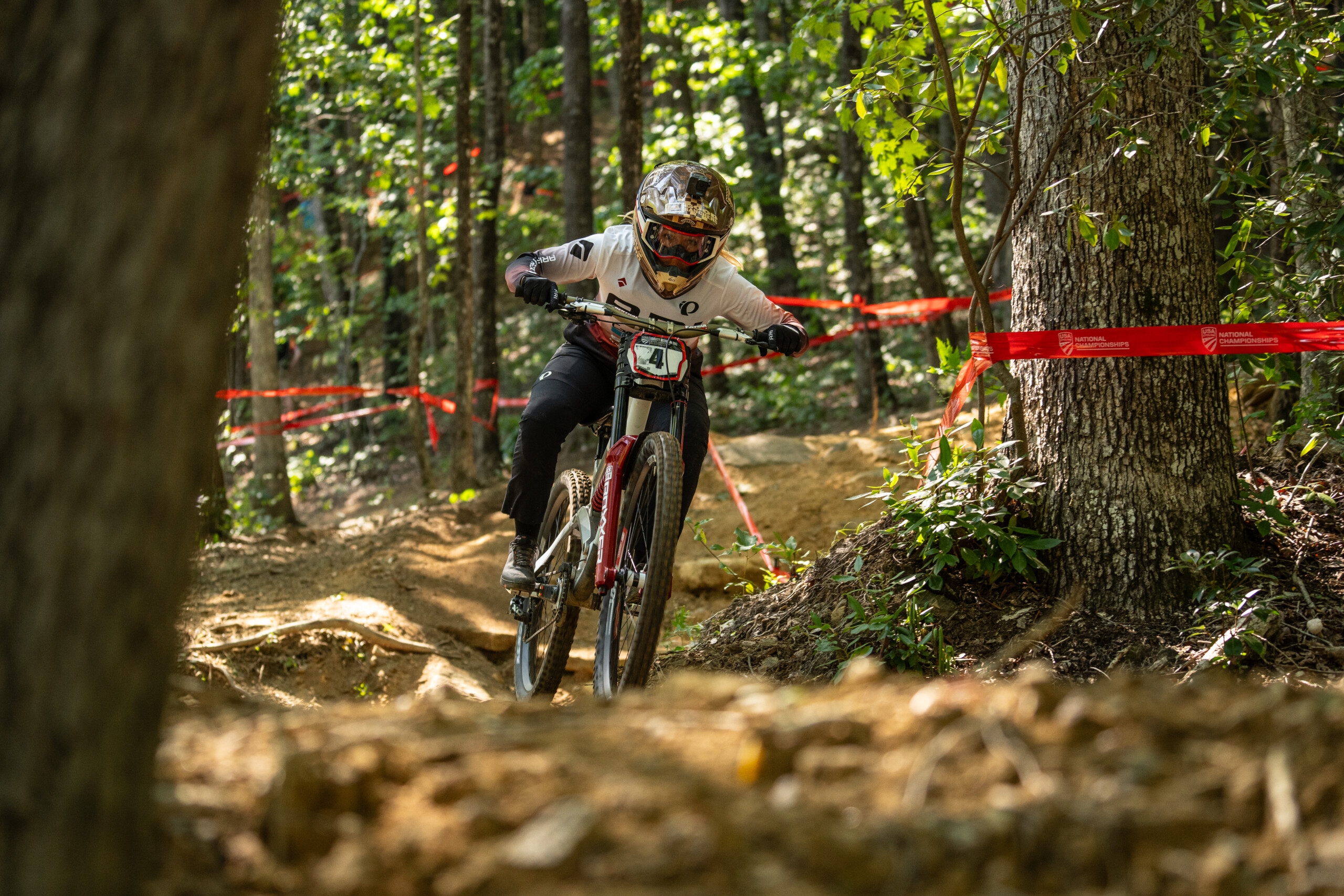
Built as the company’s dedicated downhill platform, the Superior Peak has already proven itself on some of the sport’s biggest stages. The bike has appeared in elite competition and freeride events worldwide, including the Monster Energy Pro Downhill Series and Red Bull Rampage. The platform secured the Pro Women’s overall title in the 2025 Monster Energy Downhill Series and will return to racing this season with the Ari Factory Race Team at the Crankworx series and the Monster Energy Pro Downhill Series.
Freeride veteran Kyle Strait competed aboard the Superior Peak at Red Bull Rampage, validating the bike on some of the most demanding terrain in the sport. Development and testing have also included riders Tyler McCaul and Peter Jamison, who have pushed the platform on steep freeride lines and bike park features across the Southwest.
Photo courtesy of Ari Bikes
For 2026, the Superior Peak now comes standard with a mixed-wheel setup—29-inch front and 27.5-inch rear—responding to growing rider demand. Riders who prefer matched wheels can still run a full 29-inch configuration. With 200mm of travel and Ari’s Tetra Link suspension platform, the bike is designed to stay composed at speed, track through blown-out park terrain, and give riders the confidence to push deeper into their run.
The frame emphasizes adjustability and real-world performance. A four-way adjustable geometry system lets riders fine-tune fit and handling, while adjustable chainstay length and bottom bracket height allow additional customization for stability or responsiveness. Riders can also choose between two shock progression settings to match terrain and riding style.
Key Updates
New Fork: The latest RockShox BoXXer D2 dual-crown fork is available in Select and Ultimate trims. It includes ButterCups vibration-damping technology and a Linear XL air spring designed to mimic the feel of a coil suspension. Ultimate models come in RockShox’s Electric Red colorway.
Mixed Wheel Configuration: A 29-inch front wheel paired with a 27.5-inch rear wheel now comes standard. The setup combines the rollover and stability of a larger front wheel with the agility of a smaller rear wheel.
Updated Brakes: SRAM Maven Silver brakes feature a revised SwingLink that reduces breakaway force and smooths the initial lever pull. Sintered metallic pads now come stock for increased braking power.
New Wheelset: Crankbrothers Synthesis DH Alloy V2 wheels offer front- and rear-specific tuning and a lifetime warranty. The wheelset features 36-tooth ratchets and a full silver finish.
Transmission Compatibility: A universal derailleur hanger interface allows compatibility with the latest SRAM XX DH Transmission drivetrain system.
Demo Opportunities
A fleet of Superior Peak bikes will be available for demo at Killington Bike Park, with additional demo fleets scheduled to appear at other bike parks opening across the United States this year.
Photo courtesy of Ari Bikes
Build Options and Pricing
Superior Peak Pro — $7,899
Drivetrain: SRAM XX DH Transmission Wireless (7-speed)
Brakes: SRAM Maven Silver with HS2 rotors (200mm / 200mm)
Fork: RockShox BoXXer Ultimate D2 (200mm)
Shock: RockShox Vivid Ultimate DH (250 × 75mm)
Wheels: Crankbrothers Synthesis DH Alloy V2
Tires: Maxxis Assegai (front) / Maxxis Minion DHR II (rear)
Superior Peak Elite — $6,499 (39.5 lbs | Size S2)
Drivetrain: SRAM X01 DH (7-speed)
Brakes: SRAM Maven Silver with HS2 rotors
Fork: RockShox BoXXer Ultimate D2
Shock: RockShox Vivid Ultimate DH
Wheels: Crankbrothers Synthesis DH Alloy V2
Superior Peak Comp — $4,499 (40.1 lbs | Size S2)
Drivetrain: SRAM GX DH (7-speed)
Brakes: TRP EVO Expert with 220mm rotors
Fork: RockShox BoXXer Select D2
Shock: RockShox Vivid
Wheels: Crankbrothers Synthesis DH Alloy V2
Superior Peak Frameset — $2,799 ($3,999 with fork)
Frame: Superior Peak alloy frame, 200mm travel, 83mm English thread bottom bracket
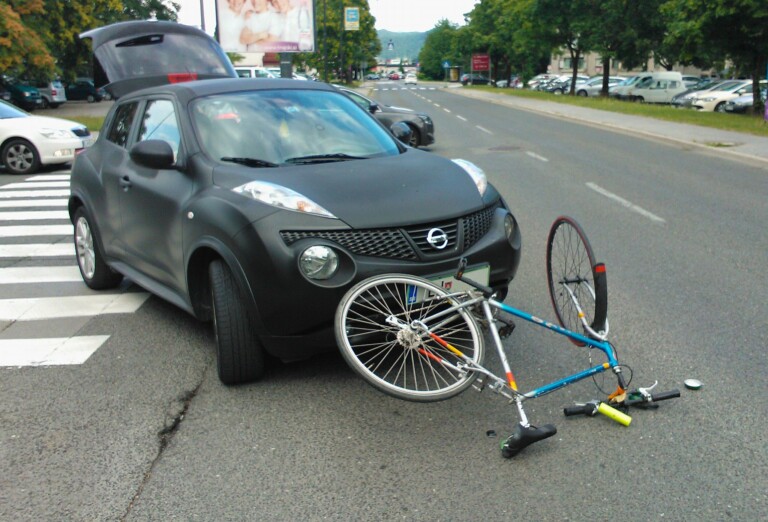
By Jennifer Blaine — When I still raced, my team went on a trip to Grand Junction, and a few teammates and I were out on a training ride near the Palisades. It was a two-lane road out near some orchards. It was a quiet Sunday afternoon, not much traffic and perfect weather for a ride.
The road didn’t have a big shoulder, so we rode single file sticking close to the white line.
As we rode along, we noticed we were approaching another cyclist. He was riding some sort of casual commuter bike with a ball cap on his head. As we drew closer to him, we prepared to pass, but he looked back to check traffic and moved over to apparently turn into a neighborhood.
As he started his turn, we passed almost directly to his right. Suddenly, an SUV struck him from behind at 45 or 50 mph.
Everything happened so fast that I can’t recount every detail, yet I’ll never forget the sound or what I saw.
The car hit this poor guy like a missile as he enjoyed a peaceful bike ride. I can’t explain the severity of the sound. I only recall hearing a loud bang as thousands of pounds of metal struck a flimsy aluminum skeleton that crackled and clacked. He flew literally 10 feet into the air and came crashing down in a mangled mess in the middle of the road.
My mind took a few seconds to comprehend what had just happened. My teammates and I stood stunned. An eerie silence hung over us—probably nanoseconds but it felt like forever—before we reacted.
I knew I needed to check on the man lying on the ground, but I feared what state I might find him in or what unforgettable sight I might see. Strangely, pure horror surrounded me, yet I remained calm while my teammates did not. They started screaming and crying hysterically. One of them went over to the driver who had struck the man and began yelling and cursing at her profusely.
I approached the man. I won’t lie—I was scared because the impact had been so violent and I knew he wasn’t wearing a helmet. Even if he had worn a helmet, I knew this would be bad. I also knew that when he came back down after flying into the air, he had landed on his back with his head hitting the asphalt.
When I reached him, he was trying to get up—shock was surely driving his attempt. I told him to lie down and wait for the ambulance. He had suffered terrible injuries. His head looked like a cracked egg with blood gushing all around it, and his eyeballs looked dislodged from their sockets. I tried to comfort him or at least keep him calm until the ambulance came. Then an ice cream truck pulled up. The driver jumped out and ran over to us. He said, “dude, you are f—ed up!”
It was the worst thing he could have said to this poor man in his moment of complete agony.
The ambulance came shortly after and rushed him away. I didn’t even know the man’s name, and our team headed back home the next morning.
The girl who hit him was 16 or 17. She claimed she thought he was riding with us (my teammates and me) and didn’t know he would turn. I call total BS on that—she was going way too fast and not paying attention, because he had checked traffic before initiating his turn.
This experience seriously haunted me for quite a while. I couldn’t ride my bike on the road. I would freak out when I heard a pack of cars approaching from behind. I tried to find out the gentleman’s name. After some searching, I found that his family had started a GoFundMe page for all his medical expenses. I learned he was an engineer. I called the hospital and police department but never got his information. I just wanted to check on him. I’m sure his life or physical mobility would never be the same after such a terrible “accident.”
I’m writing this because we’re approaching the same time of year as that horrible day. I also want to remind people how easily anyone can kill or badly injure someone with their car.
I’ve had close calls with drivers while on my bike. Granted, I’ve been riding for over 20 years, but this could happen to anyone—any age, any experience level. Your neighbor, your sister, a friend, whoever.
Please take driving seriously and exercise ultimate caution when passing cyclists, pedestrians, or even other drivers.
Your two seconds of whizzing by a cyclist, squeezing too close because you can’t wait for oncoming traffic to clear so you can pass safely, speeding up and cutting them off before a turn—whatever it is—it’s not worth someone dying or suffering grave injury.
By Charles Pekow — Bike transit will likely improve in the rapidly growing corridor between Draper and Lehi, west of I-15—eventually. The Point of the Mountain Transit Project cleared a major hurdle when the Federal Transit Administration approved the environmental assessment for the north–south corridor in southern Salt Lake and Utah counties. Even so, the project remains far from completion, and any new or improved bicycle infrastructure is at least five years away, according to Staci Arthur, a member of the project’s contracting team.
“At the moment, we don’t have any funding plans,” Arthur said. “We are going to implement this in stages.… At the moment, we don’t have a lot of information.”
The project’s Alternatives Evaluation Report, released in 2021, identified a lack of adequate bike routes in the corridor and highlighted potential challenges, including rail stations located too close to highway interchanges, which could affect cyclists’ safety and comfort. The report also outlined possible bicycle improvements tied to the project.
More information about the Point of the Mountain Transit Project is available at:
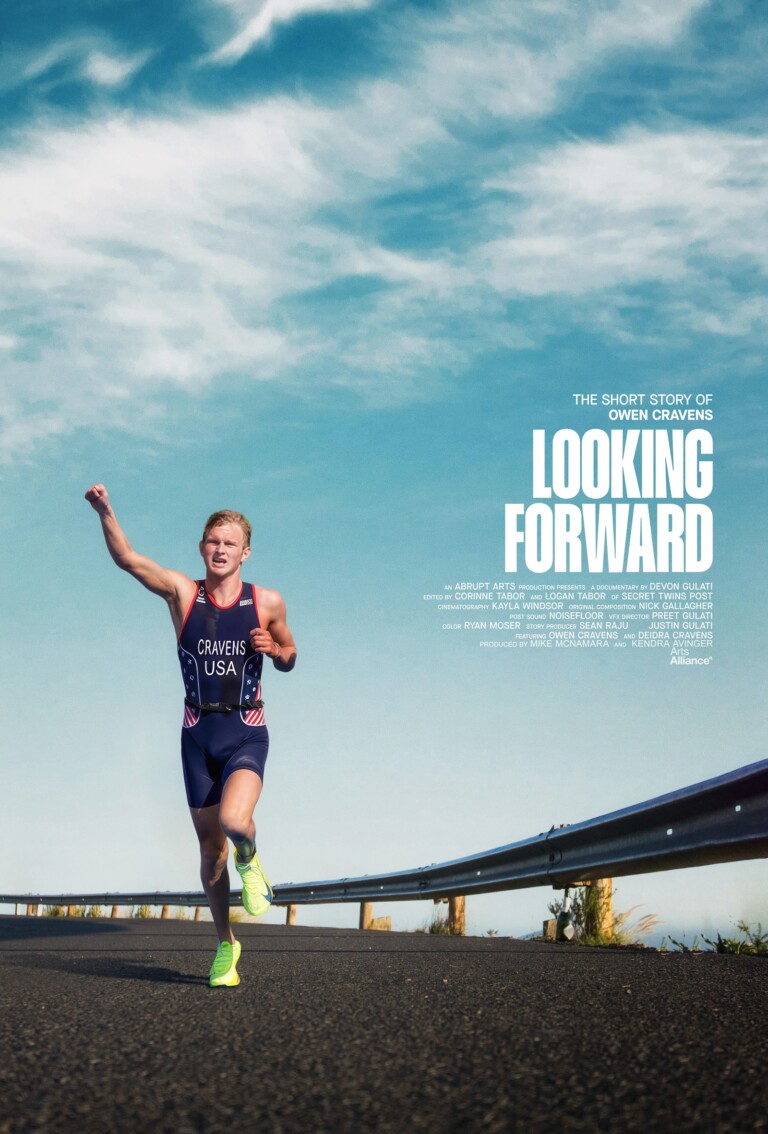
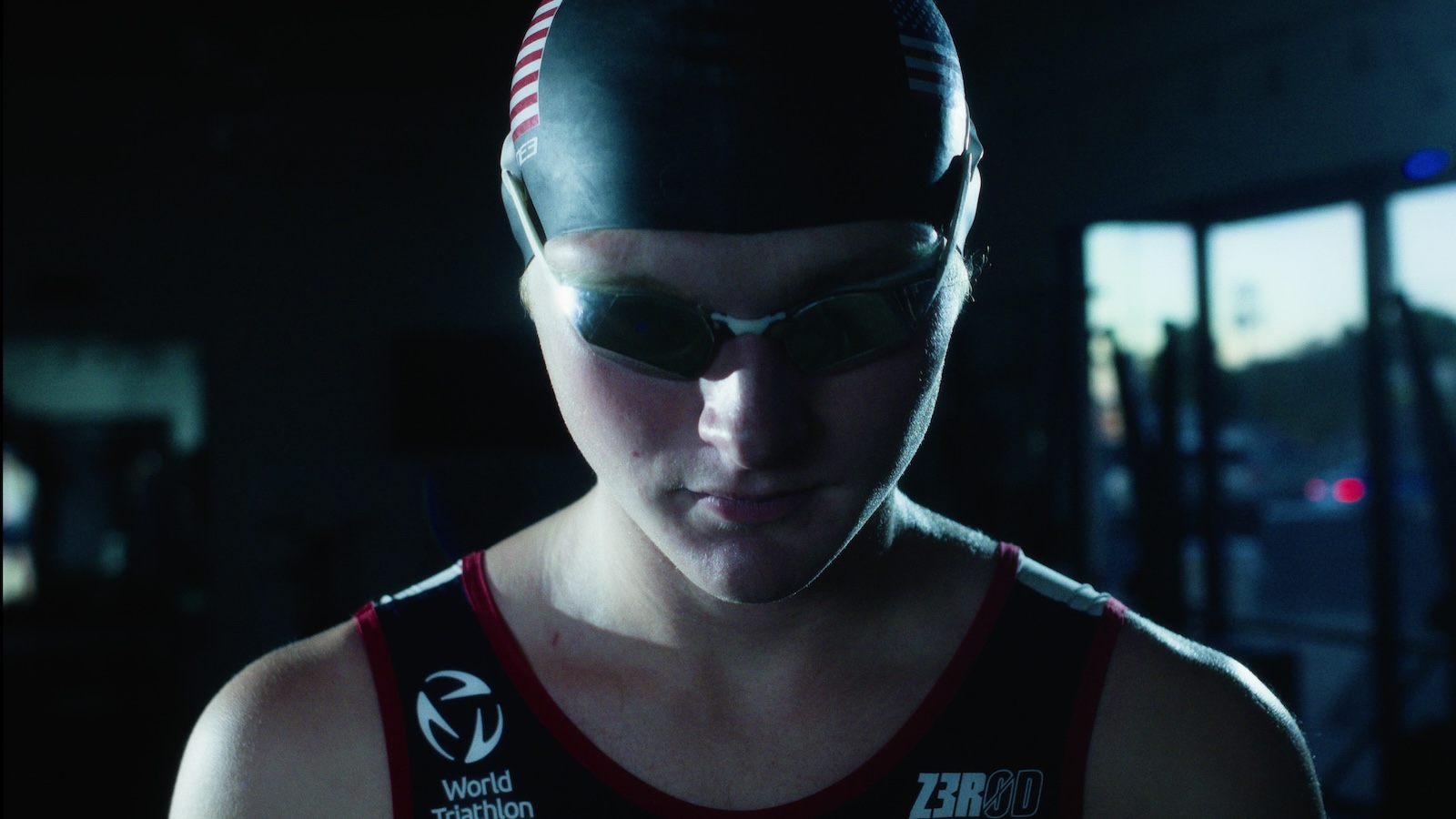
LOS ANGELES, California (March 3, 2026) — A short documentary more than a decade in the making is bringing the story of a determined endurance athlete to a global audience. Looking Forward: From Vision Loss to Paralympics, a film by Los Angeles filmmaker Devon Gulati, premiered worldwide March 3 on the YouTube channel of Short Frame.
The film follows paratriathlete Owen Cravens, who refused to let progressive vision loss derail his athletic ambitions. Diagnosed at age 10 with Stargardt disease—a degenerative condition that gradually damages central vision—Cravens chose to continue pursuing sports rather than retreat from them.
“I was okay with it because I am just going to keep doing what I’m doing,” Cravens said in the film at age 11.
Poster image courtesy of Devon Gulati
That decision set him on a path toward elite competition. As his vision declined, Cravens adapted his training and racing, eventually competing in paratriathlon at an international level with his sights set on qualifying for the 2024 Summer Paralympics.
“In order to qualify for Paris, I have to be in the top nine in the world and number one in the country,” Cravens says in the documentary while describing the demands of the qualification process.
Photo courtesy of Devon Gulati
Gulati began filming Cravens while studying at Columbia College Chicago, where the project started as a class assignment. Over time it evolved into a long-term documentary project that chronicles Cravens’ development as both an athlete and a person navigating life with vision loss.
Photo courtesy of Devon Gulati
“Owen set his own limitations, and that alone was inspiring,” Gulati said. “He showed what it means to keep competing when so much is pushing back on you.”
Photo courtesy of Devon Gulati
The documentary recently completed a festival run that included screenings at the Charlotte Film Festival, Key West Film Festival, Sunscreen Film Festival, Lake County Film Festival, and the Golden State Film Festival.
Supported in part by a grant from the State of Illinois and completed with post-production assistance from Secret Twins Post, Looking Forward offers a close look at resilience, adaptation, and the demanding training required to compete in endurance sport at the highest level.
For Cravens, the journey remains unfinished.
“It taught me I have a lot of room to grow,” he says in the film, “and a lot of movement to make in order to be the best in the U.S. and eventually one of the best in the world.”