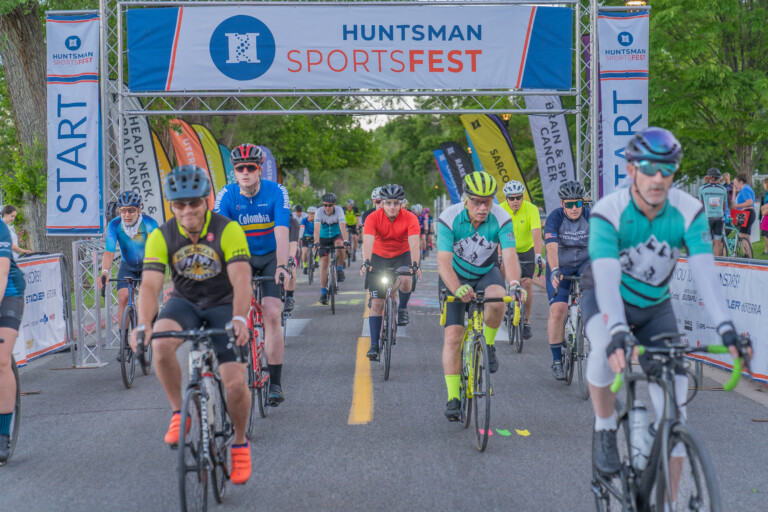
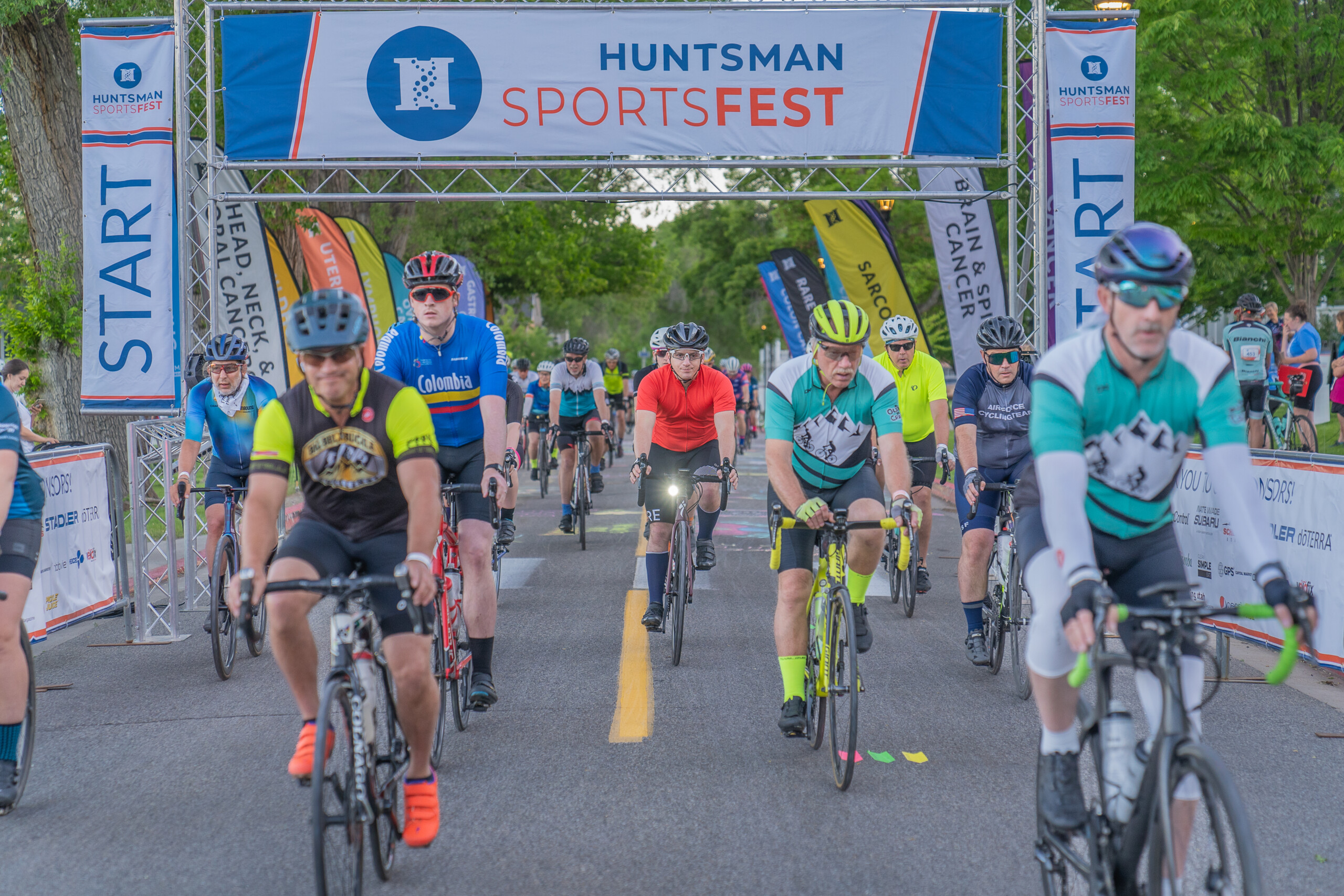
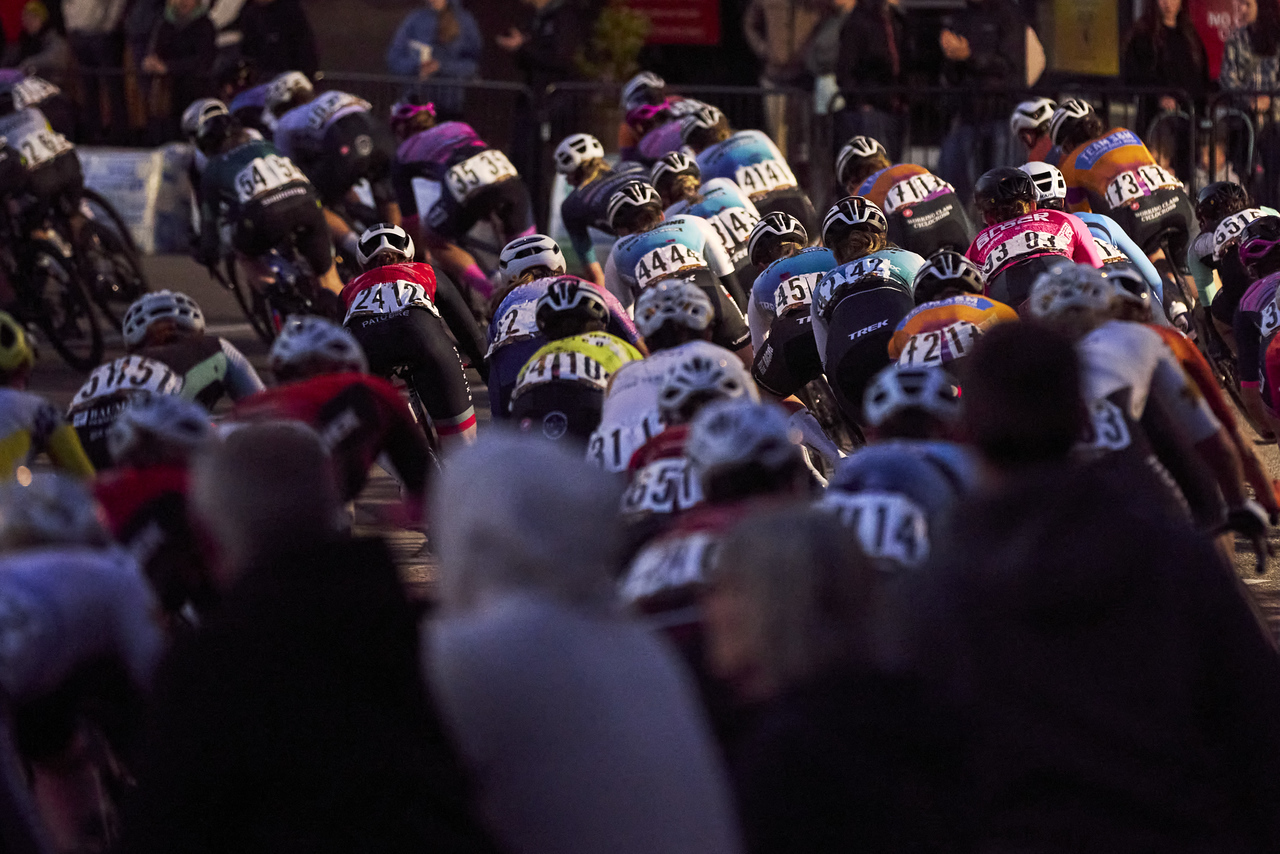
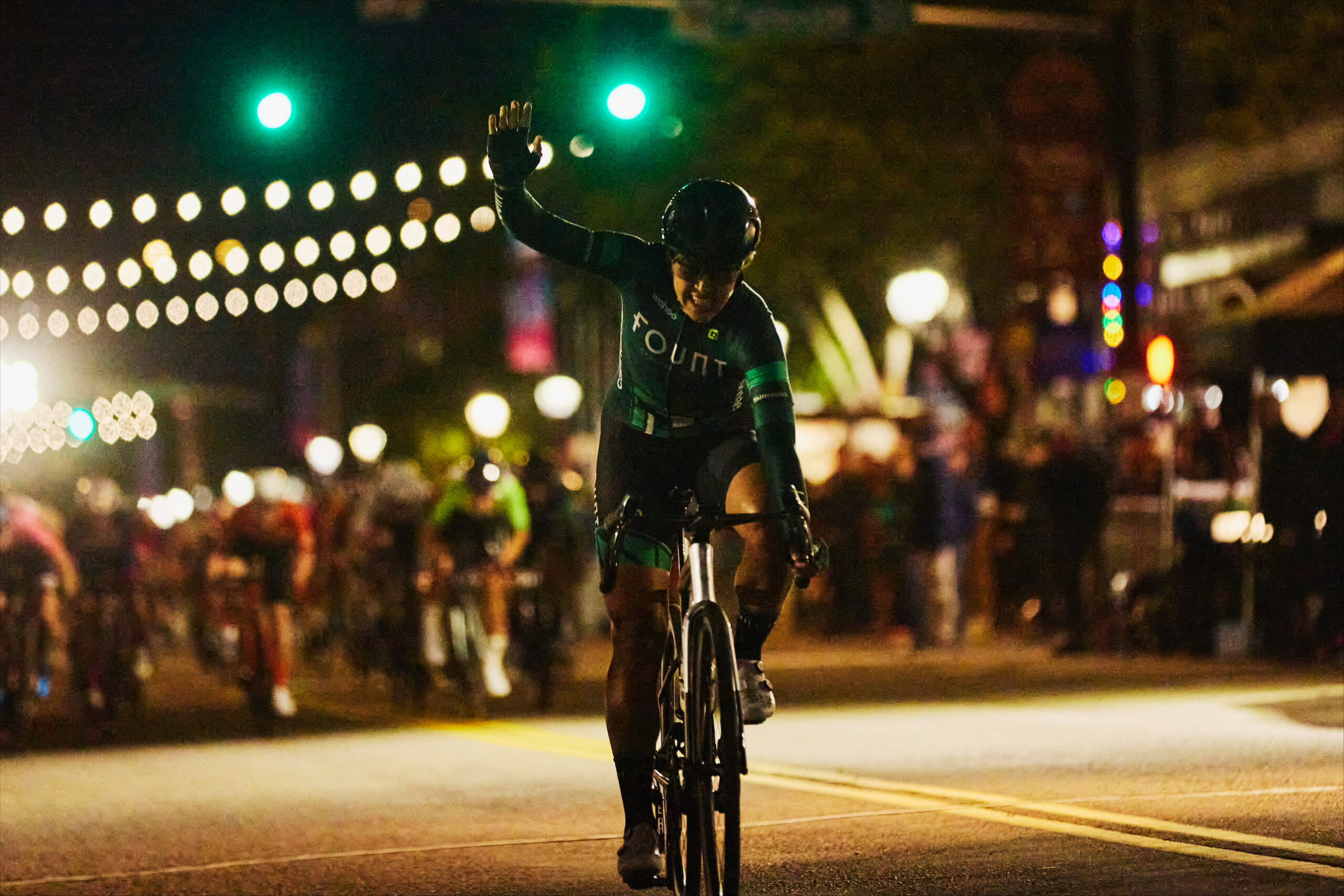
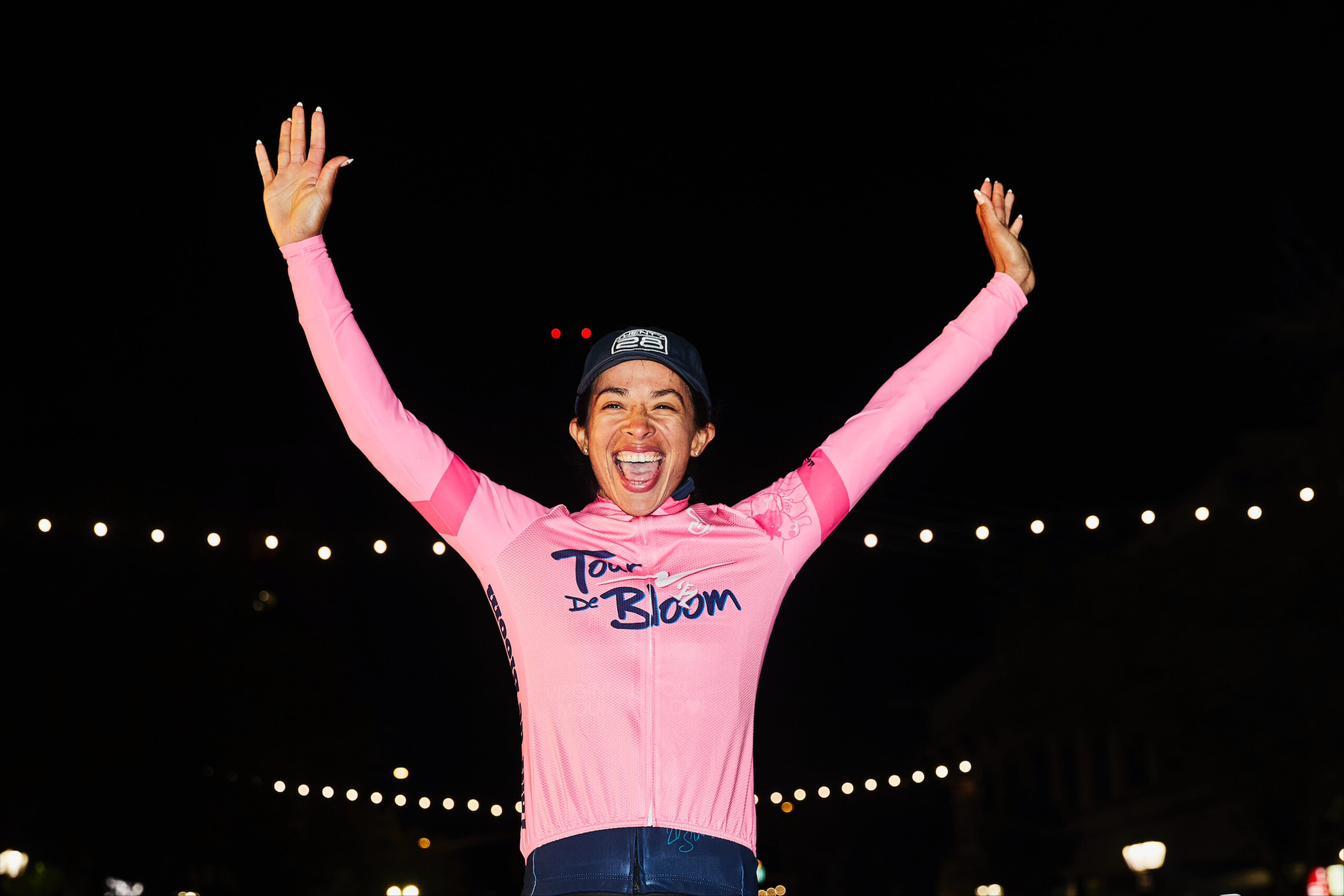
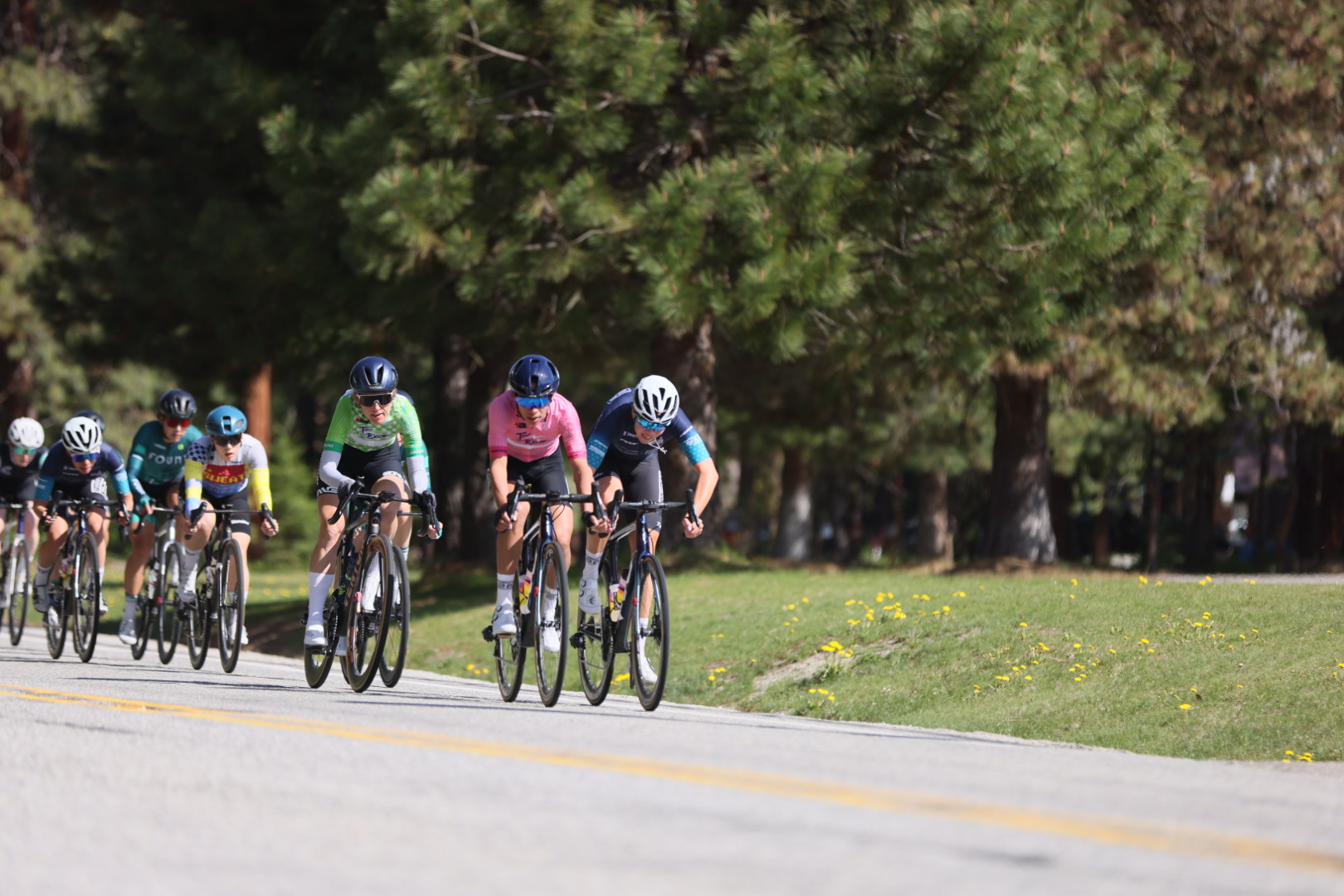
The Utah and Idaho Chapter of the Cystic Fibrosis Foundation will host the 14th Annual CF Cycle for Life on Saturday, August 16, in scenic Summit County, Utah. Having raised over $1.3 Million since the ride’s inception, this fully supported cycling event is part of a national movement to raise awareness and critical funds to support the mission of the Cystic Fibrosis Foundation: to cure cystic fibrosis and provide all people with CF the opportunity to lead long, fulfilling lives.
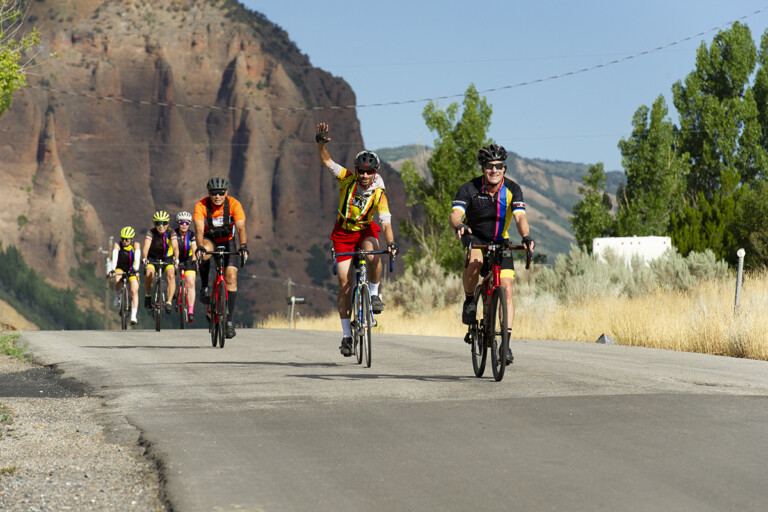
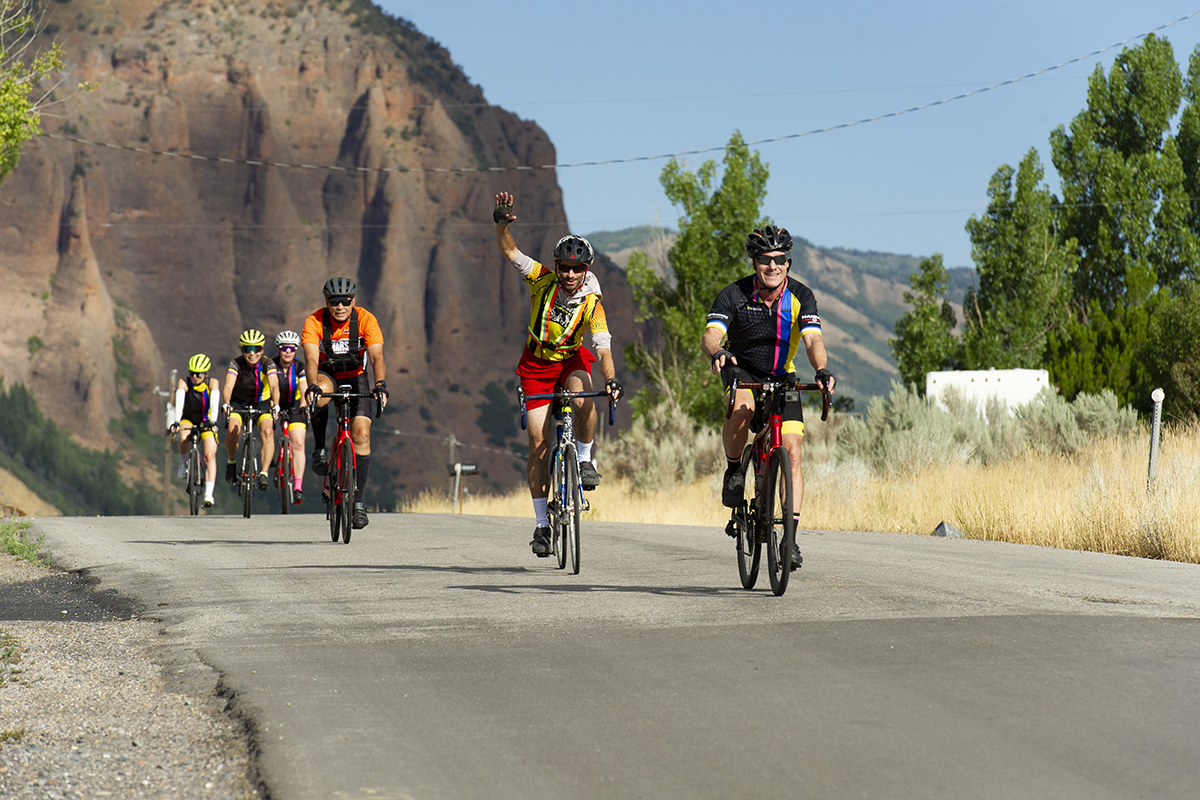
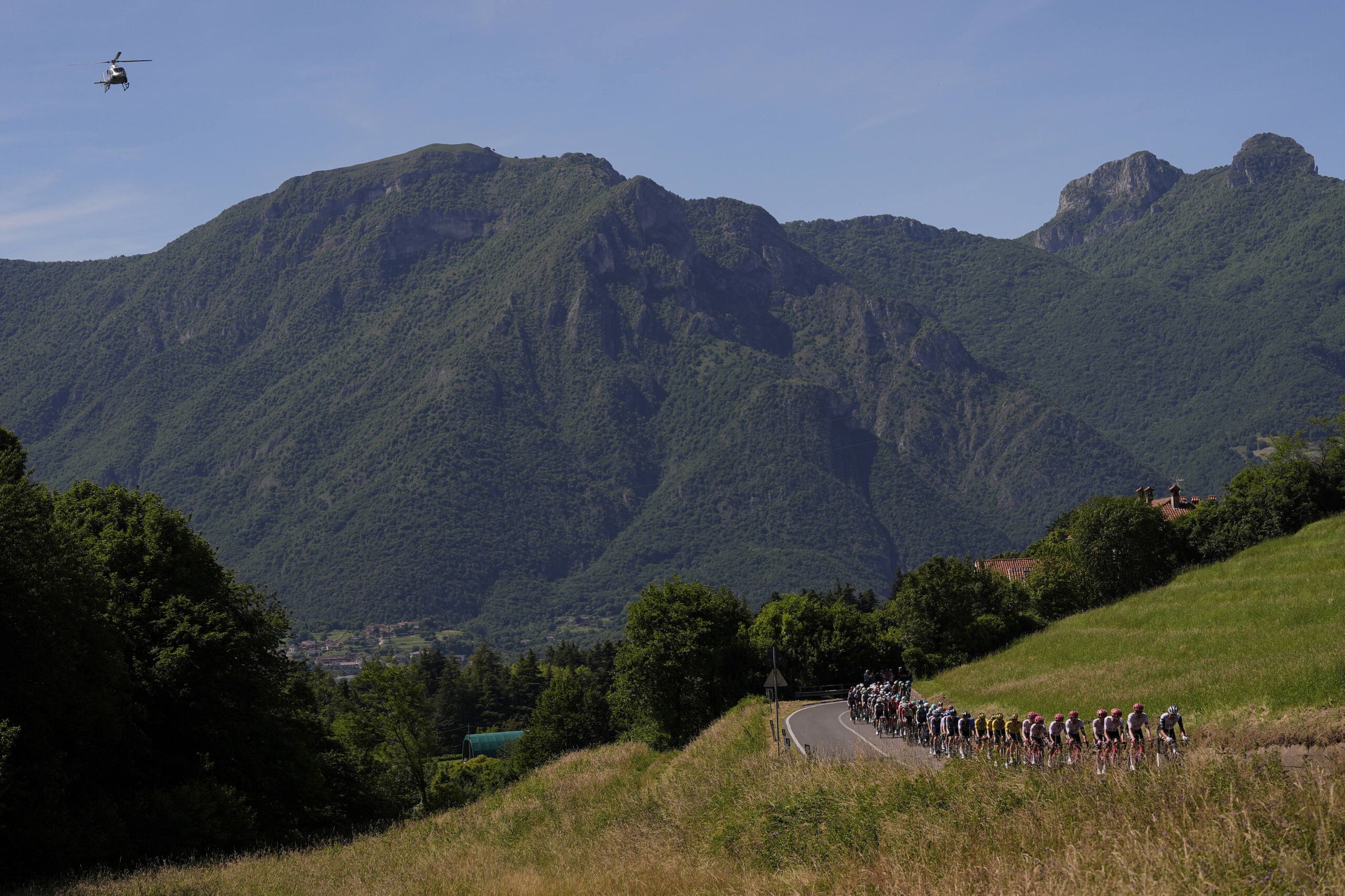
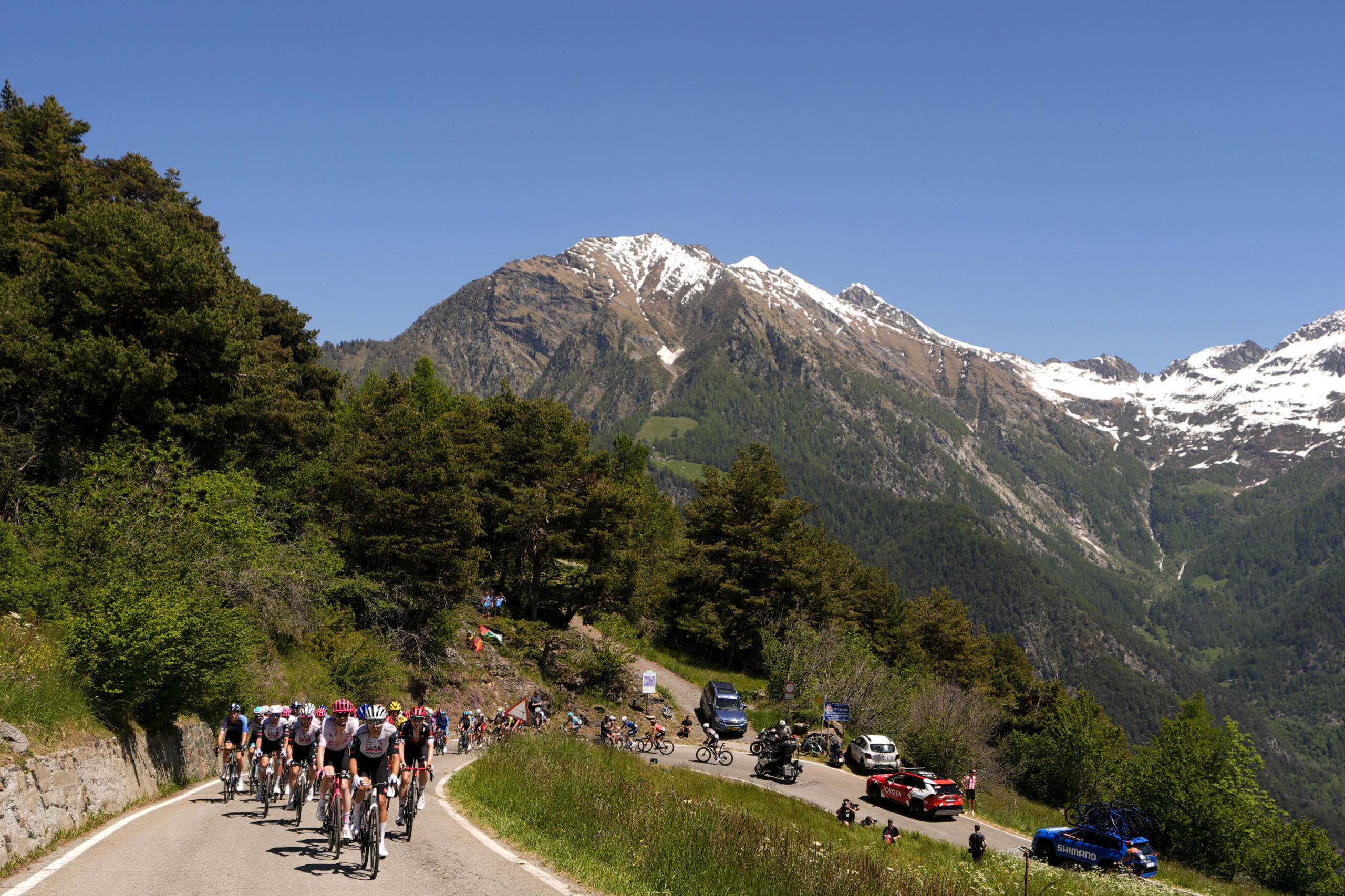
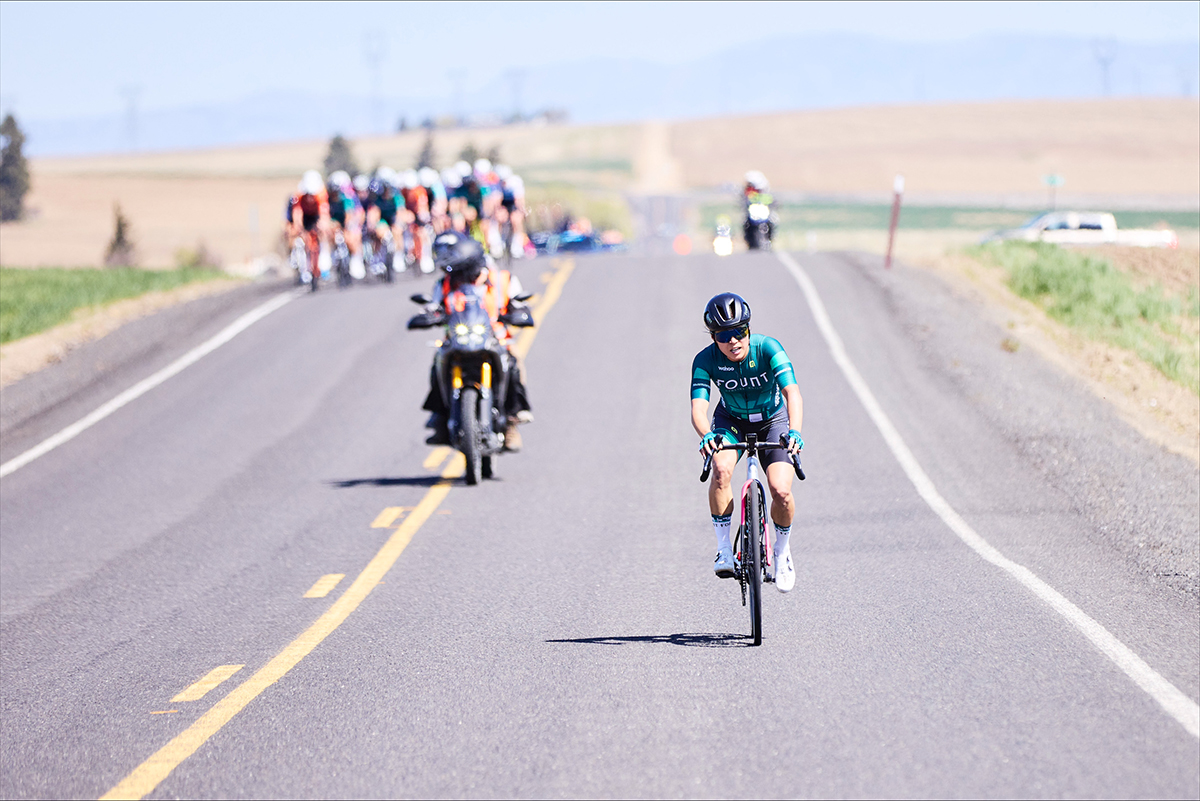
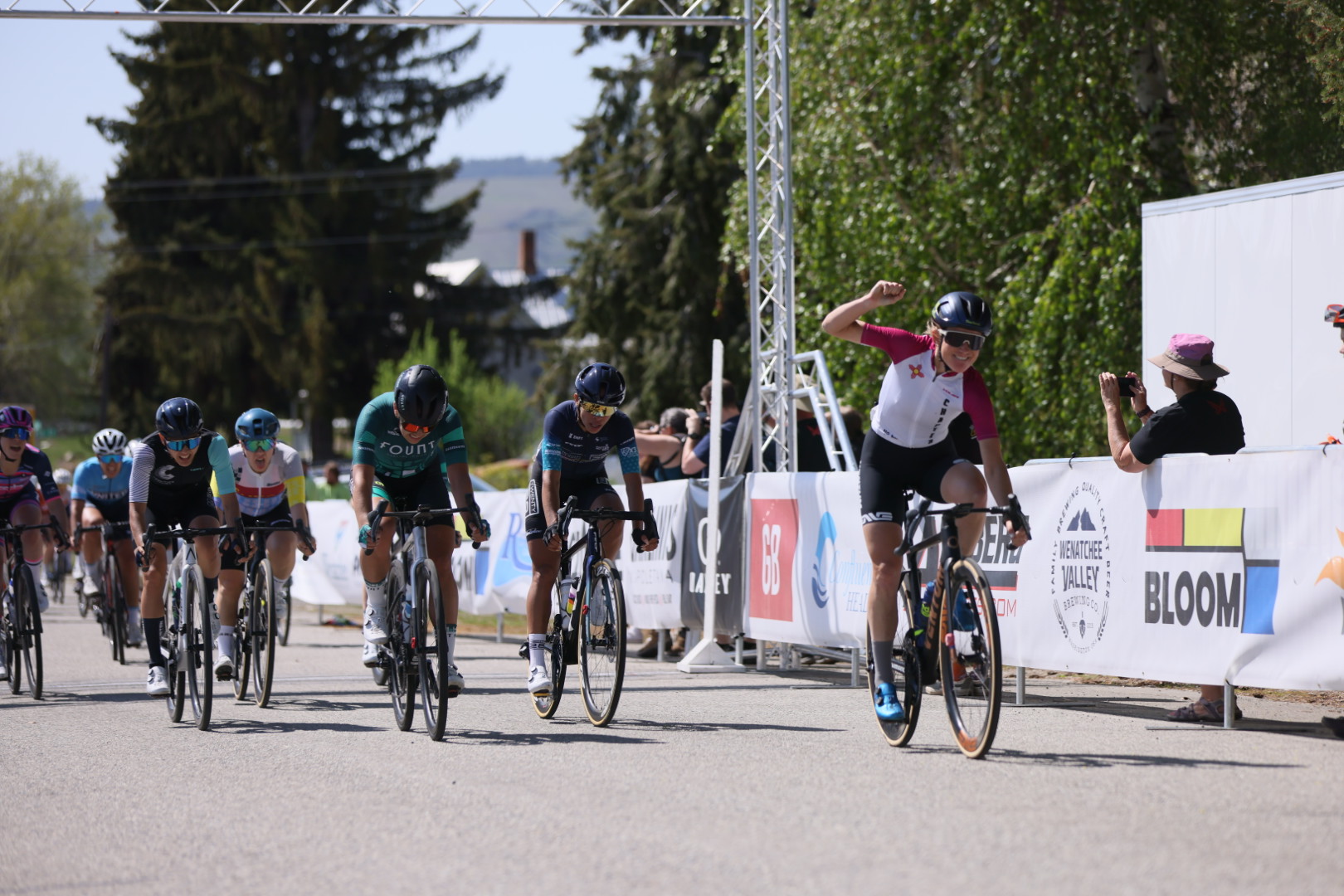
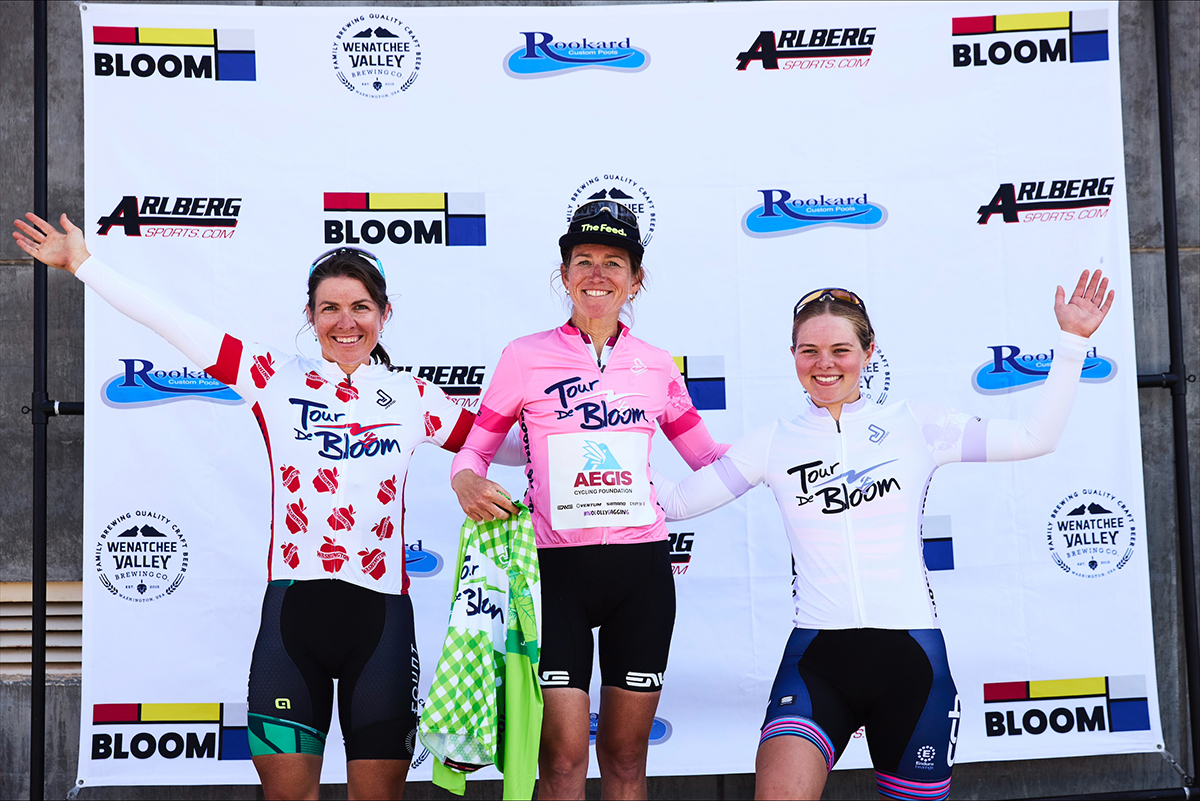
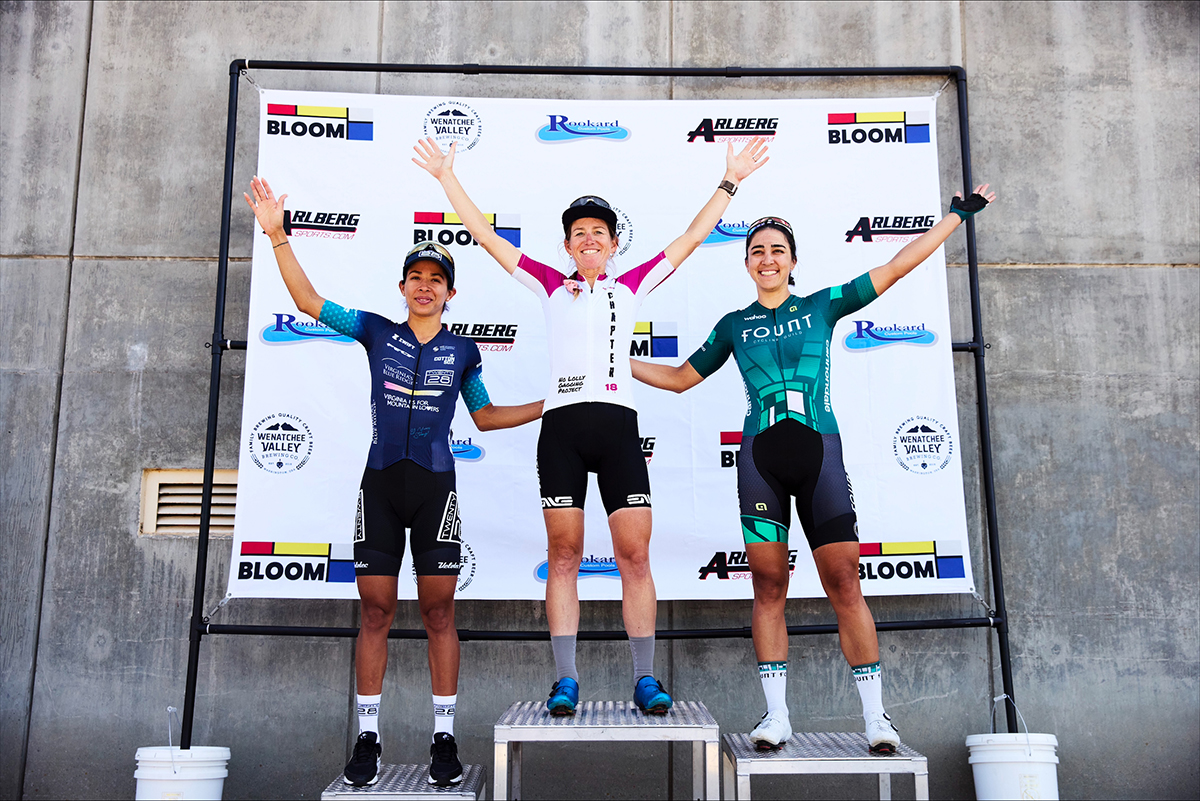
Scenes from the 2024 CF Cycle For Life. Photo courtesy Cystic Fibrosis Foundation
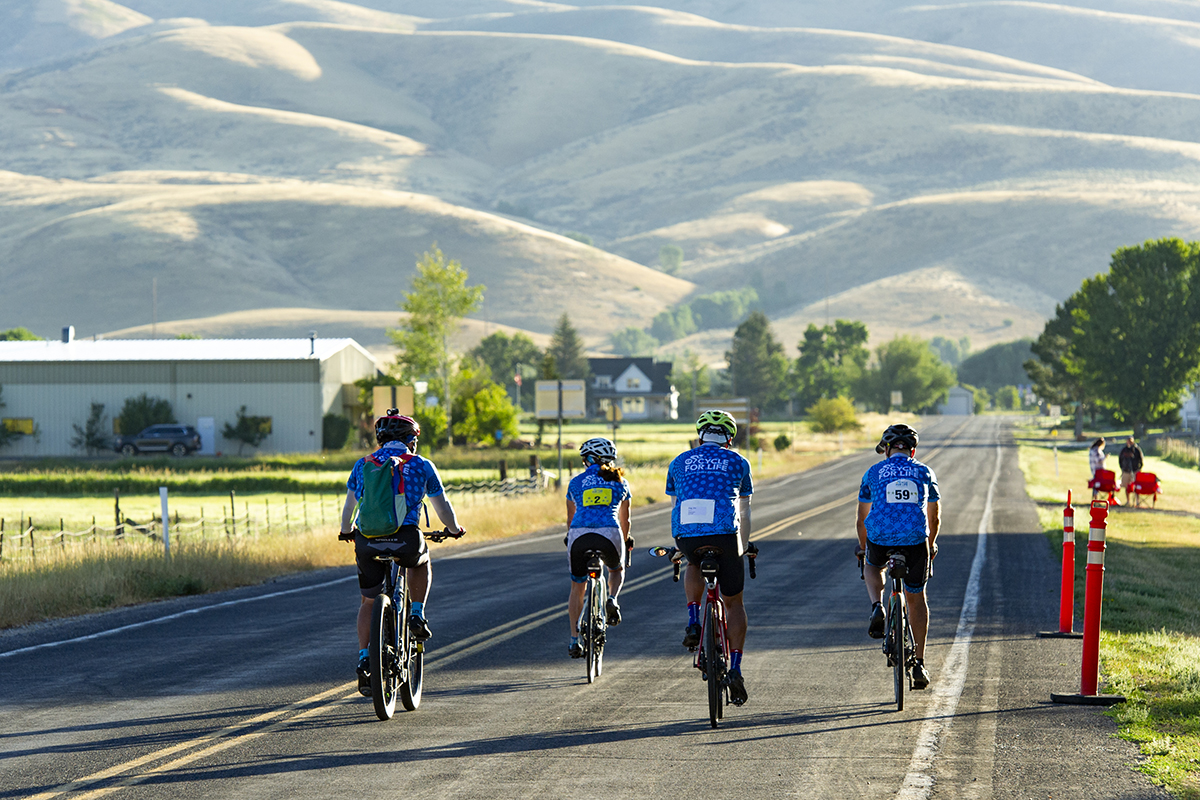
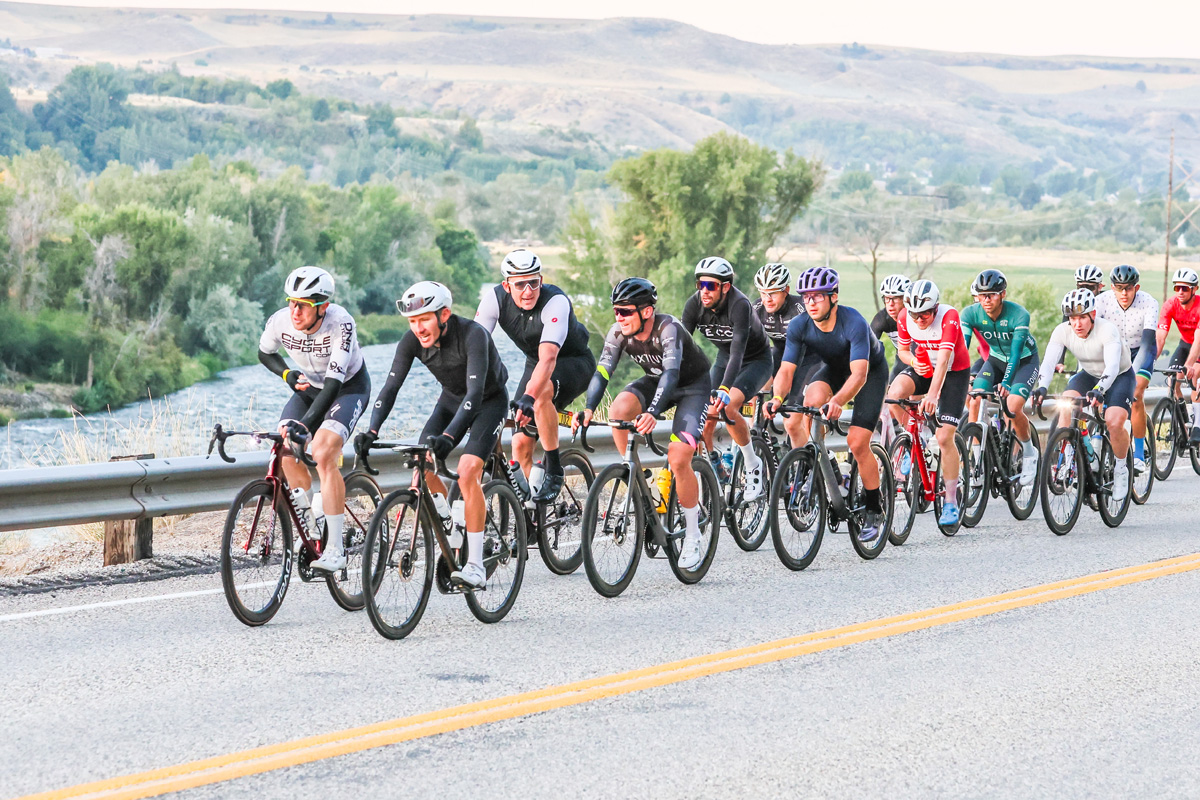
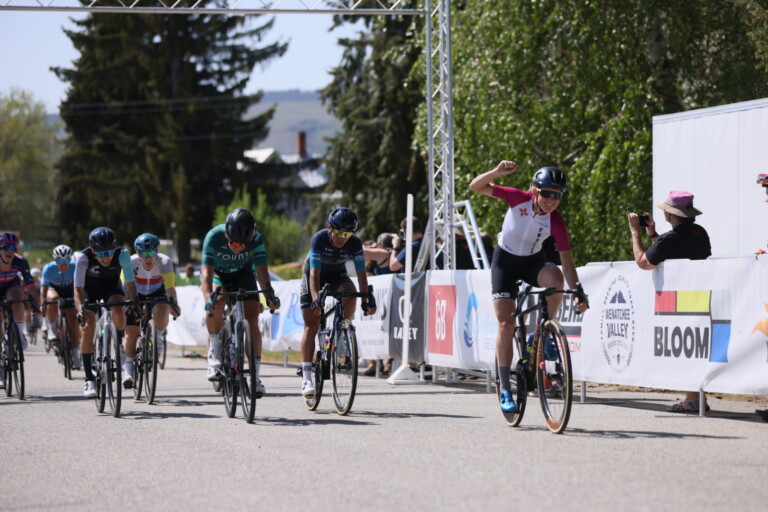
Riders of all levels are encouraged to participate, with route options ranging from 10 to 100 miles. The course is fully supported with rest stops every 10–12 miles, bike mechanics, support vehicles (SAG), and volunteer assistance from local CF families and cycling teams. The ride begins and ends at John’s Park in Henefer, UT, with a grab-and-go breakfast to start the day and a catered lunch at the finish line.
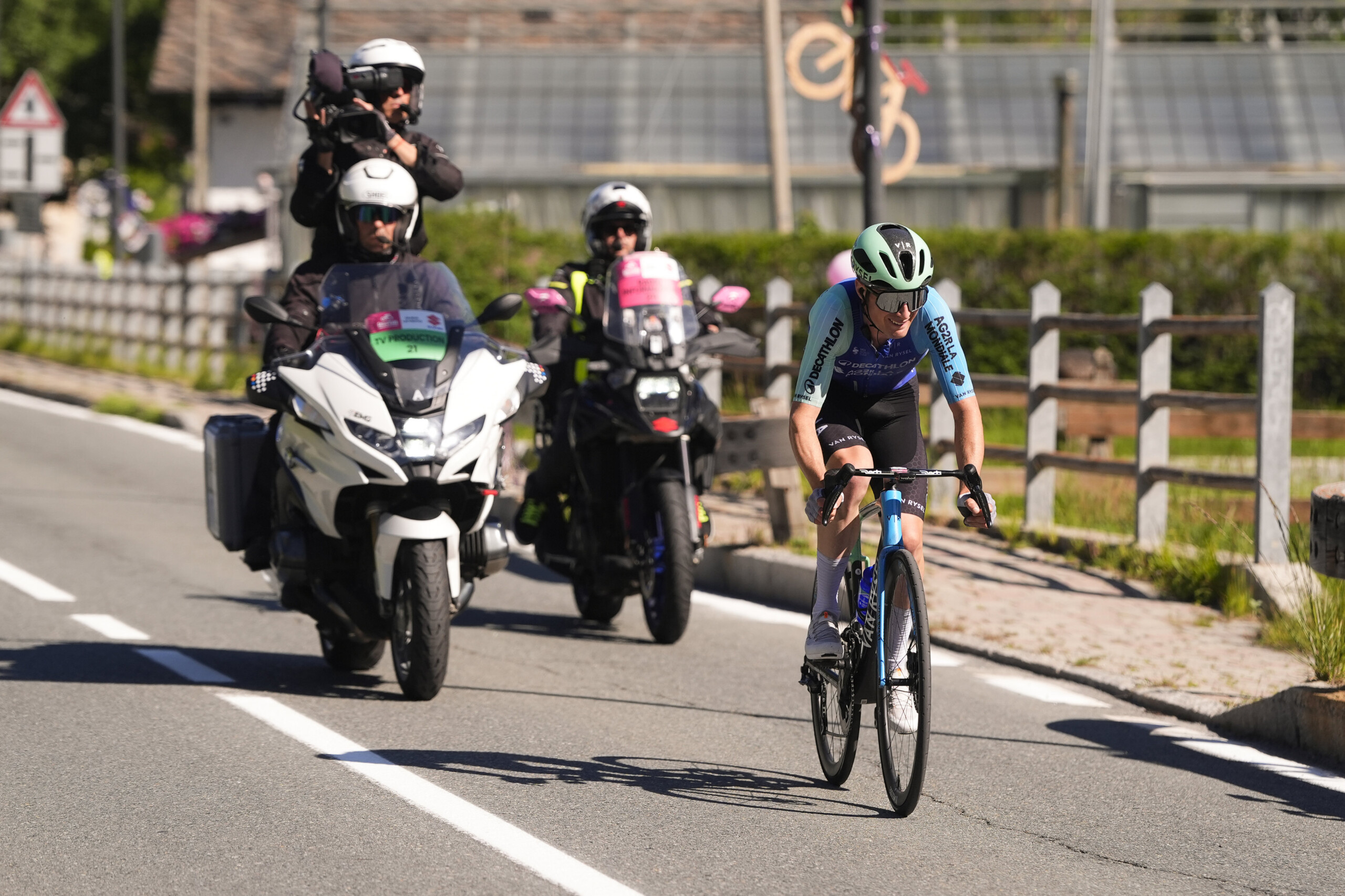
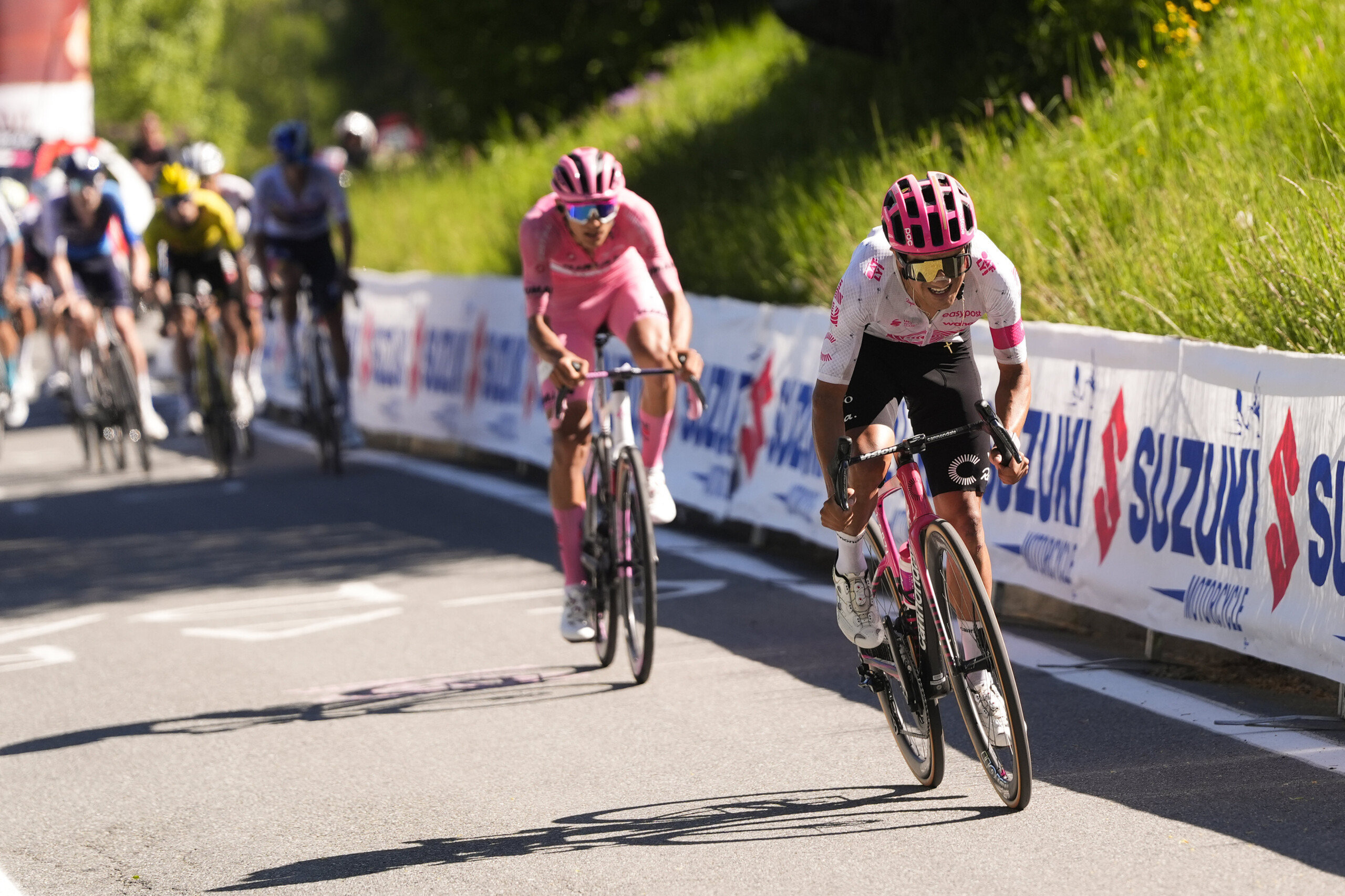
Scenes from the 2024 CF Cycle For Life. Photo courtesy Cystic Fibrosis Foundation
“I’ve been privileged to be involved with the CF Ride here in Utah since it began,” stated avid cyclist and CFF supporter Brandon Ross. “I have a brother-in-law with CF and I couldn’t be more proud to be riding on his behalf. The CF Foundation has done an incredible job of picking one of Utah’s most scenic routes for this event. The ride is quickly becoming one of Utah’s premiere fundraising rides because of their efforts to have a well-supported, well-marked and safe route. And when I say well supported – you won’t come away hungry or thirsty! This is absolutely a highlight of the cycling season here in Utah.”
Now in its 14th year, CF Cycle for Life continues to grow in size and impact, bringing together cyclists, families, and community members in the fight to make CF stand for “Cure Found.” All funds raised support the Foundation’s groundbreaking research, treatment initiatives, and advocacy efforts.
Event Details:
What: 14th Annual CF Cycle for Life
When: Saturday, August 16, 2025
Where: John’s Park, Henefer, UT
Routes: 10, 25, 40, 55, 75, and 100 miles
Register: https://fundraise.cff.org/utahcycleforlife
By Charles Pekow — Staff and budget cuts imposed by the Trump regime may mean fewer opportunities to ride on federal lands in the long run, but nobody knows how much, and people don’t even want to talk about it.
National Parks Conservation Association representative Kati Schmidt gave Cycling West a statement saying, “Everyone, from cyclists to hikers to park rangers to locals to international travelers and beyond, has reason to be concerned about the Trump administration’s ongoing and nonsensical attacks on America’s beloved national parks. Over the last three months, the National Park Service (NPS) workforce has declined by 10% – and this comes after years of understaffing struggles due to underfunding by Congress, across America’s 430 national park sites.”
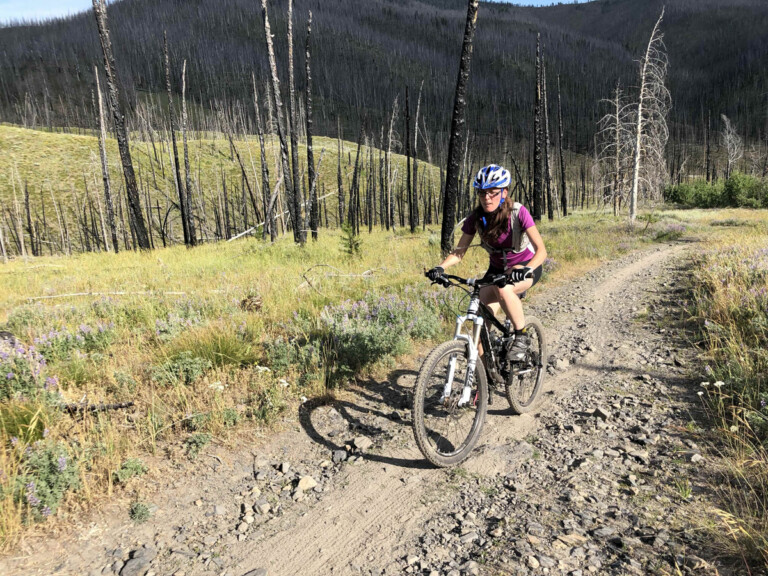
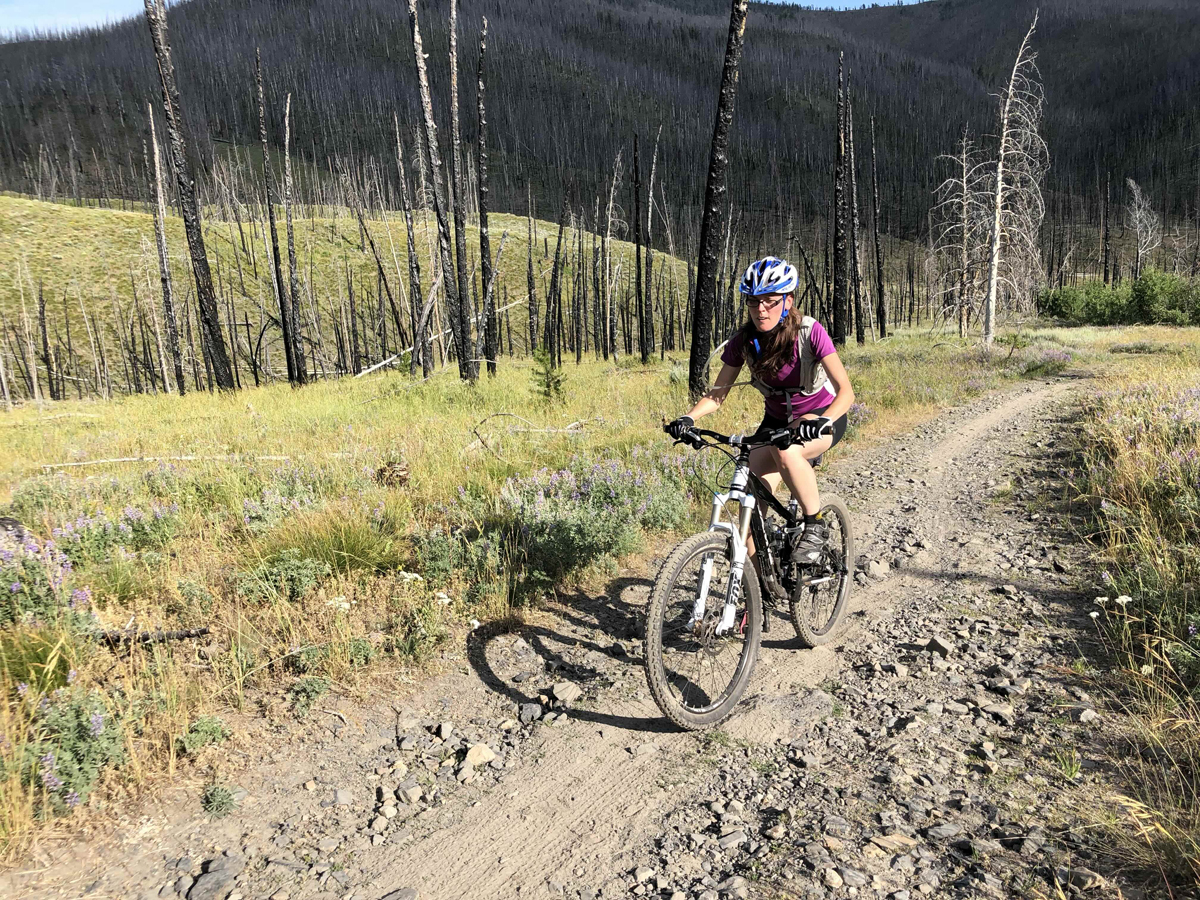
Lisa Hazel on the Fisher Creek Trail near Stanley, Idaho. Trails like this one on Forest Service land may be impacted by cuts to the Federal Budget and to the land agencies. Photo by Dave Iltis
Schmidt added that the association couldn’t say how the staff shortages may affect trail maintenance or developing long-range trail plans. However, she added in an email, “Between funding freezes and staff losses, it’s anyone’s guess what projects will move forward and where.”
Calls and emails to press officers and other staffers from NPS, the Bureau of Land Management (BLM) and U.S. Forest Service (USFS) largely went unanswered or were greeted with lines like “I’m not at liberty to talk about it.” Steven Hall, communications director for BLM in Colorado, for instance had “no comment on the transition.”
Bruce Hallman, BLM spokesperson in Idaho, said, however “so far, I think we are able to manage it alright. I have not heard of any major (trails) that have been neglected. In general, we have not been hit like some other places may have been.”
The USFS press office would only give a bland statement, not attributed to any specific person, saying “it would be inappropriate to speculate on the future (but it) is our intent to maintain access to recreation opportunities to the greatest degree possible.”
Even the International Mountain Biking Association, which coordinates with the BLM on a Connecting with Communities national recreation strategy partnership, did not respond to several of our queries.
On the other hand, Matthew Nelson, executive director of the Arizona Trail Association (ATA), eagerly spoke with us. ATA works to maintain the Arizona Trail, which twists more than 800 miles north-south through Arizona from Utah to Mexico, traversing four National Forests, BLM property and two National Parks. He said, “The theme of the season for us and our partners is a climate of fear … we have no idea of what a federal budget will look like.”
Nelson said that the Tonto National Forest, for instance, lost 70 percent of its recreation staff, though some have been called back as temps. “What we’re seeing is … trail maintenance is becoming less of a priority” as well as “absolute uncertainty and chaos…. It has been an extreme challenge, these past four months.”
Madeline Bautista, Public Affairs Specialist for the Tonto National Forest did not respond to our query.
Nelson added that “the biggest stagnation we see now is in planning,” noting that it takes years to create a trail, from conception to opening. A few plans for bike trails have so far been pushed back a quarter or two, he said.
As to existing mountain bike trails, some maintenance can continue because volunteers do much of the work.
As far as USFS staff involvement, “it’s not lifting a shovel; it’s passively coordinating the work of the mountain bike clubs,” says Andy Stahl, executive director of Forest Service Employees for Environmental Ethics. But, he said, “we are going to reach the point when you call the Forest Service office, no one answers.”
Stahl added that the staff shortages began in the Biden administration, when the focus became firefighting at the expense of other priorities and USFS couldn’t hire seasonal staff for recreation. “I’m not sure how much worse Trump can make it, but he is certainly trying,” Stahl says.
By Tracy Stone-Manning / Writers on the Range — Public lands are one of our country’s great equalizers. It doesn’t matter how much money you have—a billionaire and a bus driver both get the same access to our parks, deserts, rivers and forests. Each one of us owns these lands together. They are literally America’s common ground.
Like so many Americans, I’ve built a life around public lands—exploring them, defending them and working to ensure they remain open to all. From my early days in Montana to leading the Bureau of Land Management and now as president of The Wilderness Society, I’ve seen what these places mean to people. And I’ve never seen a threat to them as serious and shocking as the one we face right now.
If the Republican-controlled Congress has their way, this will become a much more common site on the nation’s public lands. Photo by Jesse Pluim, BLM. (PDM 1.0 – Public Domain Mark 1.0 Universal Deed)
For weeks, there have been indications that the Republican-controlled Congress was going to sell off chunks of this priceless shared heritage to pay for tax cuts for the ultra-wealthy. Not too long ago, that would have been an unthinkable idea. Surely, Congress or the administration wouldn’t sacrifice prime wildlife habitat, access to favorite places, lands along a quiet stream or a wildlife refuge, right? Surely, they wouldn’t auction this extraordinary legacy of clean air, clean water and open spaces as a one-time favor to donors and corporations?
But earlier this month, the Senate proved just how serious they were about it. Democrats offered an amendment that would block selling off our public lands in the budget bill. The vote failed along party lines, with just two Republicans voting to oppose a sell-off. Those two Montana senators who supported the amendment completely understood how their constituents feel about public lands.
But it’s not only Montanans who care. Public lands are figurative common ground, uniting people across the country. Poll after poll shows that people of all stripes support public lands and want them conserved to protect wildlife habitat and outdoor recreation areas for future generations.
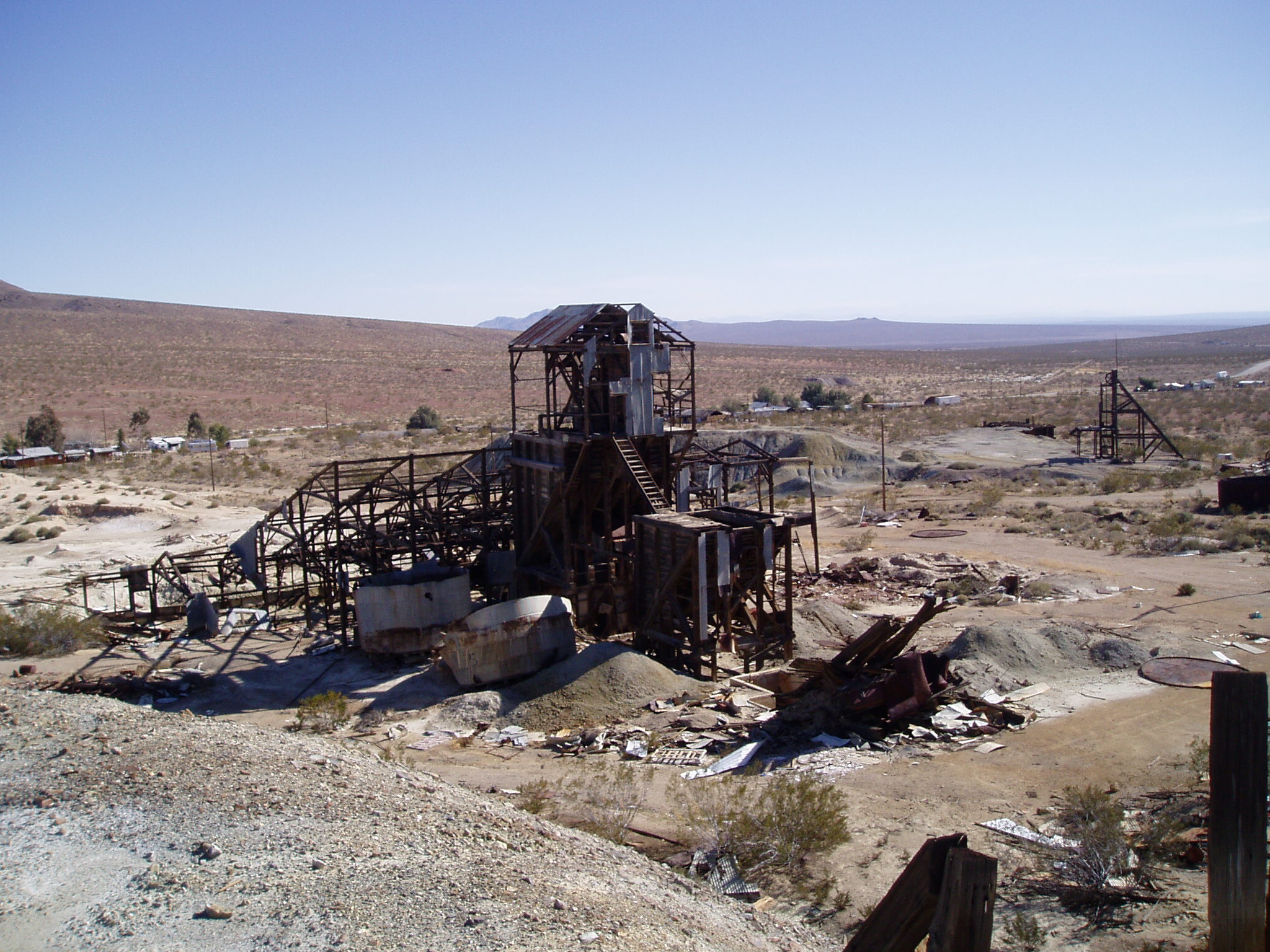
Kelly Silver Mine on BLM land near Red Mountain, California, was declared a SuperFund site in 2012 due to its high levels of toxic arsenic tailings. Photo by Peter Graves, BLM. (PDM 1.0 – Public Domain Mark 1.0 Universal Deed)
While it is a nice proof-point to have, we don’t need polling data to tell us what people’s photo libraries, social media feeds, old family albums and bucket lists show us. Americans care deeply about public lands, intuitively understanding they are a national treasure.
These lands hold the long arc of the story of humankind, etched in petroglyphs on desert walls and handed down in the creation stories of Indigenous peoples that have stewarded them since time immemorial. Public lands are our shorthand for freedom and exhilaration. In car ads, they promise an escape from the ordinary. In books about finding ourselves, they are a proving ground for the soul. In our anthems, they bind us as one nation: “This land is your land; this land is my land.”
My nephew caught his first trout on a fly rod while standing on public land along a clear, cold mountain stream. Over 25 years later, he still remembers everything about that moment. I expect he’ll bring his kids there one day. His is a common story.
Last summer, I happened upon a young couple on a large rock outcrop overlooking a wilderness in Oregon. They had driven all the way from the Midwest to take in the view. I offered to snap a photo for them and then found myself documenting a remarkable moment as he dropped to one knee, pulled out a ring, and wove the magnificent scenery into the intimacy of his proposal. People make lifetime memories on our public lands.
From that rim on Steens Mountain to that bank along Rock Creek, to Yellowstone and Yosemite, to the desert Southwest and the wilds of Alaska, to national forests in every state—these lands are our heritage, our common ground, and a key part of our American identity and story.
Public lands must never be for sale—at any price.
It’s not too late. Congress still has mountains of details to sort through to finalize the president’s budget and tax cut agenda. It’s up to them to stop the selloff of our national heritage, and it’s up to all of us to remind them that they must. When public lands are sold off for profit, we lose the places that define our country and unite us as Americans.
Tracy Stone-Manning is a contributor to Writers on the Range, writersontherange.org, an independent nonprofit dedicated to spurring lively conversation about the West. She is president of The Wilderness Society and a former director of the BLM. She lives in Montana and Washington, D.C.
Updated MTB Group has Fast, Precise Shifting, Robust Construction, and Refined Braking System
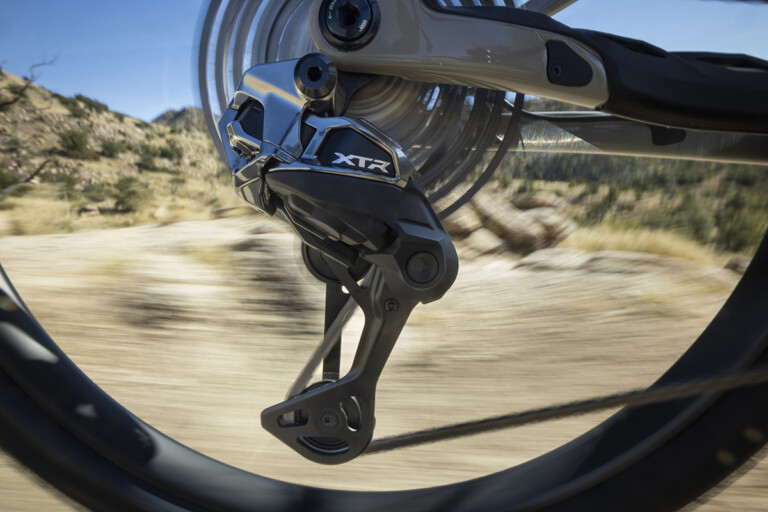
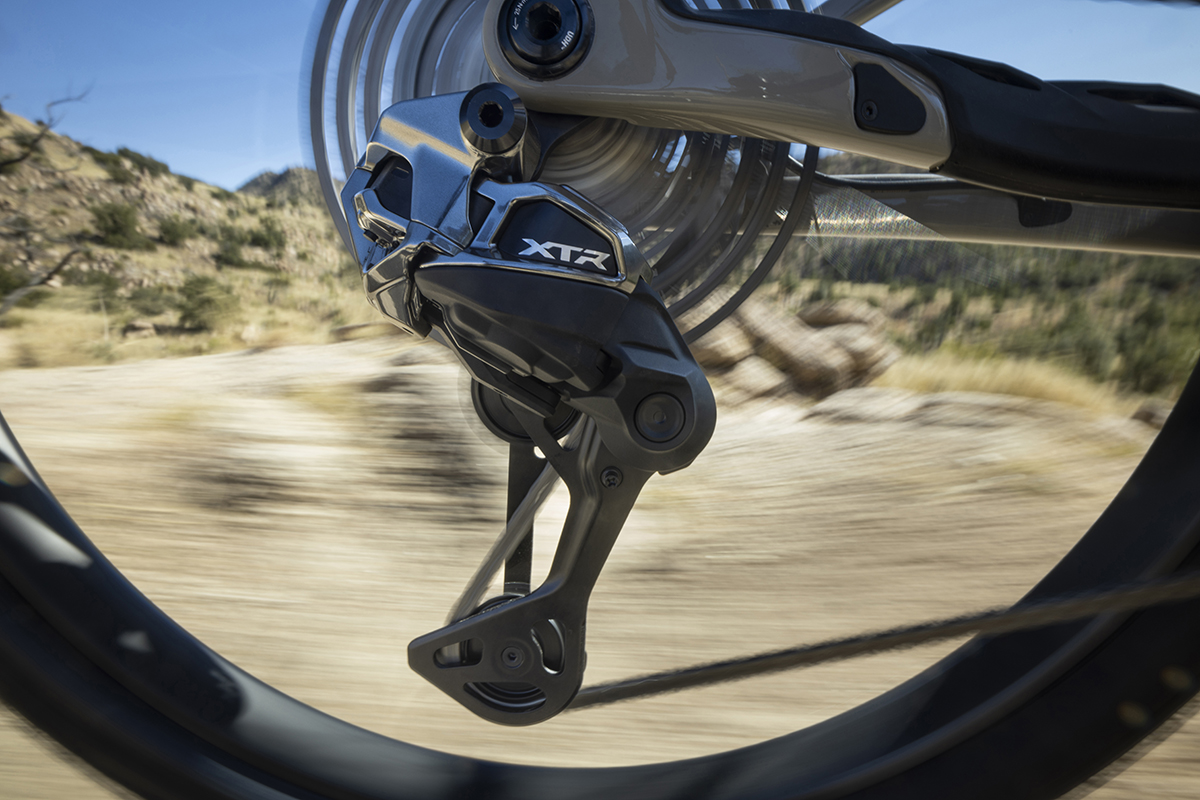
Shimano builds on its legacy of innovation and engineering with the introduction of its new fully wireless Di2 XTR M9200 mountain bike components. The no-compromise Di2 system delivers Shimano’s ultra-precise and lightning-quick electronic shifting capabilities, with increased durability across each component.
The New 2025 MTB XTR M9200 Di2 Wireless.
Engineered to withstand the demands of real-world racing, the new group features Shimano’s most robust drivetrain construction to-date, more intuitive ergonomics, predictable braking control, and new customization features that every rider can appreciate.
Fully Wireless Di2 Platform – Redesigned Di2 system with fast, precise shifting in a wireless design for ultimate performance and absolute reliability
Robust Drivetrain Construction – Built to survive trail impacts for total rider confidence
Intuitive Ergonomics – Controls with a natural fit and feel, plus added adjustability so you can focus on the trail ahead
Predictable Braking Control – Refined power application with consistent performance and modulation in a wider temperature range
Freedom of Choice – More component options and Di2 features that can be optimized for riders’ terrain, style, and performance needs
Robust Drivetrain Construction
You can’t hurt what you can’t hit—the XTR M9250 rear derailleur with new SHIMANO SHADOW ES technology is stronger than ever and features a low-profile wedge design. The stabilizer unit blends seamlessly into the body of the derailleur, eliminating edges so it glances off trail obstacles and avoids most rock strikes and impacts on the trail. When the inevitable hits do happen, the derailleur absorbs the impact and then Shimano’s automatic impact recovery function instantly returns the derailleur to its original position.
Additionally, the wide link structure, durable carbon plate, skid-plate design, and solid pulley further enhance the derailleur body’s survivability.
Low Profile Design – SHIMANO SHADOW ES technology delivers a wedge-shaped design that reduces the derailleur’s front-facing surface area and eliminates edges that could catch on rocks and roots.
Automatic Impact Recovery Function – The derailleur absorbs trail impacts and then automatically resets the rear derailleur, ensuring continued performance.
Super Strong Design – The rear derailleur body boasts a wide, well-braced linkage and solid pulleys to minimize debris entry and ensure durability.
New Chain Stabilizing Technology – The dual spring design creates higher chain tension for better chain wrap and retention.
Battery Protection – Tucked safely inside the rear derailleur body, the sealed battery won’t budge even in the roughest terrain but is still easily removed for charging.
E-MTB Rear Derailleur Option – The wired E-MTB RD-M9260 features a constant power supply from the existing e-bike battery, while utilizing FREE SHIFT technology to seamlessly shift as you coast, and AUTO SHIFT for smooth, automatic gear changes while pedaling.
RD-M9250 – Wireless Rear Derailleur
SHIMANO SHADOW ES Technology
Precise wireless shifting
Robust structure with skid plate design
Solid pulley construction
Removable and rechargeable onboard battery
Long Cage RD-M9250 SGS for use with 10-51T Cassette
Mid Cage RD-M9250 GS for use with 9-45T Cassette
RD-M9260 – Rear Derailleur for E-MTB
SHIMANO SHADOW ES Technology
Wired rear derailleur for E-MTB
Constant power supply from e-bike battery
AUTO SHIFT technology
FREE SHIFT technology
Long Cage SGS
12-Speed RD-M926012 for HYPERGLIDE+
11-Speed RD-M926011L for LINKGLIDE
CS-M9200-12 – Cassette Options
Smoother, more durable shifting under load
12-Speed HYPERGLIDE+
MICRO SPLINE
Optimized for lightweight and durability
Cassette Options: 9-45T and 10-51T
Cranksets
The new XTR M9200 crankset delivers increased strength and reliability for world-class racing and riding. Offered in two ride-specific constructions—one optimized for weight savings and the other for extra durability—the crank utilizes Shimano’s proven HOLLOWTECH II technology that achieves a new balance of rigidity and weight while also emphasizing impact survivability.
FC-M9220 – Trail/Enduro Crank
High-durability crankset for Trail/Enduro
Enduro-specific spindle ensures stiff power transfer and impact resistance
Proven HOLLOWTECH II construction
Standard 176mm Q-Factor
Crank Arm Length: 160, 165, 170, 175mm
Chainline: 55mm
FC-M9200 – XC Crank
Lightweight crankset for XC riding and racing
Proven HOLLOWTECH II construction
XC-friendly 168mm Q-Factor
Crank Arm Length: 165, 170, 175mm
Chainline: 55mm
The New 2025 MTB XTR M9200 Di2 Wireless. Photo by Sterling Lorence Photography
Intuitive Ergonomic Evolution
Working with Shimano’s Skunk Team of professional testers, engineers refined shift and brake ergonomics with XTR M9200 components.
The brake levers feature Shimano ERGO FLOW technology and have been redesigned to move the pivot point closer to the bar, ensuring the levers follow the natural path of the rider’s finger when pulling the brake. The lever shape has also been refined with a new asymmetrical upswept design that meets your finger at its natural angle, encouraging an aggressive riding position and even weight distribution for better riding control.
The new shifter switch with SHIMANO RAPID ES technology builds on the legacy of Shimano’s mechanical shifter, carrying over key features like the tactile feedback that offers control without requiring riders to change their grip when shifting, a characteristic perfected over generations of mechanical shifting development.
The SHIMANO RAPID ES Di2 switch can be placed in more locations on the bar, while the button functions can be optimized for any riding preference, allowing riders to dial in their setup just the way they like it. The resulting all-new controls fit perfectly in the hand with multi-axis adjustability to maintain hand and body position, allowing you to stay focused on the trail ahead.
SW-M9250IR – Di2 Shifter Switch
SHIMANO RAPID ES technology
Precise wireless shifting
Tactile feel with each shift
Multiple shift modes, including hold-down multi-shift, click-through double shift, or locked-out single shift
Four-way paddle adjust
Programmable third button on shifter for added customization – like controlling your bike computer or controlling FREE SHIFT and AUTO SHIFT functions through the E-TUBE app
I-SPEC EV and clamp band options
Powerful Braking System
One of the most significant changes for XTR comes with an updated braking system that delivers Shimano’s most powerful and most predictable braking control ever.
The new range of XTR brakes offers three unique brake setups: one that prioritizes lightweight construction for XC racing and riding; the second features a refined power application for more aggressive downhills; and a third option that combines key features of both setups for an optimal balance of weight savings, brake modulation, power, and control.
Trail / Enduro Brake Lever Development
When it comes to power and consistency, the BL-M9220 brake lever features a redesigned SERVO WAVE track, which ramps power smoothly but quickly, and is ideal for trail and enduro riders. The new ERGO FLOW lever design ensures consistent rebound speed at any temperature with a reformulated low-viscosity mineral oil that flows consistently through the system in a wider temperature range. The combination of these two ensure stable piston movement within the system, delivering consistent performance and smooth power modulation.
BL-M9220 – Enduro / Trail Brake Lever
ERGO FLOW Technology
Smooth SERVOWAVE power curve
Low-viscosity oil that remains stable over a wider temperature range
Closer pivot point and upswept lever blade for natural braking motion
New reach adjust dial on lever body
I-SPEC EV compatible
Durable alloy lever blade
BR-M9220 – Enduro / Trail Brake Caliper
Dual diameter 4-piston design
Anti-rattle finned pad design
Low-viscosity hydraulic brake fluid
Caliper seals with consistent rebound speed
One-piece caliper design for optimized rigidity and weight
BL-M9200 – XC Brake Lever
Lightweight construction with carbon lever blade
Magnesium master cylinder
Low-viscosity hydraulic brake fluid
I-SPEC EV compatible
BR-M9200 – XC Brake Caliper
Lightweight 2-piston design
Heat-resistant resin piston
Low-viscosity hydraulic brake fluid
Post mount
Caliper seals with consistent rebound speed
Wheels and Hubs
Complementing the new XTR M9200 lineup are Shimano’s impressively lightweight and durable carbon MTB wheels. Offered in a super lightweight XC option, or a more durable enduro option, the XTR wheels feature updated industrial cartridge hub design for easy service while focusing on superior sealing.
WH-M9220 – Enduro / Trail Wheels
Durable 29-inch carbon tubeless rim
Hookless rim with 30mm internal width to prevent deformation and punctures
Durable stainless-steel spokes
28-hole conventional structure
5-degree engagement angle
Lower drag while coasting
MICRO SPLINE
CENTERLOCK disc brake
WH-M9200 – Lightweight XC Wheels
Lightweight 29-inch carbon tubeless rim
Hooked rim with 29.6mm internal width
Lightweight titanium spokes
24-hole straight spoke structure
5-degree engagement angle
Lower drag while coasting
MICRO SPLINE
CENTERLOCK disc brake
HB-M9210 and FH-M9210 Hubs
Shimano’s new M9210 hubs get updated bearings and seals for easier maintenance and increased performance. The seals have been optimized to reduce rolling resistance while still sealing out water and debris for ease of maintenance over time.
The FH-M9210 offers an improved Direct Engagement freehub design features a 3.5-degree engagement angle, lower drag while coasting, and a lighter-weight construction.
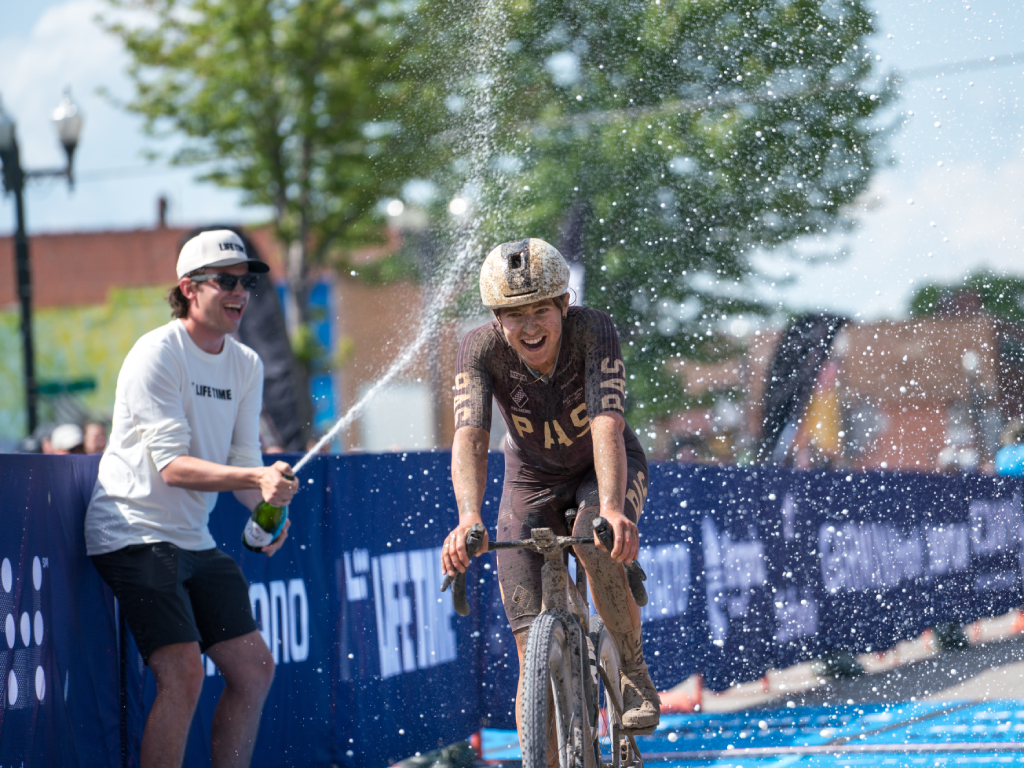
Migoń and Jones set records in Emporia as Pellaud and Decker move up the Life Time Grand Prix standings
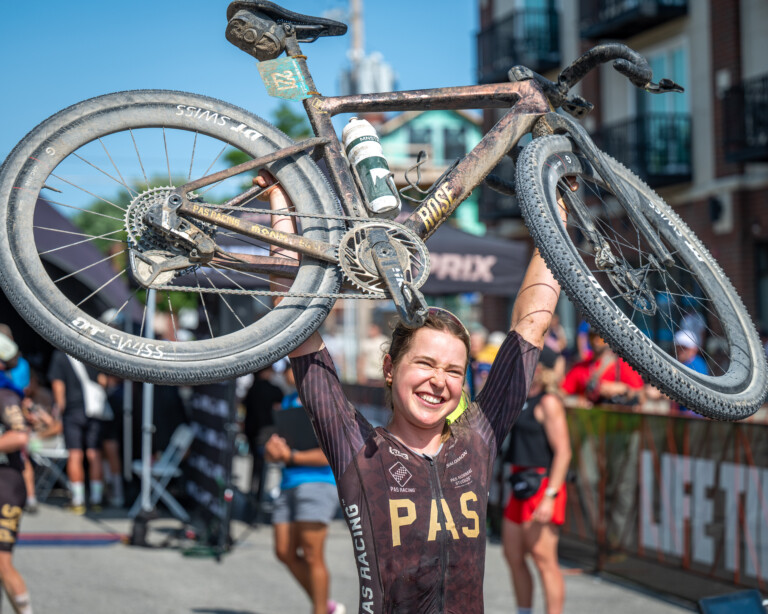
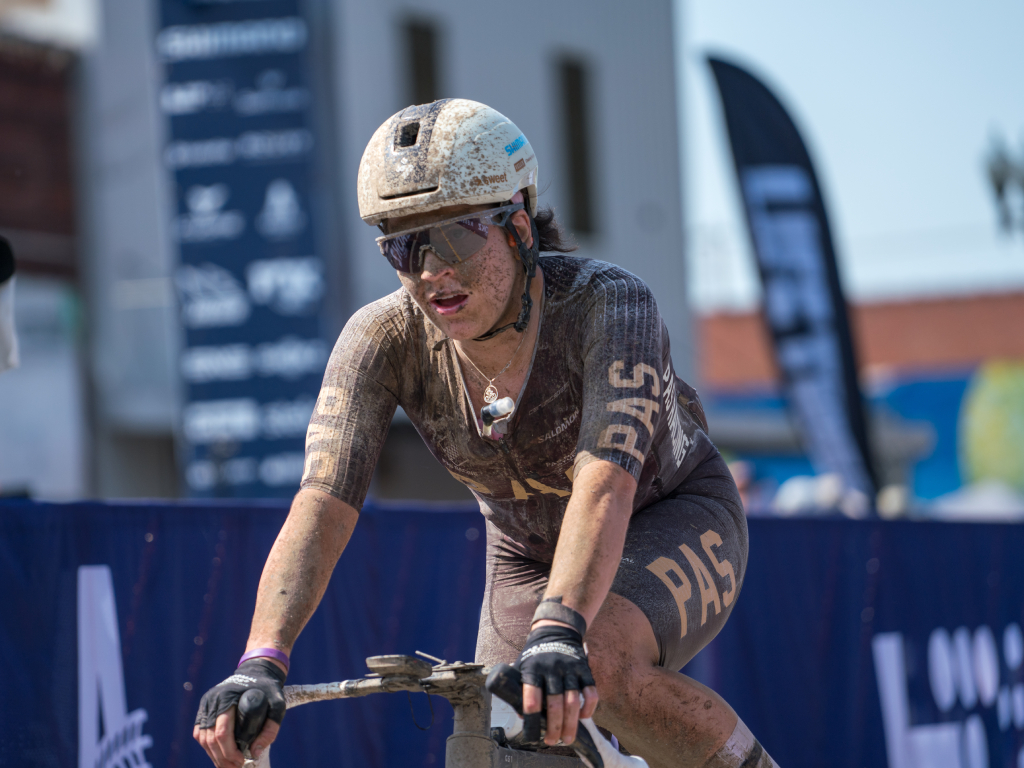
EMPORIA, Kansas (May 31, 2025) — Returning for the 19th edition of the Life Time UNBOUND Gravel presented by Shimano, the Flint Hills saw record-breaking results across the board today.
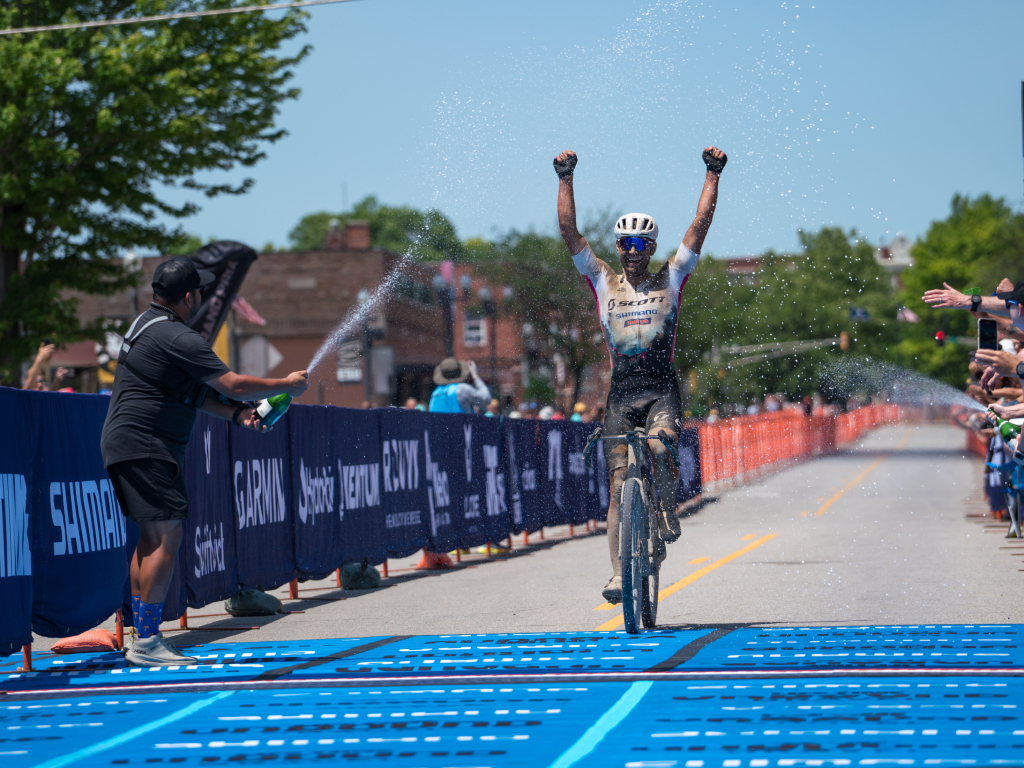
Karolina Migoń clocked an unprecedented average speed of 20.12mph to take first place in the elite women’s 200-mile race, while Cameron Jones earned himself a spot in the Life Time Grand Prix by also winning the men’s 200 race and setting a course record speed of 23.49mph in the process.
Photo courtesy of Life Time
Migoń had forged clear early on alongside Cecily Decker and Lauren Stephens. The trio had built a sizable lead when Migoń distanced her rivals with 48 miles to go. The 29-year-old Pole continued to ride hard all the way back to Emporia, taking her victory in a time of 10hr 3min 54sec.
Photo courtesy of Life Time
Behind, Decker refused to throw in the towel and dug deep to take second place, 8min 35sec back on Migoń but 9min 55sec ahead of Sofía Gómez Villafañe, who outsprinted 2024 winner Rosa Klöser and Cecile Lejeune to wrap up third position.
The men’s race proved equally dramatic with Jones – a Wild Card competitor – producing a stunning performance after breaking away with Simon Pellaud, two and a half hours into the action. That duo worked together brilliantly to build up an unassailable lead as they powered through the unrelenting gravel.
Photo courtesy of Life Time
Sensing Pellaud was tiring in the closing stages, Jones made his decisive move on one of final climbs of the day, dropping his accomplice before pressing home his advantage, ultimately crossing the finish line 42 seconds ahead of the Swiss rider in a time of 8hr 37min 09sec.
Photo courtesy of Life Time
Those results mean Decker has moved level on points with Villafañe at the top of the women’s overall standings, while Pellaud now sits joint second in the men’s competition with Brendan Johnston (who took fifth place on the day, and third place among the Life Time Grand Prix athletes). Keegan Swenson defended his overall lead courtesy of being the fourth Life Time Grand Prix rider home in seventh position.
The official lineup of Wild Card riders who have earned their place on the Life Time Grand Prix will be announced on Sunday, June 1. Those seven Wild Card riders will be included on the overall leaderboard for the first time after the Life Time Leadville Trail 100 MTB presented by Kenetik has concluded on Saturday, August 9.
Britton, Jackson tame the UNBOUND XL
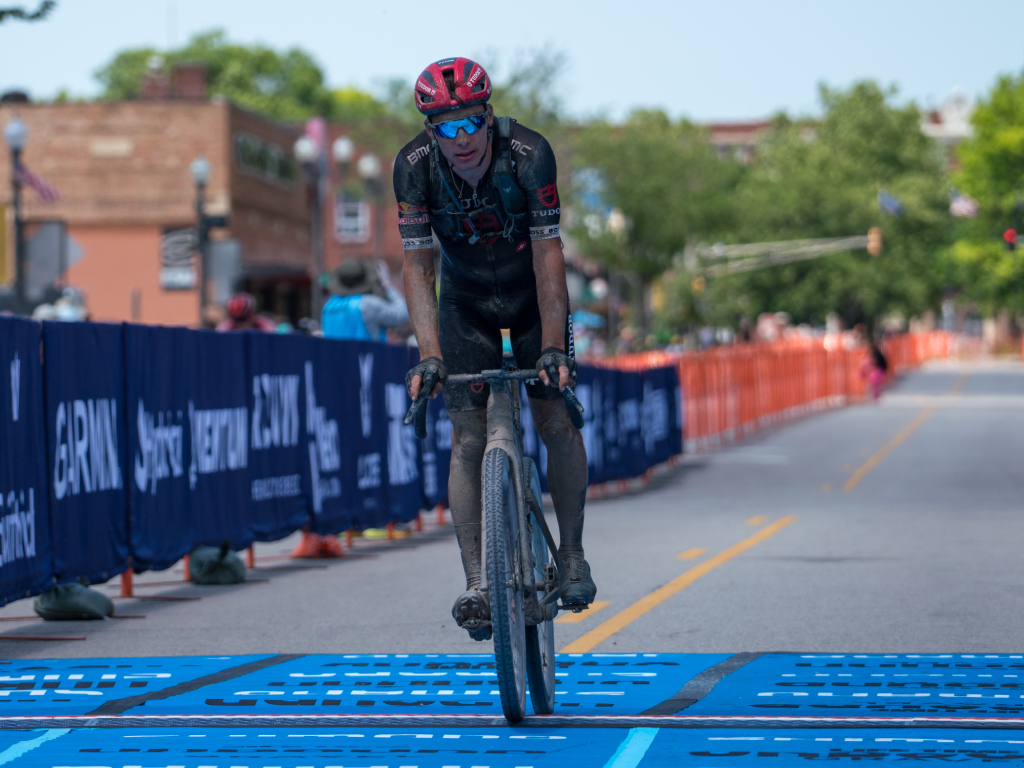
Earlier in the day, Rob Britton and Heather Jackson had both also smashed records in the XL race. Britton crossed the line in an incredible time of 17hr 49min 51sec which was 2hr 15min 45sec faster than Sebastian Breuer’s previous best in 2024, but just 5min 44min ahead of 2025 runner-up Lachlan Morton. Jackson’s time of 20hr 57min 57sec proved 1hr 27min 18sec quicker than the marker set by Cynthia Frazier in 2022, with Serena Gordon taking second place in a time of 22hr 19min 56sec.
Rider Reactions
Women’s 200 winner Karolina Migoń said: “We had a really good group of three and were working really hard together until the second feed zone. When Lauren dropped back I waited for Cecily, but when I saw she was also super-tired, I went on my own and gave everything I had to make it to the finish line. I didn’t know if that was a good idea or not at first, but it turned out well.
Photo courtesy of Life Time
“This was a field of very strong women and really hard to win, so I didn’t have any expectations going into it, but thankfully I was the strongest.”
Men’s 200 winner Cameron Jones said: “I was supposed to play it safe with the chance of getting in the Life Time Grand Prix through the Wild Card competition at stake, but once the race had started, I thought ‘who am I kidding, I’m just going to send it’. I went a bit earlier than I’d planned – it was all strung out coming into Eskridge so I joined the fun and everyone else stopped, so I just kept on going and committed.
“I bridged across to the lead group and went through that, and then got a gap with Simon. I was unsure when we went away but he assured me it was a good thing to do, and our gap gradually grew. That was a pretty cool feeling; we kept the morale high and helped each other out, doing even pulls. We both knew we’d stay clear until the end and coming into the finish, I was keen to leave it to a sprint. I rode hard and managed to break the elastic on the final hill coming up to the finish though, and that meant I could savour the roll into town.
“I’ve got my family here so it’s incredibly special that they’ve seen me win their first race in the USA. Now I’m in the Life Time Grand Prix, I’d better get myself to altitude and get ready for Leadville.”
Women’s 200 runner-up Cecily Decker said: “I was so wrecked as I messed up at the first feed zone and was completely dehydrated, so it was super-awesome to take second place behind Karolina. She was clearly a lot stronger today. My motivation was just to get to the finish as fast as I could and be done with it, and I’m stoked with the result.”
Men’s 200 runner-up Simon Pellaud said: “It was interesting to find myself out in front and going for the win so early in the race, especially with such a strong wind and powerful field behind. Thankfully there wasn’t much collaboration in the chase. I always like to race from the front and make a show of it for the fans, and I had a lot of fun. I know Cameron a little bit and I enjoyed riding with him. We were fully committed and that’s how a breakaway should always be.
“Unfortunately I ran out of sugar in the final as I lost some gels, and that bad luck meant I lost the biggest gravel race in the world, and it could have changed my career. I’m upset because I really felt I could win, but it is what it is. In time I will be happy with this result, and if you’d told me before the race I’d finish in second, I would have taken that.”
By Peter Abraham – Since early April, I’ve been on a listening tour to understand the POV of leaders in different industries affected by trade tariffs. These are people with businesses based in Europe, USA and Asia, ranging in size from tiny to multi-billions in revenue. I’ve met with dozens of executives from bicycle, footwear and apparel industries. They all do some or a lot of manufacturing in Asia. Here’s what I’ve learned:
High tariffs often mean containers sit on the docks instead of being delivered. Photo source: RawPixel Free Stock Photos
Exasperation and anger over the tariffs is 100% unanimous among those I’ve met with. There may be some business people who make things in Asia and support the tariffs, but I have yet to meet one of them.
Manufacturing cannot be just “moved back to America” overnight. This Asian supply chain has been built over 40+ years, and while we can do some manufacturing here, that will take years to ramp up. Furthermore, many of those working in Asian manufacturing are paid $1-$5 per hour. So for some low skilled, labor intensive assembly lines (vs automated w/ less labor), if we want to manufacture in the U.S., we’ll need to choose between Americans getting paid that way OR paying $250 for a pair of Nike shoes at Dick’s Sporting Goods that used to be $79.99.
The general public is slow to catch on to the crisis that is about to arrive in America, because we’re mostly still buying things that were shipped here before the tariffs increased prices. Many executives I met with felt that things are going to get real around Memorial Day, when current stocks of goods run out, shelves start going bare and prices increase.
Zero brands I’ve met with are just going to swallow the increased costs that come with tariffs. They’re all passing those on to retailers or distributors, who can choose to do what they want with pricing. Safe to assume the customer will have to pay more.
Every business I’ve met with feels mostly paralyzed: they can’t do any planning because the tariffs have been changing every week, or even more often. The tariffs are a confusing mess that varies by country and every week some industry (cell phones, automobiles) gets a partial reprieve. Do goods from China get taxed at 145% or 170% due to the additional 25% tariff on countries that import Venezuelan oil? Some businesses are already letting go of employees, and they’re thinking about where they’re going to cut other expenses for 2026.
The damage has been done — even if tariffs were to go away (or back to 2024 levels) tomorrow, the international community has lost trust in the US, consumer confidence has gone off a cliff, and now that the global economy has been broken apart, it may never get put back together the same way.
My conclusion is that it’s going to be a very challenging few years under the current administration. Fasten your seatbelts.
The United Nations has declared June 3rd as International World Bicycle Day, by adopting a resolution during the 72nd Regular Session of the UN General Assembly in 2018, in New York City. The international day was the brainchild of Professor Leszek Sibilski of Montgomery College in Maryland.
The United Nations’ World Bicycle Day is celebrated each year on June 3.
The rationale for the UN’s declaration is a follows, “Acknowledging the uniqueness, longevity and versatility of the bicycle, which has been in use for two centuries, and that it is a simple, affordable, reliable, clean and environmentally fit sustainable means of transportation, fostering environmental stewardship and health, the General Assembly decided to declare 3 June World Bicycle Day.” The go on to point out the benefits of cycling to sustainable development, education, health and disease prevention, tolerance, inclusion, and peace.
Individuals and communities are encouraged to ride at a local level and develop a culture of cycling within society.
The UN focuses on walking and cycling as important ways to improve health and health equity. Some of the many reasons to celebrate the bicycle were shared by them:
The bicycle is a simple, affordable, reliable, clean and environmentally fit sustainable means of transportation;
The bicycle can serve as a tool for development and as a means not just of transportation but also of access to education, health care and sport;
The synergy between the bicycle and the user fosters creativity and social engagement and gives the user an immediate awareness of the local environment;
The bicycle is a symbol of sustainable transportation and conveys a positive message to foster sustainable consumption and production, and has a positive impact on climate.
H.E. Tijjani Muhammad-Bande, President of the General issued a statement on June 3, 2020 that begins, “This year, on World Bicycle Day, we acknowledge the uniqueness, longevity and versatility of the bicycle.” He went on to add., “I wish a happy World Bicycle Day to all bicycle enthusiasts!”
The full statement is below:
WORLD BICYCLE DAY
H.E. TIJJANI MUHAMMAD-BANDE, PRESIDENT OF THE GENERAL ASSEMBLY (JUNE 3, 2020)
This year, on World Bicycle Day, we acknowledge the uniqueness, longevity and versatility of the bicycle.
Bicycles are used every day across our globe -from the most affluent nations- to developing, and the least developed countries.
Evidence suggests that even before COVID-19, many people turned to cycling as an affordable and equitable mode of transportation, leading to a longer and healthier life. Cycling has not only proven to improve physical health, but also has a positive impact on mental health and subjective well-being.
In many countries, owning a bicycle has an even more significant impact for families, lifting them out of poverty, while providing them with improved access to quality education, jobs, markets, and community activities when public transportation is unavailable.
In times of COVID-19, cities are being challenged to rethink their infrastructure, with bicycles playing a vital role in offering a quiet, economical, and non-polluting alternative to cars and public transportation systems.
Safe, efficient, low carbon and affordable mobility for all is essential to achieving the Sustainable Development Goals. Investing in city infrastructure to support cycling, from protected lanes to bike-share programs, will contribute to a more safe, resilient and sustainable future for all of us.
I wish a happy World Bicycle Day to all bicycle enthusiasts!
How Seven Years of Heartbreak Culminated in Glory on the Mountain That Once Broke Him
From the cobblestones of Rome to the brutal ascent of Colle delle Finestre, the 108th Giro d’Italia delivered one of cycling’s most compelling narratives of redemption
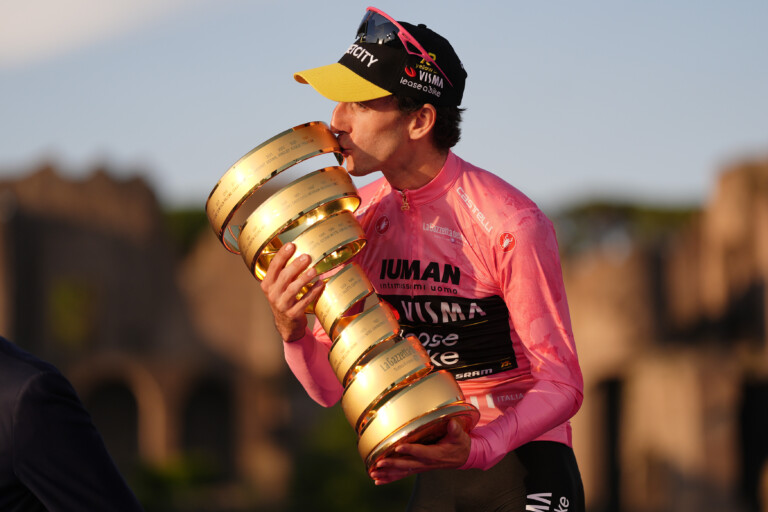
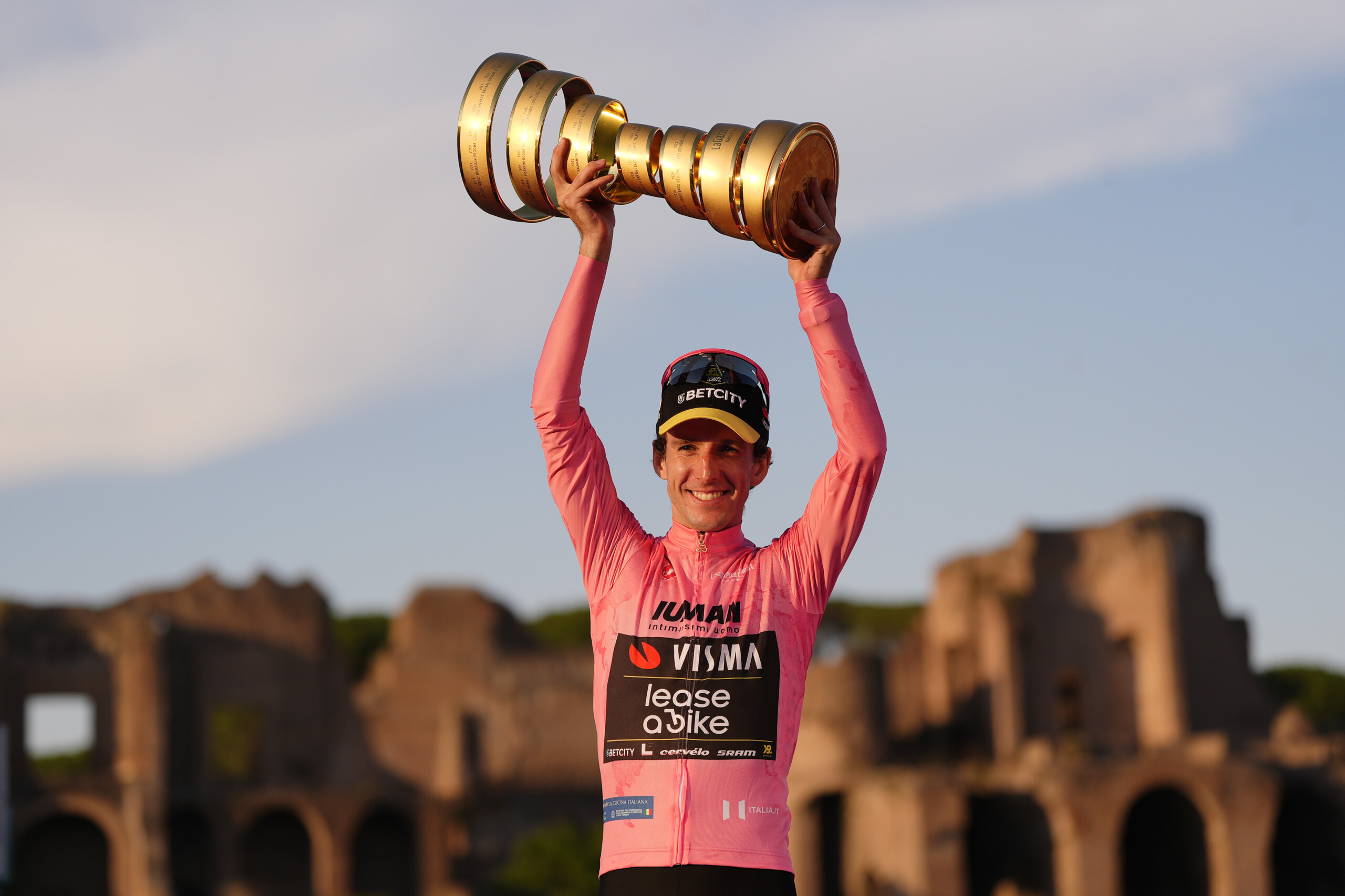
ROME, Italy (June 1, 2025) — In the dying light of a Roman evening, Simon Yates stood atop the podium in the eternal city, his hands raised in triumph as confetti fell like snow around the Circus Maximus. For the 32-year-old Briton, this moment represented more than just his first Giro d’Italia victory—it was the culmination of a seven-year journey of redemption that began on the very mountain where he would ultimately claim cycling’s greatest prize.
“Since I turned pro, I’ve dreamt of winning the best races and the Grand Tours are the pinnacle of our sport,” Yates said moments after being crowned champion on June 1st. “You all know what happened to me in the Giro in 2018. I’ve had my ups and downs here in Italy but this race kept calling my name and I finally win it.”
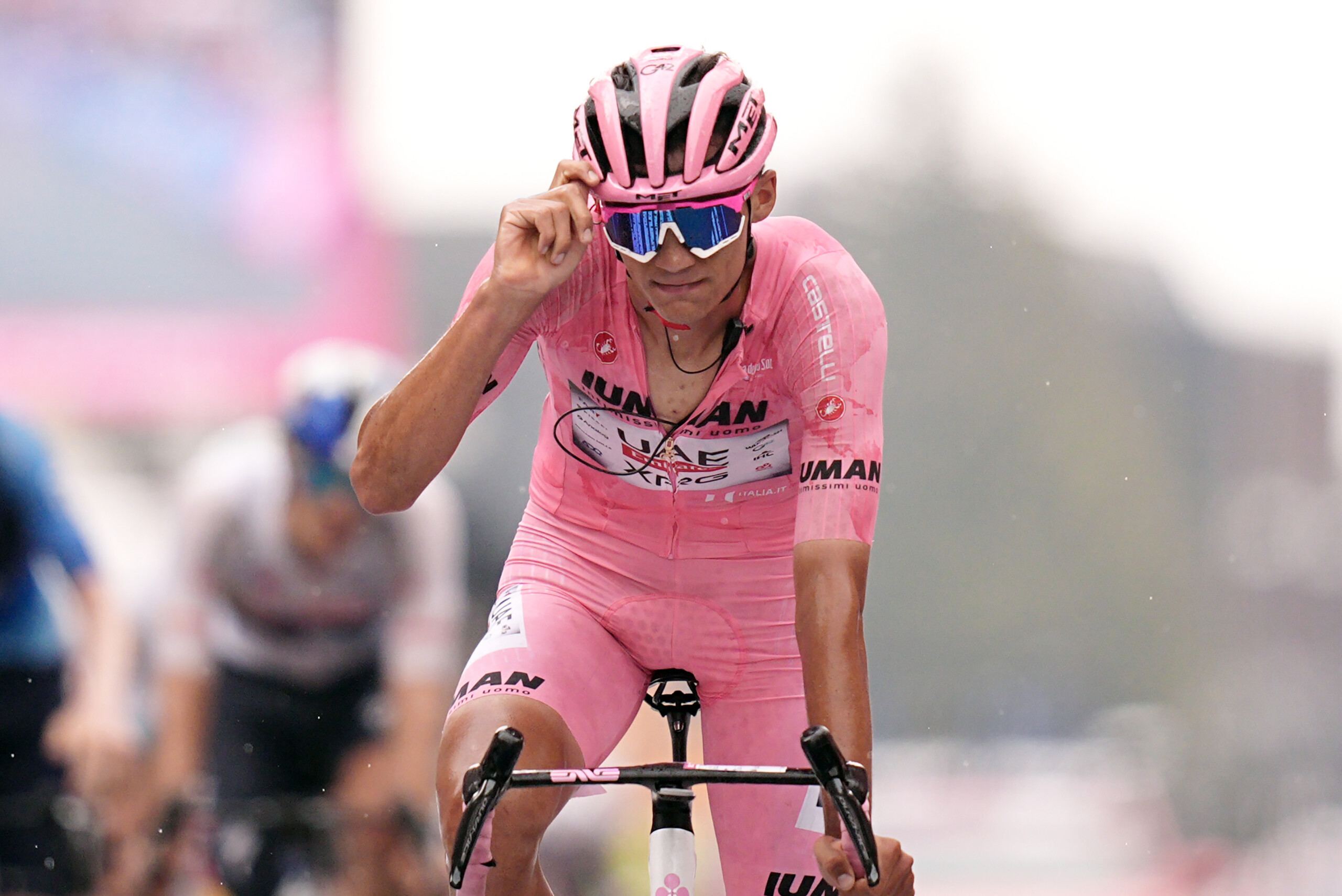
The 2025 Giro d’Italia will be remembered not just for its winner, but for the extraordinary drama that unfolded in its final stages, transforming what seemed like a comfortable victory for young Mexican Isaac Del Toro into one of the most shocking turnarounds in Grand Tour history. What began as Del Toro’s fairy tale—the 21-year-old holding the maglia rosa for eleven consecutive days—became Yates’s moment of redemption on the punishing slopes of the Colle delle Finestre.
The victory represented not just a personal triumph but a masterclass in tactical patience and calculated risk-taking that exemplified the sophisticated strategic thinking that defines modern Grand Tour racing. When the dust settled on the cobblestones of Rome, Yates had accomplished what many thought impossible: conquering the race that had broken him in 2018, on the same climb that had shattered his dreams.
Stage 16: Scaroni Breaks Italian Drought in Emotional Victory
The final act of this cycling drama began to take shape on Stage 16, the demanding 203-kilometer journey from Piazzola sul Brenta to San Valentino (Brentonico). On a rain-soaked day that tested both tactics and tenacity, Christian Scaroni delivered Italy its first stage victory in 17 races, ending a drought that stretched back to Andrea Vendrame’s triumph at Sappada the previous year.
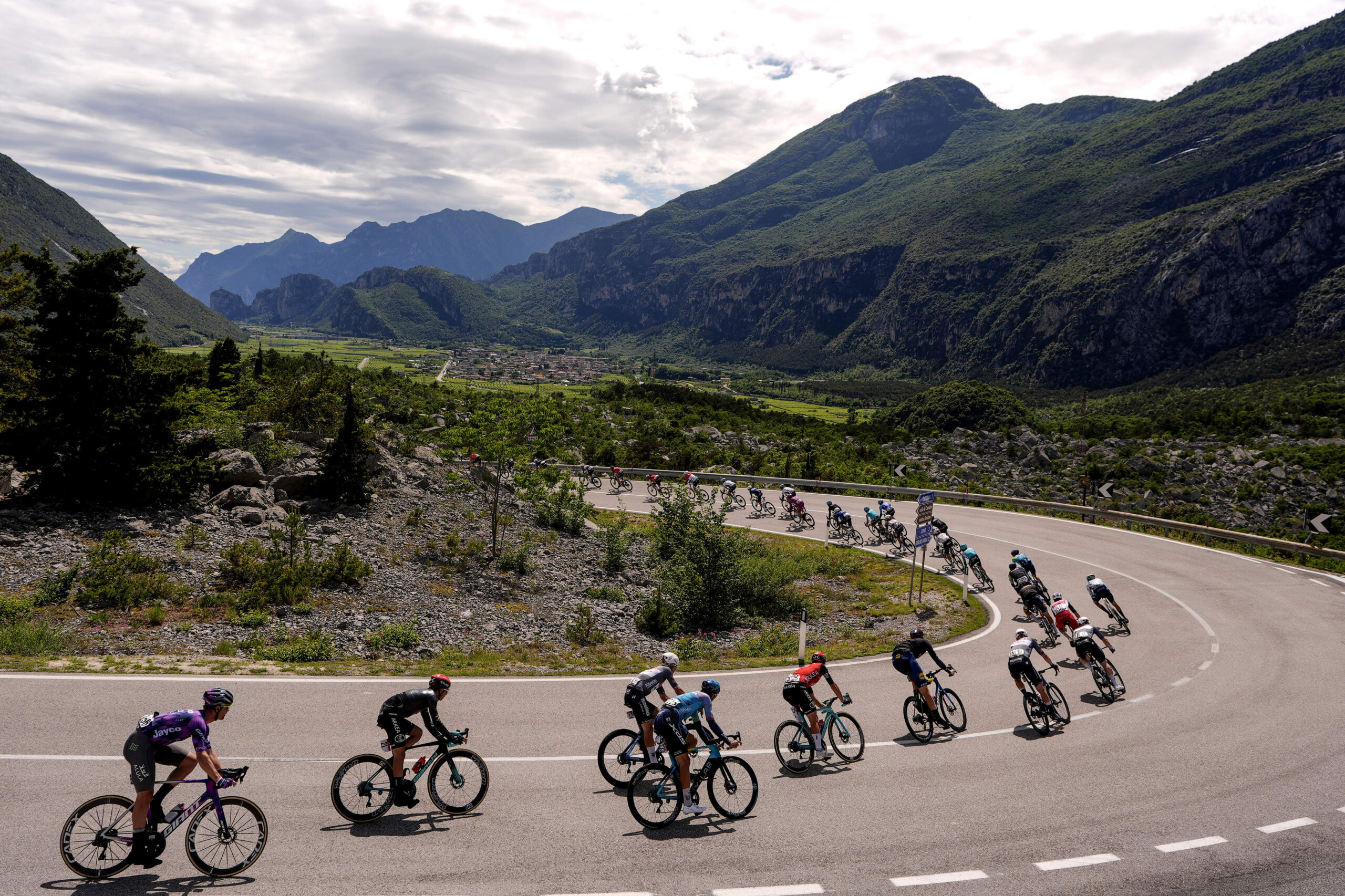
The peloton on stage 16 of the Giro d’Italia from Piazzola sul Brenta to San Valentino (Brentonico), Italy – Tuesday, May 27, 2025. Sport – cycling. (Photo by Fabio Ferrari/LaPresse)
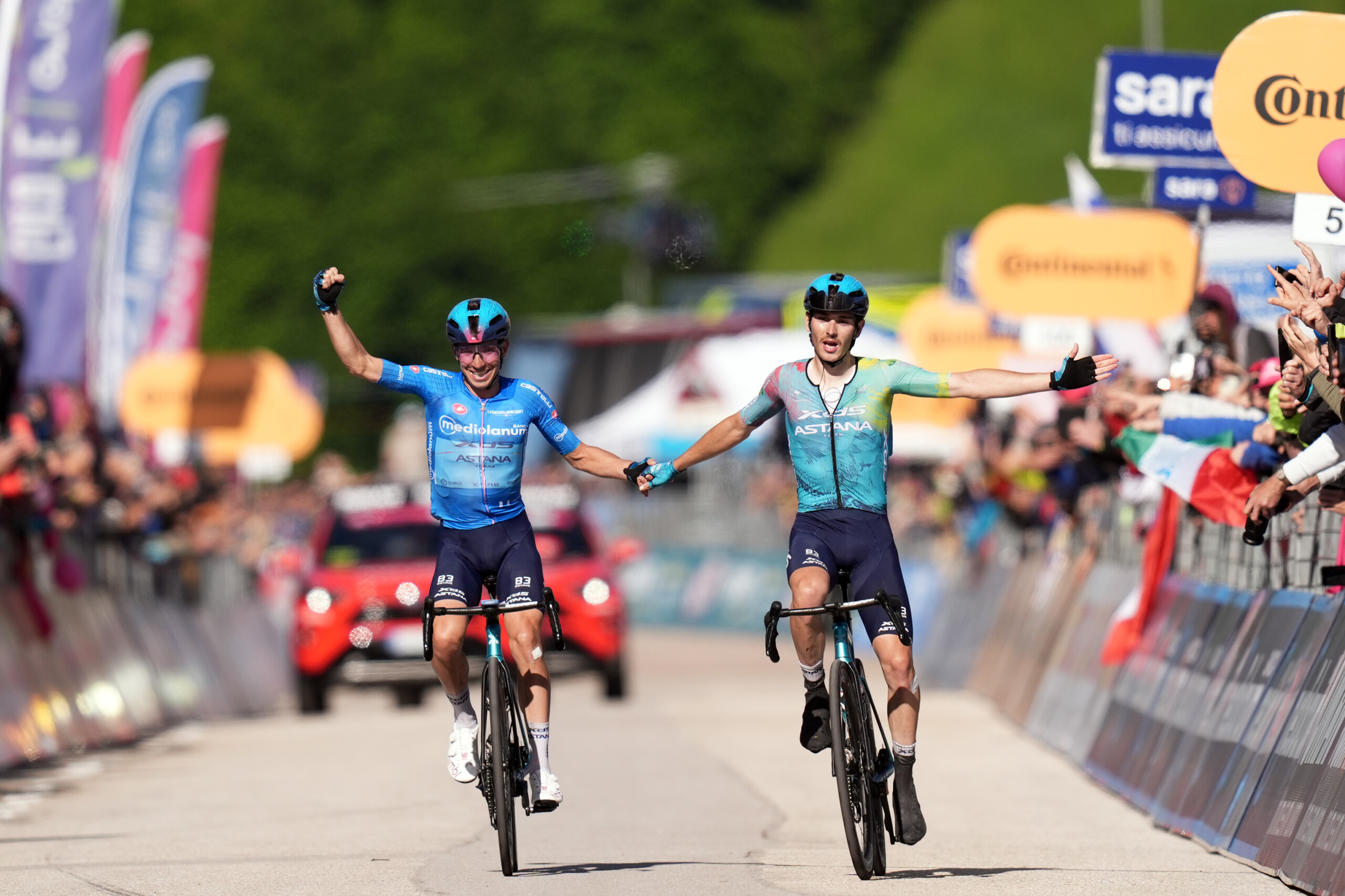
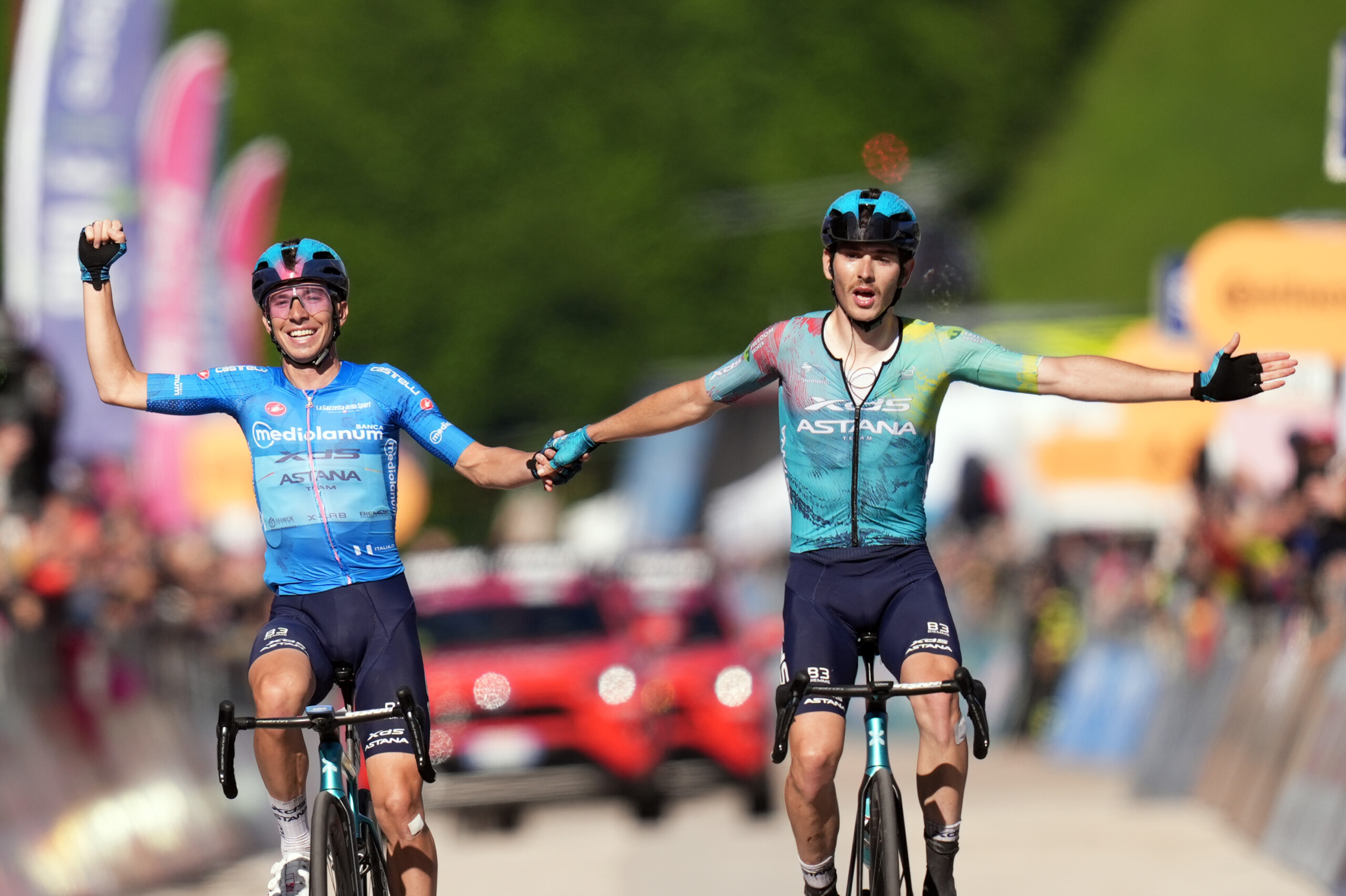
The stage belonged to XDS Astana Team’s tactical masterclass. Christian Scaroni and Lorenzo Fortunato, working in perfect harmony, orchestrated a breakaway that would see them cross the finish line hand in hand—a gesture of sportsmanship that embodied the spirit of the Giro.
“We started with the rain. In such conditions, I’m able to express myself at 110%,” Scaroni explained in the post-stage press conference, his voice still heavy with emotion. “During the race, I was feeling better and better. Our first goal was to consolidate the KOM jersey with Lorenzo Fortunato. At the bottom of the last climb, we realized that we were the two strongest.”
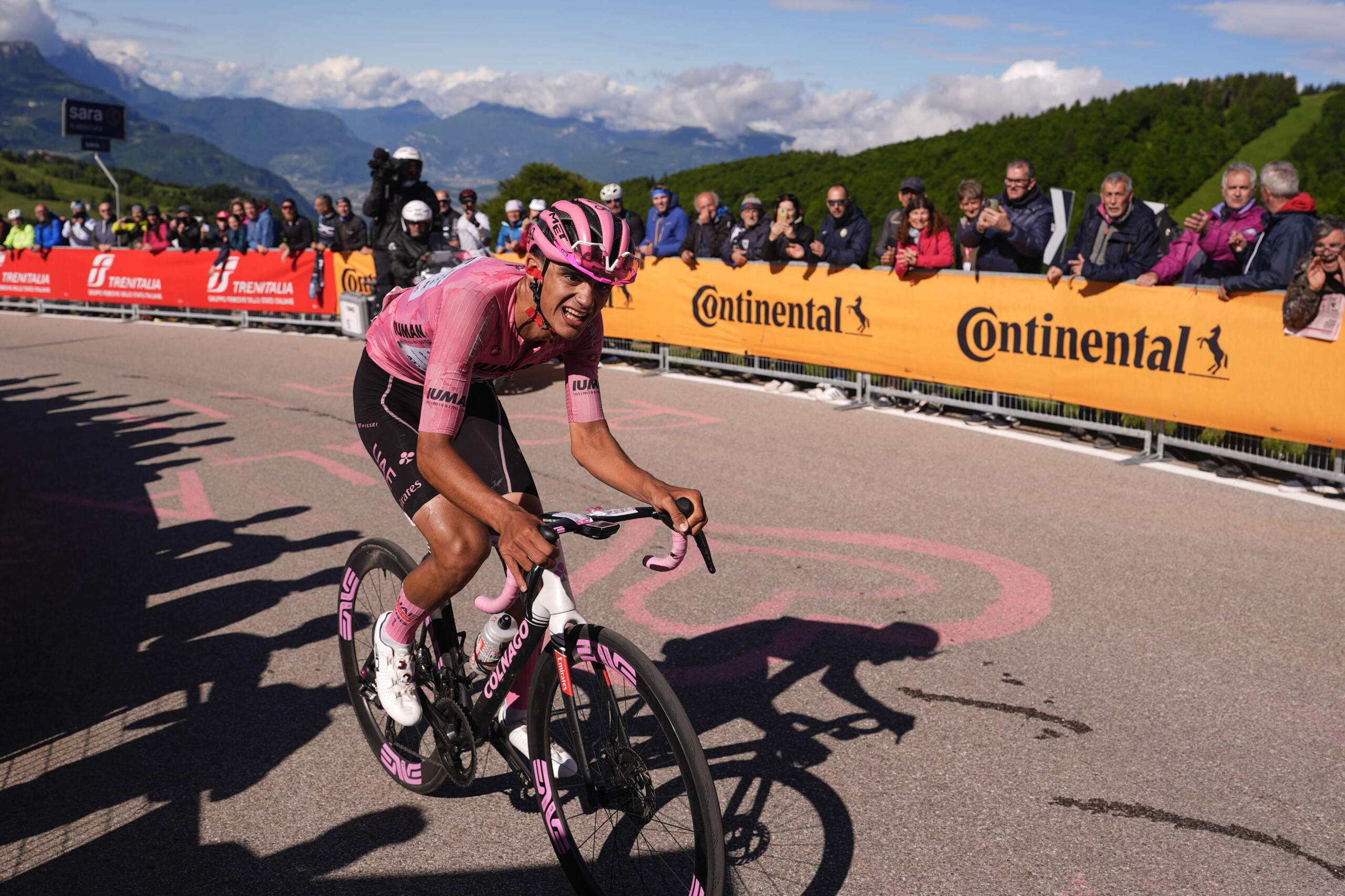
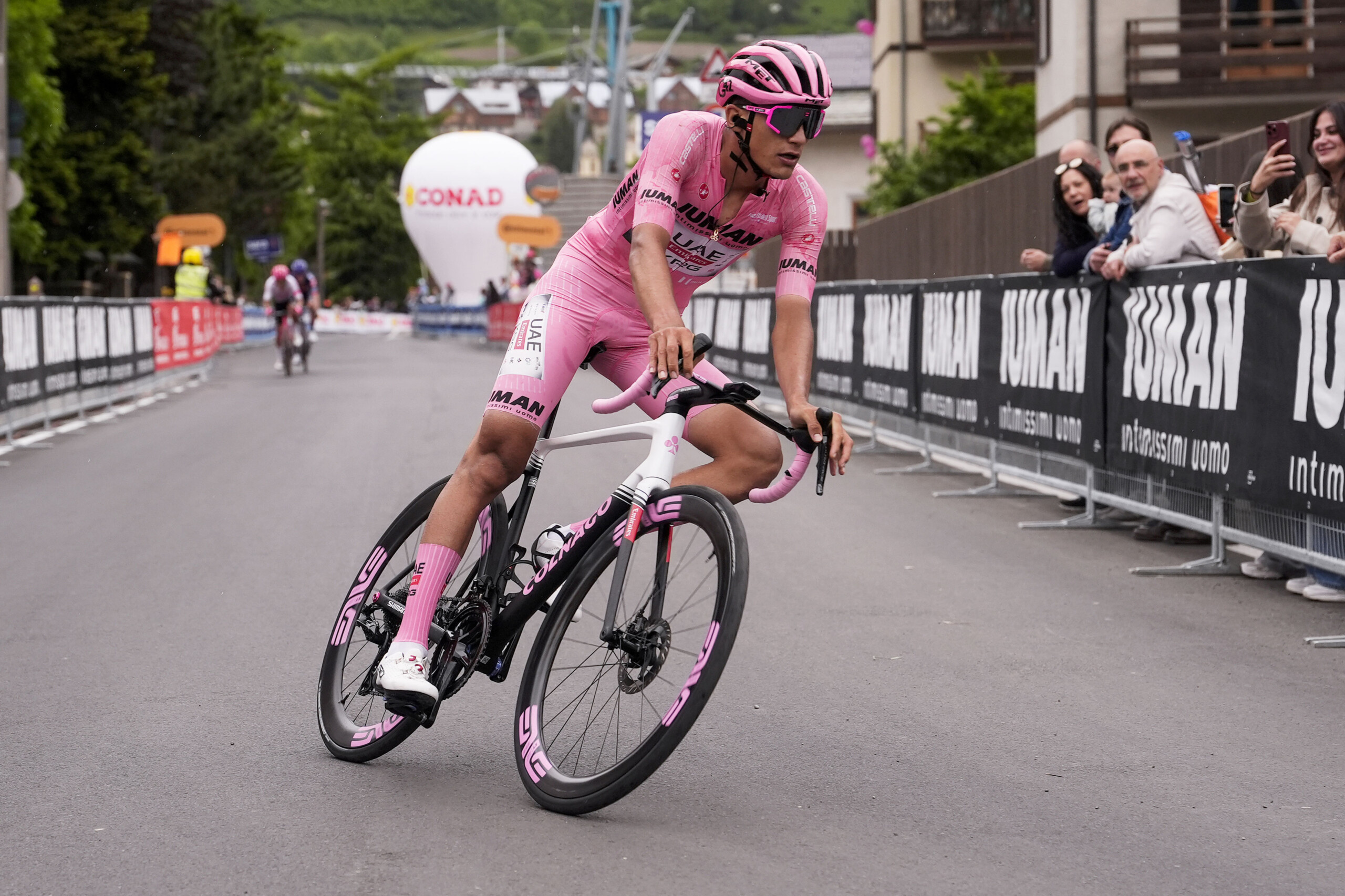
Isaac Del Toro (UAE Team Emirates XRG) during stage 16 of the Giro d’Italia from Piazzola sul Brenta to San Valentino (Brentonico), Italy – Tuesday, May 27, 2025. Sport – cycling. (Photo by Fabio Ferrari/LaPresse)
The tactical alliance between Scaroni and Fortunato exemplified modern cycling’s strategic complexity. The arrangement between the teammates had been struck earlier in the stage, with Fortunato sacrificing personal glory to consolidate his King of the Mountains jersey while allowing his teammate to claim the emotional win.
“Even before the last hill, we spoke and it was agreed that I would have won the stage if it came down to that because he had already consolidated the jersey,” Scaroni continued. “He’s a man true to his words because towards the end, my legs were destroyed, nonetheless he waited for me. I can’t do else than thank him for the rest of my life.”
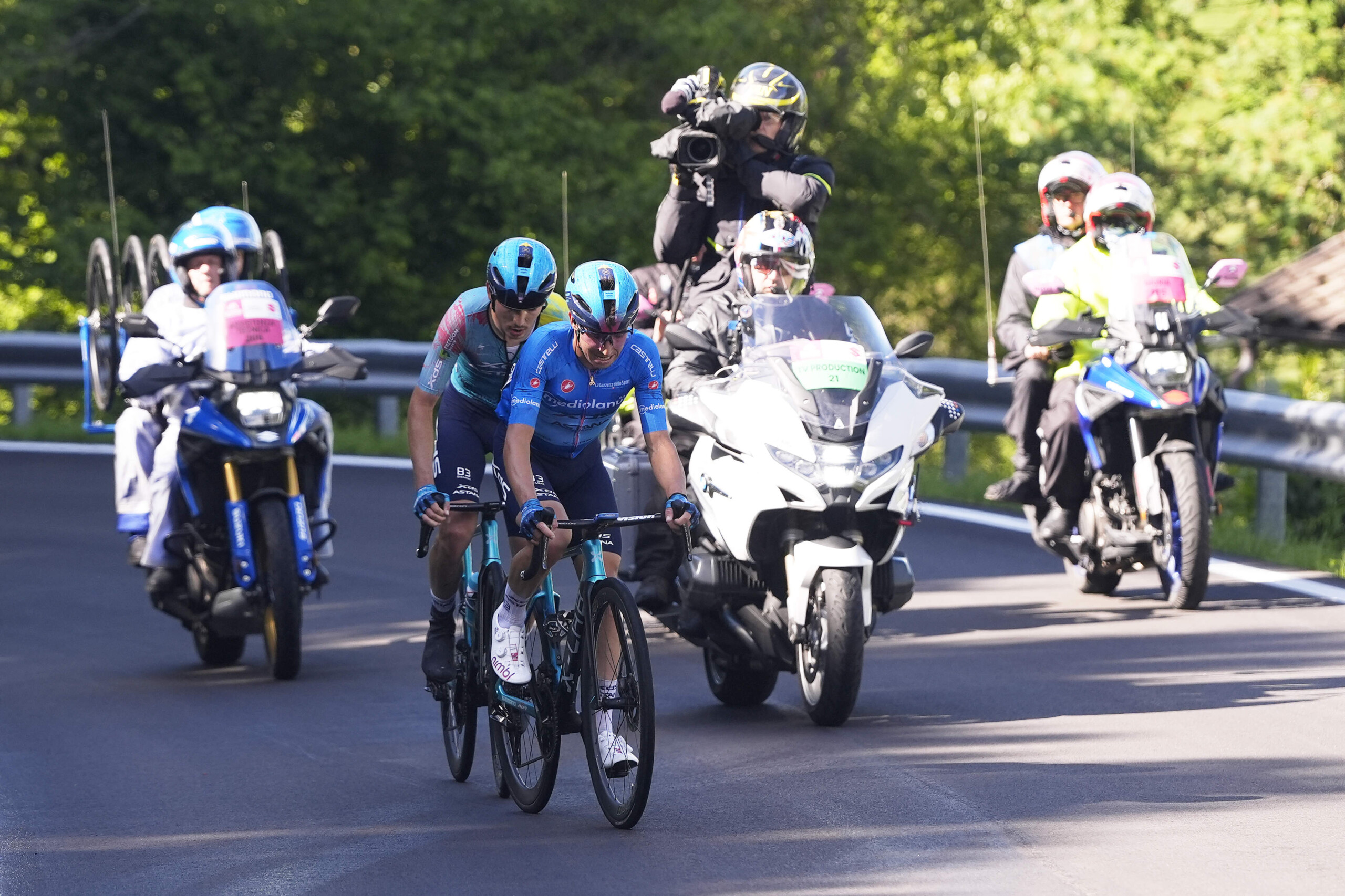
Christian Scaroni of XDS Astana Team with Fortunato Lorenzo of XDS Astana Team azure jersey during the stage 16 of the Giro d’Italia from Piazzola sul Brenta to San Valentino (Brentonico), Italy – Tuesday, May 27, 2025. Sport – cycling. (Photo by Fabio Ferrari/LaPresse)
Behind the Italian celebration, the general classification was beginning to shift in ways that would prove decisive. Isaac Del Toro, who had held the maglia rosa with the confidence of youth, found himself under pressure for the first time. The 21-year-old Mexican admitted to struggling: “I didn’t have the best legs of my life but that wasn’t an excuse. I did my best with the energy I had.”
The stage proved a test of nerves for race leader Del Toro, who showed his first signs of vulnerability but managed to retain the pink jersey despite attacks from his closest rivals. Most significantly, this stage saw the effective end of Juan Ayuso’s Giro, as the young Spaniard suffered through crashes and poor form that would eventually force his withdrawal from the race. The elimination of pre-race favorites narrowed the Giro’s narrative to a select group of protagonists, with Del Toro’s advantage over Simon Yates reduced to just 26 seconds.
Christian Scaroni of XDS Astana Team winner of the stage with Fortunato Lorenzo of XDS Astana Team azure jersey during the stage 16 of the Giro d’Italia from Piazzola sul Brenta to San Valentino (Brentonico), Italy – Tuesday, May 27, 2025. Sport – cycling. (Photo by Massimo Paolone/LaPresse)Christian Scaroni of XDS Astana Team winner of the stage with Fortunato Lorenzo of XDS Astana Team azure jersey during the stage 16 of the Giro d’Italia from Piazzola sul Brenta to San Valentino (Brentonico), Italy – Tuesday, May 27, 2025. Sport – cycling. (Photo by Massimo Paolone/LaPresse)
Stage 16 Results:
Christian Scaroni (XDS Astana Team) – 5h35’05”
Lorenzo Fortunato (XDS Astana Team) – same time
Giulio Pellizzari (Red Bull – Bora – Hansgrohe) at 55″
General Classification After Stage 16:
Isaac Del Toro (UAE Team Emirates XRG)
Simon Yates (Team Visma | Lease a Bike) at 26″
Richard Carapaz (EF Education – EasyPost) at 31″
Derek Gee (Israel – Premier Tech) at 1’31”
Damiano Caruso (Bahrain Victorious) at 2’40”
Official Jerseys After Stage 16:
Maglia Rosa, leader of the General Classification, sponsored by IUMAN – Intimissimi Uomo – Isaac Del Toro (UAE Team Emirates XRG)
Maglia Ciclamino, leader of the Points Classification, in collaboration with Ministero degli Affari Esteri e della Cooperazione Internazionale and ITA – Italian Trade Agency – Mads Pedersen (Lidl-Trek)
Maglia Azzurra, leader of the Gran Premio della Montagna (KOM), sponsored by Banca Mediolanum – Lorenzo Fortunato (XDS Astana Team)
Maglia Bianca, Best Young Rider, born after 01/01/2000, sponsored by Conad – Isaac Del Toro (UAE Team Emirates XRG)
Stage 17: Del Toro’s Masterstroke Victory in Bormio
If Stage 16 had raised questions about Del Toro’s vulnerability, Stage 17 from San Michele all’Adige to Bormio provided his emphatic answer. The young Mexican didn’t just win the stage—he won it in style, extending his lead and demonstrating the kind of tactical acumen that belied his age.
Del Toro’s response to adversity was emphatic and immediate. The 155-kilometer mountain stage to Bormio showcased Del Toro’s evolution from promising talent to race leader. When attacks came on the notorious Mortirolo pass, he was ready. “With the team, we expected some attacks to take place on the Mortirolo. We didn’t want to let all the GC riders go. I went across to them and I took it easy a bit. I caught them in the descent.”
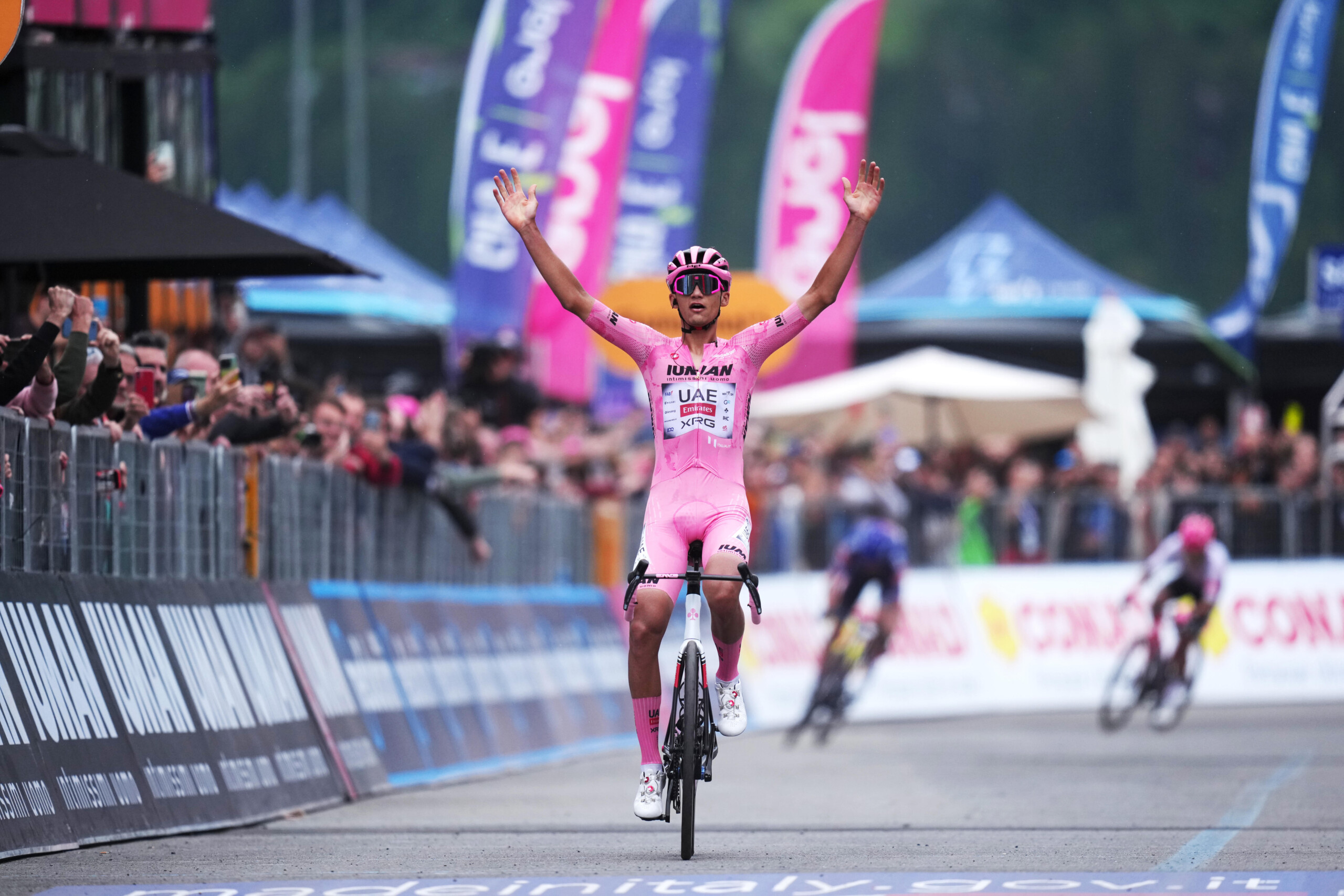
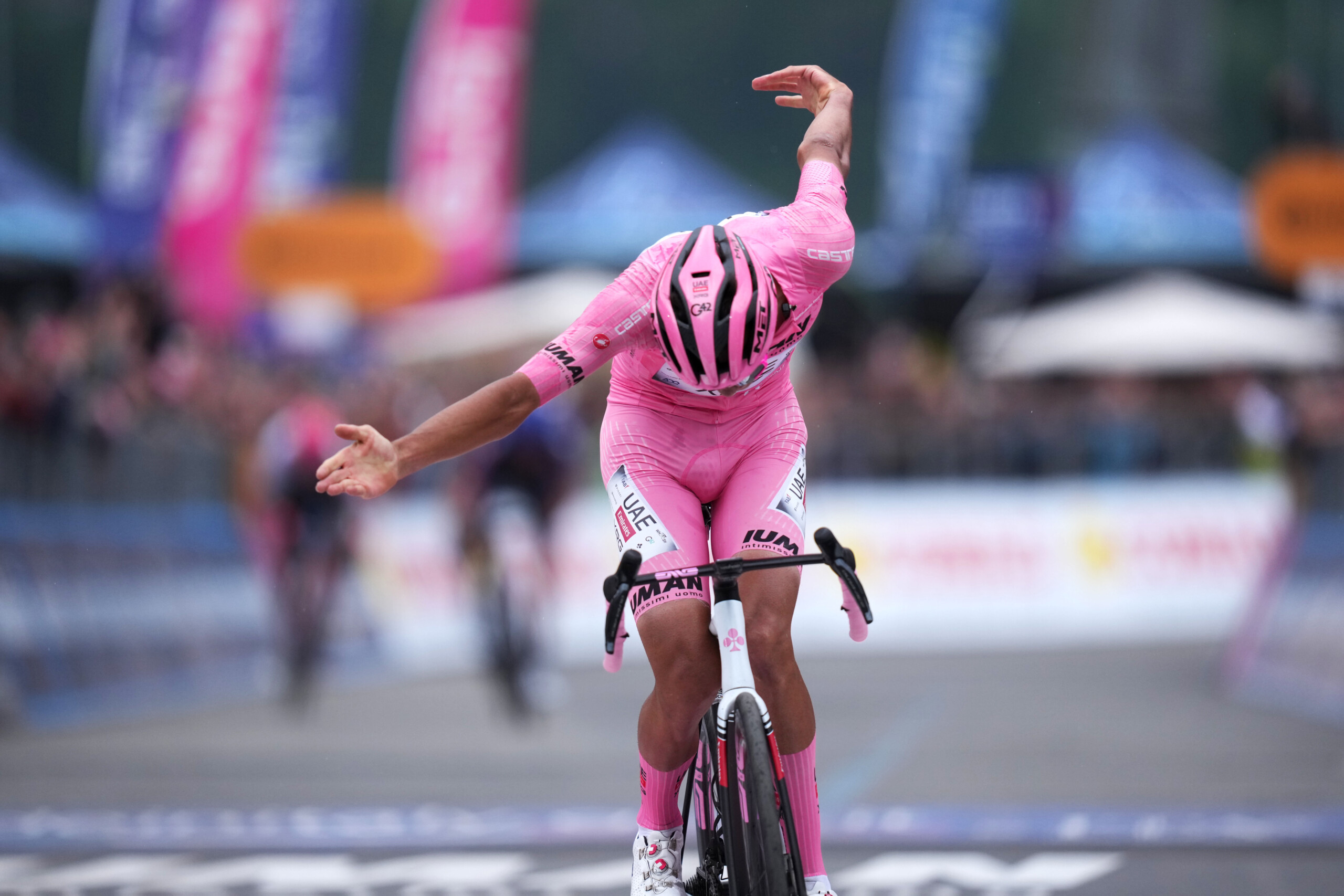
Isaac Del Toro Romero of UAE Team Emirates XRG pink jersey on the finish line during the stage 17 of the Giro d’Italia from San Michele all’Adige (fondazione Edmund Mach) to Bormio, Italy – Wednesday, May 28, 2025. Sport – cycling. (Photo by Fabio Ferrari/LaPresse)
But it was Del Toro’s final move that truly impressed—a devastating attack 1.6 kilometers from the finish that demonstrated the tactical sophistication that would make him such a formidable opponent. “We had made this plan with the team that I would attack on the last small climb,” he revealed. “When I saw a gap, I went all in to the finish line.”
The victory in Bormio represented a masterpiece of tactical execution. After responding to attacks by Giulio Pellizzari and Richard Carapaz on the Mortirolo, Del Toro bridged to lone leader Romain Bardet before launching his own attack, greeting the crowd with the same celebratory salute he had perfected at Milano-Torino earlier this year.
Isaac Del Toro Romero of UAE Team Emirates XRG pink jersey on the finish line during the stage 17 of the Giro d’Italia from San Michele all’Adige (fondazione Edmund Mach) to Bormio, Italy – Wednesday, May 28, 2025. Sport – cycling. (Photo by Gian Mattia D’Alberto/LaPresse)Isaac Del Toro Romero of UAE Team Emirates XRG pink jersey on the finish line during the stage 17 of the Giro d’Italia from San Michele all’Adige (fondazione Edmund Mach) to Bormio, Italy – Wednesday, May 28, 2025. Sport – cycling. (Photo by Gian Mattia D’Alberto/LaPresse)
The victory was historically significant on multiple levels. Del Toro became only the second Mexican to win a Giro stage, following Julio Alberto Perez Cuapio’s victories in 2001 and 2002. At 21, he was the youngest stage winner in the maglia rosa since Giuseppe Saronni in 1979, underlining the historical significance of his achievement.
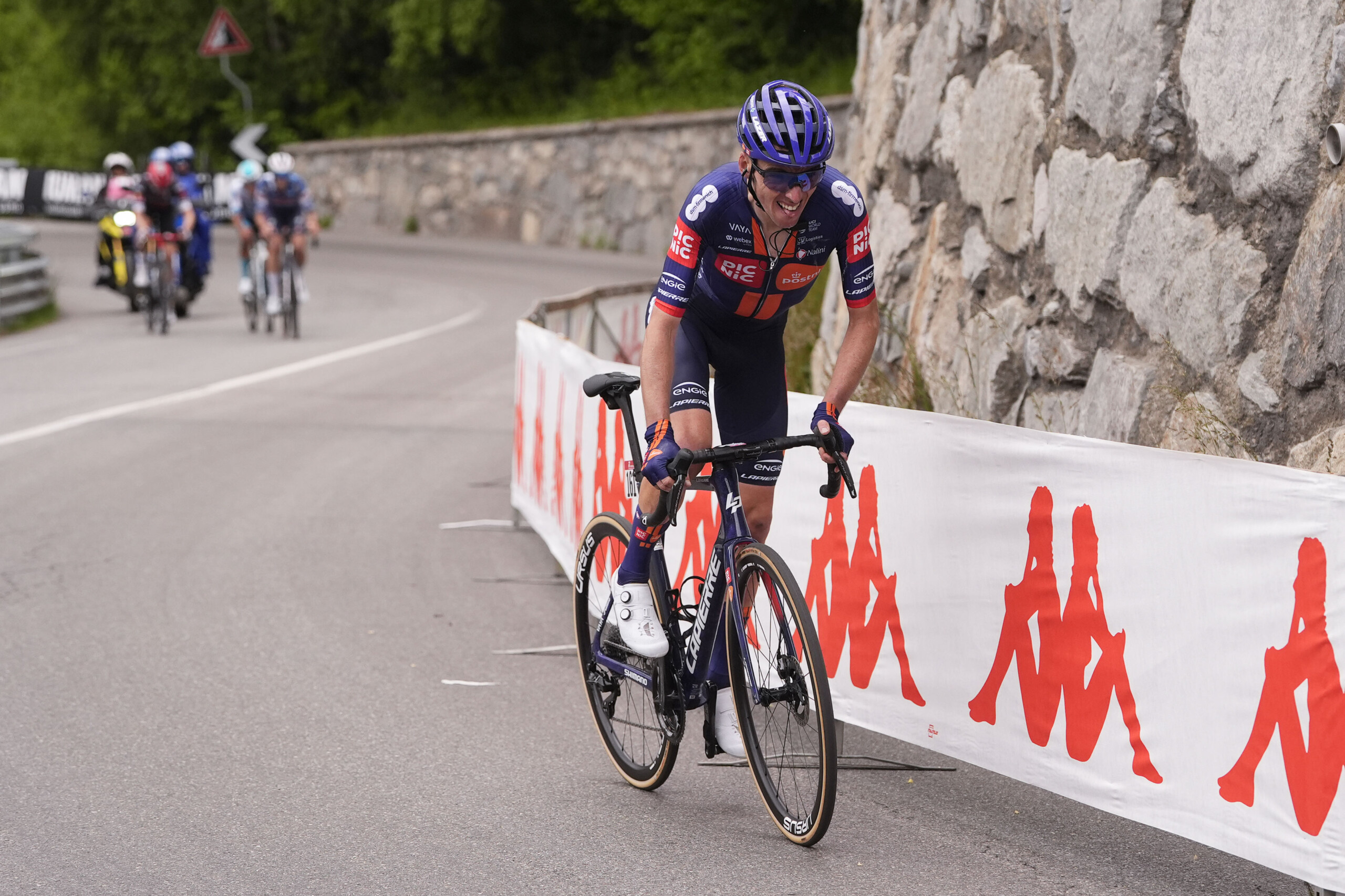
Romain Bardet (Team Picnic PostNL) during the stage 17 of the Giro d’Italia from San Michele all’Adige (fondazione Edmund Mach) to Bormio, Italy – Wednesday, May 28, 2025. Sport – cycling. (Photo by Fabio Ferrari/LaPresse)
For veteran Romain Bardet, finishing second, it was a bittersweet moment in what would be his final Giro participation before retirement. The Frenchman’s fourth second-place finish at the Giro—never a victory—symbolized the cruel margins that define professional cycling and highlighted the respect Del Toro had earned among the peloton’s established stars.
“I had a bad day yesterday but that happens to anybody in cycling,” Del Toro reflected with maturity beyond his years. “That made everything better today. The team is always there for me so trying to win today was the least I could do in this position.”
Stage 17 Results:
Isaac Del Toro (UAE Team Emirates XRG) – 3h58’48”
at 4″
Richard Carapaz (EF Education – EasyPost) – same time
General Classification After Stage 17:
Isaac Del Toro (UAE Team Emirates XRG)
Richard Carapaz (EF Education – EasyPost) at 41″
Simon Yates (Team Visma | Lease a Bike) at 51″
Derek Gee (Israel – Premier Tech) at 1’57”
Damiano Caruso (Bahrain Victorious) at 3’06”
Official Jerseys After Stage 17:
Maglia Rosa, leader of the General Classification, sponsored by IUMAN – Intimissimi Uomo – Isaac Del Toro (UAE Team Emirates XRG)
Maglia Ciclamino, leader of the Points Classification, in collaboration with Ministero degli Affari Esteri e della Cooperazione Internazionale and ITA – Italian Trade Agency – Mads Pedersen (Lidl-Trek)
Maglia Azzurra, leader of the Gran Premio della Montagna (KOM), sponsored by Banca Mediolanum – Lorenzo Fortunato (XDS Astana Team)
Maglia Bianca, Best Young Rider, born after 01/01/2000, sponsored by Conad – Isaac Del Toro (UAE Team Emirates XRG)
Stage 18: Denz Claims Emotional Victory for Fallen Teammates
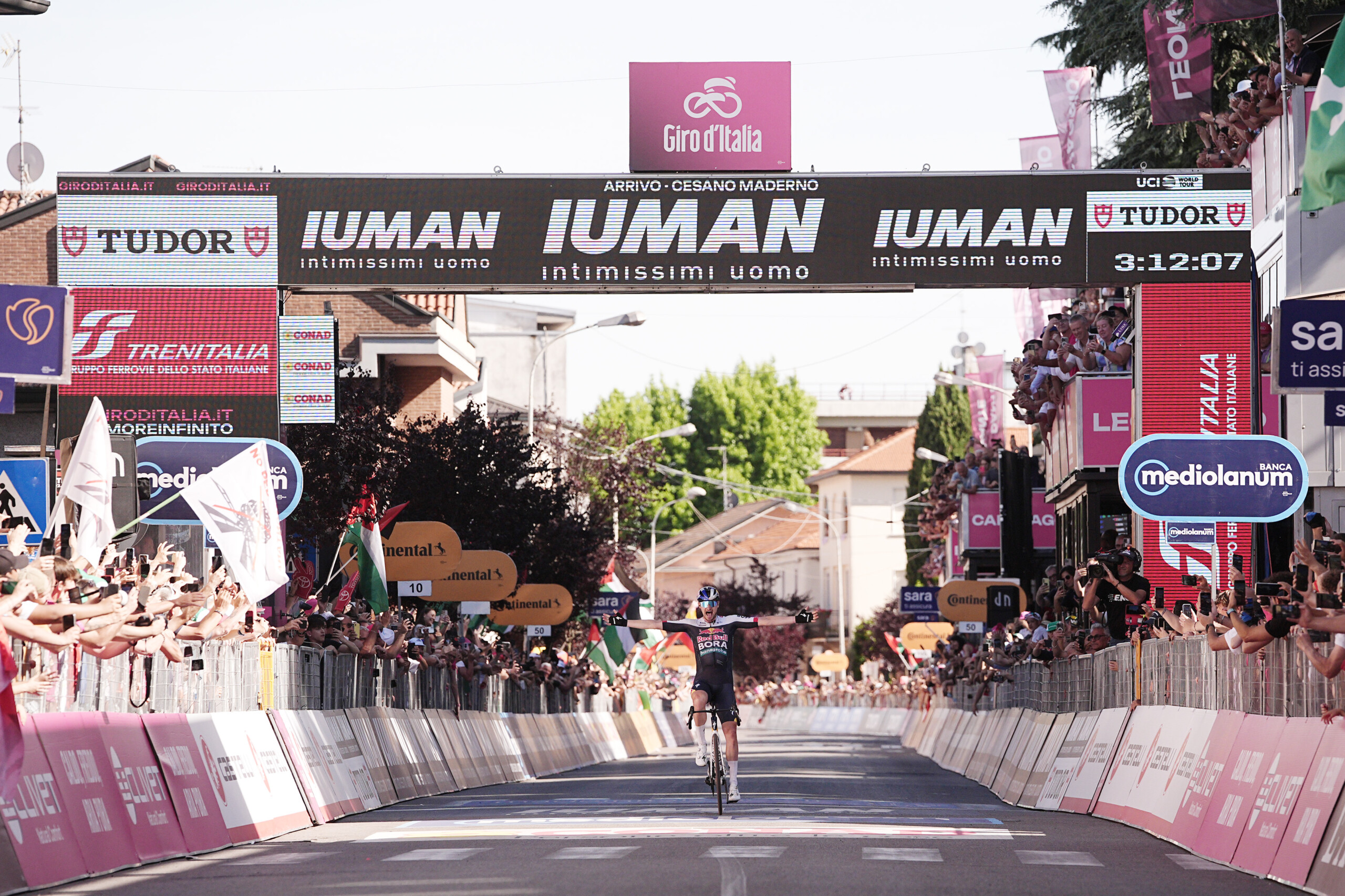
The 144-kilometer transitional stage to Cesano Maderno provided a brief respite from general classification drama while delivering one of the Giro’s most emotionally charged victories. Nico Denz of Red Bull-Bora-Hansgrohe soloed to victory in a performance dedicated to his teammates Jai Hindley and Primož Roglič.
Red Bull-Bora-Hansgrohe had entered the Giro with high hopes, built around the formidable duo of Jai Hindley and Primož Roglič. Both riders had crashed out, leaving their teammates to salvage what they could from the wreckage of their campaign. Denz’s victory from a 37-rider breakaway represented more than mere stage success—it embodied the resilience and loyalty that defines professional cycling’s brotherhood.
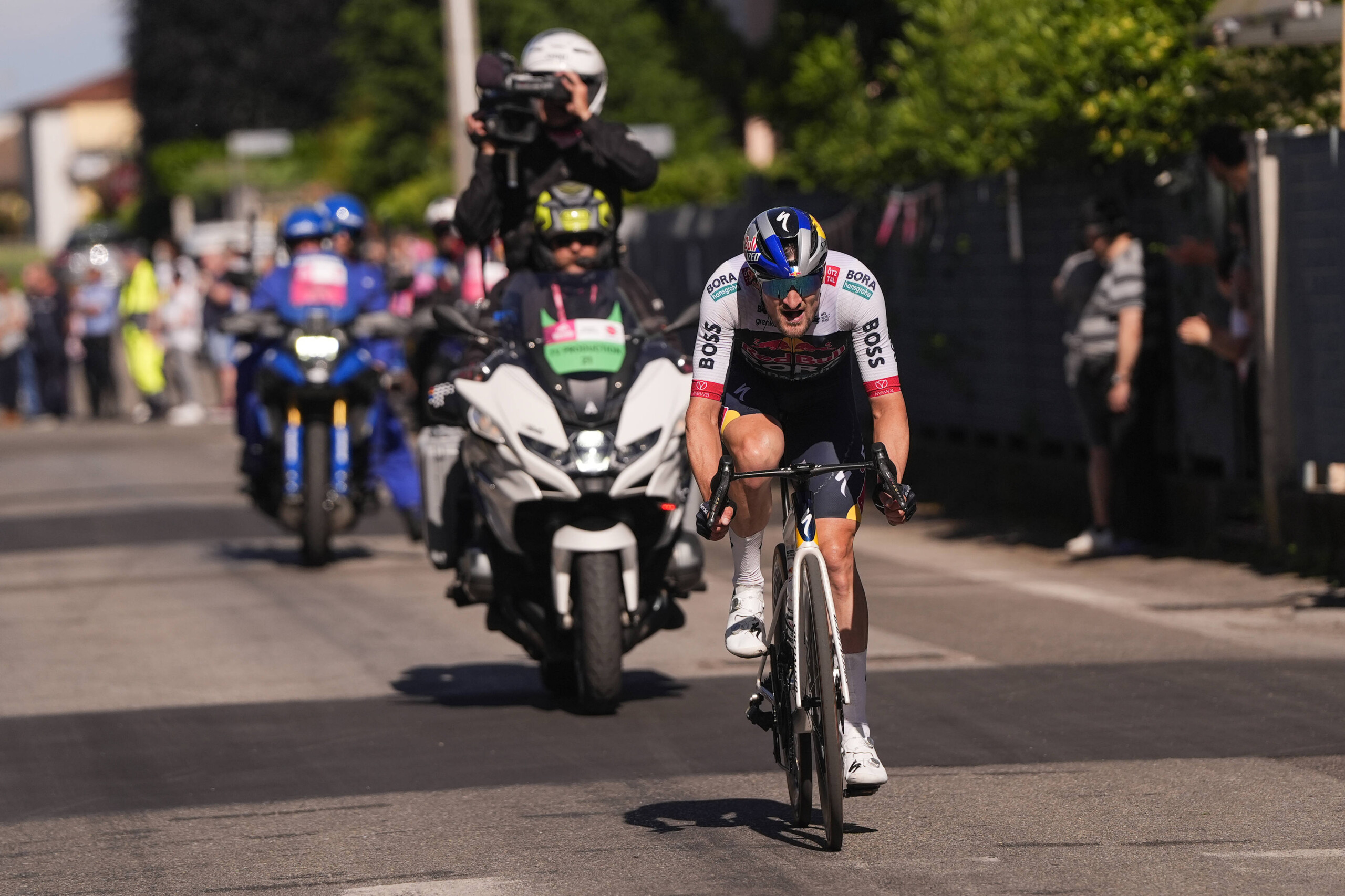
Nico Denz (Red Bull – Bora – Hansgrohe) during the stage 18 of the Giro d’Italia from Morbegno to Cesano Maderno, Italy – Thursday, May 29, 2025. Sport – cycling. (Photo by Fabio Ferrari/LaPresse)
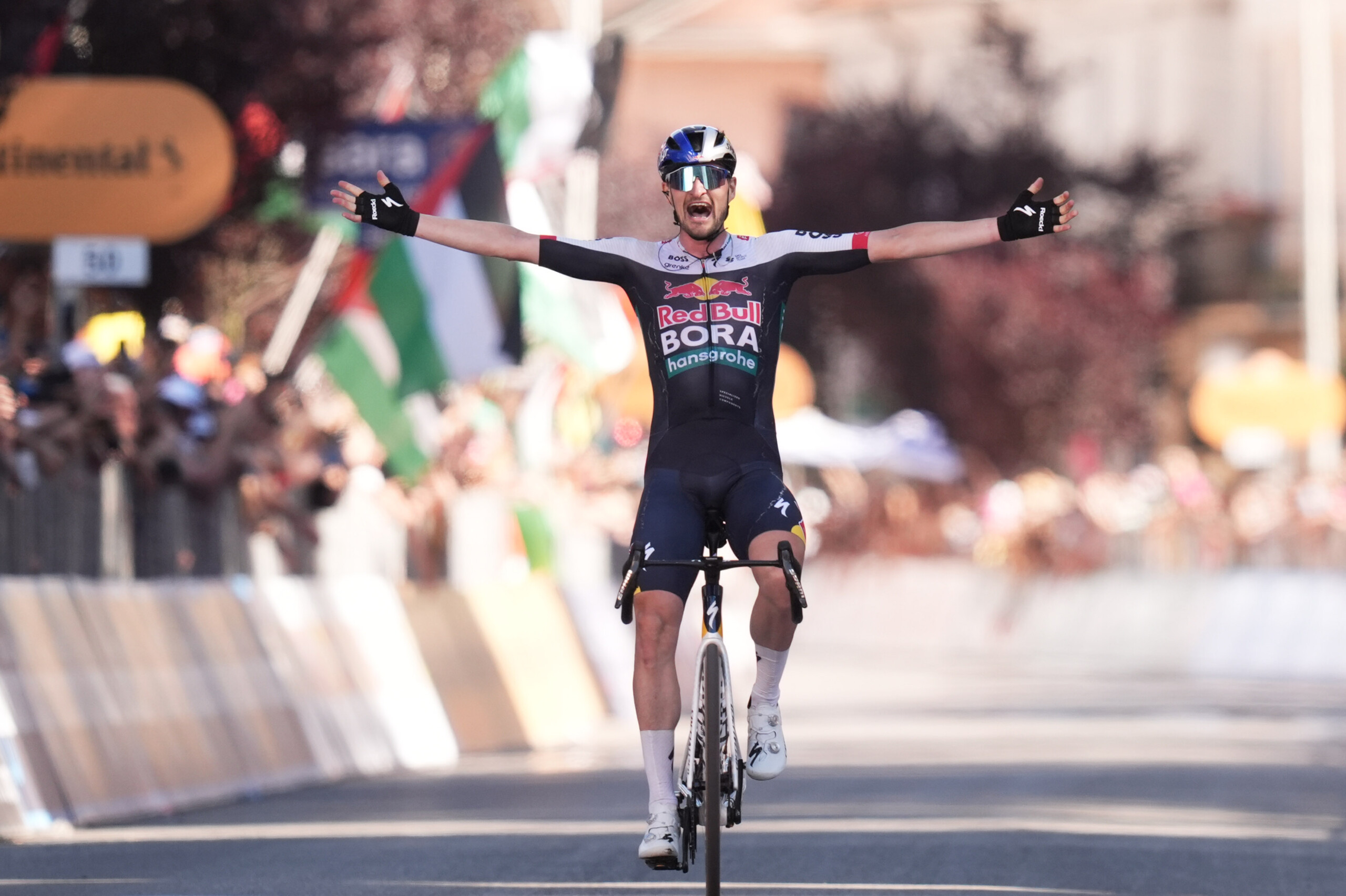
“This is probably the most emotional of my victories at the Giro,” Denz said through tears. “Losing Jai Hindley early then the whole team, staff included, was fully committed to help Primož Roglič win the Giro. We spent two months in altitude for that. I was three months away from home to prepare for the Giro. A dream was lost when we lost Primož. To win here today on Father’s Day, that’s for papa.”
The German rider’s attack with 19 kilometers remaining was born of necessity and tactical intuition. “Before I attacked with 19km to go, I felt that the group wasn’t working well anymore,” he explained. “When I came through this one corner, I got a small gap and I went full gas. I knew that if the rider behind me didn’t close that gap, they’d look at each other and I had a chance to stay away.”
Nico Denz (Red Bull – Bora – Hansgrohe) wins the stage 18 of the Giro d’Italia from Morbegno to Cesano Maderno, Italy – Thursday, May 29, 2025. Sport – cycling. (Photo by Marco Alpozzi/LaPresse)Nico Denz (Red Bull – Bora – Hansgrohe) wins the stage 18 of the Giro d’Italia from Morbegno to Cesano Maderno, Italy – Thursday, May 29, 2025. Sport – cycling. (Photo by Marco Alpozzi/LaPresse)
The victory was the 300th in the team’s history, a milestone achieved by a domestique rather than a designated leader—a testament to the unpredictable nature of professional cycling and the psychological challenges facing teams whose Grand Tour ambitions crumble early.
For Del Toro, the stage represented a moment of crisis management as his support structure continued to weaken. With both Juan Ayuso and Jay Vine having abandoned due to crashes and illness, UAE Team Emirates XRG found themselves increasingly isolated. “Personally I feel it’s a big loss and not the best situation to continue the Giro without Juan Ayuso and Jay Vine,” Del Toro acknowledged. “But we’ll manage the situation with the team.”
During the stage 18 of the Giro d’Italia from Morbegno to Cesano Maderno, Italy – Thursday, May 29, 2025. Sport – cycling. (Photo by Fabio Ferrari/LaPresse)
Stage 18 Results:
Nico Denz (Red Bull – Bora – Hansgrohe) – 3h12’07”
Mirco Maestri (Team Polti VisitMalta) at 1’01”
Edward Planckaert (Alpecin-Deceuninck) – same time
General Classification After Stage 18:
Isaac Del Toro (UAE Team Emirates XRG)
Richard Carapaz (EF Education – EasyPost) at 41″
Simon Yates (Team Visma | Lease a Bike) at 51″
Derek Gee (Israel – Premier Tech) at 1’57”
Damiano Caruso (Bahrain Victorious) at 3’06”
Official Jerseys After Stage 18:
Maglia Rosa, leader of the General Classification, sponsored by IUMAN – Intimissimi Uomo – Isaac Del Toro (UAE Team Emirates XRG)
Maglia Ciclamino, leader of the Points Classification, in collaboration with Ministero degli Affari Esteri e della Cooperazione Internazionale and ITA – Italian Trade Agency – Mads Pedersen (Lidl-Trek)
Maglia Azzurra, leader of the Gran Premio della Montagna (KOM), sponsored by Banca Mediolanum – Lorenzo Fortunato (XDS Astana Team)
Maglia Bianca, Best Young Rider, born after 01/01/2000, sponsored by Conad – Isaac Del Toro (UAE Team Emirates XRG)
Stage 19: Prodhomme Triumphs as Pressure Mounts on Del Toro
The penultimate mountain stage to Champoluc saw Nicolas Prodhomme claim France’s second victory of the race, but the real drama unfolded behind as Del Toro showed the first serious cracks in his armor during a fierce battle with Richard Carapaz.
The peloton during the stage 19 of the Giro d’Italia from Biella to Champoluc, Italy – Friday, May 30, 2025. Sport – cycling. (Photo by Fabio Ferrari/LaPresse)
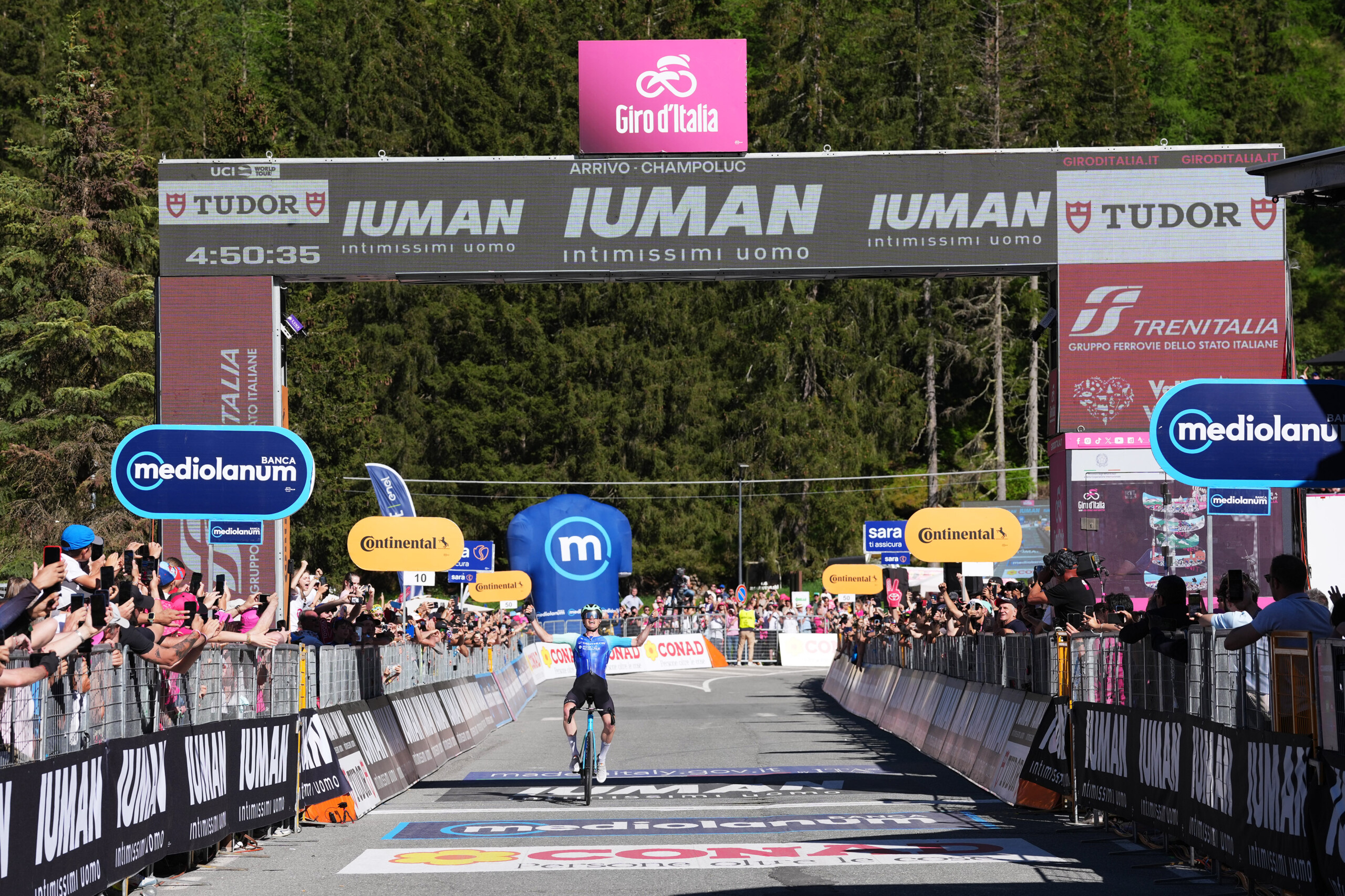
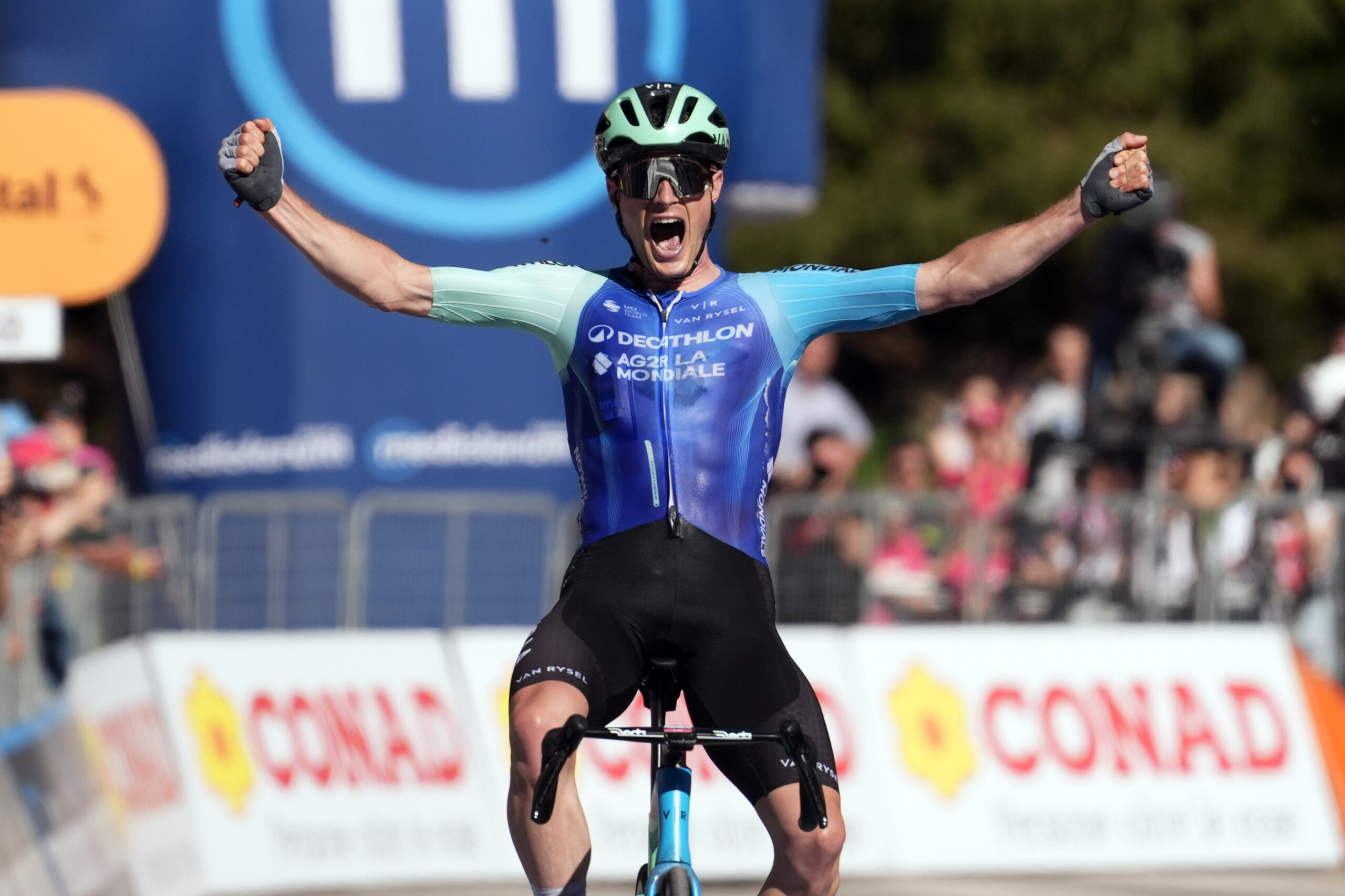
Prodhomme’s victory from the day’s breakaway provided a fairytale ending for the French rider, whose patient approach had finally paid dividends in the shadow of the Alps. “I’ve worked a lot for this Giro d’Italia. I didn’t want to compete for the GC, I wanted to try and win a stage,” Prodhomme explained. “I’ve waited for long for this win to come. I won my first race three weeks ago. But to win in the WorldTour at the Giro d’Italia makes me very happy.”
Nicolas Prodhomme (Decathlon Ag2r La Mondiale Team) during the stage 19 of the Giro d’Italia from Biella to Champoluc, Italy – Friday, May 30, 2025. Sport – cycling. (Photo by Fabio Ferrari/LaPresse)
The Frenchman’s attack on the Col de Joux was a calculated risk based on his tactical reading of the breakaway’s dynamics. “The two times I came fifth in stages of this Giro, I saw the winner taking the risk to lose,” he reflected. “The gap between our breakaway and the bunch wasn’t big and I was sure that some GC favourites would attack, that’s why I took the risk to go early on col de Joux.”
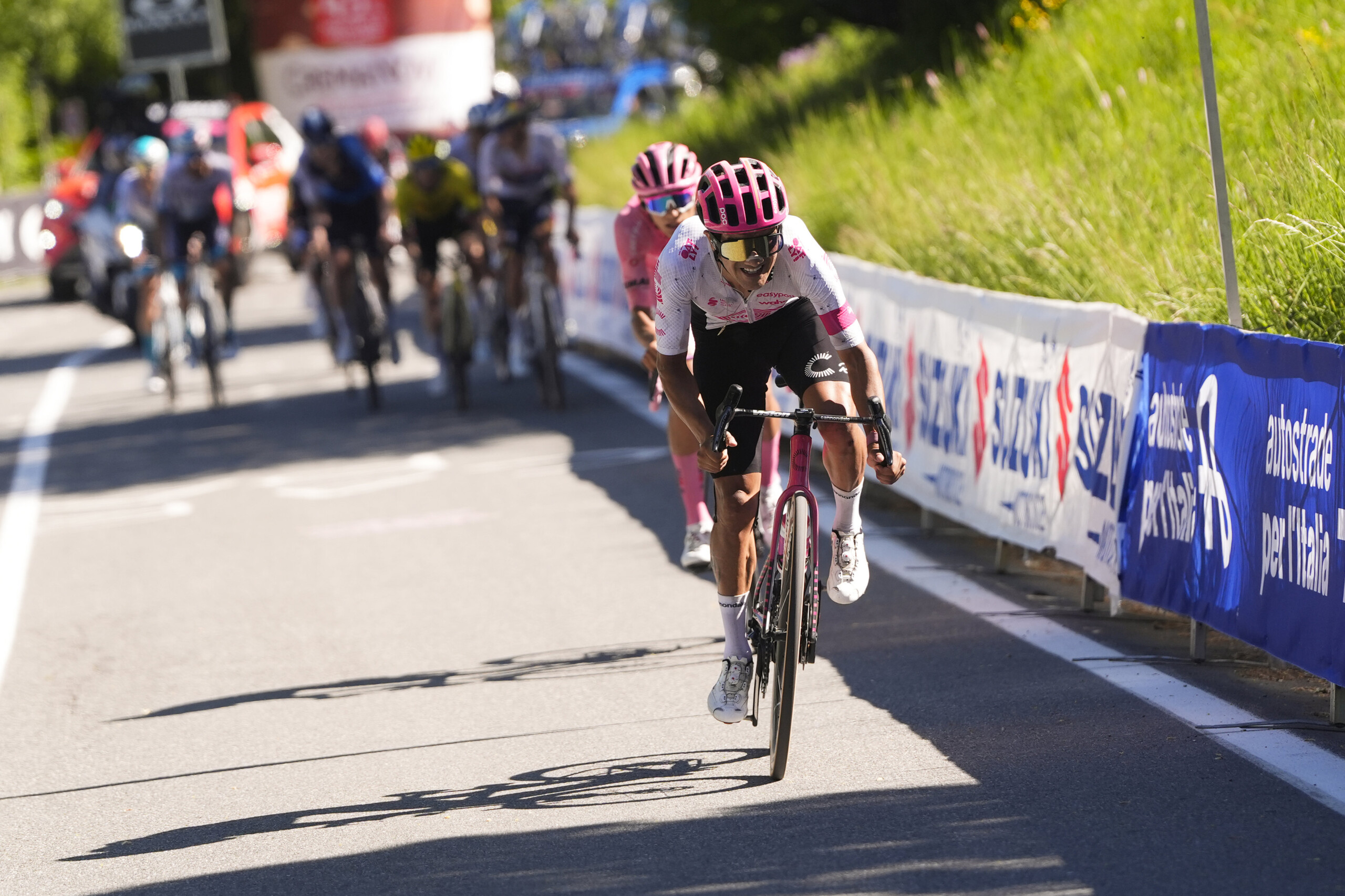
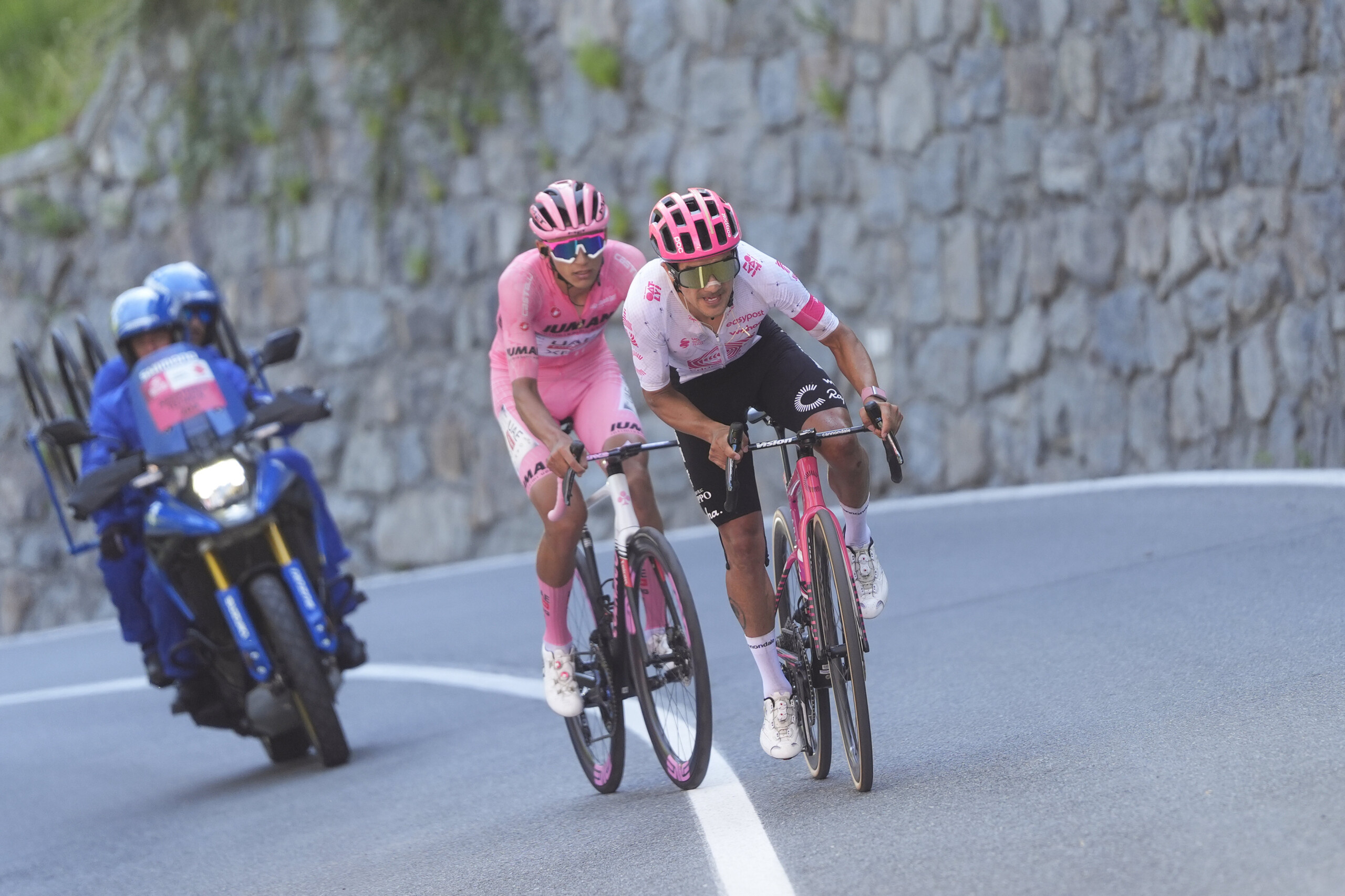
Isaac Del Toro (UAE Team Emirates XRG) and Richard Carapaz (EF Education – EasyPost) during the stage 19 of the Giro d’Italia from Biella to Champoluc, Italy – Friday, May 30, 2025. Sport – cycling. (Photo by Fabio Ferrari/LaPresse)Isaac Del Toro (UAE Team Emirates XRG) and Richard Carapaz (EF Education – EasyPost) during the stage 19 of the Giro d’Italia from Biella to Champoluc, Italy – Friday, May 30, 2025. Sport – cycling. (Photo by Fabio Ferrari/LaPresse)Isaac Del Toro (UAE Team Emirates XRG) and Richard Carapaz (EF Education – EasyPost) during the stage 19 of the Giro d’Italia from Biella to Champoluc, Italy – Friday, May 30, 2025. Sport – cycling. (Photo by Fabio Ferrari/LaPresse)
Behind, the general classification battle was intensifying in ways that would prove decisive. Richard Carapaz’s late attack found only the young Mexican able to respond, but the effort visibly cost the race leader, who crossed the line with the glazed expression of a rider at his limit. Del Toro’s ability to follow and then out-sprint Carapaz for second place demonstrated both his tactical awareness and his growing confidence, but also revealed his vulnerability.
“In first place I was surprised not to see more attacks but I understood the wind was making them difficult from far out,” Del Toro analyzed with characteristic maturity. “It was sometimes head wind, sometimes tailwind. There’s also the damage in the legs from the whole day and the past few weeks.”
For Simon Yates, watching from third place and now 1’21” behind, the signs were encouraging. The Briton had ridden conservatively through the stage, preserving energy for what he sensed would be the decisive battle on the following day’s queen stage. With just one mountain stage remaining, the stage was set for a dramatic finale that would rewrite cycling history.
Nicolas Prodhomme (Decathlon Ag2r La Mondiale Team) during the stage 19 of the Giro d’Italia from Biella to Champoluc, Italy – Friday, May 30, 2025. Sport – cycling. (Photo by Gian Mattia D’Alberto/LaPresse)Nicolas Prodhomme (Decathlon Ag2r La Mondiale Team) during the stage 19 of the Giro d’Italia from Biella to Champoluc, Italy – Friday, May 30, 2025. Sport – cycling. (Photo by Massimo Paolone/LaPresse)
Stage 19 Results:
Nicolas Prodhomme (Decathlon Ag2r La Mondiale Team) – 4h50’35”
Isaac Del Toro (UAE Team Emirates XRG) at 58″
Richard Carapaz (EF Education – EasyPost) – same time
General Classification After Stage 19:
Isaac Del Toro (UAE Team Emirates XRG)
Richard Carapaz (EF Education – EasyPost) at 43″
Simon Yates (Team Visma | Lease a Bike) at 1’21”
Derek Gee (Israel – Premier Tech) at 2’27”
Damiano Caruso (Bahrain Victorious) at 3’36”
Official Jerseys After Stage 19:
Maglia Rosa, leader of the General Classification, sponsored by IUMAN – Intimissimi Uomo – Isaac Del Toro (UAE Team Emirates XRG)
Maglia Ciclamino, leader of the Points Classification, in collaboration with Ministero degli Affari Esteri e della Cooperazione Internazionale and ITA – Italian Trade Agency – Mads Pedersen (Lidl-Trek)
Maglia Azzurra, leader of the Gran Premio della Montagna (KOM), sponsored by Banca Mediolanum – Lorenzo Fortunato (XDS Astana Team)
Maglia Bianca, Best Young Rider, born after 01/01/2000, sponsored by Conad – Isaac Del Toro (UAE Team Emirates XRG)
Stage 20: The Queen Stage – Yates’s Redemption on the Colle delle Finestre
If cycling were scripted, no screenwriter would dare craft the drama that unfolded on Stage 20 from Biella to Sestriere. The 205-kilometer queen stage, featuring the mythical Colle delle Finestre, would rewrite the Giro’s narrative in the most spectacular fashion imaginable, delivering one of the most dramatic reversals in Giro d’Italia history.
For Simon Yates, Colle delle Finestre held profound personal significance that transcended mere sporting achievement. It was here, seven years earlier, that his dreams of Giro glory had been shattered in the most public and devastating manner possible. Leading the 2018 race by over four minutes, Yates had imploded on this very climb, finishing 38 minutes and 51 seconds behind stage winner Chris Froome. The mountain had become a symbol of his greatest failure, a psychological barrier that had haunted him ever since.
“Since the route of the Giro was released, I always had at the back of my mind to try something on this climb that defined my career so far,” Yates would later reveal. The seed of redemption had been planted months earlier, during the winter route presentation in Milan, when he saw Colle delle Finestre marked on the stage profile.
The 205-kilometer stage featured the fearsome Colle delle Finestre, where Yates had spectacularly collapsed in 2018. Seven years later, the same climb would become the stage for his greatest triumph, but the tactical execution that made it possible began long before the decisive move.
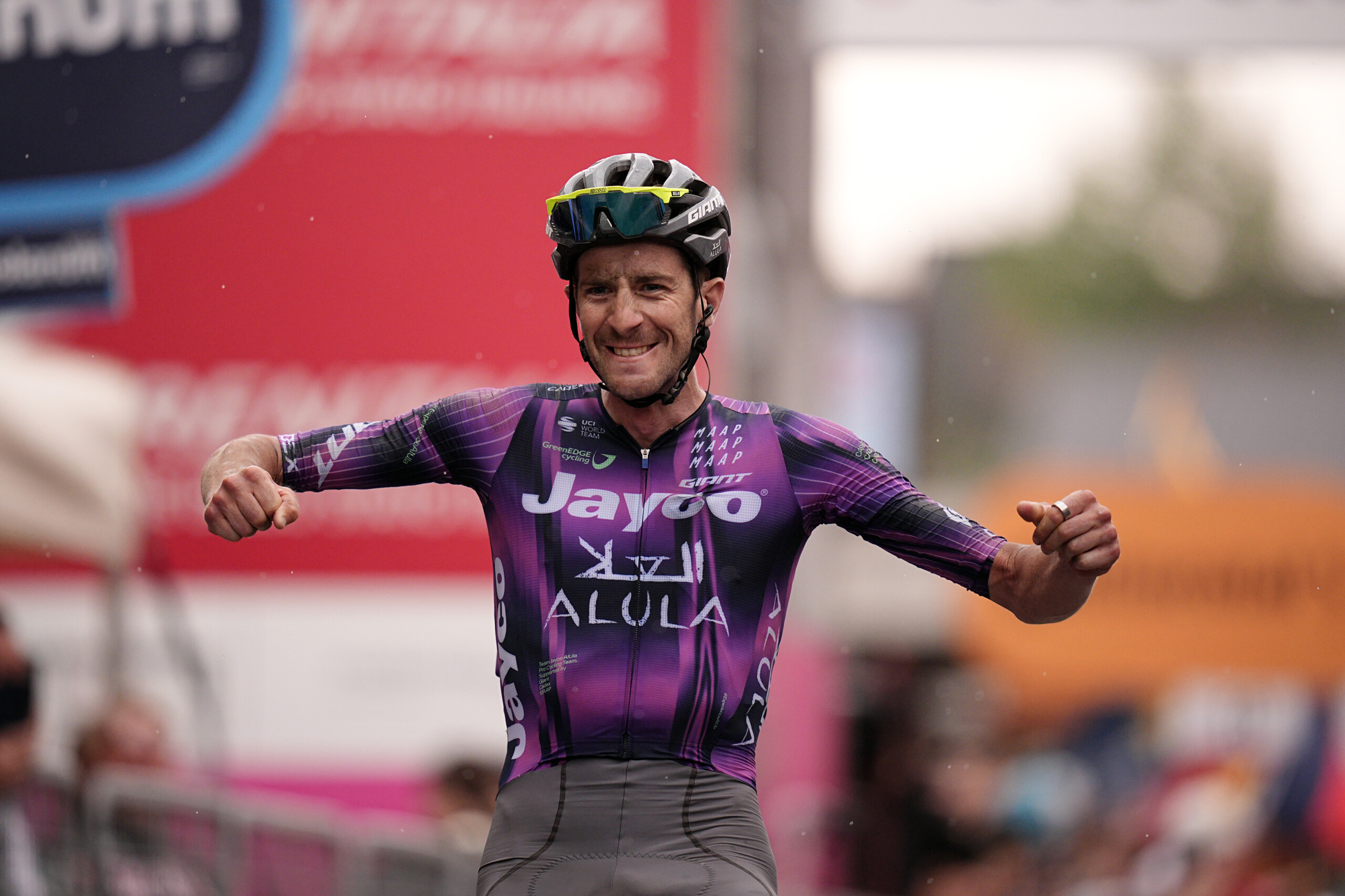
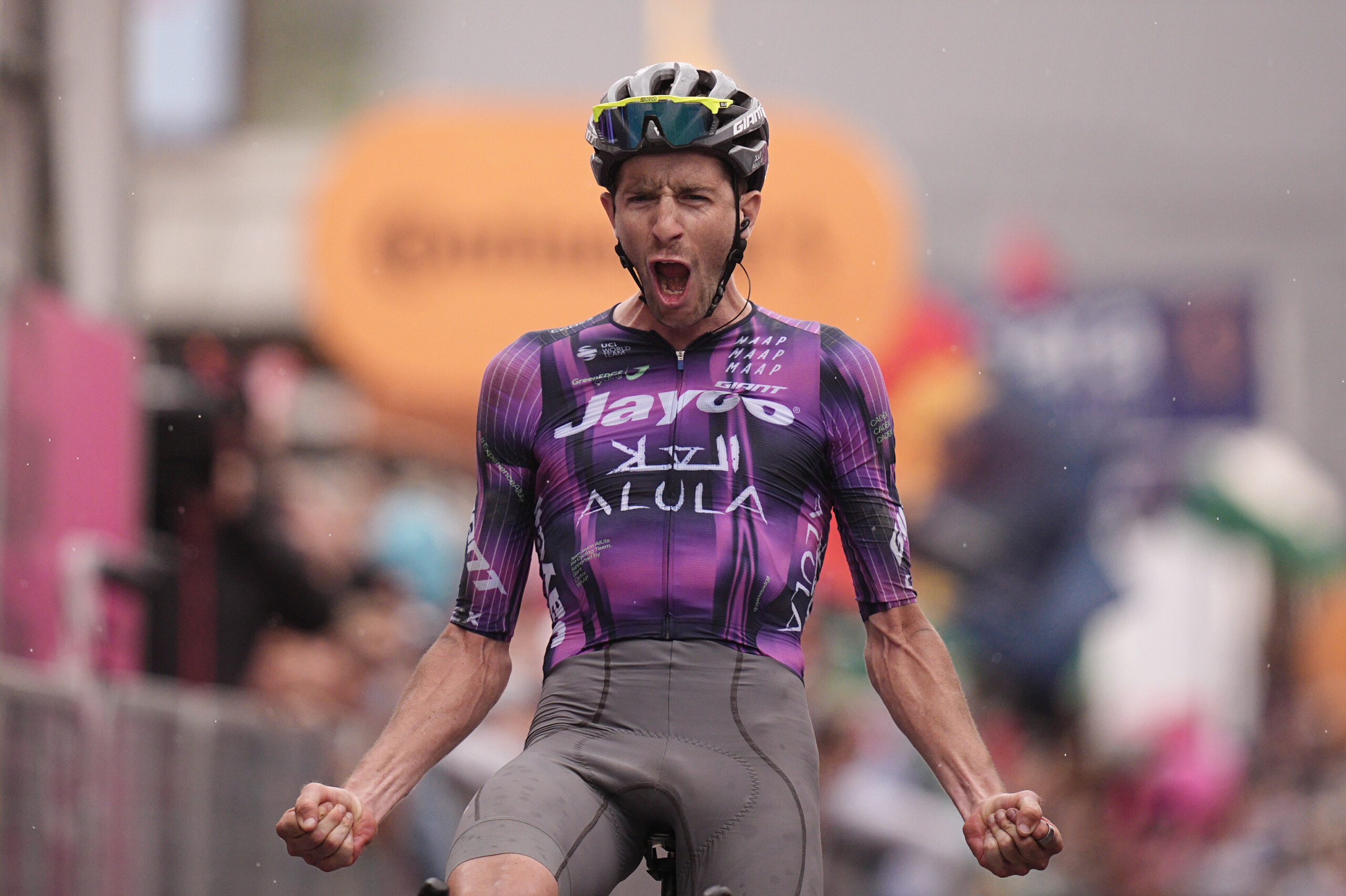
The stage began conservatively, with Chris Harper establishing himself in the day’s breakaway. The Australian, riding for Team Jayco AlUla, was a former teammate of Yates and understood the Briton’s capabilities better than most. His presence in the break would prove crucial to the day’s outcome, but it was another breakaway rider who would prove even more significant.
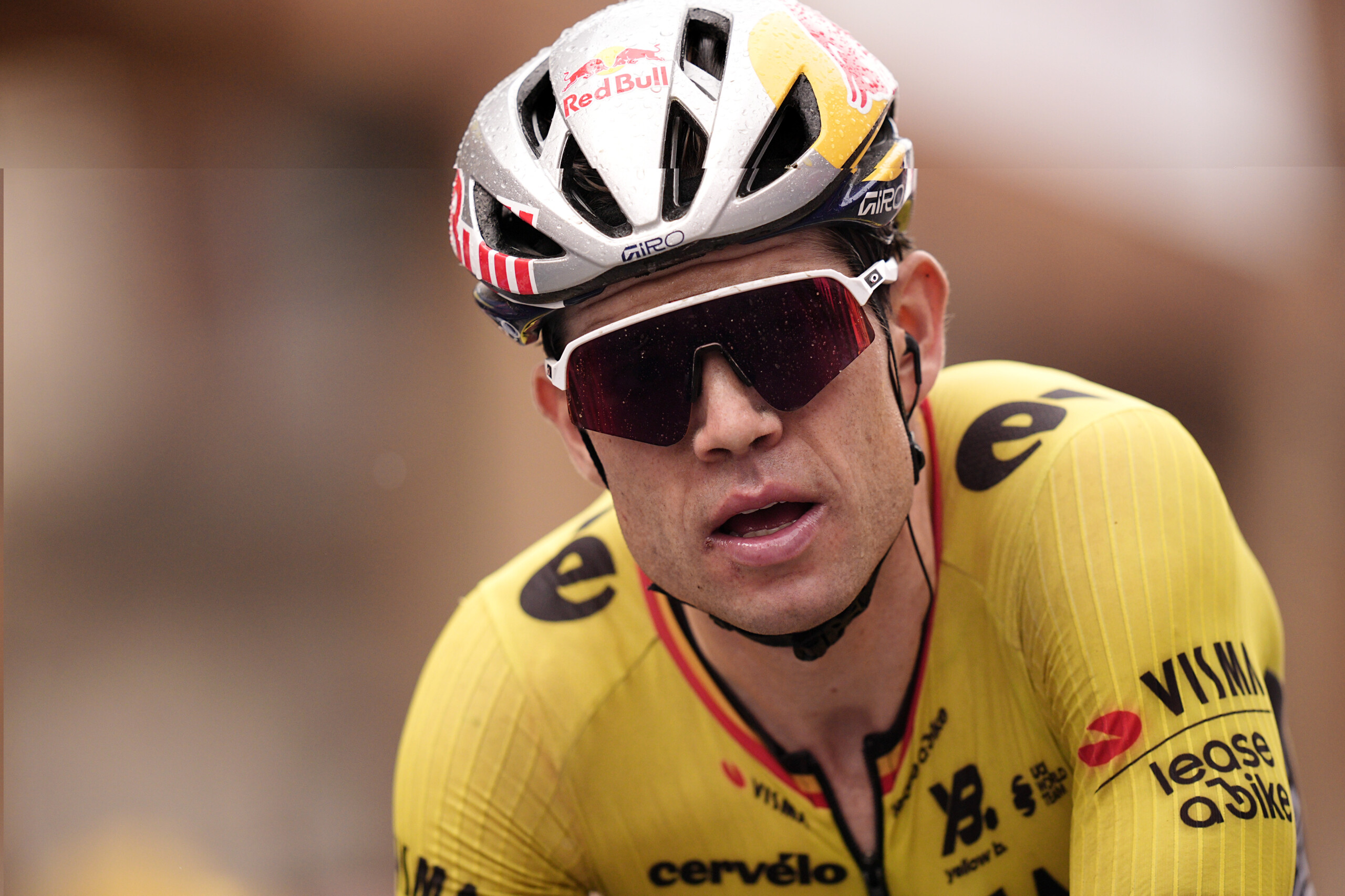
The presence of Wout van Aert in the day’s breakaway was no accident—it was a tactical masterstroke that exemplified Team Visma-Lease a Bike’s strategic sophistication. The Belgian superstar had infiltrated the escape group with the specific purpose of providing support should his leader make his move on the climb, demonstrating the kind of forward planning that separates cycling’s elite teams from the rest.
As the peloton approached the base of Colle delle Finestre, Del Toro appeared in control. His UAE team had managed the early part of the race professionally, and the young Mexican seemed poised to defend his jersey through one final examination. The tactical narrative seemed straightforward—defend, survive, and celebrate in Rome.
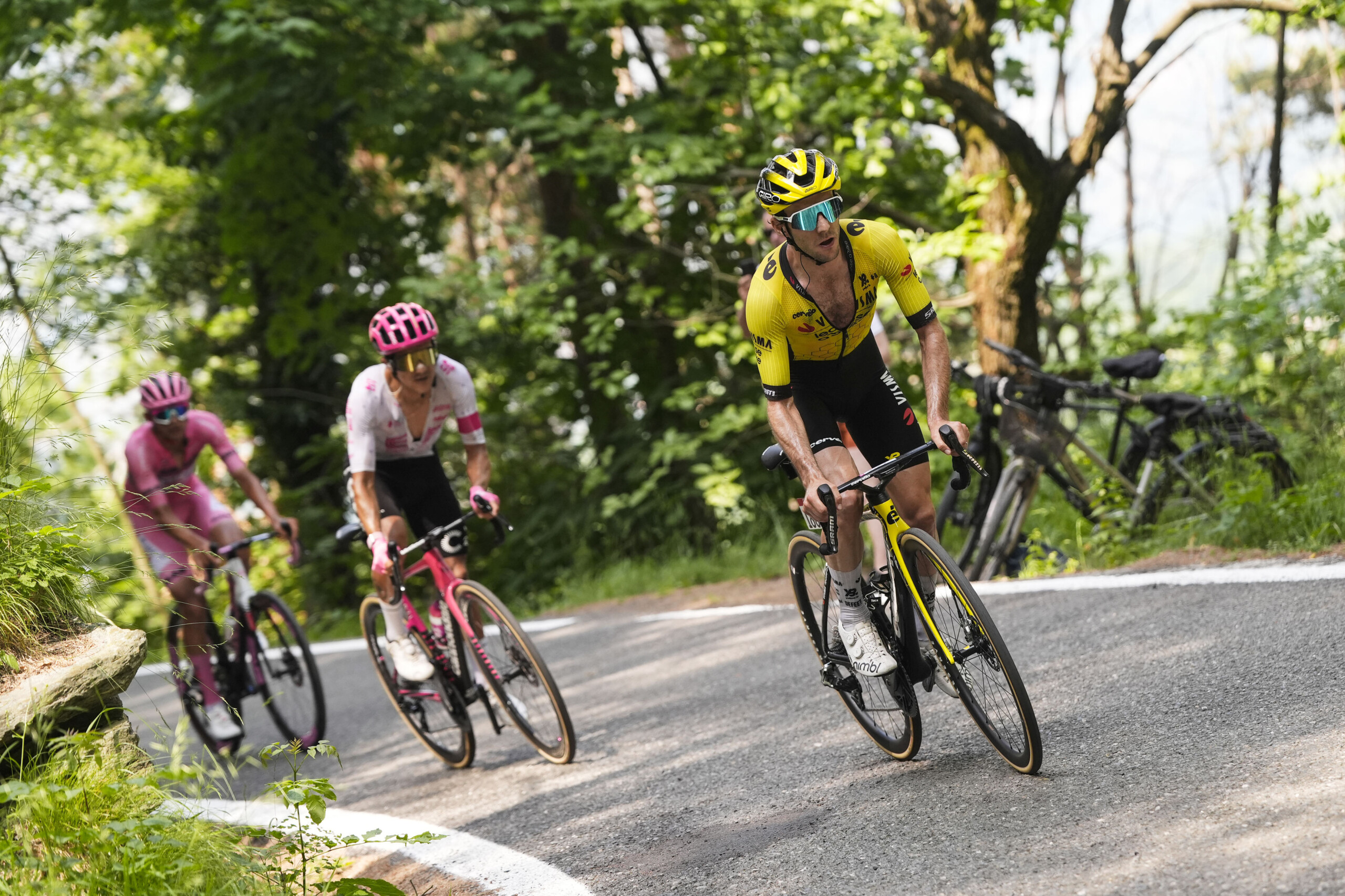
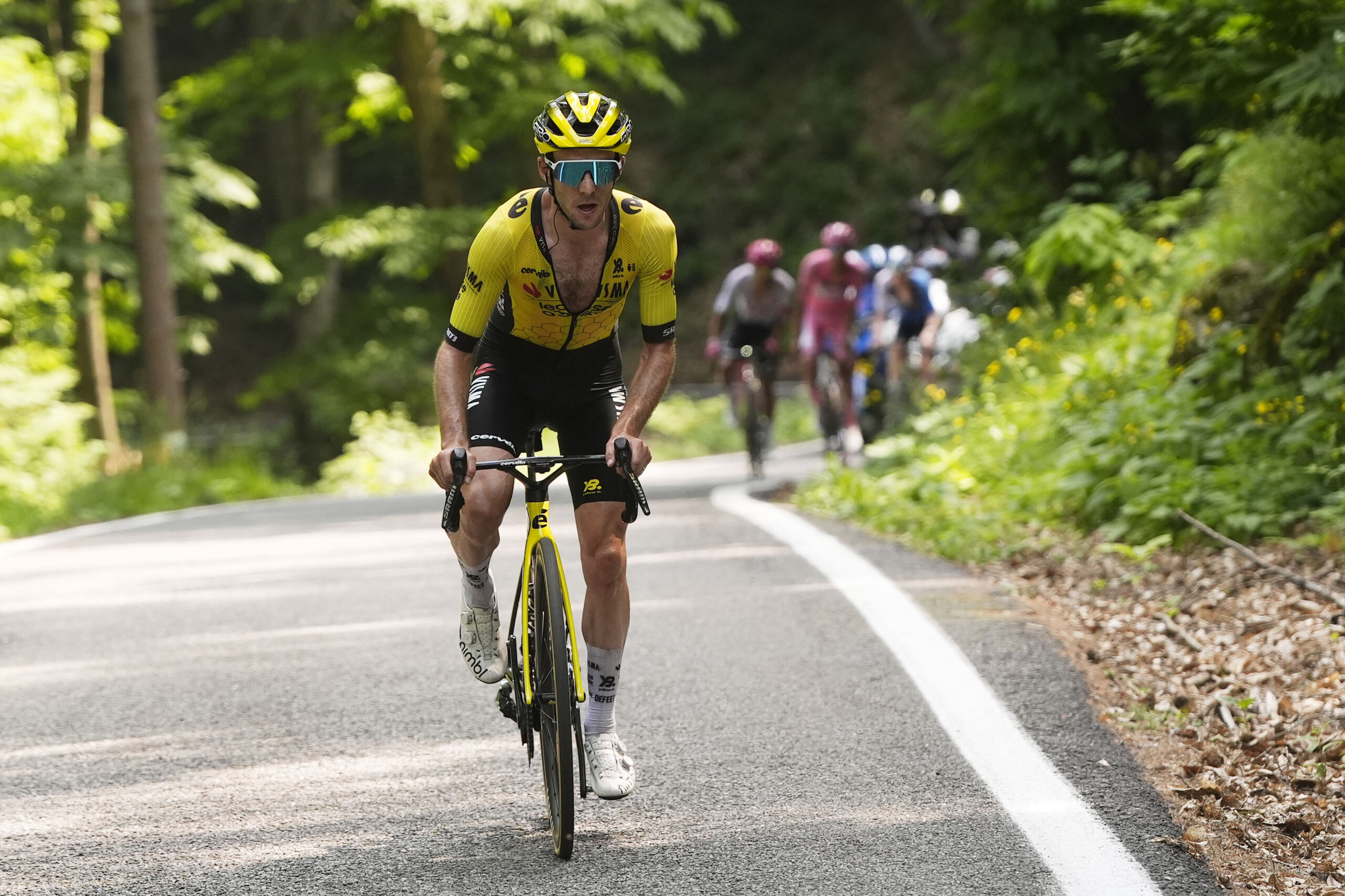
Simon Philip Yates of Team Visma | Lease A Bike attacks on the Colle de Finestre during the stage 20 of the Giro d’Italia from Verres to Sestriere (Via Latteo), Italy – Saturday, May 31, 2025. Sport – cycling. (Photo by Fabio Ferrari/LaPresse)
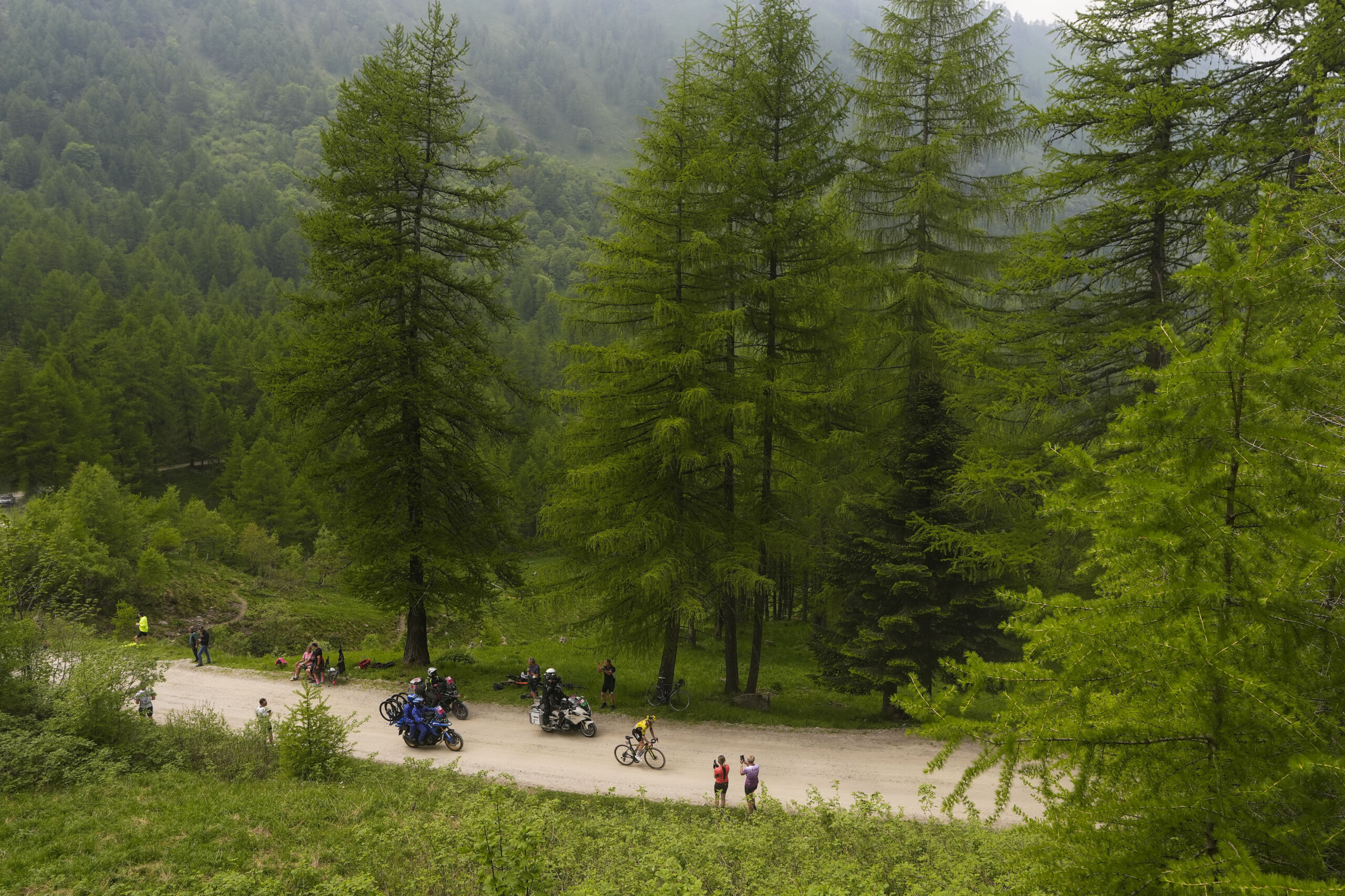
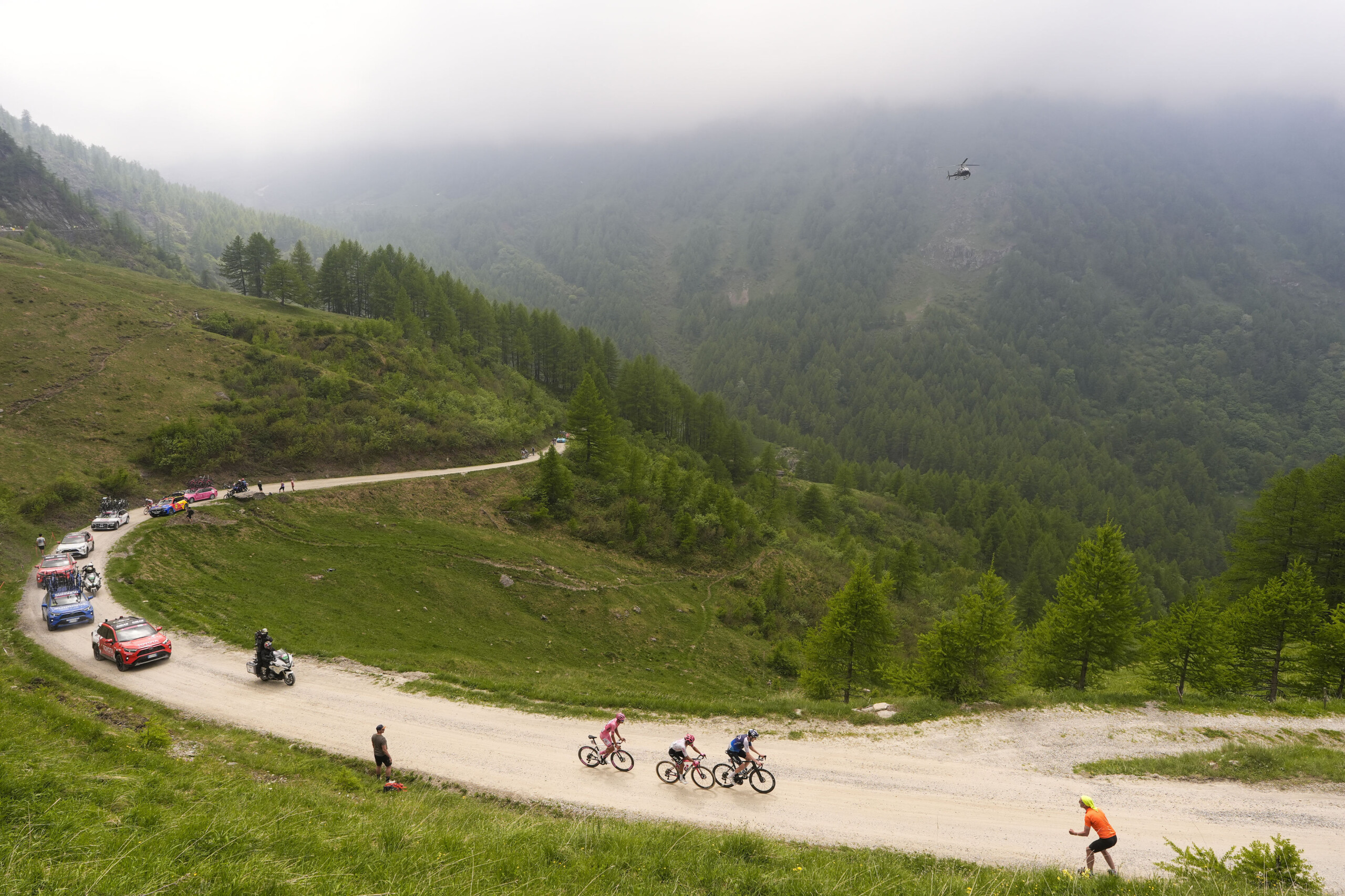
Then, with 15 kilometers of climbing remaining on the Finestre’s notorious gravel roads, Yates launched what initially appeared to be a desperate attack. Instead, it proved to be a masterpiece of calculated aggression, executed at precisely the moment when his rivals showed their first signs of weakness.
Simon Philip Yates of Team Visma | Lease A Bike attacks on the Colle de Finestre during the stage 20 of the Giro d’Italia from Verres to Sestriere (Via Latteo), Italy – Saturday, May 31, 2025. Sport – cycling. (Photo by Fabio Ferrari/LaPresse)
It wasn’t an explosive attack in the traditional sense. Instead, Yates simply lifted his pace, a gradual acceleration that initially seemed manageable. Del Toro and Carapaz followed, along with the other general classification contenders. But as the kilometers ticked by on the punishing gravel roads, the gap began to open with inexorable precision.
Simon Philip Yates of Team Visma | Lease A Bike during the stage 20 of the Giro d’Italia from Verres to Sestriere (Via Latteo), Italy – Saturday, May 31, 2025. Sport – cycling. (Photo by Fabio Ferrari/LaPresse)
“I was trying to get away knowing that I could hold a high pace,” Yates explained in the post-stage press conference. “I felt really good today, I was able to push all the way to the top and with Wout van Aert in the valley, once I got there I had to do my things.”
Isaac Del Toro (UAE Team Emirates XRG) and Richard Carapaz (EF Education – EasyPost) during the stage 20 of the Giro d’Italia from Verres to Sestriere (Via Latteo), Italy – Saturday, May 31, 2025. Sport – cycling. (Photo by Fabio Ferrari/LaPresse)
The beauty of Yates’s attack lay in its simplicity and sustainability. Rather than risking everything on a single explosive move, he had chosen to gradually turn the screw, applying pressure that his rivals simply couldn’t match over the sustained duration of the climb. It was tactical patience perfected—the culmination of years of experience and the wisdom that comes from previous failures.
Del Toro, who had shown such maturity throughout the race, finally cracked under the relentless pressure. The young Mexican, who had seemed untouchable just hours earlier, was paying the price for eleven days of leadership and the accumulated fatigue of defending the maglia rosa. As Yates powered away, the time gaps grew with each pedal stroke, transforming what had been a 1’21” deficit into what would become a 3’56” advantage.
“I’m not sure if I attacked at the same place I struggled in 2018,” Yates mused, but the symbolism was unmistakable and historically perfect. Where he had once suffered his greatest defeat, he was now orchestrating his greatest triumph, conquering not just his rivals but his own psychological demons.
As Yates crested the summit of Colle delle Finestre, he found Wout van Aert waiting in the valley below, perfectly positioned to provide support for the descent and flat run to Sestriere. The collaboration between the two Visma-Lease a Bike riders was seamless, their decades of combined professional experience evident in every pedal stroke as they worked together to maximize the time gap to their pursuers.
Wout Van Aert of Team Visma | Lease A Bike during the stage 20 of the Giro d’Italia from Verres to Sestriere (Via Lattea), Italy – Saturday, May 31, 2025. Sport – cycling. (Photo by Marco Alpozzi/LaPresse)
“Once I got there I had to do my things,” Yates said, describing the moment he joined van Aert. The tactical sophistication of their collaboration demonstrated why Team Visma-Lease a Bike had emerged as cycling’s dominant force, their ability to execute complex race plans setting new standards for modern tactics.
Meanwhile, Chris Harper was conducting his own masterclass at the front of the race. The Australian had soloed clear from the original breakaway group with 43 kilometers remaining, a move that perfectly complemented his former teammate’s ambitions while pursuing his own stage victory.
“When we started that climb, Lidl-Trek set a hard pace,” Harper recalled. “When Rémi Rochas went, I followed him, then another group came across and I jumped from there. Only one guy [Alessandro Verre] was able to follow, but I preferred to climb at my own pace.”
Harper’s tactical intelligence was evident in his pacing strategy, maintaining enough of a lead to secure stage victory while not interfering with the larger narrative unfolding behind. “I kept my effort under control in order to not exploding so I would have enough left to go to the finish,” he explained. “My sport directors kept me updated so I knew Simon Yates had a decent gap.”
Christopher Harper of Team Jayco Alula winner of the stage on the finish line during the stage 20 of the Giro d’Italia from Verres to Sestriere (Via Lattea), Italy – Saturday, May 31, 2025. Sport – cycling. (Photo by Marco Alpozzi/LaPresse)Christopher Harper of Team Jayco Alula winner of the stage on the finish line during the stage 20 of the Giro d’Italia from Verres to Sestriere (Via Lattea), Italy – Saturday, May 31, 2025. Sport – cycling. (Photo by Marco Alpozzi/LaPresse)
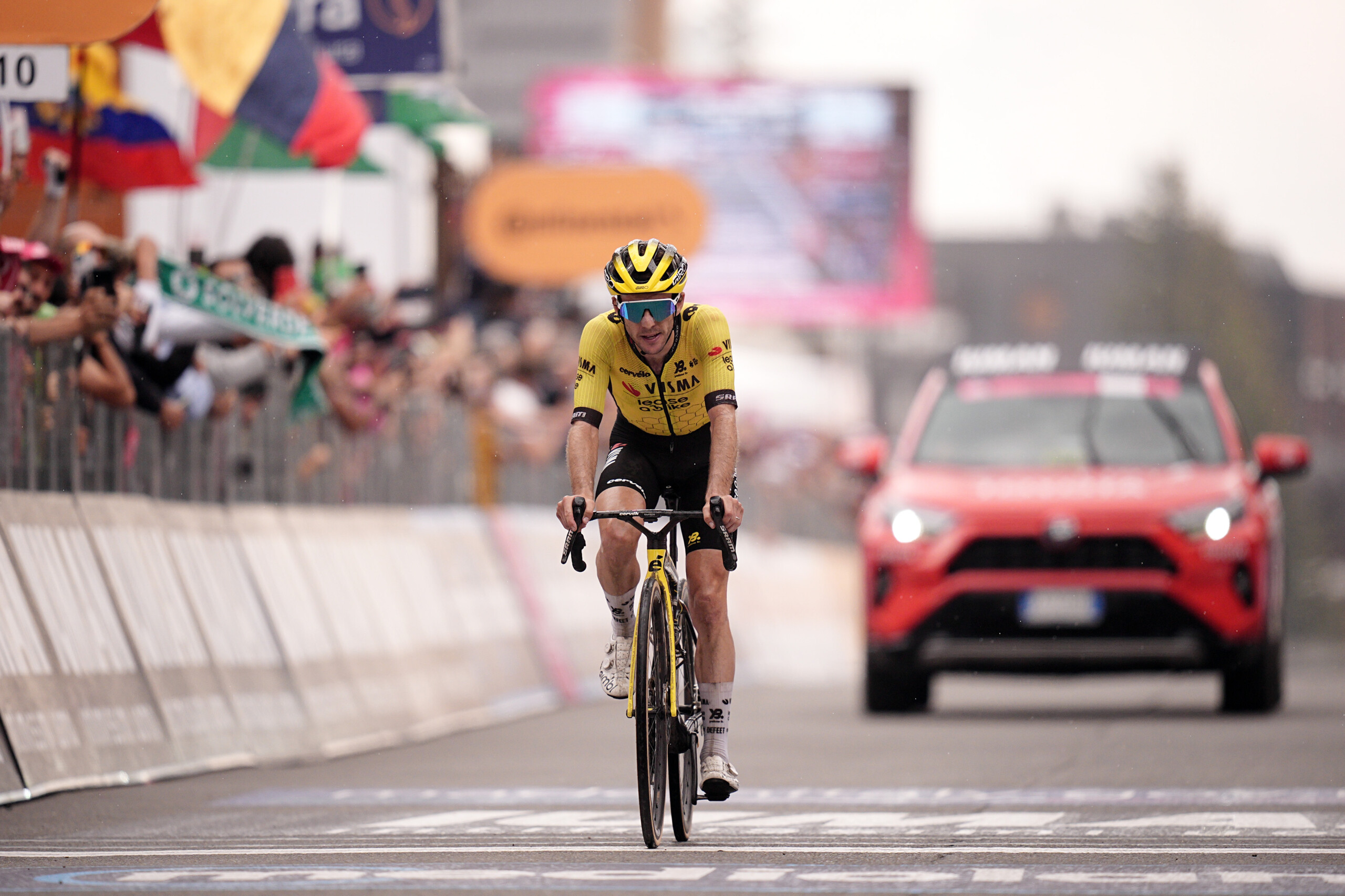
The final kilometers to Sestriere were a study in controlled power and tactical execution. Harper maintained his lead to claim a thoroughly deserved stage victory, his first professional win in Europe since 2019. Behind him, Yates rolled across the line in third place, but it was his gap to the former race leaders that told the real story and rewrote Grand Tour history.
In the space of a single stage, Yates had accomplished one of the most dramatic turnarounds in Grand Tour history—transforming a deficit of 1 minute 21 seconds into a lead of 3 minutes 56 seconds over Del Toro, with Carapaz now 4 minutes 43 seconds behind. It was the largest single-day swing in general classification placings in recent Giro history.
Simon Philip Yates of Team Visma | Lease A Bike on the finish line during the stage 20 of the Giro d’Italia from Verres to Sestriere (Via Lattea), Italy – Saturday, May 31, 2025. Sport – cycling. (Photo by Marco Alpozzi/LaPresse)
“In the last few hundred meters I realised what I’d done and I started feeling my legs,” Yates admitted. “Although I had a big gap, I didn’t believe I was going to win the Giro. I needed to believe in myself. In the end, I managed to do something there.”
The psychological impact of the performance was perhaps even more significant than the impressive time gaps. Yates had not just won the stage in the traditional sense—he had conquered his greatest demon, transforming the climb that had once symbolized his limitations into the scene of his greatest triumph.
Isaac Del Toro of UAE Team Emirates XRG finishing the stage 20 of the Giro d’Italia from Verres to Sestriere (Via Lattea), Italy – Saturday, May 31, 2025. Sport – cycling. (Photo by Marco Alpozzi/LaPresse)
For Del Toro, the collapse was as sudden as it was devastating. The young Mexican, who had led the race for eleven consecutive days and seemed destined for victory, crossed the line with the expression of a rider who had given everything but found it wasn’t enough. His post-stage comments revealed a maturity that suggested this would not be his only opportunity at Grand Tour glory, but couldn’t mask the immediate disappointment.
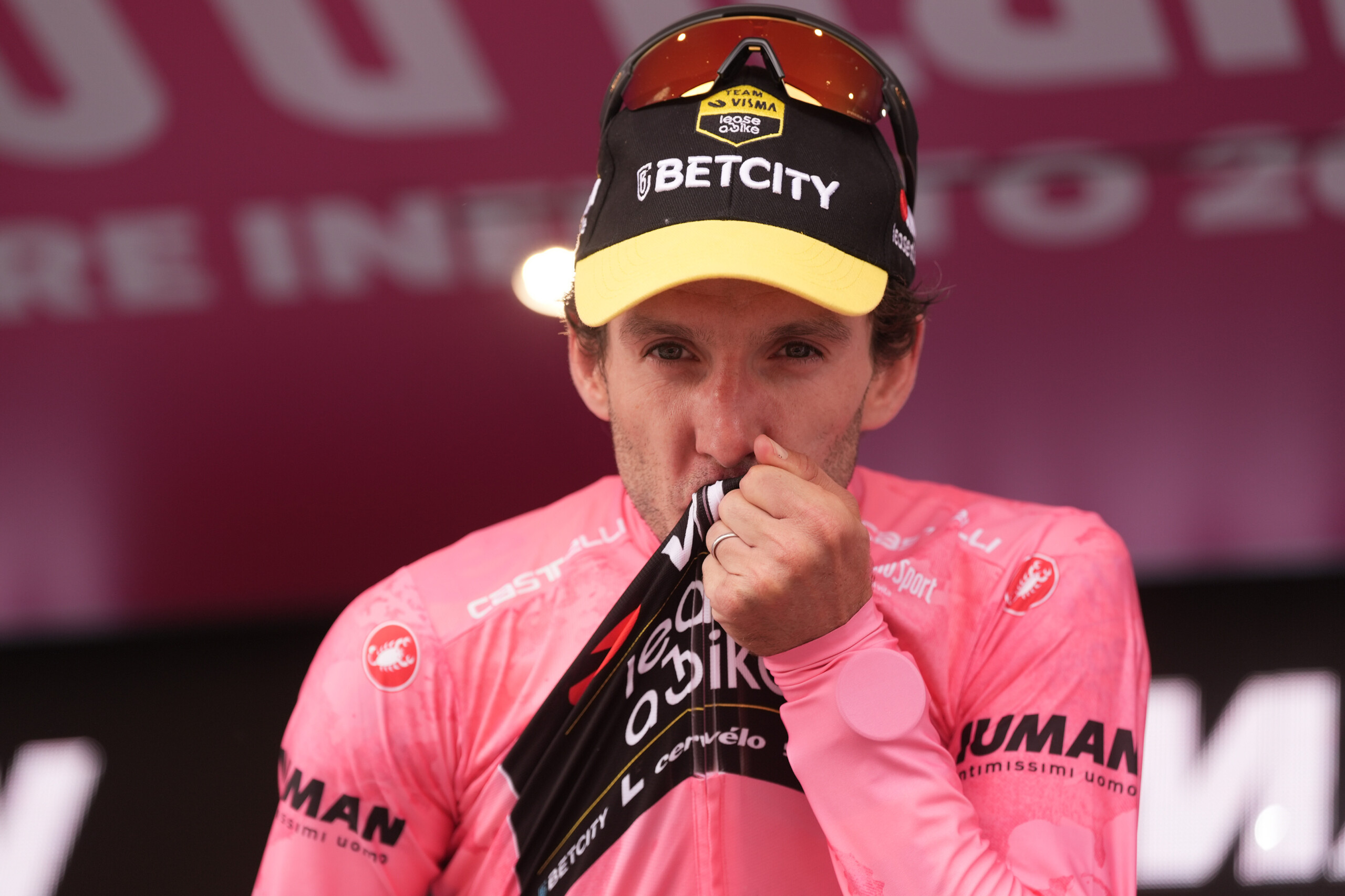
Simon Philip Yates of Team Visma | Lease A Bike pink jersey on the podium during the stage 20 of the Giro d’Italia from Verres to Sestriere (Via Lattea), Italy – Saturday, May 31, 2025. Sport – cycling. (Photo by Massimo Paolone/LaPresse)
Stage 20 Results:
Chris Harper (Team Jayco AlUla) – 5h27’29”
Alessandro Verre (Arkéa – B&B Hotels) at 1’49”
Simon Yates (Team Visma | Lease a Bike) at 1’57”
General Classification After Stage 20:
Simon Yates (Team Visma | Lease a Bike)
Isaac Del Toro (UAE Team Emirates XRG) at 3’56”
Richard Carapaz (EF Education – EasyPost) at 4’43”
Derek Gee (Israel – Premier Tech) at 6’23”
Damiano Caruso (Bahrain Victorious) at 7’32”
Official Jerseys After Stage 20:
Maglia Rosa, leader of the General Classification, sponsored by IUMAN – Intimissimi Uomo – Simon Yates (Team Visma | Lease a Bike)
Maglia Ciclamino, leader of the Points Classification, in collaboration with Ministero degli Affari Esteri e della Cooperazione Internazionale and ITA Italian Trade Agency – Mads Pedersen (Lidl-Trek)
Maglia Azzurra, leader of the Gran Premio della Montagna (KOM), sponsored by Banca Mediolanum – Lorenzo Fortunato (XDS Astana Team)
Maglia Bianca, Best Young Rider, born after 01/01/2000, sponsored by Conad – Isaac Del Toro (UAE Team Emirates XRG)
Stage 21: Yates Celebrates in Rome as Kooij Claims Final Stage
The ceremonial final stage through the streets of Rome provided a fitting conclusion to one of the most dramatic Giros in recent memory, with Olav Kooij’s sprint victory adding a final flourish to Team Visma-Lease a Bike’s perfect weekend while the cycling world celebrated one of sport’s greatest redemption stories.
The stage began with a moment of profound emotion and historical significance as Pope Leo XIV blessed the riders during their passage through Vatican City. “It is a pleasure to greet you on this final stage of the Giro d’Italia,” the Pope declared. “Know that you are role models for young people around the world.”
The moment was not lost on Yates, who would later describe it as “unforgettable.” For a rider who had endured so much heartbreak in his pursuit of Grand Tour glory, the papal blessing seemed to symbolize a higher recognition of his journey and the spiritual dimension of his redemption story.
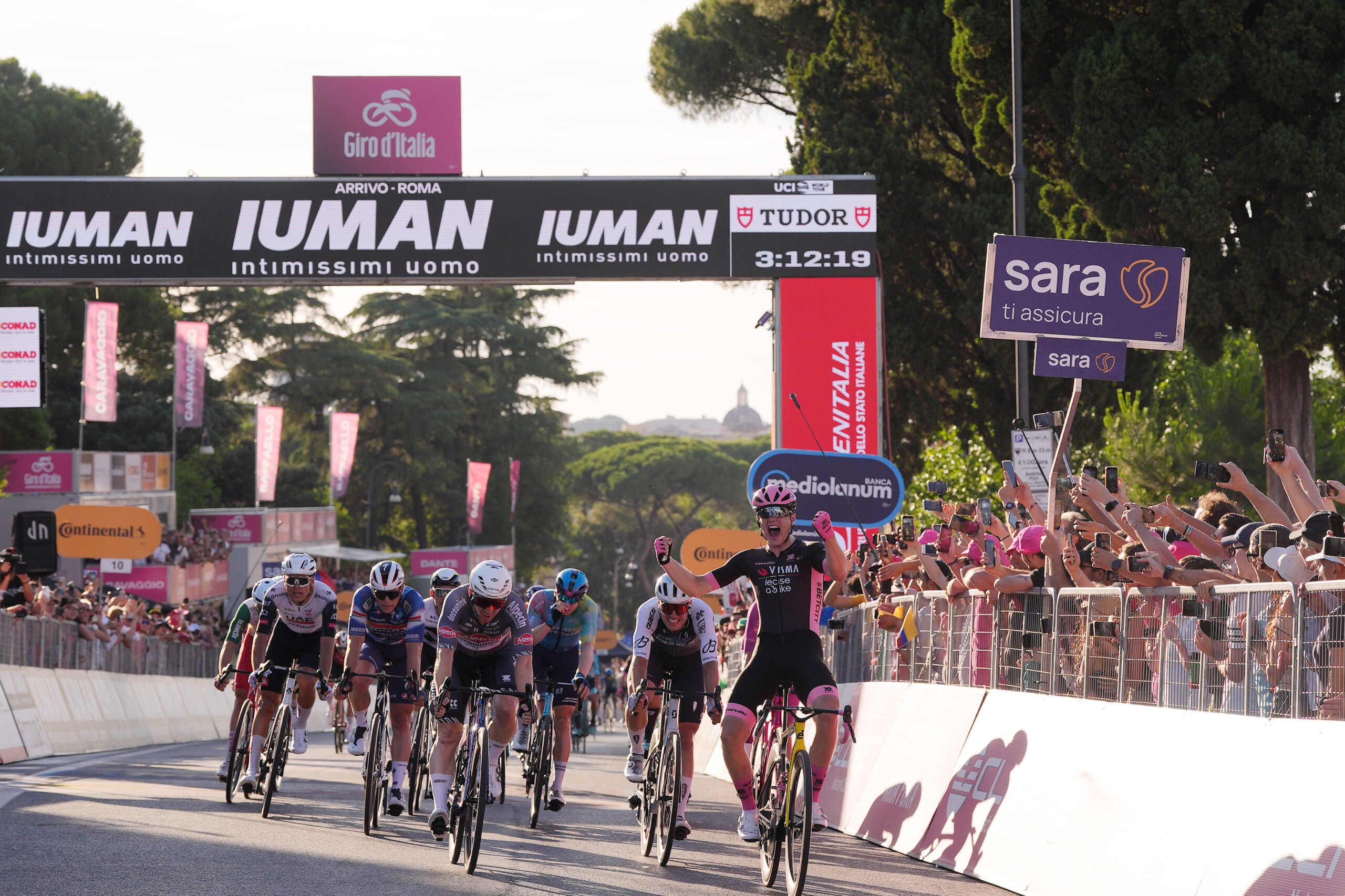
Kooij’s victory in the Circus Maximus sprint represented the perfect conclusion to his team’s dominant final weekend. The Dutch sprinter’s third Giro stage victory demonstrated the depth of talent within the Visma-Lease a Bike squad and completed a perfect tactical performance that had begun on the slopes of Colle delle Finestre.
Olav Kooij of Team Visma | Lease A Bike winner of the stage on the finish line during the stage 21 of the Giro d’Italia from Roma to Roma, Italy – Sunday, June 01, 2025. Sport – cycling. (Photo by Fabio Ferrari/LaPresse)
“We couldn’t wish for a better final weekend,” Kooij said. “Yesterday it was really amazing for the team. Today I just used everything that was left in the legs.”
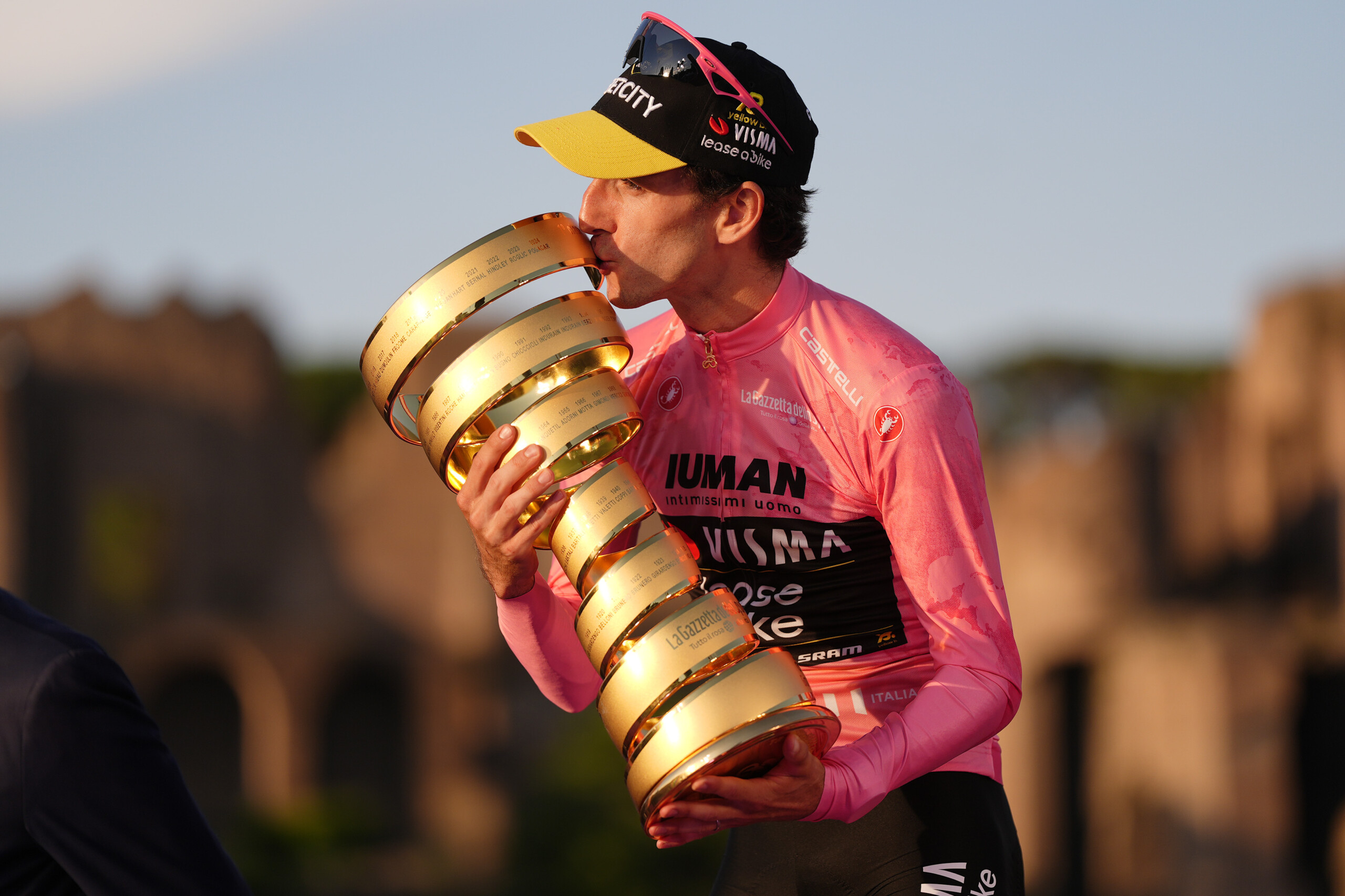
For Yates, the processional nature of the final stage allowed time for reflection on what had been achieved and the magnitude of his accomplishment. Standing atop the podium in Rome, maglia rosa draped across his shoulders, the Briton embodied cycling’s capacity for redemption and the power of perseverance.
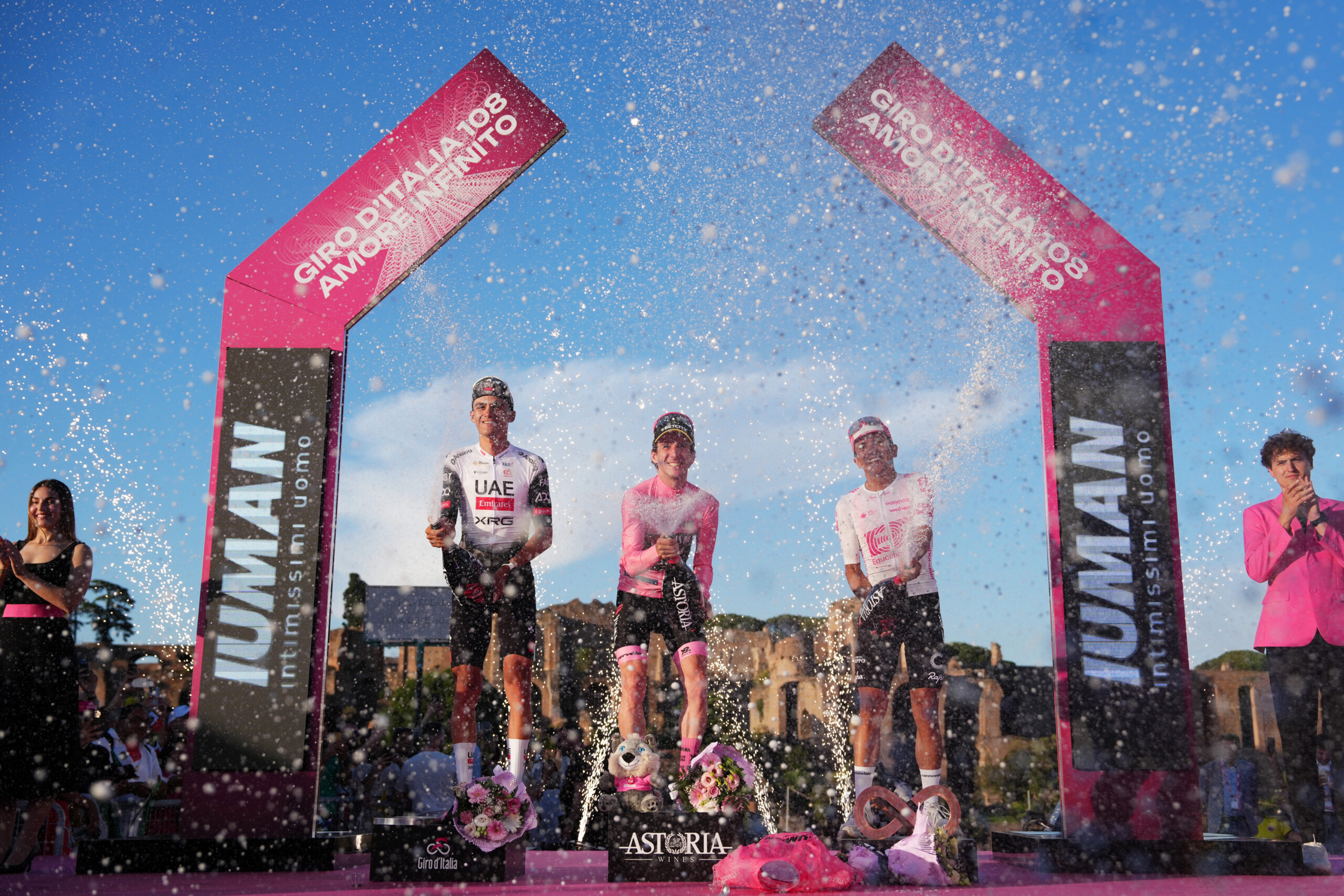
Britain’s Simon Philip Yates on the podium, wearing the pink jersey of the race overall leader, celebrates after winning the overall general classification of the Giro d’Italia 2025 cycling race – Sunday, June 01, 2025. Sport – cycling. (Photo by Fabio Ferrari/LaPresse)Britain’s Simon Philip Yates on the podium, wearing the pink jersey of the race overall leader, celebrates after winning the overall general classification of the Giro d’Italia 2025 cycling race – Sunday, June 01, 2025. Sport – cycling. (Photo by Fabio Ferrari/LaPresse)
“This is my year,” Yates declared in his victory speech. “I don’t have the bad luck I’ve had in the past. It was an incredible start today, when I realized we were going to stop at Vatican City. To get the blessing of the Pope will remain an unforgettable moment.”
Del Toro’s second-place finish, while disappointing after leading for so long, represented a remarkable achievement for the 21-year-old that announced him as a future Grand Tour contender. “I’m 21 years old, which means one year for each stage of this Giro,” he said with characteristic poise. “I’m super happy to stand on the final podium, also a bit disappointed because it wasn’t nice to lose on the last mountain stage. But I’m proud of all my race.”
Richard Carapaz’s third-place finish added another Grand Tour podium to the Ecuadorian’s impressive palmares, demonstrating the continued strength of the 2019 Giro winner. “It’s been a beautiful experience fighting with all my strengths,” Carapaz reflected. “This Giro has been something fantastic. I don’t know if it could have been better for me. I gave everything I had.”
Stage 21 Results:
Olav Kooij (Team Visma | Lease a Bike) – 3h14’22”
Kaden Groves (Alpecin-Deceuninck) – same time
Matteo Moschetti (Q36.5 Pro Cycling Team) – same time
Jonathan Milan (Lidl-Trek) – same time
Fernando Gaviria (Movistar Team) – same time
Mads Pedersen (Lidl-Trek) – same time
Biniam Girmay (Intermarché-Wanty) – same time
Phil Bauhaus (Bahrain Victorious) – same time
Jasper Philipsen (Alpecin-Deceuninck) – same time
Danny van Poppel (Red Bull-Bora-Hansgrohe) – same time
Final General Classification:
Simon Yates (Team Visma | Lease a Bike) – 85h23’53”
Isaac Del Toro (UAE Team Emirates XRG) at 3’56”
Richard Carapaz (EF Education – EasyPost) at 4’43”
Derek Gee (Israel – Premier Tech) at 6’23”
Damiano Caruso (Bahrain Victorious) at 7’32”
Romain Bardet (Team Picnic PostNL) at 9’13”
Georg Steinhauser (EF Education – EasyPost) at 11’06”
Giulio Pellizzari (Red Bull – Bora – Hansgrohe) at 14’00”
Lorenzo Fortunato (XDS Astana Team) at 16’45”
Andrea Vendrame (Decathlon AG2R La Mondiale Team) at 18’22”
Final Official Jersey Classifications:
Maglia Rosa, leader of the General Classification, sponsored by IUMAN – Intimissimi Uomo – Simon Yates (Team Visma | Lease a Bike)
Maglia Ciclamino, leader of the Points Classification, in collaboration with Ministero degli Affari Esteri e della Cooperazione Internazionale and ITA Italian Trade Agency – Mads Pedersen (Lidl-Trek)
Maglia Azzurra, leader of the Gran Premio della Montagna (KOM), sponsored by Banca Mediolanum – Lorenzo Fortunato (XDS Astana Team)
Maglia Bianca, Best Young Rider, born after 01/01/2000, sponsored by Conad – Isaac Del Toro (UAE Team Emirates XRG)
The Broader Significance and Historical Context
Yates’s victory carried profound historical significance that extended far beyond mere statistics and established new benchmarks for tactical excellence in Grand Tour racing. He became the first rider to win the Giro d’Italia without finishing in the top two of any stage since Ivan Gotti in 1999, highlighting the tactical patience and consistency that defined his campaign—a testament to the evolution of modern Grand Tour strategy.
The triumph also completed Team Visma-Lease a Bike’s Grand Tour collection, establishing the Dutch squad as cycling’s dominant force across all three major races. Their strategic sophistication, exemplified by van Aert’s breakaway support role and the team’s ability to execute complex tactical plans under pressure, set new standards for modern race tactics and demonstrated the importance of depth and versatility in Grand Tour success.
The 2025 Giro d’Italia marked a changing of the guard in professional cycling, with young riders like Del Toro sharing the spotlight with established stars like Yates in a narrative that spanned generations. The race showcased cycling’s increasingly international character, with riders from Mexico, Ecuador, Britain, and across Europe contributing to a truly global spectacle.
For Italian cycling, the Giro provided mixed emotions that reflected the current state of the sport in its traditional heartland. While Christian Scaroni’s emotional stage victory ended a painful 17-stage drought and provided hope for the future, no Italian rider challenged for overall victory, continuing a troubling trend for the race’s host nation. However, Lorenzo Fortunato’s dominant victory in the King of the Mountains competition highlighted the continued strength of Italian climbing tradition.
The Italian resurgence, symbolized by Scaroni’s victory and the all-Italian celebration on Stage 16, provided a reminder of cycling’s deep roots in the peninsula while highlighting the work still needed to return Italian cycling to its former glory. Mads Pedersen’s wire-to-wire victory in the points classification represented another kind of consistency, the Danish rider’s ability to maintain his advantage from the opening stage in Sicily to the conclusion in Rome demonstrating the tactical intelligence required for specialized jersey competitions.
But perhaps most significantly, the 2025 Giro served as a powerful reminder of cycling’s capacity for redemption stories and the sport’s romantic traditions. In an era often dominated by data analysis and scientific precision, Yates’s victory was a throwback to cycling’s more emotional narratives—a reminder that heart, courage, tactical intelligence, and perfect timing can still triumph over pure physical superiority.
“I’ve found myself again during this Giro,” Yates reflected in his final interview, capturing the personal transformation that had paralleled his sporting triumph. “Since the route of the Giro was released, I always had at the back of my mind to try something on this climb that defined my career so far. I needed to believe in myself. In the end, I managed to do something there. In this very moment, it’s hard to say what it means, but it’s the peak of my career, I don’t think any other moment tops this.”
The tactical brilliance of Yates’s campaign lay not just in the execution of his decisive move, but in the patience and strategic thinking that preceded it. By waiting until the final mountain stage to make his move, he had maximized the psychological pressure on his rivals while minimizing their opportunities to respond—a masterclass in Grand Tour tactics that will be studied for years to come.
The 2025 Giro d’Italia ultimately proved that in cycling, as in life, the greatest victories often emerge from the ashes of past defeats. Seven years after his spectacular collapse had become one of cycling’s most infamous moments, Yates had returned to that same mountain and emerged victorious, transforming a symbol of failure into the foundation of his greatest triumph.
As the sun set over Rome on June 1st, 2025, Simon Yates stood as living proof that in cycling, as in life, it’s never too late for redemption. The boy from Bury who had traveled the world in pursuit of cycling glory had finally found it on the slopes where his dreams had once died, proving that sometimes the most beautiful stories are written not in victory, but in the courage to return to the places where we have failed.
The Giro d’Italia had once again proven why it remains cycling’s most beautiful and unpredictable Grand Tour, capable of breaking hearts and fulfilling dreams in equal measure. For Simon Yates, the pink jersey finally fit perfectly—not just in size, but in the knowledge that it had been earned through perseverance, tactical brilliance, and the kind of courage that transforms defeat into the foundation of ultimate triumph.
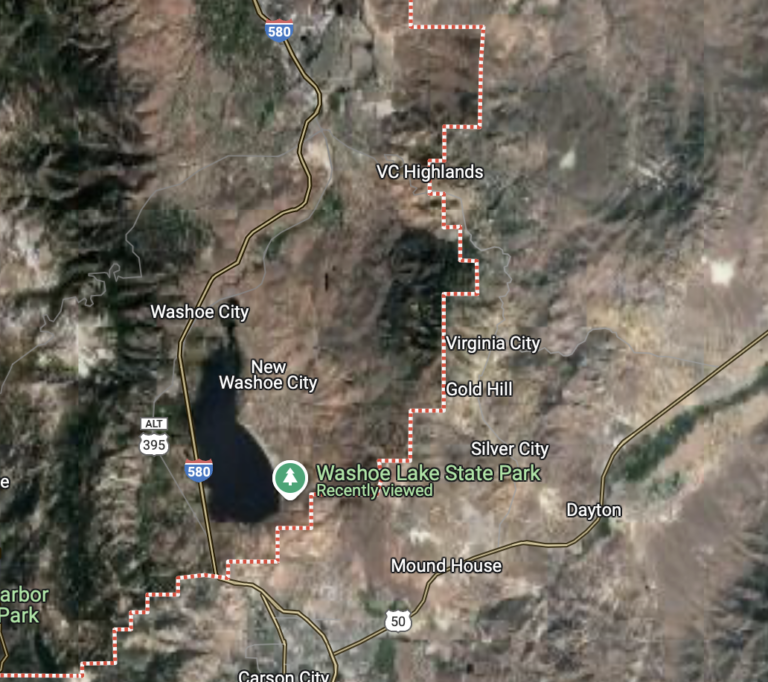
WASHOE COUNTY, NV (June 2, 2025) — A tragic hit-and-run incident that claimed the life of a bicyclist on Eastlake Boulevard has led to the arrest of a suspect, according to the Washoe County Sheriff’s Office.
The collision occurred on the evening of May 28, 2025, around 9:00 p.m., when deputies responded to a report of a vehicle-versus-bicyclist crash between Guffey Drive and Side View Way. Upon arrival, law enforcement discovered an adult male suffering from serious injuries. The victim was transported to a local hospital, where he was later pronounced dead.
Initial reports indicated that the vehicle involved was a pickup truck of an unknown make and model. The driver fled the scene, heading southbound on Eastlake Boulevard, before deputies arrived.
The Washoe County Sheriff’s Office Major Accident Investigation Team (M.A.I.T.) launched a comprehensive investigation and has since concluded its on-site work. As a result of the ongoing inquiry, authorities identified 43-year-old Travis Smith as the suspect in the case.
Smith, who cooperated with the investigation, ultimately turned himself in. He was arrested and booked into the Washoe County Detention Facility on a charge of failure to stop at the scene of an accident causing substantial bodily harm or death, as outlined under Nevada Revised Statutes (NRS 484E.010).
The Sheriff’s Office expressed gratitude to the public for its support throughout the investigation, noting that community assistance was vital in resolving the case.
Anyone with additional information is encouraged to contact the Washoe County Sheriff’s Office Patrol Division at (775) 785-9276. Anonymous tips can also be submitted through Secret Witness at (775) 322-4900 or online at www.secretwitness.com.
Authorities have extended their condolences to the victim’s family and loved ones as the community mourns this senseless loss.
Note: Nick commented below that there is a Go Fund Me for the family: “Thank you for raising awareness about this senseless tragedy. There is a GoFundMe setup for the victim, Josh, a loving father, and his family during this difficult time.”
By Nancy Clark MS RD CSS3 — Believe it or not, eating a good sports diet can be simple. Yet too many athletes have created a complex and confusing eating program with good and bad foods, lots of rules, and plenty of guilt. Let’s get back to the basics and enjoy performance-enhancing fueling with these simple ABC’s for winning nutrition.
Appreciate the power of food and the positive impact it has on athletic performance. Also notice the negative impact of hunger on your mood, ability to focus, and energy. As an athlete, you are either fueling up or refueling. Every meal and snack has a purpose; be responsible!
Breakfast: eat it within three hours of waking for a high-energy day. If you are not hungry in the morning, trade evening snacks with little nutritional value for a wholesome morning meal. Alternatively, eat that wholesome morning meal at night, in place of the snacky foods.
B. Breakfast – Eggs with hummus and muhammara. Photo by Dave Iltis
Carbohydrates are the preferred source of muscle fuel for hard exercise. Do not “stay away from” pasta, potato, bread, bagels and other starchy foods that have wrongly been deemed fattening but actually help keep muscles well fueled. Serious athletes who minimize carb intake risk having poorly fueled muscles.
C. Carbohydrates – Paella (a great source of carbs and protein) from Taberna El Sur de Huertas in Madrid, Spain. Photo by Dave Iltis
Dehydration needlessly slows you down, so plan to drink extra fluid 45 to 90 minutes before a hard workout. That’s how much time the kidneys require to process fluid. Schedule time to tank up, urinate the excess, and then drink again soon before you start to exercise.
Energy bars are more about convenience than necessity. Bananas, raisins, Fig Newtons and granola bars offer convenient fuel at a fraction of the price. If you prefer pre-wrapped bars, choose ones made with wholesome ingredients such as dried fruits, nuts, and whole grains.
E. Energy Bars – Photo by Dave Iltis
Foods fortified with iron can help non-meat eaters and vegetarians reduce their risk of becoming anemic. Iron-fortified breakfast cereals, such as raisin bran, Grape-Nuts and Wheaties offer more iron than all-natural brands with no added iron, such as Kashi, old-fashioned oats, and granola.
F. Fortified – Fortified cereals such as Cheerios are a good source of iron. Photo by Dave Iltis
Gatorade and other sports drinks are designed to be used by athletes during extended exercise, not as a mealtime beverage or snack. Most foods contain far more electrolytes than in sports drinks.
G. Gatorade and other sports drinks. Photo by Dave Iltis.
Hypoglycemia (low blood sugar, as characterized by light-headedness, fatigue, and inability to concen-trate) is preventable. To eliminate 4:00 p.m. low blood sugar, enjoy a hearty mid-afternoon snack.
Intermittent fasting might offer health benefits for an overfat, under-fit, sedentary person, but it is not designed for athletes. Extended time without food puts your body into muscle-breakdown mode.
Junk food can fit into your sports diet in small amounts. That is, you don’t have to have a “perfect diet” to have an excellent diet. The goal is 90% quality foods and, if desired, 10% fun foods.
Keto, Paleo and other fad reducing diets “work” because they limit calorie intake. But when dieters escape from food-jail, backlash takes its toll. Your better bet: Learn how to eat appropriately, not diet restrictively.
Lifting weights is key to building muscles. Carbohydrates provide the energy needed to lift heavy weights. To support muscular growth, choose carbohydrate-based meals with a side of protein, as opposed to protein-based meals with minimal carbs.
Muscles store carbohydrate (grains, fruits, veggies) as glycogen. When replenishing depleted glycogen to prevent needless fatigue, muscles store about store about 3 ounces of water with each one ounce of carb. Hence, an athlete might gain 2 to 4 pounds of (water) weight when refueling on a rest day.
M. Muscles – Penne pasta with figs and hazelnuts fuel muscles with carbohydrates. Photo by Dave Iltis
Nutrient-dense whole foods are so much better for your health than ultra-processed foods. By satiating your appetite with hearty breakfasts and lunches, you’ll curb your desire for afternoon and evening chips, cookies, instant meals, and other highly processed foods—and may not even miss them!
Obsessed about food and weight? If you spend too much time thinking about what or what not to eat, meeting with a sports dietitian (RD CSSD) can help you stop the struggle. Eating should be simple.
Protein is an important part of a sports diet; it helps build and repair muscles after hard workouts—but it does not refuel muscles. A recovery drink should offer three times more carbs than protein. Choose a fruit smoothie (made with Greek yogurt) instead of a low-carb protein shake.
P. Protein – Salmon salad with asparagus and strawberries. Photo by Dave Iltis
Quality nutrition is best found in natural foods. Be sure there are more apple cores and banana peels than energy bar wrappers and ultra-processed food packages in your waste basket.
Rest is an important part of a training program; your muscles need time to heal and refuel. Plan one or two days with little or no exercise per week. Expect to feel just as hungry on rest days as on exercise days; your muscles need food to replenish depleted glycogen stores.
Sweet cravings are a sign you’ve gotten too hungry. Experiment with eating enough breakfast and lunch to feel satiated; don’t stop eating just because you think you should. You’ll have more energy in the afternoon, better workouts—and far less desire for sweets and treats later in the day.
Thinner does not equate to performing better if the cost of being thinner is skimpy meals and poorly fueled muscles. Initially a lighter athlete might set some PRs, but stress fractures and injuries will ultimately take a toll. The better bet: focus on being well-fueled and powerful.
Urine that is dark colored and smelly indicates a need to drink more fluid (this includes coffee, yogurt and watery foods). Well hydrated athletes have pale-colored urine and urinate every 2 to 4 hours.
Vegetarian athletes who do not eat meat should include plant-protein at each meal and snack. Peanut butter on a bagel, hummus with pita, and beans in chili are just a few suggestions.
V. Vegetarian – Tofu with Peanut Sauce. Photo by Dave Iltis
Weight is more than a matter of will power; genetics plays a role. Forcing your body to be too thin is abusive.
Xtra vitamins are best found the all-natural way: in dark colorful vegetables such as broccoli, spinach, peppers, tomatoes and carrots, or in fresh fruits such as oranges, grapefruit, cantaloupe, strawberries and kiwi. Chow down!
Yes, even you can optimally fuel your engines. The trick is to prevent hunger. When too hungry, you’ll likely grab the handiest (but not the healthiest) food around. Experiment with front-loading your calories.
Zippy and zingy–that’s how you’ll feel when you fuel with premium nutrition. Eat well and enjoy your high energy!
Z. Zippy & Zingy – Mahi Mahi with pomegranate and cilantro has a zippy flavor. Photo by Dave Iltis
For personalized nutrition help, consult with a registered dietitian (RD) who is a board certified specialist in sports dietetics (CSSD). Use the referral network at www.SCANdpg.org to find your local food coach.
SALT LAKE CITY, Utah (May 21, 2025) — Cyclists across the Mountain West are preparing for one of Utah’s most demanding endurance feats: the Utah Triple Crank, a season-long challenge that pushes riders through nearly 450 miles of terrain—and raises vital funds for cancer research.
To earn the Utah Triple Crank designation, riders must complete three of the state’s toughest organized rides within a single season: the Huntsman SportsFest on June 14, the Iron Lung Ride on July 19, and the LoToJa Classic on September 6. Each ride is a major test of physical stamina and mental grit, and together, they form one of the region’s most formidable amateur cycling achievements.
But beyond the personal challenge, the Triple Crank carries a larger mission: supporting cancer research through the Huntsman Cancer Institute, a nationally recognized leader in cancer treatment and innovation.
A Three-Part Test of Endurance
The Triple Crank begins in mid-June with the Huntsman SportsFest, a fully supported ride that starts and finishes in Salt Lake City. Cyclists who complete the 140-mile route qualify for the challenge. The event, formerly known as the Huntsman 140, has raised over $6.5 million for the Huntsman Cancer Foundation since its inception in 2010. Fundraising is encouraged, and 100% of proceeds go directly to cancer research and patient care.
Photo courtesy of Huntsman SportsFest
Next comes the Iron Lung Ride on July 19. Based in Huntsville, Utah, this 100-mile course features challenging climbs including Old Snowbasin Road and Big Mountain Summit. In addition to supporting the Huntsman Cancer Foundation, the Iron Lung Ride has also benefited youth cycling programs through the Utah High School Mountain Biking League.
Top 3. Photo courtesy of Iron Lung
The final—and most grueling—leg is the LoToJa Classic, a 200-plus-mile race that stretches from Logan, Utah, to Jackson Hole, Wyoming. Sanctioned by USA Cycling, it is the longest one-day race of its kind in the country, featuring three mountain passes and nearly 10,000 feet of elevation gain. Entry into LoToJa is highly sought after, but riders who join the Huntsman Heroes fundraising team receive a guaranteed spot in exchange for a donation commitment.
Chasing: The Men Pro 123 peloton rides in solidarity alongside the Bear River north of Preston, Idaho, in the 42nd annual LoToJa Classic on Sept. 7 while chasing a lone rider, Jess Hogin (Unattached), who had previously attacked and amassed a four-minute lead. Photo courtesy of Snake River Photo
Riding for a Cure
At the heart of the Utah Triple Crank is a commitment to ending cancer. All three events support the Huntsman Cancer Institute, helping fund research, treatment, and prevention efforts. Participants have the opportunity to raise money and awareness while pushing their physical limits for a cause that affects millions of lives.
“Cyclists who take on the Triple Crank aren’t just riding for themselves,” said a spokesperson for the Huntsman Cancer Foundation. “They’re riding for patients, for families, and for the future of cancer care.”
Registration Now Open
Organizers are encouraging riders to begin training and fundraising early. Information on routes, registration, and fundraising opportunities can be found at utahtriplecrank.com.
Whether driven by personal goals or the desire to make a difference, Utah Triple Crank finishers will join a small but growing group of cyclists committed to endurance, community, and the fight against cancer.
Lauren Stephens took yet another win this season in the opening stage at the 2025 Tour de Bloom for Aegis Cycling Foundation. It was a field sprint where Stephens slide from behind her rivals to steal the victory from the hands of second place Alia Shafi (Fount Cycling Guild), and Marlies Mejias in third place for Virgina’s Blue Ridge presented by Twenty28.
The UCI Women were met with beautiful clear skies as they got into position for the stage 1 Still Properties Waterville Road Race. Fount Cycling Guild and Valkyr Cycling Team led the field as they rolled out of the start, officially beginning this year’s Tour de Bloom.
2025 Tour de Bloom UCI Women’s race, stage 1. Photo by Blake Dahlin
The 60-mile course was set around a 29-mile circuit in the wheat country of Waterville, Washington. The field stayed together for the first stretch of the course, spreading out across both lanes of the straight road. Virginia’s Blue Ridge Twenty28, competing for the first time since the Pan American Track Cycling Championships in early April, as well as Fount Cycling Guild, were both visible at the front of the field, setting for the first Queen of the Mountain. The competition stayed tight, Fount Cycling’s Jennifer Wheeler–master’s national road and crit champion, former stage winner, and former Tour de Bloom victor–ultimately managing to take the first QOM.
Fount Cycling Guild and TaG Cycling led the front as the field regrouped, setting a comfortable pace as the riders approached the next part of the course, a winding descent that showed off the smooth roads and rolling hills among the wheat fields of Waterville. Once the riders rounded the curve that marked the end of the Country Loop and the beginning of the Town Loop, there was movement in the field as teams started shuffling to get into position for the downtown approach.
The end of the first lap marked not only the first intermediate sprint but also the double time bonus for the stage. Because this stage only offered one Intermediate Sprint for the pro women, with first place Intermediate Sprint winner subtracting six seconds from their time rather than three, second place earning a four second bonus instead of two, and third place receiving two seconds instead of one. As the peloton passed briefly through the downtown area and then looped back again for the final approach to the Sprint/QOM line, the energy in the field was palpable, with SpeedBlock p/b Terun Mixed Team making an effort to move closer to the front only 9 km from the end of the lap.
Fount Cycling fought to hold their place at the front of the peloton as they approached the lap finish, Aegis, Automatic Racing, and Virginia’s Blue Ridge Twenty28 getting into position from behind while Pato Bike BMC advanced up the left of the field. The field stayed tight as they crossed the IntSprint line; Twenty28’s Marlies Mejias Garcia won the six-second first place bonus, with Automatic Racing’s Arielle Martin-Verhaaren taking the four-second bonus and Lucie Kimberly (S&M CX Mixed Team) earning two seconds.
The next QOM approached as the second lap got underway. Jennifer Wheeler took Queen of the Mountain just as she had during the prior lap, confirming her lead in the classification, with Lauren Stephens following closely after. As the field descended, Fount Cycling Guild’s Minori Minagawa and United Cycling p.b. Cadence Cyclery’s Florence Howden managed to break away and maintain a small lead before being reabsorbed as the course hit the flats.
Lauren Stephens won stage 1 of the 2025 Tour de Bloom. Photo by Blake Dahlin
A headwind began to pick up as the peloton reached the last 10 km stretch to the final sprint and finish line, adding an extra element to the final battle. Fount, Twenty28, and Automatic Racing showed strong teamwork and communication as they skillfully began to fight for position. It would be the 2x Tour of the Gila Champion, Lauren Stephens who would come from behind to celebrate the first win of the 25th edition of the Tour de Bloom. The victory also placed her in the lead of the points classification. Vanessa Montrichard leads the Best Young Rider classification for TaG Cycling.
2025 Tour de Bloom UCI Women’s race, stage 1. Photo by Blake Dahlin
2025 Tour de Bloom UCI Women’s race, stage 1. Photo by Blake Dahlin
STAGE TWO: Shafi Solos to Victory in Wenatchee Twilight Crit
Fount Cycling Guild’s Alia Shafi took her first win of the 2025 Tour de Bloom in the Twilight Criterium last night in Downtown Wenatchee. Shafi won in a fierce sprint finish, with Virginia’s Blue Ridge Twenty28’s Marlies Mejias placing next in second and Aegis Cycling Mixed Team’s Lauren Stephens taking third.
This year’s criterium, a six-block, 4 corner, 1 km loop through the heart of historic downtown Wenatchee, presented by Rookard Custom Pools, drew huge crowds and activity. The stage began late in the day, with daylight expected to diminish as the race continued. Despite the setting sun the downtown mood was lively and festive, crowds buzzing in anticipation of the upcoming battle.
(Photography by Blake Dahlin/Tour de Bloom)
Virginia’s Blue Ridge Twenty28, after being unable to attend the other U.S. women’s UCI race at Tour of the Gila this year, were eager to show their team’s skill on the tight course. The powerful sprinting team moved up to control the front of the field. Twenty28’s Emily Ehrlich, one of the team’s strongest time trialist, moved to the front of the field to take control of the pace. Aegis’ Lauren Stephens also moved up to the front to remain safe, keeping an eye open on dangerous moves, using Twenty28’s draft to maintain her position. Fount Cycling Guild were also in the mix, beginning to establish their position at the front of the field.
As they approached the first intermediate sprint, Marlies Mejias of Virginia’s Blue Ridge Twenty28 fought her way to the front of the field, taking the first intermediate sprint and time bonus. Emily Ehrlich took the second, with Fount Cycling’s Alia Shafia securing the third.
The field stayed together and in similar formation in the stretch leading into the second intermediate sprint. Competitive Edge Racing worked their way up the field, positioning to compete for the sprint bonus. Twenty28’s Marlies Mejias took the first bonus seconds in the second intermediate sprint, just as she had in the first sprint, followed by Lauren Stephens (Aegis). Competitive Edge Racing’s Mia Aseltine was able to cross next for the third place intermediate sprint bonus, showing that their team is one to watch in the remainder of the race.
The sun set fully shortly after the second sprint, and the lights came on in downtown Wenatchee. The stage began to heat up as riders readied themselves for the laps leading to the third and final intermediate sprint. Orange jerseys began to permeate the front of the race as Automatic Racing began making some moves for the front as well. Virginia’s Blue Ridge Twenty28 continued to set the pace of this race, preventing the possibility of a lead group forming out front and forcing the field to maintain tempo.
Tempo continued to increase as the field reached the final intermediate sprint. Just as in the last sprint, Mejias took the first-place time bonus, taking off an overall nine second bonus on her GC time and ensuring she keeps the green jersey moving forward. Lauren Stevens earned the second bonus again, granting her a four second bonus overall. Canadian Olympic Speed Skating Champion, Ivanie Blondin of Automatic Racin, took the third and final time bonus of the day.
With only ten laps to go, Twenty28’s Rylee McMullen suffered a rear flat and fell back, weakening Twenty28’s hold on the front. Fount Cycling Elizabeth Dixon managed to break away and hold a small lead for a couple laps before being reabsorbed with six laps to go. CCB p/b Levine Law Group and Automatic Racing moved up the field as they began to position themselves for the final sprint to the line.
(Photography by Blake Dahlin/Tour de Bloom)
The final laps saw a frantic battle for control of the front of the field. Mejias, Fount Cycling, and Lauren Stevens shuffled for the lead, while PatoBike made a bid from behind and Automatic Racing moved up the right side of the field. It seemed as though the peloton would stay together until the end of the final lap, whenyt Fount Cycling’s Alia Shafi suddenly broke away from the field and sprinted for the finish, crossing the line and placing first on the Stage 2 UCI Twilight Crit. Marlies Mejias (Virginia’s Blue Ridge Twenty28) followed to take second, with Lauren Stephens (Aegis Cycling Mixed Team) finishing third.
Fount Cycling, as a Seattle-based team, had the finish line alive with excitement over Shafi’s win and the team’s overall success so far. The crowd could still be heard chanting her name in the background as Alia Shafi gave her statement on tonight’s win. “It wasn’t necessarily the plan,” she said, laughing. “There was a gap, and I just kept going.”
(Photography by Blake Dahlin/Tour de Bloom)
STAGE THREE: Stephens Climbs to Victory in Plains Road Race
Lauren Stephens climbed to victory to secure her second stage win in Plain for stage 3 of the 2025 Tour de Bloom. The Aegis Cycling Foundation rider finished seconds ahead of Alia Shafi of Fount Cycling and Mia Gil Echevarria racing for Valkyr. Stephens managed to take over the lead once again in the Queen of the Mountain classification.
The UCI Women lined up at the start Sunday amid cool temperatures hovering in the upper 40s. In the front of the field, the current jersey leaders prepared for neutral rollout. Virginia’s Blue Ridge Twenty28’s Marlies Mejias wore the pink leader’s jersey after her performance at Friday night’s Twilight Criterium. Mejias is also leading the green sprint jersey, but was represented in the field by runner-up Lauren Stephens (Aegis Cycling Mixed Team). Next to them was Fount Cycling Guild’s Jennifer Wheeler, still holding the polka dot Queen of the Mountain jersey, and best young rider Mia Aseltine (Competitive Edge Racing).
Neutral rollout set a relaxed pace as the riders started the long, winding descent.Virginia’s Blue Ridge Twenty28 were first to control the front of the field after the 1 km neutral stretch ended, looking to gain bonus seconds available on the stage for Mejias who sat 33-seconds down on GC. Fount Cycling Guild moved to the front as well, the Seattle-based team also very comfortable with the demands of today’s stage.
(Photography by Blake Dahlin/Tour de Bloom)
8-10 mph winds buffeted the riders as the field climbed along the north shore of Lake Wenatchee. Fount Cycling started to set a more aggressive tempo, the team working together beautifully to hold a single-rider draft train at the front of the field. Although the peloton was able to stay together, riders at the back were pushing to avoid the field being split.
The field reached the turnaround point, heading back down the lake’s shore in the direction they had come. Riders were warned to be on the lookout for fallen pine cones as they started the curved descent, a unique challenge presented by racing in the pacific northwest. Undaunted, several riders made a bid to control the front of the field as the descent sped up.
Virginia’s Blue Ridge Twenty28 and Fount Cycling Guild swapped work at the front of the field, taking turns setting the pace. Sprinters Emily Ehrlich (Twenty28), Alia Shafi (Fount), and Jennifer Wheeler (Fount) were crucial in pushing their teams into the lead.
Marlies Mejias and Rylee McMullen of Virginia’s Blue Ridge Twenty28, and Lauren Stephens (Aegis Cycling), respectively took first, second and third place bonuses on the first intermediate sprint. Automatic Racing made a bid for the front of the field as the peloton started to reach the end of the long descent.
Automatic Racing overtook Twenty28 and Fount for lead of the field as the peloton started to ready themselves for the stretch leading up to the final climb. Competitive Edge Racing and Aegis could be seen trying to shuffle forward as well.
Rylee McMullen (Twenty28) picked up another bonus by taking first in the second intermediate sprint, with Elizabeth Dixon (Fount) taking second and Jennifer Wheeler taking third. With only 5 km to the final, riders turned their focus to the last battle.
(Photography by Blake Dahlin/Tour de Bloom)
As the 1 km climb began, PatoBike briefly overtook Lauren Stephens in the lead. Lauren Stephens reclaimed her position at the front of the field, then, using her momentum from the shuffle, launched an attack and broke away from the peloton, followed closely by Fount Cycling’s Alia Shafi, Paula Gil Echevarria (Valkyr), and Lorena Villamizar of PatoBike.
Echevarria and Villamizar found the pace too hard to follow as they fell away as the climb steepened, leaving Stephens and Shafi to battle head to head up the ascent. Although Shafi stayed on Stephens’ wheel for a few turns, she eventually started to fall back as well, Stephens showing her strength as a climber as she maintained her speed up the hill and crossed the line to take the stage for Aegis Cycling. Shafi of (Fount) crossed next for second, and Paula Echevarria of Valkyr Cycling Team took third.
(Photography by Blake Dahlin/Tour de Bloom)
STAGE FOUR: Erhlich Sails into Pink and a Stage Win at the Palisades Time Trial
Virginia’s Blue Ridge Twenty28 Emily Erhlich sailed to victory Monday to win the Builders FirstSource Palisades Time Trial at the 2025 Tour de Bloom. The course was set on a 30km out-and-back country road in Palisades, located about 30 miles from Wenatchee. Speaking with riders after the stage, many would state the course was suited to a pure time trial specialists. Ehrlich was the only rider to finish in under 40 minutes, setting a blazing time of 39:09, ahead of Lauren Stephens in second (40:22) for Aegis Cycling Foundation, and Ehrlich’s teammate, Marlies Mejias (40:47).
Stage 4 was set in the rural area of Palisades, a quaint town filled with apple orchards surrounded by canyons. Temperatures had risen ever so slightly to a comfortable mid-60s when the first rider left the starting house at 9 AM. Fount Cycling Guild’s Jennifer Wheeler set the first time to beat at 41:19, ahead of Skyler Goudswaard of Cyclery Racing at 41:40. The time would keep Wheeler in the hot seat for most of the stage, until Ehrlich burst through the finish line to win the stage.
(Photography by Blake Dahlin/Tour de Bloom)
The general classification would see a big shake up at the end of the day. Lauren Stephens had been leading Alia Shafi by 12-seconds, ahead of Marlies Mejias in third another 21 seconds behind her. At the start of the day, Ehrlich was 54-seconds down on GC in 9th place, but would secure a new advantage above her rivals to move her into the pink jersey and overall lead. Lauren Stephens retained the Queen of the Mountains jersey, while the other classifications remained the same with Marlies Mejias (Twenty28) leading the points classification, and Mia Aseltine (Competitive Edge) in the Best Young Riders jersey.
The queen stage is set for Tuesday, for the Ed Farrar Memorial Road Race, this time starting with our Pro Men. The UCI Women start at noon for 3 laps of the Golf Course loop and the final lap up Joe Millar Road, the same training grounds as American Sprinter Tyler Farrar used during his professional career. The golf course loop includes a 1-mile climb at 5.7% gradient. After completing that three times, the peloton will face the final loop with a 6.4-mile climb averaging a 5.7% gradient before they hit the grand finale on the final 6.6-mile climb averaging 8% with a max gradient of 12.2% before crowning the first UCI Tour de Bloom champion.
(Photography by Blake Dahlin/Tour de Bloom)(Photography by Blake Dahlin/Tour de Bloom)
STAGE FIVE: Stephens Hammers Her Way to Tour de Bloom Title
Aegis Cycling’s Lauren Stephens hammered her way up the brutal final segment of the UCI Women’s Stage 6 to claim victory over both the stage and the 25th Tour de Bloom. Three minutes and fifteen seconds later, Valkyr Cycling Team’s Paula Gil Echevarria crested the hill, securing second on the stage and third overall. Frankie Hall (Aegis Cycling) crossed 1’15” later for third.
Tuesday’s Ed Farrar Queen Stage, presented by Biosports Physical Therapy, marked the end of a challenging five days of racing and the first year marking UCI status. For some teams, the end of the stage wrapped up a long three weeks of American multi-day stage road races, informally nicknamed the ‘U.S. Grand Tour.’ The grueling period of racing starts with the Redlands Bicycle Classic in Redlands, CA, is followed by the Tour of the Gila in Silver City, New Mexico, and ends in Wenatchee, WA with the Tour de Bloom.
Offering their first ever UCI-level 2.2 Women’s stage race, this year’s Tour de Bloom was an especially impactful finale to the unofficial tour. The 25th Tour de Bloom also made history by presenting full live coverage of all pro stage races, both men’s and women’s, thanks to a collaboration with Guatemalan streaming team, Duro Al Pedal, and professional cycling coverage organization, RadioTourUS. It was another great opportunity, afforded to us by our sponsors and Wenatchee community, to be able to showcase the talent on the American road circuit and engage with the U.S. cycling community at large.
The Ed Farrar Queen Stage certainly gave this year’s riders ample opportunity to show off their skills. The first portion of the race consisted of three short laps around the Golf Course loop. An intermediate sprint marked at the end of each lap, for a sum of three intermediate sprints total. Next was the Joe Miller segment, a scenic but demanding 6.4-mile climb at a 5.7% grade, where the first QOM line was located, followed by a -5.3% grade, 5.5 mile descent. The riders then ascended the Joe Miller climb once more for the final QOM opportunity before turning left to begin the final segment of the course, a beautiful ascent through the county’s secluded apple orchards, ending in a brutal 6.6-mile climb that reached, at times, a maximum grade of 12.2%. There was a final 300m of gravel before the finish, one last challenge for the tired riders.
Following neutral rollout as the stage began, Aegis Cycling Team, including polka-dot jersey leader Lauren Stephens, and Virginia’s Blue Ridge Twenty28, with pink jersey leader Emily Ehrlich and green jersey leader Marlies Mejias, wasting no time moving to the front of the field. Virginia’s Blue Ridge Twenty28, showing the sudden, skilled team moves the group is known for, secured control of the front from Aegis Cycling, approaching the first sprint in a single-file train with sprinter Marlies Mejias perfectly positioned to attack for top sprint bonus.
With only 200m to go until the first sprint, Aegis Cycling attacked the left side, but it was too late. Twenty28 took the first sprint entirely, with first place bonus going to Marlies Mejias, the second place bonus awarded to Rylee McMullen, and the third place bonus awarded to Sofia Arreola.
An attack from Automatic caught the field off guard following the first sprint, an Automatic rider took the lead and driving the pace on the second Golf Course Loop climb. Virginia’s Blue Ridge Twenty28 was overtaken only for a moment, though, regrouping their train around Mejias in the front of the field again as the second intermediate sprint approached. In a very similar fashion to the first sprint, Twenty28 kept tight control of the front of the peloton, again earning the entirety of the intermediate sprint bonus points, Mejias earning the first place bonus.
Speedblock p/b Terún made a brief bid to challenge Twenty28 leading into the third sprint, along with some movement by CCB p/b Levine Law Group, PatoBike BMC, and LA Sweat, but Virginia’s Blue Ridge Twenty28 had their third intermediate sprint approach tightly locked down. Fanning out, the team blocked the attack from behind, then lengthened into a single-file train with Anna Hicks breaking the wind in lead. The third intermediate sprint results were the exact same as the second, awarded again to Mejias, Arreola, and McMullen, respectively.
Aegis took lead of the field as the peloton began the ascent into the Joe Miller segment, setting a fast tempo on the climb. Although Aegis set a steady pace, the members of Fount Cycling, lead by Wheeler, slowly but steadily overtook them, pushing the pace even faster up the climb.
Fount’s Jennifer Wheeler held the front for almost the entire Joe Miller climb, until Aegis attacked on the ascent approaching the first QOM, stealing the front from Fount. Using their momentum, three Aegis riders, a Fount rider, and a Valkyr rider launched a breakaway, and were unable to maintain it over the first Queen of the Mountains. First and second place QOM went to Aegis’ Frankie Hall and Lauren Stephens, in that order; third place QOM went to Fount’s Alia Shafi, that would ensue a tight battle all the way to the finish line for the classification title.
The five-rider break was slowly reabsorbed back into the front of the field as the road descended and then flattened before the next approach to the second QOM. It looked as though the field may relax for a moment, but attacks began launching from several different teams and riders, as others sprang into action to keep them from escaping. The relentless pace continuing into the beginning of the next Joe Miller ascent.
PatoBike and Valkyr were steadily maintaining their position in the lead group, but Aegis and Fount continued to fight for control of the front as the Joe Miller climb started, Aegis holding the peloton until the ascent really started to get underway. Even as Wheeler took the lead, Aegis, especially Lauren Stephens in the polka dot jersey, stuck right behind. Fount had stated earlier that morning that they were excited to challenge the final ascent, with climber Alia Shafi a strong competitor against Aegis’ Lauren Stephens. Stephens, current polka dot jersey leader and 2025 Tour of the Gila champion, already acquired a reputation for her strength and skill level when it came to stages exactly like the one they currently faced. The final stage of the Tour of the Gila (on which she claimed stage and overall race victory) was almost exactly the same as the Ed Farrar Stage, except the Mogollon ascent in Gila was a bit longer. Coming from her Gila win only a week ago, Stephens was expected to be in top form for this stage especially.
Both Fount and Aegis were part of a smaller group that launched as the peloton approached the second QOM and the turnoff to the final ascent. Notably also present in the breakaway were the green and pink jersey leaders Mejias and Emily Ehrlich (Twenty28). This had been somewhat unexpected, since they had arrived not long after. It would be a thrilling final ascent.
Stephens’ teammate Katherine Sheridan began to fall off the back of the lead group, but would catch back on several times before the elastic finally snapped. When she did so, Lauren Stephens jumped off of the front of the lead group, but was caught. As Katherine Sheridan began to fall off again, however, Lauren Stephens attacked again, and the group could do nothing to stop her as Fount’s Alia Shafi, then finally Frankie Hall, fell back one by one, leaving Stephens to power up the hill and win by over a three-minute gap.
(Photography by Blake Dahlin/Tour de Bloom)
Standing at the finish after yet another incredible victory, Lauren Stephens shared how important she felt it was that another UCI Women’s race existed. “It’s just exciting to see we have the UCI racing coming back to America,” Stephens said. “We had quite a few back in the past, and we had a little lull with Covid, but I think we see that it’s coming back.”
By Charles Pekow — The National Cooperative Highway Research Program (NCHRP) concludes in two recent studies that any type of bike lane—whether separated, buffered (with extra space), or simply marked—enhances mid-block safety. One study assesses bike lane safety, while the other offers guidance on their design and retrofitting.
NCHRP explores the evolution of bike safety perspectives, noting that in the 20th century, both traffic engineers and the cycling community largely supported shared roadways, making dedicated bike lanes uncommon. However, as crash rates rose, attitudes shifted in the 21st century. Despite numerous studies on the topic, NCHRP’s literature review found that existing research was inconclusive or lacked key data, such as crash locations and lane types. This study specifically focused on mid-block sections rather than intersections.
A cyclist on the 200 East protected bike lane. Protected bike lanes are a key part of safe cycling systems. Photo by Dave Iltis
Still, NCHRP’s literature review found that demographics (race, population, income) didn’t affect safety significantly; residential areas were safer than business zones and the more bus stops, the less safe. A recommended fix: raising the crosswalk at bus stops.
But since thinking and conditions have changed, the program went on to provide a guide to building cycling lanes, considering everything from amount of space available to speed limits to parking spots, two- or one-way traffic, presence of driveways and garages, etc.
Based on what’s known, separated bike lanes proved safest, and the guide especially recommends them when the speed limit exceeds 25 mph and at least 6,000 vehicles per day on average use the road. Buffers work best when they separate bike and auto traffic by at least three feet, but it’s not clear if the type of road markings make a difference.
See Safety Evaluation of On-Street Bicycle Facility Design Features at doi.org/10.17226/28854; and On-Street Bicycle Facility Design Features: A Guide at doi.org/10.17226/28853.
Meanwhile, a study in Baltimore done by Morgan State University found that cyclists prefer to ride on separated lanes or trails over shared lanes. “The lack of continuous and well-designed bike lanes, particularly in disadvantaged areas, contributes to a higher crash risk and discourages cycling as a mode of transportation” in Baltimore, the study concluded. It also found that the longer the bike lane, the more dangerous the ride, probably because of bad design. See Investigating the Effect of Different Bike Lane Types on Bicyclists’ Safety and Behavior in Baltimore City at https://www.morgan.edu/Documents/ACADEMIA/CENTERS/ntc/PB1_v57.pdf