By Charles Pekow — The Midvalley Highway Project in Tooele County, Utah won final approval from the Federal Highway Administration. The Utah Department of Transportation (UDOT) determined that the area needs better bike connections and the project will include a 12-foot-wide bike/ped path along the highway, noting that “(n)o dedicated bike lanes are present in the study area” and despite eight schools in the study area, no designated safe routes to school exist.
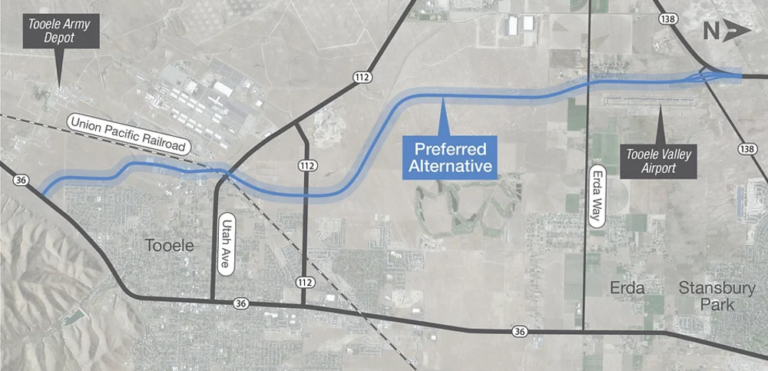
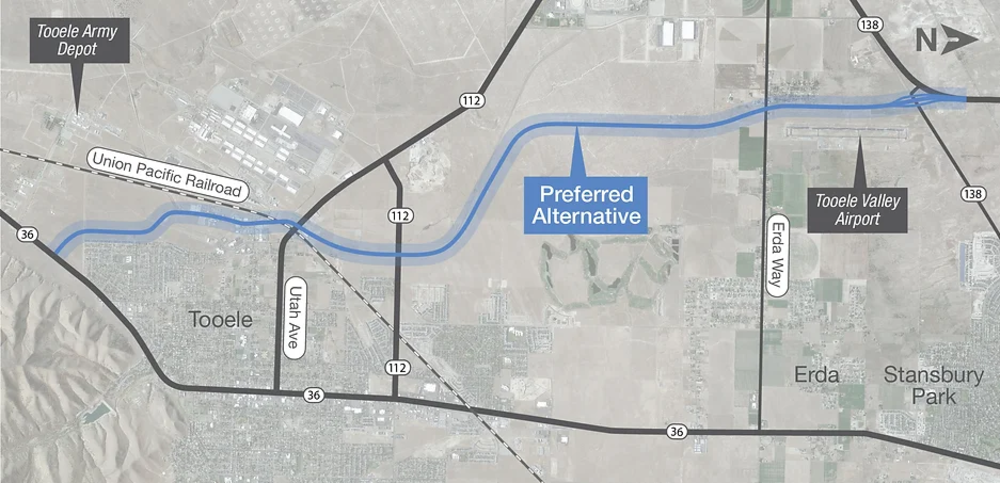
Map of proposed Midvalley Highway in Tooele County, Utah.
The plan includes eventually providing a variety of multi-use and separated bike lanes in the area, including a connection between the Midvalley Highway and SR-36 at the southern end of Tooele Valley.
The project will extend Midvalley Highway and build an accompanying bike path from SR-138 to SR-36 through Erda City, Grantsville City, and Tooele City.
UDOT still has to find funding for the project. “It could be 10-15 years out,” says A. Oanh Le-Spradlin, P.E., UDOT Region Two project manager. The local communities will have to push for it, she says. “We (UDOT) cannot lobby for the funds,” though it can apply for grant money when available. “We encourage local governments and the local communities to apply for money and we will help you with it when we can.” It likely will be built in stages, she suggests.
By Sarah Kaufmann — Commuting by bike to school or work can be a great way to add riding time, offset vehicle pollution, avoid stressful traffic, and bookend your day with exercise and time outside. But it typically involves the same route daily, which, by design, minimizes the opportunity for a periodized, structured training plan, or the makeup of ride programming that we rely on to build bike fitness in the pursuit of performance.
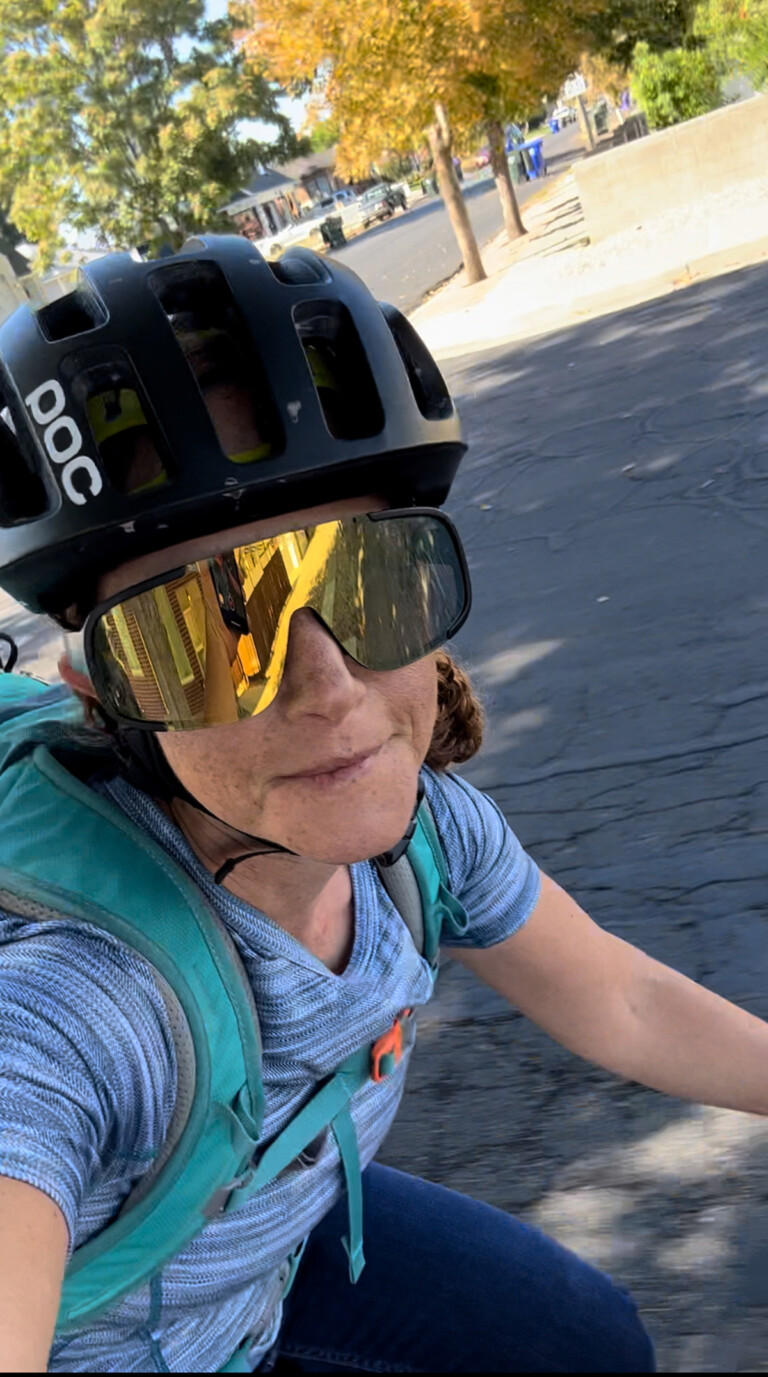
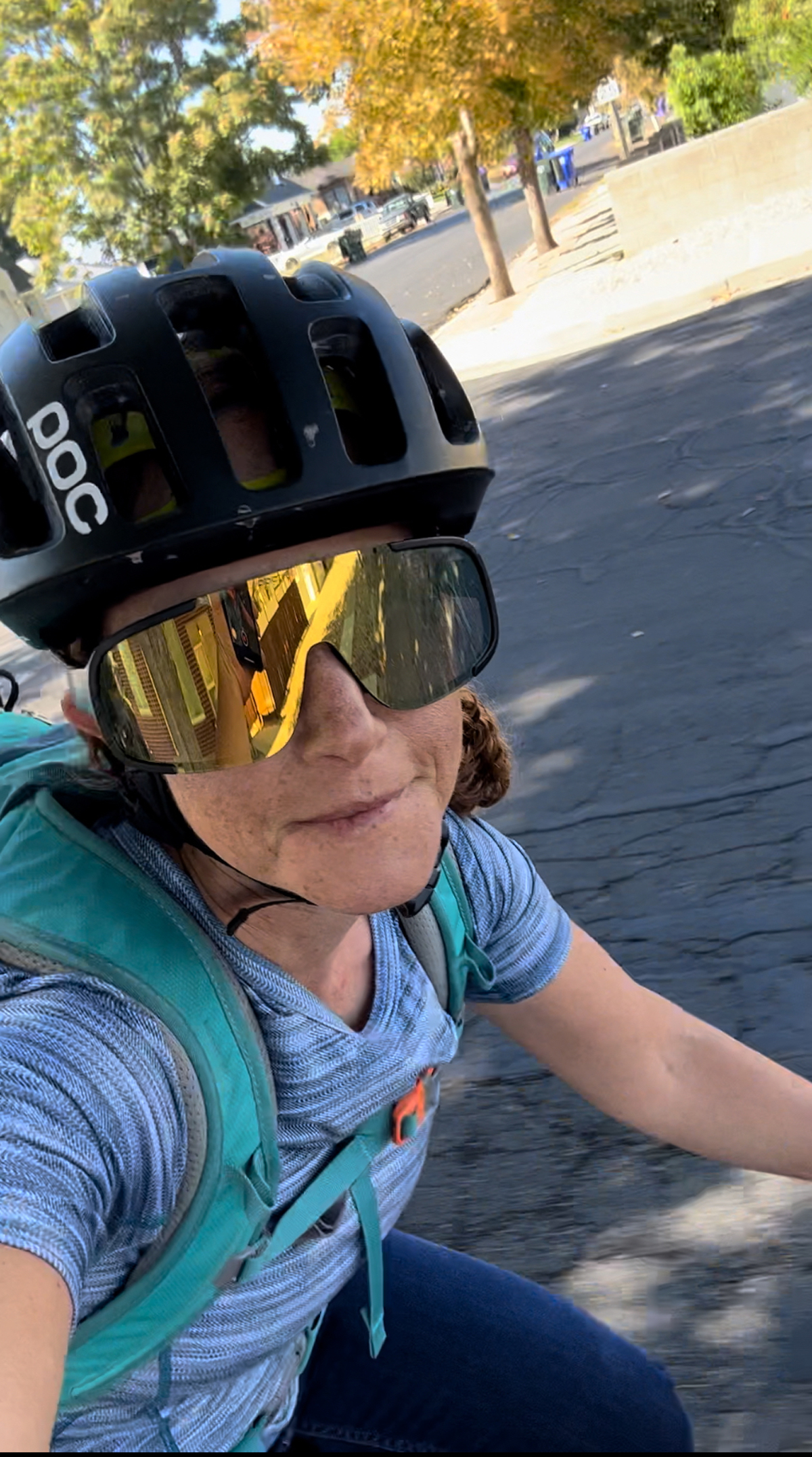
Sarah Kaufmann incorporating bike commuting with training. Photo by Sarah Kaufmann
That’s not to say that a regular commuting program will not make you fit. Any form of regular exercise will generally improve your fitness, when compared with not exercising. But if you have performance goals, at a certain point, you will max out on adaptation from simply riding the same route every day. In seeking the physiological adaptations that come from a structured training program, we are generally looking for wider variance in the training – the hard days must be harder, and the easy days must be easier. When your commute route is the same, it becomes challenging to create those contrasts in intensity and load or the interplay of stress and rest that results in adaptation and improved fitness.
Let’s back up. The way we build fitness is that exercise actually causes micro tears in the muscle fibers. When exercise is followed by rest, those microtears repair and the muscle rebuilds with healthier, denser fibers. You become more fit. You need both the strain of exercise, as well the subsequent rest to build fitness. As you become more adapted to exercise, the stimulus required to continue to develop fitness grows. We define this paradigm as progressive overload, and it is required on the path to fitness development. Further, as your capacity for harder work grows, your requirement for rest will grow as well. Which comes back to the earlier point – the requirements for progressive overload are such that the same repeated stimulus will cease to result in adaptation. Your same commute route will no longer provide the stimulus required for progressive overload and, as a result, for continued fitness building.
How do you overcome this? You will want to be a little strategic with planning your commute route. Your ability to do this will vary depending on your route. But start to think about a week of training as containing 3-4 key workout days (these are either especially intense or especially long). And the other 3-4 days should be lighter/easier days or rest days. If you commute 3-5 days per week and you do 1-2 long rides on the weekend, that likely means working in 1-2 days of intensity during your commute week. You could do this organically by simply riding your commute at a higher intensity/pace. If you follow a more structured plan, you might find a spot along your commute to perform a set of intervals. You will want to plan ahead to determine whether it makes sense to do this intensity on your way into your job/school/destination, or on the way home. That’s going to depend mainly on your specific timing, your access to a shower/ place to change, etc. Maybe you skip your bike commute on the days that you work in intensity and use your commuting days as easy rides, or what we often term active recovery.
Alternatively, maybe your commute is significant in terms of duration, and you get your long rides done as part of your commute. I would encourage you to limit the days you do your commute or find a way to shorten your commute on some days by either taking public transit or combining public transit with your commute. Doing a long commute each day will likely result in so much fatigue from the volume that you will not have the capacity to perform higher intensity work on non-commute days with sufficient quality to provide the required stimulus for adaptation. (Think of it this way: You need to be sufficiently rested to dig deep enough to train at high intensities).
To effectively work commuting into a periodized training program, you may need to modify, swap, or cut commute days. Key workouts require variance in load. The goal will be to make certain days significant in load via intensity, certain days significant in load via volume, and the remaining days to be rest days or active recovery. That’s how we build fitness and that is how to make a commute work for you toward your performance goals.
Sarah Kaufmann is the owner of K Cycling Coaching. She raced XC and CX at the elite level for 15 years. She is based in Salt Lake City, UT and can be reached at kcyclingcoaching.com.
Hazard: The frames of the recalled cargo bicycles can crack and can bend and break, posing a fall hazard to the rider.
Remedy: Refund
Recall Date: June 20, 2024
Units: About 300 (In addition, about 445 were sold in Canada)
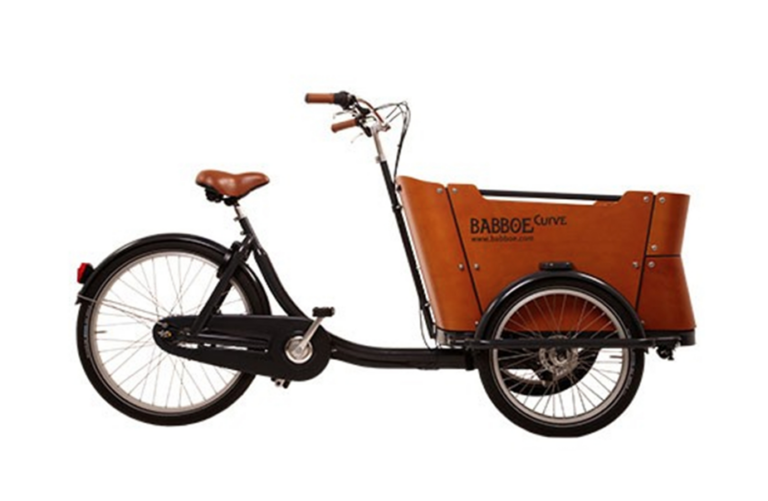
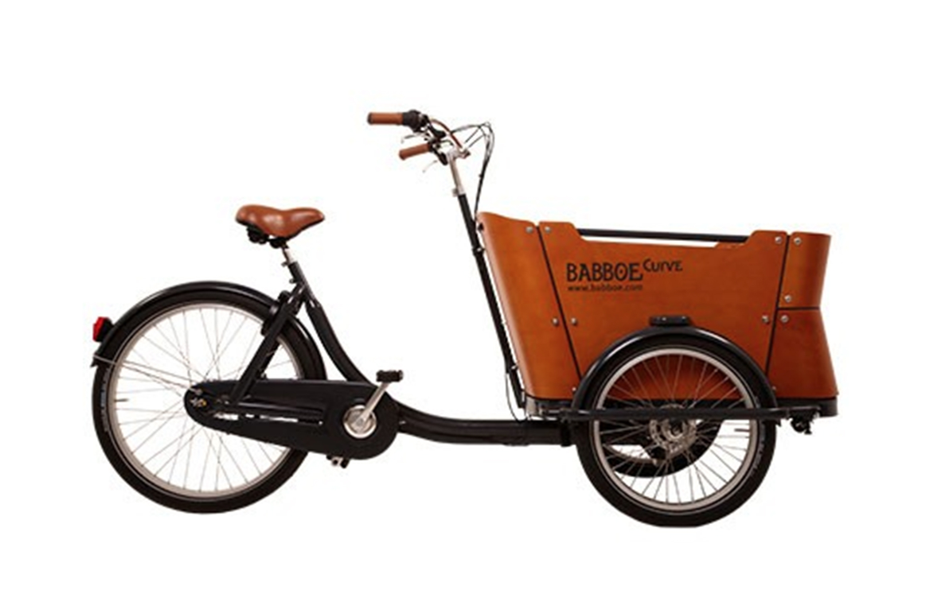
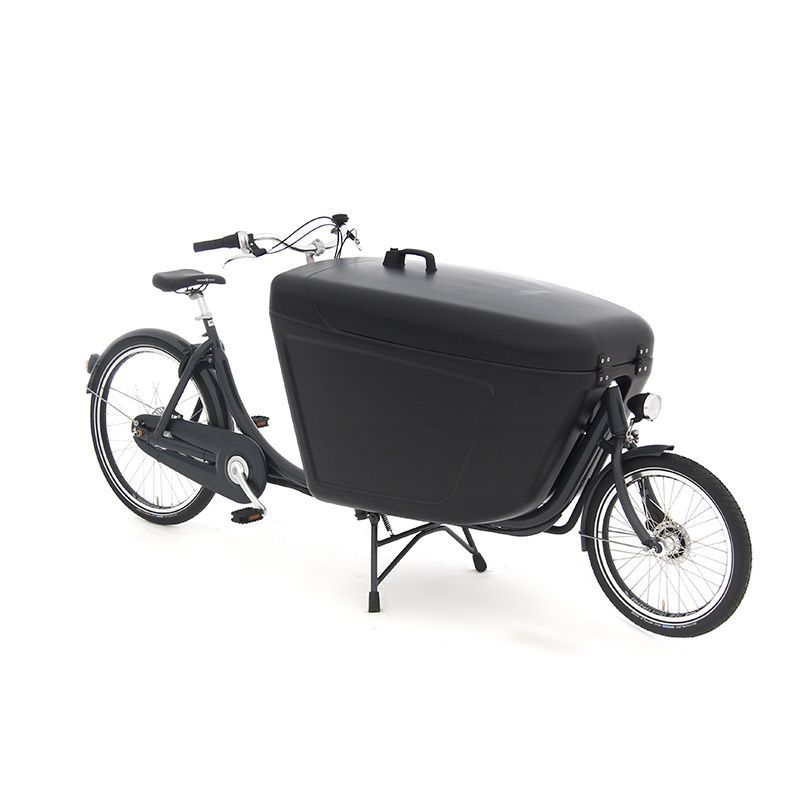
Babboe bakfiets cargo bikeBabbloe Pro
Consumer Contact
Babboe toll-free at 833-220-7867 Monday through Friday from 8 a.m. to 5 p.m. ET, email at [email protected], or online at www.internationalcargobike.com for more information.
Recall Details
Description: This recall involves all models of two-wheeled and three-wheeled, electric and non-electric (traditional) Babboe cargo bicycles. The recalled cargo bikes are intended for (urban) transport of children, pets and/or light goods.
Remedy: Consumers should immediately stop using the recalled Cargo bicycles, and contact Babboe for a full refund and to arrange for the company to pick up the bicycle.
Incidents/Injuries: None reported
Sold At: Bicycle stores nationwide including 718 Cyclery, of New York City; A Street Bike Named Desire, of Palo Alto, California; Going Dutch Bikes of Old Greenwich, Connecticut; Aika Trading LLC, of Pacific Palisades, California; Bicycle Space, of Washington, D.C.; Clever Cycles, of Portland, Oregon; Dockside Boat, of Princess Anne, Maryland; Human Electric Hybrids LLC, of Ypsilanti, Michigan; La Dolce Velo, of San Jose, California; PressWell, of Hinsdale, Illinois; and the Bike Center, of Santa Monica, California, from January 2011 through March 2024 for between $3,500 to $7,000.
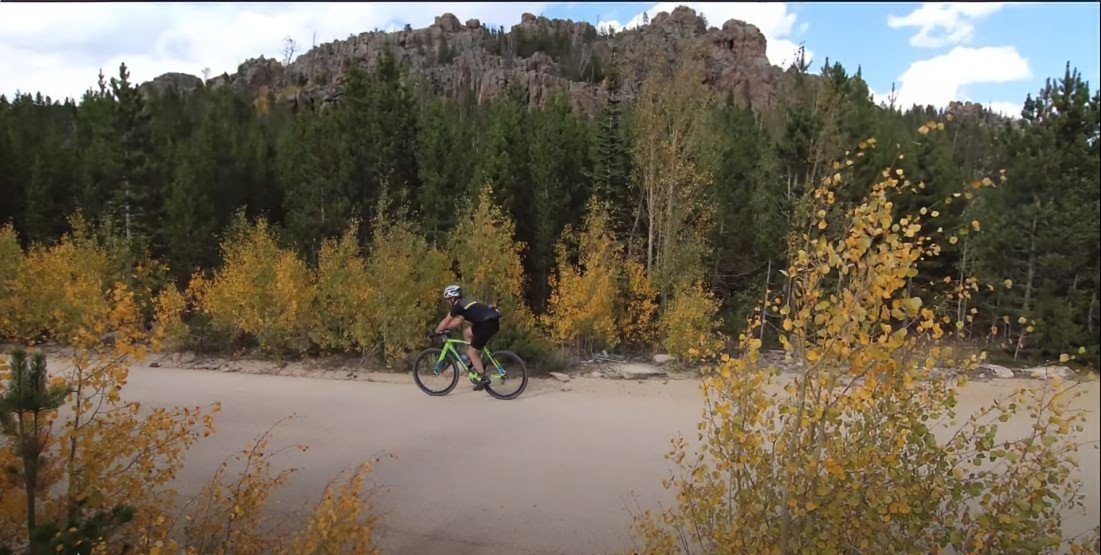
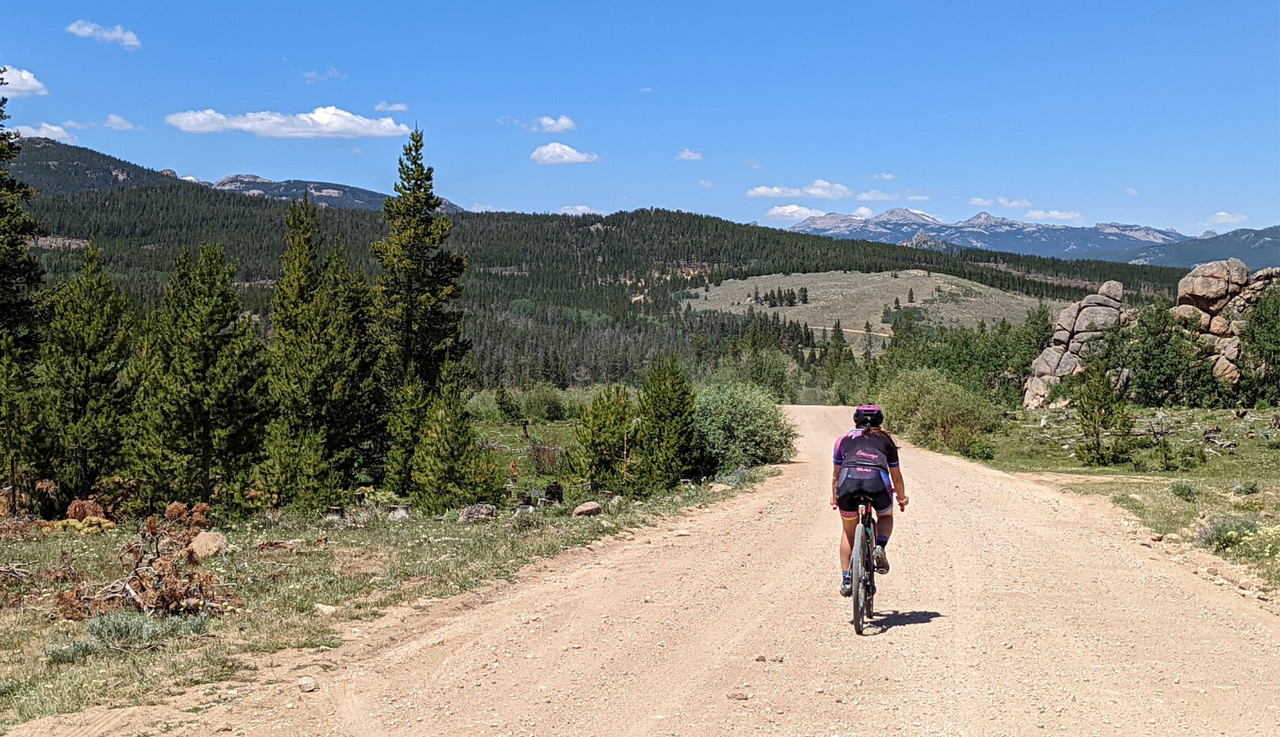
GLENROCK, Wyoming (June 21, 2024) — The Cowboy Crusher will be held on July 13, 2024 in the beautiful town of Glenrock Wyoming. Nestled at the base of the Rocky Mountains and the confluence of Deer Creek and North Platte River, Glenrock served as a mail and stage stop along the Oregon Trail and a vital point for emigrants during the westward expansion. Pony Express riders raced through the area delivering the country’s mail.
Scenes from Wyoming’s Cowboy Crusher. Photo courtesy Cowboy Crusher
Cowboy Crusher routes cover mixed surfaces and anything from champagne gravel to whiskey wielding roads with some two-track.
Four distances capture the spirit of this grassroots gravel event, 121/75/40/17 miles and 9,000+/6,500/3,200/ 1,000 feet of elevation gain respectively. There will be a cash purse for top 3 male, female, & non-binary finishers in the Cowboy 121 race distance.
All things Cowboy Crusher start and finish in Glenrock Town Park: Start/Finish line, awards, music, food, beverage, and a lot of swag.
2024 Event Information:
July 13, 2024 — Cowboy Crusher Gravel Grinder, Glenrock, WY, Cowboy Crusher Gravel Grinder, Glenrock, WY, 121 – 75 – 40 – 17 mile options and 9,500, 6,500, 3,200, 1000′ elevation gain, Gear Up and Get Out There, Tia Leschin, 307-235-6353, 406-930-2311, [email protected], https://www.cowboycrusher.com
Scenes from Wyoming’s Cowboy Crusher. Photo courtesy Cowboy CrusherScenes from Wyoming’s Cowboy Crusher. Photo courtesy Cowboy CrusherScenes from Wyoming’s Cowboy Crusher. Photo courtesy Cowboy Crusher
By Gene Hamilton — Do you want to master the art of cornering? If so, I’d like to share the ultimate on-trail drill to make you corner faster. This drill makes me so much faster that I often get PRs while doing it.
I have found that focusing only on the front brake keeps you centered (not creeping back over the rear wheel while braking) and frees up bandwidth by eliminating two things that you formerly had to pay attention to, namely your rear brake and rear wheel traction. The importance of “freeing up bandwidth” cannot be overstated!
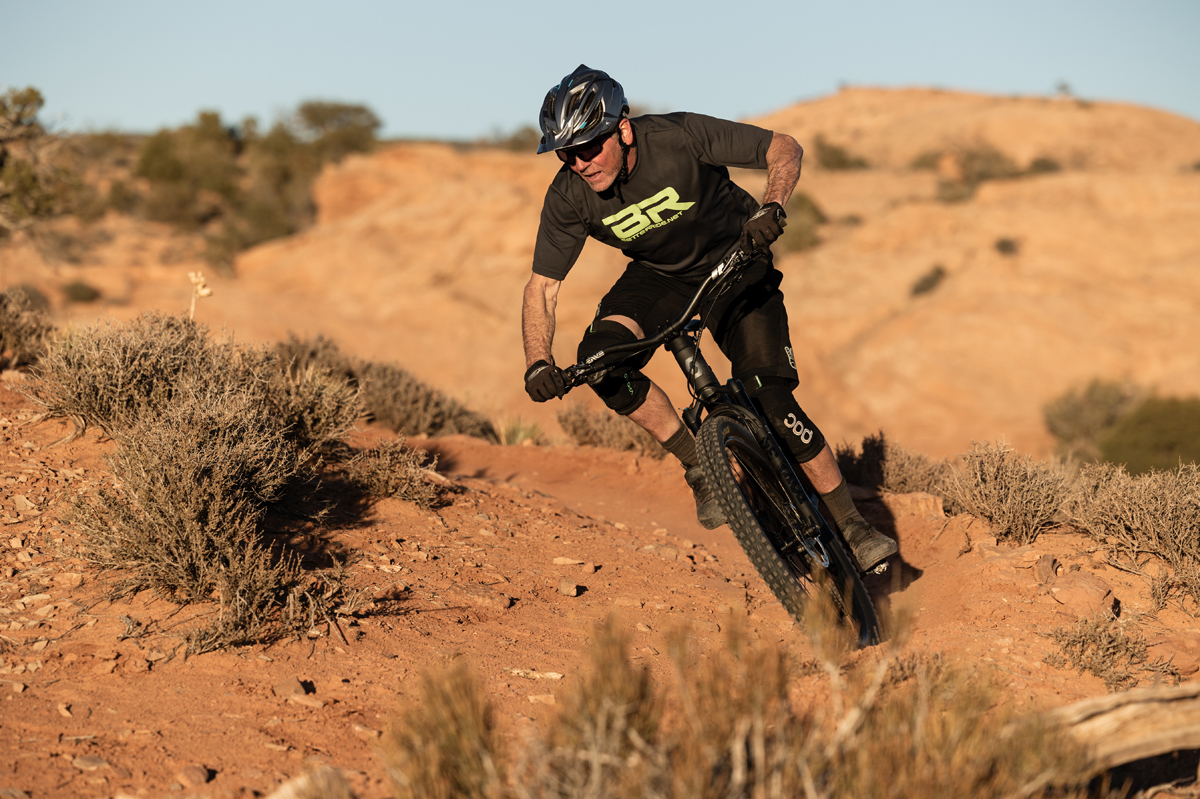
Gene Hamilton cornering in Moab, Utah on the Falcon Flow Trail. Photo by Corie Spruill Photography, https://moabphotographer.com
What is bandwidth?
Think of bandwidth as the total amount of focus you have. You need 100% of your focus on where you are going to be in 5-7 seconds and how you are going to get there.
The ineffective way to use your bandwidth:
When I’m using both front and rear brakes as I’m slowing down before a corner, I’m “feeling” my rear tire for traction and listening to my rear tire to help me modulate the rear brake. This takes a lot of focus.
If I don’t have enough bandwidth (focus) left over for my vision, the most important piece of cornering will suffer. If 50% of your focus is on what is happening behind you, you only have 50% for what is most important to you: figuring out and doing what you need to do over the next 5-7 seconds. What’s behind you is done; what’s in front of you is the only thing that matters.
The effective way to use your bandwidth:
By focusing on using your front brake aggressively and not worrying about the rear brake, your entire focus is on what is in front of you. This makes you feel like you are going slower, less rushed, and more in control. It’s mind-blowing! That corner that always feels a little too tight? It seems gigantic now. Instead of “Oh, crap,” your brain is laughing at how easy this is. It is that easy.
Back to cornering:
The most important pieces of cornering are, in order of importance:
Vision. Looking at the corner and picking your line on the way to the corner (ride the corner with your eyes).
You should look through the corner past the exit as you start your turn. (Unless your vision is blocked, look as far into the corner as possible, and as soon as you can see further, do so.)
Understanding and being proficient at Counter pressure/steering.
Initiate a turn by pushing your inside grip forward away from your body (gently steering in the opposite direction).
Understanding and being proficient at finishing your braking to cut speed in a straight line (knowing how to get the most out of your front brake).
Never try to change direction and cut speed at the same time. This overloads your tires’ ability to maintain traction, and it decreases your lean angle by making the bike stand up.
Here is Greg Minnaar’s take on maintaining correct body position:
You need to stay hinged at the hips, elbows up and out, weight-centered, and above your bike.
More on Body Position:
Do you understand and are fairly proficient at those skills? Then you are going to love this drill! If not, please practice those skills and become good at them before attempting the following drill. This is best done on a trail where you can descend easily, but which gets much harder as you increase your speed.
My favorite trails in Moab for this drill are Eagle Eye, Falcon Flow, and Hazard. These are curvy blue trails and fast, but not steep, black trails.
Finally – The Drill:
Pretend you don’t have a rear brake. Focus on only using your front brake (which does 70-100% of cutting your speed) all the way down the trail.
Like me, you may have gotten used to using your rear brake to try to save you when you enter corners too fast. Knowing that you won’t be using the rear brake can be scary! That fear will help you slow down so you enter the corner at a speed that makes the corner feel easy at your current skill level. By forcing yourself to slow down to the correct entrance speed for the corner, you will corner with more control and less fear and achieve greater exit speed.
I have found that focusing only on the front brake keeps me centered (not creeping back over the rear wheel while braking) and frees up bandwidth by eliminating two things that you formerly had to pay attention to: your rear brake and rear wheel traction.
This makes it much easier to look through the corner.
I’m already centered and usually feel like I slowed down more than needed as I start the corner. This makes looking through the corner easier as I am confident and calm. Though it feels slow (because I’m looking further ahead and more relaxed), I can exit the corner with greater speed, which has led to quite a few PR’s.
Conclusion:
This drill reminds me of when I ran into my former student Cody Kelley (US National Enduro Champion) several years ago at Bootleg Canyon. He ran up to me, saying, “Gene, Gene, I’m so excited!” I asked him what he was excited about, and he said, “I’m wearing out two sets of front brake pads before wearing out one set of rear pads!”
I was so impressed! He asked, “Why are you impressed? You taught me this?” I replied that I might have taught him that, but I was still too in love with my rear brake. This was one of those “do as I say, not as I do” moments
The student had become the master. Have you watched Cody ride/race? He reminds me of Minnaar. He is so smooth and calm in the corners that he’s almost boring to watch. Thankfully, he has style for miles on the rest of the trail.
Go out and practice this drill/technique and start riding safer, faster, and more efficiently today.
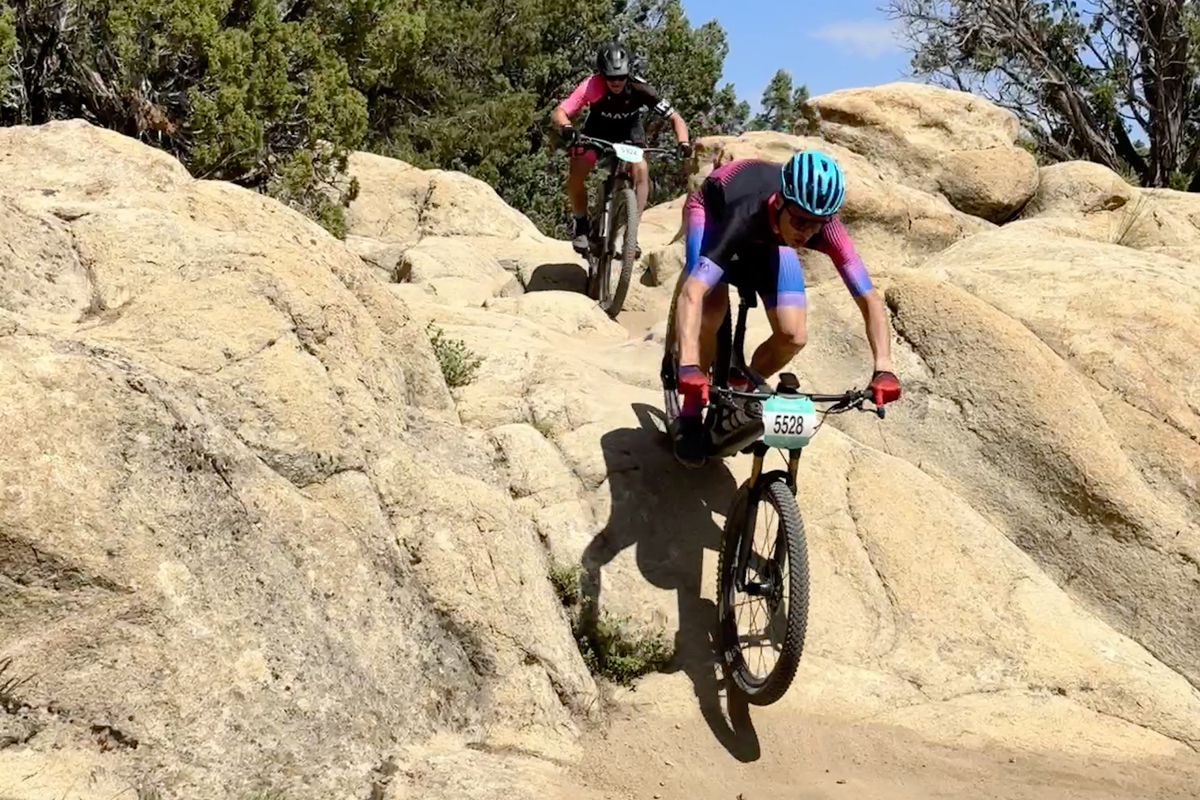
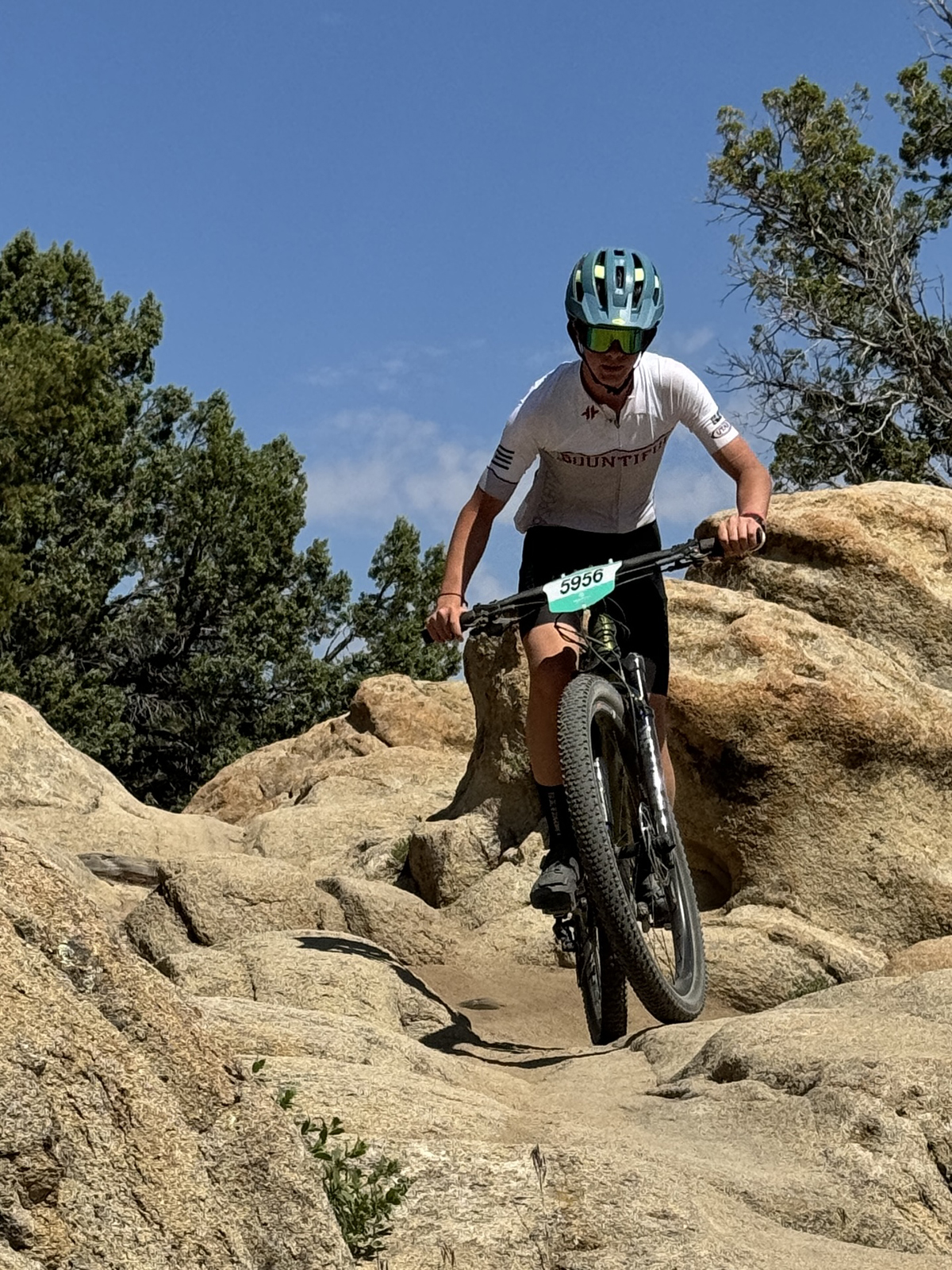
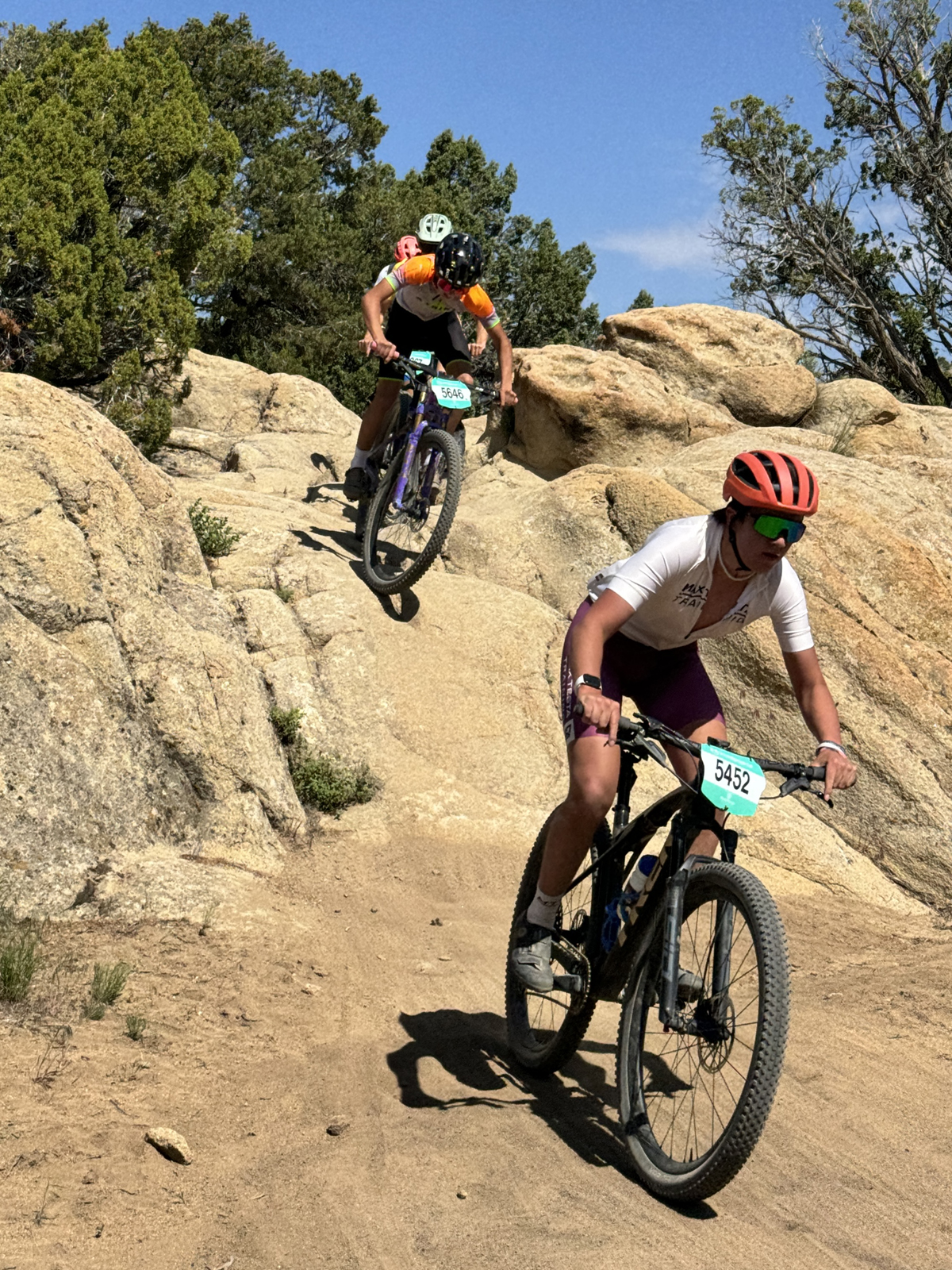
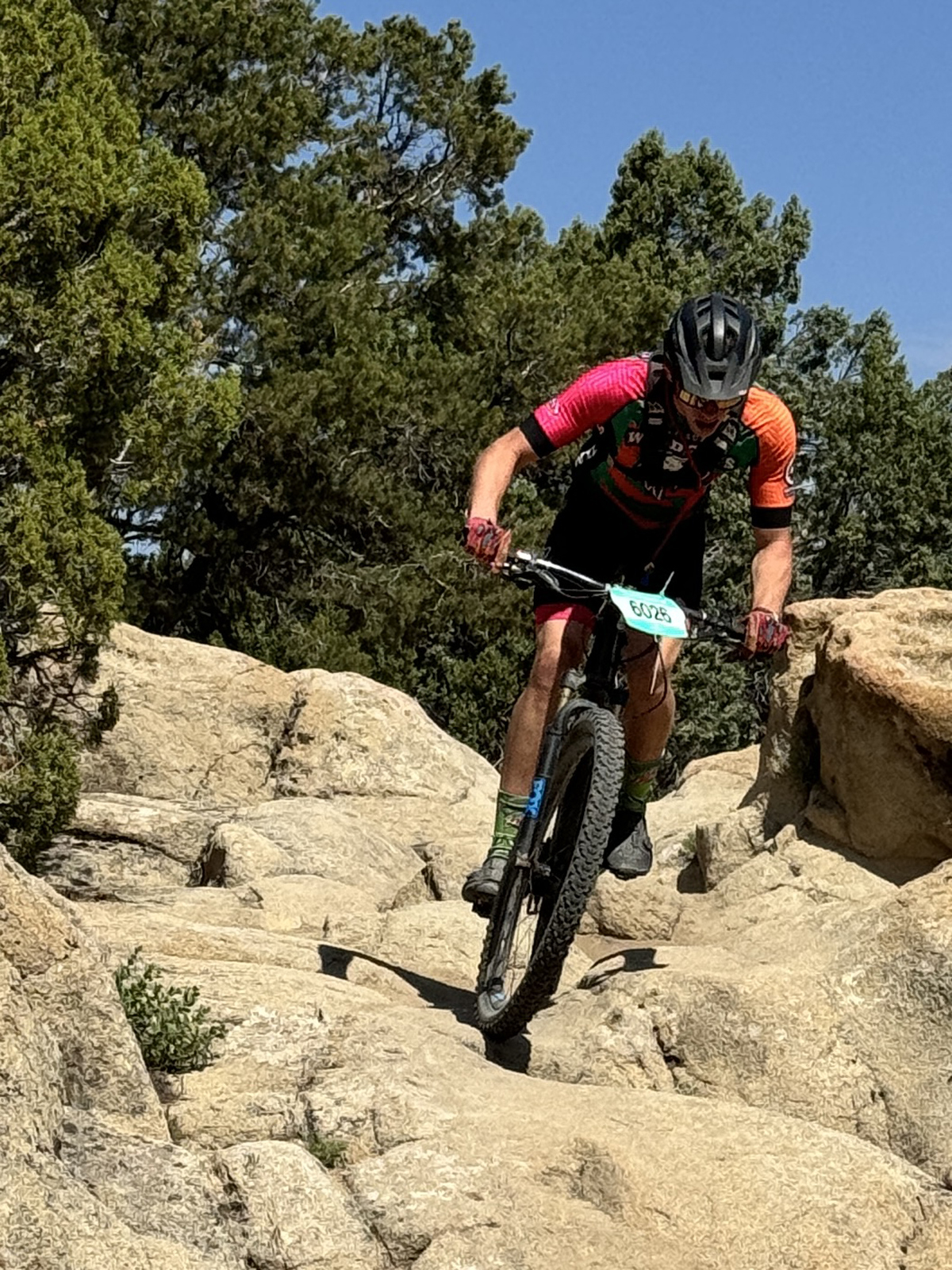
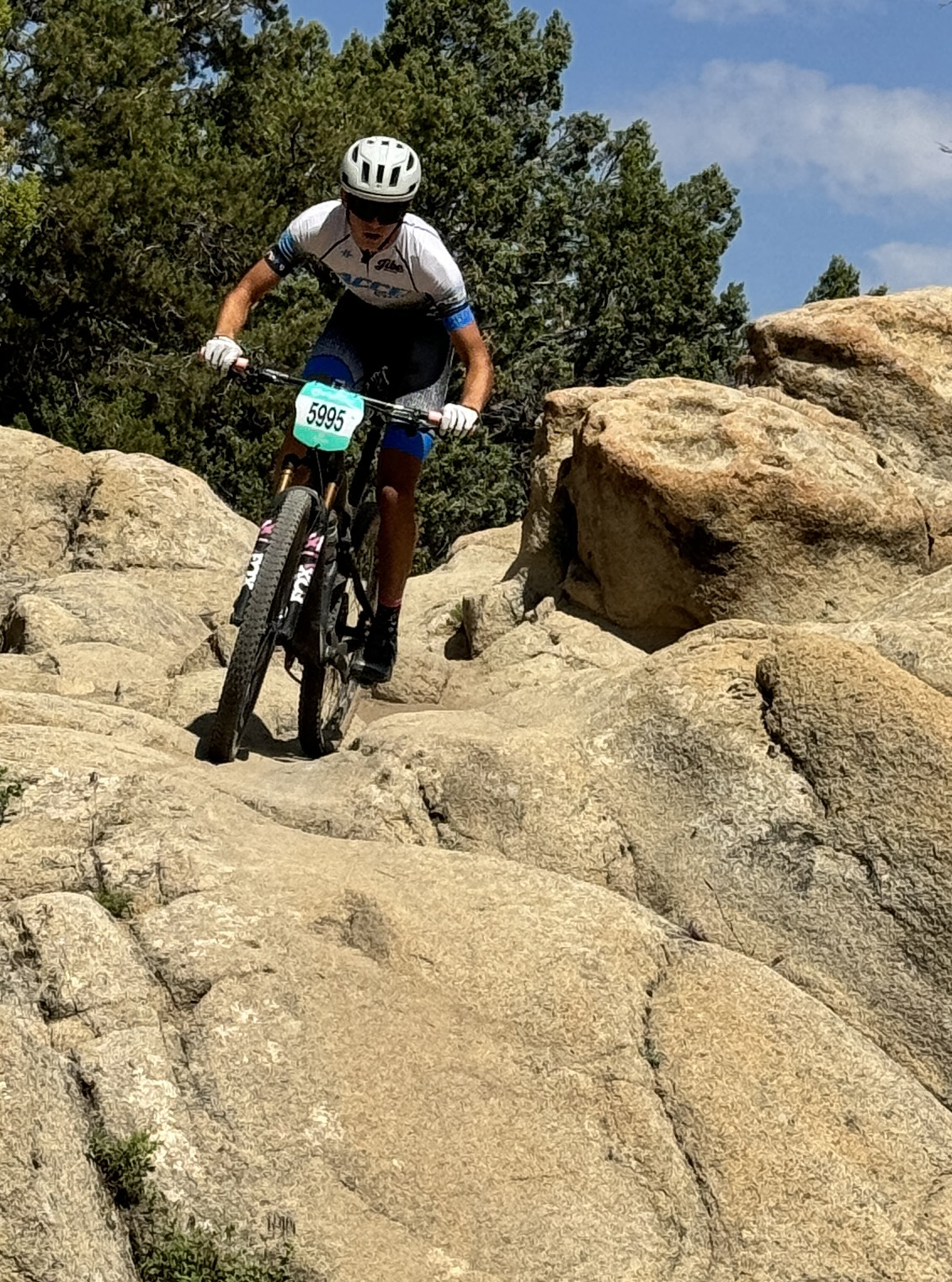
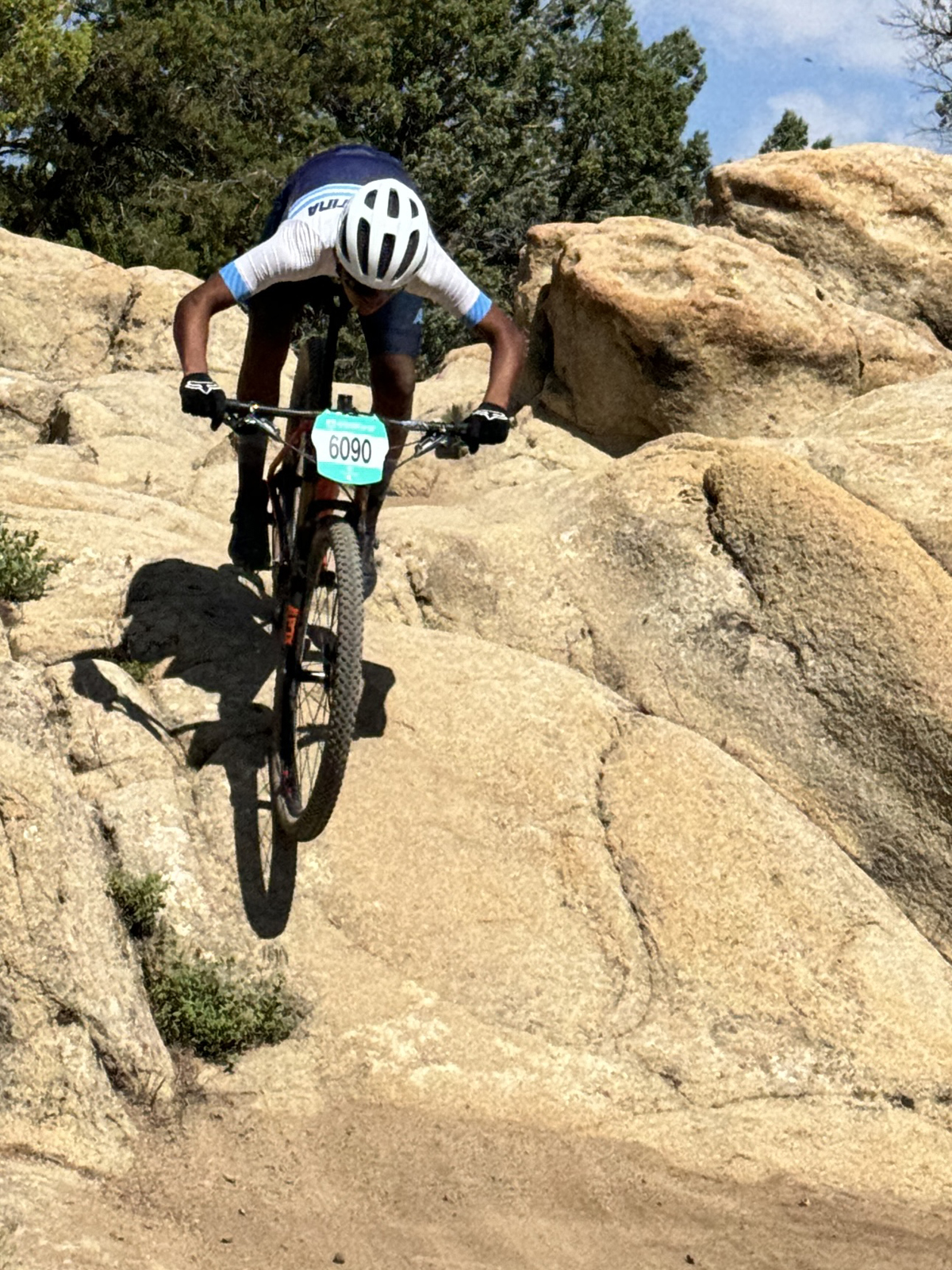
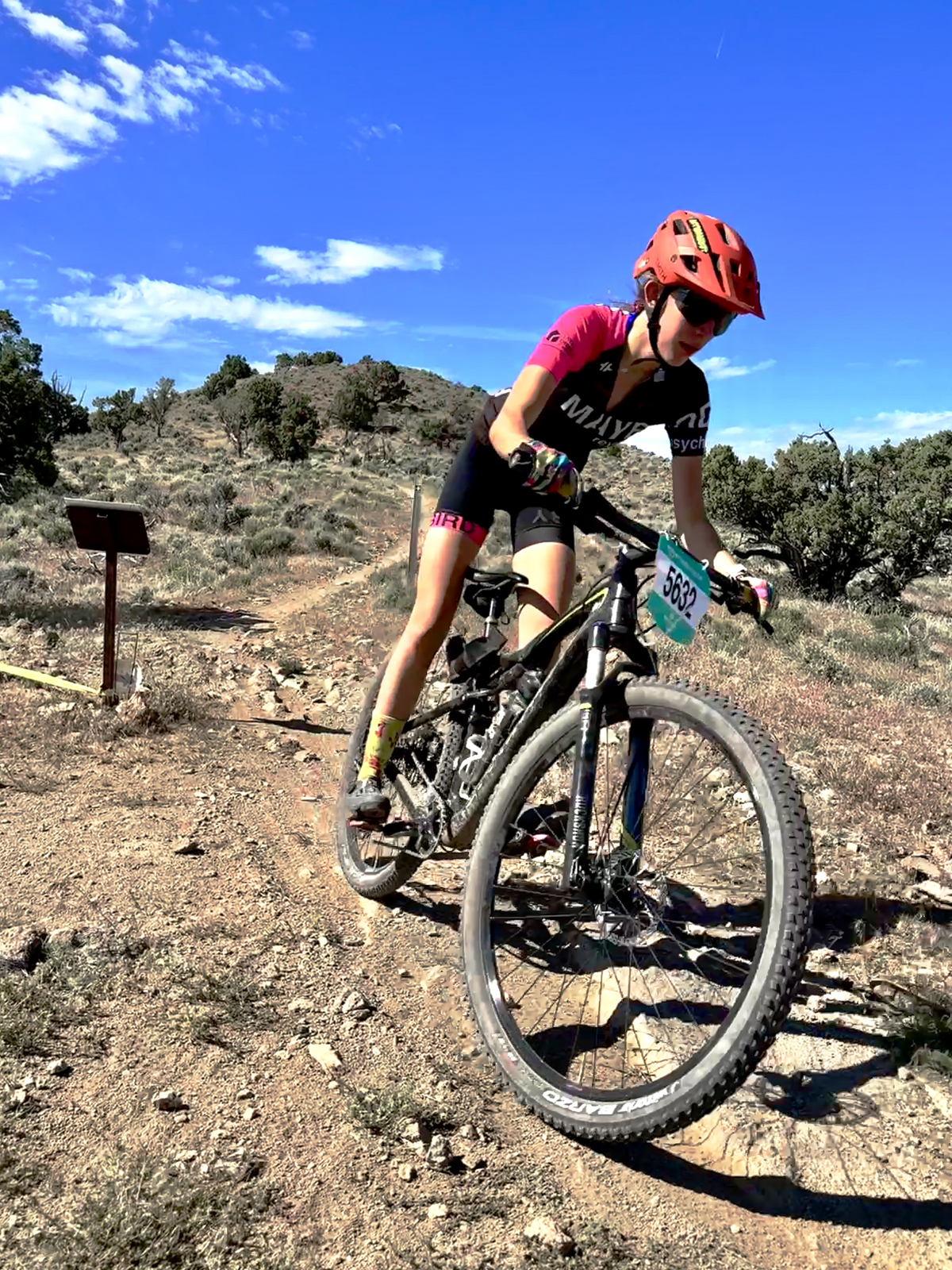
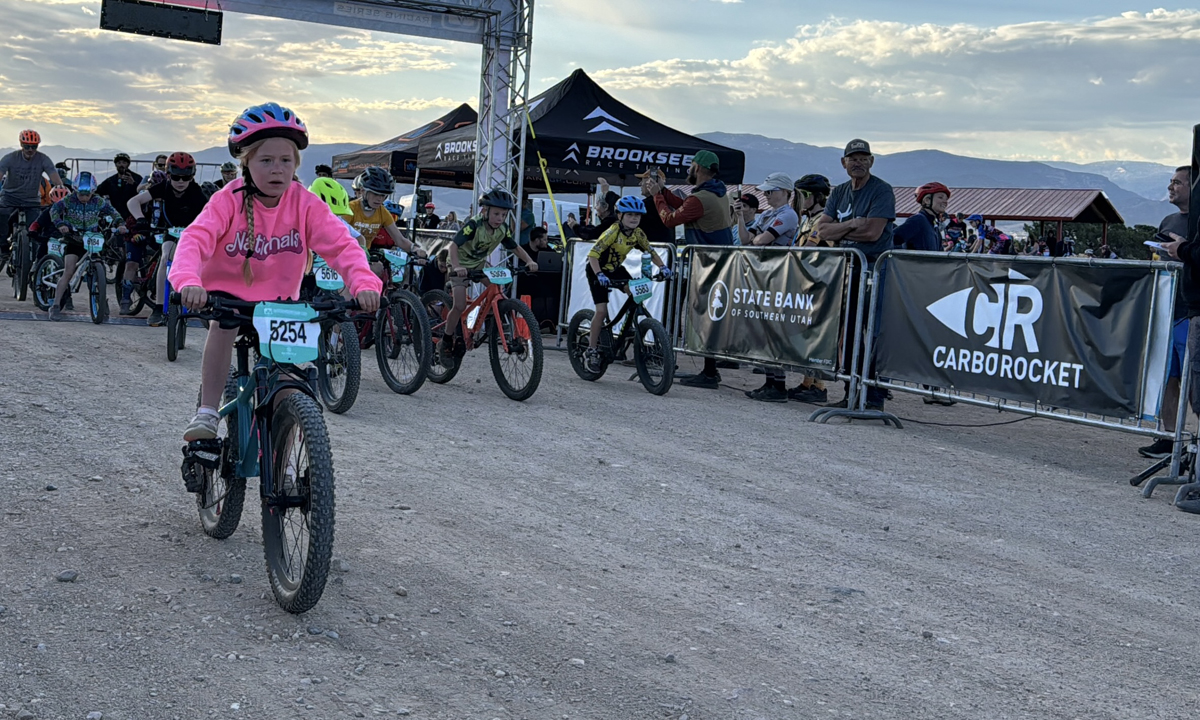
CEDAR CITY, Utah — On Saturday May 18, 2024, Red Rock Events held their annual Intermountain Cup Three Peaks Mountain Bike Race. This race is part of the series and the race director, Margaret Gibson, permits this one race annually with USA Cycling. Three years ago, enough racers and local clubs approached Margaret asking if she would sanction a race with USA Cycling. This would give an opportunity for Utah based athletes and clubs to chase points and qualify to attend a national championship. Margaret agreed to sanction this race to help others.
The event in Cedar City, Utah had nearly 700 athletes attend from Utah and other states. The Pan American Mountain Bike Championship was held the previous week at nearby Soldier Hollow in Heber, Utah and some athletes stayed in Utah for the extra week to race this event. Even a few members of the Argentina National Team stayed to compete. The event was well organized, and the weather was great for a race.
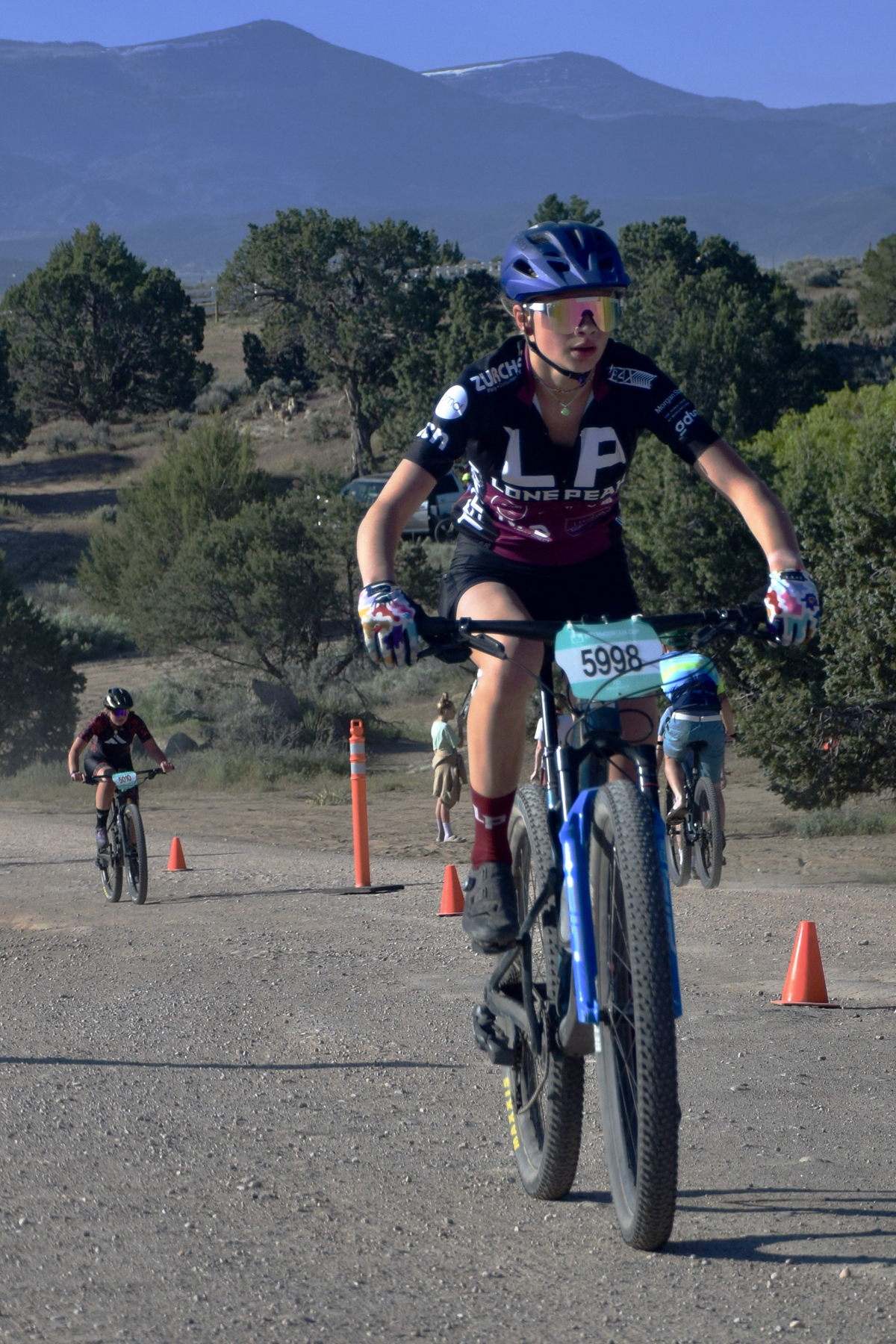
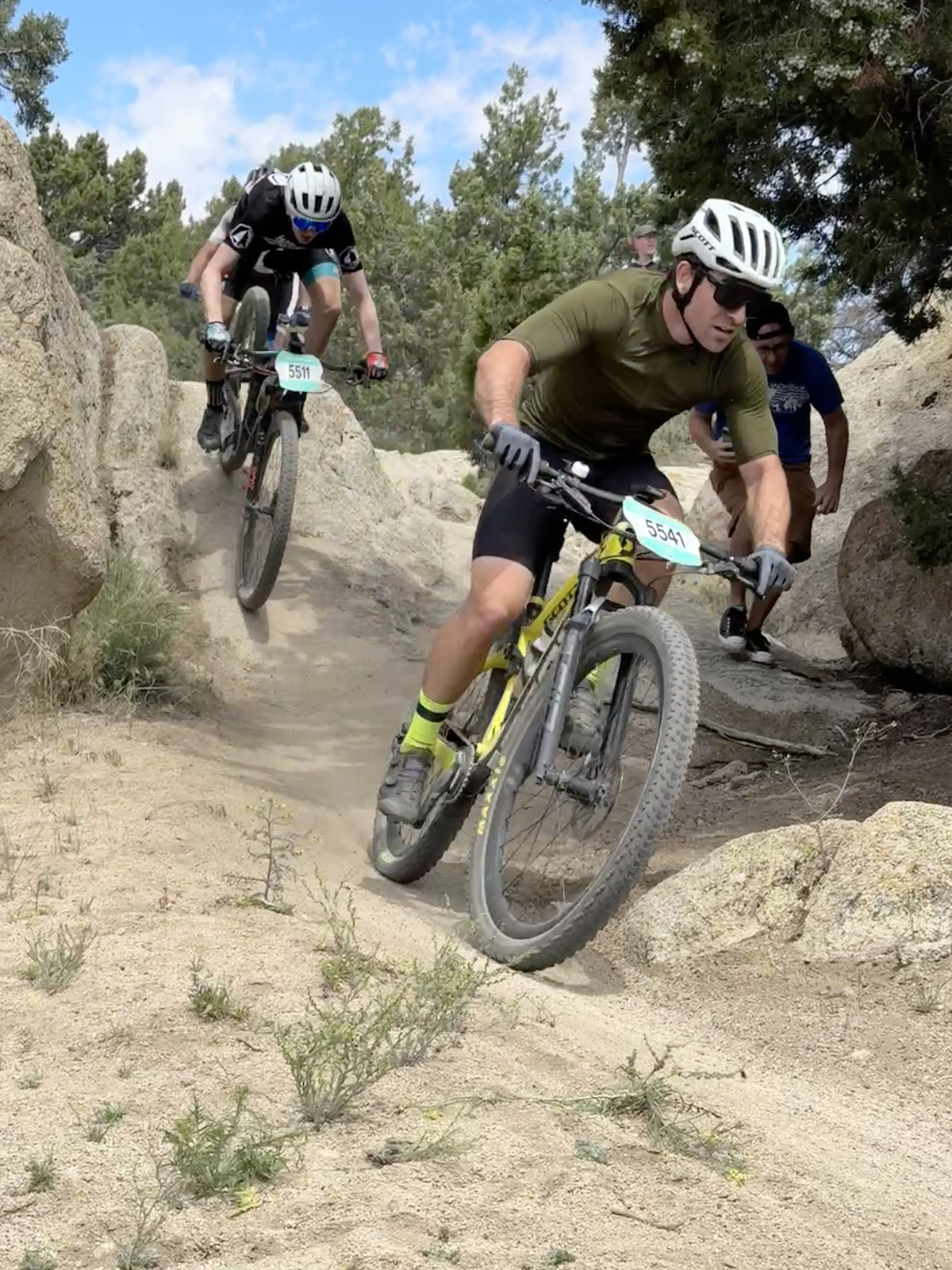
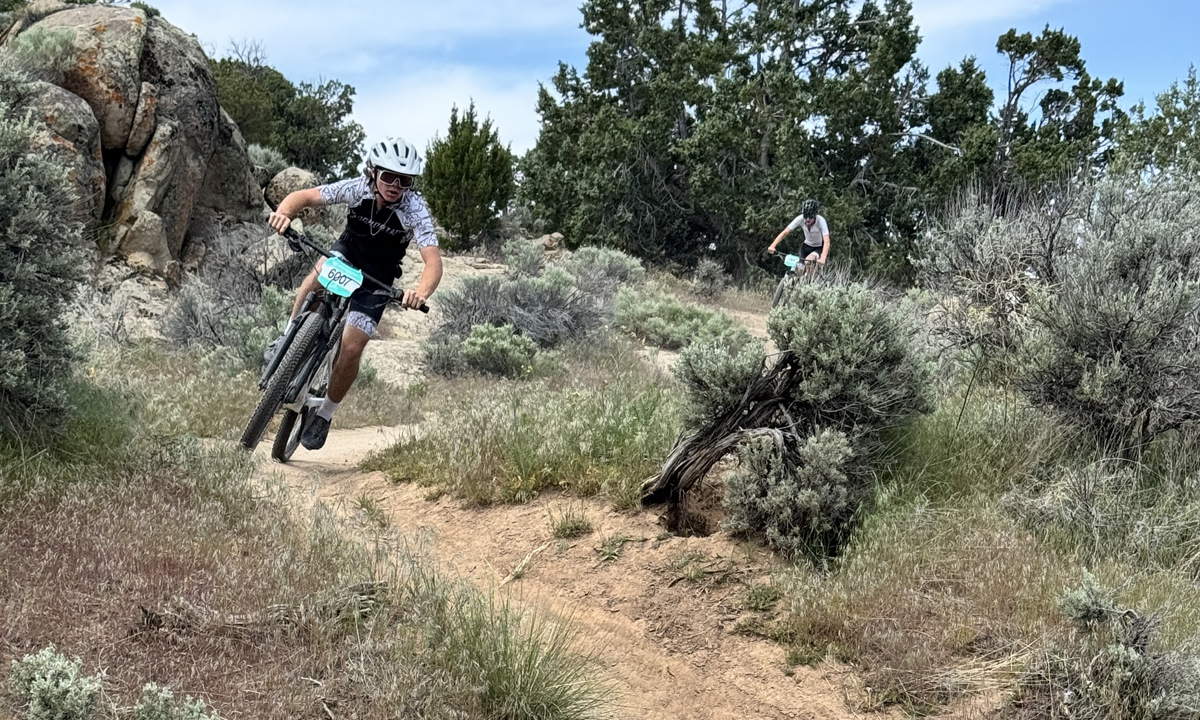
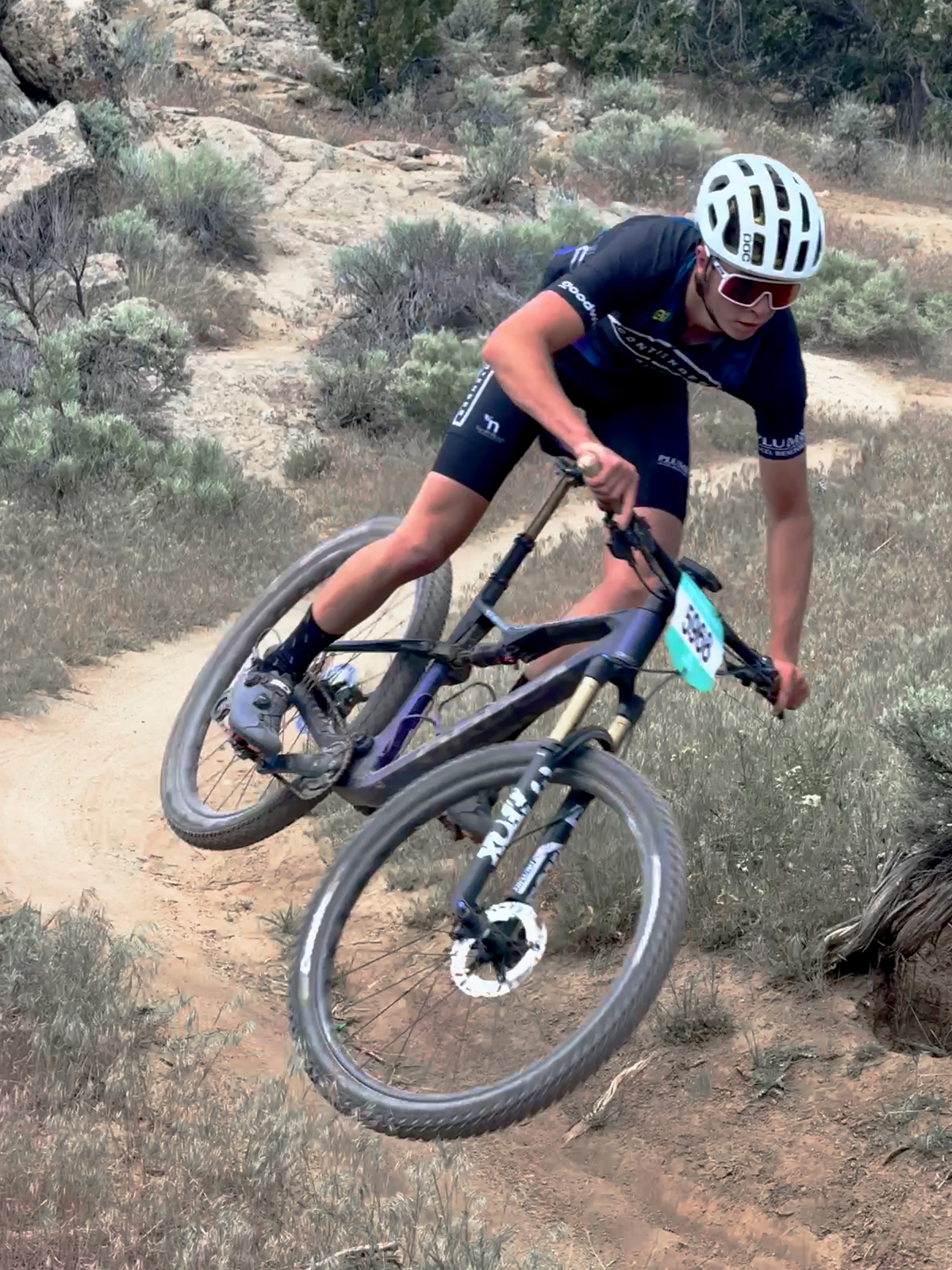
Scenes from the 2024 Three Peaks Intermountain Cup. Photo by Scott Frankos
Several athletes were crowned as USA Cycling Utah State Champions. Samuel Elson won the Men’s Elite Category with a time of 1:59:57. Sarah Kaufmann topped the Women’s Elite with a time of 1:41:48.
Many local teams participated. Accel Cycling crowned Addyson Lundberg as the Varsity Girls Cat 1 State Champion and their team had seven podiums overall. Maybird Cycling has two new state champions, Quin Profsky won the Freshman girls and Emma Daily won JV girls for the State Championship. Spry Cycling had contenders as well. Dan Draper the manager of Maybird Cycling said, “I just think we are so lucky to have the ICup series available to us and I wish more regions throughout the nation had something similar. Just such a great opportunity for all levels and ages to get racing experience.”
Bryson Perry from Rouleur Devo said, “a huge congratulations to all our new Utah State Champions. These athletes can be competitive in national and international levels of competition and it’s cool to watch and see them ripping it up both locally and nationally. Hopefully in the future we can get even more ICup events sanctioned with USAC. These races make a big difference in helping Utah athletes to continue their progression and development and earn points ranking that help them to have better race starts when they are at national events. A huge thank you to Margaret and the ICup for sanctioning this race. It is appreciated and critical to helping Utah athletes progress to compete in national and international level competition.”
Brandon Price, chief referee from USA Cycling said, “Utah has some strong riders. The local athletes and professional clubs are talked about on the national level and Utah produces both local and national champions. There is something in the Utah water that makes its athletes among the nation’s best competitors.”
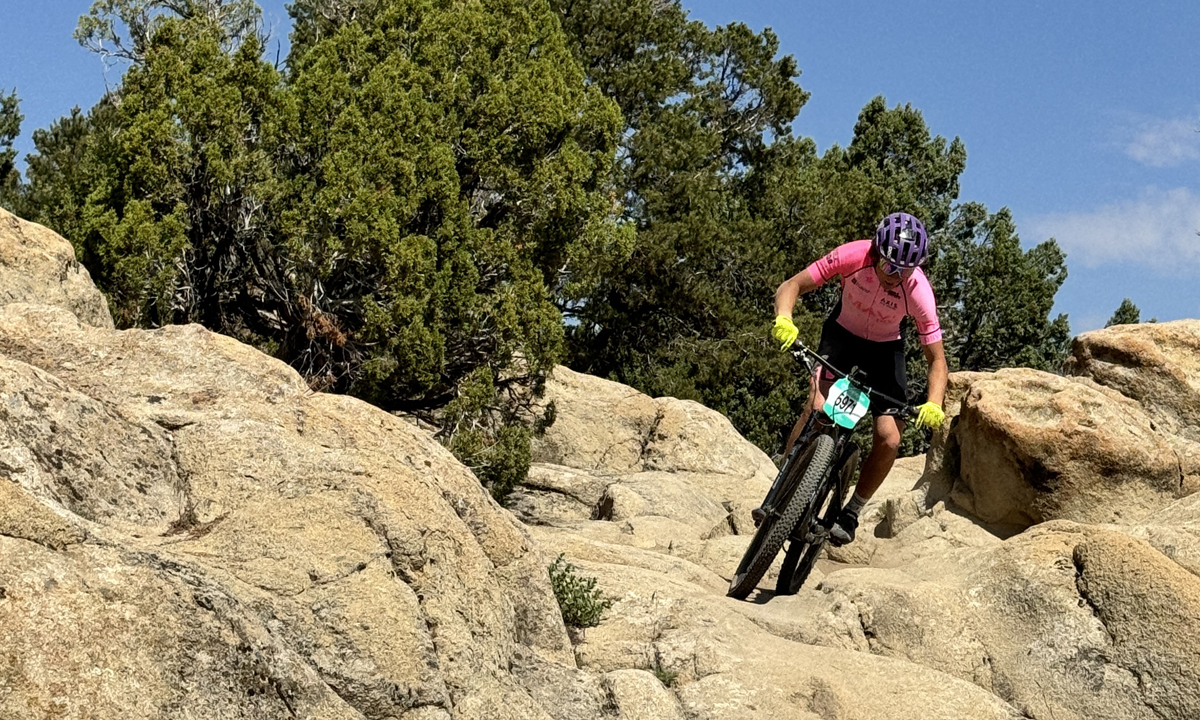
Scenes from the 2024 Three Peaks Intermountain Cup. Photo by Scott FrankosScenes from the 2024 Three Peaks Intermountain Cup. Photo by Scott FrankosScenes from the 2024 Three Peaks Intermountain Cup. Photo by Scott FrankosScenes from the 2024 Three Peaks Intermountain Cup. Photo by Scott FrankosScenes from the 2024 Three Peaks Intermountain Cup. Photo by Scott FrankosScenes from the 2024 Three Peaks Intermountain Cup. Photo by Scott FrankosScenes from the 2024 Three Peaks Intermountain Cup. Photo by Scott FrankosScenes from the 2024 Three Peaks Intermountain Cup. Photo by Scott FrankosScenes from the 2024 Three Peaks Intermountain Cup. Photo by Scott FrankosScenes from the 2024 Three Peaks Intermountain Cup. Photo by Scott FrankosScenes from the 2024 Three Peaks Intermountain Cup. Photo by Scott FrankosScenes from the 2024 Three Peaks Intermountain Cup. Photo by Scott FrankosScenes from the 2024 Three Peaks Intermountain Cup. Photo by Scott Frankos
By Lou Melini — I have known Matt Davidson for nearly 2 decades from a few group bike tours. He has taken a number of tours, mostly as solo self-supported. In 2023 Matt did a guided tour in the Netherlands with his wife having his gear shuttled from hotel to hotel [See companion story]. Upon completion of that ride, he did a completely self-supported tour on EuroVelo 19 – Meuse Cycle Route (en.eurovelo.com/ev19).
Cycling West: Was this your first European trip? What other bike tours have you done in Europe?
Matt Davidson: My September 2023 tour was my inaugural European bike ride, and my second international tour following one in Thailand a few years ago. While I designed the self-supported portion of this tour to last two weeks, I knew I wanted to cycle in more than one country just to experience different languages, food, and cultures. It’s not too difficult to patch together a route that accomplishes 3-4 countries in two weeks, considering how small some of the European countries are. It is easy to do 50-75 mile distances daily on a bike tour averaging a leisurely 10mph. I have completed seven other multi-day tours spanning from 2-30 days in the United States. I still want to cover different areas of the US in the future, but this trip was designed for a completely different experience where I would be out of my comfort zone.
CW: Matt, you rode EuroVelo 19 – Meuse Cycle Route. Discuss briefly the EuroVelo system in Europe. What was your general route and why did you choose that route?
MD: After deciding that I wanted to bike tour in Europe, I started researching some route options and studying a map of Europe. Then I browsed several travel books and looked at online journals from crazyguyonabike.com to see what other routes people have done throughout Europe. I also joined several Facebook groups for bike touring in Europe. You would be absolutely amazed at how many different permutations there are for European bike touring groups – Bikepacking, European Cycling, EuroVelo Routes, and so forth … And then somewhere along the way I saw someone’s comments about EuroVelo 19 which originates in France and follows the Meuse River towards Rotterdam, matching my rough destination of Amsterdam and allowing several cycling days in France at the start.
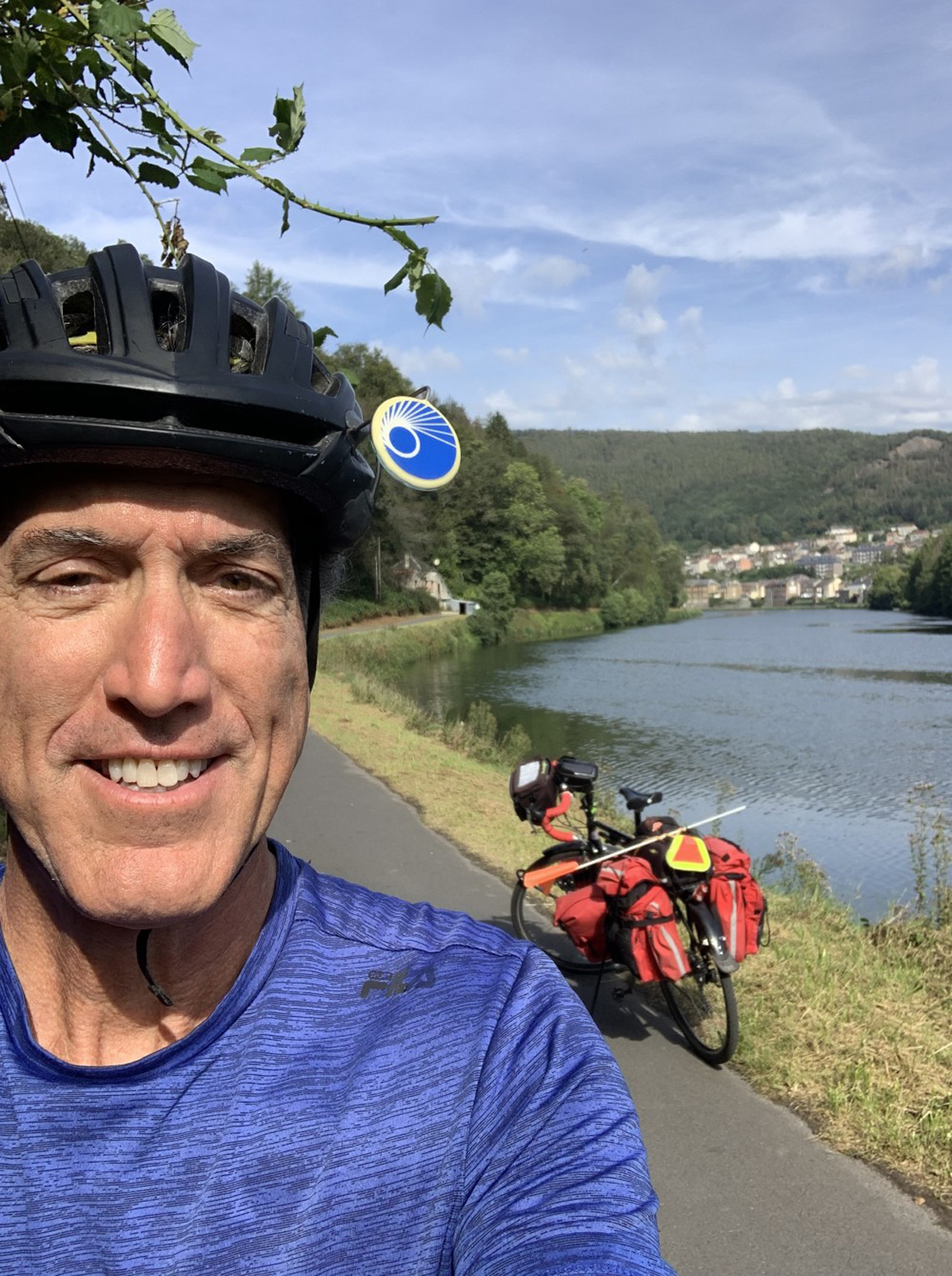
Views along the Meuse today had me gazing at the architecture and lots of stone…bridges, houses, and castle/mansions. Photo by Matt Davidson
EuroVelo.com is a great resource and starting point – their website explains, “EuroVelo is a network of 19 long-distance cycle routes that cross and connect Europe. The routes can be used by long-distance cycle tourists, as well as by local people making daily journeys. Only routes approved by the European Cyclists’ Federation can be called “EuroVelo.” Simply put, in choosing my route for a first tour in Europe, why reinvent the wheel?
Additionally, GPX route files are available for download on the EuroVelo.com website making it super simple to follow any one or a combination of routes via your bicycling computer or a bicycling cell phone app with turn-by-turn directions. Those apps are essentially similar to your cell phone’s Google Maps driving directions, for following a pre-established bicycle route.
Given my chipper age of 63, I prefer flatter routes even though I can trudge up hills like a 17-year-old, albeit much slower but surely cresting eventually. Therefore, following any river sounded both scenic and flat-ish.
EuroVelo 19 starts in a small town due north of Dijon, France called Langres and then meets up with a barely flowing creek that has been designated as the Meuse River. Following the Meuse, the route heads north through quiet, small villages, in between fields of commercially grown sunflowers for their oil, and directly into Verdun. Several towns have massive 15th century castles.
The route then turns west toward Belgium, Netherlands, and eventually to Rotterdam on the coast. In Rotterdam, the Meuse is wide enough to accommodate industrial barges that look like they could hold a football field. And as an added bonus for EV19, there was a Warmshowers host in Langres, France that agreed to host me and would accept a UPS bike box delivery in advance of my arrival by train.
Most of my Warmshowers or camping accommodations didn’t always align with EuroVelo 19, but that didn’t cause any problems to re-route back towards the next destination along my original targeted path. It’s also a trade-off sometimes when the established route bypasses small towns that could offer interesting monuments, and vice-versa when I wanted to shorten my day due to rain and make a beeline to dry lodging for the night.
CW: Did you carry anything special or specific for European travel such as an electrical plug that was compatible with European outlets?
MD: Absolutely, a European adaptor plug is a necessity. In fact, I should have brought two multi-port adaptors in case I lost one and to eliminate having to swap between my shaver and my items needing overnight charging. These adaptors are small and lightweight, so having a backup could save an immense amount of last-minute scrambling to replace one.
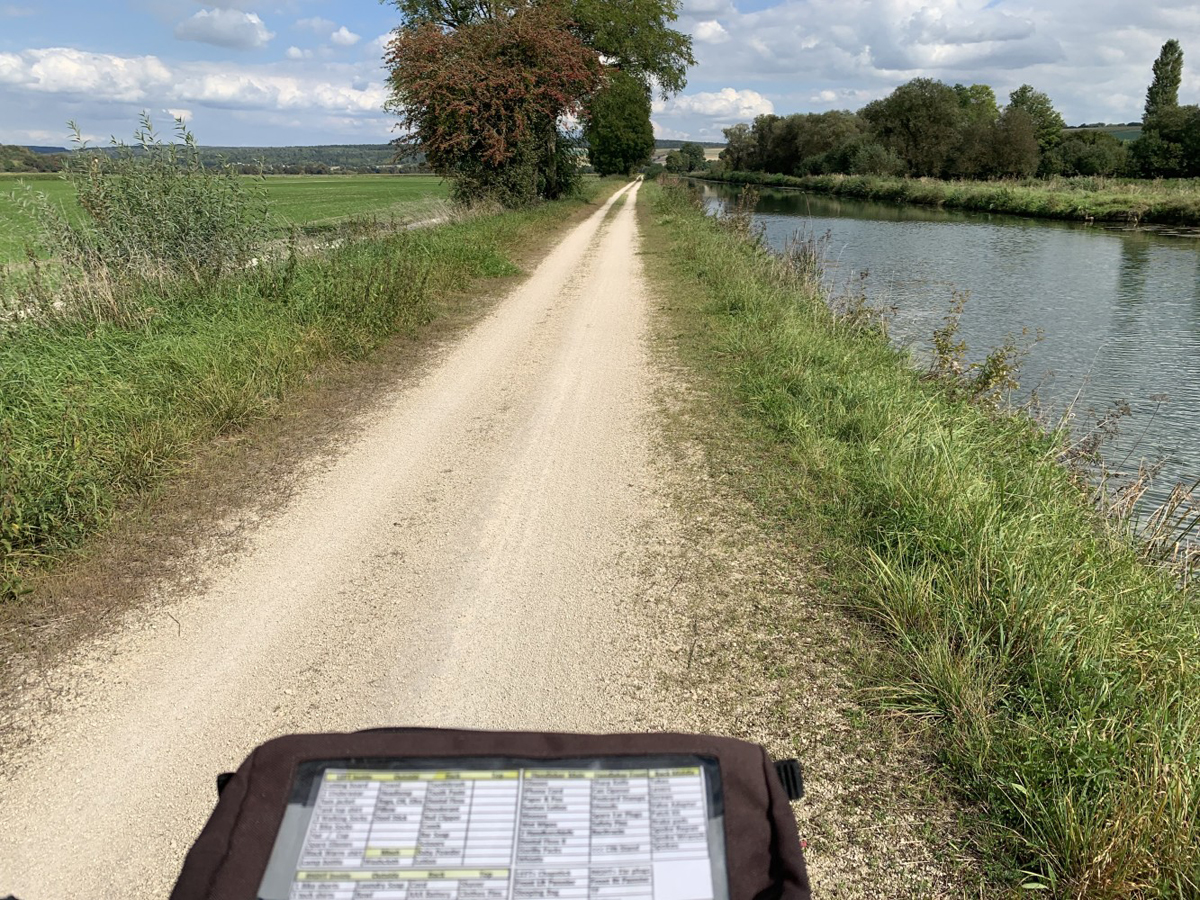
Smooth sailing along La Meuse. St. Mihiel, France to Laneuville Sur Meuse, France. Photo by Matt Davidson
Although it is not a European necessity, I am a big fan of bringing and using my bright-orange distancing flag that helps draw attention to me on the road, especially when the shoulder is narrow. Interestingly, I was advised that using my distancing flag in the Netherlands was considered “rude” because all Dutch cyclists and drivers are extremely considerate of bicyclists on the road, to the point where bike riders are considered King and cars take a secondary or almost subservient role on the roads! A flag sticking out only takes up space that other cyclists could use when passing. No need for additional European bike equipment in my experience, especially in The Netherlands. The Dutch roads are almost always designed around bike commuting pathways as biking is part of their culture and city governments’ objectives. However, if you are biking through Amsterdam, a good lock is necessary because your unlocked bike will be stolen faster than you can say Amstel Light.
CW: You mentioned several apps in your crazy-guy-on-a-bike journal. Could you discuss the apps that you used, which ones were helpful and not helpful. Were the apps specific for different countries.
MD: I have to preface this answer with why I relied on cell phone navigation rather than a GPS-enabled bike computer. And I won’t try to compare bike computers vs. cell phone apps, since I didn’t bring a Garmin-type bike computer on my trip. I figured that’s one less piece of technology to deal with. In addition, a cell phone along with a backup battery gets the job done for navigation. Some more tech-savvy cyclists would point out that cycle computer batteries will outlast cell phone navigation 2x-3x and they’re right. Maybe on the next tour I’ll invest in a Garmin and get more comfortable using that device for touring. Until then, I can only share my experience with navigation by cell apps.
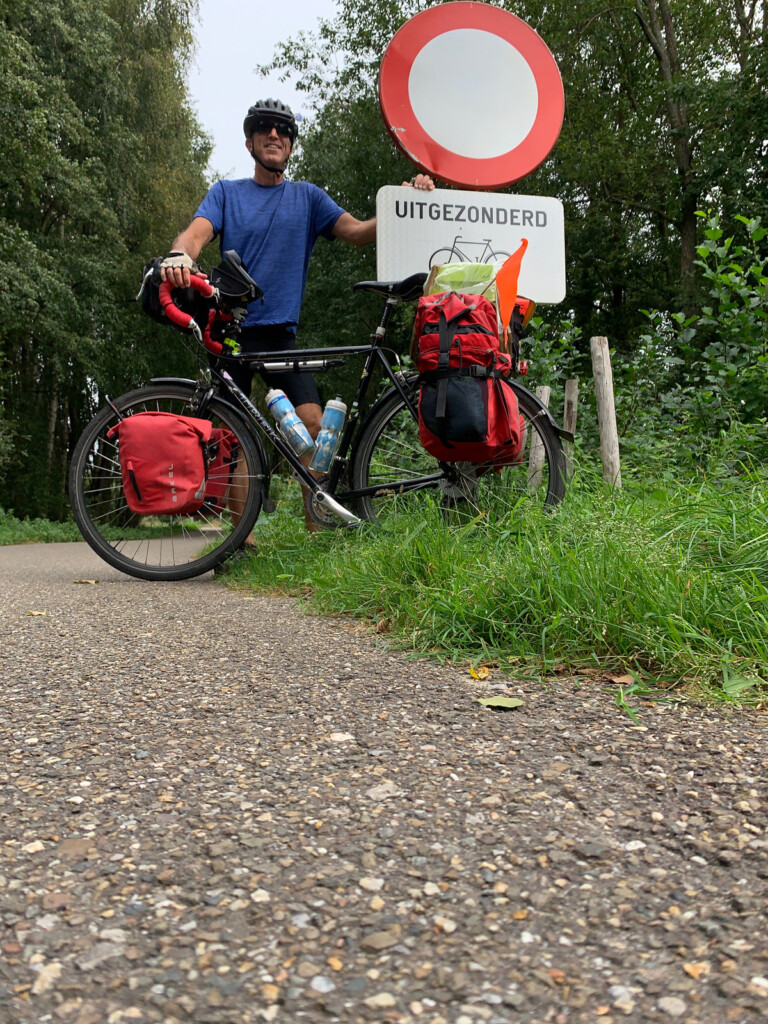
I’m positive that the sign means “Flat, super-smooth bike path in a Dutch cycling wonderland.” Photo by Matt Davidson
Many European cyclists rely on a German based app called Komoot that is similar to Strava. So, I started my navigation while in France on Komoot. Unlike the Strava’s free version, Komoot provides verbal turn-by-turn navigation which was extremely helpful for my purposes. Also, I was not building a route that apps like RideWithGPS offer, and only using imported GPX route files so Komoot seemed to work well. Several times, Komoot sent me down some insurmountable paths that would have required two flights of stairs from a bridge to the eventual bike path, and down a farm path that eventually just stopped. I knew it wasn’t my senior-user-error when two Belgian 20-something bike tourers confirmed they experienced the same Komoot pathway spaghetti.
However, one time in the Netherlands, one of my Warmshowers hosts recommended the Fietsknoop app that guides you through scenic sites using destinations or node markers, not just A to B on the shortest path. Most importantly for the Dutch cyclists, every bike path in the whole country has a unique regional node number assignment, and Fietsknoop synchs with node mapping. Scenic path guidance was clearly evident when the app suggested I follow a horse-shoe shaped route and I, instead, almost cut across the two ends of the circuitous pathway only to discover a beautiful village and public art display as suggested along the Komoot route.
CW: Your daily mileage seemed lower than your U.S. trips. Did you lower your daily mileage purposely to see the sights?
MD: You’re correct that I did cycle shorter distances the last several days of my tour. During the first week, after departing from Langres, France I averaged 52 miles per day, and at that point I realized that I’ll end up in Amsterdam too early. I added several shorter days and gave myself more time to sight-see. For example, I spent an afternoon walking through the Sedan Castle rather than riding more miles.
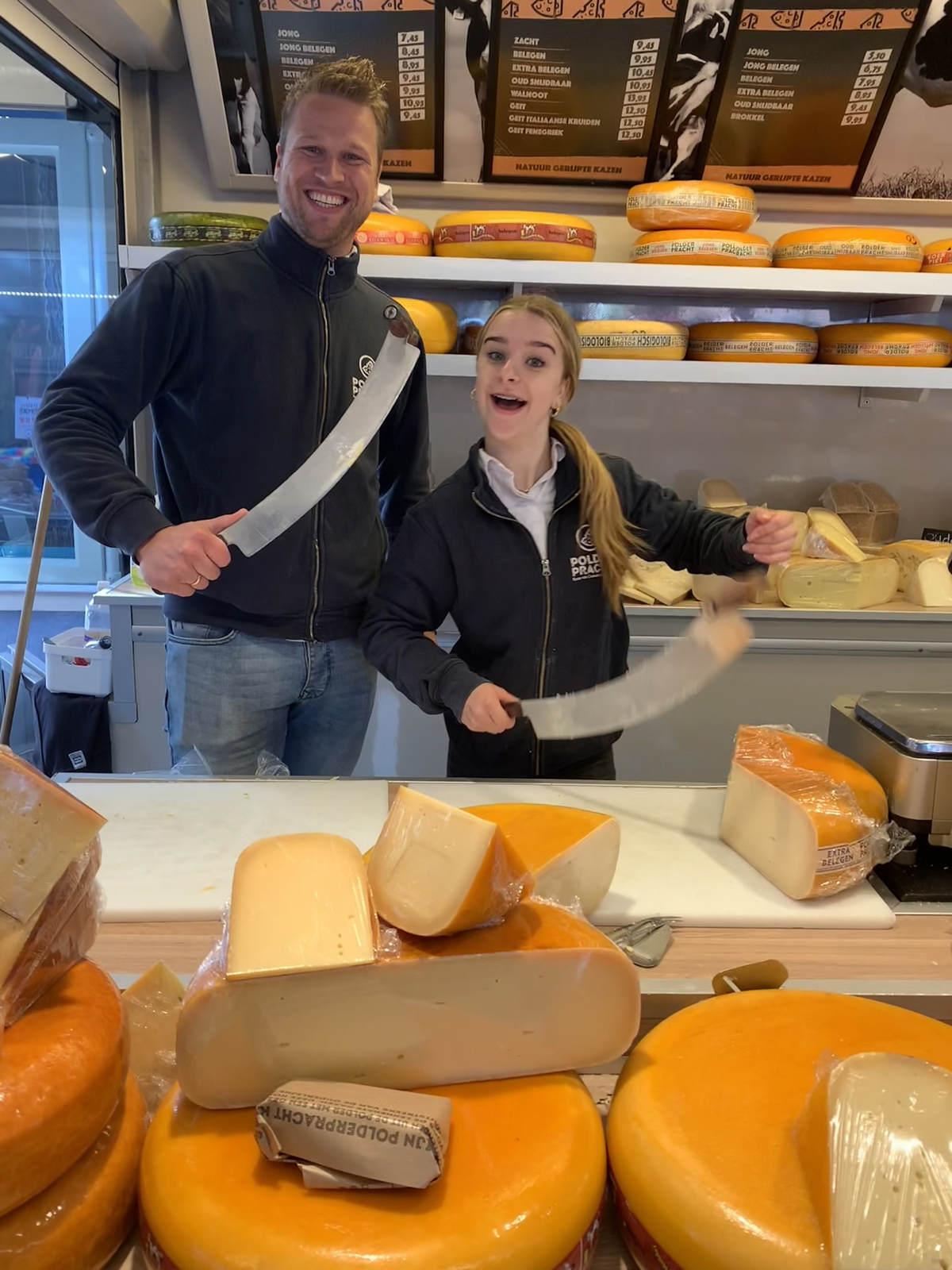
Cheese-mongers in the Geldermalsen, Netherlands Farmers Market answering my request to pose for a pic in Cycling West! Photo by Matt Davidson
Other factors that impacted my daily mileage were the location of my Warmshowers hosts and my focus on not arriving too late in Amsterdam to meet my wife and make it in time for the flight home. I could have created a bigger loop route to Amsterdam, and in hindsight that could have allowed me to see another country, Luxembourg, by veering off the EV19. On this particular tour, I only pre-booked and knew exactly where I would be staying for the very first night. After that, beginning on Day 2 I made up my daily distances depending on that night’s lodging, between camping or hotel or a Warmshowers stay.
CW: You met a lot of people either from Warmshowers or at cafes. Could you reflect on some of the interactions that were helpful, humorous, etc.
MD: Unless you really don’t like talking to people and prefer to spend your non-riding time alone, Warmshowers is the way to tour when feasible. Every Warmshowers host has been super friendly, and almost always offer a comfortable bed to spend the night. Mostly hosts are bike tourists themselves, so they can provide local route advice, equipment suggestions, and understand your quest for adventure.
Funny stories: probably one of my memorable Warmshowers experience was being hosted on a beautiful interior designed Netherlands houseboat. There were two children ages 3 and 5 who spoke only Dutch, of course. In the evening, I got down on the floor and watched in wonder as they spoke continuous Dutch to me, telling me all about each plastic animal, and various knick-knack toys, believing that I completely understood what they were saying. Amazingly, I learned about the universal language of play, completely absorbing what they were telling me, without knowing any of the exact words. It felt magical.
Over past tours, I’ve learned that bike touring opens conversations with 99% of all strangers. Where are you going? Where did you start? Where are you from? No, not England, United States. In Europe, I found that even when people are not interested in your bike tour stats, opening up a conversation with a “hello” in their native tongue, instantly tags you as a foreigner and opens up conversation for learning more about their country, city, town, or village. When I stumbled upon a group of retired Belgian men sharing their weekly coffee at a 7-11 type store, I joined the table and had a lively conversation about their country. When I asked one man, “What concerns you about Belgium these days?” he shared his concerns about the cultural divisions between Belgium’s North conservative populace and the South’s more liberal French speaking regions — not only cultural divisions but competition for state budget and infrastructure Euro allocations. Somehow it was reassuring to know that the U.S. is not alone in our regional differences, even in a small country like Belgium.
CW: Matt, tell me about a happenstance moment that was memorable.
MD: The answer to this requires yet another Warmshowers story… Each Warmshowers host profile has a few sentences about themself, sometimes brief and other times lengthy and detailed. Frequently, there are several hosts listed within a city limits, so there could be options as to whom you ask for a hosted night.
In one small Netherlands village, only one host was listed, and the profile description was a bit unconventional, so I almost considered camping instead of asking to stay. Good thing I didn’t choose to camp because this particular host actually turned out to be a most gracious and welcoming host. He shared a ton of history and cultural knowledge about the Dutch, a great dinner, and also provided a much-needed laundry service.
On the evening of my stay, my host asked if I would like to bike with him to the outdoor market the next day. Of course!
In the morning, we biked a mile together to the weekly local town square and I was the only tourist in sight. At each mobile food stall, my host would introduce me in Dutch to his proprietor friends like the fish mongers and describe a bit about my journey.
Instantly, I received warm village welcomes complete with good English explanations and prodigious sampling of their wares – different local cheeses (no I can’t carry the whole wheel), freshly baked breads unlike any in the U.S., bakeries, various cookies and marzipan cakes, many shaped Drop (licorice), and fish that almost seemed to be still wiggling and pulled the previous hour from the North Sea. I stuffed my panniers with my newfound delicacies, rode off towards the next town, smiling the whole way because I knew that this weekly small village shopping experience happened by a stroke of luck and could not have even been planned had I pre-booked the experience in a tour.
CW: Are you ever concerned about your safety when bike touring?
MD: Yes, I am concerned but not overwhelmed enough to prevent me from touring. I try to minimize my risk, by electing less traveled roads, wearing bright clothing, using a red-flashing blinker, and adding on my bright orange distancing flag to provide added visibility.
Other than car-related safety, I have found that bike touring notifies observers that you are a harmless, friendly traveler, only arriving somewhere or passing through to explore and experience the area. On my last tour, I was once asked, “How do I know you’re not a criminal?” Naturally, I answered that no criminal would use a fully loaded touring bike as a get-away vehicle! And to spend all my energy and calories bike touring and publicly blogging about it just wouldn’t make any sense if someone wanted to commit crimes.
Read all about Matt’s adventures on crazyguyonabike.com – profile link: cgoab.com/Mattdd60. It’s a wonderful way to travel and experience an area, interacting with friendly locals, and seeing the world at 10 miles per hour!
Trip Details
Number of days: 12
Total Miles: 517
Route start and Finish: Langres, France to Amsterdam, Netherlands
Trip Date: September 2023 after the Self-Guided, paid tour with wife and friends
Trip Tip: Unless you like the solitude of hotels, try Warmshowers and meet ultra-friendly bike tourists.
General registration for select spring 2025 IRONMAN 70.3 events open now. Remaining 2025 IRONMAN 70.3 event schedule and on-sale dates to be released in coming months.
TAMPA, Florida (June 17, 2024) — IRONMAN has unveiled its spring 2025 IRONMAN 70.3 race calendar for the United States and Canada with general registration open now. Athletes looking to experience one of the world-class IRONMAN 70.3 triathlons can register by visiting www.ironman.com/find-your-2025-race.
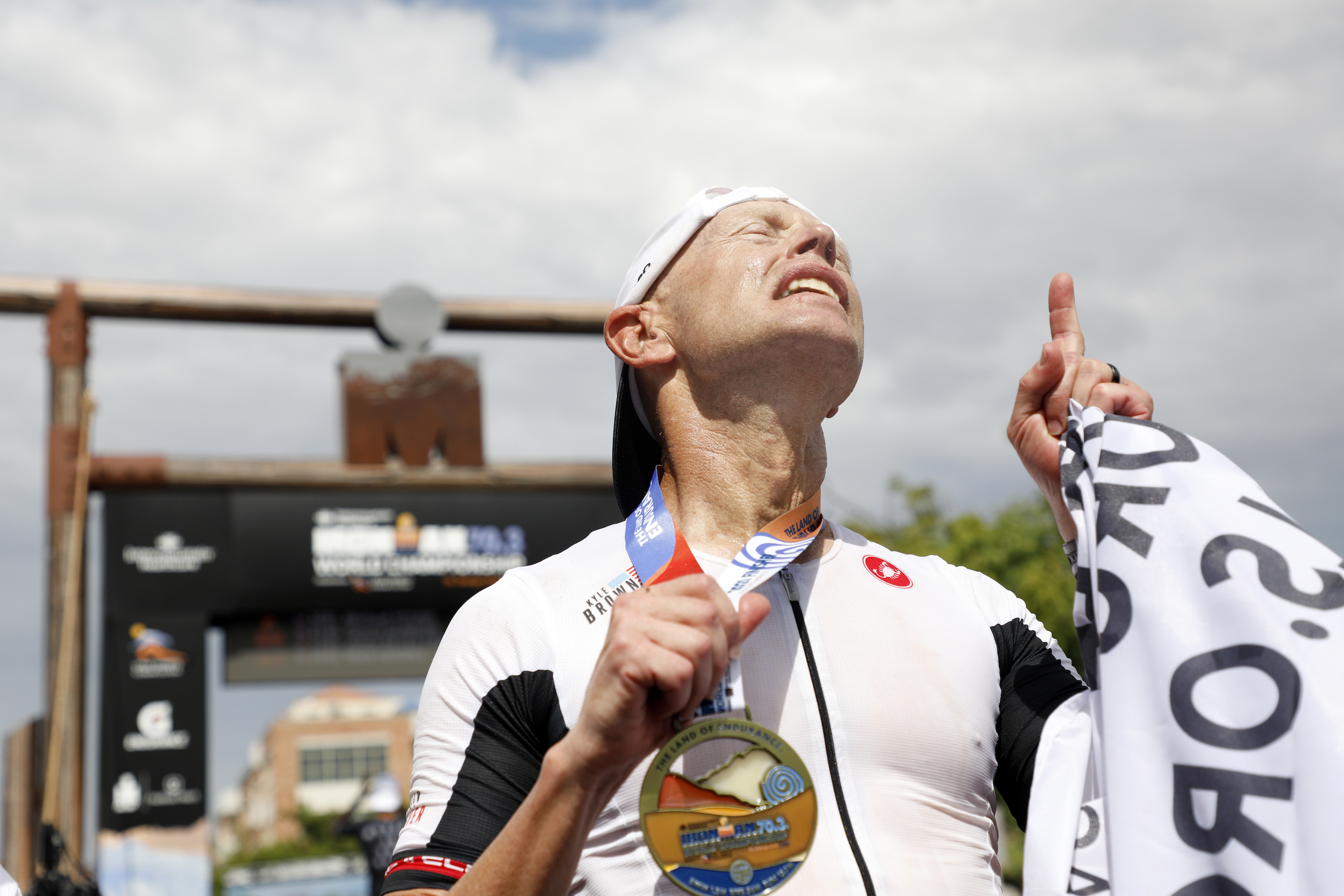
ST GEORGE, UTAH – SEPTEMBER 18: Kyle Brown reacts after finishing the IRONMAN 70.3 World Championship on September 18, 2021 in St George, Utah. Brown lost his battle with ALS (Lou Gehrig’s Disease) in July 2023. (Photo by Patrick McDermott/Getty Images for IRONMAN)
“The release of our 2025 spring IRONMAN 70.3 triathlon schedule for the U.S. and Canada will allow athletes to plan ahead on race dates, destinations and available options, while locking in the benefits of Flex90 registration. With many of these events selling out year after year, this information will help athletes design the best, most convenient race schedule to achieve their 2025 race goals. The incredible circuit begins with the historic kickoff race in Oceanside in April and ventures across the United States and Canada,” said Keats McGonigal, Senior Vice President & Managing Director of North America for The IRONMAN Group. “Athletes should expect the remaining schedule for this stunning 2025 circuit to be released over the coming months.”
Below is a listing of spring IRONMAN 70.3 triathlons in the United States and Canada that are now open for general registration:
Start the season with a race-cation in beautiful southern California with the beach breeze and good vibes. The Athletic Brewing IRONMAN 70.3 Oceanside event is the first race on the North American circuit and attracts some of triathlons best. Athletes will experience a swim in the Oceanside harbor, the rare opportunity to bike through Camp Pendleton, an active military base, and finish with one of the top-rated run courses along the Strand.
Athletes can experience the best of both worlds – blending a PR chasers dream course with a Texas beachside paradise at the IRONMAN 70.3 Texas triathlon. Galveston Island, known as the “Playground of the South”, provides unforgettable experiences from famous local beaches, iconic Moody Gardens, Pleasure Pier, and more – all tucked within the quaint Gulf Coast barrier island. A PR-worthy course awaits those who choose this charming beachside destination.
One of the most highly recommended races by athletes, this legendary course offers an epic challenge to all who come to prove themselves against this legendary course in the heart of Utah. In a land sculpted by persistence and determination, athletes from around the world will navigate a path through two iconic state parks, basalt lava fields, and a fragile desert reserve as they rise to conquer the Land of Endurance.
In storied Panama City Beach lies some of the world’s most beautiful emerald-green waters and white sand beaches. With local accommodations and beachside attractions, this is a favorite destination for athletes and spectators alike. With over 42 years of speed and beauty, PCB sets the perfect stage for those chasing their first IRONMAN 70.3 finish line or more experienced athletes looking for a personal record.
Chattanooga, Tenn. known as the Scenic City, features the Tennessee Riverwalk, epic rolling hills, and a run through iconic downtown Chattanooga. Lookout Mountain and the Tennessee River provide endless opportunities for all to explore. This course brings a unique PR setting downriver swim, a bike course through historic Chickamauga, and an unforgettable run finish. From leisurely adventures or epic all-day exploration, there’s something for everyone.
The IRONMAN 70.3 Victoria race course is best described by its beauty and simplicity that keeps triathletes coming back year after year to this mystical island. From majestic peaks to rugged shores and historic towns, this race has it all. Explore the natural beauty that this island has to offer, including whale watching, a historical downtown tour, seaplane flying, and more. Bring the family to this hidden gem and make memories that will last long after the race ends.
Is 13 your lucky number? This year it is for the Utah-Cache Gran Fondo. 2024 is our 13th year, and the event is Saturday July 13th, so naturally we applied a ‘Lucky 13’ theme and started printing posters, flyers, jerseys, tshirts, hats and signs with shades of green. The Cache Gran Fondo is for everyone, whether you are just getting into the great sport of cycling, or racing for a chance to beat riders from another team or compete at the USA Cycling Gran Fondo National Championship on Sept 15th, (the weekend following LOTOJA).
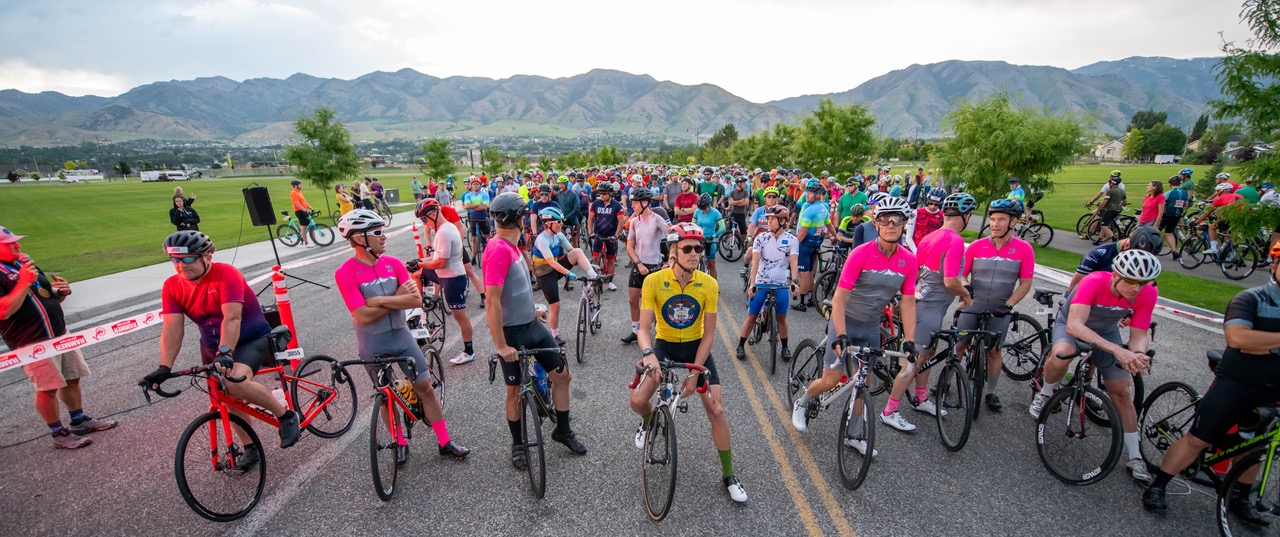
Start Line, 2023 Cache Gran Fondo. Photo courtesy CGF
The event offers 4 distances, including 4 recreational categories of 35-, 50-, 75- and 100 miles, and 2 race categories on the 75- and 100-mile course. For racers, the top 20% in 16 age categories get their tickets punched to compete at Nationals!
The beautiful Cache Valley layout spreads our riders and racers out over mostly quiet, smooth roads, moderate to challenging climbs, exhilarating descents through the backroads of Northern Utah and Southern Idaho.
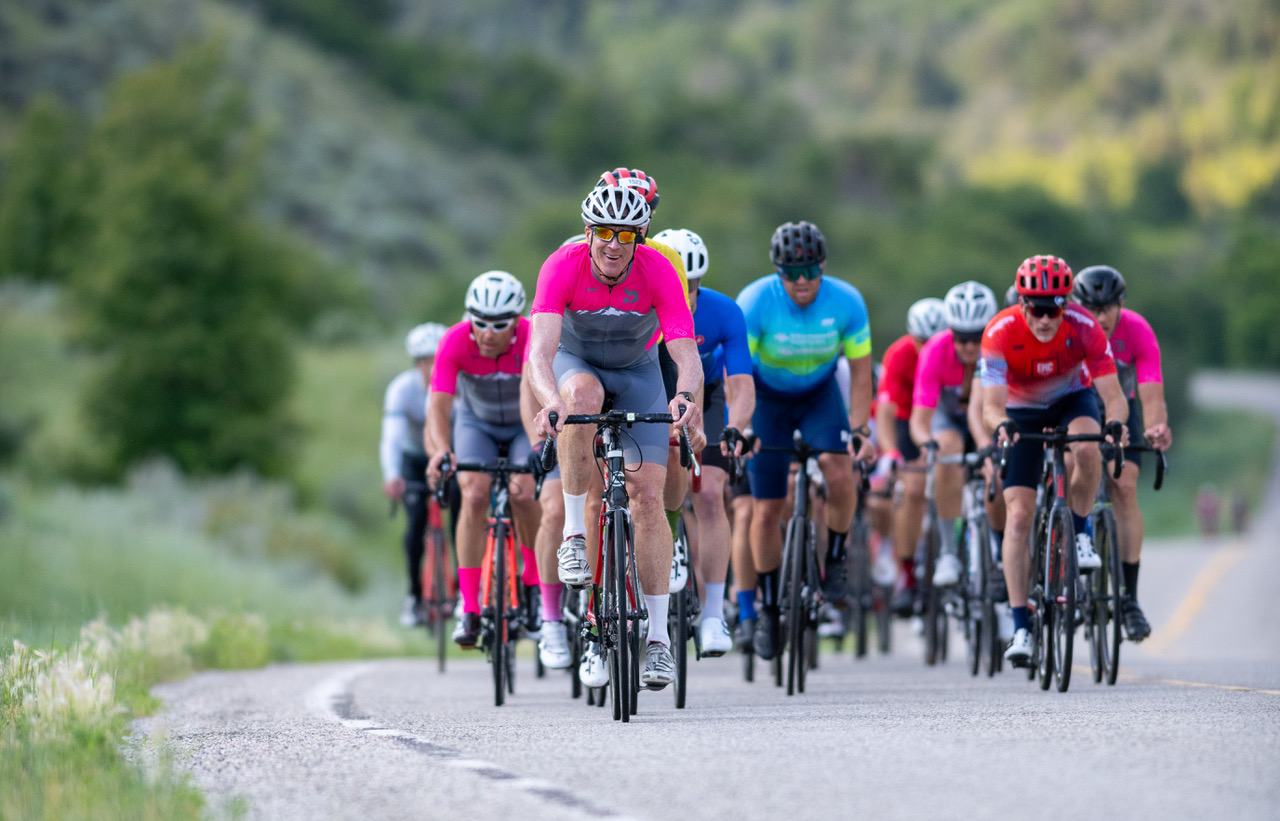
2023 Cache Gran Fondo. Photo courtesy CGF
As a true Gran Fondo, all riders will experience the thrill of a timed start and finish, pilot cars to get riders safely out of he city traffic, well-stocked support stations sponsored by Hammer Nutrition, Lee’s Marketplace and Thomas Market, Rider gifts of a custom t-shirt, trucker hat or cycling cap, a big & blingy finisher medal and ends with a celebration expo with lunch included and a raffle with great local gifts and prizes, including oldest and youngest rider, state representative gifts (24 different states represented in 2023) furthest travelled, most courteous rider, and best jersey. Each year we custom design and sell over 300 jerseys for only $40, men’s bibs for $55 and women’s bike shorts for only $50.
2023 Cache Gran Fondo. Photo courtesy CGF
We think that sounds like a great value, and believe you will feel really lucky after joining us on July 13th. to make it a sure thing, use the Promocode RIDECACHE at checkout for a 15% discount on your registration.
Event info:
July 13 2024: North Logan (Cache Valley), UT. 35, 50, 75 and 100 mile courses through Northern Utah and Southern Idaho. Recreational and timed race distances, e-bikes welcomed, especially on our 35 and 50 mile courses. Support stations every 17-25 miles, light breakfast, lunch, Hammer Nutrition and Pepsi products on the course and at the start/finish line. Showers available at Green Canyon High School and ample parking. Race Director: Troy Oldham, 435 764-2979, [email protected], https://CacheGranFondo.com
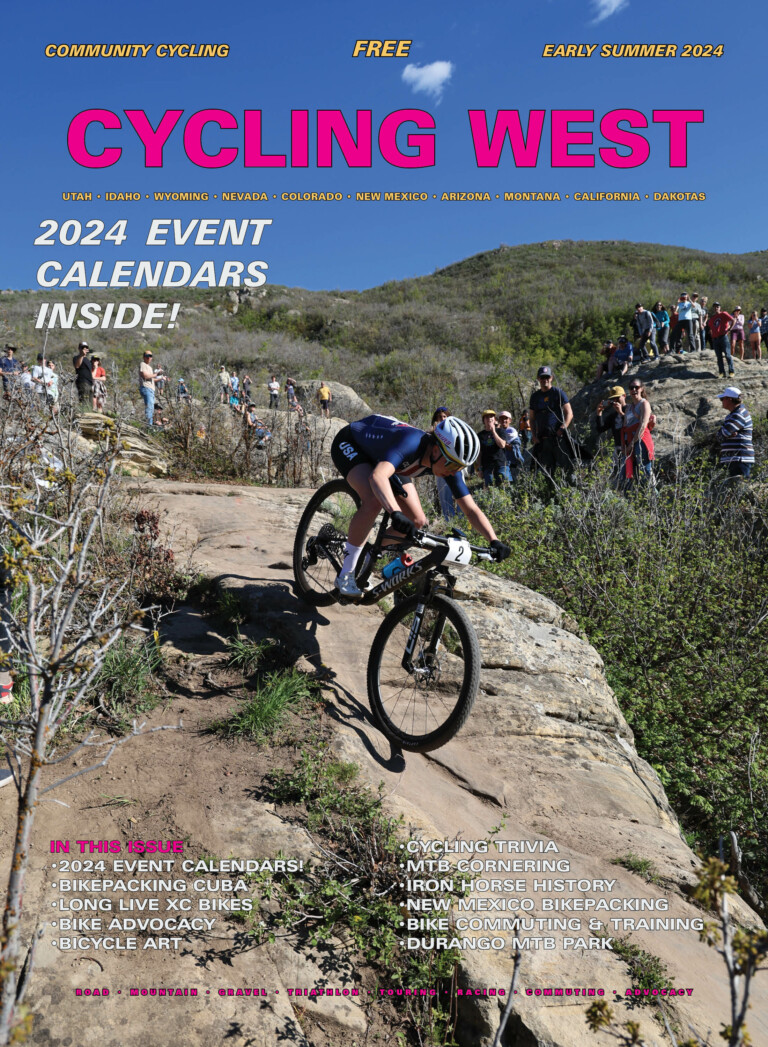
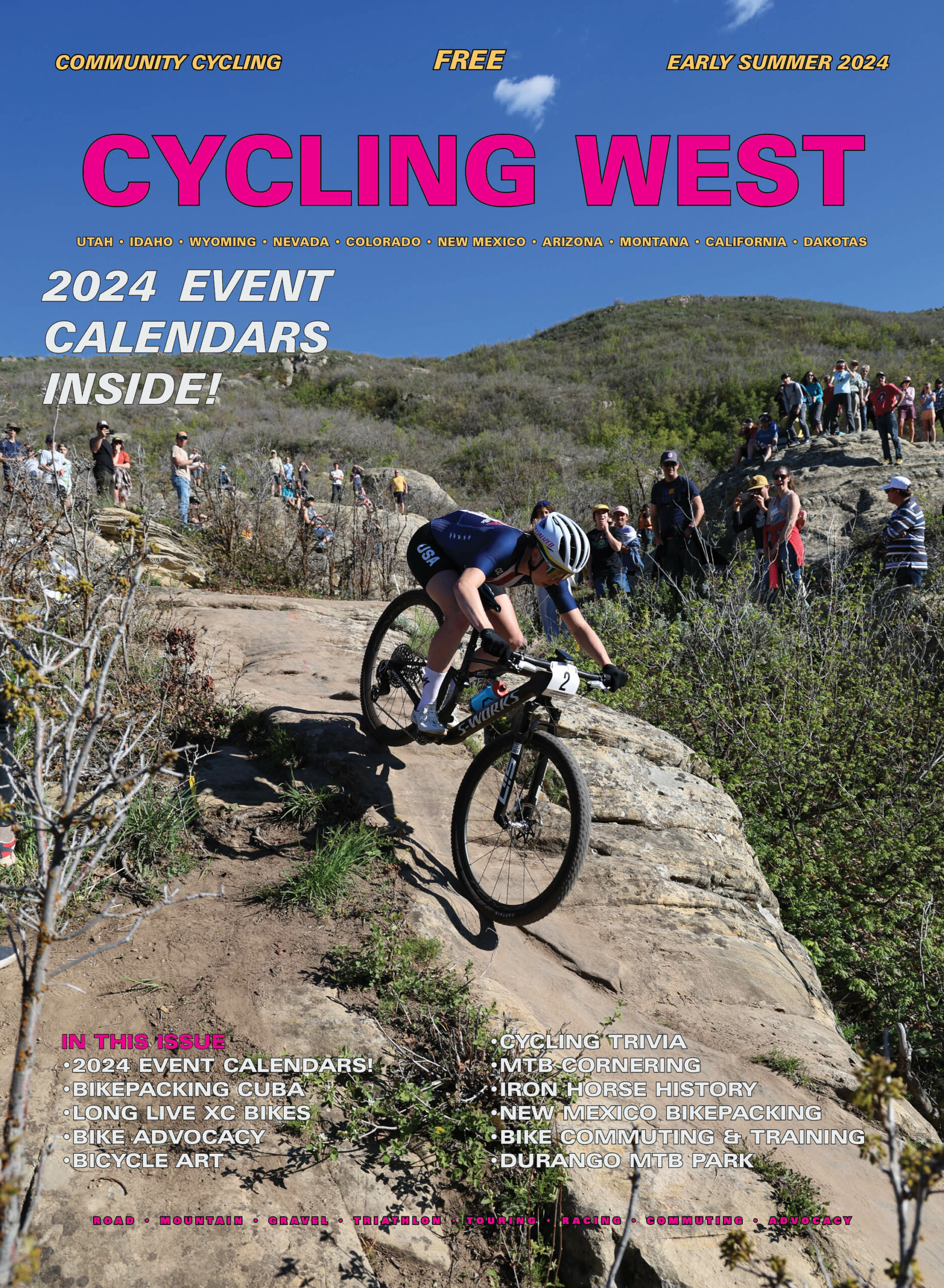
Cycling West and Cycling Utah Magazine’s Early Summer 2024 Issue is now available as a free download (11 MB download). Pick up a copy at your favorite Utah, Idaho, Wyoming, Nevada, Montana, Colorado, Arizona, New Mexico, North Dakota, South Dakota, and Northern California bike shop or other location.
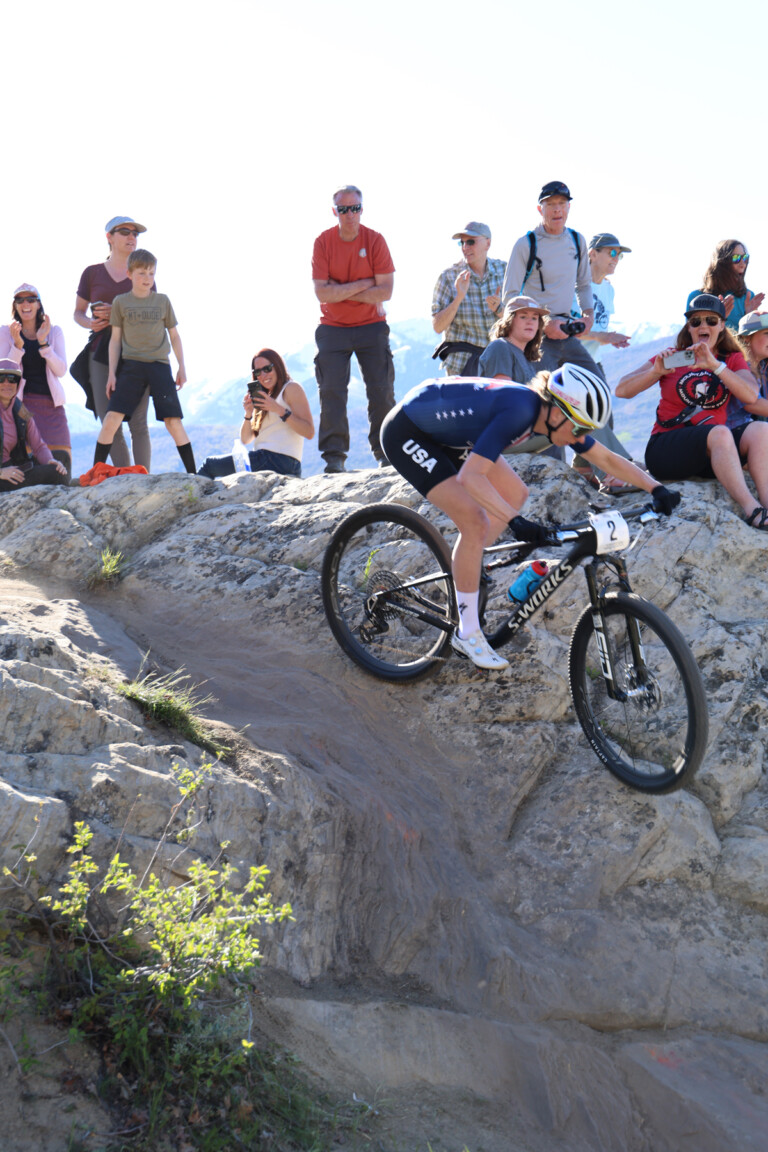
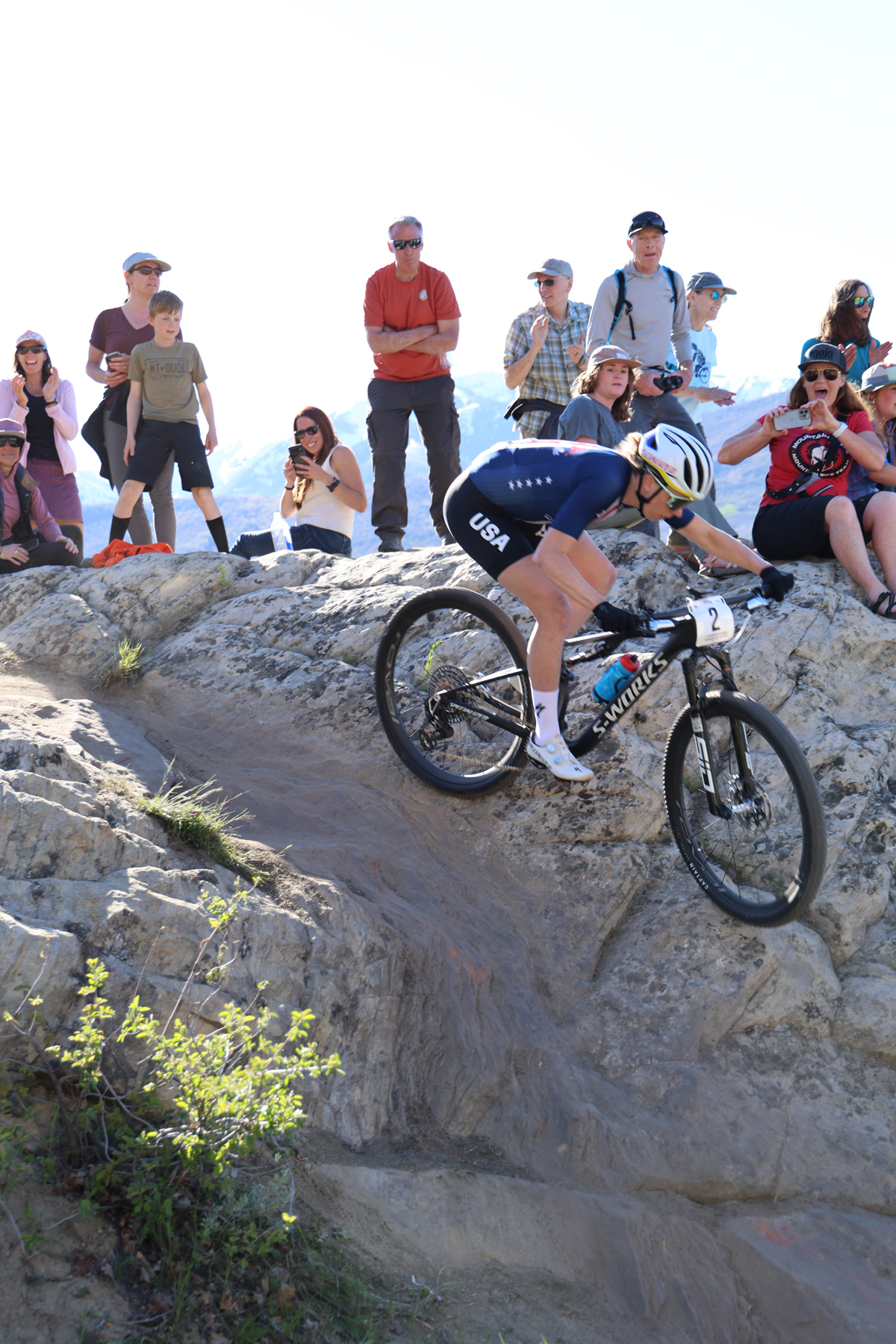
Cycling West Early Summer 2024 Cover Photo: Haley Batten (USA, Specialized Factory Racing) on her way to winning the Pan-Am Gold Medal in the women’s elite category at Soldier Hollow, Utah. Batten swept all three races – the team relay, short track cross country, and the cross country. She’s shown here on the big rock drop at the top of the course. Riders from throughout North and South America raced over the 6 day event. Photo by Dave Iltis
Contents
Bikepacking Cuba — page 3
Long Live Cross-country Bikes! — page 4
The Ultimate MTB Cornering Drill — page 5
Remembering the Fabulous CoreStates and Liberty Classic Road Races held on the Streets of Philadelphia! — page 6
How to Incorporate Bicycle Commuting into Training — page 7
Honor Among Thieves: Bikepacking Around New Mexico’s Sierra Ladrones — page 8
Building a Huge Mountain Bike Park is Anything but Easy — page 10
A Candy Bar Fueled the Iron Horse Bicycle Classic — page 15
CoreStates and Liberty Classic Trivia Answers — page 21
Report: Bike Turnout Lanes on Curves Help — page 21
Report: Bike Theft Reduces Cycling for Many Victims — page 22
Study: Self-Braking Cars Designed to Prevent Collisions Not Tested Well With Bicycles — page 22
Study: How Do Collisions Impact Cyclists’ Behavior? — page 22
Study: Protected Bike Lanes Preferred — page 22
Study: Risk Taking Cyclists – Who are they? — page 22
Bikepacking Cathedral Valley – The Bicycle Art of Seth Bradley — page 23
LANDER, Wyoming (June 11, 2024) — The 8th annual WYO-131 gravel race will take place on September 7, 2024. The event is hosted by the Lander Cycling Club and is best known for its rugged 131-mile course that starts and finishes in Lander, WY. Additional courses include 13, 45, and 75-mile distances to suit riders of all abilities.
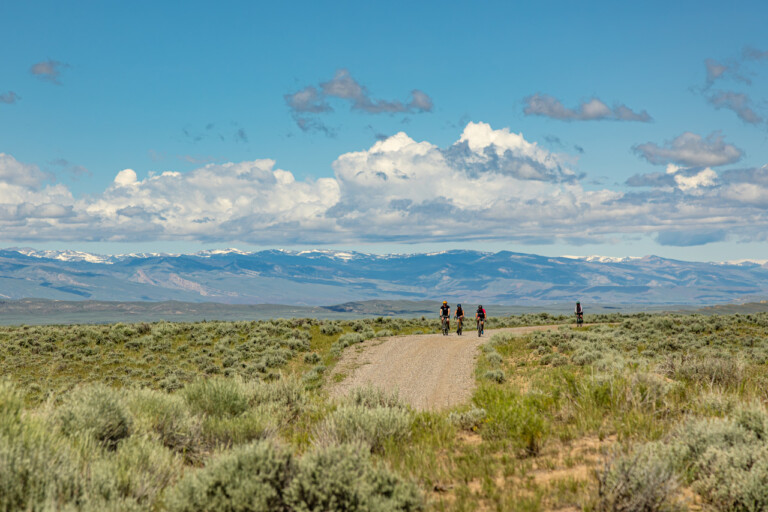
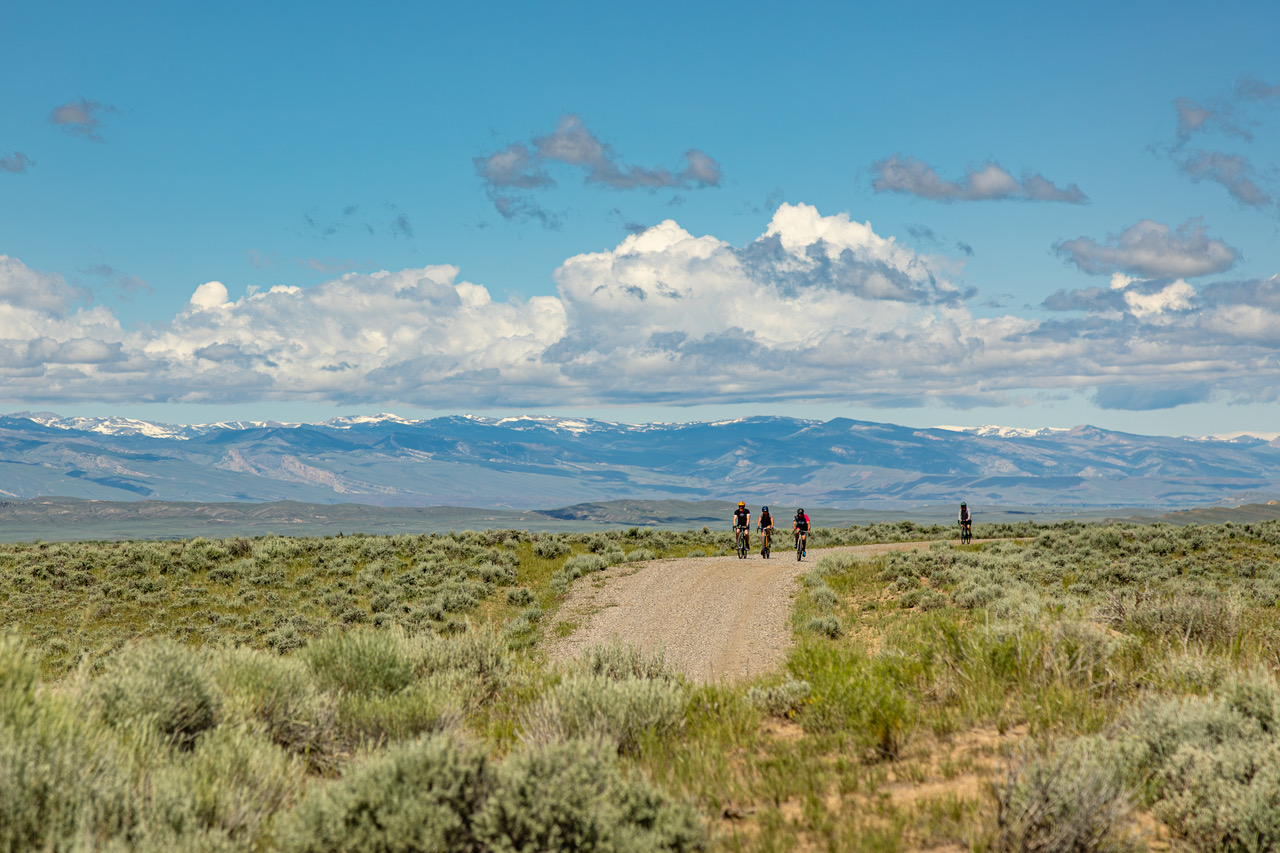
Scenes from the Wyo 131 Gravel Grinder. Photo courtesy Wyoming Office of Tourism
The 131-mile route is a classic bucket-list gravel ride and embodies the small-town, friendly Wyoming spirit. The course is known for challenging riders while highlighting the diversity of Wyoming — from rolling sagebrush hills and sweeping vistas to pine forests and snow-capped peaks. The route features hoodoos, steep and rolling hills, subalpine lakes, and breathtaking views of the Wind River Mountains backdropped by the emerging fall colors. Following the event, there will be an after party and vendor fair with live music from the Low Water String Band. Local BBQ will be available from Bunk’s BBQ and beer will be provided by Push Root Brewery.
Riders backdropped by the snowcapped Wind River Mountains. Photos courtesy WYO-131
New for this year is a kid’s Push-Bike Race for ages 2-6. Youngsters will have a chance to feel like mom and dad and race their balance bikes around the park. The 1-lap course will have obstacles to navigate as well as a mini aid station. All participants will receive a finisher medal.
Registration is currently open for all distances, although the club expects the event to sell out prior to race day. Registration is already at an all time high, as the race continues to grow every year.
Loop Road. Scenes from the Wyo 131 Gravel Grinder. Photo courtesy Lander Cycling Club
Although the race has seen tremendous growth over the last 8 years, the event still feels like an intimate small-town gravel race- in all the best ways. “Registration has more than tripled in just the last three years,” says race Director Gwen Robson who has been directing the race since 2020, “It’s great to see gravel growing in our town, but there’s a certain max capacity we just won’t exceed. We want to preserve what makes this place special. Riders will feel it when they get here. They’ll feel like they’re part of something special.”
Rider on the homestretch of the 131-route. Photos courtesy WYO-131
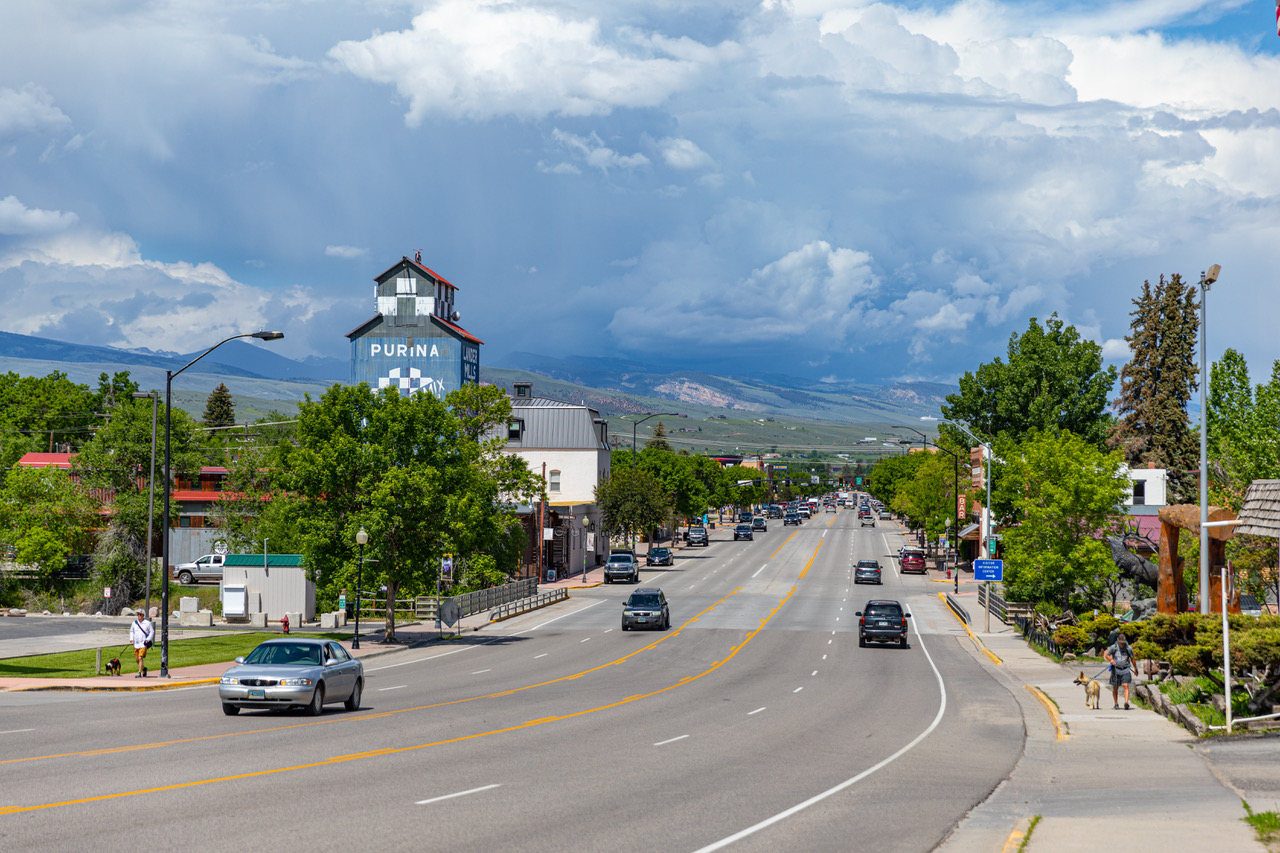
Robson might be onto something. There aren’t too many races that still feel intimate. But Robson is right, you feel different in Lander. Riders leave the traffic and crowds of the city behind and are immediately immersed in the spell that is Lander, Wyoming. Ranked as one of the best outdoor towns in the U.S, Lander feels equally like a time capsule of the old west as well as a modern mountain town – complete with art galleries, bike shops, and the best ice cream west of the Mississippi. But the quaint shops along Main Street are really secondary to what Lander actually has on offer, and that’s access to the outdoors. Experiencing that by gravel bike at the WYO-131 feels like an easy yes.
2024 Event information
September 7 — WYO 131 Gravel Grinder, Wyoming Gravel Grinder Series, Lander, WY, Step back into the Wild West and immerse yourself in the high desert, historic mining towns, and breath-taking views at Wyoming’s premier gravel ride. This is the ultimate bucket-list gravel ride. This rugged ride is well known for its 5 STAR gravel in the most remote and least densely populated regions of the West. The 131 mile distance is one of the toughest gravel races in the U.S. with over 10,000 feet of climbing, minimal support and podium prize money! Two other distances, a 40-mile and 80-mile course, offer riders a shorter and equally gorgeous gravel experience., Gwen Robson, 307-330-3002, [email protected], http://wyo131.com
By Matt Davidson — I absolutely love cycle touring! Different than all my previous bike tours, on this trip I stitched together a paid, self-guided adventure designed by a tour company along with another couple, and then ventured out on my own Self-Supported tour in France, Belgium, and the Netherlands. That Self-Supported tour is described in an interview with Lou Melini in a companion article. After completing five self-supported North American bike tours, which inevitably involved some camping escapades, and throwing in a biking adventure in Thailand with my son, my wife LouAnn was tentatively considering the idea of bike touring. The catch? Only if it meant cozying up in comfortable hotels instead of wrestling with tents in the rain at campgrounds. Another non-negotiable was that the tour had to stick to flat or nearly flat terrain, offer ample chances for restaurant meals, boast bicycle-friendly pathways, and come with a luggage-carrying Sherpa. Then, I had an “Ahh-Hah” moment that seemed to tick all the boxes!
Picture cycling on flat, immaculately maintained, glass-smooth, separated bike paths where bicyclists rule at intersections and get priority over cars. Where else but the Netherlands? With more bicycles than people, it’s a cycling utopia. There are 23 million bikes for 18 million Dutch, and it seems like almost everyone in the country stays fit and healthy by pedaling. I managed to convince LouAnn to join me on a Dutch bike tour with our friends Jim and Robyn, knowing that 30-40 mile cycling days would be a breeze and a fantastic way to explore Europe.
Cycling in The Netherlands is a joy! Smooth bicycle-dedicated pathways, friendly Dutch and fairytale scenery. Photo by Jim Isaacson
Once our destination and budget were set, the next dilemma was whether to design our own bike tour or pay a tour company for their expertise, planning, and bicycles. Shipping our bikes to Europe or renting them upon arrival was an option, but that presented a whole new set of potential problems. Currently, Delta Airlines allows a bicycle box weighing under 50 lbs to be checked in at no charge as flight luggage. Any additional bags would incur a fee. However, lugging your bike box through airports, possibly involving escalators, isn’t always a walk in the park. Therefore, having bikes provided by a tour company and included in the package cost seemed pretty appealing, especially for those less comfortable fixing their own bikes. If I were touring solo, I’d be fine fixing any mechanical failures and playing the waiting game, but it’s not as fun when a group is stuck while one person’s bike undergoes surgery.
Next, the decision was whether to join a bike tour with a paid leader and a group of 5-10 strangers or venture out on our own using a tour company’s route. For someone new to overnight bike touring, having a tour company leader guiding every turn might be a good starting point. Your likelihood of getting lost is pretty low when riding with a tour leader. The alternative was a “self-guided” bike tour, meaning the route is predetermined, loaded onto easily readable cycling computers provided with every bike group. No one is leading your path or selecting your lunch stops and timing, other than your group’s decisions on following a route, be it the GPS-provided route or your own daily variation. In both tour types, you are free from loaded luggage panniers weighing you down—instead, your luggage is transferred every day to the next night’s lodging. From start to finish, our self-guided group only included my spouse and friends—no one else. We decided that as a group, we could comfortably navigate each day and preferred to travel without a paid guide. To share the navigation responsibility, my friend Jim and I alternated that leader role, which turned out fine. I imagine our group missed out on some additional geographic or cultural explanations along the way by not having a paid leader. However, windmills are pretty hard to miss, and Google searches helped fill in the blanks.
We chose a Dutch company called Holland Bike Tours (HBT, hollandbiketours.com) primarily because friends had completed a tour with that company in the past, and their $1250 pricing for six nights, including buffet breakfasts and bikes, seemed reasonable compared to other luxury tour companies. All our mid-range hotels were comfortable, air-conditioned, and had convenient bike storage spaces. Before we launched our tour, the owner talked a bit about Dutch culture and history, gave us a detailed tour pamphlet describing each town stop, restaurants, explained how to use the cycle computers, and provided well-maintained bikes. The tour bikes were equipped with 8 speeds, included fenders for possible rainy days, hydraulic brakes, straight handlebars with an upright riding position, one empty pannier for snacks, and lights for night riding.
I would almost give HBT an A+ rating, except for the fact that while on tour, our luggage didn’t get transported for a few hours until after we rolled into our destinations at normal afternoon times for two of the six nights’ hotels. Late luggage meant that we couldn’t change into fresh clothes immediately and venture out into the towns on those occasions. When asked, HBT provided an excuse that really didn’t hold water. Other than those two instances, I would recommend Holland Bike Tours if someone wanted to pay a tour company to arrange a trip. For adventurous self-supported travelers, I would estimate you could maybe shave off about $300-$600 per person off the total cost by finding and arranging your route, bicycles, and camping. That’s a bit of extra work to research convenient hotel options and really worth the added cost to use local expertise. When looking at all tour options, it seemed that comparable leader-guided tours would increase tour costs by about $400 per person if that’s the style that works for you.
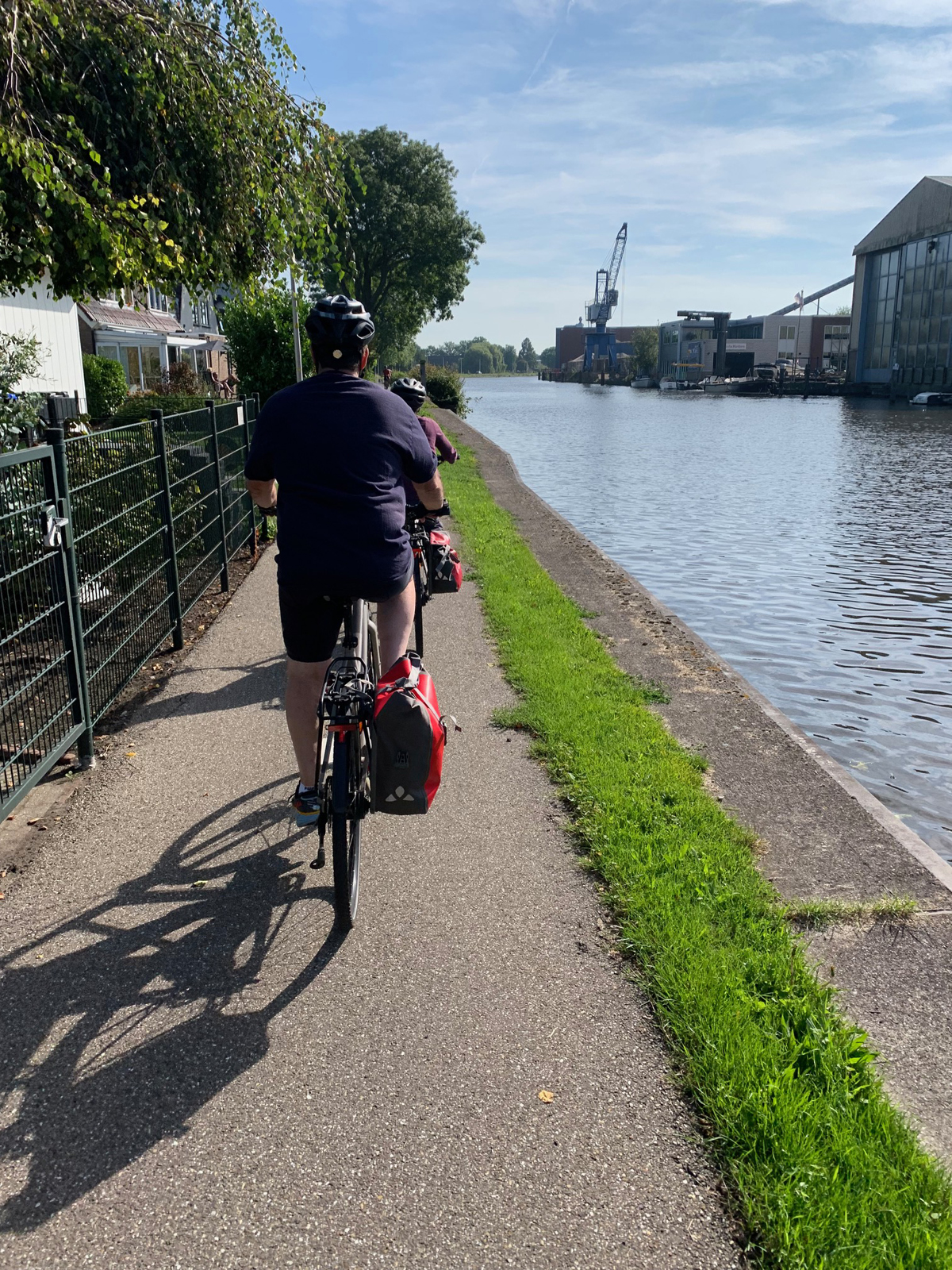
Zipping along a canal near Leiden, Netherlands. Photo by Matt Davidson
The Netherlands did not disappoint! Anyone who has even casually observed a bike path in the United States and has the faintest interest in experiencing tourism on two wheels would be pleasantly surprised by how the Netherlands has prioritized cycling over gas-powered transportation. The Dutch government assigns a very high societal value to bicycling for everyday life, including commuting for work, shopping, or just out for an evening with friends. As a result, fantastic segregated two-lane bike paths are built everywhere, and everyone can ride throughout cities, countryside farms, and along neighborhood canals, feeling very safe and protected from speeding cars. Locals even watch out for tourists on bicycles, giving them a wide berth and unprompted cycling safety advice. In the Netherlands, you will see a wide variety of bikes, including cargo bikes, tandems, kiddie carriers, and even teenagers dressed up with their dates sitting side-saddle across the top tube. If a trip is less than 30 minutes on a bicycle, I learned that most Dutch would take a bike rather than a car, even well into retirement age.
Our complete 210-mile route started in Haarlem and weaved through Leiden, Gouda, Dordrecht, Willemstad, Zierikzee, Middelburg, and finished in Bruges. Only after viewing the elevation charts did I realize we were bicycling below sea level for a portion of the time. Maybe riding below sea level added to the intrigue and mystique about riding in the Netherlands! Over the past 700 years, the Dutch have brilliantly reclaimed marshland and pumped water off into canals, creating usable farmland. Most of the 10,000 windmills were historically used as water pumps, although some were built to grind grain or purposed as a sawmill. Now, only about 1000 windmills still exist and make for great photo opportunities. If you haven’t toured outside the United States in a cycling wonderland and it is within your budget, it’s well worth the added cost. Try it — you may be surprised at what you have been missing!
Trip Details:
Number of days: 7
Total Miles: 210
Route start and Finish: Haarlem, Netherlands to Brugge, Belgium
Trip Date: September 2023
Trip tip: Be flexible and spend extra effort getting to talk with and know a few locals and understand their culture better.
By Charles Pekow — A study from the National Cooperative Highway Research Program suggests that the standard crash prediction modeling system requires revision to better account for circumstances involving bicycles. The Federal Highway Administration has used the Highway Safety Manual since 2010, which was originally designed for cars and does not adequately address cyclist considerations.
In its latest report titled “Pedestrian and Bicycle Safety Performance Functions,” the program aims to rectify this issue. The report criticizes the manual’s generalized approach for estimating site-specific pedestrian and bicycle crashes, stating that it lacks sensitivity to conditions influencing such crashes, including exposure and infrastructure. Additionally, it provides insufficient information for evaluating the site-specific impacts of projects aimed at enhancing pedestrian and bicycle safety, especially beyond signalized intersections.
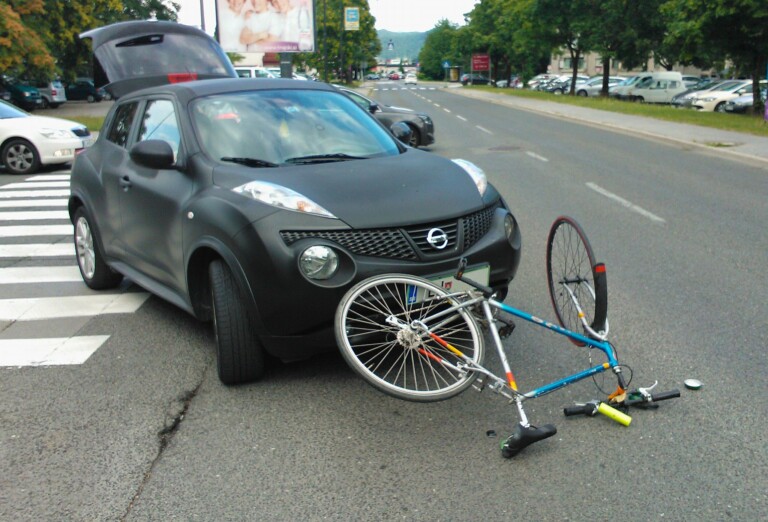
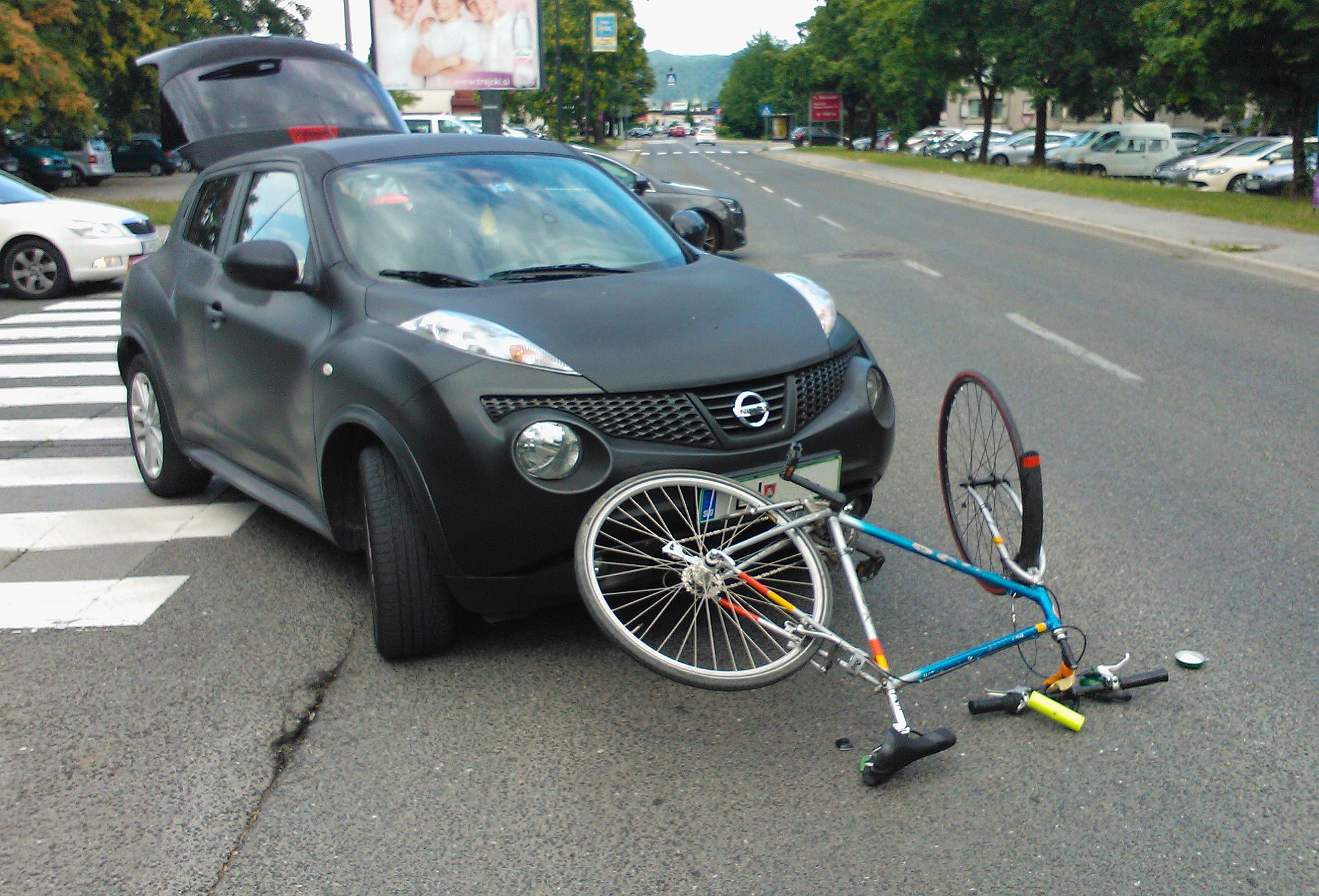
Current crash prediction models for intersections don’t take bicycle or pedestrian traffic into account or give them enough emphasis. Photo by Petar Milošević, CC BY-SA 4.0, via Wikimedia Commons
The report emphasizes the need for an update that considers various factors such as differences between urban, suburban, and rural roads, the number of lanes, and one-way versus two-way streets. Despite the majority of bike crashes occurring in metropolitan areas, the study highlights the limited availability of count data for rural areas.
The program recommends standardizing methods for determining bike counts, noting that state and local agencies use varied approaches, each with its limitations. The report acknowledges cost as the primary barrier to collecting pedestrian and bicycle performance data.
Brian Head Resort announces 2024 summer operations and event calendar
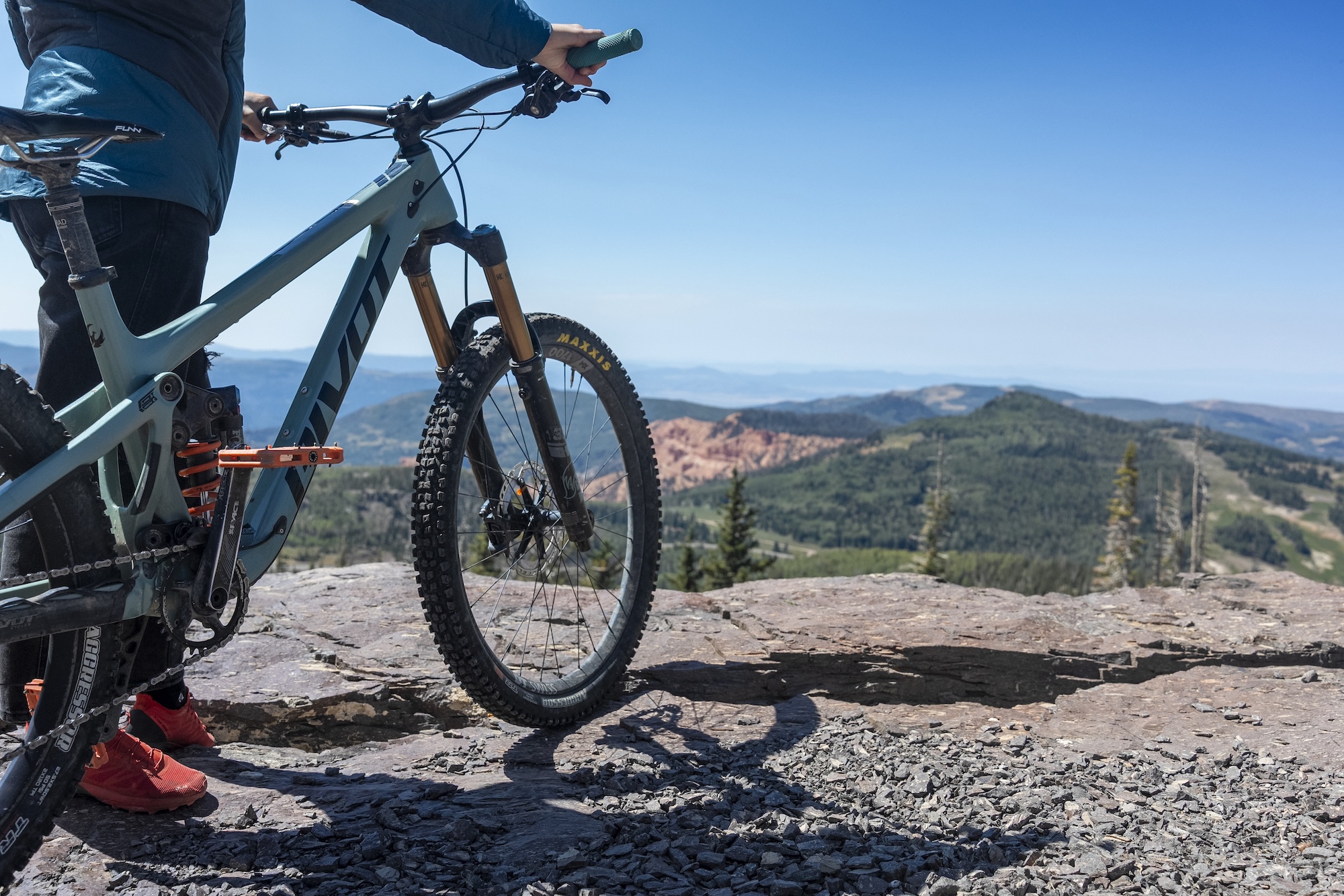
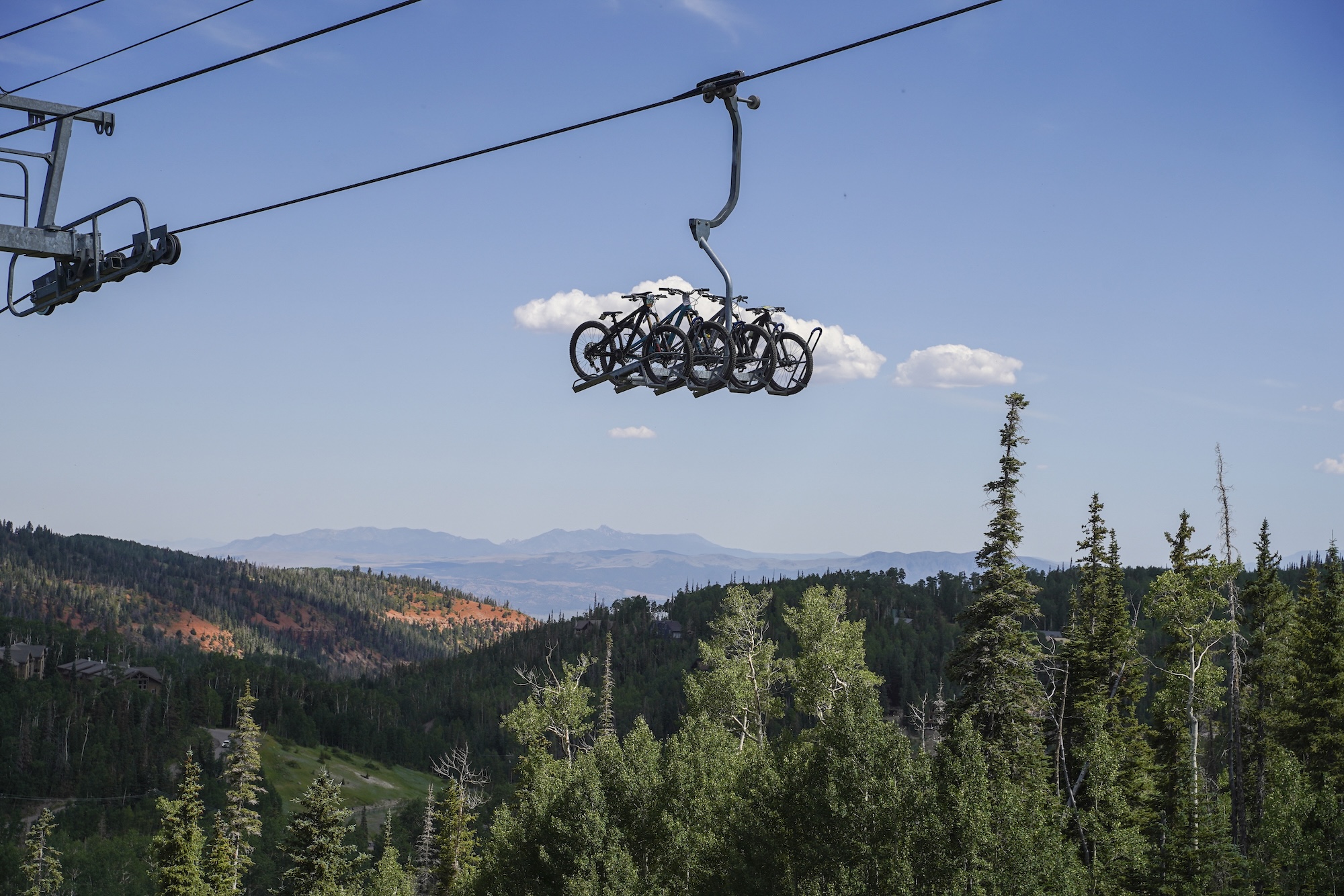
BRIAN HEAD, Utah (June 13, 2024) — Brian Head Resort, Southern Utah’s premier mountain resort, is excited to welcome summer with lift-served mountain biking and scenic chairlift rides starting on Friday, June 14.
Photo courtesy Brian Head Resort
Throughout the summer, Brian Head Resort offers mountain bike and trail races, scenic chairlift rides, family friendly activities, live music, outdoor events, and free drive-in movies. Brian Head Resort is one of Utah’s most family-friendly and affordable mountain resorts. When purchasing advance tickets online, biking and activity passes begin at $19 on select dates, while children ages 12 and younger enjoy free lift-served mountain biking all year.
Photo courtesy Brian Head Resort
The high-speed Giant Steps Express Lift (Lift 2) will operate from 9:30 am to 5:00 pm every Friday through Sunday until September 29, with extended days including July 4, 11, 24, and 25.
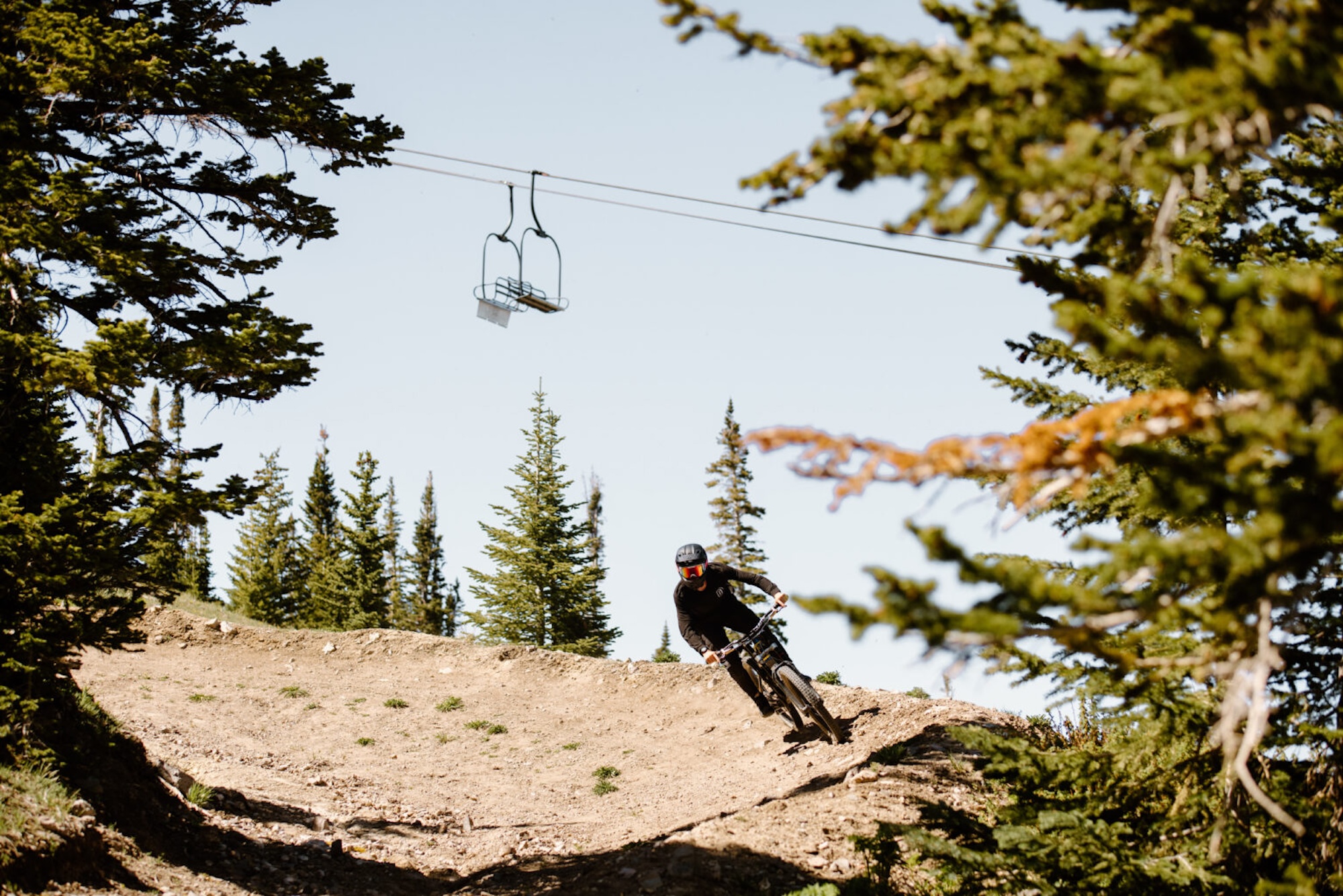
Photo courtesy Brian Head Resort
Mountain Bike Park
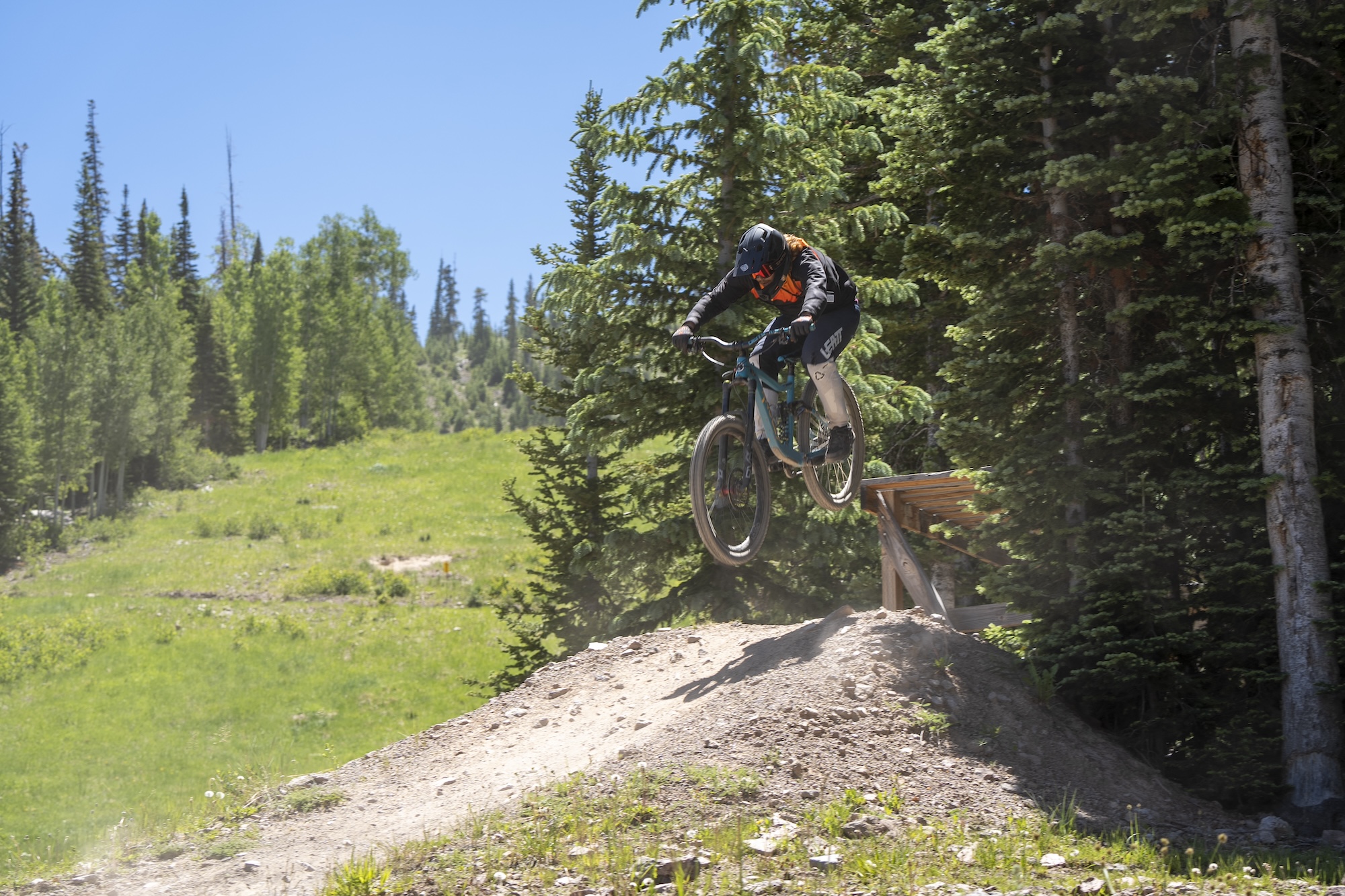
The Bike Park’s lift served, gravity-fed descents feature 19 interchangeable downhill bike trails, with options for families, experts, and everyone in between. Built in 2023, the new Grit n’ Gravy jumpline is designed and maintained in collaboration with Momentum Trail Concepts.
Photo courtesy Brian Head Resort
Signature Bike Events
Brian Head Resort is the ideal summertime destination with pleasant temperatures and a full lineup of events, from live music and family entertainment to competitive cycling events.
Big Mountain Enduro – July 13 – 14. Brian Head Resort hosts the nationally renowned race series, where the best riders compete in a mix of backcountry and lift-accessed stages.
Brian Head Shredder Downhill Race – August 11. The Utah Gravity Series is back at Brian Head Resort, featuring America’s best gravity racing.
Photo courtesy Brian Head Resort
Situated next to Cedar Breaks National Monument, Bryce National Park, and Zion National Park, Brian Head Resort is southern Utah’s base camp with a variety of family-friendly activities, lodging, bike rentals, retail shops, restaurants, and signature events. Visit brianhead.com to learn more.
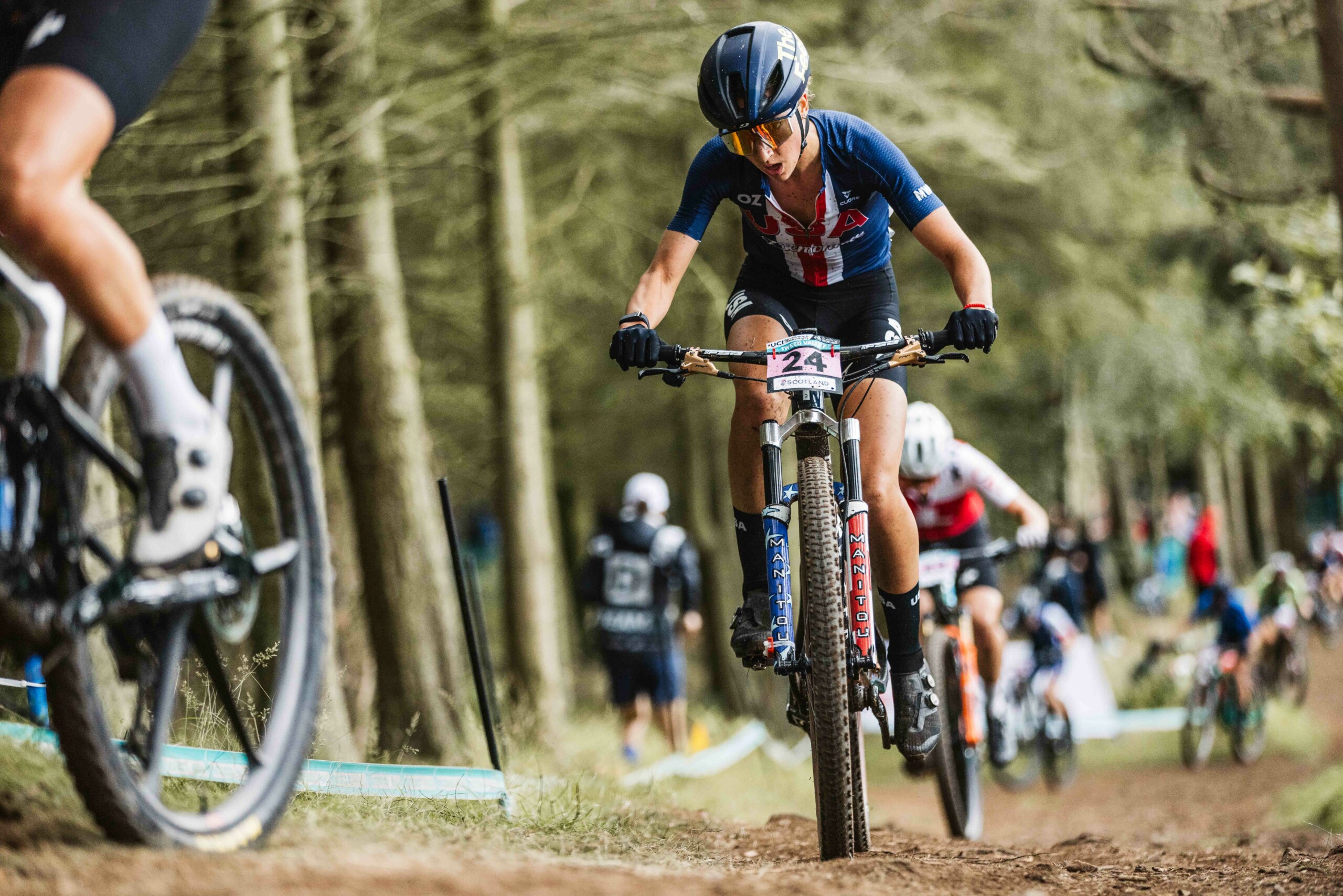
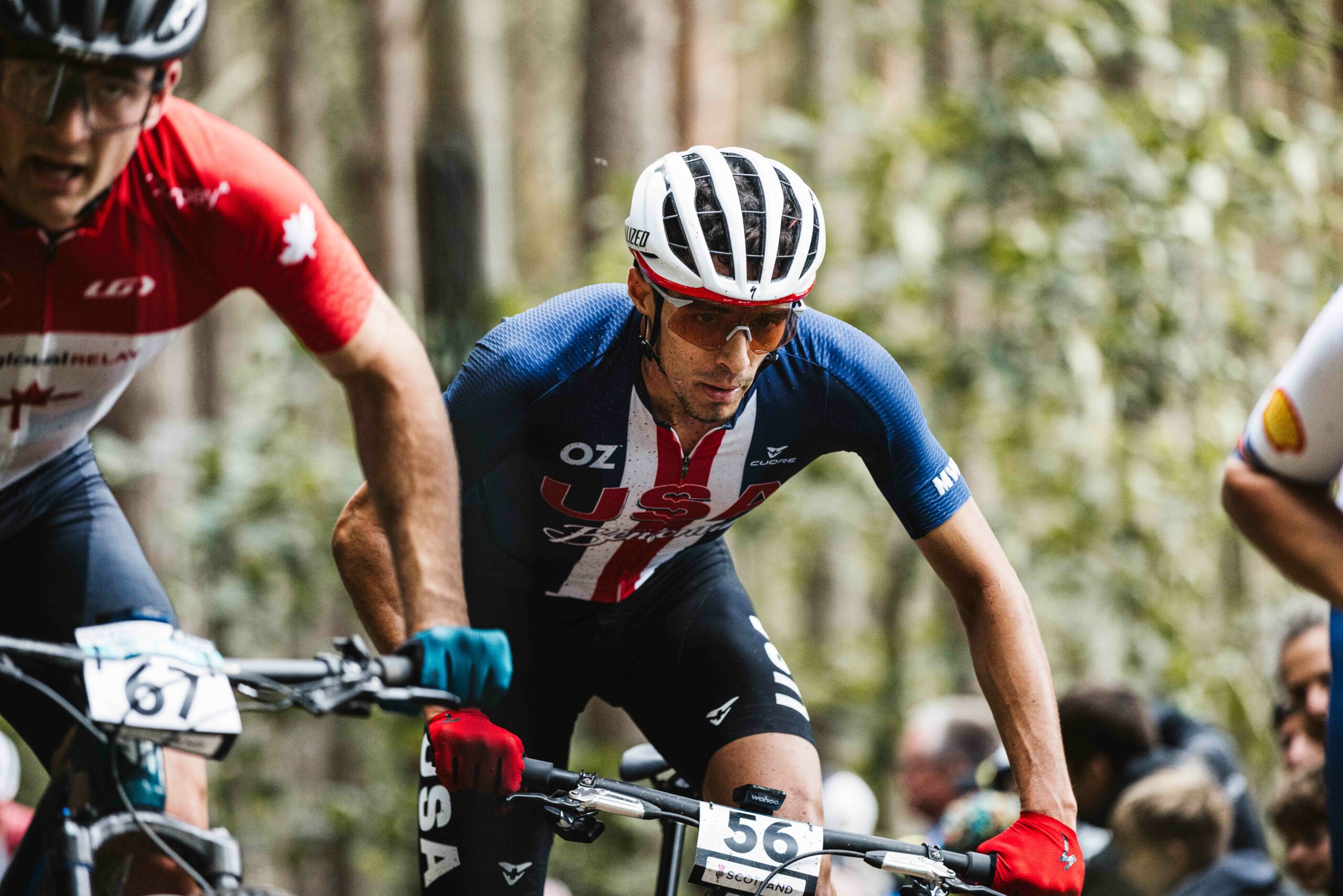
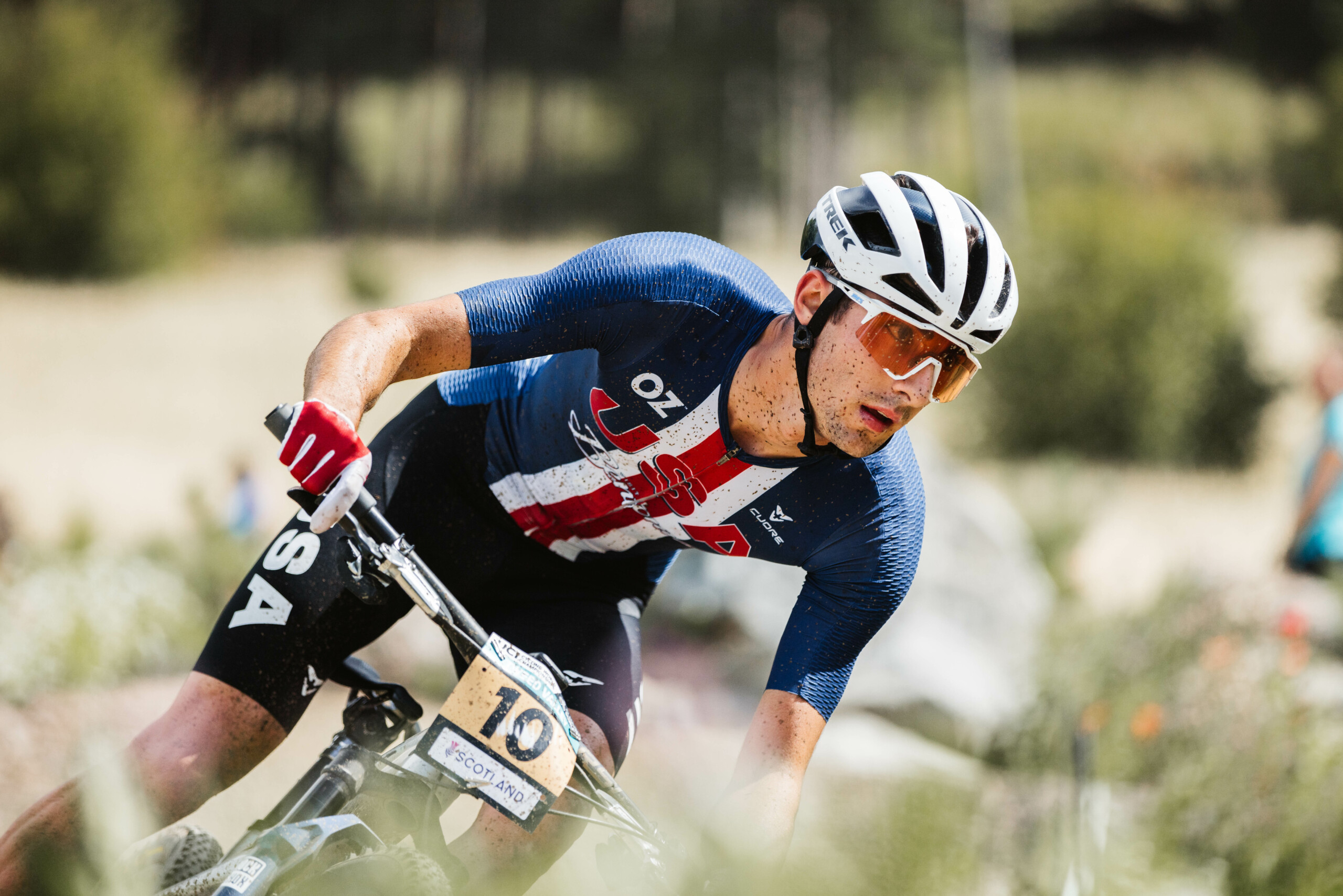
Batten, Blunk, Blevins, and Amos will represent the United States in the Cross-Country Olympic Mountain Bike event in Paris.
BENTONVILLE, Arkansas (June 11, 2024) — Brendan Quirk, CEO and President of USA Cycling, revealed the four athletes selected for the Mountain Biking events at the Olympic Games Paris 2024 during a press conference held at Ledger Bentonville in Bentonville, Arkansas.
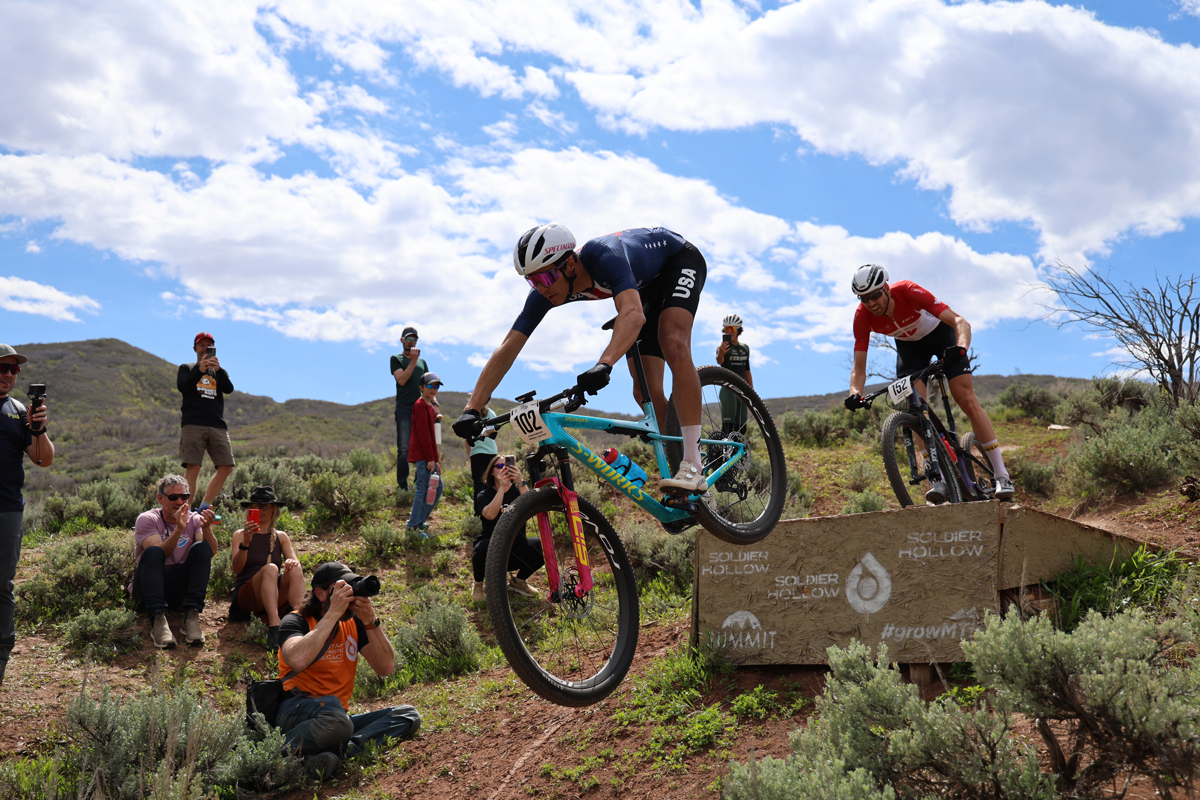
Haley Batten at the rock drop on her way to winning the Elite Women’s XCO title at the 2024 Utah Pan Am Mountain Bike Championships at Soldier Hollow, Utah. Photo by Dave Iltis
Since 2022, the USA Cycling National Team has been vying for international ranking points through the Union Cycliste Internationale (UCI) with the goal of placing in the top eight as a Nation in the MTB Olympic Qualification Rankings. Top performances in UCI events over the past two years brought the U.S. men into the top five of the MTB Olympic Qualification Rankings, and the U.S. women into the top three, qualifying both genders for maximum available quota spots at the Olympic Games – two men and two women.
Alec Pasqualina, USA Cycling’s Director of Mountain Bike said, “The 2024 USA Mountain Bike Olympic Team is one to watch with medal potential in both the Women’s and Men’s event. The United States has steadily been regaining prominence since Tokyo and we are excited to show the world what we are capable of. Each one of our four mountain bike Olympians in 2024 continue to impress us and we know they will represent our nation well.”
The 2024 U.S. Olympic Mountain Bike Team roster includes two Tokyo 2020 returning Olympians, and two first-timers. In the first three UCI Mountain Bike World Cups of the season, this group collectively rode to six Elite Cross-Country Olympic (XCO) podiums, five Elite Short Track (XCC) podiums, and a perfect season in the U23 Men’s races. The team is reaching peak performance just in time for the world’s biggest stage this summer in Paris.
Haley Batten – Photo by Jack Tennyson, courtesy USA Cycling
Haley Batten (Park City, Utah; Specialized Factory Racing) returns to the Olympic Team after doubling down with wins in both the Short Track and Cross-Country events at the UCI Mountain Bike World Cup in Brazil. The 2024 Pan American Champion proved to be at the top of her game, and the one to beat leading the team into her second Olympic Games.
Haley Batten (Park City, Utah; Specialized Factory Racing): “My Olympic pursuit has been an amazing journey. Through injury, personal growth, and relentless hard work, I am proud to earn my spot to represent Team USA in Paris. Throughout my youth, I have dreamed of becoming an Olympic athlete and to earn a medal for the USA. I am honored to have this opportunity and I am fully focused on preparing at my best.”
Savilia Blunk – Photo by Jack Tennyson, courtesy USA Cycling
For the first time, Savilia Blunk (Inverness, Calif.; Decathlon-Ford Racing Team) will take the Olympic stage. The back-to-back U.S. National Champion showcased her skills and ability to compete at the highest level over the past two years, especially in the opening World Cup rounds scoring a silver and two bronze medals.
Savilia Blunk (Inverness, Calif.; Decathlon-Ford Racing Team): “Competing at the Olympics is something I’ve dreamed about ever since my first race in the NorCal NICA league. When I was 15, this dream felt almost inconceivable. I knew it would take a lot of hard work, but what was even harder to find in the process was team support, resources, and funding to get myself to the biggest stage. It was never a clear path, but I was relentlessly committed and never gave up. Now looking back, I realize this WAS the path all along – never giving up on my dreams. I’m so proud to have reached this moment and am super excited to represent the USA in Paris!”
On the men’s side, both riders hail from Durango, Colorado carrying forward the town’s prominent Olympic legacy. They join the ranks of the Olympic mountain bikers that came before them – Travis Brown (’00), Todd Wells (’04, ’08, ’12), and Howard Grotts (’16) – marking the 2024 Olympics as the seventh consecutive Games in which a male cyclist from Durango will compete.
Christopher Blevins on his way to winning the Elite Men’s XCO race at the 2024 Utah Pan Am Mountain Bike Championships at Soldier Hollow, Utah. Photo by Dave IltisChristopher Blevins – Photo by Jack Tennyson, courtesy USA Cycling
Short Track World Champion and Tokyo 2020 Olympian Christopher Blevins (Durango, Colo.; Specialized Factory Racing) will attend his second Olympic Games. Blevins shocked the American crowds in 2021 after winning the first Elite Men’s UCI Mountain Bike World Cup in nearly 30 years and did it on U.S. soil in Snowshoe, WV. Since then, he has been on the hunt for another podium and showed his true grit and strength to win the opening UCI Mountain Bike World Cup in 2024.
Christopher Blevins (Durango, Colo.; Specialized Factory Racing): “The magnitude of the Olympics is one of the most special things to experience as an athlete. Being a part of Team USA is a celebration that extends beyond yourself, and there’s a whole team giving their best in the sport we love. I was proud to make it to Tokyo in 2021, and maybe even more so to make my second Olympic games, with the opportunity to give it everything for a medal on July 29th in Paris. The sport of Mountain Biking is growing at an exciting rate in the States, and I know this Games will be another step in that direction.”
Riley Amos – Photo by Jack Tennyson, courtesy USA Cycling
A rider the mountain bike world has been watching for quite some time is 22-year-old Riley Amos (Durango, Colo.; Trek Factory Racing). He has shown exceptional talent at a young age, and proved this year that he is one of the most dominate Under-23 mountain bikers on the circuit. In 2021, Amos was the first American man to ever win a U23 World Cup. He went on to make this a regular occurrence taking 11 XCO podiums since then and has had the perfect season in 2024.
Riley Amos (Durango, Colo.; Trek Factory Racing): “I really don’t think it has sunk in yet that I will be representing my country in Paris this summer. I think when I get to feel that atmosphere and really experience it all for the first time it’s all going to sink in. I am not really putting much pressure on the performance, but instead taking in this incredible opportunity and moment at the biggest mountain bike race in the world to celebrate how far we have come in the last few years and to learn all I can for the 2028 games. I’m proud to continue the legacy of Mountain Bike Olympians from Durango, Colorado, as I would not be who I am without my special little community at home.”
The Paris 2024 Olympic Games run from July 26 – August 11 with cycling competing every day of the Games. The Women’s Cross-Country Mountain Bike event will take place on Sunday, July 28, and the Men’s event will be the following day on Monday, July 29, both starting at 8:00 am ET.
2024 U.S. Olympic Mountain Bike Team
Women
Haley Batten (Park City, Utah; Specialized Factory Racing)
Savilia Blunk (Inverness, Calif.; Decathlon-Ford Racing Team)
Men
Christopher Blevins (Durango, Colo.; Specialized Factory Racing)