Lidl-Trek will begin racing in WorldTour pelotons on June 30
WATERLOO, Wisconsin (May 30, 2023) — Lidl will be the new title partner of Trek’s road racing program. Lidl-Trek will begin competing in the WorldTour peloton starting with the Giro d’Italia Donne on June 30 and the men’s Tour de France on July 1. The partnership brings together two major brands — Lidl and Trek — that are committed to quality and customer hospitality. They will work together to broaden the ambitions of the road program while maintaining the core values that have made Trek’s racing teams consistently excellent.’
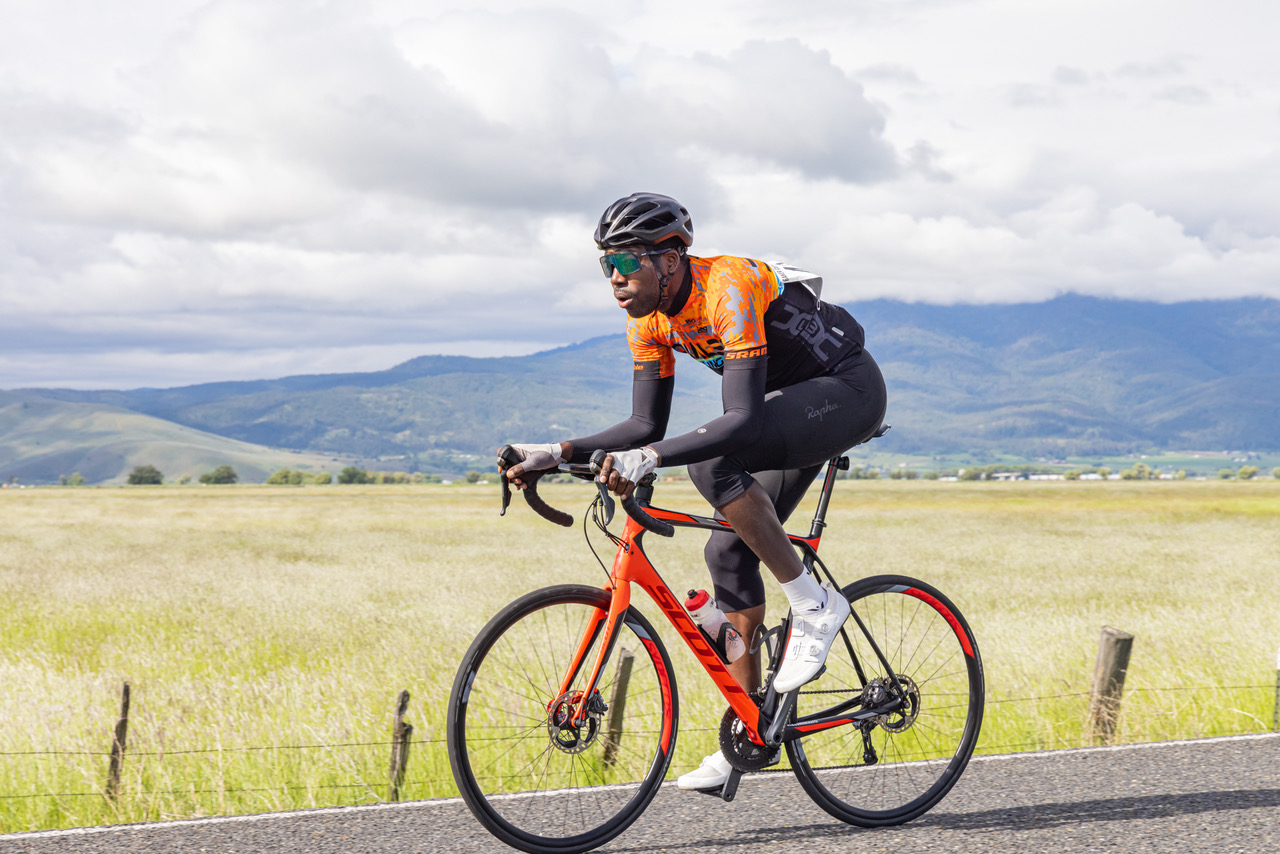
Trek’s road riders are some of the fastest in the world, and include four elite World Champions (Mads Pedersen, Elisa Balsamo, Lizzie Deignan, Ellen van Dijk) and winners of prestigious races such as Paris-Roubaix (Deignan, Elisa Longo Borghini), Milan-Sanremo (Jasper Stuyven), Liège-Bastogne-Liège (Deignan) and Il Lombardia (Bauke Mollema).
“We are excited to work with a team that is committed not only to excellence in cycling, but also to the sustainable development of athletes in a family team culture,” Jeroen Bal, Divisional Board Member responsible for the Customer at Lidl International said. “We are convinced that healthy nutrition and an active lifestyle – shaped by sports and exercise – strengthen people’s well-being. Just as our Lidl products are accessible to everyone, cycling is a sport for everyone and suitable for anyone who wants to be more active in everyday life. We want to share this message with as many people as possible.”
Over the last 50 years, Lidl has expanded to more than 12,000 stores across 31 countries. Their mission is to provide the highest quality food and goods at the lowest possible price.
“Part of our mission is to provide incredible hospitality to our customers and it’s clear that Lidl shares the same mindset,” Trek President John Burke said. “We’re looking forward to working closely together to build the best cycling teams in the world while also inspiring more people to get on bikes.”
Segafredo will be departing as a title sponsor of the program ahead of the Tour de France. More details about the new partnership between Lidl and Trek to follow in the coming weeks.
By Eric Yelsa — In the previous article we discussed the process of aging, psychological and physical changes associated with aging, and explored how aging impacts sport participation and in particular cycling participation. Of the factors identified as having influence on how we proceed through the aging and sports participation process, intrinsic and extrinsic motivation, social identification and neurotic drive (also known as motivational drive), and the grief process were viewed as various models that offer some explanation as to interaction between age and sports. From this perspective it was concluded that it was not so much age itself that was alarming, but the potential existential threat aging presented that might raise risk of separation from sport participation or separation from one’s identified peer group.
In this article we will continue our exploration of the process of age and sports by examining strategies to set appropriate competitive expectations, maintain motivational drive, and how to recover from setbacks related either due to injury or age-related factors.
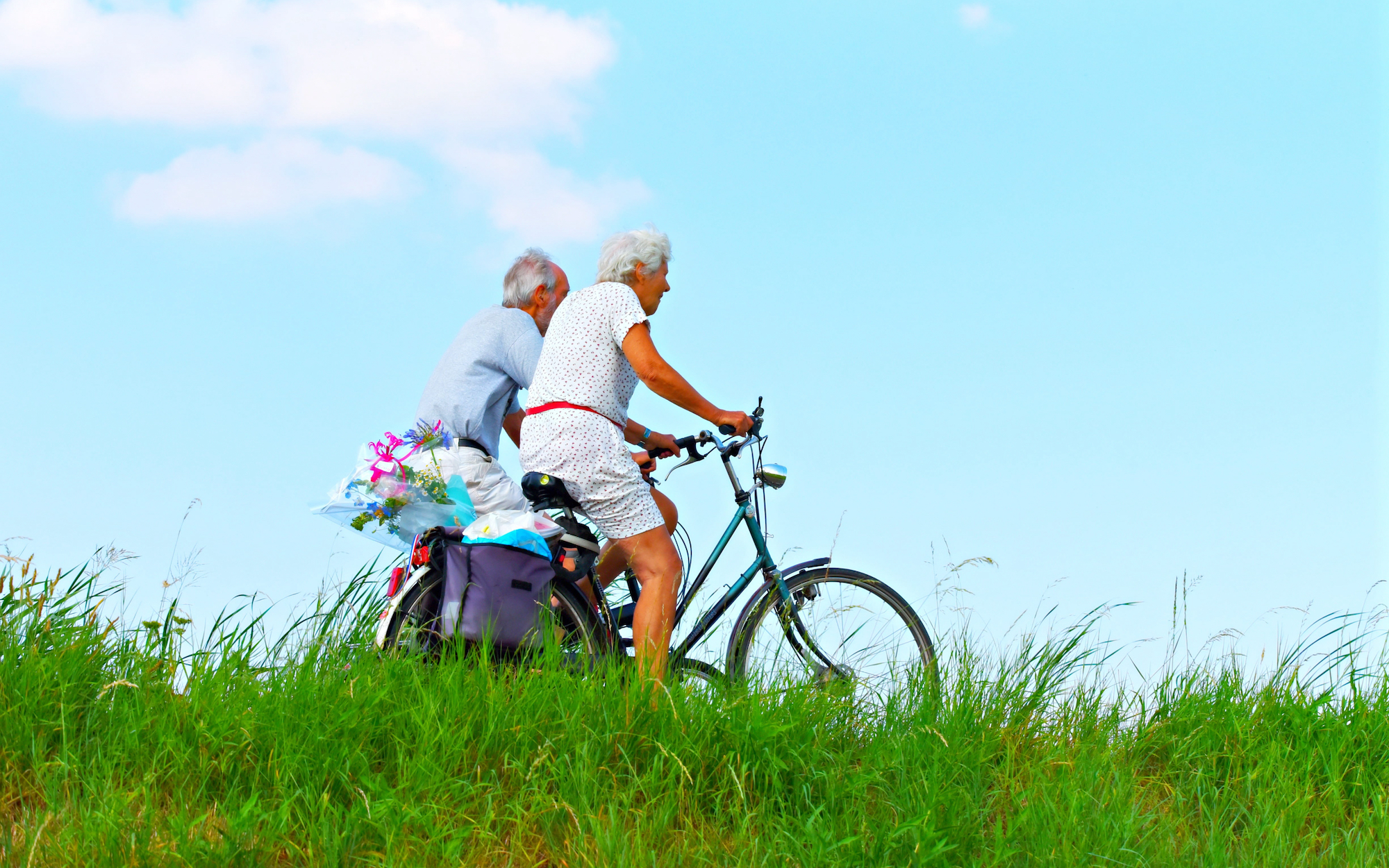
An older couple still cycling together. Public Domain photo
In a brief review of my previous article on aging and cycling, whereas the intrinsic factor of neuroticism was considered the initial prompt to engage in a sport (motivational drive), the extrinsic factor of social affiliation was considered the factor that continued to provide positive reinforcement for participation in that sport over time (social identity). Or, stated differently, one initially participated in a sport because of the positive effects on mood, but continued to participate in that sport over time because it gave one a sense of social identity and perceived safety. Further, the actual process of adjusting to those age-related changes was compared to Elizabeth Kubler-Ross’s stages of death and dying that includes the stages, denial, bargaining, anger, depression, and acceptance.
Here I attempt to address how to implement strategies for coping with inevitable age-related changes into pragmatic daily interventions.
It’s early Summer, the sun is up, and cycling events are more frequent. You’re out on your bike, and in a group paceline. The pace starts out reasonable, but soon you find your breathing labored, your legs heavy and slow, and you feel muscles tensing throughout your body. You quickly come to recognize this as the moment just before bonking and getting dropped off the back of the group. Maybe you have some private words with yourself. Maybe you haven’t been riding and you’re able to reason with yourself about being more consistent in your training. Maybe you’ve been ill and now recovering. But maybe you’ve been consistent in your riding. Maybe your health is just fine. Maybe your only explanation for lower performance is age. Now what?
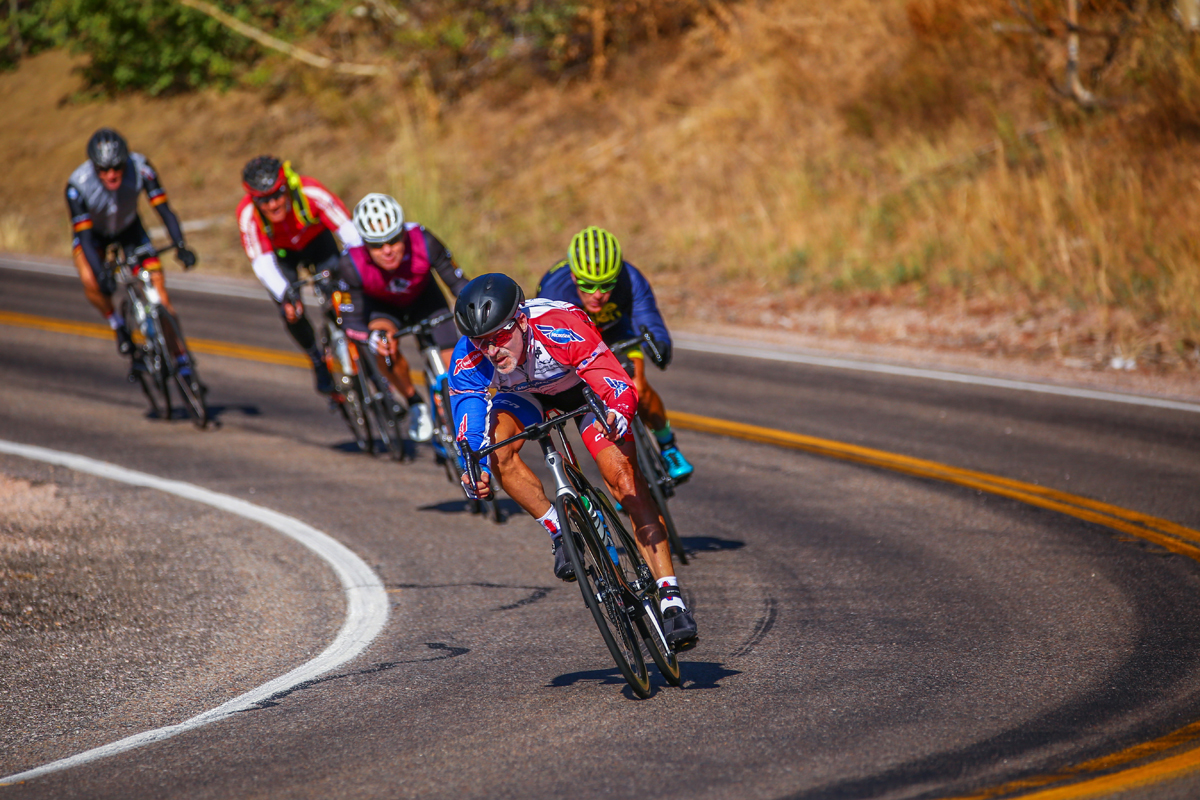
Mark Schaefer (Team Maddog Racing P/B Hammer Nutrition) arcs a turn while descending into Bear Lake Valley from Strawberry Summit in the 38th annual LoToJa Classic on Sept. 12. He won the Men’s Master 60+ open category with a time of 9:45:24. Photo courtesy of Snake River Photo.
If you’re like the general population the next few minutes to hours may be dominated by self-examination and assessing your understanding of why you may not be performing to the level you think you should. Based on your level of optimism you may conclude that you will continue to cycle, that you may need to modify your training, and that perhaps there are some changes in your performance expectations that may be in order due to age changes. But this type of calm and clear logic is unlikely. What is more likely is a tendency to look for external explanations of why your fitness is not where it should be. You might conclude that others in your cycling group might be resorting to performance enhancing supplements. You might conclude that maybe you’re not trying hard enough. You might even conclude that those in your pace group were working together to make your time in the group that much more difficult. But it is initially unlikely that you will identify age-related factors as being responsible for a decline in performance.
The above type of phenomenon where one tends to search for explanations of sub-par performance that do not indicate personal failure is referred to as fundamental attribution error. Fundamental attribution error can be considered nature’s strategy for us to maintain a sense of competence, even if our sense of competence is inaccurate. It asserts that in situations where we view ourselves as falling short of our expectations, that we will look to find explanations that identify factors outside our control as being instrumental in our poor performance.
An example of fundamental attribution error might be illustrated by walking down the sidewalk and tripping. Based on fundamental attribution error, the individual who trips on the sidewalk may find an explanation for tripping related to something about the condition of the sidewalk itself. Think “I tripped on the sidewalk because it had a crack in it.” On the flipside of this phenomenon, is the tendency for individuals to identify personal characteristics of others as explanations for their poor performance. Think “That person tripped on the sidewalk because that person is clumsy.”
What is interesting with this phenomenon is that our explained attributions flip when we experience positive outcomes. Think “I got this new job because I’m the best suited for the position” as opposed to “that person got the job because they were lucky.” We like to think bad things happen to us due to outside factors and good things happen to use because we work hard and deserve it; while bad things happen to other people because they deserve it while good things happen to other people just due to luck.
From a performance and coping perspective fundamental attribution error represents a variation on Elizabeth Kubler-Ross’s stage of denial from her stages of death and dying. In the process of attempting to preserve one’s self image, one is at much higher risk of misidentifying the factors contributing to lower performance. The result is that effort to improve the situation is misdirected, and therefore an appropriate course of correction is compromised.
So how to do you correct for denial? The first step is to allow yourself to discuss the specific details of the loss with a peer. When did you become aware of changes in your fitness? What were the series of events that lead you to being aware of less physical strength? What do these physical changes signal to you? Do you have initial thoughts about your future in cycling? Are there performance goals that you believe are no longer obtainable and are there goals that you can still achieve? This process can be difficult, and individuals may find themselves debating various facts in their mind over the course of months before coming to full awareness regarding changes in their ability to ride a bike or any life altering event.
The following are questions you might ask yourself if you are aging and notice a change in your cycling:
What is it that you enjoy most about cycling?
What aspects of cycling have been negatively impacted due to a decline in physical ability?
To what extent do you think performance decline might be age-related?
Is there anything in cycling that you don’t miss that has been impacted by your age?
How does cycling help you cope with other aspects of your life?
What implications do you see related to decreased cycling performance within the
next year,
in 2 years,
in 5 years, etc …
What does getting old mean to you?
Who are the older individuals in your life who you consider role models for aging? Why?
Who are the older individuals in your life who you consider poor role models for aging? Why?
Were you raised with any stereotypes about older individuals? How do you think these stereotypes might have influenced your current opinions regarding age and getting older?
These questions are specifically designed to assist in better clarifying the role cycling plays in one’s life, and therefore allows one to find adjustments to meet needs that may not otherwise be met without cycling. But without engaging in these questions, one is less likely create a balanced intervention that allows one to appreciate what aspects of cycling can continue unchanged, what aspects of cycling may no longer be possible, and what aspects of cycling may need to be modified.
Once one comes to an understanding of the role cycling played in one’s life and how the future will be impacted by age-related changes, then active adaptation can occur. In this stage one may find themselves expanding their support network, engaging in new hobbies to fulfill interests no longer filled by cycling, and changing the way they engage in cycling altogether. If still cycling, then in what situations does cycling become more difficult? Are there events which no longer appear appropriate due to age, while are there other events that appear more appropriate due to age? Are there specific advantages of cycling that were once available but are no longer possible due to age? If so, are there other opportunities available in which to realize those advantages?
Older cyclists may not only face difficulty from their own biases but may also face resistance from others in their life. Many older athletes become the target of negative stereotypes from family, friends, and colleagues. Other’s may say things like “What are you doing cycling all the time? Grow up and be your age.” In review of literature regarding sports and aging, the results are mixed regarding any potential benefit. While there are many physical advantages of sport participation as an older athlete, the literature regarding the benefits of sports participation on emotional, spiritual and other dimensions of health with age are limited, unclear and require more research.
I have heard it said over and over that ignorance is bliss. And to some extent this is true. Think about the amount of ignorance you use to deny the level of risk of injury while driving your car. Are other drivers really all that concerned of your wellbeing? Probably not, but you need to drive to get to work, and ignorance helps to get you in the car.
In situations like the one we are discussing; ignorance becomes a major obstacle that potentially separates one from enjoying their sport. Ignorance may influence one to join cycling groups that fall outside one’s skill level, prompt individuals to potentially train in a fashion not appropriate for their age-related needs and may prompt one to create goals that become increasingly more unobtainable over the course of time. These all represent variations of fundamental attribution error and denial.
To assist you in avoiding the denial trap, here are some basic truths about age and cycling to remind yourself:
Everybody gets old.
Mother nature doesn’t care how much you exercise or your self-care routine You may be able to slow the aging process, but you will not stop it.
Being old is relative, multidimensional, and related to more than chronological age.
Trying harder will not magically cause you to ride like a competitive cyclist 20-30 years younger than you.
Most younger cyclists do not understand the aging process. They are likely to make inaccurate assumptions of what does and does not contribute to age. They may even treat you like the plague. You are not the plague.
Most older peers are more likely to rely on age stereotypes and encourage more sedentary interests when dealing with you.
As you age your training needs change and will most likely require you more rest time between workouts.
Modifying your cycling training to match your age and ability is not quitting. It is optimizing your fitness level to your training.
Ignoring your age and the impact on cycling can potentially have life threatening implications (think cardiac abnormalities associated with heart size over time).
Acknowledging and accepting your age is not giving up. It is being objective.
Being a fast cyclist doesn’t translate into being good at other parts of your life. Similarly, being a slow cyclist doesn’t translate into being bad at other parts of your life.
Your personal assessment of your skill level is likely to overestimate your capabilities.
Now go and ride your bike. Be sure to say hello to the people you pass and to those who pass you. And know, barring disaster, that we all get old. That we are all headed in the same direction, and that in the meantime between here and the hereafter, a little bike ride is just the thing to keep you sane.
Eric Yelsa, Ph.D. is clinical health psychologist in both private practice and within the University of Utah Health Sciences Center. He served as an assistant professor through University of Utah Hospital Pain Management Center Department of Anesthesiology where he worked with a number of elite and professional athletes recovering from sport related trauma. He has been a competitive cyclist since 1981. He is a USAC level 3 certified coach and certified power-training coach, has presented at the USA Cycling, and is an active member of the American Psychological Association Division 47 Exercise and Sport Psychology. He can be reached for consultation at [email protected]
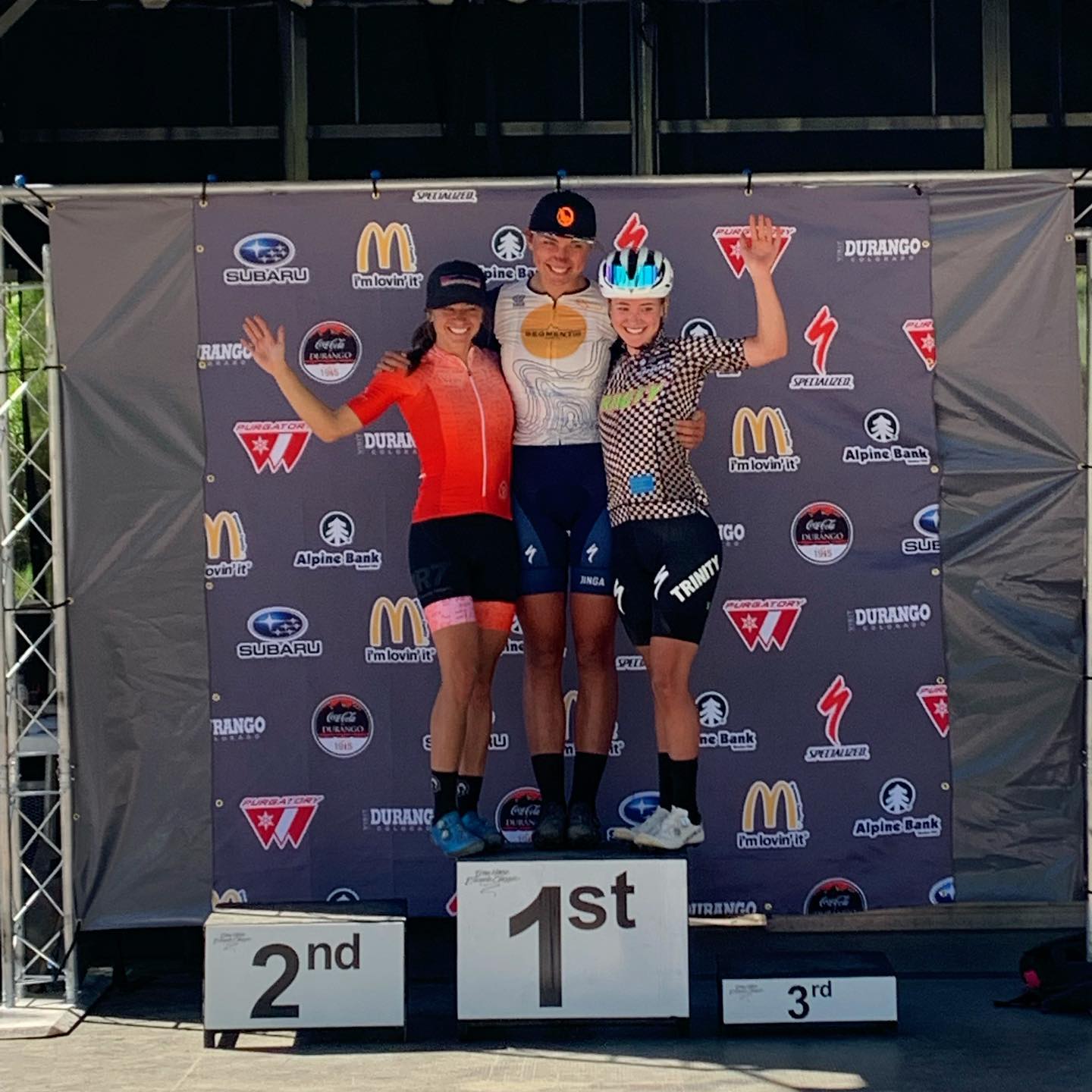
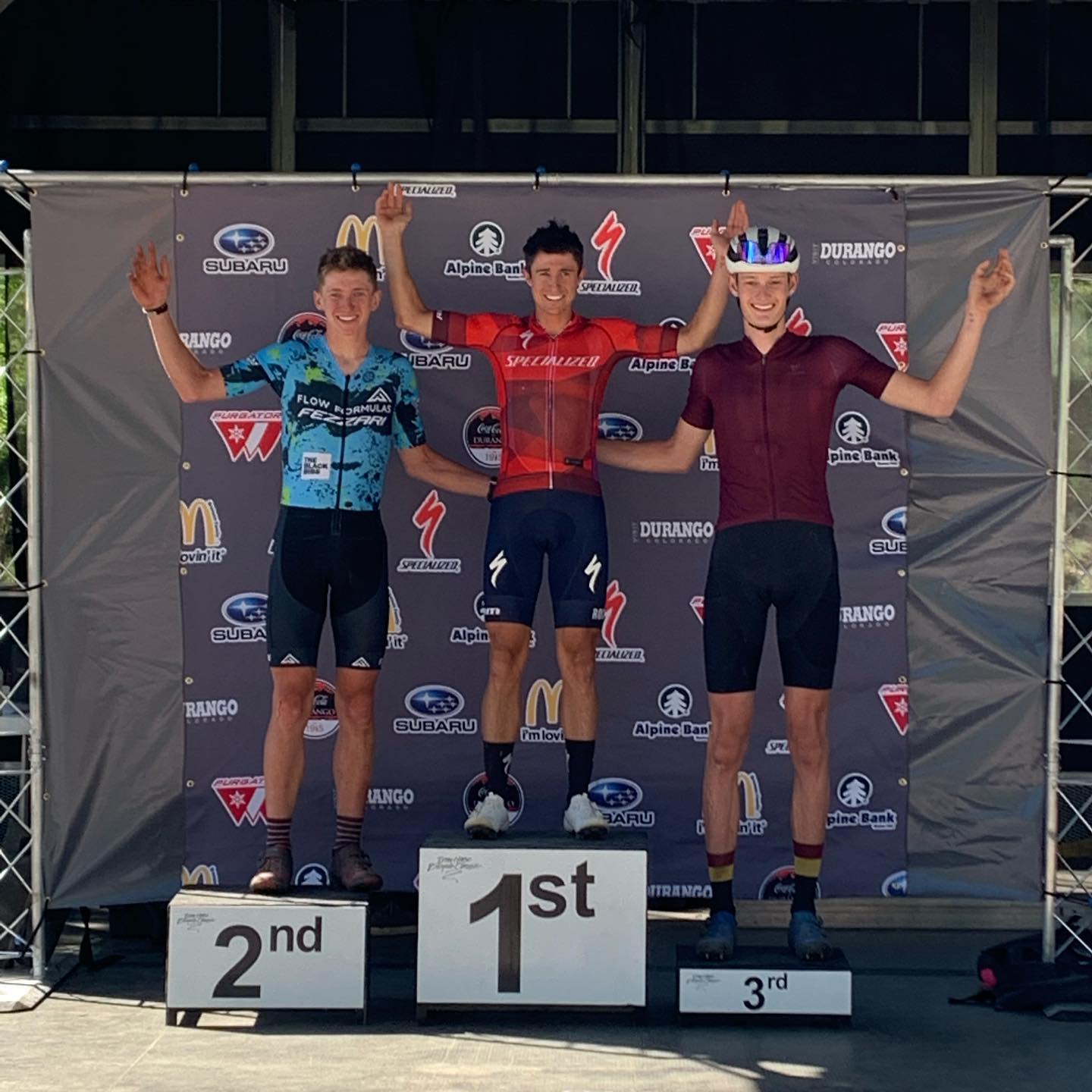
Howard Grotts and Michaela Thompson won the Mountain Bike Specialists King/Queen of the Mountain omnium competition.
DURANGO, Colorado (May 29, 2023) — The 2023 edition of the Iron Horse Bicycle Classic brought more than 2,000 bike enthusiasts to Durango this weekend to ride the classic Coca Cola Road Race and McDonalds Citizen’s Tour, which raced the train from Durango to Silverton. Racers also enjoyed mountain bike and gravel events.
Michaela Thompson won the Mountain Bike Specialists Queen of the Mountain omnium competition. Photo courtesy IHBC.Howard Grotts won the Mountain Bike Specialists King of the Mountain omnium competition. Photo courtesy IHBC.
“We had a beautiful day for the ride and race to Silverton as the Iron Horse Bicycle Classic heads into its next half-century as an event,” said race director Ian Burnett. “Then on Sunday the gravel riders and mountain bikers had a great time racing in the dirt.”
The weekend kicked off Friday night with Michaela Thompson and Toby Hassett taking wins in the 20-minute-long pro short track races.
On Saturday, the peloton set off for 50 miles with more than 5,000 feet of elevation gain. A group of about 20 riders stayed together for the first half of the men’s race before the group splintered on the climb up Coal Bank Pass. Team California’s Caleb Classen soloed across the line with a time of 2:07:18.
In the women’s road race, Sarah Sturm, Kira Payer, and Thompson escaped off the front early on. On Coal Bank Pass, it was Sturm vs. Payer, with Payer gaining an advantage due to a dropped chain from Sturm. Despite a determined chase from Sturm, Payer crossed the line solo with a time of 2:30:28.
Men’s Road Race Results
Caleb Classen (2:07:18)
Howard Grotts (2:08:56)
Jack Odron (2:11:22)
Tayne Andrade (2:12:21)
Jess Clapier (2:12:23)
Women’s Road Race Results
Kira Payer (2:30:28)
Sarah Sturm (2:31:13)
Michaela Thompson (2:35:59)
Sofia Waite (2:39:10)
Erin Osborne (2:39:26)
On Sunday, gravel racers set off for a day of rolling hills in the rural countryside east of Durango. The long course riders completed 95 miles and 7,700 feet of climbing. Full results from the gravel race are available here.
Men’s Gravel Long Course Results
Guy Leshem (4:50:49)
Jess Clapier (4:50:49)
Tyler Lock (4:53:22)
Sam Riess (5:00:00)
Ian Mcpherson (5:02:00)
Women’s Gravel Long Course Results
Sarah Sturm (5:06:37)
Ellen Campbell (5:42:54)
Terry Casey (5:57:22)
Sunny Gilbert (6:34:55)
Danika Brabec (7:14:37)
Racers in the Subaru Mountain Bike Race battled each other on a five-mile lap that featured nearly 600-feet of elevation gain per lap. The course started at Chapman Hill and raced up Lion’s Den Trail, around Rim Trail, and back down through the Chapman Hill Flow Trail.
Howard Grotts and Michaela Thompson both opened substantial leads early in the race, taking victories in both the mountain bike race and the overall omnium competition which combines points scored during the road race and mountain bike race.
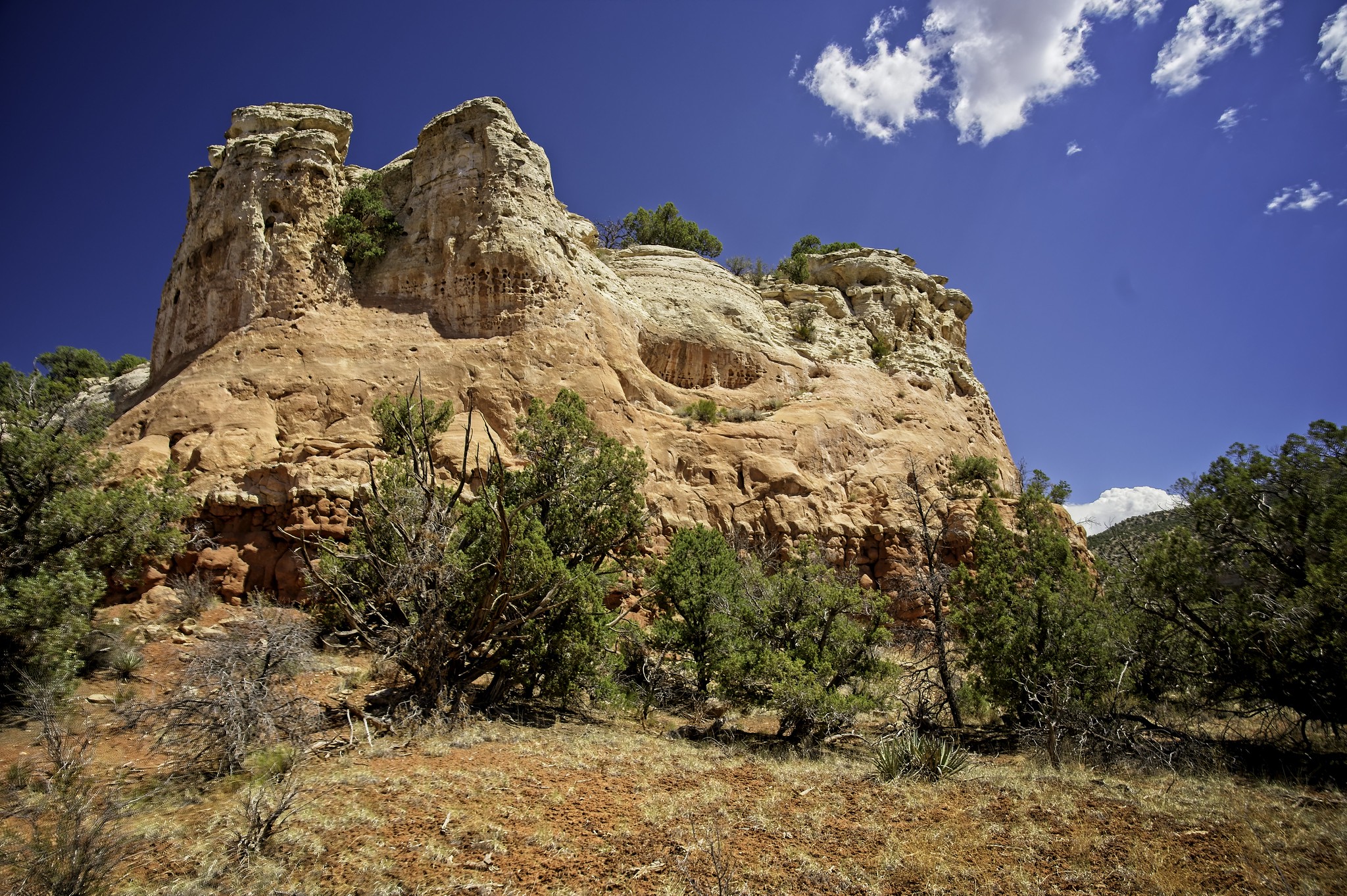
By Charles Pekow — Mountain biking could become restricted to “designated travel routes” within the Sand Canyon-Rock Creek Special Recreation Management Area under a proposed rule. The Bureau of Land Management (BLM) issued a Proposed Supplementary Rule for Canyons of the Ancients National Monument in Dolores and Montezuma Counties in southwestern Colorado “to regulate conduct on public lands within Canyons of the Ancients National Monument.”
The proposal is designed to protect natural and cultural resources. Currently, BLM requests users to stay on trails designated for biking, hiking, or horseback riding.
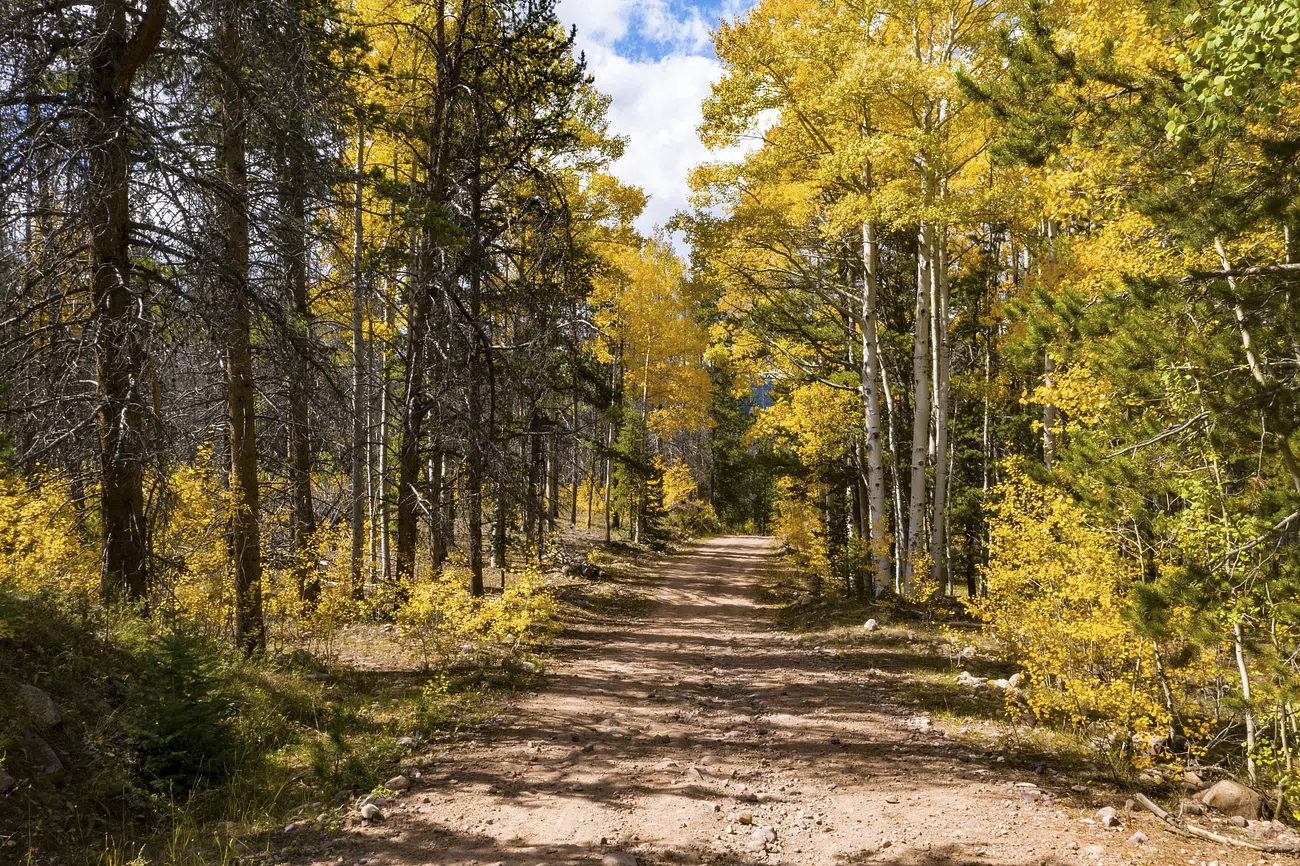
The range of allowable mountain biking in Ashley National Forest may get some adjustments. The U.S. Forest Service (USFS) released a revised land management plan for the forest in northeastern Utah and southwestern Wyoming. The plan would add some mountain bike routes but forbid riding in other areas where it currently is allowed.
A trail in Ashley National Forest. CC0 1.0 Universal (CC0 1.0). Public Domain
The plan allows building 10 miles of new mountain biking trails and improving 10 miles of existing ones “if local user groups or partnerships are identified to conduct annual trail maintenance.” But bikes may be forbidden in areas designated as wilderness.
USFS foresees increased mountain biking demand in the forest, especially in the north near Vernal, as popular areas like Moab become overcrowded. It also acknowledges people may want to ride ebikes there in the future.
By Charles Pekow — The good news: despite increased use of bicycles, the injury rate has been declining in the United States. So says a study published in the Journal of Orthopaedic Research. Data are limited, however, says the study, “National Incidence and Trends of Bicycle Injury”. The report covered the decade between 2012 and 2021 and noted that bicycle use accelerated during the coronavirus pandemic.
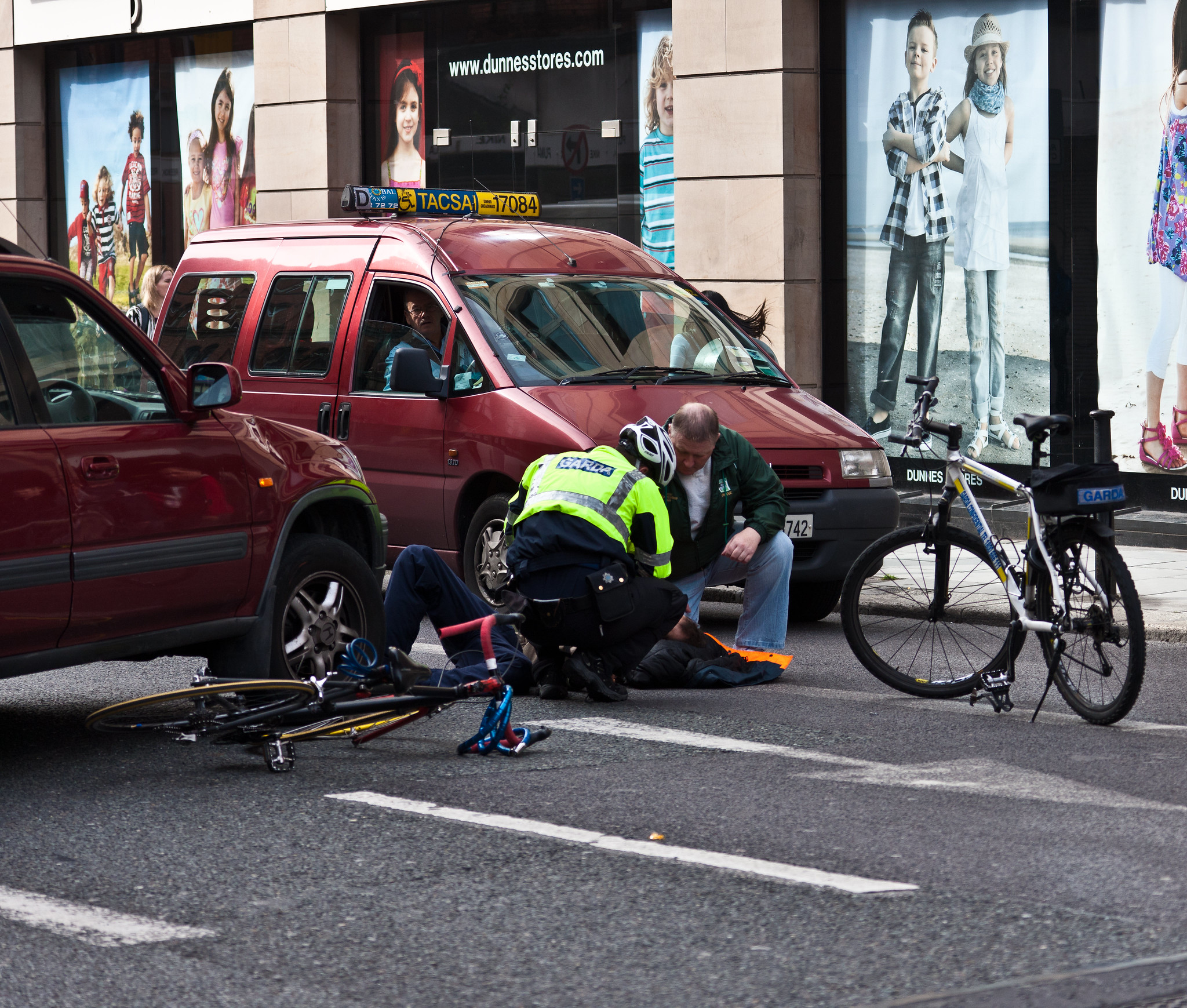
An injured rider ies on the ground after being hit by an SUV in Dublin. Attribution-ShareAlike 2.0 Generic (CC BY-SA 2.0)
The bad news: the numbers remain high, with an estimate of 4,666,491 bicycle-related trips to emergency rooms over the period. Perhaps most alarming is that the rate has been increasing among the elderly, who suffered mainly head and upper body injuries.
Even so, males and younger people were most likely to get hurt. As one would expect, injuries “occurred most often during summer months (36 percent) and on weekend days (31.9 percent).”
Broken bones accounted for the largest share of injuries and the higher up in the anatomy, the more likely the trauma. Since so many head injuries occurred, the authors call for helmet use and “bicycle safety initiatives.”
Arthritis Foundation Commemorates 75 Years of Progress During Arthritis Awareness Month and National Bike Month this May
LOS ANGELES, California (May 23, 2023) — As America recognizes Arthritis Awareness Month this May, the Arthritis Foundation commemorates 75 years of championing the fight to conquer arthritis, the nation’s #1 cause of disability. May is also National Bike Month and the official kickoff of the 2023 California Coast Classic Bike Tour presented by Amgen, the Arthritis Foundation’s leading national destination fundraiser.
Since 1948, the Arthritis Foundation has invested over half a billion dollars in research, with more than $22 million coming directly from the California Coast Classic. The annual event, a fully supported bike tour traveling 525-miles from San Francisco to Los Angeles over eight days, is the Foundation’s top annual fundraiser, generating more than $1 million each year on average since its inaugural ride in 2001. Its 2023 dates are September 30 – October 7.
Photo courtesy California Coast Classic
Caitlin West of Coatesville, Pennsylvania, was diagnosed with Psoriatic Arthritis (PsA) 10 years ago, and now, “After years of infusions, injections, physical therapy, and one knee surgery – I am in a place where I can partake in this amazing event!” she shares on her fundraising page. “People with arthritis are warriors, boldly facing the pain, limitations and challenges the disease causes. PsA has impacted my life significantly, but I am no exception to the rule — there are thousands of arthritis warriors worldwide. I ride to cure arthritis, to improve the lives of arthritis warriors. This incredible event is the largest gathering of the arthritis community in the world, raising funds for resources and research, to find better treatments and a cure.”
Typically, at least 40% of California Coast Classic riders either have arthritis or are riding for a loved one with the autoimmune disease that affects one in four Americans. This year, at least 80 of the expected sell-out crowd of 250 riders, have identified themselves as living with arthritis. And even more surprising to those who don’t have arthritis, is the fact that riding a bike is considered one of the healthiest activities for people with certain forms of the disease.
“’We’re riding for a cure!’ is our mantra, and each and every rider who has cycled the California Coast with us has made a significant contribution to the Arthritis Foundation’s mission, research, and programs,” said Shannon Marang Cox, National Senior Director of the California Coast Classic Bike Tour at the Arthritis Foundation. “We get cyclists coming for the amazing coastal experience, we have people riding to raise funds on behalf of a loved one, and each year we have riders who toe the line with arthritis themselves. It’s an inspiring group that deserves to be celebrated.”
Adarsh Pandit of Oakland, California, is one of those riders. Adarsh has Rheumatoid Arthritis and is participating in his third California Coast Classic this year. He says that cycling is the one thing that helps him manage it more than anything else, and he recently shared some of his inspiration with other riders here.
“Active, healthy habits and exercise are often helpful for those living with arthritis and cycling is a relatively low impact exercise that improves overall health and pain management,” Marang Cox shared.
“I ride for myself and those who feel isolated in this shared experience,” said Kendra Laguilles, referring to her experience with Lupus for more than a decade. The Signal Hill, California, native received the Arthritis Foundation’s 2022 Young Adult Leadership Award for her efforts to support others with arthritis. She volunteered at the California Coast Classic in 2021 and was a rider in 2022. “Through the Arthritis Foundation and its programs, I found community and empowerment — and discovered the beauty of understanding that we are not confined to a ‘disabled’ label, but we are those who learn to be adaptive.”
One in every four Americans is living with arthritis. It’s the number one cause of disability and a growing health crisis affecting more than 60 million adults and 300,000 children.
Jeffrey Lo does not have arthritis, but he rides on behalf of his son, who was diagnosed with juvenile idiopathic arthritis at the age of two. He learned about the tour from a member of Team Amgen and this will be his second year on the California Coast Classic. He’s riding to help families receive support and advocacy from the Arthritis Foundation when they begin their journeys with juvenile arthritis.
The Arthritis Foundation is leading the fight to conquer everyday battles through life-changing information and resources, access to optimal care, advancements in science, and community connections. Funding from events like the California Coast Classic goes directly to Arthritis Foundation programs that increase quality of life with patient education and advocacy; improve access to health care; provide fee-free summer camps for children; and conduct research for better treatments and cures for the myriad forms of arthritis.
According to an article published by the Arthritis Foundation, “Biking gets your legs moving through their range of motion. This encourages the production of synovial fluid, which lubricates the joints,” says physical therapist Jessica Schwartz, founder of PT2Go in New York City and a spokesperson for the American Physical Therapy Association. “It also builds muscles in your core and legs.”
The article continues, “When these muscles are stronger, they better support the joints and relieve some of the pressure,” says Sheena Alva, a physical therapist with the Hospital for Special Surgery in New York City.
“I always say, ‘use it or lose it’ and so continuing to ride my bicycle has helped me to keep fit and to raise awareness about this cause that is so near and dear to my heart,” Shinju Morris states on her fundraising page. A Coast Classic veteran from Arcadia, California, Shinju’s arthritis symptoms started in her teens, and she was later diagnosed with ankylosing spondylitis in her 20s. “I began riding to cure arthritis, to improve the lives of arthritis warriors in 2014, and I have NO plans to stop,” she continues. “There are over 300,000 children with arthritis who suffer much more pain and disability than I do. I want a world where children (and adults) don’t have to live with arthritis pain and disability.”
Elena Ross-Salonga, of Cambria, California, was diagnosed with Rheumatoid Arthritis at the age of 36 after experiencing excruciating joint pain and swelling. She says that the mindset shift she’s experienced since her diagnosis is the hardest part of the journey so far, and it can be difficult to accept that her body is not going to always do what she wants it to do. A foodie and amateur chef who appeared on the Food Network show The Julia Child Challenge, Elena found remedy in developing a specific anti-inflammatory diet that maintains her balance of health but still allows joy in eating. She’s planning to ride in her first full California Coast Classic this year, a task that involves months of planning, fundraising, and training.
More information about the bike tour, including its detailed itinerary, is available at the California Coast Classic website and in this short video. The self-paced pedaling adventure is open to cyclists of all levels and welcoming of e-bike riders. It is Gran Fondo Guide’s “Best Charity Bike Tour” and has been named one of “The 30 Best Road Biking Trips” by Outside Magazine.
The dates of the 2023 California Coast Classic, presented by Amgen, are September 30 – October 7 and registration is available at this link.
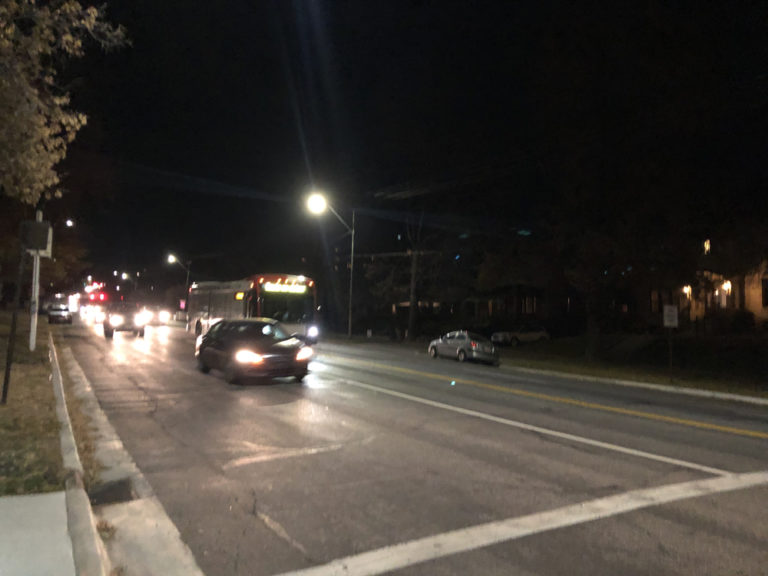
By Charles Pekow — The transportation planning profession needs to produce standards for bike/ped safety in bus rapid transit corridors. So concludes a new study from the Transit Cooperative Research Program, Pedestrian and Bicycle Safety in Bus Rapid Transit and High-Priority Bus Corridors.
100 S and 1200 E in Salt Lake City. 100 S is a major bus corridor, but the conditions for buses are not great. Additionally, the lack of bike lanes makes it unsafe for cyclists. Photo by Dave Iltis
The study examined existing worldwide research and design guides to see what they said about cyclist safety in the corridors. It looked at practices in seven bicycle-friendly US cities, including Fort Collins, CO. Researchers found that most safety studies of bus corridors didn’t look closely at the issue for cyclists. Existing guides on safety, however, often include sections on bike/ped safety.
The program found that cookie-cutter approaches won’t suffice, as no two situations are identical. As a rule of thumb, cyclists are less likely to get in conflicts with buses when the bus lanes lie in the middle of the road.
It says further research is needed on matters such as how curb extensions used to load/unload passengers affect bicycles, and lanes only for buses and bikes. These cause conflicts when buses swerve to pass a cyclist or have to get close to a curb to pick up/drop off passengers.
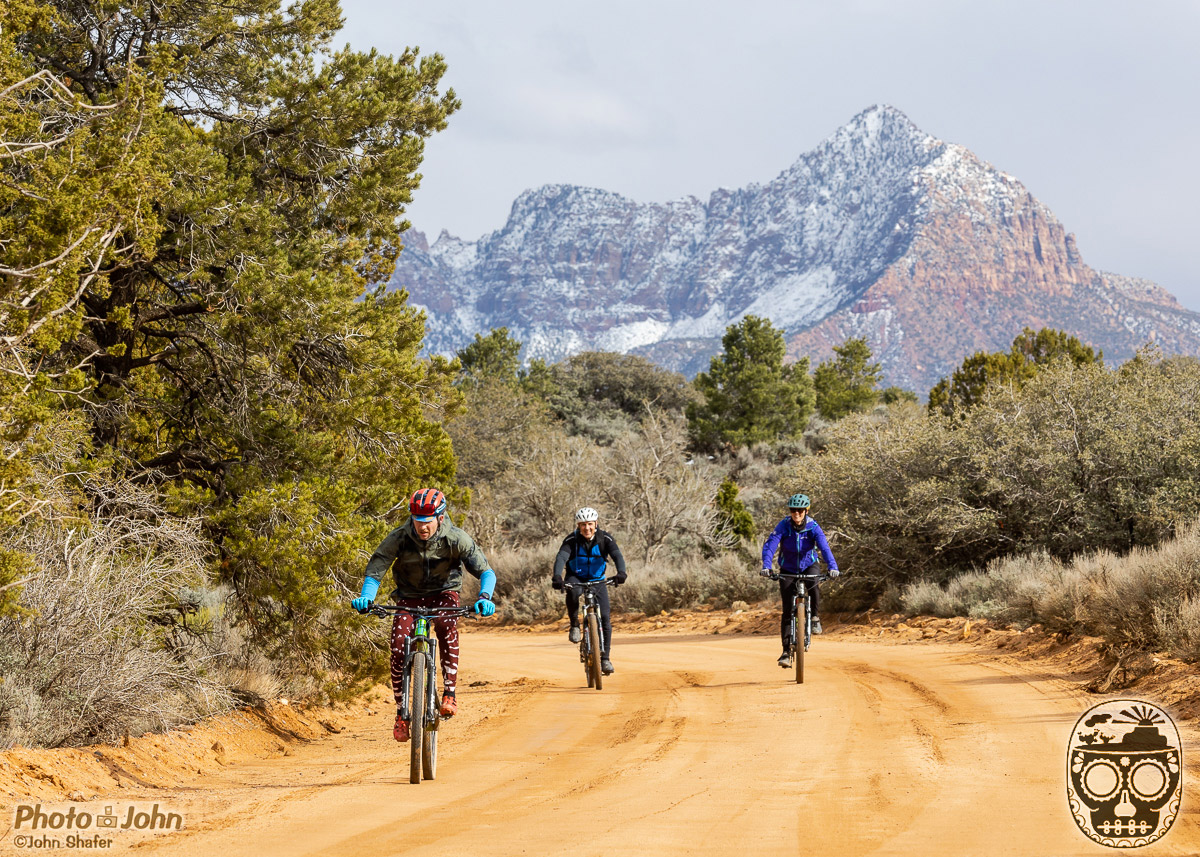
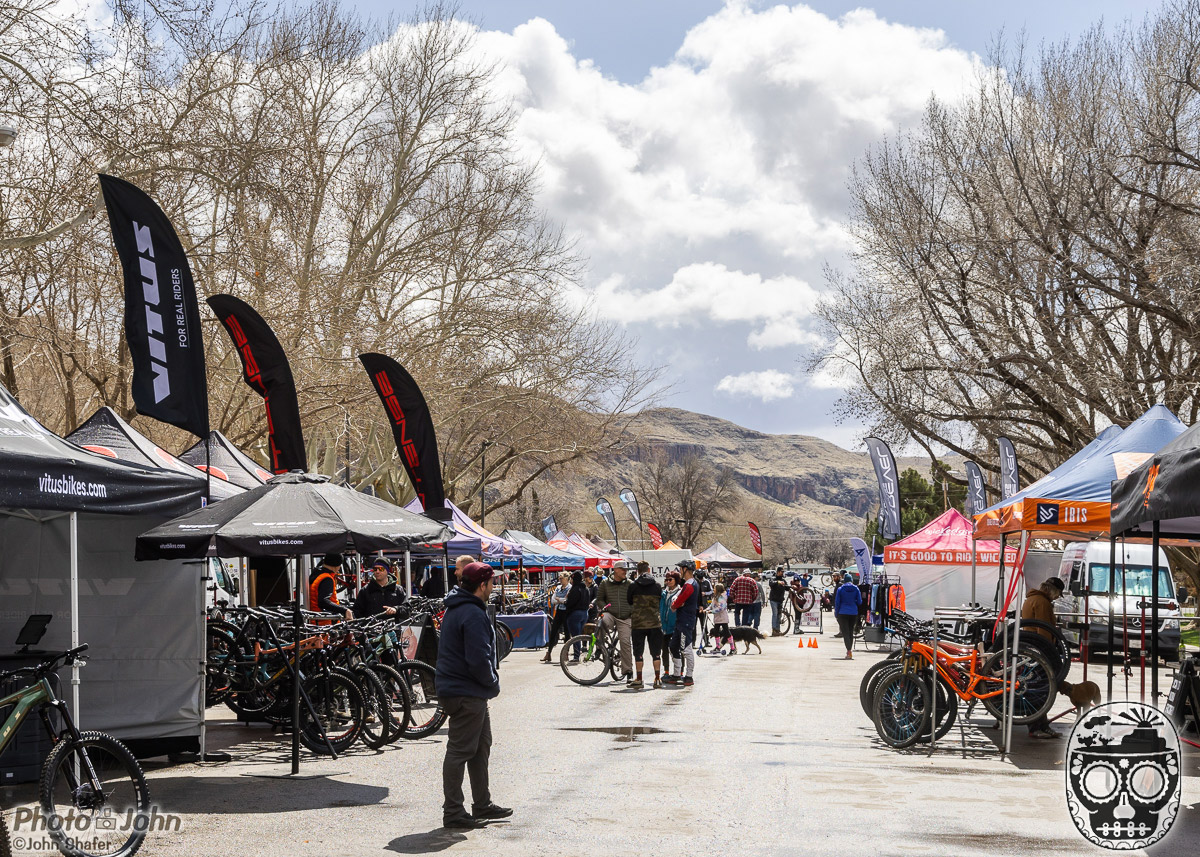
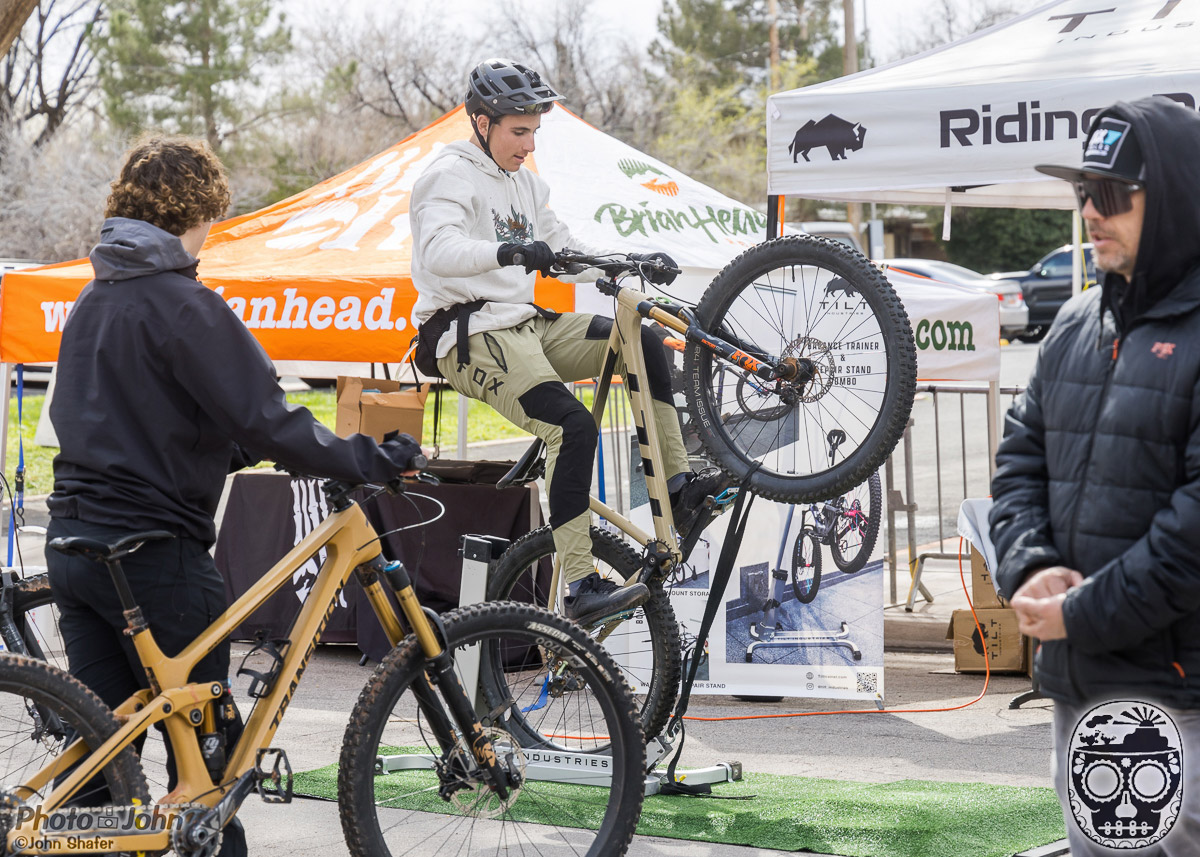
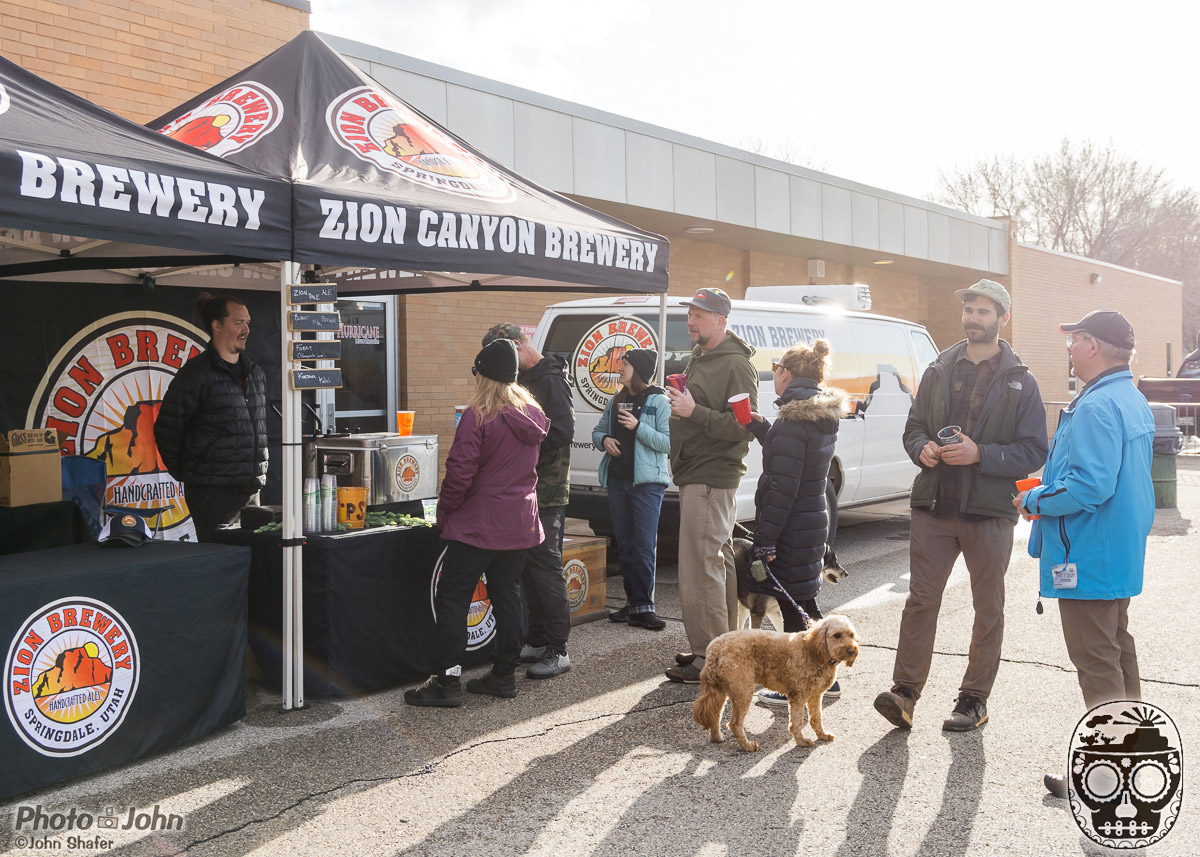
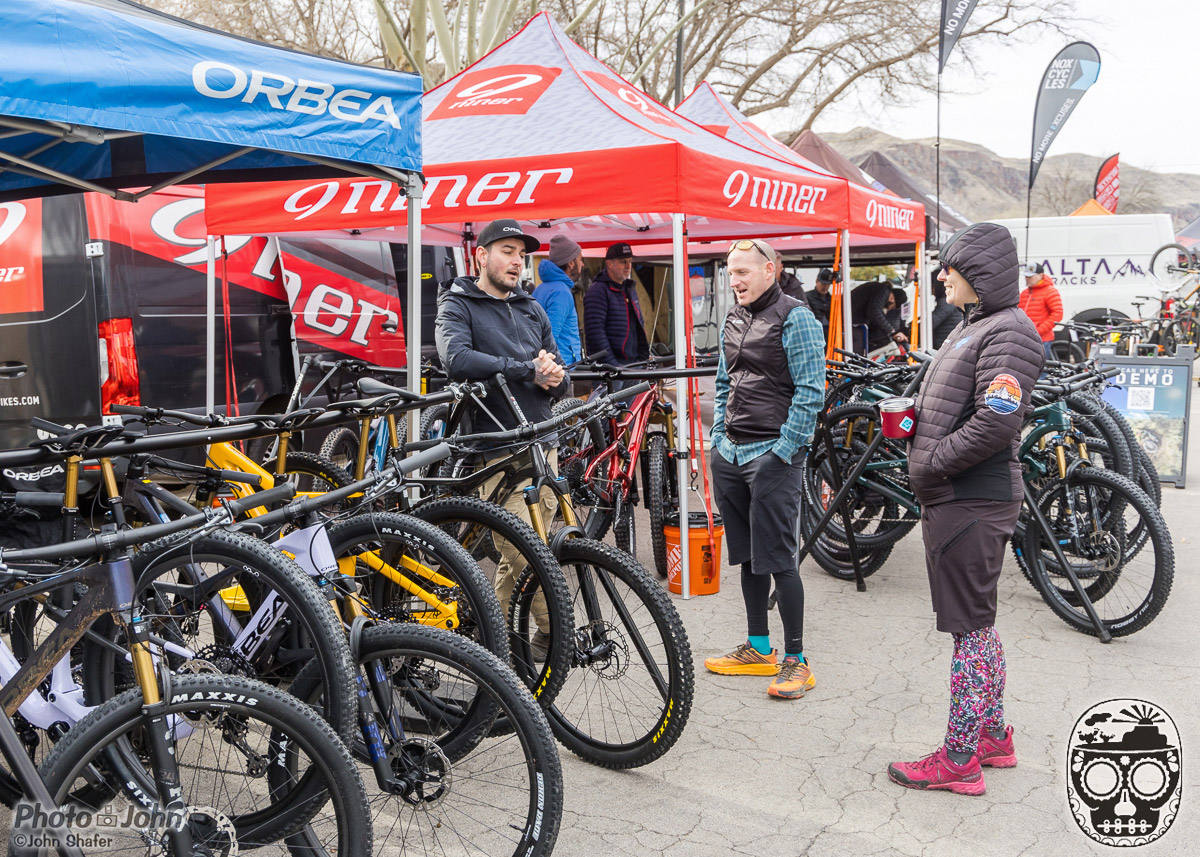
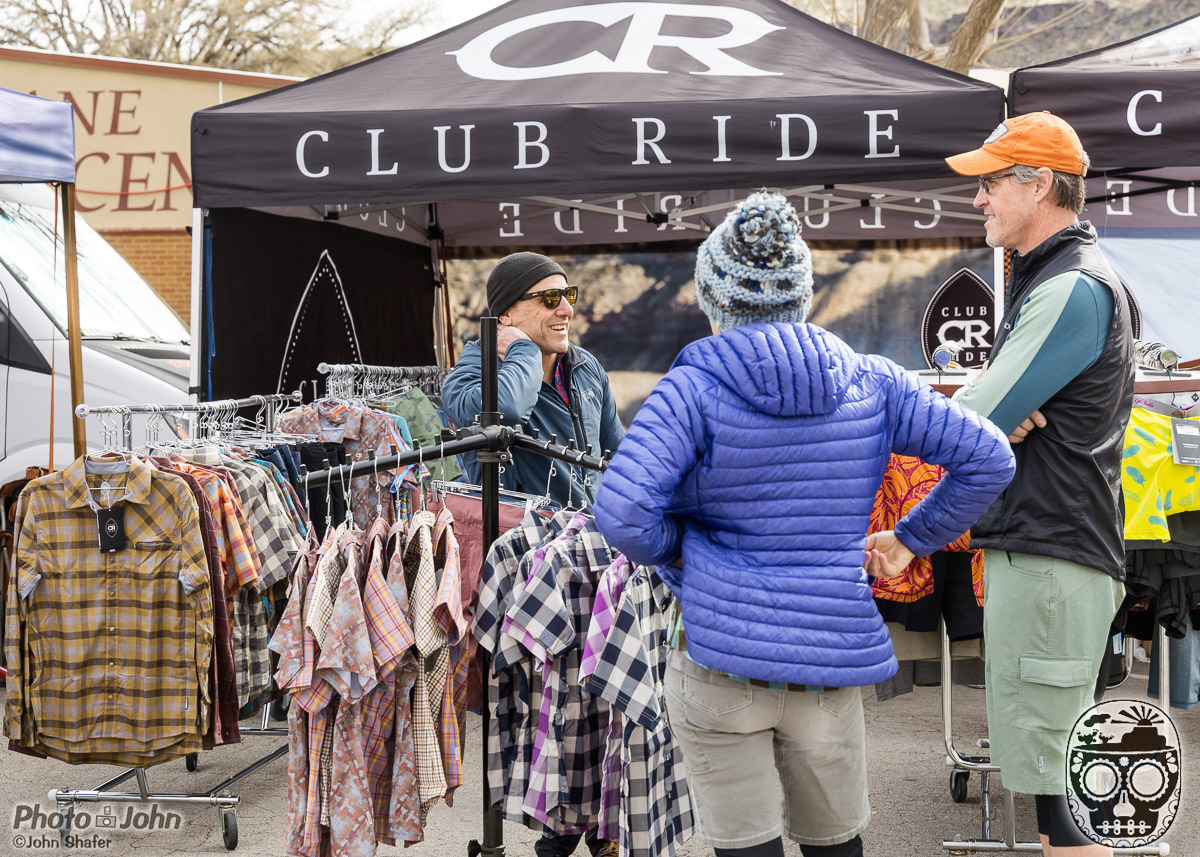
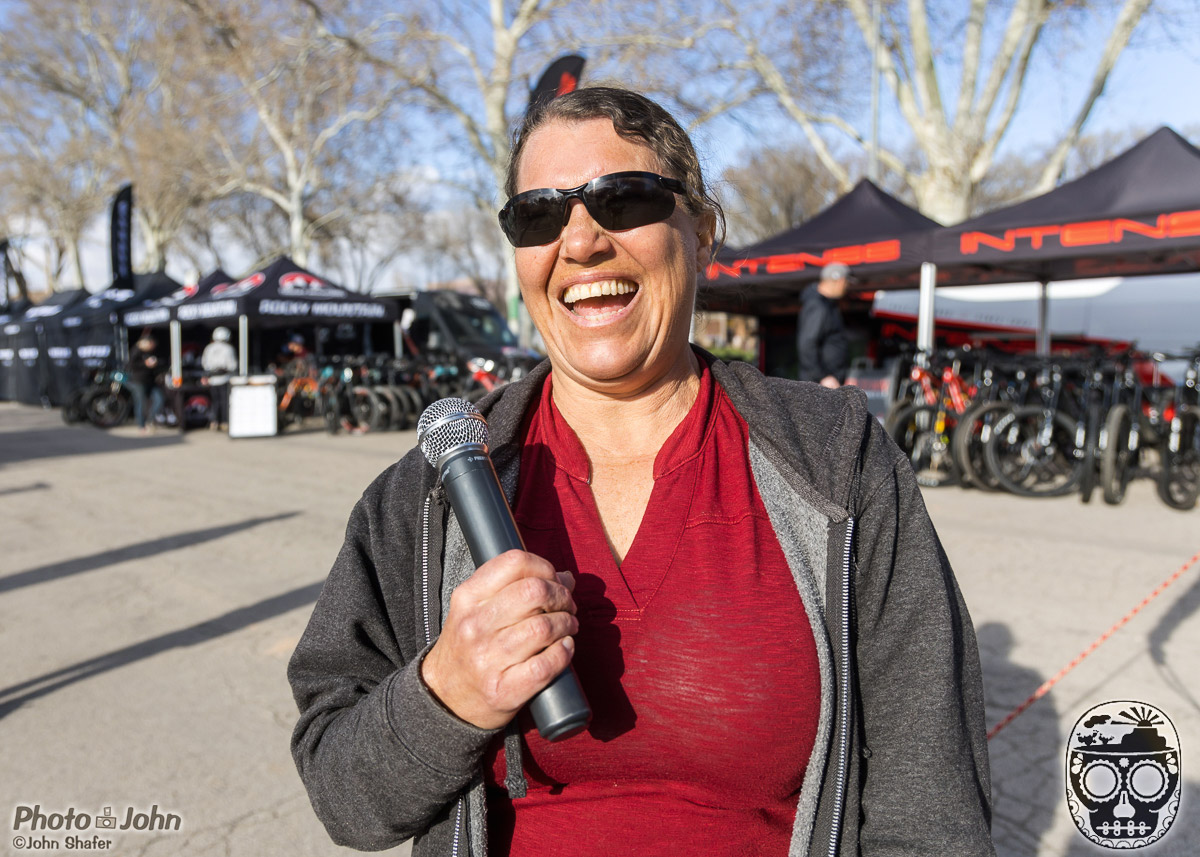
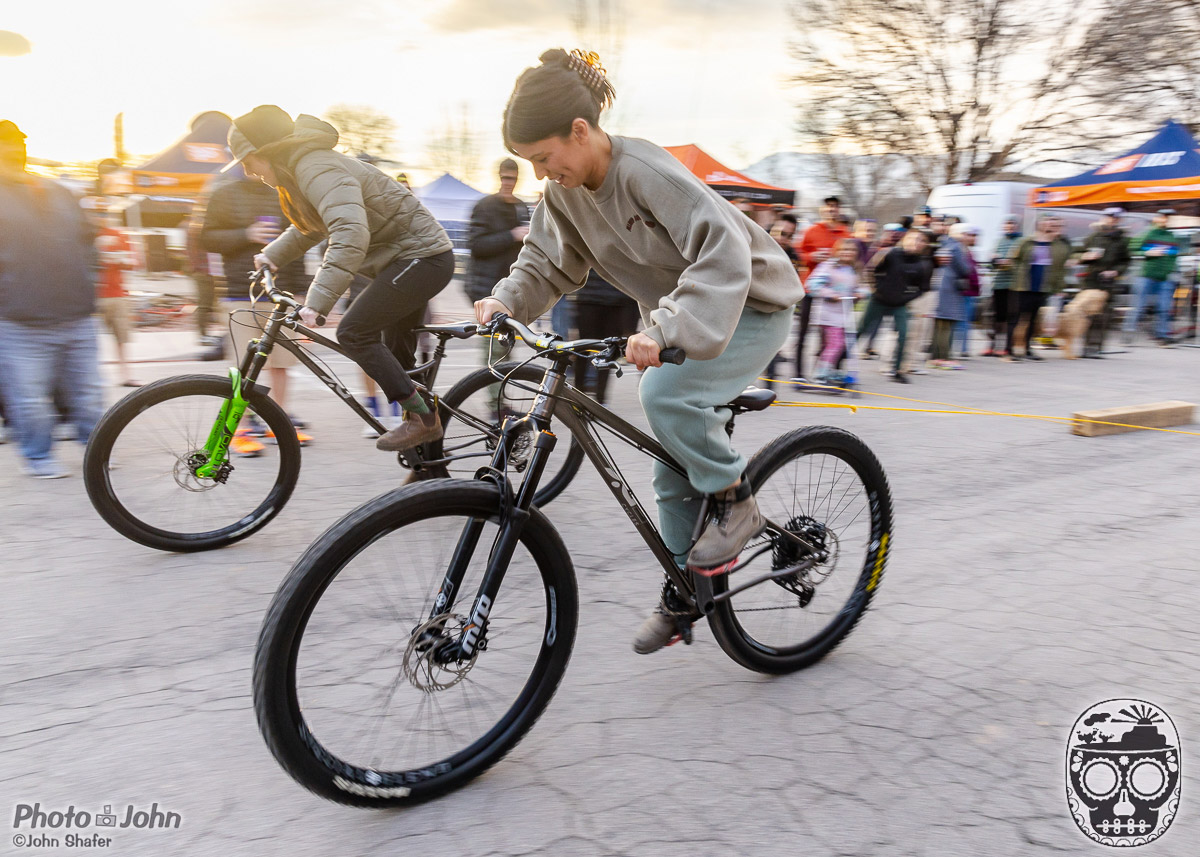
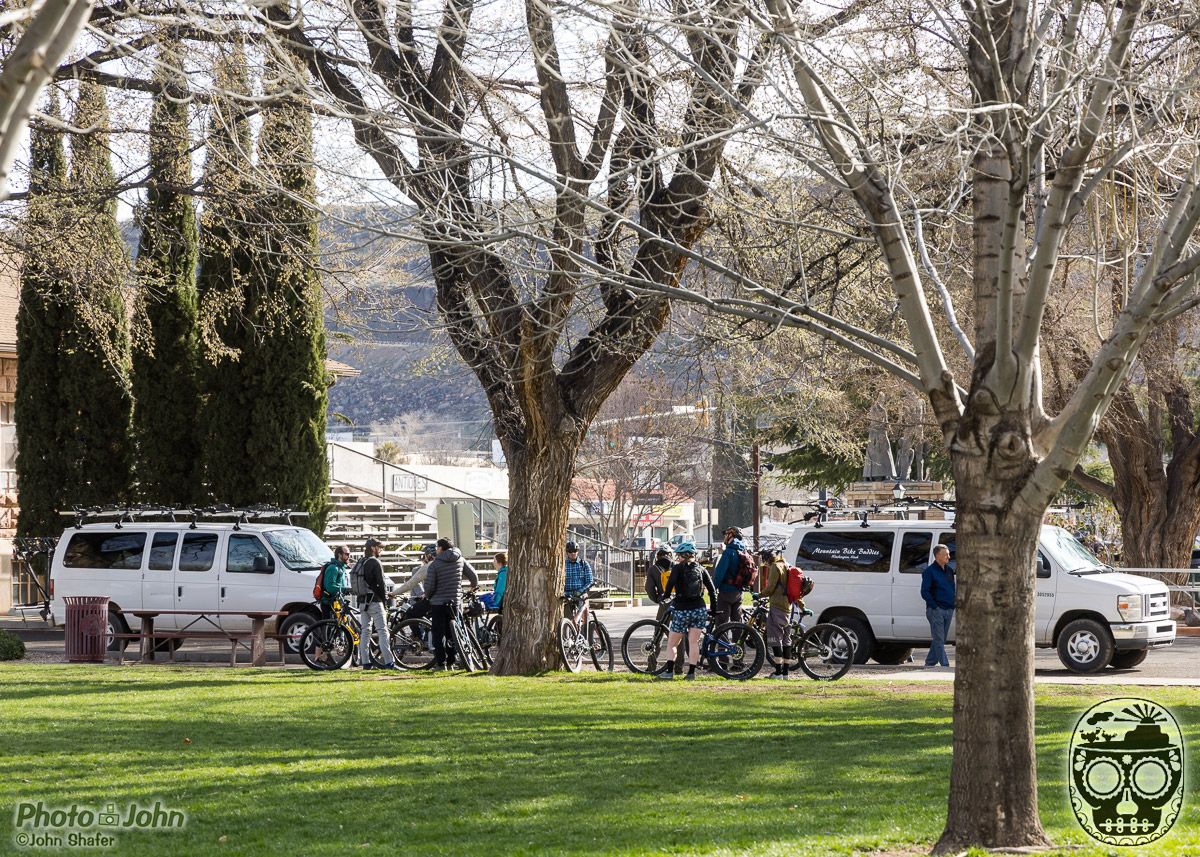
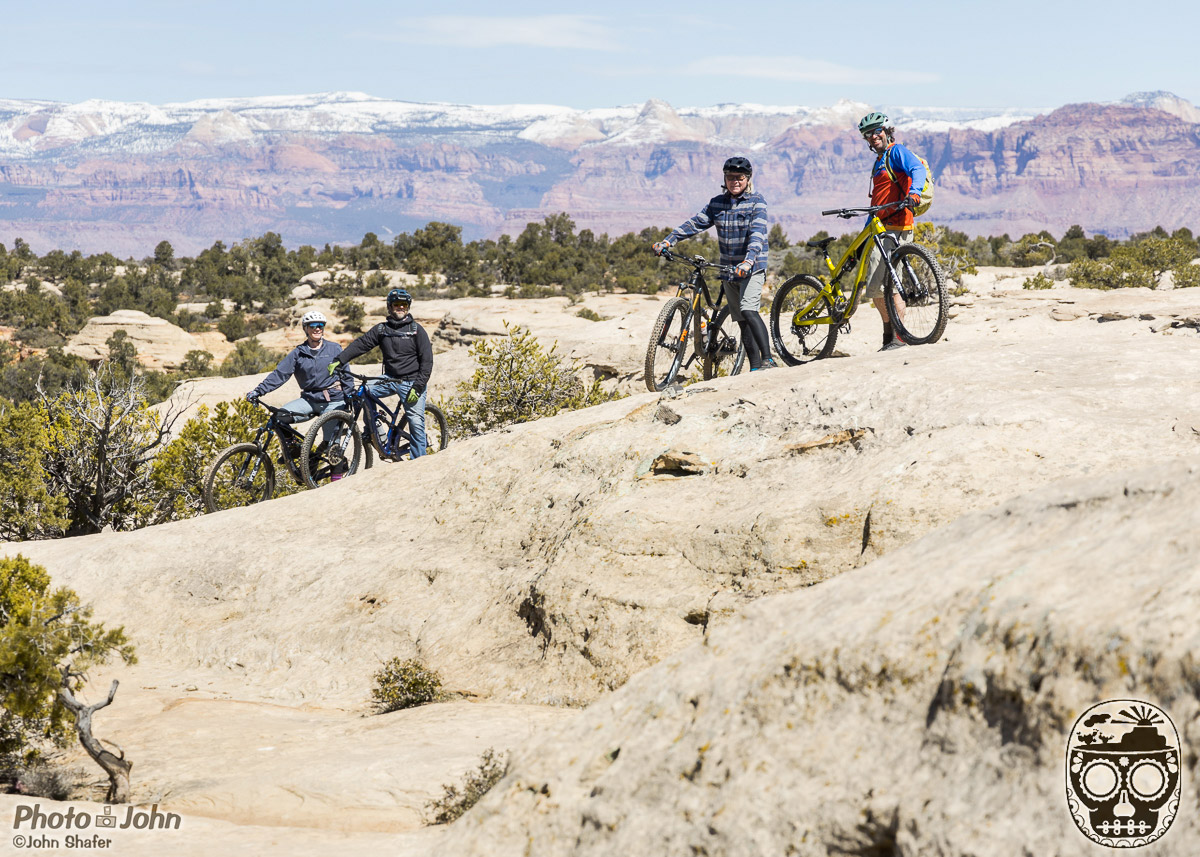
By John Shafer (Photo John) — In late March, mountain bikers travel from all over to attend the annual Hurricane Mountain Bike Festival. The gathering takes place in Hurricane, Utah, near St. George and Zion National Park. With a mix of singletrack and slickrock mesas, including legendary Gooseberry Mesa, the Hurricane MTB Festival offers world-class mountain biking surrounded by spectacular Southern Utah scenery. For the twelfth annual Hurricane MTB Festival there were all kinds of vendors, including bike companies, cycling clothing, protective gear, mountain bike components and more. Activities included mountain bike and E-MTB demos, group rides, games, giveaways, a BBQ dinner and mountain bike shuttles to selected trailheads.
Usually, the weather in Southern Utah is perfect in the spring with cool nights and daytime temps in the 70s or 80s. Not this year – this was the coldest Festival, yet. On the first morning, Festival attendees woke up to two inches of snow on the mesas. The wet conditions required some adjustment to the demo schedule and shuttle destinations but riders were out on the trails by early afternoon. The conditions may not have been the most comfortable, but everyone had a great time and the chilly temps and snowy scenery definitely made it a memorable event. Statistically speaking, the weather is almost certain to be better for next year’s Festival.
A great time was had by all at the 2023 Hurricane MTB Festival in Hurricane, Utah. Photo by Photo-John/Hurricane MTB Festival. For more photos, please visit the 2023 Hurricane MTB Festival Photo Gallery: http://www.hurricanemtbfestival.com/blog/2023-hurricane-mtb-festival-report- amp-photo-galleryA great time was had by all at the 2023 Hurricane MTB Festival in Hurricane, Utah. Photo by Photo-John/Hurricane MTB Festival. For more photos, please visit the 2023 Hurricane MTB Festival Photo Gallery: http://www.hurricanemtbfestival.com/blog/2023-hurricane-mtb-festival-report- amp-photo-galleryA great time was had by all at the 2023 Hurricane MTB Festival in Hurricane, Utah. Photo by Photo-John/Hurricane MTB Festival. For more photos, please visit the 2023 Hurricane MTB Festival Photo Gallery: http://www.hurricanemtbfestival.com/blog/2023-hurricane-mtb-festival-report- amp-photo-galleryA great time was had by all at the 2023 Hurricane MTB Festival in Hurricane, Utah. Photo by Photo-John/Hurricane MTB Festival. For more photos, please visit the 2023 Hurricane MTB Festival Photo Gallery: http://www.hurricanemtbfestival.com/blog/2023-hurricane-mtb-festival-report- amp-photo-galleryA great time was had by all at the 2023 Hurricane MTB Festival in Hurricane, Utah. Photo by Photo-John/Hurricane MTB Festival. For more photos, please visit the 2023 Hurricane MTB Festival Photo Gallery: http://www.hurricanemtbfestival.com/blog/2023-hurricane-mtb-festival-report- amp-photo-galleryA great time was had by all at the 2023 Hurricane MTB Festival in Hurricane, Utah. Photo by Photo-John/Hurricane MTB Festival. For more photos, please visit the 2023 Hurricane MTB Festival Photo Gallery: http://www.hurricanemtbfestival.com/blog/2023-hurricane-mtb-festival-report- amp-photo-galleryA great time was had by all at the 2023 Hurricane MTB Festival in Hurricane, Utah. Photo by Photo-John/Hurricane MTB Festival. For more photos, please visit the 2023 Hurricane MTB Festival Photo Gallery: http://www.hurricanemtbfestival.com/blog/2023-hurricane-mtb-festival-report- amp-photo-galleryA great time was had by all at the 2023 Hurricane MTB Festival in Hurricane, Utah. Photo by Photo-John/Hurricane MTB Festival. For more photos, please visit the 2023 Hurricane MTB Festival Photo Gallery: http://www.hurricanemtbfestival.com/blog/2023-hurricane-mtb-festival-report- amp-photo-galleryA great time was had by all at the 2023 Hurricane MTB Festival in Hurricane, Utah. Photo by Photo-John/Hurricane MTB Festival. For more photos, please visit the 2023 Hurricane MTB Festival Photo Gallery: http://www.hurricanemtbfestival.com/blog/2023-hurricane-mtb-festival-report- amp-photo-galleryA great time was had by all at the 2023 Hurricane MTB Festival in Hurricane, Utah. Photo by Photo-John/Hurricane MTB Festival. For more photos, please visit the 2023 Hurricane MTB Festival Photo Gallery: http://www.hurricanemtbfestival.com/blog/2023-hurricane-mtb-festival-report- amp-photo-gallery
BAKER CITY, Oregon (May 17, 2023) — The upcoming Baker City Cycling Classic, an OBRA-sanctioned Stage Race, continues to uphold a rich tradition of excellence, creating a platform for talented cyclists to showcase their skills and emerge as champions. Over its impressive 22-year history, this prestigious event has earned a reputation for hosting epic road racing, featuring captivating terrain, challenging summit finish stages, and exhilarating time trials and criteriums. Countless regional and national champions, as well as aspiring international stars, flock to Baker City, Oregon each year, drawn by the opportunity to compete on the demanding courses alongside top-level competitors.
The three-day, four-stage race adheres to a format reminiscent of legendary Oregon races like the Cascade Cycling Classic, Columbia Plateau, and Mt. Hood Cycling Classic, adding a touch of nostalgia to an event that consistently attracts both seasoned veterans and promising newcomers.
Catherine Creek Road Race. Photo Credit: Ddup Photos by David and Denise Ward, courtesy Baker City Cycling Classic
The race commences with the Stage One Catherine Creek Road Race, a picturesque 72-mile course characterized by rolling landscapes. Known for its scenic allure, Catherine Creek, like the famed Dooley Mountain Road race, has been a recurring feature in the Baker City Cycling Classic. This year, the race will be held in a clockwise direction, offering riders a fresh perspective on this memorable course.
Time trial being raced Merckx-style. Photo Credit: Ddup Photos by David and Denise Ward, courtesy Baker City Cycling Classic
Contrasting the hilly terrain surrounding Baker City, the Stage Two Time Trial often surprises racers with its exceptional speed and flatness. Regarded as one of the fastest Time Trial courses in Oregon, the stage typically grants participants the freedom to go full-aero, with no restrictions on their bike setups. In response to racer requests, however, this year the stage will be held Merckx-style, limiting riders to their standard road bikes.
The beloved Stage Three Baker City Downtown Criterium, a favorite among spectators, features a fast-paced 0.6-mile course comprising six corners. Notably, it also boasts one of the widest finishing straights in the entire Northwest, ensuring a thrilling sprint to the finish line.
Dooley Mountain Road Race. Photo Credit: Ddup Photos by David and Denise Ward, courtesy Baker City Cycling Classic
Stage Four of the 2023 Baker City Cycling Classic will once again showcase the legendary Dooley Mountain road course, spanning an impressive 101 miles. With its challenging terrain and incredible vistas, Dooley Mountain has served as a summit finish for more than half of the race’s 22-year history. While it may not be as steep and demanding as the hors-category Anthony Lakes climb and summit finish, this year’s Stage Four makes up for it with its sheer distance and nature.
Bloom-Baker Stage Race King and Queen
In a bid to honor the enduring spirit of stage racing in Oregon, the Baker City Cycling Classic introduces the Bloom-Baker Stage Race King and Queen.
Although the Pacific Northwest Stage Race Series, combining Washington’s Tour de Bloom and Tour of Walla Walla, along with Oregon’s Baker City Cycling Classic, faced the unfortunate cancellation of the Tour of Walla Walla, riders who compete in both the Tour de Bloom and Baker City Cycling Classic will still have the opportunity to vie for this prestigious title. The Bloom-Baker Stage Race King and Queen awards will recognize the best-placed General Classification riders across all categories who successfully complete both races.
As the longest-running stage race in the Northwest and the sole stage race in Oregon, the Baker City Cycling Classic continues to attract participants from all along the West Coast and Canada. This year’s event promises to uphold the cherished tradition of stage racing in the Northwest, captivating the entire town and community of Baker City, who eagerly await the arrival of cyclists on June 23rd-25th, preparing to once again make the Baker City Cycling Classic an unforgettable experience.
By Nancy Clark MS RD CSSD — When asked Is beer good for runners? running legend Jim Fixx’s answer was “Sure, if it’s the other guy drinking it!” By abstaining from alcohol, you can indeed gain an advantage over your competitor’s poor judgment. Just how bad is alcohol for athletes? Does it have any health benefits, too? Let’s look at some of the good, the bad, and the ugly regarding alcohol and athletes.
The good: Socializing with a glass of wine, a beer, or a cocktail can add a nice touch to the end of the day for those who like to relax with an alcoholic beverage. Raising a glass to celebrate a victory is a fond tradition. But we know surprisingly little about possible health benefits of drinking in moderation because almost all studies are based on self-reported information that gets tangled up with lifestyle. Do adults who do moderate social drinking enjoy a healthier lifestyle than non- or heavy-drinkers? Does alcohol make them healthier—or do social connections make the difference? While moderate alcohol intake has been linked to reduced risk of heart disease, so has eating a healthy diet and being physically active.
The bad: Alcohol has a negative reputation regarding athletics, be it heavy beer consumption after a hard work-out, or teams enmeshed in a culture of binge drinking. Student-athletes binge-drink more than non-athletes. Male athletes binge-drink more than female athletes. And all athletes drink more than non-athletes. The higher alcohol intake of athletes can be attributed to stress and anxiety associated with being a competitive athlete, increased muscle pain and soreness, socializing or bonding with teammates, and the belief the athlete “earned”the drink—a reward for having completed the hard effort.
The ugly: Alcohol is the 3rd leading preventable cause of death in the US. (Tobacco is Number One. A poor diet with inactive lifestyle is Number Two.) Any level of alcohol intake can contribute to several types of cancer
How do you know if you have a drinking problem?
Moderate drinkers typically sip (not gulp) their drinks, stop drinking before they get drunk, and do not drive after drinking. Problem drinkers commonly drink to get drunk and to solve their problems. They drink at inappropriate times (such as before going to work) and may become loud/angry or silent/reclusive. People addicted to alcohol start drinking with no plan, deny drinking, hide bottles, and miss work or school because of hangovers.
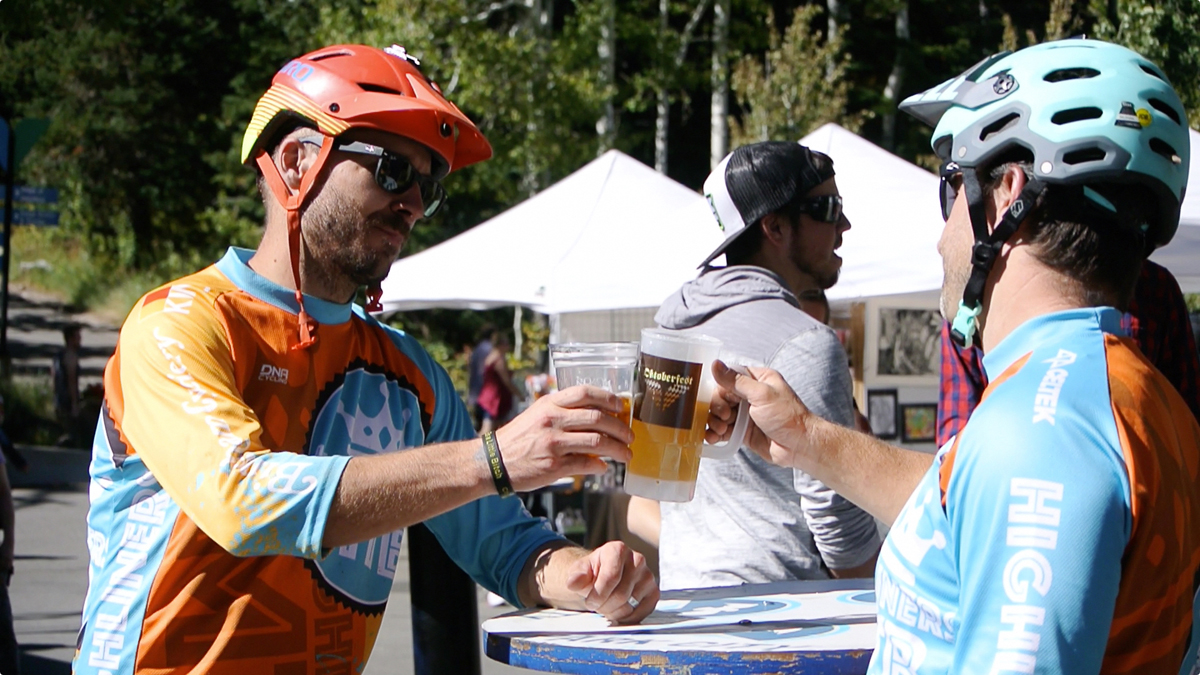
Ali Goulet and Mike Saltsman enjoying a cold brew after some trail riding at Snowbird. Photo by Eric Kramer
Alcohol management
Despite the bad and the ugly, alcohol is an undeniable part of our sports culture. The following tips offer suggestions for helping athletes manage alcohol.
Don’t drink excessive alcohol before an event—especially in the summer heat! Drinking too much the night before an event will hurt your performance the next day. You’ll notice a slower reaction time and reduced eye-hand coordination and balance. Research with Australian rugby players who consumed on average 9 beers post-game (with a range of <1 to 22 beers) indicates—no surprise— their high alcohol intake impaired their performance. Other studies report athletes are less able to do repeated sprints (think soccer, hockey) and jumps (volleyball, basketball). Among heat-stricken summer runners, a common denominator was booze the night before the race.
If you are going to drink the night before or after an event, plan to also consume a proper sports meal with extra water. While excessive drinking is obviously problematic, a modest amount of alcohol consumed along with a balanced meal will unlikely have a negative impact. Yes, alcohol impairs glycogen resynthesis a bit. But in the real world of sports drinking, athletes who are heavy drinkers tend to make high fat food choices (nachos, burgers, etc.). The lack of healthful grains, fruits and veggies (carbohydrates) more significantly hinders glycogen replacement!
First quench your post-exercise thirst with water, then enjoy alcohol, if desired. Alcohol is a diuretic; it stimulates the formation of excess urine. Whiskey and other spirits with a high alcohol content will dehydrate (not rehydrate) you. If you “must” drink spirits, ask for extra ice with the cocktail. Beer would be the better choice, given the alcohol content of beer is lower and the water content is higher. Yes, dehydrated adult athletes can rehydrate with a beer or two. Low-alcohol beer is the wiser choice, and no-alcohol beer the wisest beer choice.
Heavy alcohol intake is not on the list of Best Recovery Practices for athletes to follow! Remember: bad things happen during exercise and good things happen during recovery. Wisely chosen recovery fluids and foods help you rehydrate, refuel, and repair your muscles. Adding alcohol to the mix slows down muscle repair, protein synthesis and adaptation processes. Yet a glass or two of wine or beer, along with plenty of water and food, is permissible.
Alcohol is a source of calories that can quickly add up. Add in the calories in the pizza, nachos or munchies that you can easily overeat when alcohol lowers your inhibitions, and you can easily succeed in gaining body fat. Just five Heineken Light Beers add 500 calories. A goblet of wine can easily add 200 calories. Be wary of drinks that come with umbrellas! (400-800 calories/10-ounces)!
Beware of drinks in a can, such as White Claw Surge with 8% Alcohol By Volume. (ABV). You can end up drinking more alcohol than you intended. You might want to stick with the original White Claw—hard seltzer with 5% ABV—similar to most canned beers, though some craft beers have a higher alcohol content.
Don’t drink alcohol if you want a good night’s sleep. Alcohol might help you fall asleep faster, but it disrupts your sleep cycle. You’ll get less restorative sleep. Alcohol alters body temperature, which can affect how well you sleep. It also aggravates snoring (due to relaxed muscles and a lower breathing rate), so your bed partner becomes sleep deprived and grumpy. Plus, you’ll need to go to the bathroom more often in the middle of the night. None of this enhances athletic performance.
If you don’t want to drink, be prepared to quickly say “No thanks” in a polite but convincing voice. If the person keeps insisting, respond again: “Îdon’t want to drink today. I’d appreciate if you’d help me out.” Instead, be pleased that you will enjoy the natural high of exercise.
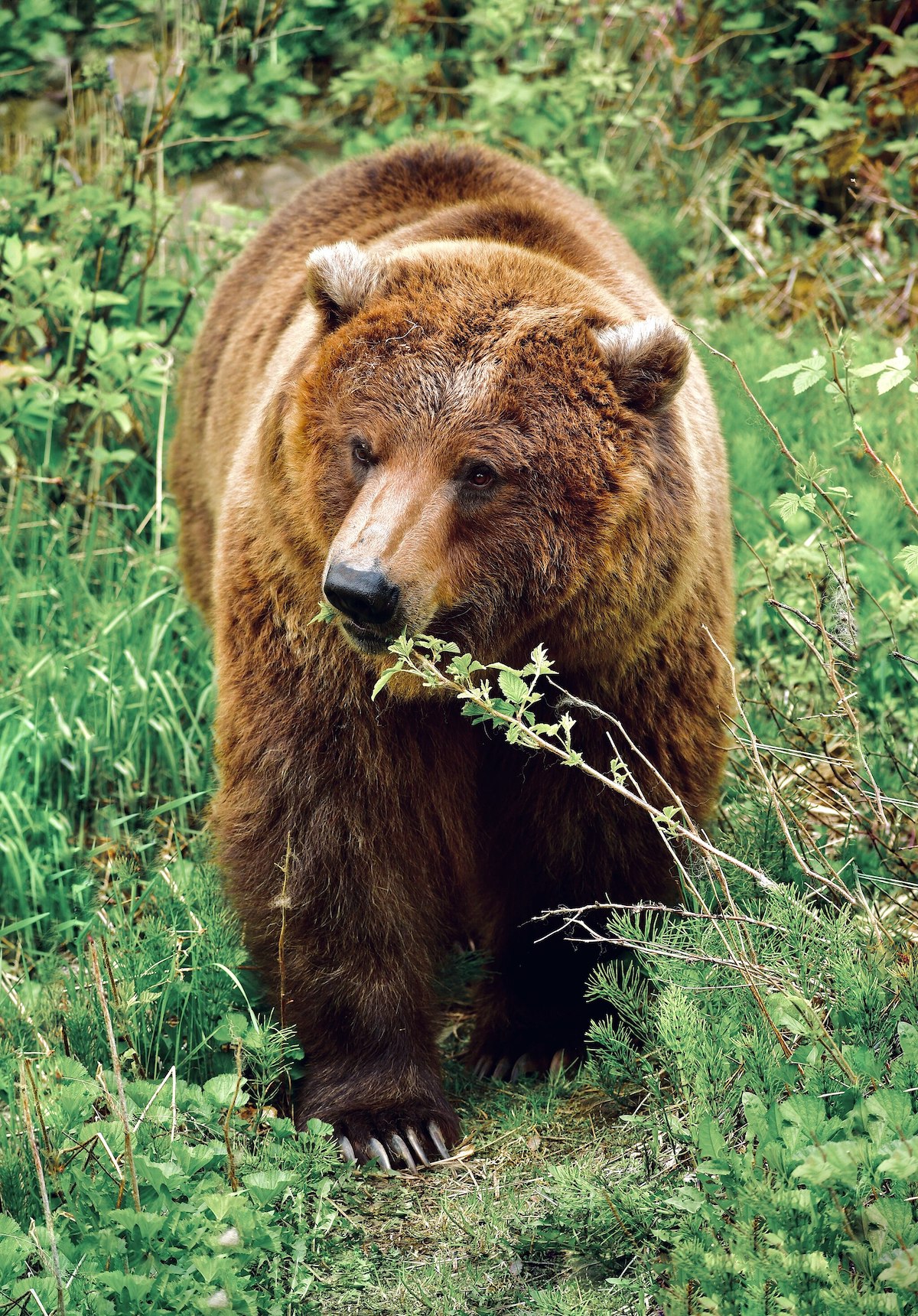
By Mathew Schmor — As a camping and biking enthusiast, I have had my share of both black and grizzly bear encounters starting as a small child camping in the woods around Kenora, Ontario and my adult years on the mountain bike trails of Alberta.
Photo by Ashley98lee, CC BY 4.0, via Wikimedia Commons
In general, the precautions for cyclists follow the recommendations given to hikers to avoid surprise encounters with bears. However, one needs to remember that on a bike you are often traveling faster. and at times quieter than those on foot.
Words of Advice
On downhills yell out often, my go to is “Go Away Bear”
On uphills remember to look up and scan the upcoming brush for movement
Try not to gap your riding partner
If you are off your bike during an encounter, it can offer good protection
Travel in groups
Make noise
Do not look a bear in the eyes
Back away slowly but do not turn your back on a bear
By David Finch — “Hey-YOIP!” I yelped. For the hundredth time. On a trail with branches reaching in from both sides.
I was off my mountain bike, light ball cap drenched with sweat. Pushing my ride, loaded with overnight gear. Arms almost straight as I puffed my way up the steep trail.
“Hey-YOIP!” The “P” at the end exploding with sound.
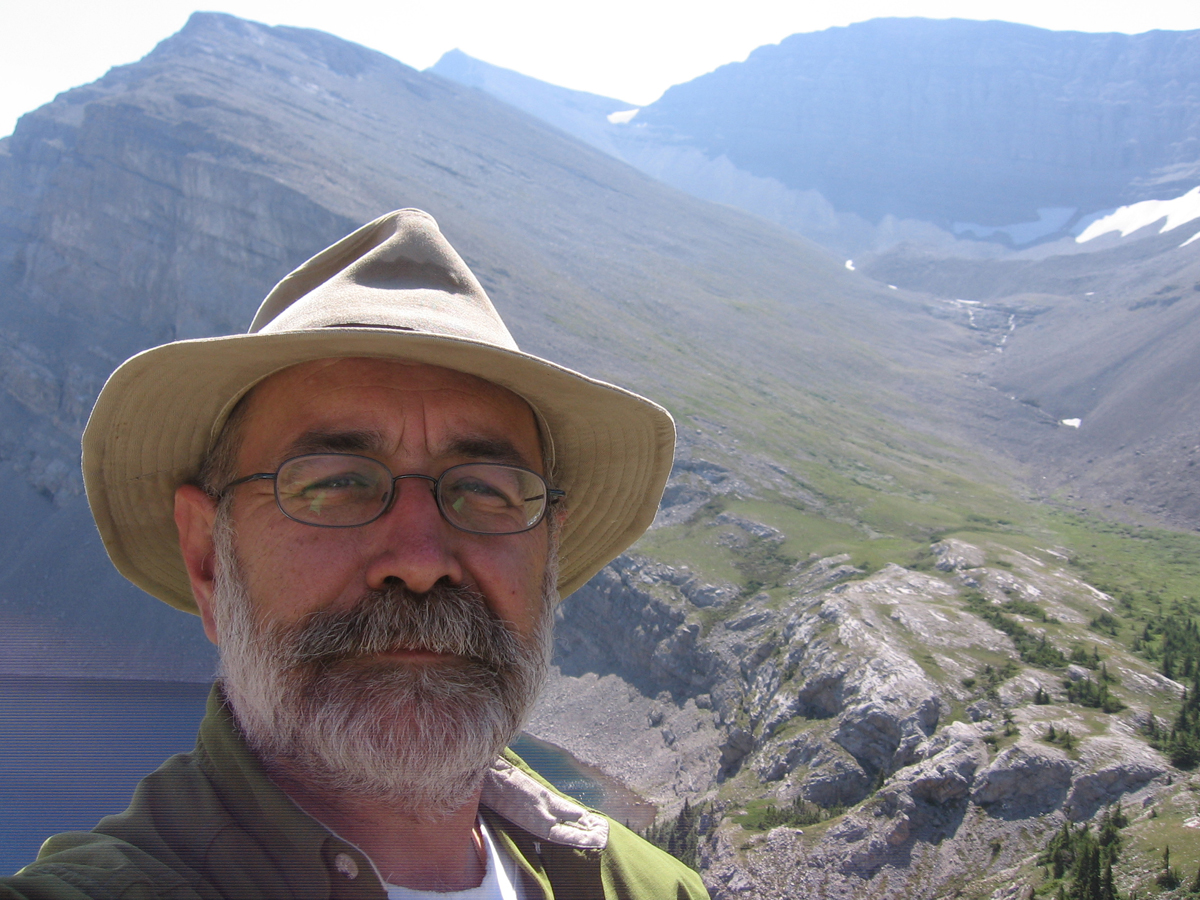
David Finch in Canadian Bear Country. Photo by David Finch
Movement ahead. Brown fur rising. A hundred feet away, over a rise. One hairy head, then another. A sow grizzly and her nearly full-grown cub rose to full majesty. Sniffing the air. Snaking their heads.
Beside my bike, I lowered the bill of my cap to hide my eyes, so I didn’t stare at the startled sow.
And I reached for my bear spray.
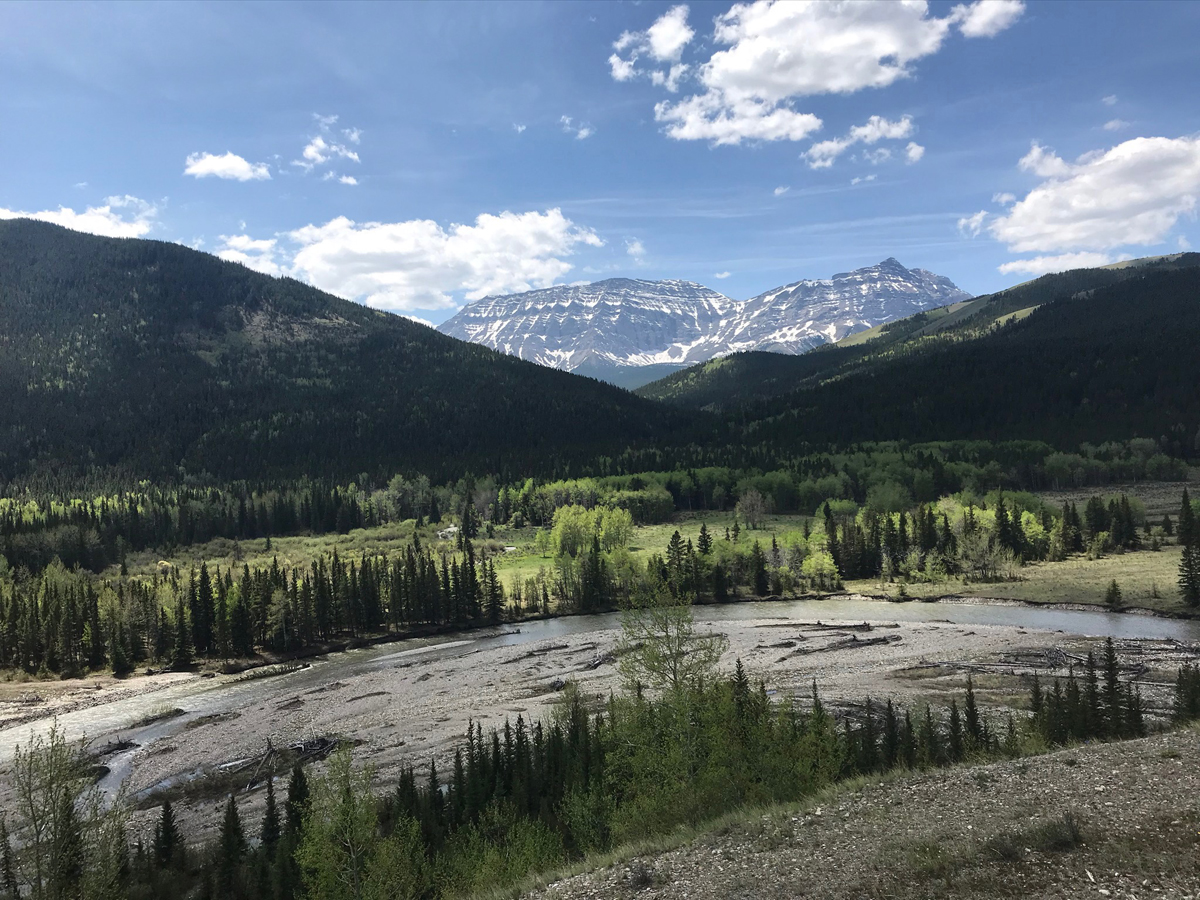
Bear country in Alberta. Mount Muir (L) Mount McPhail (R) are in the distance. The Elk Trail Pass is to the left of the mountains, Lake of the Horns is between the two massifs, and Hill of the Flowers is illuminated by sun in the mid-distance. As you can see, the approach track crosses the river – easily waded except in the spring, and then about 10 miles of progressively steeper terrain. Not as the crow flies, but the distance a crow would need to fly if tethered to the back of the bike. Alberta, Canada. Photo by David Finch
The front country southwest of Calgary, Alberta in western Canada boasts great mountain biking. Road biking too. The highest paved pass in Canada – Kananaskis Pass tops out at 7273 feet – is closed from December 1 to June 15 each year. It affords narrow tired cyclists a high-country adventure option each spring.
But this stretch of the high country is also known as the Grizzly Daycare. More remote than the front country of Kananaskis Country that 5 million plus visitors invade each summer, the Highwood River valley is where bears go on break.
Grizzlies that bother campers or hikers or golfers get trapped in sections of metal culvert on flatbed trailers and relocated to the Highwood Valley. Far from the madding crowds – there are no campgrounds of the pass – the released grizzlies are safe. As are humans.
Most of them. One June my wife Jeannie and I and another couple encountered two grizzlies on our return from Highwood Pass. Out and back the distance is 47 miles and makes for a fun ride.
The first bruin was insatiably curious. Perhaps 500 yards away, we stopped and yelled at him – it seemed male. Blew our whistles. Waved our arms. Did anything we could to scare him. No way. He was busy grubbing. Digging up the soil for edibles. Or perhaps a ground squirrel? Each time I made noise to scare him off he looked up at us and then gamboled in our direction until he got distracted. Is it possible that young bears suffer from ADHD too?
We finally parked our bikes and hiked to the nearest tall trees, coniferous giants up which we could safety climb. The bear sniffed around our bikes, and then made a bee-line for the base of my tree. I had the only bear spray. Squirt him as he climbed? The myth is that grizzlies can’t climb, but they can. Especially the younger ones.
When he was right below my tree – I was at least 30 feet up in the branches – he caught wind of me. My guts clenched, yikes! Then the heard my helmet scratching the branches, and he bolted. West up the road, constantly seeking food.
Our brave-ish group returned to our bikes. Just 20 minutes later we ran into another grizzly. She (due to their actions we sexed the first one as a male and the second as his sister) was lazing in the sun. After a vote, we decided to ride past her quietly.
Off we pedaled. When we got to the bottom of the hill she woke up, jumped straight into the air – like in the cartoons! When she reconnected with the ground, she scampered the other way.
The Highwood Valley is cowboy country. Clint Eastwood made his movie Unforgiven in this watershed. For centuries, the First Nations people inhabited the foothills seasonally. They sometimes talk to bears. Cowboys prefer to let a rifle do the talking.
My cowboy friends encourage me to take a 45-calibre pistol on my meanders. I enjoy solo hiking and skiing and mountain biking. But I don’t want to injure a grizzly.
Others encourage me to not carry bear spray – it sharpens the senses. Okay … perhaps they just carry a sharp stick like Tony Hopkins in The Edge.
Others say it’s unsafe to travel alone.
So, I’m near the continental divide, a stone’s throw from two grizzlies. What to do?
Nothing. I let Mama Bear decide.
I’m a writer, always on deadline. The day before I had promised myself I would write until noon, then escape. Load up my beater steel-framed stick-sifter trusty mountain bike with rear panniers and a handlebar bag and a backpack.
My destination was a beaver pond not far from the Continental Divide between mountains called McPhail and Muir. With the Lake of the Horns perched high on the Alberta side – named for the horned coral fossils strewn everywhere. Just above the Hill of the Flowers – a ridge near the access to the lake that erupts with every color.
A cliff and scramble guard the way up to the pass called The Elk Trail. Stoney First Nations people had pointed it out to transplanted Georgio Pocaterra who escaped his father’s wealth in Italy to become a cowboy in the shadow of the Rockies.
According to Georgio – a “prince” in his own mind – after a convention, the elk decamped for British Columbia because the cowboys and settlers were making too much commotion in the Alberta plains.
My gear was minimal; tarp, small sleeping bag and a tin can stove to boil the “beaver” out of the water. Early start the next morning. Boil coffee water. Take a light pack up the rock wall into Elk Trail pass. Gaze over the Elk River.
Mama Bear stood tall. Proud. I awaited her decision. With gentle grace and composition, she turned and dropped out of view. Junior followed.
Stunned, I headed downhill. In shock. Sweating and scared. Walked a bit – looking over my shoulder all the time. Then I donned my helmet and mounted my rubber-tired steed.
The worst was yet to come – perhaps.
I’d read about bikers screaming down steep trails. Rounding a corner. Crashing into an enraged bear.
So, I took precautions. Rang my bike bell. Tooted nonstop on a Fox 40 whistle – if it’s loud enough for NHL refs pulling apart hockey players it’s good enough for me.
Gradually calmed down. Mama Bear and her cub could have The Elk Trail. I lived to return another day.
Ten miles back to the road. I loaded my steed into an old truck – a Ford F-150 with bull low gear on a stick on the floor. Drove to the cattle guard gate and locked the not-worth-stealing bike to the plywood side rail.
Evening sun setting, I humped my pack up The Bull Creek Hills. Side hill gouged steep terraces to the highest promontory. The small tarp under a shrubby tree for protection.
A large recycled peanut butter jar stored my food. I tossed it high in the tallest conifer. A length of parachute chord attached to it so I could pull it down the next day.
“Hey-YOIP!”
If a grizzly wanted my grub, she was welcome to the challenge.
David Finch is a public historian who bikes for fun in Calgary and southern Alberta.
By Peter Abraham — I spent much of last week up at the venerable Sea Otter Classic bike event working with 4iiii Power Meters and other clients. Held at the Laguna Seca race track in Monterey, CA, it’s one of the oldest and biggest bike festivals in the world, with dozens of mountain bike, gravel and road races happening simultaneously. And since the closure of the Interbike trade show in Las Vegas a few years ago, Sea Otter has become a huge industry showcase. There were over 700 brands in attendance to go along with tens of thousands of participants and cyclists. The event saw record breaking crowds, an encouraging sign for the bike industry. Given the mix of different disciplines and brands, Sea Otter has always had a “gathering of the tribes” feel, which is really fun.
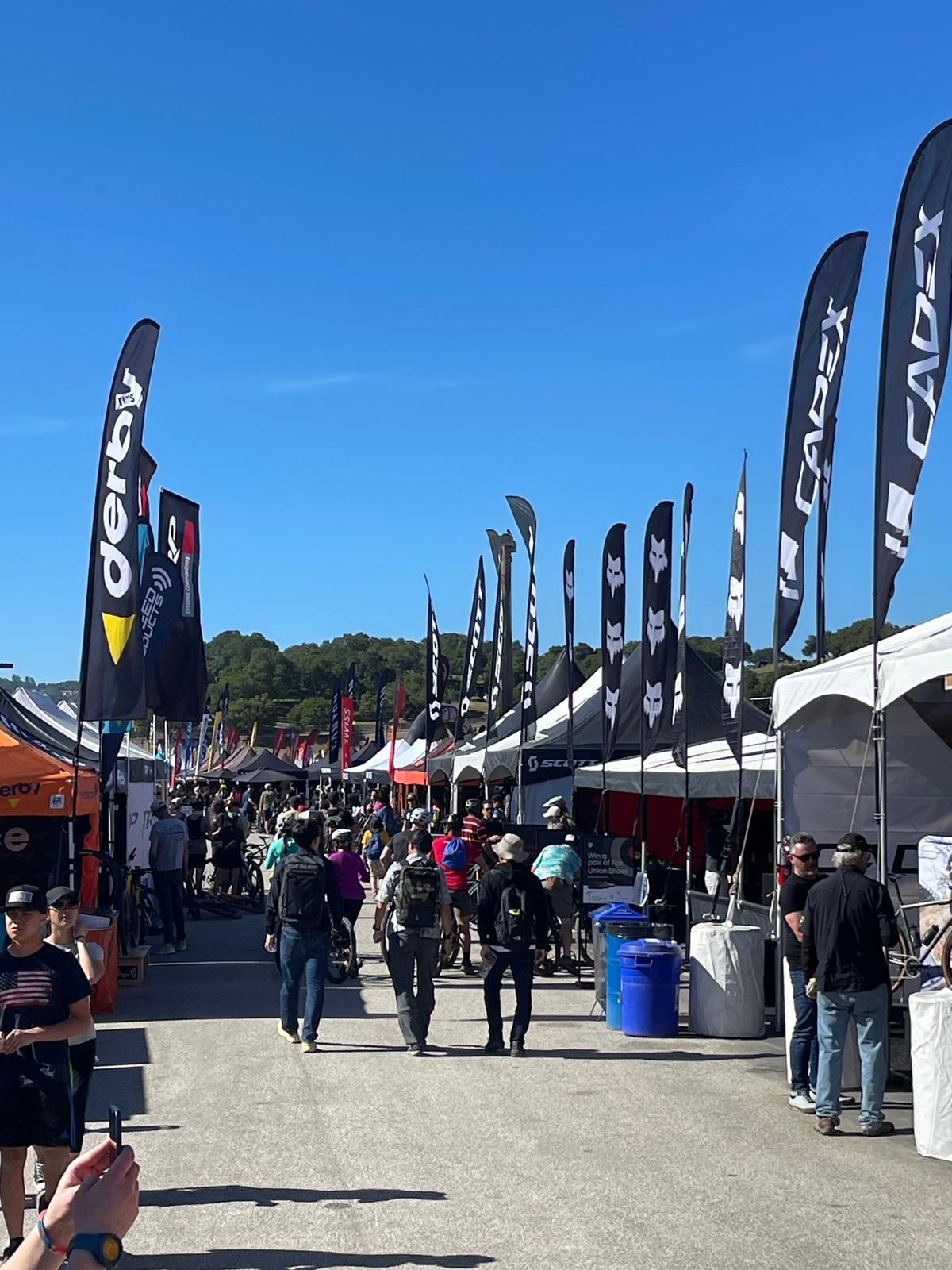
Sea Otter 2023. Walking the aisles feels like getting lost in a giant bike shopping mall. Photo by Peter Abraham
Here are my takeaways from the event:
The Community
Every single person I met was overjoyed to be immersed in a live event. While Sea Otter, and many other events, were technically back last year, it now feels like live gatherings are “really back.” You could feel the energy and excitement that only comes from being around other humans in real life. There is no virtual equivalent. And I saw just about every single person I’ve ever met in the bike world in the span of four days. I loved it.
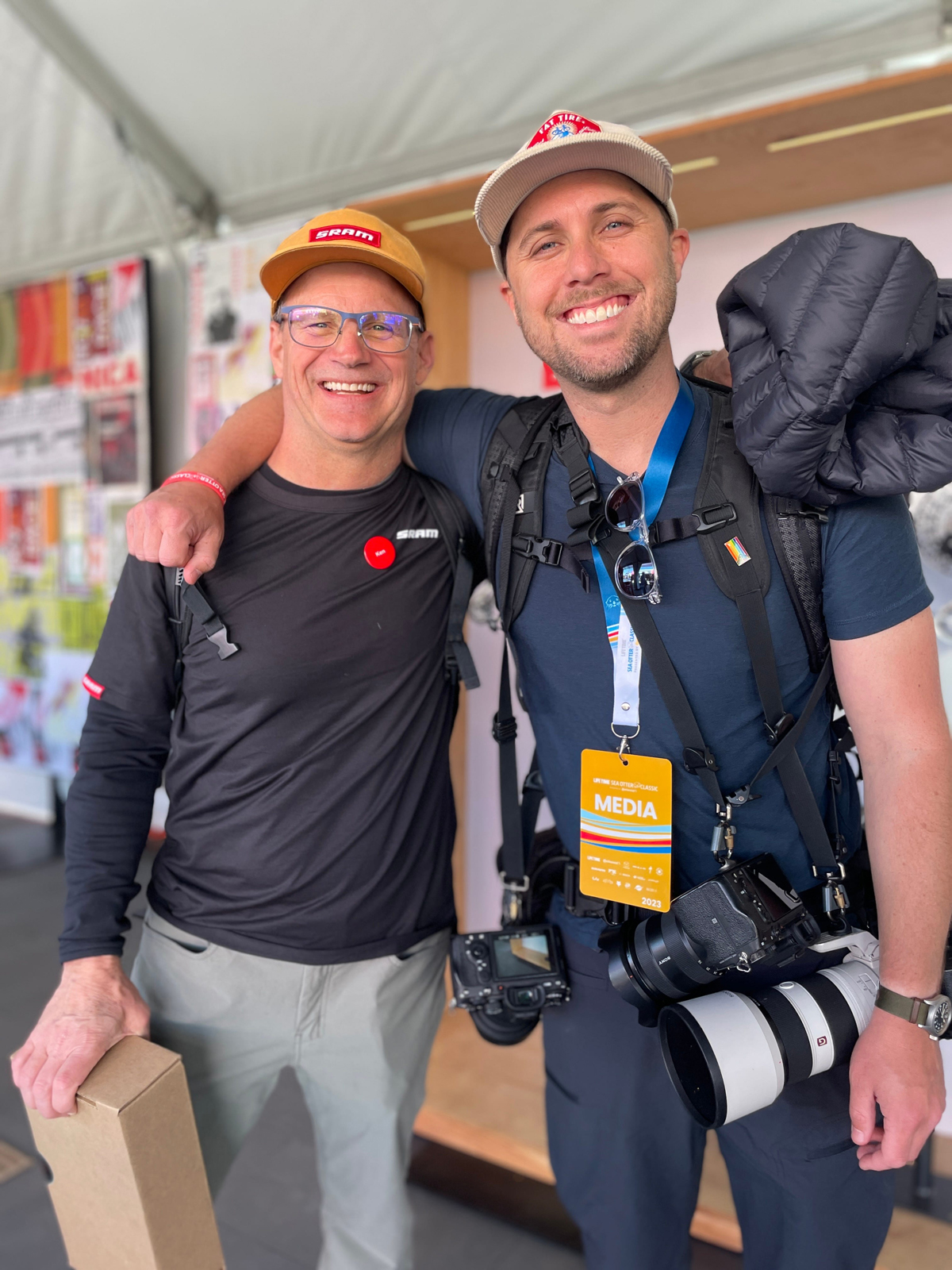
Every single person I met was overjoyed to be immersed in a live event. Above: SRAM CEO Ken Lousberg with photographer Kit Karzen. Photo by Peter Abraham
The brands that did not show up were conspicuous in their absence. If you want to be a functioning member of any community (a church, an AA group, your family) you need to show up consistently even if you don’t always benefit. You are there to support everyone else, and vice versa. This also goes for businesses in the bicycle ecosystem. It felt like some brands were calculating their participation on ROI: “Given that it will cost us $50K to show up at Sea Otter, will we make that money back in sales?” Or “Hey, we’ve already got that community on lock down, we don’t need to be there.” Those are the wrong ways to look at an event like this. Brands need to understand the value of simply being present and bringing value to the community. The ROI comes over time when customers, partners, retailers, and athletes see that you consistently show up to important events like this and support others. There should be less selling and more uplifting the community. I did attend some good events put on by Canyon (disclosure: they’ve been a client of mine), but there could be much more leadership put towards bringing all of us together.
The Brands
As I’ve written about before, there’s a lot of sameness in the bike industry: the bikes (whether MTB, road, or gravel) all look almost identical, and mostly all use either Shimano or SRAM components. Given that, the way for businesses to differentiate themselves is with distinct brand identities. And I didn’t see much of that at Sea Otter. Just about every bike brand displays their bikes in the same ways and their booths looked similar. It all felt very safe and down the middle: tech focused, clean displays and coffee offered in most booths. The fastest growing segment of bikes is the eBike category; there are new brands popping up all the time, and the tech is changing rapidly. But the branding and event marketing in that area felt very conventional as well. If Cake were here with their minimal Scandinavian design aesthetic, they would have made a splash.
MTB could use some young and fun energy. In the late ’90s I attended the now-defunct Action Sports Retailer trade show in San Diego. This was where every skate, snowboard and surf brand met with retailers from around the country. I remember Volcom showing up there with every staff member, including CEO Richard Woolcott, dressed in a clown suit. It was unique, disruptive, and fun. The brand looked and felt completely different from every other business at the show. Ten years ago, I would attend the Outdoor Retailer show in Salt Lake City. At that time, Patagonia was the beating heart of the event. That booth, with their unique and authentic brand story, was where all the cool kids gathered. And that included many of the North Face sponsored athletes. I didn’t see anything like this at Sea Otter. I never once heard, “Peter, you have to go check out the _____ booth.” Given the number of young MTB riders (many from NICA high school MTB programs) and gravity-focused brands, I was surprised at the lack of fun, unique & youthful energy. This feels like a wide-open brand opportunity, particularly in the booming MTB category. I will admit that the dual slalom race at Sea Otter was one of the most fun bike events I’ve been to: a huge, rowdy crowd, epic wipeouts, and super competitive racing.
The Bike Racing
Gravel & MTB racing is getting more competitive by the minute. I spent most of Saturday with photographers Danny Awang and Grace Williams shooting the Fuego XL MTB race. That was a 110K race that served as the first event in the Life Time Grand Prix series. What struck me was how high the level is in gravel and MTB races now. The top of the field was stacked with Olympians, foreign riders and those who are 100% fully committed to being professional athletes. The idea of gravel racing as a “retirement plan” for pro road cyclists looks increasingly unrealistic, at least if they want to be on the podium at large and competitive events. The competition is getting visibly better and faster each and every year. In addition, I’m not seeing many content creators & storytellers up front in races. The fastest athletes (in most sports, not just cycling) don’t have time for a YouTube channel or curated Instagram stories; they’re too busy training all day, every day. I believe we’ll look back at the 2016–2022 era in gravel as a moment in time that helped define the spirit of the sport. But we’re not going back there.
The lack of live streaming will limit the growth of professional gravel racing. While some races (Unbound) do have some streaming, gravel and long MTB events often take place where there is no cell service. So, producing a professional video feed is an expensive commitment that takes months of preparation. When I managed the live tv broadcast at the Los Angeles Marathon, we spent over $300,000 for a single 2.5-hour show. I realize that most cycling events can’t write a check of that size. At the same time, it’s unrealistic to expect non-endemic sponsors to jump into bike racing without a competent video broadcast. Athletes will also be held back in doing bigger sponsorship deals because “they’re not on tv.” Gravel races could look to the high-quality production at Cape Epic (recommended to me by Jeremiah Bishop) as an example of how to do this the right way.
The pandemic bike boom is filtering through to competitive cycling. I was invited to attend an open house for the new Cynisca women’s pro road team. The squad, named after the first women’s Olympic champion (chariot racing!) in 396 BC, is committed to developing “young athletes as they progress through the elite ranks of pro cycling.” First of all, I loved meeting their riders and staff. It’s a very professional organization, with good salaries paid to riders, a service course in France and a full calendar of European races. But importantly, many of the athletes are brand new to bikes and have come from running, triathlon and cross-country skiing. In addition to the Cynisca athletes, there are a number of former rowers excelling on bikes for teams like Team Twenty 24, Fount Cycling, Red Truck Racing and CS Velo. This is an interesting trend, and I hope more talented athletes find cycling coming in the side door.
Peter started racing bikes in high school and has continued to ride his entire life. He also runs the Abraham Studio (ABRHM.com), which works with purpose-driven brands in sports, technology and healthcare to find their voices and tell their stories. He lives in Los Angeles, California.
By Charles Pekow — Despite the popularity of micromobility sharing as a first/last mile way to get around, more people still prefer to use their own bikes rather than shared ones, according to a study done in the San Francisco area by the National Center for Sustainable Transportation at the University of California, Davis.
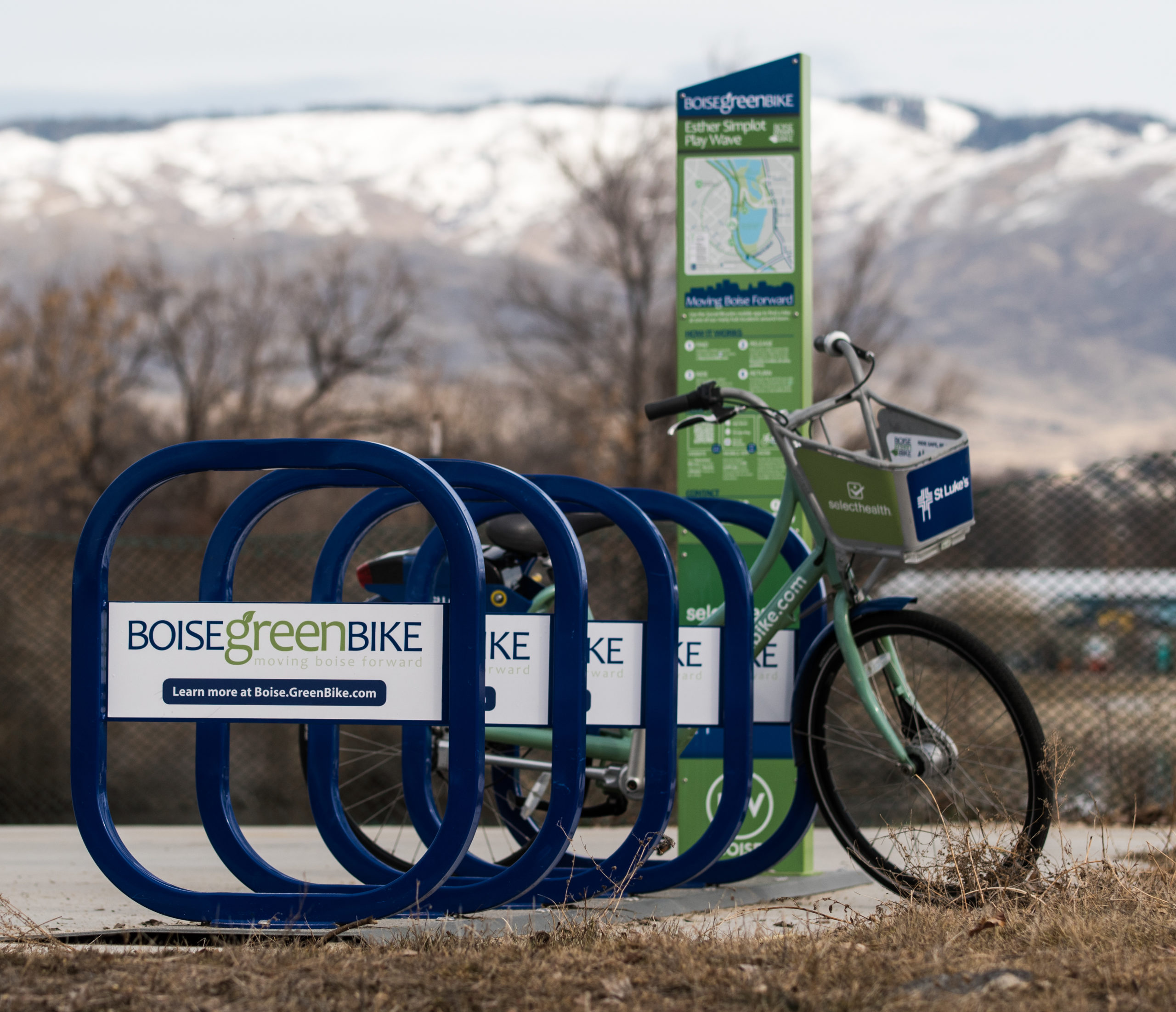
Despite the increased presence of bikeshare stations around cities nationwide, people still prefer ot ride their own bike. This is partialy due to dtreiPhoto courtesy Boise GreenBike.
eAbout 90 percent of people using a bike or scooter to get to and from public transit are using their own vehicles. The report suggests ways localities can better encourage both types through improved design of stations, bike parking, wayfinding signage, etc. Many users took their vehicles with them on public transit rather than parking them. Users cited needs for better bike lanes to stations and lighting and also expressed concerns about crime.
Many people also complained about a lack of shared vehicles – too often the stations were out of bikes or scooters when they needed one to get home.
By Dave Richards — I flew down to Long Beach to cover the 13th edition of the Amgen Tour of California in May. This is my fourth year covering this race and I feel like I’m settling in and getting to know the race intimately.
The AToC, as the race is referred to, is the only World Tour men’s stage race on the Union Cycliste Internationale (UCI) calendar for North and South America. The World Tour calendar consists of the highest level of road racing events and all of the 18 World Tour teams compete at these events. The AToC women’s race is also part of the new UCI Women’s World Tour, now in its 3rd year.
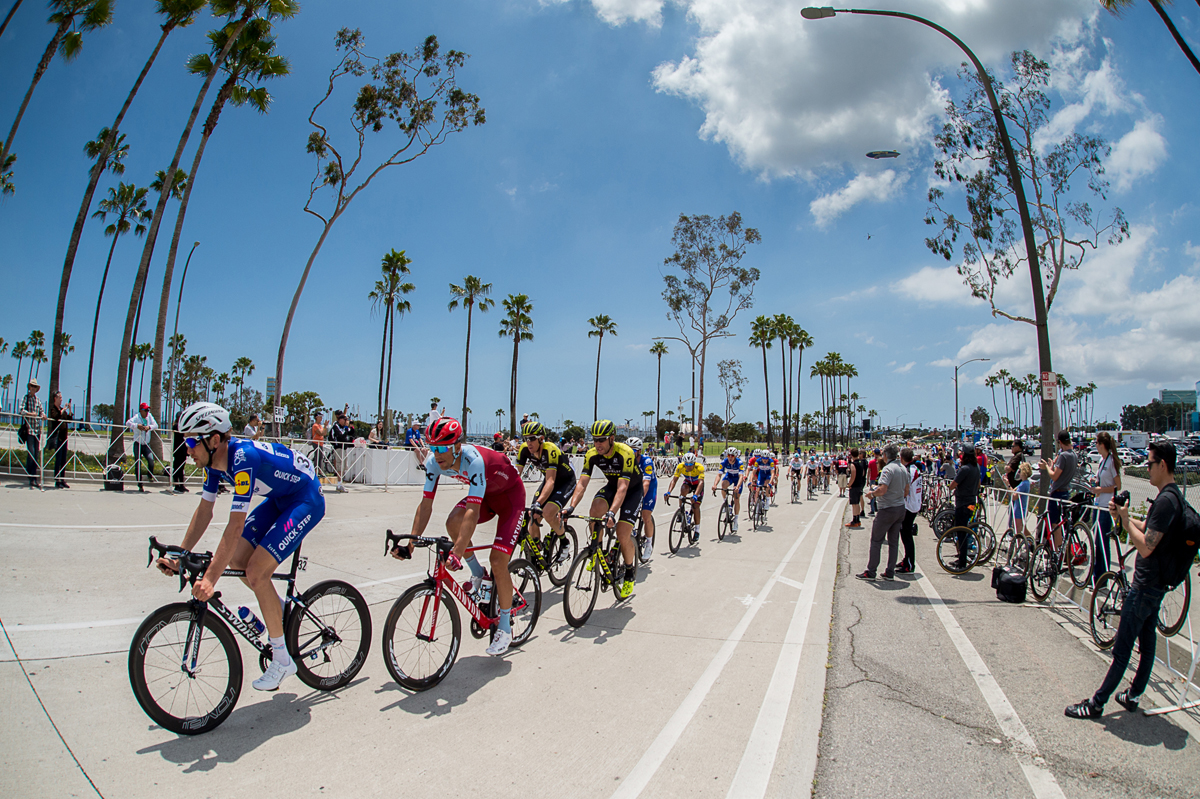
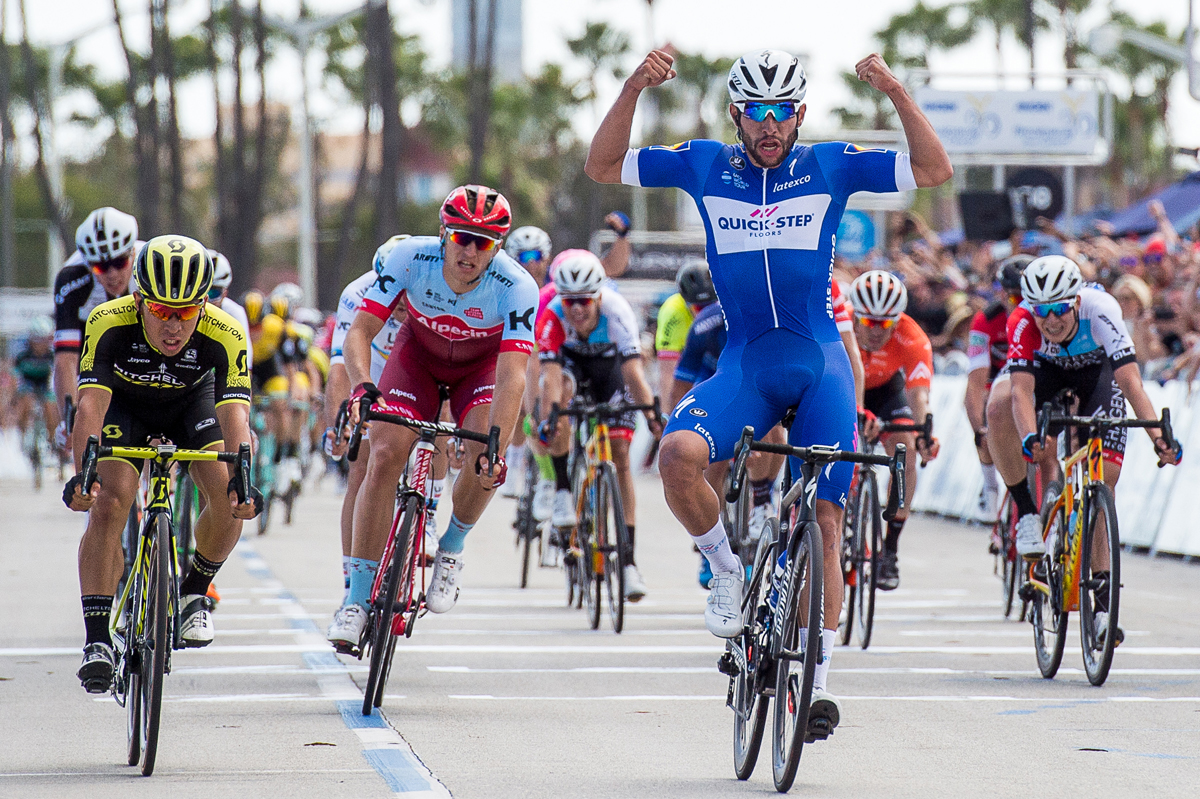
The peloton rolls along under a canopy of palm trees during Men’s Stage One in Long Beach, 2018 Amgen Tour of California cycling race. Photo by Dave Richards, daverphoto.comFernando Gaviria (Quick-Step Floors) celebrates his win on Men’s Stage One in Long Beach, 2018 Amgen Tour of California cycling race. Photo by Dave Richards, daverphoto.com
The AToC has matured into a solid, one week, 7 stage race thanks to a long term commitment from the title sponsor Amgen and the passionate work by the race owner AEG. Race management is provided by ASO, the owners of the Tour de France, who were brought on 3 years ago to run AToC. Their experience has been an asset in allowing the race to grow and attract top riders to compete in California.
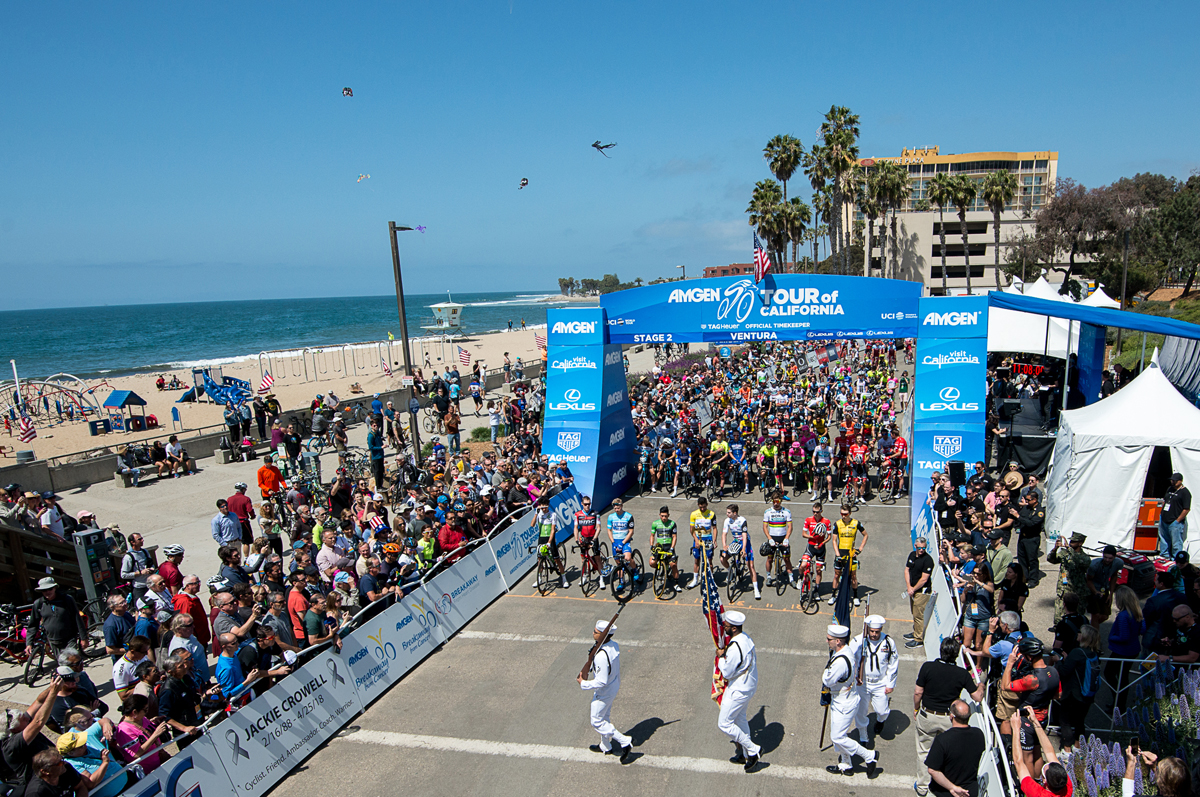
Color guard presents the flag duing opening ceremonies of Men’s Stage Two from Ventura to Gibraltar Road, 2018 Amgen Tour of California cycling race. Photo by Dave Richards, daverphoto.com
California is a big state to cover with this year’s race starting in Long Beach and ending in Sacramento with a side trip to South Lake Tahoe. Four flat stages plus two mountain stages and an individual time trial combined for over 800 miles of racing. Stage 6 from Folsom to South Lake Tahoe ran 122 miles and over 15,000 vertical feet of climbing. It made for some long days with transfers from hotels to start lines and on to the next hotel after the race. The riders seem to handle it well and it’s not much different for me on the back of a photo moto. Drive, ride, drive, sleep, repeat. You get the idea.
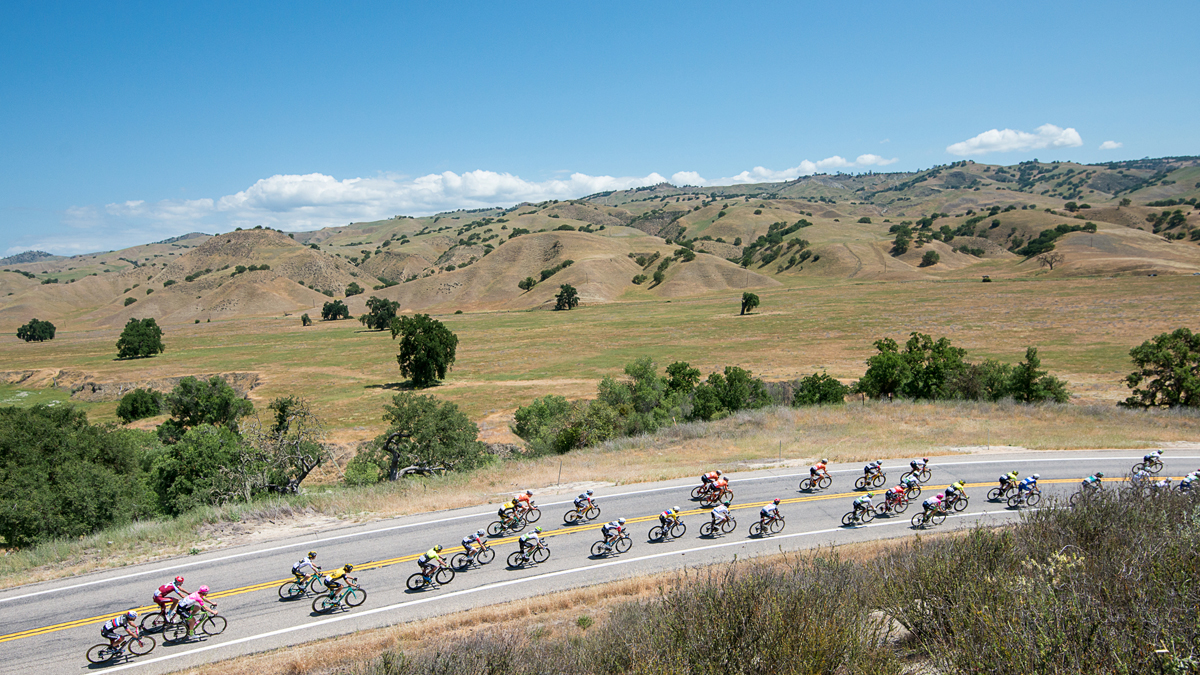
Big sky, golden hills 2. Men’s Stage Three from King City to Laguna Seca Race Track, 2018 Amgen Tour of California cycling race. Photo by Dave Richards, daverphoto.comBig sky, golden hills 2. Men’s Stage Three from King City to Laguna Seca Race Track, 2018 Amgen Tour of California cycling race. Photo by Dave Richards, daverphoto.com
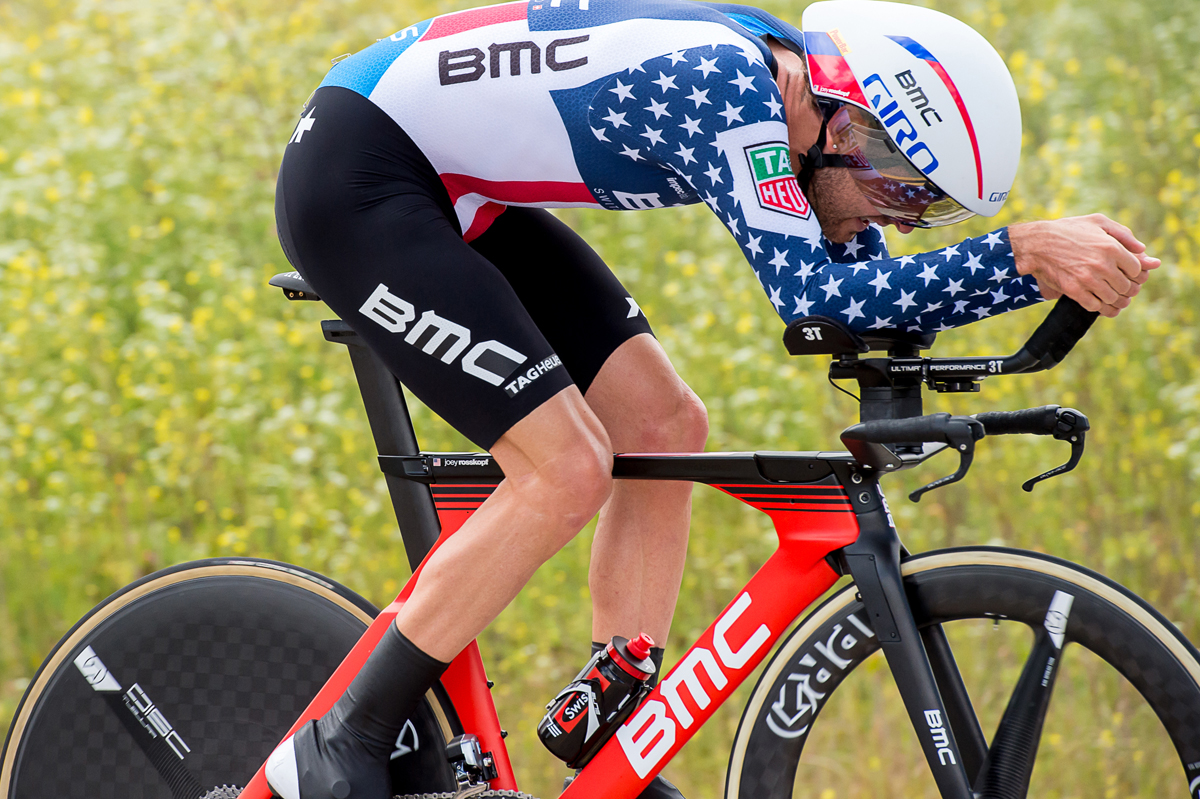
As much as the race seemed the same as previous years, I also detected a difference. The usual big stars were there – Kittel, Cavendish, Sagan, among others. However, starting with the first stage in Long Beach, these guys were not on the top step of the podium. Rising star 23 year old Columbian Fernando Gaviria (Quick-Step Floors) won the sprint on the flat stages 1, 5, and 7. Another youngster from Columbia, 21 year old Egan Bernal (Team Sky) won the mountain stages 2 and 6 and also claimed the overall race general classification and yellow leader’s jersey. Veteran Tejay Van Garderen (BMC) nailed the time trial on stage 4, but only managed 2nd race overall behind Bernal. After being crowned the “King of California” for winning the most stages ever, Peter Sagan (Bora Hansgrohe) drew big crowds but did not win a single stage. Sagan, Kittel and Cavendish went home without a single win between them.
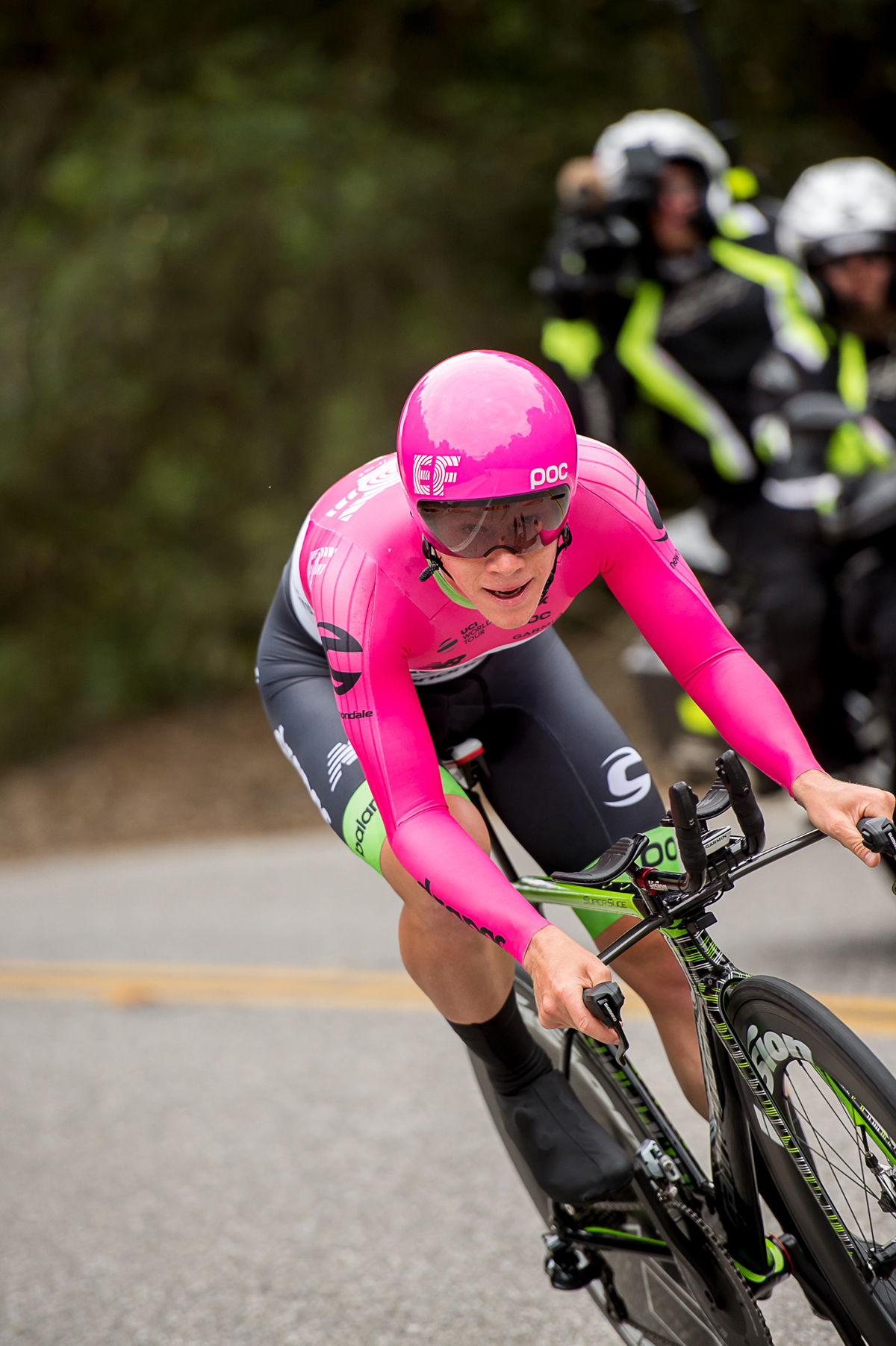
Joey Rosskopf (BMC Racing) wearing the stars and stripes signifying that he’s the current USA time trial champion. Men’s Stage Four, Individual Time Trial, Morgan Hill, 2018 Amgen Tour of California cycling race. Photo by Dave Richards, daverphoto.comLawson Craddock (Team EF Education First-Drapac Cannondale) drills a fast descent. Men’s Stage Four, Individual Time Trial, Morgan Hill, 2018 Amgen Tour of California cycling race. Photo by Dave Richards, daverphoto.com
So what gives? Are we seeing a changing in the guard? New blood challenging the veteran riders? Time will tell. Sagan appears to be in fine form after winning the brutally difficult Paris-Roubaix this year, so maybe California was an anomaly. Cav has had some injuries, but hopefully will be fit and surprise us with some blistering moves at the Tour in July. I’m sure that Kittel will also be there fighting for wins.
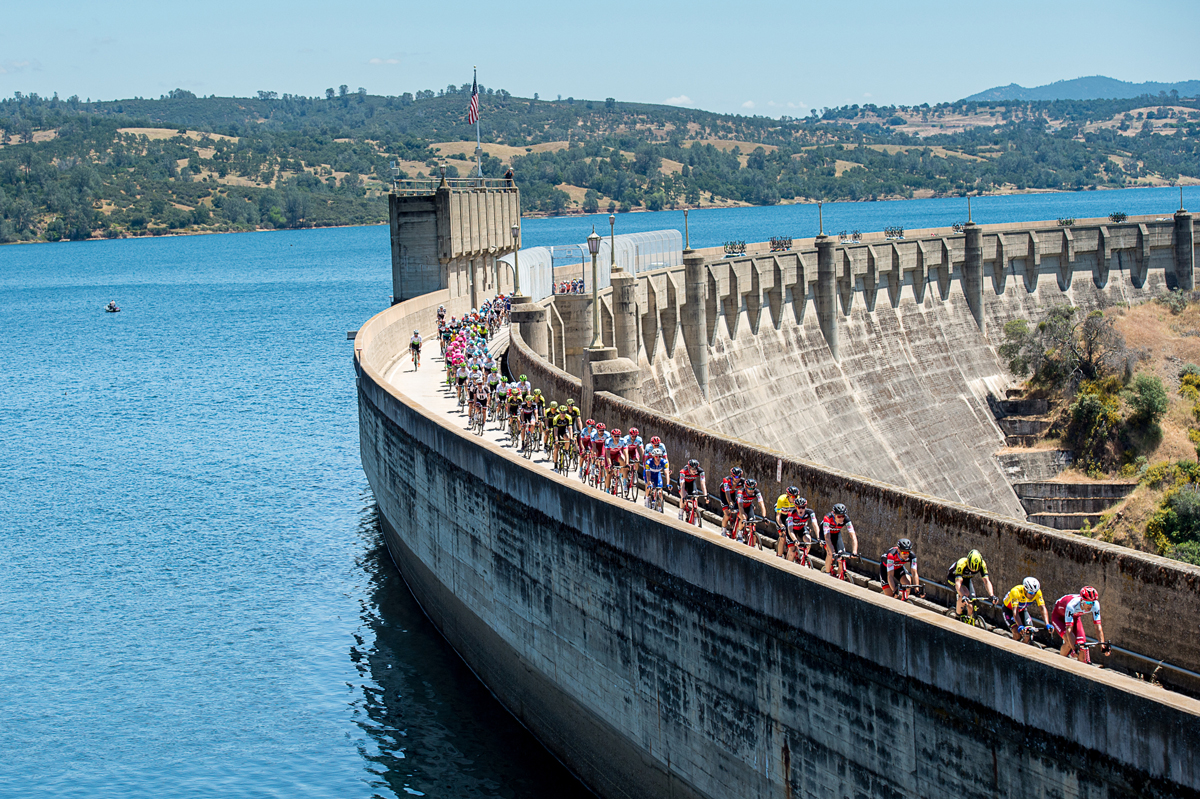
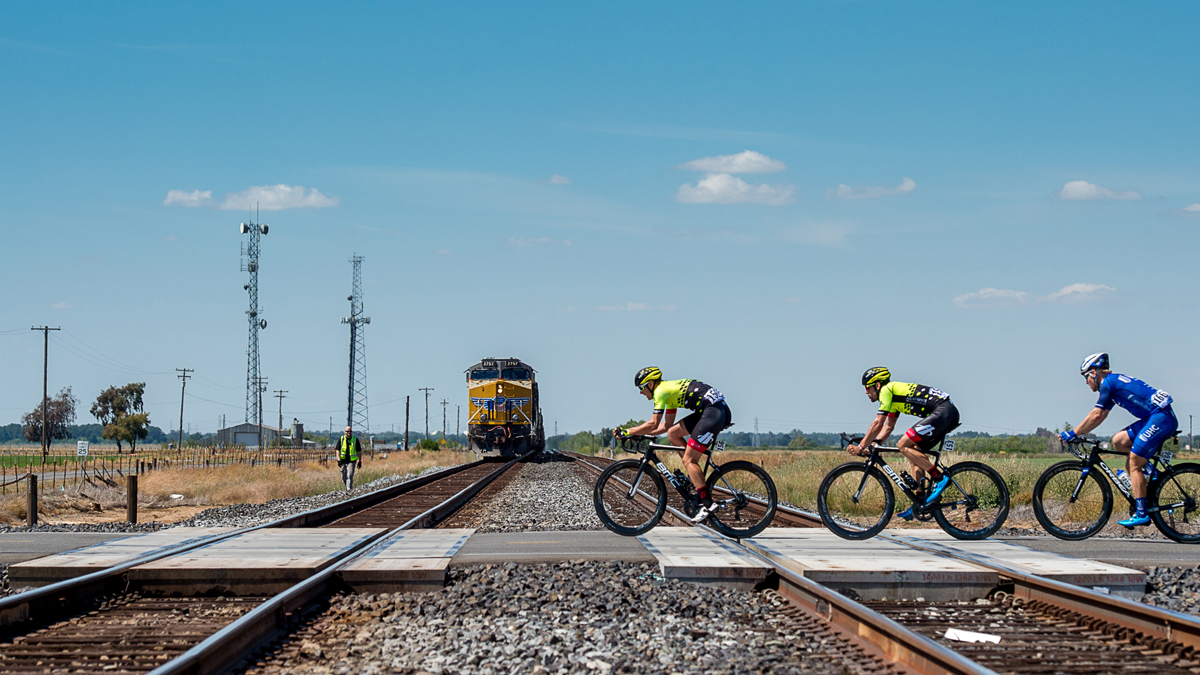
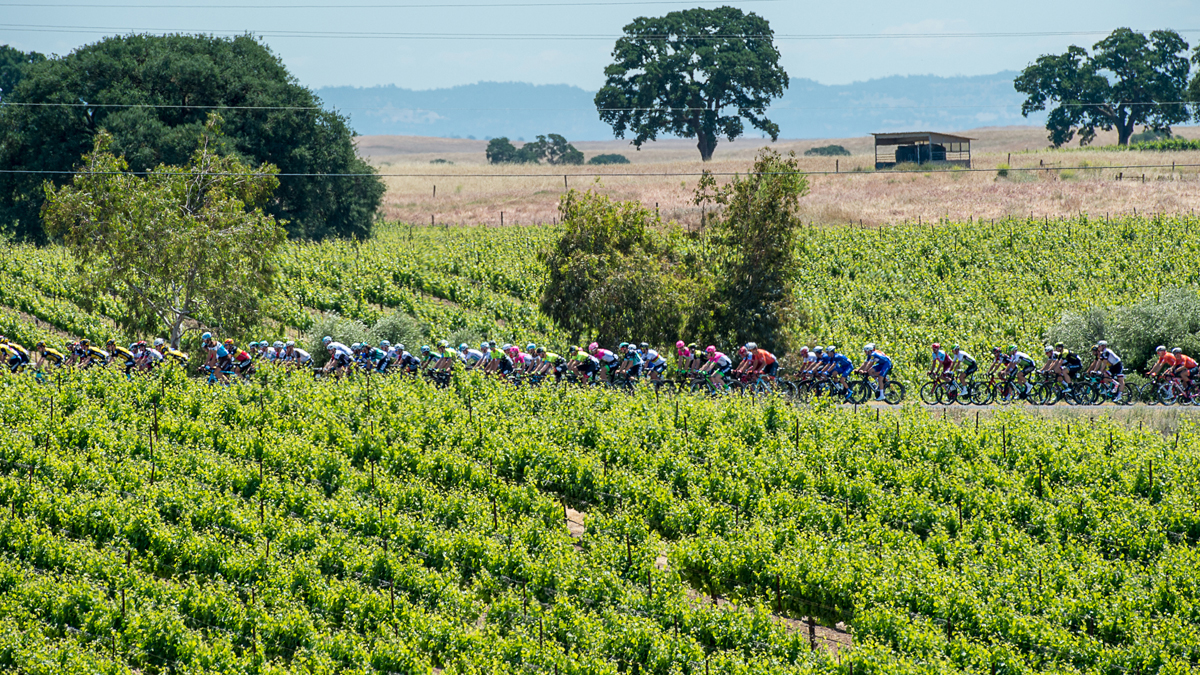
Look out! Train a comin’ Not really, the train came to a stop and the riders passed through safely. Men’s Stage Five, Stockton to Elk Grove, 2018 Amgen Tour of California cycling race. Photo by Dave Richards, daverphoto.comLush, green vineyards greet the riders. Men’s Stage Five, Stockton to Elk Grove, 2018 Amgen Tour of California cycling race. Photo by Dave Richards, daverphoto.comRiders of the peloton stretch out along the Pardee Reservoir dam. Men’s Stage Five, Stockton to Elk Grove, 2018 Amgen Tour of California cycling race. Photo by Dave Richards, daverphoto.com
In the meantime, I’m excited to see these new young riders coming into their own. I think Gaviria will continue to win big sprints and it will be no surprise to see Bernal in contention to win a Grand Tour someday. You might remember a young rider, 23 year old Tao Geoghegan Hart (Team Sky) from his ride here at a previous Tour of Utah. He managed 3rd on the time trial and 5th overall.
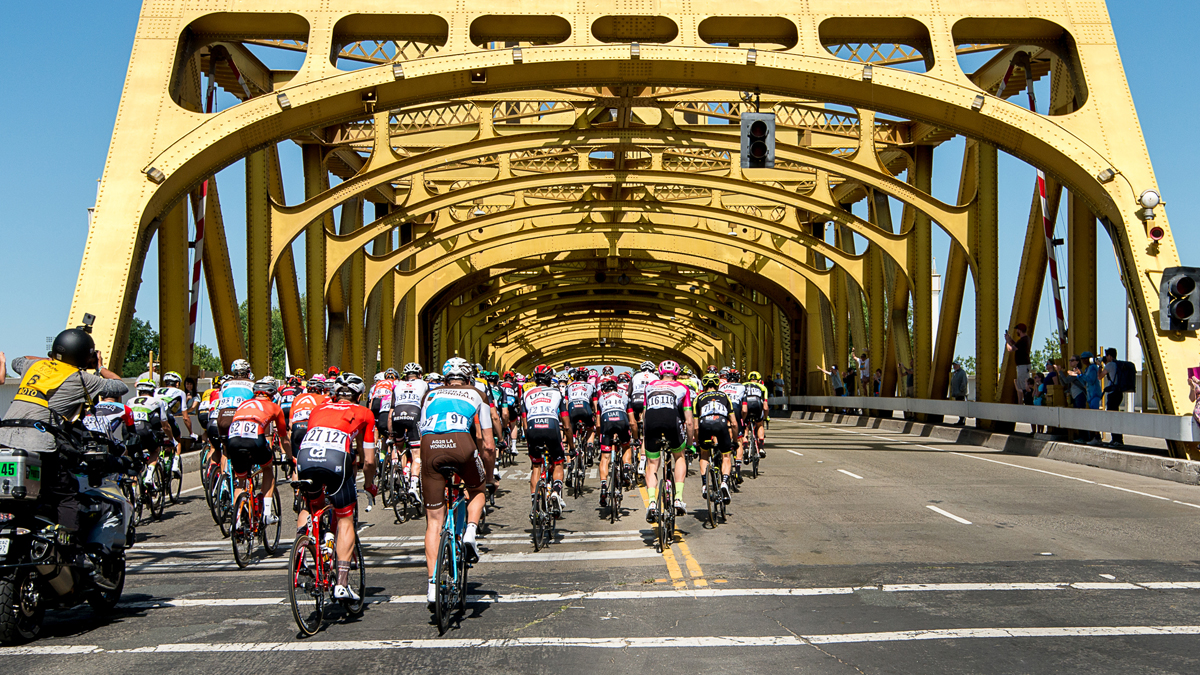
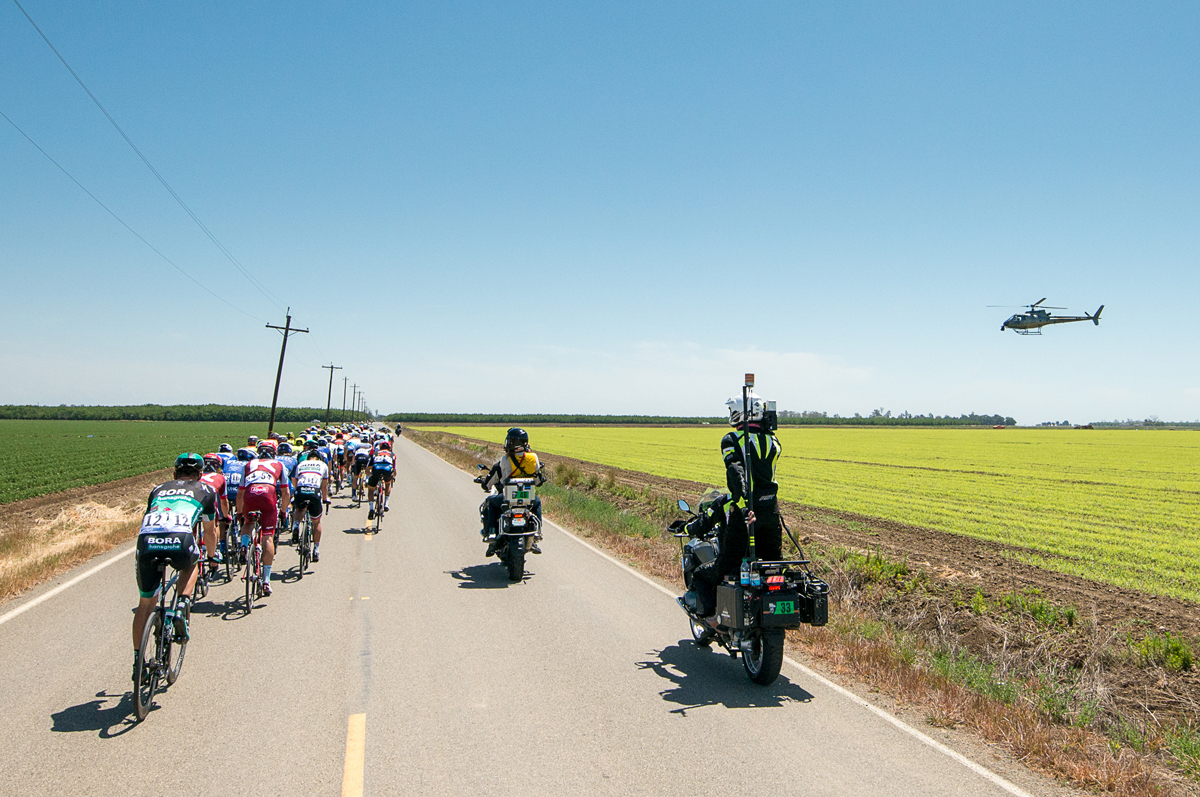
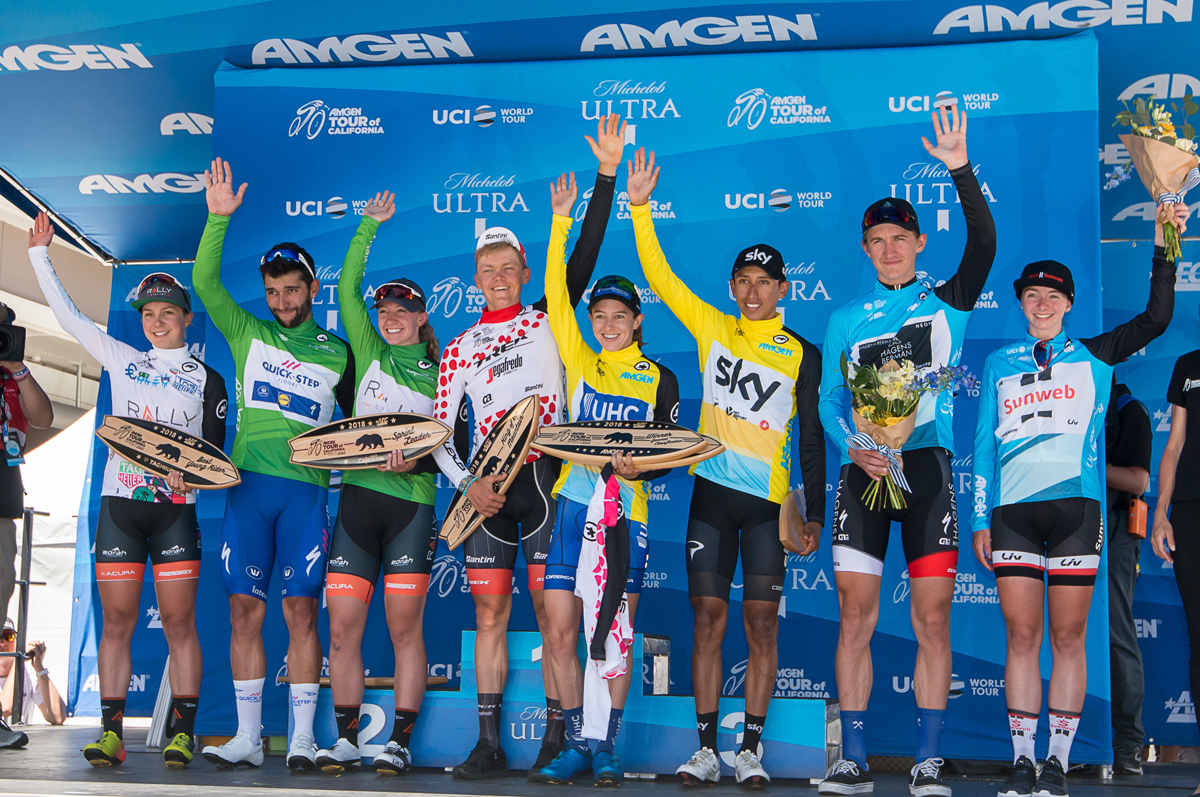
Riders pass under the historic Tower Bridge as they head out during the neutralized start of Men’s Stage Seven, Sacramento, 2018 Amgen Tour of California cycling race. Photo by Dave Richards, daverphoto.comTV motorcycles and helicopter work in tandem to brings the sights and sounds of the race into your living room. Men’s Stage Seven, Sacramento, 2018 Amgen Tour of California cycling race. Photo by Dave Richards, daverphoto.comGroup photo of all of the classification winners. Overall Awards, 2018 Amgen Tour of California cycling race. Photo by Dave Richards, daverphoto.com
This all bodes well for cycling fans. As long as we have a major race like the Amgen Tour of California here in the US, we’ll enjoy watching world class bicycle racing against the backdrop of the beautiful scenery of the Golden State.
Women’s Race
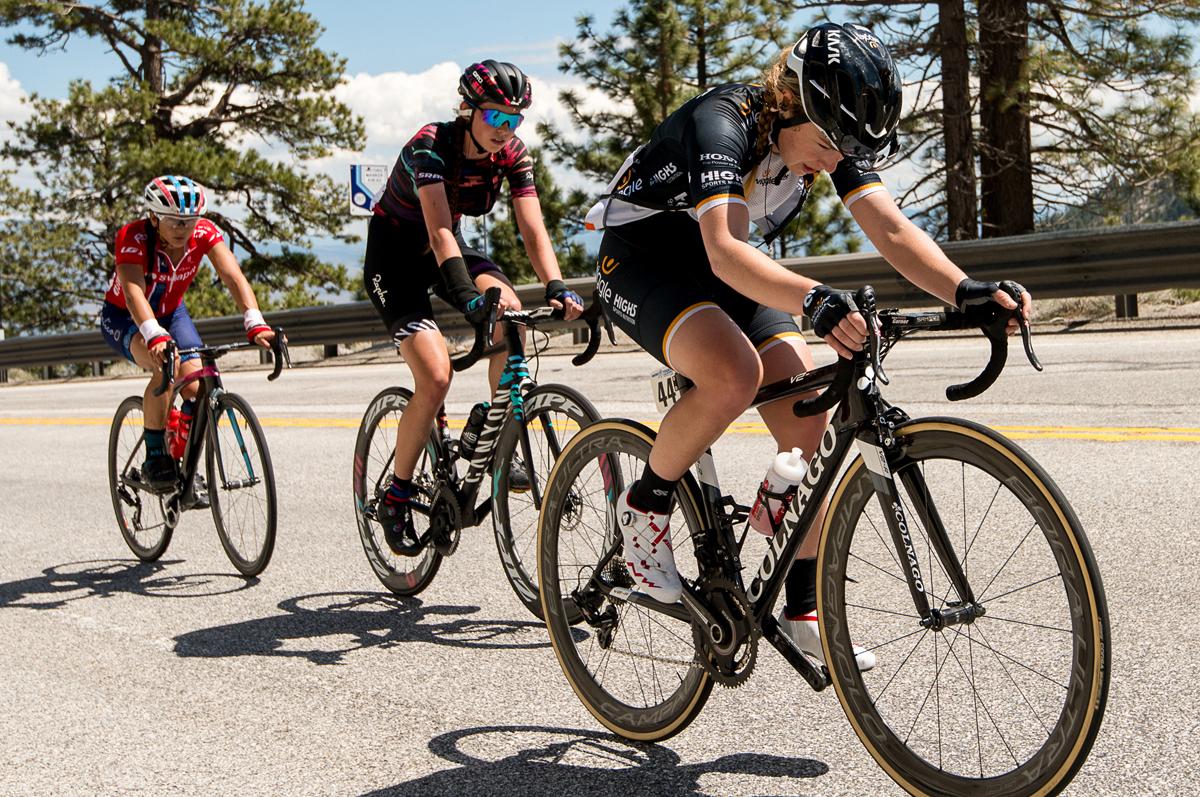
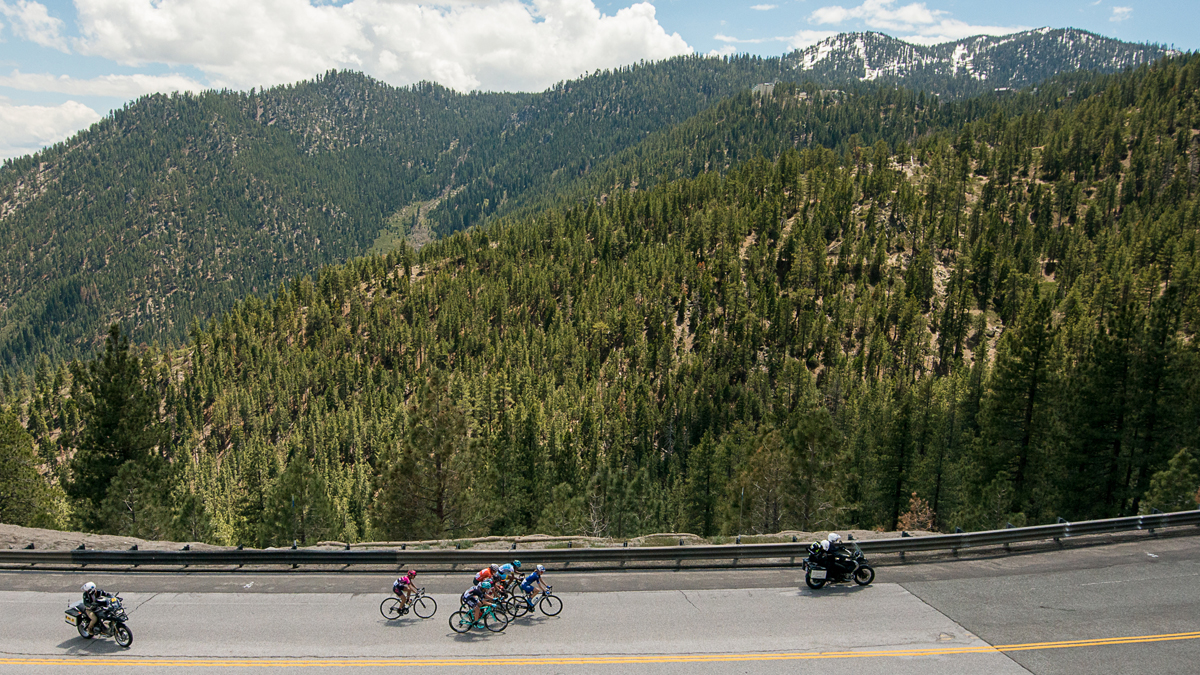
The Women’s AToC consisted of 3 stages that ran sandwiched between the start and finish of the men race during the last 3 stages over similar courses. I had hoped to cover the women in depth, but logistics made that unworkable. I did get a chance to shoot photos of stage 2 which featured a 67 mile loop through the mountains and farmlands south of Tahoe. The women rode hard on some challenging climbs and I’ve included photos of that stage. Women’s racing can be very exciting so hopefully, we’ll see more resources devoted to the women’s race in the future. They certainly deserve it.
Heads down, deep in the pain cave on the steep ramps up Daggett Summit. Women’s Stage Two, South Lake Tahoe, 2018 Amgen Tour of California cycling race. Photo by Dave Richards, daverphoto.comSnow remains at the top of Heavenly Valley Ski Resort high above the riders on the final climb of Women’s Stage Two, South Lake Tahoe, 2018 Amgen Tour of California cycling race. Photo by Dave Richards, daverphoto.com

 Trek’s road riders are some of the fastest in the world, and include four elite World Champions (Mads Pedersen, Elisa Balsamo, Lizzie Deignan, Ellen van Dijk) and winners of prestigious races such as Paris-Roubaix (Deignan, Elisa Longo Borghini), Milan-Sanremo (Jasper Stuyven), Liège-Bastogne-Liège (Deignan) and Il Lombardia (Bauke Mollema).