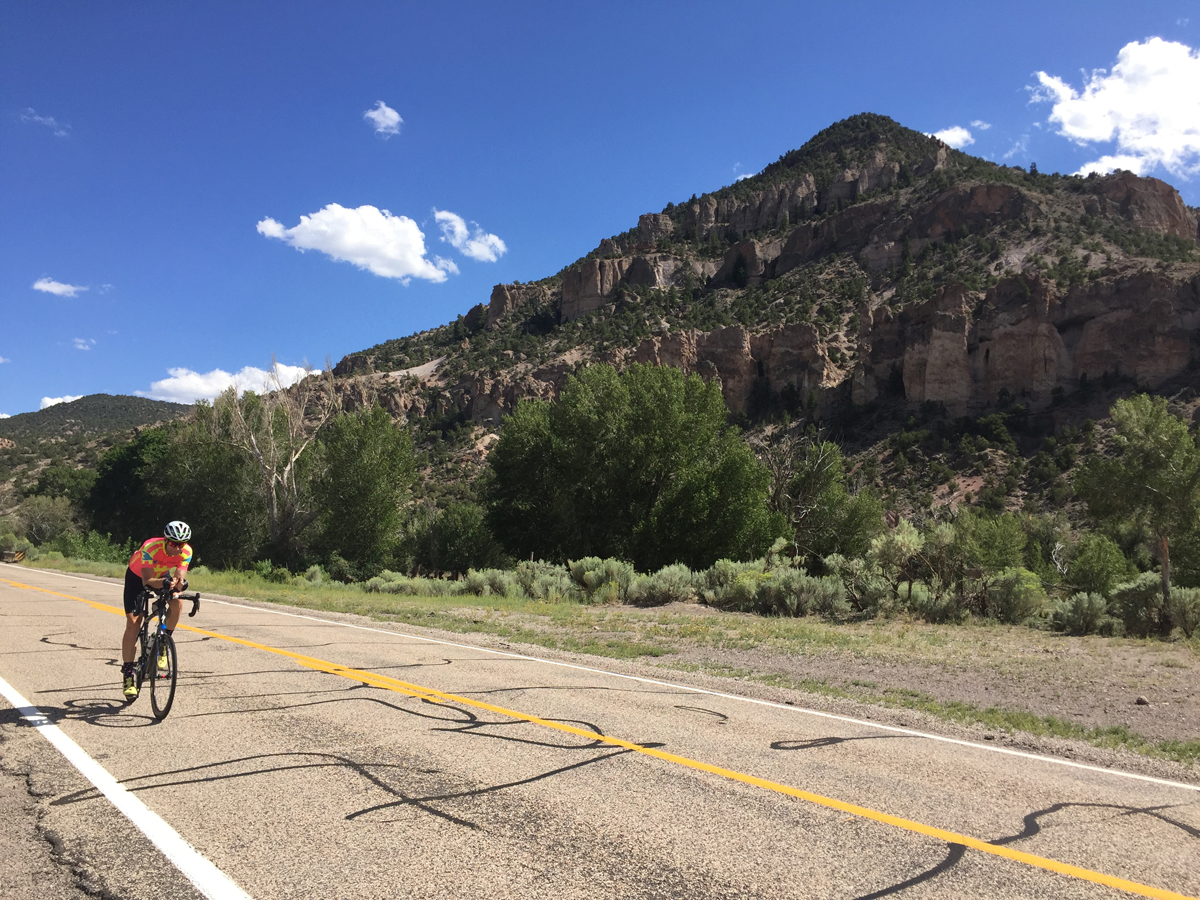
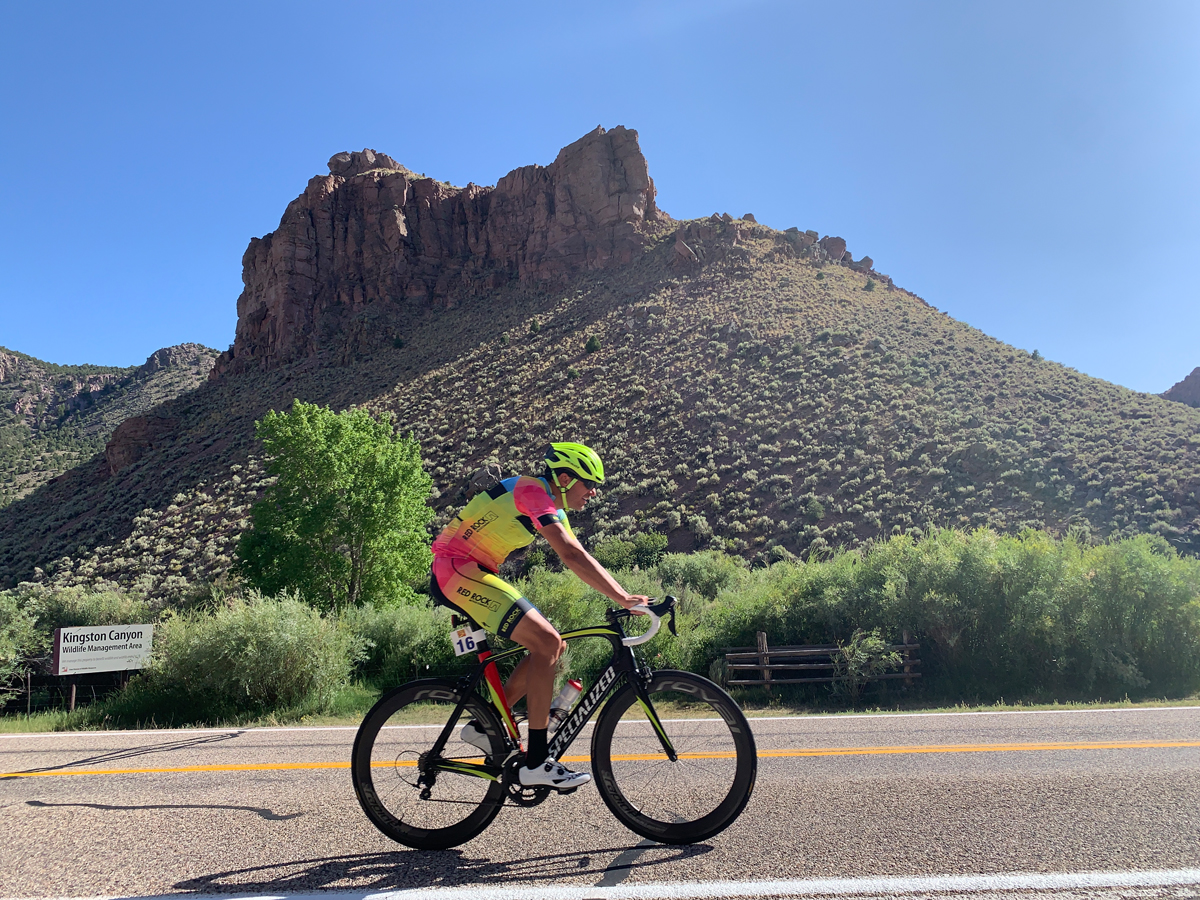
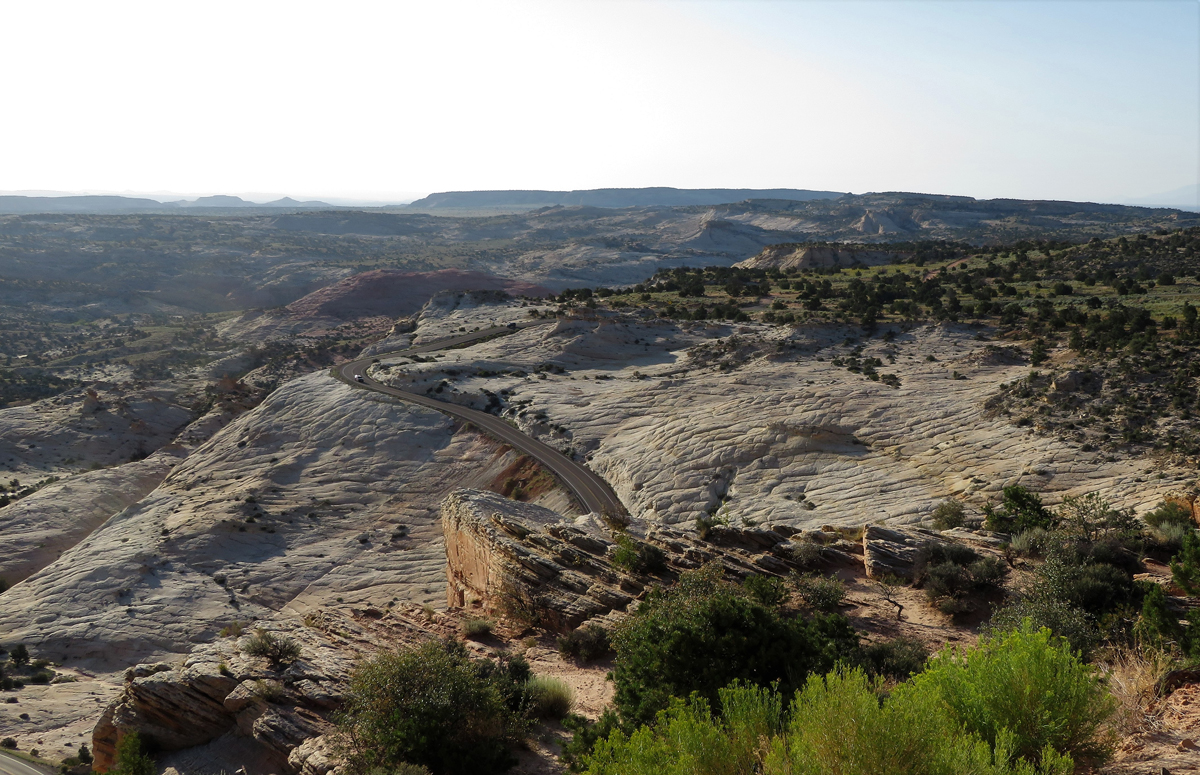
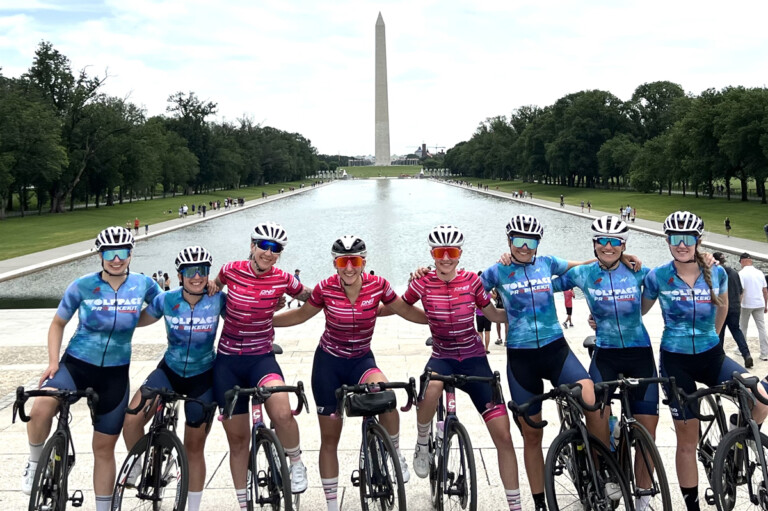
Cycling West and Cycling Utah Magazine’s Summer 2022 Issue is now available as a free download (10 MB download). Pick up a copy at your favorite Utah, Idaho, Wyoming, Nevada, Montana, Colorado, Arizona, New Mexico, and Northern California bike shop or other location.
Cycling West Summer 2022 Cover Photo: Riders on Loveland Pass in the 2022 Ride the Rockies. Photo by Ryan Muncy Photography, https://ryanmuncyphotography.smugmug.com. Follow him on Instagram @ryanmuncy
Contents
The Athlete’s Kitchen: Commercial Sports Foods: A Matter of Preference — page 2
Ride the Rockies: A Week of Challenging and Rewarding Cycling — page 3
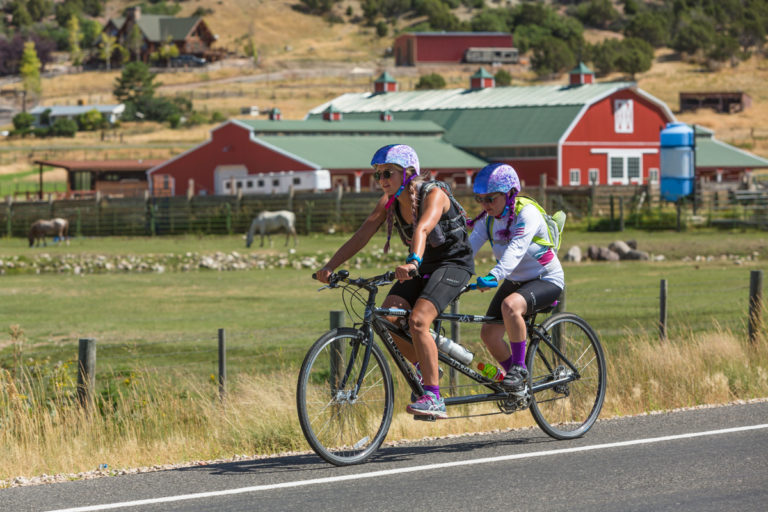
Little Red Riding Hood: A Mother and Daughter’s Perspective — page 6
What is a Randonneur? Apparently, I Am! — page 7
Pay to pedal? Wyoming to explore mountain bike user fees — page 8
The Ultraknuckle: The Best Worst Idea Ever? — page 9
A Dog Attacks You While Cycling, What Do You Do? — page 10
A Roadie Tries Mountain Biking — page 11
My Best Day On A Bike, Ever — page 12
An Interview with Triathlete Melissa Coles — page 15
Bicycle Collisions More Likely on Less-Traveled Roads — page 15
COVID-19 Accelerates Shift Towards Bikes — page 23
Cargo Bikes Cleaner than Trucks — page 23
Bike Lanes Increase Ridership — page 23
Tandem Bicycle: The Bicycle Art of Jason Beck — page 24
SALT LAKE CRITERIUM RETURNS WITH TWO RACES IN THE GRANARY AND SUGARHOUSE PARK JULY 16TH AND 17TH, 2022 – Road Closure Updates
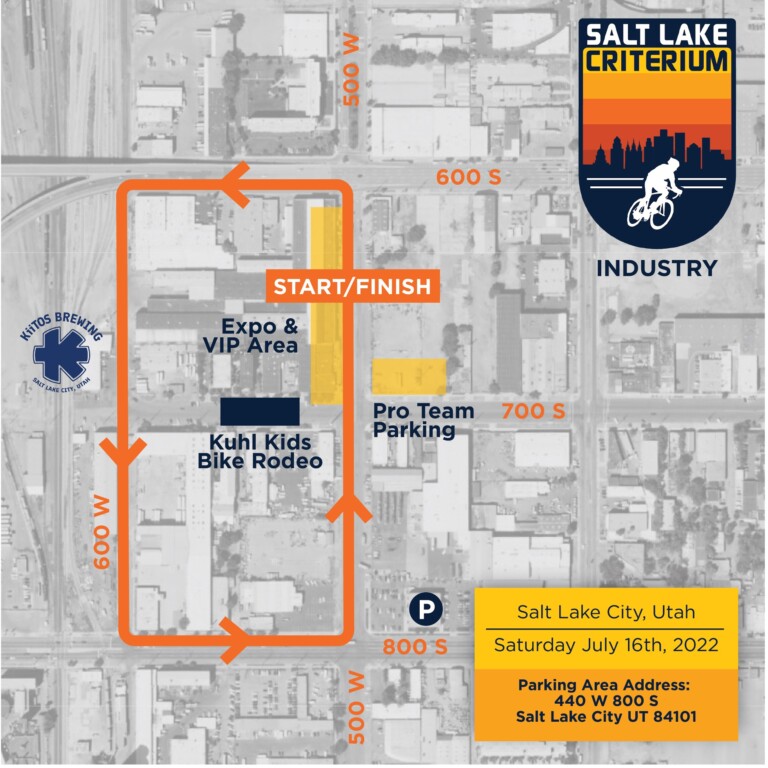
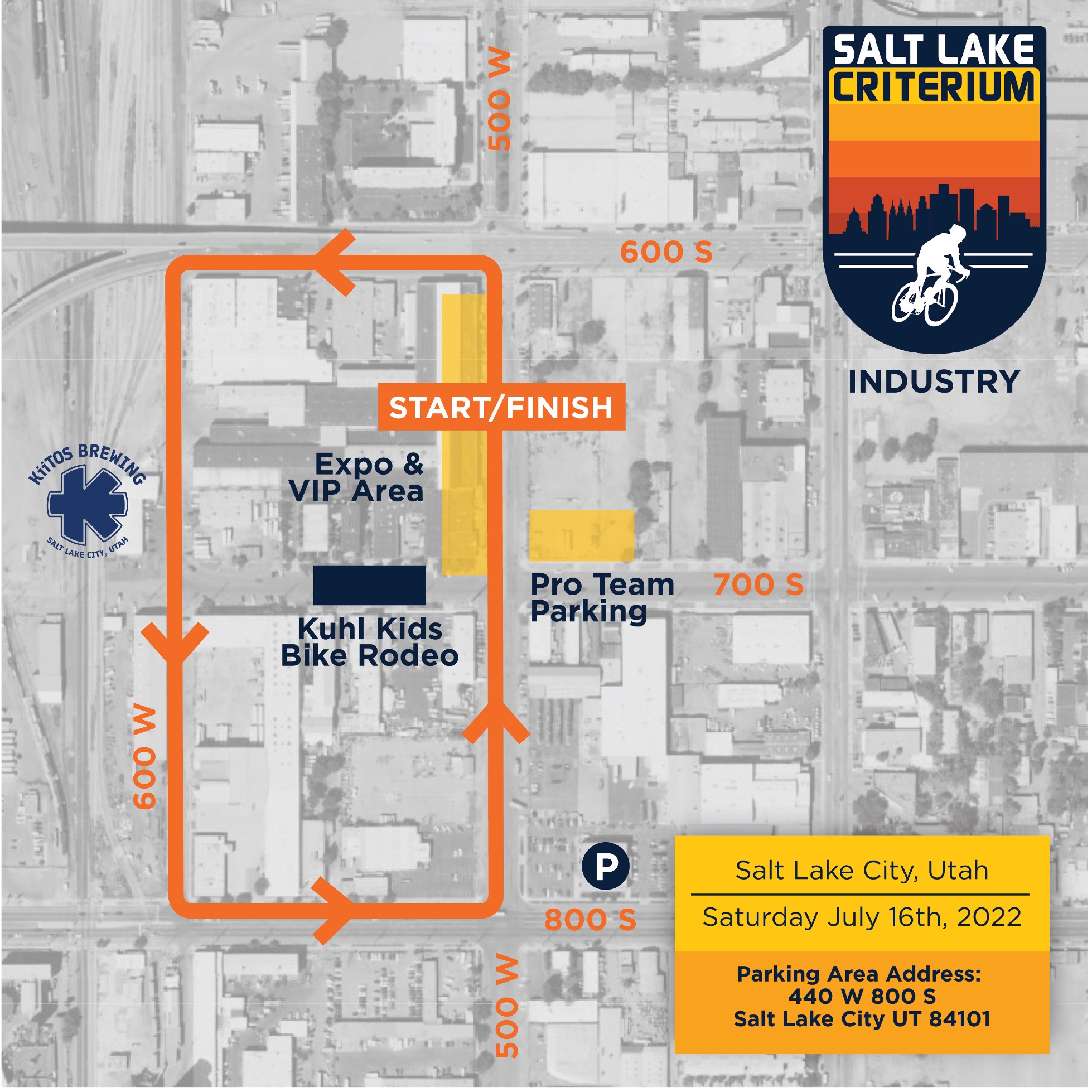
SALT LAKE CITY, Utah (July 11, 2022) — The action on Saturday, July 16, kicks-off in the Granary District near downtown and INDUSTRY SLC, with a fast, four-corner, counterclockwise rectangle circuit just under a mile in length. The racing starts with amateur categories before the pros take the stage in the evening, which is the sixth of 10 stops on the new 2022 National Criterium Series Calendar, The American Crit Cup, where national and international men and women professional teams and cyclists battle it out for the chance to gain critical series’ points and more than $22,000 in cash.
The start/finish will be on 500 W between 600 and 700 S.
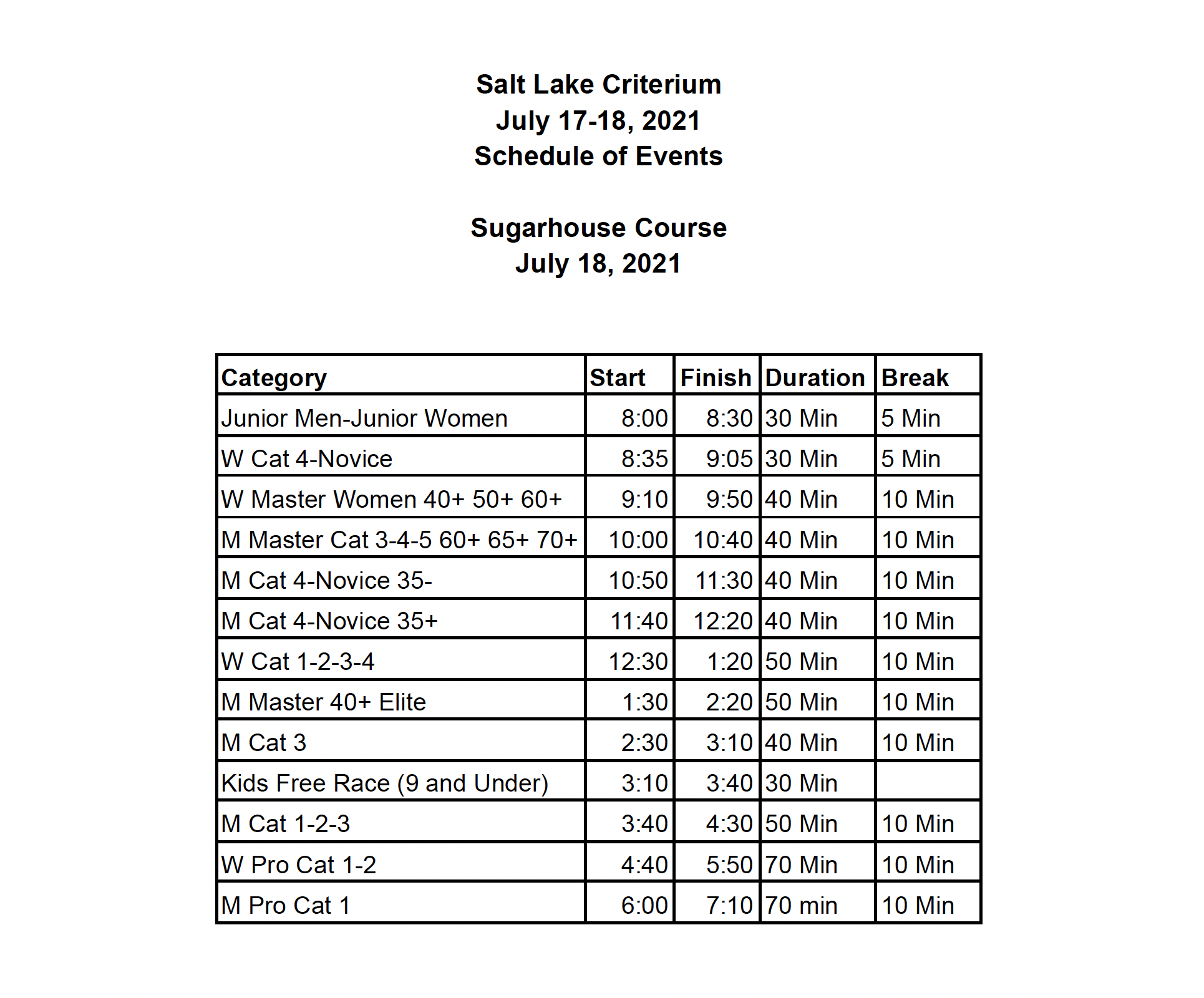
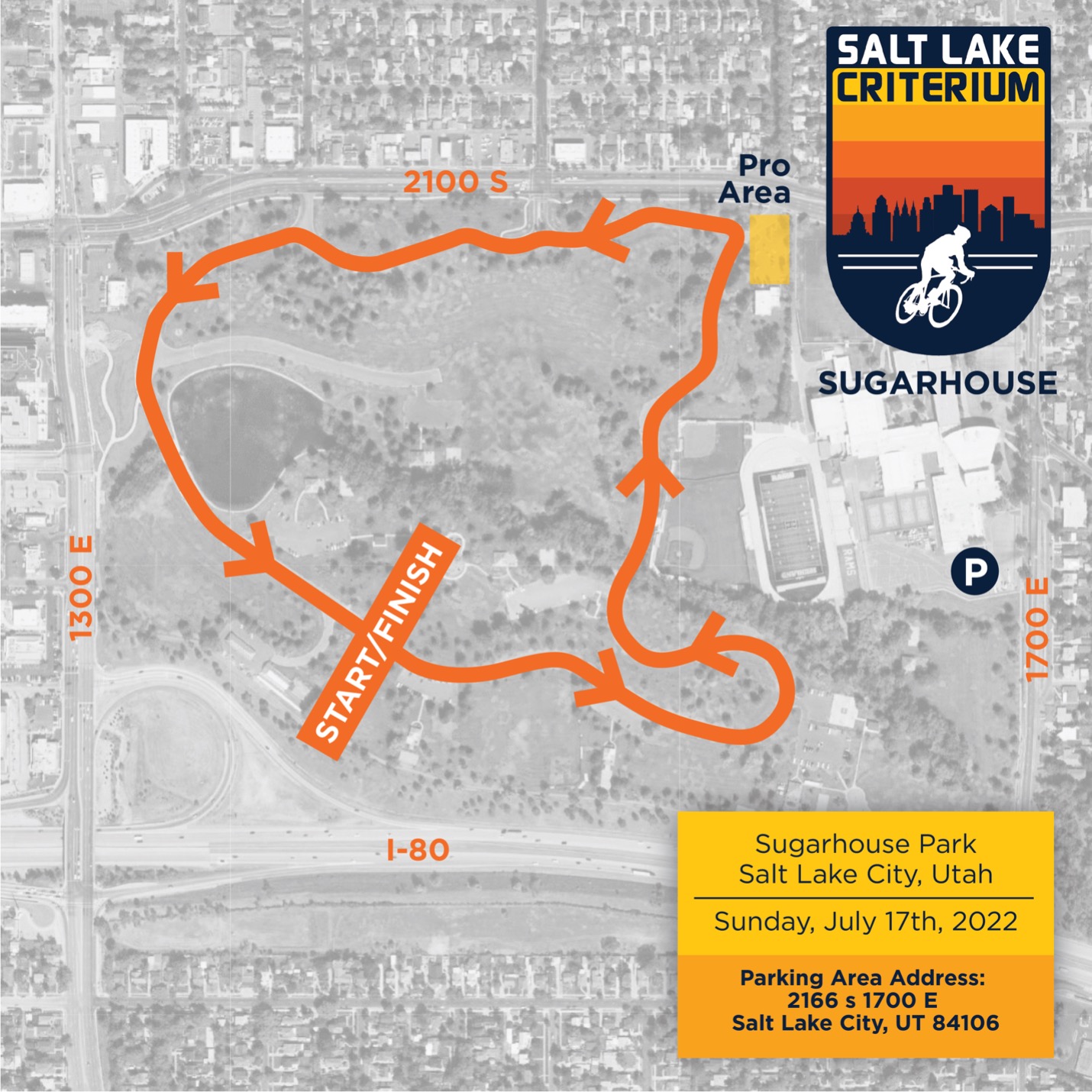
Sugarhouse Park is the host venue on Sunday, July 17, and features a longer, 1.4-mile rolling course. Sugarhouse Park is a longtime favorite of local racers, who will be looking to use their homefield advantage after a hard day of racing on Saturday. Sunday’s race is also featuring additional junior and master categories throughout the day before the pro men and women take the stage to cap off what is sure to be a thrilling weekend of racing. The start/finish will be on the southside of the park at the top of the hill.
Live coverage will be on https://americancritcup.com/media/outside-livestream/ The pre-show begins at 6:15 p.m. MDT Saturday followed by coverage of the professional women’s race. The professional men’s race begins at 8:05 p.m. MDT.
Salt Lake Criterium Road Closure Detail (Granary District)
July 16, 2022: The following roads will be closed from 11 am to 9:30 pm
500 West All lanes will be closed from 600 S to 800 S.
600 West All lanes will be closed from 600 S to 800 S.
600 South, Side street below freeway off ramp The side street of 600 S which is not part of the freeway off ramp but located just south will be close between 500 W to 600 W.
700 South All lanes will be closed from 400 W to 600 W.
800 South All west bound lanes from 400 west to 600 west will be closed. Traffic will be diverted on the east bound lanes by Salt Lake City police. 800 south east bound lanes will be split to provide two-way traffic. All traffic will follow police instructions while driving in the area.
Salt Lake Criterium Road Closure Detail (Sugarhouse Park)
The Sugarhouse Park Road loop will be closed for the entire day on July 17th 2022. The entrance gates will be closed, and additional fencing will be placed for racers.
Spectators are encouraged to park at Highland Highschool (2166 S 1700 E Salt Lake City, UT 84106)
Best Buddies Defends National Series Lead; Boise Crash Sidelines Rodriguez with Five Races Remaining
BOISE, Idaho (July 15, 2022) — Best Buddies Racing Built by HGR Construction has proven to be the top American criterium team this season by leading the American Criterium Cup, a 10-race national series. But in the fifth race, the Bailey Glasser Boise Twilight Criterium, series leader Alfredo Rodriguez of Mexico crashed hard in the closing laps.
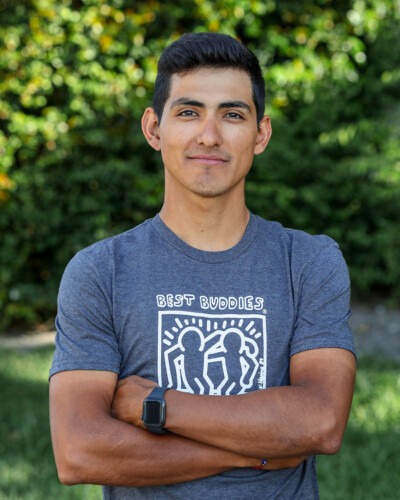
Alfredo Rodriguez (Best Buddies Racing) broke his collarbone and won’t be defending his lead in the American Criterium Cup. Photo courtesy Best Buddies Racing
Team Captain Michael Hernandez took the team’s colors forward and finished third behind race winner Ty Magner (Legion of Los Angeles) and Brandon Feehery (Project Echelon). Best Buddies entered Boise with four riders in the top 10 of the series standings. Rodriguez wore the red leader’s jersey, having won in Anniston and Harlem to put him in a comfortable lead.
But when that red jersey hit the ground plans changed for that day. Although Rodriguez narrowly retained the series lead, there would be no red jersey worn the following weekend in Salt Lake City. Rodriguez had broken his collarbone.
“We put Alfredo into the best care we could find with Dr. Eric Heiden,” said Team Director Thomas Craven of his former teammate and legendary Olympic speed skater, now a highly regarded orthopedic specialist. Rodriguez did not require surgery. His return to competition, Craven noted, will be a race-by-race decision. “We’ll see how fast he heals but typically he would need a month to recover.”
With three of the final five races packed into that month, Best Buddies will need to turn to its other stars, Hernandez, Bryan Gomez of Colombia, and Danny Estevez of Massachusetts, to lead the teal train forward. Rodriguez still leads the standings with 296 points; Gomez is fifth with 155 points; Hernandez is sixth with 146 points; and Estevez is tenth with 90 points.
The team’s next contest will be the Salt Lake Criterium, the sixth race of the series, being held Saturday evening. Live coverage will be on https://americancritcup.com/media/outside-livestream/ The pre-show begins at 6:15 p.m. MDT followed by coverage of the professional women’s race. The professional men’s race begins at 8:05 p.m. MDT.
By Dave Richards — Have you ever wondered what it’s like to race a bicycle alongside the top riders in the sport? You’ve probably seen a stage or two of the Tour de France on TV watching the riders suffer up steep mountain climbs or bumping and jostling each other while sprinting 40 mph down the Champs-d’Elysees. As a race photographer, I get the best seat in the house – flying alongside the peloton on the back of a motorcycle taking pictures. I spent May 13-20, 2017 following the Amgen Tour of California observing top level racing, up close & personal. Here’s what I found.
The men’s race of the Amgen Tour of California (AToC) was elevated to the World Tour Calendar this year. According to Wikipedia “The UCI World Tour is the premier annual male elite road cycling tour, sitting above the various regional UCI Continental Circuits. It refers to both the tour of 28 events and an annual ranking system based upon performances in these.” The 18 UCI World Tour men’s teams are the best of the best; teams like Sky, BMC, Astana, Cannondale-Drapac among others.15 of the 18 World Tour teams competed at AToC along with several lower level Pro Continental and Continental teams such as United Healthcare and Rally Cycling.
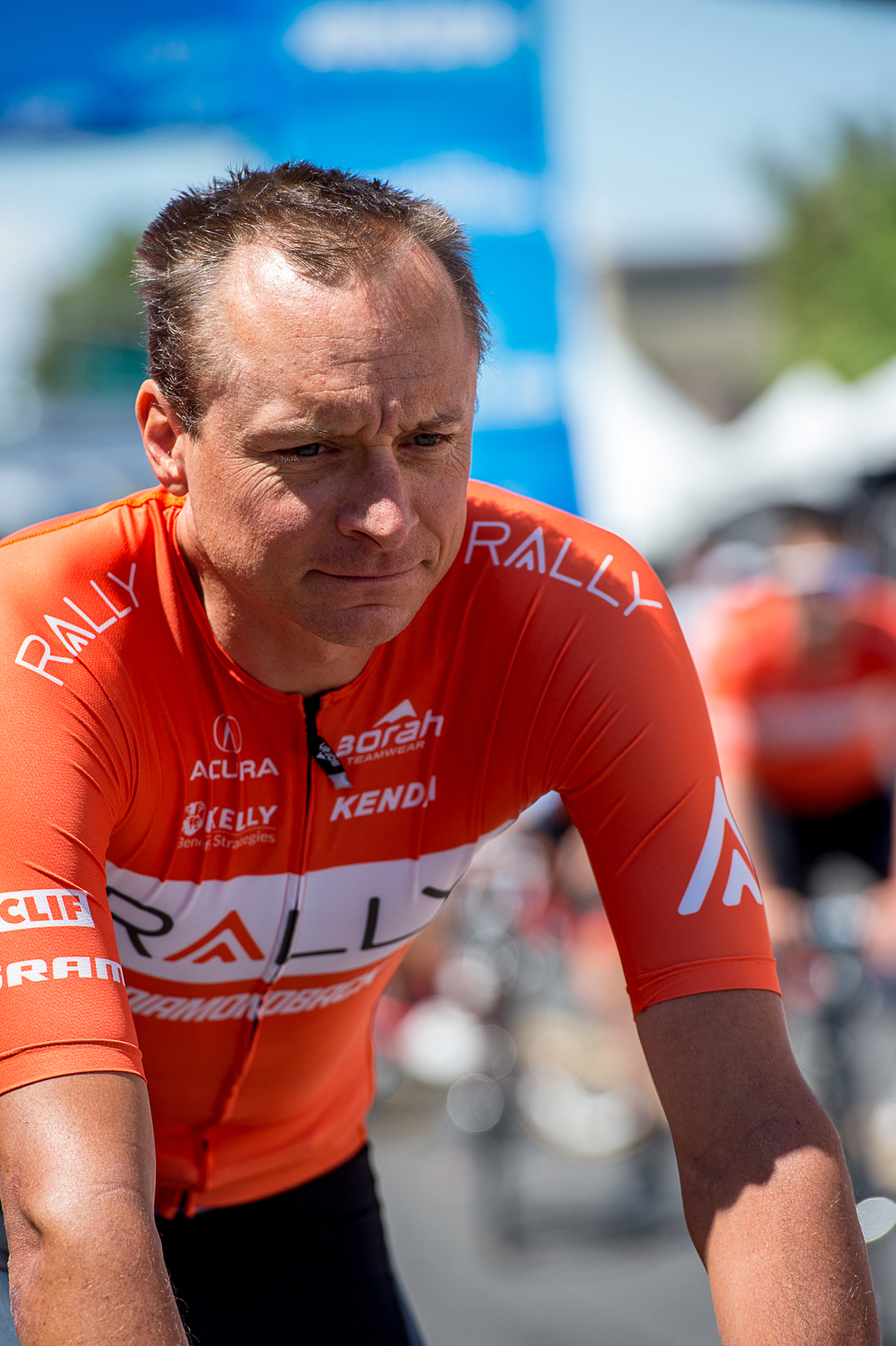
Veteran ace rider Danny Pate (Rally Cycling) Men’s Stage 2, 2017 Amgen Tour of California. Photo by Dave Richards, daverphoto.com
To understand the difference between the different team levels, I spoke with Danny Pate, veteran rider for Rally Cycling. Danny raced extensively in Europe for 15 years including racing for Team Sky, one of the top World Tour teams. As such Danny has seen it all from local club racing in the US to the big events in Europe like the Tour de France. Danny compared World Tour, Pro Continental and Continental race teams to baseball’s Major League, Triple A and Double A. He said as you progress from Continental to World Tour, the teams have more support and more budget. “The only difference is some races they actually play together.” Referring to AToC, “you have all three, the first three tiers all racing together.”
What is it like for the smaller teams to compete against these big teams with their multi-million dollar budgets and superstar riders? I sense sort of a David vs. Goliath story here. To gain a little insight, I spoke with Phil Southerland, founder and director of Pro Continental Team Novo Nordisk. Team Novo Nordisk is unique in that all of its riders are Type 1 diabetics. The riders carry a strong positive message to their young fans who are afflicted with this disease that they too can live normal lives and become athletes themselves. When asked about racing a World Tour event, Phil said, “when you get to the World Tour, everyone is taking it seriously. And all the teams here, there’s big opportunities for points, they’re all gonna try to score them. It’s what drives their sustainability at the World Tour and also the riders contracts for next year is points at World Tour races. It just really elevates the level of competition.”
Phil also talked about how much deeper the organization is at a World Tour race. He mentioned other lower level races that may not have breakfasts for the riders or control errant cars wandering onto the course. Referring to World Tour races “it’s a much more controlled circus. That’s what we are at the end of the day, a moving circus.” He stated, “California has taken a slow approach to get to the World Tour. They’ve made mistakes along the way, but it’s really a world class event now.”
We talked about budgets a bit and what it’s like to compete against big budget teams. “Sky’s got nearly a $40 million budget, they can spend money on everything. They get to manage and control everything….and you got guys on Rally Cycling, they’ve probably got a $2-3 million budget and Jelly Belly which is probably less than a $1 million budget….those kids, this is their big show for the year. It’s their chance to get up a level. It’s really good to see the mixture of US domestic teams get a chance to race with the best in the world.”
Women’s Edition
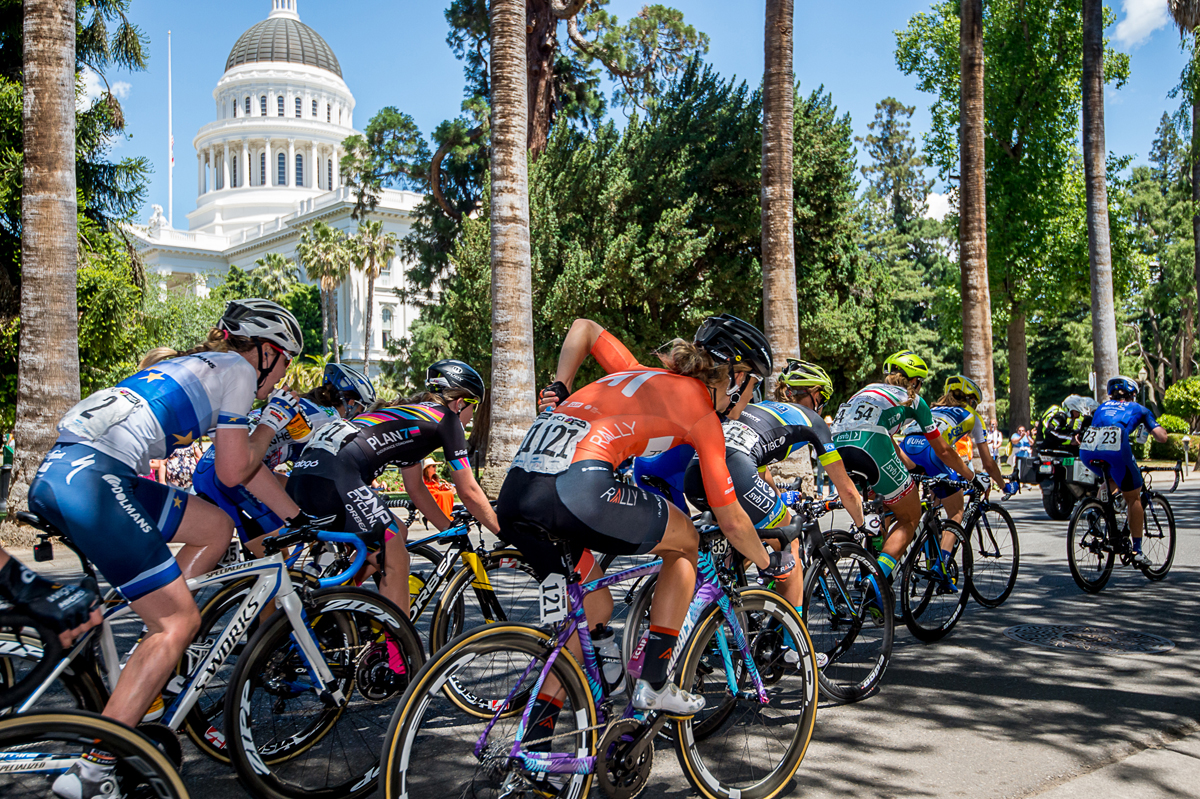
I would be remiss not to mention the women’s edition of the AToC. The women’s World Tour is in its 2nd year and although it doesn’t yet carry the history nor the depth of the men’s tour, it signals a rise in talent among the women and makes for exciting racing. Unfortunately, my time was limited and I was only able to cover the final stage of the women’s race. The race consisted of 4 stages starting in Lake Tahoe on Thursday, May 11th and finishing with a criterium race around the State Capitol grounds in Sacramento on Sat. May 13th. The crit was sandwiched between the start and the finish of men’s stage 1. The crowds were dense around the Capitol grounds as they were treated to both races that Saturday.
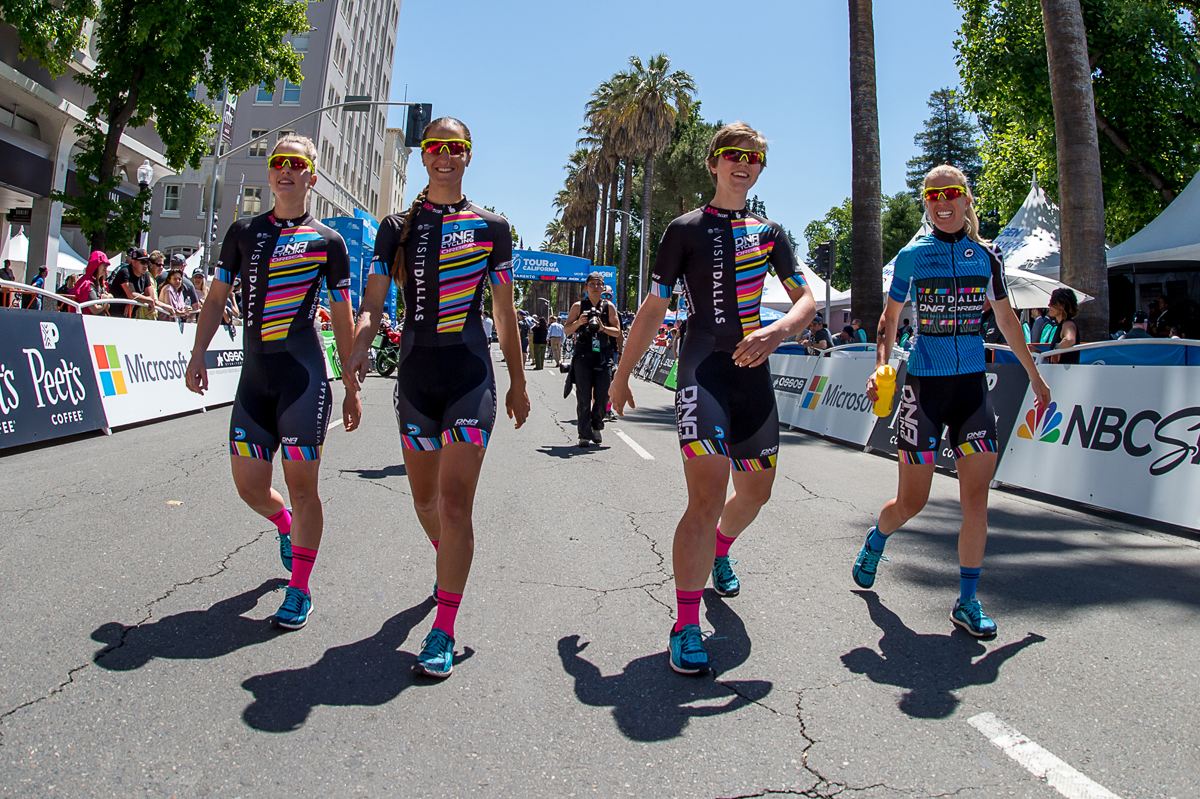
The California State Capitol Building forms the backdrop for the Women’s Stage 4 in downtown Sacramento. 2017 Amgen Tour of California. Photo by Dave Richards, daverphoto.comThe Visit Dallas DNA Pro Cycling Team riders before the start of the Women’s Stage 4 in downtown Sacramento. L-R: Mickey Drummond, Hanna Muegge, Claire Rose and Mandy Heintz . (Catherine Fegan-Kim DNA team member & team photographer in background). 2017 Amgen Tour of California. Photo by Dave Richards, daverphoto.com
Utah was well represented here by the locally co-owned Visit Dallas DNA Racing Team. Mandy Heintz rode a strong solo break on Stage 3 and although caught by the field, she won the Most Courageous Rider Jersey for her efforts.
Men’s Race Overview
Back to the men’s race. The race consisted of seven stages this year. I won’t bother with a detailed race report here since that info has been available online and on NBC Sports broadcast for several weeks now. I’ll include just a quick summary of the race.
Stage 1 featuring an out and back 104 mile road course starting and finishing alongside the California State Capitol grounds. Marcel Kittel (Quickstep-Floors) beat out other top sprinters Peter Sagan (Bora-Hansgrohe), Elia Viviani (Team Sky) and John Degenkolb (Trek-Segafredo) for the win taking the first yellow jersey.
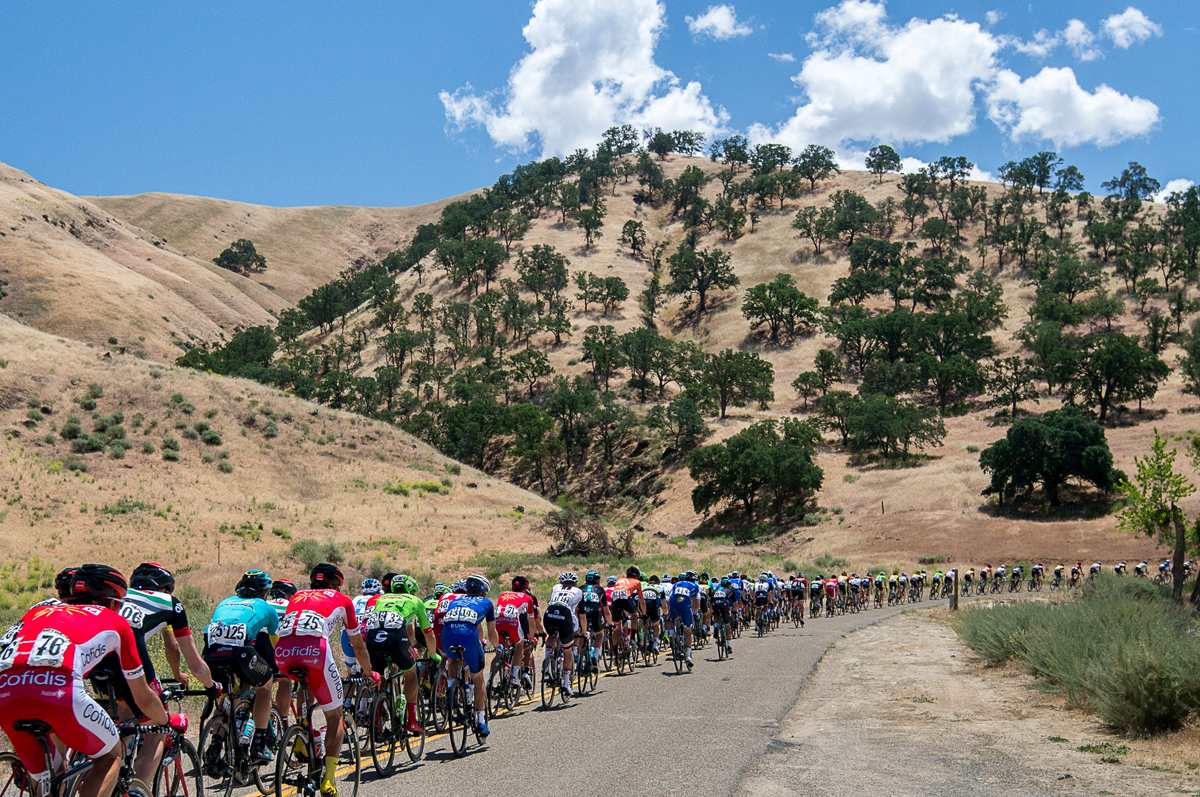
The peloton stretches out like a rubber band racing up Del Puerto Canyon Road during Men’s Stage 2, 2017 Amgen Tour of California. Photo by Dave Richards, daverphoto.com
From there the race headed south. The 90 mile long Stage 2 began in Modesto heading west up and over the steep Mt. Hamilton climb finishing in San Jose. The finish consisted of a long uphill drag where Rafal Majka (Bora-Hansgrohe) beat out George Bennett (Team Lotto NL-Jumbo) for the win, taking over the race leader’s yellow jersey.
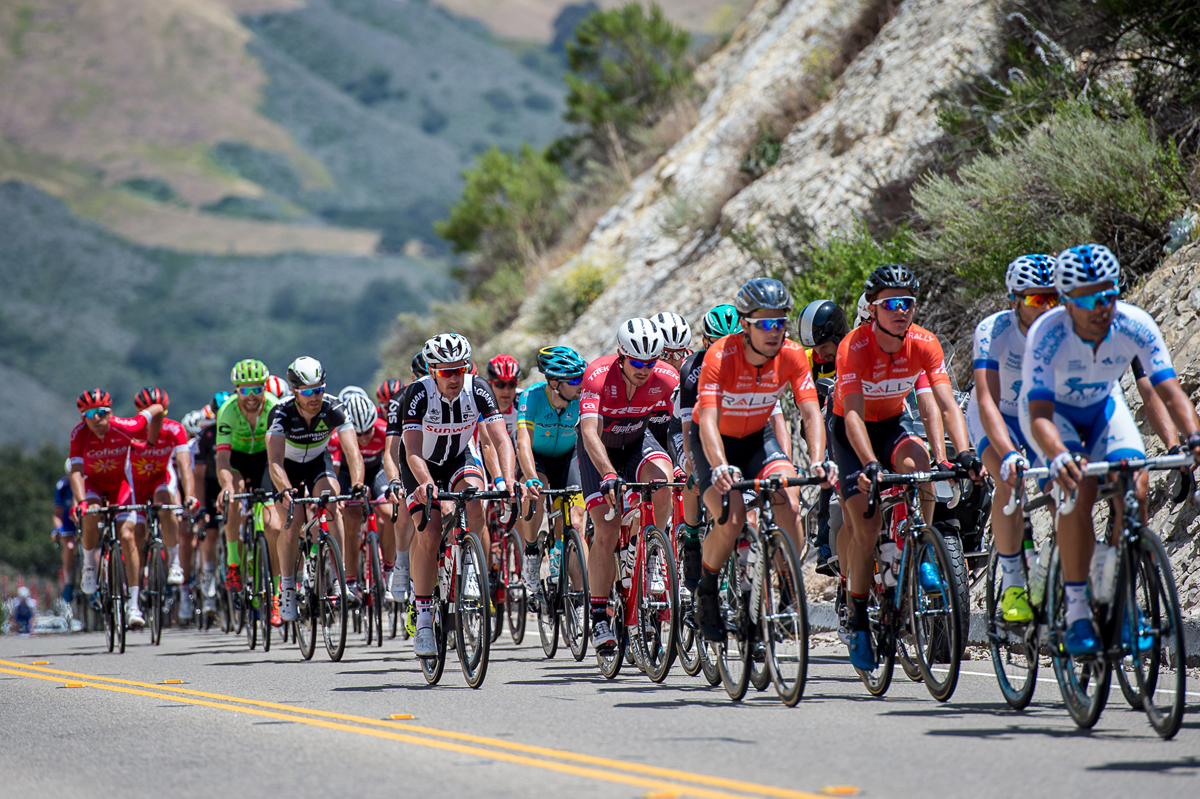
Grupo compacto. Men’s Stage 3, 2017 Amgen Tour of California. Photo by Dave Richards, daverphoto.com
Stage 3 left Pismo Beach heading inland through farm country finishing in Morro Bay for a total of 120 miles. Again, the finish consisted of a long uphill drag overlooking the beautiful coastline of Morro Bay and paid off big-time for Peter Sagan (Bora-Hansgrohe) as he beat top sprinters Rick Zabel and Alexander Kristoff, both of Team Katusha Alpecin, to the line.
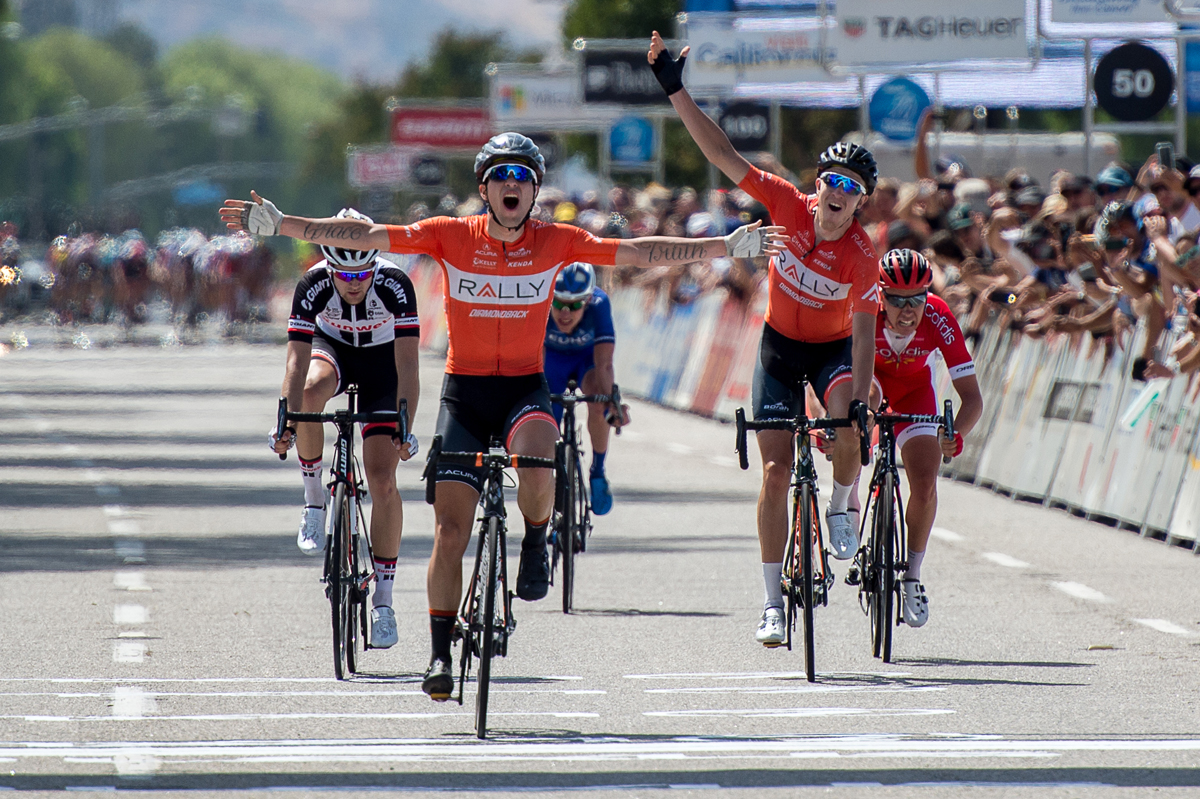
Evan Huffman (Rally Cycling) takes the win as his teammate Rob Brittton cheers him on while Britton himself takes 2nd place. Men’s Stage 4, 2017 Amgen Tour of California. Photo by Dave Richards, daverphoto.com
Stage 4 featured a beautiful seaside start in Santa Barbara finishing 99 miles later next to Six Flags Resort in Santa Clarita. Evan Huffman of the US based Continental team Rally Cycling held out with a long breakaway effort to beat the big teams for the win. It’s pretty rare to see a small breakaway ride out front all alone for so long and not be caught by the peloton, swallowed and spit out the back. Especially when you’re a rider on a Continental team. Doubly exciting was that Evan’s teammate Rob Britton took 2nd place that day.
Stage 5 was the 78 mile long Queen Stage starting in Ontario. It included the hair-raising descent down the Glendorra Ridge road looping back to finish at the top of the steep Mt. Baldy climb. Andrew Talansky ended a long drought for Cannondale-Drapac Pro Cycling by winning this stage.
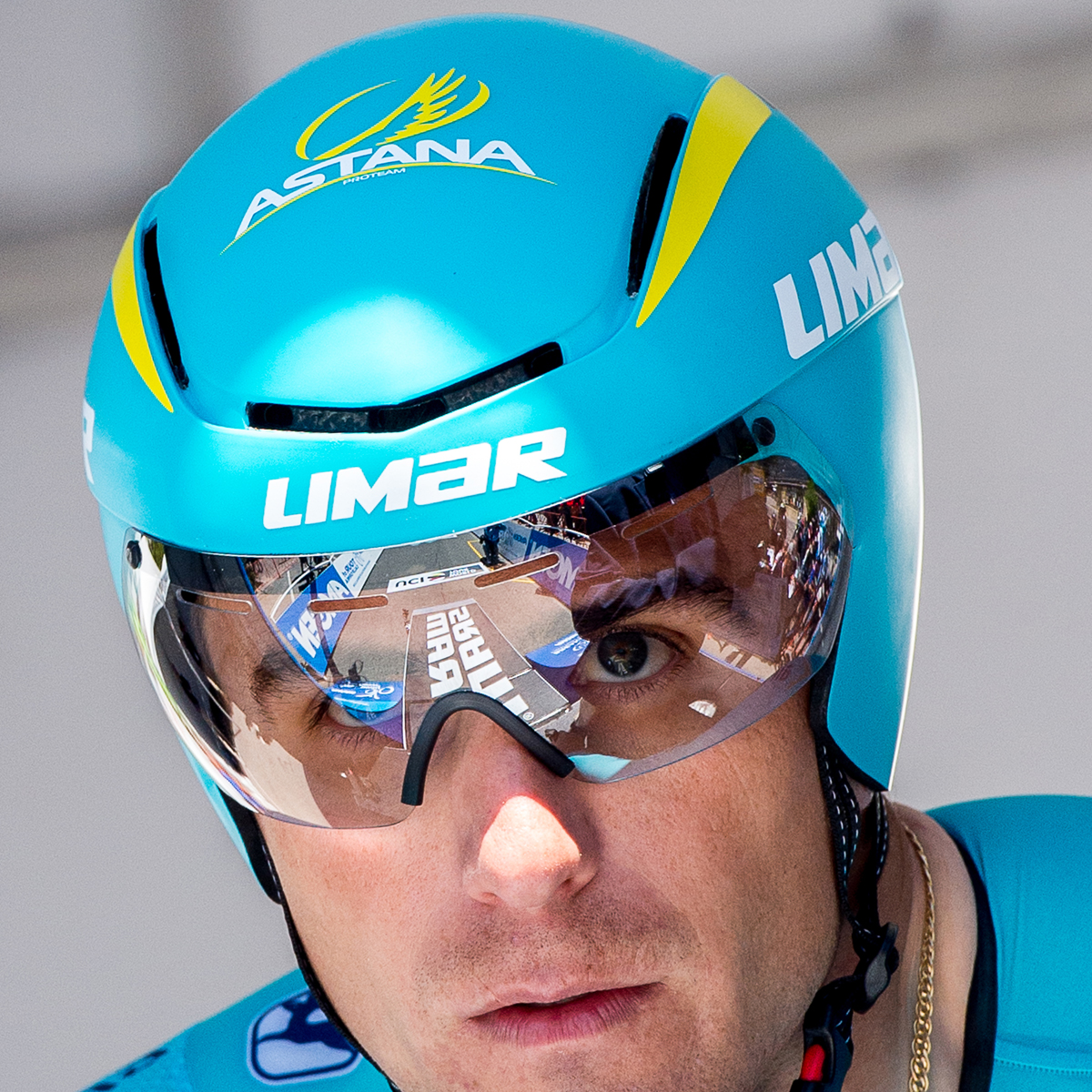
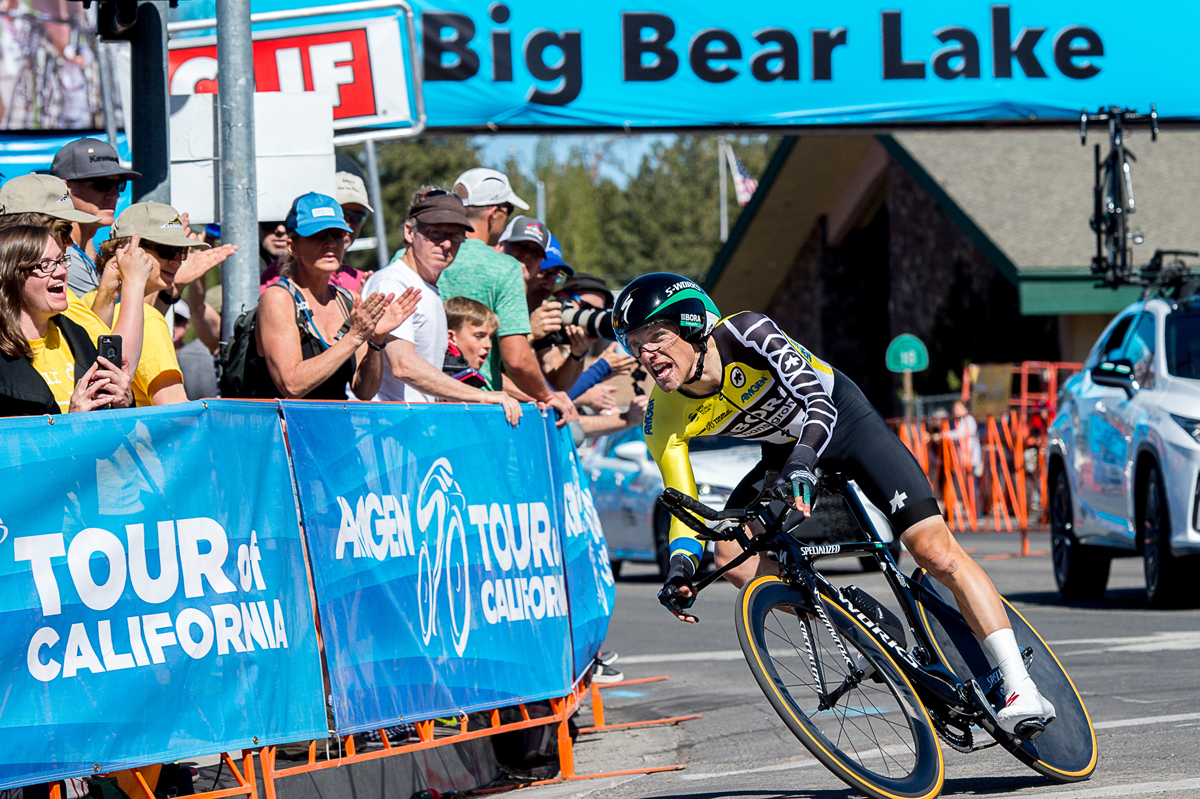
Focused. Individual Time Trial, Men’s Stage 6, 2017 Amgen Tour of California. Photo by Dave Richards, daverphoto.comRafal Majka (Bora-Hansgrohe) nails the final turn to finish the Individual Time Trial, Men’s Stage 6, 2017 Amgen Tour of California. Photo by Dave Richards, daverphoto.com
We moved to Big Bear Lake on Stage 6 for an out and back 15 mile individual time trial around the lake with a unique finish on the pier overlooking beautiful Big Bear Lake. Jonathan Dibben (Team Sky) took the stage win, but George Bennett (Team Lotto NL-Jumbo) took over the yellow jersey from Rafal Majka (Bora-Hansgrohe).
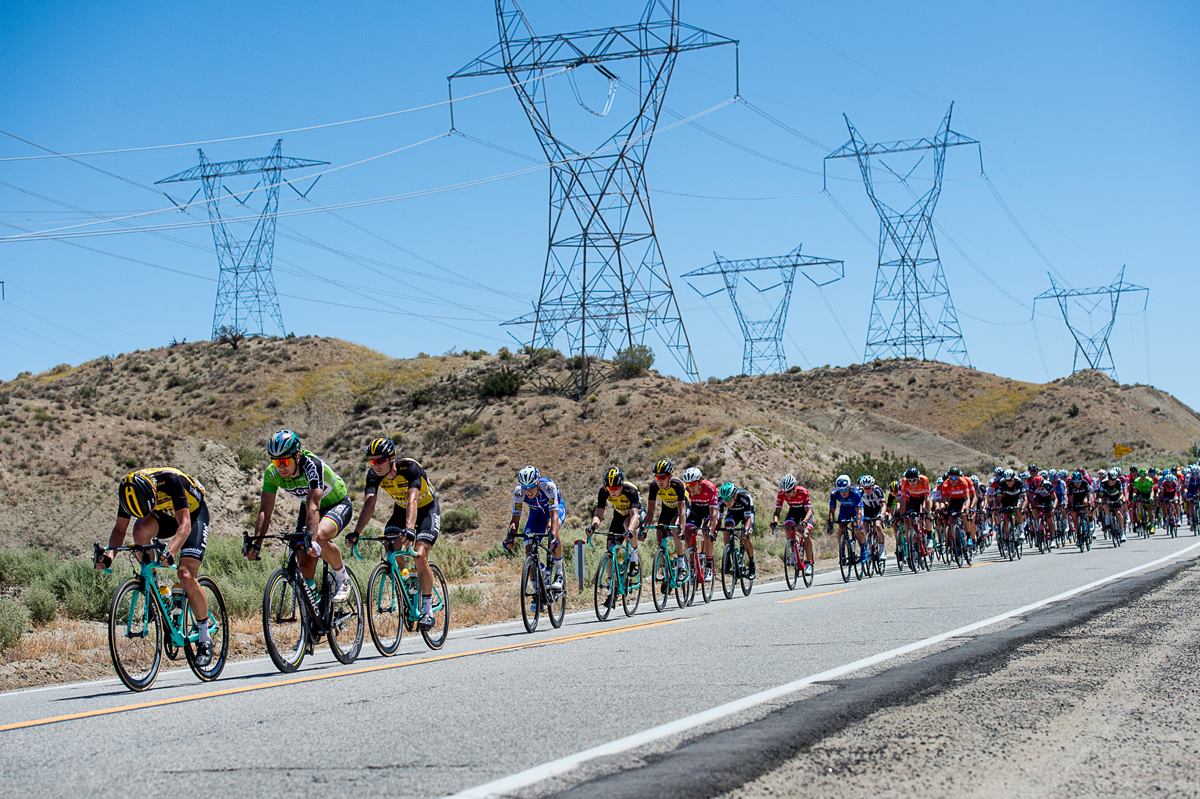
Robot towers overlook the peloton on Mt. Emma Road. Men’s Stage 7, 2017 Amgen Tour of California. Photo by Dave Richards, daverphoto.com
Stage 7 closed out the race with a mostly downhill rip starting at Mountain High Ski Resort and finishing 78 miles later in beautiful, historic downtown Pasadena. Once again, Evan Huffman of the Continental team Rally Cycling rode in a long breakaway with several other riders outsprinting them to win the stage. George Bennett (Team Lotto NL-Jumbo) held on to the yellow jersey to win the overall race.
This really did turn into a David vs. Goliath story. Two stages out of the seven were won by Huffman. Amazingly, a smaller lower level Continental team managed to upstage the top World Tour teams twice in one race. Impressive.
The Cache Valley Century takes place this year on August 27, 2022. The ride is in its 23rd year. Currently it’s put on by Common Ground, a Logan, Utah non-profit that works with individuals with disabilities.
Sammie Macfarlane, executive director, filled us in on the details.
Photo courtesy Cache Valley Century
Cycling West: Tell us about the course. What are the highlights? What do you have at the rest stops?
Common Ground: The course includes100 miles of fantastic scenery on low traffic country roads with minimal elevation changes. Scheduled two weeks before LoToJa, the CVCR is the last 100 mile training ride before the big event. With ~600 riders, 67% travel from our of the community, many from out of state for this fantastic ride.
There are rest stops every 20 miles on the 60 and 100 mile routes. The 60 miles route has 4 stops and the 100 mile route has 5. The short route has two rest stops, one at 10 miles and the second one 14 miles further at 24 miles. All rest stops are well stocked with water, sports drink, fruit, and other snacks. Most stops have a bike mechanic available to help with small repairs. You will need the wristband from your packet to get things from the rest stops. A fantastic hot lunch is served by Café Sabor with the option to eat mid ride in Mendon (100 mile route) or after the ride in Richmond.
CW: What is the history of the event? When did it start? When did Common Ground take over the ride?
CG: The CVCR began in 1999. The ride has the premier course in Cache Valley! Started by the Cache Valley Veloists Club the event has always been a fundraiser for adaptive cycling. While the Cache Valley Veloists continue to mark the course each year CGOA has been coordinating the ride for the past 10 years,
CW: The ride raises funds for Common Ground. Tell us about Common Ground. How do you use those funds?
CG: Common Ground Outdoor Adventures is a local non-profit organization that provides year-round outdoor recreational for youths and adults with disabilities. All proceeds from the ride fund the organizations adaptive cycling program. Adaptive cycling equipment is very expensive and most individuals are unable to purchase and maintain their own bikes.
CW: What are some of the programs that Common Ground has for adaptive cyclists?
CG: Common Ground provides fun cycling clinics for local schools and agencies that work with individuals with disabilities. We work with participants one-on-one to reach their cycling and fitness goals and provide group ride of various distance and ability.
CW: For riders traveling to the event, where can they stay? Is there camping nearby? What about family activities for after the ride or the next day?
CG: Cache Valley has many great hotels and rental opportunities. There is also camping nearby on the national forest. Family members are welcome to purchase lunch and enjoy the live music and are encouraged to spend the weekend enjoying the many wonderful restaurants and access to parks and local trails. Folks can learn more about what is going on that weekend at www.explorelogan.com.
CW: What can you tell us about the natural history of the area? What are some of the sights that riders will see along the way?
CG: Cache Valley is truly a hidden treasure and the scenic vistas and low traffic roads along the route are one of the main attractions for the CVCR.
CW: What’s new this year?
CG: There will be finisher medals for all riders registering before August 20th.
Event Information:
August 27, 2022 — Cache Valley Century Tour, Richmond, UT, 35, 60, or 100 mile options. Proceeds benefit Common Ground, a Logan, Utah non-profit. Funds support their adaptive cycling program. Richmond to Preston, Idaho and back through scenic terrain. Great last century before LoToJa!, Bob Jardine, 435-713-0288, 435-757-2889, [email protected], Sammie Macfarlane, 435-713-0288, [email protected], CJ Sherlock, 435-713-0288, 435-757-2889, [email protected], CacheValleyCentury.com
Salt Lake City seeks public input on 2100 South travel needs
SALT LAKE CITY, Utah (July 13, 2022) — A key section of 2100 South in Sugar House will be reconstructed in 2024 and Salt Lake City is seeking public feedback to make sure it best serves all residents going forward.
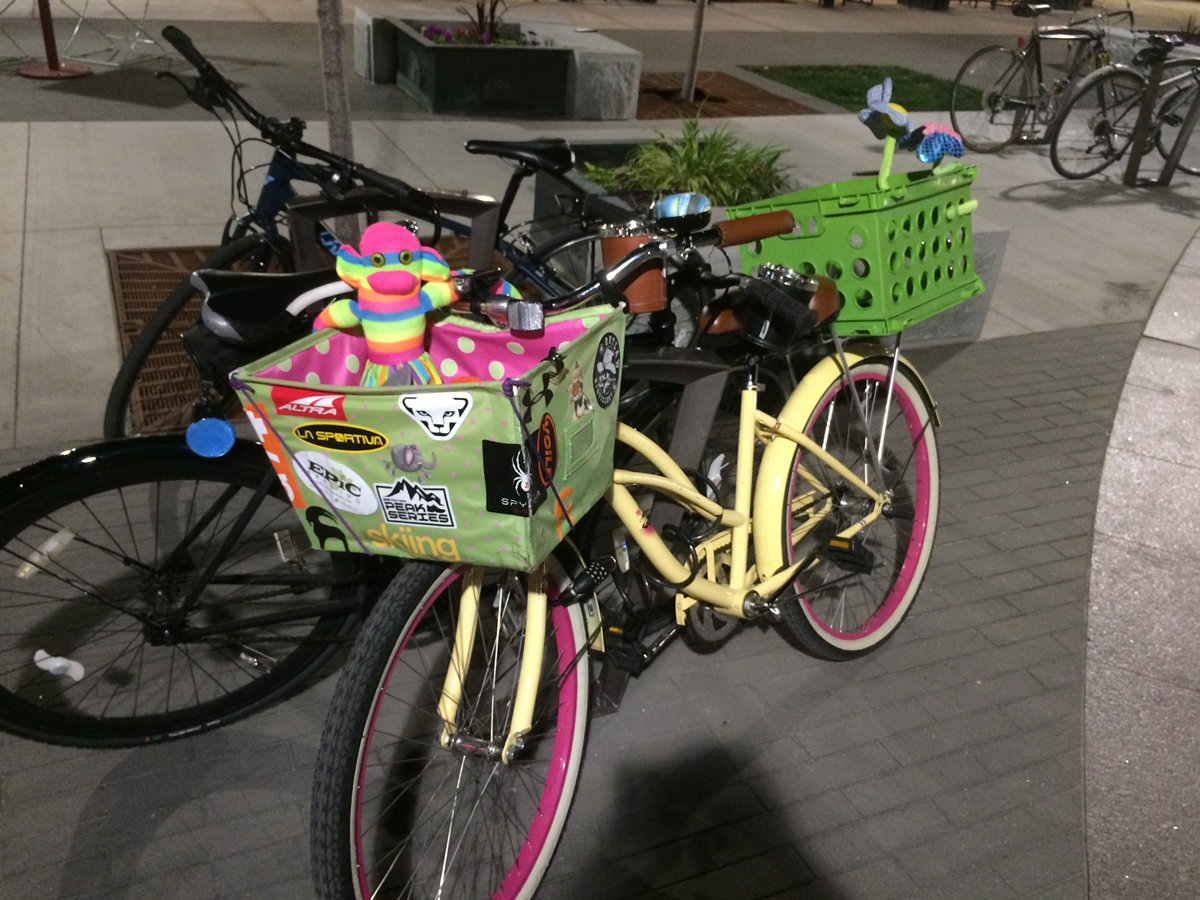
Lots of people ride to Sugarhouse, despite the unsafe roadways. These bikes are parked on the Sugarhouse Plaza at 2100 S. and Highland Drive, Salt Lake City. Photo by Dave Iltis
Tens of thousands of travelers take the key travel and transit route between 700 East and 1300 East each day. The public is invited to take a survey about how they use 2100 South and concerns they have about the road today, and their ideas for improvement. The survey is open through July 31.
“We have a lot of different types of road users traveling to and through the Sugar House area. We must think about the best use of space for the kind of travel options people want,” said Lynn Jacobs, Transportation Engineer. “We want to understand how the public is traveling and what other improvements might help us keep this road moving for cars while potentially adding more space for pedestrians, bike lanes, on-street parking, or other features.”
Salt Lake City’s Transportation Planning team has begun concept development for the project and is examining existing conditions, crash and safety data, traffic counts, and plans for future development. The City team is meeting with area businesses, the Sugar House Community Council, Chamber of Commerce, residents, property owners and pedestrians to understand first-hand issues and concerns.
The six-block stretch was identified as a major priority for reconstruction through a citywide study of every City-owned street in 2017. The reconstruction will be funded as part of the Funding Our Future Bond, which was approved by voters in 2018.
The results of the survey and other public input will help inform the City’s team as they work to develop a final concept with a goal of construction beginning in 2024. More information about the project is available at www.2100SouthSLC.org.
Our Analysis:
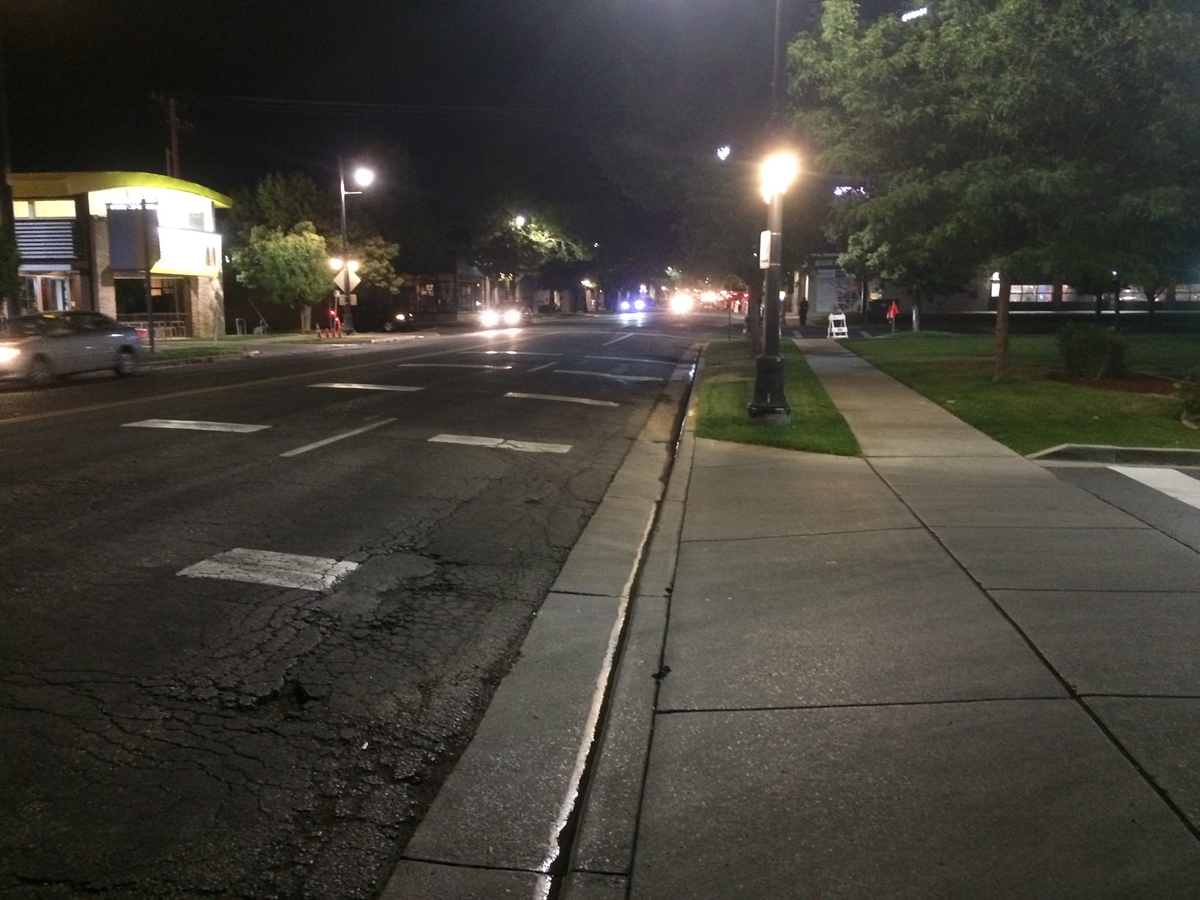
2100 S is one of the worst streets in Salt Lake City for bicyclists and it’s not much fun for pedestrians either. With the reconstruction slated to happen in 2024, there is hope that better biking awaits. Two of the three street design options include bike lanes.
Importantly, since the street is being reconstructed, it must have bikeways added by law per the Complete Streets Ordinance. The question is, what kind of bikeways? That Salt Lake City is including a status quo option in their survey, with no bike lanes continues to perpetuate Salt Lake City Transportation’s misunderstanding of the word ‘shall’ in the ordinance. This will no doubt lead to more problems down the road as some will think that not including bike lanes is an option.
2100 S. has no bike lanes and poor pedestrian safety accomodations, Salt Lake City. Photo by Dave Iltis
However, Salt Lake City truly misses the boat by not including protected curbside bike lanes as an option. This should be the default option as cities like New York, Ogden, and Berkeley, California move forward with progressive bike infrastructure. Salt Lake City has not had a new true protected bike lane built in over a decade.
Additionally, there is no option for a road diet (4 lanes to 3 conversion, including a center turn lane) plus protected bike lanes, and the removal of parking. This would be a reasonable approach to the street as well.
We took the survey, and our choice for the worst part of 2100 S is the intersection at Highland Drive. This is a terrifying place to ride and to walk, with cars traveling downhill at a high rate of speed, and cars that turn right without stopping even when the crosswalk light is on.
Salt Lake City has made some improvements on Highland, but south of this intersection, and getting to the S-Line trail on 1100 E/Highland is not safe.
What we’d like to see:
We would like to see protected curbside bike lanes from 700 E to 1300 E (the study area) with a lane of traffic removed and parking retained streetside of the bike lane. Our second choice would be the curbside protected bike lane and 2 lanes of traffic. Additionally, substantially improved pedestrian crossings are needed throughout (but not with bike unfriendly bulbouts). We relay that a friend of ours was hit in a crosswalk at 800 E and 2100 S, suffering severe injuries. Isn’t it time for road design in Salt Lake City to put people first?
For those who might argue that the S-Line trail is close by, so we don’t need to do anything on 2100 S except cater to cars, we counter with the idea that cars have I-80, 1700 S, and a plethora of other ways to travel east west.
Protected bike lanes would help businesses on 2100 S too. A Salt Lake City study showed that sales revenues increased on 300 S by 8.79% following the installation of the protected bike lane. Currently, that entire stretch of roadway is not friendly to retail, save for the Sugarhouse Plaza.
We’d also like to see Salt Lake City reverse its unsafe and regressive decision on 2100 S from 1700 E to 2300 E. Under Mayor Biskupski, Salt Lake City Transportation was set to create a road diet on this stretch until Councilperson Luke and other neighborhood activists fought against this claiming that it would send more traffic to the the neighborhoods. Mayor Biskupski overruled the road diet in a violation of the Complete Streets Ordinance. Shortly after that section of road was repaved, a teen was hit and had both legs broken. In 2020, there was a pedestrian fatality on this stretch, with neighbors putting out protest signs. Jon Larsen, SLC Transportation Director, stated to KUTV that there are no plans to improve this section of roadway, “Larsen says discussions about 2100 South as a whole have been happening since at least 2017. He says a more drastic measures that could help would be changing the traffic to one lane each direction, plus a turn lane. But there aren’t any plans for that at this time.” This is really unacceptable that there’s no corridor study or plans to make the entire stretch of 2100 S safer.
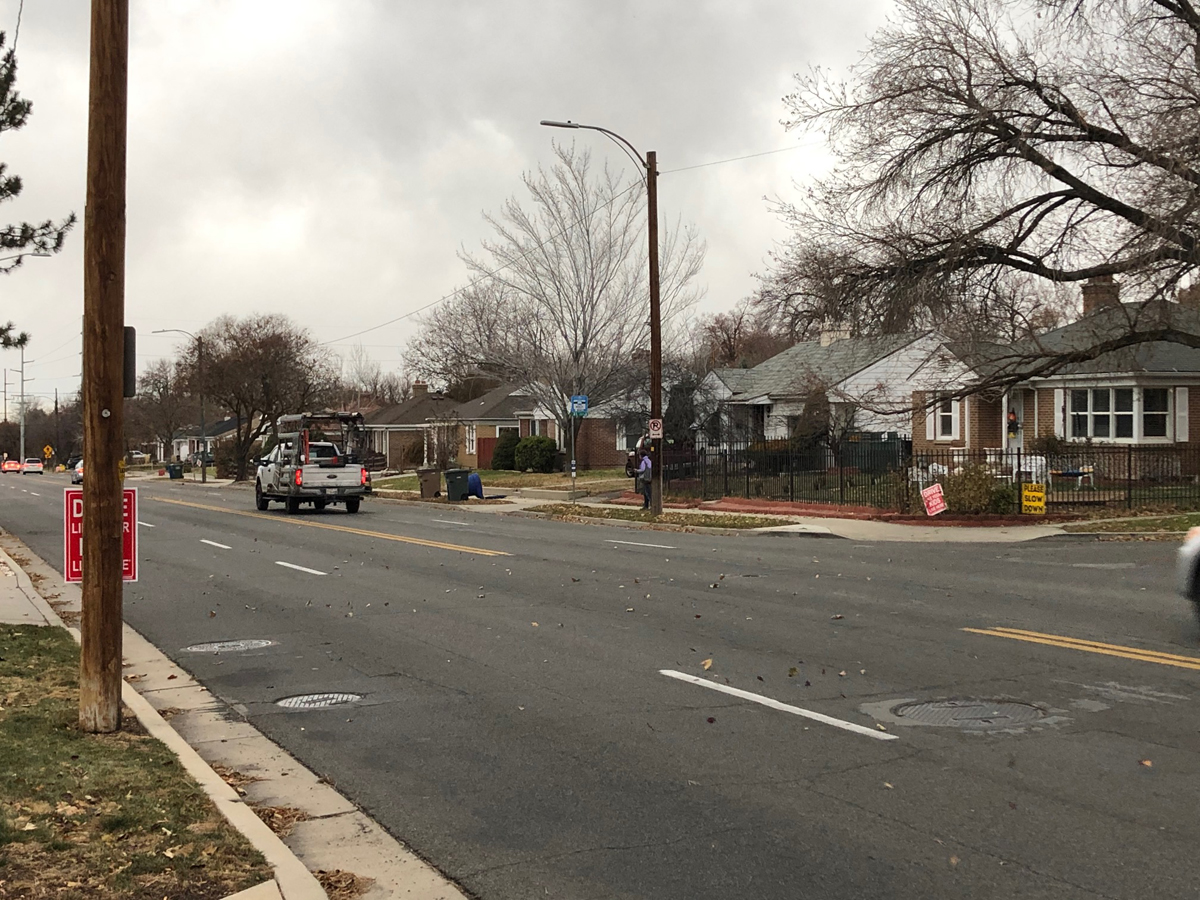
A pedestrian fatality occured near here, 2000 E and 2100 S in 2020. Additionally, a teen was hit here and had both legs broken in 2017. Photo by Dave Iltis
In our analysis in 2017, we stated, “2100 S should eventually be redesigned from Foothill to 300 West (and beyond) and this should include bike lanes. Bike lanes in this region between 1700 E and 2300 E are a key beginning of a more friendly Sugarhouse.” Mayor Biskupski also called for this, yet 5 years later, there is no comprehensive corridor plan.
This project should be part of a greater vision for 2100 S that includes immediately reversing the dangerous design choice from 1700 E to 2300 E, and then adding a road diet from 1300 E to 1700 E, as well as the redesign from 700 E to 1300 E.
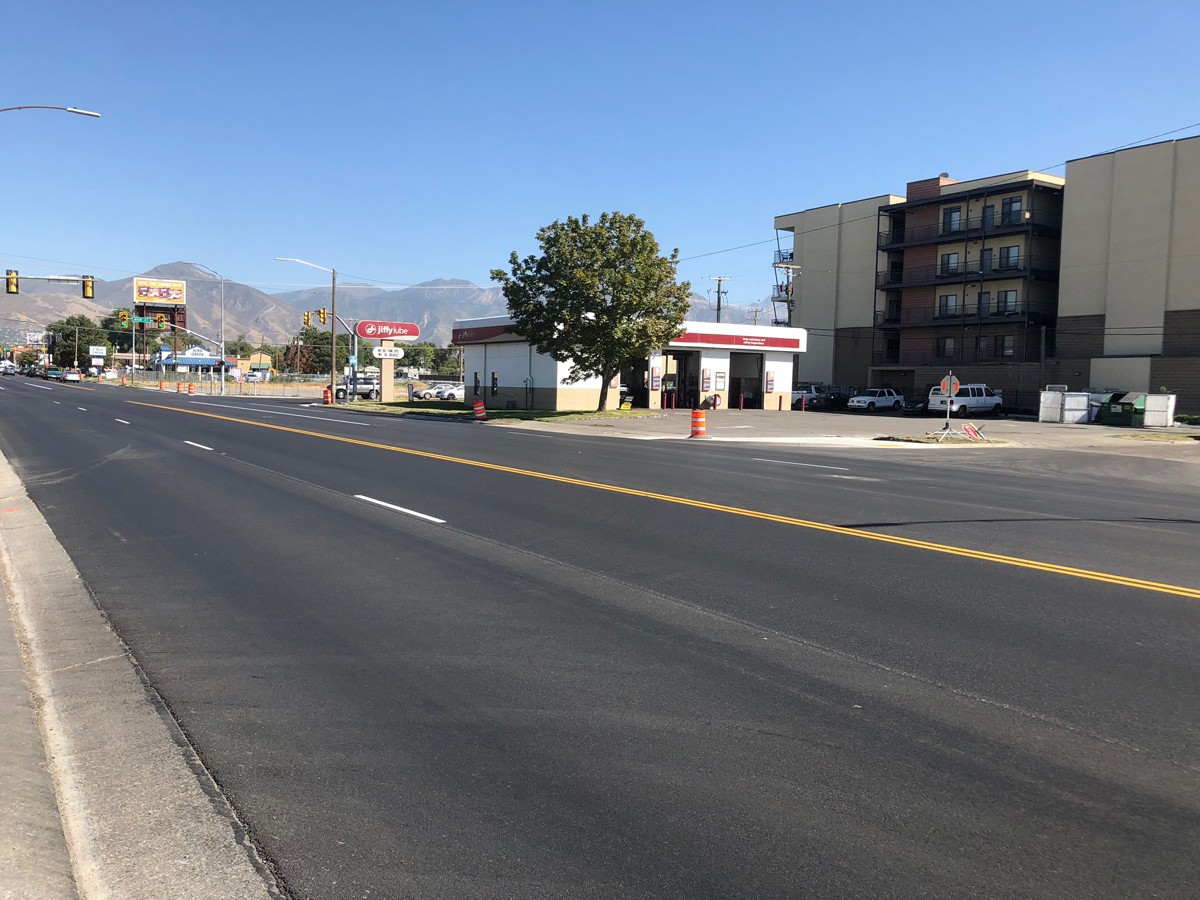
In 2018, UDOT repaved their section of 2100 S from roughly W. Temple to I 15. They neglected to include any pedestrian or bicycle safety improvements. It’s unknown if there was any communication between Salt Lake City and UDOT, however this was still under the Biskupski administration and indicates that there was no corridor plan in place.
UDOT repaved this section of roadway around 300 W in 2018, but included no bike and pedestrian safety improvements. 2100 S., Salt Lake City. Photo by Dave Iltis
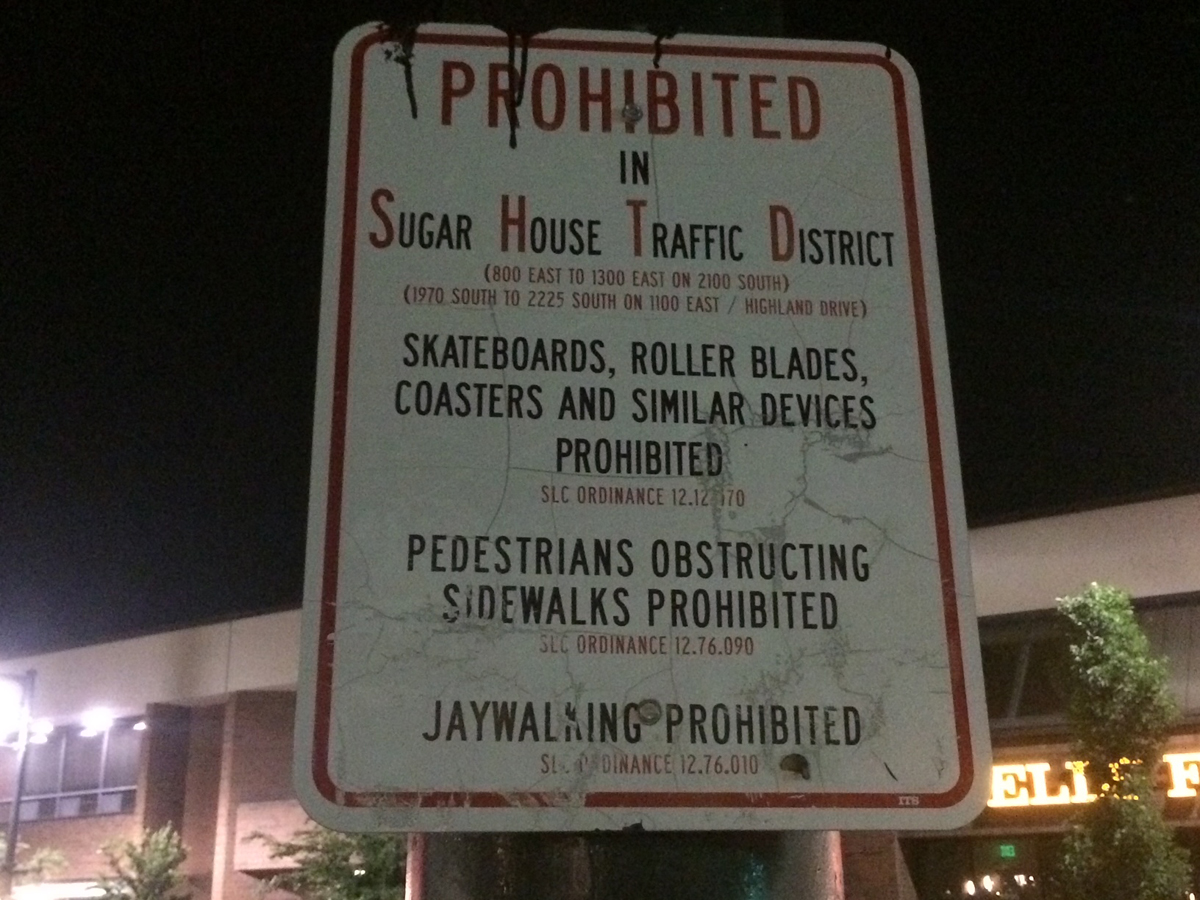
Lastly, Salt Lake City needs to remove the ban on skateboarders and roller bladers in Sugarhouse.
As part of the redo of 2100 S., alternate modes of transportation need to be allowed on the sidewalk, Salt Lake City. Photo by Dave Iltis
DENVER, Colorado (June 28, 2022) — Lost Paddle Events announced the launch of (e)revolution to be held at the Colorado Convention Center in Denver, Colorado June 8-11, 2023. (e)revolution is the world’s first national electric-bike trade show focused solely on the needs of e-bike brands, dealers, suppliers and most importantly, consumers.
In welcoming (e)revolution, Governor Jared Polis said “Colorado is a national leader on ebikes, and we are excited to welcome entrepreneurs and innovators to Colorado as we continue our work saving people money on this fun, healthy, and efficient way to get around our beautiful state.”
“With sales expected to double in the next five years, e-bikes are one of the fastest growing outdoor recreation markets.” said Lance Camisasca, (e)revolution Show Director. “(e)revolution addresses the need for innovative e-bike brands and suppliers to take advantage of this future growth by providing a venue where they can engage directly with both retailers and consumers in an industry-wide event.”
The Colorado Convention Center was chosen as the location for this event for multiple reasons including location, available accomodations and ease of travel. Additionally, “Denver is regarded as a top U.S. bike destination and boasts the nation’s best eBike rebate program,” said Camisasca, which was bolstered by the Colorado Energy Office’s recent announcement of state-wide funding for e-bikes to launch also in 2023.
“As one of the most bike-friendly cities in the country, Denver is the perfect location for (e)revolution.” said Richard W. Scharf, VISIT DENVER president and CEO. “With 850 miles of urban bike trails across our metro area, we think this aligns perfectly with our city’s outdoor, urban adventure brand.”
Because of its exclusive focus, (e)revolution stands above other shows in three distinct ways that benefit the overall e-bicycle industry.
B2B Show: offering retailers a central place to view all the fast-paced changes in products along with education, mechanic certification, technical training, and demos.
Consumer Show: offering a rare opportunity to engage directly with e-bike brands to view new products as well as participate in robust education for cyclists, interactive demos, and social events.
E-Bike Industry Networking: offering brands and suppliers with a national face-to-face event to gather and network with each other
Those interested in attending can visit www.e-revolution.bike to learn more and to sign up for future updates. Registration for exhibitors, retailers and media will commence in late August, 2022.
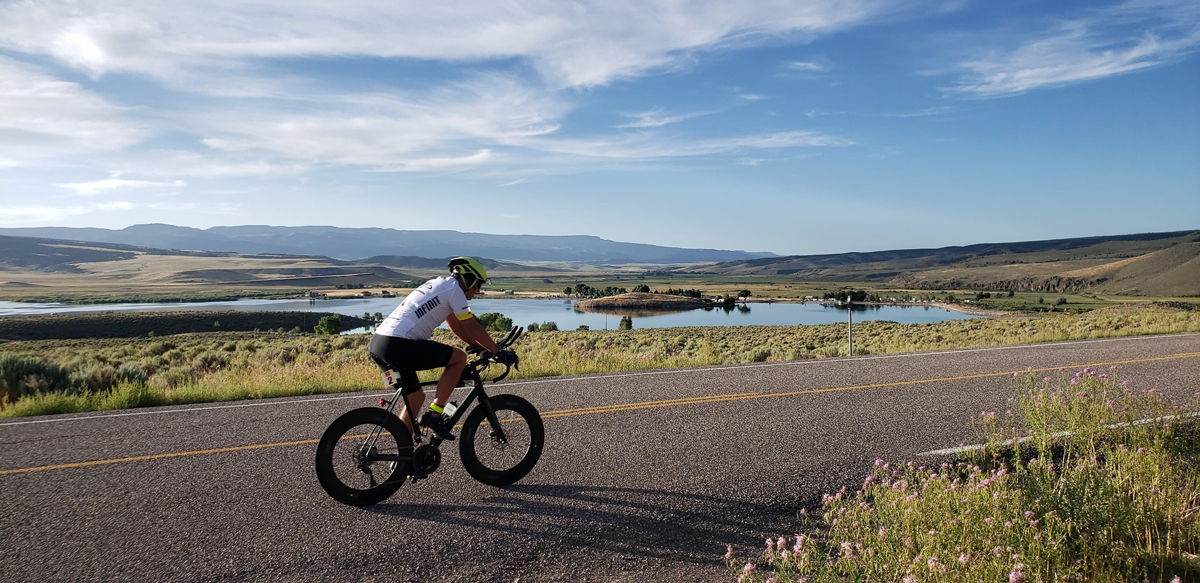
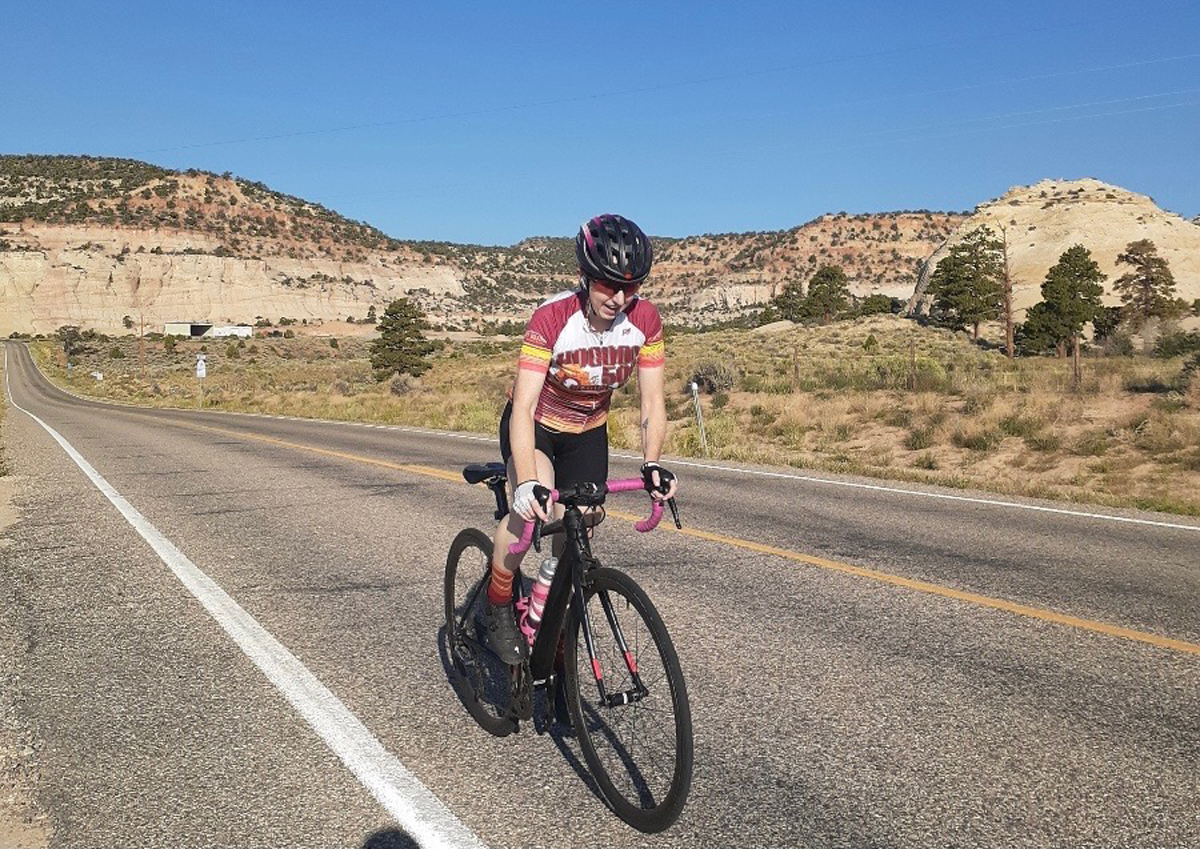
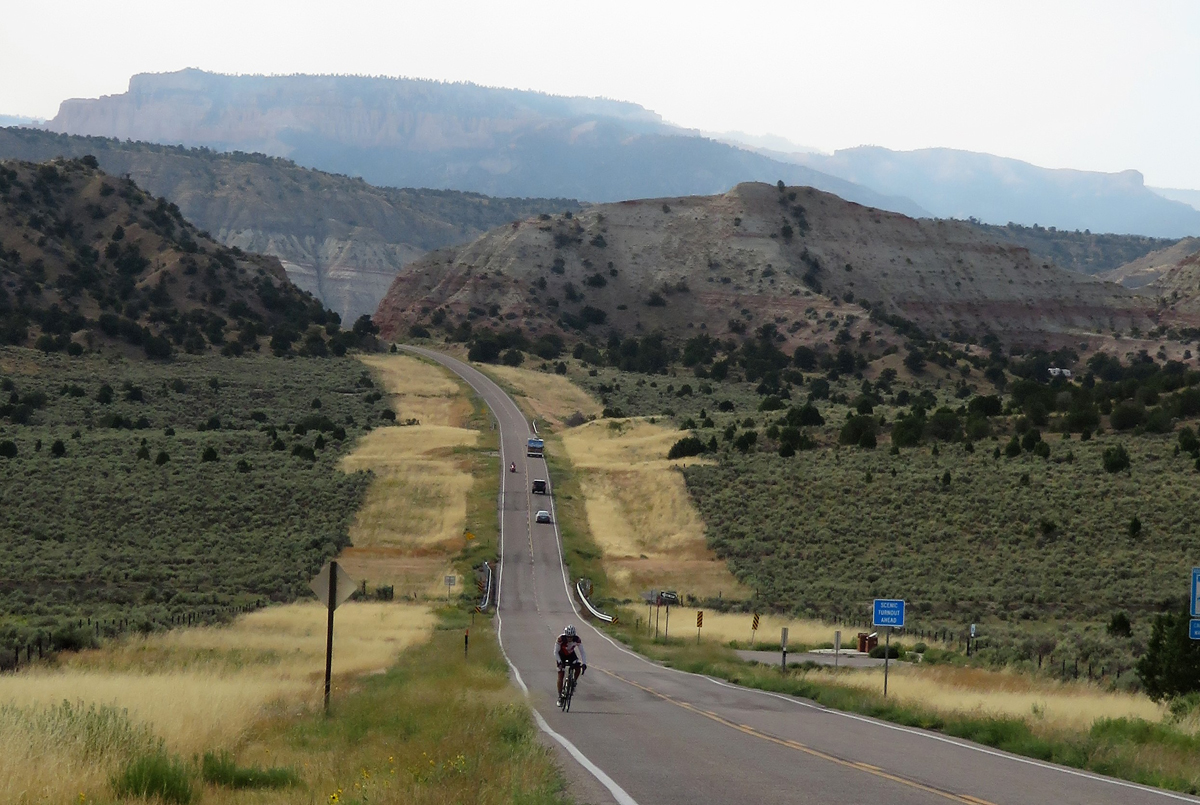
ST. GEORGE, Utah (July 9, 2022) — The 16th Anniversary Hoodoo 500 kicks off August 26th in St. George, UT. The 520-mile loop course is a beautiful and challenging endurance race in the Southwest; passing by Zion, Bryce, Grand-Staircase Escalante, Capitol Reef and Cedar Breaks. It’s also diverse; with divisions/categories for the most seasoned endurance racers and also the rookies.
The Hoodoo 500. Photo courtesy Planet Ultra
In addition to the 520-mile non-stop race, the Hoodoo 500 offers a 3-day stage race, and both non-stop and 2-day stage races for a 300-mile course. Once again, riders may opt for solo, tandem, 2-person relay or 4-person relay categories; and either bring crew or race self-supported. For 2022, the Hoodoo 500 is again the only Southwest qualifier for Race Across America.
2021 OVERALL RAAM winner, Leah Goldstein, from Canada, will be on the Hoodoo 500 solo starting line. Will she beat all the men? Last year, 2021 520 Stage Race winner Deanne Herr, from Indianola, Iowa, won all three stages and had a combined time that bested all the men by an hour.
Hoodoo 500, with its smaller field of participants has the feel of a family affair, with many riders returning year after year. Back in St. George, race weekend ends with a celebration breakfast and awards ceremony, which includes a raffle with great gifts. New for 2022, Hoodoo 500 is pleased to welcome Pedal Industries as product sponsor. Two lucky folks will win custom RaceDay Bags.
The tradition of the Hoodoo 500 was born in 2006 at a group dinner in Bryce National Park during the Planet Ultra “Tour of Southern Utah.” Several veterans and fans of endurance racing and RAAM were on that Tour; and couldn’t help but notice that the 7-day Tour route was the perfect 500-mile distance for a qualifying event. After seeing Bryce, and the amazing Hoodoos, an idea was born! The mission of Planet Ultra is to create and host quad-busting, epic challenges… and Hoodoo 500 fit right in!
Event info:
August 26-29, 2022 — Hoodoo 500, Planet Ultra Grand Slam Endurance Series, St. George, UT, 500 mile loop race through Southern Utah. Non-stop or stage race, solo and relay team divisions. 300 mile option as well., Deborah Bowling, 818-889-2453, [email protected], Hoodoo500.com
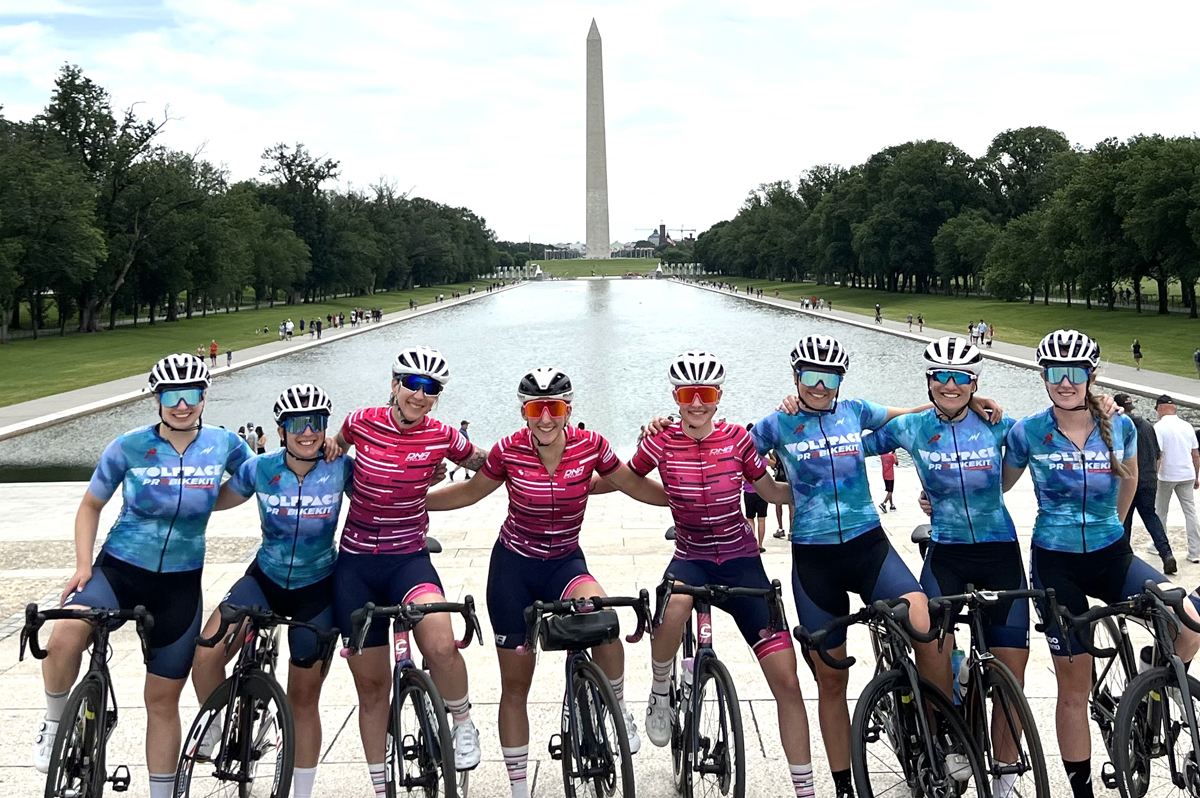
COLORADO SPRINGS, Colo. – USA Cycling is excited to announce the launch of Level Up Your Ride, an introduction to racing series. Level Up Your Ride offers nine different opportunities for women, trans, femme, and non-binary cyclists to learn all about bike racing. Following the American Criterium Cup series, this program kicked off in Rochester followed by Tulsa and Harlem. It will continue with six more stops taking place in Boise, Salt Lake City, Lake Bluff, Ill., Littleton, Colo., Indianapolis, and St. Louis. All clinics are taught by Kelly Barrientes, owner of Wolfpack Women’s Racing, and a selection of professional female cyclists who race for the team. Each 2-hour clinic follows a circuit-style methodology designed and tested by Barrientes and leads riders of all skill levels through cornering exercises, sprinting and gearing drills, and other practical riding and racing skills.
DNA Cycling and the Wolfpack team up for women’s clinics. Photo by Cathy Fegan-Kim
“This program is a huge milestone for USA Cycling. As an organization, our goal is to advocate for the growth and expansion of cycling. Offering athletes the tools and resources to start their cycling journey is only the beginning of our efforts to lower the barrier of entry for our sport. Our collaboration with Kelly and Wolfpack Women’s Racing has allowed us to connect some of the best racers in the country with local communities,” said Erika Lehman, Chief Marketing Officer at USA Cycling.
This program exists to offer cyclists from all over the country an in-depth look into the fundamentals of bike racing. Each clinic is free and comes with a one-day novice race license, allowing new racers the opportunity to try an entry-level race.
This program is designed to meet cyclists where they are in terms of their skill and comfort level. Heidi Woika, an avid cyclist who attended the Rochester clinic said, “I have never done a clinic or bike race before. Today was my first bike clinic and my first racing experience. It was amazing! I felt welcomed, and I learned a lot about racing and everything I can do with my bike.”
Woika started riding during the pandemic and has fallen in love with it. She’s one of over two hundred riders that have participated in a Level Up Your Ride clinic.
Wolfpack has been a vital part of this program. “For years I have been working to empower women of every level to ride their bikes with confidence in a non-intimidating, friendly, welcoming environment. My goal for 2022 was to expand the grassroots efforts of Wolfpack to include women’s skills and drills clinics at some of the biggest events all over the country. Growing the cycling community has to be a group effort and wouldn’t be possible had USA Cycling not stepped in and partnered with us to create these Level Up Your Ride clinics,” said Kelly Barrientes, owner of Wolfpack Racing.
Registration is currently open for the remaining six clinics. To learn more about each clinic and to sign up, click here.
On Saturday, July 16th, the Salt Lake Criterium returns to downtown Salt Lake City, Utah. Following an electric race in Boise, the top pro women’s and men’s cycling teams in the nation and the best local and national amateurs once again toe the line to see who’s the best and who leads the American Criterium Cup series.
Boise was not without some disappointments. After an abandonment due to a crash in Boise where Alfredo Rodriquez with Best Buddies Racing broke his collarbone and will not start Salt Lake. His continuation in the series is uncertain. Project Echelon Racing’s Brandon Feehery, who was also involved in the crash, will be the top points leader at the event, and finished well enough to retain his lead in the Sprint competition.
In the Women’s classification, Maggie Coles-Lyster of DNA Pro Cycling leads both General and Sprint competitions, and extends her lead, and Andrea Cyr of Butcherbox Cycling P/B LOOK used her third place in Boise to also cement her hold further on second place overall. While Maggie’s lead seems unsurmountable, as we saw with the Men’s race, anything can happen. Look for DNA Pro Cycling to light up their hometown race this weekend.
“Salt Lake City is excited to host stop 6 on the American Criterium Cup bringing the best racers from across the country to enjoy a weekend of racing in Utah.” – Eric Gardiner, LHM CC Salt Lake Criterium
The 2022 Salt Lake Criterium Livestream schedule for July 16th starts with the Preshow at 6:15 pm/MST, with the Professional Women’s coverage at 6:30 pm/MST, and the Men’s at 8:05 pm/MST. Brad Sohner and Daniel Holloway, holder of 21 National titles, will be commentating on both events.
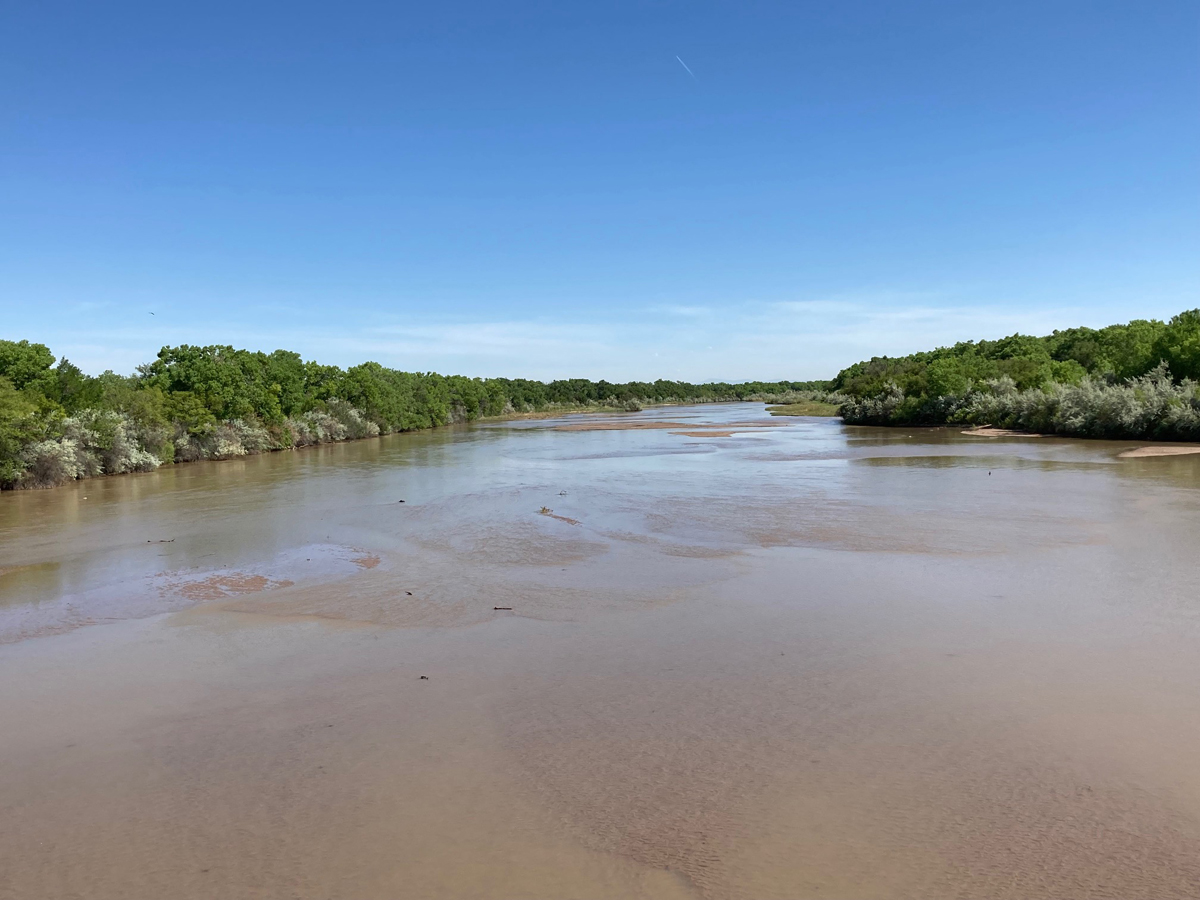
“Bosque is Spanish for forest and in the Southwest, the term refers to a riparian forest situated along a river.” — Pattiann Rogers, Home Ground: Language for an American Landscape, ed. Barry Lopez
“From the forbidding obscurities of the mountains the Rio Grande emerges again and again into pastoral valleys of bounty and grace. These are narrow, at the most only a few miles wide; and at the least, a bare few hundred yards. In such fertile passages all is green, and the shade of cottonwoods and willows is blue and cool, and there is reward for life in water and field. But always visible on either side are reaches of desert, and beyond stand mountains that limit the river’s world.” — Paul Horgan, Great River: The Rio Grande in North American History
By Don Scheese — When cyclists think of the term “gravel grinding,” what probably comes to mind is an unpaved road or singletrack in some remote national forest or rural landscape. But cities offer opportunities for gravel exploration too. In Albuquerque, a metro area of some one million people, it is possible to find solitude and quiet in the forested oasis of the bosque along the Rio Grande, which divides the city into east and west sectors.
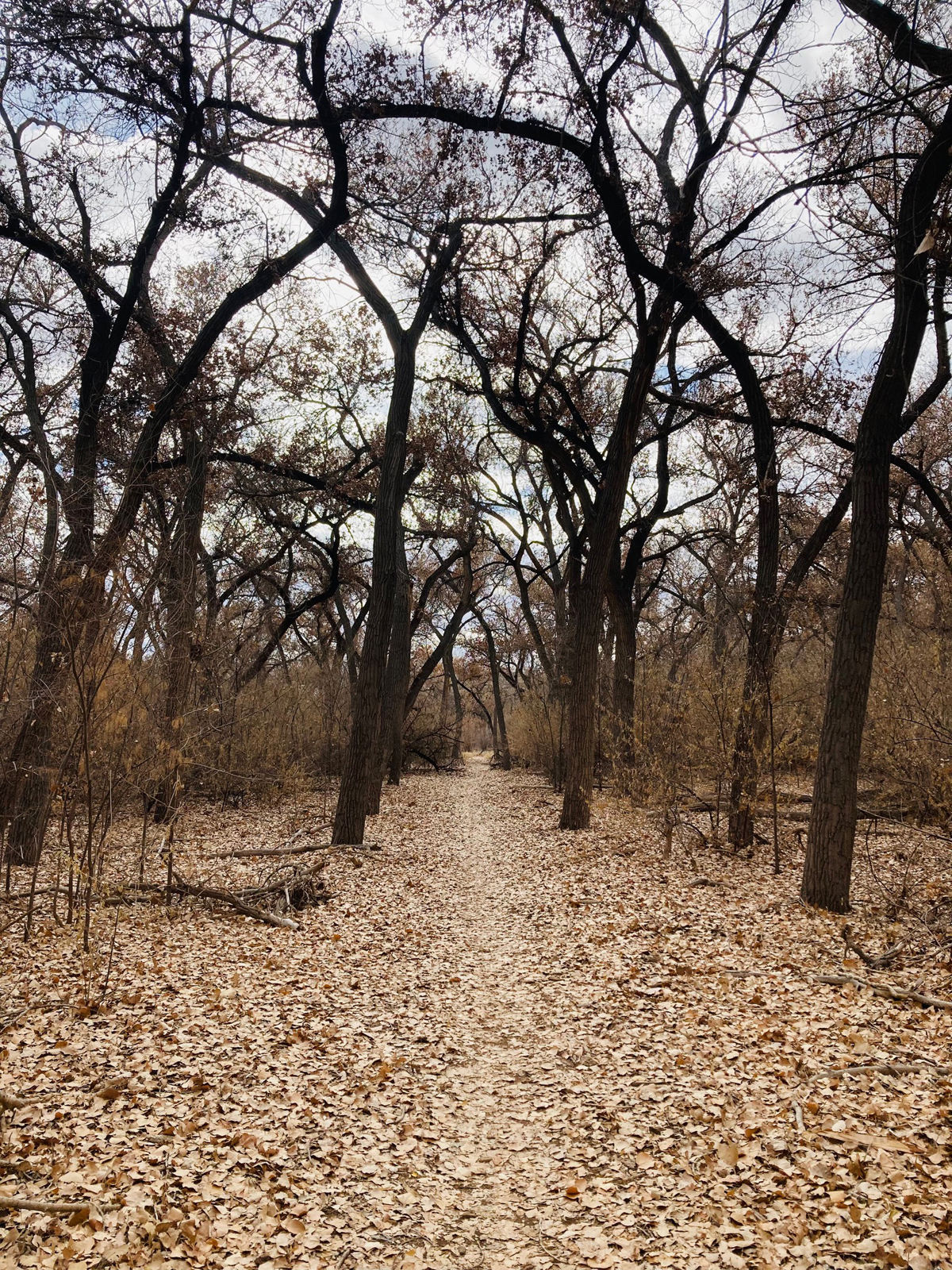
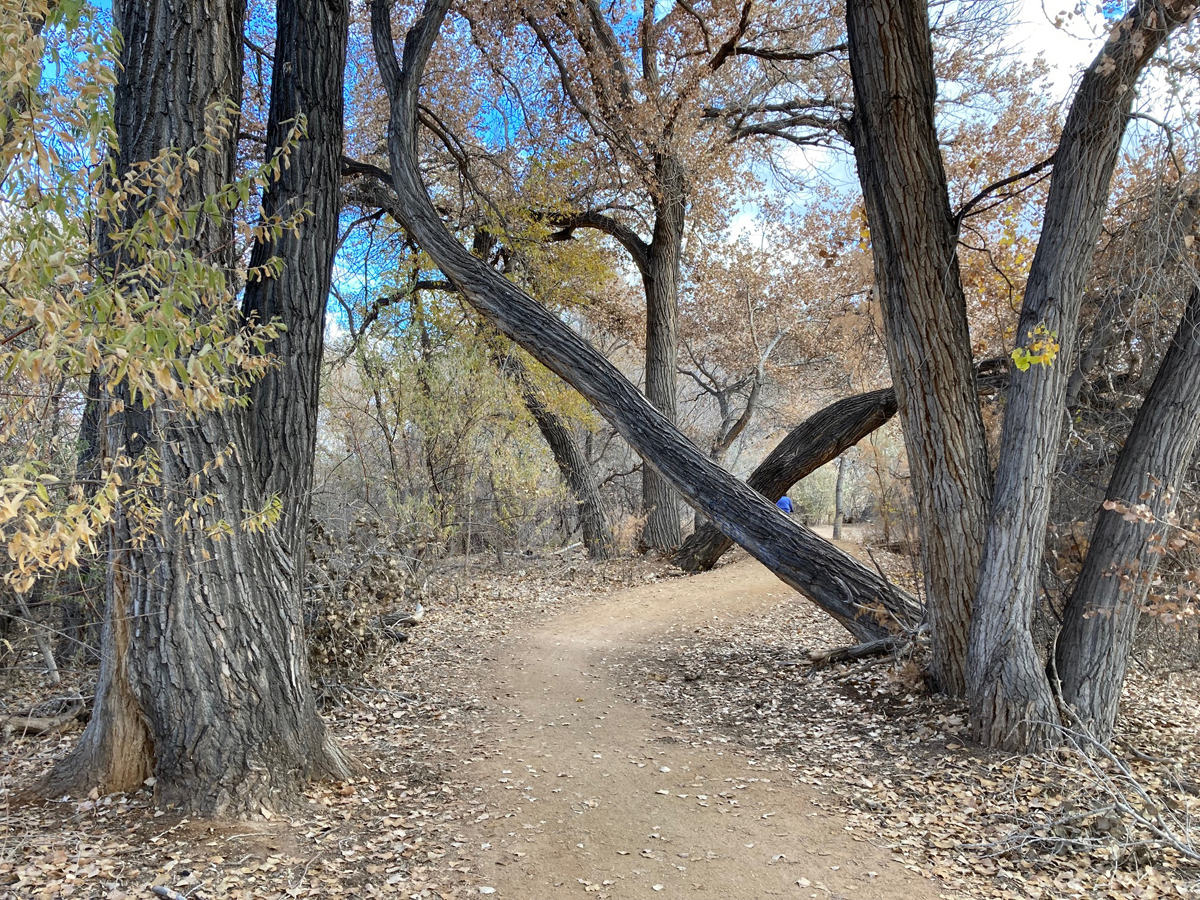
Gallery forest in winter. Biking the Bosque. Photo by Don Scheese
I’m told that this cottonwood forest is the largest of its kind in the world, with trees ranging from saplings to towering gnarly giants well past 100 years old. I bike the bosque in all seasons, at least once a week, and throughout the year the woods takes on different personalities, from jungle-like tangles in the height of summer to open gallery forest come winter.
There is a popular paved trail running north-south for fifteen miles on the east side (free of stop signs as it passes under seven bridges). But less well-known are the gravel and dirt trails closer to, and on both sides of, the river. The trails are twisty and, in a region where Big Climbs are the rule not the exception, mercifully flat. These paths less traveled by offer the unique opportunity, in a bioregion dominated by the brown Chihuahuan desert down low or by dark green coniferous forest at the higher elevations, of cycling for hours through a luminous green shelterbelt of deciduous trees in summer and a kaleidoscope of fall color come autumn. I discovered these trails by accident a few years ago, and they have become my preferred route when I venture to the Big City for a relatively mellow 20–40-mile ride.
I usually ride the trails on weekdays in the cooler hours of early morning in the summer, and the warmer hours of afternoon in other seasons. Occasionally, I meet a fellow recreationist—walker, runner, equestrian, or fellow cyclist—for the most part, the trails are deliciously free of people, especially on the southern sections on both sides of the Rio. In a maze of trails, I’ve managed to find, by trial and error, the best through routes, avoiding the dead ends and sandy stretches where my machine and I bog down, forcing me to hike-a-bike. Originally carved out and ridden by mountain bikers, these unpaved paths are now frequented by cyclists riding gravel bikes.
I begin the ride at the north end of the bosque path just off Alameda Boulevard, warming up the first mile or so on the paved trail. After passing under Paseo del Norte Boulevard, a busy east-west freeway, I angle off onto dirt fire roads. Here I have a choice: take the singletrack south on the east side of the river all the way to the southernmost bridge at Rio Bravo Boulevard or cross the Rio on the cyclist/pedestrian bridge on Paseo to the west side singletrack trails. Usually I stay to the east, preferring to do a clockwise loop by returning on the west side
Almost immediately, I plunge into a cool green oasis under the towering cottonwoods. But this section, with its understory of tumbleweeds and puncture vine (known locally as goatheads), is notorious for causing flats. One more reason to go tubeless, I think to myself, even though that’s no guarantee of avoiding a softening tire.
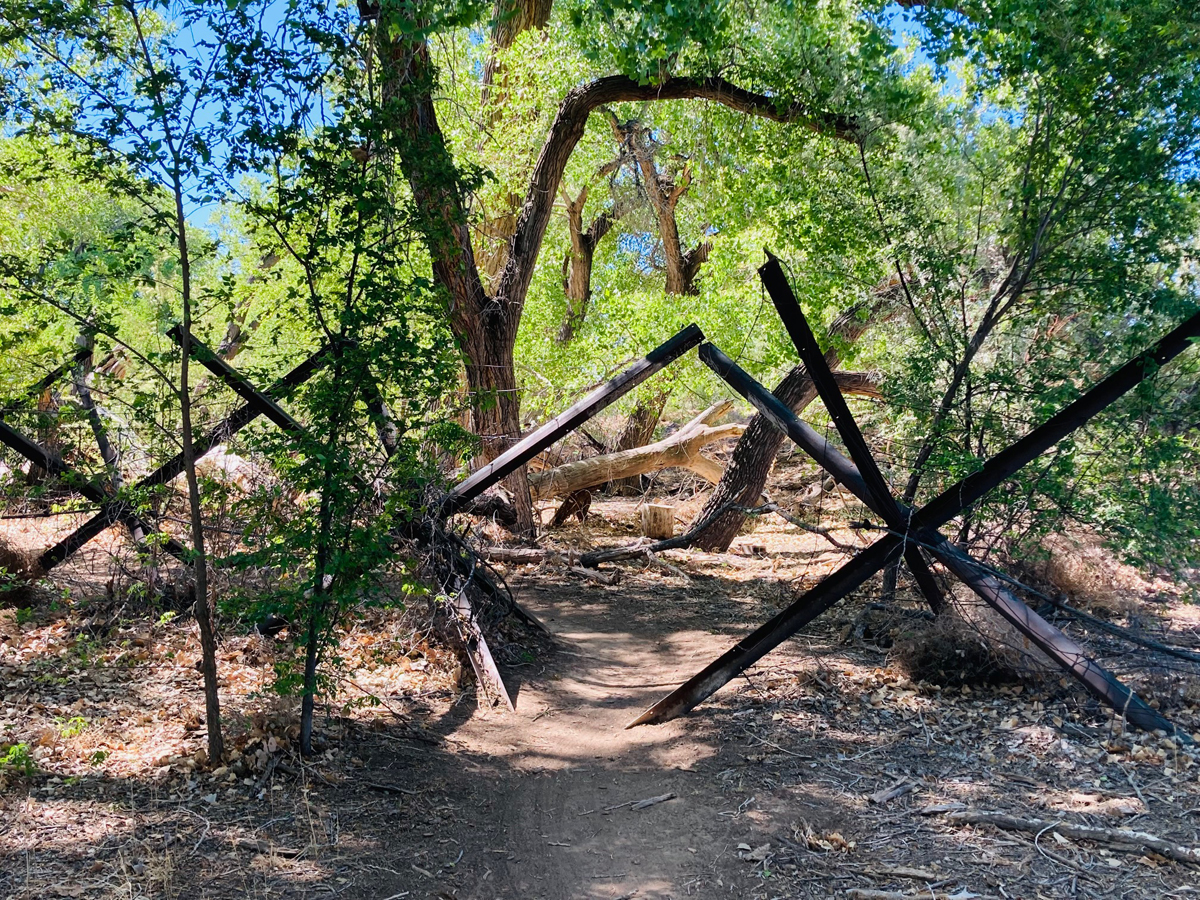
Metal barriers on the trail. Biking the Bosque. Photo by Don Scheese
It’s in this section that one encounters strange iron barriers, strung together with thick cable, which are a remnant from the pre-dam era of the Rio Grande. Before a series of dams were built upstream, spring floods were a regular occurrence, and I’ve been told these metal barriers (which look like anti-tank relics from WWII) functioned as debris-gathering devices which then served to hold more soil in place after the floodwaters receded. Nowadays, in the current 20-year Mega-Drought, with diminishing snowpack in the southern San Juan and Sangre de Christo ranges, the river seldom floods anymore.
It’s too nice a day to worry about Climate Change. So, for the next three miles I focus on the winding trail, through metal barriers and clumps of saltbush, before plunging into tamarisk thickets, an invasive species relentlessly trying to take over the bosque. Eventually the singletrack peters out and I have to emerge from the green canopy back onto the paved trail. I proceed for another mile or so until I pass under Montano Boulevard, the next east-west crossing in the city.
Here the off-pavement sector takes on a different character. For the next 6 miles, as it passes through part of Rio Grande Valley State Park, the trail consists of relatively smooth, hard-packed gravel. It’s wider too, and as my speed picks up I sometimes pass by walkers, runners, and fellow cyclists, who often access the trail from Rio Grande Nature Center—a gem of a resource in the heart of the bosque, with interpretive exhibits, friendly staff, and great big glass windows through which one can take in aquatic avian species as well as sunning turtles in the adjacent wetland.
There’s even a mile-long paved section here, called the Aldo Leopold trail, in honor of the patron saint of ecology who once lived in Albuquerque and the greater Southwest. Now come more walkers (often with dogs) and cyclists. Soon though I’m back on the “champagne gravel” (as we gravel grinders like to call such smooth hard-packed surfaces) on another winding section through a particularly fetching part of the bosque. The cottonwoods are of uniform medium age, there’s little understory, and the forest takes on a classic ‘gallery’ look.
Cross Timbers on the trail before they blew over in a windstorm. Biking the Bosque. Photo by Don Scheese
After passing under the next bridge—the humongous span of I-40—I soon thread the needle of what I like to call the “Cross Timbers,” where two massive cottonwoods spaced a short distance apart lean heavily over the trail along some sinuous curves. It’s not a spot where one wants to encounter an oncoming cyclist, but it’s fun to take the corners at high speed while ducking under the tree trunks. Fortunately, I’ve rarely met another rider here. (Alas, the Cross Timbers are no more, as a recent windstorm toppled one of the cottonwoods, and a trail crew bucked up the massive trunk.)
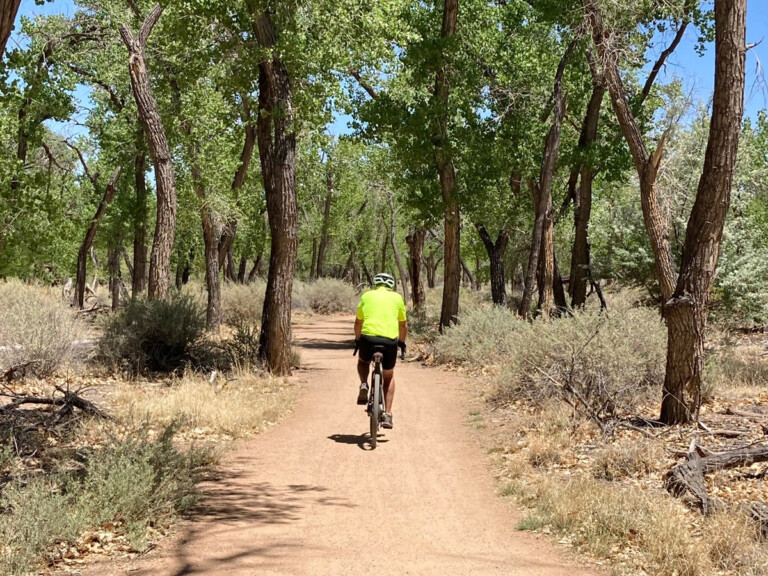
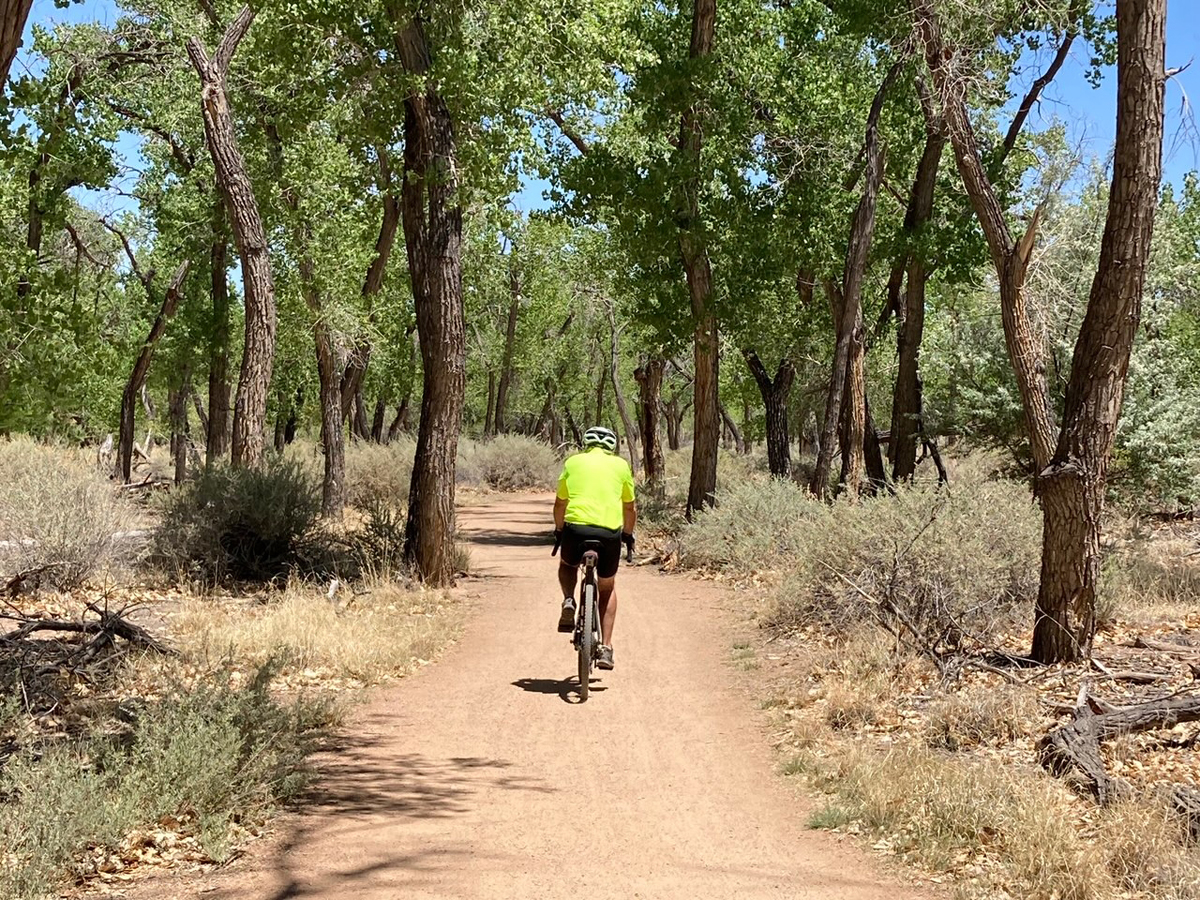
Riding thru gallery forest. Biking the Bosque. Photo by Don Scheese
After passing under the next bridge of Central Avenue (which divides the city north-south), the champagne gravel soon ends, replaced by more singletrack where roots of the dominant hardwood trees form the biggest obstacles (There are virtually no rocky sections in the bosque to traverse.) The alternative is to head closer to the river, but deep sandy stretches there prove to be un-negotiable for my 40mm tires. So, I bounce over the roots before soon coming to a wider gravel fire road. More gallery forest ensues, some of it unfortunately singed by recent wildfires started by homeless folk—a year-round danger in ABQ. Just the other day a woman with earlier arrests for pyromania, out on an outstanding warrant, ignited numerous fires again. Fortunately, the flames were quickly extinguished and the perpetrator re-arrested.
Another choice comes: continue straight on a narrowing singletrack, or turn right (west) for a slower, narrower, more challenging route through willow and tamarisk thickets very close to the Rio. I prefer this alternative because it is more solitary and fun to take on. Eventually the two routes merge once again just north of the next bridge, at (appropriately named) Bridge Boulevard.
If I had to identify one section as my favorite, this next one—from Bridge to Rio Bravo—is hands-down the one I most love to ride. Why? Because it’s wilder, more solitary, and offers the best chances of encountering wildlife of various kinds. Plus, it’s smooth singletrack all the way through diverse terrain: from mature cottonwood forest to scrubby brushland to jungle-like tangles of tall trees and low vegetation. The diversity of trees results in a diversity of fall color, from the golden leaves of the tamarisk and mesquite, to deep reds and oranges of vines and maples to, at last, the mellow yellow of the heart-shaped Rio Grande cottonwood leaves.
It’s along this section that I’ve encountered the most wildlife. Porcupines in the trees, coyotes loping through the understory, and come spring and fall thousands of migrating sandhill cranes, ducks, and geese. Oh, how I love to hear the trumpeting calls of cranes and the clangorous honks of geese! That alone makes excursions through the bosque worth the effort.
So thick is the foliage at times that the best birding is by ear. I hear the plaintive drawn-out trill of the spotted towhee, the joyous cackle of robins, the alarm cry of a flicker, the spirited ‘eh eh eh’ of a nuthatch. The sounds of the city seem far away, interrupted only now and then by a passing plane as it descends towards the airport.
Someday I will go on a nocturnal cruise to listen for the hooting of owls.
Before leaving Rio Grande Valley State Park at Rio Bravo Boulevard, I pass by a Descanso—a funeral shrine to a deceased loved one, with white cross and colorful artificial flowers, erected by the family. I do not know the details of the death, but it is a solemn reminder of city troubles and the World at Large.
Crossing Rio Bravo bridge, I pass by another morbid reminder: a ghost bike erected by a local cycling club to mark the spot where a passing motorist struck and killed a cyclist. As if I needed reminding, the traffic on this four-lane highway moves fast and impatiently, and even though I’m riding on a wide shoulder I’m relieved to leave it behind after crossing the Rio.
My route is half-over as I now turn north onto more singletrack on the west side. This part of the route is wilder, more unkempt, as it passes under mature, gnarly cottonwoods and through numerous metal barriers. There are fewer recreationists along this stretch, so the solitude is comforting, and magnificent views of the Sandias to the east emerge through gaps in the forest canopy.
There is a large homeless population in Albuquerque, and some of it spills into the bosque. On this stretch northward to Rio Bravo and Central Avenue I occasionally encounter homeless encampments, and I’ve run into police patrols whose job it is to break up the gatherings. Graffiti is thickly crowded onto the bridge abutments, more reminders that I’m traversing a natural corridor through an urban setting. Though I’ve seen some sketchy characters at times, no one has ever threatened me while riding through the bosque. I do carry pepper spray with me…just in case.
At Central I’m faced with another choice, since to my knowledge there is no direct west-side singletrack that will take me all the way back to and beyond I-40. So, I either have to cross on Central back to the east side and retrace my route or take the bike lane on Atrisco Boulevard which climbs some 300-foot to the I-40 bicycle/pedestrian bridge. I prefer this latter section, for both the climb and the views.
More evidence of homeless encampments at the I-40 bridge—abandoned shopping carts, blankets, trash, and other detritus of the transient and impoverished. “There but for the grace of God go I,” remarked a cycling partner one time as we passed by this scene. Perhaps…I muse over Fate versus Free Will, Choice versus Determinism. As usual, there are no easy answers to this vexing social problem.
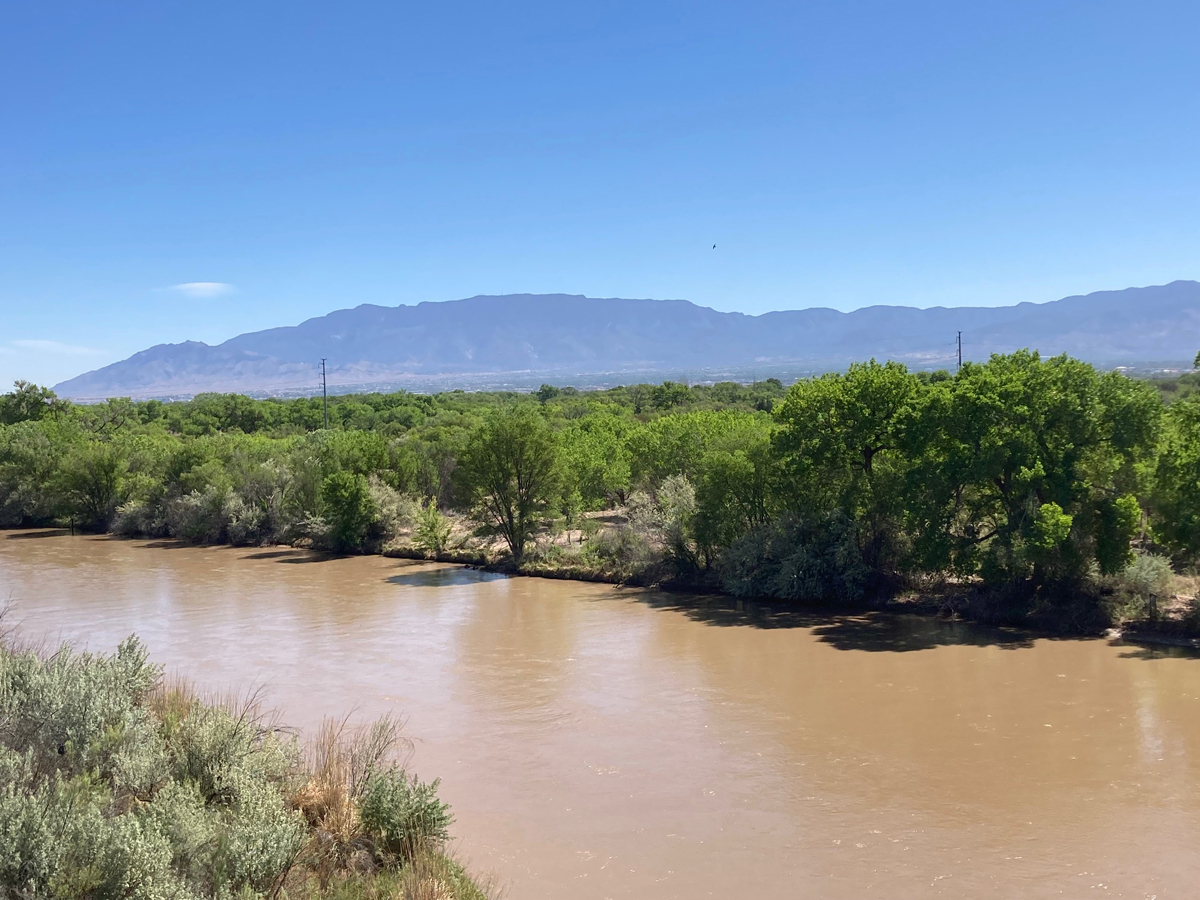
A view of the Rio Grande and the Sandia Mountains from the I-40 bridge. Biking the Bosque. Photo by Don Scheese
Then follows a great descent down the I-40 pedestrian/cyclist bridge, with sublime vistas of the river and mountains. Always I stop at an overlook to take in the views of the ever-changing bosque, the Rio, and the Sandias.
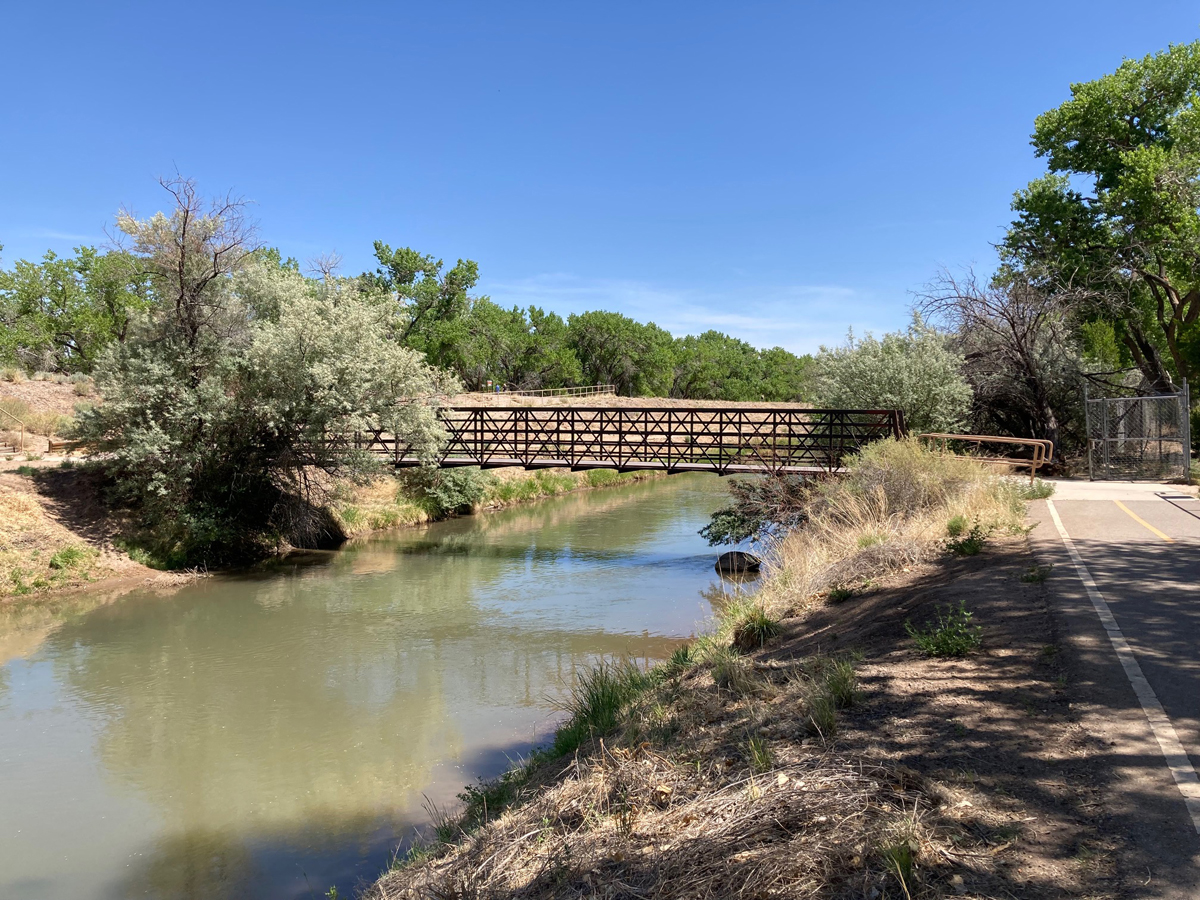
Now I’m retracing my route back on the east side on the champagne gravel again, until I reach Montano, where I regain the paved trail, along a gushing acequia—one of countless irrigation ditches that run from the river to plots of farmland in the heart of Albuquerque. This is part of what gives the city a lovely pastoral quality amidst its brown desert and towering green mountains. The acequia is actually a cultural practice the Spanish adopted from the Moors as early as the 9th century and brought to the Americas in the 1600s. Of course, irrigation was a tradition long practiced by the Puebloans who have lived in the Southwest for thousands of years; the Spanish then went on to refine and institutionalize the tradition. Often times I will see anglers casting their lines in the acequia, and I’m told that the New Mexico Department of Game & Fish occasionally stocks the waterways with trout and other species.
Trail bridge/Acequia. Biking the Bosque. Photo by Don Scheese
Depending on my mood, I may cross back over on Montano to the west side and ride the singletrack all the way back to Alameda. This section is sandier though and depending on the amount of moisture recently fallen it can be tough to negotiate. This past winter a rare snowfall (rare for the Mega-Drought we’re in) descended on the city, and as a former Minnesotan who used to ride year-round on snowy paths, I couldn’t resist putting on studded tires and layers of clothing to experience snow-cycling in New Mexico. What a treat it was to enjoy a white winter landscape on two wheels, if only for a day or two, in the bosque!
If I do ride this west-side stretch to Alameda, I’m likely to meet with equestrians, as there seems to be more horse-owners in this part of the city. Usually, they are women towering high on gorgeous steeds, and sometimes we stop to chat about the day. I’m always careful not to spook the horse, pulling off the trail well in advance. As the Navajo say, Go in Beauty.
At last, I reach the final bridge, re-crossing the Rio at Alameda. When I return to the car, my Garmin informs me I’ve totaled thirty-four miles of delightful cruising. In ABQ, the only major Southwestern city to have an epic, year-round watercourse running through it, I’m grateful to have experienced this Geography of Solitude and Society in the urban bosque.
Big Brown God of a River. Biking the Bosque. Photo by Don Scheese
Oh, how we Burquenos love this Big Brown God of a River.
Don Scheese is an avid cyclist and retired professor of American Studies who once taught, among other things, courses on Lance Armstrong and Sport in American Culture.
SALT LAKE CITY, Utah (July 1, 2022) — The website Geo-Tour de France is now live to serve sports editors, cycling commentators and bicycle racing fans. The site geotdf.org will describe the natural decor of each stage of the Tour de France: the various landscapes and what can be found deep under the surface, for both the men’s and the women’s races. Did you know that dinosaurs have been uncovered along the route?
U associate professor Peter Lippert at the Col de la Croix in stage 9 of the Tour de France. Photo courtesy Peter Lippert
“It suddenly hit me: a live broadcast of a cycling race is also a perfect opportunity for a geological excursion,” explains Douwe van Hinsbergen, initiator of the Geo-Tour de France, professor at Utrecht University and die-hard cycling fan. “A lot of cyclists—and the people watching them—are interested in the landscapes they pass through as they race. And a lot of geoscientists love to cycle themselves. So maybe we can help the cycling commentators with our knowledge of the landscapes and their underlying treasures!” To make that happen, Van Hinsbergen approached colleagues from the Netherlands and abroad to write a series of blogs about the geology of the individual stages. And that was the start of the Geo-Tour de France.
Peter Lippert, associate professor of geology and geophysics at the University of Utah, is the only North American contributor to Geo-Tour de France. He joined the project while visiting sites for an upcoming field course in Switzerland but has been a cycling fan since he was a teenager. “As I became more of a geologist in my youth, I would say ‘Look at those rock folds in the background!’ when they’re in the Pyrenees or in the Alps or ‘Whoa, that’s a volcano! What’s going on here?’”
An unidentified rider pauses among the salt-flat sediments at Col de la Croix, having recently climbed up and over the geological remains of the Briançonnais microcontinent and the Valais and Alpine Tethys oceans. Photo: Pete Lippert
Ancient continents
This year’s Tour de France, which begins on July 1, will race through the remains of three ancient continents, along the traces of the meteorite impact that marked the end of the era of the dinosaurs, through the chalk landscape of the “White Cliffs of Calais,” over extinct volcanoes, over pieces of Saudi Arabia in Paris and many more fascinating geographical and geological phenomena along the way. For the men’s race, geotdf.org will explain a geological phenomenon along the route and the underlying process. The women’s race will ride over older and older geology every day, and the blogs will take the reader to those worlds and their inhabitants.
Lippert wrote about Stage 9, a mountain stage in Switzerland scheduled for July 10. The stage contains a nearly complete story of Alpine geology, he says, but “it’s a really confusing way of packaging that story. Things are out of order. The rocks are pretty complicated, but the key components, the continental collision part of the system, are in this stage. And the mountains that they go over are really stunning.”
Non-mountainous stages can also feature fascinating geology. Later stages through France’s Massif Central, for example, display terrain shaped by relatively recent volcanoes.
“The landscape is this amazing storybook and history book, and you just have to learn the language,” Lippert says. “This team has helped decode that and share it with the public in a really accessible way.”
The website examines the ancient worlds that lie under the landscapes along the route. These are the sum of a history stretching back millions or billions of years: the fields of geology, geochemistry and geophysics. But the website also addresses modern landscapes along the route: how they were created, the rivers and glaciers that flow through them, the characteristics of the soil and the natural disasters like landslides that strike at any time. This is the specialist field of physical geography, typically on timescales shorter than hundreds of thousands of years.
Journey with the riders as they traverse what used to be the edge of Europe, pass over a collisional zone where fragments of oceanic crust are caught up in the wreckage, and then enter a terrane of rocks that were dragged deep into Earth’s interior, 45 million years ago. However, over the years, they’ve made their way back up to the surface. Rocks like these ones comprise large parts of the incredible topography of the Alps. To see these deeply buried rocks, the peloton will battle a series of rolling hills that caps out at ~2600 m at Souvenir Henri Desgrange. Marking roughly two-thirds through today’s trek, this peak is situated at the boundary between French provinces Savoie and Hautes-Alpes and is aptly deemed the heart of the French Alps. Today’s climb is a small price to pay to reach the rare rocks that formed 70 km beneath the Earth’s surface!
Send pictures
“The audience can also share photos and ask questions via the Twitter hashtag #GeoTdF”, adds Van Hinsbergen. “And during the Tour, we’ll provide daily commentary via our Twitter account @geotdf.” The commentary won’t be limited to the Tour de France itself; the Twitter account will explain the geology of cycling races all over the world, all season long.
Seven countries, seven languages
Researchers from seven countries participate in the Geo-Tour de France. In addition to those from Utrecht University, the site will feature contributions from the universities of Birmingham (United Kingdom), Montpellier and Rennes (France), Münster (Germany), Granada (Spain), Utah (United States), the VU Amsterdam, Naturalis Biodiversity Center (Leiden) and the Geological Surveys of France and of Denmark and Greenland.
Geotdf.org is available in Dutch, English, French, German, Spanish, Italian and Danish. The Twitter account is @geotdf.
The National Ability Center’s Summit Challenge, Utah’s largest ride for cyclists of all abilities, now in its 14th year, offers a true challenge for any cyclist, no matter their experience level. Five route options (100, 80, 50, 25 or 16 miles) and vertical gain from 700 feet to 7,000 feet provide a course to fit your level of challenge.
PARK CITY, UT – August 24, 2019: Madison Baumann (right) and Laura Dusold in the National Ability Center Summit Challenge. National Ability Center Summit Challenge @ Browns Canyon 50/80/100-Mile Route (Photo by Don Cook)
The Summit Challenge is Saturday, August 27, 2022. All rides start and finish at the National Ability Center Ranch in Quinn’s Junction in Park City. The first riders go off at 7 A.M., and all rides finish with a celebration back at the Ranch, complete with food, beverages and music.
The 100 mile route gets you a very unique opportunity to pedal the private roads of Wolf Creek Ranch, a ridge of amazing views and fast, smooth tarmac that rises up between the Kamas Valley and Heber Valley. About 20 miles of the 100 mile route are within Wolf Creek Ranch on roads that are normally off-limits to anyone who is not a Wolf Creek Ranch resident. Wolf Creek Ranch is a long-time and generous supporter of the National Ability Center and its mission to provide recreation opportunities to all. The climb at the start of the Ranch is short, at only 2.2 miles, but is steep enough to keep even most pros in the Tour of Utah from climbing it in less than 15 minutes. For a Summit Challenge rider, anything under 20 minutes is a very big accomplishment. If you are walking up that hill, you will not be the only one. Of course, a shuttle is available.
Later in the 100 mile route, we find more vertical in the private roads of Victory Ranch, before a fun winding descent back to the Provo River valley and quiet roads near Kamas. Before and after, there is also another climb past Jordanelle Reservoir, this time on the south side, and the Browns Canyon climb to wrap up your day. Expect more than 7,000 feet of climbing.
The 80 mile route will largely mirror the 50 mile route, including a loop around Park City and the Snyderville Basin, out to Kamas along the east side of Jordanelle and back to Park City after climbing out of Browns Canyon. The 80 mile adds an out-and-back in Weber Canyon, to the end of the pavement that heads toward the Smith and Morehouse Reservoir.
The ride provides opportunities for all abilities. Photo by Jan Drake
The 16 mile is a family-friendly route, frequently on non-motorized paved paths. But the hills in the 16 mile are clustered in the final one third of the route, and make for a challenging finish. There is also a 25 mile option that shares the first six miles and final four miles of the 16 mile route. The 16 mile route also offers a short, shaded, smooth non-paved option for about one mile that travels past beaver ponds, a creek, bicycle yard art and community musical instruments.
Each route is very thoroughly marked and is supported by roving mechanics. There are multiple rest stops on each route, stocked with food and beverage and hosted by community volunteers.
The 80 mile climbs 4,300 feet, the 50 mile climbs 3,100 feet, the 25 mile climbs 1,100 feet and the 16 mile gains 700 feet.
Riders of all abilities are welcomed at the Summit Challenge and disabled riders participate for free. This is a unique aspect of the Summit Challenge, an event that includes able-bodied and adaptive athletes on the same course at the same time.
One hundred percent of the Summit Challenge income goes directly to support the National Ability Center mission. More details can be found at SummitChallenge100.org
The Summit Challenge has reached its participant cap the past several years. Registration closes on Thursday, August 25, or when the cap is reached. Registration info is at SummitChallenge100.org
The National Ability Center, founded in 1985, provides year-round recreational opportunities for people of all abilities and ages. The NAC provides tens of thousands of participant days each year, in activities ranging from snow skiing to water skiing, swimming to boating, horse back riding to rock climbing. And, of course, cycling. Learn more about the National Ability Center at DiscoverNAC.org.
Ride Info:
August 27 — Summit Challenge, Park City, UT, Riders of all ages and abilities will hit the pavement for a 100, 80, 50, 25, or 16-mile road ride event in support of the National Ability Center’s mission. All five fully-supported routes of this event follow paved roads (short smooth non-paved option on the 16 mile route!) in and around the beautiful Wasatch Mountains in the Park City, Kamas and Heber Valley areas. This exciting event promises to serve up a challenge for a wide range of cycling levels and abilities. All Summit Challenge riders who have a disability can register and ride for free! The 100 mile route spends about 20 miles on the wonderful private roads of Wolf Creek Ranch. Enjoy a ride length of your choice and end up back at the National Ability Center for food, drinks and music. [email protected], Kelly Striefel, 435-649-3991, [email protected], summitchallenge100.org, discovernac.org
By Peter Abraham — Recently, I drove out to the City of Redlands to watch a stage of the venerable Redlands Classic stage race. It’s one of the longest-running bike races in the country. Started by the former mayor and some volunteers after the 1984 Los Angeles Olympics, it was a tool to revitalize the city’s downtown area. It grew and grew and along the way has hosted many top international riders and teams and become a staple of the domestic bike racing calendar. But since its peak about 10 years ago, road racing in the US has been on a steady decline. I decided to get out to the races and take the temperature of the sport.
First, let’s define “bike racing.” I’m talking about road racing, separate from gravel, cyclocross, track, bmx and mountain bikes. This is what the public mostly perceives the sport to be: The Tour de France, lycra, European roots. And I have to ask: Is this sport relevant in the US anymore? To what extent does it exist? Who participates? Can it even be brought back? And does it matter — do we need traditional bike racing here as a sport?
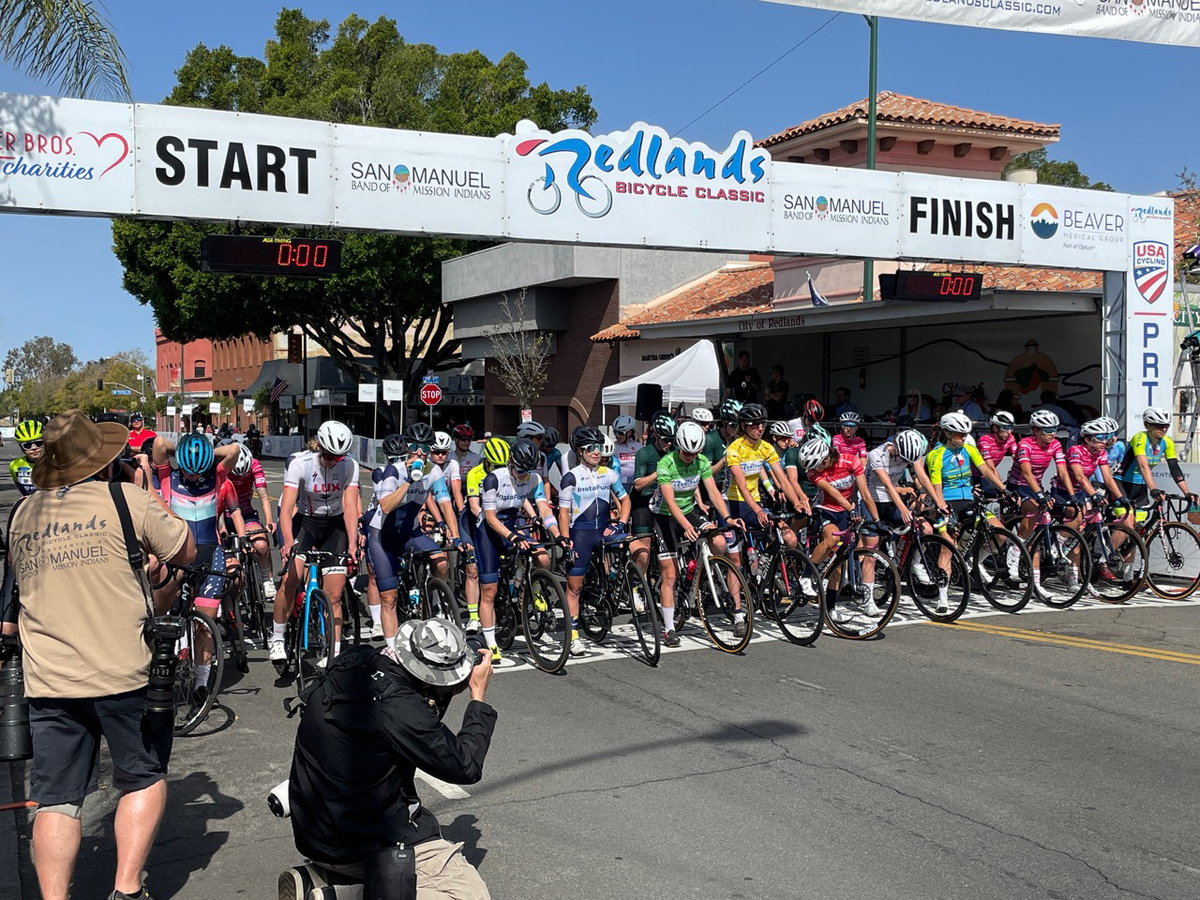
The pro women’s field lines up to start the Sunset Loop stage at the Redlands Classic. Photo by Peter Abraham
The sport of cycling reached its zenith in the American public consciousness in the early Lance Armstrong era, circa 2001. For many, many reasons the sport has been on a gradual downward slide since then. There are currently only three US races aligned with cycling’s global governing body, the UCI: Tour of the Gila, the Walmart Joe Martin Stage Race and the new Maryland Cycling Classic. All of the World Tour cycling teams are based in Europe, and increasingly so are the smaller American teams. Why would the Human Powered Health team (with a World Tour women’s team and lower level Pro Team men’s program) schlep all the way back to the States for two small stage races in May when they have much, much bigger events in Europe?
I would argue that road bike racing is important, but it badly needs to evolve in the US. The sport is currently stuck in a 1970s model that is dated and unappealing to younger generations that we need. The top end of the sport is the one that’s seen around the world, the Tour de France, the Olympics, the World Championships. I love all forms of bike riding, including the non-competitive ones, but it’s uniquely inspiring to have American athletes racing in the world’s biggest races. There are lots of ways to play basketball as well, but one cannot deny the excitement of watching NBA players go head to head in the playoffs. Or watching World Cup soccer. The pinnacle of any sport is empowering and exciting.
Here’s my 10-point prescription to improve bike racing’s chances of survival in the US:
1. Understand current tradewinds in sport participation
For the past 16 years Google Trends has shown a steady decline in all keywords related to bicycle racing, except the term “gravel cycling.” Endurance sports popular with baby boomers have been on a downward slide for a long time. Not pictured here but suffering from the same decreasing participation (at least until the pandemic): golf, tennis and marathons. Let’s be honest about what’s appealing to bike riders and what’s not. The younger generation wants social first and competition second. Traditional bike races and triathlons are prioritized for the opposite. Gravel races, however, have nailed the social/community/fun/inclusion angle and are therefore booming. So what can road racing learn from gravel?
2. Beware the Boomer Bubble
I was born in 1963, so I’m right on the cusp of the baby boomers and Gen X. I started racing my bike in high school, had a chance meeting with Greg Lemond while he was training in my little town North of San Diego, and I’ve been on my bike ever since. I followed his meteoric European career, then watched the American rebirth of bike racing in the late 90s/early 2000s. I participated in masters road racing in my 40s and now I love gravel events.
I’m part of the “boomer bubble” that’s moved through the sport. When I raced as a junior, fields were regularly over 100 in my races. That’s unheard of now. When I raced as a 43 year old masters rider, fields were really big as well. Race fields for riders younger and older than me were smaller. But I was in the bubble. And now that I ride in gravel events, my 50–59 age group is often the biggest field in the race. I recently participated in the excellent Huffmaster mixed gravel/road event in Northern California, and my 50+ field was much bigger than any others. My “old guy” bubble is not going to be racing bikes much longer. So what fills the void when we’re out of the sport?
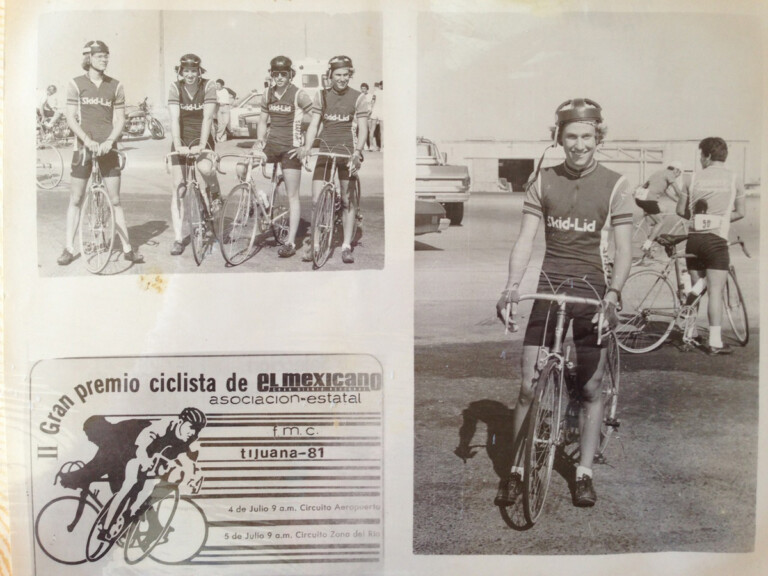
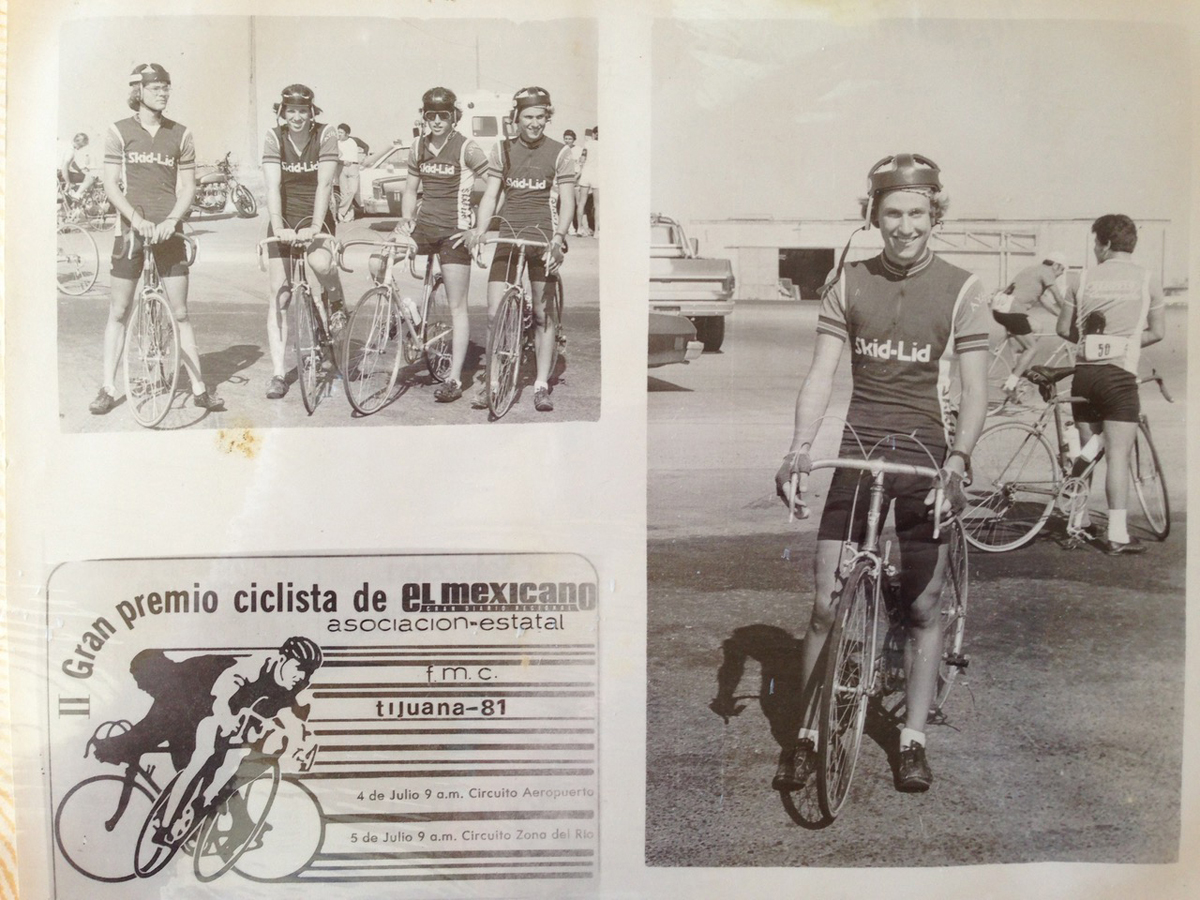
My one and only international stage race, as a high school senior in Tijuana, 1981. The President of Mexico, José Lopez Portillo, fired the starting pistol and my teammate John Brown won the race. Photos courtesy Peter Abraham
3. Help create events with newer, younger & more diverse leadership
The same boomer bubble also describes many of those who organize bike races, run sanctioning bodies, own the media channels and bicycle brands: It’s mostly a bunch of old, white men. Not entirely, but this describes the majority. Is it any wonder that the participants at bike races look like everyone else in leadership positions in the sport? Should we be surprised that while the country has gotten more diverse, more digital, younger and into different sports that bike racing has been stuck in a 1985 time warp? No, we should not. (Full disclosure: I’m part of this problem, as a middle aged white dude in the sport.)
4. Experiment with different race formats
I look at the tried-and-true stage race template of time trial/road race/criterium and I ask, “Why?” I think if you asked most race directors why they stick with this format they’d say, “Because it’s the way it’s always been done.” But is this the best way forward? Road races are logistically complex and expensive to put on and time trials are exciting neither for participants nor spectators. Criteriums work on the other hand, because they’re spectator friendly, easier to broadcast and operationally simpler than longer events. Here in LA we have the CicLAvia open streets event, which has seen over 1.6 million participants in 12 years. Could one of their events be combined with a bike race? What about a road+gravel stage race? Could we start an eBike Zwift league in high schools? This is part of a longer discussion, but the point is this: why are we not creatively exploring other avenues for the sport?
5. Collaborate closely with NICA to build pathways into other areas of cycling
NICA (the booming high school mountain bike racing league) is great, and it’s onboarding many teenagers onto bikes and competitive endurance sports. I’m a huge fan of this initiative. And if you look at Americans racing professionally in Europe — Kate Courtney, Megan Jastrab, Sepp Kuss, Kevin Vermaerke — most of them started in this league. But that is somewhat accidental, as there is no formal connection between NICA and other forms of cycling. Why can’t we build a pathway to road racing, criteriums, gravel, and college cycling? If you compare cycling with track & field, you can quickly see how broken the cycling development path is: Almost every high school in America has a track (and probably cross country) team. If a student wants to keep running at the next level, there are approximately 1,000 college track programs in the US. While NICA is growing fast and creating opportunities for high school kids to race bikes in over 30 states, the next level is almost non-existent. That development pathway needs to be built from scratch.
6. Rebuild College Cycling
College cycling as currently organized is broken and set up to fail. It doesn’t look much different now than it did when I raced for the UC Davis Aggies cycling team in the early 80s. I recently was speaking with some members of the UCLA cycling team over coffee. They were sharing with me how challenging the college cycling landscape is: most teams are all-volunteer club sports with students who may not be able to afford equipment and have to organize and promote their team’s bike races. The UCLA team explained that a recent race at another school had been canceled because the team just could not pull off the logistics. It’s too much to ask. As a college student, it’s hard enough to get out and train let alone manage and build a team and organize logistically complex events. While there are a few well-funded varsity programs (Lees-McRae, Marion University, Fort Lewis College are examples), these are few and far between. As long as college cycling is a DIY club sport model, it is destined to limp along with no coaching continuity and a lack of centralized leadership at either the school or national levels.
7. Welcome beginners into the sport
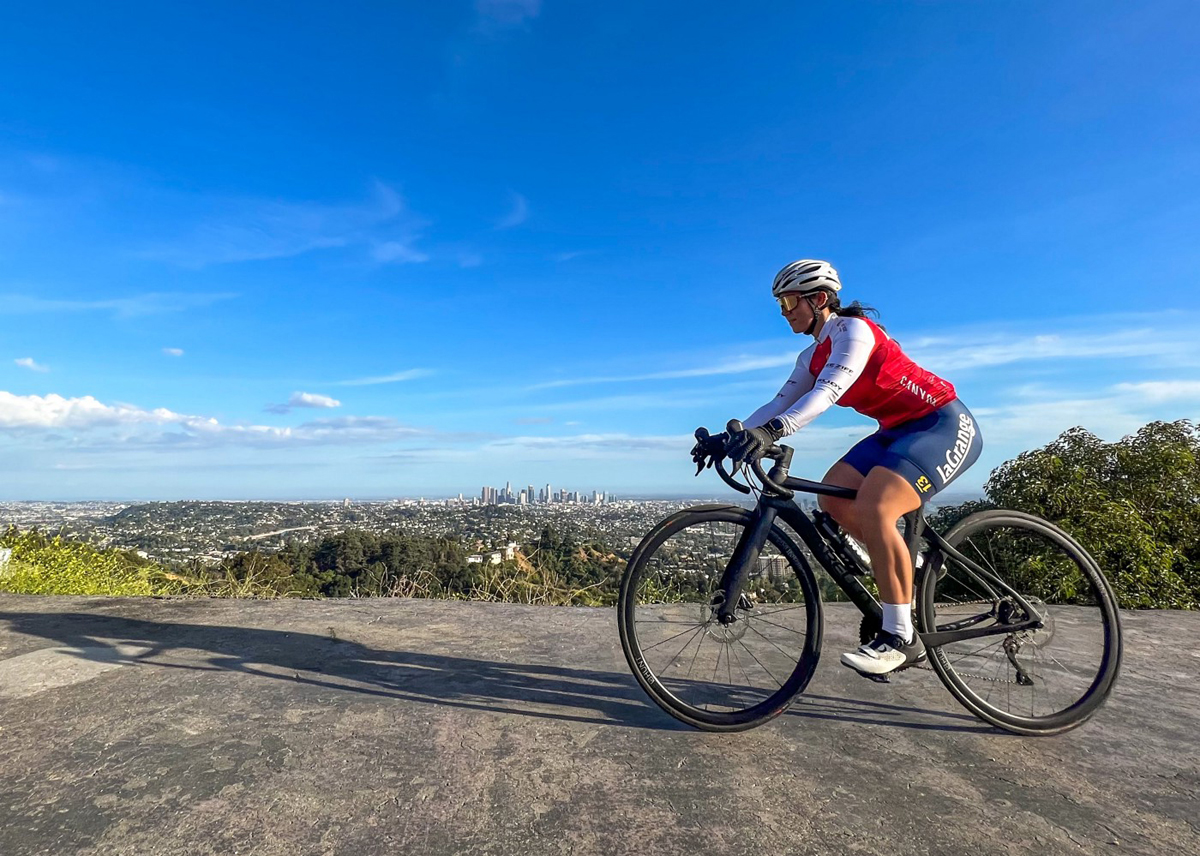
While at the Redlands Classic race, I spoke to my new friend Arielle Miller of Velo Club LaGrange here in Los Angeles. I’ve ridden with that club on and off for years. It’s a local institution. Arielle just got into cycling during the pandemic. She’s incredibly passionate about it, and has already done a bunch of racing. But she and I spoke a lot about how cycling clubs generally do not welcome inexperienced riders. I’ve seen this first hand all over the country. Group rides are fast and intimidating. There should be group rides like that. As an experienced rider, I love them. But there should also be no-drop, slower paced rides with leaders and an emphasis on fun and learning. And many cycling clubs completely fail here. Imagine a ski resort with only black diamond runs that wonders why more skiers don’t show up. That’s what lots of club cycling looks like. Clubs should be much more focused on bringing in new riders, women, people of color and young riders.
Arielle Miller in Los Angeles. Photo courtesy Arielle Miller
8. USA Cycling needs to prioritize what it can realistically focus on
USA Cycling, the governing body of the sport domestically, has recently undergone a leadership change. Cycling business veteran and lifelong bike enthusiast Brendan Quirk has taken the reins as President and CEO of the organization. I got to meet with him in person in Bentonville earlier this year during the World CX Championships, and I subsequently participated in a call he led for USAC coaches. I think the strategy he outlined then for the organization moving forward is smart:
Re-energize American bike racing
Expand and retain audience
Deliver performance success
Develop sustainable revenue streams
Spearhead growth and diversity
The challenge is, how does he execute on all of these given the current trends in the sport? With limited resources, USAC can’t fix every problem. So what do they focus on? And how do they balance the need to win medals now with the need to fill the pipeline and grow the sport at the grassroots level. I don’t have the answer, but he’ll only be able to succeed if he lines up enthusiastic support from all of his stakeholders. I’m rooting for him.
9. Help cycling events get better at media
Younger riders, whether from high school, college or in their 20s are media savvy and highly attuned to social media and sophisticated storytelling. How many cycling events are aligned with this? I spoke with bike racing announcer and broadcast producer Brad Sohner when I was at Redlands. He asked me, “How many cycling events are on TikTok?” The answer is almost none of them. As a media and marketing professional, I’m always looking at how brands, athletes and events execute on digital channels. And with bikes I’m usually shocked at how poorly the events communicate. I can sympathize with overworked volunteers who are just trying to get racers to the starting line, let alone put together a marketing campaign or communications strategy. I once had my own 5K/10K run as a sidehack, so I know how challenging this is. But if we want to invite new riders into the tent, we need to speak to them in their native language. Professional media and storytelling execution are both mission critical. A couple recent examples of bike race websites I’ve seen, the Joe Martin Stage Race and the Speedweek criterium series, had no news posted for months even though it was only weeks before the event or are missing the results.
10. Continue to make diversity and inclusion essential priorities in cycling
If there’s one thing I’ve learned in decades of work with diversity programs, it’s that no new communities will join a sport unless intentional onramps are built. The reason 30,000 kids are racing bikes with NICA is that the founders had the foresight and energy to do fundraising, train coaches, add new regions, build brand partnerships and more. It’s taken a huge amount of work to get that program to where it is today. It will take even more work to create sustainable populations of women, people of color and LGBTQ communities in cycling. I love what Justin Williams is doing with his L39ion of Los Angeles team. I love that St Augustine’s University (I worked with them) has created an HBCU cycling program. I love that Rebecca Rusch added a non-binary/trans division at her RPI gravel race (I worked on this, too). I love what Triangle Bikeworks is doing with kids in North Carolina and how Silver Stallion is bringing bikes to Navajo Nation. I love what Grow Cycling is doing with pump tracks in cities. But combined, these initiatives and many others are less than 1% of the way to making bike culture fully diverse. And I still see huge mistakes being made, like the new Maryland Cycling Classic launching a men’s only pro race. I’m sure they eventually want to include women’s teams, but why not now? Can you imagine a professional marathon kicking off with a men’s only race? There’s much, much more work to be done.