January 10, 2022 – Will Interbike return? And if so, where? Today, Emerald Expositions, the parent company of Interbike, sent out a survey asking former attendees their thoughts on whether they would attend the show again. The bicycle industry trade show last took place in Reno, Nevada in 2018. The show moved to Reno after many years in Las Vegas.
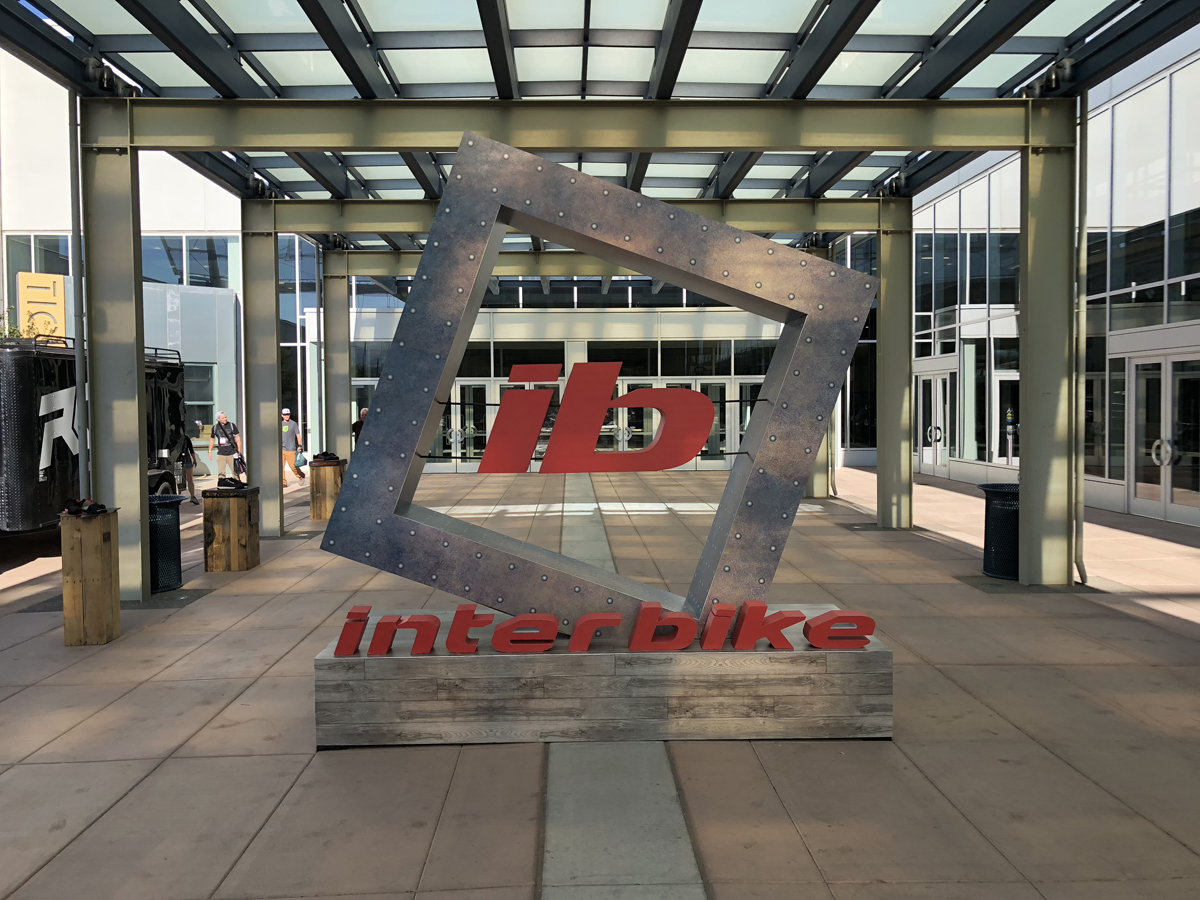
Interbike was held in Reno, Nevada in 2018. Photo by Dave Iltis
Questions in the survey included whether or not people would want to attend the show again in 2022 or 2023, whether or not there should be a consumer aspect to the show, and importantly, what people thought of the show returning to Reno or moving to Denver, Colorado. Another question asked if people liked the idea of having the show in its traditional time slot of mid to late September.
In 2017, Interbike had signed a letter of intent to bring the show to Salt Lake City, Utah as part of a show package with Outdoor Retailer, also owned by Emerald Expositions. Hopes for the Beehive State were dashed when the Outdoor Industry Association pulled both shows from Salt Lake in protest for Utah’s public lands policies. Interbike was relocated in 2018 to Reno.
News reports have stated that Salt Lake City is in the running to have Outdoor Retailer return to its home of 20 years, as the shows contract expires soon with Denver. However, The Conservation Alliance and the Outdoor Alliance recently sent Utah Gov. Spencer Cox a letter stating that unless public lands policies were improved, that the show may not return to Utah.
The letter lays out their stance on Utah’s fight against public lands and the return of OR to Salt Lake and concludes:
“For 20 years, Utah was a popular location for Outdoor Retailer and many in our industry would love to see the show return to Salt Lake City. However, it would run contrary to the outdoor industry’s values to return the show to a state that is openly hostile to public lands and waters, and that’s working to undermine two iconic national monuments. If the state continues pursuing this lawsuit, leading brands and organizations in our industry will refuse to participate in a Utah-based show, even at the risk of compromising the show’s future viability.
We respectfully call on you to abandon all efforts to erode protections for Grand Staircase Escalante, Bears Ears, and other Utah public lands, and instead join us in our efforts to build a strong economic vision for the West that includes conservation and outdoor recreation.”
While the Reno venue was solid, and the nearby demo area of Northstar at Tahoe a great place to ride, the show was sparsely attended. Some of this was due to the slow reduction in the size of Interbike and trade shows in general, and some of this was due to transportation to and from Reno.
Since 2018, there has been no national bicycle industry show, although there have been several regional and smaller scale trade shows such as CABDA and The Big Gear Show (an outdoor show with a strong bicycle component).
Interbike’s return would likely include education for dealers, booths, speakers, and industry socials, and a possible consumer day.
Update: January 14, 2022 – Interbike sent out a follow up email on the survey apologizing for an error in the original email, although it’s unclear what they are apologizing for. They did confirm that they are indeed considering a relaunch of Interbike:
“To relieve any existing doubts: Yes, we Emerald, are considering a relaunch of Interbike and receiving the input and perspectives from this amazing community is one of our top priorities. Our commitment is to ensure your vision and needs are met and achieved.”
SALT LAKE CITY, Utah (January 7, 2022) — Bike Utah, a statewide bicycle advocacy organization, is pleased to announce Jenn Oxborrow as their new executive director. Oxborrow brings more than 20 years of experience serving Utah communities, and advocating for equitable and accessible health and wellness for all. Oxborrow’s appointment follows Crys Lee’s departure from Bike Utah in the summer of 2021 when she moved out of state.
Jenn Oxborrow recently took the helm at Bike Utah, a Utah state bike advocacy organization. Photo courtesy Bike Utah
“We are truly excited to have Jenn join us. We hope to leverage her experience and enthusiasm to continue to grow Bike Utah and our programs into the future,” said Bike Utah Board Chair Steph Tomlin.
Known by many for her work specific to victims and survivors, Oxborrow is ‘shifting gears’ to focus her expertise on making Utah a better place to ride, advocating for livable, healthy communities, and reducing barriers to ride, such as age, ability, race, or income.
“Biking became an essential part of my life to rebuild strength, stay connected to Utah’s trails and communities, and to spend time with my family exploring this beautiful state,” states Oxborrow. “Bikes have brought empowerment, connection, health, and wellness to my life in countless ways. I intend to do all I can to ensure everyone in Utah can ride.”
Oxborrow joins Bike Utah at a time of extraordinarily high use of paths and trails across the state, for both recreation and commuter purposes, by people of varying riding experience levels and abilities. She looks forward to addressing these trends and other priorities, as well as connecting and collaborating with others to fulfill Bike Utah’s mission and vision.
USA Cycling announced today the majority of its 2022 USA Cycling National Championships schedule. COLORADO SPRINGS, Colo. – USA Cycling is pleased to announce the 2022 National Championship calendar and is excited to continue to provide great National Championships across all cycling disciplines. With a priority on the safety of all involved at our Nationals Championships, all dates and locations are subject to change dependent on the status of the COVID pandemic. Mountain Bike Nationals returns for a third year to Winter Park Resort, July 18-26, continuing the expanded schedule including the High School Cycling Festival, High School Mountain Bike National Championship races, and a Collegiate Fair. Collegiate Mountain Bike Nationals comes back to Durango, Colo., at Purgatory Resort on October 13-16. Marathon Mountain Bike will also be returning to Frederick, Md., with a to-be-announced date. Collegiate Road Nationals returns to Augusta, Ga., home to many past USA Cycling National Championships, on May 6-8. The following month, USA Cycling returns to fan favorite, Knoxville, Tenn., for Pro Road Nationals on June 23-26. Gran Fondo Nationals goes back to Asheville, N.C. on July 17. Masters Road Nationals returns to Albuquerque, N.M. from August 4-7. The final details of Amateur Road and Para Road Nationals are being finalized with local authorities and will be announced when we have final approvals. Elite and Junior Track Nationals returns to T-town at the Valley Preferred Cycling Center with a to-be-announced date. Returning to the Major Taylor Velodrome in Indianapolis, home of Marian University, Collegiate Track Nationals will be held September 8-11. Madison Track Nationals will be returning to the Lexus Velodrome on November 10-13. USA Cycling and the Lexus Velodrome will provide an update in the near future about the status of Madison Track Nationals at the venue. Both groups are optimistic that the venue will be fully operational in the coming weeks. Para and Masters Track Nationals will be announced at a later date. In partnership with USA BMX, the Elite BMX National Championships will take place May 15 in Tulsa, Okla. Collegiate BMX Nationals will be held February 19-20 and will take place in Phoenix, Ariz. The Freestyle BMX Nationals will be announced in the future. The 2022 National Championship schedule will close with Cyclocross Nationals, taking place December 6-11, with a location to be announced soon.
Event
Date
Location
2022 USA Cycling Collegiate BMX National Championships
February 19-20
Phoenix, AZ
2022 USA Cycling Elite BMX National Championships
May 15
Tulsa, OK
2022 USA Cycling Collegiate Road National Championships
May 6-8
Augusta, GA
2022 USA Cycling Amateur Road National Championships
TBA
TBA
2022 USA Cycling Pro Road National Championships
June 23-26
Knoxville, TN
2022 USA Cycling Elite and Junior Track National Championships
TBA
Valley Preferred Cycling Center
2022 USA Cycling Para Track National Championships
TBA
TBA
2022 USA Cycling Gran Fondo National Championships
July 17
Asheville, NC
2022 USA Cycling Mountain Bike National Championships and High School Festival
July 18-26
Winter Park, CO
2022 USA Cycling Para Road National Championships
TBA
TBA
2022 USA Cycling Masters Track National Championships
TBA
TBA
2022 USA Cycling Masters Road National Championships
August 4-7
Albuquerque, NM
2022 USA Cycling Collegiate Track National Championships
September 8-11
Indianapolis, IN
2022 USA Cycling Marathon Mountain Bike National Championships
TBA
Frederick, MD
2022 USA Cycling Freestyle BMX National Championships
TBA
TBA
2022 USA Cycling Collegiate Mountain Bike National Championships
October 13-16
Durango, CO
2022 USA Cycling Madison Track National Championships
November 10-13
Detroit, MI
2022 USA Cycling Cyclocross National Championships
No major US race has ever survived a hiatus of this length, meaning the Tour is unlikely to ever return.
PEACHTREE CITY, GA (December 22, 2021): Medalist Sports, operators of the Tour of Utah, announced today that planning for the 2022 event have been suspended and that they have asked USA Cycling and the UCI (Union Cycliste International) to remove the race from the international cycling calendar.
This will be the third consecutive year that the Tour of Utah has been cancelled; first due to COVID-19 restrictions, and now due to sponsorship woes.
Sepp Kuss (LottonNL-Jumbo), your 2018 Tour of Utah winner. 2018 Tour of Utah Stage 6, August 12, 2018, Park City, Utah. Photo by Cathy Fegan-Kim, cottonsoxphotography.net
Chris Aronhalt, owner and President of Medalist Sports had this to say: “On-going sponsor and host community discussions have been positive; however, not strong enough to support a viable effort to meet our collective expectations. While disappointed, Medalist Sports is grateful for the opportunity and cherishes the Tour of Utah’s legacy.”
The Tour of Utah was first held as a local race in 2004, and grew in stature the next two years. In 2007, the race was cancelled due to sponsorship problems, but returned in 2008 after the race was purchased by members of the Larry H. Miller family. The race stepped-up to UCI level in 2011, and featured some of its strongest fields in the early years of the decade as many European squads sent some of their top riders, including 2011 Tour de France winner Cadel Evans (BMC Racing, 2011) and Jens Voigt (Leopold-Trek, 2012-2014).
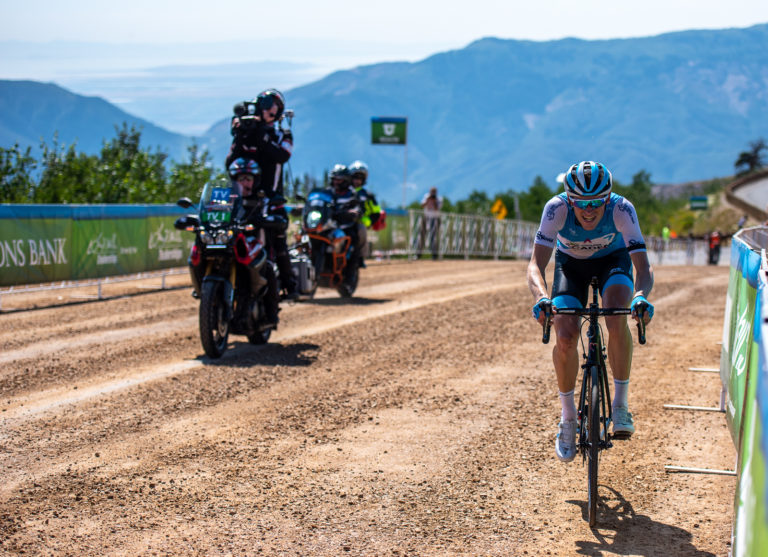
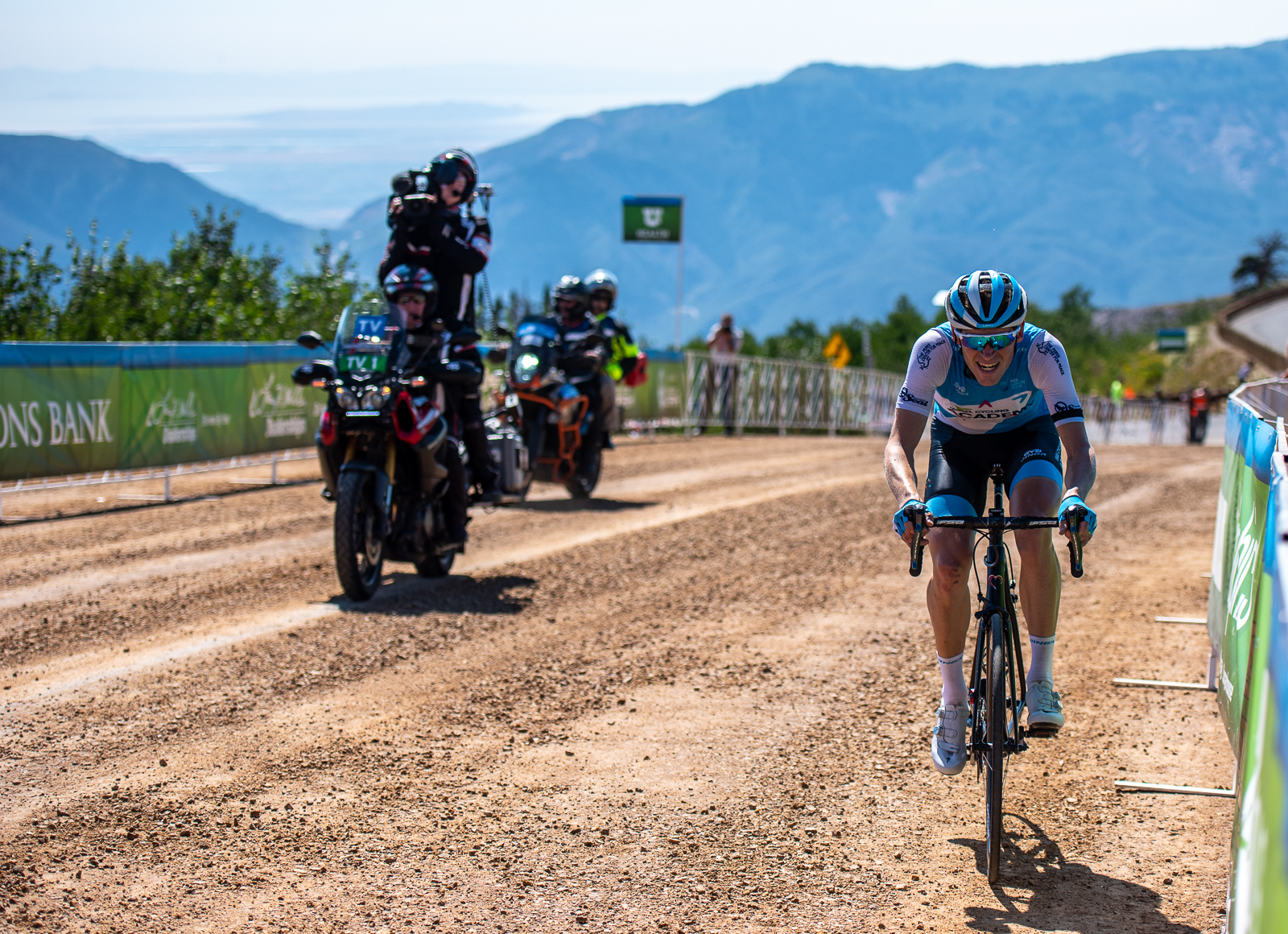
Ben Hermans (Israel Cycling Academy) attacked on the climb to Powder Mountain to solo to the summit for the stage win, and taking the leader’s jersey in the process. Stage 2, 2019 Tour of Utah. With the news that the Tour of Utah is being cancelled for the third consecutive year, Hermans may go down in history as the final winner of the Tour of Utah. Photo by Steven L. Sheffield
In the latter part of the decade, due to a lack of additional racing in the United States, the European squads started sending teams comprised of lesser-known and less-experienced riders, but the quality of racing did not suffer, with future stars like Lachlan Morton (Jelly Belly, 2014) and Sepp Kuss (Lotto-NL Jumbo, 2016) taking spectacular wins.
Unfortunately, with the race now being cancelled for the third consecutive year, it is unlikely that it will ever return, as no major race in the United States has ever survived two hiatuses, especially one of the length of the current hiatus.
The new series boasts a $100,000 prize purse with an equal pay-out for women and men. The full calendar for the series will be announced in January.
COLORADO SPRINGS, Colo. (December 17, 2021) — On Friday, a core group of cycling stakeholders, including criterium race directors, cycling teams, and USA Cycling, announced the formation of a new professional criterium series. This new domestic series will promote the uniquely American road discipline of criterium racing and allow for the storytelling of athletes and events.
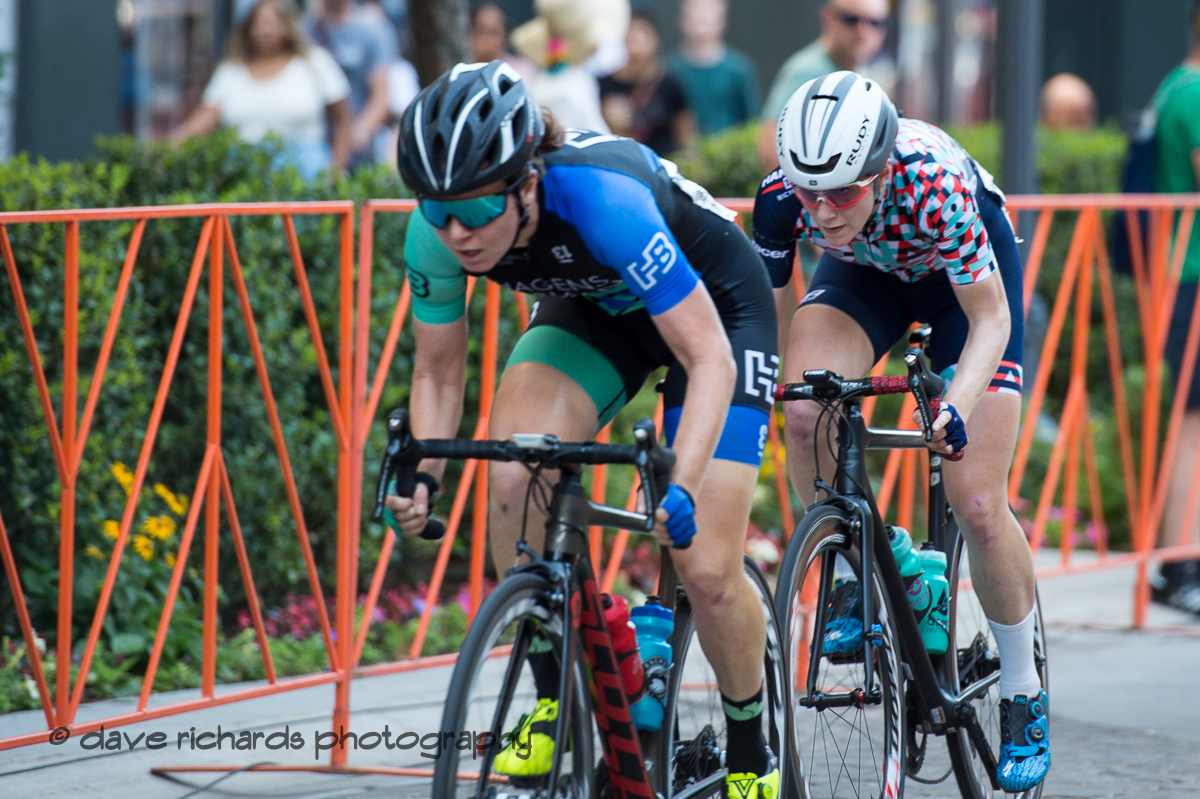
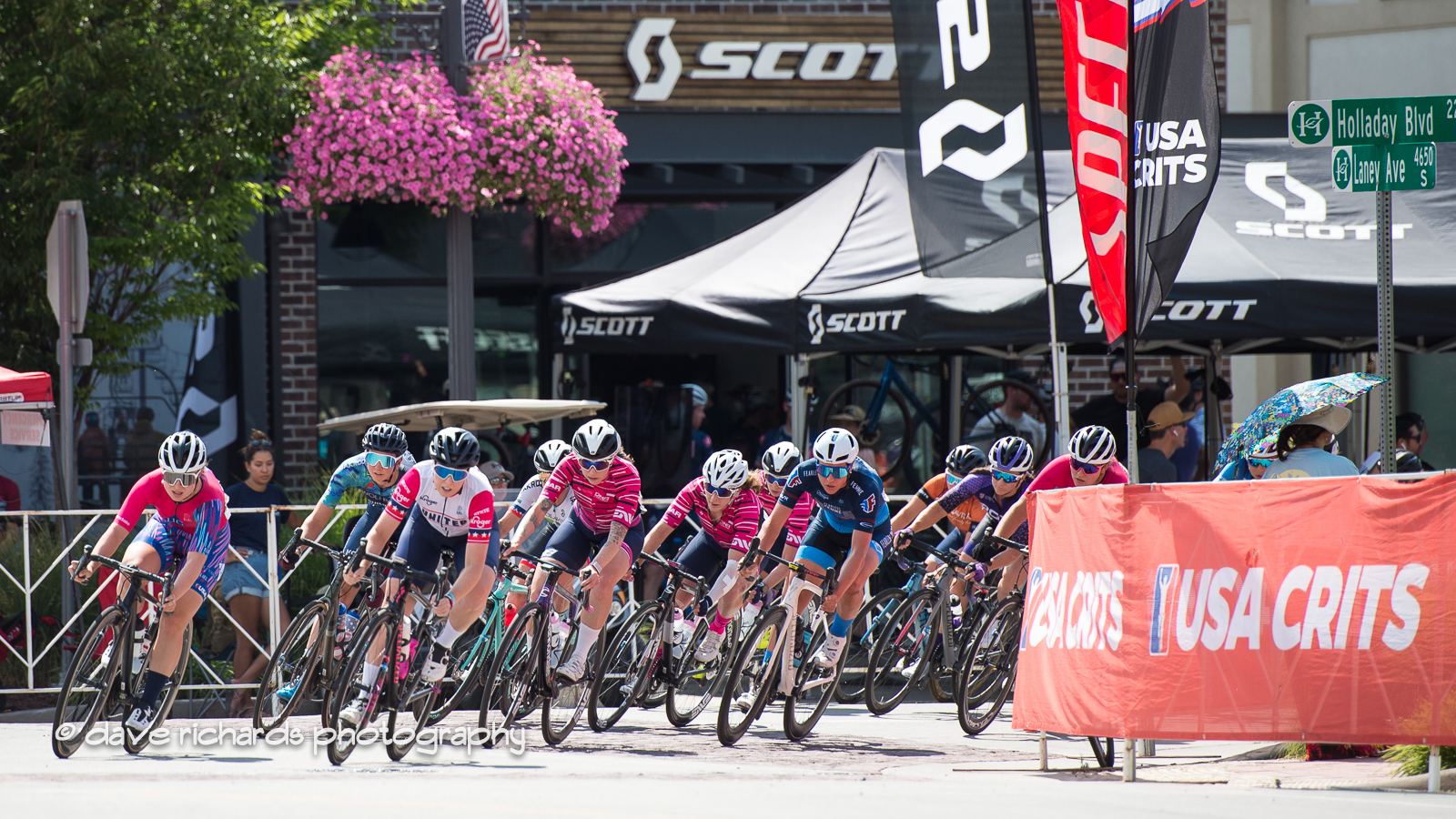
Two rider break during the Women’s D1/Pro race at the Salt Lake Criterium, USA CRITS series held at the Gateway Mall (Photo by Dave Richards, daverphoto.com)
“Cycling teams and athletes have historically had to just accept what events put forward with limited to no say. We are excited that USA Cycling and event directors are making the effort to work with the NACT taking into consideration the unified voice of teams and riders. Putting teams and athletes first is a step in the right direction for the entire sport,” Lauren Dodge, the interim President of the National Association of Cycling Teams.
“Criteriums are the dominant form of competitive road cycling in the U.S. and have proven to be popular with the public and sponsors. This new collaborative effort between the event organizers, USA Cycling, and the athletes offers an opportunity to elevate the stature of criterium racing and bring additional value to our stakeholders”, said Malcolm McCollam, Executive Director of the Saint Francis Tulsa Tough.
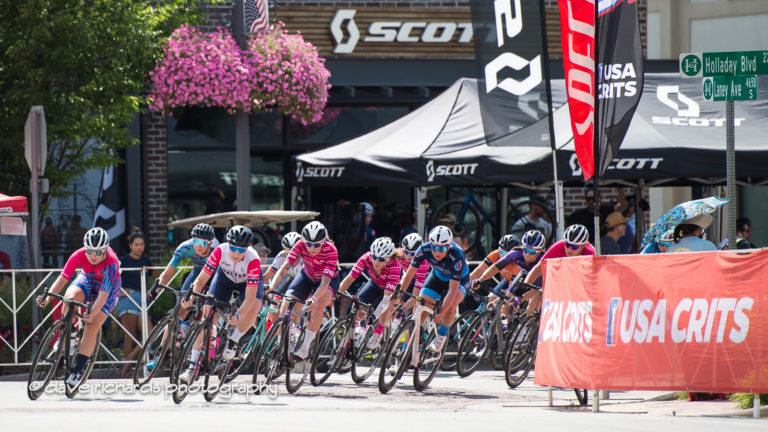
Salt Lake Criterium, USA CRITS series held downtown Holladay City (Photo by Dave Richards, daverphoto.com)
The new series will offer $100,000 in overall prize money and support, equally split between the men and women in addition to individual event prize purses. Founding races include Saint Francis Tulsa Tough, ASWD Twilight Criterium, Salt Lake Criterium, Littleton Criterium, Momentum Indy, and Bommarito Audi Gateway Cup, which will all come together with USA Cycling to produce a series that ensures quality racing for teams, riders, and spectators. All events are committed to awarding equal prize money for the pro men’s and women’s fields in their prospective races.
“Championing the top criterium events in the U.S. is a priority for USA Cycling,” said Chuck Hodge, Chief of Racing and Events. “Being able to put a spotlight on the races and riders as part of a professional criterium series directly serves our mission of promoting the sport of cycling.”
A group representing the stakeholders is currently assessing applications from other top events, including Pro Road Tour and L39ION owned events, to complete the series. The final events in the series, along with further details, will be announced in January. The founding events calendar can be found below.
LEHI, Utah (December 14, 2021) — After just three years on the job at USA Cycling, during a period of intense financial turmoil as the organization coped with a major reduction in funding due to COVID-related race cancellations, current USA Cycling CEO Rob DeMartini will be leaving to join Utah-based Purple Innovation, the upstart mattress-maker known for their GelFlex Grid, as acting CEO and member of the Board of Directors.
“I am honored to take the helm at Purple, a company that has quickly established itself as a leader in the premium mattress category through its proprietary comfort solutions,” said DeMartini. “I look forward to working collaboratively with both the Board and the talented and passionate team of employees to strengthen the Company’s operations and best prepare Purple for its next phase of growth.”
Rob DeMartini is an experienced leader with a long history of strong growth and execution during his 37-year career. Mr. DeMartini served as President and Chief Executive Officer of New Balance from 2007 to 2019. Prior to joining New Balance, Mr. DeMartini worked at Procter & Gamble for 20 years.
USA Cycling has yet to put out an official statement on DeMartini’s departure; this article will be updated as more information becomes available.
Update 12/16/2021
According to a statement released on Thursday afternoon, DeMartini will be replaced by current Chairman of the Board of Directors, Brendan Quirk. Quirk will be replaced as Chairman by current Board member Matthew Barger.
“I’ve worked side-by-side with Rob for two years, and I feel deep gratitude that we had such a capable leader to lead us through the difficulties presented by the pandemic,” said Quirk. “The organization is far better off for his time here.
“Our core focus will always be on supporting racing culture. USA Cycling is in the ideal position to introduce new riders into the sport and guide them in their journeys to becoming lifelong cyclists.” Quirk added, “We’ll be investing in three key areas of focus: growing youth cycling, supporting grassroots rides and races, and maximizing the readiness of Team USA across all disciplines as we approach Paris 2024 and Los Angeles 2028 Olympics.
“These are unprecedented times for growth and change in the American cycling industry. Communities are making huge investments in active transportation infrastructure; the gravel boom shows no signs of slowing; and the rapid proliferation of eBikes is redefining who we envision when we ask who an American cyclist is. We are becoming a nation of riders. Serving as USA Cycling CEO is a dream opportunity to use sport to help encourage this societal transformation.”
Public comment open on planned 2023 Highland Drive/1100 East project that will see greater pedestrian, bike connections throughout Sugar House
December 13, 2021 – Salt Lake City residents are invited to review draft plans for the 2023 reconstruction of Highland Drive/1100 East and provide feedback online through Dec. 30. The planned changes will see the important connector rebuilt from I-80 to Logan Ave., with special focus on improvements for pedestrians and cyclists and completing connections on the City’s eastside trail systems.
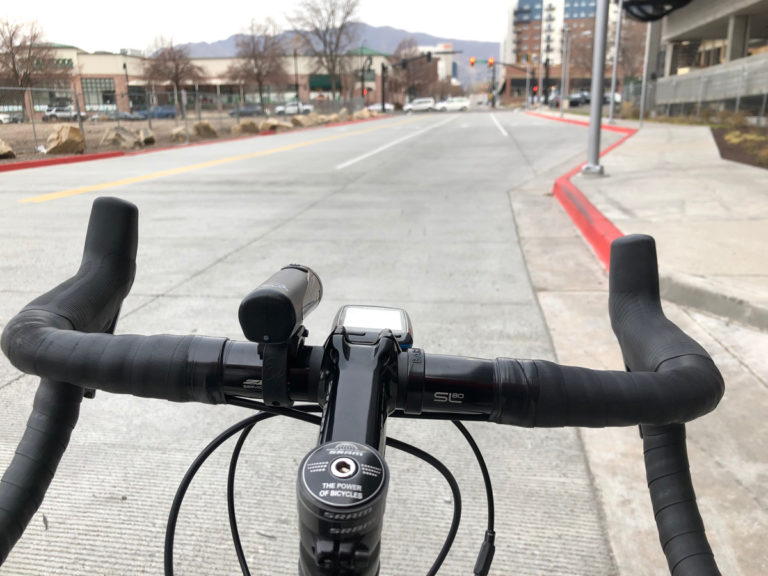
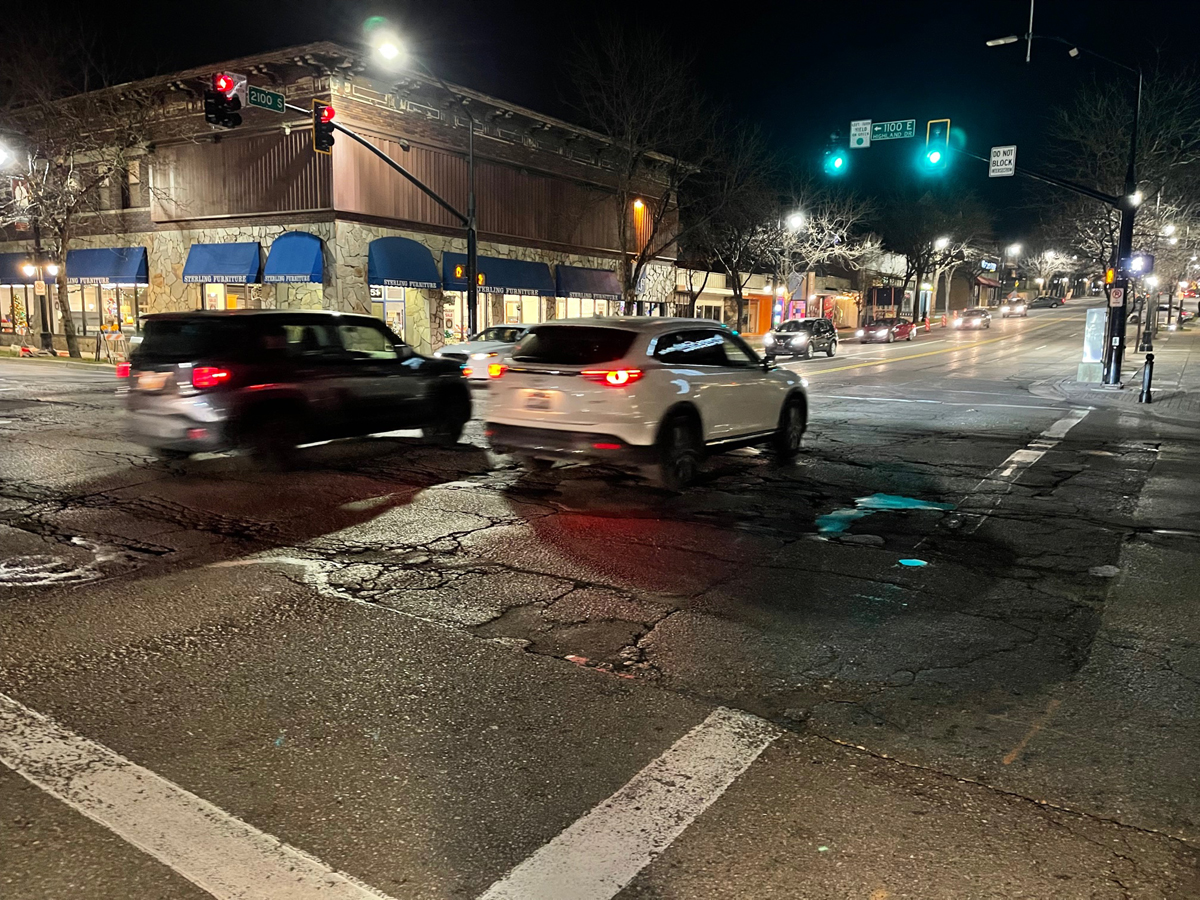
The intersection at 2100 S and Highland Drive is the heart of Sugarhouse, yet is incredibly unfriendly to pedestrians and people on bikes. The rebuild of Highland will hopefully fix this. Photo by Dave Iltis
The draft plans can be reviewed online at avnu.cc/highland and are based on years of planning documents, including the Sugar House Area Master Plan, the 2013 Sugar House Circulation Plan, and the draft Local Link Study – all of which have included robust public engagement processes. Planned improvements will allow for a wide multi-use-path for pedestrians and cyclists stretching from I-80 to Wilson Ave., widened sidewalks, bike lanes, improved drainage and more. Or, view the pdf here: https://avenueconsultants.com/video/virtual/HighlandDr/a/assets/HighlandDr_Displays_2021.pdf
“Our goal is to make Sugar House a more comfortable place for people to be,” said Salt Lake City Transportation Planner Lynn Jacobs. “We know people are coming to Sugar House for its small local businesses, great food, beautiful trees, and unique energy. This project is designed to enhance what makes the area great through making it more comfortable to get around without a car – by walking, biking, transit or even ride-sharing.”
This desire line crosswalk on Highland Drive is an injury waiting to happen. Salt Lake City has delayed a safe crossing here for years. Photo by Dave Iltis
When complete, the project will connect a gap in the Parley’s Trail System within Salt Lake City as well as provide connections from the Parley’s and McClelland Trails to area businesses – all without reducing travel lanes.
Over 11,000 vehicles use Highland Drive each day. Although the lanes will be reconfigured, a review of a decade worth of traffic counts shows that traffic volumes on major roadways in Sugar House have not increased at the same rate as development has occurred (traffic growth is approximately 1.5% per year on average, business growth is 9% per year).
“The exciting thing about this project is that we are able to provide more opportunities for people to walk and ride bikes without taking away the ability of people to continue to access the Business District as they have been in the past. We are doing this by making better use of the space we have on the roadway,” Jacobs said.
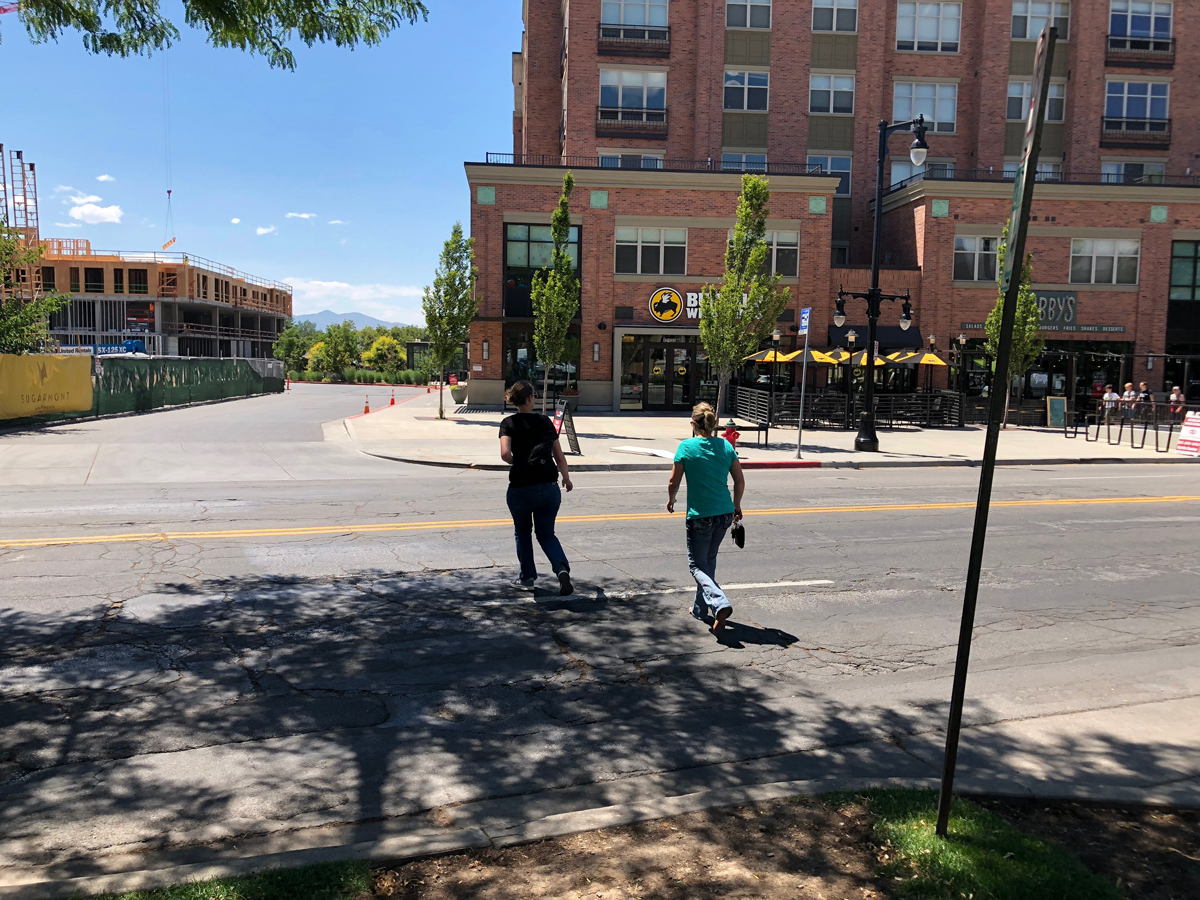
No bike lanes were added when this development built a new road off of Highland Drive, contrary to Salt Lake City’s Complete Streets Ordinance. Photo by Dave Iltis
The reconstruction project is a piece of Salt Lake City’s “Funding Our Future” bond passed by voters in 2018. Additional phases of public engagement will continue throughout the first half of 2022 with a final plan ready in Fall of 2022 and construction in 2023.
Review and feedback are available at avnu.cc/highland and project updates are available via email subscription at [email protected].
Cycling Utah’s initial comments:
Overall, the proposal is a good one that will make Sugarhouse more appealing to people on foot or on bike.
Bike lanes are preferred on the stretch from Logan to 2100 S. While a multi-use path is far better than the current configuration, we are skeptical of one side of the road multi-use paths. They are great because they give cyclists a place to ride off the street. But they are difficult since they mix pedestrians with cyclists, since some pedestrians will not use the sidewalk but will use the path instead. And, they don’t solve well the issue of cyclists needing to cross the road. The same issue arises from 2100 S to I-80.
We are super excited to see the Parley’s Trail gap closed with a new bike path in the heart of Sugarhouse. This crossing of Highland has been confusing at best.
We’d like to see a marked crosswalk and HAWK signal or something like that by Kimi’s Chophouse. As the photo above shows, people cross here, even without the crosswalk. This is an injury waiting to happen.
We’d also like to see Salt Lake City actually bother to enforce their Complete Streets Ordinance, which they did not do in the new Sugarmont development just to the west of Highland Drive. This seems to be a public road, yet no bike lanes were included contrary to the ordinance. The ordinance itself is great, but Salt Lake City seems to find reasons to not follow it all the time.
All in all, we look forward to the changes, and they will certainly make Sugarhouse more people friendly.
“And…in Colfax County, they tell the apocryphal story of a cowboy cook who, checking his bean pot and finding the beans still hard, exclaimed, ‘Simmer on!’”, Robert Julyan, The Place Names of New Mexico
By Don Scheese — Almanzo 100. Trans Iowa. Dirty Kanza (now Unbound Gravel). Land Run (now The Mid-South). Rebecca’s Private Idaho. Crusher in the Tushar. Grinduro. Gravel Worlds. These are some of the earliest, and most well-known, gravel races in the USA. As gravel racing has become increasingly popular the past decade or so, more and more gravel grinding events are springing up all over the country, and indeed the world.
The Cimarron Challenge, held in late August in northeastern New Mexico, has taken place every year (except for last year during the pandemic) since 2018. It offers two distances, 68 & 78 miles, requiring between 3800-5000’ of elevation gain, and traverses a variety of terrain on Forest Service gravel roads, more primitive jeep roads, and some singletrack. Except for the first couple miles out of Cimarron, the route follows unpaved roads.
The town itself has some fascinating Western history. Founded in 1841, it soon became a principal stop on the Taos branch of the Santa Fe Trail. It was a natural gathering place for merchants, emigrants, ranchers, miners, traders, and eventually, outlaws, and from 1872 to 1882, when it served as the seat of Colfax County, it became known far and wide as the cowboy capital of northern New Mexico. Today you can walk on a path through the town paralleling Highway 64 and see photos and read about some of the most legendary figures of the nineteenth century West, among them Kit Carson, whose ranch, Rayado, is located nearby.
Over the past 15 years I’ve taken part in many different gravel races in several states, and having done 3 Cimarron Challenges (all on the 68-mile route) I can say without hesitation that this gravel ride has become my favorite. It’s beautiful, wild, & well-supported & well-organized. The Cimarron Challenge should be more widely known.
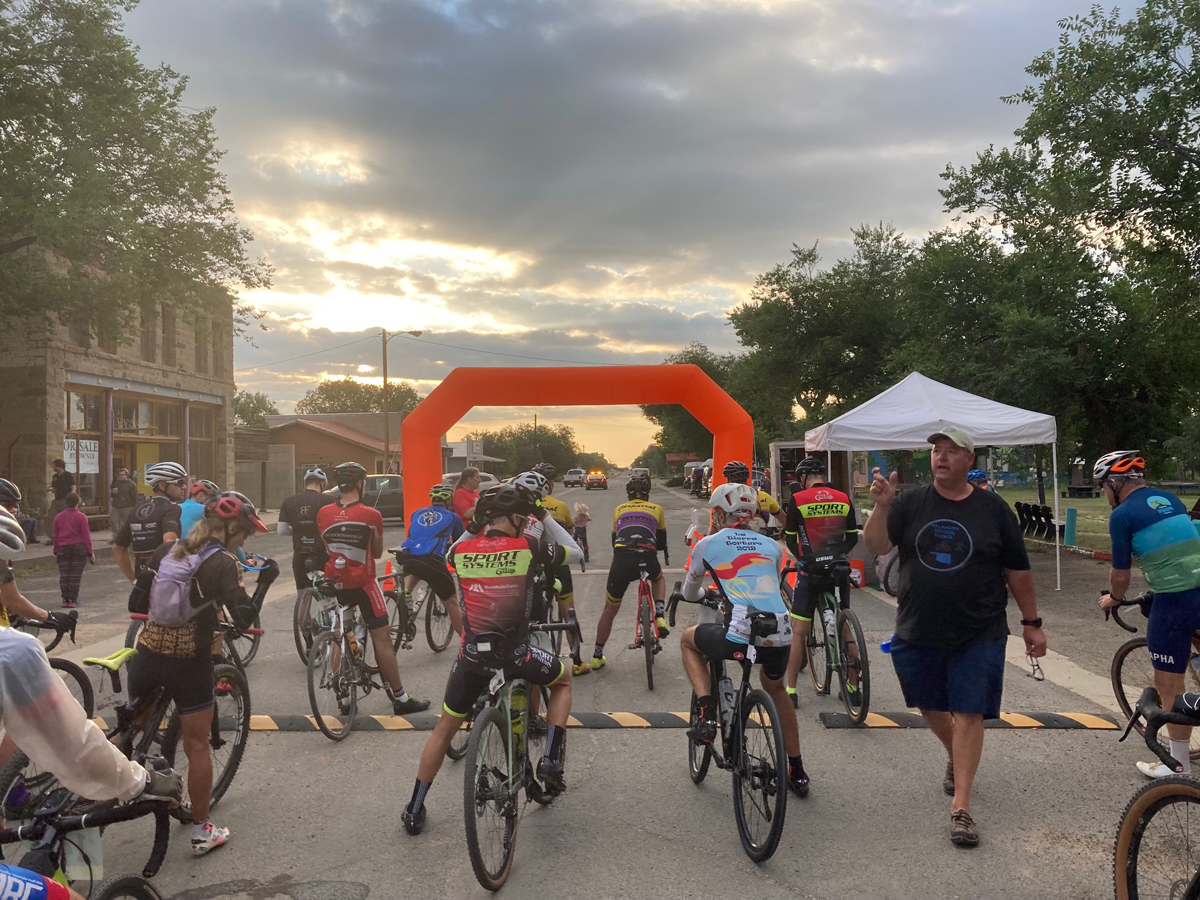
At the start of the Cimarron Challenge 2021 Gravel Race. Photo by Don Scheese
Some 40+ riders line up at 7 am in downtown on August 21, ready to take on the challenge. After a breakfast burrito, coffee and orange juice provided by the most-gracious hosts Colin & Erin of Blue Dragonfly Brewery & Bed & Breakfast, everyone is anxious to start. (There is also a pre-ride pasta dinner the night before, as well as a post-ride feast included as part of one’s entry fee.) Weather conditions are ideal: 60 degrees with a cool northerly breeze. Since temperatures can easily rise into the 90s at this time of year, I’m hoping for a cooler day with the forecast calling for highs in the 80s.
This is a timed event, with every rider having a chip device attached to their bike seatpost. After the official start, we ride at a leisurely pace out of town with a local police escort, then make a left turn on Highway 64 north for a mile or two until we turn left again onto what becomes unpaved road for the next 60 miles. The route crosses private land grant property, areas of the Carson National Forest, as well as the turf of the Philmont Scout Ranch, which is headquartered nearby. (Each summer the Scout Ranch hosts some 20,000 Boy Scouts who camp & hike on the expansive property.)
Heading up Cerrososo Canyon in the Cimarron Challenge 2021 Gravel Race. Photo by Don Scheese
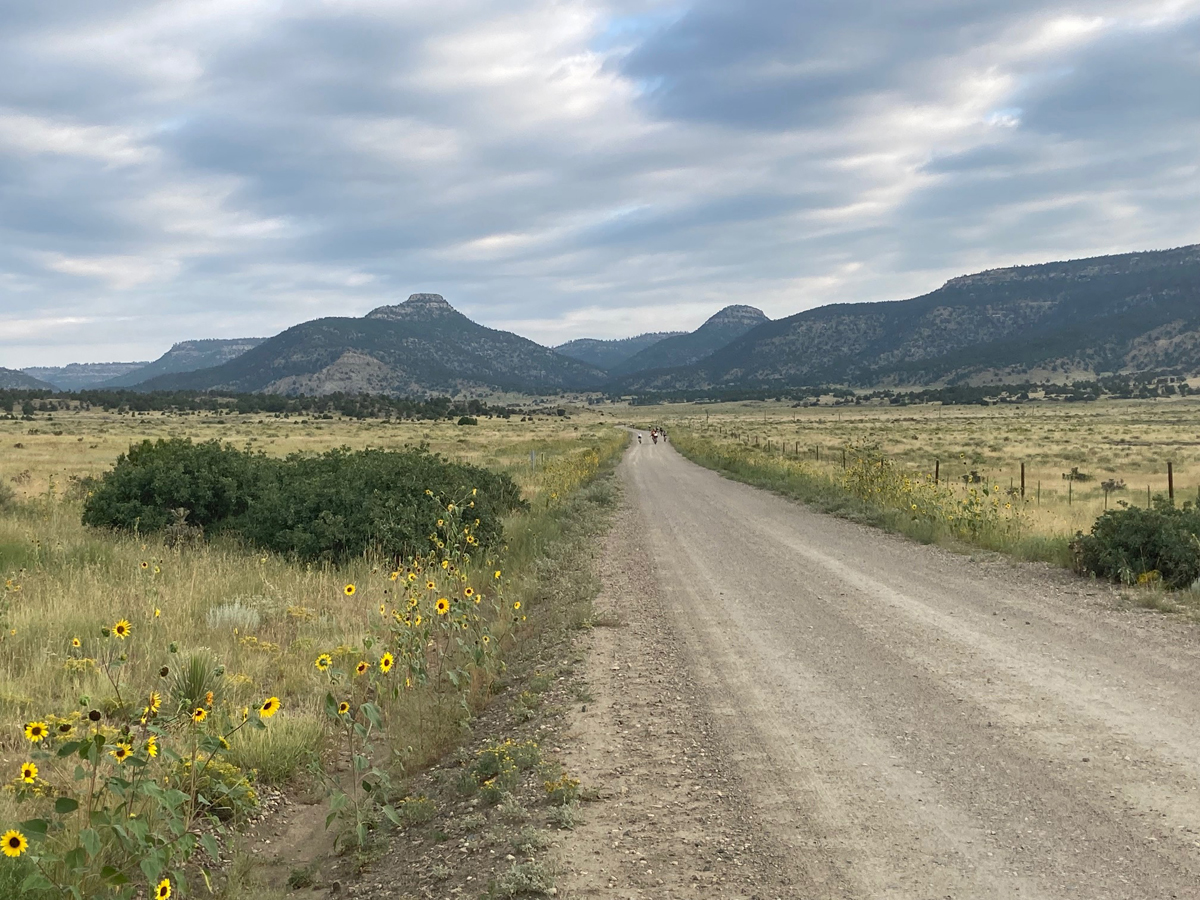
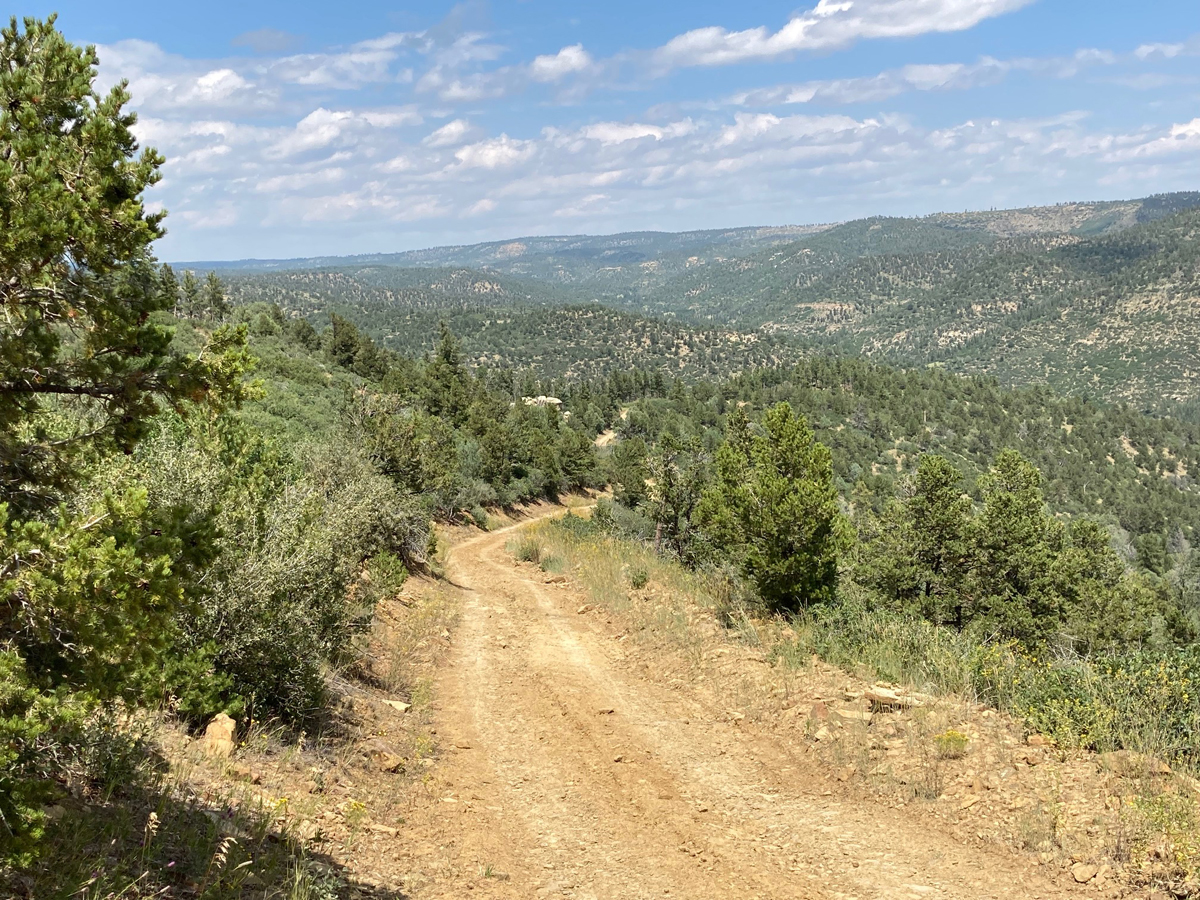
The route gradually ascends through pinyon-juniper forest, from 6400’ in Cimarron to a high point of 8600’ (over 9000’ at Windy Gap if doing the longer route). The first 30 miles or so climb up and out of Cerrososo Canyon, after the Spanish word ‘cerro,’ which means hills, and indeed there are plenty of them as we wend our way on relatively good hard-packed gravel through rimrock-lined defiles. Aside from a few of the race’s volunteers driving to their respective posts at several different aid stations, there is virtually no vehicle traffic—one of the many pleasures of gravel grinding, especially in sparsely populated northeastern New Mexico. Every now and then there is an 8-10% short punchy climb, and as one of the slower riders I quickly lose sight of the real racers participating in the event. No matter: I love gravel riding for the solitude and wildness and am better able to appreciate the beauty and quiet of my surroundings with no other riders around to distract me.
A local resident told me that Cimarron has received 10 inches of rain since April, and the meadows are greener and lusher than I can ever remember. And the sunflowers! There must be millions of them, head-high, lining and illuminating the roadsides with their bright yellow heads. Various sparrows, juncos, and bluebirds spray from the brush, and occasionally I hear the sharp keeeerrr of a red-tailed hawk patrolling high above in search of prey. Windmills dot the meadows too, and each cattle tank is brimming over with water, proof of a robust monsoon season this summer in northern New Mexico.
At the first rest stop, about Mile 17, I chat with the volunteer staffing the station. He drives truck for the Scout Ranch, ferrying scouts and supplies to various camps and outposts on the sprawling 137,000-acre property. This year has been a banner year for the Philmont, hosting over 26,000 scouts after 2 lean or non-existent years in a row because of last year’s pandemic restrictions and the massive Ute Park Fire the year before. After munching an energy bar, banana, orange slices and fig newtons, I thank him and wish him well, remounting my bike just as the last riders (so I’m told) pull up behind me. I will not see them again until the last aid station some 15 miles from the finish.
Around mile 30 the road descends into Lookout Canyon, where ponderosa pine predominate, and the Culebra Range makes an impressive appearance. Spanning the Colorado-New Mexico border, the Culebra (‘snake’ in Spanish) towers from 11,000’ to over 14,000’ in elevation, and the wide-open parks and soaring peaks make for a postcard-like view. Now comes the first of a number of steep twisty descents, down down down to Aid Station #2, at the Forest Service campground of McCrystal. A light burn has darkened the pine forest on the south side of the road, where new grasses are sprouting, and the fire-blackened tree trunks seem no worse for the burn. The volunteers at this aid station tell me the fire was “a good one,” clearing out the understory but not intensifying into a stand-replacing crown fire. Here I top off my Camelbak, eat some more food, chat with the volunteers and some fellow bikers, before moving on.
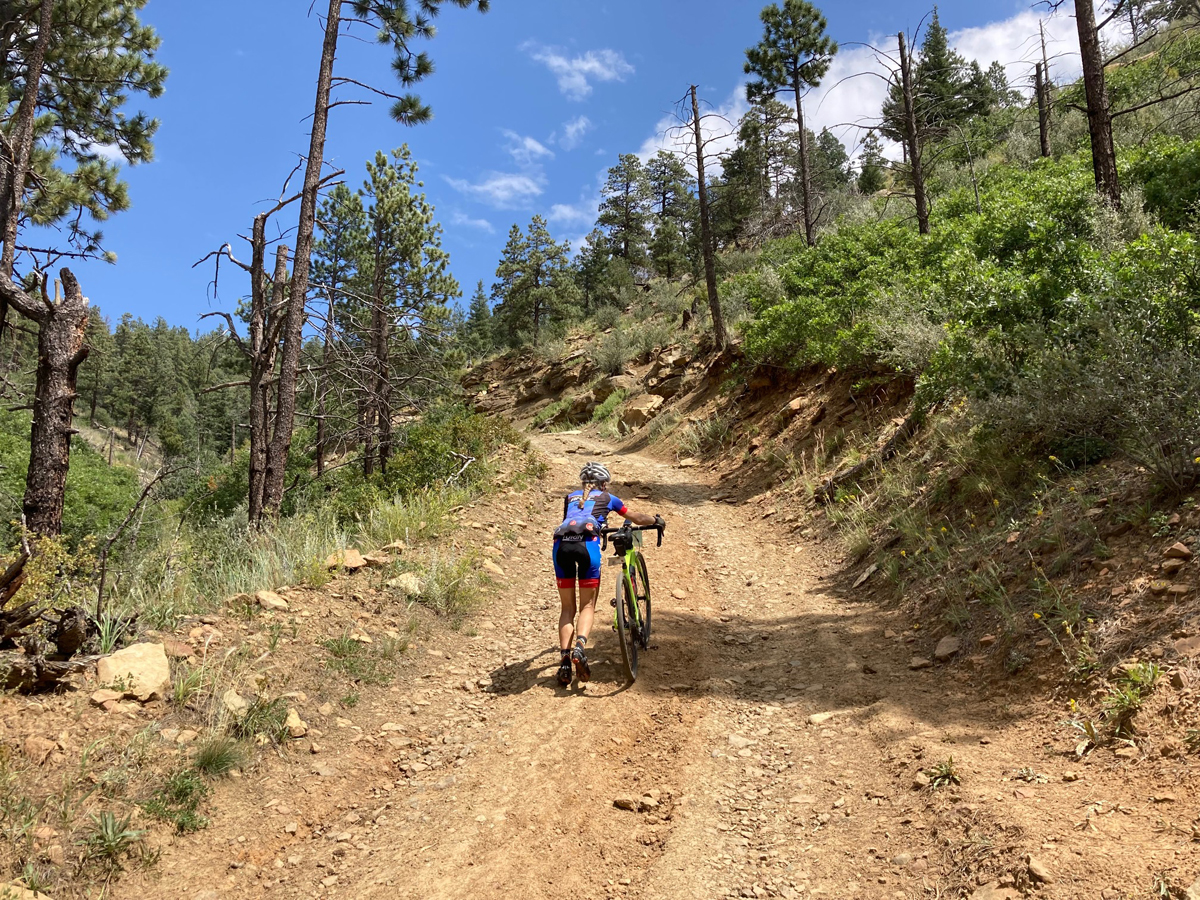
One of the stretches of route I have vivid memories of is the steep climb after the second aid station for a couple of miles up the Forest Service road to the junction for the turn on the shorter route. While the longer 78-mile route continues on up the decent gravel of the Forest Service road to top out at Windy Gap, the shorter 68-mile route turns left onto a more primitive jeep track. I’m riding a gravel bike with 40 mm tires, while a few other riders are on mountain bikes with half or full suspension using 2-inch plus tires, and here is where they clearly have an advantage. As the road gradually descends through thickets of pine and gambel oak, I have to be extra-vigilant watching for rocks, ruts, and sand traps, while the mountain bikers bomb past me easily riding over the obstacles.
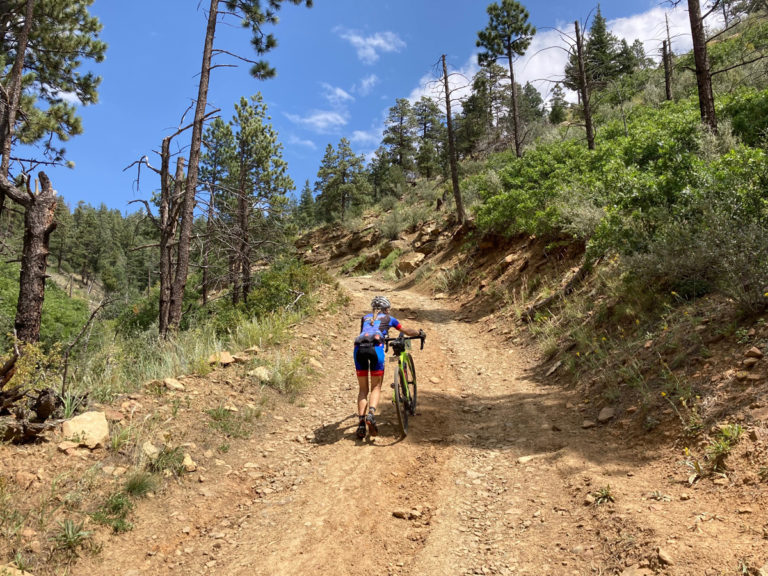
I call this long stretch of the route “Forever Mesa.” It’s beautifully diverse as we wend our way through younger forest, past lush meadows, occasional lakes, and cow ponds, sprawling old burns, and many Scout cabins that serve as base camps for forays into the wilderness. Eventually the primitive 2-track devolves into singletrack and turns into a fun descent through an old burn along an arroyo to Aid Station #3 at Dan Beard Cabins. It’s a strategically placed spot to rest and refuel before The Wall—a quarter-mile hike-a-bike up a 25-30% pitch featuring baby-head size rocks and deep ruts that, as far as I’m aware, no rider has ever been able to ride all the way up. Here I join with Martha, a fit racer from Colorado whom I remember from 2 years ago After doing the Cimarron Challenge for the first time, she told me “Never again!” Yet here she is once more, this time enjoying the ride and laughing when I remind her of what she said way back in 2019. Once we top out on Forever Mesa, she quickly disappears as I pause to take some photos. As the Navajo say, Go in Beauty.
Martha pushing her bike up The Wall. Cimarron Challenge 2021 Gravel Race. Photo by Don Scheese
Now comes the most fearsome, and dangerous, stretch of the entire route. The race organizer at the riders’ meeting repeatedly warned cyclists not to bomb down this part of the ride, because of the steep, rocky, rutted sections. And indeed, the monsoon rains have rendered these sections even worse, with deeper ruts exposing more rocks than ever. I gingerly dismount and walk my bike down a few of the worst sections and have a minor slow-speed crash on another section I try to ride. Slowly ever so slowly I descend into Ponil Canyon, with sublime views over countless corrugated canyons and ridges. I breathe a sigh of relief as I bottom out along the creek and end this white-knuckle stretch of the route. I then somehow manage to power my bike through a calf-deep creek crossing, and the cold water soothes my aching feet.
Descending into Ponil Canyon. Cimarron Challenge 2021 Gravel Race. Photo by Don Scheese
At Aid Station #4 I chat again with the volunteers and refuel for the final 15 miles or so of mostly downhill two-track through Ponil Canyon. Most of the riders have passed through, a few remain behind me, and a few have dropped out— “DNF” in racing parlance. The staffers warn me about 3 more creek crossings, but none as deep as the one just above. “Easy ride from here,” one of them says, but the truth is that it is never easy on the Cimarron Challenge. There are lots more sand traps on this stretch, more rocky stretches, not to mention a brisk headwind as the wind now shifts to the south. But it’s a beautiful descent nonetheless down a fire-scarred canyon with picturesque rimrock walls along a sunflower-lined road (“more sunflowers there than in all of Kansas,” one volunteer from that state tells me). Someday I’ll come back and ride at a more leisurely pace to check out the T-rex track and Anasazi petroglyphs close to the road. Today I am intent on making a respectable time and finishing the race.
After three more creek crossings (two of which I have to walk through), my drivetrain is making horrible noises and I worry about snapping a chain, but somehow it lasts to the finish line. Where the two-track joins with another tributary of Ponil Creek at Six-Mile Gate, the road becomes a county artery, flattens out some, and becomes smoother. I’m still feeling good as I pass the Chase Ranch property (allegedly home to the concept of the Marlboro Man)—I’ve smartly hydrated & eaten well the entire route—and while there is a bucking headwind at least the breeze is cool and refreshing, with temperatures never topping the low 80s.
Then comes the penultimate turn on Highway 64, the last few miles of pavement, then the turn back to the start point at the Brewery. What better place to finish a grueling gravel grinder and celebrate with a cold local brew?
Ever the English professor, I think of Whitman, who wrote:
Life Time increases field size from 40 to 60 following influx of diverse and worthy elite off-road athletes in the series’ inaugural year
BOULDER, Colo., Dec. 10, 2021 — Life Time, owner and producer of more than 30 renowned athletic events across the nation, today announced the 60 athletes who have been selected to compete in the 2022 Life Time Grand Prix series, which includes events such as Garmin Unbound Gravel and the Stages Cycling Leadville Trail 100 MTB. The 30 women and 30 men will face off across six events for a $250,000, equally-split prize purse.
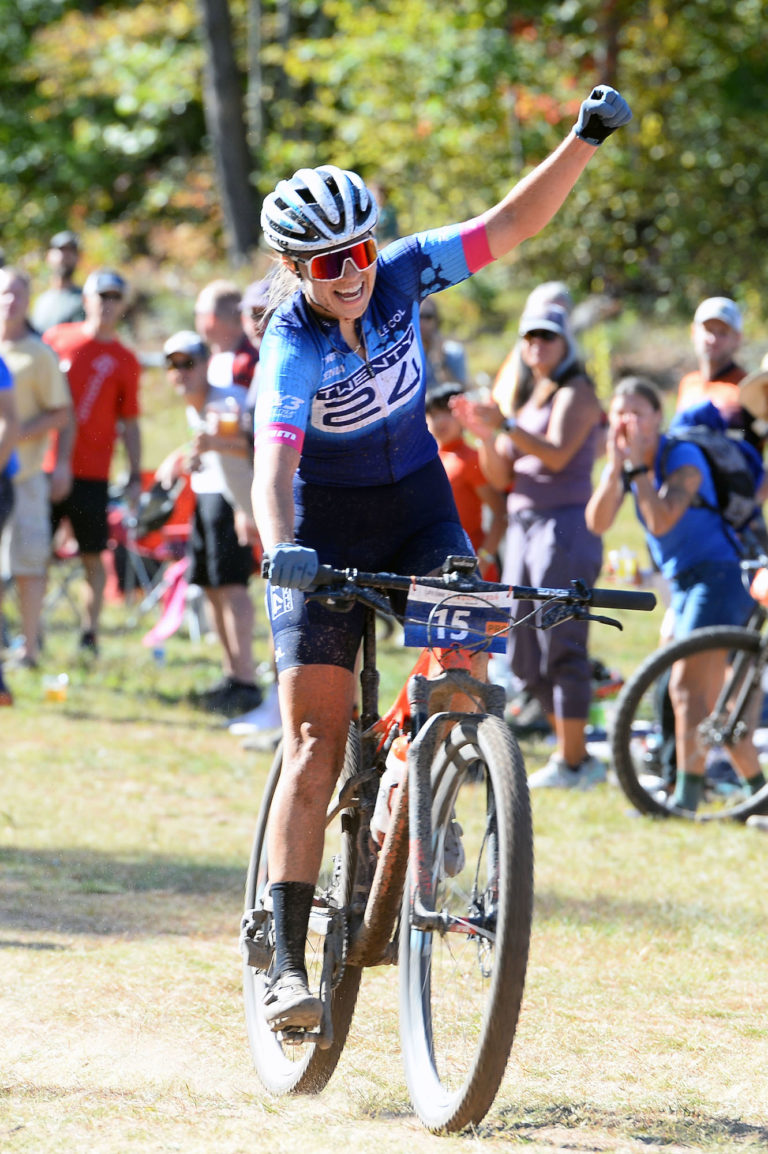
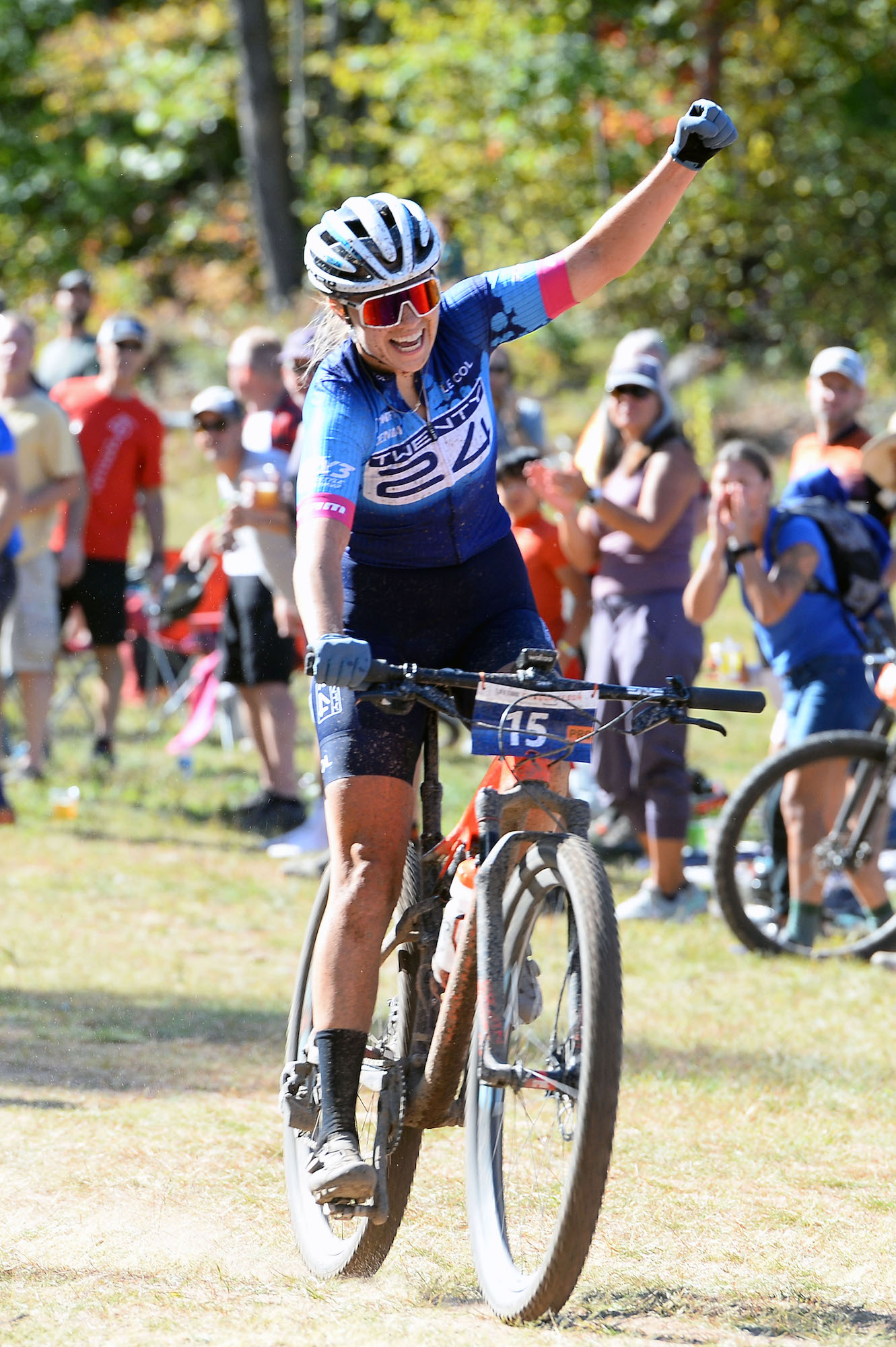
Melisa Rollins celebrates her win at the 38th Annual Chequamegon MTB Festival. Photo courtesy Life Time
Life Time Grand Prix: Elite Women
Whitney Allison, 33, Fort Collins, Colo., “Being an athlete is so central to my identity. A series with this range is such an interesting calculation of playing to your strengths and figuring out how to mitigate your weaknesses and I like that challenge.”
Kaysee Armstrong, 31, Knoxville, Tenn., “Every race I do that Life Time puts on pushes me and makes me stronger. The Grand Prix is finally a step in the right direction for supporting a new category of bike racing outside of world cups and world tour racing. Then you add in equal pay out for women for a real winning series.”
Lea Davison, 38, Jericho, Vt., “My work off the bike is LGBTQ+ advocacy, empowering women, and getting girls on bikes. I believe there is potential to enhance one or all of these efforts with the platform that the Life Time Grand Prix offers.”
Evelyn Dong, 36, Park City, Utah, “I want to dive deeper into endurance racing and these are all the premier events. I’ve raced Crusher which I loved, and Chequamegon where I need some redemption. But more than that I’m excited for the wide scope these events encompass, from Leadville to Unbound.”
Rebecca Fahringer, 32, Bend, Ore., “My professional cycling career is moving away from cyclocross-centric and into a focus on gravel and maybe mountain bike racing. The LTGP will give me a focus for my first season…”
Maude Farrell, 30, Mill Valley, Calif., “I’m curious about my physical capacities and ability. I’ve always been intrigued by challenges or events where competitors look like shells of their former selves…I can’t help but wonder “could I go deeper? The Life Time Grand Prix is an offer to experiment in pursuit of answers or clues…it’s an opportunity to pose the questions amidst other women who may be asking something similar.”
Helena Gilbert-Snyder, 22, El Cerrito, Calif., “…this is a rare opportunity for any cyclist to launch themselves forward in the sport, let alone a female cyclist, and I can’t stop grinning when thinking about being able to compete against top athletes all year as well as having a unique platform to further the advocacy I care about.”
Sofia Gomez Villafane, 27, Heber City, Utah, “I want to take on a new challenge of doing some really hard races all over the USA. I excel at 20 minute races, so I am looking forward to challenging myself on the longer events.”
Rose Grant, 39, Columbia Falls, Mont., “I am inspired by Life Time’s vision! Life Time is supporting professional bike racers, and by being a part of this series, I would be, in return, supporting Life Time and their vision.”
Erin Huck, 40, Boulder, Colo., “The Life Time GP represents a challenge unlike any other that I have pursued; there is an opportunity to win money; and it’s a series that is more than just a typical professional race series combining different types of events with a variety of participants from super elite to first timers…a cross section of the cycling community that is a big reason why I love racing.”
Isabel King, 30, Los Angeles, Calif., “I want to test myself with the best riders in the country and hopefully inspire others to do so as well.”
Kristen Legan, 36, Longmont, Colo., “What an exciting series of races and a great community of people! …I want to see what I can do against myself and against some of the most inspiring women on the gravel and MTB circuits.”
Rach McBride, 42, Vancouver, Canada, “I want to support Life Time gravel racing, the non-binary category and race to the top of the field!!”
Angela Naeth, 39, South Easton, Mass., “After more than 12 years of professional triathlon, I was lucky enough to discover gravel racing during 2021…I am in the process of proving that a triathlete CAN race bikes off-road, and be successful at it…”
Katerina Nash, 44, Emeryville, Calif., “I have a good experience and skill set that is required for this series.”
Amanda Nauman, 32, Lake Forest, Calif., “It’s an off-road cycling series that highlights a style of events I’ve been tackling for over eight years. I created my own mini series of events that I’d tackle when I wasn’t racing cyclocross and now it seems like everyone else caught up to this style and we’ll have a great narrative and story to tell along the way.”
Amber Neben, 46, Lake Forest, Calif., “Looks like an amazing series and would present a fun post-Olympic challenge.”
Emily Joy Newsom, 38, Fort Worth, Texas, “The gravel scene has been an opportunity for me to stay near home and yet be challenged beyond anything I’d yet experienced. The added challenge of learning the discipline of mountain biking excites me and I look forward to giving it my all.”
Flavia Oliveira-Parks, 40, Castro Valley, Calif., “…it is a huge opportunity for women in the sport of gravel. Equality at its finest. One of the main reasons I love gravel.”
Hannah Otto, 26, Salt Lake City, Utah, “…I want to be a part of this next movement in cycling. I believe this series encapsulates so much of what I love about the sport.”
Paige Peters, 32, Grand Rapids, Mich., “…I value the mission of these events. It creates a pathway for professional cyclists to have exposure and financial support on those endeavors. More importantly, this series will grow a fan base and following loyal to these events and riders. Through this fan base, my goals of inspiring others to ride and become healthier in the process can be achieved.”
Kathy Pruitt, 38, Saratoga, Calif., “…to see how I stack up against the best in a truly unique off-road series.”
Amity Rockwell, 28, San Francisco, Calif., “I feel like this is everything I have been building towards in my life over the last 7 or so years, since I first got it in my head I wanted to race bicycles. I wish to do everything in my power to keep growing, keep elevating the sport and its wonderful humans, and take a close personal role in shaping endurance off-road cycling into an equitable and profitable sport in America.”
Melisa Rollins, 26, Salt Lake City, Utah, “…this is the change that needs to happen for women’s professional racing to continue to develop and grow in the US. It incentivizes competition at amazing alternative events. It glorifies perseverance, and is effortlessly inclusive.”
Hannah Shell, 30, Boulder, Colo., “…gives me the opportunity to share my experience with gravel more broadly. I hope that through sharing it, I can motivate others to either start riding or reframe the idea that cycling events are only for the competitive elite…the community and inclusive nature of gravel is what makes it great, and I would love an opportunity to ensure gravel and MTB racing continues in that direction.”
Alexis Skarda, 32, Grand Junction, Colo., “Not only is the Grand Prix the preeminent MTB/gravel series, but it brings people together…it’s really exciting for all the participants to race together and get to have the shared experience of the challenge and triumph of such amazing races and locations.”
Haley Hunter Smith, 28, Uxbridge, Ontario, “…I believe it is both my future in cycling, and the future of cycling itself. This is where I stand to make the most positive contribution to the cycling community, and where the cycling community has the greatest potential to reach other people and grow.”
Sarah Sturm, 32, Durango, Colo., “When the Life Time Grand Prix was announced I was too stoked, after competing in LeadBoat this year I realized how much I wanted to balance a season of MTB and gravel, and then bam, this perfect series popped up! It would be a huge accomplishment for me to just participate in it…”
Moriah Wilson, 25, Mill Valley, Calif., “I did a lot of the Grand Prix events in 2021, and I have high hopes of coming back to them in 2022 and challenging myself even further.”
Ruth Winder, 28, Boulder, Colo., “Being so brand new to gravel I’m just super excited to start. I’ve been part of other series…each of them have had their own sets of memories and battles…I’d love to take part in another cycling series!”
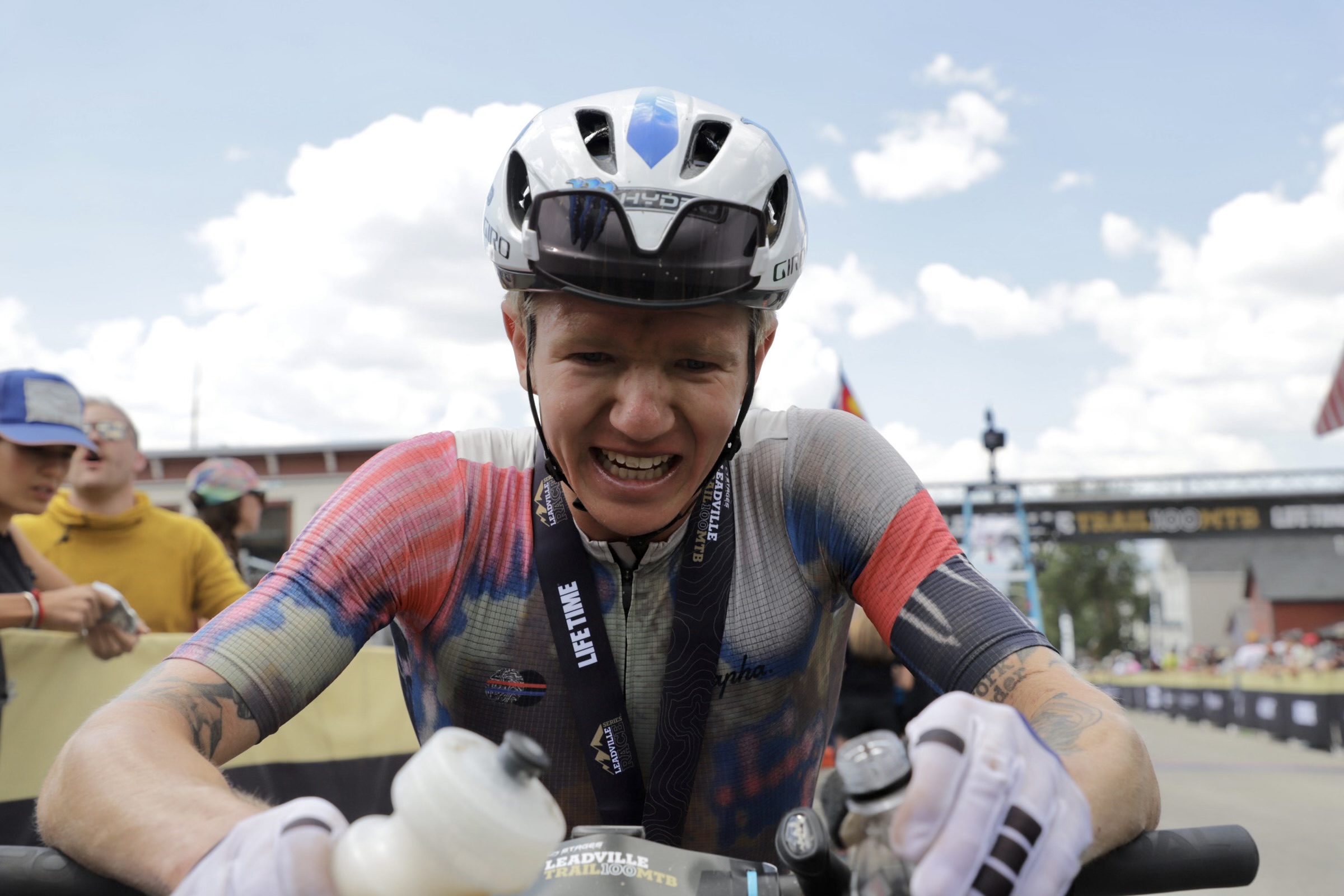
Keegan Swenson, shortly after winning the 2021 Leadville Trail 100. Photo courtesy Life Time
Life Time Grand Prix: Elite Men
Eddie Anderson, 23, Richmond, Va., “…I want to be a part of the biggest gravel races in the world and to thus help grow the sport of cycling by encouraging more people to come to these races and events. More than anything, I want to be a good ambassador for our sport on the biggest stage that gravel has to offer.”
Josh Berry, 31, Tucson, Ariz., “I have been waiting for a series to drive the direction of cycling in America and one that was a big enough challenge to reinvigorate the fight for the top spot…I believe this series – with its challenging mix of races – will be the pinnacle of our sport.”
Jeremiah Bishop, 45, Harrisonburg, Va., “To take part in the action and to share the sport with fans.”
John Borstlemann, 30, Lincoln, Neb., “…I love the idea of a series that will test everyone’s abilities over the length of the season on a wide variety of distances and course profiles, because I think it will make for compelling and exciting competition.”
Rob Britton, 37, Victoria, British Columbia, “When I think or talk about taking part in these events I feel the smile come back to my face and that excitement I used to have for “pinning on a number” returns and that feels really, really good. I’m new to this side of the sport and I’m so stoked to be a part of it and the atmosphere around these events!
Stephan Davoust, 26, Durango, Colo., “This is going to be the premier cycling series in the US and I feel like I have made a name for myself as one of the Top MTB athletes and I’d like to assert myself as one of the top endurance athletes in the US.”
TJ Eisenhart, 27, Ivins, Utah., “I love these events and the culture that surrounds gravel and mtb. To be a part of this growing culture is amazing. Love to bring my personality and good vibes to all the events!”
Russell Finsterwald, 30, Colorado Springs, Colo., “I feel the 6 events encompass what cycling in the US is today and they are the events that are leading the resurgence of cycling in the US.”
Howard Grotts, 28, Missoula, Mont., “I think that the Life Time Grand Prix has the potential to be a premier cycling series in the U.S. The mix of mountain bike and gravel racing is unique and doesn’t cater to a single riding style, which is also attractive as equipment becomes more and more versatile.”
Lance Haidet, 23, San Luis Obispo, Calif., “I believe the series is truly a step forward in what it means to be a professional bike racer in America. I want to be involved in a series that brings out the passion for cycling within each athlete, and I believe the multidisciplinary nature of the Grand Prix can accomplish this.”
Alex Howes, 33, Nederland, Colo., “American racing needs continuity and it needs a season-long narrative if it’s going to continue to grow. I want to be part of that narrative. I don’t know if I’ll be a hero or a villain but however the role evolves, I’ll play it with full heart.”
Dylan Johnson, 26, Brevard, N.C., “I love gravel and MTB racing and I want to compete at the highest level in the US.”
John Keller, 24, Boulder, Colo., “I want to demonstrate that gravel racing is something anyone and everyone can do regardless of gender, ethnicity, education or where one lives. Gravel racing is challenging no matter the level you race at, but at the end of the day it’s a long ride before a great party.”
Ted King, 38, Richmond, Vt., “Inadvertently or otherwise, I’ve been on the forefront of gravel racing as it’s unfolded over the past six years. So to be part of the first national series that the world has ever seen is quite meaningful.”
Andrew L’Esperance, 30, Halifax, N.S., “I want to be a part of the rising tide of North American bike racing, which is embodied by the events in the Life Time GP. This series is where the best cyclists from multiple disciplines will be congregating, and I want the chance to challenge myself alongside them.”
Ashton Lambie, 30, Lincoln, Neb., “I’ve been racing gravel on and off for several years, and love the community and opportunity to inspire riders of all levels to take on new challenges.”
Bradyn Lange, 22, Austin, Texas., “To be part of the pinnacle race series in America for 2022 is not only a huge opportunity for me, but also for all of American cycling. What Life Time is working to create is special, and stands so much bigger than any bike race could. Life Time focuses on inclusivity, and to unite people from all different lifestyles and skill sets…I want to support by being part of.”
Taylor Lideen, 31, Phoenix, Ariz., “I truly feel that this series will help put American cycling on the radar for athletes all over the world. We have so much amazing talent in the US, and the terrain/places to ride in our beautiful country make it the best place to ride and race bikes all while our community remains inclusive, welcoming, humble and competitive.”
Payson McElveen, 28, Durango, Colo., “…this series feels like the culmination of striking out on my own, non-conventional path about 6 years ago. This consolidation of events, that for years I have already been passionate about, is a dream come true. I think this is just the beginning, and I want to continue to play a key role in the development of that history.”
Lachlan Morton, 29, Girona, E.S., “… I think it’s going to change cycling in the USA for the better.”
Logan Owen, 26, Bremerton, Wash., “I’d like to be part of the Life Time Grand Prix in order to contribute to the next phase of competitive bicycle racing in America. The age of gravel is here and the events in the LTGP offer the chance for racers to contribute to the overall growth and success of our sport, and help make doing so a profession.”
Cole Paton, 24, Durango, Colo., “Life Time is changing the landscape of being a professional athlete in the United States. It’s activating America’s talented Off-Road racers and creating a community around their events to support growth in the sport.”
Kiel Reijnen, 35, Bainbridge Island, Wash. “Gravel racing has yet to be defined, or perhaps more accurately, to be confined, by strict structure, governing bodies, traditions and unwritten rules. The Life Time Grand Prix is the first of its kind. It is helping create a new vision within the world of cycling…”
Adam Roberge, 24, Prévost, Québec, “To win it and make sure it gets as much attention as possible because this type of event will in my opinion save cycling in America.”
Peter Stetina, 34, Santa Rosa, Calif., “…to grow offroad racing in the USA, to help promote the series and the effort behind it, to fight for truly professional worthy prize money, and to be a part of this inaugural effort.”
Colin Strickland, 35, Austin, Texas, “The GP sounds like an amazing showcase of the all-around talent of off-road specialist bike racers.”
Keegan Swenson, 27, Heber City, Utah., “I think it is a great opportunity for us professional athletes to showcase what we can do on one of the biggest stages we have ever had in the USA.”
Laurens Ten Dam, 41, Oudorp, Netherlands, “The racer inside me is still alive and there is a lot of excitement when I think of testing my body once more. I am up for a challenge once again!”
Alexey Vermeulen, 26, Pinckney, Mich., “I want to be part of the future of American Cycling. Riding bikes is cool and I want to help show that to thousands of people next year.”
Alex Wild, 29, San Jose, Calif., “I believe it will be the premier cycling series in 2022 and with the growth of gravel cycling I’d love to be a part of it.”
The $250,000 prize purse will pay out ten-deep based on overall series results, which are determined by a points-based ranking system. First place will earn $25,000, second place will earn $20,000, third place will receive $16,000, and so forth. Three events—Crusher in the Tushar, Chequamegon MTB Festival, Sea Otter Classic—offer individual event purses, which Life Time Grand Prix athletes are also eligible for.
Athletes will be ranked against other Life Time Grand Prix competitors by points received based on their finishing position at each event. The first athlete will earn 20 points, second,19; third, 18; and so forth. The overall results will use an athlete’s best five finishes out of the six events. The final event of the series, Big Sugar Gravel, will be mandatory for all riders and will serve as a tiebreaker in the event of a tie.
“We were overwhelmed with the responses from over 200 applicants for the inaugural Life Time Grand Prix,” said Kimo Seymour, President of Events and Media at Life Time. “The selection process was incredibly challenging, and ultimately we decided to increase from 40 to 60 total riders. We want to send our sincere thanks to all the athletes who applied and congratulate those that have been selected. Our intent was not only to establish a competitive field, but also a group of athletes that will be great advocates for the growth of professional cycling in North America.”
By John Higgins — Google “bike fitting for mountain bikers” and peruse some forums and the results are high on opinion and generalities and low on useful information. As a competitive mountain biker myself, who experienced a transformational riding experience as a result of a bike fit (by someone else), I’m always intrigued by the general attitude of dismissal that mountain bikers have for bike fitting. Would all mountain bikers’ benefit from a bike fit? Maybe, which is a yes for some riders and a no for others. Compared to road cycling, there are a lot more variables at play in mountain biking, and fit is only one of those. It’s probable that some of the other variables are more limiting to a rider’s experience than their bike fit, but that is not to say fit is irrelevant.
A bike fit can lead to more power and better control. Here, Brandon Firth rolls on in the Elite Men category at the Stan Crane Memorial Intermountain Cup on May 30, 2016. Brandon has benefitted for years from a bike fit.
Compared to riding a road bike on pavement, mountain biking on trails:
Is more of a whole body workout and can be a lot more physically demanding
Requires a more dynamic riding style of being in and out of the saddle and general movement on and over the bike
Requires a different (arguably higher) level of bike handling skill
Alternates between efforts of low power (descending when not pedaling) to high power (steep climbs)
Has more “bike set up” variables including tire choice, tire pressure, suspension settings, saddle height (dropper post)
All this means mountain biking is more demanding on the body, but there is often frequent interruption to a static body position and steady repetitive action that are hallmarks of road cycling, and this often serves to disguise or mask any issues with a fit position.
The primary drivers of fit on a bicycle are: comfort, efficiency, power, aerodynamics and control.
Comfort is king because if you are not comfortable riding is not enjoyable, and if it is not enjoyable, why ride? OK, some of you will say for the suffering, because you like to suffer. But there is comfortable suffering and uncomfortable suffering. Comfort also impacts all the other fit drivers. What’s comfort? The absence of aches and pains, both short term (during and after a ride) and long term (maintain healthy joints, muscles and connective tissue). Aches and pains can be a result of:
Being out of shape for the duration and intensity of riding you are doing
From pre-existing injuries, or functional movement limitations from modern lifestyles
A poor boy position on your bike, creating bio-mechanical and equipment – induced stress.
If you cannot go mountain biking without a dose of Advil before, during or after, then something is up. Improving comfort may require getting in shape by not only riding regularly, but also doing off bike strength and conditioning training, which could include body weight movements, weights, yoga or pilates. If discomfort persists when you know you are in shape, then the cause may well be equipment-induced, i.e. your body position on the bike.
Power and Efficiency are going to be determined by your physical and physiological conditioning, pedaling technique, terrain reading and gear selection. If your saddle height is too low or high, then that can detract from optimal power generation, and if you are too cramped or stretched from saddle to bars, then that can detract from efficiency and comfort, but there may be a lot to work on before your bike fit position becomes the limiter.
Aerodynamics is largely irrelevant for mountain bikers, but may factor in slightly for long distance endurance racers.
Control is about being able to safely handle your bike, negotiate the terrain, and stay upright and on the trail. It’s about maintaining traction, cornering, descending, climbing, and negotiating obstacles by being able to move your body about the bike by keeping your center of mass low and balanced. Control is almost assumed on a road bike. On a mountain bike it is of critical importance, and should not be overlooked. Other than bike style and geometry, the big factors affecting control are rider skill, bike set up and bike fit.
Rider skills camps have boomed in popularity in the past few years as many mountain bikers have realized their bikes are way more capable than they are. Bigger gains can be had from learning how to ride your bike better, not by spending up on the latest heavily marketed product innovation. If control is lacking, then it is likely that riding skill is also lacking. Mountain biking is not an intuitive natural activity. It takes learning and practice.
Bike set up and bike fit are closely linked, and a thorough mountain bike fit will include attention to set up. Set up deals with the mechanical variables of suspension setting, tire selection and pressure. Bike fit deals with your direct contact points to the bike (feet to pedals; butt to saddle; hands to bars), and your body position on the bike. Being centered and balanced on the bike and able to easily move around over the bike is very important for maintaining control. If your center of mass is too far back, the front wheel will have a tendency to wander. Uphill this will make it harder to maintain a line; and in corners the front wants to slide out. If your center of mass is too far forward you can lose traction climbing, have trouble unweighting the front end to negotiate step-ups or washouts and be more prone to endo-ing on technical descents. Now a lot of this has to do with skill, but a better position makes the application of skill easier, and with less body input.
So would you benefit from a bike fit? Probably not, if it is your fitness or skills that are holding you back, or you ride easy trails at low intensity for shorter (under 2 hours) time periods. But if you have persistent aches or pains; you have bought a new bike and your bike control feels worse, not better; or you have competitive intentions and want to optimize your potential, then give it some consideration. By all means experiment with your own fit position. Mountain bikers are often self reliant do-it-yourself types. I’m one of them. I’d rather work on my own bike than take it to a shop, but when I can’t figure something out or fix it myself, I’ll take it to a shop. Next month – some “how to’s” on figuring it out for yourself.
The USA Cycling National Team Member will begin training for potential missions to the moon and work on the International Space Station.
HOUSTON, Texas (December 7, 2021) — USA Cycling National Team member and Tokyo 2020 Olympic Long Team member Christina Birch, Ph.D. (Gilbert, Ariz.), has been selected for the Astronaut Class of 2021. Birch has represented the U.S. at multiple World Championships, is a three-time World Cup Medalist, two-time Pan American Games Gold Medalist, and an 11-time National Champion. Now, she will start a new adventure off the bike as she begins her two-year Astronaut Candidate (ASCAN) training in January for the Artemis missions: the goal being to return to the moon.
Christina Birch. Photo courtesy USA Cycling/Casey B. Gibson
“I am super excited to be a 2021 Astronaut Candidate. It is a little still surreal for me. It wasn’t probably until I put on the blue flight suit for the first time that it actually started to feel real. I distinctly remember when I submitted my application to be an astronaut candidate. I was sitting in the dorm rooms at the Olympic Training Center in Colorado Springs, and it was in between track workouts. I filled out my application online before we headed back to the track for some really hard efforts with the team. After the Olympic selection, I had a couple of interviews at the Johnson Space Center in Houston. Each one just left me feeling like this was a better fit for me and what I wanted to be doing, and that this is an environment that I really loved and would want to be a part of. Now that I’m here and I’m getting to know my classmates, it is just the most incredible team environment I could ask for especially coming from cycling, where that’s something that I really enjoy,” said Birch.
Birch progressively made her way through the application process and was stunned to learn that she made it into the final ten selected for the Astronaut Class of 2021. This group was selected out of 12,500 applicants. She said, “It feels unreal. It’s sort of a dream. You’re holding your breath this whole time throughout the application process, hoping that you’re going to make it. I met so many incredible people during the interview process. Everyone is incredibly qualified. Everyone would bring something unique and powerful to the program. So, it really just feels like I won the lottery.”
Christina Birch and Team USA at the 2019 UCI Track World Championships. Photo courtesy USA Cycling/Casey B. Gibson
As an accomplished cyclist, Birch is excited to put those experiences to the test on this new mission. “I definitely think that being in sport and taking it to a really high level and trying to be the best athlete that I could be really helped me in the application process and is going to serve me well going forward,” she said. “I think that it’s going to be a requirement to show up every day and give 100% to my training. Just like I was training in cycling, I now have two years of really intensive training to graduate to become an astronaut assigned to potential missions to the moon and go do science on the International Space Station. So I think having a lot of comfort and familiarity going into unknown difficult processes, and still bringing 100% even when you’re tired, those are lessons I learned as a cyclist that are going to serve me really well as a candidate.”
As one can imagine, Astronaut Candidate training will be extremely intensive and challenging. Birch said, “I’m really excited about the Astronaut Candidate training because it’s very diverse, so we have several main areas that we’re going to be trained in. Some of those are the space station systems, Russian language, robotics, spacewalk training, and all of those are really exciting and interesting to me. They’re all going to pose their own unique challenges, but you know, similar to how I would rely on my teammates at the track, I have all of my classmates here that will have different strengths than I have. We’re going to help each other through this, and we are absolutely going to get through our training together as a class.”
When asked about her riding during these next few years, she said, “I’m definitely still going to keep riding and racing when I can. I’m excited to get to know the roads around Houston. There is a velodrome in Katy, so I hope to see what that’s all about. It’s just really important that I stay physically quite fit and ready to tackle the training and keep my body ready for, hopefully in the next few years, some sort of spaceflight or long-duration mission.”
Birch had to be qualified to get to this point in her space mission. She received her undergraduate degree at Arizona State University in Biochemistry & Molecular Biophysics and Mathematics. Then received her Ph.D. at the Massachusetts Institute of Technology (MIT) in Biological Engineering. Interestingly enough, she got her start in collegiate cycling at MIT. Birch said, “I definitely got my start, especially in cycling, at MIT. MIT Cycling Team was super supportive. We had an incredible women’s team that was really fast, which inspired me to get faster and race more. That is certainly how I eventually got the opportunity to race on the national team was from starting to race collegiately. You mentioned you’re at cyclocross nationals, that was my first discipline racing cyclocross, so it has a warm place in my heart for that. For me, the balance between riding at MIT and working in the lab was essential because my lab work was pretty solo and isolating. I was super focused on my experiments, and it took a lot of time, having the team environment to come back to, to push myself in a new and different way, a really helpful balance. I think this will be a really exciting next couple of years because the training is going to be very similar, I think. It’s going to be both intense, isolated study, but also part of a team and doing a lot of training together as a team.”
Earlier this year, she also took on a different role in cycling. Her partner, Individual Pursuit World Champion, Ashton Lambie, attempted the 4k World Record, and she was the all-in-one support staff for him. Birch acted as a coach, mechanic, soigneur and did anything she could to prepare him for that effort.
Birch commented on the effort, “It’s definitely a different experience to be the supporter, the mechanic on the sidelines, versus the racer, and I honestly think it’s probably easier to be the person racing because there’s actually more actions you can take to affect the outcome. Being the supporter was a fun and interesting role for me because there were lots of different elements I was trying to think of and trying to really prepare Ashton as best as I could to go off and do his job and to just execute the task that we had. I was still just as nervous as if I was racing. I think both of those roles; being the person tasked with executing the mission or the person that’s supporting the people that are doing that intensive work, I think you can’t have a mission success outcome like that without both roles, so I think it’s important to take part in both processes.”
Birch closed out her interview showing immense gratitude for the sport of cycling. She said,” I just really want to reiterate how awesome it was to be a part of the cycling community and just to encourage everybody that is out there that is interested in space to keep tuned in. It’s great to share this journey with everybody.”
Birch has now moved to Houston with Lambie, where she will begin her training at the Johnson Space Center.
You can follow along on Instagram at the NASA Johnson Space Center and the NASA Astronauts pages. Birch will be going through extensive training the next few years but will post updates on her personal page, @huplikewhoa, when she can.
COLORADO SPRINGS, Colo. — USA Triathlon has unveiled the dates and locations for the 2022 State Championships, a robust calendar of local, USA Triathlon sanctioned events in all 50 states that will give athletes around the country the opportunity to race for state titles, earn event All-American Honors and qualify for the Toyota USA Triathlon Age Group National Championships.
Photo by Dave Iltis
“Racing is coming back in a big way in 2022, all across the United States,” said Rocky Harris, USA Triathlon CEO. “Local races in our communities exemplify the spirit and fun of our sport and I encourage all triathletes, from the experienced to the newbie, to race in your State Championship next year. Let’s celebrate another year with races coming back and let’s support our dedicated, local race directors who produce first-class events.”
State Championships are open to all triathletes, as no qualification is required to compete. Most State Championships include a non-drafting Sprint- and Olympic-distance race for age group athletes, as well as a high school championship division in the Sprint-distance race. The top overall male and female athletes and top athletes per age group in the Sprint-, Olympic-distance and high school races will be crowned state champions.
In addition to racing for state titles, athletes racing at State Championships will also have increased odds to qualify for the Toyota USA Triathlon Age Group National Championships, the annual event that requires qualification and brings together the best U.S. age group triathletes in the Sprint- and Olympic-distance. State Championships will qualify the top 35 percent, or top five finishers in their age group (whichever is greater) for the 2022 or 2023 Toyota USA Triathlon Age Group National Championships. Normal qualification criteria is the top two, or 15 percent of an athlete’s age group (whichever is greater). Any high school state championship finisher will automatically qualify for Age Group Nationals Sprint-distance.
State Championships held after June 1, 2022 will qualify athletes for both the 2022 and 2023 Toyota USA Triathlon Age Group National Championships. The 2022 Toyota USA Triathlon Age Group National Championships are scheduled for Aug. 6-7 in Milwaukee, Wisconsin.
By Howard Shafer — We did not go to Utah during COVID-19 in order to bicycle, although once there, it would have been foolish of us not to. No, we went because dental implants are much more expensive in our California paradise than in Utah, and the difference easily paid for the trip with some left over. We weighed the cost savings versus the menace of travel in the days of the corona virus and went. We arrived in Utah during the week of Adventure Cycling’s Bike Your Park Day, so of course we were going to bicycle. The only question was to which park would we bike?
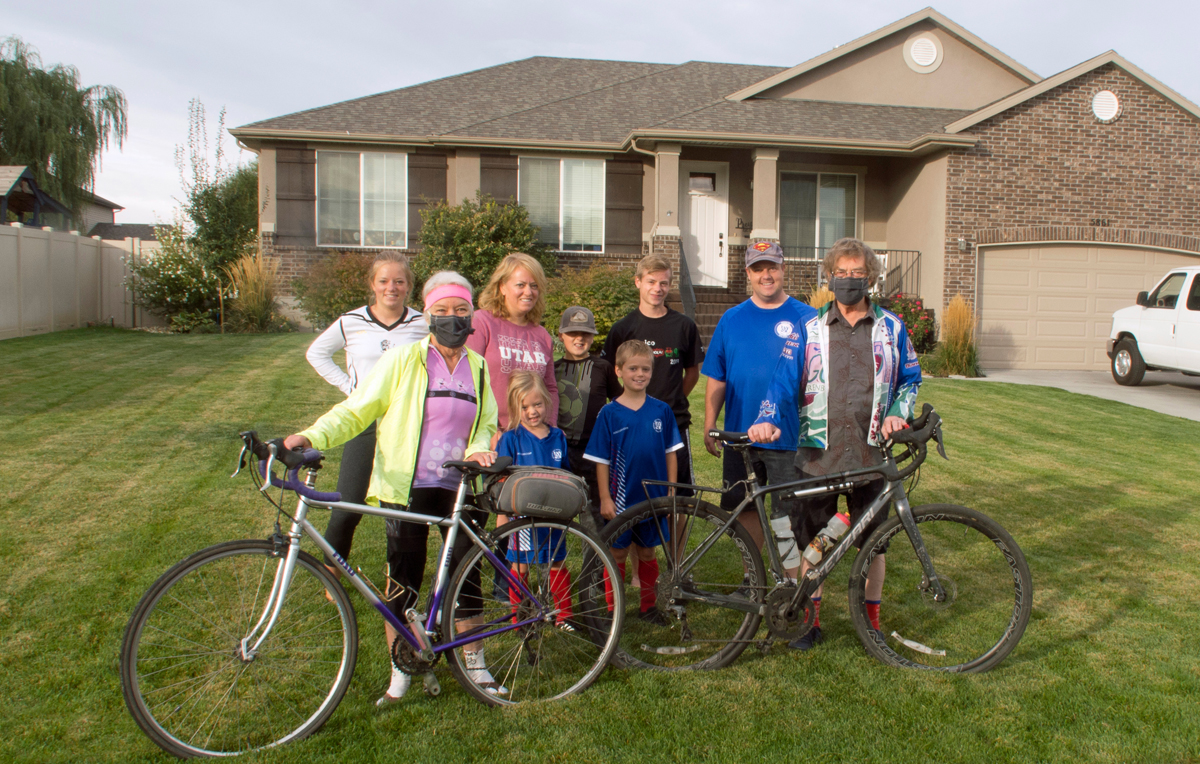
Howard’s niece and her family in Hooper at start of ride. Photo by Howard Shafer
Utah is known for its many spectacular national and state parks, but most are located in central and southern Utah, whereas we would be up north near Ogden. And we were looking for a day trip, not a week-long tour, because overnights on the road just increase the COVID risks. We focused on Antelope Island State Park, the largest of the Great Salt Lake islands, and, we were told, a haven for bicyclists and other large mammals.
That is why, at 9 am on the morning of September 26, 2020, wearing masks in celebration of the pandemic, we unloaded our bicycles from our Subaru in front of the well-manicured lawn of an attractive, two-story, Mormon home in the town of Hooper, Utah where my niece, her husband, and their five children live. Hooper is one of several expanding towns spreading out in the flatlands between the Wasatch Mountains and the Great Salt Lake. The oldest son, having just turned sixteen, let us admire his very own driver’s license, while his younger brother who was leaving for a class where he would learn to shoot a shotgun, carried a weapon, which was practically as long as he was tall. Such a class that would have been very unlikely in Silicon Valley, California. We visited on the family’s lawn because going into their home would have presented a COVID risk to the family that it didn’t need.
After our hellos, we removed our masks and bicycled south through old farms and new housing on straight, secondary highways with narrow shoulders. We passed rows of newly half-built, five-bedroom houses plus the occasional old farm featuring the narrow, two-story, original yellow brick construction of nineteenth century, Mormon pioneer homes. Sometimes, we passed homes flying black-and-white versions of American flags with one stripe blue instead of black. These flags, we were told, assert that “Blue Lives Matter,” referring to the dangers the police experience in carrying out their duties, a very commendable concern. We were more familiar with the “Black Lives Matter” banners on northern California lawns (where droughts are doing their best to relieve us of these lawns), which address a very different concern. Admittedly, we Californians are hardly in a position to lecture.
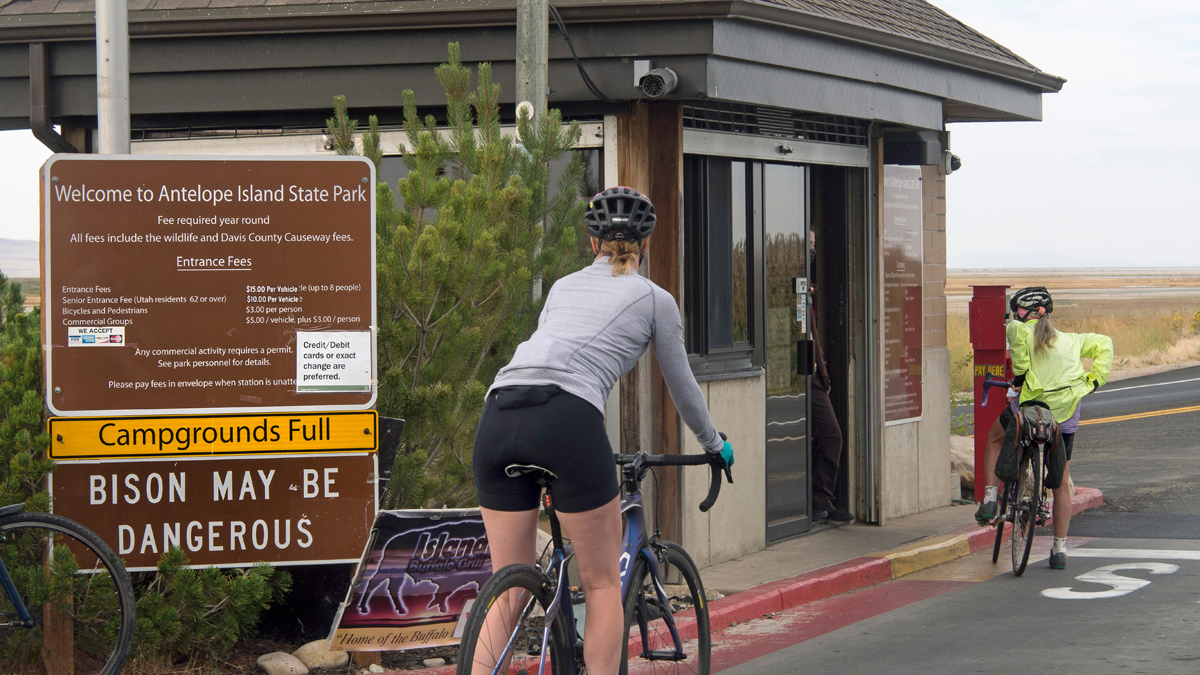
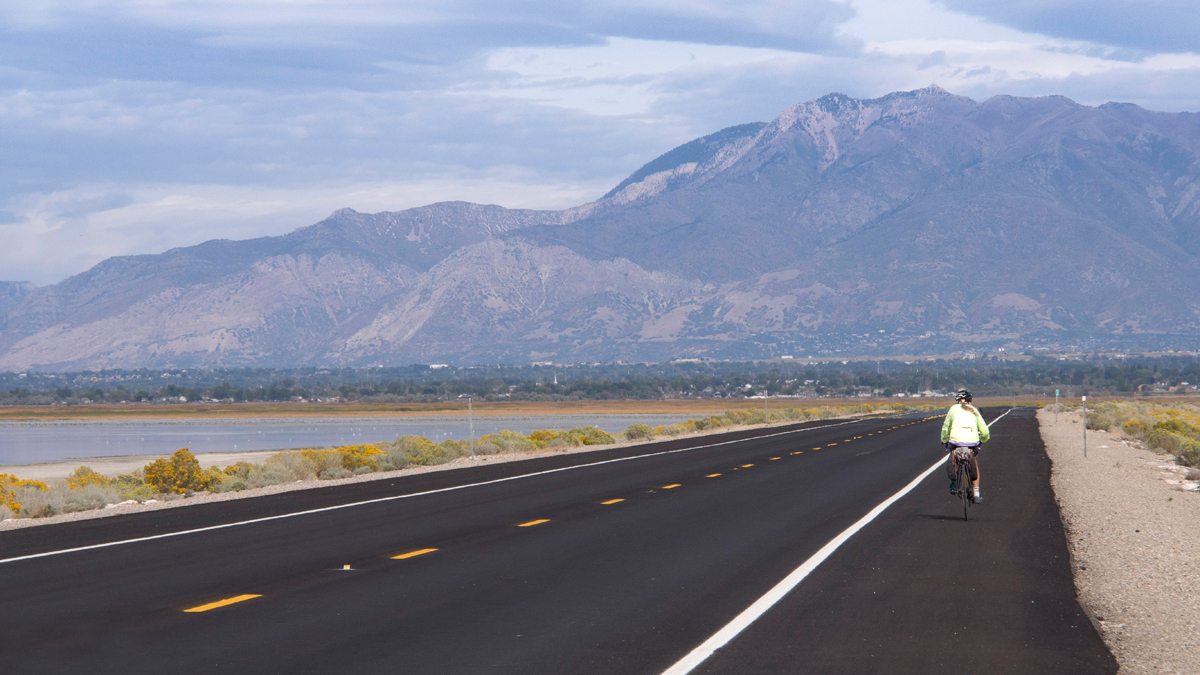
Antelope Island is reached via a seven-mile-long causeway across Farmington Bay from the east side of the Great Salt Lake. We dutifully donned our masks to go through the tollbooth and were charged three dollars per bicycle. On our way again, we followed a highway with wide bike lanes bordered by salt flats and salt water.
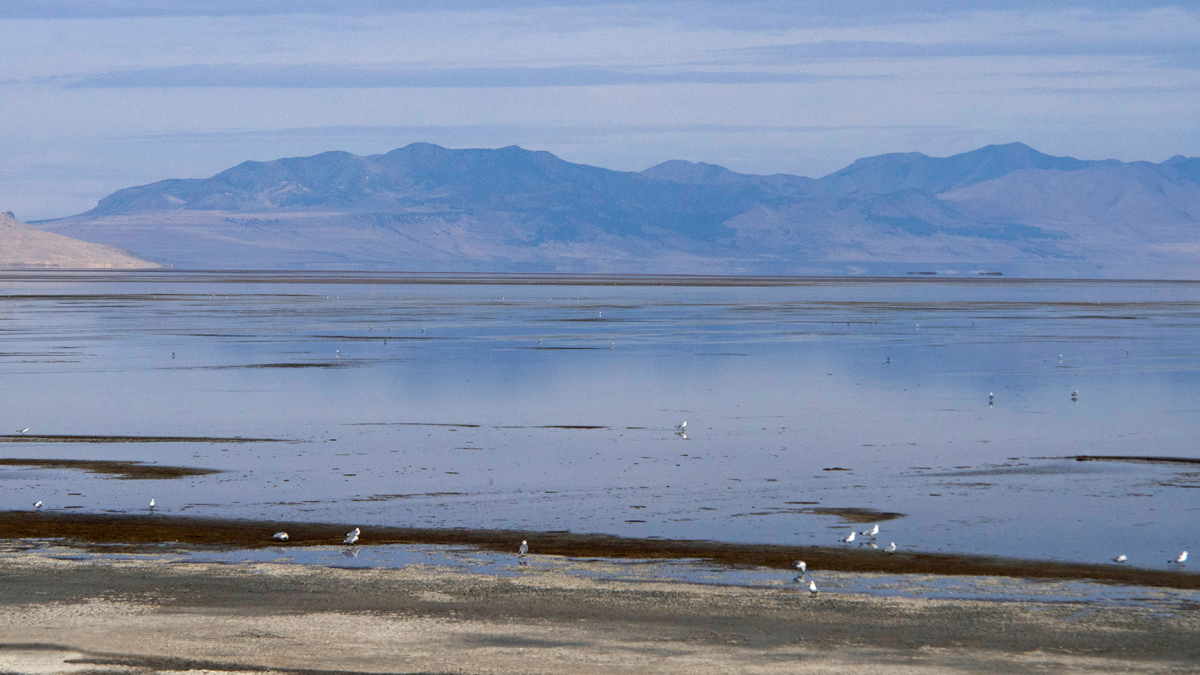
Promontory Point can be seen across the water to the north. Photo by Howard Shafer
Across the water to the north, partially obscured by Fremont Island, we saw the barren hills of Promontory Point, where, in 1869 the Central Pacific Railroad from California met and was joined via a golden spike to the Union Pacific Railroad from the East, thus completing the first intercontinental railroad. You can go to the Golden Spike National Historic Park and watch re-enactments of the Golden Spike ceremony complete with beautiful replicas of the two engines that took part in the original ceremonies: the Central Pacific’s Jupiter and the Union Pacific’s No. 119.
To the south, across the causeway, under a dome of gray sky, Antelope Island rose out of water so shallow, it sometimes dries up entirely. That gray sky had us worried. Would it rain? Our part of California does not allow rain in September. In fact, the city of Cupertino (the world headquarters of Apple Computer) is rumored to have once passed an ordinance that tried to permanently outlaw rain.
The trip to Antelope Island appeared immensely popular with cyclists. Many riders passed us on their morning workouts while we tourists stopped to take photos of the stark yet grand vistas on either side. Those cyclists would have passed us anyway. Their lungs were used to this 4000-foot plus elevation. We live close enough to sea level that global warming might someday bring San Francisco Bay water to lap at our feet. The first things we saw as we neared Antelope Island were the Antelope eBikes rental office, a marina with no boats (after all, it was the cold end of September), and on a low hill behind them both, the park visitor center.
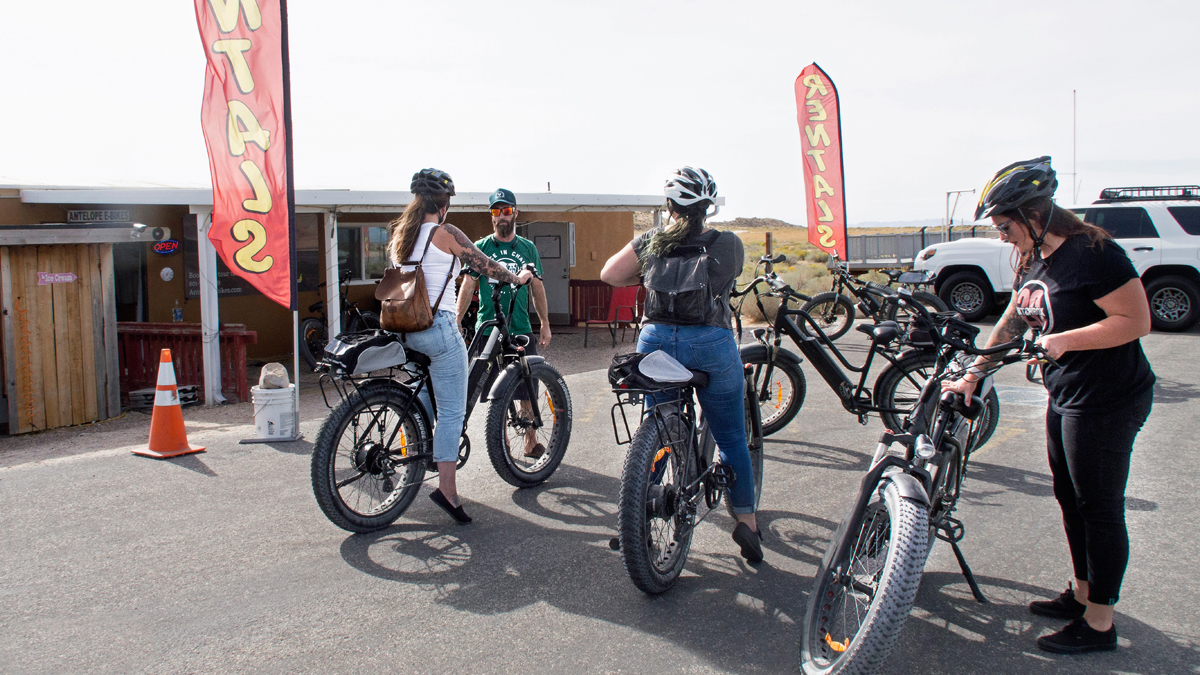
On our return, we stopped at the eBike rental. Photo by Howard Shafer
Tice Child, who did not wear a mask (a surprise for us Californians but not so rare in Utah at that time) and who with his wife runs Antelope eBikes said that both his rentals and his guided tours were wildly popular and had been featured on several TV programs. He rents several models of fat-tire Bakcou eBikes as well as the Evolve e-Longboard. We encountered his eBikes several times on the roads and trails we rode. I myself have often entertained less than complimentary thoughts when passed by an eBike. After all, I reason, I’m building muscles, strengthening my heart, and reducing global warming all while travelling under my own steam. Someone told me that eBikes are like crack to bicyclists. Once you start, you can’t quit. If it’s that bad, I tell myself, I’ll never get addicted because I’ll never start. I’ll just say No!
On the other hand, one well-known mountain bike photographer known professionally as Photo-John (Google him and see his fantastic mountain biking and skiing photographs) who just happens to be my son insists that eBikes introduce bicycling to people who would not otherwise ever bicycle, and that even seasoned cyclists often find they ride farther and end up with more exercise on eBikes. He claims that an eBike would not be amiss in helping him lug his thirty-five pounds of camera equipment up single-track trails, and who am I to argue with that? Moreover, I’m told, if people got on eBikes instead of into cars, it would reduce global warming a lot more than my piddling effort.
Antelope Island Park entrance with warning about bison. Jacquette Ward pays the entrance fee. Photo by Howard Shafer
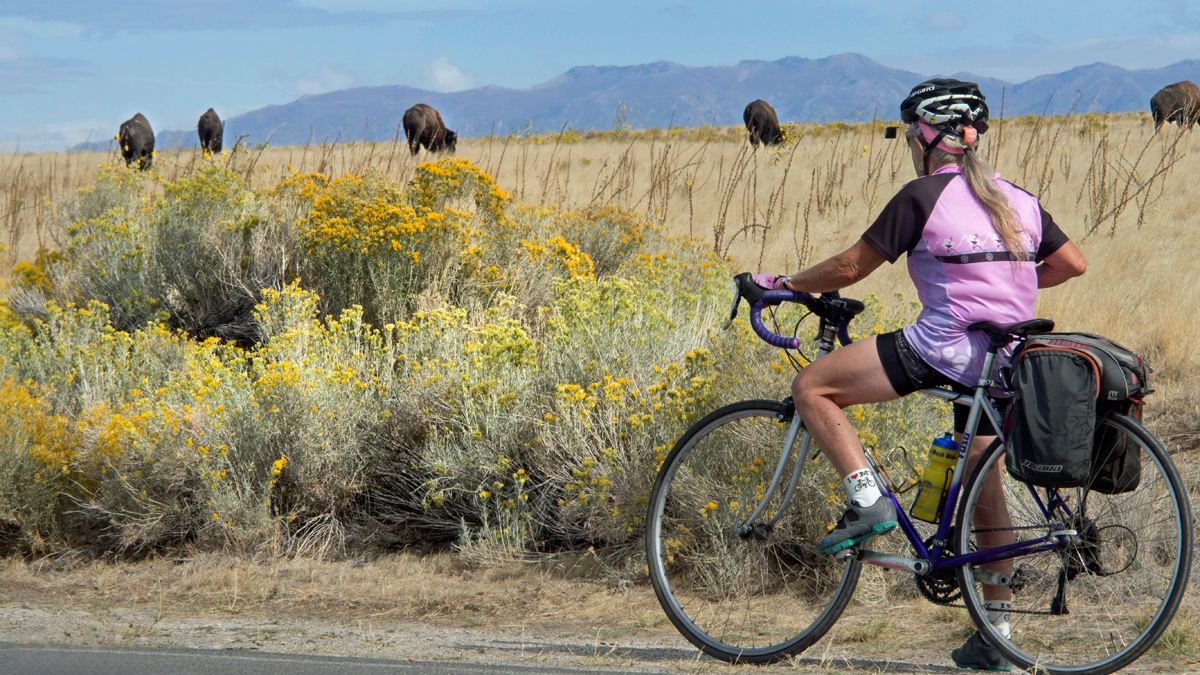
Antelope Island’s forty-two square miles are separated into the North Island and the South Island by a tall chain-link fence that crosses the island from east to west. The South Island is ninety percent of the island. It has one paved road that follows the east coast to a preserved ranch halfway down the island. This ranch was originally started by the Church of Jesus Christ of Latter-Day Saints, which brought cattle to the island. The cattle are long gone, but the South Island is home to bison, pronghorns, deer, bighorn sheep, and other fauna, which roam freely. Descendants of the twelve bison introduced in 1893 have since become so numerous, they must be culled. Cyclists who have not yet been culled also roam freely on the South Island and remain free to enjoy its many wonderful trails. Since we were not on mountain bikes, we saved this single-track experience for another time.
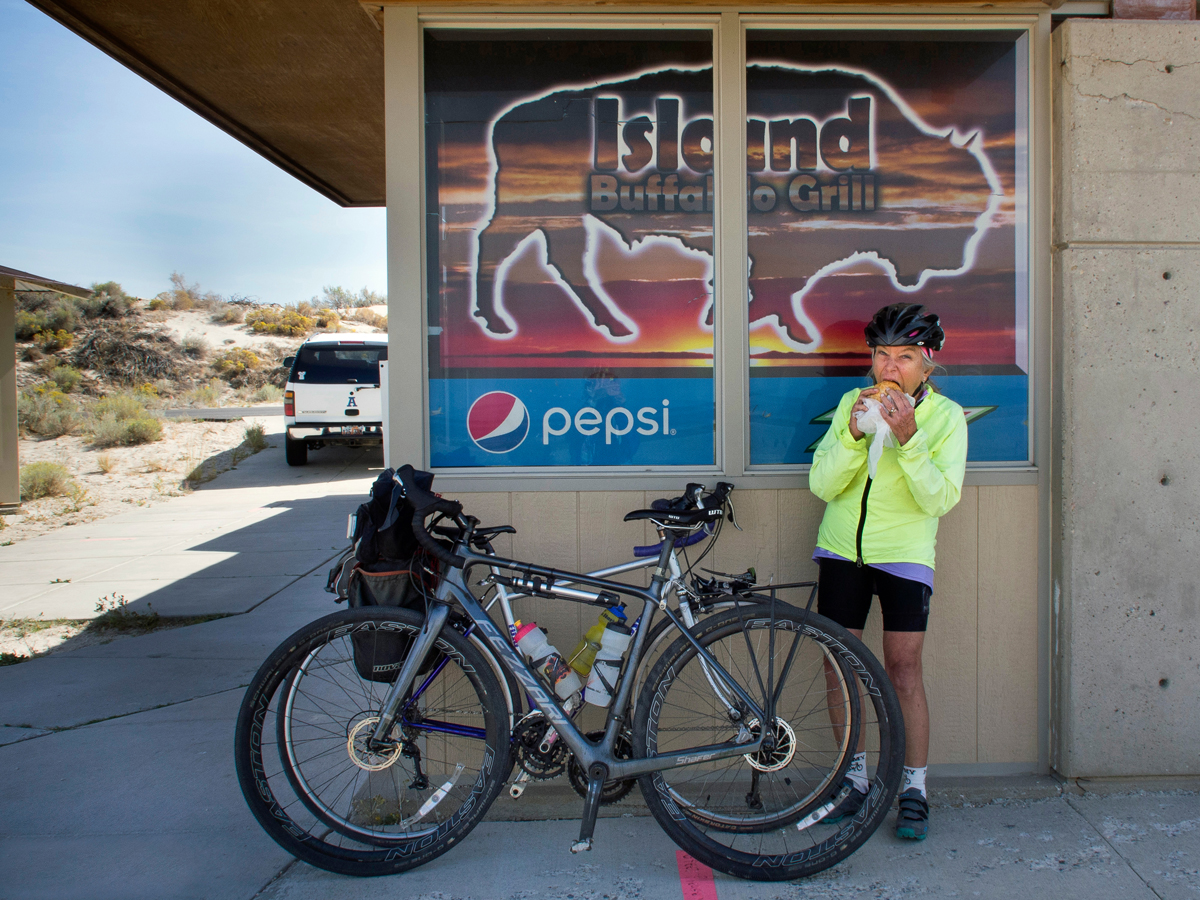
Jacquette tries a buffalo burger. Photo by Howard Shafer
The North Island has the visitors’ center and one restaurant, the Island Buffalo Grill. We put on our masks and ordered a buffalo burger from a window. It was handed to us across a table blocking the doorway. We had to share it standing up because all outdoor tables had been removed. C’est la COVID. Nevertheless, the buffalo burger was delicious.
There are lots of bison on Antelope Island. Photo by Howard Shafer
The North Island also has swimming beaches and a couple of treeless campgrounds. The beaches are a long way out, across deep, loose sand and hardpan salt. We saw nobody swimming, but if it had been warmer, we might have tried ourselves. In the 1940s and 1950s, postcards with a small bag of real Great Salt Lake salt stapled to one corner showed people floating high on their backs while reading newspapers. We bicycled every road on the North Island including some white, salt-encrusted, bone-rattling washboards. The best views came after the short climb to Buffalo Point with its magnificent mountain panoramas to the south, long strands of Great Salt Lake beach to the east, and sweeping vistas of blue water and distant islands stretching toward Nevada to the west. Below Buffalo Point lay a valley dotted with hikers, horseback riders, and bison.
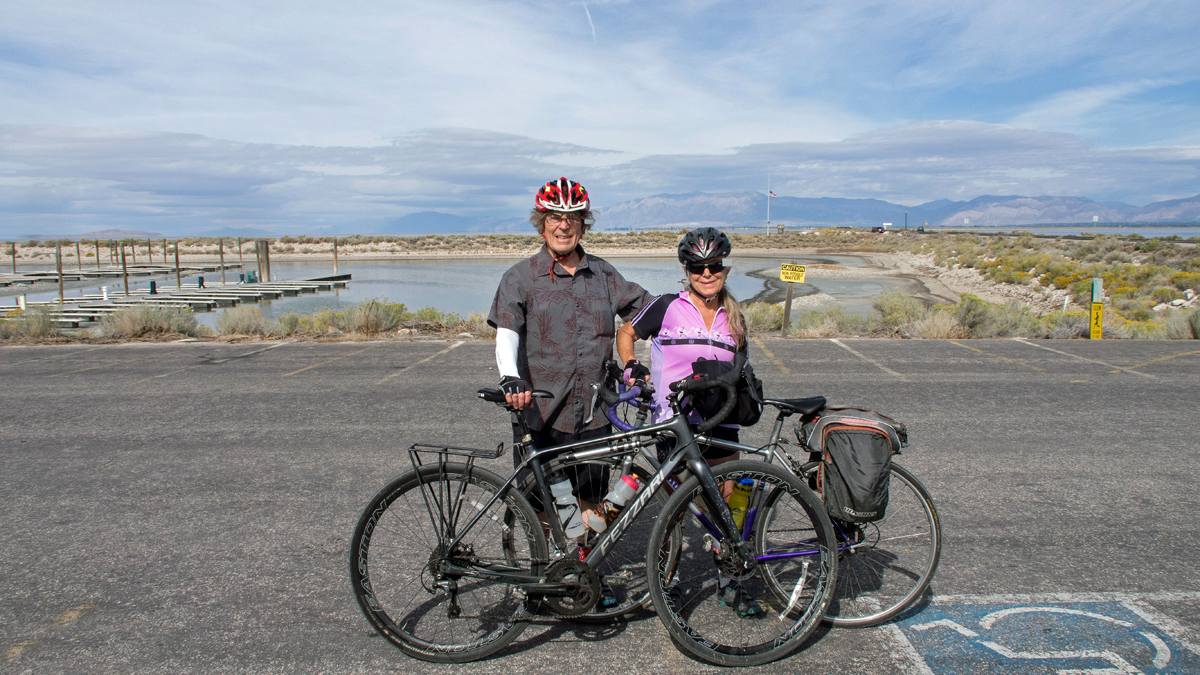
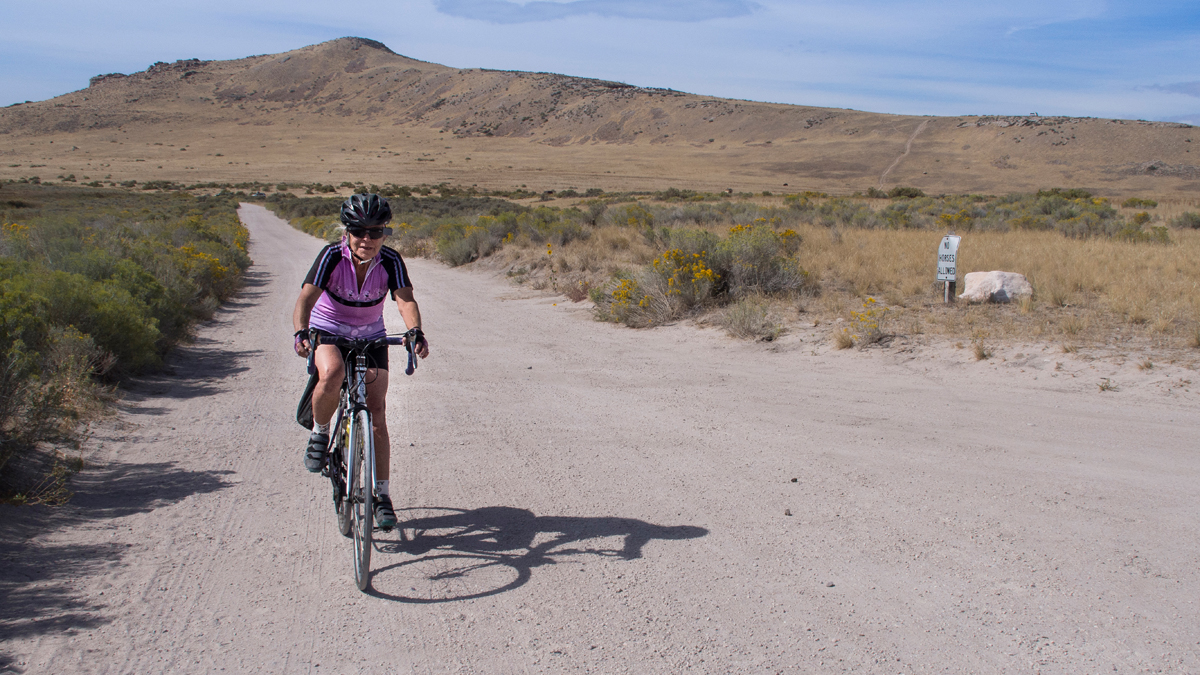
The adventurers near the Antelope Island Marina. Jacquette likes Howard’s COVID-19 hair. Photo by Howard ShaferJacquette Ward riding one of the washboard roads on Antelope Island. Photo by Howard Shafer
The visitor center also had nice views. There, after donning masks, passing inspection at the door, and being warned to stay six feet away from others, we learned about island flora and fauna, local geology, and how the Great Salt Lake’s predecessor, Lake Bonneville, had once submerged most of western Utah as well as parts of Idaho and Nevada.
Jacquette returning across the causeway with Mt. Ogden and the Wasatch range ahead. Photo by Howard Shafer
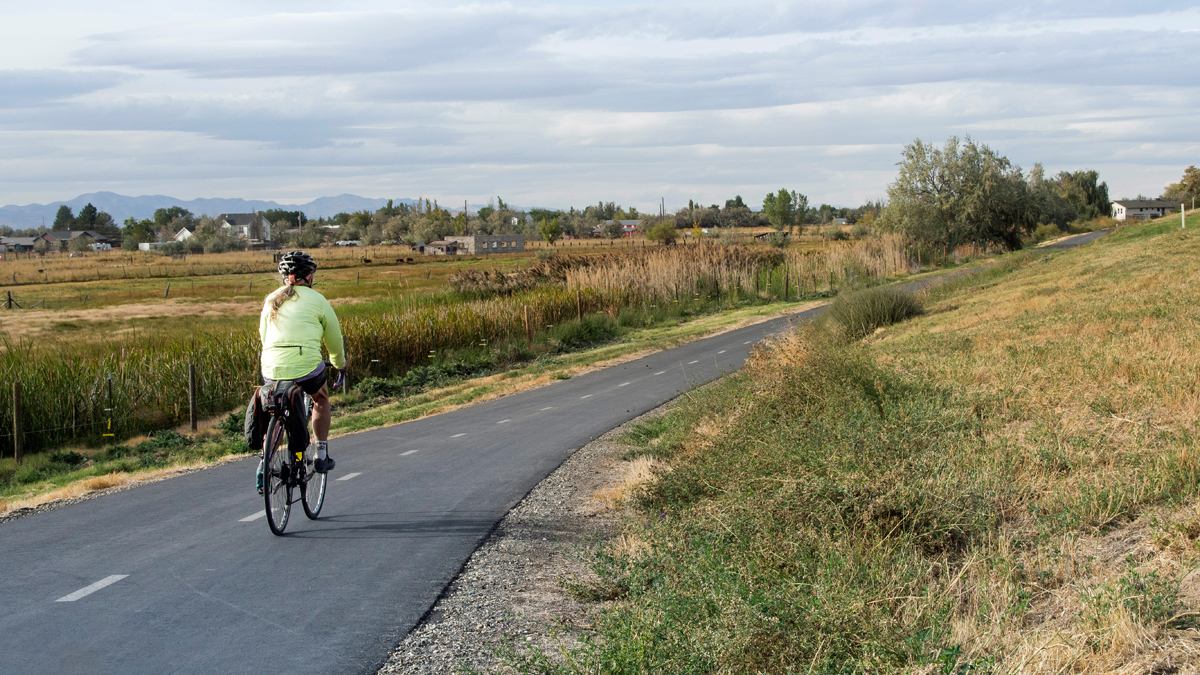
We hated to leave the park and resolved to someday come back and tour some of that single-track on the South Island. On our way back to Hooper, while fighting winds on the causeway, we stopped to rest and watch seagulls, ducks, cormorants, and shorebirds. After the causeway, we discovered the paved Syracuse Bike Trail overlooking a very bucolic countryside that allowed us to bypass some of those long, straight, secondary highways we had travelled in the morning. Then, after we had negotiated a few dead-end roads, we arrived back at my niece’s home. We had bicycled only 42 miles, but we had completed a successful Bike Your Park Day adventure. After we donned our masks one last time, my niece presented us with two, decorative, Utah pumpkin trophies from her garden, while we gave her a pint of olives from our California olive tree, and her son showed us the bruise the shotgun had made on his shoulder.
The bike path replaces narrow, shoulder less roads with scenic and bucolic views. Photo by Howard Shafer
Whether you are from California or Utah, if you have never been to Antelope Island, we recommend you go. You will not be disappointed. However, it will be preferable if you can manage your visit when the coronavirus no longer stalks the land.
The RGT Cycling event will be held on December 11th.
On Saturday, December 11th, USA Cycling, in collaboration with the Echelon Racing League, will be hosting a UCI Cycling Esports World Championship qualifier event on RGT Cycling to qualify one man and one woman for the World Championship on February 26, 2022.
Doug Brower riding indoors. If some of your winter training becomes less specific, make your bike training more specific. Photo by Sarah Kaufmann
The qualifying event will correspond with the Echelon Racing Promotions Community League, a series sponsored by USA Cycling. The event will take place on the Gateway Cup p/b Bommarito Audi Benton Park Course, a longstanding Pro Road Tour event located in the heart of St. Louis, MO. Using GPS data, event organizers are able to create an exact replica of the in-real-life course in the virtual world.
RGT Cycling, a free to use virtual cycling platform, also takes real world physics and positioning into consideration as a part of the experience.
All interested competitors can register for the qualification event, and all future Echelon Racing League events, through BikeReg. Registration for this event will close at 5p EST on Wednesday, December 8th.
All competitors will be required to follow the League’s governance protocols outlined in the Race Bible. The races, which start at 11a EST, will be livestreamed on the Echelon Racing League Facebook page and USA Cycling’s YouTube channel.
Racers who are interested in competing in the 2022 UCI Cycling Esports World Championships can view the selection criteria and petition form for the event here. The final World Championships team will be announced on December 14th, 2021.
By John Higgins — What is a bicycle? Yes, this is a rhetorical question, which means there are many possible answers, and all of them could be correct. I’d like to offer a perspective that attends to both the mechanicalness of a bicycle, and the experience of riding one. A bicycle is the synergy of content and context.
Step away from the bicycle for a moment and consider this analogy. Imagine a bowl of fruit artfully arranged and displayed on a table. Your eye is drawn to the fruit and your saliva glands are activated by the colors and anticipated taste. Suddenly the bowl vanishes, and the fruit rolls off. Some falls on the floor and is bruised and dented. It doesn’t seem quite as tasty anymore. The bowl was providing context for the fruit, which was the content. The fruit can be replaced. So can the bowl for that matter. But without the bowl the overall appeal is missing, and we just have a mess on the floor.
What is a bicycle? This Rollfast, circa 1970s, generally would not be considered a good candidate for upgrading to modern carbon and electronic components. Photo by Dave Iltis
Back to the bicycle. The frame provides context. Everything attached to it is the content. Our eye may be drawn to the context – the frame – or to the content – the components: wheelset, drivetrain, and contact points.
When we focus on a bicycle and how it will ride, we are often focused on the content. How nice are the wheels? What quality is the drivetrain? How comfortable will that saddle be? Oohhhh – electronic shifting and disc brakes! The saliva glands are activating….
But what about the frame? The frame is a lot more than a simple vehicle for all those shiny bits. However, it often receives scant attention and is summarized as this: cool fast kids ride carbon, old slow guys ride steel. Does alloy even exist anymore? And why Ti?? Carbon it is. (Now, about that wheel upgrade….)
Without a frame we just have a mess of parts on the floor. All those parts are interchangeable and replaceable and may serve to diminish or enhance the role the frame has to play. But the frame sets the scene for ride quality and the overall cycling experience. The frame geometry, material, and build quality set the stage for how well all the parts are attached and displayed, but also how they will function. The riding experience requires a careful blend of context and content. Neither is adequate nor functional on its own.
A sub-standard frame can be dressed up with any number of go-fast parts, but this doesn’t mean the underlying capability and characteristics of the bike will improve. Can I mention “lipstick” and “pig” in the same sentence?
A superior frame, on the other hand, can be rejuvenated with a makeover so that it lives to ride another day. Yes, frames wear out, crack or break, but generally the bowl lasts longer than the fruit, and its important job is often taken for granted.
Next time you are thinking of upgrading parts or buying a new bike, give the frame careful thought. If you are upgrading an existing bike, does the frame merit that investment? If you are buying a new bike, look beyond the marketing gloss and determine how good the frame really is. Is the bike intended to be a long-term buy and hold, or a short-term play? For the latter, any generic carbon frame out of Asia may be totally adequate. For the former, context is more important than content, and you may want to consider something carefully crafted like a custom handmade frame that is made for the long road ahead.
John Higgins is a professional bike fitter and purveyor of unique and boutique bicycles and fit-related components and accessories in Salt Lake City. More info on bikefitr.com