The 60th Annual Nevada City Classic, the second oldest continuously run Pro-Am criterium in America, will be held on Sunday, June 14, 2020 as part of a weekend filled with cycling-related events around Nevada County, California. Events occurring on Saturday, June 13 include the Rotary Gold Country Century Challenge, the Big Brothers & Sisters Gravel Race/Ride, the 2nd Annual Nevada City Fat Tire Festival, and the 3rd Annual Nevada City Brewfest.
Saturday’s Fat Tire Festival celebrates all things dirt; Mountain Biking, Gravel/CX and Bike-Packing, with an evening street fair full of popular industry vendors and more.
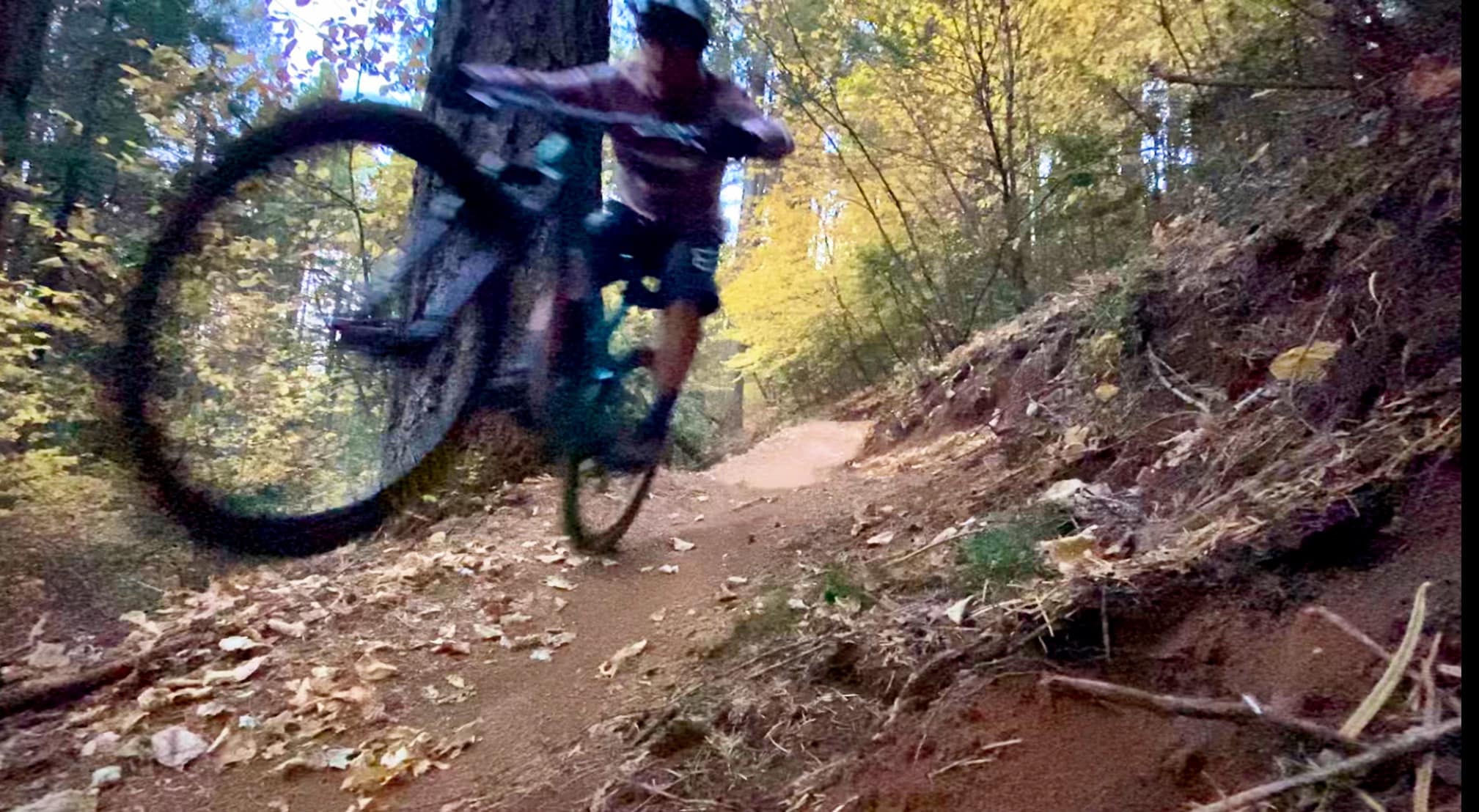
Nevada County is chock-full of cycling from gravel rides & mountain biking to the Nevada City Classic Criterium. Add to this a Fat Tire Festival and Brewfest and you’ll have a fantastic weekend June 13-14, 2020. Photo courtesy Shane Scrimager/Nevada City Fat Tire Festival.
Cyclists can spend the day riding the Big Brothers & Sisters Gravel Race/Ride or part of the world-class Nevada City MTB Trail System, before heading to the Festival and Brewfest Saturday evening.
Sunday kicks off with the Kid’s Bike Parade, followed by the 3rd Annual Nevada City Classic “Mile” Run, which will allow the top runners from around the West Coast to test their sneakers on the same challenging course cyclists will race on later that day.
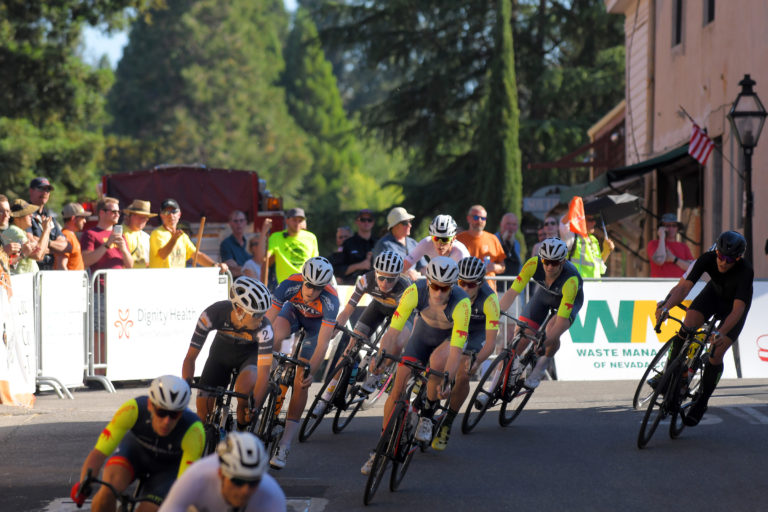
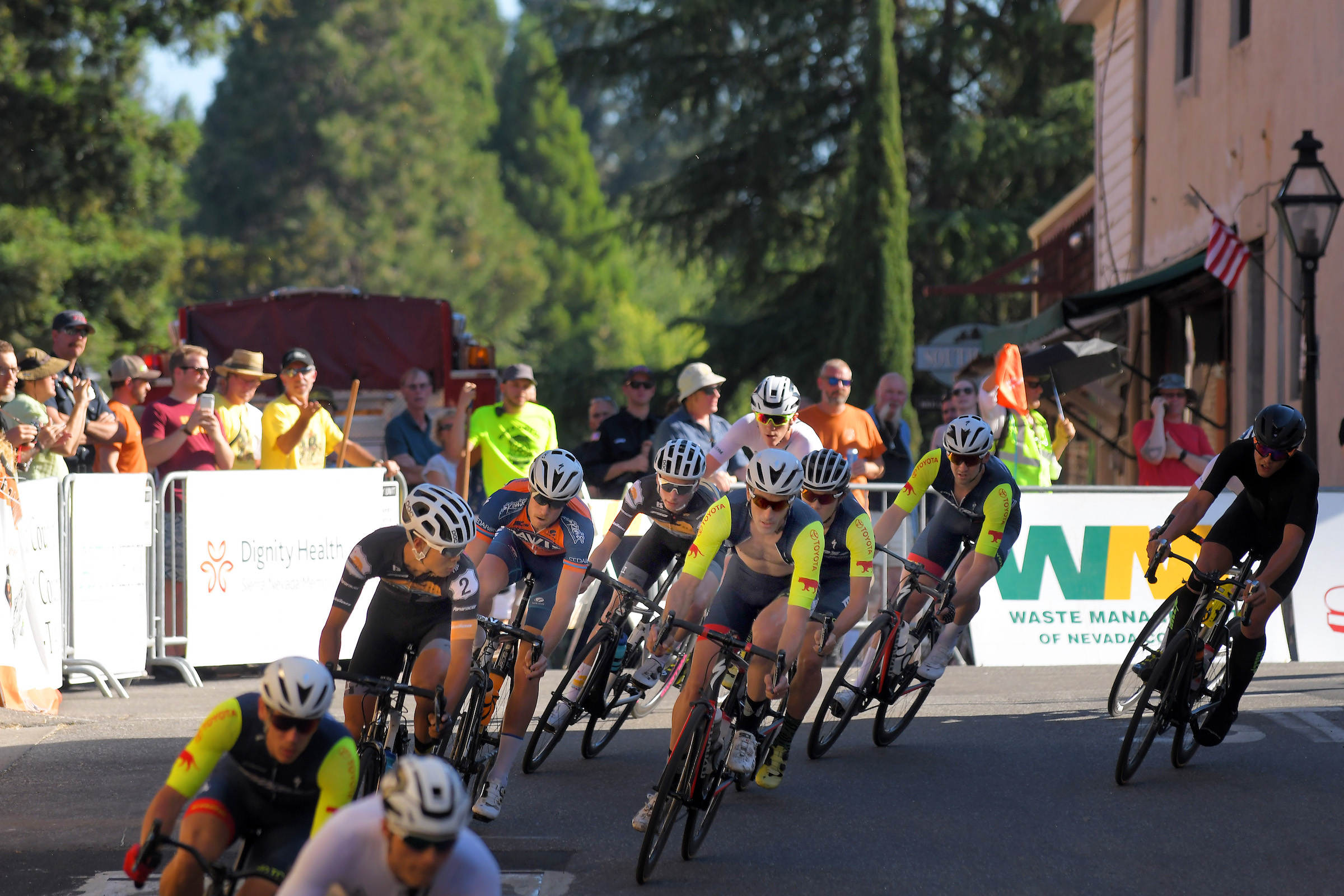
Nevada County is chock-full of cycling from gravel rides & mountain biking to the Nevada City Classic Criterium. Add to this a Fat Tire Festival and Brewfest and you’ll have a fantastic weekend June 13-14, 2020. Photo courtesy Nevada City Classic/Kris Wakefield
The Nevada City Classic Pro/Am Criterium boasts a demanding, scenic course, requiring racers to navigate sharp high-speed turns on the narrow Gold-Rush era roads, climb steep hills, and speed down the famous Broad Street descent past postcard-beautiful Victorian homes. Past victors include John Howard (1970), 3-time winner Greg LeMond (1979-1981), Todd Gogulski (1986, 1988), Olympic Gold Medalist Alexi Grewal (1993), 4-time winner Scott Moninger (1994, 1997, 1999, 2006), Levi Leipheimer (1998), and 2-time winner Ian Boswell (2010-11).
Watch for more exciting news to come as the 60th anniversary of this great bicycle race nears.
Salt Lake City is Starting the Process to Reconstruct 100 S – No Bike Lanes Are Planned
Editorial and Analysis:
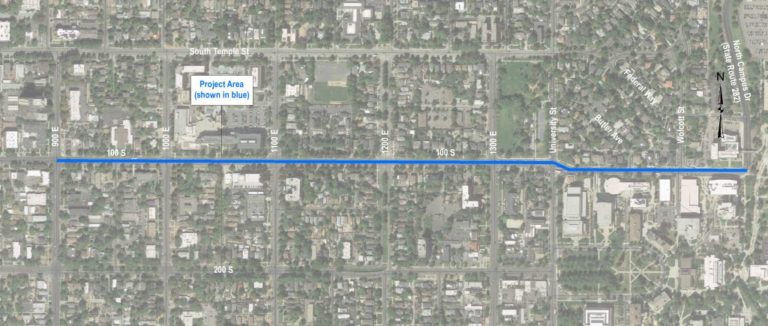
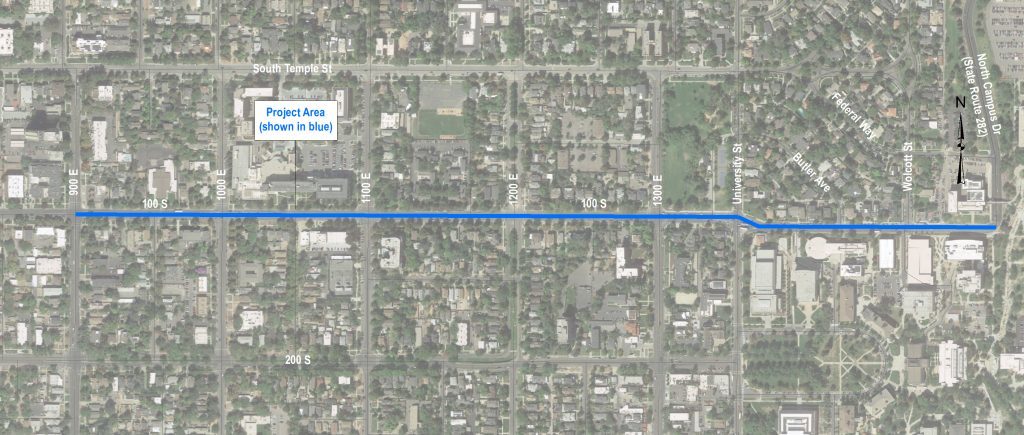
Salt Lake City is preparing to reconstruct 100 S between 900 E and N. Campus Drive on the University of Utah Campus. The roadway is a major corridor for those driving to the University of Utah, especially the health complexes. Will the street be reconstructed according to the Complete Streets Ordinance of 2010? At the Salt Lake City Bicycle Advisory Committee meeting on November 18, 2019, city transportation planning staff stated that bike lanes are not planned for the project except for possibly between 1300 E and N. Campus Drive. This is a clear intended violation of the Complete Streets Ordinance as we will discuss below.
Salt Lake City is preparing to reconstruct 100 S between 900 E and N. Campus Drive. Map from project webpage
Advocacy Alert – Take the Survey by December 6, 2019 and Submit Comments on 100 S.
Salt Lake City is seeking community input for the rebuild of this street. Proposed changes are to be determined, and may include some changes to intersections, sidewalks, curbs, pedestrian crossings, bus stops, road striping, driveways ramps, and/or parking. Community input will be shared with the design team as we develop the draft concept in the next few months.
The survey does ask if one feels unsafe riding on 100 S. But nothing is mentioned about adding bike lanes.
The conclusion is that Salt Lake City does not intend to install bike lanes on 100 S.
Send an email to [email protected] or use our editable petition form:
[emailpetition id=”4″]
100 S in this area is currently is a 4 lane road, mostly with no center turn lane. The roadway is in a state of disrepair, and hence is near the top of the list for reconstruction.
While we are all for maintaining and reconstructing streets in Salt Lake City, we believe that all streets should be safe and accommodating for all users. Currently, 100 S is not. It is accommodating to cars. It isn’t even great for the plentiful UTA buses that traverse the street.
The street like many in Salt Lake City has a 30 mph speed limit. Yet observationally, cars exceed this almost always. So what does this say about the street? 2 things. One, the speed limit is too high, and should be reduced to 25 mph since studies show that people actually do adjust their speeds based on the posted limit. “Lowering the speed limit by 5 mph on city streets can improve safety for motorists, pedestrians and bicyclists alike by reducing speeding, new research by the Insurance Institute for Highway Safety indicates,” states a press release on the IIHS website. Second, if roadway speeds are too high, the preferred method for reducing speeds is through better road design – a road diet with bike lanes is one great way to do this. 100 S is a perfect candidate for this change.
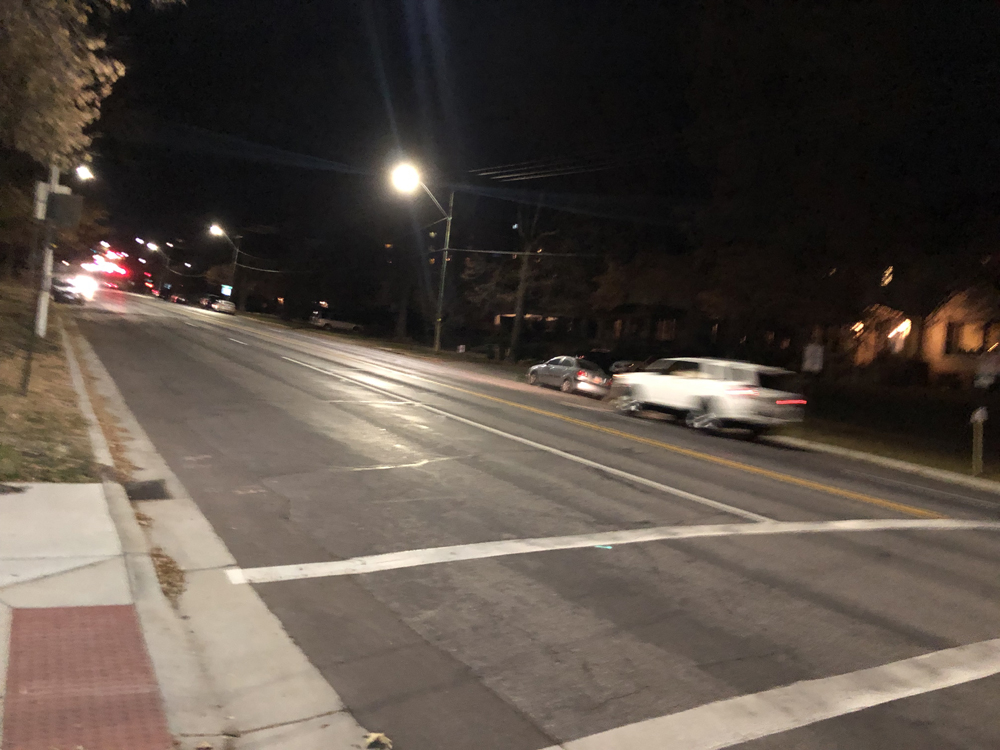
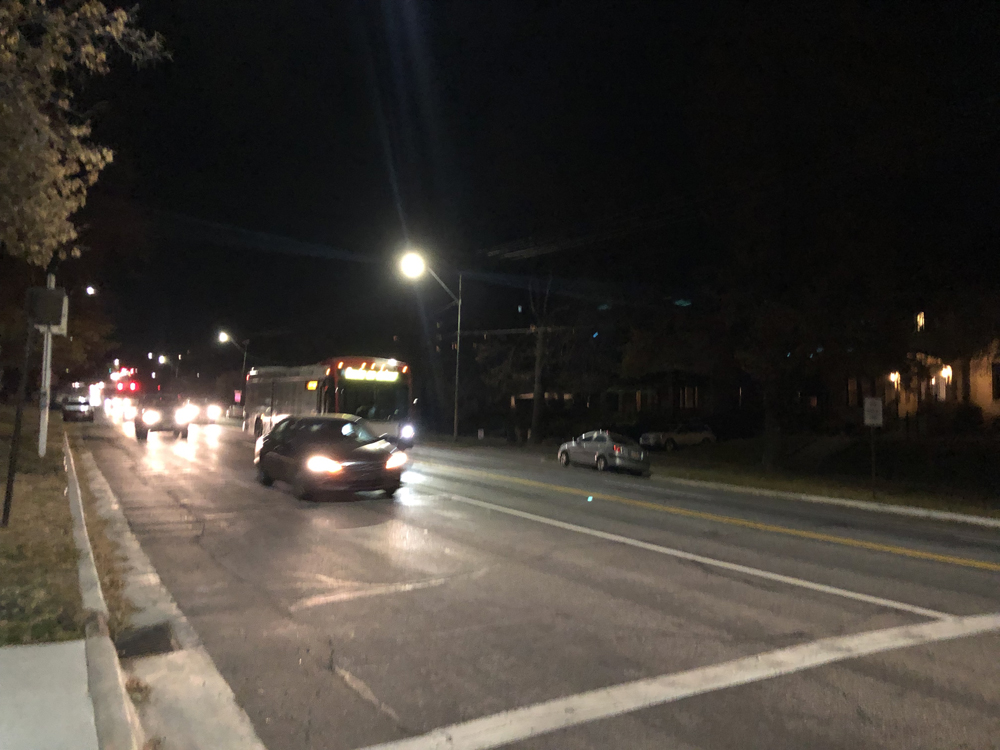
100 S and 1200 E in Salt Lake City. Pedestrian crossings need to be redone with bulbouts for safety and to slow traffic. Photo by Dave Iltis100 S and 1200 E in Salt Lake City. 100 S is a major bus corridor, but the conditions for buses are not great. Additionally, the lack of bike lanes makes it unsafe for cyclists. Photo by Dave Iltis
Salt Lake City has a Complete Streets Ordinance, not a sometimes we want to pay attention to it and sometimes not loose guideline for accommodating users other than cars. The 2010 Ordinance states, “All city owned transportation facilities in the public right of way on which bicyclists and pedestrians are permitted by law, including, but not limited to, streets, bridges, and all other connecting pathways, shall be designed, constructed, operated, and maintained so that users, including people with disabilities, can travel safely and independently. (Ord. 4-10 § 1, 2010).” The operative word is SHALL.
And, “A. Bicycle and pedestrian ways shall be established in the city’s new construction and reconstruction projects in the public right of way, subject to budget limitations, unless one or more of the following three (3) exemption conditions is met…” (For the exemptions, see the ordinance. None of them apply in this situation.
This requires that 100 S have bike lanes installed during the reconstruction process.
Cycling Utah’s Recommendations for 100 S:
Our recommendation is that a Road Diet be applied to 100 S. For most of the stretch being reconstructed, there are 4 lanes and no center turn lane and for all of it, there are no bike lanes. Shifting the street to 2 travel lanes, 2 bike lanes (preferably protected bike lanes), and a center turn lane would be optimal. Given the width of the street, better pedestrian crossings could be installed, as could better boarding zones for people riding the bus. Lower the speed limit to 25 mph, and narrow the travel lanes too to 10 feet. Add some pedestrian bulbouts at 1000 E, 1100 E, and 1200 E (that don’t interfere with the bike lanes). Add some pedestrian islands, and some center of the road landscaping.
Why do this? The University of Utah is the largest single commuter destination in the state. To continue on the same path by encouraging everyone to drive to the U is not sustainable. The only way out is to improve walking, biking, and transit to the U, in that order.
Edited: It has been brought to our attention that this is one of the main emergency routes to the University of Utah hospital. If a road diet is not possible, there is likely room to keep two lanes in each direction, and add bike lanes too as the road is very wide.
Additionally, Salt Lake City should go back and fix its past violation of the Complete Streets Ordinance, and add bike lanes on 100 S between State Street and 600 E, which is about the area that was repaved during the Becker administration.
By Mark Deterline – This is a great time of year for cyclists, as well as all outdoor enthusiasts. Leaves are changing colors, making time on the bike and on trails a glorious celebration of Utah’s natural beauty. Some are preparing for the final bike races of the season, such as LOTOJA, while others are transitioning to cyclocross, running or will soon be competing in fall triathlons.
For many bike racers, it represents an opportunity for a healthy change of pace. Fitness levels are high, but so are burnout rates; many are feeling the effects of a long season, while teams are already trying to build their 2014 rosters.
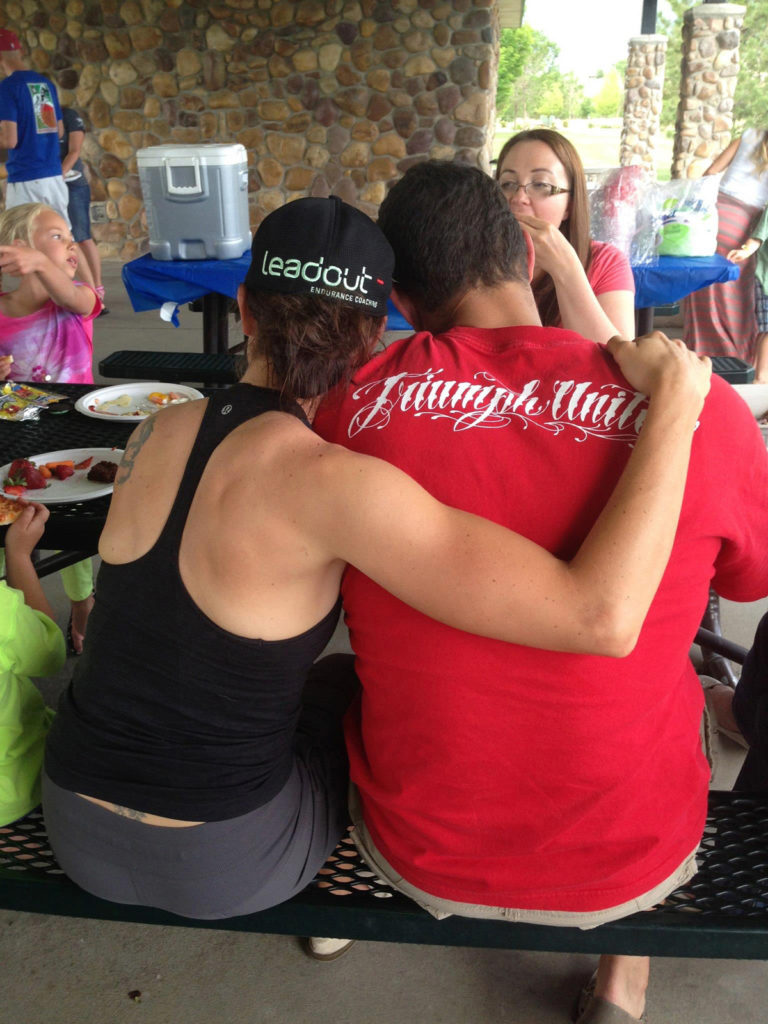
Melinda Macfarlane, who has had a phenomenal bike racing season, hugging one of her keys to success – hubby Brad. Photo by Mark Deterline
One of the benefits of coaching and modern training is periodization. Depending on your focus and goals, there are “appropriate” types and volume of workouts to do at different times of the season. That includes rest!
September and October can be fun and satisfying months, as training can be less structured, and downtime is generally recommended. Each of us needs to determine where we are at, and what we want to accomplish in the “off-season”, which makes this particular period especially important.
In one of my articles last year, I emphasized the trend of athletes to remain coaching throughout the year, instead of suspending their structured training in September and/or October. Some of this depends on whether an athlete is preparing for a season of cyclocross, cross country skiing, hockey or other typically fall-winter discipline. For hardcore cyclists, reasons to continue structured training – with or without a coach – include:
Maintaining fitness
Avoiding overtraining
Determining & setting goals for the coming season
Staying lean
Learning from the current/previous season
Dialing in biomechanics & equipment
Simply: Knowing what to do when you’re not building, tapering & peaking for events
Maintaining fitness may not seem like a big one, but when considered in the context of the second point, avoiding overtraining, it truly is significant. Some athletes may be capable of continued exercise while diversifying – i.e. cross-training – and staying fresh. However, many athletes have a hard time knowing when to take important time off the bike, and how much of other sports to engage in.
Knowing when and how to rest is a science, yes, but also highly personal. Rest and recovery are as important as any workouts we can do. We must recharge our batteries certain times of the year both mentally and physically, and every individual is different. I have athletes who can compete at peak or near peak performance longer than others, so each client’s season and targeted events must be tailored accordingly.
Which brings us to determining and setting goals. Athletes may have ambitions, but in my experience most don’t realize what they are truly capable of. One of the greatest joys of coaching is witnessing an athlete’s transformation into what they aspired to become much quicker or to a profounder extent than they might have hoped. September and October are great months to enjoy lower-key training while finding renewed motivation and a competitive edge for the coming season. That makes goal-setting easier, more energizing and more meaningful.
As most athletes and individuals can attest, staying lean throughout the season is a huge favor we can do for ourselves. That generally makes the off-season less stressful, and the early season more rewarding. Now this is important: There is nothing wrong with a little fluctuation at different times of the year.
Many of the athletes I’ve worked with over the years cannot necessarily maintain full-on racing or “fighting” weight all season long. A little indulgence can go a long way in keeping an individual motivated throughout the year, and not all events require our optimal power-to-weight ratios. I get a kick out of clients telling me they are “fat and happy”, and feeling great while exercising – it usually means they have enjoyed food or drink they often avoid during peak cycles, or are spending more time with friends and family who are often neglected during the competitive season. They key is limiting fluctuations to healthy levels and goals to sustainable targets.
September and October are also important months to look back over previous seasons and learn from experiences, good and bad. Good coaches and mentors will help you realize how far you’ve come, and what the future may hold for you as an athlete. It is a time to examine skills and event strategies. It is a time to determine ways that you can become a more well-rounded athlete, cross-train to turn weaknesses into strengths, as well as to avoid injury. It is also a good time to explore sports psychology, with your coach or a specialist, to ensure that you are not holding yourself back mentally.
Finally – and this is one of my favorites – it is a time to take a step back and consider balance in your life. I remember riding with a former Ironman World Champion; we were road-testing products for famed carbon component manufacturer ENVE. At one point we were discussing the importance of relationships in competitive sports. “It has always baffled me how people are willing to sacrifice potentially the most important relationship in their life for a sport.” True that: In my book as well as his, the most impressive champions balance love and sport to be well-rounded human beings.
Proper biomechanics, including a thorough professional bike fit, can make all the difference in performance, comfort and injury-avoidance. That includes seeking medical help as needed. As a coach, you never want to tell a client “I told you so”; you want to help them avoid mistakes and setbacks in the first place. There is a physical therapist I send client after client to, because he is not only highly skilled, he is also supremely dedicated to every person he works with. One of my clients FINALLY went in to see him this month, and texted me afterwards: “I wish I would have listened to you [and went to see Dr. Schwartz] back in March!” That was truly bittersweet.
Each month is a piece of your annual training puzzle, so each plays a role in your success. Many athletes don’t like uncertainty, and even more can’t resist the urge to overtrain. So do some research, or seek out the help of a competent coach or mentor. Enjoy cross-training and rest, the company of loved ones, the benefits of taking care of your body, and learn what it means to stay motivated and “hungry”. The balance will do you good!
Prior to his untimely death in July 2019, Mark Deterline coached some of Utah’s and California’s top cyclists, as well as triathletes, distance runners, cross-country skiers, motocross racers and boxers.
The Salt Lake County Bicycle Advisory Committee is seeking interested volunteers to champion the cause of bicycle advocacy! There are two fulltime openings on the board as well as two alternate positions available. The committee (SLCBAC) meets on the first Wednesday of each month at the County Government complex, 2001 South State Street, Salt Lake City, Utah. Particular areas of need are representatives from the Kearns, Magna, and southwestern areas of the county. For more information and a link to the application form, visit the website at: www.bicycle.slco.org
By Tom Jow – When you work in bike shops as long as I have, you get to see a lot of broken parts. I mean hey, everything breaks. Sometimes the damage is caused by neglect. Often times it is just plain old abuse (“I was just riding along”, he said). Once in awhile, it is a legitimate defect. In the case of a defect, the manufacturer is expected to replace the defective component. Have you ever read a warranty policy? The bottom line is the manufacturer wants to inspect anything they think they may cover. In the old days (before smartphones and email), telephone calls were exchanged, usually followed by sending products to the manufacturer for inspection. More phone calls were exchanged. It could take forever. Despite the ease of evaluation afforded to us by electronic communication, these procedures must be followed. Any missing information can lead to a delay in the approval or denial of a claim. What is the best way to navigate a warranty claim?
Where to Begin
Read the warranty policy. The first thing to understand about warranties is that most have some sort of time limitation. This should not be unreasonable. If something is truly defective, a problem should arise within a short time after putting it into service. Typically components have 1-2 years, frames 1-5 years. The days of the lifetime warranty are pretty much over. Refer to the manufacturer’s documentation for exact details.
If your case falls within the warranty period, contact the retailer where the part/frame/bike/clothing item was purchased. They will be your liaison with the manufacturer. Defect or not, it’s pretty important to be nice to these guys. On the other hand, some manufacturers will work with the customer directly. This makes filing the actual claim easier, however, it does not necessarily increase your chances for a successful warranty claim.
Paperwork
The most important piece of information to your warranty case is the proof of purchase. This verifies when the item was purchased and that you are the original owner. Few, if any, warranties will benefit someone other than the original owner. Depending on the component, a request for service records may be made. For example, if a component breaks at month 11 of a 12 month warranty but it never received the recommended once a month service the manufacturer may deny the claim. Under paperwork, I will also include in any information regarding diagnoses by the rider and reputable bike shops under consultation. Finally, include pictures. Images (clear and in focus) normally required include the defect and the serial number. Be sure to construct any other images requested.
What to Expect
“There is no free lunch”. Contrary to popular belief, warranties are not free. Costs incurred by the user include shipping to the manufacturer, as well as any labor costs for disassembly and reassembly (of a bicycle, for example). In addition, most companies reserve the right to repair or replace. In the unfortunate event that the claim is not covered under warranty, a price quote will be made for repair or replacement. Sometimes a discount will be offered under the term “crash replacement”. Finally, these things take time. Factors determining how long a claim takes to resolve is related to the clarity of the paperwork, the size of the company, the location of the company, the severity of the defect, and your attitude.
Be Humble, Be Patient
As much as you, the consumer, is unhappy about a broken thing-a-ma-jig, neither the retailer nor the manufacturer want you to be without your equipment either. Everyone wants to be on your side. Keep in mind that most of agents in these warranty departments have a ton of experience. They have seen (and heard) almost everything. So in order to expedite your claim, be honest and be patient.
So yeah, everything breaks. If it happens prematurely it may be covered under warranty. Be prepared by keeping your receipt and serial number. Any records of time in service and maintenance are also handy. Keep in mind that having a potential warranty claim does not entitle you to be a pain in the you-know-what. Everyone involved will appreciate honesty and patience. A couple things to remember: “Sugar (or beer) goes a lot further than salt”, and “I was just riding along” is not a legitimate cause of breakage.
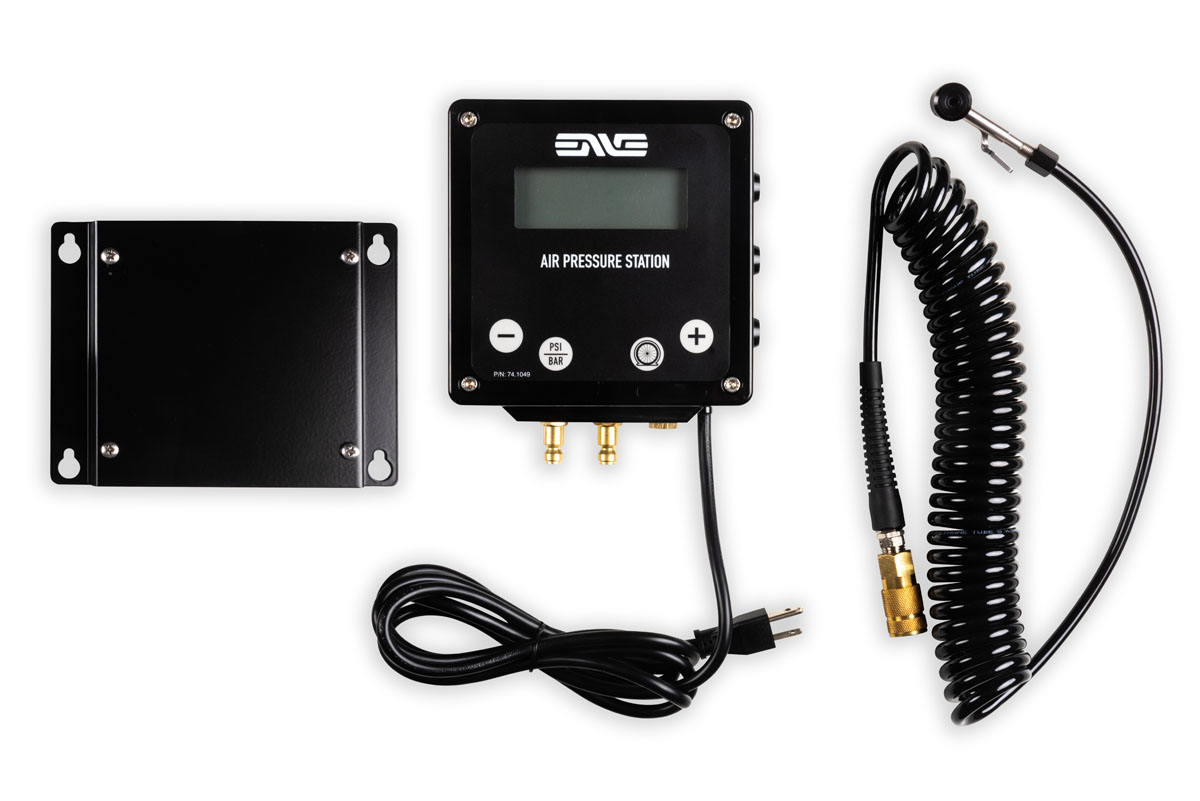
OGDEN, Utah (November 14, 2019) – ENVE, best known for their high performance carbon wheels and components, announced today that they have expanded their product offering to include the ENVE Air Pressure Station, a precision inflation device developed to improve your ride experience through accurate and convenient inflation.
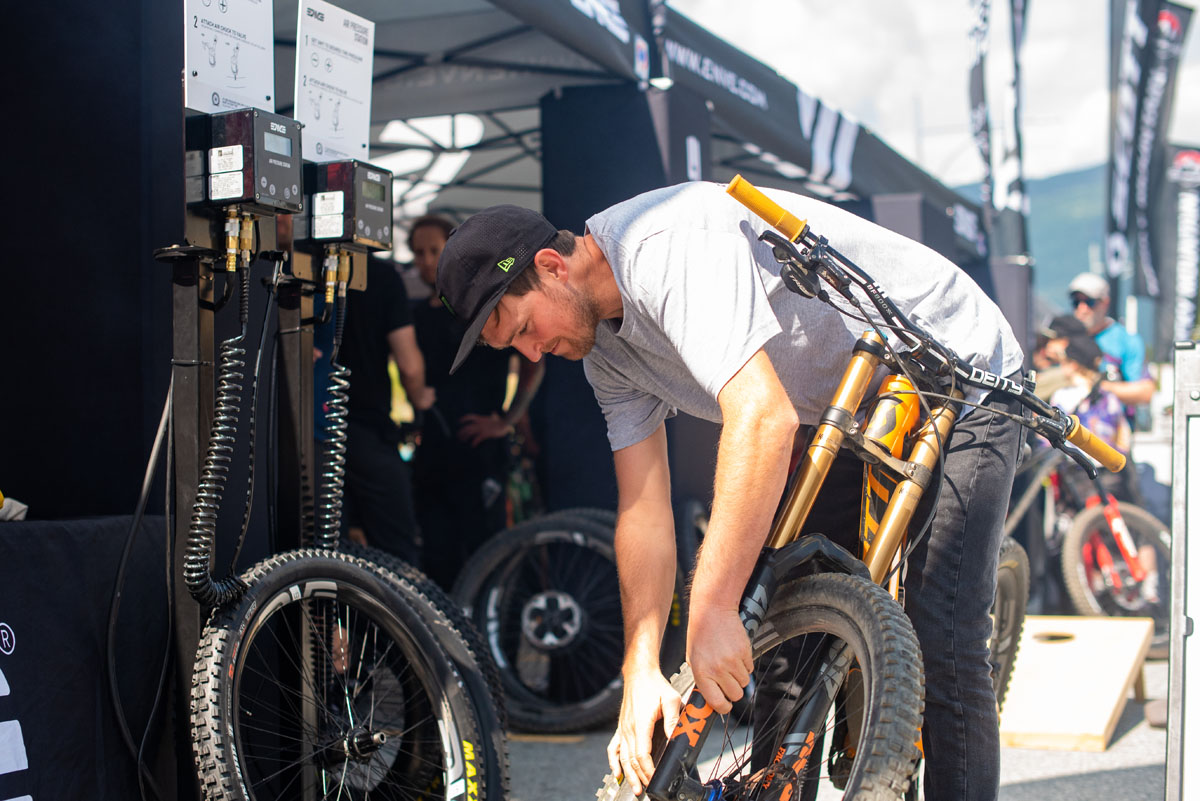
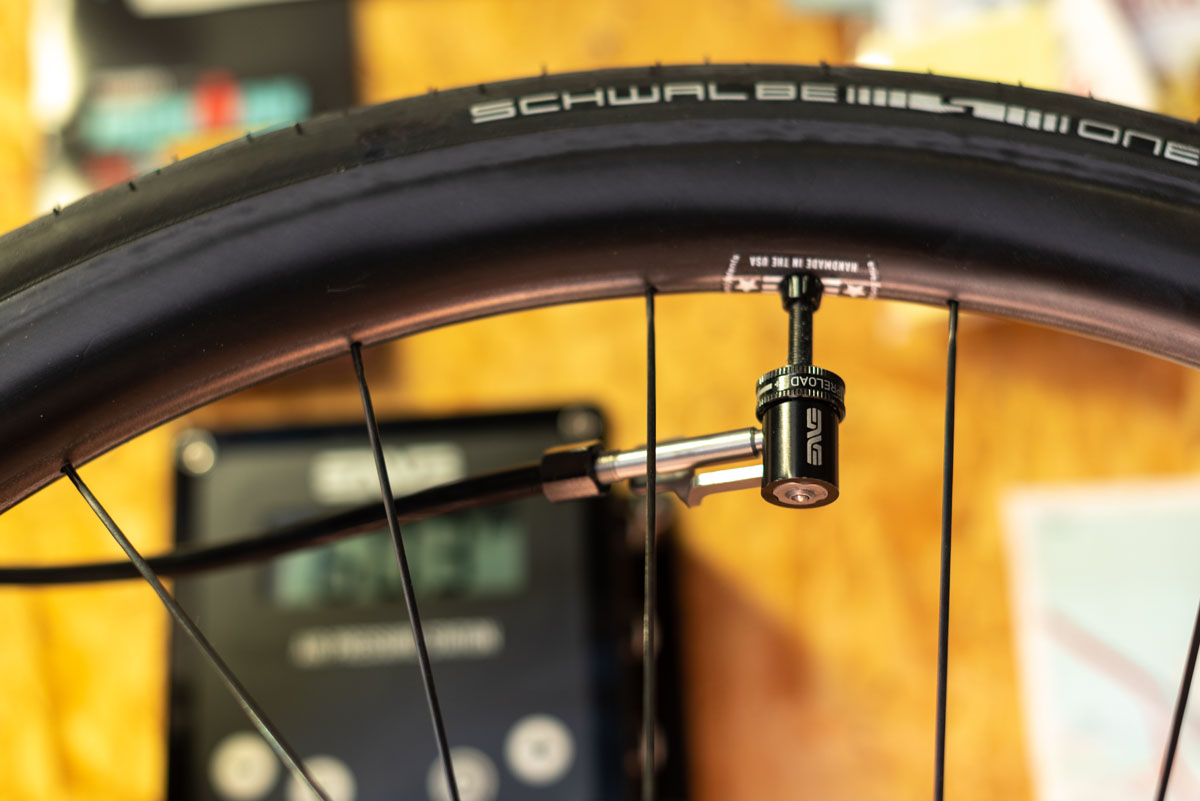
A mechanic using the ENVE Air Pressure Station to inflate tires at a recent demo event. Photo courtesy ENVE/Ian Matteson
In recent years, a renewed emphasis has been placed on inflation as a key component to performance. This is due to the fact that tubeless tire and rim volumes have increased substantially and more road riders are adding gravel to their cycling diet. As tire and rim volumes increase, tire pressures must decrease, and slight variances in pressure begin to have a greater effect on ride performance than they had with the narrow rims and tires of the past.
“At ENVE, we are constantly looking for ways to improve the ride experience both on and off the bike, and historically speaking, we best achieve this by refining our carbon rim designs. What we’ve come to realize is that no matter how advanced or refined the carbon wheel becomes, something as simple as running too high or too low tire pressure will negatively impact a rider’s efficiency, traction, safety, confidence, and therefore the entire ride experience. For this reason, we are treating inflation as seriously as we take rim design, and the Air Pressure Station is proof of this commitment,” stated VP of Product and Consumer Experience, Jake Pantone.
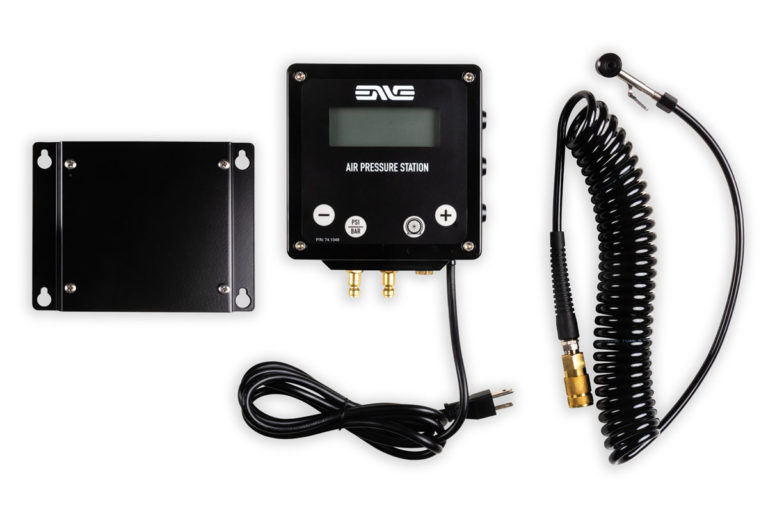
The ENVE Air Pressure Station (MSRP: $750.00). Photo courtesy ENVE/Ian Matteson
The ENVE Air Pressure Station delivers:
Accurate air pressure to within .5% of psi/bar
Smartphone scannable NFC tag to direct users to latest ENVE tire pressure charts and landing page
Automatic, hands-free inflation
3 x air pressure presets
Tire pressure range between 3psi (.2bar) and 145psi (10bar)
Compatible with air compressor or bottled air
Adjustable presta-valve air chuck with 15 foot coiled air hose
International Protection Rating: IP66, provides complete weather protection (except submersions)
May be hardwired and mounted to mobile service trucks, vans, and trailers
According to ENVE, the Air Pressure Stations can be used anywhere there is a supply of compressed air and power. As such, ENVE expects to see these units embraced at retail, in rider’s homes, and in the field.
“At the retail level, it is our intention that the Air Pressure Station be used as a tool to help educate consumers on the importance of riding the right tire pressure. Given the unit’s accuracy, it can also be used to verify the accuracy of other pumps and pressure gauges, which will help everyone to speak more accurately about their tire pressures. At the consumer level, these units deliver the ultimate inflation experience in terms of convenience, safety, and accuracy,” stated Pantone.
“Initially, the inflation units were created for deployment at ENVE headquarters and at events we attend to help streamline the wheel demo experience and to educate riders on the benefits of tubeless while helping them to find their optimal tire pressures. What we found was that not only did the units instigate many conversations around tubeless tire and wheel setup, but these same consumers often asked if we had the units available for sale. This helped us validate our belief that despite all the great inflation devices on the market, there was still opportunity for a halo level inflation product from ENVE,” commented ENVE’s VP of Commercial, Brandt Furgerson.
Photo courtesy ENVE/Ian Matteson
The ENVE Air Pressure Station’s automatic inflation capabilities stem from the units ability to measure back pressure from the tire it is connected to. To operate, the user sets the unit to their desired tire pressure by simply toggling the plus and minus buttons on the face of the unit. With the pressure set, the user then connects the air chuck to the valve stem, and unit will begin an inflation sequence until the rider’s exact pressure is achieved. The unit will then beep, indicating that the air chuck may be removed. To help prevent over inflation, the unit will automatically return to a default pressure of 32psi after several minutes. To help users access their preferred tire pressures quickly, the unit features three air pressure preset buttons. In the case of a flat tire or new tire installation, an “override” button is used to deliver up to five metered blasts of air which have been optimized for seating tubeless tires. Once stable tire pressure is recognized by the unit, inflation will proceed to the rider’s set tire pressure.
ENVE’s Air Pressure Stations are available now in North America and may be purchased from participating ENVE Ride Centers or directly from ENVE. International units will be available in select markets (Asia, United Kingdom, Europe, and Australia) by the end of the year. For additional information, visit ENVE.com
The Utah Cycling Association (UCA) is the official Local Association of USA CYCLING for Utah, Eastern Idaho, and Western Wyoming, and represents the interests of racers, race directors, and officials in the region. Each Local Association is a non-profit organization consisting of a Board of Directors elected by the local members.
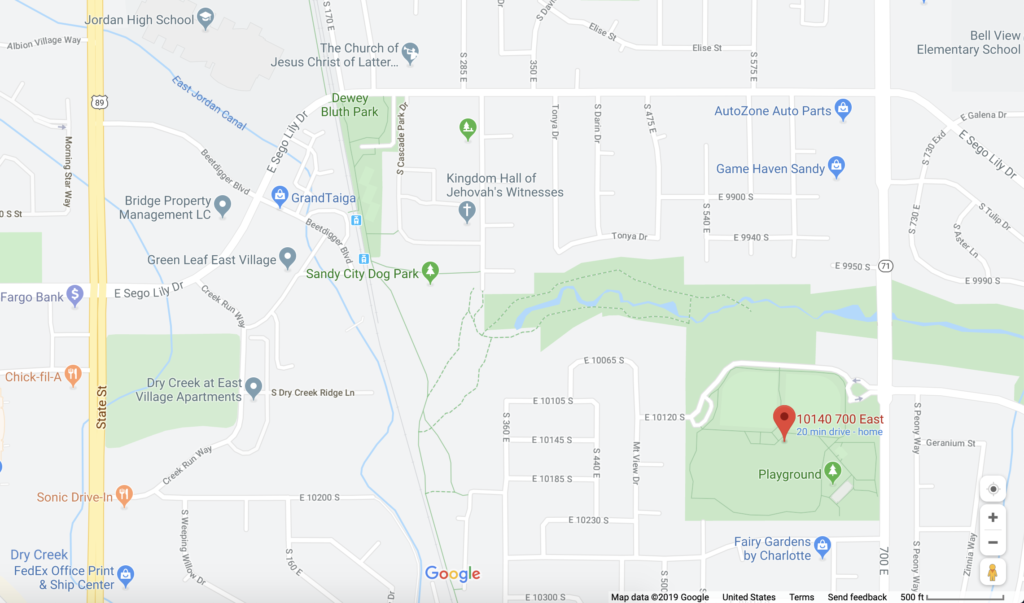
In an email sent to all individual members of the Utah Cycling Association on October 24, 2019, Marty Slack (Executive Director) announced that the Utah Cycling Association’s Annual Members Meeting will take place on Tuesday, November 19, 2019 at 7:00pm MST. The location of the meeting will be the Lone Peak Park Pavilion, 10140 South 700 East, in Sandy, Utah.
In accordance with their current Bylaws, the Association is announcing a call for nominations to the Board of Directors, requests to reserve dates on the 2020 Race/Event Calendar, and any potential Bylaw Amendments.
The UCA Board of Directors is comprised of five people serving two year terms. Currently, the Board members are:
Marty Slack, Executive Director
Marek Shon
Rob Smallman
Lance Gamero
Scott Powers
Rob Smallman, Lance Gamero, and Marty Slack are at the end of their current terms.
The UCA is asking for nominations for Executive Director as well as Board Members (Directors). One of the Board Member positions will be a one-year term in order to realign the terms to match Bylaw requirements. The second Board Member position as well as the Executive Director position are two-year terms.
After serving one term as Executive Director, Marty Slack is not seeking reelection. Lance Gamero has been nominated and is seeking election for the Executive Director position. Rob Smallman is seeking reelection for the one-year term. There are currently no nominees for the remaining two-year term. Any additional nominations for any of the open seats are welcome.
Also on the Agenda are three proposals:
Combining Small Categories, submitted by Johnson Elite Ortho
Minimum Requirements for UCA Events, submitted by Killin’ Time Cycling
While not specifically listed on the Agenda, they Board likely will also be discussing recent policy changes at USA Cycling, and how they will affect the roles of the Local Associations going forward.
Requests to reserve dates on the 2020 Race/Event Calendar should be sent to Board Member Marek Shon at [email protected].
Nominations for the Executive Director position or either of the open Board Member seats must come from Member clubs or teams.
The following Member clubs or teams based in Utah & Eastern Idaho are currently in good standing:
Ascent Cycling p/b RB Health
Bingham Cyclery Peak Fasteners
Bountiful Mazda Cycling Team
BPD Studios
Cicada Racing Inc.
DNA Pro Cycling Team
EPIC Cycling Team
Hangar 15 Bicycles
Idaho Cycling Enthusiasts
ImpactDevo
Johnson Elite Ortho
Killin’ Time Cycling
Mi Duole Cycling
Pavestone Capital p/b Silverhawk Enterprises
PLAN7 DS Cycling Team
Porcupine/Cityworks
SaltCycle-Kestrel Wellness
Ski City Cycling
Society Cycles
Velosport Racing
Zone Five Racing
At this time, no clubs or teams based in Western Wyoming are Member clubs of the Utah Cycling Association.
Any clubs or teams interested in submitting items for the agenda, changes to the UCA Bylaws, or wishing to nominate an individual for election to the UCA Board of Directors should send an email to [email protected]. Agenda items and Bylaw Amendments must be submitted by November 5, 2019.
Any club or team not listed above that wishes to submit a nomination and/or to vote in the election needs to become a Member club in good standing by paying annual membership dues of $75.00 per calendar year prior to the meeting, which can be done at https://www.bikereg.com/uca-teamclub-dues0.
Location Map: Lone Peak Park Pavilion, 10140 South 700 East, Sandy, Utah
November 15, 2019 – The Sufferfest, a comprehensive training app for cyclists and triathletes, today announced the release of six new workouts developed in partnership with the Global Cycling Network. Adding to The Sufferfest library of over 70 structured workouts, these sessions allow athletes to connect their fitness devices and train with some of their favourite GCN presenters directly through The Sufferfest app.
The partnership with Global Cycling Network brings six of the most popular GCN Real Time Training Sessions to The Sufferfest—including VO2 Max Intervals, Strength Endurance, Muscular Endurance, Sprint Efforts, Power Torque Intervals, and a 56-minute Endurance session—with additional workouts slated to be added in the near future. Each session features clear instructions from GCN presenters who guide athletes through every step of the workout, combined with immersive footage of some of the most iconic roads in Europe.
“Indoor training is an important part of what we offer at GCN,” said Marc Bearman, Director of Partnerships at Global Cycling Network. “Teaming up with The Sufferfest brings some of our favourite training sessions to life. Giving people the ability to connect their devices and train to personalised targets makes them even more effective, immersive and enjoyable.”
“The Sufferfest gives athletes unprecedented choice when it comes to personalising their workout experience,” said David McQuillen, CEO of The Sufferfest. “Whether it’s our classic Sufferfest sessions with officially-licensed pro footage, our library of NoVid workouts that allow you to watch your own video content, or our fully-customisable video player. The addition of GCN Real Time Training Sessions to our library gives athletes even more ways to train and get the benefit of the most effective workouts available.”
To experience the 6 new GCN Real Time Training Sessions and the rest of The Sufferfest catalogue of structured workouts, Strength Training for Cyclists, Yoga for Cyclists videos and 10-week Mental Toughness Programme, download The Sufferfest Training System for iOS, macOS, or Windows. For more information on The Sufferfest, please visit https://thesufferfest.com.
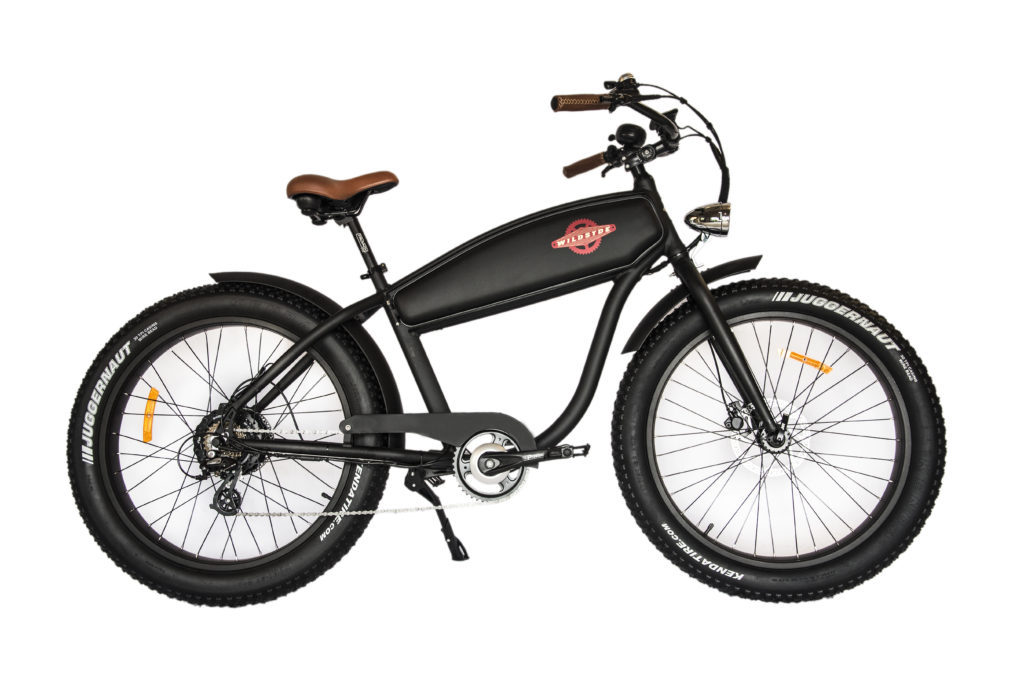
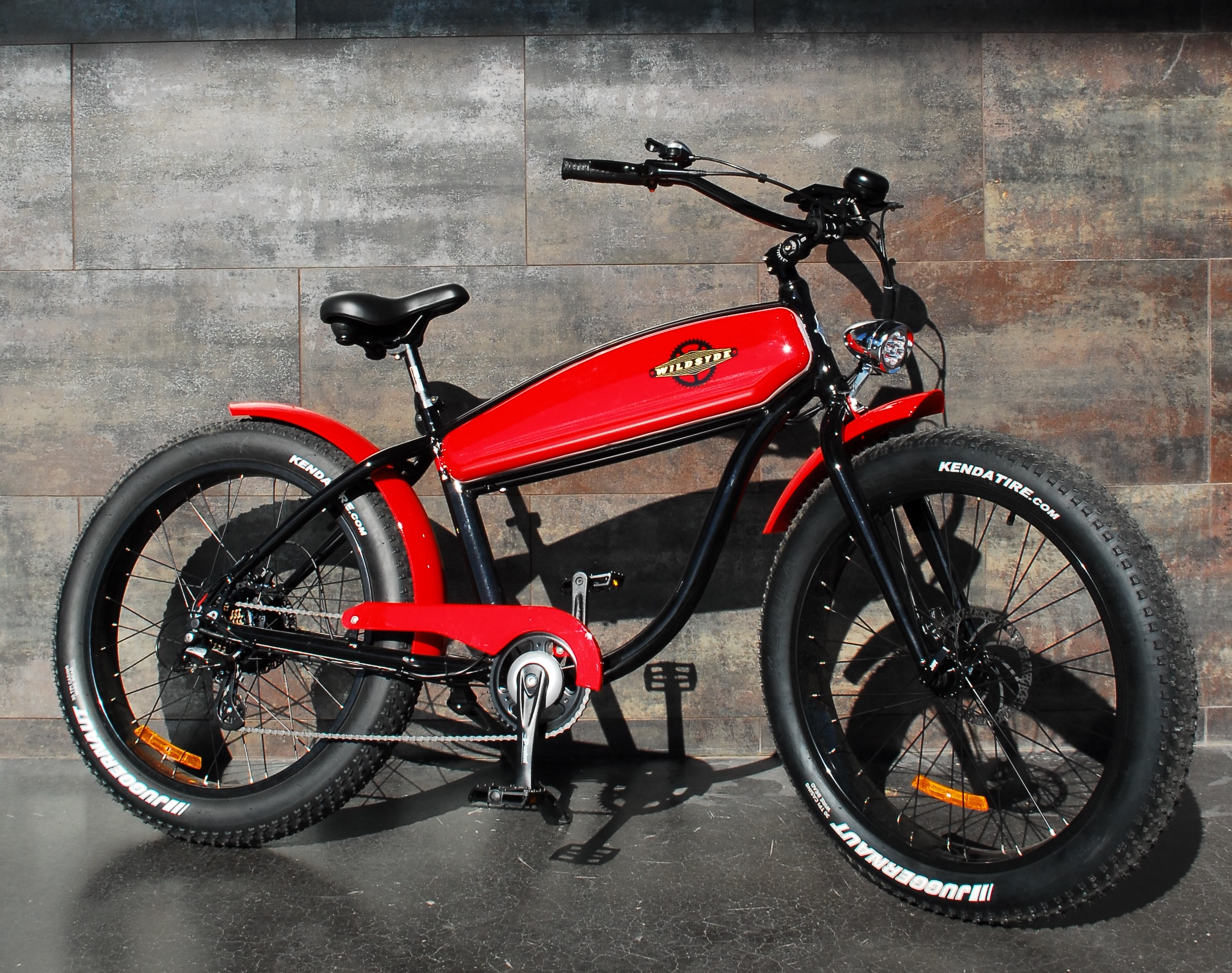
VAIL, Colorado (November 15, 2019) — Wildsyde’s new vintage-inspired electric cruiser bikes are the perfect gift for the holiday season. They’ll bring joy to the environmentally conscious, style-minded adventurer on your list. E-bikes are ideal for pedaling to work, a sporting event, or a holiday mixer. With the retro look of an old motorcycle and built with cutting-edge technology, Wildsyde’s pedal-assisted eCruisersTM let riders raise their cool factor, not their temperature this season.
“With a blend of practicality and style, Wildsyde’s vintage-inspired cruiser bikes are even more fun to ride than traditional eBikes, says Paul Hields, founder and developer of Wildsyde. “We meticulously think out every design detail and feature to maximize both performance and functionality. We aim to shake up the game and create alternative commuting options year-round, not to mention vintage is just plain cool.”
According to the market research firm NPD, e-bikes are the fastest growing category in bikes, totaling $77.1 million in 2017, up 91 percent over the previous year. And today’s models come in so many styles. While the National Institute of Transportation and Communities (NITC) researchers found that many of the trips taken on e-bikes replace trips that would otherwise have been taken by car, e-bikes have the potential to reduce emissions and traffic congestion year-round. Given that the sun is still shining in the south, it’s not too late for Santa to deliver a shiny bright environmentally friendly Wildsyde Beast for the Holidays.
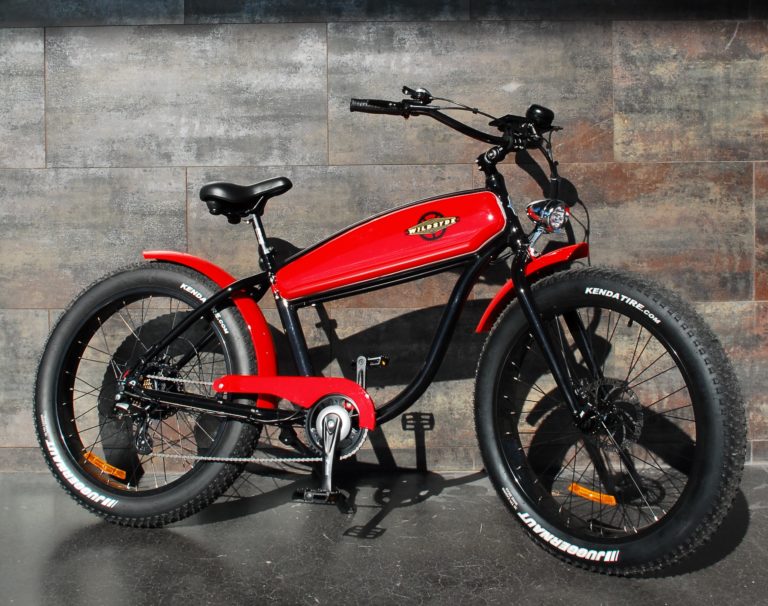
The Beast is one of three Wildsyde models introduced to the U.S. market this year. It’s fitted with a 36v/13aAh Samsung battery and a 500Wh Bafang rear-drive motor to keep riders moving quickly and efficiently. The long-lasting battery is engineered for an average distance of 25 to 35 miles. The larger, 26”x 4” tires are adventure ready to tackle all terrain at a season’s black Friday low price of $1,995.
The Wildsyde Beast is sure to turn heads this holiday season. Photo courtesy Wildsyde.
As a Class 1 electric bike, the Wildsyde Beast has 5 power zones and can reach a speed of 20 mph. The 7-speed Shimano mechanical shifter allows the rider to exert as much or as little effort as desired. Most eCruisers come equipped with a governor that limits their top speed, keeping the bikes path-legal.
With 25+ years in the active sports market, owner Paul Hields knows how to design great products. His passion has evolved, from skiing to mountain biking to road biking, and now to e-biking. “With e-bikes, we are embarking on an expedition that opens our minds to the simpler things in life,” he says. “Everyday life can be taxing. We are focusing our energy on creating new experiences that put a smile on your face.”
Wildsyde’s line of vintage-inspired eCruisers have been designed and tested with adventure and practicality at their core, and were introduced to the U.S. market in spring 2019. For more information, see www.wildsyde.com.
The air has cooled making the desert’s morning brisk, the days are pleasant and the evenings are euphoric. It is fall in the desert we know this because of the change of temperature and the fact that there are pumpkins at the grocery store and the middle section is covered in giant spiders and things that go bump in the night. Soon these will be followed by an almost complete avoidance of anything having to do with Thanksgiving in an effort to extend the Xmas shopping season. Before we know it, there will be fake trees lining that same section in the stores, videos of people fighting for the latest gadget and of others just wishing they had a decent meal for dinner.
The winter sun illuminates the trail during a quick stop on the Black Canyon Trail. Photo by Lukas Brinkerhoff.
This time of year is a paradox for me, it’s my favorite time of year, but the holidays grind on me in ways I’m just beginning to understand. It was only a few years ago that I swore them off. I told everyone I wasn’t buying any more gifts and I wouldn’t be accepting them either. Give the money to charity instead. Please. And just like that I had three holidays that used to involve things I despised opened up to me to do what I love, ride my bike in the awesome fall and winter weather of Southern Utah.
It’s not that I hate holidays. I mean, who hates having a day off from work and seeing a few stores close their doors for a day? I certainly don’t. However, I have a hard time celebrating the giving of thanks amidst an obesity epidemic by gorging myself until I can’t move. And then having a piece of pie. Not to mention celebrating a deity, that when in human flesh preached giving away everything, with the worst aspects of consumerism. It just weighs on me.
It only took a couple of years for new traditions to settle in. My wife and I developed our own way of celebrating by creating the Mooseknuckler Holidays.
Thanksgiving. Don’t eat turkey, ride the Goose.
Well, at least that’s how it started out, but with three awesome mesas to pick from, it was hard to say we were thankful for all the riding available to us if we only rode the one. Late November in Southern Utah is about as perfect as it can get for riding. The temperatures are long base layer and knickers worthy and you want to pedal because when you stop, there is a nip in the air. And if I were to be completely honest, which I rarely am, there are few places that can inspire the giving of thanks over a simple meal more than witnessing the sunset over the Zion curtain from the Guacamole trail head.
Dominik Larsen and Monte Lutz enjoying some nice weather on Guacamole. Photo by Lukas Brinkerhoff
Christmas. Dance on the pedals like you’re three dancing around an Xmas tree.
The day we celebrate the suffering of Christ has morphed into a hideous metaphor of why that is almost impossible today. The best way to celebrate suffering is to suffer. In that vein, we head out on a long ride that links as many trails as possible. One of the favorites is the BCP to SCRR connector.
Starting at the Navajo Trailhead for the Bear Claw Poppy, head up the Micro Loop to Stucki Springs riding it out to the point and then down to the step over to the dirt road. Pedal the usually dusty road up to the Santa Clara River Reserve and ride all of its possible loops starting with the Rim Loops. Then head up Sidewinder to Suicidal and end with the classic Barrel Roll ride. Now all you have to do is get home. Retrace your pedal strokes back down Stucki and then come down the Bear Claw Poppy as your reward for the long day you just put in.
By the time you hit the trail head, you will feel elation that you rode instead of sitting around the house thinking about all the things you didn’t get and contemplating that feeling of emptiness that always occurs once all the gifts are opened and the wrapping paper has been tossed. If you are religious, pull your tap shoes off and sit on your tailgate sipping whatever it is that you drink. Sit there until the cold gets under your skin and you are shivering. The sun will have gone down and you can revel in the cold as it purifies your soul and opens your mind to whatever it is that you are seeking.
The New Year. Go forth and do that which is epic.
It’s no secret that I like to drink, but the celebrating of starting over by drinking yourself silly and then actually starting the new year with a hangover seems antithetical. After a few bad hangovers together, we decided to instead spend the New Year away and doing something that we would define as an epic start to the New Year. A kind of hard reset, if you will.
Last year we headed south, farther south than St. George, all the way to Black Canyon City. We found a small camping area off of Bumble Bee and made it our base camp. One day we rode north. We rode until our legs were beginning to turn to mush but the reason we flipped around was solely due to the waning light. The weather was around 70 and the trail was majestic. Day one was a climb out and then descending back. The climb is one that you only know you are climbing because the valley keeps getting away from you, but the constant grade reversals in the trail keep you from feeling burnt.
New Year’s Eve we rode from Black Canyon City finding our way around the Black Canyon, across the Agua Fria and riding through a Saguaro forest. Similarly, we rode until we hit the border of how long we would have daylight. And that night, we sat around a fire with some good friends, talked about the stars, had a couple of beers and went to bed just as the red necks were firing off their guns in celebration of midnight.
We awoke on New Year’s Day refreshed and ready to conquer anything that came our way.
There may be lots of reasons for the season. Outside of the axial tilt of the earth, all of them are personal. Mine is that the weather is cooler and it makes for amazing riding. It’s simple, just like turning the pedals of my bike.
LEADVILLE, Colo. (November 13, 2019) — Two iconic events, the legendary Stages Cycling Leadville Trail 100 MTB and the renowned SBT GRVL p/b Canyon, today announced the ultimate challenge of 2020: the LeadBoat Challenge, racing the Leadville Trail 100 MTB followed by SBT GRVL BLACK, two arduous endurance races taking place in the Rocky Mountains on the same weekend. Completing either of these races is an accomplishment in and of itself. To become a LeadBoat Legend, the cyclist must prepare for back-to-back events, completing a 106-mile mountain bike race less than 24 hours before beginning a 144-mile gravel race. Each race requires a different bike and a different skill set.
Action from the 2017 Leadville Trail 100. Photo courtesy Life Time/Leadville Race Series
The partnership is indicative of the off-road cycling community’s welcoming nature, with race organizers on both ends quickly joining forces to create the ultimate challenge for athletes across disciplines, one in which they’ll reach outside of their comfort zones to discover what they are capable of. During the selection process, applications for entry into the challenge will be reviewed with credentials including riders’ motivating factors, proudest accomplishments, past experiences in ultra-endurance events and parity. As both parties continue to advocate for more equal representation on the start line in cycling events, participation in the LeadBoat challenge will be equal parts male and female.
Kimo Seymour, President of Events and Media at Life Time, spoke to the partnership by saying, “We believe that this is an incredible opportunity to offer to a few hearty, passionate souls. We collaborated with SBT GRVL and thought, ‘why not’? Two amazing events, one incredible challenge. At Life Time, we love providing great event experiences, and joining forces with SBT GRVL allows us to do that in 2020.”
A rider participates in the 2019 SBT GRVL cycling race held near Steamboat Springs, Colorado. Photo courtesy SBT GRVL/Linda Guerrette
Amy Charity, Partner at SBT GRVL says of the LeadBoat Challenge, “We’re excited to partner with Life Time to offer this unique challenge. LeadBoat is not just for elite cyclists, but for anyone who wants to test the limits of their endurance while tapping into different skill sets on the bike. It’s about the journey of how these athletes prepare for back-to-back races, the camaraderie among the participants and the experience of doing something that most think is not possible.”
Limited to 40 slots, but parity-dependent, any participant willing to take on the 250-mile test of endurance can apply for the LeadBoat Challenge during a one-week window beginning Nov. 18 and closing Nov. 25. Race organizers will review applications and notify all applicants of their status on Nov. 29. The cost is $700.00. Registration will be available on the LeadBoat Challenge website which is set to launch at 6 a.m. on Nov 18 at www.leadvilleraceseries.com/mtb/2020-leadboat-challenge/.
Notable riders confirmed to participate include:
Peter Stetina
Laurens ten Dam
Alison Tetrick
Amity Rockwell
Payson McElveen
Lachlan Morton
Kaysee Armstrong
Jake Wells
Yuri Hauswald
Kristen Legan
Kristi Mohn
Gabbi Adams
Those who wish to document their experience on social media are encouraged to use the hashtag #LeadBoatChallenge. More information about the Leadville Trail 100 MTB can be found at www.leadvilleraceseries.com. For more information on SBT GRVL, visit www.sbtgrvl.com.
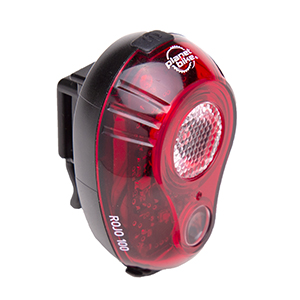
MADISON, Wisconsin (November 12, 2019) – Planet Bike has released their new Rojo 100 bicycle tail light (MSRP: $34.99). Designed to keep cyclists safe and visible on every ride, day or night, it’s the brightest rear light Planet Bike has ever produced.
The Planet Bike Rojo 100 Tail Light retails for $34.99. Photo courtesy Planet Bike
The compact design boasts up to 100 lumens of power ensure cyclists can been seen whether riding or commuting in daylight or in total darkness. Four precision engineered lighting modes allow them to select the perfect optimized optical output to match conditions, including a group ride mode to maximize visibility without causing distractions to fellow riders.
Two high output Cree XB-D LEDs make it super bright and provides 270° of illumination so cyclists are also visible from the side. The 650 mAh lithium polymer battery charges quickly via an included USB type C cable, and provides up to 15 hours of ANSI standard FL1 tested run-time. Having passed the IP66 standard, riders needn’t worry about the light quitting on them during rainy commutes. The Roja 100 also comes with three brackets to allow it to be mounted to seat posts, seat stays and rear racks.
Cyclists will want to turn on the Rojo 100 every time they hop on their bicycles to grab the attention of even the most distracted drivers.
Cycling pedals are taken for granted by experienced cyclists and viewed with trepidation by new cyclists. What is their function and role, how do you choose a pedal system, and what do you need to know about using them and looking after them?
In the Summer 2019 issue, I touched on pedal systems in “A Guide to Cycling Shoes” as your shoes and pedals function interdependently to transfer force to the crankarms and move you forward. The choice of cycling shoes will influence what pedals you can use, and vice versa. To recap briefly, pedal systems will be broadly categorized as either flat, mountain, or road. Within these 3 broad categories are a range of brands, models, functions and features that can overwhelm a newbie, leading to a Facebook post that says “I just got a new bike – what pedals do I put on it?”.
The answer to this question is not as simple as might be expected, and will be influenced by an assessment of the type of bike; the type of riding the person is doing; their experience and confidence level; and future cycling ambitions.
Pedal Categories
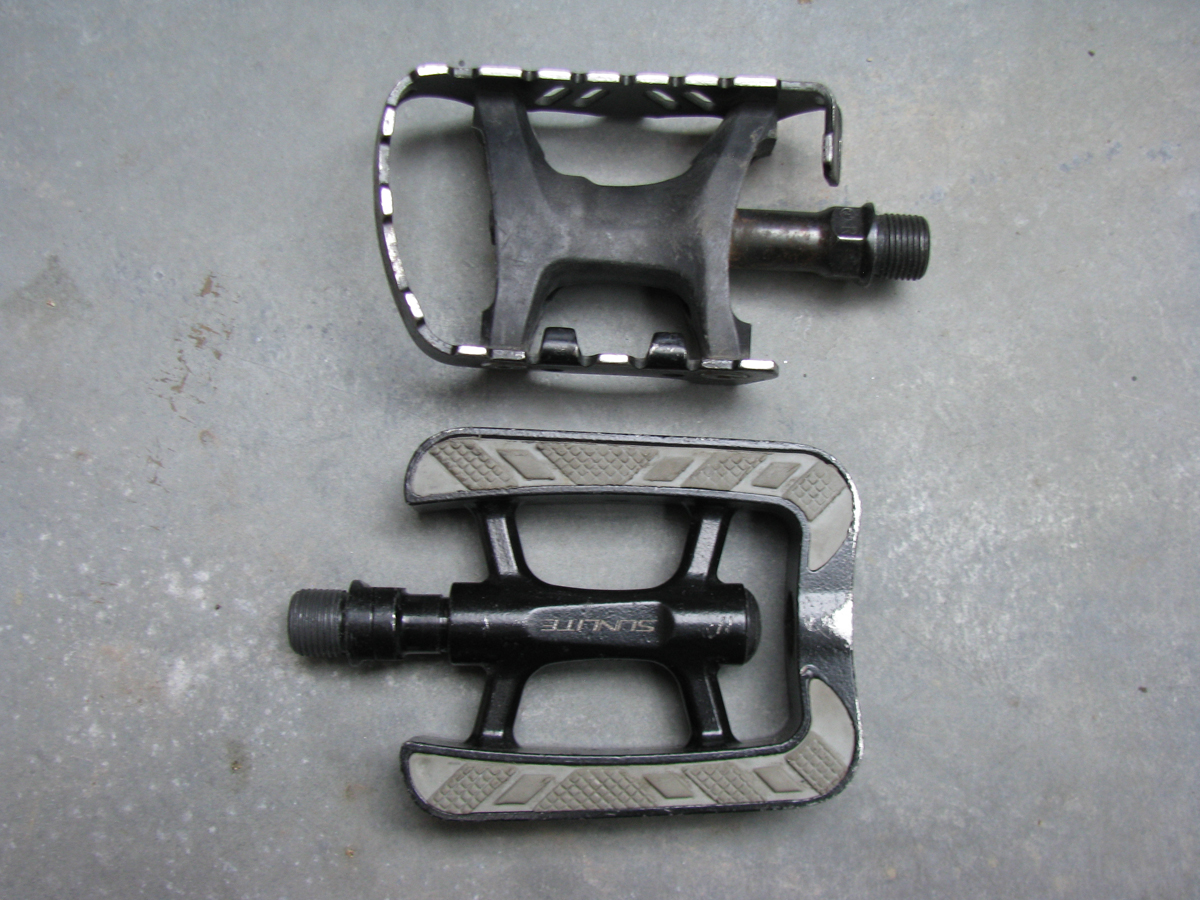
Flat pedals are what we all learn to ride on as a kid, or belatedly as an adult. However Flat pedals (aka platform) are not restricted to kids bikes but show up on lower cost road bikes and mountain bikes, cruisers, hybrids, commuters, e-bikes and some specialty mountain bikes. Flat pedals may be rubber; metal with serrated teeth (great for both traction and nasty shin injuries) or studded to provide grip under foot. Cycling specific shoes are not required. Just get on and ride! Therein lie both the pros and cons.
Flat pedals. Photo by John Higgins
Pros: ease of use, no special shoes required, you won’t fall over and land on your hip while trying to get your feet off your pedals.
Cons: can result in less efficient power transfer, takes skill and practice to stay in contact with the pedals in bouncy conditions (i.e. mountain biking).
A couple of the cons can be addressed by using Powerstraps or Toe Clips to help retain the feet on the pedals. Clips were the performance enhancing advantage of a bygone era, but have been largely replaced by the next two categories of “clipless” pedals. This poorly chosen but common name to describe modern pedals relies on historical knowledge to make any sense of, and I will refrain for using it again!
What defines modern cycling pedal systems are three integrated components: the pedals which attach to the bicycle crank arms; the shoes; and the cleats which are bolted to the bottom of the shoes. Stepping on the pedal connects the cleat to the pedal, mechanically attaching your feet to the bike. There are two broad categories named after the style of bike they are mostly used with: mountain and road.
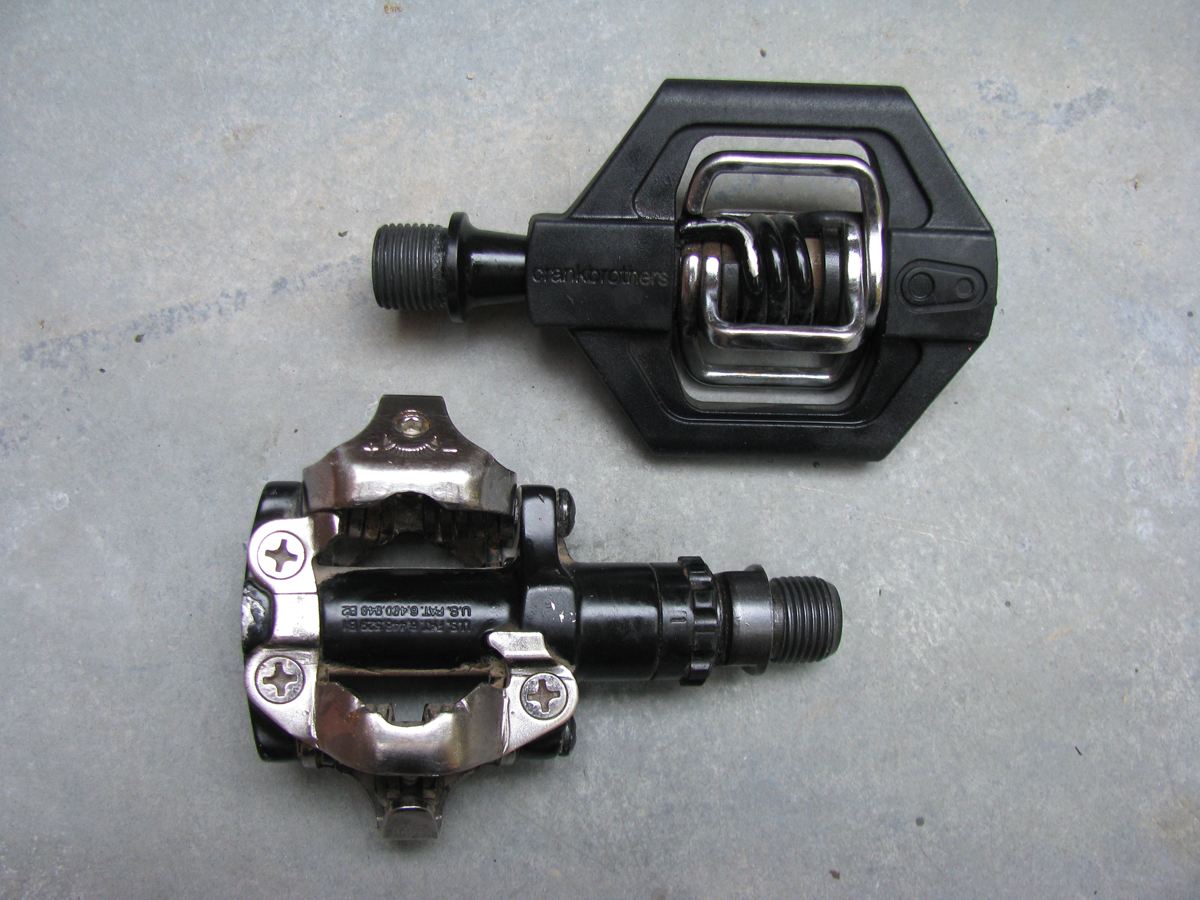
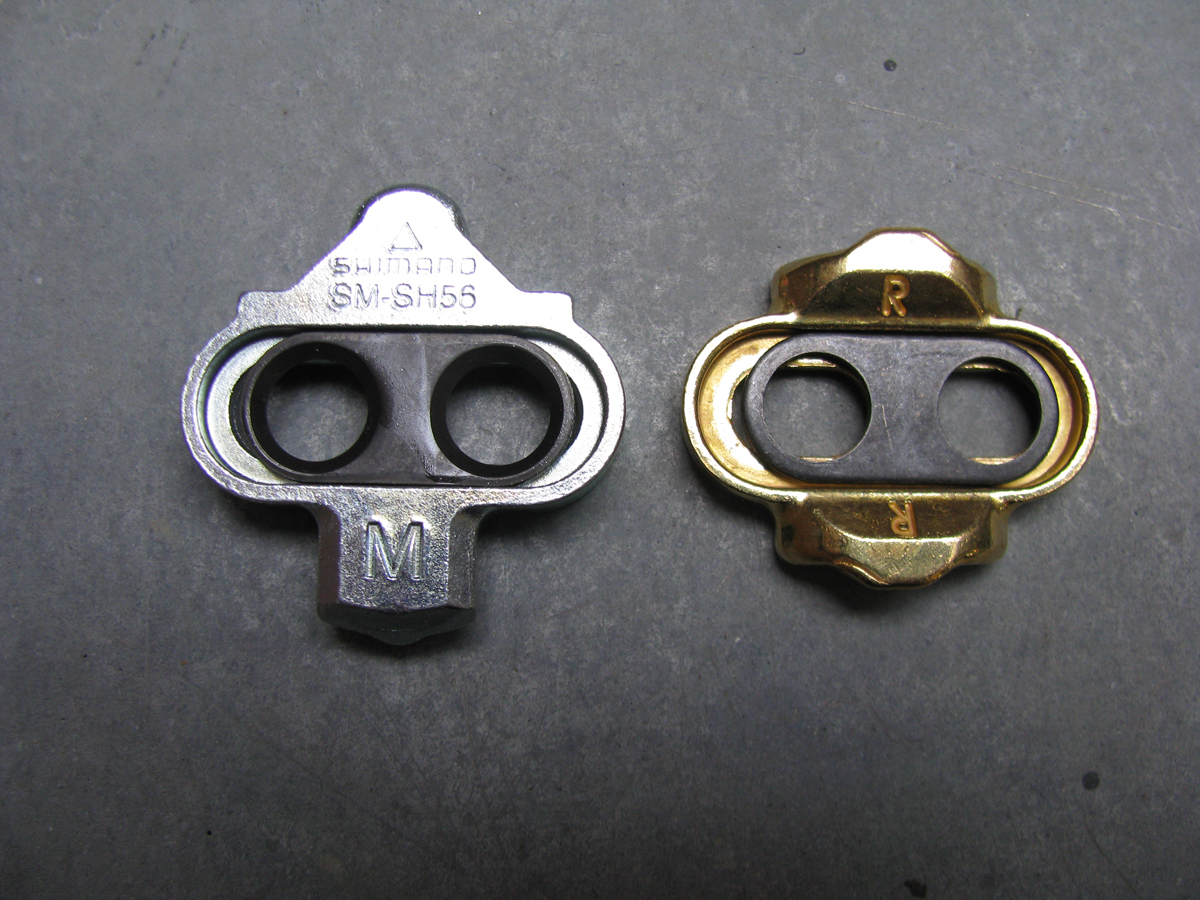
Shimano and Crank Brothers MTB pedals. Photo by John Higgins
Mountain bike pedals are not just for mountain bikes. They can be used on any bike! The salient features are that they are double sided; easy to click into, even easier to detach from, and use a small metal cleat secured by 2 bolts. This 2-bolt cleat defines the shoes that can used with these pedals, and 95% of them will have a lugged outsole that the cleat is recessed into, making for a flat and secure walking surface underfoot. The overarching design principle is easy entry and exit and off-bike walkability.
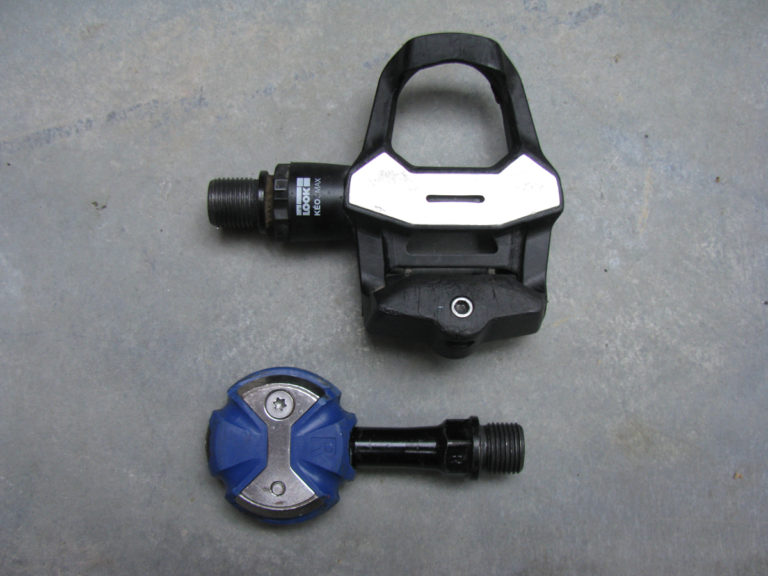
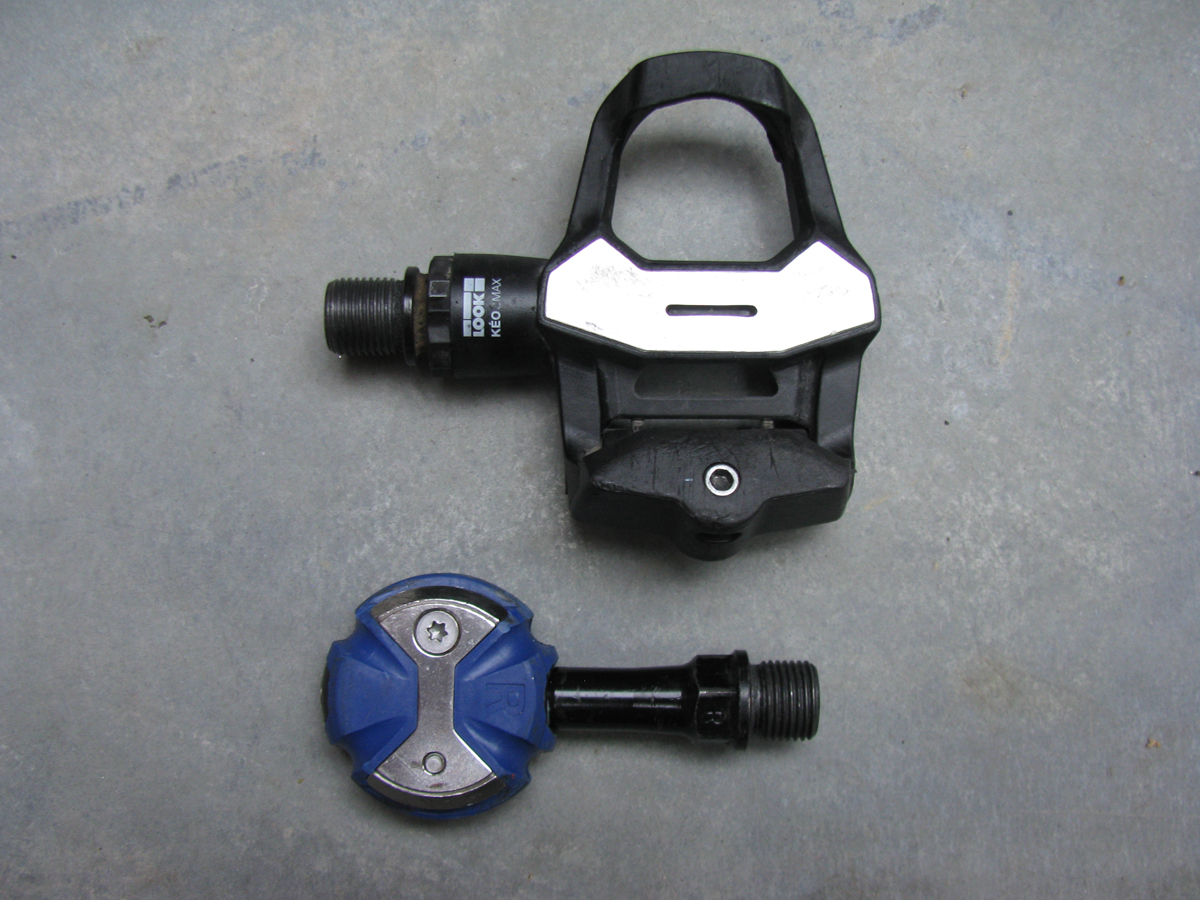
Look and Speedplay pedals. Photo by John Higgins
Road bike pedals are commonly single sided (the exception being the Speedplay brand of lollipop pedals), and relative to mountain bike pedals they can take more force to enter and exit. The cleats are larger, usually plastic, and use 3 bolts to mount to the shoes. The relevant cycling shoes will have a relatively smooth outer-sole, from which the cleat will protrude, making walking somewhat awkward. The overarching design principle is “retention” i.e. keeping your shoes attached to the pedal. Ease of engagement / disengagement is a secondary consideration.
Brands and Models
A few well-known brands dominate the market, but there is a wide array of options. The big names for road pedals are Shimano, Look and Speedplay, with Time a distant 4th. There are a multitude of second tier brands offering “Look compatible” pedals and cleats, but the quality and function is often not as good. All major brands offer a range of models at different price points with different materials and features. As with anything bicycle, your pay more for less (weight), and hopefully better quality.
Mountain bike pedals are dominated by Shimano who invented them, with Crank Bros a popular alternative. Other brands include iSSi, Xpedo, and Speedplay. Shimano offer a slew of options in weight, materials, quality and contact size, but not color! Some of the other brands bring more bling to your bike, should that be a selection criteria.
Pedal Functions
The two main functions to consider are ease of engagement and disengagement between cleat and pedal, and if off-bike walking practicality is needed.
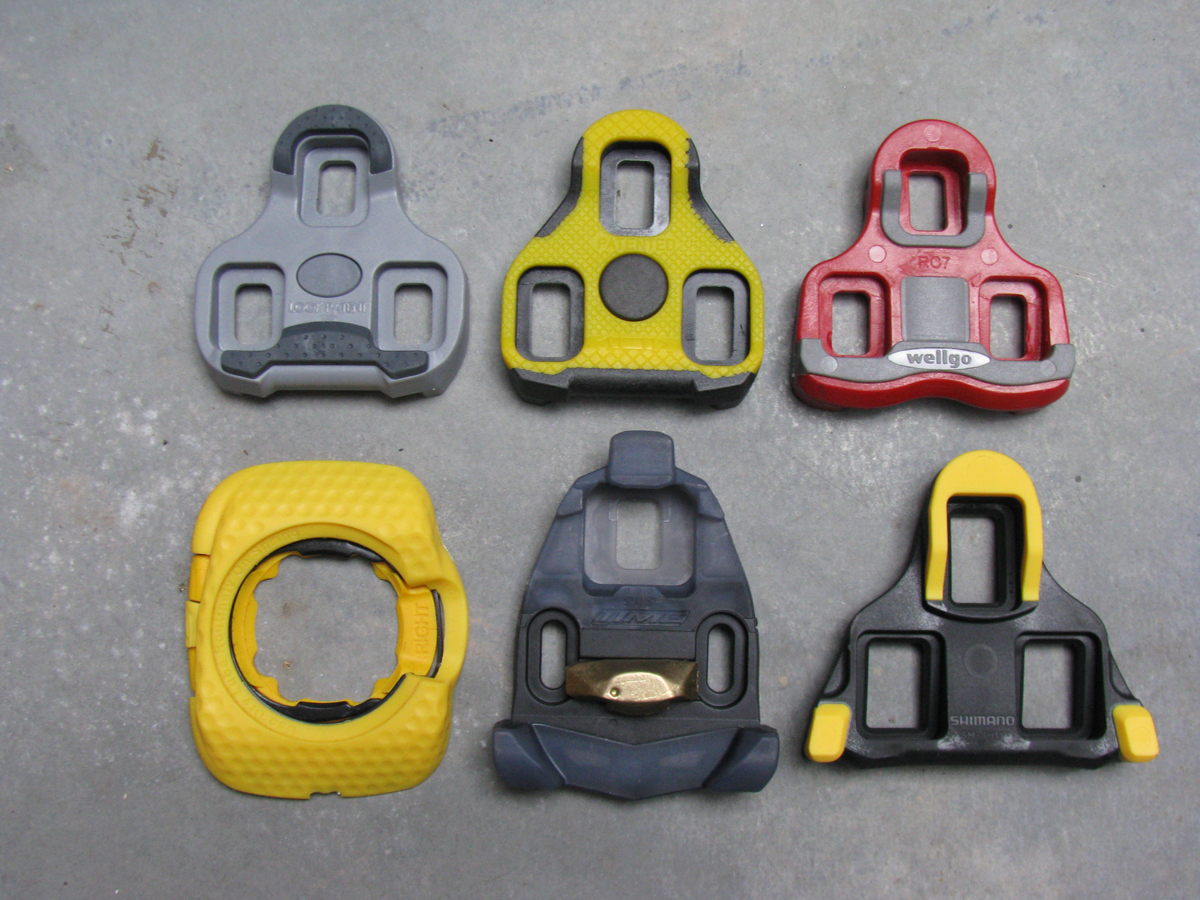
An assortment of road cleats. Photo by John Higgins
Engagement and disengagement. Connecting your shoe to the pedal takes practice, and while you can attach one foot while stationary, you have to be moving to get the other foot in. Double sided pedals make this easier. Mountain bike style pedals are easier. Most pedals have an adjustable tension screw that can be backed off to make this easier, or tightened to increase the grip the pedal has on the cleat. However different pedals have different characteristics. Shimano road pedals can take a lot more stomp to get in and out of compared to Look and Time and for that reason suit heavier stronger riders more than lightweights. Speedplay Zero are harder to get in and out of than Speedplay Ultra Light Action. If you are a novice, a pedal that is easy to get in and out of will suit you better.
MTB cleats. Photo by John Higgins
Walkability. OK, I know the aim of cycling is to be pedaling not walking, but for some people the need for good walkability will influence a pedal choice. Mountain bike pedals and shoes offer the best walkability and so are popular choices with commuters, bikepackers, and some novices. Road shoes and pedals will offer a limited amount of traction off the bike, with the best being the Speedplay walkable pedals. These are popular with triathletes who want secure footing in and out of transition zones while wearing road or tri shoes. Spin class aficionados may also value walkability, and to that end spin class bikes typically use either flat pedals or hybrid pedals that use a Shimano mountain bike cleat.
Pedal Features
There are a number of obvious and not so obvious features that may influence your preference and choice.
Connection. There are 3 options when it comes to defining the connection choices on a bike: single sided, dual sided and hybrid. Most road bike pedals are single sided. That means you can only connect your cleat to one side of the pedal. This keeps the weight and profile of the pedal lower. The downside is that without a foot in the pedal it usually rotates upside down, requiring a toe flick to turn it over before you can get in. Not an issue if you are getting on your bike, going for a ride, and getting off. It is an issue if during the course of a ride you have frequent stops and have to get going again quickly and easily. Double sided pedals are easier to get into without having to nudge it around to gain entry, but may be heavier and bulkier. The exception is Speedplay road pedals which are lightweight and double sided. All mountain bike pedals are double sided, but there are some single sided road pedals that use a metal mountain bike cleat. Hybrid pedals are a double-sided pedal with a different connection on each side – usually a combination of flat and mountain meaning you can use the pedals with regular shoes and no cleats, or cycling shoes and cleats. These are popular with commuters or people with one bike for quick errands as well as longer fitness or training rides. They are often recommended to cyclists moving from flat pedals to click in for the first time, although this is not always a good recommendation. The pedals are heavier and effectively a single sided pedal as far as clicking in goes. Once the skill of using click in pedals is mastered, the flat side becomes superfluous.
Float. To prevent achy knees, pedals and cleats are designed with “float”. This enables your heel to pivot slightly in and out during the pedal stroke. The model of cleat will determine the float. When you buy pedals, the box comes with a set of cleats. Those cleats will have X degrees of float which will suit most people most of the time. With mountain bike cleats the float is a set amount in most brands. With road pedals there are often choices in cleat color which denotes different amounts of float. For example, Look Keo grey cleats have 4.5 degree of float and the red cleats have 9 degrees of float. You may be a candidate for either more or less float than what the supplied cleats permit.
Fit Adjustments. You probably won’t give this any consideration at all, but as a bike fitter it is of considerable interest and relevance to me. The ability to adjust the relationship of the foot to the pedal via the cleat position is a key component of bike fitting. Adjustments include the fore-aft cleat position (how far forward your foot is over the pedal); the medial- lateral position which affects stance width; the cleat rotation which affects the usable float range; and the ability to shim or wedge a pedal to accommodate feet or leg conditions. Stance width (how far apart your feet are on the pedals) is a big deal for some cyclists, and for some cyclists wider is better. This can be achieved through the use of different length pedal spindles (axles) or aftermarket pedal extenders. Shimano recently introduced an option for 4mm longer spindles on their Ultegra and DuraAce models of road pedal; iSSi offers 2 additional length options on their mountain bike pedals, and Speedplay has long offered 4 additional different pedal spindle lengths.
Power Meter. Pedals have become a vehicle for power meters, with well-known USA company Garmin and lesser known Italian company Favero offering road pedals with built-in power meters. The Favero Assioma has proven to be reliable and popular, with their single sided pedal power meter having the lowest entry cost to getting power data out of all the power meter options available. From a technical perspective pedals are considered the least desirable place to have a power meter, but they offer the convenience of easy DIY installation, low cost and ease of transfer between bicycles.
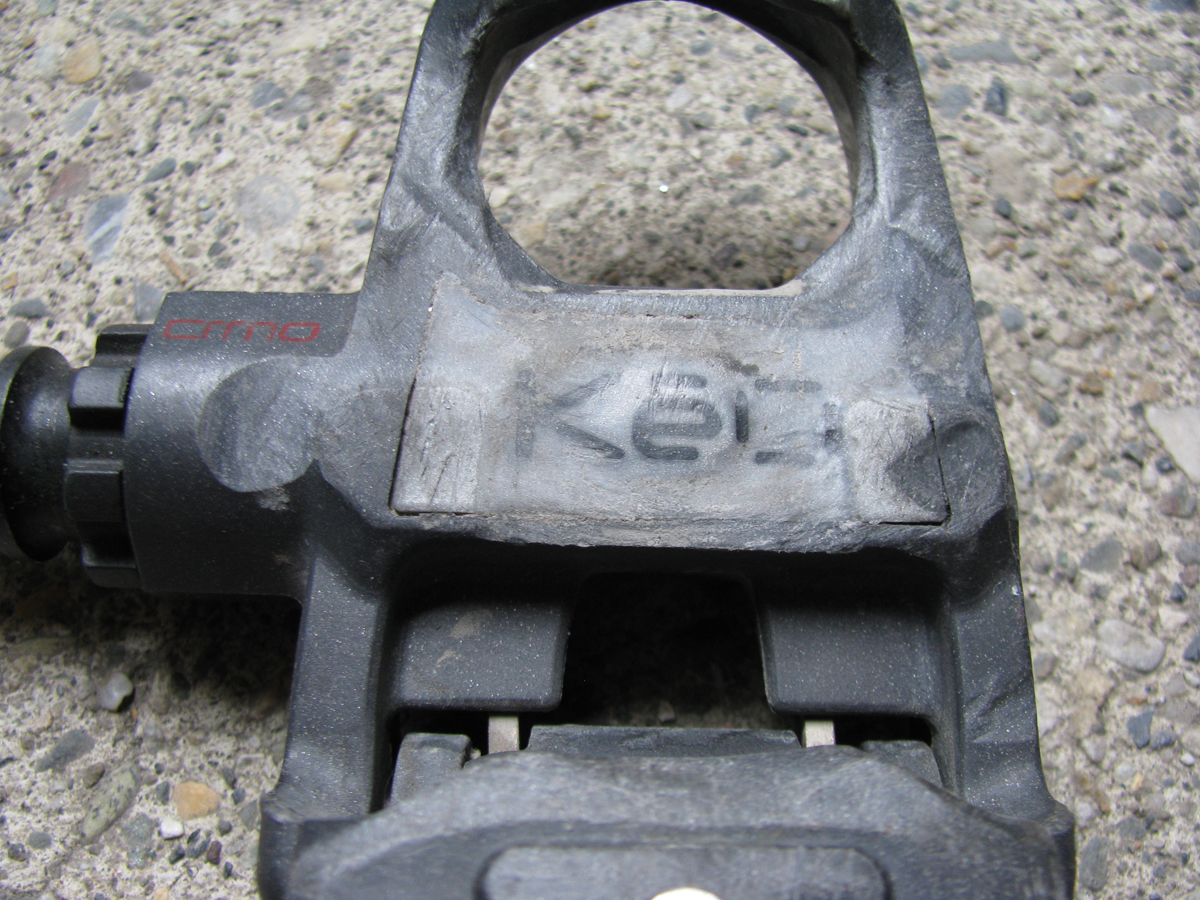
Quality, Durability and Maintenance. Pedals and cleats are things most people put on and forget about, but they take a pounding every time you go riding. Shimano have the reputation for the best quality, long lasting pedals, but that’s not to say other brands are going to fall apart under your feet. Most but not all pedals are serviceable i.e. can be pulled apart, cleaned, greased and rebuilt, but many people will replace rather than repair pedals. Speedplay are the most serviceable, but also require regular maintenance in the form of greasing and cleat lubing which many users overlook. Pedals can and do wear out. That may be the internal bearings, or the external body. A badly worn pedal body leads to shoe-foot instability on the pedal which can show up as power loss and knee pain. Inspect old pedals for signs of excessive wear. Give them a spin by hand. If there is any grittiness to their rotation have them serviced or replaced. I’ve been stranded miles from home by a pedal that decided its day was done and seized up. You can ride a bike without a saddle, but you cannot ride a bike without a pedal that goes around. Cleats are designed to wear out. Expect a season or two out of them. Inspect them for missing screws, loose screws and wear, and replace them sooner than later.
Getting Started with New Pedals
Anyone who currently rides on flat pedals but is contemplating a performance upgrade to click-in pedals have heard the horror stories of pain and embarrassment from toppling over at a standstill in front of other cyclists and motorists, due to forgetting to disengage in a timely and balanced manner. Yes, it’s probably going to happen to you at some stage so consider it a rite of passage. There is a short learning period, but you most likely won’t regret the change. It’s part of becoming “one” with your bicycle. If you are nervous about this and on a road bike, I suggest starting with mountain bike style shoes and pedals for a gentler learning curve. If you are a cautious or relatively low skilled mountain biker and regularly put a foot down, stay on flat / platform pedals. If you build skill and confidence and want to stay on your bike more often, give click in mountain bike pedals a go.
To build skill and confidence using these pedals, start in a safe, controlled environment. If you have an indoor trainer, mount your bike on it and use it to practice getting in and out of the pedals. If you don’t, have someone hold you upright on your bike or lean against a wall or fence and practice getting in and out of the pedals. Releasing should be a simple outward twist of the heel. The next step is to find an open grassed park where you can ride around slowly and click in and out. Start at a standstill. Straddle your bike. Get one foot in a pedal, then push off to get the other foot in. You might need to do a few pedal strokes with just one leg before you can get the other foot connected. Practice engaging and disengaging on both sides. One side will feel more natural than the other, but it is good to be able to do it on both sides. If you fall over it will be a relatively soft landing. The next progression is to practice getting in and out while carrying some momentum along a street that trends gently down – so you don’t have to pedal. See if you can locate the pedal and click in without having to look down.
Once out and about the key to not falling over when coming to a stop is simply one of anticipation. Know which foot you want to put down when you stop, disengage from the pedal a few yards before you come to a stop, and as you finish braking lean to that side and put your already detached foot on the ground. If you lose too much speed before disengaging then the action of getting your foot out will tip you out of balance and you will fall over before your foot is free of the pedal. For most pedals you “toe” into the pedal to connect, and twist your heel out to release.
With practice this will become an automatic and largely unconscious action, and you will wonder why you didn’t make the change sooner!
John Higgins is a professional bike fitter and purveyor of unique and boutique bicycles and fit-related components and accessories in Salt Lake City. More info on bikefitr.com
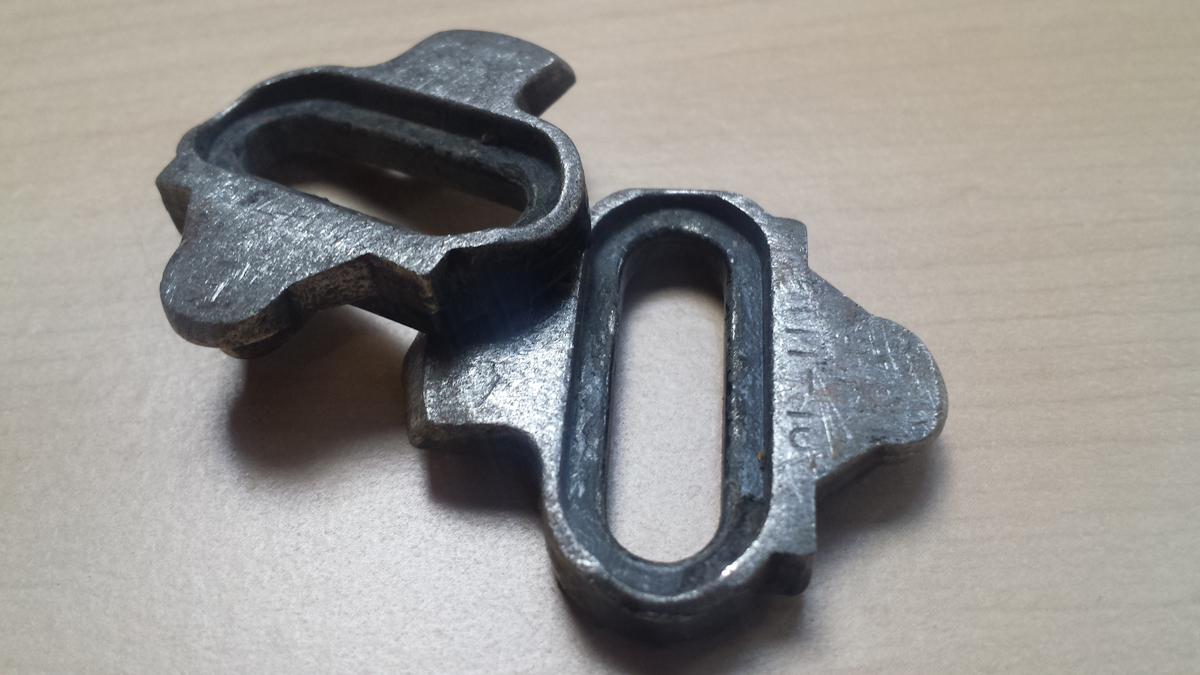
It’s time for new pedals. Photo by John HigginsIt’s time for new cleats. Photo by John Higgins
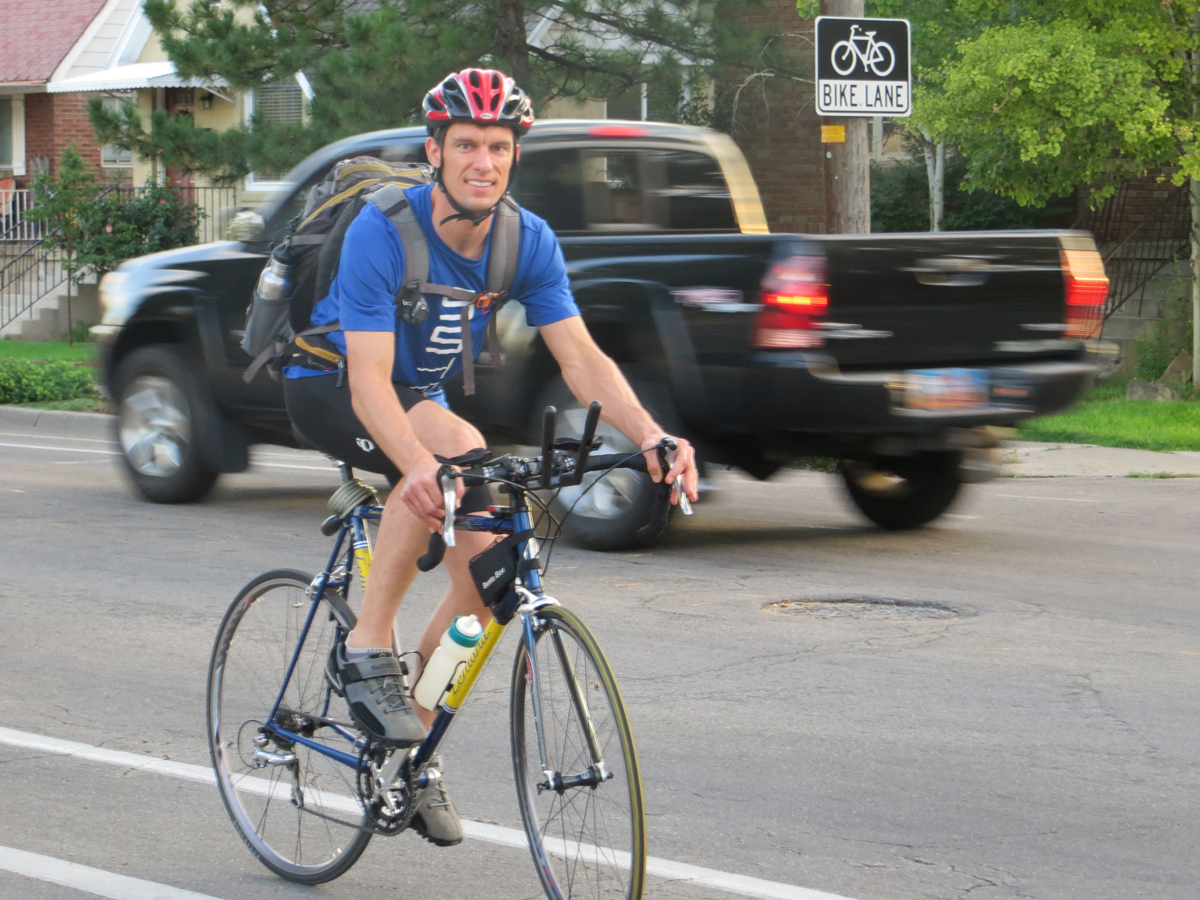
Matthew Boerke’s daily commute mileage is 11.3 miles one way, 22.6 round trip; which is a fairly significant trip. He rides 2500 South to 90th south via 700/900 East and finds it to be very pleasant riding. He rides as often as he has energy and time for, which sounds non-committal, but usually winds up being 2-3 times per week. Doing the back of the envelope math, he’s riding 45 – 70 miles per week, rather than driving, which is a pretty significant impact on gas consumption, air quality and personal exercise. Matthew is a big believer in we can all be part of the solution is we all do what we can. He rides a road bike without a rack and panniers, so errands requiring purchases after work (like grocery shopping) aren’t conducive to riding those days.
Matthew Boerke on his daily commute. Photo courtesy Matthew Boerke.
[Editor’s note: At the time this article was originally written in 2013, Matthew Boerke served as the Operations Manager for EcoScraps, which is a local company producing compost without any animal products.]
Matthew is not intimidated by a little rain or bad weather. “I’ll go in any temperature. I try to avoid heavy smog and any wetness; rain or snow. But, I’ll go if it’s overcast and a spotty, light drizzle.” He did mention that never-ending conundrum about riding when the pollution levels are high. On the one hand, it’s documented that it isn’t good for your heath, but on the other, if you drive, you are making it worse. That’s one that the solution seems to be above the pay grade of an individual cyclist but Matthew feels it’s worth bike commuters getting engaged in those conversations.
When asked why he commutes by bike, Matthew replies, “I enjoy the exercise and going fast; I try to keep up with the cars on the slower roads. It’s also my way of helping to clean the air and “save the environment.” He also loves feeling the breeze of a fresh, cool morning and really appreciates the bonus exercise. “I love getting my exercise in while commuting so I kill two birds with one stone (assuming that’s an environmentally friendly thing to do, of course).
When asked about what he doesn’t like about bike commuting, Matthew responds, “I don’t like cars, traffic, stop lights, breathing exhaust when I’m breathing hard, and debris, potholes, and manhole covers in my lane. I recently got three flat tires in one week!” That’s a long list, and shows his dedication since he’s still out there 2-3 days a week. It really proves the dedication of bike commuters!
Matthew offers this advice to wanna be commuters, “Live close to where you work (a long commute seems daunting and can potentially get you sweaty) and try to travel at non-rush hour times; maybe leave at 7:30 am and come back by 3 or 4 pm. Don’t be afraid to set a goal of riding once a week or even a couple times a month; every car-less commute saves some fuel and carbon from the atmosphere. If you can get a group to bike together or even to bike separately but on the same day, it adds to the fun of it and builds community. Heck, maybe you can even bike to lunch some day instead of drive.
Ah, words of wisdom we should all heed. As Matthew said when we parted ways, “You’re not stuck in traffic…you are traffic. Ride a bike and break free!”