By Charles Pekow — Electric mountain bikes don’t seem to affect terrain or wildlife much more than conventional mountain bikes. But more research is needed on the topic, concludes the first study of eBikes on federal lands. The U.S. Department of Transportation reported on the issue following a 2019 order by the Interior Department to develop policies to allow eBikes in lands operated by the Bureau of Land Management, National Park Service, Fish and Wildlife Service, and Bureau of Reclamation.
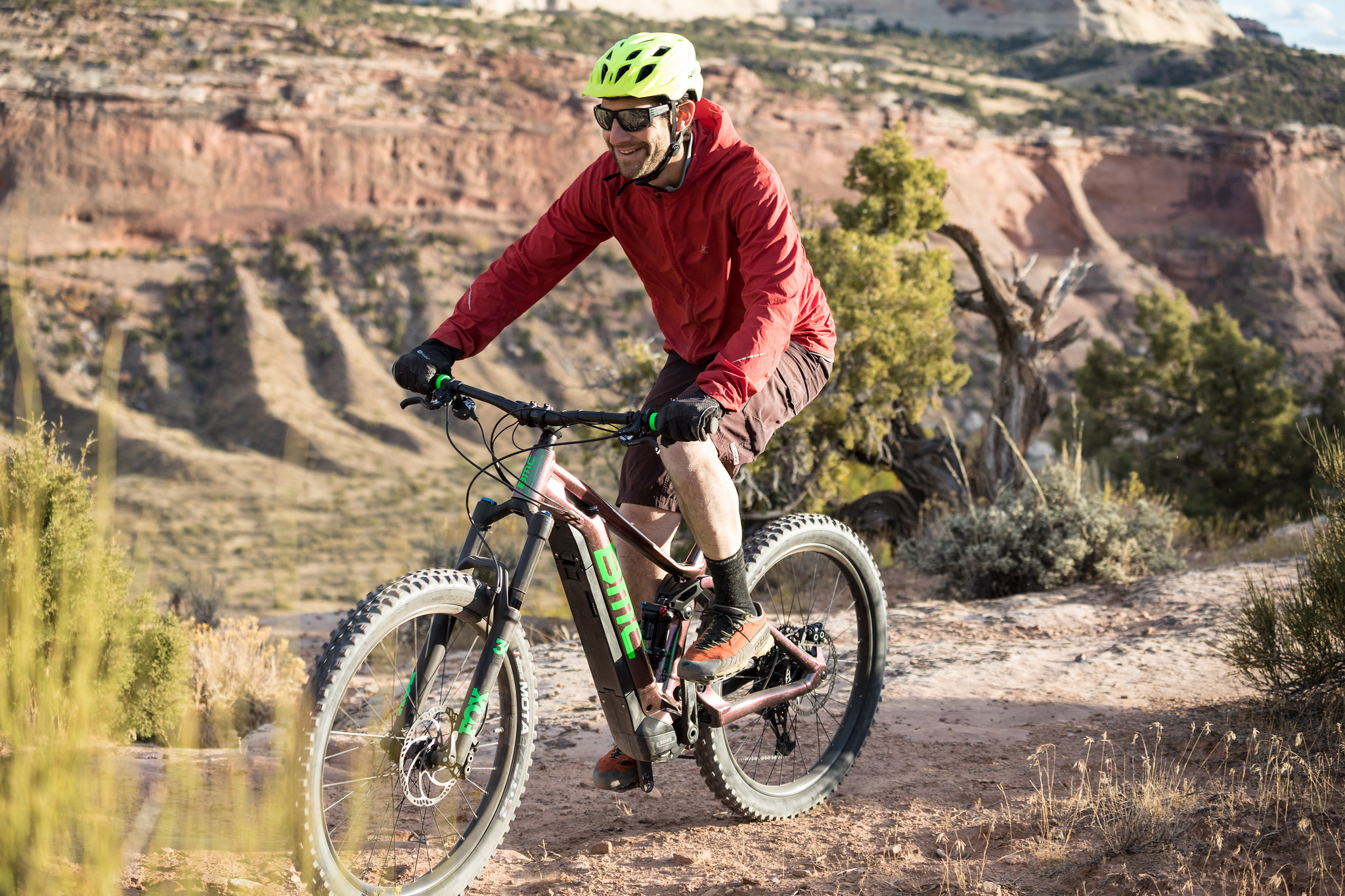
Ebiking in McInnis Canyons NCA in Grand Junction, Colorado. Sights like this may become more common after the BLM concludes their current study. Photo: Bob Wick, BLM
The report also states that the nation needs to conduct more research into possible effects of eBikes on cultural and historical facilities. On the plus side, it says riding eBikes in public lands can reduce use of autos and thus cut emissions. It suggests adding charging stations. Injury levels are about the same between users of both types of bikes, but eBike users tend to be older and suffer more head trauma.
The story of a kid whose helmet saved his life, why road cyclists are in danger, and how we can work toward solving the issue.
By Savannah Cottam —
Nickolas Jensen’s Story
On October 17, 2023 around 7 am, 14-year-old Nickolas Jensen, was riding his e-Bike to school when a SUV came speeding down the wrong side of the road.
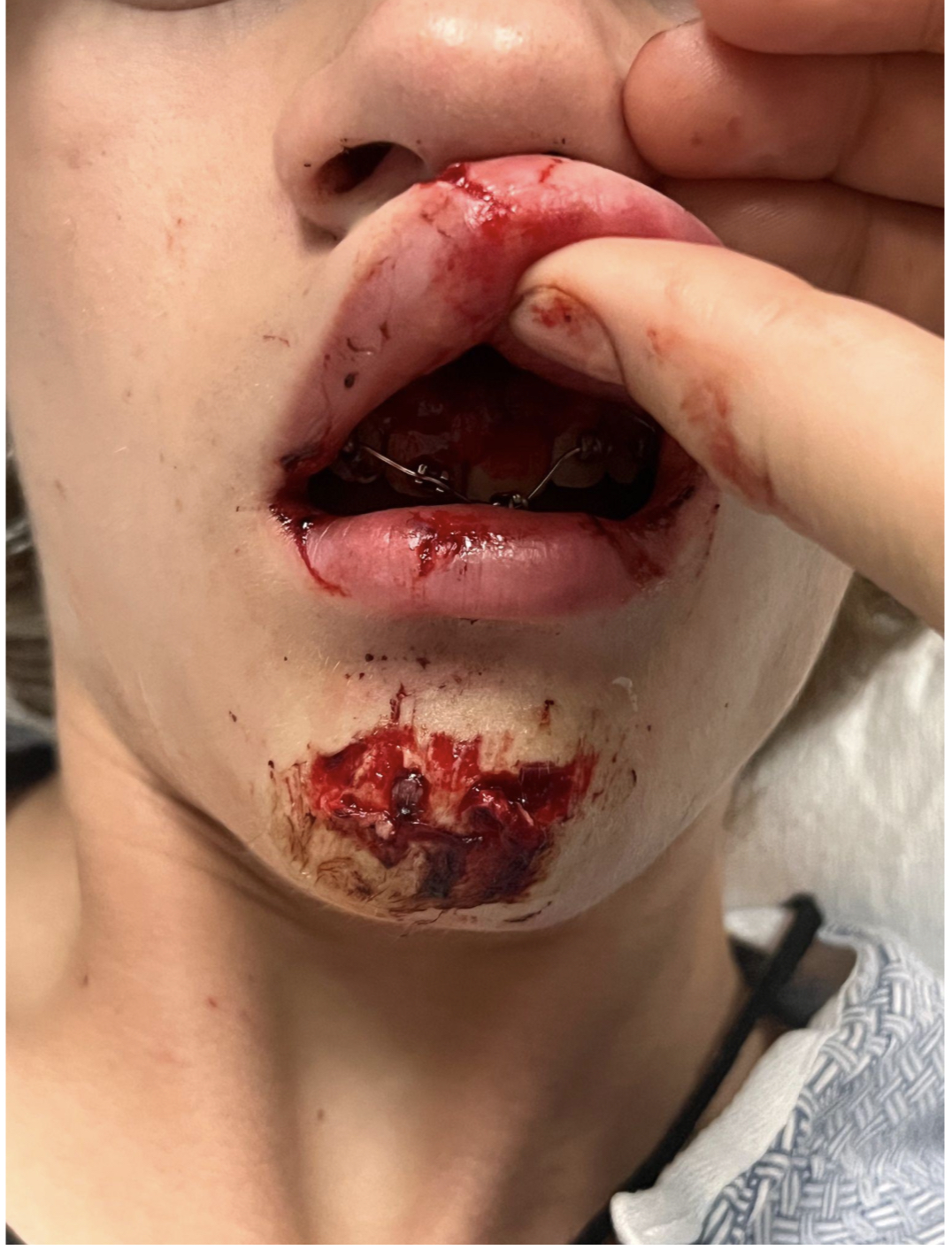
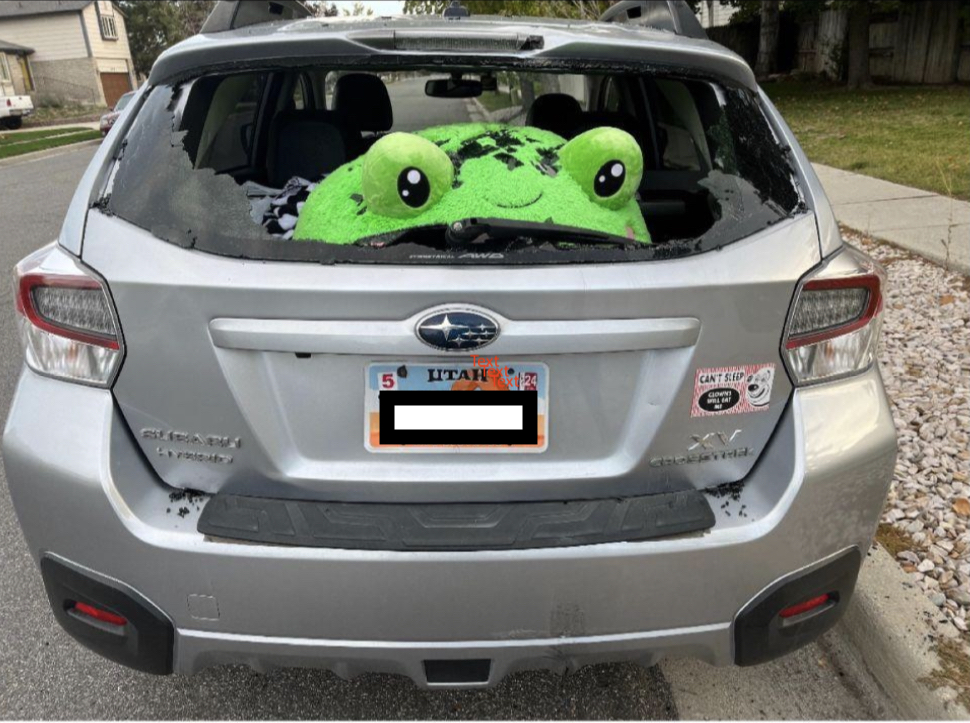
Nickolas recalled, “All I remember is a car coming towards me and I couldn’t see. I was going so fast, like 20 mph. I had to make a quick decision where to go so I swerved over, and it was so fast I hit a parked car. I broke my knee cap, did something to my ACL, broke my nose and got stitches in my upper gums, chin, and lips.” Showing no remorse, the driver sped off without stopping.
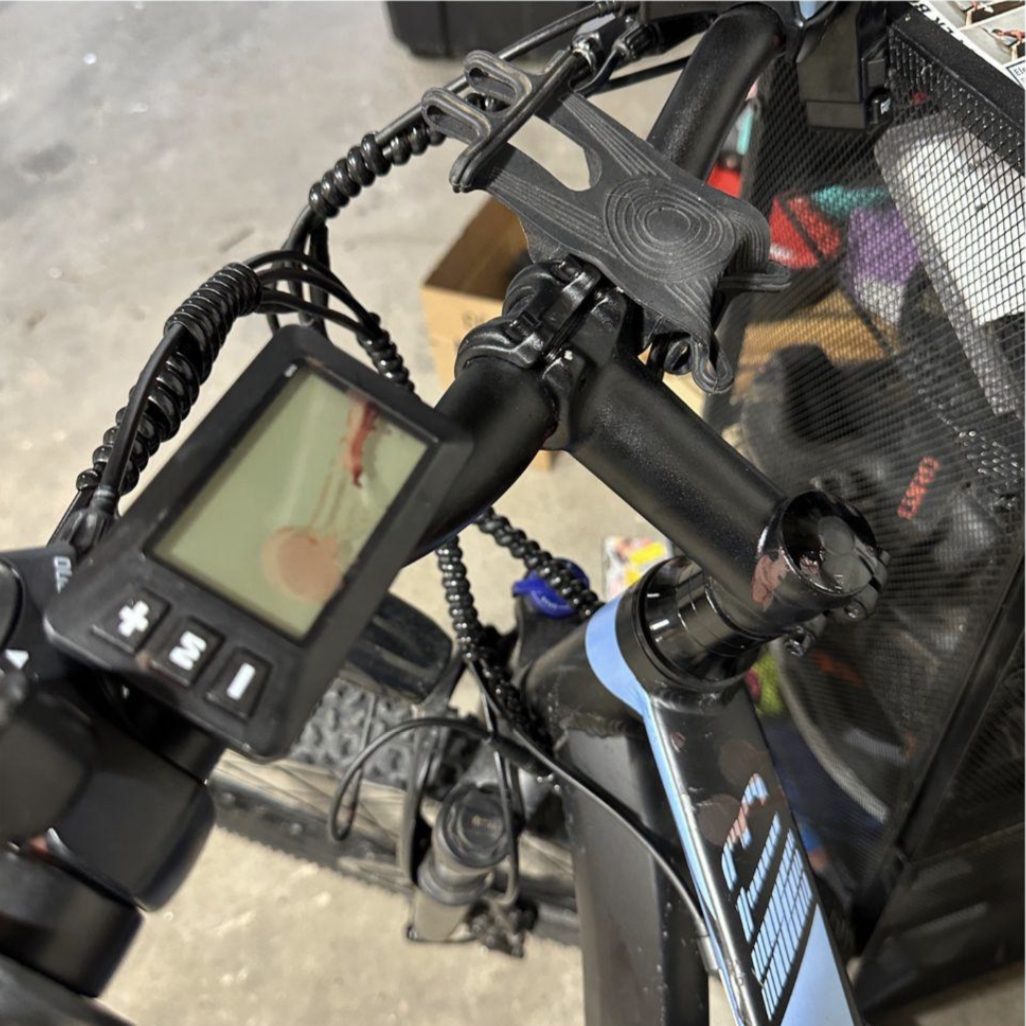
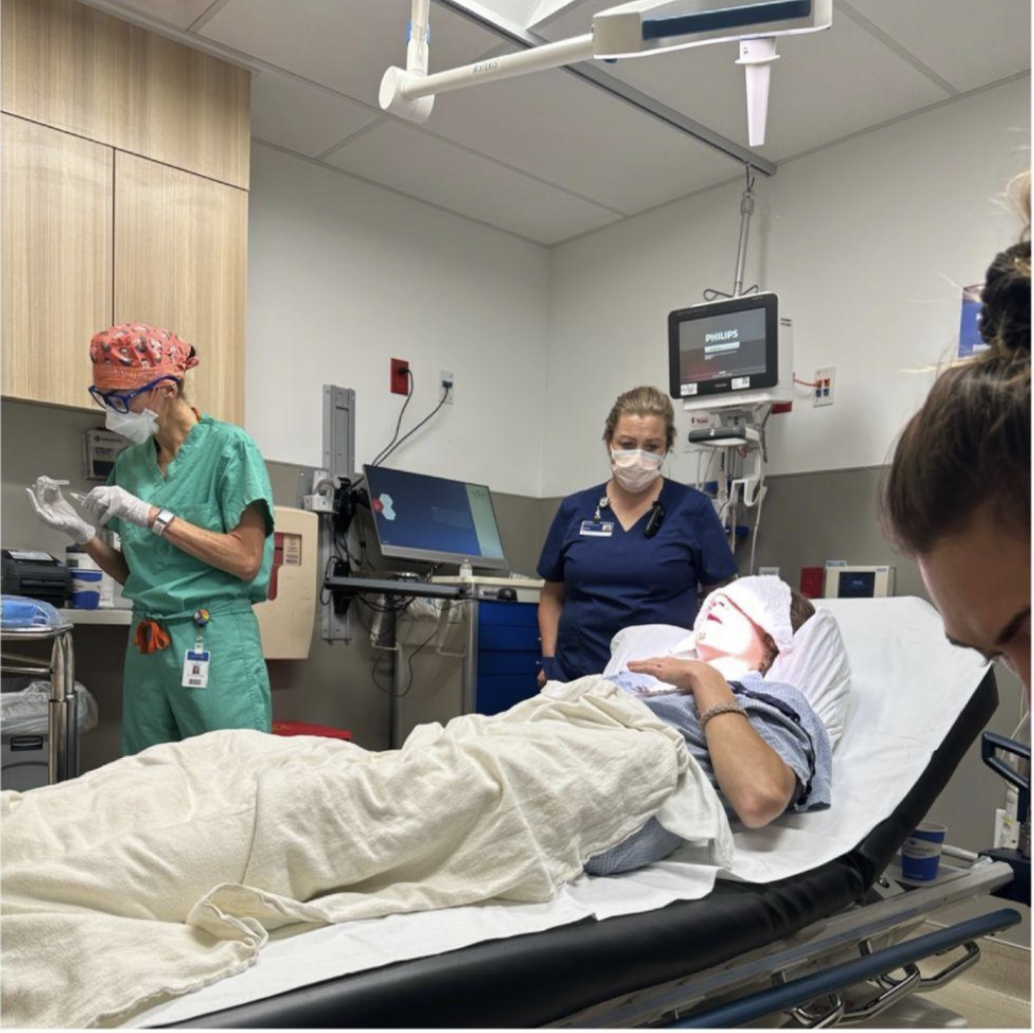
Nickolas Jensen shows the injuries he sustained to his face following his crash on October 17, 2023. Photo courtesy Erik JensenNickolas’s e-bike computer after the crash on October 17th, 2023. Photo Courtesy Erik Jensen
Luckily, a neighbor drove by a few minutes later and helped Nickolas get home to his father’s house, where he knocked on the door dripping with blood. They rushed to Intermountain Medical Center and have been working towards Nickolas’s recovery ever since.
The car Nickolas crashed into after being forced off the road. Photo courtesy Erik Jensen
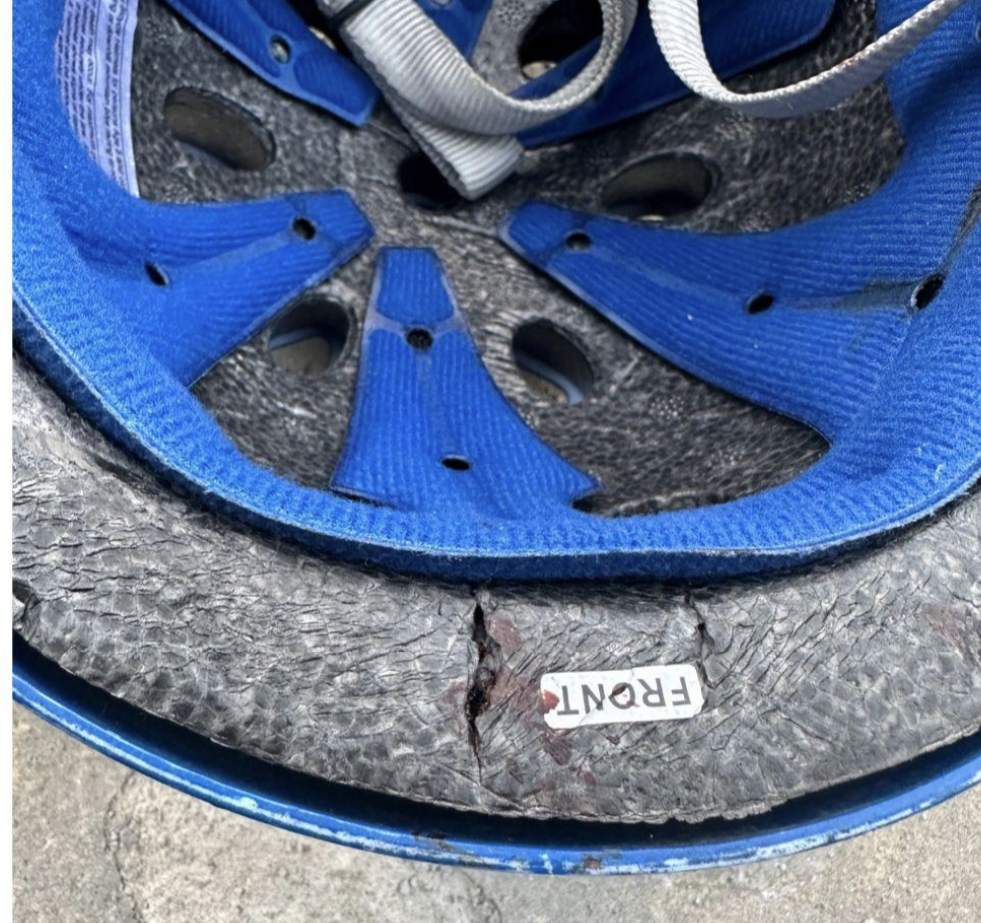
Nickolas’s dad, Erik, reflected, “It was a nightmare; it keeps going through my head and makes me physically react. The helmet was the difference between planning a funeral. The incident occurred on Oakledge Road, a neighborhood with no bike lanes and unnecessarily wide roads. Cars go too fast”.
Nickolas told me, “I’m scared to get back on my bike because I’ve almost gotten hit a lot of times.”
Unfortunately, this is a reality that all cyclists face. Nickolas says, “People should pay attention and there should be bike lanes. They could put in speedometers, slow down speed limits, and put in more bike lanes.”
Nickolas’s dad Erik Jensen writes in an email, “We are canvassing the neighborhood to see if you have any possible video footage of a white SUV with possibly a Brighton High school parking pass on Oakledge, October 17th that you can share with us. Please reach out to me @ 801-205-1811.”
Nickolas’s helmet cracked during the crash and ultimetley saved his life. Photo Courtesy Erik Jenson
Are road cyclists in danger?
According to the Utah Crash Summary of 2012, “Between 2003 and 2012, 7,283 crashes involved bicyclists, with approximately 660 injury crashes and five fatal crashes involving bicyclists each year in Utah.”
With Utah’s growing population and popularity of cycling these numbers are on the rise. “Nationally, nearly 1,000 bicyclists die and more than 130,000 are injured in crashes on roads every year,” according to a recent article in Utah Stories magazine (“Number of Cycling Accidents in Utah Increases”).
The week Nickolas got ran off the road, one child was critically injured and another was killed, both by being hit by cars on Fort Union Boulevard, a major street in the Salt Lake Valley.
It seems like I hear about a new crash every week. I wanted to get perspective to see what changes should be made.
Jen Cottam
I reached out to Jen Cottam, a candidate in this year’s Cottonwood Heights, Utah City Council election. Jen says that one reason she ran was because she recognized the transportation issues in Cottonwood Heights.
[Disclosure, Jen Cottam is related to Savannah Cottam, the author of this article. Note that the interview has been edited for clarity.]
What prompted you to run for city council?
Jennifer Cottam: My son got hit-and-ran [sic] off the road while biking on two separate occasions. I went sliding across the pavement after crashing on a dug-up bike lane. I started replaying all the things that had happened just to my family. Then I saw the kids wheel chairing [sic] to school and I’m like, how’s that for them? I recognized our streets were unsafe and it was an issue so I started going to City Council meetings to urge them to implement action. The reaction was crickets. I thought, I’m gonna through my hat in the ring and see what happens.
What changes need to be made so cyclists can feel safe?
JC: “The United States Department of Transportation has a Safe Systems Approach called Safe Streets For All (SS4A). It’s a standard that transportation planners should use in road design to protect all modalities of travel. A lot of it is slowing traffic on the roads down and putting in traffic calming features where it’s too fast. You can do some of that pretty inexpensively. Paint is cheap.”
“So, let’s say there is a problem of people cutting through Oakledge to get to Creek Road, then the city can narrow the road with paint so drivers feel it is tighter as they navigate the road. For instance, by painting a 5-foot bike lane in each direction, it takes away a lot of the road for cars. Then, if the city implements a speed limit of 20 mph, it is tight enough that a driver’s natural reaction is to go slower.”
“You have to put things in the street to make people aware. Our city currently prioritizes getting cars to their destination fast. If infrastructure for cyclists is not there, then they don’t feel safe and stay off the roads. With fewer cyclists on the roads, it makes it more unsafe for those who do ride, it’s a spiral effect. It’s things like that that the city has to budget for.”
To sum up
After conducting these interviews, I have concluded that in order to make our roads safer, it is important for cyclists to take personal responsibility by wearing a helmet, being well lit, and maintaining their bikes. We have to slow down traffic on our roads and give cyclists a safe place to travel, because expecting drivers to be aware of cyclists simply is not working.
Statistically, if cities are able to get more cyclists on the road, it becomes safer for those riders. In fact, this is even more important than cyclist safety gear. In order to improve cycling infrastructure, let your voice be heard, vote strategically, and get on the road.
By Tom Diegel — Like a lot of the Western states, Oregon has not only a lot of backcountry but a lot of logging roads and trails crisscrossing its forests and mountains. It also has a vast desert in the rain-shadowed terrain east of the Cascade mountains, and in 2013, inspired by the Great Divide Route, Oregon bikepacking fans created the “Oregon Outback” trail that runs the length of the state on gravel roads (75%) and paved roads (24%) that has enjoyed plenty of use. However, within a couple of years the organizers – inspired by more trail-oriented routes like the Colorado Trail and the Arizona Trail and the fact that people were actually riding a lot of singletrack with gear – decided to put in an ambitious route linking up not just remote backcountry roads but also rideable trails, and do so through the heart of the Cascades that run the length of the state. It took a few years and a lot of work by dedicated volunteers, but over the last couple of years the Oregon Timber Trail has already become an iconic route.
I grew up in verdant Portland, Oregon and my wife Ashley grew up in the arid wine, fruit, and hops country of Yakima, Washington, so we both have a penchant for the great Pacific Northwest (PNW),volcanoes, paddle the cold, crystalline rivers, and ride tons of singletrack. All of those singletrack rides were on day trips, but in the meantime, we did a lot of touring in Utah and other states, and over time it started to sink in that our views of viable bicycle touring were changing along with the activity by doing more gravel road tours and nibbling at a few trails. Last fall we tackled a 300-mile section of the rugged and arid Arizona Trail in full bikepacking style, and as another summer trip to the PNW loomed it was pretty much a given that we had to try a chunk of the comparable Oregon Timber Trail. Spearheaded by a mountain bike enthusiast bikepacker named Gabe Tiller who hails from the unlikely town of Mill City (profiled in the great podcast “Timber Wars”, about the long history of logging in the PNW) the nascent non-profit rallied a bunch of Gabe’s pals to create a route that is not only twice as long as the Oregon Outback at 680 miles that are 98% off-pavement, a full three-quarters of it is on trails, and it sports a quad-burning 70,000 feet of vertical! We had to give it a go.
The OTT is described as comprising four distinct tiers, with the first couple in the southern “basin and range” country east of the Cascades, but the northern tiers start in the middle of the state and the trail transitions over the crest into the famous greenery of huge Douglas Fir forests. It was this transition from high desert to sub-alpine that we decided to hook into, so from Hood River we were able to find a shuttle guy who – for a couple hundred bucks – agreed to drive us from Hood River a few hours south to the endearing tourist town of Sisters, nestled in pine forests at the base of the Three Sisters peaks. Our shuttle driver was a chatty guy from Portland whom we found via the OTT website who just loves all things bicycle and bikepacking, and with his sprinter van he decided to do a shuttle business, which he said lately means “oh, two or maybe three trips a year!” We hoped he wasn’t counting on that to be his long-term business plan. After he dropped us off, we of course realized that we needed a bike shop for a couple of things, and fortunately even in small Sisters there are two very helpful shops.
Cool old turn of the century cabins were the hub of activity for travelers crossing Santiam pass. Bikepacking the Oregon Timber Trail. Photo by Tom Diegel
We were directed to great singletrack starting right on the edge of town by a shop employee who uses it as his daily commute, and the trail parallels the busy highway for about 15 miles to the lovely hamlet of Camp Sherman, where a great little store is quite near the banks of the opaline Metolius river where it burbles out of a small hillside, and a bit more trail took us to Suttle Lake, where we joined the OTT proper.
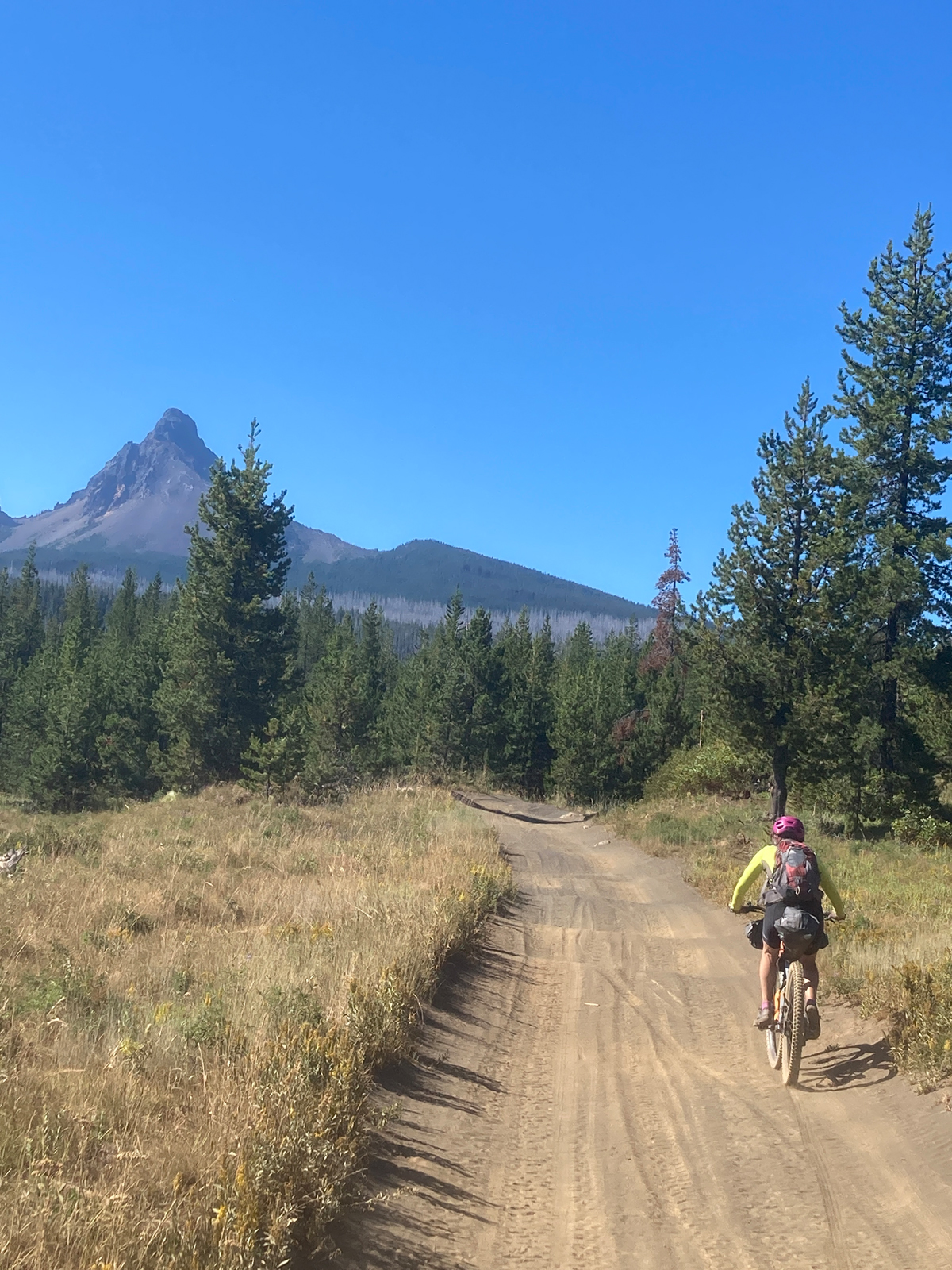
Mount Washington juts in the sky in the Santiam region, and also produced pumice-sand. Photo by Tom Diegel
So far, the trails we’d been on were pretty much flat, but that quickly changed at Suttle Lake when we joined the old Santiam Wagon Road, which was the historical route over the Cascades in that area. We were prepared for climbing to get over the hills, but we weren’t very prepared for…sand? C’mon, Utah has sand, Arizona has sand, but…the Cascades? Sure enough, there’s sand in them thar hills, though unlike true desert sand it’s finely-ground volcanic pumice. Regardless, it made for some challenging going, which resulted in the first of many pushes on this journey, but soon enough we had ground our way through the sand, the trees started changing from pines to firs, and the ground thankfully hardened up with good dirt. That said, the trail continued to be challenging; we saw a sign for the “Oregon Gravel Grinder” that we later discovered was a race that partially used our route, and it was sort of hard to believe that gravel bikes traveled on the rugged trail that we were on (we later talked to a friend who exclaimed “I was as scared on a bike as I’ve ever been trying to race that section on my gravel bike!”).
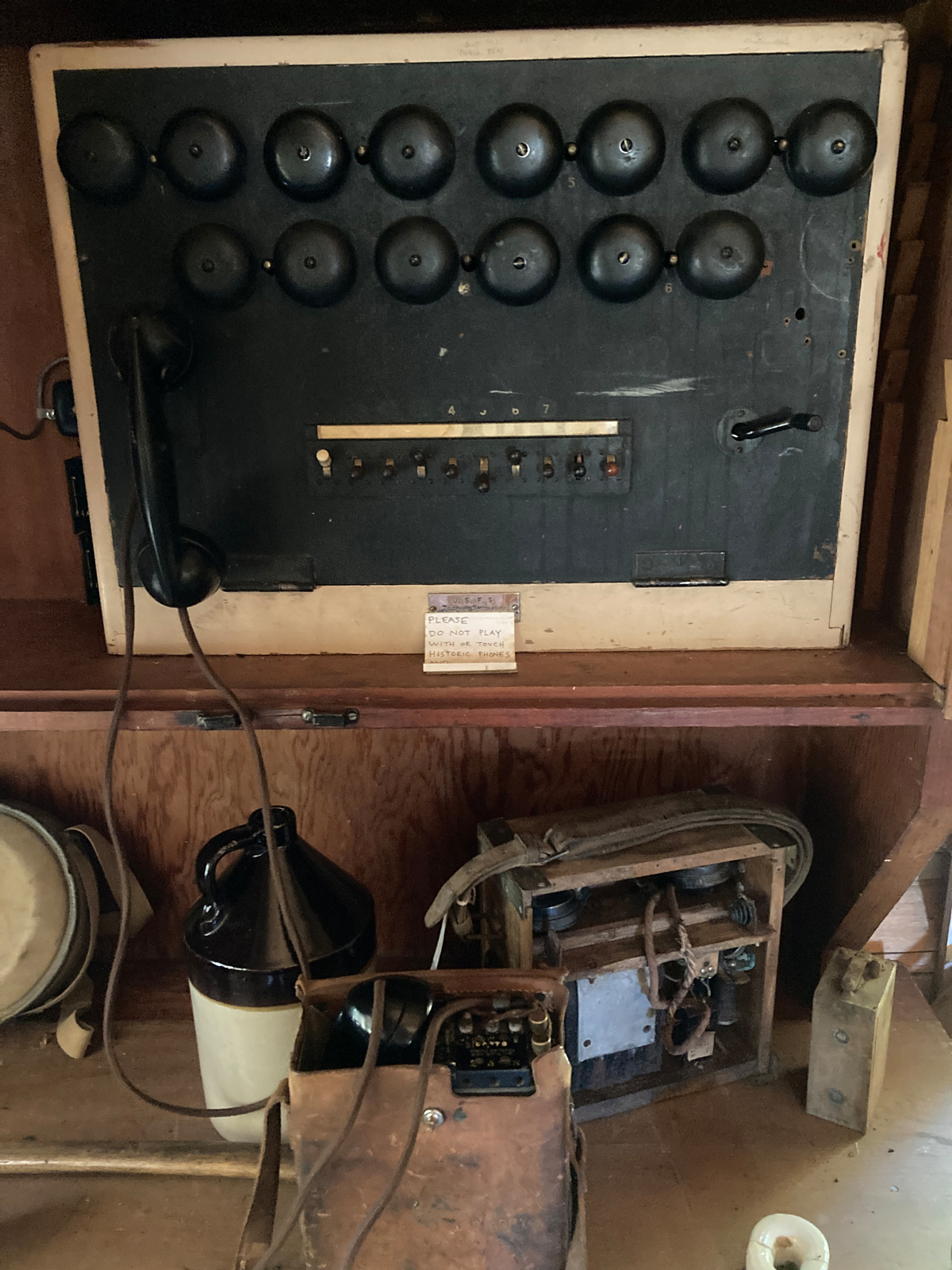
This switchboard was the hub of fire information from the manned fire lookouts on nearby buttes. Bikepacking the Oregon Timber Trail. Photo by Tom Diegel
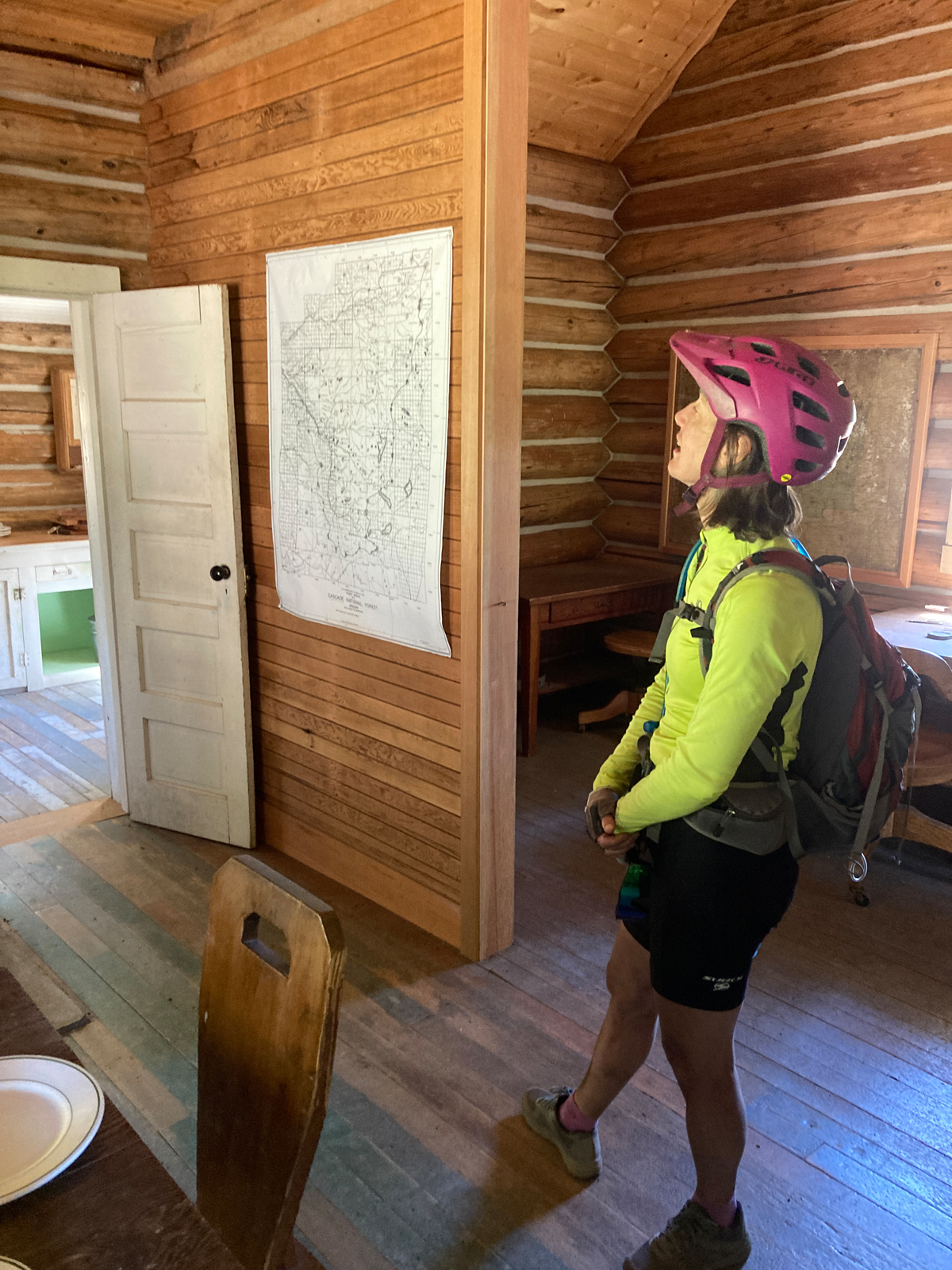
After a long descent we found ourselves at the trailhead for the iconic McKenzie River trail, a 25 mile long singletrack alongside yet another beautiful river that is an alluring side trip, but we opted to continue on the OTT route the opposite direction, only to get sidetracked by the fascinating Fish Lake Depot; the historical stop for travelers going over the Santiam Wagon road. One of the beauties of bike touring – bikepacking? – is that it usually provides the flexibility and – more importantly – the opportunity to check out obscure little interesting side nuggets that we usually just blow past in the car. In the case of the Fish Lake Depot, they had a fascinating history of horse and mule-drawn wagons going over the – sandy! – “road” that we had just ridden over, and there was an account of the first motor vehicle that – barely! – made it over, and a tale of the barracks that housed the firefighters that actually burned down while the firefighters were away on forest fire. An enthusiastic volunteer was excited to see us and loved giving us the tour of the restored old buildings and historic equipment and clothes, including a switchboard that was the terminus of the hard lines that were strung from the fire lookouts on buttes as many as 10 miles away through old growth forests. Those were some ambitious folks back in the day.
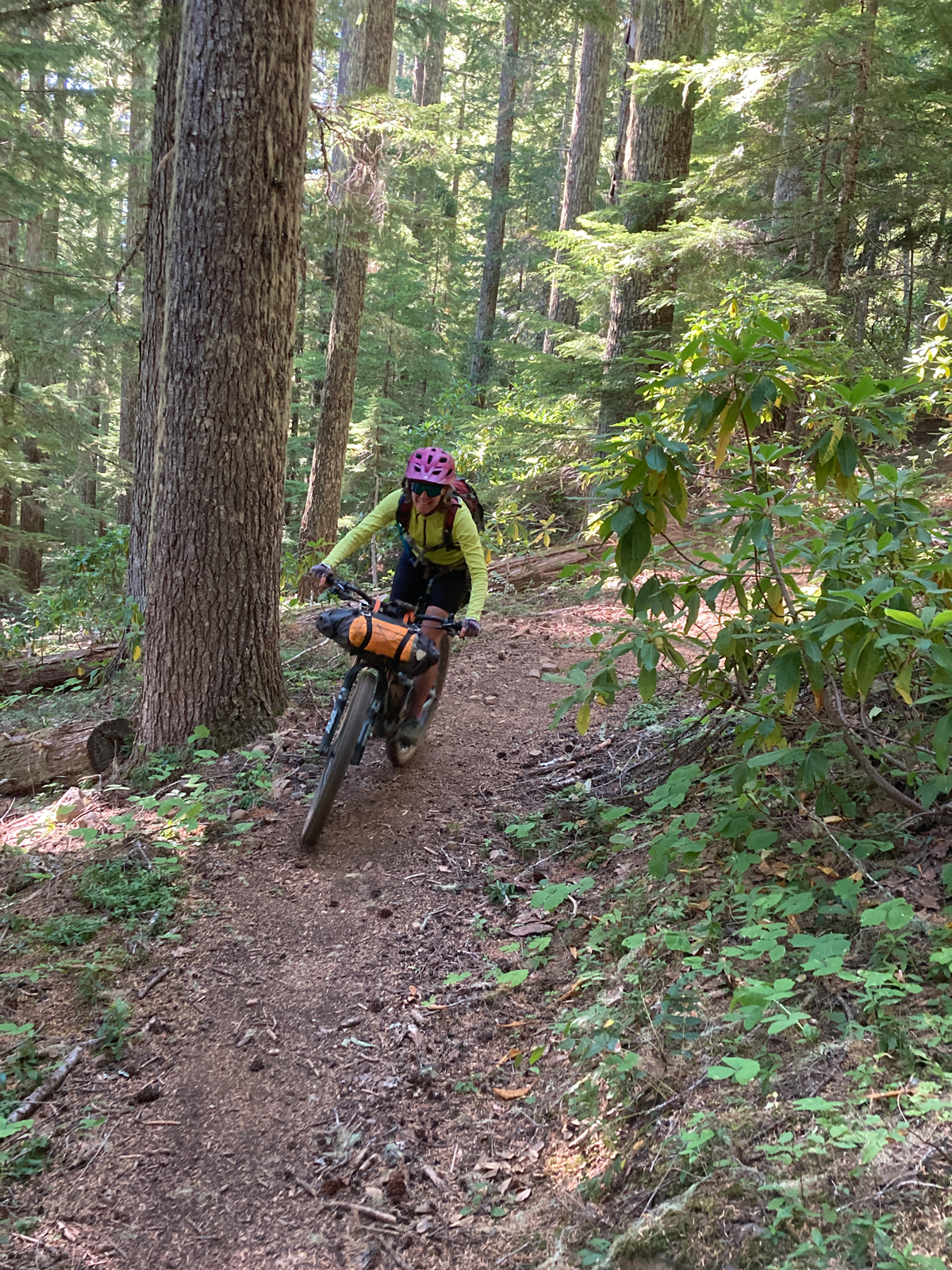
The Cascade Crest’s singletrack makes for sublime riding. Bikepacking the Oregon Timber Trail. Photo by Tom Diegel
One of those buttes was Crescent Mountain, which veered off the gravel road on a singletrack that climbs a very respectable 2400 feet in just a few miles of singletrack and is a bit of a hot grinder, but then drops an equal amount and then some on more high quality singletrack that nearly brushes a few different wilderness areas over many miles. This section from the McKenzie River to the North Santiam River is known as the Cascade Crest, and it’s virtually 100% great singletrack, most of which is actually rideable! However, it feels remote, and while there were bike tracks on these trails and riders had taken saws in to clear the many moderate logs that had recently fallen, it’s clear that the Forest Service hadn’t gotten in there to get out the really big logs that the Northwest is famous for, so we had to engage in a few – but not too many – creative and challenging log-crossings.
The Northwest – especially the west side – typically has nice summer weather with little rain and moderate temperatures, and this summer had been no different with high temperatures running in the 70’s. However, a few days before arriving we glanced at a weather forecast and were surprised to see a dire warning: “heat wave!” I have had my share of meltdowns on bike tours; I’ve gotten heat exhaustion in a range of nice hot places: Cuba, Vietnam, Ethiopia, Mexico, Korea, and yes of course southern Utah, and was fairly certain that I was going to add Oregon to that list as the heat blasted us. We descended to our low point for the trip in the little town of Detroit and it felt like an oven; indeed, the temperature was over 100 degrees there. But for once I tried to be smart about hydrating and electrolyting, and even though my fingers and hands cramped while braking, my toes cramped inside my shoes, and my calf muscles were twitching like a Jack Russell terrier anticipating a big cramp, I – barely – was able to keep from a full quad/hamstring cramp meltdown throughout the trip. And a great aspect of the PNW is that there is actual water there in the form of rivers and lakes, so we were able to at least splash around in creeks and dive into lakes at the end of each day to wash the layers of salt crust off our bodies and rinse out our stiffened jerseys, and the depressions that hold those creeks and lakes are the coolest places around to camp in, so our nights were tolerably cool.
With the heat we had it was easy to understand that even a place as verdant as the Northwest could be so fire-prone, and indeed we had a good view of that; the 2020 fire in that area almost completely destroyed the town of Detroit when three fires converged and burned over million acres, which is over 1500 square miles, and we rode through its blistering moonscape aftermath for over a full day. As it was, there was also a fire in the hills above the McKenzie River south of us that eventually blew smoke into us and as of early September – a month later – it is still burning.
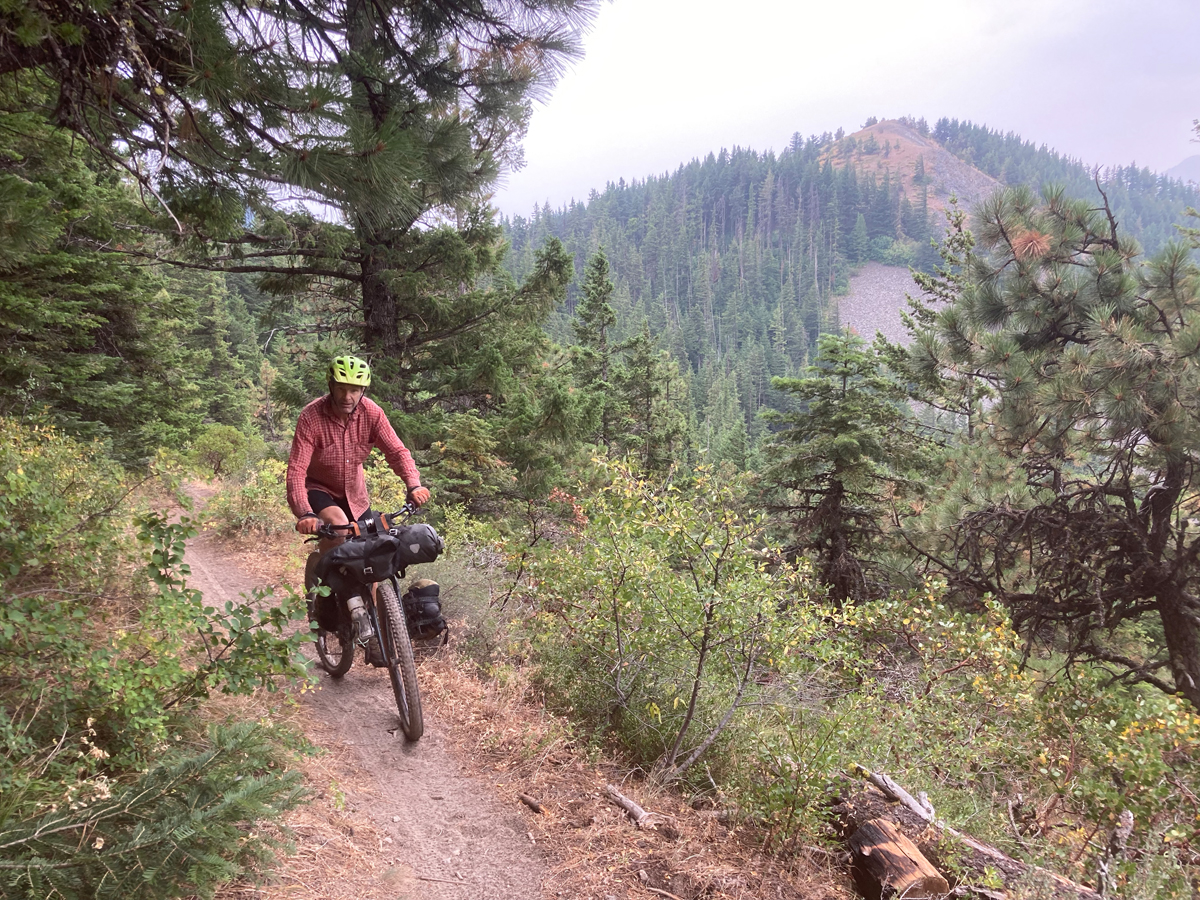
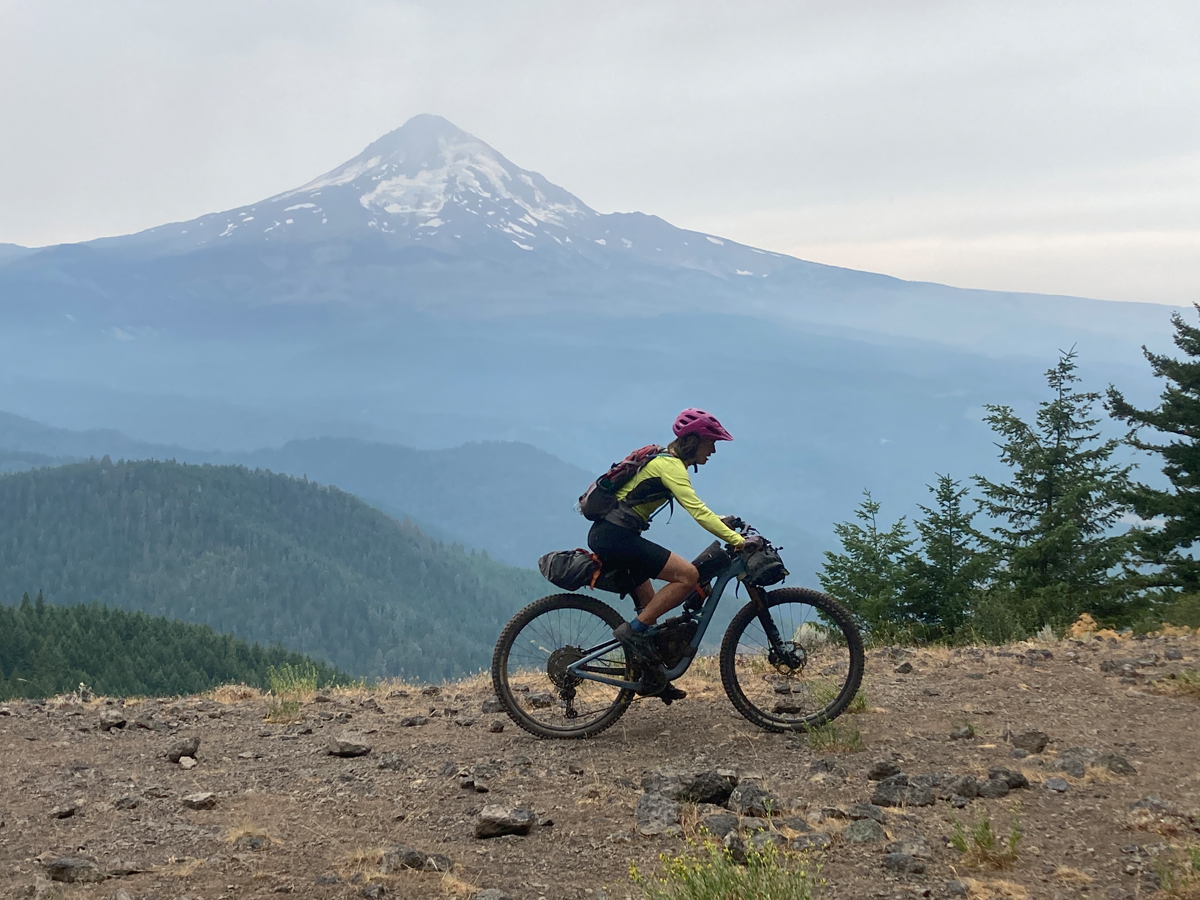
As we trundled along the Cascades, we had spectacular views of Oregon’s iconic peaks: the Three Sisters, Mounts Washington and Jefferson, the spiky Three Fingered Jack, and soon enough, looming over our end point of Hood River was Mount Hood in the smoky distance. We were paralleling the Pacific Crest Trail (PCT), and eventually the two routes joined at Olallie Lake. Olallie was a little off our route, but in order to service the PCT through-hikers we knew that they had backpacker-type food, and we were trying to keep our bike weights down to account for the hard riding, so we weren’t carrying much food. However, it turns out that the lake and resupply was even farther out of the way than we anticipated; a critical trail cutting over from the gravel road we were on to Olallie over a low ridge had been completely fried by the fire (which was a bit of a surprise to us; virtually all of the other beta we had gleaned from the OTT Facebook page was up to date). So, we had to go pretty far out of the way in terms of both miles and vert to indeed get our resupply. At the lakeside store they had a thermometer next to the store’s sign that indicated 4960’ elevation, and the thermometer read 90 degrees. The PCT riders – most of whom are going southbound this year due to the Sierra snowpack – were also hurting in the heat, which made the “no swimming” sign at the lakeshore all that much more painful!
Timothy Lake’s singletrack around the lake is easy to bypass, but why would you? Bikepacking the Oregon Timber Trail. Photo by Ashley PattersonTimothy Lake’s singletrack around the lake is easy to bypass, but why would you? Bikepacking the Oregon Timber Trail. Photo by Ashley Patterson
From Ollalie Lake it’s about 25 miles of gravel road to the popular Timothy Lake, which has something like five different campgrounds around its perimeter; it’s indeed busy, but again the lake provided a much-needed rinse, and our fellow campers were gracious enough to provide us with some cold beverages. Timothy Lake has a super fun singletrack encircling it, which of course the OTT takes advantage of, and at the north end we veered off into the maze of forest roads that led us towards Mount Hood over high ridgelines and deep into river canyons. However, as we got closer, the new season in the Northwest – Fire Season – reared up. A fire was burning in a wilderness area adjacent to a ridgeline road that we had planned to take to access the famed singletrack of Surveyors Ridge, so again we dropped way down to a paved road to take us up and over to the combination of highways 26 and 35, which wrap around the south and east sides of the mountain.
The Surveyor’s Ridge trail above the Hood River Valley is a classic for local riders. Bikepacking the Oregon Timber Trail. Photo by Ashley Patterson
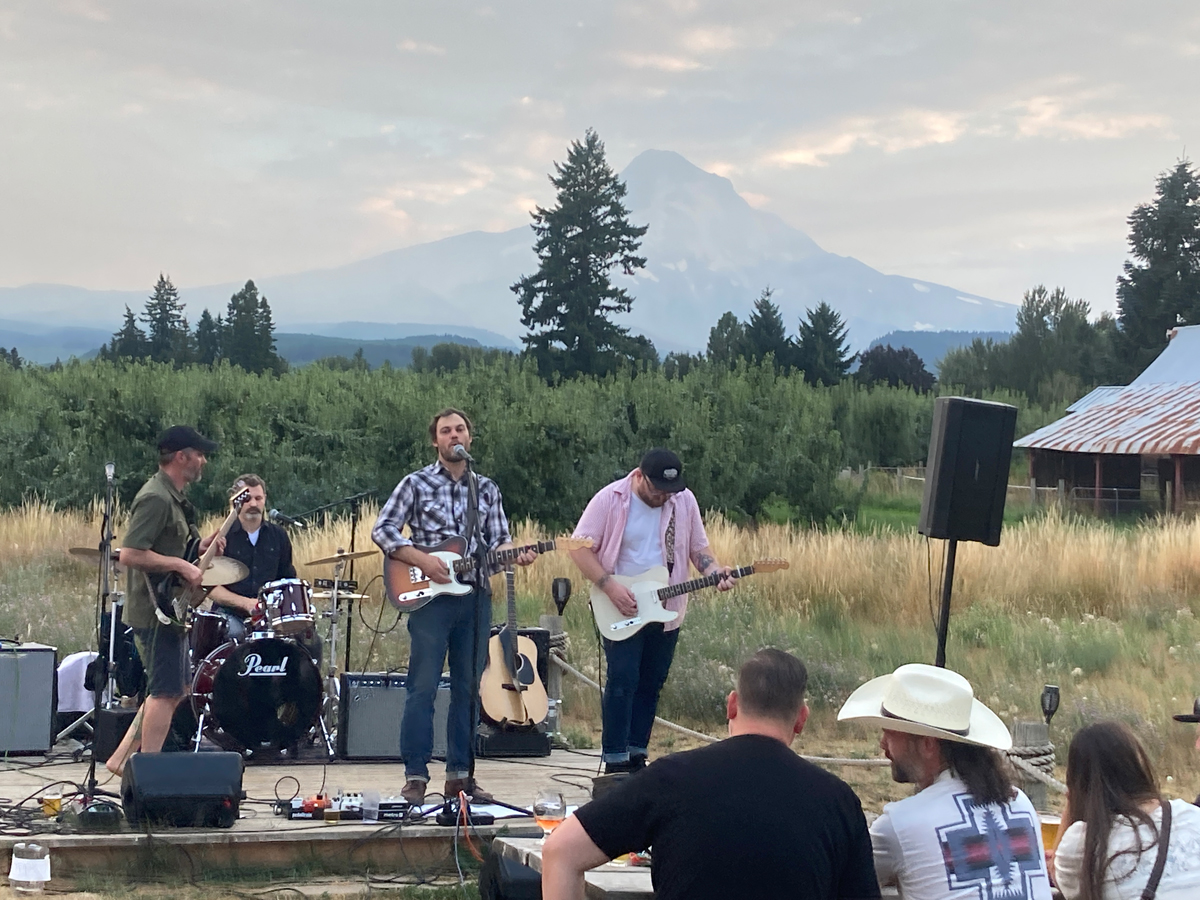
We lost a lot of vert cruising down highway 35 towards Hood River and could have continued our cruise and soaked in the river itself, but that would have meant foregoing some legendary singletrack! So, we did the long climb up from the valley up the 44 Road – well known to local mountain bikers – to the incredible network of brilliant singletrack on Surveyor’s Ridge, which ultimately spit us out into the pear-tree hamlet of Parkdale. We stumbled into a bed and breakfast that was not available for guests to formally stay at that night, but the kind owner let us camp in the yard, take a shower, and caffeine up in the morning, while the ribs place, breakfast cafe and afternoon ice cream shop was a block away, and the brew pub with live music was across the street. Bikepacking in the woods is great but endearing little towns with just the right amenities en route can be just as great!
Ashley with Mount Hood looming above on the last couple of days of the ride. Bikepacking the Oregon Timber Trail. Photo by Tom Diegel
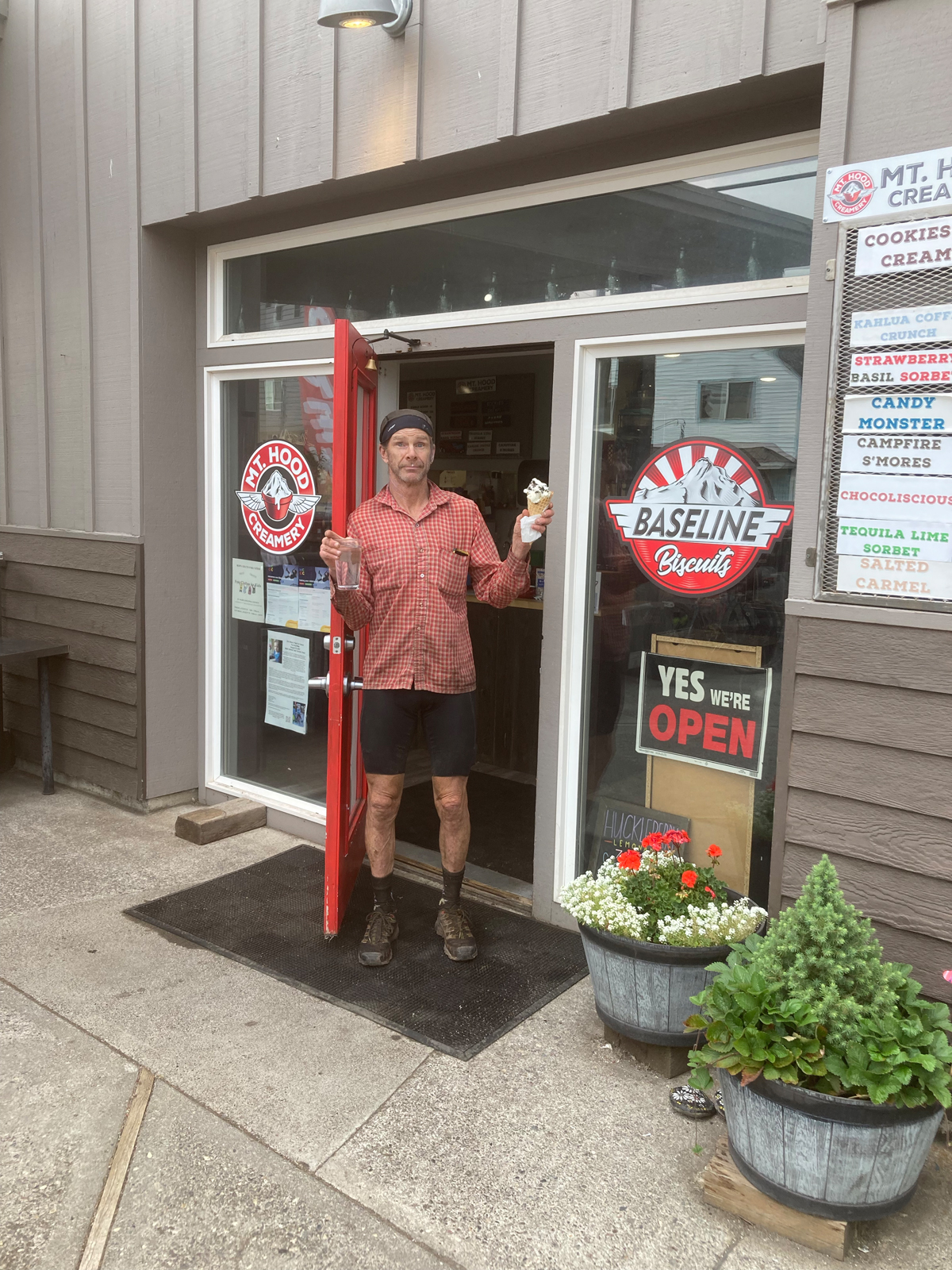
The final leg of our journey was a final 2500 foot climb up into the hills between Parkdale and Hood River, which put us into the upper reaches of Hood River’s amazing local network of killer singletrack in Post Canyon. Coasting into town on a blistering afternoon after riding a couple hundred miles in the heat mandated one last stop at the locally famous Mike’s Ice Cream shack.
About as cool small-town as it gets; talented farmers jamming in orchards in Parkdale, Oregon. Bikepacking the Oregon Timber Trail. Photo by Tom Diegel
With its length and amount of great backcountry singletrack, it seems – from our experience on the northern tiers – that the Oregon Timber Trail is fast becoming a bikepacking classic route. The board of the OTT nonprofit clearly is proud of what they have accomplished, and no doubt love fellow adventurous cyclists willing to give it a go, and we are looking forward to doing the southern half of it next summer (but not in a heat wave!).
Tom appreciating what every bikepack route demands: a combo ice cream place and breakfast cafe that serves copious quantities. Bikepacking the Oregon Timber Trail. Photo by Ashley Patterson
If You Go
The OTT website is a fantastic resource of history of the trail and information, as is their Facebook page. They also have multiple suggested loop routes that use parts of the trail and adjacent trails, understanding that sometimes the logistics of point-to-point routes can be challenging. Of course, bikepacking.com has a good overview too, and they were the source of our Ride with GPS track that we used extensively, since the maze of roads and trails in the Willamette, Deschutes, and Mount Hood National Forests is vast and dizzying. I also downloaded those National Forest maps; usually I’ve found those to be worthless due to their huge scale and lack of any contour lines or shading, but they were useful for us in plotting our mandatory detours en route.
Redmond – near Bend and Sisters – has direct flights from Salt Lake, as does Portland, of course, and a slightly longer trip would be to simply do an “open jaw” flight schedule and fly into Redmond, ride to the OTT, follow that to Hood River, and ride the bike path all the way to the Portland Airport.
By Charles Pekow — The state of bikesharing is rosy, reports the North American Bikeshare and Scootershare Association (NABSA). It’s 4th annual Shared Micromobility State of the Industry Report says that riding in 2020 was restored to pre-pandemic levels. It cited “a rapid increase in the number of cities with shared micromobility.”
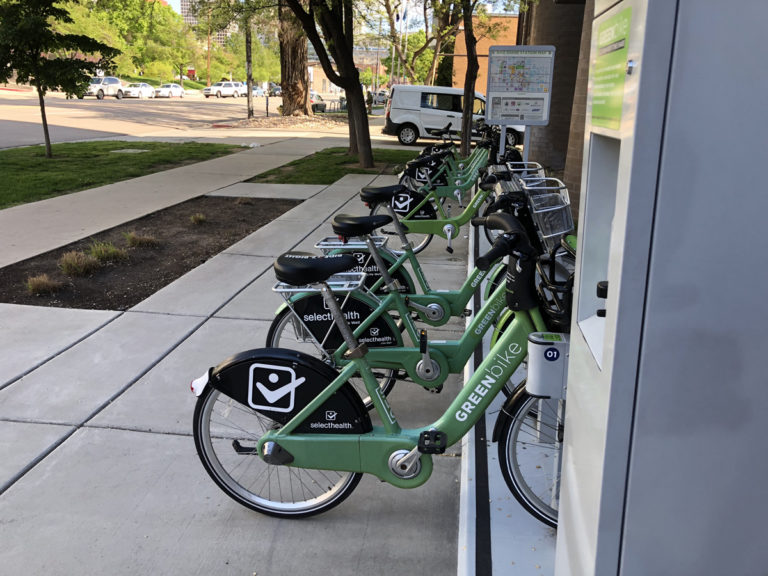
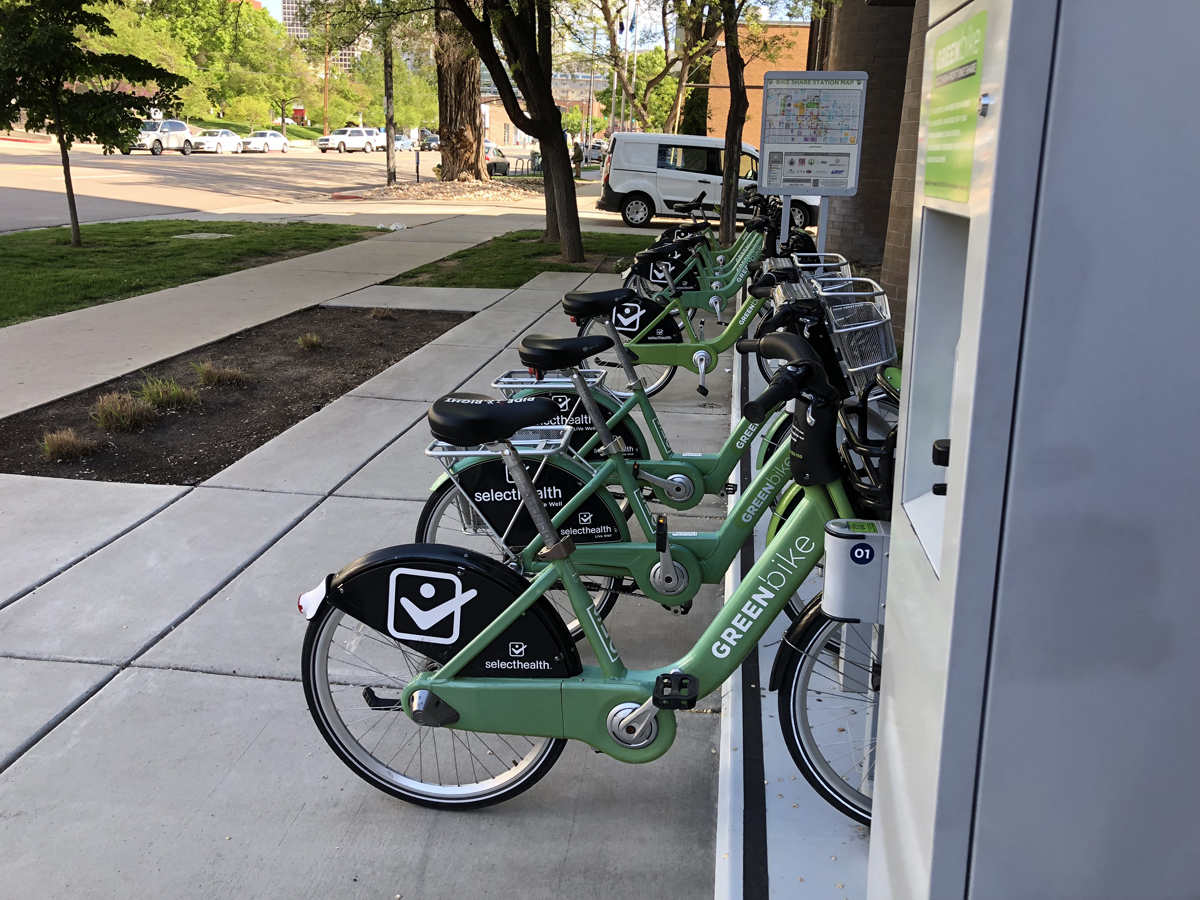
GREENbike Bike Share has changed downtown Salt Lake City! Photo by Dave Iltis
Findings cover Canada, the United States and Mexico. The report says “an estimated 401 cities” had at least one bike or scooter sharing system last year, 35 percent more than the year before. After a two-year dip, the number of trips was restored to 2019 levels. But the services provided many more vehicles: 289,000, up from 194,000 pre-COVID.
NABSA estimates that 37 percent of shared trips replaced an auto ride. Vehicle use averaged 1.5 trips a day. NABSA estimates the trips saved about 2.3 billion gallons of gasoline in the United States and 74 million pounds of carbon from entering the atmosphere.
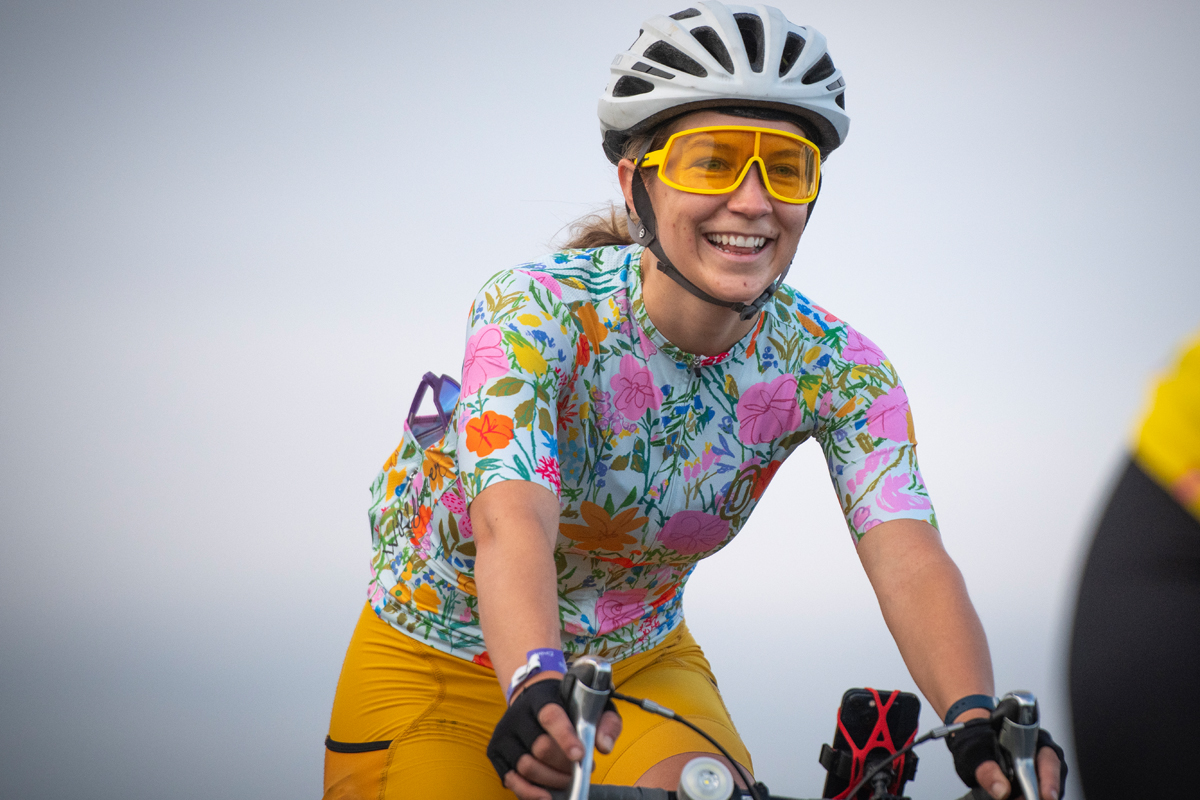
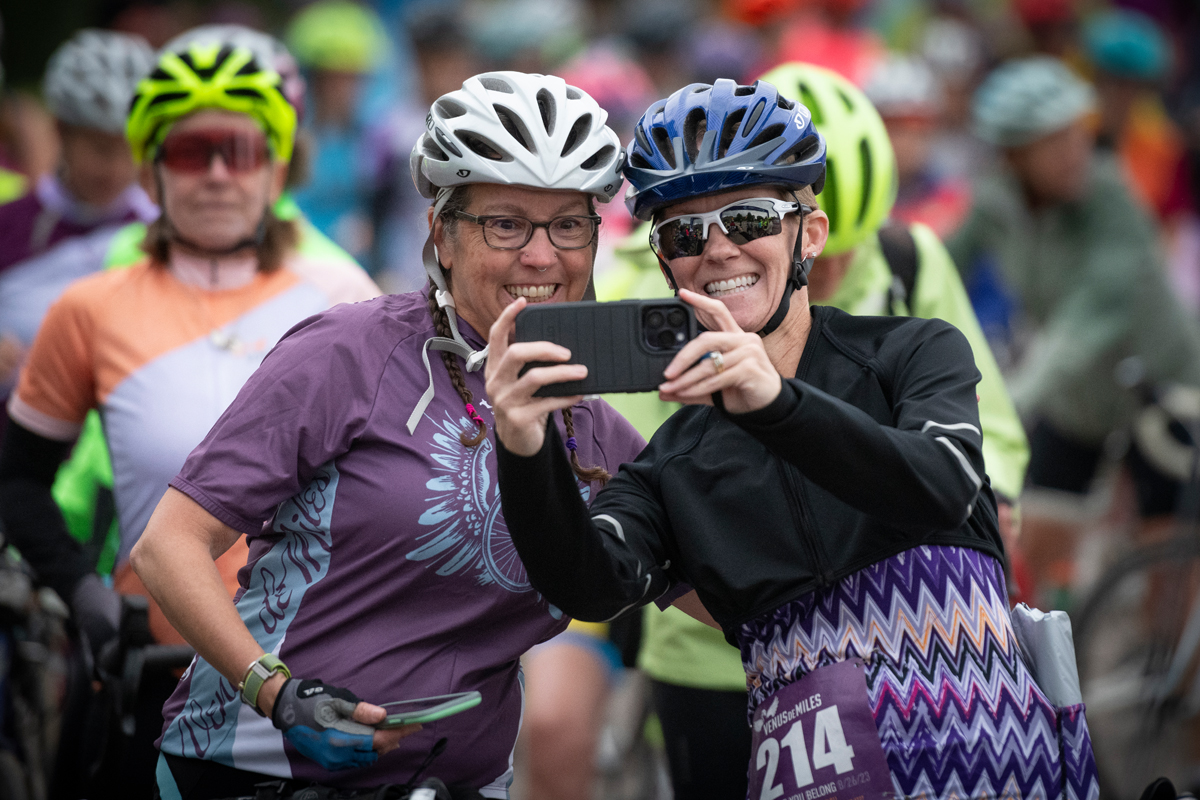
BOULDER, Colorado —Venus de Miles, Colorado’s first and largest all-women’s bike ride and celebration of sisterhood, held its 16th annual event on Sat., Aug. 26 at Bohn Park in Lyons, Colo.
More than 800 riders from 22 states took part in the 2023 annual event. Participants ranged in age from 13 to 82. Venus de Miles riders raised approximately $30,000 for Greenhouse Scholars, an education nonprofit focused on sustainable, generational community change.
2023 Venus de Miles Photo by Dejan Smaic
The ride is designed for cyclists of all abilities and skill levels, as riders chose between a 30-mile, 64-mile or a 100-mile course, all of the options running through scenic northern Colorado.
2023 Venus de Miles Photo by Dejan Smaic
CEMEX was the signature sponsor of this year’s ride and contributed $5,000 to the event. Top fundraisers were Doris Cheung of the Venus Bike Club, who raised nearly $8,200, Kat Mann of Team WOGA, who raised $5,175, and Stephanie Adams-Ball, who raised more than $3,000.
2023 Venus de Miles Photo by Dejan Smaic
In addition to the funds raised, riders raved about this year’s event experience.”This is such an amazing event,” said Kathy Waller. “The staff, volunteers and riders are so supportive, encouraging, and gracious. I love this ride!”
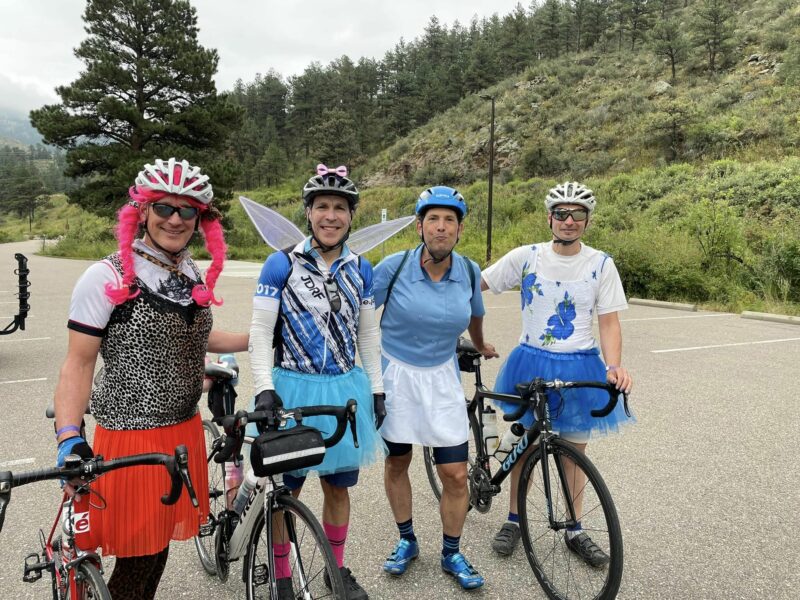
The World Famous Tutu Crew at the 2023 Venus de Miles. Photo courtesy Venus de Miles
Snacks and hydration were provided at whimsical themed rest stops, staffed by encouraging volunteers and fans, with technical assistance provided by Venus de Miles’ famed “Tutu Crew,” the world’s best-dressed on-course bike mechanics.
2023 Venus de Miles Photo by Dejan Smaic
“This was my first time participating in Venus de Miles, but I’ve done a lot of races and triathlons in the past, and the vibe at the aid stations was unmatched,” said Lauren Bratten. “We nicknamed them the party stations because it was so much fun!”
At the end of their rides, participants enjoyed Venus de Miles’ iconic Finish Festival, featuring complimentary lunch and drinks, live music from three fun bands, unique local vendors, and a relaxing recovery zone with massages, skin care, wellness needs, and more.
2023 Venus de Miles Photo by Dejan Smaic
In-kind sponsors at the Finish Festival included J Marie Skin Studio providing facials, Suja providing organic, cold-pressed juice, Gruvi providing non-alcoholic beverages, Swoon Jewelry selling handmade jewelry, Eldorado Spring Water donating all water, Moe’s Bagels donating bagels for breakfast, Stem Cider and Howdy beer providing alcoholic beverages, J&L Distilling providing vodka, and Natalie’s Orchid Island Juice. In addition, food vendors offered Greek fare, pizza, lobster rolls, German food, and Kona shaved ice.
Women from around Colorado and the nation participate annually in the Venus de Miles as a celebration of sisterhood, women’s empowerment, cycling, fitness and fun. For more information on the ride, to donate or to shop in the Venus de Miles store, please visit: https://www.venusdemiles.com/.
The 2024 Venus de Miles ride is scheduled for Sat., Aug. 24, 2024, at Bohn Park in Lyons, Colo. The organizers are also planning other events and group rides throughout the coming year to help grow the event community.
By Jen Scott & Erica Tingey, Women in the Mountains — If you are a multi-sport, mountain athlete, you’ll likely want to have strategies to move between seasons with ease. Some people are able to move between skiing and mountain biking smoothly, but others may need some adaptive exercises to prepare for the upcoming season.
Skiing and mountain biking at first glance seem like similar sports, since they are both gravity-powered downhill thrills that include cornering and descending through the trees. The similarities pretty much end there though since the physiology of the two are quite different.
Cycling is a concentric movement of the muscles (lengthening), bodyweight is supported by the bike and generally longer duration cardio exercise.
Skiing is an eccentric movement of the muscle (shortening), fully weight bearing on lower-body joints with significant force being created and on average, 90 second bursts of all-out skiing.
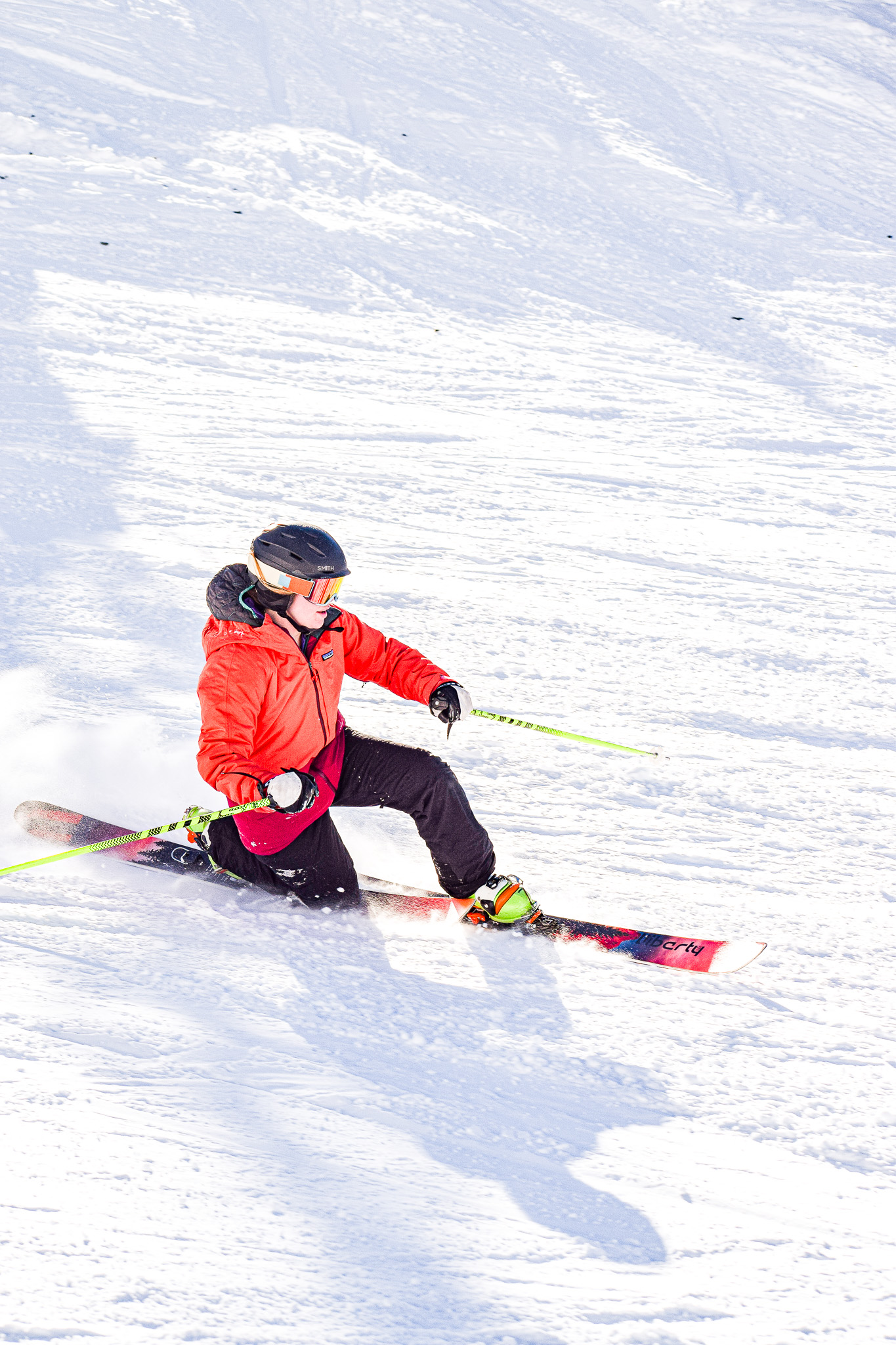
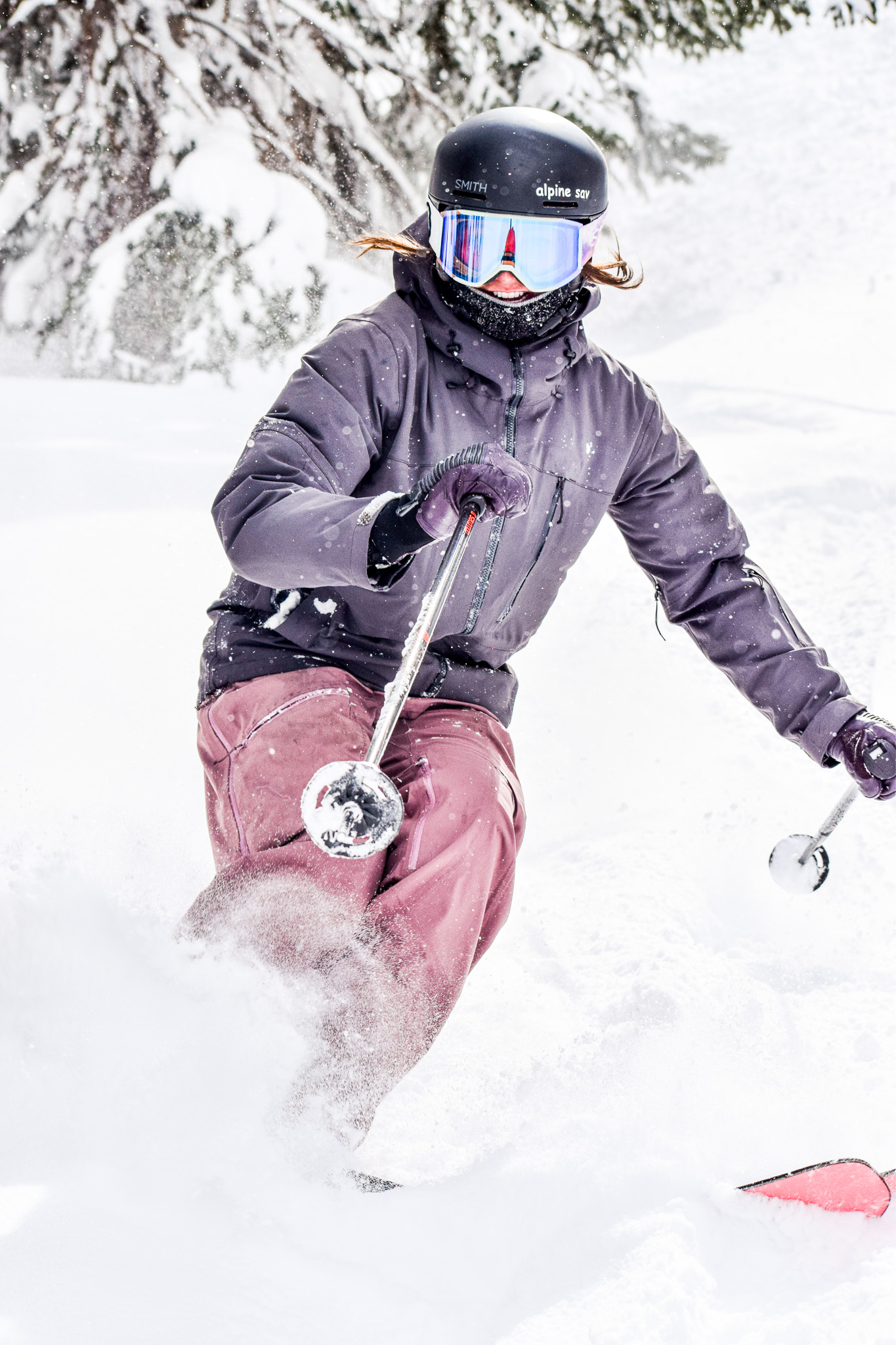
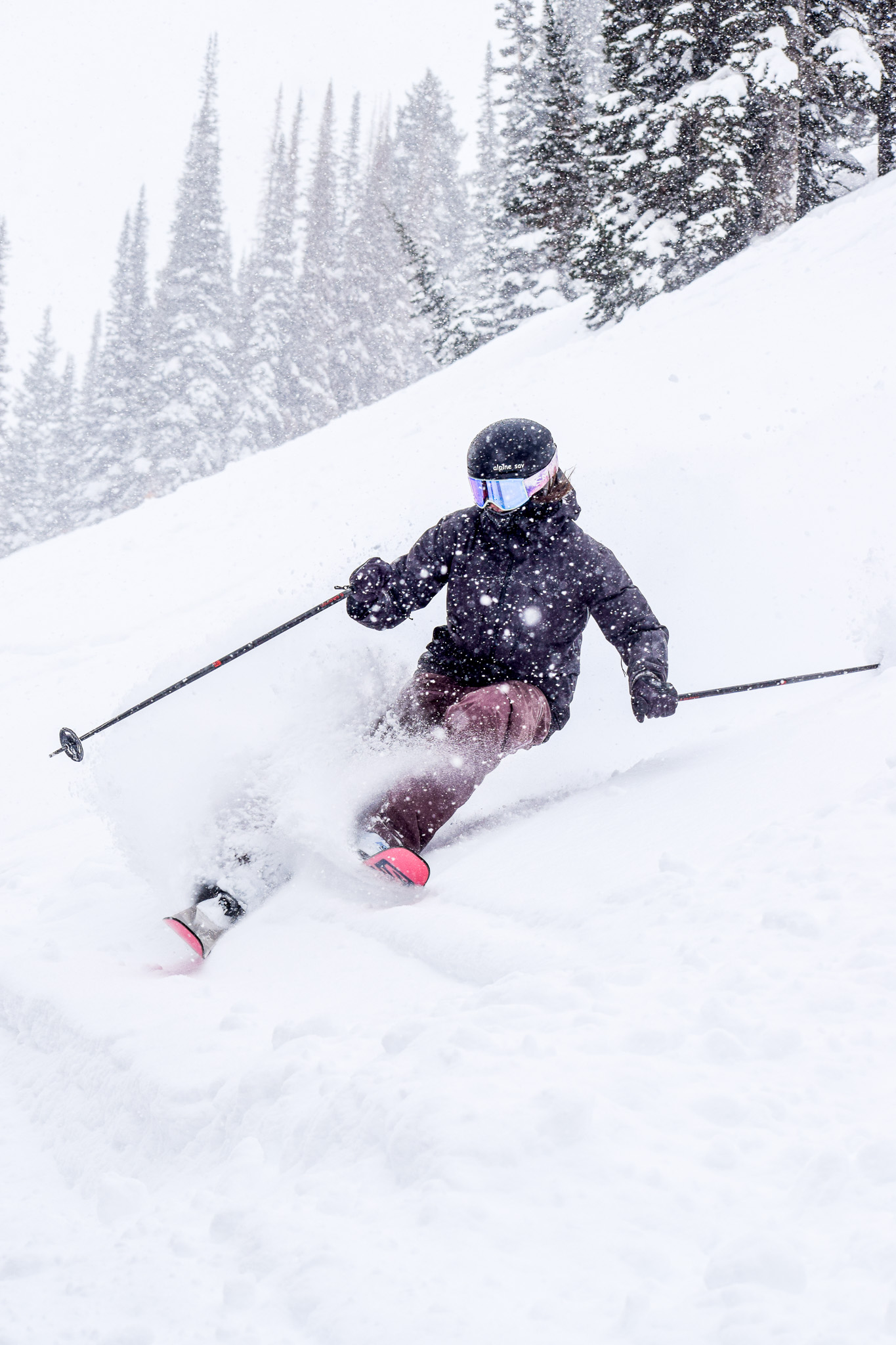
Skiing is a great way to cross train for mountain biking. Photo by Miranda Galbraith, mirandagphotos.squarespace.com
This is exactly why preparing your body for the upcoming season should take place over several months. Starting slow is key, especially in preparation for the ski season. The body needs to develop tissue tolerance for the amount of force created on the joints.
You can start to build a base at home with bodyweight squats, lunges, and core exercises. After your initial adaptation period (1-3 weeks), start to incorporate these movements with jumping and low weights in your hands, then start to hold the weights above your head. The bonus of using overhead weights is it will also stabilize your core muscles which will only improve your skiing! If bodyweight squats and lunges are uncomfortable to begin with, you can shorten your range of motion to a smaller movement. As you get stronger, you will be able to add more reps, add more weight or even add in some interval sprints.
Skiing is a great way to cross train for mountain biking. Photo by Miranda Galbraith, mirandagphotos.squarespace.com
Year-round strength training with weights (or bands) is a huge benefit to all mountain sports because it combines both the eccentric and concentric movements. It also helps women maintain muscle mass and bone density. Adding a few simple exercises specific to skiing 8-12 weeks before ski season will give you the ability to jump on your skis the first day of the season and feel like you stopped skiing!
Plan an early season review with your friends and your favorite coach. Review the fundamentals with a trained eye to give you feedback on your movement patterns and to give you cues to use the rest of the season. This will lead to a full winter of hard charging and fun!
If you have an injury or significant one-sided weakness, seek advice from a physical therapist or sports medicine specialist.
Jen is a strength and conditioning coach for female mountain athletes, mountain bike skills coach and ski instructor. Contact her for personalized training plans: 801-597-9094
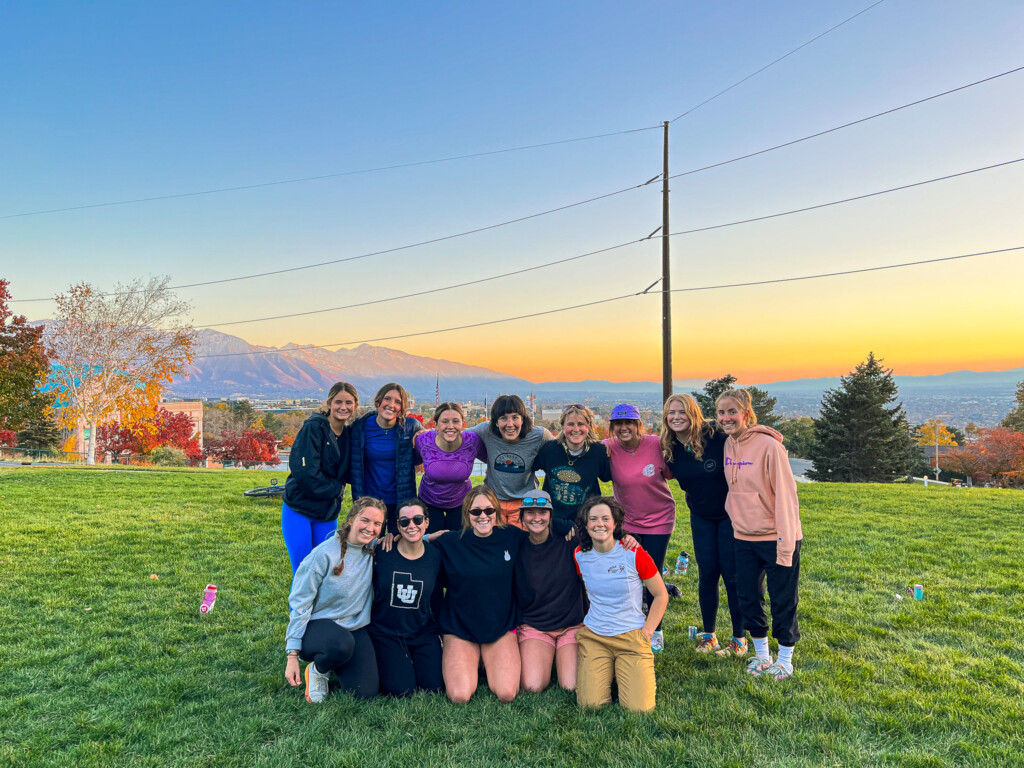
U of U students prepare for ski season. Photo by Miranda Galbraith, mirandagphotos.squarespace.com
The curtain was brought down on the Professional Road racing season in early October. The two final major races were Il Lombardia and Paris-Tours … and they could not be more different! Lombardia, which loops along Lake Como is the only truly mountainous Classic with over 4400 meters of climbing. Paris-Tours, one of the oldest Classics dating back to 1896, is a very flat race that caters to the sprinters and now includes some gravel sectors. Both events this year had historic results that beg some questions!
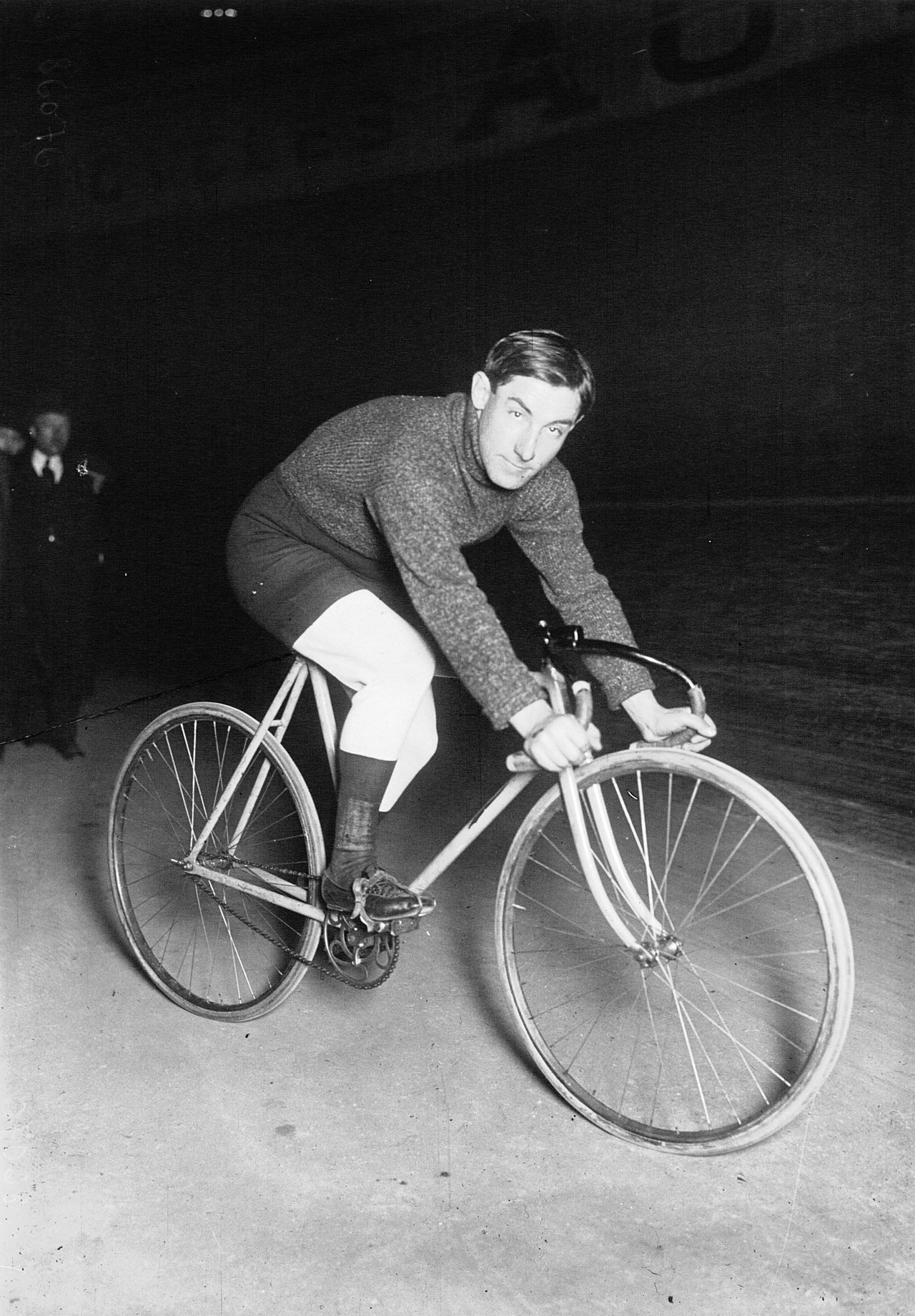
Costante Girardengo, seen here in 1921, was the first man to win the Giro di Lombardia 3 times. Agence de presse Meurisse – Bibliothèque nationale de France. Public Domain.
Q1. On October 8, American Riley Sheehan, at just 23 years old, became the first ever American to win the Paris-Tours classic! Prior to Riley’s result, what was the best American finish in “The Sprinter’s Classic”?
Q2. Riley Sheehan’s father Clark was an American pro cyclist from 1990-2002, but his European racing was limited. What was his best result in international competition?
Q3. What is the best result by an American in Il Lombardia (previously known as il Giro di Lombardia or the Tour of Lombardy)?
Q4. By winning Il Lombardia for the third consecutive year, Slovenian Tadej Pogacar, joined an exclusive list that includes Sean Kelly, Gino Bartali, and Costante Girardengo. However, the 25-year-old still has a way to go for the all-time record. Who holds that record and how many “races of the falling leaves” did he win?
Q5. Pogacar also completed an extremely rare double by winning the cobbled Tour of Flanders in Belgium in April and the mountainous Lombardia in Italy in October. Very few riders today even ride both of these vastly different events. Had anyone prior to Pogi, achieved this double?
“I love peanut butter but I don’t buy it. Otherwise I over-eat it.”
“Peanut butter is so fattening—but so yummy.”
“Is almond butter better healthier than peanut butter?”
By Nancy Clark MS RD CSSD — Peanut butter is, without a doubt, one of the most popular sports foods around. Ask runners what they eat before a marathon, and the majority will say, “Bagel with peanut butter.” Ask cyclists what they eat during a century ride, and the answer is inevitably “Peanut butter and jelly sandwiches.” Assuming you are not allergic to peanut butter (PB), you might love it, but you also might have a love-hate relationship with this popular food. You love it so much you can easily end up eating a lot of it. You hate it because you fear it will contribute to fat gain and health problems. Hence, the goal of this article to erase the hate so you can love eating PB guilt-free, without negative consequences.
Note: Peanuts grow underground and are technically a member of the legume family, along with beans and peas. They share a nutrition profile similar with tree nuts, so we can get lump them into the same conversation. Hence, the information in this article relates to not just peanut butter but to all nut butters.
Peanut butter curry with tofu over rice and quinoa blend. Food and photo by Dave Iltis
Is peanut butter fattening?
PB is not inherently fattening. If anything, people who eat peanuts, nuts, and nut butters are slimmer than nut avoiders. This fact is based on data compiled from ~576,000 people followed for, on average, about 18 years (1). Higher nut and PB intake was associated with lower body weight, a smaller waist, and weight loss. PB eaters did not have a higher BMI or percent body fat. If anything, eating PB, nuts, and nut butters seemed to have a protective effect against weight gain.
How can such a high fat food be slimming?
The warning we once heard to limit foods high in fat and calories has proven to be unwarranted. The fat in PB is satiating. A PB sandwich keeps you feeling fed for longer than, let’s say, a turkey sandwich. Having fat in each meal also makes the meal taste better. Fat carries flavor. A spoonful of yummy PB pleases the taste buds, so you’ll be less likely to go poking around the kitchen looking for something else to eat, like ice cream. This can spare you from excess calories…
Should I pour off the oil that rises to the top of the all-natural PB jar?
Pouring off the oil leaves you with a lower calorie product, but it is less-yummy and less health-protective. Of the 14 grams of fat in a tablespoon of peanut oil, 10.5 are from “good” health-enhancing fats. Peanut oil is a source of vitamin E, an anti-oxidant that knocks down inflammation. People who eat PB, nuts, and other health-promoting oils five or more times a week have a reduced risk of heart disease and Type 2 diabetes. Why suffer through dry, less tasty, less health-protective PB when PB is not “fattening”? Storing the jar upside down can erase the oil-on-the-top issue.
Is PB better for pre-exercise fuel or post-exercise recovery?
PB, being primarily protein and fat, is a slow-to-digest fuel as compared to grains, fruits and vegetables (carbohydrates). Protein and fat take far longer to digest, so they are a poor choice for quick energy before you exercise. That said, if you will be doing a long workout that lasts for more than 1 to 1.5 hours, having PB before you exercise will offer sustained energy. It also can help buffer an influx of sugary gels and sport drinks.
After exercise, the fat and protein in the peanut butter will poorly refuel your muscles. The preferred recovery food offers three times more carbs than protein. Hence, a better choice is a PB & banana sandwich or pasta with a spicy Thai peanut butter sauce. That spoonful of PB straight from the jar will fill your tummy, but it will not rapidly refuel your muscles.
What’s the preferred type of peanut butter: organic? unsalted?
Most long-term health studies have followed typical Americans who eat PB that is processed (hydrogenated) to keep the oil from separating out. Hydrogenation can create a bad trans-fat, though the amount of trans-fat is small, less than 0.5 gram per serving. (Negligible amounts show up as 0 grams trans-fat on the Nutrition Facts label). The health benefits of any type of PB seem to outweigh any potential negatives, but in general, less processed foods (of any type) are preferable to highly processed versions.
Organic PB is nutritionally similar to conventional PB, but has a higher price tag, jumping from about 20 cents to about 37 cents per serving (2 Tbsp). Pesticides in PB are negligible. “They are sprayed on the ground before planting and disintegrate quickly; they have a very short half-life,” reports a Teddie PB spokesperson.
The amount of sodium (the part of salt attributed to high blood pressure) in Jif is 135 mg/serving, similar to the amount in a slice of bread. This is not very much sodium, given the recommended intake is 2,400 mg. sodium a day. (The “average American” consumes 3,400 mg/day). As a fit, healthy, lean athlete who likely has low blood pressure, do you need to limit your salt intake, given you lose salt in sweat? High blood pressure tends to be rooted heavily in family genetics, lack of fitness, and being overweight.
Is almond butter better than peanut butter?
Almond butter is far less sustainable that PB and is far more expensive, but it is equally nourishing. The subtle nutritional differences are insignificant, in context of your entire day’s food intake. In terms of planetary health, almonds have a much higher water footprint compared to peanuts (80.4 gallons water per ounce of almonds vs 4.7 gallons for peanuts).
What about PB with flax?
Some peanut butters contain flax. Flax is among the richest sources of ALA, a plant-based omega-3 fat that is deemed anti-inflammatory and heart-healthy. A tablespoon of flax seeds offers about 2,350 mg ALA; a serving of peanut butter with flax might offer only 300 mg ALA. Given the recommended intake of ALA is about 2,000 mg/day, it seems like the addition of flax to peanut butter would have insignificant health benefits—though that depends on how much PB with flax you eat in a day!
How can I keep myself from eating too much peanut butter?
Prevent yourself from getting too hungry. Curbing your appetite can keep you from overeating too much of any yummy food.
Eat PB as often as you want. Trying to limit it contributes to binges on peanut butter-by-the-spoonful. Overeating PB typically happens before you put yourself in diet-jail, or when you flunk out of diet-jail. If you give yourself permission to enjoy PB every day, if not every meal, it will soon lose its power. Give it a try?
Reference:
Nishi S., E Viguiliouk, S Blanco Mejia, et al. Are fatty nuts a weighty concern? A systematic review and meta-analysis and dose-response meta-regression of prospective chohorts and randomized controlled trials. Obesity Reviews. Sept 8, 2021 Open access https://doi.org/10.1111/obr.13330
Boston-area sports nutritionist Nancy Clark, MS, RD CSSD counsels both casual and competitive athletes, helping them eat to win. The new 6th edition of her Sports Nutrition Guidebook is a best-selling resource. For more information, visit NancyClarkRD.com.
How do I make that yummy peanut butter curry shown above?
You’re in luck, because here is Dave’s recipe:
Dave’s Peanut Butter Curry with Tofu over rice and quinoa:
Rice and Quinoa: In a rice cooker, place 1 cup quinoa, 1 cup rice, curry spice, coriander seeds, fennel seeds, cumin seeds, teaspoon of Better than Bullion, 4 cups water (2x grain amount). Press the button.
Tofu: Cut firm tofu into cubes, sauté until brown in oil (canola, grapeseed, or something else without a strong flavor). Sprinkle curry and celery salt on the tofu while cooking.
Peanut Butter Curry sauce:
Sauté 1 full sweet onion, when mostly brown, add coriander seeds, fennel seeds, cumin seeds, sauté some more.
Add bell peppers, carrots, fresh cut mushrooms, squash and sauté more.
Then add to the mix of vegetables oat milk and a bunch of peanut butter (Note: use peanut butter that is only made from peanuts without added sugar, oils, etc. No peanut butter spreads.)
Add a little bit of sugar (1 teaspoon or so). Simmer for 5-10 minutes or so.
Add to this a teaspoon of better than bullion, raisins, and a can of chickpeas including the water.
Cook until the peanut butter is incorporated.
Serve the peanut butter veggie mix over the rice and quinoa blend. Place tofu cubes over the top. Garnish with fresh cilantro. Enjoy!
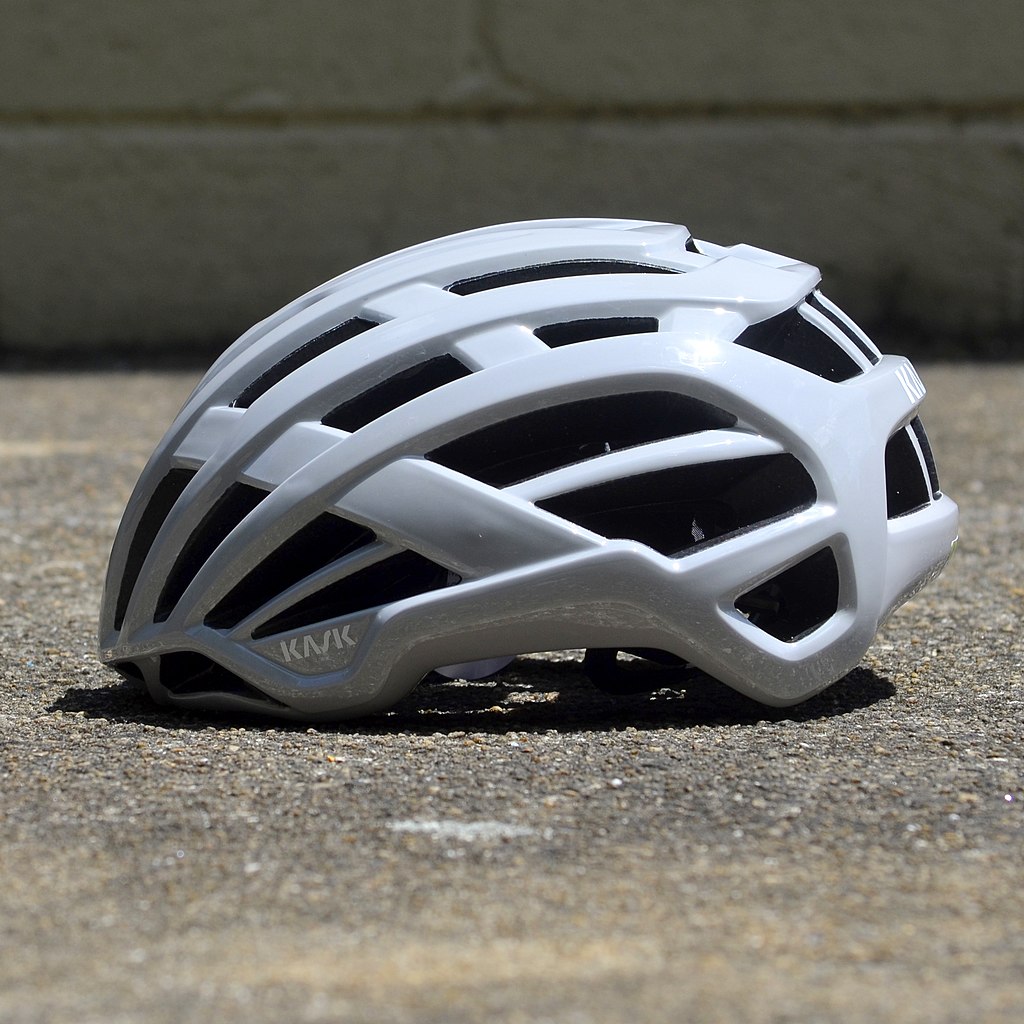
By Charles Pekow — Helmets could provide better protection if the foam inside was softer than the expanded polystyrene (EPS) normally used, suggests one study titled Softer Foam in Bicycle Helmets Reduces the Impact Force in a Simulation Model, from the University of Hawaii
A recent study suggests that bicycle helmets may be more protective if they used a softer foam liner. Photo courtesy Glory Cycles, under Creative Commons Attribution 2.0 Generic License
Researchers banged the head of a mannequin wearing a variety of standard helmets and again using modified helmets stuffed with softer polyolefin foam. From all three angles tested, “there were statistically lower striking forces sustained with the modified softer foam bicycle helmet compared to the standard bicycle helmet,” according to the results of the study.
By Tom Jow — Despite being an “insider” of the bicycle industry, working behind the scenes for a large retailer, I am not really a bike “geek”. By this I mean that when I am not at work, I don’t spend a lot of time reading about bike things. When I am at work, I am not really privy to a lot of secret knowledge about product releases, so it came as a bit of a surprise to me when the new SRAM Transmission was introduced. Now, even six months later, everyone is still talking about it. Is it really that special? What does it mean for the recreational rider, in other words, those of us that don’t think about bikes all the time?
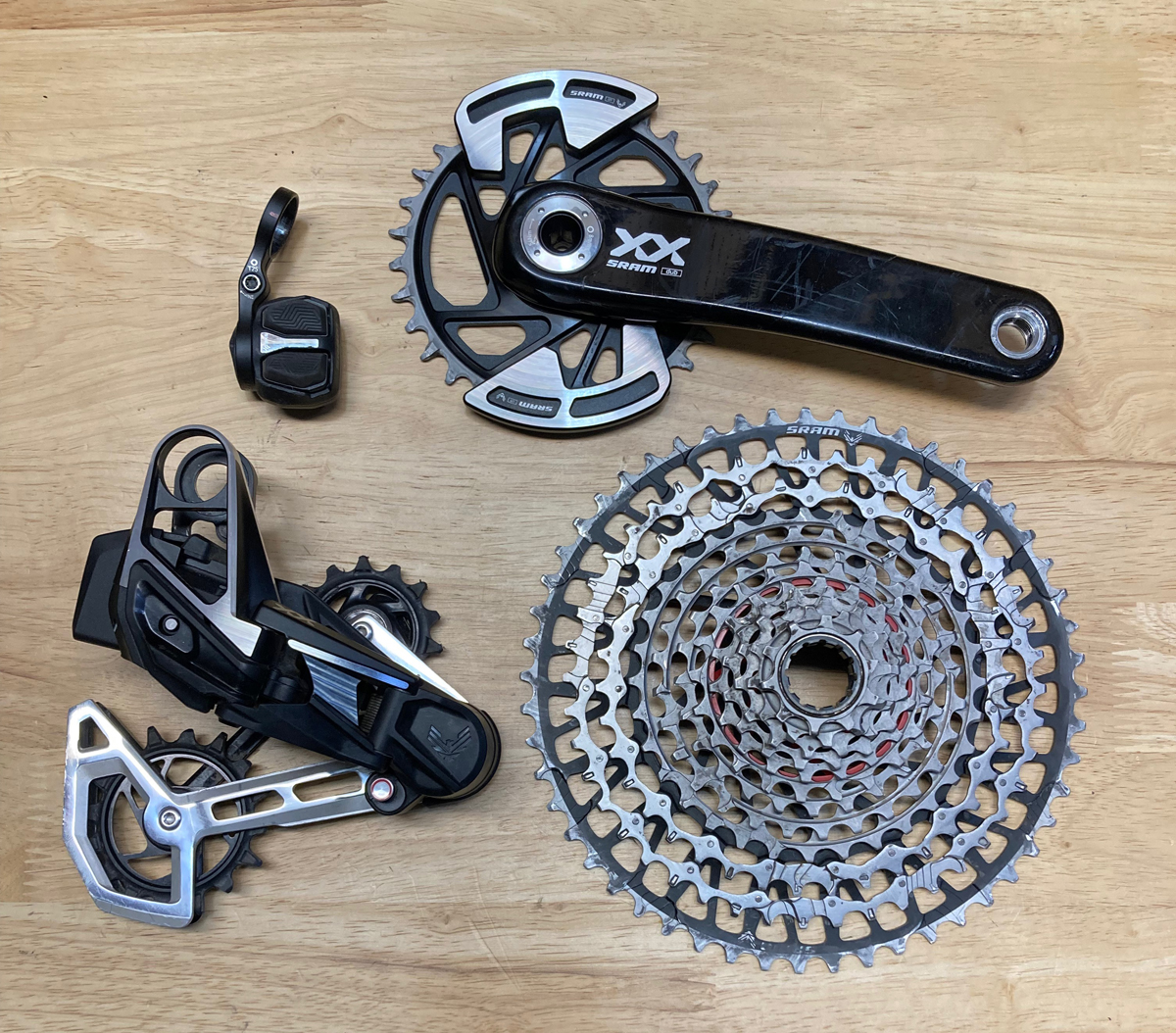
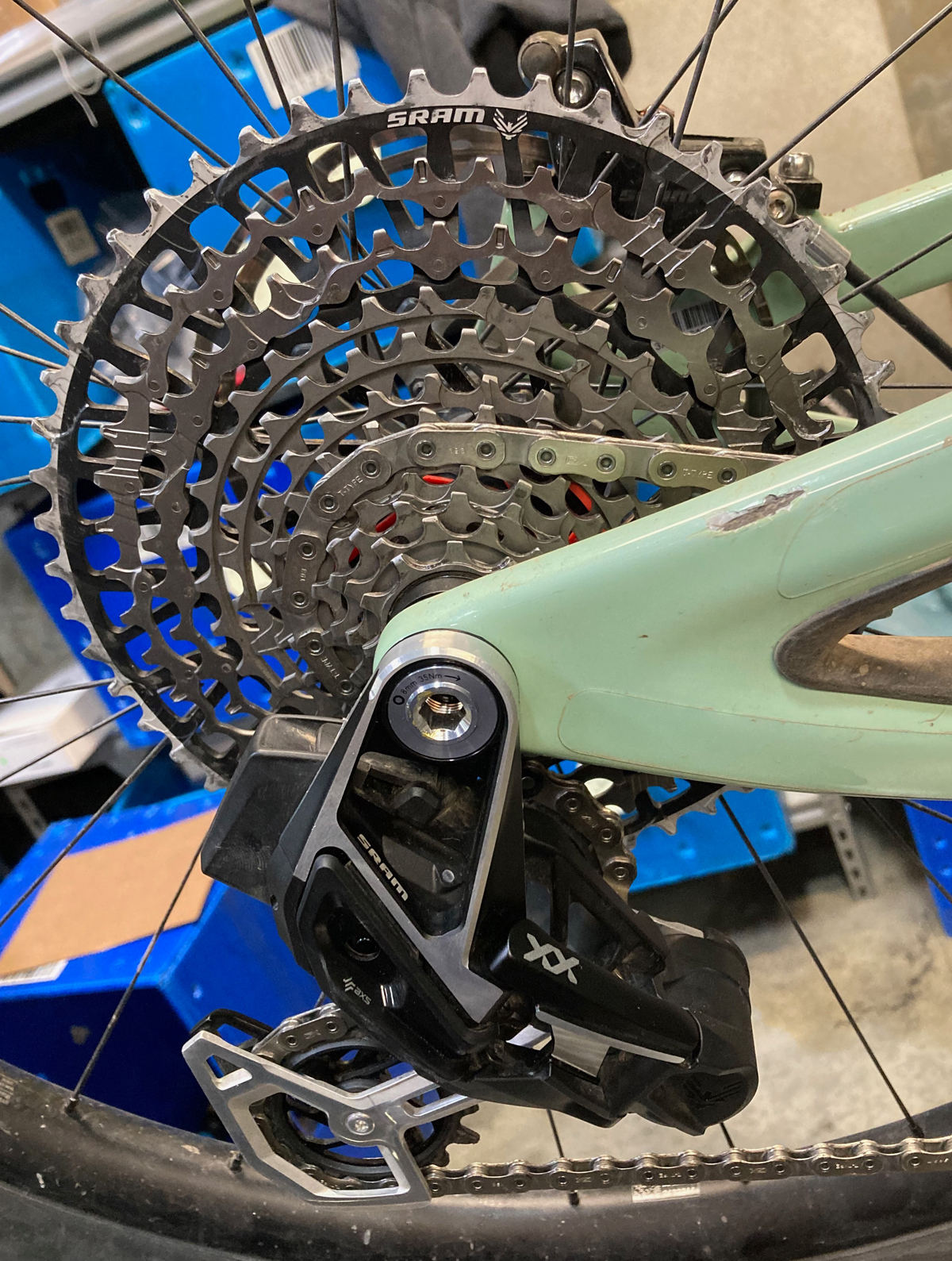
The essential components of SRAM’s new T-type Transmission drivetrain. Photo by Tom Jow
The SRAM T-type Transmission drivetrain has a completely redesigned cassette and derailleur combined with chain and chainring technology from other systems. There are many innovations in this drivetrain, but the two biggest things are improved shifting and a more crash resistant derailleur.
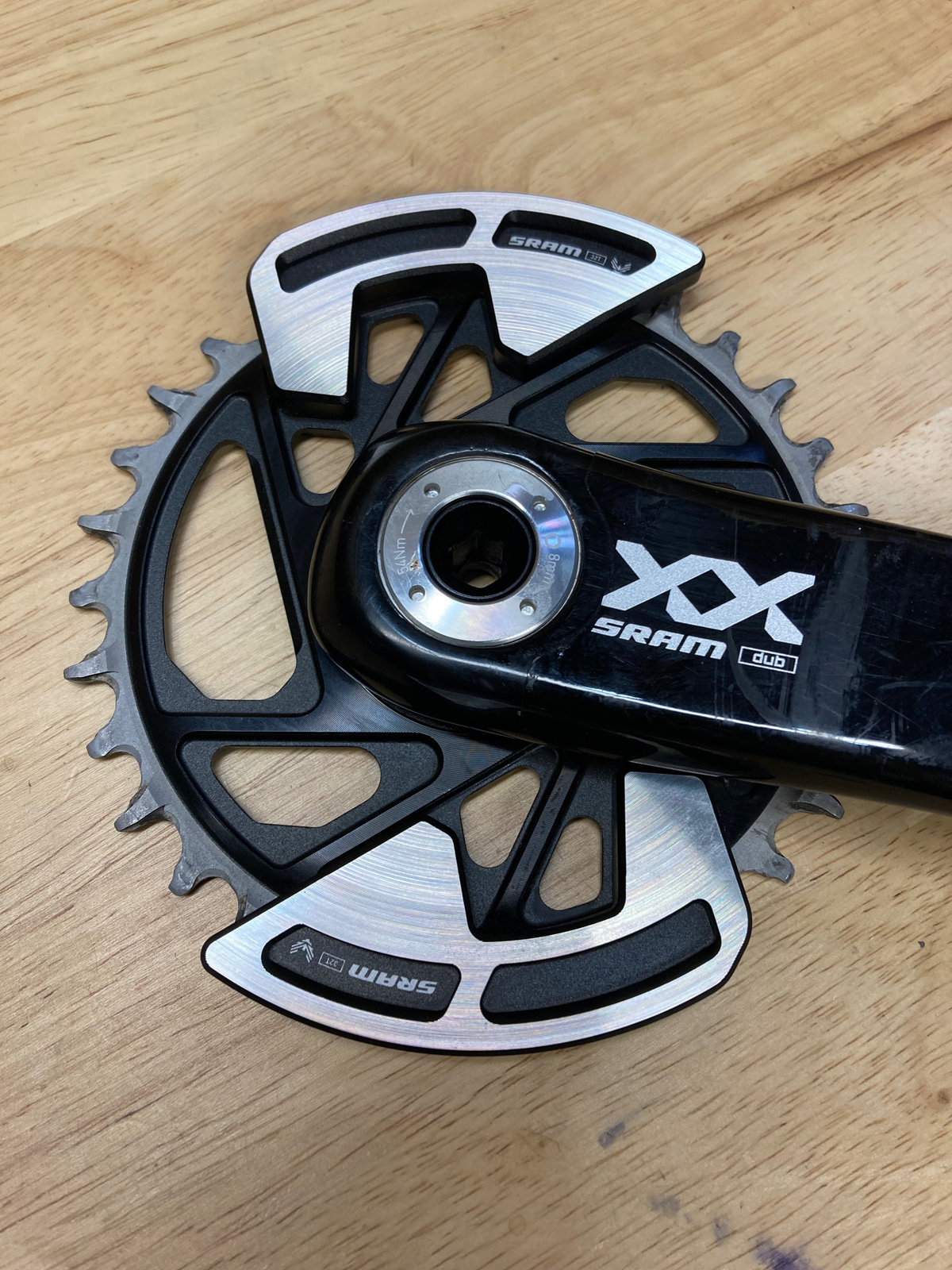
SRAM Transmission has chainring mounted bashguards. Photo by Tom Jow
The improvement SRAM made to shifting with Transmission is the ability to shift under full power. This is attained by creating the shift ramps on the cassette. The cogs are designed to allow the chain to move across only in designated zones. In these zones, the chain moves across cogs while having full driving contact. This allows the rider to continue to apply full power to the pedals while shifting. As recreationalist cyclists, we may not need to shift during a full sprint, but we all get caught at the bottom of a steep hill in much too large of a gear sometimes. With Transmission, we can pedal as hard as necessary and shift to get started up that hill.
The universal derailleur hanger for mounting SRAM Transmission. Photo by Tom Jow
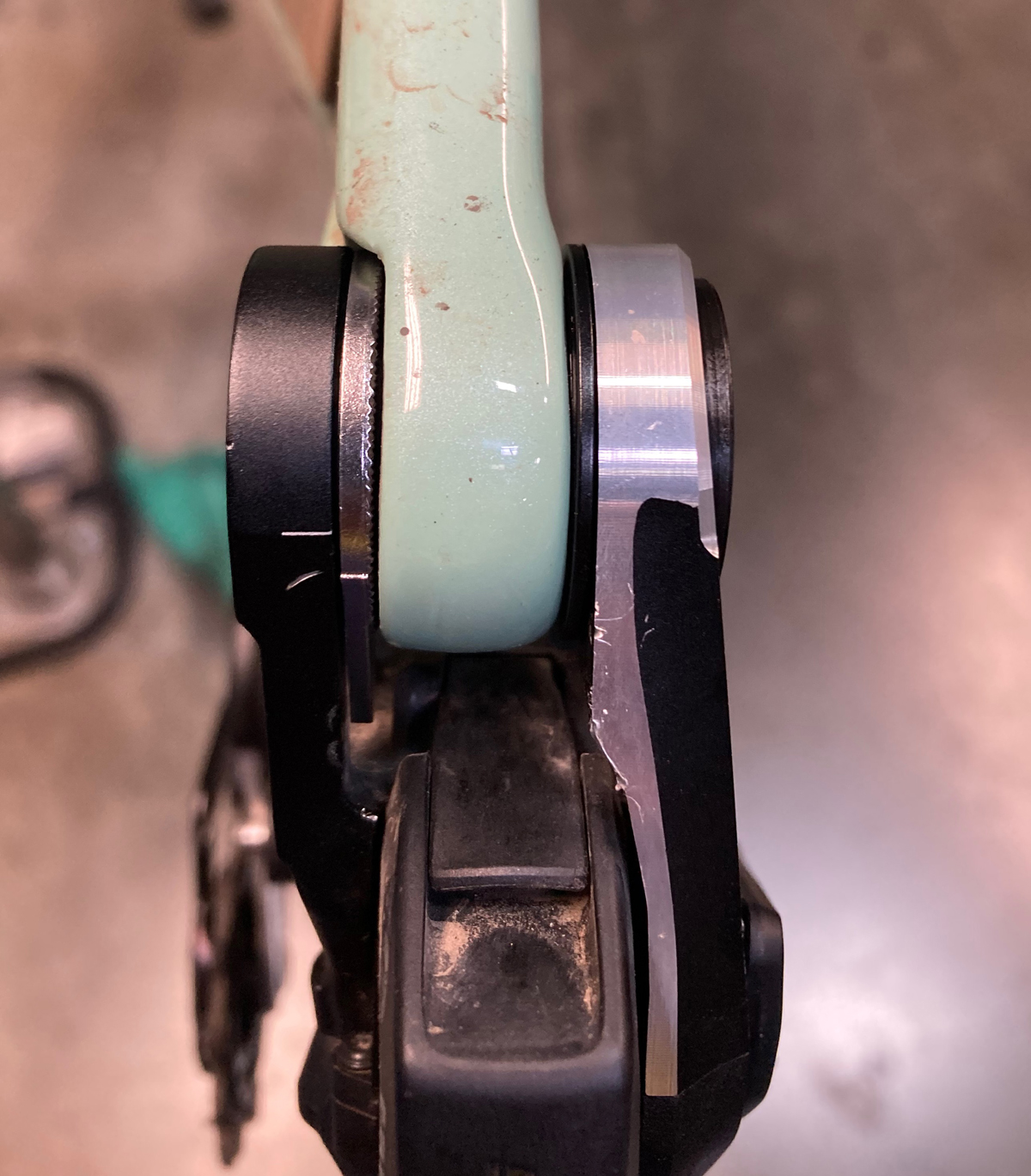
Remember though, that time you, or a friend, or someone you heard about ripped the derailleur off while shifting like that? How do they keep that from happening? To keep the derailleur from being torn off while shifting it has a new, direct mount. The key to this is the SRAM designed Universal Derailleur Hanger or “UDH”. Basically, it’s a big hole at the rear dropout where either a derailleur hanger or a Transmission rear derailleur is attached. What makes this better is a super strong derailleur body that clamps over the frame and is held in place by both a mounting bolt and the rear axle. There is no longer a derailleur hanger to bend in a crash. What about hitting rocks? The derailleur has an “overload clutch”, a feature that allows the derailleur to uncouple from the electric motor and move inward in the event of impact.
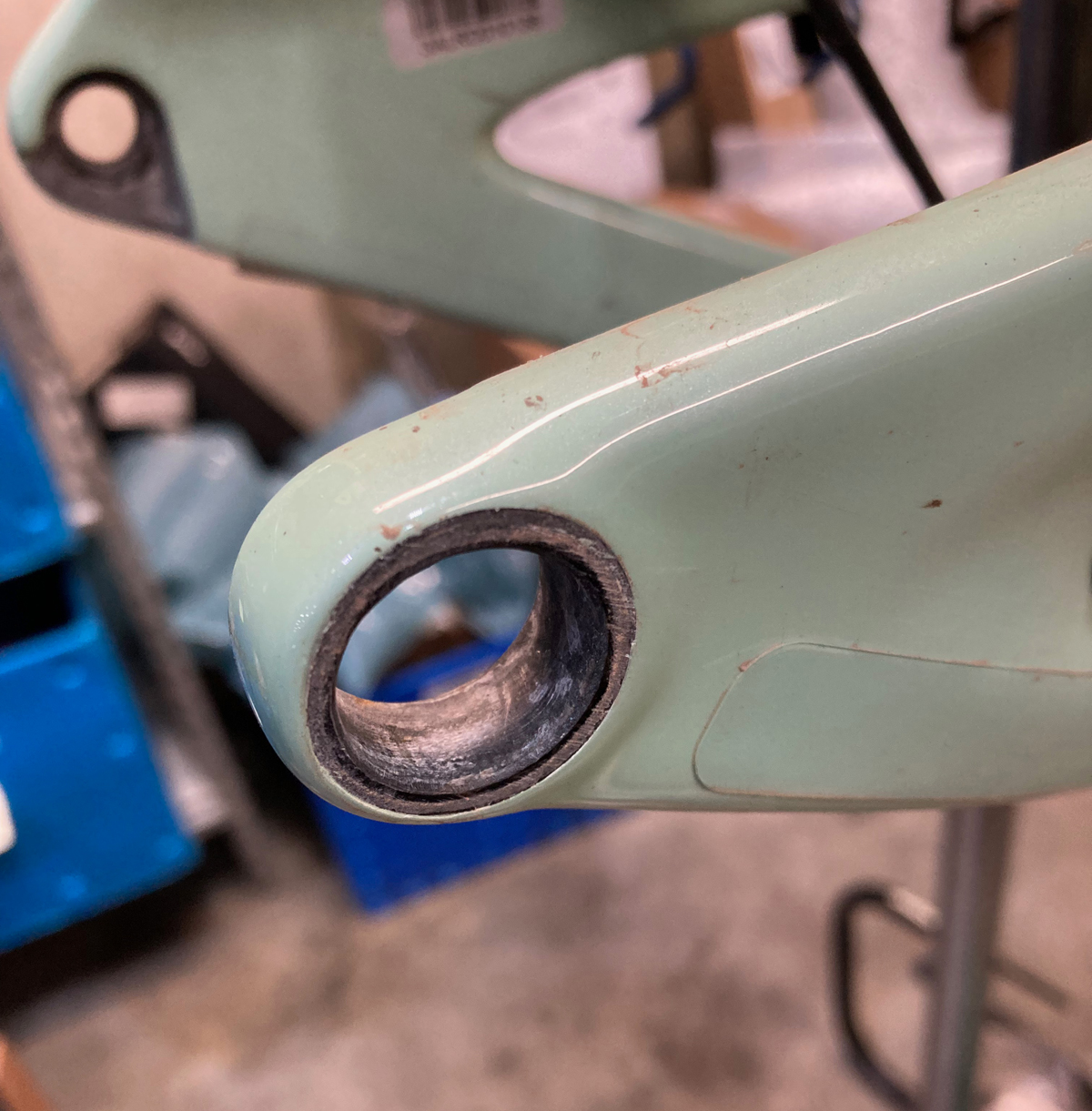
The SRAM Transmission derailleur mount sandwiches the frame dropout for strength. Photo by Tom Jow
How apparent are these improvements on the trail? Well, that depends. During my brief period of riding with Transmission I have put both of the aforementioned features to good use. To really evaluate the cassette, I found it difficult to set aside a lifetime of soft pedaling while shifting. The first few times it seemed a little clunky and crunchy. As I began to trust it more (who wants to bust a $100 chain) and applied more power it began to feel much smoother. Timing is also a factor, considering that the chain only moves up or down at the specified ramps on the cassette. By about the tenth ride or so keeping the power on started to become more natural and Transmission was performing very well.
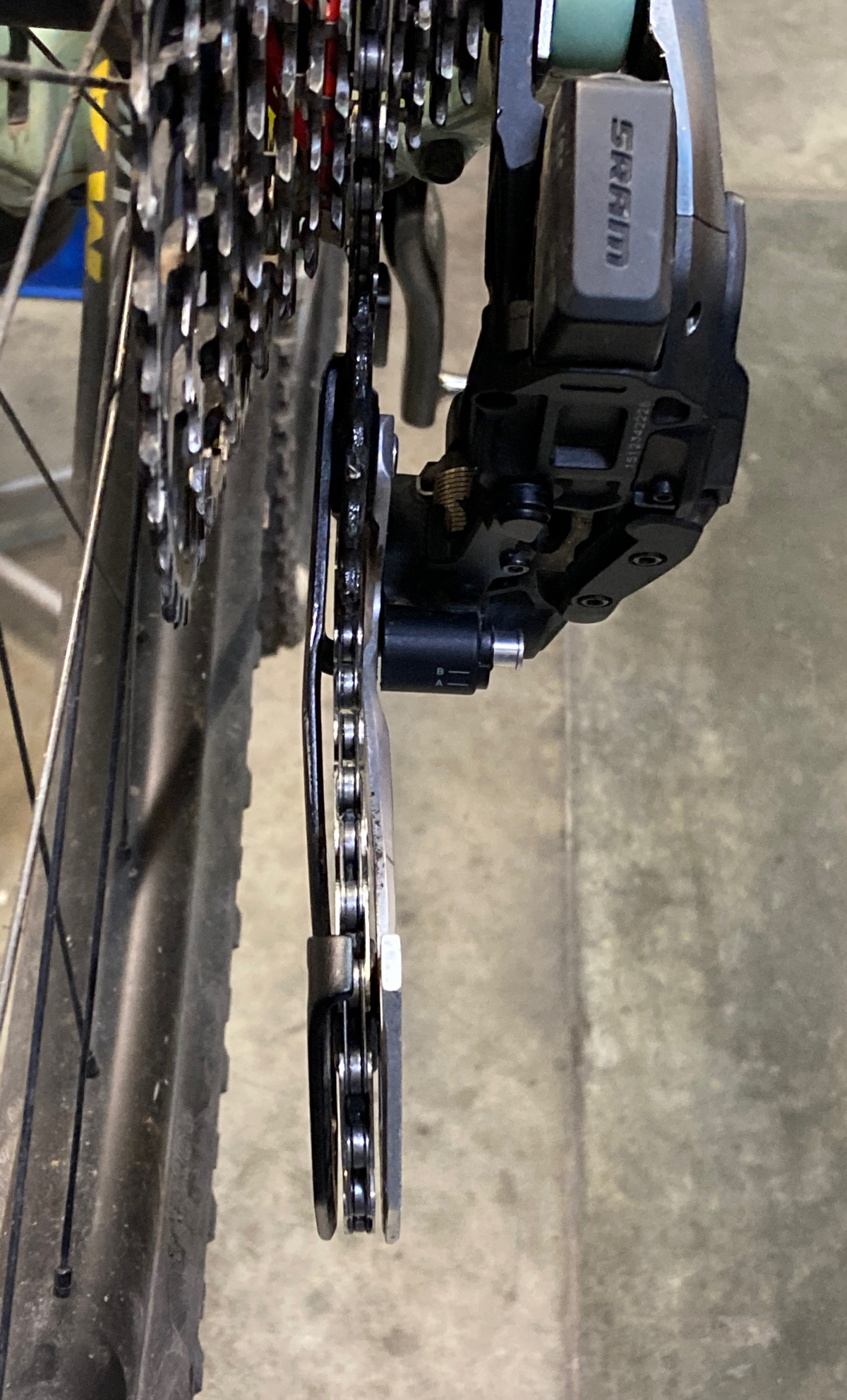
With SRAM Transmission, the derailleur cage is designed for better alignment with the chainring. Photo by Tom Jow
As for the super strong direct mount rear derailleur, it sure is nice not having to worry about bending a derailleur hanger. Just before installing Transmission, I had a crash that bent one. Then just a week ago I watched as my bike went tumbling downhill without me. After dusting myself off I noticed the derailleur was packed full of dirt. Either by luck or by design, the derailleur continued to function properly.
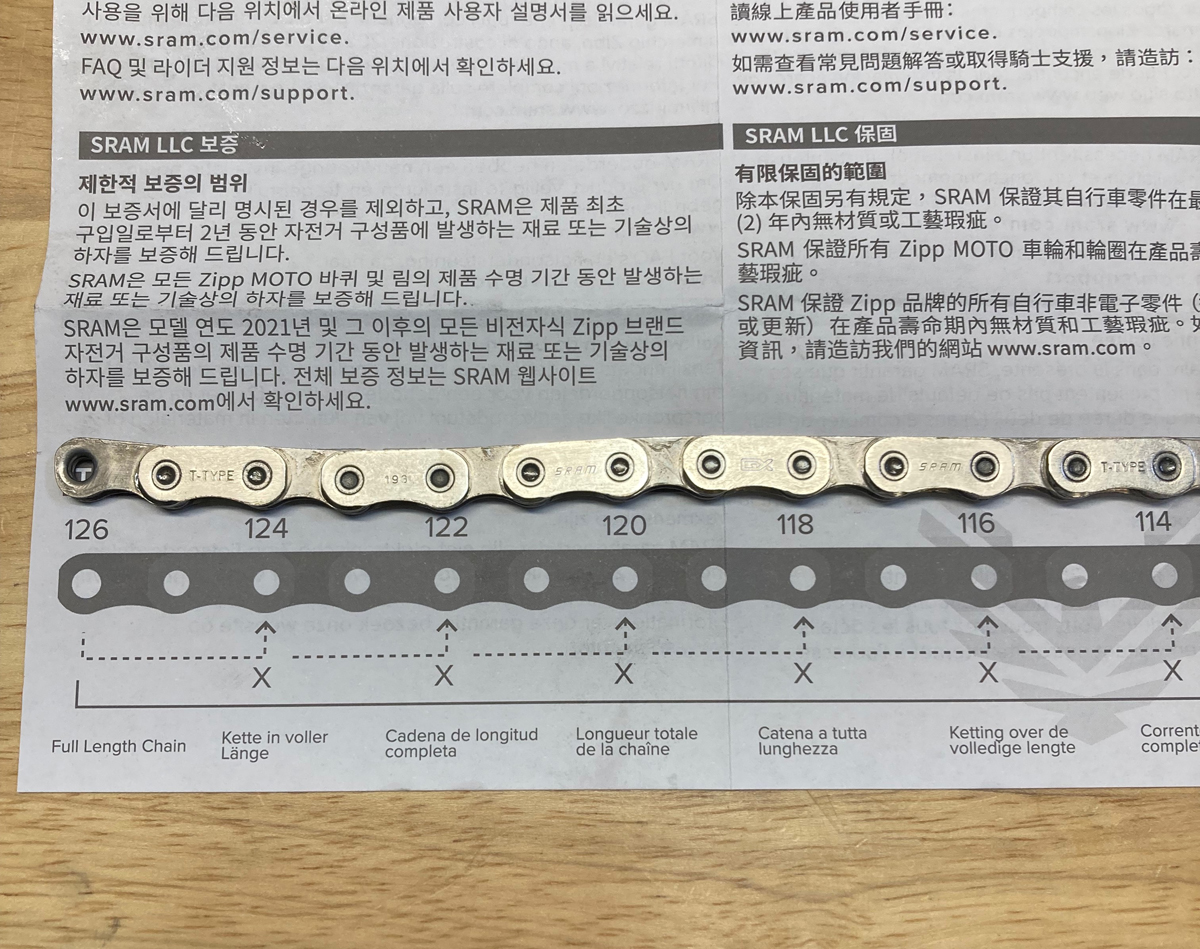
Chain measurement is easy. Photo by Tom Jow
So, is SRAM’s new Transmission worth it? Again, it depends. First, there is the limiting factor of the UDH. Frames built before 2019 do not have the UDH and are therefore not compatible. Then there is the monetary cost. To upgrade to standard AXS electronic shifting kit, consisting of a rear derailleur and shifter, the price is between $600 and $1000. Upgrading to Transmission requires a full kit (cassette, chain, crankset, derailleur, shifter) at double the cost. We also have to ask: are we upgrading from mechanical shifting, standard AXS, or are we in the market for a new bike? If we are upgrading from mechanical shifting, I think standard AXS is pretty awesome (see Cycling West, Spring 2022 issue “Electronic Shifting: Do I Need It?”). All my bikes have electronic shifting of some sort.
Installation complete. Photo by Tom Jow
Would I upgrade from standard AXS again? Probably not. For my riding, I don’t think Transmission is THAT much better than standard AXS. However, I will say the new two button remote is totally worth it. If I was in the market for a new bike? I would absolutely find a way to justify having Transmission. I’m not totally crazy.
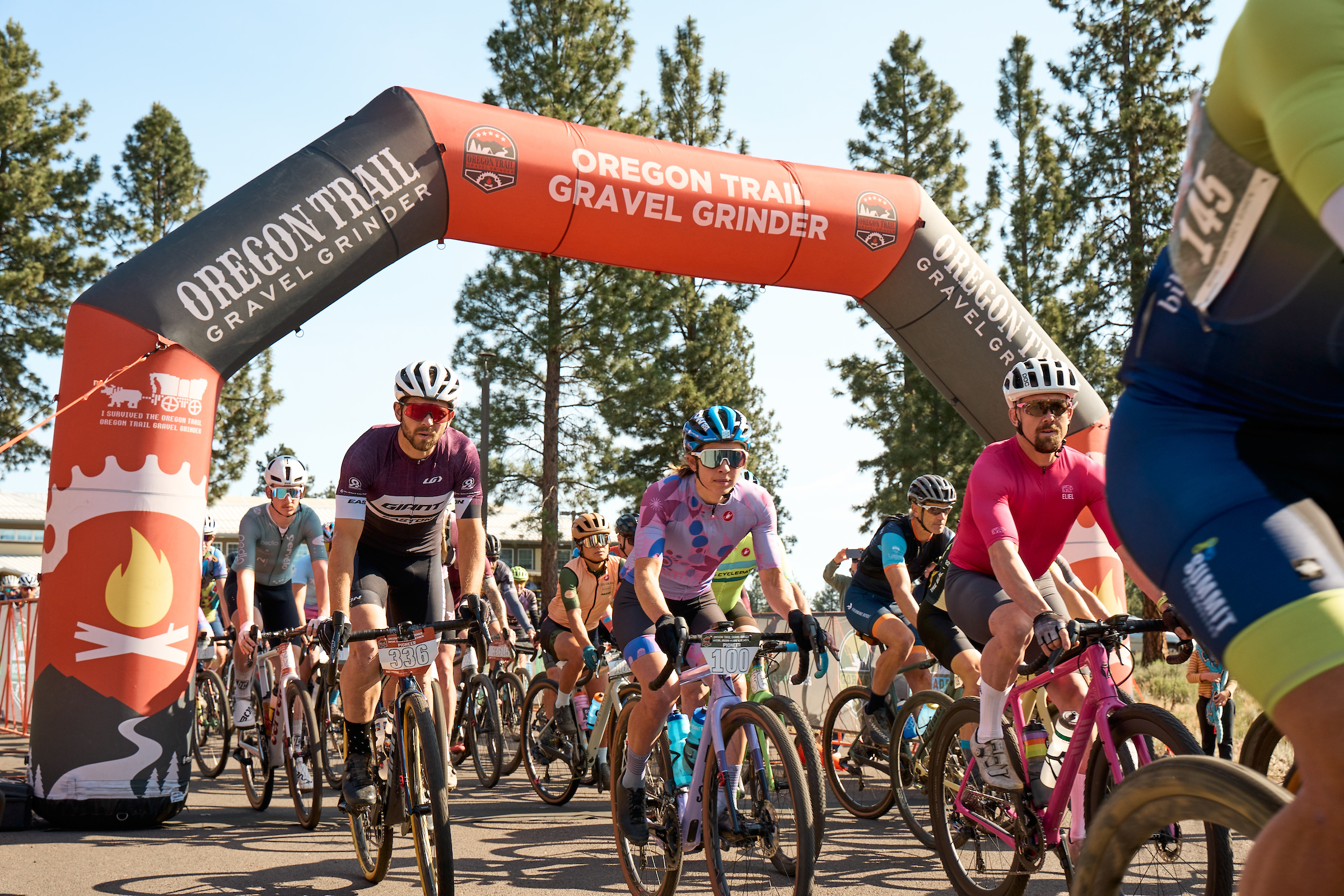
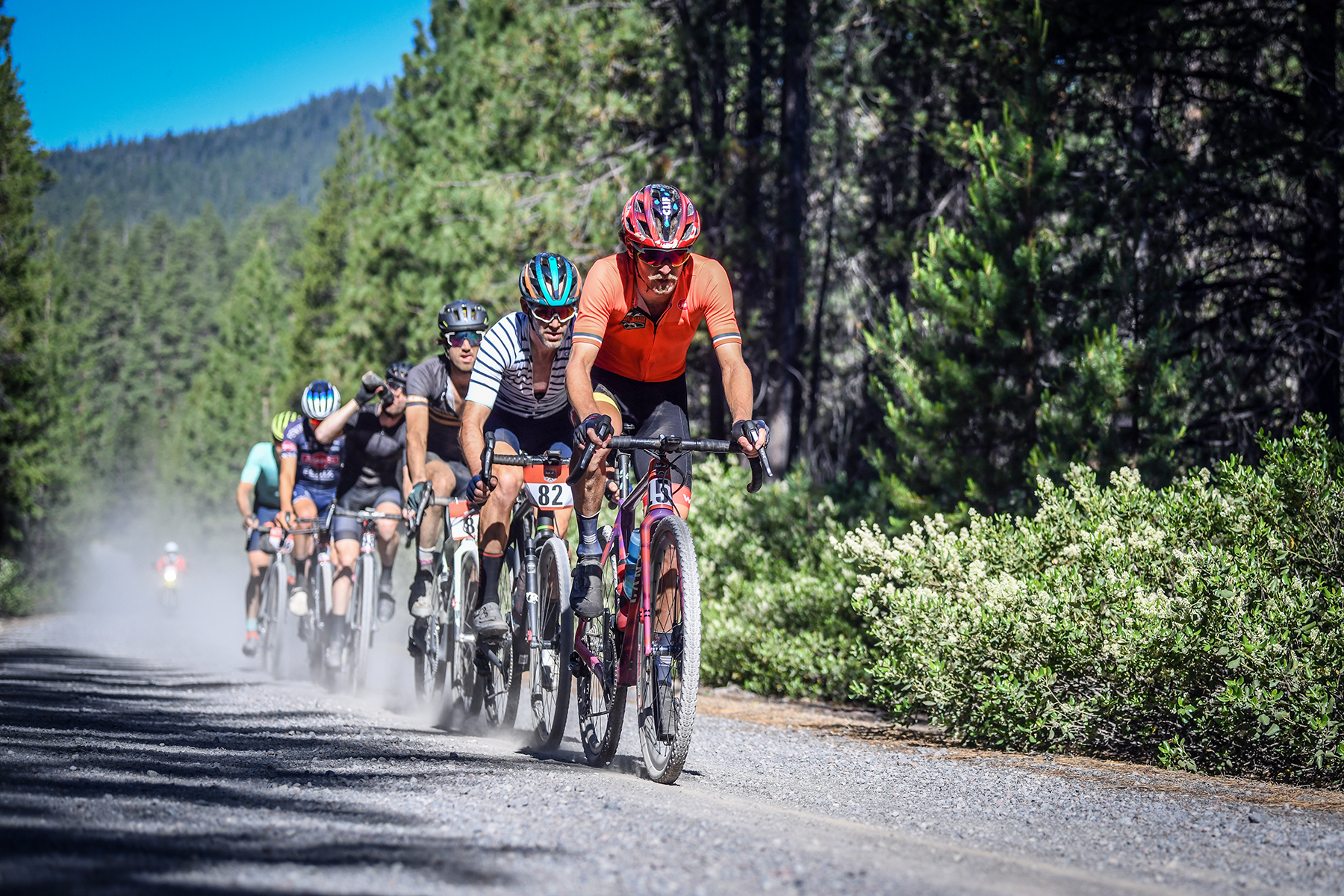
BEND, Oregon — Brace yourselves, gravel cycling enthusiasts! The 2024 Gravel Earth Series, referred to by some as Grand Tour of Gravel has a thrilling new addition: the Oregon Trail Gravel Race. So, saddle up and get ready to embark on a gravel adventure like no other, as Team Breakaway leads the charge in bringing North America’s finest to the forefront of gravel racing.
The Oregon Trail Gravel Race, or OTG for short, will proudly stand alongside renowned events like The Rift in Iceland, the Migration Race in Africa, and the Traka in Spain to create a formidable four-race series that promises to redefine gravel racing. Chad Sperry, the owner and race director of Team Breakaway, is ecstatic about the inclusion.
“We are thrilled with this opportunity,” he declares. “When Klassmark Events extended the official invitation to be part of the Gravel Earth Series, we jumped at the chance. It is an honor to have been selected as the North American event for next year’s race series,” he adds. “We feel strongly that our core values of focusing on the environment, spirit of adventure, and providing amazing experiences for every single rider align perfectly with the values of this series.”
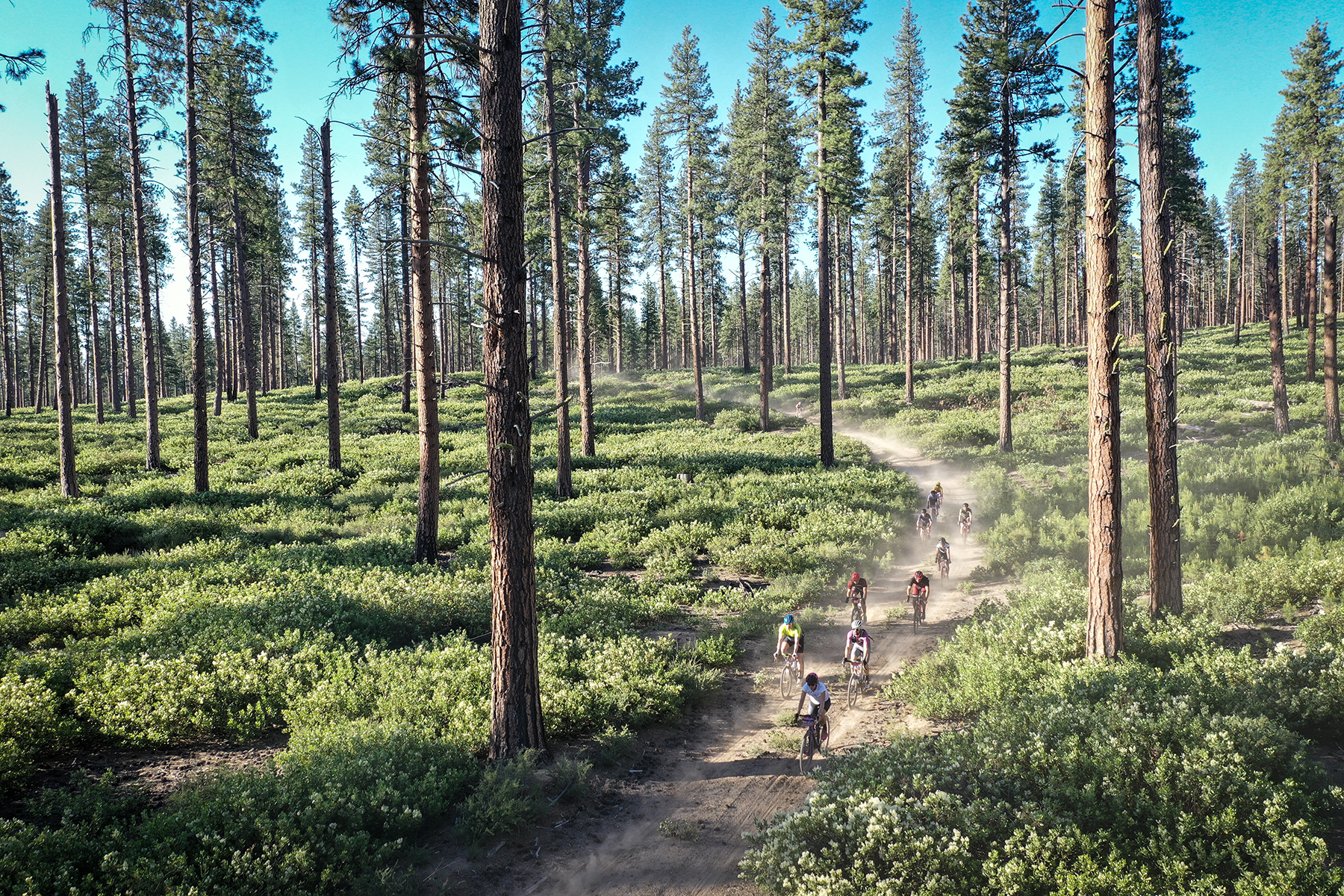
Each race in the series is set in a unique location that showcases the most breathtaking and dramatic landscapes our planet has to offer, and OTG is no exception. Nestled in the heart of Oregon, this gravel race promises a different look and feel altogether. It’s all about the snow-capped volcanoes and tectonic landscapes that sculpted the majestic Cascade Mountain Range, along with a diverse riding experience that spans alpine terrain, high desert expanses, and even old growth forests with lush vegetation, across five thrilling days. Sperry adamantly states, “We feel these dramatic landscapes and our ethos fit well with the other events in the series.”
The Oregon Trail Gravel Race stands out as the only multi-day gravel event in North America featuring a point-to-point race/ride format. This unique setup allows organizers to cherry-pick routes that maximize the challenge while treating riders to awe-inspiring scenery. The course winds through old logging roads and even traverses a couple of historic wagon roads, all of which take participants on an epic journey over the Cascade Mountain Range, through the lush Willamette Valley, and into the high desert climates of Central Oregon.
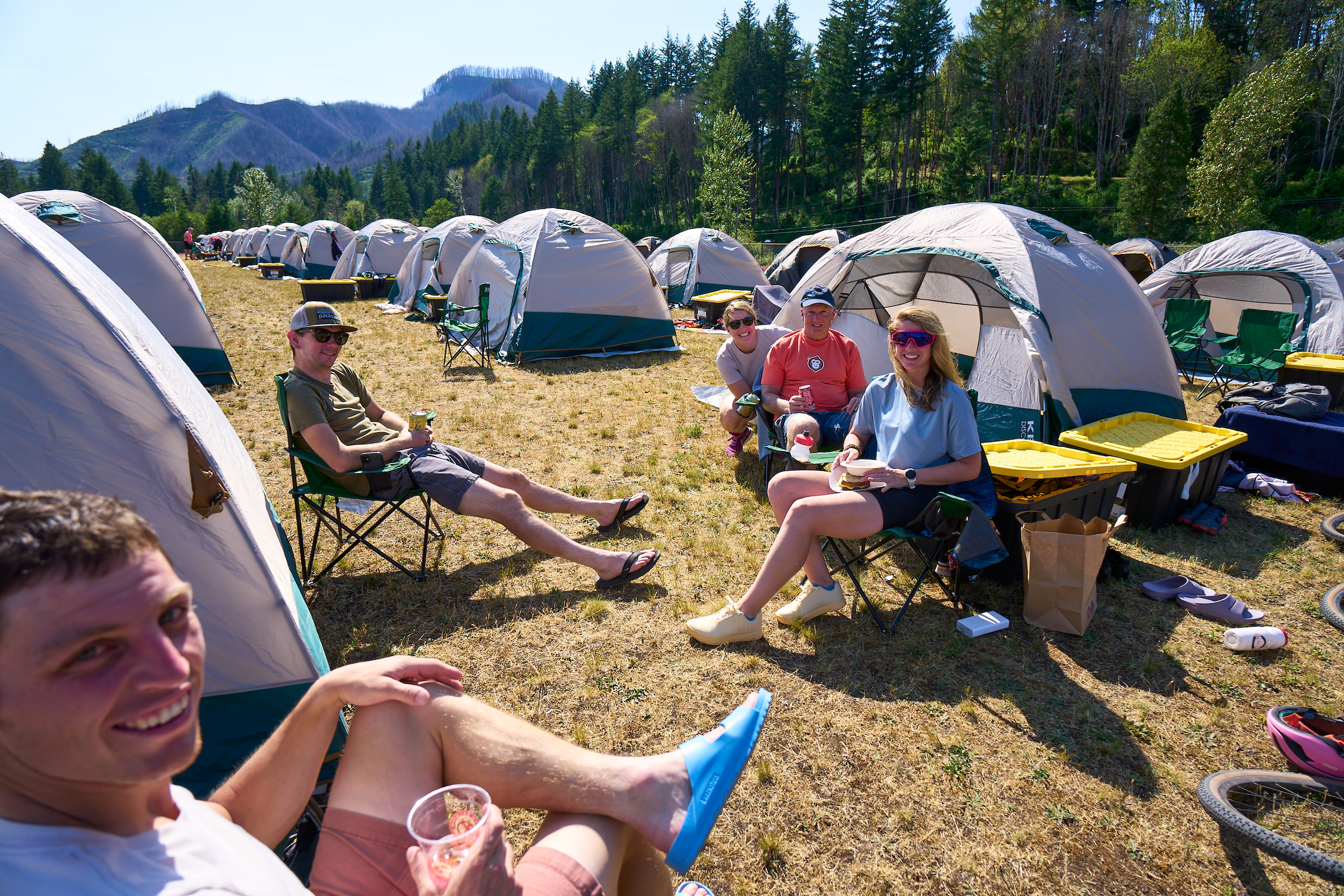
One of OTG’s campsites, ensuring that all riders are comfortable at the end of the day. Photo courtesy Oregon Trail Gravel Race/Team Breakaway
Bend, Oregon, will be the epicenter of next year’s all-inclusive event, which boasts a grueling 350-mile route and a jaw-dropping 35,000 feet of elevation gain spread out over the better part of a week. The OTG team is pulling out all the stops, providing full support for every rider so that, for five unforgettable days, they can focus solely on the trifecta of eating, sleeping, and riding. In other words, it’s “Bike Summer Camp for Adults,” a moniker that perfectly encapsulates the unique and fun-filled experience that defines this race. Registration is now open, and spots are limited to a select group of 400 riders.
By Charles Pekow — Federal grants are available for planning to improve bike access to mass transit, among other uses. The Federal Transit Administration (FTA) is offering $13,460,978 in Fiscal Year 22 and Fiscal Year 23 funding under the Pilot Program for Transit-Oriented Development Planning. The money will go to states and local governments and other existing FTA grantees. Application deadline: October 10.
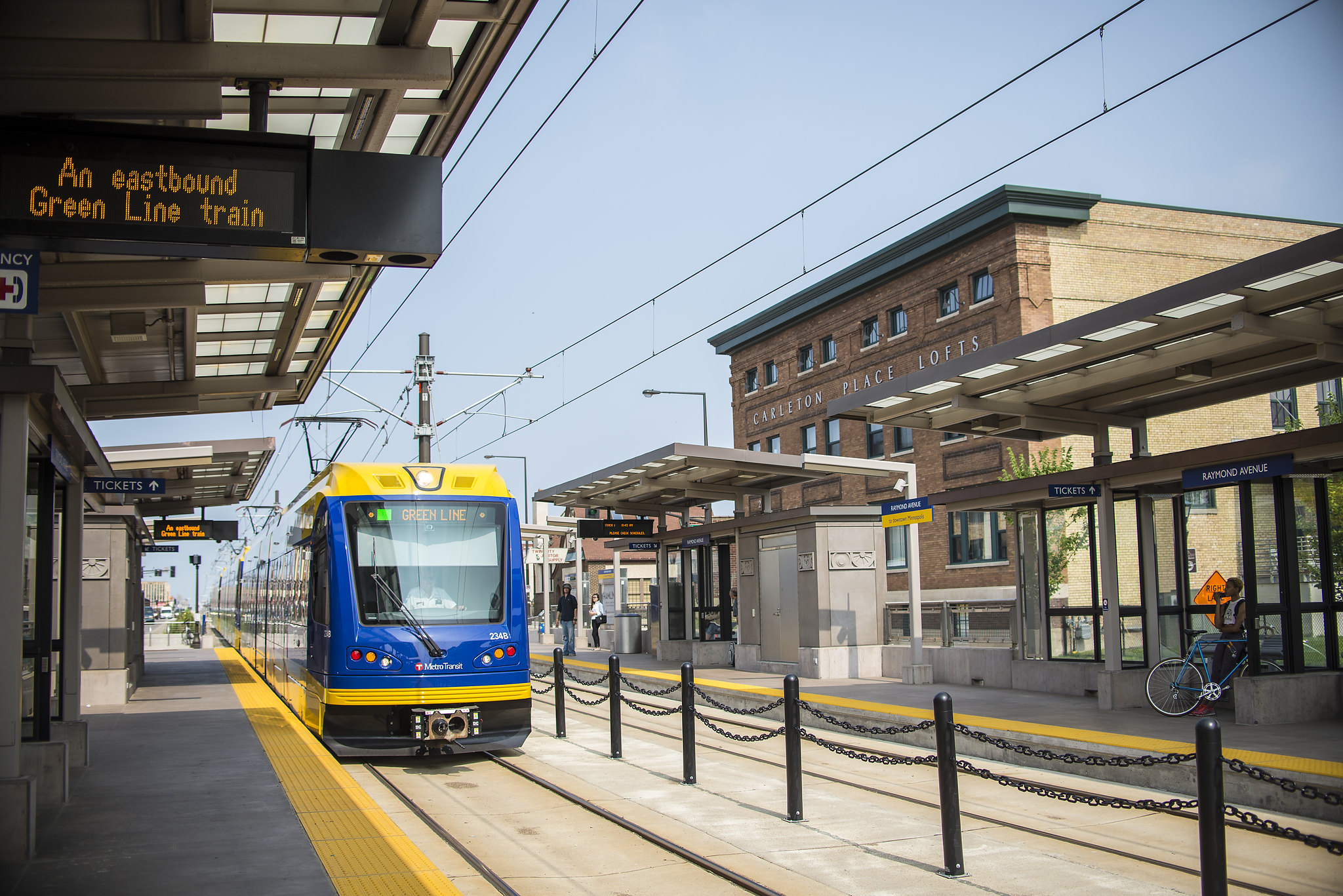
Transit oriented development near the Raymond Avenue Station on the METRO Green Line in the Twin Cities. Photo by Eric Wheeler, CC BY-NC-ND 2.0 DEED
Grantees must pay at least 20 percent of program costs with non-federal funds. At least 40 percent of benefits must go to “historically disadvantaged communities.” FTA wants projects that “facilitate multimodal connectivity and accessibility (and) increase access to transit hubs for pedestrian and bicycle traffic.”
By Anthony J. Nocella II and Christine Camille — Recently, a number of people have asked us, “How should I eat to fuel my body the day before and the day of a mountain and road bike race?” Here are our thoughts on what to eat before any endurance race.
Suppose you have an endurance race in two weeks, and you are developing your technical skills like climbing, jumps, and natural obstacles on Mondays, Wednesdays, and Fridays (in the gym or on focused rides on the bike) and doing increasingly longer rides on Tuesdays, Thursdays, and Sundays. Your intensive endurance runs or rides are Saturday mornings with a group to push you a bit to go faster and longer. You are lifting, riding, and getting enough sleep, what else is there to get you ready?
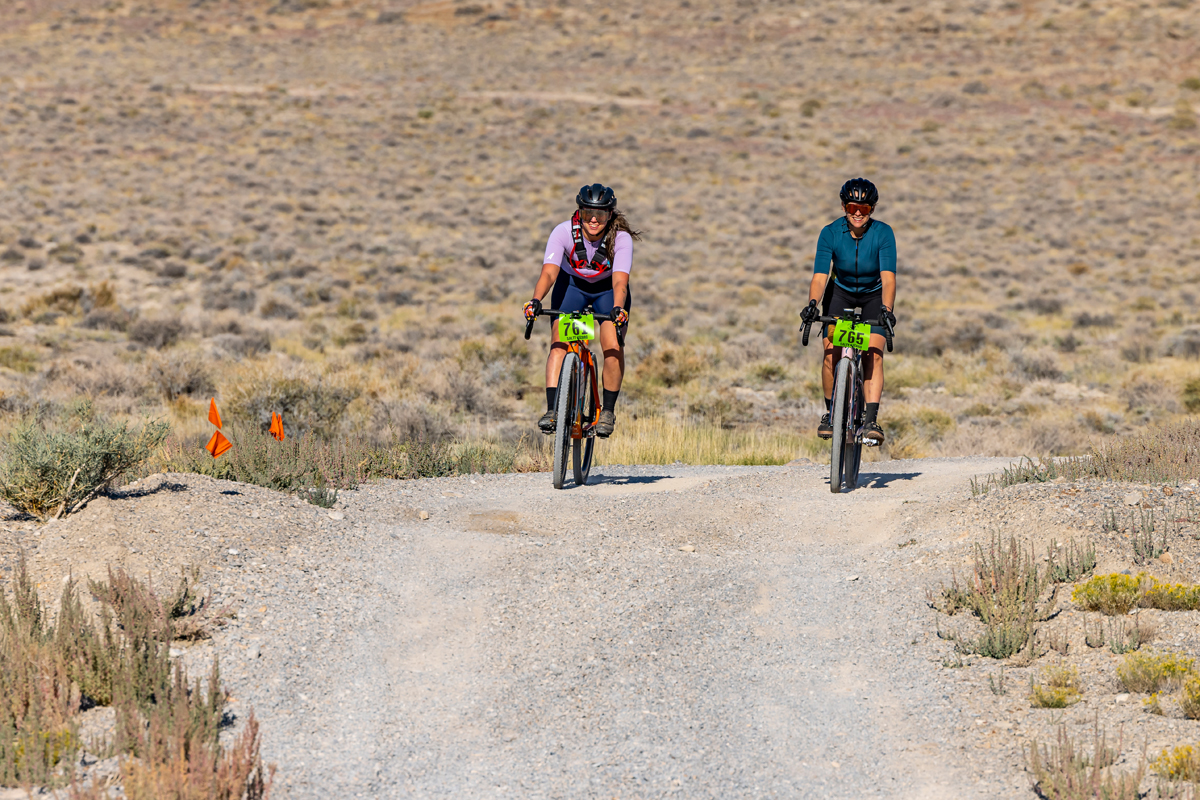
Two riders in the 2022 Salty Lizard Gravel Ride in Wendover, Utah. Proper preparation is key to finishing an event like this with no services en route between the start and finish. Photo by Sam Rice / Salty Lizard
Let’s think of it in automotive terms. You have one of the best hypercars ever made, with carbon fiber body, top-of-the heap aerodynamics, and a 1200 bhp engine. If you do not fill the tank up with some sort of fuel, you are not going to move. Period. You won’t even make it out of the starting gate.
Likewise, if you are filling your tank up with soda, sand, or anything other than the correct fuel, you will not only will your car not move, but you will destroy the engine. Whether you are referring to your body or a hypercar, the analogy holds.
Regardless of your age, endurance athletes should strive to eat a healthy diet and avoid fast food, candy, fried food, and food high in cholesterol. You should be drinking 3 to 4 liters of water per day, juice that is 100% from fruit and vegetables, and take daily vitamins.
Start preparing your body the morning before race day. Take your vitamins as usual and then begin fueling yourself. Start with a breakfast that has fruits, nuts, and oats in a smoothies or bowl. A great example of this would be drinking a glass of orange juice and eating a bowl of oatmeal, blended with bananas, berries, and granola. Start drinking water right after you wake up and continue drinking it throughout the day to keep hydrated. I would also suggest taking an easy bike ride to keep your legs loose and stretch.
For lunch have a large protein powder-based vanilla smoothie with strawberries and bananas. We use Garden of Life Sports Protein Powder, in the silver container, which has 30 grams of vegetable protein. Since every athlete is different, you should use whatever product works best with your system, evaluated over time. This will keep the athlete lean and clean. Don’t forget to keep drinking that water.
For dinner, start off with a few pickles (about 3) for sodium. For your main course, we like pasta, a carbohydrate which will turn into sugar, split peas, for protein, olive oil which provides some fat, and garlic for immunity. Seasoned with red pepper flakes, Italian seasoning, and a bit of Braggs liquid aminos for additional sodium … yum! Again, you should eat something with a similar nutritional profile, but that your body can easily digest.
This is also a good time for you to start topping up with electrolyte drinks. I like watermelon flavor Nuun electrolyte powder mixed with water, which has RDA values of 8% potassium and 23% sodium. Other people use children’s electrolyte solutions such as the name-brand Pedialyte, or a generic/store brand like TopCare, found in many grocery store chains.
Afterward, take a walk around your neighborhood to keep your legs loose and give you a chance to think about the course and your strategy for winning. I find it best to give it my all right out of the gate.
Mountain bike races are often won (or lost) in the first 10 to 20 minutes of the race, so if you can get ahead of the pack early, do so. This will help you avoid all the dust kicked up by the other riders and keep you from having to pass as many riders as possible on the course, which can be difficult on singletrack.
You should also check your bike over the evening before your race. Check the bolts, lube, tire pressure, gears, shocks, and pedals. Make sure to bring your tools with you on race day for last minute adjustments and unforeseen issues. You may also wish to bring your trainer and a tent to ride under to keep cool. Lastly, make sure your clothes are all laid out for the race and get to bed on time.
On the day of your race, wake up, take a salt tablet, and start drinking water right away. This will help get your body going. We do not take vitamins before the race, as it might cause digestive issues.
Try to wake up with plenty of time to eat a banana for potassium and electrolytes, and something light like nuts or oatmeal at least 3 hours before your race if you have the time to allow your body to digest and top-off your fuel load. If you don’t race until later in the day, we recommend a fruit bowl with banana, berries, and oranges, again, about three hours before your race to give your stomach time to settle. You may also want to snack on a pickle to replace the sodium you will be sweating out. Keep drinking your water too.
Avoid eating a bunch of energy bars or a burger or pizza or fried food. Have granola, oats, and fruit if you need to eat more before your event. Make sure to eat light, thin, clean food hours before a race, nothing heavy or processed.
Now, don’t forget to visualize deeply about the course and winning. You just have to give it all for a short amount of time. Leave everything on the course, do not hold back.
If you’re fast and you race on adrenaline, then start the race at top speed. If anyone is in your way, just keep close enough to take the lead strong and aggressively at a significant moment where the leader is weak and cannot catch you. Keep that pressure from all the cyclists behind you on the trail as motivation to push your threshold and past the burn in your legs. Before the climbs, take deep breaths to give you the oxygen you need to make it to the top, and drink water. People normally drink water after the climb, which is not the correct time for two reasons. One is that it is a reactionary response and drinking water when you are sucking for air at the end of your climb will make you choke, thus slowing you down.
Most importantly, be prepared, get out there, and have fun.
[Editor’s note: Nutrition does not have a one-size-fits-all solution. Athletes should consult with their own physicians and/or registered dieticians to determine what balance of foods and other fuel are most appropriate for their individual body and should not make any drastic changes right before an event.]